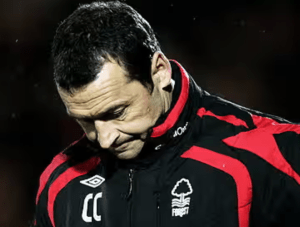
Lift engineer Hughton took Seagulls to a different level!

TOTTENHAM HOTSPUR was a key part of Chris Hughton’s life for more years than any of the other clubs he went on to serve.

While Brighton fans will always appreciate his four-year tenure taking the Seagulls from the Championship into the Premier League, he spent the first 19 years of his playing career at Spurs as well as 14 and a half years as a coach (and occasional caretaker manager) at White Hart Lane.

Hughton joined Tottenham’s youth set-up at the tender age of 13 in 1971, as he recounted in an In The Spotlight feature in the Spurs matchday programme for their September 2024 game v Brentford. It was the year the club won the League Cup captained by Alan Mullery with a side that included Phil Beal, Joe Kinnear and Martin Chivers, who scored both goals in the 2-0 victory over Aston Villa.

Hughton attended inner city school St Bonaventure’s in Newham, many years later attended by loanee striker Chuba Akpom who told Andy Naylor in an exclusive for the Argus: “When I was in school there used to be pictures of the gaffer there. The kids used him like an inspiration and motivation. I did as well: seeing someone come from the same area and the same school as me to become such a big and successful person.”

Other footballing St Bon’s alumni included Hughton’s brother Henry, John Chiedozie, Jermaine Defoe and Martin Ling (briefly an Albion player under Micky Adams).

Hughton’s progress as a youngster took a slightly unconventional turn when, at 16, Spurs told him he hadn’t done quite enough to be taken on as an apprentice.

“There was still that chance, though – a small window of opportunity,” he recounted to coachesvoice.com. “So, while I started a four-year apprenticeship as a lift engineer, I stayed on at Tottenham as an amateur.

“That meant working all day, then on two nights a week getting the bus or train to the training ground – apart from those days when I ended up working late and just couldn’t get there in time. Then, on Saturdays, I’d play for the youth team. I lived that life for two years.”

Football-wise, by the age of 18 Hughton had done enough to persuade Spurs to offer him a professional contract – but he didn’t want to cut short his lift engineer apprenticeship, so he turned them down but continued playing for the club as an amateur.

“I was fortunate,” he said. “My window of opportunity stayed open, and at 20 I finally became a professional footballer for Tottenham… as well as a qualified lift engineer.”

It was during Keith Burkinshaw’s eight-year reign as manager that Hughton enjoyed most of his success as a Spurs player, usually filling the left-back spot of a side that won the FA Cup in 1981 and 1982 and the 1984 UEFA Cup.

“It was a period that had a big impact on me, and on who I became,” said Hughton, who played alongside the likes of World Cup winners Ossie Ardiles and Ricky Villa, the gifted Glenn Hoddle and goalkeeper Ray Clemence, and Steve Perryman, “the best captain I played under”.

Born in Forest Gate, east London, on 11 December 1958, it might have been West Ham territory but it was Spurs that took on trial a group of five lads who had been playing in the district of Newham side.

“I ended up staying there,” he told the Argus in a November 2017 interview. “My upbringing was different. I was always playing. Although my dad is very much now a football fan, I didn’t have a family background of football.

“I think I went to West Ham once, a family friend took me. I was a football fanatic but always playing. I never really had an allegiance to any team. But I’m very much a West Ham lad.”

Hughton qualified to play for the Republic of Ireland – home of his mother Christine. His father Willie was Ghanaian (Hughton later became that country’s coach).

He made his debut for Eire in 1979 and won 53 caps over the next 12 years, including playing in three matches at the 1988 Euros. Although he was in the 1990 World Cup squad, he didn’t play any matches. He was the Republic’s assistant manager to Brian Kerr between 2003 and 2005.

Being of mixed race, Hughton suffered plenty of racial abuse both from the terraces and from opposition players, as he revealed in an interview with broadcaster Ian ‘Moose’ Abrahams for whufc.com in November 2023.

“You suffered it by yourself because you were the only one who was receiving that type of abuse, you were the only one that almost understood it, and being the only black player in the team you took all of that on your own shoulders,” he said.

“Sometimes it’s hard to think back now and comprehend how you coped with that, and the coping mechanism is because firstly you are used to it, and secondly your mentality had to be that you’re better than that. You generally suffered by yourself.”

Hughton continued: “There were numerous times over that period, especially in the reserve team, and yes, even in the first team that I suffered racial abuse [from opposing players].

“I reacted to it, but I knew the boundaries, because you knew if you went too far you were going to get sent off.”

A knee injury at the age of 28 was a signal for Hughton to begin to consider what he might do once his playing days were over, and he did some coaching sessions at soccer schools. “I started to think this was what I wanted to do,” he said.
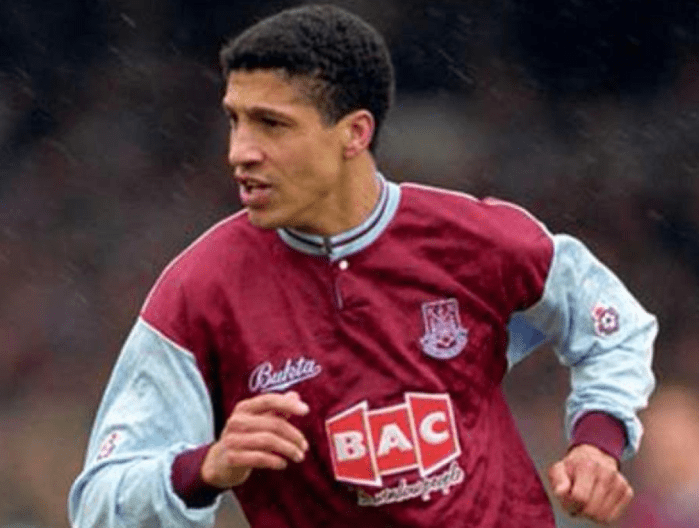
When he was no longer guaranteed a starting berth at Spurs, Hughton moved across London to the club closest to where he grew up: West Ham. Hughton signed for the Hammers initially on loan in November 1990 to cover for the injured Julian Dicks, and then permanently on a free transfer.

“My parents still live in Upton Park, so I was born and brought up very close to the stadium,” Hughton recalled in a November 2017 Argus interview.

Signed by Billy Bonds, he was with the Hammers for just over a year, helped them win promotion from the old Division Two in 1990-91and played a total of 43 matches (plus one as a sub).

“It was a really enjoyable period of time,” he said. “Billy Bonds was the manager. He was not only a great manager but a great individual.”

In February 1992, he moved on a free transfer to then Third Division Brentford, whose squad included Neil Smillie and Bob Booker. Graham Pearce was a coach. They won the divisional title but the following season Hughton’s troublesome knee forced him to retire at the age of 34.

“By the time I signed for Brentford at the age of 33 I was certain that I wanted to coach,” Hughton told coachesvoice.com. “I was taking far more interest in things like tactics and the thinking behind training sessions. Brentford’s manager at the time, Phil Holder, even allowed me to take a few sessions.”
Hughton added: “It actually set me up for my coaching career as I learned a lot in that time.”

After he’d called time on his playing days, he didn’t have to wait long for an opportunity to open up for him as a coach because his former teammate Ardiles, who’d not long since taken over as Spurs manager, invited him to help out back at White Hart Lane.

“We’d been good friends since our days playing for the club, so he knew all about my coaching aspirations and brought me in as the under-21s’ and reserve team coach,” Hughton explained. “I’ve always been very grateful to him for giving me that first opportunity.”

For the first year or so, he worked alongside the former West Ham player Pat Holland, who he described as “an excellent tactical and technical coach”.

Hughton explained it was a period in which he discovered how to transition from being a player to a coach. “As much as you’ve been part of a changing room thousands of times as a player, taken part in countless training sessions and listened to more team talks than you can remember, none of those things have ever been your responsibility before.

“In that respect, football is no different to any other aspect of life. If someone has spent years working on a shop floor, then moves up to management and has to govern a group of people, they have to make that same transition. It’s not easy.”

As managers came and went, Hughton remained on the coaching staff. After Ardiles came Gerry Francis and Christian Gross. Hughton was in caretaker charge for six matches before George Graham took over from Gross. Next in the hot seat was Glenn Hoddle, followed by Jacques Santini and then Martin Jol.

“Such a long apprenticeship might not be for everyone and some can go straight from player to manager at a young age, but I wouldn’t have been ready,” said Hughton.

“There was always something new to learn and experience. It was exciting to see what each new manager would be like, how he would involve me and what I would learn.

“The club could easily have said, ‘Now that the manager has left we won’t be keeping you on’, but they showed faith in my abilities and, in return, I provided some continuity.”

Hughton was assistant manager to Jol and said: “We had three years together, and in terms of league positions they were successful ones.”

By the time he was shown the door at Spurs, along with Jol, after a difficult start to the 2007-08 season, he felt ready to become a manager in his own right.

But before that happened, a different proposition emerged when Kevin Keegan asked him to become first team coach at Newcastle United.

“I’d spent my entire playing and coaching career in London, but any apprehension I felt at relocating to another part of the country was outweighed by the excitement,” he told leadersinperformance.com.

“I was going to a legendary club with an incredible tradition, rich history and great fan base and I was going to assist Kevin Keegan. I learned a lot from him during our time together, especially from his strengths in man-management.”

• What happened next in Hughton’s career is the subject of my next blog post. Thanks for reading!

Calderwood’s switch to promotion rivals backfired

Hughton’s not so loyal assistant

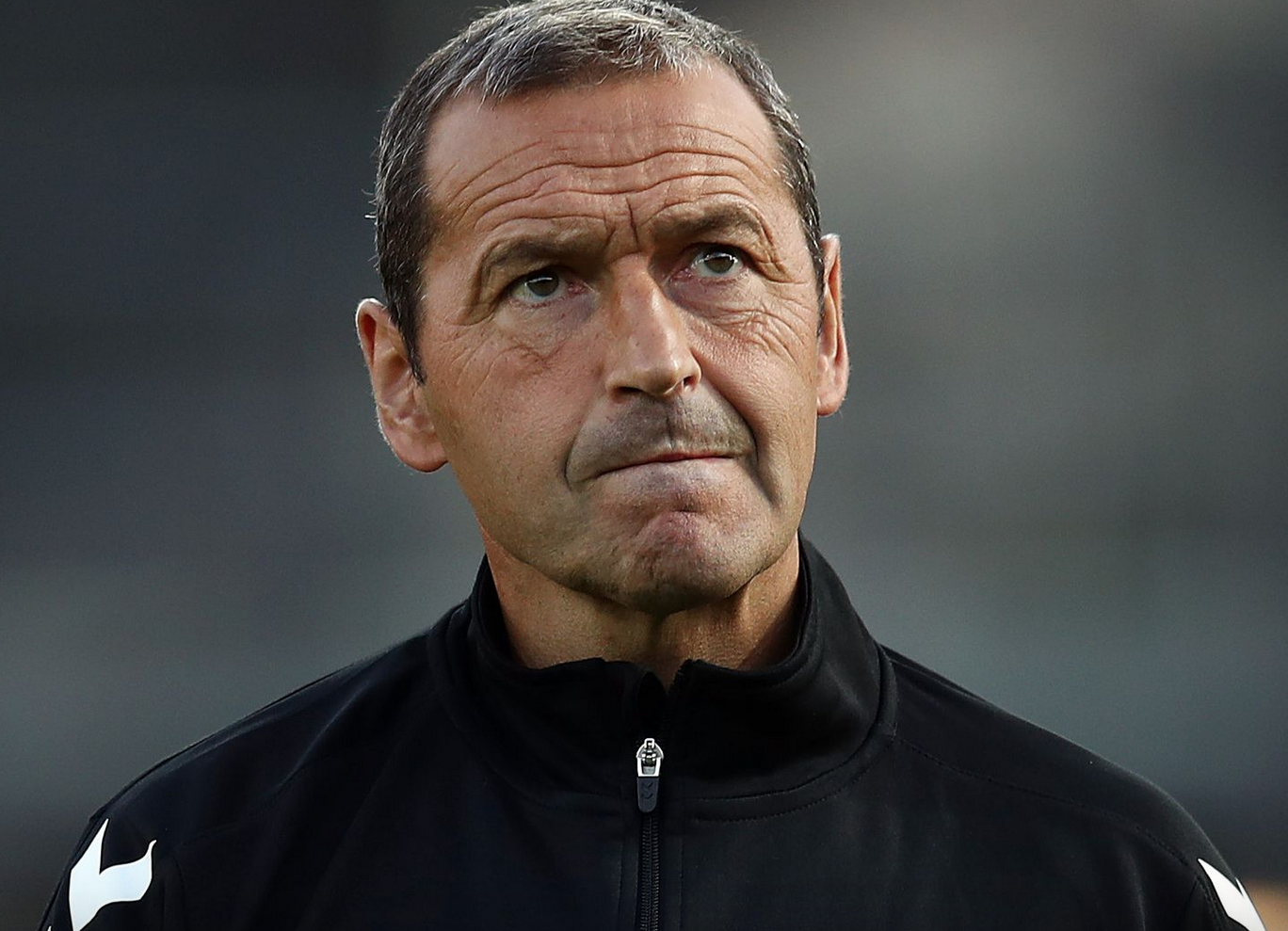
SCOTTISH international Colin Calderwood played for and managed Nottingham Forest in a lengthy playing and managerial career that has spanned a host of clubs across the country.

His 21 months as assistant manager to Chris Hughton at Brighton came to an abrupt end that drew harsh criticism at the time but thankfully didn’t hinder Albion’s upward trajectory.

Calderwood worked under Hughton at three other clubs: Newcastle United, Birmingham City and Norwich City.

The pair first met on the same A licence coaching badge course and Hughton was later a coach at Tottenham when Calderwood was a player. He then played a part in Calderwood becoming reserve team coach at White Hart Lane after his playing days were over.

Calderwood went on to become a manager in his own right at League Two Northampton Town, where he got them promotion at the end of his second season (in 2006).

Two and a half years as boss at Forest followed, during which he got them promoted from League One to the Championship. In 2007-08, his Foest side took four points off the Albion, winning 2-0 at Withdean but being held to a goalless draw at home.

Forest were promoted in second place behind champions Swansea City (Albion finished seventh) but Calderwood was sacked just before Christmas in 2008 with the side struggling in the Championship relegation zone.

When Hughton succeeded Sami Hyypiä at the start of 2015, it wasn’t long before he turned to trusted ‘lieutenant’ Calderwood to help Albion’s cause.

The no.2 had first worked with him at Newcastle in 2009 when, after relegation from the Premier League, the pair led the Magpies back to the elite as Championship champions in 2010.

Hibernian in Edinburgh lured him to try a third spell as a no.1 but, after just 13 months in charge, and only securing 12 wins from 49 matches, he was sacked. He was not out of work for long, moving later the same month to Birmingham to become Hughton’s assistant at the Championship side, where another of Hughton’s backroom team, Paul Trollope, was first team coach.

When Hughton left for Premier League Norwich in June 2012, Calderwood, Trollope and chief scout Ewan Chester (who also later joined him at Brighton) all decamped to Carrow Road. City dispensed with their services in April 2014.

Having helped steer Albion to the Championship promotion near-miss of 2015-16 (when they suffered the agonising play-off semi-finals defeat to Sheffield Wednesday), the Seagulls were well geared up to go one better the following season.

So it came as something of a shock when Calderwood quit in November 2016 to become assistant manager to Steve Bruce at promotion rivals Aston Villa.

Hughton was said to be “very disappointed” and “very surprised” by his assistant’s departure, “particularly at this stage of the season”. Albion watcher Andy Naylor reckoned that amounted to a “withering condemnation” from the normally placid manager.

In an excoriating article for the Argus, Naylor wrote: “He clearly feels let down – and he is entitled to feel that way. Is there any justification for treating Hughton the way he has?”

It emerged that the move gave Calderwood a much shorter daily commuting distance from his home in Northampton, but, even so, Naylor reckoned Hughton deserved better.

Thankfully, there was a ready-made replacement in the wings because Trollope had just lost his job at Cardiff City.

Naylor wrote: “Trollope is in the right place at the right moment to bring his promotion-winning mentality as both a player and manager into the camp. Let’s hope he demonstrates more loyalty than Calderwood.”

Perhaps it was the supreme irony that as Albion marched to promotion from the Championship the following spring, the side Calderwood had moved to only finished in 13th place – although the last-game draw at Villa stymied Albion’s chances of going up as champions.

Nevertheless, there were no bitter recriminations on Calderwood’s part. “Chris did a terrific job turning around the shape and the balance of the team,” he recalled in an interview with the Argus in January 2021.

Ahead of his subsequent club Blackpool’s visit to the Amex for a fourth round FA Cup tie (Albion won 2-1), the former assistant boss said: “We found, as I’ve found at most clubs I’ve been at, there’s a core group of players that have an appetite and an ability level that can give you a chance of success.

“When it falls into place, it is really nice to watch and it is very heart-warming and you feel justified in what you preach and practice.

“A lot of the time you are determined by the quality of the person and the player within the club. We found some really good people down there.”

Born on 20 January 1965 in Stranraer, Calderwood didn’t play professionally in Scotland, instead joining Mansfield Town as a 17-year-old in 1982.

He realised in hindsight that he learned a lot from Town’s manager at the time, the experienced Ian Greaves, and he went on to play over 100 matches for the Stags before Swindon Town boss Lou Macari signed him for £27,500 in 1985.

“Ian and Lou were the ones that built the foundations of my career,” he told the Albion matchday programme.

The centre back spent eight seasons at the County Ground and is recognised as a Swindon legend having featured in 412 matches (plus two as a sub).

At only 21, he was made club captain and, despite a difficult start, led Town to back-to-back promotions as they won the Division Four title in 1986 and overcame Gillingham in a Division Three play-off final replay in 1987.

Promotion winner with Swindon Town

Calderwood was said to be “a rock at the heart of the defence” and eventually led Town to their first promotion to the top-flight, after beating Sunderland in the play-off final at Wembley in 1990. But Swindon were demoted due an irregular payments scandal in which Calderwood was implicated: he was arrested just four weeks before the Wembley match but released the same day without charge.
Calderwood missed five months of the 1990-91 season following a horror tackle by Wolves legend Steve Bull but he returned stronger than ever and was ever present when, under Glenn Hoddle, Swindon were promoted at the end of the 1992-1993 season, beating Leicester 4-3 in the play-off final.

But instead of featuring for Swindon in the Premiership, Town’s former manager Ossie Ardiles took him to Tottenham for a fee of £1.25 million.

Playing in the top division for Spurs earned him international recognition. He made his Scotland debut aged 30 in a Euro 1996 qualifier against Russia and was a regular under Craig Brown, winning 36 caps in four years, including playing at the 1998 World Cup.

According to Spurs fan website mehstg.com (My Eyes Have Seen The Glory), Calderwood was “a solid defender, who could tackle and was good in the air, but lacked the pace and distribution skills to be a top class centre half.

“Calderwood gave Spurs a tough presence in the middle of the back four they had been missing for some time and showed that Ardiles’ judgement had been sound.”

After 198 appearances for Spurs (more than 150 in the Premier League), he left White Hart Lane in March 1999 when a £230,000 move saw him join Aston Villa under John Gregory. A year later, he switched to David Platt’s second tier Forest for £70,000.

He had only been at Forest a month when, ironically at Birmingham’s St Andrews ground, Calderwood, by then 35, suffered an injury that would ultimately force him to retire.

Forest goalkeeper Dave Beasant had already been injured in a clash with City’s Jon McCarthy earlier in the game but recovered. Calderwood wasn’t so fortunate. He ended up being stretchered off after a collision with the same player. He had fractured his leg and dislocated his ankle, causing ligament damage.

The injury overshadowed Forest’s 1-0 win and it meant he played only a handful of games at the City Ground. He later had a brief spell on loan at neighbours Notts County before calling it a day.

Calderwood initially returned to Spurs as reserve team manager before leaving for Northampton in October 2003. Spurs director of football and caretaker manager, David Pleat, said: “Colin leaves us with our very best wishes. He’s had two-and-a-half years here as a coach which I’m sure has been valuable experience.

“Colin is young, he has energy, ideas and, most importantly, ambition. This could be a terrific apprenticeship for him and everyone at the club wishes him well in his new role.”

Fast forward 15 years, and after he left Villa along with Steve Bruce in October 2018, two months later he was back in the game at League Two strugglers Cambridge United. He was given an initial 18-month contract and a year later he was given a two-year extension on his deal.

However, after a 4-0 home defeat to Salford City in January 2020 which meant Cambridge had taken only one point from their previous six games, he was sacked.

In October that year he was taken on at Blackpool as part of Neil Critchley’s managerial team and was part of the set-up that saw the Tangerines win a place in the Championship in 2021.

In June 2021 Calderwood returned to his old club Northampton as assistant manager to Jon Brady, and he told the League Two club’s website: “I have learned a lot in the years since I was last at the club and hopefully I can put all of that experience to good use.

“The situation here is similar to the situation I arrived in at Blackpool in working with a talented young manager.
“I have spoken with Jon Brady a number of times, that relationship will build quickly and I am really looking forward to working with him and the rest of the coaching staff.”

The Cobblers finished fourth in League Two and made it through to the division’s play-off semi-finals where they lost 3-1 on aggregate to Calderwood’s first club, Mansfield.

They made up for it in 2022-23 when they earned automatic promotion in third place behind Leyton Orient and Stevenage.

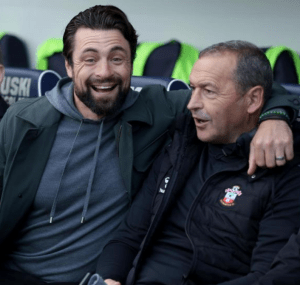
Nevertheless, in October 2023, Calderwood returned to Championship level as part of Russell Martin’s backroom team at Southampton.

Teaming up with Russell Martin

“First and foremost, he’s a brilliant human being. I really trust him and know him very well,” Martin told the Daily Echo

“We worked together at Norwich many moons ago when he was the assistant manager. I used to moan all the time to him and he had a brilliant way of being able to deal with that.

“He just has a great relationship with the players, and he’s a coach throughout my career who I’ve stayed in real constant contact with and discussed football.

“We’ve spoken a lot even when he’s not worked with me. I tried to get him at my two previous clubs and it couldn’t quite happen for various reasons.

“He’s been a manager, an assistant manager, he’s helped some young managers recently get promoted in Neil Critchley and Jon Brady, and added huge experience and value to them.”

Tano incurred the wrath of plenty during Spurs playing days

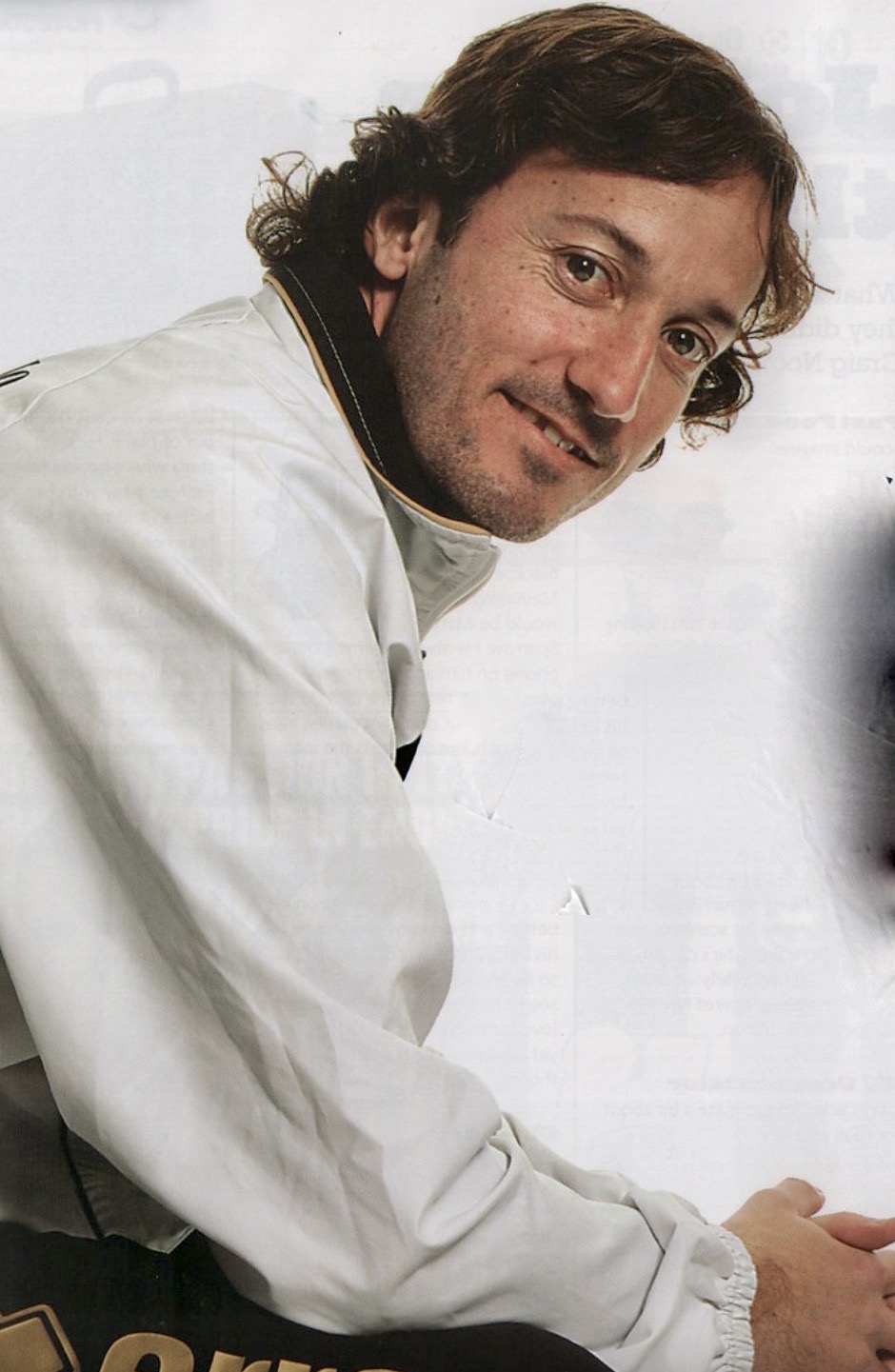
GUS POYET’s loyal deputy, Mauricio Taricco, once labelled ‘The Premiership’s most hated footballer’, had a late and unexpected swansong to his playing career with Brighton.

It came six years after the Argentinian full-back thought his playing days were over when he sustained a bad injury on his debut for West Ham, having switched across London from Tottenham Hotspur, where he played alongside Poyet.

Taricco was no stranger to a red card during his days playing at the top level and he was also sent for an early bath in his comeback game when the Seagulls beat Woking on penalties in the FA Cup.

Some of Taricco’s actions drew fierce cricitism when he was at White Hart Lane, for instance the BBC’s chief football writer, Phil McNulty, wrote an excoriating piece which he began: “Taricco may have a modicum of limited talent, but he hides it brilliantly behind a selection of all that is sneaky and cynical in football.”

Spitting, diving and feigning injury were among the accusations levelled at Taricco, and he left Everton’s Thomas Gravesen nursing a shin wound that required 30 stitches.

After two sendings off in three games in 2002, McNulty said the Argentine was “swiftly becoming the Premiership’s most hated footballer” and concluded: “Taricco is a scar on the Premiership and on a club with a name for a certain style – and (Glenn) Hoddle must operate to remove it.”

Strong stuff but the BBC man was not alone in his scathing criticism; Leicester boss Dave Bassett was incensed when Taricco feigned injury to try to get Foxes’ Andy Impey sent off at White Hart Lane. “That man should be done away with,” said Bassett. “He is a disgrace to the game.”

After Taricco had been sent off at Old Trafford, and then again following “a wild lunge” on Graeme Le Saux in a match against Chelsea at Stamford Bridge, Hoddle stood up for the Argentine defender, saying he’d been harshly criticised and that the reaction was disproportionate.

“I’m not saying that there haven’t been times this season that he’s done some silly things, and he admits that, but the two sendings off, in my eyes, have not been warranted,” said Hoddle. “The press have gone OTT on it.”

Not everyone viewed him harshly. Jonas Ahrell, of sports internet company Sportal, said: “A string of assured performances, along with great control, touch and distribution, has shown him to be a shrewd purchase by Spurs boss George Graham, who knows a thing or two about defenders.”

He explained how his nickname Tano is Argentine for Italian – his father was from Sardinia – and he described the defender as “articulate, impeccably-mannered and an all-round lovely bloke”.

Born in Buenos Aires on 10 March 1973, Taricco grew up playing football in the capital’s streets and he would eventually follow in the footsteps of Argentina’s famous World Cup stars Ossie Ardiles and Ricky Villa to White Hart Lane.

It was John Lyall who was instrumental in his arrival on European soil. Taricco had been playing for home city club Argentinos Juniors for only a year when Ipswich Town boss Lyall and experienced scout Charlie Woods were in South America on the hunt for new talent. Their main target was Uruguayan midfielder Adrián Paz, but they took a chance on 21-year-old Taricco too for whom a £175,000 fee was paid.

“You often see two players coming over together to help each other with a new culture and a new way of life but it proved to be me who stayed,” Taricco recalled in an Albion matchday programme article. “Although I was playing in the top league in my homeland, it was always an ambition to play in Europe.

“I think that Adrian leaving after a few months helped me. I was now more isolated, but it helped me to stand on my own two feet. I had to understand the language and mix with people.”

While Taricco quickly made his debut in the League Cup against Bolton Wanderers, he mainly had to be content with reserve team football initially until a change of management – from Lyall to George Burley – and relegation from the Premier League eventually worked in his favour.

Taricco made 167 starts for Town and although defending was his priority, he also scored half a dozen goals – memorably in a 2-0 League Cup win over Manchester United in 1997 and a 3-0 league win against Crystal Palace in 1998 which followed a solo run from inside his own half.

In a March 2020 interview with the East Anglian Daily Times, Taricco looked back fondly on his days at Portman Road, telling Richard Woodall: “I have great memories of being an Ipswich player – in particular the derby games against Norwich. I always knew what that game meant for the fans and for everybody involved with the club. Winning the derby, oh my god, it was a nice feeling.”

Woodall said fans remembered him as a big game player; for example, following a pre-match presentation of his Supporters’ Player of the Year award in 1997, he went on to score in that evening’s 2-0 win against Norwich. The Argentinian described the award at the time as the “greatest honour of my career”.

His cult status among Tractor Boys fans was best described by Csaba Abrahall in a piece for When Saturday Comes and, when he was sold to Spurs for £1.75m in November 1998, there was widespread outcry amongst the faithful.

Taricco became the first signing of Graham’s reign as manager at White Hart Lane, although he was injured at the time, causing a delay before he could make his debut.

“It was always my ambition to move to the Premier League, although I still left Ipswich with a heavy heart,” he said. “I was George Graham’s first signing, but I didn’t see that as an extra pressure – I knew Spurs had been watching me for a while, so I just got on with my football and I coped with the step up – I was a regular for much of my time at the club.

“At Ipswich, we lost in the play-offs and I was absolutely devastated because my dream had gone, that’s why I was so determined to make the most of the opportunity to play at the top level.”

Taricco maintained: “I think the fans at Ipswich and Tottenham liked me because they could relate to me. I’m like a fan when I’m playing. I want to win. When fans get a penalty, even if their player has dived, they jump for joy. I was the same and I’m on the pitch! I didn’t care about other players, fans, clubs. I was playing for my team and nothing else mattered.

“I always got stuck in. You don’t have to be big but you have to have the will to do it. Sometimes you give it, sometimes you take it, that’s football.

“Saying that, there were things I only learnt when I came here. For instance, when you see a 50-50 tackle here and someone gets hurt you just say ‘both players were committed’ and you carry on. In Argentina, there would be a red card and a fight breaking out. So, I learnt that I could get away with things here. If a bad tackle’s coming in and I knew a player was not going to get booked, I had to ‘manage’ things.”

Off the field, there were several managerial changes during his time at the Lane but Taricco learned most from Hoddle. “He was a very technical type of manager, as he was a player, and it was of prime importance to him to have his teams playing a particular type of football,” he said. 

“I really appreciated this as someone who always wanted to play the ball on the ground, think forward and create lots of goal-scoring opportunities.  He was a really positive manager and I can take a lot from my days working under him.”

The other important take from his time there was getting to know Poyet well (after the midfielder’s move from Chelsea in 2001) and developing a strong bond of friendship that would last through appointments at Albion and several other clubs.

Taricco’s time at Spurs came to an end in 2004 after 149 games (plus seven as a sub) when French manager Jacques Santini told him he was not part of his plans. He missed the start of the season through injury and then suspension and was allowed to join West Ham on a free transfer. It’s now quite well known that he sustained a bad injury on his Hammers debut against Millwall and voluntarily tore up his contract.

He moved to Sardinia with his wife and children, managed a property portfolio by day and kept himself fit turning out for his local team.

The idyll lasted five years before his old friend Poyet asked if he’d be interested in becoming his no.2 at Brighton. “Gus is a person I respect both as a man and for his football brain,” he said. “When he asked if I wanted to join him, I said ‘yes’ straight away – I was willing to swap everything I had for Brighton and it’s been a great decision.”

While the plan was always for him to use his knowledge and experience on the training ground and in the dugout, on 18 August 2010 there was a hint of a comeback when he suddenly played 45 minutes for Albion reserves in a 0-0 draw with Gillingham at Culver Road, Lancing. By then he was 37.

The matchday programme observed how he “turned in a cultured display, likewise one feisty challenge that has become a hallmark of an illustrious career”.

The assistant manager himself said: “It was a normal match and nothing more – there was not a lot of thinking behind my decision to play.

“West Ham v Millwall was my last professional game, although I played amateur league (for Castiadas) and regional league football (for Villasimius) in Sardinia right up until last November when I arrived at Brighton.

“But I’m not thinking about coming back to play, I’m just thinking about getting myself as fit as I can.”

However, he added: “If something happens with the team regarding an injury crisis or suspension and I can get fit enough and powerful enough to cope with League One, then who knows?

“I will now try to push myself more and try to get involved in training more often, when I can. If I can mix it up and do my own specific programme to get my sharpness and explosive power back, then I’m sure I will.”

Sure enough, three months later, Taricco stepped into first team action in the FA Cup, playing against Woking on 16 November 2010, although his involvement ended prematurely when he was sent off for two yellow cards – the second one for dissent.

He also played in the next round when it took two games to see off FC United and he finally made his 350th senior appearance after a six-year absence from playing professionally.

“I love playing football, so it’s nice to play, although I feel like I need a bit more power in my legs,” he said. “If I can get that bit more power for the first four or five yards I’ll be happier, but I am 37 years old.

“Any game could be your last, so you have got to make the most of every opportunity. Every player needs to give his all because that’s what you need to make it to the top. That goes for training as well as matches and it’s the way I’ve always approached the game of football.”

He didn’t expect to play regularly, though, and said: “I still see myself as part of the coaching staff rather than the playing staff. I’m there if we need to rest players or if somebody is recovering from an injury, because it is a very long and intense season.

“It is nice to play, don’t get me wrong, and I have enjoyed training with the team, but there are players with better legs than me in the squad.”

By the end of the season in which Albion won promotion to the Championship, he’d started five games and been sub twice, but he was still not done with playing.

The following season, Poyet called on his assistant’s playing experience on nine occasions (plus three as a sub) although Taricco was never far from the headlines for the wrong reasons.

Taricco looks back in anger after seeing red at St Mary’s

I can remember watching at St Mary’s as Taricco so hotly disputed a controversial penalty award by Peter Walton when Lewis Dunk downed Jose Fonte, quite clearly outside the box, that his protests gained him a straight red card.

Taricco also didn’t cover himself in glory at the Madejski Stadium on Boxing Day when lively wideman Jobi McAnuff gave him a torrid time and got two goals in a 3-0 win.

He featured in a six-game spell spanning December and early January but the surprise New Year 3-0 home win over Saints, when young Grant Hall replaced him in the 54th minute, turned out to be his last appearance as a player.

After his departure from the Seagulls with Poyet following the defeat to Palace in the 2013 Championship play-offs, Taricco followed his friend to Sunderland, AEK Athens, Real Betis, Shanghai Shenhua and FC Bordeaux.

He told the East Anglian Daily Times: “When I choose who to work with, I want to know that they are a decent human being, and Gus Poyet is certainly that. This quality is not always easy to find in football.

“Both of us come from similar cultures and we think about football the same way. As well as wanting to win, we both want to put our players in situations where they will flourish. Both of us feel that sometimes as players, our managers didn’t necessarily give us that chance.”

In October 2020, Taricco told the EADT: “Not being a coach now means I’ve had the time to think a lot, and I’m currently learning about world finance, how the world’s monetary system works, and why poverty still exists, so quite big topics!”

But he added: “When the phone goes and the right opportunity comes along, I’ll be ready to be assistant manager again!”

• Pictures from online sources and matchday programmes.

‘Film star’ defender Osman’s cameo role for the Seagulls

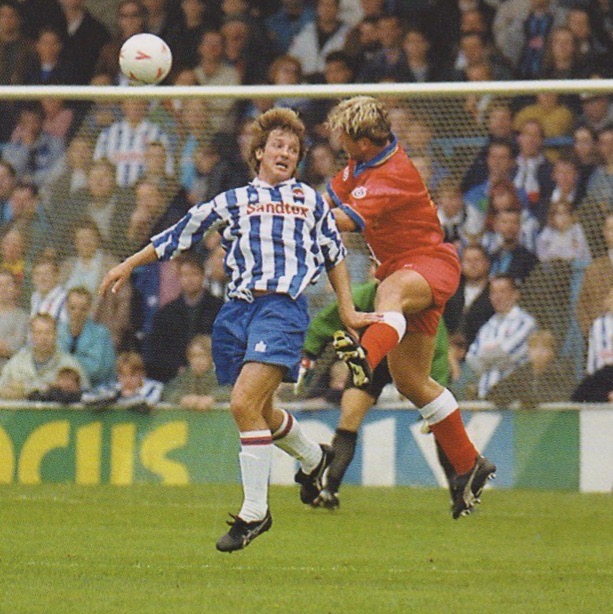
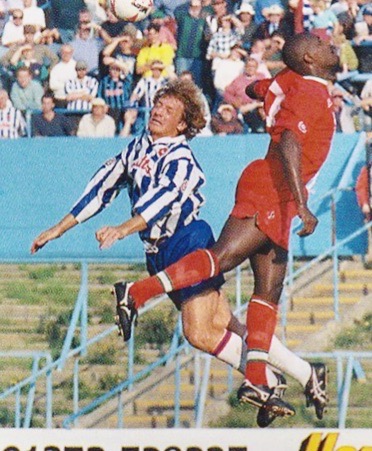
RUSSELL OSMAN achieved lifelong fame for his appearance in the much-shown 1981 prisoner of war football film Escape to Victory but 17 appearances for Brighton in the latter stages of his career have largely been forgotten.

A cultured central defender who played in the same side as Jimmy Case at Southampton won 11 England caps at the peak of his game when a key part of Bobby Robson’s Ipswich Town side of the early 1980s.

He was 36 by the time he arrived on a monthly contract at third-tier Albion in September 1995 and what was happening on the pitch at that time was largely overshadowed by events off it.

News was emerging that the Goldstone Ground had been sold, leading to manager Liam Brady quitting in disgust in November 1995, passing on the reins to Case, who very reluctantly took on the job.

With Steve Foster and Stuart Munday struggling with injury, Brady brought in the experienced Osman to play alongside Paul McCarthy. His debut came in a 4-1 Auto Windscreens Shields game away to Cambridge United, the first of 12 successive games before Munday returned towards the end of November when Osman picked up a hamstring injury.

Meanwhile, Case pointed out in his first programme notes as manager, for the FA Cup game at home to Fulham on 14 December: “There is no secret he would still like to get back into management and we are happy to leave his position as it is on a month-to-month basis.”

Osman was back in the side for the 1-0 Boxing Day win away to Brentford and kept his place for the next two matches. But with Ross Johnson taking on the no.5 shirt, Osman got only one more start: in a 0-0 draw away to Hull City. He made one appearance as a sub in place of McCarthy and was twice a non-playing sub. As he turned 37, he took the opportunity to switch to Cardiff City, which, as the match day programme noted, was a lot closer to his Bristol home.

Born on 14 February 1959 in Repton, Derbyshire, Osman eventually followed in his dad Rex’s footsteps in becoming a professional footballer (Osman senior played for Derby County in the ‘50s), but it was rugby at which Russell excelled during schooldays at Burton on Trent Grammar. So much so that he played for England at under 15 level and captained his country as an under 16.

However, the sports-mad youngster also played football for his village team and when they reached the final of the Derby & District Cup, he was watched by Bobby Robson’s brother Tom, who lived in the area. “He came down and watched the game, we won the final and the next thing I knew I had a call from Ipswich to go on trial,” Osman said in an interview with the East Anglian Daily Times. “The rest is history. They were very good at getting kids to go on trial and they went that extra mile to make sure we were looked after and treated well.”

Osman recalls many aspects and anecdotes of his career on a blog, Golf, Football and Life, and he said he would be forever grateful for the dedication shown by Ipswich’s youth team coach, Charlie Woods, who became Robson’s right-hand man throughout his career.

“Charlie used to drive from Ipswich to my dad’s pub in Repton on a Friday to pick me up and take me back down to Ipswich, putting me up for the night in his and Pat’s house, just so that I could make the game on a Saturday morning,” he wrote. “I doubt that you would get many coaches who would make an eight-hour round trip just to get a schoolboy to a game.”

Osman became an apprentice at Portman Road in July 1975 and signed on as a professional in March 1976. Eventually, he and Terry Butcher took over the centre back roles previously filled by Northern Ireland international Allan Hunter and England international Kevin Beattie.

Osman in action for Ipswich against Arsenal’s Liam Brady, later to become his boss at Brighton

The 1980-1981 season was certainly momentous in Osman’s life. He played in 66 matches (including four for England) over the course of the season as Ipswich won the UEFA Cup, finished runners-up in the old First Division and reached the semi-finals of the FA Cup.

For a large part of the season, Town looked like they would win the First Division title for the first time since 1962 under Alf Ramsey but only three wins from the last 10 matches meant they had to settle for second place, four points behind Aston Villa.

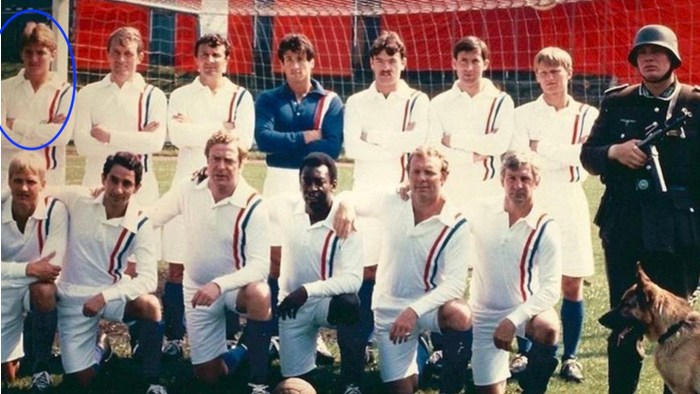
At the end of the season, Robson asked the squad if any of them fancied spending the summer playing more football to help make a feature film. Osman and teammates John Wark, Kevin O’Callaghan, Robin Turner, Laurie Sivell, Paul Cooper and Beattie jumped at the chance and spent five weeks in Budapest making Escape to Victory, directed by the legendary John Huston.

The Escape to Victory football team which featured Osman (back, left)

Osman played the part of prison camp inmate Doug Clure and he has since talked and written about the experience, in July 2021 remembering the experience in an interview with a BBC reporter. Osman recounts how the Ipswich lads and other professionals such as Bobby Moore, Pelé, Mike Summerbee and Ossie Ardiles played football scenes alongside established actors Michael Caine and Sylvester Stallone.

Beattie was Caine’s ‘double’ in the football scenes and Cooper helped Stallone with goalkeeping skills. Turner and Sivell played for the German team and Osman, Wark and O’Callaghan had speaking roles.

“Michael was brilliant, he made all the lads feel at home on set by telling a few funny stories and taking all the tension out of the situation,” said Osman. “I managed to deliver my lines and we were off and running, literally.”

Osman’s first international football recognition came for England under 21s in February 1979 as a substitute for Billy Gilbert in a 1-0 win over Wales at Swansea. In September the same year, he got his first start at that level alongside his Ipswich teammate Butcher (in a 1-0 win over Denmark at Vicarage Road).

The first of Osman’s 11 full England caps came on 31 May 1980, in a 2-1 win v Australia in Sydney which was the game in which Peter Ward made his one and only appearance for the full England side, appearing as an 82nd minute substitute for Alan Sunderland.

Osman was 21 at the time and he went on to play in five competitive matches and five more friendlies, rather curiously only playing for his country on home soil three times, and only being on the winning side twice, both times against Australia.

Osman did make a couple of appearances for the England B side: on 26 March 1980 he played in a 1-0 win over Spain at Roker Park, Sunderland (Joe Corrigan was in goal) and later the same year, on 14 October, he was in the B team that beat the USA 1-0 at Old Trafford.

He had been in Ron Greenwood’s provisional squad of 40 for the 1982 World Cup but was not included in the final 22, Albion’s Foster getting the nod instead as reserve centre back.

Osman’s last international was on 21 September 1983, when England lost 1-0 to Denmark in a Euro 1984 qualifier, by which time his former club manager Robson had taken over from Greenwood, who’d given Osman his first six caps.

Although Ipswich challenged at the top of the First Division in 1981-82, they once again finished four points behind the champions, this time Liverpool, and after Robson left to take on the England manager’s job, the side was gradually broken up. Osman and Eric Gates both left in 1985.

After making 385 appearances for Town, Osman signed for Leicester City for £240,000 where he played 120 games under three different managers: Gordon Milne, Bryan Hamilton and David Pleat.

When the Foxes dropped down to the second tier, it was Southampton, and manager Chris Nicholl, who gave Osman – at 29 – the chance to play at the top level again.

A tribunal-determined fee of £325,000 took him to The Dell where he made his debut in the opening match of 1988-89, a 4-0 win over West Ham. He initially partnered Kevin Moore at the heart of their defence, then later Neil Ruddock.

“At Southampton I played just behind the great Jimmy Case, and what an experience that was,” Osman recalled. “Every day there would be something that made you smile about playing with Jimmy; well, it did if he was on your side anyway. Hard as a rock, cute and clever as a footballer, better than people gave him credit for, a wonderful passer of the ball. Sometimes his playing ability was overshadowed by his extravagances off the pitch!”

The Southampton FC player archive enthusiastically records Osman’s time with the Saints, which was largely successful at first. With Alan Shearer, Rod Wallace and Matt Le Tissier scoring the goals, the side finished seventh in the table. But they couldn’t sustain that success the following season and Nicholl was sacked. Writer Duncan Holley on sporting-heroes.net recalled: “One of the manager’s last actions had been to sanction the signing of Jon Gittens from Swindon and Russell had been displaced for the final run in.”

Nicholl’s successor, Ian Branfoot, picked Osman at left-back for the opening four games of the 1991-92 season but, as Osman told Ian Carnaby in a 2007 interview: “The day Ian Branfoot walked through the door, my Southampton career was over. All those years I’d been a centre-half, but he thought I’d make a good left-back.”

Osman joined Bristol City on loan initially before making the move permanent for a £60,000 fee, and he put down roots in the city. After about a year as a player, manager Jimmy Lumsden was sacked and Osman, as a senior player, was asked to take temporary charge.

However, Denis Smith, sacked as Sunderland boss in December 1991, took over at City in March 1992, with Osman named player-assistant manager. In a 2020 Facebook interview, Osman somewhat sharply said: “Denis Smith didn’t last too long because he wasn’t a very good manager, so they offered me the job.”

That happened in January 1993 and he remained in the manager’s chair at Ashton Gate just short of two years. He steered City to mid-table finishes in 1993 and 1994.

A look through City fans’ forum One Team In Bristol (otib.co.uk) reveals mixed opinions about Osman’s time in charge although some believed he was dealt a raw hand by the Ashton Gate hierarchy. It was said he was dismissed after the directors called him in and said they wanted European football within 10 years. Under Osman’s successor, Joe Jordan (appointed in November 1994), the Robins were relegated.

One significant highlight from Osman’s City reign was leading them to a shock 1-0 win at Anfield in a FA Cup third round replay in January 1994, a result which brought an end to Graeme Souness’ time as Liverpool manager.

Hailed as “the class of ‘94 etching their names into the club’s roll of honour” the achievement was apparently masterminded in the club’s canteen a few days earlier when Osman and his assistant Tony Fawthrop decided to deploy Brian Tinnion just behind the strikers instead of out wide, and he ended up scoring the only goal of the game.

After Osman’s departure from Ashton Gate, his next stop was Plymouth Argyle, where his old Ipswich teammate Steve McCall was a key player in Peter Shilton’s side.

When Shilton left, McCall took charge of the Pilgrims for two months as temporary player-manager, then Osman took over the running of the side for the last few weeks of the season. However, because of an ongoing legal case with Bristol City, Osman couldn’t be given the title manager or receive payment. He was known as ‘adviser of team affairs’. The arrangement didn’t last, though, because Argyle appointed Neil Warnock as manager that summer.

It was three months later that Osman took up Brady’s offer of a return to playing with Brighton. After moving on from the Goldstone in February 1996, Osman signed for Cardiff City as a player.

Team manager Phil Neal left to become Steve Coppell’s assistant at Manchester City in October 1996, director of football Kenny Hibbitt took charge for a month, then Osman ran the side for a month. He took the managerial reins in time for a first-round FA Cup clash with non-league Hendon. The Bluebirds made hard work of a 2-0 win, but earned a second-round tie against Gillingham, which they lost 2-0.

Osman remained working under Hibbitt until January 1998 when, according to one observer, he “departed due to draw fatigue” (over the season, City drew an astonishing 23 matches out of 46, only winning nine times) and was replaced by the returning Frank Burrows.

Direct involvement in the game has since been sporadic. He and Kevan Broadhurst were appointed as caretaker managers of Bristol Rovers until the end of the season on 22 March 2004 but they were only in charge for just over a month as former Oxford United boss Ian Atkins was appointed manager on 26 April.

Three years later, former Southampton teammate Paul Tisdale recruited Osman as interim assistant manager and, between February 2011 and August 2013 he was assistant academy coach back at Ipswich when ex-Albion striker Sammy Morgan was the academy manager.

Osman had a hand in Ipswich taking on Tyrone Mings. Mings was playing for the same non-league Chippenham team as Osman’s son Toby and Osman senior recommended him to Town boss Mick McCarthy, as he explained to the East Anglian Daily Times.

After he left Ipswich, Osman embarked on a co-commentator / pundit career covering Indian football, initially working alongside the veteran commentator John Helm. It involved travelling extensively in India although he was latterly based in a Mumbai studio – until Covid-19 restrictions intervened.

One brief hiatus to that career came in the summer of 2015 when he was invited by his old Ipswich defensive partner, Butcher, to be his assistant at Newport County. Unfortunately, the partnership was short-lived. They were sacked just a few months into the new season after a string of poor results.

Pundit Osman meets up with ex-Albion boss Steve Coppell, boss of Kerala Blasters

Aside from sharing his views on Indian football, ever the all-round sportsman Osman is a keen golfer, cyclist and runner, and espouses the energy and recovery powers of a juicing diet, having fresh vegetable juice and fruit juice smoothies every day.

Osman uses his blog to cover a variety of topics, he has 5,100 followers on Twitter, and, during lockdown in 2020, took part in an interesting online interview with India-based The View and Reviews Show.

Osman shares thoughts about his career and the wider game in an online interview

“I have worked in the media for 20 years now,” Osman said in an interview for Kings of Anglia magazine. “I worked for Eurosport, starting prior to the Euro 2000 championships and I go a long way back with them and the BBC. I also started working in India through a contact I made at Eurosport about 15 years ago.”

Pictures from a variety of online sources, and matchday programmes.

Ups and downs of medal-laden Mark McGhee’s career

MARK McGHEE saw highs and lows as Brighton & Hove Albion manager after a medal-laden playing career that took him from his native Scotland to England and also to Germany.

McGhee was in charge when the Seagulls memorably won the 2004 play-off final to gain promotion from the third tier, beating Bristol City at the Millennium Stadium, Cardiff.

Play off final boss

Keeping the Seagulls up the following season was arguably an even greater achievement considering at the time playing home games at the crowd-restricted Withdean Stadium meant the club was at a huge disadvantage compared to most clubs in the division.

With the Amex still a distant dream, relegation came at the end of the 2005-06 season, and it wasn’t long into the following season that Dick Knight wielded the axe on the Glaswegian’s time in charge.

“It was hard to sack Mark, but we had to have a change,” Knight wrote in his autobiography, Mad Man: From the Gutter to the Stars. “Everyone recognised what he had done in taking up and keeping up a team that was not that great, to be honest. Hats off to him, he had done a terrific job. And he is a very intelligent, personable guy.”

Knight took decisive action when part of the crowd became vociferous in wanting McGhee out, and the chairman also felt some of the young players drafted into the team weren’t responding to him.

He was finally toppled over lunch at Topolino’s, and Knight admitted: “It was a difficult decision. There was strong vocal opposition to McGhee, but also a large, less noisy element who were behind him.”

McGhee liked Brighton so much he made it his home despite subsequently taking on a series of other roles the length and breadth of the country.

It’s probably fair to say the Scot has never been afraid to speak his mind, which his former Newcastle boss Bill McGarry mentioned to him. McGhee recounted in an interview with theleaguepaper.com: “I was managing Wolves at the time. He said ‘Mark, you talk too much. Tone it down a bit’. I tried to take his advice, give nothing away in media briefings. Then, somebody would say something interesting and I wasn’t able to stop myself.”

It’s probably what helped him gain a place on the Sky Sports Soccer Saturday panel when he was in between management jobs.

McGhee would most likely look back on some jobs he’d perhaps have been wiser to stay away from, for example taking temporary charge of Eastbourne Borough in 2018, although his enthusiasm was undimmed as he revealed in an interview with thenonleaguefootballpaper.com.

Born in Glasgow on 20 May 1957, his father was an electrical engineer and his mother a fertility consultant at Glasgow Royal Infirmary. McGhee was on the books of Bristol City at the start of his long career but he returned to Scotland and became a part-timer with Greenock Morton while also training to be an architect.

Aforementioned manager McGarry signed him for Newcastle for a £150,000 fee on 30 December 1977 and he made his debut on 2 January 1978.

His face didn’t fit after Arthur Cox took over as boss, but Alex Ferguson took a punt on him in March 1979 and signed him for Aberdeen, and it proved to be one of many shrewd decisions the esteemed Scot would make in his career.

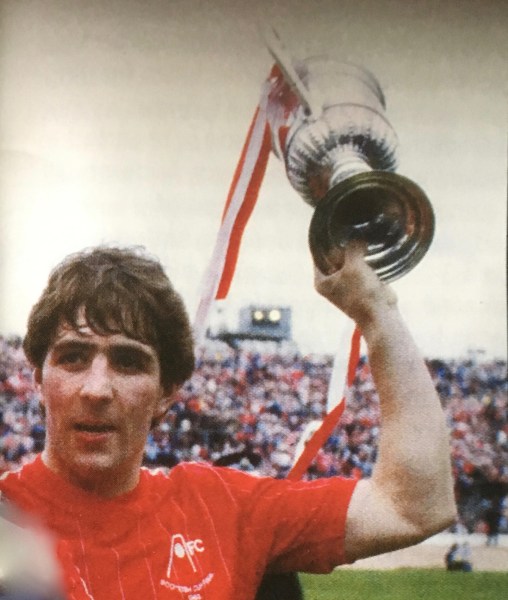
McGhee was named Scottish PFA Players’ Player of the Year in 1982, and the following year was part of the Aberdeen side who beat Real Madrid 2–1 to lift the 1983 European Cup Winners’ Cup in Gothenburg.

mcg cup

He also scored the second goal as Aberdeen defeated Hamburg 2-0 to win the UEFA Super Cup in the same year.

Asked about the best goal he scored, he said: “Probably the winning goal in my last game for Aberdeen.”

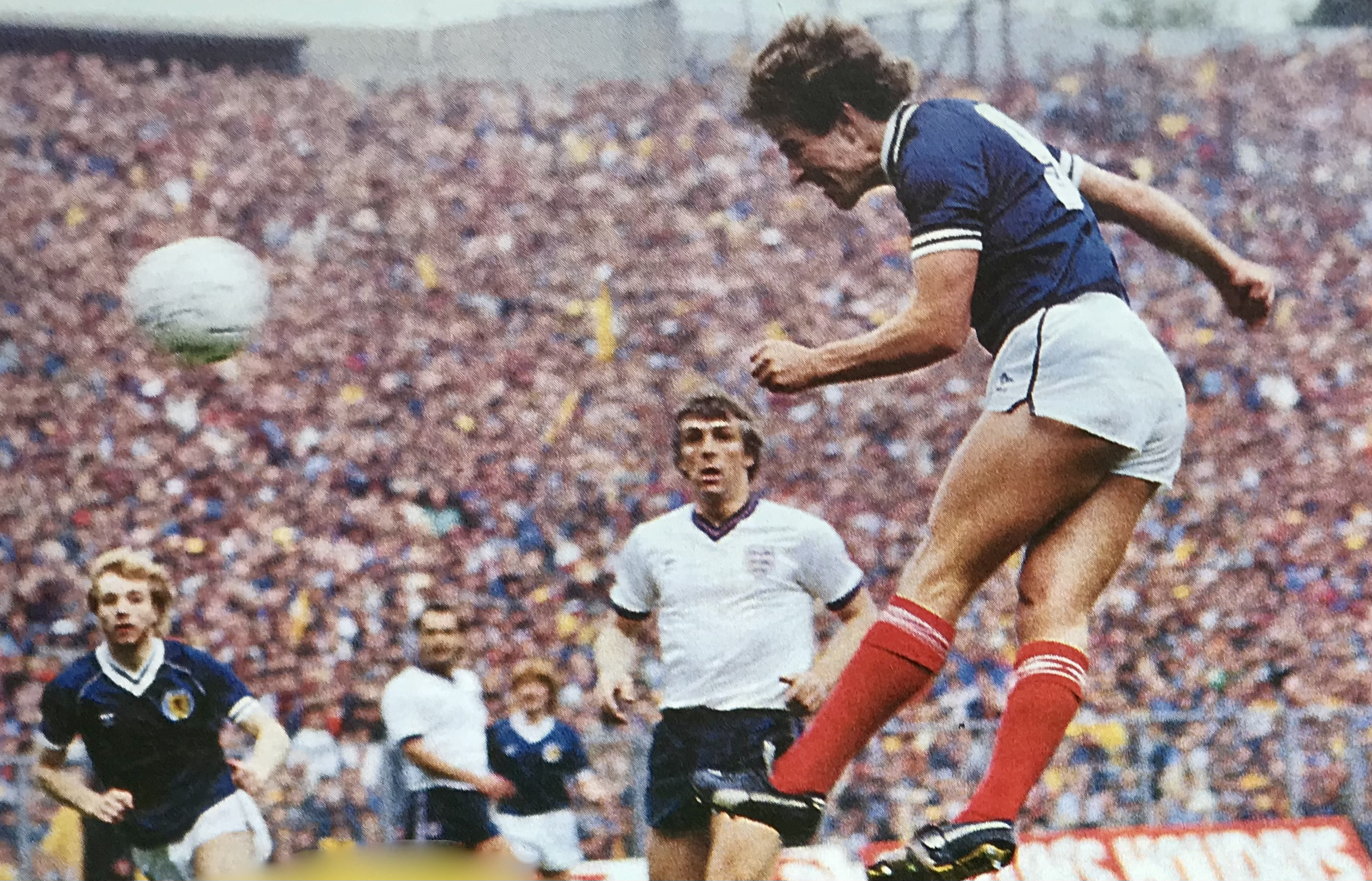
McGhee reckoned his best moment in football came on 26 May 1984 when he scored against England at Hampden Park. He headed in a cross (as pictured) from his great pal Gordon Strachan past Peter Shilton.

McG v Eng

“It put us 1-0 up but Tony Woodcock equalised to make the final score 1-1.”

It was one of four caps he won for his country. Nearly two decades later, in January 2013, Strachan appointed him as his no.2 with the Scottish national side.

M McGhee Old Football PhotosBut back to those playing days, and with two Scottish league titles and three Cup wins behind him, McGhee tried his hand at European football and spent 16 months at Hamburg. The spell was probably more of an education than a success, with injuries limiting his game time.

A £170,000 fee took him back to Scotland, to Celtic, where he had mixed fortunes during four years with the Glasgow giants. He was, though, part of the squad that won a League and Cup double in their centenary season.

After winning another Scottish Cup winners’ medal in 1989, he was on the move again, back to Newcastle.

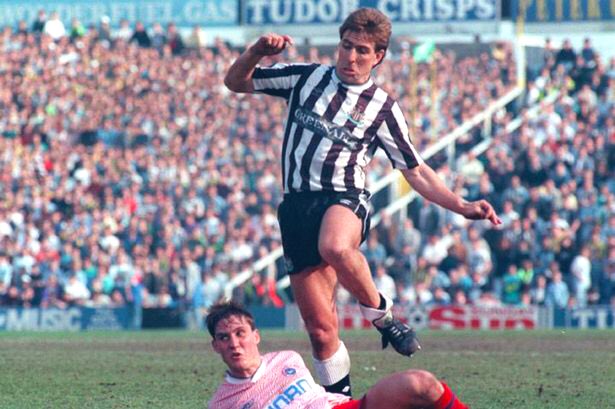
Now with Jim Smith in charge, Newcastle paid £200,000 to take McGhee back to St James’ Park, where he formed an impressive strike partnership with the legendary Micky Quinn as Toon finished third in the old Division Two.

“We were good friends, but we didn’t blend on the pitch like Toshack and Keegan, Quinn told theleaguepaper.com. “Mark was a free spirit. He’d get the ball and drift left or right and drop deep.

“He’d turn defenders and drag them out of position. He would hold the ball up well for me to get into the box and score goals. He went where he wanted, but it worked.”

football back then McGhee

This Football Back Then picture shows McGhee in action for Newcastle against Albion’s Nicky Bissett.

His farewell performance came on 6 April 1991, not long after Ossie Ardiles had taken over as manager, and McGhee departed having scored a total of 36 goals in 115 appearances for the Magpies.

Next stop was Sweden, where he played briefly for IK Brage, but he seized the opportunity to try his hand at management by taking up the role of player-manager at Reading in the summer of 1991.

He’d been recommended for the role by his old boss Ferguson, and, after quitting playing through injury in 1993, he led the Royals to promotion from the third tier the following year.

A struggling Leicester City gave him a chance to manage in the Premier League but he was unable to keep them up and, less than a year after joining, decided to switch to Wolverhampton Wanderers, to succeed Graham Taylor.

Wolves just failed to gain promotion in 1996-97 (they lost in the play-off semi-finals) and were ninth the following campaign. Four months into the 1998-99 season, following a string of poor results, McGhee was fired.

It would be 20 months before he gained his next opportunity, this time at Millwall where he enjoyed initial success, leading them to promotion from the third tier, and then narrowly missing out on another promotion when they lost in the play-off semi-finals to Birmingham City.

McGhee apptWhen he parted company from Millwall in October 2003, he wasn’t out of work long because Brighton needed a replacement for Steve Coppell, who’d been wooed to take over at Reading (pictured above, with chairman Dick Knight, at his unveiling as Albion manager).

Those Albion fans who stuck by the team in the humble surroundings of the Withdean Stadium enjoyed some good moments during McGhee’s time as manager, in particular promotion via the play-off final in 2004.

He certainly found a formula to get the best out of certain players, as Adam Virgo, converted from defender to goalscorer, observed in that theleaguepaper.com article. “Mark is a very good communicator and very experienced,” he said. “He can make you feel ten feet tall. He’s very good at being honest, at analysing your game and telling you what you’re good at.”

After his departure from the Albion, McGhee was out of the game for nine months but got back in at Motherwell, turning them from near relegation candidates to qualifiers for European competition.

The lure of his old club, Aberdeen, proved too strong in the summer of 2009, but his tenure proved to be disastrous – and brief.

He spent the majority of 2012 as manager of Bristol Rovers, where one of the squad he inherited was former Brighton defender-turned-striker, Virgo. The following year, his old pal, Strachan, appointed him as assistant coach to the Scottish national side.

He later combined the role part-time when he returned to Motherwell but there were mixed fortunes second time round, and he left them again in early 2017. Towards the end of that year, he popped up at League Two Barnet, but the arrangement lasted only two months before he was moved to a ‘head of technical’ role, and then dismissed in March 2018.

McGhee was ‘slaughtered’ on Twitter when he took over as interim manager of National South side Eastbourne Borough in the spring of 2019, after being beaten 3-0 by Wealdstone in his first match in charge, his new side reduced to nine men after two players were sent off. Borough won just once in 11 matches.

When Albion under 23s coach Simon Rusk was appointed manager of Vanarama National League side Stockport County in January 2021, McGhee was appointed as one of his assistants.

His final managerial post was at Dundee in February 2022 when he took temporary charge of the Scottish Premiership side until the end of the season (with Rusk as his assistant), but they couldn’t avoid them being relegated, overseeing just one win in 13 matches.

McGhee finally announced his retirement from the game in September 2022 at the age of 65, telling the Sunday Post: “I won’t be pursuing any other managerial vacancies, and nor would I want to be a director of football or a head of recruitment. That’s not what I am – I’m a manager.

“I feel that players now deserve a young manager who can give them the energy I was able to when I started out. They don’t need a 65-year-old with a dodgy ankle.”

The spot kick highs and lows of penalty king Denny Mundee


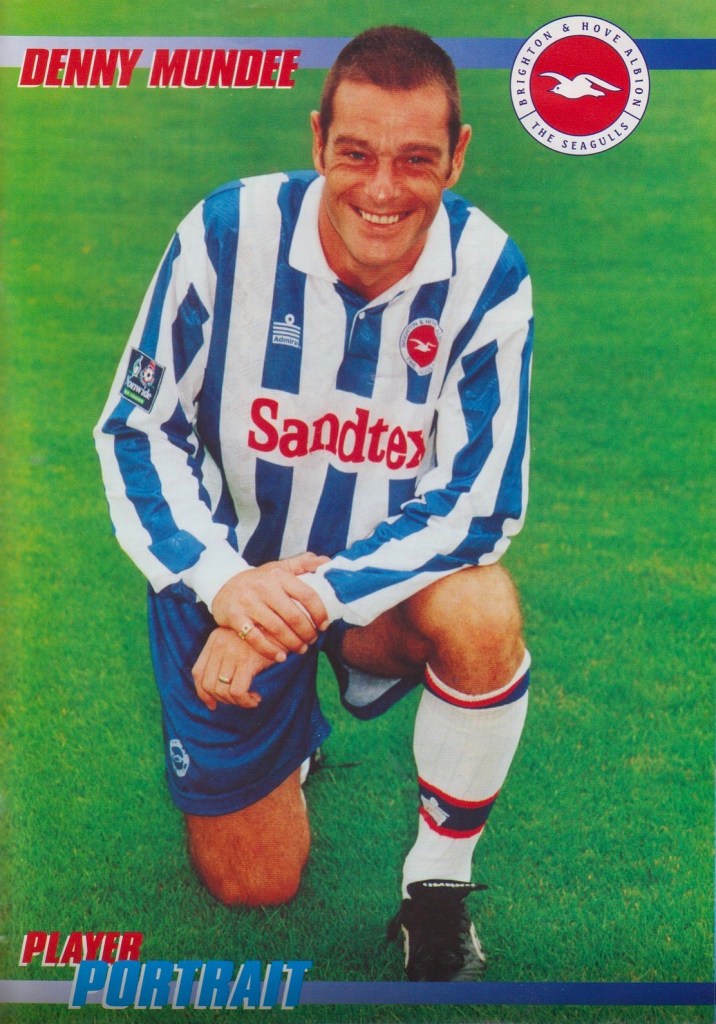
SPOT KICK specialist Denny Mundee played for the Seagulls during the dark days when they nearly dropped out of the league having enjoyed better times with Bournemouth and Brentford.

His older brother, Brian, also played for the Cherries and another brother, Barry, was forced to quit football at 18 because of injury. It was a case of third time lucky when young Denny finally broke through into league football. Previous attempts to make it, at QPR and Swindon, had got nowhere.

Born Dennis William John Mundee in Swindon on 10 October 1968, Denny first showed his footballing talent at his local primary school (Liden), as a contemporary wrote some years later on the Brentford fans forum, Griffin Park Grapevine.

The poster, called ‘SmiffyInSpain’ said: “Went to primary school with Denny in Swindon and he was a class act then. Went to separate secondary schools, but still kept in contact with him as an opponent at school level football.

“Of all the players of the same age, Denny stood out by far. Of all the penalties he took against me, he never missed.”

Indeed, Mundee was noted for his success rate from the 12-yard spot, taking on the penalty taker duties at whichever side he played for.

The young Mundee was first offered an apprenticeship at Third Division Bournemouth but decided to join First Division QPR as a junior, where he spent a year.

Released in the summer of 1986, he joined home town team Swindon for a season, but again failed to make the grade. It took a drop down to Southern League Premier side Salisbury before things began to click. Scoring 20 goals in 34 appearances brought him back to the attention of Bournemouth, who snapped him up in March 1988.

Although he made his Bournemouth debut towards the end of the 1988-89 season, he had loan spells with Weymouth, Yeovil Town and Torquay United before establishing himself with the Cherries.

It was in 1991-92 that he laid claim to a regular place, and, as right-back, made 41 league appearances that season.

His winning spot-kick in a 4-3 penalty shoot-out decider in the third round of the FA Cup against Newcastle United in January 1992 earned Mundee hero status in a Cherries’ Legends Gallery put together by BBC Dorset.

United, managed at the time by Argentine legend Ossie Ardiles, were floundering at the bottom of the old Second Division, while Harry Redknapp’s Third Division Cherries had already held the Magpies 0-0 at Dean Court before taking the tie to penalties after the replay at St James’ Park had ended 2-2 on 90 minutes.

However, by the end of the following season, Mundee had become something of a utility player, slotting in to various positions, and, in August 1993, he chose to leave the south coast club on a free transfer.

In just over five years, he had started 93 games for the Cherries and come on as a sub in another 29 games.

Former Chelsea and QPR defender David Webb had taken over as manager at Brentford and Mundee was among his first signings.

Bees fans remember him being signed as a full back but, on being ‘thrown up top’, he was a revelation and finished his first season at Griffin Park with 11 goals.

Perhaps ironically, Brentford, in 16th, finished a point and a place above Bournemouth that 1993-94 season. Mundee scored 11 times, including a memorable hat-trick in a 4-3 defeat at home to Bristol Rovers.

DMHSSix of his goals that season came in a run of four consecutive games between 27 November and 27 December, four of them penalties.
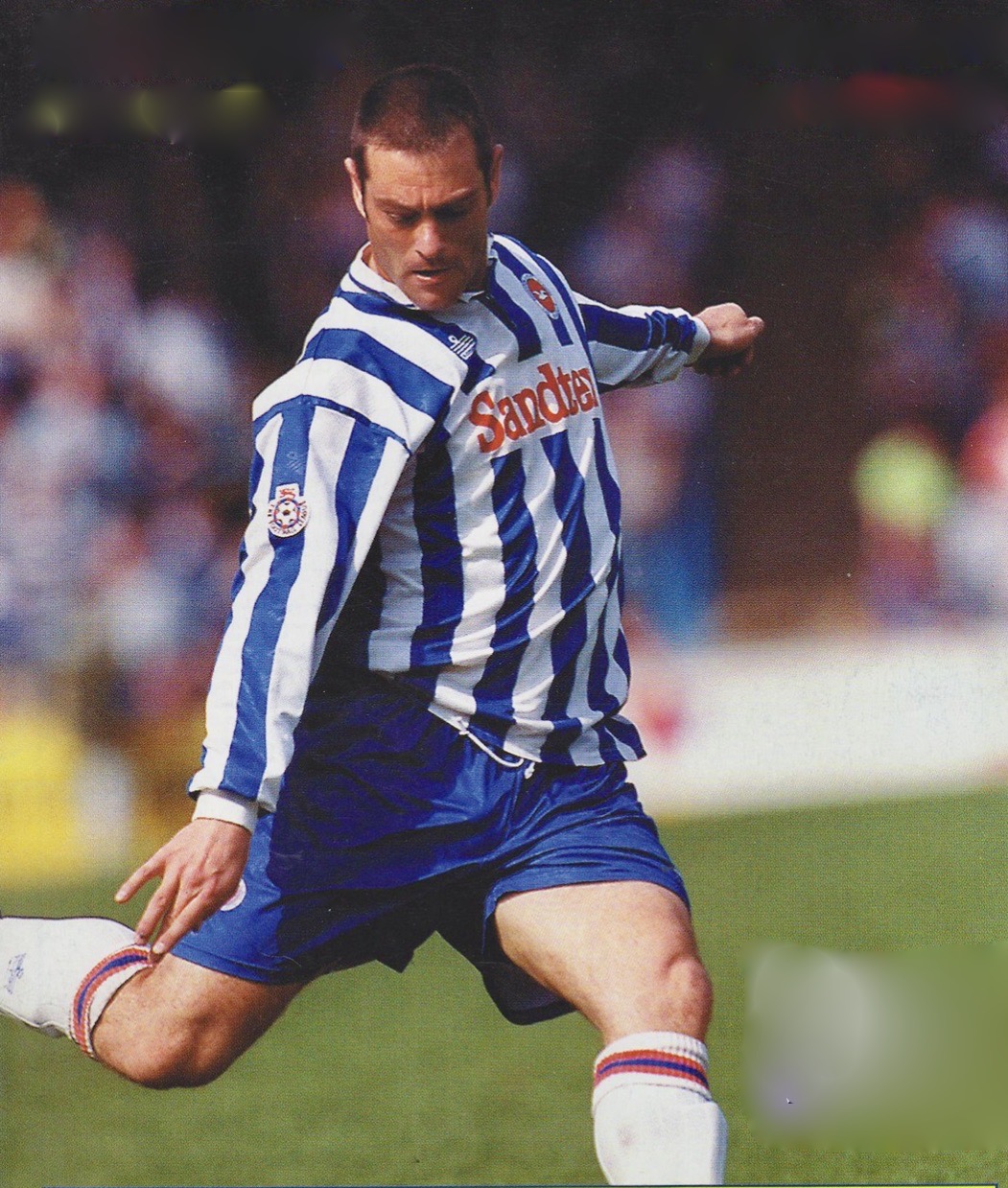
Mundee found himself part of a side that featured the free-scoring Nicky Forster in attack alongside Robert Taylor.

Described as “whole-hearted” and “a crowd pleaser”, Mundee earned something of a reputation for a shuffle, or a twiddle, he would deploy to get past opponents. ‘Brickie Chap’ on griffinpark.org said of him: “A player that always tried his best. Not the most gifted we have ever had down here but deffo one for providing quality entertainment.”

Unfortunately for a player normally so reliable from 12 yards, it was a penalty he failed to convert that Brentford fans have never really got over.

Mundee’s miss in a 1995 Division Two play-off match against Neil Warnock’s Huddersfield came in what was apparently the first-ever televised penalty shoot-out featured on Sky.

It was all the more galling because Mundee had scored twice from the spot past Town’s Steve Francis the previous season but, on this occasion, he blew the chance to put Brentford two goals ahead when he was outguessed by the ‘keeper. When Jamie Bates missed too, Brentford’s season was over.

Any other year, as runners-up, Brentford would have been promoted automatically, but, because of a reorganisation of the Premier League that year, only the top team went up automatically, hence their participation in the play-offs.

Mundee’s erstwhile primary school teammate wrote: “I watched the Huddersfield match in ‘95 and I would have put my mortgage on him netting like he did for Bournemouth at Newcastle a few years earlier.”

mundeeIn two years with the Bees, Mundee made 73 starts plus 25 appearances as a sub but, when his old Bournemouth teammate Jimmy Case took over the Albion’s managerial reins from Liam Brady, he and another ex-Cherry, Mark Morris, headed to the Goldstone Ground to try to help the Seagulls’ cause.

With the poisonous off-field developments at the club an ugly backdrop to the playing side, neither could do anything to halt Albion’s slide into the bottom tier.

Things went from bad to worse and on 1 February 1997, bottom of the league Brighton drew 1-1 at Mansfield Town, Mundee scoring for the Seagulls with a follow-up after his initial penalty was parried. Albion were nine points adrift and relegation from the league was looking virtually certain.

However, as we all now know, the drop was averted courtesy of that nail-biting draw at Hereford.

Although Mundee remained on the books for the following season, in December 1997 he, Morris, Craig Maskell, Paul McDonald and John Humphrey were all released to save money.

Mundee had played 58 games plus four as sub for the Albion, chipping in with eight goals.

Also burdened by ankle and back injuries, it spelled the end of his professional career although he did manage a handful of games with various non-league outfits.

Ten years ago, a cousin of Denny’s confirmed that he had moved to Throop, a village on the outskirts of Bournemouth, and was working for the same plastering business as brother Brian.

Villa’s European Cup winning captain at the Albion

2-mortimer-in-flightA CULTURED midfielder regarded in many circles as the best ever captain of Aston Villa was almost ever-present in one season with Brighton.
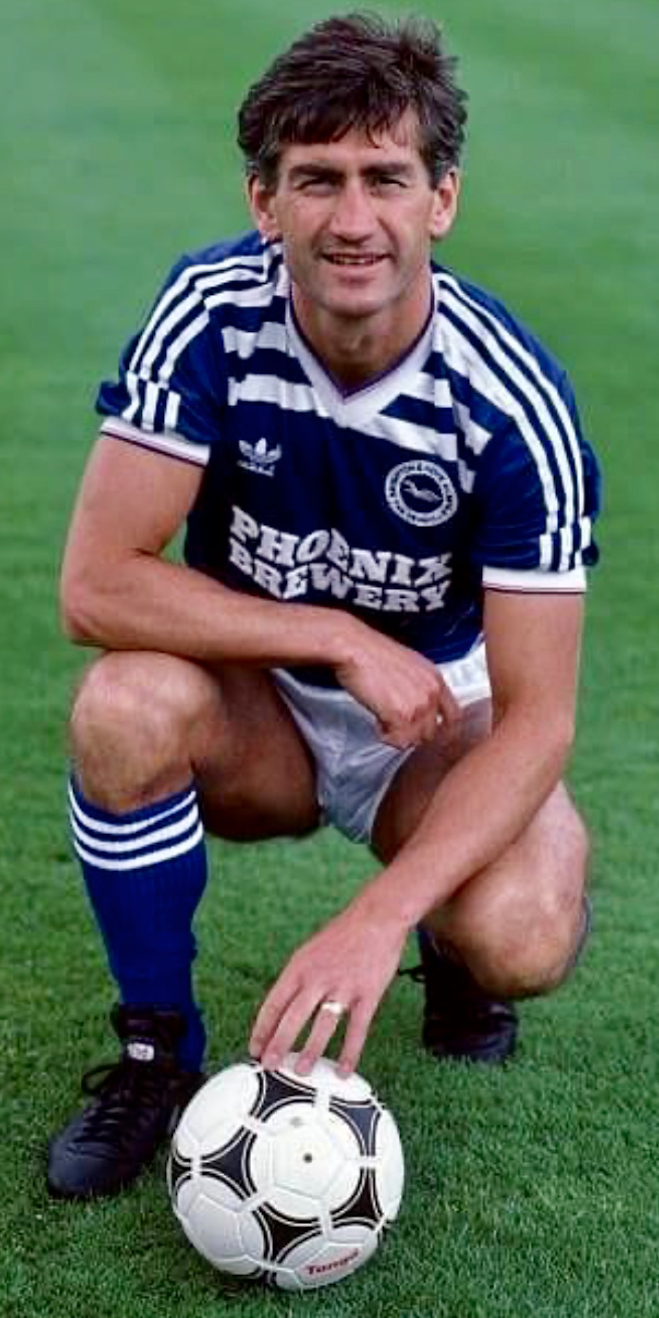
Dennis Mortimer captained Villa when they won the European Cup in 1982 under manager Tony Barton.

Mortimer joined the Seagulls three years later and shone in what was a rather disappointing Division 2 season which saw the Albion finish 11th.

Brighton’s near-promotion form in the season before had prompted Mortimer to try to help the Seagulls to restore their elite status after he’d been released by Villa.

In a programme feature by Tony Norman in November 1985, he said: “I knew this was a good side to come into; a team that wanted to play good football and win promotion.

“They missed it so narrowly last year and I felt I would like to be part of that challenge this year. I knew there would be excitement in the season ahead, and to me that is one of the most important things in football.

“Obviously I’m coming to the end of a long career in the game. I’ve been a professional for 17 years now and I wanted one final challenge. That’s why I came to Brighton.”

In his programme notes for the opening game of the season (against Grimsby Town), manager Chris Cattlin said of his former Coventry teammate: “He is a truly outstanding professional who will give the team steadiness and experience.”

Fans had a taste of what he would bring to the team when he scored a cracker in a pre-season game against Arsenal.

Unfortunately, while Mortimer was a consistent performer in midfield and the team enjoyed a decent run in the FA Cup – losing in the quarter finals to Southampton – Cattlin’s side were beset by injuries to key players and ultimately fell short of the top spots.

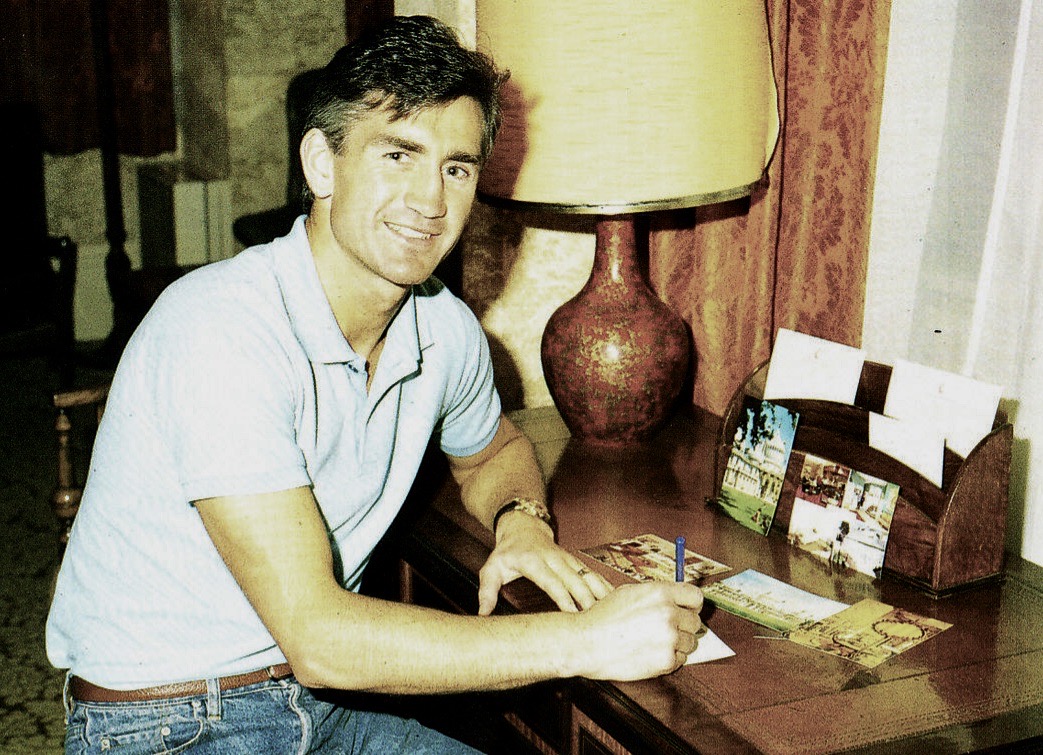
Morty BHAmorty writesKnowing his time on the south coast was going to be limited, Mortimer didn’t uproot his family from their Lichfield home and instead lived in the Courtlands Hotel in Hove (above) for a while and also bought a flat where his wife and children could visit during school holidays.

Despite being born in Liverpool, the bulk of Mortimer’s career was connected with West Midlands teams, beginning with Coventry City under the tutelage of Pat Saward, who later managed the Albion, and ending with West Brom where he had a spell as assistant manager after his playing days were over.

He had not been a schoolboy star but was picked up and developed through Coventry’s youth development system. As well as coach Saward, Coventry’s youngsters also benefitted from the experience of Bob Dennison, the man who, at Middlesbrough, brought together as players one of the most famous footballing partnerships in Brian Clough and Peter Taylor.

“As a lad I thought I would be an engineer and, although the whole family were Liverpool mad, and we never missed a home game, it did not enter my head that I might be a professional until I was 14,” Mortimer said in a Goal interview in 1973. Coventry offered him a trial just as he was leaving school and his career built from there.

His initial Coventry boss Noel Cantwell, the former Man Utd and West Ham full back, was sure Dennis was destined for greater things after his first England under-23 call-up. “Dennis will become a big name in football, “ he said. “When he gets in Sir Alf’s side I don’t think he will lose his place easily.”

Although he never won a full cap, in 1971 he went on an end-of-season tour to Australia in an English FA squad that also included Peter Grummitt (then of Sheffield Wednesday) and Barry Bridges (of Millwall at the time). The group played the Republic of Ireland in Dublin, drawing 1-1, before heading Down Under where they won all nine of the matches they played in various locations across a month.

Coventry general manager, Joe Mercer, who was a legendary figure in the game and had a spell as caretaker manager of England, said of Dennis: “He has this great change of pace…he can go into another gear and accelerate out of trouble like all the good ones.”

However, it was after his move to Villa in 1975 that he rose to prominence, culminating in that famous 1-0 win over Bayern Munich in Rotterdam, courtesy of a Peter Withe goal.

As part of a 30th anniversary celebration of the achievement, Mortimer told the Birmingham Mail in 2012: “It was such a momentous occasion for Aston Villa Football Club and for all of us as young men that you never forget it – and I doubt the fans who witnessed it would ever forget it either.

“You only have to see how big the competition is now and how much hype it gets to realise what an amazing achievement it was for us.

“Every year when the final of the European Cup, or Champions League as it is called now, comes around, I get a glimpse of that fantastic trophy and it all comes flooding back.

“I’ll never get bored of talking about it, but I don’t get reminded about it that much any more. It’s usually me telling the younger kids that Aston Villa won the European Cup.

“Some of them don’t believe me, because it was so long ago, and before a lot of them were born, but they go away and Google it and think ‘Wow, yes, they did win it!’”

DM Villa

In 10 years at Villa, Mortimer made 403 appearances and scored 36 goals. A 1977 League Cup winner, he led Villa to the English Division One title on May 2, 1981, and then lifted the European Cup on May 26, 1982.

The Birmingham Post said in 2010: “The Liverpudlian was at the forefront of the club’s finest era of modern times; a driving force from midfield that helped bring a level of success to Villa Park that his successors can only dream of.”

Although capped by England under-23 and England B, a full cap eluded him. That seems extraordinary now, especially after scoring twice in a 3-1 win for the under-23s against the Netherlands at Highbury, when Goal magazine reported he was being “hailed as the new Bobby Charlton”.

Mortimer was subsequently picked for the senior squad but didn’t get a game. “I got as far as the bench in the home internationals when Villa won the league, but never got on,” he said in a 2010 interview. “I always felt I should have done but there were so many good midfield players around at that time.

“I just needed to get on that pitch for five minutes in that home international, but Ron Greenwood wouldn’t put me on.”

After Cattlin allowed Jimmy Case to leave Brighton (telling the board his legs had gone, even though he then had six seasons at Southampton!), the team was crying out for a seasoned cool head in midfield who could put their foot on the ball and spread the ball about.

Cattlin eventually turned to his former Coventry teammate to bring that quality to a squad that was not quite reaching the heights required to restore the elite status lost in 1983.

Sadly, Mortimer spent just the one season at The Goldstone, but his 49 league and cup appearances were the highest number in that season’s squad.

Cattlin had offered him a two-year contract with the chance to start coaching but, following the manager’s sacking close to the end of the season, and his replacement Alan Mullery not fancying the experienced midfielder, he left the club.

“Player-coach would have been great as I had plenty left in the tank,” Mortimer told journalist Spencer Vignes: “He swapped a player with plenty of experience for one with no experience (Dale Jasper) and I was let go. Four months later (it was actually eight), Alan was let go as well.”

Mortimer returned to the Midlands – making the somewhat controversial decision to join Villa’s arch rivals Birmingham.

Funnily enough at the very same time he was heading back to the Midlands, the captain who lifted the European Cup that month also went on to play for the Albion. Romanian international Stefan Iovan was the Steaua Bucharest captain when they beat Barcelona on penalties in Seville; five years later, he was stepping out at Wembley as part of the Seagulls’ line-up in the Division 2 play-off final with Notts County.

But finally back to Mortimer. Now a sports speaker, pundit and coach, he’s not afraid to speak his mind and has been known to upset a few people with his outspoken comments about Villa’s plight in recent years.

  • Pictures from my scrapbook show Dennis Mortimer in action for Coventry against Liverpool, from Goal magazine, and an Albion matchday programme shot of him in full flight for the Seagulls. Also pictured is Mortimer when reserve team coach at West Brom during Ossie Ardiles’ reign as manager. When Ardiles moved to Spurs, Mortimer became new boss Keith Burkinshaw’s assistant. Full grey head of hair picture from 2010.