Well-loved Grealish went down with the Albions and City

TENACIOUS Tony Grealish earned plenty of plaudits in a 20-year professional career spanning almost 600 matches and etched his name in the record books along the way.

Thought to be the only person to play in two different sports at Wembley Stadium, Grealish was also the first Brighton & Hove Albion player to captain his country.

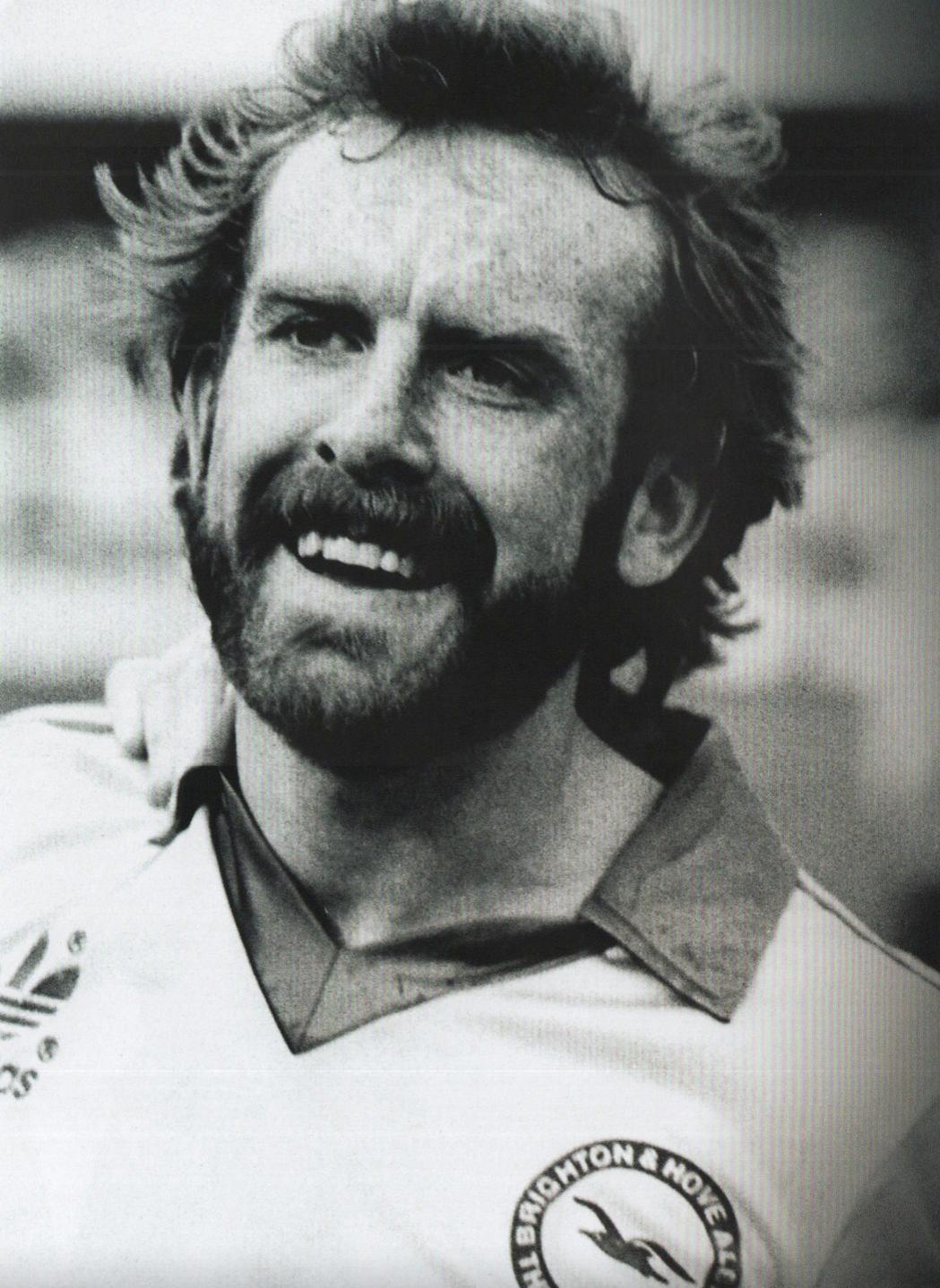
On the ball for Brighton

One statistic less favourably remembered is that he was relegated from the top level of English football with three different clubs: Brighton, West Bromwich Albion and Manchester City.

The London-born Republic of Ireland international was first relegated in the same year that he led the Seagulls out at Wembley for the 1983 FA Cup Final.

He was also part of the Throstles squad who went down in last place in 1986. And it was two relegations in a row after switching to an ailing Sky Blues side that went on to relinquish their top flight status in 1987.
When Grealish signed for Brighton from Luton Town for £100,000 in July 1981, it was a time of significant change. After only just avoiding relegation the season before, manager Alan Mullery had quit over a disagreement with chairman Mike Bamber and four key players left the club: John Gregory, Mark Lawrenson, Peter O’Sullivan and captain Brian Horton.

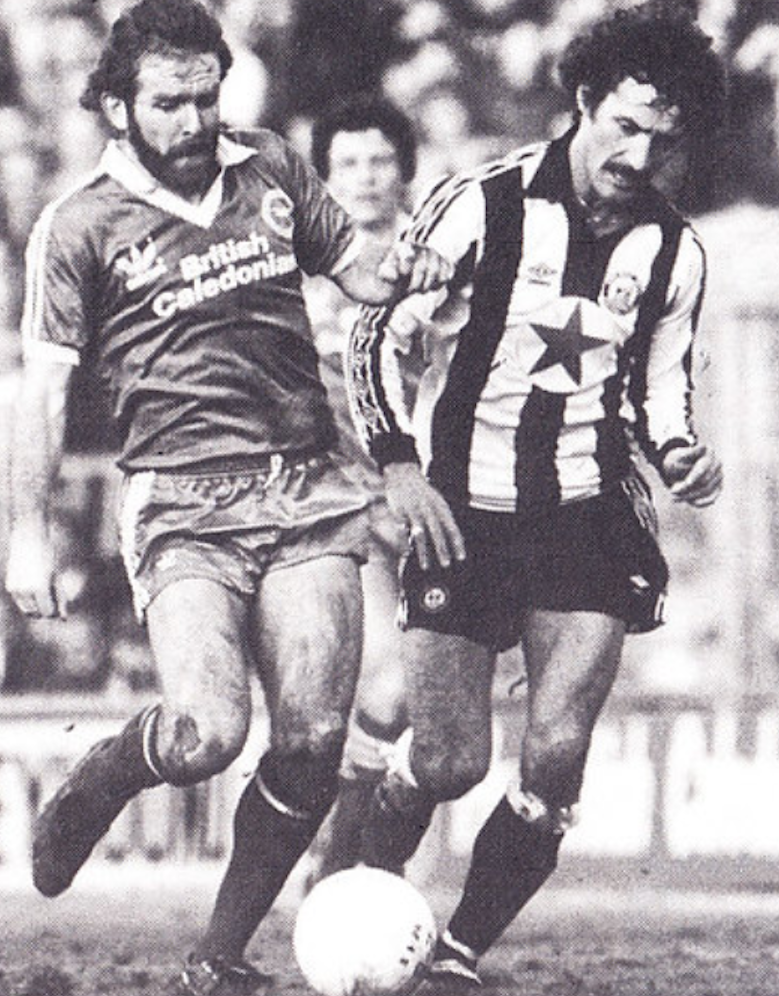
Grealish had quite a tall order taking over in midfield from ex-skipper Horton, who replaced him at Kenilworth Road, but Gordon Smith, another Albion teammate who later played for City, said:

“He did it with style – he was excellent. He was a very hard working player, he could tackle, but he was also classy with it – he could always pick out a pass.”

Part of the deal that saw Liverpool acquire Lawrenson saw the experienced Jimmy Case move to Brighton and he also appreciated what Grealish brought to the side. “Tony was so, so reliable. Playing with him in midfield, you knew that if the going got tough, he would be shoulder to shoulder alongside you.

“He would go in where it hurt, a tough lad, but he was not just a worker, he could play a bit as well and his enthusiasm for the game rubbed off on everyone in that changing room.”

Grealish and Case together with Mullery signing Neil McNab proved to be quite a formidable midfield trio and together they helped Mike Bailey’s side to jostle for top half of the table positions during the 1981-82 season before falling away to finish in 13th place – a record that remained in place until 2022!

Wembley gesture

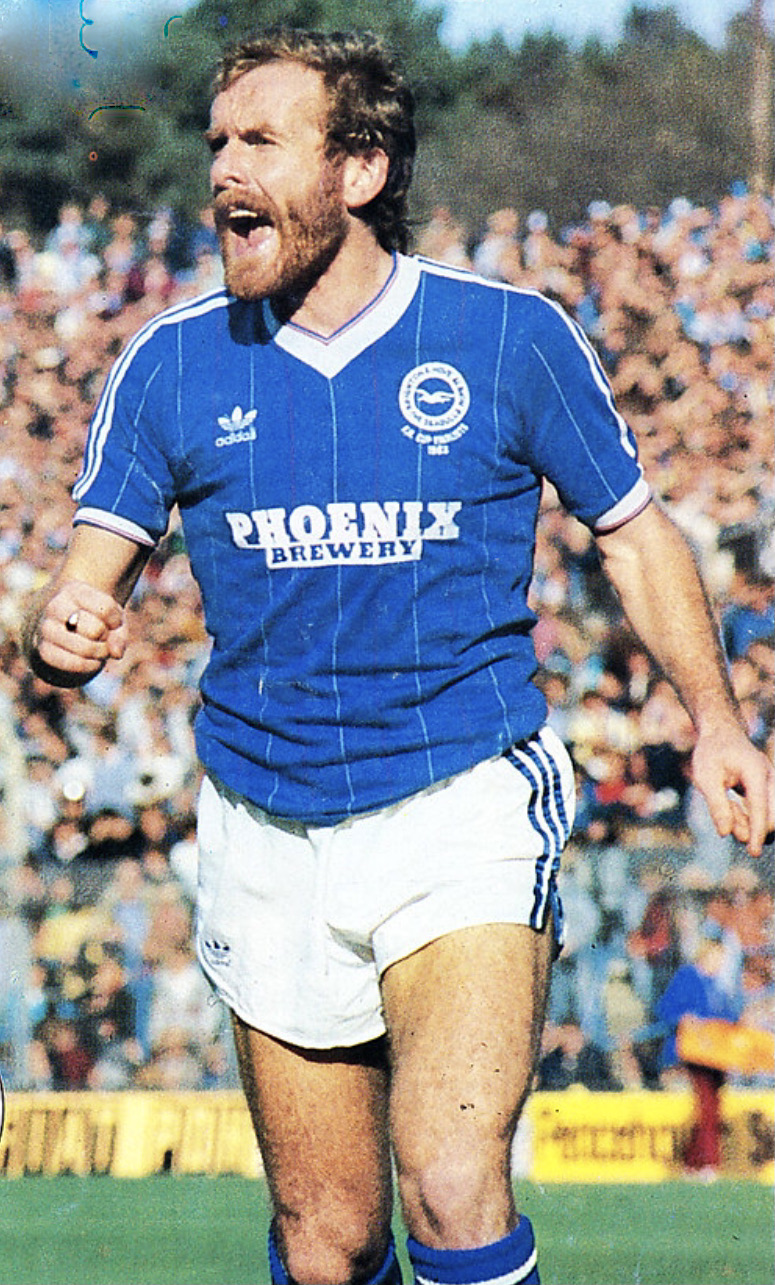
Reaching the FA Cup final in 1983 under Jimmy Melia and George Aitken provided a personal highlight for Grealish when he captained the Seagulls in the absence of suspended regular skipper Steve Foster, memorably wearing the defender’s trademark white headband as a mini-protest at his exclusion.

Grealish’s departure to West Brom in March 1984 was part of the ongoing break-up of the former top level squad, Melia’s successor Chris Cattlin being tasked with trimming the wage bill to bring it into line with second tier football.

Three and a half years later, Grealish had just turned 30 when Jimmy Frizzell signed him for City in October 1986 for a modest £20,000 fee, re-uniting him with McNab.

It was only a short-term deal, though, and he continued to live in Sutton Coldfield, a commute of 90 miles each way! “We haven’t bought a place because I only signed until the end of the season,” he explained. “We’ll see what happens first.”

Frizzell had previously been assistant manager to Billy McNeill but took over the reins when the former Celtic captain, frustrated by City’s parlous financial circumstances, left for Aston Villa in September 1986.

City of the mid-1980s were a very different proposition to the modern day version: they were more than £4m in the red and struggling with crippling debt repayments after an ill-advised spending spree in the late 70s and early 80s.

“The first thing I was told when I joined and went to discuss money was that they were so skint they would sell their goalposts if they could,” a Grealish contemporary, centre-back Mick McCarthy, told Chris Bevan for BBC Sport in a 2013 article looking back at that period.

Frizzell felt the relatively youthful City needed some experienced old heads to steady the ship and Grealish joined from West Brom in the same week John Gidman joined on a free transfer from city rivals Manchester United. Both made their Maine Road debuts for bottom-of-the-league City against United in a 1-1 draw on 26 October 1986.

It was the 118th meeting between the two sides, but the first to be broadcast live on TV.

Injury-hit United took the lead through a Frank Stapleton header that crept past the diving Perry Suckling and inside the post, but McCarthy equalised with a header from a cross by McNab.

Under fire United boss Ron Atkinson only had one more game in charge of the Reds; after a 4-1 League Cup defeat by Southampton, he was sacked.

United’s plight was nothing compared to City, though. They didn’t win away throughout the whole season and, in spite of the additions of forwards Paul Stewart and Imre Varadi, scored a meagre 36 goals in 42 games.

Youngster Paul Moulden, having been a prolific goalscorer in City’s FA Youth Cup-winning side of 1986, briefly offered hope when scoring four goals in four games in November but then picked up an injury.

Frizzell blooded several other members of that youth side including Paul Lake, David White and Ian Brightwell but City were relegated. Grealish’s last game for them was in a 0-0 home draw against Newcastle in March, City’s first point in a month. They only won twice in the remaining 10 games and were relegated…along with McNeill’s Villa!

Grealish only made 15 appearances in that 1986-87 season and was an unused sub on two other occasions. He made 11 league starts, one in the FA Cup (a 1-0 defeat v Man U) and three in the Full Members Cup. He also played in City’s reserve side on 14 occasions (stats courtesy of the Gary James archive).

Born in Paddington, west London on 21 September 1956, Grealish played underage for St Agnes Gaelic football club in Cricklewood – alongside brother Brian – and represented London at various underage levels.

That special 1983 Wembley moment meant Grealish achieved the unusual claim to fame as reportedly the only person to play soccer and Gaelic football at the iconic stadium. He’d previously played there in the early ’70s for London’s Minors against New York in what at the time was an annual Whit weekend tournament.

“For a group of London lads, playing at Wembley Stadium was magnificent,” said Éamonn Whelan, a teammate of Grealish’s for St Agnes and London.

Ireland was certainly in his blood even if he wasn’t born there: his father, Packie, was from Athenry in Galway, and although his mother, Nora, was born in London, both her parents came from Limerick.

No surprise then, that Grealish represented Eire with some distinction, winning 45 caps between 1976 and 1985, and It was during Alan Kelly’s brief reign in charge, in 1980, that Grealish was first made Eire skipper – in a 2-0 win over Switzerland at Lansdowne Road, Dublin.

Brighton’s Lawrenson and Gerry Ryan were teammates that day, as was Chris Hughton.

One of the goalscorers that day, Don Givens, said of Grealish: “He gave so much effort that he wasn’t going to accept anything less from his teammates.

“Tony was a 100 per cent tough little midfield player, and a great character off the pitch.”

Former Ireland manager Eoin Hand chose Grealish as Eire captain for the 1984 European qualifying campaign, when Ireland ended in third place behind Spain and Holland.

In his book, First Hand My Life and Irish Football, Hand said Grealish was “more Irish than the Irish themselves”.

“With his dynamic, combative style in the midfield engine room, Tony, with his tousled hair and Viking beard, was the kind of guy you were happy to go into battle alongside,” he said.

Grealish on the international stage with the Republic of Ireland

“He was a natural leader, and although known for his ceaseless industry, he was no mere artisan. Grealish could play as well and conjure up the odd goal from deep positions.”

Previous manager Johnny Giles had given Grealish his Ireland debut at the age of 19, in a friendly against Norway at Dalymount Park, Dublin on 24 March 1976.

Grealish, unusually, started at full back as Ireland won 3-0 thanks to goals from Liam Brady, Jimmy Holmes and a penalty from Mickey Walsh.

“Tony was very good for me when we played together in midfield because he was a ball winning all action player, and we had a good understanding,” said Brady, who later became Brighton’s manager.

“Around the Ireland dressing room, he was very enthusiastic, determined and very motivating – he liked to motivate everyone around him,” he told the Irish World in 2013.  “He’d be up for every match.”

Brady added: “We had a strong friendship, and I haven’t met anyone who played with him who wasn’t a friend of Tony Grealish’s.

“He was a super man, and a super bloke. He made the atmosphere better wherever he was.”

Grealish took his first steps to becoming a professional footballer aged 15 in 1972 when he joined Leyton Orient as an apprentice. Manager George Petchey took him on as a professional in 1974 and he was the club’s player of the year at the end of the 1975-76 season.

In 1977-78, Orient reached an FA Cup semi-final at Stamford Bridge, where they lost 3-0 to  Arsenal, although the aforementioned Liam Brady mentioned: “He man-to-man marked me that day and put me out of the game. Luckily some of our other players performed despite the fact that I didn’t.”

One of the last of his 171 appearances for Orient was in the April 1979 3-3 draw with promotion-chasing Brighton in front of The Big Match cameras (John Jackson was in goal for the Os and Martin Chivers scored his only goal for Brighton).

Grealish transferred to David Pleat’s Luton Town in the summer of 1979 for a fee of £150,000, racking up 78 Division Two appearances over two seasons before joining Brighton.

In total, Grealish played 116 games plus five as a sub for Brighton, and his last game for the Seagulls ironically saw him score in a 1-1 home draw with Manchester City.

Having known what he could bring to a side, it was Giles, when manager of West Bromwich Albion, who took Grealish to the Hawthorns in March 1984 for £75,000.

Reunited with Johnny Giles at West Brom

In one and a half seasons with the Baggies, Grealish made 65 appearances before that move to City.

He spent a brief period with Salgueiros in Portugal before former Leeds hard man Norman Hunter signed him for Rotherham United in August 1987. He made 110 appearances over three seasons, going down with them in 1987-88 and helping them to bounce straight back by winning the Fourth Division title the next year under another former Albion midfield player, Billy McEwan.

His last league club was Walsall during Kenny Hibbitt’s managerial reign before he continued playing at various non-league clubs in the Midlands: Bromsgove Rovers, Moor Green, Halesowen Harriers, Sutton Coldfield and Evesham United.

He returned to Bromsgrove Rovers as player-manager before calling it a day, and then worked in the scrap metal business. He died of cancer aged 56 in April 2013.

An obituary in Albion’s matchday programme saw tributes paid by several former teammates. Gary Stevens, who memorably scored Albion’s equaliser in the 2-2 Cup Final draw against Man Utd, said: “Off the field, Tony was the life and soul of the party.

“When he was with us, he was always laughing, joking and just enjoying life. Yet on the pitch he always gave 100 per cent, was tenacious in the tackle and he had a tremendous will to win.”

Ex-skipper Foster added: “Tony was a lovely man off the pitch and a passionate footballer on it. He was a fantastic midfielder.”
John Humphrey – unsung hero of 1997 great escape

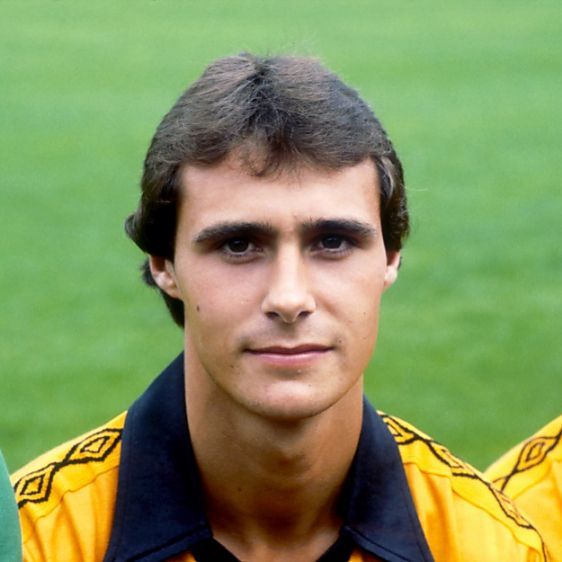
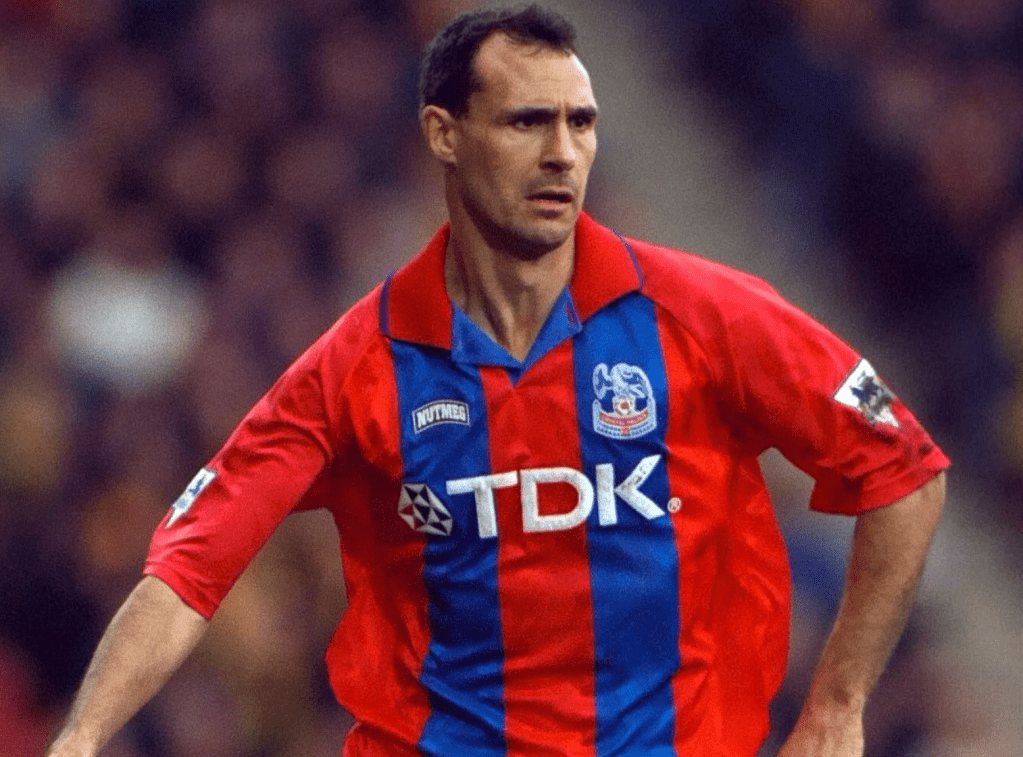
John Humphrey in Wolves colours

ONE OF the unsung heroes of Albion’s last-gasp survival feat in 1997 knew a thing or two about playing for clubs in precarious circumstances.

John Humphrey’s first club was Wolverhampton Wanderers during a bleak period in their history: they dropped into the basement division under the controversial ownership of the Bhatti brothers.

The right-back later played ‘home’ games for Charlton Athletic at Selhurst Park and Upton Park when the football authorities deemed The Valley unfit to stage matches.

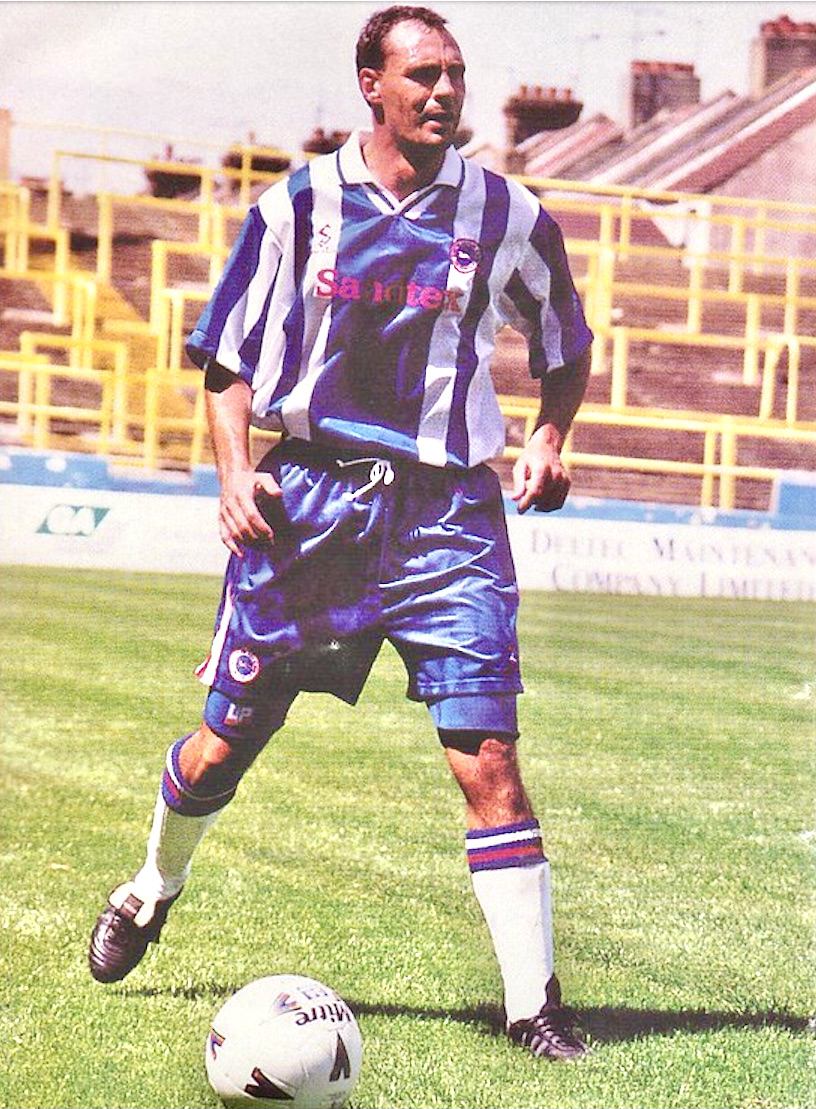
And he ended his professional playing days turning out for Brighton in ‘home’ games at Gillingham’s Priestfield Stadium (as pictured above).

Humphrey came to Brighton’s rescue in the autumn of his career.

With Albion’s very existence under threat as 1996 turned to 1997, Albion handed the managerial reins to Steve Gritt, and former Charlton teammate Humphrey was his first signing: a free transfer from Gillingham, who were playing in the division above.

Humphrey was 36 at the time with nearly 650 professional matches behind him, including a good many in the top-flight with Wolves, Charlton and Crystal Palace. Indeed, he was Charlton’s player of the year in 1988, 1989 and 1990.

After four matches on the bench, Humphrey replaced Peter Smith at right back and played in Albion’s last 11 games of that 1996-97 season, only ending up on the losing side three times. wearebrighton.com said his impact made him “a seriously underrated piece of the Great Escape jigsaw”.

“Steve wanted me because I was experienced, could get the players organised and was able to talk them through matches,” Humphrey told the Argus. “He knew I was steady, reliable and dependable, that nine games out of ten I’d play pretty well and that I would give 100 per cent.

“It was a lot of pressure but I’d been through a few promotions (three) and relegations (six) with Wolves, Charlton and Crystal Palace.” He continued: “The stressful situations I had gone through with those other clubs had given me experience of how to try and keep a season alive.

“I could do a job for Brighton and I felt I did that and the team turned out to be good enough to hang on. It was one of the biggest achievements of my career.”

Humphrey remembered the pressure going into the Hereford match was “horrible” because of the media focus but he added: “It might have been going out of the frying pan of Gillingham into the fire at Albion but I’m glad I made the jump.”

Unfortunately, then chief executive David Bellotti tried to renege on a deal Gritt had agreed verbally with Humphrey that he’d get a new one-year contract if Albion stayed up.

“When I was told I was being released, I thought it was a pretty poor show. But Steve, to his credit, then fought my corner and I stayed on.”

With the Goldstone sold, and Albion forced to play ‘home’ games at Gillingham,  Humphrey retained his place in the side and played in 13 matches but, along with other senior players, such as Craig Maskell, Paul McDonald, Denny Mundee and Ian Baird, he was let go to save money on wages.

Humphrey accepted the package he was offered, called time on his long professional career, and dropped into the non-league scene, playing initially for Chesham, then Carshalton, Dulwich Hamlet and Walton and Hersham.

He got a break into a new career as a teacher at Whitgift School in Croydon courtesy of former Albion defender, Colin Pates, who’d played with Humphrey at Charlton.

“I knew Colin from Charlton when we roomed together,” Humphrey told the Argus. “I was aware he was at the school and he said he needed help for after-school sessions and asked me to come along. So I did and the football took off at the school and I got involved in other sports like rugby and basketball and got a full-time job there.”

After leaving Whitgift School, Humphrey became head of football at Highgate School in north London.

Born in Paddington, west London on 31 January 1961, Humphrey was picked up by Wolves after he played against their junior team for a North London club called Bourne Hall.

He recounted how events unfolded in an interview with wolvesheroes.com: initially signing schoolboy forms, then progressing to coaching in school holidays, before earning an apprenticeship.

He signed as a professional in 1979 and made his first-team debut in the old top- flight in a 3-0 Easter Monday win at Southampton in 1980. His second game ended in a 3-0 defeat to Brighton.

They came under John Barnwell and, by the time Humphrey left the club in 1985, he’d served under three other managers; the last being former Manchester United boss Tommy Docherty.

Although the side was relegated in 1981-82, Humphrey embarked on what was a 78-game unbroken spell in the side. He was ever-present when they were promoted in 1982-83.

“I loved my time at Wolves,” he told wolvesheroes.com. “I only left because we went down again in 1984-85 and I didn’t fancy playing in the Third Division. Charlton came in for me and they took John Pender from Wolves a few weeks later as well.”

Wolves under the Bhatti brothers were in freefall and a lack of investment in the side saw them suffer three consecutive relegations – in 1984, 1985 and 1986 – ending up in the old Fourth Division for the first time in the club’s history.

Humphrey joined an Addicks side newly-promoted to the elite and, although Lennie Lawrence’s side often struggled to retain their status, they remained in the top-flight until 1990, and many supporters thought the right-back was good enough for international selection.

On charltonlife.com in September 2012, Queensland Addick recalled his impressive level of fitness, and said: “The number of times he ran the right wing at great pace during a game was quite incredible.”

By the time he left Charlton in August 1990, he’d played 231 games and it was said his £400,000 transfer to top-flight Crystal Palace was linked to the fact that at the time Charlton were playing home matches at Selhurst Park.

In a five-year stay at Selhurst, Humphrey played 192 games (plus 10 as sub). Known principally for his defending, Humphrey was delighted to mark his 150th appearance for Palace with a 35-yard equaliser for the Eagles against his old club, Wolves, in a 1993 1-1 home draw.

Between December 1993 and May 1994, while Palace were winning promotion from the second tier under Alan Smith, Humphrey was out on a six-month loan at Reading, playing nine games for Mark McGhee’s Second Division side.

He then returned to second-tier Charlton on a free transfer for the 1995-96 season, playing in 36 matches, after Alan Curbishley had taken sole charge.

Next stop was Gillingham, for the first part of the 1996-97 season, but he confessed he didn’t see eye to eye with manager Tony Pulis, so he was happy to answer the call from Gritt to aid basement Brighton’s cause.

Eire captain Tony Grealish swapped one Albion for another

1 main pic TG cover boyTHE PLAYER who led out Brighton at Wembley for the 1983 FA Cup Final against Manchester United was an experienced Republic of Ireland international who went on to play for West Bromwich Albion.
Tony ‘Paddy’ Grealish, sadly no longer with us having died of cancer aged only 56 in 2013, was given his international debut against Norway in 1976 by the legendary Johnny Giles, who knew a thing or two about midfield play.

In fact it was Giles, in his second spell as WBA manager, who took Grealish to The Hawthorns in 1984 as the break-up of the Brighton cup final squad continued.

After his untimely death, Giles told the Irish Times: “I obviously knew him at that stage from the Ireland set-up and knew what to expect.

“He wasn’t the classiest of players but he was one of the most hard working and you knew exactly what you were going to get.

“He was a great lad; a social animal who liked a drink after a game but gave you absolutely everything during it.”

Born in Paddington, London, on 21 September 1956, Grealish qualified to play for the Republic through his father, Packie, who was born in Athenry, Galway, and his mother Nora’s parents, both from Limerick.

He began his career across the other side of London, at Orient, and played 171 games for the Os, one of the last being the memorable 3-3 draw against Brighton in 1979 which featured on The Big Match. One of his teammates that day was Henry Hughton, brother of subsequent Brighton manager, Chris.

The previous year Grealish had been part of the Orient side that made it through to the FA Cup semi final against Arsenal, played at Stamford Bridge, but they were beaten 3-0 (the Gunners lost 1-0 to Ipswich in the final).

In 1979, David Pleat paid £150,000 to take him for Luton Town for whom he played 78 games in two seasons.

The managerial upheaval at the Goldstone Ground in the summer of 1981 saw the arrival of Mike Bailey in place of Alan Mullery, and one of his first moves was to bring in Grealish as part of a swap for Brian Horton, the ageing, inspirational captain who led Brighton from the old Third Division to the First.

Grealish was definitely what you’d call a players’ player, someone who did the hard work in the engine room of the team to enable players with more flair to shine.

He talked about just that scenario in an interview with the Daily Mail after Brighton had beaten Sheffield Wednesday at Highbury in that 1983 cup semi-final.

Referring to an incident when he’d charged down a free kick, he told Brian Scovell: “That’s my job. I’m the bloke with the ugly mug so they get me to do it.”

It was Grealish who rolled the ball to Jimmy Case to smash home that memorable opening goal and he relished his teammate’s strike, saying: “It wasn’t just the power, it was the way the ball swerved away from the ‘keeper that did it.”

After the disappointment of missing out in 1978, reaching the cup final was extra special for Grealish and he found himself thrust centre stage as a result of usual captain Steve Foster’s suspension from the first match.

Even all this time later, people remember how Grealish wore the trademark Foster headband as he led Brighton out. “It was a small protest over Steve’s exclusion from the final,” he told the media after the game.

In the News of the World, Fred Burcombe began his report: “Tony Grealish, Brighton’s stand-in skipper, yesterday entered the Wembley arena with a gesture of defiance and left for home in a blaze of confidence.”

In fact, Grealish was involved in both Brighton’s goals in the 2-2 draw. James Mossop reported in the Sunday Express: “Brighton stayed on the attack after a corner. Tony Grealish collected the ball and his teammates began to fan out, all eager for a pass. He chose Neil Smillie on the right. Smillie gave young Gary Howlett the chance to centre – and as the ball curved in Smith met it ideally, sending his header over the ‘keeper’s outstretched forearm and into the net.”

And with the clock ticking down, United by now 2-1 up, it was Grealish who drilled the ball hard into the penalty box where Gary Stevens controlled it and fired the ball past Gary Bailey to net the equaliser.

Grealish lived in Peacehaven during his time with the Seagulls and clearly enjoyed the social life with his teammates.

“The atmosphere at Brighton is particularly good,” he told Tony Norman in a club programme feature. “There’s always plenty going on. I enjoy our Wednesday golf games. There’s often as many as 10 of the players there. That’s always a laugh.”

Following relegation to the second tier, the Seagulls squad was broken up bit by bit; Gary Stevens and Michael Robinson going first. Grealish lasted a little longer and played two thirds of the 1983-84 season before being sold to West Brom in March.

It didn’t stop him being selected alongside teammate Case in the PFA representative side that season (the centre half selection was Mick McCarthy and the forwards included Kevin Keegan and Mark Hateley).

In total, Grealish played 116 games plus five as a sub for Brighton, and his last game for the Seagulls saw him score in a 1-1 home draw with Manchester City, who he would subsequently join in 1986-87. He played 65 games for West Brom, and 11 times for City, who also had former Seagull Neil McNab in their line-up.

In August 1987, Grealish moved to Rotherham United and played 110 games for the Millers before moving to Walsall (36 appearances).

During his time at Rotherham, in 1988-89, he once again found himself in the PFA representative selection, this time for Division Four. Grealish then did the rounds of various non-league clubs in the Midlands: Bromsgove Rovers, Moor Green, Halesowen Harriers, Sutton Coldfield and Evesham United.

He returned to Bromsgrove Rovers as player-manager before calling it a day, and then worked in the scrap metal business. His career record showed he played a total of 589 league games, plus 45 for the Republic of Ireland; 17 of them as captain.

Little surprise, then, that when he died in 2013, the Football Association of Ireland paid a warm tribute. FAI president Paddy McCaul said: “He will be remembered as a great servant of Irish football who was part of the international set-up under John Giles and Eoin Hand that came so close to qualifying for major tournaments and helped change Ireland’s fortunes at that level of the game.”

FAI chief executive John Delaney added: “Tony Grealish was one of my footballing heroes when I was a child and I always remembered him as a great competitor who always gave his all for Ireland.”

It was during Alan Kelly’s brief reign in charge, in 1980, that Grealish was first made Eire skipper – against Switzerland – and he was a central figure in successor Eoin Hand’s team.

“He was a great character,” said Hand. “I don’t think I ever selected a team during my time in charge that didn’t have him in it.

“I think it’s fair to say he raised his game when he was playing international football. I’d say he was a great club player but the commitment he gave for Ireland; he just couldn’t have given that on a twice weekly basis playing club football. He gave absolutely everything.

“He contributed so much (including eight international goals), had an infectious enthusiasm for it all. If ever there was someone who showed how proud he could be to represent his country then Tony was it. He was very much part of it all; a great ambassador; very generous.”

Hand added: “He was a great example to others in the way he dealt with people; other players, supporters, kids….a really wonderful guy. I was very lucky to have him around when I was manager.”

3.TG shoot cover2 Football Past on Twitter

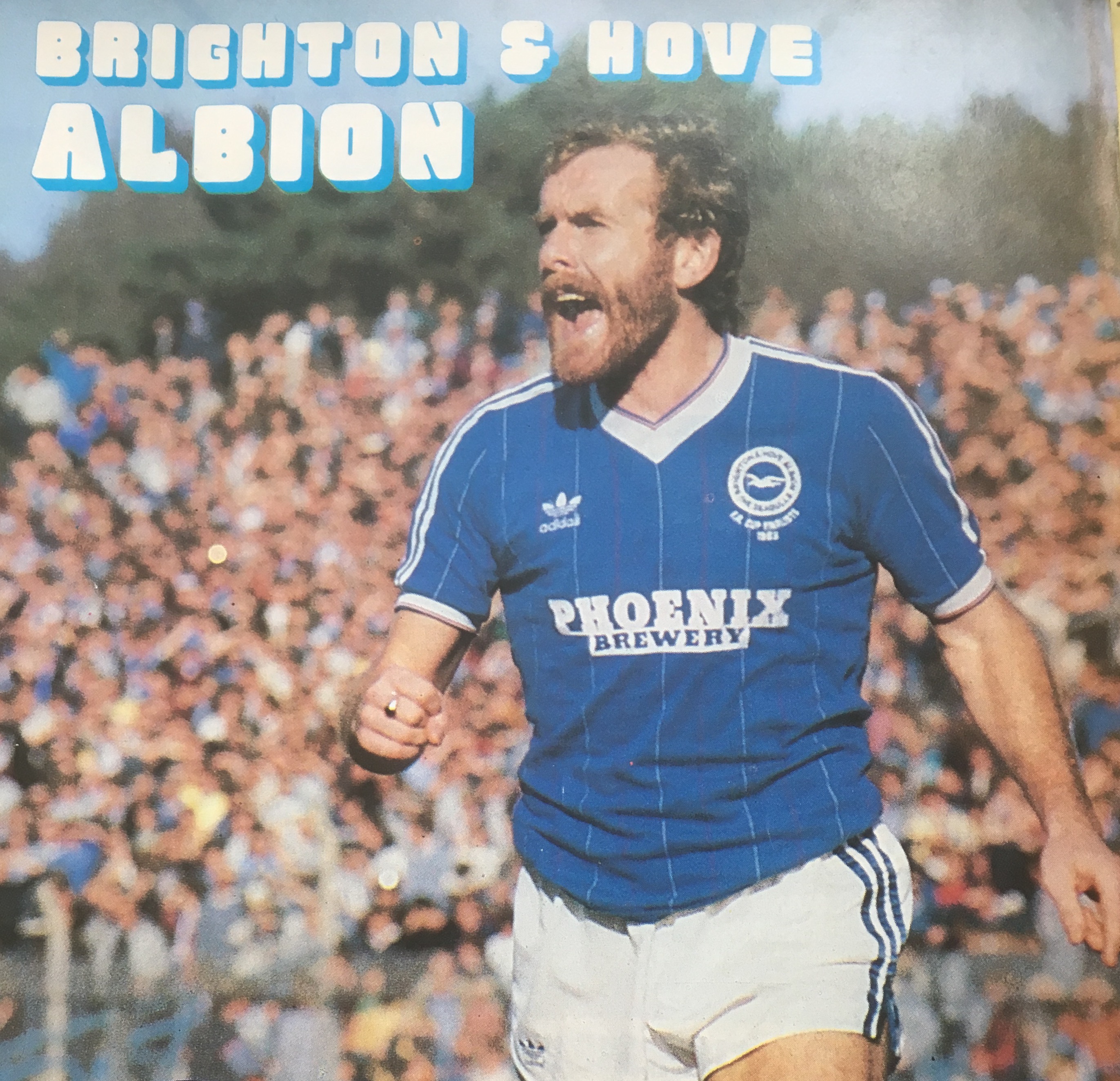
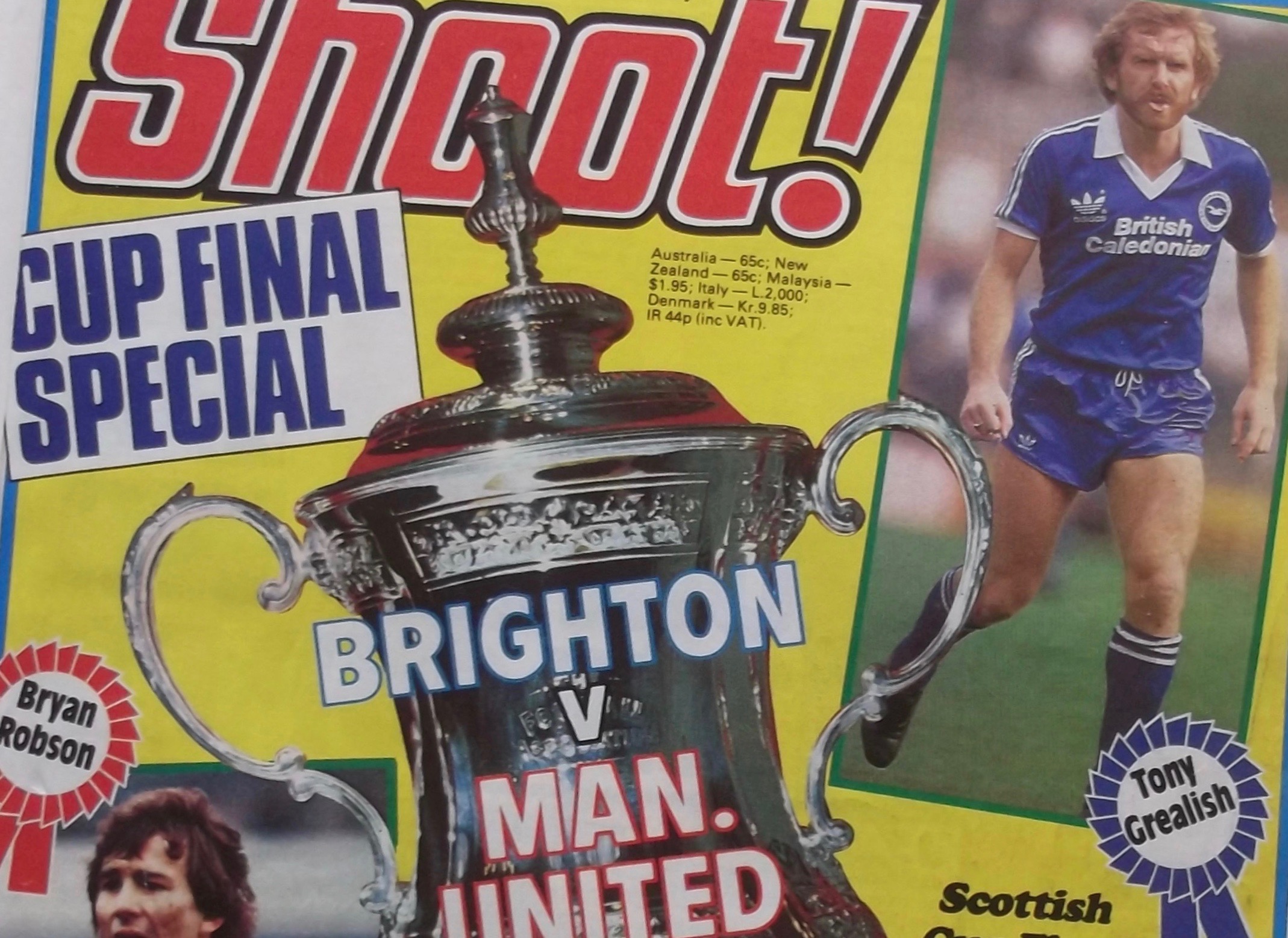
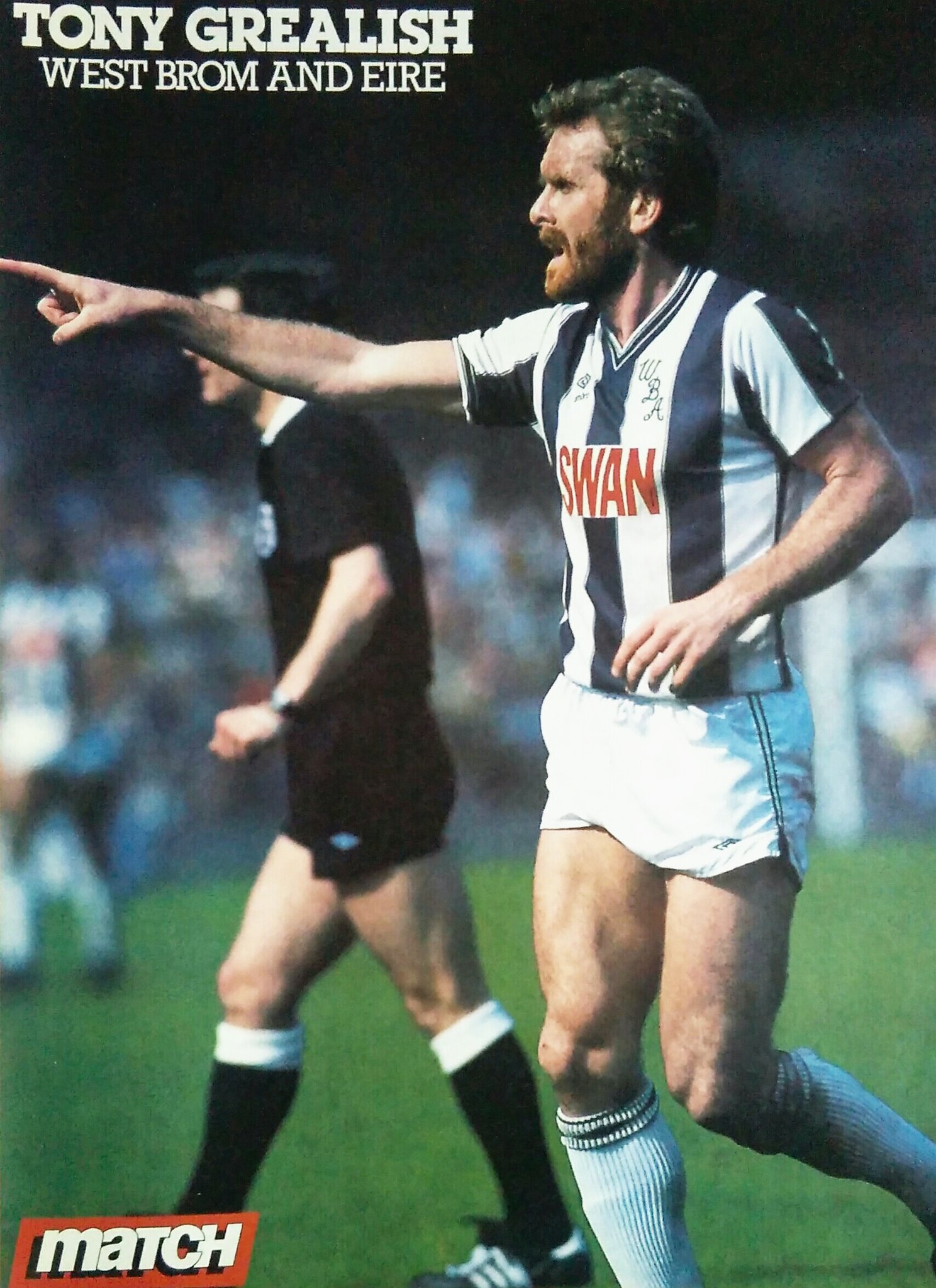
  • Pictures from my scrapbook show Grealish on an Albion matchday programme cover, a Match magazine pic of him in WBA colours via Football Past on Twitter, on the front of the 1983 FA Cup Final preview edition of Shoot!, and, below, a montage of various headlines and images.