Champion medal surprise for man on the mic Aspinall

THE starry-eyed teenager who made half a dozen top level appearances for eventual league champions Everton had to wait a long time for his share of that distant glory.

But Warren Aspinall was nonetheless delighted when his contribution to the Toffees achievement in 1986-87 was finally recognised with a medal more than 30 years later.

That’s happened since I last featured Aspinall in this blog, which recalled his early days at hometown club Wigan Athletic and darker days after he had ended his playing days in the blue and white stripes of the Albion (three goals in 24 starts plus 13 as sub) in the 1999-2000 season.
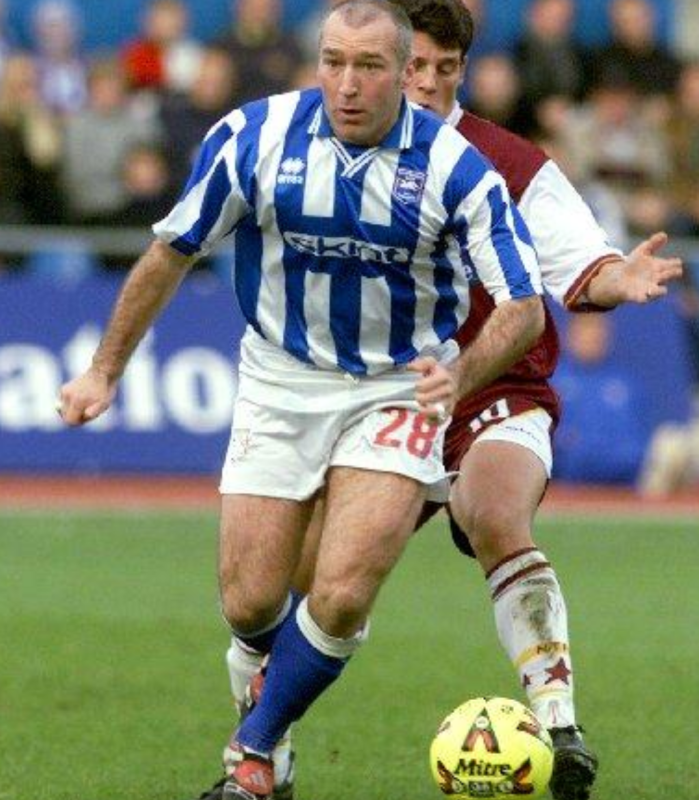
Aspinall is now more often heard rather than seen by Brighton supporters who listen to match commentaries on Radio Sussex, and it was commentator Johnny Cantor, who the summariser sits alongside for the regional BBC radio station’s coverage of all Albion’s games, who instigated a presentation of the belated honour.

“It was JC who pushed it forward and he kept it to himself before surprising me with the news that Everton would be making a presentation,” Aspinall told the matchday programme. “I was shocked but absolutely over the moon.”

The number of games to qualify for a winners’ medal used to be 14, or a third of the season, but the EFL in 2021 decided retrospectively to fall in line with the Premier League which awards medals to players who’ve made a minimum of five appearances.

Aspinall had been unaware of the rule change but Cantor had words in the right places and when Albion played at Goodison Park on 3 January 2023, the former player was finally presented with his medal by Graeme Sharp, one of his fellow Everton forwards back in the day who subsequently became an Everton director.

It’s probably a good job the presentation was made before the game because Albion romped to a 4-1 win that day with goals from Karou Mitoma, full debut-making Evan Ferguson, Solly March and Pascal Gross.

“The medal means the world to me and my family and it now sits proudly on my mantelpiece along with my England under 20 caps,” said Aspinall.

He earned the first of those two caps in the same month that Everton paid £125,000 to sign the 18-year-old from Wigan Athletic, although he saw out the season on loan with the Latics.

He featured in Young England’s 2-0 win over the Republic of Ireland at Elland Road, Leeds, and the following month was in the side that suffered a 4-1 defeat to Scotland at Aberdeen’s Pittodrie ground. Tottenham’s David Howells and Neil Ruddock, then of Millwall, also played in both matches, as did Millwall goalkeeper Brian Horne.

Teenager Aspinall signs for Everton’s Howard Kendall watched by Wigan boss Bryan Hamilton

On his return to Goodison Park at the end of the 1985-86 season, Aspinall was on the bench for the last league game (Kendall rested several players because it was five days before the FA Cup Final, which Everton lost 3-1 to Liverpool) and he made his debut in the 3-1 home win over West Ham when going on for two-goal Gary Lineker, who was playing his last league game for Everton before joining Barcelona.

Everton finished as league runners up that season but they went one better the following season, when competition for forward places saw manager Howard Kendall able to pick Sharp and Adrian Heath as his preferred pair, with Paul Wilkinson and Ian Marshall as alternatives. It meant Aspinall’s playing contributions came in the form of nine league and cup appearances as a substitute (he was also a non-playing sub on four occasions). Although first team chances were limited, he bagged plenty of goals for the club’s reserve side, netting 21 in 23 games.

That was enough to convince former Celtic stalwart Billy McNeill, in charge of relegation-bound Aston Villa, to splash £300,000 to take him to Villa Park – where competition for a starting spot was again daunting, with Andy Gray, Gary Shaw, Simon Stainrod and Garry Thompson all striker options.

Aspinall made his Villa debut on 21 February 1987 in a 2-2 draw at home to Liverpool and by the season’s end, while his former Everton teammates were lifting the league trophy, he was part of a Villa side that was bottom of the pile.

McNeill was duly sacked and the picture changed the following season when Aspinall was joint top-scorer as Graham Taylor’s Villa bounced straight back to the top tier as runners up behind Millwall.

“Garry Thompson and I hit it off up front and we had such a good understanding that we kept Alan McInally out of the team for a long time,” he told Villa supporter Colin Abbott. “Garry was good to play alongside because he was like a battering ram and I fed off him.”

Aspinall made his 50th and final appearance for Villa on 7 May 1988 in a 0-0 draw away to Swindon (playing left back for Villa was Bernie Gallacher and in the opposition line-up was Colin Calderwood and Kieran O’Regan).

Already warned by Taylor that he needed to improve ill discipline that had resulted in too many cautions, Aspinall got himself sent off for stamping in a pre-season friendly against St Mirren and Taylor transfer-listed him.

Happy at Pompey

England World Cup winner Alan Ball, in charge at recently relegated Portsmouth, seized the moment and took him to Fratton Park for a fee of £315,000 in August 1988, where his teammates included Mark Chamberlain and Terry Connor. In six years with Pompey, Aspinall also played under John Gregory, Frank Burrows, caretaker Tony Barton and Jim Smith.

Briefer stays followed along the coast at Bournemouth (loan and permanent), Swansea City (loan) and two seasons at Carlisle United.

Aspinall at Colchester

Keen to return to the south, Micky Adams first signed him when he had taken over as manager at Brentford and he made 48 appearances (plus three as sub) for the Bees but Aspinall then went on loan and then permanently to Colchester United for nine months before Adams brought him on loan and then permanently to the Albion in the autumn of 1999. It was a part exchange for midfielder Andy Arnott.

In only his third game, Aspinall was a delighted scorer of the only goal on his old stomping ground of Brunton Park as Albion returned to Sussex with all the points. The News of the World said: “Former Carlisle favourite Warren Aspinall seized on Billy Barr’s poor back pass to chip keeper Andy Dibble.”

In the Argus, Andy Naylor wrote: “The colourful midfielder then dashed towards the Albion supporters huddled in the seats on a drizzly day in Cumbria before sliding full-length on the greasy turf.”

Aspinall continued his celebration with a finger-on-lip gesture and an ear cupped towards the home support. He told the matchday programme: “I heard the keeper shout for the ball and anticipated the defender’s pass. I think I showed a great turn of pace for a veteran.”

In fact, Aspinall was 32 when he joined the Seagulls and he added experience to a side that went on to finish its first season back in Brighton in 11th place in the fourth tier

At the start of the following season, when he went on as a sub for Gary Hart in Brighton’s home 2-1 win over Rochdale (Bobby Zamora scored both Albion goals), it was to be his last ever appearance.

Suffering from the niggle of a piece of floating bone in his right ankle, he followed physio advice to have it removed in what was expected to be a routine operation. But while in hospital, he caught the MSRA superbug which ate away tendons and ligaments in his ankle.

“They eventually said I would never play football again as a result. I was finished,” he told The News, Portsmouth, in a graphic account of the trauma. “Yet now I needed an operation to get rid of this infection, which involved me scheduled to stay on a hospital ward for 14 days, attached to an intravenous drip while antibiotics were fed into my body.

“After 13 days, my body broke out in a rash from head to toe. It had rejected the drug. So, I had the operation once more – and it happened again. After 13 days, my body rejected it.

“For 28 days I’d been on that hospital ward, so I was then offered the chance to return home if I underwent an operation to insert two tubes into my heart, one for the intravenous drip to enter and the other to take blood out.

“That sounded good to me – apart from my heart subsequently stopping during the procedure. I died. I’m told it was for a few seconds, but I died on that operating table,’ Aspinall told The News. “But they brought me back, and I was allowed to go home to Hedge End, with a district nurse checking on me every day, even Christmas Day.

“There were two six-inch tubes hanging out of my chest, with the nurse taking blood out of one and putting the drugs into the other.

“I lived. The antibiotics killed the superbug, but my career ended there and then. I was aged 33, with nothing planned, no coaching badges. I had to go into the real world.”

The story of what happened in his post-playing days – battles against gambling and alcohol addictions – have been well documented in various media interviews, including a detailed one with the Birmingham Mail in October 2012, when he spoke openly about a near-miss suicide attempt.

He has been Cantor’s co-commentator on Albion matches for Radio Sussex since 2015.

Last eight in the FA Cup becoming familiar territory

REACHING the FA Cup quarter-finals for the fourth time in seven years is music to the ears of Brighton fans of a certain vintage.

Time was when an exit far earlier in the competition was the more likely expectation and falling victim to non-league giant killers (remember Walton & Hersham, Leatherhead, Kingstonian, Canvey Island, Sudbury Town) was nothing short of humiliating.

But as each season in the exalted company of the Premier League has gone by, the last eight stage of the FA Cup has been well within reach.

As one who goes back a good many years, it was a delightful surprise to reach the quarters twice in the mid-1980s (going all the way to the final in 1983, of course, if you hadn’t heard!).

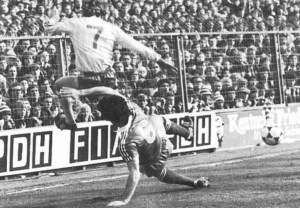
Gary Stevens tackles Mark Barham

It still pains me to say that I was one of the many locked out of the 28,800 Goldstone Crowd on 12 March 1983 when Albion played in their first ever FA Cup quarter-final.

Norwich City, under former West Ham FA Cup winner Ken Brown, were the opposition with future England goalkeeper Chris Woods in goal and Mark Barham, who joined Albion towards the end of his career, on the wing.

Jimmy Melia’s Seagulls had already beaten the Canaries 3-0 a few months earlier but the cup match proved a much tighter affair described as “bruising” by several football reporters who noted the physios were called on seven times to treat injuries – Albion’s Norwich-born Mike Yaxley twice attending to Steve Foster.

Andy Ritchie in what turned out to be his last home game for the Albion

Nonetheless, it was “marvellous entertainment for all its imperfections” reckoned the Sunday Telegraph’s Lionel Masters, who said: “Brighton full-back Chris Ramsey did more than most to inject a steely resolve. He conducted a feud with (Dave) Bennett, whom he flattened more times than a target a fairground rifle range.”

Alan Hoby of the Sunday Express wrote: “It was a tough, turbulent, physical affair with an orgy of high balls,” while the only goal of the game, from Albion’s Jimmy Case was “one of the few moments of quality in a frantic game,” according to Brian Scovell of the Daily Mail.

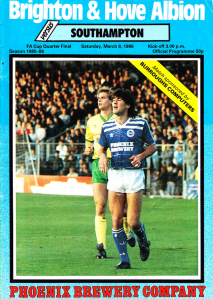
The less well-known quarter-final appearance of that decade came on 8 March 1986 when a Goldstone Ground crowd of 25,069 (at a time when the average often dipped below 10,000) saw Chris Cattlin’s Second Division Albion entertain First Division south coast rivals Southampton.

Albion were pleased finally to have got a home game in the competition having had to overcome away ties at Newcastle, Hull and Peterborough (who were eventually beaten 1-0 in a home replay five days before the Saints match).

Saints were managed by Chris Nicholl, Cattlin’s fellow former Burnley youth team colleague, and in the opposition line-up was Case, the talisman of Albion’s run to the final three years previously when he rifled in the winner at Anfield in the fifth round, scored that only goal v Norwich and buried a long-range rocket in the semi against Sheffield Wednesday at Highbury.

England’s Peter Shilton was in goal for Southampton and, most curiously, after a five-week absence from first team action, misfiring Mick Ferguson was selected by Cattlin to lead Albion’s attack. Not one of the 1983 Albion side started for the Seagulls.

Sadly, Brighton, in the upper reaches of the second tier at the time, didn’t do themselves justice. Saints won it 2-0 with first half goals from Steve Moran and Glenn Cockerill – and it turned out to be Ferguson’s last game for the Seagulls. Three weeks later he moved to Colchester United.

Fast forward to 2018 and another strange striker selection by a Brighton manager – this time Chris Hughton leaving top scorer Glenn Murray on the subs bench – proved costly in a quarter-final against Manchester United at Old Trafford.

New £14m signing Jurgen Locadia missed four good chances among 12 second-half Brighton efforts on goal to United’s one and Pascal Gross went close on three occasions. But BBC Sport’s Mike Whalley suggested: “He (Hughton) might have been left wondering if resting Murray caused Brighton to miss their chance of a first FA Cup semi-final since 1983.”

United topped and tailed the tie with Romelu Lukaku opening the scoring early on and Nemanja Matic sealing victory late on when he nodded in Ashley Young’s free-kick.

A year later, it looked like Albion wouldn’t be going beyond the last eight once again when Championship side Millwall led the Seagulls 2-0 at The New Den with only two minutes to go. Cue Locadia, on as a sub, to make amends for the previous season’s misses by making space for himself in the box and firing home an unstoppable shot to pull a goal back for the visitors.

Then, with 95 minutes on the clock, Solly March from way outside the box floated in a free-kick that Lions’ ‘keeper David Martin inexplicably let slip through his grasp to bring the Albion level.

Goalkeeper Mat Ryan a penalty shoot-out hero at Millwall in 2019

The momentum was in Brighton’s favour in extra time but it took a penalty shoot-out to decide the tie and when Murray missed Millwall might have thought it had turned back their way. But after three successes each, Mat Ryan kept out Mahlon Romeo’s effort, and Lions centre back Jake Cooper needed to bury his spot kick to keep the tie alive for the home side. He blazed his shot over the bar and Albion were through.

There was to be no such drama in 2023 when 18-year-old Evan Ferguson did a whole lot better than his 1986 namesake and stole the headlines by scoring twice against League Two Grimsby, who were playing in their first FA Cup quarter-final for 84 years.

The Mariners had knocked out five teams from divisions above them to reach that stage but they were well and truly put to the sword by Roberto De Zerbi’s impressive Seagulls who ran out 5-0 winners at the Amex.

As well as Ferguson’s brace, Deniz Undav, March and Karou Mitoma were also on the scoresheet and it could have been more; Mitoma missing a sitter and Adam Webster’s effort hitting the bar.

Perhaps by way of highlighting how quickly fortunes can change for young players, it’s interesting to recall that of Ferguson BBC pundit Danny Murphy said at the time: “This kid is a superstar. Honestly.

“He’s got great feet, technical ability. He’s calm, powerful and plays the role really well. You don’t see him out wide, he stays central and is always a target.

“I can’t see a weakness in his game at the moment. For 18 years old, the maturity he shows in his game is phenomenal.”

Murray, having moved into the punditry game himself by then, added: “It was the manner in which he scored those goals, he was so composed. As a young lad just coming into the first team, you can snatch at those chances but he just relaxes in that moment – and that is something that you can’t teach.

“He’s got a good stature and I think there’s big things in the future for him.”

High hopes have followed Billy Gilmour on his football journey

NAPOLI might well be riding high in Serie A but it’s mainly a watching brief for midfielder Billy Gilmour who moved to the Italian club from Brighton in August 2024.

The former Chelsea midfielder has found game-time harder to come by than fellow countryman Scott McTominay, who has shone in midfield as Antonio Conte’s side have been involved in an intriguing Italian title race with Atalanta and Inter Milan.

Most of Gilmour’s involvement has been from the bench apart from during October and November 2024 when he started five consecutive league matches. Stanislas Lobotka has more often been Conte’s pick for the no 6 role.

Nonetheless Conte said: “I’m happy that we have him here, he is a great player. He is an important option for us.”

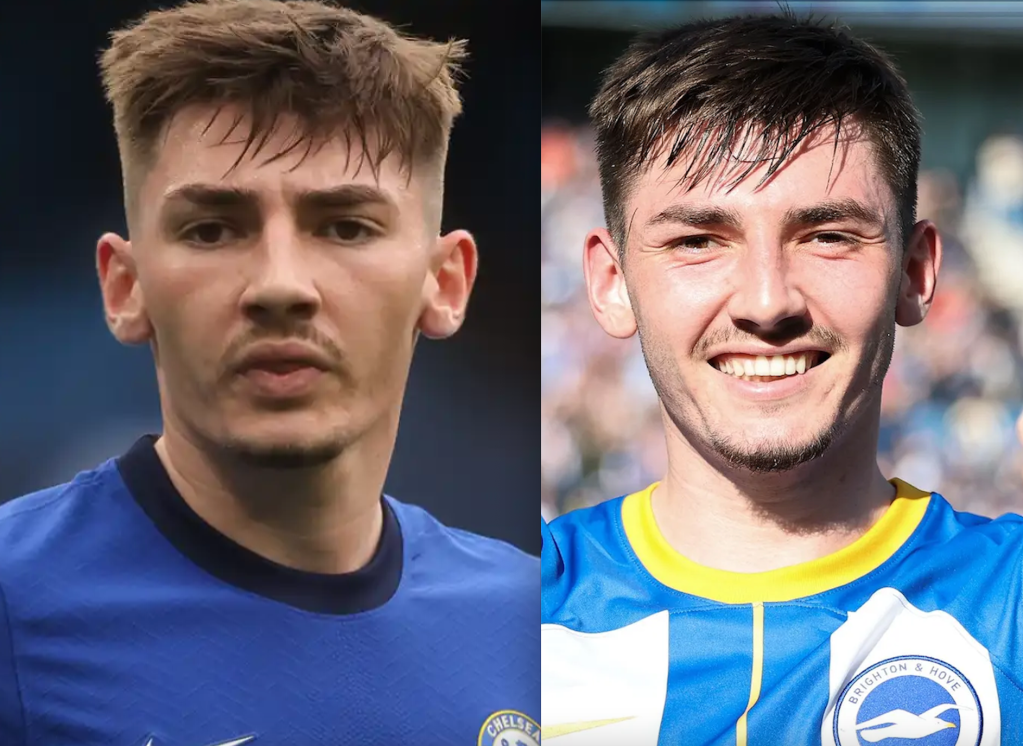
While some Brighton supporters lamented Gilmour’s departure, it could be seen as a shrewd piece of business considering the Seagulls received a reported fee of £12m plus £4m in add-ons, turning a profit on the £9m paid to Chelsea two years earlier.

Veteran Albion watcher Andy Naylor reckoned Gilmour was a key player, citing Opta stats highlighting Gilmour’s 92.15 per cent passing accuracy in 2023-24 to back up his view. “He helps to control games and dictate the tempo with slick and reliable passing,” he wrote for The Athletic.

Indeed, after Gilmour had once again earned plaudits playing for his country at the 2024 Euros tournament, Naylor declared that the player “is going to become increasingly important to Brighton” even going so far as to say: “The midfielder is the future for his club under new head coach Fabian Hurzeler.” As it happened, that couldn’t have been more wrong.

The arrival of two £25m signings in Dutch international Mats Wieffer from Feyenoord and Danish international Matt O’Riley from Celtic, together with the emerging influence of young Carlos Baleba must have sounded a warning signal to the Scot. And a central midfield starting berth for veteran James Milner meant Hurzeler had something quite different in mind. Not to mention other midfield options of Jack Hinshelwood and Yasin Ayari.

Although Gilmour went on as a sub in the opening day 3-0 win at Everton and started alongside Milner in the 2-1 home win over Manchester United, the growing rumours of his imminent departure to Italy proved true as former Chelsea manager Conte signed him along with McTominay from Manchester United.

Gilmour admitted in an interview with AreaNapoli: “Scott arrived here before me, and we were texting each other, in the days when I was also hoping to move to Naples.

“When Scott told me he was on the plane to come here, all that was left to do was close my transfer. The day I arrived in Naples was something incredible. I got off the plane, ran to do the medical and then went to the stadium.”

Gilmour and McTominay together at Napoli

Gilmour added: “My dream as a footballer is to reach the highest levels and win trophies here in Naples. That’s what I will try to do.”

Apart from starting one cup match, and the autumn run referred to earlier, Gilmour’s had to reprise the situation he found himself in at Brighton when he first arrived – he only made six starts plus seven appearances off the bench as Moises Caicedo, Alexis Mac Allister and Pascal Gross lorded it in midfield.

Gilmour heard only good things about Brighton from former Chelsea teammate Tariq Lamptey before making the move south, and on arrival there was also a familiar face behind the scenes in David Weir, who he’d known from his days at Glasgow Rangers.

After that low key start to life with the Seagulls, in April 2023 Roberto De Zerbi decided to rest key players for the home game with Wolves and give Gilmour and striker Deniz Undav starts. Albion won 6-0 and the manager confessed afterwards: “Gilmour, I think, was the best player on the pitch and I must admit possibly in the past I made some mistakes with him and with Undav because I didn’t give them many possibilities to play.

“But for me it’s difficult. To play without Mac Allister, Mitoma, Solly March, Moises Caicedo, it’s difficult.”

Once Mac Allister and Caicedo had flown the Seagulls nest, De Zerbi showed his faith in Gilmour, giving him 32 starts and nine appearances off the bench as Albion competed in the Europa League for the first time.

“Billy is a unique player,” reckoned De Zerbi. “We have only one playmaker in our squad and he is Billy Gilmour.”

Gilmour in action for the Albion v Arsenal

In early December 2023, he was full of praise for the young Scot, telling the media: “The improvement of Gilmour is incredible. I completely love him, because now he is playing very much like a leader on the pitch.

“Big quality, big attitude, big player. He is improving in the quality of the pass, in the personality, how he can drive and control the game, drive the team. To understand the play before he receives the ball.

“He understood when he has to play a long ball and a short pass because the defensive space starts from how long is the pass. In his reaction, when we lose the ball. I am very pleased for his performances.”

Born on 11 June 2001 in Irvine, Ayrshire, Gilmour grew up in the county’s coastal town of Ardrossan where he went to Stanley Primary School. He moved on to Grange Academy in Kilmarnock which was part of the Scottish FA performance school programme.

When he and fellow graduate Nathan Patterson made it into the full international squad, programme director Malky Mackay told The Scotsman: “Billy is someone I’ve been impatient about for a number of years now. We took him to the Toulon tournament with Scotland under-21s when he was 17 because I had a firm belief this kid is something special.

“He ended up playing, becoming the breakthrough player at a tournament of that esteem, scoring a goal and captaining the team. It was only a matter of time but it’s terrific he and Nathan have been picked for the squad. That makes me more happy than you could ever know.”

At a young age, Gilmour spent three months at Celtic (his dad supported the Hoops) but switched to Rangers (who his mum supported) because it was easier to get to training.

He progressed through the youth ranks and was still only 15 when he was called up to train with the first team squad during Mark Warburton’s reign as manager.

“I came on the scene at a young age and there was a lot of talk, a lot of people putting my name out there, but you have to learn to live with that – and the best way is by playing well and keeping your consistency,” Gilmour told the Albion matchday programme.

It was a disappointing snub by Rangers caretaker manager Graeme Murty that led to his £500,000 departure from Glasgow to London, as recounted by sports writer Ewan Paton in rangersreview.co.uk.

Gilmour was due to become Rangers’ youngest-ever player at 15 years old in a Scottish Cup tie against Hamilton in March 2017; Murty indicating the teenager would be on the bench and would get the chance to fulfil his lifelong dream of playing for Rangers.

But, just hours before kick-off, Murty changed his mind, with Gilmour being left out of the matchday squad.

“I felt like I was going to be on the bench and maybe even come on that game. It works in its weird ways, so it does, football,” said Gilmour.

Two months later, when he was eligible to turn professional aged 16, the incident was in the back of his mind and he opted to move to Chelsea.

“Of course, I would’ve loved to have played for Rangers,” he said. “But I ended up moving on and maybe it’s a wee part of my journey that made the decision a bit easier.”

Remarkably, Gilmour scored in each of his first three games for Chelsea’s under 18 side and he signed a professional contract aged 17 in July 2018.

A year later, it was newly-appointed manager Frank Lampard who gave him his senior debut in a pre-season friendly. His league debut was as a late substitute for Tammy Abraham against Sheffield United and his first start was shortly afterwards in a 7-1 EFL Cup thrashing of Grimsby Town, a game in which Reece James made his debut.

Lampard said afterwards: “I thought Billy Gilmour ran the game from midfield, and Marc Guehi was solid. They’ve been outstanding this year.”

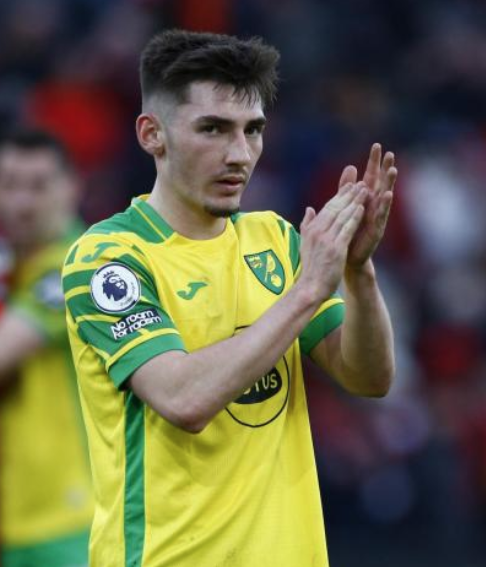
After making 11 league and cup appearances for Chelsea in each of 2019-20 and 2020-21, Gilmour went on a season-long loan to Norwich City where, although he got more games (23 starts, five off the bench), he didn’t enjoy the experience and wasn’t a permanent fixture in the struggling Canaries side that eventually ended up being relegated.

Gilmour didn’t enjoy his time at Norwich

“Things had been going so well and then I went on loan to Norwich which I thought would be good for me,” Gilmour told Men’s Health. “It turned out to be a fight, a battle. I learned a lot.”

He continued: “I was just a young kid and it was a low time for me.

“I learned how strong I was. I put a smile on my face, even though I was hurting, especially when I was living on my own in Norwich. Some nights, I’d be sitting there thinking, ‘This is c**p’, but that’s where my family helped me. You can only learn from that.”

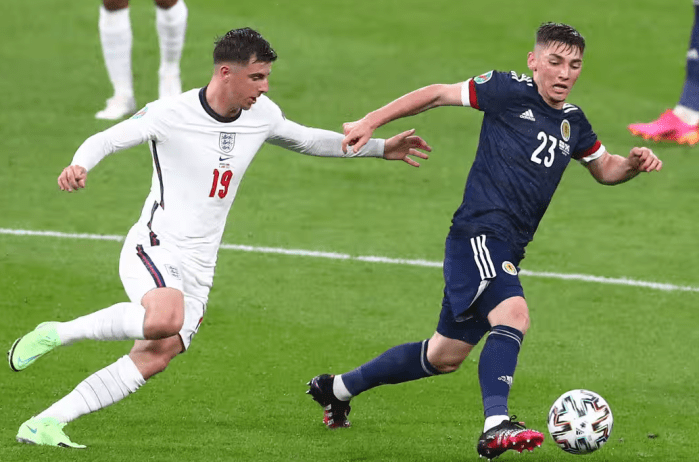
Gilmour, when aged just 20, was named man of the match in his first full start for Scotland as they held England to a 0-0 draw at Wembley in a Euro 2020 match (played in June 2021 because of Covid).

“The ease with which he has transitioned into international football implies that he possesses some very special skills,” reckoned Ewan Murray, writing in The Guardian.

“It was his big moment and he didn’t let us down,” said Scotland manager Steve Clarke. “Nobody is surprised by that. Not in our camp.”

But a word that has hung heavy around Gilmour’s neck is expectation. When the permanent move to Brighton came about, Tuchel admitted that Chelsea hadn’t wanted to let him go and would rather he had only left on loan.

He told reporters: “We had high hopes [for him] and he played for us in the first half a year when I was at Chelsea. He played some important matches for us and looked for a new challenge that did not go so well for him with Norwich.

“We expected more, he expected more so it was like, without pointing a finger, but it is difficult also for him and for us to not succeed, to not play at Norwich, to be relegated and then suddenly be a central midfielder for Chelsea and competing for top four and for every title.

“There’s a huge step in between so we were looking. The ideal solution would have been maybe that he goes again on loan as the concurrence is huge for us in central midfield and we felt like he is not the age where he can live again with five or six or seven matches during a whole season to fulfill his own potential so, ideally, it would have been another loan.

“Billy did not want to go on loan, it was a no-go for him so in the end, we agreed to a sale.”

Gilmour’s version of events differed a little, as he revealed in an interview with talkSPORT in September 2023, saying that after his season-long loan at Norwich, he was told he wasn’t part of the first-team plans at Chelsea and would have to be content with playing in the reserves.

That was despite Chelsea exercising an option to extend his contract to the end of the 2023-24 season earlier that summer.

“When I came back from my loan from Norwich, I came back and had pre-season and I just wasn’t in the plans,” Gilmour told talkSPORT host Jim White. “At that point I was thinking, well, I want to be at a club that really appreciates me and I want to be part of the team.

“I want to play first-team football. I’ve had a taste for it. I’ve played for my country, so I want to try and push on now. For me, it was the right time to leave. I spoke with the manager at the time, and he thought the same.

“I want to play football, I want to really settle down and try and find a house and home and be here and give my all.”

It remains to be seen where the young Scot’s career goes next but even though his playing time in Italy hasn’t quite lived up to expectations, the midfielder told broadcaster DAZN: “I am fit and well, I’m enjoying it.  Of course, we are doing well as a team, so we want to keep building on that.”

Illness and injury brought Izzy Brown’s dream to an early end

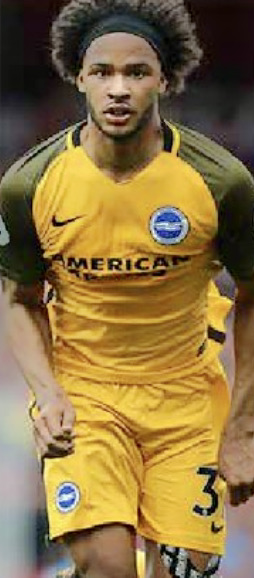
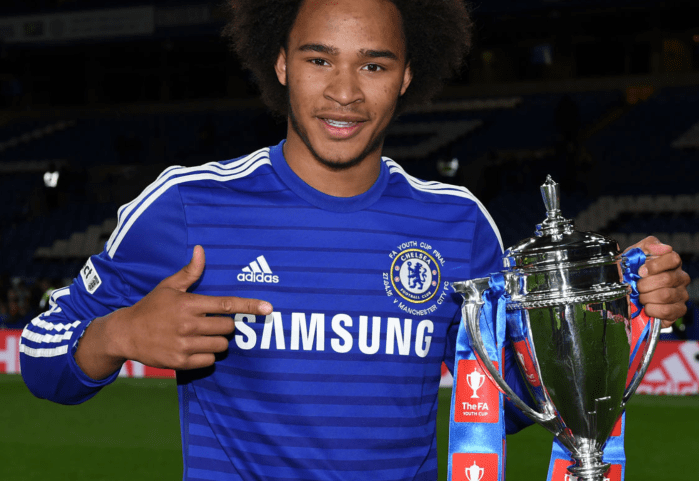
IZZY BROWN was just 20 when he joined Albion on a season-long loan from Chelsea hoping to prove his worth as a Premier League striker.

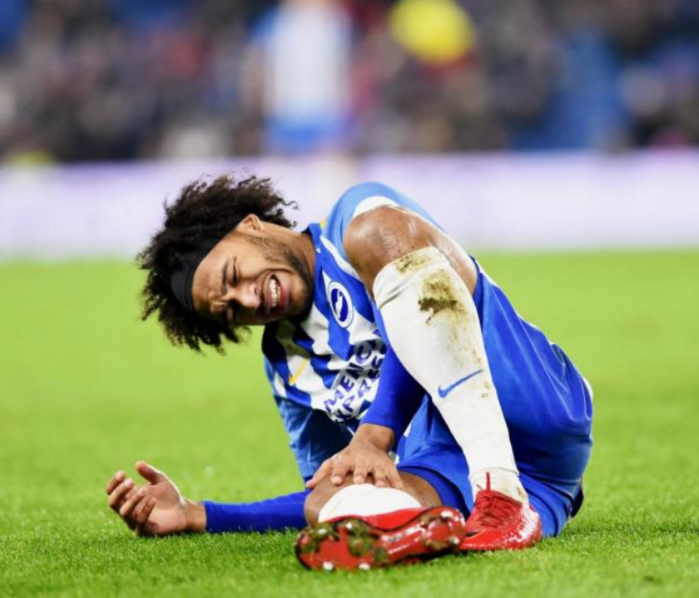
Sadly, a serious anterior cruciate ligament (ACL) injury meant that ambition was thwarted after only four starts and eight appearances off the bench.

Then, at the age of 26, a twice-ruptured Achilles tendon forced him to quit the game altogether.

Brown’s ascent to the elite level of English football was rapid. He was only 16 when he made his debut for West Bromwich Albion, becoming the second-youngest player in Premier League history when he went on for the Baggies towards the end of a 3-2 defeat against Wigan in May 2013.

Two months later, Chelsea offered him five times more than West Brom were paying him and he switched to Stamford Bridge to join their scholarship scheme.

The financial cushion they gave him at such a tender age meant retiring from the game early came as less of a blow than it might have done.

“I’m thankful to Chelsea for everything they’ve ever done for me because if it wasn’t for them, I don’t know what my life would be like now,” Brown told Nancy Froston in an exclusive April 2023 interview with The Athletic.

“They put me in a position where, while it’s not that I don’t ever want to work again, it has set me up to provide for my family for quite a few years.”

Brown spent eight years as a Chelsea player although Brighton were the fourth of seven clubs he joined on loan over that period.

Although he scored twice on his Chelsea debut in a 5-0 pre-season friendly win over Wycombe Wanderers, he made only one competitive first team appearance and that was as a sub against his old club, West Brom, in May 2015. Chelsea lost 3-0 and Brown saw only 11 minutes of action when Jose Mourinho sent him on to replace Loic Remy.

Brown had previously been an unused sub on several occasions in the second half of the 2014-15 season, but that summer he was sent on loan to Vitesse Arnhem where he registered just the one goal in 24 appearances.

In the 2016-17 season, Brown had two loans in Yorkshire: scoring three in 20 matches for Rotherham United and then five in 21 for their fellow Championship side Huddersfield Town.

He was involved in the Terriers’ Championship play-off final win over Reading and there were reports they wanted to make his move permanent, with a fee of £8m mentioned.

But Brown thought it wasn’t the right move for him, still harbouring hopes of making it at Chelsea. “I’m still learning and I feel Brighton is the place for me to develop further,” he said.

“There were plenty of clubs calling my agent but Brighton was always my number one choice,” he told the matchday programme. He explained he wanted to learn from manager Chris Hughton, adding: “The facilities here and the ambition of the club was also important for me.”

Hughton said of the youngster: “He’s a very flexible forward player. We brought him in very much as a (number) ten, where he had played for Huddersfield last season.

“In his first loan at Rotherham he played very much off the front, went abroad played off the left, and in his first game for us and in pre-season was on the left. He has that versatility in his game.”

That first league game was the opening day defeat at home to Manchester City and he went off injured (replaced by Jamie Murphy) as Albion went down 2-0. He didn’t re-appear until 1 October away to Arsenal when he struggled as an orthodox striker in another 2-0 defeat.

Thereafter, he only made two more league starts – the 5-1 home battering by Liverpool and a 2-0 defeat at Huddersfield.

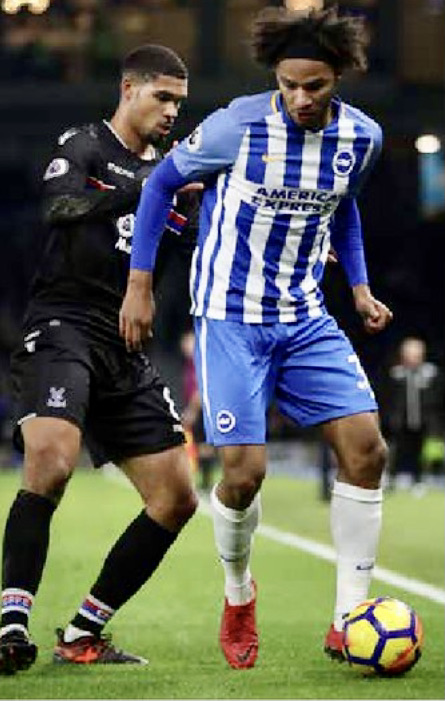
Although Crystal Palace in the third round of the FA Cup on 8 January gave him a chance to show what he could do from the start, the game was only six minutes old when he was forced off with the knee injury that brought his time with Albion to a close.

Hughton saw it as a big blow because he had been planning to make much more use of the young striker in the second half of the season.

“You would have seen him much more involved,” he said. “He’d had a slight hamstring injury when he first came which kept him out for a few weeks.

“But certainly I would have seen him play in more games than perhaps in that first half,” said Hughton.

“He is a very popular player here. Before he’d come here, he’d had a couple of other loans and I think that adapted him well going into a new environment.”

Brown himself had said the only player he knew before his arrival was Connor Goldson through his friendship with Jonny Taylor, who Brown had played with at Rotherham.

Deprived of Brown’s services, Hughton brought in Jurgen Locadia from PSV Eindhoven and a familiar face in Leonardo Ulloa, returning to the Amex on loan from Leicester City.

Although both were on the scoresheet when Albion dispensed with Coventry City in the fifth round of the FA Cup, it would probably be fair to say neither were a rip-roaring success. The combination of Glenn Murray and Pascal Gross were the main goal contributors.

Born in Peterborough on 7 January 1997, Isaiah Brown, to give him his proper name, said in an emotional open letter on his retirement: “As soon as I could walk, I always had a football at my feet. That was me, that was my happy place.”

He was talented enough to represent England at under 16, under 17, under 19 and under 20 levels, winning a total of 34 caps.

At Chelsea, he was in the side that won the Under-21 Premier League title in 2013-14 and the UEFA Youth League the following season.

After the disappointment of his time at Brighton being curtailed, he was still recovering in August 2018 when he went back to Yorkshire on loan to Championship Leeds United under Marcelo Bielsa.

But once recovered, he was mainly involved in United’s under 21 side. He only made two substitute appearances for the first team, one in a 1-0 league defeat at QPR and one in the end-of-season play-off final that Leeds lost 4-3 on aggregate to Derby.

The following season once again saw him head out on loan for a season, this time to Luton Town. He scored once in 19 starts, plus nine games as a sub, as the Hatters narrowly avoided relegation from the Championship.

The 2020-21 season once again saw Brown heading to Yorkshire, this time with Sheffield Wednesday in the Championship.

It was a season that saw the club have three full-time managers and a caretaker, finishing bottom of the league and relegated to League One. Brown made only five starts plus 16 appearances off the bench.

With his contract at Chelsea finally coming to an end, his next move was a permanent switch away from the Bridge, and he signed a one-year deal with Preston North End.

Head coach Frankie McAvoy said: “He’s got good pedigree. He’s got great experience in terms of playing in the Championship and an ex-Chelsea player from a young age.

“He’s had quite a few loans over his time, some he’s done well, others maybe latterly not done as well as he hoped, so he just needs to find that self-belief again and confidence. But we’re certainly getting a player with undoubted talent, very offensive and we’re looking forward to working with him.

“He can play across the front, but probably his preferred position is a ten behind a striker or two, depending on how we play.

“He can also play in pockets off right and left, so he adds that bit of versatility to our front players and I think if we can get him up and running, believing in himself, being confident in his own ability then I’m sure he’ll endear himself to the Preston faithful.”

Brown, by then 24, said: “Now I’m getting to that age where I want to develop myself as a player and hopefully be a legend at a club, and I really feel like Preston’s a place where I could do that.”

But less than a month after signing for North End, he ruptured an Achilles during pre-season training – and he never actually played a competitive game for Preston.

“We had a pre-season game against Celtic when I was at Preston and I felt some pain in my Achilles, but it wasn’t too bad,” Brown told Froston. “Then we had a couple of days off, I came back for training and then I just passed the football, like I’d done a million times before, and I heard a pop. I thought someone had kicked me but no one was around me.

“It had snapped. So I had the surgery and it went well, but we noticed there was like a little gap in my Achilles.

“We thought maybe it’s not healed properly, but this was only after two months so we gave it time. Then I went out for some dinner and stepped down a small step and it snapped again.

“So I had two Achilles surgeries in the space of three and a half months. To come back from one is hard. To come back from two is basically impossible.”

On top of those football injuries, he got sick with hand, foot and mouth disease, then had an issue with his nervous system that led to muscle loss and affected the nerves in his feet.

He was subsequently told he had a rare and serious condition called Guillain-Barre syndrome and it was apparent he would have to retire from playing football.

In a revealing interview with Froston, he concluded: “Football was my dream. It still is my dream. But dreams have to end one day.”

In the open letter he wrote on his retirement, he said: “Football doesn’t define me as a person. I’m a father, a son, a brother and a friend, and I will be that after football.

“I’ve lived my dream and memories that will stay with me forever. To every club that I have played for, I really appreciate you all for believing in me and giving me a chance to play the game I love.”