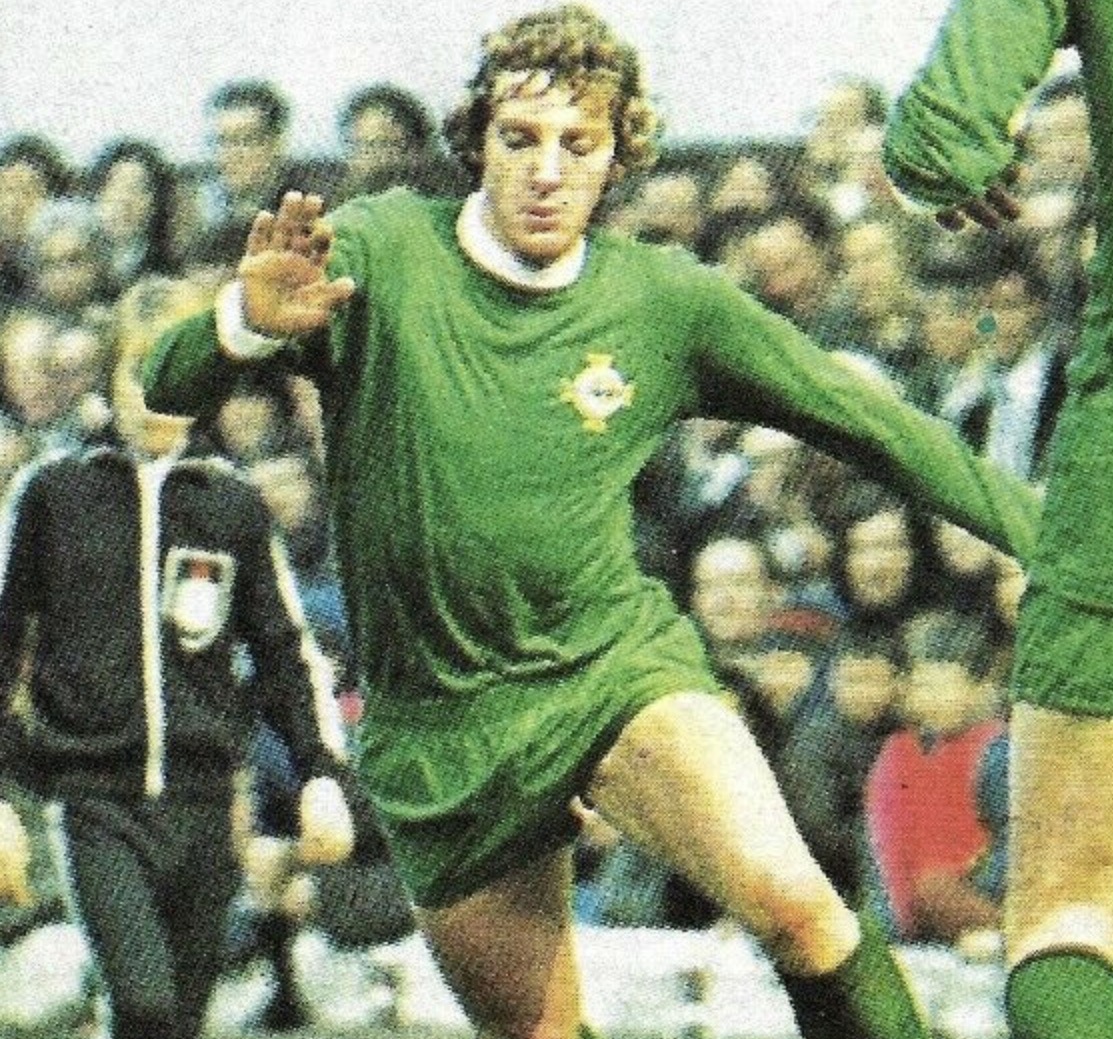
Seething Knight dumped O’Callaghan for telling him how to run the Albion

CORK-BORN George O’Callaghan had something of a yo-yo footballing career after bursting onto the professional scene as a talented teenager.

Eyed by Arsenal and Spurs when he was in his formative years at Port Vale (then in the Championship), he turned to drink when ex-Albion captain and manager Brian Horton dropped him from the Vale first team.

Although the tall midfielder worked his way back into contention, he returned home to Ireland to rebuild his career before making several other attempts to succeed in the English game.

Over the course of five years, he was an influential cog in Cork’s League of Ireland side, the highlight coming with a championship win in 2005 when he scored eleven goals from midfield and was voted League Player of the Season.

He survived meningitis in 2006 just a handful of months before another Championship side, Ipswich Town, gave him another opportunity to make it in England but he struggled to hold down a place at Portman Road.

After only 13 appearances, the Tractor Boys were prepared to offload him to third tier Brighton. A deal was agreed in August 2007 but he made the move on loan rather than permanently because he still thought he could make it in Suffolk.

By then 28, the player brought experience and creativity to Dean Wilkins’ largely young side, slotting in effectively in the centre of Albion’s midfield alongside Dean Hammond, making 16 starts and one appearance off the bench.

But his Irish gift of the gab brought it all to a messy end. He publicly criticised chairman Dick Knight’s handling of contract negotiations in an explosive article in The Argus and didn’t play for the Seagulls again.

The Irishman told reporter Andy Naylor he thought the team was in danger of falling apart because chairman Knight had been too slow to sort out contracts and loans.

Knight countered: “We have given him the chance to shine and show his talents. It’s not George O’Callaghan’s business to tell the club what we should be doing.”

The midfielder spoke out after Albion capitulated 3-0 at Millwall on Boxing Day. He told Naylor: “There are a lot of lads who are very important to this team that don’t know if they are coming or going and I think it’s about time the club got a grip on it and sorted it out, because it has dragged on for too long and I feel it is starting to affect the players.

“I just don’t think it is right and it’s something the club needs to look at. It used to happen at Cork City when I was there and we lost a lot of good players. We lost Kevin Doyle and Shane Long for peanuts over contracts not being sorted out early and quickly.

“It makes you angry as a player. I can cope with it, because I am a lot older than the other lads, but the young lads are really upset and it’s not right.”

O’Callaghan’s version of events the club would have wanted to keep to themselves plainly differed from Knight’s while Wilkins was stuck in the middle.

“I know the manager tries his best behind the scenes,” said O’Callaghan. “He is fantastic. I think he works with a very small budget. It must be more frustrating for him, because he has built a team and it could easily fall apart now.

No holding back where O’Callaghan was concerned

“Things should have been sorted out a lot quicker. It has been a big thing in the squad in the last few weeks. I’ve mentioned it and the club need to sort it out now.”

The Irishman said he had encountered something similar at Ipswich the previous season, pointing out players just needed to know where they stood.

“I don’t want to stay and then see our best lads go, like Hammo,” he reasoned. “If we want to make that push for the play-offs and get back into the Championship it needs to be sorted.”

Knight was in no mood to take that sort of broadside from a loan player and told the reporter: “The team’s performance was absolutely woeful. I think certain players should be looking at themselves before trying to deflect criticism elsewhere. I thought it was a disgrace.

“George O’Callaghan is totally out of order. I would suggest he is trying to deflect attention away from his own performance, which was frankly poor, and he wasn’t the only one.

“Young players within the club are dealt with contract wise as and when the time is right.”

Knight maintained that he’d already agreed with Ipswich that both O’Callaghan and fellow Town loanee Matt Richards could extend their loans until the end of the season but neither player wanted to commit to it until they’d explored other options.

Unsurprisingly, O’Callaghan’s stay with the Seagulls came to an abrupt end and he returned to Portman Road.

Sidestepping the spat with Knight, O’Callaghan reckoned his return to Ipswich was his decision, telling The Argus: “I enjoyed playing regularly at Brighton but I spoke with the gaffer and decided it is right to try again at Ipswich and try to get first team action.

“They are a good bunch of lads at Brighton and I enjoyed playing with them so I hope things work out for them.”

When a month later there was no look-in happening with the Tractor Boys, he returned to Ireland once again to play for his old club, Cork City. It was part of a familiar pattern.
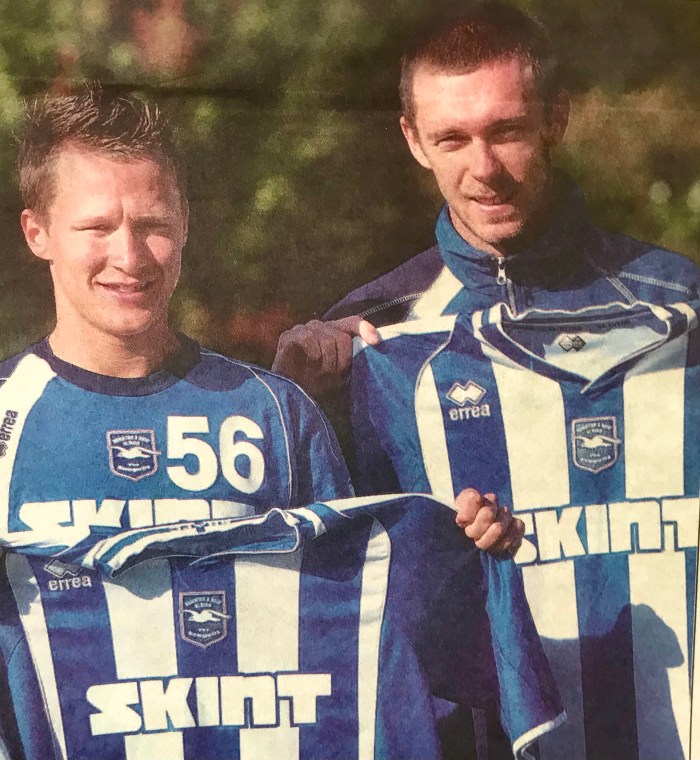
Deadline day signings David Martot and George O’Callaghan

O’Callaghan had joined the Albion on loan (the same day David Martot signed a similar arrangement from Le Havre) on August transfer deadline day having rejected a permanent move earlier that month (the clubs had agreed a £60,000 deal plus £15,000 based on appearances).

The player said at the time: “It would be a shame to leave Ipswich because the supporters have been brilliant to me, even though they never saw enough of me, and all the lads are fantastic, but I need to be playing regular football.”

Town manager Jim Magilton praised O’Callaghan’s ability and attitude and empathised with his frustration at not getting a run in the side. He said: “I don’t want to lose George but I wouldn’t stand in his way. He has been great since he has been here. He is very popular in the dressing room and he has done very well.

Tractor Boy O’Callaghan

“But he is 28 years of age and needs to be playing games. I have been there, so totally understand how frustrating it can be. We will do anything we can to help him.

“I have absolutely no problems with George. He has been top class since he came here. His attitude is first-class in training and in games.”

O’Callaghan had impressed Knight in a reserves match when Ipswich beat the Seagulls’ second string.

When O’Callaghan finally agreed the temporary move, Albion also wanted his Town teammate Richards on loan, but he too prevaricated, only to change his mind the following month. It was the first of three loan spells with the Albion. Brighton also wanted a third Ipswich player, injury-prone Dean Bowditch, who had briefly been on loan the previous season, and he eventually returned for a month in 2008.

Born in Cork on 5 September 1979, O’Callaghan left Ireland as a teenager to pursue his football dream and in a March 2020 podcast with the Irish Examiner, he talked about his early days at Port Vale when he was regarded as one of the hottest properties in football.

“Arsenal came in for me when I was 18,” he said. “I was waiting outside the manager John Rudge’s office and Pat Rice, who was Arsene Wenge’s assistant at the time, came out and said: ‘George, we can’t get you this time, we’ll get you next time,’.”

When the youngster protested to Rudge, he was told Arsenal had only offered £1m for him and Vale wanted £2m. O’Callaghan continued to progress in Vale’s Championship team but when Rudge was replaced by Horton, he was demoted back to the youth team.

In another podcast, A Footballer’s Life, O’Callaghan admitted to Graham Cummins that he turned to drink as his promising career stalled. “You’re responsible for your own actions so it’s ultimately your own fault. But nobody looked out for me or had my back at the club. Nobody caught me and said, ‘George, what’s going on, you’re not yourself’.

“Those days, the clubs didn’t care, it was old school, you were put out to do the job and if you didn’t you were replaced.

“You never asked anyone for help in those days. I kind of went into meltdown. Everything unravelled, I didn’t know what I was doing.”

When he eventually got back in the first team picture, he said Arsenal’s north London rivals Spurs then showed an interest in him. “David Pleat tried to sign me for Tottenham. But Brian Horton said: ‘You’re doing really well,’ and offered me a two-year deal and doubled my money.”

He asked Rudge’s opinion about the situation and when told he should stay at Vale because he’d struggle to get games for Spurs, he stayed put. “I took his advice and signed the contract. Within about 14 months I was finished, sent home.

“It was a massive mistake, a big, big mistake. I was too comfortable in the situation I was in. I probably didn’t have the guts to go ahead with it. I loved playing for Port Vale but I should have pushed for Arsenal and Tottenham. And then you can always go out on loan if it doesn’t work out.”

One of O’Callaghan’s early matches for Albion was against his old club and unsurprisingly he was a natural interviewee before the game. “It is a very special club to me because I started off my career there when I was only 15,” he told The Argus.

The Irishman scored four goals in 22 league starts plus 12 sub appearances for Vale and felt he probably had a point to prove coming up against them (Albion won 1-0 with a goal from Alex Revell).

“I never showed Port Vale fans what I can do,” he said. “I took a few wrong roads when I was a kid and it has taken me a while to get back to where I am now.

“It will be nice to put on a good performance and show them what they have missed; the player I have turned into. I never fulfilled my potential there.

“I started off doing well there as a kid but I didn’t really have the right guidance and it all went pear-shaped. As soon as John Rudge left as manager and Brian Horton came in, my chances were limited. I think that is where it all went wrong.

“Obviously, I wasn’t his type of footballer. People said he was a good footballer, but he wanted physical lads.

“Maybe at the time I wasn’t physical enough and he didn’t fancy me. I don’t blame him in any way because at the end of the day it is all down to yourself and how you look after yourself.”

He added: “I had so many knocks there that it took the fire out of me. I had to go back to Cork to get that fire back into me and build my career again.

“It was a big learning curve in my life. I lost my career in English football for a while and had to battle hard to get back.”

The player’s topsy-turvy career continued back at Cork City before he had another go in England, spending eight months at Tranmere Rovers. Once again he returned to Ireland, this time to play for Dundalk, but the lure of the English game beckoned again.

O’Callaghan linked up with Yeovil Town in the summer of 2009 and played in three pre-season friendlies. In the opening months of the season, he made 15 appearances (including six from the bench) but found it difficult to break into the team past the partnership of Jean-Paul Kalala and Shaun MacDonald.

Next stop, in December that year, was Waterford but before long he was back at Cork City once again. Brentford took him on a two-week trial but nothing came of it and instead he went to then Conference side Cambridge United but didn’t feature.

The wandering Irishman at one point tied his luck with Brunei side Duli Pengiran Muda Mahkota but he got into trouble for failing to bow to the Crown Prince.

His old Brighton and Ipswich teammate Nicky Forster took him on at Dover Athletic but he only played once for the Conference South team, and he announced his retirement on Christmas Eve 2012.

He briefly managed Sabah in the Malaysia Premier League in 2014 but he struggled to deal with El Hadji Diouf and was sacked in January 2015 when he started missing training sessions.

Four years after playing what he thought was his last game, he turned out for junior Cork club Rockmount.

After packing up playing, O’Callaghan became an agent and spent a year as a business development manager for William Hill. He was a general manager for gym chain Anytime Fitness for two years and later co-founded agency TEN Sports Management.

Teenage debutant ‘keeper Forster forever just a back-up

A GOALKEEPER who held a ‘youngest ever’ record for 58 years played second fiddle between the sticks for Charlton Athletic and Brighton.

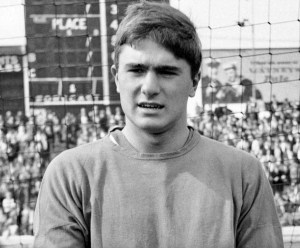
Derek Forster had started out at Sunderland and was only FIFTEEN when he played in goal in front of a 45,000 Roker Park crowd in the opening game of the 1964-65 season.

The youngster let in three – but so did his opposite number, Gordon Banks, the England international who was in goal for opponents Leicester City.

“Derek’s a wonderful prospect. From what I could see, he didn’t make a single mistake,” said Banks after the game.

Forster had played in front of an even bigger crowd a few months’ earlier when 95,000 at Wembley saw him keep goal for England Schools against West Germany.

But those early tests of nerves were of little consequence because Forster’s career didn’t pan out quite as he might have wanted.

Sunderland’s first choice ‘keeper, Jim Montgomery, was one of the country’s top goalkeepers, best known for a match-winning double-save for the Wearsiders in the 1973 FA Cup Final at Wembley when second tier Sunderland beat high-flying Leeds United 1-0.

Montgomery remained largely injury-free – and made a record 627 appearances for Sunderland – meaning over the course of eight years the 5’9” Forster only got to play 30 league and cup games for the Mackems.

It was only after that amazing FA Cup win in 1973 that Forster finally left his home in the north-east and tried his luck in London. He joined third tier Charlton who were managed by Theo Foley, a former Eire international teammate of his old Sunderland playing colleague, Charlie Hurley.

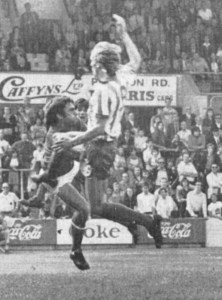
Forster was soon in action for the Addicks, ironically playing against Brighton twice within 18 days at the Goldstone (they won 2-1 in the League Cup and in the League). Below left in a collision with Lammie Robertson.

But he was not able to dislodge the experienced John Dunn permanently from the no.1 spot and was limited to nine appearances. He moved during the close season to the Albion, where Brian Clough and Peter Taylor had dispensed with the services of long-serving Brian Powney as part of a 13-player clear-out.

Forster actually joined Albion on the very day that it was announced Taylor was staying at Brighton to take sole charge after his managerial mate Clough quit to join Leeds United.

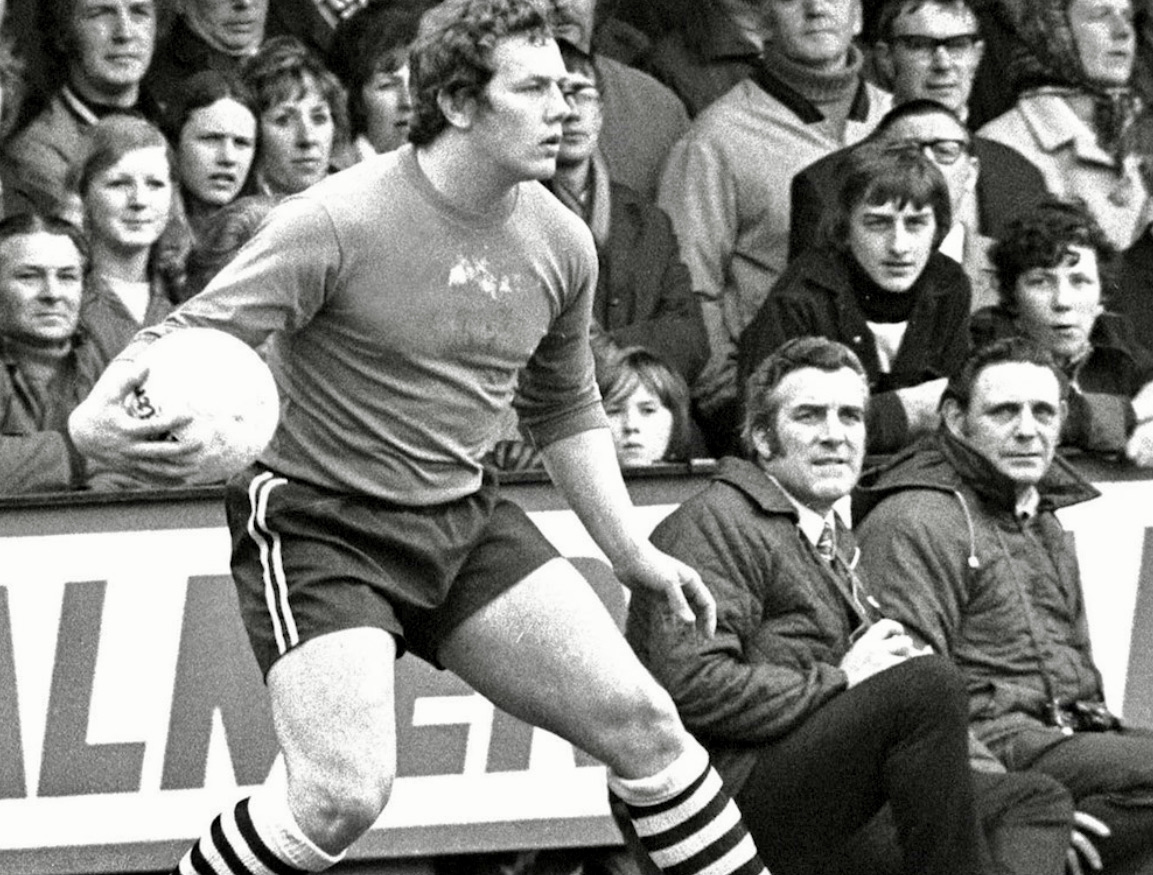
At the Goldstone, though, Forster found the holder of the no.1 jersey, Peter Grummitt, was another in the same ilk as Montgomery. Grummitt, who’d been one of the pair’s first signings not long after they’d arrived at the Goldstone in the autumn of 1973, had played more than 350 games at the highest level for Nottingham Forest and won three caps for England’s under 23 side, where he vied for the goalkeeper position with Chelsea’s Peter Bonetti.

Arguably one of the best Albion goalkeepers ever, it was perhaps no surprise Grummitt’s form restricted Forster to only three appearances. Ironically, when Forster did get his first team break, he conceded six in his first match.

In spite of pre-season optimism from Taylor, Albion had only three wins on the board from their first 13 games, and when the side went to Fellows Park, Walsall, on 1 October, Forster was like a sitting duck as the Saddlers thumped Albion 6-0. Grummitt was back between the sticks for the following five matches.

No stranger to strong disciplinary measures when he deemed it right, in October Taylor made six first teamers who’d lost 3-2 at Grimsby the previous evening play for the reserves at home to Millwall the following day.

Forster was the last line  of defence in that experienced line-up, and made some important stops on three occasions, but still conceded three. However, the involvement of the first team contingent saw Albion win 5-3: Ian Mellor scoring all five Brighton goals.

Three weeks later, after player-manager Bobby Charlton’s visiting Preston North End side won 4-0 at the Goldstone, Forster stepped in for Grummitt for the second time – and once again was on the losing side: 2-1 at Gillingham.

His one and only winning experience in an Albion shirt came the following week at Prenton Park when Albion beat Tranmere Rovers 2-1. In front of just 2,134 supporters, that win proved to be Forster’s third and last first team appearance.

Taylor obviously wasn’t wholly convinced by his back-up ‘keeper that autumn because he took a look in the reserves at triallist Jim Inger, from assistant manager Brian Daykin’s old club, Long Eaton.

Nevertheless, Forster remained the back-up ‘keeper, a role he continued throughout the 1975-76 season without being called on for the first team because Grummitt was ever-present. The disillusioned Forster departed, admitting he was “cheesed off at Brighton”.

In fact, he quit the professional game, returned to the north-east and played local league football while taking on a job at Washington Leisure Centre (run by Sunderland city council’s leisure department), where he worked for 30 years.

He was in the news in 2010 when it was revealed that three years earlier he had lost the sight in his left eye through cancer.

“It changes your whole life,” he told the Northern Echo. “You either jump off the bridge or you tell yourself to get on with it.

“It makes you realise that it doesn’t matter how hard you train, or how careful you are about what you eat, it’s someone else who’s calling the shots.”

Forster, who retired from the city council, added: “We presumed that we’d do all sorts when we retired and then I realised that I mightn’t even have got that far.

“Now we don’t presume anything. I’ve changed a lot; if that tumour had spread I was a goner. Now every day is a Sunday.” Forster fought on for a few more years before he died aged 75 on 2 May 2024.

Born in the Walker suburb of Newcastle on 19 February 1949, Forster went to Manor Park School in the east end of the city: actor Jimmy Nail and Sunderland and England footballer Dennis Tueart were other alumni.

As a promising centre forward, Forster had trials with the city’s under-11s. “One of the goalies didn’t turn up, so they asked me to play there,” Forster recalled.

“I’d honestly never kept goal in my life, not even in the back street, but I had a blinder. Caught every ball. After that, I never played anywhere else.”

The young Forster’s prowess earned him selection for the England Schools side on nine occasions, in a squad that included future stars Trevor Brooking, Colin Todd,  Colin Suggett and Joe Royle.

Sixty years on, it seems extraordinary to discover crowds of 95,000 would fill Wembley to watch the cream of England’s schoolboys, but vintage black and white film footage available on YouTube confirms it.

The all-things-Sunderland website rokerreport.sbnation.comisa detailed source of how Forster made history, and it is certainly a rather curious tale.

Initially signed as an amateur by Sunderland, he was then taken on as an apprentice but for two weeks of the 1964-65 pre-season month he’d been on a family holiday in Blackpool.

He’d trained for just a week and had never seen his new teammates play competitively. Then regular goalkeeper Montgomery sustained a hairline fracture of his left arm in training.

The opening game of the season – Sunderland’s first game back in the top flight after winning promotion – was only a matter of days away and they were without a manager because Alan Brown had left in acrimonious circumstances to take charge of Sheffield Wednesday.

Brown was temporarily replaced by a ‘selection committee’ of club officials and team captain Charlie Hurley.

The assumption was that the 20-year-old reserve goalkeeper, Derek Kirby, would deputise for Montgomery but, instead, they turned to Forster, who’d had that experience of playing in front of a huge crowd at Wembley.

After being called into club secretary George Crow’s office on the Thursday morning to be told he’d be starting, he said: “This is the greatest moment of my life. I had no idea that I would get my chance so soon, even after Monty’s unfortunate injury.

“I only hope I will justify the confidence shown in me and don’t let anyone down.

“I expect I shall be a little bit nervous, but it will be wonderful – and inspiring – playing behind Charlie Hurley and company.”

Even though he let in three, not only did he have the praise of Banks ringing in his ears, but his captain Hurley said: “A great game. If he goes on like this, he’ll have an exceptional future.”

The following Monday’s Echo said the young ‘keeper had “the agility of a panther” and was “bursting at the seams with talent”.

While The Journal’s Alf Greenley reported: “The crowd were with him to a man, even, I suspect, the not inconsiderable contingent of Leicester followers who had made the trip and the reception accorded to him when he turned out was only exceeded by that at the end.

“It was a truly remarkable performance for one so young.

“He handled the ball in the swirling wind with the confidence of a veteran, positioned well and stood up to the onslaught of the Leicester forwards like one far in advance of his years.”

Forster was just 15 years and 185 days old on the day of the match and he remained the youngest-ever top-flight footballer until 18 September 2022 when Arsenal’s Ethan Nwaneri rewrote the record books coming off the bench in the 89th minute of the Gunners’ 3-0 win at Brentford yesterday. He was aged just 15 years and 181 days.

It remains to be seen what sort of future Nwaneri might have in the game. For Forster, although he played the next few games, Montgomery returned and the teenager was left to hold a watching brief although he was still young enough to play a key role in Sunderland’s successful youth team of the mid-1960s.

In 1965, Sunderland lost the two-legged FA Youth Cup semi-final 5-0 to Everton for whom two goals in the Goodison first leg 4-0 win were scored by Jimmy Husband, who’d been a schoolmate of Forster’s in Newcastle.

Sunderland lost the 1966 final 5-3 on aggregate to Arsenal (who included Pat Rice and Sammy Nelson), when Forster’s teammates included the future Cup Final side captain Bobby Kerr, Billy Hughes, Suggett and Todd, who went on to win the league with Derby County and play for England.

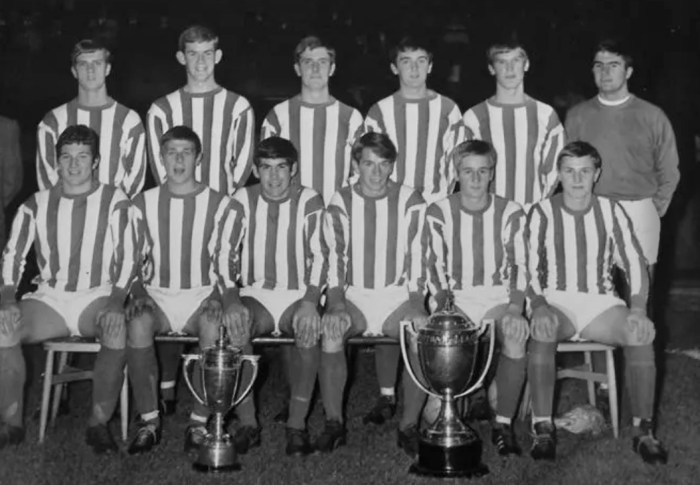
Forster was still the last line of defence when the Wearsiders (above) finally won the trophy in 1967, a 2-0 aggregate scoreline seeing off a Birmingham City side that had future England international Bob Latchford at centre forward.

Less than 48 hours after the game, Forster, Hughes and Suggett travelled to North America as part of a squad selected by manager Ian McColl to represent the club in the United Soccer Association, where they played seven matches under the guise of the Vancouver Royal Canadians.

Retrospectively, Forster regretted not moving on sooner from Sunderland. But he told the Northern Echo: “Sunderland were one of the top youth clubs and they were very good to me. I should have left much earlier, seen the signs, but in those days players were genuinely loyal.

“You didn’t just ask to leave as soon as you were dropped. I decided to stay. It was my mistake. Monty never got injured again for five years, though I tried hard to kick him in training. He was an exceptional goalkeeper.”

Forster likened his situation to Newcastle’s Shay Given and Steve Harper. “Both very good goalkeepers, but maybe one a bit better than the other.”

Duffy had Burleigh pal for company on his Albion arrival

HISTORY has seen a whole string of goalkeepers play for both Newcastle United and Brighton. Dutchman Tim Krul was the most recent and others stretching back over the years – Eric Steele, Dave Beasant, and Steve Harper – have featured in this blog at various times.

My post this time, though, centres on Martin Burleigh, for many years an understudy to Northern Irish international Iam McFaul.

When stocky striker Alan Duffy travelled 350 miles from home to join Brighton in early 1970, it was with some relief that he found the familiar face of Burleigh amongst his new teammates.

How Albion’s matchday programme reported Duffy’s delight in meeting up with a familiar face

The goalkeeper, who was only 18, was on loan at the Albion at the time. The previous year he and Duffy had been in the same Newcastle United youth team.

Not only did that side do the Northern Intermediate League and cup double, 10 days before the first team won the Inter-Cities Fairs Cup, the youth team brought even more silverware to Tyneside – winning a prestigious international youth tournament at Feyenoord’s ground in Rotterdam.

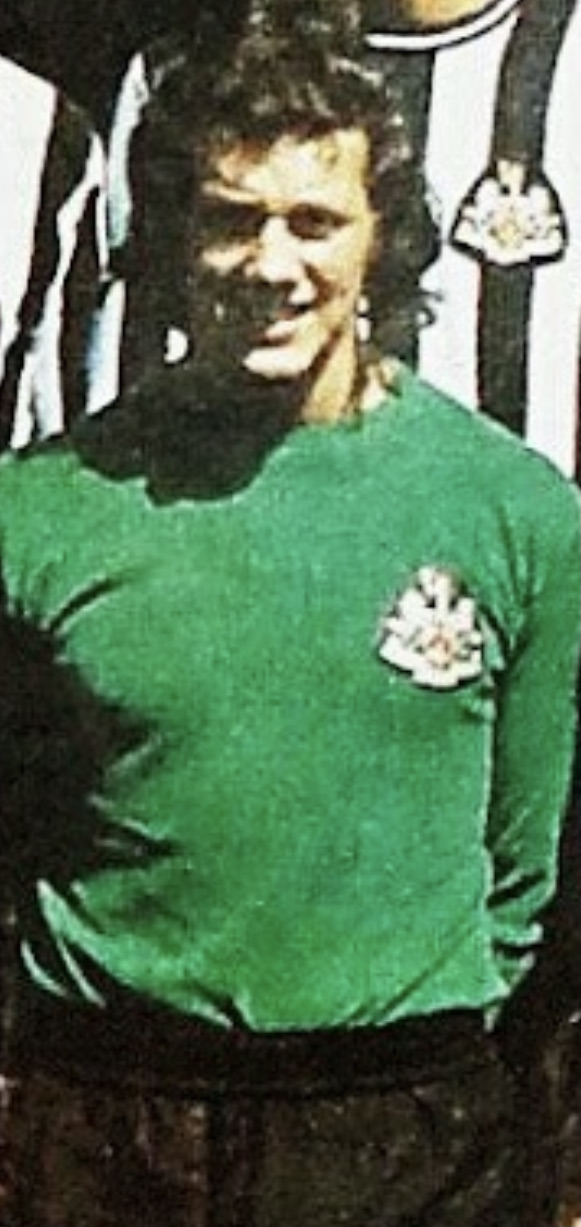
Toon’s trophy-winning youth team of 1969

Unlike Albion’s new £10,000 permanent signing, though, Burleigh was to have only a short-lived stay in Sussex. Manager Freddie Goodwin had brought in the Toon no.3 ‘keeper (Iam McFaul was first choice and John Hope his deputy) as cover while Albion were reduced to only one fit goalkeeper (Brian Powney) following a serious head injury to Geoff Sidebottom in the first match of a marathon second round FA Cup tie against Walsall (it took four games to decide it; those were the days before penalty shoot-outs).

Thankfully Powney avoided injury so young Burleigh was not called into match action, and he returned to the north east still waiting to make his league debut. Indeed, he had to wait until Boxing Day 1970 for that chance. Although Toon went down 3-0 at Leeds United, opposition manager Don Revie praised the youngster, saying: “I thought he had a fine game. He had no chance with the goals. Some of the saves he made showed he has a fine future ahead of him.”

It would seem Toon boss Joe Harvey wasn’t so sure and it was more than a year before Burleigh got his next chance to shine, making his home debut in a 4-2 win over Coventry City on 8 January 1972.

Once again it was to be his only first team appearance of the season, but in the 1972-73 season he finally got a run of games when McFaul was injured. He played in 11 matches but then had the misfortune to fracture a finger in a collision with Mick Channon during a 1-1 draw at Southampton, and McFaul returned.

The Toon 1892.com website recalls Burleigh then having a struggle with weight issues and he had a public dispute with manager Harvey which saw him walk out of the club saying he was going to join the RAF. But Newcastle retained his registration and when the dust settled on the dispute he was sent on loan to Darlington before making the move permanent in October 1974 for a fee of £8,000.

He was only at Darlington for a season before switching across country to Carlisle United, where he spent two seasons.

When Burleigh died at the age of 70 on 27 September 2021, Carlisle chairman Andrew Jenkins said: “Martin was a big character who was a pleasure to have around. He was tall and strong in stature and very stylish in the way he kept goal.

“We used to talk about how he very much had the manner of how the goalkeepers in Europe used to do things, with flair and a bit of theatre.

“I remember that Alan Ashman was really keen to get him signed and over here to join us. When he was speaking to the board about him, he said that the fans would be queuing along Warwick Road to watch him – he felt he was that good.”

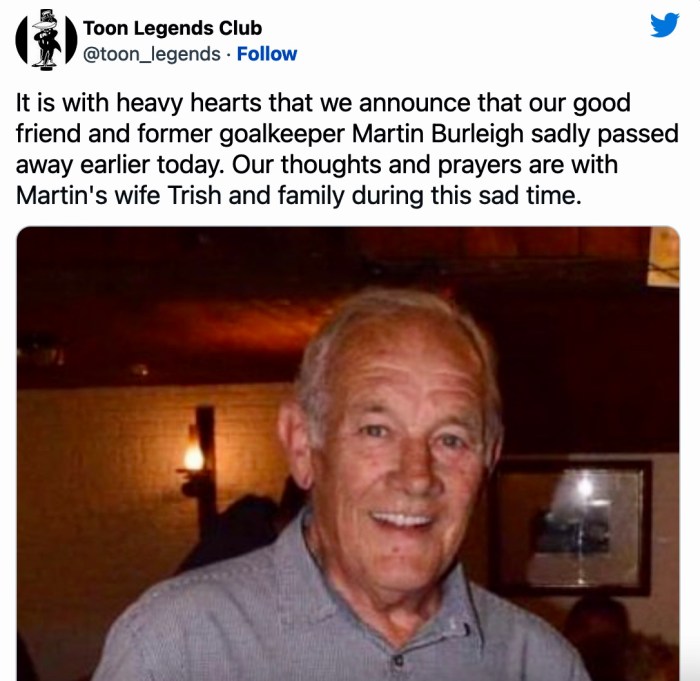
His death was mourned by former Newcastle teammates too and several ‘Toon Legends’ remembered him at a gathering at the Tyneside Irish Centre.

Tribute on Twitter following Burleigh’s death

“Martin was a great friend and a lot of players who played alongside him at Newcastle from junior to first team level want to pay their respects to a real character,” Toon Legends official Chris Emmerson told Chronicle Live.

After his spell at Carlisle, where he also had to bide his time behind first choice Allan Ross, Burleigh returned to Fourth Division Darlington for two more seasons, during which time (in October 1978) he kept goal when the north east minnows only narrowly lost (1-0) to First Division Everton in a third round League Cup tie.

Burleigh went on to spend three seasons in goal for Hartlepool, ending his league career with a total of 222 appearances.

He then became a painter and decorator but continued playing for non-league sides in the area, appearing for Bishop Auckland, Spennymoor and Langley Park until packing up playing in 1984.

Born in Willington, County Durham, on 2 February 1951, Burleigh was playing for his hometown team at 17 when Newcastle signed him in 1968, initially as an amateur.

Kenneth Scott, in The Toon1892 Chronicles, wrote: “He displayed within the junior and reserve teams that he was more than capable between the posts and it was not long before he turned professional.”

That happened in December 1968 and before the end of the season he was in goal for the Newcastle youth team under coach Keith Burkinshaw (who later managed Spurs) when they won the international tournament in Holland, beating an Arsenal side containing the likes of Ray Kennedy, Sammy Nelson, Charlie George, Eddie Kelly, and Pat Rice.

The achievement was somewhat overshadowed by the first team’s triumph in the old Inter-Cities Fairs Cup when Toon beat Hungarian side Ujpest in the two-legged final, skipper Bobby Moncur lifting the trophy in Budapest.

Although Burleigh managed to edge out McFaul’s deputy Hope to become the no.2 at St James’s Park (Hope joined Sheffield United along with David Ford in exchange for John Tudor in 1971), the form and fitness of the Northern Irish international (who later spent three years as manager of Newcastle) always kept him on the sidelines.

• Incidentally, in line with the tradition of Albion ‘sharing’ goalkeepers over several decades, when McFaul was in the manager’s chair in January 1988 he took Albion’s long-serving Perry Digweed on a month’s loan with the Magpies. He played in their reserves but didn’t appear in the first team. The following month he went on loan to relegation-threatened Chelsea where he featured in three matches: a 3-3 draw away to Coventry City, a 0-0 home draw v Everton and a 4-4 draw at Oxford United.

Lanky Lurgan lad lined up alongside George Best

JOHN NAPIER is still coaching youngsters in America at the age of 75. NICK TURRELL’s In Parallel Lines blog caught up with him for a trip down memory lane.  Here, in the third of five articles, we look at how it all began.

This cracking Bolton News picture shows Napier leading out Bolton’s under 18 side at Bromwich Street in January 1963, during the big freeze of that winter.

JOHN NAPIER was born in Lurgan, 18 miles south west of Belfast, on 23 September 1946.

Napier was football daft from a young age and he said: “Looking back at my childhood, I always wanted it from a young age. It was my dream. I had two uncles that played at pro level in Northern Ireland and they worked with me at a young age.

“I would say they toughened me up. I was never afraid to try new things. I left home at 15 to pursue my dreams, and it worked out. It was not easy – it never is – but you must keep at it. Failure was not an option in those times.”

In another interview, Napier said he adopted Spurs as his favourite side when he was 10 or 12. He had three uncles living in north London who were all avid Tottenham supporters and they would send him programmes, pictures and pennants that the youngster put up on his bedroom wall.

𝗟𝘂𝗿𝗴𝗮𝗻 𝗜𝗻𝘁𝗲𝗿𝗺𝗲𝗱𝗶𝗮𝘁𝗲 – 𝗜𝗿𝗶𝘀𝗵 𝗦𝗰𝗵𝗼𝗼𝗹𝘀 𝗦𝗲𝗻𝗶𝗼𝗿 𝗖𝘂𝗽, 𝗠𝗶𝗱-𝗨𝗹𝘀𝘁𝗲𝗿 𝗟𝗲𝗮𝗴𝘂𝗲 𝗮𝗻𝗱 𝗖𝗮𝗳𝗼𝗹𝗹𝗮 𝗖𝘂𝗽 𝘄𝗶𝗻𝗻𝗲𝗿𝘀 𝟭𝟵𝟲𝟭

Napier was good enough to represent his country at every level. He played for the schoolboy side at under 15 and under 16 level, and was the youngest Irish player, at 17, in the youth side that reached the final of the UEFA European Under-18 Championship tournament in April 1963.

In front of a crowd of 34,582 at Wembley, he had the misfortune to score an own goal with his head after only five minutes and England went on to beat the Irish 4-0 (Ray Whittaker, Jon Sammels and John Sissons scoring the other goals).

Remarkably, Northern Ireland’s greatest ever player, George Best, only played in two youth internationals for his country.

Napier was in the same side as Best when the Irish drew 1-1 with England at Boundary Park, Oldham, on 11 May 1963.

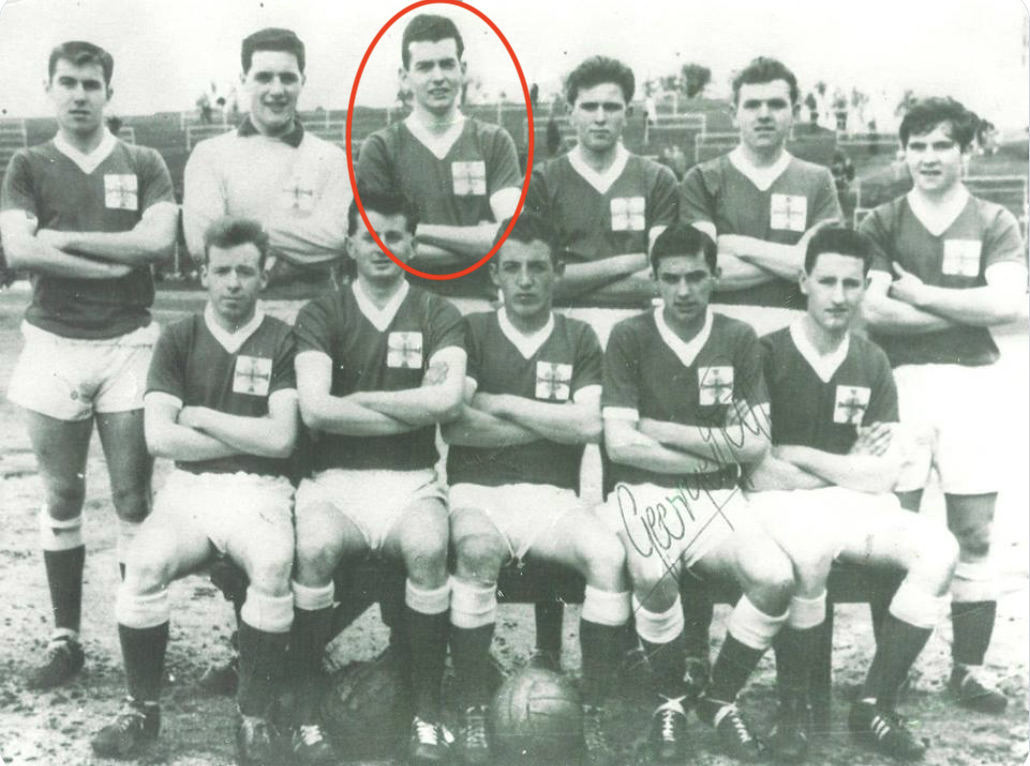
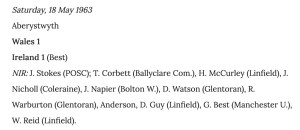
A week later they were selected together again and Best scored his country’s goal as they drew 1-1 with Wales in Aberystwyth.

After winning his only full cap against West Germany in 1966 (see previous article), Napier won two Under-23 caps, also both against Wales. He was in the side that beat Wales 2-1 at Windsor Park, Belfast on 22 February 1967, although the game was abandoned on 72 minutes because of a waterlogged pitch and Welsh and Irish sources differ as to whether the result stood.

Napier had moved to the Albion by the time he made his second appearance; this time the game took place at Ninian Park, Cardiff, on 20 March 1968 and the Irish included the likes of Pat Rice, Tommy Jackson, Dave Clements, Bryan Hamilton and Sammy Todd, who all became established full internationals. But the game was the last of Napier’s international career, at the age of 21.

As Napier said above, he was only 15 when he joined Bolton, choosing them over Everton and Sunderland, who had also shown an interest.

“I really enjoyed my early experience at Bolton,” he told thefootballnetwork.net. “George Taylor and George Hunt, my first coaches at Bolton, and also Nat Lofthouse had a lot to do with my early development. I used to talk to Nat a lot about my game.”

Napier training with Francis Lee and Brian Bromley

Napier rose through the youth ranks alongside the likes of Brian Bromley, Dave Hatton and future England and Manchester City star Francis Lee.

The boots of longstanding centre half Bryan Edwards were big ones to fill but Bolton boss Bill Ridding gave Napier the opportunity to stake his claim. He made his first appearances in the senior side in the final two games of the 1964-1965 season.

Napier helped the side keep clean sheets against Leyton Orient and Cardiff City as the Trotters just missed out on promotion, finishing third, as Newcastle went up as champions along with runners up Northampton Town.

As well as Lee and Bromley, Bolton at that time had a side that included Welsh international striker Wyn Davies (often Napier’s roommate for away matches), England international goalkeeper Eddie Hopkinson and Gordon Taylor, who went on to become chairman of the PFA.

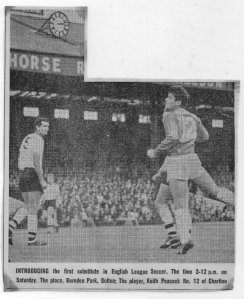
For the following 18 months, Napier was a regular at the heart of the Bolton defence, missing just three games in his first full season and playing a part in the game against Charlton Athletic which saw the Addicks’ Keith Peacock become the first substitute used in English football when replacing goalkeeper Mike Rose in a game at Burnden Park on 21st August 1965.

The Ulsterman himself was involved in the first ever Bolton substitution when, following injury, he was replaced in the 3-2 defeat at home to Southampton by Gordon Taylor.

• In the next instalment of this five-part series of articles, Napier describes the camaraderie that existed amongst the Brighton players during his time at the club, and his approach to the opponents he faced.

Facing Franz Beckenbauer the highlight of John Napier’s career

FIFTY years ago, Brighton spent the summer preparing for life in the old Second Division having won promotion in front of 30,000+ crowds at the Goldstone Ground. For one player, though, his five years at the heart of the Albion’s defence – many as the club captain – were drawing to a close.

Seven years later, John Napier moved permanently to the United States to embark on a new life. Today, at the age of 75, he is still coaching. NICK TURRELL’s In Parallel Lines blog caught up with him for a trip back down memory lane. 

Here, in the first of five articles, John reflects on the highlight of his career, how he came to join the Albion, and his appointment as club captain.

A BRIGHTON captain in the making faced Uwe Seeler, Franz Beckenbauer and Co in a warm-up game for the 1966 World Cup tournament in England.

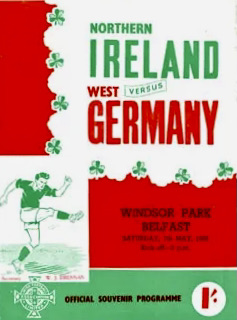
It was the one and only time John Napier appeared as a full international for Northern Ireland, but that day on 7 May 1966 has lived with him into his old age.

Napier at 75 still treasures his Irish international shirt

“Walking out at Windsor Park, Belfast, against West Germany was probably the biggest highlight of my soccer career,” he said. “All my family were there watching and afterwards we had a large dinner and I was sat directly across from Uwe Seeler and Franz Beckenbauer. It was some night I will never forget.”

A crowd of 22,000 at Windsor Park saw the country who’d two months later take England into extra time at the World Cup final secure a 2-0 win courtesy of goals by Seeler and Fredy Heiß.

The call-up was reward for Napier’s form with second tier Bolton Wanderers, where he had just been named Player of the Season.

Against the Germans, Napier, aged just 19, played alongside Terry Neill and in front of the great Pat Jennings. One of the full-backs that day, Jimmy Magill, who was coming to the end of his international career, had already moved from Arsenal to Brighton by then. Magill came from the same town, Lurgan, as Napier.

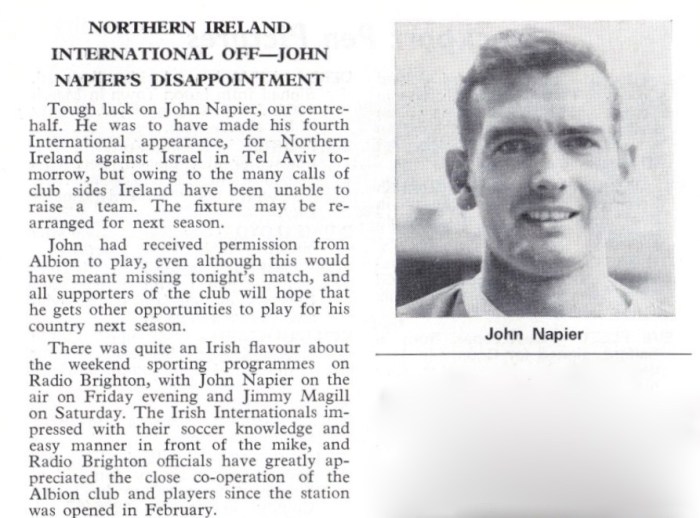
Napier did get selected to play for his country again, after he’d joined the Albion. He was due to play in a friendly against Israel in Tel Aviv in 1968.

But as Napier recalled: “Before we were due to fly out from Heathrow, we were told that there had been an uprising in the Middle East, and it would not be safe to play the game under those circumstances.

“I was looking forward to that game as Terry Neill had an injury and it was a chance for me to get back in the national side again, so it was disappointing.”

By the time the fixture was rearranged (in September the same year), Napier was out of the picture. For the record, Northern Ireland won 3-2; Napier’s future Albion teammate Willie Irvine scored twice with Derek Dougan netting the other.

“Although I loved my time at Brighton, I felt the international chances did not come back as I would have liked,” Napier reflected. “I did get selected a few times but I also got injured and missed a chance to play against England. There was also a Scotland game at Hampden which clashed with a Brighton League Cup game where I was not released. Being behind Terry Neill (the Arsenal skipper) did not help either because he never missed many games.”

At £25,000, 20-year-old Napier was a record signing by the Albion when Archie Macaulay persuaded him to leave Burnden Park and head for the south coast at the start of the 1967-68 season.

“£25,000 was a lot back then,” Napier recalled. “Brighton had come in with a £20,000 first offer which Bolton refused. I don’t think at the time that Bolton wanted to let me go, so I was told, so they kept refusing offers from Brighton. There were a couple of other clubs in at the time, so that is why the fee went to £25,000.”

The Irishman continued: “It was a difficult decision because I was still young and ambitious. But, at the same time, I felt I needed to break from Bolton for a fresh start and Brighton came in with a very good offer that Bolton accepted.

“I had gone through a sticky patch the last few months at Bolton, being in and out of the first team. I had made my debut at Bolton before my 19th birthday and was an ever present in the first team for a long time. I was voted Bolton Player of the Year in 1966 so I was well liked in the town and never felt like I would be anywhere else.”

Nevertheless, he admitted that he asked for a transfer because he was not getting on with the Bolton management. “I was strong willed and I went to talk to Nat Lofthouse (the club’s legendary former centre forward who was part of the second team training staff).
“I always admired him as a person and a player,” said Napier. “He did not say go but he did say I was still very young and had my whole career in front of me. So, it was a big decision, but it was also a large financial decision, because I did make a good amount through signing-on fees, wages and also a bonus from Bolton because I had been there since I was 15. So, financially, I was so much better off at Brighton.”

He continued: “When you are young like I was, things change fast, and they sure did for me. I left many of the players I had grown up with in the Bolton youth teams and many great players I was playing with: Francis Lee, big Wyn Davies, Freddie Hill, Eddie Hopkinson – all internationals.”

At Brighton, Napier quickly established a formidable partnership with Norman Gall at the back, so what was the secret of their success?

Napier and Gall at the heart of the team picture – as well as defence

“I loved playing at the back alongside Norman,” Napier explained. “We had a good understanding of what was needed in the middle at the back.

“We hit it off straight away and played many times together, and so consistently. We were tough and could read and feed of each other.

“I was good in the air and was able to master tall number 9s, as we had a lot back then. Norman was quicker than me and could handle speedy players alongside the big guys, so it was a good combination.

“I was more sit back in the pocket, and Norman would venture forward more, but we were defenders in the old tradition.”

It turns out one of Napier’s biggest fans was the renowned comedian, actor and musician Norman Wisdom, who was an Albion director in the ‘60s. “He was always at our games and brought a laugh into the dressing room even if we lost,” said Napier. “A great character. I was thrilled in later years when I read that I had been his favourite player at Brighton. I hope he wasn’t joking!”

How the matchday programme reported a first Albion goal for the Irish defender

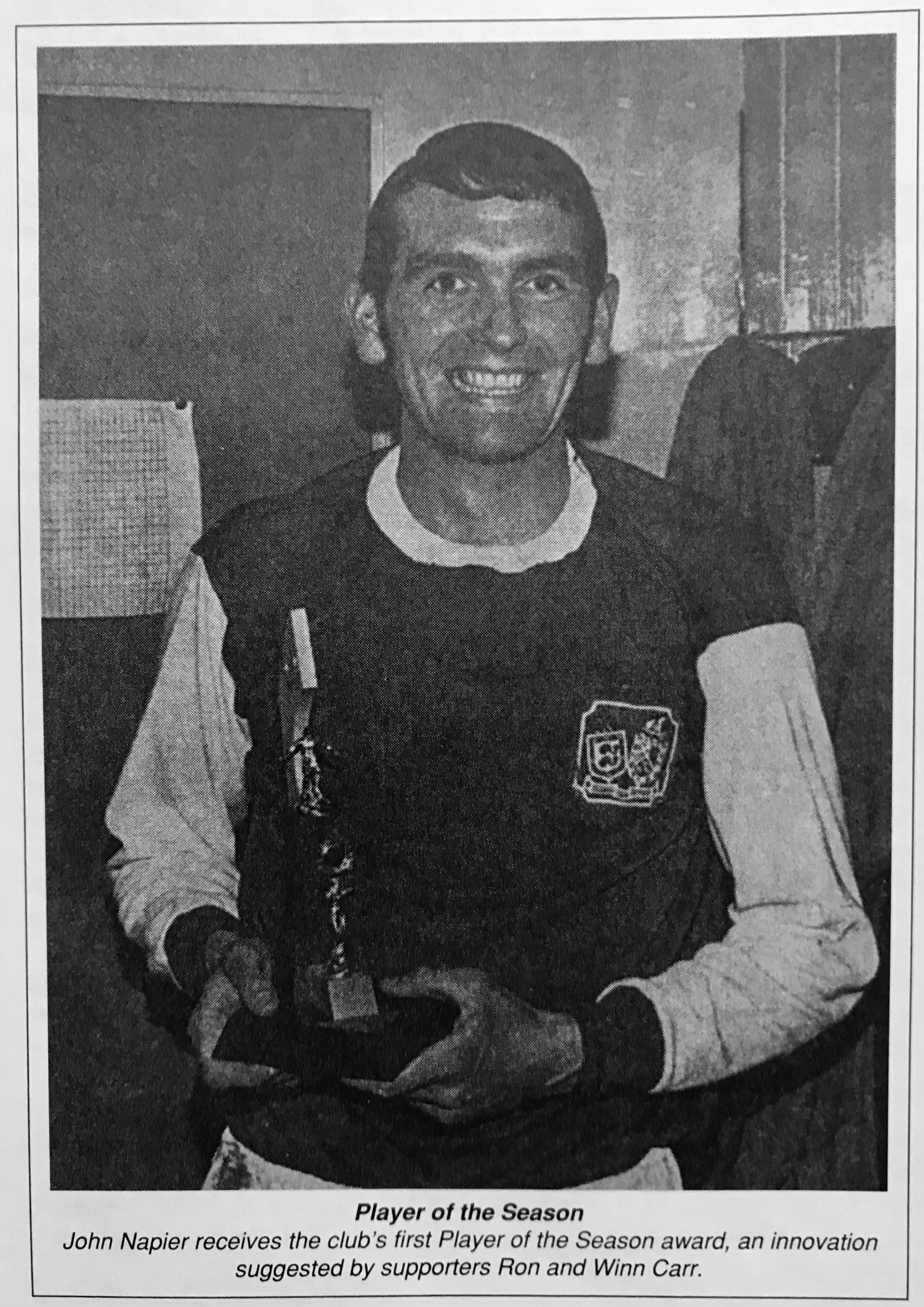
The Irishman received Albion’s first-ever Player of the Season award (below centre, as featured in Seagulls! The Story of Brighton & Hove Albion FC by Tim Carder and Roger Harris) for his consistent performances at the heart of Albion’s defence in the 1968-69 season. He played in all 52 Albion matches that season.

“I was very proud of getting that award especially as it came from the fans at the Goldstone Ground,” he said. “It was a surprise to me at the time, I loved playing there and I think the crowd did appreciate the work we put in.

“I had a good rapport with the fans; I felt that they respected the way I played, always giving my best output. I also did a lot of work in the community at the time, as did most of the players. We were always out somewhere. I remember coaching a local team in the evenings.”

He added: “Brighton was a good club; it was a club that players wanted to come to, and the club took care of us well. We travelled like a First Division outfit and we stayed at the best hotels at the time. Sometimes on trains travelling north we would be in close quarters with Arsenal or Tottenham players, and I would be meeting up with old teammates like Pat Jennings, Pat Rice, Terry Neill, on the same trains. Brighton had a reputation for bringing in big name players through the years.”

Typical of Napier’s contribution to the Albion at that time was this high praise from John Vinicombe, the reporter who covered the club for the Evening Argus. After a 3-0 win at Reading on 21 April 1971, he wrote: “This was a magnificent display by John Napier. He was absolutely commanding and this rated as his best performance of the campaign. Nothing beat him and this mastery inspired confidence in all around.”

Remarkably the Napier-Gall partnership straddled the reigns of three managers: Macaulay, Freddie Goodwin and Pat Saward.

“Macaulay was a no-nonsense type of manager,” said Napier. “I enjoyed playing for him. He had success with most of his clubs, he knew how he wanted his line up and would go after players for specific positions. Most of the daily training work was done by coaches; I think Joe and Glen Wilson were involved at the time.”

And Goodwin? “For me he was the best man manager I had the pleasure to play for. He brought different ideas to the club, he had been a good player and also had coached in the USA. He was a coach that would be able to lift you as an individual, both as a person and as a player.

“I remember my individual conversations with him. He was so positive in those areas that I felt I wanted to take that onto the field and strive. I think he was the same with most of the players. We had a good group that felt very comfortable with his playing style. As professionals, we are all different in how we respond to management, sometimes good and sometimes bad.

“It is a tough role and obviously not easy to get players on the same page. He managed to do it most of the time before he left to go to Birmingham City.

“I remember him introducing us to a new powder he brought from America called Gatorade we used to dilute in water and drink for energy. That was the first time Gatorade was seen in the UK; now look at it today!”

Napier continued: “Also, he would bring in fancy-coloured boots from companies for us to try out instead of the old black and white ones. That was so funny: we would wear bright blue boots in training but I don’t think anyone wanted to wear them in a game in case the crowd got on to them. How times have changed!

“I loved them; they were softer and very comfortable, but I’m not sure who the manufacturer was.”

Goodwin appointed Napier club captain and the former defender pointed out: “I wanted to be that person, to be a leader and to continue to try to bring success to the club. I always felt that Brighton was a sleeping giant back then.”

He continued: “I personally as a player had some of my best spells under Freddie. We had a good group. It is never easy getting results in the lower divisions. I really can’t remember any of the big games, but we were close, and I think everyone knew it was only a matter of time before Brighton went forward.

“When Freddie left to take the Birmingham job it was disappointing for the players. We knew it was because he was doing such a great job with us, but it was still hard to swallow.”

Napier and the 1969-70 Albion squad

• In the next instalment, Napier reveals how his amazing Albion appearance record came to a shuddering halt.

How the career of high rise Flatts came tumbling down

MARK FLATTS was destined for a glittering career after breaking into Arsenal’s first team when only eighteen.

It was the season when George Graham’s side finished in a disappointing 10th place in the league but won the League Cup and the FA Cup, beating Sheffield Wednesday in both competitions.

Flatts got seven starts plus four appearances off the bench and the following season, after he’d been troubled with a few injuries, Graham sent him out on loan to get some games under his belt.

His first loan was at Cambridge United, then in January 1994 Flatts joined forces with former Gunners legend Liam Brady at Brighton.

The former midfield maestro who’d graced the game at the highest level as a player had not long arrived at the Goldstone Ground, creating a buzz of anticipation amongst the largely disillusioned Albion faithful.

Brighton were bumping along around the foot of the third tier table when he arrived and it augured well that Brady could use his connections with his former club to secure the services of a prodigious young talent who’d already played a handful of matches in the Premier League.

He made his debut in a cracking 4-1 New Year’s Day home win over Cambridge United when Kurt Nogan scored a hat-trick and he was only on the losing side twice during his two months at the club, helping the Albion move away from the relegation zone.

Brady wrote about it in his autobiography Born To Be A Footballer, describing how “livewire” Flatts had heated up “a freezing Goldstone” on that debut day. “He’s a lovely young kid off the field but on the park there’s a strut about him. That’s exactly what we need. He’s full of tricks.”

Flatts started nine matches, came on as a sub once, and scored one of Albion’s goals in a 3-2 home win over Blackpool, but it was his skill on the ball and pace that fans enjoyed most.

After he had returned to Highbury, Brady thanked him for his contribution and said in his programme notes: “He gave the place a tremendous lift. He’s a very confident lad and he did us a real favour and hopefully he’s got something out of it as well. I think he has and I think he enjoyed his time with us.”

Flatts confirmed as much recently. Although he has kept a low profile for many years, in 2020, online from his home in Norfolk, he appeared in two podcasts talking about his career.

On the Shoot the Defence podcast in April 2020, Flatts talked admiringly of his time under Brady at Brighton – “He still had it in training” – as well as the experience of playing alongside senior pros Jimmy Case and Steve Foster at the Goldstone Ground.

“Loyal fans as well. It was a good time,” he said. “I got on well with the fans and a few of them still text me, so that’s nice. Liam Brady and Jimmy Case had seen me in a few games, said they wanted me on loan, and I went there and enjoyed it.”

Born in Islington on 14 October 1972 and brought up in Wood Green, Flatts played for Haringey Borough and Middlesex County school teams and he was playing for Enfield Rangers when he caught the eye of professional clubs.

He spent time training with Watford and West Ham, but his mum and older brother were Arsenal fans so, when they invited him to join them, it was no contest. The scout responsible for picking him up for the Gunners was the former Brighton wing-half, Steve Burtenshaw.

Flatts was one of the country’s top talented 14-year-olds who went through the FA National School of Excellence at Lilleshall before becoming a trainee at Highbury after graduating.

In the first edition of a new fans’ podcast Over and Over and Over Again on 20 August 2020, Flatts talked about how he, Andy Cole and Paul Dickov up front, Ray Parlour and Ian Selley in midfield, Scott Marshall at the back and Alan Miller in goal were all going through from youth team to reserves at the same time. “It was a good strong youth team,” he said. “Pat Rice was the youth team manager who brought us through. He was a good coach.”

Flatts signed professional in December 1990 and he progressed to the reserve side who were managed by another Arsenal legend, George Armstrong.

One particular reserve match stands out as memorable – but not because Flatts scored a goal in a 2-2 draw. Ordinarily, Flatts was accustomed to playing in front of a few hundred supporters for the second string, but on 16 February 1991 it’s reckoned more than 10,000 turned up.

The Ovenden Papers Football Combination game against Reading was originally scheduled to be an away fixture but freezing conditions meant the game was swapped to Highbury because it had undersoil heating.

The reason for the surge of interest was the match saw the return to playing of Tony Adams after his release from prison, having served half of his four-month sentence for drink driving. The amazing response of the Arsenal faithful was remembered in this football.london article in February 2018.  

Often niggled by injuries, Flatts was sidelined by one he hadn’t even been aware of, other than what felt like a small discomfort. “I got a stress fracture on my ankle and was playing on it for a month without realising,” he said.

Physio Gary Lewin arranged for him to see a Harley Street specialist and it was only after he was put through tests on a running machine that the problem was diagnosed. The injury required surgery that put him out of action for over a year.

Flatts got his first real involvement with the first team on a pre-season tour of Norway ahead of the 1992-93 season, getting on as a substitute against Stabaek and Brann Bergen. He was a non-playing sub in two subsequent pre-season friendlies away to Wolves and Peterborough.

It was back to reserve team football at the start of the season but Graham selected him to travel with the squad for an away game at Sheffield United on 19 September and he made his competitive debut as a 71st minute substitute for Anders Limpar, shortly before Ian Wright netted an equaliser for the Gunners.

His next involvement came in a third round League Cup encounter with Derby County. He was a non-playing sub in the away tie but started in Limpar’s place for the replay on 1 December 1992, when Arsenal edged it 2-1.

Flatts (right) celebrates Arsenal’s League Cup win with some familiar faces

He kept his place for the league game which followed four days later but was subbed off as Arsenal lost 1-0 at Southampton.

At one point, the Islington Gazette declared Flatts, Neil Heaney, Parlour and Dickov as the “next crop of Arsenal starlets who will take the club forward”.

As the year drew to a close, on 19 December, Flatts earned rave reviews for his showing in a 1-1 home draw against Lennie Lawrence’s Middlesbrough.

“It’s very unusual to have a quick player with a brain,” said manager Graham. “Mark has skill but he also has the application to go with it.”

Writing about how brightly Flatts shone in the game, Trevor Haylett, of the Independent, said: “He possesses an easy and deceptive running style which frequently carried him away from markers, and has a confidence that few of his colleagues shared in a desultory first 45 minutes.”

Haylett observed: “The problem for Graham is that his most productive line-up, with Merson in the ‘hole’ to distribute and ghost into scoring areas, leaves no room for Flatts, who amply justified his manager’s contention that he has a ‘very big future in the game’.”

Flatts kept his place for the following match, a goalless Boxing Day home draw against Ipswich Town, and was back on the bench away to Aston Villa three days later but came on for the second half in a game Arsenal lost 1-0.

The game he remembers most fondly came just over a fortnight later away to Manchester City at Maine Road. He sped past two players and crossed it for Paul Merson to score with a near post header that gave Arsenal a 1-0 win.

But competition for places was intense and he didn’t next get a start until 1 March against Chelsea at Stamford Bridge, another game that finished goalless.

He had to wait until May for his next involvement, as a sub in a 1-0 defeat away to Sheffield Wednesday, who his teammates would play twice in the space of five days later that month to win the FA Cup on penalties, both games having ended in draws.

With the first of those matches only four days away, Graham put out a young side to face Spurs in the last league game of the season, and Flatts was part of a side who lost the north London derby 3-1, Dickov getting the Arsenal goal.

After his loan spell at Brighton, Flatts got back into the first team picture at Arsenal towards the end of the 1993-94 season, featuring in three successive league games: as a sub in a 1-1 draw with Wimbledon and starting in a 2-1 win at Villa and a 1-1 home draw against QPR.

While he travelled to Copenhagen with the squad for the European Cup Winners’ Cup Final on 4 May 1994, he didn’t play in the Gunners’ 1-0 win.

Flatts wasn’t back in the Arsenal first team set-up until December 1994, when he had a four-game spell, starting in a 2-2 draw away to Nottingham Forest, being a non-playing sub away to Manchester City and then coming on as a sub in a 3-1 defeat at home to Leeds on 17 December and in the goalless Boxing Day home match with Aston Villa.

He came off the bench in a third round FA Cup replay defeat to Millwall on 18 January 1995 but the following month the manager who had supported his development was sacked, and the young wideman went out on loan to Bristol City.

Flatts didn’t reckon much of the man management skills of Graham’s temporary successor, Stewart Houston, but it was the manager who eventually succeeded him who showed the youngster the door.

“Bruce Rioch took over, and said: ‘No, you’re not good enough’ and that was it,” Flatts recalled. He had another short loan spell, this time at Grimsby Town, in the 1995-96 season, but when his contract was up in 1996, he was given a free transfer.

When Flatts left the famous marble halls of Highbury, all that early promise rapidly evaporated and despite a handful of trials at several clubs, his career fizzled out, the player admitting he fell out of love with the game.

Initially, he headed off to Italy to try his luck with Torino in Serie B. He said while he enjoyed his few months there, a limit on the number of foreign players who could play at any one time edged him out of the picture.

According to arseweb.com, back in the UK he had trial periods with Manchester City (September 1996) and Watford (October 1986), although the scathing Hornets fans website, Blind, Stupid and Desperate has a less than flattering summary of his efforts to impress at Vicarage Road. He was briefly at Kettering Town in December 1996, then Barnet (1997-98 pre-season) and Colchester United (1999-00 pre-season) but none of them took him on.

Former Arsenal striker Martin Hayes, manager at Ryman League Division One side Bishop’s Stortford, signed him during the 1999-00 season.

And his last appearance on a team-sheet was as an unused substitute for Queens Park Rangers in a 2000-01 pre-season 4-2 away defeat at Dr Martens League Premier Division side Crawley Town.

Flatts told host Richie Wakelin on Over and Over and Over Again that he kept on picking up niggling injuries too regularly. “With fitness concerns, I just lost interest,” he said. “I ain’t got no regrets. I loved it at Arsenal. I loved playing football. George Graham had faith in me and he gave me a go.”

He said his teenage son and daughter both play football and he has done some coaching at a local level and has considered setting up his own coaching school. He has also done some scouting work for Cambridge United and Norwich City.

Flatts looks back at his football career during a 2020 podcast

Pictures from Albion’s matchday programmes and various online sources.

Sammy Nelson’s glittering career came to an end at Brighton

2 Sam NelsonEXPERIENCED Northern Irish international full-back Sammy Nelson was an Arsenal legend who joined Brighton towards the end of his career.

The last four of his 51 international caps came while with the Seagulls. One was a 4-0 defeat to England at Wembley when Albion teammate Steve Foster made his England debut, another was a substitute appearance at the 1982 World Cup against Spain. His last appearance for his country came in a 2-2 draw with Austria at that tournament.
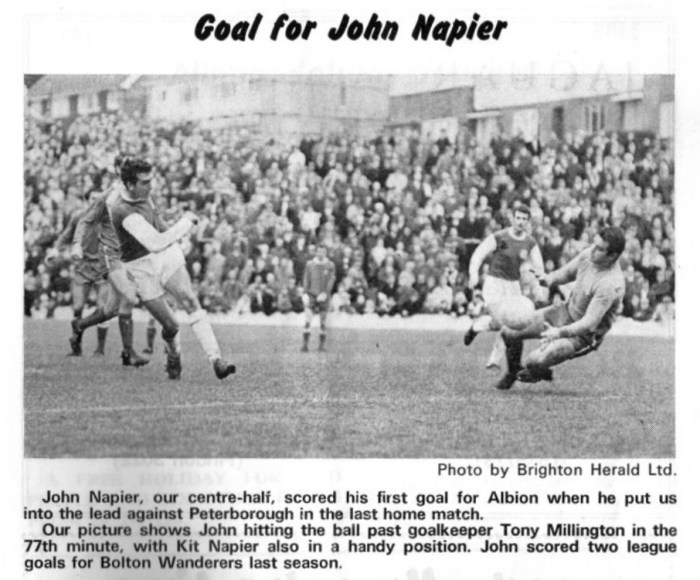
nels NI colLeading up to that competition, Nelson had played a significant part in helping Albion to what remained their highest ever finish in the football pyramid – thirteenth place – until the 2022-23 season.

A lot of fans didn’t like manager Mike Bailey’s style of play, but, with some degree of resonance to Chris Hughton’s philosophy, he built his side on a solid defence and preferred experience over youth.

Nelson was a key player in that defence after ousting long-serving Gary Williams a third of the way into the 1981-82 season.

He played alongside his former Arsenal teammate Steve Gatting, who Bailey had signed for £200,000 as a replacement for Mark Lawrenson (the famous departure to Liverpool having been the trigger for Alan Mullery to quit as manager).

Nelson had made only one substitute appearance for Arsenal in the previous season but he enjoyed a bumper testimonial game when a crowd of 20,000 turned up at Highbury for a game against Celtic.

Bailey declared on paying £35,000 for a 32-year-old player who had made 339 league and cup games for the Gunners: “The signing of Sammy Nelson has now given me the sort of squad I feel we need to compete with the best in the division.

“Sammy is a fine player and a very good professional but, like everyone else, he will have to compete for a team place.”

He did indeed have to wait for his chance, largely because he had a foot strain at the time of signing. But the chance came in a league cup second leg game at home to Huddersfield at The Goldstone.

Williams was restored for the following two league games but Nelson got the nod for a third round league cup game away game at Barnsley (which ended in a 4-1 defeat) and kept the shirt for all but two games through to the end of the season, making 32 appearances in total.

After only seven games, he gave an interestingly candid interview to the Argus. He admitted he was struggling with the daily commute from his home in Brookmans Park in Hertfordshire, being that it necessitated a 6am wake up.

“Towards the end of a week, it is only natural to start feeling tired at that sort of routine when, instead, I should be fresh for the coming game,” he said.

In the same interview, Nelson went on to take a bit of a swipe at a small section of the Albion following. “They expect the championship to come overnight. Some of them, instead of getting behind the team, have begun to get abusive, even vindictive,” he maintained. “I would have expected a little more loyalty from the crowd, but I must stress that I am only talking about a small section.”
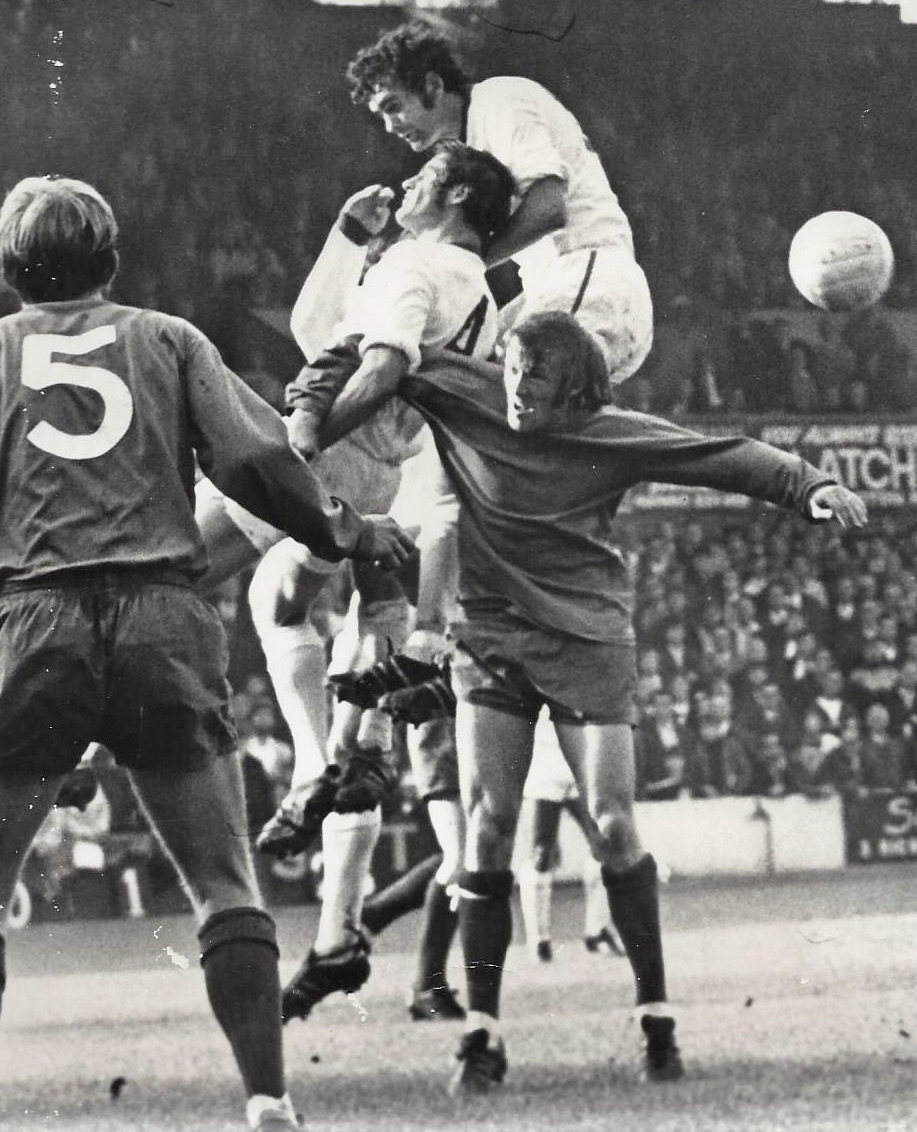
It must have given Nelson some pleasure in April 1982 to be on the winning side as Albion beat Arsenal 2-1 in the top flight for the first time in nine attempts since gaining promotion in 1979.

Especially as former boss Terry Neill was up in arms about a challenge Nelson had made that went unpunished. The News of the World declared: “Arsenal boss Terry Neill last night blames former Highbury hero Sammy Nelson for his team’s defeat.

“Neill claimed the Brighton fullback should have been booked for bringing down Raphael Meade as the striker closed in for a goal which would have sewn up the match for the Gunners.”

Nelson was born in Belfast on April Fools Day 1949 and joined Arsenal on his 17th birthday in 1966, just as all eyes in England were focused on the World Cup.

His first silverware came as a member of Arsenal’s FA Youth Cup winning side that year, when they beat Sunderland 5-3 over two legs.

At that time he was a left winger but coach Don Howe converted him to a full back. The established first choice left back was Bob McNab and in the famous 1970-71 Double winning side, Nelson only got to play four games.

In fact he understudied McNab for the best part of five years, until the former Huddersfield man left the Gunners in 1975. Then Nelson made the position his own, with fellow Irish international Pat Rice on the opposite flank.

Nelson was almost ever present for five seasons and was part of the Arsenal team which reached three successive FA Cup Finals: 1978, 1979 and 1980, picking up a winners’ medal in the 1979 win over Manchester United. The Arsenal 1-2-3 that day were all Ulstermen: Pat Jennings, Rice and Nelson.

I particularly like this story from Arsenal fan Paul Reynolds, published on untold-arsenal.com: “In 1980 I took on a paper round and one of the houses I delivered newspapers to was where the Arsenal left-back Sammy Nelson lived. I didn’t see him often because I delivered the papers very early, but I’ll never forget the morning of the Arsenal v West Ham final.

“At about 10am I got a phone call from the paper shop owner to tell me that Sammy had popped in the night before and dropped off two tickets to give to the lad who delivered his papers. I was thrilled to bits and my girlfriend and I rushed off to Wembley and just about made it in time for kick-off – we didn’t care that we had to stand right at the back.

“Although, sadly, we lost the game 1-0 I’ll never forget that generous and thoughtful gesture by my former Arsenal hero and will always be grateful to have been supporting the club during an era when the players genuinely had a connection with the supporters and cared enough to go out of their way ahead of a massively important game to help a fan like me. Arsenal ‘til I die.”

arsenal.com remembers Nelson as one of their top 50 players, describing him as “a funny and endearing individual, the Ulsterman was held in genuine affection by team-mates and supporters alike”.

It also recalls the time he dropped his shorts and bared his backside to the North Bank – which earned him a fortnight’s ban by the FA. It was his response to scoring an equaliser after he’d earlier been barracked for scoring an own goal in a league game against Coventry.

The website adds: “A fine strike in a League Cup trouncing of Leeds United in 1979 was the pinnacle of his goalscoring feats, but Nelson was always willing to venture into enemy territory. At the back his obdurate tackling and bravery was complemented by a sure touch on the ball.”

Arsenal’s signing of Kenny Sansom spelled the beginning of the end of Nelson’s time at Highbury and he moved to Albion in September 1981.

Although he started the 1982-83 season in the Albion first team, he picked up an injury and retired at the end of the season having played a total of 45 games for the Seagulls.

On retirement he initially became Albion’s reserve team manager and then first team coach when Chris Cattlin took over as manager from Jimmy Melia. But he left after only one season and took up a City consultant job in life assurance and pensions.

Funnily enough, as a regular commuter to London myself at that time, I’d frequently see Sammy joining the train at Hove in the mornings and then relaxing in the buffet car on the return journey in the evenings.

He told the Independent in a ‘where are they now?’ feature in March 1994: “It’s funny, I never saw myself being part of the rat race but now I find myself standing on the platform in the right place for ‘my’ seat, just like everyone else.”

Pictures from my scrapbook and matchday programmes

A Goal magazine action shot of Nelson in Arsenal’s colours and the full-back in action for the Albion at the Goldstone, pictured in the matchday programme.

Also pictured: Nelson in full flight against Southampton; with young Gary Stevens captured by the Argus singing In Brighton at Busby’s disco in Kings Road; making the headlines in the News of the World; in action against Wolves.