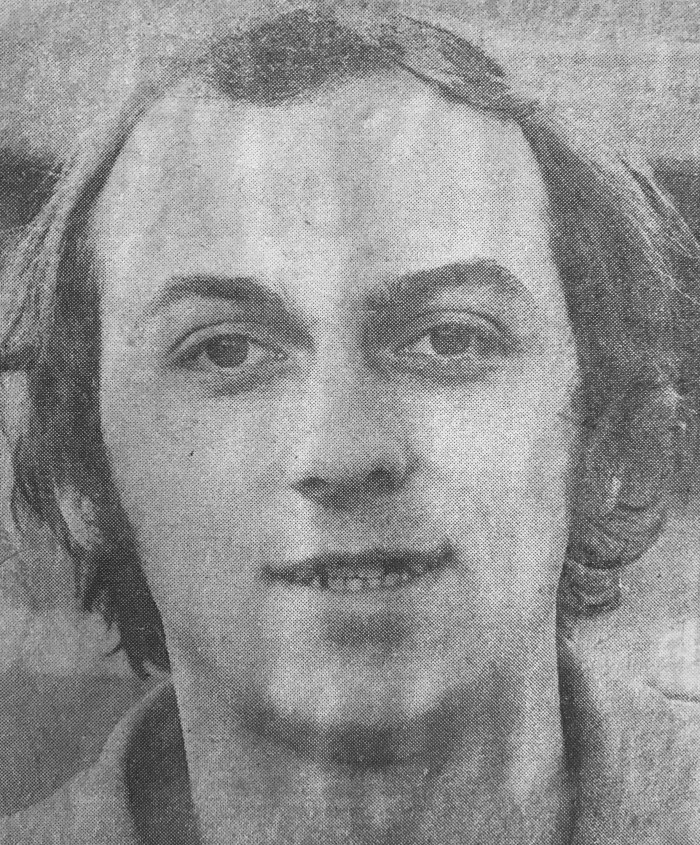
First signing Goodeve was bad day for Clough and Taylor

BRIAN CLOUGH and Peter Taylor were shrewd operators in the transfer market but their first signing for Brighton was a flop.

Possibly panicked into making changes to a side shipping goals at an alarming rate, their spending of £20,000 on Ken Goodeve was money wasted.

The former Manchester United youth captain managed only six appearances and left the club seven months later.

In the autumn of 1973, fresh with a transfer fund previous manager Pat Saward could only have dreamt of, the former Derby County managerial duo bought Goodeve from Luton Town, where he’d struggled for games after leaving Old Trafford.
Clough and Taylor had been less than impressed with the squad they’d inherited at the Goldstone Ground – particularly after witnessing successive capitulations to Bristol Rovers (8-2) and non-league Walton & Hersham (4-0).

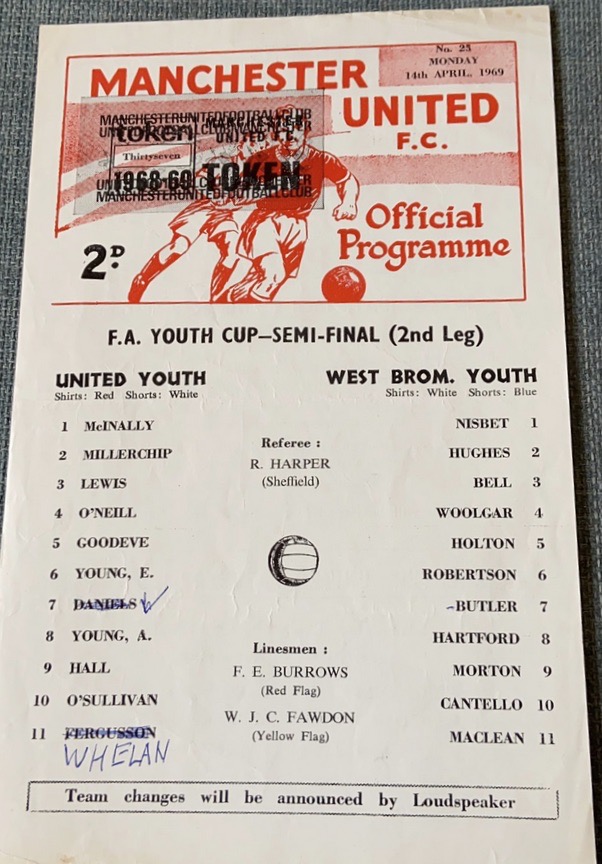
As they sought to shape the side with their own players, the first arrival through the door was Goodeve, who would at least have found one familiar face in the dressing room. He and Peter O’Sullivan played in the same Manchester United youth and reserve sides (see programme line-ups below).

In April 1969, they had reached the FA Youth Cup semi-finals where West Brom beat them 5-3 on aggregate, winning 3-2 at home in the first leg and 2-1 at Old Trafford, when it was reported a crowd of 20,000 were watching.

Goodeve and O’Sullivan played in the same United reserve side as the likes of Jimmy Rimmer in goal, John Fitzpatrick, Nobby Stiles and Don Givens.

In April 1970, Goodeve was one of four fringe United players – Givens, Jimmy Ryan and Peter Woods were the others – who were sold to Luton for a combined total of £35,000.

In two seasons at Kenilworth Road, Goodeve captained the Town reserve side but managed only nine appearances, plus six as a sub for the first team.

He was still only 23 when he joined the Albion. He was handed the no.6 shirt alongside Norman Gall for the away game at Tranmere Rovers on 8 December, along with fellow debutant Peter Grummitt, initially on loan from Sheffield Wednesday, in goal.

But neither new boy could halt the slump, as Albion caved in to a 4-1 defeat. Left-back George Ley didn’t play another game for the club after that game at Prenton Park.

Young Steve Piper was drafted in to play alongside Gall in the following match – a 1-0 defeat at Watford – and Goodeve was handed Eddie Spearritt’s no.4 shirt instead.

He retained his place in the side for the Boxing Day clash with Aldershot (when Burnley youngsters Harry Wilson and Ronnie Welch made their debuts) but this time in place of Ronnie Howell in midfield. Again, Albion lost 1-0.

Clough and Taylor continued to chop and change and Goodeve was dropped to the bench for the next four matches, only getting a brief look-in on the action when going on for Welch in the 2-1 home win over Rochdale on 19 January.

John Vinicombe, Albion writer for the Evening Argus, was not impressed. “The chief disappointment so far has been the failure of Ken Goodeve to recapture his Luton form. Goodeve, who started in the back four with Albion at Tranmere, has subsequently appeared in midfield and so far not made his mark,” he wrote.

Goodeve found himself playing in the reserves with a growing band of former first-teamers and, it wasn’t until 25 March that he got another sniff of first team action.

That was when he stood in at right-back for Paul Fuschillo away to Wrexham (0-1) and five days later at York City (0-3). But that was it. After five starts and one appearance as a sub, he didn’t play for the Albion again.

In the close season, he was offloaded to Watford for half the amount Albion had forked out seven months earlier.

At last, at Vicarage Road, he got plenty of playing time under his former Luton teammate, Mike Keen, who had taken over as Hornets manager.

Indeed, in only the second month of the new season, Goodeve was back at the Goldstone in the Watford side beaten 2-0 courtesy of goals by Ricky Marlowe and Welch.

Goodeve in action for Watford against Albion’s Fred Binney

Born in Manchester on 3 September 1950, Goodeve joined United on schoolboy terms in October 1965 and was signed up as an apprentice the following year. In September 1967, he signed a professional contract at Old Trafford.

By the time he departed Old Trafford in April 1970, he’d not managed to make the step up to the United first team.

At Luton, his teammates included John Moore, who’d previously been on loan with Brighton, Barry Butlin, who played five games on loan at Brighton in 1975, and Don Shanks, who was a Mike Bailey signing in 1981.

After the sparse playing time with Brighton, Goodeve played 69 consecutive games for Watford between 1974 and 1976 but a groin strain ended his professional career.

He was able to pursue a non-league career at Bedford Town for five years and was in their 1980-81 side that won the Southern League Cup.

He subsequently played for a number of non-league outfits in the same region, as detailed in this Watford FC archive and ended up as player-manager of Bedfordshire side Wootton Blue Cross between 1993 and 1997.

According to the Hatters Heritage website, Goodeve continued to play football until he was 47 before becoming customer care manager for Galliard Homes in London, commuting from Wootton every day.
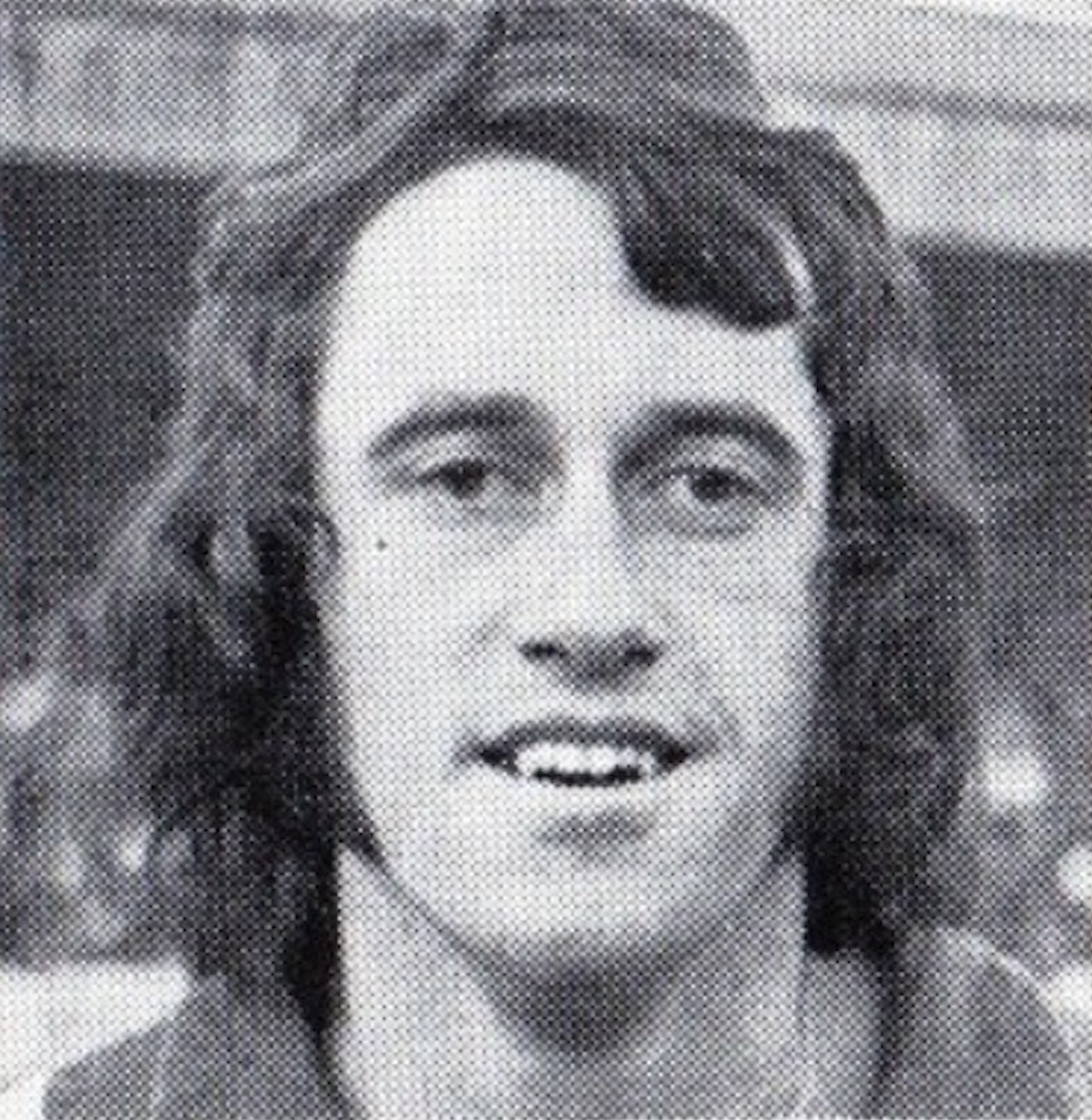
City reject Graham Howell a victim of the ‘Clough clear-out’

FULL-BACK Graham Howell spent two and a half years as a professional at Manchester City but was released without making the first team.

Eighteen months after leaving Maine Road, he was one of several new signings made by manager Pat Saward in an effort to strengthen his newly-promoted Brighton side.

Recent players-of-the-season Stewart Henderson (1969-70) and Bert Murray (1971-72) had previously occupied the right-back berth but Saward believed a change was needed at the higher level.

At only 21, Howell was certainly a younger model who’d been trying to make his way at City when they won the league in 1968 and the FA Cup in 1969. After his release, he had played 43 games for Bradford City in the Third Division, which Albion had triumphantly left in runners-up spot in the spring of 1972.

Howell unveiled to the press by Pat Saward

A fee of £18,000 – the equivalent of just over £200,000 in today’s money – prised him from Valley Parade.

“Only 18 months ago, I was released by Manchester City. I thought the bottom had fallen out of my world,” Howell told the matchday programme shortly after signing that August. “I had no hesitation in deciding to join Brighton. It meant Second Division football and was just the chance I wanted.”

He said he’d thought Brighton were “a very useful outfit” in the two games he’d played against them for Bradford (he made his debut for the Bantams in the opening day fixture at the Goldstone when Albion won 3-1 and played in the Valley Parade match on 18 March 1972 when Bradford won 2-1) and said he was determined to prove City had been wrong to let him go.

“I am looking forward to helping Brighton move forward to the First Division. It has always been my ambition to play First Division football.

“I had hoped to achieve this with Manchester City, but it was not to be.”

He pointed out: “I could see that my way forward was limited because of Tony Book, Arthur Mann and several other youngsters like Willie Donachie.

“It was a tremendous blow when I had to leave Manchester City. But I can look back on that all now believing that it was all a blessing in disguise.

“I know that it made me try much harder at Bradford City. And I intend to go on playing it hard for Brighton.

“I am very ambitious, and I want to do really well in football.”

Unfortunately for Howell, Saward struggled to find the right formula for success in the higher division, chopping and changing the line-up and bringing in too many players on short-term loans.

Howell made his debut in a 2-2 home draw against Sunderland on 26 August but, after 15 games at right-back, Saward moved him into midfield and, according to my scrapbook of the time, he became “a destroyer in the Peter Storey mould”.

John Templeman, who’d started the season in the no.2 shirt, reverted to that position as Saward shuffled his pack trying to end a losing streak that eventually extended to 13 matches.

Howell was dropped to the subs bench for the home game against Luton Town on 10 February – and Albion promptly won 2-0, their first win since 14 October the previous year!

He continued as no.12 in the following two matches (both defeats) and was restored to the side at home to Huddersfield, a game which ended in a 2-1 win for the Albion.

In the final game of the season, by which time relegation was confirmed, Howell was once again selected at right-back as Brighton drew 2-2 with Nottingham Forest.

Stern-faced Howell in the pre-season line-up photo

He retained the shirt at the start of the following season back in the third tier but as Saward’s tenure of the hotseat moved into its final days, so did Howell’s game time.

He was out of the side when Brian Clough and Peter Taylor arrived at the Goldstone at the start of November although he has a somewhat unwitting claim to fame by appearing in an oft-used photo of Clough sitting on a park bench at the Stompond Lane ground of non-league Walton & Hersham.

Howell looks rather awkward next to the centre of attention!

Albion had been drawn away to them in the FA Cup first round and the park bench was the somewhat primitive and squashed pitchside seating arrangement for the visiting manager, trainer and substitute – who that day was Howell.

In the picture, he looks rather awkward to be sharing the perch next to the man who only a few months earlier had led Derby County to the top division title. The park bench image was ideal ‘fodder’ for the newspapers, depicting as it did how far from previous glory Clough had descended.

Howell didn’t get on in that game (Albion drew it 0-0 and ignominiously lost the replay at the Goldstone 4-0) and his first action under the dynamic duo came in the infamous 8-2 defeat to Bristol Rovers.

He was sent on as a substitute for left-back George Ley and got his first start under the pair when he took over from John Templeman at right-back in the following game, a 4-1 defeat at Tranmere Rovers.

That match proved to be Ley’s last game in an Albion shirt – and when Howell replaced the former Portsmouth player away to Watford (a 1-0 defeat), it would be his own last outing for Brighton.

By Boxing Day, Clough and Taylor had brought in young midfielder Ronnie Welch and left-back Harry Wilson from Burnley, and they both made their debuts against Aldershot. Howell was an unused sub that day and he didn’t feature for the first team again.

More new faces arrived at the Goldstone as Clough and Taylor brandished chairman Mike Bamber’s chequebook with abandon: the likes of Paul Fuschillo and Billy McEwan increasing the competition for places.

Come the end of the season, Clough made no apologies for clearing out a number of players signed by his predecessor along with long-servers like Brian Powney and Norman Gall. Howell was one of twelve players released.

Howell had made 40 appearances (plus four as sub) for Brighton and he moved on to Cambridge United where he played 71 matches between 1974 and 1976.

Born in Salford on 18 February 1951, Howell grew up a fan of Manchester United and hoped to play for them. “But when City showed interest in me while I was playing for Altrincham and Sale Boys I was happy enough to go on the Maine Road apprentice staff,” he said.

After signing as a professional, Howell spent two and a half seasons playing in City’s Central League side

There were certainly plenty of positive signs for Howell to think he might make it at City.

In January 1969, their matchday programme reported how he’d been for trials for the England Youth side with Tony Towers and Ian Bowyer but was unluckily left out when the squad was selected.

Elsewhere in the programme, a mid-season report on the progress of Dave Ewing’s reserve side declared: “Players like Graham Howell, Tony Towers and Derek Jeffries made great strides.”

It explained that because of injuries to more experienced reserves, several youth team players had been promoted to turn out for the Central League side.

Although they lost eight of their opening 11 matches, they’d turned things round and the report said: “By the end of September, the policy of putting faith and responsibility on the younger players began to pay off.”

While they were bolstered by the return of experienced goalkeeper Ken Mulhearn and George Heslop, youngsters like Bowyer and Stan Bowles were contributing to a turnround in fortunes.

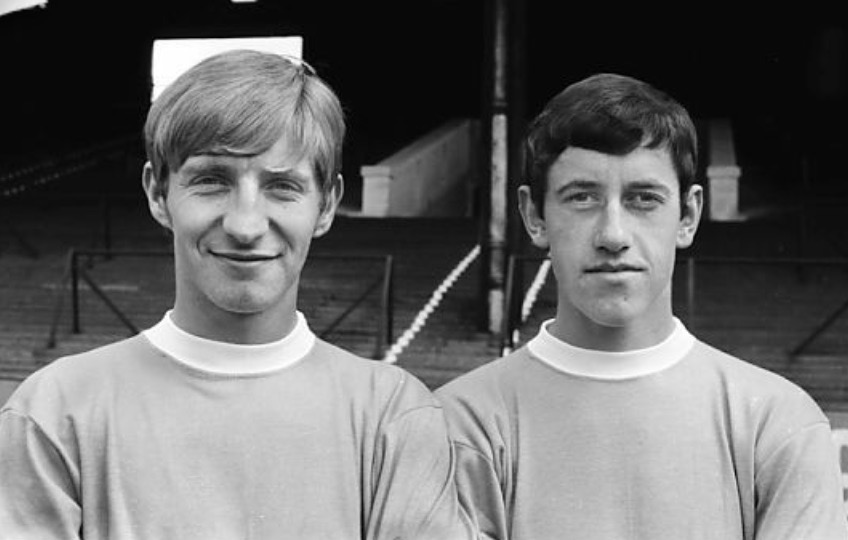
There’s a photo to be found on the internet (above, left) of a young Howell with Paul Hince who played a handful of games for City in 1967-68 and later reported on the side for the Manchester Evening News.

After leaving Cambridge, Howell quit the UK and continued his career in Sweden. He spent six seasons with Swedish club Västerås SK and also played for Irsta IF. He remained in Sweden after his playing career finished.

Pictures from my scrapbook and online sources.