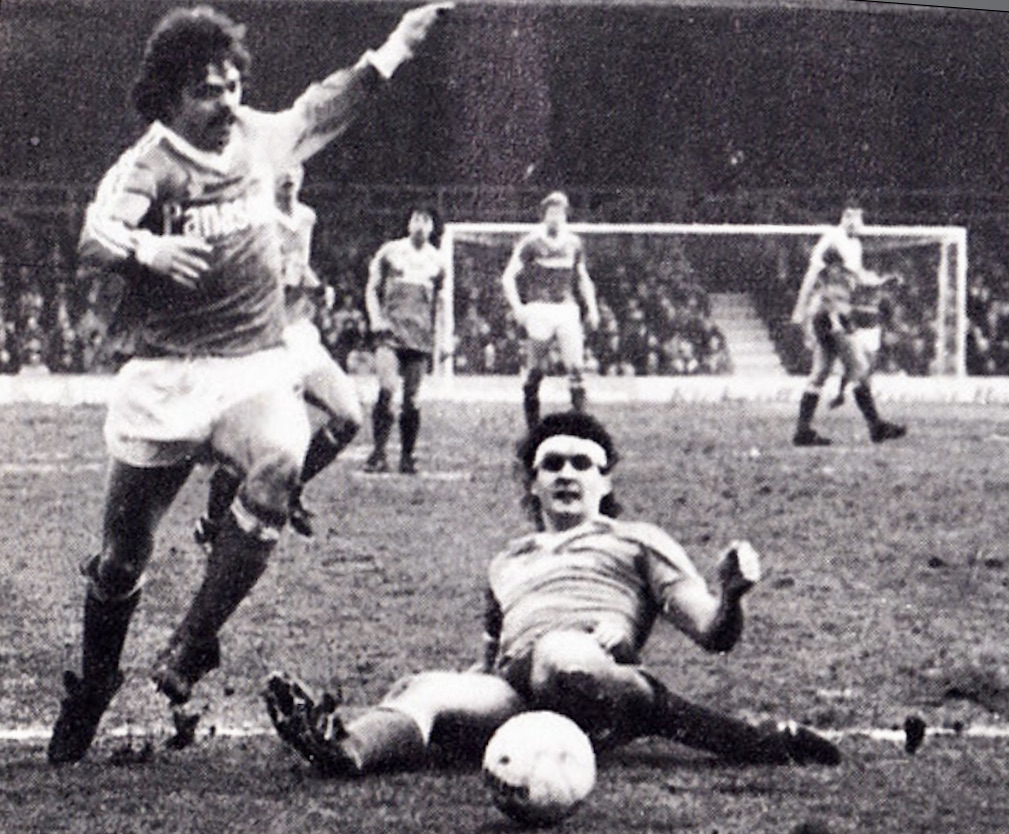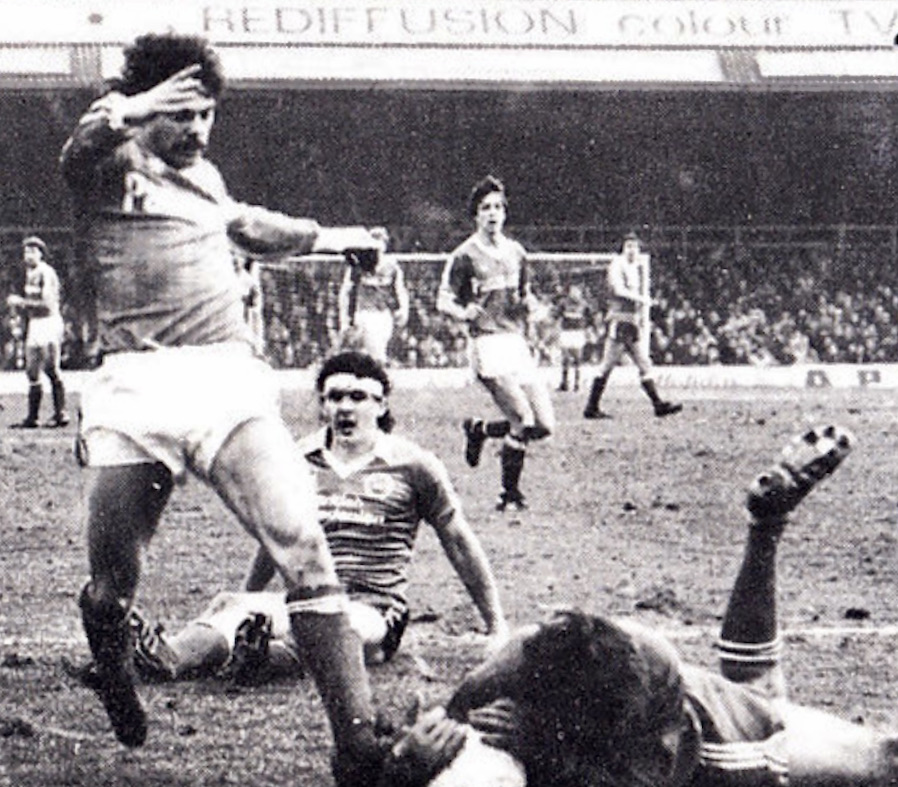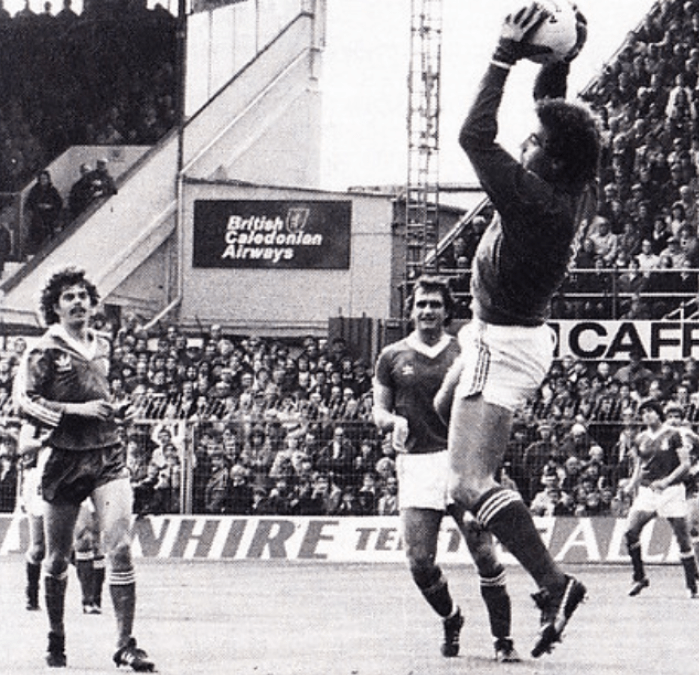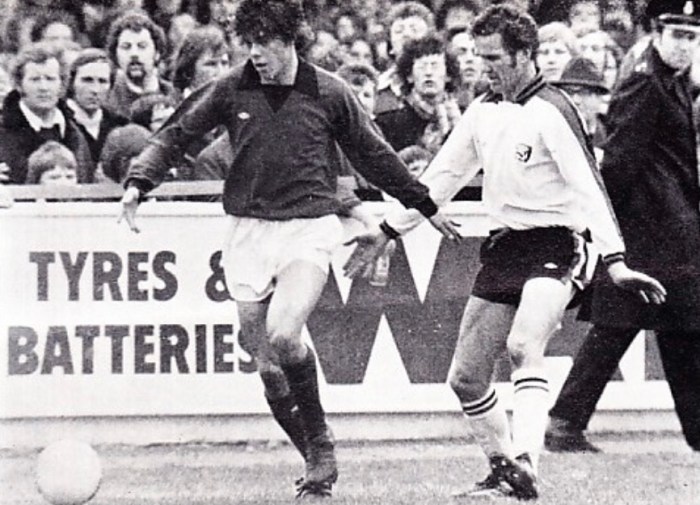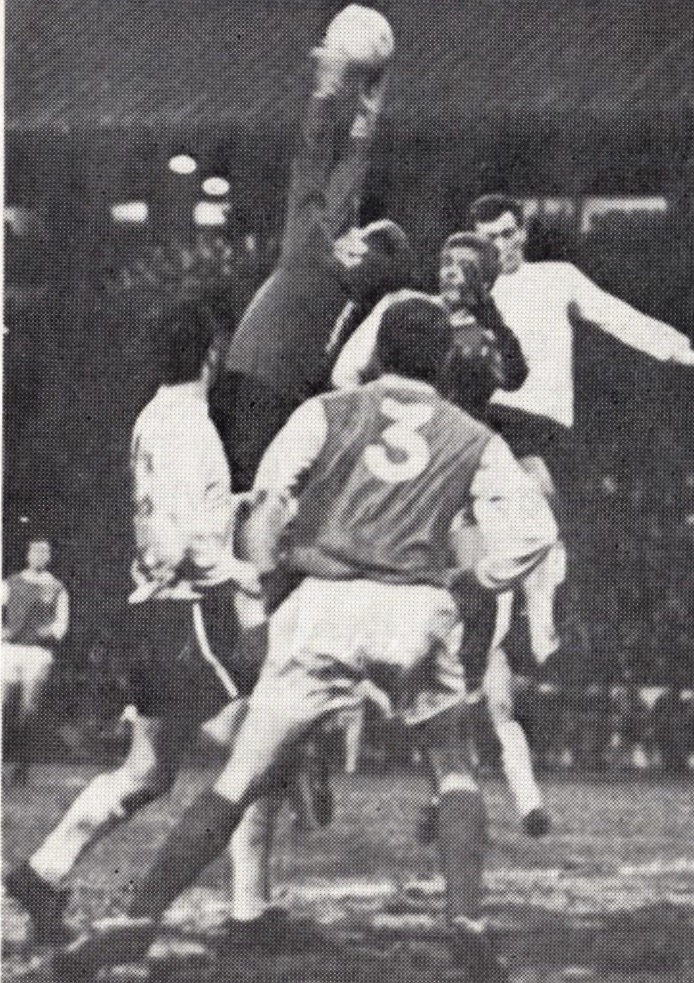
John ‘Stonewall’ Jackson a loyal George Petchey disciple

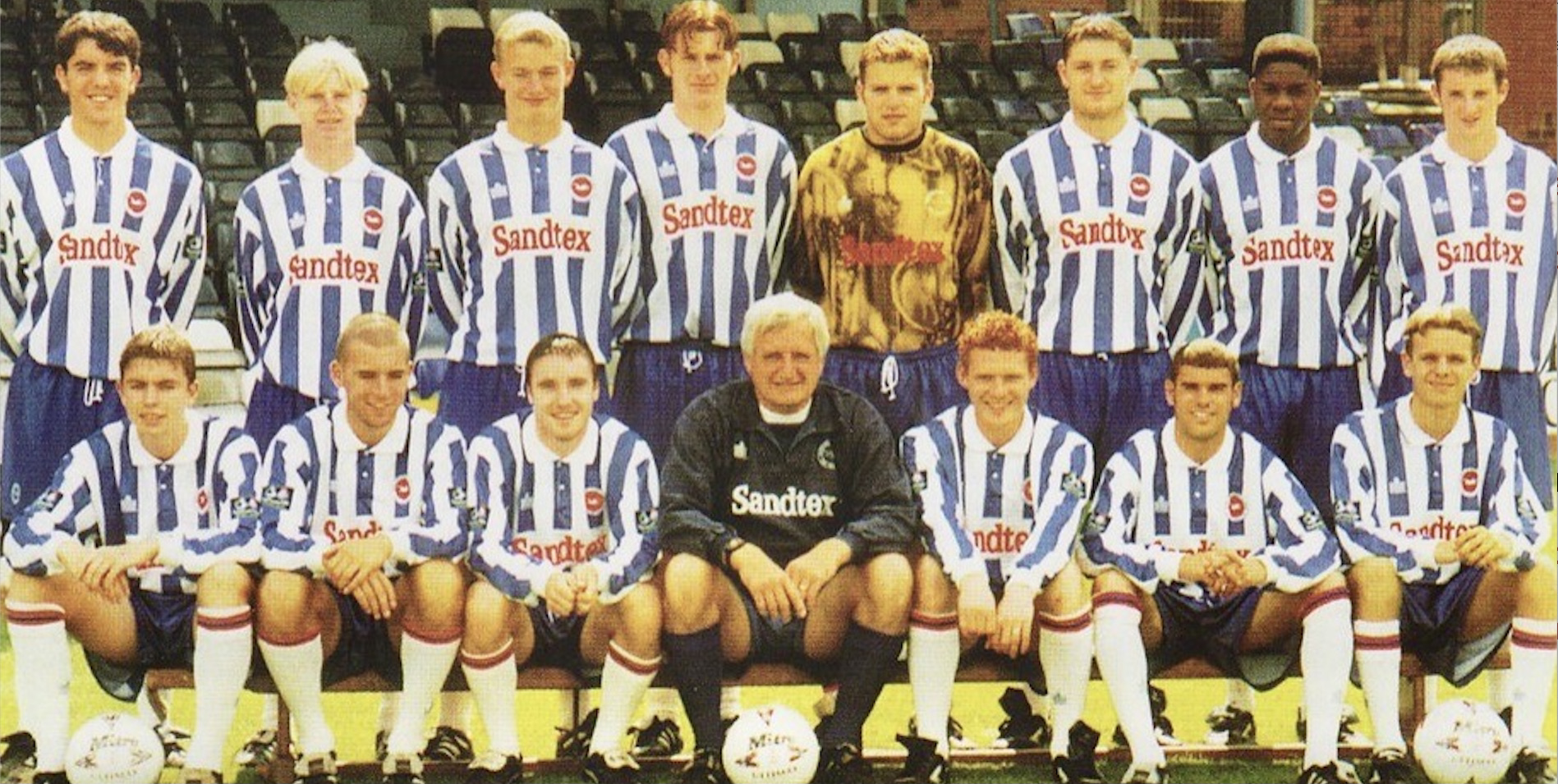
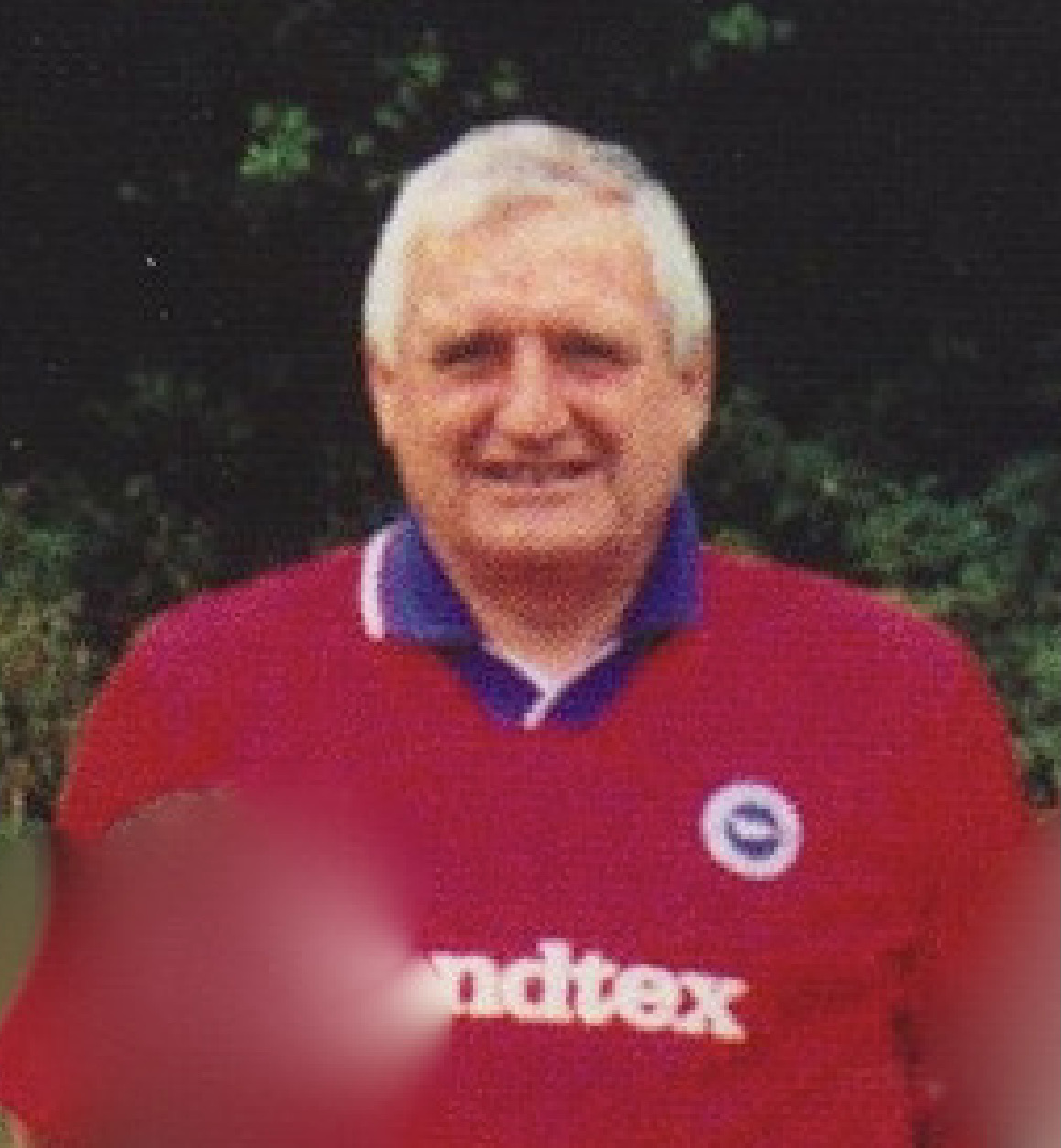
NOT TO BE confused with the founder and first manager of Brighton & Hove Albion, that man’s namesake, John Jackson, was a coach at the Goldstone in the ‘80s and the ‘90s.

Less well known was that he could have been in goal for Albion for the 1983 FA Cup Final. Rather like Steve Foster, back-up ‘keeper Perry Digweed was serving a suspension when the game against Manchester United came round.

Digweed had been sent off in a reserve match in early May 1983 and was banned for the final and the replay. So, if anything had happened to first choice Graham Moseley – and let’s face it, he had been known to have off-field mishaps at other times during his Albion career – the man between the sticks at Wembley could well have been Jackson.

Jackson had signed on emergency Combination forms in February 1983 and played for the Reserves in a 1-1 draw at home to Luton when Moseley and youth team ‘keeper Martin Hyde were both injured. He stayed on and helped coach the youth team alongside John Shepherd and with Moseley fully fit was not needed for first team duty (in those days, there were no substitute goalkeepers on the bench).
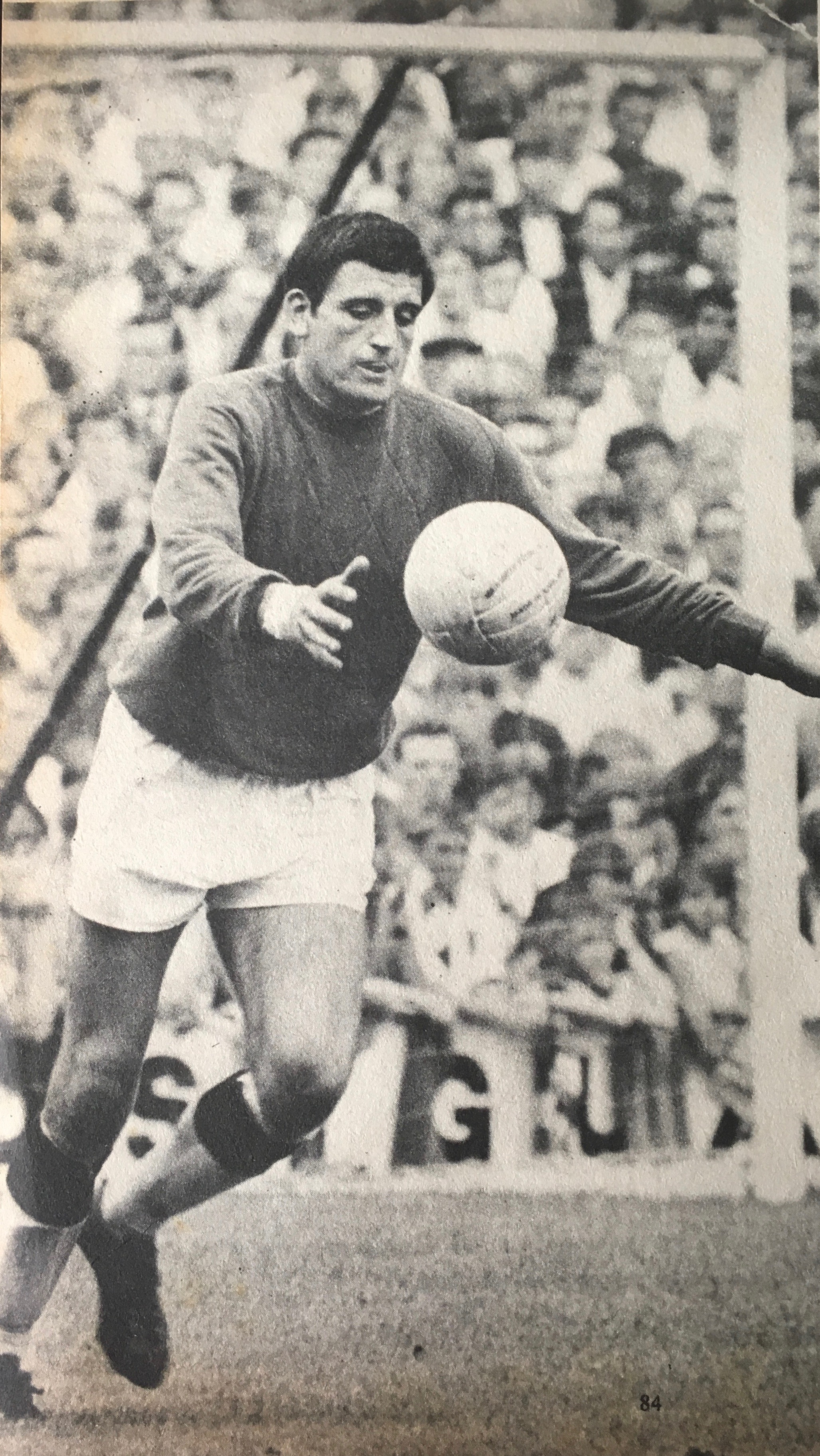
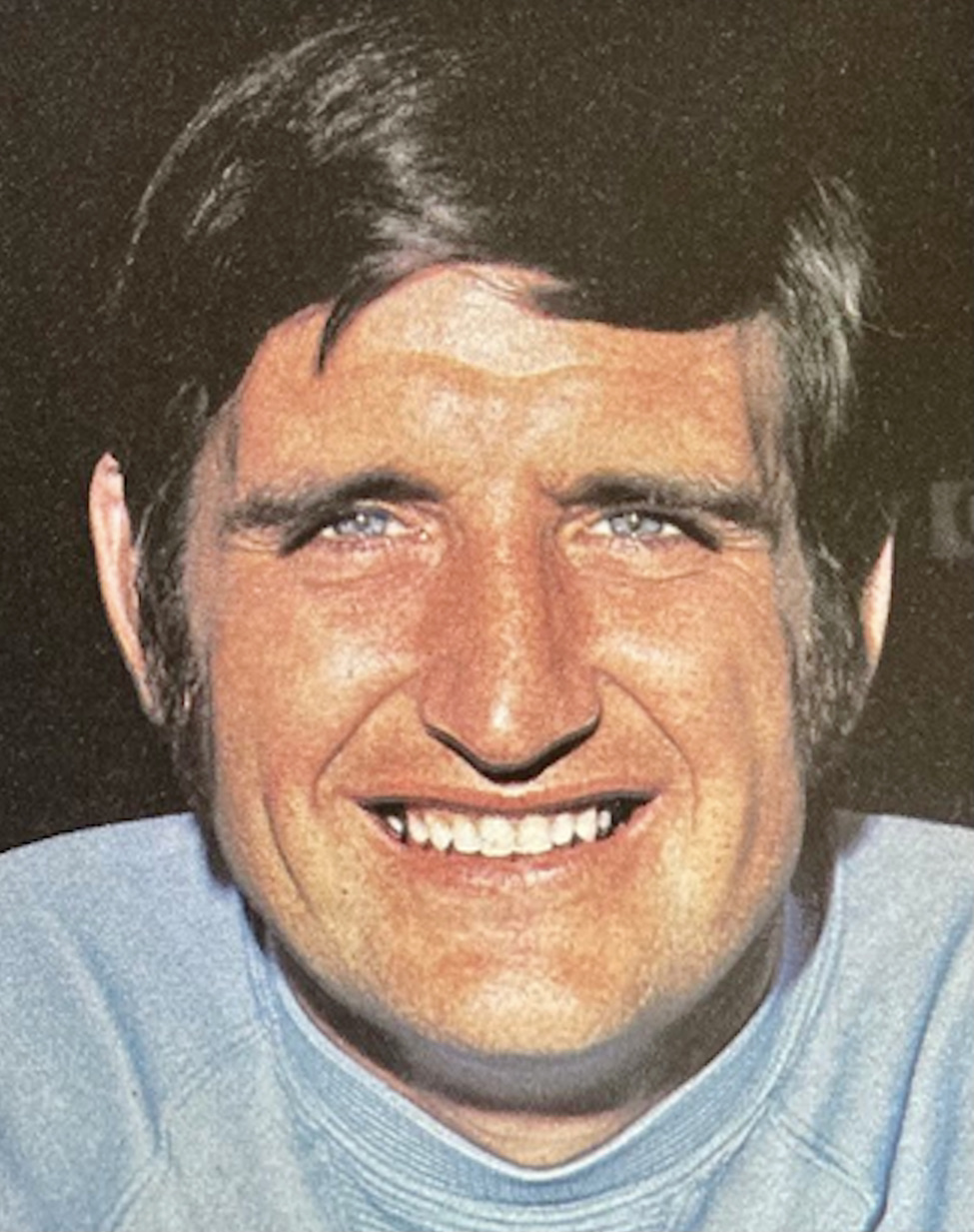
Jackson, who died aged 80 four days after Christmas 2022, had spent the earlier part of the 1982-83 season at Hereford United, who had just finished bottom of the Fourth Division. He had appeared in six matches at the end of a 19-year career. bullsnews.blogspot.com reveals that Jackson was the oldest league player to turn out for United. He was six days past his 40th birthday when he played against Darlington on 11 September 1982.

It was all a far cry from the days when he was Crystal Palace’s first choice goalkeeper for eight seasons. He subsequently followed his former Palace coach George Petchey to Orient (where he played in the same side as Albion’s 1983 FA Cup Final captain Tony Grealish) and Millwall.

It seemed wherever Petchey went, Jackson was sure to go too. When Petchey was Chris Cattlin’s assistant manager at Brighton, he brought in Jackson to coach the Albion goalkeepers once a week. It was certainly a job close to home for Jackson, who lived in Hangleton with his wife and three daughters.

In an interview with Football Weekly News in 1979, Jackson said: “Petchey was coach at Palace, and manager of Orient, when I was with them, therefore I felt it was right to join the devil you know than the one you don’t know! I find George a straightforward and honest man to work with.”

When Petchey returned to the Albion in January 1994, as part of Liam Brady’s backroom team, it wasn’t long before Jackson was added to the staff to help his mentor develop young players.

And after Brady’s departure and Petchey’s elevation to become Jimmy Case’s assistant, Jackson took over running the youth team.

Jackson remained in post throughout the managerial upheavals of Case’s departure, the Steve Gritt reign, and the arrival of Brian Horton. But he left at the end of the 1997-98 season when Horton brought in Martin Hinshelwood as director of youth and former captain Dean Wilkins as youth team coach.

Born in Hammersmith on 5 September 1942, Jackson went to St Clement Danes School and spent time with Brentford as a junior. But it was Palace who swooped to sign him up, as Jackson explained in a 2019 cpfc.co.uk interview.

“Arthur Rowe spotted me playing for a London grammar school against an FA youth XI made up of players from other London teams and he got in touch with my teacher, and from that conversation I ended up having a couple of games with the Palace reserve side aged 18. Then, when I joined full-time, I eventually took the opportunity with both hands, literally!”

Jackson was often described as the best goalkeeper England never had. While he was unfortunate not to earn a full international cap, he played seven times for England Youth between February and May 1961, his teammates including the likes of Bert Murray, Ron Harris, Francis Lee and David Pleat.

He signed as a trainee at Palace in March 1962, and in the 1964-65 season initially shared the ‘keeper’s jersey with Welsh international Tony Millington (whose younger brother Grenville was briefly back-up ‘keeper to Brian Powney at Brighton).

Once Jackson established himself as first choice, he kept the shirt for the next eight seasons. At one stage, he played 222 consecutive games for Palace.

On the where-are-they-now.co.uk website, contributor Martin Wiseman said: “He was definitely one of the best goalkeepers I ever saw as Palace were pretty terrible most of the time and often he was the only thing that kept us in the game. When we played one of the bigger teams, the game was often just a succession of John Jackson saves. Brilliant player.”

Indeed, he was nicknamed ‘Stonewall’ Jackson (after the famous American Civil War Confederate general). Of his mentor Petchey, he said: “He used to work me hard but the harder you worked at your game the more you learned and the better you would become. He made me a more confident player.”

Unluckily for Jackson, it was an era when England were blessed with a string of fine goalkeepers. Apart from Gordon Banks, there was Gordon West (Blackpool and Everton), Jim Montgomery (Sunderland), Peter Bonetti (Chelsea) and, at under 23 level, Peter Grummitt was preferred.

The closest Jackson came to senior international recognition came on 17 March 1971 when he kept goal for a Football League XI that beat a Scottish League XI 1-0 at Hampden Park. Ralph Coates scored the only goal of the game and the English line up included World Cup winners Bobby Moore and Geoff Hurst. Playing in defence alongside Moore were Paul Reaney (Leeds), Roy McFarland (Derby) and Derek Parkin (Wolves).

Jackson’s reign between the sticks for Palace came to an end when flamboyant Malcolm Allison took over as manager. Palace fans were not happy. In the book We All Follow The Palace edited by Tony Matthews (Eagle Eye 1993), Keith Brody wrote: “When Jacko left us, it marked the end of an era, culturally as well as football-wise.

“It is oddly fitting that he was swept away with the same disrespect that has come to symbolise the generation that replaced his ilk. Even though we have plenty to thank Big Mal for, his treatment of our hero means it should always be done through clenched teeth.

“It would have been offensive if a loyal, but crap, goalkeeper had been replaced by Paul Hammond and Tony Burns, but to do it to Jacko was unthinkable.

“Watching the ineffective Hammond for three long years after the joys of Jackson was almost unbearable. Every game was spent pondering on the value of what we’d given away.”

It was on 16 October 1973 that Jackson followed his former coach Petchey to Orient for £25,000 (Gerry Queen, Phil Hoadley, Bill Roffey and David Payne were other ex-Palace players who made that switch) and at Bloomfield Road he went on to attract a whole new band of admirers. Indeed, in Tony McDonald’s book Orient in the 70s, Jackson is described as “Orient’s greatest ever goalkeeper”.

Palace did give Jackson a testimonial match, however, and on 11 December 1973, a Selhurst Park crowd of 11,628 turned out for a match opponents Chelsea won 3-1.

Orient were a second tier side throughout Jackson’s time at the club, during which they had some unsuccessful tilts at promotion but enjoyed some exciting FA Cup runs, including making it to the semi-final in 1978 before losing 3-0 to Arsenal.

Their run to the semis included a memorable fifth round replay win over Chelsea, with Jackson pulling off a superb save to deny Clive Walker an equaliser as Orient clung on to a 2-1 lead courtesy of two Peter Kitchen goals.

Jackson had taken over from Ray Goddard as Orient’s no.1 and it must have been a very happy Christmas for him when promotion contenders Orient beat Palace 3-0 at home on Boxing Day 1973 in front of a bumper crowd of 20,611.

Come the end of the season, they missed out on promotion by a single point to Carlisle United after failing to beat Aston Villa (it was 1-1) in front of another huge crowd of 29,766, and the LWT cameras for The Big Match.  Days earlier Villa had lost 2-0 at Carlisle for whom Graham ‘Tot’ Winstanley proved an able deputy for suspended captain Bill Green.

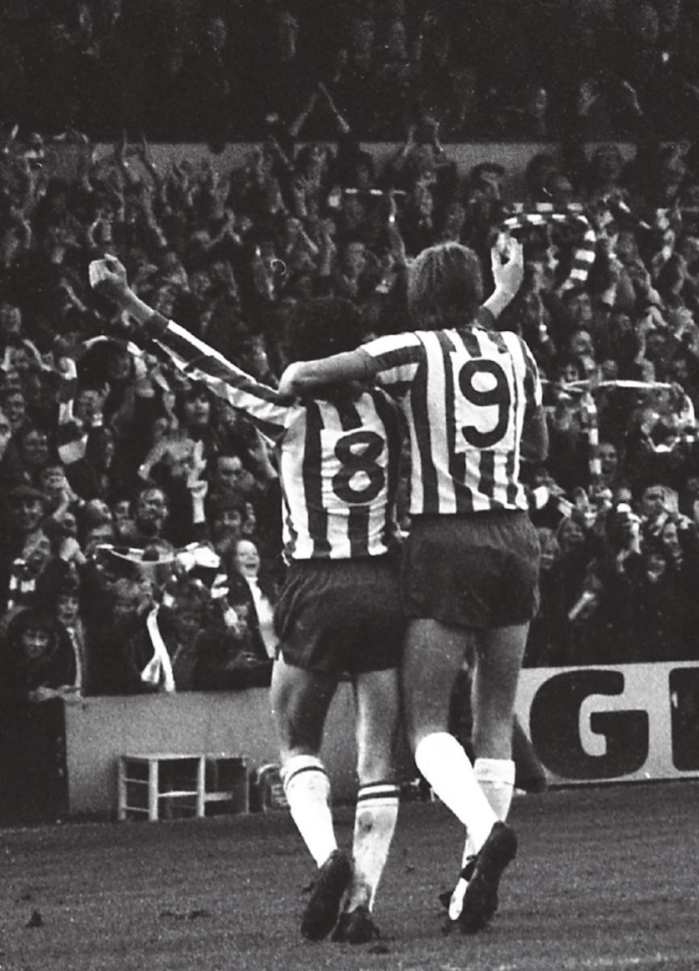
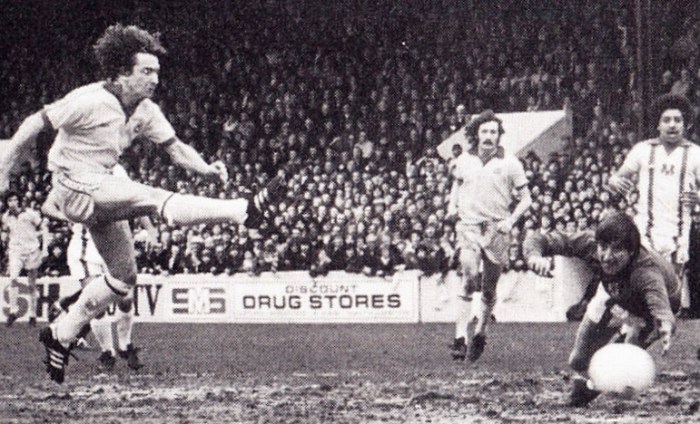
Another memorable game filmed for The Big Match saw Jackson concede three on 7 April 1979 when Albion were on their way to promotion from the Second Division. Orient took the lead at Brisbane Road but Brighton equalised thus: “Paul Clark cracked in a seemingly unstoppable shot, miraculously John Jackson parried the effort but only to Peter Sayer, and (pictured above) the little Welshman slammed the ball joyfully into the home goal,” the matchday programme recorded. The game eventually finished 3-3, Albion’s other goals coming from Martin Chivers (his only one for Brighton) and Clark.

Three years earlier, Orient were finalists in the rather curious Anglo-Scottish Cup tournament of that time: 16 English teams and eight Scottish sides played a mix of group stage games and two-legged knockout matches.

Orient topped their group above Norwich, Chelsea and Fulham; they beat Aberdeen 2-0 on aggregate in the quarter finals and Partick Thistle 4-2 in the semis. They eventually lost out 5-1 on aggregate to Nottingham Forest, but it was Brian Clough’s first piece of silverware as Forest manager, and he said in his biography: “Those who said it was a nothing trophy were absolutely crackers. We’d won something, and it made all the difference.”

In common with many other English players at the time, Jackson tried his luck in the United States and in 1977 played for St Louis Stars, returning in 1978 when they became Californian Surf. His head coach was John Sewell, who’d been a playing colleague at Crystal Palace and Orient. Ironically, his predecessor at St Louis was Bill Glazier, the former Coventry City ‘keeper, who’d also been his predecessor at Palace.

It was the arrival of former West Ham ‘keeper Mervyn Day at Brisbane Road that signalled the end of Jackson’s time in Leyton and, in August 1979, Petchey, who’d taken over from Gordon Jago as boss at Millwall, signed him for £7,500.

“I have been in the game too long to end it in the reserves and decided that if I was to finish playing, it would be in the first team,” Jackson told Football Weekly News.

The then Third Division Lions went on to win the league. Jackson played a total of 53 matches for them that season and he was chosen by his fellow professionals in the 1979-80 PFA team of the year. (Former Brighton winger Tony Towner played 50 games for Millwall that campaign and scored 13 goals)

After two years with Millwall, by a curious turn of events, Bobby Robson signed him for the previous season’s First Division runners up Ipswich Town as a back-up to Paul Cooper.

His one league appearance for Ipswich was in a top-of-the-table clash against Manchester United, with Ipswich needing to win to stay in with a chance of winning the League Championship. And they did, 2-1, with John Wark scoring both and John Gidman replying for United.

The game was played in front of a 25,763 crowd at Portman Road and Jackson was given a standing ovation at the end after he’d pulled off three important saves. Robson was quoted in the Guardian as saying: “We have paid him a year’s salary to make those saves, but it was worth it!”

However, while Ipswich finished the season five points ahead of United, they were once again runners up, finishing four points behind champions Liverpool.

Even a second placed finish was enough to convince the English FA to give Robson the job of replacing Ron Greenwood as England manager after the country’s unbeaten exit from the World Cup in Spain.

While Jackson might have thought his playing days were over, they weren’t quite. Frank Lord signed him for Fourth Division Hereford United. Lord wasn’t long in the job, though, and he was succeeded by the Bulls’ long-serving former ‘keeper Tommy Hughes, who had played on loan for Brighton in 1973.

Jackson’s move into goalkeeper coaching at Brighton under Cattlin was to prove a career-defining moment for another top goalkeeper of that era: former Manchester City custodian Joe Corrigan.

“I got talking to him and it inspired me to look into doing something similar,” Corrigan told the Manchester City matchday programme on 29 September 2018. “So, it was down to Brighton indirectly that I moved into the next phase of my career.”

Corrigan had been signed by Jimmy Melia and was coming to the end of his illustrious playing career. He fell out with Melia’s successor, Cattlin, and went on loan to Stoke City, but eventually was forced to quit after being injured in an Albion reserve match.

He went on to become goalkeeper coach at Liverpool for 10 years, and also worked at Stockport, West Brom and Hull.

Jackson took a variety of different jobs outside of football – fitting blinds, working for a golf magazine, selling golf equipment and as a courier for Lewes Council. During his second spell back at the Albion, amongst the youngsters he took through was goalkeeper Will Packham.

Jackson signed him on as a YTS trainee after he left Blatchington Mill School in Hove, and he spent nine years on the club’s books.

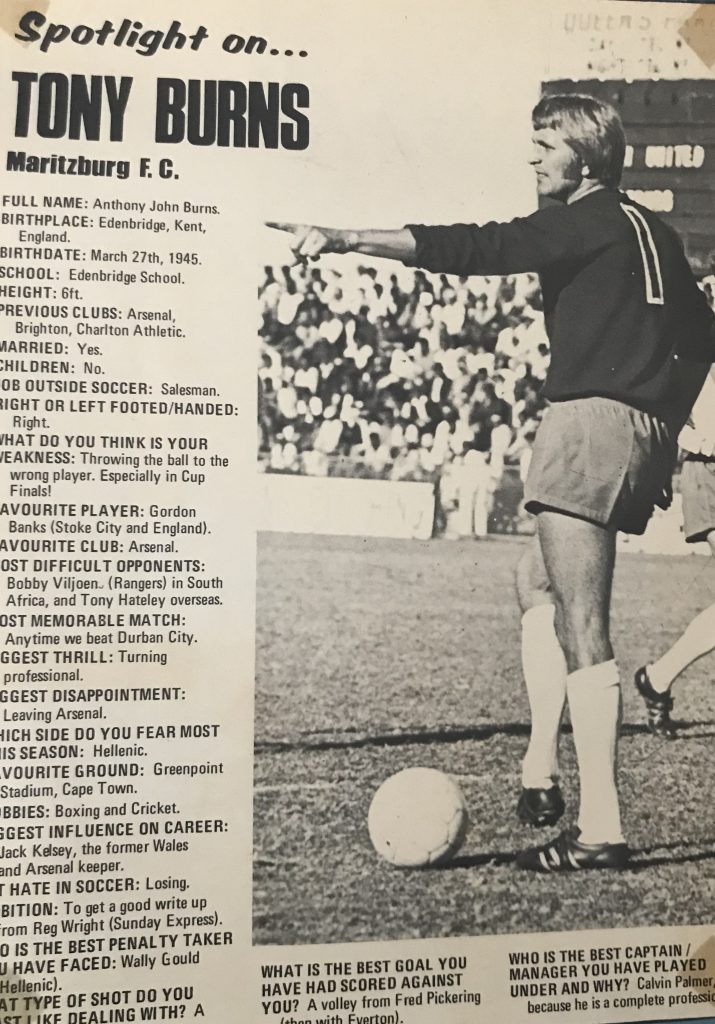
Tony Burns handled the art of goalkeeping for decades

A GOALKEEPER with film star looks signed for Brighton from Arsenal just after England lifted the World Cup.

Tony Burns had kept goal for the Gunners in 31 top-flight matches and Albion boss Archie Macaulay, who had played for Arsenal himself, went back to his old club to sign a no.1 to challenge the emerging local lad, Brian Powney.

It wasn’t difficult for Burns to settle at the Goldstone because the dressing room included Northern Irish full-back Jimmy Magill and winger Brian Tawse, familiar faces from his time in north London who’d also made the switch to Brighton.

It also wasn’t long before female fans who admired his smouldering good looks were sending in letters to the office inquiring about his eligibility!

Burns relived his career in detail in 2020 when interviewed by 17-year-old would-be journalist Jed Vine, who watches games at the Amex with his mother, and games at the Emirates with his dad.

Born in Edenbridge, Kent, on 27 March 1944, Burns first showed his goalkeeping prowess during his schooldays in the town before he joined Southern League club Tonbridge (now Tonbridge Angels) who he returned to twice more and later managed three times.

He made his Southern League debut against Yiewsley (later to become Hillingdon Borough) in February 1963 and only his third game for Tonbridge was as an 18-year-old against Arsenal at Highbury.

With long term custodian Jack Kelsey retiring, Arsenal were looking around for likely successors and, liking what they saw of Burns, offered him a contract.

“In his early days at Highbury, he showed immense potential and, after benefitting from Kelsey`s coaching, made encouraging strides,” a 2020 Pitching In piece for the Southern League recalled.

Manager Billy Wright gave him his senior Arsenal debut in a friendly against Enschede in Holland in August 1963, with Magill in defence, and he got his first taste of South Africa on a five-game tour the following May when he was in goal for Arsenal’s 5-1 win over a Western Province XI and their 6-0 win over an Eastern Province XI.

But his big breakthrough came when he made his league debut in a 3-2 home win over Burnley in October 1964 (three days earlier he’d played in goal in a 7-0 friendly win over non-league Corinthian Casuals).

“I felt on top of the world. I had always wanted to play for the Gunners and here I was keeping goal for them, and on the winning side at that,” he told the Albion matchday programme. “There’s only one first match and I’ll never forget this one.”

Once he got the shirt, he had a run of 26 games (32 including friendlies) from October 1964 through to the end of March 1965.

He generally played in front of a defence featuring the likes of Don Howe, Frank McLintock and Ian Ure with John Radford and Joe Baker up front.

During the first half of the 1965-66 season, Burns appeared in seven league games and three friendlies, but his final Gunners first team appearance came on 27 December 1965 in a 4-0 defeat away to Sheffield Wednesday.

Jim Furnell was Wright’s preferred first choice, and, as the season wore on, the emerging Bob Wilson was getting the nod ahead of him as stand-in (although it wasn’t until 1968 that Wilson finally ousted Furnell).

Disappointed to leave, Burns nonetheless went in search of regular football by joining Third Division Brighton for £2,000 in July 1966.

He made his first appearance for the Albion on 17 September 1966, when he took over from the injured Powney, but Brighton went down 2-0 to Grimsby Town.

Powney returned the following week and Burns had to wait until January for his next games – two FA Cup ties against Aldershot.

Burns in action versus Chelsea

He kept his place for the big fourth round FA Cup game against First Division Chelsea at the Goldstone which finished 1-1 when his former Arsenal teammate Tawse controversially had what he thought was a cracking late winner ruled out for a foul by Kit Napier.

Unfortunately, Burns conceded four in the replay at Stamford Bridge as the superior Chelsea side made the most of home advantage to ease their way through comfortably, 4-0. That was the season they went all the way to the final only to lose 2-1 to Tottenham Hotspur, whose ranks included Alan Mullery and Joe Kinnear.

By the end of the season, Burns had played 18 matches against Powney’s 37. But Burns had the upper hand in 1967-68 featuring in 29 games compared to Powney’s 21.

He also started the 1968-69 season as first choice but his 54th and final game for the Albion was in the 2-1 home defeat to Northampton in the second round of the FA Cup on 20 December 1968.

New manager Freddie Goodwin brought in former Wolves and Aston Villa ‘keeper Geoff Sidebottom to challenge Powney and let Burns leave on a free transfer in March 1969.

He joined Charlton Athletic, where he made 10 appearances in their unsuccessful tilt at promotion, but declined what he saw as a derisory contract offer. He returned to Tonbridge briefly and in January 1971 headed off to play in South Africa, initially for Durban United, and later, Maritzburg.

In his interview with Jed, he recalls playing in an English All Stars team managed by Malcolm Allison who invited him to return to England with Crystal Palace when his contract was up.

Burns made the move in October 1973 after previous Palace no.1 (and later Albion youth coach) John Jackson had moved to Orient.

He shared goalkeeping duties with Paul Hammond, playing a total of 90 matches between the sticks for Palace over the next four years under Allison and his successor Terry Venables.

In 1977, Burns played half a dozen games on loan for Brentford before heading off to the States like a lot of ageing players did at that time.

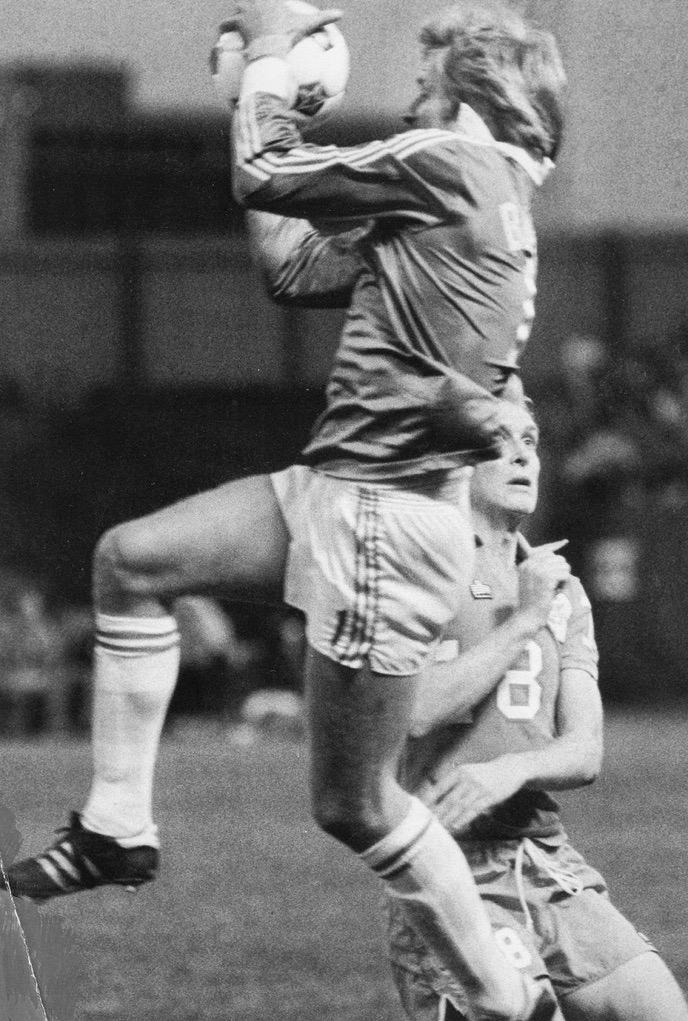
The ‘keeper played a dozen games for Memphis Rogues in the North American Football League. They were coached by former Chelsea defender and manager Eddie McCreadie although Burns had gone there to team up with former boss Allison who was sacked without a ball being kicked because he hadn’t signed enough players!

Burns played for Memphis Rogues in the USA

Among Burns’ teammates were a young Neil Smillie, who’d been struggling for games at Palace, Phil Beal, who had left Brighton the year before, John Faulkner, the one-time Leeds and Luton defender, and the flamboyant Alan Birchenall, beloved by Leicester City supporters of many generations.

Back in the UK in 1978, Burns joined Plymouth Argyle as cover for Martin Hodge, and ended his league playing days in this country appearing in 11 games in the first half of the 1978-79 season.

However, he left Home Park to rejoin Tonbridge Angels for a third time and he also played for Hastings United and Dartford.

After his playing days were over, Burns had three spells in charge of Tonbridge, from August 1980 to December 1982, August 1989 to May 1990, and in a caretaker role from November 2001 to May 2002 (by which time he was goalkeeping coach at Millwall, who he joined in 1992 under Mick McCarthy.

Burns served as goalkeeper coach under several Millwall managers.
Picture: Brian Tonks.

He also spent seven years as manager of Gravesend and Northfleet (who became Ebbsfleet United) between 1982 and 1989.

But it was at Millwall where he finally found a permanent home, working under no fewer than 18 different managers, including Steve Gritt and Mark McGhee.

He was even at the helm himself for a while, working as co-caretaker manager with former Lions boss Alan McLeary after Dave Tuttle’s departure in April 2006, when Millwall’s relegation had already been confirmed.

The appointment of Nigel Spackman the following month led to Burns’ departure in July 2006, when he took up a similar role at his old club Palace, working under former Albion boss Peter Taylor coaching Julian Speroni and Scott Flinders.

Goalkeeping coach at Palace under Peter Taylor

He left Selhurst in November 2007 when Taylor lost his job, and Speroni told yourlocalguardian.co.uk: “It was sad to lose Tony Burns because we worked well with him. During last season when I wasn’t playing regular football, Tony was the one who kept me going which was very important.”

Burns moved with Taylor to Conference side Stevenage Borough but later returned to Millwall under Kenny Jackett before stepping down in 2012, when he was succeeded by Kevin Pressman.

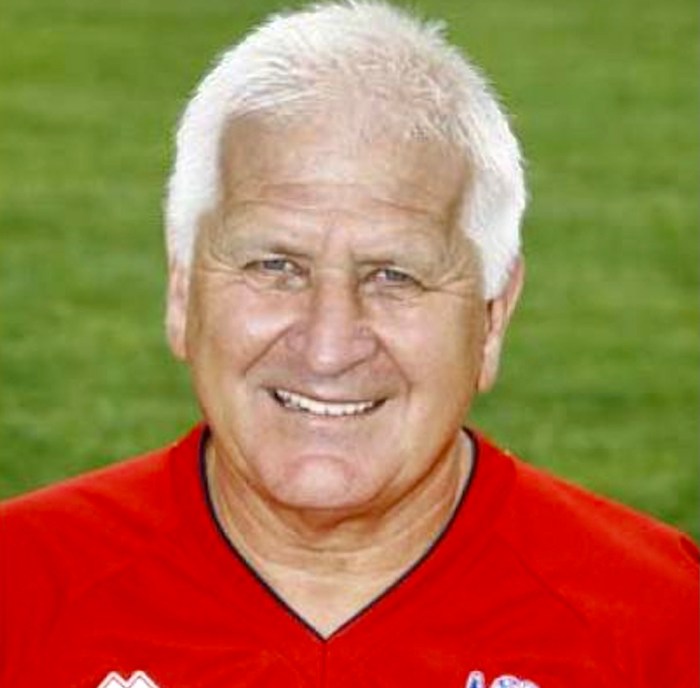
Still, he wasn’t finished with the game, though, and at the age of 70, in the summer of 2014, he teamed up with Taylor yet again to become goalkeeping coach at Gillingham. He joined them on a part-time non-contract basis as a replacement for Carl Muggleton.

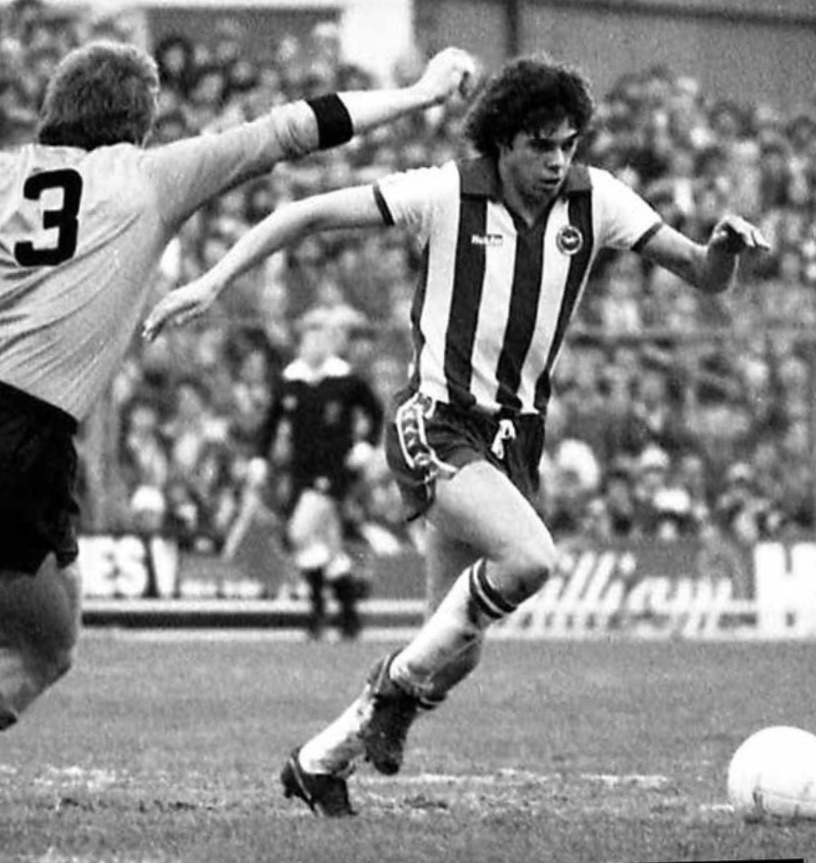
Two goals that etched Sammy Morgan’s place in Albion history

HAVING A cheekbone broken in four places during a pre-season friendly summed up the bad luck of never-say-die Northern Irish international striker Sammy Morgan.

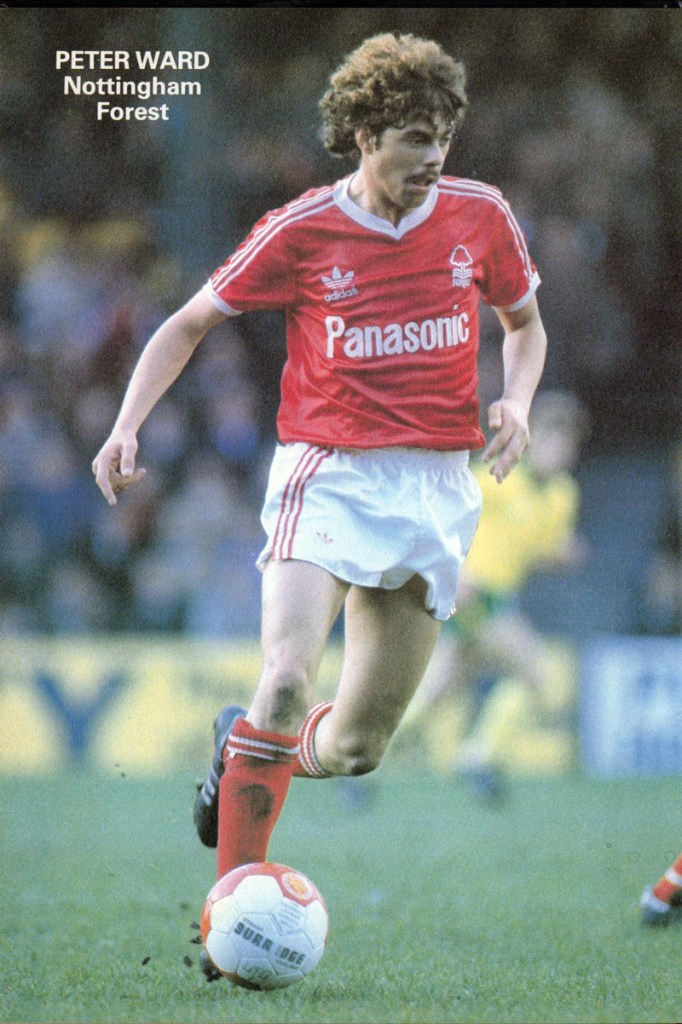
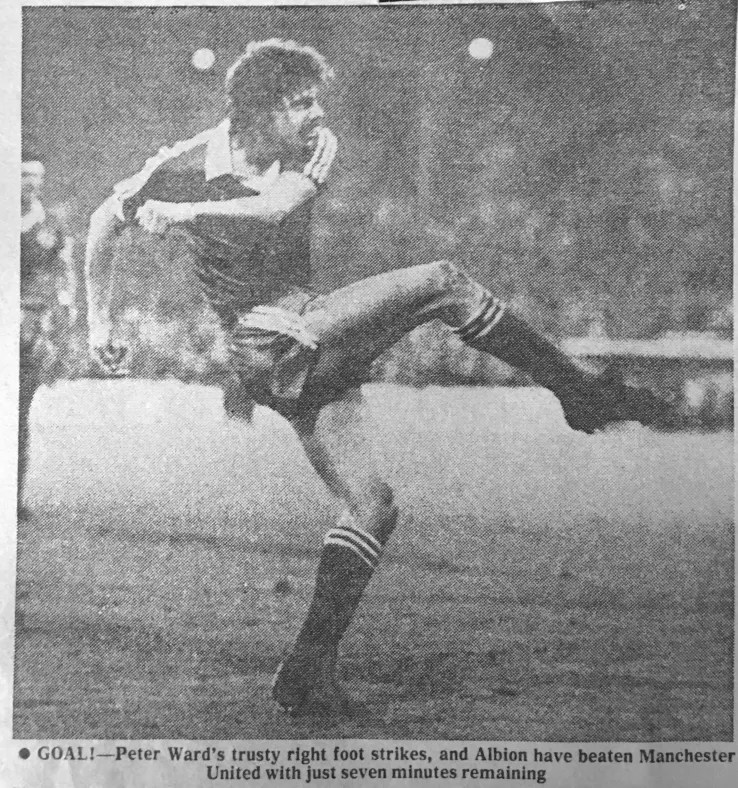
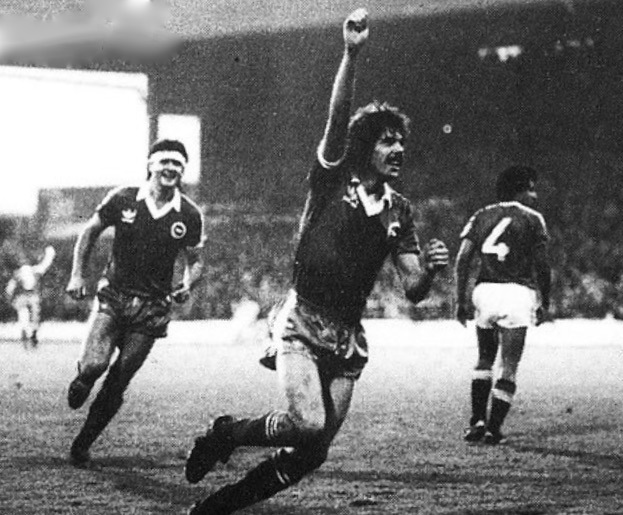
His cause wasn’t helped when the manager who signed him six months earlier quit. And, to top it off, while he was recovering from that horrific injury, an Albion footballing legend in the shape of Peter Ward burst onto the scene.

When a £30,000 fee brought him to Brighton from Aston Villa just before Christmas 1975, it looked like the side had found the perfect strike partner for Fred Binney as they pushed for promotion from the third tier.

Unfortunately, the man with the swashbuckling, fearless approach went eight games without registering a goal. However, in his ninth game he made amends in memorable fashion.

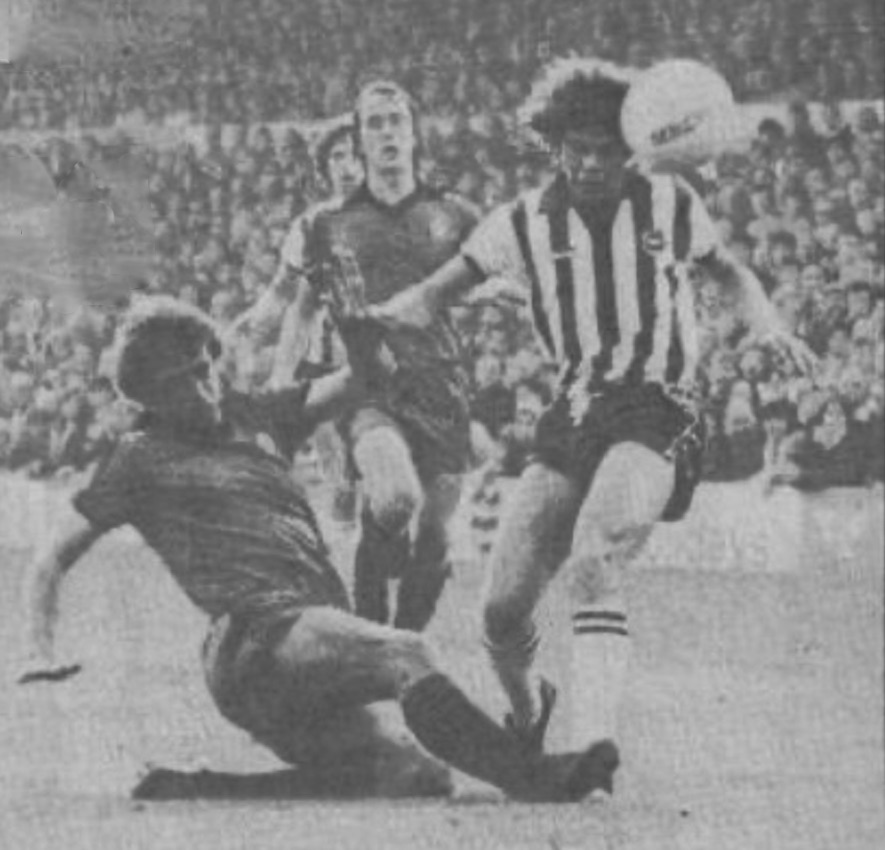
Morgan scored both goals in a 2-0 win over Crystal Palace in front of an all-ticket Goldstone Ground crowd of 33,300 – with another 4,000 locked out.

It was 24 February 1976 and the Daily Mail’s Brian Scovell reported the goals thus: “In the 12th minute, Ernie Machin struck an early ball into the middle from the right and Ian Mellor headed on intelligently behind the defence for Morgan to steer the ball into the corner of the net.

“The second goal, in the 55th minute, came when Tony Towner took the ball off Jeffries and set off on a 40-yard run which ended with his shot rebounding off goalkeeper Paul Hammond. Morgan tapped in the rebound.”

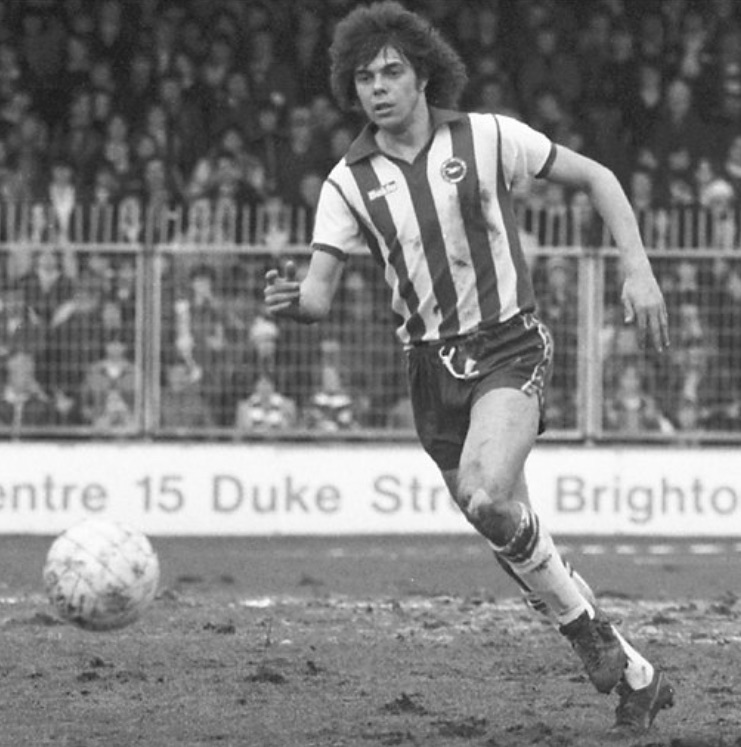
Gritty, angular and awkward, Morgan scored five more before the end of the season, including another brace at home to Swindon.

However, Albion narrowly missed out on promotion and Peter Taylor, the manager who bought Morgan, quit the club in the close season. The new season under Alan Mullery hadn’t even begun when, in a pre-season friendly against Luton Town, Morgan fractured his cheekbone in four places.

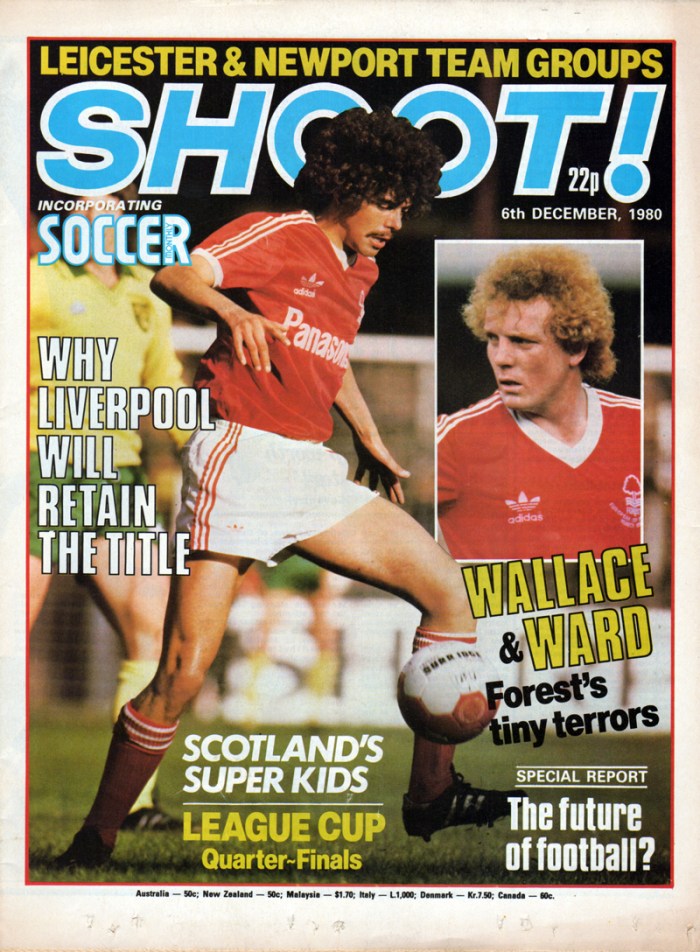
“I know I’m probably more prone to injuries than other players because of my style of play, but there’s no way I can change it, even if I wanted to,” Morgan told Shoot! magazine. “I made up my mind as soon as I got back in the team that I’d have a real go and that’s what I’ve done. People say I’m a brave player but I don’t really know if that’s true. I just like to give 100 per cent and that way no-one can ever come back at you.”

In the season before he joined Brighton, a groin injury had restricted him to just three top-flight appearances for Villa and, when he was fit to return, Villa had signed Andy Gray, whose form kept him out of the side.

Initially reluctant to move on, he admitted in that Shoot! interview: “I was sad at the time because I had a lot of happy times at Villa but now I think they may have done me a favour. Brighton are a very good ambitious club and I’ve just bought a house in Peacehaven. Really, I couldn’t be happier.”

Born in Belfast on 3 December 1946, Morgan’s family moved to England to settle in Great Yarmouth and, with an eye to a teaching career, he combined studies with playing part-time football for non-league Gorleston Town.

“Deep down I knew I could make the grade, but the opportunity just wasn’t there,” he told Goal magazine in a 1974 interview. “The local league club was Norwich City and in those days they didn’t seem that keen on local talent.”

Morgan enrolled at teacher training college in Nottingham and just when he thought a professional football career might elude him, Port Vale made an approach.

“I jumped at the chance,” he said. “They let me stay at Nottingham to complete my studies and I would travel up to train and play with them. Deep down I thought that the Third Division was as high as I could get, unless, of course, Vale were promoted.”

In his three years with Vale, where his teammates included Albion legend Brian Horton, he scored 24 goals in 113 appearances, and he caught the eye of the Northern Ireland international selectors. He scored on his debut in a European Championship qualifier with Spain on 16 February 1972 when he took over at centre-forward from the legendary Derek Dougan.

Amongst his illustrious teammates that day were Pat Jennings in goal and the mercurial George Best. Future Brighton left-back, Sammy Nelson (then with Arsenal) was also in the side. The game was played at Boothferry Park, Hull, because of the ‘troubles’ in Northern Ireland at that time and it finished 1-1.

Morgan won 18 caps in total over the next six years, scoring twice more, in 3-0 home wins over Cyprus on 8 May 1973 and Norway on 29 October 1975.

The Goal article noted Morgan “earned a reputation of being a hard, no-nonsense striker who could unsettle defences and goalkeepers with his aggression”.

Aston Villa boss Vic Crowe liked what he saw and reckoned he’d be an ideal replacement for that tough Scottish centre-forward Andy Lochhead, who was coming to the end of his career.

Morgan was by now 27 but, in the summer of 1973, Villa paid a £20,000 fee for his services.

“The offer came right out of the blue and I had no second thoughts about the move at all,” he said. “Being part of such a famous club naturally brings pressures, but I wouldn’t have it any other way.

There was a famous incident in a televised game between Arsenal and Aston Villa when the normally calm, cool and collected Arsenal goalkeeper Bob Wilson went ballistic because of the way Morgan tried to stop him clearing his lines.

Swindon goal celeb“The bigger the atmosphere, the more I like it. For instance, my best two games this season were against Arsenal, and in the replay there was a crowd of 47,000.”

At Brighton, new manager Mullery quickly decided he preferred Ward to Binney and, with Morgan sidelined by that pre-season injury, opted to put former midfielder Ian Mellor up front to partner him.

Wardy MorgBetween them, they literally couldn’t stop scoring goals, and the success of their striking partnership restricted Morgan to only two starts in 1976-77. He was on the sub’s bench throughout that first promotion season under Alan Mullery, and he scored just once in 16 appearances as the no.12.

He subsequently moved on to Cambridge United before a spell in Holland, where he played for Sparta Rotterdam and FC Groningen.

When his playing days were over, he became a teacher back in Gorleston. He also became involved in the Norwich youth team in 1990, signing full time as the youth development officer in 1998 and becoming the club’s first football academy director (he holds a UEFA Class A coaching licence). He resigned in 2004 and moved to Ipswich as education officer.

In 2014, Morgan was diagnosed with stomach cancer and underwent chemo to tackle it. Through that association, in September 2017 he gave his backing to Norfolk and Suffolk Youth Football League’s choice of the oesophago-gastric cancer department at the Norfolk and Norwich University Hospital (NNUH) as its charity of the year.

Even when he could have had his feet up, he was helping to coach youngsters at independent Langley School in Norwich.

  • Pictures from various sources: Goal, Shoot! and the Evening Argus.

Boylers’ service appreciated both sides of the Atlantic

MIDFIELD enforcer John Boyle was born on Christmas Day 1946 and went on to play more than 250 games for Chelsea.

Towards the end of his career, he spent two months on loan at Brighton trying to bolster the Albion’s ailing midfield in the dying days of Pat Saward’s spell as manager.

Indeed, Boyle was in that unenviable position of being at the club when the manager who brought him in was turfed out, and the man who replaced him (in this case none other than Brian Clough) swiftly dispensed with his services and sent him back to Chelsea.

By then, Boyle’s time at Chelsea was at an end and, after his 10-game Goldstone spell was also over, he went the shorter distance across London to play for Orient, before ending his playing days in America with Tampa Bay Rowdies.

Born in Motherwell, Boyle went to the same Our Lady’s High Secondary school that spawned Celtic greats Billy McNeill and Bobby Murdoch and, just around the time he turned 15, his stepbrother, who lived in Battersea, organised through a contact they had with then boss Tommy Docherty for him to go down to London for a trial.

He did enough to impress and 10 days later Chelsea sent him a letter inviting him to join their youth team, together with the train ticket from Motherwell to London.

“When I got off the train, Tommy Doc was waiting for me to take me to my digs,” Boyle told chelseafc.com in a recent interview. “I stayed in the digs that Bobby Tambling and Barry Bridges had stayed in before.”

Boyle – known to all as ‘Boylers’ – made his debut in the 1965 League Cup semi-final against Aston Villa and, at 18, it couldn’t have been much more memorable.

“I played on Monday in a Scottish youth trial and Wednesday I was playing against Aston Villa in the semi-final of the League Cup,” Boyle recounted. “After 20 odd minutes, I tackled this guy and he got injured and carried off. The crowd then booed me, he limped back on and then the crowd booed me more!

“It went to 2-0, to 2-2 and then with about 10 minutes to go I got the ball 30 yards out, rolled it forward and went crack and it went into the top corner of the net. I remember Terry Venables ran up to me and said ‘John, I am so pleased for you,’ and that was my first game. To score the winning goal in your first game was Roy of the Rovers stuff.”

He went on to become Chelsea’s youngest ever cup finalist when he was in the team that won the trophy. In those days, it was played over two legs, and, after beating Leicester City 3-2 in the home game, they drew the away leg 0-0. His teammates in the second leg were Bert Murray and the aforementioned Bridges, who he would go on to play alongside at Brighton in 1973.

The Goldstone Ground was familiar territory to him. On 18 February 1967, he was famously sent off for the visitors in a FA Cup 4th round tie when Albion held their more illustrious opponents to a 1-1 draw in front of a packed house. Chelsea went on to win the replay 4-0 and that year went all the way to the final where Boyle was part of the side who lost 2-1 to Spurs. In another fiery FA Cup tie between Brighton and Chelsea, in January 1972, Boyle was Chelsea’s substitute as they won 2-0 in a game which ended 10 a side, George Ley and Ron Harris being sent off.

john boyle chels blueWhen Docherty moved on from Stamford Bridge, and Dave Sexton took over as manager, Boyle’s involvement in the side was more sporadic, as he told fan Ian Morris on his Rowdies blog.

“Dave appreciated my energy and willingness, but I don’t think he really fancied me as a player. Basically, I became an odd-job man, filling in here and there, and in football it doesn’t help to get that reputation,” he said.

Although he wasn’t in the squad that beat Leeds in the 1970 FA Cup Final, he was back in the side when Chelsea beat Real Madrid over two legs in May 1971 to win the European Cup Winners’ Cup.

After Brighton’s disastrous 1972-73 season in the second tier – the general consensus is that they’d not properly been prepared for promotion and didn’t invest sufficiently in the team to have a fighting chance of staying up – the side continued to be in the doldrums as they adjusted to life back in the old Third Division.

Manager Saward was struggling to come up with the right formula and, having transferred former captain Brian Bromley to Reading, sought to boost his midfield with the experienced Boyle, who was surplus to requirements at Stamford Bridge.

With the paperwork signed on 20 September, Boyle was handed the no.8 shirt and made his debut alongside Ronnie Howell in a 0-0 draw away to Grimsby Town.

He made his home debut the following Saturday, but the Albion went down 1-0. Three days later, this time partnering Eddie Spearritt in the middle, Boyle helped Albion to a 1-0 win at Oldham Athletic.

After a 3-1 defeat away to Blackburn Rovers, at home to Halifax Town Boyle had a new midfield partner in John Templeman. But again they lost by a single goal.

With Howell back alongside him for the home game v Shrewsbury Town, Albion prevailed 2-0 in what turned out to be Saward’s last game in charge. Perhaps by way of another interesting historical note, Boyle was subbed off to be replaced by Dave Busby, who became the first black player to play for the Albion.

Caretaker boss Glen Wilson retained Boyle in midfield for the midweek 4-0 hammering of Southport and he was also in the line-up for Clough’s first game in charge, a 0-0 home draw against York City on 3 November. But the 2-2 draw away to Huddersfield Town on 10 November was his last game for the Albion.

As someone who’d gained something of a reputation as enjoying the social side of things at Chelsea, particularly with the likes of Peter Osgood, Charlie Cooke and Alan Birchenall, it maybe doesn’t come as too big a surprise to learn that Clough advised him “always buy two halves instead of a pint, or people will think you’re a drinker”.

Boyle was still only 28 when he tried his hand in Florida in February 1975, being appointed Tampa Bay Rowdies captain, and leading them to victory in the Super Bowl against Portland Timbers in August that year.

His former Chelsea teammate Derek Smethurst scored 18 goals in that inaugural season, playing up front alongside ex-West Ham striker Clyde Best, while former Crystal Palace ‘keeper Paul Hammond was in goal.

A newspaper article about Boyle’s contribution resides on tampapix.com, a hugely entertaining site featuring loads of players of yesteryear who turned out for the Rowdies.

It somewhat flamboyantly says: “‘Captain Rowdie’ John Boyle was a barrel-chested midfielder with legs as white as snow and hair as thin as a wheat crop during a summer drought.  He became the role model for the club, as much because of his leadership as well as the fact that he knocked opponents ‘grass-over-tea kettle’ when they came his way.”

He retired from playing in November the same year but, two years later, he stepped in as Rowdies coach when Eddie Firmani quit. However, he had also gone into the pub business in the UK and ultimately the need to be behind the bar at Simon the Tanner in Bermondsey, with his wife Madeline, meant he had to turn his back on the sunshine state and return to London.

Unable to resist the lure of the States once more, Boyle played five matches for indoor league side Phoenix Inferno in the 1980-81 season.

In that wide-ranging interview Boyle gave to chelseafc.com earlier this year, he said: “I wouldn’t change a thing in my life, I am just grateful for what I have done. I have been blessed and one of the great things about it is 50 years later you can still talk about it! I was a lucky young man to have played when I did and meet the people I did.”