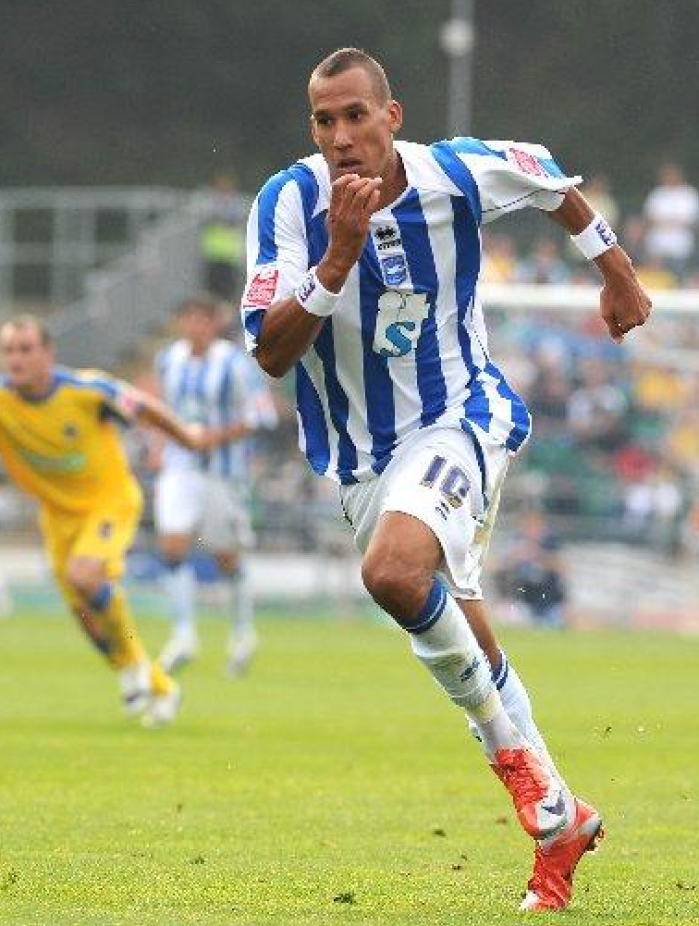
Wembley hero Liam Dickinson’s nomadic football journey

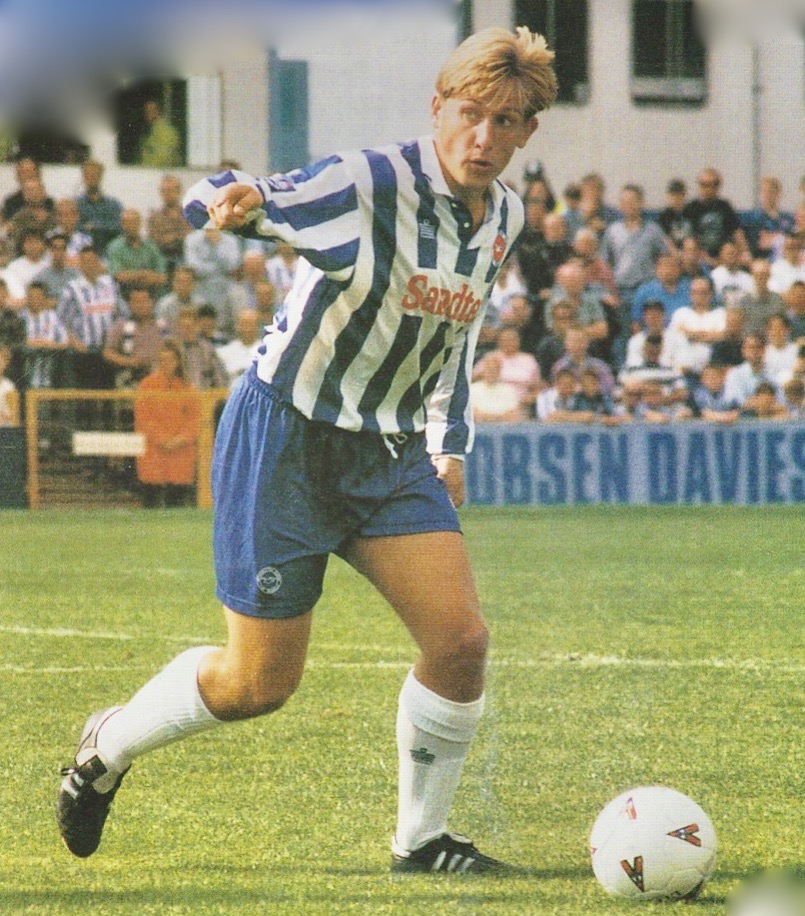
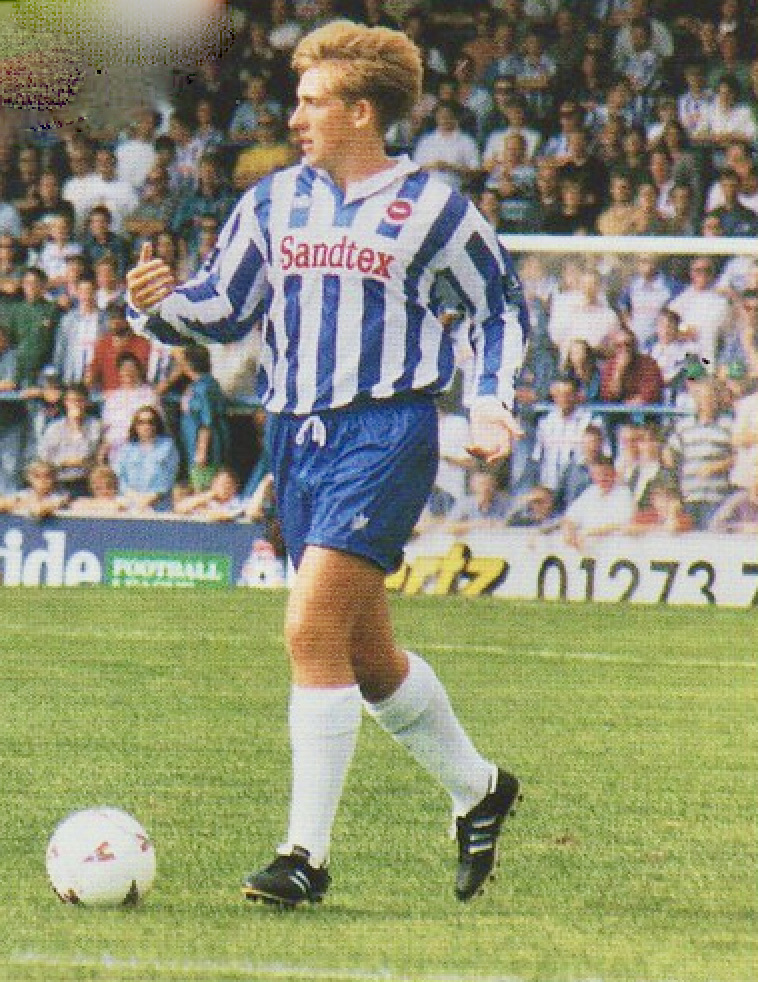
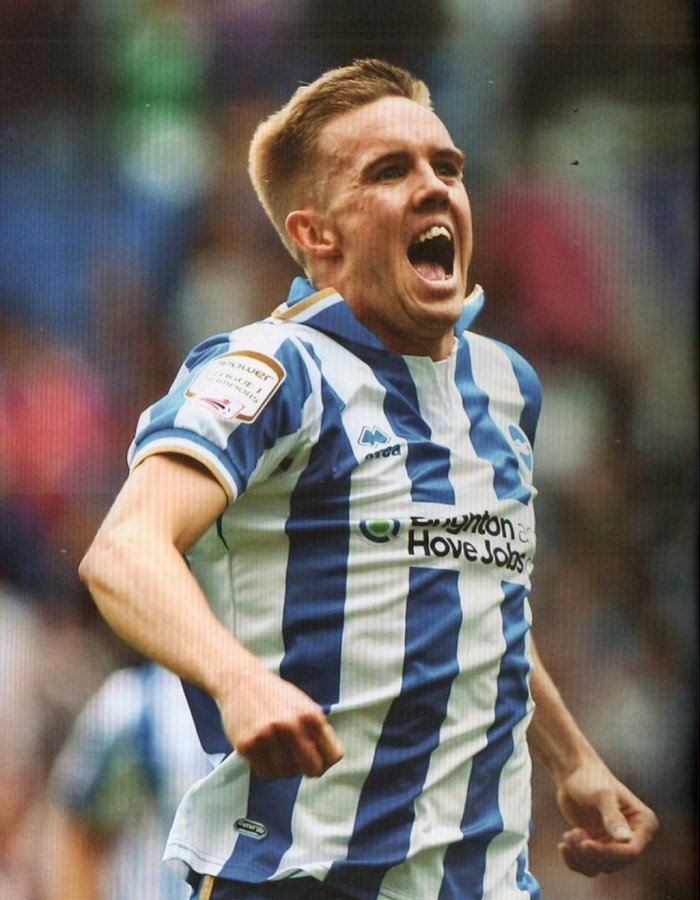
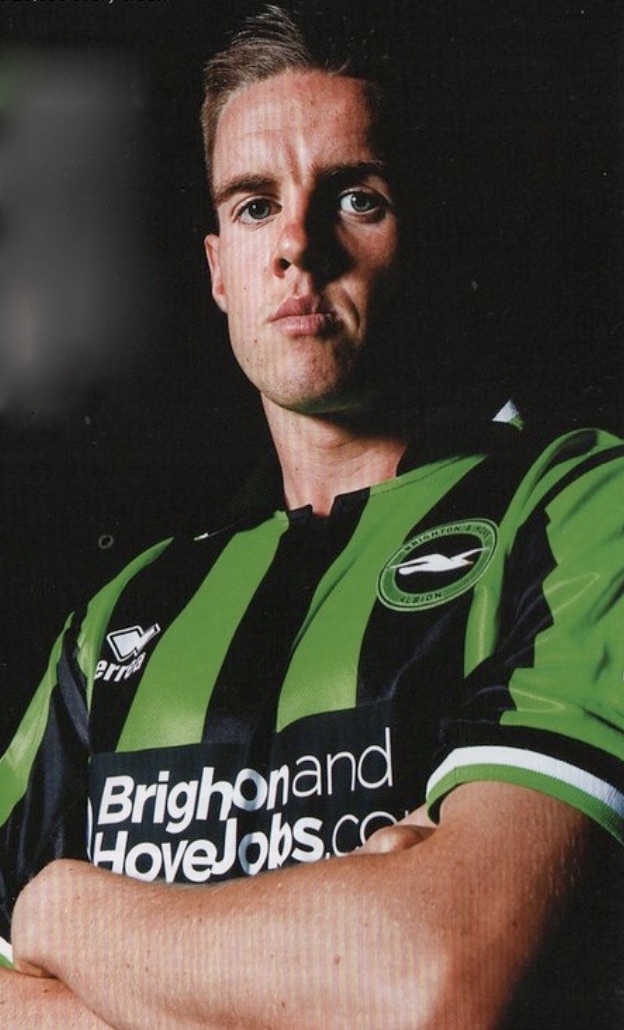
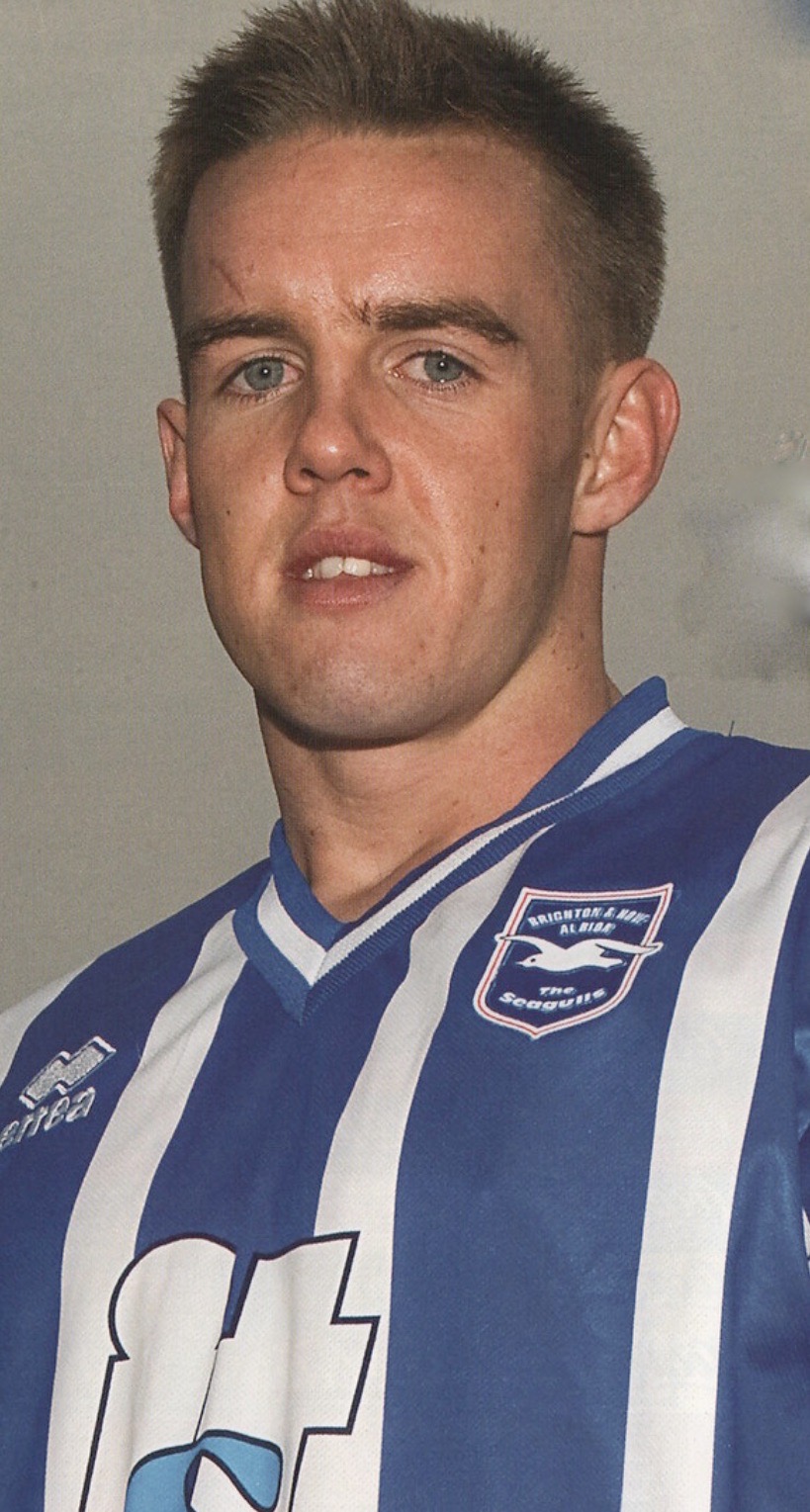
HE’D SCORED a decisive play-off final goal at Wembley for Stockport County but a subsequent £750,000 move to Derby County didn’t work out for Liam Dickinson and Brighton signed him for £300,000 only a year after the Rams had shelled out that big money.

Dickinson didn’t even get a game for the Rams, instead being sent out on loan to Huddersfield Town, Blackpool (where he’d begun his career in their school of excellence) and Leeds United.  He was a player who didn’t stay in the same place for long; in total he featured for 23 different clubs.

Like many before and since, changes of manager were often the cause of him moving on. At Derby, for instance, he was signed by Paul Jewell, recalled from his loan at Blackpool by caretaker manager Chris Hutchings and eventually let go by Nigel Clough.

It had been intended he’d join Leeds in January 2009 but the necessary paperwork didn’t arrive until 14 minutes after the deadline! Further discussions led to a revised deal, but the move was called off because he was injured. He eventually joined up with United in the second week of March and although he scored in a behind-closed-doors friendly against Sheffield United (1-1), he didn’t get on the scoresheet in eight League One games (four starts, four as a sub) under Simon Grayson.

His first start was in a 3-2 win at Crewe and he managed three successive starts, in a 2-2 draw at Leyton Orient, a 1-0 win over old club Stockport and a 1-0 defeat at Leicester but he was not involved in the end-of-season play-offs when Leeds (with Casper Ankergren in goal) lost out to Millwall in the semi-finals.

An enclave of former Stockport teammates – James Tunnicliffe, Jim McNulty, Gary Dicker and Craig Davies – helped Dickinson to choose Brighton as his next club

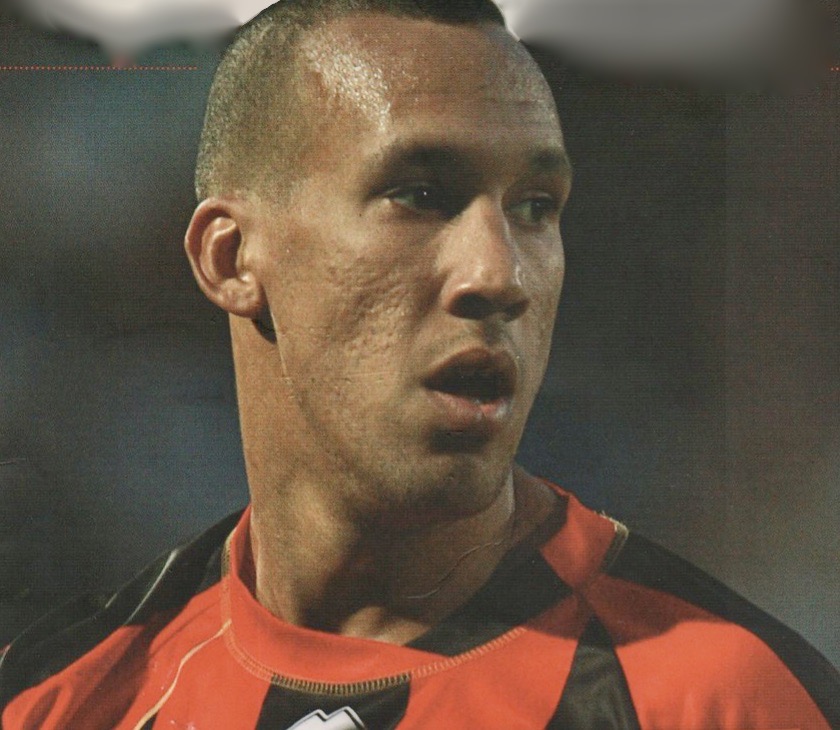
After Brighton boss Russell Slade welcomed the 6’4” forward to Withdean on a three-year contract, he told the club website: “He brings something different to the table. His goalscoring record is very good and he has a good goals-per-game ratio, and like one or two of the other signings I have made this summer, he is hungry to get his career back on track. I’m sure there is a lot more to come from him.”

He scored in his third and fourth games for the Albion, but both came in defeats against former clubs: the first in a 7-1 capitulation to Huddersfield and the next in a 4-2 defeat to Stockport.

He was on the scoresheet in the home 3-3 draw against Hartlepool (Nicky Forster scored Albion’s other two goals) that spelled the end of Slade’s tenure as manager. But it is what happened two days later that many will remember him for.

Unluckily for him, he was pictured carrying a seemingly comatosed young woman in his arms in the middle of Brighton at 1am. The Sun newspaper was covering a renowned student pub crawl ritual at the time and didn’t realise who they’d snapped.

Eagle-eyed Albion supporters did, though, and, after discussion about the incident on fans’ forum North Stand Chat, The Argus picked up the story, running an article headlined ‘Samaritan Brighton and Hove striker scores an own goal’.
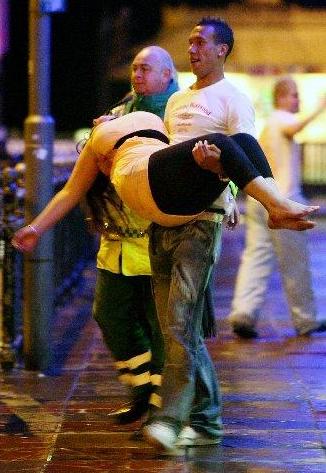
For his part, Dickinson told reporter Ben Parsons how he was on his way home after a meal out in the city when he helped a girl to a car waiting to pick her up.

He said it was simply a coincidence that he was helping the girl when the photos were taken, adding: “I saw two girls holding another girl up. She collapsed in front of us. Her mum or her auntie picked her up in a car. I picked the girl up and put her in the car.

“I didn’t want to just leave her. Anybody else would have done the same thing.”

Albion said they would deal with the matter internally. Dickinson was omitted from the squad for the following game, a 4-4 FA Cup draw with Wycombe Wanderers with caretaker manager Martin Hinshelwood in charge, but he was back in the fold for Gus Poyet’s first game as Slade’s replacement.

In the televised away game at Southampton, he went on as a sub for Forster in Albion’s 3-1 win at St Mary’s. Dan Harding, Dean Hammond and Adam Lallana were in the Saints side.

Dickinson got occasional starts under Poyet but more often than not was sent on as a sub to replace either Glenn Murray or Forster.

Given a start in the FA Cup second round win over Rushden and Diamonds, he scored twice, in the third and 86th minutes, as Albion edged the tie 3-2. He was preferred to Murray in a Boxing Day clash with Leyton Orient that finished goalless but, perhaps to prove a point, two days later the restored Murray hit four at Wycombe in a 5-2 Seagulls win.

Dickinson was back on familiar territory at Edgeley Park in January 2010, but only got a half an hour run-out as a sub against his old club (replacing another former County man in Dicker) as the game finished 1-1, Andrew Crofts salvaging a point with a 90th minute equaliser.

In a 1-1 draw at Leyton Orient, Dickinson started the game and, when he was denied a penalty, incandescent Poyet was sent from the dug-out for protesting.

“If you ask anyone, they will tell you it was a penalty and a red card,” Poyet maintained afterwards. “The referee is 10 yards away and he doesn’t give it. You’ve got a chance to score a penalty and it’s 2-0. It’s a different game.”

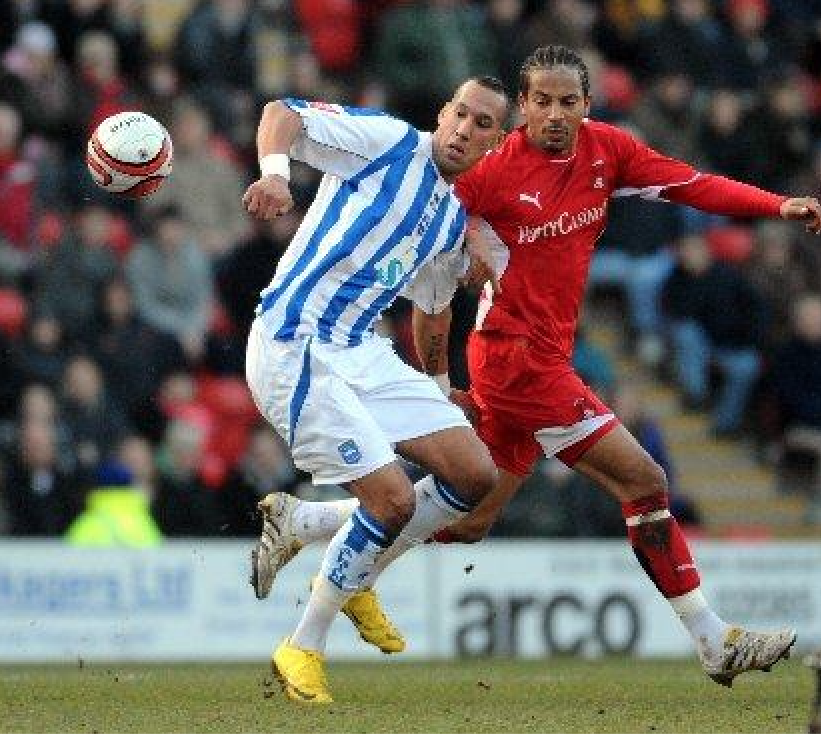
Dickinson took to the field against another of his former clubs in Huddersfield wearing distinctive ‘banana yellow’ boots. “I don’t like dull, boring colours. I like to brighten the pitch up a bit. I’ve had a bit of stick off the lads,” he told The Argus.

The striker, who’d scored six goals in 13 games for the Terriers while on loan, didn’t manage to get on the scoresheet and was replaced by Murray as the game petered out to a 0-0 draw.

At that stage, Dickinson was deputising for Forster who was out of favour with Poyet over a contract dispute.

As the Uruguayan began to bring in his own selections, such as on-loan Kazenga LuaLua, Dickinson chose to go on loan to Championship strugglers Peterborough United, who were managed by his former Stockport boss Jim Gannon. Dickinson scored three in nine games for Posh. On his return to Brighton, he was sold to Barnsley, who were in the Championship at the time, for reportedly half the fee paid out for him just a year earlier.

Tykes boss Mark Robins declared: “He is different to the strikers we have here already and will give us something else up front.

“He is only 24 and still has room for improvement. He has a decent scoring record both in the Championship and in the lower leagues.

“Liam fits in to what we are trying to do here both in terms of on the pitch and within our budget.”

But he made just one start, in a League Cup match, and three sub appearances in the league for Barnsley when his old Derby caretaker manager, Hutchings, took him on loan to Walsall. He didn’t find the net in seven League One games.

Next stop, from January to the end of the season, was Rochdale, the side against which he had scored that 2008 League Two play-off final winner.

But a goalless run of 14 games (seven starts and seven off the bench) prompted this comment from AtThePeake on fansnetwork.co.uk in 2021: “In terms of expectation versus reality, few signings can have disappointed Rochdale fans quite like the loan signing of Liam Dickinson in January 2011.”

The supporter wrote: “Dale were looking for someone to become the fulcrum of an attack that included Chris O’Grady drifting in from the left and the emerging Matt Done playing as a second striker.

“Having seen first-hand the threat Dickinson could be with his aerial prowess, strength and touch in front of goal, Dale fans were reasonably excited that the answer to their striker problem had been found, but it quickly became apparent that the struggles with Derby and Barnsley had affected Dickinson’s confidence.

“During his spell, Dickinson was all too easy to defend against, struggled to hold the ball up and lacked any cutting edge when it came to finishing the chances he did manage to fashion for himself.”

A projected move to Plymouth Argyle was called off after just eight days, with personal reasons being cited, but the nomadic striker’s next stop was League Two Southend United under Paul Sturrock, where he netted 12 goals in 37 matches (33 starts plus four as a sub).

Dickinson scored a dozen times for Southend United

Not for the first time, he found himself in the headlines for the wrong reason when he and two others were reprimanded for a breach of club discipline over an unspecified incident at a hotel the evening before a match at Morecambe.

A broken ankle brought a premature end to his season with the Shrimpers, and it proved problematic in trying to continue his league career elsewhere.

He trained with Port Vale but even his agent Phil Sproson was quoted as saying: “Liam will admit he has been no choirboy in the past.

“He has had quite a few clubs and that’s probably because he has been no angel.

“He is loud and vocal and has had too many nights out over the years – but he has matured.

“He realises he will have to change and toe the line because he has a darker side that has dragged him down in the past.”

As it turned out, he was eventually out for a year because his broken ankle didn’t heal properly. He played two pre-season friendlies for Vale in 2013 but manager Micky Adams didn’t take him on because of ongoing problems with the ankle.

Born in Salford on 4 October 1985, Dickinson was originally a centre-half when he was on the youth books of Blackpool, Bolton and Blackburn. He stepped away from professional football at 16 and studied to be a graphic artist but continued to play in non-league sides. He appeared for Irlam, Swinton, Trafford and Woodley Sports before he was taken on as a pro by Stockport in 2005 after a successful trial.

He scored on his County debut, only five minutes after going on as a 71st-minute sub against Cheltenham Town at Edgeley Park. In three years under Jim Gannon, he hit 33 goals in 94 appearances.

The 2007-08 season was his most prolific term as a league player, netting 21 times from 32 starts and six games from the bench. It also earned him Stockport’s Player of the Year award.

It was to Stockport, then in the Conference North league, that he returned in 2013, but he only managed one goal in 13 games before returning to the non-league arena.

Between 2014 and 2019, he turned out for Stalybridge Celtic, Guiseley, Bradford Park Avenue, FC United of Manchester and finally Droylsden before calling it a day.

In an online chat with Stockport County Live towards the end of the Covid lockdown, in August 2020, Dickinson opened up about his mental health, admitting he’d been through a period when he was suffering with depression.

Post playing, he told his interviewer, he was working installing signage for a print company.
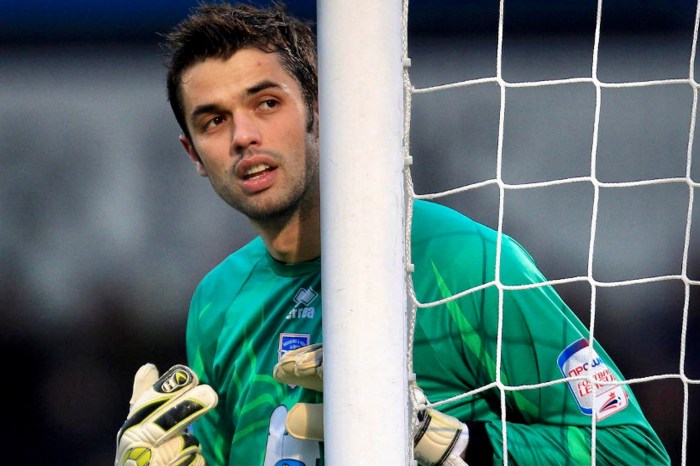
Big-time beckoned for Bratislava-born Brezovan

LANKY Slovakian stopper Peter Brezovan, who saved penalties on his Albion and Swindon Town debuts, once came close to a dream move to Everton.

The Merseyside outfit had him on a five-day trial with a view to signing him on a permanent basis from Swindon.

“It was very rewarding just to train alongside Tim Howard and face all these international players,” he said. “It was an experience I’ll never forget.”

Former Man Utd ‘keeper Howard was Everton’s no.1 in 2007 and, having released Richard Wright that summer, manager David Moyes had only new signing Stefan Wessels and the little-used Iain Turner as back-up ‘keepers. Everton’s goalkeeper coach was the former England international Chris Woods.

While Everton didn’t follow up their interest in Brezovan with an offer (three years later they did sign a Slovakian goalkeeper, Jan Mucha), it sounded like Swindon rather over-egged their expectations of a big payday.

Robins stopper

The Wiltshire Gazette and Herald reckoned a £300,000 eve of deadline day offer from Wolverhampton Wanderers had been rejected, saying: “Town will be asking for a substantial amount more.”

The newspaper added: “If the price is right, Town are ready to cash in on their number two keeper.” And manager at the time, Paul Sturrock reportedly told the Mirror: “If I was offered something like £2m, Brez would be an Everton player.”

The Toffees had originally taken an interest in Brezovan and invited him for a trial when he made an eye-catching start in English football in 2006. Not only did he save two penalties in his first game for Swindon, he conceded only five goals as Town won six of their opening seven matches and won the PFA Player of the Month award for September. Unluckily, a badly broken arm put him out of the game for nine months but Everton revived their invitation when Brezovan was fit again.

It probably didn’t help the ‘keeper’s progress at Swindon that successive managers came and went during his time at the club. It was Dennis Wise who signed him on a year’s loan from Czech side 1.FC Brno shortly after he’d taken over as Swindon manager, assisted by his former Chelsea teammate Gus Poyet, but by October the pair (along with goalkeeper coach Andy Beasley, who later spent a year at Brighton) left Wiltshire to take over at Leeds United.

County Ground caretaker managers David Tuttle and Ady Williams were followed by Sturrock for a year; David Byrne twice held the fort temporarily and Maurice Malpas was in charge for 11 months in 2008. When he left in November that year, Danny Wilson arrived the following month.

Born on 9 December 1979 in Bratislava, Brezovan’s first football memories were playing at right-back. In a matchday programme article, he explained: “In the first game of the season our ‘keeper got injured, so the biggest kid had to go in goal – and I’ve been there ever since. I’ve always been tall so looked upon to go in goal but, unlike a lot of kids, I enjoyed it.”

Brezovan spent his youth career at the city’s MŠK Iskra Petržalka and also played for Devin in the city before spending two years in the Czech Republic with FC Slovan Břeclav and HFK Olomouc. He then spent four years at FC Brno in South Moravia, although it was while he was on loan back in Bratislava, playing for FK Inter Bratislava, that he was spotted by Swindon and subsequently made the move to England.

In spite of his spectacular start for the Robins, when he couldn’t speak a word of English, it would be fair to say Swindon have mixed memories of his time at the County Ground, chronicled in detail on swindon-town-fc.co.uk. After former Albion captain Wilson released him at the end of the 2008-09 season, he was without a club for six months.

He had an unsuccessful trial at Crewe Alexandra in October 2009 but Poyet, not long after succeeding Russell Slade as Albion boss, signed him for a month at the beginning of December to cover a mini goalkeeper crisis he inherited.

Regular no.1 Michel Kuipers was injured and Slade’s misfit summer signing Graeme Smith had conceded 11 goals in three defeats and one win.

Handed his debut on a drizzly, grey December afternoon at Exeter (I know, because I was there, getting wet on the uncovered terrace behind the goal!), Brezovan went from zero to hero, according to writer Richie Morris, after upending  former Albion loanee Stuart Fleetwood in the penalty area and then impressively saving Marcus Stewart’s spot kick.

“The former Slovakian under 21 international pulled off a string of comfortable, but reassuring saves,” wrote Morris. “True, he did nearly gift the home side a goal with a wayward clearance, but, considering how long he has been out of first team football, he can be happy with a solid performance.”

A somewhat modest Brezovan attributed his penalty save to goalkeeper coach Tony Godden’s homework. “He told me where Marcus Stewart puts his penalties and I dived the right way but it was a great feeling to help the team to victory,” he said.

Penalty-saver!

On another occasion, Brezovan expanded on his technique with penalties, telling the matchday programme: “It’s mainly instinct on the day. You get the stats guys who help you with your preparation – they will tell you where certain players tend to put the ball but sometimes you just have to go with how you feel in that moment and go for it.

“I don’t get the lads to take penalties at me after training either – I hate doing that. It’s all about how you are on the day.”

Brezovan’s arrival signalled the departure of the hapless Smith who ended his six-month nightmare in English football by returning to Scotland, moving on a free transfer to Hibernian. And the Slovakian’s short-term arrangement ultimately extended into a four-and-a-half-year spell as a Brighton player.

There were occasions when he was tempted to move on for more regular game time, but he confessed to loving the area and stayed put even though first team opportunities were few and far between.

In that first season, fans’ favourite Kuipers, not for the first time, found his place under threat because of the 6’6” Brezovan’s form. But a blunder by the new man in a game at home to Wycombe prompted Poyet to bring back the former Dutch marine (chef) at the start of the new year.

Kuipers had an eight-game run in the starting line-up but then broke a finger. Brezovan, having had his contract extended, seized his chance and kept his place through to the end of the season.

Brezovan told the matchday programme: “We are good friends, we train well together, and so I really feel for him. We don’t feel like rivals at all in that respect but I know that while I am in the team I will be giving my all to make sure I maintain my place.”

It paid off because Poyet offered him a two-year contract at the end of the season, saying: “Peter has earned his new contract. Initially he came to play and help us out but I expected he would prove he was worth a longer deal and he has done that.

“He has been a very important part of our turnaround since Christmas and now his challenge is to make the position his own for next season and beyond.”

And the ‘keeper told the Argus: “Together with my girlfriend, I’ve really settled here. I think that Brighton is the nicest city in England and we’re really happy here.

“I owe a lot to the manager because he brought me to the club and I’m glad he wants me to stay. That’s why it was so easy to sign the deal. The manager will no doubt bring in more good players in the summer so it’s going to be an exciting season.”

He was right about the excitement because Albion went on to win the League One championship title; what he might not have anticipated was that because he was nursing a wrist injury on the eve of the season opener against his old club Swindon, Poyet moved quickly to sign another ‘keeper who he’d worked with at a previous club: Casper Ankergren.

The Dane, released by Leeds, instantly became first choice ‘keeper and Brezovan spent most of the season watching from the bench, making just seven starts in the FA Cup (the first and second round matches both went to replays). Close to the end of the season he went on as a sub for the injured Ankergren in the 18th minute of the 25 April league game at Colchester United, making important saves from Ian Henderson and David Mooney as the Albion salvaged a point in a 1-1 draw.

Brezovan was also in goal for the penultimate game of the season, and the last ever played at the Withdean, when Huddersfield won 3-2. A defensive gaffe by Inigo Calderon, who left Brezovan stranded by chesting the ball down inside the area, let in Benik Afobe to put Town 2-1 ahead; sub Matt Sparrow equalised for the Seagulls and, although Brezovan twice made excellent saves to deny defender Jamie McCombe, sub Danny Ward scored a last-minute winner.

Brezovan resumed his place on the bench as 2011-12 got under way with Ankergren once again Poyet’s first choice no.1, although, after he’d shipped 13 goals in eight games in the autumn, the manager brought experienced Newcastle custodian Steve Harper on loan for five games.

Brezovan preferred to see the positive side of it, though, telling the matchday programme: “That was a good experience for all the goalkeepers. He is a vastly experienced ‘keeper and we have learned from his time here.”

After Albion went through a four-game losing streak in December, Brezovan got the call to take over from Ankergren in the new year match at home to Southampton when an injury-hit Albion sprung a surprise, winning 3-0 with a memorable brace from midfielder Sparrow.

It was only after the game that Poyet revealed how his plan to change ‘keepers nearly didn’t come to fruition. “For the last week Peter has been waiting for his wife to have a baby, every day,” Poyet told the Argus. “I needed to wait until 1.30 to tell him he was playing. The baby was due three or four days ago, so we were all thinking ‘come on girl, go on’!”

Later the same month, Brezovan was hailed a hero when he saved a crucial spot-kick in a penalty shoot-out in a third round FA Cup replay at Wrexham and he told Brian Owen of the Argus: “I enjoyed it. The pressure is all on the strikers at penalties because they can just mess it up. You have nothing to lose, you are practically without pressure.

“I knew one player and where he goes and I saved his penalty so we could have a laugh in the end.”

Nevertheless, Poyet was obviously still unsure about the goalkeeping situation. He let third choice Michael Poke go on loan to Bristol Rovers but brought in Columbian David Gonzalez, who’d been with Man City for two years, to put pressure on Brezovan and Ankergren.

“The gaffer wanted to bring in another keeper. You have to face it, with Casper, and keep working to keep our positions,” said Brezovan.“I’ve got another year. If you want to stay at a club for a long time, you have to play. You can’t be just like a useless second or third choice. This is my opportunity and I am going to do everything to stay in goal.”

He did indeed stay in goal but on two occasions let in six! The first drubbing was handed out by Liverpool in the fifth round of the FA Cup at Anfield (with Albion famously conceding three own goals in a 6-1 defeat).

After Brezovan shipped another six against West Ham at the Boleyn Ground, Poyet had seen enough. The patient Gonzalez replaced Brezovan in goal for the following game, one of six changes to the side that capitulated to the Hammers.

Come the new season, Brezovan and Ankergren had even more of a challenge on their hands when experienced Polish international and former Manchester United ‘keeper Tomasz Kuszczak arrived at the Amex.

It pushed Brezovan down the pecking order to third choice ‘keeper and he played only once all season, in a 2-1 win at Huddersfield when Kuszczak had a finger infection that ruled him out and Ankergren picked up an injury in training two days before the game.

Brezovan stayed at the club as no.3 ‘keeper for the 2013-14 season and once again injuries to the first and second choices in Oscar Garcia’s side presented him with a rare opportunity. He ended up playing eight games, four in the league and four in the FA Cup.

He made his first appearance for 13 months in the 7 December 3-1 win at home to Leicester after Kuszczak pulled out in the warm-up with a stomach muscle strain, with Ankergren already sidelined with a wrist injury. In an interview with the Argus, on his 34th birthday, Brezovan spoke openly about possibly moving on to get more games.

“It’s hard because Brighton is a beautiful place and I love the people around here. It’s not easy to go.

“If there was an offer from the same level, I would probably try it. Going to a lower division, getting injured and then to be there on the bench is risky.”

And of his sudden chance back in the Albion goal, he reflected: “That’s football. Things can happen quickly and it’s beautiful. It shows how everyone is important. When you don’t play for a long time, even in training, you start to think it’s hard to motivate yourself.

“That’s why you need good lads around you. I love the guys here. They always help you to be motivated. When you play and your contract is running out you need to find that motivation.”

His appearance in the fifth round FA Cup replay defeat (1-2) at Hull City on 24 February turned out to be his last first team game and he was released at the end of his contract that summer having featured 62 times for the Seagulls.

He trained with Oxford United during pre-season and at the start of the next season joined Portsmouth for a month as cover for Paul Jones. On transfer deadline day, he signed a one-year contract with Tranmere Rovers.

Although he played seven games for Rovers, he lost his place to regular ‘keeper Owain Fon Williams. He had a loan stint at Southport in early 2015 but at the end of the season, following Rovers’ relegation from League Two, he was released.

Interviewed by the Argus in December 2015, Brezovan had returned to Brno in the Czech Republic, quit football and turned to publishing music online.

“I lost a little bit of motivation,” he said. “The football wasn’t going anywhere and I’d had enough. I’m focusing on this now.”

‘Outstanding pro’ Wes Fogden was Cherries pick after Albion

WES FOGDEN is still playing the game he loves despite injuries blighting much of a career that might never have got off the ground.

Being told he might not play again when undergoing an operation to remove a benign tumour on his spine as an 18-year-old at Brighton made him even more determined to enjoy every moment of being able to step out onto a football pitch.

Although he eventually broke through to Albion’s first team, it was at AFC Bournemouth that he got regular league football as the Cherries began their rise through the football pyramid.

Brighton-born Fogden has stayed in Dorset and now plays part-time for Poole Town while working as head of football for Branksome-based Elite Skills Arena, a business owned by former Bournemouth chairman Eddie Mitchell.

“Bearing in mind the amount of time injured, I’ve missed out on about five seasons of football,” Fogden told The News, Portsmouth’s Neil Allen in an interview published on 1 December 2022.

“I’ve had pretty much every injury going. Cruciate ligament damage to both knees, hamstrings, ankles, I’ve broken my nose four or five times, I fractured my cheekbone when going up for a header in the FA Youth Cup against Andy Carroll.

“There was even the time when the ball smacked me in the private regions, requiring an operation and putting me out for four or five weeks. A real variety of injuries.

“But I wouldn’t have it any other way. As long as I’m fit, I want to be playing every game, especially after what happened at Brighton.”

Fogden was never short of admirers for the way he bounced back from the devastating blow of being told he might never be able to play football again.

Tommy Elphick, who also went through Brighton’s youth ranks before moving to Bournemouth, said: “One thing with Wes is that you know he is going to dig in for you. He is a very good player; a footballer who can play at right-back, right wing or in central midfield.”

The player himself told the Albion matchday programme: “When I was told that I might not play again was the worst moment of my life but to come through it is a great achievement.”

After surgery to remove the tumour from his spine was thankfully successful, Fogden had to spend three months in a body cast before slowly recovering throughout the 2006-07 season.

He was grateful to the support of physio Malcolm Stuart, fitness coach Matt (‘Stretch’) Miller and physio Kim Eaton in aiding his return to fitness.

Albion sent him out on loan to Dorchester Town to gain experience but when Dean Wilkins’ squad was hit by ‘flu, the midfielder, who had previously been part of Wilkins’ successful Albion youth team, was recalled.

He made his first team debut at right-back in a Johnstone’s Paint Trophy tie against Swansea City when he was up against future Albion player Andrea Orlandi.

Fogden kept the shirt for the following Saturday’s league game at Oldham but was unfortunate to be sacrificed early in a reshuffle Wilkins was forced to make after wantaway Dean Hammond had got himself sent off early in the game. Nathan Elder went on as a substitute and scored a last-ditch equaliser for the Seagulls.

After that, Fogden’s involvement was a watching brief from the subs bench although he did get on in the 64th minute of a game at Cheltenham, replacing Albion’s goalscorer Jake Robinson in a 2-1 defeat.

Fogden subsequently went back out on loan, this time to Bognor Regis Town, and when Micky Adams was brought back to the Albion over Wilkins’ head that summer, he preferred to select more experienced players.

Fogden returned to Dorchester on loan initially and made the move permanent in October 2008. “Dropping out of league football wasn’t a tough decision,” he told afcb.co.uk. “Dorchester Town offered me a good deal, they were the only professional club in the Conference South at the time and it was a good opportunity to play first team football week-in-week-out.”

A cost-cutting exercise early in 2009 saw Fogden let go and he joined Havant & Waterlooville, who were in the same division. He was voted the Supporters’ Player of the Season in 2009-10 and 2010-11.

Having contemplated a career outside of football, he enrolled to take a degree in sports coaching and PE at Chichester University but Bournemouth boss Lee Bradbury gave him a second chance to build a career in league football.

“It was a difficult decision to put my studies on hold when Bournemouth approached me,” he said. “I was a year and a half in and I wasn’t expecting that call.

“After speaking to my family and the university, I decided to give the professional game one last shot.”

With the three-year deal done, Fogden said: “I’m really pleased to get back here at this level.

“It is a big jump for me. I was only young when I made my few appearances for Brighton and the pace was a lot quicker so hopefully I can just adapt as soon as I can.”

Bradbury told BBC Radio Solent: “Wes is a young prospect, who has a good grounding from his time at Brighton. He can play on either wing and can also play up front or in behind the strikers.

“He’s well thought of in the non-league circuit, and I saw it as a good opportunity to get him down here and integrate him into our squad.”

After three substitute appearances, Fogden produced an eye-catching performance on his full debut in a 1-1 draw at Colchester United in October 2011, Bournemouth’s Daily Echo observing that he “showed some neat touches in a lively display” playing just behind the striker in an attacking midfield role.

“I thought Wes Fogden was probably the best player on the park for us,” said Bradbury. “He was different class. He had great energy levels and worked really hard. He set the standard for the rest of the team.

“He has played off the striker quite a lot. He can play on either wing or up front in a partnership.

“He has got a lot of uses. He showed on Tuesday night what great quality he has, what a great professional he is and the fitness he has as well.”

The following March, after Fogden struck a 20-yard winning goal in a 1-0 victory over Brentford, Bradbury was once again full of praise for his signing. “I’m delighted for him. It was a terrific strike,” he said. “His energy levels are fantastic and he works so hard for the team. He’s very durable and a pleasure to work with.”

Fogden was part of a group of players who shared a close bond through meeting up at the Cotea coffee shop in Westbourne. The group included Ryan Fraser, Marc Pugh, Benji Buchel and Shaun MacDonald.

MacDonald, who joined Cherries two months before Fogden, told the Glasgow Times: “Just before I left, we all started going to Cotea in Westbourne. The food was always perfect, the coffee really nice and the people who own it are lovely.”

Fogden remained part of the set-up during Paul Groves’ brief reign after taking over from Bradbury, and then the return from Burnley of Eddie Howe and Jason Tindall. “Eddie and Jason gave the whole club a lift, the fans, the staff and the players, and we went on a roll that didn’t stop,” said Fogden.

Howe’s appreciation of Fogden was demonstrated in an interview with the Daily Echo, when he said: “Wes is a hard worker and a real team player but has got ability as well. He is a very good footballer, he has quality on the ball and you can`t underestimate that.”

Describing him as a valued member of the squad, the manager added: “Wes has certainly got the fire inside him to want to improve and to keep his place and I have been very impressed with him.”

Having made 59 appearances for the Cherries, including 32 League One starts, Fogden didn’t make any appearances in the Championship during the first half of the 2013-14 season and moved on to Portsmouth in January 2014.

Ahead of the move, Howe told BBC Radio Solent: “He’s been a really good servant to the club in his time here, he’s been an outstanding professional and someone who we have really enjoyed working with.

“But it’s been difficult to give him, although he has been injured this season, as much game time as he wants.”

Looking back on it a couple of years later, Fogden said: “I still had 18 months on my contract but decided that moving to Pompey was right for me.

“It was sad to leave, but it was time for a new chapter in my career. After the injuries I had when I was young it made me realise that, ultimately, I just love playing; if you’re not in that starting eleven on a matchday it’s very difficult.”

Born in Brighton on 12 April 1988, Fogden started playing football from an early age. “I was four or five years old, playing with boys a couple of years above me in my older brother’s team, which was run by my dad,” he said. “I signed for Brighton at 11 years old and played right the way through my school years.”

That senior school was Patcham High and in 2001 Fogden was in a Sussex under-14s squad alongside the likes of Richard Martin, Joel Lynch, Tommy Elphick, Tommy Fraser, Scott Chamberlain and Joe Gatting who all went on to play for the Albion.

He was part of the hugely successful Albion youth team of 2006 who, against all the odds, beat the youth sides of Premier League clubs Chelsea and Blackburn Rovers in the FA Youth Cup before losing on penalties to Newcastle United (managed by Peter Beardsley) in the quarter finals.

It was only after he had signed on as a professional at 18 in 2006, that he found out about his spine tumour.

“Initially I was told I would never play football again,” he recalled. “A diagnosis like that definitely changes the way you think about things; you take each day as it comes and enjoy it for what it is.”

Fogden’s time at Portsmouth was disrupted by a serious knee injury and he was only able to make 29 appearances in 19 months at Fratton Park. He later suffered a similar injury while playing for Dorking Wanderers and, in a March 2022 interview with Surrey Live, said: “With both of my ACL injuries I gained a lot of experience in the exercises I’d need to do,” he said.

“With the first ACL I had, I had a great physio at Portsmouth, Sean Duggan, who gave me a step-by-step plan. It was an unbelievable plan and I’ve used a lot of that into what I’ve done this season.

“Every minute of every game is a bonus now. I’m one of those that likes to play every minute anyway because of the injuries I’ve had. You cherish the moments you are out there.”

Fogden’s last professional league action came at League Two Yeovil Town where he was the 12th of 19 new signings made by Paul Sturrock ahead of the 2015-16 season.

He scored two goals in 17 appearances (plus one as sub) but was released in the summer of 2016 by Sturrock’s successor Darren Way.

He returned to Havant & Waterlooville in the Isthmian Premier League, helping them to promotion to the National League South and over four seasons made 154 appearances, scoring 23 goals.

For the 2020-21 season, Fogden switched to National League South outfit Dorking Wanderers, where he was once again dogged by injuries, including a nasty head injury that required hospital treatment.

He dropped back down to football’s sixth tier with Poole Town for the 2022-23 season because of the travel requirements playing and training for Dorking entailed.

There had been times when it clashed with his day job demands and taking on more at Elite Skills Arena had also influenced the decision. ESA owner Mitchell was chairman at Dorchester way back when the player went there on loan from Brighton.

“I’ve been working for Eddie Mitchell for a while now and have known him going back 15 years. He’s been really good to me,” he said.

As regards continuing to play, Fogden told The News: “All the time I can move about the pitch and be involved, playing as well as I can, then I’ll stay in the game. I’m still playing central midfield, right in the action, attacking and defending. I’m still going.

“When you’re a footballer, injuries are going to happen, the way I play is always twisting and turning, being involved, action packed. Freak injuries occur for me because of that – I can’t change my playing style.

“Considering I’m a bit shorter than a lot of players and at elbow height, it doesn’t help with my facial area. The same for dead legs, my thighs are knee-height compared to most players, it’s just one of those things.

“As I’ve got older, I’ve learnt to get away from some of the injuries which maybe I could have avoided previously. I’m still all-action, but sometimes it’s a case of pulling out of tackles I know I haven’t got any chance of winning.

“Are my injuries connected with the back? I don’t think anyone can really know, there might be a bit of a lack of mobility in that area, which could cause hamstring injuries and give less knee support, and perhaps a pelvic imbalance. I don’t know, I’m not really sure.

“It has been 16 years since that back operation and I’m still playing. Without football I wouldn’t be anywhere near the person I am. It’s strange thinking back to how it could have been, had it not been for a fantastic surgeon.”

Big money signing Peake hit a trough at the Albion

EXPENSIVE FLOP Jason Peake was a victim of the problems clouding Brighton’s very existence in the mid-1990s.

The blond-haired midfielder heralded elsewhere for his “excellent left foot” and “one of the best passers of the ball in the lower leagues” failed to live up to expectations at the Goldstone and was dubbed Jimmy Case’s “biggest blunder”.

Leicester-born Peake had played alongside Case for Halifax Town, where he’d moved after making only a handful of appearances with his hometown club.

Former Albion loanee centre half John McGrath, assisted by Frank Worthington, failed to halt the Shaymen dropping out of the league in 1993, and Peake spent a season in the Conference before reviving his league career with Rochdale. Nine goals in 103 appearances attracted suitors and it was Albion who bought him for a fee set by tribunal of £80,000 – a huge sum for a cash-strapped club.

A further £15,000 was to be paid after 20 games and another £25,000 if he got to 40 appearances. He made 35 appearances before being frozen out by Case’s successor, Steve Gritt. It was to be a familiar pattern: changes of manager often led to him moving on.

Apart from the bigger picture shenanigans going on at the Albion under the hated Archer-Bellotti regime, Peake’s personal issues centred around relocation expenses he said he was entitled to – but Bellotti refused to pay up.

According to fansnetwork.co.uk: “Peake was being forced to commute from Leicester following several broken promises by the Brighton board. Peake’s dream move turned into nothing short of a nightmare for him.”

The midfielder had trials at Northampton and Cambridge before he finally managed to get away, in October 1997, signing for First Division Bury. He rather diplomatically said: “The situation at Brighton has been well documented over the past year and just let’s say when I got there the situation was not as I’d been led to believe it would be.

“I have not been happy there for some time and the new consortium have been great in letting me get away.”

The official version in the matchday programme said: “Jason had problems in settling in the South after his move from Rochdale and the move has suited him and his family. Should Bury sell him for a fee at any time, Albion are assured of a share in any such deal.”

As ever, the season had begun with great expectations and in his matchday programme notes welcoming new signings Peake and Ian Baird, Case said: “They are both quality players and I am sure that they will be great acquisitions for the club this coming season.

“I firmly believe we now have a skilful blend of experienced and young players that can mount a serious challenge for promotion at the first attempt and I believe we will surprise many teams this season.”

Peake went straight into the side in the no.8 shirt but after he’d played 19 games on the trot Albion were anchored at the foot of the table.

After Case was sacked, Peake found himself on the bench more than in the starting line-up; local lad Kerry Mayo taking over from him.

Supporters were certainly not impressed by Peake, perhaps summed up by ‘Lenny Rider’ on North Stand Chat who said: “Huge outlay for where the club was at the time. His kinder critics would say he was disappointing, the more cynical amongst us would argue he was actually nicking a living at the Goldstone.”

New Albion chairman Dick Knight cut Albion’s losses by giving Peake a free transfer to Bury in exchange for the relocation cash dispute being dropped.

Bury boss Stan Ternent was lauded for pulling off something of a coup, and Peake told the Lancashire Telegraph: “It is a fantastic chance for me to prove myself. It has taken me a long time to get into the First Division and I don’t want to blow the opportunity.”

Sadly, those words came back to haunt him because he ended up playing just six times for the Shakers, three as a left-back and three as a sub.

To quote fansnetwork.co.uk again: “Peake’s silky skills didn’t really fit in with the kick and rush tactics of Ternent’s Bury team, and Peake found himself stranded back in the reserves.”

The following summer, a return to Rochdale, where he had first made a name for himself, looked like an ideal solution but things didn’t go well under the management team of Graham Barrow and Joe Hinnigan, who left the club at the end of the 1998-99 season.

In something of a twist of Peake’s usual fortunes when there had been a managerial change, his career began to blossom again under new boss Steve Parkin.

“The free flowing style of football on offer was much more suited to Peake’s natural style,” according to fansnetwork.co.uk. “Peake was awesome in the opening months of the 1999-2000 season and was at the heart of a side which led the table early on.”

He got amongst the goals including “a superb overhead kick from the edge of the area against old team Halifax Town, which saw him win the club’s goal of the season competition and awarded ‘Better than Pele’ status on Sky’s Soccer AM”.

Nevertheless, the season ended on a sour note, as the clarkechroniclersfootballers blog explained: “We lost two re-arranged home games against Peterborough and Northampton in April which would have secured us a play-off place. Jason featured in both games and Steve Parkin singled him out as the scapegoat accusing him of ‘going missing’. It’s always easier for a manager to castigate a player he didn’t sign but we knew there was some truth in it.”

With his contract up at the end of the season, Peake chose to move on, this time to Plymouth Argyle, at the time managed by Argyle legend Kevin Hodges.

Argyle move didn’t work out

It began well enough for him personally and, of Argyle’s 2-0 home win over Carlisle on 16 September, BBC Sport said: “Plymouth doubled their lead in the 17th minute when man of the match Jason Peake scored a superb opportunist goal.

“Peake’s initial attempt came back off visiting central defender Julian Darby and the Plymouth midfielder reacted with a brilliant dipping volley which gave keeper Luke Weaver no chance.

“Weaver denied Peake a second goal in the 80th minute, making a tremendous backward save to keep out the home player’s far post header.”

It followed him scoring four days earlier in a 4-1 defeat at Shrewsbury and was only the second win out of eight. When the next three games were lost, Hodges was replaced by Paul Sturrock, who didn’t take long to decide Peake’s future.

Before Christmas, the midfielder was dispatched to Nuneaton Borough on loan and the move was made permanent in February 2001. Although his league career was over, Peake played 54 games for Borough but was sidelined for periods with a troublesome Achilles tendon injury and he eventually retired in 2003 and became a full-time chiropodist in Leicester.

Born in Leicester on 29 September 1971, Peake played for England schoolboys and was taken on as a trainee by the Foxes.

Manager David Pleat gave him his first team debut in a 2-1 defeat at Charlton Athletic in a Full Members Cup game on 14 November 1989.

It was another year before he made his league debut in the old Division Two, as a sub in a 2-2 draw away to Oxford United.

The same month he also went on as a sub in a 1-0 home defeat to Wolves in the Full Members Cup, played in front of a paltry 4,705 crowd. Four days later he started but was subbed off against Newcastle in a game that remarkably finished 5-4 to the Foxes.

His involvement straddled the end of the Pleat regime and the caretaker manager spell of former Everton boss Gordon Lee, who, in the season Albion reached the play-off final v Notts County, managed to keep Leicester up by only two points while West Brom were relegated along with bottom club Hull City. (Lee died aged 87 in March 2022).

Across three months, Peake had three more starts (and was subbed off in two of them) plus three more games off the bench. Three days after City lost 3-0 at Brighton (goals from Mike Small, Dean Wilkins and Bryan Wade), Peake made a rare start and scored his only goal for the club in a 2-1 home win over Barnsley on 23 February 1991.

Earlier that month (on 6 February 1991), he earned an England under-19 cap when he was sent on as a sub for Aidan Newhouse as England lost 5-1 to Denmark at the Manor Ground, Oxford.

Peake’s last game for Leicester was against Newcastle United on 2 March 1991. He didn’t get a look-in under Pleat’s successor Brian Little and, in February 1992, he joined Hartlepool on loan, playing six matches and scoring once.

Craig Noone bounced back after Heighway heave-ho

PACY SCOUSE winger Craig Noone was a born entertainer who bounced back from early rejection by Liverpool to make it all the way to the Premier League.

Brighton in the Championship under Gus Poyet provided the former roofer with a platform to showcase his ability before Cardiff City gave him the opportunity to perform at the top level.

After he’d scored (below) and impressed in an away game at Manchester City, then newly-appointed Cardiff boss Ole Gunnar Solskjaer said: “Noone is a terrific little player.

“He causes defenders problems with his pace and his technique; he can go inside and outside. He’s got a good left foot, but he can cross it with his right.”

Born in Kirkby, Liverpool, on 17 November 1987, Noone was on Liverpool’s books between the ages of eight and 11.

“I was spotted playing for my Sunday team St Peter and Paul and I used to train at Melwood a couple of times a week – it was unbelievable,” he recalled. “We wore the cream and black training kit and I loved every minute. I was a big Steve McManaman fan, the way he ran at players, and would try to do the same.

“Unfortunately, when I got to 11, Steve Heighway called one night to say that I wasn’t good enough to stay on – I’ll never forget it.”

Noone would eventually get to play on the hallowed turf of Anfield, but not on behalf of the home side.

It was New Year’s Eve 2010 that he joined Brighton, making his debut four days later in a 2-1 win away to Exeter City, where he’d spent six weeks on loan the previous year.

Poyet had admired the winger’s attributes up against Inigo Calderon in one half and Marcos Painter in the second during the Seagulls’ 2-0 win at Plymouth three months earlier, Noone discovered from another Argyle player, Ashley Barnes, who’d scored against his old club that day.

“Barnesey later told me that the management thought I was a good player and had mentioned me a lot in the half-time team talk,” he said. “When Brighton made their interest official, I didn’t have to think twice. The manager, the team, the stadium…it ticked all the right boxes for me.”

The slightly built Noone swiftly endeared himself to the crowd with jinking runs at pace and it was perhaps inevitable that the fans would adapt for him the chant more widely associated with England and Manchester United star Wayne Rooney.

More a provider of chances for others than a goalscorer, ‘Nooney’ made 10 starts and 13 appearances off the bench as Poyet’s Seagulls romped to the League One championship title, getting his first goal in a home 2-0 win over Colchester United at the end of January, followed by one of Albion’s four in a convincing win over Hartlepool United on 12 February.

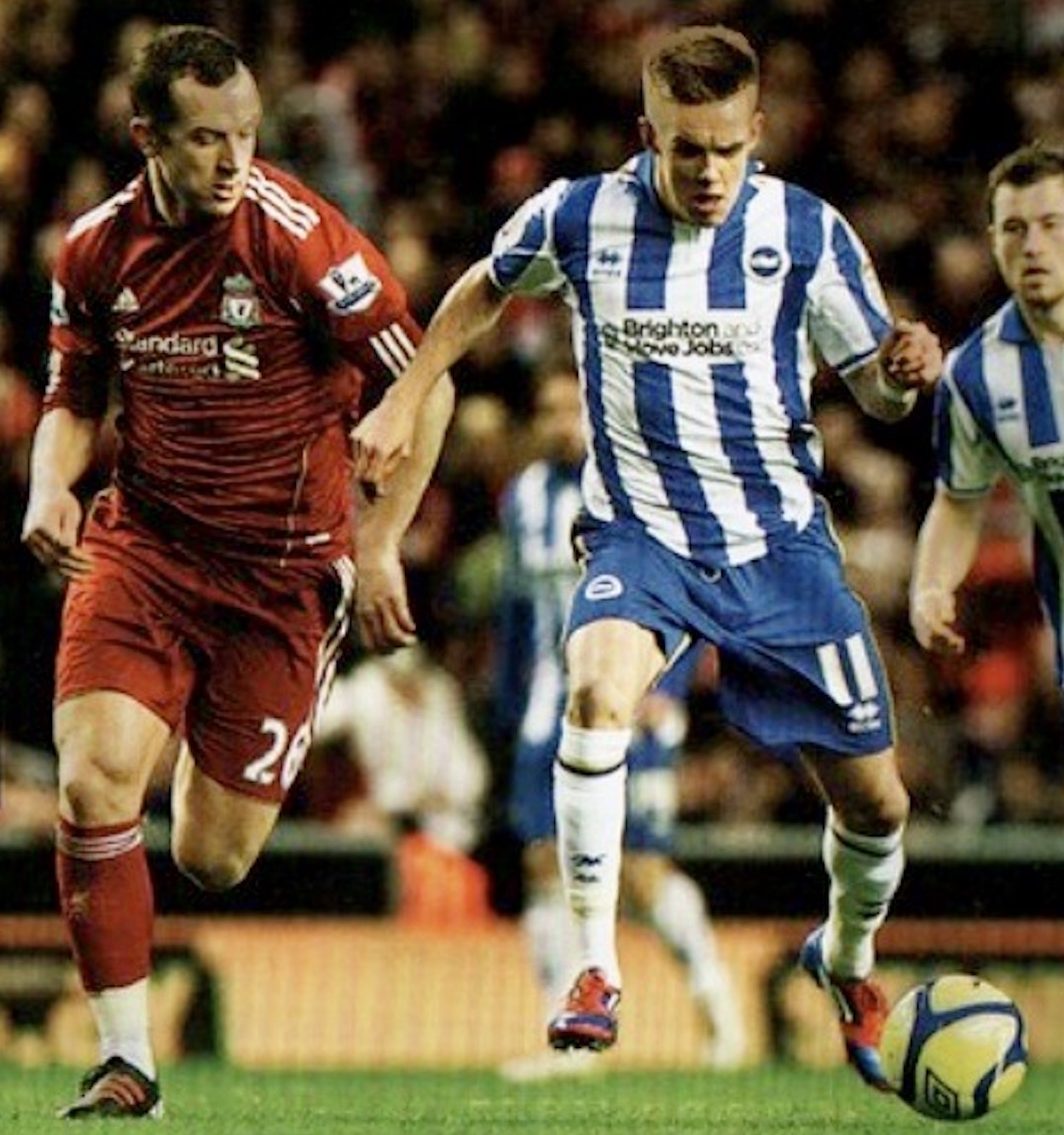
The highlight of the following season for Noone was Albion drawing Liverpool in cup games; not once, but twice. In the League Cup at the Amex, Noone put in a man-of-the-match performance as Albion narrowly lost 2-1 to the Reds.

Four years previously, Noone had been working on the roof of an extension at Steven Gerrard’s house, but in the post-match TV interview for Sky Sports he was stood alongside the Liverpool captain.

“It was his comeback match after injury and he gave me his shirt,” Noone told the Liverpool Echo. “To do the Sky interview alongside him afterwards was unbelievable for me. He said I deserved to be man of the match because I’d caused Liverpool a lot of problems.

“For him to say that made me really proud, especially when I think about where I’ve come from. It wasn’t long ago I was playing non-league football part-time and working as a roofer. That puts into perspective how far I’ve come and sometimes I have to pinch myself.”

Indeed, Noone’s resilience and ability to bounce back from adversity did have something of a Roy of the Rovers feel to it. After the disappointment of not progressing at Liverpool, Noone nonetheless did get to play representative games at Anfield: for Merseyside Schoolboys in the final of the National Cup against Bedfordshire.

“I scored to make it 1-0 in front of The Kop and it was an unbelievable feeling,” he said. “That was the only part of the ground open to spectators and I had all my friends and family watching. We went on to win the game 3-1.” He also played for Myerscough College in the National Colleges Cup final, again scoring in front of the Kop.

Non-league Skelmersdale United guided Noone from their youth team through to the first team. In early 2007, he had a trial at Royal Antwerp, a feeder club for Manchester United, but it wasn’t until November that year that he started to climb the football pyramid.

He was 20 when he stepped up two divisions to Blue Square North neighbours Burscough in exchange for experienced non-league striker Kevin Leadbetter. A regular for Burscough under Liam Watson, Noone followed the manager to Southport in June 2008.

He made his debut for Southport on the opening day of the 2008-09 season against Gainsborough, watched by the Plymouth chief scout Andy King, the former Everton striker. After the game, King approached him and told him to expect a call. Sure enough, the following Tuesday, the Devon club made contact and he was soon on his way for a £110,000 fee.

“Craig comes to us with a glowing reputation,” said Argyle boss Paul Sturrock. “It is now up to him to prove that it is merited. If he shows me he can make the step up to the Championship, the door is open for him.”

With Plymouth battling to stay in the division, Noone struggled to get games under his belt initially and was sent on loan to Exeter to gain some league-playing experience. But an intended three-month arrangement was cut to only six weeks by Sturrock, and he returned to Home Park and became a regular until his transfer to Brighton.

The least said the better about the FA Cup fifth round clash when the Seagulls were thumped 6-1 at Anfield. Noone only got on as a substitute, but the pre-match hype gave him the chance to tell his story to the Echo and he said: “I’m loving it at Brighton. I’m learning all the time and Gus is unbelievable to play for. His coaching is spot on and he’s made me a much better player.”

Indeed, Championship football didn’t faze Noone and, with the close season departure of Elliott Bennett to Norwich City, it presented him with the opportunity to start 21 games (coming off the bench in a further 16 matches) despite the addition of another wideman in Will Buckley.

He was also a popular character in the dressing room, having inherited a sense of humour from his dad, Steve, a part-time stand-up comedian. Skipper Gordon Greer said of the winger: “He’s a real top guy. He’s a great laugh and a really good personality to have about the place. He does some hilarious things and that really adds to the good atmosphere we have about the place.”

However, Noone’s performances didn’t go unnoticed by others and promotion-chasing Cardiff tested Albion’s resolve to keep the winger by offering £500,000 for him in January 2012. Albion rebuffed the approach and, in March, extended Noone’s contract until June 2015 with manager Poyet declaring: “He was a key player for us in the second half of last season and has already established himself as a top Championship player.”

A satisfied Noone told the club website: “I set my sights on a long-term contract so I’m very happy to get it sorted, because this club is going from strength to strength.

“We have a few wingers here but we all have our individual qualities and the way this team plays lets me express myself on the pitch. This contract shows that the club has confidence in me and I’m very happy here at Brighton.”

However, just a matter of days after playing for Brighton against Cardiff in a 0-0 draw at the Amex at the start of the new season, Noone was on his way to Wales when the Bluebirds doubled their previous offer to £1m, and Malky Mackay got his man.

“They matched my ambitions to get to the Premier League as quickly as possible,” said Noone, who appreciated their persistence in trying to sign him. “It’s a shame the move didn’t happen in January because I would have liked to be here and settled, but I enjoyed my time at Brighton and wouldn’t change that.

“But Cardiff are better equipped than Brighton to go up after going so close and not quite making it. Hopefully this time we will do it. I’m a Cardiff player and want to do the best I can.”

Noone played 25 times (plus six as a sub) and scored seven goals as Cardiff went up as Champions, while Albion slipped up in the play-offs, so making the switch certainly worked in his favour.

City went straight back down after one season in the Premier League, but Noone managed 15 starts plus eight appearances as a sub. He spoke to the matchday programme about how tough it had been to force his way into the side and said: “When you’re not playing it can be frustrating, but you have to take a step back and take a look at your situation. If I’d have been moaning and groaning, I don’t think I would have lasted long here.”

He was in Cardiff’s midfield when they lost 3-1 at Liverpool on 21 December 2013. The BBC report of the game noted: “Cardiff started the game promisingly and went close early on when a swift counter attack resulted in Mutch playing a ball though to Craig Noone, whose 22-yard shot was palmed over by goalkeeper Simon Mignolet.”

He was not involved in the return match in March when Liverpool thumped City 6-3, by which time Solskjaer had taken over the reins.

Apart from the individual goal against Manchester City that had Solskjaer purring, Noone also enjoyed a FA Cup third round match away to Newcastle United on 4 January 2014 when he scored from distance a minute after coming on as a late substitute, when City were 1-0 down.

Fellow substitute Fraizer Campbell scored a winner, turning the lead in City’s favour only seven minutes later. The victory proved historic, because it was the first time the Bluebirds had won at St James’ Park since 1963.

Noone’s humble journey back into the game meant he was always happy to contribute to community activities too and he was named Community Champion by Cardiff City FC Foundation for his inspiring involvement in its futsal programme.

His voluntary efforts, also recognised by the PFA, included taking part in classroom sessions before leading pupils in practical lessons.

He somewhat modestly said: “I’ve been in the classrooms with the young lads and girls as well. I’ve just been helping them out and giving them ideas of what it feels like to come into football late, the way I did.”

Cardiff’s website said of him: “Having risen from non-league football to the Premier League, Craig Noone has shown what a player can do for a club both on and off the pitch, and is remembered fondly by the Bluebirds faithful for his part in helping the club soar to historic new heights.”

In March 2015, Noone leapt at the chance to play at Anfield again, all in a good cause, when he was part of Jamie Carragher’s team against a Steven Gerrard side in an All Star Charity match.

Noone spent five years at Cardiff, scoring 19 goals in 170 appearances, but in the summer of 2017 manager Neil Warnock went public in suggesting the winger should look for another club. That move came in September 2017 when he joined fellow Championship side Bolton Wanderers on a two-year deal. He went on to score twice in 65 games for Bolton, where he once again found himself lining up alongside Buckley.

In 2019, Noone went Down Under to continue his career, linking up with A-League side Melbourne City FC, one of the sister clubs to Manchester City – the team Aaron Mooy was playing for before he returned to England.

“It’s a big life-change, but it’s something that I’m looking forward to,” he told a-league.com/au. “I like a challenge. The previous clubs I’ve been at it’s always been a challenge, whether it’s going for promotion or staying in the league.”

City football boss Michael Petrillo said of the new signing: “Craig is a creative, pacey wide player who, after playing at the highest level in the UK, will bring a lot in experience and threat to the team.

“Craig is a proven goalscorer and provider who is just as comfortable cutting inside and shooting from range as he is at linking up with his fullback and delivering dangerous crosses.”

After two years with Melbourne, Noone switched to Macarthur FC in South West Sydney for the 2021-22 season.

• Pictures from Albion’s matchday programme and online sources.

Paynter left a blank canvas at Seagulls and Blades

A JOURNEYMAN striker who fired blanks for Brighton and Sheffield United only found very occasional purple patches of goalscoring in a 12-club, 17-year career.

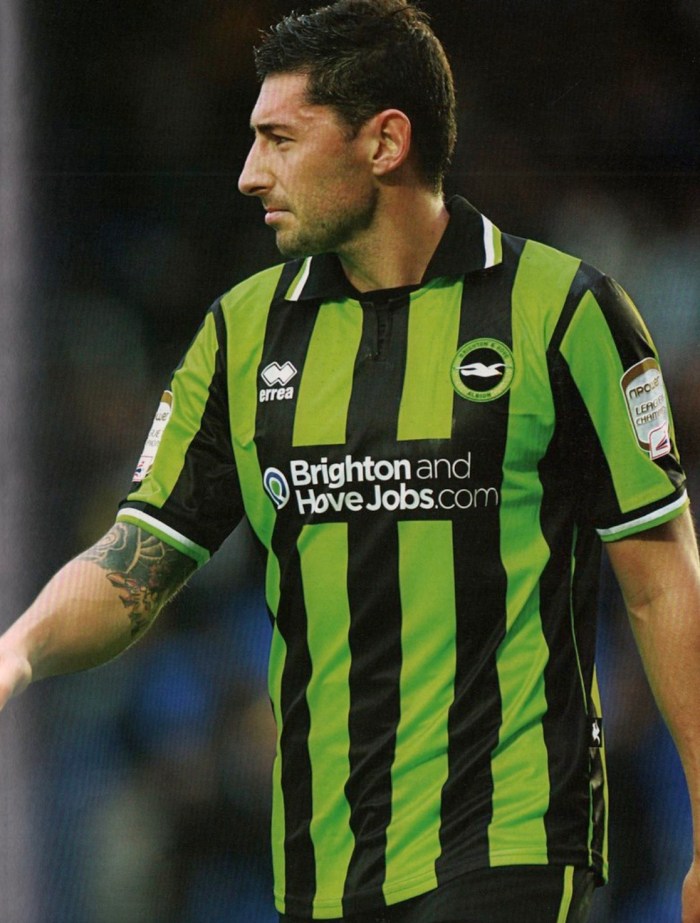
Billy Paynter didn’t manage a single goal in 10 games on loan for Gus Poyet’s Seagulls and carried with him from parent club Leeds United the somewhat unkind epithet ‘Barn door Billy’ for his proverbial inability to hit one with a banjo.

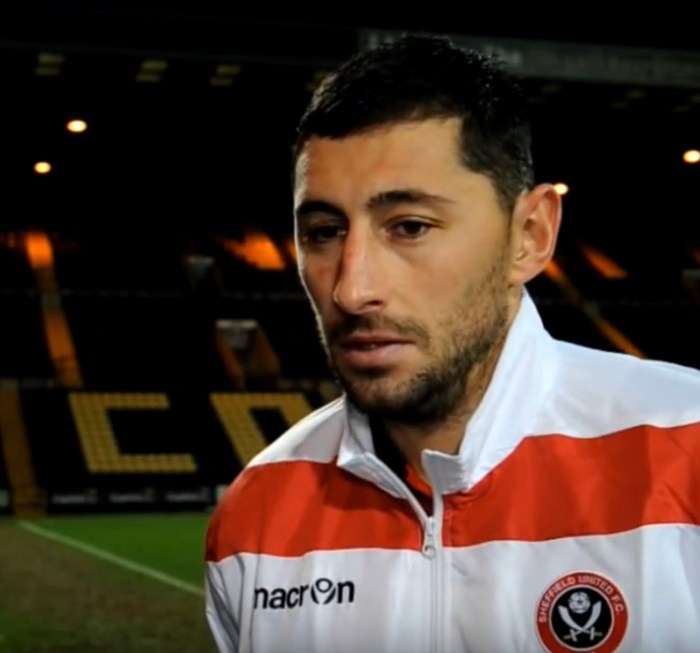
A subsequent half-season loan spell at Sheffield United under Nigel Clough yielded a similar zero in the goals scored column.

A journey around the message boards on supporter websites uncovers some brutal and unflattering comments about Paynter’s contribution for their team and yet it was a career that yielded 131 goals in 529 games – one in four.

And it all began promisingly under the guidance of former Albion captain and manager, Brian Horton.

Born in the Norris Green area of Liverpool on 13 July 1984, Paynter joined Port Vale’s academy at the tender age of 10 and turned professional soon after his 16th birthday.

Horton gave Paynter his first team debut when he was only 16 years and 294 days old on 3 May 2001 as a 61st-minute substitute at home to Walsall.

It was 10 months before he made a start, although he got a few more sub appearances, and Vale supporters had to wait until the start of the 2002-03 season for his first goal, after he’d replaced injured crowd favourite Steve McPhee in a home game against Wrexham.

Eventually, Paynter got into his stride and his popularity with the fans saw him voted Player of the Year in 2004-05.

His 34 goals in 158 games for Vale caught the eye of another former Albion manager, Peter Taylor, at then-Championship side Hull City.

Signed initially on loan, a fee of £150,000 took him on a permanent two-and-a-half-year contract to the KC Stadium in January 2006.

The following month Paynter turned out as a right-sided midfield player for a Football League Under-21 team (selected and managed by Taylor) in a game against an Italian Serie B side at the KC Stadium.

Taylor also experimented with him in the same position for Hull but, having scored only three times in 23 matches, Paynter was on the move again after only eight months.

He switched to Southend United, also in the Championship, for £200,000 in August 2006 and somewhat ironically, his only goal for the Shrimpers was scored against Brighton in a 3-2 League Cup win at Roots Hall in September 2006.

A lack of goals and a hamstring injury meant his stay in Essex was cut short and for the second half of the 2006-07 season he went on loan to League One Bradford City, where he managed four goals in 15 matches, including one on his debut.

On August deadline day in 2007, Paynter’s next move saw Paul Sturrock sign him for Swindon Town. Within a month he had netted a hat-trick against Bournemouth and added two more in a 5-0 win over Gillingham the following month.

It wasn’t all plain sailing for him, though, and after a two-month goal drought which had seen him lose his place, he told BBC Radio Swindon: “You can try and do too much and get caught up with it, but if you relax and get on with your game, I think it will come naturally.”

Paired with Simon Cox initially, Paynter got amongst the goals in support of the main man. But he stepped up a gear after Cox was sold to West Brom in the summer of 2009. His new strike partner was a young Charlie Austin and the pair enjoyed a rich seam of goalscoring form in the 2009-10 season under former Albion captain Danny Wilson.

Paynter had a spell where he scored 15 goals in 17 games and ended the season with 29 goals in 52 matches, his best goals-to-games ratio in a season. Swindon’s captain that season was none other than Gordon Greer, who remains a close friend of Paynter.

Four of Paynter’s goals had been scored against Leeds and, in the summer of 2010, he moved to Elland Road on a Bosman free transfer, with Wilson admitting to BBC Radio Wiltshire: “Anybody who scores nearly 30 goals in a season will be wanted by bigger clubs than us.”

Leeds boss Simon Grayson said: “He has matured as a player over the last couple of years and he had a fantastic season last season. He works ever so hard, holds the ball up well and he has proved he knows where the back of the net is.

“When we knew he was available we were desperate to get him. We feel he will be a good acquisition for the club, and I am delighted to have got him.”

Unfortunately, his time at Leeds didn’t start well when he picked up a shin stress fracture in a pre-season match in Slovakia, leading to him missing the start of the season.

It wasn’t until the second week of October that he was able to make his Leeds debut and starts were rare as Luciano Becchio and Davide Somma were Grayson’s preferred selection up front. Paynter didn’t register his first goal for Leeds until the following March, in a 2-1 win at Preston. It was his only goal in 23 matches that season.

As the 2011-12 season got under way, Grayson had added Mikael Forssell to his striking options and the manager encouraged Paynter to talk to other clubs, with Sheffield United and Brighton discussed as possible destinations.

Paynter preferred to stay and try to stake a claim for a place but, having only played once as a sub in the opening game of the season, he decided to make a three-month loan switch to Brighton at the end of October 2011.

On 29th October 2011, he made his Brighton debut as a 67th-minute substitute for Matt Sparrow in a 0-0 draw away to Birmingham City.

The first of his six starts came on 1 November in a 0-1 defeat at Watford. He came off the bench a further three times and, without troubling the scorers, returned to Elland Road in January.

Back at Leeds he had to wait until April before he was selected by new manager Neil Warnock for a home game against Peterborough United. Paynter scored twice in a 4-1 win and, when replaced by substitute Becchio in the final minute, left the field to a standing ovation. But he picked up an Achilles injury in the following game away to Blackpool and was made available for transfer at the end of the season.

Paynter earned a place in a planetfootball.com poll listing 13 of Leeds’ “worst and weirdest signings under Ken Bates” although he was good-humoured enough to acknowledge it in a 2018 Under the Cosh podcast.

“I’ve always said there’s some players that will be remembered for being good, there’s some players that will be remembered for being sh*te,” he said. “No one remembers the OK players. Take the positives out of a bad situation, in that way I will be remembered!”

It was former Brighton striker Dean Saunders who was responsible for Paynter’s next move, picking him up on a free transfer for League One Doncaster Rovers on 13 August 2012.

While Saunders left the Keep Moat Stadium in January 2013 to join Wolves, Paynter played his part in Rovers winning promotion back to the Championship under Brian Flynn, top-scoring with 15 goals as Rovers returned to the second tier as champions.

An anonymous Donny fan recalled: “He had some good games for us and made the pass from the missed penalty at Brentford that enabled (James) Coppinger to score and win us promotion. He is best played in the box. He causes all sorts of problems. He is a tough guy and takes no prisoners. I liked him but I would say League One is his limit.”

A familiar face in the shape of Brian Horton arrived as assistant manager to new Donny manager Paul Dickov (Flynn had been promoted to director of football) in the summer of 2013.

It must have given Paynter some satisfaction on 27 August 2013 when he scored in a League Cup tie at home to Leeds, although the visitors ran out 3-1 winners. However, that was his only goal and, after managing only one start and 11 appearances off the bench, up to Christmas, he was sent on loan to League One Sheffield United for the second half of the 2013-14 season.

An exiled Blades fan living in Leeds, ‘Blader’ said: “I am uninspired and don’t see this is a great signing. I’ve seen him play many a time and never seen him perform notably and he is a laughing stock in Leeds for how badly he performed.”

A blunt Blade

He made his debut as a sub against Notts County on 11 January 2014 but spent much of the time on the sub’s bench as manager Nigel Clough preferred to play with ‘a false 9’. Paynter made just six starts and came off the bench seven times but no goals were forthcoming. United finished seventh, one place off the play-off places, seven points adrift of sixth-placed Peterborough United.

Paynter was only a spectator as United remarkably reached the semi-final of the FA Cup, losing 5-3 at Wembley to Hull City, Jamie Murphy, later to play for Brighton, among the Blades scorers. A young Harry Maguire at the back for the Blades was named the League One player of the year.

The last three seasons of his playing career saw Paynter drop into League Two and he joined Carlisle United on the same day as former Albion midfielder Gary Dicker.

However, the season wasn’t even a month old when Graham Kavanagh lost his job as manager. His successor Keith Curle steered them to a fifth from bottom finish.

Paynter’s involvement was limited to 12 starts plus eight appearances off the bench and he and Dicker clashed with Curle when they sought PFA guidance after they were fined for allegedly failing to attend training sessions.

In the close season, Paynter headed 90 miles east to Hartlepool United, who’d just avoided dropping out of the league after finishing four points above Cheltenham Town.

The goal touch returned as Paynter top scored with 15 goals in 35 appearances as Hartlepool finished in 16th place courtesy of a decent run of wins in the spring under new boss Craig Hignett.

The managerial door revolved once more at Victoria Park the following season but Hignett’s successor Dave Jones (the former Southampton and Sheffield Wednesday boss) couldn’t prevent Hartlepool from heading out of the league, controversially parting company with the club with two games to go following an on-screen rant by United’s best known fan, Jeff Stelling.

Club captain Paynter, who had openly questioned Jones’ tactics in the local press, joined forces with fitness coach Stuart Parnaby to assist caretaker Matthew Bates for the final two fixtures.

It was one of those footballing fates moments that they needed a miracle against Paynter’s old club Doncaster in the final match and it was given a big build-up in the Mirror.

“Although we lost at Cheltenham last weekend, the lads had a lot more fight in them. I can understand it when players lose confidence or belief, but you can’t drop out of the Football League after 100 years without a fight,” he said.

“It’s one of those strange coincidences that we need to beat my old club to stand a chance of survival. I really enjoyed my time at Doncaster, and I’ll never forget that day we were promoted to the Championship, but I hope the supporters understand my loyalty is with Hartlepool now.”

Hartlepool hitman

Although Hartlepool won 2-1, they had been relying on other results going their way and Newport’s 2-1 win over Notts County 2-1 meant they stayed up and the North East side lost their league status. Having contributed just four goals in 26 matches, Paynter left the club.

While he attempted a brief extension to his playing career, training at non-league AFC Fylde, Southport and Warrington Town, he retired from playing in November 2017 and turned to coaching. He joined Everton’s academy in February 2018 before returning to his first club, Port Vale as professional development phase lead coach in October 2020.

On rejoining, he said: “It’s a joy to be back where it all started. Coming through PVFC’s Centre of Excellence from the age of 10, I know what the DNA of Port Vale is and what sort of players we should be producing.”

Pictures from various online sources and the Albion matchday programme.

‘Save of the season’ one of few bouquets for goalkeeping florist Alan Blayney

blayney intenseGOALKEEPER Alan Blayney only played 15 games on loan to Brighton from Southampton but if finances had been better at the time he could have signed permanently and his career may have taken a different turn.
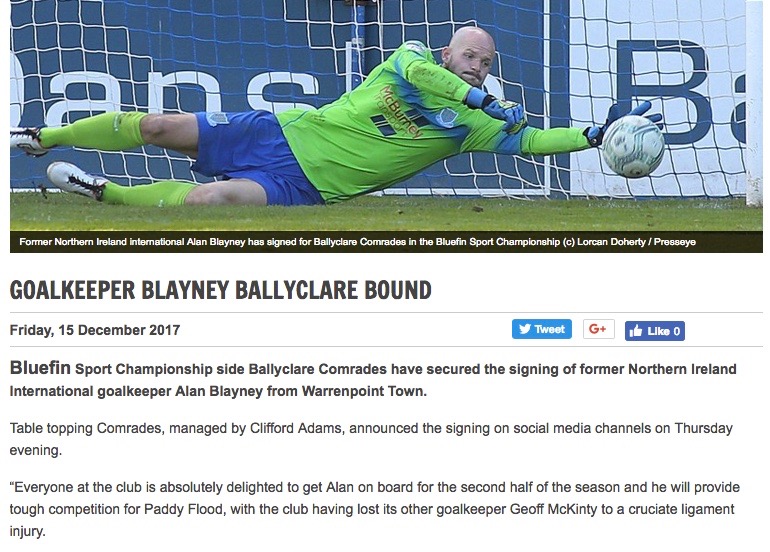
Blayney is still playing, nifootballleague.com reporting only in December 2017 a move to Ballyclare Comrades from Warrenpoint Town. He also runs a florist business with his wife Laura in Newtownabbey.

Only a month earlier he opened his heart to the belfasttelegraph.co.uk and talked about the demons he’s had to face during a career that rarely hit the heights in England but has seen him represent his country and enjoy success in his native Northern Ireland.

Born in Belfast on 9 October 1981, Blayney was picked up by the city’s Irish league side Glentoran at 16 before moving to the UK aged 19 to join Premier League Southampton.

Blayney was initially loaned out to Stockport County, but his time there was cut short by a broken finger.

He also had a couple of games along the coast at Bournemouth when he suffered one of his most embarrassing goalkeeping moments. In a Q and A for the Albion programme, Blayney told interviewer Dan Tester: “I’d rolled the ball outside the 18-yard box in readiness to kick it up field. The Rochdale striker, my former Northern Ireland under 21 teammate Lee McEvilly, was running away and it hit him on the head and flew over mine into the back of the net.”

Back at Southampton, the young ‘keeper finally got a first team chance in May 2004, a couple of months after Paul Sturrock had replaced Gordon Strachan as manager.

It was some debut because the game against Newcastle United finished 3-3 and a save Blayney made from an Alan Shearer header won him the accolade of Sky Sports save of the season.

The young Irishman kept his place for the following game, a 2-1 defeat at Charlton and he played twice more the following season, in a 2-2 league draw against West Bromwich Albion and a 5-2 League Cup defeat to Watford.

With future Albion goalkeeping coach Antti Niemi and Paul Smith ahead of him in the pecking order, Blayney went on loan to Rushden & Diamonds, where he played four games, before securing the first loan to Brighton in early 2005.

Albion’s regular ‘keeper Michel Kuipers had sustained a horrific shoulder injury in a home game against Nottingham Forest and the no.2 at the time, Chris May, had no experience so manager Mark McGhee needed emergency reinforcements.

Initially he obtained David Yeldell from Blackburn Rovers and also brought in Rami Shabaan from Arsenal, but Blayney, no doubt recommended by McGhee’s old pal Strachan, became the preferred option and played seven games at the end of the season.

Amongst several impressive displays was a game I went to with my son, Rhys, at Burnley, on 16 April 2005.

Against the odds, it finished 1-1 but the media was keener to focus on the post-match news that striker Mark McCammon had been ordered off the team bus by McGhee for his reaction to being substituted at half time.

Reporter Peter Gardner, on telegraph.co.uk, said: “The incident overshadowed a rousing second-half comeback to a game Brighton might ultimately have won, not least through the contribution of Jake Robinson, McCammon’s half-time replacement.

“However, McGhee’s men were equally fortunate not to have been overwhelmed by the home side in the opening 45 minutes when only splendid saves by Alan Blayney from Graham Branch (twice) and Mo Camara, plus Burnley’s own profligacy, prevented an avalanche of goals.”

Blayney was also between the sticks for the nail-biting final game of the season when a 1-1 draw with Ipswich Town kept the Seagulls in the Championship by the skin of their teeth.

Such had been Blayney’s contribution that McGhee was keen to sign him permanently, the manager telling skysports.com: “Alan did absolutely brilliantly here for us. We have to see how realistic an option that is, and whether they’re even prepared to consider letting him go, and what the conditions would be.”

The answer was that Brighton couldn’t afford the fee Southampton wanted so at the start of the following season Wayne Henderson was brought in instead on a three-month loan from Aston Villa.

When Henderson returned to Villa, McGhee was keen to buy him outright but in the meantime brought Blayney back for an eight-game stint.

Blayney told BBC Southern Counties Radio: “If I don’t perform they’ll end up going for Wayne instead of me. I have to come in and show I’m as good as Wayne, if not better. This first game at Stoke is really important.”

Unfortunately, the game at Stoke ended in a 3-0 defeat and a 3-2 reverse at home to Crystal Palace followed.

After a point was gained away at Cardiff City, Blayney saved a penalty from Inigo Idiakez in a 0-0 draw with Derby at Withdean on 26 November 2005, and the following week he helped earn another point, repeating the feat against Watford’s Marlon King.

The Watford Observer reported: “King passed up a glorious chance to fire Watford ahead on 58 minutes when he saw his penalty saved. King’s tame penalty was parried by Blayney, who dived low to his left, and the keeper then gathered the rebound.”

After a 5-1 hammering away to Reading, Blayney returned to Southampton in mid-December and within a matter of weeks Southampton’s technical support director, Sir Clive Woodward, informed him he had been sold to Doncaster Rovers for £50,000.

Blayney told the Belfast Telegraph in November 2017: “My response was, ‘Do I not have any say in this?’ He said the deal was done but I didn’t want to live in Doncaster. I loved it in Southampton. I didn’t settle in Doncaster, they gave me an apartment, but it was a tip. If I was getting those wages now I would bite your arm off but then it felt I wasn’t getting much and it was a terrible time.”

Although he started out as no.1, and made 24 appearances for Rovers, following an ankle injury he slipped to third choice behind Ben Smith and Jan Budtz, and came to an agreement to terminate his two and a half year contract early.

Blayney admitted in his Belfast Telegraph interview: “I do regret going out and drinking in my later career in England when I was at Doncaster. I was getting injuries and was a bit disillusioned with the game. I regret it because people had opinions of me at that club which is not the real me. They only saw me behave like that for a few months.”

He wasn’t quite done with England, though, and in February 2007 joined League One Oldham Athletic until the end of the season, after impressing in a reserve team match. However, he only played one first team game, in a 1-2 home defeat against Bournemouth.

There had been the possibility of a return to Brighton to replace Henderson, who had been sold to Preston, but the Argus reported on 2 February 2007: “Albion are not re-signing goalkeeper Alan Blayney after all. They have not been able to agree a length of contract with the former loan signing.”

On his return to Northern Ireland, he initially managed just three games as an understudy at Bohemians, but then he played 32 times for Ballymena United in 2008-09 as a prelude to what would turn out to be the most successful period of his career.

In five seasons with NIFL premiership side Linfield, he played 164 games and, in 2010-11, when Linfield won the league and cup double, he was named Ulster Footballer of the Year.

His form for Linfield also earned him a recall to the Northern Ireland squad. He had initially made his debut in 2006 under Lawrie Sanchez on a summer tour of the United States.

An appearance from the bench in a drawn friendly against Morocco in November 2010 saw Blayney concede an embarrassing goal as his clearance rebounded off Marouane Chamakh, then of Arsenal, to give the Africans the lead.

Manager Nigel Worthington put the incident into context after the game, telling the media Blayney had travelled to the ground just hours after his partner had given birth to a son.

“I was disappointed for Alan but it has been a terrific day for him and we have come out of the game unbeaten,” said Worthington. “He’s fine and I have given him every encouragement. It is one of those you learn from. You cannot take a split second to delay.”

Blayney said it was the worst moment of his career. He told the Belfast Telegraph: “I came on at half-time for Jonny Tuffey but took a terrible touch and Chamakh came in to challenge me. I kicked the ball off him and it went into the net.

“Everybody had welcomed me onto the pitch and you don’t forget moments like that. You aren’t used to playing against players who are as quick as that. I looked up and he was there. I wanted the ground to swallow me up but earlier that same day Phoenix was born. It was a bittersweet day.”

In May 2011 Blayney shared goalkeeping duties with Tuffey as an inexperienced Northern Ireland team endured an embarrassing Carling Nations Cup defeat to the Republic of Ireland. Although left exposed by a threadbare defence, Blayney was culpable in at least two of the goals in a 5-0 hammering, one of which was scored by debut-making Stephen Ward, a future left back loanee for the Seagulls. bbc.co.uk reported: “Blayney was badly at fault six minutes later as he spilled a tame Treacy cross which allowed Ward to poke home from close range.”

With Linfield, Blayney continued to rack up honours until they signed Tuffey in 2013, and he was no longer first choice. In January 2014, he joined Ards on loan but couldn’t help them avoid relegation.

After spending 2014-15 with Glenavon, he returned to Ballymena where he had two successful seasons, before losing his place. In January 2017, he dropped down to the Premier Intermediate League with Dundela. At the start of this season, he returned to the higher division with Warrenpoint Town but, in December, moved to be closer to home, with semi-professional Ballyclare.

Blayney savedec 17 blay cutBlayney cover

Further reading

https://www.not606.com/threads/whatever-happened-to-alan-blayney-part-5-of-many.126334/

https://www.belfasttelegraph.co.uk/sport/football/irish-league/footballers-lives-with-alan-blayney-why-ive-been-gripped-by-selfdoubt-and-how-i-almost-died-after-training-36284956.html

http://news.bbc.co.uk/sport1/hi/football/teams/b/brighton/4102810.stm

http://nifootball.blogspot.co.uk/2006/08/alan-blayney.html