
 STEVE Gatting played at Wembley three times for Brighton having twice been denied the opportunity by Arsenal.
After being left out of Arsenal’s FA Cup Final sides in both 1979 and 1980 he finally got to step out onto the hallowed turf twice in the space of five days in 1983.
And his appearance in Brighton’s 3-1 defeat to Notts County in the 1991 play-off final at the famous old stadium was also his last in an Albion shirt after 10 years at the club.
In Match Weekly’s 1983 Cup Final preview edition, Gatting revealed his heartache at missing out with Arsenal in 1979. “I expected to be at least substitute after playing in five of the games leading up to Wembley, including the semi-final,” he said. “I was desperately sick when I didn’t get a chance. Although I really wanted the lads to do well, I couldn’t help feeling pangs of regret as the cup was paraded around the ground.”
Born on 29 May 1959 in Park Royal, London, two years after his famous brother Mike, the former Middlesex and England cricket captain, Steve was no mean batsman himself.
Instead of joining the ground staff at Middlesex County Cricket Club, though, Gatting shone at football with Middlesex and London Schoolboys teams and became an associate schoolboy with Arsenal before joining as an apprentice in July 1975. Terry Neill signed him as a professional at the age of 17 and a year later he made his First Division debut against Southampton at Highbury.
Gatting made 76 appearances for Arsenal over three seasons, his most memorable being the 1979 FA Cup semi-final against Wolves at Villa Park. He said his biggest disappointment was missing out on the May 1980 European Cup Winners Cup Final against Valencia in Brussels.
In his youth career, Gatting played in the centre of the back four but Arsenal generally played him in midfield, where competition for places was fierce with the likes of Liam Brady and Graham Rix. He admitted after joining Brighton: “When they bought Brian Talbot from Ipswich, I sensed I was on my way out.”
It was rumoured Albion would take Gatting as part of a swap deal that would see Mark Lawrenson join Arsenal but, of course, Lawrenson went to Liverpool instead. Albion were still interested in Gatting, though, and in September 1981 new manager Mike Bailey met him and his displaced colleague Sammy Nelson at Gatwick Airport and agreed terms to buy the pair of them; £200,000 the fee for the young Gatting.
Albion offered Gatting the chance of regular first team football and, although the expectation was for him to occupy a midfield spot, he quickly stepped in alongside Steve Foster in the back four and completed 45 appearances that season.
Aside from a rare couple of spells back in midfield, he remained a defender for the rest of his career, often slotting in at left back – apart from when he played right-back in the Cup Final replay.
Gatting had a terrific game alongside Gary Stevens in the 2-2 drawn first game against Man United, but Jimmy Melia unwisely chose to play the left-footed Gatting in place of injured Chris Ramsey (he should have put Stevens there) and the back line was noticeably unbalanced as they went down 4-0.
The Paul Camillin / Stewart Weir book Albion The first 100 years said: “Played out of position at right-back in the replay, he endured an uncomfortable evening in an unfamiliar role.”
Even so, interviewed three years later in the Albion matchday programme, Gatting spoke fondly about his memories of the whole occasion.
“The helicopter flight to Wembley was a new experience. We flew over the stadium and saw all our fans below,” he said. “That was a great moment. We landed and drove to the ground and went straight out onto the pitch to get a taste of the atmosphere. I met my brother Mike out there and to be honest he was more nervous than me!


“The greatest part of the whole day was walking out of the tunnel and seeing all the fans and being deafened by the cheering. That is an ambition every footballer has, to play in the Cup Final at Wembley. It was a dream come true for us and I think it lifted our game.”
Gatting had made only eight first team appearances in the 1984-85 season before, in November 1984, he sustained a serious pelvic injury which threatened his career. After five months, it was decided the only solution was a bone graft to the pelvis.
He had to remain motionless in hospital for a month and then rest on his couch when he was allowed home.
His wife Joy told Tony Norman in March 1986: “I felt sorry for Steve. He’s usually such an active person but suddenly he just had to sit there. It must have been very difficult. But Steve never got into self-pity. He stayed very positive and I respected him for that.”
Norman reported: “It was a long hard road for Steve. He started taking long walks in July, to build up strength and that progressed into jogging, light training and finally full training. He made his comeback game in the Reserves on 26 October.
Gatting told the interviewer: “When you are playing regularly, you tend to take things for granted. But when something like a serious injury comes along, it makes you realise how lucky you are to be fit and playing the game you enjoy so much. When you’re sitting on the sidelines week in week out it brings it home to you.”
The injury restricted him to only 17 appearances in the 1985-86 season but he was restored fully to the side in 1986-87 when financial issues clouded Alan Mullery’s return to the manager’s chair and successor Barry Lloyd couldn’t stop the inexorable slide to relegation from the second tier.
In a League Cup game replay away against First Division leaders Nottingham Forest, Gatting had to take over in goal when Perry Digweed was forced off with a broken cheekbone. Gatting completed 45 appearances that season and said: “Dropping into the Third Division was far worse than going out of the First.

Makeshift ‘keeper Gatting claims the ball with Nottingham Forest’s Neil Webb grounded
“All the players at the time felt they were good enough to stay up, but it didn’t happen and we gave a lot of silly goals away.
“The whole club was unsettled, too, but things became better again. Getting back into the Second Division was a boost for everybody.”
Gatting was ever-present in the 1987-88 promotion-winning campaign, even though in July 1987 Lloyd had given him a free transfer! The defender had other ideas and managed to play his way back into contention to such an extent that he ended up the season as captain, taking over from Doug Rougvie.


“It was nice to know I was wanted, particularly after relegation the year before,” he said.
Having made his 200th league appearance for the Albion against Chester on 12 December 1987, it was no surprise he viewed with some relish a FA Cup tie against his old club.
“Quite honestly, as a Third Division club, we don’t expect to go all the way, but I think we have the ability to scrape a result against Arsenal,” he said. “It gives me the opportunity to renew old friendships with Kenny Sansom, David O’Leary, Graham Rix and Paul Davis who were all members of the Arsenal staff when I was there.”
Albion pushed the Gunners all the way in front of a packed house and Garry Nelson rifled a memorable goal, but Arsenal prevailed 2-1.
Evening Argus Albion reporter John Vinicombe profiled Gatting warmly in a piece produced for a pre-season supplement ahead of the 1989-90 season, headlined “ice-cool Gatt”.
He described Gatting as “surely one of the most laid-back of individuals, whose natural personality is quiet and reserved”.
The report continued: “He shuns being the centre of attention, but the fact that he stays cool, even in nerve-wracking situations, is an important consideration when assessing leadership qualities.
“Leadership runs in the family, and many would say that older brother Mike was unlucky to lose the captaincy of England’s cricket team.”
On another occasion, Gatting said of his brother: “I’m proud of what Mike has achieved and I keep up to date with the latest news and enjoy watching the highlights on TV.
“We are close, we always have been, but the funny thing is I hardly ever go to see Mike play. When I do go, he never seems to make runs. So I think it’s best to stay at home and watch the Tests on TV.”
As mentioned previously, Steve was a good batsman in his own right and played for Middlesex Second XI. In Sussex, he enjoyed a summer tour with Brighton Brunswick as well as making runs for Preston Nomads.
Vincombe wrote: “Gatting occupies a special niche in the affections of Albion regulars. They see in him a thoroughly decent and well-behaved person whose standards on and off the field are high. Albion have been good to him and Gatting, after not a few periods of uncertainty, has been good for Albion.”
Gatting for his part said: “I’ve seen a lot of changes since arriving here, and I’ve played under five managers who have all had different ideas.”
 A cut glass decanter and glasses from chairman Dudley Sizen at Gatting’s testimonial
He was granted a testimonial for his long service and a curtain-raiser to his 10th season with the club saw Albion draw 2-2 with Arsenal in front of a crowd of 5,517. The Gunners included their recent big money signings David Seaman, Andy Linighan and Anders Limpar.
Injury niggles continued to plague him towards the end of his 10 years at the club but he worked his way back into the side in 1990-91, slotting in at left-back and culminating in that 1991 play-off final against Notts County at Wembley.
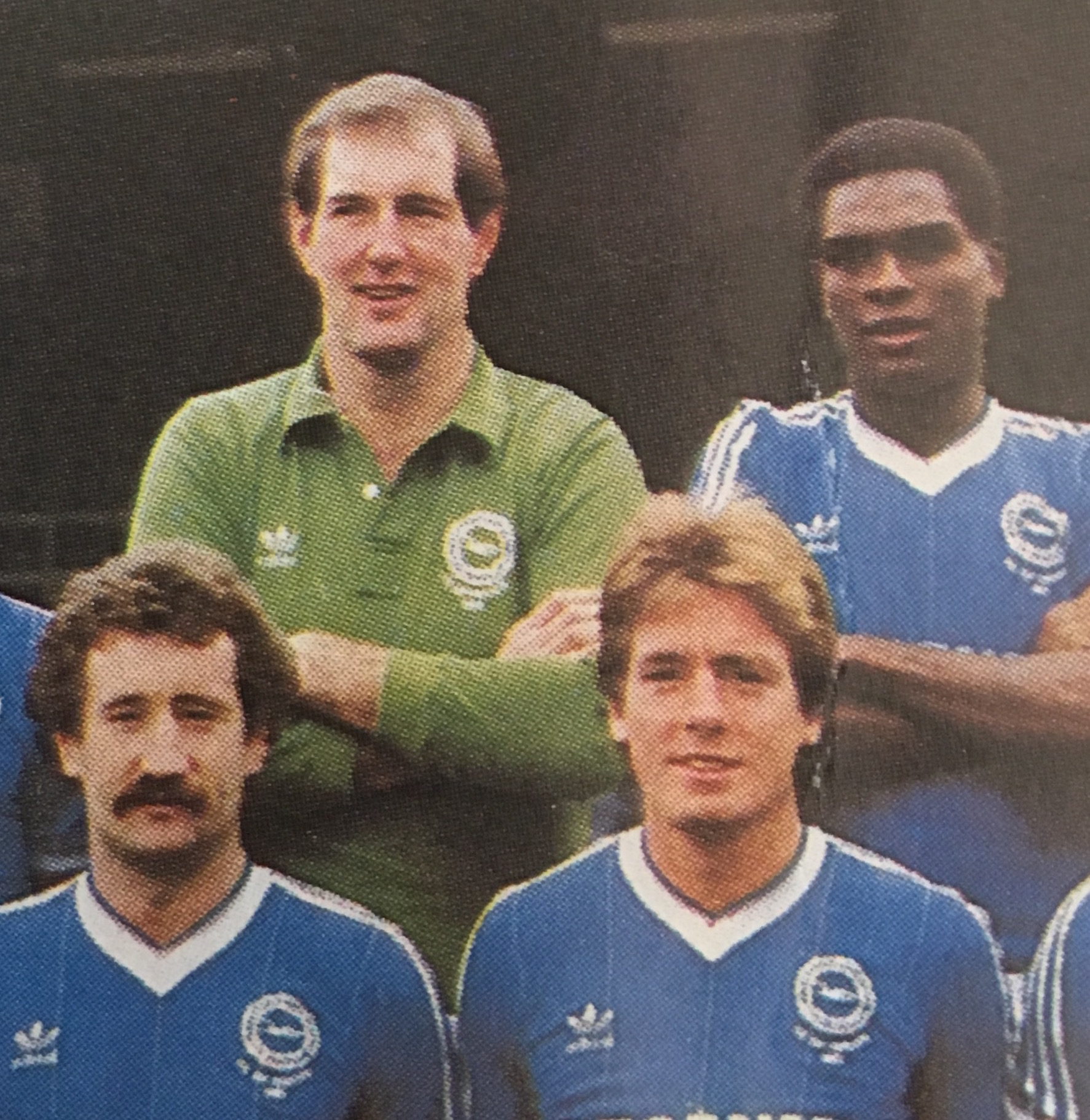
Long after all the other members of the Brighton 1983 Cup Final side had departed, Gatting was still pulling on the stripes, and, but for those injuries, he would surely have made many more appearances than the 366 + three as sub (21 goals) that stand as his record.
Given another free transfer in 1991, he departed for Second Division Charlton Athletic along with Garry Nelson, linking up with former Albion teammate Alan Curbishley who at the time was joint manager with Steve Gritt.
Charlton only narrowly missed out on a play-off place while Albion were relegated!
By the end of the following season, when Gatting retired, he had played a total of 64 games for the Addicks.
He then turned his attention to coaching and spent seven years at independent school Christ’s Hospital, Horsham, before returning to Arsenal in 2007 to work as an academy coach. Gatting was working as Arsenal’s under-23s coach until May 2018 when he and his assistant Carl Laraman were suspended after accusations of bullying were made against them, and neither returned to their roles.
Gatting subsequently joined League Two Stevenage as assistant coach under Dino Maamria just before Christmas 2018 but he left the Hertfordshire club shortly before the end of the 2018-19 season.
• There have not been many father-son combos during my time watching Albion (Gerry and Darragh Ryan were the first that spring to mind) but it must have given Steve great pride to see his son Joe make it through the youth ranks at Brighton and go on to play for the first team. He made 44 appearances and I recall an away game at Carrow Road when Steve and Uncle Mike were both watching the youngster in Albion’s forward line. Eventually, after he left the Seagulls in 2008, he turned to cricket and was good enough to play at county level for Sussex and Hampshire.


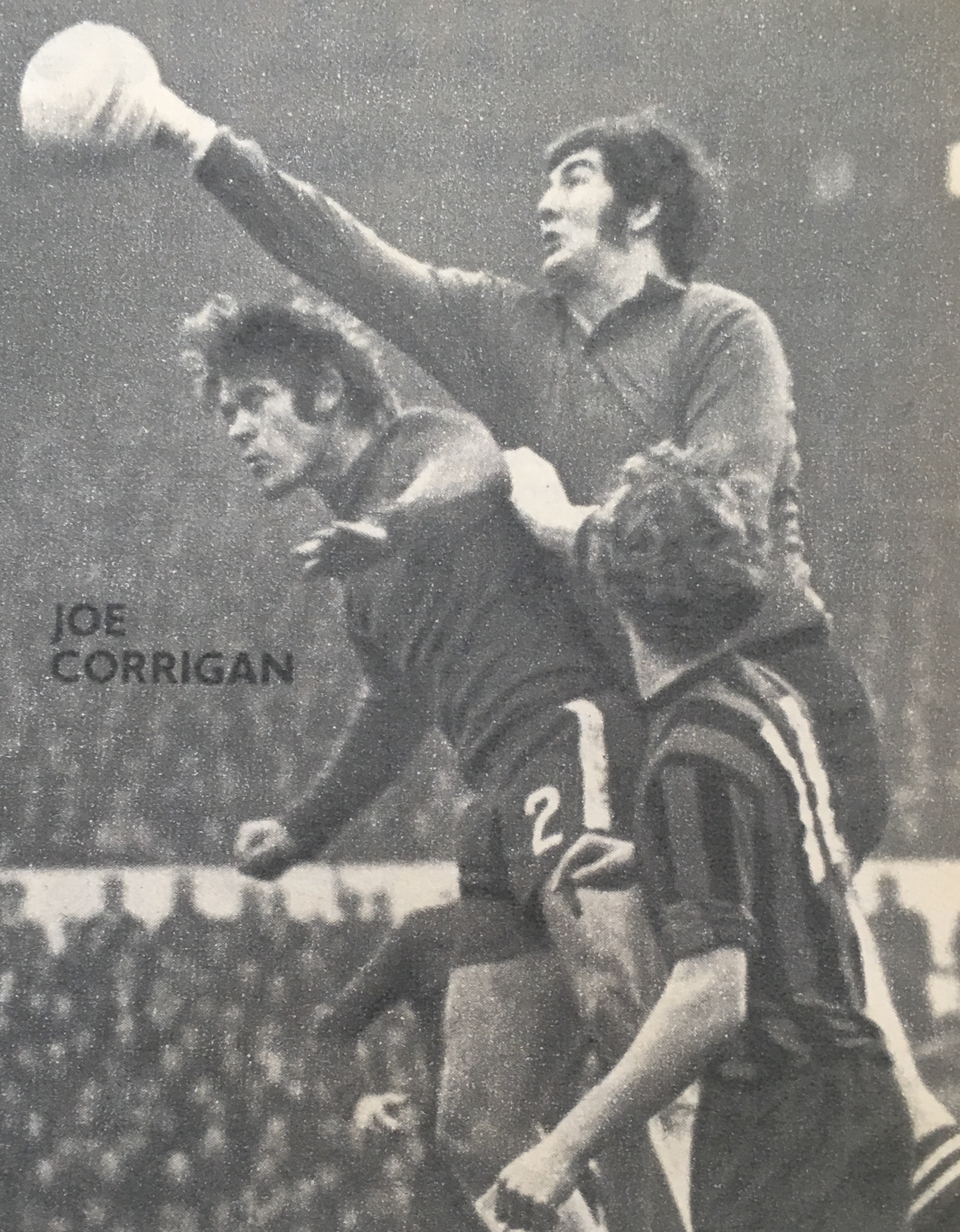 BRIGHTON fans often enter into a debate about the best goalkeeper ever to play for the club.
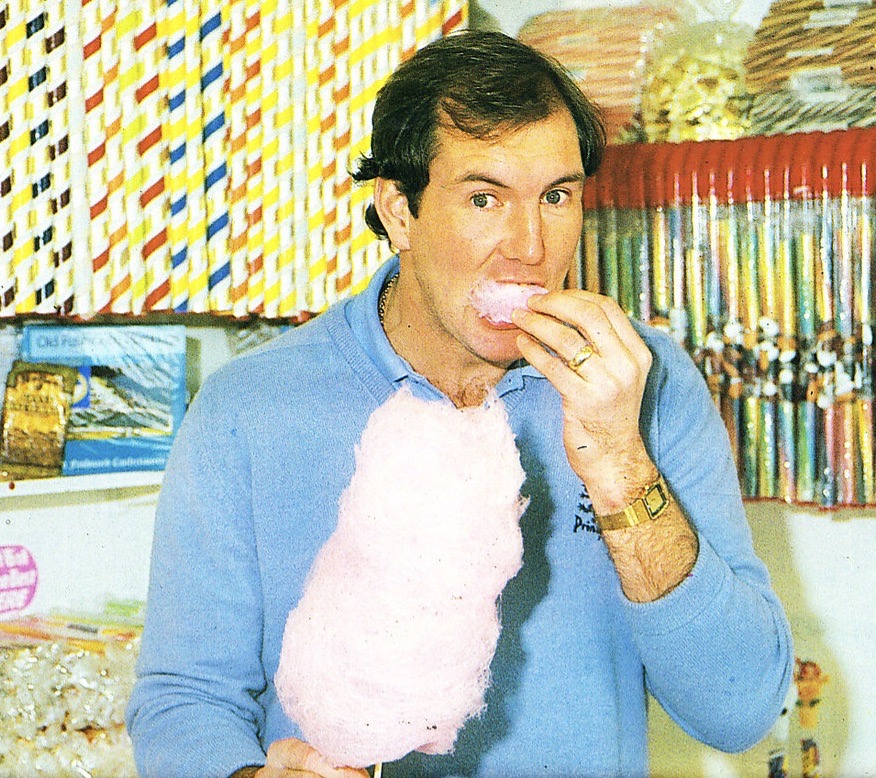 For instance, at the annual players Christmas ‘do’ – if the account in
  Sadly, as revealed in Big Joe, The Joe Corrigan Story, his time with Brighton ended on a sour note and when Cattlin opted for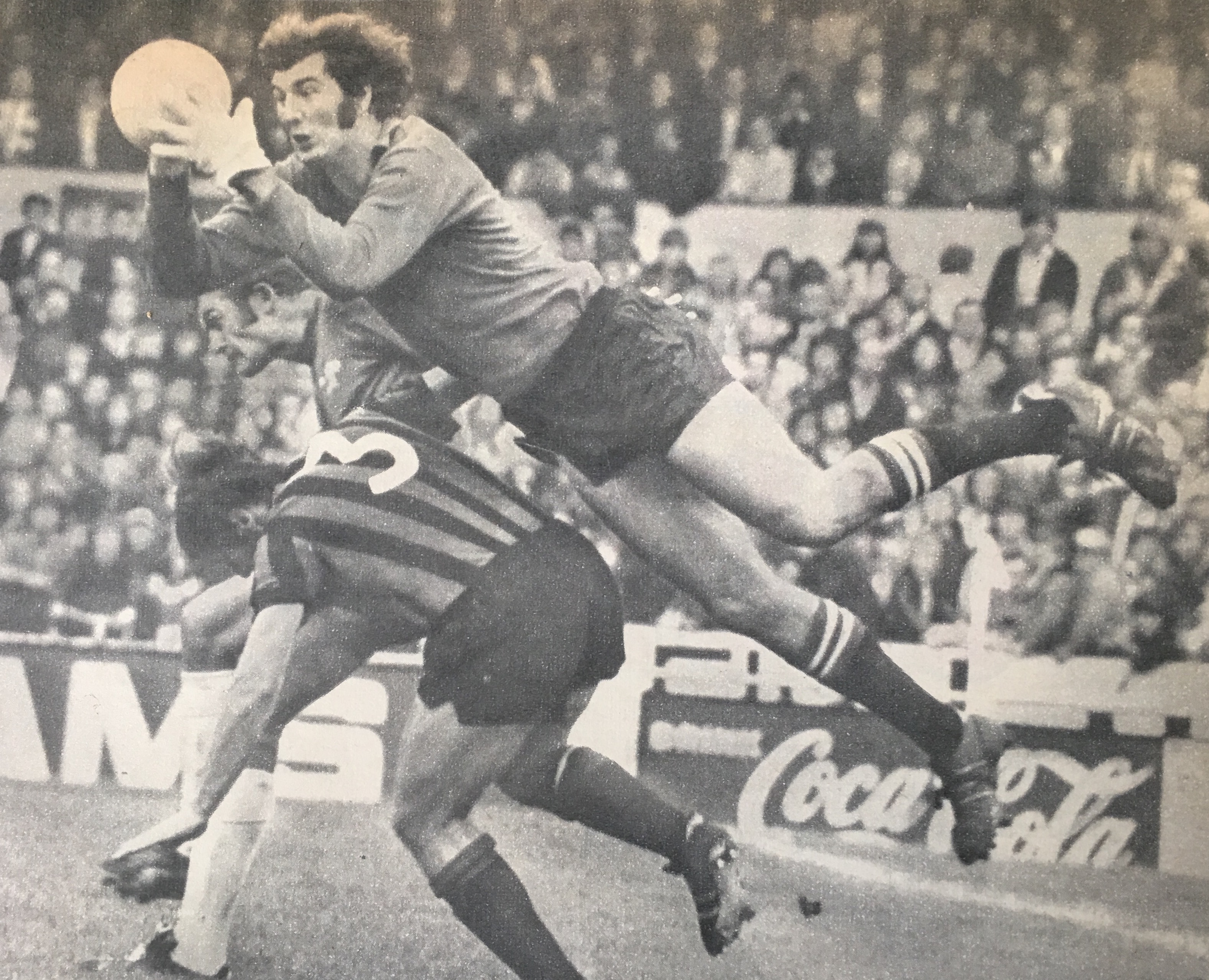
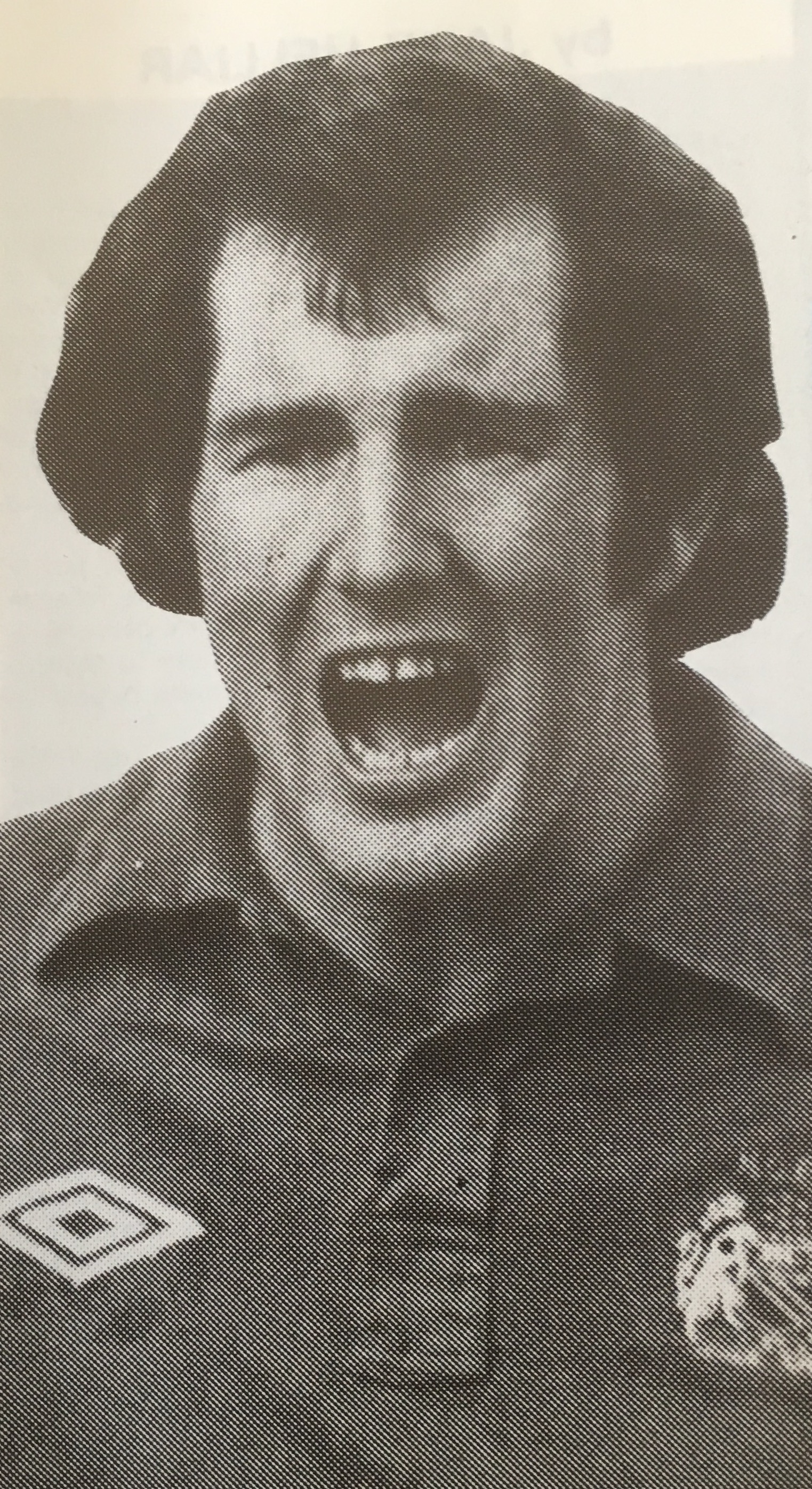

 BRIGHTON’S wingers in the 1991 Division Two play-off final had previously been on opposing sides in a Wembley final.
 “I knew I hadn’t suddenly become a bad player and that I could succeed again,” Barham told the Albion matchday programme in March 1990. “So I wrote to all the clubs again and that’s when

 In parallel lines