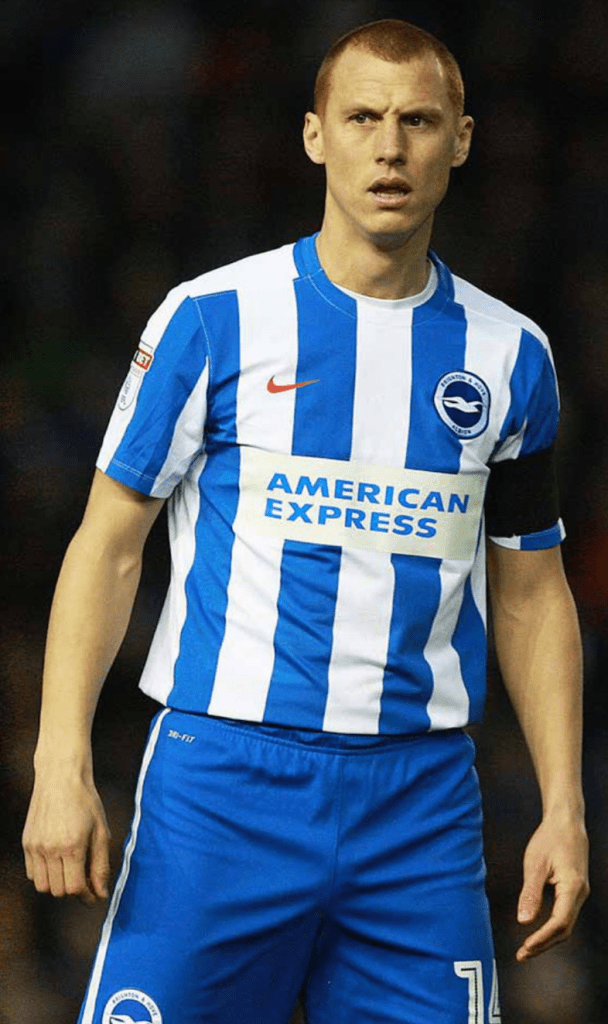
Not many of them, but Sidwell’s goals were memorable

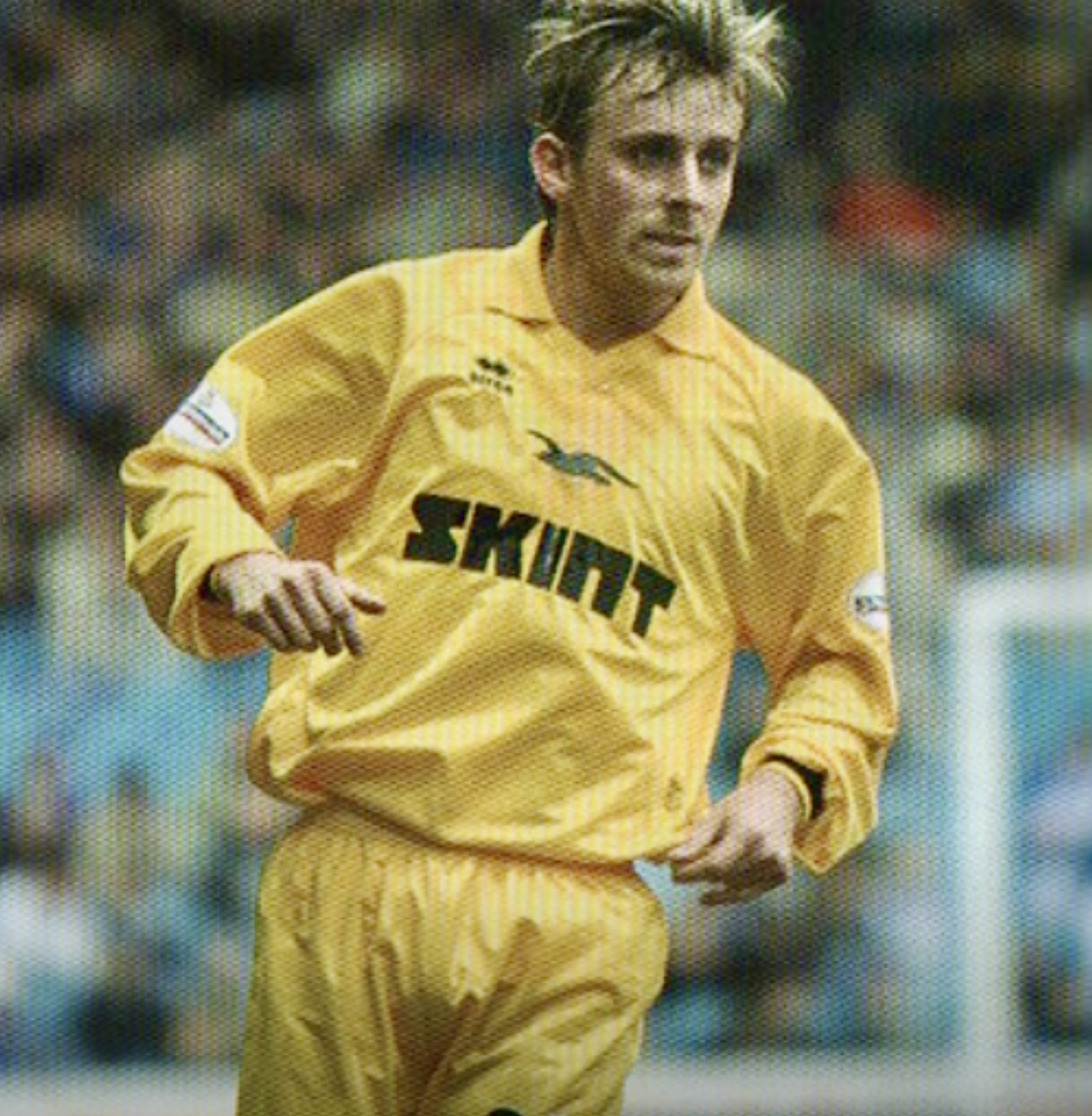
STEVE SIDWELL was not a recognised goalscorer but when he did find the back of the net it was often memorable and headline-making.

Such was his most talked about goal for Brighton – hit from the centre circle away to Bristol City in a Championship match on Bonfire Night in 2016. 

Eight years earlier, he stunned Goodison Park by rifling home from 25 yards after only 31 seconds of Aston Villa’s 7 December Premier League visit to Everton.

I was at Ashton Gate to see Sidwell’s amazing 50-yard lob over stranded Robins’ ‘keeper Richard O’Donnell (Jamie Murphy added a second in promotion-chasing Albion’s 2-0 win).

Manager Chris Hughton said: “It was a wonderful strike by Sidwell on his left foot when I would have expected it more from his right. It caught everyone by surprise, including their goalkeeper.”

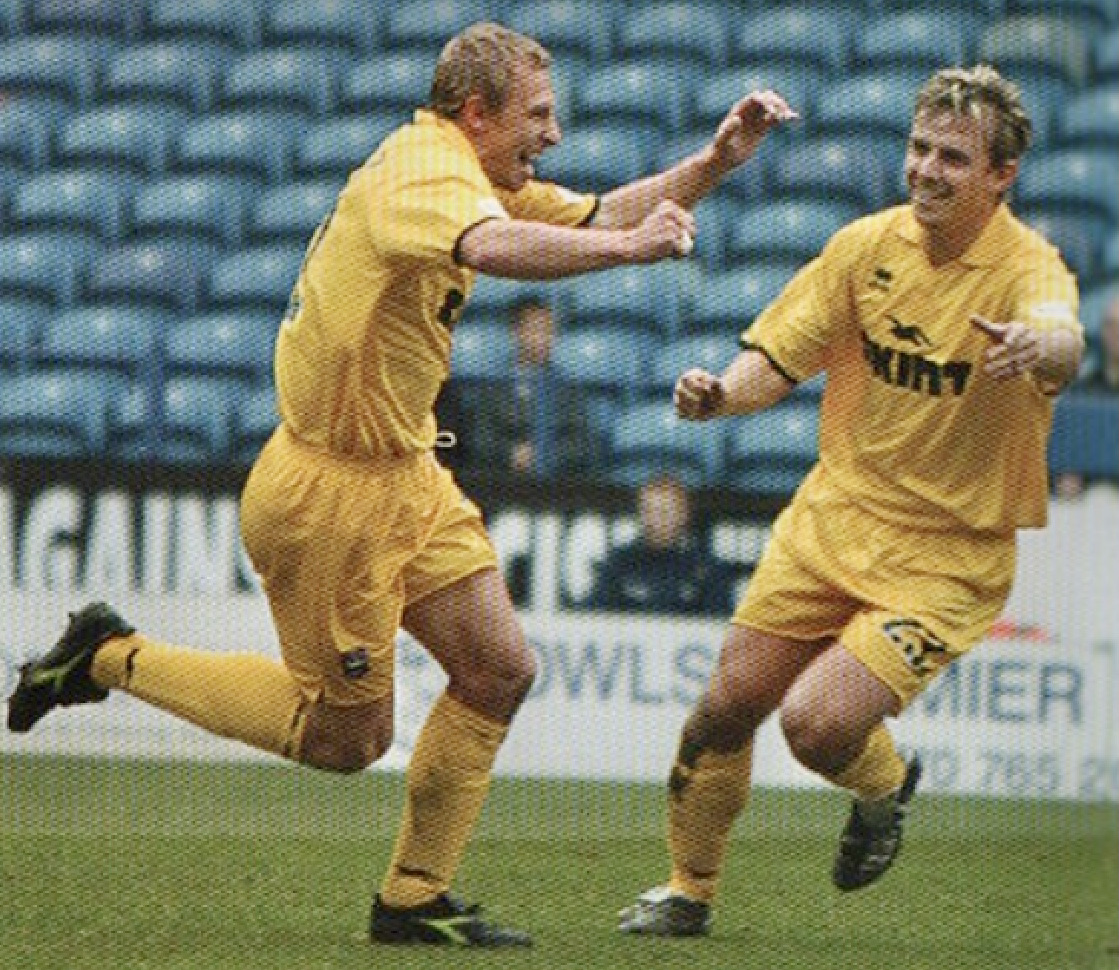
I was also at the City Ground, Nottingham, seven months earlier when Sidwell went on as an 85th-minute sub and scored the winner (below) in the 91st minute to earn a 2-1 victory over Forest.

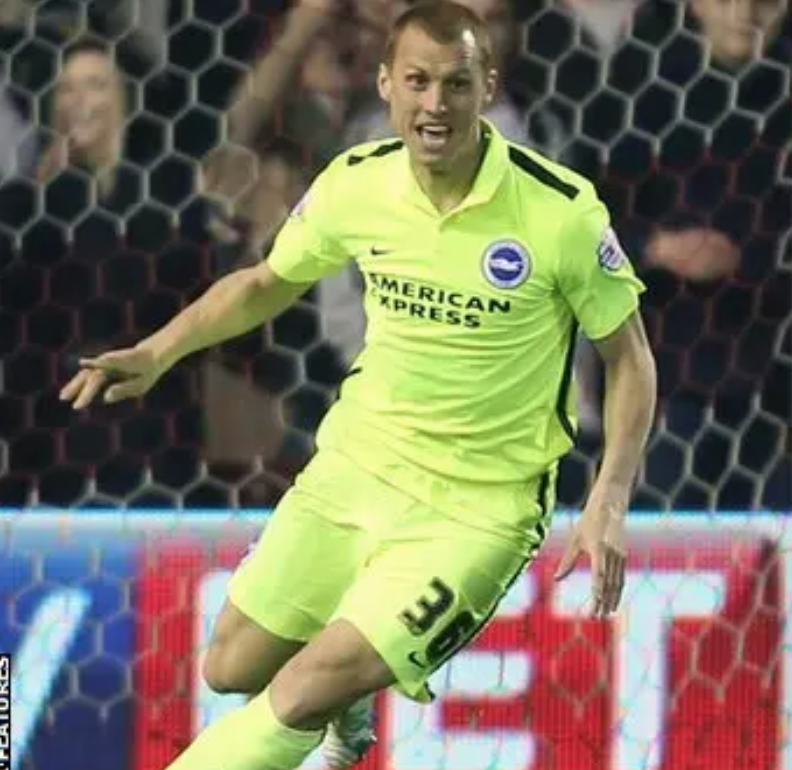
With his right foot this time, he drilled the ball in from 12 yards giving Albion a fourth win in five games which extended their unbeaten run to nine games.

“We felt that the game was becoming open and we felt we could bring players off the bench who could influence the game,” said Hughton. “One thing about Steve Sidwell is that he can break forward from midfield. I did not bring him on for that, but I am very glad he did it.”

Back to that game for Villa in 2008; moments after kick-off, Everton’s Mikel Arteta lost possession to Ashley Young. He fed James Milner who in turn found Sidwell. Finding himself with a sight at goal from 25 yards, he buried a stunning shot past Tim Howard. In an extraordinary end to the game, Young, who had scored Villa’s second, got a 94th-minute winner for the visitors after Joleon Lescott thought he’d salvaged a point in the 93rd minute, netting his second of the game. 
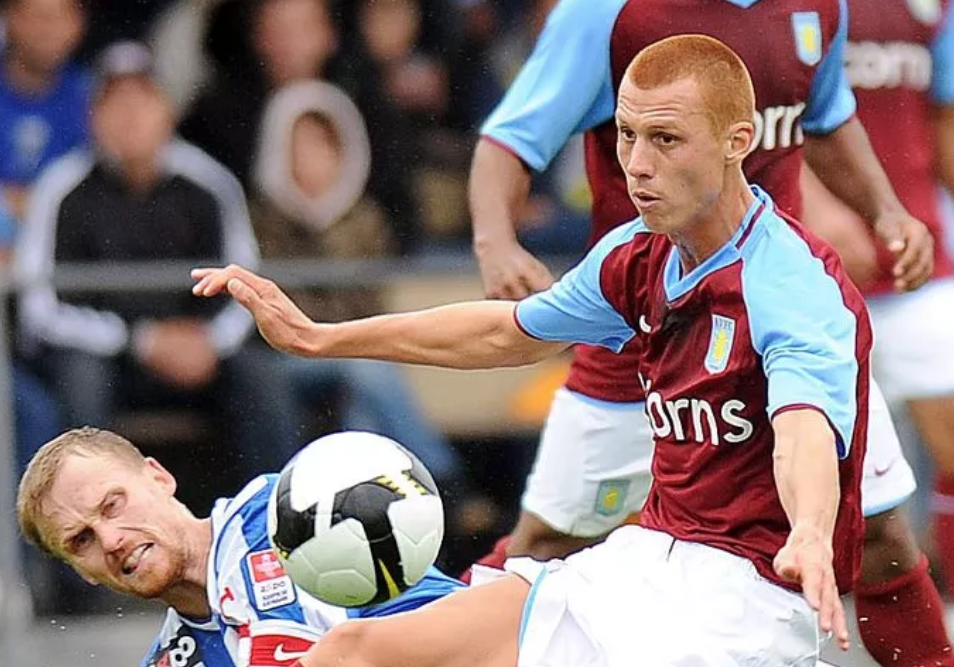
That opener at Goodison was a rare highlight for Sidwell in what overall was an unhappy two and a half years at Villa.

Sidwell had first caught Villa boss Martin O’Neill’s eye when he scored twice for Reading in a 2-0 home victory over Villa in February 2007.

O’Neill tried to land him before he opted to join Chelsea (the team he’d supported as a boy) and, by all accounts, predecessor David O’Leary had also tried to sign him.

So, it appeared to be a case of third time lucky when in July 2008 O’Neill took him for a reported £5million fee from being a Chelsea benchwarmer and gave him a three-year contract.

Sidwell during his first Albion spell

After success at Reading, where he had been reunited with Steve Coppell (who’d had him on loan at Brentford and Brighton as a young Arsenal player, as covered in my 2017 blog post), Sidwell had a disappointing season at Stamford Bridge, where he made just seven Premier League starts. 

Managerial change didn’t help his cause: he’d been signed by Jose Mourinho who left early in the season to be replaced by Avram Grant.

Sidwell later admitted: “I left for Aston Villa in search of regular football. In hindsight, I wished I’d stayed another six months because Luiz Felipe Scolari came in and you never know what might have happened then.”

At the time, Sidwell told Villa’s official website: “For me personally, it’s about getting back and playing. I have had a year of not playing as much as I would have liked so to get out on the pitch is the first aim.” 

Although he played in both legs of the InterToto Cup tie against Odense in July, knee and calf problems delayed his league debut until the end of October which he marked with a goal after going on as a late substitute in a 4-0 win at Wigan Athletic. That and the strike at Everton were two of four league and cup goals he scored for Villa that season when his 25 appearances (20 starts + five as sub) would ultimately amount to nearly half the total he made for the club: 37 starts + 27 as sub.

He didn’t add any more goals in the claret and blue and in the remainder of his time at Villa Park he was never really a regular, eg in 2009-10 only 14 of 33 appearances were as a starter and in 2010-11, three of six under Gérard Houllier.

Although he and O’Neill clashed on occasion, the Northern Irishman did say: “I’ve been very happy with him. It’s just that other players playing in positions all over the place have been playing brilliantly. Some people are playing out of their skin at this minute in our team. But I’ve been very pleased since he’s arrived at the football club.”

Sidwell’s former Reading teammate Nicky Shorey, who’d joined him at Villa Park, had high expectations of him ahead of his second season, telling the Birmingham Mail: “I don’t think Villa have seen the best of him yet. It’s been a strange season for Siddy. He’s been out injured for long periods and he’s picked up niggles here and there. I don’t think he’s ever had that before.

“For as long as I’ve known him, he’s never really been injured, so I think that’s something new for Siddy to try and learn from.”

Shorey said Sidwell had remained positive and upbeat around Bodymoor Heath and Villa Park and reckoned: “When he comes back for pre-season and hopefully has a good pre-season you’ll see the best of him and I think everyone will be impressed with how well he can do.

“When you know Siddy, that’s all he ever does – trains and plays with a smile. You haven’t got any worries with him on that count. He just keeps going and he’ll be fine. He’s just an all-round good midfielder and I’m sure he’ll show that before too long.”

Sidwell found himself competing for a midfield place with the likes of Milner (before his move to Manchester City), Gareth Barry, Stiliyan Petrov, Nigel Reo-Coker and Craig Gardner. He revealed later that he’d fallen out with O’Neill and at one point he went on the transfer list.

After O’Neill quit in protest at the sale of Milner to City, and ahead of Houllier’s appointment, Sidwell hoped to be given a new lease of life in claret and blue.

He overcame an Achilles’ problem and declared himself raring to go after playing 90 minutes in a 4-0 reserve team win over Blackpool at Bodymoor Heath.

“I feel I’ve shown glimpses,” he told the Birmingham Mail. “In the previous years, there have been good games and some poor games.

“If I get a run of games, I am sure I can perform to the best of my ability. Hopefully, now, whoever takes charge I will just get an opportunity and I will take it.

“It is going to be tough but it is down to individuals to perform in training, perform in reserve games and show the manager you are worthy of a start.

“Once you get that, you have to take it with both hands. Fitness wise, I’ve been training really well and looking sharp. It is just games that I need. I wasn’t unfit before the injury took place.”

When the Mail spoke to him ahead of a second city derby at the end of October 2010, Sidwell sought to exploit a two-month injury absence for Petrov saying: “It is all about opinions.

You don’t play under certain managers. Under certain managers you do get a chance.

“Once you get a chance it is about taking it and staying in the team.”

Sidwell started the game but was replaced by young Barry Bannan in the 58th minute of the dour goalless draw – and it turned out to be his last game for Villa (he was an unused sub away to Fulham the following week).

It was in a 2018 interview with Donald McRae of The Guardian that Sidwell revealed the extent of his disillusionment at Villa, telling the journalist: “When I was at Aston Villa I was on the most money in my career. But that was when I was at my unhappiest. I was living in Birmingham away from my wife and family.

“My middle son caught meningitis and was in hospital. The football never really took off and me and Martin O’Neill clashed. So, it was a combination of things.”

Released on a free transfer in January 2011, after being deemed surplus to requirements by Houllier, Sidwell joined Fulham – which is a story for another blog post.

After three years with the Cottagers, he followed ex-Fulham boss Mark Hughes to Stoke City and it was from there that he made his initial return to Brighton, on a half-season loan. 
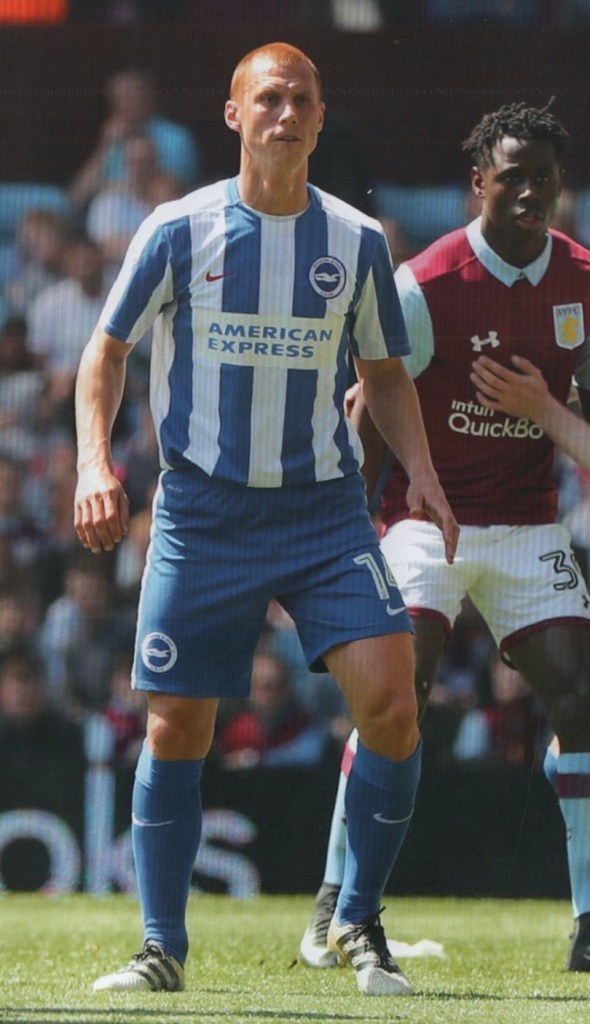
Sidwell in action for Albion against Villa

In clinching his signing in January 2016, Hughton told the Albion website: “Steve is an experienced player who has played virtually his entire career in the Premier League. He knows this club, as well as a few of the squad and will supplement our existing midfield options.

“Beram Kayal, Dale Stephens, Andrew Crofts and others have been excellent in midfield for us this season, but we also need to make sure we have good options in every position of the team, and options which will be enough for us through until the end of the season.

“Steve brings that, and in addition, he is another experienced head; he is a player who’s proven at the very top level of English football. Brighton fans will know Steve is also a great athlete and top professional.”

Although he only made six starts, Sidwell went on as a sub 13 times in that half-season. When Albion had to endure the end-of-season play-offs after missing out on automatic promotion by only drawing (1-1) the last game of the season at Middlesbrough, it was Sidwell who stepped in to fill the boots of Stephens, who was suspended after his controversial sending off by Mike Dean at the Riverside Stadium.

Unfortunately, Sidwell was one of four Albion players who had to go off injured in the 2-0 play-off first leg defeat at Sheffield Wednesday. He suffered ligament damage but was taped up and given medication to enable him to play in the home tie, although he later admitted: “I should never have played really.”

He reckoned the Amex atmosphere for that game was the best he’d ever been involved in. In spite of a valiant effort, it ended in a disappointing 1-1 draw although Sidwell said: “I ended up playing one of my better games in a Brighton shirt, which maybe cemented a contract for the following season.”

Released on a free transfer by Stoke, Sidwell signed on a permanent basis for the Seagulls and was a key component in the side that won promotion from the Championship in May 2017. He made 29 starts plus eight substitute appearances that campaign.

“The whole reason behind my return was to help the club into the Premier League,” he said.

Sidwell was on the bench as Albion began life amongst the elite but after that “a slipped disc, surgery, and then before you know it your career’s gone.”

Sidwell later admitted: “It was really hard. I came here to do a job, to get the football club into the Premier League, and then it was time to go and enjoy it. I thought I had two or three years left, but that was cut very short.”

Recognising he was blessed to have enjoyed a 20-year career, he nonetheless said: “To not really say goodbye to football, something I’d done since I left school, and also to Brighton, was really disappointing.”

He stayed on at Albion as under-16s coach (right) for a while but increasingly his work as a pitchside pundit for live TV coverage of matches took up more of his time. He is also now a regular co-host of the popular That Peter Crouch Podcast.

Sidwell is also business development director of Box3 Projects, a company that constructs and designs office spaces to be rented out or sold.
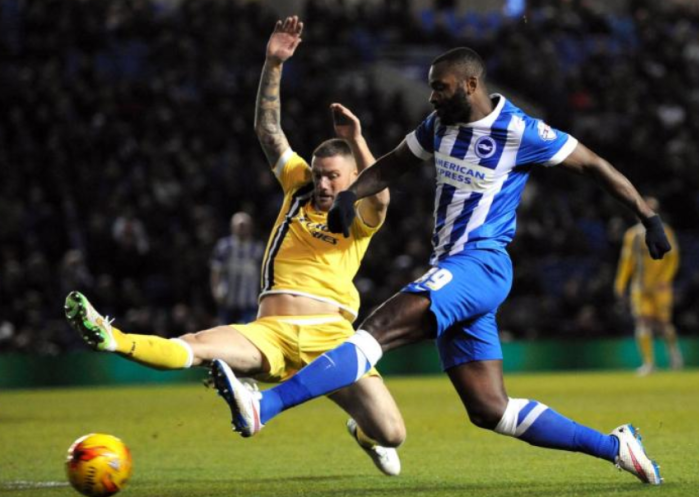
Managerial turnover played havoc with goalscorer Bent’s career

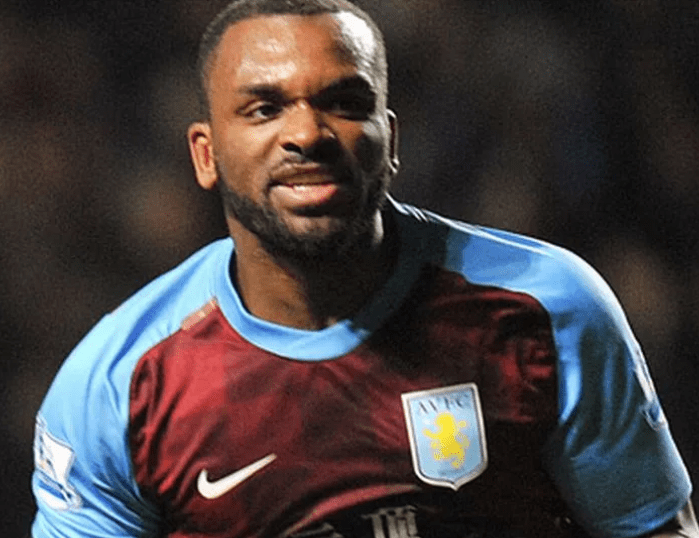
FORMER England striker Darren Bent, who now shares his opinion of the game with listeners to talkSPORT, was still only 30 when he pulled on the stripes of Brighton, one of nine clubs he represented in the Premier League and Championship.

He couldn’t have got off to a better start when he scored on his debut at the Amex, netting against one of his former clubs, Fulham. Unfortunately, the visitors turned the game on its head and won 2-1.

Timing is everything in football and perhaps if Bent had joined the Albion in happier circumstances, there may have been a better story to tell. The Seagulls were about the ditch the manager who brought him to the club – an all-too-familiar scenario Bent encountered on many occasions throughout an 18-year playing career.

At Spurs he played under three different managers – he later described it as “the worst two years of my career” – and his temporary move from Aston Villa to Brighton came about because he’d been frozen out by Paul Lambert even though Gerard Houllier had smashed Villa’s transfer fee record to sign Bent from Sunderland for £18m in January 2011.

Bent arrived at the Amex in November 2014 with 184 goals in 464 career appearances behind him, and only three years earlier had won the last of 13 caps for England, for whom he scored four goals.

“His record speaks for itself,” said Albion boss Sami Hyypia. “He is a top-class striker with more than 100 Premier League goals with Charlton, Spurs, Sunderland and Aston Villa. I hope he will score plenty of goals for us during his time with us.

“There is no doubting his ability to score goals. He also wants to play regular games and that is evident in his willingness to step down from the Premier League to the Championship.”

The player himself told the matchday programme: “Anyone who knows me knows that all I care about is football.

“It has never been about money or anything like that. It has always been about playing football. I’m always at my happiest when I’m playing.”

Bent added: “Brighton felt like the perfect place to come and play football, especially for someone like Sami Hyypia, who I’ve played against many times over the years.

“As a manager, I think he is the right man. He is the kind of guy I want to play for.”

It was a generous assessment in the circumstances because Brighton had managed only two wins in 16 matches before Bent’s arrival.

The experienced striker’s second goal for the Albion looked like it might have earned the beleaguered coach a reprieve from the inevitable. He scored in the 10th minute away at Wolves, stooping to head Inigo Calderon’s first-time cross past goalkeeper Carl Ikeme. It was a lead that lasted until the 88th-minute but was cancelled out by a Danny Batth equaliser after Albion had played 30 second half minutes with 10 men following a red card shown to Bruno. Brighton parted company with the big Finn shortly afterwards.

Bent played one more game, under caretaker Nathan Jones, when Albion fought back from 2-0 down (both scored by on-loan Glenn Murray against his old club) to earn a home draw against Reading, but he was forced off injured after less than half an hour and the knock kept him out of the next game at Fulham, when Brighton won 2-0.

Hyypia’s replacement, Chris Hughton, spoke at his first press conference of trying to keep the player, but Bent had the chance to join a side at the opposite end of the Championship and he moved to promotion-seeking Derby County instead, scoring 12 times in 13 starts as the Rams missed out on a play-off spot by one point.

Released by Villa at the end of the season, he subsequently joined the Rams on a permanent basis in the summer of 2015. He saw even more managerial churn at Pride Park – Paul Clement and Darren Wassall in 2015-16 and three – Nigel Pearson, Steve McLaren and Gary Rowett – in 2016-17. Across the two seasons in the Championship, Bent scored 14 in 67 matches, but a hamstring injury sidelined him for the start of the 2017-18 season.

In January 2018 he went on loan to Championship strugglers Burton Albion under Nigel Clough where he scored twice in 14 appearances (nine starts + five off the bench) including netting the equaliser against his old club Sunderland when Burton’s 2-1 win relegated the Black Cats to the third tier of English football for only the second time in the club’s history. Burton also went down.

Released by Derby in the summer of 2018, he announced his retirement at 35 in July 2019.

Funny that he should end his career at Derby County because it was against them that he scored his first competitive goal for Tottenham in a 4–0 home victory in August 2007.

Bent had previously scored 37 goals in 79 matches over two seasons at Premier League Charlton Athletic before making what at the time was a record £16.5m move to White Hart Lane, where Dutch boss Martin Jol greeted him enthusiastically.

On target for Spurs

Although he already had Robbie Keane, Dimitar Berbatov, Jermain Defoe and Mido as forward options, Jol said of the new signing: “Darren’s strength is his stamina. Normally players will make runs three or four times in 45 minutes, he will do it all the time and if you manage to play balls behind the defence, he will be there.

“He has pace, he links play well and can see a pass – he can exploit the space and play as well.”

What happened subsequently is covered superbly in a 2019 article by Jack Beresford on Planet Football, but, to fast forward a little, Jol was shown the White Hart Lane exit and his replacement, Spaniard Juande Ramos (assisted by Gus Poyet) was a lot less enamoured by the big money signing.

Indeed, Beresford writes: “Bent later recalled how Tottenham became ‘a horrible place to be’ under Ramos, who regularly lambasted players over a lack of professionalism in regards to training and nutrition, demoting several senior figures to the reserves.”

Although Bent struggled to cement a regular starting spot in his first season at White Hart Lane, he was Spurs’ top scorer at the end of the 2008-09 campaign with 17 goals.

While things initially looked good under Bent’s third Spurs boss, Harry Redknapp, the manager’s decision to publicly humiliate the striker eventually brought an unhappy spell to an end.

Bent missed a golden chance to score in a match against Portsmouth and Redknapp told reporters after the game: “You will never get a better chance to win a match than that. My missus could have scored that one.

“Bent did not only have part of the goal to aim for, but he had the entire net – and he put it wide. Unbelievable. I was just so frustrated.”

Bent put in a transfer request and said: “No one goes out to deliberately miss. When you miss a chance and your manager comes out and supports you rather than criticises you, it’s a big help.”

Ironically, circumstances meant Bent went on to make 12 more appearances for Tottenham, scoring five times and his 12 league goals made him the club’s top scorer.

Although Redknapp said Bent had a future at the club, he signed Peter Crouch and Beresford reported Bent later said: “I didn’t feel Redknapp wanted me there. It’s massive to have the support of your manager and that’s not been the case for the last two years.

“My career stood still at Tottenham. There’s a lot of politics going on there. I scored a lot of goals, but it was the hardest two years of my life.”

In those two years, he scored 25 goals in 79 games for Tottenham, but 36 of those appearances had been as a substitute.

Born in Tooting, south London, on 6 February 1984, Bent seemed always destined to be a footballer because his dad Mervyn had been on the books of Wimbledon and Brentford as a youngster.

The family moved to Cambridgeshire when the young Bent was only 10 and his early football career was nurtured at Godmanchester Rovers.

Ipswich Town picked him up as a 14-year-old and nurtured him through their youth ranks until he signed his first professional deal on 2 July 2001. George Burley gave him his debut five months later as a sub in a 3-1 UEFA Cup win away to Helsingborgs IF.

He scored twice in seven league and cup appearances that first season but the Tractor Boys were relegated from the top flight. Burley was soon replaced, temporarily by Tony Mowbray, then Joe Royle, under whom he cemented a regular starting berth in the second tier over the next three seasons.

By the time he left Ipswich in 2005, he’d scored 56 goals in 141 appearances. Former Brighton midfielder Alan Curbishley was at the helm of the Addicks when they paid a fee of £2.5m to take him to The Valley.

He scored five goals in Charlton’s first four league games (including two in the opening day 3-1 win over future employer Sunderland), finished his first season with 22 league and cup goals and was named Charlton’s Player of the Year.

Bent top scored again the following season, with 15, but under three different managers – Iain Dowie, Les Reed and Alan Pardew – they were relegated to the Championship along with Watford and Sheffield United.

As described earlier, Spurs presented the opportunity for him to continue playing in the Premier League, and he continued playing at that level when Sunderland bought him for £16.5million in the summer of 2009. Demonstrating the knack he had at several clubs, he scored on his debut, giving the Black Cats a 1-0 win at Bolton.

Bent went on to score 24 league goals for the Black Cats in his debut season at the club – and you can only imagine how delighted he was (pictured below) to net two in a 3-1 win over Spurs at the Stadium of Light!

The first came after just 34 seconds of the game on 3 April 2010, and a 29th-minute penalty gave him his 23rd goal of the season, although incredibly Bent also saw two other penalties saved by Spurs ‘keeper Heurelho Gomes. He had also missed a penalty in the reverse fixture at White Hart Lane the previous November, when Spurs won 2-0.

He obviously wasn’t the most reliable from 12 yards: I witnessed a Bent penalty miss myself back in 2003 when he’d gone on as a sub for Ipswich against Brighton at Portman Road. With the score at 1-1, Richard Carpenter’s foul on Chris Makin gave Bent the chance to restore the home side’s advantage from the spot. But he blasted the ball over without goalkeeper Dave Beasant needing to make a save. Tony Rougier then put Albion ahead but a Martin Reuser thunderbolt evened it up.

Bent’s 18-month stay with Steve Bruce’s Sunderland proved to be his most prolific goalscoring spell in football, netting 38 goals in just 52 appearances.

In the first half of the 2010-11 season, his partner up front was young Manchester United loanee Danny Welbeck, but in the January 2011 transfer window Bent was on the move again, this time to Villa.

Once again, he got off to a great start for a new club, marking his debut with the only goal of the game in a win over Manchester City. It was the first of nine goals in 16 league appearances which put him joint top scorer with Ashley Young, even though he’d only arrived at the club in January.

After health issues forced Houllier to step down as Villa boss, Alex McLeish took over for what was a tumultuous and under-performing season when relegation was only avoided by two points, although Bent was top scorer with 10.

McLeish’s successor Lambert not only took the captaincy off Bent, he also froze him out, only selecting him for 13 Premier League appearances. If he thought it was difficult enough to have three different managers in three seasons at Villa, when he spent the whole of the 2013-14 season on loan to Fulham, they had three different managers in one season!

Bent’s old Spurs boss Jol was in charge as the campaign got under way but, with only two wins in 14, he was replaced by former Man Utd no.2 René Meulensteen in December before Felix Magath took over in February. All the upheaval saw Fulham relegated with a team that included David Stockdale, Steve Sidwell, Aaron Hughes and Dan Burn. Bent scored six in 14 starts + 15 sub appearances.

If Bent was used to managerial change at club level, it wasn’t much better with the England national team: he played under three different managers in five years!

He had previously earned selection for his country at under 15, 16, 19 and 21 levels – he scored nine in 14 matches for the under-21s – and he was first called up to the full squad by Sven-Goran Eriksson shortly after he’d made the move from Ipswich to Charlton, although he didn’t play in a 4-1 defeat to Denmark.

“Making my Premiership debut for a new club, scoring my first brace in the Premiership and then to get the England call-up on the back of that was just a dream come true,” he told the FA website.

It was another six months before he made his full England debut, in a 2-1 win over Uruguay but he didn’t do enough to stake a claim for a place in the World Cup squad.

His next cap came as an 80th minute substitute for Joe Cole in the 3-2 defeat to Croatia in November 2007 that cost Steve McLaren his job when England failed to qualify for the Euro 2008 tournament.

By the time he made his second start for England, on 14 November 2009, Fabio Capello was in charge. England lost 1-0 in a friendly to Brazil in Qatar when Bent’s teammates included Matthew Upson, Wayne Bridge and James Milner.

“Bent was struggling to make an impact as he attempted to convince Capello of his worth, not helped by a lack of service that rendered his task almost impossible,” reported the BBC’s Phil McNulty. “He had one opportunity, but could not direct a header on target from Milner’s cross.”

He didn’t make the cut for the 2010 World Cup squad but in September was back in the fold and scored his first England goal after going on as a 70th minute sub for Jermain Defoe as England beat Switzerland 3-1 in Basle.

By now at Villa, it was the first of three goals in three games (he also netted against Denmark and Wales) after which he told the Birmingham Mail: “I’d love to be No 9 for as long as possible, there are a lot of top strikers about but Fabio keeps picking me and hopefully I can keep producing the goods.

“Even when the goals weren’t going in, I always believed I was good enough to score at this level and hopefully it’s showing now. I’m finally getting my chance and getting a good run in the side. I’m delighted with it.

“It has been years since my first chance and it’s certainly been a long, long wait but it’s finally come.”

He started the 2-2 Euro 2012 qualifier with Montenegro in October 2011 and the following month was in the side that beat World Cup holders Spain 1-0 at Wembley; it was his header from Milner’s cross that rebounded off a post for Frank Lampard to nod in.

Three days later, he played what turned out to be his – and Capello’s – last game for England as a 70th minute sub for Bobby Zamora when England beat Sweden 1-0 at Wembley.

Yet another man was at the helm when it came to selection for the Euro 2012 tournament and Roy Hodgson didn’t reckon Bent had recovered sufficiently from an injury to merit inclusion.

For all the highs and lows of a lengthy playing career, nothing came close to what he suffered in front of a nation of TV quiz viewers: he scored only three points over two rounds of Celebrity Mastermind and admitted to talkSPORT listeners: “Honestly? It was probably the worst experience of my life!”

He explained: “As a footballer you get nervous before games, when you take a penalty in front of thousands of people, when you join a new club, but when you’re sitting in that chair opposite John Humphrys, it’s pitch black in there and all you can see is him, his eyes looking at you and he’s asking you questions and you just go blank.”

Fate dealt blows throughout Essex lad David Lee’s career

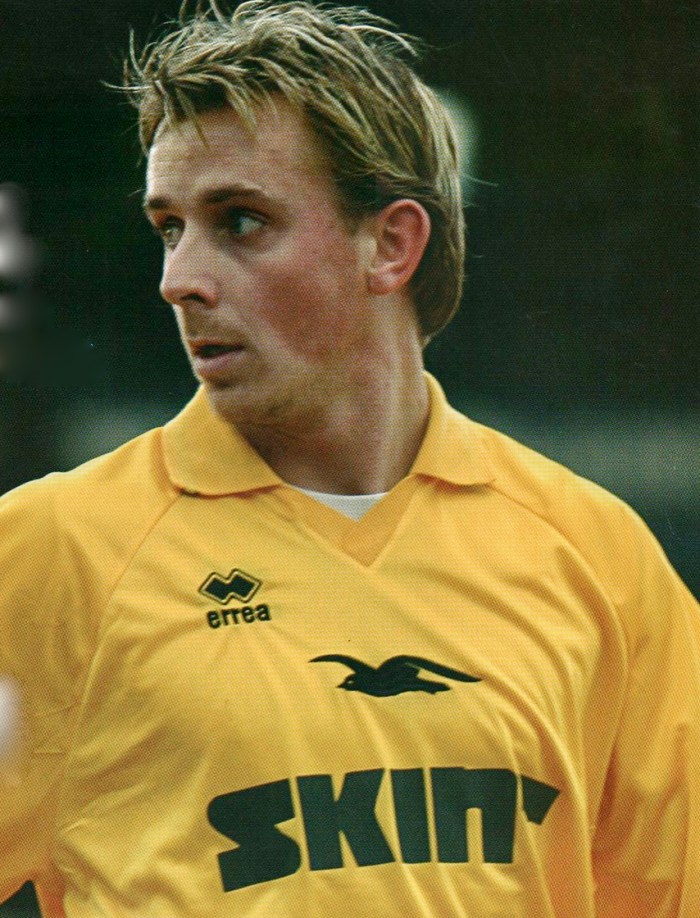
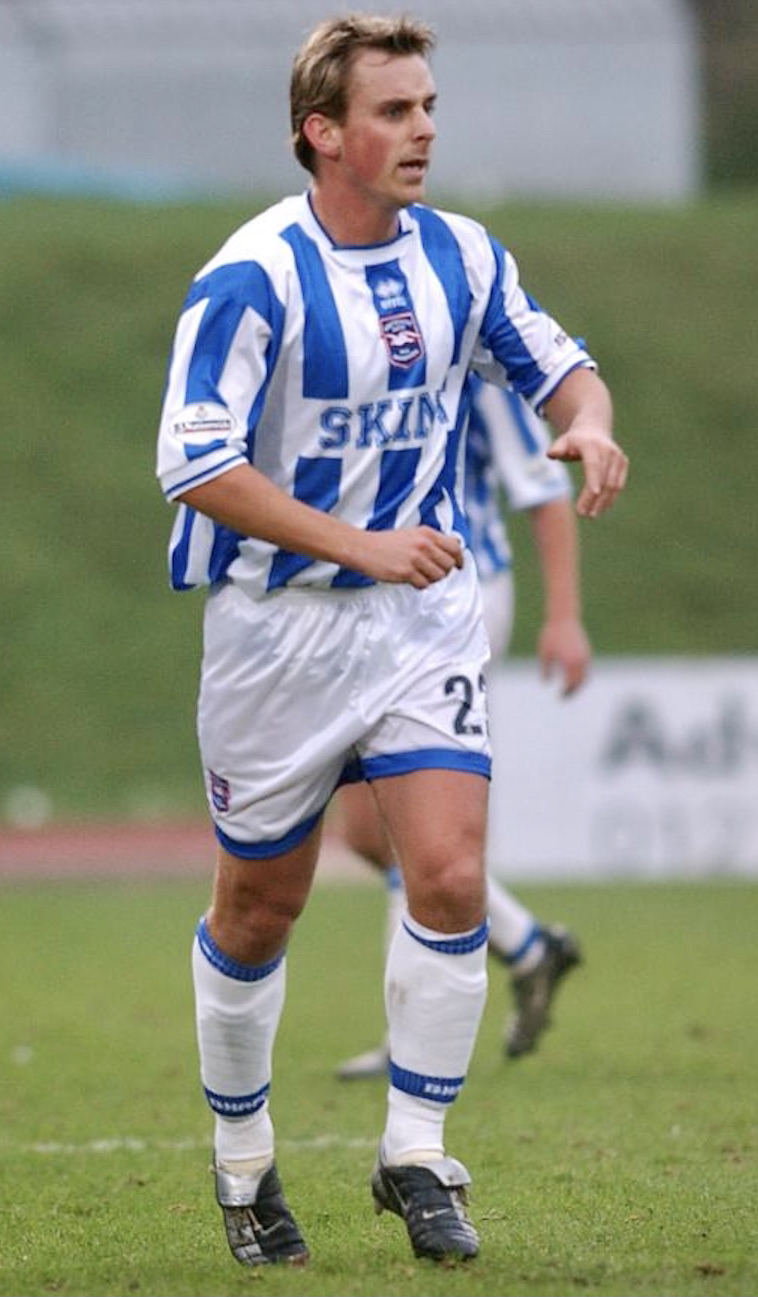
IT MAY simply have been David Lee’s misfortune that he joined Brighton at a time when they weren’t short of decent midfield players.

Nevertheless, a player who had gone through the ranks at Spurs alongside the likes of Peter Crouch and Ledley King might have been expected to make more of an impression.

As it was, the manager who signed him moved on and he ended up starting just one league game in two and a half years with the club.

Ultimately a horror injury brought a premature end to Lee’s career at the age of 28, but he stayed in the game as an agent – Lewis Dunk being one of his clients.

It was in January 2002 that Peter Taylor, a one-time Spurs player himself, brought Lee to the Albion from Hull City in direct exchange for fringe player Matthew Wicks.

Taylor had been close to signing him when he was manager of Gillingham but, after moving on to Leicester City, Taylor recommended him to Southend United instead.

By the time Lee arrived at the Albion, they were already on an upward trajectory towards promotion from the third tier and he had to be content largely with reserve team football and a seat on the first-team subs bench.

The first Albion fans got to see of him came on 23 February 2002 at home to Wrexham when he went on as a 23rd minute substitute for Gary Hart alongside inexperienced Chris McPhee, who was playing in the absence of goal king Bobby Zamora.

Wrexham brought Albion’s run of five straight home wins to an end in what the Argus described as “a dour deadlock” and in the process became the first side to stop the Seagulls from scoring at Withdean Stadium for 13 months.

In fact, sharper-eyed Albion watchers might have recognised the newcomer as a player who’d scored against the Seagulls twice the previous season.

He marked his debut for Southend in the opening match of the 2000-2001 season with an 83rd-minute second goal that sealed a 2-0 win for the home side.

Then, in the reverse fixture, he scored again as United completed the double over the Seagulls on a quagmire of a pitch at Withdean on New Year’s Day 2001. On that occasion, Lee went on as a 77th minute substitute for Ben Abbey and scored five minutes later as the Shrimpers again won 2-0.

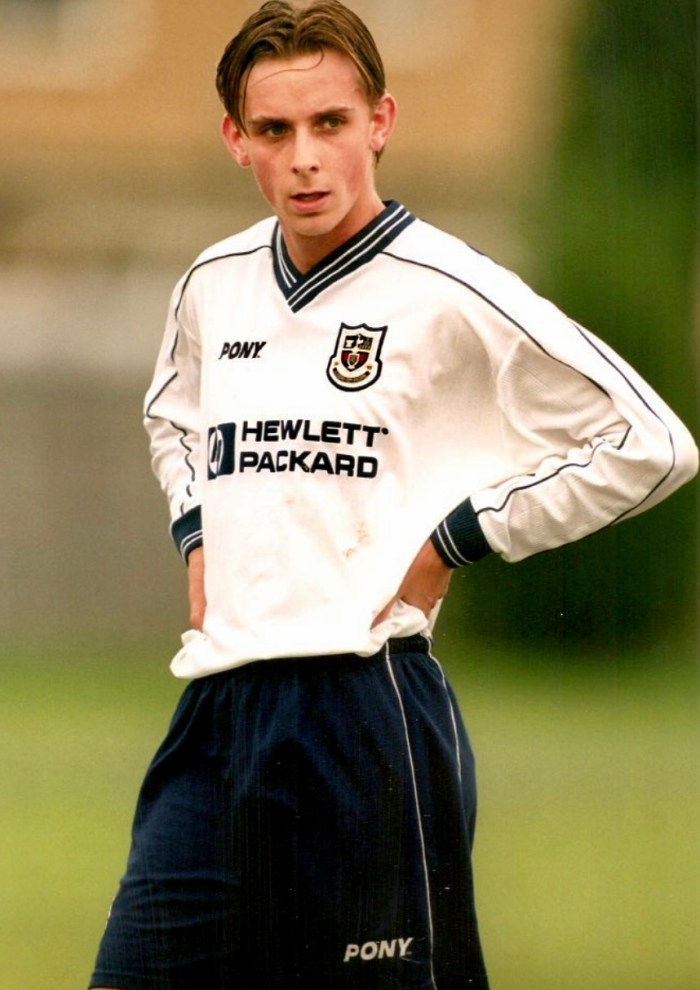
Described by Spurs history website ‘My Eyes Have Seen The Glory’ as “a slightly built, but athletic midfielder, who had an eye for an attacking option as he used his passing to try and open up opposition defences”, Lee spent a season at Roots Hall, initially under Alan Little, scoring 10 goals in 52 games. “I played nearly every game so it couldn’t have gone much better really,” Lee told the Basildon Canvey and Southend Echo.

But after just one season with Southend, Lee joined Division Three Hull City, managed by previous manager Little’s brother Brian (better known for his time in charge of Leicester and Aston Villa). It was a decision Lee later rued.

“Looking back, I do regret it,” he said. “I left because the (Southend) manager Dave Webb said he thought I’d had a good season and that Leicester were interested in me.

“My form wasn’t good at the end of the season so he told me they would be coming back to have another look at the start of the next season. Then he told me I’d have to take a pay cut to stay.

“At the same time, Hull offered to double my money for three years.” Hence he ended up with the Tigers.

He made his debut as a substitute in the League Cup and followed up that appearance with brief cameo roles off the bench in the league. One saw him score Hull’s fourth goal in a comprehensive 4-0 thumping of York City for whom Graham Potter was playing!

Lee made a rare start in a 1-1 draw away to Shrewsbury Town and kept his place for the next game (a 1-0 win over Torquay United), but it was back to appearances off the bench after that.

It was Taylor, fired by Leicester but installed as Micky Adams’ replacement at promotion-seeking Albion, who rescued him from Hull, signing him on a two-year contract in January 2002.

Unsurprisingly, Lee saw it as a “massive blow” when Taylor quit the Albion after steering the side to promotion because he didn’t believe enough was going to be spent on investing in the squad to compete at the higher level.

“I’m disappointed because he brought me to the club in the first place,” Lee told the Argus. “When I came, he wasn’t looking for me to get straight into the first team.

“He told me next year he would look to get me more involved. Now he has left it’s going to be difficult. When the new manager comes in, I have got to make sure I am fit and try to impress him.

“It’s a huge stage for a young player in the First Division and I need to be playing.”

Of course, if Lee had hung on at Hull slightly longer, he’d have been joined there by Taylor!

“I should have stayed there for longer but I went to Brighton,” Lee told the Basildon Canvey and Southend Echo. “I did three and a half years there (ed. it was two and a half) and had some great times winning the promotions but I never did hold down a first team place and, when Peter Taylor left, I was well out of it.”

Indeed, in the 2002-03 season, Lee didn’t make a single league or cup appearance for the Albion, although, in October 2002, after Steve Coppell’s appointment as manager, he appeared – and scored – in the first half on a rainy, gale-battered evening alongside trialists Simon Rodger and Dean Blackwell when an Albion XI beat Hassocks 5-0 in a game to mark the opening of a new stand for the County League side. While Blackwell and Rodger subsequently signed up, Lee was sent on loan to Bristol Rovers, but only stayed for a month.

Pretty clear his future didn’t lie with the Albion, on 23 April 2003 he played in a trial match for Cambridge United’s reserves against Gillingham in a 3-0 win. Impressing in another reserve match against Colchester, the U’s manager said he would like to sign Lee on a permanent basis. But nothing came of it, and he remained on Albion’s books.

As if to emphasise what they missed out on, in August 2003 Lee scored against Cambridge in a comprehensive Albion Reserves win. The 3-0 win was the opening fixture for the Seagulls’ second string in the Pontin’s Holidays Combination League.

A short spell on loan to Ryman League Thurrock followed in October 2003 but, in the time he was away, Brighton had a new manager; Mark McGhee replacing Coppell, who had moved to Reading.

And so it was, in December 2003, that Lee finally made his full Albion debut, away to QPR in the LDV Vans Trophy. Albion narrowly lost 2-1, and he was subbed off on the hour mark, being replaced by Gary Hart, but McGhee defended his selection in the following matchday programme.

“I saw the game as an opportunity to find out about players who haven’t had the chance since my arrival,” he said. “The inclusion of David Lee and Dan Harding in particular did not result in us losing the game. Basic defensive errors led to the defeat. However, I did learn a lot about Dan and David and I do believe that both players will continue to make a contribution this season. So, as an exercise, there were positives to take out of the game.”

While Harding would go on to become an established member of McGhee’s side, Lee was a perennial bench warmer and only started one league match: a 2-1 defeat at Sheffield Wednesday on 27 March 2004.

“That was a nice surprise,” he said. “I thought I did okay, apart obviously from the result.”

But Lee realised his Albion future was up in the air, telling the Argus: “I’ve had a meeting with the gaffer and he said he is going to have to wait and see where we are next season, so it’s touch and go for me.”

He admitted he’d been close to moving to Grimsby just before the transfer deadline, but Town boss Nicky Law had chosen alternative options.

Lee was able to join in the celebrations that followed Albion’s promotion via the play-off final win over Bristol City at the Millennium Stadium in Cardiff, but he was only ever on the periphery.

He was given one last chance to prove himself when he was handed a three-month deal in July 2004. But, over that period, Albion brought in Darren Currie and Alexis Nicolas, so, on the expiry of the short term deal, Lee was released.

Assistant manager Bob Booker said: “David worked extremely hard but just fell a little short to make the first team.”

While Lee told the Argus: “I never really got started all the time I was at Brighton. But I worked really hard in the summer, and I did quite well pre-season. That’s why I am disappointed to be going now.”

Born in Basildon, Essex, on 28 March 1980, Lee went to Gable Hall School in Thurrock from 1991 to 1996 and his young footballing talent was spotted as an under 10 by Spurs scout Lenny Cheesewright.

Lee talked at length about his career to Lennon Branagan in August 2020 for the excellent SuperHotspur blog.

He developed through the different age groups at Spurs under various coaches, citing in particular Tommy Cunningham really putting him through his paces aged 15-16, then Bobby Arber after he’d signed a scholarship. “He was a real top coach who taught me a lot about tactics and positioning and the ugly side of the game.”

The highlight of his time at Spurs came when he was captain of the 1996 Spurs youth team that won the Northern Ireland Milk Cup, an annual international youth tournament. Spurs beat Blackburn in the final by a single goal scored by John Piercy, who later also moved to Brighton.

Another memorable moment came when Lee, aged only 16, scored the winning goal for Spurs Reserves against Bristol City in a testimonial for Leroy Rosenior (father of Liam).

In Spurs’ youth team, Lee was managed by the former West Ham winger Patsy Holland, who he felt never really rated him. Eventually, in Spurs’ reserve side, he was managed by Chris Hughton – “one of the best coaches that I’ve played for and had the pleasure of working with”.

While contemporaries such as Luke Young progressed to the first team, Lee fell just short and he was honest enough to admit: “Looking back now, I think the thing that you look at was did I really show the coaches that I wanted it enough? And did I really give absolutely everything to be a top player? And probably the answer’s no, if I’m being honest with myself. That’s the biggest regret or the real shame that I have really.”

Ironically, it was when his friend Piercy got a first team call-up instead of him that he decided to move on from Spurs although, once again with the benefit of hindsight, he reckons he was probably too hasty in his decision.

George Graham was manager at the time and Lee reckoned he wasn’t his type of player. Although he still had 18 months left on his contract, he decided to move on because he couldn’t see himself making it at Spurs. But not long afterwards, Glenn Hoddle took over as manager and Lee reckons if he had stayed he might have had a better chance of training with the first team a bit more, and improving as a player.

After the Seagulls released Lee in September 2004, he trained with Oldham Athletic and signed on a non-contract basis for a month but was not retained.

He returned to Thurrock, had a trial at Kidderminster Harriers, signed for Conference side Stevenage Borough in February 2005, but then changed his mind and signed for Aldershot instead.

Football agent Lee

It was during a game for the Shots against Canvey Island in August 2005 that he suffered a horrific injury that doctors told him would end his career.

“I was actually only an hour away from losing my foot and it was all quite worrying as you would expect,” said Lee. “When I was in hospital they told me I would never play again.”

The injury forced him to miss the majority of the 2005-06 season, and, although he extended his contract by a year on 30 May 2006, he eventually left the Shots at the end of January 2007 and signed for Ryman League Division One Harlow Town. That didn’t last long; he had a short spell with Braintree, then AFC Hornchurch and then Canvey Island.

In an interview with Chris Phillips of the Basildon Canvey and Southend Echo in June 2008, Lee said he was pleased to have proved the doctors wrong in managing to get back playing football, but he admitted: “I’ve been playing non-league this season, but my heart hasn’t been in it.”

Lee turned to football agency work that year and has continued in that line ever since. He was with Skillequal for 10 years before switching to ICM Stellar Sports in April 2018.

Outcast Peter Suddaby was Albion top-flight saviour

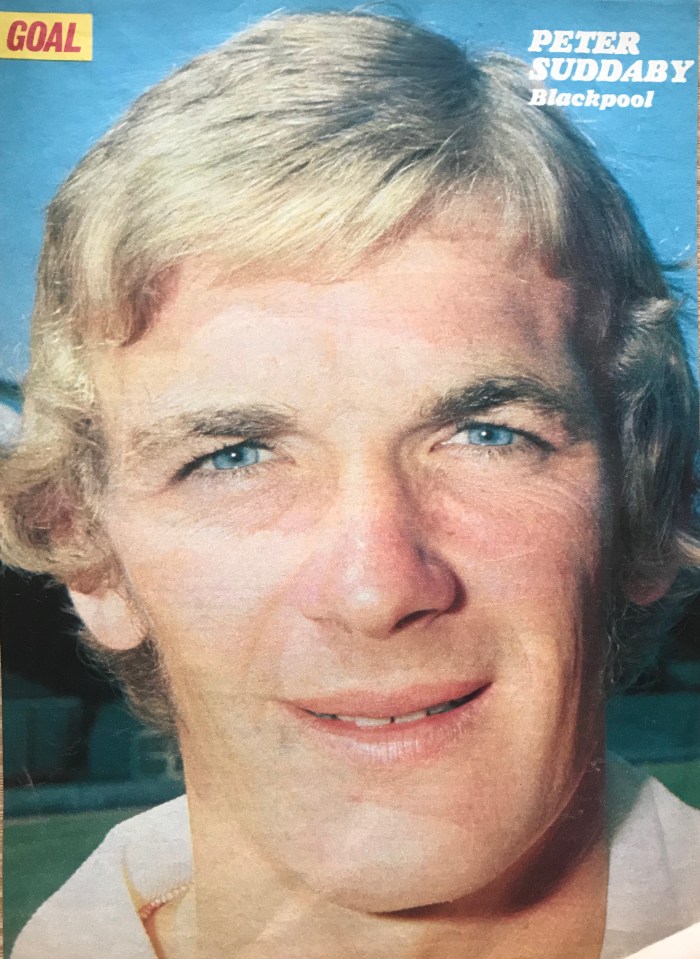
PETER SUDDABY spent nearly 10 years at Blackpool before playing a key role in Brighton’s inaugural top-flight season. The university graduate later spent a season with the Seagulls as a coach.

Albion had been struggling to adjust to the old First Division after promotion from the second tier in 1979 and it hadn’t helped that star defender Mark Lawrenson missed 12 matches following a bad ankle ligament injury at Spurs.

When Lawrenson was ready to return for a crunch match away to Nottingham Forest on 17 November 1979, instead of putting Lawrenson in the back line, manager Alan Mullery put him in midfield and thrust new free transfer signing Suddaby into the defence alongside Steve Foster.

Suddaby was 31 and had been playing for Third Division Blackpool’s reserve side at the time, so it was certainly a bold step but Mullery said: “I signed Peter because of his attitude to football. Whenever I played against him he struck me as being one of the worst losers in the game.

“If Blackpool were losing by five goals, he’d still be trying as hard as ever, and that is the sort of character we needed in the team.”

Mullery’s gamble paid off because at the City Ground Gerry Ryan’s 11th minute goal (not to mention Graham Moseley saving a John Robertson penalty on the stroke of half-time) gave Albion an unexpected victory against a Forest side who hadn’t lost at home for two years.

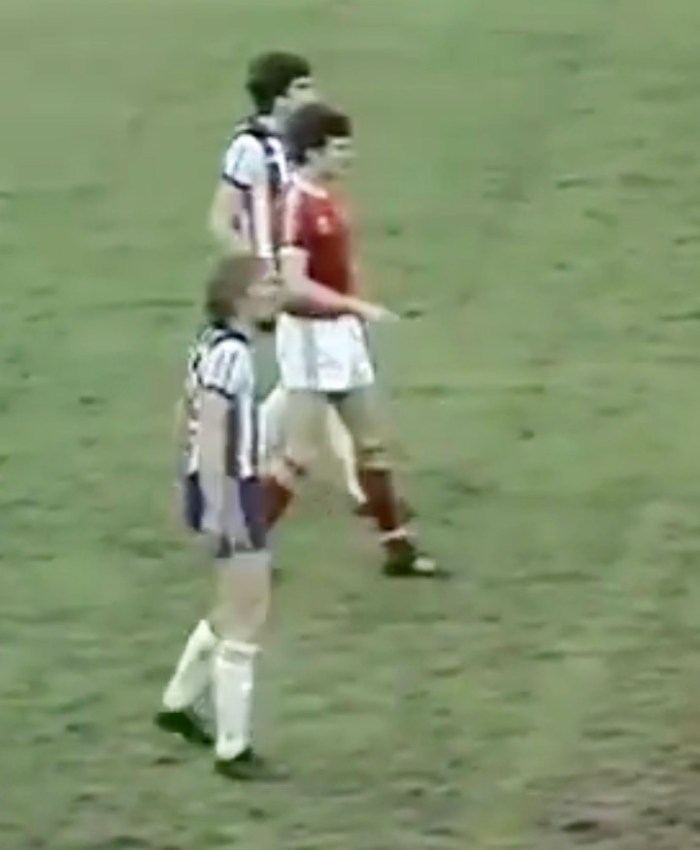
The game earned top billing on Match of the Day and Mullery hailed Suddaby after the game, telling commentator Barry Davies: “He’s got something to live up to, the boy, because he had a tremendous game today up against Garry Birtles.” (see still from footage, above)

Suddaby later told Shoot! magazine: “Forest are a very good side, but we defended well against them and had that little bit of luck we needed. Everyone in the Brighton side buckled down and gave everything.

“Alan Mullery has given me a chance to prove myself in the best league in the world, and I certainly do not wish to let him down now.”

Plaudits from journalists continued as Albion built on the victory at the City Ground with successive victories over Christmas against Wolves and Crystal Palace taking the club out of the bottom three for the first time that season.

Suddaby in an aerial battle with Coventry’s Garry Thompson at the fenced-in Goldstone

Jack Steggles in the Daily Mirror wrote: “Alan Mullery, ready to spend a million to buy his way out of trouble, could find salvation in a man who cost him nothing. For Brighton’s chances of survival have looked a lot brighter since he signed university graduate Peter Suddaby on a free transfer from Blackpool. Suddaby’s arrival has stiffened the defence and Brighton have bagged five points from three games.” (there were only two points for a win in those days).

thegoldstonewrap.com recalled: “Suddaby definitely didn’t let Brighton down. His strong, determined tackling and ability in the air at the heart of defence was an important factor in moving Albion up the table.”

Mullery told Shoot! that he’d tried to sign Suddaby the previous season but Bob Stokoe, Blackpool’s manager at the time, refused to let him go. “He’s a tremendous winner and is just the sort of player we needed,” said Mullery.

When Suddaby lost his place in the Tangerines side under Stokoe’s successor, Stan Ternent, Mullery was quick to seize the moment.

“My career wasn’t going anywhere, and a move to the First Division was the perfect remedy,” said Suddaby, who admitted he’d been hoping for a return to the top flight since Blackpool dropped out of it. “Obviously it wasn’t easy to adjust after playing two games in the reserves and I was sad about leaving Blackpool,” he said. “But it was made clear to me that I was fourth in line for the centre-half position, so I made up my mind to move if the opportunity arose.”

Suddaby continued: “I wanted a challenge and still felt I had something to offer which is why it didn’t worry me to join a struggling club.”

Even back then, Blackpool, who’d dropped down to the Third Division, were beset with boardroom issues which the defender said had “rubbed off on the players and gave the club an unsettled atmosphere”.

Albion only lost five of the 21 games Suddaby played in and succeeded in avoiding relegation. In another Shoot! article, Mullery said of Suddaby: “He may not be a big name, but Peter does it for me week in, week out. I know I can rely on him to turn in a good performance.”

Suddaby looked forward and said: “We have enough good players to build on what we did last season.

“The club think big and I’m delighted to be part of their success. I didn’t think I’d ever play in the First Division again, but now I’ve been given this chance I mean to make the most of it.”

Unfortunately, in May 1980, Suddaby’s back gave way while out walking – a reaction to an operation five years previously when two discs were removed – and, instead of being part of Albion’s second season at the top, he spent nine months trying to recuperate.

Mullery told Phil Jones of BBC Radio Brighton: “The football club needs players of his calibre. He’s good for everybody – a tremendous professional who immediately stamped his authority on the place. I cannot speak too highly of his service to the Albion.”

Sadly, while Suddaby did recover to play for Albion’s reserves, he was not fit enough to return to first team duties.

He tried to extend his playing days with a move to Wimbledon, where he made half a dozen appearances, and then returned to his former club Wycombe Wanderers. He played 10 games in 1982, and then moved on to Isthmian League Hayes in December 1982, eventually becoming player-coach in September 1984. At the same time, he reverted to his original plan and taught maths at the American School in Uxbridge.

Born in Stockport on 23 December 1947, Suddaby was the only son of a garage proprietor, and when he was still young the family moved to north Wales where his father took over a caravan park.

Suddaby started school at Gronant Primary School near Prestatyn, where no football was played, but the local village under 16s played him on the wing when he was aged just 10, and he developed a liking for the game.

When he moved on to St Asaph Grammar School, he became a regular in the school teams. In those days he was a centre-forward and it was in that position he earned his first representative honour when he was selected for Flintshire County Schools.

Suddaby earned A-level passes in Maths, Physics and Chemistry with an eye to moving on to university although, while in the sixth form, he turned out for various Welsh League clubs and for Rhyl in the Cheshire League.

He gained a place at Swansea University and, while doing a three-year BSc course in Maths, played football for the university and Welsh Universities and British Universities, by now as a defender.

After going to Lilleshall on a university coaching course, he was chosen by former Hove Grammar School teacher Mike Smith, later the manager of Wales, for a universities team to play against several non-league sides, one of which was Skelmersdale United.

They were among the top amateur sides at the time and Suddaby agreed to join them, travelling each weekend from Swansea back to the family home in north Wales, from where he was just over an hour’s drive to Skelmersdale.

Amongst his teammates were Steve Heighway, later to gain fame at Liverpool, and Micky Burns, who became a playing colleague at Blackpool.

After gaining his degree at Swansea, Suddaby took a post-graduate course at Oxford University to gain the necessary qualification to become a teacher.

While there, he started playing for Wycombe (then non-league) and gained a Blue playing for Oxford University in the Varsity match at Wembley in December 1970.

Three days later he earned the first of three amateur international caps when he was chosen to play for England against Wales at Cardiff.

With his teacher qualification under his belt, he signed for Blackpool as an amateur in the summer of 1970 and played a few games towards the end of 1970-71 season, when they were relegated from Division One, and then turned professional.

“1 hadn’t really thought too much about becoming a professional,” he told Shoot! “I’d virtually decided that my future was as a teacher.

“Looking back, I have no regrets apart, possibly, that I didn’t join a league club a couple of years earlier. On the other hand, I am happy that I finished my education. University life taught me a lot and developed my character.”

Suddaby ended up spending nine and a half years at Blackpool, making 331 appearances, most of which came in the second tier where the Tangerines were a top 10 side for six consecutive seasons, narrowly missing out on promotion back to the elite in 1974 and 1977, but then being relegated to the old Third Division in 1978.

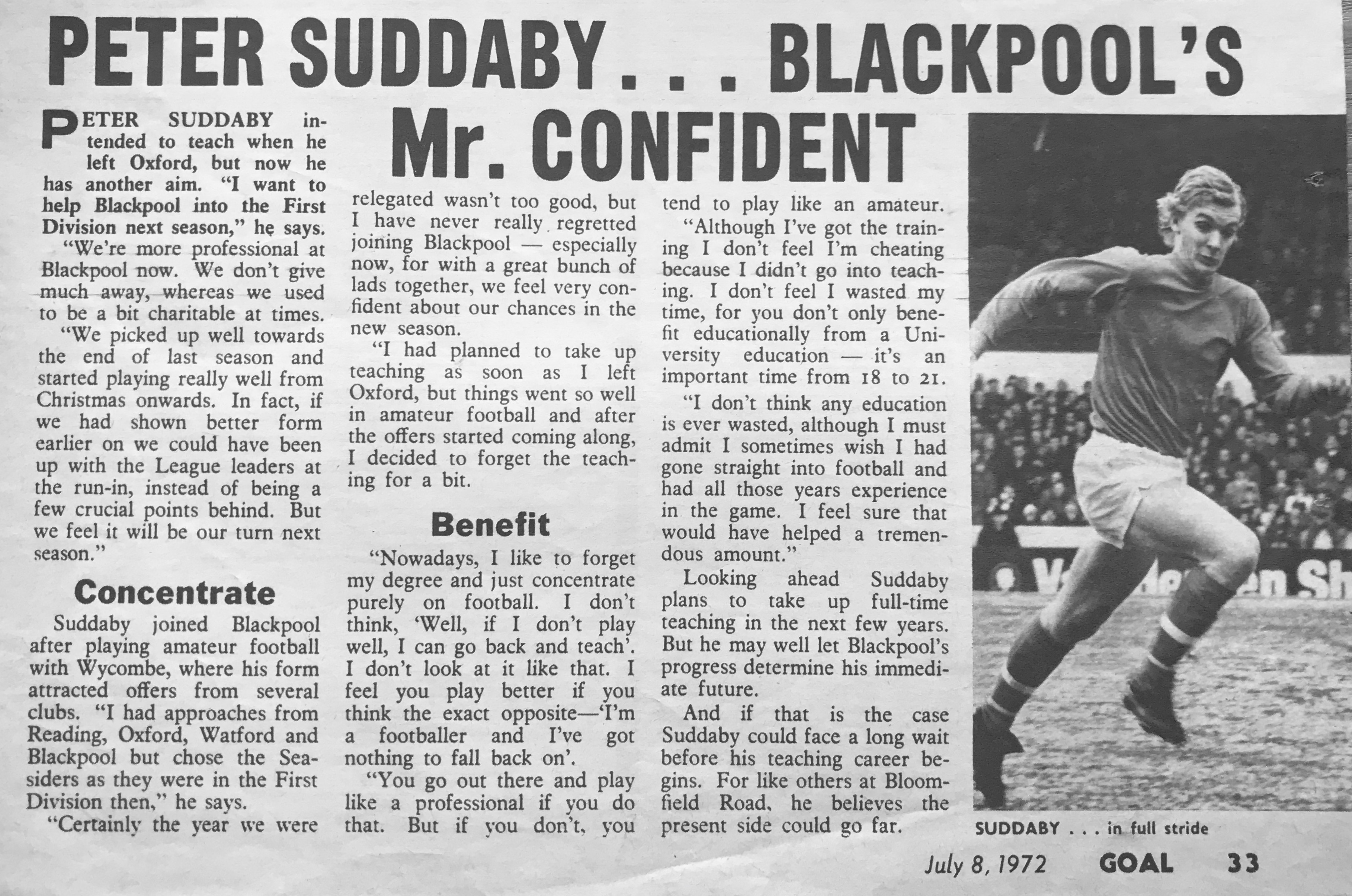
“I had approaches from Reading, Oxford, Watford and Blackpool but chose the Seasiders as they were in the First Division then,” he told Goal magazine in a July 1972 article. “The year we were relegated wasn’t too good, but I have never really regretted joining Blackpool.

“I had planned to take up teaching as soon as I left Oxford, but things went so well in amateur football and, after the offers started coming along, I decided to forget the teaching for a bit.”

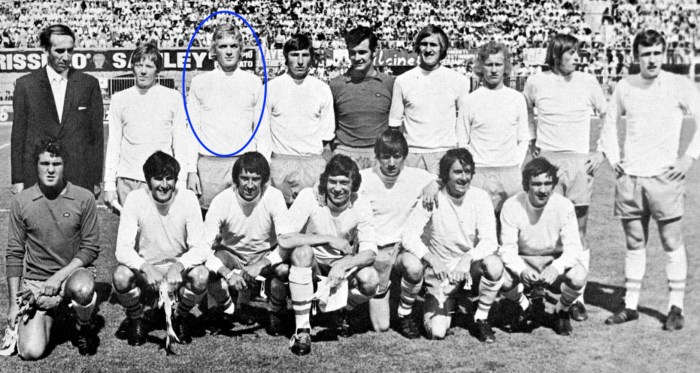
He was part of Blackpool’s 1971 Anglo-Italian Cup winning team (below), managed by Stokoe, alongside the likes of Tony Green, Paul Hart, Alan Ainscow and Tony Evans.

Unlike many players, Suddaby always knew he had teaching to fall back on as a career, but he also got coaching qualifications to enable him to stay in the game as a coach or manager.

When Mullery returned to manage Brighton in the summer of 1985, he appointed Suddaby as his first team coach while Barry Lloyd was put in charge of the reserves.

Brighton coach Suddaby

Mullery’s second term ended acrimoniously in early January 1986. Suddaby stayed on at the Albion under Lloyd but left at the end of the season. He went back to Wycombe as manager in August 1987 but was only in charge for five months.

Suddaby subsequently joined the coaching staff at Tottenham Hotspur, serving as the club’s academy director between July 1995 and April 2004.

During that period, he helped nurture the talent of the future, seeing the likes of Peter Crouch and Ledley King break through into first team football.

They didn’t all turn to gold though. Leigh Mills was at Spurs for five years, captained the England under-16s and was capped for his country at under-17 level.

“By his regular selection for the England under-17 team, Leigh has been recognised as a leading player at his age in the country,” Suddaby told theguardian.com in November 2004. “He has an excellent attitude to maintaining his football progress, and we have great hopes that he will play at a very high level.”

However, Mills ended up on loan at Brentford and Gillingham briefly before playing non-league.

When youngster Phil Ifil broke into the Spurs first team, in 2004, Suddaby said in an interview with the Standard: “Neither I nor my coaches will ever say we made Phil Ifil or any other player. We provide them with an opportunity, and they make themselves.

“The satisfaction we get from seeing them make it is massive, though. We try to get kids from local areas and we use that as a lever because they can see if they come here, they will get a chance.

“It is difficult for kids in football these days, particularly at big clubs. But at Spurs we try and give them knowledge about all sorts of things including the media and even driving lessons. We try to make them confident young men and give them a chance.

“As an academy, we sometimes don’t push ourselves into the limelight but we have produced players like Stephen Clemence and Luke Young, both playing in the Premiership, as well as those now getting their chance in the first team at Spurs.

“But without doubt Ledley is our jewel in the crown. We can only show them the door to success – it’s up to the kids to kick it down.”

After leaving Spurs, Suddaby reverted to maths teaching, working at independent girls school Maltmans Green, in Chalfont St Peter, for nearly 13 years before retiring in August 2018.

The following year, it was reported Suddaby suffered a stroke and, in February 2020, he and former Wycombe teammate Keith Samuels visited Buckinghamshire Neurorehabilitation Unit (BNRU) at Amersham Hospital to make a donation towards the sort of equipment that helped Suddaby recover from his illness.

Pictures from Goal magazine, the Argus, the matchday programme and online sources.

Brighton briefly on the trail of the ‘loansome’ Sam Vokes

‘LOANSOME’ Sam Vokes joined Brighton temporarily on the eve of transfer deadline day in January 2012.

He was 22 at the time and had already had five loan spells away from Molineux since joining Wolverhampton Wanderers in the summer of 2008. Vokes told BBC Sussex: “I need to settle down in my career and it’s a fantastic chance for me to come here and play some football.

“It’s a matter of playing games and, as a striker, scoring goals.”

Vokes had been troubled by injury and had found it difficult to establish himself in the Wolves side. The season before, he had been out on loan at Bristol City, Sheffield United and Norwich, and earlier in the 2011-12 season had scored two goals in nine appearances on loan at Burnley.

Eddie Howe, who’d managed Vokes during his first spell at Bournemouth, had taken him to Turf Moor to partner Jay Rodriguez. But when his deal with Burnley expired in mid-January, Albion boss Gus Poyet stepped in and persuaded him to join the Seagulls.

Vokes was invited to the Amex to watch the side’s FA Cup fourth round tie against Newcastle and, two days after the 1-0 win, put pen to the loan deal.

7188430“I don’t want to sit around – I love playing,” said Vokes. “Brighton have a great way of playing football that is different to a lot of teams in the Championship.”
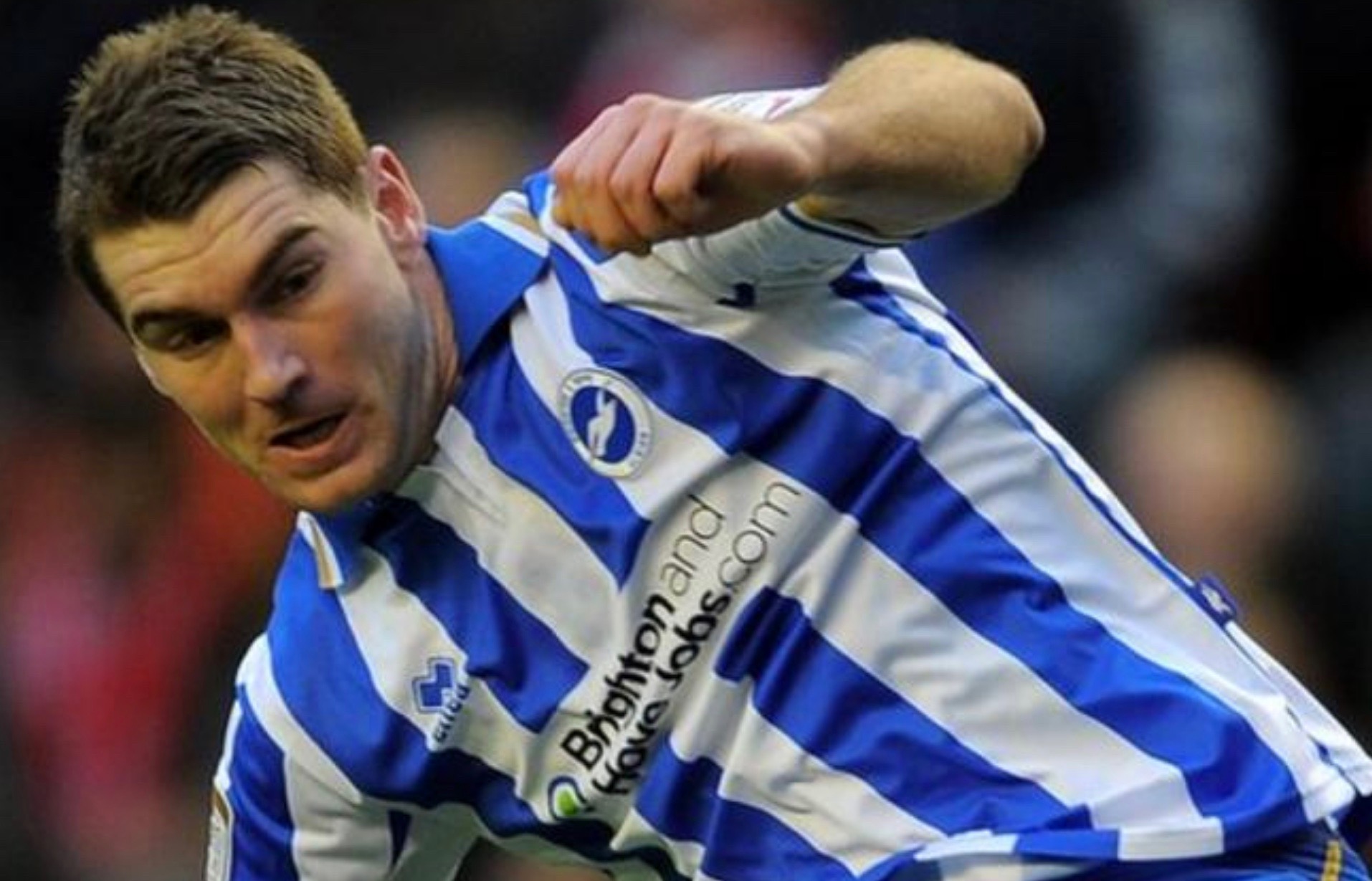
The young striker told the Albion matchday programme: “I’m a southern boy. I know the area well, and I know what football means to people down here.

“It’s been difficult for me to settle anywhere, moving from place to place on loan, but now I just want to play football. I love the game. I need to play, it’s all I want to do.

“I would like to stay and if all goes well we will see what happens in the summer, but my main aim at the moment is to start playing football again and scoring goals.”

Poyet told the media: “Sam was one of the players we’ve been following for a long time but it’s been difficult to get him.

“The idea was to bring someone who will give us that presence and strength in the air that we don’t have.

“We’ve got the time to explain how we play, and what he needs to do for us. The quicker he adapts, the easier for us. I’m delighted to have him and I hope it works for him.

“He’s been trying to find that place that he can stay for a few years.”

As it turned out, Vokes struggled to dislodge incumbent strikers Ashley Barnes and Craig Mackail-Smith, and he made just seven starts plus five substitute appearances.

SV- BHA stripes

Although he scored on his full home debut in a 2-2 draw v Millwall, he only got two more goals, a last-minute equaliser in another 2-2 draw, at home to Cardiff City, and Albion’s lone strike in a 1-1 draw away to Nottingham Forest.

In July 2012, it was reported Wolves were demanding £500,000 for the player’s signature on a permanent basis, and that Brighton and Burnley were both keen to sign him.

Vokes burnley

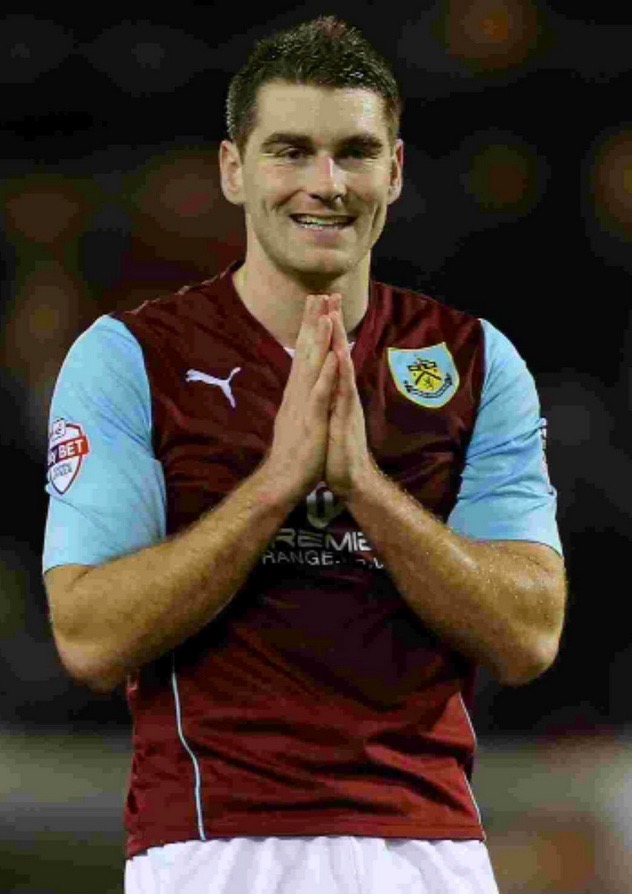
Howe had always been keen to get the player back to Burnley and, although officially undisclosed, it’s believed a £350,000 fee took him to Turf Moor where he finally settled down and, over the next seven years, scored 62 goals in 258 appearances.

Born in Southampton on 21 October 1989, Vokes was brought up in Lymington and was a Southampton fan at an early age. He even had a trial with them when he was just 10 but wasn’t taken on.

It was when he was playing football for local sides in the New Forest that he was spotted by Bournemouth and joined them in 2005. He was only 17 when he made his first team debut in December 2006 (in a 2-0 win over Nottingham Forest) and although he scored 12 goals in the 2007-08 season, the Cherries were relegated from League One.

Vokes WolvesWolves stepped in to sign him that May and he came off the bench in the opening game of the following season to score an equaliser in a 2-2 draw at Plymouth Argyle. However, Chris Iwelumo and Sylvan Ebanks-Blake were the main men scoring goals as Wolves won the Championship that year, and Vokes’ involvement was mainly off the bench.

With his parent club in the Premier League, Vokes was loaned out to League One Leeds United on a three-month deal, although he only scored once in eight games. One of those matches was against the Albion at Withdean and Vokes recalled picking up his first footballing scar when an Adam El-Abd elbow caught him in the face.

Once Vokes finally settled down at Burnley after his various loan moves, it can’t have helped his cause when the man who signed him quit Turf Moor to return to Bournemouth.

Indeed, when Sean Dyche replaced Howe, his go-to centre forward at first was Charlie Austin, but when Austin was sold Vokes got more of a chance to show his worth alongside Danny Ings.

The partnership that began to evolve surprised Burnley fans who’d wondered whether Vokes was only ever destined to be a bit-part player.

“Everyone was concerned to be honest,” said Tony Scholes on uptheclarets.com. “We’d seen some potential in Ings but there wasn’t much confidence that Vokes could become a regular, goalscoring striker at Championship level.

Burnley Football Club_1st Team head Shots_30/7/15He went on: “Our shortage of strikers was highlighted by the fact that he played the full 90 minutes in all of the first 26 league games that season, but he wasn’t just filling in. He was turning in some outstanding performances, linking up really well with Ings and both were scoring goals aplenty.”
Unfortunately, a cruciate knee injury sidelined him for a lengthy spell and Burnley bought Ashley Barnes from Brighton as they sought to bolster their forward options.

A fit Vokes eventually reclaimed his place and formed a useful partnership with big money signing Andre Gray when Barnes himself was also hit by a cruciate injury.

In the early part of last season, Vokes often found himself on the bench, with Barnes and Chris Wood starting ahead of him, and, in January, he decided to drop back down to the Championship, joining Nathan Jones’ new regime at Stoke City, with former England international Peter Crouch going in the opposite direction.

As is often the way these days, the fee was ‘undisclosed’ but was rumoured to be in the order of £7m, and Stoke offered Vokes a three-and-a-half-year contract.

His popularity at Burnley was reflected in a thoughtful parting message thanking the club and the Clarets fans, in which he said: “You made the club a ‘home’ for myself and all my family and for that I’m eternally grateful.”

He added: “It’s been an incredible journey that we’ve been on over the past seven years, with promotions, relegation, survival and even European football through the Europa League.

“There have been so many highlights and every step along the way has been a joy, but now I am looking forward to a new challenge.”

Dyche, meanwhile, told the Stoke Sentinel: “Sam has been an absolutely fantastic servant, not just as a player but as a person.

“There was a bit of frustration that he hasn’t played as much as he’d like and this presents a fresh challenge, so, with all that factored in, it became a win-win deal.

“We feel we’ve got a good deal financially for the business and Sam has got a fresh chance somewhere different.”

Since July 2021, Vokes has been leading the line for League One Wycombe Wanderers.

Vokes Wales

Vokes may have been born and brought up in England but, thanks to having a grandfather born in Colwyn Bay, he became eligible to play for Wales and has earned more than 60 caps since making his debut in 2008, including their most recent game against Belarus.

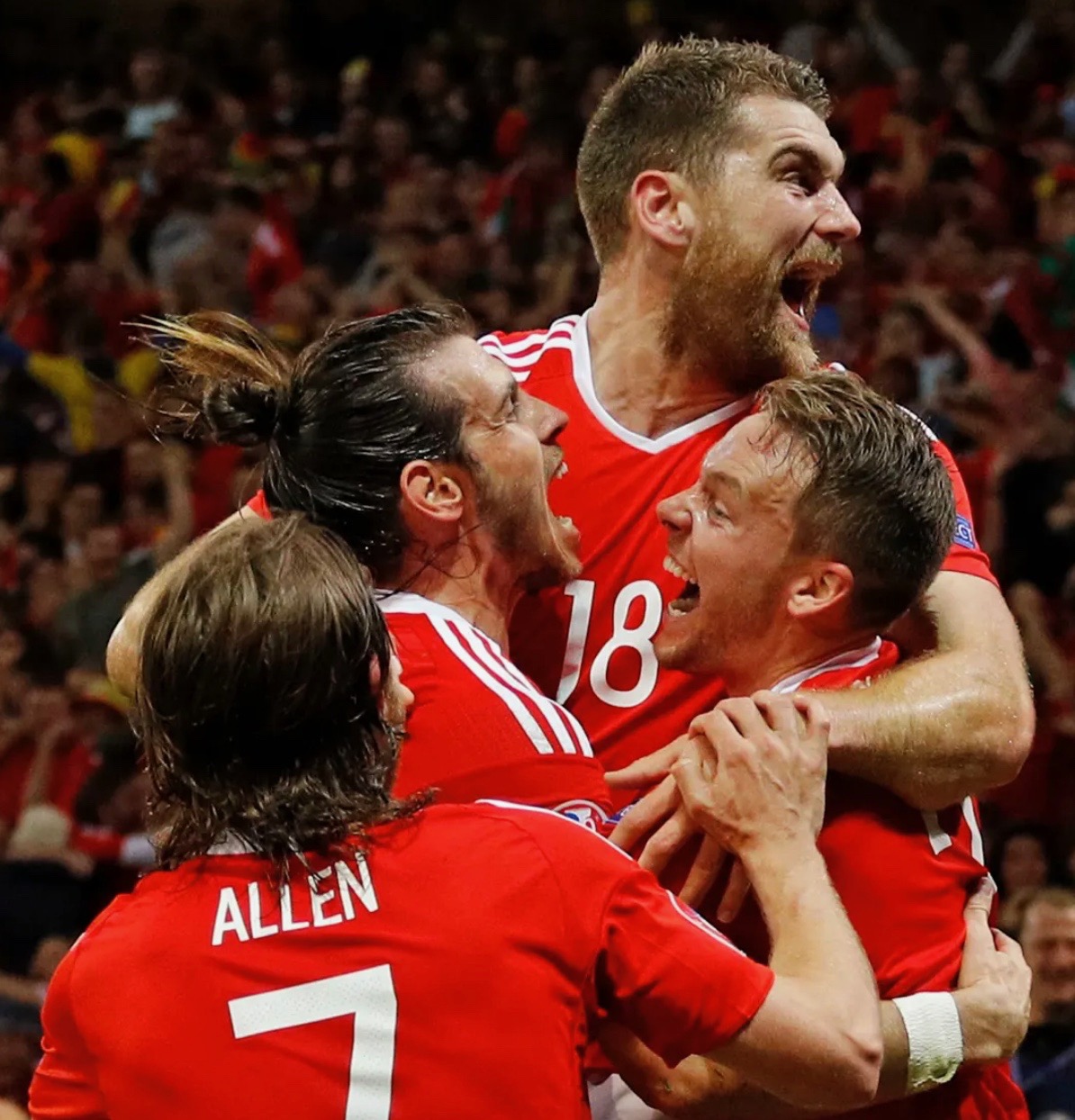
A stand-out moment for his adopted country came during the Euro 2016 tournament when he came on as a substitute and (pictured above) sealed Wales’ 3-1 win over Belgium with an 85th-minute goal to reach the semi-finals.

  • Pictures from various online sources.