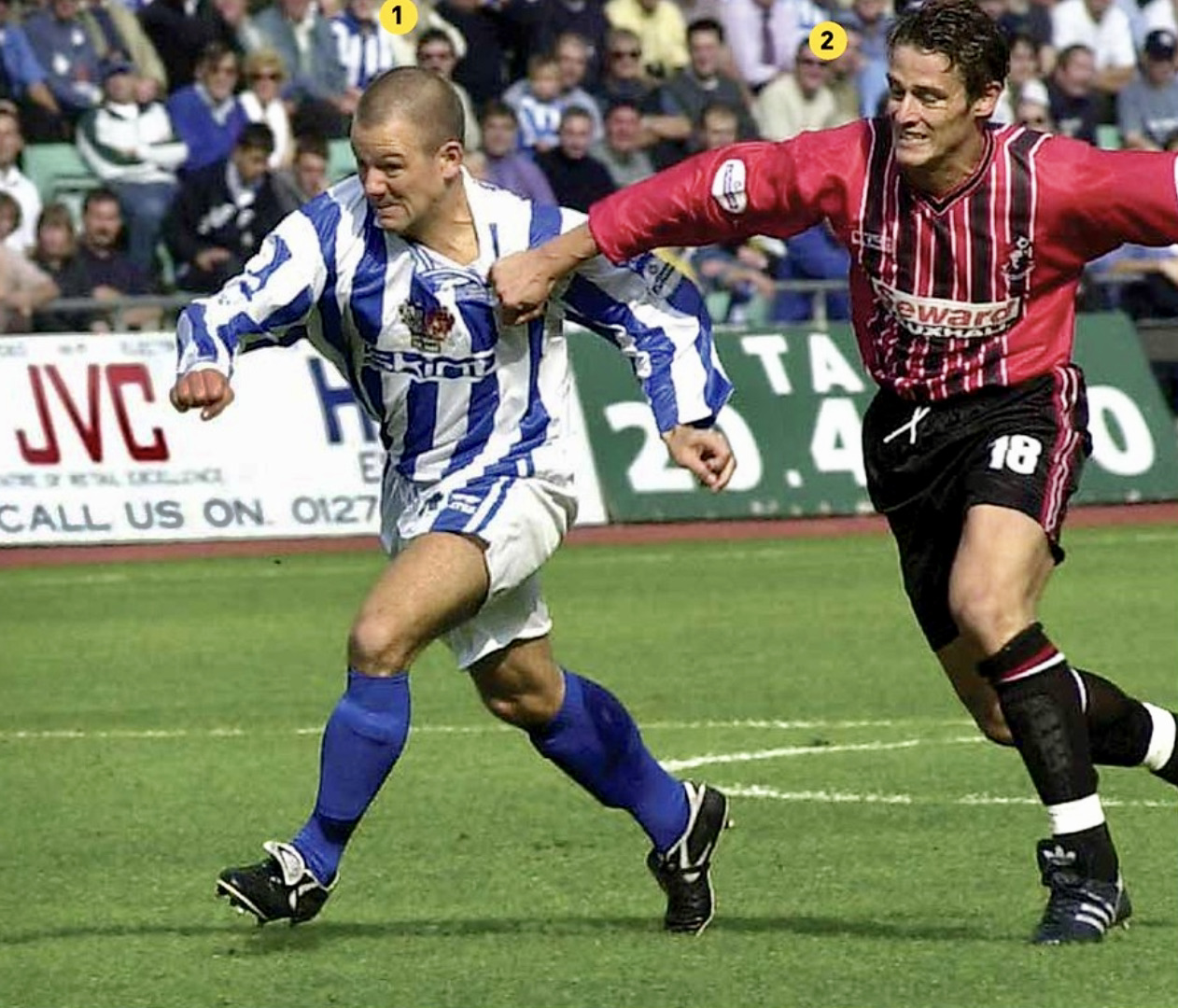
When the ball hits the goal it’s not Shearer or Cole it’s Zamora!

EVERY NOW AND AGAIN as a football supporter a truly special player stands out well above the rest you’ve watched. Bobby Zamora was most definitely in that category.

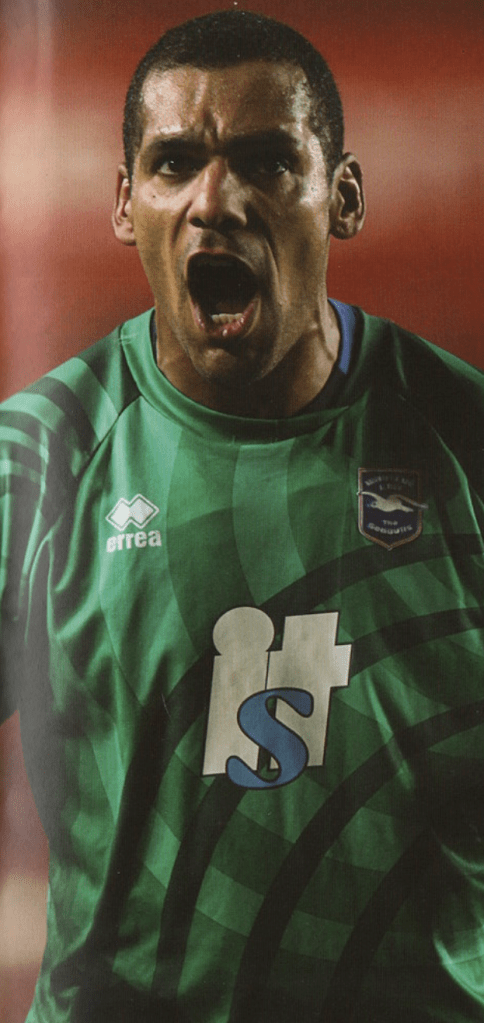
As the new year dawns on what will be my 55th year supporting Brighton & Hove Albion, it is perhaps fitting to spend a little time remembering just how good Zamora was for the Seagulls before his outstanding ability to score goals was taken to higher levels: Tottenham Hotspur, West Ham, Fulham and ultimately, and, quite deservedly, England.

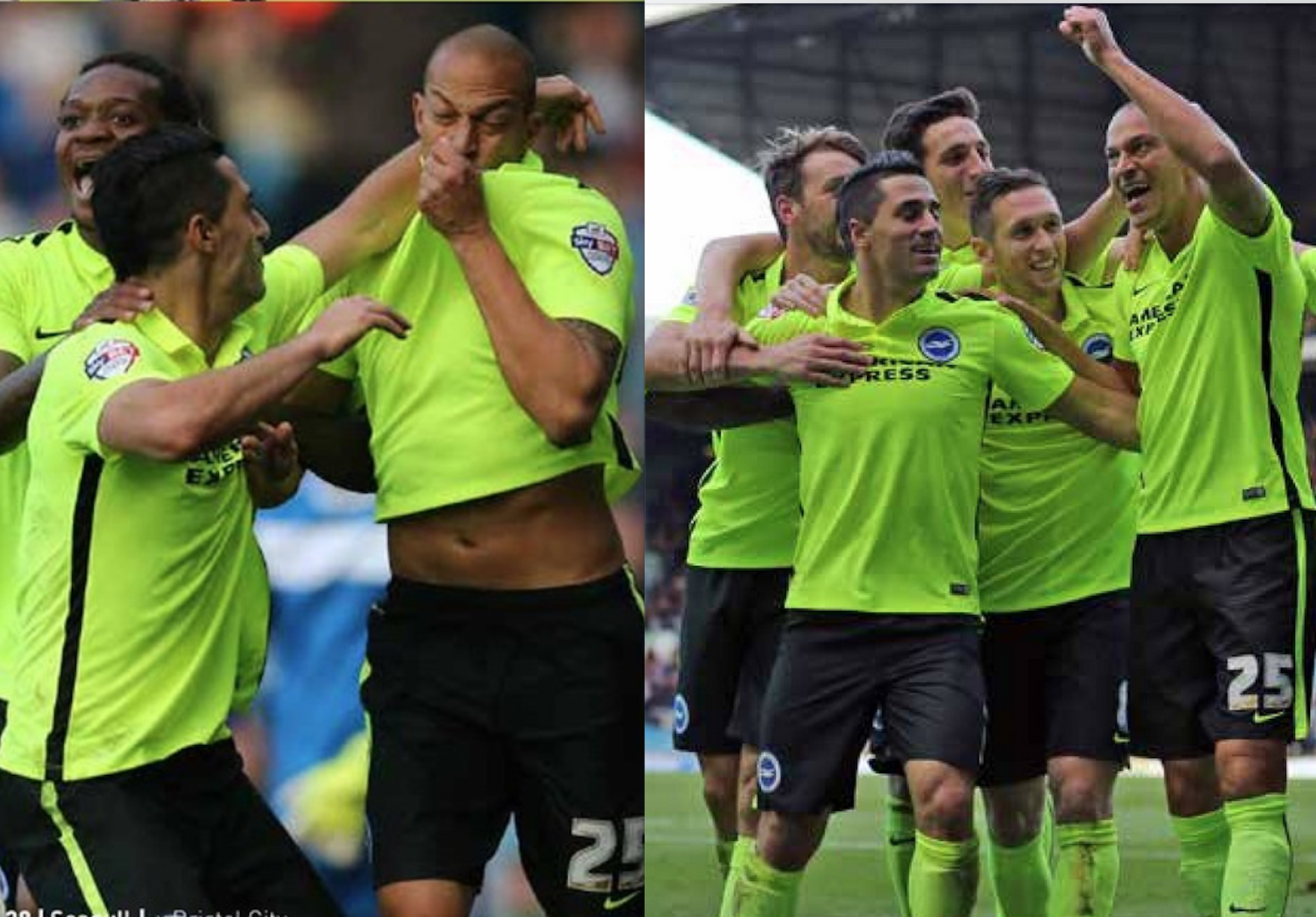
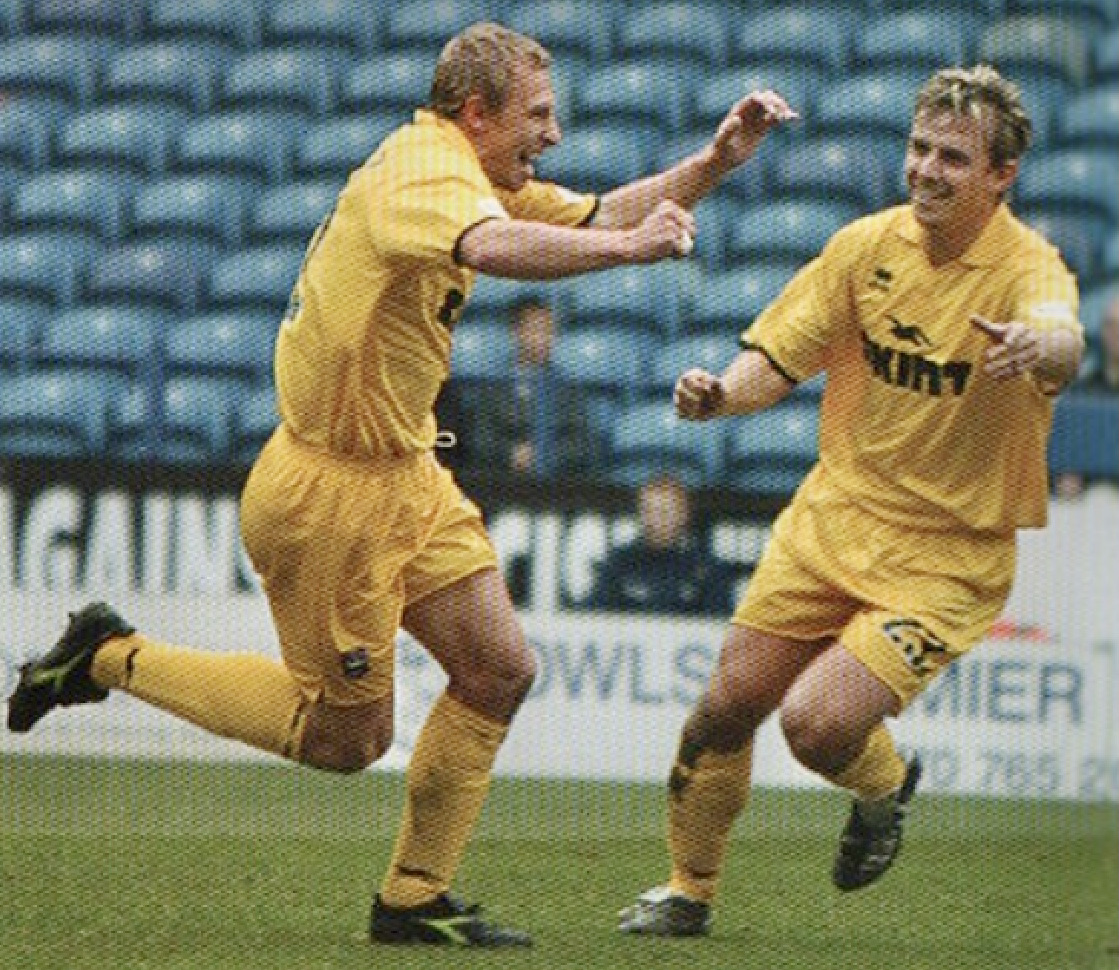
That he came back to the Albion from QPR as his career began to ebb was nothing short of a bonus­ – and, while I’m not a big gambler, I was delighted to get a modest return from the bookies when my punt on him being the last goalscorer came good after he had gone on as a sub at Elland Road on 15 October 2015 and chipped the winner (below) to register his first goal since rejoining!

“That goal was definitely the highlight of my season,” Zamora told interviewer Adam Virgo in a Seagulls World interview. “It was my first goal since coming back and to score the winner so late in the game was unbelievable. It was a special moment for me, and it settled the nerves knowing that we’d got the three points.”

Just four days later, Zamora repeated the feat going on as a 76th-minute substitute for Tomer Hemed at home to Bristol City and beating goalkeeper Frank Fielding with a low shot from 15 yards out. Albion won 2-1; Sam Baldock having levelled things up against his former club after Derrick Williams opened the scoring for City.

Unfortunately, Zamora managed just five more in that second spell. He made 10 starts plus 16 as a sub in Chris Hughton’s side but he was struggling with a hip injury.

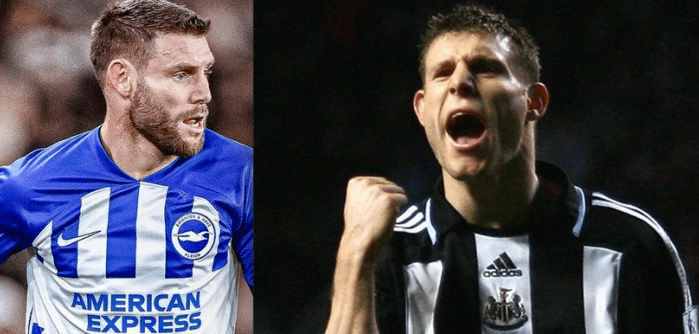
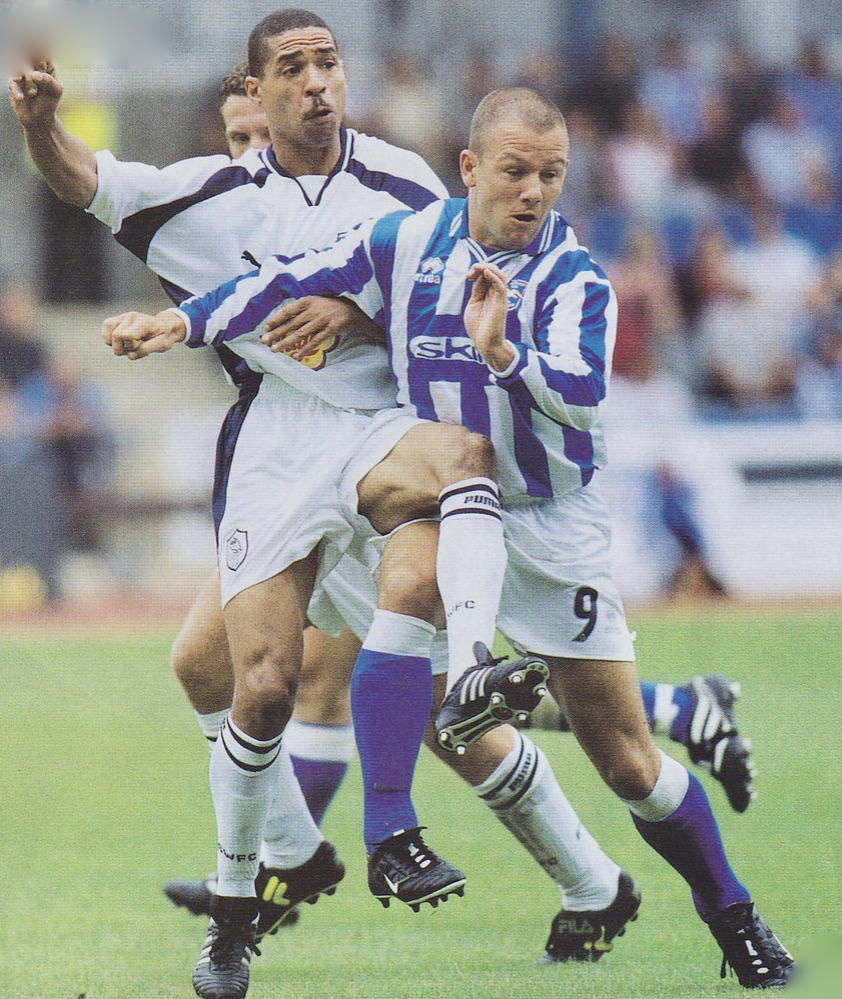
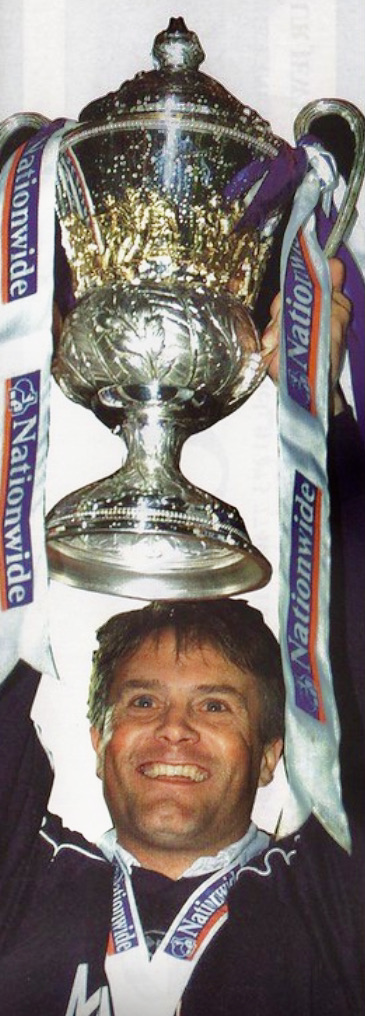
It eventually caught up with him and prevented him from contributing further to Albion’s aim of promotion back to the elite; his last game being as a sub in a 0-0 draw at home to Sheffield Wednesday on 8 March 2016. “If I was fit, I would have scored some goals and we’d have been promoted automatically,” he told the UndrThe Cosh podcast (pictured above).

Thankfully another returning striker in the shape of Glenn Murray completed that task the following season and went on to cement his own place in Albion’s history: his 111 goals in 287 appearances putting him second in the list of Brighton’s all-time top goalscorers.

Golden goalscorers: Zamora + Murray

Each of the different eras I’ve watched the Albion has thrown up truly memorable players who have generated their own air of excitement and anticipation because of the goals they scored.

The first one for me was Alex Dawson, who netted seven in the first five games I watched in 1969. Then along came Willie Irvine whose goalscoring in third tier Albion’s promotion-winning season of 1972 earned him an unexpected recall to the Northern Ireland side – and an appearance (that I went to watch) in a 1-0 win against England at Wembley.

Next, of course, was the truly outstanding Peter Ward, who jinked his way past defenders with apparent ease and scored goals for fun, his 36 goals in 1976-77 smashing a decades-old record. Like Zamora, he came back to the scene of past glories (albeit only on loan) and scored a magnificent winner against the team he supported as a boy, Manchester United.

Garry Nelson, with 32 goals, and Kevin Bremner were a superb front pair in another third tier promotion-winning line-up in 1988 while, in 1990-91, Mike Small and John Byrne combined brilliantly to take the Seagulls within a hair’s breadth of a return to the big time.

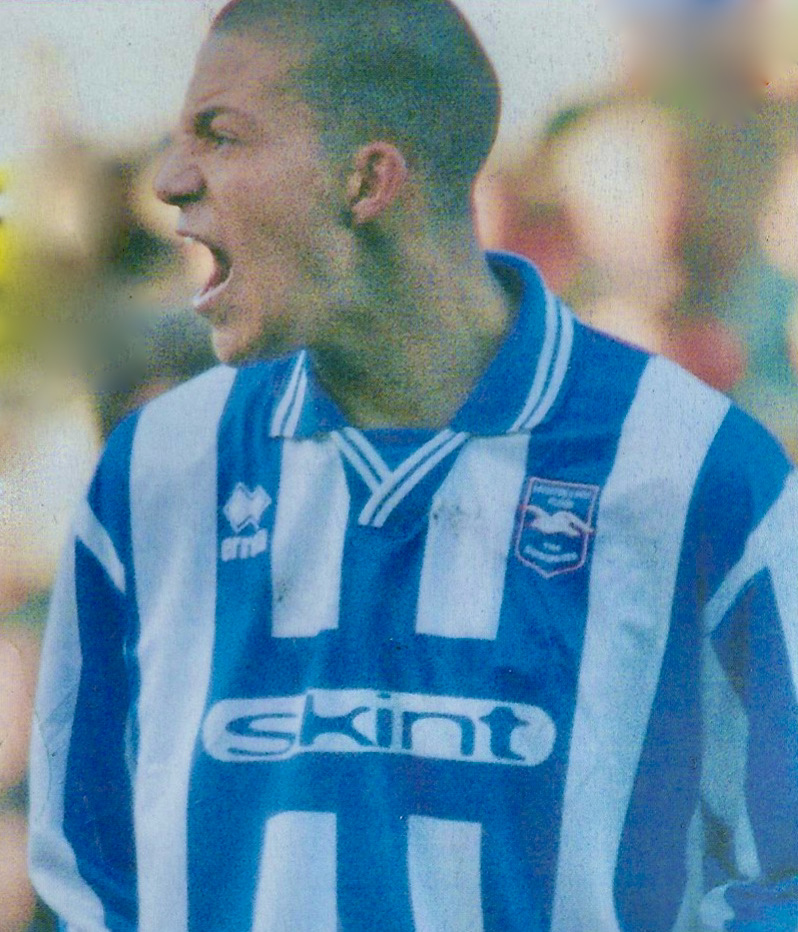
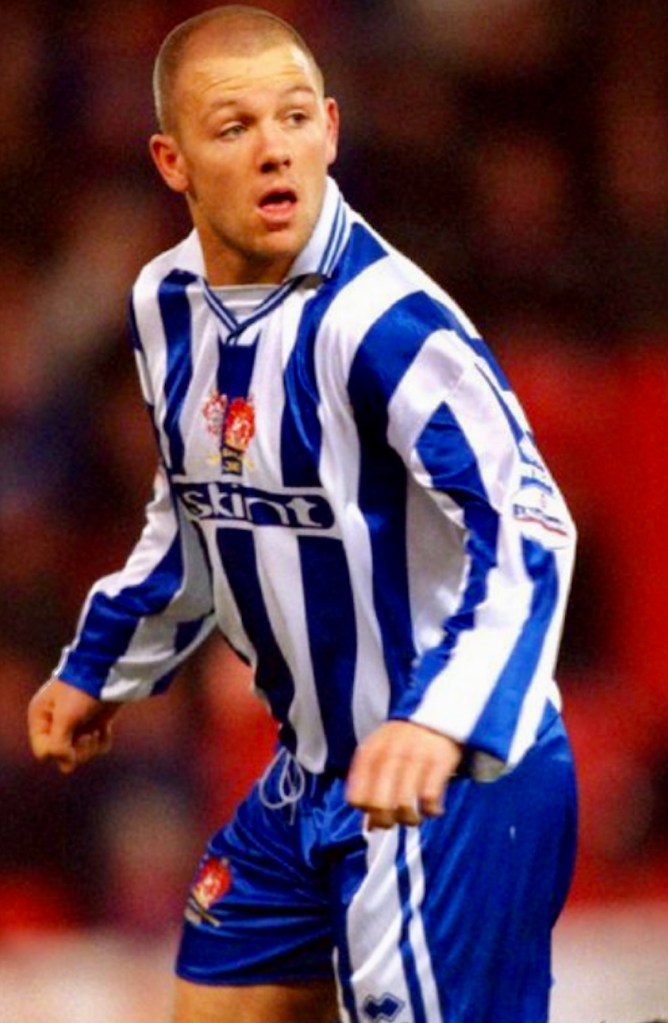
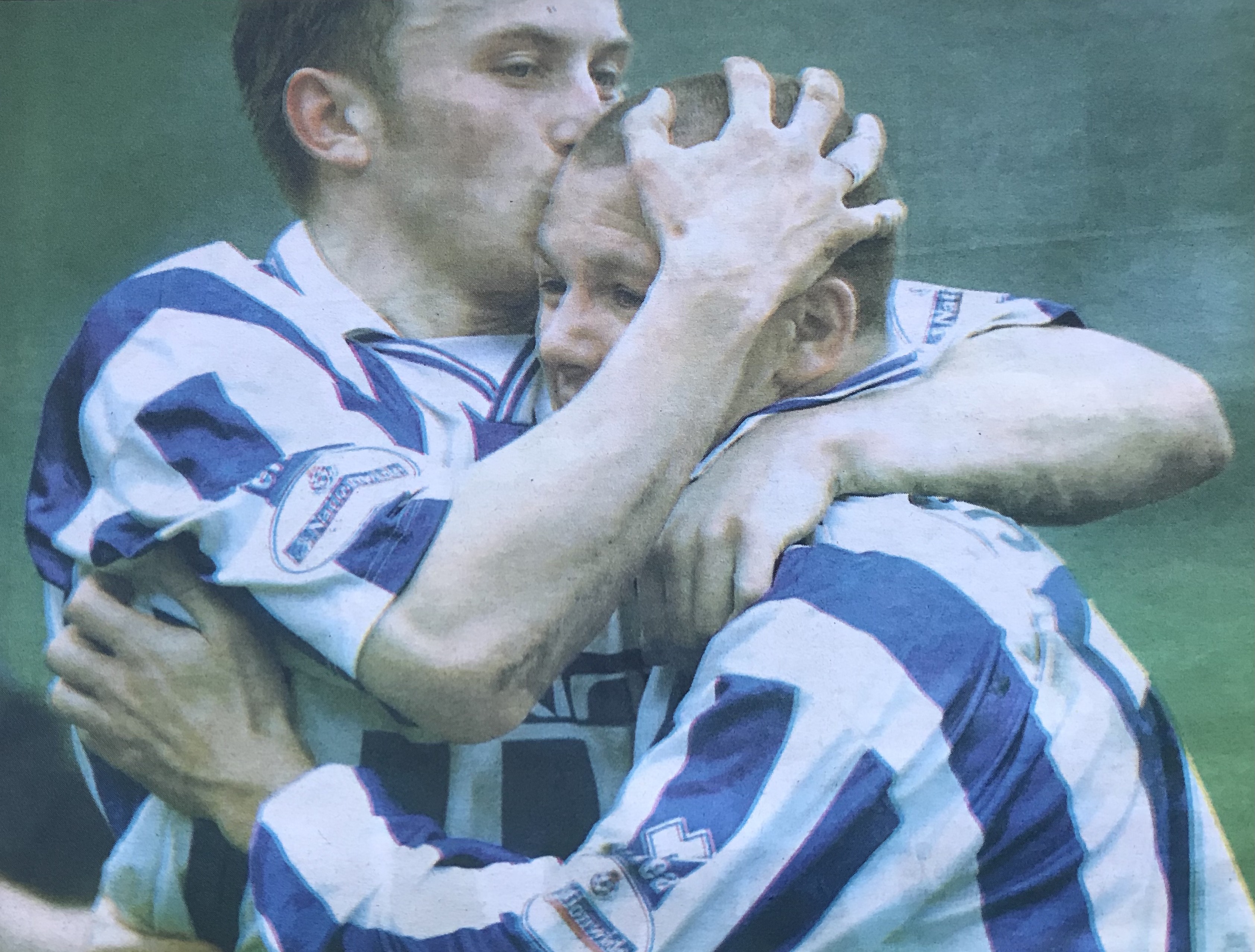
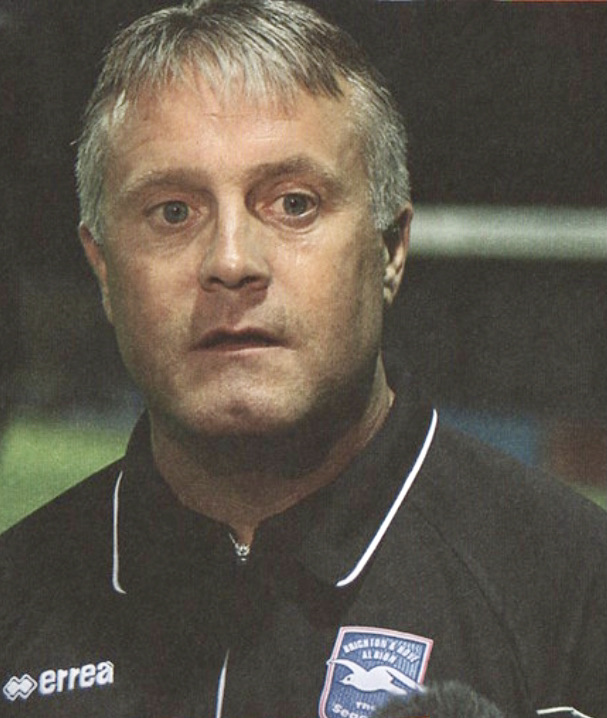
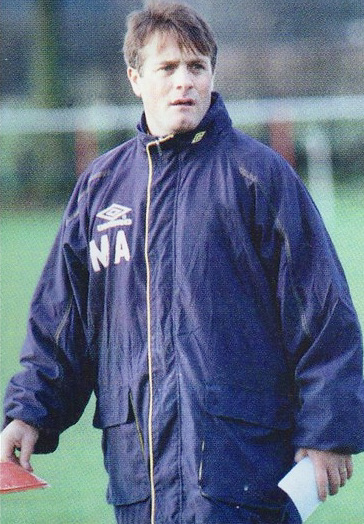
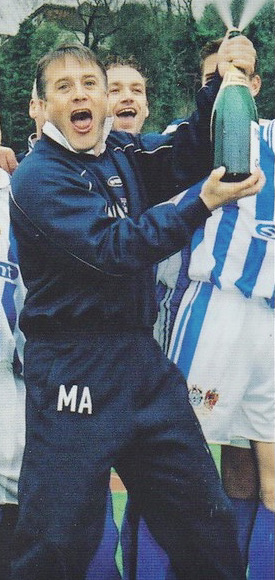
The arrival of a beanpole of a kid with an eye for goal in Zamora completely transformed Albion’s fortunes under Micky Adams and he was the talisman in back-to-back promotions following years in the doldrums.

Zamora’s Albion story is pretty well known but let’s remind ourselves of how it all began.

Depending on whose account you believe more, it was either Dick Knight or Adams who had the foresight to bring Zamora to the Withdean.

Adams said: “The first time I saw him he came onto the training ground; he looked like a kid. But he was tall and gangly with a useful left foot; there was potential there.”

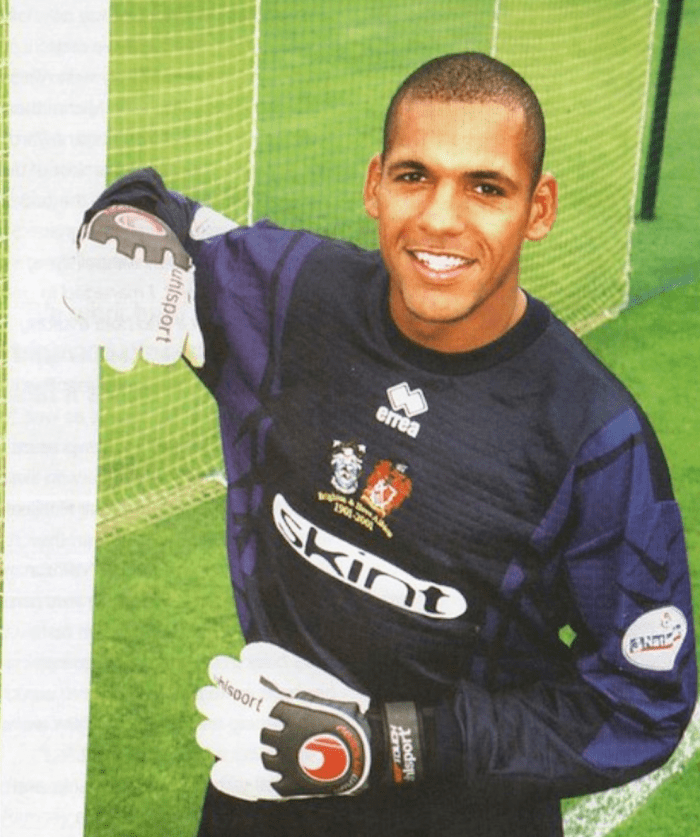
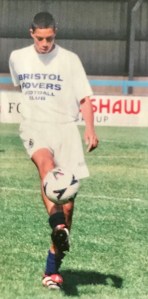
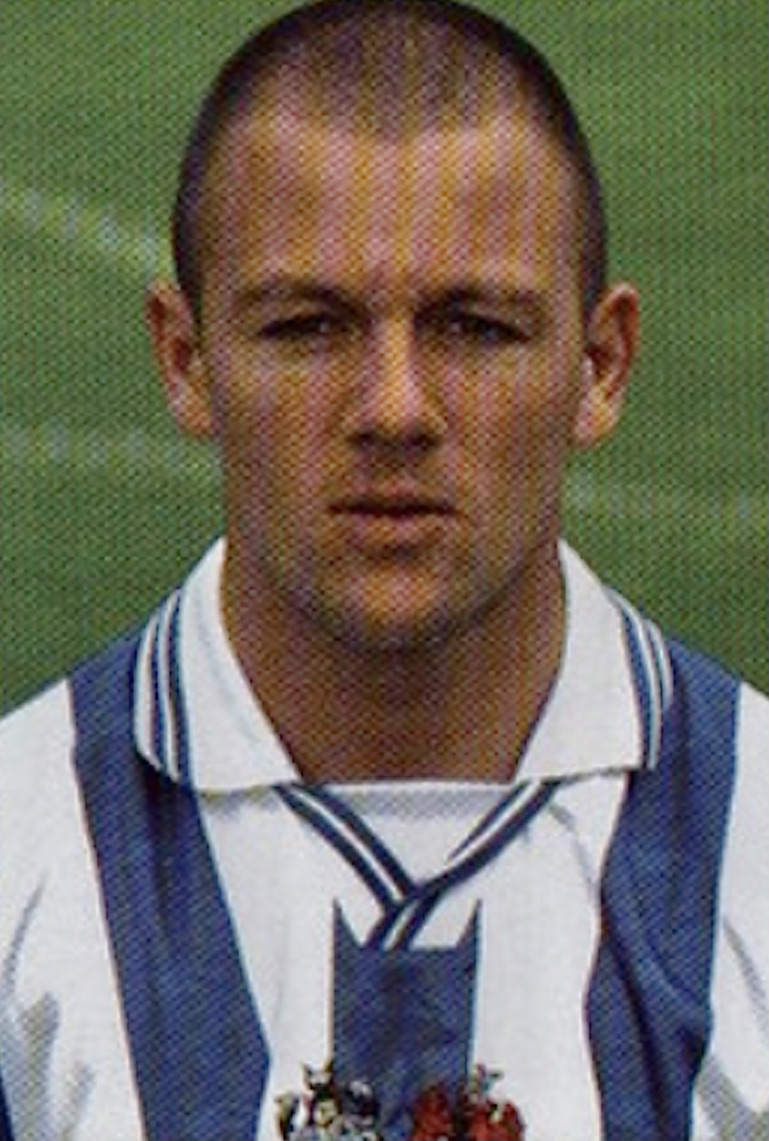
In fact, Zamora might never have arrived in Sussex if Albion had been successful in securing a permanent deal for on-loan Lorenzo Pinamonte. When Brentford outbid Brighton for the services of the Bristol City loanee, Albion turned their attention to Zamora (left), a Bristol Rovers player who was only getting sub appearances under Ian Holloway but had scored eight goals in six games on loan at nearby non-league Bath City.

“He was six foot one and we knew he had a very good first touch and could hold the ball up well, the type of player we wanted,” Knight recounted in his autobiography Mad Man: From The Gutter to the Stars (Vision Sports Publishing, 2013).

Zamora duly arrived on loan and scored six in six matches (including a hat-trick in a 7-1 away win at Chester). He scored an equaliser and was named Man of the Match on his debut v Plymouth and by the end of February was Player of the Month.

Hat-trick ball at Chester

While Knight and Adams wanted him to stay, he insisted on returning to Rovers where he thought he might force his way into Holloway’s starting line-up. But it was back only to the bench as Nathan Ellington, Jason Roberts and Jamie Cureton were ahead of him in the pecking order.

As preparations began for the new season, Albion offered £60,000 for Zamora but Rovers chairman Geoff Dunford wanted £250,000. An incredulous Knight said he wouldn’t go higher than £100,000 and couldn’t believe they could demand such a figure for someone who hadn’t actually started a first team game.

Zamora had Rovers’ youth team coach Phil Bater to thank for forcing through the move. He accompanied the shy youngster into a meeting with Holloway, who tried to say he’d get some games if he stayed. Bater reckoned the youngster was being strung along and argued Zamora’s cause saying he stood more chance of playing if Rovers let him join the Albion.

After some brinkmanship from each club’s respective chairmen, with Knight threatening to walk away from the deal, it finally went through two days before the start of the season, although Albion’s chairman reluctantly agreed to a 30 per cent sell-on clause for the player.

Zamora instantly became one of the top earners on £2,000 a week with a goal bonus built in.

“It was an absolute coup that we had finally secured this player,” said Knight. “I could only see good things in him, could only see that he would be a huge asset to us.

“Football is all a matter of opinions. There is little science to it. For me, Zamora was the best signing I ever made.”

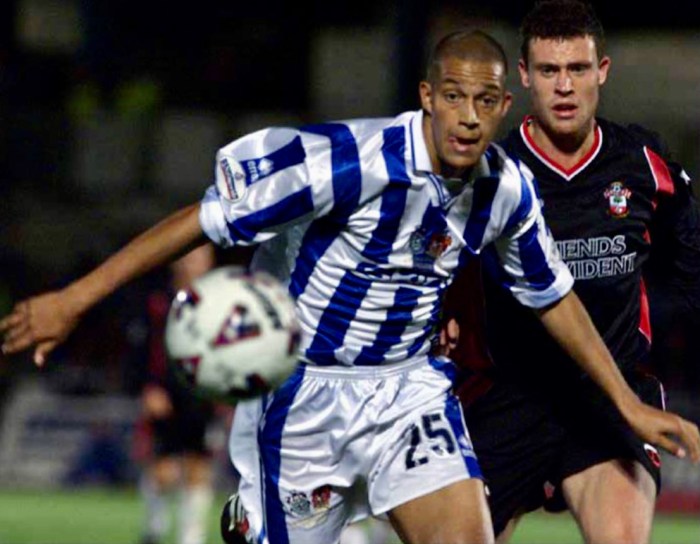
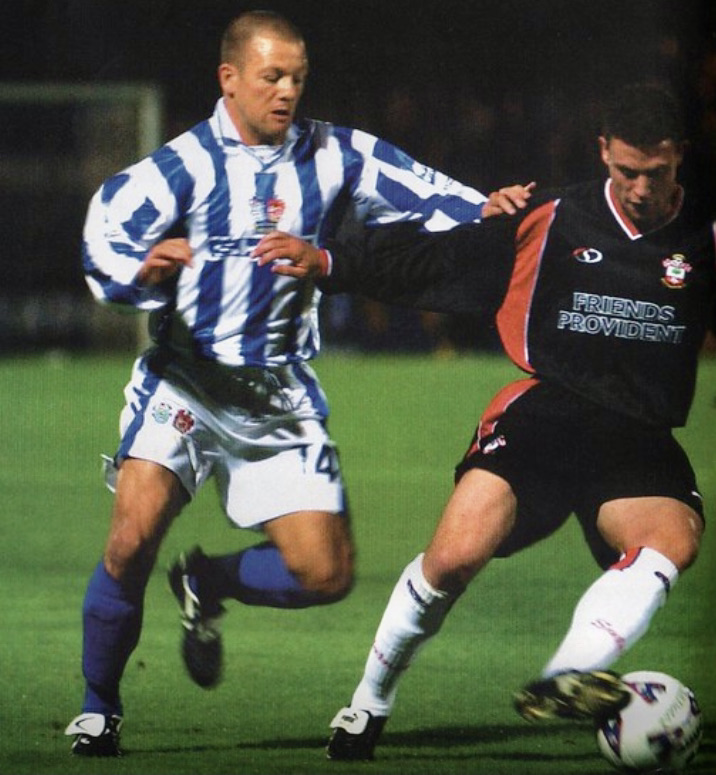
Zamora has eyes on the ball closely watched by a young Wayne Bridge for Southampton

Not only did Zamora manage to score 31 goals as Albion won promotion from the basement division, he went one better when they went straight to the top of the third tier the following season, netting 32 times in 46 matches.

A significant number of those goals came courtesy of Zamora’s excellent understanding with left-footed right-back Paul Watson, of whom he said: “He created a lot of goals for me with those quick free kicks. He didn’t put a foot wrong too often and was very underrated. He never got the credit his hard work deserved.”

Expanding on it in another interview, he said: “Whenever Watto got the ball I knew precisely where I needed to run to and he knew where to deliver it. It was such a great connection: Watto has an absolutely wonderful left foot and it made my job as a striker so much easier when you get deliveries like that.”

Declaring that even in the Premiership he hadn’t come across anybody with a better left foot, he added: “I was very lucky to have played in the same team as him; he created numerous goals for me; not only with his deliveries but with his intelligent play as well.”

Watson had arrived at the club with Charlie Oatway and was part of a cluster of players who had served under Adams at Brentford and Fulham. When Adams and assistant Bob Booker steered Albion to promotion as fourth tier champions, Zamora was player of the season and he and Danny Cullip were named in the PFA divisional XI.

Not long into the following season, the lure of taking over as manager at a Premier League club saw Adams quit Brighton, initially to become Dave Bassett’s no.2 at Leicester City, but with the promise of succeeding him.

“While I thought I had a shot at another promotion, it wasn’t a certainty,” Adams explained. “I knew I had put together a team of winners, and I knew I had a goalscorer in Bobby Zamora, but football’s fickle finger of fate could have disrupted that at any time.”

His successor, Peter Taylor, knew how fortunate he was to inherit an experienced squad, and said: “Of course the greatest asset we had was Bobby Zamora. Having him meant that we could play a front two at home and away from home we could play him on his own and he would still get us a goal out of nothing. He was an incredible player and miles too good for that level.”

And Zamora wasn’t only a star on the pitch, as Knight spoke about in his autobiography. “When he was at his zenith at Brighton, the requests we got for him to visit schools, hospitals and go to prize-givings far outweighed all the other players together, but he was always amenable. He was never starry, never refused. I couldn’t speak more highly of Bobby Zamora as a person.”

Knight recounted in his book how, after a 1-0 win at Peterborough, when Zamora missed a penalty but also scored the only goal of the game, Albion’s promotion to the second tier was confirmed and in his own inimitable way Posh boss Barry Fry said to Brighton’s star striker: “You’re a fucking great player and you’ll play for England one day, I’m fucking sure of it.”

Zamora was still only 21 when Tottenham signed him from relegated Brighton in July 2003. He left the south coast having scored a total of 83 goals in 136 appearances but in his last season in the stripes he netted just 14 as the Seagulls battled unsuccessfully to retain their tier two status.

Unfortunately, he missed eleven matches with a dislocated shoulder and, had former Premier League striker Paul Kitson been fit to play alongside him (he managed only seven starts plus three off the bench), the season may well have had a different outcome.

Everton’s Bill Kenwright had offered £3m for Zamora during the season but their manager Walter Smith seemed less convinced and, with Kevin Campbell and Wayne Rooney likely to be ahead of him, Zamora stayed in Sussex.

But chairman Dick Knight promised not to stand in his way if an opportunity was presented at the end of the season and that came from Tottenham. Manager Glenn Hoddle and assistant Chris Hughton had been to see Zamora in action at the Withdean on a number of occasions.

Spurs chairman Daniel Levy played hardball over the deal. Eventually, Knight settled on a £1.5m fee but, because of the original sell-on clause, £450,000 was due to Bristol Rovers.

Hoddle told The Guardian: “He has got good pace and great movement on and off the ball. No disrespect to Brighton, they have got a good team down there, but we have got players here who can make the most of his movement.”

The player’s agent Phil Smith told the newspaper: “The fee for Bobby is £1.5m which is a decent price in today’s market for a Second Division striker.

“It has been a long time coming for Bobby but he is delighted to be going into the Premiership. It has always been an ambition.”

Disappointed Albion manager Steve Coppell observed: “It is a big move for Bobby and nobody really expected we could hang onto him for much longer. But it has blown a big hole in any plans I had. I don’t have a better option than playing with Bobby Zamora up front.”

When he arrived at Spurs, one of the senior pros who took him under his wing was none other than Gus Poyet.

“As a young guy coming into the team, he was one of the senior pros who would always talk to me and encourage me,” Zamora told the matchday programme. “He didn’t have to do that, but he went out of his way to do so and you could see he had coaching qualities. He would often point things out on the pitch that you’d pick up on, and when he spoke, you’d listen.

“He wasn’t starting every game either, so in training I did more things with him than maybe the rest. I really got on well with him.”

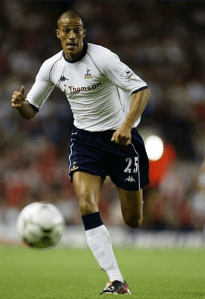
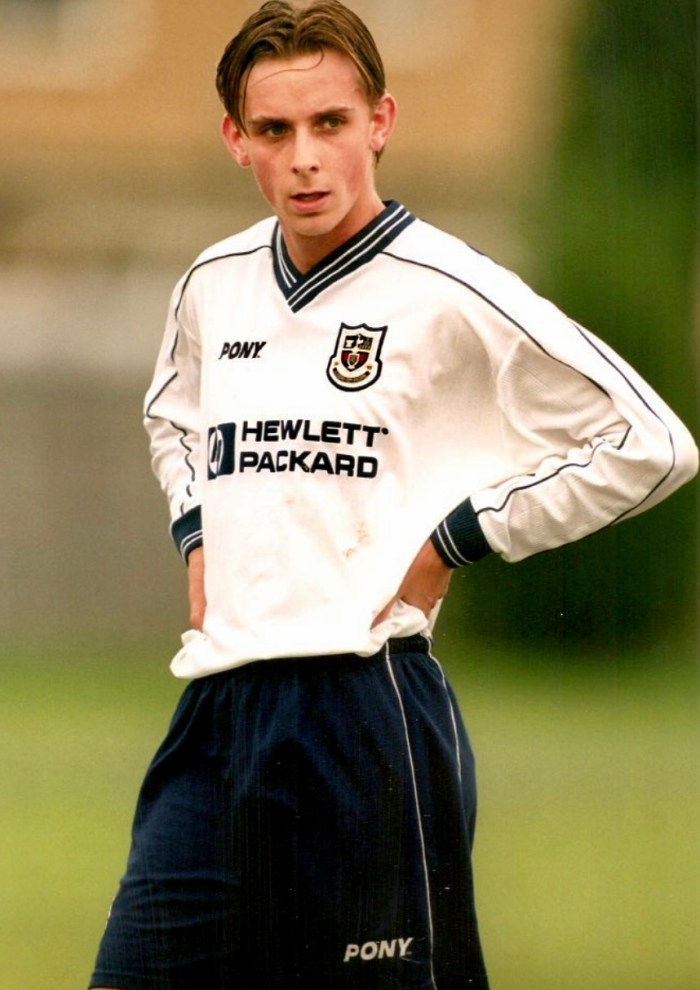
As it turned out, Zamora made only 18 appearances for Spurs (11 as a substitute) and only scored once – ironically a single goal that knocked West Ham out of the Carling Cup in October 2003.

In January 2004, Spurs chose to use him as a makeweight in taking Jermain Defoe from the Boleyn Ground to White Hart Lane.

Phlegmatic Zamora didn’t look on it as a failure but embraced the “learning curve” of training alongside the likes of Poyet, Robbie Keane, Darren Anderton and Jamie Redknapp.

“I came away a better player and with more experience,” he said. “Glenn Hoddle had signed me and then he got sacked not long afterwards. David Pleat took charge and we didn’t really see eye-to-eye, but the lads and the club were brilliant and I learned so much from my time there.

“I took a chance by stepping back down to the Championship with West Ham – but it was the opportunity of playing regular football again that was the pull for me.”

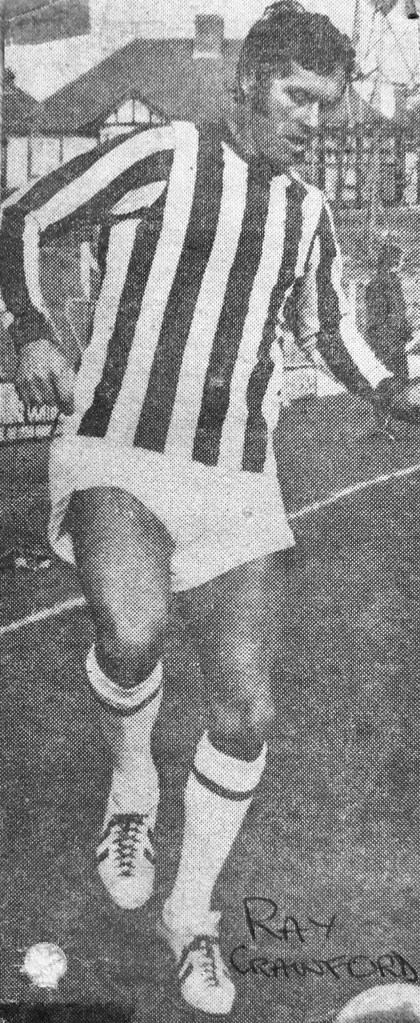
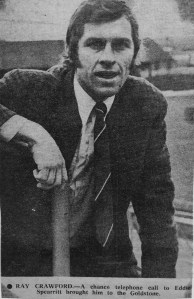
Goalscorer Ray Crawford took on Brighton backroom role

RAY CRAWFORD, one of the foremost goalscorers of the 1960s, came close to a swansong with the Albion and ended up coaching the club’s youngsters.

Crawford had been a key player in Alf Ramsey’s First Division title-winning Ipswich Town side having begun at hometown club Portsmouth and later netted 41 goals in 61 appearances for Wolverhampton Wanderers.

He joined Brighton in the autumn of 1971 after he had read they were struggling to score goals. Earlier the same year, he’d hit the headlines at the age of 35 when he scored twice for Fourth Division Colchester United as they sensationally beat Don Revie’s First Division Leeds United 3-2 in the FA Cup.

After a subsequent short stint playing in South Africa, homesickness brought him and his family back to the UK and the search began for a way to continue his celebrated career in the game.

He got in touch with his former Ipswich teammate, Eddie Spearritt, a key member of Albion’s squad, and the utility player persuaded manager Pat Saward to offer Crawford a trial.

“I did well enough in my trial week for Pat to ask me to stay for another month and to see how things went,” Crawford recalled in his eminently readable autobiography Curse of the Jungle Boy (PB Publishing, 2007).

Crawford found the net for the reserves, but a contractual issue with his last club, Durban City (who wanted a fee the Albion weren’t prepared to pay) prevented him joining as a player.

Meanwhile, the previous goalscoring slump that had first drawn him to the club was remedied by a decent run of goals from Peter O’Sullivan to supplement a revival in the form of strikers Kit Napier and Willie Irvine.

It meant Crawford, at 36, hung up his boots (although he still managed a cameo 15 minutes for the reserves in October 1973) to concentrate on coaching.

In the days before large teams of scouts and analysis tools, he would also run an eye over Albion’s future first team opponents to highlight their strengths and weaknesses.

“His dossiers on opposing styles and individual players have proved of great value in the team talks,” reported John Vinicombe in an Evening Argus supplement celebrating Albion’s promotion from the Third Division.

“When I returned to England after a spell with Durban City my only thoughts were of playing,” Crawford recalled. “Before I went to South Africa, I had a good season with Colchester United scoring 32 goals, and, of course, there were the two goals that I scored against the great Leeds United, knocking them out of the FA Cup, which still made me believe that my career was in playing.

Crawford scores v Leeds in the FA Cup

“But when my month’s loan from Durban City expired, and Pat Saward asked me if I would like to join the staff, I jumped at the chance.”

It didn’t stop Saward continuing to search for someone to supplement the strikeforce as the Albion went neck and neck with Aston Villa and Bournemouth for promotion.

Saward even brought in on trial another former England striker, the ex- Everton, Birmingham and Blackpool striker Fred Pickering from Blackburn Rovers. Like Crawford, he scored for the reserves but he wasn’t deemed fit enough for the first team.

Eventually, in March 1972, Saward found the missing piece of his jigsaw in Ken Beamish, a record transfer deadline day signing from Tranmere Rovers.

Beamish chipped in with some vital late goals to help Albion edge out the Cherries to secure Albion’s promotion as runners up to Villa.

The new man’s contribution earned Crawford’s approval in Brighton & Hove Albion Supporters’ Club’s official souvenir handbook, produced to celebrate the promotion.

Crawford as coach

He said: “I don’t like to single out players because football is a team game, but I must on this occasion. Ken Beamish added the final bite up front, and those vital goals that he scored helped us into Division II. What a player this boy is – he never gives up!”

It emerged in Crawford’s autobiography that he also had a friend in Albion chairman Mike Bamber, having got to know him when the Colchester team stayed at Bamber’s Ringmer hotel before a FA Cup tie.

Ever one for rubbing shoulders with stars, Bamber had subsequently invited Crawford back to Sussex to open a local fete in exchange for a weekend stay at the hotel with his family.

“Since that time, I had regarded Mike as a friend and a man I could trust,” said Crawford.

The former striker’s work with the club’s youngsters was evidently appreciated; for instance by Steve Barrett (below left) who said in 2011: “Ray was my coach when I was an apprentice and a young pro. Always had a great enthusiasm for the game and, even in training at the age of about 40, had a good touch and great eye for goal.

“Was great fun on our annual youth trips to tournaments to Holland or Germany. Was very modest in general but loved to remind everyone of his two goals for Colchester against the then mighty Leeds in the FA Cup. A really nice man.”

When Saward was sacked in the autumn of 1973, Crawford assisted caretaker manager Glen Wilson for the home fixture against Southport, which Albion won 4-0.

As for his relationship with Bamber, it counted for nothing as soon as the chairman astonished the football world by appointing Brian Clough and Peter Taylor to succeed Saward.

Crawford was angered by Clough’s “abrasive and stubborn” shenanigans, for instance being bought a pint in a Lewes hotel bar and then left waiting with Wilson as the former Derby duo disappeared for two hours.

“I wasn’t prepared to be treated like that and I soon found out that the way he spoke to people was as I’d expected,” Crawford recalled. “One day he left the players sitting in the dressing room for two hours before training. I don’t know why. It left a sort of threatening pressure on the players that I didn’t agree with.”

It probably didn’t help matters that Crawford’s outspoken wife Eileen also took issue with Clough when he tried to stop the players’ wives having a smoke while socialising before a match. “I don’t smoke, but if I did, it wouldn’t be anything to do with you!” she told him.

Crawford had heard that his first club, Portsmouth, were looking to revive a youth set-up that had been abandoned under a previous manager, so he applied to take on the role of setting it up and running it and headed back to Fratton Park in December 1973.

Born just a mile away from Portsmouth’s famous home ground, the eldest of four children, on 13 July 1936, Crawford initially looked unlikely to follow the sporting prowess of his dad, who had been a professional boxer, because of asthma.

Nevertheless, his enthusiasm for football was sparked by a display of skill from Pompey player Bert Barlow when he did a coaching session at his school, and he joined a local football club called Sultan Boys.

Then he was taken to see Portsmouth play at Fratton Park and he set his heart on stepping out onto that turf himself.

At 14 he started to fill out in height and weight. “I changed quickly from a skinny, shy, asthmatic youth into a strong, young athlete, representing Hilsea Modern School and Portsmouth Schools in cross country running and in the 440 yards,” he said.

He also excelled at cricket and was offered the chance to have a trial with Hampshire County Cricket Club. But his heart was set on football.

Eventually a break came courtesy of a friend who was already in Portsmouth’s youth team. Crawford was invited to twice-weekly training and, after impressing, was taken on as a junior.

In the meantime, he worked by day for the Portsmouth Trading Company making concrete and breeze blocks, which involved spending around eight hours every day lifting 500 heavy blocks onto pallets to dry. It certainly got him fit.

The football club eventually offered him a contract after two years of training with them, but then (as was the case with all young men at the time) he had to do two years’ National Service in the army.

That’s where the title of his book comes in because he was posted to Malaya where word of his footballing ability had already spread. He was invited to play for Selangor Rangers, the biggest club in Kuala Lumpur, and the army also gave him permission to play for the Malayan Federation on a tour of Cambodia and Vietnam.

“Whilst I took part in many more football matches in Malaya than military exercises, I did go out into the jungle on a few occasions with the battalion,” he recalled.

Back at Portsmouth in the autumn of 1956, Crawford resumed his football career, initially in Pompey’s reserve team. After scoring 33 goals in 39 reserve team games, he finally got a first team call-up, making his debut in a 0-0 draw against Burnley at Fratton Park on 24 August 1957.

In the following game, he scored two in two minutes as Spurs were beaten 5-1 at home, but the following month he suffered a broken ankle that sidelined him for two months.

The beginning of the end of his fledgling Pompey playing career came in December that year when he lost it with the club chairman, Jack Sparshatt, who puzzlingly decided to enter the dressing room at half-time during a game, voicing his disapproval at the performance. Crawford told him to f*** off!

Perhaps not surprisingly he was left out of the side for a month.

He did get selected again in the new year, playing up front with Irishman Derek Dougan, but, that summer, Eddie Lever, the manager who’d given him his debut, was sacked and it wasn’t long before his replacement, Freddie Cox, sold Crawford to Ipswich.

Although he hadn’t wanted to move, future England boss Ramsey was persuasive and Crawford admitted: “I had no idea at the time that this would eventually turn out as one of the best decisions I ever made in life.”

The Hampshire lad adapted well to Suffolk and by the end of his first season at Town had scored 25 goals in 30 league games. Not a bad return but even better was to come and with Crawford and strike partner Ted Phillips rattling in the goals, Ipswich won back-to-back titles, winning the second tier championship in 1960-61 and the elite title in 1961-62.

Crawford scored 40 and Phillips 30 as Ipswich won promotion in 1961 and, at the higher level the following season, Crawford bagged another 37 goals.

Such prolific scoring inevitably brought him to the attention of the international selectors and, at the age of 25, he won two England caps. The mystery was why he didn’t win more.

Crawford made his England debut in a Home International against Northern Ireland at Wembley on 22 November 1961. He was credited with setting up England’s goal, scored by Bobby Charlton in the 20th minute, and the game ended in a disappointing 1-1 draw.

The 30,000 crowd for the Wednesday afternoon match was a record low for Wembley at that time. The prolific Ipswich striker only won one more cap, and then only because of a fractured cheekbone injury to first choice Alan Peacock of Middlesbrough.

Nonetheless, Crawford seized his chance and got on the scoresheet after only seven minutes against Austria in a friendly at Wembley on 4 April 1962.

He turned and buried a shot to give England an early lead which Ron Flowers increased with a penalty before half-time. Roger Hunt scored a third for England in the second half. Hans Buzek pulled one back for the visitors in the 76th minute.

As well as Hunt, future World Cup winners Ray Wilson and Bobby Charlton were also in the England line-up, together with 1966 squad members Jimmy Armfield and John Connelly. The team was captained by Fulham’s Johnny Haynes. Jimmy Melia was part of the squad but didn’t play.

Jimmy Magill, who later joined Brighton from Arsenal, was in the Irish side whose equaliser was scored by Burnley’s Jimmy McIlroy. Spurs’ Danny Blanchflower won his 50th cap for his country that day.

Having scored 33 goals in the First Division, Crawford was gutted not to be selected in the England squad for the 1962 World Cup in Chile and future England boss Ramsey was mystified too. “I just don’t understand it and I will go as far as saying it is downright unfair,” he said.

Crawford reckoned it was because England coach Harold Shepherdson, who also held a similar role at Middlesbrough, always advanced the claims of Boro’s aforementioned Peacock, who was chosen ahead of him despite scoring fewer goals, and in the Second Division.

Although Crawford was selected three times for the Football League representative side, he didn’t win any more full international caps.

Probably more surprising was that his old club boss Ramsey, who had seen him at close quarters for Town, didn’t turn to him after he’d taken charge of England in October 1962. But Ramsey had an embarrassment of riches at his disposal, not least in the shape of Jimmy Greaves and Bobby Smith along with Liverpool’s Hunt and later Geoff Hurst.

Crawford’s first meeting with Jackie Milburn, who took over from Ramsey as Ipswich boss, simply involved the former Newcastle and England centre-forward saying: “Nice to meet you Ray, you won’t be here long.”

Sure enough, he wasn’t. Despite his past successes, Ipswich cashed in and sold him to Wolves for £55,000 in September 1963.

His debut was somewhat ignominious as Wolves succumbed 6-0 at Liverpool (their ‘keeper Malcolm Finlayson was forced off injured) but Crawford scored twice in his second game as Wanderers won 2-1 at Blackpool (for whom Alan Ball scored).

Crawford went on to finish that first season with 26 League goals to his name in 34 games and was named Player of the Year, although Wolves finished in a disappointing 16th place.

Crawford, who is remembered fondly on the website wolvesheroes.com, had been joined at Molineux by Liverpool’s Melia (“a fine passer of the ball”) but when Stan Cullis, the manager who signed them both, was sacked, neither of them saw eye to eye with his successor, Andy Beattie.

Melia was sold to Southampton and the rift with the new boss saw Crawford switch to Black Country rivals West Brom in February 1965 for a £35,000 fee. He later reflected it was a case of jumping out of the frying pan into the fire because he didn’t enjoy a good relationship with Baggies boss Jimmy Hagan.

The striker played only 16 matches for Albion, scoring eight goals, before asking for a transfer in March 1966 and being granted his wish. “I did my best but never had a decent run of games in the first team,” he said. “It never quite worked out but I enjoyed most of my time there and the fans could not have been better.”

It was former club Ipswich, battling at the wrong end of the Second Division, who rescued him and, even though it meant dropping down a division, he was happy to return to Portman Road under Bill McGarry.

Crawford struck up a useful striking partnership with prolific American-born Gerry Baker. By the end of the season, he’d scored eight goals in 13 appearances and Town managed to avoid relegation.

He was part of the Ipswich side that won the Second Division championship the following season, netting 25 goals in 48 appearances, and by then was approaching his 32nd birthday.

The goals continued to flow with Ipswich back amongst the elite, Crawford scoring 21 in 42 games in the 1967-68 season. But more managerial upheaval was around the corner, when McGarry left to become manager of Wolves.

“When McGarry left for Wolves, I had lost my master and mentor, leaving a psychological gap for me that wasn’t going to be filled by anyone else however qualified or good they were as a manager,” said Crawford.

Even before Bobby Robson succeeded McGarry, Crawford started to weigh up his options and he decided he fancied a move to South Africa, where his old Ipswich teammate Roy Bailey had settled.

Although Town chairman John Cobbold initially agreed to give him a free transfer, the Board later changed their mind and decided they wanted some compensation for his services. Instead of going to South Africa, he ended up moving to Charlton Athletic for £12,000.

The move to The Valley turned sour after he refused to join a training camp organised by manager Eddie Firmani because his family were ill and he needed to be at home to look after them. He was sacked after playing just 22 games for the Valiants, during which time he scored seven goals.

Southern League Kettering provided a short-term means of getting back into playing but it was Fourth Division Colchester United who took him on and he repaid their faith by scoring 31 goals in 55 matches under Dick Graham, the most memorable being that pair against Leeds.

Crawford eventually got his move to South Africa in August 1971, joining Durban City, but his family couldn’t settle and they returned to the UK three months’ later.

During his time as youth coach at Portsmouth, he was responsible for signing Steve Foster and, in his autobiography, recalls how a tip-off from Harry Bourne, a local schoolteacher set him on the path of the future Albion and England centre-back.

Foster had been released by Southampton and Crawford went to the family home in Gladys Avenue, Portsmouth, to invite him to train with Pompey. Foster’s mother was at a works disco at Allders and Crawford went to find her there and had to shout above the sound of the music that Portsmouth were interested in signing her son.

The youngster, 18 at the time, got in touch the next day and, before long, was switched from a centre-forward to a centre-back, after Crawford’s former Ipswich teammate Reg Tyrrell told him: “That no.9, he’s no centre-forward, but he’d be a good number 5.”

After he left Portsmouth in 1978, Crawford took over as manager at Hampshire league side Fareham Town and later managed Winchester City before finally retiring from the game in 1984 to become a merchandising rep.

Fate dealt blows throughout Essex lad David Lee’s career

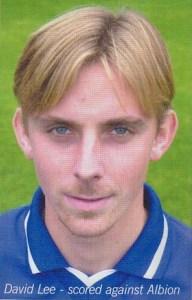
IT MAY simply have been David Lee’s misfortune that he joined Brighton at a time when they weren’t short of decent midfield players.

Nevertheless, a player who had gone through the ranks at Spurs alongside the likes of Peter Crouch and Ledley King might have been expected to make more of an impression.

As it was, the manager who signed him moved on and he ended up starting just one league game in two and a half years with the club.

Ultimately a horror injury brought a premature end to Lee’s career at the age of 28, but he stayed in the game as an agent – Lewis Dunk being one of his clients.

It was in January 2002 that Peter Taylor, a one-time Spurs player himself, brought Lee to the Albion from Hull City in direct exchange for fringe player Matthew Wicks.

Taylor had been close to signing him when he was manager of Gillingham but, after moving on to Leicester City, Taylor recommended him to Southend United instead.

By the time Lee arrived at the Albion, they were already on an upward trajectory towards promotion from the third tier and he had to be content largely with reserve team football and a seat on the first-team subs bench.

The first Albion fans got to see of him came on 23 February 2002 at home to Wrexham when he went on as a 23rd minute substitute for Gary Hart alongside inexperienced Chris McPhee, who was playing in the absence of goal king Bobby Zamora.

Wrexham brought Albion’s run of five straight home wins to an end in what the Argus described as “a dour deadlock” and in the process became the first side to stop the Seagulls from scoring at Withdean Stadium for 13 months.

In fact, sharper-eyed Albion watchers might have recognised the newcomer as a player who’d scored against the Seagulls twice the previous season.

He marked his debut for Southend in the opening match of the 2000-2001 season with an 83rd-minute second goal that sealed a 2-0 win for the home side.

Then, in the reverse fixture, he scored again as United completed the double over the Seagulls on a quagmire of a pitch at Withdean on New Year’s Day 2001. On that occasion, Lee went on as a 77th minute substitute for Ben Abbey and scored five minutes later as the Shrimpers again won 2-0.

Described by Spurs history website ‘My Eyes Have Seen The Glory’ as “a slightly built, but athletic midfielder, who had an eye for an attacking option as he used his passing to try and open up opposition defences”, Lee spent a season at Roots Hall, initially under Alan Little, scoring 10 goals in 52 games. “I played nearly every game so it couldn’t have gone much better really,” Lee told the Basildon Canvey and Southend Echo.

But after just one season with Southend, Lee joined Division Three Hull City, managed by previous manager Little’s brother Brian (better known for his time in charge of Leicester and Aston Villa). It was a decision Lee later rued.

“Looking back, I do regret it,” he said. “I left because the (Southend) manager Dave Webb said he thought I’d had a good season and that Leicester were interested in me.

“My form wasn’t good at the end of the season so he told me they would be coming back to have another look at the start of the next season. Then he told me I’d have to take a pay cut to stay.

“At the same time, Hull offered to double my money for three years.” Hence he ended up with the Tigers.

He made his debut as a substitute in the League Cup and followed up that appearance with brief cameo roles off the bench in the league. One saw him score Hull’s fourth goal in a comprehensive 4-0 thumping of York City for whom Graham Potter was playing!

Lee made a rare start in a 1-1 draw away to Shrewsbury Town and kept his place for the next game (a 1-0 win over Torquay United), but it was back to appearances off the bench after that.

It was Taylor, fired by Leicester but installed as Micky Adams’ replacement at promotion-seeking Albion, who rescued him from Hull, signing him on a two-year contract in January 2002.

Unsurprisingly, Lee saw it as a “massive blow” when Taylor quit the Albion after steering the side to promotion because he didn’t believe enough was going to be spent on investing in the squad to compete at the higher level.

“I’m disappointed because he brought me to the club in the first place,” Lee told the Argus. “When I came, he wasn’t looking for me to get straight into the first team.

“He told me next year he would look to get me more involved. Now he has left it’s going to be difficult. When the new manager comes in, I have got to make sure I am fit and try to impress him.

“It’s a huge stage for a young player in the First Division and I need to be playing.”

Of course, if Lee had hung on at Hull slightly longer, he’d have been joined there by Taylor!

“I should have stayed there for longer but I went to Brighton,” Lee told the Basildon Canvey and Southend Echo. “I did three and a half years there (ed. it was two and a half) and had some great times winning the promotions but I never did hold down a first team place and, when Peter Taylor left, I was well out of it.”

Indeed, in the 2002-03 season, Lee didn’t make a single league or cup appearance for the Albion, although, in October 2002, after Steve Coppell’s appointment as manager, he appeared – and scored – in the first half on a rainy, gale-battered evening alongside trialists Simon Rodger and Dean Blackwell when an Albion XI beat Hassocks 5-0 in a game to mark the opening of a new stand for the County League side. While Blackwell and Rodger subsequently signed up, Lee was sent on loan to Bristol Rovers, but only stayed for a month.

Pretty clear his future didn’t lie with the Albion, on 23 April 2003 he played in a trial match for Cambridge United’s reserves against Gillingham in a 3-0 win. Impressing in another reserve match against Colchester, the U’s manager said he would like to sign Lee on a permanent basis. But nothing came of it, and he remained on Albion’s books.

As if to emphasise what they missed out on, in August 2003 Lee scored against Cambridge in a comprehensive Albion Reserves win. The 3-0 win was the opening fixture for the Seagulls’ second string in the Pontin’s Holidays Combination League.

A short spell on loan to Ryman League Thurrock followed in October 2003 but, in the time he was away, Brighton had a new manager; Mark McGhee replacing Coppell, who had moved to Reading.

And so it was, in December 2003, that Lee finally made his full Albion debut, away to QPR in the LDV Vans Trophy. Albion narrowly lost 2-1, and he was subbed off on the hour mark, being replaced by Gary Hart, but McGhee defended his selection in the following matchday programme.

“I saw the game as an opportunity to find out about players who haven’t had the chance since my arrival,” he said. “The inclusion of David Lee and Dan Harding in particular did not result in us losing the game. Basic defensive errors led to the defeat. However, I did learn a lot about Dan and David and I do believe that both players will continue to make a contribution this season. So, as an exercise, there were positives to take out of the game.”

While Harding would go on to become an established member of McGhee’s side, Lee was a perennial bench warmer and only started one league match: a 2-1 defeat at Sheffield Wednesday on 27 March 2004.

“That was a nice surprise,” he said. “I thought I did okay, apart obviously from the result.”

But Lee realised his Albion future was up in the air, telling the Argus: “I’ve had a meeting with the gaffer and he said he is going to have to wait and see where we are next season, so it’s touch and go for me.”

He admitted he’d been close to moving to Grimsby just before the transfer deadline, but Town boss Nicky Law had chosen alternative options.

Lee was able to join in the celebrations that followed Albion’s promotion via the play-off final win over Bristol City at the Millennium Stadium in Cardiff, but he was only ever on the periphery.

He was given one last chance to prove himself when he was handed a three-month deal in July 2004. But, over that period, Albion brought in Darren Currie and Alexis Nicolas, so, on the expiry of the short term deal, Lee was released.

Assistant manager Bob Booker said: “David worked extremely hard but just fell a little short to make the first team.”

While Lee told the Argus: “I never really got started all the time I was at Brighton. But I worked really hard in the summer, and I did quite well pre-season. That’s why I am disappointed to be going now.”

Born in Basildon, Essex, on 28 March 1980, Lee went to Gable Hall School in Thurrock from 1991 to 1996 and his young footballing talent was spotted as an under 10 by Spurs scout Lenny Cheesewright.

Lee talked at length about his career to Lennon Branagan in August 2020 for the excellent SuperHotspur blog.

He developed through the different age groups at Spurs under various coaches, citing in particular Tommy Cunningham really putting him through his paces aged 15-16, then Bobby Arber after he’d signed a scholarship. “He was a real top coach who taught me a lot about tactics and positioning and the ugly side of the game.”

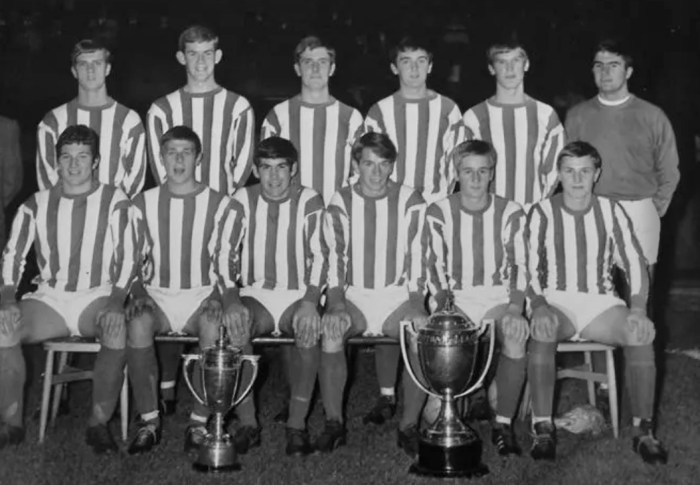
The highlight of his time at Spurs came when he was captain of the 1996 Spurs youth team that won the Northern Ireland Milk Cup, an annual international youth tournament. Spurs beat Blackburn in the final by a single goal scored by John Piercy, who later also moved to Brighton.

Another memorable moment came when Lee, aged only 16, scored the winning goal for Spurs Reserves against Bristol City in a testimonial for Leroy Rosenior (father of Liam).

In Spurs’ youth team, Lee was managed by the former West Ham winger Patsy Holland, who he felt never really rated him. Eventually, in Spurs’ reserve side, he was managed by Chris Hughton – “one of the best coaches that I’ve played for and had the pleasure of working with”.

While contemporaries such as Luke Young progressed to the first team, Lee fell just short and he was honest enough to admit: “Looking back now, I think the thing that you look at was did I really show the coaches that I wanted it enough? And did I really give absolutely everything to be a top player? And probably the answer’s no, if I’m being honest with myself. That’s the biggest regret or the real shame that I have really.”

Ironically, it was when his friend Piercy got a first team call-up instead of him that he decided to move on from Spurs although, once again with the benefit of hindsight, he reckons he was probably too hasty in his decision.

George Graham was manager at the time and Lee reckoned he wasn’t his type of player. Although he still had 18 months left on his contract, he decided to move on because he couldn’t see himself making it at Spurs. But not long afterwards, Glenn Hoddle took over as manager and Lee reckons if he had stayed he might have had a better chance of training with the first team a bit more, and improving as a player.

After the Seagulls released Lee in September 2004, he trained with Oldham Athletic and signed on a non-contract basis for a month but was not retained.

He returned to Thurrock, had a trial at Kidderminster Harriers, signed for Conference side Stevenage Borough in February 2005, but then changed his mind and signed for Aldershot instead.

Football agent Lee

It was during a game for the Shots against Canvey Island in August 2005 that he suffered a horrific injury that doctors told him would end his career.

“I was actually only an hour away from losing my foot and it was all quite worrying as you would expect,” said Lee. “When I was in hospital they told me I would never play again.”

The injury forced him to miss the majority of the 2005-06 season, and, although he extended his contract by a year on 30 May 2006, he eventually left the Shots at the end of January 2007 and signed for Ryman League Division One Harlow Town. That didn’t last long; he had a short spell with Braintree, then AFC Hornchurch and then Canvey Island.

In an interview with Chris Phillips of the Basildon Canvey and Southend Echo in June 2008, Lee said he was pleased to have proved the doctors wrong in managing to get back playing football, but he admitted: “I’ve been playing non-league this season, but my heart hasn’t been in it.”

Lee turned to football agency work that year and has continued in that line ever since. He was with Skillequal for 10 years before switching to ICM Stellar Sports in April 2018.

Mixed fortunes at Brighton for Liverpudlian Lee Steele

ONE-TIME Liverpool triallist Lee Steele was part of the Albion squad which won back-to-back promotions from the fourth and third tiers.

Unfortunately for him, a certain Bobby Zamora was almost always ahead of him in the pecking order, along with Gary Hart, so the diminutive striker often had to be content with involvement off the subs bench.

Nonetheless, he contributed important goals as the Seagulls under Micky Adams went up from League Two in 2001 and from League One in 2002 under Peter Taylor.

His first season at Brighton was marred by a drink-driving incident which, in hindsight, he believed tainted the rest of his time at the club. Indeed, as the season drew to a close, he was put on the transfer list and was at loggerheads with Adams.

“I told him I’d prove him wrong, and he said that only one player had said that to him before and gone ahead and done it,” Steele told Spencer Vignes in a matchday programme article. After shedding a few pounds and improving his fitness, he said: “I scored loads of goals in pre-season and worked my way into the side.

“I got a few more as the season began, and then he left and I was back to square one with Peter Taylor.” Steele said Taylor was easier to get on with than the “totally demanding and driven Adams” although he reckoned: “The intensity went from our game a fair bit.”

Nevertheless, in the 2001-02 season, he made 25 starts plus 19 appearances off the bench and the most important of his 10 goals was the 91st-minute winner in an Easter Monday 2-1 win over Bristol City at the Withdean after he’d gone on as a 30th-minute sub for Paul Brooker, who’d turned an ankle.

Argus reporter Andy Naylor pointed out how Steele had gone from villain to hero after getting himself sent off in a reserve game just as Zamora was ruled out for three games with a shoulder injury. As it turned out, that goal against City was his last in an Albion shirt.

In its end of season play-by-player analysis, the Argus said of Steele: “An enigma. More to offer than he has showed, although he would argue a regular run in the side would help. Still managed to finish with ten goals and has the pace and power to trouble defenders.”

However, there was no more to offer Brighton because Taylor’s departure that summer coincided with Steele’s Albion exit too.

Reflecting on his time at the Albion in another Vignes interview for the matchday programme, Steele said: “I wasn’t used to playing substitute all the time, which I found hard to adjust to. Then when I did come on, I used to put myself under so much pressure that I wouldn’t deliver the goods. It still haunts me actually. OK I was in Bobby’s shadow, but I was at a massive club and should have done better.”

He moved to Oxford United on a two-year deal, but didn’t enjoy a happy time under Ian Atkins, and then joined Leyton Orient where some vital goals – including one that earned the Os promotion while simultaneously relegating his old club out of the league – helped earn him a ‘fans favourite’ tag.

After the Os, he had a season with Chester City, then dropped out of the league to return to Northwich Victoria.

He moved on to semi-pro side Oxford City but was sacked for a homophobic tweet about Gareth Thomas, which he said was tongue-in-cheek. Northern Premier League side Nantwich took him on, although he only played one game for them.

Born in the Garston district of Liverpool on 2 December 1973, Steele was a ‘Red’ from an early age, first being taken to watch them aged six and idolising Ian Rush. He was educated at St Austin’s Catholic Primary School, Liverpool, Holmwood School and then St Mary’s College.

The young Steele harboured ambitions of becoming a professional golfer rather than a footballer but, when that didn’t work out, he started playing football with non-league Bootle while working for his uncle as a bricklayer.

“I managed to get a trial for Liverpool,” he told Andy Heryet in the Albion matchday programme. “I hoped they would ask me back, but I didn’t hear anything from them, which was disappointing as they promised me that I’d hear either way, but they never got back to me.”

It was Northwich Victoria who propelled him towards a career as a professional, signing him as cover ahead of a FA Trophy final against Macclesfield.

Steele scored five goals in three end of season games, earned a place on the bench at Wembley and got on for the last 20 minutes, although Victoria lost.

In his second season at Northwich, his reputation was growing as a prolific striker and Third Division Shrewsbury Town snapped him up for £40,000 – a decent-sized fee for a non-league player.

“I wanted to go. I’d always wanted to be a professional footballer, ever since it became clear I wasn’t going to make it as a golfer,” Steele told Heryet.

He spent the next three seasons with the Shrews although the club’s struggles at the wrong end of the league prompted him to look for a move.

While he was keen to go to Tranmere Rovers, who’d shown an interest, no deal was forthcoming, but Brighton went in for him and, having played against them the season before, he liked what he saw.

Steele has had several strings to his bow since finishing his playing career: he’s a qualified licensed UEFA B coach, a personal trainer and a nutrition advisor. Clients have included pro footballers, elite junior tennis players, 16-times PDC World Darts Champion Phil ‘The Power’ Taylor and Team GB age group triathletes.

He also spent a year as a fitness coach with Oldham Athletic during Lee Johnson’s reign as manager and two years as a scout for his old club, Leyton Orient.

Since 2008 he has been operations manager for Kickback Tax (a tax advisor agency for footballers) and, since December 2021, has been senior scout for Northampton Town.

Confrontation was seldom far away in Micky Adams’ career

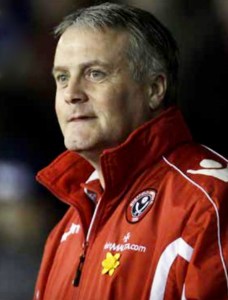
THE FIRST player ever to be sent off in a Premier League game managed Brighton twice.

Fiery Micky Adams saw red playing for Southampton when he decked England international midfielder Ray Wilkins.

“People asked me why I did it. I said I didn’t like him, but I didn’t really know him,” Adams recalls in his autobiography, My Life in Football (Biteback Publishing, 2017).

It was only the second game of the 1992-93 season and Adams was dismissed as Saints lost 3-1 at Queens Park Rangers.

Adams blamed the fact boss Ian Branfoot had played him in midfield that day, where he was never comfortable.

“He (Wilkins) was probably running rings around me. I turned around and thumped him. I was fined two weeks’ wages and hit with a three-match ban.”

It wasn’t the only time he would have cause not to like Wilkins either. The former Chelsea, Manchester United and England midfielder replaced Adams as boss of Fulham when Mohammed Al-Fayed took over.

His previously harmonious relationship with Ray’s younger brother, Dean, turned frosty too. When Adams first took charge at the Albion, he considered youth team boss Dean “one of my best mates”. But the two fell out when Seagulls chairman Dick Knight decided to bring Adams back to the club in 2008 to replace Wilkins, who’d taken over from Mark McGhee as manager.

“He thought I had stitched him up,” said Adams. “I told him that I wanted him to stay. We talked it through and, at the end of the meeting, we seemed to have agreed on the way forward.

“I thought I’d reassured him enough for him to believe he should stay on. But he declined the invitation. He obviously wasn’t happy and attacked me verbally. I did have to remind him about the hypocrisy of a member of the Wilkins family having a dig at me, particularly when his older brother had taken my first job at Fulham.

“We don’t speak now which is a regret because he was a good mate and one of the few people I felt I could talk to and confide in.”

With the benefit of hindsight, Adams also regretted returning to manage the Seagulls a second time considering his stock among Brighton supporters had been high having led them to promotion from the fourth tier in 2001. The side that won promotion to the second tier in 2002 was also regarded as Adams’ team, even though he had left for Leicester City by the time the Albion went up under Peter Taylor.

Adams first took charge of the Seagulls when home games were still being played at Gillingham’s Priestfield Stadium.  Jeff Wood’s short reign was brought to an end after he’d failed to galvanise the side following Brian Horton’s decision to quit to return to the north. Horton took over at Port Vale, where Adams himself would subsequently become manager for two separate stints.

Back in 1999, though, Adams had been at Nottingham Forest before accepting Knight’s offer to take charge of the Albion. He’d originally gone to Nottingham to work as no.2 to Dave Bassett but Ron Atkinson had been brought in to replace Bassett and Adams was switched to reserve team manager.

The Albion job gave him the opportunity to return to front line management, a role he had enjoyed at Fulham and Brentford before regime changes had brought about his departure from both clubs.

On taking the Albion reins, Adams said: “For too long now this club has, for one reason and another, had major problems. The one thing that has remained positive is the faith the supporters have shown in their club.

“The club has to turn around eventually and I want to be the man that helps to turn it around.”

The man who appointed him, Knight, said: “Micky is a formidable character with a proven track record. He knows what it takes to get a club promoted from this division. But, more than that, Micky shares our vision of the future and wants to be part of it. That is why I have offered him a four-year contract and he has agreed to that commitment.”

Not long after taking over the Albion hotseat, he was happy to say goodbye to the stadium he’d previously known as home when a Gillingham player in the ‘80s and it was a revamped squad he assembled for the Albion’s return to Brighton, albeit within the confines of the restricted capacity Withdean Stadium.

Darren Freeman and Aidan Newhouse, two players who’d played for Adams at Fulham, scored five of the six goals that buried Mansfield Town in the new season opener at the ‘Theatre of Trees’.

Considering he was only too happy to be photographed supporting the campaign to build the new stadium at Falmer, it’s disappointing to read in his autobiography what he really thought about it.

“My mates and I nicknamed it ‘Falmer – my arse’ although I never said this to Dick’s face,” he said. “There was always so much talk and we never felt like it was going to get done.”

The turning point in his first full season in charge was the arrival of Bobby Zamora on loan from Bristol Rovers. “The first time I saw him he came onto the training ground; he looked like a kid. But he was tall and gangly with a useful left foot; there was potential there.”

Interestingly, considering Adams makes a point of saying he usually ignored directors who tried to get involved on the playing side, he took up Knight’s suggestion that the side should switch to a 4-4-2 formation – and the Albion promptly won 7-1 at Chester with Zamora scoring a hat-trick!

After a so-so first season back in Brighton, not long into the next season Adams was forced to replace his no.2, Alan Cork, with Bob Booker because Cork was offered the manager’s job at Cardiff City, at the time owned by his former Wimbledon chairman, Sam Hammam. Adams reckoned Booker’s appointment was one of the best decisions he ever made.

Surrounded by players who had served him well at Fulham and Brentford, together with the additions of Zamora, Michel Kuipers and Paul Rogers, Adams and Booker steered Albion to promotion as champions. Zamora was player of the season and he and Danny Cullip were named in the PFA divisional XI.

Not long into the new season, the lure of taking over as manager at a Premier League club saw Adams quit Brighton, initially to become Bassett’s no.2 at Leicester City, but with the promise of succeeding him.

“While I thought I had a shot at another promotion, it wasn’t a certainty,” Adams explained. “I knew I had put together a team of winners, and I knew I had a goalscorer in Bobby Zamora, but football’s fickle finger of fate could have disrupted that at any time.”

He admitted in the autobiography: “Had I been in charge at the age of 55, rather than 40, then I perhaps would have taken a different decision.”

While Albion enjoyed promotion under Taylor, what followed at Leicester for Adams was a lot more than he’d bargained for and, to his dismay, he is still associated with the ugly shenanigans surrounding the club’s mid-season trip to La Manga, to which he devotes a whole chapter of his book, aiming to set the record straight.

On the pitch, he experienced relegation and promotion with the Foxes and he doesn’t hold back from lashing out about ‘moaner’ Martin Keown, “one of the worst signings of my career”. Eventually, he’d had enough, and walked away from the club with 18 months left on his contract.

After a break in the Dordogne area of France, staying with at his sister-in-law and her husband’s vineyard, he looked for a way back into the game. He was interviewed for the job of managing MK Dons but was put off by a Brighton-style new-ground-in-the-future scenario. Then Peter Reid, a former Southampton teammate, was sacked by Coventry City. He put his name forward and took charge of a Championship side full of experienced players like Steve Staunton and Tim Sherwood.

The side’s fortunes were further boosted by the arrival of Dennis Wise, but, in an all-too-familiar scenario Adams had encountered elsewhere, the chairman who appointed him (Mike McGinnity) was replaced by Geoffrey Robinson. It wasn’t long before it was obvious the relationship was only going to end one way. As Adams tells it, Robinson was influenced by lifelong Sky Blues fan Richard Keys, the TV presenter, and it was pretty much on his say-so that Adams became an ex-City manager after two years in the job.

With an ex-wife and three children to support as well as his partner Claire, Adams couldn’t afford to be out of work for long and fortunately his next opportunity came courtesy of Geraint Williams, boss of newly promoted Colchester United, who took him on as his no.2.

However, it only got to the turn of the year before he was out of work once again, although, from what he describes, he wasn’t enjoying his time with the U’s anyway because Williams kept him at arm’s length when it came to tactics and team selection.

He was amongst the ranks of the unemployed once again when Albion chairman Knight gave him a call, but, with the benefit of hindsight, he said: “Going back turned out to be one of the biggest mistakes of my life.”

Adams blamed the backdrop of “the power struggle” between Knight and Tony Bloom on the lack of success during his second stint in the hotseat, and he reckons it was Bloom who “demanded my head on a platter”. The fateful meeting with Knight, when a parting of the ways was agreed, famously took place in the Little Chef on the A23 near Hickstead.

Looking back, Adams conceded he bowed to pressure from Knight to make certain signings – namely Jim McNulty, Jason Jarrett and Craig Davies in January 2009 – who didn’t work out. He reflected: “I shouldn’t have taken the job in the first place. I’d let my heart rule my head but, in fairness, I didn’t have any other offers coming through and it seemed like a good idea at the time.

“I wouldn’t ever say he (Knight) let me down, but he had his idea about players. I did listen to him, and maybe that’s where I went wrong.”

He added: “Going back to a club where success had been achieved before felt good, yet, the second time around, the same spark wasn’t there no matter how hard I tried.”

Born in Sheffield on 8 November 1961, Micky was the second son of four children. It might be argued his penchant for lashing out could have stemmed from seeing his father hitting his mother, which he chose to spoke about at his father’s funeral. Adams is obviously not sure if he did the right thing but he felt the record should be straight.

The Adams family were always Blades rather than Wednesdayites and, at 15, young Micky was in the youth set-up at Bramall Lane having made progress with Sunday league side Hackenthorpe Throstles.

While he thought he had done well under youth coach John Short during (former Brighton player) Jimmy Sirrel’s reign as first team manager, Sirrel’s successor, Harry Haslam, replaced Short and, not long afterwards, Adams was released.

However, Short moved to Gillingham and invited the young left winger to join the Gills. Adams linked up with a group of promising youngsters that included Steve Bruce.

In September 1979, he had a call-up to John Cartwright’s England Youth side, going on as a sub in a 1-1 draw with West Germany, and starting on the left wing away to Poland (0-1), Hungary (0-2) and Czechoslovakia (1-2) alongside the likes of Colin Pates, Paul Allen, Gary Mabbutt, Paul Walsh and Terry Gibson.

Adams honed his craft under the tutelage of a tough Northern Irishman Bill ‘Buster’ Collins and began to catch the attention of first team manager Gerry Summers and his assistant Alan Hodgkinson, who had played 675 games in goal for Sheffield United.

He made his debut aged just 17 against Rotherham United but didn’t properly break through until Summers and Hodgkinson were replaced by Keith Peacock (remember him, he was the first ever substitute in English football, in 1965, when he went on for Charlton Athletic against John Napier’s Bolton Wanderers) and Paul Taylor.

“Keith saw me as a full-back and that was probably the turning point of my career,” Adams recalled.

Once Adams and Bruce became regulars for the Gills, scouts from bigger clubs began to circle and at one point it looked like Spurs were about to sign Adams. That was until he came up against the aforementioned Peter Taylor, who was playing on the wing for Orient at the time (having previously played for Crystal Palace, Spurs and England).

“He nutmegged me three times in front of the main stand and, to cut a long story short, that was the end of that. Gillingham never heard from Spurs again,” Adams remembered.

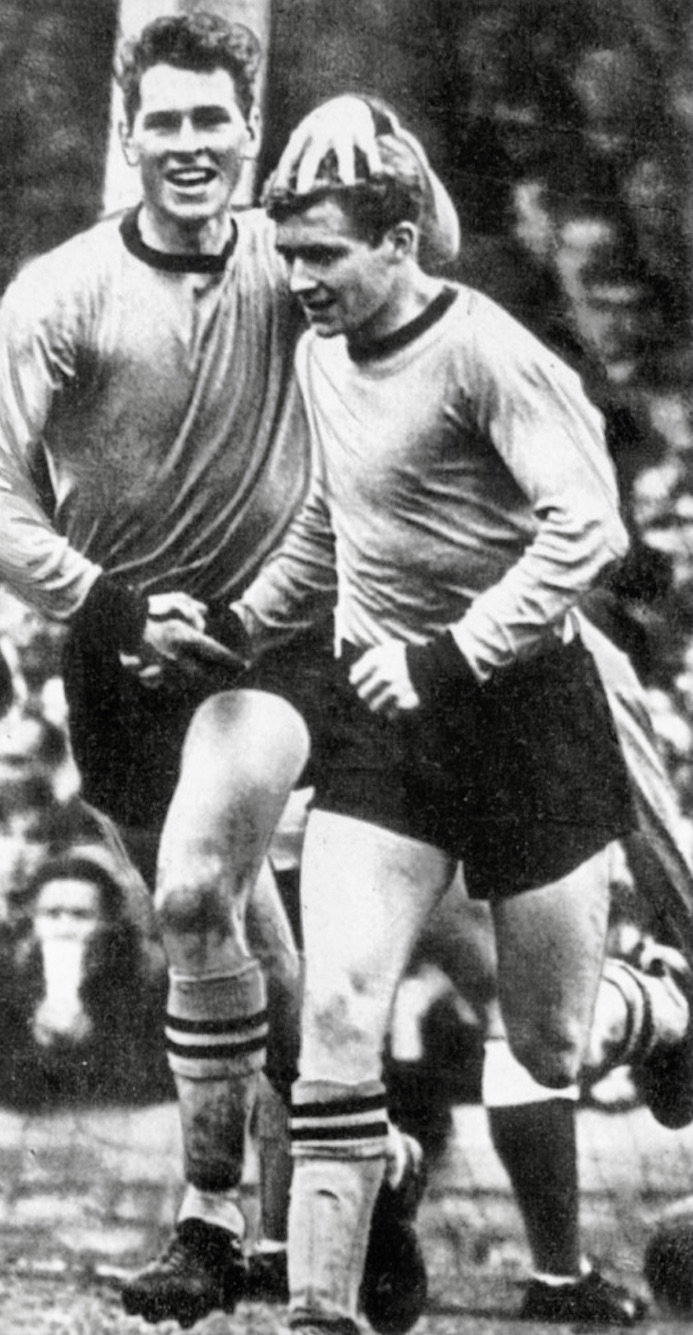
Even so, Adams did get a move to play in the top division when Bobby Gould signed him for Coventry City. Managerial upheaval didn’t help his cause at Highfield Road and when John Sillett preferred Greg Downs at left-back, Adams dropped down a division to sign for Billy Bremner’s Leeds United (pictured below right with the legendary Scot).

“He had such a big influence on my career and life that I wouldn’t have swapped it for the world,” said Adams. But life at Elland Road changed with the arrival of Howard Wilkinson, and Adams found himself carpeted by the new boss after admitting punching physio Alan Sutton for making what an injured Adams considered an unreasonable demand to perform an exercise routine even though he was in plaster at the time.

Nevertheless, Adams admits he learned a great deal in terms of coaching from Wilkinson, especially when an improvement in results came about through repetitive fine-tuning on the training pitch.

“It is the one aspect of coaching that is extremely effective, if delivered properly,” said Adams. “I learnt this from Howard and took this lesson with me throughout my coaching and managerial career.”

However, Adams didn’t fit into Wilkinson’s plans for Leeds and he was transferred to Southampton, managed by former Aston Villa, Saints and Northern Ireland international Chris Nicholl. Adams joined Saints in the same week as Neil ‘Razor’ Ruddock and the pair were quickly summoned by Nicholl to explain the large size of the hotel bills they racked up.

Adams moved his family from Wakefield to Warsash and he went on to enjoy what he reflected on as “the best few years of my playing career”. He was at the club when a young Alan Shearer marked his debut by scoring a hat-trick and the “biggest fish in the pond at the Dell” was Jimmy Case.

Adams described the appointment of Branfoot in place of the sacked Nicholl as a watershed moment in his own career. “Overall he was decent to me and I found his methods good,” he said. And he pointed out: “I was getting older, I’d started my coaching badges and I already had one eye on my future.”

Adams recalled an incident during a two-week residential course at Lilleshall, after he had just completed his coaching badge, when he dislocated his shoulder trying to kick Neil Smillie.

“I was left-back and he was right-wing, and he took the piss out of me for 15 minutes. The fuse came out and I decided to boot him up in the air,” Adams recounted. “The only problem was that I missed. I fell over and managed to dislocate my shoulder hitting the ground. It was the worst pain I’ve ever had.”

If life was sweet at Southampton under Branfoot, that all changed when he was replaced by Alan Ball and the returning Lawrie McMenemy. Adams and other older players were left out of the side. Simon Charlton and Francis Benali were preferred at left-back. Eventually Adams went on a month’s loan to Stoke City, at the time managed by former Saints striker Joe Jordan, assisted by Asa Hartford.

On his return to Southampton, and by then 33, Adams was given a free transfer.

Former boss Branfoot came to his rescue, inviting him to move to League Two Fulham as a player-coach in charge of the reserve team. Branfoot also signed Alan Cork and he and Adams began a longstanding friendship that manifested itself in becoming a management pair at various clubs.

On the pitch, Branfoot struggled to galvanise Fulham and, with the team second from bottom of the league, he was sacked – and Adams replaced him. He kept Fulham up by improving fitness levels and introducing more of a passing game.

But he knew big changes were needed if they were going to improve and he gave free transfers to 17 players, despite clashing with Jimmy Hill, who had different ideas.

An admirer of what Tony Pulis was doing at Gillingham, Adams signed three of their players: Paul Watson, Richard Carpenter and Darren Freeman. He also got in goalkeeper Mark Walton and centre back Danny Cullip. Simon Morgan was one of the few who wasn’t let go, and Paul Brooker emerged as a skilful winger. All would later play under him at Brighton.

Promotion was secured and Adams was named divisional Manager of the Year but after all the celebrations had died down Mohamed Al-Fayed bought the club and things changed dramatically.

“The club was in a state of flux as it tried desperately to come to terms with its new status as a billionaire’s plaything,” Adams acerbically observed. “From having nothing, we had everything.”

Before too long, in spite of being given a new five-year contract, Adams was out of the Craven Cottage door, replaced by Wilkins and Kevin Keegan.

But he wasn’t out of work for long because Branfoot’s former deputy, Len Walker, introduced him to the chairman of Swansea City, who were on the brink of relieving Jan Molby of his duties as manager.

Various promises were made regarding funds that would be made available to him but when they were not forthcoming he realised something was not right and he quit, leaving Cork, the deputy he’d taken with him, to take over.

By his own admission, if he hadn’t been sitting on the £140,000 pay-off he’d received from Fulham, he probably would have stayed. As it was, he was out of work once again…..until he had a ‘phone call from David Webb, the former Chelsea and Southampton defender who was the owner of Brentford, but in the process of trying to sell the club.

His brief was to keep the side in the league and to make it attractive to potential purchasers. It was at Griffin Park that he first met up with the aforementioned Bob Booker, who was managing the under 18s at the time. “He is one of the most loyal and trustworthy friends I have ever known,” said Adams. “He would do anything for you.”

However, although he signed the likes of Cullip and Watson from Fulham, he wasn’t able to stop the Bees from being relegated. During the close season, former Palace chairman Ron Noades bought the club and announced he was also taking over as manager.

Once again, Adams was out of a job but his next step saw him appointed as no.2 to Dave Bassett at Nottingham Forest.

Which brings us almost full circle in the Adams career story, but not quite.

After the debacle of his second stint in charge of Brighton, he was twice manager at Port Vale, each spell straddling what turned out to be a disastrous period in charge of his family’s favourite club, Sheffield United.

It was Adams who gave a league debut to Harry Maguire during his time at Bramall Lane, but the side were relegated from the Championship on his watch, and he was sacked.

Adams took charge of 249 games as Vale boss but quit after a run of six defeats saying he’d fallen out of love with the game.

It didn’t prevent him having another go at it, though. He went to bottom of the league Tranmere Rovers and admitted in his book: “It was arrogance to think I could turn round a club that had been relegated twice in two seasons.”

In short, he couldn’t and he ended up leaving two games before the end of what was their third successive relegation.

“It was a really poor end to a career that had started so promisingly at Fulham,” he said.

Teenage debutant ‘keeper Forster forever just a back-up

A GOALKEEPER who held a ‘youngest ever’ record for 58 years played second fiddle between the sticks for Charlton Athletic and Brighton.

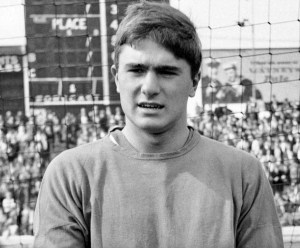
Derek Forster had started out at Sunderland and was only FIFTEEN when he played in goal in front of a 45,000 Roker Park crowd in the opening game of the 1964-65 season.

The youngster let in three – but so did his opposite number, Gordon Banks, the England international who was in goal for opponents Leicester City.

“Derek’s a wonderful prospect. From what I could see, he didn’t make a single mistake,” said Banks after the game.

Forster had played in front of an even bigger crowd a few months’ earlier when 95,000 at Wembley saw him keep goal for England Schools against West Germany.

But those early tests of nerves were of little consequence because Forster’s career didn’t pan out quite as he might have wanted.

Sunderland’s first choice ‘keeper, Jim Montgomery, was one of the country’s top goalkeepers, best known for a match-winning double-save for the Wearsiders in the 1973 FA Cup Final at Wembley when second tier Sunderland beat high-flying Leeds United 1-0.

Montgomery remained largely injury-free – and made a record 627 appearances for Sunderland – meaning over the course of eight years the 5’9” Forster only got to play 30 league and cup games for the Mackems.

It was only after that amazing FA Cup win in 1973 that Forster finally left his home in the north-east and tried his luck in London. He joined third tier Charlton who were managed by Theo Foley, a former Eire international teammate of his old Sunderland playing colleague, Charlie Hurley.

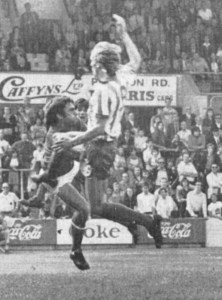
Forster was soon in action for the Addicks, ironically playing against Brighton twice within 18 days at the Goldstone (they won 2-1 in the League Cup and in the League). Below left in a collision with Lammie Robertson.

But he was not able to dislodge the experienced John Dunn permanently from the no.1 spot and was limited to nine appearances. He moved during the close season to the Albion, where Brian Clough and Peter Taylor had dispensed with the services of long-serving Brian Powney as part of a 13-player clear-out.

Forster actually joined Albion on the very day that it was announced Taylor was staying at Brighton to take sole charge after his managerial mate Clough quit to join Leeds United.

At the Goldstone, though, Forster found the holder of the no.1 jersey, Peter Grummitt, was another in the same ilk as Montgomery. Grummitt, who’d been one of the pair’s first signings not long after they’d arrived at the Goldstone in the autumn of 1973, had played more than 350 games at the highest level for Nottingham Forest and won three caps for England’s under 23 side, where he vied for the goalkeeper position with Chelsea’s Peter Bonetti.

Arguably one of the best Albion goalkeepers ever, it was perhaps no surprise Grummitt’s form restricted Forster to only three appearances. Ironically, when Forster did get his first team break, he conceded six in his first match.

In spite of pre-season optimism from Taylor, Albion had only three wins on the board from their first 13 games, and when the side went to Fellows Park, Walsall, on 1 October, Forster was like a sitting duck as the Saddlers thumped Albion 6-0. Grummitt was back between the sticks for the following five matches.

No stranger to strong disciplinary measures when he deemed it right, in October Taylor made six first teamers who’d lost 3-2 at Grimsby the previous evening play for the reserves at home to Millwall the following day.

Forster was the last line  of defence in that experienced line-up, and made some important stops on three occasions, but still conceded three. However, the involvement of the first team contingent saw Albion win 5-3: Ian Mellor scoring all five Brighton goals.

Three weeks later, after player-manager Bobby Charlton’s visiting Preston North End side won 4-0 at the Goldstone, Forster stepped in for Grummitt for the second time – and once again was on the losing side: 2-1 at Gillingham.

His one and only winning experience in an Albion shirt came the following week at Prenton Park when Albion beat Tranmere Rovers 2-1. In front of just 2,134 supporters, that win proved to be Forster’s third and last first team appearance.

Taylor obviously wasn’t wholly convinced by his back-up ‘keeper that autumn because he took a look in the reserves at triallist Jim Inger, from assistant manager Brian Daykin’s old club, Long Eaton.

Nevertheless, Forster remained the back-up ‘keeper, a role he continued throughout the 1975-76 season without being called on for the first team because Grummitt was ever-present. The disillusioned Forster departed, admitting he was “cheesed off at Brighton”.

In fact, he quit the professional game, returned to the north-east and played local league football while taking on a job at Washington Leisure Centre (run by Sunderland city council’s leisure department), where he worked for 30 years.

He was in the news in 2010 when it was revealed that three years earlier he had lost the sight in his left eye through cancer.

“It changes your whole life,” he told the Northern Echo. “You either jump off the bridge or you tell yourself to get on with it.

“It makes you realise that it doesn’t matter how hard you train, or how careful you are about what you eat, it’s someone else who’s calling the shots.”

Forster, who retired from the city council, added: “We presumed that we’d do all sorts when we retired and then I realised that I mightn’t even have got that far.

“Now we don’t presume anything. I’ve changed a lot; if that tumour had spread I was a goner. Now every day is a Sunday.” Forster fought on for a few more years before he died aged 75 on 2 May 2024.

Born in the Walker suburb of Newcastle on 19 February 1949, Forster went to Manor Park School in the east end of the city: actor Jimmy Nail and Sunderland and England footballer Dennis Tueart were other alumni.

As a promising centre forward, Forster had trials with the city’s under-11s. “One of the goalies didn’t turn up, so they asked me to play there,” Forster recalled.

“I’d honestly never kept goal in my life, not even in the back street, but I had a blinder. Caught every ball. After that, I never played anywhere else.”

The young Forster’s prowess earned him selection for the England Schools side on nine occasions, in a squad that included future stars Trevor Brooking, Colin Todd,  Colin Suggett and Joe Royle.

Sixty years on, it seems extraordinary to discover crowds of 95,000 would fill Wembley to watch the cream of England’s schoolboys, but vintage black and white film footage available on YouTube confirms it.

The all-things-Sunderland website rokerreport.sbnation.comisa detailed source of how Forster made history, and it is certainly a rather curious tale.

Initially signed as an amateur by Sunderland, he was then taken on as an apprentice but for two weeks of the 1964-65 pre-season month he’d been on a family holiday in Blackpool.

He’d trained for just a week and had never seen his new teammates play competitively. Then regular goalkeeper Montgomery sustained a hairline fracture of his left arm in training.

The opening game of the season – Sunderland’s first game back in the top flight after winning promotion – was only a matter of days away and they were without a manager because Alan Brown had left in acrimonious circumstances to take charge of Sheffield Wednesday.

Brown was temporarily replaced by a ‘selection committee’ of club officials and team captain Charlie Hurley.

The assumption was that the 20-year-old reserve goalkeeper, Derek Kirby, would deputise for Montgomery but, instead, they turned to Forster, who’d had that experience of playing in front of a huge crowd at Wembley.

After being called into club secretary George Crow’s office on the Thursday morning to be told he’d be starting, he said: “This is the greatest moment of my life. I had no idea that I would get my chance so soon, even after Monty’s unfortunate injury.

“I only hope I will justify the confidence shown in me and don’t let anyone down.

“I expect I shall be a little bit nervous, but it will be wonderful – and inspiring – playing behind Charlie Hurley and company.”

Even though he let in three, not only did he have the praise of Banks ringing in his ears, but his captain Hurley said: “A great game. If he goes on like this, he’ll have an exceptional future.”

The following Monday’s Echo said the young ‘keeper had “the agility of a panther” and was “bursting at the seams with talent”.

While The Journal’s Alf Greenley reported: “The crowd were with him to a man, even, I suspect, the not inconsiderable contingent of Leicester followers who had made the trip and the reception accorded to him when he turned out was only exceeded by that at the end.

“It was a truly remarkable performance for one so young.

“He handled the ball in the swirling wind with the confidence of a veteran, positioned well and stood up to the onslaught of the Leicester forwards like one far in advance of his years.”

Forster was just 15 years and 185 days old on the day of the match and he remained the youngest-ever top-flight footballer until 18 September 2022 when Arsenal’s Ethan Nwaneri rewrote the record books coming off the bench in the 89th minute of the Gunners’ 3-0 win at Brentford yesterday. He was aged just 15 years and 181 days.

It remains to be seen what sort of future Nwaneri might have in the game. For Forster, although he played the next few games, Montgomery returned and the teenager was left to hold a watching brief although he was still young enough to play a key role in Sunderland’s successful youth team of the mid-1960s.

In 1965, Sunderland lost the two-legged FA Youth Cup semi-final 5-0 to Everton for whom two goals in the Goodison first leg 4-0 win were scored by Jimmy Husband, who’d been a schoolmate of Forster’s in Newcastle.

Sunderland lost the 1966 final 5-3 on aggregate to Arsenal (who included Pat Rice and Sammy Nelson), when Forster’s teammates included the future Cup Final side captain Bobby Kerr, Billy Hughes, Suggett and Todd, who went on to win the league with Derby County and play for England.

Forster was still the last line of defence when the Wearsiders (above) finally won the trophy in 1967, a 2-0 aggregate scoreline seeing off a Birmingham City side that had future England international Bob Latchford at centre forward.

Less than 48 hours after the game, Forster, Hughes and Suggett travelled to North America as part of a squad selected by manager Ian McColl to represent the club in the United Soccer Association, where they played seven matches under the guise of the Vancouver Royal Canadians.

Retrospectively, Forster regretted not moving on sooner from Sunderland. But he told the Northern Echo: “Sunderland were one of the top youth clubs and they were very good to me. I should have left much earlier, seen the signs, but in those days players were genuinely loyal.

“You didn’t just ask to leave as soon as you were dropped. I decided to stay. It was my mistake. Monty never got injured again for five years, though I tried hard to kick him in training. He was an exceptional goalkeeper.”

Forster likened his situation to Newcastle’s Shay Given and Steve Harper. “Both very good goalkeepers, but maybe one a bit better than the other.”

Barry Butlin’s belter at Selhurst helped revive Forest career

BARRY BUTLIN is one of that pantheon of players who’ve scored winning goals for the Albion against Crystal Palace.

He may sound like the alliterative title of a south Wales holiday camp, but this was a moustachioed striker who’d joined Third Division Brighton on loan from Second Division Nottingham Forest.

When former Albion boss Brian Clough couldn’t find a place for him in his Forest line-up in September 1975, previous managerial partner, Peter Taylor, going it alone at the Albion, was more than happy to add Butlin to his forward line options.

Butlin had started his career at Derby County on the periphery of Clough and Taylor’s squad at the Baseball Ground.

During his five years as a Rams player, he’d twice been out on loan to Notts County, scoring eight in 20 games in 1968-69 and another five in 10 appearances in the 1969-70 season.

While Derby won the First Division title in 1972, Butlin was sold for £50,000 to Luton Town, where he made his mark with an impressive 24 goals in 57 matches.

One of them came in a 1-1 draw at Elland Road during Clough’s ill-fated 44-day spell as Leeds manager, and, in a typically odd Clough way, in the post-match press conference he put his arm around Butlin and told the journalists: “This is who you want to write about after that wonderful goal. He deserves it.”

The following month, Butlin’s goalscoring exploits for the Hatters saw Forest boss Allan Brown take him to the City Ground for a fee of £120,000.

Imagine how he must have felt when his old Derby boss Clough arrived to take over at Forest in January 1975!

Nevertheless, the striker said all the right things publicly ahead of the manager’s first game, a third round FA Cup replay against Spurs, as recorded in Jonathan Wilson’s excellent book Brian Clough: Nobody Ever Says Thank You The Biography (Orion Books 2011).

“The lads all know that everybody is starting from scratch with everything to prove,” said Butlin. “Brian Clough has the ability to make an average player good and a good player great.”

Such a show of loyalty might have been understandable in the circumstances but Wilson also recalls Clough’s eccentric attitude towards players when they were injured. Butlin fractured his cheek in a training ground incident when at Derby.

“As he lay on the ground, Clough screamed at him to get up, insisting there was nothing wrong with him,” wrote Wilson. “Even after he’d been taken to hospital, Clough refused to believe anything was the matter.

“When Butlin’s wife turned up looking for her husband and mentioned an ‘accident’ to Clough, he snapped: ‘I’ll tell you when there’s been an accident’.”

Although Butlin feared the worst when Clough arrived at Forest, he wasn’t instantly discarded, finishing that season with seven goals in 33 games (plus one as a sub), while fellow forward Neil Martin netted 12 in 30 matches (plus two as a sub).

Butlin had a front row seat in this Forest line-up

But Clough clearly had other ideas about who he wanted in attack and brought in John O’Hare, who had done well for him at Derby, but less well during the ill-fated spell at Leeds, and introduced a young Tony Woodcock.

Intriguingly, that summer Martin was reunited with Taylor at Brighton and, within a matter of weeks, Butlin was also heading to the Albion, although his move was only temporary.

As it happened, Martin got off to a decent start alongside Fred Binney up front, scoring three times in the opening matches. But Taylor obviously considered Butlin offered a more potent threat; and it wasn’t long before fans saw why.

Butlin lets fly and scores the winner at Selhurst Park in 1975

In only his second game, in the third minute of Albion’s clash with Palace at Selhurst Park on 23 September 1975, Butlin got on the end of a Gerry Fell cross and hit an unstoppable shot that turned out to be the only goal of a pulsating game played in front of a crowd of 25,606 – a quite remarkable number for a third tier fixture.

“It still sticks with me, that one,” Butlin told Spencer Vignes, in his book Bloody Southerners (Biteback Publishing), which details the Clough-Taylor period at the Goldstone.

“It was the start of a cracking time down at Brighton,” said Butlin. “I only wish I could have gone on a little longer.”

Butlin soars to connect with this header

Butlin followed up that midweek winner at Palace with another goal on his home debut four days later when Chesterfield were beaten 3-0 (Peter O’Sullivan and Binney the other scorers).

Although not on the scoresheet, he also featured in two more wins (2-1 at Shrewsbury Town and 1-0 at home to Preston). However, in his absence Forest had gone through a mini slump, losing four out of five matches.

Butlin had taken his wife and children to Sussex with him, staying in the Courtlands Hotel in Hove. They all really liked the area, and the player had hopes of making the move a permanent one. Clough had other ideas.

“Brighton made me so welcome, but Forest weren’t doing very well at all,” Butlin told Vignes. “When I came to the end of my loan period, Brian got me straight back up to Forest and I had a real purple patch during which I played really well.”

In fact, he finished the season with eight goals from 38 games played as Forest finished eighth in the old Second Division.

Collector’s item

“We had this team meeting before one game and Brian said: ‘If sending you down to Brighton gives you that impetus, then I’d better start sending some more players down there!’

“I’d seen the seafront and the wonderful countryside and thought it was the prelude to us staying there as a family, but it wasn’t to be. I was disappointed to say the least.”

Born in the south Derbyshire village of Rosliston, on 9 November 1949, Butlin attended Granville County Secondary School in Woodville from 1961 to 1966, and proudly records on his LinkedIn profile that he obtained six GCEs. He was also the school football captain.

He signed on for Derby in July 1967 but the likes of Richie Barker and Frank Wignall initially, then O’Hare and Kevin Hector, were ahead of him as the Rams progressed from the old Second Division into the First, before winning the title in 1972.

Chances for Butlin were few and far between. He made just four first team appearances in five years but those loan spells at Notts County at least demonstrated there was a player in the making, able to find the back of the net.

A knee injury prevented him making an immediate impact at Luton, after Harry Haslam had signed him, but he was the top scorer as Town gained promotion to the elite in second place in 1973-74.

The Hatters assured promotion by securing a 1-1 draw at West Brom in the penultimate game of the season, and midfield player Alan West relived the moment in an interview with theleaguepaper.com.

“I remember Barry Butlin, who was magnificent in the old centre forward’s role that season, got the vital goal,” he said. “I played in midfield with Peter Anderson and Jimmy Ryan. Peter was a great player and finished that season as our second highest scorer behind Barry.”

Just before Christmas in 2014, Butlin and West were among several former players who got together for a 40th anniversary celebration dinner. Also there were John Faulkner, Gordon Hindson, Alan Garner, Jimmy Husband, John Ryan, Jimmy Ryan, Don Shanks and Ken Goodeve.

Luton history website hattersheritage.co.uk remembers Butlin as “brilliant in the air and no slouch on the ground” and mentions the shock fans felt when he was sold to Forest, particularly as Town were desperate for goals at the time.

In the 1976-77 season, Butlin once more went out on loan, this time to Reading, and the heave-ho from Forest he had long expected finally came when Peter Withe was brought in.

Butlin was sold to Peterborough United and in two seasons with the Posh he scored 14 goals in 77 matches. His teammates at London Road included former Forest colleagues Jim Barron and Peter Hindley as well as former Albion midfielder Billy McEwan.

United just missed out on promotion from the Third Division, finishing fourth in 1977-78. It was a disastrously different second season, by which time another former Albion player, Lammie Robertson had joined them – when Posh were relegated to Division Four.

Butlin’s final club was Sheffield United, as they faced their first season outside the top two divisions. Signed by his former Luton boss Harry Haslam, Butlin scored 12 times in 53 matches for the Blades, but by the end of 1980-81 season, after Martin Peters had taken over, United were relegated to the fourth tier for the first time in their history.

Butlin retired and spent three decades working as a financial adviser and mortgage manager in Sherwood, Nottingham.

He lived in Derby and between July 2000 and October 2010 was secretary and treasurer of the Derby County Former Players’ Association.

Fledgling manager sought advice from Revie, Clough and Taylor

JOHN NAPIER is still coaching youngsters in America as he approaches his 76th birthday. NICK TURRELL’s In Parallel Lines blog caught up with him for a trip down memory lane.  Here, he talks about getting into coaching.

A signed photo from my scrapbook

GOING right back to his days at Brighton, John Napier has always been interested in helping young footballers to develop.

“When I stopped playing, I really wanted to get into the coaching side,” he explained. “I had worked in the youth system at Brighton and in Bradford, and I just loved being around young players.”

Ken Blackburn

Testimony to that comes from two former Brighton youngsters who enjoyed the opening article in this five-part series. Ken Blackburn said via Facebook: “I was an apprentice and pro during part of his career with Brighton. I saw on a daily basis how good he was, but just as important a lovely human being and top bloke.”

And Gary Croydon added: “I was a youth team player at the time, and he often came to watch our games, offering advice.”

It was at Bradford City, where he’d been transferred from Brighton in 1972, that Napier got his first official coaching job.

Napier (left) with former Albion teammate Allan Gilliver (right) in their Bradford City playing days

After his playing days had ended, he returned to Valley Parade in November 1975, working with manager Bobby Kennedy, the former Manchester City player who had taken over from Bryan Edwards in January of that year.

A seven-game losing streak saw Kennedy sacked in February 1978, and Napier took over the hotseat. Unfortunately, his tenure was brief and unpopular. He was in charge when City were relegated from the Third Division to the Fourth.

“It only lasted a year, but I learned so much about what it takes to be in charge and making decisions,” he said.

Fascinatingly, he revealed: “One of the first things I did as a young manager at the age of 32 was to drive over to Elland Road and sit down with the great Don Revie.

“We had a great conversation about management; what a gentleman he was. I also made the trip down the motorway to meet with Brian Clough and Peter Taylor at Nottingham: another great experience.

“I was determined to hear from the best. It was important that I try to get better in all areas.”

One of his dealings in the transfer market was to secure the services of Mick Bates, who had played under Revie at Leeds. Napier agreed a £20,000 fee to sign the midfielder from Walsall, where he had been captain. Bates died aged 73 in July 2021.

The young manager wasn’t afraid to impose discipline, as the Bradford Telegraph & Argus reported on 25 September 1978: “Bradford City manager John Napier today imposed a new strict disciplinary code for his players following the recent disappointing 3-1 home defeat by lowly Newport County.

“Days off have been cancelled, training sessions will be held in the afternoon as well as in the morning, all privileges will be taken away and discipline will be ‘very strict’, said Napier.”

Sadly, it didn’t pay off and after just 34 games in charge (11 wins, five draws and 18 defeats) he was sacked and replaced by George Mulhall, the former Halifax Town manager (incidentally, Mulhall was the manager who reluctantly sold Lammie Robertson to Brighton and got Napier’s former Irish teammate Willie Irvine in exchange).

In December 1979, Napier intended to turn his back on coaching and management to start a new football-related venture in America, taking his young family to settle in San Diego.

As he explained to soccertoday.com in a January 2015 article: “My new venture was to be a successful businessman, and with the help of friends in Escondido we opened a soccer store, named The Soccer Locker. This was to be my future in the game, so I thought.

“Well, things don’t always go the way you want them to, as I found out the hard way. There was not too much interest in soccer in 1979.”

The article charts the difficulties the business underwent and how Napier contemplated packing it in and returning to England.

“It was very frustrating as a business person to spend long hours waiting for a customer to walk through the door,” he told soccertoday.com. The business was eventually liquidated in 1985, but, before then, Irish eyes started smiling when opportunity knocked.

Award-winning sportswriter and columnist for The Times-Advocate, Bob Gaines, invited Napier to write a regular column for a start-up football magazine and, having penned some pieces for the Bradford Telegraph & Argus during his time in Bradford, Napier took on the opportunity.

“This was promotion we needed, and it did help, but not a lot. We were still struggling to get by each month and walk-in customers were non-existent,” he said.

Good fortune was round the corner, though, when one of the shop’s customers invited him to start coaching a high school football team. It was way below the level he wanted to be at, but it was work.

“I was really ready to return to England and the professional game after a not very prosperous outlook in California for the first six months,” he admitted.

Nevertheless, he got to know Ron Newman, a former Portsmouth and Gillingham player, who was the head coach of the local professional side, San Diego Sockers (Napier had played for the forerunner of the Sockers – San Diego Jaws – after that franchise had replaced the Baltimore Comets).

Newman offered Napier a one-year contract as the Sockers’ youth coordinator. “Each day I would come to the office and set up events at local elementary and middle schools,” he recalled. “The players would visit and talk to the kids and do some exhibition stuff on the playgrounds and school fields. It was a lot of fun, and the players liked it.”

He also began coaching an under-23 team called the Escondido Royals, who played decent level opposition in and around Los Angeles, Orange and San Diego counties. After that, he didn’t look back.

“I got my top US soccer coaching licence many years ago and have worked for US soccer as a coaching educator in my area (southern California), getting thousands of young coaches their licence on their pathway to their future in the game,” he said. “It has been a rewarding experience.”

In another 2015 soccertoday.com article, Napier said: “I have been fortunate to see the growth of youth soccer in this country since 1979. What an incredible experience to be part of and to have helped youth soccer grow and flourish in America.

“Anybody who was around in soccer during the early eighties and was able to watch it develop to where the sport is today has to have an inner satisfaction. I know I certainly do.

“Soccer, internationally and domestically, both at the higher professional level as well as at the youth levels, has grown tremendously. In fact, I am very, very proud.”

Inducted into the CalSouth Hall of Fame in 2015

The genial Irishman told me: “I have coached many levels in my time in the USA and have seen the growth of the game take off, especially in the last 25 years or so.

“There are now more kids playing soccer than any other youth sport, such as baseball and American football. The girls’ programs especially have seen an enormous growth, the success of the national women’s team has raised the roof for girls’ soccer.

“I have been fortunate to have had some good really good players in the past and, even now, I see some former pupils in the US national teams.

“At the present, Aaron Long is playing in the national team and another, Bobby Wood, was in Germany and played for the US team.

“On the girls’ side, Catarina Macario, who plays in the present US women’s national team, and in Lyon (France) for their women’s team.

“Many others are playing in the national youth teams – boys and girls – so I am proud of my work in youth soccer. It is very rewarding to be able to give back to the game that gave me so much.”

When I interviewed Napier in the early Spring of 2022, he revealed: “I will be 76 in a few months, and I coach regularly for my club, San Diego Soccer Club Surf.

Napier still coaches at San Diego Soccer Club Surf

“My week consists of four weekday sessions of three to four hours daily and, at the weekend, I coach my teams both Saturday and Sunday.”

The weekend after our interview he was heading off to Phoenix Arizona for back-to-back games before returning home, to Monday practice again – a round trip of about 800 miles.

“As long as I have the passion and desire to enjoy the game and the energy to be involved, I will keep at the game that gave me everything,” he said.

In a blog for San Diego Soccer Club Surf, Napier details his football career and concludes: “My life journey in soccer has been amazing. I often dreamed as a young boy growing up in a far-off land of being a ‘soccer player’.

“Never did I think that I would have the career that I have had – the places I have been, representing my country, the players I had the honour to play with and against, the amazing people and wonderful coaches I have met. It has been a wonderful soccer life and still is.”

• Ever the gentleman, John ended our interview by saying: “I want to thank all the Brighton fans that may read these articles.

“It seems like yesterday when I was driving up to the Goldstone from my home on Shoreham Beach.

“They were good days, and to any of my ex-team mates out there drop me an email, I am easily found on the internet.”

First signing Goodeve was bad day for Clough and Taylor

BRIAN CLOUGH and Peter Taylor were shrewd operators in the transfer market but their first signing for Brighton was a flop.

Possibly panicked into making changes to a side shipping goals at an alarming rate, their spending of £20,000 on Ken Goodeve was money wasted.

The former Manchester United youth captain managed only six appearances and left the club seven months later.

In the autumn of 1973, fresh with a transfer fund previous manager Pat Saward could only have dreamt of, the former Derby County managerial duo bought Goodeve from Luton Town, where he’d struggled for games after leaving Old Trafford.

Clough and Taylor had been less than impressed with the squad they’d inherited at the Goldstone Ground – particularly after witnessing successive capitulations to Bristol Rovers (8-2) and non-league Walton & Hersham (4-0).

As they sought to shape the side with their own players, the first arrival through the door was Goodeve, who would at least have found one familiar face in the dressing room. He and Peter O’Sullivan played in the same Manchester United youth and reserve sides (see programme line-ups below).

In April 1969, they had reached the FA Youth Cup semi-finals where West Brom beat them 5-3 on aggregate, winning 3-2 at home in the first leg and 2-1 at Old Trafford, when it was reported a crowd of 20,000 were watching.

Goodeve and O’Sullivan played in the same United reserve side as the likes of Jimmy Rimmer in goal, John Fitzpatrick, Nobby Stiles and Don Givens.

In April 1970, Goodeve was one of four fringe United players – Givens, Jimmy Ryan and Peter Woods were the others – who were sold to Luton for a combined total of £35,000.

In two seasons at Kenilworth Road, Goodeve captained the Town reserve side but managed only nine appearances, plus six as a sub for the first team.

He was still only 23 when he joined the Albion. He was handed the no.6 shirt alongside Norman Gall for the away game at Tranmere Rovers on 8 December, along with fellow debutant Peter Grummitt, initially on loan from Sheffield Wednesday, in goal.

But neither new boy could halt the slump, as Albion caved in to a 4-1 defeat. Left-back George Ley didn’t play another game for the club after that game at Prenton Park.

Young Steve Piper was drafted in to play alongside Gall in the following match – a 1-0 defeat at Watford – and Goodeve was handed Eddie Spearritt’s no.4 shirt instead.

He retained his place in the side for the Boxing Day clash with Aldershot (when Burnley youngsters Harry Wilson and Ronnie Welch made their debuts) but this time in place of Ronnie Howell in midfield. Again, Albion lost 1-0.

Clough and Taylor continued to chop and change and Goodeve was dropped to the bench for the next four matches, only getting a brief look-in on the action when going on for Welch in the 2-1 home win over Rochdale on 19 January.

John Vinicombe, Albion writer for the Evening Argus, was not impressed. “The chief disappointment so far has been the failure of Ken Goodeve to recapture his Luton form. Goodeve, who started in the back four with Albion at Tranmere, has subsequently appeared in midfield and so far not made his mark,” he wrote.

Goodeve found himself playing in the reserves with a growing band of former first-teamers and, it wasn’t until 25 March that he got another sniff of first team action.

That was when he stood in at right-back for Paul Fuschillo away to Wrexham (0-1) and five days later at York City (0-3). But that was it. After five starts and one appearance as a sub, he didn’t play for the Albion again.

In the close season, he was offloaded to Watford for half the amount Albion had forked out seven months earlier.

At last, at Vicarage Road, he got plenty of playing time under his former Luton teammate, Mike Keen, who had taken over as Hornets manager.

Indeed, in only the second month of the new season, Goodeve was back at the Goldstone in the Watford side beaten 2-0 courtesy of goals by Ricky Marlowe and Welch.

Goodeve in action for Watford against Albion’s Fred Binney

Born in Manchester on 3 September 1950, Goodeve joined United on schoolboy terms in October 1965 and was signed up as an apprentice the following year. In September 1967, he signed a professional contract at Old Trafford.

By the time he departed Old Trafford in April 1970, he’d not managed to make the step up to the United first team.

At Luton, his teammates included John Moore, who’d previously been on loan with Brighton, Barry Butlin, who played five games on loan at Brighton in 1975, and Don Shanks, who was a Mike Bailey signing in 1981.

After the sparse playing time with Brighton, Goodeve played 69 consecutive games for Watford between 1974 and 1976 but a groin strain ended his professional career.

He was able to pursue a non-league career at Bedford Town for five years and was in their 1980-81 side that won the Southern League Cup.

He subsequently played for a number of non-league outfits in the same region, as detailed in this Watford FC archive and ended up as player-manager of Bedfordshire side Wootton Blue Cross between 1993 and 1997.

According to the Hatters Heritage website, Goodeve continued to play football until he was 47 before becoming customer care manager for Galliard Homes in London, commuting from Wootton every day.

Tony Burns handled the art of goalkeeping for decades

A GOALKEEPER with film star looks signed for Brighton from Arsenal just after England lifted the World Cup.

Tony Burns had kept goal for the Gunners in 31 top-flight matches and Albion boss Archie Macaulay, who had played for Arsenal himself, went back to his old club to sign a no.1 to challenge the emerging local lad, Brian Powney.

It wasn’t difficult for Burns to settle at the Goldstone because the dressing room included Northern Irish full-back Jimmy Magill and winger Brian Tawse, familiar faces from his time in north London who’d also made the switch to Brighton.

It also wasn’t long before female fans who admired his smouldering good looks were sending in letters to the office inquiring about his eligibility!

Burns relived his career in detail in 2020 when interviewed by 17-year-old would-be journalist Jed Vine, who watches games at the Amex with his mother, and games at the Emirates with his dad.

Born in Edenbridge, Kent, on 27 March 1944, Burns first showed his goalkeeping prowess during his schooldays in the town before he joined Southern League club Tonbridge (now Tonbridge Angels) who he returned to twice more and later managed three times.

He made his Southern League debut against Yiewsley (later to become Hillingdon Borough) in February 1963 and only his third game for Tonbridge was as an 18-year-old against Arsenal at Highbury.
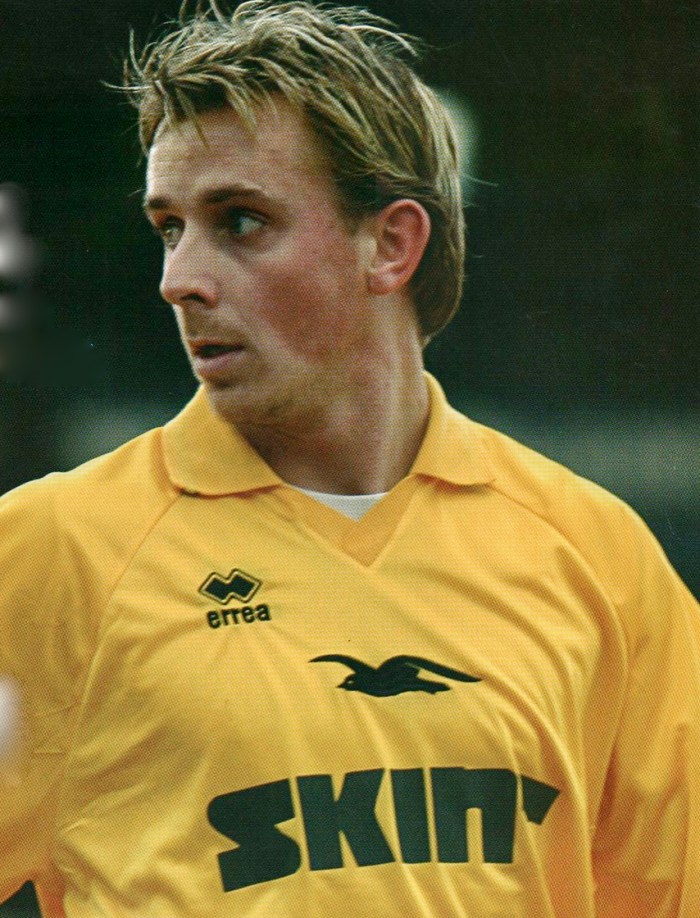
With long term custodian Jack Kelsey retiring, Arsenal were looking around for likely successors and, liking what they saw of Burns, offered him a contract.

“In his early days at Highbury, he showed immense potential and, after benefitting from Kelsey`s coaching, made encouraging strides,” a 2020 Pitching In piece for the Southern League recalled.

Manager Billy Wright gave him his senior Arsenal debut in a friendly against Enschede in Holland in August 1963, with Magill in defence, and he got his first taste of South Africa on a five-game tour the following May when he was in goal for Arsenal’s 5-1 win over a Western Province XI and their 6-0 win over an Eastern Province XI.

But his big breakthrough came when he made his league debut in a 3-2 home win over Burnley in October 1964 (three days earlier he’d played in goal in a 7-0 friendly win over non-league Corinthian Casuals).

“I felt on top of the world. I had always wanted to play for the Gunners and here I was keeping goal for them, and on the winning side at that,” he told the Albion matchday programme. “There’s only one first match and I’ll never forget this one.”

Once he got the shirt, he had a run of 26 games (32 including friendlies) from October 1964 through to the end of March 1965.

He generally played in front of a defence featuring the likes of Don Howe, Frank McLintock and Ian Ure with John Radford and Joe Baker up front.

During the first half of the 1965-66 season, Burns appeared in seven league games and three friendlies, but his final Gunners first team appearance came on 27 December 1965 in a 4-0 defeat away to Sheffield Wednesday.
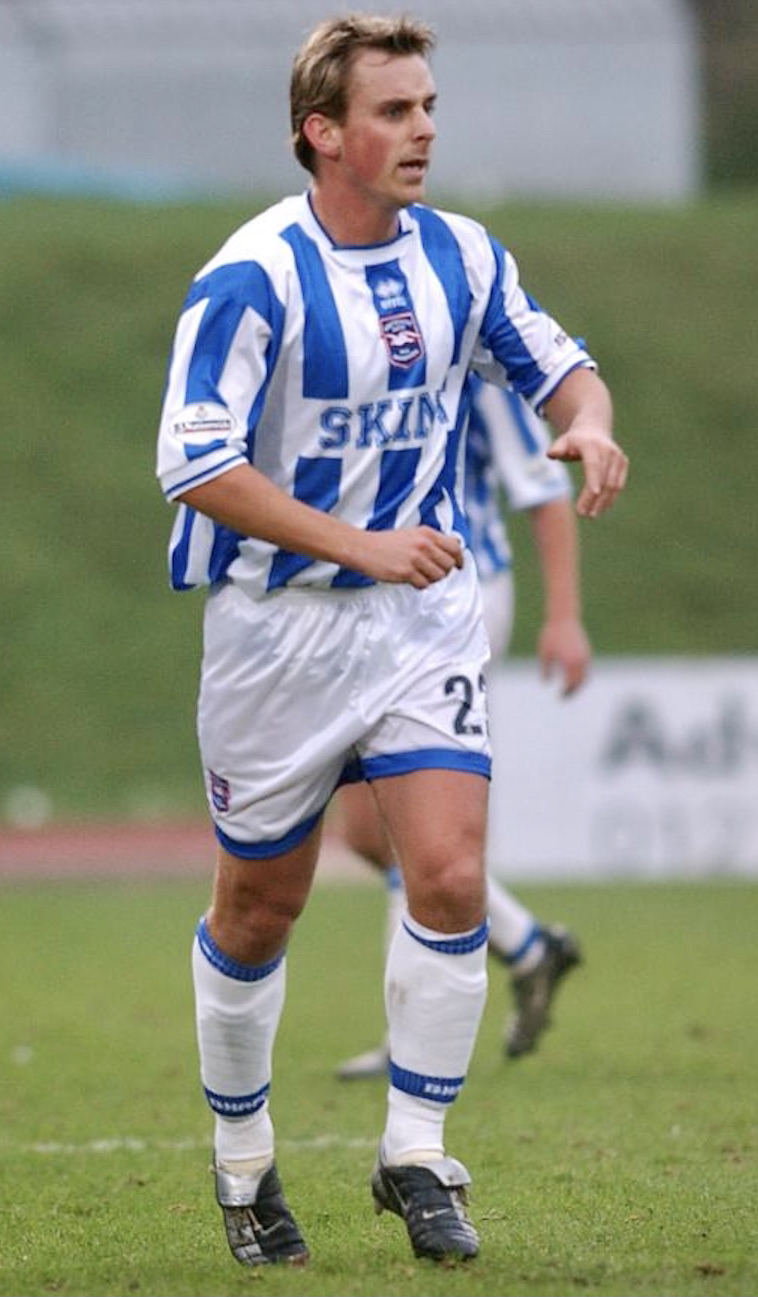
Jim Furnell was Wright’s preferred first choice, and, as the season wore on, the emerging Bob Wilson was getting the nod ahead of him as stand-in (although it wasn’t until 1968 that Wilson finally ousted Furnell).
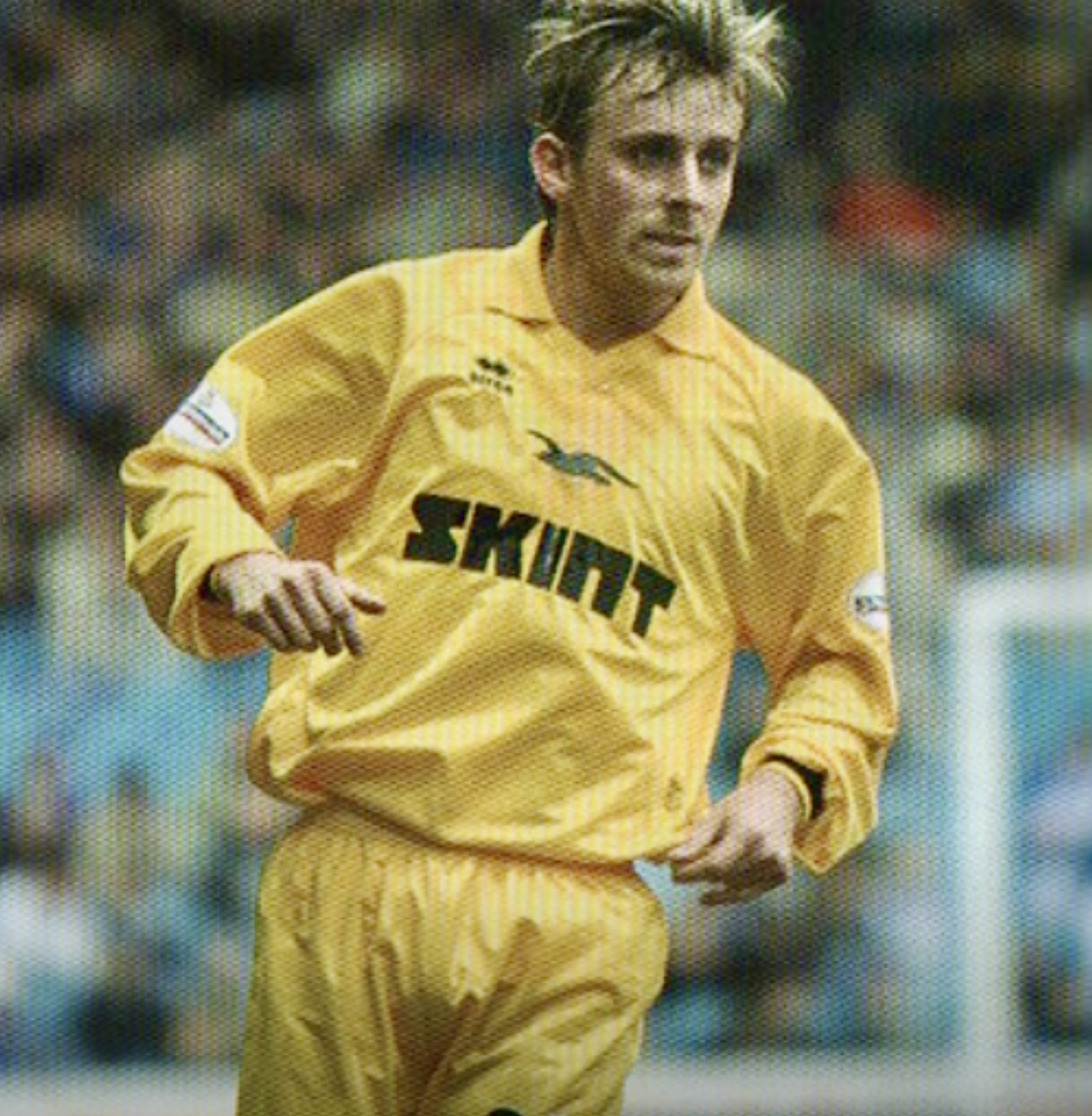
Disappointed to leave, Burns nonetheless went in search of regular football by joining Third Division Brighton for £2,000 in July 1966.

He made his first appearance for the Albion on 17 September 1966, when he took over from the injured Powney, but Brighton went down 2-0 to Grimsby Town.

Powney returned the following week and Burns had to wait until January for his next games – two FA Cup ties against Aldershot.

Burns in action versus Chelsea

He kept his place for the big fourth round FA Cup game against First Division Chelsea at the Goldstone which finished 1-1 when his former Arsenal teammate Tawse controversially had what he thought was a cracking late winner ruled out for a foul by Kit Napier.

Unfortunately, Burns conceded four in the replay at Stamford Bridge as the superior Chelsea side made the most of home advantage to ease their way through comfortably, 4-0. That was the season they went all the way to the final only to lose 2-1 to Tottenham Hotspur, whose ranks included Alan Mullery and Joe Kinnear.

By the end of the season, Burns had played 18 matches against Powney’s 37. But Burns had the upper hand in 1967-68 featuring in 29 games compared to Powney’s 21.

He also started the 1968-69 season as first choice but his 54th and final game for the Albion was in the 2-1 home defeat to Northampton in the second round of the FA Cup on 20 December 1968.

New manager Freddie Goodwin brought in former Wolves and Aston Villa ‘keeper Geoff Sidebottom to challenge Powney and let Burns leave on a free transfer in March 1969.

He joined Charlton Athletic, where he made 10 appearances in their unsuccessful tilt at promotion, but declined what he saw as a derisory contract offer. He returned to Tonbridge briefly and in January 1971 headed off to play in South Africa, initially for Durban United, and later, Maritzburg.

In his interview with Jed, he recalls playing in an English All Stars team managed by Malcolm Allison who invited him to return to England with Crystal Palace when his contract was up.

Burns made the move in October 1973 after previous Palace no.1 (and later Albion youth coach) John Jackson had moved to Orient.

He shared goalkeeping duties with Paul Hammond, playing a total of 90 matches between the sticks for Palace over the next four years under Allison and his successor Terry Venables.

In 1977, Burns played half a dozen games on loan for Brentford before heading off to the States like a lot of ageing players did at that time.

The ‘keeper played a dozen games for Memphis Rogues in the North American Football League. They were coached by former Chelsea defender and manager Eddie McCreadie although Burns had gone there to team up with former boss Allison who was sacked without a ball being kicked because he hadn’t signed enough players!

Burns played for Memphis Rogues in the USA

Among Burns’ teammates were a young Neil Smillie, who’d been struggling for games at Palace, Phil Beal, who had left Brighton the year before, John Faulkner, the one-time Leeds and Luton defender, and the flamboyant Alan Birchenall, beloved by Leicester City supporters of many generations.

Back in the UK in 1978, Burns joined Plymouth Argyle as cover for Martin Hodge, and ended his league playing days in this country appearing in 11 games in the first half of the 1978-79 season.

However, he left Home Park to rejoin Tonbridge Angels for a third time and he also played for Hastings United and Dartford.

After his playing days were over, Burns had three spells in charge of Tonbridge, from August 1980 to December 1982, August 1989 to May 1990, and in a caretaker role from November 2001 to May 2002 (by which time he was goalkeeping coach at Millwall, who he joined in 1992 under Mick McCarthy.

Burns served as goalkeeper coach under several Millwall managers.
Picture: Brian Tonks.

He also spent seven years as manager of Gravesend and Northfleet (who became Ebbsfleet United) between 1982 and 1989.

But it was at Millwall where he finally found a permanent home, working under no fewer than 18 different managers, including Steve Gritt and Mark McGhee.

He was even at the helm himself for a while, working as co-caretaker manager with former Lions boss Alan McLeary after Dave Tuttle’s departure in April 2006, when Millwall’s relegation had already been confirmed.

The appointment of Nigel Spackman the following month led to Burns’ departure in July 2006, when he took up a similar role at his old club Palace, working under former Albion boss Peter Taylor coaching Julian Speroni and Scott Flinders.

Goalkeeping coach at Palace under Peter Taylor

He left Selhurst in November 2007 when Taylor lost his job, and Speroni told yourlocalguardian.co.uk: “It was sad to lose Tony Burns because we worked well with him. During last season when I wasn’t playing regular football, Tony was the one who kept me going which was very important.”

Burns moved with Taylor to Conference side Stevenage Borough but later returned to Millwall under Kenny Jackett before stepping down in 2012, when he was succeeded by Kevin Pressman.

Still, he wasn’t finished with the game, though, and at the age of 70, in the summer of 2014, he teamed up with Taylor yet again to become goalkeeping coach at Gillingham. He joined them on a part-time non-contract basis as a replacement for Carl Muggleton.