‘Dynamic and energetic’ international Keith Andrews wanted longer Brighton stay

15486REPUBLIC of Ireland international midfielder Keith Andrews was something of a revelation during a season-long loan at Brighton & Hove Albion.

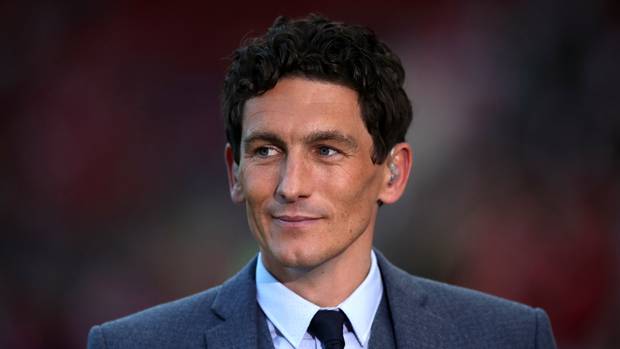
Now plying his trade as a pundit for Sky Sports, Andrews had previously played for the other Albion as well – West Bromwich – although his stay there was even briefer than his time with the Seagulls.

With the looming expectation that back-to-back Player of the Season Liam Bridcutt would shortly follow old boss Gus Poyet to Sunderland (which eventually happened in January 2014), Brighton turned to Andrews to cover the defensive midfield slot in 2013-14.

Arriving at the Amex in August 2013 just short of his 33rd birthday on a season-long loan from Bolton Wanderers, Andrews was not at all happy with the way the Trotters ‘disposed’ of him, telling bbc.co.uk: “Nobody really had the decency to even phone me as I was leaving.

“I think I deserve a little bit more respect than that, I suppose. I always felt I’d done things well at that club, been very professional and treated people like I like to be treated.

“To end on that note was a bit sour but you can’t be surprised by anything in football.”

Even if Seagulls supporters viewed his signing as somewhat underwhelming, Andrews himself was delighted and excited, saying: “If it wasn’t the right move, I certainly wouldn’t have gone and I didn’t feel any pressure to leave.

“It was a move that genuinely excited me. To come to a club that plays in the fashion and style that Brighton do was something that really appealed to me.

“I have still got a huge appetite for the game and I feel I can have a big impact here. I have come into a squad that has a wealth of experience and ability that will make me be the player I know I can be.”

And boss Oscar Garcia sought to dispel any doubts, telling bbc.co.uk: “He is a player with experience at the top level of the English game and international football – including World Cups and European Championships.

“Keith is a player who I know will enjoy the way we like to play. He is a dynamic and energetic player.”

It wasn’t long before supporters began to be pleasantly surprised by Andrews’ contribution on the pitch, and off it the new signing also began to show his aptitude for handling the media.

As early as September 2013, Andrews was speaking eloquently about his teammates, for example telling BBC Radio Sussex his views about striker Leonardo Ulloa.

“He is a handful and has got a bit of everything,” he said. “He is a big player for us at the moment as he is really leading the line on his own. He allows us to bring other players, such as Bucko [Will Buckley] and Ashley Barnes, into play.

“He is very effective and I’ve seen first hand in training how strong he is and what a handful he is to deal with. I have only been here a few weeks but I have been very impressed by the mix we have got in the dressing room. We’ve got experience, youth, foreign, English and Irish.

“It is a good atmosphere and if we hold onto what we have got I am more than confident we can have a very successful season.”

As the months progressed, Andrews became an established part of the side which Garcia ultimately led to the play-offs. In December 2013, Andrews made use of the platform offered by the Daily Mail’s Footballers’ Football Column to expand on his enjoyment of his time at the Amex.

“The club made a big impression on me when I played against them for Bolton last season, in terms of their style of football and their new stadium, and when they came in for me it was a very easy decision in footballing terms,” he said. “It’s not an easy decision, moving 250 miles away from your home in the north-west, but Brighton made it very clear they wanted me and Bolton made it clear they didn’t.

“It came out of the blue, but I felt it was a chance to be a part of something really exciting.”

Garcia’s decision to quit after the failure to get past Derby County in the play-off semi-finals was the catalyst for a number of changes in the playing personnel, although Andrews hankered to make his move to Sussex permanent having been involved in 37 appearances since his temporary move.
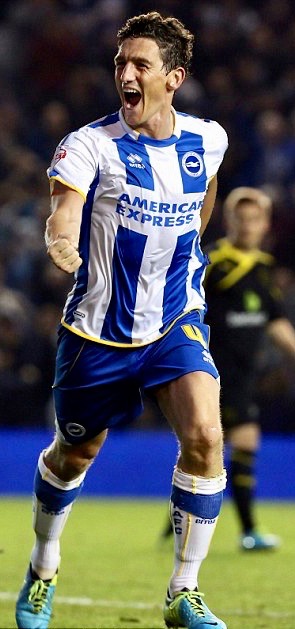
keith ands v sheff wedHe registered one goal during that time, an 89th minute equaliser at home to Sheffield Wednesday in October.

In a May 2014 interview with the Bolton News, he said: “It would be something I’d be interested in. When the people are so good to you and make you feel so welcome, the fans have been fantastic, it’s a one-club town.

“No-one supports anyone else and the attendances are something that I haven’t experienced in football for a long, long time. We’ve got the best attendances in the whole league although other clubs in the league are supposedly bigger.

“It’s a club I would like to stay involved in but contract-wise I’m contracted to a different club next season, I’m only here on loan. These things are not always in your hands and you can’t always dictate where you go and how your career pans out.

“But I would certainly like to stay on at Brighton into the future because I have thoroughly enjoyed it this year.”

The midfielder also reflected positively on his time at the Amex in a blog post for Sky Sports, pointing out: “Although I was only at the Amex for one season I have a lot of affection for the club as I think they try to do things in the right manner for the club to evolve with real sustainability for years to come.

“There are good people involved behind the scenes there, none more so than in the academy. Last season I worked closely with the academy manager John Morling and the development coach Ian Buckman as I was in the middle of my UEFA ‘A’ licence and they couldn’t have done any more to help me.

“It was a great experience to work with them as they prepared weekly and monthly schedules with the rest of the coaches and sports scientists to ensure the young lads had the best chance of developing their games, both technically and physically.

“I was amazed at the schedule a 14-year-old at the club had and a little envious to be honest as it certainly wasn’t like that in my day!”

Born in Dublin on 13 September 1980, Andrews came through the ranks of Drumcondra side Stella Maris before being picked up as a junior by Wolverhampton Wanderers, where he stayed for six years.

He made his first team debut on 18 March 2000 in a 2-1 win at Swindon and at 21 was Wolves’ youngest ever captain in a game against QPR, but he was sent out on loan on three separate occasions, playing briefly for Oxford United, Stoke City and Walsall.

After 72 appearances for the Molineux side, in 2005 he moved on to Hull City, where injury blighted his only season with them He then had a two-year spell with Milton Keynes Dons, where he had a productive midfield partnership with Alan Navarro, and he assumed the captaincy of Paul Ince’s side.

His second season was a huge success as the Dons won promotion to League One; Andrews scoring the goal which secured the success. He also scored in the club’s 2-0 win over Grimsby Town in the Football League Trophy at Wembley.

Andrews was chosen in the PFA Team of the Year, won the League Two player of the Year Award and was listed 38th of FourFourTwo magazine’s top 50 Football League players.

The Irishman followed his old Dons boss Ince to Premier League Blackburn Rovers in September 2008 and, two months later, at the comparatively late age of 28, made it onto the international scene with Ireland, making his debut as a substitute in a 3-2 friendly defeat against Poland.

It was the first of 35 international caps. He was involved in Ireland’s 2010 World Cup qualifying campaign and although the country was winless at the 2012 European Championship in Poland and Ukraine, Andrews was named FAI Player of the Year for 2012.

Meanwhile, Andrews’ third season at Blackburn (2010-11) had been curtailed by injury, restricting him to just five Premier League appearances, and in August 2011 he went on a half-season loan to Ipswich Town.

A permanent switch looked on the cards but on deadline day of the January 2012 transfer window he ended up joining West Brom on a six-month deal. After 14 Premier League appearances for the Baggies, his contract came to an end and his next port of call was newly-relegated Bolton Wanderers, who he joined on a three-year contract in the summer of 2012.

Owen Coyle was the manager at that time but his tenure came to an abrupt end in October that year. Although Andrews played 25 times under his successor, Dougie Freedman, the following season he was edged out by the signing from Liverpool of Jay Spearing.

After his loan season with Brighton, Andrews had a similar arrangement at Watford but he didn’t enjoy the same success there and ended up curtailing the deal and going back to MK Dons on loan for the latter part of the season.

When the curtain came down on his playing career at the end of the 2014-15 season, he’d completed 413 career appearances and scored 49 goals.

He became first team coach at MK Dons and harboured ambitions of becoming manager when Karl Robinson departed, but he was overlooked and began working as a coach with the junior Irish international teams, and turned to punditry with Sky Sports.
ipanews_045350c2-6dc7-4ca9-82e8-cb2036cb6b94_1

Promotion-winner Keith Dublin delivered £240,000 profit

BRIGHTON & Hove Albion’s promotion from the old Third Division in 1987-88 earned two of the squad places in that season’s PFA representative team; one quite naturally was top goalscorer Garry Nelson, the other was defender Keith Dublin.

Also in the same XI was Fulham’s Leroy Rosenior, father of latter day Albion utility man, Liam.

Dublin was an ever-present during that successful Seagulls campaign having joined in August 1987 from Chelsea, where he had played 50 league games (plus one as a sub) between 1983 and 1987.

Born in High Wycombe on 29 January 1966, Dublin became an apprentice at Stamford Bridge in July 1982 and signed professional 15 months later.

When regular left back Joey Jones was injured, he made his first team debut in a 3-1 home win over Barnsley. It was the penultimate game of the 1983-84 season, and the last at home as John Neal’s team won the Second Division Championship.

Dublin also caught the eye of the England selectors and played six times for the under-19 team.

At the time, Dublin, or Dubbers as he was known, was one of the few black players emerging at Chelsea, following after Paul Canoville and Keith Jones.

Canoville wrote in his autobiography with Rick Glanvill, Black and Blue: How Racism, Drugs and Cancer Almost Destroyed Me (Headline Publishing Group, 2012), about some atrocious treatment they all received – and not just from the terraces!

“When Jonah and then Dubbers made the step up, they no longer trained with the reserves but with the first team,” said Canoville. “That made three black faces and, on more than one occasion, there were altercations with one player who obviously had a problem with black men.

“It was always dealt with properly, but, as if the colour wasn’t an issue. Of course it was. Back then, casual, institutional racism was displayed at almost every level of the club – not so much that you would quit over it or kick up a rumpus, but enough to make you feel different and an outsider most of the time.”

Canoville added: “Dubbers was strong, athletic and fast. But as soon as either of them made a mistake, the crowd was on to them, slagging them off. There wasn’t the same open racist abuse I received, but still the tolerance threshold was low, as much in the coaching staff as the crowd.”

Dublin played 28 games in the top division for Chelsea during the 1986-87 season, but with competition for the left back spot hotting up in the shape of future England international Tony Dorigo and Clive Wilson, he decided to move on.

“John Hollins couldn’t guarantee me regular first team football at Chelsea so I’m looking forward to an enjoyable and successful season with Brighton,” he said.

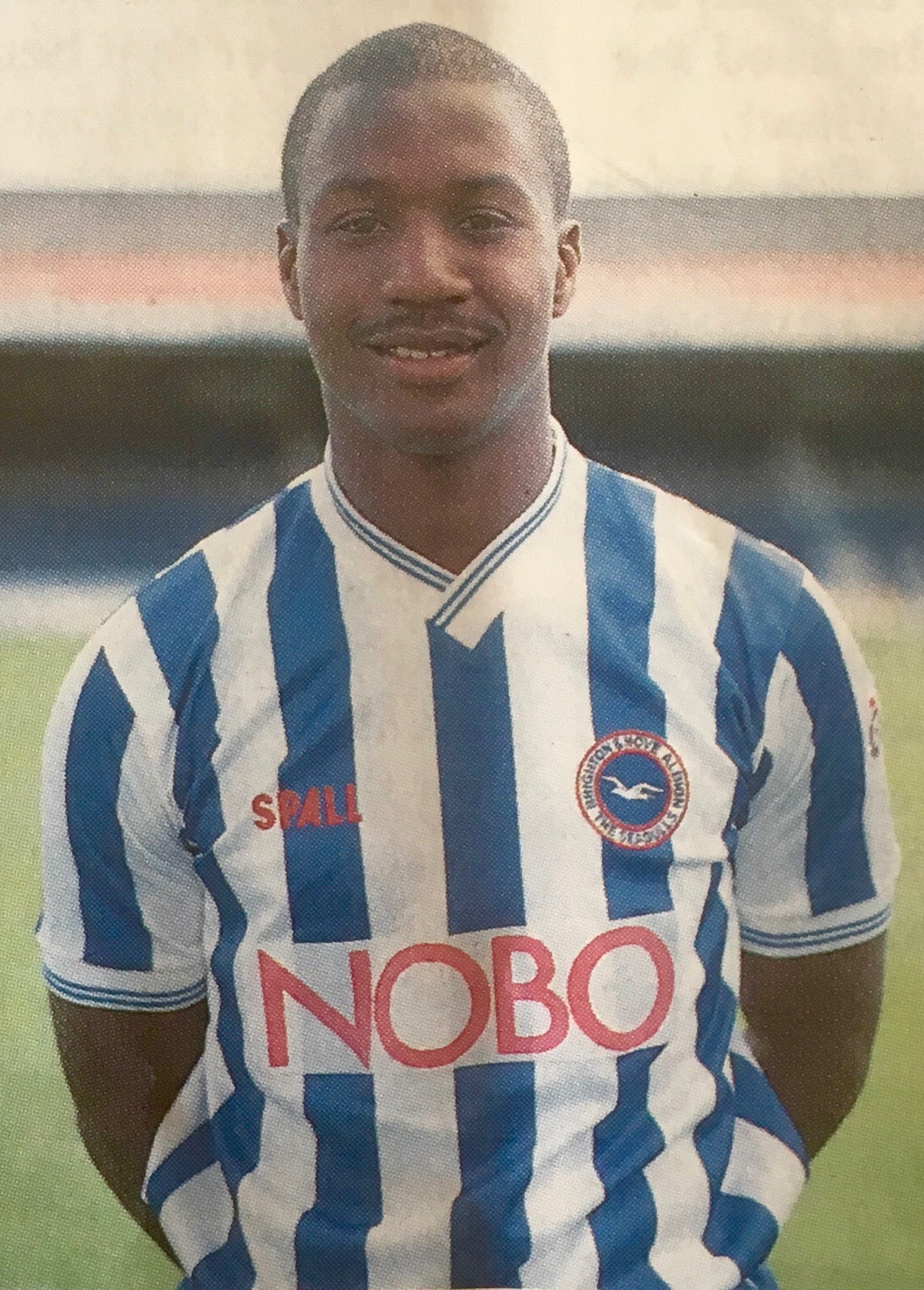
Brighton manager Barry Lloyd snapped up Dublin for £35,000, and what an investment because he was ever-present at left back in the promotion season. In fact for the latter part of that season, three of the back four were ex-Chelsea defenders: Gary Chivers at right back, Robert Isaac centre back, and Dublin at left back.

When introducing Dublin in the Albion matchday programme, an article pointed out how five years previously Dublin had been cleaning Chris Hutchings‘ boots at Chelsea – and now he was taking over his no.3 shirt. Hutchings had been moved forward to play in midfield, although four months later he left the club to join Huddersfield Town.

On signing for the Albion, Dublin said: “I’m not worried about dropping two divisions because I don’t believe Brighton will be in this division for long. It’s an easy club to settle down with because I know so many former Chelsea players.” He pointed out he had known Isaac since the age of 12 or 13 when they both played in the same district schools team.

Dublin used to travel down daily to training with Chivers and although defending was their first priority they had a friendly rivalry over who could score the most goals. Dublin chipped in with five in that first season but Chivers regularly went up for corners so won the little private wager in the following two seasons.

The promotion was a great experience for Dublin who said in an interview in the matchday programme: “There’s never been anything like it for me obviously, and it’s going to be a long time before anything can top the day we clinched second place. It might never happen.

“Probably the best thing was getting a few goals along the way as well because that had never happened to me before.”

As young Ian Chapman gradually made the left back berth his own, Dublin switched inside to centre back.

Dublin welcomed the competition for his place from Chapman, explaining: “I think it’s good when you’ve got someone chasing your place, snapping at you all the time to get in the first team.

“Ian’s been quite a good mate of mine since I arrived and you have to always remember that being dropped or selected ahead of someone else is what football is all about.

“It keeps me on my toes, and if you can have six or seven players in the team in the same situation then that’s the best thing possible at any club.

“Ian’s facing the same scene now as I was experiencing at Chelsea.”

Dub leapIt was not unusual to see Dublin selected as man of the match and several programmes featured pictures of the obligatory post-match presentation by the sponsor to the nattily-dressed defender. Dublin admitted in another profile piece that clothes and shopping were hobbies.
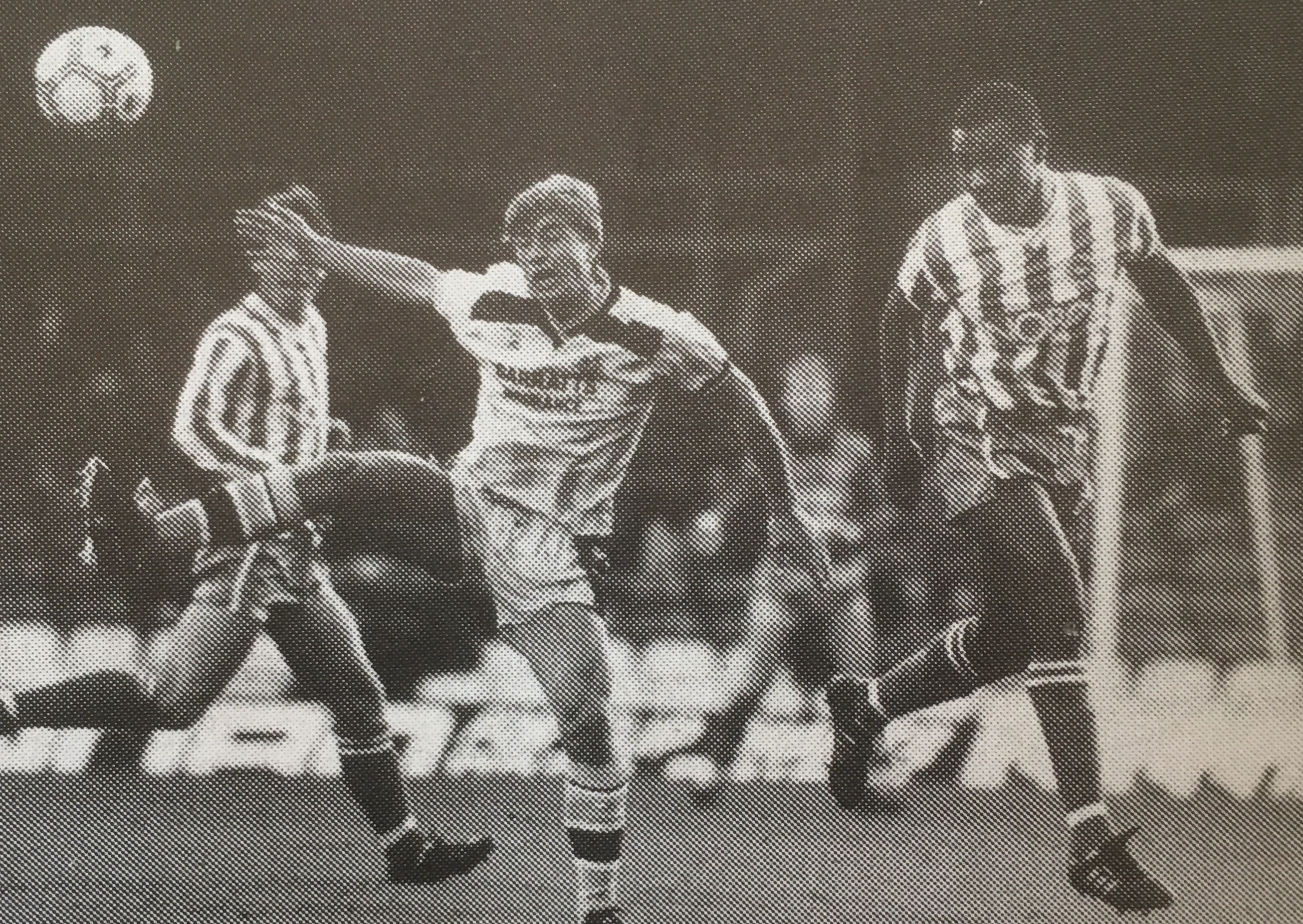
Meanwhile, on the pitch in 1989-90, his consistent performances at the heart of the defence earned him the Albion player of the season accolade.

After 132 appearances in three seasons with Brighton, Brighton cashed in on Dublin’s prowess by picking up a £275,000 fee from Watford in the summer of 1990.

With goalkeeper John Keeley departing for Oldham for £238,000 at around the same time, fans feared another frustrating season was ahead. But they were in for a surprise.

While Dublin joined a side that would struggle, at first under former Chelsea striker Colin Lee, then ex-Tottenham legend, Steve Perryman, Brighton surprised the critics and ended the season at Wembley.

Indeed Watford finished fourth from bottom of what was then Division 2, while Brighton sneaked into sixth place with that memorable last game win over Ipswich Town, beat Millwall over two legs in the play-off semi-final and then went down 3-1 to Neil Warnock’s Notts County in the play-off final.

The following year, with future England goalkeeper David James emerging, Watford turned around a disappointing first half to the season and eventually finished 10th.

Dublin was an integral part of Watford’s defence for four years, making 168 appearances, although it appears not all Watford supporters appreciated him.

The amusing Watford fans’ website, Blind Stupid and Desperate recalled this among other memories: “The fondness with which Keith Dublin is remembered, the way that fans still tell tall tales of remarkable own goals, insanely cavalier defending and sporadic heroism with broad smiles and genuine affection, demonstrates that perfection isn’t the be-all and end-all for supporters.”

At the end of the 1993-94 season, which had been a struggle against relegation from the First Division under manager Glenn Roeder, Watford did a swap-deal which saw striker Tommy Mooney (yes, the same Mooney who famously missed the Swindon shoot-out penalty against Brighton in 2004) and midfielder Derek Payne join from Southend United and Dublin going in the opposite direction. He spent five years at Roots Hall and amassed a further 179 games.

He subsequently moved to Colchester United, but only played a couple of games, and ended his career in non-league, initially with Farnborough Town and then Carshalton Athletic.

In an Argus article in 2010, they discovered Dublin was busy in ‘retirement’ running soccer camps at home and abroad, and according to wfc.net, Dublin worked in a family property management business after his footballing days were over.

Footnote: Perhaps Dublin set a trend for Albion left backs named after Irish places, with the double whammy Kerry Mayo following in his wake some years later!

1 Dublin1a Dublin portrait2 Dublin header3 Dublin Argus cut4 Dub mom5 dub another mom

• Pictures from my scrapbook show portraits of Dublin that appeared in the matchday programme; action shots (one from the programme and one from the Argus) and a couple of man of the match presentations

Gary Lineker cleaned defender Larry May’s boots

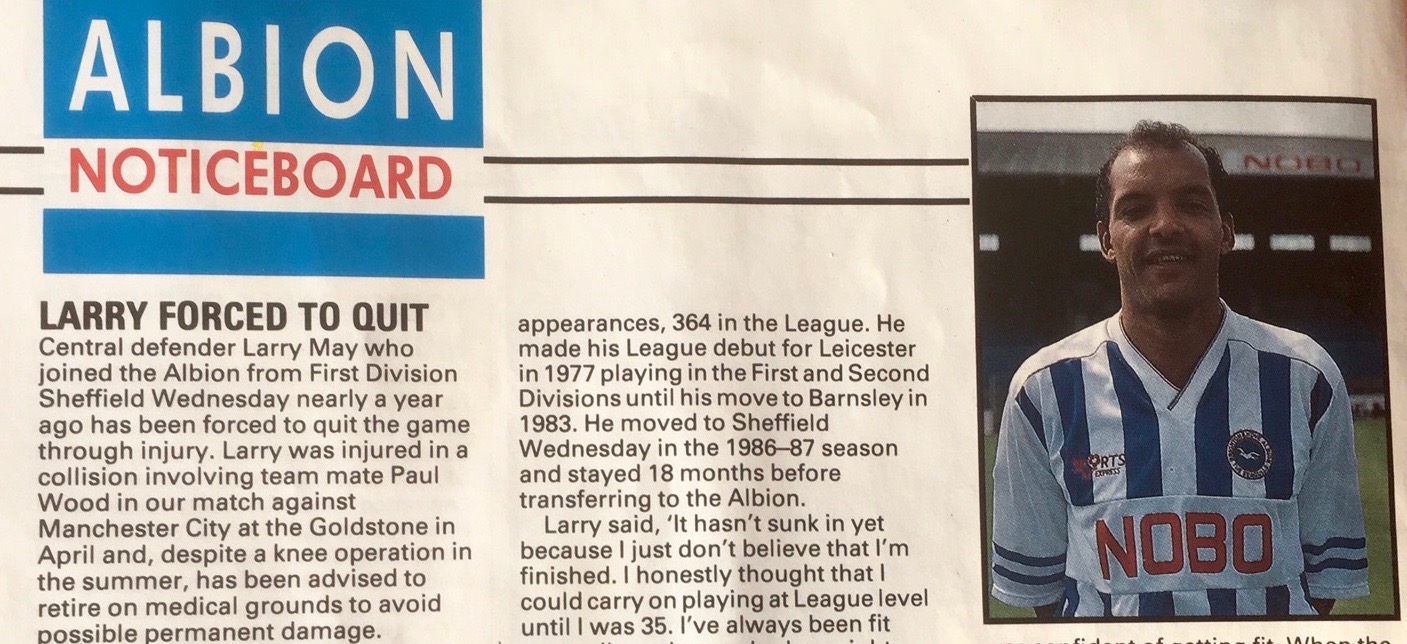
larry may wednesINJURY cut short Larry May’s playing career at Brighton but, during a purple patch of his four-year spell at Barnsley, he impressed his peers to the extent he was in the 1986-87 PFA team of the year.
Alongside him in that selection were Lee Dixon, the ITV football pundit who in those days played for Stoke City prior to his move to Arsenal, and former Albion full back John Gregory, who was playing in midfield for Derby County at the time.

Centre back Larry began his career with Leicester City and played over 200 games for them between 1977 and 1983. When given a run in the first team by former Rangers manager Jock Wallace, Larry’s boots were looked after by none other than Gary Lineker: the Match of the Day host being a Filbert Street apprentice at the time.

Leicester’s club historian John Hutchinson – who said of May: “He was very strong in the air, a powerful tackler and had pace” – drove down to Brighton in 2015 to interview Larry about his time with the Foxes and published the story on foxestalk.co.uk.

Leicester had spotted him playing for a local youth team in Birmingham and invited him for a trial. Aged 17, he made his debut in the top division against Bristol City when one of his teammates was Frank Worthington, another who later played for the Albion.

In the following season, Jimmy Bloomfield, the manager who gave him his debut, departed and was replaced by Frank McLintock, who didn’t give May much of a look-in.

Screenshot
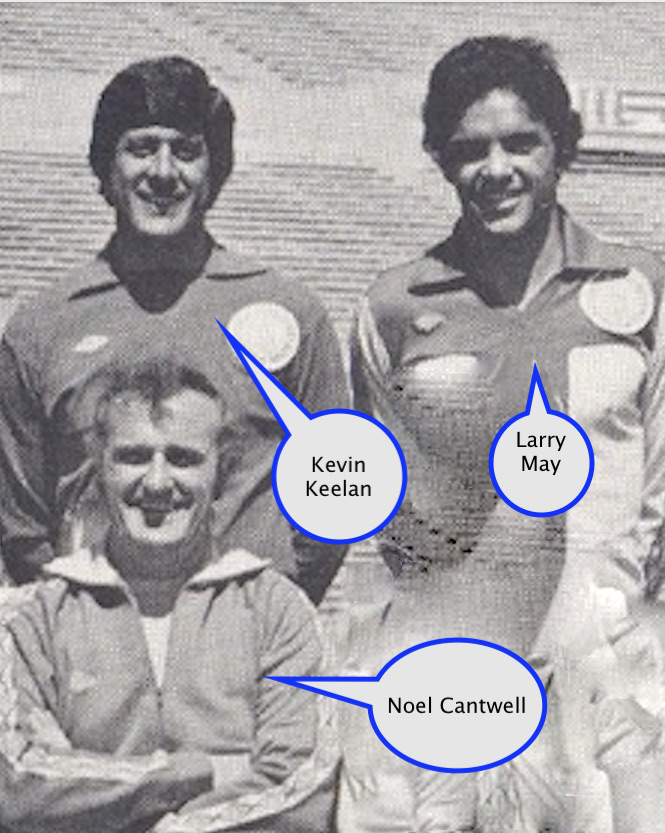
May played in front of ex-Norwich goalkeeper Kevin Keelan for the Tea Men

He went to play for New England Tea Men (a franchise owned by the Lipton tea company) in America under ex-Coventry manager Noel Cantwell to get some games but ruptured a cruciate ligament which some thought might end his career before it had even got off the ground.

Back at Leicester, McLintock was succeeded by Wallace and he paired May at the back with John O’Neill – a partnership that endured for the best part of five years.

In those early times, though, May admitted he had to play through pain and regularly ice his knee.

Not only was May ever-present in the 1979-80 side that won promotion from Division 2, he headed the only goal of the game at Leyton Orient on the last day of the season to clinch the title. Striker Alan Young, who played for Albion in the 1983-84 season, was another ever-present.

Leicester only survived a season in the top flight and following relegation Gordon Milne replaced Wallace as manager, guiding them to promotion in his first season. May, though, didn’t see eye to eye with the former Liverpool midfielder and ended up handing in a transfer request.

In an Albion matchday programme, May said: “”We fell out over something and nothing really but at 24 you think you know it all and there was no future for me once I’d asked for a transfer. “Thinking back, I realise that I should have got on with it.”

As it was, in August 1983 he dropped a division and joined Barnsley for a fee of £110,000, signed by the legendary former Leeds hard man, Norman Hunter.

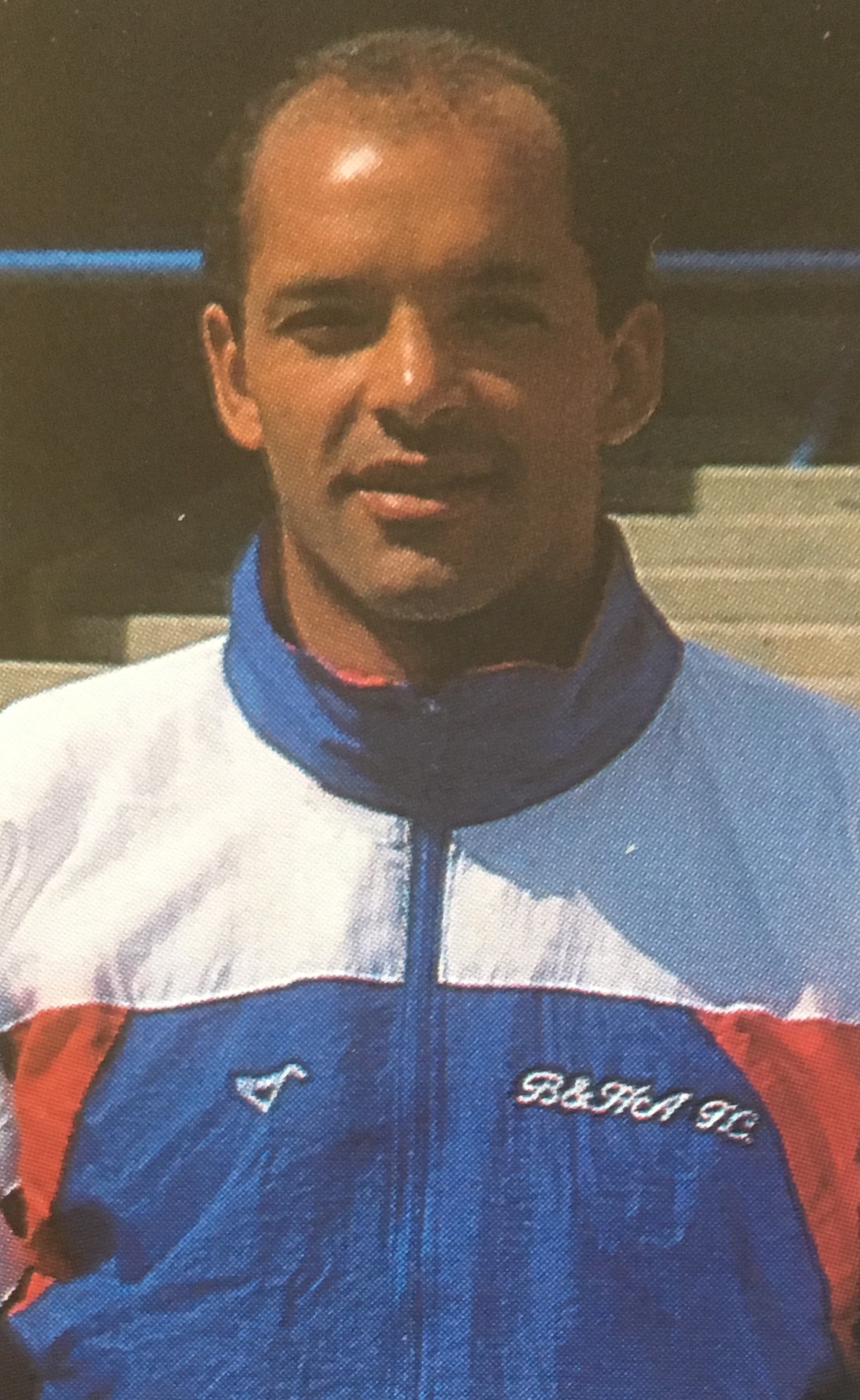
larry may bw“For a man with a reputation of being one of the fiercest characters in football it was unbelievable – I’d say he was definitely the nicest fellow I’ve ever played for,” said May.
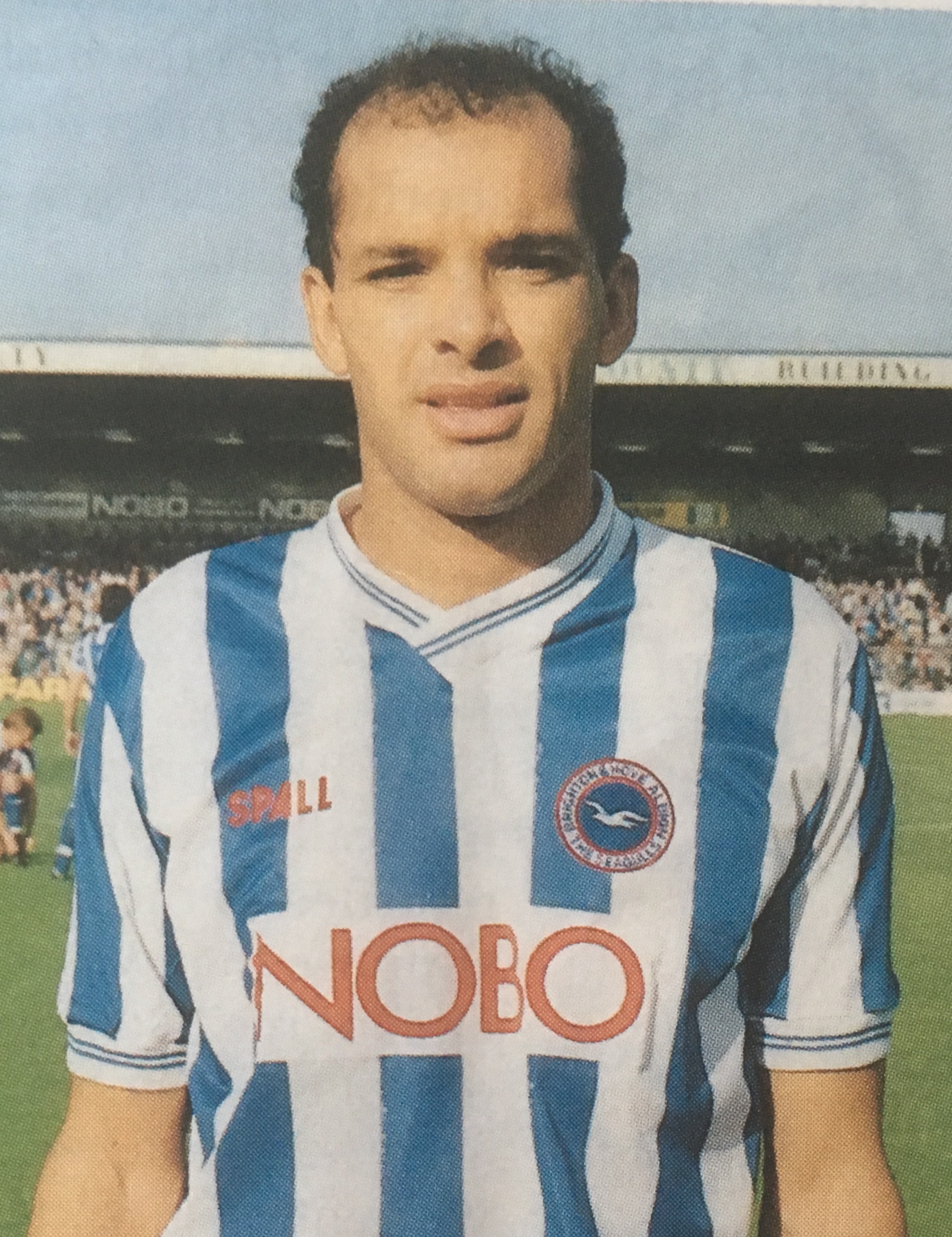
While on the books at Oakwell, with a nod towards a longer future in the game, May took his full FA coaching badge.

He told foxestalk.co.uk: “I was happy at Barnsley but, in retrospect, I should have bided my time and stayed at Leicester really. But I was a bit young and naïve. I loved it at Leicester. Leicester were the best club I ever played at. It was my best time in football and I loved it there.”

After three years with Barnsley, former Albion winger Howard Wilkinson took May to Sheffield Wednesday. He had just turned 28 and the move represented a step back up in standard.

“It was an important move at that stage in my career but looking back it was never brilliant for me at Hillsborough,” he said.

Amongst the competitors for his place was Nigel Pearson, later to be better known for some eccentricities in management with various clubs.

At the start of the 1988-89 season, a move south to Brighton was mooted but Wilkinson held onto him because of some early season injury problems. However, Barry Lloyd got his man towards the end of September 1988 and May joined Brighton for £200,000.

His debut in a 2-1 Goldstone win over Leeds brought to an end a run of eight defeats at the beginning of the season but it was back to losing ways – both 1-0 – in the following two games which, ironically, were against his former clubs, Barnsley, at home, and Leicester, away.

monoMay

The return fixture with Leicester was a happier outcome for May, though, because he was the sponsors’ man of the match in a 1-1 draw.

In his programme notes for the Barnsley game, manager Lloyd said: “I know he’ll have a big impact on the way we play….at 29, we know he has a lot of football left in him.”

Captain Steve Gatting had a programme column that season and he also welcomed the central defender, adding: “His experience in the top two divisions is bound to rub off onto some of younger players. When we’ve played against Larry in the past he’s tended to be the man of the match and I’m sure everyone at the Goldstone wishes him and his family every success.”

Understandable sentiments, of course, and such a shame that before the season’s end, after only 25 games, the cruciate ligament in his right knee was shattered in an accidental collision with teammate Paul Wood during a magnificent 2-1 home win over Man City.

“I knew straight away, having had knee trouble before, how serious it was,” he said. “It wasn’t Paul’s fault. It was just one of those things.” He was carried off on a stretcher and it was his last game for the club.

It was in the matchday programme for Albion’s game v Ipswich Town on 27 September 1989 that news of his forced retirement was announced.

“The sudden decision has stunned 30-year-old Larry and his family who were beginning to settle in the Brighton area after moving from Wakefield last year,” the announcement read. “In a 12-year career in the game, Larry has made more than 400 senior appearances, 364 in the league.”

A dejected May told the programme: “It hasn’t sunk in yet because I just don’t believe that I’m finished. I honestly thought that I could carry on playing at league level until I was 35. I’ve always been fit generally and never had a weight problem and this has really hit me.

“When the specialist told me that I shouldn’t play again my first reaction was that it had to be wrong. Now I’ve got to rethink and I’m not really sure about my future.”

Manager Lloyd added: “The announcement that Larry May had been forced to retire from playing was a particularly sad one. He performed very well for us last season and put heart and soul into everything around the club.”

Thankfully Larry was able to put that coaching badge to good use when Lloyd made him reserve team coach and, after a time working for the Surrey FA, he later returned to the club as Head of Sports Participation for Albion in the Community.

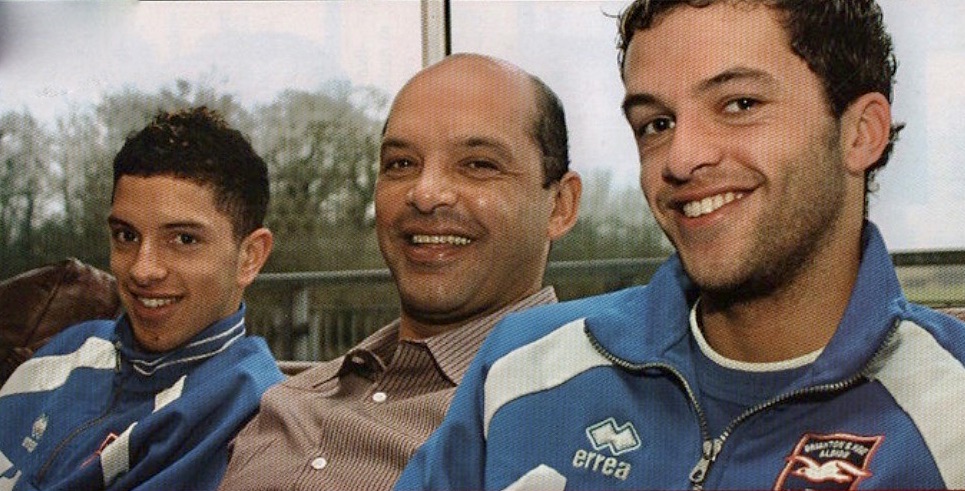
His links to the club also extended to his sons: Chris was a young goalkeeper who once had to replace the injured Michel Kuipers during a game and Steve was a centre-back who was in the youth set-up.

1-larrymaystripes2-argusmayintheface3-may-quits4-coach-may

Larry and his sons Steve (left) and Chris

Pictures include Larry May in matchday programmes; captured by an Evening Argus cameraman getting a hand in the face; the programme announcement of his retirement; in an Albion team line-up as a coach, and with his sons.