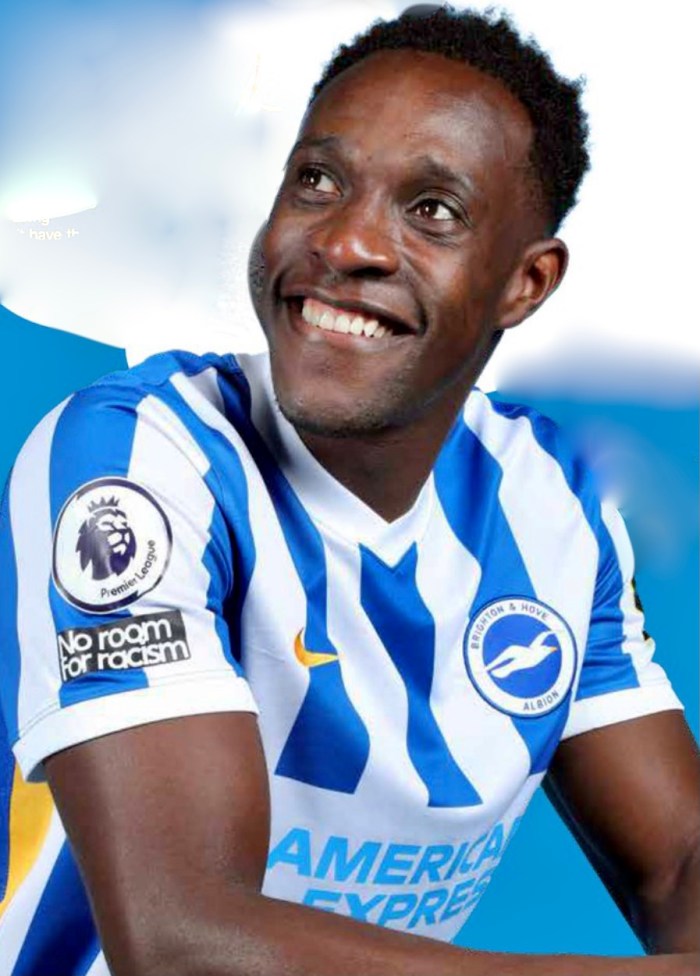
Dat guy Danny Welbeck “a top player and a top person”

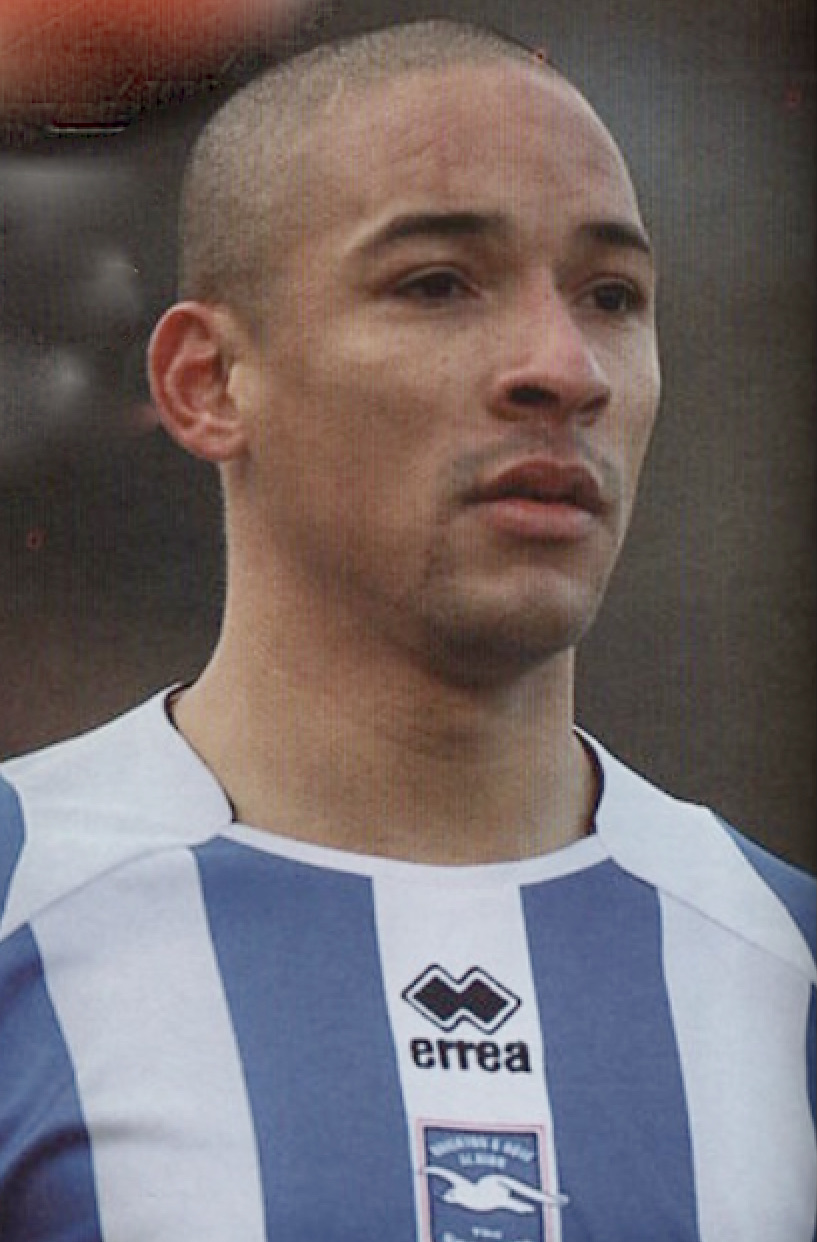
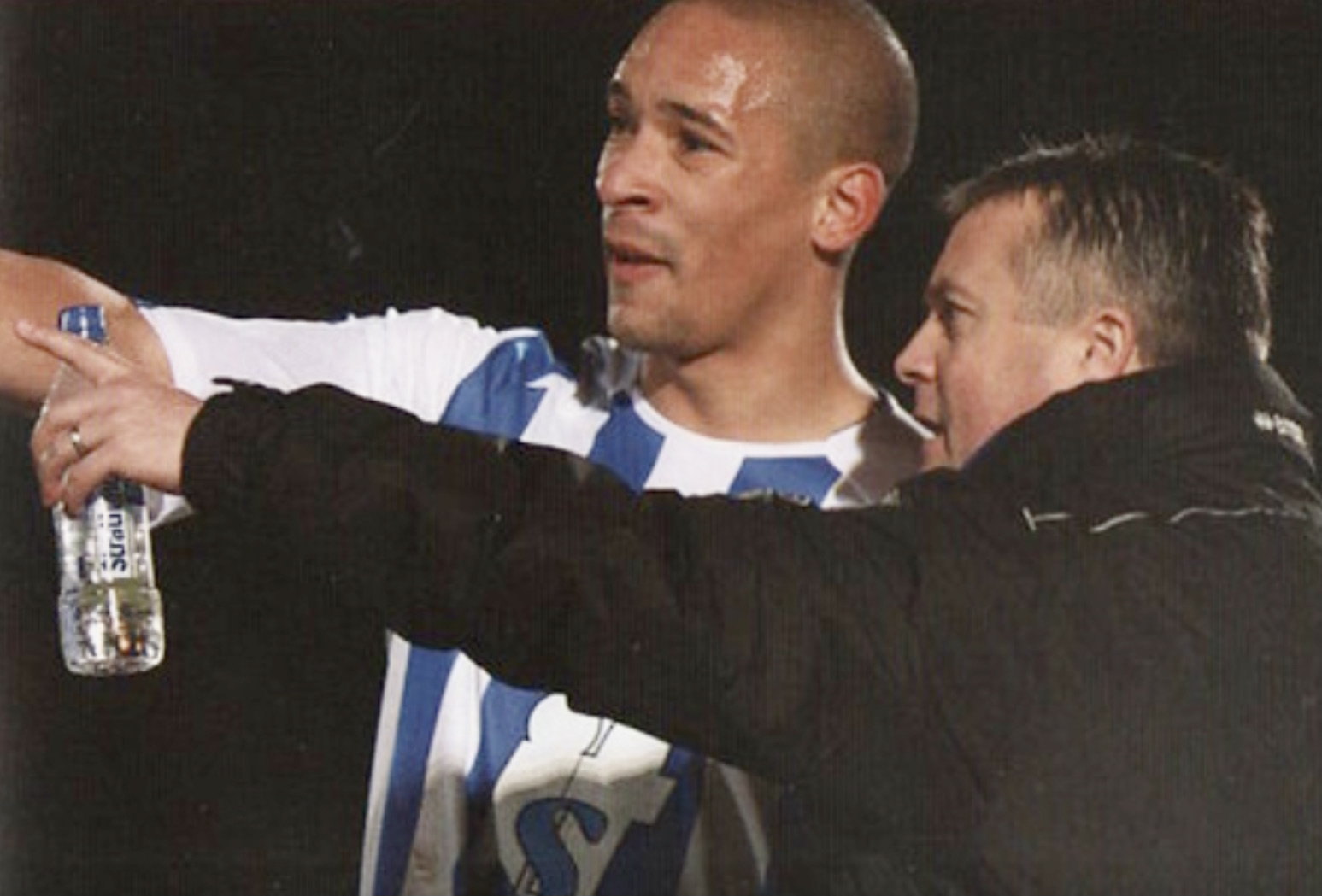
INJURY has undoubtedly caused Danny Welbeck to miss more games of football than he would have wished but the game is full of admirers for the longevity of his career.

As Gabby Logan said on Match of the Day, like a good wine, Welbeck seems to be getting better with age. He has scored more Premier League goals per game in his thirties than he did in his twenties or teens.

His 10 Premier League goals for Brighton last season was his best goalscoring campaign in the top flight and in the autumn of 2025 he has already scored two goals apiece against Newcastle and Chelsea, opponents competing in the Champions League.

“I have the passion and love for football,” he told Match of the Day after scoring the pair against Newcastle. “It’s what I want to do. I feel good. I feel strong and fit so I won’t be stopping soon.”

And as BBC Sport reporter Ciaran Kelly pointed out, Welbeck has the knack of scoring crucial goals for the Seagulls: 11 of his last 12 Premier League goals for Brighton have either put the side ahead (eight) or drawn the game level (three).

Welbeck has now played more matches for Brighton than Manchester United, the club he joined aged eight and where he spent 15 years, rising from the club’s academy, making his way through the junior sides and going on to play 142 first team games (90 starts + 52 as sub) between 2008 and 2014.

The 29 goals he scored along the way played a big part in him earning selection for the England national team for whom he collected 42 caps between 2011 and 2018 having also won 42 caps across the various junior England levels. Welbeck netted 16 times for the full England side.

That there have been calls in certain spheres for United to try to take him back to Old Trafford as he approaches his 35th birthday are a mark of the man and the quality he still exudes.

Striker-turned-pundit Tony Cascarino even urged Thomas Tuchel to recall him for England as back-up for Harry Kane. He told talkSPORT: “Welbeck contributes in various ways beyond scoring. His goal tally isn’t huge, but it’s a decent level and, above all, he is an excellent team player.

“I’ve never seen anyone speak ill of his attitude or professionalism. He is truly an exemplary veteran,”

Cascarino added: “Poland still uses superstars like Robert Lewandowski. If a team needs a veteran, I think there’s absolutely no problem calling Welbeck back,”

Graham Potter was in charge when Welbeck arrived at the Albion in October 2020 on a free transfer, signing a one-year contract.

Welbeck scores for Albion at Old Trafford

Potter moved on but in October 2024 he couldn’t speak highly enough of what the player had brought to the Seagulls, in particular as an influence on others.

“Somebody like Danny is a role model. He can teach you how to act, how to be, how to condition yourself and how to interact with your team-mates at the highest level,” said Potter, speaking on BBC Sounds’ Planet Premier League podcast.

“He is a top player and a top person. Credit to the club – they didn’t just recognise that it is about signing young players, it is also about understanding what older players can do for the environment and for the collective.

“To have someone [in your squad] that has been there and done it, and can just handle it well, I think is priceless as a coach.

“If you see what Danny has had to go through, I think he is also a resilient character. He is a good human being, so he doesn’t get carried away too much with the nonsense of football.”

Potter’s successor Roberto De Zerbi was equally effusive. “Great player, great guy,” said the Italian. Speaking in April 2024, when his own Albion future was in doubt, he said of Welbeck: “We have to keep him for a lot of years. He is playing very well and he is important for the young players, for the dressing room.”

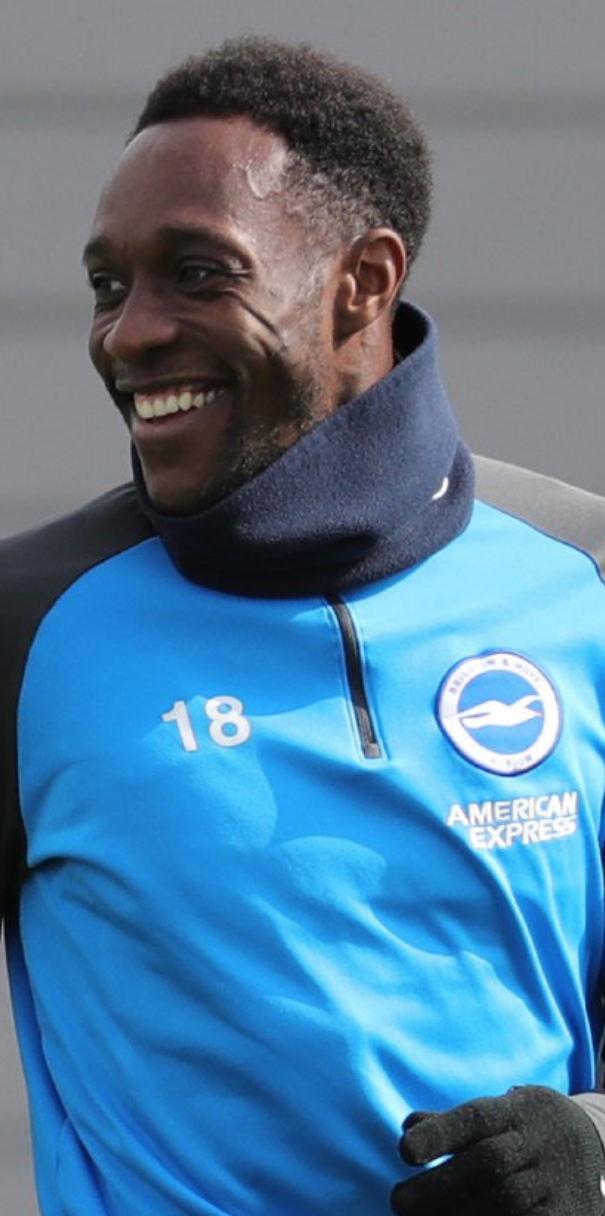
A couple of months earlier in the season, De Zerbi’s assistant, Andrea Maldera, told Andy Naylor of The Athletic: “Danny is one of the best teachers on the pitch.

“He is always positive and he is not only a teacher on the pitch. He can speak with a young player when he is eating with them or when he is on the bus.

“He always gives a lot of advice to everybody. He is a big teacher, he has the soul of a teacher. I don’t know what he wants to do in the future in his life, but he is always very clear-minded. On the pitch, it is the same. He doesn’t speak a lot, but he’ll go close to the players, sometimes work a little with them on the training ground.”

Welbeck himself appreciated the influences of more experienced players in his own early days and told BBC Sport’s Simon Stone: “At Manchester United there were lots of players to guide me and give me advice. It meant a lot back then hearing that sort of stuff, listening to people who had been through certain situations and different experiences, who have a lot of knowledge in the game.

“I am always happy to help with the other players. It is pretty easy for them to come and talk to me. It’s nice to pass on a bit of knowledge and experience.”

Born in the Longsight suburb of Manchester on 26 November 1990, Welbeck’s first games of football were played with his older brothers Wayne and Chris when he was just four or five.

Wes Brown, who was already on United’s books, and his brothers lived nearby and the young Welbeck was inspired to follow in Brown’s footsteps.

He actually had a trial for City when he was eight but they didn’t have an age group side for him. It was while he was playing for local side Fletcher Moss Rangers that United seized the opportunity to offer him a two-week trial, and he didn’t look back.

After progressing though the academy schoolboy squads, he made his debut for the youth team in December 2006, debuted for the reserves the following October and was United Young Player of the Year for the 2007-08 season, going on to sign as a professional in July 2008.

On the ball for United

Three months later, Sir Alex Ferguson gave him his first team debut, starting up front alongside Cristiano Ronaldo at home to Middlesbrough in the third round of the League Cup, when United won 3-1.

In November, he went on as a substitute to make his Premier League debut and scored United’s fourth goal in a 5-0 thumping of Stoke City, unleashing a swerving shot from 30 yards.

Welbeck was winning his first significant medal before that season was over after he had started for United in the League Cup final, when they beat Tottenham on penalties at Wembley (although Welbeck had been subbed off 10 minutes into the second half, the BBC match report noting “youngster Welbeck was having a tough time making an impact in the face of the physical presence of Dawson and King”).

He scored twice in eight matches on loan to Preston North End in 2010 and then spent the 2010-11 season on loan to Sunderland, scoring six in 28 matches (23 starts plus five as sub) for ex-United skipper Steve Bruce’s Premier League side.

“He has always had ability but made slow progress because he had a bit of a knee growth problem, so we knew we had to wait for him,” said Ferguson in August 2011. “We put him on loan to Sunderland last season and that is when he became a man. He has grown up.”

Dat Guy (Mancunian slang for The Man), the nickname given to him by former United teammate Ravel Morrison, was part of the 2012-13 Premier League title-winning squad (23 starts plus 17 as sub) which turned out to be Ferguson’s last in the hotseat.

He scored 10 in 24 starts plus 12 as sub under David Moyes, but Dutchman Louis van Gaal preferred to bring in Colombian striker Radamel Falcao and, after only three games at the start of the 2014-15 season, Welbeck was sold to Arsenal for £16m (Ferguson putting in a good word with Gunners boss Arsene Wenger).

Plenty of iconic United names, such as Rio Ferdinand, Paul Scholes and Bryan Robson, voiced their disapproval of the decision and former coach Rene Meulensteen was adamant Ferguson wouldn’t have sold him if he’d still been in charge.

Meulensteen told talkSPORT: “We were always keen on bringing young players through and giving them a chance. I had him from when he was 8, 9 years of age and I think the best of Danny is yet to come.

“He is a very versatile player and I’m 100 per cent sure he will do very, very well for Arsenal. Danny is a perfect match for Arsenal. He is such a versatile player.

“He is very good in short, creative, combination play, showing for the ball, passing and moving, picking up different positions. At the same time, he has the pace and power to break away if they break from their own half.”

Robson said: “He came through the ranks, he has a great attitude, he’s a great lad.” And Wayne Rooney told The Mirror: “Danny’s great to play alongside. If I’m completely honest, I’d probably like to still see him here, playing for Manchester United.”

Saying United let him go too quickly, Gary Neville added: “He’s actually perfect for how Manchester United should play. Threatening space in behind, playing off front players. This idea that he’s not good enough for Manchester United is absolutely rubbish.”

In a January 2025 interview with the Manchester Evening News, Welbeck remembered: “At the time I was playing on the left-wing a lot and in a 4-4-2, which is very difficult for me because I can’t make an impact on the game.

“I can play it to the best of my ability but that’s not best for the team, and I could make a bigger impact playing in my preferred position.

Welbeck and Ashley Young at United

“You start to have thoughts but at that time you’re still going to training and I was still giving 100 per cent and giving my all in every single game – that’s just me, I’m not going to change that. But you do start to think about what’s best for you.”

Apart from anything else, Welbeck was an established member of the England set-up by then.

He had been on loan at Sunderland when he was first called up to the England senior squad (following the withdrawal of Aaron Lennon) only days after scoring for England Under-21s in a win over Denmark.

Ironically, the opponents at Wembley on 29 March 2011 were Ghana – the country his parents came from – and Fabio Capello sent him on in the 81st minute as a sub for Ashley Young. The game ended 1-1.

He ultimately featured under four different England managers (albeit Stuart Pearce only managed one game) with the majority (29) under Roy Hodgson. His final England game was as a sub for Trent Alexander-Arnold at the 2018 World Cup in a 1-0 defeat to Belgium.

When Welbeck suffered a badly broken night ankle in a Europa League match for Arsenal in November 2018, and was forced to withdraw from the England squad, Gareth Southgate revealed how the squad showed their strong bond with him by placing his photo on a TV they were watching ahead of a Nations League match.

And after he’d left Arsenal in the summer of 2019, but was still recovering from the ankle injury, the FA helped his comeback by allowing him to use all of the facilities he needed at the St George’s Park national centre.

Welbeck nets in the FA Cup against Newcastle

Another illustration of the enduring relationships Welbeck has built during his career came after he’d scored an extra-time winner for Brighton at St James’ Park in March 2025 to book an FA Cup quarter-final against Nottingham Forest.

Ferguson phoned the player after the game, and Welbeck told BBC Football Focus: “He talked about the goal and the performance. He was buzzing and to have that sort of connection, he is a manager who is always looking out for his players, always wants the best for them, and still to this day is in contact.”

At Arsenal, Welbeck played under another great manager and he told the programme: “Sir Alex Ferguson got success in his own way, Arsene Wenger had success in his way. There’s different ways to reach success. Those two managers played a huge part in my life, not just my career.”

• More about Welbeck’s time at Arsenal in my next blog post.
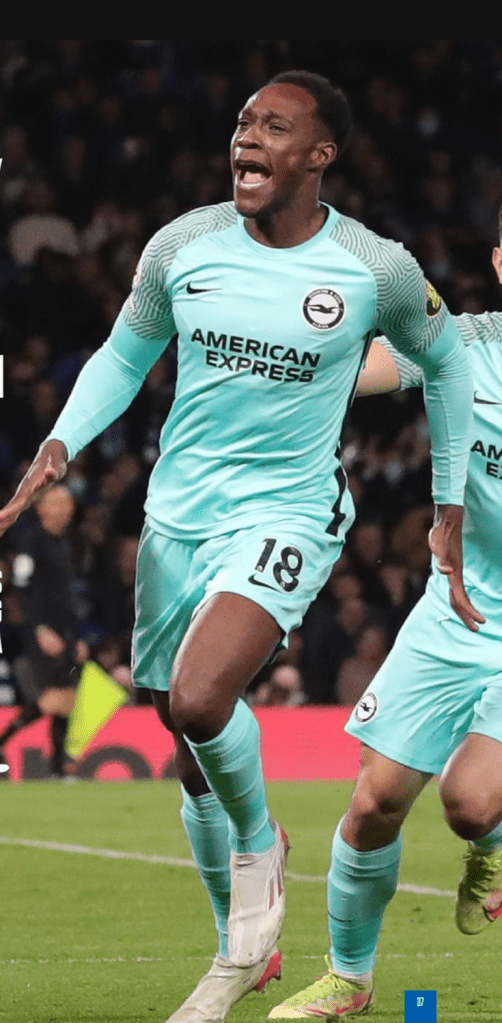
‘Rooster’ became pivotal to developing young players

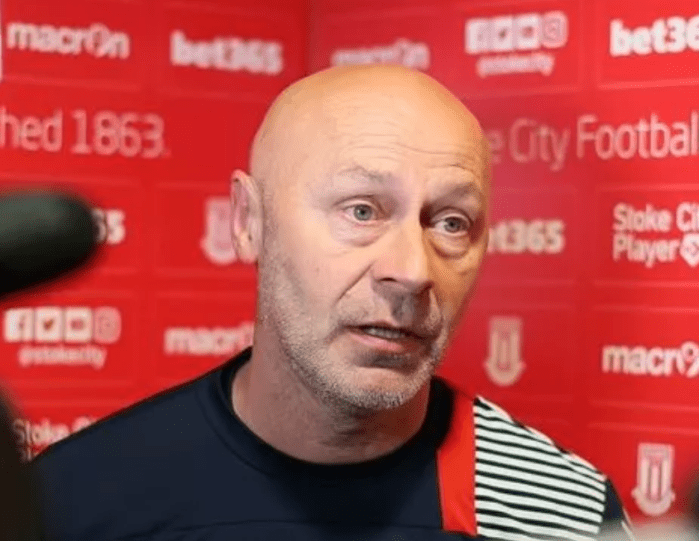
FORMER BRIGHTON apprentice Kevin Russell enjoyed a 20-year playing career in which he scored 105 goals in 552 games but he had forgettable spells at three South Coast clubs.

As we learned in my previous blog post, England Youth international Russell scored goals for Albion’s youth team and reserves but moved on before making the first team after a falling out with manager Chris Cattlin.

He got on better with Alan Ball at Portsmouth but only played eight games in three years at Pompey.

In March 1994, he was back in the south after a £125,000 move from Burnley to AFC Bournemouth. Unfortunately, his time at Dean Court coincided with dismal form on the pitch and financial pressures off it.

Russell was signed by Tony Pulis, who, it turned out, was in the final throes of his first spell as a manager, having succeeded Harry Redknapp at Dean Court.

The side had a dreadful run of form the month after Russell joined, suffering five defeats and three draws in eight matches. It was in the last of these that Russell finally got on the scoresheet for the Cherries as they picked up a point in a 1-1 draw at Hull City (his only goal in 17 matches).

While Mark McGhee won the Division Two title with Reading and Russell’s former club Burnley won promotion via a play-off final win over Stockport County, the Cherries finished a disappointing 17th in the table.

Portsmouth-born Russell had joined a squad (above) that included a number of players with past or future Brighton connections: Gary Chivers, Mark Morris, Paul Wood, Steve Cotterill and Warren Aspinall.

Cotterill recalled in a 2023 interview with gloucestershirelive.co.uk: “I know Rooster very well. I played with him at Bournemouth and he’s a great guy and a good coach.

“I liked him when I played with him because he used to stick crosses on a sixpence for me. I remember scoring a few goals from his crosses.”

Back in 1994, Pulis was sacked early on in the new season and former player Mel Machin took over, but the Cherries had managed only one win and a draw in their first 14 matches by the time they met the Albion at the Goldstone on 2 November 1994.

The game ended in a 0-0 draw and, although they won their next game, by Christmas they’d only got nine points from 21 games. Staring down the barrel of relegation, a last ditch revival in fortunes saw the season go down in memory as ‘The Great Escape’ because Bournemouth managed to avoided the drop by two points.

Russell, who had scored twice in 18 matches, had moved on by then and according to Aspinall, in a September 2011 interview with the Bournemouth Daily Echo: “Mel wanted rid of myself and Kevin Russell.”

Russell, who later had a habit of scoring against the Cherries – he hit four in 10 games against them – said after a 2001 encounter between Wrexham and Bournemouth: “The club was in a bad state when I was there, but Mel Machin and Sean O’Driscoll have turned things round and you know you’re always going to have a hard game against them.

“I don’t try any harder than normal when I play against them, but because I am playing up front and not in midfield or out wide, I get more chances to score.”

Aspinall had a couple of trial matches for the Albion before being packed off to Carlisle, while in February 1995 Russell joined First Division strugglers Notts County where he was reunited with former Leicester teammates Gary Mills and Phil Turner.

Howard Kendall was in charge at the time but County, who got through four managers that season (including Russell Slade for four months), finished bottom of the table having won only nine matches all season.

Russell then returned to his spiritual home in north Wales and, over the next seven years, played a further 240 matches for Wrexham, scoring 23 goals along the way.

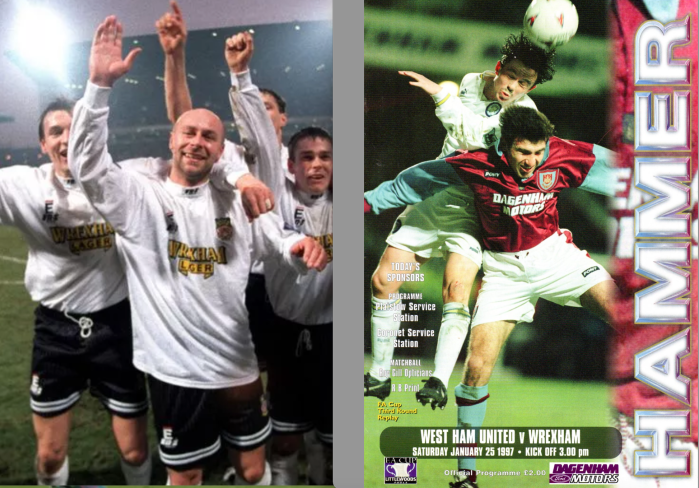
One of the most memorable was a last-minute winner at the Boleyn Ground in January 1997 as Wrexham pulled off a FA Cup giant-killing against West Ham. Having held the Hammers to a 1-1 draw at the Racecourse Ground, Russell went on as a 75th minute sub in the replay and scored a screamer in the dying seconds against a side that included Rio Ferdinand and Frank Lampard.

While the Dragons fans were elated, protesting home supporters spilled onto the pitch in anger at Harry Redknapp’s side’s performance and lowly Premier League position.

Slaven Bilic, later West Ham’s manager, was playing alongside Ferdinand and remembered the game thus: “We were struggling. We weren’t conceding a lot of goals but we couldn’t score and then Wrexham came and they scored at the end of the game, a great goal from 25 yards. After that we signed Johnny Hartson and Paul Kitson and we stayed up.”

When Russell’s playing days were over, he stayed on as a coach and worked as assistant manager under Denis Smith, taking Wrexham to promotion from the Third Division in 2002-03 and winning the LDV (English Football League) trophy in 2005.

That same year his loyalty and service to the club were rewarded with a pre-season testimonial against Manchester United – managed by his former teammate and captain Darren Ferguson’s dad!

Russell played the first 14 minutes of the match against a largely youthful United before being replaced by Ferguson. United won the game 3-1 with goals from Giuseppe Rossi, Liam Miller and Frazier Campbell and one of their subs that day was Paul McShane.

“I can’t speak highly enough of Alex for bringing his side here for me,” said Russell. “I’ve been treated to a special team with a lot of quality. I know there were a lot of young players out there, but you could see the potential they’ve got is immense.”

A crowd of nearly 6,000 watched the match and Wrexham secretary Geraint Parry said: “It just shows how well respected Kevin Russell is after his many years in the game.”

Smith and Russell were sacked in January 2007 but he went straight to Peterborough with Ferguson, who had been appointed Posh player-manager.

“We had an unbelievable time at Peterborough,” Russell told John Hutchinson. “We took them from the bottom league to the Championship in successive seasons in 2008 and 2009.”

There was a brief and unsuccessful spell for the managerial duo at Preston North End in 2010 – they were sacked four days after Christmas with Preston bottom of the Championship – but they weren’t out of work for long because they were re-appointed at Peterborough the following month.

They lost their first game back in charge though – to Brighton. Albion, on course to be league one champions under Gus Poyet that season, beat Posh 3-1: Chris Wood two and Elliott Bennett the scorers while Craig Noone made his home debut for the Seagulls.

After three years at Peterborough, Russell moved back to the Potteries to join the coaching staff at Stoke (below) and stayed for nine years! He mainly worked with the under 18s and under 21s but also helped with the first team in between managerial changes in 2018 and 2019.

In May 2023, Russell joined Cheltenham Town as assistant manager to Wade Elliott. He was in caretaker charge for two matches when Elliott was sacked four months later but didn’t want the job on a permanent basis and left the club in October 2023 when Darrell Clarke was appointed.

Robins chairman David Bloxham said: “I am extremely grateful to Kevin for all his hard work and dedication and for his willingness to step in to manage the side in an extremely difficult period between Wade leaving and Darrell’s appointment.”

Once again, Russell wasn’t out of work for long. In January 2024, he was reunited with former Stoke technical director Mark Cartwright, a former goalkeeper who played 15 matches in Brighton’s 2000-01 promotion winning side, at Huddersfield Town.

Back in the game at Huddersfield Town

He was appointed as B team manager with a glowing endorsement from Cartwright, now Town’s sporting director, who said: “Not only is Kevin a great coach, but he also has a brilliant ability to develop relationships with young players.

“He’s a lively character and he knows how to relate to individuals to get the best out of them. Whilst at Stoke City, he played the pivotal role in developing players such as Nathan Collins, Harry Souttar, Tyrese Campbell, and Josh Tymon, alongside many others.

“He’s been so successful in doing that because he has a great understanding of the qualities that senior coaching staff want to see in young players.”

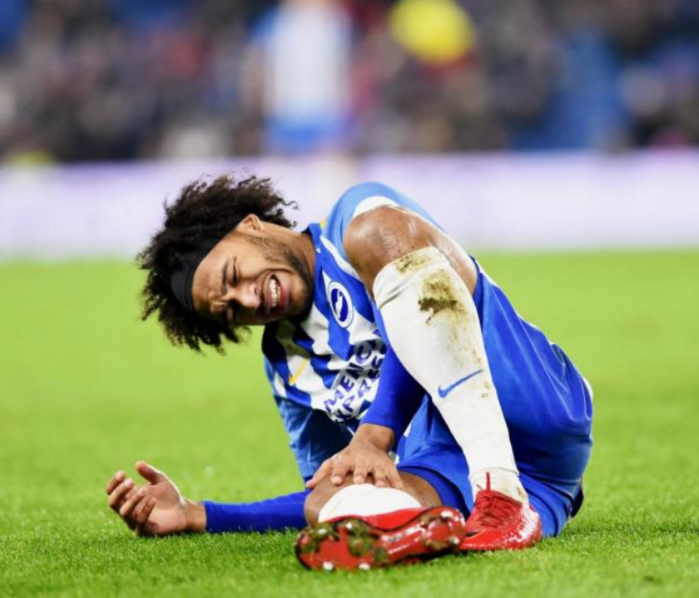
Illness and injury brought Izzy Brown’s dream to an early end

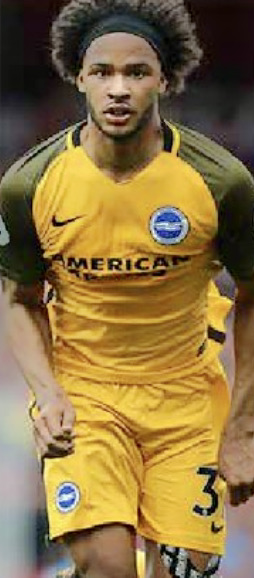
IZZY BROWN was just 20 when he joined Albion on a season-long loan from Chelsea hoping to prove his worth as a Premier League striker.

Sadly, a serious anterior cruciate ligament (ACL) injury meant that ambition was thwarted after only four starts and eight appearances off the bench.

Then, at the age of 26, a twice-ruptured Achilles tendon forced him to quit the game altogether.

Brown’s ascent to the elite level of English football was rapid. He was only 16 when he made his debut for West Bromwich Albion, becoming the second-youngest player in Premier League history when he went on for the Baggies towards the end of a 3-2 defeat against Wigan in May 2013.

Two months later, Chelsea offered him five times more than West Brom were paying him and he switched to Stamford Bridge to join their scholarship scheme.

The financial cushion they gave him at such a tender age meant retiring from the game early came as less of a blow than it might have done.

“I’m thankful to Chelsea for everything they’ve ever done for me because if it wasn’t for them, I don’t know what my life would be like now,” Brown told Nancy Froston in an exclusive April 2023 interview with The Athletic.

“They put me in a position where, while it’s not that I don’t ever want to work again, it has set me up to provide for my family for quite a few years.”

Brown spent eight years as a Chelsea player although Brighton were the fourth of seven clubs he joined on loan over that period.

Although he scored twice on his Chelsea debut in a 5-0 pre-season friendly win over Wycombe Wanderers, he made only one competitive first team appearance and that was as a sub against his old club, West Brom, in May 2015. Chelsea lost 3-0 and Brown saw only 11 minutes of action when Jose Mourinho sent him on to replace Loic Remy.

Brown had previously been an unused sub on several occasions in the second half of the 2014-15 season, but that summer he was sent on loan to Vitesse Arnhem where he registered just the one goal in 24 appearances.

In the 2016-17 season, Brown had two loans in Yorkshire: scoring three in 20 matches for Rotherham United and then five in 21 for their fellow Championship side Huddersfield Town.

He was involved in the Terriers’ Championship play-off final win over Reading and there were reports they wanted to make his move permanent, with a fee of £8m mentioned.

But Brown thought it wasn’t the right move for him, still harbouring hopes of making it at Chelsea. “I’m still learning and I feel Brighton is the place for me to develop further,” he said.

“There were plenty of clubs calling my agent but Brighton was always my number one choice,” he told the matchday programme. He explained he wanted to learn from manager Chris Hughton, adding: “The facilities here and the ambition of the club was also important for me.”

Hughton said of the youngster: “He’s a very flexible forward player. We brought him in very much as a (number) ten, where he had played for Huddersfield last season.

“In his first loan at Rotherham he played very much off the front, went abroad played off the left, and in his first game for us and in pre-season was on the left. He has that versatility in his game.”

That first league game was the opening day defeat at home to Manchester City and he went off injured (replaced by Jamie Murphy) as Albion went down 2-0. He didn’t re-appear until 1 October away to Arsenal when he struggled as an orthodox striker in another 2-0 defeat.

Thereafter, he only made two more league starts – the 5-1 home battering by Liverpool and a 2-0 defeat at Huddersfield.

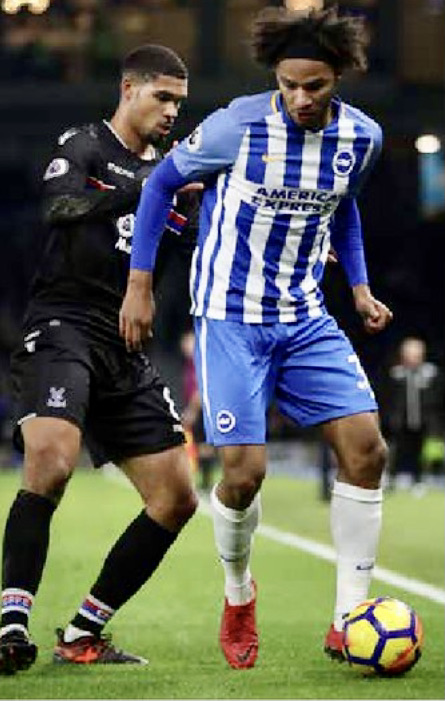
Although Crystal Palace in the third round of the FA Cup on 8 January gave him a chance to show what he could do from the start, the game was only six minutes old when he was forced off with the knee injury that brought his time with Albion to a close.

Hughton saw it as a big blow because he had been planning to make much more use of the young striker in the second half of the season.

“You would have seen him much more involved,” he said. “He’d had a slight hamstring injury when he first came which kept him out for a few weeks.

“But certainly I would have seen him play in more games than perhaps in that first half,” said Hughton.

“He is a very popular player here. Before he’d come here, he’d had a couple of other loans and I think that adapted him well going into a new environment.”

Brown himself had said the only player he knew before his arrival was Connor Goldson through his friendship with Jonny Taylor, who Brown had played with at Rotherham.

Deprived of Brown’s services, Hughton brought in Jurgen Locadia from PSV Eindhoven and a familiar face in Leonardo Ulloa, returning to the Amex on loan from Leicester City.

Although both were on the scoresheet when Albion dispensed with Coventry City in the fifth round of the FA Cup, it would probably be fair to say neither were a rip-roaring success. The combination of Glenn Murray and Pascal Gross were the main goal contributors.

Born in Peterborough on 7 January 1997, Isaiah Brown, to give him his proper name, said in an emotional open letter on his retirement: “As soon as I could walk, I always had a football at my feet. That was me, that was my happy place.”

He was talented enough to represent England at under 16, under 17, under 19 and under 20 levels, winning a total of 34 caps.

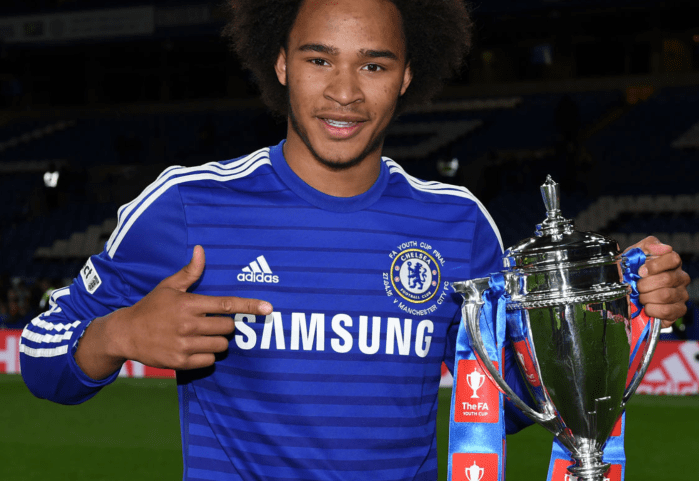
At Chelsea, he was in the side that won the Under-21 Premier League title in 2013-14 and the UEFA Youth League the following season.

After the disappointment of his time at Brighton being curtailed, he was still recovering in August 2018 when he went back to Yorkshire on loan to Championship Leeds United under Marcelo Bielsa.

But once recovered, he was mainly involved in United’s under 21 side. He only made two substitute appearances for the first team, one in a 1-0 league defeat at QPR and one in the end-of-season play-off final that Leeds lost 4-3 on aggregate to Derby.

The following season once again saw him head out on loan for a season, this time to Luton Town. He scored once in 19 starts, plus nine games as a sub, as the Hatters narrowly avoided relegation from the Championship.

The 2020-21 season once again saw Brown heading to Yorkshire, this time with Sheffield Wednesday in the Championship.

It was a season that saw the club have three full-time managers and a caretaker, finishing bottom of the league and relegated to League One. Brown made only five starts plus 16 appearances off the bench.

With his contract at Chelsea finally coming to an end, his next move was a permanent switch away from the Bridge, and he signed a one-year deal with Preston North End.

Head coach Frankie McAvoy said: “He’s got good pedigree. He’s got great experience in terms of playing in the Championship and an ex-Chelsea player from a young age.

“He’s had quite a few loans over his time, some he’s done well, others maybe latterly not done as well as he hoped, so he just needs to find that self-belief again and confidence. But we’re certainly getting a player with undoubted talent, very offensive and we’re looking forward to working with him.

“He can play across the front, but probably his preferred position is a ten behind a striker or two, depending on how we play.

“He can also play in pockets off right and left, so he adds that bit of versatility to our front players and I think if we can get him up and running, believing in himself, being confident in his own ability then I’m sure he’ll endear himself to the Preston faithful.”

Brown, by then 24, said: “Now I’m getting to that age where I want to develop myself as a player and hopefully be a legend at a club, and I really feel like Preston’s a place where I could do that.”

But less than a month after signing for North End, he ruptured an Achilles during pre-season training – and he never actually played a competitive game for Preston.

“We had a pre-season game against Celtic when I was at Preston and I felt some pain in my Achilles, but it wasn’t too bad,” Brown told Froston. “Then we had a couple of days off, I came back for training and then I just passed the football, like I’d done a million times before, and I heard a pop. I thought someone had kicked me but no one was around me.

“It had snapped. So I had the surgery and it went well, but we noticed there was like a little gap in my Achilles.

“We thought maybe it’s not healed properly, but this was only after two months so we gave it time. Then I went out for some dinner and stepped down a small step and it snapped again.

“So I had two Achilles surgeries in the space of three and a half months. To come back from one is hard. To come back from two is basically impossible.”

On top of those football injuries, he got sick with hand, foot and mouth disease, then had an issue with his nervous system that led to muscle loss and affected the nerves in his feet.

He was subsequently told he had a rare and serious condition called Guillain-Barre syndrome and it was apparent he would have to retire from playing football.

In a revealing interview with Froston, he concluded: “Football was my dream. It still is my dream. But dreams have to end one day.”

In the open letter he wrote on his retirement, he said: “Football doesn’t define me as a person. I’m a father, a son, a brother and a friend, and I will be that after football.

“I’ve lived my dream and memories that will stay with me forever. To every club that I have played for, I really appreciate you all for believing in me and giving me a chance to play the game I love.”

The FA Cup semi-final hat-trick hero who wore red and blue

ALEX DAWSON was even younger than Evan Ferguson when he scored a FA Cup semi-final hat-trick.

The bull-like centre forward who broke through at Manchester United in the wake of the Munich air crash wrote his name in football record books on 26 March 1958.

Dawson was just 18 years and 33 days old when he netted three goals in United’s 5-3 win over Fulham in front of 38,000 fans at Highbury, north London. No-one that young has ever repeated the feat.

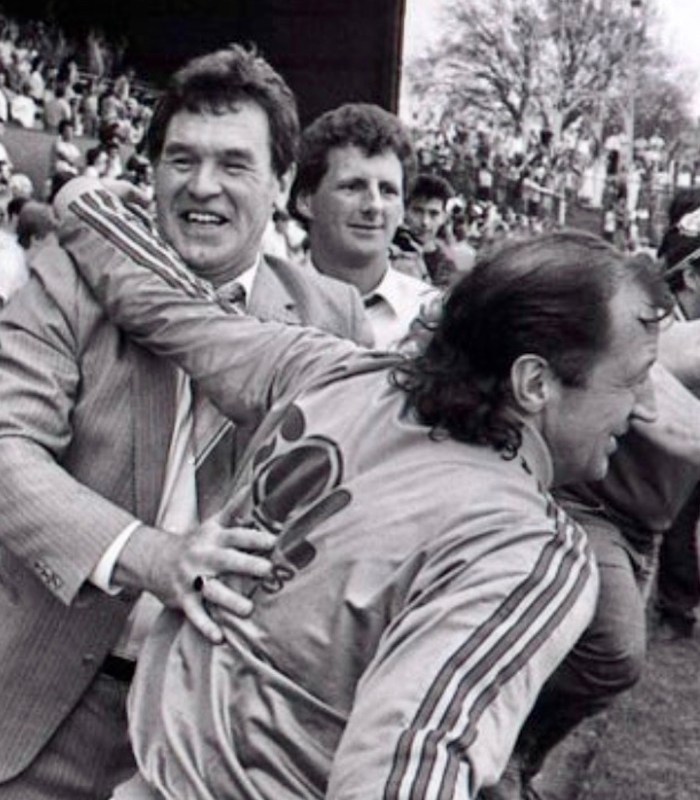
Eleven years later, Dawson scored twice for Brighton in a Third Division match against Walsall. It was my first ever Albion game. He followed up the two he got in that game with six more in four other games I saw that 1968-69 season. They were enough to sow the seeds of a lifetime supporting the Albion and the burly Dawson, wearing number 9, became an instant hero to an impressionable 10-year-old.

Dawson scored twice v Walsall in 1969

Dawson is no longer with us but the memory of his goalscoring exploits live on amongst those fans of a certain vintage who had the pleasure of seeing him in action.

A man who played alongside him at Wembley in 1958 – Freddie Goodwin – made Dawson his first signing for Brighton, for £9,000, not long after he had taken over as manager in the winter of 1968.

By then, he was plying his trade with Bury. He had left United in 1961 after scoring a remarkable 54 goals in 93 games, including one on his debut aged just 17 (in a 2-0 win over Burnley).

After losing 2-0 to Bolton Wanderers in 1958, another losing Wembley appearance followed six years later. He scored a goal for Preston North End but the Lancastrian side lost 3-2 to West Ham United.

United pair Freddie Goodwin and Alex Dawson were reunited at Brighton

Nevertheless, Dawson was prolific for Preston scoring 132 goals in 237 league and cup games over six years. The purple patch I saw him have for Brighton saw him find the net no fewer than 17 times in just 23 games, including three braces and four in an away game at Hartlepool. That was only one behind top scorer Kit Napier whose 18 came in 49 matches.

Alex Dawson in snow action at the Goldstone Ground

In a curtain-raiser to the 1969-70 season, Dawson scored four times as Albion trounced a Gibraltar XI 6-0 at the Goldstone. But the signing of Allan Gilliver and, in the New Year, young Alan Duffy, began to reduce his playing time. He got 12 more goals in 28 appearances (plus three as sub) but, when Goodwin left the club, successor Pat Saward edged him out.

Even in a loan spell at Brentford he scored seven in 11 games. Greville Waterman, on bfctalk.wordpress.com in July 2014, recalled: “He was a gnarled veteran of thirty with a prominent broken nose and a face that surely only a mother could love, but he had an inspirational loan spell at Griffin Park in 1970.”

Still smiling and scoring goals at Corby

Released by the Albion at the end of the 1970-71 season, Dawson’s final footballing action was with non-league Corby Town, where he didn’t disappoint either.

In his first season at Occupation Road, he finished top scorer with 25 goals in 60 appearances and by the time he retired from playing on 4 May 1974, his tally for the Steelmen was 44 in 123 appearances.

When the curtain came down on his career, Dawson had scored 212 goals in 394 matches – more than one every two games. A true goalscorer.

It was in the wake of the decimating effect of the Munich air disaster that Dawson found himself thrust into the limelight at a tender age.

The crash claimed the lives of eight of United’s first choice team – Dawson’s pals. Youngsters and fringe players had to be drafted into the side to fulfil the remaining fixtures that season. One was Dawson, another was Goodwin.

Thirteen days after the accident, Dawson took his place beside survivors Bill Foulkes and Harry Gregg and scored one of United’s goals as they beat Sheffield Wednesday 3-0 in the fifth round of the Cup.

He scored again as United drew 2-2 with West Brom in the sixth round, before winning through 1-0 in a replay to go up against Fulham in the semi-final.

Dawson told manutd.com: “In our first game with Fulham (played at Villa Park), Bobby Charlton scored twice in a 2-2 draw, and I was put on the right wing. I was a centre-forward really and, when we played the replay at Highbury four days later, I was back in my normal position.

“Jimmy (Murphy) said before the game: ‘I fancy you this afternoon, big man. I fancy you to put about three in.’ I just said: ‘You know me Jim, I’ll do my best,’ but I couldn’t believe it when it happened.

“The first was a diving header, I think the second was a left-footer and the third was with my right foot.

“It was a long time ago, of course, and it’s still a club record for the youngest scorer of a hat-trick in United’s history. Records are there to be broken and I’m surprised that it’s gone on for over half a century.

“I’m a proud man to still hold this record. Even when it goes, nobody can ever take the achievement away from me.”

While Dawson was my first Albion hero, when he died in a Kettering care home at the age of 80 on 17 July 2020 the esteem in which he was held by others also came to the fore in the tributes paid by each of the clubs he played for.

Born in Aberdeen on 21 February 1940, Dawson went to the same school as United legend Denis Law, but his parents moved down to Hull and Dawson joined United straight from Hull Schoolboys.

Dawson and future Preston and Brighton teammate Nobby Lawton were both on the scoresheet as United beat West Ham 3-2 in the first leg of the 1957 FA Youth Cup Final and Dawson scored twice in the 5-0 second leg win. West Ham’s side included John Lyall, who later went on to manage them.

On redcafe.net, Julian Denny recalled how Dawson once scored three hat-tricks in a row for a United reserve team that was regularly watched by crowds of over 10,000.

After that goalscoring first team debut against Burnley in April 1957, he also scored in each of the final two matches that season (a 3-2 win at Cardiff and a 1-1 draw at home to West Brom) to help United win the title and secure their passage into Europe’s premier club competition.

Obviously, circumstances dictated Dawson’s rapid rise but, with the benefit of hindsight, some say his United career may have panned out differently if he hadn’t been thrust into first team action at such a young age.

He was just short of his 18th birthday when the accident happened. In an interview with Chris Roberts in the Daily Record (initially published 6 Feb 2008 then updated 1 July 2012), he recalled: “I used to go on those trips and had a passport and visa all ready but the boss just told me I wasn’t going this time.

“I had already been on two or three trips just to break me in. I know now how lucky I was to be left in Manchester. The omens were on my side.”

Dawson went on to describe the disbelief and the feelings they had at losing eight of the team, including Duncan Edwards several days later.

“We were all so close and Duncan was also a good friend to me before the accident,” said Dawson. “Duncan was such a good player, there is no doubt about that. He was a wonderful fellow as well as a real gentleman.

“I will never, ever forget him because he died on my birthday, 21 February, and before that he was the one who really helped me settle in.”

Dawson gradually became an increasingly bigger part of the first-team picture at United, making 11 appearances in 1958-59 and scoring four times. The following season he scored 15 in 23 games then went five better in 1960-61, scoring 20 in 34 games.

He was at the top of his game during the last week of 1960 when he scored in a 2-1 away win at Chelsea on Christmas Eve, netted a hat-trick as Chelsea were thumped 6-0 at Old Trafford on Boxing Day, and then scored another treble as United trounced neighbours City 5-1 on New Year’s Eve.

A fortnight later he had the chance to show another less well-known string to his footballing bow…. as a goalkeeper!

It was recalled by theguardian.com in 2013. When Tottenham were on their way to the first ever double and had an air of near-invincibility about them, they arrived at Old Trafford having lost only once all season, and had scored in every single game.

Long before the days of a bench full of substitutes, when ‘keeper Harry Gregg sustained a shoulder injury, Dawson had to take over in goal.

Dawson excelled when called upon, at one point performing, according to the Guardian’s match report, “a save from Allen that Gregg himself could not have improved upon”.

The article said: “Tottenham’s attempts to get back into the game came to nought and Dawson achieved what no genuine goalkeeper had all season: keep out Tottenham’s champions-elect. In the end, there were only two games all season in which Spurs failed to score, and this was one of them.”

Scoring for Preston North End

Tottenham’s north London neighbours, Arsenal, finished a disappointing 25 points behind Spurs in 11th place, but United manager Matt Busby had been keeping tabs on the Gunners’ prolific centre forward David Herd (Arsenal’s top scorer for four seasons), and in July 1961 took him to Old Trafford for £35,000. It signalled the end of Dawson’s time with United.

When the new season kicked off, Dawson had a new apprentice looking after the cleaning of his boots….a young Irishman called George Best. In his 1994 book, The Best of Times (written with Les Scott),

Best said: “Alex Dawson was a brawny centre forward whose backside was so huge he appeared taller when he sat down. To me, Alex looked like Goliath, although he was only 5’10”. What made him such an imposing figure was his girth.

“He weighed 13st 12lbs, a stone heavier than centre half Bill Foulkes who was well over 6ft tall. What’s more, there wasn’t an ounce of fat on Alex – it was all muscle.”

Best’s responsibilities for Dawson’s boots didn’t last long, however, because in October that year, Busby sold the centre forward to Preston for £18,000.

In 1967, Dawson took the short journey to Bury FC where his goalscoring exploits continued with 21 goals in 50 appearances, before he joined Goodwin’s regime at Brighton.

What a career to look back on: Alex Dawson recalling his goalscoring exploits

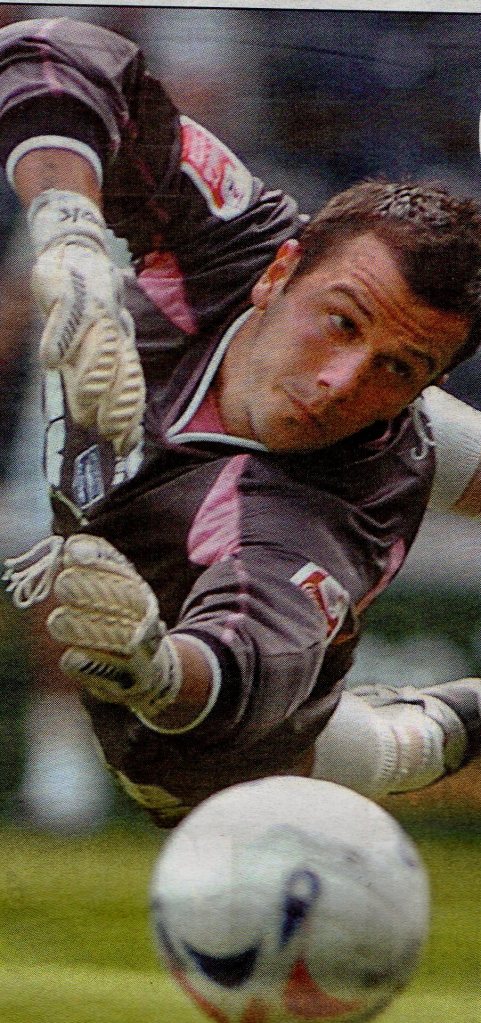
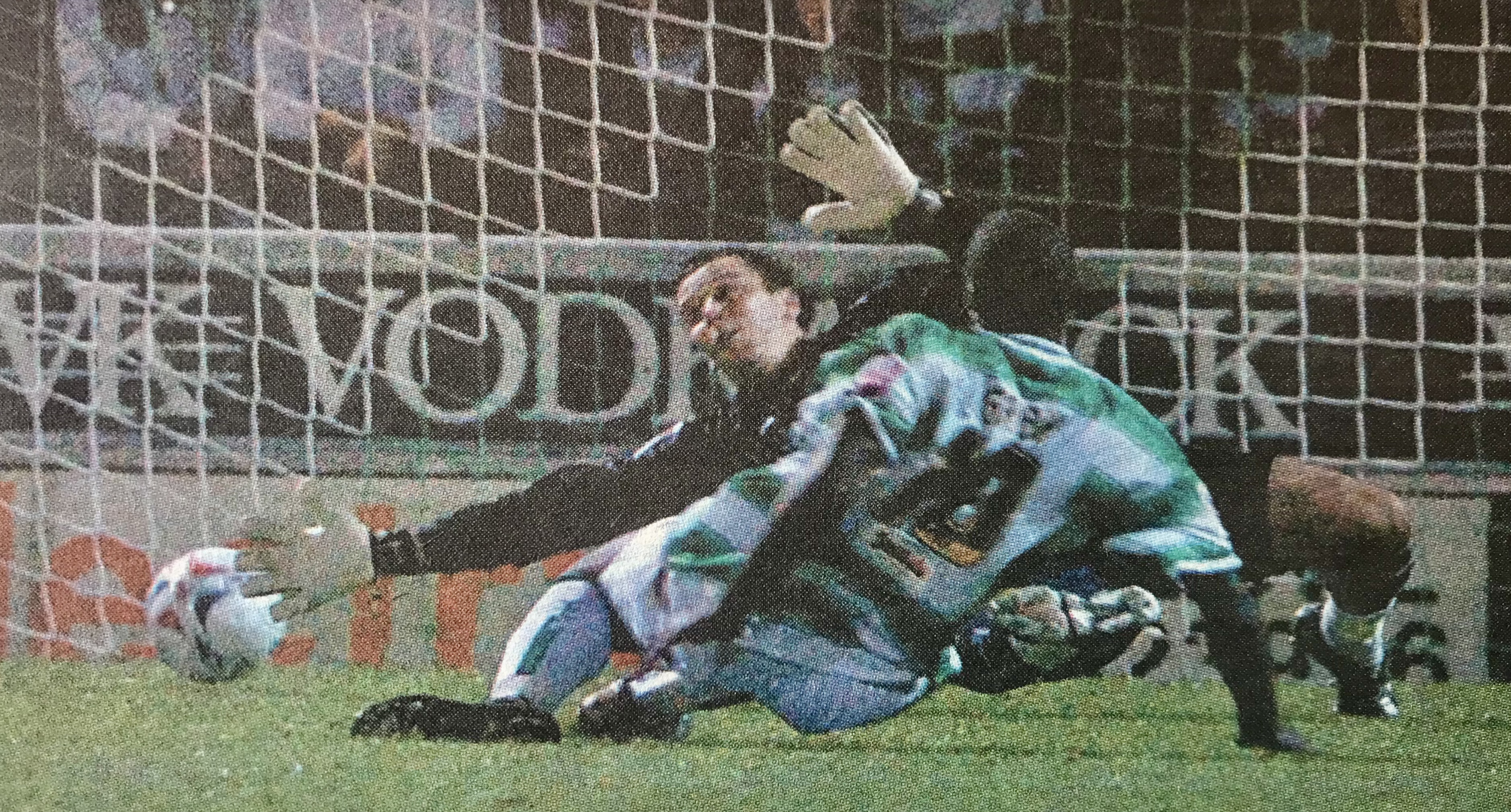
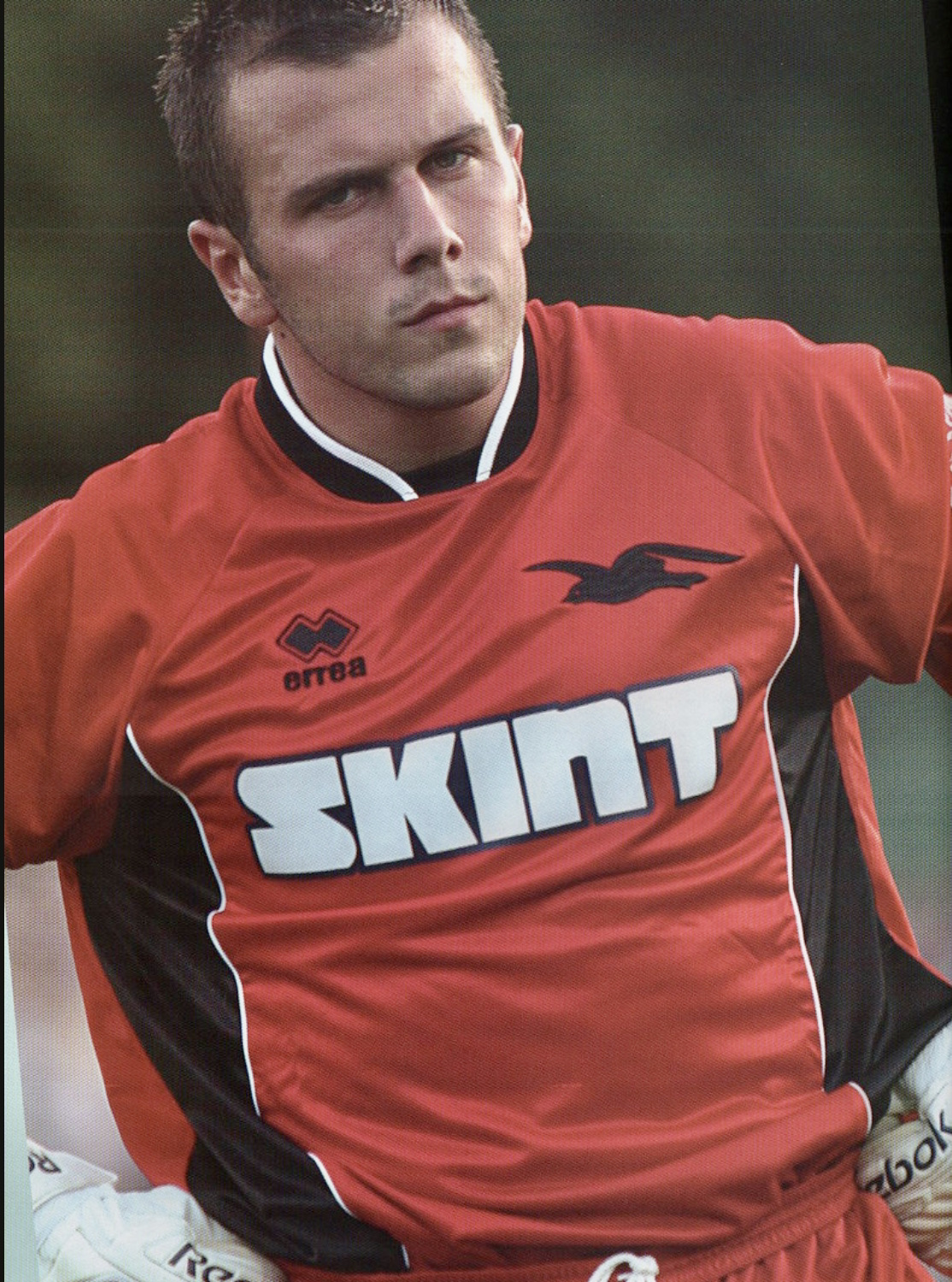
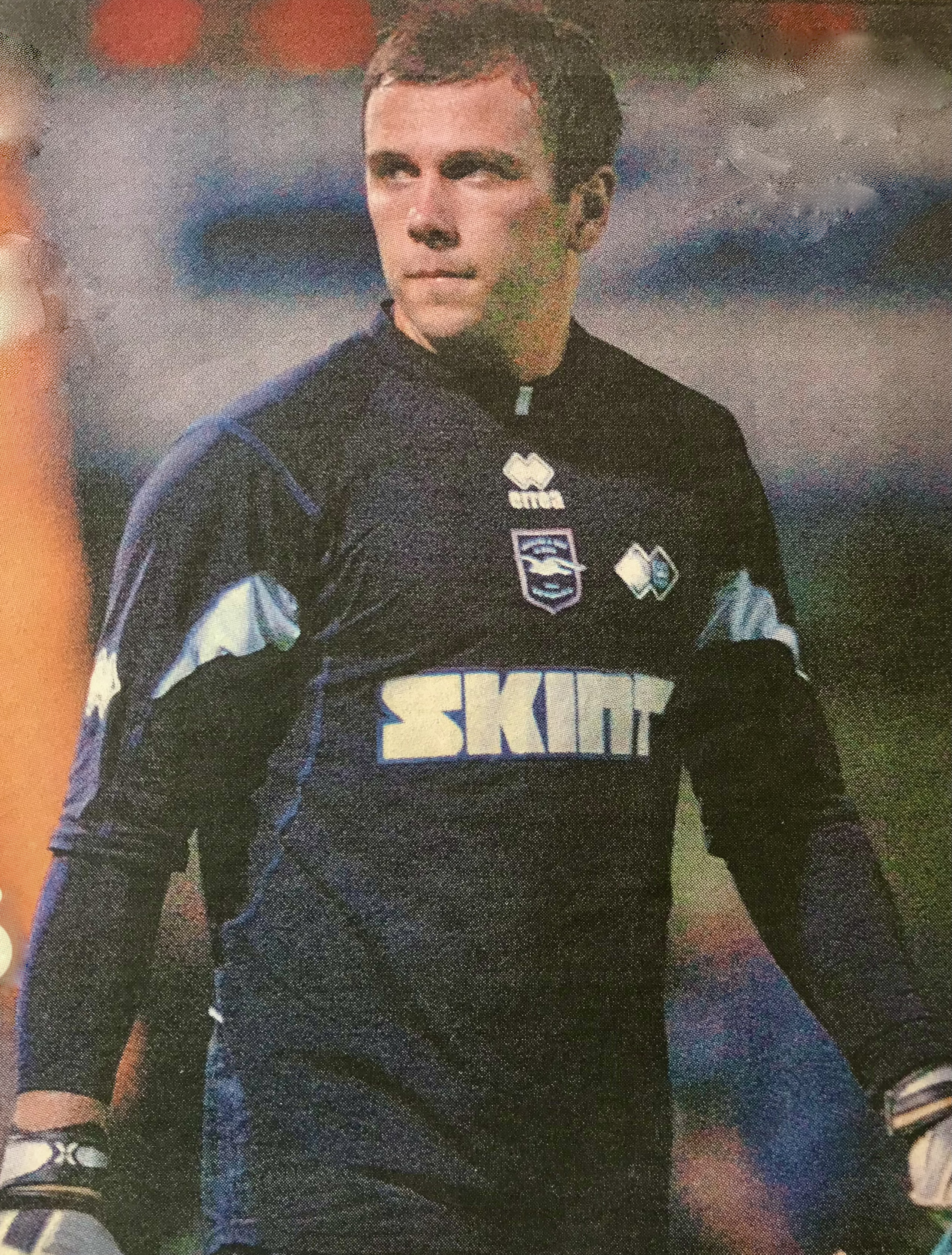
Boo boys saw off international ‘keeper Wayne Henderson

DISGRUNTLED former Albion goalkeeper Wayne Henderson helped Grimsby Town keep their place in the Football League.

The Republic of Ireland international stopper, forced away from Brighton by a section of voluble supporters, was on loan to the Mariners in 2009 as they desperately tried to avoid the drop.

Although there were Grimsby grumbles on his debut, Henderson’s mission was a success, Town avoiding the drop by four points. But it was only a stay of execution because they finally fell out of the league for the first time in 100 years in 2010.

By then, Henderson was back at parent club Preston North End, who had bought him from the Seagulls for £150,000 on deadline day in January 2007.

He managed only 10 appearances for the Lancashire club – his last game coming in the final match of the 2009-10 season – and in March 2011, when only 27, he was forced to quit the game after two years plagued with spinal injuries.

Much had been expected of the young Irishman at Brighton after an initial loan spell from Aston Villa, where he had been coached by former Seagulls ‘keeper Eric Steele. He made his Albion debut away to Derby County, together with fellow countryman Paul McShane (on loan from Manchester United), in the opening game of the 2004-05 season.

Manager Mark McGhee said the youngster hadn’t put a foot wrong. “His kicking really took the pressure off us,” he said. “He was composed and took a couple of crosses towards the end which also helped relieve the pressure.”

McGhee had first hoped to sign Henderson in January 2005 to help solve a goalkeeping crisis created by a serious shoulder muscle injury to Michel Kuipers in a home match against Nottingham Forest.

Youngster Chris May, son of former Albion defender Larry May, had come off the bench to replace Kuipers in the match but McGhee didn’t see him as experienced enough in the battle to stay in the Championship. The previous season’s first choice ‘keeper, Ben Roberts, was a long-term absentee with a back injury, so McGhee had few options.
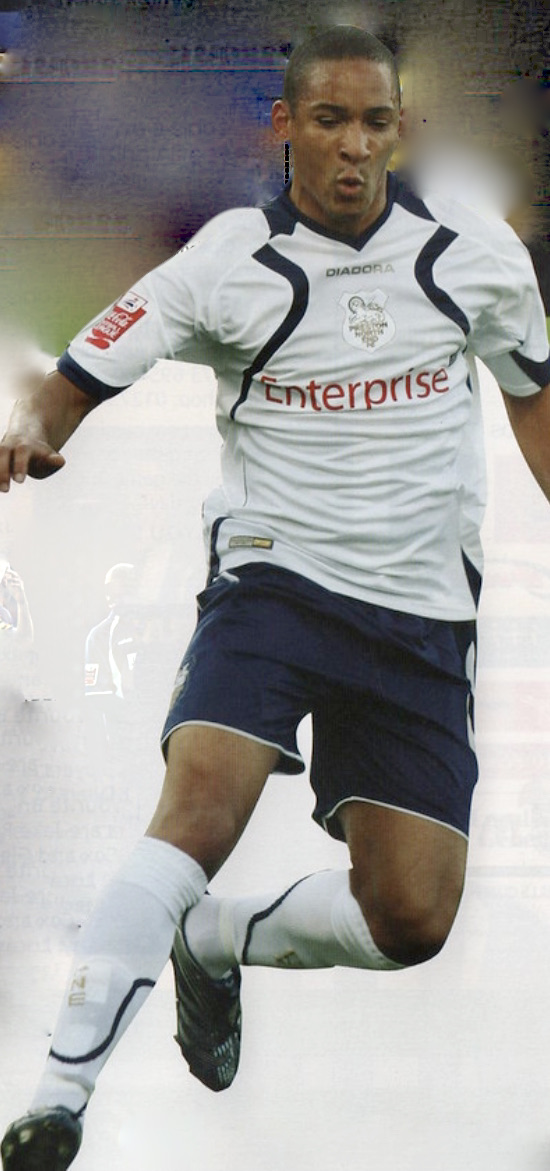
The Seagulls hoped a contractual hitch relating to Henderson’s previous loan spell at Notts County could be resolved in time to enable him to make his debut for the Albion at Elland Road. But it couldn’t and Brighton turned to Blackburn’s David Yelldell instead. That was the game where the loan goalkeeper famously wore a bright pink goalkeeper jersey and predictably suffered abuse from the Leeds crowd.

Although Clarke Carlisle put Leeds ahead just before half time, Yelldell had the last laugh when defender Guy Butters prodded home an equaliser in the 81st minute.

When McGhee didn’t see Yelldell as a long-term option, he turned to one-time Arsenal ‘keeper Rami Shabaan, who hadn’t played a competitive game for two years, but he let in 13 goals in six games. The manager brought in Southampton’s Alan Blayney, and he was between the posts for the last seven games of the season when Albion just managed to cling on to their tier two status.

McGhee finally managed to bring in Henderson ahead of the new season and, perhaps mindful of the goalkeeping headache he’d had the previous season, found he suddenly had an embarrassment of riches in that department.

Promising youngster Richard Martin appeared as a back-up on the bench, as did season-long French loanee Florent Chaigneau. In September, Southampton’s Blayney also returned for another loan spell and eventually took over the gloves when Henderson’s three-month loan from Villa came to an end.

Intriguingly, Henderson’s penultimate game on loan was a 1-1 draw with Ipswich at the Withdean when another Villa loanee, Stefan Postma was in goal for the visitors.

It had been Henderson’s understanding that a permanent move would follow soon after he’d featured in a 1-1 draw at home to Wolves on 1 November. But a two-month on-off saga began which, according to McGhee and chairman Dick Knight, was largely down to demands made by Henderson’s agent.

Albion agreed a fee with Villa of £20,000, plus £15,000 if he helped avoid relegation from the Championship. He didn’t.

The Argus sought the opinion of former Albion no. 1 Steele who felt Henderson had a chance to make a name for himself with the Seagulls.

“With Thomas Sorensen as the no. 1 and Stuart Taylor bought in from Arsenal, Wayne’s route in terms of playing first team football was always going to be limited,” Steele told the paper. “Our problem is that we only need one goalkeeper to play in one position and it’s just been a question of what level he would make his mark.

“He’s 22 now and he really had to be looking to move on and I wish him all the best. I’ve worked with him now for four and a half years and always thought he would make a good living from the game.

“I think that’s summed up by the fact that Brighton are going to pay a small fee and we’ll also get sell-ons. He’s the same height, he’s got the same build and he has got the same attributes as Shay Given (Newcastle and Republic of Ireland). And he just needs the chance to go and play.

“He’s been away at Wycombe and been away at Notts County, who would have signed him had they had the money. He’s done it in the Second Division and the First, now he’s got the chance to do it in the Championship.”

Even if supporters of the club he’d just joined had doubts about his merits, the Republic of Ireland selectors were confident enough to give him a first senior call up in February 2006, and he made his full international debut on 1 March 2006, as a second half substitute in a 3–0 win over Sweden.

After the Albion had forfeited their tier two status that season, and the omitted Kuipers had been transfer-listed after falling out with McGhee, Henderson opened his heart to the Argus.

“Michel is liked by the fans and hopefully one day I will get the respect of the fans I feel I deserve,” he told Andy Naylor. “Michel has that because he has been at the club for a long time. I have mixed feelings about him being on the transfer list because it’s good to have someone with his reputation at the club pushing me, but sadly he fell out with the manager.

“Hopefully, I can prove the fans who are criticising me wrong but if they are set in their ways there is nothing I can do about that. It’s a shame if that is the way they feel but I couldn’t care less. I am not going to worry about it.

“I know myself how well I have done, and I am an international player because of that.”

Although he started the new season as first choice ‘keeper, three defeats on the spin saw McGhee sacked and Kuipers back in the starting line-up.

New boss Dean Wilkins restored the Irishman to the team in October which was enough to convince Eire manager Steve Staunton, a former Aston Villa colleague, to put him into a Euro 2008 qualifier against the Czech Republic, when first choice Shay Given and back-up Paddy Kenny were unavailable.

“I knew Stan from Villa, yes, but I like to think I’m being picked on merit not just because he knows what I’m capable of,” said Henderson. “I’ve got a long way to go in all aspects but being at Brighton and playing first-team football means I’m developing under pressure and getting a chance to show Stan (Staunton) what I can do.”

The Irish drew 1-1 and, having been to Dublin to watch the match, Albion goalkeeping coach John Keeley believed Henderson could be Albion’s ‘keeper for 10 years.

“I’m so pleased for Wayne. It proves what a good goalkeeper he is,” said Keeley. “He has taken some stick but people should appreciate him.”

The coach praised his handling at Lansdowne Road, the way he had made himself available for back-passes from his full-backs, and his composure. Highlighting a fine one-handed save he made to deny Milan Baros, Keeley said: “The save that he made just before half-time was world class.”

He added:“I honestly believe that Wayne is a better ‘keeper than Paddy Kenny. His all-round game is more suited to international football.”

Henderson makes his Eire debut, replacing Shay Given

Keeley reckoned: “He’s 22 and we’ve got a world-class player. With Wayne being so young we’ve got a goalkeeper now for the next ten years. That’s the way I look at it.”

The following month, Henderson even made the headlines when he wasn’t playing! Injury ruled him out of Albion’s side to face Bradford City at Valley Parade on 4 November and he decided to watch from the seats behind the goal.

When Dean Bowditch scored an 89th-minute winner for the Seagulls, the exuberant ‘keeper jumped over the hoardings – and was promptly escorted out of the ground by a steward!

“It was over-zealous stewarding,” he said afterwards. “Alex Revell made the goal and he was celebrating right in front of where I was sitting in the front row of the stand.

“The natural thing was to go and celebrate within him but one of the Bradford stewards – who knew I was one of the non-playing squad members – took exception to my celebration.

“I think he was a Bradford supporter and perhaps he thought I was trying to rub his nose in it – but I wasn’t. I was just pumped up to see the lads score a last-minute winner.

“The next thing I was being grabbed by a steward and then I was marched out of the ground where the police took my name and address, but I think they saw the funny side of it.”

Henderson wasn’t laughing a few weeks later. He’d returned from injury but the side was on a losing streak in December. Away to Bournemouth on New Year’s Day, it looked like Albion might come away with a point but in stoppage time the ‘keeper lost his footing and gifted the Cherries a win, and a section of Brighton supporters booed him off the pitch.

After a 3-0 defeat to West Ham in the FA Cup third round, the Seagulls entertained Millwall at Withdean and a mix-up between Henderson and Joel Lynch led to the visitors winning by the only goal of the game.

Manager Dean Wilkins dropped him and it was the last time he played for the club. The barracking had got to him to the extent he had submitted a second transfer request of the season and, referring to the fans who’d got on his back, he told the Argus: “They love their football as much as anyone else but the way they reacted was pathetic really.”

After securing a deadline day move to Preston, he said: “It was disappointing the way it finished. I was devastated at being left out of the team. The mistake I made against Bournemouth could have happened to anybody and the Millwall game was a mistake by someone else that caught me out.”

Now free to air his feelings about the series of events, he said: “A lot of fans have certain opinions of players. For me the whole experience at Brighton was more like the X Factor.

“It just seemed to be a personality contest and I couldn’t enjoy my football.”

He continued: “I’ve never felt welcome at the club, except by the coaching staff and the players. The coaching staff have been magnificent, and I wish them all the best, because, if anyone is going to get anything out of the kids, it is Dean (Wilkins) and Dean (White), so I hope they are given a fair crack of the whip.

“Outside of them and the lads, a handful of fans have backed me lately and I really respect that but there were an awful lot of fans who didn’t and other people at the club who, for some reason, made it more difficult than it should have been.”

Within the tight confines of the small capacity Withdean Stadium, perhaps it was always going to be a tall order for Henderson to supplant crowd favourite Kuipers.

The ‘former Dutch marine – chef’ Kuipers, as he was serenaded by the singing section, had endeared himself to the Albion crowd after Micky Adams brought the previously unknown shot-stopper to the club in 2000. Subsequent managers brought in their own alternatives but Kuipers, always a reliable shot-stopper, had a habit of bouncing back.

If Henderson was perturbed by unfavourable crowd opinion at Brighton, it seems there was similar mood music when he made his debut for Grimsby.

Manager Mike Newell brought him in along with three other loan players (Joe Widdowson, Peter Sweeney and Barry Conlon) and, in 14 games he played through to the end of the season, five wins and three draws were enough to give them a finish four points above the relegation trapdoor (Chester City and Luton Town went out of the league).

The excellent Cod Almighty fans website observed some fans booed and jeered Henderson on his home debut because the gale force wind kept blowing his goal kicks into touch.

Pete Green, on the same website, later wrote: “These temporary Mariners have played an enormous part in preserving the club’s status in the Football League – even as repeated mistakes by experienced, longer-term Town players such as Phil Barnes and Tom Newey continued to jeopardise it. Henderson has already gone back to Preston, and we stand no chance of signing him permanently.”

While the other three loan players did sign permanently, Newell brought in another Irish international goalkeeper in Nick Colgan the following season.

Born in Dublin on 16 September 1983, Henderson followed in the goalkeeping footsteps of his father and brothers. Dad Paddy played for Shamrock Rovers; brothers Dave and Stephen played in the League of Ireland. Even his nephew, Stephen, was a goalkeeper – most notably for Portsmouth, Charlton and Nottingham Forest after also going through the youth ranks at Villa.

Wayne played for the same Cherry Orchard club in his home city that also spawned the likes of Mark Yeates, Dave Langan, Andy Reid and Stephen Quinn.

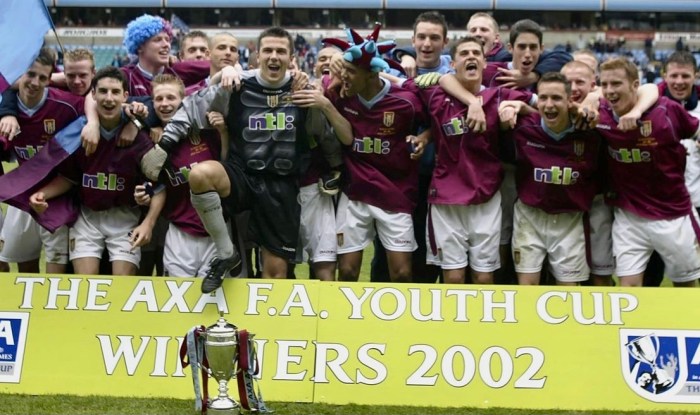
John Gregory was in charge at Villa Park when Henderson joined Aston Villa in July 2001. A year later, he was in goal when Villa won the FA Youth Cup (below), beating Everton – with Wayne Rooney playing up front – 4-2 on aggregate over two legs. Also in the Villa side that day was Liam Ridgewell, who later had a brief loan spell at Brighton, and Peter Whittingham, who went on to play more than 500 professional games and died in tragic circumstances aged just 35.

Joy for Henderson as Aston Villa win the 2002 FA Youth Cup

Although Henderson was chosen on Villa’s first team bench occasionally, he didn’t play any competitive fixtures for the first team. Those opportunities came via loans.

After a month at non-league Tamworth in the spring of 2004, he spent a month on loan at Second Division Wycombe Wanderers under Tony Adams towards the end of the 2003-04 season, when their last place finish meant they were relegated to the newly formed League Two.

The following season he joined Notts County, another of the clubs who’d been relegated with Wycombe, and had two loan spells, three months under Gary Mills and then a month under his successor, caretaker boss Ian Richardson.

Paul Simpson signed Henderson for Preston but when injuries forced him to retire at just 27, he told skysports.com: “I’ve decided to actually step out of football and give my body time to heal for once.

“It is exciting for me though because I’m looking to go into a completely different environment from playing but stay within football at the same time.

“I’ve been trying to get back fit for a few years now with injections and operations, but I’ve decided that rest is the way forward for it now.

“I’ve not signed anything yet, but there are a good few options for me to choose from, which I am really excited about.”

Henderson, who married 2010 Apprentice winner Liz Locke, now works as a licensed intermediary for agency YMU, who, among plenty of other elite footballers, represent Albion’s Evan Ferguson and Andrew Moran.

Managerial change had habit of foxing Jason Jarrett’s progress

JASON JARRETT was one of multiple additions to Micky Adams’ struggling League One Brighton side in January 2009, advised to head to the Withdean by former Preston playing colleague Joe Anyinsah.

Anyinsah, who had been on loan at the Albion and declined the opportunity to stay in favour of moving to Carlisle United, nonetheless recommended the Seagulls to Jarrett.

The alliteratively named midfielder was 29 when he arrived on a free transfer hoping to reignite his career after a frustrating two-and-a-half years at Deepdale during which time he made just nine appearances.

“I was told by Alan Irvine I had a future at Preston North End, but there is only so long that you can sit on the bench,” he said. “I wanted to leave so that I can play some games and I have heard good things about Brighton so in the end it was a straightforward decision.”

He pointed out: “This is a chance to resurrect my career and I’m grateful to Micky Adams for bringing me down here.”

Jarrett was one of six new arrivals that month: Jim McNulty, Craig Davies, Calvin Andrew, Seb Carole and Chris Birchall were the others.

“We needed a bit more physical strength in midfield, which is why Jason is there,” Adams explained.

His debut for the Seagulls saw him in opposition to a club he’d very nearly signed for – Leicester City – after playing 13 games for them on loan in 2007.

And, in an even more bizarre twist, he ended up wearing the Foxes’ second kit of all yellow in the game on 27 January 2009 because the match referee deemed Albion’s would have clashed.

“Rob Kelly took me to Leicester and I was close to signing for them but it fell through when he was sacked,” Jarrett told the Argus ahead of the game.

“They are a big club and obviously the best team in the League. Everyone can see that, so it is going to be very difficult. They are a club that should definitely be in the Championship at the very least.”

Nevertheless, the Albion caused something of an upset by holding the high-flyers to a goalless draw, and the new man came close to netting the Albion a win.

Brighton were the 13th club of Jarrett’s career, most of which had been spent at Championship level. Anyone of a superstitious nature would say luck was not on his side.

Although he made 12 starts + two as a sub for the Albion, it was only a matter of weeks after he signed that Adams parted company with the Seagulls.

New boss Russell Slade stuck with Jarrett initially but then brought in his own man in Gary Dicker from Stockport County.

Having been given a contract only until the end of the season, Jarrett was not kept on, and it wasn’t long before he was reunited with Adams, this time at Port Vale.

Born in Bury on 14 September 1979, Jarrett started his career as a 16-year-old apprentice with Blackpool, and made his first team debut in November 1998. He moved on to Wrexham for the 1999-2000 season but only made one appearance for the Welsh side. Next up was hometown club Bury in the Second Division where he got a foothold in the team and featured in 69 matches. However, when they went into administration in 2002, they were forced to sell Jarrett to Wigan Athletic for £75,000.

Jarrett was a key part of the Latics midfield as they rose from the fourth tier through to the Championship, making 107 appearances under Paul Jewell.

A broken leg suffered in pre-season ahead of the 2004-05 season sidelined him and after he’d recovered he spent a month on loan at Stoke City under Tony Pulis.

Jarrett moved on before getting the chance to play in the Premier League for Wigan, instead joining Norwich City in the summer of 2005. He had previously played for Canaries boss Nigel Worthington at his first club, Blackpool, but, in common with a few other signings, his chances at Carrow Road were few and far between. He went on loan to Plymouth Argyle in the first part of the season, returning in January 2006, and two months later joined Preston on a temporary basis before making the switch to Deepdale permanent in May that year.

Once again, though, he found a manager in Paul Simpson reluctant to give him a regular starting berth so he went on loans to Hull City (where he played alongside Nicky Forster and David Livermore), Leicester (as mentioned above), QPR (for three months) and Oldham (where Craig Davies was a teammate).

He was picked out in the Albion matchday programme as Oldham’s star man ahead of their visit to the Withdean in February 2008, described as “a mobile, pacy central operator who can get forward but is also prepared to do the grimy tracking back and box-to-box work that are a good midfielder’s staple diet”.

He later returned to Oldham after his short term contract with Port Vale had expired. He’d been without a club in the latter half of the 2009-10 season but, in the summer of 2010, Oldham boss Paul Dickov took him on after a successful trial period. He told the club website: “We have a very young team and Jason’s experience helps us.”

However, he only made eight appearances and in January 2011 he dropped out of the league, initially playing for Conference North FC Halifax Town, then Airbus UK in Wales, before, in May 2013, signing for Conference side Chester. When they were relegated from the Conference in April 2014, Jarrett moved to Salford City.

After his playing days were over, Jarrett set up his own business: ProBall Sport. On his LinkedIn profile, he describes its aims thus: “At ProBall Sport we provide fun, educational sport activities for primary and secondary schools plus nutrition and well-being workshops.

“The power of school sports changed my life,” Jarrett writes. “I know first-hand how much of a positive impact it can have on young children, whether that be in pushing them on towards becoming a professional sports person or keeping them fit, active and healthy.

“I believe that first class sports coaching from a young age had a profound effect on my life and achievements so I developed Proball Sport to directly support and inspire today’s pupils to give them the chance to experience something similar, hopefully, even more special.”

Even fearsome John McGrath couldn’t stop the rot

IN ALBION’S bleak midwinter of 1972-73, manager Pat Saward was desperate to try to reverse a worrying run of defeats.

The handful of additions he’d made to the squad promoted from the old Third Division in May 1972 had not made the sort of improvements in quality he had hoped for.

An injury to Norman Gall’s central defensive partner Ian Goodwin didn’t help matters and Saward chopped and changed the line-up from week to week to try to find the right formula.

Previously frozen out former captain John Napier was restored for a handful of games (before being sold to Bradford City for £10,000). The loan ranger’ (as Saward was dubbed for the number of temporary signings he brought in) then tried Luton Town’s John Moore in Goodwin’s absence.

Youngster Steve Piper was given his debut at home to high-flying Burnley, but Albion lost that 1-0. Then Saward tried left-back George Ley in the middle away to Preston, but that didn’t work either. North End ran out comfortable 4-0 winners with Albion’s rookie ‘keeper Alan Dovey between the sticks after regular no.1 Brian Powney went down with ‘flu.

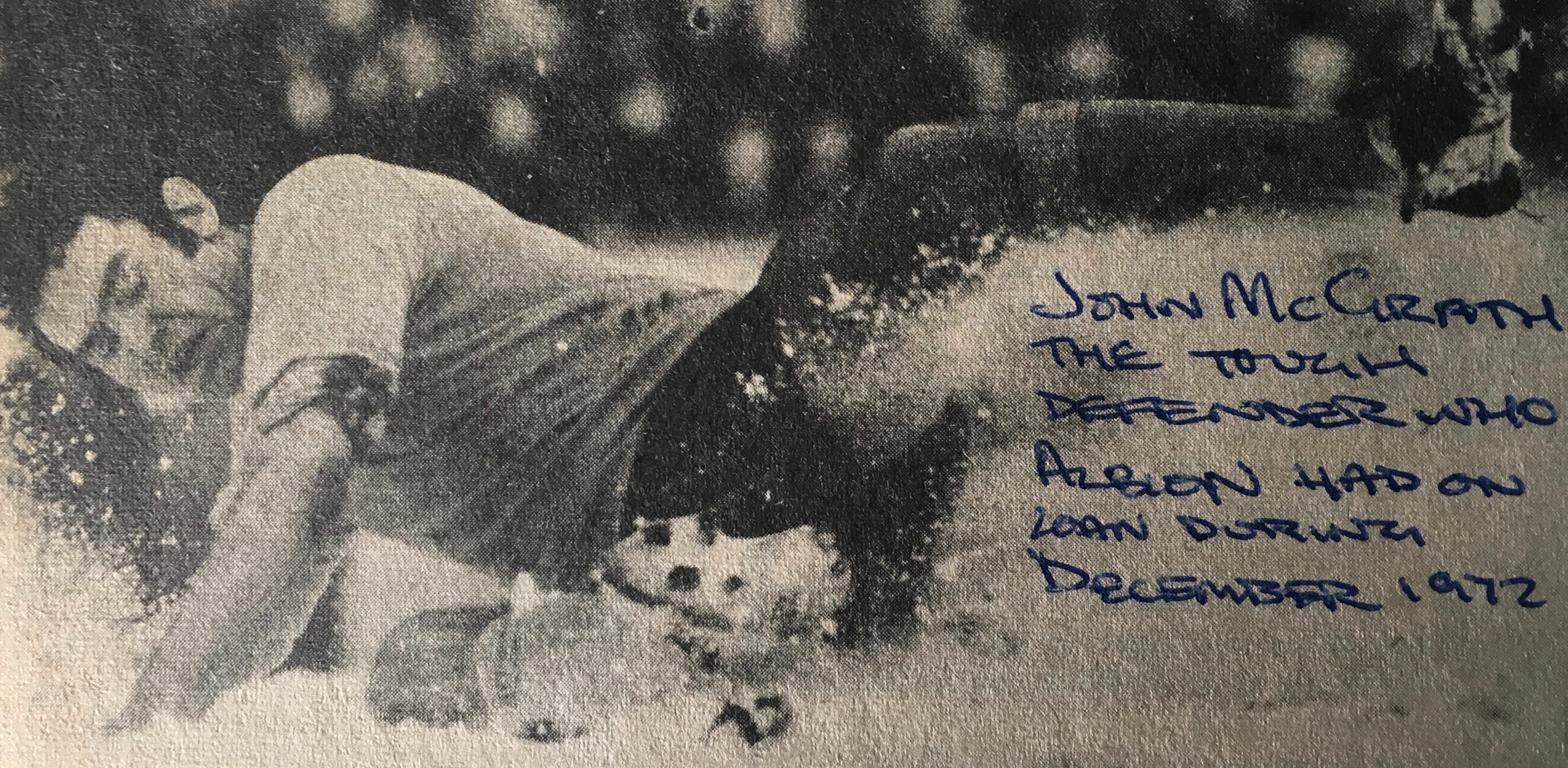
As December loomed, and with Goodwin still a couple of weeks away from full fitness after a cartilage operation, Saward turned to John McGrath, a no-nonsense, rugged centre-half who had played close on 200 games for Southampton over five years.

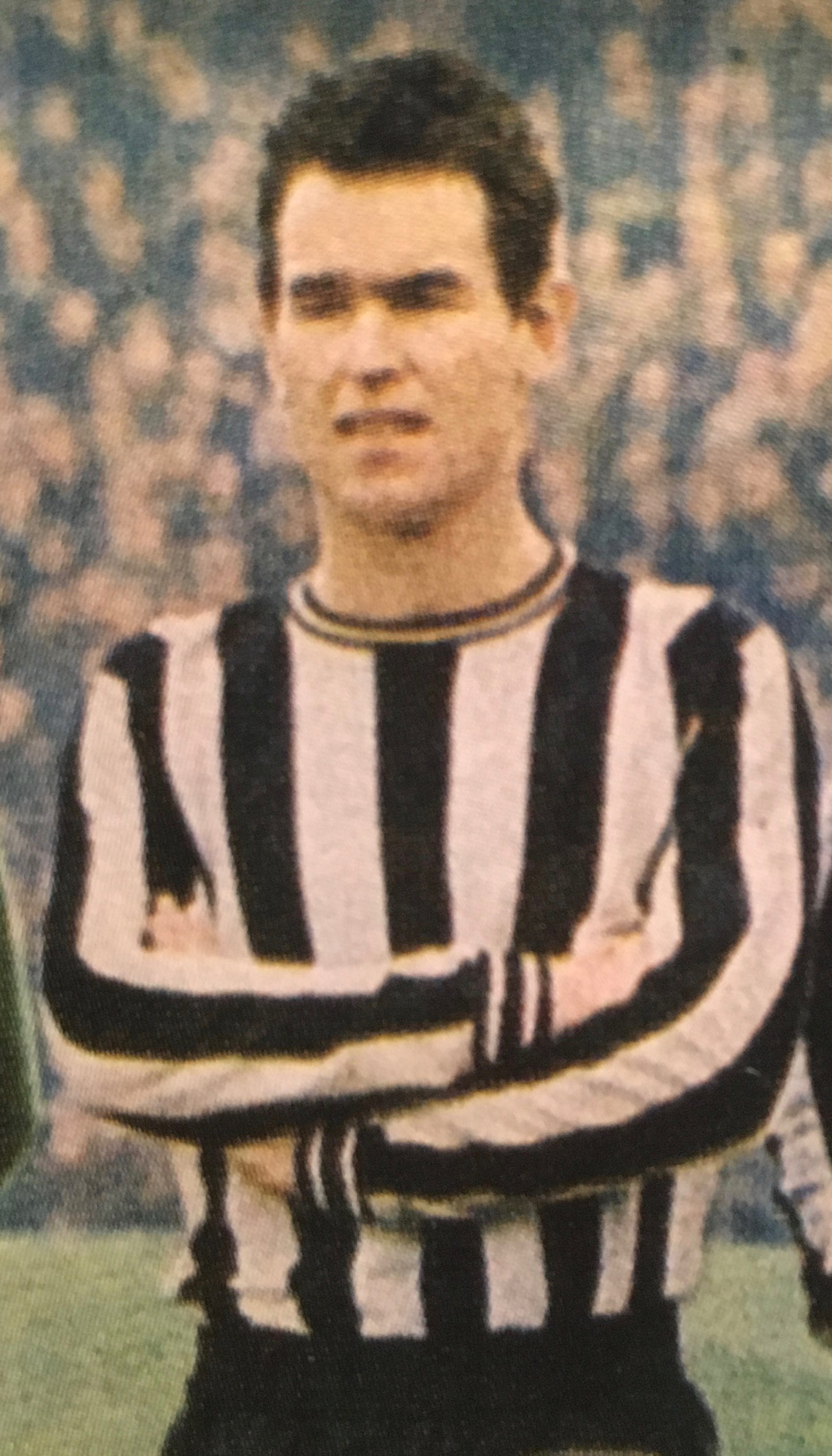
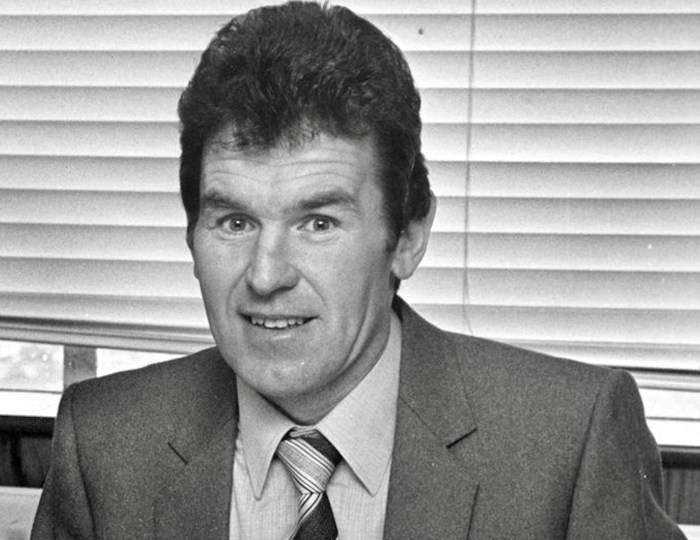
“With his rolled-up sleeves, shorts hitched high to emphasise implausibly bulging thigh-muscles, an old-fashioned haircut and a body dripping with baby oil, ‘Big Jake’ cut an imposing figure,” to quote the immensely readable saintsplayers.co.uk.

In Ivan Ponting’s obituary in the Independent following McGrath’s death at 60 on Christmas Day 1998, he reckoned his “lurid public persona was something between Desperate Dan and Attila the Hun”.

Although McGrath had begun the 1972-73 season in the Saints side, the emerging Paul Bennett had taken his place, so a temporary switch to the Albion offered a return to first team football.

Albion had conceded eight goals in three straight defeats and hadn’t registered a goal of their own, so, even though the imposing centre-half was approaching the end of a playing career that had begun with Bury in 1955, it was hoped his know-how defending against some of the best strikers in the country might add steel in the heart of the defence, and stem the flow of goals.

In short, it didn’t work. McGrath played in three matches and all three ended in defeats, with another eight goals conceded.

In his first match (above left), Middlesbrough won 2-0 at the Goldstone. At least the deficit was slimmer in his second game: a 1-0 loss away to George Petchey’s Orient in which Lewes-born midfielder Stan Brown played the last of nine games on loan from Fulham.

McGrath’s third match saw Albion succumb to a thrashing at Carlisle United. By then, Brighton had lost five in a row and still hadn’t managed to score a single goal. Stalwart Norman Gall was dropped to substitute to allow the returning Goodwin to line up alongside McGrath, and Bert Murray led the side out resplendent in the second strip of red and black striped shirts and black shorts.

Carlisle hadn’t read the script, though, and promptly went 5-0 up. To compound Albion’s agony, with 20 minutes still to play, goalkeeper Powney was carried off concussed and with a broken nose.

In those days before substitute goalkeepers, Murray (who’d swapped to right-back that day with Graham Howell moving into his midfield berth) took over the gloves. Miraculously, Albion won a penalty and because usual spot kick taker Murray was between the sticks, utility man Eddie Spearritt took responsibility having relinquished the job after a crucial miss in a game in 1970.

Thankfully, he buried it, finally to make a much-awaited addition to that season’s ‘goals for’ column.

No more was seen of McGrath, however. Gall was restored to the no.5 shirt and was variously partnered by Goodwin, Piper and, towards the end of the season, Spearritt.

After another heavy defeat, 4-0 at Sunderland, which had seen another rare appearance by Dovey in goal, he was transfer-listed along with Gall and Bertie Lutton, as Saward pointed the finger. Lutton got a surprise move to West Ham but Gall stayed put and Dovey was released at the end of the season without playing another game.

The run of defeats eventually extended to a total of 13 and was only alleviated after a big shake-up for the home game versus Luton Town on 10 February.

Powney, who’d conceded five at Fulham in the previous game, was replaced by Aston Villa goalkeeper Tommy Hughes on loan; out went experienced striker Barry Bridges in favour of rookie Pat Hilton and exciting teenage winger Tony Towner made his debut. Albion won 2-0 with both goals from Ken Beamish, and the monkey was finally off their backs.

Although the following two games (away to Bristol City and Hull) were lost, results did pick up, but it was all too little too late and Albion exited the division only 12 months after their promotion.

Born in Manchester on 23 August 1938, McGrath sought unsuccessfully to get into the game as an amateur with Bolton Wanderers but at 17 he joined Bury who were in the old Division Two at the time.

Although they were subsequently relegated, McGrath was part of the 1961 side that went on to win the Third Division Championship. By the time they lifted the trophy, though, he had moved on to Newcastle United for a fee of £24,000, with Bob Stokoe (later renowned for steering Second Division Sunderland to a famous FA Cup win over Leeds United in 1973) a makeweight in the transfer.

It was a busy time for the young defender. On 15 March 1961, he made his one and only England Under-23 appearance against West Germany at White Hart Lane, Tottenham, playing alongside future World Cup winners George Cohen at right-back and the imperious Bobby Moore.

Also in the young England side for that 4-1 win was Terry Paine, who would later become a teammate at Southampton.

Newcastle had hoped the defender would prevent their relegation from the top flight, but it didn’t happen as they went down having conceded 109 goals; their worst ever goals against tally.

Joe Harvey eventually succeeded Charlie Mitten as manager as Newcastle adapted to life back in the Second Division, and McGrath (below left and, in team picture, back row, far left) played 16 matches in a side in which full-back George Dalton (below, back row, far right) had started to emerge.

Future Brighton captain Dave Turner was one of the successful FA Youth Cup-winning side Harvey inherited, but his first team outings were rare and he was sold to the Albion in December 1963.

Meanwhile, McGrath really established himself, featuring in 41 games in 1963-64 (Dalton played in 40) as Newcastle finished in a respectable eighth place.

The 1964-65 season saw McGrath ever-present as Toon were promoted back to the First Division, pipping Northampton Town to the Second Division championship title by one point. McGrath – “a monster of a centre-half, who was as tough as he was effective” was “the cornerstone” of the promotion side, according to newcastleunited-mad.co.uk.

McGrath retained his place in Toon’s first season back amongst the elite but the arrival of John McNamee and the emergence of Bobby Moncur started to restrict his involvement.

That pairing became Harvey’s first choice, and young Graham Winstanley was in reserve too, so, after playing only 11 games in the first half of the 1967-68 season, McGrath, by then 29, was sold to Southampton for £30,000. He’d played 181 games for United.

In Ted Bates’ Saints side, McGrath was a rock at the back alongside Jimmy Gabriel, although, as saintsplayers.co.uk records, he wasn’t too popular with opposing managers: Liverpool’s Bill Shankly accusing Southampton of playing “alehouse football”.

He went on to make 194 appearances (plus one as a sub) for Saints, before becoming youth coach at the club, part of the first team coaching staff when Southampton won the FA Cup in 1976, and then reserve team manager.

Not content with a backroom role, McGrath took the plunge into management and made his mark with two clubs in particular: managing Port Vale on 203 occasions and Preston North End in 205 matches.

According to Rob Fielding he became a cult hero at Vale Park with his unorthodox ways, once putting FIFTEEN players on the transfer list…which resulted in a six-match unbeaten run!

Winger Mark Chamberlain, who went on to play for Stoke and England, and later Brighton, was one of the young players McGrath introduced.

Long-serving Vale defender Phil Sproson, who was originally signed by former Albion midfielder Bobby Smith, rose to prominence under McGrath and said: “I’ll always be grateful because he taught me how to play centre-half.”

Fielding reckoned McGrath’s finest hour was steering Vale to promotion from the old Fourth Division in 1982-1983, even though by then he had sold Chamberlain to Stoke.

Against a backdrop of player unrest and what were perceived to be ill-judged moves in the transfer market, McGrath was sacked in December 1983 and replaced by his assistant, John Rudge.

He wasn’t out of work for long, though, and took the reins at basement side Chester City where he was in charge for just under a year. Most notably in that time, he gave future Arsenal and England defender Lee Dixon his first taste of regular football.

While success eluded him at Chester, his arrival at Preston in 1986 proved fruitful, North End striker Gary Brazil recalling: “It needed a catalyst and it needed a change and very fortunately for the club and for the players, John McGrath came walking through the door who was like a Tasmanian devil. He came in and the world changed really, really quickly for the better.”

McGrath led Preston to promotion from the bottom tier in 1987 with a squad built around Sam Allardyce and veteran Frank Worthington.

Manager McGrath and Frank Worthington celebrate promotion

“Frank Worthington was a delight to have around and set a real high standard for a lot of us in terms of how we train,” said Brazil. “He just stunned me how he was always first out training.”

The turnround McGrath oversaw, with Deepdale crowds rising from below 3,000 to more than 16,000, rejuvenated the club and the city.

Brazil reminisced: “It was the best year of my football life that year that we got promoted. It wasn’t just an experience playing but an experience of a group of players and how well they could bond and John was integral to that. He was a very, very clever man.”

Indeed McGrath was viewed as having saved North End from the ignominy of losing their league status, the club having had to apply for re-election the season before he arrived at Deepdale.

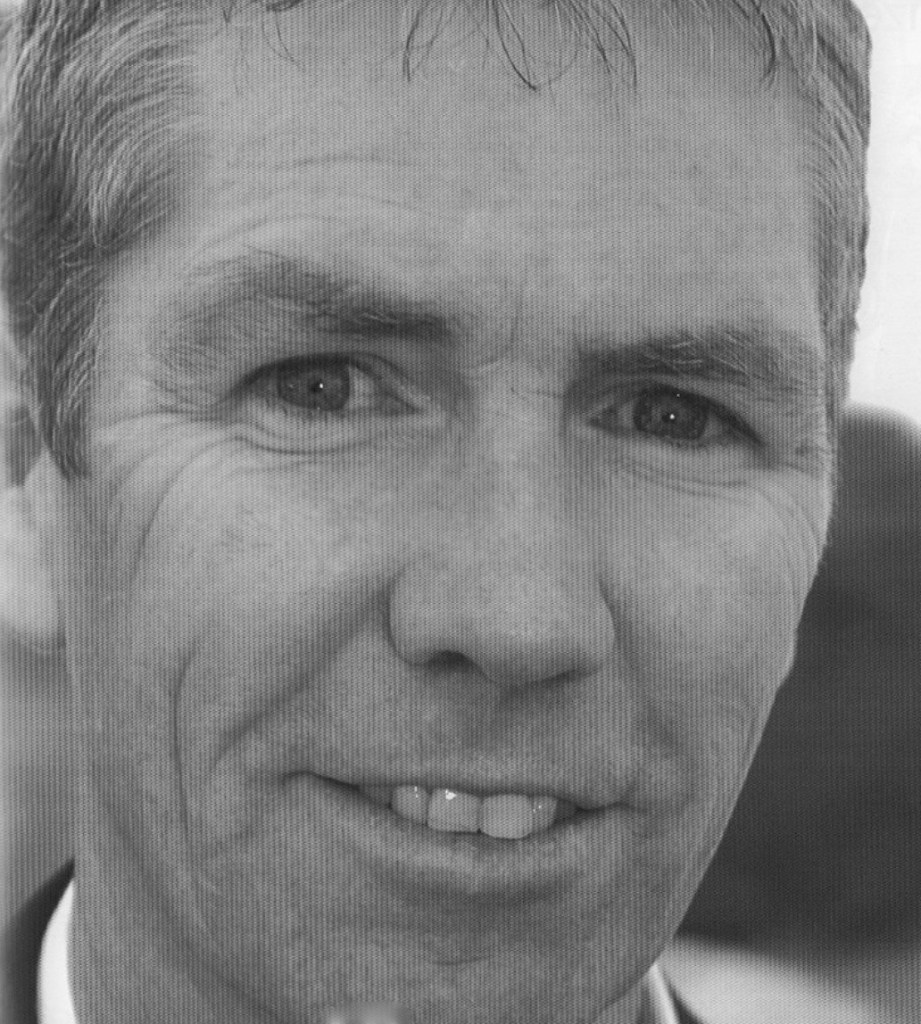
Edward Skingsley’s book, Back From The Brink, features a black and white photograph of McGrath on its cover and tells the story of North End’s transformation under his direction.

Describing his appointment as “a masterstroke” he reckoned the club owed him a massive debt for masterminding their resurgence and subsequent stability.

“Without him, it is debatable whether Preston North End would even exist today, never mind play in the latest fantastic incarnation of Deepdale,” said Skingsley. “Thank goodness he caught Preston North End before it died.”

McGrath left Preston in February 1990 and had one last stab at management, this time with Halifax Town. He succeeded Saints’ FA Cup winner Jim McCalliog and was in charge at The Shay for 14 months but left in December 1992. Five months later they lost their league status, finishing bottom of pile.

The silver-tongued McGrath was subsequently a popular choice on the after-dinner speaking circuit and a pundit on local radio in Lancashire but died suddenly on Christmas Day 1998.

One-goal striker Craig Davies a Seagulls flop

THE PHRASE ‘journeyman striker’ sits perfectly with Welsh international Craig Davies who, despite success later in his career, fired blanks for Wolverhampton Wanderers and Brighton.

To use that rather amusing, though well-worn phrase, he couldn’t hit a cow’s arse with a banjo during his time with the Seagulls.

He arrived on the south coast in January 2009 during Micky Adams’ second, unsuccessful, spell in Albion’s managerial chair.

Oldham Athletic received a reported £150,000 for his signature and, in 23 games for Brighton, he managed just the one goal – on his debut!

That strike came at Withdean – the opening goal in what ended up a 4-2 defeat to Peterborough United (for whom a certain Craig Mackail-Smith equalised).

When a 4-0 home thrashing by Crewe Alexandra meant it had been six games on the trot without a win, Adams was fired by Dick Knight at a Little Chef on the A23. He’d managed just seven wins in 34 matches, and ‘fireman’ Russell Slade arrived just in time to rescue the Seagulls from the League One relegation trapdoor.

Many different striker permutations were tried that season, with main men Nicky Forster and Glenn Murray sidelined by injury, and Albion’s survival was largely due to the goals of loan arrival Lloyd Owusu. Davies huffed and puffed but simply couldn’t make a meaningful connection when the goal beckoned.

Typical of the fans’ eye view was this observation by wearebrighton.com: “That Adams actually paid money for Craig Davies remains one of the more startling moments of his reign of terror.

“Rarely has a Brighton player enraged the Seagulls support like Davies, a man who mixed incompetence – such as the ability to put the ball over the bar when faced with an open goal three yards away – with a complete lack of effort.”

There had been such promise on his arrival, with chairman Dick Knight telling the matchday programme: “Craig is an exciting player with loads of potential, he is lightning-quick and his direct approach can be a nightmare for defenders. This is a major career move for him and he has every chance to be a crucial part of our future.”

Davies himself clearly thought he’d finally found a place to further his career, saying: “I’ve had a few ups and downs through my career but hopefully now I can get settled at Brighton and start knocking in the goals here.

“The gaffer seems to have a bit of faith in me so hopefully I can repay that by putting in some performances and getting a few goals.”

Albion cut their losses on Davies and loaned him to Yeovil Town (he didn’t score in four games for them, either) and then Adams re-signed him, this time for League Two Port Vale, where he finally managed to find the back of the net again.

In the summer of 2010, Davies came to a mutual agreement to end his Brighton nightmare and he joined League Two Chesterfield, from where his career began an amazing upward trajectory.

Born in Burton-upon-Trent on 9 January 1986, Davies began his career as a schoolboy at Shrewsbury Town, but did his apprenticeship at Manchester City. In August 2004, he moved on to League Two Oxford United, where he made his league debut the same month in a 1-0 win at Notts County.
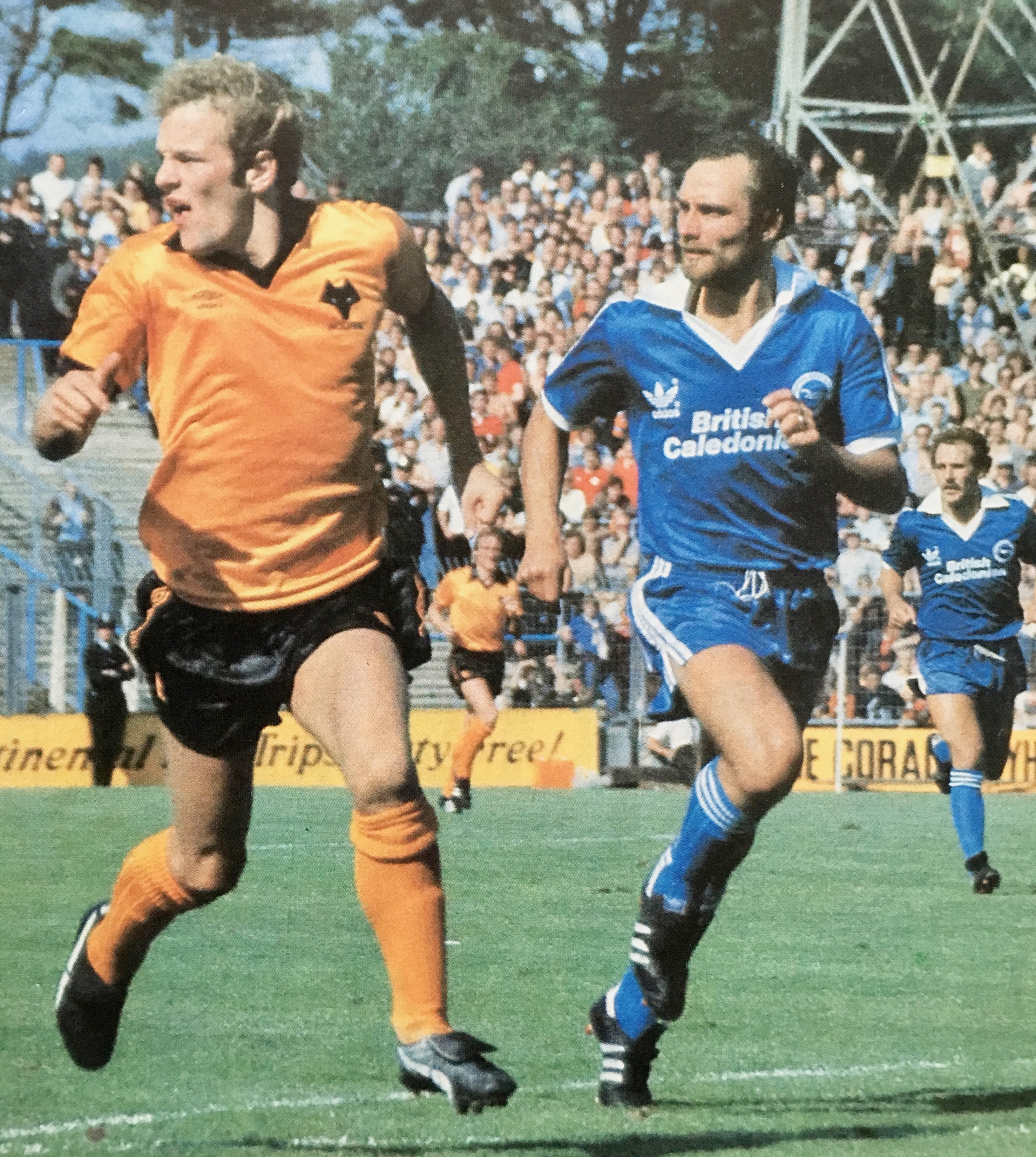
In two seasons with Oxford, managed by former Ipswich and Arsenal midfielder Brian Talbot, he scored eight times in 55 appearances. In the summer of 2005, he made his debut for Wales (qualifying because he had a Welsh grandfather) as a substitute in a 0-0 draw v Slovenia. Reports linked him with a move to Premier League Charlton Athletic, but nothing came of it and instead, in January 2006, he moved to Italy to join Hellas Verona for a £85,000 fee.

It proved to be too big a step for someone who was then only 20, and he referred to feelings of homesickness in an interview with the BBC.

Remarkably, Davies hit the headlines in May 2006, when in the sixth of seven games he played for the Wales under-21 side (which featured Gareth Bale, Andrew Crofts and Arron Davies) he scored a hat-trick in a 5-1 win over Estonia, and it earned him a recall to the full international side.

Wales under-21 manager Brian Flynn told the BBC: “Craig has sometimes been frustrating to watch, but he has skill and we will help him, and them all, to flourish.”

Davies hoped the international goals would attract a club to rescue him from Italy. “I have found it very hard to settle in Italy,” he told the BBC. “Verona want me to come back and have a year on loan somewhere and then they will look at the situation again when I have a bit more experience.”

It was Wolves, then in the Championship, who offered him a lifeline back in the UK and he moved to Molineux on loan, playing 23 games, mainly in the first half of the 2006-07 season.

The only goals he scored for Wolves both came in a FA Cup tie against Oldham Athletic who, ironically, turned out to be his next club. He joined them for an undisclosed fee from Hellas in June 2007.

Davies netted 13 times for a League One Latics side in 2007-08 but, after a 10-game barren spell the following season, he was sent on loan to Stockport County where he scored six times in 13 games, including bagging a hat-trick against Bristol Rovers, and scoring a penalty against Albion as County won 2-0.

When Adams rescued Davies from his Seagulls horror spell, he was rewarded with seven goals in 24 matches for League Two Port Vale between January 2010 and the end of the season.

Chesterfield stepped in to sign him on a one-year deal for the 2010-11 season – and he was promptly sent off in his first competitive game for the Spireites!

Things did get much better, though, and he ended the season with 25 goals to his name, Chesterfield were promoted, and Davies was chosen in the divisional PFA select team for the season.

Such success drew attention from other clubs and he opted to join Championship side Barnsley under Keith Hill. He struggled to find the net in the opening nine matches but eventually finished the season with 11 goals in 42 appearances.

In September 2012, Davies scored FOUR goals in the space of 19 minutes in a 5-0 demolition of Birmingham City at St Andrews and, with nine goals in 22 appearances to his name in the first half of the 2012-13 season, Bolton Wanderers came forward with a £300,000 bid to take him to the Reebok Stadium.

He scored four goals in 18 Championship games for Wanderers but another of his barren spells struck in the opening half of the following season. Wanderers loaned him to League One Preston and he got a goal on his debut as well as a hat-trick in a 6-1 thrashing of Carlisle United. North End reached the play-offs, and Davies made his way back to Bolton having scored five in 15 games.

Hamstring injury issues plagued him in 2014-15 and manager Neil Lennon released him at the end of the season.

He didn’t have far to travel for his next port of call when newly-relegated Wigan Athletic offered him a two-year contract. He only scored twice in 30 appearances, but Wigan won promotion as League One champions.

With just one goal in 14 Championship games in the first part of the 2016-17 season, Davies was on the move again, this time linking up with League One Scunthorpe United until the end of the season. Cue another barren spell: no goals in 21 games.

The 2017-18 season saw Davies return to his old club, Oldham Athletic, and despite scoring 14 goals in 44 appearances, could not prevent the club being relegated to League Two. Davies had strong views about the ownership of the club as he departed for Mansfield Town.

He signed a two-year deal with the Stags, but injury curtailed his involvement in 2018-19.

C Davies Wales

Horton’s place in the hearts of Brighton and Man City fans

IMG_5170ARGUABLY the finest captain in Brighton & Hove Albion’s history went on to have a far less successful spell as the club’s manager having also been a boss at the highest level, at Maine Road, Manchester.

The £30,000 signing of tenacious midfielder Brian Horton from Port Vale on the eve of transfer deadline day in March 1976 proved to be one of the most inspirational moments of Peter Taylor’s managerial tenure at the Albion and for such a fee was widely hailed as “an absolute steal”.

Even though Taylor didn’t hang around long enough to reap the benefit of the man he instantly installed as captain, his successor Alan Mullery certainly did.

In the early days after his appointment, there was some suggestion Mullery would be a player-manager but the former Spurs and England captain reassured a concerned Horton that wouldn’t be the case, admitting that he wouldn’t get in ahead of him anyway!

“Fortunately, that next year went really well. It was my best year without a doubt,” Horton told Evening Argus reporter Jamie Baker. “I’d never met Alan Mullery, and he’d probably never heard of me, so I was delighted and surprised when he made me his captain.”

It was the beginning of a strong bond between captain and manager and Horton added: “We had that relationship for all the five years I was with him.

“That first season was great. We went 20 odd games unbeaten and I was scoring left, right and centre, and I was very proud to be voted player of the year.

“Suddenly everything was coming right for me, although we were disappointed not to beat Mansfield for the championship because we felt we were far better than them.

“You’ve got to hand a lot of our success down to Alan Mullery. He was a terrific motivator of players. He was a bubbly character and it used to rub off on players.

“He was new to the game of management but he brought fresh ideas, and he’d been under some top managers as a player.

“The team spirit during those first three years was incredible. When you are winning games every week it makes a hell of a difference and we had that for three years. You just couldn’t describe how good the team spirit was.

“My treasured memory will always be of the day we beat Newcastle to clinch promotion to the First Division. It was even greater because I scored the first goal. It had always been my ambition to play in the First Division and now I had achieved it.”

In an inauspicious start, Horton found himself in the referee’s notebook as Albion were hammered 4-0 by Arsenal as the season opened at the Goldstone. After a narrower defeat away to Aston Villa, the next game was away to Man City – and Horton had the chance to earn the Seagulls their first top level point.

On 25 August 1979, Albion were trailing 3-2 when Horton had the chance to equalise from the penalty spot with only eight minutes of the game left. But the normally reliable spot-kick taker fluffed his lines, meaning Albion succumbed to their third defeat in a row.

While the superior opposition was clearly testing the Seagulls, it was testament to the resilient skipper that he was continuing to lead them having started out in the third tier and, on 20 December 1980, before a 1-0 home win over Aston Villa, he received a cut-glass decanter from chairman Mike Bamber to mark his 200th league appearance for the Seagulls.

As the 1980-81 season drew to a close, Albion were perilously close to the drop but four wins on the trot (3-0 at Palace, 2-1 at home to Leicester, 2-1 at Sunderland and 2-0 at home to Leeds) took them to safety. What Horton didn’t realise was the Leeds game would be his last for the Albion (as it also was for Mark Lawrenson, Peter O’Sullivan and John Gregory).

“I’d bought a house in Hove Park off Mike Bamber and I was sunbathing that summer when there was a knock at the door. It was Alan Mullery come to tell me he’d just resigned,” Horton told interviewer Phil Shaw in issue 26 of the superb retro football magazine, Back Pass.

Mullery told him how he’d quit over the proposed Lawrenson transfer, how O’Sullivan and Gregory were off as well, and that the club wanted to sell him too, for £100,000.

Although Mullery advised him to sit tight because he still had a year left on his contract, new boss Mike Bailey – with a swap deal involving Luton’s Republic of Ireland international, Tony Grealish, lined up – told him he’d have to fight for his place and would have the captaincy taken from him.

“I said I didn’t want to go, that I loved the club and the fans, that I’d bought a house, and, at 31 I thought I had two or three good years left.

“I spoke to Mike Bamber and he said: ‘I don’t want you to go but I have to back the manager’.” Horton felt he had no option but to make the move.

He chose the platform of the Argus to thank the supporters for the backing they’d always given him and said his one disappointment was that he didn’t get the chance to lead Albion at a Cup Final. “That I would have really loved.”

Looking ahead, he added: “The Luton move gives me a new challenge. You can get in a rut if you stay at one club too long. Six years at Port Vale and five and a half at the Albion is enough. It will probably put a little sparkle back into my game.”

And so, Horton went to Kenilworth Road and under David Pleat the Hatters won the 1981-82 Second Division championship by eight points clear of arch rivals Watford. Looking back in his interview with Back Pass, Horton reckoned two of his Luton teammates, David Moss and Ricky Hill, were up there alongside Lawrenson as the best players he’d played alongside.

An all-too-familiar tale of struggle in the top division saw Luton needing to win at Maine Road in the last game of the season to ensure their safety, and Raddy Antic scored a winner six minutes from time that preserved Town’s status and sent City down.

Television cameras memorably captured the sight of Pleat skipping across the turf at the end of the game and planting a kiss on Horton’s cheek.

After one more year at the top level, he began his managerial career as player-manager of Hull City in 1984, working for the mercurial Don Robinson, and steered them to promotion to the old Division Two at the end of his first season in charge. He is fondly remembered by Hull followers, as demonstrated in this fan blog.

When he parted company with the Tigers in April 1988, his old Brighton teammate Lawrenson, by then manager of Oxford United, invited him to become his assistant. United at the time were owned by Kevin Maxwell, son of the highly controversial Robert Maxwell.

When Dean Saunders, who Brighton had sold to Oxford for £70,000, was sold against Lawrenson’s wishes – astonishingly he went to Derby for £1million – Lawrenson quit. Horton took over as manager and stayed in charge for five years, during which time he recruited former Albion teammate Steve Foster to be his captain.

Horton’s managerial break into the big time came in August 1993 when Man City sacked Peter Reid as manager four games into the 1993-94 season. Horton didn’t need to think twice about taking up the role, even though City fans were asking ‘Brian who?’

In Neil McNab, Horton recruited to his backroom team a former playing colleague who’d been a City favourite. “I played with McNab at Brighton and knew his strengths and knew he was well liked here,” he told bluemoon-mcfc.co.uk.

Horton brought in Paul Walsh, Uwe Rossler and Peter Beagrie and City managed to stay up.

The new boss acquired the services of Nicky Summerbee (to follow in the footsteps of his famous father Mike) along with Garry Flitcroft and Steve Lomas and at one point City were as high as sixth in the table.

They eventually finished 17th but fans to this day still stop Horton (who lives in the area) and ask him about a terrific match which saw City beat Spurs 5-2.

It was Horton’s bad luck that when City legend Francis Lee took over the club from previous owner Peter Swales, he was always looking to install his own man in the hot seat, and Lee eventually got his way and replaced Horton with Lee’s old England teammate Alan Ball.

Ball took City down the following season while Horton embarked on a nomadic series of managerial appointments either on his own or in tandem with Phil Brown.

Initially he was boss of Huddersfield Town; then he was a popular appointment when he took over as Albion boss during their exile playing at Gillingham, but, because he wanted to live back in the north, he left in February 1999 to join another of his former clubs, Port Vale.

He led Vale for five years and pitched up next at the helm of Macclesfield Town, where, on 3 November 2004, he marked his 1,000th game as a manager. It was at Macclesfield where one of his players was the self-same Graham Potter whose stewardship of Swansea City came mightily close to upsetting City in the 2019 FA Cup quarter-finals.

A bad start to the 2006-07 season saw him relieved of his duties in September 2006 but, by the following May, he was back in the game as Brown’s no.2 at Hull City. In March 2010, he was briefly caretaker manager following Brown’s departure, until the Tigers appointed Iain Dowie.

Next stop saw him as no.2 to Brown at Preston North End; then a second brief spell as Macclesfield boss at the end of the 2011-12 season.

In June 2013, he was appointed assistant manager to Paul Dickov at Doncaster Rovers, a role he filled for two years before linking up with Brown once again during his tenure at Southend United. Horton was his ‘football co-ordinator’ but left the club in January 2018. He followed Brown to Swindon Town but, in May 2018, decided not to continue in his role as assistant manager.

Born in the Staffordshire coal-mining village of Hednesford on 4 February 1949, Horton went to its Blake Secondary Modern School. Spotted playing football for the Staffordshire Schools side and the Birmingham and District Schools team, the Wolves-supporting youngster was awarded a two-year apprenticeship at Walsall when he was 15.

But, at 17, his hopes of a professional career were dashed when he wasn’t taken on. He ended up finding work in the building trade while continuing his football with Hednesford Town in the West Midlands (Regional) League.

He played at that level for four seasons and it was there he acquired the moniker Nobby because he gained a reputation for World Cup winner Stiles-like aggression. It was a nickname that stuck.

At the time, he was playing up front and scoring a lot of goals so he caught the attention of a few league clubs, but only Gordon Lee at Port Vale made a move. Lee sealed the deal by buying the Town secretary a pint of shandy and promising to take Vale to play Hednesford in a friendly.

Vale had little money so the squad was made up of free transfer signings but Horton said it made them strong collectively with “a fantastic spirit” and it wasn’t long before he was made their captain.

Vale legend Roy Sproson took over from Lee as manager and in March 1976 the cash-strapped Potteries outfit were forced to sell their prize asset.

When Vale headed to Selhurst Park that month, Crystal Palace player-coach Terry Venables got a message to Horton before the game urging him to sit tight until the summer and they’d sign him then. But Albion stole a march on their rivals and Sproson told him: “I’m sorry but we’re selling you to Brighton for thirty grand. We need the money.”

Funnily enough, the previous summer Horton had a chance holiday encounter in Ibiza with Albion’s Peter O’Sullivan. He later told the Argus: “Sully asked me if I fancied a move. Little was I to know that I would be joining him soon after. There was a wealth of ability in the Albion side when I joined them and it was outrageous that we didn’t go up that year.

“I felt they had to go places and I wanted to be part of it. I’d never been in a promotion side but then to be made captain of it was really the icing on the cake.”

Albion’s gain was certainly a loss to two other clubs who’ve since encountered similar troubles in their past. Horton explained: “I knew clubs were interested although Roy Sproson said he wouldn’t let me go to another Third Division team. I think he released me to Brighton because at the time they looked certain for promotion.

“Also, it was the highest bid they’d had. Hereford and Plymouth had offered £25,000 and I would have been happy to have gone to either club.”

In November last year, Horton reflected on his long and varied career in an interview with The Cheshire Magazine.

Pictures mainly from my scrapbook, originally from the Argus, Shoot / Goal magazine, the matchday programme and various online sources.

Gary Williams knew where the goal was – even from left back

A CARTILAGE operation when he was just 17 changed Gary Williams’ career, but, after success at Brighton, it eventually brought his playing days to a premature end at Crystal Palace.

Originally a winger, the operation, when he was an emerging player at Preston North End, took the edge of his pace and led to him converting into an overlapping left back.

Thankfully, as Brighton fans would witness, his ability to score important goals never left him.

Born in Litherland, Liverpool, on 8 March 1954, Gary Peter Williams had unsuccesful trials with Liverpool and Coventry City before starting his career with non-league Marine. He caught the eye of a scout who’d gone to watch a different player and ended up signing for Preston in April 1972.

Williams made his Preston debut in the final game of the 1971-72 season as Preston drew 2-2 at home to Swindon.

He then played in the opening match of the following season, against Aston Villa, but had to wait until the end of March at Brighton for his next appearance.

After his cartilage op, and just when he thought he was set to be released aged 18, Preston’s reserve team left-back got injured, Williams filled in, did a good job, and it was the platform he needed to launch his career.

“Because I used to be a winger, I knew which way to shepherd them to make it difficult to cut inside,” he told the journalist and author Spencer Vignes in his 2005 book, A Few Good Men.

It was the legendary Bobby Charlton, briefly trying out management at North End, who gave Williams his big break into first team football, selecting him at left back for the final eight games of the 1974-75 season.

Young Gary Williams with former England World Cup winner, Nobby Stiles, at Preston, and scoring the winner at Sunderland.

Former Everton boss Harry Catterick took over from Charlton and made Williams the first choice left back in 1975-76. The following season his outstanding performances earned him the Player of the Season award and on 22 March 1977, he made his 100th league appearance in a 1-0 defeat at Selhurst Park.

By then, Williams was catching the eye of clubs higher up the league and his final game for Preston was the season-ending fixture at Shrewsbury on 14 May, which North End won 2-1.

In July 1977, Preston accepted a £45,000 fee from Brighton to sign Williams shortly after his teammate Mark Lawrenson joined for £100,000. Albion’s Graham Cross and Harry Wilson moved in the opposite direction to fill the positions they’d vacated.

Williams told Vignes how he’d always enjoyed playing against Brighton because of the size of the crowds they got.

“To run out in Division 3 at the Goldstone in front of a full house was amazing. You knew you were in for a hard time but the atmosphere was just infectious,” he said.

Manager Alan Mullery had called him and asked him to get himself down to Brighton and the club booked a room in the Metropole Hotel, the sea view helping to make up his mind about the move.

“I wanted to better myself and get into the First Division but football is such an up and down game that it’s not too wise to look too far ahead,” Williams told Football Weekly News magazine in 1980.

The start to his Albion career was somewhat inauspicious. Although he came on as a substitute in the opening game, a league cup tie away to Cambridge United which finished 0-0, injury then prevented him making his league debut for two months.

It finally came in a 2-0 win away to Sunderland on 1 October 1977 and he then missed only one game through to the end of the season, appearing a total of 34 times as the Seagulls finished fourth, missing promotion on goal difference to Tottenham.

The following season saw Williams play every game, scoring twice, as Brighton were runners-up to Palace gaining promotion to Division One for the first time.

In Albion’s first season amongst the elite, Williams was again ever present – indeed, he remarkably played 146 consecutive games during his time at the club.

The Everton-supporting full-back got the chance to play against his boyhood side in December 1979 and three months later he scored the first of two cracking, memorable Brighton goals in the top division as the Seagulls finished in 16th position.

On 29 March 1980, at the Goldstone, he lashed a shot from 30 yards that flew past England goalkeeper Peter Shilton to earn Albion the double over European Cup holders Nottingham Forest.

Williams beats Nottingham Forest full back Viv Anderson at the Goldstone and, together with Gary Stevens, tries to thwart Liverpool’s Kenny Dalglish.

Williams admits he was about to pass it until skipper Brian Horton urged him to ‘hit the ****ing thing!’

“When you hit the ball that sweetly, you don’t even really feel a thing,” he recounted to Vignes, in that 2005 interview. “By the time I looked up, it was heading for the top corner.”

Although Forest boss Brian Clough declared it a fluke in a post-match interview, because the game took place in front of the TV cameras, it was selected as one of the goals of the season.

Thirteen months after that goal, Williams struck another beauty, this time to silence the Sunderland faithful at Roker Park.

It clinched Albion a 2-1 win and was part of a late flurry of good results which saw the Seagulls escape the clutches of relegation.

Describing it to Vignes, he said: “It was our last attack of the game. Gordon Smith knocks a good ball into the penalty area and I’ve just taken a gamble and gone up from the halfway line. I say so myself but it was a really good volley.

“It fell to me around 10 yards out and you hear the net ripple because the crowd went silent.”

While it contributed to Albion staying up, that summer saw the departure of Mullery, Lawrenson and Horton and the arrival of Mike Bailey into the manager’s chair. It was to signal the end of Williams’ Brighton career.

Bailey favoured a far more defensive approach to his predecessor and brought in the experienced Northern Ireland international Sammy Nelson, who had been displaced at Arsenal by the arrival of Kenny Sansom.

Williams only learned about the signing through The Argus and, when he confronted the manager about it, was told Nelson was only going to be a squad player.

“I’m thinking ‘bollocks’ but he didn’t play him straightaway,” Williams recounted. “He couldn’t drop me because I wasn’t doing anything wrong.”

Ironically, however, he lost his place after bombing forward and scoring in a 4-1 win over Manchester City. Astonishingly, Bailey was annoyed that he had been too adventurous!

With Nelson keen to carry on playing and earn a place in Northern Ireland’s 1982 World Cup squad, it meant Williams was left to languish in the reserves.

By the end of the season, though, Mullery, by now manager of Crystal Palace, came to Willams’ rescue and gave him a chance to resume first team football.

In a swap deal that saw winger Neil Smillie arrive at the Goldstone, Williams moved to Selhurst.

But after only 10 games he was forced to have an operation on his troublesome knee. Expert advice steered him towards a painful decision but he took it and retired from the game aged just 29.

Williams told the Argus: “The trouble with my knee is really wear and tear. I had a cartilage out at 17, and I was told after the operation last October a lot of harm might be caused if I went on playing.”

In A Few Good Men, Vignes gained a great insight into a northern lad who fell in love with the Albion and remains a fan to this day.

“I was very lucky in that I played right at the beginning of the era of overlapping full-backs,” Williams told him. “It was beginning to creep in when I first came onto the scene, and I had an advantage as I’d started my career as a left-winger. I knew all about coming forward.”

gwms quit cutting