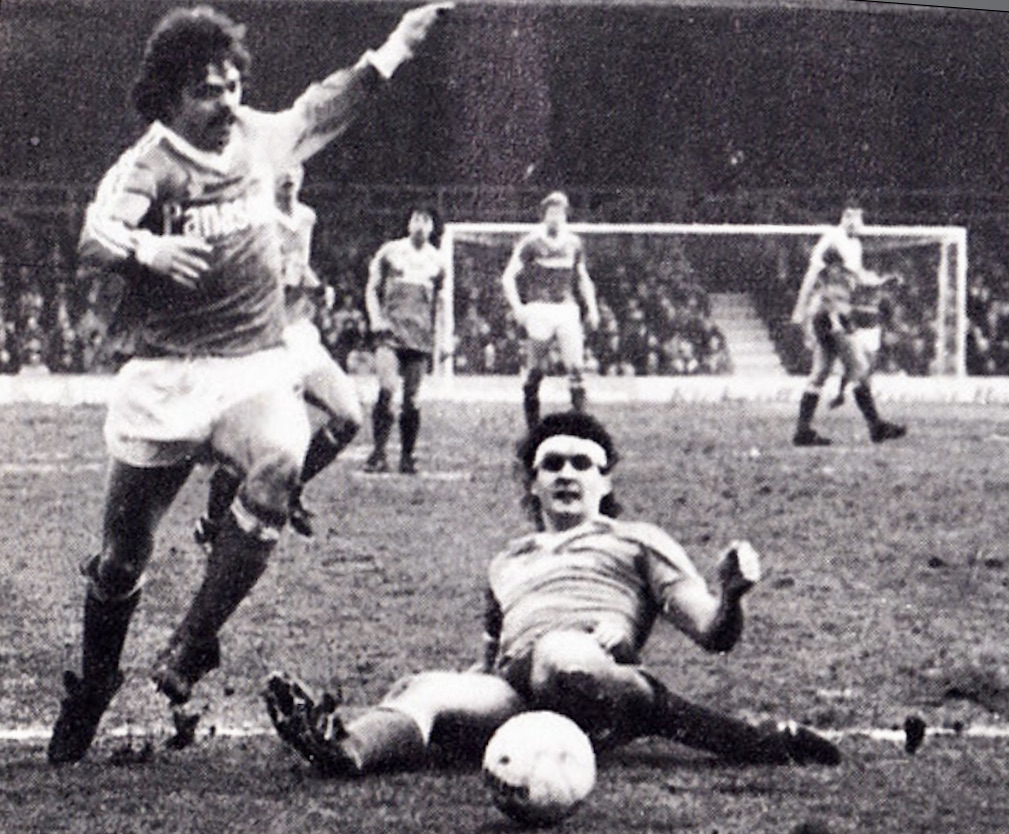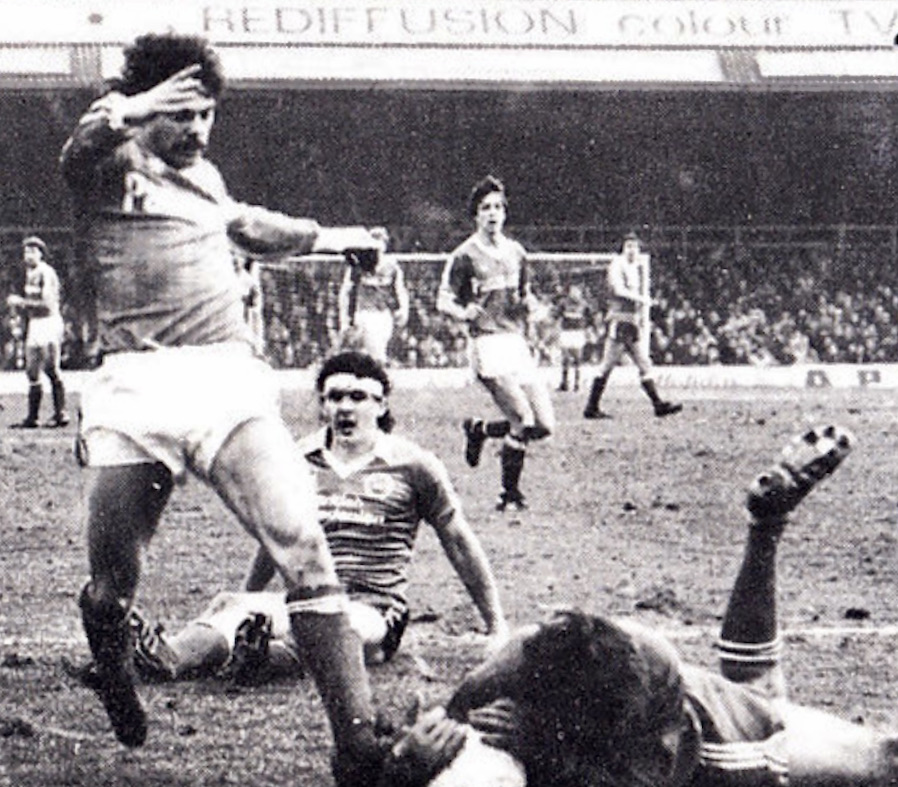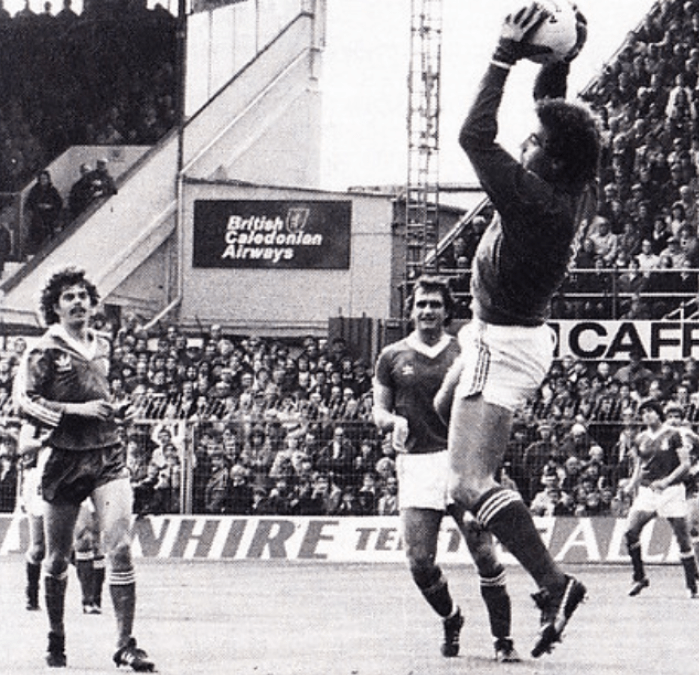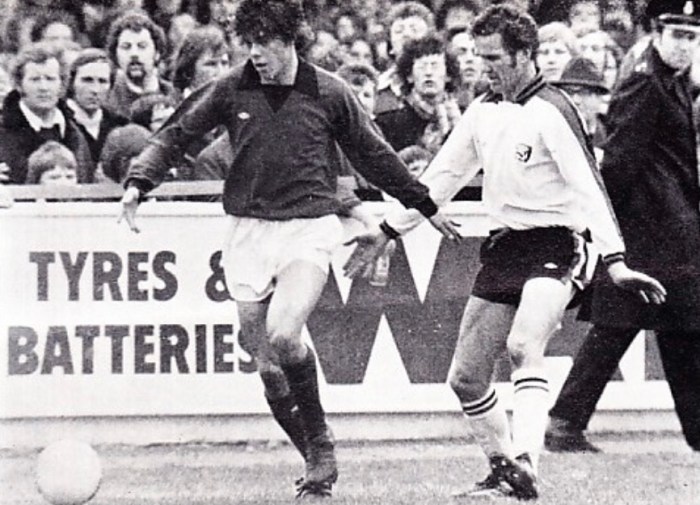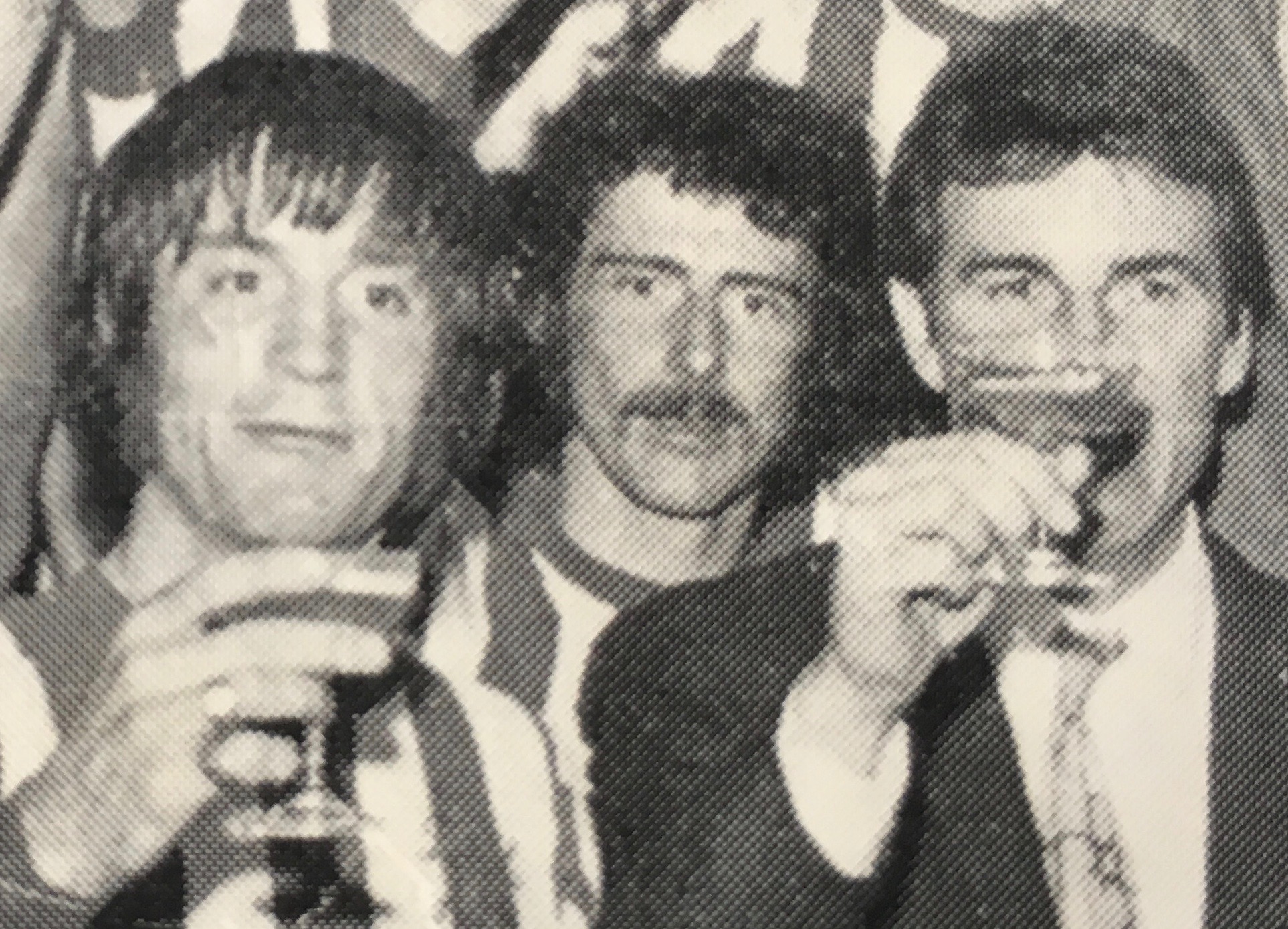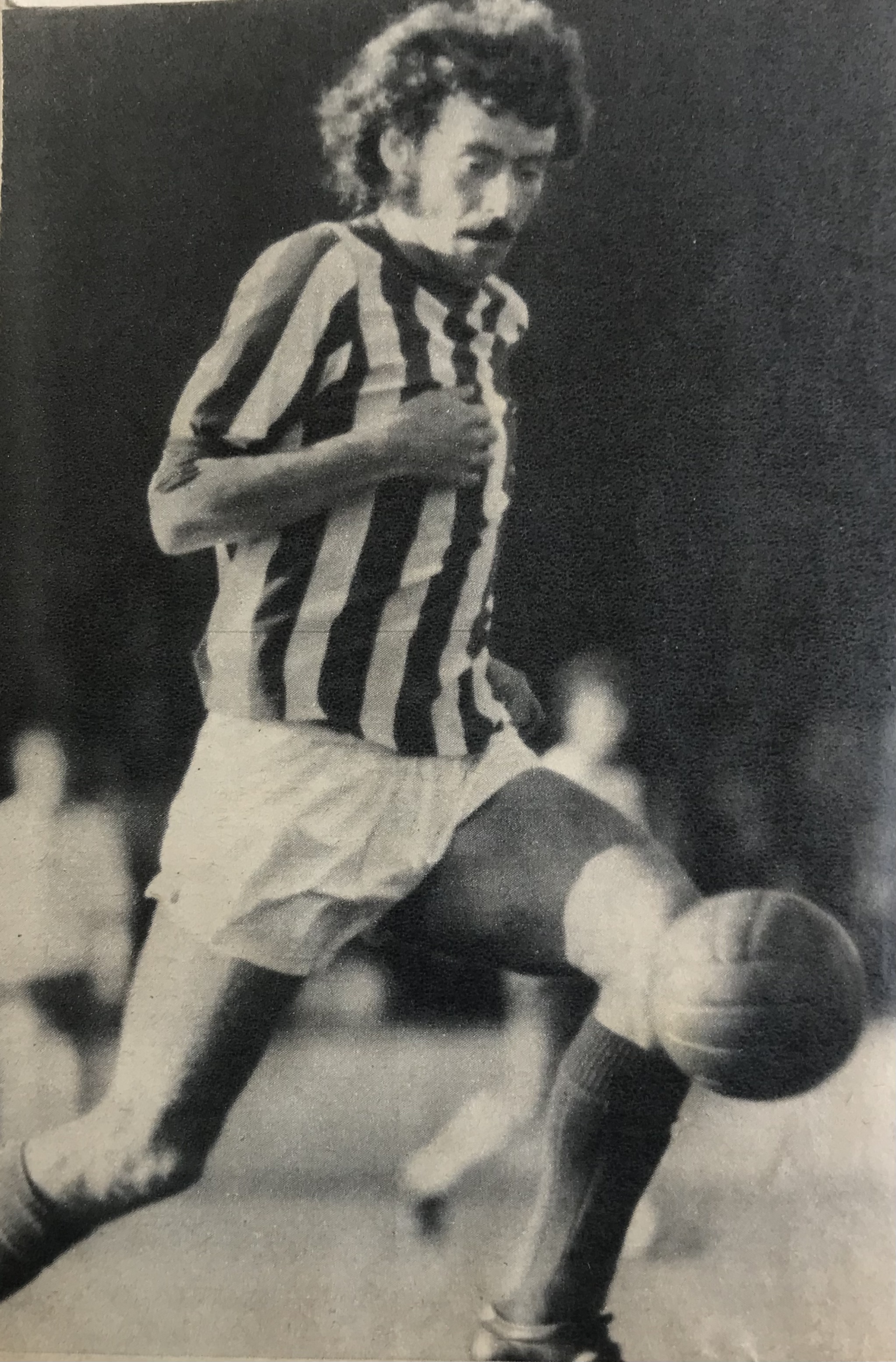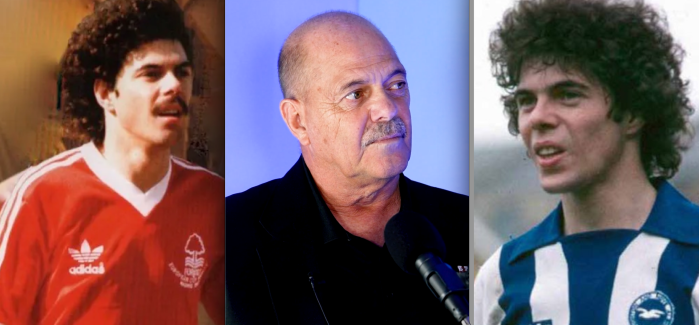
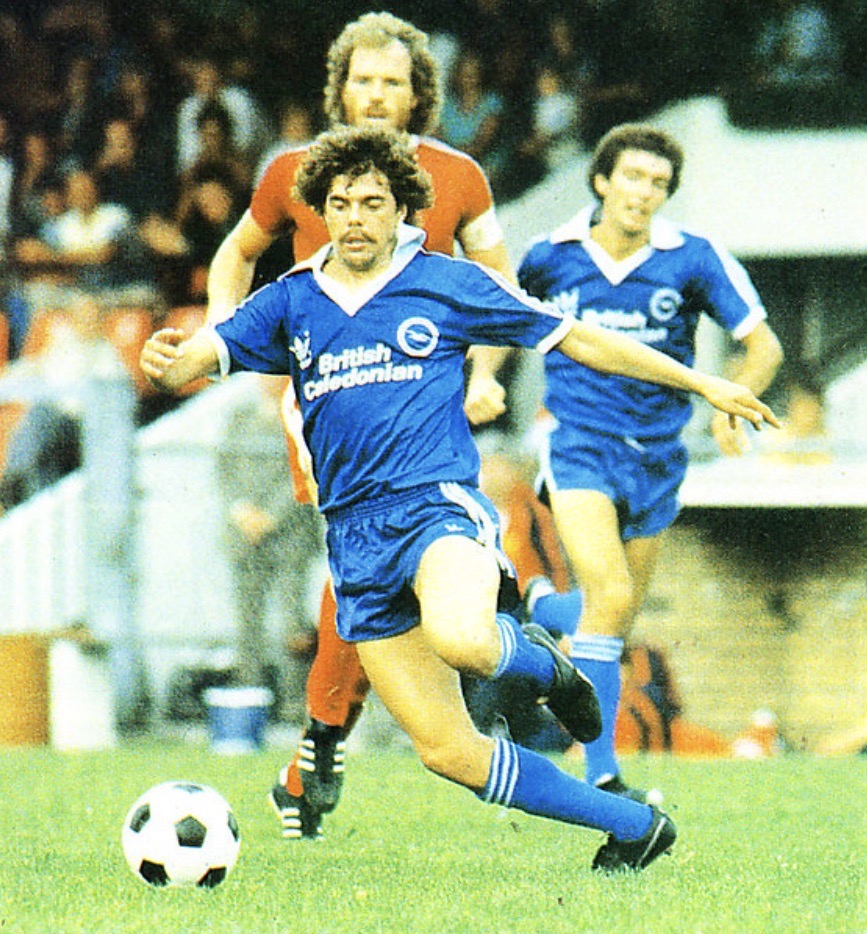
Malcolm in the middle was moustachioed marksman Poskett

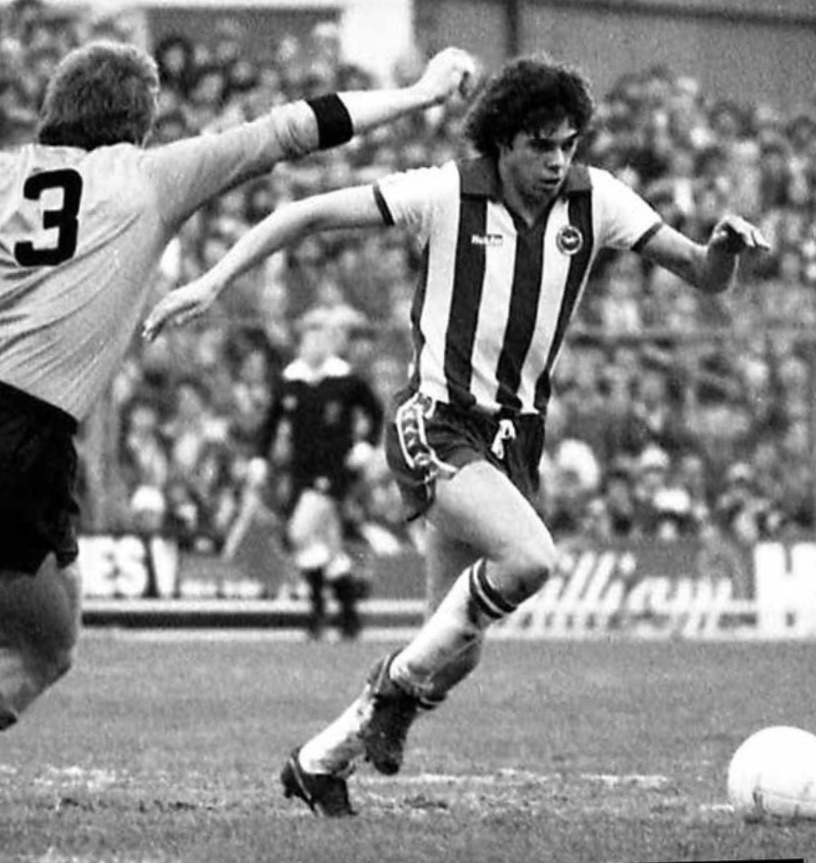
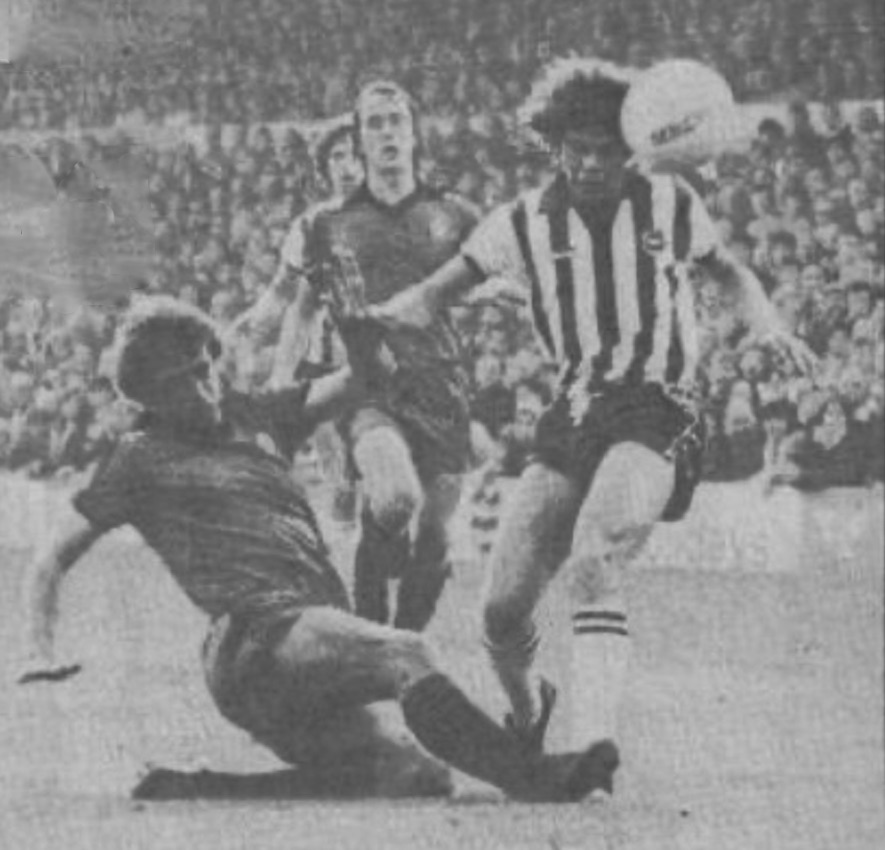
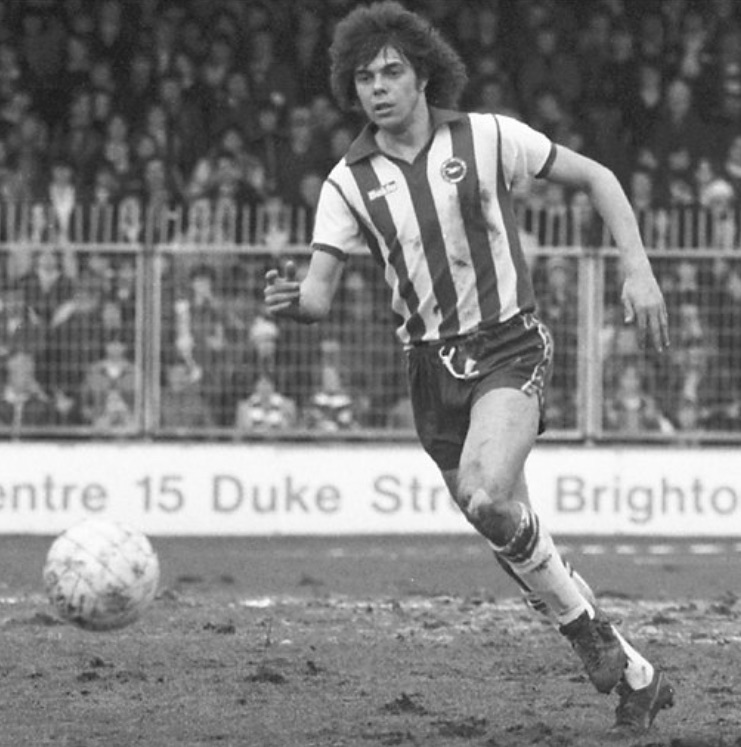
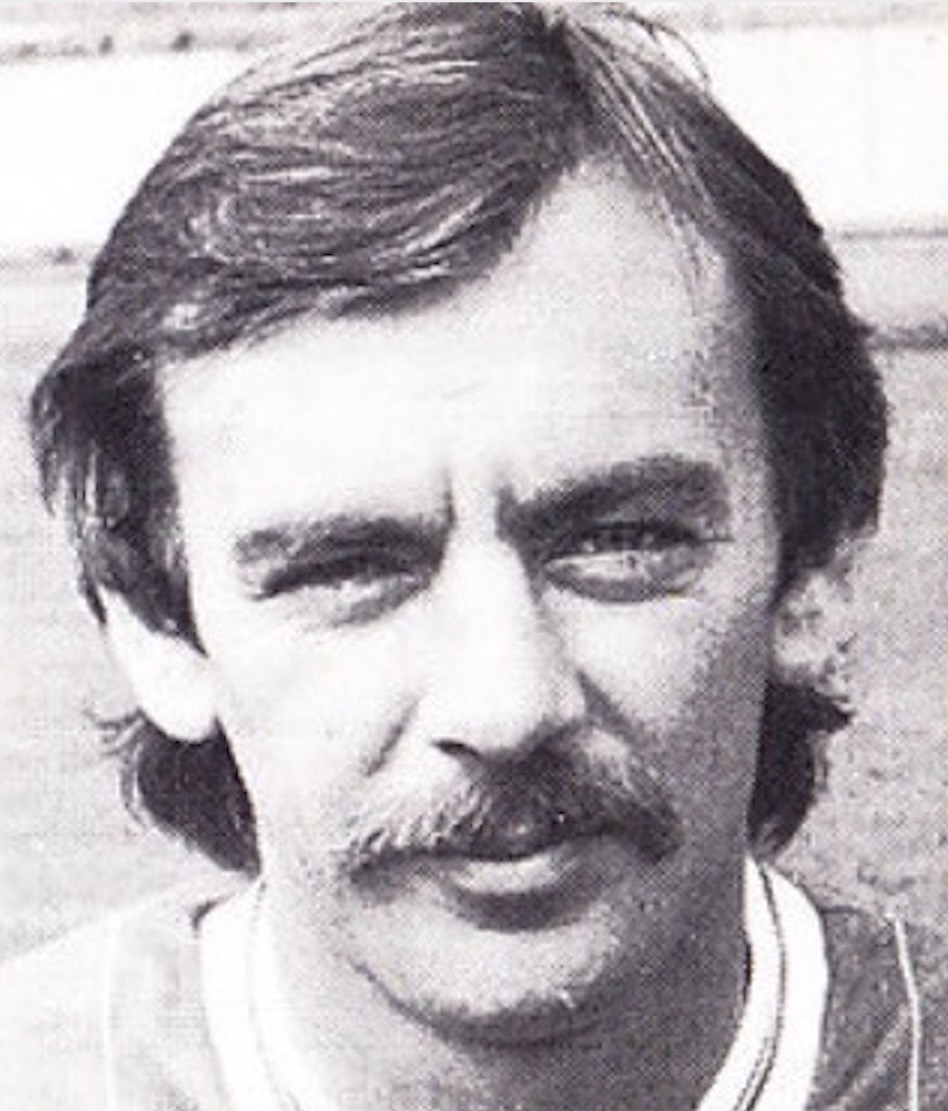
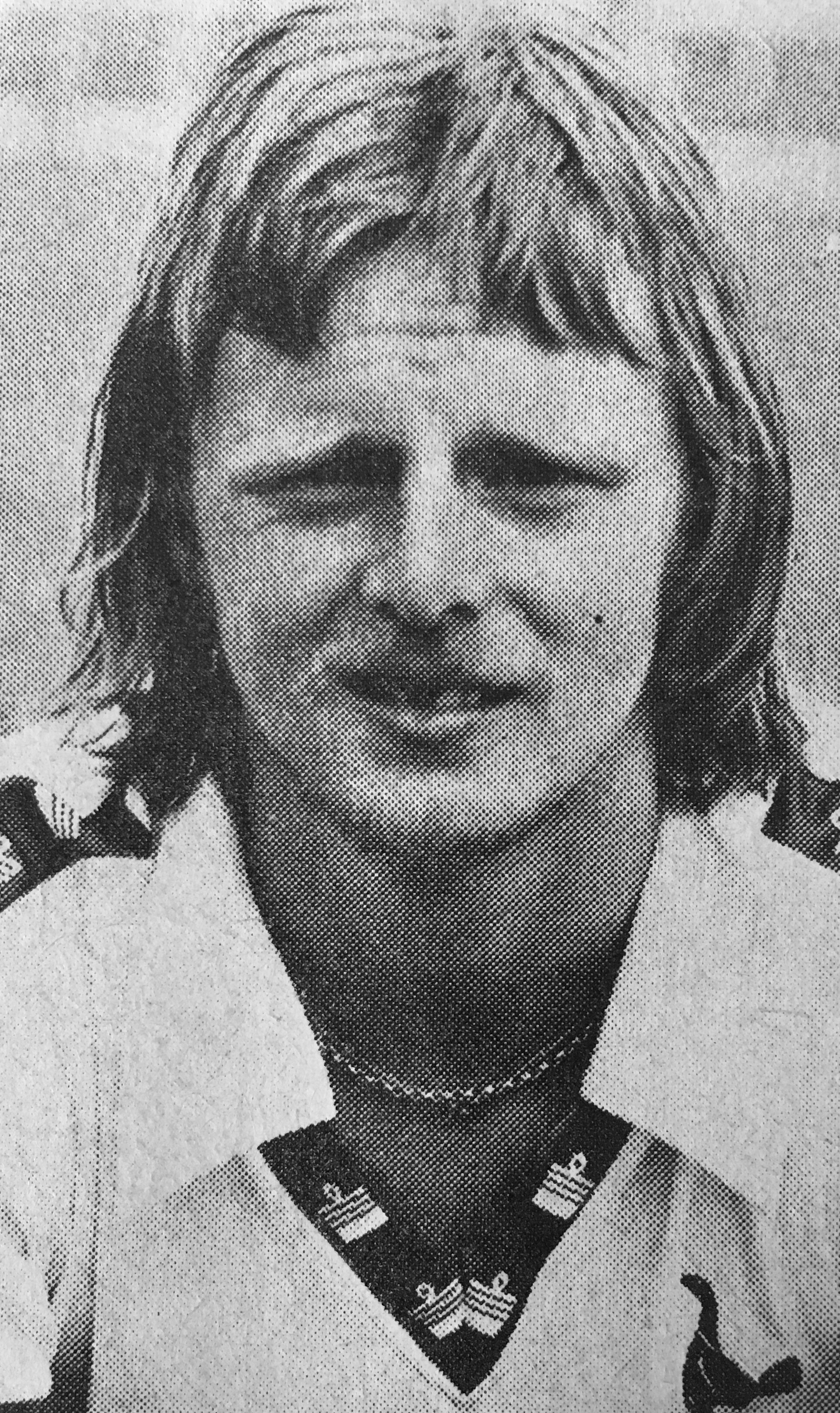
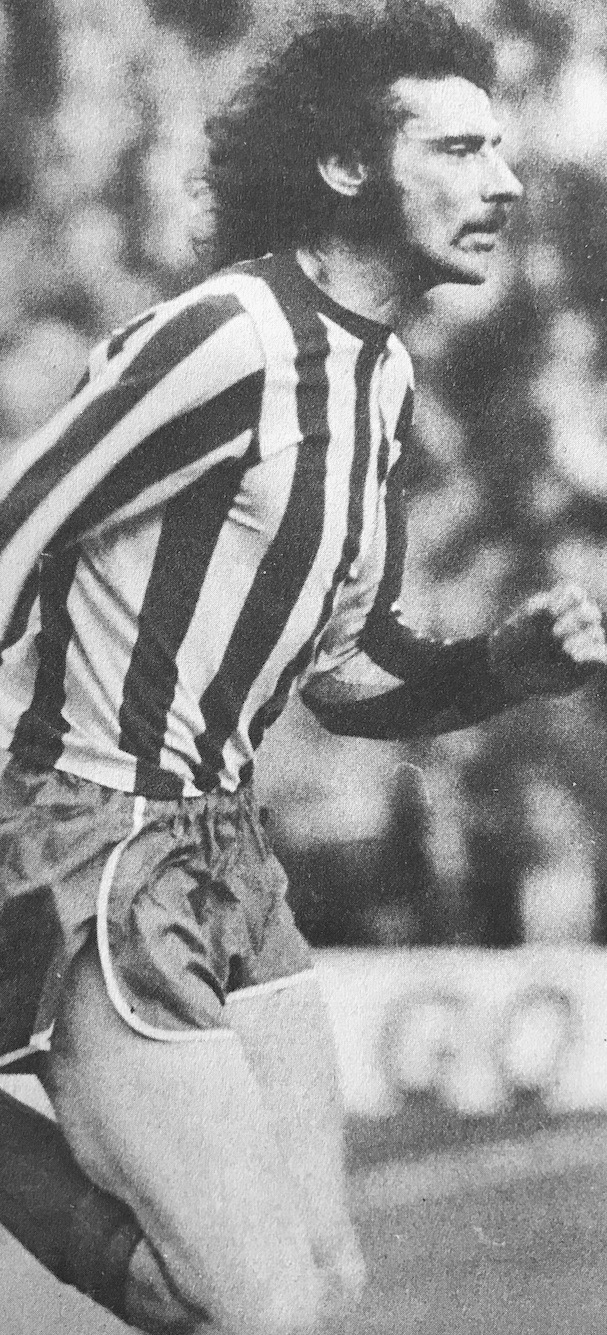
MALCOLM POSKETT’s goals helped Brighton to win promotion from the second tier after he’d made a terrific start to his Albion career.

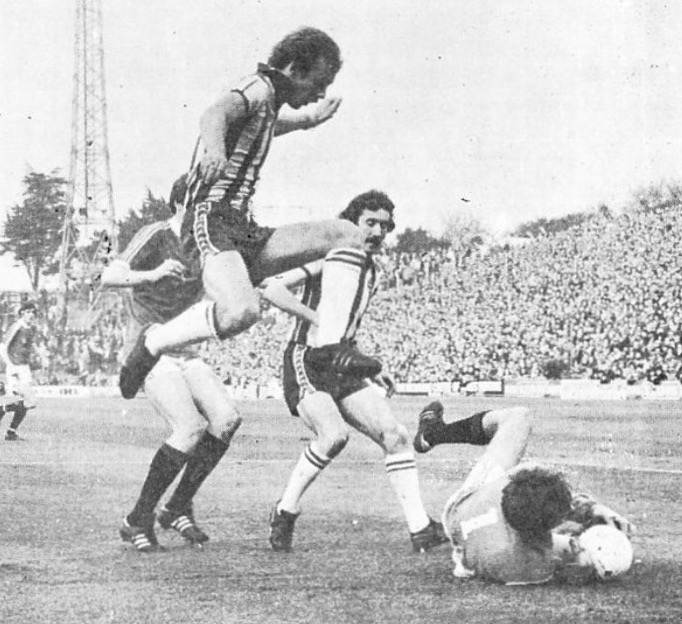
Only two days after putting pen to paper in Hove, Poskett netted the equaliser in a 1-1 draw away to Hull City on 4 February 1978 and a week later he marked his home debut with a goal in Albion’s 2-1 win over Burnley.

The game at Boothferry Park was only six minutes old when the home side went ahead but Poskett levelled it up just before half-time after a Tony Towner corner was headed goalwards by Andy Rollings and the new arrival diverted it into the net.

A £60,000 signing from fourth tier Hartlepool United, Poskett had taken over the no.9 shirt from Ian Mellor, who had only been in the side for one game in the injury absence of Teddy Maybank.

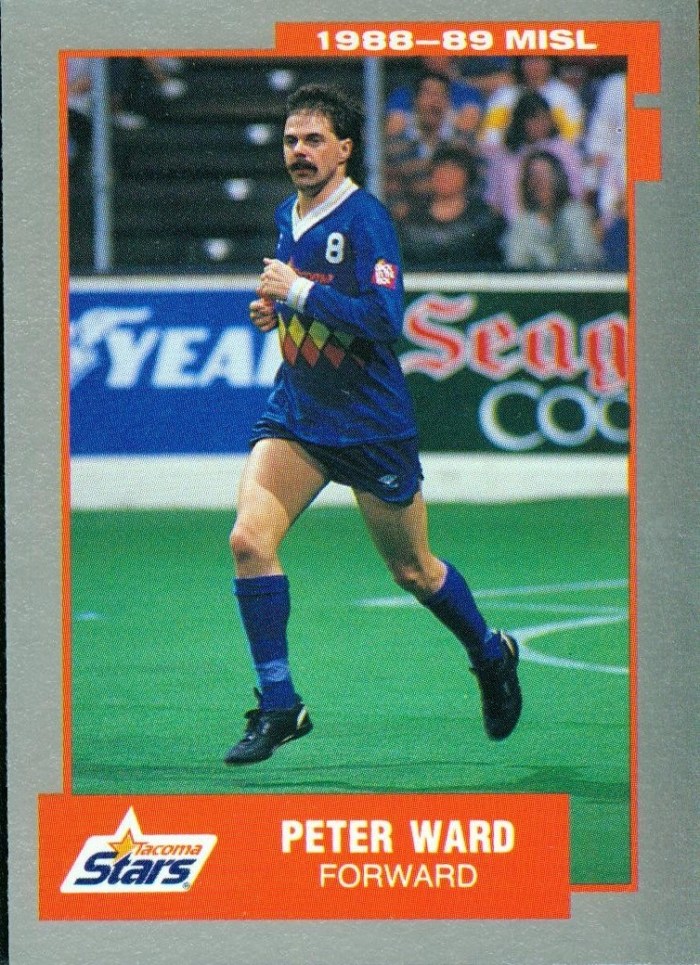
Maybank’s big money signing from Fulham four months earlier had broken up the highly successful Mellor-Peter Ward partnership that earned Albion promotion from the old Third Division, and Poskett’s arrival only served to illuminate the Goldstone exit door even brighter for Mellor, who swiftly departed for Chester.

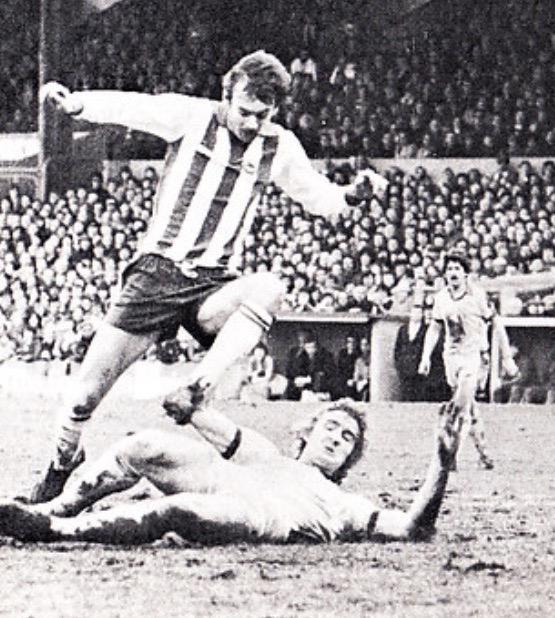
A crowd of 22,694 saw the new man’s Division Two debut on an icy Goldstone Ground pitch. Poskett once again profited from a Towner pass to score. Skipper Brian Horton scored Albion’s other goal.

It all must have felt very showbiz to the lad from Teesside, used to playing in front of 5,000 crowds in the Fourth Division, especially when prior to kick off against the Clarets, Slade, a famous chart-topping pop group of the time, recorded a single on the pitch in front of the North Stand.

While Maybank reclaimed his starting berth from Poskett for six matches, he was troubled by a knee injury and Poskett got the nod for the remaining seven games of the season as Albion chased automatic promotion, which at that time was earned by the top three sides in the division. There were no play-offs.

Poskett repaid Mullery’s faith in him with a hat-trick in a 4-0 win away to Bristol Rovers and by netting the only goal of the game in the penultimate fixture at home to Charlton Athletic in front of 31,203 fans.

What happened next has been well documented: Albion missed out on promotion when Southampton (in second) and Spurs (third) conveniently drew 0-0 in the final match of the season; Spurs edging out the Seagulls on goal difference.

Maybank had a successful cartilage operation during the summer break and was initially the preferred partner for Ward as the new season got under way.

Poskett banged in a transfer request as a mark of his frustration but, after Mullery persuaded him to withdraw it, he got his chance back in the side and made the most of opportunities that came his way.

Mullery admitted in Matthew Horner’s biography of Ward (He Shot, He Scored, Sea View Media) that he wasn’t always fair on Poskett when reverting to the Ward-Maybank partnership.

He pointed out: “Malcolm Poskett did a terrific job when we signed him. He was one of the most under-rated goalscorers – absolutely brilliant.

“He was really similar to Wardy, very sharp and very quick but a bit taller and a bit stronger.”

By the end of the season that ended in promotion to the top tier of English football for the first time, Poskett had contributed 10 goals in 24 games (plus eight sub appearances). He was the substitute in the famous 3-1 win back in his native north-east when Newcastle were beaten by the Seagulls on 5 May 1979.

Brighton struggled to find their feet in more exalted company and Poskett barely got a look-in, coming on as a sub twice and only starting three matches, the last of which was in the resounding 4-0 defeat to Arsenal in the League Cup on 13 November 1979.

He scored twice, though: netting the only goal in an away League Cup win over Northampton Town, and four days later scoring along with Peter O’Sullivan as Albion pulled back a 2-0 deficit to draw 2-2 at West Brom.

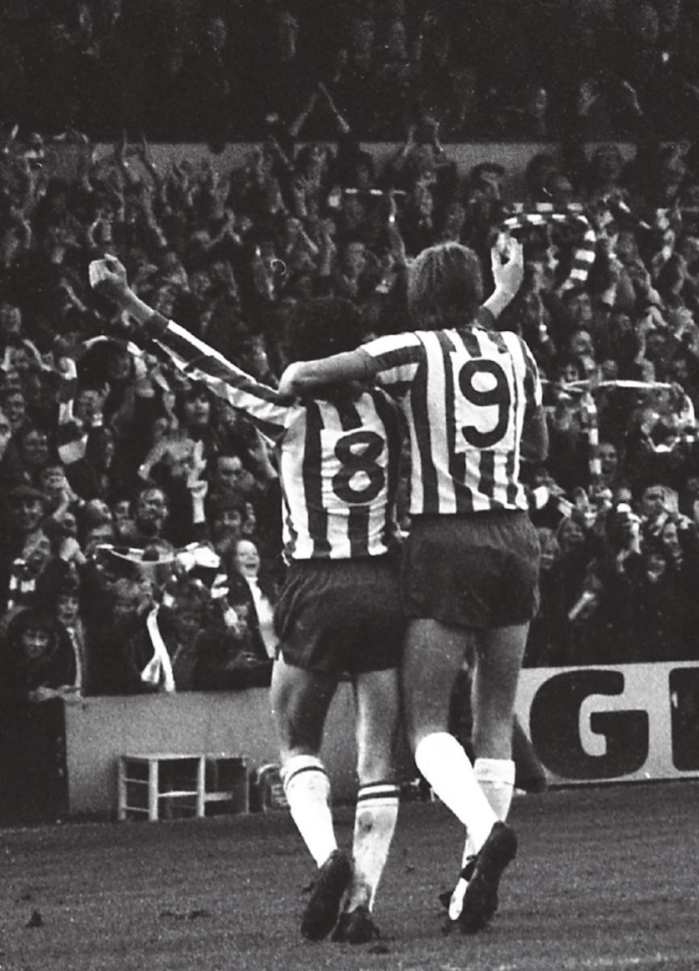
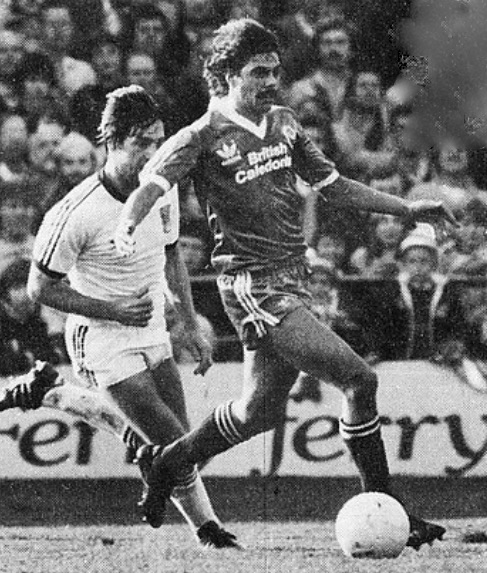
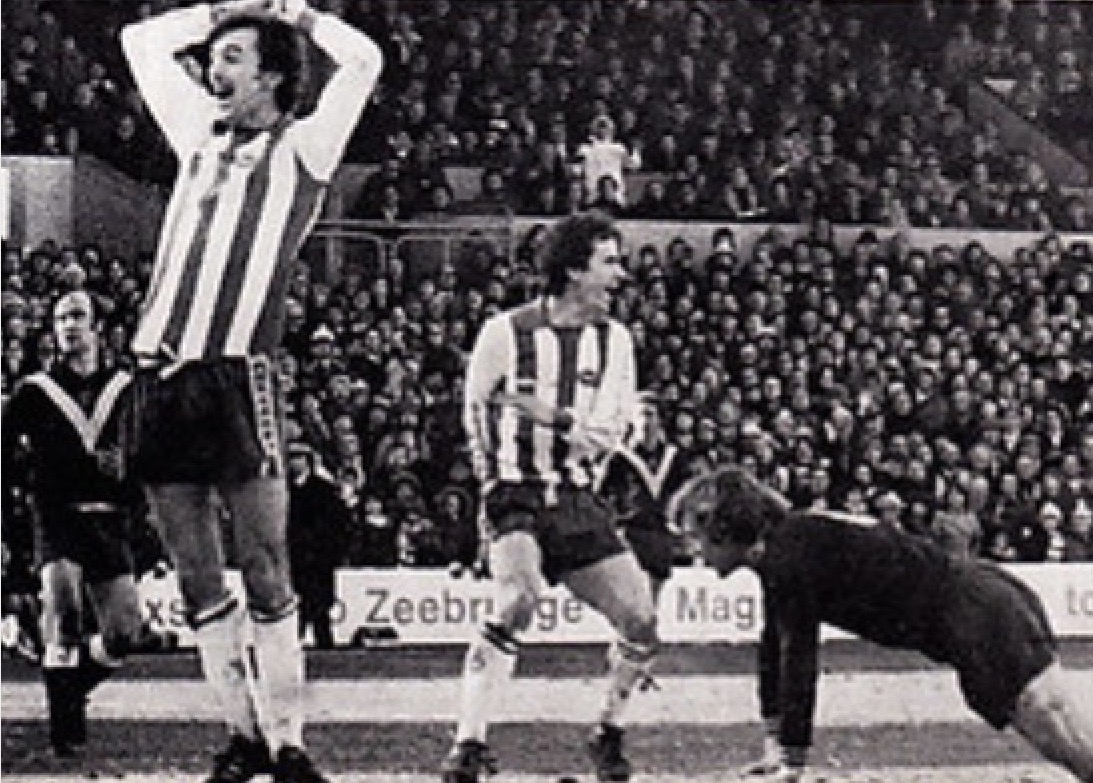
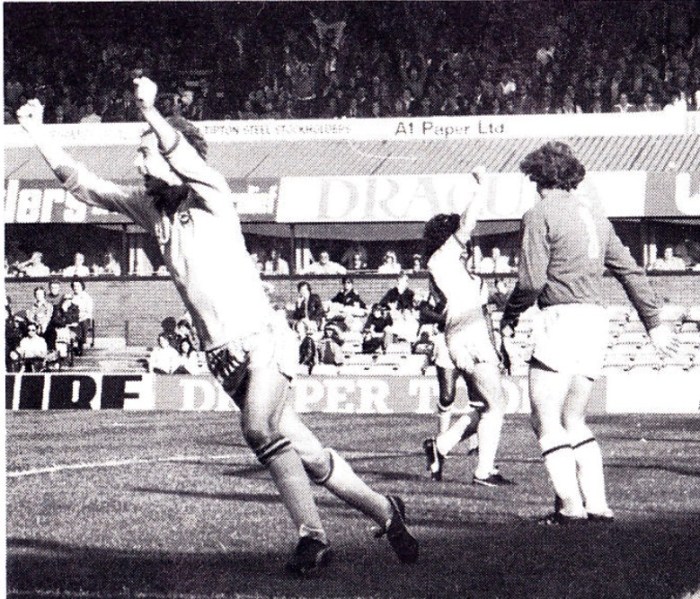
Poskett wheels away to celebrate his only top flight goal, away to West Brom

However, with the arrival of Ray Clarke from Ajax, it was clear Poskett’s chances at the Albion were going to remain limited, so he dropped back down a level to join promotion-seeking Watford under Graham Taylor. Albion goalkeeper Eric Steele had already made a similar switch in the autumn of that season shortly after a famous spat with Gary Williams at Old Trafford. Mullery also secured a £120,000 fee for Poskett, so Albion did very nicely out of the deal.

“I would have loved to stay at Brighton for the rest of my career, but it wasn’t to be,” Poskett told Spencer Vignes in a retrospective matchday programme article. “One week I was partnering Peter Ward, the next it would be Teddy with Peter. I never got a run in the team, even though I scored a couple of goals when I did play.

“At least with Watford I got the chance to start games. People called us kick and run, a long ball side, but we had a lot of talented players like Ross Jenkins, John Barnes and Nigel Callaghan.”

Poskett struck up a friendship with fellow new boy Martin Patching and both were on the scoresheet (Poskett scored twice) in a memorable 7-1 League Cup thrashing of Southampton on 2 September 1980.

Although being Watford’s top scorer with 21 goals in the 1980-81season, when the Hornets finished ninth, the following season he found himself in the reserves after a three-game barren spell.

In a Watford matchday programme article, he mused: “It’s a strange profession – one minute you’re up and the next down.

“I played in the first three league games of the season without scoring and was dropped. But I’m scoring fairly regularly in the reserve side and my chance will come if I keep on hitting the net. I’m a battler and not the type of player to give less than 100 per cent, no matter what grade of football I’m playing in.”

Watford won promotion as runners up behind close rivals Luton Town but Poskett couldn’t shift Luther Blissett or Jenkins, who were the preferred strike pairing, and Gerry Armstrong, later to join Brighton, was invariably the back-up option.

Born in Middlesbrough on 19 July 1953, Poskett went to Beechwood Junior School and then on to Brackenhoe Secondary Technical. His footballing ability in school sides eventually led to him being selected for North Riding Schools.

He was a decent all-round sportsman – a useful cricketer who played for Middlesbrough Schools, he also featured in local leagues at table tennis, and enjoyed tennis and badminton too.

But at 16 the budding sportsman started out as an apprenticeship plater at Cargofleet Steelworks, only playing football for the local Beechwood Youth Club and then South Bank in the Northern League.

His performances for South Bank caught the eye of Middlesbrough and he was taken on as a professional. But after 18 months in their reserves, manager Jack Charlton gave him a free transfer and he opted to become a plater on North Sea oil rigs to earn a wage.

He didn’t turn his back on football altogether, turning out part-time for Whitby Town in the Northern League. Scoring an incredible 98 goals over two seasons was bound to attract attention.

George Aitken, later a Watford coach and then a coach under Mullery at Brighton, was Workington manager at the time and tried to sign Poskett, but, disillusioned by his Boro experience he chose to stick with Whitby until Hartlepool manager Billy Horner convinced him he could still make it in the professional game.

For a £25 transfer fee, Horner took him on and devoted hours of extra time working on the youngster’s skills and sharpness. It paid off.

“My work rate was non-existent, but Billy Horner really worked on me and got me going,” Poskett told Shoot! magazine. “If it wasn’t for him, I don’t think I would have got anywhere – I’d still be in non-League soccer. It was so hard at first, I felt like packing it in, but he kept me at it and I’m very grateful now.”

His goalscoring at Hartlepool caught the eye of Ken Craggs when he was a coach at Fulham and when Craggs switched to become Mullery’s no.2 at the Goldstone, Poskett followed soon after, the £60,000 fee representing a tidy profit for the struggling North East minnows.

In an interview with The Argus in 2017, Poskett recalled: “Brighton was one of the best times of my life.

“I came in during the season when we just missed out on promotion and the lads were fantastic. It was a fabulous place to live as well.

“I had to come from one end of the country to the other but, once I got there, there were lads from up north, the Midlands, so it was a good mixed bunch and I felt right at home.”

After helping Watford to promotion in 1982, Poskett headed back north and played for Carlisle United for three seasons, thriving under the managership of Bob Stokoe, who’d led Sunderland to FA Cup glory in 1973.

In the penultimate game of the 1983-84 season, Poskett scored his 100th career goal – and his 101st – as Carlisle  drew 2-2 at home to Crystal Palace in front of a paltry crowd at Brunton Park of just 3,038.

Poskett subsequently had six months at Darlington, before switching to Stockport County in January 1986.

Appearances were few and far between and he went on loan to his old club Hartlepool in March the same year before moving back to Carlisle in August 1986. He finally hung up his boots at the end of the 1987-88 season.

He remained in the town and in 2017 was working as an examiner at Pirelli, the tyre manufacturer.

Pictures from Albion matchday programmes and online sources.

Big Chiv’s Brighton cameo at the end of an illustrious career

FORMER England international Martin Chivers rose majestically to head home a goal in a 3-3 draw between Leyton Orient and Brighton & Hove Albion.

It was textbook Chivers – a replica of so many similar goals he’d scored for Spurs and England during his glory days – and it put Albion 2-1 up. It turned out to be his one and only goal for the Albion.

It came in one of just five games he played for the Seagulls as his illustrious playing career drew to a close. In Teddy Maybank’s absence through suspension just as Brighton inched closer to promotion to the elite for the first time ever, Chivers – once one of this country’s top centre forwards – was an ideal stand-in.

The game at Brisbane Road on 7 April 1979 saw former Spurs League Cup winning teammates Chivers and Ralph Coates on opposing sides and, a 3-3 thriller was a cracking match for ITV’s The Big Match to have chosen for showing the following Sunday afternoon.

A month later Albion would travel to St James’s Park, Newcastle and clinch that dream promotion.

John Vinicombe, faithful chronicler of Albion’s fortunes for the Evening Argus, declared: “Make no mistake, Albion are First Division bound after that tremendous match at Orient.”

Mike Calvin in the Sunday Mirror, said: “Chivers’ bullet like header became an instant candidate for ITV’s goal of the season.”

While Ian Jarrett in The Sun said: “Martin Chivers’ 32nd minute goal came straight out of the former England striker’s scrapbook. ‘It was a dream goal. I’d like to have it on tape so that I could watch it being played back again and again,’ Chivers told him.

In the days when strikers invariably hunted in pairs, Chivers had previously starred for Tottenham Hotspur alongside the late Scot, Alan Gilzean, as Spurs put silverware in the White Hart Lane trophy cabinet in three successive seasons.

The team captain during that successful period was Alan Mullery and after the midfielder had hung up his boots and taken charge of the Seagulls, he turned to his old teammate in his hour of need.

With regular striker Maybank facing a two-match suspension, Mullery bought the 34-year-old Chivers for £15,000 from Norwich City just before transfer deadline day in March 1979 and he made his debut in a home 0-0 draw against Notts County on 31 March.

Chiv v CharltonEven a crocked Chivers (by his own admission, a troublesome Achilles tendon restricted his fitness) could do a job for the Albion in an emergency, the young manager believed.

“I took a bit of a chance on him, but he was terrific for us,” Mullery recalled in a retrospective matchday programme article. “He was a proven goalscorer and helped us both on and off the pitch.”

Chivers explained exactly how it came about in his autobiography, Big Chiv – My Goals in Life, which he discussed in an interview with the Argus in 2009.

Maybank returned to the side for the successful promotion run-in and, during the summer, Chivers had an operation on his Achilles. The new season, amongst the elite for the first time, was 13 games old before Chivers saw action for the Seagulls.

He appeared as a substitute in a 2-1 defeat away to Coventry City on 20 October, and the national media singled him out for mention.

“When Chivers came on for Ward 11 minutes after the break, the game at last came to life. From then on, Brighton were more decisive in attack and played with more confidence,” said the Daily Telegraph.

Sunday Express reporter William Pierce added: “Martin Chivers went on as a substitute for the out-of-touch Peter Ward and the ex-England striker twice might have scored.”

That contribution earned Chivers a starting place at Maybank’s expense in the next game, a 4-2 home defeat to his old club Norwich, and he stayed up top, this time partnering Maybank, in a 0-0 home draw with Arsenal in the fourth round of the League Cup.

But that was the last time he appeared in the first team. Mullery turned instead to another former Spur, Ray Clarke, and he and Ward were the preferred front pairing for the rest of the season.

Chivers remained with the club, appearing regularly in the Reserves through to the end of the season, and doing some scouting work, but his top-flight career was finally over.

But let’s take a look back at what had gone before. It was an impressive rise to fame.

Born in Southampton on 27 April 1945, Chivers was a pupil at the city’s Taunton’s Grammar School and wrote to his local club asking for a trial. His prowess as a goalscorer grew rapidly.

chiv SaintAfter playing regularly for Southampton’s youth side, his breakthrough came in September 1962 when just 17. He made his first-team debut against Charlton Athletic and signed as a full-time professional in the same week. He became a first-team regular the following season.

In February 1964, Chivers and future teammate Mullery were called up (along with future Albion goalkeeper Peter Grummitt) by Alf Ramsey as Reserves for the England under 23 side for a 3-2 win over Scotland, played in front of 34,932 fans at St James’s Park, Newcastle.

Two months later, at Stade Robert Diochon in Rouen, shortly before his 19th birthday, Chivers made a goalscoring debut for the Under 23s when coming on as a substitute for Geoff Hurst as England drew 2-2 with France.

It was the start of a record-breaking Under 23 career; in four years he appeared 17 times.

Southampton skipper Terry Paine, who was part of England’s 1966 World Cup winning squad, played alongside Chivers as he developed. “The potential was always there, especially when he made the Southampton first team. But the one thing he may have lacked was determination,” he told Goal magazine.

On Saints’ promotion to the top division in 1966, Bates supplemented his attacking options with the addition of established international Ron Davies from Norwich.

Davies and Chivers proved a twin threat to opponents but Chivers was somewhat overshadowed by the Welshman, and Paine said: “They just weren’t compatible. It didn’t work having two big blokes up there together. Chivers was playing second fiddle. He was no match for Ron in the air, there was never any doubt about that.”

It eventually led to Chivers putting in a transfer request in December 1967 and, a month later, having scored 106 goals in 190 appearances for Southampton, he was transferred to Tottenham for £80,000 with winger Frank Saul, an FA Cup winner with Spurs in 1967, a £45,000 makeweight going in the opposite direction.

Saints fans had a new hero in the emerging Mike Channon and inevitably comparisons were drawn between the two. “Martin had more finesse on the ball when he was Mike’s age, without punching his weight,” said Southampton boss Ted Bates. “Mike, however, has more drive and desire, a ruthless approach which Martin never had.”

Indeed, even in the early days at Spurs, fans failed to see why Spurs had shelled out what at the time was the biggest ever transfer fee in the country for the striker, with the legendary Jimmy Greaves and Scot Alan Gilzean the preferred front pairing.

It didn’t help matters when he was sidelined for months by a serious knee injury, although Bates felt the spell out actually proved to be a turning point in his career.

“During that long spell out of action I think he must have taken a good, long look at the game and examined himself thoroughly,” said Bates. “The result is that he now uses the full range of his talents.”

Bates believed he lacked belief in his own power and seemed reluctant to use his size to his advantage. “We were always trying to get Martin to use his physique properly,” said Bates. “He knew he had to be more aggressive, but in those days a big, strong centre-half could swallow him.”

It looked as though Chivers was going to be an expensive flop and, in an interview with Ray Bradley for Goal magazine, he admitted he’d been through a crisis at Spurs and his career had been at a crossroads.

“It was a hell of a frustrating time for me,” he said. “No matter how hard I tried I just couldn’t strike form. I suppose I was really battling to regain confidence again after injury.

“The fans, disgruntled with the form we had been showing, were gunning for me and finally they got their way when I was dropped.

“Things looked black for me but I was determined to fight my way back into the side. The turning point for me, I think, came in a reserve game against Northampton at the end of the season.”

Reserve team manager, Eddie Baily, took him aside and had a private chat, telling him the only way he’d get back his confidence was to fight for it on the pitch.

“He instilled in me that I must be more aggressive, that I must put myself about more if I was to win back my first team place,” said Chivers. “That little pep talk seemed to do the trick. It was a wet pitch and I really gave it all I had and ended up by scoring five goals.

“His words of encouragement after the match made me realise that it was up to myself if I wanted to succeed.”

With Greaves having departed the club for West Ham, once Chivers was back in the first team he did well up against Jack Charlton and Norman Hunter of Leeds, and he began to recapture his form. A good start to the 1970-71 season saw everything start to slot into place.

“I’ve always liked scoring goals,” he said. “Ever since I was a boy I liked to see the ball hit the back of the net.”

After scoring twice to help Spurs beat Aston Villa in the 1971 League Cup Final, Chivers said: “I feel fabulous. That’s the only way to describe how I feel after scoring two goals in my first-ever appearance at Wembley.

“Spurs are back on the glory trail and those two goals have really sealed my comeback this season.”

In a series of Goal articles about Chivers in November 1971, writer Warwick Jordan declared: “There have been few more exciting centre forwards to grace the game and there is little reason to dispute the claim that the Tottenham striker could become one of the best ever,”

A whole raft of top division players and managers were happy to put on record their admiration for the centre-forward. Everton boss Harry Catterick described him as “the new John Charles” and claimed: “Chivers has emerged this year as the most talented centre-forward in Britain.”

Leeds manager Don Revie was a big admirer, saying: “Chivers is a better player than Geoff Hurst. The comparison is appropriate as both men possess a high degree of skill not normally found in strikers of their heavy build.

“It’s hard to choose between them, but I consider Chivers has the slight edge as he does not rely so much on the men around him. He has the ability to take the ball through on his own and create chances out of nothing.”

Manchester City team boss Malcolm Allison said: “This boy is the best all-round centre-forward in Britain. He’s big, strong, skilful and exciting. A tremendous player who will always get goals.”

Stoke midfielder Mike Bernard told the magazine: “Chivers has got guts, skill, aggression, ball control and tremendous determination. You can’t fault the guy.”

Teak-tough centre back John McGrath, who once had a brief spell on loan to the Albion from Southampton, added: “That bad injury has helped to make him a much more determined player. When your career is in the balance it gives you a greater determination to succeed. Chivers has come back to the game a different player.

“He’s a much more physical player now. A more confident player than he was before. He’s developed more character.

“People don’t realise how fast he is. He’s got a sort of loping run, a bit ungainly. But it’s deceptive because he is gathering speed all the time.”

Despite gaining that record number of England under 23 caps, it wasn’t until early 1971 that he got his chance on the full international stage. His reinvigorated Spurs form led to him making his full England debut away to Malta on 3 February 1971, when England gained a 1-0 win under the captaincy of his Spurs teammate Mullery.

He scored his first goal for England two months later in a 3-0 win against Greece at Wembley.

It was said Chivers really arrived as an international star after a powerful two-goal performance in a 3-1 win over Scotland at Wembley on 22 May 1971.

“This has been the greatest day of my life,” said Chivers, after that win. “I didn’t know I was playing until lunchtime on the same day. I was determined to show I was worth my place.

“I know a lot depended on my display in that game. I know I could have jeopardised my international future if I had not grabbed the opportunity.”

Afterwards, though, he declared: “Now I feel I have established myself as an England player.”

Fellow England striker Francis Lee told Goal’s Jordan: “He’s a football manager’s dream. At his present rate of progress, he could become the greatest centre-forward this country has seen.

“His tremendous potential blossomed during that game in Switzerland (scored in a 3-2 win in Basle, 13 October 1971) where his performance made the difference between victory and possible defeat.

“But his finest game for England so far was the one against Scotland. Today he is the hottest soccer property in the game. He’s going to be a big winner for England.”

In total, he scored 13 times in 22 starts plus two appearances from the subs bench, but, in less than three years, Chivers’ England career was over.

He never played for his country again after being subbed off in the crucial game that meant England wouldn’t qualify for the 1974 World Cup – a 1-1 draw with Poland at Wembley in 1973.

In eight years at Spurs, Chivers scored 174 goals in 367 games, his greatest success coming between 1970 and 1973, when he scored more than 20 goals in successive seasons, and was a key part of the side that won the 1971 and 1973 League Cups, finished third in the league in 1971, and picked up the 1972 UEFA Cup.

He had two seasons in Switzerland, playing for Servette, before returning to the English game with Norwich in 1979-80, before the move to Brighton.

On leaving Brighton, he went initially to Southern League Dorchester Town as player-manager, then Norwegian side Vard and finished playing 10 games for Barnet in 1982-83.

It was a phenomenal scoring record to notch 255 goals in 546 appearances.

After he’d finished playing, Chivers became a hotelier in Hertfordshire (during which time I got to speak to him in a professional capacity, helping to promote my client’s involvement in his business) and for several years he was a matchday host at White Hart Lane.

Chivers died at the age of 80 on 7 January 2025.

Pictures from a variety of sources, especially Goal and Shoot magazines and matchday programmes.


Teenage Teddy Maybank’s Chelsea promise dashed by injury at Brighton

TEDDY MAYBANK signed for the Seagulls for what at the time was a club record transfer in November 1977 and went on to score Brighton’s first ever top division goal.

But the new signing came in for some flak from the terraces and, over two years, never really delivered a significant return on the investment.

Maybank himself reckons the club forced him to play on with an injured knee when he shouldn’t have, which led to irreparable damage and ultimately a premature end to his career.

The former Chelsea centre-forward was signed to replace Ian Mellor, Peter Ward’s prolific strike partner in the 3rd Division, after Brighton had won promotion to the second tier.

“We let Ian Mellor go because we felt that he had reached a certain age and had probably peaked,” Alan Mullery told Matthew Horner, in his Peter Ward biography, He Shot, He Scored. “When Teddy Maybank became available, we thought that he was probably a better option.”

Born in Lambeth on 11 October 1956, Maybank lived the first 15 years of his life in Brixton and went to Christchurch Primary School, close to his home, where one of his playground footballing mates was Ray Lewington — now loyal deputy to Roy Hodgson — who, together with Maybank, went on to play for Chelsea and Fulham.

At the age of 11, Maybank moved to Stockwell Manor Secondary School and played various age group levels for South London Boys. One of the representative matches he played in took place at the Goldstone Ground on 25 September 1971, against Brighton Boys.

The Maybank family moved to Mitcham, close to the Chelsea training ground, and, when Teddy was 15, he joined them straight from school.

Maybank and Lewington progressed through Chelsea’s youth ranks at a time when the club’s focus was on bringing through home-grown talent. “It was a good time at Chelsea,” he said. “We had such a good youth side and I loved playing under Ken Shellito.”

That team, which won the South-East Counties Championship four years in a row, included Ray and Graham Wilkins, Lewington and John Sparrow.

Maybank’s first-team debut came in a 2-0 defeat at Tottenham Hotspur in April 1975 aged just 18, and he scored in only his second game, a 1-1 home draw against Sheffield United, but Chelsea were relegated from the top division that year.

The following campaign saw Maybank, still a teenager, become a first-team regular under Eddie McCreadie, grabbing five goals in 26 appearances between August and February.

After falling out of favour, he went out on loan to Fulham just before Christmas 1976 and then signed permanently for a £65,000 fee later that season.

Back in the ‘70s, Chelsea were a long way from the force they are now and Maybank admitted: “I wouldn’t say I ever played that well at Chelsea. I didn’t find it easy to score goals there.”

It was a different story at Craven Cottage. After scoring more than a goal every other game – 17 times in 31 games – Maybank was sold to Brighton for £238,000, which gave Fulham a swift and substantial profit that they used to pay off money owed on their recently-built Eric Miller Stand (now, the Riverside Stand).

                     Blond locks flying, Maybank comes up against QPR’s Dave Clement in a 1978  pre-season friendly. (Above right) This overhead kick against Sunderland at The Goldstone scraped the bar … otherwise would have been a Goal of the Season candidate!

Maybank made a good enough start for the Seagulls, scoring after just six minutes on his debut in a 2-2 home draw with Blackburn Rovers, played on a bitterly cold day in front of a crowd of 26,467. Tony Towner scored the Albion’s other goal and another debutant in that game was tough-tackling midfield player, Paul Clark.

Maybank was on the scoresheet again in the very next game as Albion recorded their first ever win, 1-0, at Blackpool.

It was in a game against Orient a week before Christmas that Maybank got a kick on his knee from defender Dennis Rofe (who later played for Leicester and Southampton) which caused an injury which he maintains wasn’t properly managed by the club.

He told fulhamfc.com in 2013: “They kept giving me injections, taking all the fluid out every Sunday after the game.

“I was barely training. I could run in a straight line but any time I put weight on my leg I would fall over. I wouldn’t feel any pain because of the injections, but I just fell over.”

The Brighton fans thought they had bought Bambi and were soon on his back, leading to a “pretty terrible time” that Maybank never really recovered from.

“The club should never ever have allowed me to play in that situation,” he said. “A surgeon saw me outside of the club, opened me up and said: ‘if you ever play football again, you’ll be the luckiest bloke in the world’.

“Brighton had told me, basically, that I couldn’t do any more damage. They wouldn’t do it now, but because I was the highest transfer fee they ever paid, they didn’t really take my welfare into consideration at all. In the end, it ruined my career.”

                      Shoot! article and (above right) Maybank goes full length to head the second of  his three goals against Cardiff on Boxing Day 1978.

In an article in Shoot! magazine at the time, Maybank talked about how he hadn’t had the best of starts with his new club. He said: “I wasn’t playing well. I knew that. My early form was a disappointment to the fans. They expected me to come in and start scoring regularly and doing incredible things.

“It’s always hard when you change clubs and you need a while to settle in. I have to adjust to my new team-mates but they’ve also had to change and adapt to playing with me.”

Mansfield were trounced 5-1 at the Goldstone on 21 January 1978 when Peter Ward shone with a hat-trick. Maybank also got one, but it was his last of the season. He made only six more appearances between January and the end of the season and new signing Malcolm Poskett seized his chance alongside Ward.

Albion narrowly missed out on promotion (by goal difference) and during the close season Maybank went under the knife for a cartilage operation.

Fit for the new season, Maybank was among the goals as Albion beat Millwall 4-1 at The Den on 2 September. He got a brace that day but in the same month was in trouble with the manager who’d had an anonymous tip-off that the star striker and Welsh international winger Peter Sayer had been seen in a nightclub on the eve of what turned out to be a 4-1 defeat by Leicester City.

Mullery made an example of the pair and they were both ‘persuaded’ to donate a fortnight’s wages to the local Guide Dogs for the Blind Association.

On the pitch, the goals dried up for Maybank until Boxing Day when he netted a hat-trick in a 5-0 win over Cardiff City. In an Albion matchday programme in 2015-16, Maybank admitted to Spencer Vignes: “The crowd started getting on my back, and I got in a pretty dark place.

“When I got that hat-trick, I went from villain to hero and yet it had got so bad that the day before Alan Mullery picked the squad I’d told him I never wanted to play for the club again.

“From the changing room before a game, I used to hear the crowd boo my name when the team was read out over the tannoy.”

In total, Maybank scored 10 times as Albion won promotion, and he was leading the line in the famous promotion-clinching 3-1 win at Newcastle on 5 May 1979.

In that season’s Rediffusion Player of the Year competition, Maybank finished third behind winner Mark Lawrenson and runner-up Brian Horton.

In much the same way Pascal Gross was feted for scoring Brighton’s first-ever goal in the Premiership, so Maybank scored the Albion’s very first goal in the top division.

After being hammered 4-0 by Arsenal in the opening fixture at the Goldstone, the Seagulls were away to Aston Villa in the second game.

                      Arms aloft, Maybank celebrates Albion’s first ever top division goal with skipper Brian Horton and Peter O’Sullivan. (Above right) Maybank battles with Arsenal’s David O’Leary watched by John Hollins and O’Sullivan.

Latching on to a John Gregory through pass and, with the very last kick of the first half, Maybank buried a shot past ‘keeper Jimmy Rimmer.

Albion lost the game 2-1 but the national newspapers were full of praise for the newcomers to the division.

Frank Clough in The Sun wrote: “Teddy Maybank and Peter Ward tore great holes in Villa’s jittery defence and were only stopped by inadequate finishing and fine goalkeeping by Rimmer.”

It was the first of three Maybank goals at the top level, but, according to Ward, the striker had a big falling out with Mullery. The manager brought in Ray Clarke as his first choice centre-forward and, in December 1979, Maybank was sold back to Fulham for £150,000.

He had scored a total of 16 goals in 64 appearances for the Seagulls, less than half the ratio he’d been scoring when bought.

After just 19 games for Fulham, Maybank joined Dutch side PSV Eindhoven for £230,000 in August 1980 (Fulham making another tidy profit on the player).

His debut for the Dutch giants came in front of a packed house at the Nou Camp, where Barcelona were staging a four-team tournament with Vasco da Gama and River Plate.

However, only a few games later his knee flared up again.

“They opened me up and saw what a state my knee was in,” Maybank explained in that 2013 interview with fulhamfc.co.uk. “I was told in no uncertain terms that if I didn’t retire I would be playing with the youth team or reserves. I think they thought they’d been taken for a ride.”

Maybank was left with no choice. At the age of 24, he retired from the game.

Pictures from my scrapbook sourced from Shoot! magazine and the matchday programme.

Neil McNab: Brighton fans ‘worst crowd I’ve played for’

FIERY SCOT Neil McNab left Brighton for a sizeable loss on their initial outlay and went on to be voted Manchester City’s Player of the Year twice.

No stranger to brushes with the football authorities, McNab joined Brighton in the second half of their first-ever season in the top flight.

In his autobiography, manager Alan Mullery said: “Neil McNab was a Scottish whippet, a fierce competitor in midfield who never stopped running or competing.

“I bought him halfway through the season from Bolton Wanderers and he gave us the extra edge we needed.”

The player to give way at the time was Republic of Ireland international Gerry Ryan, and it would be fair to say the football writers were impressed by the tenacious Scot’s early impact.

After watching a 5-1 drubbing against Southampton from the subs bench, McNab made his debut at home to West Brom in a game that finished goalless. “McNab showed some touches of class in his home debut but scarcely as much as the home crowd expected from their £230,000 capture,” said Harold Palmer in the Sunday Express.

The News of the World’s Peter Jarman was slightly more effusive and described it as “impressive” and John Vinicombe in the Evening Argus said: “McNab, on his home debut, impressed with his industry and general involvement.”

Of his second game, a 1-1 draw away to Leeds, the Sunday People’s Keith Ray observed: “McNab looked light years from the off-key young man that Bolton sold. His prompting coupled nicely with Lawrenson’s hard work, and Ward had two chances to hit the target before he made the vital strike.”

A demonstration of his appetite came in the next game, another 1-1 draw, at home to Coventry, when he ran 25 yards to stop Peter O’Sullivan from taking a corner that he fancied for himself. He whipped the ball in and Ray Clarke thumped a header past Jim Blyth in the Coventry goal.

Gordon Smith, another Albion player who moved to Manchester City, remembered McNab’s quick wit in his autobiography, And Smith Did Score.

When it looked like Brighton were heading for relegation, Mullery, in fear of losing his job, famously threatened the players that he’d run them down in his car if that happened.

Smith recounted how the players were huddled round trying not to laugh at the astonishing outburst. “I almost fell off my chair when Neil leant over and whispered, ‘If he loses his job, he’ll no’ have a f****** car!’”

It was no laughing matter for player or club, though, when the tenacious McNab was suspended for four matches for pushing a referee. In the following season, he was up before the FA again after a skirmish with World Cup winner Alan Ball at the end of a 5-a-side tournament at the Brighton Centre.

Charged with bringing the game into disrepute, Ball was fined £100 but McNab was given a £250 fine and a two-game ban.

Manager Mike Bailey was clearly relieved and told the Daily Mail’s Brian Scovell: “Neil was expecting more but the last instance was entirely different. It was on the field of play when he touched the referee.

“We got a fair hearing. We’re not complaining. Both were guilty but the crimes were different as Neil’s part was unfortunately physical while Ball’s was verbal.”

McNab had the third highest number of appearances (44 plus two as sub) in the 1981-82 season, which saw Brighton’s highest ever finish of 13th, and all four of the goals he scored were from the penalty spot.

However, the safety-first style of play adopted by Bailey created a disconnect between players and fans. In the final home game of the season (a 1-0 defeat to Ipswich), McNab was substituted in the 62nd minute and the crowd booed him off.

The often-obtuse Vinicombe reported in the Argus: “When McNab was withdrawn, 30 minutes from time, his gestures to the crowd were capable of only one interpretation.” In the Daily Mail, McNab told Brian Scovell: “They are the worst crowd I’ve played for. When you do something good on the ball they don’t clap and if you make a mistake they give you stick.”

Worse was to follow after the row at the beginning of the 1982-83 season when Steve Foster and Michael Robinson slapped in transfer requests in protest at chairman Bamber refusing to sanction the acquisition of Charlie George, the former Arsenal, Derby and Southampton maverick, who had been on trial pre-season.

In what was supposed to have been a clear-the-air meeting, McNab let his feelings be known in no uncertain terms.

McNab still had five of six years left on his contract. They tried to offload him on loan to Newcastle, but the midfielder refused to budge. Instead, he made a bitter personal attack on the chairman, accusing him of picking the team, and slapped in his own transfer request.

McNab blasted: “The club is petty and small-minded, and players are treated disgracefully.” McNab made it clear he didn’t see his future at the club and after a few months eventually went to Leeds for a six-game spell and also to Portsmouth.

That came after Bailey had been sacked and his replacements, Jimmy Melia and George Aitken, gave the team a big shake-up, dropping McNab and adopting a more adventurous approach (which ultimately led to relegation).

Although completely out of the first team picture from early December 1982 onwards, McNab was to play one last game nearly five months later.

With Melia struggling to field a team because of injuries and suspensions, McNab got the nod for an away game at Notts County on 30 April 1983.

But he was unable to join in the FA Cup run to Wembley because he had been cup tied during his spell at Leeds. The 1-0 defeat to County was the Scot’s last ever Seagulls appearance.

Relegation led to the release of some of the high earners, and while Robinson and Gary Stevens were sold for sizeable fees, McNab was sold to Manchester City – who had been relegated with Albion – for just £35,000.

Born on 4 June 1957 in Greenock, McNab went to the town’s Highlanders Academy and he was in his primary school team at the age of eight. By the time he was 10, he was playing for the Greenock and District Under 12 representative side.

He moved on to Mount Secondary School, playing for the school team at all age groups, and at 14 was selected for the Scotland Schools side.

He played against England at Ibrox Park, against Ireland at Stranraer, and even travelled to Frankfurt to play against West Germany. All the attention alerted various scouts but he had already signed schoolboy forms for his local club, Greenock Morton.

He actually left school before he was 15 to join Morton as a professional and when he made his first team debut aged 15 in September 1972 he was the youngest outfield player ever to play in the Scottish League. McNab ended that season having played 11 matches and appeared a a sub on three occasions.

McNab SpursHe made 14 appearances for them before being snapped up for £40,000 by Tottenham Hotspur in 1974 and made his first team debut for Spurs while still only 16. A former teammate at that time, Andy Keeley said in a recent interview: “I’ll never forget how he played in a friendly match; first team v reserves. He controlled the game from start to finish. He was outstanding. He had a very good career but I never understood how he didn’t become a superstar.”
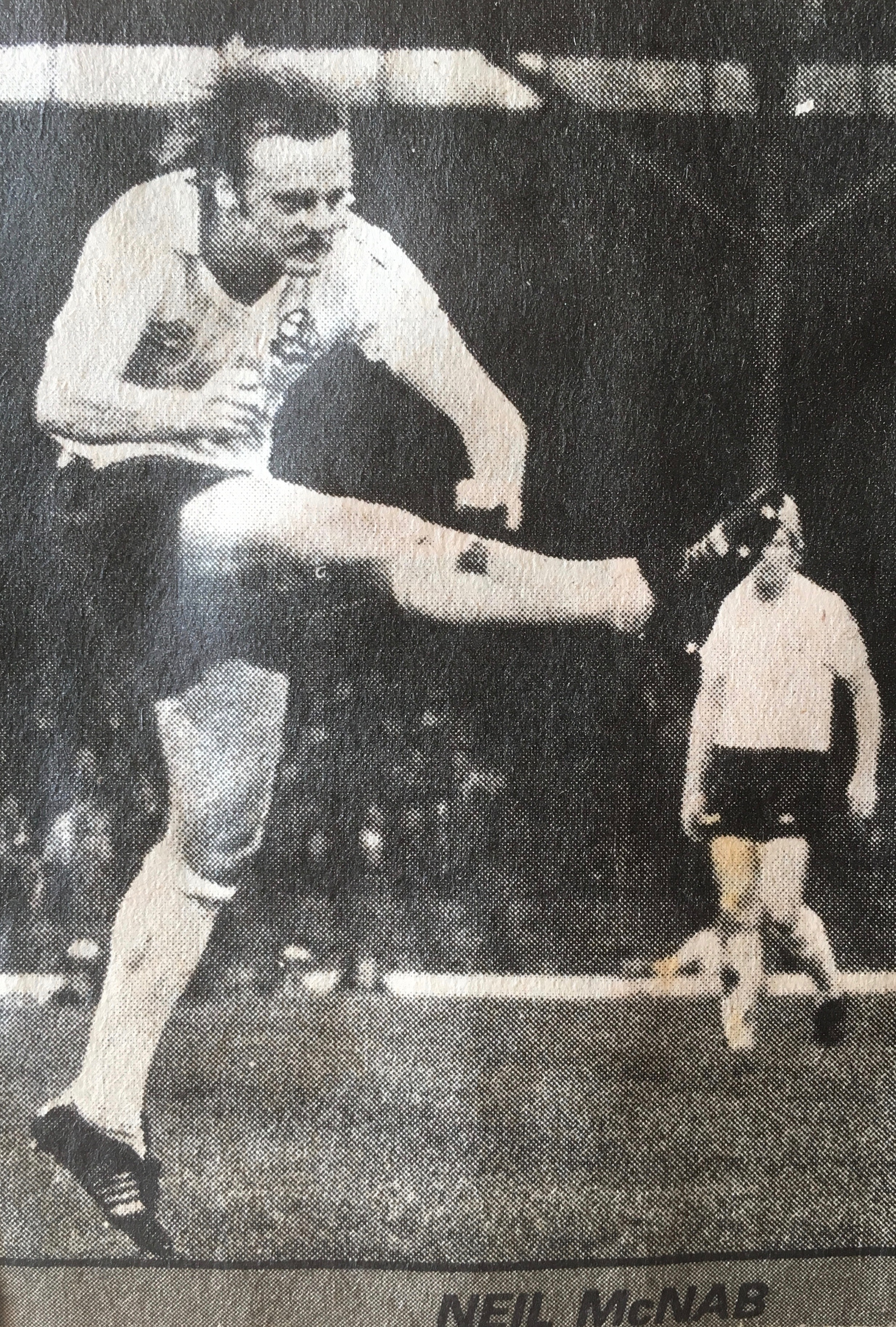
In four years at White Hart Lane, McNab played 72 matches and was selected by Scotland at under 15, under-18 and under-21 level, but never made it to the full Scotland team.

McNab - BoltonIn November 1978, Bolton Wanderers paid £250,000 for him but after only 35 appearances for the Trotters, in February 1980, Mullery signed him for Brighton.

When the former Scotland and Celtic captain Billy McNeill captured McNab’s signature in the summer of 1983, he began what would be a long association with Manchester City and he turned out to be a bargain buy considering in 1986-87 and 1988-89 he was voted City’s Player of the Year.

“Combative and always willing to stick a boot in, McNab was a key figure in City’s drive to promotion on more than one occasion,” was how manchestercity-mad.co.uk described him, while mancity.com, looking back at past players of the year, said: “Like a fine wine, got better as time went on.”

McNab w HartfordAcknowledging his initial signing failed to excite the City faithful, it added: “McNab developed into a skilful, combative midfielder who became a huge crowd favourite. Not unlike Asa Hartford (pictured above with McNab), McNab was a schemer who could pick a pass and kept the team’s tempo ticking over.”

McNab scored 19 goals in 261 league and cup games (plus five as sub) for City  but when Mel Machin’s successors at Maine Road (caretaker Tony Book and Howard Kendall) discarded him, he continued his playing career at Tranmere Rovers who paid £125,000 to take the 33-year-old to Prenton Park.

The combative midfielder added nous, steel and no little skill to the Rovers midfield, ending his first season in Birkenhead with two appearances at Wembley including the Leyland Daf Cup victory over Bristol Rovers,” said the Liverpool Echo.

He played 105 games for Tranmere, scoring six goals, and was part of the squad that secured promotion to English’s football’s second tier. He also earned the dubious distinction of being the first and thus far only Tranmere player to be sent off in a European game – a 2-1 win over Cosenza in the Anglo-Italian Cup.McNab HS

Determined to carry on playing, McNab had an 11-game loan spell at Huddersfield Town, returned to his native Scotland to turn out for Ayr United, appeared briefly for Darlington, played 13 games in Northern Ireland for Derry City, went non-league with Witton Albion (12 games) before finally calling it a day with Long Island Rough Riders in the States.

In 1994, he returned to Maine Road as youth team coach, when his old Albion teammate, Brian Horton, was City manager, and kept the position even when the aforementioned Alan Ball replaced Horton. But eventually he lost his job during another managerial upheaval in 1997 and took up a similar position at Portsmouth, once again working with Ball.

In October 2002, he finally landed a managerial position when he took the helm of League Two Exeter City. The reign was shortlived, though, and with only six wins in 26 matches (eight draws, 12 defeats) he was relieved of his duties.

McNab’s twin sons, Neil junior and Joe, who were born in Brighton, followed in their dad’s footsteps and were part of the young age group sides at Man City and Portsmouth. But after struggling to make the breakthrough, they moved to Wilmington, North Carolina, and have played for various sides in America.

Neil senior followed them to the States and in 2008 became director of coaching at Chiefs Futbol Club in Atlanta, Georgia, with Neil junior the club’s executive director.

In August 2017, it was reported Neil senior had suffered a severe stroke which left him fighting for his life.

On 2 March 2018, a message was sent via freelance writer Spencer Vignes to say that McNab had finally managed to return home after five months in hospital and in rehabilitation. “He has made tremendous progress, but still has a long way to go,” his son said.

All-time Albion hero Peter Ward scored inside a minute of debut

ward v bpool

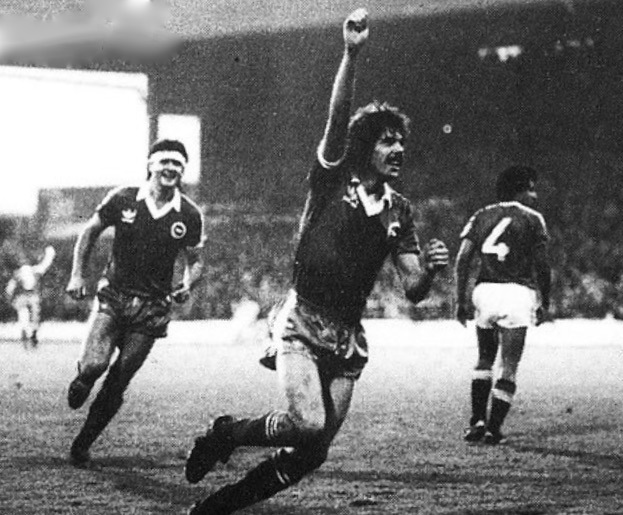
ARMS aloft in familiar salute to yet another goal, the smiling footballer in a black and white picture on a Florida football club’s website dates back 40 years!

All around the world, it seems, Peter Ward’s goalscoring exploits for Brighton & Hove Albion are still the stuff of legend.

Four decades may have come and gone but the memories of this mercurial talent have never dimmed.

FC Tampa Rangers say of their youth coach: “During the 1976–77 season at Brighton, he scored 36 goals, beating the club record and winning him the golden boot.

“He is still revered by Brighton fans who sing a song dreaming of a team in which every player is Peter Ward: ‘We all live in a Wardy Wonderland’.”

If the word legend gets bandied about a little too frequently, where Peter Ward is concerned it is perfectly apt.

1-ward-scoresFew Brighton players have managed to approach the esteem in which this extraordinary talent is held by supporters who saw him score the goals which took the Seagulls from perennial third tier also-rans to a place among the elite.

It takes genuine talent, bravery and skill to score goals at all three levels but Ward delivered. In 220 games for the Albion (plus seven as sub) he scored 95 goals.

In his splendid 2007 book, A Few Good Men (The Breedon Books Publishing Company Limited), Spencer Vignes refers back to 1980 and says of Ward: “No centre forward since has managed to steal his crown. Some have come close – Garry Nelson and Bobby Zamora spring to mind – but Wardy remains special, the golden boy of what proved to be a golden time for the club.”

I was sorry to have missed Ward’s latest return to Brighton when in 2016 he joined some of the Goldstone heroes of the past at the Theatre Royal.

Impishly donning a curly wig on top of his now bald pate to make his grand entrance, Ward showed he’d still got something of the showman about him.

There was never a shortage of superlatives to describe his skills on the pitch. While his dad Colin was a compositor on the Tamworth Herald, his son’s talents with a football filled dozens of column inches in a variety of football publications.

PW green BWAlan Mullery, the manager who benefited most from his audacious skill and compared him to the great Jimmy Greaves, said: “He was just the skinny little kid who could do fantastic things with a football.”

Mullery told Shoot: “Peter has the ability to kill a ball no matter how it comes at him. His pace over short bursts is incredible and he shoots powerfully and accurately with either foot.”

He continued: “Above all else, Peter’s strength on the ball, for a player of his stature, is remarkable. He fools defenders who believe they can easily knock him flying.”

Two of Ward’s former teammates told Vignes what made him so special. “He had this long stride that just seemed to take him away from people,” said Peter O’Sullivan. “One step and he’d be gone. Once he got goal-side of a player, that was it really – bang! Nobody ever seemed to be able to catch him, even in training.”

Brian Horton joined the club around the same time as Ward and said of his younger teammate: “He was this thin, scrawny little player that needed to learn the game, but his finishing was unbelievable, absolutely unbelievable.”

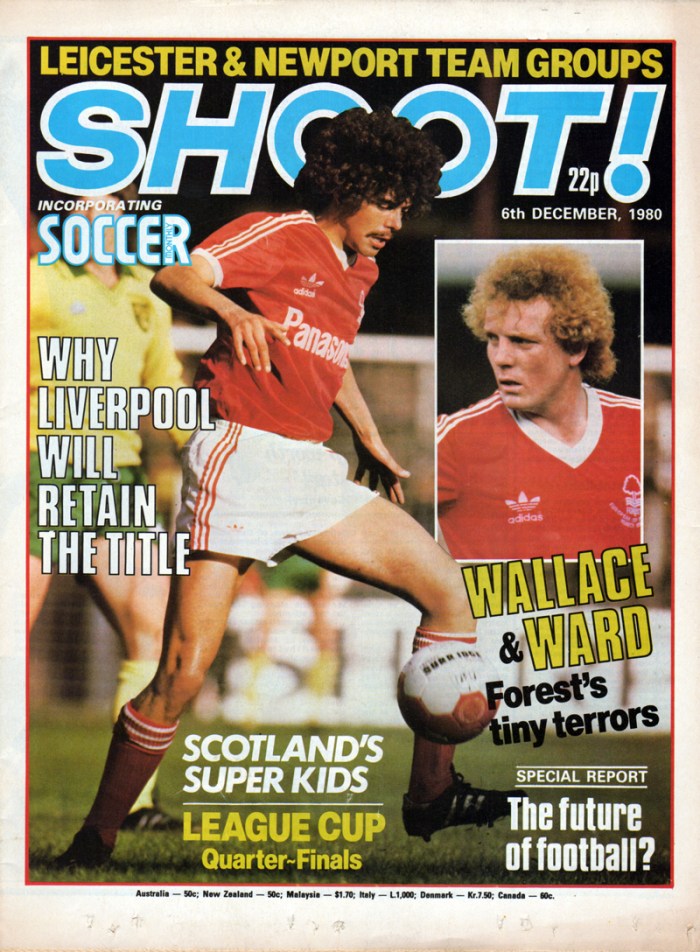
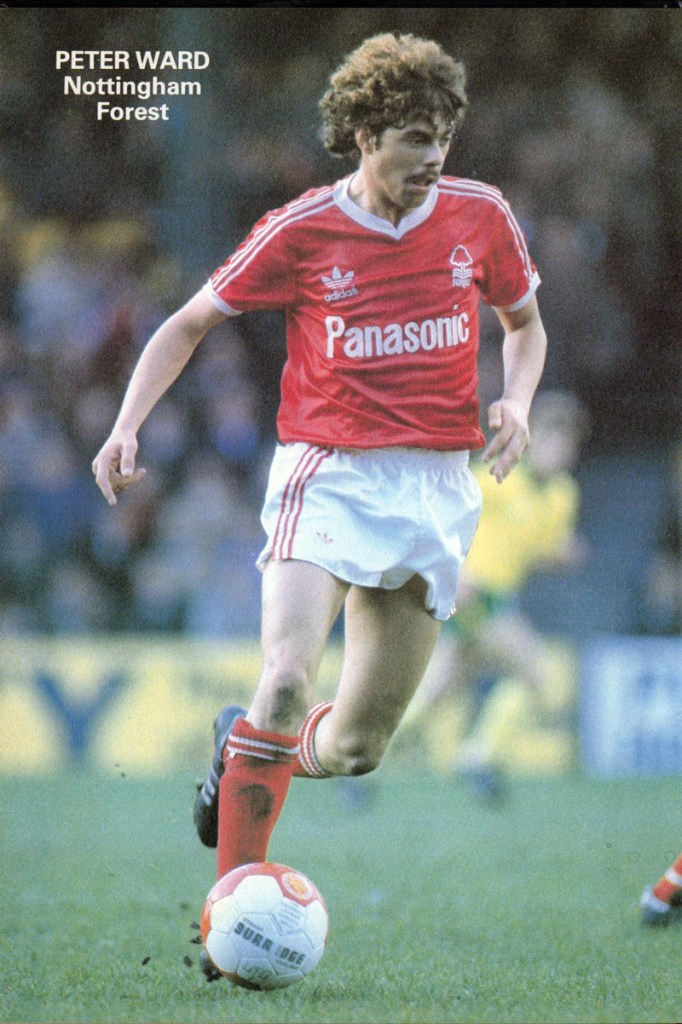
Nottingham Forest fans will have less happy memories of a player the managerial duo of Clough and Taylor took to the City Ground as they strived to replace Garry Birtles and Trevor Francis with any pairing from Ward, Ian Wallace and Justin Fashanu.

It just didn’t work out for Wardy at Forest although he tells Vignes in A Few Good Men: “I had a great time at Forest. I got on well with the lads and had a laugh.”

While he always got on well with Taylor, his relationship with the erratic Clough was a lot stormier which meant he was in and out of the side.

When Lichfield-born Ward left school he was only 4’8” and because he was told he was too small to make a career playing football he got a job as an apprentice fitter at Rolls Royce and played local football in the Derby area.

The detail of those early years can be discovered in Matthew Horner’s excellent biography of Ward (He Shot, He Scored, Sea View Media).

Scout Jim Phelps recommended Ward to the then non-league Burton Albion manager Ken Gutteridge having worked with the freescoring player at a Sunday afternoon side, Borrowash United.

After joining the newly-promoted Brewers initially in the Reserves, the 1974-75 season was only a month old when he made his first team bow alongside former England internationals Frank Wignall and Ian Storey-Moore – and promptly scored a hat-trick in a 4-1 win over Tamworth, his hometown team.

By the middle of November that season, with 10 goals to his name, Ward’s scoring exploits had attracted the attention of league clubs and Brighton boss Peter Taylor, with plenty of contacts in the area, put in a bid.

The Burton chairman, Jim Bradbury, went public on the approach – which Gutteridge found completely unacceptable. He promptly resigned… and before long was appointed to Taylor’s backroom staff!

In the meantime, Burton resisted Brighton’s money and it later emerged that Gutteridge had told Taylor he would only take up the post on condition that Ward would eventually be brought to the Goldstone.

Taylor stuck to his word and eventually signed Ward for £4,000 in the close season of 1975.

The rest, as they say, is history and in researching for this piece it was difficult to sift through the multitude of material from my scrapbooks, programmes, books and other places to condense it all into something manageable.

Because of his popularity, most of the story is familiar to fans of a certain generation anyway and anyone who has not yet read Horner’s book should get themselves a copy because it is rich with material from Ward himself and others who played alongside him or observed him.

Scoring within 50 seconds of his Albion debut away to Hereford United in front of the Match of the Day cameras couldn’t have been a better start and the partnership he struck up with beanpole Ian Mellor was key to promotion from the old Division 3.

For what at times seemed like a fantasy coming to life, it’s intriguing to learn that Ward’s watching of the Bond film The Spy Who Loved Me on the eve of two games was followed the next day by him scoring hat-tricks.

In the 1977-78 season, he saw it before making his England under 21 debut at the Goldstone against Norway in a 6-0 win, and, later the same season, he saw it again before an away game at Mansfield and scored three once again!

It seemed a natural progression that Ward would make it to the full England team and he did eventually – winning one cap for a six-minute substitute appearance against Australia in May 1980.

In fact he made the full England squad three years earlier for a game against Luxembourg but wasn’t involved in the match itself and, by his own admission, reckons he blotted his copybook with manager Ron Greenwood by being ill in the room he shared with Trevor Brooking after going out drinking with Brian Greenhoff.

ward coverIn the way that all good things must come to an end, the beginning of the end of the fairytale came as Albion struggled to come to terms with their first season at the top level.

Ward was certainly not as prolific as he had been lower down the football pyramid although, as reported in my previous blog post, the arrival of Ray Clarke helped him rediscover his form to finish that season as top goalscorer with 17.

However, a return to his Midlands home territory looked increasingly likely. He nearly went to Derby in November 1979 but a swap deal with Gerry Daly fell through, and Forest also wanted him but Clough walked away from the deal.

Eleven months later, though, Clough and Taylor were back in for him when Birtles was sold to Man Utd, paying the Albion £450,000 for his services. Andy Ritchie, being displaced by Birtles’ move to United, promptly replaced Ward at the Albion.

Ward made just 33 appearances for Forest, scoring seven goals, and in 1981-82 went on loan to Seattle Sounders.

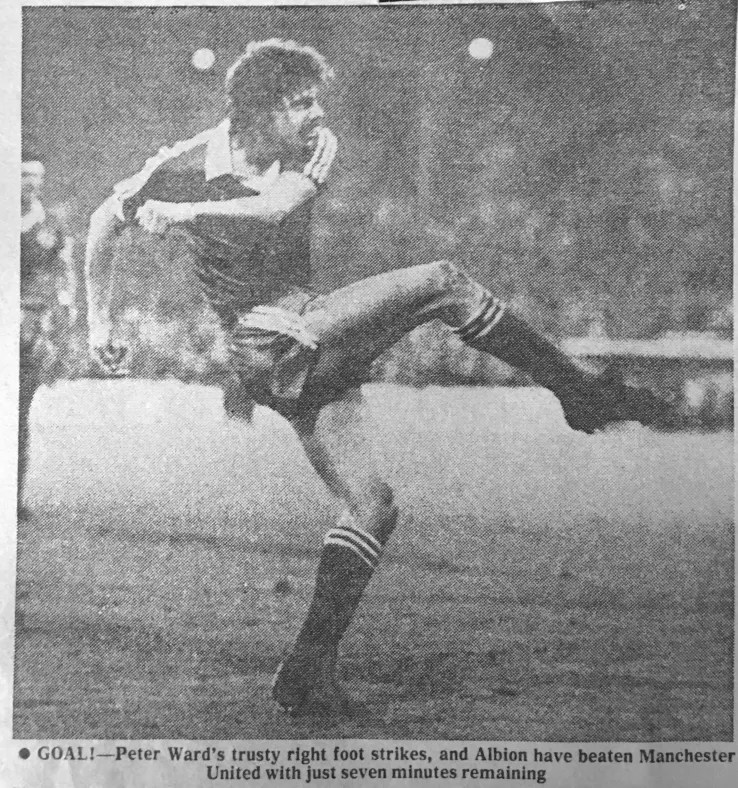
In the autumn of 1982, Brighton brought him back to the Goldstone on loan and it was in the fourth game of a 16-game spell that he scored (above) what he considered his favourite goal, the winner against his boyhood idols Manchester United at the Goldstone on 6 November 1982.

Ward was part of the Albion line-up that won that memorable FA Cup fifth round tie at Anfield en route to the 1983 FA Cup Final but it was to prove his penultimate game as the eccentric Clough quashed Ward’s desire to stay with the Seagulls and that potential trip to Wembley.

At that time, Clough’s Forest hadn’t been to a FA Cup Final and he told Ward: “Son, I’ve never been to a Cup Final and neither will you.”

That spelled the end of Ward’s time at the City Ground and by the end of 1983 he was sold to Vancouver Whitecaps for £20,000; the beginning of what became a 13-year career playing mainly indoor football in America, where he still lives.

Pictures from various sources: the matchday programme, Evening Argus and Shoot! / Goal.

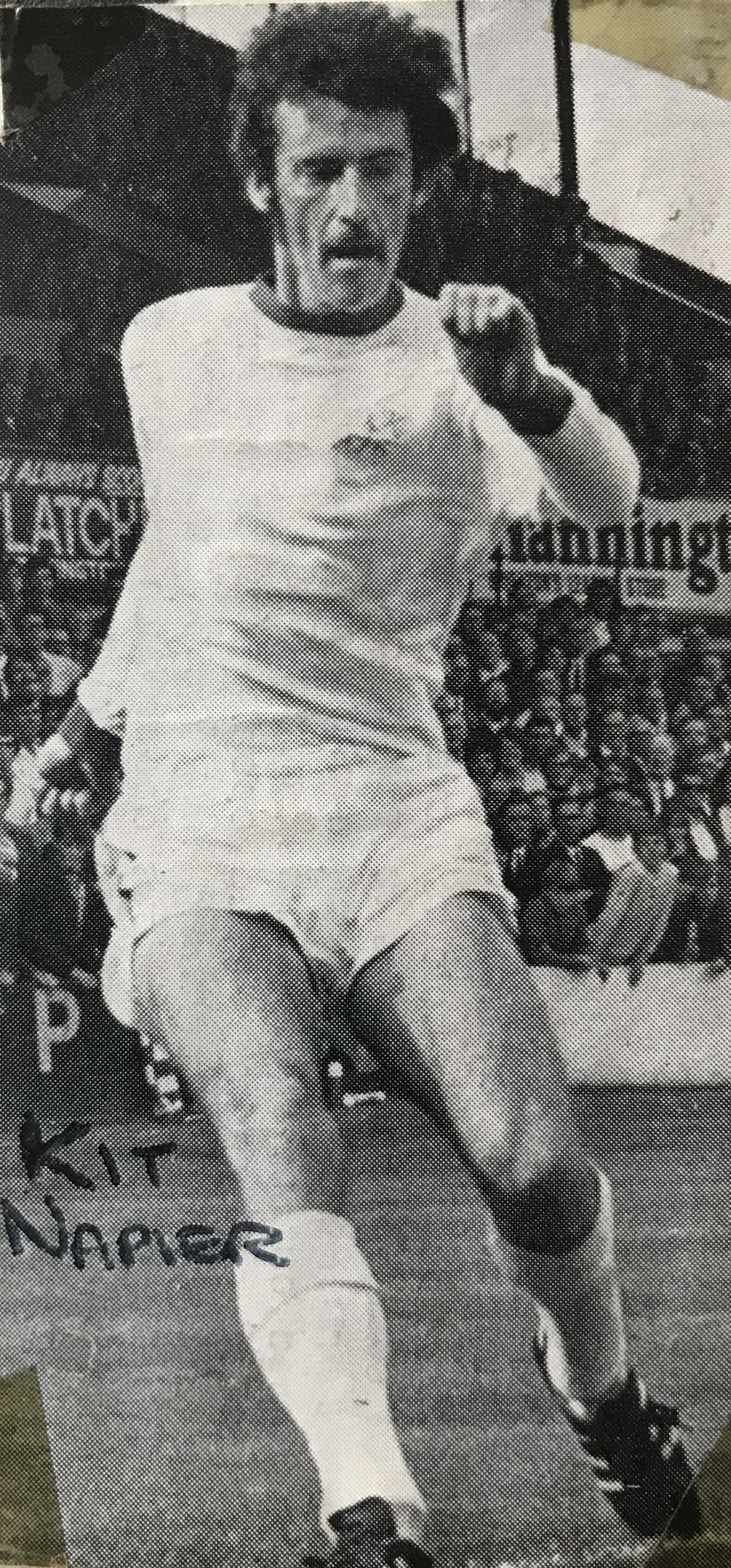
Kit Napier top scorer for Brighton in five of six seasons

FORMER Newcastle United centre forward Kit Napier, who moved from the Magpies to Brighton in 1966, was playing up front alongside Alex Dawson when I first started watching the Albion (in 1969).

Kit Napier at full stretch to score against Bournemouth in front of a packed Goldstone Ground on Boxing Day 1971

Born in Dunblane on 26 September 1943, Kit’s promise as a schoolboy prompted his headmaster to put his name around as a future footballing talent and he left Scotland to join Blackpool (then playing in the top tier) as a junior before turning professional in 1960. But he only played twice for the Tangerines before moving on to Second Division Preston North End in 1963-64. Things didn’t work out there either, though, and he dropped down a further division to Workington, where it all started to click.

Workington were newly-promoted to the Third Division and Napier was on the scoresheet during what has been described as the club’s proudest night, a 5-1 win in a Football League Cup 3rd round replay against First Division Blackburn Rovers on 22 October 1964.

In a team managed by Ken Furphy, who later enjoyed success as manager of Watford, one of Napier’s teammates was Keith Burkinshaw, who several years later would become manager of Tottenham Hotspur.

The Workington archive also recalls the fifth round tie, on 25 November 1964, when Workington hosted Chelsea at Borough Park.  At the time, Chelsea were riding high in the top flight of English football and were unbeaten on their travels when they arrived in west Cumbria.  Reds were fourth in the old Third Division at the time.

“In front of a record League Cup attendance (17,996), Reds gave Tommy Docherty’s Chelsea the fright of their lives by holding them to a 2-2 draw having been 0-2 down early in the game,” the archive records.  “Dave Carr and Kit Napier scored for the Reds and we had a ‘goal’ disallowed late in the game for an offside offence.

“We eventually lost the replay, 0-2, but the crowd at Stamford Bridge was 10,000 fewer than the gathering at Borough Park.”

Napier scored 25 goals in 58 games for the Cumbrian side which attracted the attention of the Geordie giants at St James’ Park. He was still only 22 when they paid £18,000 for him.

KN NUFCHe made his Newcastle debut on 6 November 1965 in a 2-0 home win over Blackpool. But it probably didn’t help his cause that Newcastle lost six of his seven other games, and drew the other!

His last game was in the Tyne-Wear derby game on 3 January 1966 when Sunderland triumphed 2-0.

Toon1892.com, a veritable mine of Newcastle history, says of Napier: “He was seen as a forward who had great potential. Unfortunately, he struggled to come to terms with the First Division and despite having all the ‘tricks’ he could not put the ball into the net.

An autographed Evening Argus photograph of Kit Napier from the 1970-71 season

“Being given only eight games to prove himself, one wonders whether he was given a real chance or not, but the arrival of (Welsh international) Wyn Davies settled any argument and Kit was off to Brighton.”

That move came early in the 1966-67 season when Brighton – bottom of the league table at the time – paid £9,000 to bring him south. He made an instant impression, scoring twice on his debut in a 5-2 win over Peterborough.

It was the perfect start to what was to be the most successful period of his career.

Over Easter in 1971, Napier scored in all three of Albion’s matches – a 1-0 home win over Aston Villa on Good Friday, a 2-0 home win over Reading the following day, and a 3-2 away win at Bradford City on Easter Monday.

The matchday programme for the following home game declared: “This gift of marksmanship blends very nicely with his ball control and general skill in possession. Not to mention the times when he lets fly at goal from outside the penalty area.

“We’ve seen some thrilling thunderbolts from him, including several during 1967-68 season when he broke Albion’s post-war individual scoring record with 30 goals, 24 of them in the league.”

He was top goalscorer in five of his six seasons with the club and, by the time he left, he’d netted 99 goals in just short of 300 appearances, including 19 in the 1971-72 promotion-winning side. Against Shrewsbury at the Goldstone, on 30 October 1971, he netted his 100th career league goal (see below). At that time, his Albion tally was 75.

IMG_4445

The superb The Goldstone Wrap blog did an extended piece on him in which they said: “Kit Napier is rightly considered an Albion legend. He was a ball-playing attacker, skilful with both feet, and with tremendous talent for goalscoring. At the Goldstone, Napier’s class and quick-witted play endeared him to the crowds.”

Aside from the goals, three things about him stand out in my memory:

• Kit had an amazing talent for scoring direct from corners: quite some skill. The first came in a 2-0 home win over Bury on 27 December 1969.

• In a game against Preston, on 27 February 1971, when Napier was shaping to take a penalty in front of the South Stand, Alan Duffy, promptly stepped forward, pushed his teammate out of the way and took the penalty himself – and missed!

• The following season, in a home game against Wrexham, Napier had been having a bit of an off day and the crowd were getting on his back. Eventually manager Pat Saward subbed him off and, as he trudged towards the tunnel, rather than the polite applause that tends to accompany today’s substitutions there were lots of ironic cheers to greet his withdrawal. Napier responded by waving a two-fingered salute to all corners of the ground! I’m pretty sure nothing came of it although, of course, in this day and age he’d no doubt have been hauled before the powers that be.

irvine napier saward

Kit Napier celebrates promotion with Willie Irvine, left, and manager Saward.

With Albion promoted, Saward knew he needed to strengthen the side and he clearly didn’t think Napier was up to playing at the higher level and put him on the transfer list.

Although he made a handful of starts in the 1972-73 Second Division campaign, by the end of August he’d been sold to Blackburn Rovers (who were in the Third Division at the time) for £15,000 as Albion sought to recoup some of the £29,000 record fee they spent bringing former England international Barry Bridges to the club from Millwall.

Napier had two seasons at Ewood Park and brought down the curtain on his English league career with a further 10 goals in 54 appearances. When he returned to the Goldstone with Rovers, he was made captain for the day. “I still get goosebumps and feel emotional at how the whole crowd gave me a standing ovation,” Kit remembered many years later.

He moved to South Africa to play for Durban United and, after packing up playing, had a very successful career as a Ford car salesman in the city (he was national sales manager of the year seven years in a row) alongside his former Albion teammate Brian Tawse. An Albion matchday programme reported how they both also turned out for a local Sunday league side in Durban.

Napier’s later years were blighted by emphysema and he died in Durban on 31 March 2019 at the age of 75.

6F15B25C-FBBC-4A75-8119-94BA0BDC7DBC_1_201_a