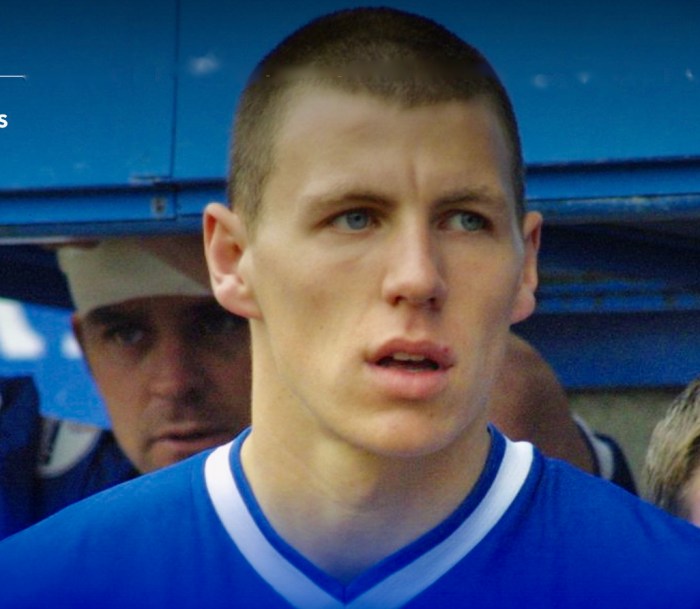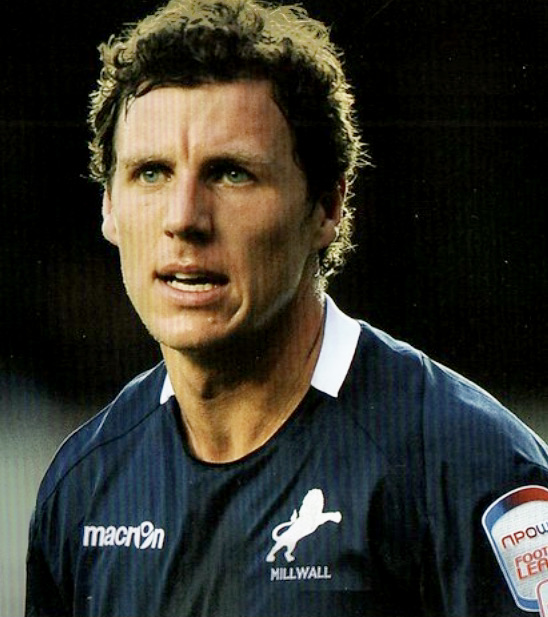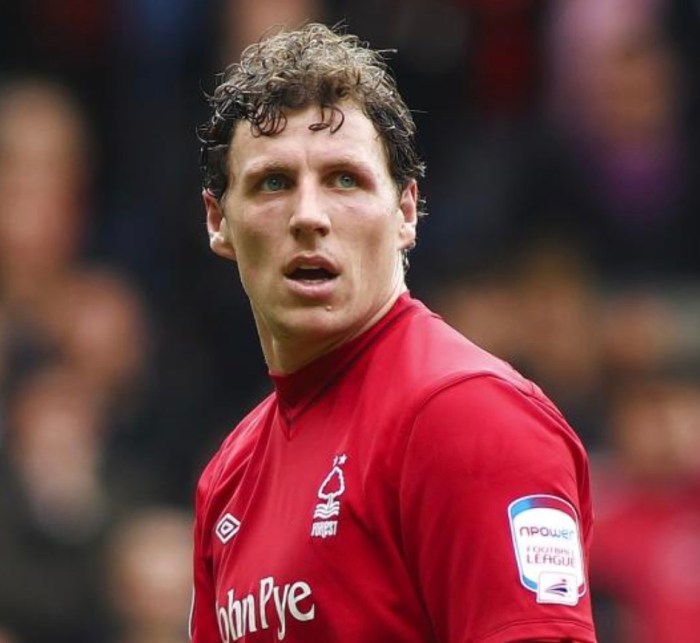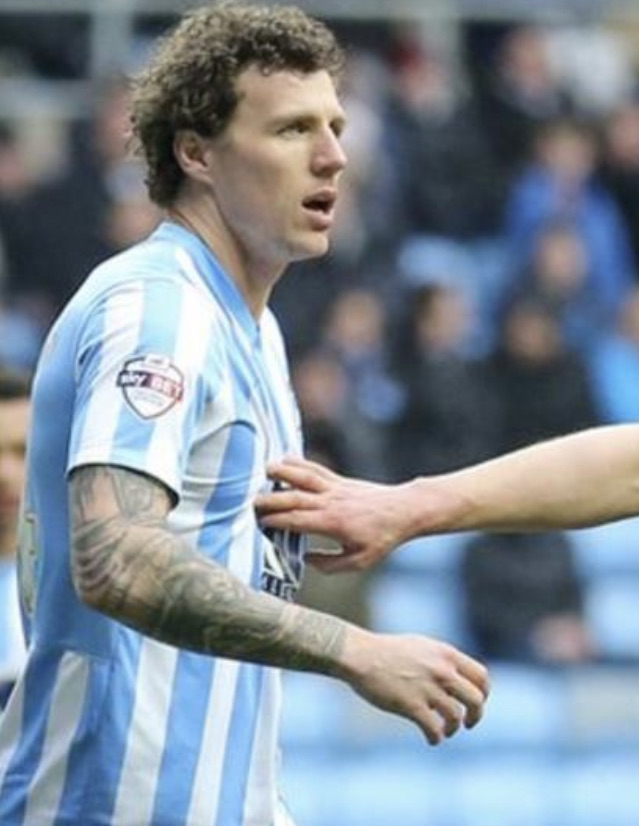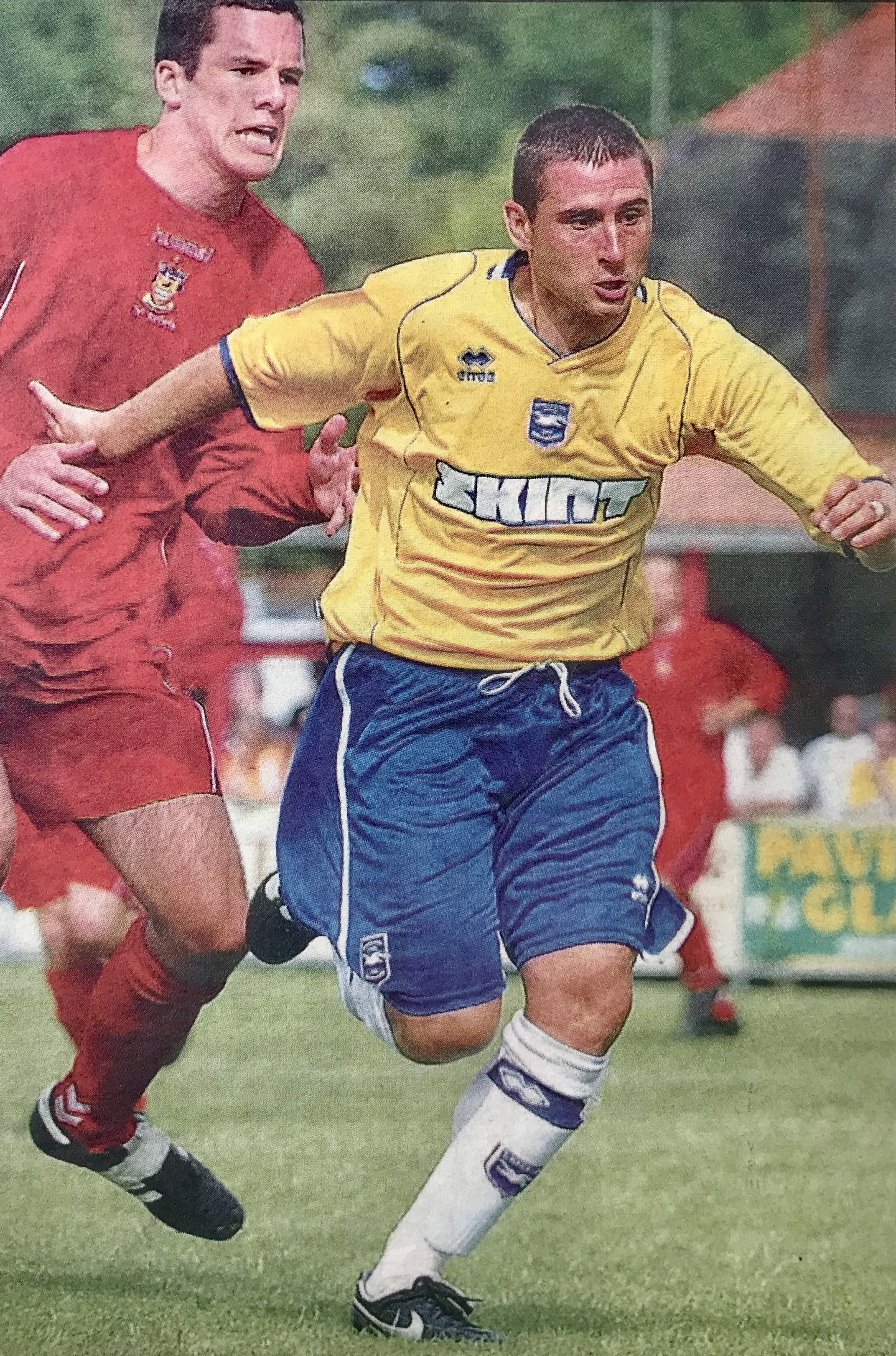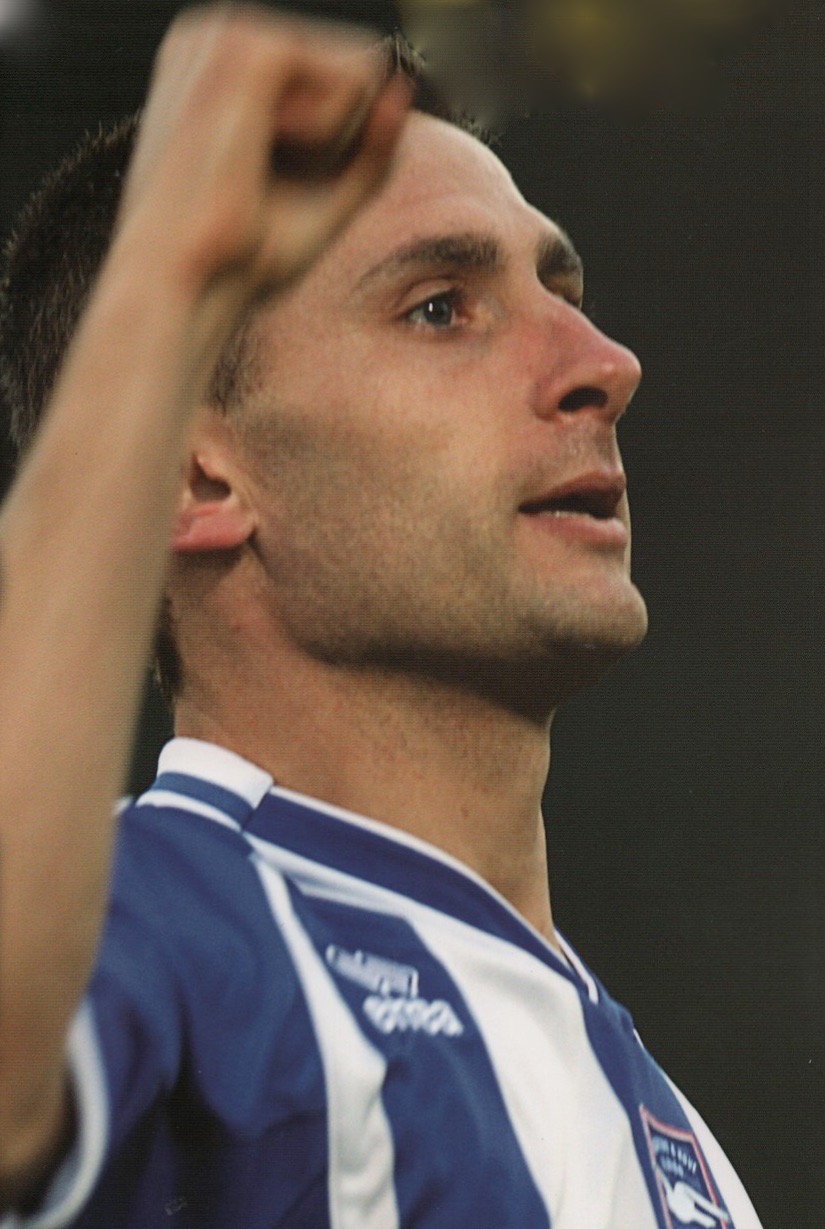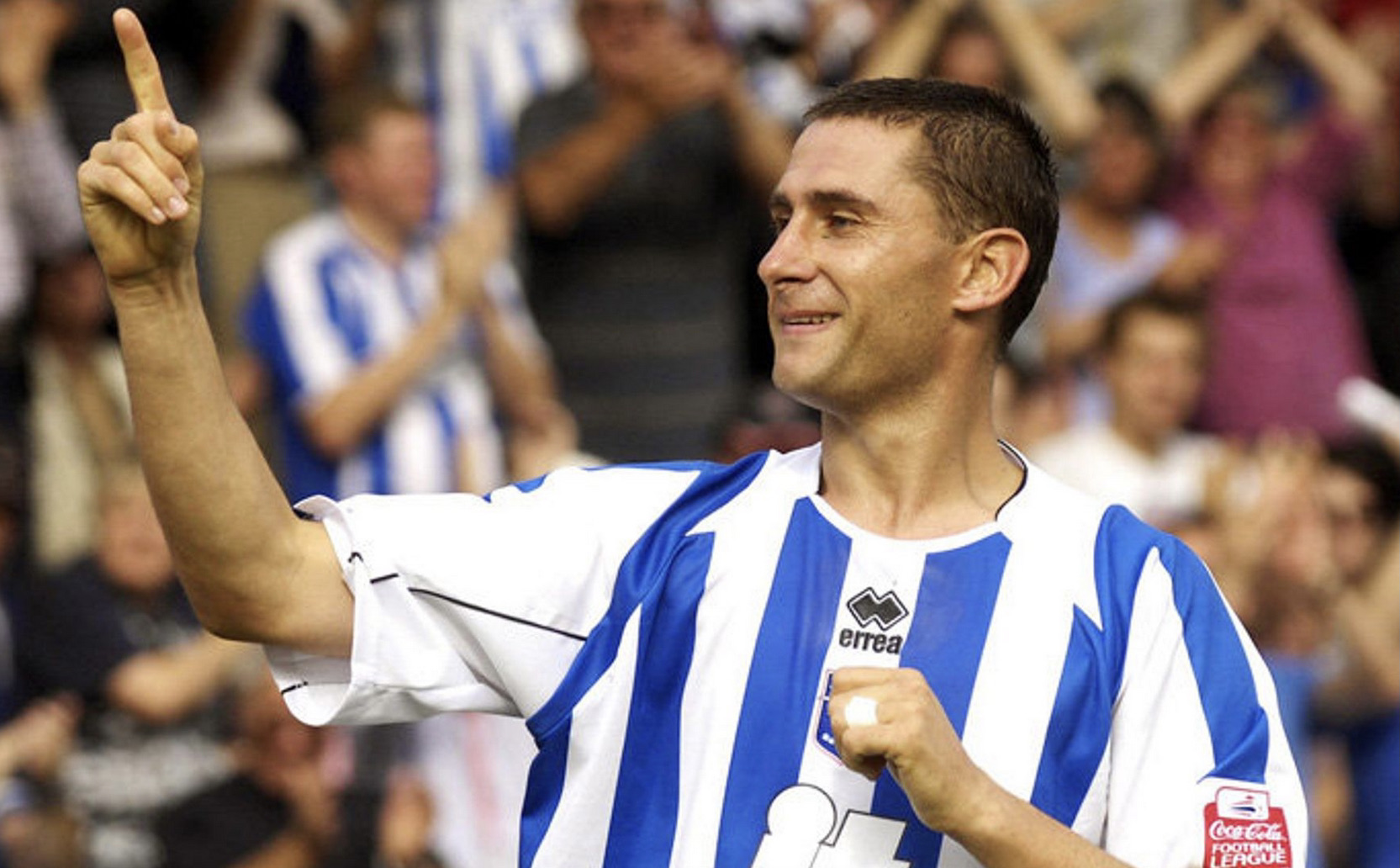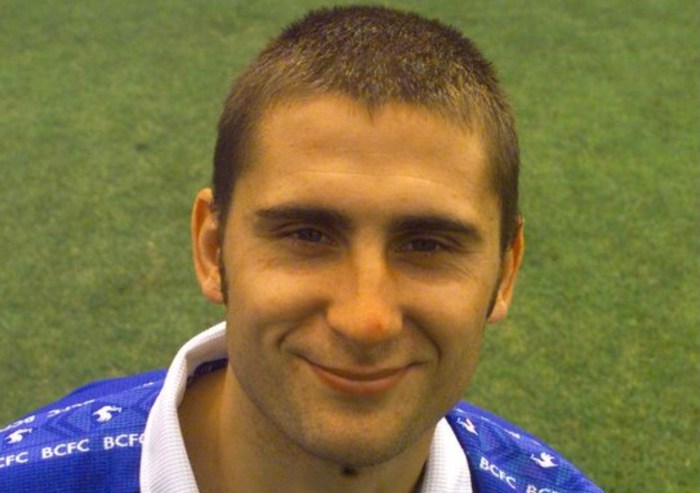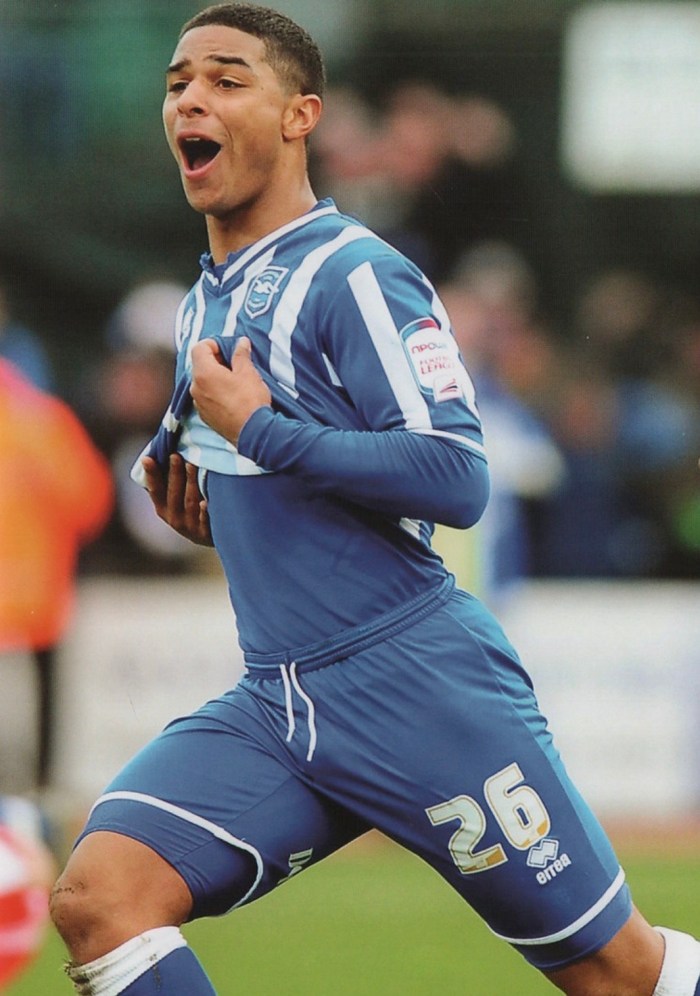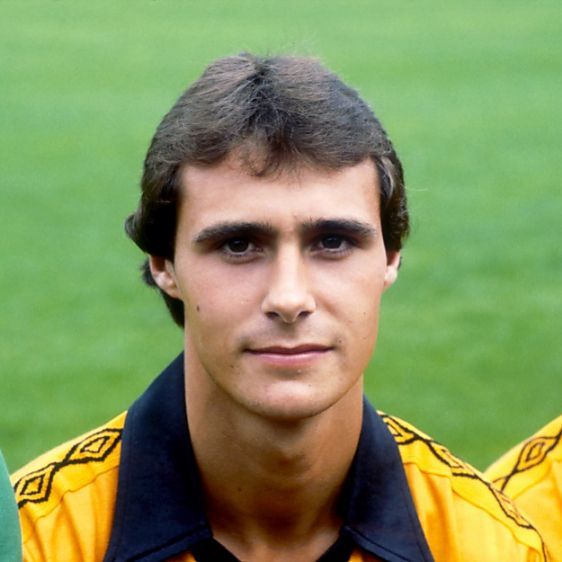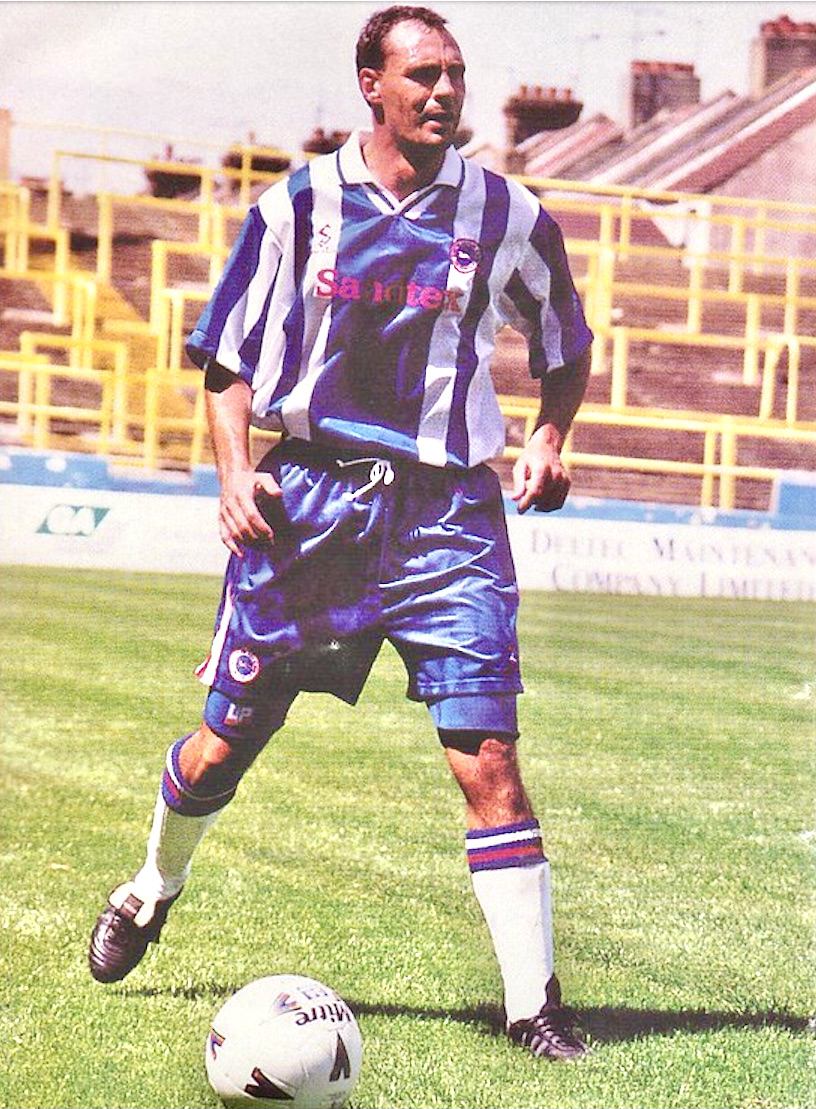
‘Hendo’ earned Seagulls stripes before becoming Hornets’ hero

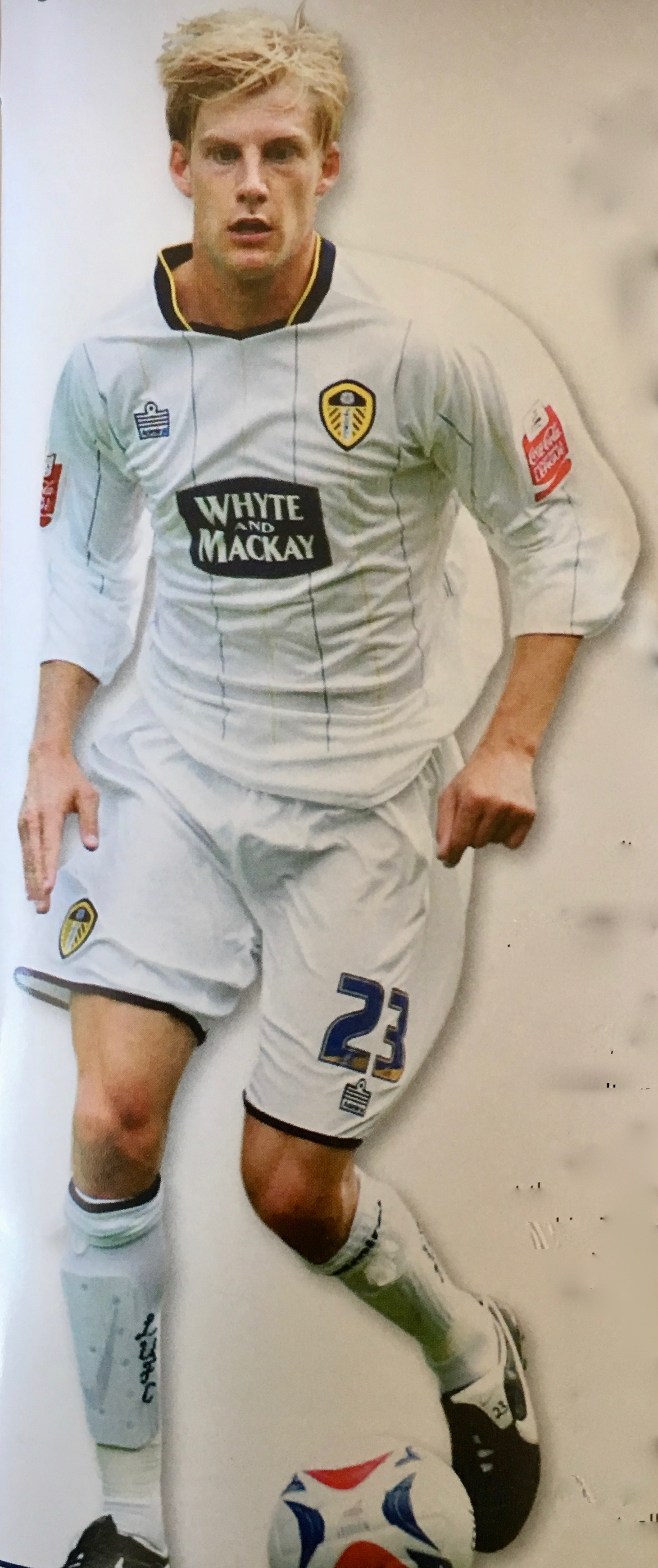
WATFORD play-off final goalscorer Darius Henderson was the perfect foil for pint-sized Leon Knight at the beginning of Albion’s 2003-04 season.

Steve Coppell borrowed the 6’4” striker from his old pal Alan Pardew at Reading giving him game time that was eluding him at the Madejski Stadium.

There was plenty of competition for places in Reading’s forward line at the time with Nicky Forster, Shaun Goater and Nathan Tyson ahead of him.

It had led to another forward, Martin Butler, being sold to Rotherham and because Pardew generally picked a lone frontman, Henderson found himself on the fringes.

“The solitary striker system, and the superb form of Nicky Forster, meant the vast majority of his appearances came as a substitute,” the Albion matchday programme noted.

Young Henderson at Reading

In fact, he’d started only five league matches for Reading after turning professional in August 1999; but he had appeared 65 times as a substitute!

Given the chance of a start with the Seagulls, he got off to a flyer with the opening goal of the season from the penalty spot in a 3-1 win at Oldham, as well as netting the opener in a 2-0 home win over Luton Town.

Henderson, who celebrated his 22nd birthday while with the Seagulls, was adept at setting up chances for Knight too, outjumping QPR’s defence to set up Knight to score the winner as Albion won 2-1 at the Withdean and following it up at Plymouth where a strong run and cross teed up Knight for Albion’s third in a thrilling 3-3 draw.

It was good news when Pardew agreed to the loan being extended by another month, Coppell admitting: “It’s as good as it gets as far as I am concerned.

“Darius has given us a physical presence we didn’t have before and with him in the side I didn’t feel as exposed as we were defending set pieces.”

Unfortunately, Coppell couldn’t resist the lure of the Madejski Stadium when Pardew was poached to manage West Ham, and Henderson returned to Berkshire after 10 matches.

Born in Sutton, Surrey, on 7 September 1981, Henderson was brought up in Doncaster, south Yorkshire, and, after being rejected by Leeds, it was Rovers who gave him his first steps towards a professional career.

However, he joined Reading’s academy in 1999 and was one of three of that squad – along with Tyson and Alex Haddow – to make it through to the first team.

Although Coppell gave him game time at Brighton, the manager faced the same striker surplus issues as Pardew once he arrived at Reading, and he therefore sanctioned Henderson’s departure in January 2004. He’d made only 12 starts for the Royals but 71 appearances as a sub.

He was signed by Andy Hessenthaler’s Gillingham, telling the club’s official website: “I have had a good chat with the chairman and the gaffer and as far as I’m concerned I’m over the moon and am looking forward to playing now and getting to know my new team-mates.

“There was limited first-team options for me at Reading which was made clear by Steve Coppell. There was no doubt in my mind that I had to get away.”

He scored 10 goals in one and a half seasons with the Gills, as well as enjoying a prolific loan spell at Swindon Town, where he scored five times in six games.

The day before the 2005-06 season got underway, a £450,000 fee took him to Watford where he enjoyed the best three years of his career.

He became something of a fans’ favourite, with Matt Reveley, of footballfancast.com, explaining: “Darius is a player that often epitomises Watford’s footballing ethic (for) the 110 per cent effort and workrate that Watford fans like to see from their players.”

Manager Aidy Boothroyd paired him with Marlon King and Henderson’s 14 goals in 27 matches contributed towards Watford winning promotion to the Premier League.

Henderson scores against Leeds in the play-off final

It couldn’t have been sweeter when he scored a late penalty to round off Watford’s 3-0 win over Leeds in the 2006 play-off final at the Millennium Stadium in Cardiff.

As Henderson told watfordlegends.com: “Leeds released me when I was 16, and ever since that very day they released me I have always had the drive to go on and prove them wrong, so it was a great feeling to prove my point to them.

“The whole day though was memorable, just a terrific day all round and to score as well topped it off perfectly. I was mentally exhausted after the game though. It was incredibly draining and very emotional.”

The win sent the Hornets up with Henderson’s former club Reading and future employer Sheffield United.

Goals were far harder to come by amongst the elite and he managed only three as Watford went back down to the Championship.

He had scored 31 times in 117 appearances for the Hornets before being sold to the Blades for £2m in July 2008.

Before that, the striker could have joined Preston North End after a £1.3m fee was agreed between the clubs, but he decided to stay at Vicarage Road and fight for his place.

When Kevin Blackwell ‘sold’ United to him, though, he was persuaded. “Sheffield United is a massive club and it was a great opportunity for me so I went for it,” he told watfordlegends.com.

Henderson once again got amongst the goals, netting 21 for United, including one in April 2011 in a surprise 3-2 win over his old club Reading. It wasn’t enough to prevent relegation under Micky Adams, though, and Henderson moved to Millwall to take over the main striker role from Steve Morison, who had switched to Norwich City.

Goals galore for the Lions

Henderson’s goals continued to flow and he registered three hat-tricks and a brace in his first Championship season with the Lions. In total, he scored 26 times in 56 matches for them, including his 100th professional goal.

Wage bill trimming in January 2013 saw him move to fellow Championship side Nottingham Forest where his teammates included Dan Harding, Greg Halford and Gonzalo Jara Reyes. Unfortunately, he was more often a substitute than a starter for Billy Davies’ side.

Forest forward

In the summer of 2014, former Albion boss Russell Slade picked him up on a free transfer for third-tier Leyton Orient on a three-year deal, although Slade left the club in September.

Henderson was also on the move again after only one season in East London, heading back up north with Scunthorpe United. But after failing to register a goal in 16 matches, he moved to Tony Mowbray’s Coventry City (above) in February 2016 on a short-term deal, once again failing to get on the scoresheet in five substitute appearances.

He joined his last league club in August 2016, linking up with League Two Mansfield Town, where he scored once in 13 matches before manager Steve Evans released him. He dropped out of the league and moved to Eastleigh Town. But he played only two games for the National League side and retired from playing in April 2017.

According to Everything Orient, Henderson now works as a consultant for AFC Bournemouth.

Bearing in mind the number of clubs he played for, it’s not really surprising @DHenderson7 has 13,500 followers on Twitter.

Nicky Forster was the definition of a goalscoring thoroughbred

NICKY FORSTER played for and managed Brentford as well as captaining Brighton and scoring a vital relegation-saving goal into the bargain.

The Surrey-born striker, who played alongside David Beckham for England under-21s, scored more than 200 goals in 700 games and it always seemed a shame that his time with the Seagulls didn’t come sooner in his career.

He built a reputation for finding the back of the net at first club Gillingham and was prolific in his first spell with the Bees but he viewed his six years leading the line for Reading as his most successful time in the game.

Forster plundered 67 goals in 179 games (plus 35 as a sub) in six years with the Royals, mostly playing under Alan Pardew and Steve Coppell, but he left for pastures new before they reached the Premier League.

A free transfer took him to Ipswich Town, where Joe Royle’s side were competing in the Championship, and, although Forster top-scored for the Tractor Boys, his total of seven typified a rather lacklustre campaign. One of those goals came against Brighton on Easter Saturday when the relegation-bound Seagulls pulled off a shock 2-1 win courtesy of goals from on-loan Gifton Noel-Williams and young Joel Lynch.

Forster scored in each of the three remaining games that season but they were his last for Town because he moved to link up with his former Reading teammate, Phil Parkinson, at Hull City, who paid £250,000 for the striker’s services. Forster scored six times for City as the side battled to retain their tier two status. Albion tried to sign Forster in January, but Parkinson’s successor Phil Brown wanted to keep him, and they rejected Albion’s £100,000 bid.

Albion finally got their man for £25,000 less in the summer that year, and, in a side largely made up of promising youngsters, in Forster they gained more than just an experienced striker.

Brighton fans were given an idea of what to expect from the new signing when his former Reading teammate Bas Savage told the Argus: “I played a few games with him in the first team and he will definitely bring goals. He is proven wherever he has been.

“He is also a very intelligent player. He makes good runs, works hard, has got very good pace and he can finish, so he will be an asset to Brighton, especially in League One. I think he will really shine.

“He will fit in easily to the dressing room as well. He was a joker at Reading, very funny and a good, bubbly character to have around.”

Savage added: “He was one of the top strikers at Reading and I learnt off all of them.

“I was a young boy at the time and, whoever it is that plays, Alex Revell, Nathan (Elder), Gatts (Joe Gatting), I can see them working well with Fozzy.

“It will be good to link up with him again and hopefully show our stuff together. I know Fozzy’s strengths and I will be looking to help him along in the same way that he can help me along. He brings experience to the team.”

Emerging defender Tommy Elphick was certainly appreciative of the new arrival. “Apart from in games, he brings a competitive edge to training,” he said. “In my eyes he is a bit of a legend really, the model pro on and off the pitch.”

When interviewed by Mike Ward for the matchday programme later that season, Forster declared: “I really am enjoying it here at Brighton. I like being on the training ground and I enjoy playing.

“I am now getting old in football terms, but I have got as much enthusiasm and energy for the game now as I had when I started. I feel that I am a better player now and I am enjoying my football as much as ever.”

Sure enough, with 19 goals in 48 appearances in the 2007-08 season, there was no question Forster proved a great addition to Dean Wilkins’ squad, and he took over as captain when Dean Hammond left the club under a cloud.

In the second half of the season, after Glenn Murray was signed from Rochdale for £300,000, manager Wilkins declared to the Argus: “I think we have got one of the best strike pairs in the division, one of the most threatening.

“When we have got possession and play with a bit of quality they are a really potent pair. If you have got a pair that score 20 goals a season you would expect to be quite successful.”

Unfortunately, seventh place in League One (seven points off the play-off places) was not quite successful enough for chairman Dick Knight, who turned to former boss Micky Adams to steer Albion’s fortunes in the 2008-09 season (a furious Wilkins declining the offer of continuing as first team coach).

While Forster got off to a great start under Adams, scoring a last-minute goal to seal a 2-1 win for the Seagulls in the season-opener at Crewe Alexandra, the Albion’s fortunes gradually unravelled as Adams chopped and changed the side with what, on reflection, were too many loan signings.

For a while, things didn’t look too clever after Russell Slade had been parachuted in to try to stave off the threat of relegation.

At a time when the new boss could really have done with Forster and Murray firing on all cylinders, both were sidelined with injuries. Forster missed eight matches with what was thought might be an anterior cruciate ligament injury in his knee.

Thankfully another former Brentford striker, Lloyd Owusu, stepped into the breach to score some vital goals, together with loan signing Calvin Andrew and the rejuvenated Gary Hart.

Nevertheless, going into the last game of the season, at home to Stockport County at Withdean, Albion still needed to win to avoid the relegation trapdoor.

When Hart left the action early and his replacement Andrew had to be withdrawn at half-time with what turned out to be a bad ACL injury, Slade had no option but to turn to the by-no-means-fit Forster to enter the fray from the bench for a crucial second half.

Fortunately, after County ‘keeper Conrad Logan could only parry a shot from Gary Dicker, Forster was on hand to stab in the only goal of the game from six yards, sparking massive celebrations.

Forster later conceded in an Argus interview: “It wasn’t quite right but I got through the game and the goal was a gift. I didn’t have to be particularly mobile to score it.

“I dosed up on tablets and rehabbed and was really determined to be involved in that game. Thankfully it worked out for me and for Brighton. But I wasn’t 100 per cent. I still had that niggling feeling.”

In a subsequent exploratory operation, it turned out that torn cartilage had been Forster’s problem and he underwent surgery during the close season, somewhat ironically the procedure being delayed a little while because the surgeon involved was operating on Andrew!

“When they took me down to the anaesthetist’s room, there was a guy in there before me,” said Forster. “I had to wait ten or 15 minutes and they said it was an ACL reconstruction going on. I didn’t realise it was Calvin.”

Tony Bloom took over from Dick Knight as Albion chairman that summer and, when the new season got under way, Slade had decided to give the captain’s armband to defender Adam Virgo (Forster remained club captain).

The opening part of the season went horribly wrong and, with only three wins in their first 15 matches, Slade was replaced by effervescent Uruguayan Gus Poyet.

By the end of January, Forster had scored 15 times in 27 matches (plus three as sub), but the beginning of the end of his time with the Albion was nigh when a contractual dispute went public.

The player, by then 36, wanted to know whether he was going to be offered a contract the following season, but that commitment wasn’t forthcoming. Forster aired his dissatisfaction in the media and Poyet left him out of the side.

Forster subsequently clarified his position in a statement on the club website, saying: “I have thoroughly enjoyed my playing years with Brighton and genuinely hoped – and still do – that I would remain at Brighton until the end of my playing days, hopefully with the opportunity to take up a training role.

“The decision to delay the offering of contracts makes life very difficult, particularly for players of my age. I have always been totally committed to Brighton and will continue to be so.”

While the air was cleared, and he was restored to the line-up for a 1-1 draw away to Leeds, that turned out to be his last start for the Albion. Only a matter of weeks later he was sent out on loan to Charlton Athletic until the end of the season, once again linking up with former teammate Parkinson.

Nevertheless, his 51 goals across two and a half seasons at the club were the best measure of his contribution and he was later a more than interested onlooker of Brighton’s fortunes when his stepson, Jake Forster-Caskey forced his way into Poyet’s Championship side.

Born in Caterham, Surrey, on 8 September 1973, Forster was comparatively late into the game, staying on at school to take A-levels.

But he had a lucky break when he played for non-league Horley Town against Gillingham in a friendly. “It was a real right-place-at-the-right-time scenario,” he told Ward in another Albion matchday programme interview.

Gillingham offered him the chance to become a professional and after impressive displays for their youth and reserve sides, he duly signed professional terms in May 1992 when Damien Richardson was in the manager’s chair.

The Gills sent him out on loan to Southern League Margate and Hythe Town. Forster’s career stats are comprehensively recorded by the Margate history website, even though he only played one game for them, when he scored with a clever lob after three minutes of his debut.

Back with the Gills, Forster made his first team debut in September 1992, going on as sub in a 4-1 home win over Wrexham. He went on to establish himself in the side under former Charlton striker Mike Flanagan in the 1993-94 season, top scoring with 18 goals. It was an achievement which prompted Brentford to pay a fee of £320,000 to take him to Griffin Park in June 1994.

The 1994-95 season is firmly etched in the annals of Brentford’s history because David Webb’s side were denied promotion to the elite when a one-off organisational blip meant the fledgling Premier League only took one promoted side from the division below – and the Bees finished second!  

Forster had proved a major hit at his new club alongside strike partner Robert Taylor, with the pair netting 47 goals between them (Forster got 26 of them). But automatic promotion was denied when Brentford “choked” in the last month of the season and their agony was compounded when they lost on penalties to Neil Warnock’s Huddersfield in the play-off semi-finals.

For Forster personally, however, his goalscoring prowess brought him to the attention of the international selectors and in June 1995 he earned four England under 21 caps at the Toulon tournament in France, making his debut in a 2-0 defeat against Brazil in a team featuring future full internationals Beckham and Phil Neville.

Forster scored England’s only goal in his third match for Ray Harford’s side, as they beat Angola. He also played in the 2-0 win over Malaysia and in the semi-final against France, when they lost 2-0.

The Bees failed to follow up their near miss the following season, finishing 15th and, although at one point there was talk of Crystal Palace preparing a £2m bid for Forster’s services, it came to nothing. The striker damaged knee ligaments in October 1995 and managed to find the net just the eight times by the season’s end.

It promised to be a different story in 1996-97, though. With Carl Asaba and Marcus Bent supplementing the Forster and Taylor strikeforce, Brentford got off to a flyer and topped what is now the Championship courtesy of an 11-match unbeaten run at the start of the season.

However, the bcfctalk blog was incredulous at what happened next. “We were coasting at the top of the league when the quite staggering decision was taken in January to sell Nicky Forster to arch-nemesis Birmingham City for a mere £700,000.

“He was never replaced, the prolific Carl Asaba was mysteriously shifted out wide to the left wing and the remaining 17 league matches produced a mere 18 points. We failed to score in ten of our last fourteen games and won only once at home after Christmas.”

Forster’s desire to progress his career didn’t play out well with the supporters of Brentford or Gillingham.

“I get booed every time I go there,” he told Brighton’s matchday programme. “It’s sad because I feel I did well for both clubs. And what they paid for me wasn’t a huge amount, so value-for-money wise I feel I did very well for them. It’s not something I worry greatly about, but I do think it’s time they learnt to forgive and forget.

“I don’t think they can really begrudge a player wanting to move on and better himself, better his career. Sometime fans can be a bit fickle!”

While Forster hoped to establish himself at Birmingham, he struggled to get a starting berth in a side managed by former Blues playing legend Trevor Francis. Paul Furlong and Peter Ndlovu were preferred up front, and later Dele Adebola. Forster invariably had to be content with involvement of the bench. Indeed, 46 of his 75 Blues appearances were as a substitute and, when he left for Reading in June 1999, he’d got just 12 goals to his name.

That all changed once he’d made the switch to the Madejski Stadium. The goals flowed (in 2002-03 there were two hat-tricks included in his season’s tally of 17) and in his six seasons with the Royals he notched 67 goals in 214 appearances (35 of which were as a sub).

His form tailed off in his final season with Reading and he began to look elsewhere because he wanted a longer contract than the club were prepared to offer.

Nevertheless, he respected manager Coppell and, when later in his career he took over as boss at Brentford, he said: “I was with Steve Coppell at Reading and I like his manner and demeanour. He is not a ranter and raver. I just like the way he goes about his business.

“He is quite a subdued guy when he speaks, but he speaks a lot of sense. When he talked to me, whether I liked it or not, I couldn’t really argue because it made a lot of sense.”

When Forster returned to Griffin Park as a player at the start of the 2010-11 season, he reflected: “The club holds many happy memories for me. Both the club and I have moved on over the years but I still have the hunger and the mobility to give a good account of myself.”

Manager Andy Scott added: “His goalscoring is a major attraction as that is an area where we have struggled to compete with other teams.

“His ambitions match those of the management team. He is a very dedicated footballer who will add experience, competition and, more importantly, goals to the team.”

Sadly, it didn’t pan out well with Forster only making 12 starts and scoring once. After a topsy turvy six months, Scott and his assistant Terry Bullivant were dismissed and Forster took over as caretaker boss, assisted by Mark Warburton.

When the Bees collected 14 points from six games, the temporary stint was extended until the end of the season.

Remarkably during his brief tenure, Forster took charge of Brentford at Wembley for the final of the Johnstone’s Paint Trophy, which they lost 1-0 to Carlisle United.

Brentford centre back Leon Legge said later: “Growing up, Wembley was always a sacred ground that not many people get to play at. I wanted to win so bad but it was just a shame we came second-best, especially against Carlisle, who we’d played just over a week earlier and beaten 2-1. Everything went for them that day.

“I know the gaffer at the time [Nicky Forster] made a few changes and I don’t think many agreed with it – for example, Marcus Bean didn’t play when he’d been such a good player leading up to that game. I think that made a difference.

“I still remember looking at the crowd of 40,000 and to play in such a sacred ground in front of that many fans, whether we won or lost, it was a good experience.”

Despite leading Brentford to a mid-table finish, Forster was told he was not in the running for the job on a permanent basis, and Uwe Rösler was appointed instead.

Nonetheless, Forster decided management was his next step and announced an end to his playing days.

“I have had a fantastic career, but the time has come to cross over into management,” he said.

“I’ve scored 200 goals in 700 games and haven’t got anything left to achieve as a player, so I want to concentrate on management.”

The eloquent Forster popped up on Sky Sports, covering Football League matches, and also brought his boots back out to play for Sussex County League side Lingfield.

Then, in September 2011, Forster was appointed player-manager of Blue Square Bet South club Dover Athletic, whose chairman Jim Parmenter said: “Nicky has had an impressive playing career at some big clubs and did very well during his time as manager at Brentford.

“As well as having both UEFA ‘A’ and ‘B’ licences, he is also a great man manager and motivator. Nicky is totally enthused by the prospect of managing the club and we look forward to a very successful future.”

Among his signings were former Brighton teammates Steven Thomson and young goalkeeper Mitch Walker.

Forster said: “I am delighted get Thommo down here at Crabble, especially as his signature was being chased by a number of other clubs both in our league and above. He is an experienced professional who is still hungry for success.”

Sadly, after a run of five successive defeats, his time in charge at Dover was brought to an end in January 2013 when he was replaced by the club’s former manager Chris Kinnear.

Two years later, Forster gave management another go taking charge of Conference South side Staines Town. But he quit after a year, telling getsurrey.co.uk: “I enjoyed every moment even though we had some low times, but it’s a learning experience and I left on good terms with the chairman and the fans who were great to me.”

In September 2016, Forster set up his own gym – The Spot Wellness Centre – in Godstone. As well as running that, he is now self employed and, on LinkedIn, describes himself as a goal setting coach and keynote speaker.

• Pictures from the Argus, Albion’s matchday programme and online sources.

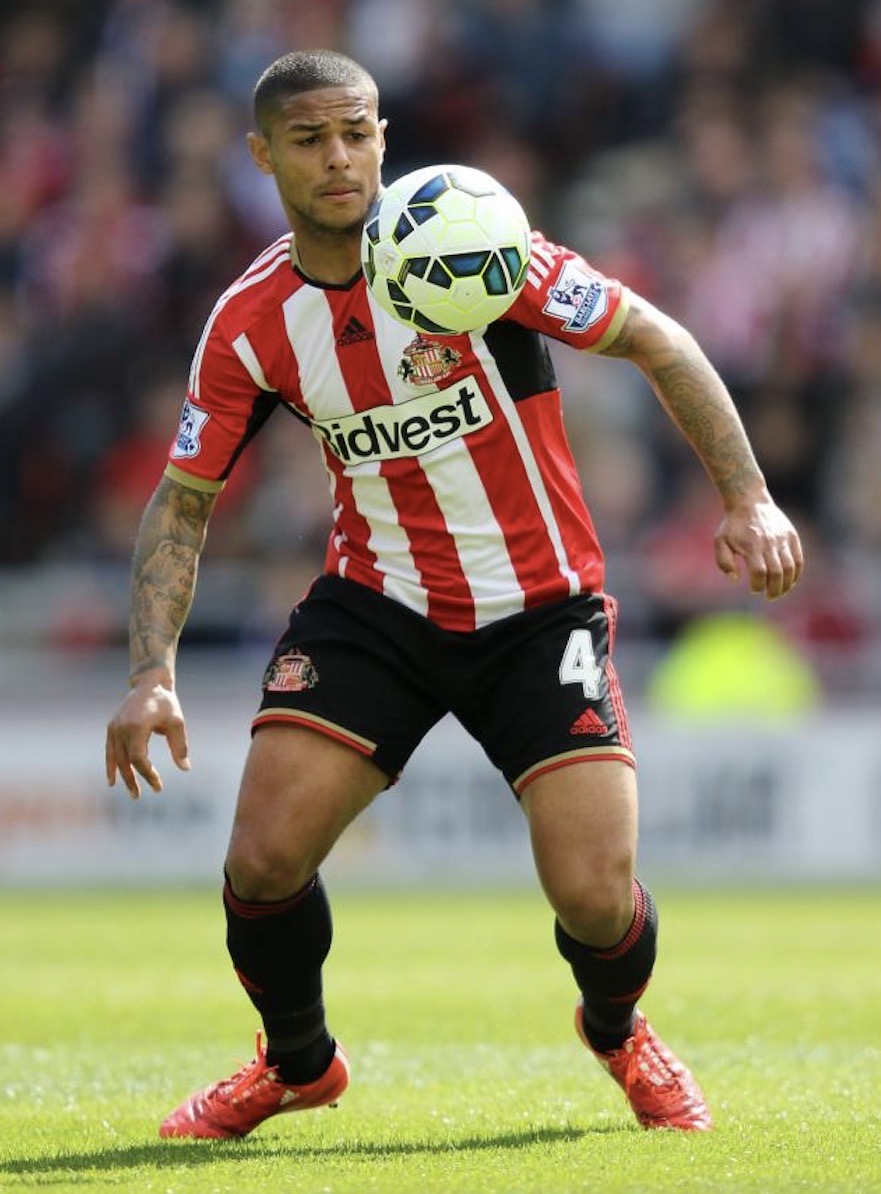
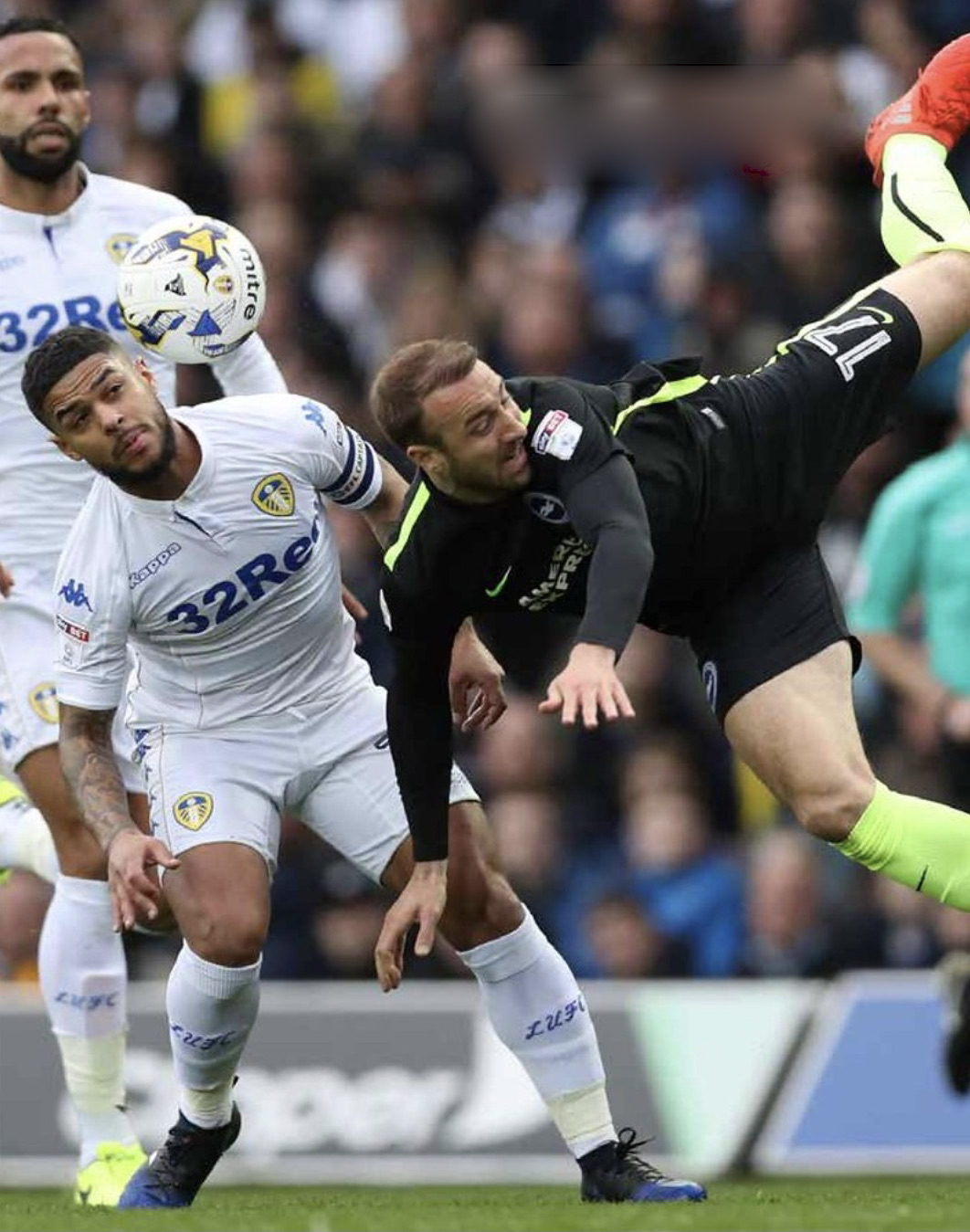
Liam Bridcutt was the Real deal for Poyet’s Brighton

LIAM BRIDCUTT won back-to-back Player of the Season awards at Brighton and later went on to captain Leeds United.

The diminutive midfielder was a stand-out defensive midfielder who Seagulls supporters took to their hearts.

He was pivotal to the new style of play Gus Poyet introduced, sitting in front of the back four, and comfortably acting as the conduit for the side’s highly effective passing game.

Having been brought through as a youngster at Stamford Bridge, he had witnessed close up the role Claude Makelele executed so efficiently for Chelsea, and, when his former Stamford Bridge colleague Poyet gave him an initial five-month contract at Brighton, he seized the chance.

“Chelsea made me the player I am today and they gave me the best of everything in terms of facilities and training with some of the biggest names in football,” he said shortly after signing for the Albion.

“My favourite player was Dennis Wise. I always wanted to be like him in that central midfield role. Then, as I got older, the team changed and it was Makele who I watched. Chelsea wanted more of a Makele player out of me.”

With so many star names ahead of him, it was inevitable Bridcutt would have to look elsewhere to progress. Initially he went on loan to Watford, managed by Brendan Rodgers, who he’d played under for Chelsea’s youth side and reserves.

“I played in some really big games, jumping from reserve football – full of kids and not that physical – into games where players are literally fighting for their careers,” he said.

“My first game was against Doncaster, where I was named Man of the Match, and then it was Spurs in the quarter-finals of the Carling Cup. I was up against Jermaine Jenas and Jamie O’Hara. I loved the adrenalin and pushing myself against all these players.”

It meant he didn’t fancy returning to reserve football and went out on loan again, playing more than 20 games for Stockport County in League One – including being sent off playing against the Seagulls! “It was another good learning curve for me,” he said.

When released by Chelsea, he had trials at Crystal Palace, Wycombe Wanderers and Dagenham and Redbridge – without success – but Chelsea let him return to train with them for three weeks and, during that time, Ray Wilkins suggested him to Poyet, who gave him an initial five-month contract to show what he could do.

After his debut against Orient, he told the matchday programme: “The manager has been saying to me that he needs a player in there who can control the game, break things up and play. I aim to prove I am that player.”

Mission accomplished, Bridcutt earned a two-year deal and he told the Argus: “It was one of my goals when I first signed here, to get a longer deal, and I’ve done that.

“I have been rewarded for my hard work. All I’ve got to do now is settle down and think about my future and look forward to next season.

“There was no hesitation from me really. I want to be here as long as I can. I can see what Gus has done here is brilliant. It’s a big club on the way up, so I was more than happy to sign.”

Bridcutt helped Albion win League One and is particularly remembered for a stunning long-range volley at Withdean on 5 March 2011 that proved to be the winner in a 4-3 win over Carlisle United. He was also on the scoresheet when Albion twice came from behind against Dagenham and Redbridge and eventually won another 4-3 thriller to clinch promotion back to the second tier.

Comfortably taking the step up in class in his stride, Bridcutt was pivotal to Albion reaching the Championship play-offs, but, after Poyet’s departure, rumours began to swirl that the young midfielder would follow him to the north east.

It didn’t happen immediately but, after handing in a transfer request, he finally made the move in January 2014 after featuring in 151 games for the Seagulls.

Given the opportunity to reflect on that time, Bridcutt admitted to the excellent podcast Football, the Albion and Me that he should never have left but, at the time, he didn’t feel the Albion did enough to persuade him to stay when Premier League and Championship clubs were sniffing around.

“Because they had so many good offers, they didn’t try to keep me,” he said. “I didn’t want to leave the club. I was very much happy there. But at the time I had other offers. The club knew about this and were back and forth with other clubs and turned down lots of offers.

“All I wanted was to be rewarded for the time I had given to the club,” he said, maintaining that, regardless of Poyet going, he wanted to part of the club’s long term goal of getting to the Premier League.

Scotland cap

In March 2013, Bridcutt’s consistent Albion form earned him a call-up to the Scotland international squad. Newly appointed manager Gordon Strachan gave him his first cap against Serbia, although the 2-0 defeat ended the Scots’ hopes of qualifying for the 2014 World Cup, and Bridcutt collected a booking in the 77th minute.

It wasn’t until three years later, during his spell at Leeds, that Bridcutt earned his second and only other cap. It came when he was a second half substitute in a 1-0 win over Denmark and some observers considered Bridcutt lucky not to see red for a robust tackle in the game at Hampden Park.

Although born in Reading, on 8 May 1989, he qualified to play for Scotland through his Edinburgh-born grandfather.

In July 2021, Bridcutt gave an illuminating and excoriating insight into his move and time on Wearside to a Sunderland podcast.

He recalled how on the day he signed for the club Poyet called him at midnight informing him he’d be playing the next day in the Tyne-Wear derby game and, before putting the phone down, said: “You better not be shit because I’ve pushed hard to get you here!”

Thankfully, Bridcutt had an outstanding debut in place of the injured Lee Cattermole in a 3-0 win for the Black Cats over their arch rivals.

Poyet purred: “Liam Bridcutt knows the defensive midfielder role I want us to play perfectly. So I was not worried.

If there’s one person that knows the role better than anyone else in the world, it is Liam and the best thing for him is that we won, we kept a clean sheet and he got through 90 minutes having not played all month.”

Poyet was rarely shy in singing Bridcutt’s praises, once telling the Mail: “If I was coach of Real (Madrid) I would take him because he deserves to go to the highest level.

“As a holding midfielder, there is no better player in the division. The best thing about Liam is that he understands me to an incredible level. The way he understands what I want from him is spectacular.”

However, Bridcutt reckoned a lot of players Poyet inherited at Sunderland were scared to play the sort of football Albion’s players had readily embraced and he also questioned their professionalism, saying: “It was almost like he (Poyet) was fighting a losing battle because there was literally lads out every other night and you could see that in our performances. We were terrible.”

Supporters piled on the pressure too and, although Bridcutt reckoned he could cope with the barbs, someone like Marcos Alonso responded badly to the stick but proved he was a decent player after he moved to Chelsea.

After keeping Sunderland in the Premier League against the odds, Poyet signed a new two-year contract in May 2014 but was sacked the following March. His successor, Dick Advocaat, froze Bridcutt out and, eventually, in November 2015, Steve Evans took him on loan at Leeds United.

In the early part of 2016, ahead of playing against Brighton at the Amex, Bridcutt confessed he’d be open to a return to the south coast. He told the Argus: “It was probably my best period in football. That was my opportunity to properly showcase what I could do and I had brilliant times there.

“I know the place well and I’d call it home. My first child was born there and it’s where my family started. It’s where my career really started and it’s a club where, if there was the right opportunity to go back at some stage, I definitely would.

“Even when I first joined, the club always had direction. There was always a plan. Nothing happened by accident. They hit a bit of a rocky patch after losing Gus (Poyet) but, like most clubs, it happens. They seem to have got their stability back. I’m happy to see that.”

As it was, Bridcutt stayed at Elland Road until the end of the season and, after Garry Monk’s appointment as manager, he was signed on a permanent basis in August 2016. A month later he was appointed Leeds captain, taking over the role from Sol Bamba.

A delighted Bridcutt said: “It’s a real honour, the manager has shown great faith in me by giving me the captaincy.

“It puts a little bit more pressure on me but that’s something I like. I’ve always been a player that’s thrived under pressure, and I think that’s the way to get the best out of me.”

Unfortunately a broken foot saw Bridcutt miss a large part of the season and the managerial revolving door at Leeds saw Monk replaced in the summer of 2017 by Thomas Christiansen.

After 53 games for United, Bridcutt also found himself heading for the exit, joining Mark Warburton’s Nottingham Forest on a three-year deal for a fee thought to be around £1m.

Former Forest favourite Garry Birtles was suitably impressed by the new signing, telling the Nottingham Post: “He’s 28 so you’d think he will hit his peak for Forest, having signed a three-year deal.

“He was Leeds United’s captain last season as they finished in seventh place in the Championship. I saw him play for Leeds and, I have to say, he was very impressive. He’s got that creative ability, and his all-round game was good.”

While Bridcutt played plenty of games under Warburton, when another managerial change saw the arrival of Aitor Karanka, his game time dried up.

Bridcutt spent the first part of the 2019-20 season on loan at League One Bolton Wanderers, where he was made captain by boss Keith Hill, and was reunited with former Albion and Sunderland teammate Will Buckley.

But after his recall to Forest in January 2020 he was then dispatched on loan to Lincoln City for the remainder of the season.

It wasn’t long before Bridcutt was captaining the Imps and in August 2020 he joined them on a permanent basis after his Forest contract expired.

Injury sidelined Bridcutt from Colin Appleton’s side as Lincoln beat Sunderland over a two-legged League One play-off semi-final in May 2021 but Bridcutt skippered the Imps as they narrowly lost 2-1 to Blackpool in the final at Wembley.

Ahead of the Sunderland clash, Lincoln fan Gary Hutchinson, of The Stacey West Lincoln fan website, told SB Nation Roker Report: “I love Bridcutt. He is the pivot around which our entire side function. Playing in the four role he picks the ball deep, protects the back four and is always willing to add to an attack. There are options in the middle of the park – Jorge Grant usually deputises there and Max Sanders who recently signed from Brighton is the long-term heir-apparent for Bridcutt.”

Released by Lincoln at the end of the 2021-22 season, Bridcutt, aged 33, was eventually reunited with Appleton at Blackpool; his signing on a one-year contract for the Championship side announced on 30 September 2022.

“I’m excited to be here and working with the manager again,” Bridcutt told the Blackpool website. “He was brilliant for me over the last two years – he put a lot of trust and faith in me.

“We’ve got a good understanding in terms of what he wants from his teams and his players day-to-day. I get that and it’s how I work and how I’ve always worked. He knows what I’m like and what he can get out of me.”

Appleton added: “We know the quality and the experience he’s got – at Premier League and Championship level – and he’s a fantastic character who will also bring a lot of things off the pitch as well. His addition will be a real plus.”

Respected Rosenior a dedicated student of the game

LIAM ROSENIOR is one of the most articulate footballers to pull on Brighton’s stripes.

He wasn’t a bad player, either, making nearly 450 appearances for seven clubs in a 17-year career, usually as a full-back.

The son of former Fulham, QPR and West Ham striker Leroy, Liam joined Albion in the summer of 2015, brought in as one of Chris Hughton’s first signings of that transfer window, and went on to make 51 appearances for the Seagulls.

Arguably his best days were behind him when Hughton signed him on a free transfer from Hull City, but he quickly endeared himself to the Albion faithful, bringing his top-level experience to a squad looking to rise to the Premier League and appreciated for his passion, best demonstrated by his chin-up gesture as the Seagulls came close but narrowly missed out on promotion.

A year later, Rosenior was part of the Albion squad which celebrated the club’s promotion to the Premier League.

Rosenior could talk a good game as well as play it so it was no surprise he was in demand as a football pundit on TV and radio, and in the final year of his playing career he wrote a weekly column for The Guardian. His views on the politics of the game and wider issues – such as racial abuse – have been sought by many news outlets.

As a student of the game, he didn’t waste time in getting his coaching badges and, when his playing career at Brighton came to a close in 2018, he was appointed to assist under 23s coach Simon Rusk, although he’d already been involved on an informal basis.

Hughton told the Argus: “Liam has played a huge part in our achievements over these few seasons. Unfortunately, over that time, he’s had a couple of injuries that kept him out for periods but at this moment he is in good shape.

“His value has not only been on the pitch but also off the pitch. He has also made a small contribution to the success of the under-23s. Because he wants eventually to be a coach and a manager, he’s had an involvement with them. That has been great for them and for us as a club.”

It seemed only a matter of time before he would step up to first team management but, in 2019, just such an opportunity was presented first by Derby County, and he left to become part of the small group supporting Phillip Cocu.

Rosenior’s contribution to the Seagulls was recognised in glowing terms by chairman Tony Bloom, who thanked him for “his superb service and consummate professionalism as both player and coach” and remarked: “Liam has become a firm favourite here at the club since he joined us from Hull City.

“He played a crucial role in our promotion to the Premier League and was an important part of the squad during our first-ever season at that level.”

Bloom continued: “Liam has made no secret of his desire to coach at first-team level, and so, while we are very sorry to see Liam leave the club, we fully understand the opportunity which is available to him and the reasoning behind why he has chosen to join Derby County.”

Rosenior told the Derby Telegraph: “I have always wanted to coach, and coach at the highest level.

“I gained my pro-licence when I had just turned 32. It is something I have always been interested in and something I have always done,” he said.

“My dad was a manager and a coach. I used to go with him to games, and to training sessions, and I think that is why at a relatively young age in terms of coaching I have got quite a lot of experience.

“I was working with soccer schools when I was 11 years old, taking sessions.”

After becoming caretaker co-manager of Derby with Wayne Rooney last November, Rosenior explained in an extended interview with The Athletic’s Dominic Fifield how he always saw becoming a manager as his destiny.

 “I’d be with my dad while he prepared his team-talk, in the dressing-room as he delivered it, and in the dug-out during the game. You see old pictures of Brian Clough on the bench with his son, Nigel. Well, it was the same with me. I’d be shouting at the players from the sidelines when I was 10. It’s always been in my blood.”

As a child, he even drew a picture of himself on the touchline as a manager. “That’s why, to me, it feels like my calling, my goal in life. And not just to be a manager, but a successful manager.

“I’ve studied for 26 years to ensure I’m the best coach I can be, to understand people as well as I possibly can. If I was injured or out of the team at Hull or Brighton, I’d annoy the stewards by watching the game from the mouth of the tunnel so I could practise making snapshot decisions from the touchline.”

Rosenior declared: “I want to show that a young black coach — and I want to do it young — can be successful in a position of authority at the very highest level.”

On 15 January 2021, Rosenior was appointed as assistant manager when Rooney was confirmed as the new Derby boss.

Born in Wandsworth on 9 July 1984, Rosenior started out in the youth team at Bristol City (another of his dad’s former clubs) and became a professional in April 2002. In 19 months at City, he made only four starts but was a sub on 24 occasions.

The most memorable of those was when he entered the action at the 2003 Football League Trophy Final in the 62nd minute, with Danny Wilson’s City a goal to the good against Carlisle in front of a 50,000 crowd at the Millennium Stadium, Cardiff. Rosenior scored a decisive second goal for the Robins in the 89th minute.

Premier League Fulham paid £55,000 to sign him in November 2003 but it was 10 months before he made his first team debut. Still only 19, he went on loan between March and May 2004 to Third Division Torquay United, a side his dad was managing, making nine starts plus one as a sub.

Rosenior’s first full season at Fulham was quite an eye-opener: an ignominious start under Chris Coleman saw him sent off on his debut (in a Carling Cup game against Boston United in September 2004), then awarded Sky Man of the Match when he made his league debut aged 20 in a 1-1 draw with Manchester United three months later. He also saw red in the last game of that season.

Rosenior made 86 appearances (plus five as a sub) for Fulham during his time there and despite signing a new four-year deal in 2006, moved on to Reading for £1.5m on August deadline day in 2007.

Rosenior signed a three-year contract with Steve Coppell’s Royals but in his final year he joined Ipswich Town on a season-long loan, making 28 starts plus three substitute appearances in what was Roy Keane’s first season in charge at Portman Road.

Released by Reading in the summer of 2010, Rosenior eventually linked up with Hull City where he spent five years, making the largest number of appearances (128 + 33 as sub) across his various different clubs.

They included starting in the 2014 FA Cup Final alongside former Albion loanee Paul McShane when Hull lost narrowly (3-2) to Arsenal at Wembley.

At the end of the following season, after City had been relegated from the Premier League, Rosenior was one of six players let go by Steve Bruce (McShane and goalkeeper Steve Harper were also released).

His experience in winning promotion from the Championship with Hull in 2013 was seen as a key ingredient in Hughton’s decision to sign him.

In May 2020, Rosenior took on another responsibility when he was appointed tothe FA’s Inclusion Advisory Board (IAB), set up in 2013 to increase diversity within the game.

After parting company from Derby in September 2022, Rosenior was not out of work long because two months later he returned to Hull City as head coach.

He was in charge for 18 months and only narrrowly missed out on the Championship play-off places in 2024, but falling short cost him his job.

Once again, though, he was not unemployed for long. In July 2024, he was appointed head coach of French Ligue 1 side Strasbourg, replacing the departing Patrick Vieira. At the end of his first season with Strasbourg, he steered them to UEFA Conference League qualification.

Among the young players in his side was Albion loanee Valentin Barco, who subsequently made the move permanent.

John Humphrey – unsung hero of 1997 great escape

John Humphrey in Wolves colours

ONE OF the unsung heroes of Albion’s last-gasp survival feat in 1997 knew a thing or two about playing for clubs in precarious circumstances.

John Humphrey’s first club was Wolverhampton Wanderers during a bleak period in their history: they dropped into the basement division under the controversial ownership of the Bhatti brothers.

The right-back later played ‘home’ games for Charlton Athletic at Selhurst Park and Upton Park when the football authorities deemed The Valley unfit to stage matches.

And he ended his professional playing days turning out for Brighton in ‘home’ games at Gillingham’s Priestfield Stadium (as pictured above).

Humphrey came to Brighton’s rescue in the autumn of his career.

With Albion’s very existence under threat as 1996 turned to 1997, Albion handed the managerial reins to Steve Gritt, and former Charlton teammate Humphrey was his first signing: a free transfer from Gillingham, who were playing in the division above.

Humphrey was 36 at the time with nearly 650 professional matches behind him, including a good many in the top-flight with Wolves, Charlton and Crystal Palace. Indeed, he was Charlton’s player of the year in 1988, 1989 and 1990.

After four matches on the bench, Humphrey replaced Peter Smith at right back and played in Albion’s last 11 games of that 1996-97 season, only ending up on the losing side three times. wearebrighton.com said his impact made him “a seriously underrated piece of the Great Escape jigsaw”.

“Steve wanted me because I was experienced, could get the players organised and was able to talk them through matches,” Humphrey told the Argus. “He knew I was steady, reliable and dependable, that nine games out of ten I’d play pretty well and that I would give 100 per cent.

“It was a lot of pressure but I’d been through a few promotions (three) and relegations (six) with Wolves, Charlton and Crystal Palace.” He continued: “The stressful situations I had gone through with those other clubs had given me experience of how to try and keep a season alive.

“I could do a job for Brighton and I felt I did that and the team turned out to be good enough to hang on. It was one of the biggest achievements of my career.”

Humphrey remembered the pressure going into the Hereford match was “horrible” because of the media focus but he added: “It might have been going out of the frying pan of Gillingham into the fire at Albion but I’m glad I made the jump.”

Unfortunately, then chief executive David Bellotti tried to renege on a deal Gritt had agreed verbally with Humphrey that he’d get a new one-year contract if Albion stayed up.

“When I was told I was being released, I thought it was a pretty poor show. But Steve, to his credit, then fought my corner and I stayed on.”

With the Goldstone sold, and Albion forced to play ‘home’ games at Gillingham,  Humphrey retained his place in the side and played in 13 matches but, along with other senior players, such as Craig Maskell, Paul McDonald, Denny Mundee and Ian Baird, he was let go to save money on wages.

Humphrey accepted the package he was offered, called time on his long professional career, and dropped into the non-league scene, playing initially for Chesham, then Carshalton, Dulwich Hamlet and Walton and Hersham.

He got a break into a new career as a teacher at Whitgift School in Croydon courtesy of former Albion defender, Colin Pates, who’d played with Humphrey at Charlton.

“I knew Colin from Charlton when we roomed together,” Humphrey told the Argus. “I was aware he was at the school and he said he needed help for after-school sessions and asked me to come along. So I did and the football took off at the school and I got involved in other sports like rugby and basketball and got a full-time job there.”

After leaving Whitgift School, Humphrey became head of football at Highgate School in north London.

Born in Paddington, west London on 31 January 1961, Humphrey was picked up by Wolves after he played against their junior team for a North London club called Bourne Hall.

He recounted how events unfolded in an interview with wolvesheroes.com: initially signing schoolboy forms, then progressing to coaching in school holidays, before earning an apprenticeship.

He signed as a professional in 1979 and made his first-team debut in the old top- flight in a 3-0 Easter Monday win at Southampton in 1980. His second game ended in a 3-0 defeat to Brighton.

They came under John Barnwell and, by the time Humphrey left the club in 1985, he’d served under three other managers; the last being former Manchester United boss Tommy Docherty.

Although the side was relegated in 1981-82, Humphrey embarked on what was a 78-game unbroken spell in the side. He was ever-present when they were promoted in 1982-83.

“I loved my time at Wolves,” he told wolvesheroes.com. “I only left because we went down again in 1984-85 and I didn’t fancy playing in the Third Division. Charlton came in for me and they took John Pender from Wolves a few weeks later as well.”

Wolves under the Bhatti brothers were in freefall and a lack of investment in the side saw them suffer three consecutive relegations – in 1984, 1985 and 1986 – ending up in the old Fourth Division for the first time in the club’s history.

Humphrey joined an Addicks side newly-promoted to the elite and, although Lennie Lawrence’s side often struggled to retain their status, they remained in the top-flight until 1990, and many supporters thought the right-back was good enough for international selection.

On charltonlife.com in September 2012, Queensland Addick recalled his impressive level of fitness, and said: “The number of times he ran the right wing at great pace during a game was quite incredible.”

By the time he left Charlton in August 1990, he’d played 231 games and it was said his £400,000 transfer to top-flight Crystal Palace was linked to the fact that at the time Charlton were playing home matches at Selhurst Park.

In a five-year stay at Selhurst, Humphrey played 192 games (plus 10 as sub). Known principally for his defending, Humphrey was delighted to mark his 150th appearance for Palace with a 35-yard equaliser for the Eagles against his old club, Wolves, in a 1993 1-1 home draw.

Between December 1993 and May 1994, while Palace were winning promotion from the second tier under Alan Smith, Humphrey was out on a six-month loan at Reading, playing nine games for Mark McGhee’s Second Division side.

He then returned to second-tier Charlton on a free transfer for the 1995-96 season, playing in 36 matches, after Alan Curbishley had taken sole charge.

Next stop was Gillingham, for the first part of the 1996-97 season, but he confessed he didn’t see eye to eye with manager Tony Pulis, so he was happy to answer the call from Gritt to aid basement Brighton’s cause.

Ups and downs of medal-laden Mark McGhee’s career

MARK McGHEE saw highs and lows as Brighton & Hove Albion manager after a medal-laden playing career that took him from his native Scotland to England and also to Germany.

McGhee was in charge when the Seagulls memorably won the 2004 play-off final to gain promotion from the third tier, beating Bristol City at the Millennium Stadium, Cardiff.

Play off final boss

Keeping the Seagulls up the following season was arguably an even greater achievement considering at the time playing home games at the crowd-restricted Withdean Stadium meant the club was at a huge disadvantage compared to most clubs in the division.

With the Amex still a distant dream, relegation came at the end of the 2005-06 season, and it wasn’t long into the following season that Dick Knight wielded the axe on the Glaswegian’s time in charge.

“It was hard to sack Mark, but we had to have a change,” Knight wrote in his autobiography, Mad Man: From the Gutter to the Stars. “Everyone recognised what he had done in taking up and keeping up a team that was not that great, to be honest. Hats off to him, he had done a terrific job. And he is a very intelligent, personable guy.”

Knight took decisive action when part of the crowd became vociferous in wanting McGhee out, and the chairman also felt some of the young players drafted into the team weren’t responding to him.

He was finally toppled over lunch at Topolino’s, and Knight admitted: “It was a difficult decision. There was strong vocal opposition to McGhee, but also a large, less noisy element who were behind him.”

McGhee liked Brighton so much he made it his home despite subsequently taking on a series of other roles the length and breadth of the country.

It’s probably fair to say the Scot has never been afraid to speak his mind, which his former Newcastle boss Bill McGarry mentioned to him. McGhee recounted in an interview with theleaguepaper.com: “I was managing Wolves at the time. He said ‘Mark, you talk too much. Tone it down a bit’. I tried to take his advice, give nothing away in media briefings. Then, somebody would say something interesting and I wasn’t able to stop myself.”

It’s probably what helped him gain a place on the Sky Sports Soccer Saturday panel when he was in between management jobs.

McGhee would most likely look back on some jobs he’d perhaps have been wiser to stay away from, for example taking temporary charge of Eastbourne Borough in 2018, although his enthusiasm was undimmed as he revealed in an interview with thenonleaguefootballpaper.com.

Born in Glasgow on 20 May 1957, his father was an electrical engineer and his mother a fertility consultant at Glasgow Royal Infirmary. McGhee was on the books of Bristol City at the start of his long career but he returned to Scotland and became a part-timer with Greenock Morton while also training to be an architect.

Aforementioned manager McGarry signed him for Newcastle for a £150,000 fee on 30 December 1977 and he made his debut on 2 January 1978.

His face didn’t fit after Arthur Cox took over as boss, but Alex Ferguson took a punt on him in March 1979 and signed him for Aberdeen, and it proved to be one of many shrewd decisions the esteemed Scot would make in his career.

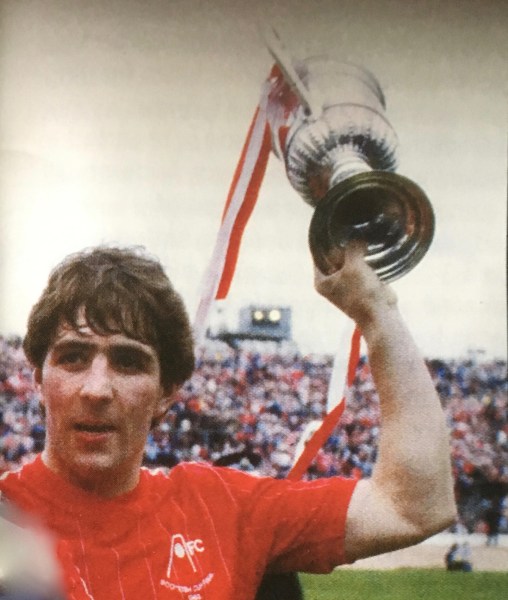
McGhee was named Scottish PFA Players’ Player of the Year in 1982, and the following year was part of the Aberdeen side who beat Real Madrid 2–1 to lift the 1983 European Cup Winners’ Cup in Gothenburg.

mcg cup

He also scored the second goal as Aberdeen defeated Hamburg 2-0 to win the UEFA Super Cup in the same year.

Asked about the best goal he scored, he said: “Probably the winning goal in my last game for Aberdeen.”

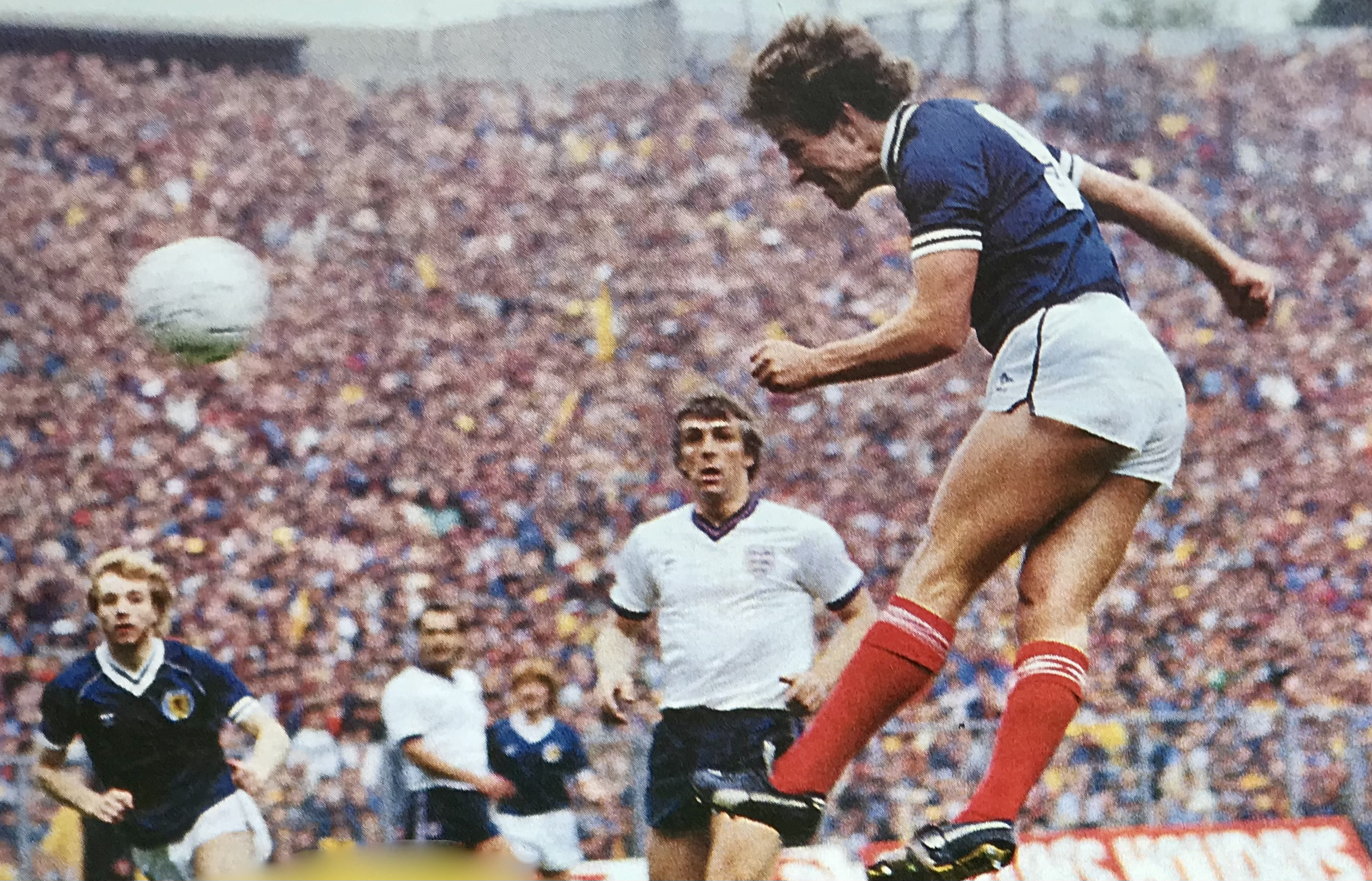
McGhee reckoned his best moment in football came on 26 May 1984 when he scored against England at Hampden Park. He headed in a cross (as pictured) from his great pal Gordon Strachan past Peter Shilton.

McG v Eng

“It put us 1-0 up but Tony Woodcock equalised to make the final score 1-1.”

It was one of four caps he won for his country. Nearly two decades later, in January 2013, Strachan appointed him as his no.2 with the Scottish national side.

M McGhee Old Football PhotosBut back to those playing days, and with two Scottish league titles and three Cup wins behind him, McGhee tried his hand at European football and spent 16 months at Hamburg. The spell was probably more of an education than a success, with injuries limiting his game time.

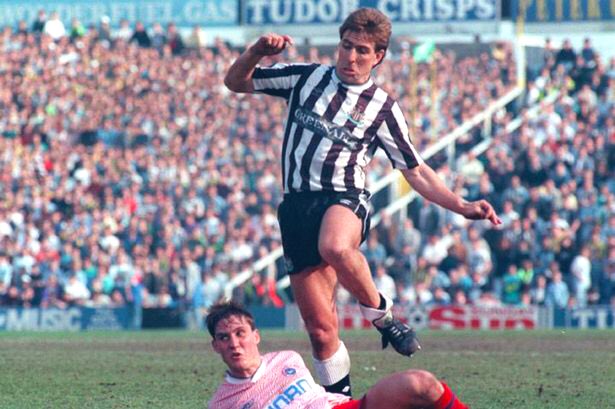
A £170,000 fee took him back to Scotland, to Celtic, where he had mixed fortunes during four years with the Glasgow giants. He was, though, part of the squad that won a League and Cup double in their centenary season.

After winning another Scottish Cup winners’ medal in 1989, he was on the move again, back to Newcastle.

Now with Jim Smith in charge, Newcastle paid £200,000 to take McGhee back to St James’ Park, where he formed an impressive strike partnership with the legendary Micky Quinn as Toon finished third in the old Division Two.

“We were good friends, but we didn’t blend on the pitch like Toshack and Keegan, Quinn told theleaguepaper.com. “Mark was a free spirit. He’d get the ball and drift left or right and drop deep.

“He’d turn defenders and drag them out of position. He would hold the ball up well for me to get into the box and score goals. He went where he wanted, but it worked.”

football back then McGhee

This Football Back Then picture shows McGhee in action for Newcastle against Albion’s Nicky Bissett.

His farewell performance came on 6 April 1991, not long after Ossie Ardiles had taken over as manager, and McGhee departed having scored a total of 36 goals in 115 appearances for the Magpies.

Next stop was Sweden, where he played briefly for IK Brage, but he seized the opportunity to try his hand at management by taking up the role of player-manager at Reading in the summer of 1991.

He’d been recommended for the role by his old boss Ferguson, and, after quitting playing through injury in 1993, he led the Royals to promotion from the third tier the following year.

A struggling Leicester City gave him a chance to manage in the Premier League but he was unable to keep them up and, less than a year after joining, decided to switch to Wolverhampton Wanderers, to succeed Graham Taylor.

Wolves just failed to gain promotion in 1996-97 (they lost in the play-off semi-finals) and were ninth the following campaign. Four months into the 1998-99 season, following a string of poor results, McGhee was fired.

It would be 20 months before he gained his next opportunity, this time at Millwall where he enjoyed initial success, leading them to promotion from the third tier, and then narrowly missing out on another promotion when they lost in the play-off semi-finals to Birmingham City.

McGhee apptWhen he parted company from Millwall in October 2003, he wasn’t out of work long because Brighton needed a replacement for Steve Coppell, who’d been wooed to take over at Reading (pictured above, with chairman Dick Knight, at his unveiling as Albion manager).

Those Albion fans who stuck by the team in the humble surroundings of the Withdean Stadium enjoyed some good moments during McGhee’s time as manager, in particular promotion via the play-off final in 2004.

He certainly found a formula to get the best out of certain players, as Adam Virgo, converted from defender to goalscorer, observed in that theleaguepaper.com article. “Mark is a very good communicator and very experienced,” he said. “He can make you feel ten feet tall. He’s very good at being honest, at analysing your game and telling you what you’re good at.”

After his departure from the Albion, McGhee was out of the game for nine months but got back in at Motherwell, turning them from near relegation candidates to qualifiers for European competition.

The lure of his old club, Aberdeen, proved too strong in the summer of 2009, but his tenure proved to be disastrous – and brief.

He spent the majority of 2012 as manager of Bristol Rovers, where one of the squad he inherited was former Brighton defender-turned-striker, Virgo. The following year, his old pal, Strachan, appointed him as assistant coach to the Scottish national side.

He later combined the role part-time when he returned to Motherwell but there were mixed fortunes second time round, and he left them again in early 2017. Towards the end of that year, he popped up at League Two Barnet, but the arrangement lasted only two months before he was moved to a ‘head of technical’ role, and then dismissed in March 2018.

McGhee was ‘slaughtered’ on Twitter when he took over as interim manager of National South side Eastbourne Borough in the spring of 2019, after being beaten 3-0 by Wealdstone in his first match in charge, his new side reduced to nine men after two players were sent off. Borough won just once in 11 matches.

When Albion under 23s coach Simon Rusk was appointed manager of Vanarama National League side Stockport County in January 2021, McGhee was appointed as one of his assistants.

His final managerial post was at Dundee in February 2022 when he took temporary charge of the Scottish Premiership side until the end of the season (with Rusk as his assistant), but they couldn’t avoid them being relegated, overseeing just one win in 13 matches.

McGhee finally announced his retirement from the game in September 2022 at the age of 65, telling the Sunday Post: “I won’t be pursuing any other managerial vacancies, and nor would I want to be a director of football or a head of recruitment. That’s not what I am – I’m a manager.

“I feel that players now deserve a young manager who can give them the energy I was able to when I started out. They don’t need a 65-year-old with a dodgy ankle.”

Why Saint Dan riled the Albion

DAN HARDING was promoted twice with Southampton and once with the Seagulls and later cut short his career because of family tragedy.

Personally, I’m not sure he really need to be cast as ‘public enemy no.1’ because of the way he left Brighton.

With the benefit of hindsight, it was really no surprise that he chose to turn his back on playing at Withdean in favour of Elland Road, Leeds.

OK, the stringing-out of the contract negotiations, and public slanging match that accompanied them, didn’t help matters.

But football careers are short and the Amex was a long way off becoming a reality when Harding decided to opt for pastures new.

“I really enjoyed my time at Brighton but you can’t compare the size of the two clubs or the facilities,” he told the Leeds matchday programme at the time. “It has been like going from one world to another.”

Ironically, it seems his success on the pitch with Brighton, which led to him gaining international recognition, might well have been the unsettling influence.

Former Albion boss Peter Taylor selected him for England under-21s as the 2004-05 season got underway. He made his England debut as a substitute for Micah Richards in a 3-1 win over Ukraine at the Riverside Stadium, Middlesbrough, on 17 August 2004. Future full internationals James Milner and Darren Bent were in the same squad.

He started the 8 October 2004 match against Wales at Ewood Park, Blackburn: a 2-0 win courtesy of goals from Milner and Bent. He also started the game four days later when the under 21s drew 0-0 away to Azerbaijan in Baku. His last cap came the following month in a 1-0 defeat away to Spain when he was replaced by Ben Watson. Future Albion loanee Liam Ridgewell was also a substitute in that game.

It was this platform that sowed the seeds of discord, according to former chairman Dick Knight’s take on the circumstances surrounding Harding’s acrimonious departure from the Albion.

In his autobiography Mad Man: From the Gutter to the Stars, Knight reckoned it was while on international duty that Harding was “egged on by his agent about his value after talking to players with bigger clubs, on bigger wages”.

Knight went on: “Early on, I offered him a sizeable contract renewal but he sat on it. He kept saying he wanted to stay, but I don’t think he had any intention of doing so.

“Because he was under 24, we were entitled to compensation. Shaun Harvey, the Leeds chief executive – who became CEO of the Football League in July 2013 – tested me with a couple of paltry sums before finally offering £250,000, which I rejected.”

DH Leeds action 2Via the Football League tribunal system, Knight managed to get the figure up to £850,000, part achievement-based, and with a 20 per cent sell-on clause.

All in all, not a bad return for a player who came through the Albion’s youth and reserve ranks after being spotted at 15 playing for Hove Park Colts.

Born in Gloucester on 23 December 1983, the young Harding loved kicking a football from the moment he could walk and enjoyed watching his dad, Kevan, turn out for the Army team.

The family was posted to Brighton, and Harding was taken to the Goldstone Ground by his mum, Linda. One of his earliest memories was on 23 September 1992 seeing a 17-year-old David Beckham make his Manchester United debut as a substitute for Andrei Kanchelskis in a League Cup tie that finished 1-1.

Harding joined the Albion initially on schoolboy terms for a year and was then taken on as a YTS trainee, progressing through the juniors and reserves before eventually making his first team debut on 17 August 2002, during Martin Hinshelwood’s brief reign, as a substitute for Shaun Wilkinson in a 2-0 home defeat to Norwich City.

After Hinshelwood was replaced by Steve Coppell, and Harding sustained a back injury, the youngster played no further part in the first team picture that season, but he was awarded a new contract in April 2003.

In the first part of the 2003-04 season, Harding was a regular on the bench, but, on 21 February 2004, Coppell’s successor, Mark McGhee, gave him his full debut in place of the suspended Kerry Mayo in a 3-0 win over Bournemouth.

Dan Harding

Harding kept his place through to the end of the season, making a total of 23 appearances, including being part of the side that lifted the divisional play-off trophy at the Millennium Stadium, Cardiff, as the Seagulls beat Bristol City 1-0.

“In hindsight, it was a very lucky time for me. I broke into a team that was winning games and was promoted,” he told the Daily Echo. “Looking back now, I don’t think I appreciated at the time what a big achievement it was.”

Sent off in only the second game of the following season for two bookable offences, it wasn’t long before his contract discussions were aired publicly, with McGhee telling the Argus in October: “It’s starting to really frustrate me.

“Dan keeps telling us and saying publicly he wants to sign but we cannot tie his agent down to have a meeting with us. He has to be honest with us.”

Harding in turn denied he was being difficult, telling the Argus that talks were ongoing.

The off-field issues certainly seemed to be troubling Harding and McGhee publicly blamed the defender for a 2-0 defeat at Millwall in December. He was also outmuscled by Stoke City’s Ade Akinbiyi in a game at Withdean, leading to a late winner for the visitors. Across the season, McGhee dropped him on four occasions because of such inconsistency.

When he won his place back in February, he told the Argus: “I had to prove not only to the gaffer but to the other players and the fans that I want that position back.

“That’s where I prefer to play. I like to call that my position. I don’t mind playing on the left hand side of midfield or centre midfield, but I do love playing at left-back.

“Hopefully I can reproduce the same sort of form and keep my confidence up. Everyone wants to be playing, so when you are left out it’s a bit of a kick in the teeth. It’s not nice, but you have to pick yourself up and try to get back into the team.”

DH leeds action 1However, the Brighton contract offer was declined and on 7 June that summer, Harding put pen to paper on a deal with Leeds, whose fans were no doubt delighted to read that he used to follow their fortunes when he was a youngster.

“When I lived in Germany, they showed quite a lot of Leeds games on telly and, in a strange way, I kind of ended up supporting them because it was the only football I really got to see out there,” he said.

His dad later took him to a Leeds FA Cup match v Wolves, and he added: “I have to admit I have been a closet Leeds fan. Obviously, I didn’t shout about it when I was playing for Brighton and it’s kind of strange now that this move has happened.”

If Harding doubted the size of the task at Elland Road, he’d only have had to read the comments of manager Kevin Blackwell, often Neil Warnock’s no.2, who was the Leeds manager at the time.

In an article about Harding in the club programme, Blackwell said: “It has been a big transition for him. No disrespect to Brighton, but coming from the scaffolding at Withdean to Elland Road was a big step-up for Dan. He was nervous in the first couple of games, but he has started to settle down.”

He talked about how he needed to cement his place at United, and added: “If he does succeed here, all the doors will be open to him. I have no doubt that once he develops certain aspects of his game and his self-confidence, he will go a long way because he is a real athlete with a great left foot.”

Brighton fans vented their displeasure at how things had turned out every time Harding touched the ball when Leeds entertained the Seagulls on 12 September 2005; a game which finished 3-3. The fact two of Albion’s goals came from crosses on Harding’s flank prompted Blackwell to drop him for the following match.

After only seven games, Harding picked up an injury and, over the course of the season, played just 21 matches for United. In August 2006, the Yorkshire club used the full-back as a makeweight in a deal which took future Albion loanee Ian Westlake from Ipswich to Leeds.

He was a regular at Portman Road for a couple of seasons but, in his third season, manager Jim Magilton deemed him surplus to requirements and sent him out on loan to Southend United. I recall going to a match at Roots Hall and seeing him have an outstanding game against Brighton.

Later the same season, with Ipswich bobbing along in mid-table, Harding seized the chance to join Steve Coppell’s promotion-chasing Reading, and he played in their play-offs defeat to Burnley.

When Roy Keane took over at Ipswich in 2009, Harding was sold to Southampton; manager Alan Pardew’s first signing for the Saints. Harding’s former Albion youth coach, Dean Wilkins, was part of Pardew’s coaching team.

Harding reflected in an interview with the Southern Daily Echo that what followed were the happiest three years of his career, in which he played 121 games and chipped in with five goals.

In 2010-11, he was named in the PFA League One team of the year along with teammates Kelvin Davies, Jose Fonte, Adam Lallana and Alex Oxlade-Chamberlain.

In the harsh and fickle world of football, Brighton fans relished Brighton’s 3-0 win over Southampton at the Amex on 2 January 2012 when Albion winger Will Buckley gave Harding such a torrid time that, to compound his humiliation, the former Brighton player was subbed off by boss Nigel Adkins with five minutes of the first half still to play.

Although part of the Saints side that won promotion back to the Premier League that May, Harding didn’t get the chance to play at the top level because Adkins moved him on to Nottingham Forest.

Harding talked in detail to the Echo’s Paul McNamara about life at Forest, which he found an unstable place, especially when Sean O’Driscoll, the manager who signed him, was sacked.

Although he played some games under that legendary left-back Stuart Pearce, when he took over, Harding eventually went on loan to Millwall, but wasn’t able to help them stave off relegation from the Championship.

He reveals in his interview with McNamara how disillusioned he became with the amount of dishonesty in football and, coupled with his pregnant wife losing two of the triplets she was expecting, he put family before football and, at the age of only 31, dropped down four divisions to play non-league with Eastleigh.

He talked about the tough decisions he’d had to make in an interview before a FA Cup tie Eastleigh played against Bolton Wanderers.

In 2016, Harding joined Whitehawk as a player, then became part of the coaching set-up, and was briefly caretaker manager before the appointment of Steve King.

Halford’s timely role in helping Albion avoid the drop

TIME was of the essence when utility player Greg Halford agreed to make a temporary move to Brighton.

He penned a deal to join the Seagulls temporarily at Nottingham Forest’s training ground at 12.30pm and then got in his car to drive to Brighton for 6pm in time to be involved in the squad for that evening’s game at the Amex against Wigan Athletic.

It was 4 November 2014 and he was Sami Hyypia’s sixth loan signing – even though only five were eligible to play in any matchday squad (emergency loan goalkeeper Ali Al-Habsi only played one game).

Regular centre backs Gordon Greer and Lewis Dunk were perilously close to suspension and deputy Aaron Hughes was sidelined with an ankle injury, so Hyypia moved to bring in an experienced back-up.

Albion hadn’t registered a win in the previous 11 league matches but the 29-year-old Halford proved to be a lucky charm as the side finally reacquainted themselves with the taste of victory. Fellow loanee Gary Gardner got the only goal of the game and Halford made an appearance off the bench towards the end of the game.

“I wasn’t really expecting to get any game time. I thought I’d just be in and around the lads, to get a feel for how everything works,” he told the club programme. “But I’m glad I got a few minutes at the end.”

Halford explained how he’d agreed to join the Seagulls because he’d been frozen out at Forest after Stuart Pearce took over as manager.

The player said he was familiar with the south coast having previously played for Portsmouth.

Asked what he could bring to the side, he added: “I can add a bit of height, I can score goals and obviously I can defend, which is my main attribute. I’m here to help the team and manager in any way I can.”

It wasn’t long before he was helping out a different manager as the side’s run of poor form brought a premature end to Hyypia’s brief time in charge.

Halford, though, hung around at the Amex, his loan extended by Hyypia’s successor, Chris Hughton, and he had made 14 starts and five substitute appearances by the season’s end, when the Seagulls narrowly escaped the drop back to the third tier.

Born on 8 December 1984 in Chelmsford, Essex, Halford began his professional career at nearby Colchester United. I well remember a Chelmsford-based work colleague telling me about this talented young footballer who’d been head and shoulders the best player in a local schoolboy football team his son had played for.

That player was Halford, who progressed from Colchester’s youth team and made his first team debut in April 2003. Loan spells at non-league Aylesbury Town and Braintree Town were part of his development, but he eventually made his mark at Colchester and was named in the PFA League One team of the year in 2005-06.

Played mainly at right-back, Halford’s speciality was his ability to deliver searching long throws which led to a good proportion of goals for Colchester.

After playing more than 150 games in five years for the Us, Halford wanted to prove himself at the highest level. He got a move to Premier League Reading in January 2007 but he couldn’t make the breakthrough there and ended up switching to Sunderland, signed by Roy Keane.

Just six months later, Sunderland made him available on loan and he joined Championship side Charlton until the end of the season. Then he spent the whole of the 2008-09 season on loan to Sheffield United, featuring in 49 of their 56 games that season.

His personal highlight was scoring the only goal of the game as United beat Preston to reach the 2008-09 play-off final.

Unfortunately, United lost the final 1-0 to Burnley, and that summer Halford was on the move again, this time to newly-promoted Wolverhampton Wanderers. Although he featured in 20 games, a regular starting berth eluded him and, in October 2010, he joined Championship side Portsmouth. Initially on loan, he eventually joined Pompey on a permanent basis but relegation to the third tier brought with it the need to trim budgets and in July 2012, they offloaded Halford to Nottingham Forest.

GH ForestUnder Billy Davies, Halford was generally deployed as a striker but when Pearce took over at the City Ground, he didn’t get close to the first team. On his return from Brighton at the end of the 2014-15 season, he was released by Forest and joined Rotherham United on a free transfer.

Manager Steve Evans appointed him captain but, after a winless run of five games, he was deposed and only played one more game for the Millers before joining Birmingham City on loan.

GH CardThat spell was also brief and although he returned to Rotherham and played 15 games for them in the 2016-17 season, he then joined Cardiff City and made 33 appearances in two seasons for Neil Warnock’s side.

Without a club for six months, in February 2019, he joined Scottish Premiership side Aberdeen as defensive cover but only made two appearances.

FA Youth Cup winner McPherson shored up leaky Seagulls defence

CENTRAL defender Keith McPherson made just one top division appearance for West Ham’s first team but went on to have a lengthy professional career, with a swansong at Brighton & Hove Albion.

Born of Jamaican parents in Greenwich on 11 September 1963, McPherson signed as an apprentice for the Hammers in 1980 and was a member of the FA Youth Cup winning side in 1981 (they beat Spurs 2-1 over two legs).

It was only the second time in the club’s history they had won the trophy and the excellent theyflysohigh.co.uk faithfully records the details on its website; headlined by the fact young Paul Allen had played in the Hammers FA Cup winning side the year before but was still eligible to play for the youth team.

WHU K McPMcPherson’s single first team appearance came at home to Liverpool on 20 May 1985, the last game of the season, which finished 3-0 to the visitors.

Unable to break through again, he had an 11-game loan spell with Cambridge United before a fee of £15,000 took him to Northampton Town in January 1986. He went on to play 216 times for the Cobblers over the next four and a half years.

In the summer of 1990, he joined then First Division Reading where he played for nine years.

Royals’ manager Ian Porterfield signed him having been impressed when the defender scored twice against Reading in previous visits to Elm Park.

McPherson ReadMcPherson was a regular at the heart of the Royals defence at Elm Park and the Madejski Stadium, and was a key part of the Mark McGhee side that won the Division 2 Championship in 1994.

After spending nine years at Reading, many as captain, and making 317 league and cup appearances, he joined the Albion at the age of 35 shortly before the March transfer deadline in 1999 as beleaguered manager Jeff Wood tried to shore up the centre of a defence which had been leaking goals at an alarming rate.

He made his debut in a hard-fought 0-0 draw away to relegation-threatened Hartlepool which registered Albion’s first point for seven games and first clean sheet since the start of November.

King, McPherson, Doherty and trainee Duncan McArthur all made debuts at Hartlepool

The game also saw Wood give debuts to another experienced defender in former Swindon full-back Phil King together with young Charlton loanee Lee Doherty.

With Albion up against it in the league, McPherson even played with a broken nose, manager Wood telling the Argus: “He is happy to play. It doesn’t affect his breathing and his nose is not the prettiest anyway.

“He is very important to us. I brought him in for his experience and if he didn’t play it would weaken us considerably.”

Before the season was out, the experienced defender had played 10 games under three managers and ended up as captain!

Caretaker manager Martin Hinshelwood handed him the armband for his one match in charge, at Plymouth, and McPherson carried on as captain when Micky Adams took over as manager for the final five fixtures.

One of Adams’ first moves once the season had ended was to secure McPherson’s signature for the following season. Adams told the Argus: “Keith is an older and experienced professional who has still got a bit of life in him.”

For the veteran defender, it was all something of a whirlwind. He said: “It has been very eventful. Jeff brought me down and when the chairman decided he had to go that made my position precarious. When something like that happens, all you can do is play well.”

He continued: “I’m delighted. Micky Adams must have liked what he has seen.”

Having helped Reading to promotion from the old Fourth Division in 1987, McPherson pointed out: “I know all about the hustle and bustle at this level. It’s a matter of being organised. The gaffer has made it clear he wants promotion, which is good for the club and the fans.

“We are going to be playing back in Brighton next season and he wants winners.”

McPherson in the 1999-00 squad photo with Gary Hobson and Charlie Oatway

McPherson went on to play 25 times that season but, having turned 36, it was his last season in a professional career that saw him play more than 500 games.

The emergence of Danny Cullip curtailed his appearances but, when released on a free transfer at the end of the season, together with Warren Aspinall, Adams said: “The door is not closed on them. They have been good lads, model pros.

“They have done well for us this season, but their appearances have been restricted because of other people’s good form.”

When McPherson decided to move to non-league Slough Town to wind down his playing days, Adams told the Argus: “We are sorry to see him go. He is a good pro who always works hard and tries his best.”

After 75 appearances for Slough, McPherson went back to Reading as a coach.

According to getreading.co.uk, he now lives in Surrey and does computing at a private school.

McP in 2017

Pictures: various online sources, and Albion matchday programmes.

Seagulls gave Martin Keown first team football opportunity

MARTIN KEOWN, who was born in Oxford six days before England won the World Cup in 1966, made his breakthrough into what became an illustrious playing career with Brighton.

The TV pundit football fans see today was famously a stalwart defender for Arsenal, Everton and Aston Villa, not to mention England.

But as an emerging player yet to break through at the Gunners, he got the chance of first team football courtesy of Brighton boss Chris Cattlin, who negotiated with Arsenal boss Don Howe to secure his services on loan.

“He is a young player with plenty of potential,” Cattlin wrote in his Albion matchday programme notes. “He is still learning and will make the odd mistake, but these are all part of learning and I feel he will be a very good player in the very near future.”

MK BWHe made his debut away to Manchester City in February 1985 and, in two spells, stayed a total of six months with the Seagulls, making 23 appearances. It wasn’t long before he earned the divisional young player of the month award and Cattlin said: “Martin has done very well and done himself great credit in coming into the heat and tension of a promotion battle and coping well.”

He made such a great impression, it wasn’t long before the Albion matchday programme went to town with a somewhat gushing feature about the young man.

“Fans and Albion players alike have been impressed by the character and maturity displayed by the 18-year-old English Youth International,” said Tony Norman. “No less a judge than former England manager Ron Greenwood was instrumental in Martin’s recent Robinson Young Player of the Month award.

Keown prog front“So, the young man from Oxford must have something special going for him. On the field he is a sharp, decisive player, but away from the game he is quietly spoken and unassuming.”

Some things obviously changed!

“His progress in football has not gone to his head and he is quick to thank the special people who have helped him find success,” Norman continued.

Keown told him: “Going back to the early days in Oxford, I think my parents were the greatest help of all. I played for several different teams, so there was never a particular coach who helped me. But my family were always there giving me their full encouragement and support.”

At Highbury, he credited the scout who took him to Arsenal, Terry Murphy, as his greatest help in his early years, helping him to settle into the professional game.

“He was very good to me,” said Keown. “I was only 15 when I joined Arsenal as an apprentice. I was in digs in North London and it was all quite a change from life in Oxford. It took a bit of getting used to.”

The former Chelsea midfield player John Hollins, who played for Arsenal between 1979 and 1983, was also an influence.

“He always had a word of encouragement for the youngsters,” said Keown. “He is the kind of man who can make a club happier just by being there. I liked and respected him a great deal. He was a model professional.”

During his time with Brighton, young Keown lived with physiotherapist Malcom Stuart and his family. “They have made me feel very much at home,” he said. “It has been a happy time for me.”

M Keown ArseUnfortunately for Brighton, Keown returned to Highbury and it wasn’t long before Howe, the former coach who’d become Arsenal manager, gave him his first team debut on 23 November 1985 in a 0-0 draw away to West Brom.

In much the same way he has become something of a Marmite pundit on the TV, Keown wasn’t every manager’s flavour. When George Graham was appointed Arsenal boss in 1986, Keown didn’t figure in his plans and he sold him to Aston Villa (see picture below) for £200,000.

M Keown villaThree years later, he became what Colin Harvey described as his best signing during his time as boss of Everton. A fee of £750,000 took him to Goodison.

In an interview with the Liverpool Echo back in 2013, Keown declared: “I thoroughly enjoyed my time at Everton. The only disappointment was that I couldn’t contribute to the club winning anything tangible in my four years there.

“I played under Colin Harvey and Howard Kendall and I was eternally grateful to them for the opportunity to play at a club like Everton.

“Looking back, in hindsight it was probably a bit much to ask a young lad, which I was then, to step into the boots of a club legend like Kevin Ratcliffe. But I always gave absolutely everything.”

Keown added: “The atmosphere was always superb at Goodison. Even though I played a lot of my career at Highbury, I loved Goodison.”

It was during his time at Everton that he won the first of his 43 England caps, getting the call-up from Graham Taylor to join the squad in 1992 to replace Mark Wright. When Terry Venables took over, he didn’t get a look-in.

But Glenn Hoddle restored him to the squad in 1997 and, although he was part of the 1998 World Cup squad, he didn’t get a game. He was a regular under Kevin Keegan and, in a game against Finland, had the honour of captaining the side. Age began to count against him by the time Sven-Goran Eriksson took charge of England and, although he was part of the 2002 World Cup squad, he wasn’t selected for any games.

His return to Arsenal in February 1993 meant he was the first player since the days of the Second World War to rejoin the Gunners, and it went on to become a 10-year spell in which he helped the club to win three Premier League titles and the FA Cup three times.

Arsenal paid a £2m fee to bring back their former apprentice and he and Andy Linighan were more than able deputies who kept established first choices Steve Bould and Tony Adams on their toes.

“Martin was deployed most frequently at centre-half where his formidable pace and thunderous tackling combined to thwart both target men and strikers running in behind,” declared an article on arsenal.com, lauding the merits of the ‘50 greatest Arsenal players’. “It meant, too, that he was vastly capable in an anchoring midfield role; something utilised by his manager.”

While not always a regular, Keown became an integral part of Arsene Wenger’s double-winning sides of 1998 and 2002 and remained a part of the set-up through to the winning of the FA Cup against Southampton in Cardiff in 2003.

The following season included the much-repeated TV moment when Keown mocked Ruud van Nistelrooy for missing a late penalty in a 0-0 draw at Old Trafford, an incident still being discussed only last summer.

Although Arsenal went on to win the title, Keown played only 10 league games and was given a free transfer at the end of the season.

He joined Leicester City, where he played 17 games but moved on to Reading six months later, ending his league career with five games at the Madejski.

Since calling time on his playing career, Keown has, of course, become known for his TV punditry with both the BBC and BT Sport, as well as being a newspaper columnist and contributor to many different media.

On Twitter, @martinkeown5 has 278,000 followers! He has also coached back at Arsenal and been a regular on the football speaker circuit.