When Steve Gritt took on the ‘worst job in football’

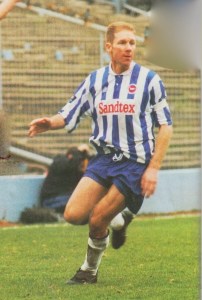
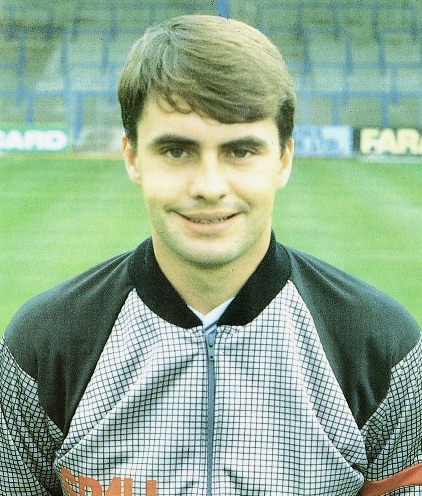
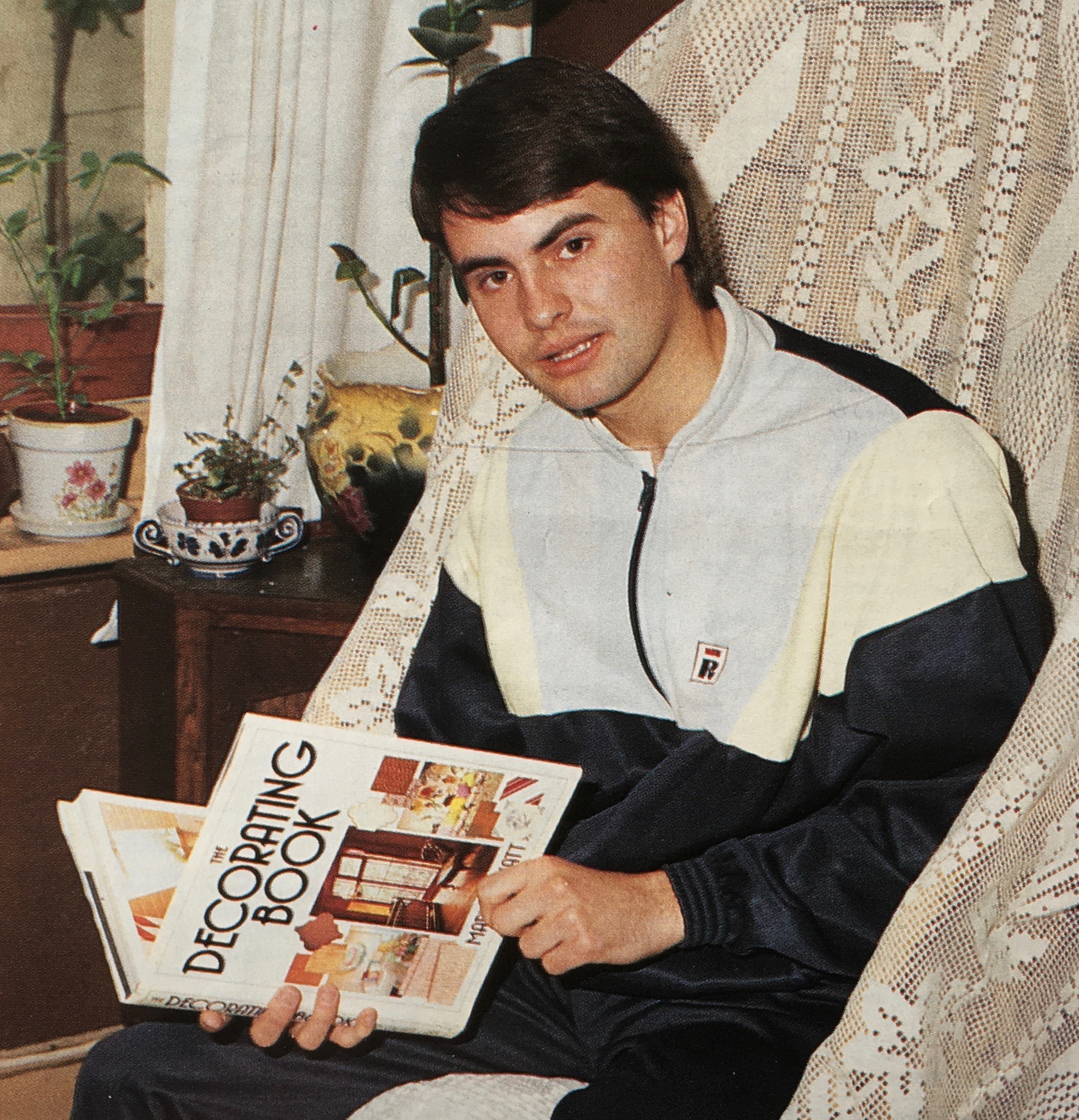
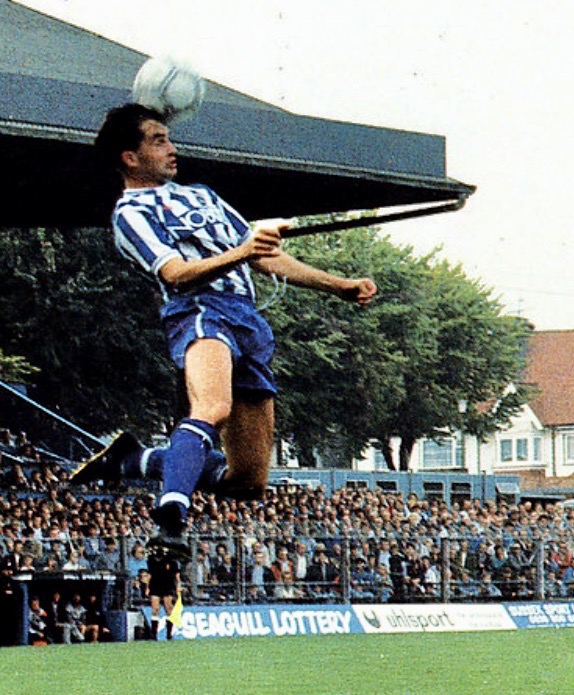
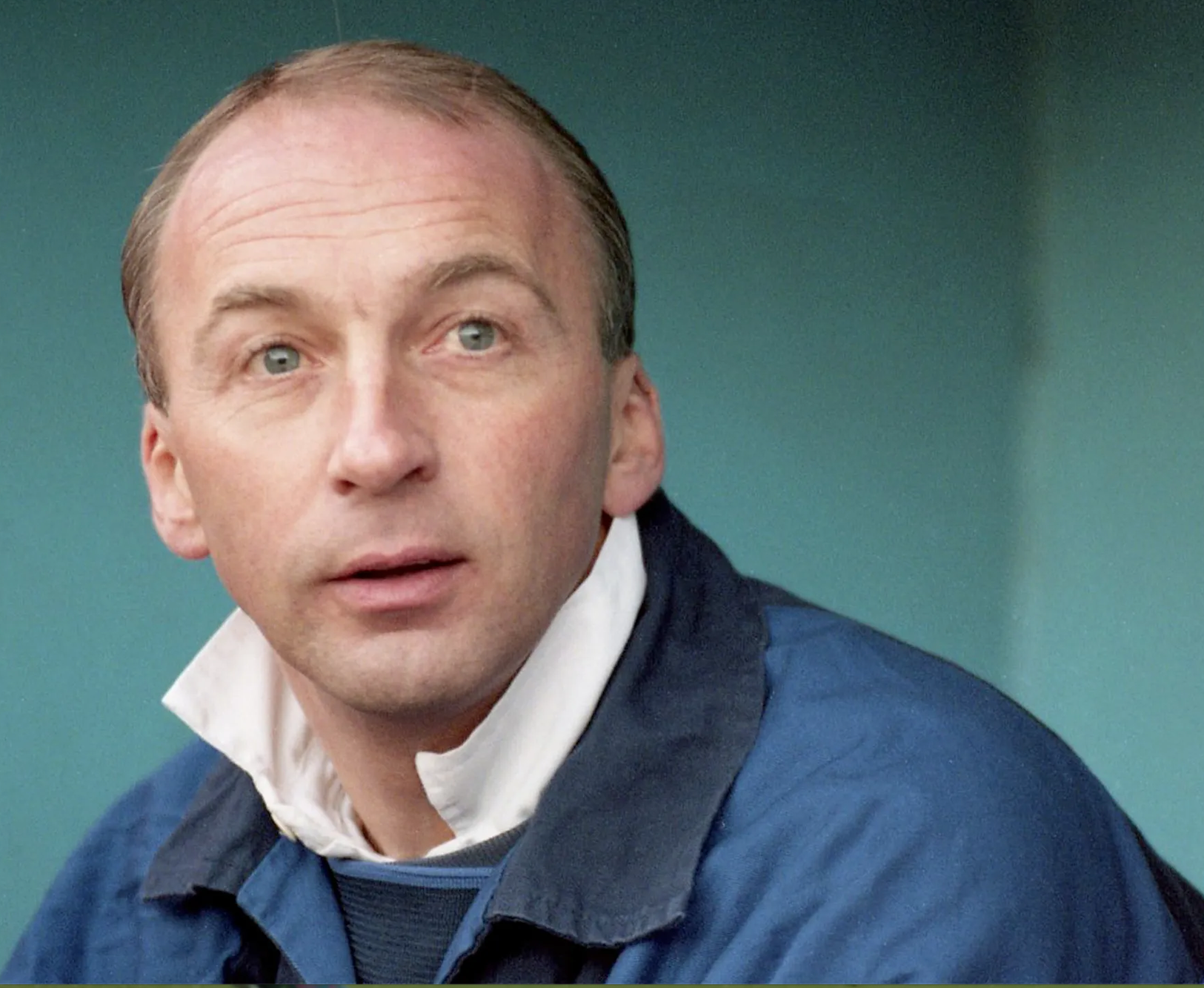
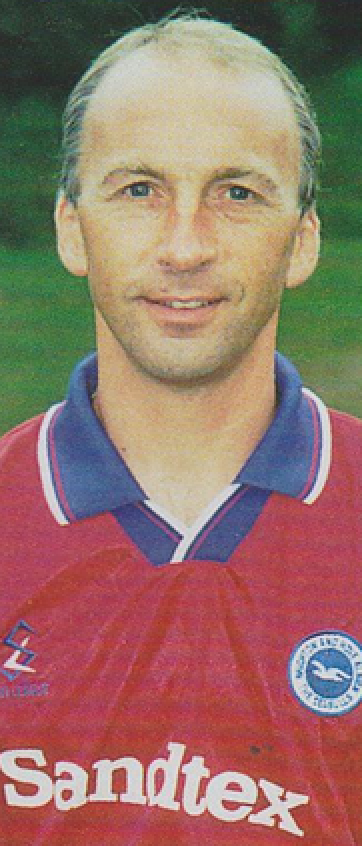
BOURNEMOUTH-BORN Steve Gritt is synonymous with Brighton & Hove Albion’s darkest hour because he was in the almost scalding managerial hotseat at the time the club nearly went out of the league.

The mastermind behind Albion’s ‘Great Escape’ in 1997 grew up in the Dorset coastal resort and began his footballing career with his local club in the 1970s. He later worked as the Cherries chief scout, although, apart from etching his part in Brighton’s footballing folklore, most of his more memorable days in the game came at Charlton Athletic.

Somehow, against all the odds, he managed to keep the Seagulls up when most doomsters could only see the club losing its status – and possibly going out of business as a result.

Gritt, who had been out of work for 18 months having been cast adrift by a new chairman at Charlton, took over from the beleaguered Jimmy Case in December 1996 with Albion 12 points adrift at the bottom of the fourth tier.

“I was delighted when Brighton offered me the chance to return,” he wrote in his matchday programme notes. “I know a lot of people were calling it the ‘worst job in football’ but when you love football as I do then you don’t always see things that way.”

Gritt was certainly an old hand when it came to football’s vicissitudes: rejected by AFC Bournemouth as a teenager, he went on to enjoy the elation of promotion as well as enduring the despair of relegation during his time with the Addicks.

Quite what would have become of Albion if they’d lost their place in the league is now only speculation – thankfully it wasn’t a bridge Gritt had to cross.

“I’d spent 18 years at Charlton as player and joint-manager, with just six months away from it, at Walsall. Then a new chairman, Richard Murray, came in and he didn’t like the joint-manager situation, so he put Alan Curbishley in sole charge, and I left,” Gritt explained.

Without a full-time job in the game, he stayed in touch by doing some scouting work for Tony Pulis at Gillingham, Brian Flynn at Wrexham and a couple of stints for West Brom. He even pulled his boots back on to play for Welling and Tooting & Mitcham.

Eager not to continue to have to queue at the benefit office for dole money, he applied for the vacant Albion manager’s job and got it after an interview in Crewe with the despised chairman Bill Archer and his ‘henchman’ chief executive David Bellotti.

“I knew very little about what was going on at the club,” Gritt told Roy Chuter in a retrospective programme piece. “I’d read bits in the papers, but my only interest was in the football. I wasn’t going to get involved.

“The place was very low. Some of the senior players filled me in on what was happening. In my first few days, there was graffiti on the walls saying I was a stooge, a whistle protest, a fan chained himself to the goal at half-time at my first match – that bothered me as we were winning at the time and went on to beat Hull 3-0.

“Then the next week I had to go onto the pitch with a megaphone at Leyton Orient to get the supporters to leave after the match – and they already hated me! I thought ‘What is going on?’ but my job was to get some sunshine back into the fans’ Saturday afternoons.”

After familiarising himself with the issues at a fans’ forum – “It helped me understand that the fans had to do what they had to do” – he devoted himself to improving the football and although the budget was tight, brought in the experienced defender John Humphrey and Robbie Reinelt, who would go on to score one of the most crucial goals in Albion’s history.

Puzzled by the plight of a side that contained good players in the likes of Craig Maskell, Ian Baird and Paul McDonald, Gritt maintained: “I never thought we’d go down.”

He recalled: “There was such a lot of experience. If I could organise them, we’d have a chance.”

Looking back years later

Ultimately, the club’s fate was decided in the final two games of the season – at home to Doncaster Rovers and away to Hereford United.

“We knew we could beat Doncaster,” he said. “There was a big crowd and a tremendous atmosphere – very tense. Maybe that got to the players – we didn’t play as well as we had done, but once we were 1-0 up, we weren’t going to get beat. We had a great defence.”

Gritt recalled: “I was beginning to think that there wasn’t going to be any goals in the game as there hadn’t been too many chances during the game that I can remember.

“Suddenly we had a corner from which Mark Morris eventually hit the bar, confirming my thoughts. But suddenly the ball fell to Stuart (Storer) who struck it into the net to spark off unbelievable celebrations on the pitch, off the pitch and in the dugout.

“Could we now keep our composure and see the game out to a memorable 1 nil win? We did! What a day and what a memory.”

And so to Hereford, who needed to win to avoid dropping out of the league. Albion only needed a draw to stay up. Everyone knows the story. A goal down at half-time when Kerry Mayo put through his own net, Gritt reminded the players at half-time that their jobs were on the line.

Relief at Hereford

He sent on Reinelt as a sub and in the 62nd minute he slotted a second half equaliser to send the Albion faithful into ecstasy and condemn the Bulls to their fate.

“I think if it had been Brighton, we could have faded into obscurity,” he said. “Most of the players would have left, and I don’t think we could have coped.”

As things subsequently transpired, it was Gritt who would soon be on his way.

It’s perhaps a bit of a cliché to say there is no sentiment in football but when Gritt’s side had managed only four league wins up to February in the 1997-98 season, and were second bottom of the table, chairman Dick Knight wielded the axe.

“No one who cares about the Albion will forget Steve’s tremendous contribution to our survival last season,” said Knight. “This season, given our difficult circumstances, feasibly we were only seeking to preserve our league status by a safe margin, but to date that comfort zone has eluded us.”

Thankfully you can’t keep a good man down for long, though, and within two weeks of getting the Brighton bullet, Gritt was back in the saddle as assistant manager to Billy Bonds at Millwall.

Although Bonds was sacked by the Lions only six weeks after Gritt’s arrival, successors Keith Stevens and Alan McLeary kept him on, working with the reserve team. Then Mark McGhee took charge and got Gritt back involved with the first team to take on organisational work such as set plays.

After McGhee took charge at Brighton, Gritt switched across south London back to Charlton, where he ran their academy for the next six years.

He returned to his hometown club in 2011 to become chief scout, initially under Lee Bradbury and then his successor, Paul Groves.

But he was disappointed to be let go in September 2012, telling theEcho: “They have changed the way they are doing their recruitment so there wasn’t really any need for me to be there.”

Bournemouth chairman Eddie Mitchell explained: “We have got analysts on board now and all games are available on DVD. We are trying to build a database from these clips.

“We felt it was impractical to send somebody all over the country to watch games every day when we can get DVDs of games and players.

“It was a role which diminished for us. Whether it is the right way to go remains to be seen but we have got to look at effectiveness and costs.”

Gritt said: “It was a big thing last year for me to come back to the club where I grew up. I am disappointed it has come to an end like this, but life goes on.

“I have lost jobs in the past and, hopefully, I will bounce back. I am looking forward to the next chapter in my career and will just have to wait and see what comes up.”

Born in Bournemouth on 31 October 1957, Gritt’s early footballing ability was first seen in the Kings Park First School football team of 1969, as the Echo discovered when readers were asked to send in their old sports photos.
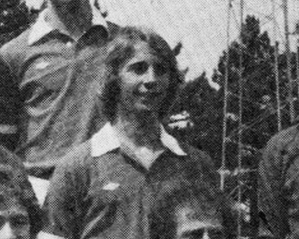
A rare sight: young Gritt with hair!

Gritt, a forward, was taken on as an apprentice by the Cherries and played a handful of games for the first team under John Benson before being released at the age of 18.

Colin Masters remembered on the Where Are They Now? website (in an October 2020 post) how Gritt linked up with non-league Dorchester who paired him up front with Ron Davies, the former Welsh international centre-forward who’d played for Southampton, Man Utd and Portsmouth.

“They were an exciting pair to watch at that level,” said Masters. “After three matches I was so impressed with Steve that I went and found the Dorchester club secretary and asked if he had signed Steve Gritt on a contract.

“The reply was ‘No’. Within two weeks, Charlton Athletic came in and took him (presumably for nothing) and he went on to have a very successful career for many years. Dorchester’s loss was Charlton’s gain!”

Between 1977 and 1993, Gritt played a total of 435 matches for the Addicks, including a relegation to the old Third Division in 1980 and two promotions – to the Second Division in 1981 under Mike Bailey and the First Division under Lennie Lawrence in 1986. He had a six-month spell with Walsall in 1989 before returning and experiencing another relegation in 1990.

Gritt became joint player-manager with Curbishley in 1991 and, under their stewardship for the next four years, the likes of Lee Bowyer, John Robinson, Richard Rufus and Shaun Newton established themselves as mainstays of the side.

When Charlton decided in 2021 to re-name their East Stand in Curbishley’s honour, a generous Gritt told londonnewsonline.co.uk it was a fitting tribute to his former colleague.

“We had our trials and tribulations but I’ve always judged that we did what was required to keep the club going. We had to steady the ship.
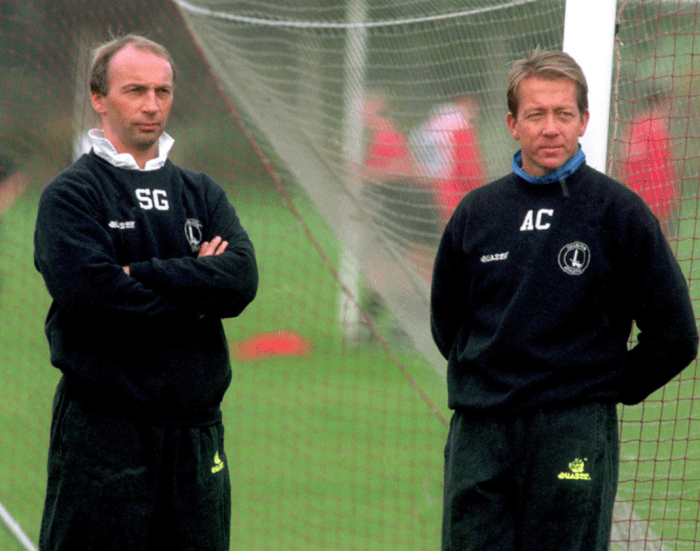
Joint Charlton manager with Alan Curbishley

“We would have loved to have kept Rob Lee, for example, but we had to do things for the well-being of the club so we could keep it going and give the fans something to shout about.

“It was a great time when we got back to The Valley (they’d spent several years sharing Selhurst Park with Crystal Palace).

“Then the club made a decision which I was never going to agree with. But when I look back to see what Alan did – he went on to do a significant job – I cannot complain. Ultimately what he achieved he thoroughly deserved.”

Gritt said: “When I was there we had to make sure we weren’t seen to be having disagreements although I cannot recall us having too many anyway.

“When we were on the training ground, we each knew what the other one would be doing during the sessions. We both had jobs to do on the day.

“I was more of a player than he was at that time – so the management side was more in his hands. It was fairly straightforward, until the club decided that they wanted one man in charge. That was obviously disappointing for me at the time but I have thoroughly enjoyed my career.

“Alan gave the club a massive block to build on – but no one could have envisaged how the club went after he left. It was a massive disappointment.”

After he left Bournemouth in 2012, Gritt dropped out of league football and spent five years as assistant manager at Ebbsfleet United, working with his former Charlton teammate (and ex-Albion youth team manager) Steve Brown and then Daryl McMahon, who he subsequently followed to League Two Macclesfield Town, Conference side Dagenham & Redbridge and Isthmian League Hornchurch.

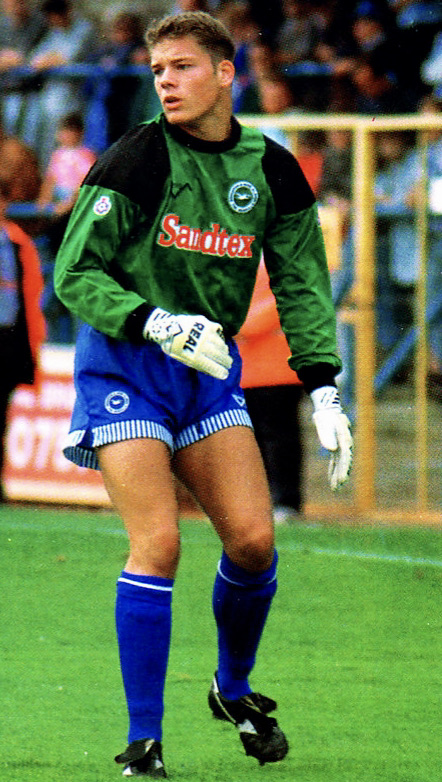
Hailed as a hero at the Amex

Nicky Rust played more than 200 games then quit at 24

IT SEEMS extraordinary that a young goalkeeper who played more than 200 first-team games for Brighton quit the professional game at 24.

Nicky Rust had been one of the country’s elite young players when he graduated from the FA School of Excellence at Lilleshall. Then, at Arsenal, he was coached by the club’s legendary former ‘keeper Bob Wilson and trained alongside England international David Seaman.

But with little likelihood of 18-year-old Rust dislodging the established Seaman any time soon (and Alan Miller as back-up), Arsenal let him go in the spring of 1993. He ended up playing for five different managers in five years with the Albion.

Young Rust found himself picking the ball out of his net after only four minutes of his debut in Albion’s colours. That was on trial on 23 April 1993 away to Norwich City when Albion’s reserves, under Larry May, were looking for their first win in TWENTY attempts!

The Canaries included big money signing Efan Ekoku in their side and he opened the scoring before Rust had even had chance to break into a sweat.

However, a fairly strong Brighton side, including striker Andy Kennedy, returning to action after a back injury, Ian Chapman and Dean Wilkins, equalised with a Wilkins special: a 25-yard free kick that flew into the top corner past Mark Walton, a goalkeeper who would join Brighton five years later. Kennedy won it for the Albion with a cool finish past Walton in the last minute of the game.

Rust’s arrival was as a direct replacement for Mark Beeney, whose £350,000 move to Leeds three days previously had quite literally saved the club from going under (all the money went to pay an overdue tax bill with the Inland Revenue threatening to wind up the Albion).

By the time the summer came round, cash-strapped Albion also let go long-serving ‘keeper Perry Digweed, who’d been with the club for 12 years. So Rust, still only 18, suddenly found himself first choice at the start of the new season.

“I was thrown in the deep end and didn’t have time to think about nerves,” Rust told the Argus in a 2002 interview. “Barry Lloyd brought me in. Obviously, like any youngster, I had aspirations of making it in the Premiership.”

Arsenal boss George Graham was a former teammate of Lloyd’s going back to their days together at Chelsea and that friendship had already helped Albion obtain the services of defender Colin Pates on loan two years earlier (Pates also made a permanent move to the Albion that summer).

“Arsenal were and are a big club,” said Rust. “I had Bob Wilson as a goalkeeping coach and David Seaman was there offering me a lot of good, sound advice. He was a bit like myself in temperament, laid back, and we got on very well. But unfortunately for me it didn’t work out, and I was released. I was pleased Albion wanted me.”

Albion lost their opening two games, 2-0 at Bradford City in the league and 1-0 at Gillingham in the League Cup but two wins and a draw followed. While the side’s subsequent poor form ultimately led to the end of Lloyd’s reign, Rust kept his place when Liam Brady took over and was Albion’s regular no.1 for the next four years, much of which was played out against huge turbulence off the pitch.

“There was a lot of turmoil when I was there and saving our league status was a huge relief and was, in a strange way, one of my highlights,” he said. “The club’s problems were constantly there in the background and we were getting headlines for all the wrong reasons.”

On the pitch, Rust only missed two games in his first three years at the Albion. He equalled a club record for clean sheets with five on the bounce across February and March 1995.

The young goalkeeper had his own place in Portslade and also proved to be something of a landlord for other young players. He welcomed to his home temporarily during their loan spells former Arsenal teammates Mark Flatts and Paul Dickov and, longer term, striker Junior McDougald who had been at Lilleshall at the same time.

“Even though he was ex-Spurs and I was an ex-Gunner we got on really well,” he said. “We came from similar areas. I was from Cambridgeshire and he was from Huntingdonshire.”

Rust played his 100th league game for the Albion away to Bournemouth the day before he celebrated his 21st birthday on 25 September 1995. Teammate Steve Foster celebrated his 38th birthday on the day of the game, which Brighton lost 3-1. “Fozzie was a big influence in the dressing room,” Rust remembered. “He was highly respected and one of the loud characters. I certainly got my ear bent.”

Rust’s 210 games for Albion place him eighth in the list of longest-serving goalkeepers in the club’s entire history. But an injury and loss of form in the 1996-97 season led to him losing his place to local lad Mark Ormerod, who had started the season and was in goal for the final six matches when Albion only just survived dropping out of the league.

Rust had to play a waiting game as Ormerod continued as first choice at the start of the 1997-98 season. Unluckily for him, his chance of returning to the starting XI coincided with his partner having their first child. In November 1997, after only two wins in 15 matches, manager Steve Gritt was planning to rest Ormerod and reinstate Rust for an away game at Hull City.

But Rust’s pregnant partner went into labour and he dashed to be with her for the birth. Typically, Ormerod kept the first away clean sheet Albion had managed for TWENTY months and when he repeated the feat the following Saturday at Hartlepool, they were the first successive clean sheets since Rust’s run of five in March 1995!

Rust had to wait another fortnight, after Ormerod had been beaten twice in a defeat at home to Rotherham, before finally getting his chance to return to first-team duties.

Before long he demonstrated what he was capable of in a game close to home territory, at Peterborough United on 28 December 1997.

Albion were under severe pressure but held on for a 2-1 win and Gritt said: “We showed a great deal of fighting spirit and commitment to overcome their attacks and, on the day, had Nicky Rust in superb form to keep them out when they got through our last line of defence.”

The game was marred by young Darragh Ryan breaking a leg but Jeff Minton celebrated his 24th birthday by scoring Albion’s first goal and substitute Robbie Reinelt added Albion’s second – the first goal he’d scored since that all-important equaliser in the last game of the previous season at Hereford.

It came halfway through a run of 17 league games Rust played that season, the last of which (a 2-0 defeat at Exeter City) coincided with Gritt’s last game in charge.

New boss Brian Horton went with Ormerod and Rust had to watch on from the sidelines, although he did prove quite adept at offering his opinion on matches when drafted in as a summariser for South Coast Radio coverage of games.

The matchday programme noted he had been “doing an excellent job with his inside knowledge whilst, at the same time, earning the respect of his fellow players whose loved ones have been listening at home”.

While admitting he’d rather have been playing, Rust said he enjoyed the commentary banter. “His perception of the game and sense of humour have certainly come through on the air; they have received many favourable comments from listeners,” the programme noted.

However, disillusioned with life as an understudy, Rust chose to leave the Seagulls at the end of that season.

“I had got used to being No.1, but I wasn’t complacent and worked hard to get back in,” he told the Argus. “But it wasn’t the best of times for me.

“Brian Horton called me in one day and said: ‘You’re not in the team, how are you feeling?’ I said I thought I needed a new challenge. He told me not to rush into anything and I waited until the end of the season when I still felt the same way. It was very amicable.”

However, the grass definitely wasn’t greener on the other side. He spent pre-season with Orient but didn’t get taken on and moved to Barnet instead.

On his debut for Barnet, he picked the ball out the back of his net NINE times as the ‘keeper’s new club went down 9-1 at home to Peterborough, the cause not being helped by two Barnet players being sent off, one as early as the ninth minute.

After only two games for Barnet, Rust switched to Conference side Farnborough Town (where former Albion defender Wayne Stemp was playing at the time).

“The trouble was that the only contract Barnet could afford, because of limited finances, was just not enough,” Rust told the Argus. “It just wasn’t viable for me to sign it. I had a young family, my partner Clare, a childhood sweetheart by the way, and baby daughter Eloise to consider. Quite simply, the family came first. I wasn’t prepared to put them at risk by being selfish.” They later had a son, Harrison.

Rust chose to quit the full-time game and went on to run his own building business.

“A lot of goalkeepers go on forever but, in my case, I thought, at 24, that I ought to go out and get a proper job,” he said. “I don’t regret it for a moment.”

He went on to play non-league closer to home with Cambridge City and later helped out with once-a-week goalkeeper coaching.

Born in Ely, Cambridgeshire, on 25 September 1974, his father Alistair was a policeman in Great Shelford, just south of Cambridge, and his mother Corinne ran her own curtain making business. Rust was one of five children: there were three brothers (James, Philip and Thomas) and a sister (Francesca).

From Swavesey Primary School he moved on to Sawston Village College and the promising youngster was chosen for the Cambridgeshire and East Anglia representative sides.

He then gained a place at the FA School of Excellence at Lilleshall. Apart from McDougald, other contemporaries were Kevin Sharp and Jamie Forrester from Leeds United and Tottenham’s Sol Campbell, Danny Hill and Andy Turner.

Rust had trials at Tottenham and Luton Town, and Manchester United showed some interest, but he chose Arsenal as an associated schoolboy. It was the summer of 1991 when he joined them on a full-time basis as a YTS trainee.

The young ‘keeper played for England at under 15, under 16 and under 18 level and after joining the Albion was at one point put on standby for England under 21s.

Fiery Ian Baird saw red in crucial last Goldstone game

FIERY Ian Baird was no stranger to yellow and red cards – in five games for Newcastle United he was booked three times!

And in Brighton’s last ever game at the Goldstone Ground, against Doncaster Rovers, Baird was sent off long before the game had even reached half time.

Something of a disciple of Joe Jordan, the tenacious centre forward who starred for Leeds United and Manchester United, Baird was his teammate at Southampton and played under the Scot at Hearts in Scotland and at Bristol City.

Baird didn’t fear incurring the wrath of supporters, happily playing for arch-rival clubs in his pursuit of goals. Indeed, on Teesside he earned a place in fans’ folklore by scoring two goals in an end-of-season clash that not only kept Middlesbrough up but prevented their noisy north-east neighbours Newcastle from getting automatic promotion to the elite (to make matters worse, they then lost a play-off semi-final to Sunderland).

Baird scored twice in that 4-1 win over United on the final day of the 1989-90 season at Ayresome Park, and earlier the same season he’d scored a winner for Leeds United against Newcastle at Elland Road.

Baird played on the south coast for both Southampton and Portsmouth before making the Albion his 10th and last English league club. He joined for £35,000 from Plymouth Argyle when the club was in turmoil off the field and floundering at the bottom of the basement division. But he went on to net 14 goals in 41 games.

He spoke about the move to Tim Ashton of the Sutton and Croydon Guardian in July 2016. “I was at Plymouth, and Jimmy Case took me on and explained all the problems to me about the likes of (David) Bellotti,” he said.

“To be honest, as a player, all you are bothered about is making sure you get your wage, and you’re not really taking any notice of what he is saying.

“I played at Brighton on many occasions, I have been there with Leeds and Middlesbrough, and it was always a favourite place of mine to go – and as soon as I got there as a player, I knew the importance of survival.”

Baird continued: “Brighton are a big club, and I could not believe what was happening. It took a strain on Jimmy, that’s for sure, and he was not the man he was normally with all the pressure.

“Then he was sacked and we were 12 points adrift at Christmas – they brought in Steve Gritt, and he brought a different kind of management.

“It got to February and March time, then all of a sudden Doncaster Rovers and Hereford were sucked into it – we had to beat Doncaster in the final (home) game.”

Sent off 11 times in his career, it was his dismissal just 18 minutes into that game in 1997 that threatened the very existence of the club – and he was captain that day!

Baird later told portsmouth.co.uk: “It was just a natural thing really. Sometimes my enthusiasm got the better of me. There were plenty of times I chinned someone or got into trouble.

“The most stupid one was when me and Darren Moore had a fight. He was playing for Doncaster and I was playing for Brighton in the last game at their old Goldstone Ground.

“He came through the back of me, there was a bit of afters and I ended up trying to give him a right hook, and there was a bit of a ruck.

“We had a bit of rough and tumble and I was just lucky he didn’t chase me up the tunnel because he’s huge!”

Thankfully, Albion famously still won that match courtesy of Stuart Storer’s memorable winner. Because red card bans were delayed for 14 days back then, Baird was able to play in what has since been recognised as the most important game in the club’s history: away to Hereford United.

As the history books record, it was Robbie Reinelt, on as a sub, who stepped into the breach to rescue a point for the Albion, enough to preserve their league status and to send the Bulls down.

In November of the following season, Baird still had six months left on his Brighton contract, but a surgeon told him he should not play pro football any more because of a troublesome knee, so he decided to retire.

But, when he had turned 35, he said: “I had a phone call from Mick Leonard (former Notts County and Chesterfield player) who played in Hong Kong, and he said they were desperate for a striker.

“I went for a month’s trial and ended up signing an 18-month deal. My knee flared up again and they offered me a coaching role, and it ended up with me managing the side.”

He added: “Then I was put in charge of the national side for the Asian Cup qualifiers and we played in Jakarta in front of 75,000 people, and then in Cambodia in front of 1,200 people – it was certainly an experience that is for sure.”

Over the 17 years of his league career, Baird commanded a total of £1.7m in transfer fees; £500,000 Boro paid Leeds being the highest.

Although born in Rotherham on 1 April 1964, the family moved first to Glasgow and then Southampton when Baird was small, his father having sailed from the south coast port when working on the Queen Mary.

The always comprehensive saintsplayers.co.uk notes the young Baird survived meningitis as a six-year-old and later came to the attention of Southampton when appearing in the same boys team, Sarisbury Sparks, as their manager Lawrie McMenemy’s son, Sean.

The excellent ozwhitelufc.net.au details how Baird’s footballing ability saw him play for Bitterne Saints, St. Mary’s College, Southampton, Southampton and Hampshire Schools, before earning England Schoolboy caps in 1978-79 alongside the likes of Trevor Steven and Mark Walters.

He was offered terms by Swindon Town but he chose to stay closer to home and Southampton took him on as an apprentice in July 1980. He turned professional in April 1982 but McMenemy’s preference for old stagers Frank Worthington and the aforementioned Jordan limited his opportunities and he made just 21 appearances for Saints, plus three as a sub, scoring five times.

He was sent out on loan a couple of times: to Cardiff City in November 1983, where he scored six goals in twelve League games, and that spell at Jack Charlton’s Newcastle in December 1984 where aside from a booking in each of his four starts and one appearance from the bench, he scored once – in a 2-1 defeat at West Brom on Boxing Day.

Taking the advice of former teammate Jordan, Baird signed for Eddie Gray at Second Division Leeds in March 1985 and undoubtedly his most successful playing years were there, in two separate spells.

He played more than 160 matches and scored 50 goals. In the 1986-87 season, Gray’s successor, Billy Bremner, made him captain. The Yorkshire Evening Post spoke of “the powerhouse striker’s fearless commitment, no-holds-barred approach and goalscoring ability”.

In the blurb introducing his autobiography Bairdy’s Gonna Get Ya! (written by Leeds fan Marc Bracha) it says “he’s best remembered for his spells at Leeds, where goals, endless running, will to win and fearless approach ensured he was adored by the fans”.

In the 1987-88 season, though, he was wooed by the prospect of playing at the higher level he had just missed out on with Leeds (they’d lost in end-of-season play-offs) and signed for Alan Ball at Portsmouth for £250,000; he later described it as “the worse move I ever made”.

The season was disrupted by injury and disciplinary problems, and he returned to Leeds the following season, being named their Player of the Year in 1989.

But when ex-Albion winger Howard Wilkinson, then manager of Leeds, signed Lee Chapman, Baird sought the move to Boro. He told Stuart Whittingham in 2013 for borobrickroad.co.uk:

“I felt a little aggrieved and basically I spat the dummy out and asked for a move.

“He (Wilkinson) said that he didn’t want me to go but I insisted and within 24 hours I was speaking to Bruce Rioch and Colin Todd and I was on my way to Middlesbrough.”

Curiously, though, when Leeds won promotion at the end of the season, Baird picked up a medal because he had played his part in the achievement.

At the end of the 1990-91 season, Baird spent two years playing for Hearts under Jordan, although a torn thigh muscle restricted the number of appearances he’d hoped to make and at the end of his deal he moved back to England and signed for Bristol City, initially under Russell Osman and then Jordan once again.

After his experience in Hong Kong, Baird returned to Hampshire to put down roots back in Southampton, and pursued business interests in vehicle sales/leasing and the sports gear industry. He also spent five years managing Eastleigh before becoming Paul Doswell’s assistant at Sutton United. He then followed him to Havant & Waterlooville in May 2019.

Cards came up trumps for ex-Saints full-back Kevan Brown

FULL-BACK Kevan Brown made more than 120 appearances for Southampton reserves during three years as a young professional but it took a move east along the coast to Brighton to play league football.

Brown arrived at the Goldstone Ground for a fee of £7,500 shortly after Barry Lloyd had taken over from Alan Mullery early in 1987.

Lloyd preferred the youngster from Andover as right-back to the ageing Les Berry, who’d joined on a free transfer the previous summer.

The club put Brown into digs in Hove (run by Val and Dave Tillson) with another young player who had moved away from home, former Everton youngster Darren Hughes.

In a programme profile feature, Brown said Hughes had been a big help in him settling into his new surroundings. “He has been showing me around the area and we’ve become good friends,” he said. “I’m glad I wasn’t put in a hotel on my own.”

Unfortunately, Brown was only on the winning side twice in the 15 matches he played that season and Albion were relegated from the second tier in rock bottom place.

Brown was a permanent fixture in the no.2 shirt for 46 league and cup matches in the 1987-88 season until the arrival of experienced defender Gary Chivers from Watford.

With promotion in sight, while Lloyd dropped the experienced captain Doug Rougvie in favour of the relatively untried Robert Isaac in the centre of defence, he saw Chivers rather than Brown as the better option at right-back.

Chivers went straight into the side for the promotion run-in and the 2-1 home win against Walsall on 12 March 1988 was the last time Brown appeared that season.

He played in the opening two games of the following season but Chivers on the right and Keith Dublin on the left were Lloyd’s preferred full-back pairing, and Brown found himself on the outside looking in.

Born on 2 January 1966, Brown was an associate schoolboy with Southampton at the age of 13, following in the footsteps of his father Peter, who had played for Saints in the late 1950s.

Brown said in an Albion profile feature that his father and Saints youth development officer Bob Higgins had been the biggest influences on his career, although Higgins later drew opprobrium.

Lawrie McMenemy awarded Brown a professional contract but neither he nor his successor Chris Nicholl elevated the young full-back to the first team, although he did get to play against Manchester United in Trinidad and Tobago while on tour with Southampton.

Having had his fill of reserve team football at Saints, rather than repeat the experience at Brighton, he moved on to Aldershot in the autumn of 1988.

He spent four years there and made quite a few more appearances than the 175 that the record books show: the 1991-92 season records having been expunged  after the club went out of business.

Aldershot found themselves in a worse financial situation than the Albion were to suffer later that decade and the club was finally wound up owing £1.2m on 25 March 1992.

Five days earlier, Brown played in a match – alongside future Albion hero Robbie Reinelt – that was the last game Aldershot would play.

Although his next career move saw him drop out of the league, he enjoyed huge success in terms of silverware and recognition.

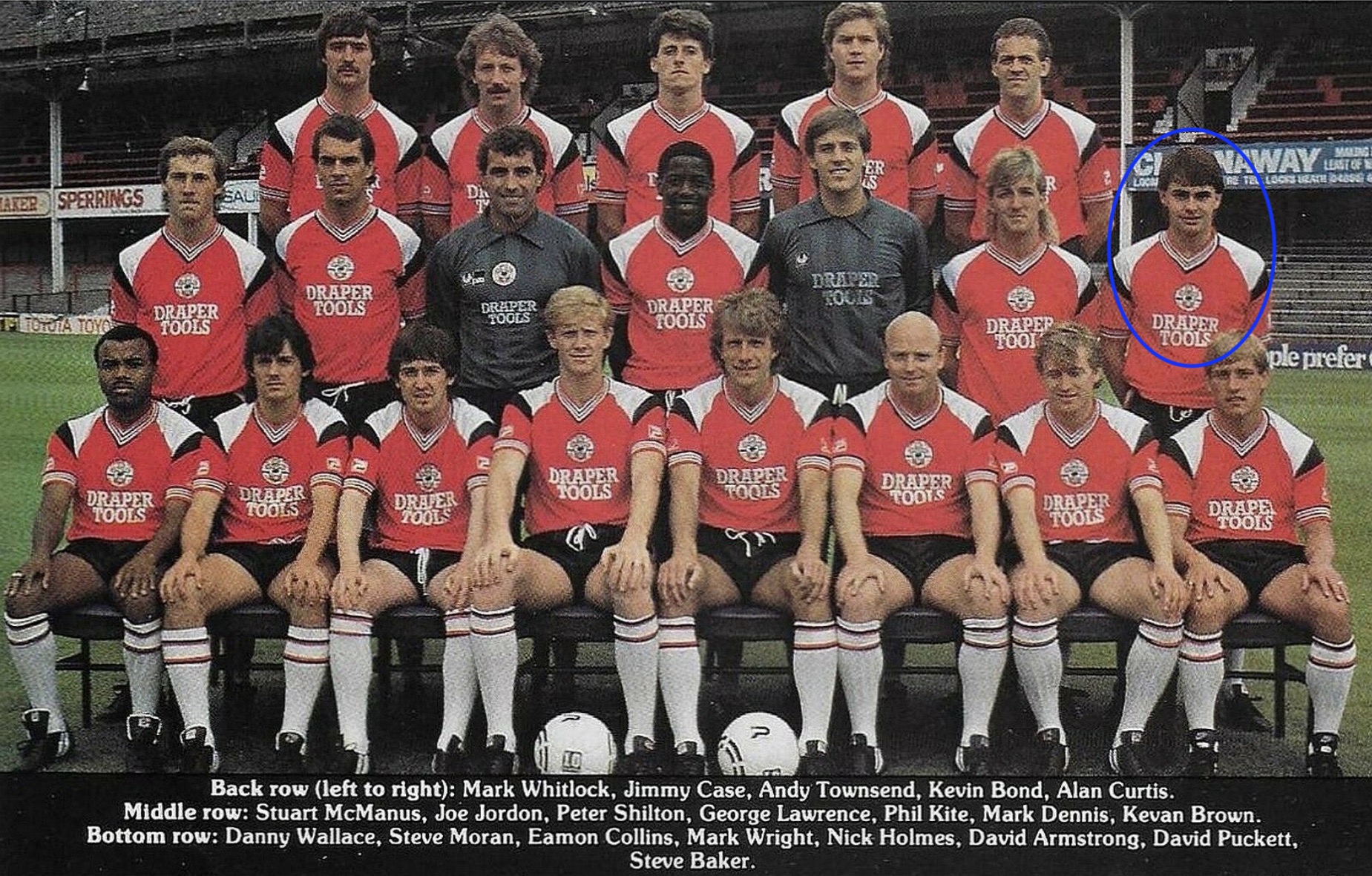
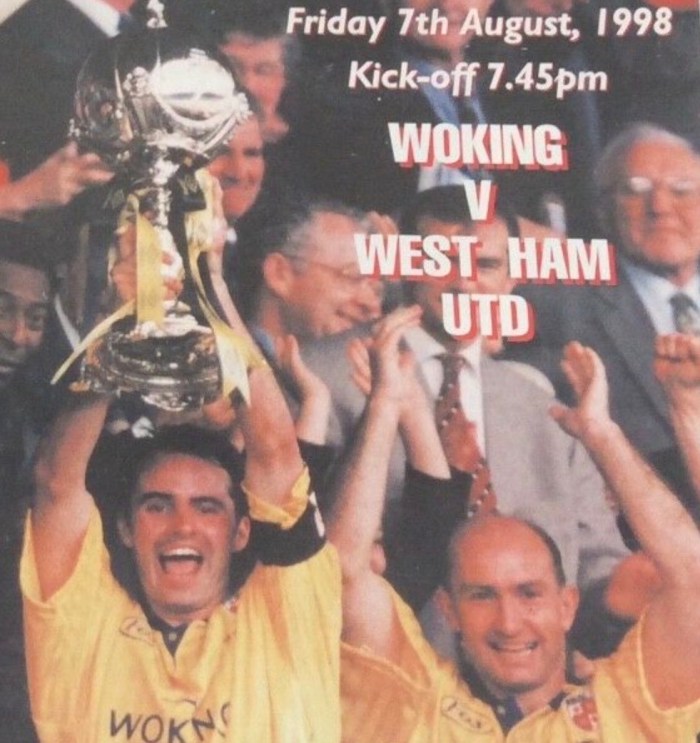
He joined Geoff Chapple’s Woking in the Football Conference and captained The Cards to three FA Trophy wins – in 1994, 1995 and 1997 – with veteran former Albion winger Clive Walker the side’s talisman.

In addition to leading his team up the steps at Wembley to lift the silverware, Brown’s performances with Woking earned him international recognition with the England semi-professional ‘C’ side.

He made his debut in a 1-0 win over Wales at Huish Park, Yeovil, on 28 February 1995. He made three more appearances that year: away to Netherlands (0-0) on 11 April, home on 19 May (played in St Albans) against the Highland League (3-4), then away to Gibraltar (3-2) on 31 May.

His fifth and final appearance was on 2 April the following year as England beat the Netherlands 3-1 at the Nene Park home of Rushden & Diamonds.

Brown’s loyalty to Woking – he made more than 350 appearances across six years – was rewarded with a testimonial game at home to West Ham United in August 1998.

More than 5,500 turned out at the Kingfield Stadium to see the Hammers edge it 2-1 with goals from Frank Lampard and Steve Lomas. Rio Ferdinand limped off early in the match and Ian Wright played up front for West Ham.

The game took place five months after Brown had moved on from Woking to Yeovil Town.

Chapple’s former assistant, Colin Lippiatt, had taken charge at Huish Park in January that year, having joined three months earlier as a coach under Graham Roberts.

One of his first moves was to sign Brown and teammate Steve Thompson (who ended up staying with The Glovers for ten years). Brown stayed for two years, making a total of 88 appearances, latterly playing under Thompson when he took over as caretaker manager following Lippiatt’s departure.

The arrival of former Chelsea defender David Webb as manager in March 2000 spelled the end of Brown’s time at Yeovil and he returned to Woking to play a further 25 games as they battled against relegation from the Conference in the 2000-2001 season.

Playing part-time had enabled Brown to pursue a teaching career and in April 2007 he was appointed director of sport at independent co-educational St Francis School in Pewsey, Wiltshire.

Brown’s devotion to the club who set him on the road remains undimmed and on his Twitter account @KevanBrown05 he declares himself a Saints season ticket holder.

Why the ‘hook’ at Edgar Street was a great relief to ex-Saint Paul McDonald

Paul McD on ballIF PAUL MCDONALD hadn’t been subbed off in that infamous game away to Hereford United in 1997, Brighton might have gone out of existence.

That’s some statement to make, but it’s a thought that has crossed the diminutive wideman’s mind over the years.

It was McDonald who gave way for substitute Robbie Reinelt to enter the fray and, as the history books thankfully record, it was he who buried the equalising goal to restore Albion’s status as a Football League club and condemn Hereford to relegation instead.

Even as recently as August 2017, in a preview to the Albion’s opening Premier League game against Manchester City, the current day Kilmarnock academy director shared his thoughts with the Daily Record (pictured below).

paul mcdonald Daily Record

“The prospect of top-flight football would have been the furthest thing from anyone’s mind at full time at Hereford but I’m over the moon to see them in the position they are in now,” said McDonald.

“I’m often reminded of that game and I’m actually claiming the assist because Robbie Reinelt replaced me. I’m just glad the chance didn’t fall to me or they might well have ended up as a non-league club!

“Seriously, it was a huge day for Brighton. I’ve never been involved in a game with so much at stake.

“It is a massive club and to be in the position they were in was bad.

“If we had lost to Hereford then in an extreme circumstance they could have folded but businessman Dick Knight had come in as chairman and he may not have let that happen.”

Born in Motherwell on 20 April 1968, McDonald was spotted playing local boys club football in his home town by Hamilton Academical and he was taken on in June 1986.

Over the course of seven years, he made a total of 215 appearances for the Accies before trying his luck south of the border.

Premier League Southampton paid £75,000 for his services but he failed to make a breakthrough and managed just three substitute appearances for Saints.

During the 1995-96 season, he was loaned out to Jimmy Mullen’s third tier Burnley where he made 11 appearances in two months, his only goal coming in a 2-0 Auto Windscreens Shield win away to Peterborough.

However, one of his matches included a 3-0 win over Brighton (in which one of the Clarets’ scorers was Kurt Nogan) and, according to the excellent clarets-mad.co.uk, McDonald so impressed watching Brighton manager Jimmy Case that day that it prompted him to sign the winger the following February.

Case persuaded hard-up Albion to part with £25,000 (or £40,000 according to the matchday programme)  to take McDonald along the coast, where at last he managed to get plenty of game-time.

In two years with the Seagulls, he played more than 60 games and scored five times. The first came in a 2-1 defeat away to Exeter City; he was also on the scoresheet in a 3-0 home win over Hull City, then scored from the spot in a 3-2 home win over Fulham in the Auto Windscreens Shield three days later.

He was twice more successful from the penalty spot, one coming five minutes from the end of the game to secure an unforgettable 4-4 draw with Orient at the Goldstone, the other in a 2-0 home win over Cardiff.

At the start of the following season, with the Albion in exile at Gillingham, McDonald was on the scoresheet in a 1-1 draw with Macclesfield, the toxic atmosphere around the proceedings captured by The Independent.

As financial constraints forced Albion to let go of five senior players in December 1997, McDonald returned to Scotland with Dunfermline. He then moved onto Partick Thistle and Greenock Morton before finishing his playing career back where it started at Hamilton Academical.

McDonald stayed in the game, initially working at Hamilton as youth development manager, before becoming the SFA community coach at Kilmarnock in 2003.

In 2013, he became academy director and in October 2017, McDonald was appointed caretaker manager of Kilmarnock after Lee McCulloch stepped down as boss with the club bottom of the table.

Goalscorer Craig Maskell among Town’s top 100 crowd favourites

Screenshot

CRAIG MASKELL had a decent near 1 in 3 goalscoring record for Brighton & Hove Albion but he’s possibly best remembered for a shot that didn’t go in.

When Maskell’s curling effort in the relegation decider at Hereford United on 3 May 1997 struck the post rather than going in, fortunately Robbie Reinelt was on hand to slot home the rebound to earn Albion the draw that ensured they stayed in the league.

Born Craig Dell Maskell on 10 April 1968 in Aldershot, perhaps it was his destiny to play for Southampton! (for younger readers, The Dell used to be Southampton’s home ground).

Indeed, Maskell started his professional career at Southampton, signing pro forms just after his 18th birthday. But he appeared in only six league games for the Saints before joining Huddersfield Town in May 1988 for a £20,000 fee.

His new teammates included former Seagulls Chris Hutchings and Kieran O’Regan and the goals really flowed for him in the 1988-89 season when he scored 28 times in 46 games.

Arguably his most memorable match came in the 1989-90 season when he scored four in a 5-1 win at Cardiff City, thus becoming only the third player in Huddersfield’s history to score four in an away match.

By the end of that season, he’d scored an impressive 43 goals in 87 games for Town and, at the time of Huddersfield’s centennial in 2006, Maskell’s prolific goalscoring for them led to his inclusion in The Fans’ Favourites, a book listing their top 100 Town players.

That prolific scoring record earned him a £250,000 move to Third Division Reading. He scored in a season-opening 3-1 win at Exeter City and had 10 goals by the season’s end as the Royals completed a mid-table finish under player-manager Mark McGhee, who later became Brighton boss.

With John Madejski settling in as the new owner, and McGhee finding his feet in the managerial chair, the 1991-92 season saw Reading finish 12th. Maskell ended up top scorer with 16 goals in 35 appearances (plus five as sub), three of them coming in a 4-2 win away to Darlington.

In the summer of 1992, player-manager Glenn Hoddle paid £250,000 to take Maskell to second tier Swindon Town (where he had previously spent a month on loan in 1987).

It was to prove a memorable season for the Robins as they won promotion to the top tier for the first time in their history, via a 4-3 play-off victory over Leicester City. Maskell was leading scorer with 23 goals in a side captained by central defender Colin Calderwood, later Chris Hughton’s assistant manager at Brighton.

Maskell made his Robins debut on the opening day of the 1992-93 season, in a 1-0 win over Sunderland, and scored his first goal in a 2-2 draw at Wolves in late August. He went on to net eight times in the opening ten games of the season before suffering a mini goal drought between December and April.

Nevertheless, Maskell bagged two in a 6-4 win at Birmingham before scoring in both legs of the play-off semi-final against Tranmere Rovers. He then scored Town’s second at Wembley, thumping a left-footed drive off the post and into the net.

Although he started the first two matches amongst the elite, he then struggled to get game time in the Premier League, often warming the bench as Jan Age Fjortoft,  Andy Mutch and Keith Scott started ahead of him.

He scored twice in a 3-3 draw at Sheffield Wednesday on 29 December 1993, but he left the club in February 1994, returning to former club Southampton for a £250,000 fee.

However, Saints already had a fair bit of striking talent in their ranks and once again he found his opportunities limited, this time by the likes of Matt Le Tissier, Neil Shipperley and Gordon Watson. As a result, he only managed 17 Premier League starts.

He had a five-game loan spell at Bristol City but then joined Brighton on 1 March 1996, making his debut the following day against Brentford. He didn’t have to wait long for his first Albion goal, scoring against Oxford United on 12 March and then hit two four days later at home to Hull City.

The off-field shenanigans at Brighton were a big distraction at the time but on the pitch Maskell managed to score a total of 20 goals in 69 games, crucially netting 14 of them in 37 games during that make-or-break 1996-97 season.

After 17 games the following season, he was one of five senior players whose contracts were terminated early, in December 1997, as the cash-strapped Seagulls in exile at Gillingham were forced to make drastic cuts to survive. Maskell had a brief spell playing for Happy Valley in Hong Kong before linking up with Leyton Orient for 18 months.

It is recorded in a number of places that Maskell decided to quit the professional game while walking off the turf at Wembley having played as a substitute in the Orient team beaten by Scunthorpe United in the Nationwide League third division play-off final.

“I turned to one of my team-mates and said: ‘That’s enough’,” Maskell said. “I’d spent too much time away from my family and too little time on the pitch at Orient.”

He had scored just twice in 23 games for the O’s, however, he continued playing at non-league level for several years, turning out for Hampton & Richmond Borough, Aylesbury United and Staines Town, as well as being coach and assistant manager to Steve Cordery.

In an article in The Times on 16 November 2000, just prior to a FA Cup first round tie between Hampton & Richmond Borough and Barnet, Maskell talked about what he had learned from the various managers he’d played under.

“I look to Glenn Hoddle for his ability to create flair in attack and Lawrie McMenemy because he was so good at man-management.

“Most of my ideas on defensive organisation I learnt from Dave Merrington, who was youth-team coach at Southampton. He was fantastic. You just have to look at the players he found for the club, not just myself but Matt Le Tissier, Alan Shearer, the Wallaces and another dozen or so less well-known players who had good careers.”