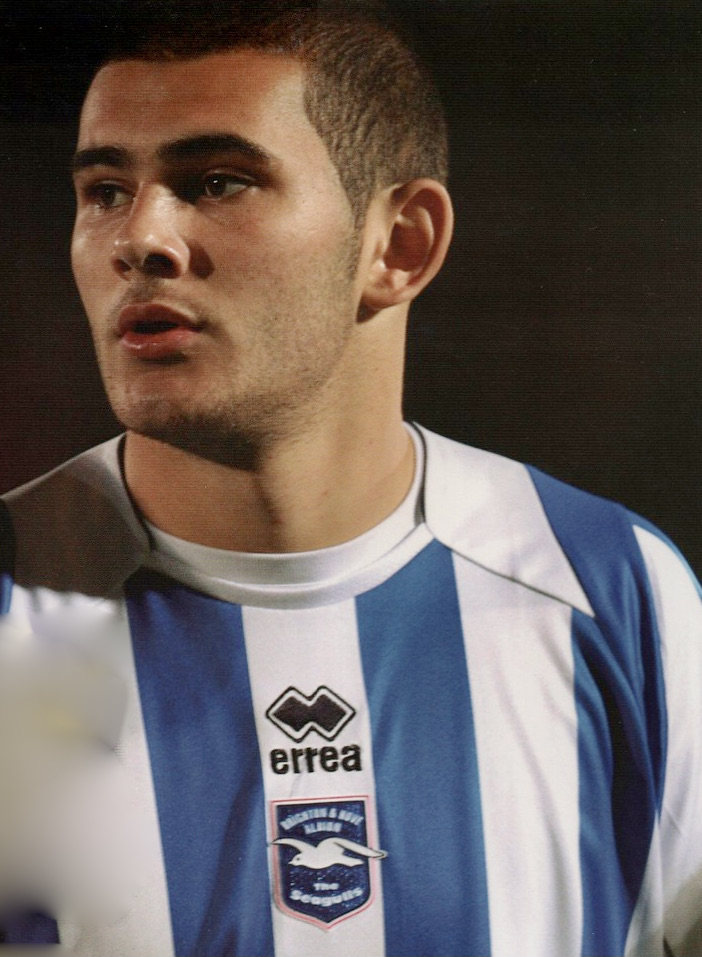
Bradley Johnson always liked a pop from long range

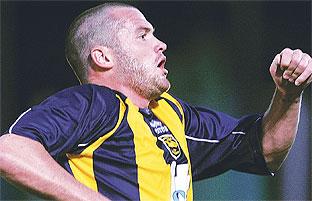
Bradley Johnson scores on his debut v Leicester (photo Simon Dack)

THE COCA-COLA Kid’s cousin was an instant hit when he joined seventh-from-bottom Brighton on loan from second-placed League One rivals Leeds United in October 2008.

Bradley Johnson, who’d heard about the Seagulls from his relative Colin Kazim-Richards, scored twice on his debut as the Seagulls turned round a 2-0 half-time deficit to beat Leicester City 3-2.

“I hadn’t played for two months and Micky (Adams) asked if I was fit and I admitted I wasn’t match fit, but he said he would throw me in anyway,” Johnson recounted.

“The two goals I scored gave me great confidence as a player, but the win helped everyone,” he said. “On the night, the fans were immense and the result gave us all a good boost.”

In an Argus interview in March 2021, Johnson recalled: “I was a young boy from Leeds coming into a struggling team against a team who were flying so it was a bit daunting for me.

“I didn’t know what to expect but, as debuts go, I don’t think it could have gone any better.

“Anyone who knows me knows I like a shot and I’ve always had that since a young age. Some don’t go where planned but thankfully on that night they did.”

Albion had failed to score in their three previous games, against Hereford, Peterborough and Hartlepool, and soon found themselves 2-0 down to City courtesy of two Matty Fryatt goals.

Adams hauled off a somewhat better known loanee – the ineffective Robbie Savage – at half-time, along with wideman Kevin McLeod, and the changes galvanised the Albion in the second half.

Right-back Andrew Whing reckoned the withdrawal of Savage might have helped Johnson to shine. “Maybe he’d felt a bit in Robbie’s shadow up until that point,” he told Spencer Vignes. “But he really stepped up in the second half and scored twice, one of them an unbelievable strike. We needed a spark and that was it.

“Bradley deserved a lot of credit that night. He’d come to us from Leeds and he just took responsibility, scored twice and got us back into it. He really made an impression.”

After Johnson’s pair of long range strikes past David Martin in the Leicester goal, City defender Jack Hobbs sealed a memorable comeback for the Seagulls when he diverted Joe Anyinsah’s cross past his own ‘keeper.

It was a tad ironic that Johnson should have scored against Leicester too because at the start of that year he came very close to signing for them but couldn’t agree terms and ended up at Leeds instead.

Five days after his impressive Albion debut, Johnson was on the scoresheet again as Adams’ side beat Millwall 4-1 at the Withdean Stadium (Glenn Murray, two, and Dean Cox, the other scorers).

Kazim-Richards, whose £250,000 transfer from Bury to Brighton had been paid for via fan Aaron Berry winning a competition organised by the soft drink giant, had already moved on to Fenerbahçe in Turkey via Sheffield United by the time Johnson arrived in Sussex.

But he said: “My cousin Colin had played there so I knew Brighton and I knew a few lads, and that it was a good place to be. But it was Micky that really sold the place to me and I just wanted to play. That is all I wanted to do; I didn’t look at the side’s league position. I just wanted to be a part of what Micky spoke about and help the club beat relegation.”
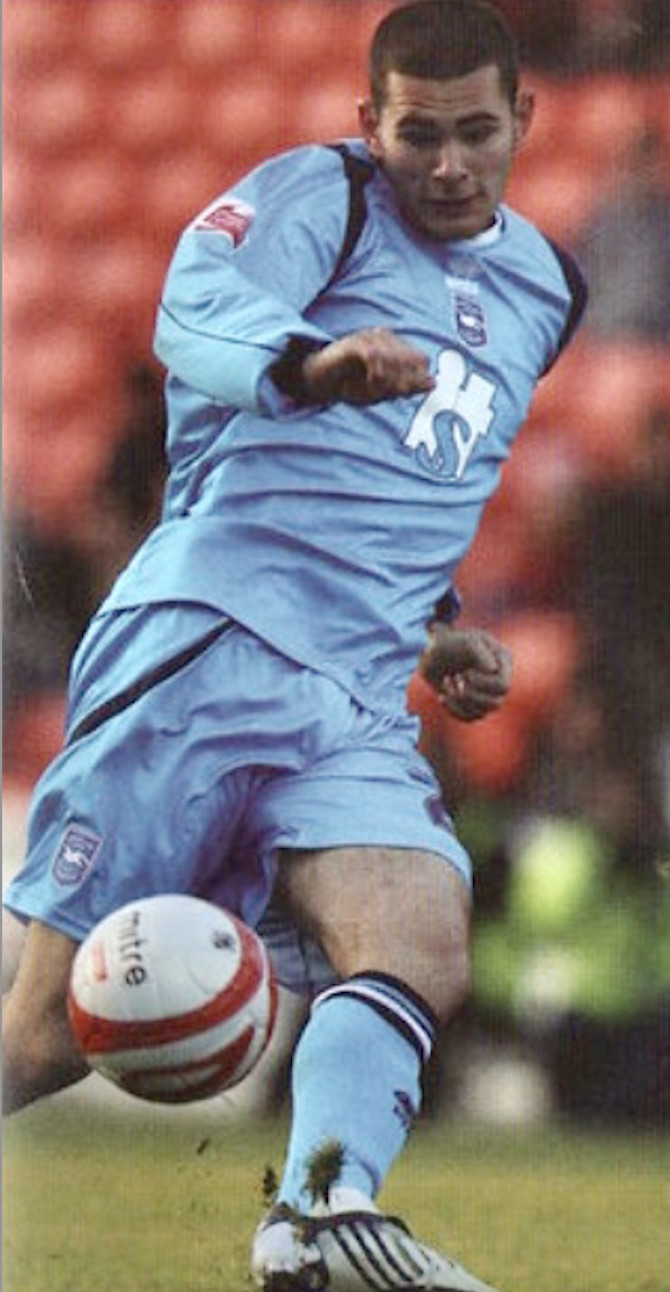
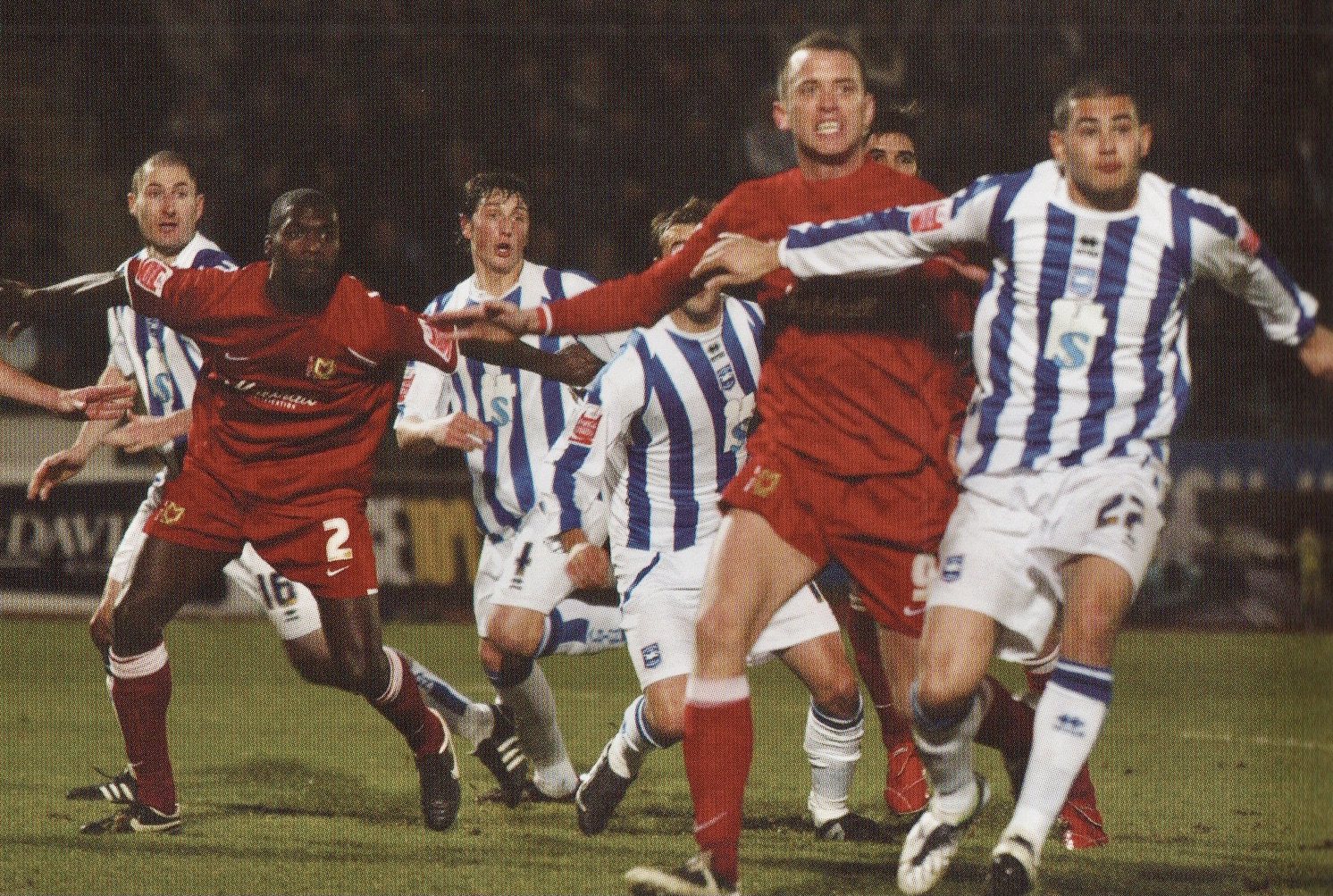
Unfortunately, the mini revival in the autumn of 2008 didn’t continue although Johnson was on the winning side again when, in his 10th and last game for the Albion, two Nicky Forster goals earned a 2-0 win at Swindon Town, spoiling Danny Wilson’s first game in charge of the Robins (Peter Brezovan was in goal for Town).

By then, Johnson, who’d lost his place at Leeds following an injury, had scored four times for the Albion (some records show he scored twice in a 4-2 home defeat to MK Dons, others that the second Brighton goal was netted by Stuart Fleetwood).

Somewhat gallingly, Johnson was next seen at Withdean less than three weeks into the new year – back in the fold with Leeds as they took all three points in a 2-0 win on 17 January 2009.
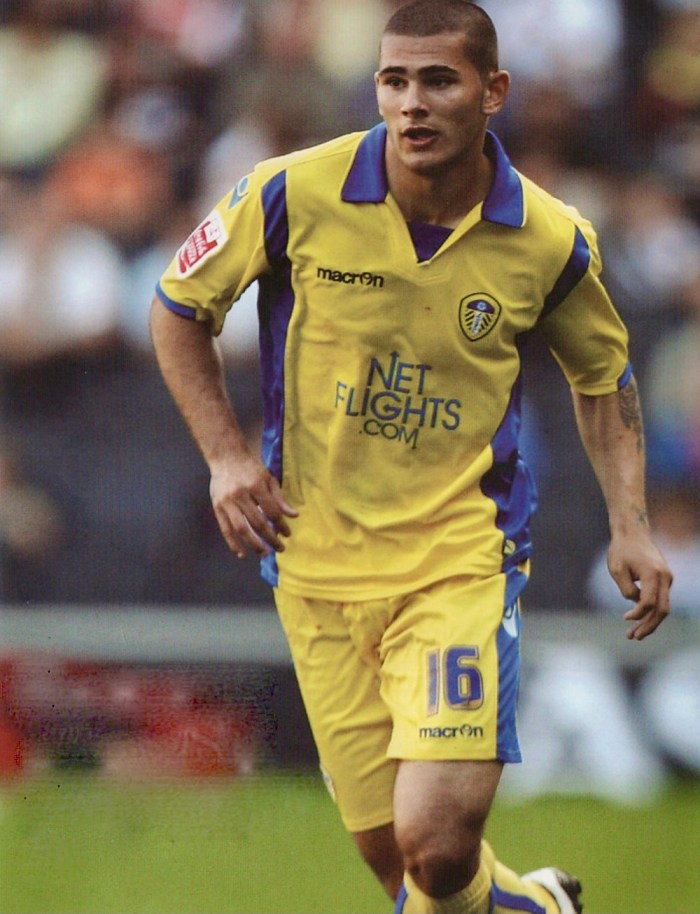
“When I was out on loan, Leeds were struggling and when I went back Gary McAllister got the sack. Simon Grayson came in and I didn’t know where my future lay, but Grayson told me I had a part to play and it was down to me to train hard and prove myself,” he said.

“He was true to his word, and I kept my head down, then I ended up coming back to Brighton and played against them for Leeds. It was a bit surreal to be in the away dressing room, but that is football.”

Johnson became a regular at Elland Road for the next two years and was part of the Leeds side who won promotion to the Championship in 2010, as well as earning headlines in memorable FA Cup ties against Premier League opposition.

In particular, in a third round replay against Arsenal at Elland Road in January 2011, Johnson scored a spectacular goal for the home side although they lost the tie 3-1.

Having spent five years on Arsenal’s books as a promising youngster, it was a bittersweet moment for Johnson who said afterwards: “It was a goal I’m not going to forget. I’m an Arsenal fan myself and so are all my family.”

On the transfer list at the time because he couldn’t agree a new deal with Leeds, he eventually got the chance he craved to play in the Premier League that summer when he moved to newly promoted Norwich City, where his teammates included Elliott Bennett and Andrew Crofts.

It was Canaries boss Paul Lambert who sold the club to him at the time but he also sang the praises of his successor, Chris Hughton.

Johnson joined the Canaries

“Hughton did come in with a different style of play,” he told pinkun.com. “He was very tactical. He was mindful that we were playing in the Premier League against good players whereas Paul Lambert wouldn’t care, if we were playing Manchester United, he’d say ‘if they score two, we’ll score three’.

“Different approaches, different ideas and different philosophies. People weren’t happy with the way he played but we finished 11th. I can only speak for myself, but I really enjoyed my time there and Chris is a great manager.”

He added: “Credit to him when he got the sack because he stuck by his morals and got Brighton promoted.”

After three seasons in the Premier League, the 2014–15 Championship season was one of Johnson’s most successful seasons with the Canaries: he became vice-captain to Russell Martin, appeared in 44 of the 46 league matches (including one appearance as a sub) and scored 15 goals.

He was voted fans’ Player of the Year and was part of the side that won the play-off final 2-0 against Middlesbrough to ensure City won back their Premier League place.

However, unable to get a place in Alex Neil’s side back among the elite, he switched to Derby County for £6m in September 2015.

That was the start of seven more seasons in the Championship: after 140 appearances over four years with the Rams, he moved on a free transfer to Blackburn Rovers, where he made 86 appearances over three seasons.

He eventually left Ewood Park at the end of the 2021-22 season and in the summer of 2022 joined MK Dons on a free transfer.

Johnson scored both goals as MK Dons turned round a disappointing start to the season by beating Port Vale 2-1 in their fourth match.
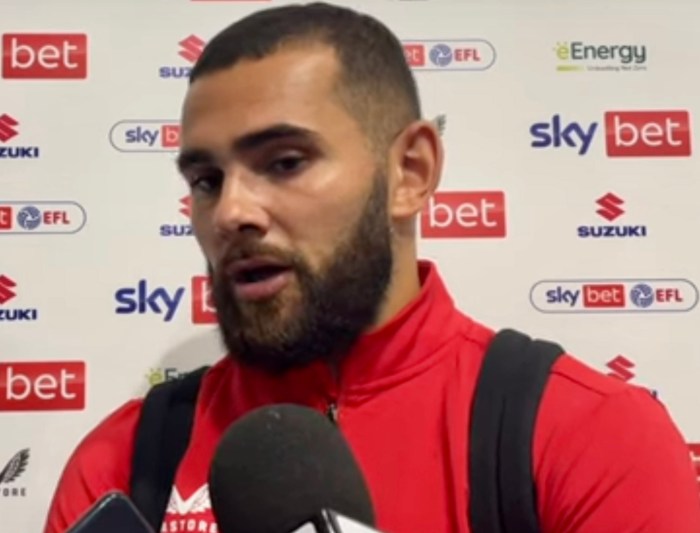
Johnson interviewed after scoring twice for MK Dons

Born in Hackney on 28 April 1987, Johnson was on Arsenal’s books from 1997 to 2002 but was released aged 15.

“Like any kid, being released from a club was horrible and I didn’t really feel like going back on a round of trials with other professional clubs, so instead I just played locally in Leyton.

He went to Ryman Premier side Waltham Forest but when he was 17 was invited for a trial at Cambridge United. He signed on a non-contract basis for eight months and was then offered a professional contract.
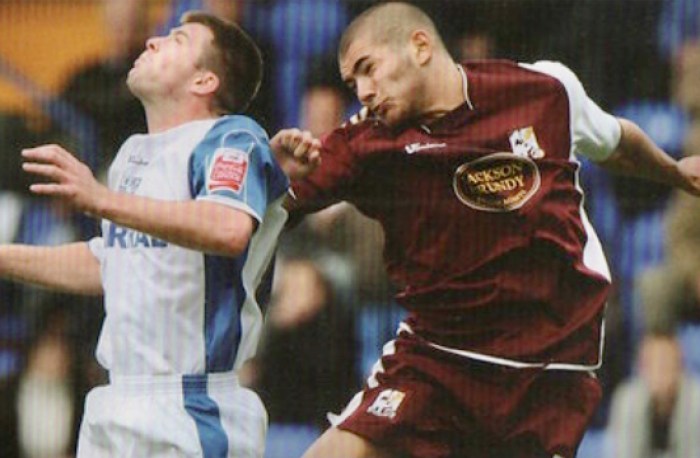
Johnson attracted suitors when playing for Northampton Town

But Northampton Town had been tracking him. “They made me a counter-offer which I accepted and that is where my career began,” he said.

That was in May 2005, and after he had been out on loan to gain experience at Gravesend & Northfleet and Stevenage Borough, he became a regular starter under Stuart Gray and his performances attracted scouts from clubs further up the league.

When that aforementioned move to Leicester fell through in January 2008, a few days later Leeds stepped in and paid a £250,000 fee for him.

He played in the same Leeds side as Casper Ankergren that lost the 2008 League One play-off final 1-0 to Doncaster, but picked up a back injury in pre season that led to him being sidelined. Although he returned to fitness, the side was doing well in his absence which meant he was unable to force his way back in. And then the chance to play competitive football was presented by the Albion.
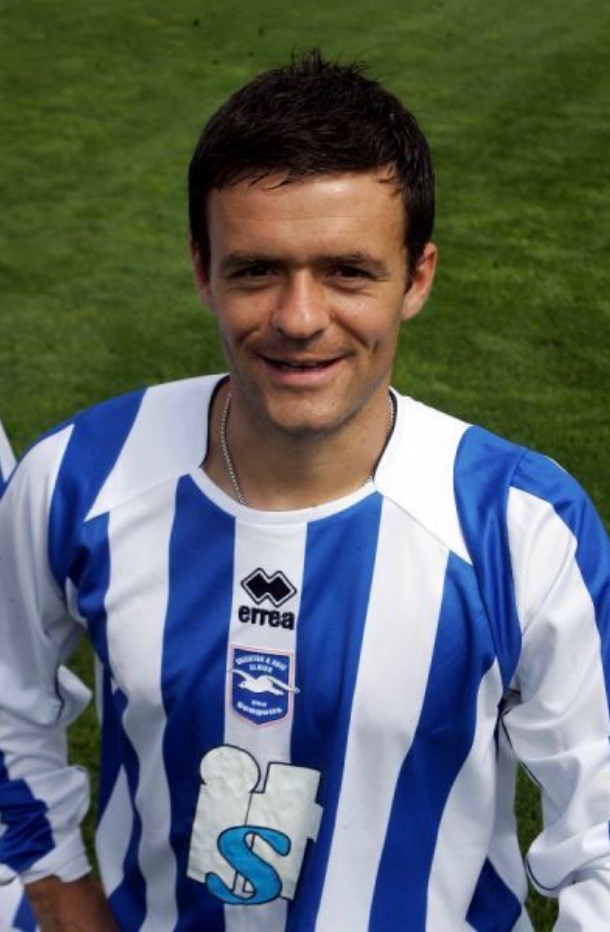
Pass ‘master’ Steven Thomson’s unhappy year with Brighton

STEVEN THOMSON didn’t enjoy his year playing for Brighton in League One and the former Crystal Palace midfielder seized an escape route to return to Scotland to see out the remainder of his long professional career.

It had been considered quite a coup when Dean Wilkins secured the signing of the Falkirk captain in January 2008. In effect a replacement for the departing Dean Hammond, Thomson was soon a victim of Wilkins’ tinkering with the formation, and over his 41 matches for the Seagulls had a conveyor belt of midfield partners, not to mention a change in manager, as Wilkins’ replacement, Micky Adams, introduced a different style – in vain – to try to galvanise the side during his second spell as boss.

Although Thomson had signed a two-and-a-half-year contract with the Seagulls, in January 2009 the disillusioned Scot headed back north of the border.

“I didn’t enjoy it there at all and was keen to try and get myself back up the road,” he admitted in an interview with the Daily Record in 2018.

Having wound down his full-time career at St Mirren, after 18 seasons as a professional, and having moved to London to begin a business career, Thomson linked up with his former Albion teammate Nicky Forster to spend a season as a part-time player with Dover Athletic, where the former Seagulls striker was manager at the time.

In an in-depth interview for the Dover Athletic website, Thomson gave a great insight into his career, revealing the lengths he went to to get a break into the professional game.

Born in Glasgow on 23 January 1978, he explained: “After playing for a local boys club I was invited to go and train with a few clubs, so, at the age of 10, I found myself training with Rangers on a Monday, Celtic on a Tuesday, Hearts on a Wednesday and Hibs on a Thursday.”

When he reached 14, he was advised to choose one club over the others and opted for Rangers. Daunted by the high numbers of youngsters all trying for the same opportunity, aged just 16 he took the bold move to head to Croydon and signed on as an apprentice with Palace.

He progressed from the youth team to be offered a pro contract at 17, worked his way through the reserves and then got some calls up to the first team subs bench when they were still in the Premier League. He also played for Scotland’s under-18 side between 1995 and 1997.

During his brief return as manager, Terry Venables gave Thomson his debut aged 19 in the 1998-99 season. Thomson wasn’t renowned for goalscoring, but Palace fans do remember a particularly sweet strike he succeeded with in a 3-0 Worthington Cup win at Leicester City in November 2000.

Leicester’s back-up goalkeeper Simon Royce, who would later join Albion on loan, was beaten from 35 yards by Thomson’s spectacular shot.

The midfielder’s 121 games spanned the spells of five managers – Venables, Steve Bruce, Trevor Francis, Steve Coppell and Dave Bassett – before he left the club at the end of the 2002-03 season. It would be fair to say he divided opinion among Eagles supporters.

On fans forum cpfc.org, ‘Hairybear’ said: “Thomson was a warrior. Very little ability but did a good job when called upon under Bruce and co. He would never let you down.”

But ‘Baron Greenback’ said: “As well as THAT goal against Leicester, he also scored great goals at home to Sunderland in the FA Cup and Wolves.”

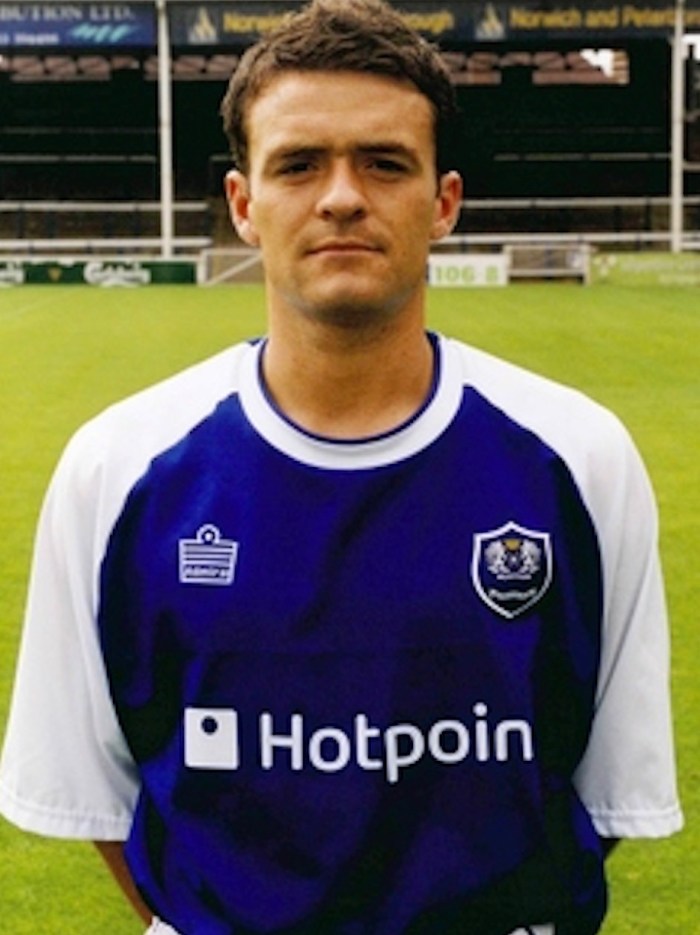
It was the ebullient Barry Fry who took Thomson to Peterborough United, (above) where he played 75 games in two seasons before moving back to Scotland to play for Falkirk in the Scottish Premier League.

When Brighton signed him, his former Falkirk teammate and one-time Albion loanee, Graham Barrett, told the Argus what Seagulls supporters could expect.

“They are getting a fantastic professional and a really good player,” said Barrett. “We have been going really well and he has been a massive part of that.

“He is a box-to-box player, he is comfortable on the ball and he has got a bit of everything.

“He is not particularly big (5ft 8in) but he is also very good in the air for his height.”

Barrett reckoned he would be “a massive influence” if he could continue the form he’d shown in Scotland. “He is great in the dressing room as well, a real leader,” said Barrett.

Thomson made his Albion debut in a 1-1 draw at home to Huddersfield on 19 January, starting at the base of a midfield diamond with Paul Reid and David Martot out wide and Dean Cox at the top of it.

Brian Owen, of the Argus, described him as “a neat and tidy passer who only gave the ball away when trying something ambitious”.

Within a couple of months, the Argus was reporting: “It has not been easy for Thomson since his January move back to England from Falkirk.

“He has had to adjust to playing with a number of different partners and now Adam El-Abd is a long-term casualty with the medial knee ligament injury he suffered at Huddersfield.”

Although mostly recognised as a centre back, El-Abd had been one of the options tried in midfield. Thomson admitted to the newspaper: “I know I can perform better. There is more to come. I am adjusting to playing so many games. In Scotland you just play Saturday to Saturday.

“It has been a big move for my family as well. My wife (originally from London) is a lot closer to her parents now and she has got a lot of family around, which helps with our young son.”

In rather a similar vein to the Palace faithful, Brighton fans were also divided as to Thomson’s merits. ‘The Complete Badger’ declared on North Stand Chat: “The only midfielder of any class we’ve got. A real touch of quality about everything he does in my opinion. Much better than Hammond, and much better than anyone else we’ve got.”

But ‘Napper’ reckoned: “Thomson just seems to have nothing about him, not quick, no killer passes. Just seems to either waste possession or go backwards. I’ve really given him more than enough time, but facts are he just isn’t very good. I’ve been watching him closely for many games now.”

In his end-of-season summary, Andy Naylor, Albion reporter for the Argus in 2008, reckoned Hammond had been a hard act to follow, and commented: “Thomson looks a tidy player who will benefit from playing as a central midfielder in a 4-4-2, not the dreaded diamond.”

After Wilkins was shown the door, new boss Adams recognised Thomson’s leadership qualities, making him vice-captain to skipper Nicky Forster, as well as saying he was going to play him in a role further forward than he had been previously.

“I enjoyed the responsibility at Falkirk and I will be willing to help Nicky as much as I can,” Thomson told the Argus. “The manager has stressed that he wants me to try and push forward a lot more, rather than just sitting in front of the back four, and I am quite happy with that.

“I look after myself off the park, so I’m quite fit. Maybe he thinks I have got the engine to get up and down!”

However, problems mounted for Adams when Forster was ruled out by injury and, as in the previous season, Thomson found himself alongside different midfield partners, including, at one time, the flamboyant Robbie Savage, trying to recover some fitness on loan from Derby.

As the year drew to a close, it became public knowledge that Thomson was unsettled and itching to go back to Scotland, so a deal was lined up for him to join St Mirren as soon as the January transfer window opened.

He joined them on the day they played their final game at Love Street ahead of their move to Greenhill Road, and he went on to make more than 100 appearances for the Buddies.

Their fans’ abiding memory of his time there centre on a surprise 4-0 win over Celtic on 24 March 2010, when Thomson scored twice. The result so shocked the Parkhead bosses that they sacked Hoops boss Tony Mowbray.

On joining Dover in May 2012, Thomson told the club’s website: “I made the decision last year that this would be my final season as a full-time player. I have been studying for four or five years and I’m now fully qualified and have secured a job in London.

“My wife Bryony is from London anyway and she wanted to move closer to her family. I’ve been a footballer for 18 years and now it’s time to enter the real world.”

Thomson now works as a financial advisor, with a stylish looking profile on LinkedIn.

Sweet left foot but McLeod wasn’t to Albion fans’ taste

McLeod stripesWHEN MICKY Adams returned to the Albion for a second spell as manager, he brought in a number of players who, for whatever reason, struggled to deliver what was expected of them on the pitch.

One was Kevin McLeod, a Liverpudlian who, earlier in his career, had come through the Everton academy and briefly made it through to the Everton first team.

During Adams’ previous reign at Brighton, he’d made a habit of recruiting players he had worked with before – with plenty of success. Second time around, it was not the same outcome. McLeod was a player who had played under Adams at Colchester United, joining Albion on a Bosman free transfer on 1 July 2008.

“He is a left winger with good pace. He can deliver crosses and he offers a goal threat,” Adams told the media at the time. “At this level, he’s going to be a terrific signing for us.”

McLeod scored in only the second minute of a pre-season friendly against Worthing at Woodside Road and followed up three days later with two goals against Bognor.

When the proper League One action got under way at Gresty Road, Crewe, McLeod was on fire in the opening 45 minutes and Albion went on to win 2-1.

Three days later, Adam Virgo scored twice from McLeod corner kicks as Barnet were swept aside 4-0 in the League Cup. But McLeod picked up a knee injury in that game which forced him off just before half time. Some critics maintain he never properly recovered from it for the rest of his time with the Albion. In the middle of September, he had to undergo an operation on the troublesome knee.

He returned to the line-up after a month, in a 0-0 home draw v Peterborough, and in his Argus match report, Andy Naylor observed: “McLeod once again demonstrated his ability to deliver quality crosses, which is why he has been so badly missed.”

However, by his own admission, McLeod rushed back rather too soon, and playing when not properly fit didn’t do him any favours.

650057It didn’t seem to stop him being the joker in the pack during training, though, on one occasion taking the key to loan signing Robbie Savage’s Lamborghini and hiding it. Former teammate Jim McNulty remembered him as being “hilarious for so many different reasons”, adding: “He was funny when he meant to be, he was funny when he didn’t mean to be and he was funny when he told a story because we never knew whether it was true or false. We could have so much humour with him from so many different angles and he probably wasn’t even aware of 95 per cent of them.”

McNulty detailed one stupid stunt in an interview with express.co.uk: “Macca took the car keys from the pants of one of the young lads in the changing room and decided to drive his brand new 4×4 straight onto the training pitches, over the grass and locked it between two goals.

“The goals would get chained up so he pushed two goals over the top of this lad’s BMW and locked them together. It was hilarious watching the lad trying to unlock them from his car.”

Poster ‘Basil Fawlty’ opined on North Stand Chat: “He never recovered after that knee injury against Barnet. His wages could have been used on somebody decent who can actually play left wing!”

‘Finchley Seagull’ added: “Most of the time he was here he was being paid for being injured or useless” and ‘EssBee’ declared: “Never have I seen such an unlikely professional footballer than that bloke. He looked like a poor pub team footballer…barrel chested, ill-physiqued, he was like a tub of f***ing lard with no control, no nothing.”

McLeodWell-known Albion watcher Harty observed: “I cannot think of any player, in recent years, who had a better first 45 mins for the club, vs Crewe in August 2008… then had an Albion career peter out in the manner it did.”

‘Twinkle Toes’ agreed: “I remember marvelling in his performance that day at Gresty Rd. He was absolutely terrorising the Crewe right-back with his pace and ability: he looked absolutely awesome.

“How the hell could somebody with that kind of ability turn into the no-hoper we all know and loathe?”

wearebrighton.com summed him up thus: “Another player to be filed under the umbrella of players signed by Adams who just wanted money. You could see that McLeod had talent, he just couldn’t be bothered to use it.”

While he made 28 appearances in the 2008-09 season, he only appeared eight times in 2009-10 and by the time Gus Poyet was in the manager’s chair, he let McLeod join Wycombe Wanderers on loan.

After the move he further riled Brighton supporters by claiming the humble Buckinghamshire club had “a better squad than Brighton, better ground, better fans”.

McLeod played just 11 more times as a professional for the Chairboys before going on to join a Sunday League side in Colchester.

Born in Liverpool on 12 September 1980, McLeod joined Everton as a schoolboy in 1991 and did well enough to become part of a decent youth side before establishing himself in their reserves. In the 2000-01 season, he was player of the season as they topped the reserve league.

His form was recognised by manager Walter Smith who called him up to the first team and gave him five substitute appearances in the Premier League. He made his debut v Ipswich on 30 September 2000; called off the bench for the last 15 minutes when the Toffees were already 3-0 down.

His next two appearances, two months later, were happier, though: he featured in a winning team against Arsenal and Chelsea.

Fellow youth team product Danny Cadamarteri had already given Everton a second-half lead over the Gunners when, within a minute of McLeod’s introduction, Kevin Campbell sealed the points against his old club.

The following week, the same two goalscorers gave Everton a 2-1 victory against a Chelsea line-up including the likes of Marcel Desailly, Eidur Gudjohnsen and Gianfranco Zola.

McLeod reflected some years later: “That’s not bad to have on your CV is it? Being an Evertonian it was great.

“When you are on the same pitch as Dennis Bergkamp, Ashley Cole, Ray Parlour, Lee Dixon, Martin Keown and the rest of them you don’t know whether to laugh or cry.

“It was a good experience and I thoroughly enjoyed it. In my age group there was Cadamarteri, Leon Osman, Francis Jeffers, Tony Hibbert, George Pilkington and Peter Clarke.”

The Arsenal-Chelsea double was as good as it got for McLeod. He made two more substitute appearances that season, in defeats at Ipswich and Chelsea.

The following season he made his only start for Everton as a team-mate of Paul Gascoigne in a League Cup defeat on penalties at home to Crystal Palace on 13 September 2001.

The excellent toffeeweb.com probably hit the nail on the head in describing the rising star.

“He may fall into the Everton black hole for promising youngsters who are good… but just not quite good enough,” it said. “He only has one weakness, and that is within himself when he will sometimes hide in a game if things don’t go to well in the first 10 to 15 mins.”

McLeod only got one chance under Smith’s successor David Moyes, coming on as a last-minute sub in a FA Cup defeat v Shrewsbury Town on 4 January 2003.

Ten years later he admitted to the Liverpool Echo that things might have turned out different if he had been more responsive towards Moyes.

Instead, he joined QPR on loan between March and May 2003, helping them reach the second division play-offs before joining them permanently for £250,000 on 18 August 2003.

McLeod said: “I didn’t like it at first when I moved to London. I didn’t want to go but I sat down and talked about it with my family and they said you can stay here and work hard or go and play League football.

“I went away and enjoyed it and got promotions (in his first season with both QPR and Swansea).

1068376

“You look at Leon Osman and Tony Hibbert. They stayed there for the extra year and now they are playing week in and week out but I am not one of those people who looks too much at the past.

“I’d rather go forward. I made my decision and I live with it to this day.”

McLeod initially joined Swansea on loan in February 2005 and made 11 appearances as the Swans won promotion to League One. The move was made pemanent for a fee of £60,000 at the start of the 2005-06 season and he went on to make 52 appearances (14 as a sub), before the move to Colchester.

In November 2015, McLeod was in trouble with the law, appearing before magistrates in Colchester accused of assault.