IT’S HARDLY surprising that there are numerous tales to tell from Jimmy Case’s illustrious football career, many of which he told in his autobiography, Hard Case.
Following on from my recent blog post about the all-important blockbuster winner he scored at Anfield for Brighton in the fifth round of the 1983 FA Cup, let’s look in more detail at the impact of his arrival in Sussex in the summer of 1981. It was momentous in many respects.
And, if you’ll indulge me in the parallel that gives this blog its very name, Case’s move from Liverpool to Brighton bore a remarkable similarity to Adam Lallana’s 2020 move in the same direction in terms of the Seagulls capturing an influential trophy-winner whose experience took them to a new level.
Case scored 46 goals in 269 appearances across six years at Liverpool and left with four League title winners’ medals, three European Cup winners’ medals plus one each for winning the UEFA Cup, European Super Cup and the League Cup.
This 2021 article highlights the impressive array of medals Case collected in his career
Lallana scored 22 in 178 matches and collected one League title medal, and others for winning the Champions League, European Super Cup and FIFA Club World Cup. Unlike Case, Lallana also won 34 England caps.
In the season following Case’s signing, Brighton finished in a highest-ever 13th place in the top division under Mike Bailey in 1982, a feat only bettered by the ninth-place finish under Graham Potter 40 years later and even better sixth spot under Roberto De Zerbi in 2023.
I first wrote about Case’s time with Brighton in a 2017 blog post but his story is well worthy of re-telling, particularly with updates from more recent interviews he’s given.
Back in 1981, as Spencer Vignes said in a matchday programme article, perhaps with a little journalistic licence: “When 27-year-old Jimmy swapped Anfield for the Goldstone, the effect on Sussex was seismic. For here was a Liverpool legend, famous for his ferocious shot and no-nonsense approach to the game.”
Listing those medals he’d won, Vignes continued: “The fact that this man wanted to play for the Albion blew the fans away.”
The truth was that Case didn’t really want to leave Liverpool but some of his off-field antics involving drink had not gone down well with the Anfield management and Sammy Lee was emerging as his replacement.
“There was something of a drinking culture at Liverpool in those days,” Case admitted in an interview with lfchistory.net. “Ray Kennedy and me were usually at the heart of it, along with Terry McDermott, Phil Thompson, Emlyn (Hughes) and Smithy (Tommy Smith) – everyone, really.
“The coaches knew all about the drinking – it went on at all the clubs – and my thinking was that because we trained all week, played a hard game on a Saturday, to go out and have a few drinks afterwards was something we had earned. In my view, we were just letting our hair down a bit, but the club in those days didn’t like that type of thing. I wasn’t looking to leave at all but suppose they must have thought I was a bit of a bad lad.”
Case nets for Liverpool in a European tie
Lee was in the starting line-up for the 1981 European Cup Final win over Real Madrid in Paris and Case had only been involved as a late substitute for Kenny Dalglish.
He could tell he was being edged out when firstly it was suggested he might like to talk to ex-Red John Toshack, who was in charge of Swansea, and then he became aware that Liverpool wanted to sign Albion’s Mark Lawrenson.
“That’s where I got asked to make weight, but I didn’t know it was a makeweight at the time,” he told lfchistory.net. “I didn’t want to go anyway, to be honest, but when you’re asked twice, ‘Do you want to speak to another team?’, it’s another thing. Even though Sammy Lee is a really good friend of mine, I reckon I would have given a good go for the position, put it that way.”
Albion in the meantime had been struggling amongst the elite for two seasons and crowds at the Goldstone had begun to shrink; chairman Mike Bamber was looking for ways to make up the shortfall in income.
Manager Alan Mullery, who’d steered Brighton from the Third Division to the First, had two dilemmas to resolve. He’d made his own arrangement for Lawrenson to move to Man Utd not knowing of Bamber’s plan to sell Lawrenson to Liverpool. Bamber also wanted Mullery to sack his backroom staff as a cost-cutting measure.
It was all too much for Mullery and he quit the club in protest. Ironically, he swapped places with Mike Bailey, who’d just steered Charlton Athletic to promotion from the Third Division to the Second.
So, one of Bailey’s first missions was to welcome Case to the Goldstone and the Scouser admitted to Vignes he “didn’t really want to go to a big club again” and “fancied something different”.
If he felt he had a point prove to Liverpool, he certainly went about it in the right way, scoring in his first appearance against his old club the following October in a 3-3 draw at the Goldstone Ground and then helping the Albion to a 1-0 victory in the Anfield return six months later.
Teammate Gerry Ryan told Vignes: “When he came to Brighton, everyone was amazed. He was an enforcer in the old type of way. He would protect us. If anyone got hit bad then he would seek retribution. But he was also a great footballer.
“Every game Jimmy played, he played to a high standard. He also gave the team an aura. When you saw his name on the team sheet it stood out. It meant something.”
There was a significant ‘changing of the guard’ on his arrival: quite apart from the new manager and loss of the influential Lawrenson, skipper Brian Horton left too along with long-serving Peter O’Sullivan and utility man John Gregory.
But the arrival of tenacious Eire international midfielder Tony Grealish from Luton, experienced Don Shanks, who’d been part of a decent top division QPR squad, and Steve Gatting, who’d played 76 games for Arsenal meant there was no shortage of experience in their place.
Northern Irish international Sammy Nelson moved from Arsenal to take over the left-back spot from Gary Williams and Bailey declared: “The signing of Sammy Nelson has now given me the sort of squad I feel we need to compete with the best in the division.”
Commanding centre half Steve Foster took over as captain from Horton and the emerging Gary Stevens was a young talent who could fill any position in defence. Up front, Mullery signing Michael Robinson was a willing workhorse of a centre-forward who, on Brighton’s relegation in 1983, was sold to Liverpool.
Anyone who had the privilege to watch Case in his prime could testify that thunderbolt strikes from distance were his trademark and one of the best I ever saw was in the 1983 FA Cup semi-final at Highbury when Case smashed it in from 30 yards to give Brighton the lead against Sheffield Wednesday.
Case gets stuck in during a Merseyside derby match
He’d previously scored memorable goals in that trophy-laden career at Liverpool, notably in 1977 scoring one of the great FA Cup final goals, chesting down Joey Jones’s pass on the edge of the box before swivelling to rifle home an equaliser into the top corner against Manchester United, and a left-footed lash in a 1978 European Cup semi-final fightback against Borussia Moenchengladbach at Anfield.
Fascinating, then, to learn that Case had that hard shot from distance at an early age. “Even when I was eight-years-old I was asked to take the goal-kicks because nobody could kick it that far,” he told lfchistory.net.
After the disappointment of relegation from the top flight in 1983, Case remained while others were sold straight away, and some of the new arrivals were grateful for his steadying influence.
Centre-back Eric Young, for example, told the matchday programme: “All the lads were great but Jimmy Case really helped me to settle down. Jimmy is very subtle. He’ll just say a few words to you and it makes all the difference. I appreciated that in those early days.”
With much the same sentiment as Gerry Ryan, Young’s fellow central defender Gary O’Reilly was also a huge Case fan. But Chris Cattlin was obviously under instruction to balance the books and after Foster was sold to Aston Villa, Case was next out the door, along the coast to Southampton. O’Reilly couldn’t believe it.
“We sold Jimmy Case in the March and I nearly took the door off the hinges in Cattlin’s office,” he recalled in a matchday programme article. “I asked him what the hell he was doing selling Jimmy! Were we serious about getting promoted? Were we serious about getting into the play-offs?
“Jimmy went to Southampton and they had success with him in their team in the First Division. It was no surprise. How many European Cup medals does Jimmy have that say ‘winner’? That’s what Jimmy brought to the team here and he was a massive loss when he went.”
Indeed, if it was suspected Case wasn’t the force he once was, because he was 31 when he joined Saints, he ended up hardly missing a game for them, and captained the side, for six seasons.
Cattlin was certainly playing his cards close to his chest as to why Case was sold, and in his matchday programme notes he only obliquely referred to the reason, saying: “Salaries and bonuses of individual players are confidential and obviously I cannot disclose details, but the moves I have made I am certain are right.” And he added: “I can’t explain all the matters that have been considered.”
It wasn’t the last Albion fans would see of Case in their colours, of course, because he returned to the Goldstone Ground aged 39 in December 1993 in the twilight of his playing days, appointed a player-coach under Liam Brady when off-field issues hung gloomily over the club.
On Case’s return to the Albion, he teamed up with other old heads in Colin Pates and Steve Foster
Nevertheless, as a mark of the esteem in which Case was held, a testimonial game for him took place at the Goldstone on 17 October 1994 and it had to be delayed 10 minutes because so many people wanted to get in to pay tribute. The capacity of the grand old ground was much reduced by then but still 15,645 packed in to see Case’s old club Liverpool do him the honour of providing the opposition.
Albion featured Matt Le Tissier in their line-up and even Ryan and Brady made substitute appearances as Liverpool edged it 2-1. An emotional Case said afterwards: “I can’t thank the supporters enough. This was the only game I’ve ever been nervous about. I’ve never really asked for anything from the game, I just wanted everyone to enjoy it.
“It’s all been quite embarrassing really. I like to go to parties, I just don’t like them being my own.”
His last competitive start as an Albion player was in a 2-0 home win over Stockport County on 2 January 1995, and manager Brady said in his programme notes that the player “has an Achilles injury which he will never completely overcome”.
The following season, he twice went on as a sub, and was a non-playing sub on another occasion, but when he went on for Stuart Tuck in a 2-0 Hallowe’en home defeat to Swansea City, that was his last as a player.
Sadly, his last days at the club, having reluctantly taken over the managerial reins from Brady, were tarnished by relegation to the basement division and when Albion’s very existence in the league was under threat, he was replaced by Steve Gritt, who, only by the skin of his teeth, managed to keep Albion up.
ECUADORIAN international Jeremy Sarmiento probably has splinters in his backside the number of times he’s sat on benches waiting for involvement in games.
He might also be excused for forgetting which language he should be speaking. Born in Spain of Ecuadorian parents (Lionel and Katty), raised in London, three years in Portugal, back to the UK – south coast, Midlands, East Anglia and north west – and now Italy.
Impressive enough in his first season with the Seagulls to be voted the club’s Young Player of the Year, injuries, managerial change and increased competition for a starting spot appear to have shunted him out of the Brighton picture, possibly permanently.
He’s twice helped clubs win promotion from the Championship while out on loan and he’s now on his fourth long temporary move away from the club with the first two Albion head coaches he worked under, who both spoke highly of him, having gone on to pastures new.
Graham Potter, who gave him his first team debut in 2021, said of him: “He’s got a real quality to receive the ball and play forwards; play in tight areas; the courage to take it pretty much anywhere and he can affect the goal with runs behind and finishes, so he’s a really exciting talent.”
In June 2023, after a season in which Sarmiento’s involvement was cut short when he fractured a metatarsal bone in his right foot during a 3-1 friendly defeat for Ecuador in Australia, Roberto De Zerbi said: “Jeremy is a great guy and a very good player. Unfortunately, he couldn’t play in the last part of the season because of his injury, but we expect him to be a very important player for us in the coming years.”
That proved, initially at least, to be a somewhat hollow assessment because he spent the whole of the 2023-24 season on loan in the Championship, initially with West Brom and in the second half of the campaign as part of Ipswich Town’s promotion-winning squad, where he made seven starts and 15 sub appearances under Kieran McKenna.
On joining the Tractor Boys, Sarmiento declared: “I’m excited to try and show him (McKenna) what I can do and earn minutes in a team which plays a style I think will suit me.
“I am a direct player and like to get the fans on their feet with a bit of flair, which is a big side to my game, and I can’t wait to get started.”
In May 2024, De Zerbi was a little more cautious with his words. “I followed him. I watched many games,” said the Italian. “He didn’t play so many games in the first XI but he was important for Ipswich. In West Bromwich the same, I think.
“He needs to play in a different context. He can play no.10, he can play winger but he has to play a particular type of football. Ipswich and West Bromwich played in a good style. He can be important next season, but we have to analyse the squad.”
In action for Ecuador
As we know now, it was De Zerbi who left the club first and that summer Sarmiento helped Ecuador reach the quarter-finals of the Copa America. He eschewed a break on his return so he could go on Albion’s pre-season tour of Japan to try to impress new head coach Fabian Hurzeler.
He scored in a 5-1 win over Kashima Antlers and told the club website: “After the Copa America finished, I spoke to the gaffer and he gave me an option of whether I wanted to go on tour with the lads or come back after that.
“Obviously, I was so keen to come back and show people what I have been doing in the past year for Ipswich and at the Copa America.
“I am full of confidence right now and I just want to bring all here now and show the boss.
Japan tour happiness
“I think I have matured as a player throughout the year. More game time, which is what I was looking for. I was involved in goals and assists, which is part of my game I wanted to improve.
“Now I have scored again and it feels good to be back with a goal.”
He was an 82nd minute sub in Albion’s opening day 3-0 win over Everton at Goodison Park, and he scored in the home Carabao Cup second round 4-0 win over Crawley Town.
But he was off on his travels again a few days later, joining Scott Parker’s Burnley on a season-long loan.
Hurzeler said: “Jeremy has worked hard across pre-season and done very well in the games he’s played for us, including at Everton and against Crawley.
“His attitude has been first class and this will benefit him for the season ahead with Burnley, which we will be watching with great interest.”
On making the move, Sarmiento said: “I’m really excited, it was a big decision, as the next step was really important for me.
“I felt that the project Burnley are building at the moment suited me and I spoke with the manager, and I just wanted to be a part of it.
“Once we had the conversations, it was a no brainer for me to come here and come and achieve the objectives we have set.”
The tale of his season followed a somewhat familiar pattern; most of his appearances – 24 – were from the bench and he only started 13 matches as Burnley earned promotion in second place.
Sarmiento celebrates at Loftus Road
The Clarets’ final away game of the season was a personal highlight for him when he went on as a second half sub and scored twice in a 5-0 victory over QPR at Loftus Road.
“It was an amazing way to close our second to last game of the season,” he said. “It’s all down to the guys; without them I wouldn’t be in the situation to score the goals. But I’m really delighted. It’s been a tough season on a personal note but I’m very happy for the guys.
“I’m always trying my best to push the guys on harder, then training. So, it’s all a nice thing, I’ll always remember this game. The guys made it very special for me today.”
Born in Madrid on 16 June 2002, Sarmiento has never really settled anywhere for any great length of time. His footballing career began as a right-back while still in Spain but when the family moved to England, when he was seven, he was converted into an attacking player by Sunday League junior side Peckham All-Stars.
Charlton Athletic spotted him and he spent nine years with the south east London side’s academy, during which time he earned various England youth call-ups, before moving to Benfica aged 16 in 2018.
Described by Charlton Academy boss Steve Avory as “an exciting player, a wide forward rather than a winger”, Sarmiento played for Ecuador’s under-15s before representing England’s under-16s and under-17s.
Sarmiento with Young England
He was part of England’s squad alongside Cole Palmer, Noni Madueke and James Trafford, as well as Albion’s Haydon Roberts and Teddy Jenks, at the 2019 men’s under-17 European Championships in Ireland. Jensen Weir, who later joined Brighton, and Morgan Rogers were also in the 20-man squad.
Substitute Sarmiento scored England’s third in their 3-1 Group B win over Sweden (Jenks and Arsenal’s Sam Greenwood got the others). Georginio Rutter was in the French side that drew 1-1 with England (but England didn’t get past the group stage) and scored as France beat Sweden 4-2. The Netherlands won the tournament beating Italy 4-2 in the final in Dublin.
In October 2019, Sarmiento had stepped up to England’s under-18s and scored (along with Wigan’s Joe Gelhardt and Valencia’s Yunus Musah) – once again after going on as a substitute – as Ian Foster’s Young Lions, who had previously turned over the U19 sides of Poland and Slovakia, beat Austria 3-2.
Sarmiento chose to revert to Ecuador at full international level and has won more than 20 caps.
Although he shone for Benfica’s under-17s and under-19s, there was a sour end to his time in Portugal when there was a dispute about signing a new contract.
Andy Naylor spoke to the player’s father, Lionel, for The Athletic in March 2022 and learned: “The negotiations between us and Benfica were not 100 per cent good. We’d have had to sign for five years. What about if it hadn’t worked out? And what they offered wasn’t enough even to survive. That’s why we said, ‘Sorry, no’.
“It’s a good academy but I feel like they have a bad philosophy. If you don’t do whatever they say — ‘bye bye’.
“It was a bad time. From then, we started to train privately, every day, in parks, on Astroturf.”
Brighton already had Sarmiento on their radar when he was at Charlton and wanted to sign him in the January 2021 transfer window but Benfica refused. He had to wait until his deal expired that summer.
Sarmiento Senior told Naylor there was interest in his son from the likes of Barcelona, Bayern Munich, Paris Saint-Germain and Valencia but he wanted to return to England because it was where he grew up, and he missed it.
Initially introduced by Brighton as an under-23s signing, he was quickly elevated to the first team squad and made his debut in September 2021 as a second-half substitute in a 2-0 win over Championship side Swansea in the Carabao Cup. His first start was a month later, in the same competition, when Albion went out on penalties after a 2-2 draw at Leicester.
Although a mistake he made led to a Foxes goal, and he was withdrawn on 69 minutes, Potter was full of praise for Sarmiento’s baptism at the King Power Stadium, telling reporters: “I thought his performance was really positive. Some of his actions were at an incredibly high level.”
Unfortunately, just 12 minutes into his Premier League debut against West Ham in December 2021, he pulled up with a hamstring issue. Surgery sidelined him from Potter’s side for almost four months.
His father told The Athletic: “It was nothing compared to other kinds of injuries. It was a terrible night because we were expecting him to shine. He was ready. He’s come back again, slowly, slowly.
“Psychologically, he’s very strong. After Benfica, I don’t know if another player could be like this. Jeremy is ready to continue his career — humble, disciplined and with respect to everyone.”
He signed a new four-year contract with the Albion in January 2022 and saw action as a sub against Norwich, Manchester City and Southampton as the 2021-22 season came to a close.
During the 2022 World Cup in Qatar, Sarmiento was one of three Albion players in the Ecuador squad (Moises Caicedo and Pervis Estupinan were the others) and he went on as a sub in all three of his side’s games.
He was still only 20 when De Zerbi took charge of the Albion and after twice going on as a sub in the Premier League and then starting in the November 2022 3-1 Carabao Cup victory over Arsenal, he said: “It’s great playing under him. He’s giving opportunities to the younger guys and at the same time he is very demanding.
A delighted Sarmiento at Arsenal with goalscorer Karou Mitoma
“It’s clear what he wants us to do on the pitch, but he gives the young guys the confidence to keep pushing for a place in the starting 11 in the Premier League.”
Having set up Kaoru Mitoma for Albion’s second goal at the Emirates, Sarmiento added: “I can play on the left and right, it’s not a problem for me – I got on the ball and got an assist. Since I was young, I’ve played in a few positions, as long as Roberto is happy, I am happy.”
Sarmiento was in the starting line-up for Brighton’s first Premier League game of 2023, on 3 January, when he helped set up Evan Ferguson’s goal in the 4–1 away win at Everton.
At Bournemouth a month later, he went on as a sub and helped set up Mitoma’s 87th-minute winner, the only goal of the game.
Arguably Sarmiento’s main problem at Brighton has been competition for the position he’s best suited to, whether wide right or left or as a no.10.
In the summer of 2025, there were reports that Albion had done a deal to sell him to Brazilian side Cruzeiro but the player wanted to remain in Europe and although it appears the club were happy to part ways, even though he has a contract until June 2027, his departure to Serie A club Cremonese turned out to be another season-long loan.
Even so, if a November 2025 interview the player gave to a local TV programme that covers Cremonese is anything to go by, it sounds like the move could well be converted into a one-way ticket.
“If you look at the places I’ve been, I’ve already travelled a lot,” he told CR1’s ‘Il Grigio e il Rosso’ show. “This is my current challenge. I have to face it, and I hope to become a better player here and show people what I’m capable of. This can become my home.”
Playing in the same side as goalscoring veteran Jamie Vardy, Sarmiento spoke about how he’s enjoying playing under coach Davide Nicola and likened it to his Albion experience under De Zerbi.
“I worked with him for a season at Brighton. He’s a great man on and off the pitch, very similar to coach Nicola, especially in character. I like their passion for success and their desire to win.
“They work day after day to bring out the best in their players. It’s a great opportunity for me to have coaches like that and work under their guidance.”
Indicating he has settled into life in Cremona, he also spoke about enjoying learning the ropes of a new position in the team.
“It’s very different for me, because last season and the season before that I played as a winger, so it’s different playing as a central midfielder or a second striker.
“But I’m working day after day to improve in this position, gaining confidence with the staff and my teammates.”
RATHER LIKE Evan Ferguson’s loan move from Brighton to West Ham earlier in 2025, Igor Julio’s temporary summer transfer deadline day loan move to the Hammers proved frustrating.
The sturdily-built Brazilian defender — full name Igor Julio dos Santos de Paulo — who sought a move away from the Albion because of the arrival of competitors in the shape of Diego Coppola and Olivier Boscagli had limited involvement in the claret and blue with only occasional appearances from the bench.
Indeed, it took 12 matches before Igor was given a start for the Hammers — and he was promptly dropped back to the bench after it was felt he should have done better to prevent a late equaliser by Turk Enes Unal in West Ham’s 2-2 draw at Bournemouth.
West Ham watcher Samuel Fabre said Igor, playing in the middle of a back three, was “very easily spun” by Unal who netted Bournemouth’s second goal in the 82nd minute of the November clash after Callum Wilson had put the visitors two up, and Marcus Tavernier reduced the arrears from a penalty.
“However, he showed great signs of promise when dealing with balls into the box, making 11 clearances and three recoveries,” wrote Fabre on westhamzone.com. “The 27-year-old was part of a defence that had to endure heavy spells of pressure from Bournemouth, and it was certainly a baptism of fire for his starting appearance.”
As at Brighton, Igor found others preferred ahead of him: at West Ham, Dinos Mavropanos, Max Kilman and Jean-Clair Todibo. But according to Fabre: “Kilman’s worrying performances have left fans questioning if Igor can do a better job at the back, and it’s clear the Brazilian had a better game against the Cherries.
“Based on evidence from the Bournemouth clash, Igor has a lot of room to improve, however, it feels as if he could slowly become a nailed-on starter for the Hammers.”
That never materialised and he returned to the Albion for the second half of the season after Coppola, frustrated at a lack of games, went out on loan to Paris FC.
Just as Igor experienced at Brighton, a change in head coach at West Hamm didn’t help his cause. Ex-Albion boss Graham Potter was in charge when he made the rather last-minute move to the Hammers; Igor was originally about to sign for Crystal Palace to replace Liverpool-bound Marc Guehi. But while he was on his way to Selhurst for a medical, the Guehi move collapsed.
According to The Athletic, in the week leading up to deadline day, Hammers’ then head of recruitment Kyle Macaulay (previously with Brighton, now head of senior scouting at Manchester United) phoned the Brazilian’s representatives to see if he would be interested in joining on loan.
Apparently, he had been a long-standing target, writer Roshane Thomas saying that scout Maximilian Hahn had held talks with Igor’s camp previously because they needed a replacement for outgoing Moroccan defender Nayef Aguerd.
There had been speculation about Igor’s imminent departure from Brighton throughout the summer but he played left-back alongside Boscagli and Coppola in Albion’s 6-0 win away to Championship Oxford United in the second round of the Carabao Cup before making the move.
“With the competition we have at centre-back, and Igor’s desire to play, this gives him that chance,” said head coach Fabian Hurzeler. “He’s a great professional, and we fully appreciate his appetite to play.
“We will be closely monitoring his progress and we wish him well for the season.”
He left the Amex having never really being able to nail down a starting spot since signing from Fiorentina in July 2023 during Roberto De Zerbi’s reign, in a deal reported to be worth £17million.
Even then he wasn’t a first choice. De Zerbi turned to him after Albion were rebuffed in their attempts to sign Chelsea’s England Under-21 international Levi Colwill on a permanent basis following his season-long loan.
Wanting a left-footed player able to play at left-centre-back and left-back, De Zerbi had recommendations from two Fiorentina players he knew well — Ghanaian midfielder Alfred Duncan played for De Zerbi at Sassuolo for two years and right-back Dodo played for him at Shakhtar Donetsk in Ukraine.
“Igor is another important player who can help us in a crucial position within the team: where the play starts,” said De Zerbi at the time.
With Albion about to embark on their first-ever European football campaign, Igor certainly had relevant experience having made 110 appearances for Fiorentina in three years with the Serie A club who he joined from fellow Italian team SPAL. He had previously played top tier football in Austria for Red Bull Salzburg, Wolfsberger and Austria Vienna, having started out in the second tier with Liefering.
He didn’t cover himself in glory in his last appearance for Fiorentina though, when they lost in the 2023 Europa Conference League final to West Ham.
Sent on as a sub for cramp-hit starter Luca Ranieri, his lack of pace was exploited when Jarrod Bowen outran him and went on to bury the game’s deciding goal past Pietro Terracciano to win the trophy.
His manager was none too happy. Vincenzo Italiano said: “Igor had just come on, he was fresh, he could’ve run much, much faster than Ranieri, who was exhausted when he came off. I explained to him that he could’ve done much, much better in that situation.”
Born on 7 February 1998 in Bom Sucesso (“Good Success”), a small city 170 miles north of Rio de Janeiro, in the Brazilian state of Minas Gerais, Igor started out with Atlético Mineiro in Belo Horizonte, the capital city of Minas Gerais. He moved to Portuguesa Santista in Santos and he joined Red Bull Brazil after playing against them (although he briefly threatened to quit the game when they changed him from a midfielder into a defender!).
Red Bull Brazil (now Red Bull Bragantino) played youth tournaments in Austria as part of the Red Bull family of clubs and Igor was picked up by Red Bull Salzburg at the age of 18. His introduction to European football came during the 2016-17 season with the Salzburg’s side’s B team, FC Liefering.
In an Albion matchday programme interview, he said he always dreamt of playing in the Premier League having watched it on TV at home. “But I never thought it was anything more than just a dream,” he said. “That’s why, when I got the opportunity to sign for Brighton, I knew just how big the opportunity was.”
He made his Premier League debut on 8 October 2023 in a 2-2 home draw against Liverpool. “I didn’t have a chance to think about the game or get nervous because I was just so elated in that moment. I can’t describe the feeling,” he said.
“I had worked so hard to get here, leaving a small town and now playing at the top level with players like this. It was a unique feeling.”
When he was playing in Italy, he was told he would be suited to the Premier League. “They told me I should play here because of how physical I am,” he said. “I chose Brighton as well because I like possession-based football, the amount of time spent on the ball.
“That was something that really caught my attention and it’s the way I have always wanted to play so it’s perfect for me.”
De Zerbi applauded Igor’s determination and adaptability, telling The Argus: “He is not a surprise but he is playing very well. Not only with the ball or without the ball, but in personality and attitude.”
By the end of that first season, he’d made 24 starts plus two appearances off the bench. But with De Zerbi gone, successor Hurzeler only selected Igor when his first choices were unavailable, although he was generous enough to commend the Brazilian’s attitude and contribution.
He made a total of 12 starts plus three sub appearances in 2024-25 but a good example of what he could do came in the October 2024 comeback 3-2 win over Tottenham Hotspur.
Replacing the injured Adam Webster after only nine minutes, and the Albion going down 2-0 by half-time, Igor put his stamp on the turnround by setting up Pervis Estupinan for Brighton’s second goal.
“It was a very difficult situation for Igor,” said Hurzeler. “But then to show personality, not hiding, that’s something special.
“He was not hiding to get the ball. He was not hiding to go in duels, and then he played a great second half against Tottenham. I wasn’t surprised by this because I see him every training session and he is an amazing professional.
“He always wants to give the best. He always wants to be the best version of himself.”
At the start of the 2025-26 season, that version didn’t want to spend time on the outside looking in at Brighton. On joining West Ham, head coach Potter told the club website: “He is an experienced defender with a good pedigree, who knows the Premier League well and has impressed during his time with Brighton.
“He has strengths and qualities that we believe will help us and add to what we already have here, and I know he is really excited about the challenge and wearing the West Ham United shirt.”
Indeed, Igor said: “It is a big club, a historic club, with fantastic support and a special identity. I saw this in Prague during the Europa Conference League final two years ago, and I feel very proud to now be representing the colours.
“The project here is very exciting — there are many good players at the club and I know that there is a very positive environment in the dressing room that it will be great to be a part of.
“I am ready for the challenge and looking forward to giving everything I can to help the team and the club.”
IF WINNING the World Cup is the pinnacle of any footballer’s career, there can be no question that Alexis Mac Allister has no equal as the greatest ever Brighton and Hove Albion player.
Several players have achieved the honour of representing their country on the back of their performances for Brighton, but never before December 2022 had the club boasted a World Cup winner, an international teammate of world-renowned Lionel Messi.
Argentinian Mac Allister has got the lot in his locker: equally adept as a holding or attacking midfielder, a great eye for pinpoint passes, deadly from the penalty spot, and with thunderbolt shots from distance to boot.
Indeed, one of the most memorable long-range strikes he scored for Brighton – against Leicester in Graham Potter’s last game in charge – would have been a goal of the season contender had it not been ruled out by the narrowest of VAR calls. It took the video assistant referee more than four minutes to chalk it off for offside which Potter conceded was “probably a millimetre or two the right decision”.
Thankfully, Mac Allister managed two that did count in that 5-2 win, converting a penalty for Albion’s fourth and then curling in an excellent 25-yard free-kick in injury time.
Potter’s input to making Mac Allister a more complete player was acknowledged in an interview with SunSport, not long after the coach departed forChelsea.
“He was very helpful — improving my versatility and physicality. I’m a much better player today because of it so I can thank him a lot,” said Mac Allister, who admitted how at first he found it difficult to transition from a more advanced player to a deeper-lying midfielder.
“The first year wasn’t easy for me. I found it very hard coming from Argentina with a different language and different way to play football. I physically wasn’t as strong as I am today,” he said.
In fact, he came close to jacking it all in at Brighton in December 2020, as he revealed in an in-depth interview with theplayerstribune.com, but was talked round in a FaceTime call with his mum in Buenos Aires.
“By that Christmas, with no fans in the stadiums, I had my bags packed. Literally, they were packed. I had two offers to leave — one from Russia and another from Spain, and my mind was made up.
“At the time, I was barely playing for Brighton. It was embarrassing, because I had the no. 10 shirt for a Premier League club, which is the dream of so many kids in Argentina, but I was a nobody. My name was nothing. I thought that I was cursed,” he said.
He got on FaceTime with his mum and he admitted: “I was sobbing. I was at my flat in Brighton, and she was back home in Buenos Aires. I had lost my head. I said, ‘Mum, I can’t do it anymore. I’m coming home. I need to get out of here’.”
He continued: “I wanted to go home so bad. But my mum made me see the light. ‘Ale, remember how much you always wanted this?’ she said. ‘You have to be brave. You can’t quit now’.”
In the new year, Mac Allister started many more games and eventually cemented his place in the heart of Albion’s midfield.
No longer a nobody; Mac Allister now has a staggering 8.6 million followers of his Instagram account!
“I like to play as a no. 10, I like to play as a no. 6,” he said. “The most important thing for me is to help my teammates win football games and try to be as central as I can so I can be as close to the ball to get on it as much as possible.”
Potter himself spoke highly about the way Mac Allister handled the transition, saying in January 2021: “Sometimes when players make the move there can be an assumption that it will all happen for them straight away.
“He’s moved from South America and was adapting to a new country before COVID and then picked up a couple of injuries.
“But he’s a determined individual and he’s a really good guy to work with. He reads the game really well and has a good footballing brain.”
Born in the Argentine lowland city of Santa Rosa on Christmas Eve 1998, Mac Allister started his career with Club Social y Deportivo Parque before joining the youth team of Argentinos Juniors in Buenos Aires.
He made his senior team debut there in October 2016 and a year later he and his older brothers Kevin and Francis all played in the same side. Their father Carlos, a left back known as El Colorado — “the Redhead”— had also played for Argentinos Juniors and Boca Juniors (and won three caps for Argentina).
Alexis signed for Brighton in January 2019 on a four-and-a-half-year contract and said at the time: “The main reason I signed was because the club came to Argentina looking for me and they seemed very convinced about me.
Mac Allister liked the direction Albion saw for him before signing
“They made a big effort, told me about their project and their ideas to keep growing in this league, and I liked their ideas. I liked what they said.”
He was loaned back to Argentinos Juniors until the end of the 2018-19 season and then moved on loan again to Boca Juniors, where brother Kevin was playing, for the first half of the 2019-20 season. This was a Boca side that had one of the players he used to admire from afar – former Man Utd and West Ham striker Carlos Tevez – up front.
Mac Allister told GQ magazine in September 2025: “When I was younger, there weren’t many Argentinians in the Premier League but I used to wake up very early in the mornings to watch players like Carlos Tevez and Maxi Rodriguez.
“I was a big fan of the Premier League, so I hope the next generations are doing the same with us, not just with me but with Argentinian players in general.”
Albion recalled Mac Allister in January 2020 a couple of months before the Covid pandemic began to bite. “My time at Boca helped me mature and I learned a lot of things,” he told the Albion website.
Mac Allister made his debut as a substitute at Molineux in the last fixture before matches were halted for three months. I was at that Wolves match and even in a few short minutes on the pitch there were glimpses of what the young Argentinian was going to add to Potter’s side.
But the break hit Mac Allister hard. “Everything shut down. No football. No friends. And the worst part was that I was stuck in a country where I didn’t speak the language, he told theplayerstribune.com.
“When I first came here, I thought ‘I’ve played for Boca Juniors, one of the best teams in South America, I am ready’,” Mac Allister said in an interview on the Albion website in February 2022. “We had the Covid situation and I didn’t train for two or three months with my teammates. When we returned, I realised I wasn’t at the level I needed to be. I had to work.”
The year which would end with Mac Allister as a World Cup winner began well too when he scored twice at Goodison Park in Albion’s first ever win at Everton on 2 January. The player himself saw it as pivotal moment.
Mac Allister reckoned everything clicked for him when he scored twice at Goodison Park
The game was only three minutes old when Mac Allister latched on to Neal Maupay’s knockdown to score in the third minute before Dan Burn put Albion 2-0 up on 21 minutes.
Anthony Gordon pulled one back but Mac Allister found the top-right corner with a superb strike to make it 3-1 on 71 minutes. Gordon struck again 14 minutes from the end, but Brighton held on to win.
“When I scored two against Everton in January 2022, it felt like everything clicked for me,” he said. “That day at Goodison, I became something different.”
Admitting he had been hoping to improve on the goalscoring front, Mac Allister told the club website: “When I played in Argentina I would score and assist a lot more. I have scored a few times for Brighton now, it’s nice to get the confidence from that.
“I had a few games where I was on the bench and that’s not what I want, so I knew I had to keep working because I knew I would get my chance and when I did, I wanted to be ready. When that chance came along, I thought I took it well.
“The message from the gaffer and my teammates was to keep my head down and work hard. It’s not just the 11 who start, the people on the bench are important too.”
Always deadly from the penalty spot
The next step change in his career came with the appointment of Roberto De Zerbi as Potter’s successor. “A few months before the World Cup, it changed everything for me,” he said.
“The main thing that he helped me improve was my scanning of the field — my “profiling” of the situation. Taking little mental pictures of the chess board every two seconds. We looked at Ødegaard as an example of this. For me, he’s one of the best in the world at scanning. His head never stops moving. De Zerbi gave me this gift, and it really elevated my game.”
Mac Allister told theplayerstribune.com: “Playing every week, with the manager’s trust, the idea of the World Cup started to seem not so distant.
“I will never forget, we were away at Wolverhampton, and I was in the hotel whenI received the call of my dreams. I was in the squad. I was actually going to Qatar.”
He called his parents and they cried together. He reflected: “Two years earlier, I couldn’t get off the bench at Brighton. Now I was going to the World Cup with Argentina, trying to make history.”
When he helped his country to lift the World Cup on 18 December 2022 (beating France 4-2 on penalties after the game finished 3-3), Mac Allister’s stock had already been rising. He was man of the match after scoring for his country for the first time in a 2-0 win over Poland that took Argentina through to the last 16. In the final, he delivered an inch-perfect cross for Angel di Maria to give Argentina a 2-0 lead in the first half and De Zerbi observed how well he played alongside maestro Messi.
“Messi and Mac Allister speak the same (football) language and Messi understands very well the quality of Alexis,” De Zerbi told The Athletic. “If you watch the game, Messi was looking for Alexis lots of times and they made a lot of passes to each other. Alexis was always giving back to Messi a clean pass.”
With Mac Allister playing further forward for his country than with the Albion, it had De Zerbi pondering. “I’d like to speak to him when he comes back,” the Italian told The Athletic. “I like him a lot in the other position (deeper).
“I spoke with his father the other day and he told me he prefers the Argentina position, but in that position we have (Adam) Lallana and Lallana is a teacher.
“If a team wants to become big, the quality needs to be further back. For me the midfielder can play on the defensive line, because he’s bringing more quality.”
But he added: “Alexis can play anywhere on the pitch. I don’t know if he’s better as a playmaker or 20 metres further forward.”
Established as a kingpin in Albion’s midfield alongside Moises Caicedo — almost certainly, Albion have never had a better pairing in that area of the team — it was inevitable that they would move on.
In May 2023, De Zerbi was phlegmatic about losing them both. “I think it’s right they can leave, can change teams and play in a level higher,” he said. “If you ask me about Caicedo and Mac Allister, I love them and they are two big, big players and can be in a big, big European team.
“They can play in every competition and are ready to compete for a big team and I hope for them they can play in the best team in the world.”
The manner of their departures differed, of course, and after Mac Allister had moved to Liverpool, De Zerbi admitted: “With me and with my staff he was super correct. Before we could read it in the newspapers, in the press, the possibility he could go to Liverpool, he went into my office to communicate it in front of me and to explain the reason.
“I understood logically and I appreciated a lot because he was clear and he was honest. Not all other players were the same. Of course, he was happy to go to Liverpool and we can understand it. But, in the same way, he was sad to leave his teammates and this club.”
Mac Allister revealed how he had a secret rendezvous with Jürgen Klopp ahead of the £35m deal being done. “He flew down and we met in secret somewhere halfway to Brighton,” he said. “I was a bit shocked that he did that for me.
“I had won a World Cup, but I was not a star at all. We had a coffee, and he explained to me that he really wanted me to come to Liverpool, because I reminded him a bit of Gündogan, who he developed at Dortmund into one of the best box-to-box midfielders in the world.”
After observing how well Mac Allister had settled in with the Reds, De Zerbi maintained: “He became a great, great player. I’m happy and I’m proud for him because I worked with him and he deserves to be an important player in a big team.”
The Argentinian’s first goal for the club, in a 4-3 Premier League win over Fulham at Anfield in December 2023, turned out to be Liverpool’s goal of the 2023-24 season.
It was a perfect half-volley that dipped and swerved into the top right corner of the net from around 30 yards.
He collected his first domestic honour that season, too, when Liverpool beat Chelsea 1-0 to win the Carabao Cup (right).
Under Klopp’s successor Arne Slot, Mac Allister made 35 appearances (30 starts + five as sub) when Liverpool won the Premier League title (left) in May 2025.
EVAN Ferguson is on a mission in Italy to rediscover the eye-catching goalscoring form that saw him burst onto the scene as a teenager at Brighton in 2022.
So far, it isn’t quite going according to plan: it took 12 games before he managed to score his first Serie A goal for Roma.
The young Irishman had previously thought his goalscoring touch would return during a four-month loan spell at West Ham under the head coach who first gave him that early introduction to the Premier League.
To say that all ended in disappointment would be an understatement, one writer (Gary Connaughton on balls.ie) describing his goalless 152 minutes of action for the Hammers as “disastrous”.
The one game he did start for United, he was hauled off at half-time after missing a sitter.
Puzzlingly for many observers, Graham Potter kept the young striker on the subs bench for most of the time he spent at West Ham.
“Here was one of the most highly-rated young strikers in Europe desperately in need of game time after an injury-plagued 18 months which had stunted his development,” wrote Damian Charles Lewis for hammers.news.
Pointing out the chance 20-year-old Ferguson had to start every week, regain his fitness and confidence and either return to Brighton restored or join the Hammers permanently, he said: “It should have been a match made in heaven. Expectation vs reality was very different, though.Fast forward four months and Ferguson became the latest addition to a long list of West Ham striker flops.”
Lewis pointed out: “The most damning statistic of all was the fact Ferguson failed to register a single shot on target for West Ham, never mind score a goal.
“When he did get a start at Wolves, Ferguson somehow fluffed a tap-in to give the Hammers an early lead in a game they went on to lose.
“Any confidence the once £100m-rated striker did have drained from his body and he was subbed off at half-time barely to be seen again.”
Maybe expectation was simply too much in the circumstances.
The player himself said on signing: “I can see and know how big West Ham United is. It was a big opportunity for me to come here. I know the gaffer well and look forward to working under him again. I want to come in and do my best for the club, score goals, and see where we get to.”
Even former Hammers hitman Dean Ashton lauded his signing, telling the club website: “He’s easily got the potential to become a cult hero at West Ham. We’ve seen that. He’s been highly rated and highly touted throughout his career.
“He has an opportunity here, and I think with the talent he’s clearly got, he’s going to be a massive fan favourite. I think the fans are crying out for someone like him, and I’m sure he’s got the confidence to own the shirt and be the main man.
“We’ve been waiting for a long time to have a striker who can play through the middle, that can score goals, that can be in the box ready for those opportunities that get created by the wide players and midfield players.
“The biggest thing is he knows where the goal is, and I feel as if he’s the type of player that if he gets in those areas, you think he’s going to score, and that’s quite important. He won’t realise it yet, I’m sure he will start to, but what a club and what a fanbase.
“If he does well, he’ll soon know what an unbelievable place this is and hopefully get that first goal and really kick on from there.”
When he’d failed to make a big impact after his first six weeks at the club, there were murmurings amongst Hammers fans and Potter spoke up for the player, saying: “From our perspective that is unfair, to be honest. You have to see the context of where he was in terms of the minutes he’s played previously and how he was on his return from injury.
“We got him at the really early stages of the return-to-play stage, so to think you can just walk into a Premier League team and hit the ground running and play, that is difficult but he’s come on, he’s helped us and the last four matches we’ve picked up seven points.
“He’s been part of the team and group in that respect, so we’re happy with him. I think he is enjoying his time here, settled in well and is ready to help. It was always going to be a patient one with him.”
A delighted goalscorer for his country
Ferguson may have struggled at club level but he continued to find the net for the Republic of Ireland and when he joined up with the national squad in March 2025, assistant manager John O’Shea told the Irish media that Ferguson was so sharp in training, he couldn’t believe he was not playing more for the Hammers.
“They probably felt there was a little niggling injury where they had to build up fitness,” said the former Manchester United defender. “It’s a learning curve. And he has got to knuckle down in training and prove to us this week and to West Ham when he goes back that he deserves a start.
“If he gets the chance, whether it’s five minutes, 20 minutes or half-an-hour, that you show why you should be in the team.”
Ferguson duly ended a four-month goal drought on 23 March with a crucial equaliser in the Republic’s 2-1 win over Bulgaria and he told Irish TV: “It’s always good to score, and for your country as well. It’s my job now. I didn’t catch it as cleanly as I would have liked, but that can be the next one.
“I am in a good place, and I feel positive mentally and physically. Everyone wants to play, so when you have your chance, you have to take the minutes as you get them.
“I haven’t played as much football as I’d have liked this season, for a variety of reasons, but I’ll be aiming to continue this form after the international break and have a strong end to the season.”
When that didn’t happen, Ireland’s most-capped goalkeeper, Shay Given, proffered his thoughts on Ferguson’s prospects. “I just think he needs to go, be it a loan for a season or some club buys him, and you build the team around him. I think he’s a top player, I really do,” said Given, who played 134 times for his country.
“I did some Malaysian TV recently with Bobby Zamora. He goes into Brighton once a week and coaches the strikers. Bobby said Evan was the best finisher at the club.
“Maybe because he burst onto the scene, everyone’s been expecting so much so soon. With young players, you need to have a bit of time.”
Somewhat presciently, Given added: “I just feel he’s ready now to burst onto the scene for a full season with somebody. For us, with Ireland, it would be great too.”
It turned out that move was to the Italian capital and to the club that ousted Albion at the last 16 stage of the Europa League in 2024. Ferguson had a largely watching brief from the subs bench when AS Roma beat the Seagulls 4-1 on aggregate but it didn’t take him long to make his mark for the Giallorossi when he moved on a season-long loan in July 2025.
Ferguson scored four on his debut in a 9-0 hammering of lower league opponents UniPomezia, including a hat-trick within 24 minutes.
Even though goals were missing from his early Serie A performances, Roma’s new manager Gian Piero Gasperini seemed satisfied. For example, after their opening day 1-0 win over Bologna his hold-up play and directness impressed the fans and the manager.
“He played a great game, and his condition is improving,” said Gasperini. “He played very little last year, and needs to get used to it, but tonight he showed some important qualities for us.
“He has a lot of potential and will give us great satisfaction in the long run.”
In another interview, Gasperini added: “Now we are trying to restore the expectations that were placed on him when he had such a strong start at a young age. He is working hard.”
After the player, with his back to goal, used his trademark strength and poise to control a pass from Paulo Dybala and laid the ball off for Matías Soulé to rifle home the winner at Pisa, Gasperini observed: “It was a beautiful piece of play up front for the goal. All three players, Dybala, Ferguson and Soulé interchanged before a beautiful finish.”
Goals hard to come by in Italy
Having subbed off Ferguson towards the end of the game, the manager added: “Ferguson needs to improve physically. He comes from the north and was used to different temperatures. As he grows, he’ll become even stronger and more useful for us.”
The manager might have more patience than the media, though, it seems. Leading Italian sports newspaper and website La Gazzetta Dello Sport reporter Andrea Pugliese wrote: “The Irishman has played eight out of nine games, missing only the Fiorentina match and starting four times.
“But, while his first steps were encouraging, the last month has seen him lose recognition and minutes. Gasperini expects him to be more effective in front of goal, to shoot better, and to become even more effective.”
Corriere Dello Sport had a harsher assessment, believing Ferguson “is struggling to find confidence and score goals” and even drawing readers’ attention with the word ‘Ferguflop’in a sub-headline.
The newspaper declared: “Gasperini is expecting him to offer something new and different, if the striker wants to become a regular upfront. The manager wants immediate answers.”
Ferguson had another fruitful spell for his country during the October international break; his goal goal against Armenia being his third in four Ireland games.
However, Corriere Dello Sport reckoned the player was returning to Italy from these breaks overweight, claiming the player himself has acknowledged it publicly and privately.
In another report from La Gazzetta Dello Sport, they claimedFerguson and Artem Dovbyk (who has shared the central striking berth) are both “on the discard list” at Roma, describing them as “lost strikers who are no longer scoring”.
The newspaper reckoned Roma would try to sell Dovbyk and send Ferguson back early to Brighton.
However, Gasperini played down the noise, saying he had seen Ferguson “train properly for the first time this season” and added: “He’s coming to a league he’s never played in, so you have to wait. Guys this young can have periods of poor performance.”
After going on and scoring as a second-half sub away to Cremonese on 23 November – Albion teammate Jeremy Sarmiento was an unused sub for the opposition who had veteran Jamie Vardy up front – a relieved Ferguson said: “I’ve been waiting for this for a long time, now I hope to get more of them.
Ferguson celebrates his first Serie A goal
“There have been many ups and downs but now I hope to continue like this, to play and score.”
His involvement in the next match (four days after the Cremonese game) was again from the bench as Roma beat Midtjylland 2-1 in the Europa League.
Although he was restored to the starting line-up for the league game at home to Napoli three days later, he was subbed off at half-time and the Giallorossi ended up losing 1-0.
It is perhaps easy to forget Ferguson only turned 21 in October, and, if he needed any inspiration, another Irish international striker had words of comfort for him.
Shane Long, who won 88 caps for the Republic, told the Irish Mirror: “He’s only a baby. I wasn’t playing properly in the Premier League until I was 21 or 22 – Evan’s already shown us he can do it at such a young age.
“It’s just a case of giving him that confidence and letting him play freely, without the weight of the world on his shoulders.
“The crazy thing is, he’s still so young,” Long told reporter Ben Crawford. “There’s been a lot of pressure and expectation on him ever since he burst onto the scene, really – all of a sudden, all of the headlines were around a mega-money move to Chelsea, and all these teams queuing up for him.
“Watching him when he first came through, he had everything – he had size, speed, he was a good finisher.
“He was hungry to do well, and he had that youth and naivety to go out and play. But then things weren’t going so well, and he was probably getting in his own head about it.
“I was excited for Evan when he went to West Ham, because he was going to a manager he knew well – I thought he’d get the best out of him, but it’s not really turned out that way.”
Ferguson opened up on events of the past year in a lengthy interview with Irish broadcaster RTÉ in October.
“It was obviously a tough end to last season,” he told RTÉ Sport’s Tony O’Donoghue. “I had a think back and said I wanted to go away and try something new. Because I’d been in England four or five years then. And Roma came about and it’s hard to say no to a club like that.
“You knew it was a big club. But then when you get there, you realise that it’s much bigger than you think. The fans are crazy.”
Ferguson has followed in the footsteps of fellow Irish international Robbie Keane, who had a short-lived stint at Inter Milan in 2000. The journalist also spoke of the success in Italy of one-time Albion manager Liam Brady who spent seven years in Italy, winning two Serie A titles with Juventus in 1981 and 1982 and later shining for Sampdoria.
“The training is a lot different compared to England,” said Ferguson. “You do more in training, it’s a lot more intense. Days off are very rare. You’re nearly celebrating a day off. It’s full on. You’re always staying the night (in a hotel) whether it’s home or away.”
The young Irishman continued: “The game is different because it’s a lot more tactical.
“You’re nearly playing man-to-man every week with teams having different systems. That’s where it’s different to England, where it’s more back-and-forth, back-and-forth… but it’s a good change.”
Asked why he thought Scott McTominay had benefitted from moving to Naples, Ferguson suggested that getting away from the noise of the Premier League may be a factor.
“Maybe it’s the way of life,” he said. “Just getting out of England… everyone knows in England, once one thing goes bad, everyone gets on it, you know what I mean?”
Yet another former Republic of Ireland international, Kevin Kilbane, reckons it has been a good move for Ferguson and in an exclusive interview with DAZN news said: “It’s a very technical league, and Evan is very technically gifted in many ways, so I expect him to thrive there.
“He looked a bit suffocated, and a new experience might just be what he needed. His loan at West Ham didn’t work out, and Brighton loaned him out there for whatever reason, so he clearly wasn’t in favour there.
“Gasperini is a great coach for him to have. He has developed plenty of talent, so if anyone can get Ferguson back firing, it’s him. Ferguson needs goals, and I think he will score plenty for Roma this season.”
Ferguson played against Chelsea when he was just 14!
Born into a footballing family in Bettystown, County Meath, on 19 October 2004, Ferguson has been attracting media attention from the age of 14 when in July 2019 he was sent on as a substitute for Bohemians in a pre-season friendly against Chelsea (it was Frank Lampard’s first game in charge of the Londoners).
Ferguson was taken to St Kevin’s Football Club in Dublin (Damien Duff and Liam Brady are among its alumni) as a four-year-old by his dad Barry, who had been on Coventry’s books, and had brief spells with Colchester, Hartlepool and Northampton before spending most of his playing career in the Republic.
St Kevin’s managed Bohemians’ academy teams and Karl Lamb, who coached Ferguson for eight years at St Kevin’s told BBC Sport in May 2023: “The Chelsea thing for me was like ‘Oh, he’s hit another milestone’, but when you take a step back, it shouldn’t be happening.
“It kickstarted the proper hype around him, taking it national and outside Ireland. That was when the madness started.”
Michael O’Callaghan, chairman of St Kevin’s, said: “Evan was put into the squad and played; we questioned that.
“We were managing Bohemians’ academy teams – they played in our ground, trained with us, we appointed the coaches. Should a 14-year-old be in a dressing room with adults? He got a runout. We knew he was destined for good things.”
Lamb continued: “He is this thing Ireland have been crying out for, for maybe 10 or 15 years. In England, it is like ‘This lad has come out of nowhere’ whereas in Ireland it is, ‘This lad is the great hope’.”
Ferguson’s talent was evident from a young age, according to Lamb. “Physically, Evan has always been a big lad, but he played football technically, tactically and in terms of decision making, miles ahead of other people,” he said. “He rarely relied on his physique. He would see something and try it, and that followed him all the way through.”
It was in the Academy Cup, against the likes of Barcelona, Real Madrid and Arsenal, that Ferguson really began to draw attention.
“He had a touch of class; he’d be the one player you’d pick out of our team and put in the opposition’s team and he’d have been comfortable,” said Lamb.
After Brexit, British clubs were not able to sign players from the Republic of Ireland until they turned 18 but Brighton were able to bring over Ferguson at 16 because of his English mother.
Potter handed him his first team debut, in August 2021, when he was 16 and 308 days, sending him on for Enock Mwepu in the 81st minute of a 2-0 Carabao Cup win over Cardiff City.
“It was an unbelievable feeling. It’s what every young boy wants to do – to play first-team football for a Premier League club, and I’m lucky enough to have done it,” he said.
“Just being involved in that environment, to see how it all works, was a tremendous experience and that would have been enough for me. But to then get the chance to play, it was incredible.”
His next first team appearance was in January 2022 when he went on as a 76th minute sub for Joel Veltman in Albion’s 2-1 extra-time FA Cup third round win at West Brom. The following month he went on for Jakub Moder against Spurs in a 3-1 FA Cup fourth round defeat at White Hart Lane.
The same month, he inked his way into Albion record books as the club’s youngest Premier League player when he replaced Danny Welbeck in the 68th minute of a 3-0 defeat at home to Burnley.
He remained involved with the first team squad for the rest of the season although was a non-playing sub for several matches.
Ferguson’s first senior goal came in his first start, netting in the 94th minute of Albion’s 3-0 Carabao Cup second round win away to Forest Green Rovers early into the 2022-23 season (Deniz Undav and Steven Alzate also scored).
Ferguson became Albion’s youngest ever Premier League scorer when he netted against Arsenal on New Year’s Eve 2022 having gone on as a 77th-minute sub for Leandro Trossard.
“Latching on to a Lewis Dunk pass, he showed quick feet and good composure to tuck home past Gunners ‘keeper Aaron Ramsdale,” reported the matchday programme.
“I was buzzing to get the goal,” said Ferguson. “To have the record as youngest scorer is not a bad one, so hopefully I can keep going and try to get some more.”
Four days later he did just that having made his first Premier League start at Goodison Park; scoring again as Albion thrashed Everton 4-1.
Ferguson also marked his first start for the Republic of Ireland with a goal in a 3-2 win over Latvia in March 2023 (his first senior appearance had been as an 89th minute sub for Alan Browne in November 2022 when Norway ran out 2-1 winners).
After Ferguson scored the only goal of the game – his fifth goal of the season and a fourth in nine appearances – against Championship side Stoke City to send the Seagulls through to the FA Cup quarter-finals, Roberto De Zerbi said of the youngster: “He is unique for us in terms of quality, in terms of characteristic. He knows very well the way to score. I think he can and he has to improve, in the quality of play, in ball possession, to keep the ball better.
“But he is 18, he is [born in] 2004, and he will improve for sure, because I know the guy, I know his passion, his attitude. I have no doubt.”
Come the end of the 2022-23 season, Ferguson had scored 10 goals in 15 starts plus 10 sub appearances and unsurprisingly was named Albion’s Young Player of the Year.
Asked by Irish broadcaster RTE why he’d chosen Brighton rather than other suitors, he said: “When I came over, there were three or four Irish here, and since then, three or four more have come into the place.
“I’ve played with some of them before, played with Jamie (Mullins) since I was a young kid. Having a few of the Irish boys around has helped me to settle in. You don’t really miss home, because they were your mates from home.
“Also, the feeling that the club gave me when I came over. There’s a wall that shows all the players that have come through the academy to play in the first team.
“They are not lying to you to try and get you in. There’s a pathway here, so that gives you a chance to break through earlier.”
His stand-out moment of the 2023-24 season was scoring a hat-trick in the 4-1 home win over Newcastle United in September after which De Zerbi said: “He can become big, big, big.
“His qualities are enough to become a great player. He can become one of the best, the top scorer in Europe. I don’t know how many players are young, that score like him.”
But when the goals began to dry up De Zerbi said: “For the young players, you can expect different types of performances.
“There is a time when they play very well, they score. In different moments they maybe can suffer the level of competition. I think in the last two months Evan suffered with injury, with other things. But he can play better.
“The level of Evan is higher than he is playing in this moment. But we have to help him, he has to help himself first of all to understand the play but he is very young. He is like my son. I try everything to help him become a great player for sure.”
The injury the Italian referred to was to an ankle and after surgery he was sidelined for six months.
Contracted with the Seagulls until June 2029, Ferguson found game time hard to achieve in the early part of Fabian Hurzeler’s reign with Joao Pedro, Georginio Rutter and Welbeck ahead of him in the pecking order.
When the temporary switch to West Ham was completed, Hurzeler said: “Evan has had a frustrating 12 months with injuries and for him to get back to the level he’s capable of and to continue his development, he really needs to be playing regularly.”
When Ferguson moved to Roma with an option to buy for a reported €40m at the end of the loan, Hurzeler told theArgus: “For us it is always important the individual players have an environment where they can develop.
“We decided the loan was the best option. He is still a player of us, he still brings us quality with him, he is a target player and I am sure when he gets more game time he will one day be back and be an important player for us.”
The head coach added: “Evan had a challenging period across the past season and a half, and it has been one disrupted by niggling injury issues, which hasn’t allowed him a run of games.
“He is over those injuries and has come back in great shape. Now he really wants to play regularly. This is an exciting opportunity in a strong league and with the prospect of European football.”
When asked in late October about Ferguson’s year-long club goal drought, Hurzeler told a media conference it was “natural” that a young player would go through “waves” in their development, and reckoned patience was the only thing that would help the player get through it.
“It’s not easy, especially for Evan, to go to another culture, it’s a completely different style of football,” he said. “We need to be patient with him, he’s still very young, he needs to adapt. I think he had a really good start.
“It’s natural, when you look at our squad, it’s the same with our young players, there are waves in the way they develop. We can’t expect that it always goes (upwards).
“Overall, the main thing is that he doesn’t regret what he’s doing, that he’s overcoming these phases because overcoming these phases means you get stronger in your personality, you become more mature, you make the next step and I’m sure long-term, this will help in his development.”
INJURY has undoubtedly caused Danny Welbeck to miss more games of football than he would have wished but the game is full of admirers for the longevity of his career.
As Gabby Logan said on Match of the Day, like a good wine, Welbeck seems to be getting better with age. He has scored more Premier League goals per game in his thirties than he did in his twenties or teens.
His 10 Premier League goals for Brighton last season was his best goalscoring campaign in the top flight and in the autumn of 2025 he has already scored two goals apiece against Newcastle and Chelsea, opponents competing in the Champions League.
“I have the passion and love for football,” he told Match of the Day after scoring the pair against Newcastle. “It’s what I want to do. I feel good. I feel strong and fit so I won’t be stopping soon.”
And as BBC Sport reporter Ciaran Kelly pointed out, Welbeck has the knack of scoring crucial goals for the Seagulls: 11 of his last 12 Premier League goals for Brighton have either put the side ahead (eight) or drawn the game level (three).
Welbeck has now played more matches for Brighton than Manchester United, the club he joined aged eight and where he spent 15 years, rising from the club’s academy, making his way through the junior sides and going on to play 142 first team games (90 starts + 52 as sub) between 2008 and 2014.
The 29 goals he scored along the way played a big part in him earning selection for the England national team for whom he collected 42 caps between 2011 and 2018 having also won 42 caps across the various junior England levels. Welbeck netted 16 times for the full England side.
That there have been calls in certain spheres for United to try to take him back to Old Trafford as he approaches his 35th birthday are a mark of the man and the quality he still exudes.
Striker-turned-pundit Tony Cascarino even urged Thomas Tuchel to recall him for England as back-up for Harry Kane. He told talkSPORT: “Welbeck contributes in various ways beyond scoring. His goal tally isn’t huge, but it’s a decent level and, above all, he is an excellent team player.
“I’ve never seen anyone speak ill of his attitude or professionalism. He is truly an exemplary veteran,”
Cascarino added: “Poland still uses superstars like Robert Lewandowski. If a team needs a veteran, I think there’s absolutely no problem calling Welbeck back,”
Graham Potter was in charge when Welbeck arrived at the Albion in October 2020 on a free transfer, signing a one-year contract.
Welbeck scores for Albion at Old Trafford
Potter moved on but in October 2024 he couldn’t speak highly enough of what the player had brought to the Seagulls, in particular as an influence on others.
“Somebody like Danny is a role model. He can teach you how to act, how to be, how to condition yourself and how to interact with your team-mates at the highest level,” said Potter, speaking on BBC Sounds’ Planet Premier League podcast.
“He is a top player and a top person. Credit to the club – they didn’t just recognise that it is about signing young players, it is also about understanding what older players can do for the environment and for the collective.
“To have someone [in your squad] that has been there and done it, and can just handle it well, I think is priceless as a coach.
“If you see what Danny has had to go through, I think he is also a resilient character. He is a good human being, so he doesn’t get carried away too much with the nonsense of football.”
Potter’s successor Roberto De Zerbi was equally effusive. “Great player, great guy,” said the Italian. Speaking in April 2024, when his own Albion future was in doubt, he said of Welbeck: “We have to keep him for a lot of years. He is playing very well and he is important for the young players, for the dressing room.”
A couple of months earlier in the season, De Zerbi’s assistant, Andrea Maldera, told Andy Naylor of The Athletic: “Danny is one of the best teachers on the pitch.
“He is always positive and he is not only a teacher on the pitch. He can speak with a young player when he is eating with them or when he is on the bus.
“He always gives a lot of advice to everybody. He is a big teacher, he has the soul of a teacher. I don’t know what he wants to do in the future in his life, but he is always very clear-minded. On the pitch, it is the same. He doesn’t speak a lot, but he’ll go close to the players, sometimes work a little with them on the training ground.”
Welbeck himself appreciated the influences of more experienced players in his own early days and told BBC Sport’s Simon Stone: “At Manchester United there were lots of players to guide me and give me advice. It meant a lot back then hearing that sort of stuff, listening to people who had been through certain situations and different experiences, who have a lot of knowledge in the game.
“I am always happy to help with the other players. It is pretty easy for them to come and talk to me. It’s nice to pass on a bit of knowledge and experience.”
Born in the Longsight suburb of Manchester on 26 November 1990, Welbeck’s first games of football were played with his older brothers Wayne and Chris when he was just four or five.
Wes Brown, who was already on United’s books, and his brothers lived nearby and the young Welbeck was inspired to follow in Brown’s footsteps.
He actually had a trial for City when he was eight but they didn’t have an age group side for him. It was while he was playing for local side Fletcher Moss Rangers that United seized the opportunity to offer him a two-week trial, and he didn’t look back.
After progressing though the academy schoolboy squads, he made his debut for the youth team in December 2006, debuted for the reserves the following October and was United Young Player of the Year for the 2007-08 season, going on to sign as a professional in July 2008.
On the ball for United
Three months later, Sir Alex Ferguson gave him his first team debut, starting up front alongside Cristiano Ronaldo at home to Middlesbrough in the third round of the League Cup, when United won 3-1.
In November, he went on as a substitute to make his Premier League debut and scored United’s fourth goal in a 5-0 thumping of Stoke City, unleashing a swerving shot from 30 yards.
Welbeck was winning his first significant medal before that season was over after he had started for United in the League Cup final, when they beat Tottenham on penalties at Wembley (although Welbeck had been subbed off 10 minutes into the second half, the BBC match report noting “youngster Welbeck was having a tough time making an impact in the face of the physical presence of Dawson and King”).
He scored twice in eight matches on loan to Preston North End in 2010 and then spent the 2010-11 season on loan to Sunderland, scoring six in 28 matches (23 starts plus five as sub) for ex-United skipper Steve Bruce’s Premier League side.
“He has always had ability but made slow progress because he had a bit of a knee growth problem, so we knew we had to wait for him,” said Ferguson in August 2011. “We put him on loan to Sunderland last season and that is when he became a man. He has grown up.”
Dat Guy (Mancunian slang for The Man), the nickname given to him by former United teammate Ravel Morrison, was part of the 2012-13 Premier League title-winning squad (23 starts plus 17 as sub) which turned out to be Ferguson’s last in the hotseat.
He scored 10 in 24 starts plus 12 as sub under David Moyes, but Dutchman Louis van Gaal preferred to bring in Colombian striker Radamel Falcao and, after only three games at the start of the 2014-15 season, Welbeck was sold to Arsenal for £16m (Ferguson putting in a good word with Gunners boss Arsene Wenger).
Plenty of iconic United names, such as Rio Ferdinand, Paul Scholes and Bryan Robson, voiced their disapproval of the decision and former coach Rene Meulensteen was adamant Ferguson wouldn’t have sold him if he’d still been in charge.
Meulensteen told talkSPORT: “We were always keen on bringing young players through and giving them a chance. I had him from when he was 8, 9 years of age and I think the best of Danny is yet to come.
“He is a very versatile player and I’m 100 per cent sure he will do very, very well for Arsenal. Danny is a perfect match for Arsenal. He is such a versatile player.
“He is very good in short, creative, combination play, showing for the ball, passing and moving, picking up different positions. At the same time, he has the pace and power to break away if they break from their own half.”
Robson said: “He came through the ranks, he has a great attitude, he’s a great lad.” And Wayne Rooney told The Mirror: “Danny’s great to play alongside. If I’m completely honest, I’d probably like to still see him here, playing for Manchester United.”
Saying United let him go too quickly, Gary Neville added: “He’s actually perfect for how Manchester United should play. Threatening space in behind, playing off front players. This idea that he’s not good enough for Manchester United is absolutely rubbish.”
In a January 2025 interview with the Manchester Evening News, Welbeck remembered: “At the time I was playing on the left-wing a lot and in a 4-4-2, which is very difficult for me because I can’t make an impact on the game.
“I can play it to the best of my ability but that’s not best for the team, and I could make a bigger impact playing in my preferred position.
Welbeck and Ashley Young at United
“You start to have thoughts but at that time you’re still going to training and I was still giving 100 per cent and giving my all in every single game – that’s just me, I’m not going to change that. But you do start to think about what’s best for you.”
Apart from anything else, Welbeck was an established member of the England set-up by then.
He had been on loan at Sunderland when he was first called up to the England senior squad (following the withdrawal of Aaron Lennon) only days after scoring for England Under-21s in a win over Denmark.
Ironically, the opponents at Wembley on 29 March 2011 were Ghana – the country his parents came from – and Fabio Capello sent him on in the 81st minute as a sub for Ashley Young. The game ended 1-1.
He ultimately featured under four different England managers (albeit Stuart Pearce only managed one game) with the majority (29) under Roy Hodgson. His final England game was as a sub for Trent Alexander-Arnold at the 2018 World Cup in a 1-0 defeat to Belgium.
When Welbeck suffered a badly broken night ankle in a Europa League match for Arsenal in November 2018, and was forced to withdraw from the England squad, Gareth Southgate revealed how the squad showed their strong bond with him by placing his photo on a TV they were watching ahead of a Nations League match.
And after he’d left Arsenal in the summer of 2019, but was still recovering from the ankle injury, the FA helped his comeback by allowing him to use all of the facilities he needed at the St George’s Park national centre.
Welbeck nets in the FA Cup against Newcastle
Another illustration of the enduring relationships Welbeck has built during his career came after he’d scored an extra-time winner for Brighton at St James’ Park in March 2025 to book an FA Cup quarter-final against Nottingham Forest.
Ferguson phoned the player after the game, and Welbeck told BBC Football Focus: “He talked about the goal and the performance. He was buzzing and to have that sort of connection, he is a manager who is always looking out for his players, always wants the best for them, and still to this day is in contact.”
At Arsenal, Welbeck played under another great manager and he told the programme: “Sir Alex Ferguson got success in his own way, Arsene Wenger had success in his way. There’s different ways to reach success. Those two managers played a huge part in my life, not just my career.”
• More about Welbeck’s time at Arsenal in my next blog post.
SPEEDY Tariq Lamptey missed too many games through injury in five and a half years at Brighton.
Like many quick players, Lamptey would excite fans when he sped past opponents with ease to create chances for others or score himself. Sadly, that electric pace came at a price.
Shortly after the pint-sized, fleet-footed full-back first broke through at Chelsea under Frank Lampard, he joined Brighton for £3m on January transfer deadline day in 2020.
Brighton were able to offer him more first team chances but lengthy spells on the treatment table meant he only made 122 appearances for the club and 49 of those were as a sub.
The 2024-25 season was another when his involvement was limited to only 14 starts plus six as a sub, although he scored two Premier League goals, netting the opener in a 2-2 draw at Leicester and burying an impressive late equaliser to salvage a point in another 2-2 draw, at Aston Villa. He also scored in the 3-2 League Cup defeat at home to Liverpool.
Throughout the season, there was speculation linking him to moves elsewhere so it came as something of a surprise in the summer of 2025 when it was announced that he had signed a new one-year deal.
However, it transpired that was just a device to secure a fee because he moved on anyway, joining Fiorentina in Italy on August transfer deadline day. Officially the sum involved was undisclosed although media reports put it at £6m.
There was no acrimony surrounding his departure; indeed, head coach Fabian Hurzeler said: “He’s been a valued player throughout his time, but more than that he is a brilliant professional and person.
“This is a good opportunity for him to play both Serie A and European football. On behalf of everyone at the club I’d like to wish him all the very best for the future.”
Sadly, after only a handful of weeks into life at his new club, Lamptey was struck by another devastating injury blow in the 22nd minute of Fiorentina’s 2-1 Serie A defeat at home to Como on 21 September.
He tore the anterior cruciate ligament in his left knee and faced a long period of recovery after successful reconstruction surgery.
Lamptey had been at Chelsea for 12 years and had just broken into their first team when he joined the Seagulls in the Covid-hit season. It meant he didn’t make his first start for the Seagulls until June 2020, in a behind-closed-doors 0-0 draw at Leicester.
By the autumn, Lamptey’s form for Brighton was catching the eye of various suitors and earned him a call-up to the England under 21 squad.
He was an unused sub for young England’s 6-0 win over Kosovo on 4 September that year but four days later started in their 2-1 win over Austria; Aaron Ramsdale, Mark Guehi and Jude Bellingham were in the same line-up.
Injury ruled him out of two matches the following month but he returned to the starting XI for England’s 3-1 win over Andorra at Molineux. He was again an unused sub four days later when England beat Albania 5-0 at the same stadium.
Wayne Rooney was reported as saying Lamptey was a player Man United should sign while Bayern Munich, Seville and Atletico Madrid were also said to be watching him.
Amidst it all, head coach Graham Potter said: “We have been delighted with Tariq. It is great to see a young player like him come in and grasp the opportunity. He fits in really well with our club and our team.”
Sadly, Lamptey then suffered a hamstring injury at Fulham in December 2020. It sidelined him until October the following year.
Unsurprisingly, on his return, he said: “I’m grateful to be back on the pitch, playing football and playing well. I’d like to be involved in every game, but it’s up to what the gaffer decides, so I just have to keep training well. Whenever the team call upon me, I’m ready to help.”
Grounded, polite and popular with teammates, Lamptey said in a matchday programme interview: “I love football and have a smile on my face because I enjoy playing. Of course, there are things that you sacrifice for it, but you know why you’re doing it.
“When you’re on the pitch and you have great moments, you remember the times there was sacrifice and you enjoy the moment – that’s what you play for.
“You’re going to go through battles and tough times in football, but that’s all part of it. You know what you’re getting yourself into, so you just have to make sure you believe in yourself, keep working hard and things will turn out right.”
Born in Hillingdon to Ghanaian parents on 30 September 2000, he played locally for Larkspur Rovers before joining the Chelsea academy aged just seven. Lamptey’s progress through the age groups reached a peak when he was part of the Chelsea youth team that won the FA Youth Cup in 2018 (beating Arsenal 7-1 over two legs), alongside the likes of Guehi, Reece James, Conor Gallagher, Billy Gilmour and Callum Hudson-Odoi.
That development at Chelsea also led to him earning selection for England age group sides. He made a total of 18 appearances for the under 18, 19 and 20 sides.
Lampard and Lamptey
His progression to the Chelsea first team saw Frank Lampard give him his Chelsea debut as sub for Fikayo Tomori in a Premier League game away to Arsenal, when he helped Chelsea turn round a goal deficit to win 2-1 on 29 December 2019.
He made two more sub appearances in FA Cup wins the following month: a home debut when he went on in the 76th minute of the 2-0 win over Nottingham Forest and he played most of the second half of the 2-1 win at Hull City. But at the end of that month, he joined Brighton.
If it seemed like a surprise move at the time, Albion’s then technical director, Dan Ashworth, pointed out: “We’ve been tracking Tariq for a while and I knew him from my England days, coming through the youth systems, where they spoke very, very highly of him.
“It’s an opportunity for us to bring in a young, exciting and talented player. He has terrific pace and is technically good. He can play as a full-back, a wing-back and has also played some of his time as an advanced midfield player. He brings some real energy and hunger to the squad and I hope he’ll be here for a number of years.”
For his part, Lamptey told the matchday programme: “It was a really tough decision to leave. I’d been with the club since the age of seven and had seen it all the way through to the under 23s and this season with the first team.
“It was a proud moment for me to make my debut but I felt like it was the right time to start a new chapter and come to this brilliant club.”
After welcoming Lamptey back after his first long injury absence, Potter said: “He’s just an amazing person, an amazing young lad. If you speak to anybody here (at Brighton), they just say the same, which is everyone loves him.
“When you have that feeling for someone, of course you want everything to go well for him and he’s had a really tough time. He’s a human being, so you’re going to be frustrated and you’re going to be disappointed and you’re going to be sad and you’re going to be angry — all of those things.
“But how he’s conducted himself, how he’s acted, how he’s got on with his work is just inspirational to everybody. His resilience, his mental strength, his capacity to deal with adversity is incredible, and I think that’s credit to him and his family.
“He’s been fantastic around the place and I think he will use it as a way to strengthen and a way to grow and a way to improve — that’s how Tariq is.”
In a subsequent interview, Potter added: “Tariq needs to be threatening the opposition defenders as much as he can. Some games you can do that from right-back, some games from left-back, sometimes from right wing-back, and sometimes you can be a little bit higher.
“The fact that he’s so open-minded and so ready to help the team makes it easy for me. It’s just finding the right solution for him.”
Albion’s European season of 2023-24 once again saw injury deprive Lamptey of greater involvement (14 starts and 10 as a sub) although coach Roberto De Zerbi was grateful to exploit his versatility when called upon, using him as right-back, left-back and winger.
Lamptey played a key part in the 2-2 comeback draw away to Marseille in the October Europa League group match when filling in for injured Pervis Estupinan at left-back. He capped an influential second-half performance by winning the late penalty from which Joao Pedro equalised.
De Zerbi told The Athletic: “He is a unique player. His attitude and behaviour are incredible. It is to Tariq’s credit that we achieved first place in the Europa League. The penalty in Marseille was for his attitude and passion to create the penalty, to find the one-on-one.
“I would like to improve him in pass control and I would like him cleaner in technique. His characteristic is speed, his energy. When Tariq starts (to run) and is attacking, you have to follow him or you will be left 40 metres behind.”
The admiration was certainly mutual, with Lamptey telling 3 Sports: “He’s an amazing coach; tactically, he makes you look at football from a different point of view.
“You try to add as much to your game as possible, and the way he saw the game was different. We played some fantastic football, so I really enjoyed my time with him. I just try to use the experiences he gave me to add to my game and make me a better player.”
Having collecting those two England under 21 caps after the move to Brighton, and with several contenders ahead of him in the pecking order for the full international side, Lamptey opted to play for his parents’ country at full international level.
It was perhaps not a surprise because through his own charitable foundation he supports youth in Ghana, donating football kit and other sports equipment to the country’s schools and other organisations.
It was the warmth of the people he met while in the country doing his charity work that helped him to decide to play for Ghana, although he said his upbringing in a Ghanaian household was also a factor.
He finally decided to play for the Black Stars after visiting the Cape Coast Stadium to watch Ghana beat Madagascar 3-0. He made his debut for Ghana in September 2022, going on as a sub in a friendly 3-0 defeat against Brazil, and went on to play twice for the country at the Qatar World Cup.
NAPOLI might well be riding high in Serie A but it’s mainly a watching brief for midfielder Billy Gilmour who moved to the Italian club from Brighton in August 2024.
The former Chelsea midfielder has found game-time harder to come by than fellow countryman Scott McTominay, who has shone in midfield as Antonio Conte’s side have been involved in an intriguing Italian title race with Atalanta and Inter Milan.
Most of Gilmour’s involvement has been from the bench apart from during October and November 2024 when he started five consecutive league matches. Stanislas Lobotka has more often been Conte’s pick for the no 6 role.
Nonetheless Conte said: “I’m happy that we have him here, he is a great player. He is an important option for us.”
While some Brighton supporters lamented Gilmour’s departure, it could be seen as a shrewd piece of business considering the Seagulls received a reported fee of £12m plus £4m in add-ons, turning a profit on the £9m paid to Chelsea two years earlier.
Veteran Albion watcher Andy Naylor reckoned Gilmour was a key player, citing Opta stats highlighting Gilmour’s 92.15 per cent passing accuracy in 2023-24 to back up his view. “He helps to control games and dictate the tempo with slick and reliable passing,” he wrote for The Athletic.
Indeed, after Gilmour had once again earned plaudits playing for his country at the 2024 Euros tournament, Naylor declared that the player “is going to become increasingly important to Brighton” even going so far as to say: “The midfielder is the future for his club under new head coach Fabian Hurzeler.” As it happened, that couldn’t have been more wrong.
The arrival of two £25m signings in Dutch international Mats Wieffer from Feyenoord and Danish international Matt O’Riley from Celtic, together with the emerging influence of young Carlos Baleba must have sounded a warning signal to the Scot. And a central midfield starting berth for veteran James Milner meant Hurzeler had something quite different in mind. Not to mention other midfield options of Jack Hinshelwood and Yasin Ayari.
Although Gilmour went on as a sub in the opening day 3-0 win at Everton and started alongside Milner in the 2-1 home win over Manchester United, the growing rumours of his imminent departure to Italy proved true as former Chelsea manager Conte signed him along with McTominay from Manchester United.
Gilmour admitted in an interview with AreaNapoli: “Scott arrived here before me, and we were texting each other, in the days when I was also hoping to move to Naples.
“When Scott told me he was on the plane to come here, all that was left to do was close my transfer. The day I arrived in Naples was something incredible. I got off the plane, ran to do the medical and then went to the stadium.”
Gilmour and McTominay together at Napoli
Gilmour added: “My dream as a footballer is to reach the highest levels and win trophies here in Naples. That’s what I will try to do.”
Apart from starting one cup match, and the autumn run referred to earlier, Gilmour’s had to reprise the situation he found himself in at Brighton when he first arrived – he only made six starts plus seven appearances off the bench as Moises Caicedo, Alexis Mac Allister and Pascal Gross lorded it in midfield.
Gilmour heard only good things about Brighton from former Chelsea teammate Tariq Lamptey before making the move south, and on arrival there was also a familiar face behind the scenes in David Weir, who he’d known from his days at Glasgow Rangers.
After that low key start to life with the Seagulls, in April 2023 Roberto De Zerbi decided to rest key players for the home game with Wolves and give Gilmour and striker Deniz Undav starts. Albion won 6-0 and the manager confessed afterwards: “Gilmour, I think, was the best player on the pitch and I must admit possibly in the past I made some mistakes with him and with Undav because I didn’t give them many possibilities to play.
“But for me it’s difficult. To play without Mac Allister, Mitoma, Solly March, Moises Caicedo, it’s difficult.”
Once Mac Allister and Caicedo had flown the Seagulls nest, De Zerbi showed his faith in Gilmour, giving him 32 starts and nine appearances off the bench as Albion competed in the Europa League for the first time.
“Billy is a unique player,” reckoned De Zerbi. “We have only one playmaker in our squad and he is Billy Gilmour.”
Gilmour in action for the Albion v Arsenal
In early December 2023, he was full of praise for the young Scot, telling the media: “The improvement of Gilmour is incredible. I completely love him, because now he is playing very much like a leader on the pitch.
“Big quality, big attitude, big player. He is improving in the quality of the pass, in the personality, how he can drive and control the game, drive the team. To understand the play before he receives the ball.
“He understood when he has to play a long ball and a short pass because the defensive space starts from how long is the pass. In his reaction, when we lose the ball. I am very pleased for his performances.”
Born on 11 June 2001 in Irvine, Ayrshire, Gilmour grew up in the county’s coastal town of Ardrossan where he went to Stanley Primary School. He moved on to Grange Academy in Kilmarnock which was part of the Scottish FA performance school programme.
When he and fellow graduate Nathan Patterson made it into the full international squad, programme director Malky Mackay told The Scotsman: “Billy is someone I’ve been impatient about for a number of years now. We took him to the Toulon tournament with Scotland under-21s when he was 17 because I had a firm belief this kid is something special.
“He ended up playing, becoming the breakthrough player at a tournament of that esteem, scoring a goal and captaining the team. It was only a matter of time but it’s terrific he and Nathan have been picked for the squad. That makes me more happy than you could ever know.”
At a young age, Gilmour spent three months at Celtic (his dad supported the Hoops) but switched to Rangers (who his mum supported) because it was easier to get to training.
He progressed through the youth ranks and was still only 15 when he was called up to train with the first team squad during Mark Warburton’s reign as manager.
“I came on the scene at a young age and there was a lot of talk, a lot of people putting my name out there, but you have to learn to live with that – and the best way is by playing well and keeping your consistency,” Gilmour told the Albion matchday programme.
It was a disappointing snub by Rangers caretaker manager Graeme Murty that led to his £500,000 departure from Glasgow to London, as recounted by sports writer Ewan Paton in rangersreview.co.uk.
Gilmour was due to become Rangers’ youngest-ever player at 15 years old in a Scottish Cup tie against Hamilton in March 2017; Murty indicating the teenager would be on the bench and would get the chance to fulfil his lifelong dream of playing for Rangers.
But, just hours before kick-off, Murty changed his mind, with Gilmour being left out of the matchday squad.
“I felt like I was going to be on the bench and maybe even come on that game. It works in its weird ways, so it does, football,” said Gilmour.
Two months later, when he was eligible to turn professional aged 16, the incident was in the back of his mind and he opted to move to Chelsea.
“Of course, I would’ve loved to have played for Rangers,” he said. “But I ended up moving on and maybe it’s a wee part of my journey that made the decision a bit easier.”
Remarkably, Gilmour scored in each of his first three games for Chelsea’s under 18 side and he signed a professional contract aged 17 in July 2018.
A year later, it was newly-appointed manager Frank Lampard who gave him his senior debut in a pre-season friendly. His league debut was as a late substitute for Tammy Abraham against Sheffield United and his first start was shortly afterwards in a 7-1 EFL Cup thrashing of Grimsby Town, a game in which Reece James made his debut.
Lampard said afterwards: “I thought Billy Gilmour ran the game from midfield, and Marc Guehi was solid. They’ve been outstanding this year.”
After making 11 league and cup appearances for Chelsea in each of 2019-20 and 2020-21, Gilmour went on a season-long loan to Norwich City where, although he got more games (23 starts, five off the bench), he didn’t enjoy the experience and wasn’t a permanent fixture in the struggling Canaries side that eventually ended up being relegated.
Gilmour didn’t enjoy his time at Norwich
“Things had been going so well and then I went on loan to Norwich which I thought would be good for me,” Gilmour told Men’s Health. “It turned out to be a fight, a battle. I learned a lot.”
He continued: “I was just a young kid and it was a low time for me.
“I learned how strong I was. I put a smile on my face, even though I was hurting, especially when I was living on my own in Norwich. Some nights, I’d be sitting there thinking, ‘This is c**p’, but that’s where my family helped me. You can only learn from that.”
Gilmour, when aged just 20, was named man of the match in his first full start for Scotland as they held England to a 0-0 draw at Wembley in a Euro 2020 match (played in June 2021 because of Covid).
“The ease with which he has transitioned into international football implies that he possesses some very special skills,” reckoned Ewan Murray, writing in The Guardian.
“It was his big moment and he didn’t let us down,” said Scotland manager Steve Clarke. “Nobody is surprised by that. Not in our camp.”
But a word that has hung heavy around Gilmour’s neck is expectation. When the permanent move to Brighton came about, Tuchel admitted that Chelsea hadn’t wanted to let him go and would rather he had only left on loan.
He told reporters: “We had high hopes [for him] and he played for us in the first half a year when I was at Chelsea. He played some important matches for us and looked for a new challenge that did not go so well for him with Norwich.
“We expected more, he expected more so it was like, without pointing a finger, but it is difficult also for him and for us to not succeed, to not play at Norwich, to be relegated and then suddenly be a central midfielder for Chelsea and competing for top four and for every title.
“There’s a huge step in between so we were looking. The ideal solution would have been maybe that he goes again on loan as the concurrence is huge for us in central midfield and we felt like he is not the age where he can live again with five or six or seven matches during a whole season to fulfill his own potential so, ideally, it would have been another loan.
“Billy did not want to go on loan, it was a no-go for him so in the end, we agreed to a sale.”
Gilmour’s version of events differed a little, as he revealed in an interview with talkSPORT in September 2023, saying that after his season-long loan at Norwich, he was told he wasn’t part of the first-team plans at Chelsea and would have to be content with playing in the reserves.
That was despite Chelsea exercising an option to extend his contract to the end of the 2023-24 season earlier that summer.
“When I came back from my loan from Norwich, I came back and had pre-season and I just wasn’t in the plans,” Gilmour told talkSPORT host Jim White. “At that point I was thinking, well, I want to be at a club that really appreciates me and I want to be part of the team.
“I want to play first-team football. I’ve had a taste for it. I’ve played for my country, so I want to try and push on now. For me, it was the right time to leave. I spoke with the manager at the time, and he thought the same.
“I want to play football, I want to really settle down and try and find a house and home and be here and give my all.”
It remains to be seen where the young Scot’s career goes next but even though his playing time in Italy hasn’t quite lived up to expectations, the midfielder told broadcaster DAZN: “I am fit and well, I’m enjoying it. Of course, we are doing well as a team, so we want to keep building on that.”
IT WAS SOMETHING of a coup when multiple trophy winner and England international Adam Lallana joined Brighton from Liverpool in 2020.
His best years might have been behind him, but Lallana’s football intelligence and astute movement were a joy to watch and were, perhaps, a sign that once-humble Albion were getting serious about challenging for the top spots in the Premier League. The club twice achieved top 10 finishes during his four years at the Amex.
As much as anything, Lallana observed in an early interview that his new side would improve with a bit more belief. “That comes with time, with the development of players and with confidence,” he explained. “The more times we play well, the more we’ll get that belief and with that we’ll score more goals and get more wins, but we need to be a little bit patient. Empires aren’t built in a day.”
One of Lallana’s trademarks, as observed in an early profile on Liverpool’s website, was “turning markers inside-out with impulsive twists or burrowing through swathes of players with fine close-control”.
The player said: “Pace isn’t a huge part of my game, but playing the percentages, mathematically, if you can add an extra yard of pace or a couple of percentage points to your game, then that’s massive nowadays.
“I still do a lot of work in the gym to improve my pace, power and strength to try to get that little bit more explosive power to my game. I’m always working to improve.”
Players used to performing at the highest level week in week out don’t suffer fools gladly and it was no surprise to learn that Lallana had a few fallings out in his early days at Brighton, for example with Neal Maupay.
Younger players certainly enjoyed the experience of learning from someone who had played at the very top, for example, Columbian international Steven Alzate, who said: “On and off the pitch he is a leader and when he’s got the ball at his feet he can really show people what he can do. Training with him is an honour; he’s a great guy.”
Those leadership qualities were drawn on by both Graham Potter and Roberto De Zerbi, even though the ageing player’s minutes on the pitch had to be managed carefully.
Lallana even stepped up to support coach Andrew Crofts with first team training in between the reigns of the two managers.
Towards the end of his time at Brighton, Lallana went off in international breaks to work with Lee Carsley preparing the England under 21s ahead of matches.
Born in St Albans on 10 May 1988, Lallana’s family moved to the Ilford area of Bournemouth when he was five and he went to the local Corpus Christi School and St Peter’s Catholic School.
If the surname doesn’t sound Anglo Saxon, that’s because he has Spanish roots: his grandad was from Madrid.
From kicking a ball around with his young pals, Lallana began to harness his footballing talent at the AFC Bournemouth centre of excellence. Southampton paid a £3,000 fee to take him into their own junior ranks when he was just 12 years old. They made subsequent payments totalling £15,000 as he progressed to scholarship and full professional levels.
Lallana was grateful for the quality of the Southampton academy set-up and in particular referenced George Prost, his under-17 coach, as someone who instilled a lot of the attributes that helped to develop his career.
Lallana was in the same Saints youth team as Theo Walcott and Leon Best (Gareth Bale was only on the bench!) that lost the 2005 FA Youth Cup final to Ipswich Town. He was also in the side that lost in the semi-final to Liverpool the following year.
The same year, he made his first team debut in a 5-2 League Cup win over Yeovil Town. Saints loaned him back to Bournemouth in 2007, when he played three games, but he returned to Southampton, then in League One, and was part of their back-to-back promotion-winning side that went from League One to the Premier League.
Having helped Southampton under captain Dean Hammond to the League One runners up spot – behind Brighton – in the 2010-11 season, he was a key member of the side that gained promotion from the Championship in second spot behind Reading (Brighton finished 10th). Over the course of eight years with Southampton, he made 235 appearances, scoring 48 goals.
In the Premier League, Lallana was made Saints captain and he admitted he struggled at first. But the arrival of Mauricio Pochettini had a positive influence on him, as he explained in a matchday programme interview. “He had a big part in moulding me into the player I am today – he took me to that next level.
“When he came to the club he could see that I had pressure on my shoulders, that I wasn’t playing freely – and we just spoke about it and he talked it out of me. By the end of the season and the next season, I was playing the best football of my life I think and a big credit goes to him for that.
“He could see I was a talented player and probably wasn’t playing to my best, but he knew it was because I wasn’t playing freely. We had lots of conversations and him knowing that and speaking to me about it was amazing because instantly it was like a balloon that just popped – immediately it took the pressures off. That was one of many things he did for me at Southampton.”
Lallana said Pochettino also helped him to become fitter and introduced him to the art of pressing. “My love of winning the ball back – that came under Mauricio.”
It was Brendan Rodgers who signed Lallana for Liverpool for £25m after the 2014 World Cup in Brazil where he had been a member of the England squad that finished bottom of its group. Lallana had made his England debut the previous November in a 2-0 friendly defeat v Chile.
In the red of Liverpool
Ten of his 34 caps for England were won in 2016 when he was voted by supporters as the country’s player of the year. By then 28, he scored his first international goal in a last-gasp win over Slovakia in September and two months later netted again against Scotland and Spain at Wembley.
Taking instructions from England boss Gareth Southgate
“This award is a huge honour,” Lallana told The FA.com. “The last three winners were Rooney (2015), Rooney (2014) and Steven Gerrard (2012) so that just goes to show what a great achievement this is.”
By then, Rodgers had been replaced by Jurgen Klopp under whom Lallana blossomed and developed (they were also close neighbours in Formby) as together they went on to win the Premier League title and the Champions League.
In a 2022 documentary about Klopp, made by The Anfield Wrap, Lallana said: “He has the X factor doesn’t he? It’s as simple as that. The amazing ability he has to motivate players. If he’s left you out for 10, 11, 12 games you’re a bit down but somehow with him, you’ve still got so much respect for him even though you aren’t happy.
“I don’t know how he does it but he just has the ability to get you motivated because of who he is, so you’re fighting for the team and for him and that’s the art. It just shows how good he is at being a manager.”
According to thisisanfield.com: “2015-16 was arguably Lallana’s best, as he started 38 games and helped push Liverpool on to the League Cup and Europa League finals.
“One of his finest performances in red came in the Europa League semi-final against Villarreal. With Liverpool trailing 1-0 from the first leg in Spain, an emotionally charged Anfield were put at ease when an early own goal drew them level.
“From then on, Lallana was brilliant for Liverpool in an attacking line-up also featuring Roberto Firmino, Philippe Coutinho and Daniel Sturridge. The latter got the second goal after 63 minutes, but it was Lallana who sealed the game and sent the Reds through to the final, with a composed flick into the net.”
Summing up the Liverpool mindset, Lallana said in a matchday programme interview: “At Liverpool, where the expectations are so high, it was all about just dealing with those pressures.
“We had to forget about what the supporters want, the trophies that are expected, and just believe in what we as a team believed in – and that was playing high-intensity football and being motivated in every game to fight for each other.”
In another interview, this time with the Liverpool Echo, he said: “Playing six years with the intensity of that club takes over your life.”
Nonetheless, when he finally left Anfield for the Albion, he said: “I’m desperate for a new challenge and I’m desperate to play a bit more.
“I still feel like I’ve got plenty more football ahead of me and I’m thoroughly excited by this next challenge and what that will bring.”
A sign of the respect Liverpool fans still had for Lallana was demonstrated at the end of Albion’s 2-2 draw at Anfield in October 2022. As fans sang his name, Lallana tapped his chest and clapped every stand before walking down the tunnel.
Lallana helped lift Brighton to a new level
Reds supporter Aaron Cutler wrote on social media: “Pleased Lallana got a deserved (and delayed) ovation. Easy to forget how integral he was at the start of Klopp’s reign. While injuries limited his game time towards the end he clearly remained an influential presence within the squad. Could have done with him today!”
Of course, during his time with Brighton, Lallana was able to see at close quarters the emergence of Alexis Mac Allister, and he was full of praise in an interview with Graham Hunter:
“What a special player and special person,” he said. “He’s a player that is so pure with how he plays. The way he lends the football, uses others, there’s no selfishness in the way he plays.
“It was so special watching him during the World Cup, not playing to begin with then getting used and proving himself. Then playing so well that there’s no way he doesn’t play, by the end Messi is looking for him.”
Speaking of Mac Allister’s “footballing intelligence” Lallana said: “OK he’s not the quickest or strongest, but so smart. Knows that the football is faster than anyone, Alexis is of that ilk.
“He had to battle tough moments here at the beginning. He’s a very introverted, shy guy.”
With an eye to a likely future in the game as a coach, Lallana enjoyed a great relationship with De Zerbi and told BBC Radio Sussex: “I feel like we’ve helped each other an awful lot in the two years and I’m extremely grateful for how he’s managed me.
“At times I can’t train every day and my body probably lets me down, but he’s been so supportive of me and he’s managed me differently to most other players, probably because of the history I’ve had with injuries and the age I’m at. I know as a footballer that doesn’t often happen.
“Our relationship goes beyond player and coach, he’s like an older brother to me.”
When Lallana decided to leave Brighton at the end of the 2023-24 season and return to Southampton, he had made 64 starts for the Seagulls plus 40 appearances off the bench.
Albion had finished 16th and ninth under Potter then sixth and eleventh under De Zerbi.
In an extended interview with The Athletic, Lallana said: “What has happened is everything I thought was possible. I wouldn’t have said in my first interview we are going to be in Europe in three years, but that is the genius of Tony Bloom (owner-chairman) and Dan Ashworth (former technical director).”
ECUADOR international Pervis Estupiñán stepped comfortably into the boots of Marc Cucurella when Albion signed him from Villarreal in the summer of 2022.
Rampaging runs down the left wing, pinpoint crosses and the occasional spectacular goal unleashed from distance all endeared the player to the Albion faithful.
A terrific goal he scored away to Crystal Palace in February 2023 was ruled out by VAR – and to compound the injustice, the referees body PGMOL subsequently admitted the strike had mistakenly been ruled out when John Brooks drew the offside line against the wrong Palace player.
“I was very sad about that disallowed goal because I don’t score a lot,” Estupiñán said later. “I remember it was a very equal game, but we played well.” The game finished 1-1.
One that did count, though, sealed Albion’s impressive 3-0 win away to Arsenal on 14 May 2023.
It was a fitting end to what was an impressive first season with the Seagulls during which he made 35 starts and six appearances off the bench.
His performances as the straightforward replacement for the previous season’s player of the year meant Albion could glow in the warmth of having trousered £62m for Cucurella and replaced him with a top quality defender for whom they paid £14.9m.
After he had scored his second goal for the Seagulls in a 4-1 win at Wolves at the beginning of the 2023-24 season, Brighton manager Roberto De Zerbi said he believed the defender had the potential to become one of the best left-backs in the world if he continued to improve his first touch and his passing.
“Pervis is one of the most crucial players for us because he started from left-back, but you can find him in a striker position,” he said. “He’s very smart, he’s one of our secrets I think.”
Praising Albion’s recruitment department for “yet again delivering another masterstroke” in signing Estupiñán, The Professional Football Scouts Association declared: “Full of determination, tenacity, energy and running power, his impact has been felt heavily on both ends of the pitch, as his all-round contribution has been a major asset for Roberto De Zerbi’s Seagulls.
“While his defensive work has been solid, with him feisty in his duels, aggressive in the press, good at tracking runners and positionally sound, it’s been his offensive impact that’s really caught the eye.”
The organisation talked about his “devastating and varied movement” and highlighted the way he dovetailed with Kaoru Mitoma in front of him. “The pair’s astute interchanges and ability to create space for each other by drawing or pinning adversaries has been a joy to watch,” it said.
“Be it making headway with wicked infield underlapping runs, blistering overlaps or making room for his colleagues by acting as a decoy, his movement has been a huge source of inspiration going forward for Brighton.”
Brighton certainly felt his loss with a muscle injury over the course of several months in the 2023-24 season, with The Athletic maintaining: “None of the replacements who tried to fill the void created by his absence possess the adventurous Estupiñán’s blend of athleticism, power and stamina.”
In a detailed analysis of his stats, the platform suggested in January 2024 that Estupiñán had a strong claim to be considered the best left back in the Premier League, comparing him favourably against Liverpool’s Andy Robertson, Man Utd’s Luke Shaw and Arsenal’s Oleksandr Zinchenko.
Although he scored two stunning goals (in a 4-2 home win over Spurs and a 4-2 win at Stoke City in the FA Cup) within a matter of nine days mid-season, too often on his return to the Albion side in the second half of the season, Estupiñán didn’t look anything like the player fans had enjoyed watching the previous campaign.
And then his season ended too early when he was subbed off in the first half of the 1-1 draw at Burnley in April with an ankle injury that subsequently required surgery, ruling him out of playing for his country in the Copa America summer competition.
De Zerbi reckoned Estupiñán would not be fit enough to start the new season and it remains to be seen when Albion fans might see him return to the starting line-up. In the meantime, another south American, Valentin Barco, has slotted into that position with aplomb.
Born in the coastal Ecuadorian city of Esmeraldas on 21 January 1998, Estupiñán’s footballing journey began aged 13 in the youth set up at Liga Deportiva Universitaria de Quito, in the country’s capital.
Given his professional debut shortly after his 17th birthday in 2015, he made 40 appearances in Ecuador’s top division and represented his country in the 2015 South American under-17 Championship and the FIFA under-17 World Cup. He was also given an early taste of international club competition in the Copa Sudamericana and the Copa Libertadores.
Not long after being selected in the best XI of the 2015 Ecuadorian Serie A season, Estupiñán joined the Pozzo-family-owned Watford, although he didn’t actually play a game for the Hornets in four years on their books. At the time, the Pozzos also owned Granada in Spain where Estupiñán spent the 2016-17 season on loan.
It was said he would return to be part of Watford’s side for the 2020-21 season but their relegation from the Premier League led to him being sold instead.
In action for Villarreal
When Villarreal’s regular left-back Alberto Moreno was sidelined for six months after rupturing his ACL in pre-season, they signed Estupiñán for £15m to plug the gap. Lowy described him as “an athletic, technically sound left back who marauds up the flank with pace and panache and can deliver a deadly cross like few others”.
Lowy said Estupiñán excelled under Unai Emery as Villarreal finished seventh and won the Europa League for the first time in the club’s history (although Estupiñán was an unused substitute when they beat Manchester United on penalties in the final). He went on to make 74 appearances for them, including helping them to reach the semi-finals of the Champions League.
Having played at under 17 and under 20 levels for his country, Estupiñán made his first senior start for Ecuador in a 6-1 defeat to Argentina in 2019 but he went on the same year to play in that year’s Copa America when they reached the quarter finals and he played in all three Ecuador matches at the 2022 World Cup (together with fellow countrymen and Albion teammates Moises Caicedo and Jeremy Sarmiento).

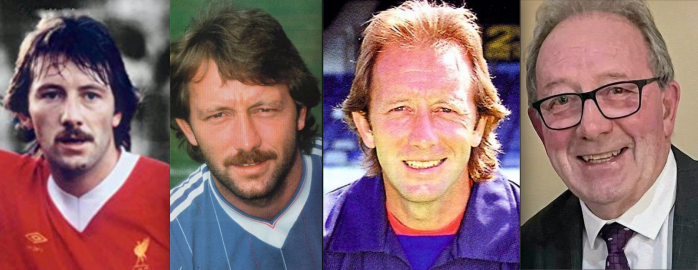
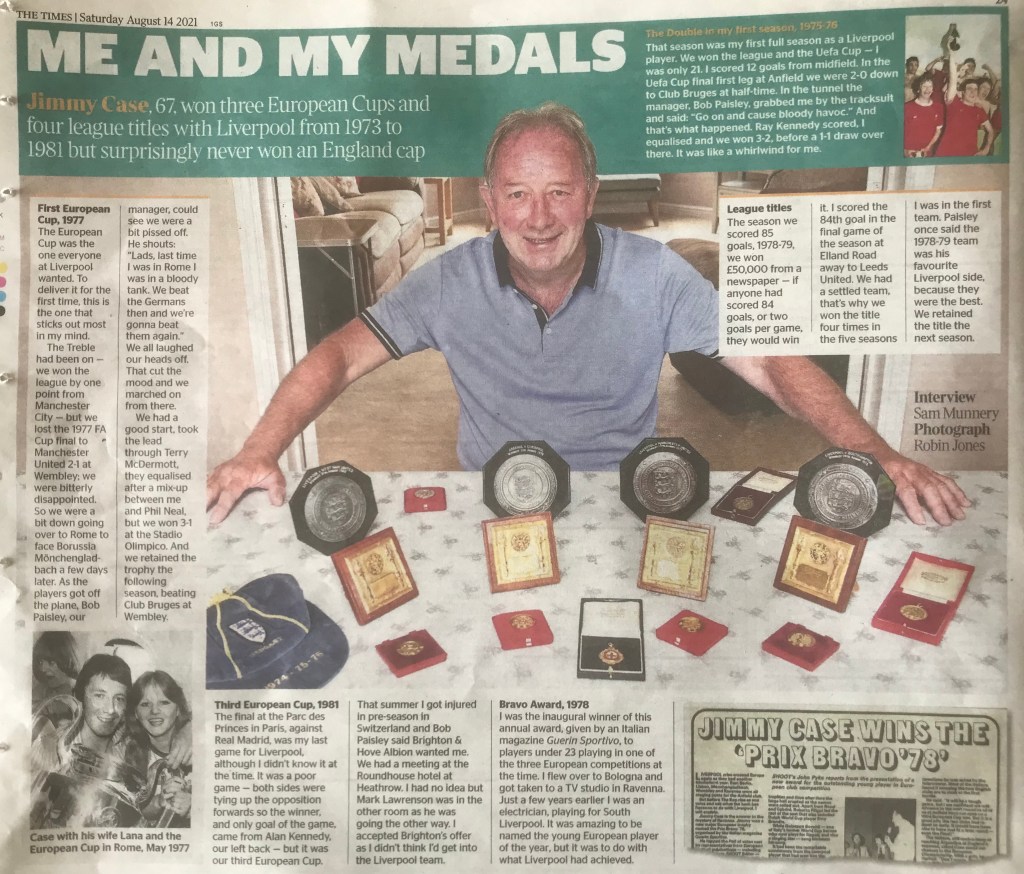
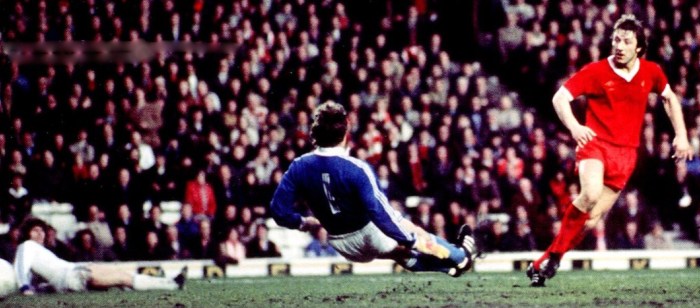
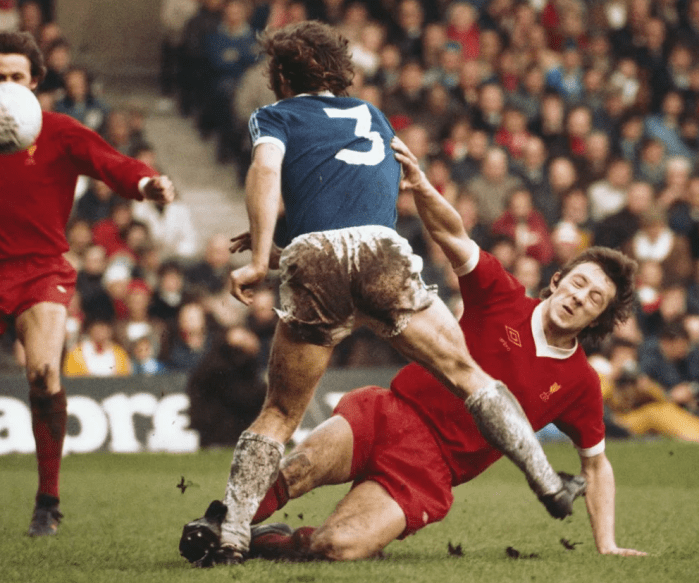
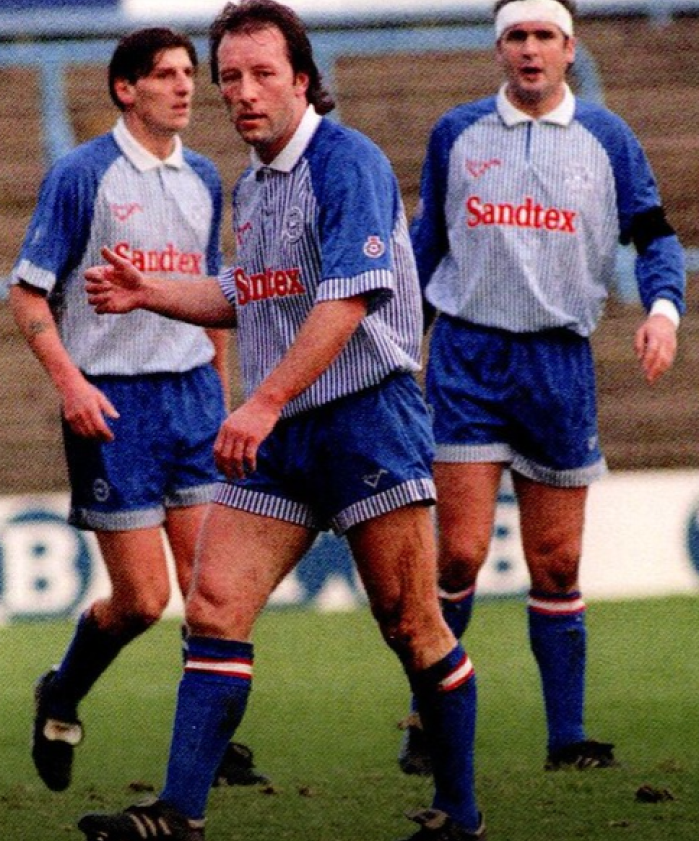
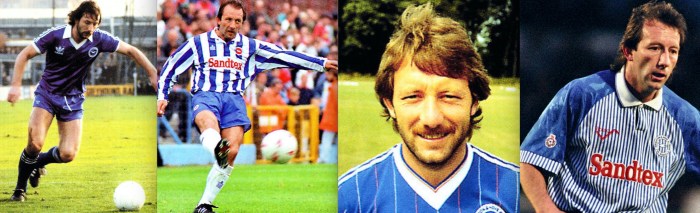
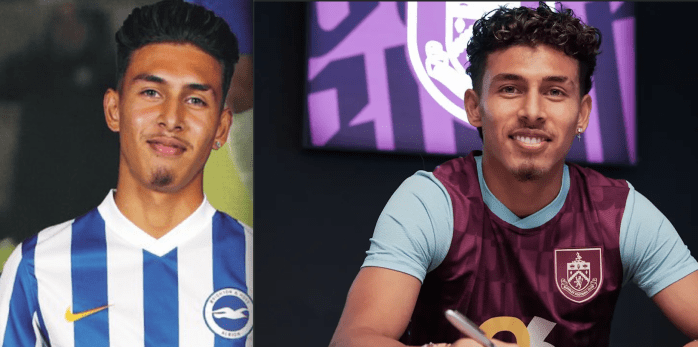
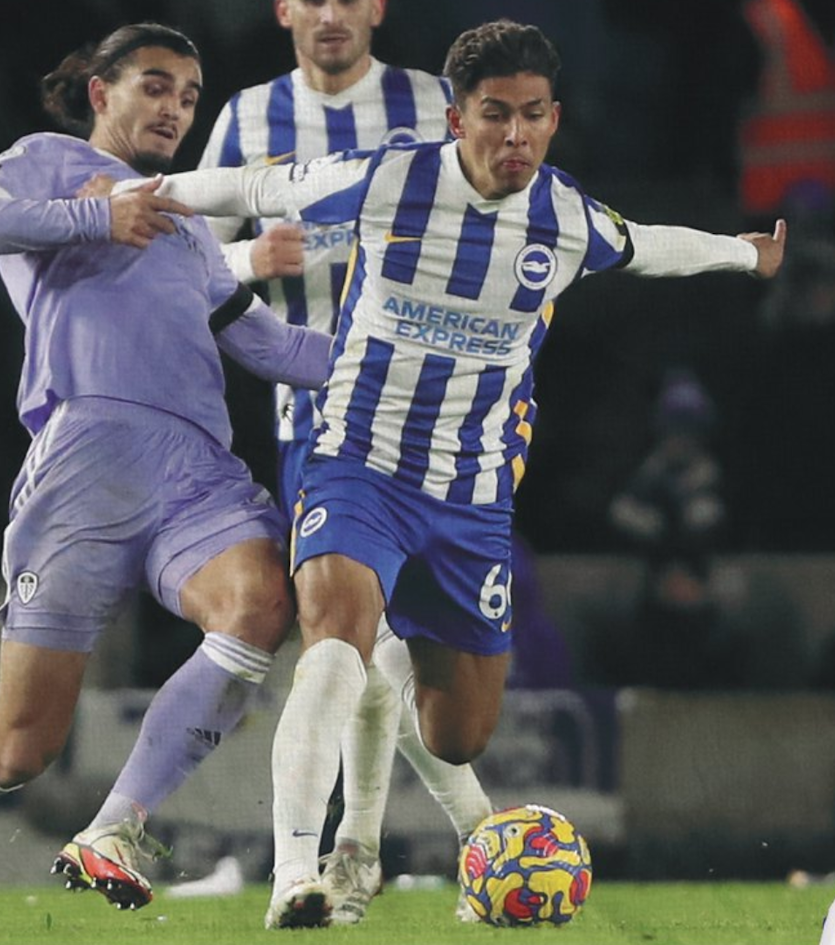
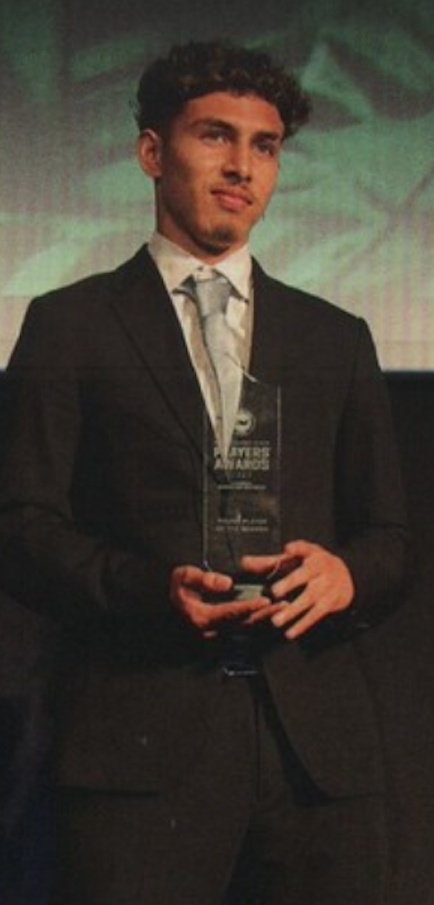
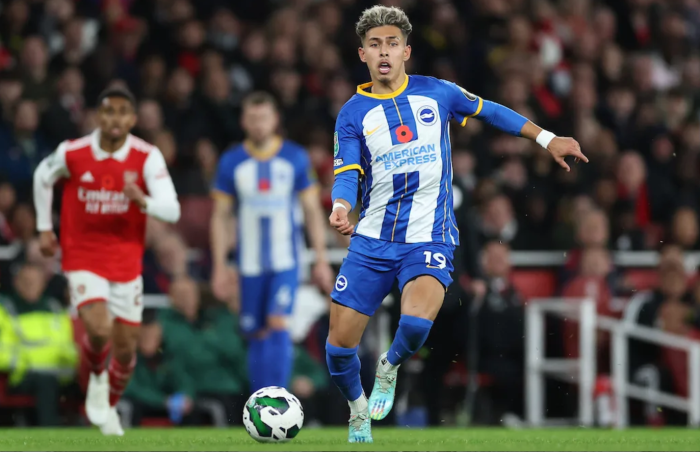
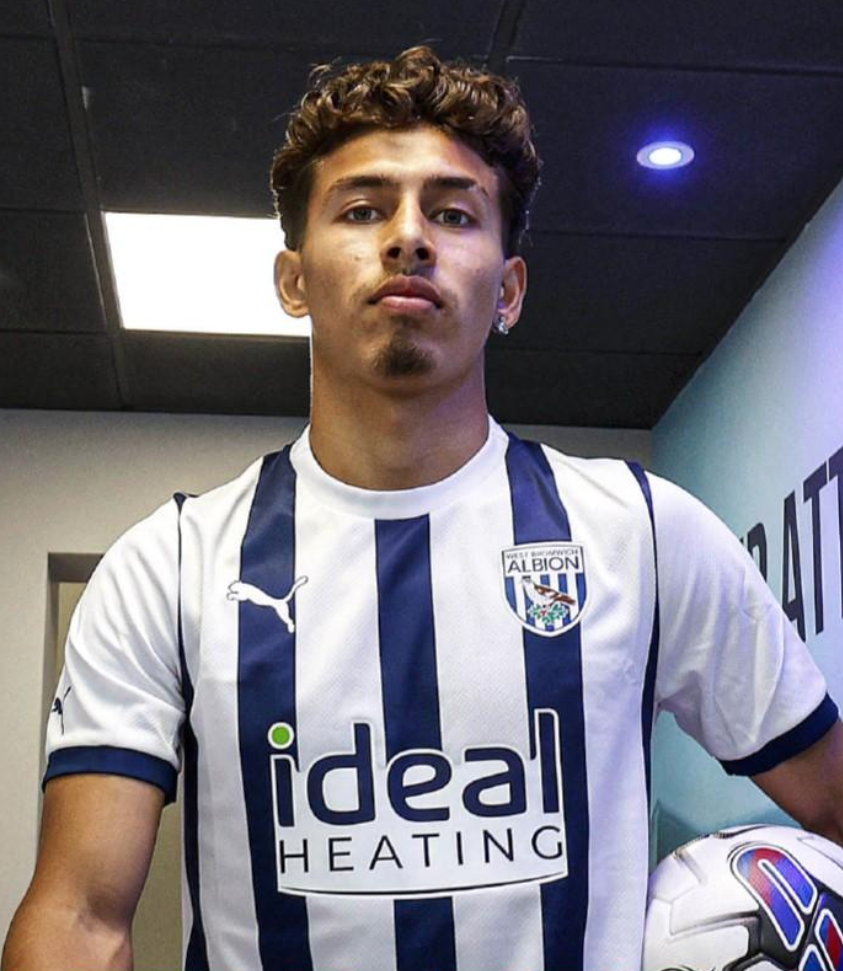
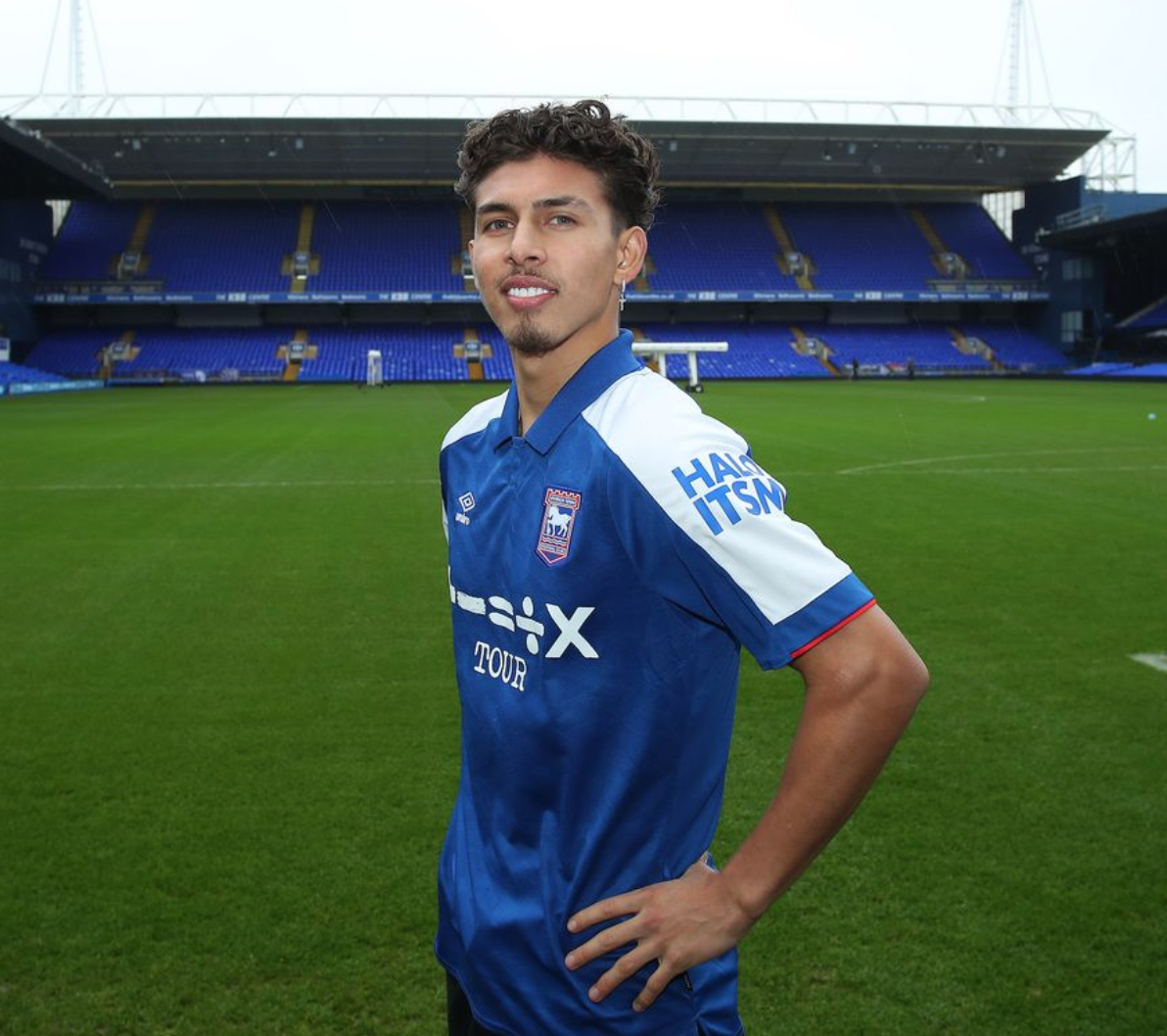

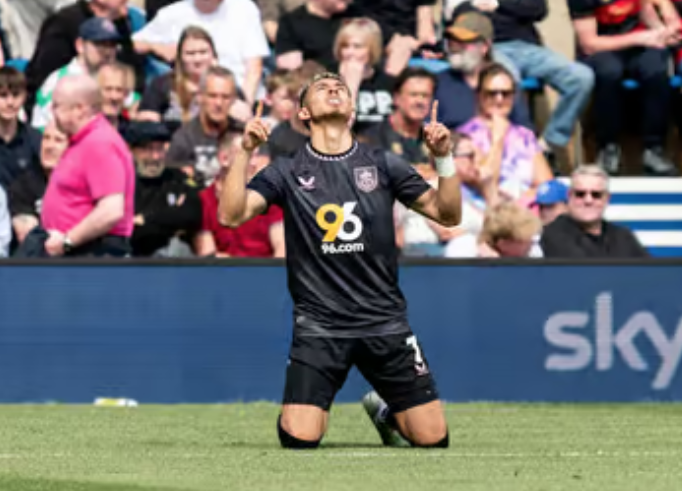
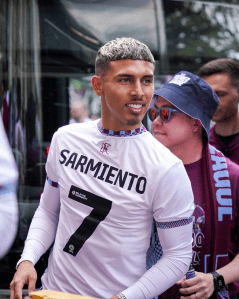
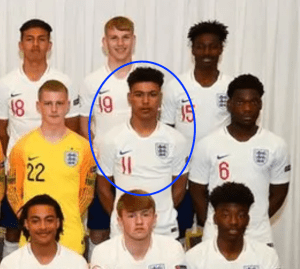
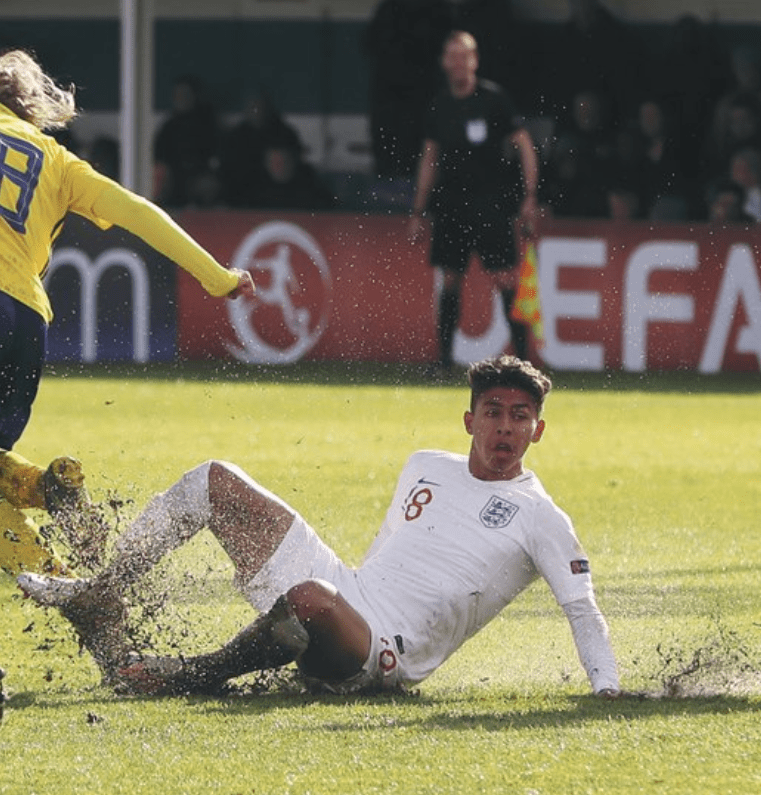
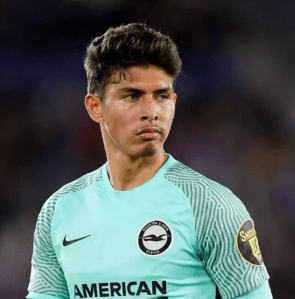
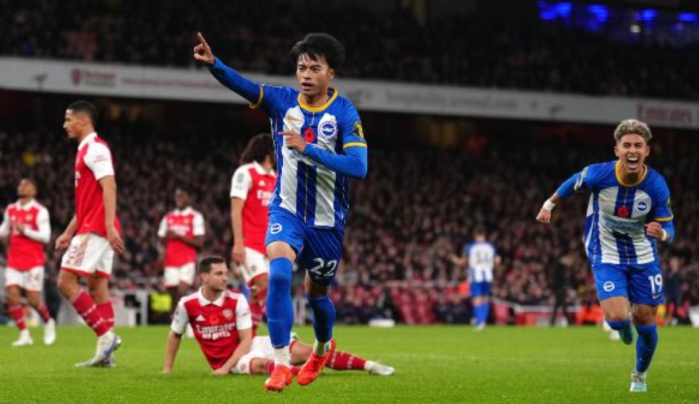
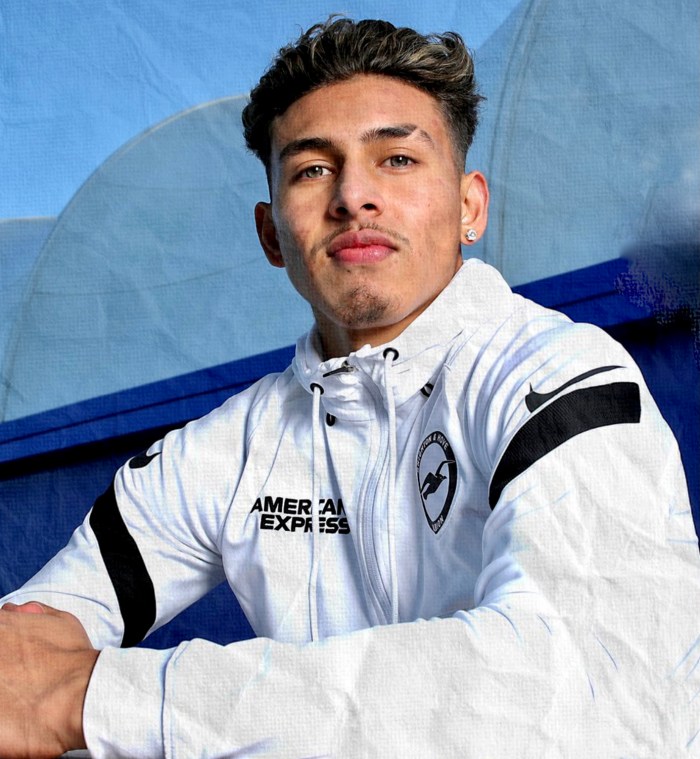
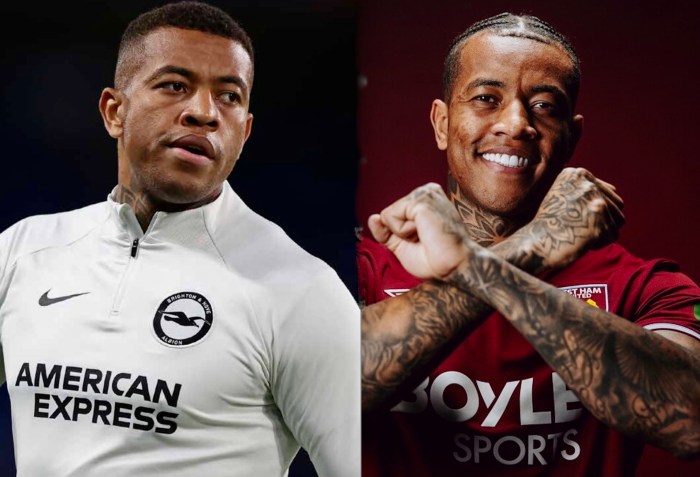
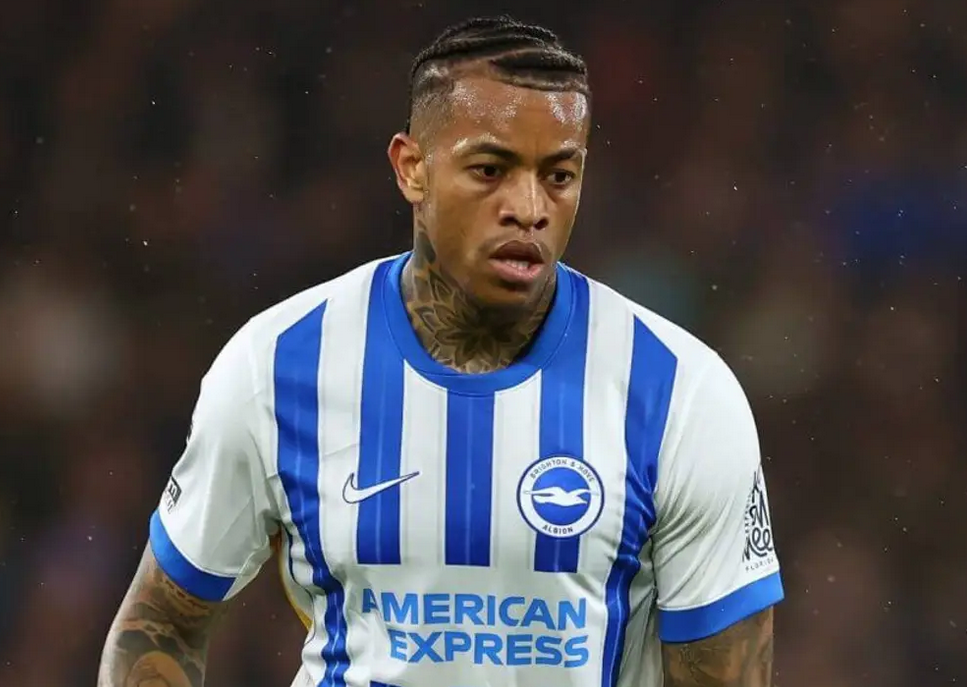
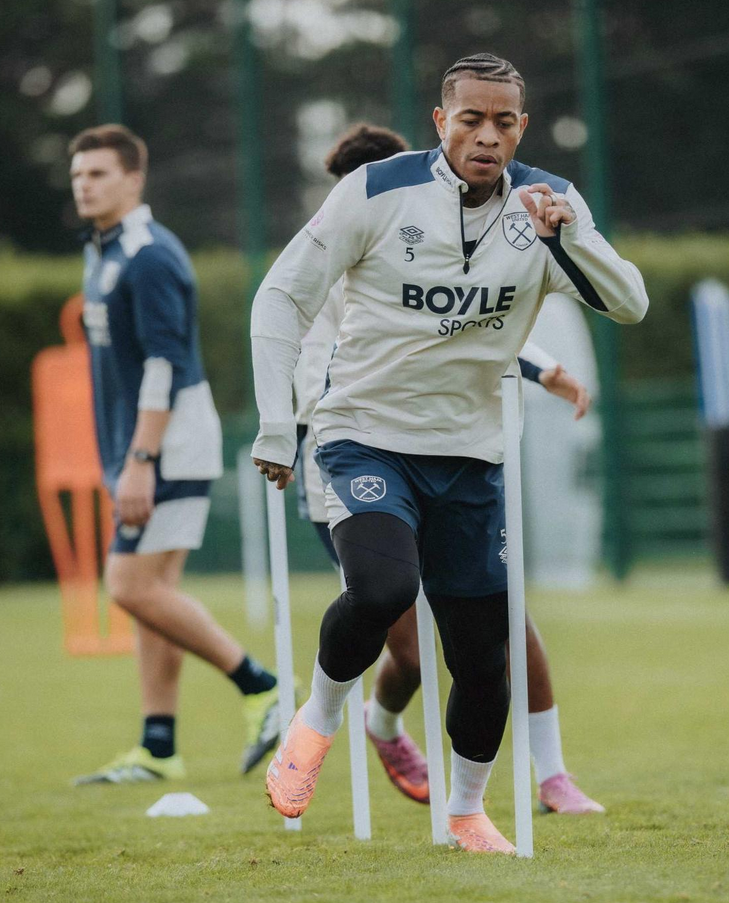

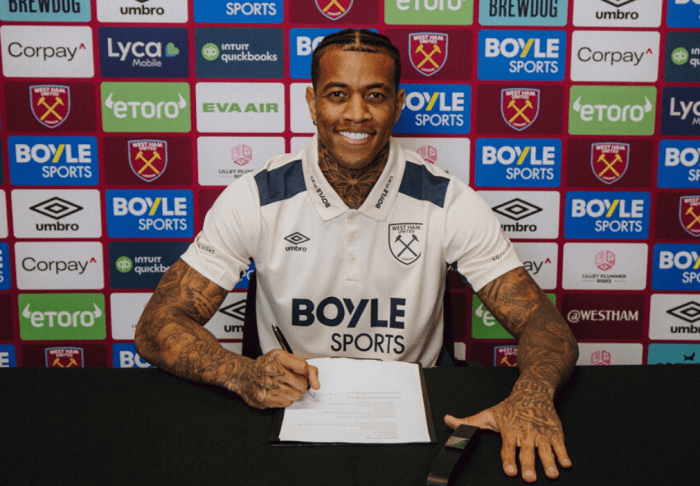



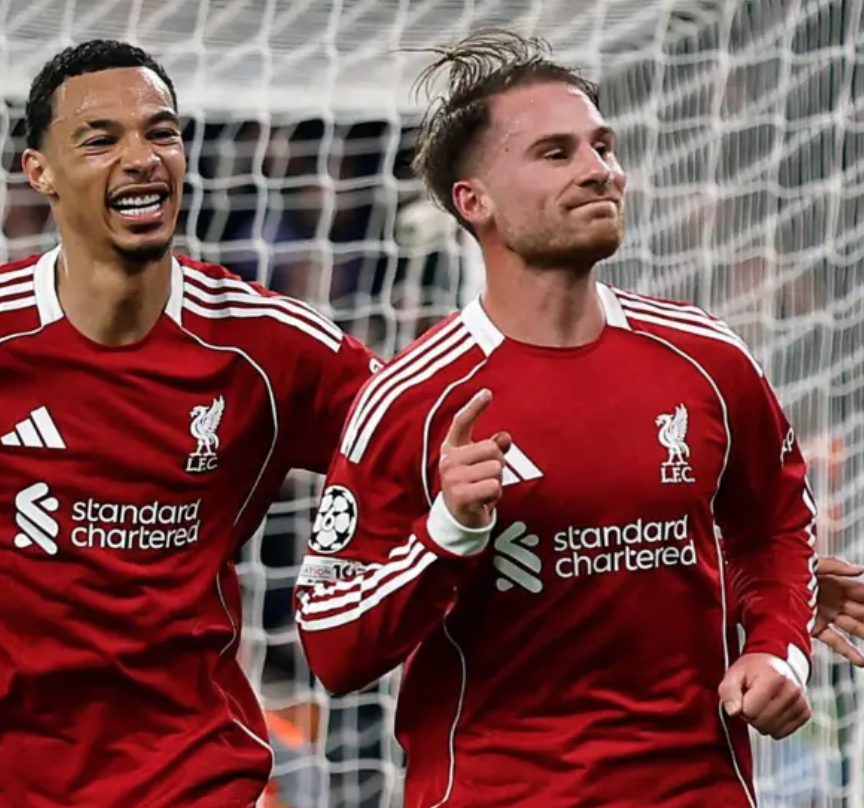



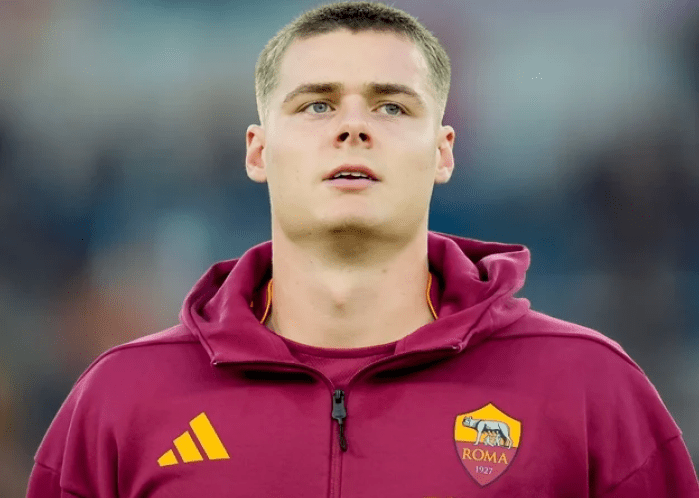


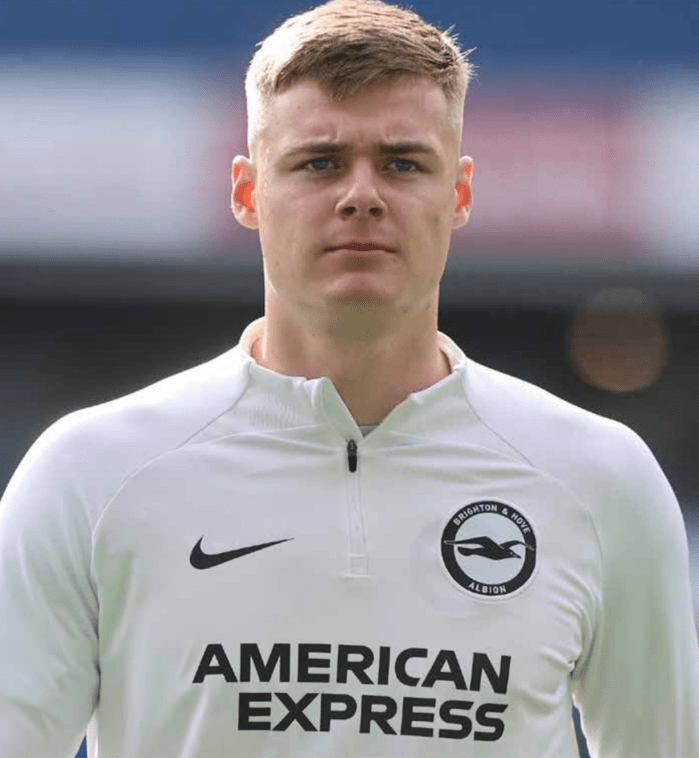


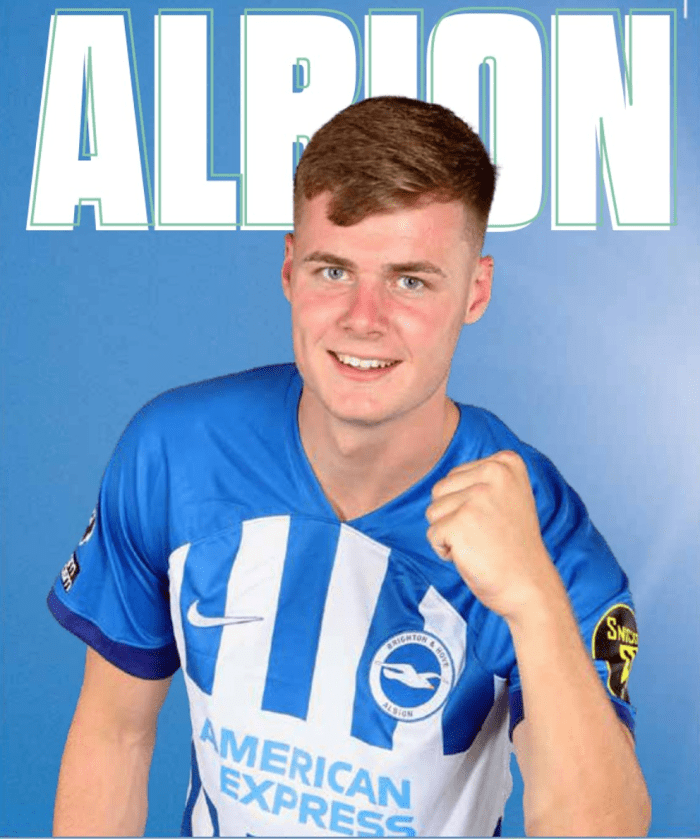
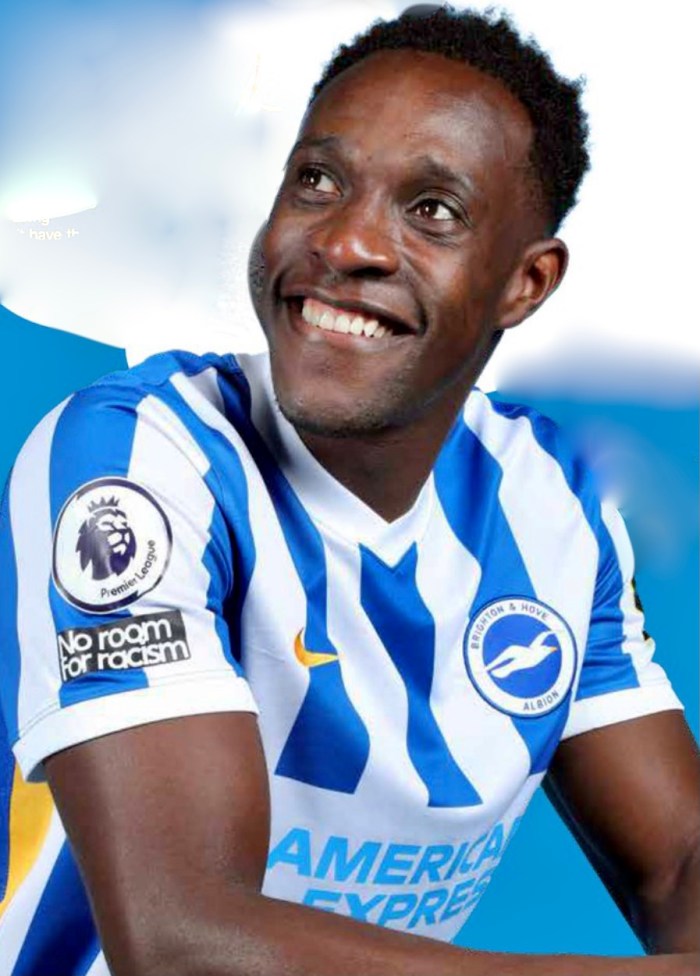


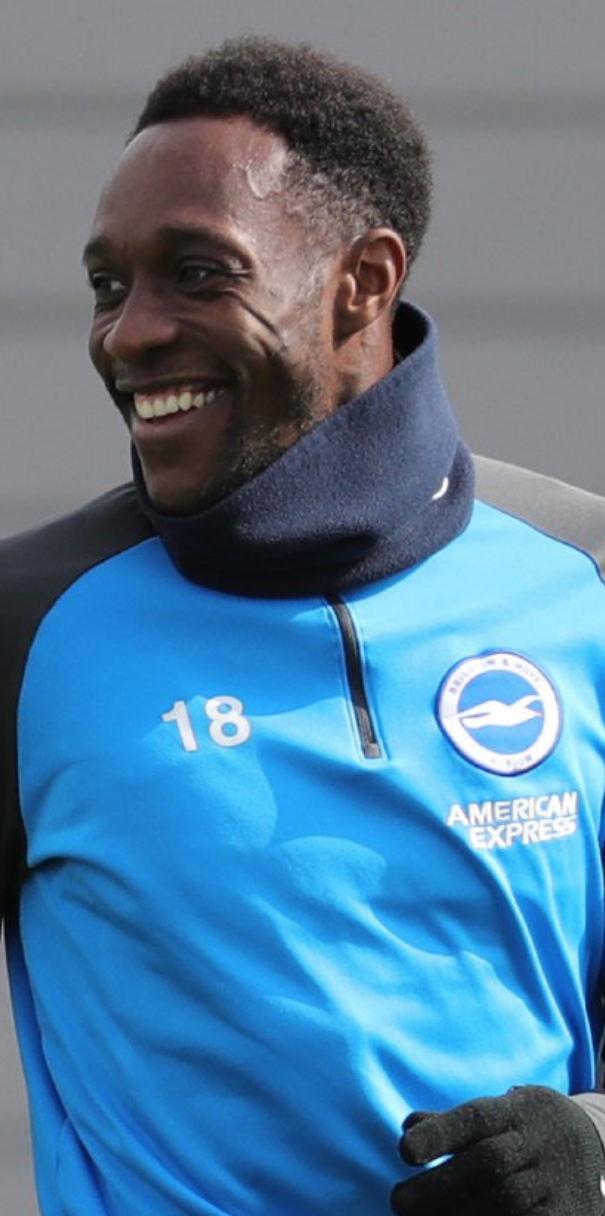


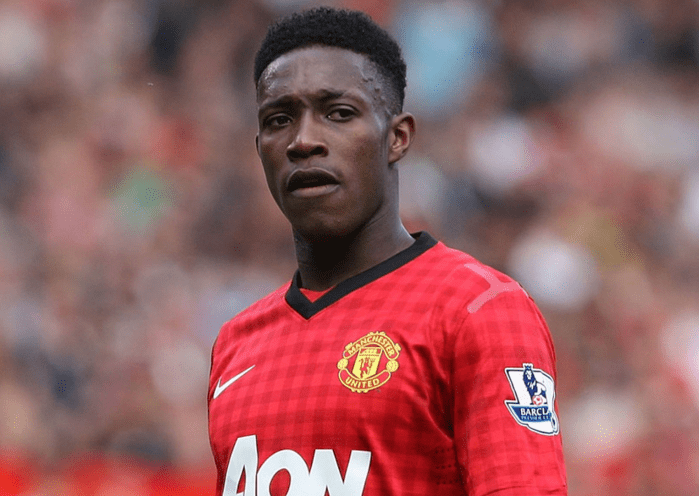


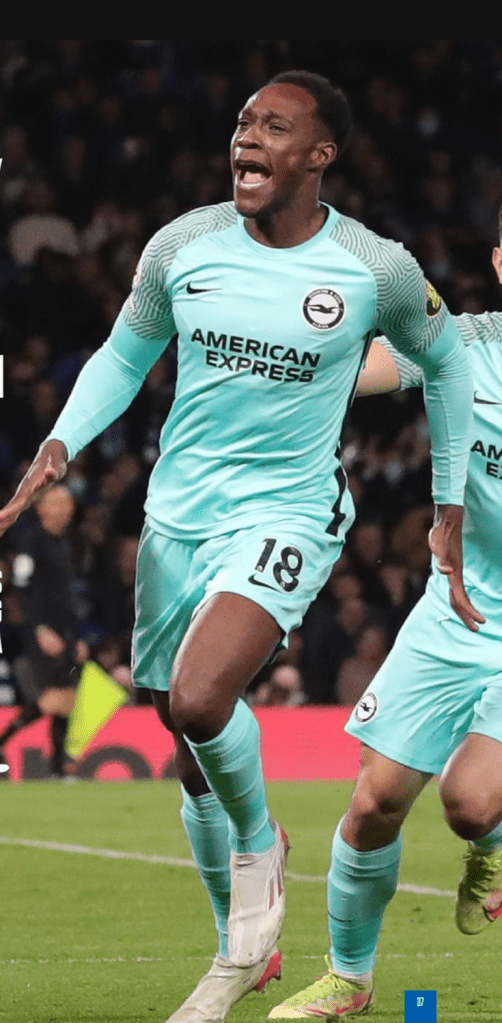



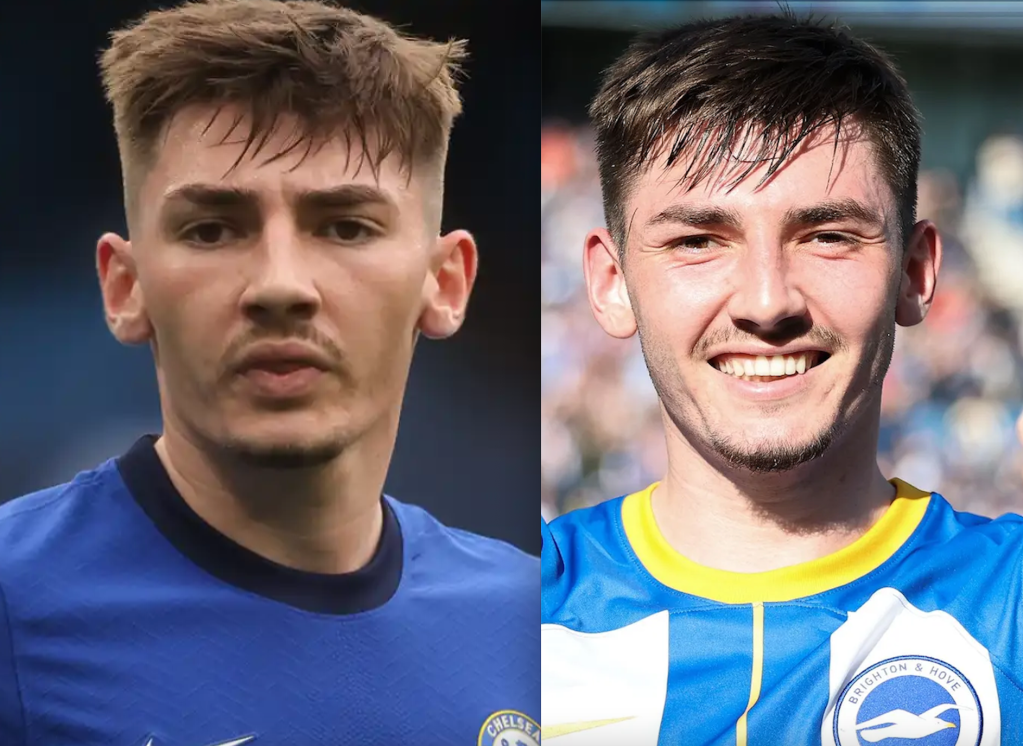


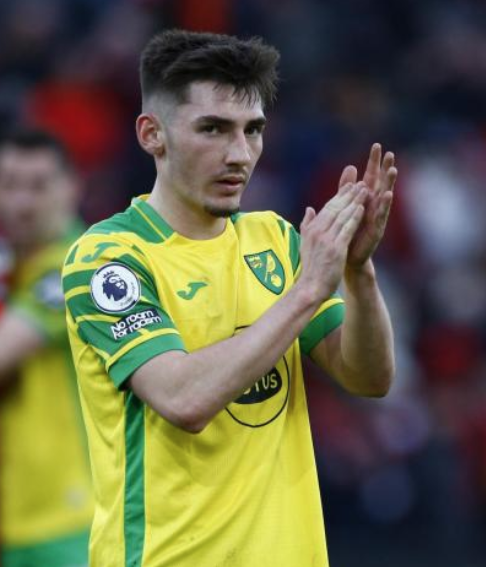
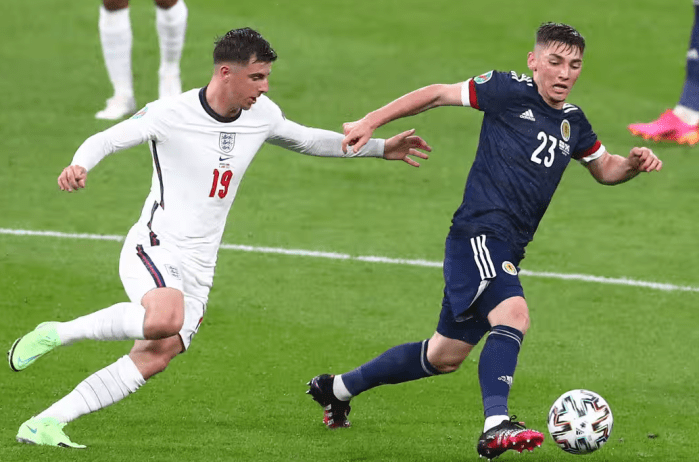


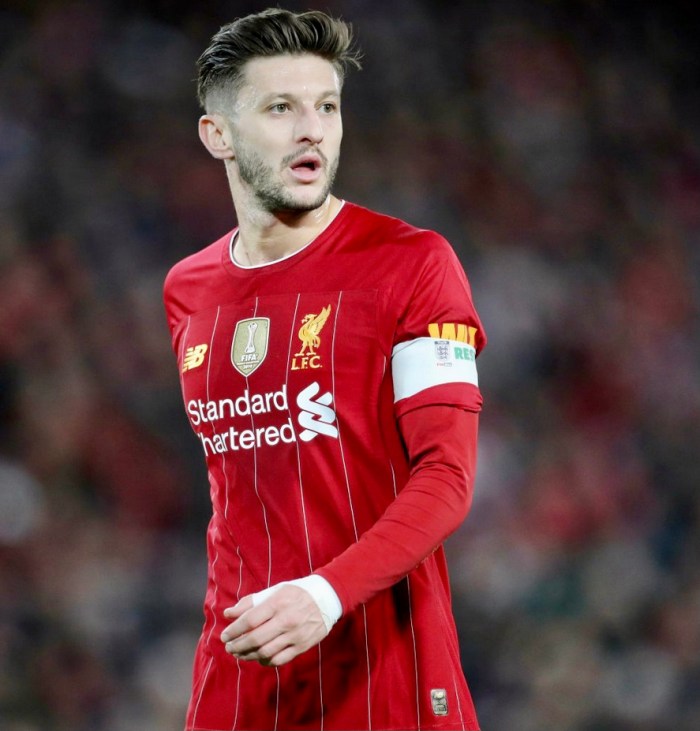


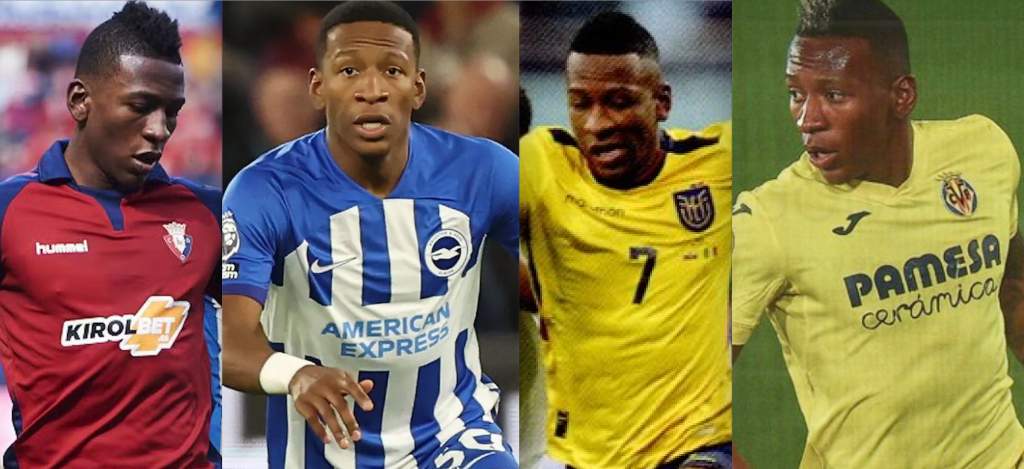
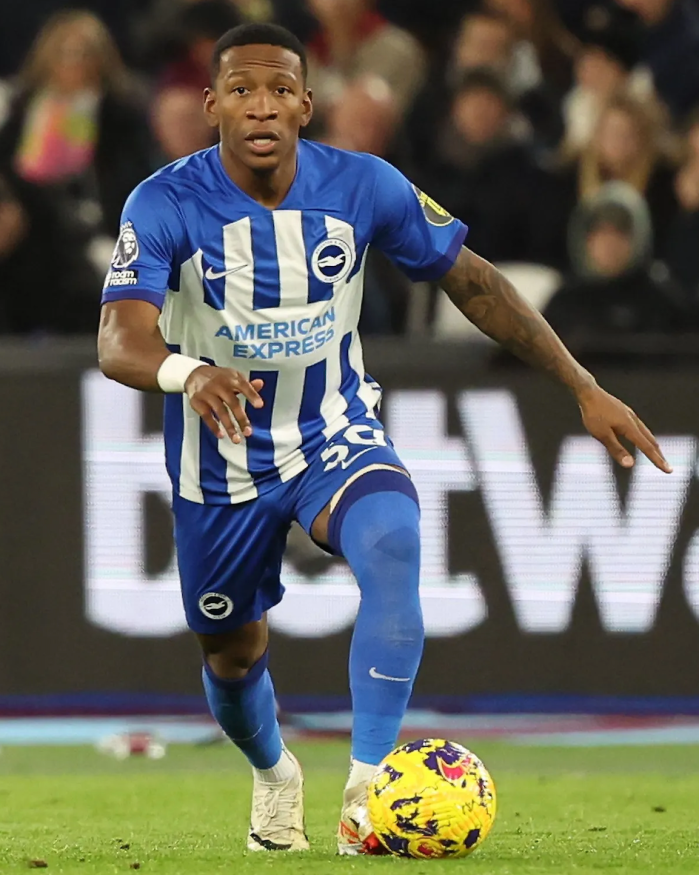

 In parallel lines