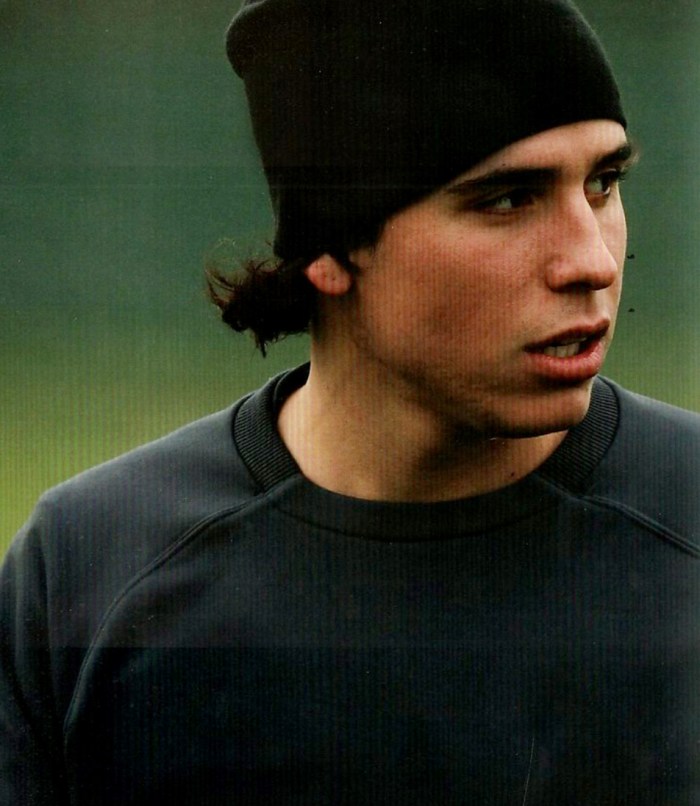
‘Polite, enthusiastic, dedicated – the model professional’

JAMES MILNER obviously has a thing about passionate Italian coaches called Roberto: It was Roberto Mancini who took him to City from Aston Villa for £26m in 2010 (with Stephen Ireland moving in the other direction as part of the deal).

He went on to win the Premier League title twice, the FA Cup and the League Cup in his five years at the club. In 203 appearances for City, he scored 19 goals and provided 45 assists.

Sadly, a sizeable number of City fans have quickly forgotten the success he was associated with and find it necessary to boo him if he returns to the Etihad in the colours of an opponent. They particularly resented him joining rivals Liverpool and thought it bad form that in 2016 he celebrated rather too exuberantly scoring for the Reds against them, especially because he’d previously not celebrated when he scored for City against his old club Villa.

They also claim not to like his desire to play in his preferred central position, and on more occasions, because they say he didn’t achieve either of those at Liverpool.

When he lined up as an emergency right-back for Albion’s visit in October 2023, sections of the City faithful revelled in his discomfort up against Jeremy Doku and Phil Foden (he was subbed off at half time).
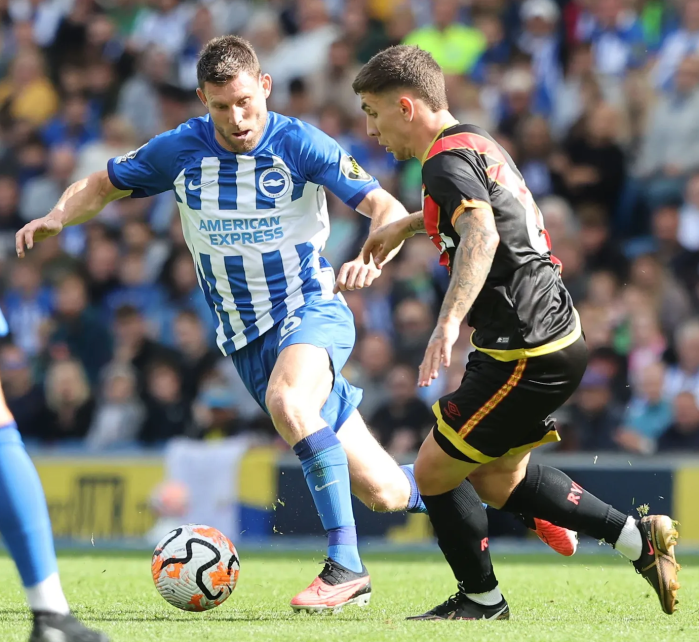
Go back to the beginning of his time with their club and this is the same player who put in a man-of-the-match performance on his City debut – a 3-0 win over Liverpool!

On signing the player at the age of 25, Mancini said simply: “He is a good young player, who can play in every position in the middle and out wide.”

It’s worth checking in on a piece Paul Wilson wrote for The Observer in 2011 when Milner did a question-and-answer session with City supporters at the Mayfield Sports Club home of an amateur rugby league team in Rochdale.

“Milner seems polite, enthusiastic and dedicated, every inch the model professional,” writes Wilson. “Milner is unquestionably the real deal. Even on a night off such as this he does not drink, not even creamy pints of hand-pulled John Willie Lees.”

Milner explained: “I made that decision quite early on. I’ve always dreamt of being a footballer, you only get one shot at a career like this and I want to be the best professional I can.

“Anything I can do that means I can get the best out of my ability is what I’ll try and do. It’s not much of a sacrifice really, we are fortunate to be well paid for doing something that we love and enjoy doing and I want to play for as long as I can.

“As a professional you want to get as much as you can out of your career, play at the top level and win trophies. Playing with top players at Manchester City I’ve got a great chance of doing that, and I just want to keep improving.

“You just want to be able to look back on your career when it’s over, see what you’ve won and feel that you couldn’t have done any more, and that you’ve been the best player you possibly could have been.”

Wilson noted how Milner had showed strength of character to force his way back into the team when left out of the side in his first season with City. “I realised when I joined that competition for places would be intense at City, and I also knew the manager must rate me, because he brought me to the club,” said Milner.

“But if you are not playing you are not happy and you want to know why. So, I asked him what he thought, what I could do to improve to get into his team, then I went away and worked hard on it.”

Understandably, Milner enjoyed being part of the City side that won 6-1 at Old Trafford and acknowledged: “The fans will remember that for a long time, because they have been the underdogs in the city for so long, and it was great to be a part of that.

“But we now have to make sure we don’t get carried away. The fans can get as carried away as they want, good luck to them. It’s our job to carry on winning football matches and try not to get ahead of ourselves.”

Wise words but even then, in his mid-20s, he’d got 10 years’ experience behind him. “It’s all been a bit of a rush, but I think that happens when you make your debut so soon after leaving school,” he said. “You’ve had this dream and suddenly you’re doing it and everything happens very fast and hardly slows down.

“I remember Nigel Martyn joking with me at Leeds, saying he was old enough to be my father, which he certainly was. He said: ‘Make sure you enjoy your career because it will go past in a flash.’ And I was like: ‘Yeah, leave it out, Nige, I’m only 16. I’ve got all the time in the world.’

“Well, here we are 10 years later, and it’s flown. I can’t believe it. Nige is obviously wiser than he looks.”

In five years at City, Milner was in two Premier League title-winning sides (2012 and 2014), collected a FA Cup winners medal in 2011 and a League Cup winners medal in 2014 and was viewed as an integral part of their squad.

Mancini left City in the wake of losing the 2013 FA Cup final to Wigan Athletic and his successor, Chilean Manuel Pellegrini, was also a big fan of Milner and tried to convince him to stay as his contract came to an end in 2015.

Pellegrini told the Guardian: “Milner’s a phenomenon, a guy with big balls and a heart this big.

“Intelligent, great mentality, one of those players that when you leave him out you’re left with this feeling of injustice; it hurts because he should always play but sometimes you need a technical player with other characteristics.

“I hope he stays. If he doesn’t it will be because there’s an important offer.

“The club wants Milner to continue and he wants to stay but maybe he wants more games.

“I understand. I’m Milner’s No1 fan. Find me a more complete English player. There are players who’re better technically, yes. Quicker players, yes. Players who head better, yes. But show me one who does all the things Milner does well. There isn’t one.”

When he decided to move on a free transfer to Liverpool in 2015, teammate Vincent Kompany declared: “You’ll be missed at City brother, as a teammate and a friend! Your drive and passion were inspirational.”

Milner himself hasn’t taken the fan flak to heart and on tribuna.com spoke of his memories of his former side.

“I had a great time at Man City, and I was lucky enough to win every domestic trophy there, play with some great players and I became a better player there,” he said.

“I have nothing bad to say about the club. Obviously, now I think of them a bit differently because they’re big rivals but that good feeling is still there. They’re a big part of my career and a big part of my life as well.”

Football writer Alex Brotherton leapt to Milner’s defence in a piece for the Manchester Evening News in September 2021, declaring at the outset: “There are no two ways about it – Milner was an excellent servant to City during what was an extremely successful period for the club.”

Brotherton reckoned even though Milner didn’t set the world alight in sky blue, “that wasn’t what was expected of him” given he was playing alongside the likes of David Silva, Yaya Toure, Carlos Tevez and Sergio Aguero.

“It was during the unsuccessful title defences of 2012-13 and 2014-15, when City’s attack faltered and their backline creaked, that Milner really stood out,” wrote Brotherton. “He rarely put in less than a 7/10 performance and 100% effort was guaranteed, chasing down lost causes like his life depended on it.”

The journalist also cited “a brilliant battling performance” away at Bayern Munich in the Champions League in 2013-14, capped off by a stunning goal that sealed a come-from-behind 3-2 win. And he remembered Milner’s “tireless work on the left flank” when 10-man City earned a 1-1 draw at Chelsea.

“It was because of performances like this that Milner was a hugely popular figure among City fans, and rightfully so,” said Brotherton.
Describing the booing of Milner as petty, Brotherton added: “Of all the players that City fans could hate, the affable Yorkshireman shouldn’t really be one of them.”

The Mirror’s David McDonnell had presented a similar defence four years earlier, describing Milner as one of City’s “most efficient and reliable players” and “a grafter and one of the most inoffensive players in the money-saturated modern game”.

“There was never a whiff of controversy surrounding Milner during his time at City, as one of the most conscientious players around simply got on with the job of delivering for his team, a recurring theme throughout his career.”
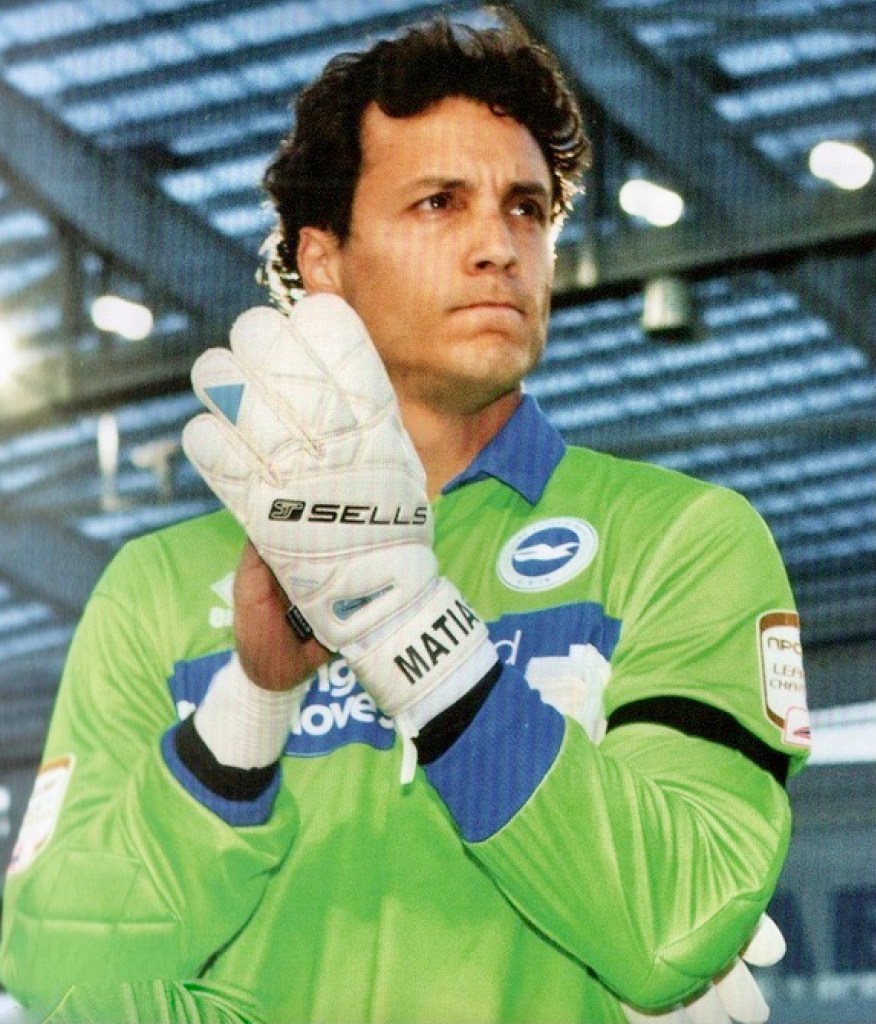
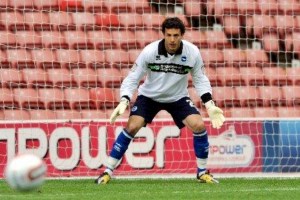
How the gaffes of goalie González worked both ways

DAVID GONZÁLEZ might well have been an experienced international goalkeeper but conceding a soft goal on his debut didn’t go down well with the Albion faithful.

Brighton fans were a whole lot happier when the same player shipped five AGAINST the Seagulls four months later.

Columbian González, who’d spent two years as a Manchester City back-up ‘keeper, only played twice for the Seagulls during a short-term deal in 2012.

After signing him in January that year, manager Gus Poyet finally gave him a chance at the end of the season after Peter Brezovan had conceded six in a thrashing at West Ham. González was one of six changes to the line-up that had capitulated at the Boleyn Ground.

But, against Watford at the Amex three days later, there were only six minutes on the clock when the Colombian saw Sean Murray’s cracker of a free-kick sail over him into the net.

When González did make a routine save, supporters in the North Stand greeted it with sarcastic applause, which incensed Poyet. In his post-match interview with the Argus, he said: “If David had let a goal in through his legs I wouldn’t agree but I would understand that sometimes we take the mickey out of somebody, but it wasn’t like that so they need to be careful.

“I don’t like it because they are being unfair to an unbelievable group of players who are bringing plenty of joy to this football club and attacking any single person is attacking the whole club.”

The ‘keeper’s debut hadn’t got much better when Troy Deeney put Watford 2-0 up with a penalty a minute before half-time. Thankfully Albion hit back in the second half and forced a draw with goals from captain Inigo Calderon and former Hornet Will Buckley.

Ironically, the Watford ‘keeper that night, Tomasz Kuszczak, was brought in by Poyet that summer and González ended up at Barnsley – the side he made his only other Albion appearance against in the last game of the season.

González keeps goal for Albion at Barnsley and, below, sees five go past him when playing FOR the Tykes at the Amex at the start of the next season

At least he didn’t concede at Oakwell, although the 0-0 bore draw was a dire spectacle: a typical end-of-season encounter.

Almost the only things of note were that Barnsley included a young John Stones in their line-up together with David Button in goal and former Albion flop Craig Davies was up front.

In one of those strange quirks of football, González was back at the Amex at the end of August having been drafted in by the Tykes to cover a goalkeeping injury crisis.

It was not a happy return. As the Yorkshire Post reported: “Brighton were 2-0 up after only 14 minutes, with goals from Ashley Barnes and former England defender (Wayne) Bridge, with Barnsley goalkeeper David González at fault on both occasions.”

González dropped a free-kick by Craig Noone for Barnes to tap in after three minutes and the Colombian was “simply a bystander” when Bridge beat him to his left with a low drive from 25 yards. It was Bridge’s first league goal for nine years.

Ashley Barnes wheels away after scoring past Albion’s former ‘keeper

Barnsley pulled a goal back with a 36th-minute penalty from Davies after Andrew Crofts fouled Jacob Mellis, but Craig Mackail-Smith got the final touch on Barnes’s shot a minute later.

Mackail-Smith scored again four minutes after half-time with a close-range header and Barnes made it 5-1 10 minutes from time, slotting home Kazenga LuaLua’s cross.

Barnsley boss Keith Hill said afterwards: “We had 12 players out but I have no excuses whatsoever. It was inept and I include myself in that. The opposition were excellent and it could have been up to 10-1.”

Born in Medellín on 20 July 1982, González began his career at his hometown club Independiente Medellín and he played more games for them than any other club he subsequently joined (he returned for a four-year spell between 2015-19). And in June 2022 he was appointed their manager.

González also had two separate spells with another Columbian side, Deportivo Cali (he ended his playing career with them in 2020) and left South America for Turkey in 2007, spending two seasons with Çaykur Rizespor.

After failing to make an impression with Argentinian side Club Atlético Huracán he had a successful trial at Manchester City in late 2009 during Roberto Mancini’s reign. He wasn’t named in their 2010-11 Premier League squad but he was the reserve side’s regular ‘keeper until, in the second half of the season, he was sent on loan to Leeds, where he remained back-up behind Kasper Schmeichel and Shane Higgs.

He was unlucky not to get a chance back at City when he sustained an injury at the same time as Shay Given and no.2 Stuart Taylor. Marton Fulop was brought in on loan from Sunderland instead.

At the start of the following season, González was sent on a six-month loan arrangement to Aberdeen, where he hoped his performances would catch Mancini’s eye.

“I want to have a good spell at Aberdeen and to show Mancini that I should be considered for the team,” he told the Daily Record. “But Man City have so much money they can go out and buy just about any player they want.

“The way things are going they will become the best team in the world and I see that happening sooner than a lot of people think.”

The goalkeeper featured in 14 games for the Scottish Premier League club when first choice Jamie Langfield was sidelined following a seizure. On his return to Manchester, his contract was terminated by mutual consent and the free agent was taken on by Brighton, where Poyet had just dropped Casper Ankergren and installed Brezovan as his first choice ‘keeper.

Poyet told seagulls.co.uk: “David is an international with an excellent pedigree, playing over 300 senior games at the top level in South America, Turkey and Scotland. He has won the league in Colombia and has been capped by the national team.

“The idea is for David to compete with Peter and Casper to be first choice. Peter has come in recently and done very well, and is currently number one, but it’s now up to both David and Casper to put pressure on him to be first choice.”

That mauling at the Amex in August 2012 was one of only three Championship games González played for Barnsley and in Albion’s matchday programme he had admitted he saw his time with the Tykes as a shop window.

“I want people to come and have a look, to see what I’m capable of, but nothing else has been said really,” he said. “I’m just here for the time being while the boys are out with injury and suspension, so I’m just going to enjoy it and try to do the best I can.” Oops!

The following year he moved back to Columbia, initially playing for Deportivo Pasto, then Águilas Doradas before returning to Independiente Medellín in 2015.

Teenage prodigy Assulin didn’t live up to early expectations

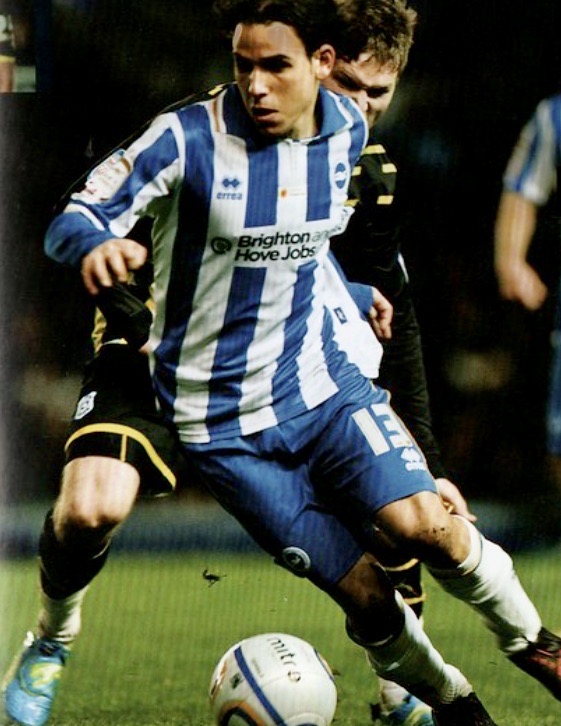
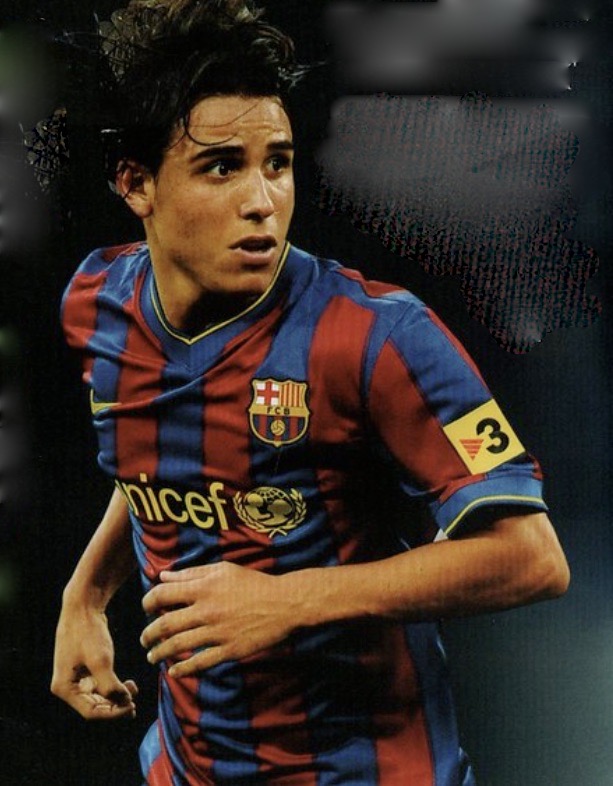
GAI ASSULIN played for his country aged just 16, was hailed as ‘the new Lionel Messi’ and appeared in Pep Guardiola’s Barcelona first team at 18.

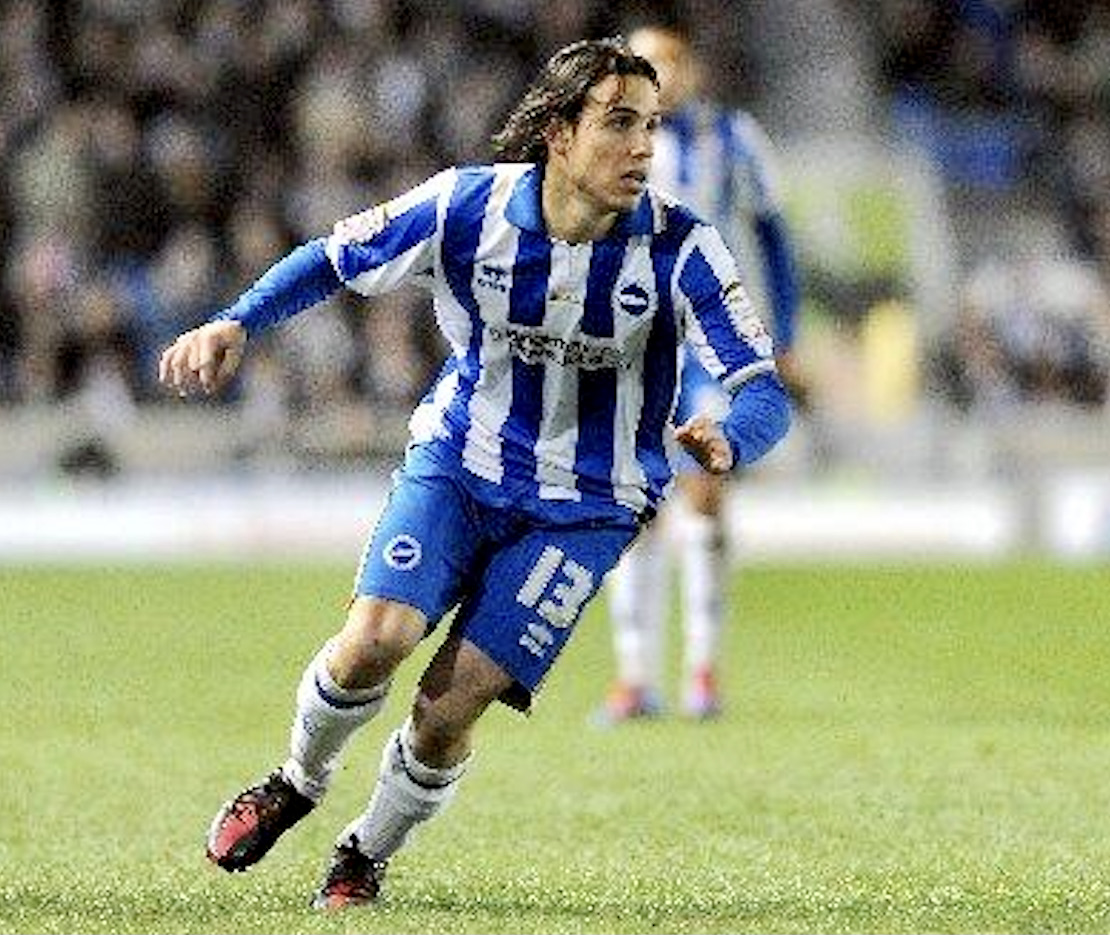
Two years later he had two starts and five substitute appearances for Brighton in the Championship, on loan from Manchester City, but couldn’t agree terms for a permanent move.

He subsequently flitted from club to club, country to country, and in the autumn of 2021 was playing local five-a-side football in Cheshire.

Where did it all go wrong? Was it a case of too much too soon?

Assulin was only 12 when he uprooted from his Israel home to pursue the chance of a career with Barca. He spent seven years there, playing for the youth side before reaching the renowned B team in 2007 where he was coached by Guardiola.

“I learnt a lot from him,” he said. “He helped me develop as a player but then so did all the coaches I played for at the club. From the age of 12 to 17 you learn the philosophy of the first team; how to play, what to do, and that never changed.

“Whatever age group you are in, the system you play is the same as the senior side so, if you do get called into the first team, it is not a big, big difference to what you are used to.”

When Guardiola stepped up to first team coach, Assulin was among the youngsters he blooded involving the winger in the Copa del Rey game against Cultural Leonesa in October 2009 and then some pre-season friendlies, including against Tottenham at Wembley.

“Playing in those games was a good experience,” he told the Albion matchday programme. “As the manager likes his younger players, he gave me an opportunity but the competition for places was really, really tough so it was hard to break into the team.

“I also had a few problems with my knee which didn’t help either and my time with the club eventually came to an end.”

Ahead of Guardiola eventually making the same move, Assulin signed for Manchester City under Roberto Mancini in December 2010, explaining: “I wanted to continue my football education at another top club and Manchester City has many top, top players.”

He has since publicly castigated Mancini for not giving him the opportunity to break through at City, telling ITV in 2016: “He didn’t give anyone a chance, he didn’t care about any young players, especially me.

“I didn’t even do the pre-season, when it was a good time to give someone a chance and see if they do well (or) if they are not doing well. But I didn’t get a chance, which was frustrating. It was a shame as I always felt good when I trained with the first team, but sometimes he chose his own sons over other players and I don’t think it was fair.

“It is very important for me to tell people as a lot of City (fans) don’t know what happened with me at City. People always ask me why I didn’t get a chance, and it’s obvious that the manager was the problem.

“I loved playing there, I loved the city and I wish I had a chance there. (City execs) Brian Marwood and Garry Cook loved me and really wanted me to stay, but Mancini didn’t and that was the problem.”

When Assulin joined Brighton in February 2012, Gus Poyet admitted he hadn’t been planning to take him on because at the time he was only interested in getting City midfielder Abdul Razak on loan.

A window opened up when forward Will Hoskins went to Sheffield United on loan, and Poyet told the Argus: “We were not looking to bring in another player after Razak. This was something that came along that I thought was very interesting. When there is something unique and unexpected like this I think it’s a no brainer.

“Gai was one of the top young talents in the world four or five years ago and he was very unlucky with an injury.

“He is still very young. He has got an incredible amount of quality and he can really make a difference but for any young player he needs to be playing and right now at Man City that is very difficult.

“He is an offensive player without any doubt, not a midfielder. He can play up front, wide or behind the striker.”

Assulin made his Brighton debut on 22 February against Hull City, going on as a substitute for Razak in the 77th minute of a 0–0 draw. He made his first start against Cardiff City at the Amex on 7 March but was substituted after 59 minutes of a 2–2 draw.

Although Razak returned to City after falling out with Poyet, Assulin’s loan was extended to the end of the season. However, he only made one more start – in the 6-0 drubbing dished out by West Ham at the Boleyn Ground, again being subbed off when Kazenga LuaLua replaced him on 53 minutes.

His last action in an Albion shirt was as a 61st-minute substitute for Will Buckley in a 0-0 draw at Barnsley’s Oakwell ground. As an aside, Barnsley had future Albion back-up ‘keeper David Button in goal, and ex-Seagulls Jim McNulty in defence and Craig Davies up front.

Rather like the situation at City, there was plenty of competition for places at Brighton with Buckley, Craig Noone and LuaLua the wide choices and the incomparable Vicente playing just off the strikers.

Supporters commenting online recognised Assulin’s talent but felt he was too slight for the robust sort of treatment meted out by Championship defenders.

There was some speculation at the end of the season that a permanent move from City might materialise but terms couldn’t be agreed and Assulin moved instead to Racing Santander back in Spain.

He also had spells with Granada, Hercules and Mallorca and Israeli side Hapoel Tel Aviv. He returned to Barcelona to join third-tier side Sabadell in August 2016 but in January 2018 his contract was cancelled by mutual consent after an 18-month spell hampered by injury.

Next stop was Kazakhstan Premier League team Kairat but he played only once and mutually agreed to tear up the two-year contract he’d signed. He also went to Romanian outfit FC Politehnica Iași and, until the end of the 2020-21 season, he was playing for Crema in Italy’s Serie D.

Without a club, Assulin returned to his home in Cheshire with his partner and eight-year-old daughter, and, while searching for his next move, was doing the school run, coaching, playing five-a-side and helping with his partner’s children’s clothes shop, he told football reporter Will Unwin in a November 2021 interview.

“On an indoor pitch at an industrial estate in nearby Cheadle Hulme, it is not hard to spot the man with La Masia education among those from Moston and Moss Side,” Unwin observed.

“I grew up as a kid in Israel, in a small town and my dream was to play first-team football for a professional club,” Assulin told the reporter.

Born in Nahariya, Israel, on 9 April 1991, Assulin’s family supported Maccabi Haifa,  and young Gai went to watch them from an early age.

How did he end up at Barcelona? “My dad (Eli) took me to a club in Israel called Natanya and they had a manager who had contacts with Barcelona,” he explained. “I was invited to Andorra for a ten-day trial with other players from many different countries and I did really well. A scout from the club then invited me to Barcelona and I did really well at a trial there too. They then offered me a contract.”

Only 12 at the time, he said: “It was a big change obviously at that age, as you are not used to being in a different country and a different culture, but I did the right thing. I love football, it is my life and my family were with me when I needed them.

“My dad came over with me to live in Barcelona and then the rest of my family – my mum, one brother and two sisters – came over for a year before returning to Israel. They used to come and visit every couple of months. The experience has made me a more mature person.”

Unwin noted that Liverpool’s Thiago Alcântara once described Assulin as “the most talented player I’ve ever seen in La Masia”, the two players having progressed alongside each other.

“We grew up together at the club and played in the same team for seven years,” said Assulin. “I would see him every day, and we went to school together.”

In a 2018 interview with Unwin for Planet Football, Assulin said: “Training with Barcelona’s first team was the best experience I’ve had in my career.

“I learned so much. I’m proud to say I was training with such big players. I’ve learned from Messi, Henry, Zlatan. They’re all different types of players, so it was great to see how they operate and pick up little things from them.”

Likewise at Man City, especially from David Silva. “He’s such a good player and different from anything you will see,” said Assulin. “He’s just so intelligent on the pitch and a great guy too.

“I had a good relationship with almost everyone. I was talking more to the Spanish guys – Silva; Carlos Tevez was there at the time; Yaya Toure I knew from Barcelona; Kolo Toure was a really nice guy.

“I had a great relationship with everyone, but especially those guys. Every time I went to train with the first team, they helped me, and they liked me.”

That one full international appearance for Israel happened in a friendly match against Chile in 2008, his appearance as a 78th minute substitute coming 14 days before his 17th birthday. He subsequently made 22 appearances for Israel’s under 21 side over the next five years, but didn’t win another full cap.

Unwin observed: “The early pressure of being synonymous with Lionel Messi was not a tag Assulin particularly enjoyed as he looked to come out of the Argentinian’s shadow.”

The player himself explained: ‘They like to compare in football; it is something they do all the time and for me it is a big compliment, but Messi is the greatest footballer in history. ‘Sometimes it is not good if you take it in the wrong way, as the expectation is for you to go on to the pitch and do the same as Messi all the time. Whichever club I went to, they saw I was compared with Messi, so they thought I was going to be Messi and score 50 goals a year, so that comparison at the time was not as positive.

‘Right now, after being at so many clubs, I see it as something positive and I take it as something that hasn’t been said about so many players. Messi is the best in history, so it’s nice to be compared to him for something that I did right at the time.’

Glorious home debut as good as it got for Abdul Razak

city action 2A MAN-OF-THE-MATCH home debut was as good as it got when Abdul Razak joined Albion on loan from Manchester City in February 2012.

Already being mentioned as a possible successor to Yaya Toure, there were high hopes for the Ivorian 19-year-old.

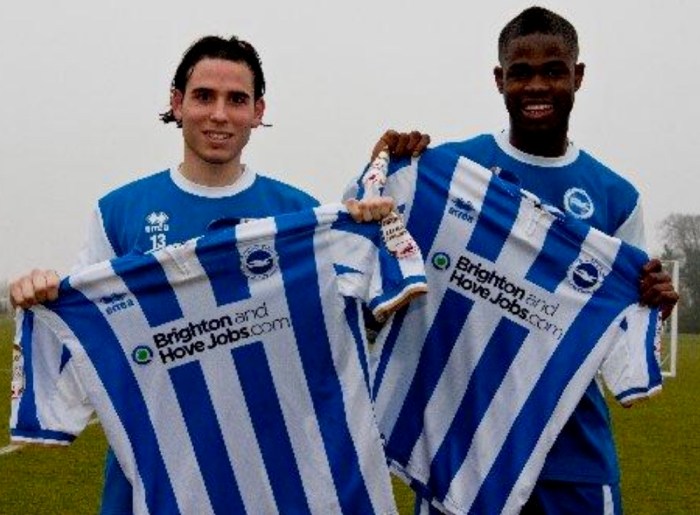
He joined originally on a three-month loan with fellow City youngster Gai Assulin (pictured together below), who came on as a substitute for Razak when manager Gus Poyet gave him his debut in a goalless draw away to Hull City.

assulin and razak

With regular midfielder Gary Dicker sidelined through injury, Poyet needed reinforcements in the middle of the park and the promising City youngster looked like he might be a great solution.

He’d already had a month’s loan at Portsmouth earlier the same season, and he was the stand-out performer when the Seagulls beat Ipswich Town 3-0 at the Amex on 25 February 2012.

Two goals from Ashley Barnes and one from Craig Mackail-Smith sealed the win, Brian Owen in the Argus, writing: “Victory extended their unbeaten league run to nine games and was largely inspired by Abdul Razak, who was superb in midfield on his home debut.”

Poyet was concerned about the level of fitness of the City pair, but after that game at Hull told the Argus: “Abdul was better than in training, because of the space, the way he attacks and the ability he has got and strength. He has been missing playing 90 minutes.

“He is stronger than he looks. He can hold the ball, do a trick, have a shot. He is good passing the ball, we just need to make him play the way we play, especially without the ball.”

When signing for the Seagulls, Razak told the official club website: “I like to pass the ball and that’s why I decided to come to Brighton.

“I had a few options, but I chose Brighton because I like the way that they play football. I have seen some of the games and the way Brighton play is different, so I have got to adapt to that. I have spoken to the manager and he is going to give me plenty of information and we will take it from there.”

Unfortunately for him, the more experienced Dicker returned from injury quicker than expected and, after just four starts and two appearances off the bench, the displaced Razak cut short his loan and returned to Manchester.

Wearebrighton.com recently said Razak admitted some while later in a TV interview that he fell out with Poyet, prompting his early departure from the south coast.

There was a similar story when he went on loan to Charlton Athletic later the same year. He joined at the end of September, ostensibly on a three-month deal, but went back to City after a month having made only two first team appearances.

A year later, Razak signed for Russian side Anzhi Makhachkala on a season-long loan deal with the aim of it becoming a permanent arrangement, which it did within a month. He left City having made three starts and seven substitute appearances for the first team.

The following January, Razak moved back to the UK on a short-term contract with West Ham, but he didn’t make an appearance for the first team and left in April.

“It didn’t work at West Ham due to Sam Allardyce, as I like to play football and that’s not his style,” Razak told Will Unwin, in an extended interview in March 2017. “Then my work permit expired, so I had to wait for another one. The Home Office take a long time to reply, so then I was without a club. So I ended up four months without a club.”

Eventually, he moved to Greece and played a handful of games for Crete outfit OFI in 2014-15, and, in the same season, tried his luck back in England when former City legend Paul Dickov gave him a short-term contract with League One Doncaster Rovers, for whom he played nine matches.

After taking advice from Swedish international and former City colleague John Guidetti, Razak started to rebuild his career in Sweden with AFC United in Eskilstuna and, after a dozen games, he was picked up on a three-year deal by leading Swedish club IFK Gothenburg. But in 2018, he moved on again; this time to Uppsala-based IK Sirius.

Born on 11 November 1992 in Bouake, in the south west African country of Ivory Coast, Razak was a youth team player on the books of Crystal Palace initially but joined Manchester City’s elite development squad in July 2010.

Within seven months, he had made his first team debut when manager Roberto Mancini sent him on as a substitute for David Silva in the final minute of a Premier League game against West Brom on 5 February 2011.

city action 1Five days later, he came on as an 80th minute sub for Yaya Toure, and then had a starting spot on 21 September in a League Cup game against Birmingham City. He next appeared in the same competition’s second round, against Wolverhampton Wanderers.

The midfielder played one league game in that 2011-12 season, when City dramatically won the title, beating QPR 3-2 with that Sergio Aguerro goal right at the end of the last game of the season.

In the following season’s curtain-raiser, the FA Community Shield, played at Villa Park, Razak was an unused substitute in City’s 3-2 win over Chelsea.

He has played five times for his country; twice in 2012 and three times in 2013.