Eventful Albion stopover for on-loan Calvin Andrew

JOURNEYMAN striker Calvin Andrew is unlikely to forget his eventful months playing for the Seagulls on loan from Crystal Palace.

The Luton-born forward got off to a great start in January 2009 when he scored a 90th-minute winner on his debut for the Seagulls.

In only his fourth game, he damaged a hamstring against his hometown club – a match that turned out to be the last for the manager who’d brought him in on loan.

While Andrew was back at Selhurst Park recovering from the injury, a new boss – but familiar face – took charge at the Withdean.

Andrew rejoined the Seagulls but couldn’t force his way into the starting line-up because Lloyd Uwusu had arrived to take centre stage. However, the loanee scored two vital goals in Albion’s ‘Great Escape’ when going on as a substitute.
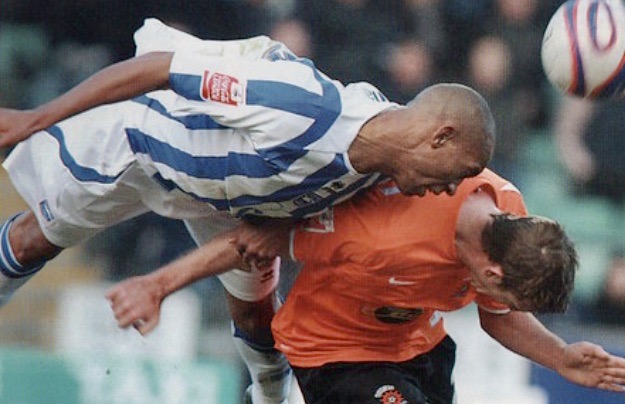
To cap it all, in the nail-biting last game of the season, when Brighton just preserved their League One status with a 1-0 win over Stockport County, Andrew suffered a horrific injury which sidelined him for six months.

Andrew, who had lost his place at Palace after picking up an injury at the start of the season, had joined the Seagulls as part of a major January transfer window overhaul Micky Adams oversaw in an attempt to revive the club’s flagging League One fortunes.

When he signed, Adams said: “Calvin is a young centre-forward and will complement our existing forwards by giving us an added physical presence up front.

“He is over six-foot tall and the type of striker who makes things happen and can be a real handful for opposing defenders.”

The player himself, who had only joined Palace the previous summer for a £30,000 fee, said: “I went there and at the start of the season I was playing games and I was doing well. But then the situation changed. I got injured and since then I haven’t been able to get back in the team.

“The team has been doing really well and it’s totally understandable from my point of view. Neil Warnock still rates me highly, but he wants me to go out and get some games and get myself ready for when my chance does come.

“It was quite an easy decision. There were a few clubs in for me, but Brighton is relatively close to where I’m living so it was an easy choice. It’s a good club.

“I didn’t know any of the players, but I knew the manager. He’s a great manager and I’m looking forward to playing for him. Everybody knows about Nicky Forster. He’s an experienced player and there’s always something to learn as well as forming a good partnership.”

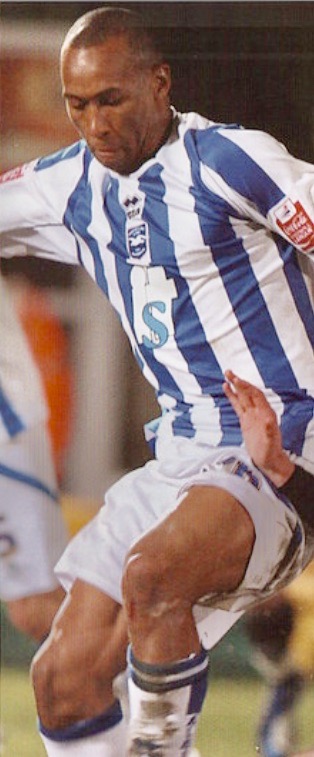
With Forster scoring Albion’s first against Hartlepool United at the Withdean on 31 January 2009, the script looked like it had been perfectly written when Andrew netted a winner in the last minute to seal a 2-1 victory.

Unfortunately, successive home defeats – 4-2 to Peterborough United and 2-0 to Carlisle United – in five days followed by elimination from the Johnstone’s Paint Trophy at Luton the following week was too much for Adams to stomach and he decided to quit after meeting chairman Dick Knight the day before the next match, which ironically saw Albion win 1-0 at Millwall.

Andrew wasn’t involved because he’d picked up a hamstring injury at Kenilworth Road, a ground where he’d made a first team debut as a 17-year-old in the 2004-05 season. Born in Luton on 19 December 1986, Andrew was a prolific goalscorer as a youth player at his hometown club.

When he was sent out on loan to gain experience at League Two Grimsby Town in 2005, he played nine matches under manager Russell Slade.

And it was Slade who was parachuted in at the Withdean to try to steer Albion away from the League One relegation trapdoor in the Spring of 2009.

Even though Albion picked up only four points from Slade’s first seven games in charge, the former Yeovil boss slowly turned things around with four wins in the next five games to lift the Seagulls out of the bottom four.

Andrew spoke about the change in fortunes in an Argus interview. He told reporter Steve Hollis: “We have shown different qualities which I don’t think we had when I was at the club before my injury. There is some real resilience now.

“I know Russell Slade quite well and he asks all of his teams to show some grit when the going gets tough. He demands you stick in there when you are struggling and to keep going.”

Andrew was buoyant having headed the winner from Gary Hart’s cross in the 52nd minute at Bristol Rovers after leaving the bench before half-time to replace the injured Dean Cox.

“That was a big goal,” he said. “It was important for me because I am coming back from injury but it was more important for the club and the town.

“I usually hang around the back post when I am playing on the left but Dean White told me to get into attacking positions and it was a cross you dream about from Hart.”

He told Hollis: “When I initially had the injury, my fear was that I wouldn’t play again this season. I had a very bad tear in two places in the hamstring and was told it would take a very long time to repair.

“Fortunately, I seem to recover pretty quickly, and I am glad because I want to play a part in helping Albion stay up. It means a lot for me that Brighton stay up, even though I am only on loan.

“I have been made to not only feel part of the team but part of the town and it would be awful to go down.

“The supporters have been great and welcomed me even though I am from a rival team, so it is my duty to give 110 per cent. Just because I am on loan doesn’t make any difference.”

Andrew had to contend himself with another appearance from the bench in the following match but, again, he made a positive impact after replacing Hart, who limped off injured after only nine minutes of the game at Huddersfield.

The young striker levelled up the game after Town had taken the lead and Owusu continued his purple patch of form by netting a second equaliser to give Albion a share of the spoils.

Palace boss Warnock had been contemplating recalling Andrew but was told he would start in Albion’s crunch final home game against Stockport County. In fact, Slade once again opted to use Gary Hart in the starting line-up instead but Andrew was sent on in injured Hart’s place after only 17 minutes and went close to breaking the deadlock with a header that hit the top of the bar.

Forster, who had also been troubled by injury throughout the season, had to replace Andrew for the second half because he picked up an anterior cruciate knee ligament injury which ultimately prevented him playing for six months.

It wasn’t until October 2009 that Andrew got back playing for Palace reserves, and their assistant manager, Mick Jones told the club’s website: “Calvin played for half-an-hour on Monday. He is miles ahead of schedule following one of the worst injuries I have ever seen.”

The 2009-10 season saw Palace in all sorts of trouble: going into administration, Warnock departing as a result, Paul Hart taking over as manager, and the side only narrowly avoiding relegation. Andrew got 13 starts as Palace battled at the wrong end of the Championship, but he was more often a substitute, coming off the bench on 19 occasions.

With game time limited under new boss George Burley the following season, Andrew once again went out on loan: briefly to feature in three games for fellow Championship side Millwall in November, and in the New Year to League One Swindon Town, where his old Palace boss Hart was in charge.

Although he was involved in the Palace set-up at the start of the 2011-12 season, by the following March he went out on loan again, this time reuniting with Slade at Leyton Orient. He only started two matches, though, and didn’t score in any of the 10 games played while he was at Brisbane Road.

At the end of the season, Palace boss Dougie Freedman didn’t offer Andrew a new contract. His next stop saw him link up with League Two Port Vale on a two-month deal under former Albion boss Adams.

While he managed to earn a contract until the end of the season, he only started eight matches and was used as a substitute on 15 occasions.

With no new deal in the offing, he then switched to another League Two side, Mansfield Town, for the first part of 2013-14 before joining York City in the closing months.

It was in the summer of 2014 that he finally found a more permanent berth, at Rochdale, who’d been newly promoted to League One.

In six seasons at Spotland, Andrew scored 28 goals in 231 appearances and over four years was recognised as a ‘community champion’ for the amount of work he did in the local community, including school visits and involvement with the club’s women’s teams. In 2020, he was declared the League One PFA Community Champion.

One blot on his copybook came in 2016 when he was handed a 12-match FA ban (later reduced to nine games) after video evidence found him guilty of elbowing Oldham’s Peter Clarke in the face in an incident the referee missed.

After leaving Rochdale, he didn’t get fixed up with a new club until March 2021, when he joined Barrow AFC until the end of the season.

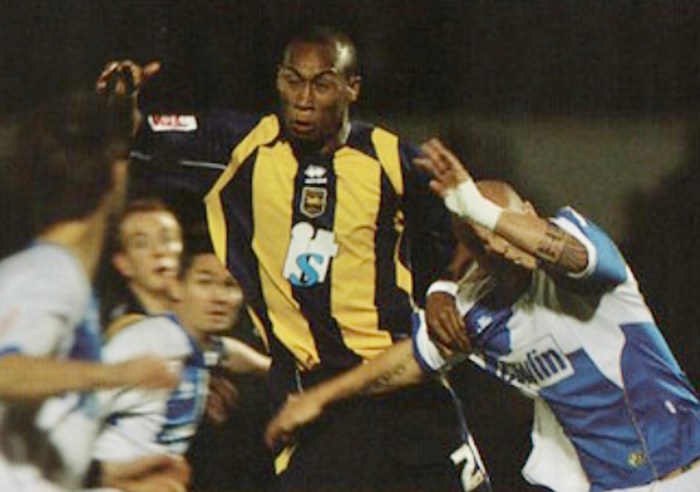
Pictures from matchday programmes.

Paul Moulden chipped in with goals for Bournemouth and Brighton before batter days

MouldyWORLD RECORD youth level goalscorer Paul Moulden now runs a successful chippy in Bolton but he was once in the firing – rather than frying – line for AFC Bournemouth and Brighton & Hove Albion.

The career of the prodigious goalscoring wonderkid tailed off early although it may have taken a new direction in Sussex if the cash-strapped Seagulls had been able to afford to buy him.

Born in Farnworth, near Bolton, on 6 September 1967, Moulden went to the town’s Thornleigh Salesian College where, having excelled for the school football team, he went on to play for England Schools. He also played for Bolton Lads Club under-15s: his staggering personal goal tally of 289 goals in 40 games in a single season earned him a place in the Guinness Book of Records.

He was snapped up by Manchester City as an associate schoolboy during John Bond’s reign as manager and signed on as an apprentice before turning professional on his 17th birthday. He was part of City’s FA Youth Cup winning side in 1986, although manager Billy McNeill had already blooded him in the first team on New Year’s Day that year in a 1-0 home win over Aston Villa.

Moulden CityHe made two further substitute appearances for the first team that season and finished top scorer for City’s reserves. By late 1986, he had earned a regular place but a broken leg sustained in training restricted him to just three appearances in 1987-88.

In the 1988-89 season, Moulden was City’s top scorer with 13 goals as they won promotion from the old First Division back to the elite. But the young striker elected not to take up the offer of a new contract in the summer of 1989 and ended up joining Bournemouth, where Harry Redknapp was beginning his managerial career. Moulden was valued at £160,000 as the makeweight in a deal which saw Bournemouth’s Ian Bishop move to Maine Road.

City boss Mel Machin, himself something of a legend at Bournemouth (a Cherries player, manager and director of football) spelled the end of Moulden’s career at City.

Moulden told FourFourTwo magazine: “Machin just didn’t fancy me. I was offered a contract but it was a contract you’d have been a fool to sign, so I didn’t sign it and I became for sale. All the backroom staff and everyone else concerned was upset that I was going but to have tied yourself down for three years on the contract they were offering, you would have been a fool. That was the lever to get me out.” The Lancashire lad’s move to Dorset proved to be a success on the pitch – but was brief.

He scored six goals in his first three home league matches, including a hat-trick in a 5-4 win over Hull and both goals in a 2-1 win over Newcastle. “I remember the two goals against Newcastle,” Moulden told the Bournemouth Echo in 2016. “One was a three-inch tap-in and the other was a run from the halfway line.”

While he said in the Echo interview how much he enjoyed his time with the Cherries, he told efl.com: “Moving to Bournemouth was a huge move for me. At the time, I was single and it was exciting, but the novelty soon wore off and I found it hard to settle.

“It was a lovely club but I was delighted to return home and back to Oldham.”

Moulden told FourFourTwo: “Bournemouth had some good players, like Luther Blissett, Paul Miller and goalkeeper Gerry Peyton. The thing that struck me was how many old players they had – I was 22 at the time – but Harry was just starting out and I suppose for his first job he wanted security around himself.

“It was a small club and I’d imagine he had to get success quickly. Harry was a nice guy, a decent manager.”

SOCCER
PAUL MOULDEN – OLDHAM ATHLETIC

After just seven months at Bournemouth, and with 13 goals in 37 starts to his name, he was snapped up by Oldham Athletic on transfer deadline day in March 1990.

A £225,000 fee meant a decent profit for Bournemouth but, with Oldham flying high at the time, and Moulden struggling with injuries, he only managed 19 games for the Latics in two and a half seasons. He spent two months at Molde in Norway restoring his match fitness and when Oldham manager Joe Royle suggested he look for a new club, the move to Brighton looked like the ideal opportunity to resurrect his career.

Newly-relegated back to the third tier, Albion desperately needed some inspiration up front and manager Barry Lloyd thought he’d hit the jackpot in securing on loan the services of strike pairing Moulden and Steve Cotterill, from Wimbledon.

Each got themselves a goal in an opening 3-2 defeat to Orient so the signs were promising and the new men duly delivered the goods on the pitch.

The two goals Moulden scored as Albion beat Preston North End 2-0 in September 1992 were especially sweet, as he explained to Brian Owen of the Argus in 2016.

In total, Moulden scored five goals in 11 league appearances and Cotterill four, but the Albion couldn’t afford to sign either of them permanently.

The void was ultimately filled by the arrival of free transfer Kurt Nogan, who subsequently became a prolific goalscorer for the Seagulls. Moulden, meanwhile, ended up being sold to Birmingham later the same season for £150,000 and Cotterill, also deemed too expensive for Albion, was sold to Bournemouth for £80,000 the following summer.

In an interview with Howard Griggs of the Argus, in January 2011, Moulden explained how he would dearly have liked to have made the move to Brighton permanent.

“I played at Bournemouth two seasons before,” he said. “I liked the south coast and I had the chance to go to either Brighton or Plymouth. I jumped at the chance to go to Brighton and I thoroughly enjoyed my time there. I struck up a good understanding with Steve Cotterill.”

Moulden spoke particularly highly of assistant manager Martin Hinshelwood – “he was different class, absolutely brilliant” – and said: “It felt just right from the start. I did well with Steve Cotterill. We both scored goals for the team.”

As an ex-City player, Moulden was particularly miffed that Oldham boss Joe Royle would not let the outcast striker play for Albion against Manchester United in the League Cup that autumn, and he added: “If Brighton had had the money I certainly would have signed.”

He told Griggs: “Manchester City was certainly good, and I enjoyed my time at Birmingham under Terry Cooper, but there were plenty of good times and I can honestly say my two months at Brighton was up there.”

One of Moulden’s best games came in a 2-1 home win over Huddersfield as Albion won 2-1. Steve Foster, back at the club for a second spell, put Albion ahead on 17 minutes with a header from a John Robinson corner. Although Huddersfield equalised through a Iwan Roberts penalty, livewire Moulden popped up with the winner six minutes from time.

The Terriers would ultimately be Moulden’s next destination after leaving Birmingham in 1995 but he made only two appearances before switching to nearby Rochdale where he played 16 times in the 1995-96 season.

In total, Moulden suffered four broken legs and his league career came to a premature end at 28, although he played non-league with Accrington Stanley and Bacup Borough.

He later coached at his old boys’ club and also spent three years with the Manchester City academy but sensibly he had an eye for a career outside of football too and followed in his mum and dad’s footsteps by opening up Paul’s Chippy in Bolton.

Pictures: Albion matchday programme and online sources.

‘Save of the season’ one of few bouquets for goalkeeping florist Alan Blayney

blayney intenseGOALKEEPER Alan Blayney only played 15 games on loan to Brighton from Southampton but if finances had been better at the time he could have signed permanently and his career may have taken a different turn.
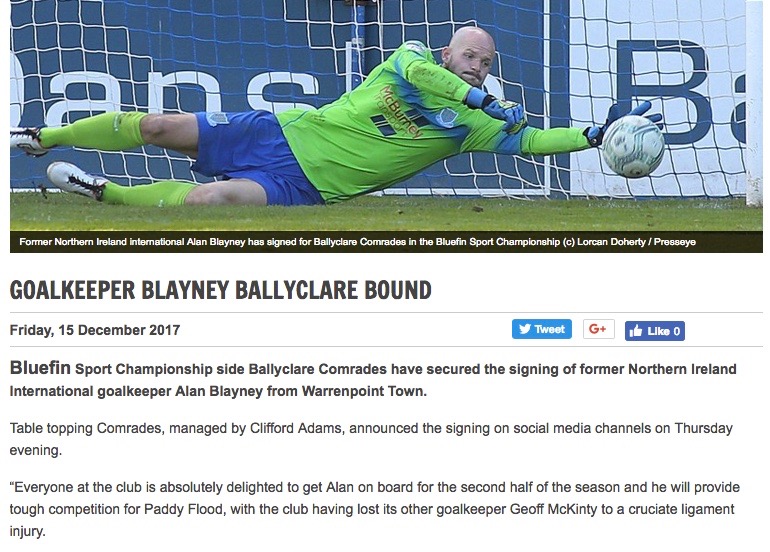
Blayney is still playing, nifootballleague.com reporting only in December 2017 a move to Ballyclare Comrades from Warrenpoint Town. He also runs a florist business with his wife Laura in Newtownabbey.

Only a month earlier he opened his heart to the belfasttelegraph.co.uk and talked about the demons he’s had to face during a career that rarely hit the heights in England but has seen him represent his country and enjoy success in his native Northern Ireland.

Born in Belfast on 9 October 1981, Blayney was picked up by the city’s Irish league side Glentoran at 16 before moving to the UK aged 19 to join Premier League Southampton.

Blayney was initially loaned out to Stockport County, but his time there was cut short by a broken finger.

He also had a couple of games along the coast at Bournemouth when he suffered one of his most embarrassing goalkeeping moments. In a Q and A for the Albion programme, Blayney told interviewer Dan Tester: “I’d rolled the ball outside the 18-yard box in readiness to kick it up field. The Rochdale striker, my former Northern Ireland under 21 teammate Lee McEvilly, was running away and it hit him on the head and flew over mine into the back of the net.”

Back at Southampton, the young ‘keeper finally got a first team chance in May 2004, a couple of months after Paul Sturrock had replaced Gordon Strachan as manager.

It was some debut because the game against Newcastle United finished 3-3 and a save Blayney made from an Alan Shearer header won him the accolade of Sky Sports save of the season.

The young Irishman kept his place for the following game, a 2-1 defeat at Charlton and he played twice more the following season, in a 2-2 league draw against West Bromwich Albion and a 5-2 League Cup defeat to Watford.

With future Albion goalkeeping coach Antti Niemi and Paul Smith ahead of him in the pecking order, Blayney went on loan to Rushden & Diamonds, where he played four games, before securing the first loan to Brighton in early 2005.

Albion’s regular ‘keeper Michel Kuipers had sustained a horrific shoulder injury in a home game against Nottingham Forest and the no.2 at the time, Chris May, had no experience so manager Mark McGhee needed emergency reinforcements.

Initially he obtained David Yeldell from Blackburn Rovers and also brought in Rami Shabaan from Arsenal, but Blayney, no doubt recommended by McGhee’s old pal Strachan, became the preferred option and played seven games at the end of the season.

Amongst several impressive displays was a game I went to with my son, Rhys, at Burnley, on 16 April 2005.

Against the odds, it finished 1-1 but the media was keener to focus on the post-match news that striker Mark McCammon had been ordered off the team bus by McGhee for his reaction to being substituted at half time.

Reporter Peter Gardner, on telegraph.co.uk, said: “The incident overshadowed a rousing second-half comeback to a game Brighton might ultimately have won, not least through the contribution of Jake Robinson, McCammon’s half-time replacement.

“However, McGhee’s men were equally fortunate not to have been overwhelmed by the home side in the opening 45 minutes when only splendid saves by Alan Blayney from Graham Branch (twice) and Mo Camara, plus Burnley’s own profligacy, prevented an avalanche of goals.”

Blayney was also between the sticks for the nail-biting final game of the season when a 1-1 draw with Ipswich Town kept the Seagulls in the Championship by the skin of their teeth.

Such had been Blayney’s contribution that McGhee was keen to sign him permanently, the manager telling skysports.com: “Alan did absolutely brilliantly here for us. We have to see how realistic an option that is, and whether they’re even prepared to consider letting him go, and what the conditions would be.”

The answer was that Brighton couldn’t afford the fee Southampton wanted so at the start of the following season Wayne Henderson was brought in instead on a three-month loan from Aston Villa.

When Henderson returned to Villa, McGhee was keen to buy him outright but in the meantime brought Blayney back for an eight-game stint.

Blayney told BBC Southern Counties Radio: “If I don’t perform they’ll end up going for Wayne instead of me. I have to come in and show I’m as good as Wayne, if not better. This first game at Stoke is really important.”

Unfortunately, the game at Stoke ended in a 3-0 defeat and a 3-2 reverse at home to Crystal Palace followed.

After a point was gained away at Cardiff City, Blayney saved a penalty from Inigo Idiakez in a 0-0 draw with Derby at Withdean on 26 November 2005, and the following week he helped earn another point, repeating the feat against Watford’s Marlon King.

The Watford Observer reported: “King passed up a glorious chance to fire Watford ahead on 58 minutes when he saw his penalty saved. King’s tame penalty was parried by Blayney, who dived low to his left, and the keeper then gathered the rebound.”

After a 5-1 hammering away to Reading, Blayney returned to Southampton in mid-December and within a matter of weeks Southampton’s technical support director, Sir Clive Woodward, informed him he had been sold to Doncaster Rovers for £50,000.

Blayney told the Belfast Telegraph in November 2017: “My response was, ‘Do I not have any say in this?’ He said the deal was done but I didn’t want to live in Doncaster. I loved it in Southampton. I didn’t settle in Doncaster, they gave me an apartment, but it was a tip. If I was getting those wages now I would bite your arm off but then it felt I wasn’t getting much and it was a terrible time.”

Although he started out as no.1, and made 24 appearances for Rovers, following an ankle injury he slipped to third choice behind Ben Smith and Jan Budtz, and came to an agreement to terminate his two and a half year contract early.

Blayney admitted in his Belfast Telegraph interview: “I do regret going out and drinking in my later career in England when I was at Doncaster. I was getting injuries and was a bit disillusioned with the game. I regret it because people had opinions of me at that club which is not the real me. They only saw me behave like that for a few months.”

He wasn’t quite done with England, though, and in February 2007 joined League One Oldham Athletic until the end of the season, after impressing in a reserve team match. However, he only played one first team game, in a 1-2 home defeat against Bournemouth.

There had been the possibility of a return to Brighton to replace Henderson, who had been sold to Preston, but the Argus reported on 2 February 2007: “Albion are not re-signing goalkeeper Alan Blayney after all. They have not been able to agree a length of contract with the former loan signing.”

On his return to Northern Ireland, he initially managed just three games as an understudy at Bohemians, but then he played 32 times for Ballymena United in 2008-09 as a prelude to what would turn out to be the most successful period of his career.

In five seasons with NIFL premiership side Linfield, he played 164 games and, in 2010-11, when Linfield won the league and cup double, he was named Ulster Footballer of the Year.

His form for Linfield also earned him a recall to the Northern Ireland squad. He had initially made his debut in 2006 under Lawrie Sanchez on a summer tour of the United States.

An appearance from the bench in a drawn friendly against Morocco in November 2010 saw Blayney concede an embarrassing goal as his clearance rebounded off Marouane Chamakh, then of Arsenal, to give the Africans the lead.

Manager Nigel Worthington put the incident into context after the game, telling the media Blayney had travelled to the ground just hours after his partner had given birth to a son.

“I was disappointed for Alan but it has been a terrific day for him and we have come out of the game unbeaten,” said Worthington. “He’s fine and I have given him every encouragement. It is one of those you learn from. You cannot take a split second to delay.”

Blayney said it was the worst moment of his career. He told the Belfast Telegraph: “I came on at half-time for Jonny Tuffey but took a terrible touch and Chamakh came in to challenge me. I kicked the ball off him and it went into the net.

“Everybody had welcomed me onto the pitch and you don’t forget moments like that. You aren’t used to playing against players who are as quick as that. I looked up and he was there. I wanted the ground to swallow me up but earlier that same day Phoenix was born. It was a bittersweet day.”

In May 2011 Blayney shared goalkeeping duties with Tuffey as an inexperienced Northern Ireland team endured an embarrassing Carling Nations Cup defeat to the Republic of Ireland. Although left exposed by a threadbare defence, Blayney was culpable in at least two of the goals in a 5-0 hammering, one of which was scored by debut-making Stephen Ward, a future left back loanee for the Seagulls. bbc.co.uk reported: “Blayney was badly at fault six minutes later as he spilled a tame Treacy cross which allowed Ward to poke home from close range.”

With Linfield, Blayney continued to rack up honours until they signed Tuffey in 2013, and he was no longer first choice. In January 2014, he joined Ards on loan but couldn’t help them avoid relegation.

After spending 2014-15 with Glenavon, he returned to Ballymena where he had two successful seasons, before losing his place. In January 2017, he dropped down to the Premier Intermediate League with Dundela. At the start of this season, he returned to the higher division with Warrenpoint Town but, in December, moved to be closer to home, with semi-professional Ballyclare.

Blayney savedec 17 blay cutBlayney cover

Further reading

https://www.not606.com/threads/whatever-happened-to-alan-blayney-part-5-of-many.126334/

https://www.belfasttelegraph.co.uk/sport/football/irish-league/footballers-lives-with-alan-blayney-why-ive-been-gripped-by-selfdoubt-and-how-i-almost-died-after-training-36284956.html

http://news.bbc.co.uk/sport1/hi/football/teams/b/brighton/4102810.stm

http://nifootball.blogspot.co.uk/2006/08/alan-blayney.html

Flying winger Tony ‘Tiger’ Towner immortalised in children’s TV programme

2-towner-takes-on-argusIF ART is the sincerest form of flattery, Tony Towner can count himself amongst the privileged few to be forever remembered on film.

That it was done by two of Rotherham United’s most ardent celebrity fans is neither here nor there – it’s not everyone who can say their prowess has been portrayed in an episode of Chucklevision.

Towner and fellow Millers hero Ronnie Moore were at the centre of a classic knockabout episode of the children’s TV series in which Rotherham supporters Paul and Barry Chuckle constantly get involved in slapstick scrapes.

In Football Heroes, made in 1996, the Chuckle Brothers meet Towner and Moore (actors playing them rather than the footballers themselves!) on their way to a game and accidentally end up with their invitation cards to play in a veterans match, leading to them ending up on the pitch.

Towner earned plaudits for his Rotherham performances in this Shoot magazine feature – pipping one Danny Wilson!

It was Towner and Moore’s starring performances in the Rotherham side that won promotion from the old Division 3 as champions in 1980-81 that earned them cult status.

Over three seasons, Towner appeared over 100 times for the Millers and even all these years later is still remembered with affection.

Take, for example, comments made on the Millers Mad website a couple of years ago. Ivor Hardy said: “Tony (Tiger) Towner was one of the best and most talented footballers ever to play for us.

“He was instrumental in us winning the league in 80/81, along with doing the double over our near neighbours Sheffield United in the same season.

“We were lucky to get the services of Towner and Seasman from Millwall, and only did so because the Lions were in financial turmoil that season and had to get some money in fast. He will always be a legend with the older fans, along with team mates Seasman, Moore, Fern, Breckin, Mountford etc.

“Tiger gave us some great memories.”

Meanwhile, kevthemaltbymiller said: “Great player for us, very tricky winger with lightning pace. Happy memories.” And sawmiller added: “Tiger was a super player – good winger who created a real buzz in the crowd when he got the ball and ran at players.”

Towner himself considered his time at Rotherham to have been his best playing days. In an Albion matchday programme article, he told Roy Chuter: “They were probably my best years, my most consistent, anyway. I was 26, 27 years old – at my peak. I had three tremendous years.”

Initially playing under Sunderland’s 1973 FA Cup Final hero Ian Porterfield, he also enjoyed working with the former Liverpool legend Emlyn Hughes, when he took over as manager.

Brighton fans also have good memories of the local boy made good. Sussex youngsters making the grade with the Albion have been pretty few and far between over the years, but Towner and defender/midfielder Steve Piper were two who did it in the 1970s.

In Albion’s 1972-73 season in the second tier, Piper had already been blooded in the first team in the November. Towner signed professional on 29 December 1972 and, with Albion having been knocked out of the FA Cup by Chelsea in the third round, manager Pat Saward arranged a friendly against Stoke City on fourth round day, 3 February 1973 (Stoke had been beaten 3-2 by Man City) and gave Towner his first team debut in a 2-0 defeat at the Goldstone.

The following Saturday he made his league debut aged just 17 at home to Luton Town. Albion went into the game having suffered 14 defeats on the trot (12 in the league plus the games against Chelsea and Stoke) and, rooted to the bottom of the table, relegation was inevitable.

Saward gave the side a shake-up, dropping three established players – goalkeeper Brian Powney in favour of loan signing Tommy Hughes from Aston Villa, right back Graham Howell (to the bench), and experienced striker Barry Bridges.

Piper made only his sixth first team appearance and he was joined by winger Towner and forward Pat Hilton. It was Towner’s brilliant display on the wing that really caught the eye as Albion finally mustered a win, beating the Hatters 2-0.

Towner kept the shirt until the end of the season and it was the launchpad for a 15-year professional career in which he made over 400 appearances. After that Luton debut, he scored his first goal in a 2-1 home win against Huddersfield on 10 March.

“I was an Albion fan as a kid, in Bevendean, and I joined them straight from school at 15, as an apprentice,” he said. “I already had the ‘Tiger’ nickname when I got into the team in 1973 – I think it was one of Alan Duffy‘s. I must have tackled him a bit too hard in training, or something. Tiger was a great nickname, and I loved it.”

One of the few survivors of the great Brian Clough cull of the playing staff in 1974, Towner was a speedy, skilful winger who could put in terrific crosses for his teammates. The fact he was a local lad endeared him greatly to the crowd.

In five years, he had plenty of challengers for his place. In the early days, Gerry Fell competed for the wide berth and later Eric Potts, but Towner still managed 171 games (+ 12 as sub) for the Albion and scored 25 goals.

“Gerry was the opposite of me, though still a winger – he had loads of pace, though not too much skill,” Towner recalled. “He’d knock the ball ahead of him and run past the defender to get it, a bit like Stuart Storer. I’d try to trick my way past.”

In John Vinicombe’s end of season assessment of Peter Taylor’s first season in sole charge (1974-75), he said: “It is with no disrespect to Taylor that I suggest that the three most consistent players were those he inherited – O’Sullivan, Towner and Piper.

“Towards the end, Towner tailed off a little but he struck up an intuitive partnership with Fred Binney.”

In fact Towner was third highest in the squad for appearances that season, playing 47 games in total plus four as sub and with 10 goals was second highest goalscorer behind Binney.

It was the arrival of Gerry Ryan from Derby in September 1978, which finally prompted his departure. George Petchey, who later joined Chris Cattlin’s backroom team at the Goldstone, took him to Millwall for £65,000.

Unfortunately, while Brighton won promotion to Division 1 in 1979, Millwall went the opposite way out of Division 2, and Towner found himself back in the third tier.

After 68 appearances for the Lions, in 1980 he was sold to Rotherham along with teammate John Seasman for a combined fee of £165,000.

Towner scored once for Rotherham’s near neighbours Sheffield United in a 10-game loan spell in 1983 and although he had missed out on Brighton’s eventual elevation to the top tier, he managed it with Wolves in 1983-84 having been signed by the Black Country side for £80,000.

He then joined Charlton Athletic but in the 1985-86 season was loaned to Rochdale where he once again linked up with his former Rotherham teammates, Moore and Seasman. He made five appearances for Rochdale and MikeMCSG on clarkechroniclersfootballers.blogspot.co.uk recalls: “He came on as sub in a home game and made an instantly good impression by beating the full back with his first touch.

“He went on to play a blinder in the draw at Halifax on Boxing Day. Unfortunately Tony didn’t want to uproot to the North and couldn’t be persuaded to make his stay permanent. When Cambridge came in with an offer he signed for them instead although he only made eight appearances for them in total.”

Towner’s final Albion appearance had been in a 4-1 defeat away to Leicester in September 1978 but his final appearance at the Goldstone came in a memorable FA Cup 3rd round tie on 4 January 1992.

Albion beat then Southern League Crawley 5-0 and Towner earned a rousing reception from the 18,031 packed into the Goldstone when, at the age of 36, he came on as a substitute for the visitors.

Crawley were one of several non-league clubs he played for: he also turned out for Gravesend, Fisher Athletic, Lewes, Newhaven and Saltdean.

Interestingly, Towner reflected: “I could definitely have played for a few more years at league level, and perhaps I should’ve done. I’d got a bit disillusioned with it though.”

After his playing days ended, Towner ran his own Brighton-based removals business and watched the Albion as a fan. In October 2015, Brian Owen interviewed him for an Argus piece ahead of a game against Cardiff when former Albion winger Craig Noone was in opposition.

Towner reckoned Albion made a mistake letting him go but added: “It’s good to see Brighton making good use of wingers.

“That’s the way I was brought up, using the wide men.

“It’s all right having midfield men or attack-minded full-backs. But what gets the crowd on its feet is a winger going past the full-back and crossing.

“You can have all the formations you like but, if you see a winger getting past his full-back, it excites people.”

Tony Towner certainly came into that category.

1-sawar-towner
3-towner-crosses-argus-prog
4-argus-shot-towner-on-wing

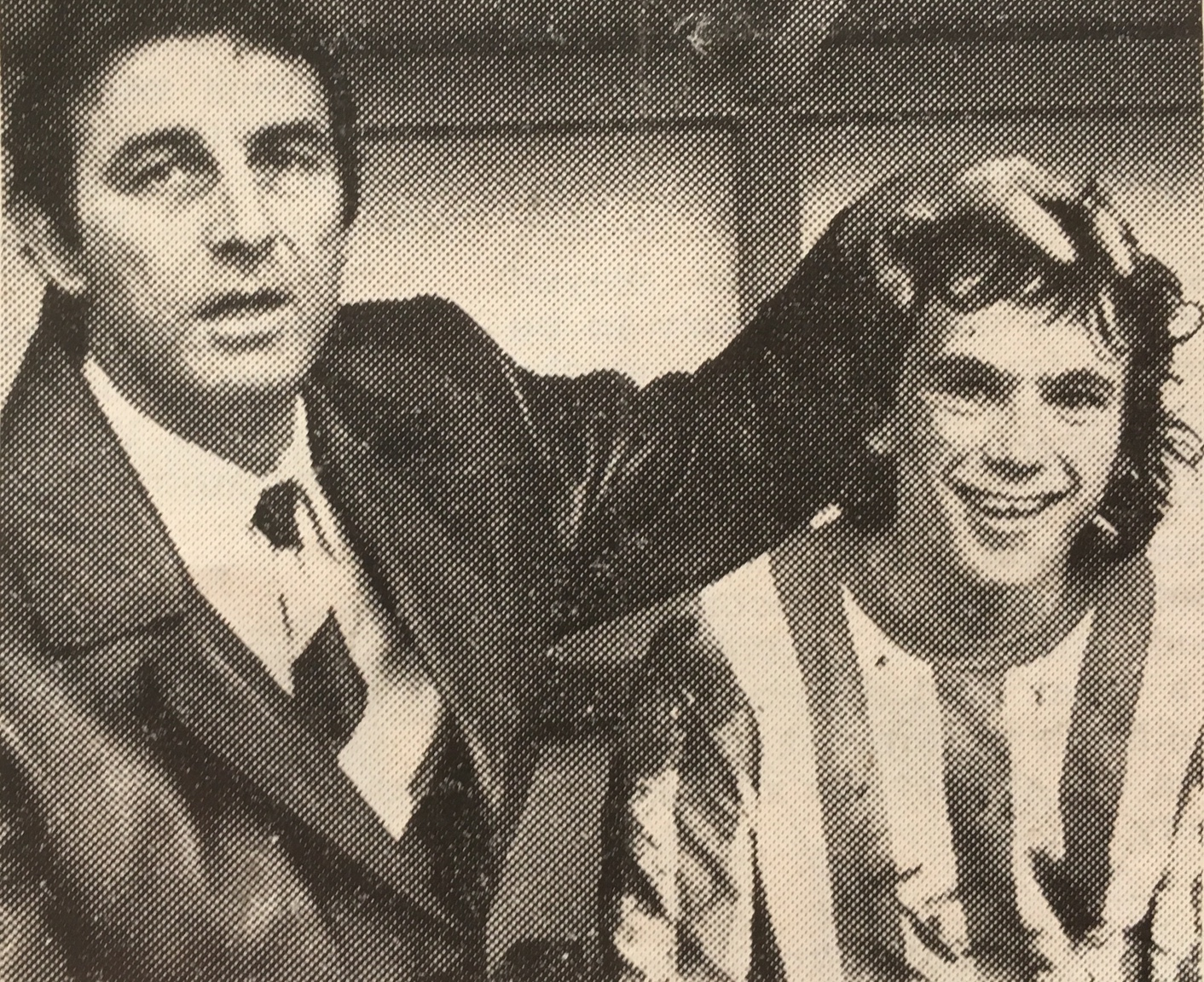
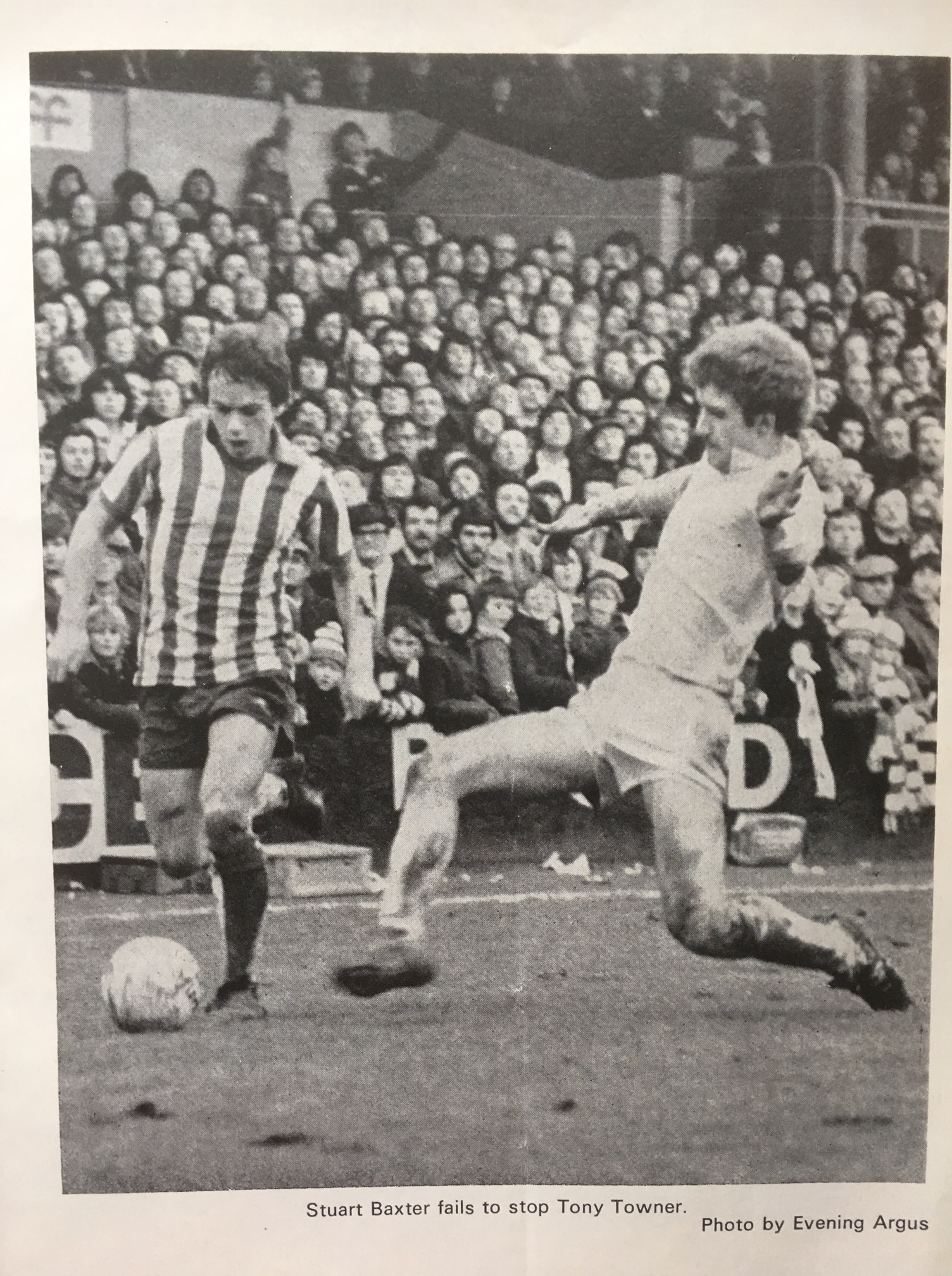
Pictures mainly shot by Evening Argus photographers and then reproduced in the Albion matchday programmes show a happy Towner congratulated by manager Pat Saward after his league debut, in familiar pose taking on a full back, getting in a trademark cross, in full flight on the wing, and finally on a Wolves album sticker.

Tidy full back Stewart Henderson polished Saints diamonds

1 SH monoALBION’S right back when I first started watching them in the late 1960s was someone who would go on to make much more of a mark as a coach.
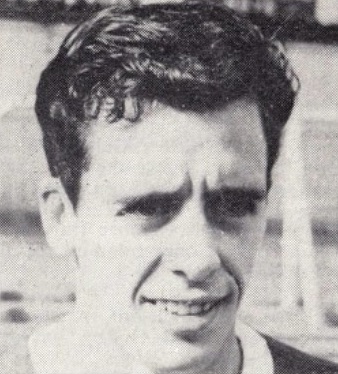
Gareth Bale, Theo Walcott and Adam Lallana were among the players developed by Stewart Henderson. Wayne Bridge and Chris Baird, too.

That was all to come for Stewart when I first saw him wearing the number 2 shirt in Freddie Goodwin’s Division 3 side.

hendo biog

Henderson, who shares the same June birthday as me, albeit he was born 11 years earlier, was only 5’6″ tall but he had noticeably muscular thighs. Hailing from Bridge of Allan in Scotland, his stature didn’t stop him earning Scottish schoolboy international honours and he was on the winning side in three matches.

The Scots beat Northern Ireland 5-1 at Windsor Park, Belfast – when future Albion teammate John Napier was playing for the home side – Wales at Ninian Park, Cardiff, and England at Ibrox Park where a 30,000 crowd watched.

That recognition followed his success playing for his school team, St Modans High School in Stirling, and Stirlingshire Schoolboys. It eventually took him to England at the age of 17 in 1964 to join Chelsea.

Tommy Docherty was their manager at that time and he obviously wasn’t convinced Henderson was good enough for the First Division, so he dropped down to the Third with Brighton where, for a couple of seasons, he had the unenviable task of trying to oust captain and Northern Irish international Jimmy Magill from the right back slot.


Stew Hendo blue

He made his debut on 3 May 1966 away to Exeter a month before his 19th birthday and didn’t make his home debut until 1 October that year, stepping up when Magill was injured and helping Albion to a 5-2 win over Peterborough.

It wasn’t until March 1968, though, that he eventually cemented his place in the side. But when he did, he became a near-permanent fixture for the next four years. He only scored once in 199 appearances, that coming in a 6-0 drubbing of Oldham Athletic on 24 August 1968.

Stew Hendo PoYIn the 1969-70 campaign, he missed only one game and the supporters chose him as player of the season. He played 36 league games in Pat Saward’s first season in charge and in the 1971-72 promotion campaign was a regular in the line-up right through until the famous televised Aston Villa home game in March 1972 when Saward made two shock changes and left out both Henderson and captain John Napier for the top of the table clash.

It was the beginning of the end for Henderson and he cuts a rather-forlorn looking figure in a picture of the newly-promoted team captured in the Goldstone dressing room after gaining the necessary point against Rochdale, standing fully-clothed alongside his team mates in their kit, taking a sip of champagne.

Saward made him available for transfer at the end of the season and although he stayed with the club, he played only two more league games, and a league cup game, in the following season before being transferred to Reading in June 1973.

Henderson had chalked up 198 league games and 14 cup games during his time with Brighton but the move to Berkshire was by no means a petering out of his career.

I am grateful to the website of the Reading FC Former Players Association (readingformerplayers.co.uk) to discover how, although manager Charlie Hurley signed Stewart initially as a full-back, in 1975 he pushed him into a midfield role with immediate success: Stewart scored twice in the first 17 minutes at Bradford City.

He went on to be an influential member of Reading’s 1976 Fourth Division promotion winning side. In May 1977, he was made club coach and worked closely with manager Maurice Evans helping the club win the 1978/79 Fourth Division Championship.

Amazingly Stewart was recalled to the playing squad at the beginning of the 1979/80 season, at the age of 32, and continued playing intermittently until May 1983 when he played the last of his 186 games for the Royals and became Reading’s first Centre of Excellence director.

Coaching became his new direction and he was at manager Ian Branfoot’s side when Reading beat Luton at Wembley to win the Simod Cup in 1988 (a game incidentally in which former Albion winger Neil Smillie was one of the goalscorers for the Royals and Steve Foster and Danny Wilson were playing for Luton).

Henderson left Elm Park in 1989 to take up the role of youth development officer at Southampton, where his work began helping to produce some of the finest footballing talent in the country.

He was to spend over 20 years at Southampton in various roles working with the youth and academy teams, the reserve side and even had a short spell as first team manager.

It’s worth quoting an article from the Mirror in October 2012, when Matt Law reckoned Southampton owed a £55million debt of gratitude to Malcolm Elias, Steve Wigley, Huw Jennings and Stewart ­Henderson who spotted and coached the incredible Southampton Fame Academy, which through transfer fees effectively saved the club from extinction.

Gareth Bale, Theo Walcott, Alex Oxlade-Chamberlain, Wayne Bridge, Kenwyne Jones, Adam Lallana, James ­Ward-Prowse and Luke Shaw were all named as coming under the influence of the quartet who, after being released by Southampton moved on together to Fulham.

Henderson was a guest at an Albion raceday in 2006 and met up with former teammate Ian Goodwin