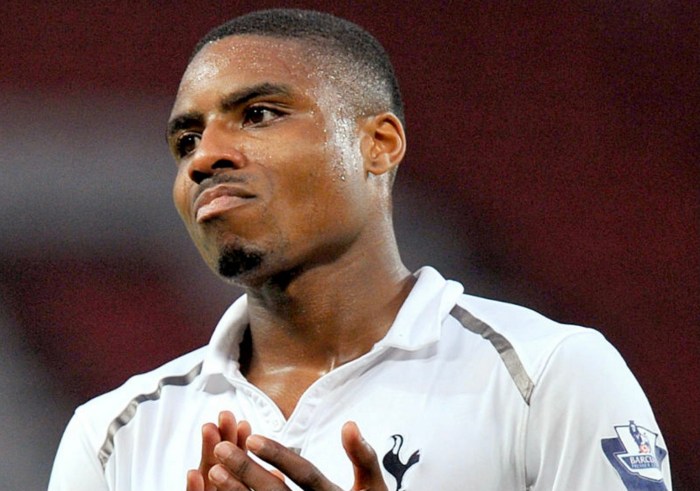
The ‘Derry Pelé’ only briefly strutted his stuff at Brighton

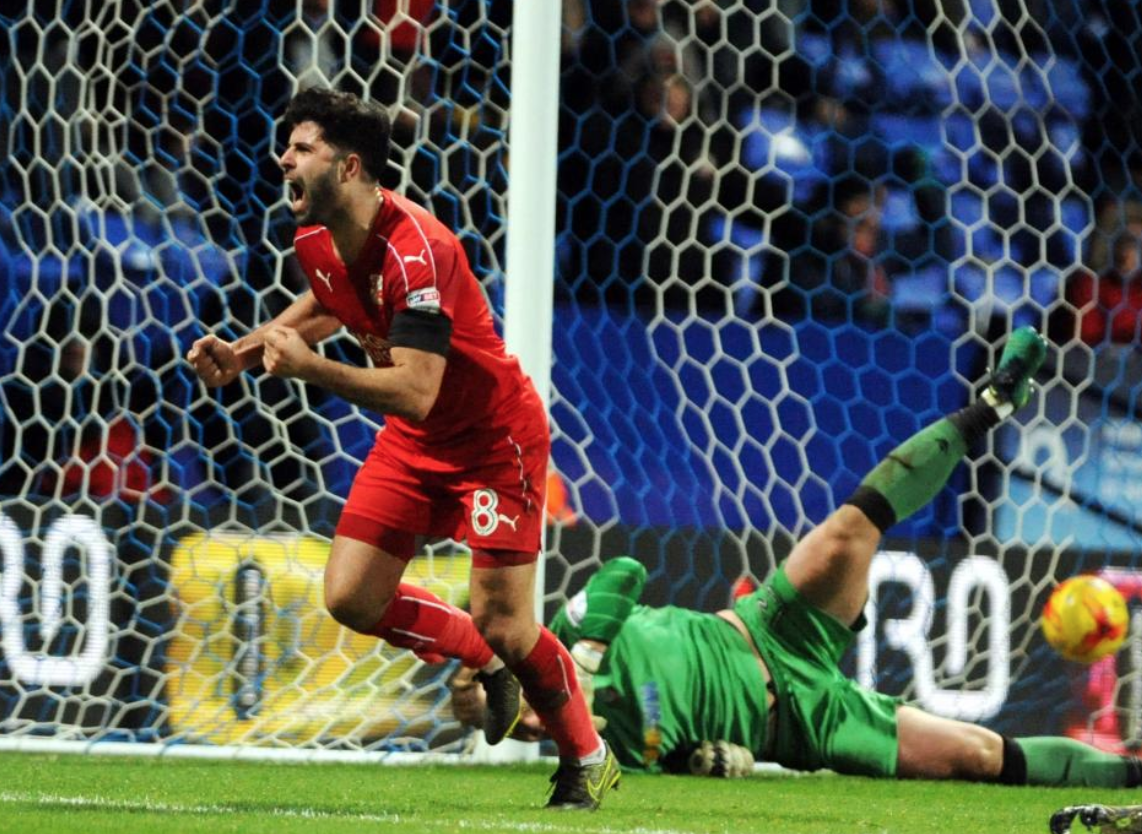
PADDY McCourt put a dent in Brighton’s promotion hopes when he scored for managerless Barnsley at the Amex. Eight months later he joined the Albion’s renewed attempts to lift themselves out of the Championship.

The mazy dribbler from Derry lit up the evening of Tuesday 3 December 2013 when he gave the bottom-of-the-table Tykes an unlikely first-half lead.

Barnsley arrived at Falmer having just sacked manager David Flitcroft and when McCourt teased and tormented the retreating Seagulls defenders to net in the 35th minute it ended a sequence of nearly five hours without a goal.
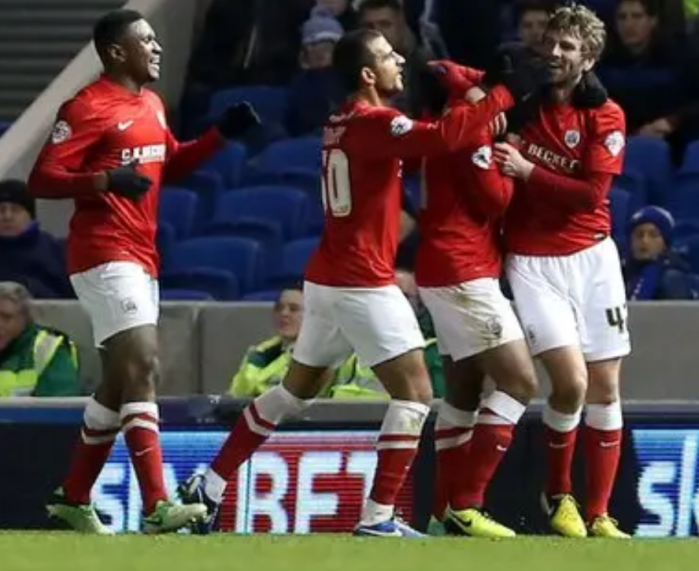
McCourt celebrates scoring for Barnsley at the Amex

Recalling what was something of a trademark finish by the bearded Irishman in a 2018 post wearebrighton.com described howMcCourt picked up a loose ball 40 yards out from goal, dribbled round Liam Bridcutt and Andrew Crofts, drifted past Matt Upson with a quick step-over, nutmegged Gordon Greer before playing a quick one-two with Worthing-born Marcus Tudgay,  then ghosted round Stephen Ward before slotting the ball into the bottom corner of the goal past Tomasz Kuszczak in Albion’s goal.

Five minutes after the restart, the visitors went further ahead through Jacob Mellis before Upson pulled a goal back with a header from a Craig Conway corner. Barnsley had on-loan goalkeeper Jack Butland to thank for ensuring they left with all three points, making notable saves from subs Will Buckley and Leroy Lita (who moved to Barnsley the following year).

While Albion went on to finish sixth under Oscar Garcia but failed to get further than the play-off semi-final for the second year running, Barnsley, who’d appointed former Albion captain Danny Wilson as Flitcroft’s successor, exited the division the wrong way, finishing in 23rd place.

Barnsley’s top scorer, Chris O’Grady, stayed in the division by signing for the Albion and a month later his former teammate, 30-year-old McCourt, released on a free transfer at the end of the season, joined him in Sussex after impressing new Seagulls boss Sami Hyypia in a trial period.
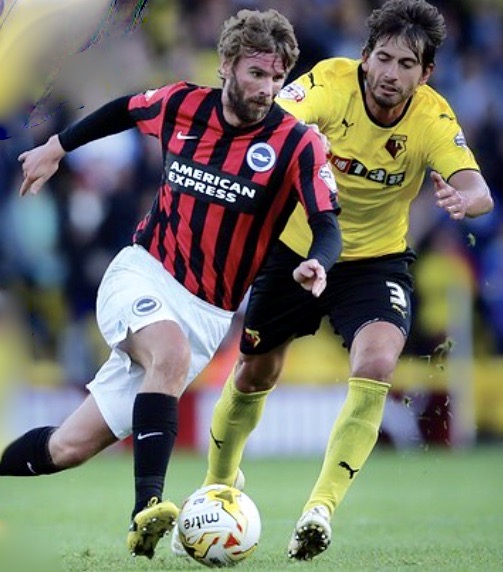
“We have seen enough of Paddy in the last week or so to know that he is a player who has quality going forward,” said Hyypia. “He is the type of player who can pick a pass and create a chance.”

That said, Hyypia only gave McCourt starts in two League Cup games (v Burton Albion and Tottenham Hotspur); his 11 other Albion appearances were all as a substitute.

When he did start, away to Burton, he set up goals for Rohan Ince and Craig Mackail-Smith in Albion’s 3-0 win and he told the matchday programme: “There’s nothing like playing games for your fitness and I’m sure that the more I play the better I will feel.”

Hyypia kept his feet on the ground, though, pointing out: “He needs to realise what he needs to do to improve and to be a very important player for the team defensively as well.”

Often described as a ‘maverick’, McCourt’s response was: “I like to get on the ball and be creative; that’s always been part of my game and something I’ve always been good at. I love taking on players, creating chances and now I just hope I can get a run in the team and show what I can do on a regular basis.”

He certainly couldn’t have been accused of lacking ambition, maintaining: “I still have aspirations to play in the Premier League and hopefully that will happen in my time here.
“I’ve played international football, I’ve played Champions League and Europa League football with Celtic, so the next step for me would be to play at the highest level in England – I would love that to happen.”

That international career was as strange as much of his career. There were 13 years between the first and last of 18 caps for Northern Ireland: he made his debut under Sammy McIlroy in 2002 (a 5-0 defeat against Spain) then had to wait seven years before he was selected again. That was in a 3-0 World Cup qualifier win over San Marino, when he went on as an 81st minute sub for future Albion teammate Aaron Hughes.

He scored twice in Northern Ireland’s 4-0 win over the Faroe Islands in a Euro 2012 qualifier in August 2011 (when Hughes scored his first goal for his country in his 77th appearance!).

McCourt’s second goal that day was reckoned to be one of the best ever goals seen at Windsor Park. According to the Belfast Telegraph, he “collected the ball just inside the opposition half and left three defenders in his wake with magical dribbling skills and impeccable close control before outfoxing another… then to cap it off he produced a stunning left foot chip over the bemused goalkeeper which floated into the net.”

McCourt helped manager Michael O’Neill’s side reach the Euro 2016 finals, but was not available for the finals in France because his wife Laura was seriously ill (more of which later).

“I really enjoyed it,” he told BBC Northern Ireland’s Mark Sterling in a lockdown interview in 2020. “Any time I was picked I turned up, and to be involved in the Euros qualifying campaign was fantastic.

“Everybody wants to play international football, The fans took to me straight away, were always singing my name and I hope I gave them some good memories.”

Born in Derry on 16 December 1983, McCourt’s early footballing promise was nurtured by Eunan O’Donnell, his PE teacher at Steelstown Primary School. At the club he joined as a youngster, Derry-based Foyle Harps, it was club chairman Gerry Doherty “who deserves more credit than anyone else” according to McCourt’s brother Leroy (who was his agent).

However, McCourt reckoned: “The street is where I learnt how to play football.”

In that lockdown interview with BBC’s Sterling, he said: “When I was younger there was more emphasis on players to develop themselves. We trained once a week for an hour with our clubs, when you might only get 40 or 50 touches of the ball at most, with 20 kids in a session.

“It was up to you to go out into the streets with your mates and practice your skills in small-sided games. We’d play for six or seven hours, there might only be four of you and you’d get thousands of touches.

“You were probably playing with older kids and on concrete as well, so that would improve your balance.”

Although given the moniker of the greatest Brazilian footballer of all time, McCourt’s boyhood hero was Robbie Fowler. “I’m a Liverpool and Celtic fan, and for some reason he was a player I just absolutely adored growing up,” he said.

“My memories are of seeing Fowler scoring – left foot, right foot, header – it didn’t seem to matter to him. He just had this unbelievable talent for putting the ball in the back of the net.”

McCourt’s first taste of professional football in England came at Third Division Rochdale, joining them in 2000 aged 17. But in an open and honest question and answer session in March 2018 at the Talent Development Academy Elite Soccer Coaching event, at the Magee Campus of the Ulster University, the player spoke about how youthful wrong lifestyle choices meant he blew the opportunity.

“I was nowhere near ready for it and the events that transpired in the next couple of years proved that. It’s very hard to know the situation you’re going into when you’re not prepared for it.

“I was coming from Foyle Harps, playing junior football and then going into a professional environment. It wasn’t that big of a jump in terms of what you did differently because Rochdale was a small club and you went in and trained and were home for 1pm living in digs and I didn’t drive at the time.

“You had so much spare time on your hands and as a young lad, you do daft stuff and make mistakes and I admit I made plenty. It was basic stuff like going out too much and not eating the right food.”

Although he made 94 appearances for Rochdale, around half were as a substitute and after unsuccessful trials with Motherwell and Norwich City he was eventually released in February 2005 and returned to the League of Ireland with Shamrock Rovers.

“Initially when I was at Rochdale I did quite well and broke into the first team quite early but when I came back I took stock. I made mistakes and wasn’t really living my life to be a professional footballer.

“I had six months with Shamrock Rovers where I didn’t make many changes to my lifestyle but I was doing quite well on the pitch.”

It was only when he returned to his home town and played at Derry City where things began to change under the positive influence of future Republic of Ireland manager Stephen Kenny.

“I learned what it takes to become a proper athlete because you need to live a clean lifestyle to make it as a footballer and I wish I knew back then what I know now,” he said.

“There was a bit of sports science starting to come in at Derry in terms of what to do leading up to a game, and then your recovery sessions on a Saturday morning after a game. It was tiny, basic stuff but it started to kick in then and that helped me because I was getting information I didn’t have before. It was up to yourself to buy into it and I started to buy into it a bit more and started to see the benefit.”

Between 2005 and 2008 with Derry, McCourt won an FAI Cup, three League Cups, was involved in a league runners-up spot (2005) and was part of a UEFA Cup run in 2006.

He then got the chance to join Celtic, the side he’d supported as a boy, signing for a fee of £200,000 in June 2008. Hoops boss Gordon Strachan told the Derry Daily: “Paddy is as gifted a footballer as I’ve ever seen. Some players can pass but can’t dribble. Others can dribble but can’t pass. Paddy can do both.”

It wasn’t until the 2009-10 season that he forced his way into the first team and his  first goal for the club was in a 4-0 League Cup win at Falkirk in September 2009 when he skipped past five defenders before chipping the goalkeeper.

His own favourite was his first goal at Parkhead in a 3-0 win over Hearts on 11 September 2010 which realised a lifetime ambition.

“I actually had dreams of scoring at Celtic Park,” he said. “I felt I had let that go when I had that setback at Rochdale. Self-doubt creeps in but I remember the night. It was Hearts at home and it was a very proud moment.

“It might never have happened if I hadn’t made the sacrifices I made and I have a lot of people to thank for that.”

When Aiden McGeady left Celtic for Spartak Moscow in August 2010, Celtic manager Neil Lennon challenged McCourt to step into his shoes and said: “He’s wonderful to watch. He’s beautifully balanced and he’s got great vision and great feet and that’s why we decided to get him on a longer-term contract. He’s pleased and we’re pleased.”
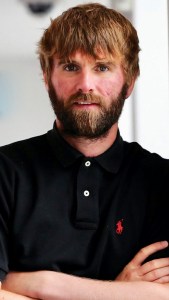
In his five years in Glasgow, McCourt scored 10 goals in 88 appearances for the Hoops although he actually only made 20 starts. He collected medals for his part in Scottish Premier League title wins in 2011-12 and 2012-13 as well as Scottish Cup wins in 2011 and 2013.

That 3-0 2013 final win over Hibernian was his last game for Celtic before he joined English Championship Barnsley, who were managed by his former Rochdale teammate David Flitcroft.

The goal against Brighton in December 2013 was one of only two he scored for the Tykes in 15 starts plus eight appearances off the bench and Barnsley fans certainly had mixed views about his contribution.

Online chat group contributor ‘Jay’ posted: “At his best he was as good as I’ve ever seen. Be nice if he can produce that sort of form consistently, even if it’s not for us. All that talent shouldn’t go to waste.”

Another, ‘JLWBigLil’ reckoned: “One of the most skilful players I’ve ever seen play for Barnsley in all my years of going down to Oakwell. Possibly the right player at the wrong time for us.”

Whereas ‘MarioKempes’ opined: “There was no doubting his ability but the other key aspects such as workrate, fitness, stamina and heart were sadly lacking from his game.”

It almost certainly didn’t help McCourt’s cause at Brighton that new boss Hyypia struggled to get to grips with the task in hand and chopped and changed the line-up. The addition of several loan players didn’t help matters either.

Frustrated Albion fans reckoned McCourt should have had a bigger involvement than his few cameos off the bench, citing his influence in helping to salvage a point away at Watford, and planting the ball on Gordon Greer’s head to score a consolation goal from his corner kick at Middlesbrough.

After Hyypia left the club before Christmas, McCourt’s last Albion appearance was as a sub in the home Boxing Day 2-2 draw with Reading (on loan Glenn Murray scored twice for the visitors; Jake Forster-Caskey and Inigo Calderon for the Albion), going on for Danny Holla.

Nathan Jones was in caretaker charge that day and the pair were subsequently reunited at Luton Town the following season.

Before then, unable to get games under Albion’s new boss Chris Hughton, McCourt dropped into League One on loan at relegation-bound Notts County.

He scored County’s winner in their 1-0 win at Colchester on 3 March 2015 but they went on an 11-game winless run after that and went down with Crawley Town and Leyton Orient.

Released by Brighton that summer, McCourt joined the League Two Hatters under John Still in July 2015 and was followed there a month later by Mackail-Smith.

After a run of three starts in September, when Town won all three matches, McCourt played in a 1-1 draw with Leyton Orient on 20 October, before being restricted to a role on the bench.

On his return to the starting line-up in January 2016, away to Mansfield, he scored his fist Luton goal after just seven minutes in a 2-0 win. He told Luton Today: “It was great, all players want to play from the start and it’s been disappointing to sit on the sidelines.

“It was very frustrating because we’d just won three or four games in a row, then I came back from an international double header, was on the bench, played in the draw against Leyton Orient and that was it, I didn’t play again.

“I don’t know why, I didn’t ask the manager and he ended up getting the sack, but it was very disappointing as I felt that although I wasn’t where I wanted to be in terms of performance, I was playing, we were winning games.”
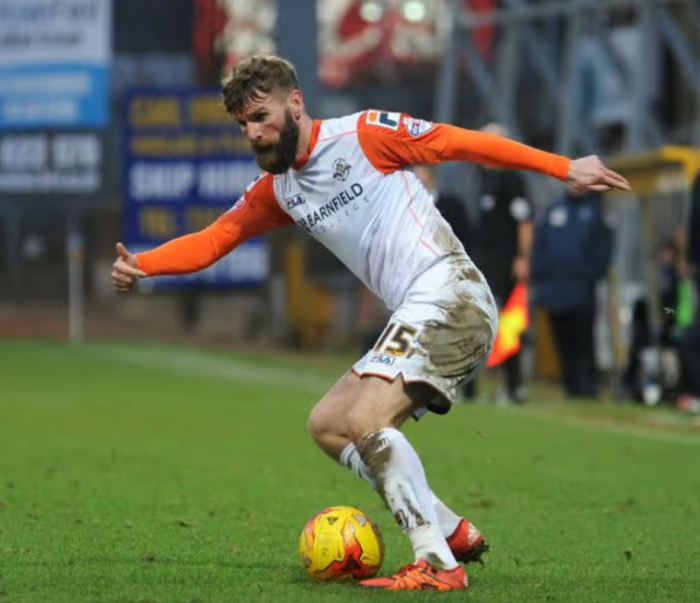
In action for Luton Town

When former Brighton coach Jones was appointed as Still’s successor, McCourt told Luton Today: “He’s a coach who wants to play football, ball from the back, get between the lines, bring a wee bit of flair and creativity back to Luton, so hopefully I can play a big part in that.”

Unfortunately, he cut short his stay at Kenilworth Road after 16 starts and nine appearances off the bench to return to Ireland because his wife Laura had to undergo treatment for a brain tumour. She recovered after a successful operation and O’Court resumed playing at Glenavon.

According to the Belfast Telegraph: “It ended up being a disappointing half-season at Mourneview Park and was followed by a move to Finn Harps, where he was able to roll back the years, not least when he ghosted past a whole host of Sligo players and dinked home the finish with his inimitable swagger.”

That was in 2018 before he retired from playing and began coaching academy players at Derry City. He later became the club’s technical director and left in January 2024 before taking up a role as assistant to manager Declan Devine at Irish Premiership side Glentoran.

Perhaps the last words should go to reporter Daniel McDonnell, who wrote in the Irish Independent: “Football is nothing without entertainers. Punters paying cash to watch a game want to see individuals capable of doing things that the ordinary player could only daydream about. McCourt could do things that top pros were unable to manage.”

While recognising McCourt’s CV might have glittered more brightly, he declared: “There are players who will retire with more medals and more money that will never garner a comparable level of affection.

“Mention McCourt’s name to those who had the pleasure of watching him in full flight and responses will be delivered with a smile.”

Albion’s lifeline for the boy from Baghdad who turned down Spurs

BAGHDAD-BORN Yaser Kasim went through the youth ranks at Tottenham Hotspur but rejected a professional contract at White Hart Lane and tried to build a career at Brighton instead.

Although it didn’t work out at the Albion, he subsequently thrived at Swindon Town where his former Seagulls’ development squad coach Luke Williams had become assistant manager.

“He is one of the best coaches I have worked with. This guy is at another level,” he said.

Kasim joined the Spurs academy at the age of 11 in June 2003 and progressed to become a full-time scholar at 16. He was in the club’s youth team in the 2009 FA Youth Cup (they lost 3-1 to north London neighbours Arsenal in the quarter-finals) alongside Andros Townsend, Steven Caulker and Jonathan Obika.

“When the time came to sign pro forms at Tottenham, I decided to go on my own and turned it down,” Kasim told Tom Hopkinson of the Sunday People.

“From that decision it was ­difficult to get another club ­because everyone knows how ­powerful Spurs are and I couldn’t sort the compensation out for all those years I’d trained with them.”

Kasim in action for Albion Reserves v Eastbourne Borough. Pic: Simon Dack

A contractual impasse left Kasim in limbo and he was forced to train on his own until former Spurs teammates Gus Poyet and Mauricio Taricco, having taken over as manager and no.2 at Brighton, stepped in.

The pair managed to resolve the dispute between player and club and in October 2010 offered him a short-term deal with the Seagulls. Kasim later told the Argus: “They sorted something out for me and I love the football here, because they play good football, and the players are great, so everything is good except for playing more games…I’ll work hard for that.”

He was talking after he had been handed his Albion debut in the final game of the 2010-11 season, a 1-1 draw away to Notts County, with the Seagulls already having been crowned League One champions.

Kasim played for 70 minutes in midfield alongside Liam Bridcutt, Matt Sparrow and Elliott Bennett before being substituted, with Poyet saying: “The pitch didn’t help him. He is a technical player. We are trying to work on the other side of his game, the toughness and his defensive work. I think he has got a great future.

“He was very good on the ball, confident and strong. As soon as the game became more 50-50 it wasn’t good for him or us but opponents are going to try to make it a war against us.”

The Uruguayan added: “We are offering him the chance to stay with us. He is thinking about it and we’ll probably have a few more words.

“He knows where he stands. We’ve been honest with him, it’s up to him.

“It’s complicated because I don’t know if it will be easy for him to step up and start playing for the first team in the Championship, but we are offering him the chance to be there or thereabouts.”

As it turned out, he was a regular in Luke Williams’ development squad but only made the first team bench on three occasions, getting on (pictured above) just the once, as a sub for Alan Navarro, in the 66th minute of an inexperienced Albion’s 1-1 FA Cup draw at home to then non-league Wrexham on 7 January 2012.

Kasim managed to collect a booking during his brief time on the pitch in a game that saw young Ben Sampayo given his debut and Grant Hall his first start (he’d previously been a sub five days earlier against Southampton). Anton Rodgers, son of Brendan, was sent on at the same time as Kasim entered the fray. Kasim was an unused sub in the replay when Albion only advanced courtesy of a penalty shoot-out, edging it 5-4 after the game ended 1-1.

Come the summer of 2012 and Kasim went on a six-month loan to then Conference Premier League Luton Town, with Hatters boss Paul Buckle telling the club’s website: “Yaser can do a variety of jobs. He can be a box-to-box man and also play in a defensive midfield role.

“It’s great we have been able to capture someone of his calibre for six months. I have no doubt that he will prosper with us.”

The player made five starts plus six appearances off the bench and scored once, in a 2-1 win at Tamworth (the other scorer was Stuart Fleetwood, who’d been on loan at the Albion in the 2008-09 season).

In the second half of the season, Kasim played five games for Conference National League Macclesfield Town.

Released by Brighton in May 2013, Kasim went on trial to League One Swindon and signed a three-year deal after spending a week at the Robins’ pre-season training camp in Portugal. Manager Mark Cooper paired him in midfield with Massimo Luongo and he played 45 times in his first season.

Reliable Robin

Perhaps it was inevitable that Kasim managed to get on the scoresheet against Brighton in August 2014 when Swindon lost 4-2 (after extra time) at home to Sami Hyypia’s Albion in the second round of the League Cup (future Town midfielder Rohan Ince scored a belter for the Seagulls, Adrian Colunga edged Albion ahead in the 95th minute. Kasim equalised before two late penalties scored by Jake Forster-Caskey put Albion through).

Kasim ended up having four seasons at the County Ground, was part of the side that made it to the League One play-off final in 2015, when they lost 4-0 to Preston, and it was reported at one point that Premier League Swansea City and West Ham were interested in signing him.

Nothing came of that, though, and his final campaign with the Robins saw him dogged by groin and hip injuries as Town were relegated to the bottom tier.

Mentor Williams was Town’s head coach by then and, after being forced to drop Kasim in February 2017 and replace him with the aforementioned Ince, opened up to the Swindon Advertiser.

Reckoning Kasim was not showing enough of a physical side to his game, Williams said: “I have known Yaser a long time and he is an incredibly talented player but, for one reason or another, I don’t think he is performing to anywhere near his best and at the moment, he needs to come out of the team.

“Players fall out of form because of a combination of things, sometimes off the pitch as well.

I wish I could find the reason and try to make everything okay for Yaser because he is a very important player and has given a fantastic service to us.

“He is somebody that I think a lot of personally so I would love for him to be in top form.

“I think Yaser in top form is as good a player as you’ll see at this level for sure, unfortunately he doesn’t seem to be able to quite find it.”

The coach added: “He came here and I think, certainly for the first two seasons, he was absolutely fantastic and last season, there was far more good from Yaser than bad. This year, he hasn’t been able to recapture that.”

Born in the Karrada district of Baghdad on 10 May 1991, three months after the end of the Gulf War, Kasim’s passion for football began at a young age on the streets of Baghdad.

“I lived in Iraq until I was six years old,” he told the-afc.com. “I don’t know how young I was when I started to play, but before I left we used to play a lot of football on the streets.

“It is a very sunny and hot climate so we used to play on the streets and there were a lot of people playing 20 a-side sometimes on the tarmac and there were a few rolled ankles and a few chipped toe nails, but I loved it and we used to be outside all day.”

The family left Iraq because Kasim’s father saw a decline in his business as a used car parts salesman. They spent a year in Jordan before moving to England, and eventually settling in north west London.

“I started playing after school every day and then I started to go to football clubs and a coach at one of my sports centres took me to Fulham,” he said. He had only been at Fulham a few months before switching to Spurs.

Explaining why he turned down the offer of a professional contract at Tottenham, Kasim had concerns about the way players were being cared for. He said: “There was a lot of competition; I don’t mind competition as the more the competition, when growing up especially, the better it is, but they were bringing in players without plans on how to look after them and I felt they weren’t doing things right by the players so I saw that my opportunities would be limited and I thought this was not for me.”

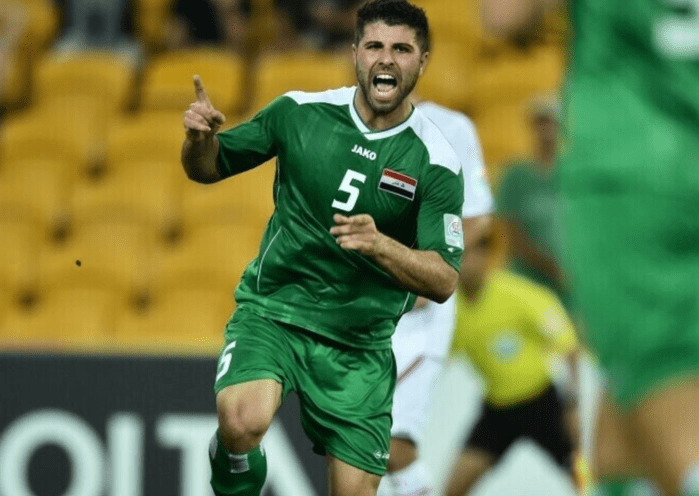
It was during his time at Brighton that he was approached to join up with the Iraq national side, at the time coached by Wolfgang Sidka. He won 21 caps over a number of years, although he had a somewhat chequered relationship with the representative side.

In international action for Iraq

He made his debut in March 2014 featuring in a 3-1 win over China, was hero-worshipped after a series of influential performances in the 2015 Asian Cup (scoring a key winning goal in their opener against Jordan and netting a penalty in the quarter-final shootout against Iran), but went AWOL during the country’s preparations for the 2016 Rio Olympics (he was called up as one of three coverage players for the tournament but he left the training camp in Spain and never returned).

He also turned down national team call ups under coaches Radhi Shanaishel and Basim Qasim then, after saying he’d retired from the national set-up, returned and went on as a sub in a 4-1 win over Saudi Arabia in 2018 – the most high-profile match to be staged in Iraq for years and Kasim’s first international match on Iraqi soil (previously ‘home’ matches were played at empty grounds across the world).

“Just having that real home feeling is very special,” Kasim told Mark Lomas in a post-match interview for Arab News.

“When you compare it to playing in Dubai, or playing in Malaysia, the difference is just ridiculous. Even when it’s an important game, it is just not the same as it being in Iraq. It elevates you to another level – really, it’s amazing being out there on the pitch. I really do hope we get to play our home games here going forward.
“I truly hope that FIFA sees this game and realises that these fans deserve to watch their team play in Iraq.”

Kasim added: “I have always said that the Iraqi fans are the best in the world — they are crazy for football and for the players.

“I appreciate them so much and I’m humbled when they shout my name. When I come back to Iraq, I get to meet a lot of people every day and you just get such a good vibe.”

By the time of that interview, Kasim had moved on to League One Northampton Town but he told Thomas: “It is just really good that someone like me, who left Iraq at a young age, is able to come back and reconnect with my heritage. It brings out something within you as a man, a bit of maturity and cultural understanding. It goes some way to helping you feel more complete as a person.

“This occasion, obviously, will always give me happy memories of Basra. It kind of trumps everything else I’ve experienced in Iraq. Being around the people and these sorts of occasions, it really helps the country move forward. You realise that officials are stepping up and doing things right. I’m hoping this is just the beginning.”

After Kasim left the Cobblers in January 2019, he had brief spells with Örebro SK in Sweden, and Erbil and Zakho in Iraq (when Dick Advocaat was briefly Iraq manager, Kasim was recalled for the 2021 FIFA Arab Cup after he’d impressed playing for Zakho).

Ahead of the 2022-23 season, Kasim was a trialist for Notts County in a pre-season 1-1 draw with   Boston United (National League County were managed by the aforementioned Luke Williams) but his next club was National League South Welling United, where he played 11 matches.

On signing him, manager Warren Feeney said: “He’s a fantastic player. We’re very lucky to get him and we’re absolutely delighted. He’s a player who can open teams up, he’s a great player who’s played at a great level and is an international so he has great pedigree. He’s hungry and we’re delighted to have him.”

After only three months, he moved on to National League North Gloucester City but after only one game headed back to the south east and linked up with Football’s Next Star winner (and one-time Brighton teammate) Ben Greenhalgh, who was assistant manager at Margate, of the Isthmian Premier League. Kasim played 13 matches for Margate and the following season linked up with another former Brighton colleague, coach Mark Beard, who was in charge of National League South Eastbourne Borough.

He played 17 matches for Boro before returning to Margate where after 12 more games he decided to retire from playing at the age of 33.

In May 2024, Kasim wrote a lengthy piece on the medium.com platform entitled The Illusion of Time and Space: A Footballer’s Perspective in which he explained: “The most beautiful part of playing the game has been the ability to create the illusion of time and space on the pitch. This involves making complex decisions and movements appear effortless, allowing a player to control the game seamlessly.”

As to what he’s doing now, his LinkedIn profile says he’s aiming to develop a career in investment management. Also, as the holder of a UEFA B licence, he’s a part-time coach for Crystal Palace’s academy, working with different age groups.

The midfield pivot in Albion’s rise to the Premier League

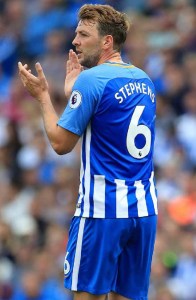
DALE STEPHENS spent nearly seven years at the Albion and was a pivotal cog in the club’s rise from the Championship to the Premier League.

He got his first taste of life at a big club playing alongside Adam Lallana and Dean Hammond….for Southampton!

That was back in 2011 when Saints won promotion from League One as runners up behind the Albion although he was an unused sub when Saints left Withdean on St George’s Day with all three points from a last gasp 2-1 win.

Stephens had gone on loan at St Mary’s from Oldham Athletic to cover an injury to Morgan Sneiderlin. “It was a strange one actually, there were only six or seven weeks left of the season,” he told the Albion matchday programme.

“Oldham weren’t really in any fear of going down or making the play-offs, so when Southampton came in for me, I was allowed to leave.”

The loanee played in six of the final 10 games of the season, making his debut against future employer Charlton Athletic alongside Lallana and Hammond.

“I looked at it almost as a trial period for being at a big club,” he said. “It was a chance for me to showcase myself. Playing for a club like Southampton at that level, with the players they had, was good for my experience and I really enjoyed being in a big-club environment.

“It was a good experience but just a shame that it was cut short by the season coming to an end.”

Explaining that everything was a level above what he’d previously been used to, Stephens added: “I didn’t feel out of place, though. I felt comfortable in that environment and it gave me the belief and the confidence that I could reach the next level.”

That didn’t turn out to be with Southampton, because his next club turned out to be the Addicks, where Chris Powell was building a side to try to get back into the Championship. Stephens found them to be similar to Saints, and like in his stint in Hampshire, he once again became a League One promotion-winner.

“I had a great first season there, helping the club win the League One title,” he recalled.

He then established himself as a Championship player before switching to the Albion in January 2014 when Andrew Crofts was ruled out by injury.

It was Nathan Jones, the former Albion player who had returned to assist Oscar Garcia, who recommended the move for Stephens, having seen him close-up when working as a coach at Charlton.

“Dale was one I recommended very strongly to the club and staked my reputation on, really,” he told the Argus. “When I was at Charlton, I saw Dale in probably three or four training sessions and a friendly at Welling and I knew then he could play at the highest level.”

Garcia needed little convincing and told the newspaper: “He’s a midfielder who can do everything and he does it all well. He’s got great physical capacity, a very good strike, he gets into the opposition box, and he is aggressive without the ball.”

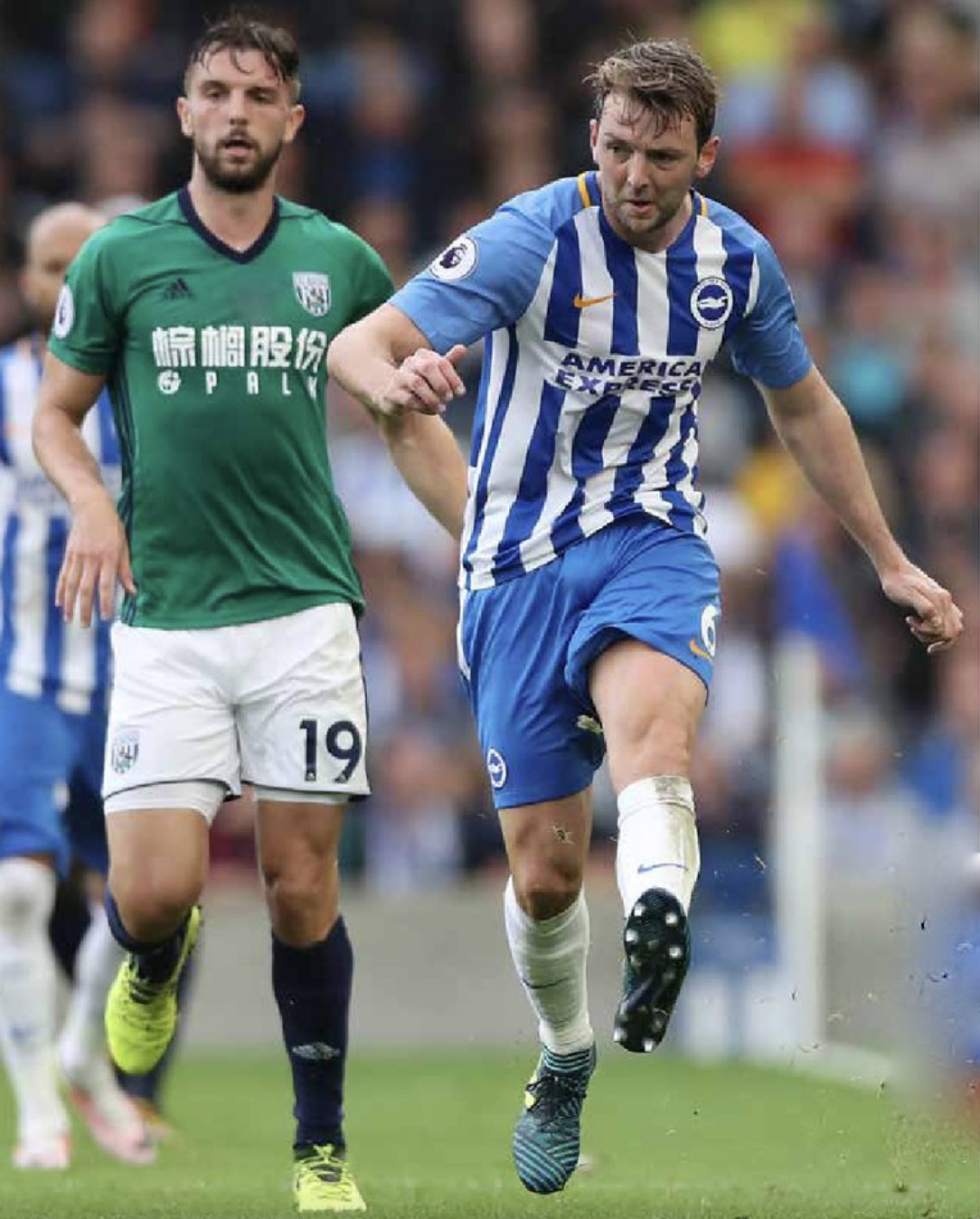
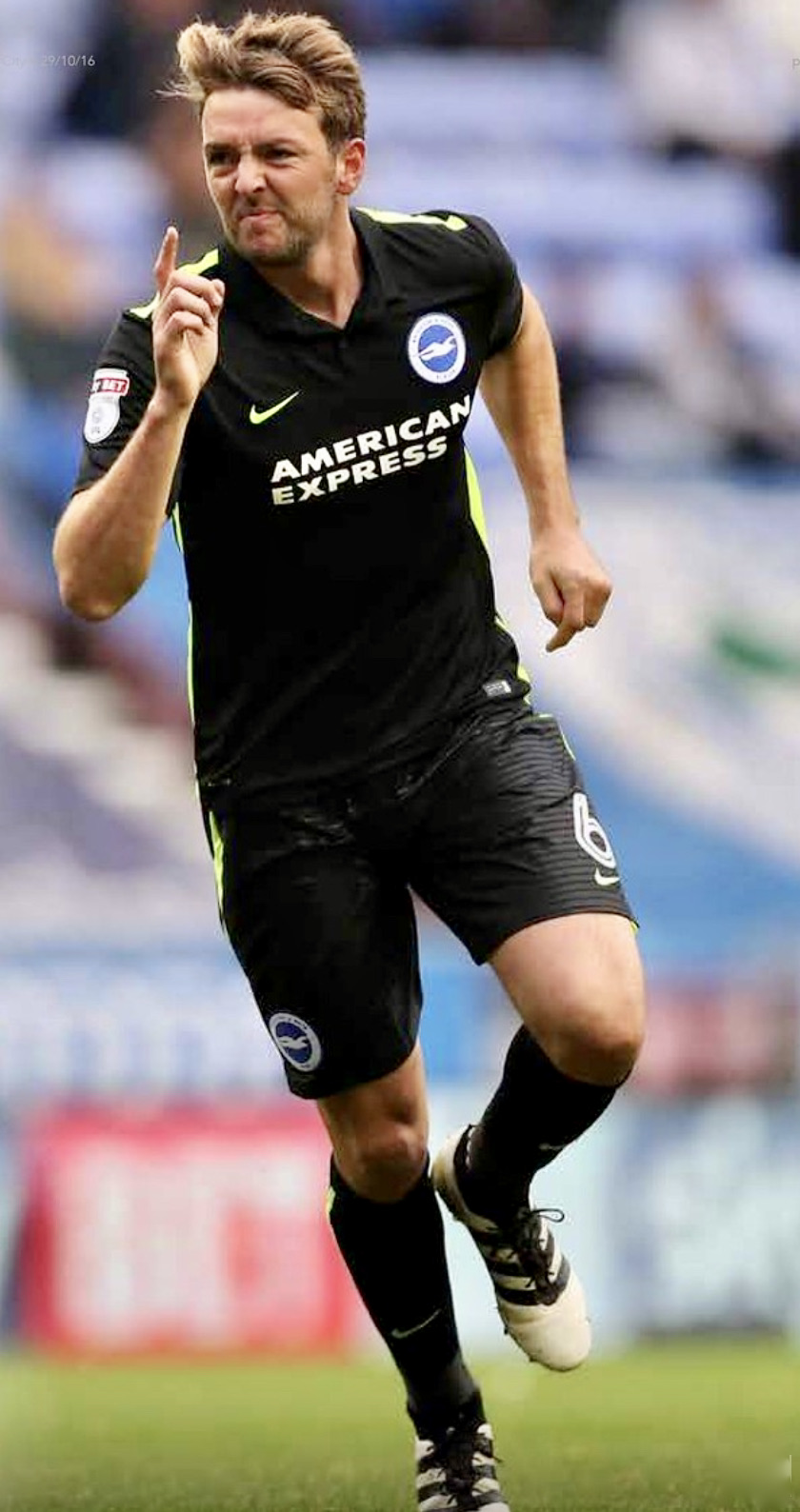
It would be fair to say he was something of a Marmite player for many fans, often accused of being too slow and favouring a sideways pass. I’d say I wasn’t a fan at first but grew to appreciate his importance to the way the side played.

By his own admission, Stephens said: “With the sort of player I am, I’m not going to get fans on the edge of their seat. I’m not going to be a crowd pleaser, but I know my job and the levels I need to hit.”

Credit to him that his time at the club actually spanned the reigns of four different managers: Garcia; Sami Hyypia – although injuries prevented him appearing under him; Chris Hughton, who successfully paired him with Beram Kayal, and the early part of the Graham Potter era which saw him partner Dutchman Davy Pröpper.

Stephens’ arrival pretty much put the tin hat on the progress Rohan Ince had been making as a defensive midfielder with the Albion and, together with Kayal, he formed the key midfield duo as Albion sought to climb from the Championship under Chris Hughton.

A rare goal from Dale Stephens, this one away to West Ham

Once the promised land had been reached, Pröpper took over from Kayal but Stephens retained his place, proving a few doubters wrong about his ability to play at the higher level.

It was only with the emergence of Yves Bissouma as the consummate holding midfielder that Stephens found himself gradually edged out.

Born in Bolton on 12 June 1989, Stephens was football daft from an early age and although he had a try-out at Manchester City when he was 12, nothing further came of it.

After his final year at Ladybridge High School, he went onto a building site to do plastering and joinery.

But the coach of North Walkden, the local side for whom he was playing weekend football, wrote to Bury asking if they would take him on trial. After impressing in a work-out involving 28 triallists in front of youth team coach Chris Casper, he was invited back on a six-week trial basis.

Young Dale at Bury

“After two weeks, I played for the reserves and was offered a two-year scholarship,” Stephens explained. “I then became a first-year pro, making my debut as a sub against Peterborough, and never looked back. I was actually a striker when I joined but was quickly converted to a midfielder and I went on to play 12 first team games.”

Out of contract in 2008, he had the opportunity to step up a league and join Oldham Athletic. When game time was limited in his first season with them, he had loan spells with Droylsden, Hyde United and Rochdale, where he played alongside Will Buckley.

Back at Boundary Park, he became a regular for 18 months, in a side managed by former Brighton loanee striker Paul Dickov, and when Oldham visited Withdean in the 2010-11 season, a matchday programme article drew attention to him. “He is a big player for us in midfield,” wrote contributor Gavin Browne, sports editor of the Oldham Advertiser. “He has a great range of passing and has the ability to play at a higher level.”

A serious ankle ligament injury sustained when Albion beat bottom-of-the-table Yeovil 2-0 on 25 April 2014 sidelined him for 10 months but he returned to play a part in helping Hughton’s relegation-threatened side maintain their Championship status in 2015.

The promotion-deciding match at Middlesbrough in May 2016 will live long in the memory of those who saw it and witnessed referee Mike Dean’s controversial dismissal of Stephens four minutes after he’d brought the Albion back level with a narrow-angled header.

Once Brighton finally got to show what they could do amongst the elite, Stephens declared: “I was always confident of competing at this level but the more you play the more confident you become and the more belief you get.”

He ended up playing 99 Premier League games for the Seagulls out of a total of 223 appearances and perhaps as a mark of respect when he finally left the club for Burnley in September 2020, chairman Tony Bloom said: “He was key in both our promotion from the Championship and in establishing the club in the Premier League. 

“Albion fans will have great memories of Dale as a regular in the midfield in that promotion-winning campaign, and also for the way he comfortably adapted to life in the Premier League – where he has been a model of consistency.”

His last game for Brighton saw him wear the captain’s armband in a 4-0 Carabao Cup win over Portsmouth.

Things didn’t pan out as expected when he moved to Burnley. Due to injury, he was limited to 14 appearances in two seasons, and he told talkSPORTs Sunday Session programme: “It was disappointing on both sides. When I initially went there I was excited for the challenge, but for whatever reason it didn’t work for me or the football club.

“It probably sums my time up there, but I found out on Twitter, of all places, that I wouldn’t be getting a new contract.”

Stephens expected to find a new club, probably at Championship level, who would be interested in using his experience, and although he came close to joining Middlesbrough, and there was some interest from Watford and West Brom, nothing materialised.

“I’d played in the Premier League for the last five years, but I understood I hadn’t played much for two,” he told Andy Naylor of The Athletic. “I thought people would see the reasons behind it and that I’d get the opportunity to play at a club that wants to try to get promoted.”

Apart from being allowed to join in pre-season training at Brighton and spending six weeks with his former Bury captain Dave Challinor at Bury, he trained alone to keep up his fitness level, but, when he was unable to get fixed up with a club, in March 2023 he announced his retirement from playing.

Ongoing problems with the ankle injury suffered during his time at Brighton also contributed to his decision to retire.

In his interview with Naylor, he said he aimed to take the UEFA B licence course to try to become a coach, having spent time out following ankle surgery watching Sean Dyche’s managerial methods, as well as opposing bosses.

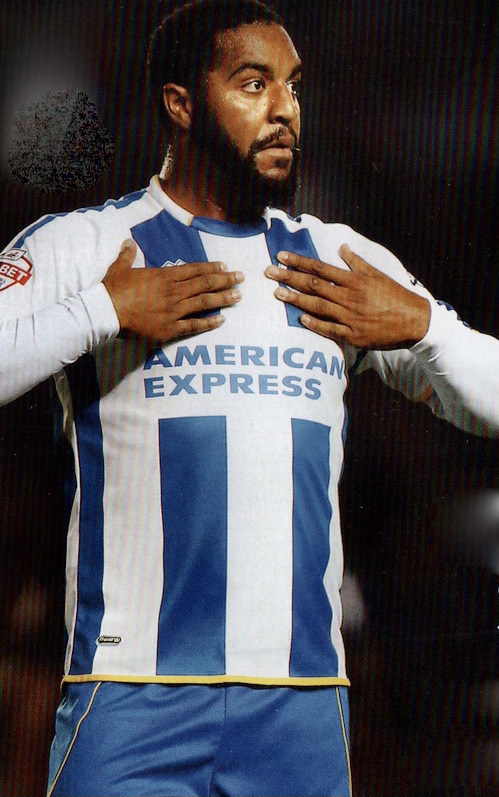
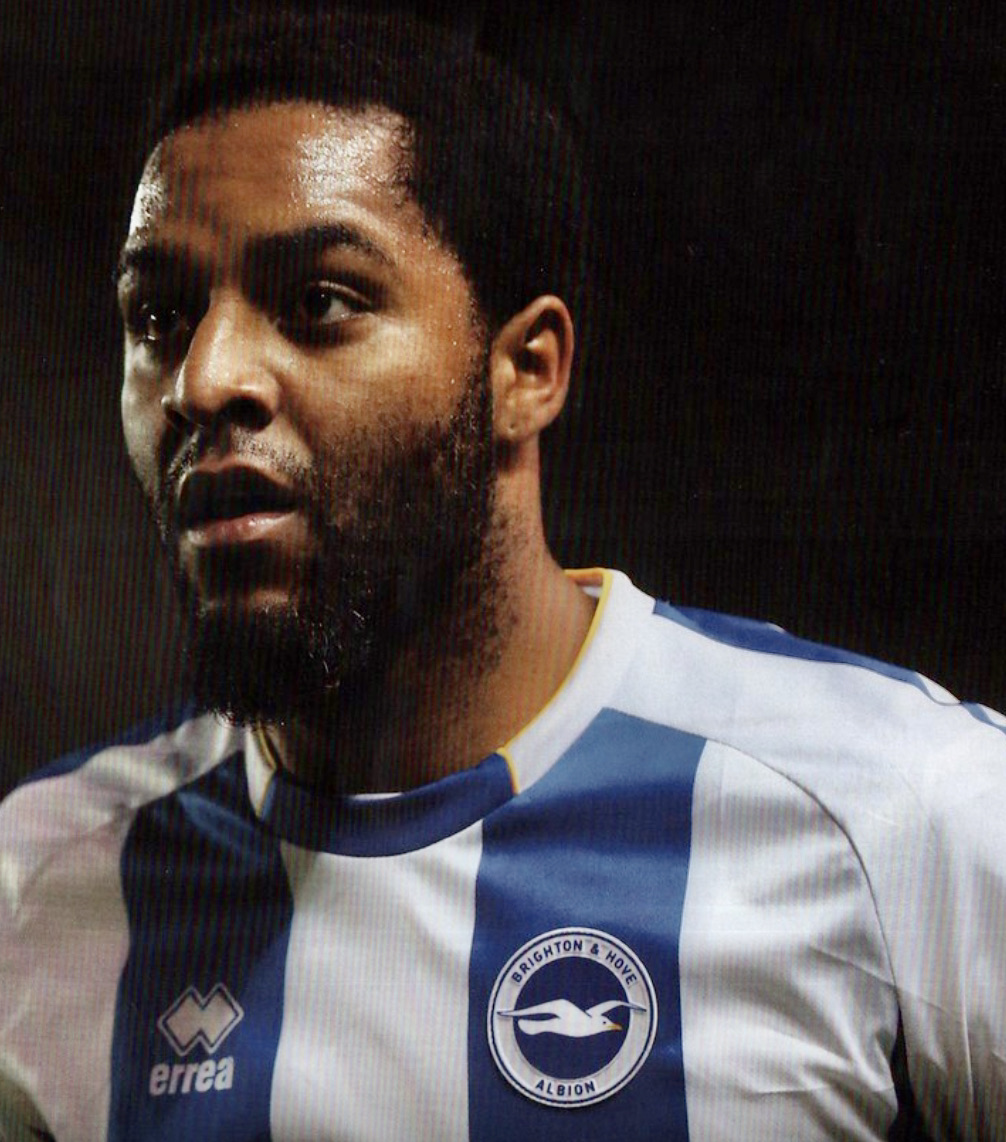
Agustien talked a good game but fitness was a big issue

A MIDFIELD player who helped keep Crystal Palace in the Championship frustrated Brighton fans in an injury-plagued two seasons with the Seagulls.

Kemi Agustien, who hailed from the Dutch Caribbean island of Curaçao, wasn’t fully fit when he joined Oscar Garcia’s Seagulls from Swansea City in the summer of 2013, and injuries he picked up restricted him to just 10 starts and seven appearances off the bench.

Albion’s ‘keyboard warrior’ followers were not at all impressed and poured out their vitriol, accusing the player of being overweight and not being committed to the cause.

The main gripe seemed to be frustration that a player who had played 31 games in the Premier League only fleetingly showed his capabilities in the division below.

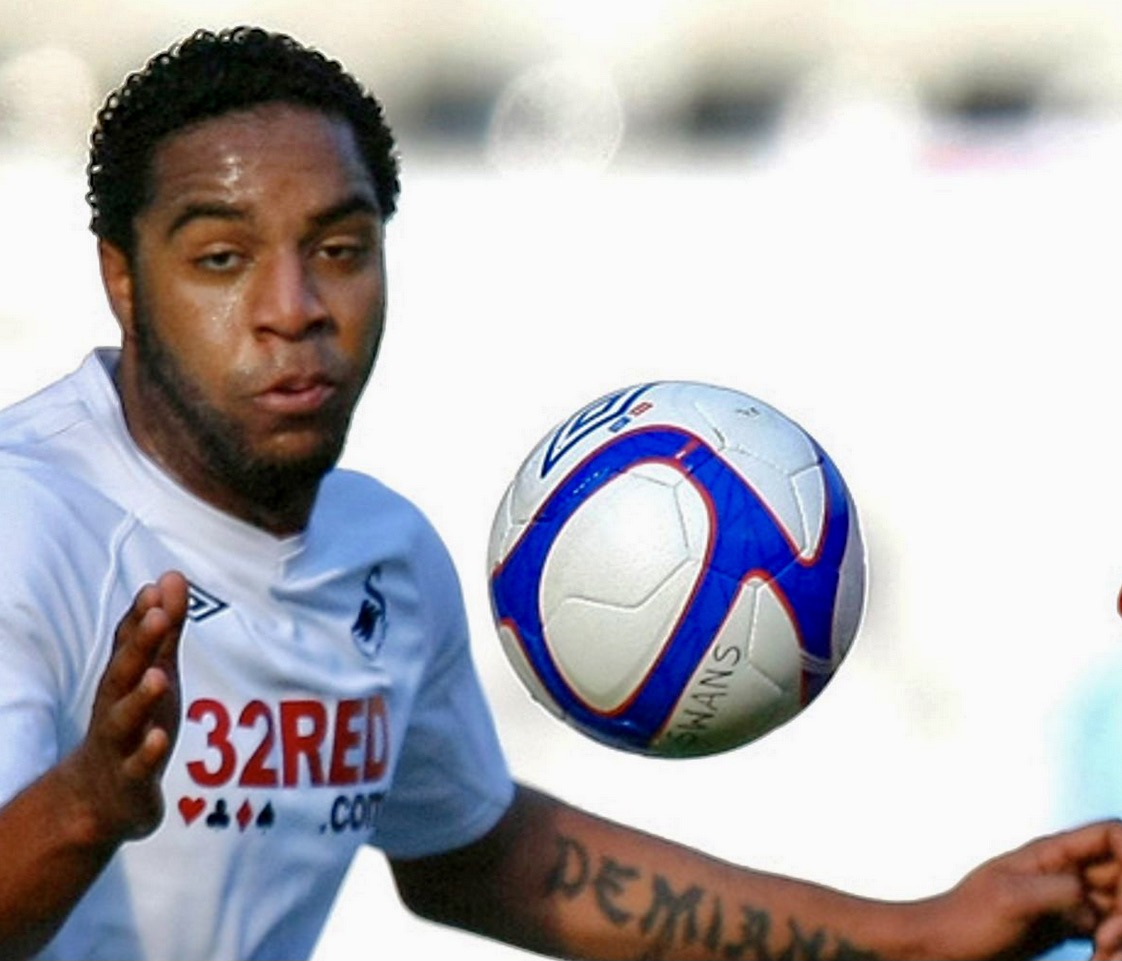
It seems remarkable that Agustien once scooped the official man of the match award for a powerful display in Swansea’s midfield in a 1-1 top flight draw against Manchester United.

As Brighton fans would later discover for themselves, Agustien wasn’t shy at singing his own praises, saying after that United match in March 2013: “I put out a statement to the manager, the staff and for myself and my family.

“There were doubts over my fitness or if I had the ability to play in the Premier League but hopefully everybody who watched the game against Manchester United will have seen what I can do.

“I always put pressure on myself, I’ve been in and out of the team and, like every footballer, I want to play and start every week. It was my first start for such a long time and I thought I did well.

“I am not the sort of player who likes to talk about himself, but I think I can be proud with how I played.”

As so often seemed to be the case in his career, an injury stopped any hoped-for progress in its tracks and by the end of the season boss Michael Laudrup dispensed with his services on a free transfer, even though he still had a year left on his contract.

There was a sense of irony that the midfield slot Agustien took on at the Albion had become vacant when the Seagulls managed to offload Ryan Harley, another ex-Swansea player who had been a disappointment. Harley was allowed to join Swindon Town after a settlement was agreed on the remaining 11 months of his contract.

What Albion were getting in return was, on the face of it, an upgrade, and Agustien’s agent, Wessel Weezenberg, somewhat bullishly told the Argus: “Brighton are getting an excellent, all-round midfielder. He is a very technical player, physically good and strong, and will fit in well with their type of football due to his Dutch background.”

Head coach Garcia seemed to buy into it, too, saying: “He has experience in the Premier League with Swansea and his technical level, experience and confidence with the ball will help us a lot with the way we want to play.

“We will work with him, because he is not fit enough to play 90 minutes at the moment, but he wants to be fit as soon as possible and, with our fitness coaches, I don’t think it will take much time.”

Somewhat immodestly, Agustien reckoned he could fill any of the Albion’s midfield positions, explaining: “I feel I can play box-to-box, I have the power and the ability to do that. I can be dangerous in the final third, but if I need to hold I can do that as well.

“I think I’ve got all the strengths to do both but I know I can still improve. There is more to come from me.”

When he was sidelined with calf injury issues not long into his time at Brighton, he told the matchday programme: “I want to be an important part of this team, but the only way I can do that is when I’m fully fit.

“I can’t do myself justice on 80 or 90 per cent. I know when I’m 100 per cent I can bring quality to this team.”

Reflecting on his ill-fated spell at the Albion in a March 2020 interview with Tom Coleman of Wales Online, Agustien admitted: “It started all wrong. There was a certain pressure coming out of Swansea and going to Brighton.

“I had a meeting with the manager back then, and he told me how he wanted to play a certain way and that he wanted me to play in a certain position, as a number 10.

“For me, to start in that position was like adapting to a new style, and I wasn’t really fit because I didn’t really have a pre-season because of what happened with Swansea. I came quite late and I was overweight.”

Over the course of the 2013-14 season, Agustien made just eight starts plus six appearances off the bench in Garcia’s side, and he was an unused substitute on eight other occasions. Rohan Ince, Jake Forster-Caskey, Andrew Crofts and loan signing Keith Andrews formed the mainstay of the midfield before the arrival of Dale Stephens.

Albion supporters were, it would be fair to say, divided in their opinions about Agustien’s contribution. For example, ‘Clean Sheet’ on the Argus comment section said: “This guy has the potential to be a game-changer. He needs to get fit and motivated. If this happens, then he could be like a major new signing.”

But ‘Steveg1958’ reckoned: “This guy is unbelievable. He needs firing now and kicking out. What a joke. If any of the rest of us worked like him, we would be given the push. How he has got away with this for so long at Albion is nothing short of scandalous.”

On the popular fans forum North Stand Chat, ‘BensGrandad’ said: “He shows great skill and some brilliant passes but he appears to be lazy and not prepared to tackle back when required, or when he loses the ball. Perhaps that is where the problem lies.”

‘Stumpy Tim’ maintained: “He’s not mobile enough to play centre-mid. Wouldn’t mind seeing him in one of the forward positions as he’s definitely one of the more creative players in the team.”

If Agustien thought his Albion fortunes might change when Sami Hyypia replaced Garcia, he was to be disappointed. He made just two starts under the former Liverpool man, plus one substitute appearance, all at the start of the season.

He was sent on as a sub for Forster-Caskey in the opening day 1-0 home defeat to Sheffield Wednesday that got Hyypia’s reign off to an ignominious start.

I do recall him putting in a decent shift away to Leeds United later the same month, contributing to a fine 2-0 win which saw Albion leave Elland Road with all three points, although he had to go off after twisting an ankle.

He started in a 2-0 League Cup win over Cheltenham Town but was replaced by Kazenga LuaLua on 68 minutes and wasn’t seen in first team action again.

He underwent surgery for a persistent thigh muscle injury, and Hyypia’s successor Chris Hughton didn’t rule him out altogether, but he said at the end of February 2015: “At this moment he is quite a way from being fit and ready to play.

“He hasn’t been fit for most of the season. If he is able to get fit and available for any part of the season we’d be delighted.” But he left the club without reappearing in the first team.

It wasn’t that he hadn’t done OK at that level, either, because he had already played 18 games for Birmingham City in the Championship during the 2008-09 season, and, in the 2010-11 season, three starts for Swansea under Brendan Rodgers and, when he hadn’t been able to win his City place back after injury, six starts and two appearances off the bench on loan at Dougie Freedman’s Crystal Palace as they fought to avoid the drop at the end of the season.

Explaining the Palace loan, Rodgers told Sky Sports News: “I felt Kemy needed games. He has found it difficult this season. I brought him in and he is a good lad, but some players are all right if they are not playing and others are not.

“Kemy is the type who wants to play. He came here injured and the players in his position have done very, very well.

“He has another season on his contract with us and, while it hasn’t quite happened for him here as he would have wanted, I want to see him getting games. Hopefully, come the start of pre-season, he will be fully fit.”

He got off to a decent start under Freedman when Palace won 2-1 against a Barnsley side which had former Brighton loanees Paul McShane in defence and Diego Arismendi, who went on as a substitute.

The Palace website reported Agustien impressed with his distribution on his debut, combining well with James Vaughan, and in a 2-1 defeat at Ipswich, it was an Agustien free kick that found skipper Paddy McCarthy who scored the visitors’ goal.

The loanee was in the starting line-up for Palace’s crucial away trip to Hull City when both sides needed a point to be sure of staying up. It finished 1-1. And his last game in Palace colours was in the final game of the season when the home side succumbed 3-0 to Nottingham Forest.

The Harry Hotspur youngster who went west

MULTIPLE loans away from parent club Tottenham Hotspur didn’t succeed in laying a path to a top level football career for striker Jonathan Obika.

One of the last such arrangements saw the young forward spend three months with the Seagulls in the 2013-14 season.

Nathan Jones, no.2 to Brighton head coach Oscar Garcia, had seen what Obika could do when the young striker had been under him as a coach on loan at Yeovil and Charlton Athletic.

Unfortunately, his impact with the Seagulls was underwhelming even though he scored on his first (and, ultimately, only) full start in a 3-1 win away to Port Vale in the fourth round of the FA Cup.

Obika salutes his one and only goal for Brighton

Albion’s other goals that day, from Rohan Ince and Solly March, were also their first for the club – generating the statistic that it was the first Albion game in 110 years in which three players had scored their first goal in the same league or cup match.

It had been an amazing goalscoring performance for Spurs reserves that prompted Albion to make a move for Obika as cover for first choice Leonardo Ulloa, especially with Craig Mackail-Smith and Will Hoskins sidelined by injury and Ashley Barnes on the brink of a move to Burnley.

The Argus reported that Obika had previously been a target but a move had been put on ice because he’d been injured. His return to fitness saw him net a double hat-trick in a friendly for Tottenham against Charlton’s under-21s, watched by Jones.

“The report coming back on him after the game was one word – lethal!” former Seagulls goalkeeper Ben Roberts, then on the coaching staff at Charlton, told the Argus.

“Like Nathan, I worked with Jon at Yeovil and then at Charlton and he’s a really good pro,” said Roberts. “He is guaranteed to score goals. He is a real predator around the box.

Obika in action for Yeovil

“I’ve been waiting for his career to really kick off. When he came to us at Charlton it took him a couple of weeks to get up to speed. But he was brilliant for us. The end of the season came too soon for us.

“He is a great signing for Brighton and he will suit the way they play.”

However, Garcia also brought in Spaniard David Rodriguez at the same time and Obika found himself down the pecking order, especially when Manchester United loanee Jesse Lingard was added to the forward options.

The Vale cup game aside, Obika made just seven appearances as a substitute but didn’t add to the lone goal and was eventually recalled by Spurs and sent out on loan to Charlton again until the end of the season.

Nevertheless, Garcia said: “He came in to give us forward cover and, while he may not have played as much as he would have liked, he has been a great professional and a pleasure to work with.”

Obika’s long association with Tottenham finally came to an end in September that year when he headed west to League One Swindon Town, where he played for three years, scoring 28 times in 108 games for the Robins.

In 2017, he switched to Town’s rivals Oxford United on a two-year deal before then trying his luck in Scotland, playing in the Scottish Premier League for St Mirren.

On the expiry of that contract, Obika moved to League One Morecambe and, in January 2022, found himself back in the news ahead of this year’s FA Cup third round when Morecambe travelled to North London to take on the club who nurtured his early career for 13 years.

Although Morecambe took a shock first half lead against Spurs through defender Antony O’Connor, it wasn’t a fairytale ending as the Premier League side eventually won the tie 3-1 with three goals in the last 16 minutes of the game.

Obika had to watch from the bench until the 58th minute when he replaced Jonah Ayunga – a Brighton reserve player between 2016 and 2018 – with Morecambe still clinging on to their slim lead.

Born in Enfield on 12 September 1990, of Nigerian parents, Obika grew up in Edmonton and it was while playing football for his primary school, St Paul’s & All Hallows, that he was scouted by Tottenham.

“I lived five minutes from the stadium, so I used to walk to training as a 10, 11-year-old,” he said. “That was my only focus back then.” He later attended Bishop Stopford School in Enfield and left with seven GCSEs.

Originally a left winger, Spurs’ under 18s coach Alex Inglethorpe was responsible for moving him to play as a central striker and in the 2007-08 season he was top scorer for the Spurs academy side.

Those goals caught the attention of first team boss Harry Redknapp and he signed his first professional contract at 18, while a second-year trainee in the academy, and earned a call-up to the first team squad.

Wearing the number 80, he made his debut off the bench in a UEFA Cup game in Holland against NEC Nijmegen on 28 November 2008. A few weeks later, he made his first senior start in front of the White Hart Lane faithful, playing against Shakhtar Donetsk in the same competition.

“I didn’t know I was starting at the beginning of the game, there were a few injuries so a lot of the youth team players trained that week and we were in the squad,” Obika remembered.

When announcing the team, Redknapp actually read out his name as John Utaka, his former player at Portsmouth, amid much hilarity. “That broke the ice,” said Obika. “I was less nervous after that. I was more relaxed and actually ended up having a good game. To play at the Lane, having grown up down the road, was a great feeling and I had all my family and friends there that night.”

Along with Inglethorpe, the coaches who most influenced his development at Spurs were John McDermott and, when he progressed to the reserves, Tim Sherwood, Les Ferdinand and former Albion full-back Chris Ramsey.

Obika and fellow Spurs youngster Andros Townsend were sent out on loan to Yeovil – it was the first of four loan spells there for Obika – as recalled by Jones in an interview with coachesvoice.com: “A host of other clubs wanted them, but I think Harry saw two young kids who wanted to play, and he saw something in us as a coaching team.

“Townsend clearly had huge drive and ambition, and Obika scored the goals that kept us in League One that season – so we will always be thankful to Harry for that.”

Obika recalled: “While I was at Yeovil, Nathan Jones was my coach and I built up a good relationship with him. He would stay behind with me while I did extra shooting: he didn’t need to, I could have done it with other teammates, but he wanted to be there and help me progress and I really appreciated that. He is a good man. He also took me to Charlton for a loan spell and, of course, to Brighton.”

Obika also had loan stints at Millwall, Crystal Palace, Peterborough and Swindon although in the 2012-13 season he did manage to get two more games for the Spurs first team, featuring in the League Cup and the FA Cup.

He went on as a 75th minute substitute for Clint Dempsey when André Villas-Boas’ Spurs side beat Carlisle United 3-0 in the League Cup in September 2012, and was a 59th-minute substitute for Gylfi Sigurdsson when Leeds dumped Spurs out of the FA Cup 2-1 in a fourth round tie at Elland Road in January 2013.