That’s the way Cookie crumbled for Hastings-born defender

WHEN IT comes to home-grown talent, Brighton have had particular success with central defenders.

Lewis Dunk is the prime example, staying with the club from humble beginnings through to Europe. Others had to move on to make the most of their careers.

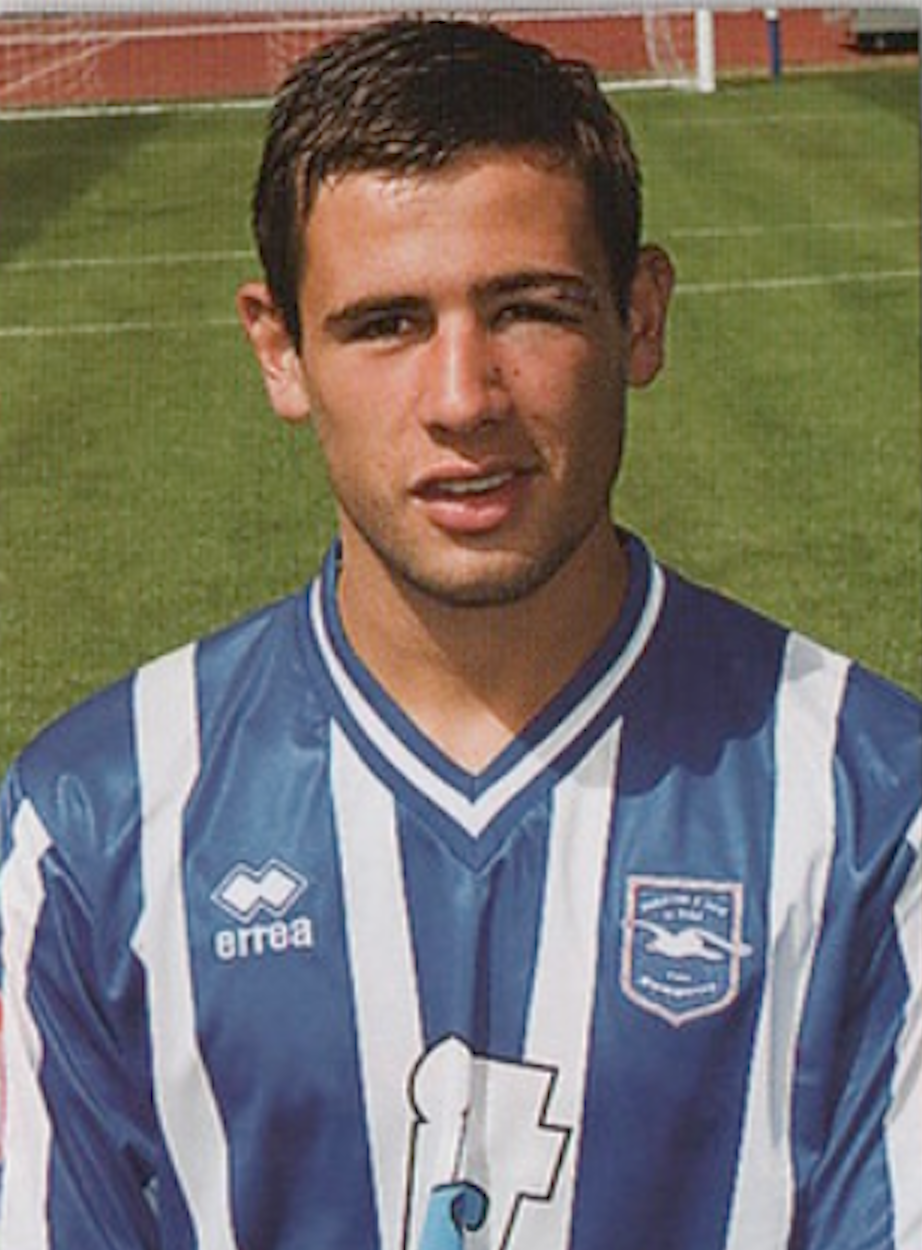
For example, Steve Cook joined the club aged nine and made it through the different age levels into Albion’s first team. But to get regular football, he moved along the coast to Bournemouth.

If moving from Championship Brighton to League One Bournemouth seemed like a backward step in 2012, two promotions later saw him laughing on the other side of his face when the Cherries made it to the Premier League (in 2015) a season before the Seagulls.

Cook spent 10 years with the Cherries, making more than 350 appearances (168 of them in the Premier League), and after the departure of fellow ex-Albion defender Tommy Elphick, he took over as their captain.

Cook first got a taste of the big time in 2008, when he was a second year scholar on £60 a week, aged just 17. He was sent on by Micky Adams as an 85th-minute substitute in the famous League Cup game against Manchester City that League One Albion won on penalties.

Two months later, he once again replaced right-back Andrew Whing, this time in a FA Cup first round replay defeat to Hartlepool United, and picked up a booking into the bargain.
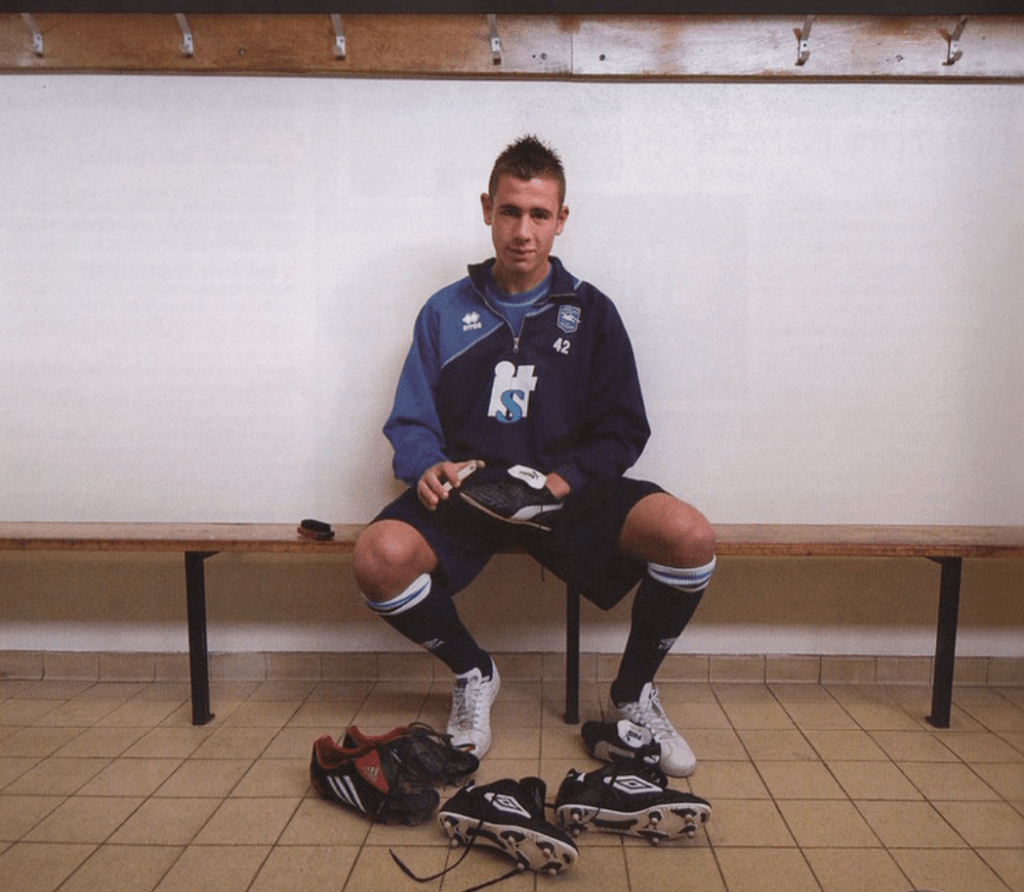
Boot cleaning duties for young Steve Cook

To gain more experience, in December that year, Cook went west to spend six weeks with Conference South Havant & Waterlooville. On his return, he once again had a first team look-in, going on as a 77th-minute sub for Calvin Andrew in the Johnstone’s Paint Trophy southern final defeat at Luton Town that marked the end of the second coming of Adams.

Before the appointment of Russell Slade, Cook went on for the second half as a sub for injury-plagued sub Adam Hinshelwood (who’d been an 18th-minute sub for Elphick) in a 4-0 home defeat against Crewe Alexandra.

Slade marked his arrival by bringing in plenty of old hands in what eventually proved to be a successful skin-of-the-teeth survival battle against relegation. Cook didn’t get another chance in the first team until some time after Gus Poyet had taken charge.

His development continued on loan with the likes of Eastleigh and Eastbourne Borough and in November 2010 he moved away from home to join former league club Mansfield Town on a three-month loan.

“Mansfield play very different to Eastbourne but it’s more like playing for Brighton where they like to keep the ball and play out from the back, which you don’t get in the Conference very often,” he told the matchday programme. “I see it as a great opportunity to prove myself and try to earn another contract at Brighton.”

He added: “Playing Conference football helped me grow up, physically and mentally, so by the time I returned I felt I was ready to challenge for a first team place.”

Cook up against Suarez

After a handful of non-playing appearances on the first team subs bench, when he did get his first ever start, it could not have been a bigger match: Liverpool at home in the third round of the Carling Cup with Luis Suarez, Dirk Kuyt and Craig Bellamy in the opposition forward line.

“It was a real confidence boost knowing the manager had faith putting me into the side for such a big game, but I really enjoyed the experience and got a great deal out of it,” he said.

“While I had a good pre-season, I’ve not played a lot of games since then. It was one in two months before the Liverpool game, but I’d been working hard in training and got my reward.”

Cook only found out 90 minutes before kick-off that he would be taking the place of fellow academy graduate Dunk, with both Elphick and Adam El-Abd out injured.

“It was a real baptism of fire though because for the first 20 minutes Liverpool were brilliant. Suarez, Bellamy, they were all excellent going forward, the pace of them as a team was unbelievable and in that opening spell I think we were in awe of them.”

Cook thought his involvement that night would lead to more chances, but he said: “Later that month we had Ipswich away, Dunky was suspended but instead of playing me, Gus put Romain Vincelot – a midfielder – in alongside Gordon Greer. From that point on, my mind was made up; I knew I had to look elsewhere if I wanted to kick on in my career.”

That autumn, Cook initially joined Bournemouth on loan, featuring in eight games, but he was recalled by the Seagulls when a shortage of defenders meant he was needed for a crucial New Year game at home to table-topping Southampton.

Having lost four games on the bounce, the odds were stacked against a positive result, but Albion remarkably won the game 3-0 (two cracking goals from Matt Sparrow and another from Jake Forster-Caskey).

Nevertheless, within 24 hours of the game ending, Cook finally took the tough decision to leave the Albion permanently. The fee was a reported £150,000.

He told the matchday programme: “I have loved my time at Brighton but this is a chance to play regular football and I can’t turn that down. It was nice to go out on such a high – not many players get that chance.”

Cook reckoned he might have got the odd game or two if he’d stayed at Brighton but he didn’t rate his chances of becoming a regular when everyone was fit. “I could play close to 30 games for Bournemouth and that is massive for a young footballer,” he said.

In a later interview, he said: “It was always going to be a tough decision to leave the Albion as I had been at the club since the age of nine.

“I had a decision to make: do I stay and fight for my place, despite being a fair way down the pecking order, or do I leave and try to continue my career elsewhere?

“It wasn’t easy because I was leaving a club on the rise; the Amex is one of the best stadiums in the country, the team was establishing itself in the Championship and there was a new training ground on the way.

“But having been at Bournemouth on loan, I could also see a hugely ambitious club and a talented squad which I believed was going places.

“So, I decided to leave and it’s been the best decision I could ever have made. I’ve moved away from my parents, so have grown up off the pitch, while on it I’ve been playing regularly and have really enjoyed my football.”

Much of that time he partnered Elphick in the middle of the Cherries defence and it wasn’t long before the pair were emulating the Albion’s achievement of promotion from League One.

“Tommy arrived a year after me but of course I told him about the club, the town and knew it would be a good move for him as it was for me,” he said. “We’d obviously played alongside each other before, had known each other a long time, and so we soon built up a good partnership.

“He had those leadership qualities he displayed at Brighton and was soon made captain. We had a terrific three years together and remain good friends off the pitch.”

In a subsequent Albion matchday programme, when he was once again visiting with the Cherries, he said: “Lovely stadiums and training facilities are great, but only if you’re playing in them and I can now look back on nearly 300 appearances for Bournemouth, where I’ve had some fantastic moments, played regularly in the Premier League and really developed my game. It’s a move that couldn’t have gone better.”

Although Cook held his own in the Premier League, he admitted the transition from the Championship was hard. “The gulf with the Championship is huge,” he said. “The intensity and pressure, in particular, are massive and the first six months were a real learning curve.

“Once I’d adapted and dealt with the expectations placed on me, I could relax and start to enjoy myself.”

Born in Hastings on 19 April 1991, Cook joined the Albion as a schoolboy following a six-week trial under the auspices of Martin Hinshelwood, the head of the youth set-up at the time.

“Initially, I was only training Tuesday evenings in the Eastbourne centre of excellence but, when I reached 13, we were training twice a week with a game on the Sunday,” he recalled.

“I remember I had a choice to make: Hastings Town, my local team, or Brighton and obviously I was swayed by the facilities, the coaching and being associated with a professional club.”

After Bournemouth lost their top tier status in 2020, Cook captained the side through to the Championship play-off semi-finals in 2021 where they were beaten by eventual winners Brentford.

There was plenty of emotion when Cook finally left the club in January 2022 with manager Scott Parker saying: “I know too well what someone like Steve Cook has done for this football club and the journey he has been on with the club. He has been paramount and done everything, really. I wish him all the best.”

And in an open letter to the club’s fans, Cook wrote: “I’ve been lucky enough to captain the team in League One, the Championship and Premier League and writing this just fills me with immense pride.

“The time has come for me take the next step in my career but I will never forget the staff that helped me improve as a player and person.

“The players that I shared a dressing room with and, and most importantly, the fans that supported and cheered for all those games.

“The journey that we have had is one that will never be beaten, and the relationship we had was undeniably strong. Thanks for everything.”

Upon signing for Nottingham Forest, Cook declared: “You can see the progress the club is making and I’m excited for the new challenge. 

“I thought it was the perfect time in my career to make this move to hopefully come and contribute and help get this club back to where it wants to be.

“The history of the club speaks for itself and I know how passionate the fans are. I’ve played at the City Ground in the past and it’s always been electric.”

Manager Steve Cooper said: “Steve is a fantastic player and brings a good level of experience, both in the Championship and the level above.

“He’s played in a team that has won a lot of games and I think that that’s important. We want our group to be young and hungry along with players of experience that can drive the team forward and that’s what we’re building.”

Having been part of the Forest side promoted to the Premier League in May 2022, his involvement back in the elite division was restricted to 12 games and he was omitted from Forest’s 25-man Premier League squad for the second half of the 2022-23 season.

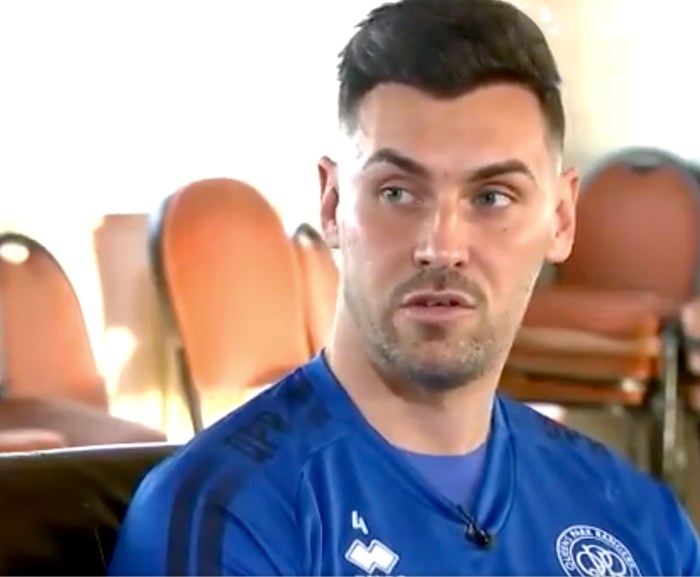
In the summer of 2023, he switched to Queens Park Rangers in the Championship, telling the club’s website: “Playing football is the most important thing for me but I also pride myself on being a good character around the group.”

He went on: “My time in the Championship has been quite successful, and that success is something I want to bring here. 

“I don’t want my career to peter out, I still really want to be successful and to contest. I still have aims and targets I want to achieve and I’m hoping that the success I’ve had in my career so far continues so that I can help push QPR forward.” 

Grant Hall owed second chance to mentor Danny Cullip

TALENTED defender Grant Hall has suffered plenty of slings and arrows in a career that might not have got off the ground but for the influence and encouragement of former Albion captain Danny Cullip.

When he got a second chance at Brighton, he seized it, made it to the first team, was signed by Tottenham Hotspur and is still playing tier two football more than 10 years later.

In one of those strange quirks of football, Neil Warnock, the manager who signed Cullip for Sheffield United, made Hall his first signing when he took charge at Middlesbrough.

Warnock infamously dumped Cullip within three months of signing him for the Blades but he was a lot more complimentary about Hall, who had faced his demons at one of Cullip’s old clubs, QPR.

“Grant is a smashing lad and I’m sure the fans will really take to him,” Warnock told Boro fans after signing him in July 2020.

Born in Brighton on 29 October 1991, Hall was with the Albion as a schoolboy but was released when he was 16. That’s when he went to play for non-league Lewes where Albion’s former captain was seeing out the remaining days of his career.

“He (Cullip) was a massive influence on me,” the young defender told Albion’s matchday programme. “Danny talked to me every time I played. He gave me advice on what to do and he never had a go at me, which might not have helped me as a youngster. He was always positive and encouraging me.

“He was a great pro when he was playing so was a great person to be mentored by.”

Together with input from another former pro, Anthony Barness, and manager Kevin Keehan, Hall said: “I felt their belief and that gave me confidence and I became a better player. They helped me so much; I owe a massive thanks to them.”

The changed Hall brought Albion’s director of football Martin Hinshelwood back to his door with an invitation to return to the club two years after he’d left.

Hall was part of a hugely successful development squad under youth team coach Luke Williams, and eventually made it to the first team, joining Gus Poyet’s squad for training over Christmas 2011.

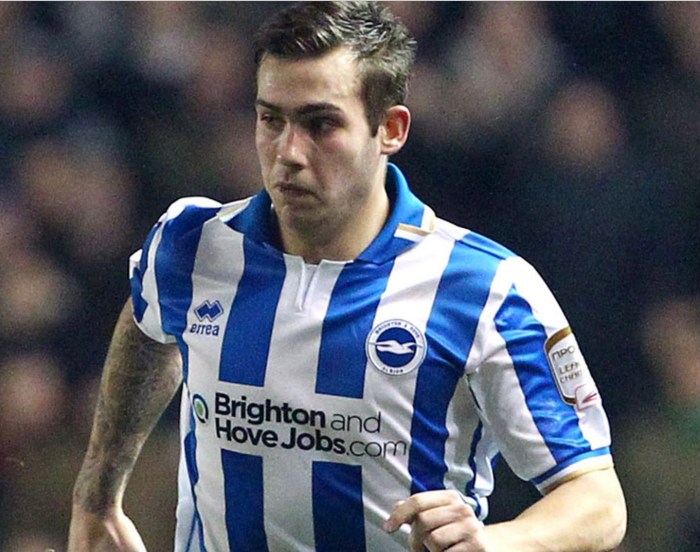
Although a centre back by preference, his debut was at left-back as a second-half substitute for assistant manager Mauricio Taricco in a memorable New Year’s 3-0 win over 10-man Southampton at the Amex. Saints’ Rickie Lambert was shown a red card and Matt Sparrow scored two belting goals for the Albion.

“I’ve waited a long time but it’s a great feeling to have finally made my debut,” said Hall. “Obviously there were a few nerves as I was getting my shirt on but once you step onto the pitch you just block everything out.

“You are just so focused on your game that you can’t even hear the crowd but I really enjoyed the experience.”

Hall did well enough to be given his full debut the following Saturday in the FA Cup against Wrexham, although Poyet couched his words of praise carefully after the youngster put in a composed display, suggesting certain representations on Hall’s behalf were not welcome.

“I would stay calm if I was anyone connected to Grant,” he said. “He played for half-an-hour against Southampton when we were eleven v ten, and then 90 minutes against Wrexham, with all respect to Wrexham, so we’ll see.”

Albion fans liked what they saw though, with correspondent ‘4everaseagull’ saying on the Argus discussion forum: “Hall’s performance was very assured against Wrexham and he looked very comfortable. For me he was MoM. He didn’t miss a header all game, and his positional play and passing were excellent. It really showed how important it is for all the respective teams at the club to play the same way. Feet on the ground for Hall but what a great prospect.”

Hall played alongside versatile Frenchman Romain Vincelot against the Welsh Conference side but there was plenty of competition at centre back with captain Gordon Greer usually featuring alongside Adam El-Abd, and a rookie Lewis Dunk beginning to emerge. Steve Cook, also 20, had returned from a loan spell at Bournemouth to help out during an injury crisis but he soon departed to Dean Court on a permanent basis, joining Tommy Elphick whose own Albion progress had been blighted by a serious injury.

Whatever had narked Poyet in January resurfaced when Hall rejected a three-year deal offered by Albion before his contract expired at the end of June. Hall chose to join Spurs instead, although Poyet was baffled and, in a convoluted but contorted way, went public with his criticism of the youngster’s move.

“The only disappointing side with Grant Hall is that what he told us was the reason for not signing a contract was not true,” Poyet told the Argus. “He didn’t accept our contract for a reason but that reason is not happening.

“There was a clear reason he gave us as to why he did not want to stay here. I know what he said and it’s not happening, so it’s disappointing, no doubt.”

Albion clearly felt Hall had a future, and with the seven substitutes rule coming in it was felt his chances of being involved in the first team squad were pretty good.

Nevertheless, Poyet added: “Sometimes we try to advise players knowing the game, but my point of view is probably not the same as the player’s point of view. I just wish him well. I hope he can make it and can be playing at the highest level.

“I am not against him. He made a decision, nothing else, but I think it’s important to know the reason.”

While Hall went straight into Tottenham’s academy team and made his debut in a 2-1 friendly victory over Kingstonian, Albion began a drawn out wrangle over compensation, which was due because Hall was still under 24.

It wasn’t until the following January that Albion finally reached an undisclosed settlement with Spurs to prevent it going to a tribunal.

Hall featured in Spurs’ under 21 side from the start of the 2012-13 season but in three years on their books, he didn’t make a first team appearance. He had three loan spells away from White Hart Lane – at League One Swindon Town under the aforementioned Luke Williams – and at Birmingham City and Blackpool, both in the Championship.

In 2015 he made a permanent move to Queens Park Rangers, signed by former Albion full-back Chris Ramsey who had coached him at Tottenham.

“He’s an old-fashioned defender who can head the ball, tackle and he doesn’t mind putting his foot in when he needs to,” said Ramsey. “But he can play as well from the back, and that’s what we’ll be looking to do when the opportunities present themselves this season.

“He’s still a young boy and centre-half is a very responsible position, but he’s got experience in the Championship and that’s vitally important for us.”

Hall won the supporters’ Player of the Year award in his first season but suffered a serious knee injury towards the end of the 2016-17 season.

He started drinking heavily because he couldn’t cope with the pain of tendonitis in his knee, and two years later spoke out about the mental health issues he went through.

Hall encouraged others to talk about such problems in the way he did after he broke down in a meeting with QPR director of football Les Ferdinand and then manager Steve McLaren.

Ferdinand put him in touch with the Professional Footballers’ Association and he was able to understand that it was OK to speak about his issues.

“I had a really good conversation with them and they helped me understand that it’s okay to speak about your mental health. No-one is going to judge you for it and opening up about your mental well-being is a strength and not a weakness,” he told qpr.co.uk. “It was exactly what I needed. It felt like a huge release, a weight off of my shoulders and it allowed me to re-focus and start to look after myself again.”

Explaining how things unravelled, Hall said: “I went from a place where life was perfect, I had a great relationship with the QPR supporters and everything was going right on and off the pitch. Then all of a sudden everything seemed to come crashing down. It was a huge reality check for me and I now realise that you can never anticipate what is around the corner in life.”

Hall managed to turn that corner and worked hard to restore his fitness to the extent that he featured in 30 matches during the 2019-20 season. “Deep down it’s just a relief for me to be playing football again,” he said.

But after 128 appearances across five years at Loftus Road, where he had become club captain, he was unable to agree a new contract with QPR in the summer of 2020 and upped sticks at the age of 28 to become Warnock’s first signing at Middlesbrough.

“I’ve known Grant for a few years now,” said Warnock. “Everyone knows I’m looking at the spine of the team, and he’s the right fit for what we need.”

Unfortunately, not for the first time in his career, injury sidelined him for several of those early months on Teesside but on his return he proved a bright spot in a disappointing second half of the season.

“It’s been a massive plus because I didn’t personally think he’d be able to come back like he has, if I’m totally honest,” Warnock told Craig Johns, of gazettelive.co.uk. “I was worried he’d put a bit of weight on and I couldn’t see enough mobility.

“And yet he’s proven me entirely wrong. He’s come back fitness-wise better than I’ve ever seen him and he’s using his experience at the back for us to the point where he’s been a breath of fresh air for us.”

Warnock also told the reporter: “The thing I’ve been most impressed with, more than his heading or his contribution in that respect, has been his reading of the game against quick players. You would probably question how he would get on against a quick player, but he’s just revelled in it really.

“His quickness of thought has put him a long way ahead of some of these quick strikers that he’s been playing against. That’s what I’ve been pleased with more than anything.

“I always know he’ll chip in with an odd goal here and there, but his reading of the game has been outstanding.”

After Warnock’s departure, Hall was on the outside looking in under Chris Wilder although the new manager sought to give him public encouragement by saying he could still have a role to play. “He’s had a couple of little issues but he is back involved now and back part of the group,” he told gazettelive.co.uk. “Grant has an important role to play between now and the end of the season,” he said. “I think they all know they have to be ready when called upon.”

In July 2022, it was announced Hall was joining newly-promoted Championship side Rotherham United on a season-long loan.

Binned off by Baggies, Mattock welcomed Seagulls chance

FOR A FEW seasons, it seemed Brighton’s left back spot would always be occupied by a player on loan.

In the second half of the 2011-12 season, it was Joe Mattock who slotted in there, having been edged out by a change of management at West Bromwich Albion.

“I am delighted to come and play where I am wanted and for a manager who feels I can do a job for him,” Mattock declared in a matchday programme.

Mattock made his debut as a substitute in Brighton’s 4 February 1-0 home win over his former club, Leicester City, and he subsequently made 14 starts after Gus Poyet borrowed him from the Baggies.

Mattock’s signing was largely to cover a long term hamstring injury to Marcos Painter after Romain Vincelot and Gus Poyet’s assistant, Mauricio Taricco, had been temporary stand-ins.

Mattock made his debut in Albion’s 2-1 win away to Leeds United on 11 February with fellow West Brom loanee Gonzalo Jara Reyes occupying the right-back spot.

Unfortunately, Albion only registered three more wins through to the end of the season, so it wasn’t a particularly successful period.

Mattock was on the scoresheet once, netting Albion’s only goal in a 3-1 defeat away to Blackpool, and the side finished 10th in the Championship.

Mattock was given a free transfer by the Baggies at the end of the season and, while Poyet viewed signing him permanently as an option, the defender went instead to Sheffield Wednesday, putting pen to paper on a three-year deal.

It would be something of an understatement to say he wasn’t missed, bearing in mind the next loanee left back through the door was Wayne Bridge!

Born in Leicester on 15 May 1990, Mattock was a successful graduate of his hometown club’s academy system, initially as a forward, then as a midfield player before settling as a left-back from the age of 16. He was named Leicester’s academy player of the year in 2006-07.

Leicester caretaker boss Nigel Worthington gave him his first team debut as a substitute in his first game in charge, a 2-1 Championship defeat to Norwich City.

He was chosen at left-back for three more matches at the end of that season, a 2-1 defeat at home to Birmingham and 1-0 wins away to Preston and Barnsley.

Current day BBC pundit Dion Dublin was something of a guiding light to him as he was progressing. “He was a good bloke who spoke to all the young players,” Mattock told the matchday programme. “He was playing centre-back at the time, so taught me a few things about how to defend and how to be a professional footballer.”

While the 2007-08 season saw a veritable merry-go-round of managers as the side eventually lost their Championship status, Mattock’s performances attracted attention and it was said West Ham and Aston Villa had bids to buy him rejected.

After gaining England under 17 and under 19 caps, Mattock went on to win five England under 21 caps, making his debut in a 2-0 home win over Bulgaria in November 2007 alongside the likes of Joe Hart, James Milner and Theo Walcott.

He also played in a 1-1 draw away to Portugal, a 3-0 win over Republic of Ireland, he went on as a sub in a 0-0 draw at home to Poland and his last international action saw him start in the 3-2 defeat away to Ecuador in February 2009.

Although he was selected for the squad, Kieran Gibbs and Ryan Bertrand subsequently got the nod ahead of him.

In August 2009, unsettled Mattock finally got to follow former teammate Richard Stearman away from the Foxes when West Brom, newly relegated from the Premiership, paid a £1m fee to take him to The Hawthorns.

The manner of his exit didn’t go down well with Leicester boss Nigel Pearson, who said: “I like to deal with people straight up. I don’t like it when the player rings the chairman when we are playing a pre-season game to ask to leave when he is out of the country on international duty.

“That gives you a taste of the situation and we’ll wait and see what happens.”

Mattock made 29 starts plus five substitute appearances in Roberto di Matteo’s side as the Baggies were promoted back to the Premier League in runners up spot.

But he didn’t feature in West Brom’s elite side and instead was sent out on loan to Sheffield United where he met up with another loanee from the Black Country, Sam Vokes, who was later on loan with him at the Albion.

Di Matteo’s eventual successor, Roy Hodgson, didn’t fancy the defender either and, before he moved to Brighton, he spent time on loan at Portsmouth who were managed by his former West Brom coach, Michael Appleton.

After choosing to join Wednesday, Mattock barely got a look-in during his first season, when Dave Jones was Owls boss, and supporters were convinced he would be shipped out.

But he was selected for around half of the 2013-14 season’s fixtures under Stuart Gray, and played in 25 games, plus three as a sub, the following season.

“I didn’t have a great start at Wednesday,” Mattock told the Rotherham Advertiser. “I didn’t get on with the manager.

“Then Stuart Gray came in and played me all the time. I was told they thought they were going to offer me a new deal, but I got injured six weeks before the end of my third year and it didn’t happen.”

In the summer of 2015, he was one of 11 Owls players released and the left-back made the short South Yorkshire journey to Rotherham United.

Being settled in the area, he was keen not to have to up sticks and he was persuaded to join by then boss Steve Evans.

Evans was soon on his way from the AESSEAL New York Stadium but Mattock remained and has subsequently played under Neil Warnock, Alan Stubbs, Kenny Jackett and Paul Warne.

He is now in his seventh season with the Millers and has played more than 200 games for them in the Championship and League One.

“I was promoted from League One with Leicester when I was 19. The year after, I was promoted to the Premier League with West Brom,” he told the Rotherham Advertiser.

“When you’re young you don’t realise how much it should mean to you. You do when you’re older, so when we went to Wembley last season (2017-18) and won in the play-off final (they beat Shrewsbury Town 2-1), in front of all the family, in front of all the fans, it was a perfect day, one of the big highlights of my entire career.”