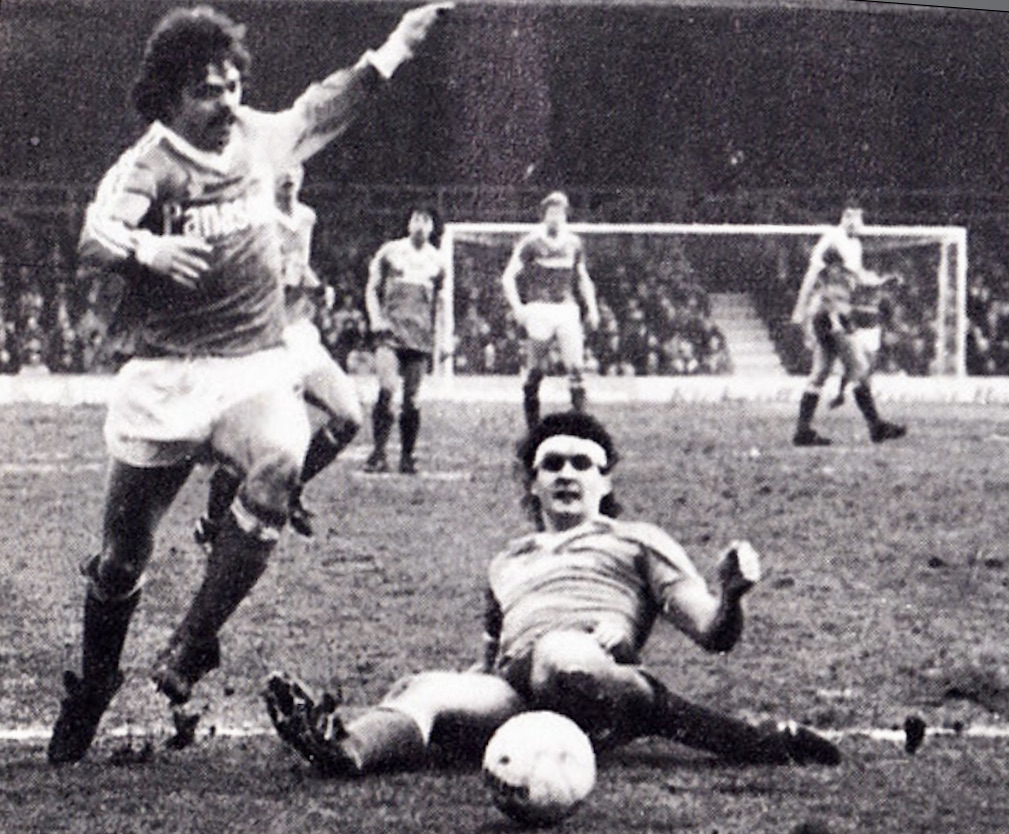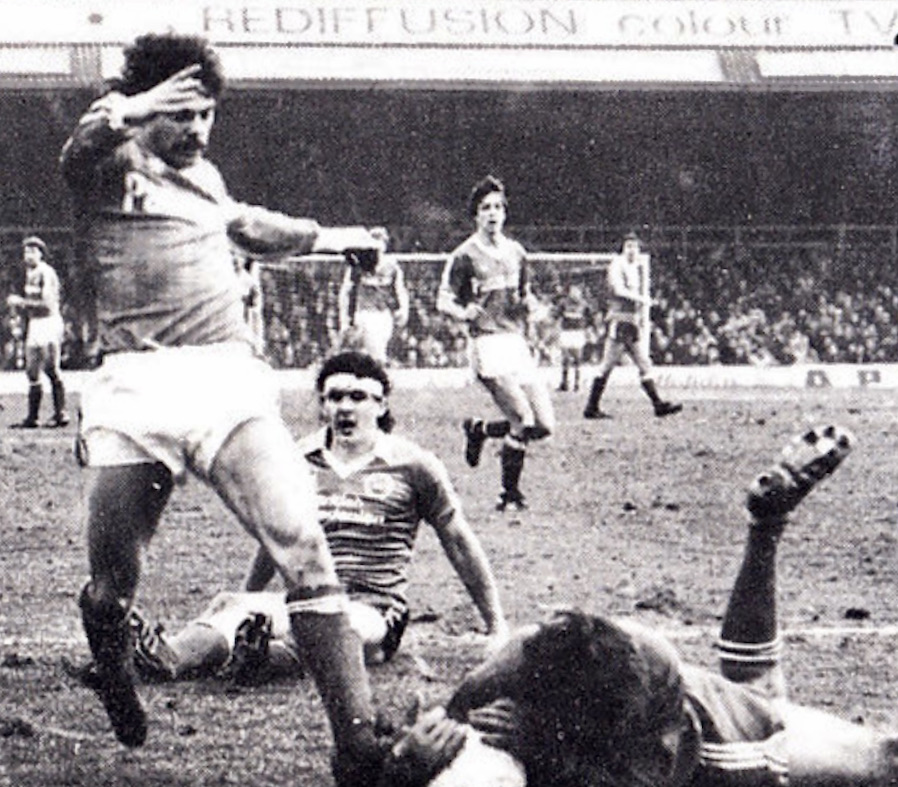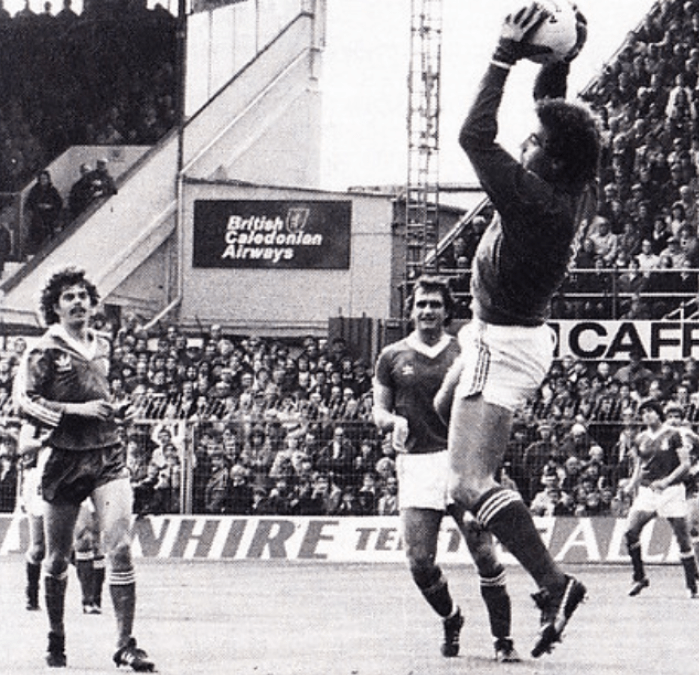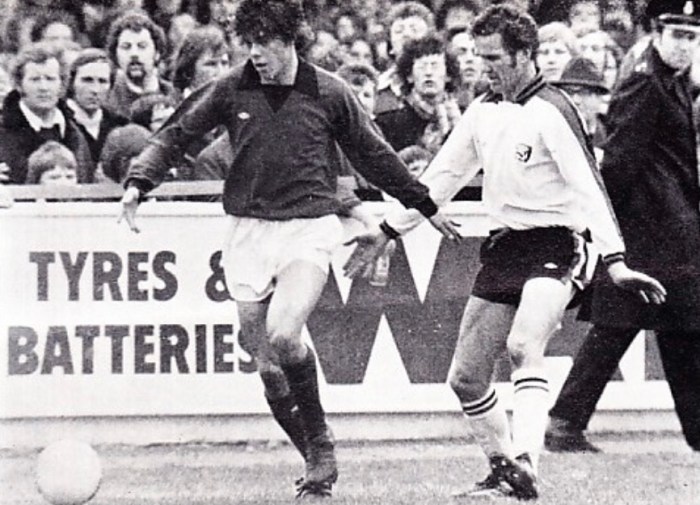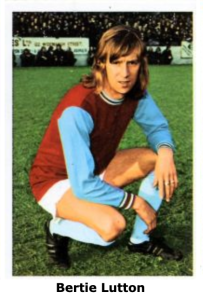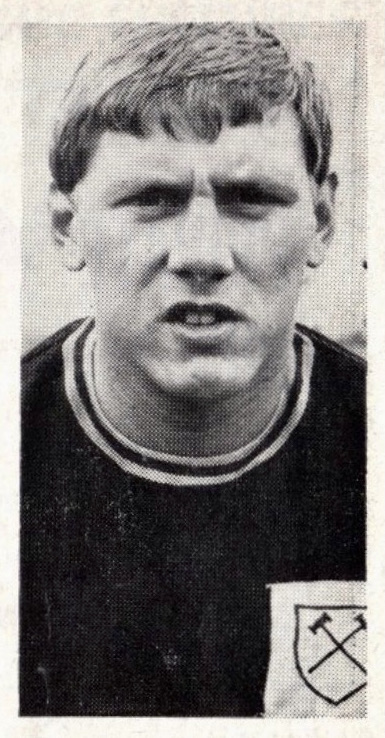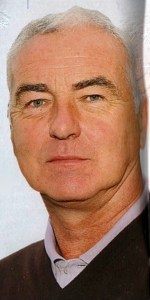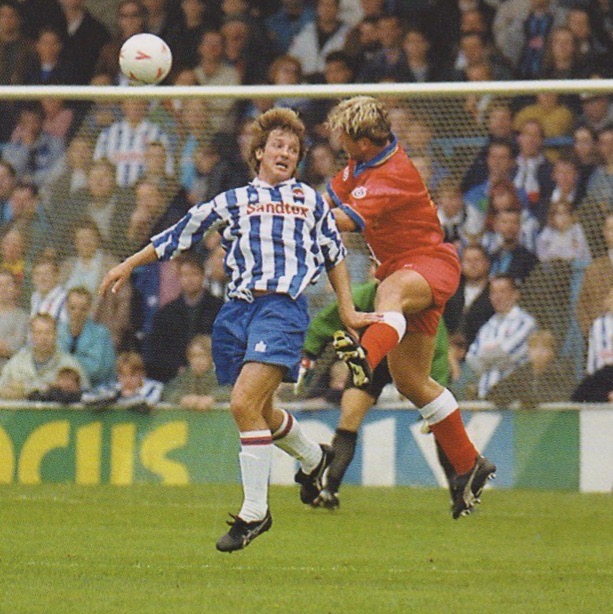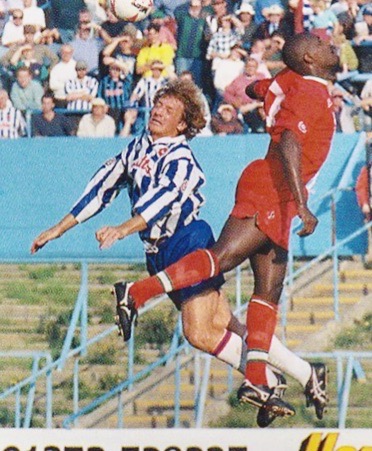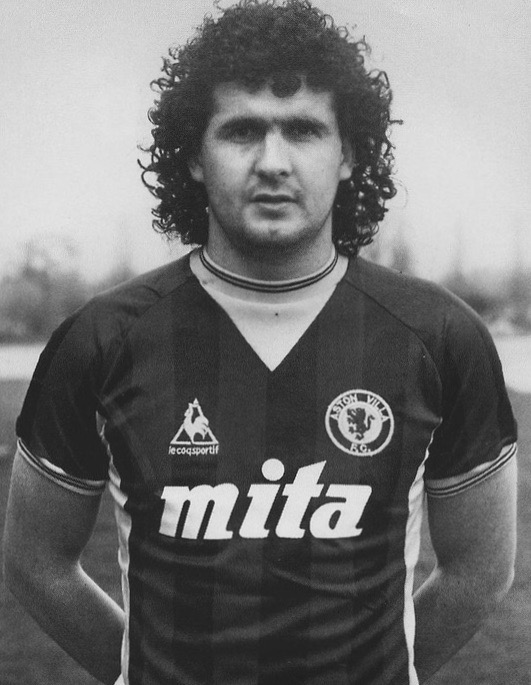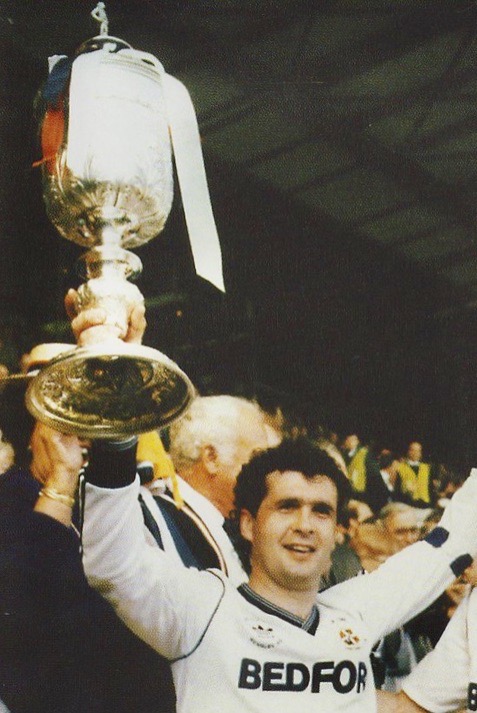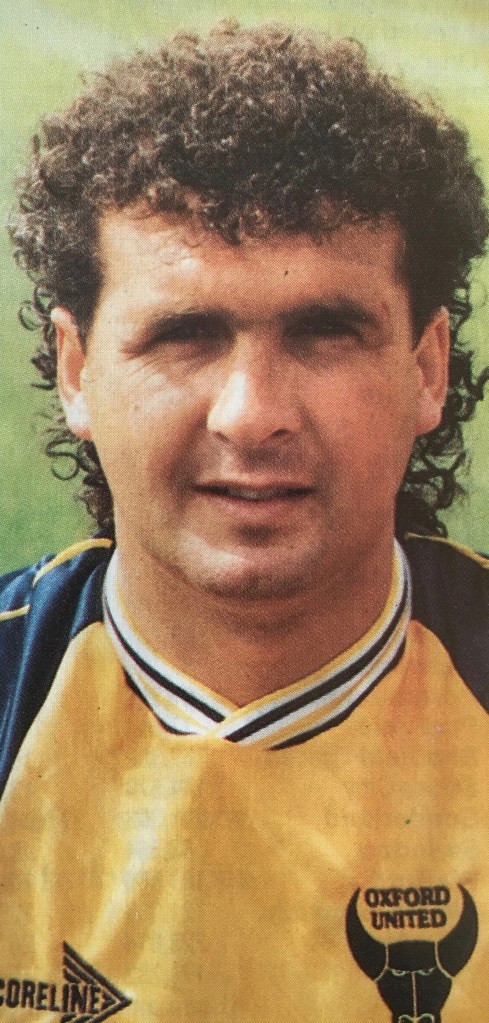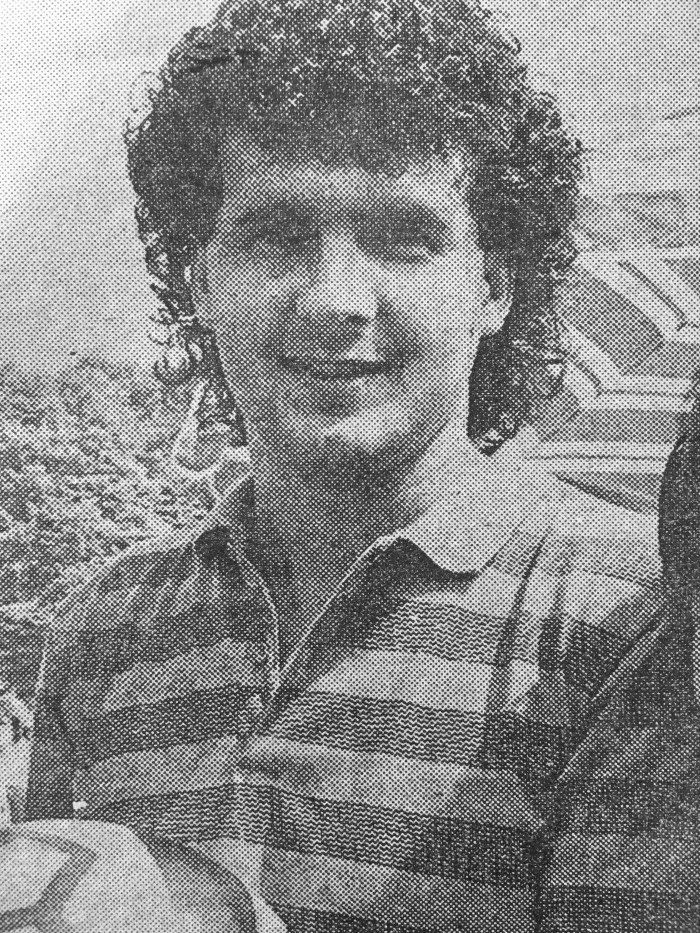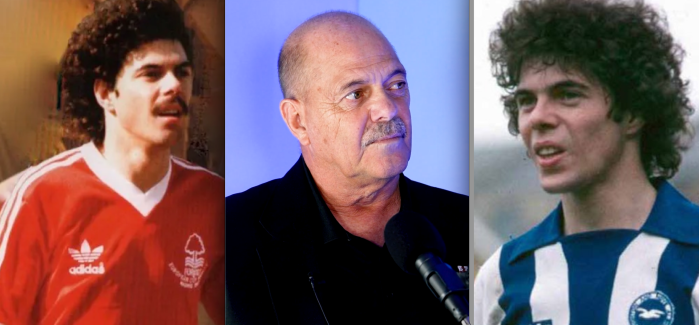
BERTIE LUTTON has a place in the West Ham history books even though he only made 13 appearances.
He was the first Hammer ever to play for Northern Ireland, winning four caps in 1973 (more on these later).
Lutton, frozen out at second tier Brighton less than a year after signing from Wolverhampton Wanderers, stepped back up a level to join Ron Greenwood’s side.
Although he had played at the elite level for Wolves, having been unable to hold down a regular first team spot at Molineux, he joined Pat Saward’s promotion-chasing Brighton in the 1971-72 season.
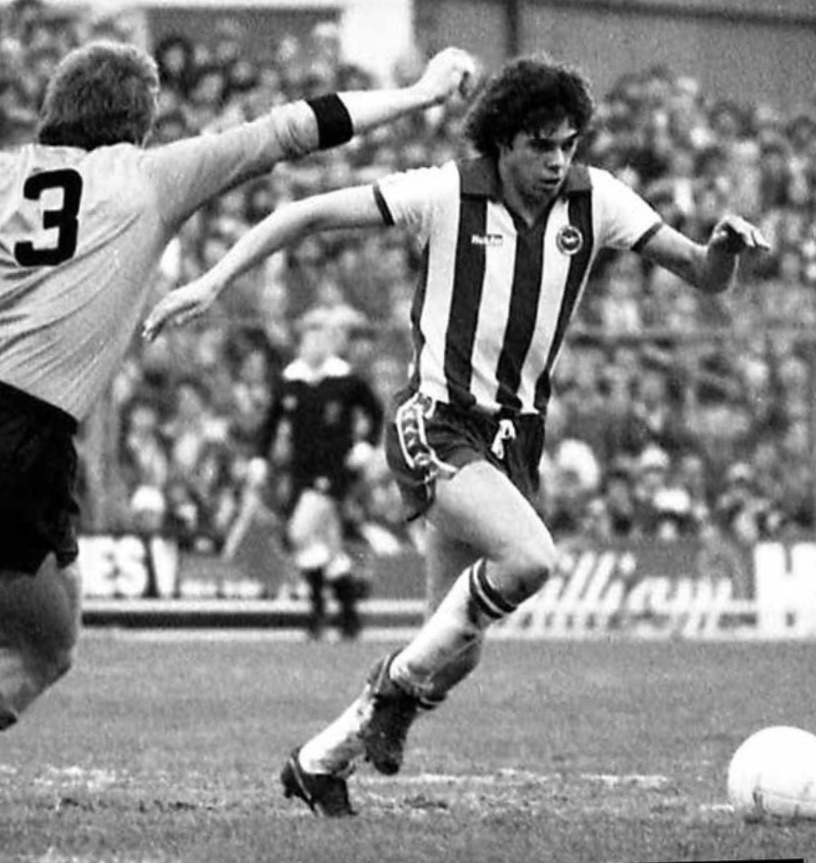
Lutton played his part in helping Albion go up from the old Third Division as runners up behind Aston Villa in the spring of 1972, as described in my 2016 blog post about his contribution.
But, when Brighton struggled to cope with the higher grade football, Saward questioned the commitment and attitude of certain players and Lutton was put on the transfer list.
It was certainly something of a surprise when, unable to get a start in a second tier side, he went on loan to First Division West Ham.
Lutton did well enough to secure a full-time switch to Upton Park. Almost a year to the day of his arrival at the Goldstone, he was London-bound and the shrewd Saward turned a £10,000 profit on the player.
The enigmatic Irishman made his Hammers First Division debut in a 1-0 away win against Norwich City on 10 February 1973, alongside the likes of Bobby Moore, Billy Bonds and Trevor Brooking, in front of a crowd of 32,597.
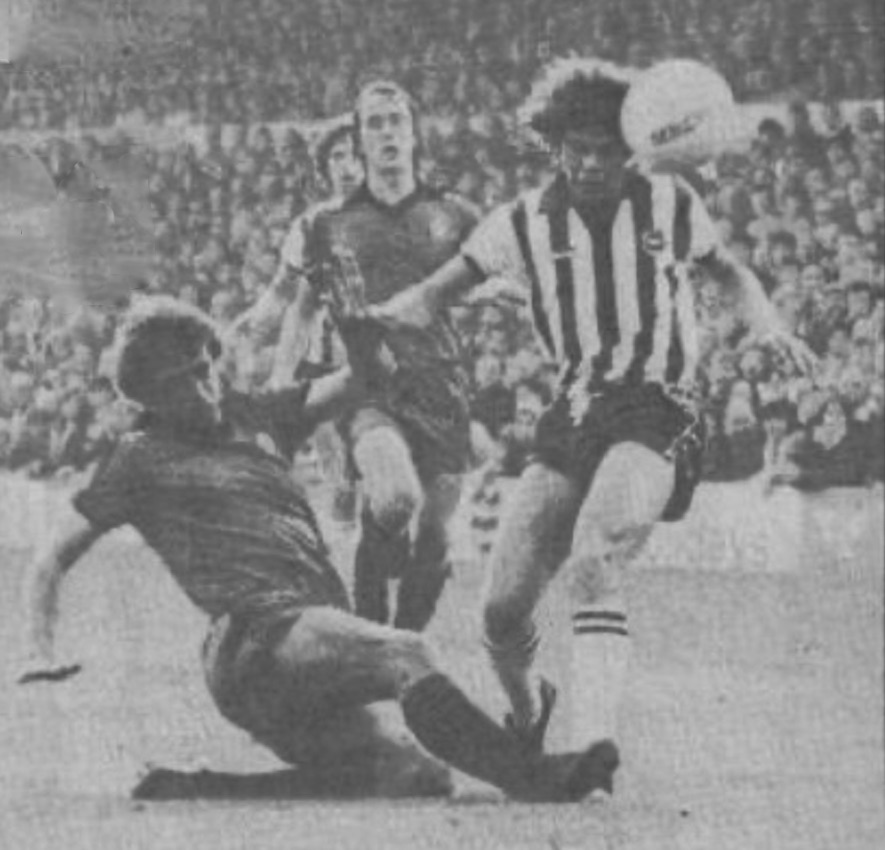
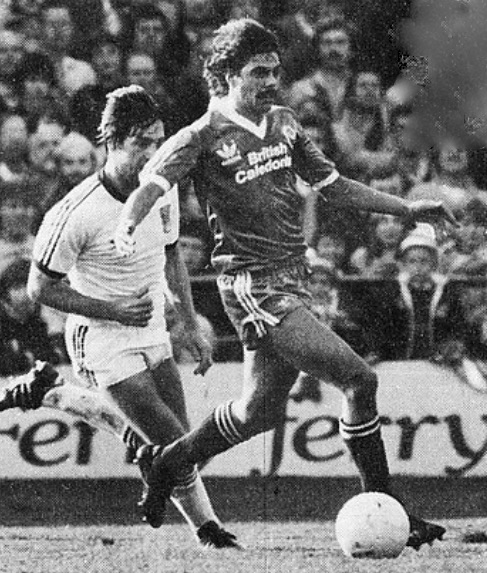
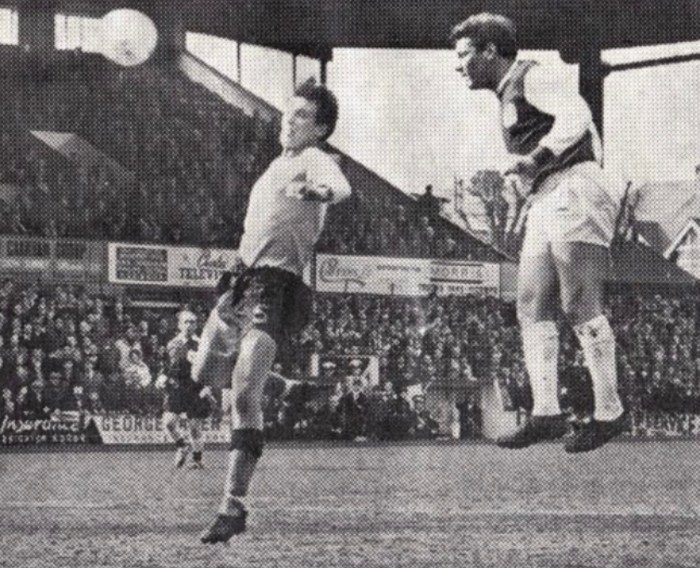
Bryan ‘Pop’ Robson scored the only goal of the game and finished the season as the club and League top goalscorer with 28 goals from 46 games. Lutton didn’t reappear until April when he went on as a sub in a 1-1 draw at home to Leeds and a 4-3 Good Friday win over Southampton at the Boleyn Ground (when George Herrington captured the action picture below of him).
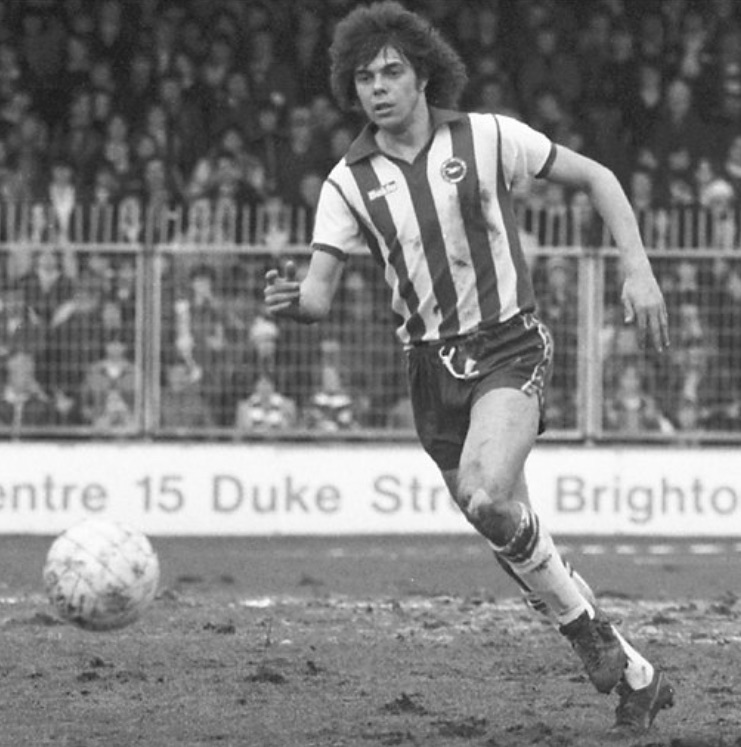
Reviving his scoring feat for Brighton at Bournemouth a year previously, given a start on Easter Saturday, Lutton scored his only goal for the Hammers in a 1-1 draw away to Derby County. He then played in the last two games of the season, a 0-0 draw at Birmingham City, and a 2-1 defeat at home to Arsenal. West Ham finished the season in sixth place, though, which was the highest league position they’d achieved under Greenwood.
Lutton’s crucial equaliser for Brighton at Bournemouth on Easter Saturday 1972
Those league appearances earned Lutton a recall to the Northern Ireland squad and manager Terry Neill sent him on as a second half sub for Bryan Hamilton in a World Cup qualifier against Cyprus on 8 May 1973.
The game was played in front of a paltry 6,090 at Fulham’s Craven Cottage because of the troubles in Northern Ireland at the time. The Irish were already 3-0 up at half time and that’s how it finished: Sammy Morgan (later to play for Brighton) scored one and Man Utd’s Trevor Anderson hit two.
Eight days later, Lutton went on for goalscorer Anderson in Glasgow as the Irish succumbed to a 2-1 defeat to Scotland in the Home International tournament.
Three days after that, he saw action again when he once again replaced Ipswich Town’s Hamilton, who’d scored the only goal of the game as the Irish beat Wales 1-0 at Everton’s Goodison Park. Only 4,946 watched that one.
Back with West Ham at the start of the 1973-74 season and Lutton was in the starting line-up for home defeats to Newcastle United (2-1) and QPR (3-2) and was a sub in a 3-1 defeat away to Manchester United.
He started a 1-0 home defeat to Burnley, but was subbed off, as the Hammers’ torrid first half of the season continued. Previously imperious captain Bobby Moore was dropped and the side were bottom of the table at Christmas.
Lutton only re-appeared in the starting line-up in January when, in a FA Cup third round replay away to Third Division Hereford United, West Ham embarrassingly lost 2-1.
He retained his place three days later when, although the Hammers were missing Moore, Brooking, Kevin Lock, John McDowell and Robson, they made amends by beating Man Utd 2-1 at Upton Park. Billy Bonds and Pat Holland scored for the home side, Sammy McIlroy for United.
A week later, Lutton played his last Hammers match when appearing as a sub in a 1-1 draw at Newcastle United.
It came two months after he had made his last appearance for his country. That was in another World Cup qualifier, on 14 November 1973, when the Irish earned a 1-1 draw against Portugal in Lisbon. He played in midfield alongside Tommy Jackson and captain Dave Clements behind George Best, Anderson and Morgan up front.
Lutton had made his Northern Ireland debut three years earlier when his Wolves teammate Derek Dougan led the line in a 1-0 Home International defeat against Scotland in Belfast.
N Ireland training with George Best
Three days later, on 21 April 1970, he played the first half against England at Wembley when Best scored but the hosts won 3-1 (Lutton was replaced by sub John Cowan for the second half).
That was the game in which Bobby Charlton won his 100th England cap (and was made captain for the occasion) and his Man Utd teammate Brian Kidd made his debut. Ralph Coates also won his first England cap. Charlton, Martin Peters and Geoff Hurst scored the English goals.
Born in Banbridge, County Down, on 13 July 1950, Lutton’s brief footballing career began with his hometown club, Banbridge Town, and it’s reported just £50 exchanged hands to take him to Wolves in 1967.
At a time when Wolves were blessed with some outstanding players like Dougan, Hugh Curran, Dave Wagstaffe, Jim McCalliog and Mike Bailey, the young Irishman managed just 25 matches for Wolves between 1967 and 1971.
Although he may have only had a brief spell in the limelight, he seems to have had a penchant for earning a place in footballing history.
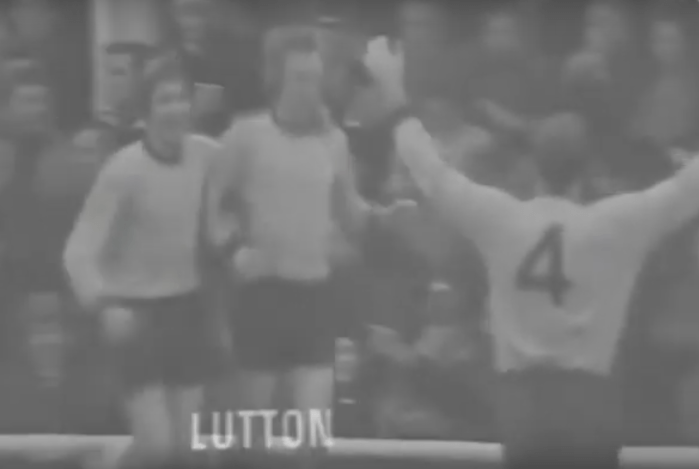
His one and only First Division goal for Wolves was also the club’s 2000th goal in that league to be scored at Molineux.
Goal v Arsenal in frront of the Match of the Day cameras
Arsenal were the visitors on 15 November 1969 and Lutton seized on a fortunate deflection off the aforementioned Terry Neill to net in the 47th minute past the Gunners’ back-up ‘keeper Geoff Barnett. The home side won 2-0 with Scottish international Curran scoring the second just two minutes after Lutton’s opener.
Not listed in the matchday programme line-up, Lutton played instead of the injured Mike O’Grady in the no.8 shirt (players didn’t wear a squad number shirt in those days).
The game was featured on Match of the Day with the legendary Kenneth Wolstenholme commentating and the rather grainy black and white coverage of the game can still be found on the internet wolvescompletehistory.co.uk/arsenal-h-1969-70/.
Lutton only made one start and one sub appearance in the 1970-71 season but was a regular in the Wolves reserve side in which the emerging John Richards was banging in the goals.
The pair were room-mates as teenagers with Wolves and were reunited after 37 years by the wolvesheroes.com website.
They hadn’t seen each other since 12 May 1973 at Goodison Park when Lutton was an unused sub for Northern Ireland in a Home International against England and Richards was playing up front for the English alongside two-goal Martin Chivers. (England won the game 2-1).
Lutton has popped up on the Wolves history site on several occasions over the years, often when he has returned from his home in Australia to the Black Country to see his son, Lee, who still lives in the area.
Two years later Saward, quite the specialist at using the loan market, acquired Bertie’s services on a temporary basis between September and November, 1971.
He made his debut in a 2-0 defeat at Aston Villa and scored twice in seven games (in a 2-2 draw at Torquay United and a 3-1 home win over Bristol Rovers) before returning to his parent club.
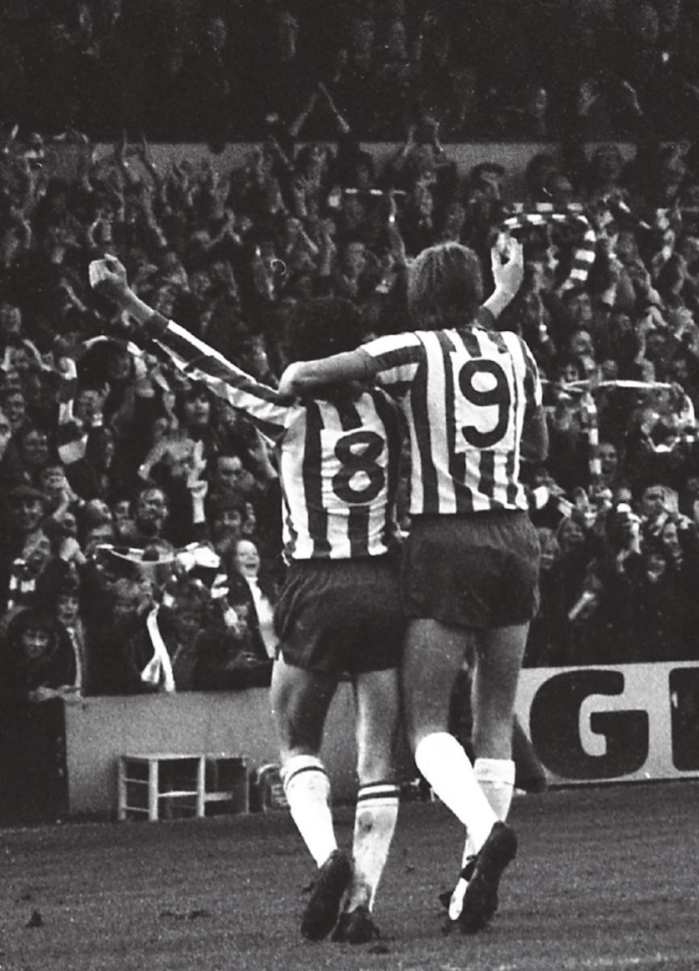
Celebrating a goal at the Goldstone for Brighton
Then, on 9 March 1972, with the clock ticking down to what in those days was the 5pm transfer deadline, Saward completed a double transfer swoop, securing Lutton’s permanent signing for £5,000 together with Ken Beamish from Tranmere for £25,000 (plus the surplus-to-requirements Alan Duffy).
A delighted Saward declared to Argus reporter John Vinicombe: “Bertie can do a job for us anywhere. This can’t be bad for us. At 21 and with two caps for Ireland he has a future and played very well for us while on loan.
“He can play right or left, up the middle, or midfield and Beamish can fit into a number of positions.”
It’s likely that versatility counted against him and, in the days of only one substitute, he was more often than not a sub, being able to go on in a variety of positions.
He was on the bench when Brighton began the 1972-73 season in the second tier and went on in three games. He then got four successive starts before going back to the bench.
Albion were finding life tough at the higher level and although Saward switched things around and brought in new faces, results went from bad to worse.
Lutton started three games in December which all ended in defeat and the 3-0 Boxing Day reverse at Oxford United turned out to be his last appearance for the Albion.
It fell in the middle of a spell of 12 successive defeats during which only five goals were scored. Saward couldn’t put his finger on the reason for the slump but Lutton found himself one of three put on the transfer list.
The West Ham move must have seemed ideal but sadly it was all over after just 13 games. Injury forced him to quit the professional game and he had a brief spell playing non-league for Horsham before emigrating to Australia.
There he played semi-professional football in the Australian Soccer League for a number of years before settling in Melbourne where he worked for the paint giant Dulux.
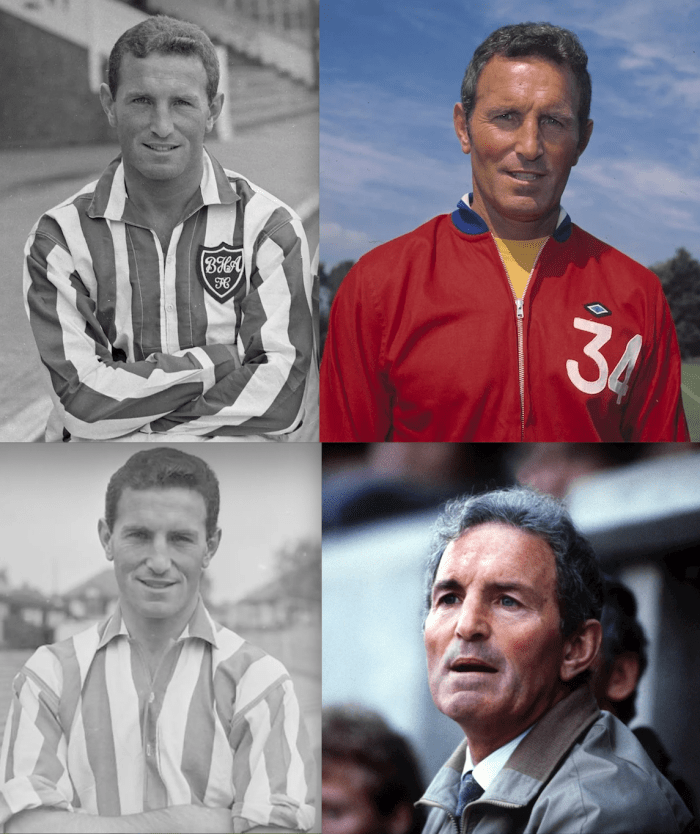
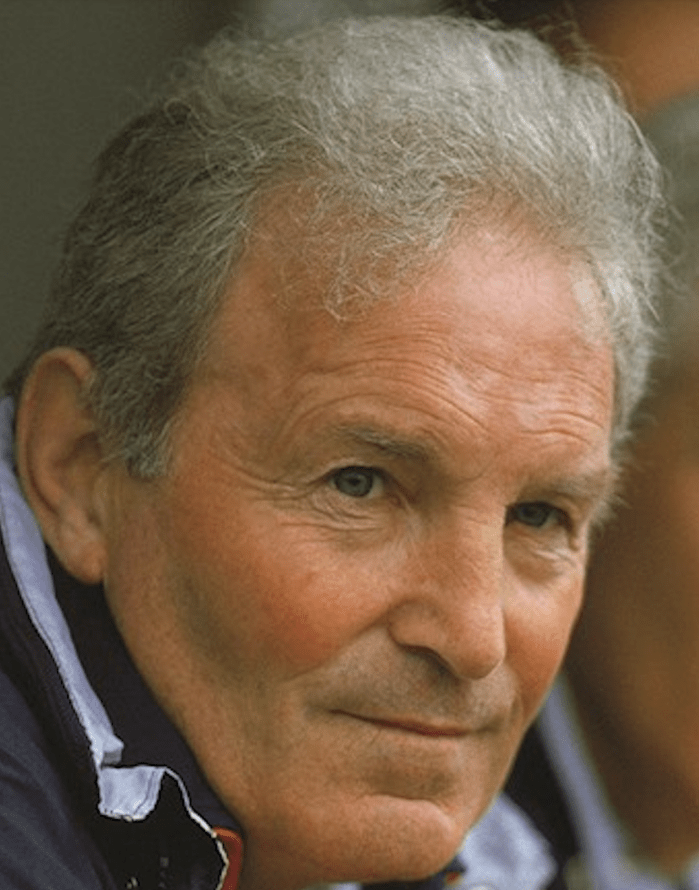
ALTHOUGH I wasn’t even born when Dave Sexton was winning promotion with Brighton, I remember him well as a respected coach and manager.
The record books and plenty of articles have revealed Sexton scored 28 goals in 53 appearances for Brighton before injury curtailed his playing career.
As a manager, he took both Manchester United and Queens Park Rangers to runners-up spot in the equivalent of today’s Premier League and won the FA Cup and European Cup Winners’ Cup with Chelsea.
On top of those achievements, he was the manager of England’s under 21 international side when they won the European Championship in 1982 and 1984, and worked with the full international squad under Ron Greenwood, Bobby Robson, Terry Venables, Glenn Hoddle, Kevin Keegan and Sven-Göran Eriksson.
Sexton coached under several England managers
On his death aged 82 on 25 November 2012, Albion chief executive Paul Barber said: “I know Dave was an extremely popular player during his days at the Goldstone Ground and, as a friend and colleague during my time working at the FA, I can tell you that he was held in equally high esteem.
“He was a football man through and through. I enjoyed listening to many of Dave’s football stories and tales during our numerous hotel stays with the England teams and what always came through was his great love and passion for the game.
“Dave was a true gentleman and a thoroughly nice man.”
Former West Ham and England international, Sir Trevor Brooking, who worked as the FA’s director of football development, said: “Anyone who was ever coached by Dave would be able to tell you what a good man he was, but not only that, what a great coach in particular he was.
“In the last 30-40 years Dave’s name was up there with any of the top coaches we have produced in England – the likes of Terry Venables, Don Howe and Ron Greenwood. His coaching was revered.”
Keith Weller, a £100,000 signing by Sexton for Chelsea in 1970, said: “I had heard all about Dave’s coaching ability before I joined Chelsea and now I know that everything said about his knowledge of the game is true. He has certainly made a tremendous difference to me.”
And the late Peter Bonetti, a goalkeeper under Sexton at Chelsea, said: “He was fantastic, I’ve got nothing but praise for him.”
One-time England captain Gerry Francis, who played for Sexton at QPR and Coventry City, said: “Dave was quite a quiet man. You wouldn’t want to rub him up the wrong way given his boxing family ties, but you wanted to play for him.
“Dave was very much ahead of his time as a manager. He went to Europe on so many occasions to watch the Dutch and the Germans at the time, who were into rotation, and he brought that into our team at QPR, where a full-back would push on and someone would fill in.
“He was always very forward-thinking – a very adaptable manager.”
Guardian writer Gavin McOwan described Sexton as “the antithesis of the outspoken, larger-than-life football manager. A modest and cerebral man, he was one of the most influential and progressive coaches of his generation and brought tremendous success to the two London clubs he managed.”
Born in Islington on 6 April 1930, the son of middleweight boxing champion Archie Sexton, his secondary school days were spent at St Ignatius College in Enfield and he had a trial with West Ham at 15. But, like his dad, he was a boxer of some distinction himself, earning a regional champion title while on National Service.
Sexton played 77 games for West Ham
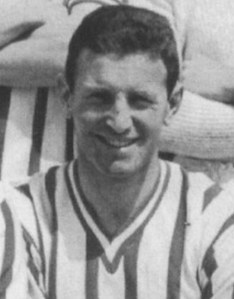
However, it was football to which he was drawn and, after starting out in non-league with Newmarket Town and Chelmsford City, he joined Luton Town in 1952 and a year later he returned to West Ham, where he stayed for three seasons.
In 77 league and FA Cup games for the Hammers, he scored 29 goals, including hat-tricks against Rotherham and Plymouth.
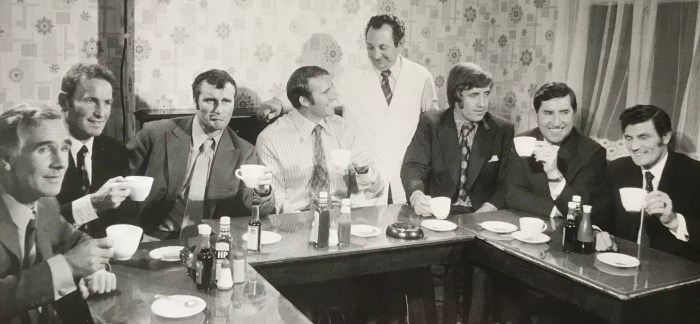
It was during his time at West Ham that he began his interest in coaching alongside a remarkable group of players who all went on to become successful coaches and managers.
He, Malcolm Allison, Noel Cantwell, John Bond, Frank O’Farrell, Jimmy Andrews and Malcolm Musgrove used to spend hours discussing tactics in Cassettari’s Cafe near the Boleyn ground. A picture of a 1971 reunion of their get-togethers featured on the back page of the Winter 2024 edition of Back Pass, the superb retro football magazine.
One of the game’s most respected managers, Alec Stock, signed Sexton for Orient but he had only been there for 15 months (scoring four goals in 24 league appearances) before moving to Brighton (after Stock had left the Os to take over at Roma).
Albion manager Billy Lane bought him for £2,000 in October 1957, taking over Denis Foreman’s inside-left position. Sexton repaid Lane’s faith by scoring 20 goals in 26 league and cup appearances in 1957-58 as Brighton won the old Third Division (South) title. But a knee injury sustained at Port Vale four games from the end of the season meant he missed the promotion run-in. Adrian Thorne took over and famously scored five in the Goldstone game against Watford that clinched promotion.
Nevertheless, as he told Andy Heryet in a matchday programme article: “The Championship medal was the only one that I won in my playing career, so it was definitely the high point.
Sexton in Albion’s stripes
“All the players got on well, but a lot of what we achieved stemmed from the manager’s approach. It was a real eye-opener for me. We were a free-scoring, very attacking side and I just seemed to fit in right away and got quite a few goals. It was a joy to play with the guys that were there and I thoroughly enjoyed those two years.”
Because of the ongoing problems with his knee, he left Brighton and dropped two divisions to play for Crystal Palace, but he was only able to play a dozen games before his knee finally gave out.
“I suffered with my knee throughout my playing career,” said Sexton. “In only my second league game for Luton I went into a tackle and tore the ligaments in my right knee.
Knee trouble curtailed his Palace playing days
“I also had to have a cartilage removed. The same knee went again when I was at Palace. We were playing away at Northampton, and I went up with the goalkeeper for a cross and landed awkwardly, my leg buckling underneath me, and that sort of finished it off.”
In anticipation of having to retire from playing, he had begun taking coaching courses at Lilleshall during the summer months. Fellow students there included Tommy Docherty and Bertie Mee, both of whom gave him coaching roles after he’d been forced to quit playing.
Docherty stepped forward first having just taken over as Chelsea manager in 1961, appointing Sexton an assistant coach in February 1962. “I didn’t have anything else in mind – I couldn’t play football any more – so I jumped at the chance,” said Sexton. “It was a wonderful bit of luck for me as it meant that my first job was coaching some brilliant players like Terry Venables.”
The Blues won promotion back to the top flight in Sexton’s first full season and he stayed at Stamford Bridge until January 1965, when he was presented with his first chance to be a manager in his own right by his former club Orient.
Frustrated by being unable to shift them from bottom spot of the old Second Division, Sexton quit after 11 months at Brisbane Road and moved on to Fulham to coach under Vic Buckingham, who later gave Johan Cruyff his debut at Ajax and also managed Barcelona.
Perhaps surprisingly, Sexton declared in 1993 that the thing he was most proud of in his career was the six months he spent at Fulham in 1965. “Fulham were bottom of the First Division. Vic Buckingham was the manager. He had George Cohen, Johnny Haynes . . . Bobby Robson was the captain. Allan Clarke came. Good players, but they were bottom of the table, with 13 games to go.
“I did exactly the same things I’d been doing at Orient. And we won nine of those games, drew two and lost two – and stayed up. It proved to me that you can recover any situation, if the spirit is there.”
When Arsenal physiotherapist Mee succeeded Billy Wright as Gunners manager in 1966, he turned to Sexton to join him as first-team coach. In his one full season there, Arsenal finished seventh in the league and top scorer was George Graham, a player the Gunners had brought in from Chelsea as part of a swap deal with Tommy Baldwin.
When the ebullient Docherty parted company with Chelsea in October 1967, Sexton returned to Stamford Bridge in the manager’s chair and enjoyed a seven-year stay which included those two cup wins.
In a detailed appreciation of him on chelseafc.com, they remembered: “Uniquely, for the time, Sexton brought science and philosophy to football: he read French poetry, watched foreign football endlessly and introduced film footage to coaching sessions.”
In those days Chelsea’s side had a blend of maverick talent in the likes of centre forward Peter Osgood and, later, skilful midfielder Alan Hudson. No-nonsense, tough tackling Ron “Chopper” Harris and Scottish full-back Eddie McCreadie were in defence.
As Guardian writer McOwan said: “Sexton was embraced by players and supporters for advocating a mixture of neat passing and attacking flair backed up with steely ball-winners.”
I was taken as a young lad to watch the 1970 FA Cup Final at Wembley when Sexton’s Chelsea drew 2-2 with Leeds United on a dreadful pitch where the Horse of the Year Show had taken place only a few days earlier.
Chelsea had finished third in the league – two points behind Leeds – and while I was disappointed not to see the trophy raised at Wembley (no penalty deciders in those days), the Londoners went on to lift it after an ill-tempered replay at Old Trafford watched by 28 million people on television.
Sexton added to the Stamford Bridge trophy cabinet the following season when Chelsea won the European Cup Winners’ Cup final against Real Madrid, again after a replay.
But when they reached the League Cup final the following season, they lost to Stoke City and it was said Sexton began to lose patience with the playboy lifestyle of people like Osgood and Hudson, who he eventually sold.
The financial drain of stadium redevelopment, and the fact that the replacements for the stars he sold failed to shine, eventually brought about his departure from the club in October 1974 after a bad start to the 1974-75 season.
Sexton wasn’t out of work for long after parting company with Chelsea
He was not out of work for long, though, because 13 days after he left Chelsea he succeeded Gordon Jago at Loftus Road and took charge of a QPR side that had some exciting talent of its own in the shape of Gerry Francis and Stan Bowles.
Although the aforementioned Venables had just left QPR to work under Sexton’s old Hammers teammate Allison at Crystal Palace, Sexton brought in 29-year-old Don Masson from Notts County and he quickly impressed with his range of passing, and would go on to be selected for Scotland. Arsenal’s former Double-winning captain Frank McLintock was already in defence and Sexton added two of his former Chelsea players in John Hollins and David Webb.
Sexton said of them: “The easiest team I ever had to manage because they were already mature . . . very responsible, very receptive, full of good characters and good skills. They were coming to the end of their careers, but they were still keen.”
Sexton was a student of Rinus Michels and so-called Dutch ‘total football’ – a fluid, technical system in which all outfield players could switch positions quickly to maximise space on the field.
Loft For Words columnist ‘Roller’ said: “Dave Sexton was decades ahead of his time as a coach. At every possible opportunity he would go and watch matches in Europe returning with new ideas to put into practice with his ever willing players at QPR giving rise to a team that would have graced the Dutch league that he so admired.
“He managed to infuse the skill and technique that is a hallmark of the Dutch game into the work ethic and determination that typified the best English teams of those times.
“QPR’s passing and movement was unparalleled in the English league and wouldn’t been seen again until foreign coaches started to permeate into English football.”
His second season at QPR (1975-76) was the most successful in that club’s history and they were only pipped to the league title by Liverpool (by one point) on the last day of the season (Man Utd were third).
Agonisingly Rangers were a point ahead of the Merseysiders after the Hoops completed their 42-game programme but had to wait 10 days for Liverpool to play their remaining fixture against Wolves who were in the lead with 15 minutes left but then conceded three, enabling Liverpool to clinch the title.
Married to Thea, the couple had four children – Ann, David, Michael and Chris – and throughout his time working in London the family home remained in Hove, to where he’d moved in 1958. They only upped sticks and moved to the north when Sexton landed the Man Utd job in October 1977.
He once again found himself replacing Docherty, who had been sacked after his affair with the wife of the club’s physiotherapist had been made public.
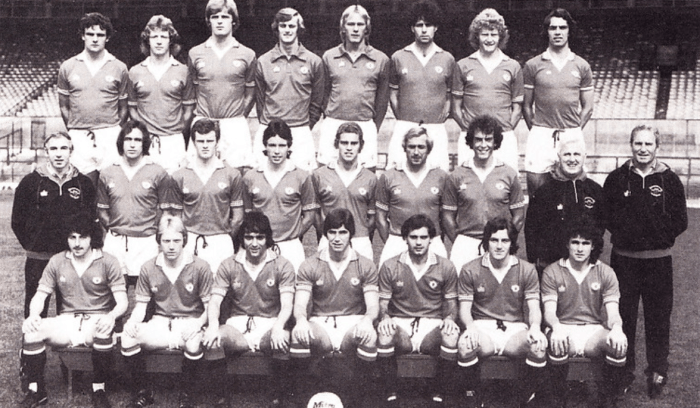
Sexton (far right) and the Manchester United squad
It was said by comparison to the outspoken Docherty, Sexton’s measured, quiet approach didn’t fit well with such a high profile club which then, as now, was constantly under the media spotlight.
The press dubbed him ‘Whispering Dave’ and although some signings, like Ray Wilkins, Gordon McQueen and Joe Jordan, were successful, he was ridiculed for buying striker Garry Birtles for £1.25m from Nottingham Forest: it took Birtles 11 months to score his first league goal for United.
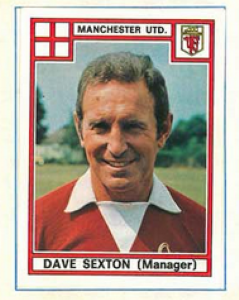
Sexton took charge of 201 games across four years (with a 40 per cent win ratio) and he steered United to runners-up spot in the equivalent of the Premier League, two points behind champions Liverpool, in the 1979-80 season. United were also runners-up in the 1979 FA Cup final, losing 3-2 to a Liam Brady-inspired Arsenal.
As he said in a subsequent interview: “I really enjoyed my time at United. You are treated like a god up there and the support is fantastic. I had mixed success but it’s something that I wouldn’t have missed for the world.
“It’s tough at the top however and while other clubs would have been quite happy in finishing runners-up, it wasn’t enough for Man Utd. That’s the name of the game and I bear no grudges over it at all.”
As it happens, Sexton’s successor Ron Atkinson only managed to take United to third in the league (although they won the FA Cup twice) and it was another seven seasons before they were runners-up again under Alex Ferguson’s stewardship.
But back in 1981, United’s loss was Coventry’s gain and their delight at his appointment was conveyed in an excellent detailed profile by Rob Mason in 2019.
The new Coventry boss saw City beat United 2-1 in his first game in charge
“By the time the name of Dave Sexton was being put on the door of the manager’s office at Highfield Road the gaffer was in his fifties and a highly regarded figure within the game,” wrote Mason. “That sprang from the style of pass and move football he liked to play. His was a cultured approach to the game and Coventry supporters could look forward to seeing some attractive football.”
One of the happy quirks of football saw his old employer take on his new one on the opening day of the 1981-82 season – and the Sky Blues won 2-1! They won by a single goal at Old Trafford that season too, but overall away form was disappointing and in spite of a strong finish (seven wins, four draws and one defeat) they finished 14th – a modest two-place improvement on the previous season.
On a limited budget, Sexton struggled to get a largely young squad to make too much progress but he did recruit former England captain Gerry Francis, who’d been his captain during heady days at QPR, and he was a good influence on the youngsters.
Sexton’s second season in charge began well but ended nearly disastrously with a run of defeats leaving them flirting with relegation, together with Brighton. One of his last league games as City manager was in the visitors’ dugout at the Goldstone. Albion beat the Sky Blues 1-0 courtesy of a Terry Connor goal on St George’s Day 1983 – but it was Sexton’s side who escaped the drop by a point. Albion didn’t.
Coventry’s narrow escape from relegation cost Sexton his job (although he remained living in Kenilworth, Warwickshire) and it proved to be his last as a club manager, although he was involved as a coach when Ron Atkinson’s Aston Villa finished runners up in the first season (1992-93) of the Premier League – behind Ferguson’s United, who won their first title since 1967.
Sexton was happy to be working with the youth team, the young pros and the first team. “Mostly I’ve been concerned with movement, up front and in midfield. Instead of the traditional long ball up to the front men, approaching the goal in not such straight lines,” he explained.
The quiet Sexton had a valid retort to the reporter’s surprise that he should be working in the same set-up as the flamboyant Atkinson. “It’s like most stereotypes,” he said. “They’re never quite as they seem to be. Ron’s got a flamboyant image, but actually he’s an idealist, from a football point of view.
“He’s got a vision, which might not come across from the stereotype he’s got. I suppose it’s the same with me. I’m meant to be serious, which I am, but I like a bit of fun, too. And, obviously, the thing we’ve got in common is a love of football.”
Relieved to be more in the background than having to be the front man, Sexton told Williams: “The reason I’m in the game in the first place is that I love football and working with footballers, trying to improve them individually and as a team.
“So, to shed the responsibility of speaking to the press and the directors and talking about contracts, it’s a weight off your shoulders. Now I’m having all the fun without any of the hassle.”
Atkinson had invited his United predecessor to join him at Villa after he had retired from his job as the FA’s technical director of the School of Excellence at Lilleshall, and coach of the England under 21 team.
It had been 10 years since Bobby Robson had appointed him as assistant manager to the England team (Sexton had coached Robson at Fulham). He had previously been involved coaching England under 21s alongside his club commitments since 1977 leading the side to back-to-back European titles in 1982 and 1984. The 1982 side, who beat West Germany 5-4 on aggregate over two legs, included Justin Fashanu and Sammy Lee, and in a quarter final v Poland he had selected Albion’s Andy Ritchie, somewhat ironically considering he had sold him to the Seagulls when manager at United.
In April 1983, Albion’s Gary Stevens played for Sexton’s under 21s in a European Championship qualifier at Newcastle’s St James’ Park, which was won 1-0. The following year, Stevens, by then with Spurs, was in the side that met Spain in the final, featuring in the first of the two legs, a 1-0 away win in Seville. Somewhat confusingly, his Everton namesake featured in the second leg, a 2-0 win at Bramall Lane. England won 3-0 on aggregate. Winger Mark Chamberlain, later an Albion player, also played in the first leg.
After the Robson era, Sexton worked with successive England managers: Venables, Hoddle and Keegan. When Eriksson became England manager in 2001, he invited Sexton to run a team of scouts who would compile a database and video library of opposition players – a strategy Sexton had pioneered three decades previously.
Viewed as one of English football’s great thinkers, Sexton had a book, Tackle Soccer, published in 1977 but away from football he had a love of art and poetry and completed an Open University degree in philosophy, literature, art and architecture. He was awarded an OBE for services to football in 2005.
Sexton was always a welcome guest at Brighton and here receives a reminder of past glories from Dick Knight
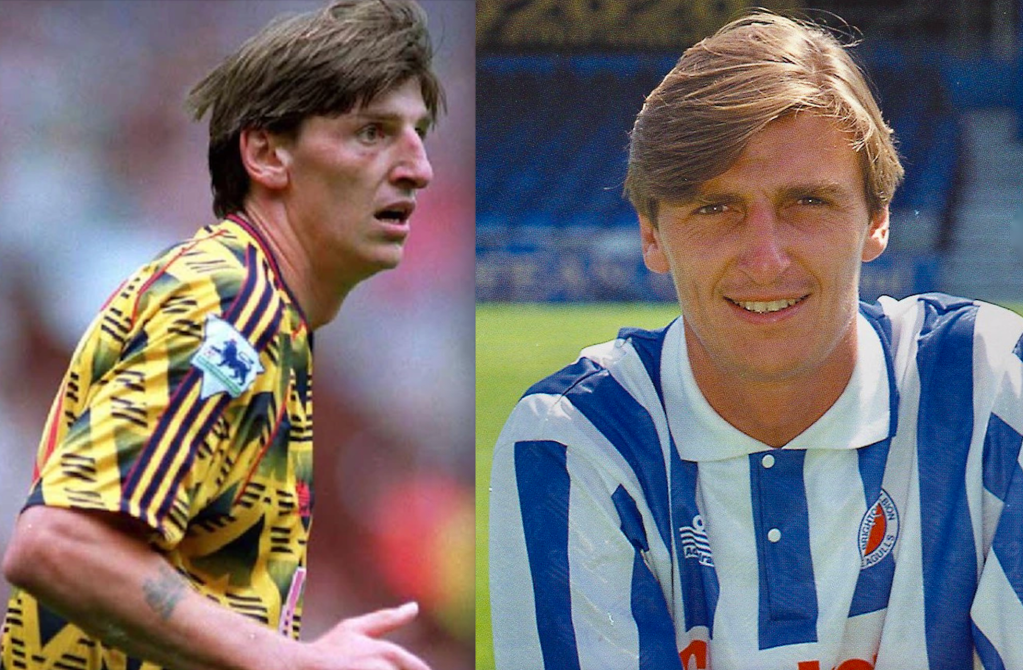
ONE-TIME Arsenal back-up defender Colin Pates had a Gunners legend to thank for persuading him to quit the game before he did any life-altering damage.
Thankfully, Pates took Liam Brady’s advice to bring his professional playing days to an end at Brighton in January 1995 and he went on to have a long and successful career coaching at an independent school in Croydon where he introduced football to what was previously a rugby-only establishment.
“Liam told me that I should think of my health before my playing career and that I would be a fool to myself if I carried on playing,” Pates told the Argusin a 2001 interview.
“My knee had fallen apart and it was the right advice. If I’d ignored it, I could well have ended up not being able to walk.
“Footballers need to be told when it is the end. I’ll always be grateful to Liam for that.”
Pates had played the last of 61 games in the stripes (a 0-0 home draw against Bournemouth) only six weeks after he was presented with a silver salver by former England manager Ron Greenwood to mark his 400th league appearance (on 24 September 1994, a 2-0 home win over Cambridge United).
In the matchday programme of 17 December, Brady confirmed that Pates and fellow defender Nicky Bissett, (who’d twice broken a leg and then sustained a knee injury) would be ruled out for the rest of the season. Neither played another game for the Seagulls.
It brought to an end Pates’ second spell with the Seagulls, having originally spent a most productive three months on loan in 1991 helping to propel the club to a Wembley play-off final. If Albion had beaten Notts County that May, Pates may well have made a permanent move to the south coast. As it was, he said: “Unfortunately, the club couldn’t meet Arsenal’s asking price for me that summer so I returned to Highbury.
“But when my contract expired in 1993, there was only one club I wanted to be at… Brighton.”
Pates had plenty of competition for the centre back berth at Arsenal
As if Tony Adams, Andy Linighan, David O’Leary and Steve Bould weren’t enough centre back competition at Arsenal, manager George Graham had also taken Martin Keown back to the club from Everton for £2m – six and a half years after selling him to Aston Villa for a tenth of that amount.
So, it was no surprise that Pates found himself surplus to requirements at Highbury and given a free transfer. Graham’s old Chelsea teammate, Barry Lloyd, eagerly snapped up the defender for a second time, this time on a permanent basis.
Goalkeeper Nicky Rust, still a month short of his 19th birthday, who’d also been given a free transfer by Arsenal, made his Albion league debut in the season-opener at Bradford City behind the returning Pates, who had just celebrated his 32nd birthday four days before the game.
After starting the first 10 matches alongside the aforementioned Bissett, Pates suffered an abductor muscle injury early on in a 5-0 drubbing away to Middlesbrough in the League Cup which necessitated a spell on the sidelines. He missed nine matches – only one of which was won.
These were the dying days of the seven-year Lloyd era and, even with Pates back in the side, one win, two draws and four defeats brought the sack for the manager.
Any doubts new manager Brady had about Steve Foster and Pates were swiftly dispelled, as he wrote about in his autobiography (Liam Brady: Born To Be A Footballer).
“Fossie was 36. I feared he might be going through the motions at this stage in his career and it would have been hard to blame him,” said Brady. “Colin Pates was a few years younger, but he’d been at Chelsea and Arsenal and could have been winding down.
“I appealed to them to give me a dig out, to lead this rescue mission. And they responded just as I hoped.”
Together with the even older Jimmy Case, who was brought back to the club from non-league Sittingbourne, they “brought on” the younger players in the new man’s first few weeks and months.
Under Brady, young Irish centre-back Paul McCarthy played alongside Foster in the middle, with Pates at left-back. And Pates saw the arrival of some familiar faces in the shape of young Arsenal loanees, first Mark Flatts and then Paul Dickov, whose successful spells helped Brady to steer the Seagulls to safety by the end of the season.
“I really enjoyed it, playing mainly at left-back,” said Pates. “It was a great family club and I made a lot of friends there along the way.”
At the time Pates had to call it a day, Albion were a third-tier side but the bulk of his career had been played at the top of the English game for two of its leading lights in Chelsea and Arsenal, and briefly Charlton Athletic.
Albion’s ex-Arsenal trio Liam Brady, Raphael Meade and Colin Pates
The player’s move to Arsenal from Charlton for £500,000 in January 1990 raised more than a few eyebrows because he was 28 at the time and none of Arsenal’s back four – Lee Dixon, Bould, Adams and Nigel Winterburn – looked like giving way.
“People asked me why I went there,” said Pates. “But when a club is paying that money and that club is Arsenal who wouldn’t go and take the chance?
“I knew this was going to be the last opportunity to have a move like this in my career and although I knew I was only being signed as cover, I couldn’t turn it down.”
He continued: “I’d joined a team that had just won the league, that would do so again in 1990-91 and they had the fabled back four – the best defensive unit in world football at the time.”
The website upthearsenal.com acknowledged: “Pates had built a solid reputation at Chelsea as a dependable defender who was strong in the air and no slouch on the deck.”
Pates added: “When I first met George (Graham) in his office at Highbury, he was honest and straight talking. He told me I’d have to work hard to get into the side.”
However, within a month he made his Gunners debut at left back in place of the injured Nigel Winterburn in a 1-0 defeat to Sheffield Wednesday. It turned out to be his only first team appearance that season.
Although he found it difficult to motivate himself for reserve team football, he pointed out: “I still enjoyed the training sessions with the first team and I did learn a lot about defending from George, even at that late stage in my career.”
However, after his return from the loan spell at Brighton, he saw action as a sub in three pre-season friendlies ahead of the 1991-92 season and that autumn had his best run of games in the first team.
He featured in eight games on the trot between October and November 1991 and memorably scored his one and only goal for Arsenal in a European Cup match at Highbury against a Benfica side managed by Sven-Göran Eriksson. He also played in the February 1992 1-1 North London derby against Spurs and made two appearances off the bench that season.
It was a similar story in the 1992-93 campaign when he went off the bench on five occasions although he had two starts: in a 2-0 win at Anfield (Anders Limpar and Ian Wright the scorers) and a 3-2 defeat away to Wimbledon.
“I was a bit-part player but it was a good time to be at the club with the cup finals and being part of the squads,” said Pates.
On his release from Brighton, Pates had a spell as player-manager of Crawley, played a handful of games for non-league Romford, and coached youngsters in various places including Mumbai in India and the Arsenal School of Excellence.
Pates told The Guardian in a 2002 interview how a sense of history and continuity was the first thing he had noticed when he signed for Arsenal.
Brady, Paul Davis, Bould and other former Arsenal players were all invited to the Arsenal academy, and Pates told the newspaper. “Young players need people like Stevie Bould to tell them how proud they should be to pull the shirt on and to show them what’s expected of them. “When I joined Arsenal, everyone was kind and considerate. You were left in no doubt about how you were supposed to conduct yourself. For the way it’s run, it’s the best club in the country.”
By then though, Pates had begun a new career as a coach getting football off the ground at the independent Whitgift School in Croydon. He was to stay 24 years at the school having been invited to introduce football by its headmaster, Dr Christopher Barnett.
The story has been told in depth in several places, notably in London blog greatwen.com by Peter Watts, among others. Watts wrote: “A posh school in the suburbs is not where you’d expect to find a hard-bitten former pro, and Pates admits: ‘Whitgift is quite alien to some of us, because we had state school educations. It was intimidating, and not just for the boys.’ But he jumped at the opportunity.
At first, he took a sixth-form team on Wednesday afternoons, but there were no goalposts, pitches, teams or even footballs! “We didn’t have anything. So, we had to start from scratch, pretty much teach them the rules,” he said.
“They were rugby boys playing football, so these were quite aggressive games. But after three years we introduced fixtures and we’ve never looked back,” said Pates.
In an interview with the Argus in October 2001, Pates added: “We went over the local common for our first training session with some under-18s after finding a ball that looked like the dog had chewed it up.
“I had to go right back to basics. All they had known was rugby, so it was a case of going through the rules of football to start with, like the ball we use is round!
“I was told that in 300 years football had never been considered. But a lot of the boys and their parents expressed an interest.
“It might be an independent school but you can forget the black and white filmed images of public school kids. Most are from working class backgrounds and they love their football.
“It grew a lot quicker than the head thought and he told me I should take over as master in charge of football.”
As the sport grew, he recruited his former Charlton teammate (and ex-Brighton, Wolves and Palace full-back) John Humphrey and Steve Kember, the former Chelsea and Palace midfielder to help with the coaching.
Asked about it on the chelseafancast.com podcast Pates delighted in recounting how from time to time he would show Humphrey a video clip of a rare goal he scored for Chelsea against Wolves when he flicked the ball over Humphrey’s head in the build-up to it – however Chelsea lost that 1983 match 2-1!
More seriously, Pates spoke at length to Watts about the benefits of a good education in case things didn’t pan out.
“You have to be an exceptional footballer to make it these days. So, we want to give them the best opportunity to be a footballer, but also give them a magnificent education so if they don’t sign scholarship forms they have something to fall back on. It works for us, it works for the academies and it works for the families.”
A STRIKER who once scored five goals in 20 minutes for West Ham took slightly longer when playing for Brighton but still netted five in seven games.
Brian Dear (nicknamed Stag, geddit?) won the European Cup Winners’ Cup with West Ham in front of 97,974 fans at Wembley in May 1965. Only the month before, he’d netted in the 44th, 53rd, 56th, 59th and 64th minutes of West Ham’s 6-1 demolition of West Brom in front of 27,706 fans at the Boleyn Ground.
Dear scores one of his five v WBA
Two years later, 23-year-old Dear found himself travelling to Workington to make his debut for Third Division Albion. The train journey there had been made worse by a derailment that meant Albion only arrived at the Borough Park ground 45 minutes before kick-off. Although Kit Napier scored against his former club, a sparse crowd of just 2,863 saw the visitors beaten 2-1.
Quite some change in fortunes for Dear, who had joined Brighton the previous day – transfer deadline day – in March 1967 when manager Archie Macaulay, a one-time Hammers player, went back to his old club to secure the forward’s services.
“No fee was paid at the time of the transfer. This will be discussed at the end of the season, and from now until then, it is up to Brian to prove his worth as to whether there will be a place at the Goldstone Ground for him in the future,” Macaulay wrote in the matchday programme.
Albion were bumping along in the lower half of the old Third Division at the time so it was quite a step down for Dear, but Brighton were keen to make his move permanent.
It wasn’t long before he showed what he was made of; Dear scored twice in his third game, on Easter Saturday, as Scunthorpe United held the Albion to a 2-2 draw at the Goldstone. Two days later he scored the only goal of the game as Albion beat visitors Watford 1-0. He was on the scoresheet again when Albion visited Boundary Park, Oldham, but the home side rallied in the second half to end up 4-1 winners.
Back at the Goldstone the following Saturday, he scored Brighton’s opener in a 2-0 win over Oxford United (top picture), but that was the end of his scoring in Albion’s colours. He missed three matches in April and his last game for Brighton was in a goalless draw away to Shrewsbury.
His hoped-for permanent signing didn’t happen and he returned to West Ham where the following season he went on to enjoy the most consistent spell of his Hammers career, scoring 16 goals in 29 matches (plus one as sub). The East Londoners finished in mid-table: a season in which Manchester City were champions, two points ahead of second-placed Man Utd.
Dear rises to get in a header at the Goldstone Ground, with the West Stand in the background
“As a fan watching him, he was frustrating at times but he had the natural talent required for the top level and he certainly knew how to score goals,” said Tony Hanna, of the excellent fans website West Ham Till I Die.
Born in Plaistow, London, on 18 September 1943, Dear joined West Ham straight from school at the age of 15 and was an England schoolboy international who played against Scotland, Wales and Ireland in 1959.
On 29 December 1960, he scored twice for an England Youth XI when they beat an AFA Public Schools XI 8-0. Phil Beal and Bert Murray were among his teammates.
Dear made his league debut for the Hammers away to Wolves on 29 August 1962 but there were only two more first team appearances that season.
The following season, which culminated in West Ham beating a Preston North End side captained by Nobby Lawton 3-2 (Alex Dawson scored one of Preston’s goals), saw Dear struggle to get into the side and he made just three league appearances.
That five-goal haul v West Brom – when the crowd taunted the Baggies with a rendition of ‘Oh Dear what can the matter be’ – helped take his 1964-65 season stats to 14 goals in just 15 appearances but he was part of the XI who won the European Cup Winners Cup 2-0 at Wembley. He scored four goals in previous rounds but it was outside right Alan Sealey who scored both Hammers goals against TSV Munich 1860 in the final.
Dear once again spent most of the 1965-66 season in a back-up role, featuring in just 10 first team matches while Hammer of the Year Geoff Hurst scored an impressive 40 goals in all competitions before going on to cement his name in English football history with a hat-trick as England won the World Cup in July 1966.
Hurst went one better the following season, netting 41 times, while Dear ended the season exploiting an opportunity to play competitive football with the Albion.
Throughout it all, Dear became a close friend of the legendary Bobby Moore, and in April 2021 West Ham invited the former striker to talk to the club’s academy players about the man he first met when he joined the club in 1958, the year Moore made his first-team debut against Manchester United at the tender age of 17.
“After that first period, that’s when we began to become friends,” Dear told the schoolboys. “We were all mates. You are all different ages at the academy, but you all know one another, how you play, what you do – it’s the same as us.
“Bobby was a bit shy. Once he felt comfortable with you, that was it. You had everything he could give, and he’d give everything to you. He was an amazing fella.”
The West Ham website said: “Dear and Moore were also inseparable off the pitch, enjoying a close friendship for over three decades before the icon’s tragic passing on 24 February 1993, at the age of just 51.”
Dear told the schoolboys: “You would have loved him if you’d have met him. He was a wonderful, wonderful man, and you lads should be very proud that you’re involved in the club that he was a part of.”
West Ham through and through, Dear did eventually leave Upton Park in February 1969, scoring seven times in 13 appearances for Fulham but they were relegated to the Third Division. He swiftly moved on to Millwall but only managed a handful of games before returning to West Ham in 1970.
However, his short-lived second spell is best remembered for his involvement in a curfew-busting drink before a FA Cup tie at Blackpool on 2 January 1971. Having been told icy weather would most likely mean the match would be called off, Dear, Moore, Jimmy Greaves, Clyde Best and physio Rob Jenkins went out late to ex-boxer Brian London’s club in the seaside resort.
Unfortunately, the game went ahead, West Ham were surprisingly beaten 4-0 by bottom-of-the-league Blackpool, and someone dobbed in the errant Hammers group.
Dear’s appearance as a sub that day was his last involvement in professional football. Manager Ron Greenwood turfed him out, along with Greaves, while Moore and Best were fined. Best later told his version of the story to the Knees Up Mother Brown website.
Before hanging up his boots, Dear played briefly for non-league Woodford Town. Football was in his blood and he became catering manager at Southend United and later worked in its commercial department.
West Ham Till I Die writer Tony Hanna concluded: “By Brian’s own admission he ‘enjoyed life’ more than most professional footballers. His stocky build was more often likened to being overweight and he enjoyed a beer after training, and also after matches.
“Being left out of the team, especially if he had scored the previous week, only further demotivated him in a career where he never really cemented a first team place.”
THE YOUNGEST goalkeeper to appear in a FA Cup final spent 20 months picking out future players for Brighton.
It was one of several different post-playing roles Mervyn Day filled for various clubs.
Day, who at 19 won a winners’ medal with West Ham in 1975, was Albion’s head of scouting and recruitment between November 2012 and the end of the 2013-2014 season under head of football operations David Burke.
At the time, his appointment was another indicator of the gear change taking place at the club as it built on the move to the Amex Stadium and sought to gain promotion from the Championship.
Day said in a matchday programme interview: “This club has come such a long way in such a short space of time.
“When you think of the debacle of the Goldstone, the wilderness of Gillingham, then Withdean, you only have to get a player through the front door at this wonderful stadium to have a chance of signing them.
“Hopefully, within the next year or so, the new training ground will be up and running and, when you’ve got that as well, you’ve got the perfect opportunity not only to encourage kids to sign but top quality players as well.
“If we are fortunate enough to get ourselves into the Premier League at some point, we’ll be able to attract top, top players.”
It was a case of ‘the goalkeepers union’ that led to him joining the Albion. Day explained he’d been chatting to Andy Beasley, Albion’s goalkeeping coach at the time, who had been a colleague when Day was chief scout at Elland Road. Beasley wondered if he’d like to help coach Albion’s academy goalkeepers but Burke, who he also knew, stepped in and offered something more substantial: the job of scouting and talent identification manager.
He certainly brought a wealth of experience to the task. He had previously been assistant manager to former Albion midfielder Alan Curbishley at Charlton and West Ham; manager and assistant manager at Carlisle United, a scout for Fulham and the FA (when Steve McClaren was England manager) and chief scout at Leeds until Neil Warnock took charge.
In addition to that background, in the days before full-time goalkeeper coaches, Day had worked at Southampton under David Jones, Chris Kamara at Bradford City and John Aldridge at Tranmere Rovers. Then in 1997 Everton came along and he joined Howard Kendall’s backroom team alongside Adrian Heath and Viv Busby. “I was living in Leeds at that time, so distance wasn’t an issue, but it was an interesting trip across the M62 in the winter months,” Day recalled in an October 2021 interview with efcheritagesociety.com.
Brighton made Day redundant at the end of the 2013-14 season following a reshuffle of the recruitment department amid criticism of the quality of signings brought in.
That assessment might have been rather harsh because during his time at the club there was a change in manager (Oscar Garcia taking over from Gus Poyet) and, although the season ended in play-off disappointment, the likes of former Hammer Matthew Upson (who’d played under Day when he was at West Ham) had signed permanently on a free transfer (having been on loan from Stoke City for half the previous season).
The experienced Keith Andrews and Stephen Ward also joined on season-long loan deals and played prominent roles in Garcia’s play-off reaching side.
It was under Day’s watch that the promising young goalkeeper Christian Walton was signed after a tip-off from Warren Aspinall. Aspinall told the Argus in 2015: “I went to Plymouth to do a match report. I set off early and took in a youth team game off my own back. He was outstanding, commanding his box. I reported straight back to Gus (Poyet). He told Mervyn Day. He went to see him, Mervyn liked him.”
It wasn’t the first time Day had played a role in securing a goalkeeper for the Albion. As far back as 2003 he had an influence on Ben Roberts’ arrival at the Albion. Manager Steve Coppell revealed: “He is one of three goalkeepers at Charlton and at the moment nearly all the Premiership clubs are very protective about their goalkeepers.
“I have seen him play a number of times, although I certainly haven’t seen him play recently. I spoke with Mervyn Day (Charlton coach) and he says Ben is in good form. It’s a little bit of a chance and it will certainly be a testing start for him, but he is looking forward to the challenge.”
Day was also sniffing around another future Albion ‘keeper when he was chief scout for Bristol City (between 2017 and 2019). According to Sky Sports commentator Martin Tyler, Mat Ryan was on their radar in the summer of 2017 when he swapped Belgium for England. In an interview with Socceroos.com, Tyler reveals he was asked by City’s ‘head of recruitment’ (thought to be Day) to glean the opinions of Gary and Phil Neville (manager and coach of Valencia at the time) on Ryan and whether he’d be suitable for the English game.
“I got a text saying, ‘Can you find out from the Nevilles whether they rate Mat Ryan’,” Tyler said. “It wasn’t my opinion they were looking for – quite rightly – it was Gary and Phil’s. I was able to do that and both Gary and Phil gave Mat the thumbs up.”
After leaving Brighton, Day moved straight into a similar role with West Brom, where he worked under technical director Terry Burton and first team manager Alan Irvine, but he was only there a year before linking up with the Robins. He has since been first team domestic scout for Glasgow Rangers, although based in his home town of Chelmsford.
Day was born in Chelmsford on 26 June 1955 and educated at Kings Road Primary School, the same school that England and West Ham World Cup hero Geoff Hurst attended. He moved on to the town’s King Edward VI Grammar School and represented Essex Schools at all levels. He joined the Hammers under Ron Greenwood on a youth contract in 1971.
“On my first day as an associate schoolboy I got taken by goalkeeping coach Ernie Gregory into the little gym behind the Upton Park dressing room and he had Martin Peters, an England World Cup winner, firing shots at me,” Day later recounted. “As a 15-year-old that was incredible.
“The bond got even closer when my father died when I was 17. I was an apprentice but Ron signed me as a full pro within a very short space of time to enable me to earn a little more money to help out at home. A short while later he gave me another increase. He was almost a surrogate father to me.”
In the early part of 1971, Day played in the same England Youth side as Alan Boorn, a Coventry City apprentice Pat Saward took from his old club to the Albion in August 1971.
The goalkeeper was just 18 when he made his West Ham United debut, on 27 August 1973, in a 3-3 home draw with Ipswich Town.
He went on to play 33 matches in his first season and only missed one game in the following three.
Tony Hanna, for West Ham Till I Die, wrote: “In only his eleventh game for the Hammers he received a standing ovation from the Liverpool Kop in a 0-1 defeat that could have been a cricket score but for his fine display and, in his next visit to Anfield, he saved a penalty in a 2-2 draw.”
Day recalled: “As a kid, I had no fear, I took to playing in the first team really, really well. At West Ham, the ‘keeper always had lots to do as we were an entertaining team. We had forward-thinking centre-backs in Bobby Moore and Tommy Taylor, and then after Bobby came Kevin Lock.”
Mervyn Day in action for West Ham against Brighton at the Goldstone Ground, Hove.
In 1974, Day progressed to England’s Under-23 side. He won four caps that year and a fifth in 1975 but it was a golden era for England goalkeepers at the time and he didn’t progress to the full international side, despite being touted for a call-up.
By the time Day won that last cap, he had been voted PFA Young Player of the Year and, at 19, had become the youngest goalkeeper to appear in a FA Cup Final, keeping a clean sheet as West Ham beat Fulham 2-0 at Wembley.
Hanna continued: “At times he was performing heroics in the West Ham goal and he was fast becoming a fans favourite. Tall and agile, he was a brilliant shot stopper and he was playing like a ‘keeper well beyond his years.”
However, by the 1977-78 season Day’s form had tapered off as the Hammers were relegated. “His confidence was so bad he was eventually dropped and he only played 23 games that season,” said Hanna. “There are several theories to what triggered the loss of form, but one thing that did not help the lad was the stick he was getting from the Hammers supporters.
“In hindsight Mervyn said that he was ill prepared for such a tough run of form. The early seasons had gone so well that he had only known the good times and when the bad ones came he struggled to come to terms with the pressure.”
In 1979, West Ham smashed the world record transfer fee for a goalkeeper to bring in Phil Parkes from QPR and Day was sold to Leyton Orient, where he replaced long-standing stopper John Jackson, who later became a goalkeeper coach and youth team coach at Brighton.
Day spent four years at Brisbane Road before moving to Aston Villa as back-up ‘keeper to Nigel Spink. After a falling-out with Villa boss Graham Turner, he switched to Leeds under Eddie Gray and then Billy Bremner. During Bremner’s reign, he had the humiliation of conceding six at Stoke City at the start of the 1985-86 season and, in spite of vowing it wouldn’t happen again, let in seven in the repeat fixture the following season. Amongst his Leeds teammates that day were Andy Ritchie and Ian Baird.
Nevertheless, he ended up playing more games (268) for Leeds than any of his other clubs. He rarely missed a game up to the end of 1989-90, the season when was he was named Player of the Year and collected a Second Division championship medal.
Howard Wilkinson offered him a post as goalkeeping coach for United’s first season back in the elite, having lined up a £1m move for John Lukic from Arsenal. Day had a couple of loans spells – at Luton Town and Sheffield United in 1992 – but was otherwise back-up for Lukic, alongside his coaching duties, until Wilkinson saved Brighton’s future by signing Mark Beeney from the Seagulls.
After eight years at Elland Road, Day moved to the Cumbrian outpost of Carlisle in 1993. When he moved into the manager’s chair at Brunton Park, he not only led them to promotion from the Second Division in 1997, but they also won the (Auto Windscreens Shield) Football League Trophy. United beat Colchester 4-3 on penalties at Wembley after a goalless draw; one of the scorers being the aforementioned Warren Aspinall, later of Brighton and Radio Sussex.
Day worked under Curbishley at Charlton for eight years between 1998 and 2006, helping the club stabilise in the Premier League.
And, in December 2006, he followed Curbishley as his No.2 to West Ham, where the duo spent almost two years.
It was in 2010 that he returned to Leeds as chief scout, working under technical director Gwyn Williams. United manager Simon Grayson said at the time: “We’re restructuring the scouting department under Gwyn and Mervyn will be both producing match reports and watching our opposition and working on the recruitment of players.
“Merv’s knowledge and experience will prove important to the football club as we look to progress and develop what we are doing.”
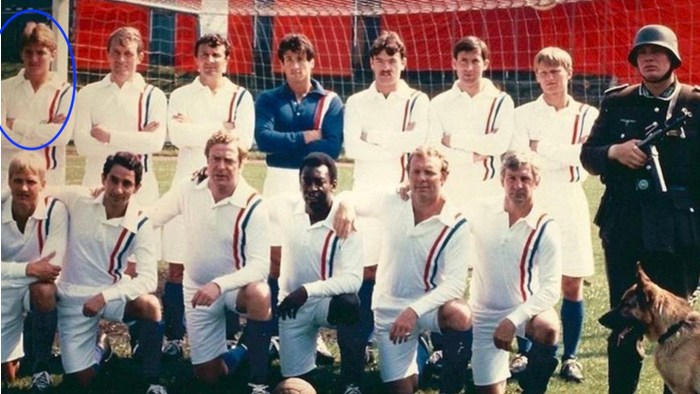
RUSSELL OSMAN achieved lifelong fame for his appearance in the much-shown 1981 prisoner of war football film Escape to Victory but 17 appearances for Brighton in the latter stages of his career have largely been forgotten.
A cultured central defender who played in the same side as Jimmy Case at Southampton won 11 England caps at the peak of his game when a key part of Bobby Robson’s Ipswich Town side of the early 1980s.
He was 36 by the time he arrived on a monthly contract at third-tier Albion in September 1995 and what was happening on the pitch at that time was largely overshadowed by events off it.
News was emerging that the Goldstone Ground had been sold, leading to manager Liam Brady quitting in disgust in November 1995, passing on the reins to Case, who very reluctantly took on the job.
With Steve Foster and Stuart Munday struggling with injury, Brady brought in the experienced Osman to play alongside Paul McCarthy. His debut came in a 4-1 Auto Windscreens Shields game away to Cambridge United, the first of 12 successive games before Munday returned towards the end of November when Osman picked up a hamstring injury.
Meanwhile, Case pointed out in his first programme notes as manager, for the FA Cup game at home to Fulham on 14 December: “There is no secret he would still like to get back into management and we are happy to leave his position as it is on a month-to-month basis.”
Osman was back in the side for the 1-0 Boxing Day win away to Brentford and kept his place for the next two matches. But with Ross Johnson taking on the no.5 shirt, Osman got only one more start: in a 0-0 draw away to Hull City. He made one appearance as a sub in place of McCarthy and was twice a non-playing sub. As he turned 37, he took the opportunity to switch to Cardiff City, which, as the match day programme noted, was a lot closer to his Bristol home.
Born on 14 February 1959 in Repton, Derbyshire, Osman eventually followed in his dad Rex’s footsteps in becoming a professional footballer (Osman senior played for Derby County in the ‘50s), but it was rugby at which Russell excelled during schooldays at Burton on Trent Grammar. So much so that he played for England at under 15 level and captained his country as an under 16.
However, the sports-mad youngster also played football for his village team and when they reached the final of the Derby & District Cup, he was watched by Bobby Robson’s brother Tom, who lived in the area. “He came down and watched the game, we won the final and the next thing I knew I had a call from Ipswich to go on trial,” Osman said in an interview with the East Anglian Daily Times. “The rest is history. They were very good at getting kids to go on trial and they went that extra mile to make sure we were looked after and treated well.”
Osman recalls many aspects and anecdotes of his career on a blog, Golf, Football and Life, and he said he would be forever grateful for the dedication shown by Ipswich’s youth team coach, Charlie Woods, who became Robson’s right-hand man throughout his career.
“Charlie used to drive from Ipswich to my dad’s pub in Repton on a Friday to pick me up and take me back down to Ipswich, putting me up for the night in his and Pat’s house, just so that I could make the game on a Saturday morning,” he wrote. “I doubt that you would get many coaches who would make an eight-hour round trip just to get a schoolboy to a game.”
Osman became an apprentice at Portman Road in July 1975 and signed on as a professional in March 1976. Eventually, he and Terry Butcher took over the centre back roles previously filled by Northern Ireland international Allan Hunter and England international Kevin Beattie.
Osman in action for Ipswich against Arsenal’s Liam Brady, later to become his boss at Brighton
The 1980-1981 season was certainly momentous in Osman’s life. He played in 66 matches (including four for England) over the course of the season as Ipswich won the UEFA Cup, finished runners-up in the old First Division and reached the semi-finals of the FA Cup.
For a large part of the season, Town looked like they would win the First Division title for the first time since 1962 under Alf Ramsey but only three wins from the last 10 matches meant they had to settle for second place, four points behind Aston Villa.
At the end of the season, Robson asked the squad if any of them fancied spending the summer playing more football to help make a feature film. Osman and teammates John Wark, Kevin O’Callaghan, Robin Turner, Laurie Sivell, Paul Cooper and Beattie jumped at the chance and spent five weeks in Budapest making Escape to Victory, directed by the legendary John Huston.
The Escape to Victory football team which featured Osman (back, left)
Osman played the part of prison camp inmate Doug Clure and he has since talked and written about the experience, in July 2021 remembering the experience in an interview with a BBC reporter. Osman recounts how the Ipswich lads and other professionals such as Bobby Moore, Pelé, Mike Summerbee and Ossie Ardiles played football scenes alongside established actors Michael Caine and Sylvester Stallone.
Beattie was Caine’s ‘double’ in the football scenes and Cooper helped Stallone with goalkeeping skills. Turner and Sivell played for the German team and Osman, Wark and O’Callaghan had speaking roles.
“Michael was brilliant, he made all the lads feel at home on set by telling a few funny stories and taking all the tension out of the situation,” said Osman. “I managed to deliver my lines and we were off and running, literally.”
Osman’s first international football recognition came for England under 21s in February 1979 as a substitute for Billy Gilbert in a 1-0 win over Wales at Swansea. In September the same year, he got his first start at that level alongside his Ipswich teammate Butcher (in a 1-0 win over Denmark at Vicarage Road).
The first of Osman’s 11 full England caps came on 31 May 1980, in a 2-1 win v Australia in Sydney which was the game in which Peter Ward made his one and only appearance for the full England side, appearing as an 82nd minute substitute for Alan Sunderland.
Osman was 21 at the time and he went on to play in five competitive matches and five more friendlies, rather curiously only playing for his country on home soil three times, and only being on the winning side twice, both times against Australia.
Osman did make a couple of appearances for the England B side: on 26 March 1980 he played in a 1-0 win over Spain at Roker Park, Sunderland (Joe Corrigan was in goal) and later the same year, on 14 October, he was in the B team that beat the USA 1-0 at Old Trafford.
He had been in Ron Greenwood’s provisional squad of 40 for the 1982 World Cup but was not included in the final 22, Albion’s Foster getting the nod instead as reserve centre back.
Osman’s last international was on 21 September 1983, when England lost 1-0 to Denmark in a Euro 1984 qualifier, by which time his former club manager Robson had taken over from Greenwood, who’d given Osman his first six caps.
Although Ipswich challenged at the top of the First Division in 1981-82, they once again finished four points behind the champions, this time Liverpool, and after Robson left to take on the England manager’s job, the side was gradually broken up. Osman and Eric Gates both left in 1985.
After making 385 appearances for Town, Osman signed for Leicester City for £240,000 where he played 120 games under three different managers: Gordon Milne, Bryan Hamilton and David Pleat.
When the Foxes dropped down to the second tier, it was Southampton, and manager Chris Nicholl, who gave Osman – at 29 – the chance to play at the top level again.
A tribunal-determined fee of £325,000 took him to The Dell where he made his debut in the opening match of 1988-89, a 4-0 win over West Ham. He initially partnered Kevin Moore at the heart of their defence, then later Neil Ruddock.
“At Southampton I played just behind the great Jimmy Case, and what an experience that was,” Osman recalled. “Every day there would be something that made you smile about playing with Jimmy; well, it did if he was on your side anyway. Hard as a rock, cute and clever as a footballer, better than people gave him credit for, a wonderful passer of the ball. Sometimes his playing ability was overshadowed by his extravagances off the pitch!”
The Southampton FC player archive enthusiastically records Osman’s time with the Saints, which was largely successful at first. With Alan Shearer, Rod Wallace and Matt Le Tissier scoring the goals, the side finished seventh in the table. But they couldn’t sustain that success the following season and Nicholl was sacked. Writer Duncan Holley on sporting-heroes.net recalled: “One of the manager’s last actions had been to sanction the signing of Jon Gittens from Swindon and Russell had been displaced for the final run in.”
Nicholl’s successor, Ian Branfoot, picked Osman at left-back for the opening four games of the 1991-92 season but, as Osman told Ian Carnaby in a 2007 interview: “The day Ian Branfoot walked through the door, my Southampton career was over. All those years I’d been a centre-half, but he thought I’d make a good left-back.”
Osman joined Bristol City on loan initially before making the move permanent for a £60,000 fee, and he put down roots in the city. After about a year as a player, manager Jimmy Lumsden was sacked and Osman, as a senior player, was asked to take temporary charge.
However, Denis Smith, sacked as Sunderland boss in December 1991, took over at City in March 1992, with Osman named player-assistant manager. In a 2020 Facebook interview, Osman somewhat sharply said: “Denis Smith didn’t last too long because he wasn’t a very good manager, so they offered me the job.”
That happened in January 1993 and he remained in the manager’s chair at Ashton Gate just short of two years. He steered City to mid-table finishes in 1993 and 1994.
A look through City fans’ forum One Team In Bristol (otib.co.uk) reveals mixed opinions about Osman’s time in charge although some believed he was dealt a raw hand by the Ashton Gate hierarchy. It was said he was dismissed after the directors called him in and said they wanted European football within 10 years. Under Osman’s successor, Joe Jordan (appointed in November 1994), the Robins were relegated.
One significant highlight from Osman’s City reign was leading them to a shock 1-0 win at Anfield in a FA Cup third round replay in January 1994, a result which brought an end to Graeme Souness’ time as Liverpool manager.
Hailed as “the class of ‘94 etching their names into the club’s roll of honour” the achievement was apparently masterminded in the club’s canteen a few days earlier when Osman and his assistant Tony Fawthrop decided to deploy Brian Tinnion just behind the strikers instead of out wide, and he ended up scoring the only goal of the game.
After Osman’s departure from Ashton Gate, his next stop was Plymouth Argyle, where his old Ipswich teammate Steve McCall was a key player in Peter Shilton’s side.
When Shilton left, McCall took charge of the Pilgrims for two months as temporary player-manager, then Osman took over the running of the side for the last few weeks of the season. However, because of an ongoing legal case with Bristol City, Osman couldn’t be given the title manager or receive payment. He was known as ‘adviser of team affairs’. The arrangement didn’t last, though, because Argyle appointed Neil Warnock as manager that summer.
It was three months later that Osman took up Brady’s offer of a return to playing with Brighton. After moving on from the Goldstone in February 1996, Osman signed for Cardiff City as a player.
Team manager Phil Neal left to become Steve Coppell’s assistant at Manchester City in October 1996, director of football Kenny Hibbitt took charge for a month, then Osman ran the side for a month. He took the managerial reins in time for a first-round FA Cup clash with non-league Hendon. The Bluebirds made hard work of a 2-0 win, but earned a second-round tie against Gillingham, which they lost 2-0.
Osman remained working under Hibbitt until January 1998 when, according to one observer, he “departed due to draw fatigue” (over the season, City drew an astonishing 23 matches out of 46, only winning nine times) and was replaced by the returning Frank Burrows.
Direct involvement in the game has since been sporadic. He and Kevan Broadhurst were appointed as caretaker managers of Bristol Rovers until the end of the season on 22 March 2004 but they were only in charge for just over a month as former Oxford United boss Ian Atkins was appointed manager on 26 April.
Osman had a hand in Ipswich taking on Tyrone Mings. Mings was playing for the same non-league Chippenham team as Osman’s son Toby and Osman senior recommended him to Town boss Mick McCarthy, as he explained to the East Anglian Daily Times.
After he left Ipswich, Osman embarked on a co-commentator / pundit career covering Indian football, initially working alongside the veteran commentator John Helm. It involved travelling extensively in India although he was latterly based in a Mumbai studio – until Covid-19 restrictions intervened.
One brief hiatus to that career came in the summer of 2015 when he was invited by his old Ipswich defensive partner, Butcher, to be his assistant at Newport County. Unfortunately, the partnership was short-lived. They were sacked just a few months into the new season after a string of poor results.
Pundit Osman meets up with ex-Albion boss Steve Coppell, boss of Kerala Blasters
Aside from sharing his views on Indian football, ever the all-round sportsman Osman is a keen golfer, cyclist and runner, and espouses the energy and recovery powers of a juicing diet, having fresh vegetable juice and fruit juice smoothies every day.
Osman uses his blog to cover a variety of topics, he has 5,100 followers on Twitter, and, during lockdown in 2020, took part in an interesting online interview with India-based The View and Reviews Show.
Osman shares thoughts about his career and the wider game in an online interview
“I have worked in the media for 20 years now,” Osman said in an interview for Kings of Anglia magazine. “I worked for Eurosport, starting prior to the Euro 2000 championships and I go a long way back with them and the BBC. I also started working in India through a contact I made at Eurosport about 15 years ago.”
Pictures from a variety of online sources, and matchday programmes.
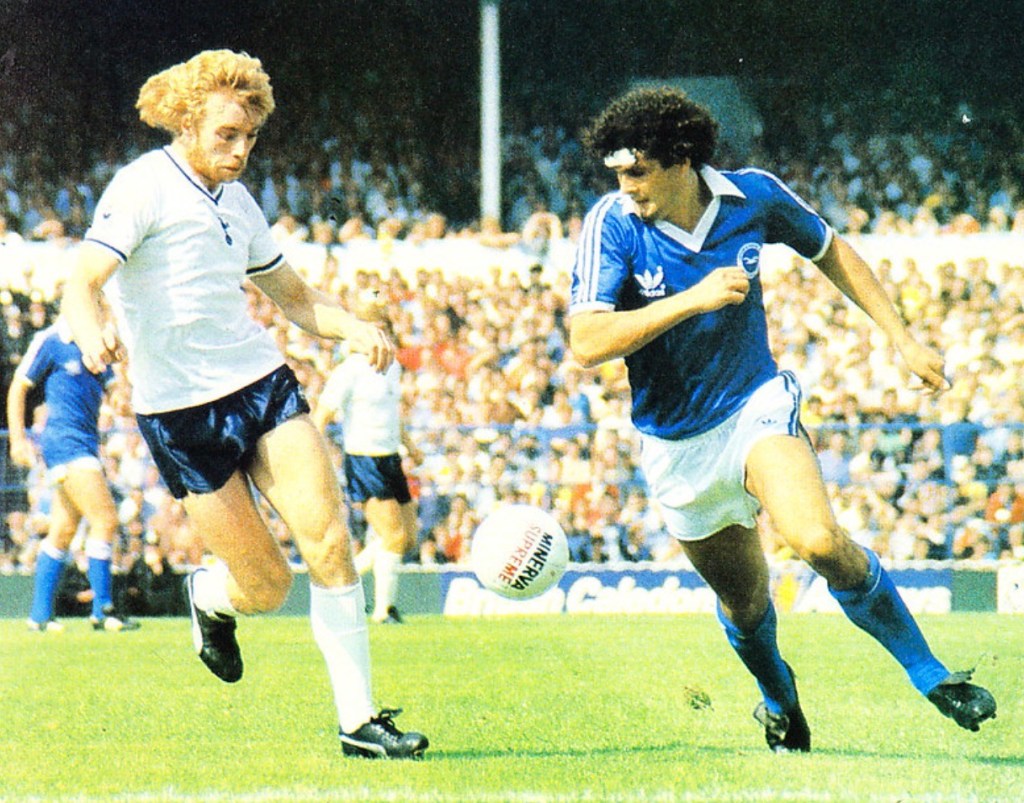
Steve Foster challenges Spurs’ Steve Archibald at White Hart Lane
LEGEND is overused far too much in football circles but, in some circumstances, it is justified. That applies to Steve Foster.
He played 800 games in a 21-year career which included nine years with Brighton in two separate spells.
His performances in the top-flight for Brighton led him to play for England at the 1982 World Cup and he lifted the League Cup in 1988 as the captain of Luton Town.
He might have enjoyed a longer spell at Aston Villa if the European Cup-winning manager who signed him hadn’t been unceremoniously dumped by ‘Deadly’ Doug Ellis.
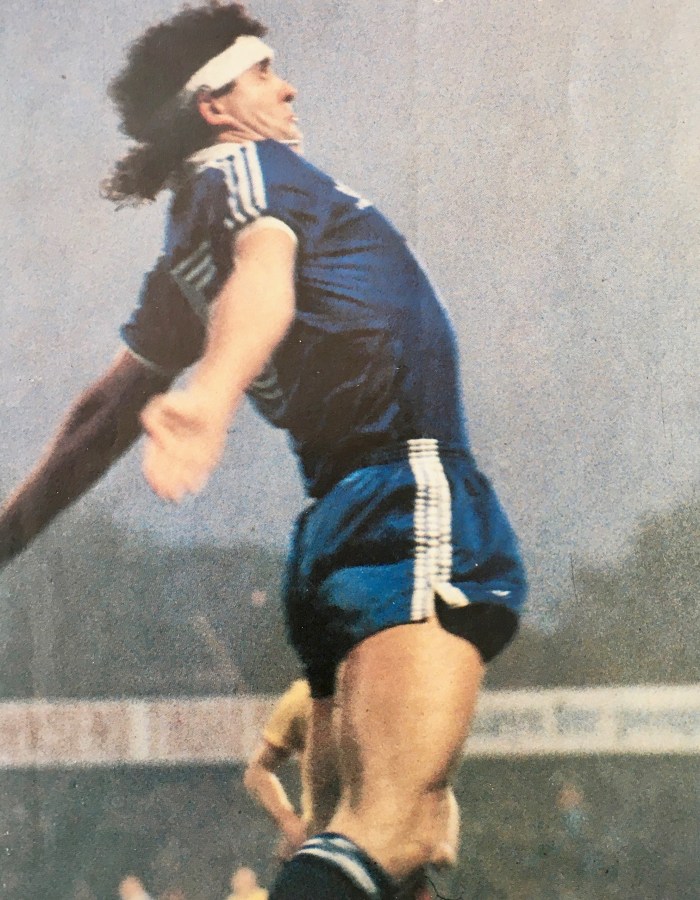
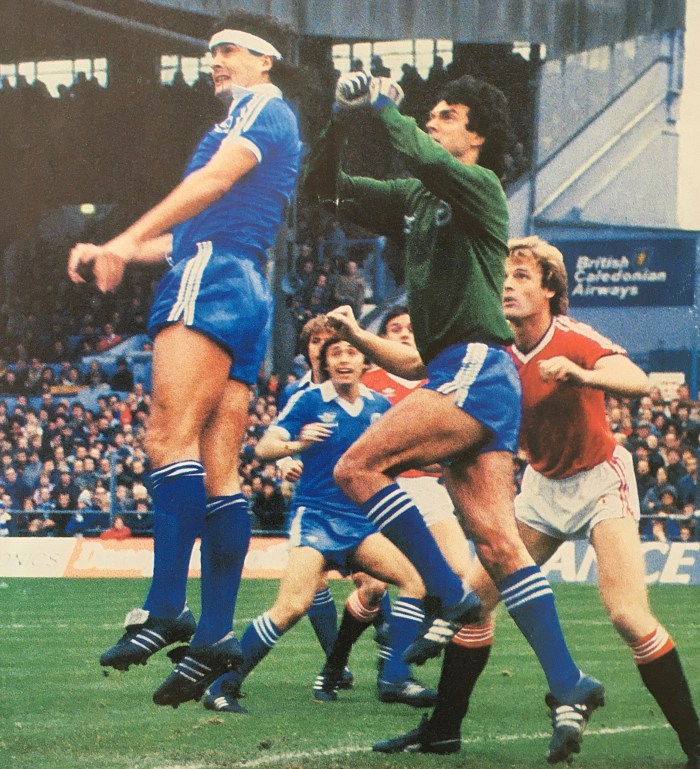
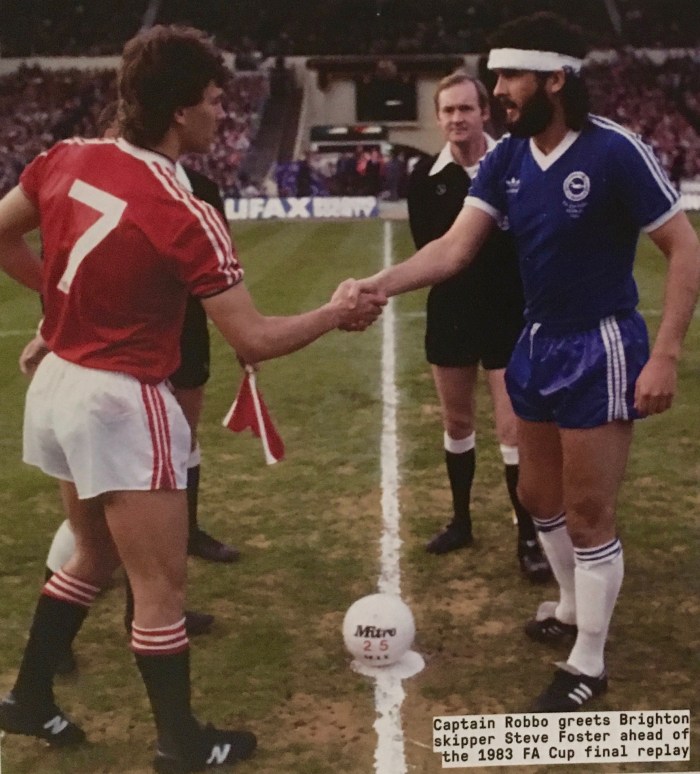
Foster became – and, to older fans, still is – synonymous with Brighton & Hove Albion, and football followers the world over could readily identify the captain with the white headband.
In several interviews over the years, he has explained how the distinctive headpiece was actually a piece of padded white towel designed to protect a forehead split open in collisions with centre forwards Andy Gray and Justin Fashanu.
I wonder if physio Mike Yaxley’s wife Sharon, who made up the dressing before every game, realised at the time the key role she played in helping to make Foster one of the most identifiable characters in football.
Foster’s illustrious career is warmly documented in Spencer Vignes’ excellent 2007 book A Few Good Men (Breedon Books Publishing), featuring an interview with the player himself and those who played with him.
For example, Gerry Ryan told Vignes: “Fozzie was a huge player with a huge personality, a real leader and deceptively quick for a big man.
“When he played against the best, like Ian Rush and Kenny Dalglish, he was the best. People talk about giving 100 per cent, but Fozzie gave 150 per cent in everything he did, and I mean off the field as well.”
Gordon Smith added: “He was a fantastic person, great fun and a terrific centre half.”
Vignes himself observed: “Steve’s willingness to put his neck on the line for the cause earned him hero status among the fans, together with the complete respect of the dressing room.”
Unsurprisingly, Foster pulls no punches in describing the various characters and events surrounding his colourful career, for instance describing Chris Cattlin as “definitely the wrong man. I told him the truth and what I thought of him.” And, of predecessor Jimmy Melia: “When Jimmy took over it was more like a circus than a football club.”
Foster said the two biggest influences on his career were Frank Burrows, the manager of his first club, Portsmouth, who taught him about balance as the key to strength on the pitch, and Brian Horton, the dynamic midfield driving force he succeeded as Albion captain.
“He shouted and screamed for 90 minutes to help us get results, and to keep everyone on their toes,” said Foster. “If he made a mistake, 10 other people would shout and scream at him, and he would take it. When I was captain at Brighton, and my other clubs, that’s how I tried to be.”
Such a recognisable figure as Albion’s centre-half
Fortunately, sufficient archive film footage remains for fans of different generations to see what a dominant force Foster was at the heart of Brighton’s defence, while I retain plenty of now-yellowing cuttings from the numerous columns of newsprint he filled during his pomp.
Born on 24 September 1957 in Portsmouth, Foster went to St Swithin’s Junior School before moving on to St John’s College. A centre-forward in the early days, he played for the Portsmouth Schools under-12s side but it was Southampton who took him on as an associate schoolboy.
He played in the same youth team as Steve Williams and Nick Holmes, who both went on to have long careers.
But Saints boss Lawrie McMenemy let Foster go at 16, urging him to go elsewhere and prove him wrong. After Foster won his first England cap, McMenemy sent him a congratulatory telegram. “That was class, nothing but class,” Foster told Vignes.
Southampton’s loss was Portsmouth’s gain, courtesy of a tip off from local schoolteacher Harry Bourne to Pompey youth team coach Ray Crawford (who’d previously held a similar role under Pat Saward at Brighton). Bourne ran the Portsmouth and Hampshire schools teams.
Crawford describes in his excellent autobiography Curse of the Jungle Boy (PB Publishing 2007) how he called at the family’s house in Gladys Avenue, Portsmouth, but Foster’s mother was at a works disco at the local Allders store. Wasting no time, he immediately went in pursuit and, against a backdrop of deafening music and flashing lights, shouted above the din that they were interested in signing her son.
Foster called the club the following day and he was invited to play in a youth team game for Portsmouth – against Southampton! “I scored twice because I was playing as a centre-forward then, and they ended up offering me an apprenticeship on £5 per week which was my entry into the professional game,” said Foster.
Reg Tyrell, a respected former chief scout from Crawford’s time at Ipswich, watched the young striker in a youth team training game and declared: “That no.9, he’s no centre-forward but he’d make a good number 5.” A few weeks’ later, manager Ron Tindall’s successor, Ian St John (later Saint and Greavsie TV show partner of Jimmy Greaves), gave Foster his debut as a centre half!
Foster played more than 100 games during Pompey’s slide down through the divisions, and, at 21, had developed something of a fiery reputation. But Brighton boss Alan Mullery saw him as “big and brave, strong in the tackle and good in the air” providing “much-needed stability at the back” as the Seagulls began their first adventure into the top-flight of English football in 1979. He was signed for £150,000.
A couple of disciplinary issues in the early days of the new season looked like proving the doubters right to have warned Mullery off signing him, but an injury to first choice centre back Andy Rollings forced the manager to backtrack on a temporary ban he’d handed out. Foster made the most of his reprieve and never looked back.
By the end of a season in which the side grew collectively Foster was named Player of the Year and he earned international recognition, gaining an England under 21 cap as a substitute for Terry Butcher in a 1-0 defeat against East Germany in Jena on 23 April 1980 (Peter Ward was playing up front).
While the 1980-81 season saw Albion struggle and flirt with relegation, Foster’s tussles with some of the top strikers in the game saw his reputation grow, and he even chipped in with a vital goal in the final home game of the season against Leeds.
When Horton and Mullery departed at the end of that season, Foster took over the captaincy under new boss Mike Bailey, and, even though fans didn’t much like the way Bailey set up his side, Foster thrived with the emphasis on defence first.
England boss Ron Greenwood, who lived in Hove, was in the process of shaping his squad for the 1992 World Cup in Spain and, with injuries affecting some of the other centre backs in contention, Foster was given a chance to prove himself.
I can remember travelling to Wembley on 23 February 1982 to watch him make his debut against Northern Ireland, a game England won 4-0 courtesy of goals from Ray Wilkins, Kevin Keegan, Bryan Robson and Glenn Hoddle.
I had been to the stadium 10 years before to watch another Albion player – Willie Irvine – make his international comeback in a 1-0 win for the Irish, but it was something special – and rare – to see a Brighton player line up for England.
To break through to the senior team in a World Cup year was a notable achievement, although, by his own admission, he accepted his good fortune directly correlated to injuries ruling out other players.
Although the record books show Foster earned three caps, in fact he represented the country four times that year.
A month after his debut against Northern Ireland, on 23 March, Foster played for an England XI in Bilbao against Athletic Bilbao. The game finished 1-1 with Keegan scoring for England. It didn’t qualify for a cap because it was a testimonial match for retiring Bilbao player Txetxu Rojo, but Greenwood used the fixture to familiarise the players with what was the venue for England’s opening round matches at the World Cup.
Foster also featured in a 2-0 friendly win over the Netherlands (goals by Tony Woodcock and Graham Rix) on 25 May as Greenwood continued to assess his options.
Foster (circled) in Ron Greenwood’s 1982 World Cup squad
When it was clear neither Alvin Martin nor Dave Watson would be fit for the tournament in Spain, Foster was selected as back-up to first choice centre back pairing Terry Butcher and Phil Thompson. Ahead of the third group match, Greenwood didn’t want to risk a ban for the already-booked Butcher, so Foster played alongside Thompson and England won 1-0 against Kuwait; Trevor Francis getting the England goal.
When England didn’t progress past the second phase, Greenwood’s spell as boss came to an end and he was replaced by Bobby Robson who, for his first game in charge, partnered Russell Osman with Butcher – both having played under him at Ipswich Town.
Foster didn’t play for England again.
Much has been written already about the 1982-83 season and Albion’s path to the FA Cup Final. Foster demonstrated real heroism in the semi-final at Highbury, playing through the pain of a septic elbow, and, memorably, towards the end of the game, launched into an overhead kick to clear a goal-bound shot to safety (pictured above).
History records Foster being suspended for the Cup Final – a well-documented appeal to the High Court against a two-game ban for accumulated bookings couldn’t get the decision reversed – but, as is often the case in football, his misfortune presented a golden opportunity for stand-in Gary Stevens who capped a man-of-the-match performance with the equalising goal. What he did that day persuaded Spurs to sign him.
Foster, of course, eventually got his Wembley chance in the replay but with a rampant Manchester United running out easy 4-0 winners, their fans also rather cruelly derided the Albion skipper with the chant I can still hear ringing around Wembley that evening: “Stevie Foster, Stevie Foster, what a difference you have made!”
In truth the whole defence lacked balance in the replay because manager Melia had elected to fill the right-back berth vacated by injury to Chris Ramsey with the left-footed Steve Gatting. He figured Stevens couldn’t be moved from the centre where he had performed so well on the Saturday, but it was a mistake, especially as Stevens had often played right back previously.
The relegation that went in tandem with Albion’s Wembley loss sparked the beginning of a big clear-out of the best players. First to go was Stevens, closely followed by Michael Robinson.
It wasn’t until the following March that Foster followed them through the exit, although, according to Foster, he might have gone sooner – even though he didn’t want to leave; a point he made clear in an interview with Match Weekly shortly after he signed for Villa for £150,000.
“I never wanted to move,” he said. “I had nearly seven years of my contract to run at Brighton and would have quite happily played out my career there. It’s a great little club.
“But economies dictated otherwise and, although manager Chris Cattlin wanted to keep me, he was under pressure to sell me and help ease the club’s financial problems.
“It was a wrench to leave Brighton because the club has treated me tremendously well and I’ve had some great times there – not least the FA Cup run last season.”
Cattlin had a slightly different take about the transaction in his matchday programme notes. “I feel that Steve Foster has been a fine player during his four-and-a-half years at the Goldstone, but I felt that the time was right and the offer good enough to let him go,” he said.
“I hope the move will benefit both Steve and the club. I hope it rejuvenates his career because he has been unlucky with injuries this season. It gives me breathing space for Eric Young to develop and it will also allow me to strengthen other positions if necessary.”
In a rather oblique reference to the need to get rid of high-earning players, Cattlin added in another matchday programme article: “Certain players have left Brighton in moves which I feel are important for our future. Salaries and bonuses of individual players are confidential and obviously I cannot disclose details, but the moves I have made I am certain are right.”
He added: “I can’t explain all the matters that have been considered but I will once again emphasise that we are building for the future and every move I make in the transfer market is being made with this in mind.”
Foster revealed that Villa boss Tony Barton, a former coach at Foster’s first club, Portsmouth, had tried to sign him twice before, but the clubs hadn’t been able to agree on a fee. Eventually, the transfer saw defender Mark Jones (who’d made seven top-flight appearances for Villa that season) move in the opposite direction, in addition to a £150,000 fee.
Barton wanted Foster to tighten up a leaky defence, to fill the position previously occupied by former European Cup winning centre-half Ken McNaught, who had moved to West Brom.
The relatively inexperienced Brendan Ormsby had been playing alongside McNaught’s former partner, Allan Evans, and the signing of Foster put his nose well and truly out of joint. “It’s obvious that I’m just going to be used as cover for Steve Foster or Allan Evans now and so it’s probably in my best interests to try and find another club,” he told Match Weekly.
As it turned out, it was Barton who was ousted; Ormsby stayed, and new manager Graham Turner decreed it would be Foster who was the odd one out. But I jump ahead too soon.
Foster’s arrival at Villa Park as featured on a matchday programme cover
A picture of Foster being introduced to the Villa faithful appeared on the front cover of the programme for the 17 March home game against Nottingham Forest although he didn’t make his Villa debut until 14 April 1984, away to Leicester City, which ended in a 2-0 defeat.
Foster made seven appearances by the end of the season and he got on the scoresheet in only his third game, netting together with future Albion player Dennis Mortimer, in a 2-1 win over Watford on 21 April.
Villa finished the season in 10th place but it wasn’t good enough for the erratic chairman Ellis. Suddenly Foster found the man who signed him had been sacked, and the side Barton had led to European Cup success was gradually dismantled.
To the astonishment of the Villa faithful, Barton was succeeded by former Shrewsbury Town boss Turner.
Foster played 10 games under the new boss, and scored twice, once in a 4-2 win over Chelsea on 15 September and then again the following Saturday in a 3-3 draw away to Watford.
He’d started the season alongside Evans but Turner then offered a way back to Ormsby. While Foster played a couple of games alongside Ormsby, Turner preferred Evans and Ormsby together, making the new man surplus to requirements.
His last game for Villa was away to Everton on 13 October and the following month he was sold to Luton for £70,000 – less than half the fee Villa had paid for him eight months earlier. Foster simply put it down to his face not fitting with the new man.
It was a completely different story with Luton boss David Pleat and Foster’s time at Kenilworth Road coincided with the club’s most successful period in their history, even though Pleat left to manage Spurs.
Alongside representing his country, Foster said the best moment of his career was captaining the Hatters as they won the League Cup (then sponsored by Littlewoods) at Wembley in 1988 with a 3-2 win over Arsenal, his former Brighton teammate Danny Wilson scoring one of their goals (Brian Stein got the other two).
They reached the final of the same competition the following year too, but on that occasion lost 3-1 to Nottingham Forest. By then Foster was assistant manager to Ray Harford, and it looked like he was on a path to become a boss in his own right.
But that summer, when his old Albion captain, Horton, who had taken over from Mark Lawrenson as the manager of Oxford United, asked him to join him as a player at the Manor Ground, he was unable to resist and a new chapter in his career began.
It meant a drop down a division but Foster accepted the challenge and went on to play more than 100 games for United, many being quite a struggle as the side fought for survival at the foot of the second tier.
In the autumn of 1991, injury sidelined Foster from the U’s team and he believed it could have been the end of his career.
However, when the following summer he was contemplating whether or not to retire, he gave Brighton boss Barry Lloyd a call and asked if he could keep his fitness going by joining in pre-season training with the Seagulls.
Lloyd could see that the former skipper was still able to perform and, although the club was in a downward spiral, Foster seized the opportunity to extend his career and help out his old side.
Another veteran of that side, Clive Walker, told Vignes for A Few Good Men: “Fozzie might not have been so mobile then but his positional sense was absolutely brilliant, as was his ability in the air.”
Foster said: “Funnily enough during that second period I played probably some of my best football. I had to because of the position the club was in. There was no money so you had to pull out all the stops.”
Foster continued to play after Lloyd had departed, and he vented his anger publicly about the off-field shenanigans new boss Liam Brady was having to operate under.
Foster eventually called it a day at the end of the 1995-96 season, saddened at the club’s plight. He was granted a testimonial match against Sheffield Wednesday, played as a pre-season friendly in July 1996. Throughout Foster’s career he had continued to live in Hove and he retains his affection for the Albion to this day.
During his second spell at the club, Foster was the PFA rep and he had to deal with the heartbreak of telling the parents of a young player (Billly Logan) that an ankle injury was going to end his career. The youngster got just £1,500 compensation.
As a result, after his own playing days were over, Foster set up an insurance business (Pro-Secure) which continues to this day, making sure players are properly covered and get suitably recompensed if things don’t turn out as they’d hoped.
Although Foster hasn’t always been popular with the Albion’s hierarchy (courtesy of suggested involvement in potential takeovers), his association with the club hasn’t dimmed and Seagulls fans of two generations took him to their hearts for his on-field performances and leadership spanning a total of 332 games.
• Pictures from my scrapbook, the Albion matchday programme over several seasons, and some online sources.
MARTIN KEOWN, who was born in Oxford six days before England won the World Cup in 1966, made his breakthrough into what became an illustrious playing career with Brighton.
The TV pundit football fans see today was famously a stalwart defender for Arsenal, Everton and Aston Villa, not to mention England.
But as an emerging player yet to break through at the Gunners, he got the chance of first team football courtesy of Brighton boss Chris Cattlin, who negotiated with Arsenal boss Don Howe to secure his services on loan.
“He is a young player with plenty of potential,” Cattlin wrote in his Albion matchday programme notes. “He is still learning and will make the odd mistake, but these are all part of learning and I feel he will be a very good player in the very near future.”
He made his debut away to Manchester City in February 1985 and, in two spells, stayed a total of six months with the Seagulls, making 23 appearances. It wasn’t long before he earned the divisional young player of the month award and Cattlin said: “Martin has done very well and done himself great credit in coming into the heat and tension of a promotion battle and coping well.”
He made such a great impression, it wasn’t long before the Albion matchday programme went to town with a somewhat gushing feature about the young man.
“Fans and Albion players alike have been impressed by the character and maturity displayed by the 18-year-old English Youth International,” said Tony Norman. “No less a judge than former England manager Ron Greenwood was instrumental in Martin’s recent Robinson Young Player of the Month award.
“So, the young man from Oxford must have something special going for him. On the field he is a sharp, decisive player, but away from the game he is quietly spoken and unassuming.”
Some things obviously changed!
“His progress in football has not gone to his head and he is quick to thank the special people who have helped him find success,” Norman continued.
Keown told him: “Going back to the early days in Oxford, I think my parents were the greatest help of all. I played for several different teams, so there was never a particular coach who helped me. But my family were always there giving me their full encouragement and support.”
At Highbury, he credited the scout who took him to Arsenal, Terry Murphy, as his greatest help in his early years, helping him to settle into the professional game.
“He was very good to me,” said Keown. “I was only 15 when I joined Arsenal as an apprentice. I was in digs in North London and it was all quite a change from life in Oxford. It took a bit of getting used to.”
The former Chelsea midfield player John Hollins, who played for Arsenal between 1979 and 1983, was also an influence.
“He always had a word of encouragement for the youngsters,” said Keown. “He is the kind of man who can make a club happier just by being there. I liked and respected him a great deal. He was a model professional.”
During his time with Brighton, young Keown lived with physiotherapist Malcom Stuart and his family. “They have made me feel very much at home,” he said. “It has been a happy time for me.”
Unfortunately for Brighton, Keown returned to Highbury and it wasn’t long before Howe, the former coach who’d become Arsenal manager, gave him his first team debut on 23 November 1985 in a 0-0 draw away to West Brom.
In much the same way he has become something of a Marmite pundit on the TV, Keown wasn’t every manager’s flavour. When George Graham was appointed Arsenal boss in 1986, Keown didn’t figure in his plans and he sold him to Aston Villa (see picture below) for £200,000.
Three years later, he became what Colin Harvey described as his best signing during his time as boss of Everton. A fee of £750,000 took him to Goodison.
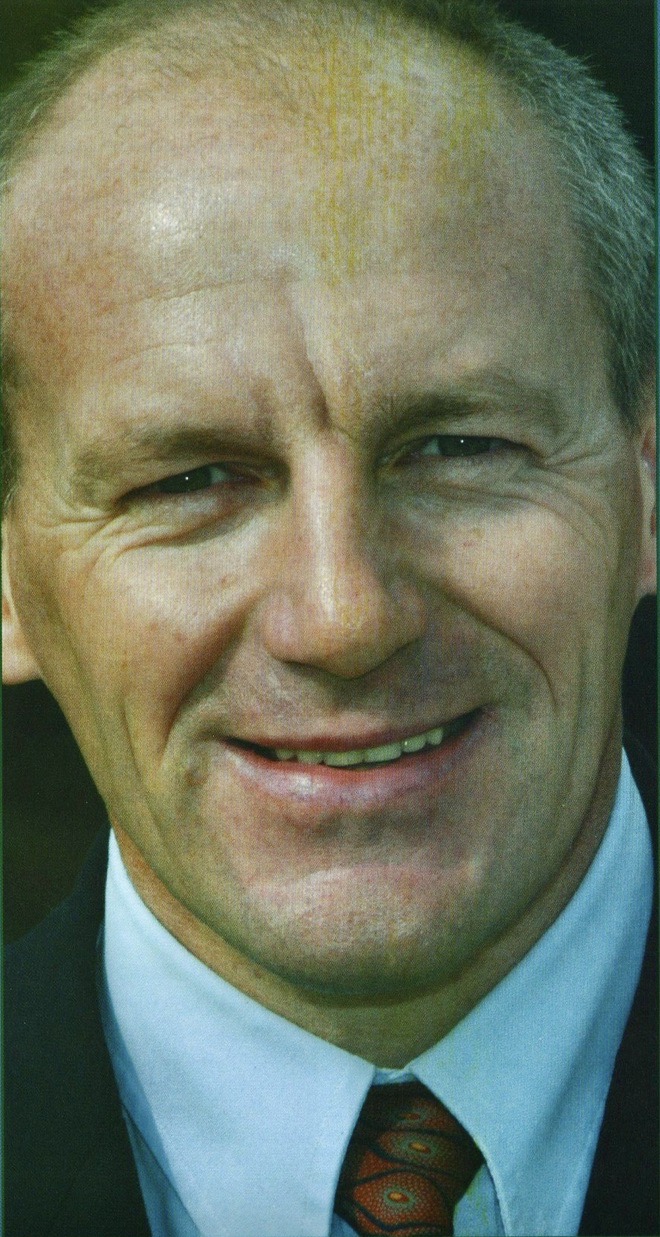
In an interview with the Liverpool Echo back in 2013, Keown declared: “I thoroughly enjoyed my time at Everton. The only disappointment was that I couldn’t contribute to the club winning anything tangible in my four years there.
“I played under Colin Harvey and Howard Kendall and I was eternally grateful to them for the opportunity to play at a club like Everton.
“Looking back, in hindsight it was probably a bit much to ask a young lad, which I was then, to step into the boots of a club legend like Kevin Ratcliffe. But I always gave absolutely everything.”
Keown added: “The atmosphere was always superb at Goodison. Even though I played a lot of my career at Highbury, I loved Goodison.”
It was during his time at Everton that he won the first of his 43 England caps, getting the call-up from Graham Taylor to join the squad in 1992 to replace Mark Wright. When Terry Venables took over, he didn’t get a look-in.
But Glenn Hoddle restored him to the squad in 1997 and, although he was part of the 1998 World Cup squad, he didn’t get a game. He was a regular under Kevin Keegan and, in a game against Finland, had the honour of captaining the side. Age began to count against him by the time Sven-Goran Eriksson took charge of England and, although he was part of the 2002 World Cup squad, he wasn’t selected for any games.
His return to Arsenal in February 1993 meant he was the first player since the days of the Second World War to rejoin the Gunners, and it went on to become a 10-year spell in which he helped the club to win three Premier League titles and the FA Cup three times.
Arsenal paid a £2m fee to bring back their former apprentice and he and Andy Linighan were more than able deputies who kept established first choices Steve Bould and Tony Adams on their toes.
“Martin was deployed most frequently at centre-half where his formidable pace and thunderous tackling combined to thwart both target men and strikers running in behind,” declared an article on arsenal.com, lauding the merits of the ‘50 greatest Arsenal players’. “It meant, too, that he was vastly capable in an anchoring midfield role; something utilised by his manager.”
While not always a regular, Keown became an integral part of Arsene Wenger’s double-winning sides of 1998 and 2002 and remained a part of the set-up through to the winning of the FA Cup against Southampton in Cardiff in 2003.
The following season included the much-repeated TV moment when Keown mocked Ruud van Nistelrooy for missing a late penalty in a 0-0 draw at Old Trafford, an incident still being discussed only last summer.
Although Arsenal went on to win the title, Keown played only 10 league games and was given a free transfer at the end of the season.
He joined Leicester City, where he played 17 games but moved on to Reading six months later, ending his league career with five games at the Madejski.
Since calling time on his playing career, Keown has, of course, become known for his TV punditry with both the BBC and BT Sport, as well as being a newspaper columnist and contributor to many different media.
On Twitter, @martinkeown5 has 278,000 followers! He has also coached back at Arsenal and been a regular on the football speaker circuit.
STEVE Coppell was not the first former Manchester United player I saw become manager of Brighton. More than 30 years previously Busby Babe Freddie Goodwin had been at the helm when my Albion-watching passion began.
Unfortunately, there was a parallel in their outcomes: both were wooed by better opportunities elsewhere (Goodwin to Birmingham; Coppell to Reading). One other parallel to record, though, is that each of their successors (Pat Saward and Mark McGhee) got Albion promoted.
Hindsight is a wonderful thing, but, if Coppell hadn’t been jet lagged the first time chairman Dick Knight interviewed him for the Brighton job, the 2002-03 season may have panned out differently…and Kolo Touré, a future Premier League winner with Arsenal and Manchester City, might have spent a season helping the Seagulls to retain their recently-won second tier status. Let me explain.
Coppell had been out of the country in Thailand during the summer of 2002 and, although Knight wanted to interview him with a view to appointing him as Peter Taylor’s successor, when the meeting in London eventually came about, Coppell began to nod off with the effects of his long-distance travel.
A frustrated Knight, under pressure on several fronts that summer (as told in his autobiography Mad Man: From the Gutter to the Stars, the Ad Man who saved Brighton) left him to it and took the decision to appoint third choice Martin Hinshelwood instead. (Knight had also considered German Winfried Schäfer, who had just managed Cameroon at the World Cup, but his poor command of English went against him).
As the opening to the season drew closer, Knight went with Hinshelwood to watch an Arsenal under 23 side in a friendly at Barnet. He was running the rule over Steve Sidwell with a view to taking him on a season-long loan but the stand-out player who caught his eye was Touré, and Albion’s cheeky chairman said he’d take the pair of them.
To his delight, Arsène Wenger and Liam Brady agreed…but astonishingly Hinshelwood said they weren’t needed because, in his opinion, they weren’t any better than Albion’s own youngsters, who he had been coaching, and who he was now intending to blood in the first team. An incredulous Knight kept schtum, believing he needed to support his new manager.
When they started the season with a 3-1 win at Burnley, it seemed maybe Hinshelwood had a point. But, after a disastrous run of 12 defeats, leading to the inevitable sacking of Hinshelwood, Knight reverted to Plan A and succeeded in attracting Coppell to manage the side.
He then swiftly went back to Arsenal to secure the loan services of Sidwell (who’d played for Coppell at Brentford the previous season). But he was too late as far as Touré was concerned. He’d already played his way into first team contention for the Gunners and was no longer available.
With Albion at the foot of the table, Coppell had a rocky start at the helm of the Seagulls, including an embarrassing 5-0 defeat to Palace, but he quickly brought in some quality players such as Dean Blackwell and Simon Rodger, and, together with Bobby Zamora up front and the busy Sidwell in midfield, they put together some decent results that dared to suggest a great escape was possible.
Albion notched up some surprise results, including a 1-0 Boxing Day win at Norwich and a 4-1 home win over Wolves, who ended up in the play-offs. There was also a memorable 2-2 draw at Ipswich, a 4-0 home win over Watford and a 2-1 win at Reading, most notable for a rare appearance and goal from former Premiership striker Paul Kitson, who had been injured for much of the season.
Sadly, it wasn’t quite enough to keep the Seagulls in the division and they went down second from bottom, five points adrift of 21st placed Stoke City.
The following season was in its infancy when West Ham decided to sack Glenn Roeder as their boss. The Hammers were determined to replace him with Reading’s Alan Pardew; and Reading, once they realised their fight to keep Pardew was fruitless, turned to third tier Albion’s Coppell as his replacement.
Chairman Knight knew Reading could offer Coppell the opportunities that were still some way in the distance if he’d stayed at the Albion, so he did the next best thing which was to get a healthy sum in compensation which went a long way to funding that season’s wage bill.
Knight was a big fan of Coppell and admired his meticulous preparation for games through in-depth viewing of opponents.
In an interview with The Guardian, Knight said: “He is probably the most analytical mind brought to football management for many a year. His preparations are detailed to the point of fastidious. His briefings are second to none. He spent hours with the video in the afternoons breaking down moves in slow-mo to work out how the opposition operate. He is very perceptive.”
Knight added: “People say he’s cold and uncaring, but he came to one of our marches on the seafront to campaign about the new stadium at Falmer long after he left for Reading. That’s Steve. He left a big impression on us.”
Coppell left the Albion with a 36.7 per cent win ratio over his 49 games in charge, just over three percentage points behind his first spell as Palace manager, but higher than his other three spells at Selhurst.
To avoid this blog post turning into War and Peace, I’m not going to cover the whole of Coppell’s career but, in the circumstances, it is worth touching on how he came to be a star on the wing for Manchester United and England.
The Liverpool lad went to the same Quarry Bank Grammar School that produced Joe Royle and Beatle John Lennon, but head teacher William Pobjoy ensured football mad Coppell stuck to his studies.
It didn’t deter Coppell from having a trial with Liverpool and playing for an Everton junior side a couple of nights a week. But both rejected him as too small and his dad Jim told playupliverpool.com: “He lost faith in ever becoming a footballer and took up golf and became quite good.” He still played football for a local side but that was just for pleasure.
A Tranmere Rovers scout made several approaches but Steve wasn’t interested, and decided he was going to go to Liverpool University to take a degree in economics and social history.
Ron Yeats, the famous colossus around who Bill Shankly built his Liverpool team in the 1960s, became Tranmere manager in the early 1970s. He remembered of Coppell: “We signed him so he could combine it with university.”
Around the same time, Coppell shot up from 4ft 11in to 5ft 7in in a year, and went on to play 38 times for Tranmere, scoring 10 goals.
Word reached Manchester United boss Tommy Docherty who paid a £35,000 fee to take him to Old Trafford. He was playing for United in the old second division while still completing the third year of his degree course. United’s deal with Tranmere had it built in that they’d pay an extra £20,000 if Coppell made it to 50 appearances. They paid it after only two games, such was the impact Docherty knew he was going to have.
Indeed, he went on to make 373 appearances for United and scored 70 goals; and the 207 games he played between 1977 and 1981 broke the record for the most consecutive appearances for an outfield Manchester United player, and still stands to this day.
He played in three FA Cup Finals for United, in 1976, 1977 and 1979, only ending up with a winners’ medal when Liverpool were beaten 2-1 in 1977.
Coppell was still at United in 1983, and had been United’s top scorer on the way to the Milk Cup Final that season, but he was recovering from a cartilage operation on his damaged left knee so was unable to play in the FA Cup Final against Brighton.
He told Match magazine: “I was always fighting a losing battle against time to get fit for the final. In my heart of hearts, I knew when I had the cartilage operation that five weeks wasn’t enough time to get fit for a match of this importance. I was struggling to make it from the off.”
Coppell told Amy Lawrence of The Guardian: “’I had nine wonderful years there and I still remember running on at Old Trafford for the first time. It was a real heart-in-the-mouth moment, an incredible experience for a 19-year-old whose biggest crowd before then was probably about 5,000.”
He also won 42 caps for England and Sir Trevor Booking, one of his contemporaries in the England team, spoke in glowing terms about Coppell the player in his book My Life in Football (Simon & Schuster, 2014).
England international
“He was a winger at a time when wingers were unfashionable,” he said. “He had the pace to reach a 30-yard pass, the skill to wriggle past a defender and send over the perfect cross. But he also had the energy to run back and provide cover for his defensive team-mates down the right flank that set him apart from so many other wingers at that time.
“When his team lost possession, Steve didn’t hang about on the flank waiting for someone to win it back. He wanted to win it back himself. He was involved all the time – a quality that is a prerequisite for today’s wide players.”
Coppell made his England debut under Ron Greenwood against Italy at Wembley in 1977 in a very exciting line-up that saw him play on the right, Peter Barnes on the left, and Bob Latchford and Kevin Keegan as a twin strikeforce. It was a favoured foursome for Greenwood and when they all played together against Scotland in 1979, Coppell, Keegan and Barnes all scored in a 3-1 win.
It was while on England duty that Coppell picked up the injury that would eventually lead to a premature end to his career. Brooking recalled: “A tackle by the Hungarian József Tóth at Wembley in November 1981 damaged his knee and although he played on for a year or so more, the knee condition worsened.
“He was able to play in the first four games of the 1982 World Cup but the problem flared up after the goalless draw with West Germany and he had to miss the decisive match against Spain.”
From 2016, Coppell spent three years as a manager in India. Amongst the players he worked with at Kerala Blasters (owned by cricketing great Sachin Tendulkar) in 2016-17 was Aaron Hughes, who had a season with Albion.
The following season Coppell became the first head coach of newly-formed Jamshedpur, owned by Tata Steel, and for the 2018-19 season he took charge of Indian Super League club ATK, once part-owned by Atletico Madrid. Among its owners were former Indian cricket captain Sourav Ganguly.
ARMS aloft in familiar salute to yet another goal, the smiling footballer in a black and white picture on a Florida football club’s website dates back 40 years!
All around the world, it seems, Peter Ward’s goalscoring exploits for Brighton & Hove Albion are still the stuff of legend.
Four decades may have come and gone but the memories of this mercurial talent have never dimmed.
FC Tampa Rangers say of their youth coach: “During the 1976–77 season at Brighton, he scored 36 goals, beating the club record and winning him the golden boot.
“He is still revered by Brighton fans who sing a song dreaming of a team in which every player is Peter Ward: ‘We all live in a Wardy Wonderland’.”
If the word legend gets bandied about a little too frequently, where Peter Ward is concerned it is perfectly apt.
Few Brighton players have managed to approach the esteem in which this extraordinary talent is held by supporters who saw him score the goals which took the Seagulls from perennial third tier also-rans to a place among the elite.
It takes genuine talent, bravery and skill to score goals at all three levels but Ward delivered. In 220 games for the Albion (plus seven as sub) he scored 95 goals.
In his splendid 2007 book, A Few Good Men (The Breedon Books Publishing Company Limited), Spencer Vignes refers back to 1980 and says of Ward: “No centre forward since has managed to steal his crown. Some have come close – Garry Nelson and Bobby Zamora spring to mind – but Wardy remains special, the golden boy of what proved to be a golden time for the club.”
I was sorry to have missed Ward’s latest return to Brighton when in 2016 he joined some of the Goldstone heroes of the past at the Theatre Royal.
Impishly donning a curly wig on top of his now bald pate to make his grand entrance, Ward showed he’d still got something of the showman about him.
There was never a shortage of superlatives to describe his skills on the pitch. While his dad Colin was a compositor on the Tamworth Herald, his son’s talents with a football filled dozens of column inches in a variety of football publications.
Alan Mullery, the manager who benefited most from his audacious skill and compared him to the great Jimmy Greaves, said: “He was just the skinny little kid who could do fantastic things with a football.”
Mullery told Shoot: “Peter has the ability to kill a ball no matter how it comes at him. His pace over short bursts is incredible and he shoots powerfully and accurately with either foot.”
He continued: “Above all else, Peter’s strength on the ball, for a player of his stature, is remarkable. He fools defenders who believe they can easily knock him flying.”
Two of Ward’s former teammates told Vignes what made him so special. “He had this long stride that just seemed to take him away from people,” said Peter O’Sullivan. “One step and he’d be gone. Once he got goal-side of a player, that was it really – bang! Nobody ever seemed to be able to catch him, even in training.”
Brian Horton joined the club around the same time as Ward and said of his younger teammate: “He was this thin, scrawny little player that needed to learn the game, but his finishing was unbelievable, absolutely unbelievable.”
Nottingham Forest fans will have less happy memories of a player the managerial duo of Clough and Taylor took to the City Ground as they strived to replace Garry Birtles and Trevor Francis with any pairing from Ward, Ian Wallace and Justin Fashanu.
It just didn’t work out for Wardy at Forest although he tells Vignes in A Few Good Men: “I had a great time at Forest. I got on well with the lads and had a laugh.”
While he always got on well with Taylor, his relationship with the erratic Clough was a lot stormier which meant he was in and out of the side.
When Lichfield-born Ward left school he was only 4’8” and because he was told he was too small to make a career playing football he got a job as an apprentice fitter at Rolls Royce and played local football in the Derby area.
The detail of those early years can be discovered in Matthew Horner’s excellent biography of Ward (He Shot, He Scored, Sea View Media).
Scout Jim Phelps recommended Ward to the then non-league Burton Albion manager Ken Gutteridge having worked with the freescoring player at a Sunday afternoon side, Borrowash United.
After joining the newly-promoted Brewers initially in the Reserves, the 1974-75 season was only a month old when he made his first team bow alongside former England internationals Frank Wignall and Ian Storey-Moore – and promptly scored a hat-trick in a 4-1 win over Tamworth, his hometown team.
By the middle of November that season, with 10 goals to his name, Ward’s scoring exploits had attracted the attention of league clubs and Brighton boss Peter Taylor, with plenty of contacts in the area, put in a bid.
The Burton chairman, Jim Bradbury, went public on the approach – which Gutteridge found completely unacceptable. He promptly resigned… and before long was appointed to Taylor’s backroom staff!
In the meantime, Burton resisted Brighton’s money and it later emerged that Gutteridge had told Taylor he would only take up the post on condition that Ward would eventually be brought to the Goldstone.
Taylor stuck to his word and eventually signed Ward for £4,000 in the close season of 1975.
The rest, as they say, is history and in researching for this piece it was difficult to sift through the multitude of material from my scrapbooks, programmes, books and other places to condense it all into something manageable.
Because of his popularity, most of the story is familiar to fans of a certain generation anyway and anyone who has not yet read Horner’s book should get themselves a copy because it is rich with material from Ward himself and others who played alongside him or observed him.
Scoring within 50 seconds of his Albion debut away to Hereford United in front of the Match of the Day cameras couldn’t have been a better start and the partnership he struck up with beanpole Ian Mellor was key to promotion from the old Division 3.
For what at times seemed like a fantasy coming to life, it’s intriguing to learn that Ward’s watching of the Bond film The Spy Who Loved Me on the eve of two games was followed the next day by him scoring hat-tricks.
In the 1977-78 season, he saw it before making his England under 21 debut at the Goldstone against Norway in a 6-0 win, and, later the same season, he saw it again before an away game at Mansfield and scored three once again!
It seemed a natural progression that Ward would make it to the full England team and he did eventually – winning one cap for a six-minute substitute appearance against Australia in May 1980.
In fact he made the full England squad three years earlier for a game against Luxembourg but wasn’t involved in the match itself and, by his own admission, reckons he blotted his copybook with manager Ron Greenwood by being ill in the room he shared with Trevor Brooking after going out drinking with Brian Greenhoff.
In the way that all good things must come to an end, the beginning of the end of the fairytale came as Albion struggled to come to terms with their first season at the top level.
Ward was certainly not as prolific as he had been lower down the football pyramid although, as reported in my previous blog post, the arrival of Ray Clarke helped him rediscover his form to finish that season as top goalscorer with 17.
However, a return to his Midlands home territory looked increasingly likely. He nearly went to Derby in November 1979 but a swap deal with Gerry Daly fell through, and Forest also wanted him but Clough walked away from the deal.
Eleven months later, though, Clough and Taylor were back in for him when Birtles was sold to Man Utd, paying the Albion £450,000 for his services. Andy Ritchie, being displaced by Birtles’ move to United, promptly replaced Ward at the Albion.
Ward made just 33 appearances for Forest, scoring seven goals, and in 1981-82 went on loan to Seattle Sounders.
In the autumn of 1982, Brighton brought him back to the Goldstone on loan and it was in the fourth game of a 16-game spell that he scored (above) what he considered his favourite goal, the winner against his boyhood idols Manchester United at the Goldstone on 6 November 1982.
Ward was part of the Albion line-up that won that memorable FA Cup fifth round tie at Anfield en route to the 1983 FA Cup Final but it was to prove his penultimate game as the eccentric Clough quashed Ward’s desire to stay with the Seagulls and that potential trip to Wembley.
At that time, Clough’s Forest hadn’t been to a FA Cup Final and he told Ward: “Son, I’ve never been to a Cup Final and neither will you.”
That spelled the end of Ward’s time at the City Ground and by the end of 1983 he was sold to Vancouver Whitecaps for £20,000; the beginning of what became a 13-year career playing mainly indoor football in America, where he still lives.
• Pictures from various sources: the matchday programme, Evening Argus and Shoot! / Goal.