
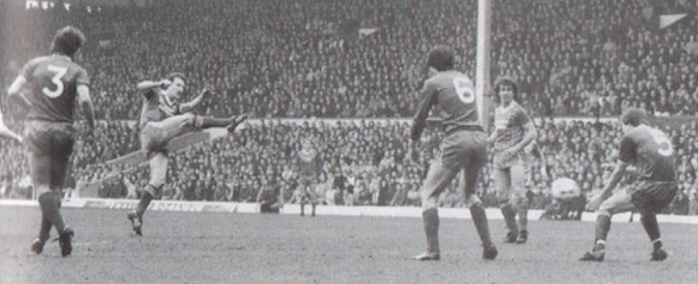
BRIGHTON’s unlikely run to the 1983 FA Cup Final was largely spearheaded by the incredible shooting power of Scouser Jimmy Case.
He’d picked up almost every medal there was to have in a decade with Liverpool but he’d missed out on a FA Cup winners’ gong – and Albion unexpectedly provided a golden opportunity to put that right.
Case, who scored for Liverpool at Wembley in the 1978 FA Cup Final but ended up losing 2-1 to Manchester United, had already scored for Brighton in the fourth round 4-1 hammering of Manchester City and would go on to score the quarter-final winner against Norwich City and the opener in the 2-1 semi-final defeat of Jack Charlton’s Sheffield Wednesday.
But who could forget the fifth round FA Cup tie winner he struck on Sunday 20 February 1983 against the club and manager (Bob Paisley) who’d ousted him from his spiritual home two years earlier.
The last of his 269 appearances for his boyhood club was as a late substitute for Kenny Dalglish in the 1981 European Cup Final win over Real Madrid in Paris. He had moved to Brighton that summer as part of the deal that saw Mark Lawrenson transfer from the Seagulls to Liverpool.
When top-of-the-table Liverpool drew bottom-of-the-league Brighton at home in the FA Cup, few gave the visitors a prayer of advancing further in the competition. However, 11 months earlier, Brighton had pulled off a surprise 1-0 league win at Anfield, so maybe it wasn’t such a foregone conclusion.
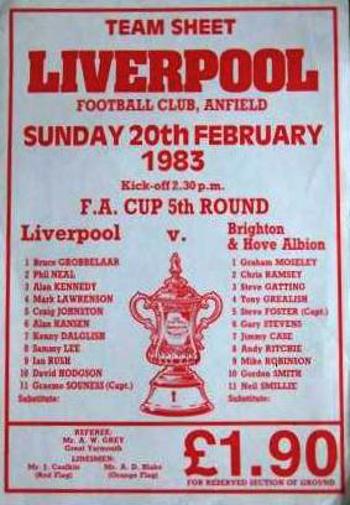
Games these days are played at all hours and on all days at the whim of broadcasters but back in 1983 it was the first ever match played at Anfield on a Sunday.
At the time, the Sunday Observance Act (1780) prohibited admission to a building by payment on a Sunday. Clubs got around this by allowing free admittance to their ground – but took payment from the sale of a team sheet to all fans going into the ground, as Dr Robin Gowers records on lfchistory.net.
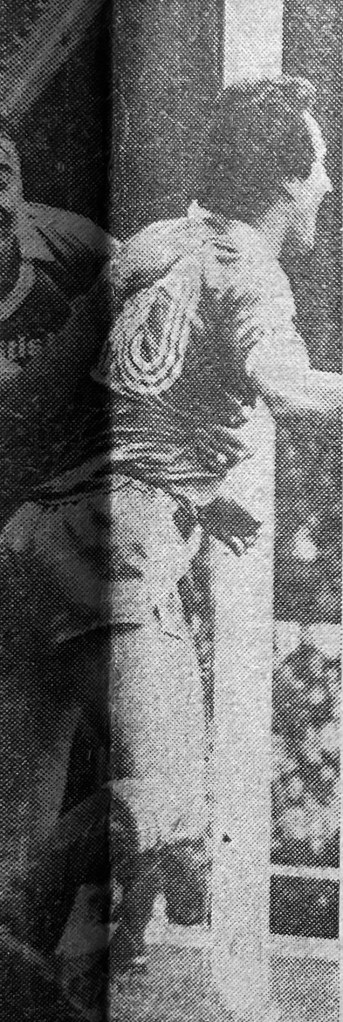
Cheered on by 5,000 supporters, after withstanding early pressure from Liverpool, Albion established a foothold in the game on 32 minutes when Case dispossessed Graeme Souness and set up the fleet-footed Michael Robinson who outpaced and outwitted Lawrenson before sliding a pass for Gerry Ryan to slot home.
Steve Foster and Gary Stevens had their work cut out containing Kenny Dalglish and Ian Rush and the Welshman got away with elbowing Stevens in the face in revenge for one robust tackle.
Left-back Alan Kennedy saw an effort hit the post before Liverpool got back in it shortly after sending on Australian Craig Johnston for David Hodgson.
The substitute didn’t take long to have an impact, scoring with an overhead kick after a Dalglish free kick fell kindly to him.
Cue the inevitable celebrations on the pitch and on the terraces but the whole place was stunned within minutes when ‘one of their own’ broke their hearts.
Tony Grealish and Ryan combined on the left side of the pitch and, almost from the byline, Ryan swung in a cross. Liverpool failed to deal with it and the ball fell to Case lurking in the centre five yards outside the penalty area.
The trusty right foot which he’d used so many times to Liverpool’s advantage leathered the ball goalwards and, with a deflection off Ronnie Whelan, left ‘keeper Bruce Grobbelaar groping thin air as the ball flew past him to put Albion ahead.
That precious advantage was precarious to say the least: only four minutes later, referee Alf Grey gave Liverpool a penalty but the normally reliable Phil Neal sent his effort wide of Perry Digweed’s left-hand post.
The home side forced a series of corners, Rush headed over with the goal at his mercy and Albion right-back Chris Ramsey, who’d earlier sliced a Souness cross over his own crossbar, twice came to the rescue, deflecting a Whelan effort for a corner and heading off the line when Lawrenson thought he’d levelled it with a header against his former club.
But Albion held out and Liverpool had lost for the first time in 64 home cup ties across eight years!
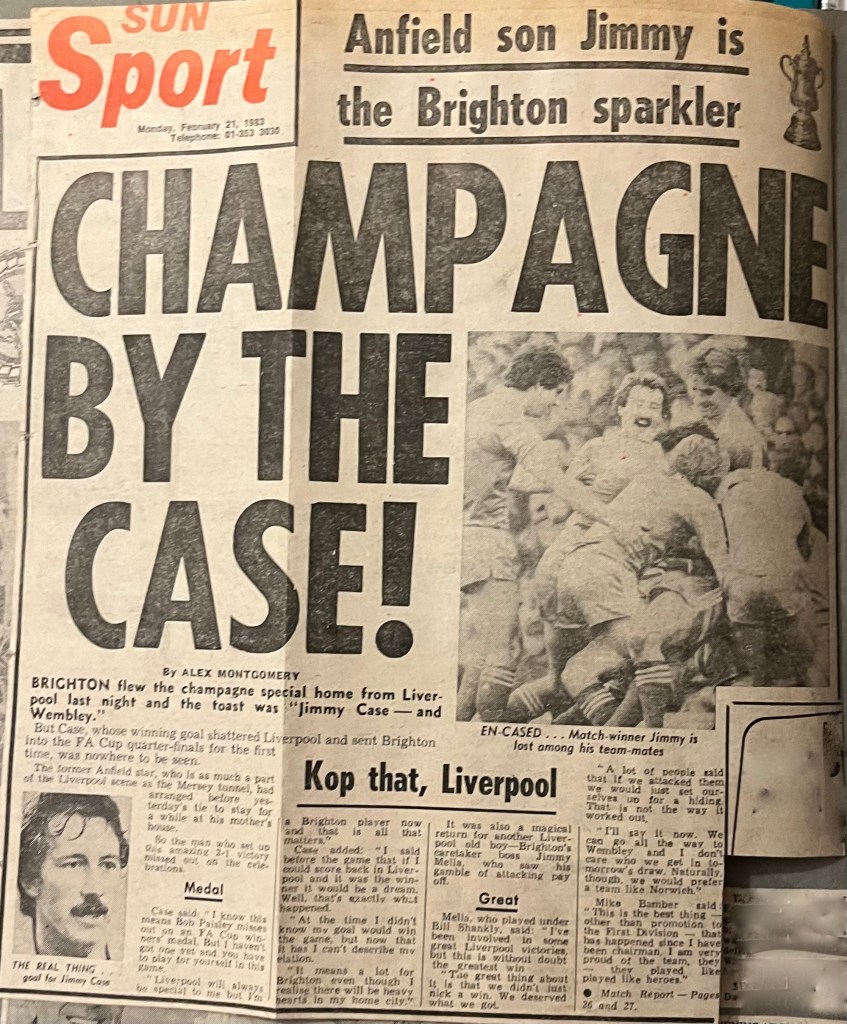
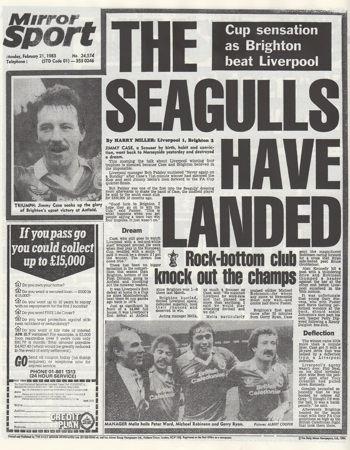
The newspapers had a field day because Case’s winner for Brighton denied his old boss Paisley the chance to wipe the board with trophies in what was his last season as manager.
It seemed every national and local newspaper headline revolved around the likeable Scouser: ‘It’s Case for Champagne’, ‘Jimmy sets out his case’, ‘Old boy Case kills off Liverpool hopes’, ‘Amazing Case’, ‘Killer Case’, ‘Case packs a super Cup punch’, ‘Case for Cup win’. The Daily Mirror made him their footballer of the month for February.
“Scoring the goal that knocked Liverpool out was a bizarre feeling”, Case admitted. “There wasn’t long left in the game and after taking a battering we were holding on for a replay.
“I hit this shot from the edge of the box and it clipped Ronnie Whelan’s shoulder and looped over Bruce Grobbelaar. I didn’t celebrate. I just turned around and the other lads jumped on me.
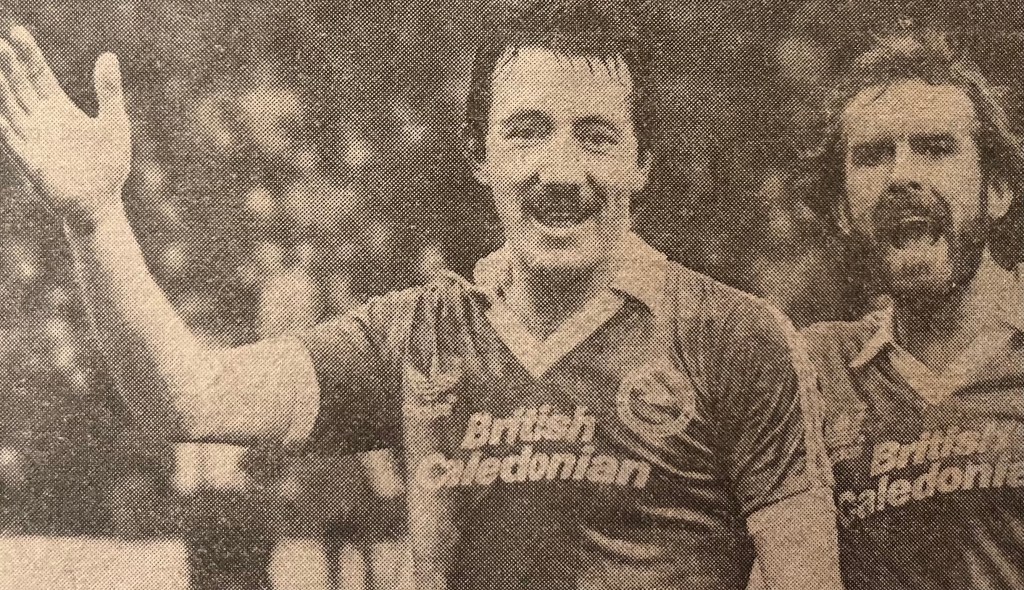
“As I was walking off the pitch after the final whistle what hit me was that the Kop were singing my name. I had just wrecked their hopes of winning the FA Cup and they chanted my name. You can’t buy those type of moments.
“As I came off the pitch this TV reporter shoved a bloody big microphone into my face and said, ‘Jimmy, do you realise that you just knocked Liverpool out of the FA Cup and robbed Bob Paisley of his last chance to win it before his retires, the only trophy he’s never won?’
“I just gave him a stare and said, ‘Well what about me, I’ve never won it either. Bob Paisley wouldn’t have lost any sleep thinking about me if we would have lost so I won’t either, that’s just the way it goes’.”
Case wasn’t the only former Red in the Albion dressing room celebrating. It was sweet too for Jimmy Melia, Albion’s chief scout-turned-acting-manager, who himself had scored 78 goals in 287 games for Liverpool between 1955 and 1964.
“I’ve been involved in some great Liverpool victories but this is without doubt the greatest win,” Melia told Alex Montgomery of The Sun. “The great thing about it is that we didn’t just nick a win. We deserved what we got. A lot of people said that if we attacked them, we would just set ourselves up for a hiding. That is not the way it worked out.”
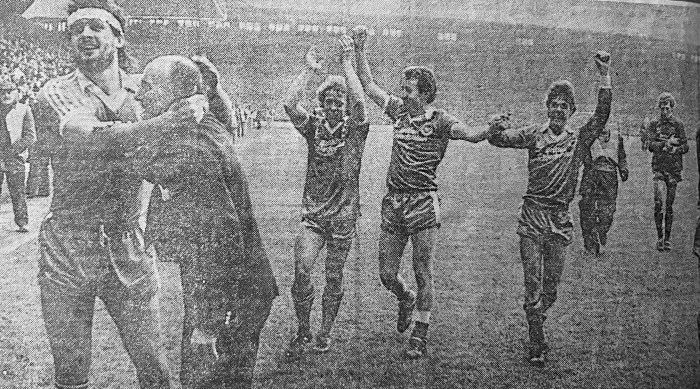
It emerged after the game that John Manning, an old footballing friend of Melia’s, had been key to plotting the victory. Former Crewe, Bolton and Tranmere striker Manning, Albion’s scout in the north at the time, gave the players a pre-match rundown on what to expect.
“Best team talk we’ve ever had,” defender Stevens told the Daily Mail. “Liverpool played exactly the way he said they would and he was even right about which side Neal would send his penalty.”
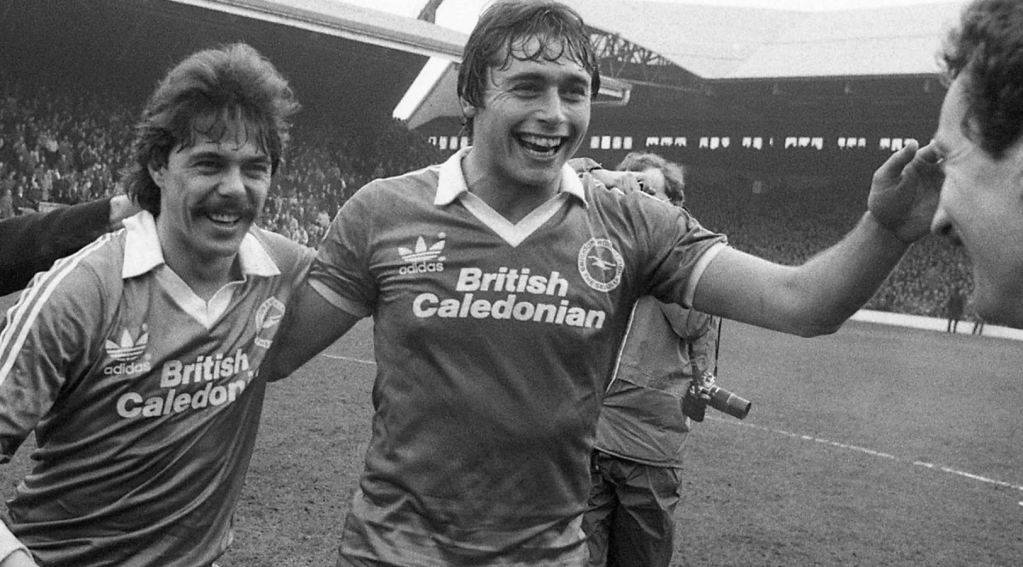
Case later revealed how a good friend of his had been out of the country at the time of the game and sent him a postcard with only two words as its message: ‘You bastard’.
Liverpool legend Dalglish said: “Jimmy Case only did for them what he did for us many times, and that was to make a huge contribution.”
Indeed, Case had a trophy cabinet containing three European Cup winners’ medals, four Division 1 (Premiership equivalent) winners’ medals plus one each for winning the UEFA Cup, European Super Cup and the League Cup.
Brighton’s abysmal league form in the 1982-83 season saw them struggling to stay amongst the elite but in the FA Cup it was a different story and Case was once again in the headlines when he scored the only goal of the quarter-final against Norwich City at the Goldstone and the thunderbolt opener in the 2-1 semi-final defeat of Jack Charlton’s Sheffield Wednesday at Highbury.
The history books have on many occasions recalled just how close he came to securing a FA Cup winners’ medal with Brighton. Sadly, the day of Albion’s 2-2 drawn final against Man U ended in personal heartbreak for Case.
His mother Dolly died at his Hove house while he was at a reception in Brighton laid on for the team by civic leaders. His parents had travelled from their home in Liverpool for the game and back in Hove before he left for the event his mother had said she wasn’t feeling well.
Case left the reception early but on his return home there was an ambulance outside the house.
Dolly was only 63 and had not long retired after years cleaning school floors in Liverpool.
It was to Case’s immense credit that he took his place in the side for the replay just five days later.
He acknowledged in a 2018 interview with Ian Herbert of the Daily Mail that the famous Gordon Smith chance at the end of the first game was pivotal. “You knew there and then that was it,” Case reflected. “You knew that was our chance to win and there wouldn’t be another one.
“If I had our team lined up and had to choose one player in that scoring position it would always be Gordon Smith. Always. But you knew that was it.”
He added: “At Liverpool we called the ones who don’t win the nearly men. But it didn’t feel like that for us. What a day that was.”
• Case suffered further frustration in his bid for a FA Cup winners’ medal after he joined Southampton. He captained Saints to a 2-0 quarter-final win over the Albion in 1986 and then faced Liverpool in the semi-final played at White Hart Lane.
A win would have made Case the first player to appear in three FA Cup finals with different clubs. The game went into extra time with the score goalless on 90 minutes but Liverpool put paid to his dream winning 2-0 with a brace from Ian Rush (99th and 104th minutes).
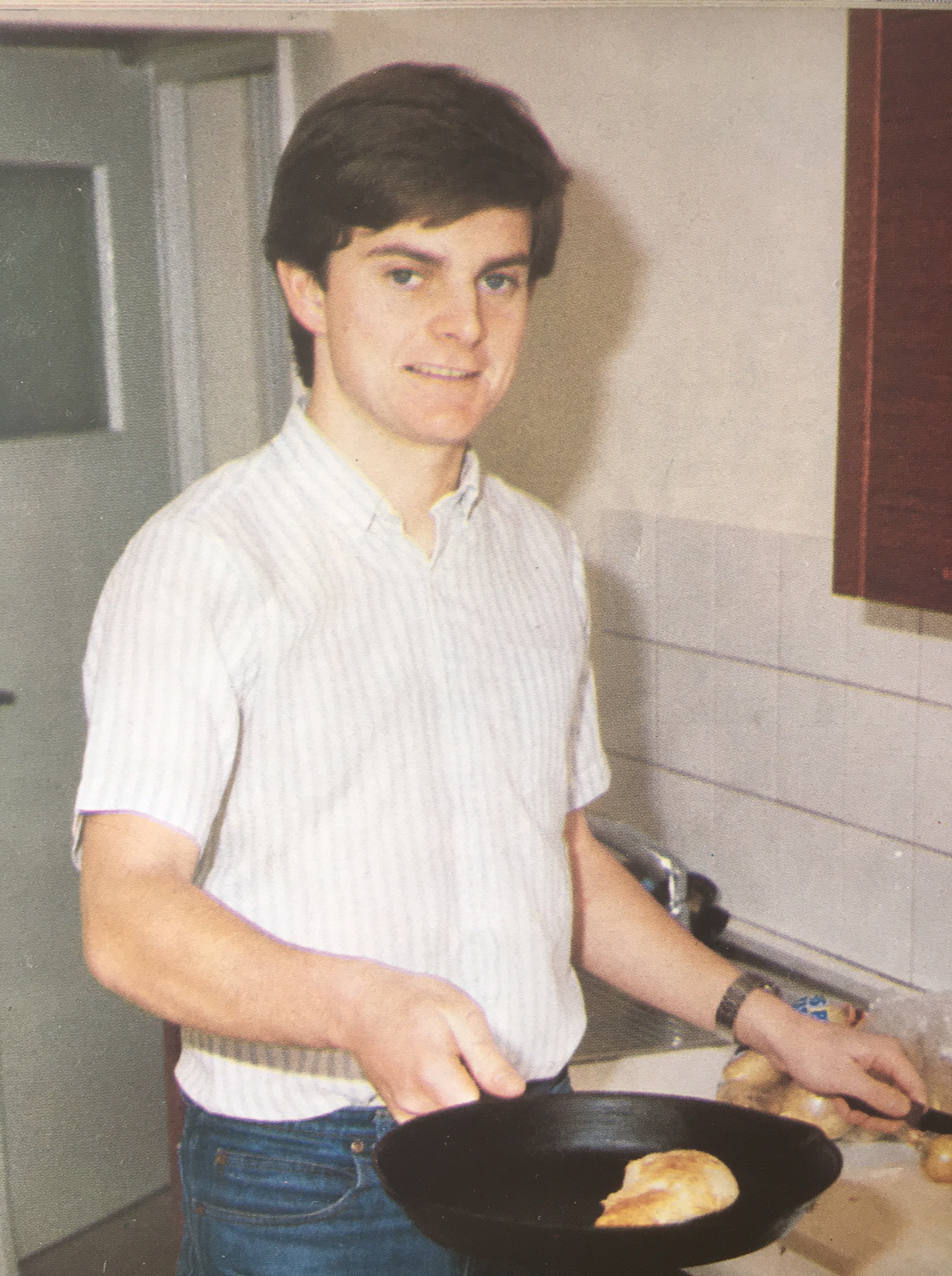
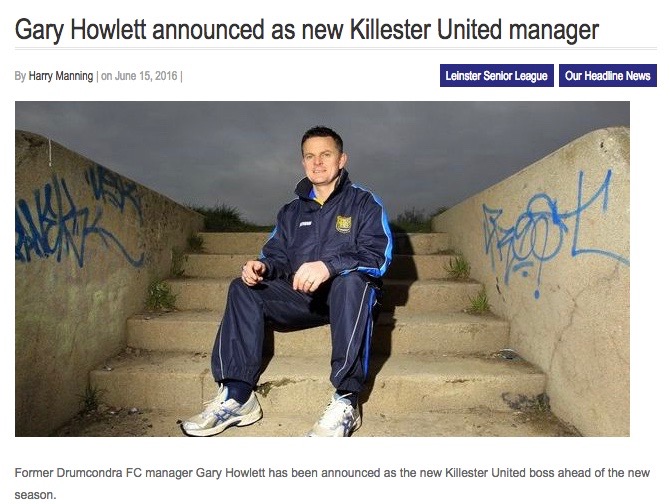
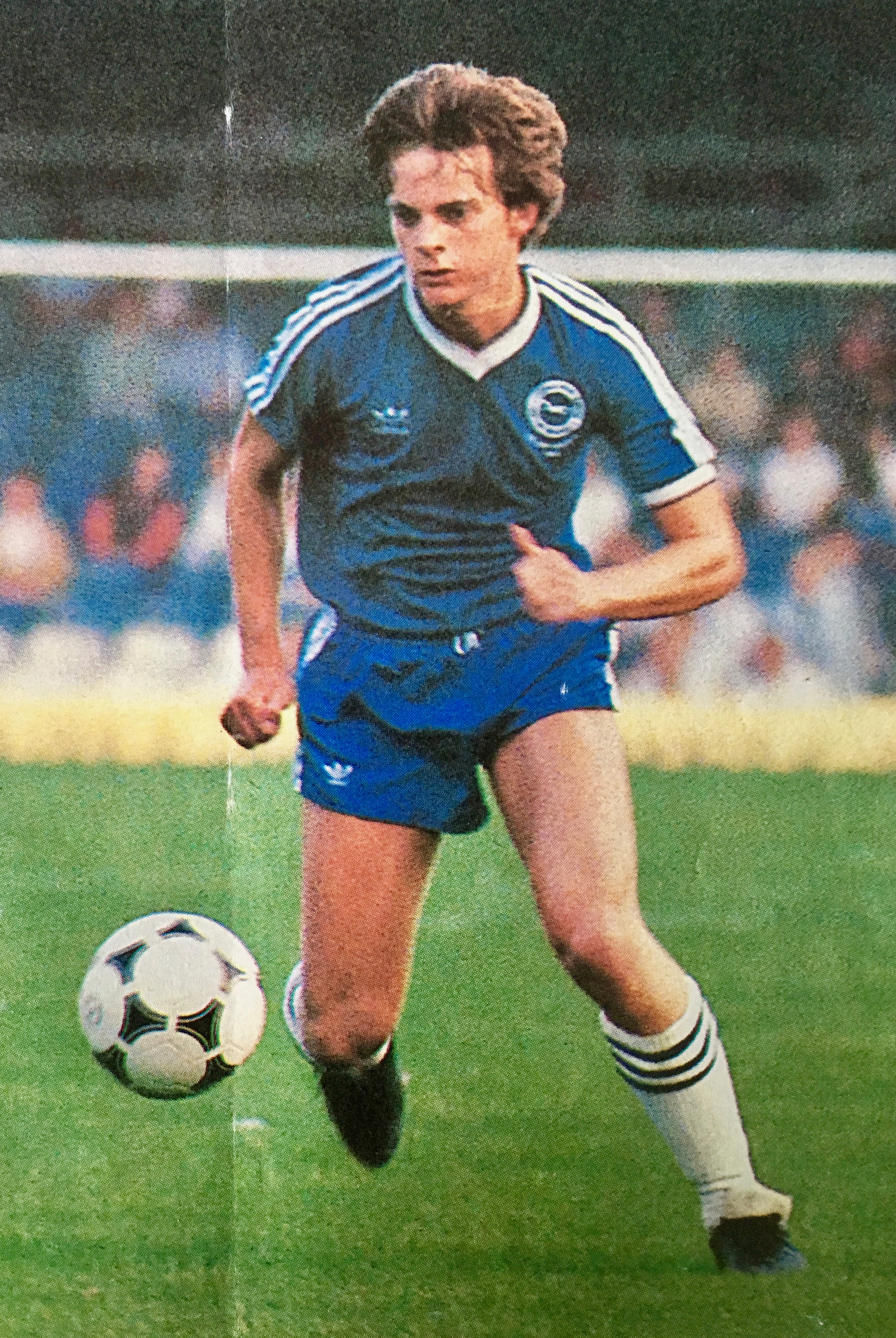 GARY HOWLETT is probably the least well remembered player of Brighton’s 1983 FA Cup Final side.




 In parallel lines