Matthew Upson was a class act in Albion’s defence

ARTICULATE pundit Matthew Upson was deservedly player of the season after starring in Brighton & Hove Albion’s back line during the 2013-14 season.

Earlier, in a career spanning eleven clubs, he played more times (144 plus once as sub) for West Ham United than any of his other clubs. He also won 21 England caps.

Upson initially joined the Seagulls during the second half of the 2012-13 season, signing on loan from Premier League Stoke City, where, in two years, he’d only managed 21 games (plus four as sub) following four years with the Hammers.

On signing him for Brighton at the age of 33, manager Gus Poyet told seagulls.co.uk, “When we had the chance to bring a player with the quality of Matt until the end of the season we went for him.

“He’s experienced, he’s been a regular Premier League player and there were no doubts about it. He has presence, he’s a leader as well and it’s a good opportunity for us to use him the right way and for him to play football.”

Upson joined a side already blessed with the on-loan presence of another former England international in the shape of left-back Wayne Bridge, but unfortunately the side couldn’t get past arch rivals Crystal Palace in the play-offs to gain promotion from the Championship.

Although Poyet departed, Upson decided to make his move to Brighton permanent and played 41 games, mainly alongside skipper Gordon Greer. Unfortunately, Oscar Garcia’s squad also stumbled in the play-offs.

Hampered by an ankle injury towards the end of the season, although Upson played in the first leg 2-1 home defeat to Derby County – when he conceded a penalty with a clumsy foul – he was one of several players to miss out through injury in the away leg, when the Rams prevailed 4-1.

At the season’s end, Upson declined a new contract offer with the Albion and decided to seize the opportunity to return to Premier League football with newly-promoted Leicester City.

As it turned out, injury delayed his debut by seven months and he made just six appearances for the Foxes before ending his playing days with MK Dons, where he was limited to four full appearances plus three as a sub.

Upson is now a regular pundit on our TV screens, displaying verbally the sort of calm assuredness he demonstrated out on the pitch.

So where did it all begin? Born on 18 April 1979 in Eye, a small Suffolk market town, Upson went to Diss High School, over the border in Norfolk, and his football ability first shone at Diss Town FC. He went on to the Ipswich Town Centre of Excellence but it was Luton Town who took him on as a trainee after his Ipswich coach, Terry Westley, had switched to the Hatters.

It was to be a lucrative decision by Luton because, after signing him as a professional in April 1996, a year later they sold him to Arsenal for £2million. He only ever made one first team appearance for Luton and that was as an 88th minute substitute against Rotherham United in August 1996.

Unfortunately, his time with the Gunners was dogged by injury and lack of opportunity because of the solid form of the likes of Tony Adams, Steve Bould and Martin Keown.

Just as he was beginning to make a breakthrough in the 2001-02 season, taking the ageing Keown’s place, he broke his leg and missed out on the Gunners’ end-of-season League and FA Cup double, although he earned a league winners’ medal. At the season’s end, he’d made 16 appearances plus six as a sub.

While waiting for his chance at Arsenal, he had gone out on loan, to Nottingham Forest and Crystal Palace, then Reading after his return from the leg break. But after a total of 39 appearances, plus eight as a sub, for Arsenal spanning five and a half years, he made a £1m move to Birmingham City in January 2003.

City were halfway through their first season in the Premier League, under Steve Bruce, and Upson made 14 appearances as the side finished in 13th place.

Upson told the dailystar.co.uk: “I had a good four and a half years under him at Birmingham. We had quite a successful period there.”

It was during his time with the Blues, during which he made 127 appearances plus one as sub, that his form was recognised with a call up to the England squad.

He had played at youth level and 12 times for the under 21 side but his first call-up for the senior squad came in February 2003, when he was an unused sub for England’s 3-1 win over Australia.

Three months later, coach Sven-Göran Eriksson gave him his debut when he came on for the second half In England’s 2-1 win over South Africa in Durban on 22 May 2003.

His final international appearance also came in South Africa – when he scored in England’s 4-1 defeat to Germany which brought about their exit from the 2010 World Cup. His involvement in the tournament was keenly followed by relatives and the whole community back in Diss.

He was involved in the squad for two subsequent games in September that year, but didn’t get to play. In total, he won seven caps while with Birmingham and 14 under Fabio Capello, after he had moved to West Ham. Of his 21 England appearances, 16 were as a starter, five as a sub.

Birmingham boss Bruce was reluctant to lose him but, on the final day of the transfer window in January 2007, the recently appointed Hammers boss, Alan Curbishley, paid £6million to take him to Upton Park, where enjoyed the longest spell of his playing career.

As he’d experienced at previous clubs, injury hampered him early on but eventually he got a regular spot in the side and subsequently took on the captaincy after the departure of Lucas Neill in August 2009.

It was after relegation from the Premiership during Sam Allardyce’s tenure as manager that Upson finally left the Hammers at the end of the 2010-11 season.
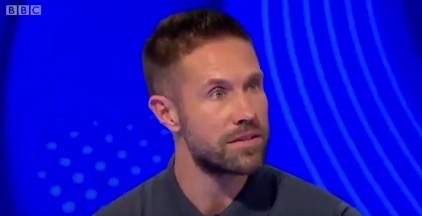
studio upson

Coventry’s legendary skipper Ernie Machin also led Brighton

3 Machin Shoot!A MIDFIELD dynamo who captained Coventry City during their glory years at the top of English football’s pyramid was instantly installed as captain when he signed for third tier Brighton.
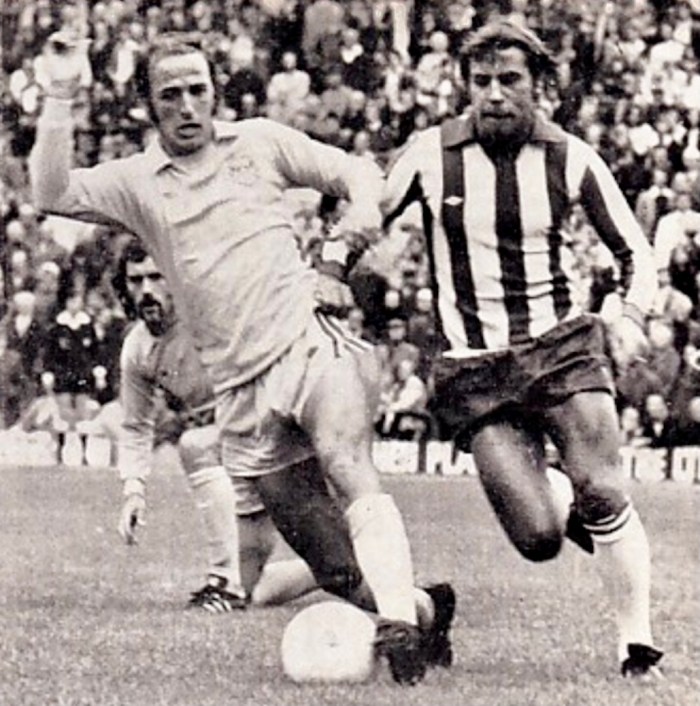
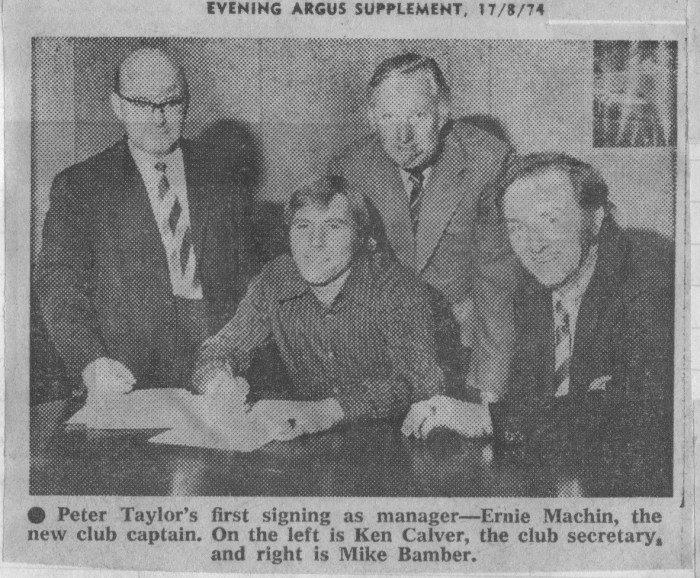
Ernie Machin was the first signing Peter Taylor made on taking sole charge of the Albion following Brian Clough’s decision to quit and join Leeds United.

Taylor, a former Coventry goalkeeper, had a well-earned reputation for his detailed knowledge of Midlands footballers.

Although Machin had moved to Plymouth Argyle in 1972, after 10 years at Highfield Road, he fitted the bill perfectly to add a bit of bite, experience and leadership to Taylor’s side.

A £30,000 fee took him to the Goldstone in the summer of 1974 but he was still nursing an injury sustained in training at Plymouth and when rushed into action too soon he broke down and missed quite a chunk of matches in the first part of the season.

Eventually he took up a regular spot in the centre of midfield and Argus reporter John Vinicombe observed in his end of season summary: “It wasn’t until the latter part of the season that Machin started to display known form.”

Machin actionThe midfielder eventually completed 31 games (plus three as sub) but manager Taylor took the captaincy from him and appointed his new centre back signing, Graham Winstanley.
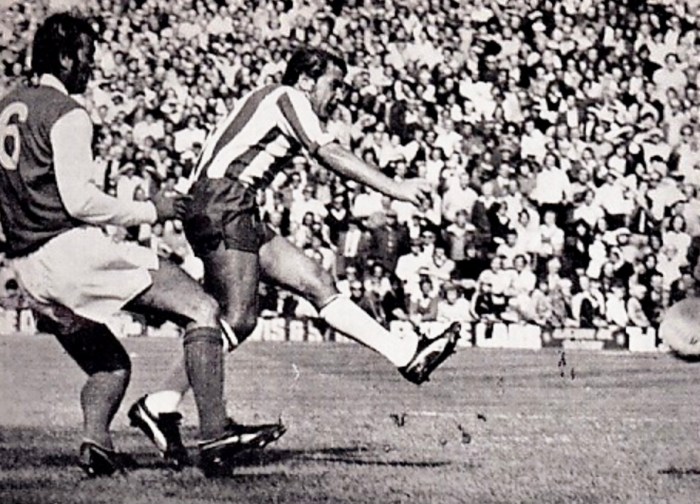
Nevertheless, Machin began the following season and got what would be his one and only Albion goal in the opening fixture, a 3-0 home win over Rotherham United.

He remained ever-present until the arrival in March 1976 of the on-pitch leader who would guide Albion to the promised land – Brian Horton.

Machin shootsMachin played 41 games that season and only shared the midfield with Horton once – in what turned out to be his final game in the stripes, a 4-2 home win over Grimsby Town.
I hadn’t been aware until reading the excellent thegoldstonewrap.com that Machin didn’t move to Sussex during his time with the Albion. “He never settled on the south coast, and still lived in Coventry and trained in the Midlands,” they reported.

So perhaps it was no surprise that when Jimmy Hill, the manager who signed him for City and went on to be Coventry chairman, offered Machin a job back at his old club, he was only too happy to accept.

He took on the role of youth team coach, but it didn’t work out and he left football and went to work for Car Bodies and Massey Ferguson.

Machin was a member of the Coventry City Former Players Association after his career ended and they paid due respect to his part in the club’s history when he died aged 68 on 22 July 2012.
In an extended obituary on their website, they related how he had been born in Walkden, Manchester, on 26 April 1944, and had trials alongside future World Cup winner Alan Ball at Bolton Wanderers, but was not considered good enough.

Instead Machin joined non-league Nelson FC and, in 1962, was spotted by Coventry’s North West scout Alf Walton, who suggested Hill sign him up.

Hill wasn’t entirely convinced but admired the fact he rarely wasted a pass when in possession, and paid the princely sum of £50 to take him to Highfield Road, adding a further £200 when he made it into the first team.

That breakthrough came in April 1963, aged 18, in a 2-0 win over Millwall, and by the start of the following season he was first choice in the number 10 shirt as the Sky Blues headed for promotion.

However, they did it without Machin who sustained a bad knee injury in a home game with Watford in November, and missed the rest of the season, and beyond. Indeed, it was 18 months before he played again, having endured several operations.

Eventually he returned to play a pivotal role in the club’s Second Division title win in 1967, scoring 11 goals along the way.

When regular captain George Curtis broke his leg in the club’s second game in Division One, Machin took over as skipper and missed only three games in the club’s first two years amongst the elite.

ccfpa.co.uk recalled: “Older fans will remember his stunning goal in the 2-0 victory over European champions elect Manchester United in March 1968.

“His never-say-die attitude won him the respect of all his playing colleagues and the fans. He continued to be a regular, when fit, right up to the time of his departure in 1972 but a bad car accident put him out for three months in 1970 and his ‘dodgy’ knee continued to trouble him.”

The history books record that in 1972 he was the first English footballer to go through the courts to challenge a FA fine and suspension using TV evidence. He was sent off in a game at Newcastle for allegedly kicking an opponent, but the footage proved his innocence.

Even so, the FA spotted something else he’d done and upheld the disciplinary action on the basis of that without allowing him to present a defence. The courts ruled against the FA, and the PFA subsequently established the rights of players to legal representation in disciplinary cases.

By the time Coventry’s new managers Joe Mercer and Gordon Milne sold him to Plymouth for £35,000, he had played 289 games and scored 39 goals.

The website greensonscreen.co.uk says: “When Machin moved to Home Park in December 1972 he soon showed his class and intelligence, controlling games from midfield. He was named the Player of the Year in his only full season with the club but, much to the dismay of the fans, requested a transfer and moved to Brighton and Hove Albion.”

Despite his relatively short stay at Home Park, he made such an impression that in 2004 he was named in Plymouth’s Team of the Century.

Although suffering from poor health, Machin attended a reunion of Coventry’s 1967 promotion-winning team in 2007 and in 2008 he was one of 30 former players inducted into the club’s Legends Group for services to the football club.

1 main ernie + cant2 machin signs

Pictures include one from my scrapbook of Machin in a Coventry team line-up alongside manager Noel Cantwell who kindly gave me his autograph when the Sky Blues played Brighton in a friendly. Also pictured, the Evening Argus coverage of his signing. And a Shoot! magazine portrait. Plus a montage of other images.

Eire captain Tony Grealish swapped one Albion for another

1 main pic TG cover boyTHE PLAYER who led out Brighton at Wembley for the 1983 FA Cup Final against Manchester United was an experienced Republic of Ireland international who went on to play for West Bromwich Albion.
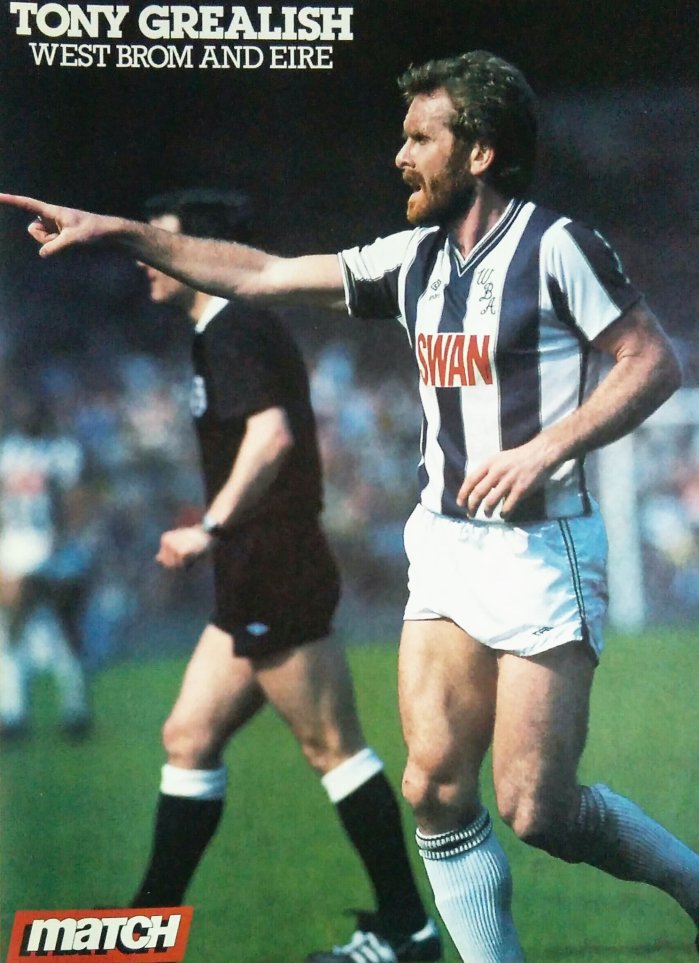
Tony ‘Paddy’ Grealish, sadly no longer with us having died of cancer aged only 56 in 2013, was given his international debut against Norway in 1976 by the legendary Johnny Giles, who knew a thing or two about midfield play.

In fact it was Giles, in his second spell as WBA manager, who took Grealish to The Hawthorns in 1984 as the break-up of the Brighton cup final squad continued.

After his untimely death, Giles told the Irish Times: “I obviously knew him at that stage from the Ireland set-up and knew what to expect.

“He wasn’t the classiest of players but he was one of the most hard working and you knew exactly what you were going to get.

“He was a great lad; a social animal who liked a drink after a game but gave you absolutely everything during it.”

Born in Paddington, London, on 21 September 1956, Grealish qualified to play for the Republic through his father, Packie, who was born in Athenry, Galway, and his mother Nora’s parents, both from Limerick.

He began his career across the other side of London, at Orient, and played 171 games for the Os, one of the last being the memorable 3-3 draw against Brighton in 1979 which featured on The Big Match. One of his teammates that day was Henry Hughton, brother of subsequent Brighton manager, Chris.

The previous year Grealish had been part of the Orient side that made it through to the FA Cup semi final against Arsenal, played at Stamford Bridge, but they were beaten 3-0 (the Gunners lost 1-0 to Ipswich in the final).

In 1979, David Pleat paid £150,000 to take him for Luton Town for whom he played 78 games in two seasons.

The managerial upheaval at the Goldstone Ground in the summer of 1981 saw the arrival of Mike Bailey in place of Alan Mullery, and one of his first moves was to bring in Grealish as part of a swap for Brian Horton, the ageing, inspirational captain who led Brighton from the old Third Division to the First.

Grealish was definitely what you’d call a players’ player, someone who did the hard work in the engine room of the team to enable players with more flair to shine.

He talked about just that scenario in an interview with the Daily Mail after Brighton had beaten Sheffield Wednesday at Highbury in that 1983 cup semi-final.

Referring to an incident when he’d charged down a free kick, he told Brian Scovell: “That’s my job. I’m the bloke with the ugly mug so they get me to do it.”

It was Grealish who rolled the ball to Jimmy Case to smash home that memorable opening goal and he relished his teammate’s strike, saying: “It wasn’t just the power, it was the way the ball swerved away from the ‘keeper that did it.”

After the disappointment of missing out in 1978, reaching the cup final was extra special for Grealish and he found himself thrust centre stage as a result of usual captain Steve Foster’s suspension from the first match.

Even all this time later, people remember how Grealish wore the trademark Foster headband as he led Brighton out. “It was a small protest over Steve’s exclusion from the final,” he told the media after the game.

In the News of the World, Fred Burcombe began his report: “Tony Grealish, Brighton’s stand-in skipper, yesterday entered the Wembley arena with a gesture of defiance and left for home in a blaze of confidence.”

In fact, Grealish was involved in both Brighton’s goals in the 2-2 draw. James Mossop reported in the Sunday Express: “Brighton stayed on the attack after a corner. Tony Grealish collected the ball and his teammates began to fan out, all eager for a pass. He chose Neil Smillie on the right. Smillie gave young Gary Howlett the chance to centre – and as the ball curved in Smith met it ideally, sending his header over the ‘keeper’s outstretched forearm and into the net.”

And with the clock ticking down, United by now 2-1 up, it was Grealish who drilled the ball hard into the penalty box where Gary Stevens controlled it and fired the ball past Gary Bailey to net the equaliser.

Grealish lived in Peacehaven during his time with the Seagulls and clearly enjoyed the social life with his teammates.

“The atmosphere at Brighton is particularly good,” he told Tony Norman in a club programme feature. “There’s always plenty going on. I enjoy our Wednesday golf games. There’s often as many as 10 of the players there. That’s always a laugh.”

Following relegation to the second tier, the Seagulls squad was broken up bit by bit; Gary Stevens and Michael Robinson going first. Grealish lasted a little longer and played two thirds of the 1983-84 season before being sold to West Brom in March.

It didn’t stop him being selected alongside teammate Case in the PFA representative side that season (the centre half selection was Mick McCarthy and the forwards included Kevin Keegan and Mark Hateley).

In total, Grealish played 116 games plus five as a sub for Brighton, and his last game for the Seagulls saw him score in a 1-1 home draw with Manchester City, who he would subsequently join in 1986-87. He played 65 games for West Brom, and 11 times for City, who also had former Seagull Neil McNab in their line-up.

In August 1987, Grealish moved to Rotherham United and played 110 games for the Millers before moving to Walsall (36 appearances).

During his time at Rotherham, in 1988-89, he once again found himself in the PFA representative selection, this time for Division Four. Grealish then did the rounds of various non-league clubs in the Midlands: Bromsgove Rovers, Moor Green, Halesowen Harriers, Sutton Coldfield and Evesham United.

He returned to Bromsgrove Rovers as player-manager before calling it a day, and then worked in the scrap metal business. His career record showed he played a total of 589 league games, plus 45 for the Republic of Ireland; 17 of them as captain.

Little surprise, then, that when he died in 2013, the Football Association of Ireland paid a warm tribute. FAI president Paddy McCaul said: “He will be remembered as a great servant of Irish football who was part of the international set-up under John Giles and Eoin Hand that came so close to qualifying for major tournaments and helped change Ireland’s fortunes at that level of the game.”

FAI chief executive John Delaney added: “Tony Grealish was one of my footballing heroes when I was a child and I always remembered him as a great competitor who always gave his all for Ireland.”

It was during Alan Kelly’s brief reign in charge, in 1980, that Grealish was first made Eire skipper – against Switzerland – and he was a central figure in successor Eoin Hand’s team.

“He was a great character,” said Hand. “I don’t think I ever selected a team during my time in charge that didn’t have him in it.

“I think it’s fair to say he raised his game when he was playing international football. I’d say he was a great club player but the commitment he gave for Ireland; he just couldn’t have given that on a twice weekly basis playing club football. He gave absolutely everything.

“He contributed so much (including eight international goals), had an infectious enthusiasm for it all. If ever there was someone who showed how proud he could be to represent his country then Tony was it. He was very much part of it all; a great ambassador; very generous.”

Hand added: “He was a great example to others in the way he dealt with people; other players, supporters, kids….a really wonderful guy. I was very lucky to have him around when I was manager.”

3.TG shoot cover2 Football Past on Twitter

  • Pictures from my scrapbook show Grealish on an Albion matchday programme cover, a Match magazine pic of him in WBA colours via Football Past on Twitter, on the front of the 1983 FA Cup Final preview edition of Shoot!, and, below, a montage of various headlines and images.

Flying winger Tony ‘Tiger’ Towner immortalised in children’s TV programme

2-towner-takes-on-argusIF ART is the sincerest form of flattery, Tony Towner can count himself amongst the privileged few to be forever remembered on film.

That it was done by two of Rotherham United’s most ardent celebrity fans is neither here nor there – it’s not everyone who can say their prowess has been portrayed in an episode of Chucklevision.

Towner and fellow Millers hero Ronnie Moore were at the centre of a classic knockabout episode of the children’s TV series in which Rotherham supporters Paul and Barry Chuckle constantly get involved in slapstick scrapes.

In Football Heroes, made in 1996, the Chuckle Brothers meet Towner and Moore (actors playing them rather than the footballers themselves!) on their way to a game and accidentally end up with their invitation cards to play in a veterans match, leading to them ending up on the pitch.

Towner earned plaudits for his Rotherham performances in this Shoot magazine feature – pipping one Danny Wilson!

It was Towner and Moore’s starring performances in the Rotherham side that won promotion from the old Division 3 as champions in 1980-81 that earned them cult status.

Over three seasons, Towner appeared over 100 times for the Millers and even all these years later is still remembered with affection.

Take, for example, comments made on the Millers Mad website a couple of years ago. Ivor Hardy said: “Tony (Tiger) Towner was one of the best and most talented footballers ever to play for us.

“He was instrumental in us winning the league in 80/81, along with doing the double over our near neighbours Sheffield United in the same season.

“We were lucky to get the services of Towner and Seasman from Millwall, and only did so because the Lions were in financial turmoil that season and had to get some money in fast. He will always be a legend with the older fans, along with team mates Seasman, Moore, Fern, Breckin, Mountford etc.

“Tiger gave us some great memories.”

Meanwhile, kevthemaltbymiller said: “Great player for us, very tricky winger with lightning pace. Happy memories.” And sawmiller added: “Tiger was a super player – good winger who created a real buzz in the crowd when he got the ball and ran at players.”

Towner himself considered his time at Rotherham to have been his best playing days. In an Albion matchday programme article, he told Roy Chuter: “They were probably my best years, my most consistent, anyway. I was 26, 27 years old – at my peak. I had three tremendous years.”

Initially playing under Sunderland’s 1973 FA Cup Final hero Ian Porterfield, he also enjoyed working with the former Liverpool legend Emlyn Hughes, when he took over as manager.

Brighton fans also have good memories of the local boy made good. Sussex youngsters making the grade with the Albion have been pretty few and far between over the years, but Towner and defender/midfielder Steve Piper were two who did it in the 1970s.

In Albion’s 1972-73 season in the second tier, Piper had already been blooded in the first team in the November. Towner signed professional on 29 December 1972 and, with Albion having been knocked out of the FA Cup by Chelsea in the third round, manager Pat Saward arranged a friendly against Stoke City on fourth round day, 3 February 1973 (Stoke had been beaten 3-2 by Man City) and gave Towner his first team debut in a 2-0 defeat at the Goldstone.

The following Saturday he made his league debut aged just 17 at home to Luton Town. Albion went into the game having suffered 14 defeats on the trot (12 in the league plus the games against Chelsea and Stoke) and, rooted to the bottom of the table, relegation was inevitable.

Saward gave the side a shake-up, dropping three established players – goalkeeper Brian Powney in favour of loan signing Tommy Hughes from Aston Villa, right back Graham Howell (to the bench), and experienced striker Barry Bridges.

Piper made only his sixth first team appearance and he was joined by winger Towner and forward Pat Hilton. It was Towner’s brilliant display on the wing that really caught the eye as Albion finally mustered a win, beating the Hatters 2-0.

Towner kept the shirt until the end of the season and it was the launchpad for a 15-year professional career in which he made over 400 appearances. After that Luton debut, he scored his first goal in a 2-1 home win against Huddersfield on 10 March.

“I was an Albion fan as a kid, in Bevendean, and I joined them straight from school at 15, as an apprentice,” he said. “I already had the ‘Tiger’ nickname when I got into the team in 1973 – I think it was one of Alan Duffy‘s. I must have tackled him a bit too hard in training, or something. Tiger was a great nickname, and I loved it.”

One of the few survivors of the great Brian Clough cull of the playing staff in 1974, Towner was a speedy, skilful winger who could put in terrific crosses for his teammates. The fact he was a local lad endeared him greatly to the crowd.

In five years, he had plenty of challengers for his place. In the early days, Gerry Fell competed for the wide berth and later Eric Potts, but Towner still managed 171 games (+ 12 as sub) for the Albion and scored 25 goals.

“Gerry was the opposite of me, though still a winger – he had loads of pace, though not too much skill,” Towner recalled. “He’d knock the ball ahead of him and run past the defender to get it, a bit like Stuart Storer. I’d try to trick my way past.”

In John Vinicombe’s end of season assessment of Peter Taylor’s first season in sole charge (1974-75), he said: “It is with no disrespect to Taylor that I suggest that the three most consistent players were those he inherited – O’Sullivan, Towner and Piper.

“Towards the end, Towner tailed off a little but he struck up an intuitive partnership with Fred Binney.”

In fact Towner was third highest in the squad for appearances that season, playing 47 games in total plus four as sub and with 10 goals was second highest goalscorer behind Binney.

It was the arrival of Gerry Ryan from Derby in September 1978, which finally prompted his departure. George Petchey, who later joined Chris Cattlin’s backroom team at the Goldstone, took him to Millwall for £65,000.

Unfortunately, while Brighton won promotion to Division 1 in 1979, Millwall went the opposite way out of Division 2, and Towner found himself back in the third tier.

After 68 appearances for the Lions, in 1980 he was sold to Rotherham along with teammate John Seasman for a combined fee of £165,000.

Towner scored once for Rotherham’s near neighbours Sheffield United in a 10-game loan spell in 1983 and although he had missed out on Brighton’s eventual elevation to the top tier, he managed it with Wolves in 1983-84 having been signed by the Black Country side for £80,000.

He then joined Charlton Athletic but in the 1985-86 season was loaned to Rochdale where he once again linked up with his former Rotherham teammates, Moore and Seasman. He made five appearances for Rochdale and MikeMCSG on clarkechroniclersfootballers.blogspot.co.uk recalls: “He came on as sub in a home game and made an instantly good impression by beating the full back with his first touch.

“He went on to play a blinder in the draw at Halifax on Boxing Day. Unfortunately Tony didn’t want to uproot to the North and couldn’t be persuaded to make his stay permanent. When Cambridge came in with an offer he signed for them instead although he only made eight appearances for them in total.”

Towner’s final Albion appearance had been in a 4-1 defeat away to Leicester in September 1978 but his final appearance at the Goldstone came in a memorable FA Cup 3rd round tie on 4 January 1992.

Albion beat then Southern League Crawley 5-0 and Towner earned a rousing reception from the 18,031 packed into the Goldstone when, at the age of 36, he came on as a substitute for the visitors.

Crawley were one of several non-league clubs he played for: he also turned out for Gravesend, Fisher Athletic, Lewes, Newhaven and Saltdean.

Interestingly, Towner reflected: “I could definitely have played for a few more years at league level, and perhaps I should’ve done. I’d got a bit disillusioned with it though.”

After his playing days ended, Towner ran his own Brighton-based removals business and watched the Albion as a fan. In October 2015, Brian Owen interviewed him for an Argus piece ahead of a game against Cardiff when former Albion winger Craig Noone was in opposition.

Towner reckoned Albion made a mistake letting him go but added: “It’s good to see Brighton making good use of wingers.

“That’s the way I was brought up, using the wide men.

“It’s all right having midfield men or attack-minded full-backs. But what gets the crowd on its feet is a winger going past the full-back and crossing.

“You can have all the formations you like but, if you see a winger getting past his full-back, it excites people.”

Tony Towner certainly came into that category.

1-sawar-towner
3-towner-crosses-argus-prog
4-argus-shot-towner-on-wing

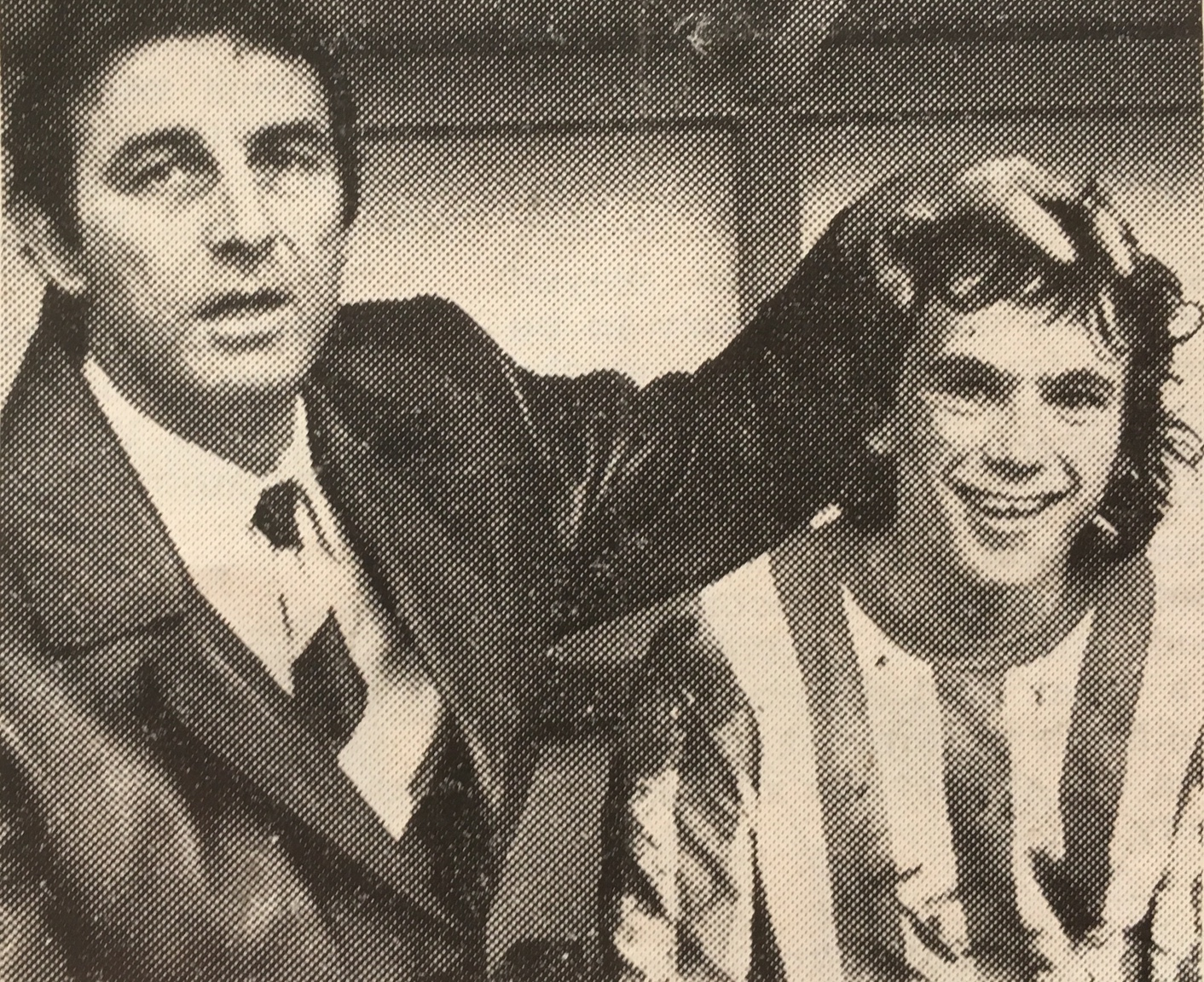
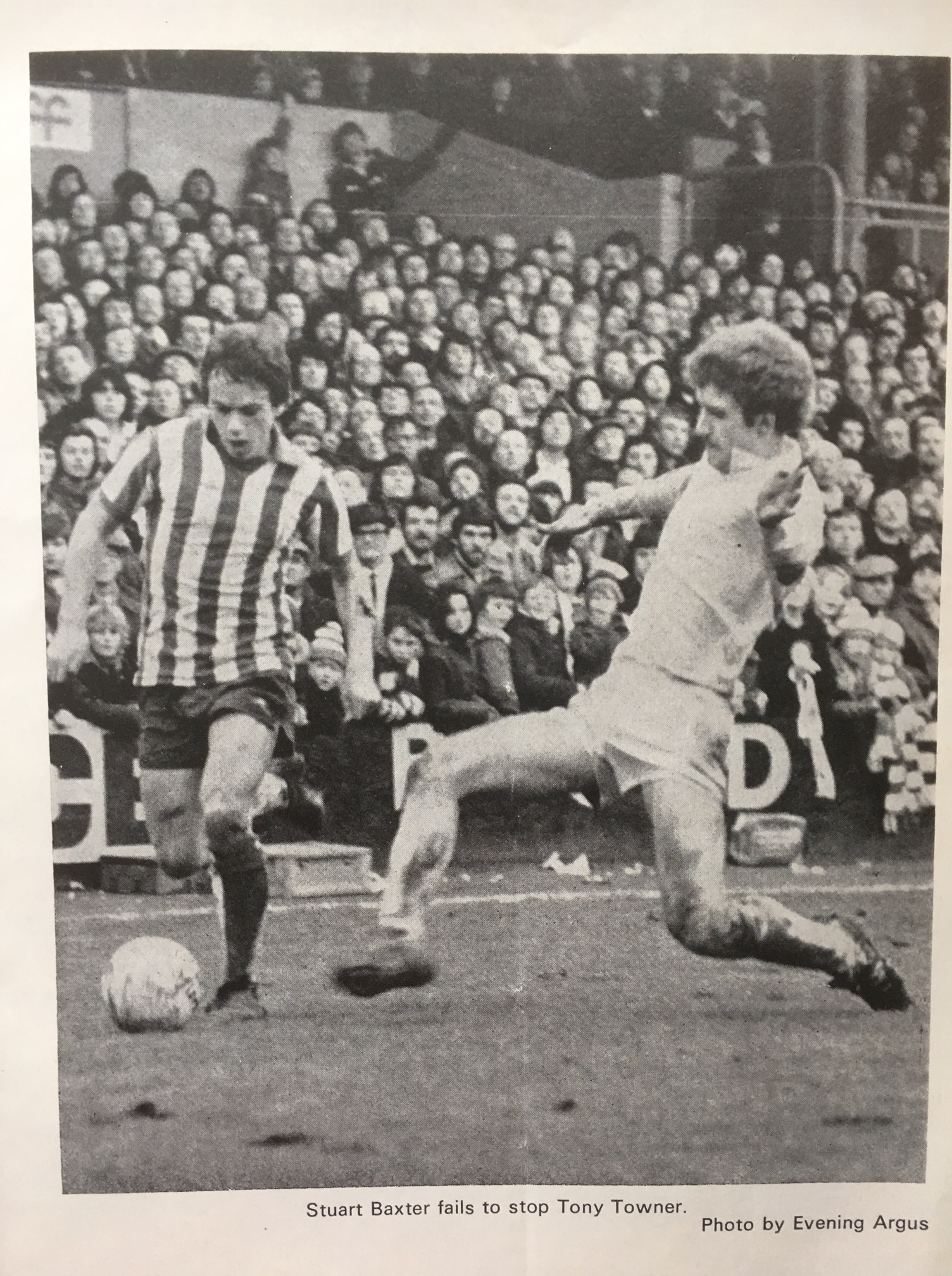
Pictures mainly shot by Evening Argus photographers and then reproduced in the Albion matchday programmes show a happy Towner congratulated by manager Pat Saward after his league debut, in familiar pose taking on a full back, getting in a trademark cross, in full flight on the wing, and finally on a Wolves album sticker.