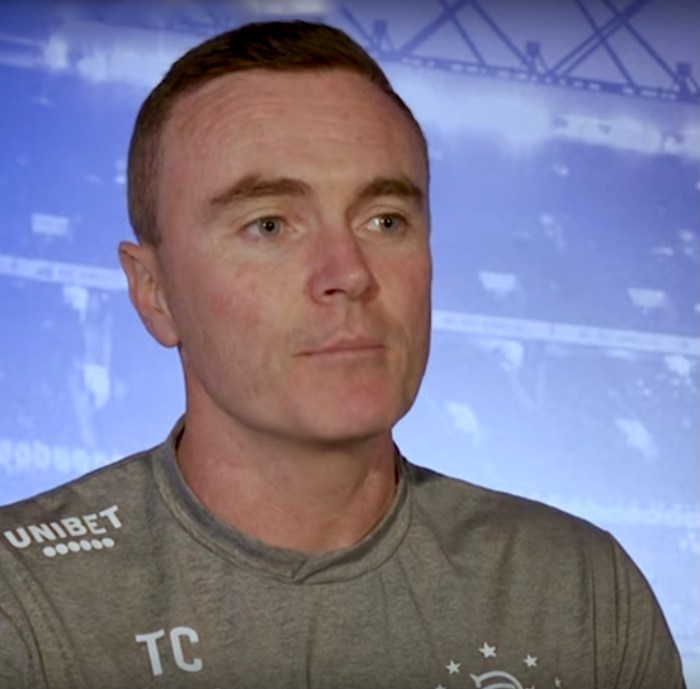
Brighton trial turned sour for Gerrard’s pal Tom Culshaw

A LOYAL MEMBER of Steven Gerrard’s backroom staff once tried to revive his playing career with Brighton after he’d been let go by Liverpool.

Tom Culshaw goes way back to schoolboy days with Gerrard and was a former youth team player alongside him at Liverpool.

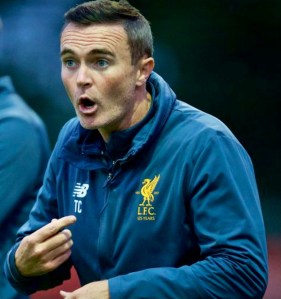
He is now technical coach at Aston Villa, a role he held previously at Rangers after the pair also worked together with the Reds under 18s.
Back in September 1999, the central defender linked up with the fourth-tier Seagulls a few months into Micky Adams’ first reign as manager. Culshaw played for Ian Culverhouse’s reserve side on a trial basis on a drizzly night at Woodside Road, Worthing, and didn’t make the most of the opportunity.

Albion went down 3-2 to visitors Cambridge and a subsequent matchday programme didn’t hold back in apportioning blame.

With the score level at 1-1 it reported: “Albion fell further behind two minutes before the break when Culshaw made a mess of an attempted header back to (Mark) Ormerod, and (Nathan) Lamey picked up the loose ball and took his opportunity well, lobbing the Albion ‘keeper.”

Although Albion restored parity through Scott Ramsay, Daniel Chillingworth added a third for the visitors. Culshaw was subbed off in favour of Chris Beech, and wasn’t seen in an Albion shirt again.

The Brighton trial came as Culshaw desperately tried to get a foothold in the game after the disappointment of being let go after four years as a professional with Liverpool.

A few months earlier, he played for Norwich’s under 21 side against Bristol City in a friendly; he later linked up with Conference side Nuneaton Borough and went on to Northern League teams Leigh RMI and Witton Albion.

“When I left, I found it tough going on trials for lower league clubs,” Culshaw told liverpoolfc.com. “I got offered a couple of contracts at League Two clubs and I decided to knock them back thinking I could do a bit better.

“But when I started to go for trials it was taking longer and longer, and then eventually I just fell out of love with the game.”

He walked away from football for a while, joining up with a friend who had a tarmacking firm. He admitted: “It was hard, it was a tough few years for me. Especially when I saw my mates, the likes of Steven, Carra (Jamie Carragher), Michael Owen – lads who I’d come through the youth team with – progressing.

“I probably had my first bump in the road at 21 and I just really didn’t know how to handle it.”

Until that point, it had all been going so well. Born in Liverpool on 10 October 1978, Culshaw played street football with Gerrard in Ironside Road, on Huyton’s Bluebell Estate, where Culshaw’s grandparents lived. A friendship that included a mutual love of football began when they were pupils at Cardinal Heenan High School.

Culshaw became technical coach under Steve Gerrard at Rangers

“Steven is a year younger than Tom but they both played for me in the under 14 Liverpool Schoolboys FA team in 1992-93,” their former coach Dave Singleton told the Daily Record.

“Stevie was very small and didn’t start growing until he was 16 so I used to put him on the wing because schoolboys football was based on size and a lot of teams just picked the biggest lads who could plough their way through anything.

“So I put Stevie on the wing where he wouldn’t get hurt and could use his skill. Tom was a centre half and the captain of the team.

“He was a commanding centre half but exceptionally skilful too. He could play the ball out from the back.

“We had one game where he picked the ball up on the edge of our penalty area, dribbled the full length of the pitch and scored from the opposite penalty area.”

Singleton added: “He had a physical presence and was good in the air so he was great for set-pieces and comfortable with either foot but stronger on his right.

“They were exceptionally nice lads, a credit to their school, parents and city. It’s so great to see people like that go on and do well.”

An England Schoolboys international, Culshaw spent two years at the FA School of Excellence at Lilleshall at the same time as Owen and Carragher. Culshaw joined Everton at the time Gerrard signed for Liverpool but he was let go and moved to Tranmere Rovers, where his talents flourished.

He was named as captain of the Liverpool City Schoolboys team and Liverpool snapped him up. He joined Gerrard at the club’s Vernon Sangster Centre of Excellence, near Anfield, and he progressed through the under 18s under the guidance of Steve Heighway, Dave Shannon and Hughie McAuley, signing professional aged 17.

On stepping up to the reserves, who were managed by Sammy Lee, he was handed the captain’s armband. “I was around Ronnie Moran, Roy Evans, and all the old-school Boot Room staff,” he said. “I’d progressed and everything went well for me. The national school, playing for England, joining Liverpool, signing professional at 17, progressing to the reserves, captaining the reserves.

“I was a pro for four years. It was a great time at Melwood because everyone was on the same site. I was training with Jamie Redknapp, Robbie Fowler, and Steve McManaman and learned an awful lot from them.”

However, after those four years, and having seen his contemporaries make the step up to the first team that eluded him, Culshaw was forced to look elsewhere after manager Gerard Houillier overlooked him.

Disillusioned by his prospects in the UK, Culshaw moved abroad and started coaching youngsters in Spain. Having decided to pursue that career path, he returned to the UK in 2011 in a part-time role at Liverpool’s academy while studying for his badges.

In 2017, it was his boyhood pal Gerrard who turned his job into a full-time position by promoting him to become his under 18s assistant.

Gerrard said at the time: “When I started out full-time as an apprentice, Tommy was a year above me so I know everything about him and he knows everything about me. I thought he was the perfect partner to go into it.”

Receiving a coaching certificate from former England manager Steve McLaren

Culshaw has remained a key part of the close-knit group around Gerrard ever since, following him to Glasgow Rangers and then to Aston Villa. His particular focus is on set pieces as former Albion centre back Connor Goldson once explained in an interview for Rangers TV.

“Tom Culshaw the coach works on us before every game, different set pieces, defending and attacking, and how we’re going to set up,” he said. “We always know what we’re doing. We always know the routines or what’s happening.”

Captain James Tavernier added: “We work extremely hard on set-pieces in training. TC has us working hard with them all week and it shows in the games as they can effectively give you three points.”

In that interview with the Record, Singleton added: “Whenever I watch games on TV now and see them in the dugout together I feel immense pride.

“Steven’s career achievements speak for themselves and it’s great when the person who isn’t the figurehead gets some credit and there is nobody more deserving than Tom.

“When they were younger you’d have thought both of them would have gone on to make it but there’s a lot of luck in football, being in the right place at the right time.”

Knock-out stories of Mark ‘The Fizz’ Leather

MARK LEATHER spent six years as the first team physiotherapist at Anfield having previously been Brighton’s physio in the early days of Barry Lloyd’s reign as manager.

Leather tended the injured when Albion were promoted from the old Third Division in 1987-88 and half of the 1988-89 tier two campaign before moving back to his native north west.

Roy Evans added Leather’s specialist knowledge to the backroom team at Anfield in 1994 but the physio was controversially sacked by his successor Gerard Houllier following a row over the then teenage striker Michael Owen’s fitness.

A sign of the way Leather expected to work with managers came in an interview for Albion’s matchday programme. “Barry Lloyd will respect the decision if I say a player needs more time to get back to fitness,” he told interviewer Dave Beckett. “From that point of view, he is sadly in the minority.

“If it was different, I wouldn’t hang around, but it still amazes me that some clubs don’t realise that if we all stick to what we know things will run more smoothly.”

Leather, who’d spent three years studying for a diploma, and gained experience in the National Health Service, added: “We’re getting away from the old ‘bucket-and-sponge’ image.”

Ahead of his arrival at the Goldstone, Leather had combined his studies with helping out Exeter City, Leek Town, Port Vale and Sheffield Wednesday. And during the Commonwealth Games in Edinburgh in 1986, Leather provided specialist medical support for the weightlifters and wrestlers.

He revealed a funny story against himself in a matchday programme article. Asked to reveal his ‘most embarrassing moment’ he said: “During the Port Vale and Scunthorpe match in 1985, when Port Vale scored, I jumped up out of the bench hitting my head on the dugout roof and needed smelling salts and a cold sponge.”

Perhaps predictably nicknamed ‘The Fizz’, Leather sought to give an insight to his role in his matchday programme interview. “I try to be friends with all of the lads and the management too, but sometimes you really do have to sit on the fence,” he said.

“There’s pressure sometimes from both sides to say a player’s ready to return, but you have to stand back from the situation and give a professional opinion.”

The Albion gave him a regular slot in the matchday programme which he used to give readers updates on the progress of injured players, and in recent times he has become a regular source for the media seeking expert comments on football injuries.

Leather now has his own physiotherapy business and back in the day at Brighton he and his physiotherapist wife Lucy ran a sports injury clinic for the general public two evenings a week.

Born in Bolton on 24 June 1961, Leather left the Seagulls halfway through the 1988-89 season to return to more a familiar part of the country and took a job in the NHS in Chorley, Lancashire.

Leather had been an ardent Bolton Wanderers fan from an early age and his all-time favourite player was Frank Worthington, who had played for the Seagulls during the 1984-85 season.

When Evans stepped up to take charge of Liverpool, Leather was one of his first appointments (along with goalkeeping coach Joe Corrigan, whose playing career had ended with the Seagulls).

Leather and Corrigan together in Liverpool backroom team

An insight into Evans’ decision-making was given in the book Men In White Suits, by Simon Hughes. “With Mark Leather’s arrival, there was an end to the running repair jobs carried out by a succession of unqualified coaches mid game,” he wrote.

“Regularly injured players had long been treated with suspicion at Liverpool. (Bill) Shankly maintained his side were the fittest in the league, with pre-season geared towards building stamina and therefore preventing muscle tears.

“It was a difficult theory to argue against. Liverpool won the 1965-66 title using just 14 players all season. Anyone who suffered an injury was almost bullied into feeling better. ‘Otherwise you really were persona non grata,’ Alan Hansen said.

“Leather’s recruitment meant that (Ronnie) Moran could focus on drilling the first team in the Liverpool way rather than writing what Evans describes as ‘little scribbles’ on an old ledger, charting training patterns.”

Endorsements to Leather’s attributes appear on his website from the likes of Robbie Fowler and Jamie Redknapp, who is quoted as saying: “Mark Leather has been brilliant with me. He has kept me going and it’s because of him really that I’m back to full fitness as soon as I am.”

In 1999 media reports said Houllier was facing “a furious players’ backlash after his escalating row with Liverpool physio Mark Leather took a dramatic twist”.

Leather was left in the UK when Liverpool went to Oslo for pre-season games, a move which was said to be causing disquiet in the dressing room.

Leather clashed with Houllier over the condition of injured Michael Owen

“Leather is one of the game’s top physios and he was publicly praised by Robbie Fowler after helping the striker make a miraculous recovery from a cruciate knee ligament injury last season,” said one report in the Scottish Daily Record. “Other stars, including Michael Owen and skipper Jamie Redknapp, are known to have a close bond with the medic.”

Houllier was angry at the length of time it was taking for Owen to return to full training after a hamstring injury and sent him to a specialist in Germany for a course of treatment.

In 2013, when Owen’s many injuries finally forced him to his retire from the game, he recalled bad decisions in the past that ultimately affected his career.

“I was compromised because I played too much too soon as a youngster at Liverpool. In my opinion, had I been managed differently I would have been at my best for longer as opposed to being a better player,” he said in The Mirror.

“I basically run on two hamstrings on my right leg and three on the other. I lost a third of the power.

“If I hadn’t, 90 per cent of the other injuries wouldn’t have happened and I would have been the all-time leading scorer for England.”

The Mirror article continued: “If there was a defining moment in his career, then it was a snapped hamstring when his then-manager Houllier ignored the advice of his physio and insisted Owen be brought back from injury quickly because he needed his goal threat so desperately.

“The French coach fell out so badly with the physio, Mark Leather, he forced him out, but Houllier later admitted to the mistake, which Owen believes led to the moment that changed his career – on a cold March evening at Elland Road, Leeds, in 1999. ‘My hamstring snapped in two and it was at that point that my ability to perform unimpeded was finished,’ said Owen.

Leather wasn’t finished with football, however, and he moved to his beloved Bolton Wanderers as Sam Allardyce’s physio for a year, before joining former Trotter Peter Reid at the Stadium of Light.

“From a personal point of view, I’ve had the privilege of working with two guys I used to support from the terraces at Burnden,” Leather told the Bolton News ahead of a match between Bolton and the Black Cats in September 2001. “There’s only one team I’ve ever supported and leaving them last year was purely a professional decision,” he said. “Financially and from a facility point of view, it was the right move for me, but I’ll never stop supporting the Wanderers.”

Leather spent four years (2000-2004) as the head physio at Sunderland straddling the managerial reigns of Reid, Howard Wilkinson and Mick McCarthy.

It certainly wasn’t all plain sailing for Leather on Wearside, as the Republic of Ireland winger Kevin Kilbane, now a TV pundit on the BBC, mentioned in his autobiography (Killa: The Autobiography of Kevin Kilbane; Aurum Press Ltd, 2014).

The player was determined to play for his country but the physio obviously didn’t feel he should because he was still trying to recover from an ankle injury.

Leather had already put him through some tough routines to test the strength of his ankle and when they were then on opposing sides in a two-a-side hockey match, Leather caught Kilbane on the tender joint with his hockey stick.

“After a few times and much pain, I finally snapped, and I gave him a left hook and decked him, leaving him with a fat lip and a very surprised look on his face,” Kilbane admitted.

Although he told the assistant manager Bobby Saxton what had happened, nothing more was done about it. Kilbane said: “I later apologised to Mark Leather but was disappointed he didn’t reciprocate. Things were never right between us after that, although we didn’t let it interfere with our professional relationship.”

After Sunderland, Leather switched sports and took on a similar position with Wigan Warriors rugby league side before moving into the world of academia. He spent seven years at Edge Hill University as a senior lecturer in sports therapy and programme leader for the Football Rehabilitation MSc course.

In October 2006,Leather joined Chester City as club physio, with City chairman Stephen Vaughan declaring: “He is a fully qualified physio and has a wealth of experience at Premier League level, so it’s something of a coup to bring him to the Deva Stadium.”

In 2013, he returned to Bolton, spending three years as Head of Sports Performance.

He had also set up his own physiotherapy business in 2008 and, since 2016, has been a senior lecturer and course leader for the Football Science and Rehabilitation MSc course at the University of Central Lancashire.

• Pictures from the Albion matchday programme and various online sources.