Benno’s quick route to the top after ‘fantastic’ Albion chapter

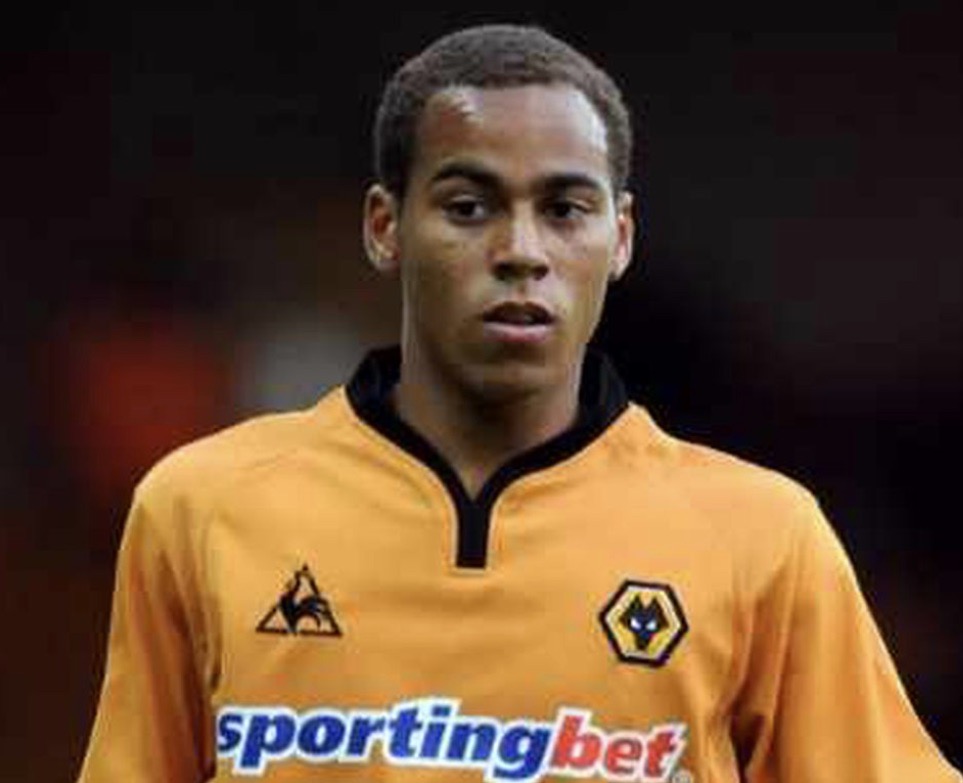
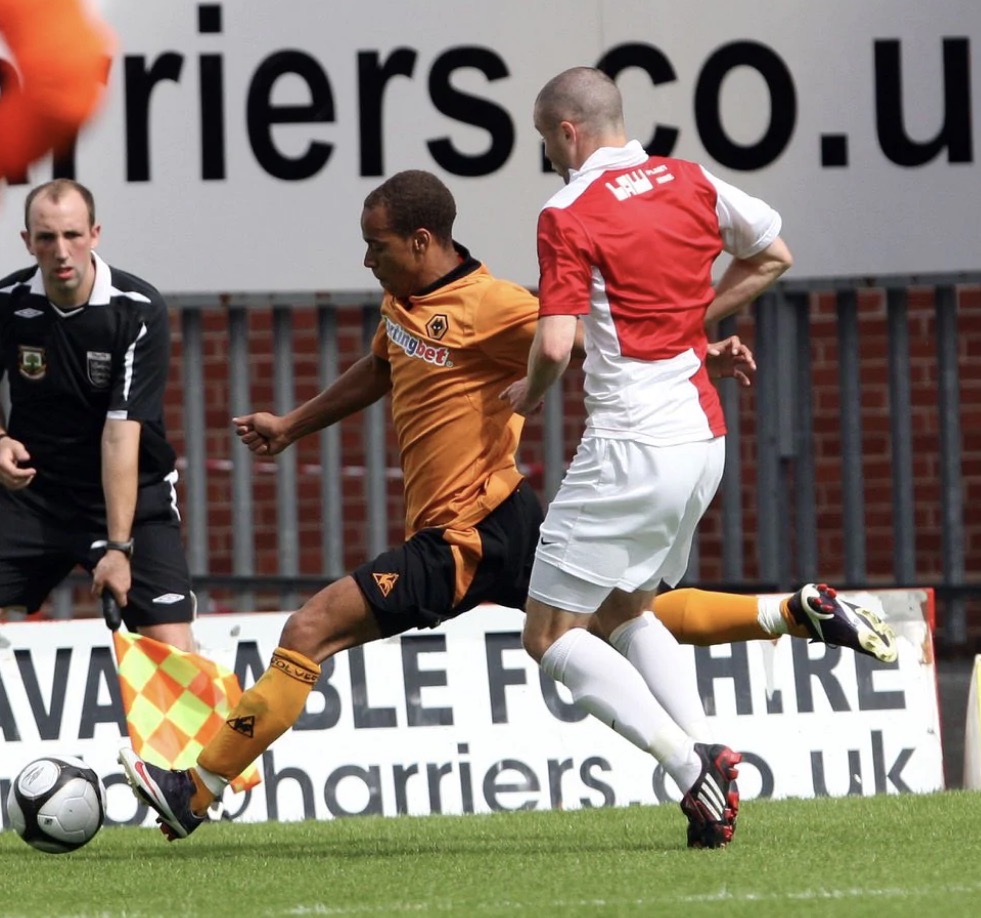
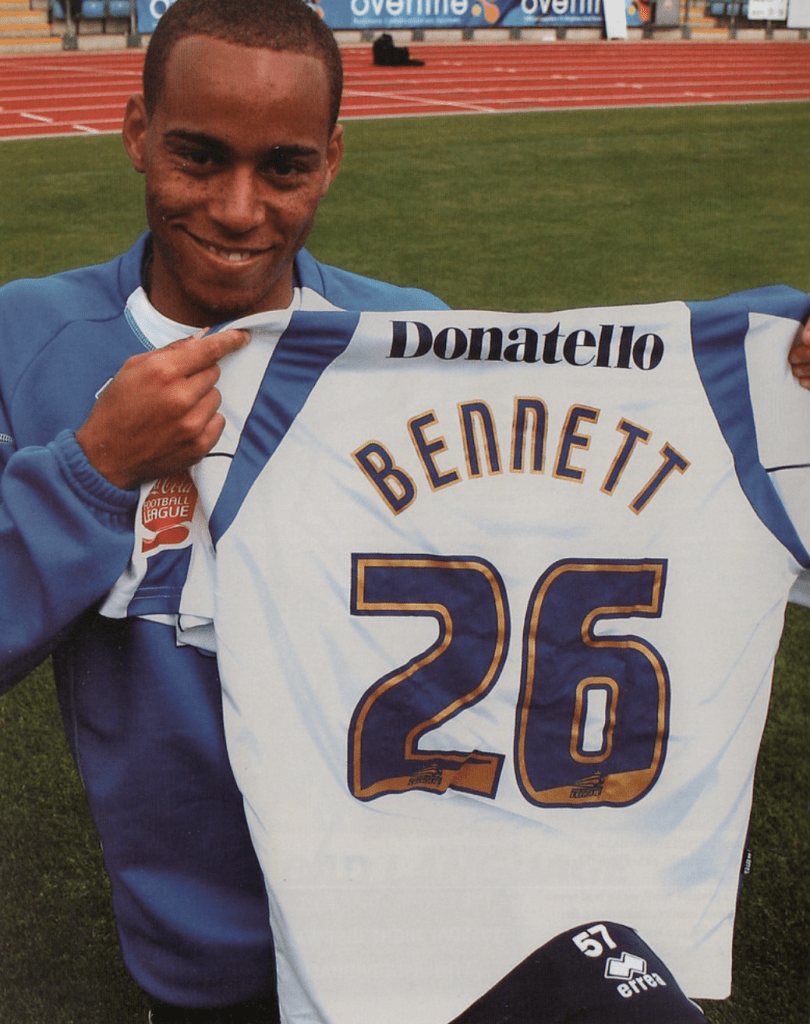
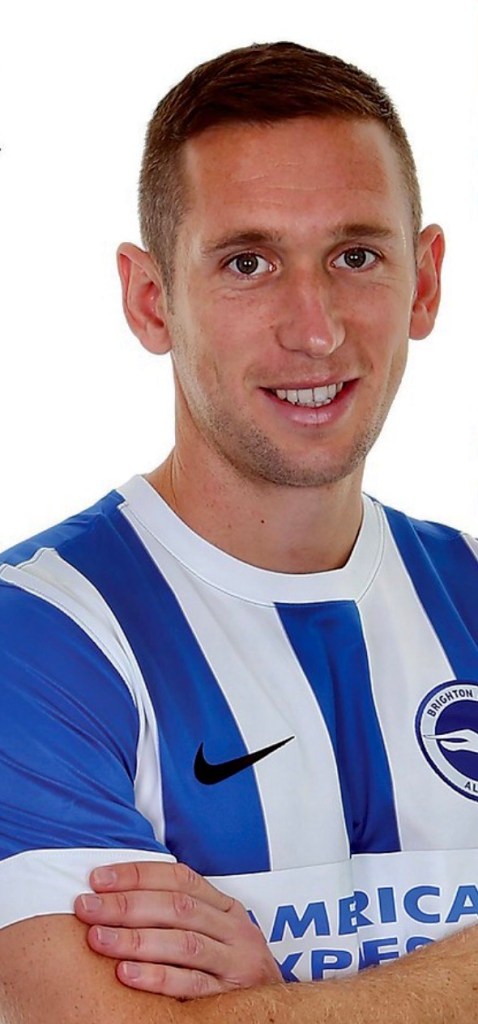
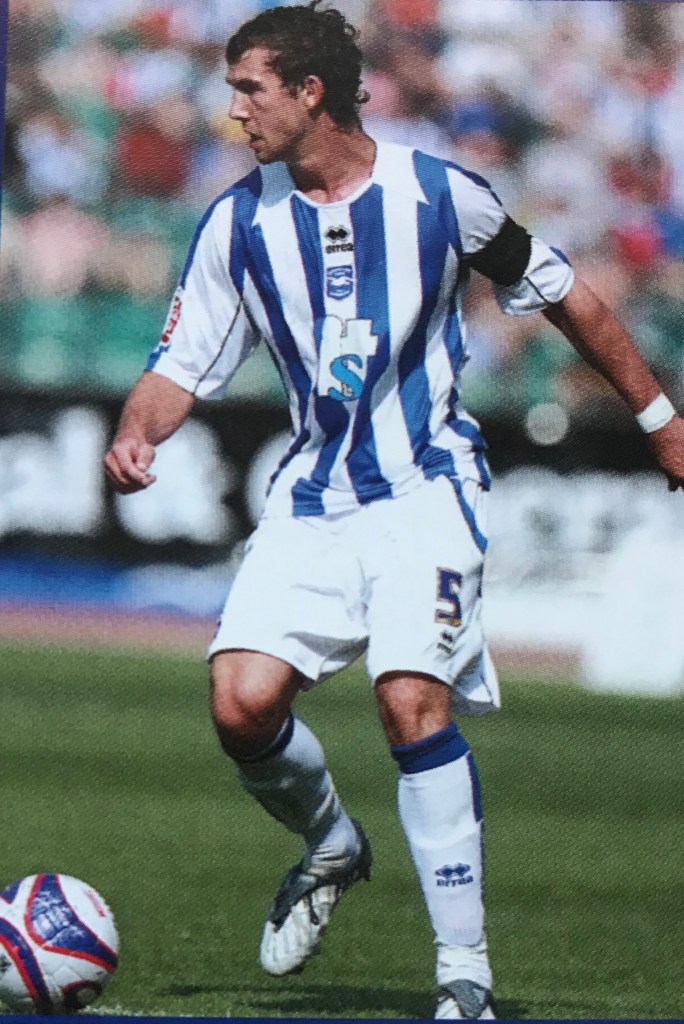
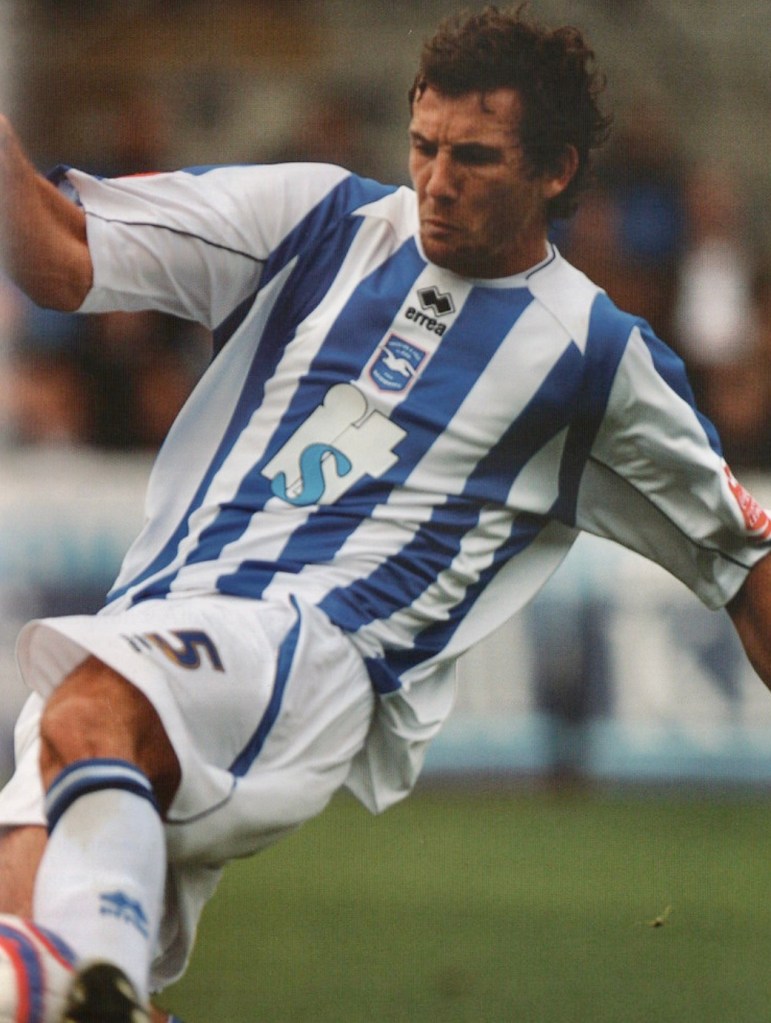
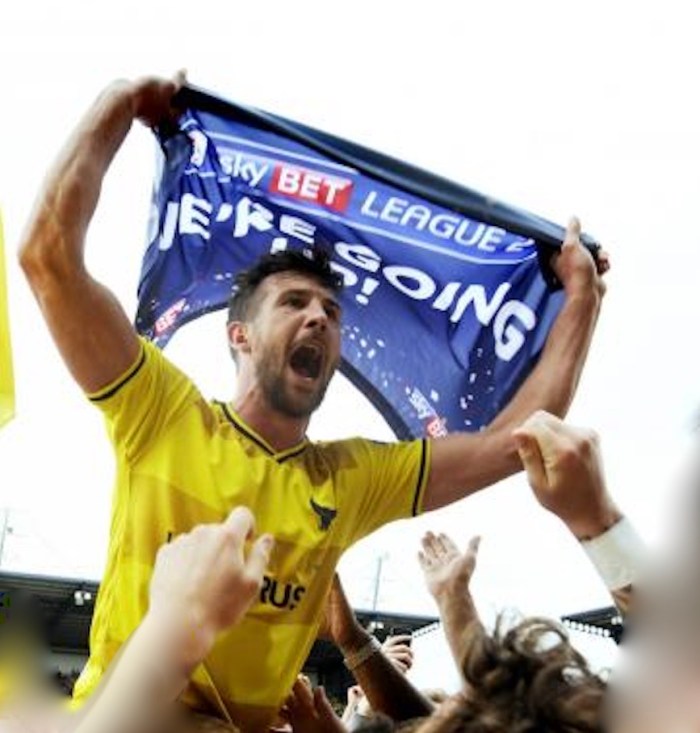
SEVENTEEN GOALS in 100 appearances don’t tell the whole story of Elliott Bennett’s two seasons as a Brighton player.

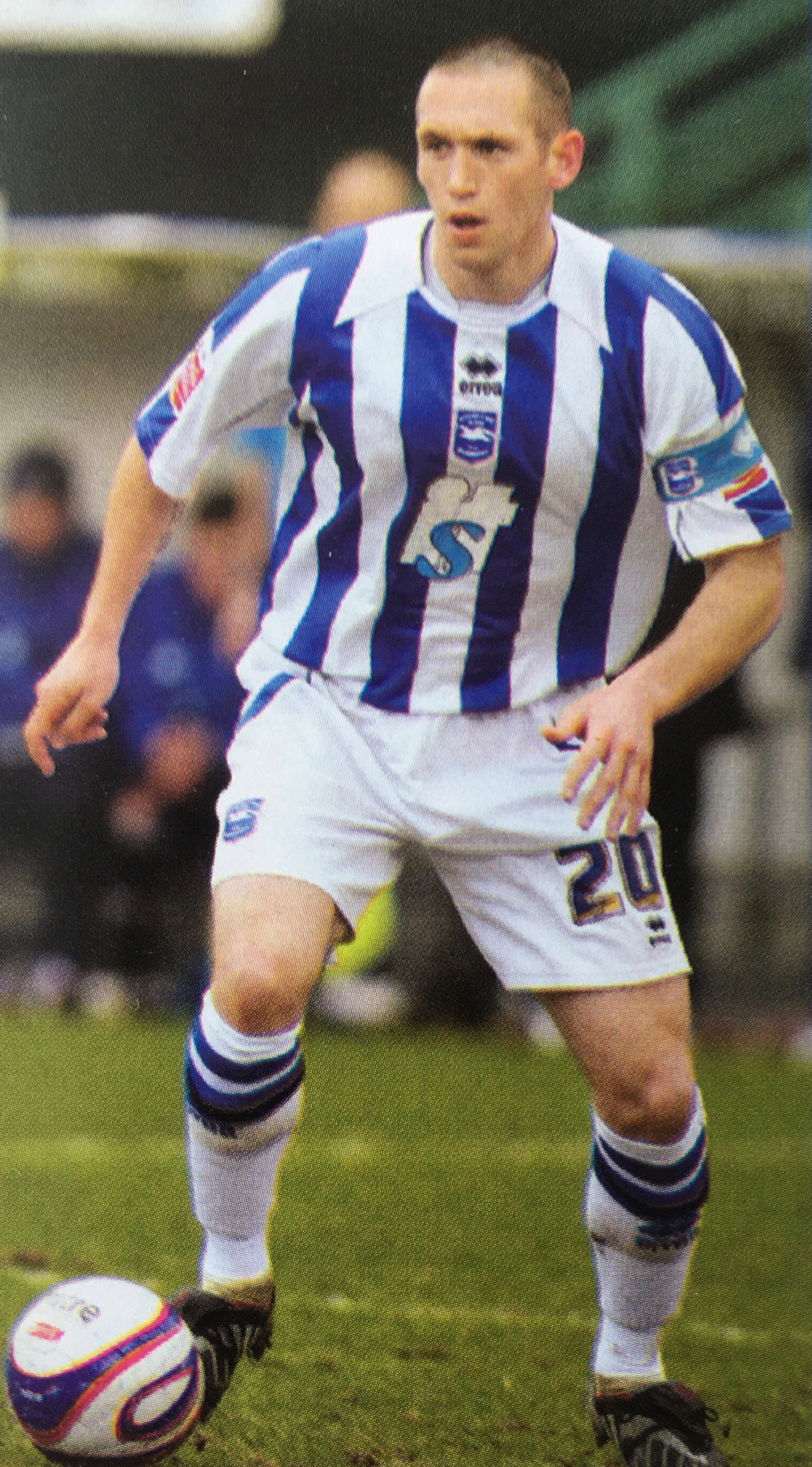
Russell Slade signed him in August 2009 from Wolverhampton Wanderers for £200,000, but it was under the guidance of Gus Poyet that he flourished and was a stand-out performer when Albion won promotion from League One in 2011.

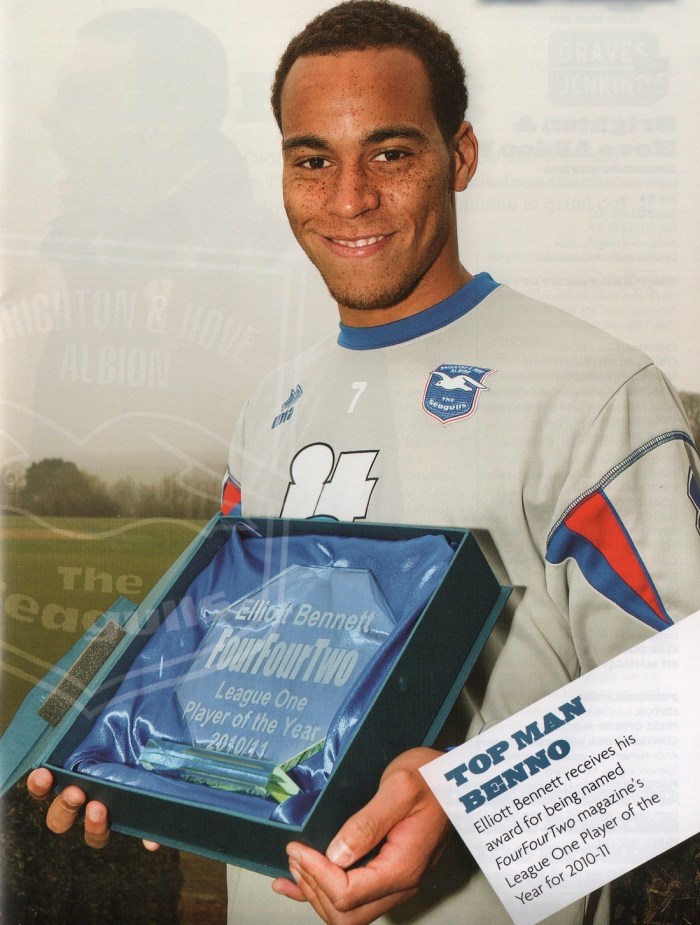
Not only was he chosen by his fellow professionals in the PFA League One team of the year (along with teammates Gordon Greer and Inigo Calderon), he was Four Four Two magazine’s League One Player of the Year.

Always diplomatic in interviews about personal achievements, typically he said: “If you win awards, it’s nice personally but you have to remember you can’t win them without your teammates. If I’m setting up goals, then it means our strikers are on their game as well as they’re getting on the end of my crosses.”

In a matchday programme feature, he added: “These individual awards really are not possible unless you have a good team around you, so this award is really on behalf of the whole squad and coaching staff.”

Bennett acknowledged the impact Poyet made on improving him as a player. “Gus has given me different roles to play throughout the season. I’m a lot more aware as a player as a result and I’m better with the ball now. There’s still lots for me to work on, but the gaffer has really brought my game on. I definitely owe him a lot.”

In another matchday programme article, he once again paid tribute to Poyet, his assistant Mauricio Taricco and coach Charlie Oatway. “I feel like I’m improving all the time and I owe so much to the coaching staff: the gaffer and Tano, while Charlie has got my head right. I used to beat myself up if I gave the ball away but Charlie has stamped that out of me. Technically, all three have helped me and I’ve also been playing in the middle a bit more, which has added another string to my bow.”

Bennett continued: “While I’m known for being a winger, my link-up play has also improved this season, which has really pleased me. I’m now more involved and it’s important that I keep on learning. The gaffer will always pull me to one side if he sees something that can help improve me – which he does with everyone – and then it’s a case of trying to replicate that on a match day.

“When you’ve got a gaffer who’s played the game at the highest level, you can only learn from him – and if you didn’t listen you’d be pretty stupid.

“I’ll play anywhere for the good of the team – I’ve even played right-back this season, but I must admit that I do prefer playing in a more advanced role where I can create things for the team. Whether that’s right wing, the left wing or even behind the strikers I don’t mind. I just love being involved.”

Bennett’s impact wasn’t confined to games, either. He and Liam Bridcutt used to visit Westdean Primary School, near Withdean, where they listened to youngsters reading. His wife, Kelly, worked for the club too.

Aware they had a hit property on their books, Albion awarded Bennett a new three-and-a-half-year deal in November 2010, when Poyet told the club website: “Elliott has been a good pro and has earned this new contract.

“He has shown he is capable of playing in a number of positions, he enjoys playing our style of football and I think he will continue to get better as a player.”

For his part, Bennett said: “Gus is a big factor for me. I will always be grateful to Russell Slade for signing me, but the current gaffer has brought his own style of play.

“I have really taken to the club ever since I arrived from Wolves last summer. I feel I have grown up as a person and developed as a player.”

Unfortunately for Brighton, Bennett’s superb contribution drew plenty of admirers and, when Norwich City offered £1.9million to give him the chance of Premier League football, the lure was too great to resist for player and club.

While his promoted teammates looked forward to Championship football in the brand new Amex Stadium, Bennett joined Paul Lambert’s Canaries to test his talent at the highest level.

Bennett told HITC Sport’s Alfie Potts Harmer: “Brighton was a fantastic part of my life and a fantastic chapter of my career, I loved every minute of it.

“When we won the title there, League One was full of teams who are now flying, you look at Southampton, Bournemouth and Huddersfield, it was a strong League One that year, and we played some fantastic stuff.

“The stadium coincided with promotion and I’d just signed a new contract. I think I would have stayed there for many years had it not been a Premier League move, but I don’t regret moving to Norwich. When an opportunity like that comes you have to take it as a player. You don’t know if it will come again.”

Lambert was delighted to land the youngster having previously had a bid to sign him in January that year rejected. “He is a young and exciting player with plenty of pace,” Lambert told the Norwich website. “He can play in a wide position or in behind the forwards, he’s a quick lad and he’s got a winning mentality.

“He played his full part in what Brighton achieved last season and that desire to succeed will stand him in good stead here.”

Bennett declared: “It’s an unbelievable opportunity for me to fight for a place in a team which will be playing in the Premier League.

“I like the mentality at Norwich City that has seen them get back-to-back promotions and I’m grateful to Paul Lambert for giving me the chance to be part of what’s happening at the club.

“I didn’t make it through at Wolves, which was my home-town club, and Brighton gave me the opportunity and I’m grateful for that.

“Now I’m just really excited about the chance to try to help Norwich in the Premier League.”

Bennett certainly seized the opportunity and in his first season was delighted to score the winning goal in Norwich’s 2-1 win over Spurs at White Hart Lane. He’d played 57 games in the Premier League when his career suffered a major hiatus. In the first home game of the 2013-14 season, against Everton, he sustained a cruciate injury which ruled him out of all but the last game of that campaign, as City were relegated.

Frustrated by the lack of starts at Norwich as they began life back in the Championship, Bennett was happy to return to the Seagulls on loan as Sami Hyypia tried various permutations to get some wins on the board.

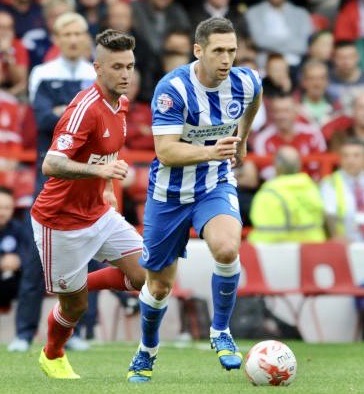
Bennett received a warm reception from the Seagulls supporters as he stepped out at the Amex for a home game against Wigan Athletic on 4 November and helped the side to their first win in eight matches.

Unfortunately, the upturn in fortunes was all too brief and, although Bennett’s loan was extended by a second month, six winless games saw Hyypia exit the hotseat. “I had nothing but respect for him,” Bennett later told The Athletic. “He gave me an opportunity, after a big injury, to get out and play some football. He didn’t have to bring me back. I was thankful for that. Unfortunately, it didn’t work out.”

Bennett’s final appearance came in the memorable 2-0 win over Fulham under caretaker manager Nathan Jones.

He returned to Norwich just as Alex Neil was taking over from Neil Adams as manager and was part of the squad who won promotion back to the Premier League via a play-off win over Middlesbrough.

But back in the elite, first team opportunities were limited and during the first part of the 2015-16 season Bennett went out on loan again, this time to Bristol City, where Steve Cotterill was the manager.

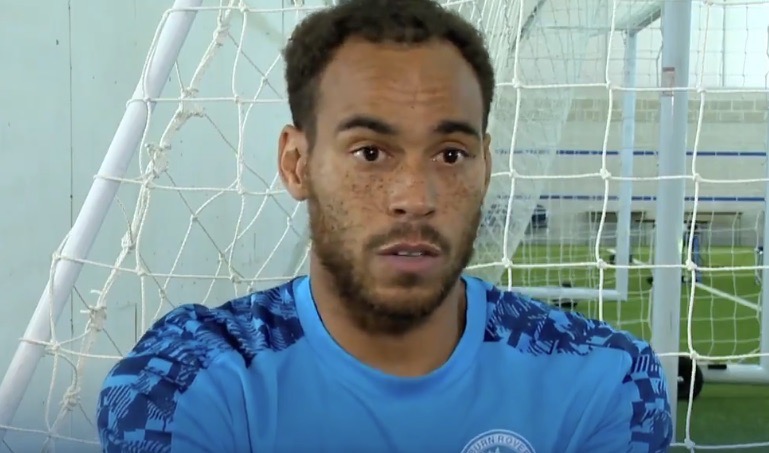
Bennett made 14 appearances for the Robins but soon after his deal expired in January 2016, a £250,000 fee saw him move permanently to Blackburn Rovers, where, from the start of the 2019-20 season, he became club captain, and he continued to be a well-respected part of Tony Mowbray’s set-up.

Bennett has certainly endeared himself to the Rovers supporters and has even been hailed as a modern-day ‘Mr Blackburn’ by website roverschat.com, who lauded his contribution to the club.

“Elliott Bennett’s evergreen positivity, fan interactions, and trademark fist pump were key in improving the culture at Rovers, as the dark, grey clouds over Ewood Park that had called it home since 2011 ever so slowly began to dissipate.

“His leadership has been a key contribution, as even when he is not playing for Rovers, he still is managing to inspire others to become the best version of themselves.”

One of those times spent out of the side came when Bennett tested positive for Covid-19 in May 2020 although the player said he didn’t feel unwell, and typically was thinking of others when interviewed about it.

“There seems to have been a lot of hysteria about footballers returning to training, but it’s not a big deal at all,” he said. “It’s the people who are seriously ill in hospital that we need to worry about, not footballers who are fit and healthy, and who aren’t showing any signs of being unwell.”

The popular Bennett is an active participant on social media and has 76,000 followers on Twitter.

In the summer of 2021, he moved to League One Shrewsbury Town, just 15 miles from Telford where he was born on 18 December 1988,

Bennett first showed his talent playing for local Telford team Hadley Juniors. Wolves scouts Les Green and Tony Lacey spotted him and invited him to train with the club’s under sevens and under eights. Remarkable as it sounds, he was offered a contract at the age of nine! “From then I just worked my way up through the age groups,” he told wolves.co.uk in a January 2019 article.

“The coaching was fantastic, the level of care we got was outstanding and we had the chance to travel the world. We got to go to Holland, we went to Japan, and it was a fantastic experience for me. Going to Japan and winning the under-12 World Cup was probably one of my favourite memories I have from the playing side of the academy.”

At Thomas Telford School, Bennett captained the school team as they won the county cup five years in a row. He was also a talented 200m runner who represented Shropshire at sprinting.

After leaving school to go on a scholarship at Wolves, he signed professional in 2007.

“The biggest moment for me was being given my professional contract,” he said. “I always dreamt of one day being able to pull on that gold and black shirt and play at Molineux, and thankfully I did.”

He got a taste of first team action in pre-season matches, scoring after only five minutes in a 3-2 win at Hereford United, and in 2007-2008 he made two appearances for the first team in the League Cup.

Mick McCarthy gave him his first competitive start in a 2-1 win over Bradford City on 15 August 2007 but he was replaced by Stephen Ward at half-time, and on 28 August was in the Wolves side humbled 3-1 after extra time by lowly Morecambe.

Although he was involved with the first team squad for some league matches, he didn’t get any game time, but gained experience going out on loan, initially playing 11 games at League One Crewe Alexandra, and later featuring in 19 League Two games for Bury.

He spent the whole of 2008-09 on loan with Bury, scoring three goals in 52 matches.

It must have been quite a wrench for Bennett to contemplate moving away from the club he’d been associated with for 14 years, but it was a former Brighton striker, the then Wolves assistant manager Terry Connor, who persuaded him to spread his wings and move to the Albion, as he revealed in a Football the Albion and Me interview.

He explained that he’d still got two years left on his contract at Wolves and being very much “a home person” he’d not considered leaving home in Telford, 20 minutes away from Wolverhampton.

“I remember Terry pulling me into his office and saying ‘Look, I went to Brighton in a similar position to yourself, you’ve got to go out and forge your own career. Become a man, become a person, don’t be Elliott Bennett from the academy at Wolves. You’re Elliott Bennett the professional footballer, create your own path.’

“And from that conversation I thought ‘You have to take the shackles off and go and try something different’ and you can’t really get a much better place to live than Brighton, as I later found out. It turned out to be the best decision I have made since I started playing.”

The week before he signed, he went to watch Albion away at Huddersfield…..and saw his new employer thrashed 7-1. Luckily, he’d made up his mind to join before the game!

“I was a guest of Tony Bloom,” he said. “I had a good chat with him before the game and he told me the vision. He told me where he wanted to take the club. I was blown away to be honest. I couldn’t wait to get started.”

Pictures from Albion matchday programmes and various online sources.

Dean Saunders raised cash for Brighton and Liverpool

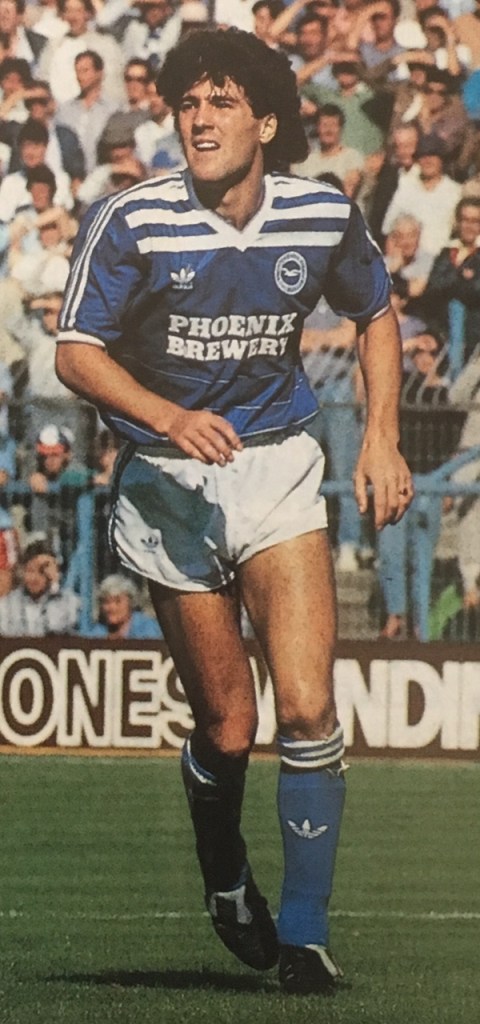
IT’S NOT often Brighton and Liverpool have had something in common but, when it came to striker Dean Saunders, they both sold him to raise money. And they weren’t alone.

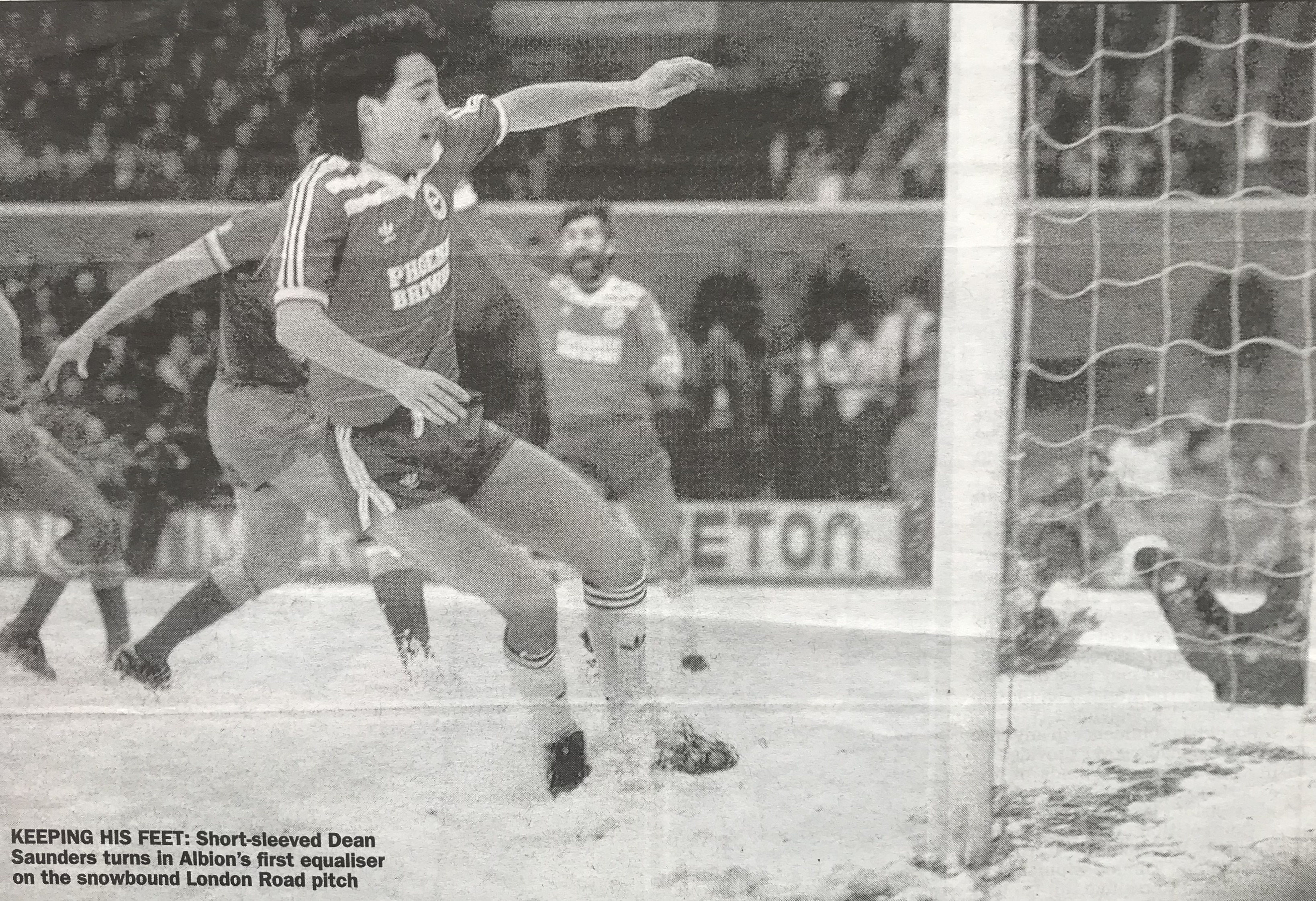
In the Albion’s case, it happened in 1987 when manager Barry Lloyd was forced to cash in on the free transfer signing to raise £60,000 to go towards players’ wages.

For their part, five years later, Liverpool let the Welsh international depart Anfield for £2.3m because boss Graeme Souness wanted the money to buy a central defender.

When Saunders was remarkably transferred for £1m from the Maxwell-owned Oxford United to the Maxwell-owned Derby County, it prompted former Brighton and Liverpool defender Mark Lawrenson to quit as boss at the Manor Ground after he’d been promised there would be no transfers likely to weaken his squad.

Saunders’ long and much-travelled career began in Swansea, the place where he was born on 21 June 1964, the son of former Swansea and Liverpool wing-half Roy Saunders.

He attended GwrossydJunior School and was soon appearing in the school football team on Saturday mornings and playing minor football in the afternoons. He went on to Penlan Comprehensive in Swansea and his career began to blossom, playing in the school team at all levels under sports master Lee Jones, a former British gymanstics champion. Saunders played for the Swansea Schools representative sides at under 11, 13 and 15 levels.

“I can remember enjoying watching the Swansea players train when I was a lad,” he told Tony Norman in an Albion matchday programme article. “I was lucky because my dad was the assistant manager, so I could go to pre-season training and things like that.

“I used to kick a ball around on the sidelines and dream of playing for Swansea.” That dream turned to reality after he joined the Swans in 1980 as an apprentice (when John Toshack was the manager), turned professional in 1982, and made his debut in the 1983-84 season. He scored 12 times in 49 appearances but in his final year had a goalless four-game loan at Cardiff City.

Manager John Bond released him on a free transfer after a turbulent season in which the Swans only narrowly avoided relegation to the basement division and Chris Cattlin, who’d been impressed when he saw Saunders playing for Swansea Reserves at the Goldstone Ground, snapped him up for Brighton.

“I was amazed when the Welsh club let him go for financial reasons,” Cattlin wrote in his matchday programme notes for the opening game of the season. “He is young, quick and, if he works hard, he has a great chance.”

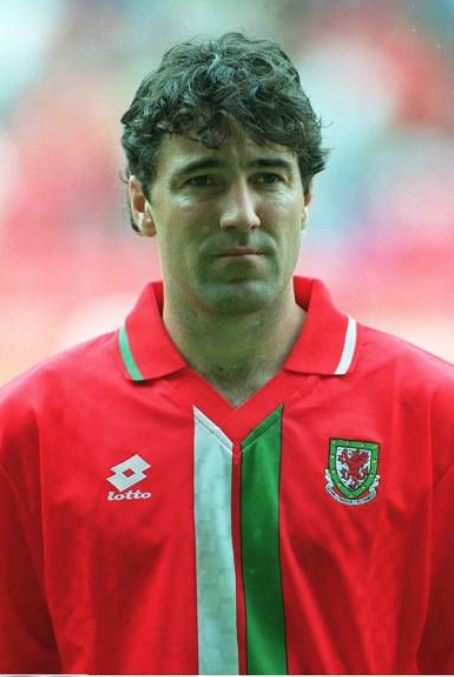
By the end of that season, Saunders had scored 19 goals in 48 league and cup games and was voted player of the season. His performances in the second tier for the Albion caught the eye of the Welsh national team manager, Mike England, and on 26 March 1986 Saunders made his full international debut for Wales as a substitute in a 1-0 win away to the Republic of Ireland. It was the first of 75 caps.

Saunders scored his first international goals when he netted twice in a 3-0 friendly win over Canada in Vancouver on 19 May 1986, after which England said: “He goes past defenders with his tremendous pace and his finishing against Canada was a revelation.

“The experience he gained at Brighton has done him the world of good. To finish top scorer in his first full season of Second Division football tells its own story.”

Saunders, who shared a house with Albion’s young Republic of Ireland international Kieran O’Regan, said being happy at home had helped him to settle down quickly.

“I liked Brighton from the day I arrived,” he said in a matchday programme article. “It reminds me of my home town of Swansea and I like living by the sea.”

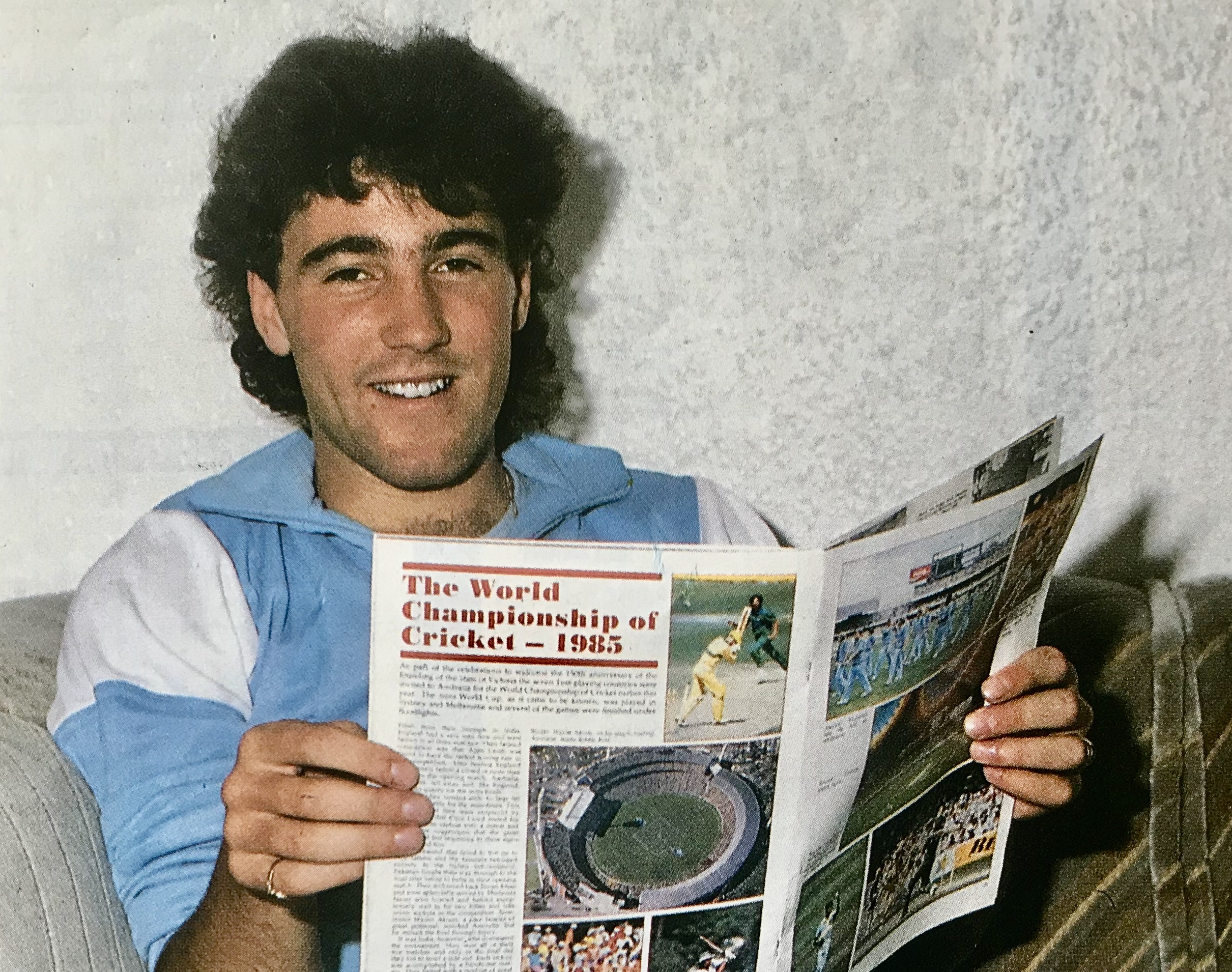
A lover of all sports, Saunders revealed how he liked to play cricket in the summer, when he turned out for Haywards Heath, and he played snooker with O’Regan and Steve Penney.

That summer, Saunders told Shoot! magazine: “I had both cartilages out of my left knee at 18 and had both Swansea and Cardiff turn me down. I’ve had my share of the downs. From the moment I joined Brighton, my career has turned for the better.”

The young striker continued: “Swansea just gave me away – despite the fact that I was top scorer in a team coming apart. Cardiff City gave me a few games but always seemed to have reasons for not playing me consistently when I was on loan there.

“So, I had every incentive to make the break from Welsh football and I joined Brighton. Brighton can go places.

“I was disappointed that we didn’t make the First Division first time around. But all the lads are convinced that we will get there next season. I’ve been given a three-year contract so there are tremendous incentives to do better.”

It didn’t work out that way, though. After only a mid-table finish, Cattlin was sacked and there were rumblings of financial issues beginning to reverberate around the corridors of the Goldstone. Alan Mullery returned as manager but had limited funds to invest in the team, and, with echoes of the Pat Saward era back in the early ‘70s, the club turned to fans for financial help to bring in players.

After Mullery’s unseemly swift departure halfway through the season, former Worthing boss Lloyd took over and fans were completely mystified as to how he could leave out Saunders in favour of Richard Tiltman, who Lloyd had plucked from local football. Since then, it has been suggested his omission was more to do with money than football ability.

There was great consternation that Albion collected only £60,000 when Lloyd sold Saunders to Oxford in early March 1987, especially as the Seagulls were fast hurtling back to a level of football they’d manage to avoid for ten years.

That was no longer a concern for Saunders who recovered the goalscoring touch he’d shown during his first season at the Goldstone Ground, scoring 33 goals in 73 games for Oxford before being sold to Derby for £1m against Lawrenson’s wishes 19 months after arriving at the Manor Ground.

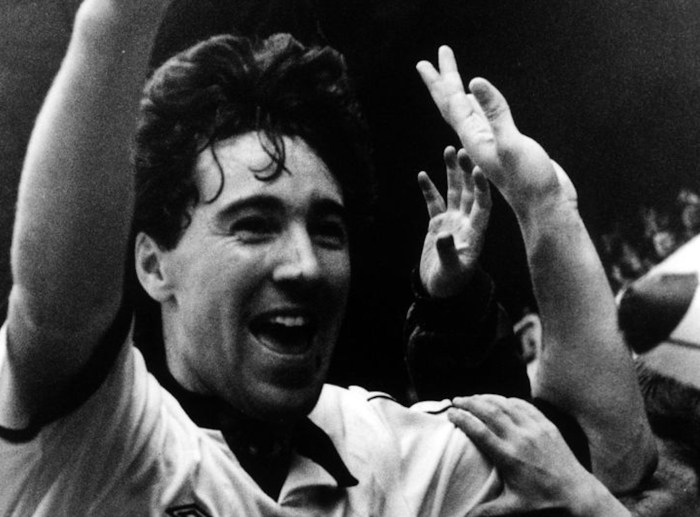
Meanwhile, the goals kept flowing for Saunders as he netted 57 in 131 games for Derby. The side finished fifth in the old First Division by the end of Saunders’ first season with the Rams, and he’d contributed 14 goals. The Derby Telegraph noted: “From the moment ‘Deano’ arrived, the players were inspired and the crowd enthused. The signing also suited the post-war tradition of 5ft 8in goalscoring heroes at the Baseball Ground – Raich Carter, Bill Curry, Kevin Hector and Bobby Davison.

“Derby fans were too wise to comment on height. What mattered was Saunders’ speed, eel-like turn and persistence. He scored six in his first five games, starting with two against Wimbledon when he captured supporters’ hearts with the immediacy of a Kevin Hector. A close-in header and long-range right-footer were beautiful appetisers.”

Despite Saunders scoring 24 goals for Derby in 1990-91, the side was relegated and Saunders and teammate Mark Wright were snapped up by Liverpool. Reds paid £2.9m to take Saunders to Anfield, boss Souness believing he’d be an ideal strike partner for their established Welsh international striker, Ian Rush.

Saunders made his Liverpool debut on 17 August 1991 in a 2-1 win over Oldham Athletic (Mark Walters and defender Wright also played their first league games for Liverpool); Ray Houghton and John Barnes scored Liverpool’s goals.

Saunders scored his first goal for the Reds 10 days’ later in a 1-0 win over QPR at Anfield but a Liverpool history website reckons he struggled to adapt to Liverpool’s passing game. “He was used to Derby’s counter-attacking style, scoring many of his goals by using his exceptional pace,” it said. “Saunders wasn’t very prolific in the league with about one goal every four games but flourished in the UEFA Cup with nine goals in five matches that included a quadruple against Kuusysi Lahti.”

Saunders scored twice in Liverpool’s successful FA Cup campaign, which culminated in them lifting the trophy at Wembley after beating Sunderland.

Although he scored twice in seven games at the start of his second season at Anfield, a cashflow issue meant Souness was forced to sell him to raise funds to dip into the transfer market.

Saunders explained: “Graeme called me in one day and told me he needed a centre-half [Torben Piechnik], and that he could raise the money by selling me to Aston Villa.

“I couldn’t believe he was prepared to let me go, but he said he didn’t think my partnership with Ian Rush had worked out, and Rushy wouldn’t be the one going anywhere. That was it.” 

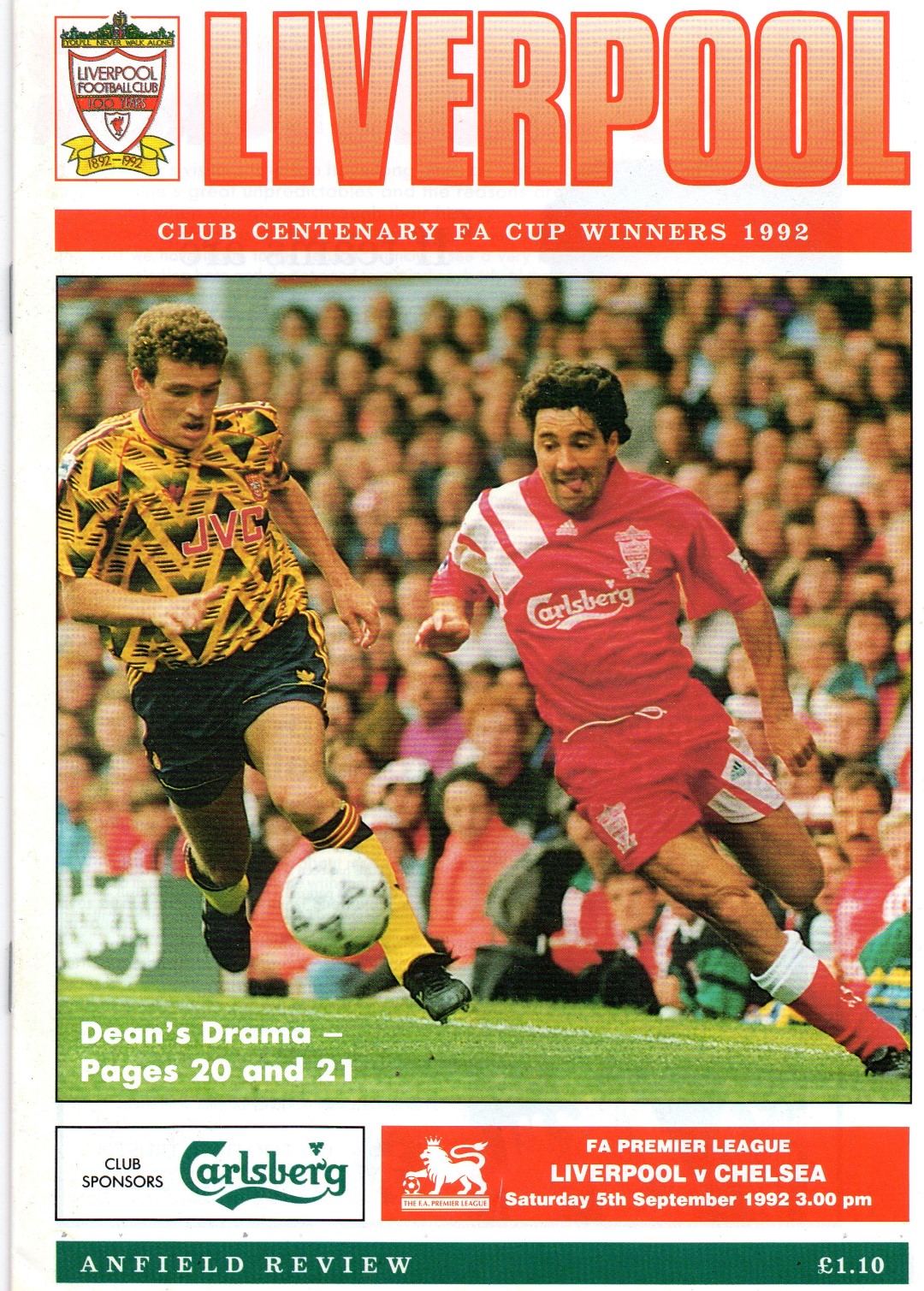
Saunders had scored 25 goals in 61 appearances for Liverpool, the last coming in a 2-1 home win over Chelsea (Jamie Redknapp scoring the other Liverpool goal) on 5 September 1992.

The Welshman had the last laugh, though, because only nine days after his departure from Liverpool he scored twice in Villa’s 4-2 victory over the Reds.

“Obviously I had a big incentive to do well today and I’m thrilled to have scored,” said Saunders. “Both my goals went through the goalkeeper’s legs.”

Signed by Ron Atkinson, Saunders spent three seasons at Villa, initially developing a formidable strike partnership with Dalian Atkinson, and then pairing up with Dwight Yorke. Saunders’ brace in the 1994 League Cup final helped beat Manchester United 3-1.

Villa history site lerwill-life.org.uk remembers him as “a spring-heeled attacker and very popular with the supporters” and adds: “Not big in size, he was very speedy and scored some spectacular goals including a 35-yard spectacular against Ipswich.”

His time at Villa Park came to an end when Brian Little took over as manager, and Saunders was reunited with his old Liverpool boss Souness in Turkey. A £2.35million fee took him to Galatasaray for the 1995-96 season and he netted 15 goals in 27 Turkish League matches.

Next stop for Saunders was back in the UK at Nottingham Forest, but the 1996-97 was an unhappy one as the manager who signed him, Frank Clark, was sacked in December after a bad run of defeats and Forest’s slide towards relegation continued under Stuart Pearce and Dave Bassett.

By the time Forest had bounced straight back up, Saunders had left the club, moving in December 1997 to second-tier Sheffield United for a year under Nigel Spackman and caretaker managers Russell Slade and Steve Thompson. United made the play-offs but lost out to Sunderland in the semi-finals. In December 1998, Saunders moved abroad again to link up with Souness a third time, at Benfica in Portugal.

The following summer, he returned to England and joined Bradford City, where his former Brighton teammate Chris Hutchings was assistant manager, then briefly manager. Saunders was a regular in his first season at Valley Parade, when the Bantams managed to narrowly avoid relegation from the Premier League, but he played only a handful of games in 2000-01, when they were relegated. Saunders retired as a player shortly before his 37th birthday and became a coach at Bradford before linking up with Souness again, this time as a coach.

He joined him at Blackburn Rovers and then Newcastle United, but when Newcastle sacked Souness early in 2006, Saunders lost his job as well.

In the following year he began taking the Certificate in Football Management course run by the University of Warwick; and this led to him being granted his UEFA Pro Licence coaching badge, a qualification that allowed him to be appointed as assistant to John Toshack with the Welsh national team. 

In October 2008, Saunders replaced Brian Little as manager of Wrexham, newly relegated to the Conference. He eventually managed to steer the north Wales outfit into the play-offs in the 2010-11 season, but they were knocked out by Luton Town and, in September 2011, Saunders was appointed manager of then Championship club Doncaster Rovers.

Unfortunately, he couldn’t save Rovers from relegation and they went back down to League One with only 36 points from their 46 League fixtures.

Having guided Rovers to second place in League One, Saunders was appointed manager of Wolverhampton Wanderers in January 2013, but he couldn’t prevent them being relegated from the Championship and he was sacked three days after relegation was confirmed courtesy of a 2-0 defeat at the hands of Gus Poyet’s Albion.

Saunders told the media after the game: “We have to get some players in who think like I’m thinking, who want to win, fresh minds, no damage done to them, no confidence issues, no ‘been here too long’ issues, no ‘I don’t know if the manager likes me’ issues. Once I get my own team on the pitch, imagine what the supporters will be like.”

Saunders, with only five wins from his 20 games in charge, didn’t get that chance and rather ruefully said of his opponents that day: “A few years ago they were bankrupt and without a stadium, but they’ve shown what is possible and, with the momentum, they have could well get into the Premier League.”

Just after Christmas 2014, Saunders was named as the interim manager of Crawley Town after the previous incumbent John Gregory stood down for health reasons.

Saunders then became manager of League One side Chesterfield on 13 May 2015 but his stay there lasted only five months.

In June 2016, Saunders was part of the BBC pundit team for their coverage of the Welsh national team’s games at Euro 2016 and made the headlines during the tournament when it was revealed that he had incurred parking charges of over £1,000 from Birmingham Airport’s short stay car park as he wasn’t expecting Wales to progress as far as they did. The charge was eventually waived by the airport who asked him to make a donation to charity instead.

His subsequent involvement in football has been as a pundit on BT Sport’s Saturday afternoon Score programme as well as on the radio with talkSPORT. He hit the headlines in 2019 when he was jailed for failing to comply with a roadside breath test but the initial punishment was quashed and changed to a suspended sentence. Via the League Managers’ Association, Saunders issued a statement in which he said: “I made a terrible error of judgment for which I have been rightly punished, and I wholeheartedly regret that it happened.”

Pictures from the Albion matchday programme and various online sources.

Andrew Crofts just couldn’t stay away from the Seagulls

ANDREW Crofts is one of that rare breed of player who had three separate spells at Brighton, although the latter time was only as player-coach with the under-23s.

The Welsh international midfielder returned to the Seagulls after only a month as player-coach at Yeovil Town when Liam Rosenior left the Albion to move to Derby County.

His signing as an over-age player as well as a coach was explained by technical director Dan Ashworth, who hailed the “innovative step” and told the club website: “The thinking behind the playing role is to have someone of his experience out there on the pitch alongside our younger players, and to impart that crucial knowledge he has gained from his time in the game.

“To have that experience out on the field, in the pressure situation of a game, will be of enormous benefit to our young players and have a positive impact on their collective and individual development.”

Crofts first joined the club in the summer of 2009 during Russell Slade’s managerial reign and, when Gus Poyet took over the managerial chair, he appointed Crofts as captain for his first game in charge.

The midfielder repaid the faith in that televised away game at St Mary’s on 15 November by scoring in Albion’s memorable 3-1 win. Crofts retained the armband through to the end of the season and his form had caught the attention of Championship side Norwich City.

Crofts made the switch to Carrow Road and played 44 games as Paul Lambert’s outfit won promotion to the Premier League in runners up spot.

In the top-flight, though, Crofts was no longer a mainstay of the midfield, starting just 15 matches in 2011-12, and coming off the bench on 10 occasions.

“Towards the end of the season I was in and out,” he told the Albion matchday programme in 2019. “Paul then went to Aston Villa and when the chance came up to return to the Albion I jumped at it.”

“It felt like coming home and I wanted to replicate what we had done with Norwich. It was a completely different club compared to the one I’d left, with the Amex Stadium and plans for the new training ground.”

Poyet wasted no time in seizing the chance to re-sign him, telling the club website: “When we knew about the possibility to bring him back we worked very hard to do that.

“I am delighted to have him back. He is going to be a very important player.

“He is coming back to a club that he knows and he was happy to come back – that shows his commitment,” said Poyet. “He leads by example and we want players like that on the pitch.”

Unfortunately, that season his playing time was limited by two long-term spells out injured, and the following season it got worse. After sustaining a serious cruciate knee ligament injury in January 2014, he was sidelined by an almost identical injury again in October 2014.

When the player suffered the first injury in an away game at Birmingham, Poyet’s successor, Oscar Garcia, said: “He will be a big loss and I feel sorry for Crofty. He has been excellent and has been a key player.”

Crofts battled over many months to regain fitness only to suffer a partial tear of his anterior cruciate ligament and a tear to the meniscus in a match against Watford in October 2014, putting paid to any involvement in the rest of the 2014-15 season.

Head coach Sami Hyypia told the club website: “We are all devastated for Crofty. He is an important member of our squad and worked incredibly hard to get back to full fitness after last season’s knee injury.

“Crofty is a very strong character and he will continue to receive the best possible care and treatment from our medical staff throughout his rehabilitation.”

Unfortunately for him, by the time he was fit again, another new manager was in place and Dale Stephens and Beram Kayal were firmly established as Chris Hughton’s preferred midfield pairing. So, in March 2016, Albion loaned him back to his first club, Gillingham, until the end of the season.

On leaving the Seagulls that summer, he moved to Charlton Athletic under his former Albion boss Slade, on a one-year contract, and made a total of 54 appearances for the Addicks.

Although born in Chatham, Kent, Crofts qualified to play for Wales because his grandfather hailed from the principality. He earned a total of 29 caps, spread over 13 seasons, initially under John Toshack, most coming under Gary Speed, before making his final appearance against Panama in November 2017, in Chris Coleman’s last game as Wales manager.

Crofts v Rooney in a Wales v England match
Welsh international

Crofts was on Chelsea’s books from the age of 10 to 15, going through the ranks with John Terry, with whom he shared digs. One of his coaches was ex-Albion and Chelsea defender Gary Chivers. After being released by Chelsea, he linked up with Gillingham as a trainee and worked his way through the youth and reserve sides, making a surprise first team debut against Watford in May 2001 when only 16.

It wasn’t until 2004 and 2005 that he became a first team regular. His first Gills goal was scored in the Championship clash at the Withdean Stadium on Boxing Day 2004 when the Seagulls won 2-1.

Crofts eventually took over the captaincy at Gillingham but, after the side were relegated to League One, manager Mark Stimson believed the role was too much of a burden on the player. After more than 200 appearances for the Gills, he was made available for transfer and, in 2008-09, went out on loan to Peterborough United and then Conference side Wrexham under former Albion striker Dean Saunders.

When he joined Albion on a free transfer in June 2009, boss Slade said: “He’s an international player so that’s not bad for a start. He’s got good pedigree and was an important player for a good Gillingham team at the time.

“He can sit in for you defensively or he can get forward. He has got a good work ethic and I’m pleased to get him.”

Towards the end of his league playing days, Crofts had spells at Scunthorpe United in 2017-18 then Newport County for the 2018-19 season, playing under his former Gillingham teammate Michael Flynn, who he played alongside at Priestfield between 2005 and 2007,

Flynn made his old pal captain and said: “He’s a gentleman and he’s somebody I trust a lot. So signing him was really a no-brainer.

“Andrew coming in is a massive signing for the club. He’s the ultimate professional and he’s in fantastic condition.”

Crofts himself said: “I played with Michael Flynn at Gillingham and he was a winner. I loved playing with him and I can’t wait to play for him now with him being my gaffer.”

Unfortunately, injury issues restricted Crofts to just 12 appearances for Newport and he was released at the end of the season.

On leaving County, Crofts moved to Yeovil Town as player-coach with manager Darren Sarll saying: “To bring a player of Andrew’s experience into the club at this time is a great coup.

“He still has a thirst and hunger for playing and winning promotions and it’s refreshing to be part of the very early stages of his coaching career.

“He’ll be a valuable asset to the squad both as a player and in terms of passing on his experience and knowledge to the younger members of the squad.”

But then the opening arose with the Albion and he didn’t hesitate to return. When Graham Potter left the Albion, Crofts temporarily took on the head coach position and was retained as a first team coach under Roberto De Zerbi and his successor, Fabian Hurzeler.

• In an interview with Andy Naylor of The Athletic in December 2020, Crofts talked at length about his career, his coaching ambitions and some of the big names he played alongside.

Wright player, wrong place but Jake was United with Wilder

LEFT-SIDED centre back Jake Wright had limited chances to show his mettle for Brighton but Chris Wilder liked what he saw – and was his manager at three different clubs.

Wright played for Wilder at Halifax Town, Oxford United and Sheffield United so was in a good position to assess the terrific job the Blades boss had done at Bramall Lane for a BBC Sport article on 10 January 2020.

“He’s not changed at all,” said Wright. “I don’t think his training sessions or his intensity have changed. As he’s progressed, he’s got better players in, so the quality’s changed. But how he goes about the day-to-day running of a football club hasn’t really changed.

“He’s always been hands-on. He’s always taken a lot of sessions himself. He knows what it takes to win and he knows how to motivate his players to be ready for a game.

“He’s ruthless. He’s got no qualms about dropping a player – no matter how long you’ve known him or how well you’ve done for him – he makes decisions to benefit the club.”

The article featured a number of players who played for Wilder over the years, and Wright added: “His CV’s incredible – one of the best in the country for how well he’s done at certain teams.

“I can’t compliment him enough as a manager. I’ve probably played more games for him than any other player and he hasn’t changed the way he is. He’s kept his philosophy.”

Born on 11 March 1986 in Keighley, Wright began his footballing journey eight miles away at Bradford City. Former England and Derby defender Colin Todd was manager at the time, and he awarded Wright his first professional contract, but it was away from Valley Parade that he gained first team experience.

Wilder was cutting his managerial teeth at Halifax and took Wright and fellow Bantam Danny Forrest to The Shay, initially on loan. The pair eventually joined on a permanent basis and Wright made 88 appearances for them but opted to move on when financial issues saw them demoted two divisions.

He moved to Crawley Town, then in the Conference Premier, and some solid performances at that level drew attention from various league clubs, including nearby Albion, who had recently narrowly escaped relegation to the fourth tier.

Manager Russell Slade took him on a trial basis for a pre-season friendly against Torquay United in July 2009, and, although Albion lost the game 1-0, Wright did enough to earn himself a two-year deal.

Slade said: “He has done very well, both in training and in the game at Torquay. He is a left-sided defender who can play at full-back or centre-half. He is also an excellent athlete, a good talker and I am expecting that he will prove himself as a quality player.”

Wright started the season in the no.5 shirt in the centre of the back four alongside Tommy Elphick but there was plenty of competition for places and Adam El-Abd and James Tunnicliffe were drafted in as Slade tried to address a four-game winless start.

He had a couple more starts in October but, with Brighton struggling towards the foot of the table, Slade was axed as boss that autumn, and Wright didn’t feature in new manager Gus Poyet’s plans.

On 31 December 2009, he was allowed to join Oxford United on loan until the end of the season. He’d only made eight appearances for the Seagulls.

“I wasn’t playing at Brighton and I want to be playing games,” Wright told the BBC. “I am coming to a club that is basically a league club and is going in the right direction. I want to be playing football.”

Wilder said: “I had Jake at Halifax and took him out of Bradford City reserves and he was superb for me.”

By the end of that season, Oxford had won promotion back into the league and Wright’s move was made permanent, courtesy of a free transfer.

The following summer he was appointed Oxford’s captain, and his stay at the Kassam Stadium extended to six seasons over which he made a total of 278 appearances.

After leading the U’s to promotion from League 2 as runners-up in the 2015-16 season, Wright left the club that summer having been told he wouldn’t be guaranteed his place in the higher division.

“Michael Appleton said I wasn’t in his plans and he’d give me the opportunity to move on,” Wright told the Oxford Mail. “It was a shock to be told, especially after we got promoted with the best defensive record in the league.”

Wright wasn’t without a club for long, moving back to Yorkshire to link up with Wilder once more, this time at Sheffield United.

“Jake brings a calmness to the team,” Wilder told the Sheffield Telegraph. “He’s one of those players I enjoy watching because he wants to win. In training and in games.
“He’s never played at this level and, with respect, he views this as an opportunity to do something at the back end of his career. I love players like that. People who get the maximum out of their careers. It’s not been a glittering career with medals littered all over the place. But every manager he’s had will tell you what Jake is like.”

He featured in 30 matches as they gained promotion from League One and played a further 22 games in their 2017-18 season in the Championship. Not involved in United’s Premier League side, in 2019-20 Wright switched on loan to League One Bolton Wanderers, where he played 12 matches.

Wright signed for Hereford at the start of the current season, with manager Josh Gowling saying: “Jake is a very big signing for us, he’s a very commanding centre half.

“He’s got a great attitude; he’s got hunger and desire and he still wants to push on and win things.”

Injury-plagued Alan Navarro’s loyalties taken as Red

Nav v Suarez

A FORMER midfield partner of Steven Gerrard scored a memorable winner for the Seagulls at Elland Road, but it was a rare highlight in a promising career dogged by injuries.

Alan Navarro trained alongside Gerrard and played with him for Liverpool Reserves. While one went on to become a Liverpool legend and captain his country, the other had to forge a career mainly in the lower leagues.
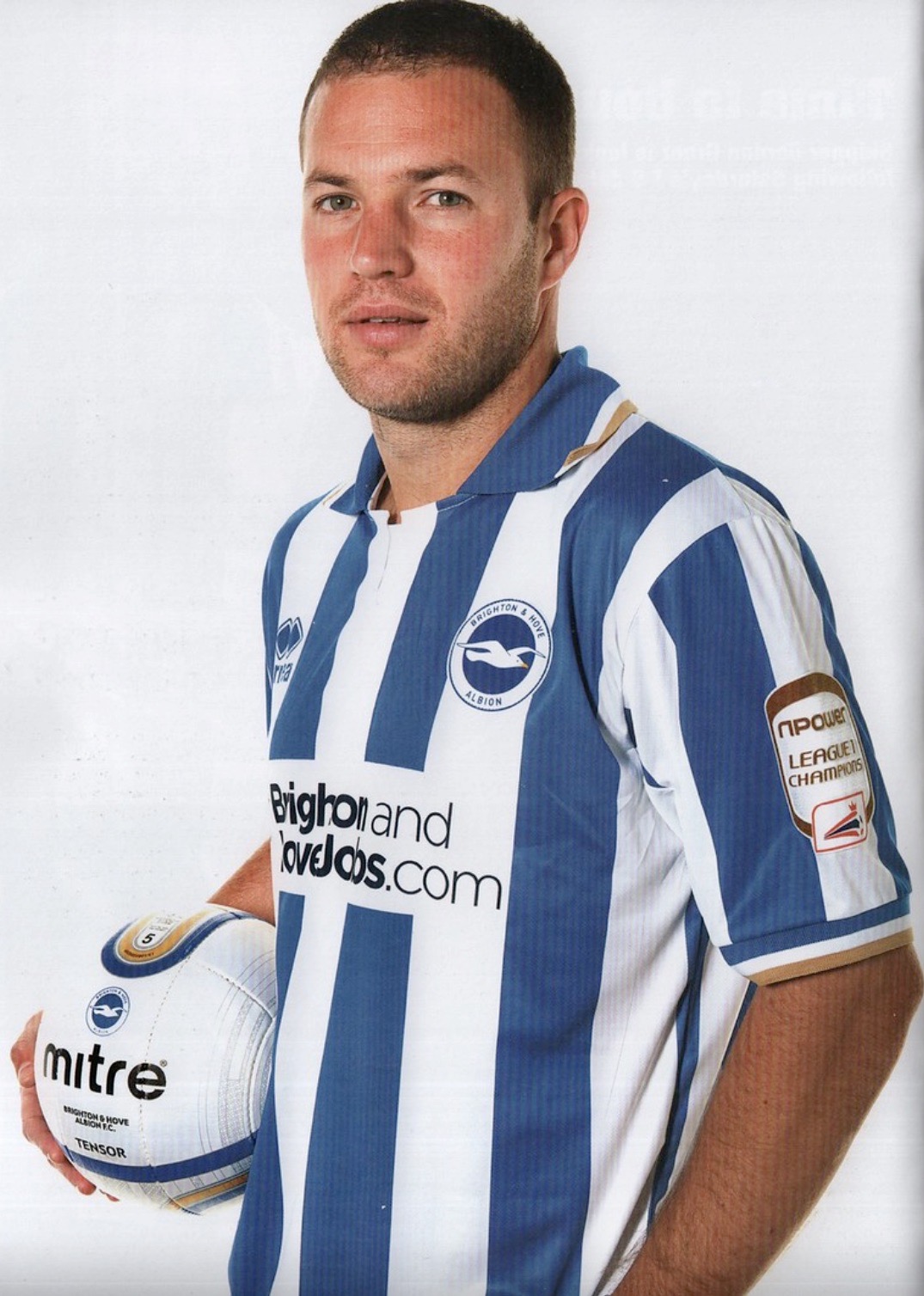
Navarro talked to the Liverpool Echo about his former illustrious teammate when he prepared to return to Anfield with Brighton a decade after leaving the Merseyside giants.

“I came through as a full-back but then they decided to try me in midfield and I played with Steven a few times,” said Navarro. “It was a good thing but also a bad thing because you knew that you were going to be competing for a place with Steven.

“I trained with him every day for a few seasons….he was always head and shoulders above everyone else. His football, his brain, his pace, his strength, the way he tackles, everything about him was brilliant. He was the player you wanted to be.”

Navarro was talking in a preview to the FA Cup 5th round tie which saw Liverpool steamroller the Seagulls 6-1, courtesy of three own goals (two for Liam Bridcutt, one for Lewis Dunk).

Apart from the disastrous result, Navarro also picked up a booking on his return to Anfield. It was the second time the Liverpudlian had played against the side who nurtured him: he was also in the Albion side who lost 2-1 to the Reds in a League Cup game at the Amex in September 2011.

Nav stripesThe Scouser joined the Seagulls on a free transfer from MK Dons in the summer of 2009, and manager Russell Slade told the Argus: “Alan likes to get on the ball. He is the passer, the one that links you up and tries to make you play. He’s impressed us.”

After picking up an injury early on, he found it difficult to get back in the side until Gus Poyet arrived, and, with his ability to pick a pass for teammates to benefit from, slotted in well.

A cruciate ligament injury in his right knee, suffered in a League Cup game against Northampton Town at the beginning of the 2010-11 season, ruled him out for the season.

Having previously suffered a similar injury in his other knee eight years earlier, he knew what to expect, which he described to Andy Naylor in the Argus.

He later recalled how he feared it might have been the end of his career, but, after proving his fitness to Poyet, he went on to play 39 games for the Albion in the 2011-12 season – finally getting the chance to perform at a level he always felt he was capable of.

Navarro had previously had to contend with life in the bottom two tiers, but he enjoyed a new lease of life playing in the Championship, as he talked about in the Argus.

He played a total of 85 games for the Albion between 2009 and 2012 and only ever scored one goal. But what a memorable one!

Nav Leeds celeb

It came in the 90th minute of a Championship game at Elland Road on 11 February 2012, when his final touch after good work from Liam Bridcutt proved to be the winner as the Seagulls prevailed 2-1.

Craig Mackail-Smith (pictured above celebrating with Navarro and Craig Noone) had opened the scoring for the Seagulls but Luciano Becchio equalised and, just as it appeared the game would finish in a draw, up popped unlikely scorer Navarro.

Born in Liverpool on 31 May 1981, Navarro’s home was in Venmore Street, close to Anfield. “Funnily enough I was a Blue when I was younger,” he told the Albion matchday programme. “My family were Evertonians and a couple of cousins really drilled the club into me from an early age. But when I was 10 or 11, we moved to a house right next to Anfield and I fell in love with Liverpool.

“I loved watching John Barnes, Ronnie Whelan and then Robbie Fowler, even though he was not that much older than me. My mum still lives there, six doors away from The Kop.”

He joined the Reds in 1996, signed professional in 2000, and was a regular in the Reserves. He also had occasional travels with the first team, for example to Russia, Porto and Rome, as well as Chelsea, Newcastle and Sunderland for league games.

“It was strange going from fan to playing for the club, but an unbelievable experience,” he said. “From growing up on the club’s doorstep, I was in the youth team, then playing for the reserves and travelling with the first team to some big games.”

player_navarroIn the 1999-2000 season, Liverpool Reserves won the Premier Reserve League title with Navarro and Layton Maxwell pulling the strings in midfield.

Navarro only made it onto the first team substitutes’ bench twice but got his first taste of competitive action on loan at League One Crewe Alexandra.

He also went on loan to nearby Tranmere Rovers, whose manager, Dave Watson, told the Liverpool Echo: “Alan is a good quality player who has been in Liverpool’s reserves for a while now.

“I have seen him play several times and so have my assistant, Ray Mathias, and our chief scout, Dave Philpotts. (Anfield coach) Sammy Lee speaks very highly of the lad’s work at Liverpool and he’s certainly worth a look.”

After impressing on loan, Navarro made a permanent switch to Rovers in January 2002, signing a three-and-a-half-year contract. “It was difficult to leave because I love the club and a big part of my heart will always be there, but I needed to get my career up and running. I cherish my time there; I was taught the game by the best.”

Things didn’t go according to plan at Tranmere where he suffered a cruciate knee ligament injury and he went out on loan to Chester City and Macclesfield Town.

Navarro moved on from Tranmere in the summer of 2005, initially linking up with Conference National side Accrington Stanley for a month before Macclesfield boss Brian Horton secured his services on a permanent basis. Horton told the club website: “I’m delighted Alan has joined the team. I think he’s going to fit in extremely well.

“We had him here last season and couldn’t quite come to an agreement with Tranmere to sign him, so he went back there and we missed him badly.

“It was no coincidence that his departure came at the time when our form dipped so we’ve been keeping an eye on him for a long time and we’re delighted to have him.”

After his experience at Tranmere made him contemplate quitting the game altogether, it was Horton’s successor at Macclesfield, former Liverpool midfielder Paul Ince, who helped to reignite his passion for football.

“When he came to Macclesfield, he got me wanting to play football again,” he told the matchday programme. “He gave me the spark that helped me fall back in love with the game, and he took me from Macclesfield to MK Dons, where we had a lot of success.

“He remembered me from Liverpool, while his assistant Ray Mathias had me at Tranmere and knew me really well. It just clicked. I knew what Paul wanted from me and vice-versa.”

In August 2007, Navarro followed Ince to MK Dons, where he made 89 appearances over two seasons.

After his three years with the Seagulls, and following a season in which he played 33 matches, it was a little surprising that he was released in the summer of 2012, although supporter Alan Wares told thewashbag.com: “He will be remembered as a player who never gave less than 100 per cent every time he pulled on the shirt.

“It’s a shame to see such a quality player leave, but it shows how far Brighton have come as a club that Gus Poyet feels he can afford to release him.”

How ironic that his debut for new club Swindon should come in the League Cup against Brighton in August 2012 – Navarro scored twice and made the other in a 3-0 win!

However, that was pretty much as good as it got in his spell with the Robins. His Town career comprised only 15 starts plus five as a substitute, and a subsequent knee injury brought his career to an end.

Sprinter’s boys took different tracks after starting Gunners

A GUNNER from the age of nine gained valuable first team experience with the Seagulls but ultimately fell short of reaching the same heights as his brother.

Commonwealth Games gold-medal winning sprinter Wendy Hoyte saw sons Justin and Gavin climb through the academy and reserve ranks at Arsenal.

Justin played 68 first-team games for the Gunners and went on to make a name for himself in the North East, but younger brother Gavin only played four first-team games for Arsenal and had to set his sights lower to pursue a professional career.

The younger Hoyte spent most of the 2009-10 season as a Brighton player and, although only 19 at the time, got a rough ride from Seagulls supporters who expected more from someone who’d played at the top level of the game.

Initially signed on loan in October 2009 by Russell Slade to cover for the injured regular right-back Andrew Whing, Hoyte was handed his debut against Slade’s former club Yeovil Town at Huish Park.

“I am delighted to know the club wants me,” the youngster told The Argus. “They have got a lot of games this month and I just want to get out there and play.”

As it turned out, Hoyte outlasted Slade at the Withdean, and his temporary transfer was extended when Gus Poyet took over as manager.

The young full-back in the no.27 shirt gained a good amount of game time until Poyet unearthed Inigo Calderon in January 2010.

Even then, Poyet was happy to retain the services of the Arsenal youngster, telling the Argus: “We explained to Gavin before asking Arsenal that there was probably a player coming.

“Arsenal knew that as well, so nothing has been hidden. Everyone knows where they stand.

“We are working on different aspects of the game with Gavin, because he has got something which is very difficult to find sometimes in football, the speed to recover.

“When you have that ability, you don’t need to go to ground, because you are quicker than most players.

“He is young and there is plenty to come. We want to help him become a Premier League player or top Championship player.”

G Hoyte stripes

Hoyte got another chance to prove himself when Calderon picked up a nasty hip injury in April, bringing his total number of Albion games over the season to 21.

When it looked like the popular Spaniard was going to move to Southampton instead of accepting a contract offer from the Seagulls, Argus reporter Andy Naylor ventured: “Gavin Hoyte’s encouraging conclusion to the campaign suggests he might even be capable of rising to the occasion if he returns on loan from Arsenal.”

It didn’t come to that, though, and, over the next two years, he dropped down another division with loan spells at Lincoln City and AFC Wimbledon.

When he realised there was little hope of him ever getting close to the Arsenal first team, he left for Dagenham and Redbridge, having spoken to Arsenal goalkeeping coach Tony Roberts, who’d played for the Daggers himself.

Born in Leytonstone on 6 June 1990, Hoyte followed in his brother’s footsteps to Arsenal and progressed to the point of being appointed the under 18 team captain in the 2006-07 season when he was still only 16.

“I am very vocal during games, although I wouldn’t quite say that I was a Tony Adams, but that’s the sort of captaining style I try to emulate,” Hoyte told the Arsenal matchday programme. “I have captained at schoolboy level and in particular in tournaments and so I do have some experience, but I did not expect to be captain of the under 18s so early.”

Hoyte captained Arsenal’s under 18s when he was only 16

Hoyte was also capped at England under 17, under 18, under 19 and under 20 levels. In the 2009 UEFA under 19 championships, he played in two qualifiers in the space of four days when England beat Slovakia 4-1 and Scotland 2-1; his teammates including current Albion no.3 Jason Steele in goal, and future full international Kieran Trippier.

He was part of the squad who took part in the finals in Ukraine, starting twice and coming on as a substitute three times as England finished runners up to the hosts. The side was managed by Brian Eastick, who’d been an Albion coach during the Mike Bailey era.

Hoyte’s one game for the under 20s came as a substitute in a 1-1 draw away to Uzbekistan on 2 October 2009, when a fellow substitute was Sam Baldock. Two non-playing subs in that game were Jonathan Obika and Gary Gardner, who both had spells on loan with the Seagulls.

Hoyte looked back on his Arsenal time in an interview with Will Unwin for planetfootball.com and said: “When you’re there you always think you’re going to make it – I was pretty confident.

“I had my older brother there as well, so that helped a lot, seeing how he progressed.

“That was a big thing for me, seeing him play every week, watching him, thinking, ‘I want to try and get to where he is’.”

Hoyte was an unused substitute for several first team games before making his debut in a 6-0 League Cup win over Sheffield United, and starting in the next two rounds, against Wigan and Burnley. His Arsenal career only seemed to be heading in one direction.

“Just to play at the Emirates was massive, coming out to a big crowd,” he told Unwin. “There were a lot of young boys in the team so that helped me with confidence and eased it.

“But there were a lot of players in front of me, so I didn’t think about playing in the Premier League. It was always in the back of my mind, but I wasn’t thinking I was going to play immediately.”

But 11 days after the second of those League Cup appearances, Hoyte was handed his Premier League debut, after William Gallas had been stripped of the club captaincy for criticising team-mates amid a poor run of only one win in four games.

G Hoyte v Man City

Up against Robinho of Manchester City, he was taken off after an hour of a 3-0 defeat, and it would prove to be both the start and end of his top-flight career.

Hoyte didn’t recall getting much feedback after the game, although it wasn’t long before he was awarded a new contract. He made his fourth appearance for the club in a League Cup quarter-final defeat to Burnley at the start of December – but he didn’t play for Arsenal again.

He was sent out on loan to Championship side Watford for the second half of the 2008-09 season, featuring in 10 matches, and he eventually left Arsenal in 2012 when his contract expired.

After two seasons in League Two with Dagenham, he spent the 2014-15 season with League One Gillingham, featuring in 35 matches. He dropped down to League Two with Barnet, ended up at National League Eastleigh until the end of the 2017-18 season before returning to Dagenham in 2018-19.

It proved to be a frustrating season for him under the managership of former Albion boss Peter Taylor, but, reunited with former manager John Still at Maidstone United, he has been a regular at right-back in 2019-20 and scored just the third goal of his career against Dulwich Hamlet in December.

Along with his brother, the younger Hoyte has enjoyed the opportunity to play international football with Trinidad and Tobago, as he told socawarriors.net, and spent 20 minutes on the same pitch as Lionel Messi in a friendly as Argentina warmed up for the 2014 World Cup.

Injury-hit Albion among six to borrow Borrowdale

DEFENDER Gary Borrowdale couldn’t have been more aptly named for a loanee which is just as well because he found himself in that situation half a dozen times over five years.

He made a temporary switch to Brighton from QPR in March 2009 to fill the spot vacated when Albion’s regular left-back Jim McNulty suffered a shocking injury in a 4-0 home defeat to Crewe Alexandra.

While McNulty needed an operation to remove a kidney, former England under 20 international Borrowdale had the chance to resurrect his flagging career with the Seagulls.

For a player who’d clocked up 100 appearances for Crystal Palace by the time he was 21, there was the inevitable ‘noise’ about helping out the arch rivals, but Borrowdale just wanted some game time, and he was one of five debutants who pulled on Albion’s sky blue second kit for the game at Brisbane Road on 7 March 2009.

Brighton lost that match 2-1 but, under Russell Slade’s astute stewardship, Borrowdale acquitted himself well during 12 matches through to the end of the season and the Albion just managed to retain their third-tier status.

Borrowdale montage“I made my debut for Palace at 17 and played my first game in the Premiership at 18, so it was a great start and Palace will always be dear to me as a result,” Borrowdale told Spencer Vignes for a matchday programme article.

“The highlight of my career would be the promotion I had with Palace when we went from the Championship to the Premiership,” he said, referring to the play-off win over West Ham, the day before Albion beat Bristol City in their own divisional play-off.

Borrowdale returned to west London after his spell on the south coast but in March 2010 he went on loan to Charlton Athletic and the following year had temporary spells at Carlisle United and Barnet.

His league career seemed to be over when QPR released him in June 2012 and he went over to Northern Ireland to join second tier outfit Carrick Rangers.

In January 2014, he looked to have got a foothold back in the English professional game when loaned by Margate to Gillingham, but he didn’t play any first-team games and was released at the end of the season.

Former Albion boss Peter Taylor told the club’s official website: “He’s done very well, lost weight every week and looked fitter every week.

“I just don’t think he’s ready for League One football, especially considering if we have to play Saturday and Tuesday. As a result, I have decided to let him go.”

Borrowdale then linked up with Greenwich Borough, initially as a player, before becoming a coach.

Born in Worcester Park, south London, on 16 July 1985, Borrowdale came through the youth ranks at Selhurst Park and Trevor Francis handed him his debut for Crystal Palace in December 2002.

When Iain Dowie took over as manager, Borrowdale quickly became a regular in the first team. He also represented England at each of the age groups from 16 to 20, playing alongside the likes of Gary Cahill in defence.

In a 2-2 draw with the Netherlands, played at Turf Moor, Borrowdale’s teammates included fellow Palace youngster Scott Flinders in goal and future Albion player Will Hoskins.

Borrowdale won Palace’s Young Player of the Year award in 2006-07, but, when Dowie moved on to manage Coventry City, Borrowdale joined him there, a tribunal fixing the transfer fee at £650,000.

The move didn’t work out, though, and, with Dowie gone, Borrowdale was sidelined, eventually being sent out on loan to Colchester United and then QPR.

Paulo Sousa took him on loan in November 2008 and, although he didn’t feature, made the move permanent in January 2009 on a three-and-a-half-year deal. He made just 22 appearances for QPR during that time.

Borrowdale stripes

Pictures as featured in the Albion matchday programme.

Relegation scrap was chicken feed for troubled Bangura

IN THE TUMULTUOUS days after Albion dispensed with the services of Micky Adams in early 2009, virtually half the side was made up of loan players.

Away to Leyton Orient on 7 March 2009, five loanees were involved, including Al Bangura, a 21-year-old midfielder from Watford.

Goalkeeper Mikkel Andersen was on loan from Reading, QPR’s Gary Borrowdale was left-back and Lloyd Owusu, released by Cheltenham, was up front.

Colchester United’s Matt Heath scored Albion’s only goal in a 2-1 defeat, as well as conceding a penalty, while Bangura was considered fortunate to escape with just a yellow card for a high challenge on Charlie Daniels.

The game saw new boss Russell Slade take charge for the first time, inheriting signings authorised by caretaker manager Dean White, who said of Bangura: “Al is someone we have been aware of for some time. He is a lively, energetic and tenacious midfielder.”

Bangura was just grateful to be playing in the UK having come close to being deported back to his native Sierra Leone the previous year.

Six years later, he revealed to the BBC that he was originally brought to Europe from Guinea by a human trafficker in order to be used as a male prostitute.

He had a lucky escape but the experience prompted him to take action to work with the Premier League to prevent other vulnerable young people being similarly caught up.

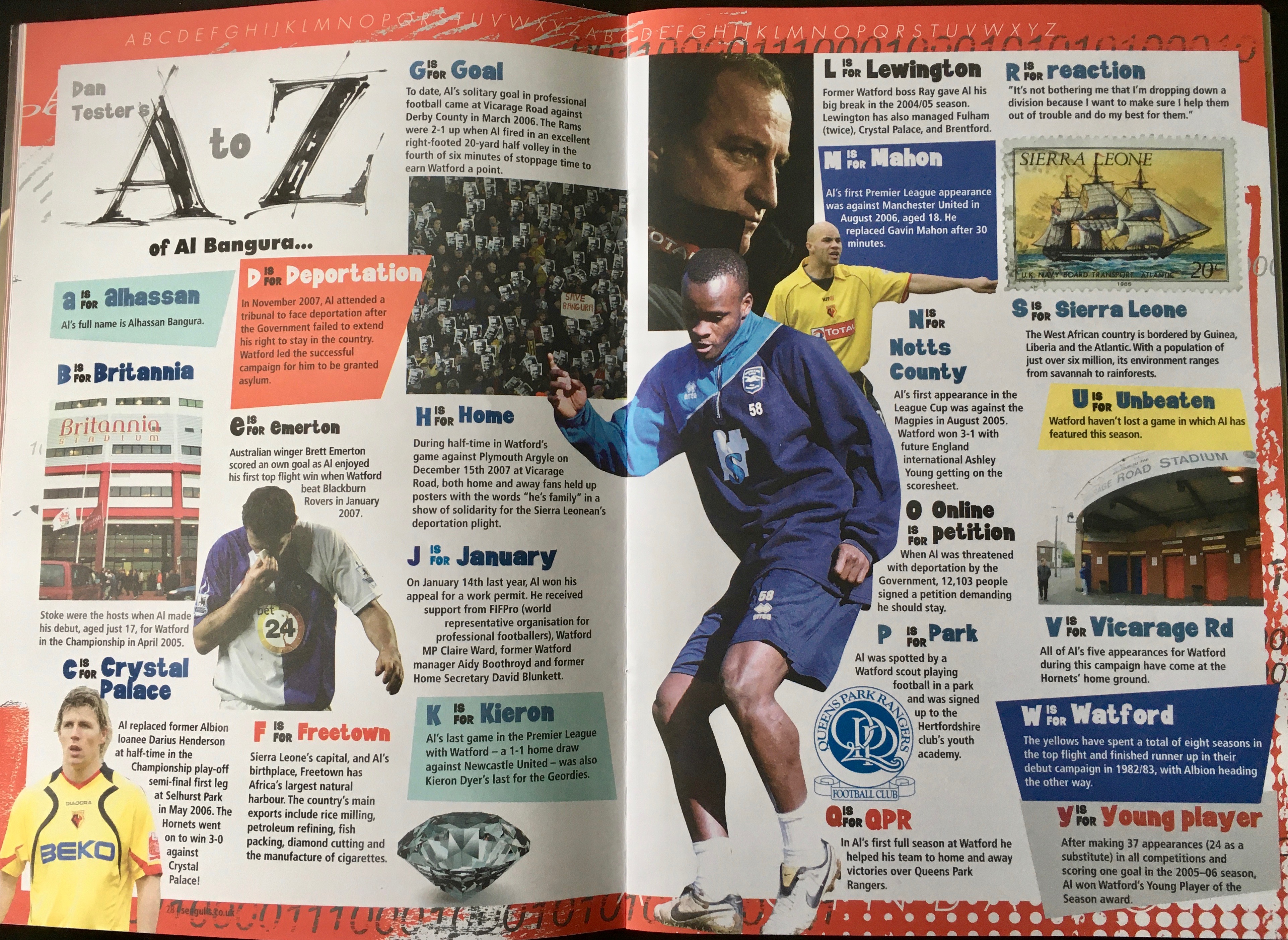
prog spreadBangura was profiled in the matchday programme

Bangura started six games for the Albion, and he said: “It’s not bothering me that I’m dropping down a division because I want to make sure I help them out of trouble and do my best for them.”

In his third game, he was alongside Jason Jarrett in the centre of midfield when Albion thrashed Yeovil Town 5-0 at Withdean, threading through a pass for Nicky Forster to score.

However, at the expiry of his loan, he returned to Watford but was released at the end of the season and joined Blackpool who were in the Championship at the time.

Limited to just 10 games for the Tangerines, Bangura headed for Turkey to play for Mersin Idmanyurdu and then played five games for Azerbaijani team Gabala, managed by the former Arsenal captain Tony Adams.

Hockaday w Al BHis former youth coach at Watford, Dave Hockaday (left, who briefly managed Leeds United) signed him for Conference Premier outfit Forest Green Rovers in 2011, and he completed 91 appearances for them before getting a chance to return to league action with Coventry City.
The aforementioned Hockaday had become under 21 manager at the Sky Blues and Bangura won a short-term contract after a successful trial, although he didn’t feature in Tony Mowbray’s league side.

After spending time working with the Premier League on the issue of the growing number of African boys being tricked into leaving their home for the promise of a football career in Europe, he returned to playing in the National League, initially with St Albans City and then Nuneaton Town.

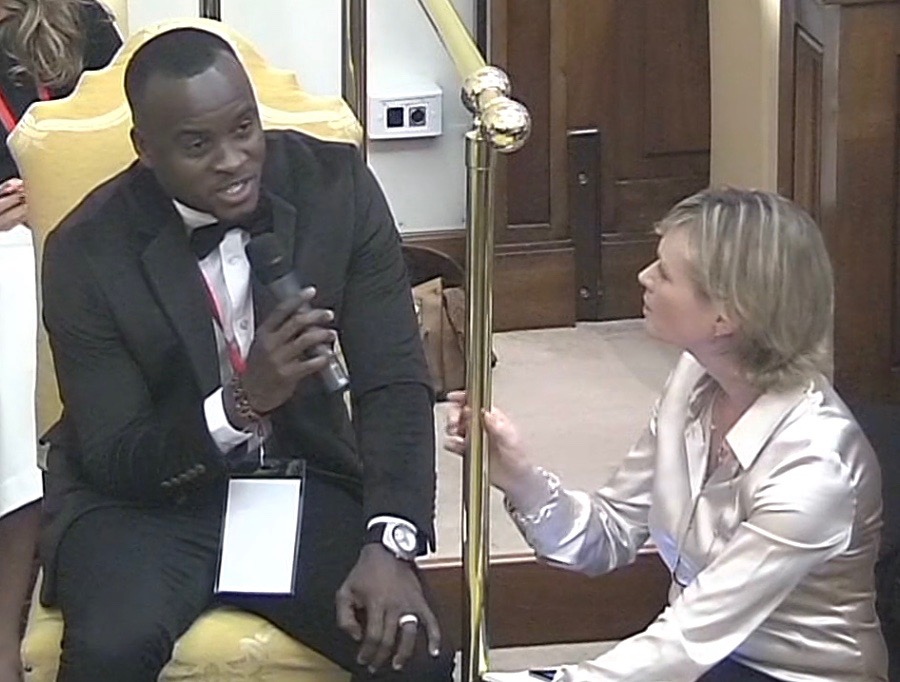
Bangura talksIn October 2016, Bangura spoke to the Santa Marta Group – an alliance of international police chiefs, bishops, religious communities and NGOs – at an international conference in Rome to tackle human trafficking and modern slavery.

Born in Freetown, Sierra Leone, on 24 January 1988, Alhassan Bangura sensed trouble when his family expected him to get involved in some kind of secret society at the age of 14 so he ran away to Guinea where he met a Frenchman who promised to help him realise his dream of pursuing a football career in the UK.

That dream very nearly turned into a nightmare when he realised on arrival in England aged only 15 that he was being lined up as a male prostitute. Luckily, he screamed out, escaped the room where he was being held, and pleaded for help from a Nigerian passer-by who directed him towards the Home Office to get official assistance.

Bangura WatThe ’system’ thankfully came to his aid and before long a Watford scout spotted him playing football in a park and signed him up to the Hertfordshire club’s youth academy, where he was nurtured by assistant academy director Chris Cummins, who was also recognised for helping Hameur Bouazza, Adrian Mariappa and Lloyd Doyley to make it through to the first team.

Bangura was just 17 when then Watford boss Ray Lewington, better known as Roy Hodgson’s loyal assistant, gave Bangura his first team debut in April 2005, away to Stoke City at the Britannia Stadium.

Eleven months later he scored his first goal. It came at Vicarage Road v Derby County – a right-footed 20-yard half-volley in the fourth of six minutes of stoppage time to earn Watford a point in a 2-2 draw.

Bangura was voted Watford’s Young Player of the Season in 2005-06, a year in which he made 37 appearances (24 of them as substitute).

After Watford won promotion in May 2006, Bangura made his first Premier League appearance against Man Utd in August 2006. He was still only 18, and came on as a sub for Gavin Mahon on 30 minutes.

While everything seemed to be going well, Bangura faced a bombshell in November 2007 when a deportation tribunal failed to extend his right to stay in the country.

Al B on TV

Watford led a successful campaign for him to be granted asylum and, on 14 January 2008, Bangura won his appeal for a work permit, receiving support from FIFPro (world representative organisation for pro footballers), Watford MP Claire Ward, Sir Elton John, former Watford manager Aidy Boothroyd and former Home Secretary David Blunkett.

Owusu raised the roof as Albion escaped the drop

Owusu stripes

FEW Brighton players have made such an impact in such a short time as Lloyd Owusu, a Ghana international who in 2009 struck seven goals in 14 appearances to help Russell Slade’s Albion retain their League One status.

The popular Slough-born goalscorer also earned legendary status amongst Sheffield Wednesday fans even though his playing time for the Owls was similarly fairly limited. His most prolific time as a striker came in two spells at Brentford, but he was happy to travel and ended up playing in Australia.

Born in Slough on 12 December 1976, Owusu started his career with local GM Vauxhall Conference club Slough Town, managed at the time by future Reading boss Brian McDermott.

Owusu rose through the ranks at youth and reserve team level before breaking into the first team in September 1996. Owusu marked his full league debut for Slough with four goals in a 6-0 win over Telford United.

In 1998, after netting 18 goals in 59 appearances for Slough, Brentford, then managed by former Palace chairman Ron Noades, took him to Griffin Park for a fee of £25,000, but it was under future Albion boss Steve Coppell that saw the majority of his best playing days.

Owusu BrentOwusu scored 76 goals in two spells with the Bees, and, in the 1998-99 season, his 24 goals in 53 games in all competitions saw him lead the scoring charts in Nationwide Division Three (now Football League Two) with Brentford crowned champions.

While two below par seasons followed, in 2001-02 he was back on top form, scoring 22 goals to help Brentford reach the Division Two play-off final at the Millennium Stadium. However, the Bees lost 2-0 to Stoke City and Owusu’s contract was not renewed.

Sheffield Wednesday, then in the Championship, signed him on a free transfer and he became an instant Wednesday legend. Coming on as a substitute in a typical fierce Steel City derby match against Sheffield United, he headed a goal with his first touch.

“Scoring with my first touch for Wednesday was a dream come true. I actually dreamt that I was going to score on my debut with my first touch,” Owusu told beatsandrhymesfc.com. “All I remember was the ball coming off the cross bar from a (Shefki) Kuqi header and me being there to put it in the net past Paddy Kenny.”

Although the Owls went on to win the match 2-0, Owusu subsequently had limited game time, starting only 13 games out of a possible 34 in all competitions in that 2002-03 season.

“I missed pre-season due to a knee operation so I was always on the backburner and could never reproduce my best performances,” Owusu explained.

When a similar story followed in 2003-04, he went on loan to Reading, and then moved permanently to the Royals in the summer of 2004. In the 2004-05 season, Owusu scored six goals in 14 league starts.

The striker rejoined Brentford on a free transfer in the summer of 2005, the same year he won his first cap for Ghana. Unfortunately, he tore a groin muscle in a friendly match playing for Ghana in April 2006 and was sidelined for nearly a year.

He finally made his comeback in March 2007, but he was released by Brentford two months later and signed on a free transfer for Russell Slade’s Yeovil Town in July 2007.

In September that year, he was a scorer at the Withdean Stadium as the Glovers left with all three points courtesy of a 2-1 win. But on transfer deadline day, 1 September 2008, Owusu joined Coca-Cola League 1 side Cheltenham Town on a one-year deal.

It was in March 2009, with Cheltenham looking to cut costs, that Owusu linked up with the Seagulls on loan until the end of the season. “Going to Brighton was one of my best memories of my career,” Owusu told gloucestershirelive.co.uk.

Owusu grabbed the headlines as he scored seven goals in 14 League appearances for Brighton, helping Russell Slade’s side to avoid relegation from League One. He was even named Powerade League One player of the month for April 2009.

On the strength of his performances, Owusu was offered an extended contract by the Seagulls but he chose to try his luck in Australia, where he has since returned to work.

He initially joined A-League side Adelaide United on a two-year deal but was struck by swine flu and pneumonia, and struggled to make an impact on the pitch. He had a short spell at Chinese Super League club Guangzhou Evergrande, but his contract was terminated by mutual consent at the end of December 2010.

Back in the UK, he linked up with Luton Town, at the time trying to get back into the Football League. He scored seven in 13 games but the team missed out on promotion after losing on penalties to AFC Wimbledon in the play-off final at the City of Manchester Stadium (as it was then).

After spending pre-season with Cypriot side AEP Paphos in the summer of 2011, Owusu returned to the UK to make a handful of appearances for Barnet and Hayes & Yeading United (on loan), but picked up an injury and left Barnet after his contract expired.

In February 2012, he re-signed for Slough to help manager, and former teammate, Steve Bateman achieve promotion, before returning to Adelaide with White City. He has since developed a coaching and acting career Down Under.

Owusu took his coaching badges in Australia and, as well as coaching at some of the top private schools in Sydney, has launched his own coaching company, XL Soccer.

“There has also been a bit of modelling, TV commercials and the odd appearances in a documentaries and movies,” he told gloucestershirelive.co.uk. “I was in Gods of Egypt with Gerard Butler and also appeared in the TV shows Danger5 and Deadly Women along with ads for OPSM (opticians) and HomeAway (holiday rentals).”

His LinkedIn profile says his current role is general duties master at Cranbrook School in Sydney.

Flu-hit Flinders came to the rescue in a goalkeeping crisis

AN UNDERSTUDY to eccentric Crystal Palace goalkeeper Gabor Kiraly played a dozen games in goal for Brighton in the spring of 2007.

Scott Flinders was just 20, and suffering from the effects of a bout of ‘flu, when he answered a call from fledgling manager Dean Wilkins to help solve a goalkeeper crisis.

With first choice Michel Kuipers injured, Wilkins considered it too early to risk rookie ‘keepers Richard Martin and John Sullivan, so he turned to Albion’s arch rivals to borrow 6’ 4” Flinders.

“I always thought Millwall were Palace’s biggest rivals but then I got told, I think it was by Dougie Freedman or Clinton Morrison, that it is Brighton,” Flinders told The Argus. “It didn’t put me off signing. It is just about playing games.”

IMG_6009Flinders made a slightly shaky start in a win away to Gillingham, and in a defeat to Bristol City on his first appearance at Withdean, but he made some important stops to help earn points in consecutive away draws at Crewe and Blackpool.

Manager Wilkins told The Argus: “We knew we were bringing in somebody who was not 100 per cent for the first couple of matches. Scott has recovered from that and he has done very well for us.

“We are still in a position where we need another ‘keeper with a bit more experience than the young lads we’ve got.”

Flinders seemed happy to extend his loan from one month to two and said: “The fans have been absolutely excellent towards me, even though I am coming from a rival club.

“John Keeley, the goalkeeping coach, has been different class and I am delighted to be here.”

Unfortunately, Albion lost all five of their matches in April and finished 18th, six points clear of relegation.

Born in Rotherham on 12 June 1986, Flinders joined nearby Barnsley as a youth trainee in 2003 and made it through to the first team in 2005 when former Albion striker Andy Ritchie was the manager.

He took over from Ross Turnbull and featured in 11 games over three months before losing his place and subsequently having to settle for being understudy to Republic of Ireland international Nick Colgan.

However, Flinders earned his own international recognition in the shape of five caps for the England under 20 side, three of them in the 2005 Toulon tournament. He made his debut in a 3-0 win against the Korean Republic in a side which also featured Liam Ridgewell, Liam Rosenior and Greg Halford.

He kept his place three days later in a 0-0 draw with France, then came on as a sub three days later in a 1-1 draw with Mexico.

In August the same year, he started against Russia but was substituted as the side went down 4-0. A teammate in that one was Will Hoskins. His final match was at Turf Moor when England drew 2-2 with Holland, although he was subbed off again. In that England team was future England centre-back Gary Cahill while the left-back was Gary Borrowdale, who played on loan at Brighton under Russell Slade in 2009.

Frustrated playing second fiddle at Barnsley, Flinders had trials at Chelsea and Wigan Athletic but he ended up at Crystal Palace in 2006 as part of an exchange deal involving midfield player Sam Togwell.

It’s believed Palace paid an initial fee of £250,000 with additional instalments to be paid according to appearances.

However, Flinders only made one league cup appearance before being sent on loan to Gillingham. It was the first of five loans away from Selhurst Park, the lengthiest being his time at Brighton.

Other loan spells saw him spend time with Yeovil Town, Blackpool and Falkirk and he was released by Palace in May 2009 after playing just 13 games for them in three years.

His years of understudying finally came to an end when he headed to the north east in the summer of 2009 and joined Hartlepool United, where he established himself as first-choice ‘keeper.

Flinders even got on the scoresheet while at Hartlepool, scoring with a 94th minute header against Bournemouth on 30 April 2011 to earn his side a point in the last home game of the season.

The 2012-13 season was a particular triumph for him when he earned the accolades of Player’s Player, Supporter’s Player, Away Player of the Year and Hartlepool Mail SportsMail Player of the Year.

In six years at Hartlepool, he made more appearances – 276 – than any other ‘keeper in the club’s history, eventually moving on in June 2015 to League Two York City.

Flinders received a five-match ban from the Football Association in August 2016 following an incident in a League Two game between York and AFC Wimbledon on 19 March that year.

It was alleged Dons striker Lyle Taylor grabbed Flinders by the testicles and, as he retaliated, the goalkeeper was alleged to have used racist abuse.

Flinders denied the charge but was found guilty by the FA following an independent regulatory commission. Fined £1,250, Flinders was also warned about his future conduct and ordered to complete an education course.

York initially suspended Flinders but then loaned him out to National League rivals Macclesfield Town, who he subsequently joined on a contract from January to June 2017.

On deadline day in August 2017, he joined League Two Cheltenham Town, with boss Gary Johnson telling the club’s website: “Scott has played over 400 league and cup games in his career and there is no substitute for experience.”

In January 2020, Flinders suffered a broken leg in a game against Oldham which put him out of the game for nine months.

  • Pictures and headlines from The Argus.