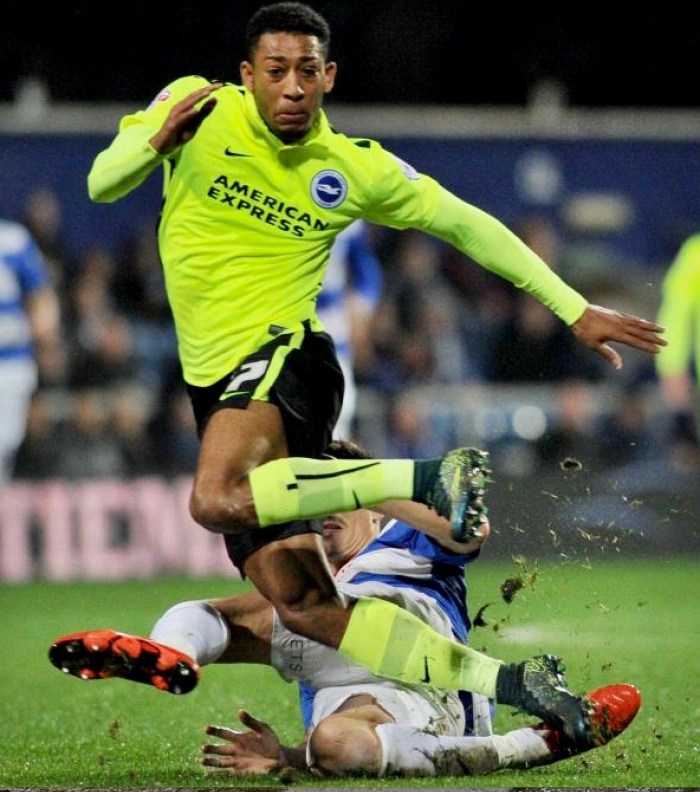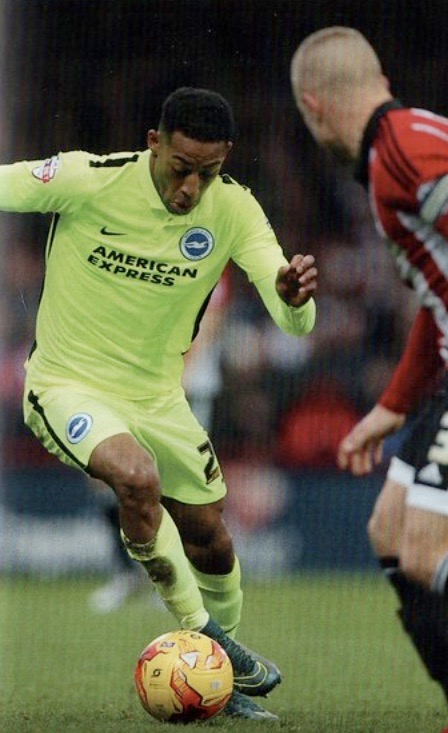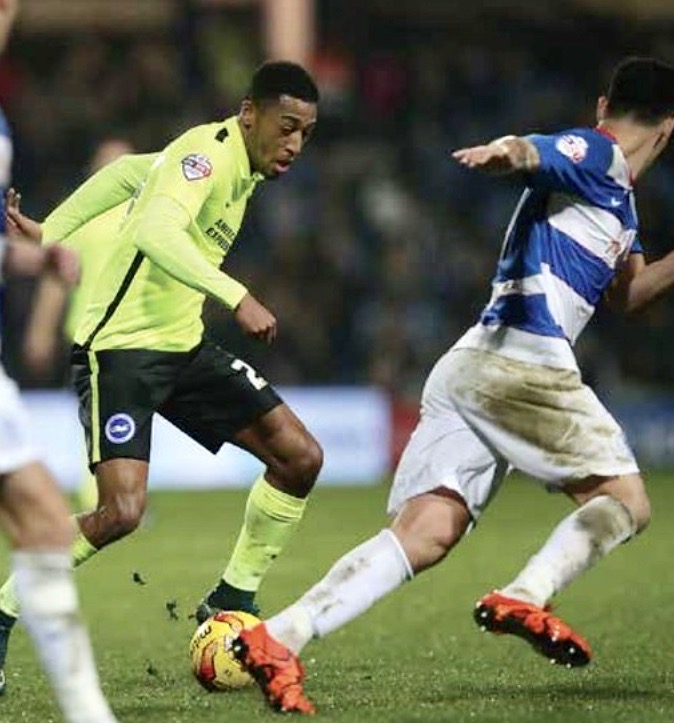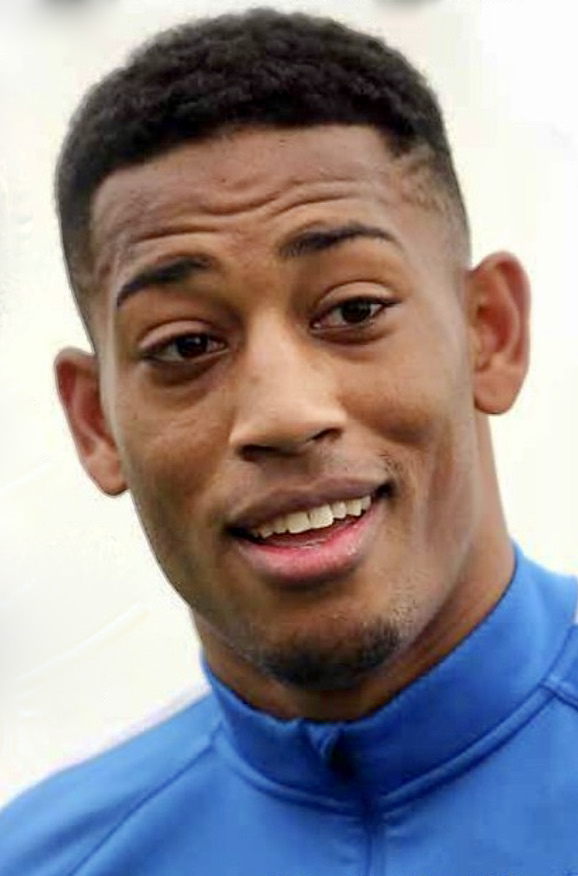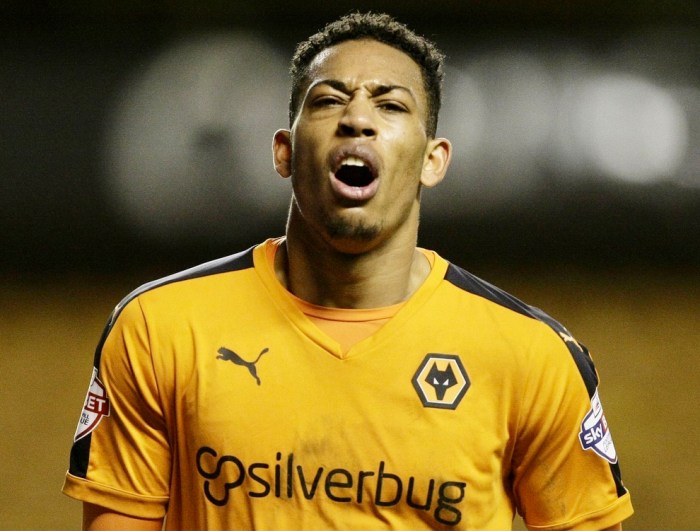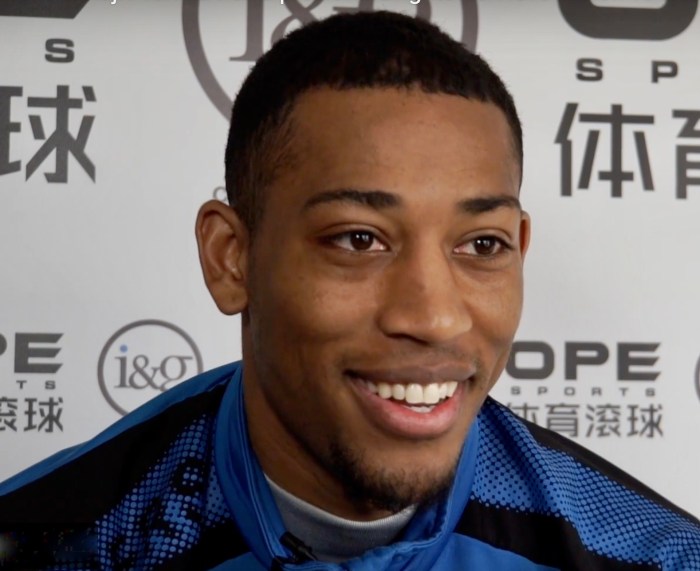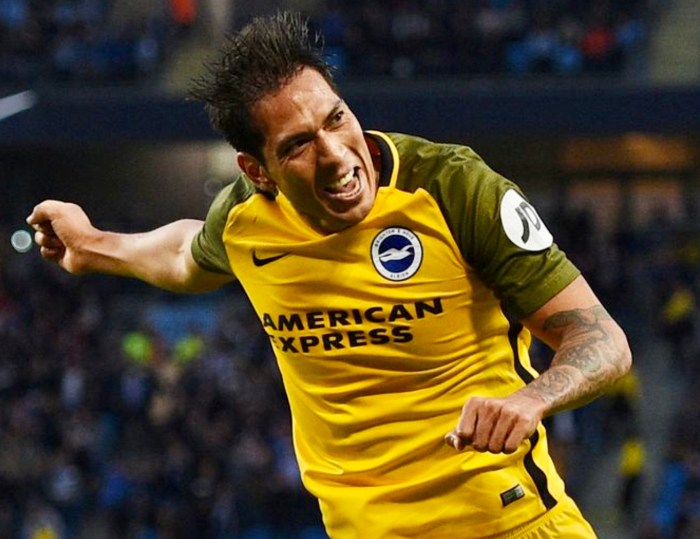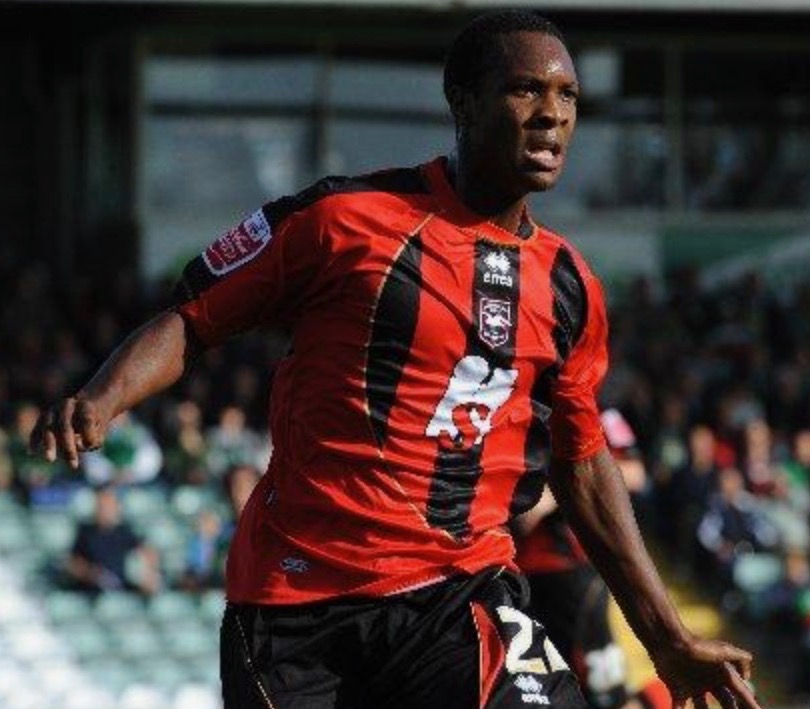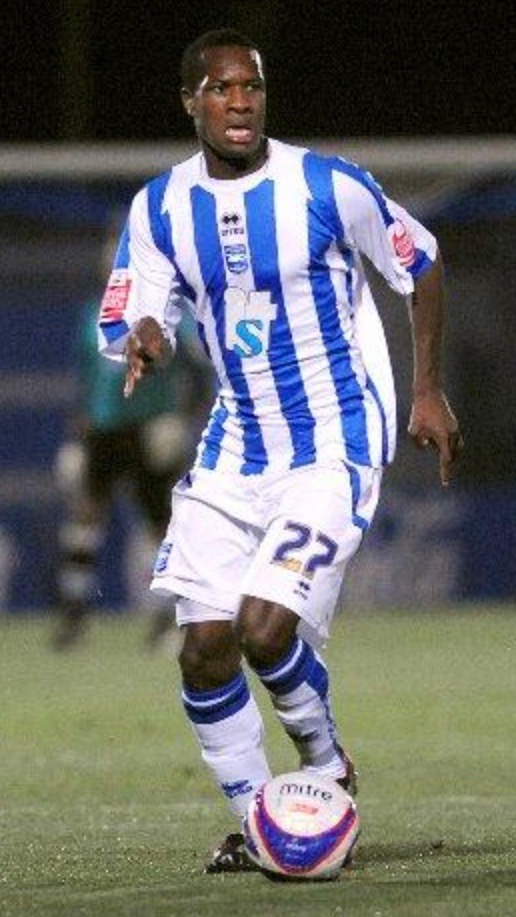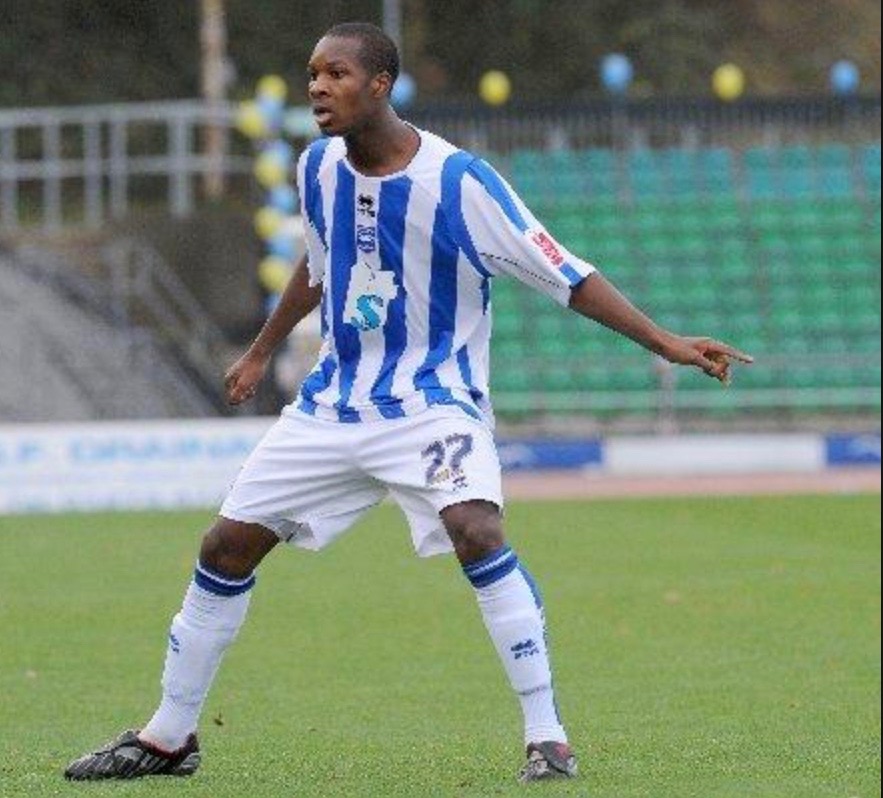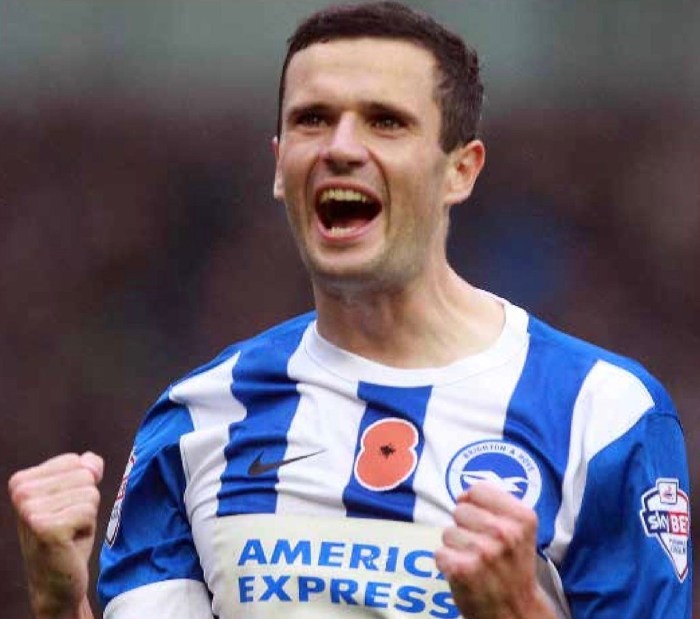
Three-time Clough signing Jamie Murphy was an Albion promotion winner

BRIGHTON provided a step up in class for Jamie Murphy when they bought the Scottish winger from League One Sheffield United in August 2015.

“I feel like I’ve been able to play in the Championship but I’ve never been given the opportunity,” he said. “It’s thanks to the club for giving me that opportunity.”

Murphy was 25 when he joined the Albion on a four-year deal. The fee was undisclosed but was reported to be £1.8m.

He was Albion’s ninth summer signing and his arrival was somewhat overshadowed by the return of Bobby Zamora to the Albion. But boss Chris Hughton said at the time: “He is somebody we monitored very closely last season and he was one of Sheffield United’s most influential and creative players.

“He’s a winger who can play on either flank and he will give us extra options in both wide positions. He’s a very good age, an age where he can continue to develop as a player and build on his experience.”

Murphy quickly settled at the club, finding a few familiar voices in the likes of captain Gordon Greer (he discovered their respective parents lived round the corner from each other in Glasgow and even drank in the same pub!), sports therapist Antony Stuart who Murphy knew at his first club, Motherwell, and assistant manager Colin Calderwood, whose Hibernian side he had played against.

He scored his first goal for the club in a 2-2 draw at Bolton on 26 September 2015 – but was later sent off in the same match. Zamora, making his first Albion start since returning to the club, set up Dale Stephens to put Albion ahead and Murphy increased the lead after a surging run into the penalty area by Liam Rosenior.

Neil Danns pulled one back before half time and Murphy saw red for a heavy tackle on Danns in the 75th minute. Albion had to settle for a point when Gary Madine headed an injury-time equaliser.

Impressive displays and another goal, against MK Dons, helped to earn him the November player of the month award – and, courtesy of the sponsor, the opportunity to drive a Porsche for 48 hours.

Murphy scored four more goals in a season’s total of 31 starts plus six appearances off the bench and he revealed in a matchday programme article how his eye for a goal stemmed from playing as a striker earlier in his career.

“When I was a kid, I was always the quickest so I always scored a lot of goals but as I got older and then turned professional with Motherwell it got harder and harder. I’m not the biggest player in the world, so I got moved out to the wing, but I still think like a striker when I’m in front of goal.”

Unfortunately, the campaign ended in disappointment when Albion missed out on promotion from the Championship. Hughton’s side finished third and Murphy’s form for Brighton earned him a call-up to the Scotland squad for two friendlies in March 2016, although he remained an unused sub.

When Albion lost in the two-legged Championship play-off semi-final to Sheffield Wednesday, Murphy was an unused sub (Anthony Knockaert and Jiri Skalak got the nod) but it was a familiar feeling for Murphy who had experienced semi-final heartache in two League One play-offs (2013 and 2015) for Wednesday’s fierce city rivals.

Hughton had plenty of competition for the wide spots in Albion’s 2016-17 promotion challenge, reducing Murphy’s starts to 20 plus 15 appearances off the bench.

He tried hard to seize his chance when it was presented. He scored twice in a 4-0 League Cup win over Colchester United at the start of the season and was the ‘other’ scorer in the Bonfire Night 2-0 win at Bristol City when Steve Sidwell scored a worldy from the halfway line.

A 3-0 home win over Reading at the end of February saw Murphy put in a man-of-the-match performance and he scored his first goal in 16 matches (Sam Baldock and Knockaert the other scorers).

He was praised for his pace on the break and excellent decision-making and later told the matchday programme: “It was one of my best performances. I always feel as if I’ve given 100 per cent – but sometimes things go for you, sometimes they don’t.

“I was delighted to get the goal; it’s been coming these past couple of weeks. But all across the team we’ve played well, done our jobs and obviously come away with a great win. It was a big game and we put in a very professional performance.”

Expanding on the whole-squad approach, Murphy said: “Anyone can come in and do a job. When I was on the bench I always felt there was a chance for me coming and I’m sure the boys on the bench feel that as well.

“We’re in this as a squad, it’s not just about the starting 11.” And he also spoke about the part the Amex crowd played. “It’s great as a player when you know you’ve got that backing of the fans behind you.

“When this place is rocking it really makes a big difference to us as a team. The fans get right behind us home and away.”

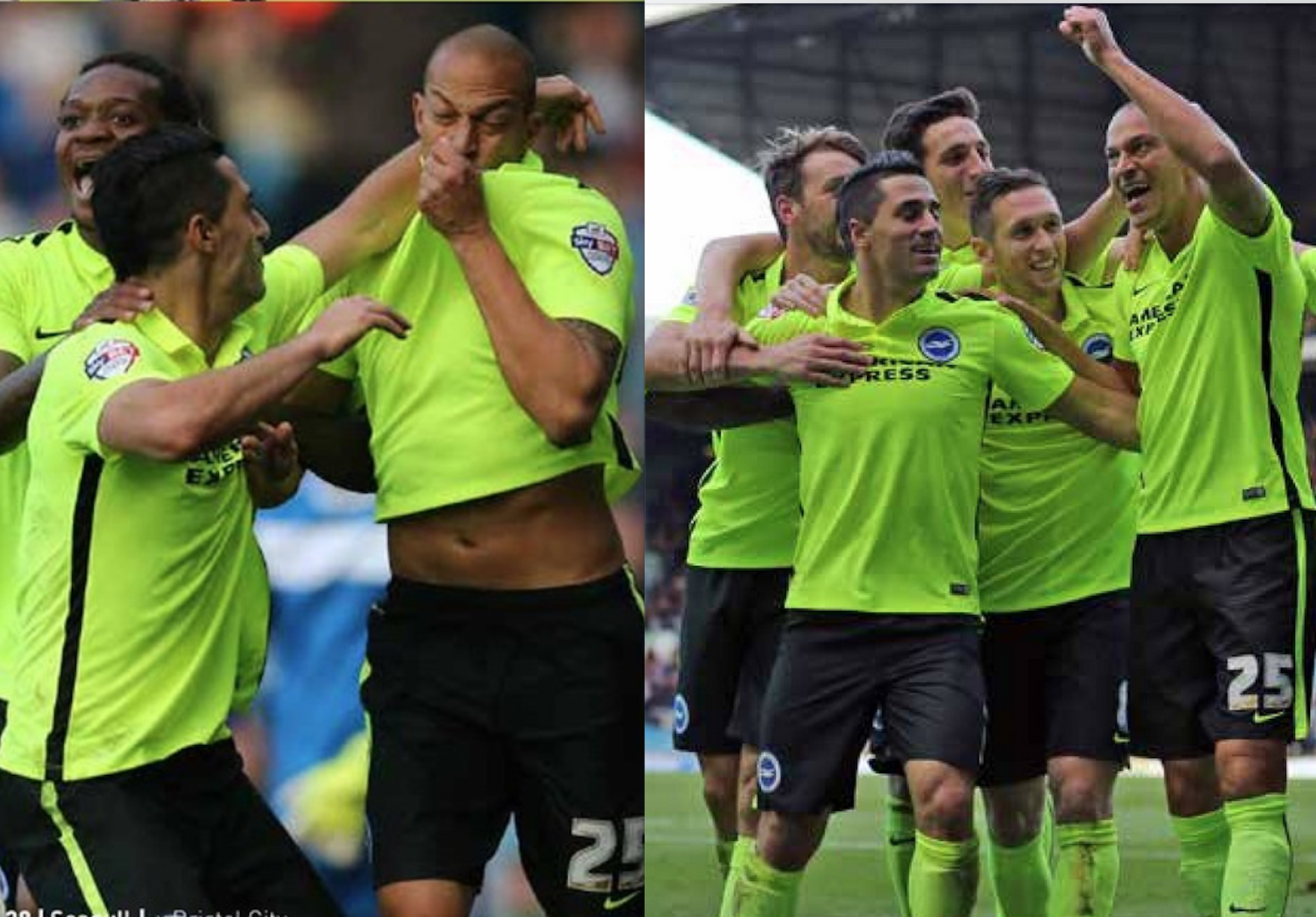
Murphy was certainly at the heart of the celebrations (above) when the Seagulls finally made it over the promotion finishing line, via a 2-1 win over Wigan Athletic, and he fondly recalled crowdsurfing (together with teammates Ollie Norwood and Skalak) on a happy, packed train from Falmer to the centre of Brighton as players joined with fans to celebrate the achievement.

The players were headed to a party in central Brighton laid on by chairman Tony Bloom and Murphy told The Athletic’s Andy Naylor in 2021: “There was no other way to get from the stadium to the party. The train station is 100 yards away, so we thought, ‘Why not just jump on a train?’.

“I don’t know what we were thinking, or if we thought it was going to be empty. Obviously, it wasn’t!

“It’s one of the best memories I have of that day. I’ve still got the video on my phone of us crowdsurfing and then coming off the train and getting carried down on someone’s shoulders, all the way down to the party.”

Once the Albion were in the Premier League, Murphy’s playing time was virtually non-existent (one start and three sub appearances in the league; one League Cup outing), and although speculation arose about a possible move, Hughton tried to play it down.

In December 2017, he told the Argus: “At this moment, if I am looking at the options I have in the wide areas, it’s been unfortunate for Jamie because of what we’ve had and no injuries in that area.

“He is still very much part of our plans. It only takes a lack of form, an injury or a couple of injuries and then he is very much back in the squad.”

Murphy in action for Glasgow Rangers

Within weeks, though, the winger joined Glasgow Rangers (the team he supported as a boy), initially on loan until the end of the season, before making the move permanent in the summer of 2018.

Hughton told the club website: “Jamie is a great lad, a fantastic professional and has a desire to play – and while we were in no hurry to see him leave, we do understand his desire to play for his boyhood team and one of the biggest clubs in Scotland.

“He’s been excellent for the club, ever since we signed him from Sheffield United, and wrote himself into club folklore as a crucial part of our promotion-winning side last season.”

Murphy played 18 league and cup matches (plus one as a sub) as Graeme Murty’s reign came to an end and during that initial time back in Scotland earned two full caps to go with his previous under 21 honours. They came in friendlies against Costa Rica and Peru: going on as an 87th minute sub for Matt Ritchie in a 1-0 win over Costa Rica and starting in a May 2018 2-0 defeat in Peru ((he was replaced by Oli McBurnie in the 67th minute).

Murphy signed a three-year contract with Rangers and was the club’s first goalscorer under new manager Steven Gerrard, netting the opener in front of a crowd of 49,309 at Ibrox in a Europa League qualifying match against North Macedonian side Shkupi.

He had played in just five Europa League games and two Scottish Premiership games before suffering a career-changing injury in a League Cup tie at Kilmarnock in late August.

The anterior cruciate ligament tear in his left knee, sustained on the astroturf pitch at Rugby Park in an innocuous coming-together with an opponent, put him out of action for 14 months.

Gerrard told the Glasgow Times: “Jamie’s coming to terms with it. He’s found it tough. He was upset at the beginning and understandably so.

“It is a tough one to take as a footballer. But we will give him every bit of help and support off the pitch that he needs. We will make sure that he sees the right specialists and gets the job done properly.

“Then as a team we will rally around him and make sure he is in good spirits. He is here for the long term. He is a big player for us.

“What Jamie has to do now and what we have to help him do is make sure he does everything in his powers to come back strong and doesn’t have any setbacks.

“He has got an opportunity to work on his whole body and make sure he comes back really strong.”

“It is a big blow. He found consistency straight away. He was on a big buzz from signing long-term for the club.

“He knows the league, he knows the club, he is very well-liked in the dressing room. We have had a big cog, a big piece of the jigsaw, taken away from us.

“We are still coming to terms with it. I know Jamie is as well. I’m not going to try and play it down. It’s a big blow.”

As it turned out, Murphy played only two more matches for Rangers after returning to fitness in October 2019 and in January 2020 linked up once again with his former Sheffield United boss Nigel Clough on a six-month loan at League One Burton Albion.

“I have worked with Nigel Clough before and had some of my greatest moments as a footballer under him, so it was an easy one to pick,” he said. “I want to be back enjoying football again. It has been a nightmare time with my knee but I’m now just looking forward to playing again.

Clough said: “To get a player from Rangers of Jamie’s quality is brilliant. The fact that we have worked with him before and that we get on well with his agent has helped.

“He wants to get out and play some football. He was out for a while with a knee injury, which is one of the reasons he’s coming out, but he’s fully fit now. What he did for us at Sheffield United and how he played there means we are very excited to have him on board.

“He plays wide mainly but can play up the middle as well. He carries the ball very well, makes goals and scores goals. He will be a great asset as we try and push for a place in the top six.”

He scored seven goals in 10 matches but then returned to Scotland and joined Hibernian, initially on loan and then permanently.

After making a total of 50 league and cup appearances for Hibs, he linked up with Clough for a third time in February 2022, signing on loan at League Two Mansfield Town. He scored once in 16 appearances for the Stags.
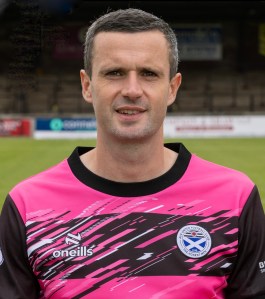
Murphy joined Ayr United in 2023

When he left Hibs at the end of his contract in June 2022, he switched to Perth for a year to play for St Johnstone where he scored five times in 29 appearances and in June 2023 was on the move again, this time to Scottish Championship side Ayr United.

Born in Glasgow on 28 August 1989, Murphy was inspired by Rangers strikers Ally McCoist and Mark Hateley as a boy and played junior football at Westwood Rovers and Drumchapel Thistle before linking up with Clyde. He joined Motherwell aged 11 and broke through to the first team at 17 in 2006 under former Albion boss Mark McGhee.

He said of McGhee: “He was the first man to give me a real chance in the first team. I played a good run of games, played in Europe and played well so he was big for me at the time.”
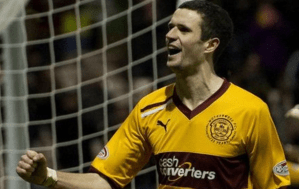
In 11 years at Fir Park, Murphy helped the club reach a Scottish Cup Final and regularly qualify for European football.

Having scored 50 goals in 215 games for Motherwell, he was then bought in January 2013 by former Albion captain Danny Wilson, who had switched allegiance in Sheffield to manage United.

It was Stuart McCall who sold Murphy to a club he had served as a player and a manager, and he believed at a reported fee of £106,000 they were getting a bargain for the 23-year-old.

McCall told the Daily Record: “We are not getting anywhere near what he is worth but he has given this club great service over the years. He is a great kid and goes with our blessing.

“It is probably the right time for Jamie to move on and flourish elsewhere.

“I would love to have kept him until the summer and it is disappointing for us. But Jamie is a talented boy and can force himself into the Sheffield United team.

“Sheffield United may be a League One side now but they are a great club for him to go to.

“I am hopeful they will be in the Championship next season and they are a Premiership club in the making as they have that status.”

McCall added: “I told Jamie they have a great fanbase, fantastic set-up and good manager in Danny Wilson.” However, Wilson’s two-year tenure at Bramall Lane came to an end in May that year. He was replaced by David Weir (now Albion’s technical director) and Murphy’s third United boss was Clough, who, on awarding Murphy a two-year contract extension in January 2015 said: “Jamie has caused Premier League defenders countless problems in our cup runs.”

With his playing days now winding down, Murphy has an eye on the future and on X (formerly Twitter) in October 2023 he posted that he had successfully passed the UEFA A coaching licence.
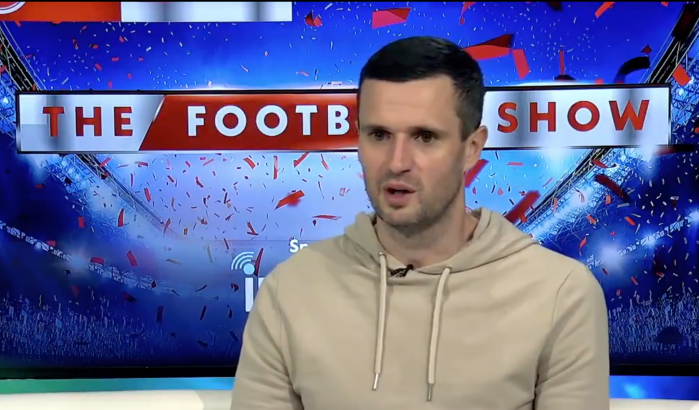
In an extended interview with the Hibernian club website in January 2021, he spoke about his desire to become a manager. “That’s something I definitely want to try,” he said. “I like the problem-solving aspect of it, being able to watch a game and pick apart a team’s strengths and weaknesses.

“I probably watch games in a different way now and it started when I was injured. I wasn’t able to train for the best part of a year, so I found myself taking down notes in a journal whenever I’d watch a game – about how teams would play, how they won or lost the game.”

When the ball hits the goal it’s not Shearer or Cole it’s Zamora!

EVERY NOW AND AGAIN as a football supporter a truly special player stands out well above the rest you’ve watched. Bobby Zamora was most definitely in that category.

As the new year dawns on what will be my 55th year supporting Brighton & Hove Albion, it is perhaps fitting to spend a little time remembering just how good Zamora was for the Seagulls before his outstanding ability to score goals was taken to higher levels: Tottenham Hotspur, West Ham, Fulham and ultimately, and, quite deservedly, England.

That he came back to the Albion from QPR as his career began to ebb was nothing short of a bonus­ – and, while I’m not a big gambler, I was delighted to get a modest return from the bookies when my punt on him being the last goalscorer came good after he had gone on as a sub at Elland Road on 15 October 2015 and chipped the winner (below) to register his first goal since rejoining!

“That goal was definitely the highlight of my season,” Zamora told interviewer Adam Virgo in a Seagulls World interview. “It was my first goal since coming back and to score the winner so late in the game was unbelievable. It was a special moment for me, and it settled the nerves knowing that we’d got the three points.”

Just four days later, Zamora repeated the feat going on as a 76th-minute substitute for Tomer Hemed at home to Bristol City and beating goalkeeper Frank Fielding with a low shot from 15 yards out. Albion won 2-1; Sam Baldock having levelled things up against his former club after Derrick Williams opened the scoring for City.

Unfortunately, Zamora managed just five more in that second spell. He made 10 starts plus 16 as a sub in Chris Hughton’s side but he was struggling with a hip injury.

It eventually caught up with him and prevented him from contributing further to Albion’s aim of promotion back to the elite; his last game being as a sub in a 0-0 draw at home to Sheffield Wednesday on 8 March 2016. “If I was fit, I would have scored some goals and we’d have been promoted automatically,” he told the UndrThe Cosh podcast (pictured above).

Thankfully another returning striker in the shape of Glenn Murray completed that task the following season and went on to cement his own place in Albion’s history: his 111 goals in 287 appearances putting him second in the list of Brighton’s all-time top goalscorers.

Golden goalscorers: Zamora + Murray

Each of the different eras I’ve watched the Albion has thrown up truly memorable players who have generated their own air of excitement and anticipation because of the goals they scored.

The first one for me was Alex Dawson, who netted seven in the first five games I watched in 1969. Then along came Willie Irvine whose goalscoring in third tier Albion’s promotion-winning season of 1972 earned him an unexpected recall to the Northern Ireland side – and an appearance (that I went to watch) in a 1-0 win against England at Wembley.

Next, of course, was the truly outstanding Peter Ward, who jinked his way past defenders with apparent ease and scored goals for fun, his 36 goals in 1976-77 smashing a decades-old record. Like Zamora, he came back to the scene of past glories (albeit only on loan) and scored a magnificent winner against the team he supported as a boy, Manchester United.

Garry Nelson, with 32 goals, and Kevin Bremner were a superb front pair in another third tier promotion-winning line-up in 1988 while, in 1990-91, Mike Small and John Byrne combined brilliantly to take the Seagulls within a hair’s breadth of a return to the big time.

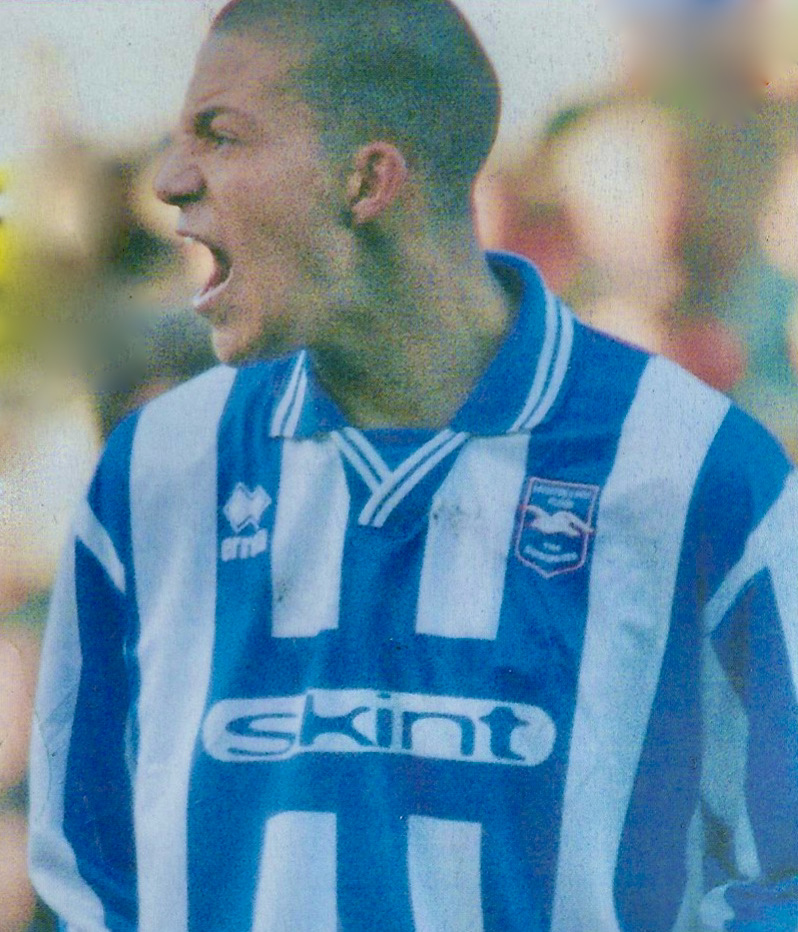
The arrival of a beanpole of a kid with an eye for goal in Zamora completely transformed Albion’s fortunes under Micky Adams and he was the talisman in back-to-back promotions following years in the doldrums.

Zamora’s Albion story is pretty well known but let’s remind ourselves of how it all began.

Depending on whose account you believe more, it was either Dick Knight or Adams who had the foresight to bring Zamora to the Withdean.

Adams said: “The first time I saw him he came onto the training ground; he looked like a kid. But he was tall and gangly with a useful left foot; there was potential there.”

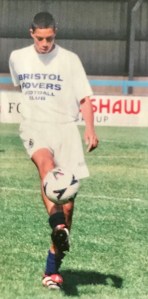
In fact, Zamora might never have arrived in Sussex if Albion had been successful in securing a permanent deal for on-loan Lorenzo Pinamonte. When Brentford outbid Brighton for the services of the Bristol City loanee, Albion turned their attention to Zamora (left), a Bristol Rovers player who was only getting sub appearances under Ian Holloway but had scored eight goals in six games on loan at nearby non-league Bath City.

“He was six foot one and we knew he had a very good first touch and could hold the ball up well, the type of player we wanted,” Knight recounted in his autobiography Mad Man: From The Gutter to the Stars (Vision Sports Publishing, 2013).

Zamora duly arrived on loan and scored six in six matches (including a hat-trick in a 7-1 away win at Chester). He scored an equaliser and was named Man of the Match on his debut v Plymouth and by the end of February was Player of the Month.

Hat-trick ball at Chester

While Knight and Adams wanted him to stay, he insisted on returning to Rovers where he thought he might force his way into Holloway’s starting line-up. But it was back only to the bench as Nathan Ellington, Jason Roberts and Jamie Cureton were ahead of him in the pecking order.

As preparations began for the new season, Albion offered £60,000 for Zamora but Rovers chairman Geoff Dunford wanted £250,000. An incredulous Knight said he wouldn’t go higher than £100,000 and couldn’t believe they could demand such a figure for someone who hadn’t actually started a first team game.

Zamora had Rovers’ youth team coach Phil Bater to thank for forcing through the move. He accompanied the shy youngster into a meeting with Holloway, who tried to say he’d get some games if he stayed. Bater reckoned the youngster was being strung along and argued Zamora’s cause saying he stood more chance of playing if Rovers let him join the Albion.

After some brinkmanship from each club’s respective chairmen, with Knight threatening to walk away from the deal, it finally went through two days before the start of the season, although Albion’s chairman reluctantly agreed to a 30 per cent sell-on clause for the player.

Zamora instantly became one of the top earners on £2,000 a week with a goal bonus built in.

“It was an absolute coup that we had finally secured this player,” said Knight. “I could only see good things in him, could only see that he would be a huge asset to us.

“Football is all a matter of opinions. There is little science to it. For me, Zamora was the best signing I ever made.”

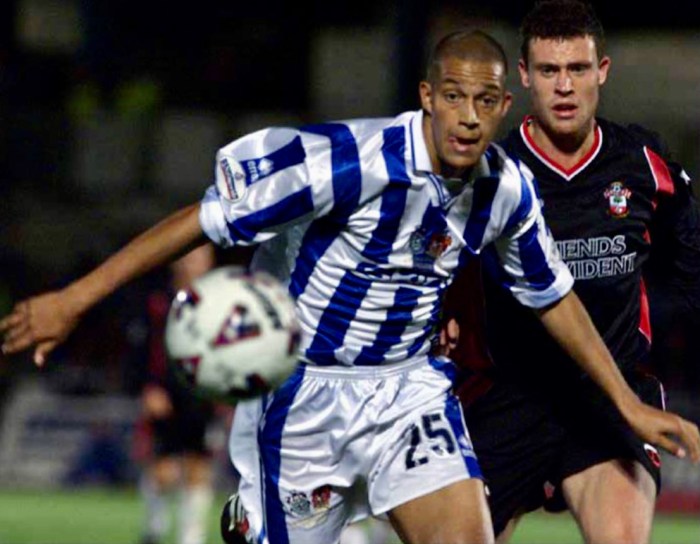
Zamora has eyes on the ball closely watched by a young Wayne Bridge for Southampton

Not only did Zamora manage to score 31 goals as Albion won promotion from the basement division, he went one better when they went straight to the top of the third tier the following season, netting 32 times in 46 matches.

A significant number of those goals came courtesy of Zamora’s excellent understanding with left-footed right-back Paul Watson, of whom he said: “He created a lot of goals for me with those quick free kicks. He didn’t put a foot wrong too often and was very underrated. He never got the credit his hard work deserved.”

Expanding on it in another interview, he said: “Whenever Watto got the ball I knew precisely where I needed to run to and he knew where to deliver it. It was such a great connection: Watto has an absolutely wonderful left foot and it made my job as a striker so much easier when you get deliveries like that.”

Declaring that even in the Premiership he hadn’t come across anybody with a better left foot, he added: “I was very lucky to have played in the same team as him; he created numerous goals for me; not only with his deliveries but with his intelligent play as well.”

Watson had arrived at the club with Charlie Oatway and was part of a cluster of players who had served under Adams at Brentford and Fulham. When Adams and assistant Bob Booker steered Albion to promotion as fourth tier champions, Zamora was player of the season and he and Danny Cullip were named in the PFA divisional XI.

Not long into the following season, the lure of taking over as manager at a Premier League club saw Adams quit Brighton, initially to become Dave Bassett’s no.2 at Leicester City, but with the promise of succeeding him.

“While I thought I had a shot at another promotion, it wasn’t a certainty,” Adams explained. “I knew I had put together a team of winners, and I knew I had a goalscorer in Bobby Zamora, but football’s fickle finger of fate could have disrupted that at any time.”

His successor, Peter Taylor, knew how fortunate he was to inherit an experienced squad, and said: “Of course the greatest asset we had was Bobby Zamora. Having him meant that we could play a front two at home and away from home we could play him on his own and he would still get us a goal out of nothing. He was an incredible player and miles too good for that level.”

And Zamora wasn’t only a star on the pitch, as Knight spoke about in his autobiography. “When he was at his zenith at Brighton, the requests we got for him to visit schools, hospitals and go to prize-givings far outweighed all the other players together, but he was always amenable. He was never starry, never refused. I couldn’t speak more highly of Bobby Zamora as a person.”

Knight recounted in his book how, after a 1-0 win at Peterborough, when Zamora missed a penalty but also scored the only goal of the game, Albion’s promotion to the second tier was confirmed and in his own inimitable way Posh boss Barry Fry said to Brighton’s star striker: “You’re a fucking great player and you’ll play for England one day, I’m fucking sure of it.”

Zamora was still only 21 when Tottenham signed him from relegated Brighton in July 2003. He left the south coast having scored a total of 83 goals in 136 appearances but in his last season in the stripes he netted just 14 as the Seagulls battled unsuccessfully to retain their tier two status.

Unfortunately, he missed eleven matches with a dislocated shoulder and, had former Premier League striker Paul Kitson been fit to play alongside him (he managed only seven starts plus three off the bench), the season may well have had a different outcome.

Everton’s Bill Kenwright had offered £3m for Zamora during the season but their manager Walter Smith seemed less convinced and, with Kevin Campbell and Wayne Rooney likely to be ahead of him, Zamora stayed in Sussex.

But chairman Dick Knight promised not to stand in his way if an opportunity was presented at the end of the season and that came from Tottenham. Manager Glenn Hoddle and assistant Chris Hughton had been to see Zamora in action at the Withdean on a number of occasions.

Spurs chairman Daniel Levy played hardball over the deal. Eventually, Knight settled on a £1.5m fee but, because of the original sell-on clause, £450,000 was due to Bristol Rovers.

Hoddle told The Guardian: “He has got good pace and great movement on and off the ball. No disrespect to Brighton, they have got a good team down there, but we have got players here who can make the most of his movement.”

The player’s agent Phil Smith told the newspaper: “The fee for Bobby is £1.5m which is a decent price in today’s market for a Second Division striker.

“It has been a long time coming for Bobby but he is delighted to be going into the Premiership. It has always been an ambition.”

Disappointed Albion manager Steve Coppell observed: “It is a big move for Bobby and nobody really expected we could hang onto him for much longer. But it has blown a big hole in any plans I had. I don’t have a better option than playing with Bobby Zamora up front.”

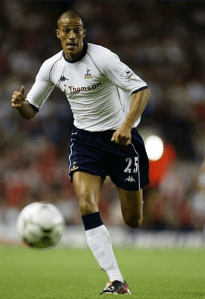
When he arrived at Spurs, one of the senior pros who took him under his wing was none other than Gus Poyet.

“As a young guy coming into the team, he was one of the senior pros who would always talk to me and encourage me,” Zamora told the matchday programme. “He didn’t have to do that, but he went out of his way to do so and you could see he had coaching qualities. He would often point things out on the pitch that you’d pick up on, and when he spoke, you’d listen.

“He wasn’t starting every game either, so in training I did more things with him than maybe the rest. I really got on well with him.”

As it turned out, Zamora made only 18 appearances for Spurs (11 as a substitute) and only scored once – ironically a single goal that knocked West Ham out of the Carling Cup in October 2003.

In January 2004, Spurs chose to use him as a makeweight in taking Jermain Defoe from the Boleyn Ground to White Hart Lane.

Phlegmatic Zamora didn’t look on it as a failure but embraced the “learning curve” of training alongside the likes of Poyet, Robbie Keane, Darren Anderton and Jamie Redknapp.

“I came away a better player and with more experience,” he said. “Glenn Hoddle had signed me and then he got sacked not long afterwards. David Pleat took charge and we didn’t really see eye-to-eye, but the lads and the club were brilliant and I learned so much from my time there.

“I took a chance by stepping back down to the Championship with West Ham – but it was the opportunity of playing regular football again that was the pull for me.”

It was tough for Gardner to grow in Sami’s barren patch

A GARY GARDNER goal ended a winless Albion run of 12 league matches under Sami Hyypia in the autumn of 2014.

Just 54 seconds of the game against Wigan Athletic on 4 November had passed when the Aston Villa loanee netted for the Albion.

He got on the end of a Sam Baldock cross to give the Albion an early lead which they managed to hold onto for the entire match, in spite of several close shaves as the former Premier League opponents tried to salvage a point.

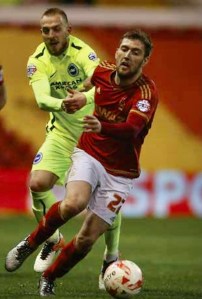
Gardner in action for Forest with Albion’s Jiri Skalak

The game also saw the return of Elliott Bennett, on loan from Norwich City, a first match (as sub for Bennett) for Greg Halford, on loan from Nottingham Forest, and a home debut in goal for teenage stopper Christian Walton.

It wasn’t the first time Gardner had scored at the Amex, though. That had come three years earlier, on his professional debut, when on loan at Coventry City a game which saw Albion beat the Sky Blues 2-1.

Gardner was no stranger to loans away from parent club Villa: he’d already been to Coventry and Sheffield Wednesday, and after Brighton he had temporary moves to Nottingham Forest, Barnsley and Birmingham City.

Indeed by the time Albion took on Forest at the Amex on 7 February 2015, Gardner was on the opposing side as the visitors gave new boss Dougie Freeman a winning start, edging it 3-2.

Gardner’s early development had encountered major setbacks caused by two cruciate knee ligament injuries.

Although he had made his Premier League debut for Villa in the 2011-12 season, the 15 starts and five sub appearances he made for Brighton was the first real regular run of football he’d enjoyed – and he was still only 22 at the time.

He scored again for Albion only four days after that Wigan winner, when the Seagulls were held 1-1 by Blackburn Rovers at the Amex. But with the brief Hyypia reign having come to an end, his appearance in the home Boxing Day 2-2 draw against Reading was his last in a Brighton shirt.

Inigo Calderon salvaged a point with a last-minute equaliser against a Royals side who had gone 2-0 up in 26 minutes courtesy of goals from on loan striker Glenn Murray!

Gardner had been Albion’s tenth new signing of the summer back in August, following in the footsteps of Villa teammate Joe Bennett, who’d joined on a season-long loan a week earlier.

“Gary is a quality midfielder who we have been aware of for some time,” said Hyypia, who explained the club was keen to have more options in that area of the side, especially with Dale Stephens out with a long-term injury.

“More importantly, given the considerable demands of the Championship, I want to be able to rotate the squad,” he said.

“Gary has had a tough couple of seasons due to injury, but he showed during a spell with Sheffield Wednesday last season that he is over those problems. We hope this loan spell will benefit everyone: Gary, us and Aston Villa.

“He is the type of midfielder who is active and mobile, but very importantly he has real quality on the ball – and is also capable of producing things from set pieces.”

Another midfield slot opened up during his time with the Albion when fellow midfielder Andrew Crofts suffered a cruciate injury against Watford.

“I am absolutely gutted for him. Having gone through exactly the same injury as him, with the two cruciate operations, I know exactly how he is feeling,” he said. “I know he will come through this.

“He is a strong guy, a model pro and he’ll be extra determined to get back playing for the club.”

Born in Solihull on 29 June 1992, Gardner was one of six brothers, and in a programme article he said the football-daft family had divided loyalties between Villa and Birmingham.

Just as well, because both Gary and eldest brother Craig ended up with the Blues having started off at Villa. Craig made 80 league and cup appearances for Villa, but later played for Sunderland, West Brom and Birmingham, where he became technical director after his playing days ended.

Gary was on Villa’s books from the age of seven and progressed all through the ranks until Alex McLeish gave him his first team debut as a substitute in a 3-1 win away to Chelsea. He made a total of five starts and 11 appearances off the bench in that 2011-12 season.

But it wasn’t until Villa were back in the Championship in the 2016-17 season that he had his longest run of games for his parent club, making 19 starts and eight appearances off the bench.

That squad, led by former Albion centre-back Tommy Elphick, thwarted already-promoted Albion’s hopes of winning the title in the final games of the season at Villa Park when a late, speculative long-range Jack Grealish shot squirmed through David Stockdale’s grasp to gain Villa a draw.

Gardner was a non-playing sub that day and when he fell down the pecking order in 2017-18, he spent the season at Barnsley.

Gardner followed his brother to Birmingham City

After spending the entire 2018-19 season on loan at Birmingham, he then made the switch permanently (in a swap with Spaniard Jota) and has been there since.

In July 2021 he signed a new deal to extend his stay at St Andrews until June 2024.

Gardner earned international recognition at various levels and made his England under 21 debut as a substitute in a 4-1 win over Israel at Barnsley on 5 September 2011 and the following month replaced Ross Barkley as England won 2-1 in Norway.

A month later he scored twice in a 5-0 win over Iceland after going on as a sub for Jason Lowe at Colchester. Four days on, his involvement was once again off the bench when young England were beaten 2-1 by Belgium in Mons.

His last appearance was against the same opponents the following February when England exacted revenge at the Riverside Stadium, Middlesbrough. In a 4-0 win, Henri Lansbury scored twice before Gardner replaced him.

His contemporaries in the side at that time included the likes of Jack Butland, Jordan Henderson and Alex Oxlade-Chamberlain.

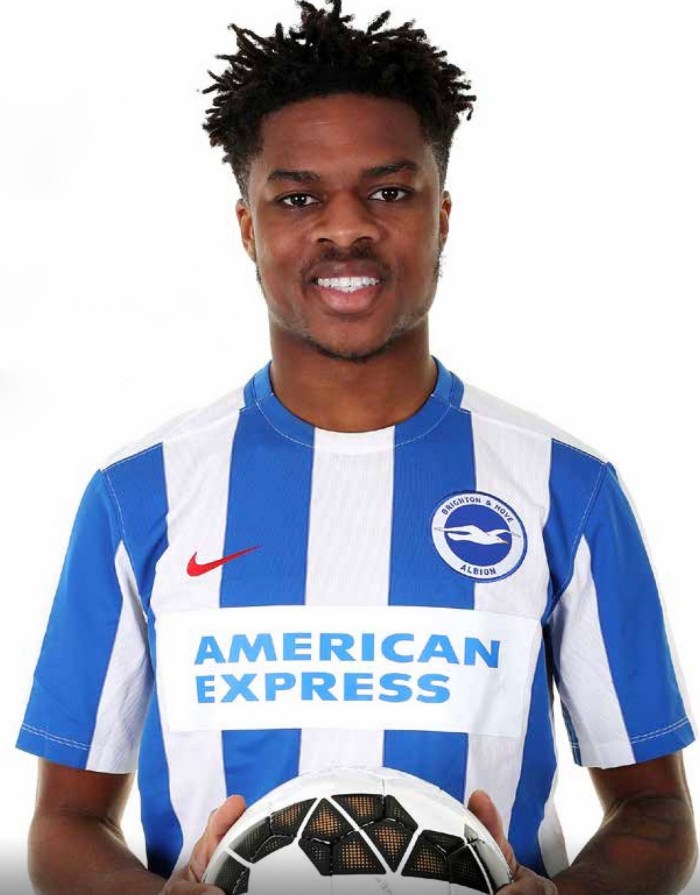
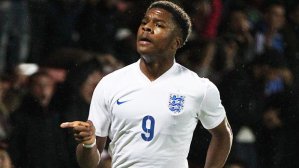
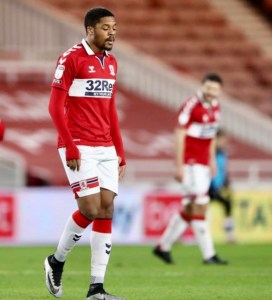
Chuba Akpom’s watching brief in Albion’s promotion

AFTER Chuba Akpom finally made his mark on England’s Championship, he earned a €14m move to Ajax where he initially struggled to make an impact.

But three goals in two wins after new manager John van’t Schip sent him on as a substitute made life look a lot better.

The forward got 28 goals in helping Middlesbrough to the Championship play-offs in 2022-23 but the move to Ajax began badly and he had few chances as the side struggled under former coach Maurice Steijn.

“It was a terrible first two months here if I am being honest,” Akpom told AFC Ajax. “The new manager has made me feel more at home than I have ever felt since arriving. We are footballers, we are human beings first.

“He spoke to me as a human being, not as a footballer. Ever since the new manager arrived, I feel much lighter, back to myself.”

The early season form sounded a lot like the unhappy spell when he was on loan to Brighton from Arsenal in 2017.

Akpom spent 16 years at Arsenal and one of his major inspirations was Tottenham Hotspur’s Chris Hughton, who took him on loan at Brighton. Hughton had been to the same inner city school, St Bonaventure’s in Newham, as the young striker from Canning Town and in an Andy Naylor exclusive for the Argus, Akpom revealed: “When I was in school there used to be pictures of the gaffer there.

“The kids used him like an inspiration and motivation. I did as well. Seeing someone come from the same area and the same school as me to become such a big and successful person.”

But the alma mater link did little to help the Arsenal loanee – in spite of high hopes when he signed in early 2017, Hughton gave him only one start and the rest of his involvement was as a substitute.

“He is a young talent who gained valuable experience with Hull in the Championship last season, will give us really good pace in the forward areas and complement the other strikers at the club,” said Hughton.

“We fought off competition from other clubs to sign Chuba and we would like to thank Arsenal for the opportunity of working with him for the rest of the season.”

Akpom was in effect a replacement for Dutch flop Elvis Manu, who left the building on loan to Huddersfield after a disappointing five months on the south coast.

It was to his disadvantage, though, that he joined the club at a time when Glenn Murray, Tomer Hemed and Sam Baldock were the preferred forward options, and, from the outset,he was aware of the challenge they posed.

“All three are experienced players; they know the Championship and they’ve shown what they can do with the goals they’ve scored, so it’s going to be good to learn from them,” he told the matchday programme.

“I’m going to be an addition to what we’ve already got here. We’ve all got something different to offer and I like to play at a fast intensity, try to get at defenders and get some shots off – basically be as much of a threat as I can. I’m also a team player, which is important.”

As it turned out, the young loanee’s only start was against Blackburn Rovers, on April Fool’s Day, and he was hooked on 58 minutes, with Hemed going on his place. Murray won it for the Seagulls with the only goal of the game nine minutes later netting past Jason Steele in the Rovers goal.

Akpom made nine appearances off the bench but he didn’t manage to get on the scoresheet. He made his debut as a 63rd minute sub for Hemed in the 3-1 defeat at Huddersfield on 2 February and replaced Jamie Murphy in the next match, when fellow substitute Hemed netted a last-gasp equaliser in a 3-3 draw at Brentford.  

“I know the Championship is a tough, tough league to play in,” he told the programme. “It’s really competitive and unpredictable, so you’ve got to get your head down and take each game as it comes.

“The team’s been flying high at the top of the league this season so you can see they’ve got the winning mentality in this league, and they’re playing the right kind of football, so I just want to be a positive addition to the team and help boost the bid for promotion.”

Akpom’s arrival at the Amex promised so much more, because he had already scored four goals at the stadium in previous matches: he scored a hat-trick for Arsenal’s under-21 side there and scored for England under 21 in a win over Switzerland in October 2015.

“I like playing here,” he told the programme. “The stadium’s nice, the pitch is great as well, so you can’t complain.

“It’s always good to score goals, no matter who it’s against, but hopefully I can now score a few goals here for Brighton.”

Even though his involvement in Albion’s promotion was peripheral, the club’s automatic elevation to the Premier League as runners up behind Newcastle meant he’d gone one better than the previous season when he’d been part of Hull City’s promotion via the play-offs.

That had been his fourth loan experience having previously gone on temporary moves to Brentford, Coventry City and Nottingham Forest.

Born in Canning Town on 9 October 1995, Akpom was playing football on local streets from the age of five but soon moved on to the Wanstead Flats, where he played for Rippleway United. An Arsenal scout spotted him at the tender age of six.

“I had a few training sessions for Arsenal and then signed for the club. I’ve been there ever since,” he told the programme. His best friend, who was developing alongside him, was Alex Iwobi, who also made it through to the Arsenal first team before moving on to Everton.

Akpom made his senior debut for the Gunners as a late substitute in a 3-1 win away to Sunderland in September 2013 (the match when Mezut Ozil made his debut).

The young striker went on to make a further nine first team appearances (mostly in the FA Cup and League Cup) but couldn’t claim a regular starting place under Arsene Wenger.

Akpom returned to Arsenal as Albion prepared for life in the Premier League and the following January made another loan move, linking up with Belgian First Division side Sint-Truiden on transfer deadline day in January 2018. He scored six goals in 16 games.

His association with Arsenal finally came to an end that summer when he signed a three-year contract with Greek Super League club PAOK Salonika.

Akpom told the BBC he consulted former Arsenal teammate Lucas Perez before moving to the club, based in Greece’s second largest city of Thessaloniki, and by the season’s end he had helped them win their first league title in 34 years.

“Perez said that I wouldn’t want to leave PAOK if I signed,” he said. “Thessaloniki is a beautiful city by the sea, the people are friendly, the climate is nice and, when I’m not training, I’m sometimes able to go to nearby beaches.

“I’m living in an apartment about 10 minutes from the ground and I drive along the coast to training.”

In May 2019, Akpom was the delighted but emotional scorer of the winning goal for PAOK in the Greek Cup as they beat AEK Athens.

After scoring 18 goals in two years for the Greek side, Akpom returned to the UK to sign for Neil Warnock at Middlesbrough, the effervescent Warnock declaring: “I’m delighted to finally have got him. He’s been my number one choice. I’ve wanted him for a long time.”

The deal gave Arsenal an unexpected £1m windfall because they had inserted a clause into the contract when the striker was sold to PAOK Salonika stipulating they would be entitled to 40 per cent of any fee if he was sold back to an English club.

Such an arrangement was frowned on by the football authorities and earned a fine and censure from FIFA, but Arsenal challenged that decision and got it overturned on an appeal to the Court of Arbitration for Sport.

Although Akpom scored on his Boro debut to secure a 1-1 draw at QPR and followed it up with a goal in his second game, a 2-1 home win over Barnsley, he went on to score just five in 40 appearances and in August 2021 returned to PAOK on loan.

The manager castigated the club’s recruitment team for having signed the player on the strength of watching videos, saying: “We really have to go into everything a bit more when we’re looking to sign players. I don’t think we’ll be signing another player on the recruitment (team’s) say after just watching a video, we need to watch players live.”

Warnock was typically forthright when asked why it didn’t work out for Akpom on Teesside, telling BBC Tees: “I think it’s a mixture of things. I think at the end of the day he didn’t show enough during the games to warrant him getting a place and you have to play games to get yourself fit.

“I never really thought he deserved a run of games because whenever I used him he didn’t perform and it’s one of those things.

“When I spoke to him we all agreed it’s best to go and I think he’s quite happy to go back there.”

Akpom had been expected to leave Boro in the summer of 2022 after returning from his loan in Greece, as Warnock’s successor Chris Wilder looked for other forward options.

But he impressed the boss in pre-season and started in their first game against West Brom, and again when coming off the bench in a defeat at QPR.

“It’s no secret that people would probably have thought I’d be gone by now, and maybe me too,” Akpom told BBC Tees. “It has been a rocky few months for me, which is no secret.

“I don’t know what the future holds. I just have the mentality of staying professional and enjoying it. Who knows what tomorrow brings?”

After Akpom scored both Boro goals in a 2-2 home draw with Sheffield United, Wilder said he was keen for Akpom to remain part of his squad.

“He’ll rightly get the plaudits. For him to come back into the group and show a great attitude… He’s just done an interview and said it’s one day at a time but for me it isn’t that unless he wants it to be, and I don’t think he does,” Wilder said.

“It’s his job to convince me that he wants to stay at this brilliant football club and he’s done enough. He has to keep going of course but we’ve all seen enough that he sees his medium to long-term future here. We’re delighted to have him here.”

In a quite extraordinary turnround in fortune for the player, he scored 28 goals in 38 games for Boro in the 2022-23 season, ending a 33-year wait for a striker who could score more than 20 goals in a season.

gazettelive.co.uk said of him: “He has gone from also-ran to one of the most feared strikers in the league.”

Comparing his goalscoring prowess to the likes of former Boro heroes like Brian Clough, John Hickton and John O’Rourke, the newspaper said: “Akpom has shown what any decent player can achieve if they stay fully focused.

“He already looked a different player before the arrival of Michael Carrick but has since climbed another few rungs up the ladder.”

Reporter Eric Paylor wrote: “The marvellous thing about Akpom’s goal sprint is that we didn’t see it coming. Two years ago he looked a very ordinary striker indeed.

“He managed to sneak into the side this season only as an afterthought, because Chris Wilder was short of strikers. So it’s to his eternal credit that Akpom has grabbed the nettle and shown what a massive threat he is in the box.”

When Carrick succeeded Wilder, he selected Akpom in a no.10 role rather than as an out and out centre forward, and it paid off.

Carrick told gazettelive.co.uk: “You go on your eye, your instincts, how well he takes the ball, how fluid he is moving with the ball in a bit of space. Technically coming through the ranks at Arsenal he’s had that foundation. I just wanted to free him up a little bit and play to his strengths. Thankfully he’s been able to do that. I think it suits him.

“It’s difficult for me to speak about the turnaround because I don’t know how he was playing before that before I came through the door.

“Certainly, from my first training session and the games leading up to me taking over, I saw encouraging signs from him. I said it from the start, we have tried to play to the strengths of our players and put them in positions that benefit them and the team. Chuba is definitely one of them. He’s found his role and he’s suited it; he’s doing great.”

Akpom himself said: “I wish I’d been playing in a deeper role throughout the whole of my career! I’m enjoying it.

“Playing in a nine previously helps me with my movement up top and with my back to goal, but I feel like coming to feet is when you can see the real me – getting on the half turn, playing one-twos, connecting the play and dribbling – this is what my game is all about.”

Over in Holland, Akpom struggled to get a starting place as Ajax found themselves at the wrong end of the Eredivisie.

After the departure of Steijn as Ajax coach, Akpom made a brief appearance as a sub when the Amsterdam side lost 2-0 to Albion in the first leg of their Europa League tie in October 2023 under caretaker boss Hedwiges Maduro.

But in Schip’s first Eredivisie game against Volendam, Akpom was sent on and scored in a 2-0 win.

He went one better against Heerenveen, joining the action off the bench again and this time scoring twice in a 4-1 win for Ajax.

In January 2025, Akpom secured a loan move to French side Lille, who secured a place in the last 16 of the Champions League after thumping Feyenoord 6-1.

Oh brother: Seagulls spell revives van La Parra

ON-LOAN Dutchman Rajiv van La Parra scored twice in six games for Brighton, spurring parent club Wolverhampton Wanderers to recall him.

Georginio Wijnaldum’s half-brother was only on the winning side once during his time with the Seagulls, but Wolves boss Kenny Jackett was happy to give him another chance at Molyneux after he’d mysteriously been frozen out.

But the thaw didn’t last long. While Albion had moved on by signing Anthony Knockaert on a three-year deal from Standard Liege, van La Parra was soon on the move again, this time to Huddersfield.

It was in November 2015 that Chris Hughton seized on an opportunity to shake up Albion’s attacking options in the last few hours of the loan transfer window by offering the unsettled van La Parra a chance to replicate the form he’d shown the previous season for Wolves.

“Rajiv will give us pace and creativity in the forward areas, and supplements our existing wide options,” Hughton said. “He is something different to the players we already have here, and I am delighted to have him on board.

“With Sam Baldock currently injured and Kazenga LuaLua having missed the amount of games he has, we have been very keen to bring in offensive options.

“In Rajiv we have a player who regularly featured in Wolves’ promotion chase last season.”

Albion were top of the table at the time and, having watched from the bench as Albion saw off Birmingham 2-1 at the Amex, van La Parra went on in the 27th minute of the away game at Derby County after Solly March was clattered by a challenge that ultimately ruled him out for the rest of the season.

The substitute certainly made a positive impact, edging Albion 2-1 ahead with a goal in the 75th minute before Chris Martin equalised for County with a last-ditch penalty after Gordon Greer was harshly adjudged to have fouled Johnny Russell.

Van La Parra was also on target at Loftus Road on 15 December when he beat former England goalkeeper Rob Green with a 30-yard shot in the 55th minute to put Albion 2-0 up. QPR hit back with two Charlie Austin goals to share the points.

It emerged when he signed that van La Parra had been a Brighton target for some while, with the Wolverhampton Express and Star reporting he’d spoken to the club about a possible permanent move before that August’s transfer deadline day.

Leeds United were also keen, and he might later have ended up at rock bottom Bolton Wanderers, but he stayed on at Molyneux, where he found James Henry and Nathan Byrne ahead of him in the pecking order.

Ironically, his one and only league goal for Wolves was scored against the Seagulls at the Amex in a 1-1 draw the previous season.

The winger admitted in an interview with Andy Naylor for The Argus that he was baffled why he’d fallen out of favour at the Black Country club.

“It’s a mystery,” he said. “I didn’t understand what happened but sometimes these things happen in football.

“The manager maybe wanted to try some different players but I cannot explain what happened. It’s unreal. I played last season and I then went onto the bench not playing as many games.

“I’m the type of person who goes to the manager and asked for an explanation why I wasn’t playing. He (Jackett) couldn’t really give a reason but he motivated me by saying that I was close to the team and training well.

“That was keeping me positive about the manager and his opinion of me. At the end of the day, they were just words and not actions and I can just focus on playing now.”

His arrival at the Amex was somewhat overshadowed by the signing at the same time of striker James Wilson on loan from Manchester United but he discovered a couple of familiar faces in the Albion dressing room: Elvis Manu – a fellow product of Feyenoord – and Danny Holla.

“It’s nice to have them,” he said. “They can help me. I know Manu very well because we played at Feyenoord. He was in a younger team than me. I’ve played against Danny a few times and we’ve had a number of conversations.”

Although van La Parra made a mark with the Seagulls, it was apparent in December that a permanent move to the south coast looked unlikely. Wolves boss Jackett had noted his form and said: “He’s been keen to get the opportunity and so far at Brighton he’s taken it. He’s still a Wolves player and we’ll assess the situation. He’s got a couple of goals and assists which is very good.”

Van La Parra hoped an impressive performance in his last game on loan might persuade Hughton to view him as a long term prospect but Albion went down 1-0 at home to Ipswich Town, their fifth winless game on the trot, and he returned to Molineux.

Born in Rotterdam on 4 June 1991, of parents from Suriname, he was named by his mum after Rajiv Gandhi, the son of Indira Gandhi, the former Indian prime minister who was assassinated in 1984.

Van La Parra went through the youth ranks at Dutch giants Feyenoord between 1999 and 2008 and earned selection for the national side’s under 17s and under 19s.

It was only while playing in Dutch youth football that former Liverpool midfielder Georginio Wijnaldum, then playing for Sparta Rotterdam, met his half-brother van la Parra.

“I knew I had another brother, but I never saw him until that moment,” Gini explained. “I never saw pictures because at that time you didn’t have the internet or social media. There was no Instagram or Facebook or anything.

“I went to play a game, but I found my brother.”

Wijnaldum eventually moved to Feyenoord, and van La Parra said: “When he came to play for Feyenoord, we saw each other more often and we were closer.”

In 2008, van La Parra had moved to French Ligue 1 club Caen where he thought he stood a better chance of first team football. He was there for three years and, although he managed 16 outings in their first team, he mainly played for the B side.

At the end of his contract, he returned to the Netherlands and joined Eredivisie outfit SC Heerenveen where in three years he scored 16 goals in 94 appearances and got to play Europa League football. In the 2012-13 season, he also played six times for the Dutch under 21s, when he got the chance to play alongside Wijnaldum.

“I played on the wing and Gini in midfield. He didn’t give me the ball. He always passed to the other side,” joked van La Parra. 

In the summer of 2014, the winger moved to then Championship side Wolves and quickly established himself as a regular.

La Parra’s form for Brighton only revived his Wolves career temporarily, Jackett recalling him to their side in an FA Cup tie against West Ham and a 3-2 win over Fulham, in which he provided an assist and combined well with Michal Zyro.

Jackett said: “I felt that we’ve lost some pace along our front line and Rajiv has that and it’s a reason for bringing him back in to the group.

“He did well at Brighton, and I knew that against Fulham, tactically, I could play either system – 4-4-2 or 4-3-3 – with Rajiv on the pitch and be able to switch from one to the other. That was the advantage.

“He showed how much he wanted to play for Wolves. And the crowd responded to him, and if he keeps showing that work rate and desire, everyone will follow up on him.”

However, two months later he joined fellow Championship side Huddersfield on loan until the end of the season, and the move was made permanent that summer. He was a regular in the Town side that won promotion to the Premier League in 2017.

He made 38 appearances during the 2017-18 season amongst the elite, but incurred Sean Dyche’s wrath when he went to ground rather too easily in the penalty area during a Premier League game against Burnley. The referee didn’t buy it and the player was booked and subsequently fined by his own manager, David Wagner. “It’s unacceptable in my book. I can’t abide it,” said Dyche.

The following season, van La Parra struggled for game time and went on loan to Middlesbrough.

He eventually left the Terriers in 2020 having made a total of 102 appearances and signed for Serbian club Red Star Belgrade. He only played 11 games for them and then moved to Spanish second division club Logroñés for the 2020-21 season but, after only four appearances for them, he was released from his contract in January.

He then switched to Germany and signed for Bundesliga second division club Würzburger Kickers but, after they were relegated, he was on the move again.

Next stop was in Greece, for Apollon Smyrnis, but footballleagueworld.co.uk reported in November 2021: “It’s been a tough start for the player, who is featuring regularly, as he has failed to score or register an assist as his new side are third from bottom.”

United ‘product’ Oliver Norwood eventually fulfilled expectations

IT LOOKED LIKE the so-near-and-yet-so-far story of Oliver Norwood’s flirtation with the Premier League would end in disappointment.

Twice the former Manchester United reserve helped teams to win promotion from the second tier, only then to remain in that division when the sides he played for didn’t see him as a Premiership player.

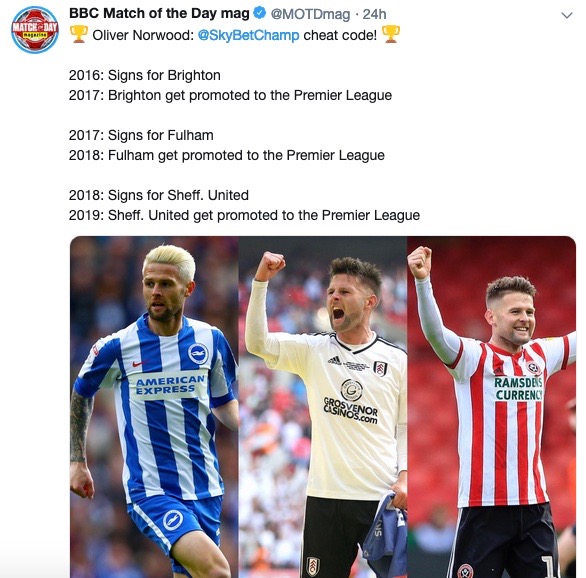
It happened first of all with Brighton in their 2016-17 promotion under Chris Hughton.

The following campaign Norwood went on a season-long loan to Fulham and was at the heart of their midfield as they won promotion.

Fulham didn’t look to retain him, though, and for 2018-19 he was once again loaned out by Brighton; this time to Sheffield United.

Halfway through the season, they turned the loan into a permanent transfer and, after helping the Blades to win promotion, Norwood finally got his chance to show his skills in what amounted to an impressive return to the top-flight of English football.

How BBC’s Match of the Day Tweeted Norwood’s record

Born in Burnley on 12 April 1991, Norwood was only six when he first came to the attention of Manchester United, spotted playing for Fulledge Colts in his home town.

“My earliest football memory is being on trial at the Manchester United academy aged six and being totally overawed by it,” he told the Albion matchday programme. “I remember standing there at The Cliff, biting my fingernails, and the coach, Paul McGuinness, saying ‘Are you going to join in?’ After that, I was fine and it was really exciting to be part of the club’s academy.” He joined the Red Devils on schoolboy terms at seven and spent 15 years on their books, playing in the same youth teams as Paul Pogba and Jesse Lingard.

During the 2005-06 and 2006-07 seasons, Norwood made appearances for United’s under-18 team and, ultimately, he signed on as a trainee in July 2007.

He became an under-18 regular in 2007-08 and also made his debut for the United reserve side. After netting nine goals in 28 appearances for the under-18s in 2008-09, Norwood was signed as a professional.

He was a reserve team regular in 2009-10 and said he owed a lot to Ole Gunnar Solskjaer, who was in charge of United reserves at that time.

“I owe a lot to Manchester United for the experiences and education I had there,” Norwood told the matchday programme, United Review. “The club taught me not just about football but life. I was taught how to be a good person.

“Ole played a huge role in terms of my development as a footballer and a person. The lessons he taught me in the reserves have stayed with me throughout my career.

“I’ll always be grateful to Manchester United, to Ole, to (former reserves manager) Warren Joyce, for the upbringing they gave me in the game.”
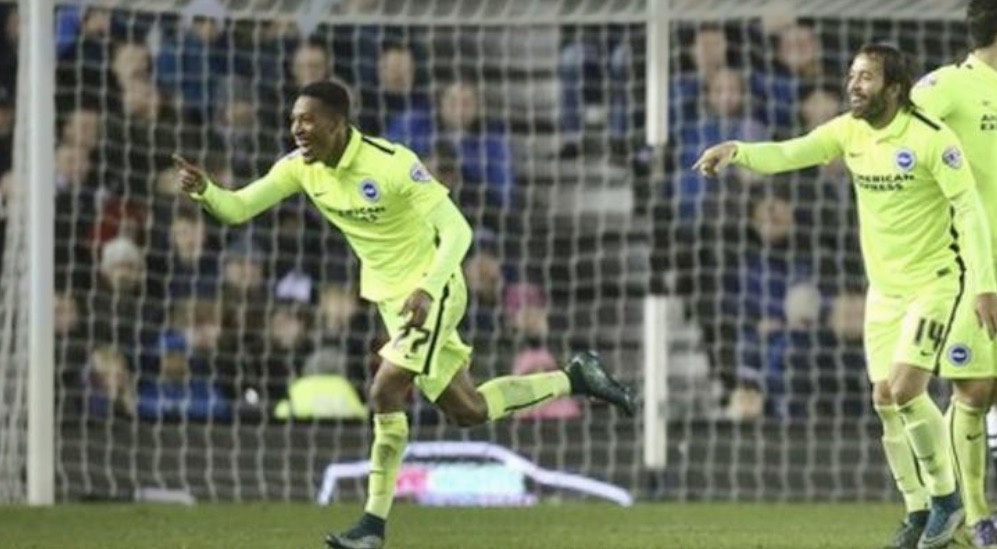
Norwood got a sniff of the first team when Sir Alex Ferguson called him up to the first team squad for a Champions League match away to Wolfsburg. He travelled with the squad to Germany but didn’t get selected in the final matchday 18.

In search of a first team breakthrough, Norwood decided to gain experience on loan with lower league clubs and his first port of call was Carlisle United in September 2010. Ironically, his first match was against Brighton – a 0-0 draw at Brunton Park. Unfortunately, after just five starts and two sub appearances, he tore a thigh muscle and had to cut short his loan and return to Old Trafford for treatment.

The following season, he went out on loan again, this time to League One Scunthorpe United where Alan Knill, Chris Wilder’s no.2 at Sheffield United, was the manager.

In an interview with the aforementioned Joyce, the former reserves manager explained how it was only a change in Norwood’s diet that started to bring about the required improvements to his game.

“I got him to write down everything he ate. And I meant everything. I said, ‘We have to look at your diet and get you absolutely super fit’. I told him we couldn’t allow the ability he had to be wasted.”

Joyce told The Athletic’s Richard Sutcliffe in a 23 June 2020 article: “Once we’d sat him down (after returning from Scunthorpe) and analysed everything, he got himself really ripped. He started eating the right things and worked so hard to get into shape. He is getting the rewards from that now.”

Norwood spent the second half of the 2011-12 season in Coventry City’s unsuccessful effort to beat the drop from the Championship but, having acquired a taste for football at that level, declined the offer of a contract extension on his return to Old Trafford.

He told Talksport at the time: “I want to play every week like I was this season in the Championship. It’s been the hardest decision in my life for me to make but there comes a time when you have to be realistic.”

He opted to join newly promoted Huddersfield Town in the Championship on a three-year contract, and Sutcliffe’s article reveals Norwood was so determined to make the move that he drove down to Heathrow Airport to apprehend holiday-bound Town manager Simon Grayson to persuade him to sign him.

Nevertheless, United boss Sir Alex Ferguson had some encouraging parting words that the midfielder never forgot. “You’re not going to make it at Manchester United, but I believe one day you will play in the Premier League.”

Norwood was a permanent fixture in the Terriers’ midfield for two seasons before switching to fellow Championship outfit Reading at the beginning of the 2014-15 season.

Signed by Nigel Adkins on 21 August, 11 days later he was joined at the Madejski by Glenn Murray, on loan from Crystal Palace.

When the Royals were hammered 6-1 by Birmingham City in mid-December, Adkins was sacked and replaced by Steve Clarke. His second game in charge, on Boxing Day, saw Reading visit the Amex, with Brighton under caretaker manager Nathan Jones. Murray scored twice for the visitors, but Albion rescued a point with a 90th minute equaliser from Inigo Calderon.

Norwood completed the season having made 35 appearances plus seven as a sub and although he made the second highest number of appearances – 50 – the following season, when the Royals visited the Amex on 15 March 2016, under Brian McDermott, their third manager of that campaign, Norwood was a non-playing sub as the Royals lost 1-0 to a James Wilson goal.

The next time the two sides met (a 2-2 draw at the Madejski on 20 August), Norwood was part of Chris Hughton’s squad, having signed for the Seagulls at the start of the 2016-17 season, along with Murray and Steve Sidwell. Norwood was a 68th-minute sub for Sam Baldock.

Manager Hughton said of Norwood: “Oliver is another excellent addition to our squad.

“He has a good grounding coming from Manchester United, and has a wealth of experience playing in the Championship and at international level.

“He’s a box-to-box midfielder and an excellent passer of the ball, so he gives us extra options in midfield and adds further depth to our squad.”
Although he played for England at youth level, he also qualified for Northern Ireland, and chose that country to enable him to experience more opportunities at international level.

Norwood made his full international debut during Nigel Worthington’s time as manager, coming on as a substitute in a 2-0 friendly defeat by Montenegro in Podgorica in August 2010.

He was a regular in Worthington’s successor Michael O’Neill’s midfield when the side qualified for Euro 2016 and played in all four of the team’s matches in the finals in France.

However, having made 57 appearances for his country, he decided in August 2019 to retire from international football when only 28.

Although Norwood made 20 starts for the Albion, he was almost as often used as a substitute, making 17 appearances off the bench, as the Seagulls soared to promotion.

Norwood had a starting berth when Beram Kayal was injured and he told the matchday programme: “This has been a big opportunity for me. The gaffer brought me to the football club and obviously I’ve been desperate to get into the team and play games.

Norwood had plenty to say

“Obviously I understand how football works. When the team’s winning and doing really well you have to bide your time, but an opportunity has come my way and it’s been important for me to grab it with both hands and do all I can to stay in the team.”

It has since transpired that the midfielder was most likely distracted by off-field issues during his season with the Seagulls, as thestar.co.uk reported.

“I went to Brighton after the 2016 Euros, and it was a difficult period in my life,” said Norwood. “My wife, Abigail, was pregnant and really ill, so we were living apart. My head wasn’t fully there.”

He told The Star he only fell in love with football again when he went on loan to Fulham, and subsequently was at loggerheads with Brighton when they didn’t accede to his request for a permanent move. “They said I could leave, but then turned down bids when they came in and started asking for silly things. I don’t think clubs realise sometimes that they’re messing with people’s lives. I had plenty of arguments, saying: ‘You don’t want me here, so let me go’.”

With Dale Stephens and Kayal the preferred central midfield pairing, plus the arrival of Davy Propper for Albion’s first season back amongst the elite, Hughton had been happy to let Norwood join Fulham on a season-long loan.

Norwood made 47 appearances for Fulham in 2017-18, particularly when filling in for the injured Tom Cairney until the Scot’s return from injury towards the end of the season.

His passing accuracy and all-round contribution were favourable, as this footballwhispers.com article assessed, and he proved a vital cog in their promotion via the play-offs when they beat Aston Villa 1-0 in the play-off final.

The website football.london was surprised Fulham didn’t opt to sign him permanently. “Norwood was a key figure under Slavisa Jokanovic, seamlessly plugging the gap left by Tom Cairney as a result of his injury and can be credited with a huge role in getting the club promoted in the first place, with his tackle on Conor Hourihane in the play-off final one that will forever be remembered by Fulham fans,” wrote Phil Spencer. “His vision and incisive passing was key to Fulham’s free-flowing style of play – meaning it was a little surprising that his loan switch to west London was never made permanent.”

Fans have contrasting views about his contribution, as this collection of quotes demonstrates. Some appreciated his ‘Hollywood’ long passes, others are perhaps summed up by this Fulham fan who said: “100% effort every time he played. Honest player. Not stellar but above average.”

Fulham’s loss was Sheffield United’s gain and in wishing Norwood well in his pursuit of more playing time with the Blades, Hughton told Albion’s website: “Ollie was one of our promotion-winning team in 2016-17 and will rightly be remembered as part of that historic team which took the club to the Premier League.”

Critics of Fulham’s strategy of splashing the cash on so-called name players for what proved to be an unsuccessful bid to retain their newly-won status in the Premier League couldn’t help pointing out the irony of Norwood’s situation.

“Fulham could only wave to Norwood on their way back down after ditching him for Jean Michel Seri,” said footyanalyst.com.

The Blades were promoted as runners up behind Norwich City in a season in which Norwood played 43 league games. He told The Observer’s Paul Doyle: “Last season was a big season for me. It was the most I’ve played. I’m definitely a better player now. At everything really. My understanding of the game. Tactically, technically, what needs to be done.”

He told Doyle: “It’s taken a bit longer than I would have liked but it was a dream come true to finally make the level that everybody across the world wants to play at.”

Norwood certainly seized the opportunity to shine at the top level, playing 40 games plus one as sub in all competitions as the Blades confounded the critics by finishing in ninth place, and taking on the captain’s armband in Billy Sharp’s absence.

Pictures from various online sources and the Albion matchday programme.

That man from Argentina scored goals in the UK and Spain

LEONARDO ULLOA brought down the curtain on his playing career in Madrid, netting six goals in 20 appearances (plus 12 off the bench) for Rayo Vallecano in the Spanish second division.

It was to the delight of Brighton fans that 28 of his career 148 goals were scored for the Albion, where he quickly established himself as a fans favourite by scoring on his debut against Arsenal in the FA Cup.

Previously virtually unknown in England, Ulloa’s arrival in January 2013 provided the tall, goalscoring presence up front Brighton had been craving since Glenn Murray headed to Crystal Palace in the summer of 2011.

Within two months, Ulloa was cementing his place in Albion history by scoring the first ever hat-trick at the Amex, in a 4-1 win over Huddersfield Town, and it wasn’t long before fans were serenading him with his own terrace song: “Who’s that man from Argentina, who’s that man we all adore…..”

His efforts in the stripes got even better when he scored twice in a memorable 3-0 win over Palace that March giving the Seagulls their first home win over their bitter rivals for 25 years.

After the game, manager Gus Poyet told BBC Radio Sussex: “Leonardo Ulloa is making the difference. I am pleased for him. If he had been here for the first six months I can’t imagine where we would be right now.

“What a prize for him, scoring two goals against our biggest rivals. I am very happy for him.” By the season’s end, Ulloa had scored 11 goals in 16 starts (plus one substitute appearance).

While Poyet departed acrimoniously after defeat in the play-off semi-finals, Ulloa continued to thrive under new boss Oscar Garcia. Top-scoring with 16 goals, he’ll always most memorably be known for nodding in a last-gasp header from Craig Mackail-Smith’s left-wing cross to secure a 2-1 win at the City Ground, Nottingham on 3 May 2014.

It earned Albion another play-offs place in the bid to secure promotion to the Premier League, although a 6-2 aggregate defeat at the hands of Derby County meant it didn’t end well.

Sadly, not only did it mark the end of Garcia’s reign, it also led to Ulloa’s exit from the club, but the £8m record fee newly-promoted Leicester City paid for his services was difficult to resist, quite apart from the player’s desire to play at the top level.

Switching to the East Midlands was a short hop compared to the journey he had to make when he was starting out in the game.

Born on 26 July 1986 in General Roca, a city in Argentina’s northern Patagonian province of Rio Negro, Ulloa moved 700 miles from home at the age of 15 to pursue his footballing dream, as he told Brian Owen of The Argus in a 2013 interview.

It was only when he wasn’t getting much playing time in Argentina that he took the opportunity to move to Spain, initially with Spanish second-tier side Castellon in the Valencia region.

When they were relegated in 2010, he stayed in the second tier by moving to the south east of the country to join Almeria, where he scored 39 times in 90 appearances. It was from there Albion bought him for an undisclosed sum, widely thought to be £2m.

The subsequent move to Leicester couldn’t have got off to a better start when Ulloa scored Leicester’s first Premier League goal for a decade in August 2014, hitting the net on his debut against Everton at the King Power Stadium. He also scored a brace of goals in a famous 5-3 victory over Manchester United.

Indeed at the end of that 2014-15 season, Ulloa was Leicester’s top scorer with 13 goals in 31 appearances (plus nine as a sub).

Few could have imagined it was going to get a whole lot better the following season, but as Claudio Ranieri’s City shocked the football world by climbing to the summit of the Premier League and staying there, Ulloa collected a title winners medal for his contribution.

Although he made just nine starts, as Jamie Vardy and Shinji Okazaki took centre stage, he appeared 22 times as a substitute and, in his supporting role, chipped in with six – often vital – goals.

He scored an 89th minute winner to earn a 1-0 win over Norwich City after entering the fray as a 78th minute sub and, when defeat at home to West Ham looked on the cards after Vardy had been sent off, he coolly netted a penalty in the fifth minute of added on time to secure a 2-2 draw.

With Vardy suspended for the following game, Ulloa stepped up with two goals in a 4-0 win at home to Swansea City.

Phil McNulty, BBC Sport’s chief football writer, said Ulloa had fully repaid the faith shown in him by Ranieri. “When Ulloa earned the Foxes a vital point with a stoppage-time penalty last weekend against West Ham, he showed he was not a man to be perturbed by pressure – and he relished the responsibility put on his shoulders against Swansea,” he wrote, describing how Ulloa “ran selflessly all afternoon to compensate for the darting, pacy threat of Vardy, and most importantly contributed two goals that eventually made this a stroll for Leicester City”.

It all turned sour for him at the King Power Stadium the following season and with a lack of involvement his frustration went public as he sought a move away. Sunderland, fighting (ultimately in vain) relegation from the Premiership, reportedly had three bids to sign him turned down in the January 2017 transfer window.

Ulloa told Sky Sports News reporter Rob Dorsett: “I’m a bit sad about the current situation. It’s been two wonderful years at the club but now, given my situation – not playing and not being part of the team’s plans – I feel that the best way forward is I leave and I can be happy somewhere else.”

He added: “They know I am not going to be used. The best thing for both parties is they sell me to another club and I can continue playing my football somewhere else.”

However, when Ranieri was sacked the following month, Ulloa found a path to first team football re-opened under new boss Craig Shakespeare. He only made four starts but he appeared off the bench 19 times, and, in August 2017, signed a new two-year contract with the Foxes.

Speaking to LCFC TV, Ulloa said: “I am so happy because I have lived massive moments with this club and it makes me happy to stay here and fight, to help the team and increase the club’s history. That is so important and I am so happy for this two-year contract. Now I have to fight to play. I will train and give my best. I appreciate it a lot to stay here and I am so happy here now. For that, I want to continue in this in the same way by working hard and working my best for the club.”

Shakespeare added: “Leo’s goals and performances have been key to some wonderful moments for this football club since he first joined and I’m delighted to have him with us for another two years. He’s a popular member of the squad and gives us an excellent option in attack.”

All of the words came to nought however, because Ulloa was barely involved, other than sitting on the subs bench and only getting on once. So, in January 2018, he was happy to return to Brighton on loan to supplement the striking options in Chris Hughton’s squad.

But with Glenn Murray in top form and Sam Baldock and Tomer Hemed as other striker options, Ulloa only made four starts plus eight appearances as a sub. He scored twice, including opening the scoring against Manchester City at the Etihad, but Albion didn’t share the striker’s enthusiasm for a permanent return to the Seagulls.

Instead of moving back to the south coast, Ulloa headed to Mexico to join Pachucha, and a year later he headed back to Europe, and back to Spain, to sign for Rayo Vallecano.

The striker spent eight months sidelined by a serious knee injury in 2020 but returned to action in October 2020 before retiring at the end of the 2020-21 season. Ulloa received a warm reception from Albion fans when he was interviewed on the Amex pitch in March 2023 when West Ham were the visitors.

Pictures from various online sources.

Let down by ‘little’ Sammy, ‘big’ Sami struggled from the start…

HINDSIGHT is a wonderful thing but few would disagree that Sami Hyypia’s reign as Albion manager was doomed almost from the start.

Inexperienced boss Hyypia had barely got his feet under the table at the Amex before former Liverpool assistant manager, Sammy Lee, pulled the rug from under his proposed new regime.

Hyypia, not unreasonably, had thought the former no.2 to Rafa Benitez would bring vital experience to his backroom team because the Albion position was only the former Reds central defender’s second managerial job.

Lee, despite accepting the position on 27 June 2014, decided two days later to reject the deal because he’d agreed to become Ronald Koeman’s deputy at Southampton instead.

Hyypia had only been in post three weeks, so, it would be fair to say, Lee’s decision must have been a hammer blow – especially as his first choice for no.2 said ‘no’ too! Jan Moritze Lichte, who’d been at Bayer Leverkusen when Hyypia made his managerial bow – which lasted only nine months – had already declined to join him in the UK for “personal reasons”.

Thus, Hyypia had to rely on two of previous boss Oscar Garcia’s coaching staff, Nathan Jones and Joaquin Gomez, to assist on the coaching side, although his fellow countryman, Antti Niemi, did accept the offer to become goalkeeping coach.

On the playing side, there had been a large turnover of personnel in the wake of Garcia’s departure – and, it emerged, the players coming in weren’t being signed by Hyypia but were the picks of head of football operations, David Burke.

It was always going to be a tough ask to replace Leonardo Ulloa up front – and journeyman Chris O’Grady certainly didn’t provide an answer.

There was a sense of excitement when Hyypia’s Liverpool links saw the arrival on loan of Joao Teixeira, but the number of players only at the club on a temporary basis should have been something of a wake-up call.

The permanent signing of one-time West Ham forward Sam Baldock looked like a sound investment – he’d hit the net regularly enough at Bristol City in the division below – but he found goals hard to come by at the higher level.

As if to highlight the player upheaval and shaky managerial team foundations, Albion lost the first two games of the season, single goal defeats at home to Sheffield Wednesday and away to Birmingham City.

If a 2-0 win away to Leeds United followed by a 2-1 home win over Bolton suggested a corner had been turned, Albion then went on an 11-game winless run.

If he hadn’t been aware beforehand, Hyypia would have quickly realised the calibre of player Burke provided him with fell way short of what was required if the side were going to repeat the previous two seasons’ achievement of finishing in the play-off positions.

Not only was there a lack of consistency in personnel on the pitch, those who were selected appeared to be confused as to exactly how Hyypia wanted them to play.

Andy Naylor tried to analyse Hyypia’s philosophy early on in the season, reporting: “We have already seen 4-1-2-3, 4-1-2-2-1, 4-4-1-1. Hyypia is combining Southern European technical accomplishment in possession and mobility with a more Northern European tempo and directness.

“The width is provided by advanced full-backs, the chances for a narrower strike force by the players who like to operate, in modern coaching speak, ‘between the lines’, exploiting pockets of space in the area dividing the opposition defence and midfield.”

The theory might well have been sound but the practice was found wanting.

Having won only one game in 18 matches, and after only six months in charge, Hyypia resigned shortly before Christmas.

At his last home game in charge – a 1-0 defeat to Millwall – the Albion faithful demonstrated they’d had enough, calling for him to go and, in the North Stand, unfurling a banner making that message loud and clear.

Hyypia himself admitted the atmosphere had been tough to handle but, in an interview with the Argus, had vowed to turn things round.

It was an unseemly end for someone who as a player had been rated one of the best defenders ever to pull on a Liverpool shirt. But Hyypia was by no means alone in not being able to continue the prowess he’d shown on the playing side into management.

Liverpoolway.co.uk charts the player’s career succinctly; a Gerard Houllier signing in 1999, over the course of a decade he collected winners medals across several competitions: the Champions League, the FA Cup (twice), the UEFA Cup, the UEFA Super Cup (twice), the League Cup (twice) and the Charity Shield.

Born on 7 October 1973 in Porvoo, Finland, Hyypia’s football career blossomed with now dissolved Kuusankosken Kumu before switching to MyPa, where he stayed four years, helping them to win the Finnish Cup in 1992 and 1995. He moved to Holland to play for Willem II for four years where for a time his defensive partner was Jaap Staam, who subsequently played for Manchester United. Liverpool signed Hyypia for £2.6m in 1999, ironically following up a tip from a TV cameraman!

After being capped 27 times by Finland under 21s, he earned his first full cap in 1992 and, with 105 caps for Finland, he is second only to Jari Litmanen as his country’s highest capped player.

After his Liverpool playing days came to an end, Hyypia went to play in the Bundesliga for Bayer Leverkusen and two years later joined the club’s coaching staff.

In a rather unusual arrangement, Hyypia and former under19s coach Sascha Lewandoski jointly replaced Robin Dutt as head coach but Hyypia took sole charge in June 2013. He was sacked in April 2014.

After his brief time in charge of Brighton, it was another eight months before he found another head coach role, this time taking charge of FC Zurich in August 2015. But with the club heading for relegation in May 2016, he was sacked.

The Finn has yet to re-appear in the dugout, although he has pulled on his boots again to play for a Liverpool Legends side. It remains to be seen whether he’ll give coaching or management another go, although he told BT Sport in February 2019: “I will coach and manage again one day but not yet. I get some enquiries quite regularly, but nothing has yet been that interesting I would jump into it.”

He added: “I wouldn’t change any decision to go so quickly into coaching. A lot of people said I made a mistake going into it so early, but I learned a lot.

“You learn a lot more from the bad moments than the good moments. Those years when things were not going my way, I learned so much and I am much better and more ready now.”

Ex-Clarets boss Steve Cotterill not always ‘Mr Popular’

FORMER Burnley manager Steve Cotterill hasn’t always been popular during a nomadic football career that’s taken him the length and breadth of the country.

But he made a lasting connection with Brighton fans after impressing during an all-too-brief playing spell in 1992.

“I thoroughly enjoyed my time at Brighton and, whenever we’ve gone there, I’ve always had a great reception from their supporters. They’ve been terrific,” he wrote in his programme notes prior to a Cheltenham v Brighton fixture.

Injury curtailed Cotterill’s playing career – he endured 18 knee operations – but he made up for it by taking charge of nine different clubs over a period spanning more than 20 years.

His three years and seven months keeping Burnley in the second tier while seeing key players sold or injured was largely recognised as a decent achievement in the circumstances. Many of his other appointments were a lot shorter, and at times acrimonious.

Starting out as a player on the non-league circuit, it was Cotterill’s prolific scoring for Burton Albion (44 goals in 74 games) that prompted Wimbledon to snap him up in 1989.

Unfortunately, he sustained a serious cruciate ligament knee injury that halted his progress with the Dons and Albion boss Barry Lloyd gave him a lifeline to try to resurrect his career with the Seagulls.

Against a backdrop of financial instability, Lloyd had struggled to find adequate replacements for the prolific Mike Small and John Byrne in the 1991-92 season. Mark Gall, signed from Maidstone, offered a glimmer of hope, but Raphael Meade and Mark Farrington were disappointing to say the least, and Albion had been relegated back to the third tier a year after being one game from winning their place back amongst the elite in a play-off final against Notts County.

As the 1992-93 season got under way, Gall was unavailable due to a knee injury that eventually forced him to retire, Meade had departed and questions continued over Farrington, so Lloyd turned to loan signings Cotterill and Paul Moulden from Oldham Athletic.

It looked like he’d cracked it as the pair combined well and started scoring goals. Indeed, Cotterill scored four in 11 games, which was a promising start. Unfortunately, parent club Wimbledon wanted the sort of fee for him that cash-strapped Albion couldn’t afford, so he returned to south west London and eventually moved on to Bournemouth the following summer for £80,000.

In an interview with the Argus in October 2016, Moulden told Brian Owen: “One of the reasons I loved playing for Brighton was Mr Banter himself, Steve Cotterill. We met up like we had never been apart. I’d start the banter and he’d finish it or vice versa.

“We destroyed many a centre-half partnership during that three months. I was gutted to leave. I mean that very sincerely – absolutely gutted. I couldn’t believe nobody would have bought me and Steve as a pairing.

“We were both out of favour with our clubs and we hit it off so well. But it wasn’t to be – at Brighton or at any club.”

Born in Cheltenham on 20 July 1964, Cotterill’s injury-ravaged playing career came to a close at Dean Court. He’d won the player of the year title three times and scored 18 goals in 55 starts for the Cherries, but another knee injury finally put paid to his playing career, and he turned his attention to managing.

His first assignment was in Ireland where he succeeded his former Wimbledon teammate Lawrie Sanchez at League of Ireland’s Sligo Rovers. But his hometown club Cheltenham Town offered him a management opening back in England in 1997, and he steered them from Southern League football into the Conference and then into the bottom tier of the Football League. He twice won the Manager of the Year title and earned another promotion, to the third tier, via a play-off final victory over Rushden & Diamonds.

After leaving Cheltenham, Cotterill had a controversial five-month, 13 game stay as Stoke City boss at the start of the 2002-03 season before quitting to join Sunderland as Howard Wilkinson’s no.2. In May 2020, Cotterill endeavoured to explain to the Stoke Sentinel the circumstances surrounding his tenure, and the board interference regarding players.

The stay on Wearside was also short lived, with the pair being dismissed after only 27 games in March 2003.

The collapse of ITV Digital coincided with Cotterill taking over from Stan Ternent as Burnley manager in the summer of 2004. When he joined, they had only eight players on the books and, despite reassurances to the contrary, within six months Robbie Blake and Richard Chaplow, who he’d hoped to build a team around, had been sold.

When Blake’s replacement Ade Akinbiyi started scoring on a regular basis, he too was sold, and when he returned to the club later, he wasn’t the same player in front of goal.

Even after Cotterill had left, Burnley directors acknowledged the platform he’d provided for their eventual elevation to the Premier League under Owen Coyle.

The excellent uptheclarets.com, summed up his time at Turf Moor, thus: “He kept us in the second tier of English football for three years and that, looking back, was some achievement in, at times, difficult financial circumstances.”

It probably said something about the Championship that when Cotterill finally departed Turf Moor in the autumn of 2007, he’d been its longest serving manager at three years and seven months.

The following year, Cotterill was offered the opportunity to try his hand in America with Minnesota Thunder but work permit issues meant it never materialised. He didn’t resurface in the English game until 2010, when he enjoyed a short but successful reign – five months in charge of Notts County. He took charge on 23 February 2010 and they were crowned League Two champions on 27 April. A month later Cotterill was on his way, appointed in June 2010 as the manager of Portsmouth.

He helped to stabilise the then Championship club against a background of financial troubles and other clubs began to cast eyes on his achievements. The persistence of Nottingham Forest finally paid off and he moved there in October 2011, but a change of ownership of the club spelled the end of his time by the Trent.

In July 2012, he was only nine months into a three-and-a-half-year contract at Nottingham Forest when the owning Al-Hasawi family decided to relieve him of his duties and go in a different direction.

He was out of the game for six months but in January 2013 accepted Harry Redknapp’s offer to join the coaching team at Queens Park Rangers until the end of the season.

He turned down the chance to stay in post the following season and in December 2013 took charge of League One Bristol City, signing another three-and-a-half-year contract.

In his second season at Ashton Gate, he steered City to promotion from League One as champions and they won the Football League Trophy. It earned Cotterill the League One Manager of the Year award.

As with other times in his career, Cotterill found his club’s better players were sold, ultimately weakening the squads he was in charge of. For example, when Sam Baldock moved from Bristol City to Brighton. Cotterill told bcfc.com: “He was a very good captain and very good goalscorer; we were sorry to see him go…that happens in football.”

Ultimately, as City struggled to attain the same level of success in the Championship as they’d experienced in the division below, Cotterill was sacked in January 2016.

Perhaps to prove the point about Cotterill not always being everybody’s cup of tea, former Albion defender Adam El-Abd vented his feelings in September 2020, explaining why he fell out of love with football following a bust-up with the manager only a short time after he moved to Bristol City.

With only three matches of the 2016-17 season left to play, Cotterill once again was grateful to Redknapp, by now manager at Birmingham City, and he joined him there as first team coach.

He subsequently left in the close season in the hope of landing a manager’s role in his own right. Ironically, that opportunity arose back at St Andrews when Redknapp was sacked in October 2017.

Cotterill told The Sun’s Graham Hill how he felt he had mellowed after 20 years in the hotseat at various clubs, although, at the time, he probably didn’t expect to be out of work again five months later.

After leaving Birmingham in March 2018, Cotterill ruptured a disc in his neck while trying to keep fit but in an interview with gloucestershirelive.co.uk declared himself fit and ready for the next challenge.

That challenge emerged in November 2020 when Cotterill took charge of League One Shrewsbury Town but he faced a bigger fight – to his health – after contracting Covid-19 and he was twice admitted to Bristol Royal Infirmary, spending some time in intensive care, suffering badly from the virus and pneumonia. He was released from hospital in March 2021 to recover at home.

He left the Shrews job in June 2023 and was out of work until January 2024, when he took charge of Forest Green Rovers.

He was unable to stave off relegation from the Football League, but he rebuilt the side during the summer of 2024 to push for promotion back to League Two. When Southend United visited The New Lawn on 15 March 2025, the 2-2 draw was Cotterill’s 1,000th game as a manager. At the time, Rovers were joint-second in the National League.

Sprinter’s boys took different tracks after starting Gunners

A GUNNER from the age of nine gained valuable first team experience with the Seagulls but ultimately fell short of reaching the same heights as his brother.

Commonwealth Games gold-medal winning sprinter Wendy Hoyte saw sons Justin and Gavin climb through the academy and reserve ranks at Arsenal.

Justin played 68 first-team games for the Gunners and went on to make a name for himself in the North East, but younger brother Gavin only played four first-team games for Arsenal and had to set his sights lower to pursue a professional career.

The younger Hoyte spent most of the 2009-10 season as a Brighton player and, although only 19 at the time, got a rough ride from Seagulls supporters who expected more from someone who’d played at the top level of the game.

Initially signed on loan in October 2009 by Russell Slade to cover for the injured regular right-back Andrew Whing, Hoyte was handed his debut against Slade’s former club Yeovil Town at Huish Park.

“I am delighted to know the club wants me,” the youngster told The Argus. “They have got a lot of games this month and I just want to get out there and play.”

As it turned out, Hoyte outlasted Slade at the Withdean, and his temporary transfer was extended when Gus Poyet took over as manager.

The young full-back in the no.27 shirt gained a good amount of game time until Poyet unearthed Inigo Calderon in January 2010.

Even then, Poyet was happy to retain the services of the Arsenal youngster, telling the Argus: “We explained to Gavin before asking Arsenal that there was probably a player coming.

“Arsenal knew that as well, so nothing has been hidden. Everyone knows where they stand.

“We are working on different aspects of the game with Gavin, because he has got something which is very difficult to find sometimes in football, the speed to recover.

“When you have that ability, you don’t need to go to ground, because you are quicker than most players.

“He is young and there is plenty to come. We want to help him become a Premier League player or top Championship player.”

G Hoyte stripes

Hoyte got another chance to prove himself when Calderon picked up a nasty hip injury in April, bringing his total number of Albion games over the season to 21.

When it looked like the popular Spaniard was going to move to Southampton instead of accepting a contract offer from the Seagulls, Argus reporter Andy Naylor ventured: “Gavin Hoyte’s encouraging conclusion to the campaign suggests he might even be capable of rising to the occasion if he returns on loan from Arsenal.”

It didn’t come to that, though, and, over the next two years, he dropped down another division with loan spells at Lincoln City and AFC Wimbledon.

When he realised there was little hope of him ever getting close to the Arsenal first team, he left for Dagenham and Redbridge, having spoken to Arsenal goalkeeping coach Tony Roberts, who’d played for the Daggers himself.

Born in Leytonstone on 6 June 1990, Hoyte followed in his brother’s footsteps to Arsenal and progressed to the point of being appointed the under 18 team captain in the 2006-07 season when he was still only 16.

“I am very vocal during games, although I wouldn’t quite say that I was a Tony Adams, but that’s the sort of captaining style I try to emulate,” Hoyte told the Arsenal matchday programme. “I have captained at schoolboy level and in particular in tournaments and so I do have some experience, but I did not expect to be captain of the under 18s so early.”

Hoyte captained Arsenal’s under 18s when he was only 16

Hoyte was also capped at England under 17, under 18, under 19 and under 20 levels. In the 2009 UEFA under 19 championships, he played in two qualifiers in the space of four days when England beat Slovakia 4-1 and Scotland 2-1; his teammates including current Albion no.3 Jason Steele in goal, and future full international Kieran Trippier.

He was part of the squad who took part in the finals in Ukraine, starting twice and coming on as a substitute three times as England finished runners up to the hosts. The side was managed by Brian Eastick, who’d been an Albion coach during the Mike Bailey era.

Hoyte’s one game for the under 20s came as a substitute in a 1-1 draw away to Uzbekistan on 2 October 2009, when a fellow substitute was Sam Baldock. Two non-playing subs in that game were Jonathan Obika and Gary Gardner, who both had spells on loan with the Seagulls.

Hoyte looked back on his Arsenal time in an interview with Will Unwin for planetfootball.com and said: “When you’re there you always think you’re going to make it – I was pretty confident.

“I had my older brother there as well, so that helped a lot, seeing how he progressed.

“That was a big thing for me, seeing him play every week, watching him, thinking, ‘I want to try and get to where he is’.”

Hoyte was an unused substitute for several first team games before making his debut in a 6-0 League Cup win over Sheffield United, and starting in the next two rounds, against Wigan and Burnley. His Arsenal career only seemed to be heading in one direction.

“Just to play at the Emirates was massive, coming out to a big crowd,” he told Unwin. “There were a lot of young boys in the team so that helped me with confidence and eased it.

“But there were a lot of players in front of me, so I didn’t think about playing in the Premier League. It was always in the back of my mind, but I wasn’t thinking I was going to play immediately.”

But 11 days after the second of those League Cup appearances, Hoyte was handed his Premier League debut, after William Gallas had been stripped of the club captaincy for criticising team-mates amid a poor run of only one win in four games.

G Hoyte v Man City

Up against Robinho of Manchester City, he was taken off after an hour of a 3-0 defeat, and it would prove to be both the start and end of his top-flight career.

Hoyte didn’t recall getting much feedback after the game, although it wasn’t long before he was awarded a new contract. He made his fourth appearance for the club in a League Cup quarter-final defeat to Burnley at the start of December – but he didn’t play for Arsenal again.

He was sent out on loan to Championship side Watford for the second half of the 2008-09 season, featuring in 10 matches, and he eventually left Arsenal in 2012 when his contract expired.

After two seasons in League Two with Dagenham, he spent the 2014-15 season with League One Gillingham, featuring in 35 matches. He dropped down to League Two with Barnet, ended up at National League Eastleigh until the end of the 2017-18 season before returning to Dagenham in 2018-19.

It proved to be a frustrating season for him under the managership of former Albion boss Peter Taylor, but, reunited with former manager John Still at Maidstone United, he has been a regular at right-back in 2019-20 and scored just the third goal of his career against Dulwich Hamlet in December.

Along with his brother, the younger Hoyte has enjoyed the opportunity to play international football with Trinidad and Tobago, as he told socawarriors.net, and spent 20 minutes on the same pitch as Lionel Messi in a friendly as Argentina warmed up for the 2014 World Cup.