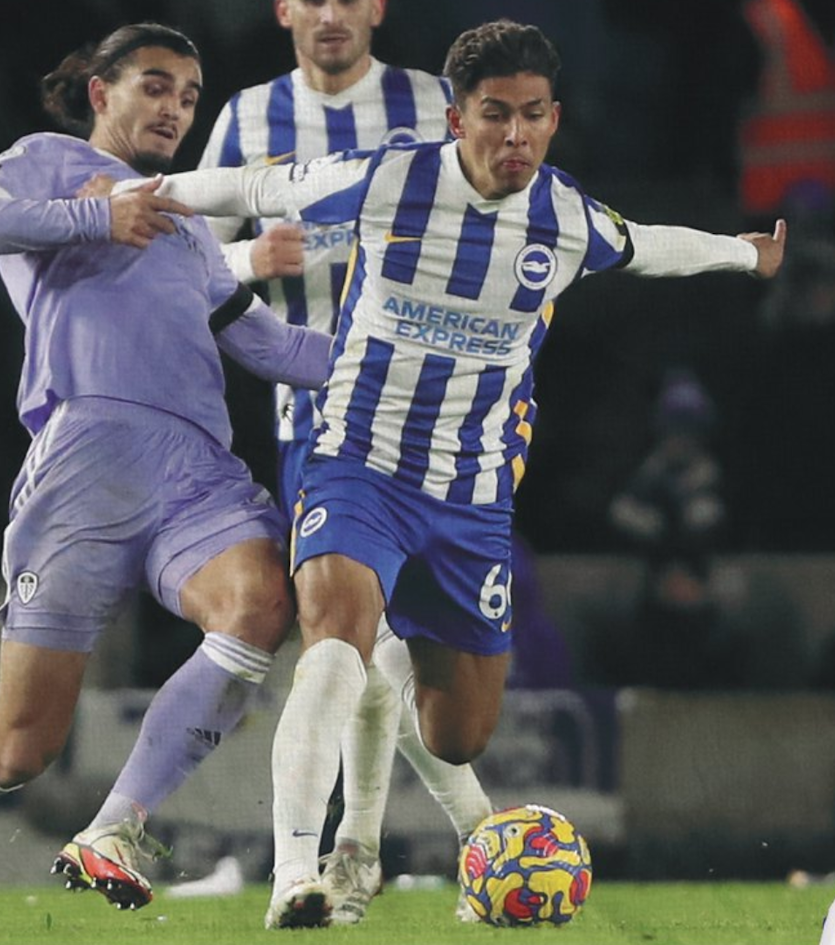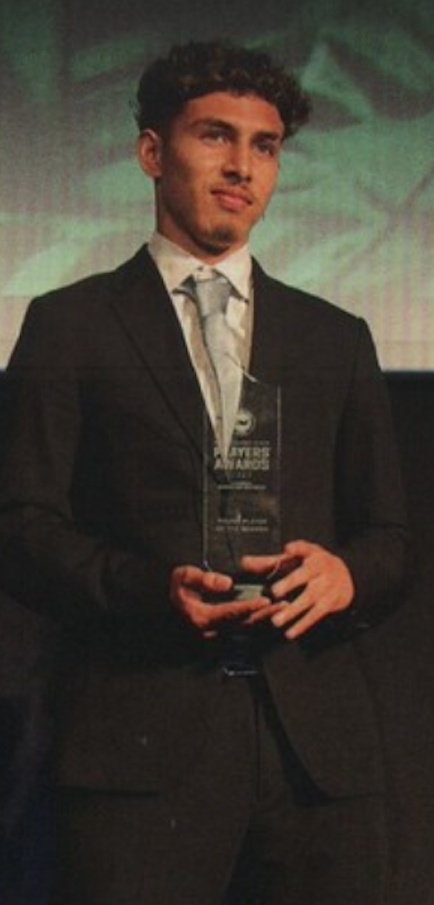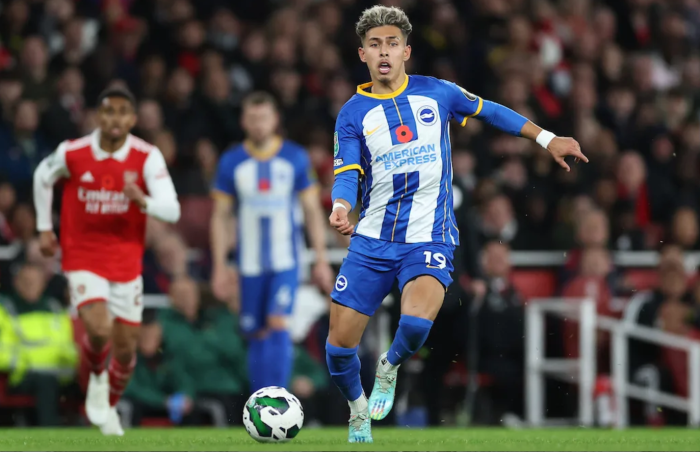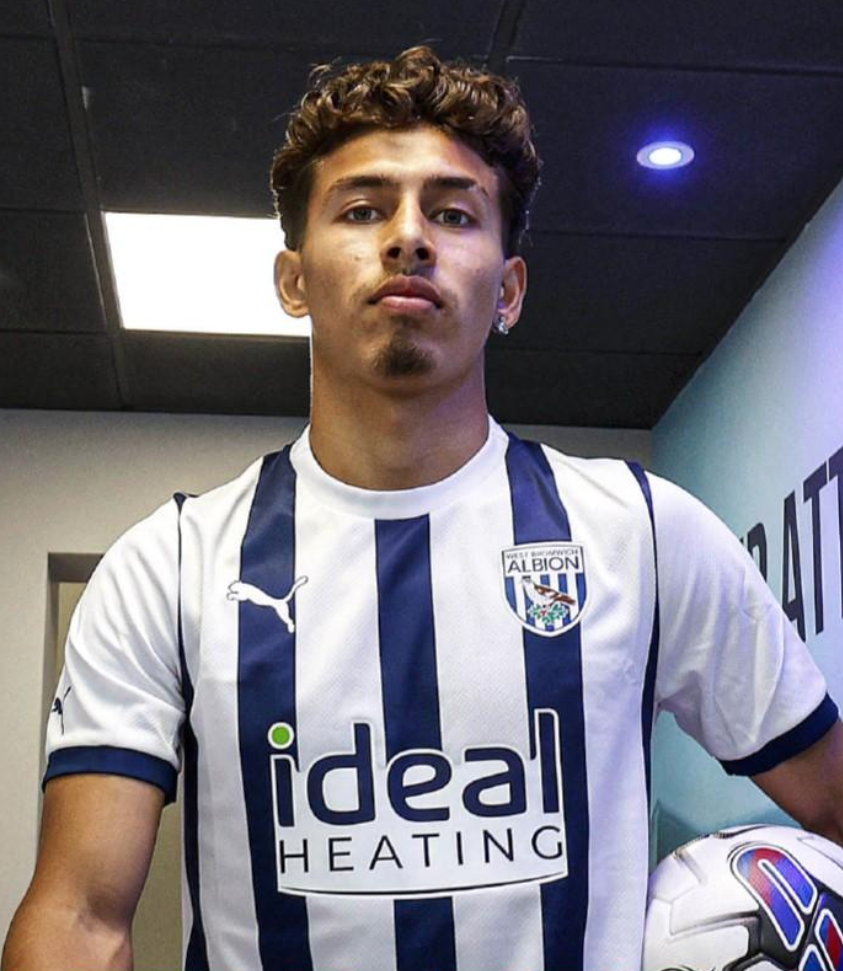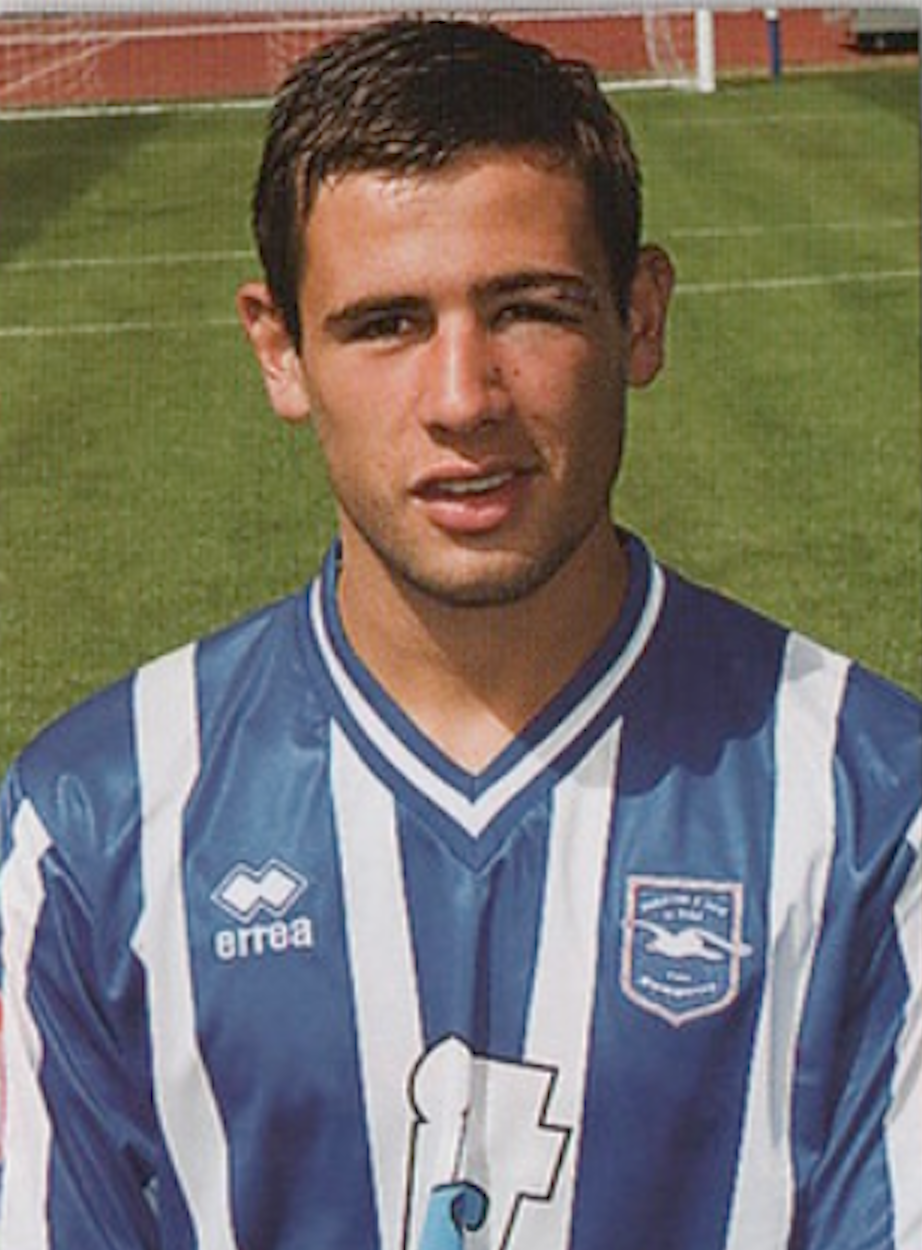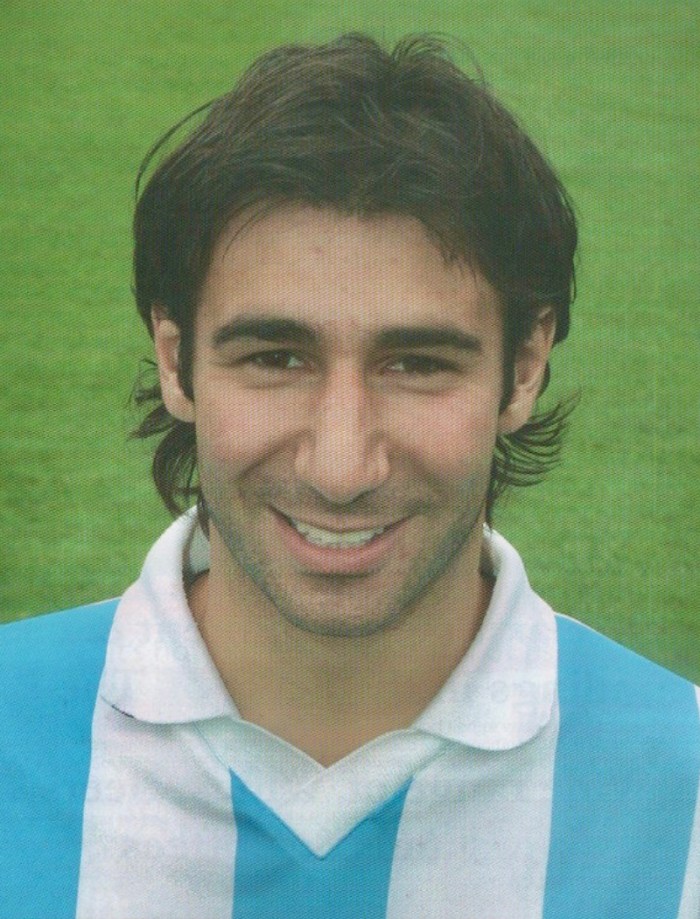
Anthony Knockaert: the ‘little magician’ with an eye for goal

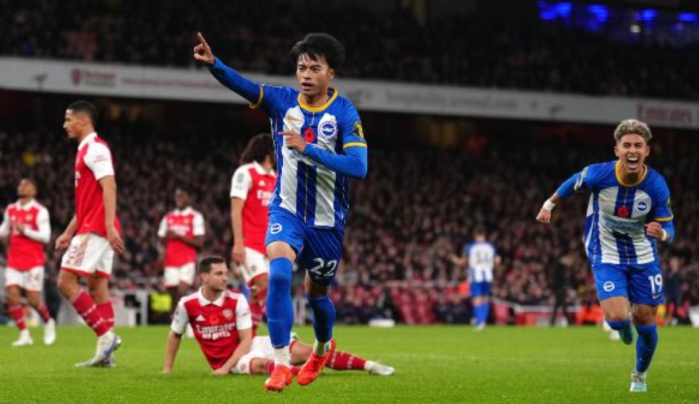
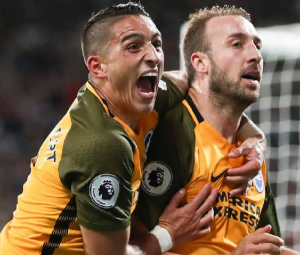
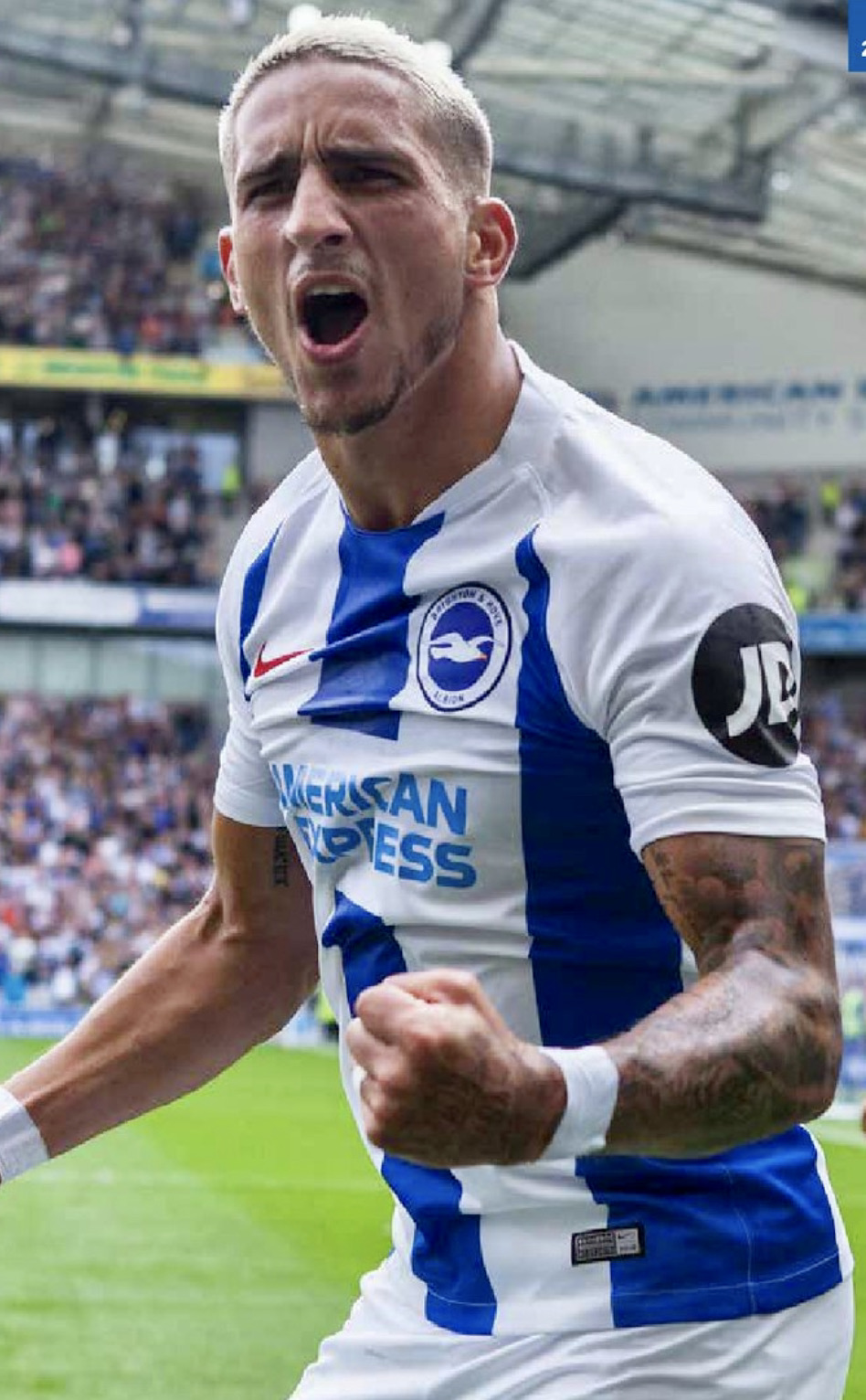
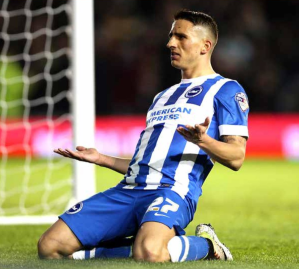
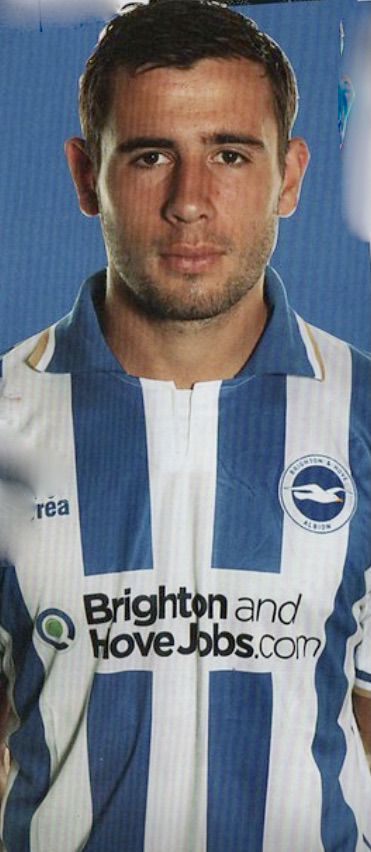
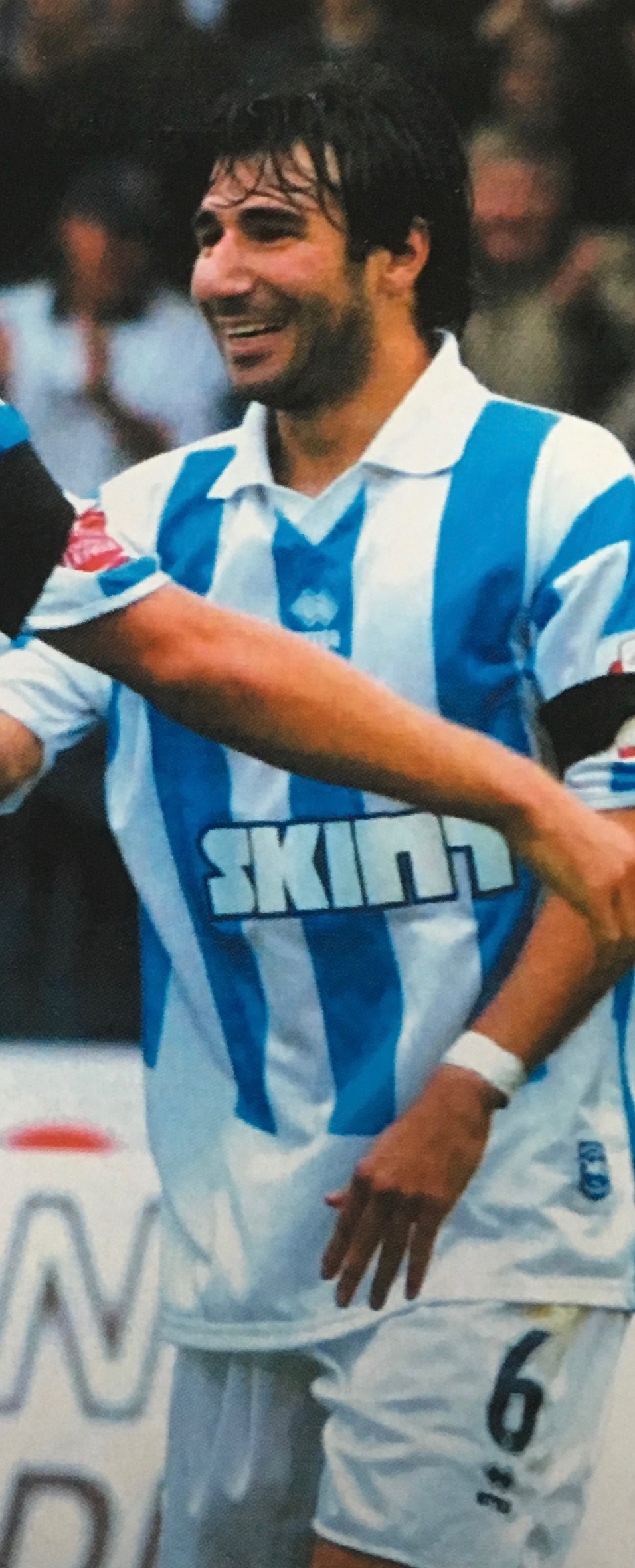
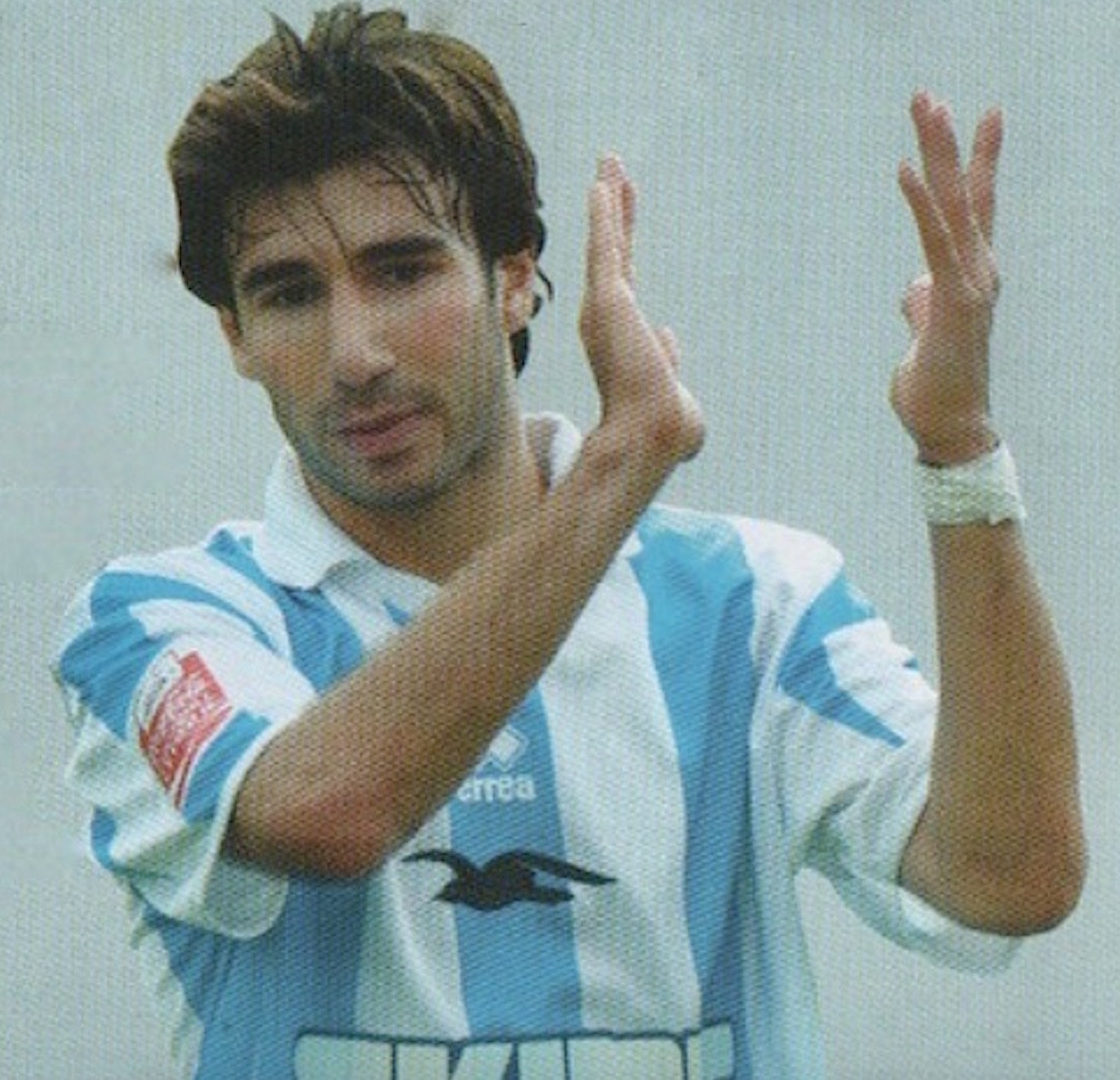
IT WAS a team effort that saw Brighton promoted to the Premier League in 2017 but one of the key components of that achievement was winger Anthony Knockaert.

Centre-forward Glenn Murray netted 23 times but the tricky, nimble-footed Frenchman wasn’t far behind with an impressive 15 goals and was rightly rewarded with both the Championship Player of the Year award and the Albion Player of the Season accolade.

When he announced his retirement from the game at the age of 32 in July 2024, he described his time with the Seagulls as the best years of his career.

He had previously been part of Leicester City’s rise from the Championship in 2014 and, although he was a less regular starter in his first season at Fulham, he was also part of Scott Parker’s play-off winning squad that won promotion back to the Premier League in August 2020.

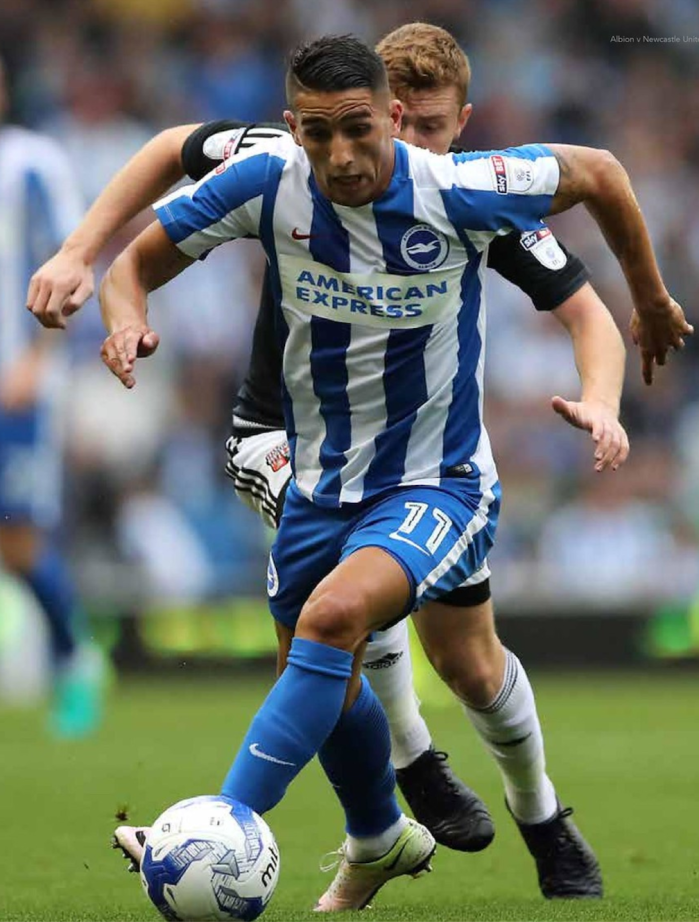
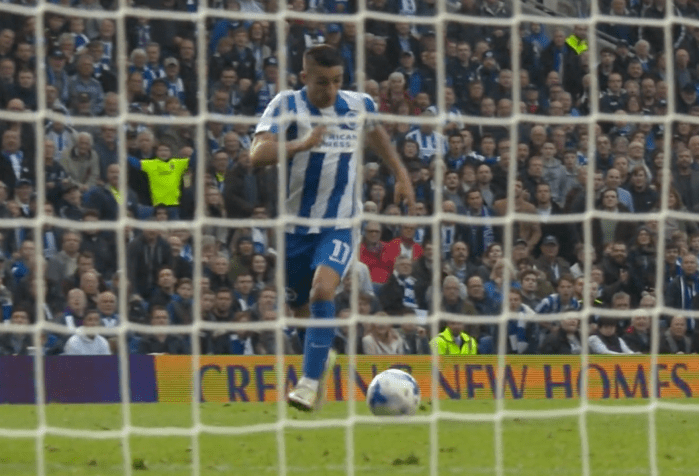
Knockaert’s mazy dribbles along the right wing often had Albion fans on the edge of their seats and, invariably, in an around the penalty area, he would cut back onto his left foot and let fly with a goalbound shot.

When he left the club for Fulham, Albion chairman Tony Bloom said: “Anthony will always have a very special place in the history books of our club.

“He’s provided some wonderful moments, and on behalf of all Albion fans, I would like to thank him for the memories.”

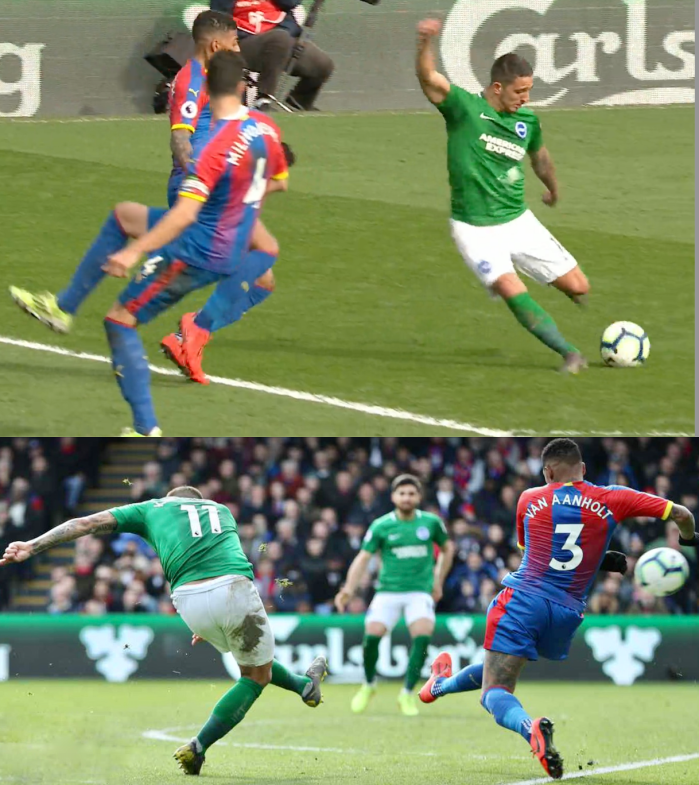
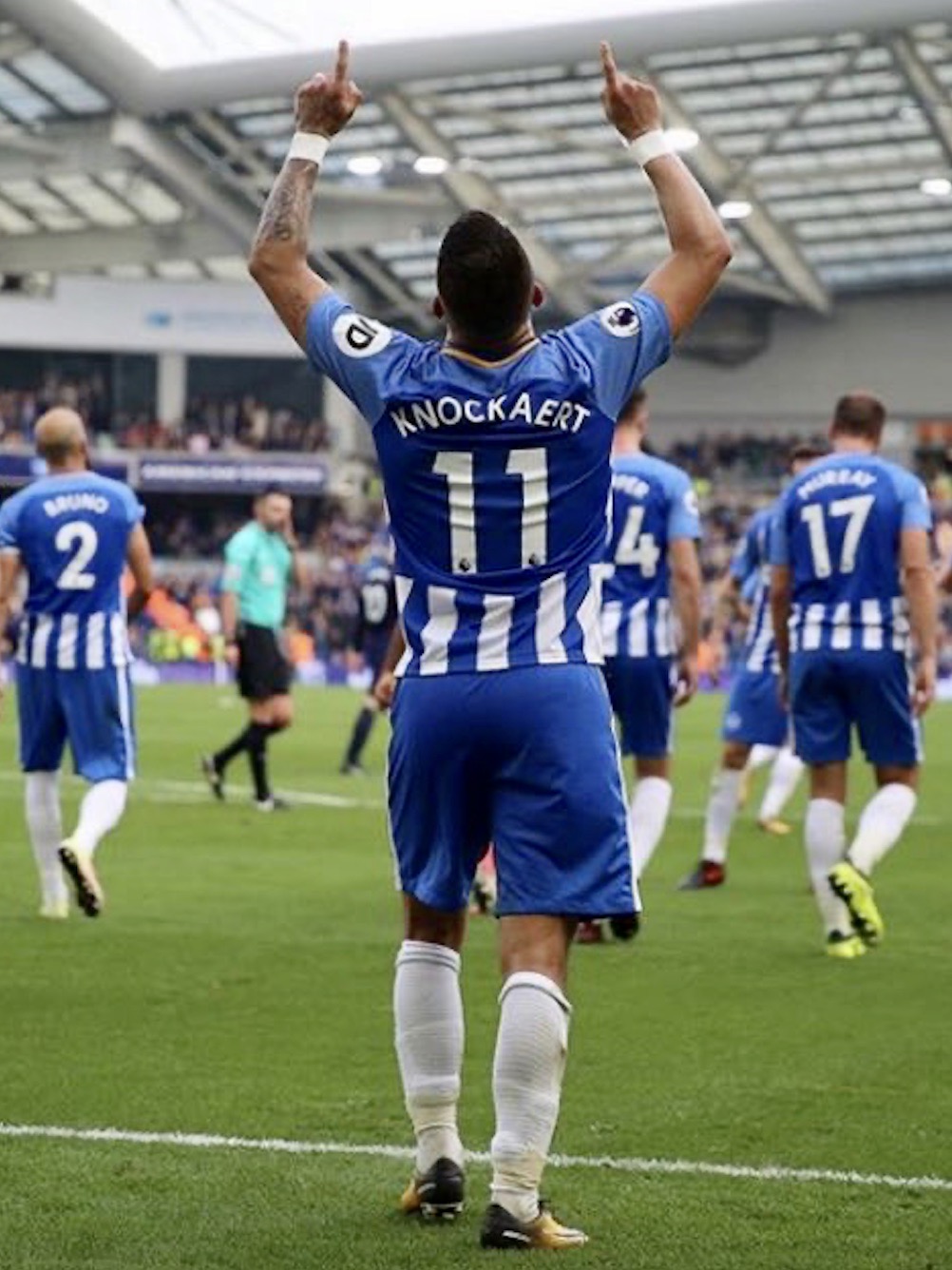
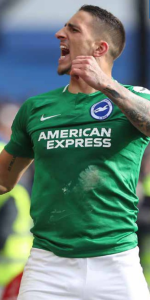
Perhaps it was fitting that his last goal for the Seagulls was one of the most spectacular – and was delivered in a 2-1 win against arch rivals Crystal Palace at Selhurst Park in March 2019.

Some observers felt Knockaert was lucky still to be on the pitch after he escaped with just a booking only 28 seconds into the match for cleaning out Palace captain Luka Milivojevic.

With the game level at 1-1, and 16 minutes of the match remaining, Sky Sports reporter Richard Morgan noted: “Brighton boss Chris Hughton was preparing to bring Knockaert off, but before the substitution could be made, the Frenchman put his team back ahead with a goal-of-the-season contender.

“The winger picked up possession down the right, before cutting inside and curling a sublime left-footed shot into the top corner of the net as Brighton scored from outside the area for the first time in the league this season.”

It certainly wasn’t the first time Knockaert had made the headlines for the Seagulls; his two goals at Molineux in a 2-0 win over Wolves in April 2017 virtually guaranteed Albion’s promotion from the Championship just ahead of the decisive win at home to Wigan and was accompanied by BBC Radio Sussex reporter Johnny Cantor’s memorable “simply box office” commentary on the Frenchman’s performance.

Born in Roubaix in north east France on 20 November 1991, Knockaert’s early football development happened at several clubs close to or over the Belgian border: Wasquehal (1997-99), Leers (1999-2001), Lens (2001-04), Mouscron (2004-07) and Lesquin (2007-09).

It took a move to Brittany, and Guingamp, to begin his professional career in 2009 and he helped the club win promotion from the third to the second tier of French football in 2011. Leicester paid a reported £750,000 for his services in the summer of 2012.

He revealed a flavour of his passion for the game in a City November 2013 matchday programme: “When I play for a team, I want to be able to give everything and that’s important if you want to forge a connection with the fans and everybody at a club. That’s my philosophy.

“Since I have come to Leicester, the staff, players and fans have been brilliant. Everyone in Leicester has been great with me and as a result I have been very happy.

“That’s why I give everything I have on the pitch, because simply, I love Leicester.”

Although Knockaert’s late goal against Nottingham Forest on the last day of the 2012-13 season had lifted City from eighth in the table into the last play-off spot, agony was to follow in the semi-finals.

While Brighton fans were enduring their own Championship play-off semi-final heartbreak at the hands of Crystal Palace, so the Foxes saw their hoped-for return to the Premier League cruelly taken away – and Knockaert was the fall guy.

With City’s play-off semi-final against Watford finely poised at 2-2, Leicester were awarded an injury time penalty. Knockaert stepped up to take it but the kick was saved by Manuel Almunia, the rebound shot then hit him in the chest, and the ball went straight down the other end where Troy Deeney buried a winner for the Hornets. But Foxes follower Jake Lawson of fosseposse.sbnation.com was keen to point out in 2017: “There’s so much more to the Frenchman’s time with Leicester than that.

“We signed him as a relatively unknown 21-year-old from Ligue 2 side Guingamp and he went straight into the side, featuring in 42 league matches during the 2012-13 campaign.

“He scored eight goals in the Championship and they weren’t exactly tap-ins, either. His brace against Huddersfield was, to my untrained eye, the most impressive pair of goals scored by any City player over the last 20 years.”
Regardless of that agonising play-off outcome, he observed: “Without the French under 21 international’s impressive range of passing, magical dribbling, and ability to score from (literally) any angle, we wouldn’t have even been in the hunt.”

Knockaert played in 42 league matches and scored five times in 2013-14, when Leicester romped to the Championship title, finishing with 102 points.

“Every time he was on the ball, you had the sense that something special could happen,” said Lawson. “It wasn’t always good, but it was always special.”

Unfortunately for Knockaert, Leicester discovered another winger from France’s Ligue 2. His name was Riyad Mahrez and boss Nigel Pearson picked the Algerian ahead of Knockaert, who only made five first team starts plus six appearances off the bench in the 2014-15 Premier League season.

When he left Leicester in June 2015, he’d made 82 starts and 24 substitute appearances for the Foxes and scored 13 goals.

He joined Belgian Pro League side Standard Liege on a free transfer, signing a four-year contract. But he ended up playing only 20 matches for Liege in the first half of the 2015-16 season before the Albion took him back to the UK.

Albion boss Hughton said at the time: “Once I knew that there was a possibility that Anthony was available, he was somebody I was interested in bringing to the club for a number of reasons.

“He is a different type of player to the wide players we have here. He can play in three positions – on the left, off the front man, but predominantly in his previous time here in England he played on the right side.

“He is a very good technical, offensive player and has experience of playing in the Championship in a team who played a 4-4-2 system and he is used to having a responsibility in the wide areas. But mostly it is what he can bring us offensively in terms of goals and assists.”

Knockaert obviously bought in to the manager’s way of playing, saying in a matchday programme interview: “When you are a creative player everyone expects the best from you in every game. You are always trying a lot of things: to dribble, to score goals, to give assists and to work hard defensively for the team.

“I try to give all of these things to the team – as do all the wingers at the club – and it’s a big responsibility on the pitch for us. However, it’s not always easy to do everything right.”

Explaining his occasional shows of frustration, he said: “It’s because I love football so much. I’ve always been like this and every game I play is a fight, and I give everything I’ve got.”

Promotion in 2017 was extra special for Knockaert because it was a promise he’d made to his dad, Patrick, who died of cancer aged 63 in the autumn of 2016. The player was grateful for the way in which he was supported in his bereavement by the management and his teammates.

Brighton players held aloft absent Knockaert’s shirt in tribute as they celebrated Steve Sidwell’s halfway line wonder goal at Bristol City. Hughton and several players attended his father’s funeral in France.

Thankfully it was a far happier Knockaert at the forefront of the celebrations when Albion achieved the promotion dream against Wigan at the Amex the following April.

Hopes of hitting the ground running in Albion’s debut season in the Premier League were dealt something of a blow when he sustained ankle ligament damage in a pre-season friendly against Fortuna Dusseldorf.

It was eight games before there was a glimpse of his return to fitness when Everton were the visitors. Man-of-the-match Knockaert put Albion ahead on 82 minutes but Everton took home a somewhat fortuitous point when Wayne Rooney equalised from the penalty spot.

“His trademark runs from deep and balls into the box led the Toffees’ defence a merry dance,” the matchday programme reported. As to the goal, Knockaert said: “It was a special moment for me. Obviously I thought about my dad because I know he would have loved to have seen that. It was really emotional.”

Sadly, apart from his father’s early death, Knockaert’s brother Steve had died of a heart attack aged 28 in 2010 and in 2018 the player revealed he’d had counselling for depression which had been compounded by the break-up of his marriage, that had led to limited contact with his four-year-old son Ilyan.

In an excellent piece of analysis after Albion’s new regime under Graham Potter allowed Knockaert to join Fulham on loan at the start of the 2019-20 season, The Athletic’s Andy Naylor spelled out the conundrum the club faced with a player who perhaps wore his heart on his sleeve a little too much.

Naylor noted that apart from Knockaert’s capacity to thrill supporters on the pitch, his series of personal misfortunes also tugged at their hearts.

Nonetheless, although he scored 20 goals in 64 Championship games for Brighton, he only registered five in 63 at the higher level.

In the harsh world of football, as Knockaert had previously experienced with the arrival of Mahrez at Leicester, it was Brighton’s signing of Leandro Trossard from Genk that finally signalled the Frenchman’s farewell to Sussex.

Believing Knockaert “too good for the Championship and good enough for the Premier League” Naylor said that winner at Palace and a man-of-the-match performance in the 2019 FA Cup semi-final defeat to Manchester City were certainly highlights. But…

“On the flip side, such good days are not frequent enough for Knockaert to be regarded as dependable, both in terms of his contribution to the team and the Gallic temperament which has let the side down.

“Displays of dissent were familiar if he got substituted or games were not going according to plan,” he said.

Naylor also referred to two sendings off – away to Everton for a jump tackle on Leighton Baines from a throw-in and “an outrageous lunging tackle” on Bournemouth’s Adam Smith when Albion were 2-0 down at home and ended up losing 5-0.  Match of the Day pundit Danny Murphy slammed the player, saying: “It’s dangerous and irresponsible and more importantly he’s let everyone down.”

Naylor concluded that the switch to London for a fee of up to £15 million – about four times what they paid for him – would be best for both club and player.

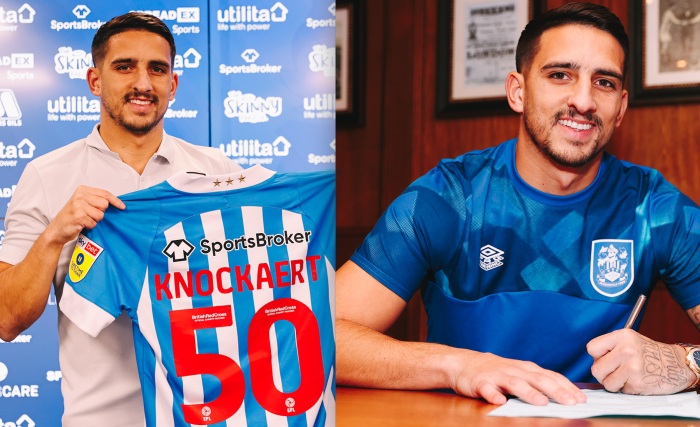
Fulham exercised their option to buy Knockaertpermanently in July 2020 and he agreed a three-year contract, although most of that time ended up being spent away from Craven Cottage on loan.

The signing certainly baffled Fulham fans, such as Marco De Novellis who wrote on fulhamish.co.uk: “The Knockaert signing strikes me as the decision of an out-of-touch director of football operations attuned more to the past reputation of players than the reality on the pitch.”

Another correspondent, Hugo Lloyd, on the same site, reckoned Knockaert had “hugely divided opinion” and said: “Aged 27 he should be coming into his prime, but he looks a shell of his former self.”

Lloyd reckoned the sort of flair Knockaert had expressed playing for Brighton was stifled by Scott Parker’s emphasis on possession. “Parker needs to show faith in Knockaert and let him play in the manner that has allowed him such success in previous seasons as it could be the perfect injection of risk needed in our style of play, rather than taking this out and keeping the ball for the sake of it,” he wrote. “He clearly has ability but has had to completely change his style of play which cannot be easy.

“Given time, Knockaert’s magic could be exactly what we need to rise up the table, whereas at the moment it seems a case of trying to fit a square peg in a round hole.”

By the season’s end, Knockaert had made 35 starts and 11 sub appearances in all competitions, scoring just four goals, as Fulham gained promotion back to the Premier League via a play-off final win over Brentford.

Although the club was back amongst the elite, Knockaert was frozen out and in October 2020 was instead reunited with former Albion boss Hughton at Championship side Nottingham Forest. He made 33 appearances and scored three times for Forest where he also teamed up with two former Seagulls teammates in Gaetan Bong and Murray.

The following season began with Knockaert joining Greek Super League side Volos but he was back in the UK the following January, signing on loan at Huddersfield Town.

Amid a fair degree of hype, Town’s head of football operations Leigh Bromby told the club website: “Anthony possesses the type of individual talent that is a rare find, so we’re absolutely delighted to have him with us for the remainder of the season.

“He has a proven track record at this level and a real hunger to contribute in England again, so that ticks a lot of boxes for us.

“This is the type of signing we hope can give the club a real lift both on and off the field, with his high profile earned through countless memorable goals and performances that we hope will continue with our shirt on his back.

“He gives us something completely different in the final third whilst complimenting who we are and what we want to be as a team, so there is a real excitement to see how he can contribute between now and the end of the season.”

Sadly, against a backdrop of managerial upheaval, he only managed two starts and three appearances off the bench as Town narrowly avoided dropping out of the Championship.

In September 2023, Knockaert agreed to terminate his Fulham contract and he moved back close to his birthplace, signing for Ligue 2 side Valenciennes FC. He featured in 21 matches but couldn’t prevent the side from being relegated to France’s third tier.

Although he announced his decision to retire from professional football in July 2024, he didn’t plan to hang up his boots altogether and getfootballnewsbene.com reported that he would turn out in the lower reaches of Belgian football with Mouscron, where he’d once played as a boy.

That’s the way Cookie crumbled for Hastings-born defender

WHEN IT comes to home-grown talent, Brighton have had particular success with central defenders.

Lewis Dunk is the prime example, staying with the club from humble beginnings through to Europe. Others had to move on to make the most of their careers.

For example, Steve Cook joined the club aged nine and made it through the different age levels into Albion’s first team. But to get regular football, he moved along the coast to Bournemouth.

If moving from Championship Brighton to League One Bournemouth seemed like a backward step in 2012, two promotions later saw him laughing on the other side of his face when the Cherries made it to the Premier League (in 2015) a season before the Seagulls.

Cook spent 10 years with the Cherries, making more than 350 appearances (168 of them in the Premier League), and after the departure of fellow ex-Albion defender Tommy Elphick, he took over as their captain.

Cook first got a taste of the big time in 2008, when he was a second year scholar on £60 a week, aged just 17. He was sent on by Micky Adams as an 85th-minute substitute in the famous League Cup game against Manchester City that League One Albion won on penalties.

Two months later, he once again replaced right-back Andrew Whing, this time in a FA Cup first round replay defeat to Hartlepool United, and picked up a booking into the bargain.

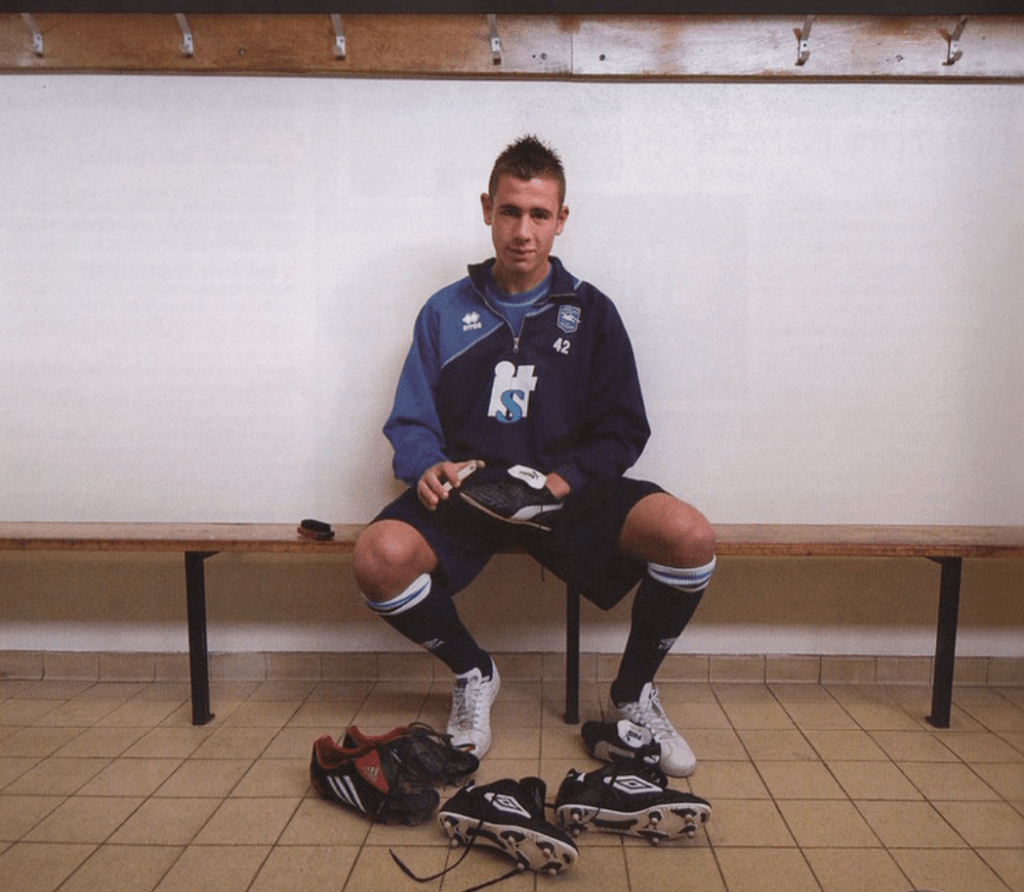
Boot cleaning duties for young Steve Cook

To gain more experience, in December that year, Cook went west to spend six weeks with Conference South Havant & Waterlooville. On his return, he once again had a first team look-in, going on as a 77th-minute sub for Calvin Andrew in the Johnstone’s Paint Trophy southern final defeat at Luton Town that marked the end of the second coming of Adams.

Before the appointment of Russell Slade, Cook went on for the second half as a sub for injury-plagued sub Adam Hinshelwood (who’d been an 18th-minute sub for Elphick) in a 4-0 home defeat against Crewe Alexandra.

Slade marked his arrival by bringing in plenty of old hands in what eventually proved to be a successful skin-of-the-teeth survival battle against relegation. Cook didn’t get another chance in the first team until some time after Gus Poyet had taken charge.

His development continued on loan with the likes of Eastleigh and Eastbourne Borough and in November 2010 he moved away from home to join former league club Mansfield Town on a three-month loan.

“Mansfield play very different to Eastbourne but it’s more like playing for Brighton where they like to keep the ball and play out from the back, which you don’t get in the Conference very often,” he told the matchday programme. “I see it as a great opportunity to prove myself and try to earn another contract at Brighton.”

He added: “Playing Conference football helped me grow up, physically and mentally, so by the time I returned I felt I was ready to challenge for a first team place.”

Cook up against Suarez

After a handful of non-playing appearances on the first team subs bench, when he did get his first ever start, it could not have been a bigger match: Liverpool at home in the third round of the Carling Cup with Luis Suarez, Dirk Kuyt and Craig Bellamy in the opposition forward line.

“It was a real confidence boost knowing the manager had faith putting me into the side for such a big game, but I really enjoyed the experience and got a great deal out of it,” he said.

“While I had a good pre-season, I’ve not played a lot of games since then. It was one in two months before the Liverpool game, but I’d been working hard in training and got my reward.”

Cook only found out 90 minutes before kick-off that he would be taking the place of fellow academy graduate Dunk, with both Elphick and Adam El-Abd out injured.

“It was a real baptism of fire though because for the first 20 minutes Liverpool were brilliant. Suarez, Bellamy, they were all excellent going forward, the pace of them as a team was unbelievable and in that opening spell I think we were in awe of them.”

Cook thought his involvement that night would lead to more chances, but he said: “Later that month we had Ipswich away, Dunky was suspended but instead of playing me, Gus put Romain Vincelot – a midfielder – in alongside Gordon Greer. From that point on, my mind was made up; I knew I had to look elsewhere if I wanted to kick on in my career.”

That autumn, Cook initially joined Bournemouth on loan, featuring in eight games, but he was recalled by the Seagulls when a shortage of defenders meant he was needed for a crucial New Year game at home to table-topping Southampton.

Having lost four games on the bounce, the odds were stacked against a positive result, but Albion remarkably won the game 3-0 (two cracking goals from Matt Sparrow and another from Jake Forster-Caskey).

Nevertheless, within 24 hours of the game ending, Cook finally took the tough decision to leave the Albion permanently. The fee was a reported £150,000.

He told the matchday programme: “I have loved my time at Brighton but this is a chance to play regular football and I can’t turn that down. It was nice to go out on such a high – not many players get that chance.”

Cook reckoned he might have got the odd game or two if he’d stayed at Brighton but he didn’t rate his chances of becoming a regular when everyone was fit. “I could play close to 30 games for Bournemouth and that is massive for a young footballer,” he said.

In a later interview, he said: “It was always going to be a tough decision to leave the Albion as I had been at the club since the age of nine.

“I had a decision to make: do I stay and fight for my place, despite being a fair way down the pecking order, or do I leave and try to continue my career elsewhere?

“It wasn’t easy because I was leaving a club on the rise; the Amex is one of the best stadiums in the country, the team was establishing itself in the Championship and there was a new training ground on the way.

“But having been at Bournemouth on loan, I could also see a hugely ambitious club and a talented squad which I believed was going places.

“So, I decided to leave and it’s been the best decision I could ever have made. I’ve moved away from my parents, so have grown up off the pitch, while on it I’ve been playing regularly and have really enjoyed my football.”

Much of that time he partnered Elphick in the middle of the Cherries defence and it wasn’t long before the pair were emulating the Albion’s achievement of promotion from League One.

“Tommy arrived a year after me but of course I told him about the club, the town and knew it would be a good move for him as it was for me,” he said. “We’d obviously played alongside each other before, had known each other a long time, and so we soon built up a good partnership.

“He had those leadership qualities he displayed at Brighton and was soon made captain. We had a terrific three years together and remain good friends off the pitch.”

In a subsequent Albion matchday programme, when he was once again visiting with the Cherries, he said: “Lovely stadiums and training facilities are great, but only if you’re playing in them and I can now look back on nearly 300 appearances for Bournemouth, where I’ve had some fantastic moments, played regularly in the Premier League and really developed my game. It’s a move that couldn’t have gone better.”

Although Cook held his own in the Premier League, he admitted the transition from the Championship was hard. “The gulf with the Championship is huge,” he said. “The intensity and pressure, in particular, are massive and the first six months were a real learning curve.

“Once I’d adapted and dealt with the expectations placed on me, I could relax and start to enjoy myself.”

Born in Hastings on 19 April 1991, Cook joined the Albion as a schoolboy following a six-week trial under the auspices of Martin Hinshelwood, the head of the youth set-up at the time.

“Initially, I was only training Tuesday evenings in the Eastbourne centre of excellence but, when I reached 13, we were training twice a week with a game on the Sunday,” he recalled.

“I remember I had a choice to make: Hastings Town, my local team, or Brighton and obviously I was swayed by the facilities, the coaching and being associated with a professional club.”

After Bournemouth lost their top tier status in 2020, Cook captained the side through to the Championship play-off semi-finals in 2021 where they were beaten by eventual winners Brentford.

There was plenty of emotion when Cook finally left the club in January 2022 with manager Scott Parker saying: “I know too well what someone like Steve Cook has done for this football club and the journey he has been on with the club. He has been paramount and done everything, really. I wish him all the best.”

And in an open letter to the club’s fans, Cook wrote: “I’ve been lucky enough to captain the team in League One, the Championship and Premier League and writing this just fills me with immense pride.

“The time has come for me take the next step in my career but I will never forget the staff that helped me improve as a player and person.

“The players that I shared a dressing room with and, and most importantly, the fans that supported and cheered for all those games.

“The journey that we have had is one that will never be beaten, and the relationship we had was undeniably strong. Thanks for everything.”

Upon signing for Nottingham Forest, Cook declared: “You can see the progress the club is making and I’m excited for the new challenge. 

“I thought it was the perfect time in my career to make this move to hopefully come and contribute and help get this club back to where it wants to be.

“The history of the club speaks for itself and I know how passionate the fans are. I’ve played at the City Ground in the past and it’s always been electric.”

Manager Steve Cooper said: “Steve is a fantastic player and brings a good level of experience, both in the Championship and the level above.

“He’s played in a team that has won a lot of games and I think that that’s important. We want our group to be young and hungry along with players of experience that can drive the team forward and that’s what we’re building.”

Having been part of the Forest side promoted to the Premier League in May 2022, his involvement back in the elite division was restricted to 12 games and he was omitted from Forest’s 25-man Premier League squad for the second half of the 2022-23 season.

In the summer of 2023, he switched to Queens Park Rangers in the Championship, telling the club’s website: “Playing football is the most important thing for me but I also pride myself on being a good character around the group.”

He went on: “My time in the Championship has been quite successful, and that success is something I want to bring here. 

“I don’t want my career to peter out, I still really want to be successful and to contest. I still have aims and targets I want to achieve and I’m hoping that the success I’ve had in my career so far continues so that I can help push QPR forward.” 

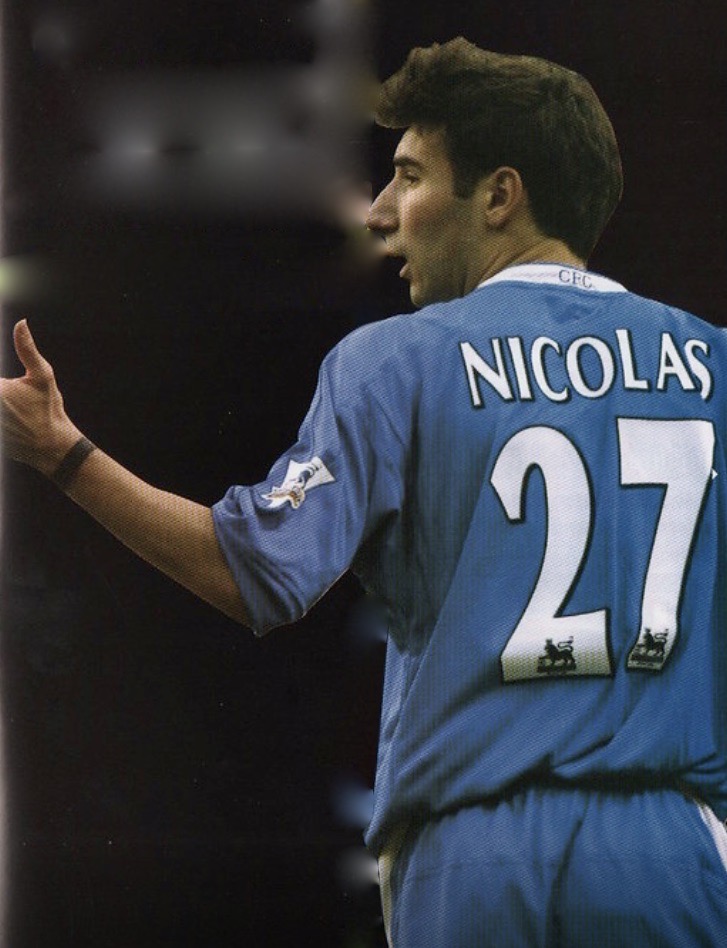
Why Roman’s roubles spelled bad news for Alexis Nicolas

A PROMISING young midfielder edging towards first team football at Chelsea had his dreams extinguished when Roman Abramovich arrived with lorry loads of cash.

Manager Claudio Ranieri had let Alexis Nicolas know that he was heading in the right direction after he’d broken through to the fringes of the first team.

But when Abramovich took over at Stamford Bridge, big name signings started to arrive and Nicolas was left way down the pecking order behind the likes of Juan Sebastián Verón, Claude Makélélé, Geremi and Scott Parker.

New boss Jose Mourinho informed the youngster he should look elsewhere to make progress, and Brighton, newly promoted to the Championship, offered a refuge for the talented London-born Cypriot under-21 international.

Albion’s midfield options were depleted at the beginning of the 2004-05 season with Simon Rodger a long-term absentee, stalwart Richard Carpenter recovering from close-season knee surgery, and Charlie Oatway also sidelined through injury.

It meant Nicolas had a chance to show what he was made of and he played 15 games on loan from the start of the season through to October.

Enthusiastic Albion boss Mark McGhee said: “He has brought energy and he has got quality. He is a certain type of player, similar in many ways to Charlie Oatway.

“He is not a box-to-box goalscoring midfielder but what he does brilliantly is that he is always in the area around the ball where you need him.

“He breaks things up quickly and, when we win possession, we go more quickly from defence into attack with Alexis in there than we did previously.”

Nicolas clearly relished the opportunity he’d been given and, as the prospects of a permanent move grew stronger, he told the Argus: “It’s flattering that Brighton want to keep me. I like it here. I am happy with the club and the manager and I don’t see why it can’t be permanent.

“If everything can come together, and I think it will be a good move, then I don’t see why it won’t go ahead.”

He added: “There is a lot of stuff to be sorted out with a lot of different people.

“All I can say is I am happy here and I like the club. They are good people and the fans are great. Anyone with an offer to come here has got to be chuffed with that, because it is a great set-up.”

McGhee made no secret of his admiration for the 21-year-old, saying: “He’s been a fixture in the team and that says it all. He is improving week in and week out and I think he has got a good future.

“He has a terrific little engine and attitude. He quietly goes about his job and he has been really important for us so far this season.

“The boy himself is modest and unassuming. He loves Chelsea, he loved being there and I am sure he will be very disappointed to leave, but he wants to be a footballer more than he wants to be a Chelsea player. That is the important thing for us.”

McGhee explained the difference Nicolas made to the side. “He has that knack of being in the right place at the right time; he seems to cover such a big area. For a physically small lad, he is everywhere.

“He anticipates where the next ball is going and gets there early, puts people under pressure, wins the ball back and activates us going forward. He wins it and, before you know it, we’re going forward.”

When he signed permanently, Nicolas said: “It feels great. You are always sad to leave a club and I have been at Chelsea for a while, but I am excited and glad that I have signed for Brighton.

“The role I play is similar to Claude Makélélé’s and I used to speak to Claude regularly. He used to give me a lot of good advice. I’ve learned from all of the players at Chelsea, but now it’s time for me to open another chapter in my life and learn some other stuff.”

Nicolas said breaking into the Chelsea first team had whetted his appetite to return to that level and he told the Albion matchday programme: “Having played in the Premiership, I would like to achieve it here at Brighton and I don’t see why one day Brighton can’t be a club in the Premiership.”

Unfortunately, he joined an injury and suspension hit squad that couldn’t compete with better-resourced clubs in the second tier because of crowd-restricted home gates at the Withdean Stadium.

While Nicolas impressed in his first season, playing in a further 19 games, McGhee was forced to sell star players Danny Cullip and Darren Currie to bolster the club’s perilous finances, and the side only just managed to avoid the drop.

The following season, with Dean Hammond and Carpenter the mainstays in central midfield, Nicolas too often watched on from the bench and missed several weeks because of ankle and knee injuries.

Asked about his watching brief from the sidelines, he said in a matchday programme article: “It’s been very frustrating for me this season and I’m upset about it. I’d like to think that a lot of the fans would like to see me out there. The manager can only pick eleven players and he’s the boss – what he says goes and I respect that.”

His frustration was barely disguised in an interview with the Argus on 23 Feb 2006, after a reserve match he was due to play in was called off.

“It seems impossible for me to get 90 minutes at the moment,” he said. “I was out for six weeks injured and have only managed 60 minutes football against Millwall in a reserve match since because of postponements.

“Before that I was mostly on the bench. I have hardly played this season.

“Even though I am not fully match fit, I have been training hard and have enough about me to be able to cope. I am not thinking of myself when I say this. I have put personal goals to one side.

“After all, I pulled out of international squads with Cyprus earlier in the season even if it meant I could just be on the bench for Brighton. I feel I have a lot to offer.”

The midfielder added: “What matters is Albion. I love the club, the lads and the fans and want to do my best for them.”

Unfortunately, after playing only 12 matches in 2005-06, he wasn’t kept on after the Seagulls were relegated on 30 April 2006, and he never played league football again.

Born in Westminster on 13 February 1983, Nicolas went to Trent CE Primary School in Cockfosters, where he first showed a talent with a football. He also enjoyed long distance running and tennis.

He played football for a decent Sunday League side in Colliers Wood alongside two other future professionals, Steve Sidwell and Leon Britton, and eventually became part of Arsenal’s youth set-up. But he ended up as an apprentice at Aston Villa, and got taken on as a professional. He was in the same under-19s squad as future Albion goalkeeper Wayne Henderson and defender Liam Ridgewell.

But in December 2001, he joined Chelsea on a free transfer, and with 24 starts plus one as a sub, he missed only one of the reserves side’s 26 matches in the 2002-03 season.

He was handed the no.27 shirt for the 2003-04 season and made his Chelsea first team debut in their 1-0 FA Cup win away to Scarborough on 24 January 2004.

John Terry scored the only goal of the game and Nicolas played in midfield alongside Frank Lampard and Emmanuel Pettit in a side also featuring Joe Cole and Wayne Bridge.

Guardian football reporter, Paul Wilson, noted: “Alexis Nicolas made an encouraging debut, but time and again Cole, in particular, would attempt something complicated when a simpler option was available.”

Nicolas made his Premiership debut a week later in a 1–0 win over Charlton Athletic. His only other appearance was as a 90th minute substitute for Lampard as the Blues rounded off the season with a 1-0 home win over Leeds United.

Nicolas spoke about those early years at Chelsea in an interview with Simon Yaffe of planetfootball.com.

“Ranieri called me into his office at the end of 2002-2003 and told me the club didn’t have a lot of money to invest and that he didn’t have too many midfielders at his disposal, so I would be in his plans for the following season,” Nicolas said.

Even as the oligarch’s takeover was going through in the summer of 2003, the youngster was part of Ranieri’s team which beat Newcastle United 5-4 on penalties in the final of the FA Premier League Asia Cup in front of a crowd of 41,500 in Kuala Lumpur’s national Bukit Jalil stadium. It was the first piece of silverware of the Abramovich era.

“It maybe wasn’t the most glamorous of trophies, but it was still the first of many under the new owner,” Nicolas said.

It wasn’t long before a flurry of big-name signings soon changed the picture for Nicolas; the arrival of five midfielders in particular being somewhat ominous.

“I had planned to go out on loan because I had fallen so far down the pecking order,” Nicolas added. “But some of the midfielders, like Makélélé and Petit, were picking up injuries, so I stuck around.

“Looking back, it was easy to think, ‘He’s signed, so that is why I am not playing,’ but it was really a turning point in Chelsea’s history, and it was nice to have been part of it.

“I was pleased for the club when Abramovich took over but also a little bit disappointed for myself.”

After relegated Brighton released him, Nicolas tried to continue his league career and had a trial with Bradford City, but after an unremarkable game for their reserves side, manager Colin Todd told the Bradford Telegraph & Argus: “At the moment I can’t guarantee him anything. His fitness levels aren’t the best but if he wants to continue to train with us and try to improve on that then it’s up to him.”

In fact, he decided to join St Albans City on 26 September 2006 and made his Nationwide Conference debut in a 2-1 defeat at Weymouth four days later.

On 12 November, the St Albans City website noted: “A knee injury restricted Alexis to just six appearances for St Albans City but, with a number of League One and League Two sides showing an interest, the player has decided to move on.”

Nicolas said he was grateful to manager Colin Lippiatt for giving him the opportunity and added: “I was not in the best of states when I joined the club but everyone has been a great help and when fully fit I hope to join one of the League One or League Two sides who are showing an interest in me.”

But it was a career in property investment that opened up for him instead and in 2012 he set up his own business in partnership with Ryan Springer.

He wasn’t completely done with football, though, and, also in 2012, Nicolas had a spell as player-manager of Hadley FC, a Spartan South Midlands League Premier Division side, and in 2014-15 he was part of the club’s management team under former Spurs and Chelsea player Micky Hazard.

Pictures as featured in the Albion matchday programme and from various online sources.

Midfielder Alan Curbishley helped Seagulls to promotion

Screenshot

ALAN Curbishley completed a hat-trick of promotions with new clubs when he was part of Brighton’s successful third tier side in 1988.

He’d previously been promoted after switching from West Ham to Birmingham City and also when moving from Aston Villa to Charlton Athletic.

Curbishley was what you might call West Ham through and through.

Born at Forest Gate on 8 November 1957, within a mile of West Ham station, he was one of five children (elder brother Bill famously promoted and managed The Who and Led Zeppelin and was producer of the films Tommy and Quadrophenia).

Curbishley first played in Brighton at under 11 level, in a Newham Boys side against Brighton Boys at Longhill School, in May 1967. He was later capped for England Boys aged 15 and after joining the Hammers straight from school played for England Youth.

Curbishley won nine England Youth caps under Ken Burton, scoring on his debut in a 1-1 draw against Poland in Las Palmas on 21 January 1975 when England went on to win the Atlantic Cup. Among his teammates were future England captain Bryan Robson, Peter Barnes and Keith Bertschin.

He vied for a starting berth with Mark Nightingale (Palace, Bournemouth, Norwich, Peterborough), making six starts and three appearances off the bench. His last appearance was in a 1-0 win over Wales in Cardiff on 11 February 1976, playing alongside Glenn Hoddle and Gary Owen.

Almost a year earlier, on 29 March 1975, he had made his first team Hammers debut at the tender age of 17, lining up in midfield alongside Trevor Brooking and Graham Paddon in a 1-0 home defeat against Chelsea. Mervyn Day was in goal for West Ham and guarding the opposition net was John Phillips.

At the time, Curbishley was the youngest to play in the senior team although that record was subsequently eclipsed by Paul Allen.

A contemporary of Geoff Pike, Paul Brush and Alvin Martin, they were all in the West Ham youth team defeated 5-1 on aggregate by Ipswich in the 1975 FA Youth Cup Final.

In a midfield dominated by Brooking, Paddon and Pat Holland, and later Alan Devonshire and Pike, Curbishley found first team chances limited, although in 1977-78 he made 36 appearances.

After 85 matches for the Hammers, in 1979 he moved to Birmingham for £275,000. Manager Jim Smith used the proceeds of the £1m transfer of Trevor Francis to Nottingham Forest to buy Curbishley, Frank Worthington, Colin Todd and Archie Gemmill. Curbishley was still only 21 when he made his debut for the Blues on 18 August 1979 in a 4-3 defeat at home to Fulham and he went on to be ever present for Birmingham in that 1979-80 season.

Curbishley earned his one and only England Under 21 cap in a 5-0 thrashing of Switzerland at Portman Road when Justin Fashanu was among the scorers. He had hopes of going to the 1982 World Cup with England, having broken into the England B squad but fractured a kneecap sliding into a tackle with Albion’s Brian Horton. “I missed the rest of the season and the start of the next, and the World Cup squad which I might have broken into otherwise,” he said. “It was the worst disappointment I’ve ever faced.”

He was on the front cover of the matchday programme for a game I went to watch at St Andrew’s on 27 March 1982 when he played for Ron Saunders’ Blues in a 1-0 win over Brighton. But financial issues meant the side was broken up and, the following year, after a total of 155 games, he committed what today seems to be viewed as a cardinal sin by signing for Villa for £100,000, ironically making his debut against Birmingham in a 1-0 win on 4 April 1983.

“I had high hopes of success there with them just having won the European Cup,” he told Dave Beckett in an Albion matchday programme article. “It was soon obvious though that Tony Barton was under pressure from the moment he took over and all the players thought it was just a matter of time before he was sacked.

“He got a raw deal. That season we finished ninth in the league, got to the semis of the League Cup and were knocked out of the UEFA Cup in the last minute on the away goals rule. Villa have never been near that form since, but Tony Barton’s face didn’t fit and he was soon on his way along with all the men he signed.”

After only 36 appearances, scoring once, Curbishley returned to London, dropping back down to the 2nd division, to begin what would be a long association with Charlton Athletic, punctuated only by his spell at Brighton.

Amazingly, although homeless at the time and playing at Selhurst Park, Charlton won promotion back to the 1st Division. Unfortunately Curbishley sustained an achilles tendon injury and only played 10 games in the 1986-87 season.

“I knew I had an achilles injury but the operation was delayed until a week before the start of the new season and consequently I wasn’t fit again until December,” he said. “The manager bought two new midfield players, which I understood, but when I was fit again I couldn’t get back into the side.

“It became apparent that I wouldn’t get much of a chance unless something drastic happened so I’m pleased to have a fresh start.”

After 13 seasons playing in the top two divisions, he left Charlton having scored six times in 63 games and dropped down to the Third to join the Albion for £32,500.

He made his debut in a goalless draw at Chesterfield on 22 August 1987 in front of a crowd of just 2,286.

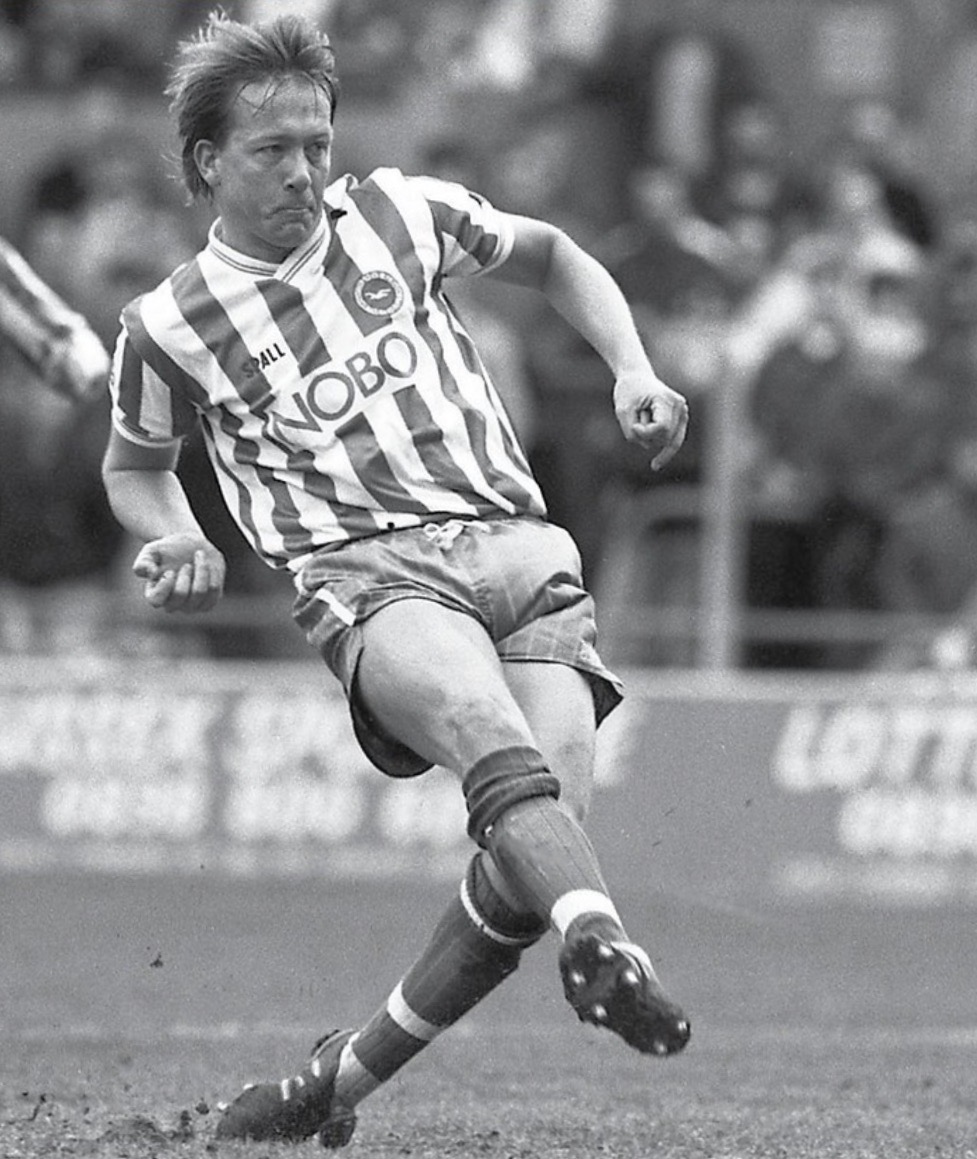
After the departure of Jimmy Case in 1985, the centre of Albion’s midfield had been crying out for someone who could put their foot on the ball and pass it, and Curbishley stepped neatly into that role, scoring six goals – mostly penalties – in 34 appearances as Brighton won promotion.

“Alan was a very level-headed guy, an excellent passer and really disciplined,” Albion boss Barry Lloyd told Spencer Vignes in a matchday programme article.

In total, over three years on the south coast, Curbishley played 127 games (plus five as sub)  – making his 400th league appearance during the 1988-89 season – and scored 15 goals.

curbs penThe Albion matchday programme featured Curbishley when the Seagulls hosted the Hammers for a Barclays League Division 2 game on 16 September 1989. Describing his time with the East London club, he said: “It was a brilliant set up although I was definitely a bit headstrong in my early days.

“I didn’t really grow up until I moved to St Andrew’s and that’s where I had my best playing days.”

Lou Macari’s side in 1989 included Curbishley’s old pal Alvin Martin and future Albion manager Liam Brady but the Seagulls ran out 3-0 winners (goals from Kevin Bremner, Robert Codner and Garry Nelson).

In 1990, Curbishley began his coaching career, returning to Charlton initially as player-coach under Lennie Lawrence. When Lawrence left in 1991, Charlton made the somewhat unusual decision to appoint joint managers: Curbishley and Steve Gritt (who would later be at the helm when Albion narrowly escaped dropping out of the league).

Curbishley’s first signings for Charlton were former Albion teammates Nelson and Steve Gatting and he later plundered young winger John Robinson from the Seagulls. After four years, Curbishley took sole charge at The Valley and led Charlton to some of the most successful times in their history.

Considering their resources, Curbishley turned Charlton into a steady top flight club and model of stability, consistently securing a mid-table finish.

Sean Cole in The Bleacher Report described him as “one of the most promising managerial talents of the new millennium” and in 2006, in the wake of Sven-Goran Eriksson’s departure as England manager, Curbs had ‘tea and biscuits’ with then chief executive Brian Barwick – but Steve McLaren got the job instead.

In December 2006, Curbishley landed what surely would have been considered his dream job – manager of West Ham.

It was quite a reunion of old pals when Brighton visited Upton Park for one of his first games in charge, in the third round of the FA Cup in January 2007. Albion boss Dean Wilkins and coach Ian Chapman had both been teammates while physiotherapist Malcolm Stuart was still wielding the magic spray.

In front of 32,874, Hammers ran out fairly comfortable 3-0 winners with Mark Noble scoring his first senior West Ham goal and Carlos Tevez a real handful up front. These were the respective line-ups:

West Ham: Carroll, Dailly, Ferdinand (Spector 45), Gabbidon, McCartney, Benayoun, Mullins, Noble, Boa Morte (Newton 73), Cole (Bobby Zamora 68), Tevez.
Subs not used: Green, Sheringham. Goals: Noble 49, Cole 58, Mullins 90.

Brighton: Wayne Henderson, Joe O’Cearuill, Joel Lynch, Guy Butters, Kerry Mayo, Tommy Fraser (Gary Hart 51), Adam El-Abd, Dean Hammond, Alexandre Frutos (Sam Rents 67), Alex Revell (Joe Gatting 84), Jake Robinson. Subs not used: Michel Kuipers, Richard Carpenter.

Fans’ website westhamtillidie recalled: “Perhaps Curbs’ greatest legacy at the club was the £7m signing of his former Charlton protégé Scott Parker, who went on to win the Hammer of the Year prize three times and pick up a Football Writers’ Player of the Year Award during his time at the club.”

Sadly, though it was to all end in tears and Curbishley quit in protest at the then Icelandic owners’ failure to consult him over the sale of defenders Anton Ferdinand and George McCartney.

In what must have been a tough heart-v-head decision, he resorted to a legal resolution of the situation and eventually won a case for constructive dismissal, eventually receiving £2.2m in compensation. But it was the last manager’s job he had.

“It took me a year to sort out my problem at West Ham,” he told The Independent. “And then, after that, I was perhaps a little too picky. I was told by other senior managers ‘don’t be out too long’ but I was waiting for a job that I thought was the job for me.”

Job vacancies came and went, Curbishley’s name was generally on all the shortlists, but he never again made it through to the manager’s chair. There was a brief moment at Fulham when he was technical director assisting Rene Meulensteen but when Meulensteen was swiftly axed, new manager Felix Magath brought in his own people.

He rejoined the Fulham coaching staff in March 2015 and took charge of training in November 2015 when Kit Symons was relieved of his managerial duties but Stuart Gray took charge of the team before Slavisa Jokanovic was appointed.

In 2016, Curbishley brought out a book, Game Changers: Inside English Football: From the Boardroom to the Bootroom (published by HarperSport) and was a regular pundit on the Football on 5 programme covering Football League games.

Further reading

https://www.westhamtillidie.com/posts/2014/11/07/preview-aston-villa

http://bleacherreport.com/articles/1415997-the-curious-case-of-alan-curbishley-footballs-forgotten-man

https://www.whufc.com/club/history/managers/alan-curbishley#C1vPoA9yPR1kYluJ.99

  • Pictures show westhamtillidie’s image of Curbishley in West Ham colours; the midfielder on the front of a Birmingham matchday programme 1982; in Villa’s colours from a Match Weekly annual, an Argus shot of Curbs scoring a penalty for Brighton against Man City, and other images from the Albion match programme.