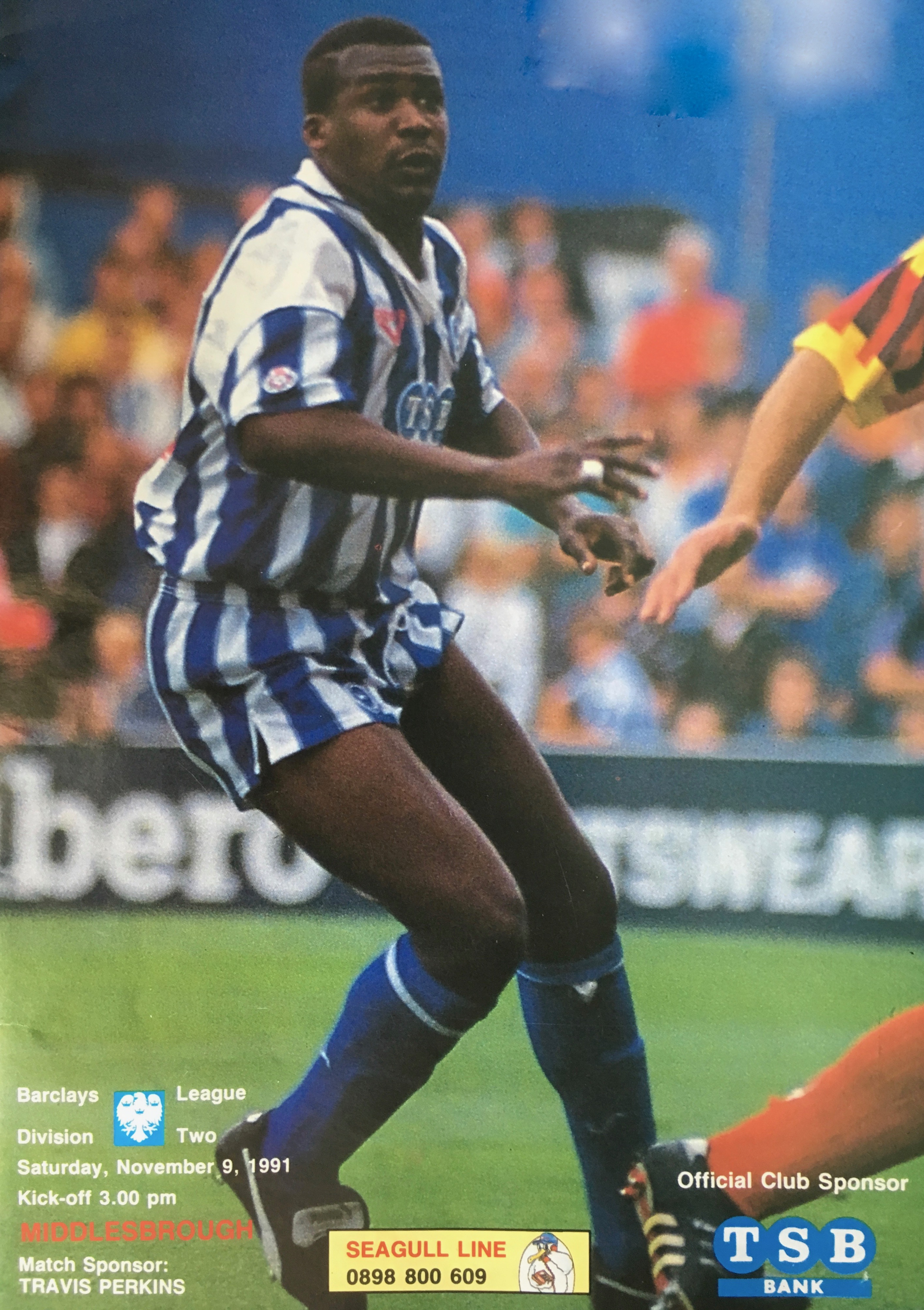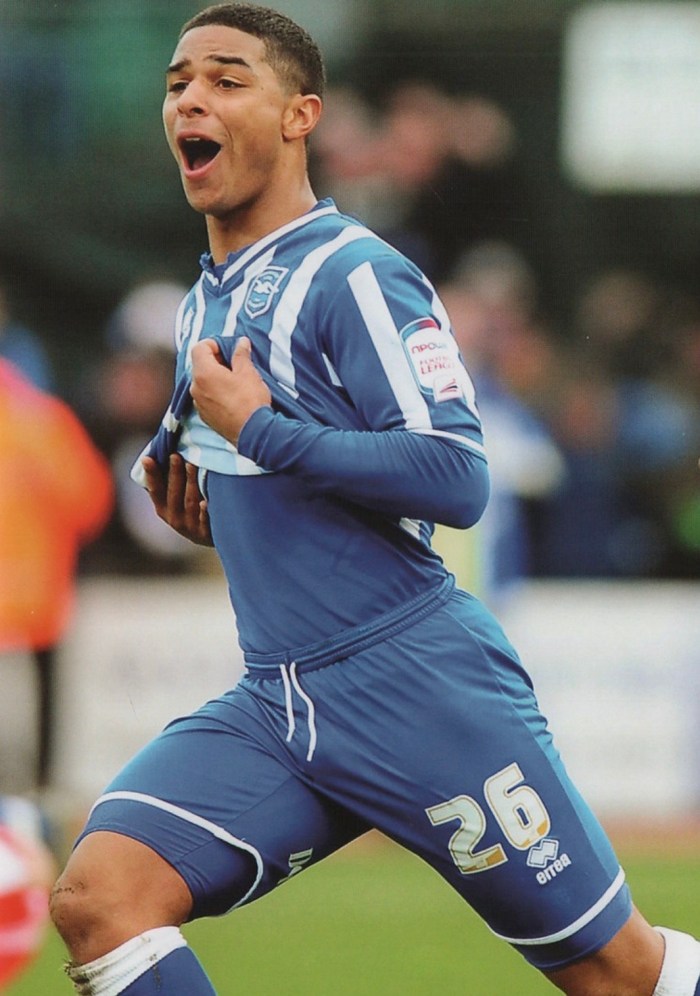
Liam Bridcutt was the Real deal for Poyet’s Brighton

LIAM BRIDCUTT won back-to-back Player of the Season awards at Brighton and later went on to captain Leeds United.

The diminutive midfielder was a stand-out defensive midfielder who Seagulls supporters took to their hearts.

He was pivotal to the new style of play Gus Poyet introduced, sitting in front of the back four, and comfortably acting as the conduit for the side’s highly effective passing game.

Having been brought through as a youngster at Stamford Bridge, he had witnessed close up the role Claude Makelele executed so efficiently for Chelsea, and, when his former Stamford Bridge colleague Poyet gave him an initial five-month contract at Brighton, he seized the chance.

“Chelsea made me the player I am today and they gave me the best of everything in terms of facilities and training with some of the biggest names in football,” he said shortly after signing for the Albion.

“My favourite player was Dennis Wise. I always wanted to be like him in that central midfield role. Then, as I got older, the team changed and it was Makele who I watched. Chelsea wanted more of a Makele player out of me.”

With so many star names ahead of him, it was inevitable Bridcutt would have to look elsewhere to progress. Initially he went on loan to Watford, managed by Brendan Rodgers, who he’d played under for Chelsea’s youth side and reserves.

“I played in some really big games, jumping from reserve football – full of kids and not that physical – into games where players are literally fighting for their careers,” he said.

“My first game was against Doncaster, where I was named Man of the Match, and then it was Spurs in the quarter-finals of the Carling Cup. I was up against Jermaine Jenas and Jamie O’Hara. I loved the adrenalin and pushing myself against all these players.”

It meant he didn’t fancy returning to reserve football and went out on loan again, playing more than 20 games for Stockport County in League One – including being sent off playing against the Seagulls! “It was another good learning curve for me,” he said.

When released by Chelsea, he had trials at Crystal Palace, Wycombe Wanderers and Dagenham and Redbridge – without success – but Chelsea let him return to train with them for three weeks and, during that time, Ray Wilkins suggested him to Poyet, who gave him an initial five-month contract to show what he could do.

After his debut against Orient, he told the matchday programme: “The manager has been saying to me that he needs a player in there who can control the game, break things up and play. I aim to prove I am that player.”

Mission accomplished, Bridcutt earned a two-year deal and he told the Argus: “It was one of my goals when I first signed here, to get a longer deal, and I’ve done that.

“I have been rewarded for my hard work. All I’ve got to do now is settle down and think about my future and look forward to next season.

“There was no hesitation from me really. I want to be here as long as I can. I can see what Gus has done here is brilliant. It’s a big club on the way up, so I was more than happy to sign.”

Bridcutt helped Albion win League One and is particularly remembered for a stunning long-range volley at Withdean on 5 March 2011 that proved to be the winner in a 4-3 win over Carlisle United. He was also on the scoresheet when Albion twice came from behind against Dagenham and Redbridge and eventually won another 4-3 thriller to clinch promotion back to the second tier.

Comfortably taking the step up in class in his stride, Bridcutt was pivotal to Albion reaching the Championship play-offs, but, after Poyet’s departure, rumours began to swirl that the young midfielder would follow him to the north east.

It didn’t happen immediately but, after handing in a transfer request, he finally made the move in January 2014 after featuring in 151 games for the Seagulls.

Given the opportunity to reflect on that time, Bridcutt admitted to the excellent podcast Football, the Albion and Me that he should never have left but, at the time, he didn’t feel the Albion did enough to persuade him to stay when Premier League and Championship clubs were sniffing around.

“Because they had so many good offers, they didn’t try to keep me,” he said. “I didn’t want to leave the club. I was very much happy there. But at the time I had other offers. The club knew about this and were back and forth with other clubs and turned down lots of offers.

“All I wanted was to be rewarded for the time I had given to the club,” he said, maintaining that, regardless of Poyet going, he wanted to part of the club’s long term goal of getting to the Premier League.

Scotland cap

In March 2013, Bridcutt’s consistent Albion form earned him a call-up to the Scotland international squad. Newly appointed manager Gordon Strachan gave him his first cap against Serbia, although the 2-0 defeat ended the Scots’ hopes of qualifying for the 2014 World Cup, and Bridcutt collected a booking in the 77th minute.

It wasn’t until three years later, during his spell at Leeds, that Bridcutt earned his second and only other cap. It came when he was a second half substitute in a 1-0 win over Denmark and some observers considered Bridcutt lucky not to see red for a robust tackle in the game at Hampden Park.

Although born in Reading, on 8 May 1989, he qualified to play for Scotland through his Edinburgh-born grandfather.

In July 2021, Bridcutt gave an illuminating and excoriating insight into his move and time on Wearside to a Sunderland podcast.

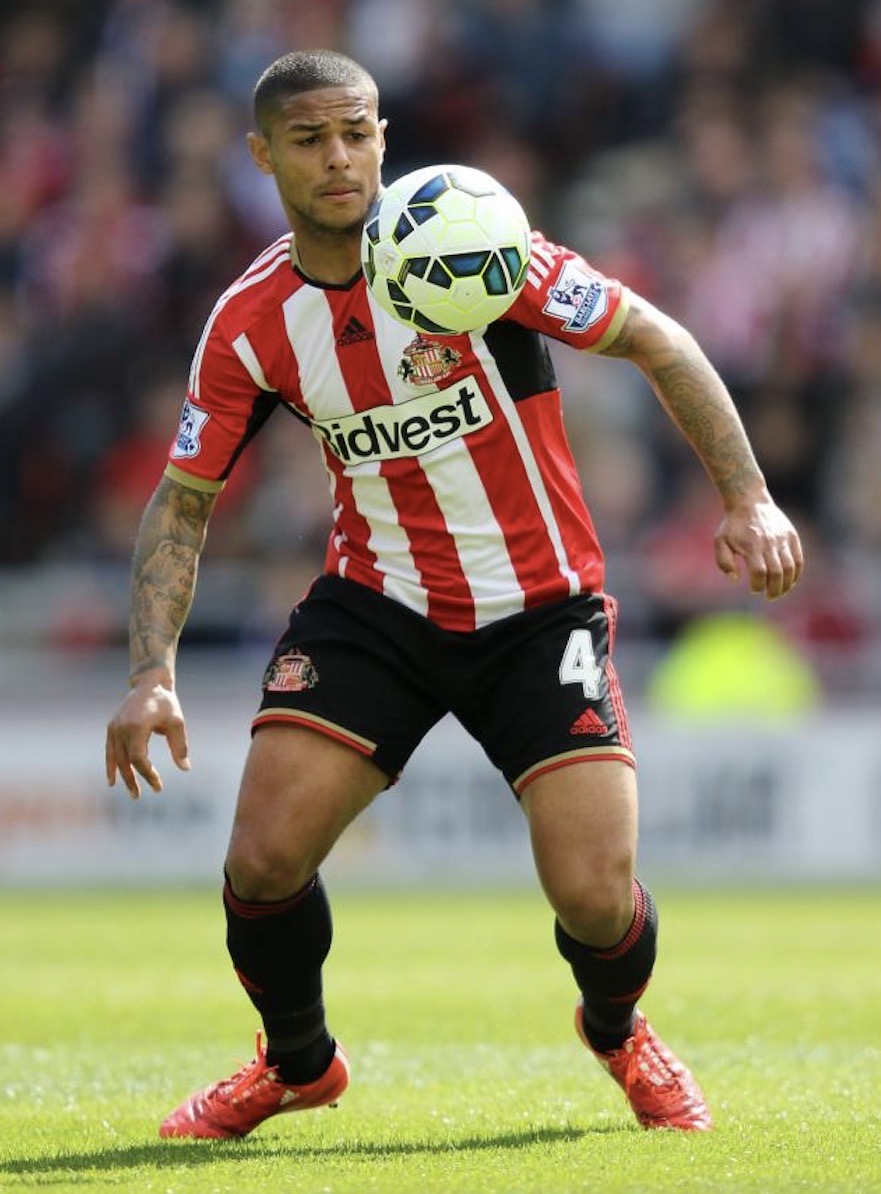
He recalled how on the day he signed for the club Poyet called him at midnight informing him he’d be playing the next day in the Tyne-Wear derby game and, before putting the phone down, said: “You better not be shit because I’ve pushed hard to get you here!”

Thankfully, Bridcutt had an outstanding debut in place of the injured Lee Cattermole in a 3-0 win for the Black Cats over their arch rivals.

Poyet purred: “Liam Bridcutt knows the defensive midfielder role I want us to play perfectly. So I was not worried.

If there’s one person that knows the role better than anyone else in the world, it is Liam and the best thing for him is that we won, we kept a clean sheet and he got through 90 minutes having not played all month.”

Poyet was rarely shy in singing Bridcutt’s praises, once telling the Mail: “If I was coach of Real (Madrid) I would take him because he deserves to go to the highest level.

“As a holding midfielder, there is no better player in the division. The best thing about Liam is that he understands me to an incredible level. The way he understands what I want from him is spectacular.”

However, Bridcutt reckoned a lot of players Poyet inherited at Sunderland were scared to play the sort of football Albion’s players had readily embraced and he also questioned their professionalism, saying: “It was almost like he (Poyet) was fighting a losing battle because there was literally lads out every other night and you could see that in our performances. We were terrible.”

Supporters piled on the pressure too and, although Bridcutt reckoned he could cope with the barbs, someone like Marcos Alonso responded badly to the stick but proved he was a decent player after he moved to Chelsea.

After keeping Sunderland in the Premier League against the odds, Poyet signed a new two-year contract in May 2014 but was sacked the following March. His successor, Dick Advocaat, froze Bridcutt out and, eventually, in November 2015, Steve Evans took him on loan at Leeds United.

In the early part of 2016, ahead of playing against Brighton at the Amex, Bridcutt confessed he’d be open to a return to the south coast. He told the Argus: “It was probably my best period in football. That was my opportunity to properly showcase what I could do and I had brilliant times there.

“I know the place well and I’d call it home. My first child was born there and it’s where my family started. It’s where my career really started and it’s a club where, if there was the right opportunity to go back at some stage, I definitely would.

“Even when I first joined, the club always had direction. There was always a plan. Nothing happened by accident. They hit a bit of a rocky patch after losing Gus (Poyet) but, like most clubs, it happens. They seem to have got their stability back. I’m happy to see that.”
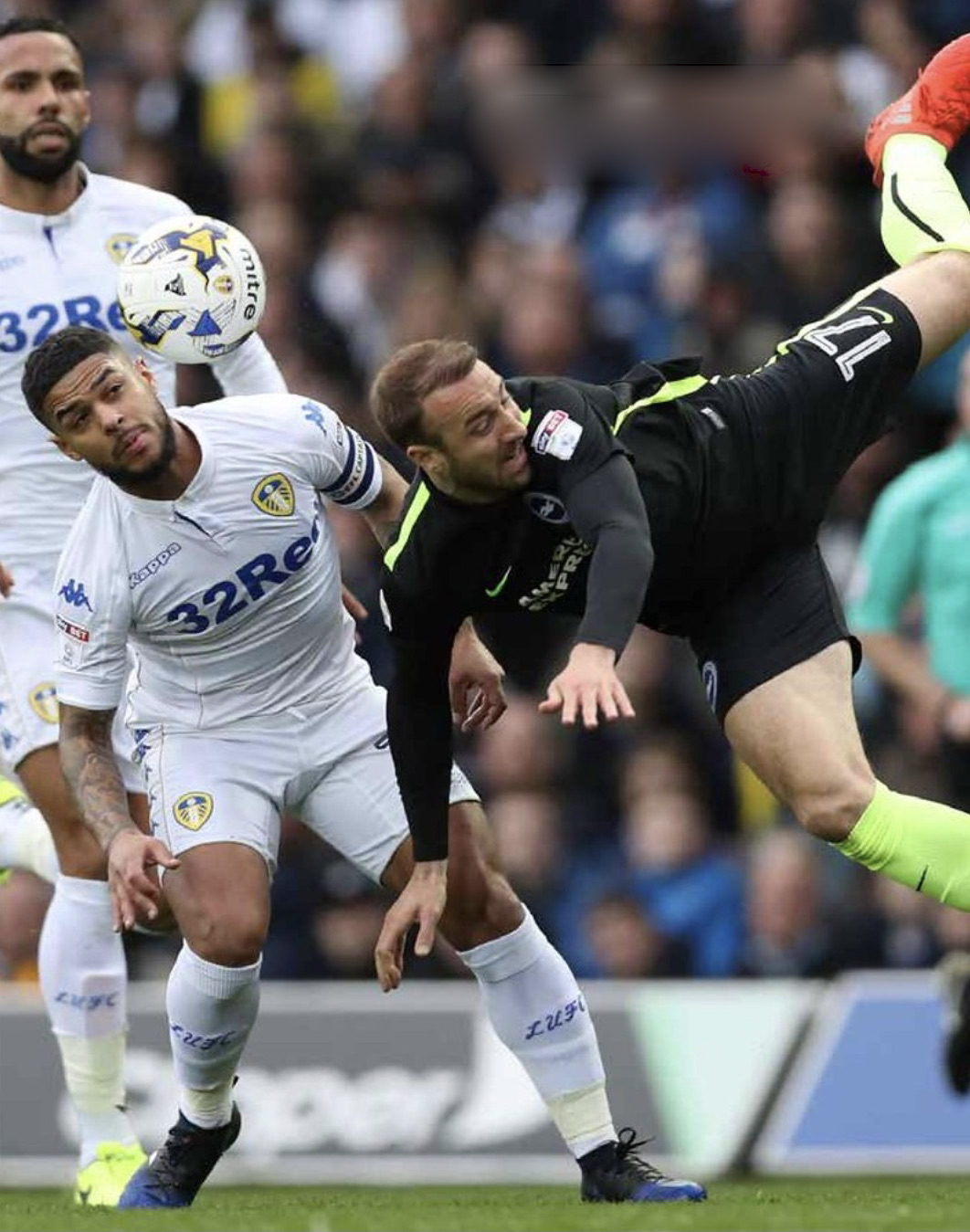
As it was, Bridcutt stayed at Elland Road until the end of the season and, after Garry Monk’s appointment as manager, he was signed on a permanent basis in August 2016. A month later he was appointed Leeds captain, taking over the role from Sol Bamba.

A delighted Bridcutt said: “It’s a real honour, the manager has shown great faith in me by giving me the captaincy.

“It puts a little bit more pressure on me but that’s something I like. I’ve always been a player that’s thrived under pressure, and I think that’s the way to get the best out of me.”

Unfortunately a broken foot saw Bridcutt miss a large part of the season and the managerial revolving door at Leeds saw Monk replaced in the summer of 2017 by Thomas Christiansen.

After 53 games for United, Bridcutt also found himself heading for the exit, joining Mark Warburton’s Nottingham Forest on a three-year deal for a fee thought to be around £1m.
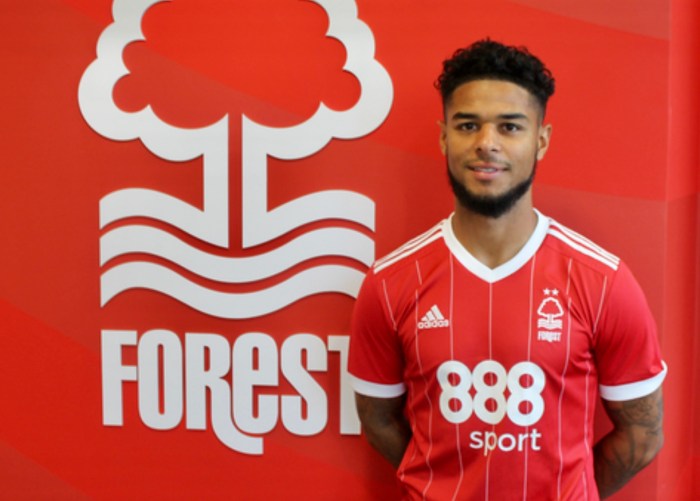
Former Forest favourite Garry Birtles was suitably impressed by the new signing, telling the Nottingham Post: “He’s 28 so you’d think he will hit his peak for Forest, having signed a three-year deal.

“He was Leeds United’s captain last season as they finished in seventh place in the Championship. I saw him play for Leeds and, I have to say, he was very impressive. He’s got that creative ability, and his all-round game was good.”

While Bridcutt played plenty of games under Warburton, when another managerial change saw the arrival of Aitor Karanka, his game time dried up.

Bridcutt spent the first part of the 2019-20 season on loan at League One Bolton Wanderers, where he was made captain by boss Keith Hill, and was reunited with former Albion and Sunderland teammate Will Buckley.

But after his recall to Forest in January 2020 he was then dispatched on loan to Lincoln City for the remainder of the season.

It wasn’t long before Bridcutt was captaining the Imps and in August 2020 he joined them on a permanent basis after his Forest contract expired.
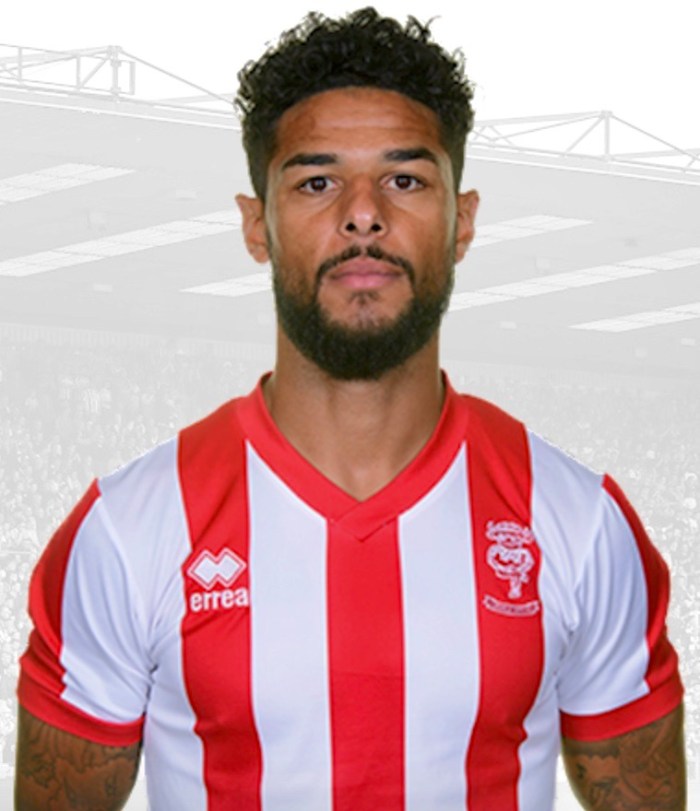
Injury sidelined Bridcutt from Colin Appleton’s side as Lincoln beat Sunderland over a two-legged League One play-off semi-final in May 2021 but Bridcutt skippered the Imps as they narrowly lost 2-1 to Blackpool in the final at Wembley.

Ahead of the Sunderland clash, Lincoln fan Gary Hutchinson, of The Stacey West Lincoln fan website, told SB Nation Roker Report: “I love Bridcutt. He is the pivot around which our entire side function. Playing in the four role he picks the ball deep, protects the back four and is always willing to add to an attack. There are options in the middle of the park – Jorge Grant usually deputises there and Max Sanders who recently signed from Brighton is the long-term heir-apparent for Bridcutt.”

Released by Lincoln at the end of the 2021-22 season, Bridcutt, aged 33, was eventually reunited with Appleton at Blackpool; his signing on a one-year contract for the Championship side announced on 30 September 2022.

“I’m excited to be here and working with the manager again,” Bridcutt told the Blackpool website. “He was brilliant for me over the last two years – he put a lot of trust and faith in me.

“We’ve got a good understanding in terms of what he wants from his teams and his players day-to-day. I get that and it’s how I work and how I’ve always worked. He knows what I’m like and what he can get out of me.”

Appleton added: “We know the quality and the experience he’s got – at Premier League and Championship level – and he’s a fantastic character who will also bring a lot of things off the pitch as well. His addition will be a real plus.”
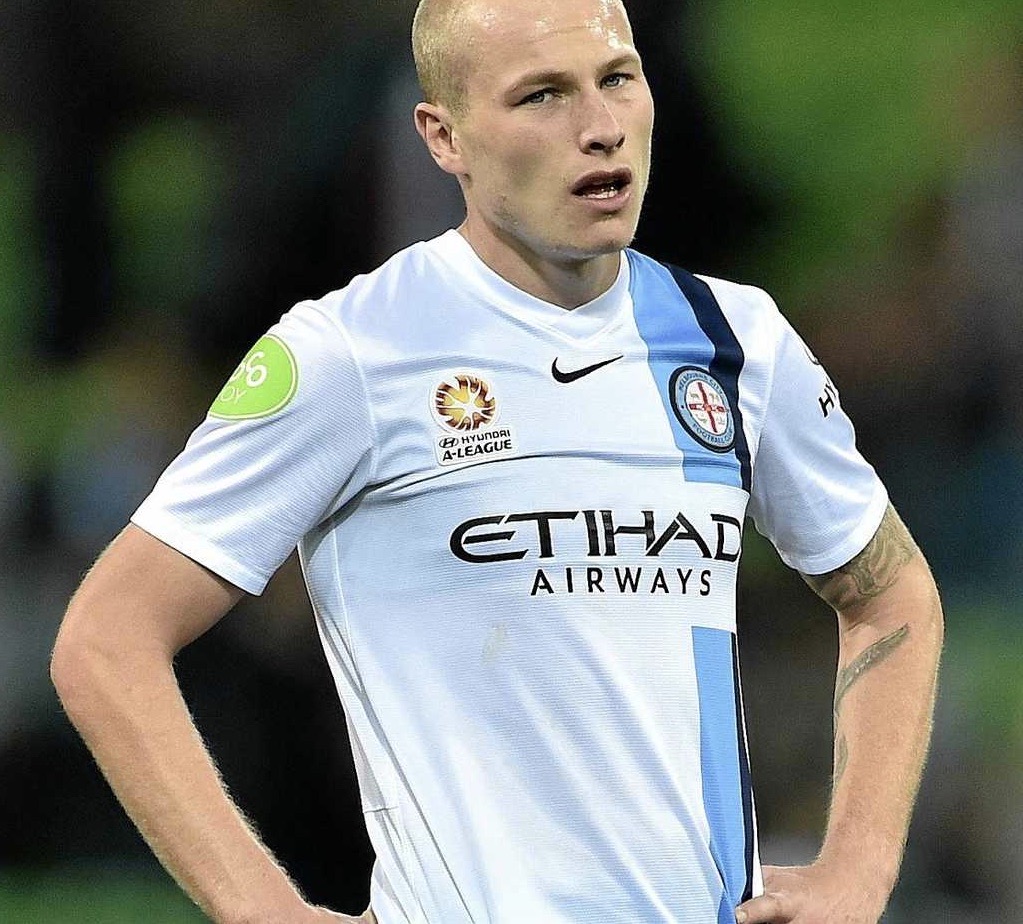
One of Guardiola’s first City signings never played for the club

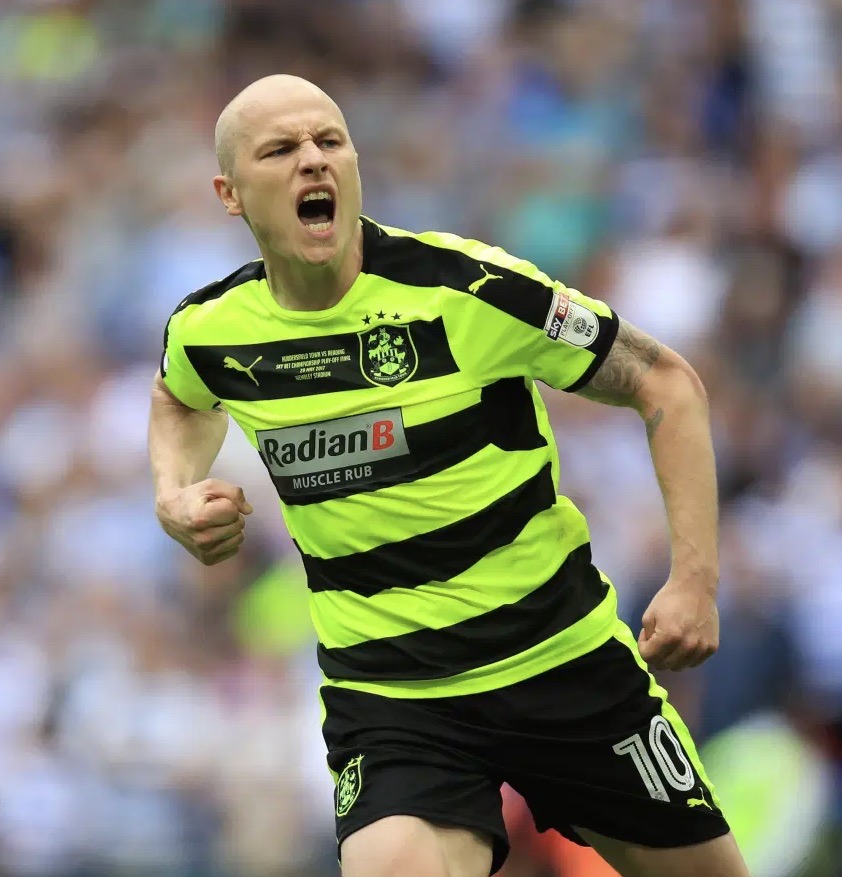
AARON MOOY spent a year as a Manchester City player without playing a game for the club and left Brighton only seven months into a three-and-a-half-year contract.

Such is the at-times puzzling nature of moves in the modern game where multiple club ownership is a factor and players have release clauses inserted into contracts before they’ve set foot onto the field for their new club.

Having starred for City’s sister club Melbourne City in his native Australia, Mooy switched to the rather better-known City Football Group operation – Manchester City FC – in June 2016, signing a three-year deal with the English Premier League side.

His arrival coincided with Pep Guardiola taking over the reins at the Etihad and was one of the first moves between the various clubs bought by the Abu Dhabi-owned City Football Group.

Brian Marwood, managing director of City Football Services, said at the time: “Aaron is an extremely talented player who possesses the attributes we hope to foster and encourage within the City Football Group.

“With the unique model CFG provides, Aaron’s move to Manchester allows us to further expose him to a high standard of opportunities to ensure his professional growth.” 

However, just six days later, Mooy was sent on loan to Championship side Huddersfield Town, where he ended up spending three seasons.

He was their player of the year as he helped them to win promotion from the Championship via the play-offs in 2017, he signed permanently for Town and then featured in their two seasons back in the Premier League.

But when they were relegated from the elite in 2019, he didn’t fancy dropping back down and seized the opportunity provided by Brighton to remain in the top division. Town neatly got him to pen a new three-year deal before allowing him to join the Seagulls on loan.

Huddersfield head coach Jan Siewert said: “Aaron was adamant that he wanted to test himself again in the Premier League when Brighton’s interest came in, and we didn’t want an issue where we had a disillusioned player on the pitch in the final year of his contract.”

However, after he’d made 15 appearances (plus three off the bench) in the first half of Graham Potter’s first season in charge, the 29-year-old was signed on a permanent basis on 24 January 2020 on “undisclosed terms”.

“He’s been an important player for us and will have a key part to play going forward,” said Potter. “We knew what Aaron would bring, and he’s proved to be an excellent addition to our squad and a great professional both on and off the pitch.”

Mooy’s deal with Brighton was not due to expire until June 2023 but, sensing one day he might have the opportunity to make big money in China, his contract at both Huddersfield and Brighton contained a clause allowing him to be released if a Chinese club offered to pay £4m – which, in the summer of 2020, Shanghai Port FC were willing to do.

Maybe the player also sensed the arrival at Brighton of Adam Lallana, together with the emergence of Alexis Mac Allister, might mean reduced playing time in the Premiership. However, perhaps the lure of being paid £60,000 a week to play the game he’s loved since a boy back home watching David Beckham on the TV might just have swayed it.

The shaven-headed Mooy had often stood out when playing for Huddersfield against Brighton and their fans were full of admiration for him. David Wood on Twitter said: “It was an absolute privilege to watch Aaron Mooy wear the blue and white of Huddersfield Town. A true class act.” Graeme Rayner added: “Without doubt the best player I’ve seen in a Town shirt. He was immense for us. He gave us some great memories, and was a model pro.”

Seagulls supporters took to him quickly too. ‘Farehamseagull’ on North Stand Chat declared: “Mooy is a wonderful player for us. We’ve been crying out for a player like him for years. His ability on the ball and appreciation of space is second to none. You can just always rely on him to make the right decision with the ball; that is a talent only truly gifted players who can see the game two, three moves ahead have.”

Mooy certainly shone in games against Spurs and Arsenal but possibly his best performance in a Brighton shirt came in the 28 December 2019 home game against Bournemouth when his 79th minute goal completed a 2-0 win for the Seagulls.

Mooy produced a headlinegrabbing performance against Bournemouth

Newspaper headlines hailed the Australian’s contribution to the win and Sky Sports commentator Alan Smith capped the lot in analysing Mooy’s goal. “What a way to settle it,” he said. “Shades of Dennis Bergkamp here, the way he took it on his chest and chipped it in.

“A quite brilliant goal from a really talented player. Great awareness and look at that finish. Bergkamp would’ve been proud.”

Mooy was born in Sydney on 15 September 1990. His German father walked out when he was a toddler and his Dutch mother, Sam, brought him up using her maiden surname. Mooy has said his earliest football memories were of playing for Carlingford Redbacks who were coached by his stepdad, Alan Todd.

His early life, as chronicled by Hale Hendrix on lifeblogger.com, was pretty much football obsessed and he went to the same high school, Westfield Sports High, as Albion goalkeeper Mat Ryan (who was in the year below). Former Leeds and Liverpool player Harry Kewell also went to Westfield.

Mooy played for Sydney-based Hajduk Wanderers and the former National Soccer League team Northern Spirit FC, as well as enhancing his potential at the New South Wales Institute of Sport, based at Sydney Olympic Park, an organisation which nurtures the country’s high performing sports people.

But he was spotted playing for his school as a 14-year-old by Bolton Wanderers’ former head of youth Chris Sulley and he was invited to the UK with his family for an assessment.

“It was a big decision to move to England but I knew it was a great opportunity,” Mooy told the Bolton News.

A serious knee injury threatened to halt his progress but Wanderers’ youth team coaches were convinced they had an outstanding prospect who was eager to earn a professional contract.

In his third season as a scholar, he managed to get some minutes in Alan Cork’s reserve team, and he said: “It’s a big year for me and I have got to show the coaches what I have got, so when I got injured, I knew I had to get back as quickly as possible.

“My rehabilitation involved lots of weight sessions and time on the bike, but I am feeling much sharper now.”

Unfortunately for Mooy, the club’s then-manager, Gary Megson, thought it unlikely he would develop into first-team material – a decision which baffled former Wanderers youth team coach, Peter Farrell.

“I couldn’t believe they released him,” Farrell told Bolton News reporter Marc Iles. “I always thought he was going to make it as a footballer but, as with anything, it’s all about opportunity.

“If Big Sam would have been in charge, or Phil Brown would have taken over I think he would still be there now. They valued that type of player and built their team around him.

“For me, Aaron had it all – he could go with his left foot, his right foot, he was physically strong on the ball and I don’t think he has changed at all from what I saw of him playing for Huddersfield.”

He added: “People thought he was maybe a bit lazy. You’ll never see him tackle. You need players around him to do that. But he reminds me a bit of Zidane – he’s even got the bald head.

“He isn’t as good a player, of course, but he has that grace about the way he plays. He’s a lovely balanced player but he wasn’t Gary Megson’s type of player, and that was the end of it.”

Six months after he left Bolton, Mooy surprisingly turned up in the unlikely surroundings of Paisley, Scotland, for a two-year stint at Scottish Premier League St Mirren (where former Albion midfielder Steven Thomson was at the other end of his career).

“It was a big decision to leave Bolton,” he told The Daily Record at the time. “But I wanted to try to get some first-team action and I’m doing that so I’m happy.

“Some people were a little surprised, but it didn’t bother me. I just thought I wasn’t really going to get much of a chance at Bolton. At St Mirren, I knew I was going to get some decent game time.”

Mooy later told The Scottish Sun: “St Mirren was the start for me. It was the first time I had really experienced proper football. I always remember how much I learned there. I was in the reserves at Bolton, but St Mirren was the first club I was at where winning and collecting points mattered hugely and I had to buy into that mentality.”

Mooy featured in 18 matches for Danny Lennon’s side in the 2010-11 season but he suffered a stress fracture in his back during pre-season and he managed only 12 appearances in 2011-12 and was released on a free transfer at the end of it.

At that point he decided to return to Australia and he joined Western Sydney Wanderers on a two-year deal. Mooy’s story was told excellently by Paul Doyle in The Guardian in a November 2017 article. He wrote:“Although he did well at Western Sydney, even there he was not a guaranteed starter, having to compete with two other players for a deep midfield spot as the team’s playmaking rights were entrusted to Shinji Ono, the former Japan international and 2002 Asian player of the year who would end his career in Australia.”

At the end of his contract, Mooy moved on to Melbourne City where he had an impressive 2015-16 campaign in which he was named Australian Players’ Player of the Year after scoring 17 goals from midfield and setting an A-League assist record.

Although Man City sent him to Huddersfield on loan, news of his strong performances hadn’t escaped Guardiola’s attention, as he noted in media interviews before Town took on City in the FA Cup in January 2017. “Aaron Mooy is playing amazing this season and we are glad at that,” Guardiola said. “It is not easy coming from Australia and going to the Championship and play as good as he is.

“We are going to consider what will happen at the end of the season but it’s good.”

Mooy responded to Guardiola’s praise, telling Huddersfield’s official website: “It’s obviously excellent and I’m very humbled and all that sort of stuff.

“It’s great to know he’s watching me and has his eye on how I’m doing, that’s great.

“They come to watch the games and stay in contact and hopefully they like what they see,” he said.

The Manchester Evening News even ran a story about Mooy headlined ‘The midfielder who could save Pep Guardiola and Man City a fortune this summer’.

However, at the end of June 2017, with Huddersfield preparing for their return to the Premier League, Mooy made the switch from City permanent for a club record fee of £8m.

Boss David Wagner told BBC Radio Leeds: “He was one of our key targets because he was the heart of our team last season.

“When we had the chance to get him permanently, we all agreed that we needed to get it done as quickly as we could.”

Chairman Dean Hoyle added: “Aaron made it very clear to us last season that he wanted to play in the Premier League this season and, if we were there, he would want to do that with us.

“I think we had a duty to try to make that happen for him because he made a huge contribution last season. He was a true terrier for us.”

Mooy drew praise for his role in Wagner’s gegenpressing style of play – bringing an energy and creative use of the ball in a slightly deep-lying midfield role – and Doyle observed in his Guardian article: “Strong on the ball, genuinely two-footed and blessed with vision and precision, he is the conduit of most Terriers attacks and never shirks defensive duties in a team that made more tackles than any other Premier League side during the first 12 matches of the season.”

Through his parents, Mooy could have played internationally for Germany or the Netherlands but he opted to play for the country where he was born and has played at several age group levels for the Australian national side. He made his full debut in 2012, scoring in a 9-0 win over Guam, and has since won more than 40 caps.

After Mooy played well for Australia at the 2018 World Cup, there was speculation City might activate a £20m buy-back clause but this was an unfounded rumour and reporter Stuart Brennan said in the Manchester Evening News: “Mooy has been playing well but has not done enough to suggest he could handle the rarefied atmosphere of Pep Guardiola’s midfield.”

City’s loss was Huddersfield and Brighton’s gain, but amongst the reasons suggested for his sudden departure after only a season with the Seagulls was Shanghai taking advantage of an overseas players loophole which allows Australian players to be counted as Asian.

Mooy certainly hit the ground running in China, scoring within 25 minutes of making his debut on his 30th birthday. He came off the bench in Shanghai’s 2-1 win against Wuhan Zall, scoring the winner after fellow Premier League export Marko Arnautovic had scored Shanghai’s first.

Mooy scored with a delightful one-two down the flank and easy chip over the onrushing keeper.

“I have only just arrived so my physical condition is not what it could be,” Mooy told Chinese television after the game.

“The coach asked me before kick-off if I could play some part in the game and of course I was happy to do so.”

Mooy’s career has certainly been of interest to a number of football observers around the world and Marco Jackson chipped in on onsideview.com, discussing the rationale behind his move to China.

Mooy’s recent playing time has been non-existent because the Chinese Super League is having a three-and-a-half month break to enable the national side to prepare for World Cup qualifiers. The West Australian reported on 4 October 2021 how Mooy had returned to Scotland to be with his family while keeping fit working on a programme devised by Socceroos strength and conditioning coach Andrew Clark.

Chirpy as a Canary but Mark Walton squawked as a Seagull

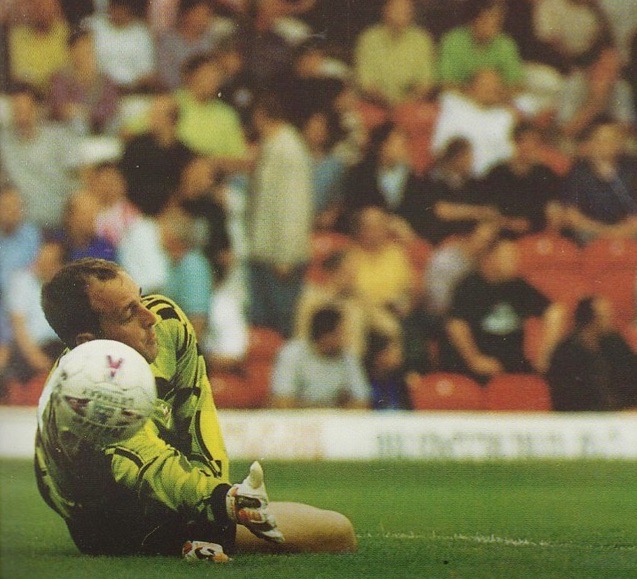
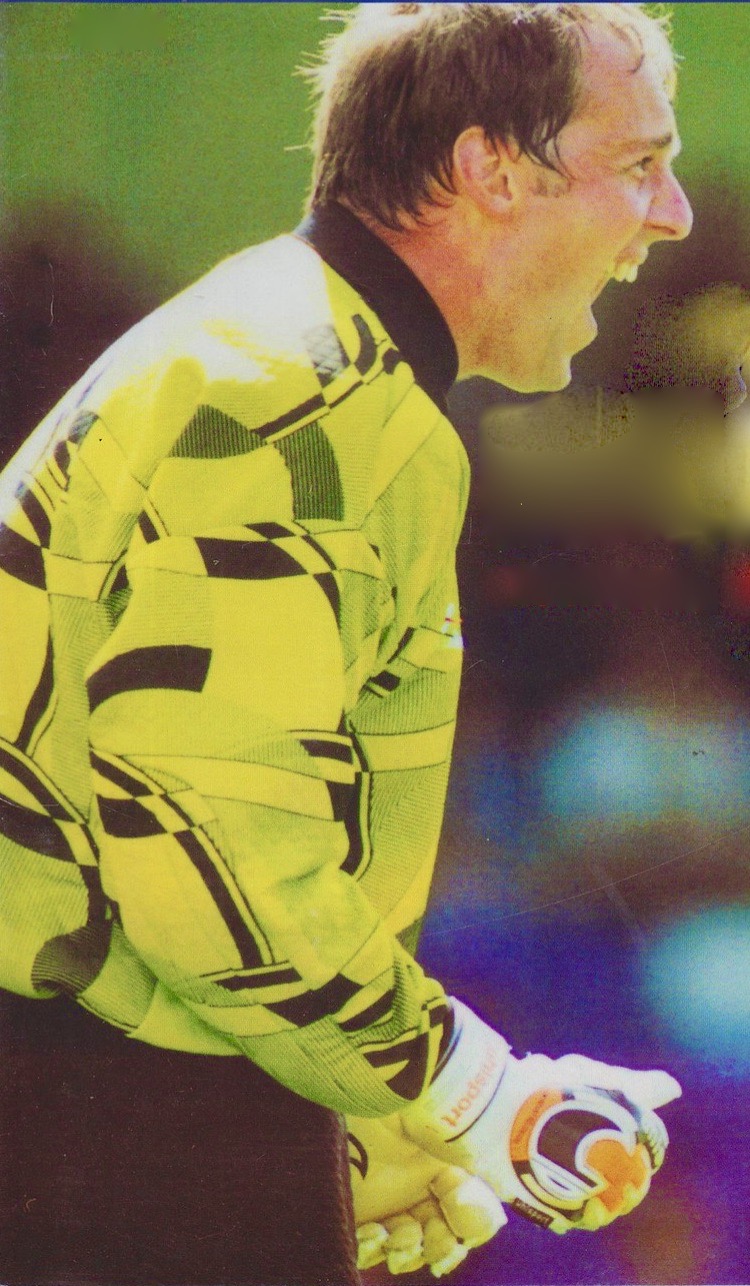
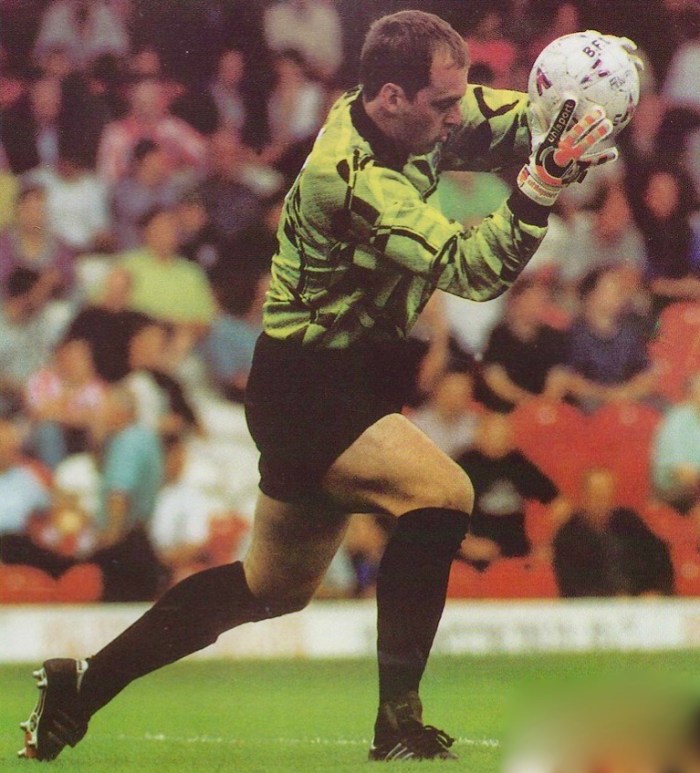
A CAREER highlight saw Welshman Mark Walton keep goal for Norwich City in a FA Cup semi-final in front of 40,000 at Hillsborough but his time with the Seagulls was marred by Brighton’s boo boys.

Walton’s first action in an Albion shirt was in front of only a few Albion followers because Brian Horton signed him in the summer of 1998 when the side was playing in exile at Gillingham’s Priestfield Stadium.

Walton, who’d been part of Micky Adams’ fourth tier Fulham promotion side in 1996-97, found himself out of favour at Craven Cottage once Kevin Keegan had been installed as manager following the club’s takeover by Mohamed Al-Fayed.

Not wishing to play second fiddle to Northern Ireland international Maik Taylor, Walton moved for £20,000 to Brighton, who were a ‘keeper light after Nicky Rust’s departure to Barnet. Walton was Horton’s first choice between the sticks in the opening 16 games of the season.

“When Maik arrived, it was a matter of when I went rather than anything else,” he told fulhamfocus.com.  “I was at a stage in my career that I just wanted to play, so moving was a necessity. In retrospect, I probably should have thought harder about my decision to join Brighton.”

After he’d shipped six goals in two successive 3-1 defeats in October, young Mark Ormerod took over and kept the ‘keeper’s jersey until Horton quit to take over at Port Vale shortly into the new year.

Caretaker boss, Jeff Wood, who’d been a goalkeeper himself, reinstated Walton to the starting line-up for five matches, but he damaged a hamstring in a 3-0 defeat at Southend on 20 February and didn’t play again that season.

Walton must have been encouraged when his old boss Adams took over from Wood, and he shed a stone and a half during the summer to get back into shape. Although Ormerod started the first five games of the new season back in Brighton, Walton was then reinstated as first choice ‘keeper.

But a gaffe — wearebrighton.com recounted how Walton’s attempted clearance from a back pass cannoned into the back of Paul Watson and into the net for an own goal — as Albion succumbed 3-2 to previously winless Chester City on 18 September (despite a goalscoring debut for Danny Cullip) saw feelings running high.

Adams had the players in for an extra training session the following day and Walton was dropped for the next match. Before the month was over, he submitted a transfer request citing the stick he was receiving as his reason for wanting to go.

“It’s one of those things you cannot really do too much about,” he told The Argus. “I am not the first and I won’t be the last. Everybody hears it. It’s just general abuse from boo boys and it’s the same home and away.

“It is obviously not the best feeling in the world, but you are paid to do a job and you go out and give your best.”

The manager was clearly upset that Walton felt he had to leave because of criticism from supporters.

“I’m immensely disappointed that a boy has come in to see me and wants to leave the club because he feels he is not being given a fair crack of the whip by the fans,” Adams told The Argus. “I am disappointed it has come to this and that he feels he has got to bow to fan pressure.

“Mark is a great lad. Whichever eleven lads I put out on the pitch in the blue and white stripes, they are representing Albion and the fans have got to get behind them. They are going out to give their best for the supporters and the club.”

Support came too from part-time goalkeeping coach John Keeley, who said: “Mark looks ever so fit now and the way he has trained and looked after himself in the summer shows he wants to prove to people he is a good goalie.

“As a goalkeeper you want the crowd on your side because it gives you a certain amount of confidence, especially when you are playing at home.”

Adams showed his faith in Walton by restoring him to the starting line-up and he was rewarded for his loyalty by two shut-outs on the road as Albion drew 0-0 at Peterborough and beat Carlisle United 1-0.

The matchday programme noted of the big ‘keeper’s performance at London Road: “Walton didn’t put a foot, or should that be hand, wrong during the 90 minutes, prompting praise from supporters, who chanted his name at the final whistle.”

Adams added: “Mark was terrific. I cannot speak highly enough of him. He is a good, honest pro and he answered his critics.”

Walton collected a player of the month award for conceding only one goal in five matches during October. He kept the shirt for the rest of the season, only missing two games towards the end, and playing a total of 45 games.

But the last-day 1-0 home win over Carlisle United turned out to be his last for the Seagulls. It was reported he’d verbally agreed a new contract but just before the start of the new season he chose to move on to Cardiff, along the road from where he was born in Merthyr Tydfil on 1 June 1969.

As it turned out, the move worked out well all round because Walton helped the Bluebirds win promotion from Division Three as runners up behind the Seagulls in top spot, Adams having unearthed a more than capable replacement in Michel Kuipers.

In an interview with Dan Smith in 2018 for fulhamfocus.com, Walton explained how his footballing life began at South Wales valleys village side Georgetown Boys Club and, because he suffered from severe asthma when he was 12, he decided it would be better to play in goal than in an outfield position. He was inspired by Phil Parkes of West Ham, Jimmy Rimmer of Aston Villa and Everton’s Neville Southall.

Walton played youth team football for Swansea City but his first senior professional club was Luton Town, where he spent six months. With the experienced Les Sealey and Andy Dibble ahead of him, he wasn’t able to break through to the first team. He moved initially on loan to Colchester United, managed by Mike Walker, who’d previously kept goal for the Us after a distinguished career at Watford.

Walker gave him his debut at Layer Road as an 18-year-old in August 1987 and he went on to make a total of 56 appearances for United, having moved permanently for £17,500 in December 1987, by which time Roger Brown was in charge.

Walker, meanwhile, had moved on to take charge of Norwich’s reserve side and, on his recommendation, City signed the Welsh goalkeeper for £75,000 in 1989.

“I owe Mike Walker a debt of gratitude to this day, as he basically taught me from scratch and helped develop me into a solid keeper with a sound technique,” Walton told Ed Couzens-Lake in a 2013 article for myfootballwriter.com.

Walton spent most of his three years at Carrow Road as understudy to first choice Bryan Gunn. It was because of a serious back injury to Gunn that Walton found himself facing Sunderland in the 1992 FA Cup semi-final, when a single goal from John Byrne settled the tie.

Looking back on his time with the Canaries, Walton told Couzens-Lake: “I loved my football and I loved Norwich, and, for me, it is still ‘my club’. The camaraderie of the dressing room was fantastic – indeed, whilst I don’t miss playing one bit, I do miss the changing room banter, all the characters, bad and good, and those shared triumphs, disasters and the shared sense of humour.”

The admirable Flown From The Nest website notes Walton made 28 appearances for the first team and 114 for their reserves. He had loan spells with Wrexham and Dundee United, trials with St Johnstone and West Ham, but it was Bolton Wanderers during Bruce Rioch’s reign that he next saw first team action, playing three games for the Trotters.

After his release from Norwich, a bizarre series of circumstances which he explained to fulhamfocus.com saw him spend two years out of the game before a Fulham fan, who was a member of the Norfolk cricket club he’d been playing for, wrote to Adams and suggested he give Walton another crack at league football.

“Micky telephoned and invited me for a trial. After three weeks, I was offered a year’s contract,” he said.

When ousted by the upheaval at the Cottage, Walton went on loan to Gillingham in March 1998 but couldn’t agree terms for a permanent move and on transfer deadline day ended up back at Norwich on loan as cover for Andy Marshall.

After his stint with the Albion and initial success at Cardiff, Walton slipped down the pecking order and briefly tried his luck with a semi-professional side in Melbourne, Australia.

He returned to South Wales after retiring from playing and went on to gain a first-class sports psychology degree at Cardiff Metropolitan University, a Masters degreeand a Postgraduate Certificate in Education (PGCE) which led him to become a teacher for 10 years.

He also worked for Cricket Wales as a researcher and community coach and in January 2021 joined the cricket staff of Glamorgan.

“Cricket has always been a passion of mine,” he told his new employers’ website. “I’ve always played but that became more sporadic when I focused on football, but I always tried to sneak in the odd game here and there which was often in midweek.

“I played some league cricket in Norfolk, Essex and Wales and was able to represent Wales Minor Counties. Then about 20 years ago I fell into coaching and it’s prospered from there and I’ve coached every age group within Cricket Wales.”

• Pictures from the Albion matchday programme and online sources.

Paynter left a blank canvas at Seagulls and Blades

A JOURNEYMAN striker who fired blanks for Brighton and Sheffield United only found very occasional purple patches of goalscoring in a 12-club, 17-year career.

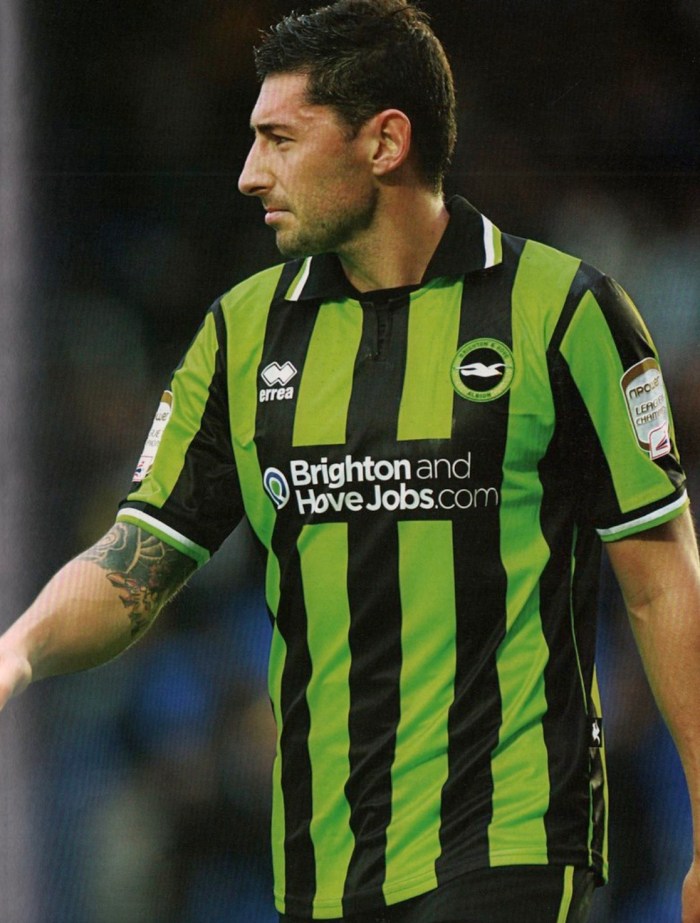
Billy Paynter didn’t manage a single goal in 10 games on loan for Gus Poyet’s Seagulls and carried with him from parent club Leeds United the somewhat unkind epithet ‘Barn door Billy’ for his proverbial inability to hit one with a banjo.

A subsequent half-season loan spell at Sheffield United under Nigel Clough yielded a similar zero in the goals scored column.

A journey around the message boards on supporter websites uncovers some brutal and unflattering comments about Paynter’s contribution for their team and yet it was a career that yielded 131 goals in 529 games – one in four.

And it all began promisingly under the guidance of former Albion captain and manager, Brian Horton.

Born in the Norris Green area of Liverpool on 13 July 1984, Paynter joined Port Vale’s academy at the tender age of 10 and turned professional soon after his 16th birthday.

Horton gave Paynter his first team debut when he was only 16 years and 294 days old on 3 May 2001 as a 61st-minute substitute at home to Walsall.

It was 10 months before he made a start, although he got a few more sub appearances, and Vale supporters had to wait until the start of the 2002-03 season for his first goal, after he’d replaced injured crowd favourite Steve McPhee in a home game against Wrexham.

Eventually, Paynter got into his stride and his popularity with the fans saw him voted Player of the Year in 2004-05.

His 34 goals in 158 games for Vale caught the eye of another former Albion manager, Peter Taylor, at then-Championship side Hull City.

Signed initially on loan, a fee of £150,000 took him on a permanent two-and-a-half-year contract to the KC Stadium in January 2006.

The following month Paynter turned out as a right-sided midfield player for a Football League Under-21 team (selected and managed by Taylor) in a game against an Italian Serie B side at the KC Stadium.

Taylor also experimented with him in the same position for Hull but, having scored only three times in 23 matches, Paynter was on the move again after only eight months.

He switched to Southend United, also in the Championship, for £200,000 in August 2006 and somewhat ironically, his only goal for the Shrimpers was scored against Brighton in a 3-2 League Cup win at Roots Hall in September 2006.

A lack of goals and a hamstring injury meant his stay in Essex was cut short and for the second half of the 2006-07 season he went on loan to League One Bradford City, where he managed four goals in 15 matches, including one on his debut.

On August deadline day in 2007, Paynter’s next move saw Paul Sturrock sign him for Swindon Town. Within a month he had netted a hat-trick against Bournemouth and added two more in a 5-0 win over Gillingham the following month.

It wasn’t all plain sailing for him, though, and after a two-month goal drought which had seen him lose his place, he told BBC Radio Swindon: “You can try and do too much and get caught up with it, but if you relax and get on with your game, I think it will come naturally.”

Paired with Simon Cox initially, Paynter got amongst the goals in support of the main man. But he stepped up a gear after Cox was sold to West Brom in the summer of 2009. His new strike partner was a young Charlie Austin and the pair enjoyed a rich seam of goalscoring form in the 2009-10 season under former Albion captain Danny Wilson.

Paynter had a spell where he scored 15 goals in 17 games and ended the season with 29 goals in 52 matches, his best goals-to-games ratio in a season. Swindon’s captain that season was none other than Gordon Greer, who remains a close friend of Paynter.

Four of Paynter’s goals had been scored against Leeds and, in the summer of 2010, he moved to Elland Road on a Bosman free transfer, with Wilson admitting to BBC Radio Wiltshire: “Anybody who scores nearly 30 goals in a season will be wanted by bigger clubs than us.”

Leeds boss Simon Grayson said: “He has matured as a player over the last couple of years and he had a fantastic season last season. He works ever so hard, holds the ball up well and he has proved he knows where the back of the net is.

“When we knew he was available we were desperate to get him. We feel he will be a good acquisition for the club, and I am delighted to have got him.”

Unfortunately, his time at Leeds didn’t start well when he picked up a shin stress fracture in a pre-season match in Slovakia, leading to him missing the start of the season.

It wasn’t until the second week of October that he was able to make his Leeds debut and starts were rare as Luciano Becchio and Davide Somma were Grayson’s preferred selection up front. Paynter didn’t register his first goal for Leeds until the following March, in a 2-1 win at Preston. It was his only goal in 23 matches that season.

As the 2011-12 season got under way, Grayson had added Mikael Forssell to his striking options and the manager encouraged Paynter to talk to other clubs, with Sheffield United and Brighton discussed as possible destinations.

Paynter preferred to stay and try to stake a claim for a place but, having only played once as a sub in the opening game of the season, he decided to make a three-month loan switch to Brighton at the end of October 2011.

On 29th October 2011, he made his Brighton debut as a 67th-minute substitute for Matt Sparrow in a 0-0 draw away to Birmingham City.

The first of his six starts came on 1 November in a 0-1 defeat at Watford. He came off the bench a further three times and, without troubling the scorers, returned to Elland Road in January.

Back at Leeds he had to wait until April before he was selected by new manager Neil Warnock for a home game against Peterborough United. Paynter scored twice in a 4-1 win and, when replaced by substitute Becchio in the final minute, left the field to a standing ovation. But he picked up an Achilles injury in the following game away to Blackpool and was made available for transfer at the end of the season.

Paynter earned a place in a planetfootball.com poll listing 13 of Leeds’ “worst and weirdest signings under Ken Bates” although he was good-humoured enough to acknowledge it in a 2018 Under the Cosh podcast.

“I’ve always said there’s some players that will be remembered for being good, there’s some players that will be remembered for being sh*te,” he said. “No one remembers the OK players. Take the positives out of a bad situation, in that way I will be remembered!”

It was former Brighton striker Dean Saunders who was responsible for Paynter’s next move, picking him up on a free transfer for League One Doncaster Rovers on 13 August 2012.

While Saunders left the Keep Moat Stadium in January 2013 to join Wolves, Paynter played his part in Rovers winning promotion back to the Championship under Brian Flynn, top-scoring with 15 goals as Rovers returned to the second tier as champions.

An anonymous Donny fan recalled: “He had some good games for us and made the pass from the missed penalty at Brentford that enabled (James) Coppinger to score and win us promotion. He is best played in the box. He causes all sorts of problems. He is a tough guy and takes no prisoners. I liked him but I would say League One is his limit.”

A familiar face in the shape of Brian Horton arrived as assistant manager to new Donny manager Paul Dickov (Flynn had been promoted to director of football) in the summer of 2013.

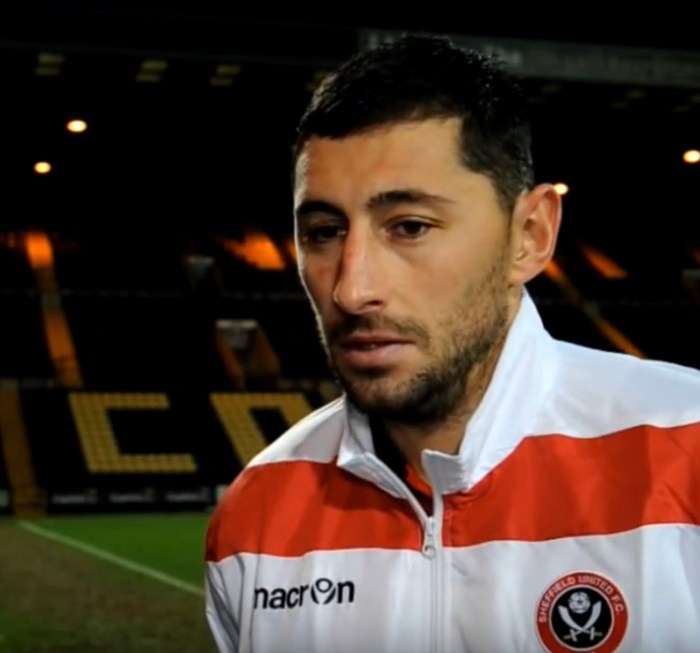
It must have given Paynter some satisfaction on 27 August 2013 when he scored in a League Cup tie at home to Leeds, although the visitors ran out 3-1 winners. However, that was his only goal and, after managing only one start and 11 appearances off the bench, up to Christmas, he was sent on loan to League One Sheffield United for the second half of the 2013-14 season.

An exiled Blades fan living in Leeds, ‘Blader’ said: “I am uninspired and don’t see this is a great signing. I’ve seen him play many a time and never seen him perform notably and he is a laughing stock in Leeds for how badly he performed.”

A blunt Blade

He made his debut as a sub against Notts County on 11 January 2014 but spent much of the time on the sub’s bench as manager Nigel Clough preferred to play with ‘a false 9’. Paynter made just six starts and came off the bench seven times but no goals were forthcoming. United finished seventh, one place off the play-off places, seven points adrift of sixth-placed Peterborough United.

Paynter was only a spectator as United remarkably reached the semi-final of the FA Cup, losing 5-3 at Wembley to Hull City, Jamie Murphy, later to play for Brighton, among the Blades scorers. A young Harry Maguire at the back for the Blades was named the League One player of the year.

The last three seasons of his playing career saw Paynter drop into League Two and he joined Carlisle United on the same day as former Albion midfielder Gary Dicker.

However, the season wasn’t even a month old when Graham Kavanagh lost his job as manager. His successor Keith Curle steered them to a fifth from bottom finish.

Paynter’s involvement was limited to 12 starts plus eight appearances off the bench and he and Dicker clashed with Curle when they sought PFA guidance after they were fined for allegedly failing to attend training sessions.

In the close season, Paynter headed 90 miles east to Hartlepool United, who’d just avoided dropping out of the league after finishing four points above Cheltenham Town.

The goal touch returned as Paynter top scored with 15 goals in 35 appearances as Hartlepool finished in 16th place courtesy of a decent run of wins in the spring under new boss Craig Hignett.

The managerial door revolved once more at Victoria Park the following season but Hignett’s successor Dave Jones (the former Southampton and Sheffield Wednesday boss) couldn’t prevent Hartlepool from heading out of the league, controversially parting company with the club with two games to go following an on-screen rant by United’s best known fan, Jeff Stelling.

Club captain Paynter, who had openly questioned Jones’ tactics in the local press, joined forces with fitness coach Stuart Parnaby to assist caretaker Matthew Bates for the final two fixtures.

It was one of those footballing fates moments that they needed a miracle against Paynter’s old club Doncaster in the final match and it was given a big build-up in the Mirror.

“Although we lost at Cheltenham last weekend, the lads had a lot more fight in them. I can understand it when players lose confidence or belief, but you can’t drop out of the Football League after 100 years without a fight,” he said.

“It’s one of those strange coincidences that we need to beat my old club to stand a chance of survival. I really enjoyed my time at Doncaster, and I’ll never forget that day we were promoted to the Championship, but I hope the supporters understand my loyalty is with Hartlepool now.”

Hartlepool hitman

Although Hartlepool won 2-1, they had been relying on other results going their way and Newport’s 2-1 win over Notts County 2-1 meant they stayed up and the North East side lost their league status. Having contributed just four goals in 26 matches, Paynter left the club.

While he attempted a brief extension to his playing career, training at non-league AFC Fylde, Southport and Warrington Town, he retired from playing in November 2017 and turned to coaching. He joined Everton’s academy in February 2018 before returning to his first club, Port Vale as professional development phase lead coach in October 2020.

On rejoining, he said: “It’s a joy to be back where it all started. Coming through PVFC’s Centre of Excellence from the age of 10, I know what the DNA of Port Vale is and what sort of players we should be producing.”

Pictures from various online sources and the Albion matchday programme.

Jesse Lingard took steps to stardom at Brighton

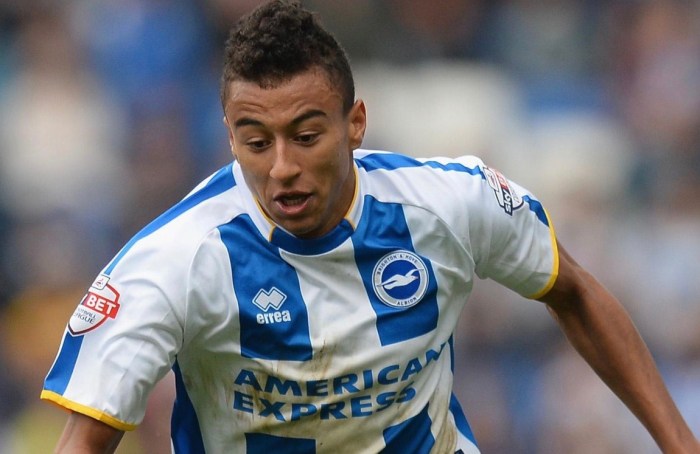
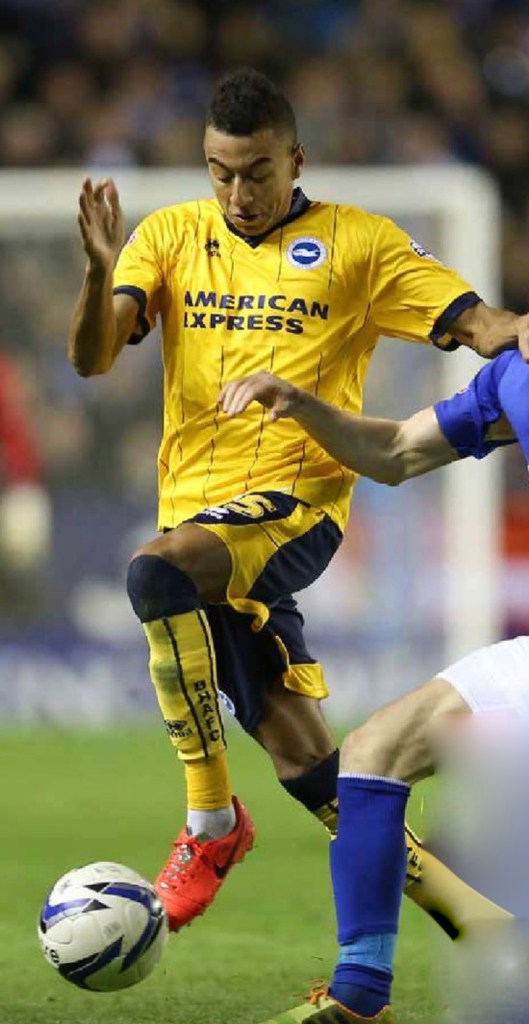
MANCHESTER United youngster Jesse Lingard scored four goals in 17 appearances for Brighton in their 2013-14 Championship season.

As well as helping the Seagulls to reach the play-offs, the move proved a useful development step for Lingard, who later become a regular at United and played for England at the 2018 World Cup.

Former United boss Jose Mourinho spoke about the value of the experience in an interview with manutd.com ahead of a Brighton v Man Utd Premier League game in May 2018.

Although Sir Alex Ferguson involved him in the first team squad a couple of times in the 2011-12 season, his real senior football education began during a three-month loan to Leicester City (he was sent with Michael Keane) in November 2012.

And, although Lingard went on United’s pre-season tour Down Under in the summer of 2013, he joined Birmingham City on loan in September 2013.

He scored a total of six goals in 13 games for the Blues, including a debut four goals at home to Sheffield Wednesday.

Birmingham hoped to keep Lingard

They’d been hoping to re-sign him for the rest of the season but Albion nipped in at the end of February 2014 and he headed south to join Oscar Garcia’s promotion-chasing side until the end of the season.

Garcia told the club website: “We are delighted we have finally secured Jesse until the end of the season. He is one of the most exciting young English players and has already created a lot of interest following his successful loan spell at Birmingham.

“We worked hard to secure a talent who has already shown that he can play at Championship level, and I am very pleased to have added Jesse to our striking options.

“He has an excellent pedigree, having come through the academy at Old Trafford, and there is no doubt that he has a lot of talent and ability. I am really looking forward to working with him.”

Lingard got on the scoresheet in the 4-1 away win at already-crowned champions Leicester City, and four days later also found the net in a 3-0 win over Charlton.

In the third minute of added on time at home to Yeovil Town, Lingard added to Kazenga LuaLua’s opener to secure a 2-0 win in the last home league fixture.

He then scored Albion’s goal in the play-off first leg at home to Derby, but, with Albion losing the game 2-1, they were always on the back foot going into the second leg when County ran riot against the injury-ravaged Seagulls to win 4-1.

Lingard went back to United and got his first competitive first team start under Louis van Gaal in the season-opener against Swansea at Old Trafford, but the occasion was marred by him having to go off with a knee injury after only 24 minutes – and United lost 2-1.

The injury set his career back six months and, on his recovery, Lingard was sent out on loan again in February 2015 when former United assistant manager Steve McLaren took him to Derby County.

Back at Old Trafford the following season, he got his first United goal in November 2015 when United beat West Brom 2-0, and he began to establish himself, making a total of 40 appearances by the season’s end.

In fact, that season ended on a particularly high note for Lingard when he came off the bench to score the winning goal for United in the 2016 FA Cup Final against Crystal Palace.

The 2017-18 season saw him involved even more, when he made 48 appearances, and, even through managerial upheaval, he continued to be a regular member of the United first-team squad.

Born in Warrington on 15 December 1992, Lingard went to the town’s William Beaumont Community High School and was on United’s books from the age of seven.

He progressed through the different age groups but, as a slow developer physically, was still playing at under 16s level when he was 18.

Nevertheless, as a youth player at Manchester United, he helped them to win the FA Youth Cup in 2010-11.

An extended feature on Lingard’s development appeared in the matchday programme for Albion’s game at Old Trafford in November 2017.

One of the coaches involved in his development, academy advisor Tony Whelan, said: “Jesse has had to be patient throughout his career. As a younger player, he was physically under-developed so he had to play a younger age group. That wasn’t easy, but he had the patience, intelligence and trust in the coaching staff to know that those decisions were made in his best interests, that we knew at some point he was going to grow. At some point, all that ability would be able to come out.

“He’s got a wonderful mindset, so his ability to come on and make an impact on the game is down to the fact he’s resilient, he has a wonderful mentality, and he is a great observer of the game. That comes out all the time in the way he deals with things. And on top of that, he has his excellent technical ability.”

Whelan added: “He’s only of slight build, so he’s developed great technical ability, good passing, dribbling, he’s a really good mover – very fluid, a wonderful mover – and he’s athletic without looking that athletic.”

The coach said: “You don’t get in our first-team squad without being a very accomplished player. He’s also playing for the national team fairly regularly. That’s testimony to Jesse’s abilities as an all-round footballer now.”

Lingard was 23 when he made his full England debut, at Wembley against Malta, on 8 October 2016, and he went on to become part of the England squad that reached the World Cup semi-finals in 2018.

He scored his first England goal in a 1-0 win away to the Netherlands in March 2018, and has since scored three more times in 24 matches; against Panama at the World Cup, against the USA at Wembley in November 2018 and three days later also at home against Croatia.

He’d already appeared on the international stage earlier in his career, playing three times for England under 17s in 2008 and scoring twice in 11 games for the under 21s between 2013 and 2015.

Coach Whelan summed up Lingard thus: “From the day he first walked into this football club at seven years of age, he always had a smile on his face. He’s always loved playing, always loved the game, always had wonderful enthusiasm, and in some ways he’s inspired the coaches with his love of the game and love of the ball.

“You never had to ask him to work hard, he was always running around, always energetic, always mischievous, and those are the qualities he brought.”

In an interview with the Albion matchday programme for Brighton’s home game with United in 2017-18, Lingard reflected on his loan spell with the Seagulls and said: “I wanted to go to the club because I knew they were a good club with a great stadium and great fans – it was the perfect club to go on loan to.”

He added: “The stadium, the staff, the fans, you could see the ambition of the club. I always knew that the club would make it into the Premier League. It was heading in that direction for a couple of seasons.”

The 2019-20 season saw a marked decline in Lingard’s fortunes with his starts for United under double figures, and most of his involvement coming off the bench. He also lost his place in the England squad.

It was revealed a business venture had performed badly and, sadly, trying to cope with personal issues involving his family impacted Lingard’s form and demeanour.

After United boss Ole Gunnar Solskjaer challenged him publicly over his declining performances, he decided to talk about the problems publicly.

After the curtain came down on the season, Lingard told his 6.6 million Instagram followers: “This season has been difficult for so many reasons. I lost who I was as a player and person, but I never wanted to give up.

“I knew who I really was on and off the pitch and knew that having been there before I could get there again.”

“This meant working harder than I’d ever done before and trusting in those around me that they knew how to best help me achieve that.

“I know the fans have been frustrated but in all this time my love for this club and everyone connected to it has never left me.”

“This team, this club is my family and I will continue to keep working harder than ever to help this team achieve its goals.”

However, with several new faces arriving at Old Trafford prior to the start of the 2020-21 season, football’s rumour mill was busy suggesting Solskaer was looking to offload Lingard.

In January 2021, Lingard joined West Ham on a half-season loan and the change of scene seemed to give his career a boost. He scored twice on his debut in a 3-1 win over Aston Villa and finished the season with nine goals in 16 appearances for the Hammers.

He returned to Man Utd for the 2021-22 season, playing in 22 league and cup games but only scoring twice.

When his contract wasn’t renewed at Old Trafford, in the summer of 2022, Lingard signed a one-year deal with newly promoted Nottingham Forest on a reported £200,000 a week.

Irish defender Stephen Ward surprised Albion supporters

SWARDWHEN Wolverhampton Wanderers slipped into the third tier, they urgently needed to loan out some of their higher-paid players – hence, in August 2013, the arrival at Brighton of left-back Stephen Ward.

Most Seagulls supporters were not sure of his attributes having had the pleasure the previous season of watching the imperious Wayne Bridge shine in that position while on loan from Manchester City.

However, Albion fans were delighted to be proved wrong after Ward helped to shore up a defence that had leaked seven goals in the first eight days of the season. The Irish international defender went on to make a total of 47 appearances and was runner-up to Matt Upson as Albion’s 2013-14 player of the year.

Ward also chipped in with four goals, including the tide-turning equaliser at Nottingham Forest on the final day of the season.

Forest equaliser

Although injury-hit Albion failed to get past Derby County in the play-off semi-finals, it was thought Ward would sign permanently for the Seagulls that summer. But Burnley stepped in, offering Wolves and the defender more money, not to mention the more immediate chance of Premier League football.

Ward’s agent, Scott Fisher, later told the Argus that dithering or perhaps a bit of brinkmanship by then head of recruitment David Burke had scuppered the deal.

“We really tried our best to make Stephen Ward a permanent Brighton player. Had they done their business earlier this wouldn’t have happened,” he said.

Ward spoke more about the circumstances in an interview with the Argus in April 2016.

Previously, as the season drew to a close, Ward told the Argus: “If I’m going to move on, I don’t see why this wouldn’t be one of the better options for me. I’ve been here for a year; I’ve really enjoyed it.

SW Argus

“I couldn’t say one bad thing about the club. The crowd we get, the stadium we have is phenomenal, probably the best in the Championship, and with the new training ground the club is on a real up and a real high.

“If I was to move on from Wolves, Brighton would definitely be high on the list. It’s not in my hands, it’s going to be in other people’s hands to discuss the future, but it has been a great move for me. I’ve really enjoyed it. It’s a really good club and one people should be privileged to play for.”

Ward went on to spend five years at Turf Moor, making 110 appearances, but only featured 11 times in the 2018-19 season, and manager Sean Dyche told punditarena.com: “He (Ward) has been brilliant for us, absolutely brilliant, he’s done a fantastic job.”

SW BurnPerhaps it was no surprise that former Albion coach Nathan Jones stepped in to sign the experienced defender for Stoke City, where he’d taken on an often-perilous managerial hotseat.

Jones said: “He’s had a fantastic career, the only downside for him is his age, because he isn’t what we normally go for.

“But I feel we need to add certain things to the changing room and the environment and Stephen brings those.

“He’s a wonderful player, a great character, very experienced. He’s been promoted – won the Championship twice. He’s an Irish international, I worked with him, he’s technically very, very good so he ticks every box. It’s just the aging process is the only drawback.

“With Stephen, he’s a specialist in what we need and he will provide vital competition and good strength in that area.”

Unfortunately Ward couldn’t claim a regular starting place and in December 2019 picked up a calf injury which sidelined him for four months. Having made only 17 appearances for City, in August 2020 he switched to League One Ipswich Town on a free transfer.

After playing 29 games for them in the 2020-21 season, the club announced on 5 May 2021 he would be released at the end of the season (one more appearance would have triggered a 12-month extension to his contract).

Born in Dublin on 20 August 1985, Ward grew up in Portmarnock and, as a schoolboy, played football for Home Farm and Portmarnock before joining League of Ireland side Bohemians.

He attributed his eventual success in making it as a player to staying in Ireland when he was younger and continuing to live at home rather than going to play at a UK club’s academy.

In an excellent lengthy interview with the Irish Independent, he said: “I had a few trials – Leicester a couple of times, I went to Aston Villa a lot and Hibs for some reason – nothing worked out and I signed for Bohs. And the most important thing for me then was living at home and having my family around me.

“It does depend on the academy, but you are in a bubble from a young age. You train in a certain way, everything is done for you; I know you get your jobs, but not that many now, and sometimes there is a mentality that once you are in an academy, you’ve made it. I was 17 and played in a league where players were playing for their mortgages and to put food on the table.”

Originally a forward, he scored 26 goals in 93 appearances, and, having been looked at by Sunderland boss Mick McCarthy and deemed not quite ready, McCarthy kept tabs on him when he took over at Wolves.

“I signed for Wolves as a striker,” Ward told the Irish Independent. “I was not a typical number nine, scoring 20 or 30 a season, but an old-fashioned centre-forward running round, closing down.

“We signed a couple of strikers – Sylvan Ebanks-Blake and Chris Iwelumo – and I knew if I was going to play consistently it was probably not as a centre-forward. So, I went to left-wing for a bit.

“I played at left-back at Norwich for 30 minutes or so when we went down to nine men. We scraped a draw and afterwards Mick said, ‘You could make a career playing there.’ I thought, ‘Yeah, whatever’. Next season, three games in, and new left-back George Elokobi suffers an awful injury, the window was shut and Mick had no one else . . .”

On the international stage, Ward played through the age levels for the Republic of Ireland and had a dream full international debut in May 2011 as he scored in a 5-0 win over Northern Ireland.

He went on to play 50 times for his country before announcing his retirement from international football in March 2019.

Goal-shy journeyman striker Leon Best drew derision

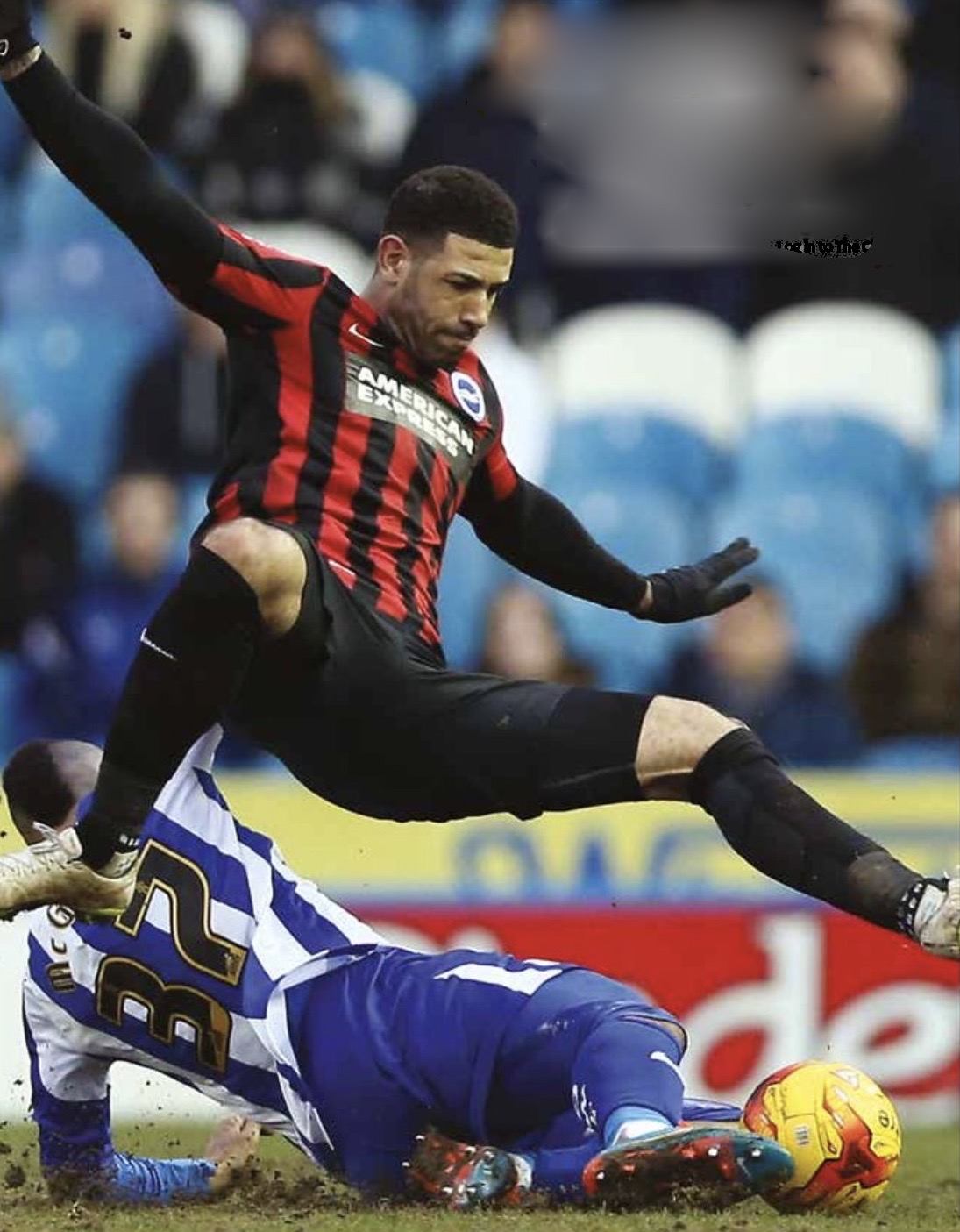
FOR SOMEONE purporting to be a striker, Leon Best fired blanks at a good many of the clubs he played for.

Such was his time at Brighton where he failed to get on the scoresheet in 13 games (six as a starter, seven as a substitute).

When he featured for AFC Bournemouth in the third tier, he fared slightly better. He managed three goals in 14 starts plus three as a substitute when on loan from Premier League Southampton during the 2006-07 season.

The somewhat derogatory phrase ‘journeyman’ was tailor-made for the likes of Best, who appeared for 13 different league clubs, failing to score for five of them and only registering double figure tallies at three.

Brighton supporters, on the whole, are normally supportive of anyone who appears for their team, but feelings boiled over at Best’s apparent lack of desire when pulling on the Seagulls stripes.

He was part of the struggling 2014-15 side which narrowly avoided the drop from the Championship, and I recall him being booed when he came on as a substitute at the Amex. On reflection, of course, such derision was unlikely to improve his demeanour.

The keyboard warriors of North Stand Chat weren’t slow to vent their anger, with one correspondent suggesting: “We’ve not seen much in the way of desire, endeavour, hunger or appetite from someone you would hope feels he has something to prove.”

Chris Hughton had not long been in the manager’s chair when he was casting around for players to help Albion climb away from the foot of the table.

Perhaps not unreasonably, he turned to a player who’d scored goals for him in the Premier League during his time at Newcastle United.

Hughton told the Argus: “I know Leon very well, having signed him during my time at Newcastle and I am delighted to have him here.

Screen Shot 2021-06-10 at 14.55.50“He is a strong, physical presence, he knows the Championship and knows the position we are in. We wanted new faces, to freshen up the squad, and Leon will add competition alongside our existing strikers.

“I signed him previously at Newcastle. I know he can be a very good player and he did very well for me both in the Championship and Premier League. He also had a very good spell with Newcastle after I left the club.”

Best scored 10 in 46 games for the Magpies but, at his next club, Blackburn Rovers, he managed only two in 16, hence them sending him out on loan.

While Best had scored five in 16 playing on loan at Sheffield Wednesday in 2013-14, he scored a big fat zero in 20 games for Derby County earlier in the 2014-15 season so perhaps expectations should not have been high when he arrived at Brighton on 20 January 2015.

Nevertheless, Hughton told Brian Owen: “I am very pleased he is here. He gives us another attacking option and I hope he can produce the same form he did for me when we worked together at Newcastle.” In short, he didn’t.

Born in Nottingham on 19 September 1986, his first steps into the professional game came with his local side Notts County. When international recognition came calling, he chose to represent his mother’s birth country, the Republic of Ireland, and was capped at under 17, under 19 and under 21 levels before gaining seven full caps in 2009-10.

Southampton snapped up Best in 2004 and gave him his league debut aged 18, ironically against his future employer, Newcastle.

But opportunities were limited with the Saints and over the course of three years on their books they loaned him out to QPR, Sheffield Wednesday, Bournemouth and Yeovil Town.

In 2007, Best transferred to then Championship side Coventry City for £650,000 and arguably his most successful goalscoring spell came during his time there, as he netted 23 goals in 104 appearances over three seasons.

It prompted Hughton to spend £1.5m of Mike Ashley’s money to take Best to Tyneside on 1 February 2010.

Maybe the warning bells should have been sounding in those first few months on Tyneside when he didn’t register a goal in 13 Championship appearances and fell behind Andy Carroll and Peter Lovenkrands in the pecking order.

Although he managed a couple of goals in pre-season matches, the early part of the 2010-11 season was marred by a cruciate knee ligament injury. Nevertheless, when he returned to action in the January, he did it in some style, bagging a hat-trick in a 5-0 win over West Ham. He got a further three goals before injury ruled him out once again.

3490663In the following season, he went 12 games without scoring but in the summer of 2012, Blackburn Rovers paid £3m to take him to Ewood Park – only for him to pick up an anterior cruciate knee injury one month into the season, ruling him out of action for six months.
The temporary move to Brighton was one of three loans away from Blackburn before they finally released him by mutual consent in July 2015.

It wasn’t until November 2015 he managed to find another club, pitching up for six months at Championship side Rotherham United. When he couldn’t agree terms on a new deal with the Millers, he instead moved to Ipswich Town, ostensibly as a replacement for Daryl Murphy.

He made six starts and six appearances as a substitute without scoring and, by January 2017, manager Mick McCarthy had lost patience with him and declared he wouldn’t play another game for the club.

Released by Town in the summer of 2017, Best managed to secure a two-month deal with Charlton Athletic in November 2017 but he sustained a knee injury on New Year’s Day 2018 and hasn’t played since.

Wearside hero Gary Rowell blighted by injury after leaving Sunderland

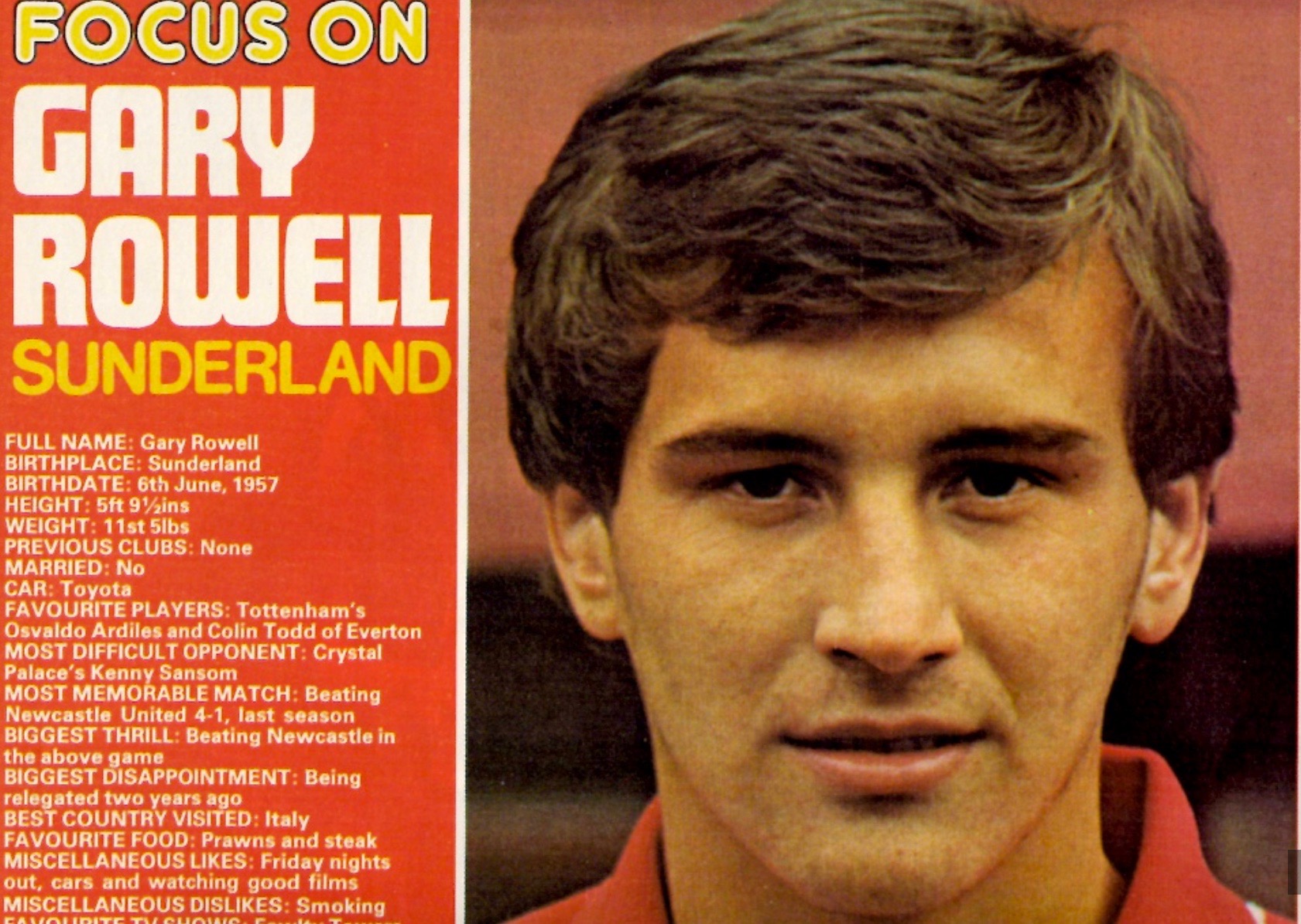
gary rowell tony normanBRIGHTON fans never got to witness the best of prolific goalscorer Gary Rowell who, to this day, Sunderland fans eulogise in the same way Albion fans still sing about Peter Ward.

He died aged 68 on 13 December 2025, exactly 50 years to the day of his first appearance for the Black Cats following a long battle with leukaemia.

Rowell has a place in Sunderland’s best all time XI selection, in 2005 he topped a Football Focus poll as Sunderland’s all-time cult hero and, in 2020, was inducted into the SAFC Hall of Fame, which he described as ‘the best night of my life’.

There is a website that details every one of the 103 goals the Seaham-born footballer scored for the Wearsiders in 297 games after making his debut as a 71st minute substitute for Mel Holden in a 1-0 Sunderland win over Oxford United at Roker Park.

Unfortunately, the free-scoring striker-turned-midfielder was struck by a knee injury which hampered the latter part of his career, including his spells with Norwich City and the Seagulls.

Having left Sunderland on a free transfer after 12 years at the club, Rowell tore ligaments in his right knee on a pre-season tour of Scandinavia with Norwich before he even managed to kick a ball in anger.

In a year at Carrow Road, he made only six appearances – four as a substitute – and scored just the once, coming off the bench to net against Aston Villa. Typical of this spell between August 1984 and July 1985, he was substituted after only 16 minutes of his reserve team debut.

The following season, a £35,000 fee took him back to the North East to play for Middlesbrough, but, at the time, they were in the middle of a financial crisis and lost their second-tier status. Rowell top-scored with 10 goals in 27 appearances – two of them against the Albion at the Goldstone in January 1986 – but Boro were relegated in second-to-last spot (Brighton finished in 11th place that season).

Brighton were not exactly flush with cash themselves in the summer of 1986 when Alan Mullery, the manager who’d previously led them from third tier to the elite, returned to the club to replace Chris Cattlin.

Mullery found a very different set-up to the one he’d left acrimoniously in the summer of 1981. With little money available to be spent on new arrivals, hard-up Albion, not for the first time, had turned to the supporters in an effort to raise transfer funds.

Money from a scheme called the Lifeline fund went towards buying goalkeeper John Keeley for £1,500 from non-league Chelmsford, Darren Hughes for £30,000 from Shrewsbury Town, and Rowell from Middlesbrough on a free transfer (the Lifeline funds being used to help with his relocation to the South Coast).

Mullery explained the Rowell signing thus in his programme notes: “I see his role with us as coming forward from midfield and adding to our power in the box.

“We know he can get goals and he is a versatile player. When we further improve the squad, we may use him a little differently.”

Rowell , who discovered Mullery had tried to sign him back in 1979 (but Sunderland hadn’t informed him), joined just after the start of the season, in time to be given a place on the bench for the away 1-1 draw with his former club Sunderland. He went on for Kieran O’Regan with 18 minutes left.

He kept the bench warm for two more matches before getting his first start in place of Northern Irish centre-forward Gerry Armstrong in a 2-2 draw away to Plymouth Argyle on 13 September.

Unfortunately, it wasn’t long before Mullery was reporting his absence from the side because of an ankle injury sustained in training.

Nevertheless, interviewed by Tony Norman in the matchday programme, Rowell, who was 29 and married with two small children, said: “I’m delighted with the move. I’ve found it to be a very friendly club and people have gone out of their way to make us feel at home. Now I want to repay the club by playing well for the team.”

The longest run of games he got in an Albion shirt came in November and December 1986 when he took over from winger Steve Penney for six matches (two wins, two draws, two defeats).

rowell BW HS

A broken toe and a troublesome hamstring made him feel injury-jinxed but, during his run back in the side, he had what Mullery described as “his best game since joining us” in a 3-0 win over Shrewsbury Town on 21 December. Six days later, the toe went again, and he didn’t play for the rest of the season.

Mullery was then controversially dismissed the following month and Rowell had to wait until the start of the following season for successor Barry Lloyd to select him.

He featured in three pre-season friendlies, all of which ended in defeats and wore the no.4 shirt in the opening two fixtures of the 1987-88 season, but those were his only first-team starts that campaign. His midfield berth was taken over by the experienced Alan Curbishley.

By October, the matchday programme reported Rowell and fellow midfielder Dale Jasper had been placed on the transfer list following long discussions with Lloyd. Curiously, it added: “However, both players are keen to stay with the club, regardless of any offers made, and will be battling hard for first team places.”

Rowell subsequently appeared seven times as a substitute for the first team, but he was largely confined to the Reserves for whom he made 20 appearances and scored once. In February 1988, he moved to Dundee on trial, but, when not taken on, moved the following month to Carlisle United.

After just seven games for the Cumbrians, he finished his professional career at Burnley, where he scored once in 19 appearances.

Born in Sunderland on 6 June 1957, Rowell grew up in the mining village of Seaham, became an apprentice at Sunderland in 1972 and two years later turned professional.

In 1976, when Sunderland were struggling in the First Division, manager Jimmy Adamson gambled on the introduction of the 19-year-old Rowell: it paid off in spades as he scored 44 goals in two and a half seasons.

During that prolific spell, Rowell was in the squad for two end of season England Under 21 Championship preliminary matches; he went on for Laurie Cunningham in a 1-0 win over Finland in Helsinki on 26 May 1977 but wasn’t involved in a 2-1 win over Norway in Bergen six days later. This was an England side including future full internationals Peter Barnes and Peter Reid.

He was also a non-playing member of Dave Sexton’s squad that assembled at the Goldstone Ground three months later, but he had to watch as an over-age Peter Ward (22), playing on home turf, of course, scored a hat-trick in a 6-0 win over Norway. The aforementioned Curbishley was also a non-playing onlooker in that squad.

footballinprint.comUndoubtedly, the stand-out moment of Rowell’s Sunderland career came when he scored a hat-trick in a 4-1 win over arch rivals Newcastle United at St James’ Park, which he referred to in a profile article (see above).

In a vote for Sunderland’s best players of the 1970s, Rowell was described as “a lovely footballer. Though not blessed with blistering pace, he would ghost into goal-scoring positions and his finishing was deadly.” Rowell was an expert penalty taker, scoring 25 of 26 he took for Sunderland.

Some observers reckon but for injury he would surely have gone on to gain full England international honours. However, his career was severely disrupted by a serious knee injury sustained in a March 1979 game against Leyton Orient.

After a lengthy recovery, he resumed scoring goals regularly but there were doubts over his being able to maintain fitness for the duration of a whole season.

As part of a big team rebuilding exercise carried out by manager Len Ashurst in 1984, Rowell was allowed to move to Norwich.

After his playing days ended, Rowell became a financial consultant in Burnley and those loyal Sunderland supporters still got to hear their hero because, for a number of years, he was a commentator on Sunderland games for Metro Radio.

  • Pictures mainly from matchday programmes. Sunderland profile article: footballinprint.com.

Brighton briefly on the trail of the ‘loansome’ Sam Vokes

‘LOANSOME’ Sam Vokes joined Brighton temporarily on the eve of transfer deadline day in January 2012.

He was 22 at the time and had already had five loan spells away from Molineux since joining Wolverhampton Wanderers in the summer of 2008. Vokes told BBC Sussex: “I need to settle down in my career and it’s a fantastic chance for me to come here and play some football.

“It’s a matter of playing games and, as a striker, scoring goals.”

Vokes had been troubled by injury and had found it difficult to establish himself in the Wolves side. The season before, he had been out on loan at Bristol City, Sheffield United and Norwich, and earlier in the 2011-12 season had scored two goals in nine appearances on loan at Burnley.

Eddie Howe, who’d managed Vokes during his first spell at Bournemouth, had taken him to Turf Moor to partner Jay Rodriguez. But when his deal with Burnley expired in mid-January, Albion boss Gus Poyet stepped in and persuaded him to join the Seagulls.

Vokes was invited to the Amex to watch the side’s FA Cup fourth round tie against Newcastle and, two days after the 1-0 win, put pen to the loan deal.

7188430“I don’t want to sit around – I love playing,” said Vokes. “Brighton have a great way of playing football that is different to a lot of teams in the Championship.”
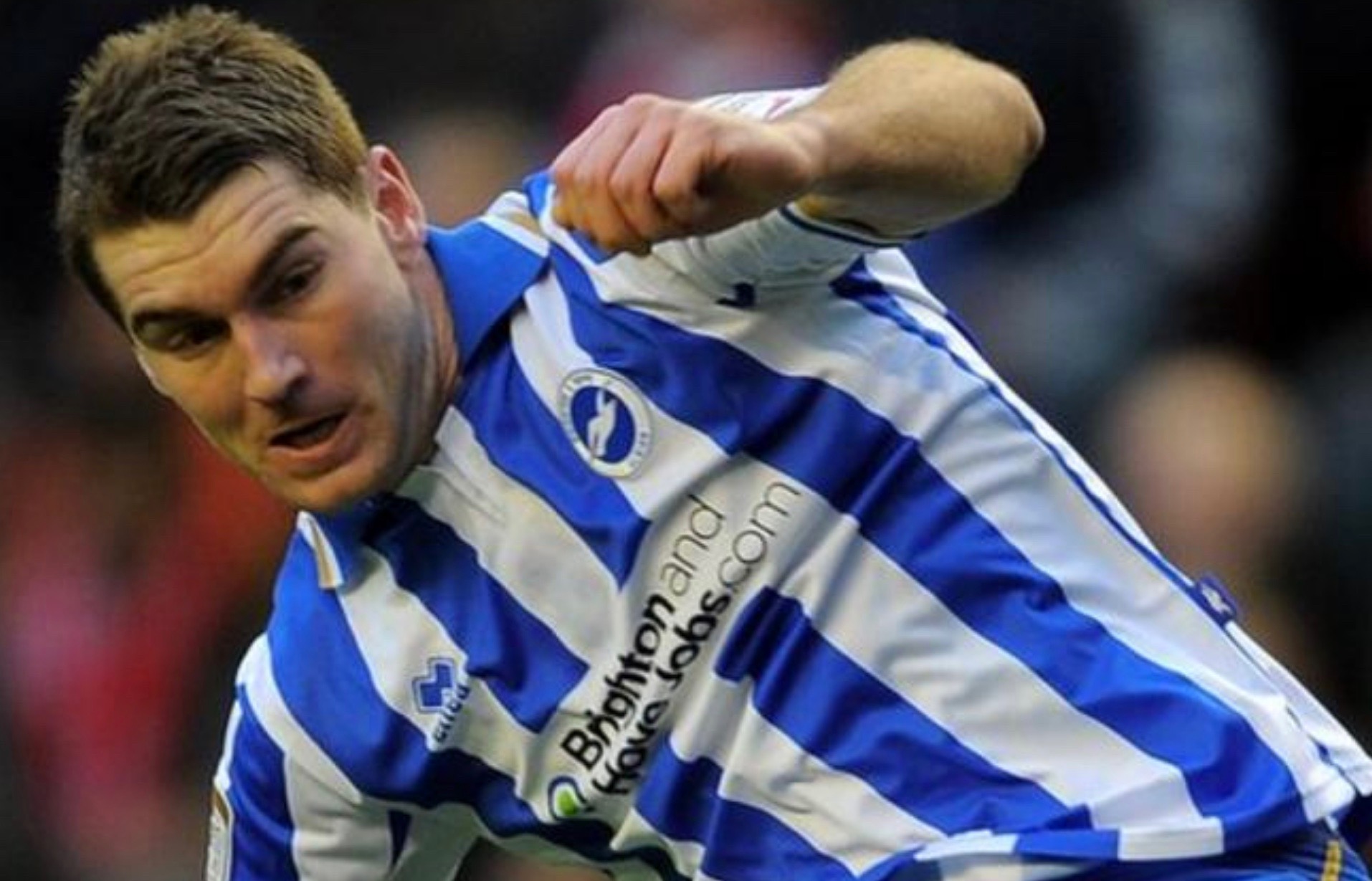
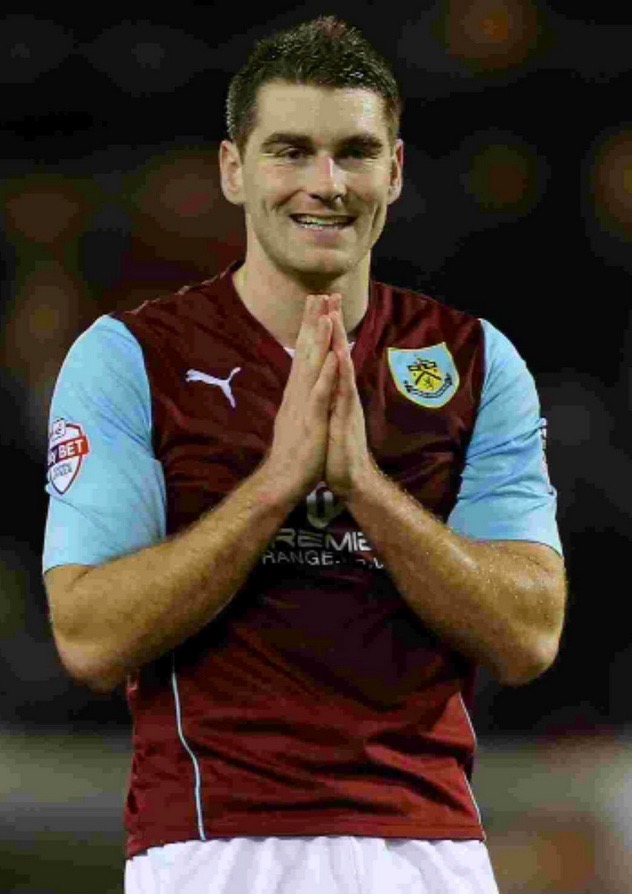
The young striker told the Albion matchday programme: “I’m a southern boy. I know the area well, and I know what football means to people down here.

“It’s been difficult for me to settle anywhere, moving from place to place on loan, but now I just want to play football. I love the game. I need to play, it’s all I want to do.

“I would like to stay and if all goes well we will see what happens in the summer, but my main aim at the moment is to start playing football again and scoring goals.”

Poyet told the media: “Sam was one of the players we’ve been following for a long time but it’s been difficult to get him.

“The idea was to bring someone who will give us that presence and strength in the air that we don’t have.

“We’ve got the time to explain how we play, and what he needs to do for us. The quicker he adapts, the easier for us. I’m delighted to have him and I hope it works for him.

“He’s been trying to find that place that he can stay for a few years.”

As it turned out, Vokes struggled to dislodge incumbent strikers Ashley Barnes and Craig Mackail-Smith, and he made just seven starts plus five substitute appearances.

SV- BHA stripes

Although he scored on his full home debut in a 2-2 draw v Millwall, he only got two more goals, a last-minute equaliser in another 2-2 draw, at home to Cardiff City, and Albion’s lone strike in a 1-1 draw away to Nottingham Forest.

In July 2012, it was reported Wolves were demanding £500,000 for the player’s signature on a permanent basis, and that Brighton and Burnley were both keen to sign him.

Vokes burnley

Howe had always been keen to get the player back to Burnley and, although officially undisclosed, it’s believed a £350,000 fee took him to Turf Moor where he finally settled down and, over the next seven years, scored 62 goals in 258 appearances.

Born in Southampton on 21 October 1989, Vokes was brought up in Lymington and was a Southampton fan at an early age. He even had a trial with them when he was just 10 but wasn’t taken on.

It was when he was playing football for local sides in the New Forest that he was spotted by Bournemouth and joined them in 2005. He was only 17 when he made his first team debut in December 2006 (in a 2-0 win over Nottingham Forest) and although he scored 12 goals in the 2007-08 season, the Cherries were relegated from League One.

Vokes WolvesWolves stepped in to sign him that May and he came off the bench in the opening game of the following season to score an equaliser in a 2-2 draw at Plymouth Argyle. However, Chris Iwelumo and Sylvan Ebanks-Blake were the main men scoring goals as Wolves won the Championship that year, and Vokes’ involvement was mainly off the bench.

With his parent club in the Premier League, Vokes was loaned out to League One Leeds United on a three-month deal, although he only scored once in eight games. One of those matches was against the Albion at Withdean and Vokes recalled picking up his first footballing scar when an Adam El-Abd elbow caught him in the face.

Once Vokes finally settled down at Burnley after his various loan moves, it can’t have helped his cause when the man who signed him quit Turf Moor to return to Bournemouth.

Indeed, when Sean Dyche replaced Howe, his go-to centre forward at first was Charlie Austin, but when Austin was sold Vokes got more of a chance to show his worth alongside Danny Ings.

The partnership that began to evolve surprised Burnley fans who’d wondered whether Vokes was only ever destined to be a bit-part player.

“Everyone was concerned to be honest,” said Tony Scholes on uptheclarets.com. “We’d seen some potential in Ings but there wasn’t much confidence that Vokes could become a regular, goalscoring striker at Championship level.

Burnley Football Club_1st Team head Shots_30/7/15He went on: “Our shortage of strikers was highlighted by the fact that he played the full 90 minutes in all of the first 26 league games that season, but he wasn’t just filling in. He was turning in some outstanding performances, linking up really well with Ings and both were scoring goals aplenty.”
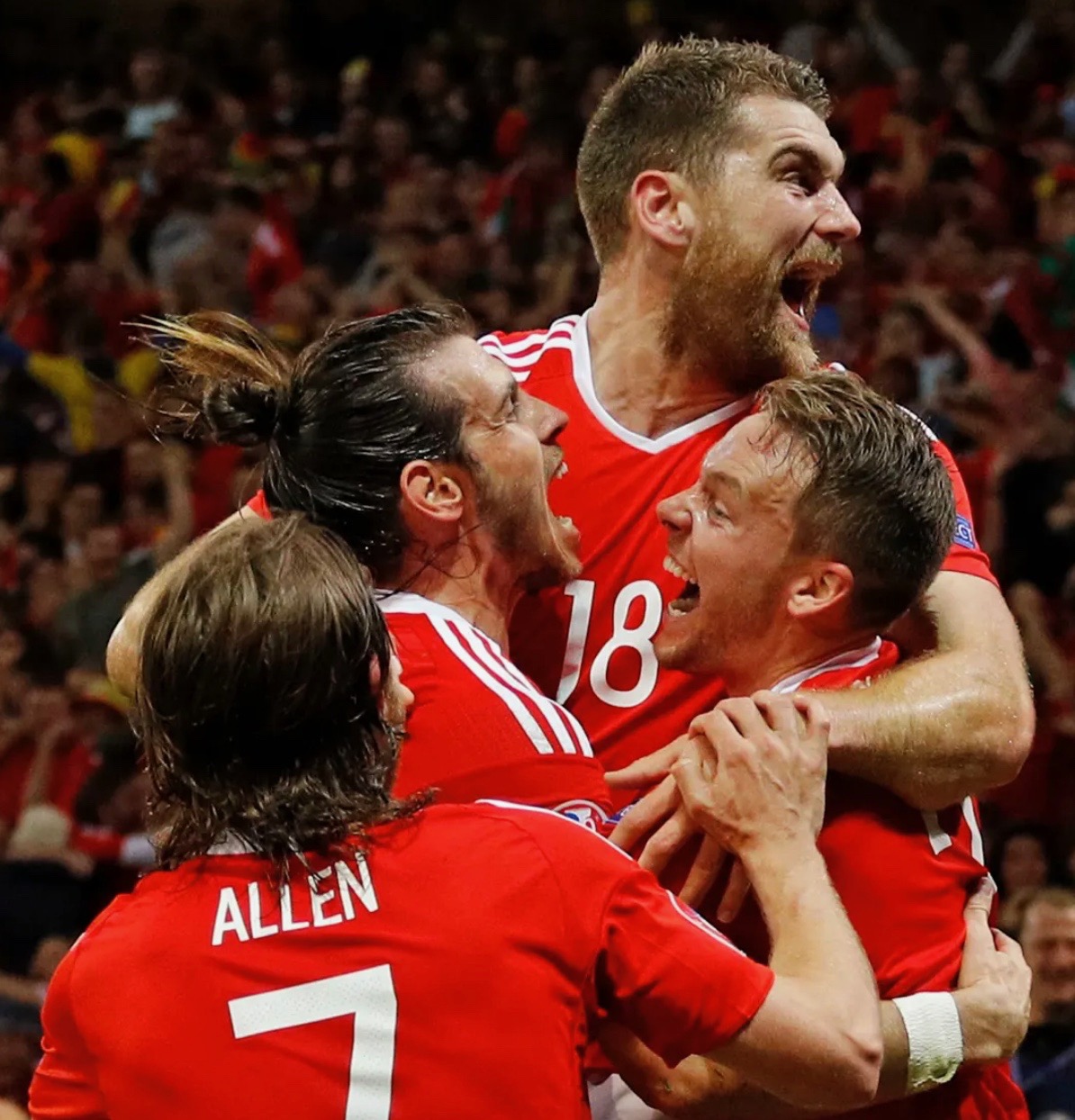
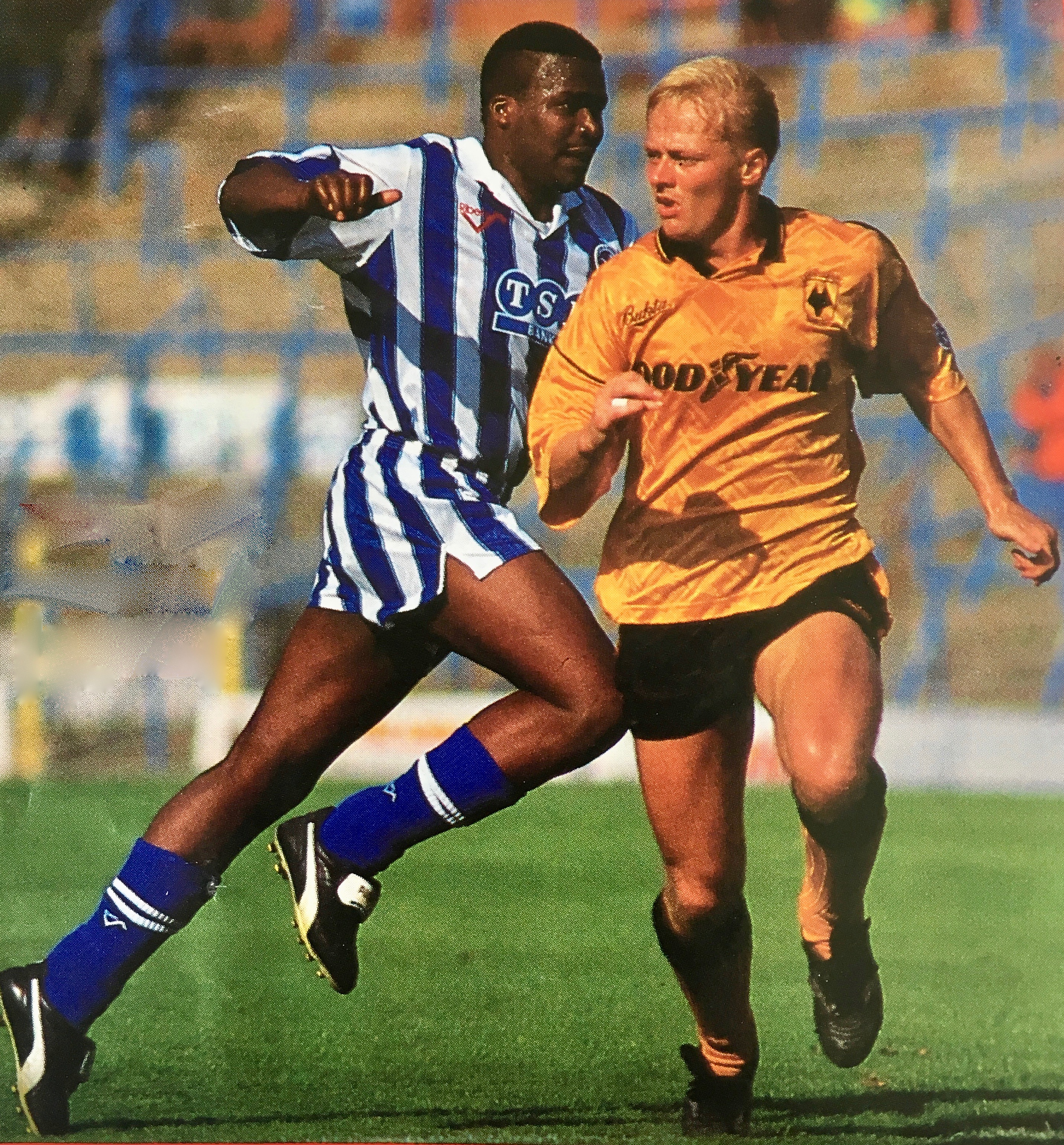
Unfortunately, a cruciate knee injury sidelined him for a lengthy spell and Burnley bought Ashley Barnes from Brighton as they sought to bolster their forward options.

A fit Vokes eventually reclaimed his place and formed a useful partnership with big money signing Andre Gray when Barnes himself was also hit by a cruciate injury.

In the early part of last season, Vokes often found himself on the bench, with Barnes and Chris Wood starting ahead of him, and, in January, he decided to drop back down to the Championship, joining Nathan Jones’ new regime at Stoke City, with former England international Peter Crouch going in the opposite direction.

As is often the way these days, the fee was ‘undisclosed’ but was rumoured to be in the order of £7m, and Stoke offered Vokes a three-and-a-half-year contract.

His popularity at Burnley was reflected in a thoughtful parting message thanking the club and the Clarets fans, in which he said: “You made the club a ‘home’ for myself and all my family and for that I’m eternally grateful.”

He added: “It’s been an incredible journey that we’ve been on over the past seven years, with promotions, relegation, survival and even European football through the Europa League.

“There have been so many highlights and every step along the way has been a joy, but now I am looking forward to a new challenge.”

Dyche, meanwhile, told the Stoke Sentinel: “Sam has been an absolutely fantastic servant, not just as a player but as a person.

“There was a bit of frustration that he hasn’t played as much as he’d like and this presents a fresh challenge, so, with all that factored in, it became a win-win deal.

“We feel we’ve got a good deal financially for the business and Sam has got a fresh chance somewhere different.”

Since July 2021, Vokes has been leading the line for League One Wycombe Wanderers.

Vokes Wales

Vokes may have been born and brought up in England but, thanks to having a grandfather born in Colwyn Bay, he became eligible to play for Wales and has earned more than 60 caps since making his debut in 2008, including their most recent game against Belarus.

A stand-out moment for his adopted country came during the Euro 2016 tournament when he came on as a substitute and (pictured above) sealed Wales’ 3-1 win over Belgium with an 85th-minute goal to reach the semi-finals.

  • Pictures from various online sources.

Former Gunner Raphael Meade a damp squib for the Seagulls

Meade best

ISLINGTON-born Raphael Meade joined Arsenal as a schoolboy and made it through the ranks to play more than 50 times for the Gunners.

A rather eclectic career saw him play in Portugal, Spain, Scotland, Denmark, Hong Kong and back in England.

Brighton boss Barry Lloyd had something of a penchant for picking up players from these shores who’d rather lost their way playing abroad and, while forwards Mike Small and John Byrne would count as great successes of that genre, Meade was largely a disappointment.

He played 40 times and scored 12 goals in the 1991-92 season, but the Albion were relegated to the third tier, so it was memorable for all the wrong reasons.

Born on 22 November 1962, Meade was on the Gunners’ books from June 1977 to the summer of 1985.

The superb thegoldstonewrap.com unearthed the Arsenal annual for 1981 in its research; it said of the young Meade: “He’s got a hell of a lot of pace and is fantastically brave in the box. He’s got all the makings of a top player. However, he’s another one who has got to work on his control like Brian McDermott with tighter controls and lay-offs. But with his type of pace he will always be a threat.”

The reality was that with the likes of initially Alan Sunderland and John Hawley ahead of him in the pecking order, then Tony Woodcock and Lee Chapman, followed by the arrival of Charlie Nicholas and former Ipswich striker Paul Mariner, his first team chances at Highbury were restricted.

While he was prolific in the Reserves (24 goals in 27 league games in 1983-84), his first team appearances over four years were somewhat sporadic.

Manager Terry Neill handed him his debut in a 3-0 UEFA Cup away win against Panathinaikos on 16 September 1981 and he scored a spectacular goal with his very first kick! His league debut came a month later – and he scored again, netting the only goal in a 1-0 win at home to Manchester City. The 1981-82 season saw the majority of his first team involvement: he played a total of 22 games, scoring five times.

A cartilage injury sidelined him for a large part of the 1982-83 season but when he did return in February 1983 he scored twice against Brighton in a 3-1 win.

CN + RM braces v SpursThe following season, Meade scored a hat-trick in the 3-1 win over Watford, which began Don Howe’s tenure as Arsenal manager, and he also earned a special place in Gunners’ fans hearts when scoring twice (pictured celebrating above with Charlie Nicholas, who also got two) in Arsenal’s 4-2 victory over arch-rivals Spurs on Boxing Day 1983.

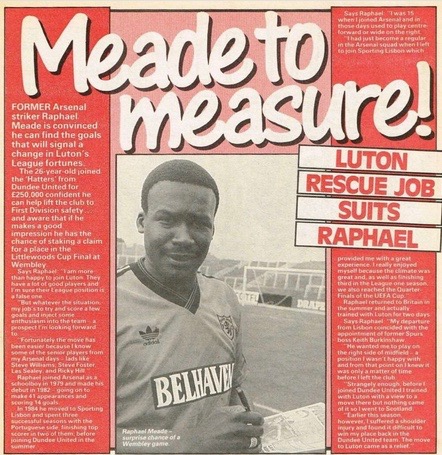
Unfortunately, they were sporadic highlights and, in the summer of 1985, he was sold to Sporting Lisbon.

“Sporting Lisbon provided me with a great experience. I really enjoyed myself because the climate was great and, as well as finishing third in the league one season, we also reached the quarter finals of the UEFA Cup,” Meade said in a Shoot/Goal article.

He said it was the arrival of former Spurs boss Keith Burkinshaw that precipitated the end of his time in Portugal because he wanted him to play in an unfamiliar right midfield role.

Thus he was loaned to Spanish side Real Betis towards the end of his three-year contract, and, on his return, was transferred to Dundee United where he made 16 starts, plus six substitute appearances, scoring seven goals.

However, United boss Jim McLean made public his dissatisfaction with the striker and questioned his fitness. Meade hit back saying he was fit but being played out of position on the wing.

Subsequently a shoulder injury saw him sidelined and unable to regain his place and he joined a struggling Luton Town side for a £250,000 fee.

luton moveBut after only four games for the Hatters he was on his way again, this time to Odense BK in Denmark.
During two years on their books, he had loan spells back in the UK, playing once for Ipswich Town and five times for Plymouth Argyle.

As the 1991-92 season got under way, cash-strapped Brighton were forced to sell the previous season’s successful strike duo of Small (to West Ham) and Byrne (to Sunderland).

Byrne’s departure didn’t happen until October, and it was while playing alongside the popular Republic of Ireland international that Meade scored his first goal for the Seagulls, in a 3-1 home win over Port Vale.

He had found himself in the right place at the right time in only the fourth game of the season when an injury sidelined Bryan Wade, who had started the first three games alongside Byrne. smart Meade

Lloyd had watched the former Arsenal striker score in a 2-0 win for the reserves against Fulham and pitched him in against Wolves – a 3-3 thriller in which Mark Barham, Gary O’Reilly and John Robinson netted for the Albion.

“Ideally, I needed one or two games to get match fit but it was great to get the chance in the first team and I wasn’t going to waste it,” said Meade.

Meade in action with another former Gunner, and ex-Albion defender, Steve Gatting (in Charlton’s colours), and a man of the match award for a brace against Grimsby Town.

After Byrne’s departure to the north east, there was seldom a regular strike partner for Meade. The busy and bustling Mark Gall, signed from non-league Maidstone United for £45,000, managed 14 goals but was some way short of Byrne or Small’s quality. And another of Lloyd’s overseas ‘finds’- Mark Farrington from Feyenoord – was an almighty flop.

Meade cover boy

Meade popped up with the occasional goal and one of those rare glimmers of light in an otherwise dark season came in a game I went to see at Vicarage Road on 31 March 1992.

Although Albion were ultimately headed back to Division 3, a brief respite from that tumble came against the Hornets courtesy of a howler by David ‘Calamity’ James in their goal. James came to the edge of his area to collect a routine-looking through ball, spilled it rather than gathering it cleanly and Meade was on hand to pick up the loose ball, round the stranded ‘keeper and slot what turned out to be the only goal of the game.

Meade scored twice more before the season’s end but Albion lost four of the final six games and were relegated along with Port Vale and Plymouth. Meade elected to leave the club and head for Hong Kong.

After a season with Sea Bee, he returned to England and rejoined Brighton but only featured in three games. He moved on to Crawley Town in 1995-96, where he ended his playing days.

Pictures from various sources including the matchday programme, Shoot/Goal, and online.