‘Polite, enthusiastic, dedicated – the model professional’

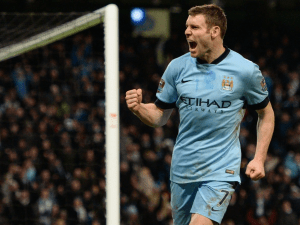
JAMES MILNER obviously has a thing about passionate Italian coaches called Roberto: It was Roberto Mancini who took him to City from Aston Villa for £26m in 2010 (with Stephen Ireland moving in the other direction as part of the deal).

He went on to win the Premier League title twice, the FA Cup and the League Cup in his five years at the club. In 203 appearances for City, he scored 19 goals and provided 45 assists.

Sadly, a sizeable number of City fans have quickly forgotten the success he was associated with and find it necessary to boo him if he returns to the Etihad in the colours of an opponent. They particularly resented him joining rivals Liverpool and thought it bad form that in 2016 he celebrated rather too exuberantly scoring for the Reds against them, especially because he’d previously not celebrated when he scored for City against his old club Villa.

They also claim not to like his desire to play in his preferred central position, and on more occasions, because they say he didn’t achieve either of those at Liverpool.

When he lined up as an emergency right-back for Albion’s visit in October 2023, sections of the City faithful revelled in his discomfort up against Jeremy Doku and Phil Foden (he was subbed off at half time).
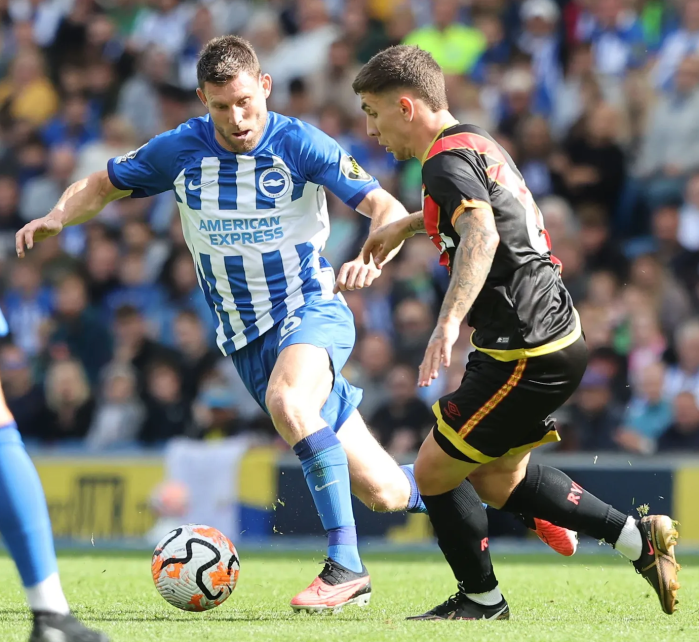
Go back to the beginning of his time with their club and this is the same player who put in a man-of-the-match performance on his City debut – a 3-0 win over Liverpool!

On signing the player at the age of 25, Mancini said simply: “He is a good young player, who can play in every position in the middle and out wide.”

It’s worth checking in on a piece Paul Wilson wrote for The Observer in 2011 when Milner did a question-and-answer session with City supporters at the Mayfield Sports Club home of an amateur rugby league team in Rochdale.

“Milner seems polite, enthusiastic and dedicated, every inch the model professional,” writes Wilson. “Milner is unquestionably the real deal. Even on a night off such as this he does not drink, not even creamy pints of hand-pulled John Willie Lees.”

Milner explained: “I made that decision quite early on. I’ve always dreamt of being a footballer, you only get one shot at a career like this and I want to be the best professional I can.

“Anything I can do that means I can get the best out of my ability is what I’ll try and do. It’s not much of a sacrifice really, we are fortunate to be well paid for doing something that we love and enjoy doing and I want to play for as long as I can.

“As a professional you want to get as much as you can out of your career, play at the top level and win trophies. Playing with top players at Manchester City I’ve got a great chance of doing that, and I just want to keep improving.

“You just want to be able to look back on your career when it’s over, see what you’ve won and feel that you couldn’t have done any more, and that you’ve been the best player you possibly could have been.”

Wilson noted how Milner had showed strength of character to force his way back into the team when left out of the side in his first season with City. “I realised when I joined that competition for places would be intense at City, and I also knew the manager must rate me, because he brought me to the club,” said Milner.

“But if you are not playing you are not happy and you want to know why. So, I asked him what he thought, what I could do to improve to get into his team, then I went away and worked hard on it.”

Understandably, Milner enjoyed being part of the City side that won 6-1 at Old Trafford and acknowledged: “The fans will remember that for a long time, because they have been the underdogs in the city for so long, and it was great to be a part of that.
“But we now have to make sure we don’t get carried away. The fans can get as carried away as they want, good luck to them. It’s our job to carry on winning football matches and try not to get ahead of ourselves.”

Wise words but even then, in his mid-20s, he’d got 10 years’ experience behind him. “It’s all been a bit of a rush, but I think that happens when you make your debut so soon after leaving school,” he said. “You’ve had this dream and suddenly you’re doing it and everything happens very fast and hardly slows down.

“I remember Nigel Martyn joking with me at Leeds, saying he was old enough to be my father, which he certainly was. He said: ‘Make sure you enjoy your career because it will go past in a flash.’ And I was like: ‘Yeah, leave it out, Nige, I’m only 16. I’ve got all the time in the world.’

“Well, here we are 10 years later, and it’s flown. I can’t believe it. Nige is obviously wiser than he looks.”

In five years at City, Milner was in two Premier League title-winning sides (2012 and 2014), collected a FA Cup winners medal in 2011 and a League Cup winners medal in 2014 and was viewed as an integral part of their squad.

Mancini left City in the wake of losing the 2013 FA Cup final to Wigan Athletic and his successor, Chilean Manuel Pellegrini, was also a big fan of Milner and tried to convince him to stay as his contract came to an end in 2015.

Pellegrini told the Guardian: “Milner’s a phenomenon, a guy with big balls and a heart this big.

“Intelligent, great mentality, one of those players that when you leave him out you’re left with this feeling of injustice; it hurts because he should always play but sometimes you need a technical player with other characteristics.

“I hope he stays. If he doesn’t it will be because there’s an important offer.

“The club wants Milner to continue and he wants to stay but maybe he wants more games.

“I understand. I’m Milner’s No1 fan. Find me a more complete English player. There are players who’re better technically, yes. Quicker players, yes. Players who head better, yes. But show me one who does all the things Milner does well. There isn’t one.”

When he decided to move on a free transfer to Liverpool in 2015, teammate Vincent Kompany declared: “You’ll be missed at City brother, as a teammate and a friend! Your drive and passion were inspirational.”

Milner himself hasn’t taken the fan flak to heart and on tribuna.com spoke of his memories of his former side.

“I had a great time at Man City, and I was lucky enough to win every domestic trophy there, play with some great players and I became a better player there,” he said.

“I have nothing bad to say about the club. Obviously, now I think of them a bit differently because they’re big rivals but that good feeling is still there. They’re a big part of my career and a big part of my life as well.”

Football writer Alex Brotherton leapt to Milner’s defence in a piece for the Manchester Evening News in September 2021, declaring at the outset: “There are no two ways about it – Milner was an excellent servant to City during what was an extremely successful period for the club.”

Brotherton reckoned even though Milner didn’t set the world alight in sky blue, “that wasn’t what was expected of him” given he was playing alongside the likes of David Silva, Yaya Toure, Carlos Tevez and Sergio Aguero.

“It was during the unsuccessful title defences of 2012-13 and 2014-15, when City’s attack faltered and their backline creaked, that Milner really stood out,” wrote Brotherton. “He rarely put in less than a 7/10 performance and 100% effort was guaranteed, chasing down lost causes like his life depended on it.”

The journalist also cited “a brilliant battling performance” away at Bayern Munich in the Champions League in 2013-14, capped off by a stunning goal that sealed a come-from-behind 3-2 win. And he remembered Milner’s “tireless work on the left flank” when 10-man City earned a 1-1 draw at Chelsea.

“It was because of performances like this that Milner was a hugely popular figure among City fans, and rightfully so,” said Brotherton.
Describing the booing of Milner as petty, Brotherton added: “Of all the players that City fans could hate, the affable Yorkshireman shouldn’t really be one of them.”

The Mirror’s David McDonnell had presented a similar defence four years earlier, describing Milner as one of City’s “most efficient and reliable players” and “a grafter and one of the most inoffensive players in the money-saturated modern game”.

“There was never a whiff of controversy surrounding Milner during his time at City, as one of the most conscientious players around simply got on with the job of delivering for his team, a recurring theme throughout his career.”

Zamora found the F in Fulham for barracking boo boys

Albion favourite Bobby Zamora

BOBBY ZAMORA was arguably at the top of his game when he played for Fulham, even though some supporters begged to differ.

Although he had played Premier League football for Spurs and West Ham, the form he showed in Roy Hodgson’s side finally propelled him into the England reckoning.

And he might even have gone on to greater heights after the rich goalscoring vein he hit in the 2009-10 season: Hodgson wanted to sign him for Liverpool, but he preferred to stay in the south.

Zamora had been surprised to discover West Ham had sold him to Fulham without any consultation at the start of the 2008-09 season, but he knuckled down to play a supporting role as Fulham finished seventh in the Premier League.

Certain sections of the Fulham faithful were expecting more than the four goals he scored, even though the player was fulfilling the manager’s brief, and let their feelings be known.

The player eventually had enough of the barracking and, after he had scored the only goal of the game to beat Sunderland in December 2009, he confronted them and invited them to “shut your fucking mouths”.

Hodgson defended him saying: “He has been a key player for us. Just a very good player.”

Finding the net for Fulham

In no mood to apologise for his outburst, Zamora told Amy Lawrence of The Guardian he found some of the stick unacceptable.

“I just can’t get my head round some people,” he said. “If you are a supporter, support your team. You expect it at away grounds, fair enough, but from your own supporters it is a bit strange.

“It wouldn’t make me want to leave but it’s not nice. I wish at times football could be a happier environment.

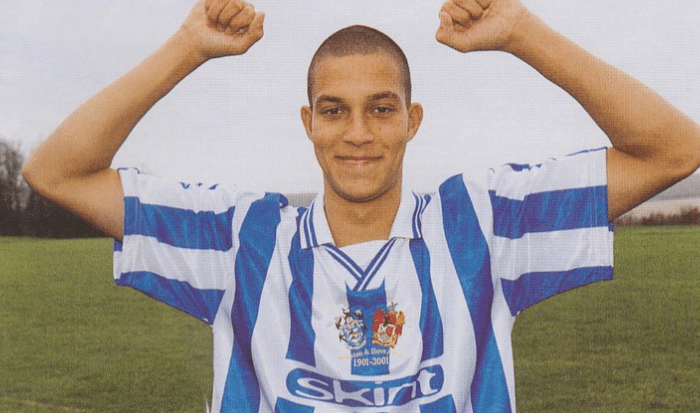
Young Zamora scored goals for fun at Brighton

While Brighton fans had witnessed Zamora leading from the front and scoring goals for fun, at Fulham he was asked to play a different role, and it disappointed him that people were only judging him on goals alone.

“If you ask Joe Bloggs down the street how many assists I have had this season they wouldn’t be able to tell you. Or how many team-mates I have set up for a shot at goal. Or pass completion. They just know goals, full stop,” he said.

“I was asked to play more as a defensive centre forward,” he said in an interview with the Fulham website. “It’s a job I did and I enjoyed putting AJ (Andrew Johnson) through.

“The team appreciated it; the fans possibly not. We didn’t finish seventh because I didn’t do a job. Ultimately it helped the team. Roy had faith in me and I’d like to think I repaid him.”

Zamora added: “The gaffer has been behind me from day one. There was a lot of pressure on me to score goals. Because I wasn’t, the press and the fans didn’t think I should be playing. But the gaffer and the players appreciated what I was doing for the team. That’s all that matters.”

‘Gentleman Jim’ on friendsoffulham.com recalled: “He had it in for some fans who kept booing him or saying he was not the best player and not supporting him.

“He was quite harshly criticised at the time by the fan base because he wasn’t scoring, but his general play and hold up play was very good for most of his time here.

“Whilst he could’ve managed the situation differently to endear himself more to the fans, he was combative and ended up doing very well for us.”

On the same forum, Graham Leggat said: “His best was as good as Mitro (Aleksandar Mitrovic) at his best for us and Saha (before we sold him to Man Utd). I would say even higher. He was absolutely unplayable, even if he didn’t bang in as many as the other two. A true Fulham great.”

Zamora might have escaped the Fulham boo boys if he’d accepted an approach from Hull City but he chose to stay, much to Hodgson’s delight, and went on to produce his best form.

He scored 19 goals in the season when Fulham finished 12th in the Premier League and made it through to the final of the Europa League (the first season of the revamped competition previously known as the UEFA Cup).

Zamora had been a fitness doubt before the game against Athletico Madrid in the People’s Park Stadium in Hamburg and he had to give way to Clint Dempsey 10 minutes into the second half.

The game went into extra time with the score 1-1 after 90 minutes and agonisingly Fulham succumbed to an extra time winner scored by ex-Man Utd striker Diego Forlan. Sergio Aguero, later of Man City fame, beat defender Aaron Hughes and crossed for Forlan to flick the ball home four minutes from the end.

The achilles injury Zamora had picked up prevented him from joining Fabio Capello’s England squad for the 2010 World Cup and he underwent surgery instead of heading out to South Africa.

As described in a previous blog post, Capello nevertheless kept Zamora in mind and the striker did eventually get his chance with the national side.

It was that same summer that Hodgson left Fulham to take over at Anfield and as the August transfer deadline loomed the manager hoped to persuade Zamora to join him at Liverpool.

But the player’s wife had just had twin daughters and he didn’t want to uproot the family. He was also getting on well with Hodgson’s successor Mark Hughes.

“I enjoyed my time with Mark, he came at the start of the season, I had a good pre-season with him,” he told the Say It and Spray It podcast. “Roy came in for me at Liverpool and Harry Redknapp came in for me at Spurs, but Mark said he wanted me to stay, and I’d just had my twins in August.

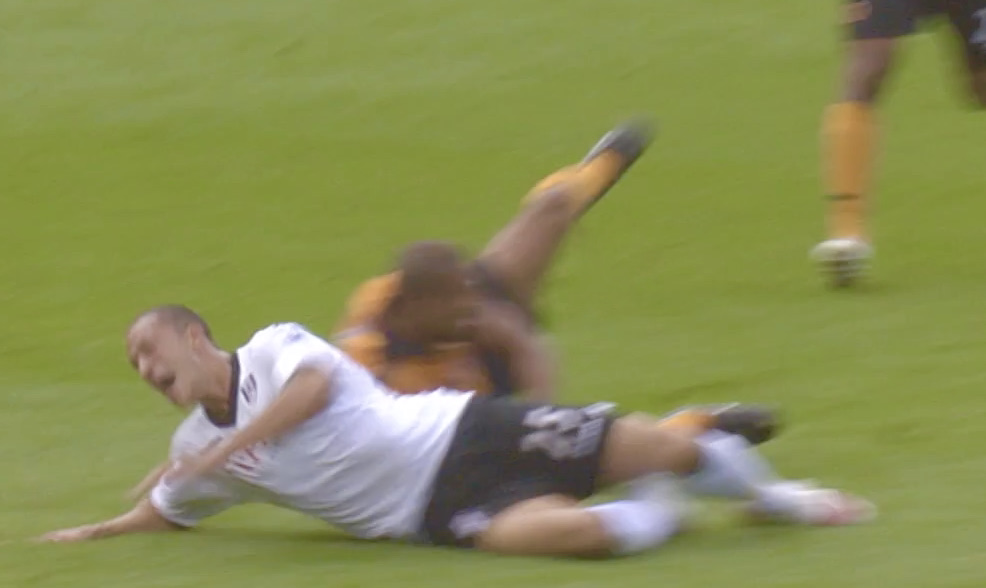
In the event, Zamora signed a new four-year contract – and the very next day suffered a broken leg in a tackle by Wolves’ Karl Henry.

He was sidelined for five months but managed to return before the end of the season, scored seven goals in 16 appearances and finally got to play for England that summer.

When Hughes decided to leave Fulham after just one season in charge, Zamora expressed his shock in newspaper interviews. “There was no hint of it,” he told the Mirror. “It was going well. Everyone had bought into his ideas and were just starting to play the way he wanted.

“He has decided not to stay and we go on and try and find another manager and hope we do well.

“But Mark has got his reasons. I don’t blame him at all. It’s one of those things. Managers and players come and go.”

Seven months later, Zamora left Fulham himself to rejoin Hughes, who had taken over at QPR.

Zamora didn’t see eye to eye with Hughes’ successor at Craven Cottage, Martin Jol, who he said had not got the best out of him, although he had scored seven goals in 29 appearances at the time of his departure.

Jol tried to deny there had been a rift with the player saying any talk of a disagreement between them had been inflated by the press.

“If you look at the media, they started this Bobby thing in August,” said Jol. “They said we had a bust up at the start of the season, but you always have a little bit of a disagreement.

“I don’t think there is any problem,” said Jol. “I said to him a few weeks ago ‘Do you love this club?’ and he said ‘Yes, I love this club, I love this team’.”

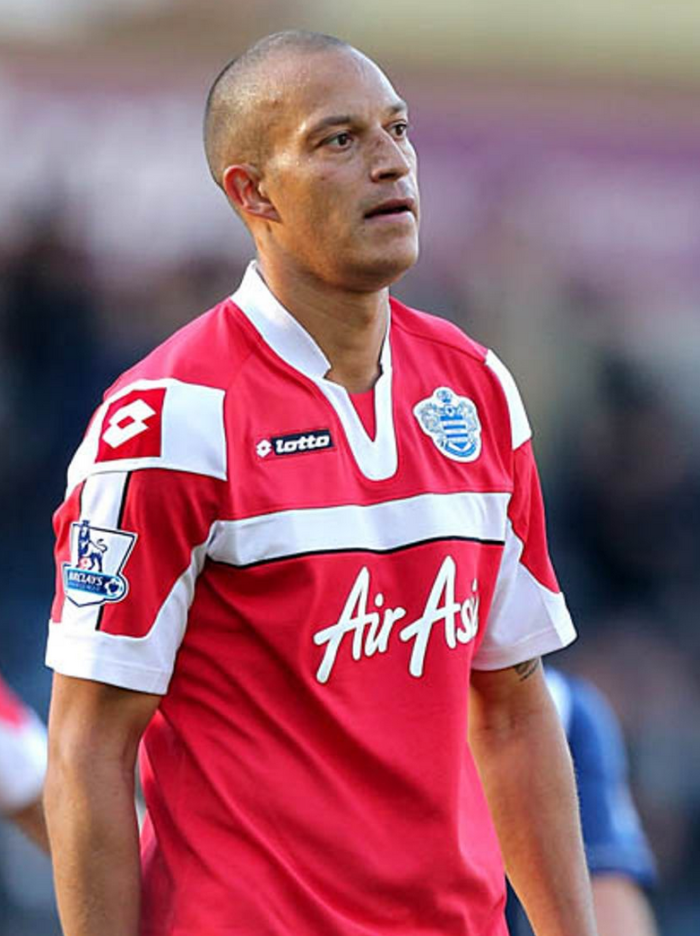
Nevertheless, Zamora joined QPR on deadline day in January 2012 for £4.5m and was given a two-and-a-half-year contract.

“We needed a player of his ilk at the football club and I couldn’t be more delighted, he’s a great foil for any team,” said Hughes, who’d only replaced Neil Warnock a few weeks earlier. “Bobby is a guy that makes things happen on the pitch, be it scoring goals or creating chances for others.

“He’s got great power and pace and his technical ability is top class. He’s got an excellent left foot.”

For his part, Zamora, by then 31, said: “I got on really well with the manager at Fulham. We all grew to like Mark. I think that will be the case here. He’s looking to take the club forward.

“This was the right time for me to have a fresh challenge. I had some great experiences at Fulham. Going to a European final is special. But this is a new challenge and I’m thoroughly looking forward to it.”

If Zamora hadn’t always seen eye to eye with Fulham’s followers, it didn’t get much better at Loftus Road – although he ended up the hero when he once again scored the winner in a Championship Play-Off Final.

A Wembley winner with QPR

Replicating the feat he achieved at West Ham, in May 2014 he went on as a substitute in the Championship play-off showdown at Wembley and his 91st-minute goal was enough to beat Derby County (who’d beaten Oscar Garcia’s Brighton in the semi-finals) to restore the Rs to the Premiership.

They’d only narrowly avoided relegation, by a point, at the end of the 2011-12 season and after Hughes had been sacked in November 2012, new boss Harry Redknapp couldn’t save them from the drop in 2013. Rangers went down in last place and Zamora made only 17 starts plus seven off the bench, scoring five goals.

Nevertheless, he was hailed as an example to others for putting himself through the pain barrier for the Hoops’ cause.

A troublesome hip injury hindered his involvement and some questioned why the former manager had paid big money for ‘veterans and cast-offs’. Paul Doyle in The Guardian reported that fans didn’t like an interview Zamora gave in which he said that he did not regularly watch football on television, which some took to mean he did not care about sport and was only interested in the money.

“Fans wondered aloud whether he was even bothered about getting fit enough to play again,” wrote Doyle. But he went on: “All that has changed. Now he is considered the embodiment of the warrior spirit that QPR need if they are to pull off the great escape from relegation. Zamora did not score against Sunderland but he led the line strongly, combined well with his new strike partner Loïc Rémy and, most of all, lifted his team-mates by battling manfully through pain.”

Redknapp reckoned that Zamora was only 60 per cent fit, and the persistent hip trouble was further aggravated by ankle ligament damage.

“That’s the sort of character we need,” said Redknapp. “He’s waiting for a hip operation and he has torn ankle ligaments but he’s played through that.

“At half-time we have to keep him on the move because if he sits down he’ll seize up. So, he puts a water bottle on his hip and stands at the wall doing stretches. He can’t get in his car after the game. But he’s a proper bloke. He’s not an idiot, he’s a sensible guy. He’s good for the team. He talks to people and is a big influence in the dressing room.”

QPR chairman, Tony Fernandes, also chipped in to acclaim Zamora, tweeting: “There are many young professionals who could learn a thing from Bobby Zamora. He’s an ultimate club man.”

Sadly, Rangers couldn’t avoid the drop but they bounced straight back via the aforementioned play-offs after finishing fourth in the Championship, 13 points behind second-placed Burnley, and 17 points adrift of champions Leicester City.

QPR had five fewer points than third-placed Derby and in the final at Wembley Redknapp admitted they were hanging on for their lives against the Rams having had Gary O’Neil sent off on the hour mark.

The lottery of extra time and penalties was looming when substitute Zamora struck in the dying embers of the match. “It was a fantastic goal to win the game and I couldn’t be more pleased,” Redknapp told The Standard.

“I would be a liar if I said I thought I would see us scoring. They had 11 men, were probing us and we were hanging on.

“That was a one off where you stand on the touchline, hanging on for grim death and get a goal like that.”

Once again Rangers found the Premier League too hot to handle and Zamora’s ongoing hip problem limited his involvement to 19 starts and 14 appearances off the bench. He scored just three goals as QPR went down in last place.

Redknapp, who was replaced by former Albion full-back Chris Ramsey in February 2015, described how managing Zamora’s game time had been similar to the way he had to manage Ledley King at Tottenham.

“Ledley didn’t train at all to be fair,” said Redknapp. “To think he didn’t train one day and then play 90 minutes was unbelievable.

“It does take Bobby a few days to recover after a game, so it’s always on how he feels. He’s as good as anybody at doing what he does, holding the ball up and bringing people into play.”

Redknapp continued: “Bobby has been very important for us. After about 60 to 65 minutes he has to come off, but when he’s on the pitch he has been outstanding.

“We were bringing him off the bench to start with, but we’ve reversed it and started him recently. He’s been captain and great in the dressing room, I couldn’t be more pleased with Bobby.

“He’s got his hip but he manages it and when he plays he’s been great and his attitude has been first class.”

The return of Zamora to the Seagulls

Released in the summer of 2015, Zamora’s long-held desire to end his career back at Brighton was fulfilled when Chris Hughton invited him to join the bid for promotion from the Championship.

Back amongst the goals

Hughton had previously worked with Zamora at Spurs and said: “He is a great professional. I know he will bring plenty of experience to the team, having played Premier League, European and international football.

“He will also bring a lot in terms of character to the club and to the dressing room – but most importantly, having played more than 30 times for QPR last season, he brings top quality to our offensive options.”

There was frustration all round that in spite of a handful of vital goals he registered in that 2015-16 season, the injury issues prevented him from being able to help the Albion to promotion from the Championship.

In retirement, Zamora has tried his hand at various ventures and indulges one of his great loves away from football, carp fishing, in the Grand Fishing Adventure series with Ali Hamidi on ITV 4.

Catching carp with Ali Hamidi

Unsurprisingly, he’s also often seen as a pundit commenting on televised games involving his former clubs and is a popular guest on all sorts of podcasts, looking back at his playing days.

For example, he told the Albion podcast in November 2023: “When I came to retirement it was painful, I couldn’t carry on playing with the aches and the pains day-to-day. It was a nice relief, not having to take painkillers, anti-inflammatories that aren’t good for your stomach and liver.

“Christmas and New Year, being able to go skiing for the first time, it’s really nice. I am seven years into retirement now, but after three or four years you start to miss it; the boys and the banter in the dressing room.”

Zamora has also been involved in property development and is one of a multitude of top former players who are ambassadors with Football Escapes, football-based holiday experiences at exclusive hotels and resorts around the world.

Zamora also works in an ambassadorial role for the Albion, such as being an interviewee at the 2023 event when the club showcased the value its success has brought to the city of Brighton and Hove.

Zamora’s wait for England while dad’s Trinidad came knocking

TEN DAYS after Barry Fry’s prediction about Bobby Zamora playing for England, he made his debut for the country’s under 21 side.

It was 16 April 2002 and the Brighton striker went on as a sub for Leeds’ Alan Smith in a 1-0 friendly defeat v Portugal at Stoke’s Britannia Stadium. Paul Konchesky, a fellow graduate of the East London boys’ team Senrab, was left-back that day.

While plenty of observers expected Zamora eventually to step up to the full England side, he had to wait until he was 30 to make his first (and only) start at that level, and not before being wooed to switch allegiance and play for Trinidad and Tobago.

That happened in 2005, when the Caribbean country’s Dutch coach, Leo Beenhakker, wanted him to play in a World Cup qualifier against Guatemala. Zamora told the News of the World: “Trinidad is my dad’s country and to play in the finals would be a dream but West Ham are more important.

“I am only thinking about the club at the moment and do not want to be distracted from that. The club mean everything to me and if I can help us have a good season that is all that matters.”

After an injury-hit 2007-08 season, though, West Ham sold him to Fulham in the summer of 2008. The following year it was reported Zamora and his old Senrab teammate Jloyd Samuel had both obtained Trinidad & Tobago passports in time to play in a 2010 World Cup qualifier.

Injury prevented Zamora from getting involved but Samuel did play twice for the Soca Warriors even though he had won seven England under 21 caps. (Samuel tragically died in a road accident aged 37 in 2018).

Zamora top-scored with 19 goals in Fulham’s memorable 2009-10 season under Roy Hodgson. The south London side finished 12th in the Premier League and made it through to the final of the Europa League (the first season of the revamped competition previously known as the UEFA Cup).

Zamora had been a fitness doubt before the game against Athletico Madrid in the People’s Park Stadium in Hamburg and he had to give way to Clint Dempsey 10 minutes into the second half.

The game went into extra time with the score 1-1 after 90 minutes and agonisingly Fulham succumbed to an extra time winner scored by Diego Forlan. Sergio Aguero, later of Man City fame, beat defender Aaron Hughes and crossed for Forlan to flick the ball home four minutes from the end.

Nevertheless, Zamora’s goalscoring form had caught the attention of England manager Fabio Capello and his deputy Franco Baldini who were keen to call him up for the 2010 World Cup.

Sadly, those hopes were dashed by an achilles injury, and Zamora conceded: “I told Fabio that I was struggling and I knew that, had I gone, I wouldn’t have done myself or England justice.”

The player told The Independent: “It’s been an up and down season because it’s been so good on the pitch and I’ve scored some important goals. To now pick up this injury has kicked me in the teeth.

“It’s come during the last couple of weeks and when there was the possibility of going to the World Cup with England. That’s football, it’s a cruel game.”

He added: “The World Cup’s a massive tournament. It’s not about myself, it’s about England.

“Capello wished me all the best, hoped that I get fit and would be available next season.”

True to his word, Zamora was one of five uncapped players included in Capello’s squad immediately after the disappointment in South Africa.

One of the first people to contact him was former West Ham teammate, Teddy Sheringham, who he said he learnt so much from. “I got a long text message from Teddy. He said I might be nervous beforehand but that I deserved this opportunity, and he said once I’d taken part in my first training session, I would realise that I deserved to be there. He was spot on; after that I did not look out of place and I embraced being part of the squad.”

The call up came in something of a crazy week for Zamora because only days earlier his wife gave birth to twin girls, Gisele and Siena.

“The twins were born last Monday, they came out (of hospital) on Friday, then I had a match on Saturday, was back home for one day and then I was away with England, so I have not seen them as much as I wanted to, but I am sure I will find some time when I get back home,” he said.

“The twins are a massive part of my life now, and with getting the call-up to play for your country is a massive honour. I am lost for words. I am extremely proud to be called up to play for my country.”

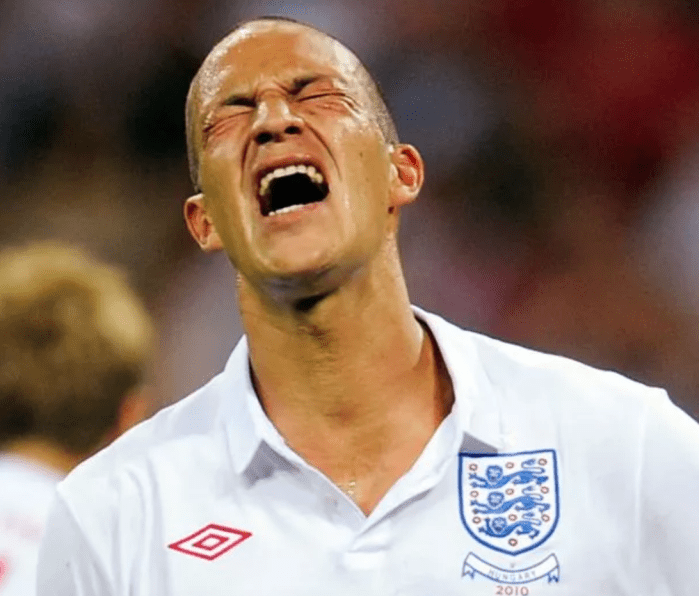
Capello sent him on as a second half substitute for Frank Lampard to play up front alongside Wayne Rooney in England’s 2-1 friendly win over Hungary at Wembley on 11 August 2010.

Having made that breakthrough, the day after he signed a new four-year contract with Fulham he agonisingly suffered another setback when he broke a leg (above) and sustained ankle ligament damage during a 2-1 win over Wolves. He was sidelined for five months.

Capello didn’t consign him to history, though, and called him up again in May 2011 (his teammate David Stockdale was in the same squad) to face Switzerland in a Euro 2012 qualifier. But neither were involved in the disappointing 2-2 Wembley draw.

His first start for England finally came six months later in a 1-0 home win over Sweden, the first time in 43 years that England had beaten the Scandinavian country. Zamora’s close friend (and another former Senrab graduate) John Terry was England captain and joining the striker in making first starts were right-back Kyle Walker and Everton’s Jack Rodwell.

Richard Williams in The Guardian clearly felt sorry for the debutant centre forward, though, writing: “Poor Bobby Zamora. Offered the opportunity to score England’s 2,000th goal on Tuesday night, a perennially unfortunate footballer was forced instead to stand and watch as Stewart Downing’s cross glanced off the side of Gareth Barry’s head and then off Daniel Majstorovic’s forehead before evading Andreas Isaksson’s dive as it looped inside the post for the most anticlimactic of own goals.”

Reporting on the narrow victory over the Swedes, Williams added: “Whichever side the ball went, Zamora made sure he was available. A double exchange of passes with Walcott in the 17th minute put Zamora in on goal, but after Isaksson blocked his first effort the follow-up was poked past the post from five yards.

“Any centre forward will ultimately be judged by the goals he scores rather than his total of assists, and Zamora spurned a wonderful chance in the 65th minute when Downing scampered down the left once more before pulling the ball back at precisely the right pace and angle for the striker to meet it with a first‑time connection. Jonas Olsson, however, flew in to deflect the shot for a corner.”

Zamora was subbed off in the 70th minute to be replaced by Darren Bent and the Guardian sports writer concluded: “England – and Zamora in particular – really should have inflicted greater punishment on such humdrum opposition.”

Bent had also replaced Zamora in his first start for England under 21s. That came in February 2003 in a 1-0 defeat to Italy in Carrara.

A month before his move to Spurs, he also started England’s 3-2 friendly win over Serbia and Montenegro at Hull’s Kingston Communications Stadium, on that occasion being replaced by Darren Ambrose. (His future Fulham and Albion teammate Steve Sidwell was in midfield that day).

Eight days later, in a UEFA under 21 championship preliminary match, he went on as a sub for Shola Ameobi as England beat Slovakia at the Stadium of Light, Sunderland.

Zamora showed England quality at an early age

After that under 21s debut against Portugal, he was selected in the squad for the UEFA under 21 championship finals in Switzerland. On 20 May 2002, David Platt sent him on as a sub for Gareth Barry in a 2-1 defeat to Italy in Basle.

Two days later, in the third group match, again a sub, he replaced Jermain Defoe as England lost 3-1 to Portugal and were eliminated from the competition.

On two other occasions Zamora was an unused sub but he didn’t add to his six caps. And, after

Capello quit the England job in February 2012, Zamora didn’t play for the full England side again.

• Ahead of Albion’s new year clash with West Ham, find out why Zamora’s move to the Boleyn Ground was so ideal in the next instalment.