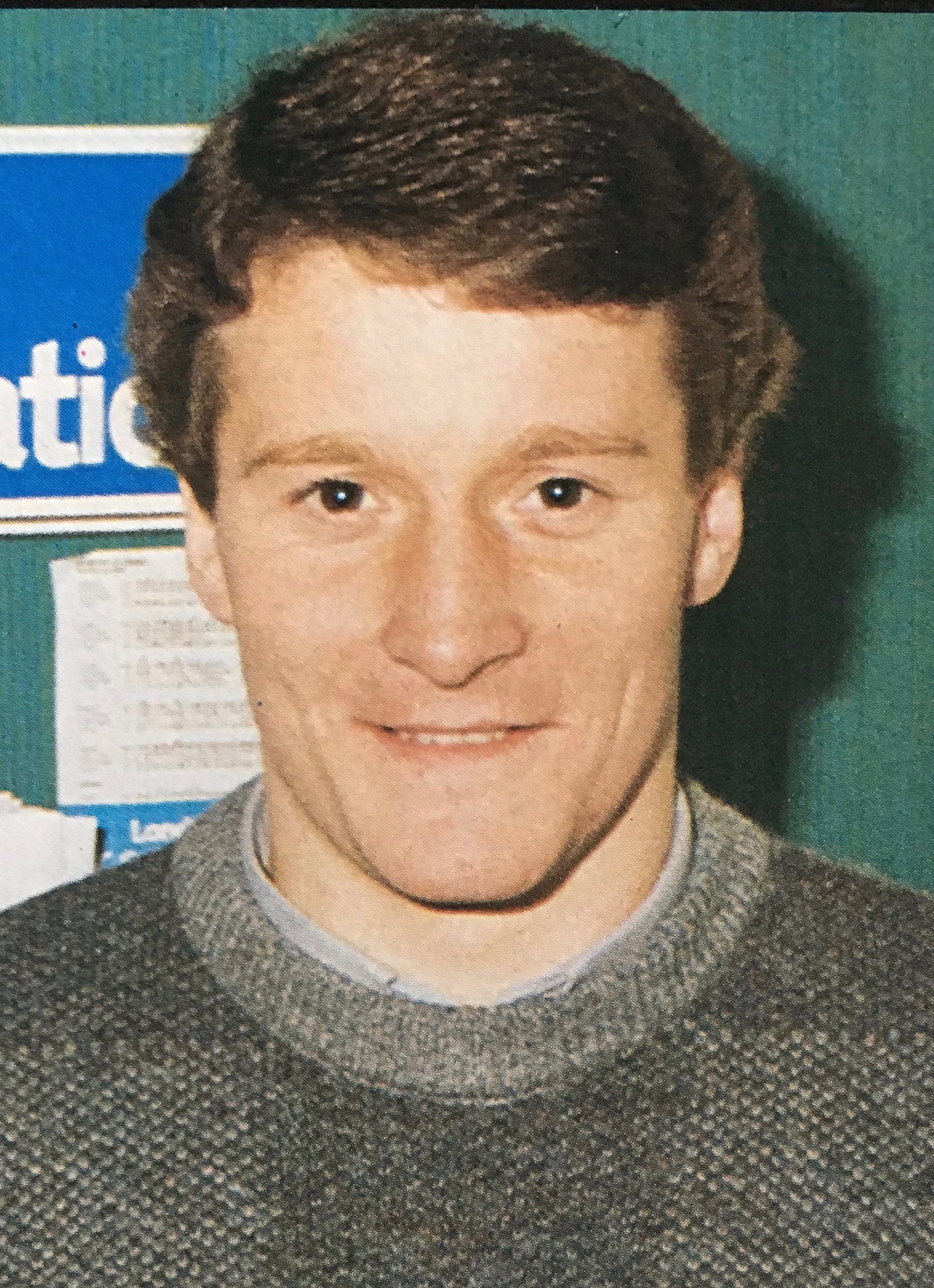
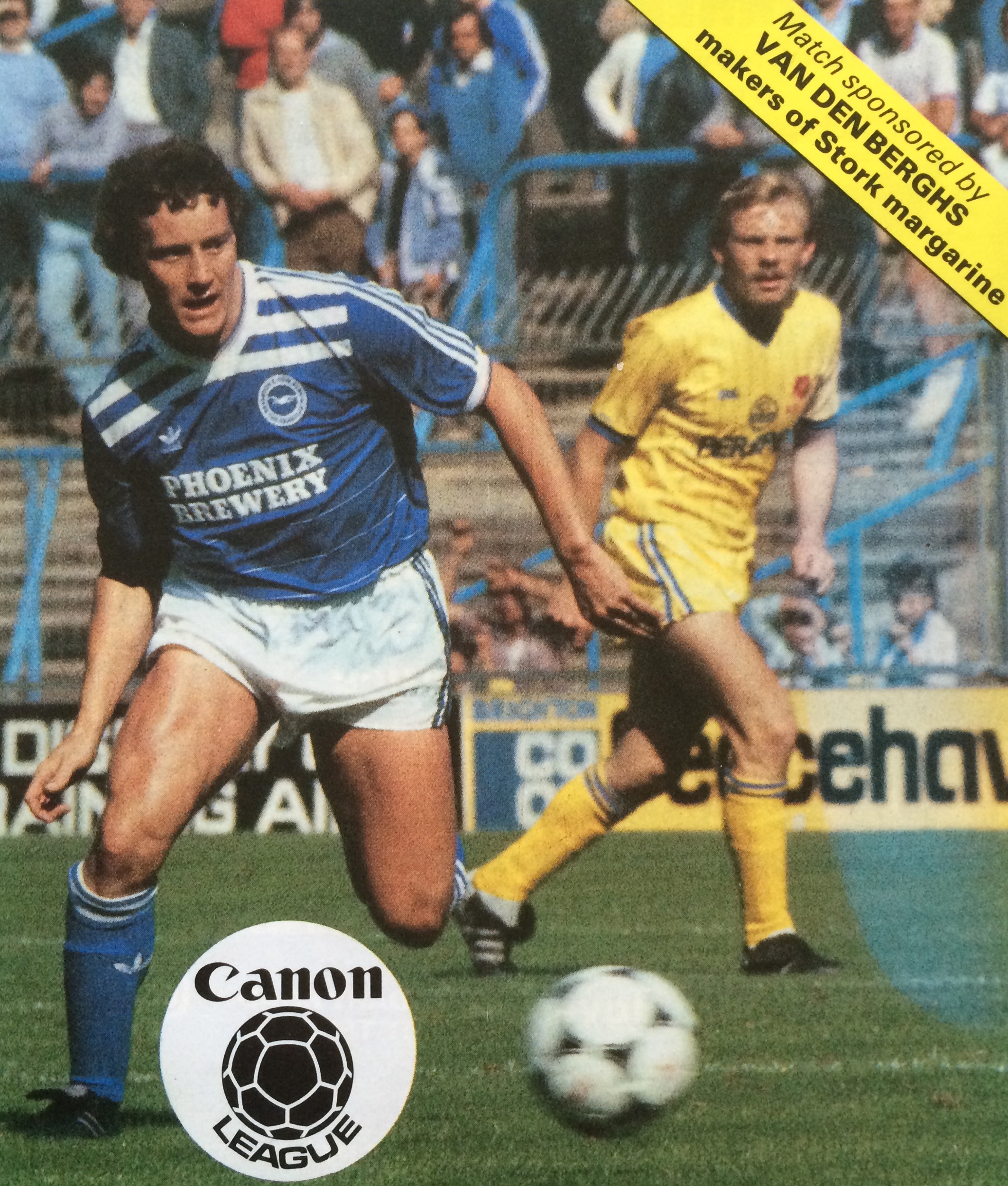
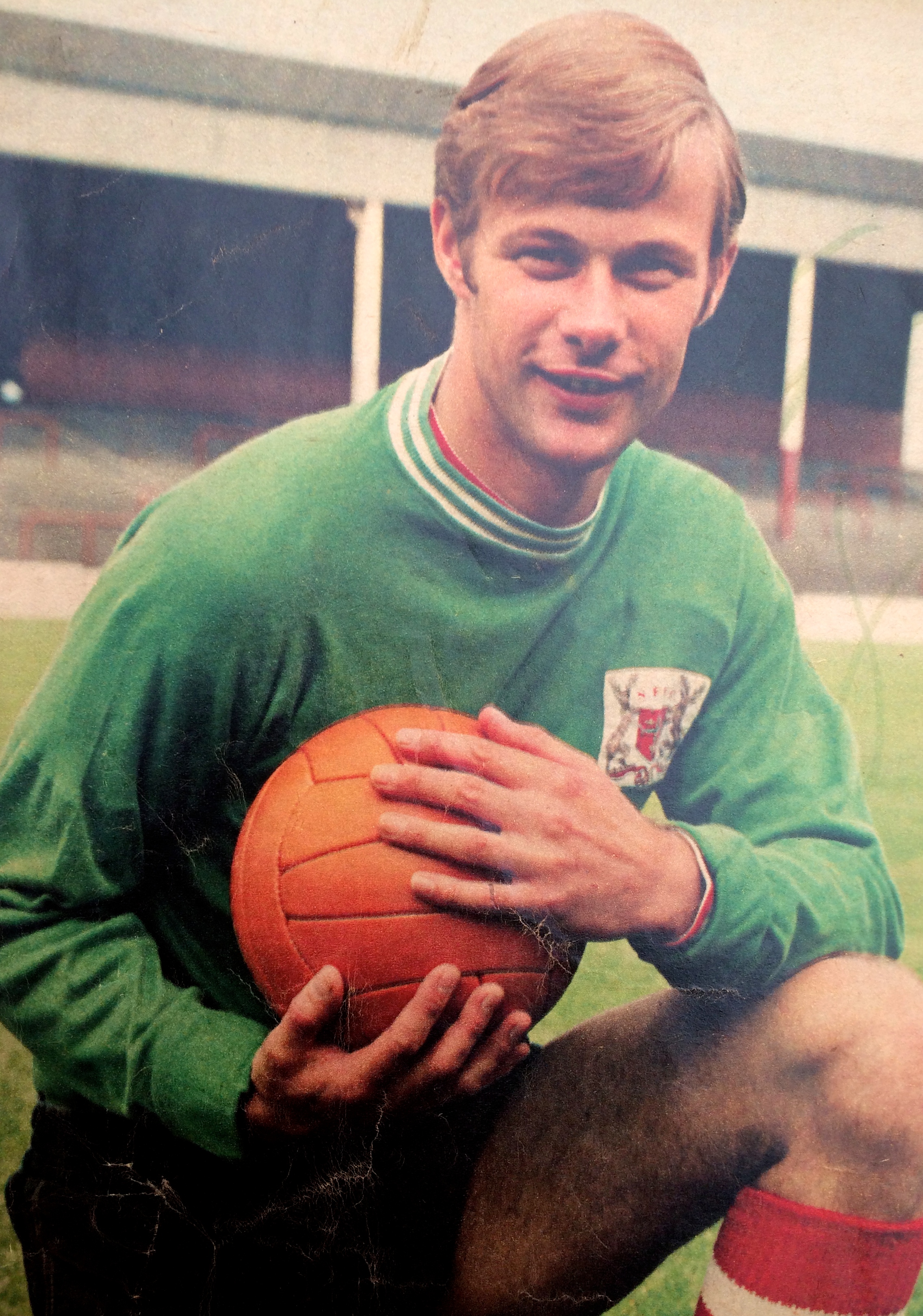
Cattlin wasn’t backed to buy ex-City defender Jeff Clarke for £6,500

HARD-UP Albion wanted to sign dominant centre-back Jeff Clarke in 1984 but, unable to meet Newcastle United’s modest asking price, they were forced to walk away from a deal.

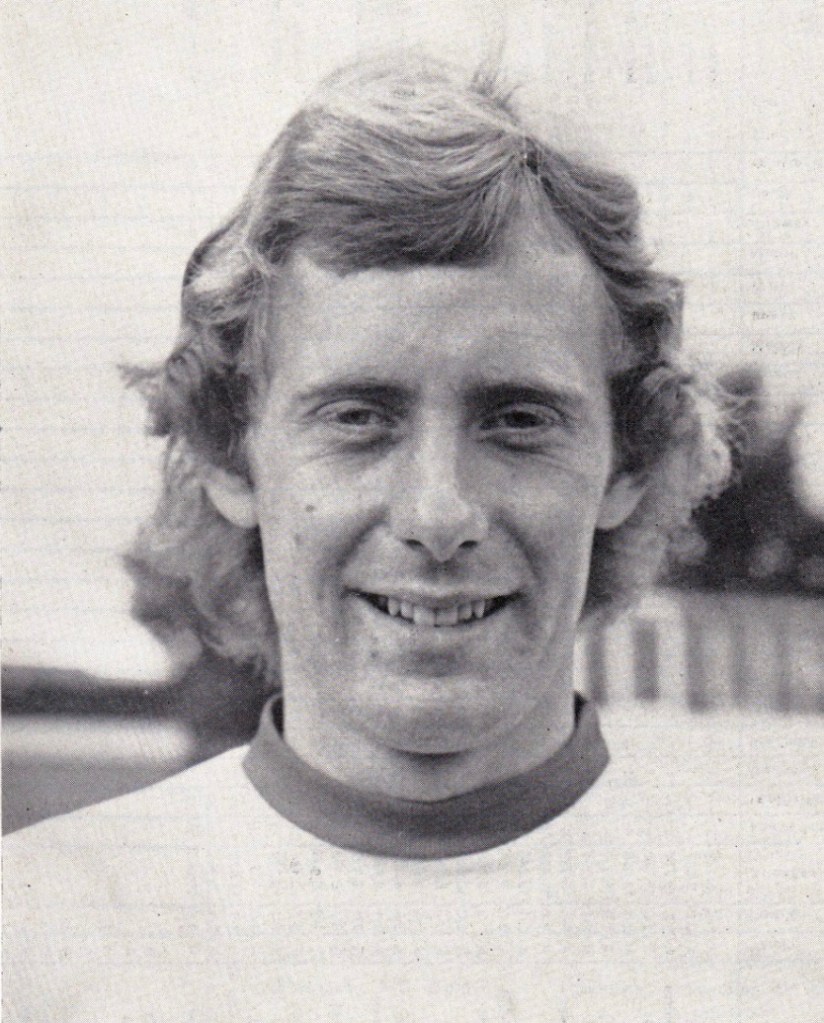
Clarke, who began his career at Manchester City, had plenty of experience to bring to a young Brighton side having played more than 300 games for north-east giants Sunderland and the Magpies.

At the start of the 1984-85 season, Clarke found himself on the outside looking in at St James’ Park, following the arrival of the legendary Jack Charlton as manager.

Although Arthur Cox had led them to promotion to the old First Division, he quit during the close season because he didn’t feel the club’s owners were investing enough in the playing side (some things never change!).

Former England World Cup winner Charlton, whose uncle ‘Wor’ Jackie Milburn was a Newcastle legend, took the hot seat and his preferred centre back pairing at the start of the season was John Anderson and Glenn Roeder.

Down on the south coast, Brighton boss Chris Cattlin was keen to bring some experience to the spine of the team he was rebuilding, and he took Clarke on loan to play alongside the emerging Eric Young, as well as introducing his old Huddersfield teammate Frank Worthington up front.

Clarke and Worthington made their debuts in an opening day 3-0 win at Carlisle United on 25 August (Danny Wilson, Terry Connor and Steve Penney the goalscorers).

The on-loan defender couldn’t have had a more eventful home debut three days later, in an ill-tempered evening game at home to Larry Lloyd’s Notts County, who had Justin Fashanu playing up front.

A clash between Fashanu and Clarke saw the defender come off worse, a back injury forcing him to be substituted with only 36 minutes gone (replaced by sub Neil Smillie).

In a game which saw seven players booked, fellow central defender Young joined him in hospital having been concussed by a stray Fashanu elbow. In the days before multiple substitutes, the Seagulls were forced to play the second half with only ten men, but nevertheless ran out 2-1 winners. Steve Jacobs opened the scoring on 22 minutes, Fashanu equalised on 55 but Worthington marked his home debut with the winner in the 67th minute. (The following June, Fashanu joined the Albion for a fee of £115,000).

jeff clarke BWClarke had sustained a fracture to a bone in his back but he was fit enought to return to the side on 22 September, in a 1-0 defeat away to Oldham Athletic, and was then on the winning side in the following two games: a 3-1 first leg Milk Cup win over Aldershot and a 2-0 home win over Fulham.

Unfortunately, that proved to be his last game for the Seagulls. Cattlin wanted to sign him permanently and Newcastle wanted just £6,500 for Clarke but the Albion board wouldn’t sanction the fee, as Cattlin explained at the Albion Roar live show in December 2018 (skip to 28 minutes in), which he believes signalled the beginning of the end of his time at the club.

In his matchday programme notes at the time, Cattlin said: “With the current cash crisis at the club, I could not finalise what I think is a very important deal in the long-term for this club. Clarke is a fine professional who, in many ways, reminds me of Peter Withe in his outstanding professionalism and leadership qualities.”

That sounds like he felt the captaincy of the side wasn’t in the right hands, and later in the same notes he explained how he had taken the job of skipper from Jimmy Case (“he needs to get his own game back to what we know he is capable of”) and given the role to Danny Wilson (“his leadership qualities on the park have become self evident”).

Born 18 January 1954 in the West Yorkshire mining town of Hemsworth, near Wakefield, Clarke was a Sheffield Wednesday fan as a boy and admired Owls central defender Vic Mobley.

However, it was on the other side of the Pennines that he made his breakthrough as a professional, with Manchester City.

Manager Tony Book handed Clarke his debut in a 4-0 home win over West Ham United on 17 August 1974 but he only played 15 games for the Maine Road outfit, his last game coming in a 2-1 home defeat to Carlisle United on 19 March 1975.

Clarke moved to Sunderland as a makeweight in the deal which saw the Sunderland and England international centre back Dave Watson move to City in the summer of 1975.
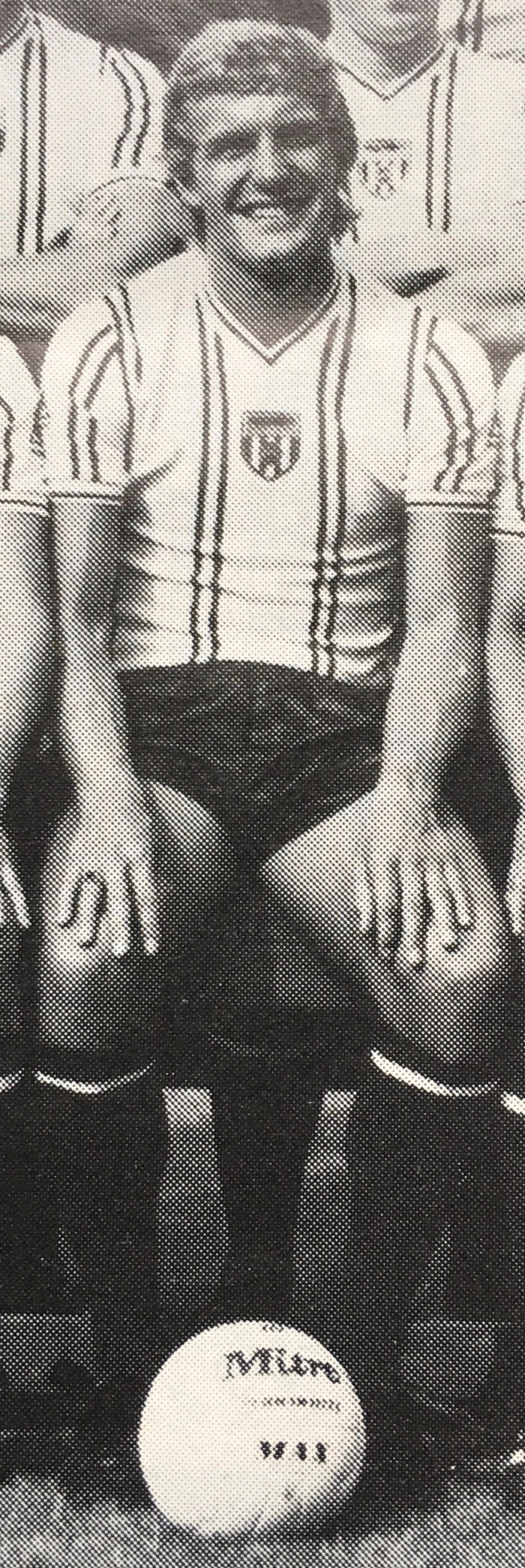
J Clarke Sund BW

The move to Roker Park finally saw his career take off and in seven years he made 213 appearances for the Wearsiders, many as captain (as seen in team photo above), including helping them to promotion to the top flight in 1976.

The excellent MatchDayMemories.com unearthed a Shoot/Goal profile of Clarke which revealed he had earned schoolboy under 18 international honours, his favourite food was peanut butter sandwiches and Brian Kidd, then of Arsenal, had been his most difficult opponent.

In 1982, at the age of 28, he switched to north east rivals Newcastle United on a free transfer, and stayed with the Magpies for five years.

When his two-month loan on the south coast wasn’t made permanent, he had other loan spells in Turkey and at Darlington but then returned to Newcastle and was restored to the first team, and featured in a New Year’s Day win over Sunderland in which future Albion winger Clive Walker was an opponent.

When Charlton quit as boss on the eve of the 1985-86 season, it signalled better fortunes for Clarke and under Willie McFaul he became a regular alongside Roeder, racking up 45 appearances and chipping in with three goals. The following season he played only seven games and hung up his boots in 1987.

Clarke stayed at St James’ Park in a coaching capacity after his playing days were over but simultaneously he took a degree in physiotherapy at the University of Salford, graduating in 1996.

He later became physio at former club Sunderland before moving to Leeds United in 2001. Made redundant at Elland Road in 2003, he moved to Dundee United in November the same year and has been the first team physio ever since.

History-maker Joel Lynch went to Town after Brighton breakthrough

SUSSEX lad Joel Lynch made Brighton & Hove Albion history when he was made first team captain aged just 19 and 186 days.

The ‘youngest-ever Albion captain’ honour was a measure of the maturity the defender had displayed in Dean Wilkins’ young line-up in April 2007, even if it was a temporary appointment in the absence of the rested Guy Butters and the injured Dean Hammond.

“I wasn’t even captain of my school team,” Lynch told Argus reporter Andy Naylor. “I am 19 years old and it is a great honour. I am grateful to the gaffer for having so much faith in me and it will be good for my confidence.”

Unfortunately, the experience against Doncaster Rovers at Withdean was marred when Lynch missed a clearance, the player he was supposed to be marking, Graeme Lee, scored and Rovers went on to win 2-0.

It was a minor blip at the beginning of a career which saw Lynch become a consistent Championship defender for more than a decade after emerging from Brighton’s youth ranks in the ‘noughties’.

Born on 3 October 1987 in Eastbourne, Lynch made his way through the age group sides with the Albion, often alongside another local youngster who went on to have a good career, Tommy Elphick.

“We played all the way through the youth teams together since the age of about ten,” Lynch told Naylor of the Argus. “Both of our games really changed and we really grew up when we went to Bognor on loan. We did really well there for Bognor and ourselves.”

 Lynch pictured in the Argus alongside Tommy Elphick when they were together as under 14s in 2001, and still together a couple of years later.

As well as being part of the Brighton team which reached the quarter finals of the FA Youth Cup in 2006, the year couldn’t have begun better for Lynch when Wilkins’ predecessor, Mark McGhee, handed him his first team debut in a narrow 2-1 defeat away to Southampton on 2 January 2006.

He went on to play 16 times that season, and also registered his first goal for the club, which is a fond memory for me and my son, Rhys. It came on Easter Saturday 2006, and we made a last-minute decision on the day to travel up to Ipswich to watch the game.

Although Albion were destined to relinquish their Championship status, they had a new-found confidence in their play thanks to the belated arrival of much-needed hold-up centre forward, Gifton Noel-Williams (on loan from Burnley).

He’d scored on his debut in a home draw against Luton and got an assist by laying on a goal for Paul Reid in a 2-0 win at Millwall two weeks before.

At Portman Road, always a favourite away ground, Albion, wearing the stylish all-burgundy away strip, opened the scoring when Noel-Williams buried a cross from Colin Kazim-Richards.

To add to the unexpected delight, teenage defender Lynch made sure our trip was a memorable one. Ipswich failed to clear a corner properly and when Reid returned the ball to the penalty area, Kazim-Richards jumped simultaneously with ‘keeper Shane Supple and the ball broke for Lynch (above left) to prod it in.

Albion, never wanting to make life too easy for themselves or their fans, allowed Ipswich to pull a goal back when Alan Lee flicked on from former Seagull Darren Currie’s cross for substitute Nicky Forster – a future £75,000 signing for Albion – to score. But thankfully it was too late for Ipswich to salvage anything from the game.

It was all to turn pear-shaped on the Easter Monday at home to Sheffield Wednesday, but for a couple of days at least the Great Escape still seemed a possibility.

In December 2006, the matchday programme devoted a two-page article to Lynch’s progress in the first team, pointing out how he had begun at left-back, stepped in as a left-sided centre-back – his more natural position – and even played right-back in the 8-0 thrashing of Northwich Victoria in the FA Cup.

Lynch spoke of the experience he had gained playing alongside the veteran defender Guy Butters, telling the programme: “I learned a lot from him, Guy’s had a great career and he is still playing great football. Hopefully I will just slot in there when the time comes and, in the meantime, I will play wherever the manager wants me to play and hopefully stay in the team. I’ve still got a lot of years ahead of me to make the centre-half slot my own.”

Lynch confessed being handed the no.5 shirt at the start of the season had given him a massive boost. “So far, I have really enjoyed this season. I have had my ups and downs and missed a few games due to my performances,” he said. “There have been things that I have had to sort out within my game, but I think I have resolved them now and I am slowly regaining my confidence and my performances have been improving week by week since I regained my place in the team.

“I feel more confident and my self-belief has improved a lot. I want to keep improving and I think that I can help the team in a big way.”

Lynch said a lot of the younger players had been inspired by Bobby Zamora’s elevation to Premiership football and added: “Hopefully a few years down the line we all will be playing at a higher level with Brighton in a new stadium.”

Interviewed by the Argus on the eve of the 2006-07 season, Lynch said: “Last season was a season to just keep on progressing and doing well.

“This season is one where I really want to push on. I want to play a major part in getting the club promoted and express myself more so maybe more clubs are interested in me or I get called up for England.”

Pretty bold stuff from a 19-year-old player still aiming to establish himself, but, having been awarded a three-year contract, he certainly wasn’t short of confidence. “I’ve got to do something really big or something big should happen,” he continued.

“We’ll take it one game at a time but you’ve got to aim for promotion. You can’t aim for anything else.”

Lynch certainly made his mark across the League One season, playing in a total of 44 league and cup games.

The following season was only a matter of a few weeks old when Lynch was sidelined by a hairline fracture in his left leg and ligament damage when twisting to clear in a game against Millwall. Then when he returned sooner than expected, he suffered a hamstring problem.

Perhaps if Albion’s move to the Amex had come sooner, Lynch might have stuck around, but he clearly felt he needed to be playing at a higher level than the Seagulls could attain at the time and, in September 2008, having made 88 first-team appearances, forced through a loan move to Nottingham Forest, with various extensions taking the loan through to the end of the season.

In July 2009, the deal eventually became permanent, with Forest paying a £200,000 fee and offering Lynch a three-year contract. Albion obtained midfielder Matt Thornhill on a six-month loan from Forest as part of the arrangement.

The young defender initially found it difficult to break through as a regular at Forest, with most of his appearances coming as a stand-in left-back.

It was in the 2011-12 season that he began to get games in his preferred position, at first playing alongside Wes Morgan and then, after Morgan’s transfer to Leicester, pairing with Luke Chambers.

In November 2011, writer Peter Blackburn waxed lyrical about Lynch’s form at Forest via the seatpitch.co.uk platform, describing him as “a tough-tackling, committed, classy and agile defender”.

Blackburn added: “Capable of reading the game, nipping in front of the attacker to steal the ball and hold his own in the air, Lynch also seems to possess the sort of driven cross-field ball out of defence not seen on the fair shores of the Trent since prodigal son, Michael Dawson so entertained the crowd.”

No doubt it would have delighted Lynch that he scored a last-gasp equaliser for Forest at the Amex in March 2012.

Four months later, he rejected a new deal at Forest to become a fifth new signing made by Simon Grayson at Huddersfield Town, and in August the same year he got onto the international stage – not for England, though, but Wales. He qualified for Wales because his father came from Barry in South Wales, and he made his debut as a substitute in a friendly against Bosnia and Herzogovina.

HuddExam LynchLynch made 22 appearances in his first season with the Terriers; nine more the following season, and 35 in 2014-15. In January 2015, Lynch was winner of the Examiner Huddersfield Town Player of the Month award, with writer Doug Thomson saying: “He scored a stunning goal to help clinch a welcome 3-1 win over Watford. But Lynch, who stung the Hornets with an overhead kick, also excelled in the centre of defence.

“And the former Brighton and Hove Albion and Nottingham Forest man played a key role when Town finally ended their long wait for an away win, and kept a clean sheet to boot, at Wigan Athletic.

“Calm and composed both on the ground and in the air, the 27-year-old brings plenty of experience to the backline. Lynch also works well alongside skipper Mark Hudson.”

lynch qprAfter making 40 appearances for Town in 2015-16, he departed Yorkshire for London and signed a three-year deal with Championship side Queens Park Rangers.

The fee was undisclosed but was believed to be something of the order of £1.2 million and the QPR manager at the time, Jimmy Floyd Hasselbaink told bbc.co.uk: “He offers us something a little bit different. He’s left-sided, which will give us better balance, and has that ability to bring the ball out from the back.”

Hamstring and foot injuries hampered opportunities to show his worth to the Loftus Road faithful, a frustrating situation he talked about in January 2018, but he has since become a regular at the heart of the Rs’ defence.

Perhaps with an eye to the future, Lynch has a profile on the professional networking site LinkedIn.

Pictures sourced from The Argus (Simon Dack / Liz Finlayson), matchday programmes, Huddersfield Examiner and QPR websites.


‘Dynamic and energetic’ international Keith Andrews wanted longer Brighton stay

15486REPUBLIC of Ireland international midfielder Keith Andrews was something of a revelation during a season-long loan at Brighton & Hove Albion.
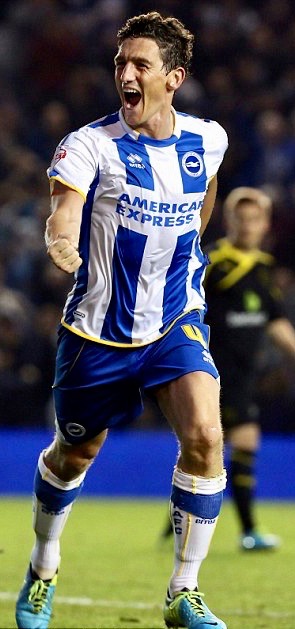
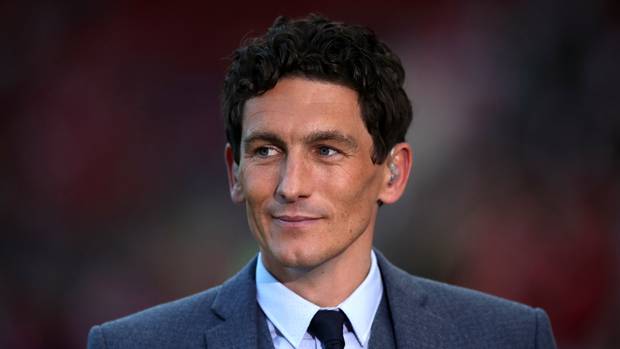
Now plying his trade as a pundit for Sky Sports, Andrews had previously played for the other Albion as well – West Bromwich – although his stay there was even briefer than his time with the Seagulls.

With the looming expectation that back-to-back Player of the Season Liam Bridcutt would shortly follow old boss Gus Poyet to Sunderland (which eventually happened in January 2014), Brighton turned to Andrews to cover the defensive midfield slot in 2013-14.

Arriving at the Amex in August 2013 just short of his 33rd birthday on a season-long loan from Bolton Wanderers, Andrews was not at all happy with the way the Trotters ‘disposed’ of him, telling bbc.co.uk: “Nobody really had the decency to even phone me as I was leaving.

“I think I deserve a little bit more respect than that, I suppose. I always felt I’d done things well at that club, been very professional and treated people like I like to be treated.

“To end on that note was a bit sour but you can’t be surprised by anything in football.”

Even if Seagulls supporters viewed his signing as somewhat underwhelming, Andrews himself was delighted and excited, saying: “If it wasn’t the right move, I certainly wouldn’t have gone and I didn’t feel any pressure to leave.

“It was a move that genuinely excited me. To come to a club that plays in the fashion and style that Brighton do was something that really appealed to me.

“I have still got a huge appetite for the game and I feel I can have a big impact here. I have come into a squad that has a wealth of experience and ability that will make me be the player I know I can be.”

And boss Oscar Garcia sought to dispel any doubts, telling bbc.co.uk: “He is a player with experience at the top level of the English game and international football – including World Cups and European Championships.

“Keith is a player who I know will enjoy the way we like to play. He is a dynamic and energetic player.”

It wasn’t long before supporters began to be pleasantly surprised by Andrews’ contribution on the pitch, and off it the new signing also began to show his aptitude for handling the media.

As early as September 2013, Andrews was speaking eloquently about his teammates, for example telling BBC Radio Sussex his views about striker Leonardo Ulloa.

“He is a handful and has got a bit of everything,” he said. “He is a big player for us at the moment as he is really leading the line on his own. He allows us to bring other players, such as Bucko [Will Buckley] and Ashley Barnes, into play.

“He is very effective and I’ve seen first hand in training how strong he is and what a handful he is to deal with. I have only been here a few weeks but I have been very impressed by the mix we have got in the dressing room. We’ve got experience, youth, foreign, English and Irish.

“It is a good atmosphere and if we hold onto what we have got I am more than confident we can have a very successful season.”

As the months progressed, Andrews became an established part of the side which Garcia ultimately led to the play-offs. In December 2013, Andrews made use of the platform offered by the Daily Mail’s Footballers’ Football Column to expand on his enjoyment of his time at the Amex.

“The club made a big impression on me when I played against them for Bolton last season, in terms of their style of football and their new stadium, and when they came in for me it was a very easy decision in footballing terms,” he said. “It’s not an easy decision, moving 250 miles away from your home in the north-west, but Brighton made it very clear they wanted me and Bolton made it clear they didn’t.

“It came out of the blue, but I felt it was a chance to be a part of something really exciting.”

Garcia’s decision to quit after the failure to get past Derby County in the play-off semi-finals was the catalyst for a number of changes in the playing personnel, although Andrews hankered to make his move to Sussex permanent having been involved in 37 appearances since his temporary move.

keith ands v sheff wedHe registered one goal during that time, an 89th minute equaliser at home to Sheffield Wednesday in October.
In a May 2014 interview with the Bolton News, he said: “It would be something I’d be interested in. When the people are so good to you and make you feel so welcome, the fans have been fantastic, it’s a one-club town.

“No-one supports anyone else and the attendances are something that I haven’t experienced in football for a long, long time. We’ve got the best attendances in the whole league although other clubs in the league are supposedly bigger.

“It’s a club I would like to stay involved in but contract-wise I’m contracted to a different club next season, I’m only here on loan. These things are not always in your hands and you can’t always dictate where you go and how your career pans out.

“But I would certainly like to stay on at Brighton into the future because I have thoroughly enjoyed it this year.”

The midfielder also reflected positively on his time at the Amex in a blog post for Sky Sports, pointing out: “Although I was only at the Amex for one season I have a lot of affection for the club as I think they try to do things in the right manner for the club to evolve with real sustainability for years to come.

“There are good people involved behind the scenes there, none more so than in the academy. Last season I worked closely with the academy manager John Morling and the development coach Ian Buckman as I was in the middle of my UEFA ‘A’ licence and they couldn’t have done any more to help me.

“It was a great experience to work with them as they prepared weekly and monthly schedules with the rest of the coaches and sports scientists to ensure the young lads had the best chance of developing their games, both technically and physically.

“I was amazed at the schedule a 14-year-old at the club had and a little envious to be honest as it certainly wasn’t like that in my day!”

Born in Dublin on 13 September 1980, Andrews came through the ranks of Drumcondra side Stella Maris before being picked up as a junior by Wolverhampton Wanderers, where he stayed for six years.

He made his first team debut on 18 March 2000 in a 2-1 win at Swindon and at 21 was Wolves’ youngest ever captain in a game against QPR, but he was sent out on loan on three separate occasions, playing briefly for Oxford United, Stoke City and Walsall.

After 72 appearances for the Molineux side, in 2005 he moved on to Hull City, where injury blighted his only season with them He then had a two-year spell with Milton Keynes Dons, where he had a productive midfield partnership with Alan Navarro, and he assumed the captaincy of Paul Ince’s side.

His second season was a huge success as the Dons won promotion to League One; Andrews scoring the goal which secured the success. He also scored in the club’s 2-0 win over Grimsby Town in the Football League Trophy at Wembley.

Andrews was chosen in the PFA Team of the Year, won the League Two player of the Year Award and was listed 38th of FourFourTwo magazine’s top 50 Football League players.

The Irishman followed his old Dons boss Ince to Premier League Blackburn Rovers in September 2008 and, two months later, at the comparatively late age of 28, made it onto the international scene with Ireland, making his debut as a substitute in a 3-2 friendly defeat against Poland.

It was the first of 35 international caps. He was involved in Ireland’s 2010 World Cup qualifying campaign and although the country was winless at the 2012 European Championship in Poland and Ukraine, Andrews was named FAI Player of the Year for 2012.

Meanwhile, Andrews’ third season at Blackburn (2010-11) had been curtailed by injury, restricting him to just five Premier League appearances, and in August 2011 he went on a half-season loan to Ipswich Town.

A permanent switch looked on the cards but on deadline day of the January 2012 transfer window he ended up joining West Brom on a six-month deal. After 14 Premier League appearances for the Baggies, his contract came to an end and his next port of call was newly-relegated Bolton Wanderers, who he joined on a three-year contract in the summer of 2012.

Owen Coyle was the manager at that time but his tenure came to an abrupt end in October that year. Although Andrews played 25 times under his successor, Dougie Freedman, the following season he was edged out by the signing from Liverpool of Jay Spearing.

After his loan season with Brighton, Andrews had a similar arrangement at Watford but he didn’t enjoy the same success there and ended up curtailing the deal and going back to MK Dons on loan for the latter part of the season.

When the curtain came down on his playing career at the end of the 2014-15 season, he’d completed 413 career appearances and scored 49 goals.

He became first team coach at MK Dons and harboured ambitions of becoming manager when Karl Robinson departed, but he was overlooked and began working as a coach with the junior Irish international teams, and turned to punditry with Sky Sports.

ipanews_045350c2-6dc7-4ca9-82e8-cb2036cb6b94_1

Left back Harry Wilson “something of a fire-eater”

BRIGHTON boss Brian Clough turned up at Burnley to capture the signings of two of their fringe first team players – and ended up having pie and chips with the groundsman!

When Clough arrived at Turf Moor, he found manager Jimmy Adamson, chairman Bob Lord and secretary Albert Maddox were nowhere in sight, it being lunchtime.

In their absence, as recounted to respected writer Dave Thomas, groundsman Roy Oldfield made the famous visitor a cup of tea, popped to a nearby chippy to get them both pie and chips and chatted all things football until the office re-opened after lunch.

Although Clough hadn’t got quite what he expected on arrival, his journey did bear fruit. In exchange for £70,000, he secured the services of left-back Harry Wilson, a 20-year-old who had made 12 appearances for the Clarets, and midfielder Ronnie Welch, 21, who had played one game.

At the time, Clough was desperately trying to bring in new recruits to a beleaguered Brighton side that he and sidekick Peter Taylor had taken on in October 1973, a period covered in detail in a recent book, Bloody Southerners, by author and journalist Spencer Vignes.

The man who only the season before had led unfashionable Derby County to the First Division Championship, couldn’t quite believe what he had inherited at Third Division Albion.

The players seemed bewildered by what the new celebrity boss expected of them.

Heavy defeats – 4-0 to non-league Walton and Hersham in the FA Cup; 8-2 at home to Bristol Rovers and 4-1 away to Tranmere Rovers in the league – reflected the disarray.

Clough and Taylor weren’t slow in pointing the finger. Their only solution was to find replacements – and quickly.

Former Manchester United reserve Ken Goodeve was first to arrive, from Luton Town, although he failed to impress and made only a handful of appearances before joining Watford at the end of the season.

Goalkeeper Brian Powney was axed in favour of former England under 23 international, Peter Grummitt, initially on loan from Sheffield Wednesday.

Experienced left-back George Ley never played for the Albion again after the defeat at Tranmere, while utility man and former captain, Eddie Spearritt, also lost his place (although he eventually forced his way back into the side briefly).

Lammie Robertson, who knew the pair from his early days at Burnley, was asked to introduce them to their new teammates in the dressing room before an away game at Watford (they’d not been signed in time to play).

Robertson told Spencer Vignes in a matchday programme interview how Wilson was sporting a rather loud checked suit at the time and, in his own inimitable style, Clough boomed out: “Flipping hell, I never want to see that suit again.”

Needless to say the players laughed out loud, only for Clough to say: “What the hell are you all laughing at? They’ll be in the team next week.” And sure enough, they were.

Wilson and Welch made their debuts against Aldershot in a home game on Boxing Day when a crowd of 14,769 saw Albion slump to their fifth successive defeat, although at least the deficit this time was only 1-0.

A win finally came in the next game, a 1-0 success at home to Plymouth Argyle – Ken Beamish scoring the solitary goal.

In a 2010 matchday programme article, Wilson said: “I really didn’t want to go to Brighton. No disrespect but I loved it up at Burnley.

“The people there had been so friendly and helpful when I arrived from the North East so it broke my heart to leave. That said, I thoroughly enjoyed my time at Brighton and met some fantastic people, so, looking back now, I’m glad that Jimmy Adamson let me go.”

In the Evening Argus, reporter John Vinicombe purred about the impact of the new recruits from Burnley, saying Wilson “is looking something of a fire-eater. He has a rare zest for the game and relishes the close, physical contact that is synonymous with his position.

“He knows how to destroy and create, and does both in a manner befitting a five-year background at the academy of fine footballing arts (editor’s note: at the time, Burnley had a reputation for producing highly-talented young players).

“His colleague from Turf Moor, Ronnie Welch, is not so completely extrovert, but is no less involved in midfield, and has a fine turn of speed. He made one mistake through trying to play the ball instead of hoofing it away, but this can only be described as a ‘good’ fault.”

Further signings followed and the ship was steadied. Wilson kept the no.3 shirt through to the end of the season. But Welch made only 36 appearances for Albion before Taylor, by then under his own steam, traded in him and fellow midfielder Billy McEwan as a makeweight in the transfer that brought full-back Ken Tiler to the Goldstone from Chesterfield.

Wilson, meanwhile, became a mainstay in Albion’s left-back spot for three years, including being ever-present in the 1975-76 season.

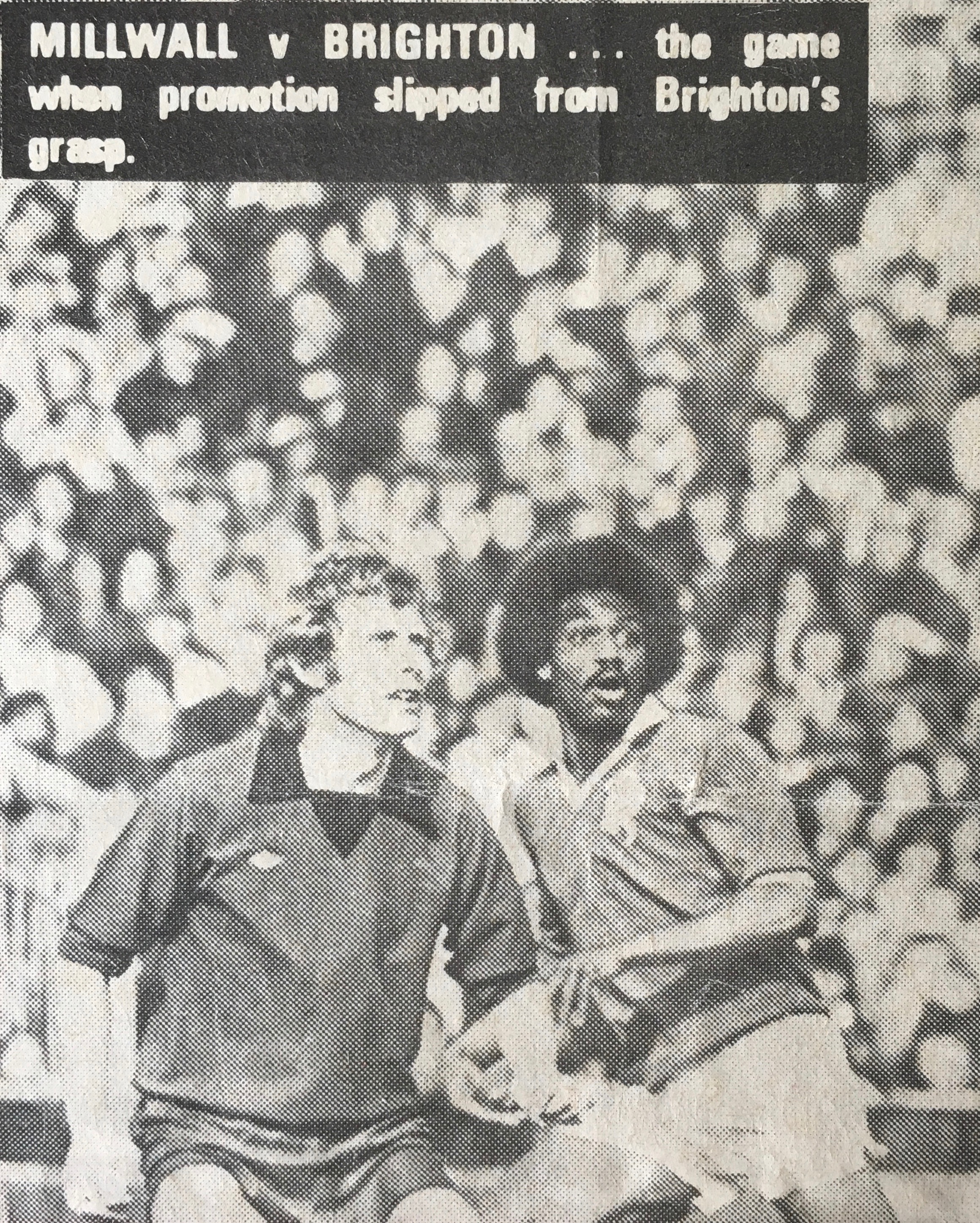
5 HW action v MillwallEver-present Wilson in action against Millwall at The Den

Suited for England!

Born in Hetton-le-Hole, near Durham, on 29 November 1953, Wilson played for Durham County Schools and made four appearances for England schoolboys (under 15s) in the 1968-69 season. He was taken on as an apprentice at Burnley before signing professional forms in December 1970.

In 1971, he earned an England Youth cap going on as a sub for Coventry’s Alan Dugdale in a 3-2 defeat against Spain in Pamplona. Don Shanks also played in that game.

He made his first-team debut at home to Chelsea on 26 April 1971 and the last of his 12 appearances for the Clarets was on 3 April 1972: away to Sunderland.

Young apprentice Wilson with experienced pros John Angus and Colin Waldron

He was part of Alan Mullery’s Third Division promotion-winning squad in 1976-77, although he was restricted to 22 appearances. The arrival of the experienced Chris Cattlin meant he was no longer first choice left-back, although in several games they both played – the versatile Cattlin being equally at home as right-back.

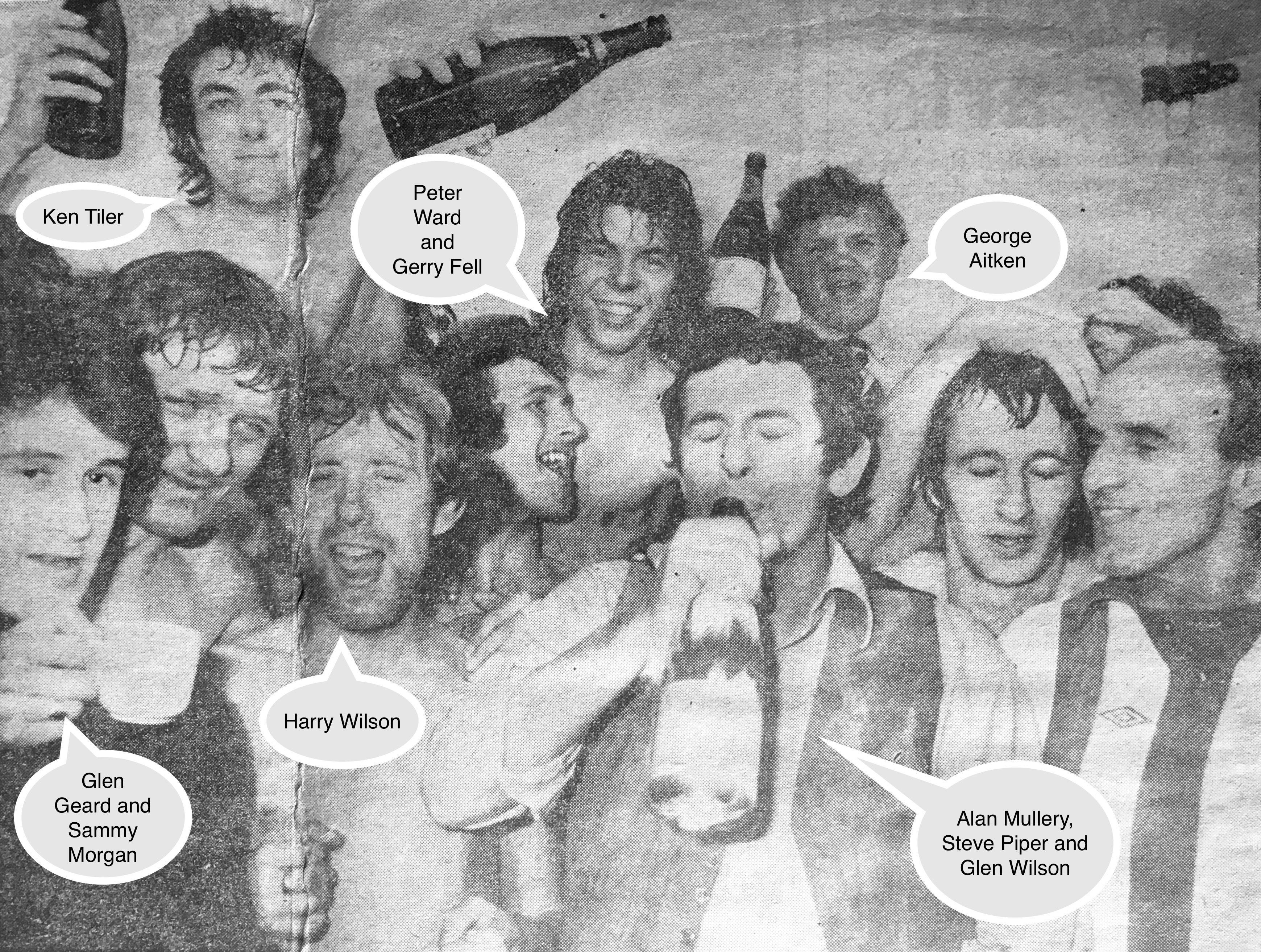
6 HW promotionA bare-chested Wilson was pictured (above) in the Albion dressing room alongside Mullery enjoying the celebratory champagne after promotion was clinched courtesy of a 3-2 win over Sheffield Wednesday on 3 May 1977. But that game was his Goldstone swansong.

He’d made a total of 146 appearances for the Albion – as well as chipping in with four goals – but when Mullery signed Mark Lawrenson and Gary Williams from Preston that summer, Wilson went in the opposite direction along with Graham Cross.

Only six months after arriving at Preston, Wilson was badly injured in a road accident after his car skidded on black ice and collided with a transit van. He suffered a punctured lung and damage to his knees. Doctors told him he wouldn’t play again, but he proved them wrong and ended up spending three years at Preston, playing 42 games.

“I suppose I was lucky to be alive,” he said in an Albion matchday programme article. “I lost a couple of yards of pace, but then again I ws never exactly the quickest of players.”

With his best days behind him, he moved back to his native north-east in 1980 to play for Darlington, making 85 appearances in three years.

He stayed in the north east in 1983, switching to Hartlepool for a season, but only played 16 times for them before dropping out of the league to play for Crook Town.

According to The Football League Paper, Wilson stayed in the game as manager of Seaham Red Star and, in 1988-89, Whitby Town.

He then worked as a community officer for Sunderland before joining the coaching staff at Burnley in the 1990s.

When Chris Waddle took over as manager, Wilson was sacked but he took the club to an industrial tribunal, which found in his favour.

He later worked for his long-term friend, Stan Ternent, at Bury, and as a monitor for the Football League, a job that saw him checking that the right procedures were being followed by the youth development set-ups of clubs in the north-west.

Wilson was in the news in 2007 when Ternent appeared at Lancaster Crown Court accused of assaulting Wilson’s son, Greg, on the steps of Burnley Cricket Club (a venue familiar to visiting supporters as a popular watering hole before games at the neighbouring football ground).

Greg Wilson required hospital treatment for a deep cut above his left eyebrow and needed nine stitches in his forehead.

Ternent said he had accidentally clashed heads, denied causing actually bodily harm, and was cleared by a jury.

4 HW colour laugh w WardWilson in an Albion line-up alongside Peter Ward
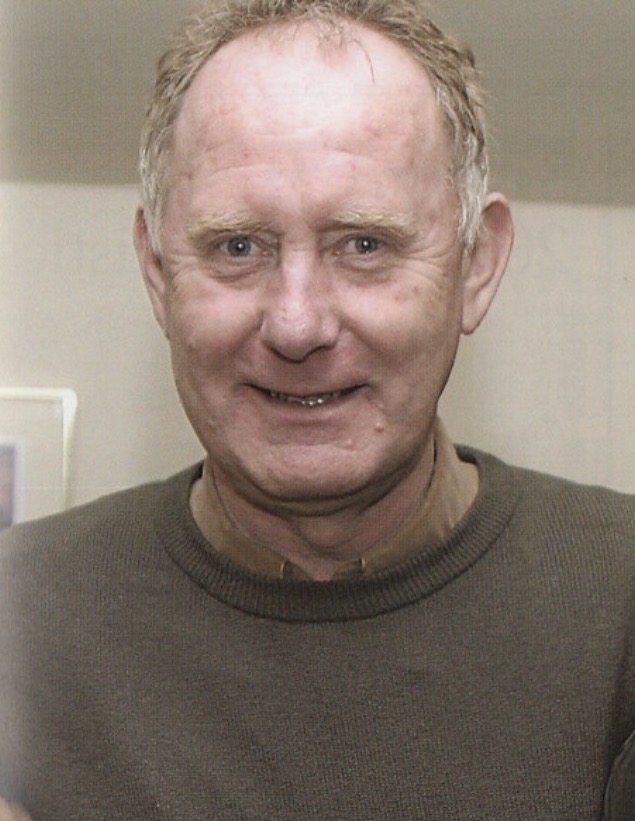
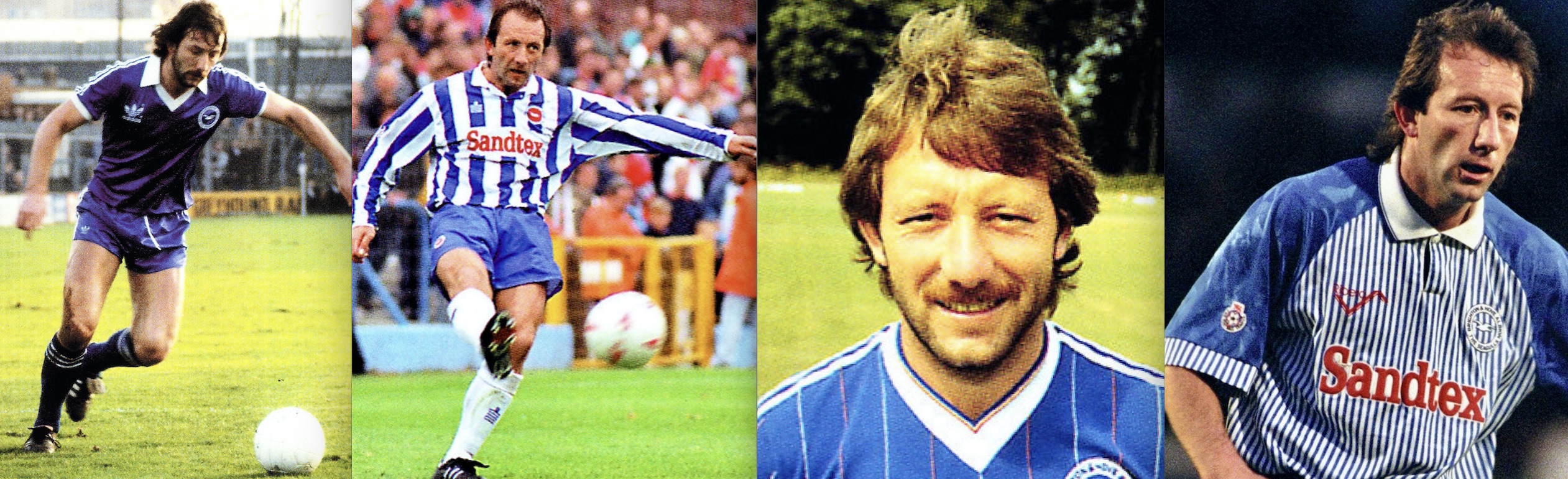
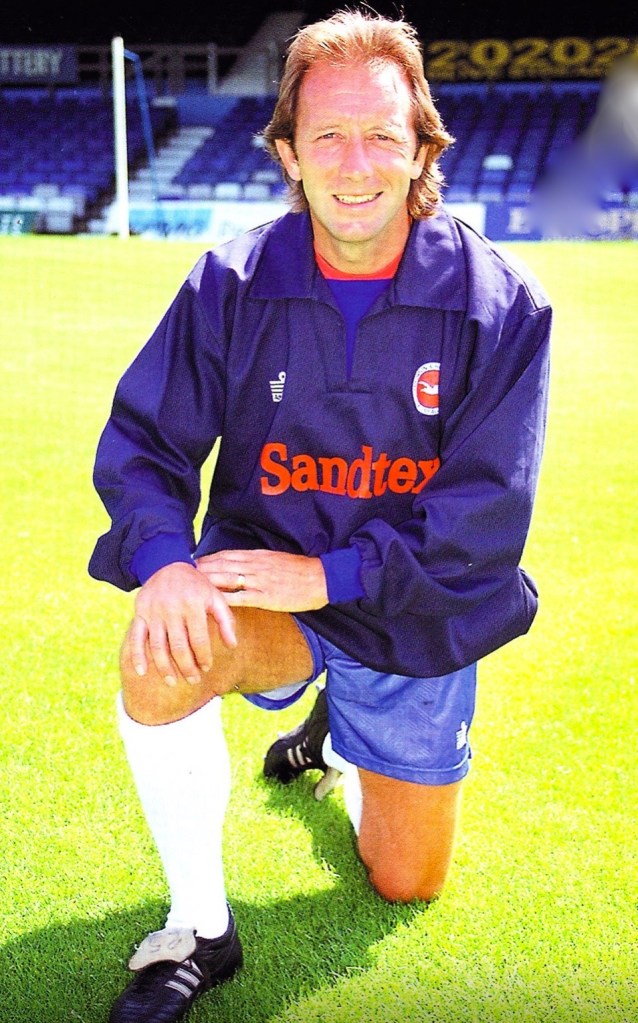
Wilson pictured in 2010

Liverpool legend Jimmy Case became a Seagulls favourite too

Case 4 imagesJIMMY Case remains one of my all-time favourite Albion players.
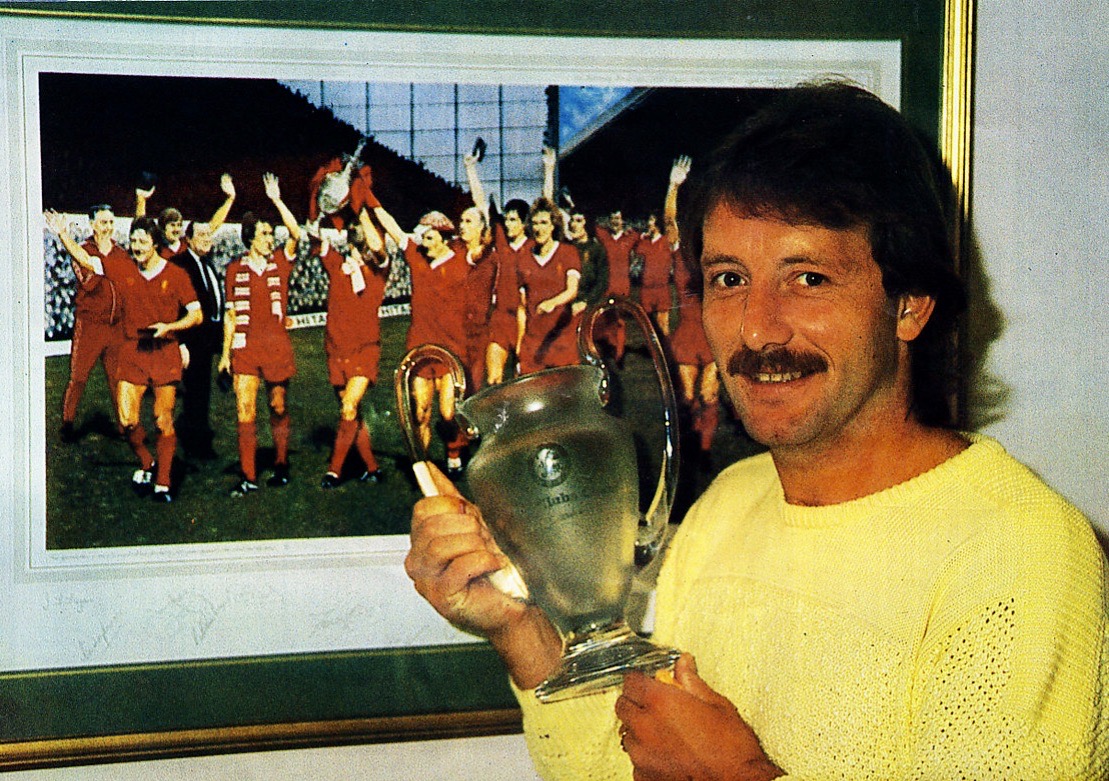
Several of the best moments I can recall as an Albion supporter involve Case: the 1983 FA Cup semi-final belter against Sheffield Wednesday at sunny Highbury perhaps the most memorable.

The biggest disappointment was that Albion let him go so easily.

Younger readers may only remember his unhappy stint as manager when the misdirected club was in turmoil, and he ended up holding the reins when Liam Brady just couldn’t take any more.

But rather than remember him as the man who took Brighton down to Division 3 in 1996, I remember the class act who arrived at the Goldstone in 1981 with a trophy cabinet the envy of many a footballer.

Although Brighton lost the sublime Mark Lawrenson to Liverpool as part of the deal that saw Case move to Brighton, they gained a player who had already got three European Cup winners’ medals, four Division 1 (Premiership equivalent) winners’ medals plus one each for winning the UEFA Cup, European Super Cup and the League Cup.

Case, born in Liverpool on 18 May 1954, was one of four children David and Dorothy Case raised in a council house in the city’s Allerton district.

He learned how to handle himself on a football field playing in a tough dockers’ team but Liverpool picked him up from the local non-league club, South Liverpool. By then, Case had left school and was training to be an electrician.

He carried on those studies but after two years on Liverpool’s staff he made his first team debut in April 1975 in a 3-1 win over QPR.

He scored his first goal in a 3-2 home win over Spurs at the beginning of the following season and, in what must have seemed a dream start, completed his first full season as part of a championship winning team, as well as scoring in the two-legged UEFA Cup Final win over FC Bruges.

Case EuropeThe triumphs and trophies kept coming with Case enjoying the ride but by 1980-81 he was beginning to be edged out by Sammy Lee, and manager Bob Paisley didn’t look kindly on some of the off-field escapades Case was involved in with fellow midfielder Ray Kennedy.

Paisley said: “He had lost his appetite for the game in his last year at Anfield. It’s a hard stint working the right flank in our team and Jimmy had stopped getting forward and was looking to play early passes from deep positions. I think his legs had become tired.”

The move to Brighton might never have happened if Alan Mullery had got his way because he had already done a deal with Ron Atkinson to sell Lawrenson to Manchester United in exchange for two of their players.

But when chairman Mike Bamber pulled rank and forced through the Liverpool deal he had negotiated, Mullery quit and Case arrived on a five-year contract to find a new manager in charge in Mike Bailey.

It felt to me that Brighton were stepping up to a whole new level bringing in someone of Case’s stature, and so it proved.

In his first season at the Goldstone, Albion recorded their highest-ever finish among the elite – 13th.

I recollect heading to Upton Park for the opening game of the season to see Case make his debut against West Ham and Albion earned a 1-1 draw despite having Gerry Ryan sent off.

Case found himself in trouble with referees on way too many occasions that season. Although he came to the club with a hard man image, amazingly he had never previously been suspended for accumulating bookings.

But by December he had to sit out a two game ban, and when his bookings total reached eight by March, he missed another three games.

Case told John Vinicombe of the Evening Argus: “I am a face, and there is nothing I can do about that. I am known, and that might explain some of the things that have happened to me on the pitch.

“The last thing I wanted on coming to Brighton was to get suspended. Brighton didn’t give me a contract to miss games.”

For anyone who has not yet read it, Case’s autobiography, Hard Case (John Blake Publishing) is well worth a read, detailing through writer Andrew Smart a fascinating career.

Disappointingly, it has a few factual errors that doubtless the distance of time brought about. Nevertheless, Case says: “I enjoyed every minute of my time with Brighton.”

Particularly pleasing for him was to score with a thumping header past Bruce Grobelaar in a 3-3 draw with Liverpool at the Goldstone, and to be on the right end of Albion’s 1-0 win at Anfield that season.

Case enjoyed life off the field as well and admits in his book: “The inhabitants of Brighton and Hove were just a little more sophisticated than the Allerton of the 1970s and I was introduced to the many and varied attractions of decent food and fine wine. It was an education I really appreciated.”

His second season was to end in relegation, but, more famously, with Brighton’s one and only appearance in an FA Cup final. Case scored goals in the fourth, fifth and sixth rounds, as well as the semi-final.

The newspapers had a field day when Case’s winner for Brighton in the fifth round of the Cup at Anfield denied his old boss Bob Paisley the chance to wipe the board with trophies that season.

It seemed every national and local newspaper headline revolved around the likeable Scouser: ‘It’s Case for Champagne’, ‘Jimmy sets out his case’, ‘Old boy Case kills off Liverpool hopes’, ‘Amazing Case’, ‘Killer Case’, ‘Case packs a super Cup punch’, ‘Case for Cup win’.

The Daily Mirror made him their footballer of the month for February on the back of that goal with reporter Harry Miller declaring: “No single act did more to capture the imagination of the public than midfielder Case’s dramatic 71st minute winner on Sunday, February 20.”

Case himself had mixed emotions about it all, saying: “I had ten fantastic years at a remarkable club. That’s something that goes deep down.”

He also revealed how a good friend of his had been out of the country at the time of the game and sent him a postcard with only two words as its message: ‘You bastard’.

When he scored the only goal of the game in the quarter final win over Norwich, the headlines continued: ‘Case of bubbly’, ‘The odd Case of hero and villain’, ‘Seagulls have landed with champagne Jim’.

That belting free kick in the Highbury sunshine set Albion on their way to the 2-1 win over Sheffield Wednesday, earning a first ever  – and only – place in the FA Cup final.

He was no stranger to Wembley, of course, having previously scored Liverpool’s goal in the 1978 2-1 defeat to Manchester United, but unfortunately he didn’t repeat his earlier goalscoring feats in the 1983 final.

He played a key part in Albion’s brave effort to earn a draw against Man U and then had the agony of returning home that Saturday evening to discover his mother, who had been a visitor, had died in her sleep at the age of just 63.

It was to Case’s immense credit that he took his place in the side for the replay just five days later.

While relegation brought the inevitable break-up of the team, with Gary Stevens and Michael Robinson departing before the new season began, Case publicly declared his intention to stay and try to get the team back up to the elite.

However, once fellow Scouser Jimmy Melia had been replaced by Chris Cattlin, there was probably only going to be one outcome and eventually Case was sold to Southampton for £30,000 in March 1985.

For him, it was a great move because he was returning to the top division again. It turned out that he was Lawrie McMenemy’s last signing for Saints, but, on this occasion, the change of manager was to cement his place in the side. Chris Nicholl made him the club captain the following season.

In 1985-86, Saints reached the semi-final of the FA Cup (beating Brighton 2-0 in the quarter-final!) losing 2-0 to Liverpool after extra time. If Saints had won, Case would have been the first player to appear in three FA Cup finals with different clubs.

Over his six years at The Dell, Case played alongside Glenn Cockerill and Barry Horne and helped to bring on the careers of youngsters such as Matt Le Tissier, Alan Shearer and Jason Dodd.

But when Ian Branfoot took over as manager in June 1991, he dispensed with Case’s services within a matter of days and transferred him to Bournemouth, who were managed by Harry Redknapp.

After 40 league games for Bournemouth in 1991-92, he moved to Halifax Town managed by former Saint and, one-time Albion loanee, John McGrath, who was being assisted by another ex-Albion man, Frank Worthington.

But Case only played there for six months, moving on to Wrexham, where he helped them gain promotion from the 3rd Division at the end of the 1992-93 season.

He then turned out for non-league side Sittingbourne until, at the ripe old age of 39, Liam Brady brought him back to Brighton in December 1993, as a player/coach. It was during that spell that he played in his 600th league game, the club chief executive David Bellotti presenting him with a silver salver on reaching that milestone

As a mark of the esteem in which Case was held, a testimonial game for him at the Goldstone Ground on 17 October 1994 had to be delayed 10 minutes because so many people wanted to get in to pay tribute. The capacity of the grand old ground was much reduced by then but still 15,645 packed in to see Case’s old club Liverpool do him the honour of providing the opposition.

Albion featured Matt Le Tissier in their line-up and even Ryan and Brady made substitute appearances as Liverpool emerged 2-1. The result, of course, was immaterial, and an emotional Case said afterwards: “I can’t thank the supporters enough. This was the only game I’ve ever been nervous about. I’ve never really asked for anything from the game, I just wanted everyone to enjoy it.

“It’s all been quite embarrassing really. I like to go to parties, I just don’t like them being my own.”

After his unhappy time as Albion manager, Case later managed non-league Bashley but is more often seen and heard these days on the after dinner speaking circuit or on regional football programmes. He also contributes to Southampton’s in-house radio station “The Saint”.

In July 2007, he once again donned a Brighton shirt, playing a cameo role alongside other past heroes in a brief curtain-raiser to Kerry Mayo’s testimonial game against Reading.

Howard Wilkinson – aka ‘Sergeant Wilko’ – began coaching at Albion

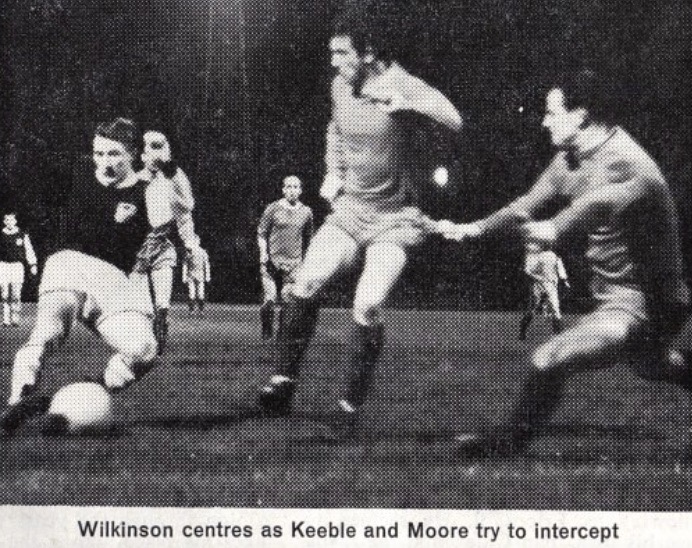
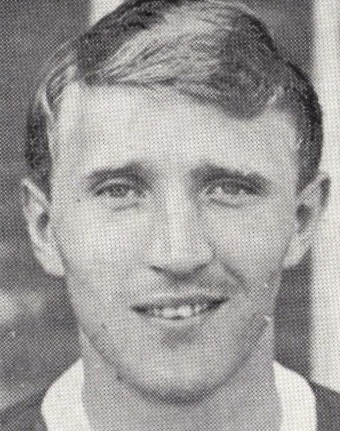
wilko bhaYORKSHIREMAN Howard Wilkinson was a key part of the first Albion side I watched. The former Sheffield Wednesday player was a speedy winger in Freddie Goodwin’s 1969 team.

But away from The Goldstone, he had already been sowing the seeds of his future coaching and managerial success.

My father was a founder of local amateur side Shoreham United, a Brighton League team, and the future “Sergeant Wilko” (as the press liked to dub him) was brought in to do some expert coaching with United’s first team.

I well remember as a young boy sitting on the sidelines in Buckingham Park, Shoreham, watching him put the players through their paces with various routines.

I waited eagerly with my autograph book as Wilkinson shared the benefit of his skills and experience with the willing amateurs.

I was chuffed to bits when he rewarded my patience with his signature at the end of the session but who would have thought the man before me would go on to manage League Champions Leeds United as well as the England national team!

I’ve since discovered how Wilkinson had taken his preliminary coaching badge shortly after joining Brighton in the summer of 1966. Readers of the matchday programme were told how Wilkinson was one of six Albion players who were taking the badge at Whitehawk under former Brighton wing half Steve Burtenshaw, who’d turned to coaching that year after his Albion playing career had come to an end.

By the summer of 1968, Wilkinson had already taken his full FA coaching badge at Lilleshall when only 25, and, as well as Shoreham United, he was coaching youngsters at Fawcett Secondary School, Brighton Boys, Sussex University and the Sussex County XI.

Born in the Netherthorpe district of Sheffield on 13 November 1943, he earned early recognition for his footballing ability playing for Yorkshire Grammar Schools and England Grammar Schools.

Wilkinson earned five caps for England Youth in 1962. He scored on his debut in a 4-0 win over Wales at the County Ground, Swindon, on 17 March 1962 in a side that also featured future full England international Paul Madeley (Leeds United).

He also appeared in the UEFA Youth Tournament in Romania the following month when England were beaten 5-0 by Yugoslavia, 3-0 by the Netherlands and drew 0-0 with Bulgaria. The following month he was in the England side beaten 2-1 by Northern Ireland in Londonderry in the Amateur Youth Championship for the British Association.

Wilkinson played local football with Hallam when he started to attract attention and was initially on the books of Sheffield United but it was city rivals Wednesday who took him on as a professional. The manager at the time was Vic Buckingham, known as the pioneer of ‘total football’, the philosophy later adopted by his protege Johann Cruyff.  But it wasn’t until the 1964-65 season under Alan Brown that Wilkinson broke into the first team, making his debut on 9 September 1964.

“My football league debut was a tough one against Chelsea, who were then top of the league, at Stamford Bridge,” he said. “We forced a 1-1 draw and I quite enjoyed the match.” He also played the following Saturday in the return fixture when they lost 3-2 at home to Chelsea (Bert Murray scored two of Chelsea’s goals). Wilkinson made 12 appearances across the season as Wednesday finished sixth in the old First Division.

The following season he scored both Wednesday goals in a 4-2 defeat away to West Ham United on 16 October 1965 and on 8 January he was on the scoresheet in a home 2-1 defeat versus Leicester City, but he only made eight appearances all season, playing his last game for the Owls on 19 March 1966. He wasn’t part of the Wednesday team who lost 3-2 to Everton in the 1966 FA Cup Final.

Wilkinson left Hillsborough for the Albion a few days after England won the World Cup and scored on his debut in the opening match of the season as Brighton drew 2-2 at home to Swindon Town. He was on the mark again two games later getting Albion’s goal in a 1-1 draw at Reading. He was also a scorer in one of the few highlights of that first season, when third tier Brighton beat Jimmy Hill’s top tier Coventry City 3-1 in a League Cup replay.

The winger from Wednesday continued to earn rave reviews for his performances until suffering concussion and a fractured cheekbone during a match away to Middlesbrough. In the days when medicine still had a long way to go, Wilkinson was out of the side for ages.

“I seemed to be out for an eternity after that injury,” Wilkinson told journalist Spencer Vignes in a matchday programme article. “They didn’t have the technology back then that they do today to mend injuries like that. I had an operation, they reset it, and I was on fluids for ages. It wasn’t nice.”

I’m grateful to the excellent Albion retro blog, The Goldstone Wrap, for digging out a quote from Wilkinson’s 1992 book, Managing to Succeed, in which he revealed this nugget about life on the south coast:

“When I was a player at Brighton, under manager Archie Macaulay’s guidance, we had some remarkable preparations for important matches and cup-ties. There were liberal doses of sherry and raw eggs, calves foot jelly, fillet steak, and plenty of walks on the seafront where we were taken to fill our lungs with the ozone.”

In five years with Brighton, he made 130 appearances (plus 17 as a sub), scoring 19 goals. He always had an eye towards what would happen after his playing days, explaining: “It was during my last year at Brighton that I decided to try and do a teaching qualification combined with a degree, ready for when I finished playing.”

He moved on from the Albion at the end of Pat Saward’s first season, having made only 18 starts under the new Irish manager. Jim Smith had contacted him to ask if he would join him at Boston United as player-coach. “It turned out that I would be on just as much money as I was at Brighton, even though Boston were non-league, so I went.”

Wilkinson enrolled on a degree course in Physical Education at Sheffield University and over four years combined coaching and playing with being a student, a husband and a father. On top of that, he ended up as manager after Smith left. Boston won the Northern Premier League title four times in his six years at the club and people started to take notice.

The FA appointed him as their regional coach for the Sheffield area and by 1978 he was helping out Dave Sexton and Terry Venables with the England under-21s. In December 1979, he joined Notts County as a coach under Jimmy Sirrel, eventually taking over as team manager for the 1982-83 season when County were a top-tier side.

In June 1983, he returned to Wednesday as manager and, in his first season in charge, steered them to promotion from the second tier. He kept them among the elite for four seasons.

Undoubtedly the pinnacle of his career was guiding Leeds United to the League Championship in 1992. He moved to Elland Road in 1988 and built a decent side captained by the future Scotland manager Gordon Strachan.

They won the last of the old Football League Division One titles and, remarkably, to this day Wilkinson remains the last English manager to achieve that feat. Not surprisingly he was that season’s Manager of the Year.

United fanzine The Square Ball had only good things to say about the man in a 2011 article. “Howard Wilkinson gave Leeds three fantastic seasons of unforgettable glory in 1989/90, 1990/91 and 1991/92; and the Charity Shield at Wembley and the European glory nights against Stuttgart and Monaco stand with the best memories of Leeds’ modern era. More than that, he gave Leeds United back its sense of justifiable self-worth; no longer living in the past, no longer derided in playgrounds, Leeds were a proper football club again, fit for the modern era.”

Sacked by Leeds in 1996, he then began to move ‘upstairs’ so to speak and was appointed as the Football Association’s technical director as the forerunner to several executive-style appointments.

However, he twice found himself in temporary charge of the England national team, firstly after Glenn Hoddle was forced to resign.

He oversaw a 2-0 defeat to France in a friendly at Wembley before Kevin Keegan took the reigns. Twenty months later he stepped into the breach again when Keegan quit and took charge of a World Cup preliminary match in Helsinki, England drawing 0-0 against Finland.

After England, he had a brief unsuccessful spell at Sunderland, assisted by Steve Cotterill, and later was involved in and around the boardroom back at Hillsborough.

Wilkinson’s work as technical director of the FA between 1998 and 2002 has been hailed as having a major impact and influence on the domestic game, providing a blueprint for the subsequent building of the National Football Centre at St. George’s Park.

In the 2024 New Year Honours List, having just turned 80, Wilkinson was awarded an OBE for his services to football and charity, including ongoing work as chairman of the League Managers Association. LMA chief executive Richard Bevan OBE said: “Howard’s legacy in English football may be one of the most unheralded yet important in the modern game.

“Universally respected and loved by his colleagues and peers in the game, he has built an association of professional football managers, which is globally recognised as one of the most progressive organisations in world sport.

“As one of English football’s greatest thinkers, he has supported thousands of managers, coaches, players and administrators in the game to fulfil their potential and build impactful careers in football.

“He has achieved so much in his life, whilst retaining the values, humility and decorum that were instilled in him as a young coach, passing on these values to everyone he has worked with and for.”


Why centre forward Alex Dawson’s boots were kept spotless by George Best

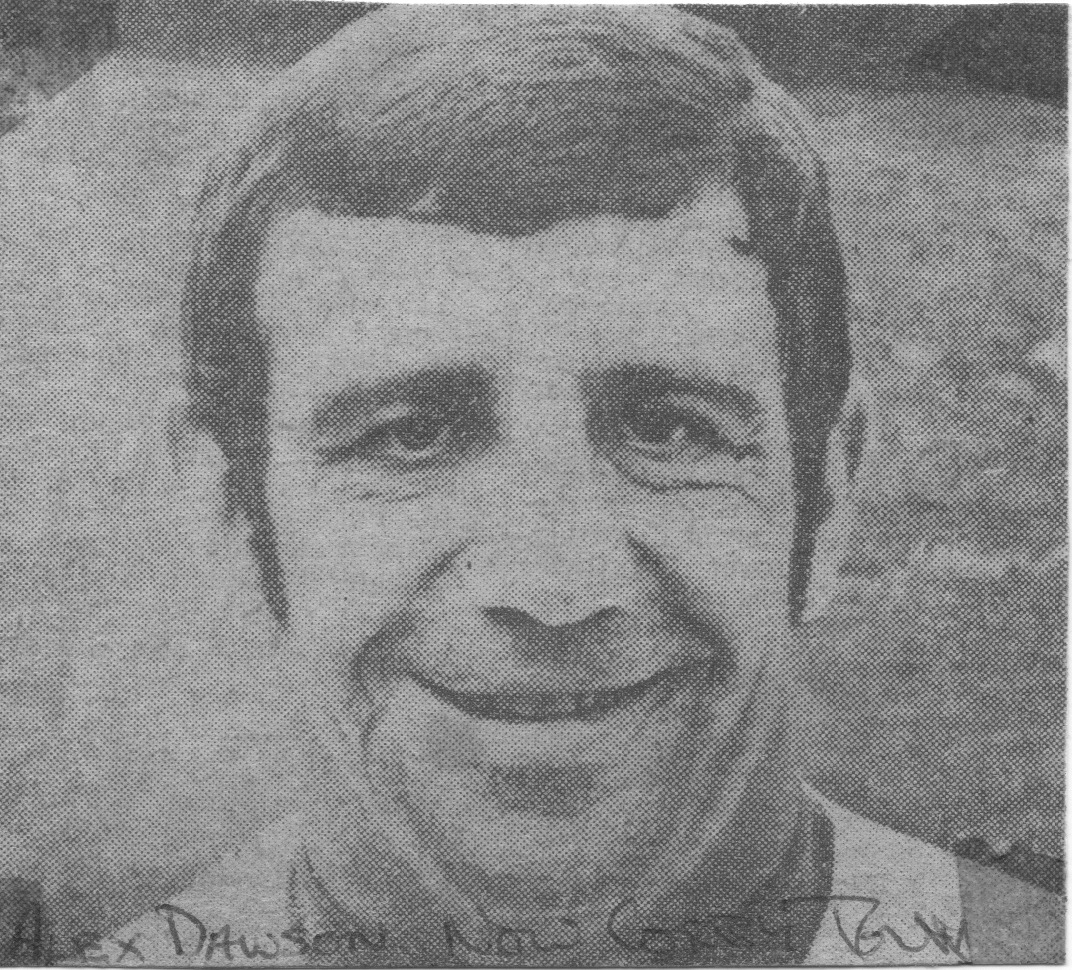
Dawson BHAThe mercurial footballing genius George Best used to clean the boots of the centre forward who scored twice in the very first Albion game I saw.

By the time of that 3-0 win v Walsall in 1969, Alex Dawson was on his way down the footballing pyramid, just over a decade after he came mighty close to perishing with some of his Manchester United teammates in the Munich air disaster.

Only five years earlier the swashbuckling centre forward had scored twice in the FA Cup Final at Wembley as his Preston North End side lost 3-2 to a Bobby Moore-led West Ham United.

The former Manchester United centre forward arrived at the Goldstone through a connection made at Old Trafford in that post-Munich era. Freddie Goodwin, another pitched from the United reserves into the first team as a consequence of the tragedy, made Dawson his first signing when he took over as Brighton manager in December 1968. A £9,000 fee brought him to Sussex from Bury.

At the Albion, he linked up with another familiar face in Nobby Lawton, a tenacious midfield player who had also been at Man U with him and then captained Preston in the aforementioned cup final.

Lawton, now sadly no longer with us, mentioned “that great striker Alex Dawson” in an interview he gave to the Lancashire Evening Post, published in May 2004.

“I’d known Alex since we were both on the groundstaff at Old Trafford,” Lawton recalled. “He was a bull of a centre-forward and was a Deepdale hero.

“He’s a lovely man and I was best man at his wedding. He hasn’t changed at all, and we are still great friends.

“Alex and the rest of the team would have graced any Premiership side today.”

Dawson certainly arrived with a bang on the south coast finding the net no fewer than 17 times in just 23 games, including three braces and four in an away game at Hartlepool.

The following season, Goodwin added Alan Gilliver to the strikeforce and he outshone Dawson in the scoring stakes, although the Scot still scored 12 in 36 games.

As is so often the case, it was a change of manager that marked the end of his time with the Albion. With Goodwin departed for Birmingham, replacement Pat Saward didn’t give him much of a look-in and he went out on loan to Brentford where he showed he could still find the back of the net with familiar regularity.

Greville Waterman, on bfctalk.wordpress.com in July 2014, shared a great magazine front cover featuring Dawson and recalled: “He was a gnarled veteran of thirty with a prominent broken nose and a face that surely only a mother could love, but he had an inspirational loan spell at Griffin Park in 1970 scoring seven times in eleven games including the winner in that amazing late, late show FA Cup victory against Gillingham. Typical of the times at Griffin Park, he departed after his loan spell as apparently the club was unable to agree terms with him. A classic example of both parties suffering given that Dawson never played another Football League game and Brentford lacked a focal point in their attack until the arrival of John O’Mara later that same season.”

Released by the Albion at the end of the 70-71 season, Dawson’s final footballing action was with non-league Corby Town.

Nevertheless, he could look back on a fantastic career as a goalscorer, with a strike rate the envy of many a modern day forward.

To this day, he is still the youngest player (at 18 years and 33 days) to have scored a hat-trick in a FA Cup semi-final (in Man U’s 5-3 1958 win over Fulham) and he is one of only nine players to score in each of his first three Man U games.

Originally from Aberdeen (he went to the same school as that United legend Denis Law), his parents had moved down to Hull and Dawson joined United straight from Hull Schoolboys. He made his United debut in April 1957 aged just 17.

On redcafe.net, Julian Denny recalled how Dawson once scored three hat-tricks in a row for a Man U reserve team that was regularly watched by crowds of over 10,000!

In researching for this piece, I’ve read some views that Dawson’s career with United may have panned out differently if he hadn’t been thrust into first team action at such a young age.

But that was one of the consequences of the Munich air disaster, which he has spoken about in several interviews since, usually around notable anniversaries of the tragedy.

It’s difficult to tell whether there were mental scars from the trauma of the crash but Dawson was just short of his 18th birthday when several of his close mates died. In an interview with Chris Roberts in the Daily Record (initially published 6 Feb 2008 then updated 1 July 2012), he recalled: “I used to go on those trips and had a passport and visa all ready but the boss just told me I wasn’t going this time. I had already been on two or three trips just to break me in. I know now how lucky I was to be left in Manchester. The omens were on my side.”

Dawson went on to describe the disbelief and the feelings they had at losing eight of the team, including Duncan Edwards several days later. “We were all so close and Duncan was also a good friend to me before the accident,” said Dawson. “Duncan was such a good player, there is no doubt about that.

“He was a wonderful fellow as well as a real gentleman.

“I will never, ever forget him because he died on my birthday, February 21, and before that he was the one who really helped me settle in.”

Just 13 days after the accident, Dawson took his place beside survivors Bill Foulkes and Harry Gregg as United faced Sheffield Wednesday in the fifth round of the FA Cup – and won 3-0.

That 5-3 semi-final replay win against Fulham was not surprisingly an early career highlight and when talking about it in 2013 (on the 55th anniversary of the disaster), Dawson told manutd.com: “In our first game with Fulham, Bobby Charlton scored twice in a 2-2 draw, and I was put on the right wing. I was a centre-forward really and when we played the replay at Highbury four days later, I was back in my normal position. Jimmy (Murphy) said before the game: ‘I fancy you this afternoon, big man. I fancy you to put about three in.’ I just said: ‘You know me Jim, I’ll do my best,’ but I couldn’t believe it when it happened.

“The first was a diving header, I think the second was a left-footer and the third was with my right foot.

“Nobody can ever take that afternoon away from me. It was a long time ago, of course, and it’s still a club record for the youngest scorer of a hat-trick in United’s history. Records are there to be broken and I’m surprised that it’s gone on for over half a century.

“I’m a proud man to still hold this record. Even when it goes, nobody can ever take the achievement away from me – I’ll remember that afternoon for as long as I live.”

In the two seasons following Munich, Dawson became a more established first team player although it would be wrong to describe him as a regular.

Another Scot, David Herd had scored a hat-trick for Arsenal against United and Matt Busby took him to Old Trafford in July 1961. It signalled the end of Dawson’s time with United.

Nevertheless, by the time he was sold to Preston in October 1961 for £18,000, he’d scored 54 goals in 93 United appearances.

And what about Best and his boots? It was the job of apprentices to look after the footwear of United’s first team players, and it was the young Best, who became a United apprentice in August 1961, who was detailed to keep Dawson’s scoring boots in good order.

In his 1994 book, The Best of Times (written with Les Scott), Best said: “Alex Dawson was a brawny centre forward whose backside was so huge he appeared taller when he sat down. To me, Alex looked like Goliath, although he was only 5’10”. What made him such an imposing figure was his girth.

“He weighed 13st 12lbs, a stone heavier than centre half Bill Foulkes who was well over 6ft tall. What’s more, there wasn’t an ounce of fat on Alex – it was all muscle.”

During a prolific time at Preston, Dawson scored 114 goals in 197 appearances, with the highlight that FA Cup Final in 1964.

Albertan on pne.net in 2012 said: “Alex Dawson was a super player … He was the complete centre forward – powerful, mobile and lethal with either foot or his head. He was also brave, committed and characterful.” While sliper on the same forum added: “In his prime Dawson was a powerhouse and great to watch.. I can safely say I’ve never seen a better header of a ball at Deepdale.”

Curlypete recalled: “You could literally see goalkeepers tremble when Dawson was running at them, it was either the ball, ‘keeper or more likely both who ended up in the net.”

Pictures:

Top, pictured wearing the 1970-71 kit.

• Kneeling, from a 1969 Albion line-up.

• A magazine front cover.

• Brighton Herald’s black and white photograph in a 1969 Albion programme shows Dawson in goalmouth action watched by colleague John Napier (no.5).

Well-travelled Wilson’s highs and lows as player and manager

IMG_5140DANNY WILSON, a Brian Clough signing for Nottingham Forest who struggled for games at the City Ground, hit the ground running when he joined the Albion, initially on loan, in November 1983.

He scored twice on his debut – one a cheeky back-heel (below) – when Cardiff City were beaten 3-1 at the Goldstone, and manager Chris Cattlin was swift to praise the newcomer, writing in his matchday programme notes: “I think that this lad, in the right setting, will be a great asset to this club.” Prophetic words. By the end of the season, he’d scored 10 times, four of them penalties, in 26 appearances.

backheel“It was a fantastic move for me,” Wilson said in a retrospective matchday programme article. “I’d gone from being a regular at Chesterfield to being a bit part at the City Ground, surrounded by all these players who had won European Cups, people like Garry Birtles and Viv Anderson. But with the likes of Ian Bowyer ahead of me, I was never going to get first team football.

“That all changed at Brighton. There was a great feeling about the place, and with players like Jimmy Case and Joe Corrigan, no shortage of talent. Fortunately, I got off to a good start, and things went from there.”

Not long after Wilson made the temporary move permanent, in exchange for a fee of £45,000, he played in a memorable 2-0 FA Cup fourth round victory over Joe Fagan’s Liverpool at the Goldstone.

Liverpool went on to win the league, the League Cup and the European Cup that season but goals from Gerry Ryan and Terry Connor denied the Reds achieving the quadruple.

“That has to be my favourite memory from all my time at the Goldstone,” he said. “Back then, Liverpool were just awesome, and to beat them like we did was virtually unheard of. It was the first-ever FA Cup tie to be screened live on television which made it even more special.”

Born in Wigan on New Year’s Day 1960, Wilson hoped to begin his career with Sunderland, but he was released as a boy and instead started out with his hometown club, who were then non-league. He stepped into league football with Bury before moving on to Chesterfield (right).Wils -Chest

His performances for the Spireites earned him a step up to Brian Clough’s Nottingham Forest but he struggled to make it as a regular.

It was after a brief spell on loan to Scunthorpe that he joined the Albion.

Towards the end of his spell with Brighton, Wilson earned his first cap for Northern Ireland (courtesy of his mother having been born in Londonderry) and over the next five years he collected 24 caps for them .

Wilson scored 39 times in 155 games for the Albion before the cash-strapped Seagulls, relegated to Division Three in 1987, cashed in on someone who had become a valuable asset and captain of the side.


The midfielder was sold to Luton Town for £150,000 where, alongside former Albion teammate Steve Foster in 1988, he won the League Cup, scoring a late equaliser (below left) as the Hatters beat Arsenal 3-2 at Wembley.

It was from Luton that he moved on to then recently-relegated Sheffield Wednesday – a £200,000 signing by Ron Atkinson –  in the summer of 1990. He continued to contribute his fair share of goals, netting 11 in 98 appearances for the Owls, as well as being a League Cup winner again in 1991.

Wednesday were the penultimate and eighth club of his playing career, before he embarked on what would become a multiple-club managerial career of varying success. Over the course of 25 years, Wilson’s teams won trophies, promotions, and narrowly escaped relegation, and he managed more than a thousand games.

His first post in the hotseat was as a player-manager at Barnsley, who he steered into the Premiership and earned the Managers’ Manager of the Year award. Unfortunately he could not deliver the same degree of success when he returned to Oakwell between 2013 and 2015, although that spell did mark his 1,000th game as a manager.

His second managerial job had also involved a return to scenes of past glory when he returned to Hillsborough in the top tier between 1998 and 2000. The spell ended ignominiously in the sack, though, after pressure was applied by local MPs for his removal, shortly before Wednesday’s relegation from the Premier League.

After what he felt was an unjust sacking by Wednesday, he was given a four-year contract to take charge of Bristol City. That spell came to an end after Mark McGhee’s Brighton beat the Robins to win the Third Division play-off final in Cardiff.

Six months later, he was back in the game for MK Dons’ inaugural campaign in League One, but he couldn’t save them from relegation to League Two at the end of the 2005-06 season and was once again looking for a new employer.

Within a month, he took over the reins of Hartlepool United, who’d been relegated with MK Dons, and in 2007 led them to promotion back to League One.

After leaving Hartlepool in December 2008, he began a three-year spell as manager of Swindon Town. Amongst his many signings were Gordon Greer, who went on to become Albion captain, and prolific striker Charlie Austin, who had a knack of scoring for Southampton against Brighton.

In May 2011, Wilson controversially crossed the great Sheffield city divide to take charge of United – which didn’t go down too well with Blades followers. During his reign, he helped to turn a young Harry Maguire from a midfielder into a defender. Wilson led United to the League One play-off final in 2012 where they agonisingly lost on penalties to Huddersfield Town.

His era at Bramall Lane came to an end in April 2013 after a string of poor results but by the end of that year he was back in the game for that second spell at Barnsley.

When Wilson left Oakwell in February 2015, he was out of work for 10 months but had an early Christmas present that year, once again returning to one of his old clubs in a managerial capacity. It was on Christmas Eve that he was appointed manager of Chesterfield, then in League One, where he took over from his old Brighton teammate Dean Saunders.

He managed to keep the Spireites in the division but a final parting of the ways came in January 2017, and that was his last managerial post.

Wilson tells his footballing life story in I Get Knocked Down (Morgan Lawrence Publishing Services, 2022).

IMG_6054

Wilson close

IMG_6052

Wilson cover

Wilson prowled many a touchline as a manager

Pictures from Albion matchday programmes.

Ian Mellor – the postman who delivered for Peter Ward

Mellor BHATHE SONGS still sung today that immortalise Peter Ward sadly fail to recognise the man who laid on so many of the nimble striker’s goals.

But fans of a certain vintage will never forget the contribution of former postman Ian ‘Spider’ Mellor.

Nicknamed because of his long-legged build, the beanpole midfielder-turned-striker, scored 31 goals in 122 appearances for Albion between 1974 and 1978.

Born in Wythenshawe on 19 February 1950, Mellor grew up supporting Manchester City and dreamt of playing for them. He went to Sale Moor Secondary School in the city and, aged 15, he was offered a trial at Maine Road but he didn’t get taken on. Undeterred, two years later he got a second chance after bombarding the club with cuttings of his exploits playing Sunday league football in the area.

He lapped up the experience of being coached by Malcolm Allison. It was towards the end of the Bell, Summerbee, Lee era and Mellor managed 40 appearances for City. In March 1973, however, while Allison was ill, chairman Peter Swales sold him to Norwich City for £60,000.

“Malcolm said he left Maine Road because I’d been sold without his permission when he was ill in hospital,” Mellor told the Manchester Evening News.

“I didn’t really stop to think what I was letting myself in for,” he said. “I should have stayed at City and then, to make it even worse, soon after I’d left, Denis Law rejoined the club. I could have been playing in the same team as my idol.”

After Mellor scored the only goal of the game in Albion’s 1-0 win over Allison’s Crystal Palace at the start of the 1974-75 season, Allison said: “I remember Spider when I was at Manchester City.

“I didn’t want to see him leave for Norwich. Directors force you to do that sort of thing, then they sack you. Spider was a late developer, but his timing is so good now.”

Norwich were struggling at the wrong end of the old First Division when Mellor moved to Norfolk and although he agreed to the deal, he reflected years later that he regretted it.

Perhaps, therefore, it was no surprise when Brian Clough arrived at Carrow Road in the spring of 1974 with the promise of making him Brighton’s record signing for a fee of £40,000, he jumped at the chance to play for the league title-winning manager.

Mellor was part of a triple signing from Norwich as Clough persuaded him and centre backs Andy Rollings and Steve Govier to drop down a division to play for Brighton.

Ironically, he never played competitively under Clough because of ol’ Big Ed’s move to Leeds that summer but under Peter Taylor he played mainly in a left-sided midfield role.

It was Taylor’s successor, Alan Mullery, who changed him from a wide midfield player to a centre forward, a position from which he contributed so many ‘assists’ for Ward. Those in the know certainly recognised his contribution.

In Matthew Horner’s excellent biography of Ward, He shot, he scored, Mullery is quoted as saying: “Ian Mellor had the ability: he was a big tall lad and he had super pace and a great left foot. I thought that they would form a terrific partnership.

“In my opinion, Mellor was wasted in midfield. He could hold on to the ball and he’d learnt his skills from Malcolm Allison and Joe Mercer at Manchester City, who were both great coaches. He shouldn’t really have been playing at the level we were at – he was too good – but he was and that was great for us.

“Spider would get the ball to him and Peter would go on these mazy runs and, nine times out of 10, would knock the ball into the back of the net.

“The partnership is history now but they were absolutely fantastic together.”

Former Albion colleague, now BBC pundit, Mark Lawrenson said of him: “Playing Ian Mellor alongside Ward was the masterstroke really – Mellor was an out-and-out footballer and a perfect partner for Wardy.”

Club skipper at the time, Brian Horton, added: “In the first year Ward and Spider were unbelievable. We didn’t have a big target man but the movement with those two was fantastic. They got about 50 goals between them and I chipped in with about a dozen more.”

Ironically one of the stand-out games of his Albion career, on 3rd May 1977, came against Albion’s play-off opponents, Sheffield Wednesday, in front of 30,756 fans at the Goldstone.

Argus reporter John Vinicombe named him his Albion man-of-the-match as Wednesday were beaten 3-2 to earn promotion.

Not long into the following season, Mullery splashed £238,000 on centre forward Teddy Maybank from Fulham and he went straight into the team alongside Ward, which unsurprisingly didn’t go down well with Mellor.

“I knew I was better than him, but they had to justify his price and that’s why I got dropped,” Mellor maintained in a an Albion matchday programme interview with Spencer Vignes. Mellor requested a transfer in spite of chairman Mike Bamber urging him to stay.

“In hindsight, of course, I should have stayed,” said Mellor. “I was still good enough. I was 29, with two good seasons left in me.”

Instead, in February 1978, he moved back to his native north west from Brighton to play for Chester for two years but then had three years at Sheffield Wednesday where he managed 11 goals in 70 games and, like his spell alongside Ward, provided a perfect foil for Terry Curran to bang in the goals.

He ended his career at Bradford City and later worked as a commercial executive for the PFA. He also worked for football boot supplier Puma and was a representative for football kit supplier Pelada.

Younger readers will be more familiar with the former Liverpool striker Neil Mellor, who now works in the media, who was one of Ian’s sons.

Ian Mellor died aged 74 in Cheadle on 1 May 2024 after a long battle with amyloidosis.

  • Pictures from my scrapbook and Albion matchday programmes show headlines Mellor made and the player in action.

scrapbok mellor

A little less hirsuit than in his playing days…

Peter Grummitt a contender for Brighton’s best ever no.1

grummitt portraitONE OF the best goalkeepers I’ve ever seen play for Brighton and Hove Albion previously spent a decade with  Nottingham Forest and was an England under 23 international.

Peter Grummitt was outstanding between the sticks and racked up an impressive career total of more than 650 league and cup appearances, virtually half of them in what is now the Premiership.

Born in Bourne (the Lincolnshire market town) on 19 August 1942, he was the last line of defence for Forest between 1960 and 1969, and credited Forest reserve team coach Joe Mallett, a former Southampton stalwart as a player, as the biggest influence on his career.

GrumForestBut he also made 158 appearances for the Albion between 1974 and 1977. Signed on loan initially from Sheffield Wednesday in the wake of the famous 8-2 defeat to Bristol Rovers, he went on to be a key part of the side that was on the up in the mid ‘70s until injury cut short his career, albeit that he was in his mid 30s by then.
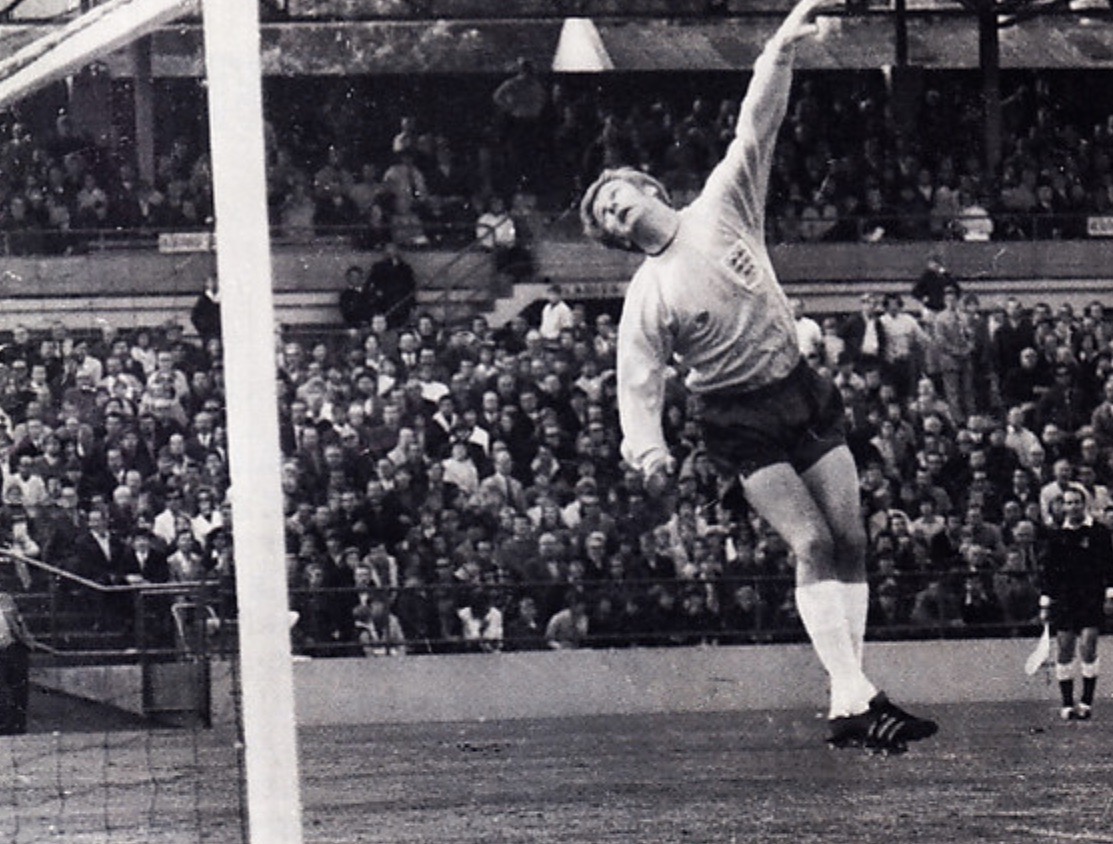
Grummitt headed south having been edged out as first choice at Wednesday, where he’d played 130 games after leaving the City Ground. He knew Brian Clough’s sidekick Peter Taylor well having played in the same Nottingham Taxis cricket team, and Taylor had called him to ask if he fancied the move.

Screenshot

“The fact Brighton were in the Third Division didn’t bother me at all, ” he said. “I knew what sort of managers they both were and I knew straight away that I wanted to go. I met Clough at a motorway service station, we had a chat, and I signed there and then.”

His arrival at the Goldstone was Clough and Taylor’s direct response to that horrendous home defeat to Rovers in front of the TV cameras.  Long-standing no.1 Brian Powney was axed and Grummitt was drafted in for the next game – but in his first match even he had to fish the ball out of his net four times as Tranmere ran out 4-1 winners.

As it turned out, Powney did reclaim the ‘keeper’s jersey when Grummitt was injured in a game against Shrewsbury in a challenge with Ricky Marlowe, who the following season became a teammate.

Looking back, though, the signing of a goalkeeper of Grummitt’s undoubted pedigree was very much the beginning of what was to become a memorable era in the club’s history.

Mrs Grummitt was pleased with the move too, as the matchday programme enlightened us. Jill said the couple had found a house in Saltdean with a sea view. “Both of us have always wanted to live by the sea,” she said.

Their mutual love of horses was also satisfied by Brighton’s closeness to Hickstead, where they were visitors to see shows. Additionally we learned: “Peter’s main interest outside football is golf. Apart from that he is really a home-bird. He’s a master at relaxing and can just switch off by settling fown for a night in front of the television.”

Handyman Grummitt had also concreted part of the garden at the house in Mannings Vale and built a stone fireplace in the lounge.

In the 1960s, he was a contemporary of Chelsea’s Peter Bonetti, and they vied for the number one spot for the England Under 23 team.

Grum EngGrummitt made his debut in a 5-2 win over the Netherlands in Rotterdam on 29 November 1961 when his teammates included future England World Cup winning captain Bobby Moore and future Brighton manager Alan Mullery.
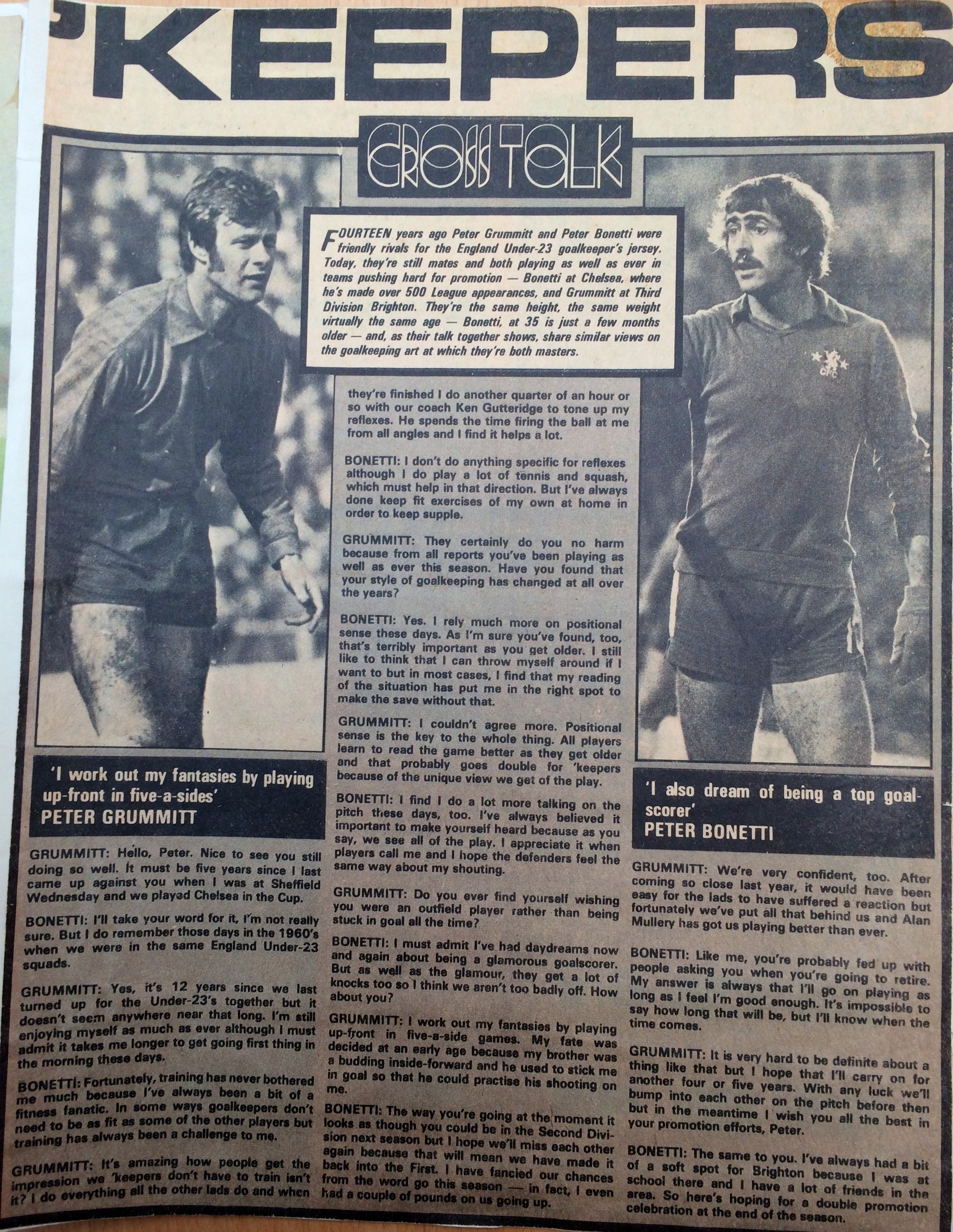
While Bonetti reclaimed the shirt for the next seven matches, Grummitt was back between the sticks two years later when on 13 November 1963 he played in England’s 1-1 draw against Wales at Ashton Gate, Bristol. Those other West Ham World Cup winners, Martin Peters and Geoff Hurst, were in that under 23 line-up, together with Graham Cross, who would also later play for Brighton.

A fortnight later, Grummitt was again in goal when the national under-23s beat West Germany 4-1 at Anfield. But that was his last cap as Bonetti and Jim Montgomery (Sunderland) were selected ahead of him.

However, in 1971, Grummitt went on an end-of-season tour to Australia with an English FA squad that also included Barry Bridges (then of Millwall) and Dennis Mortimer (of Coventry at the time). The group played the Republic of Ireland in Dublin, drawing 1-1, before heading Down Under where they won all nine of the matches they played in various locations across a month.

Looking back through my scrapbooks, I found a feature from Shoot! magazine in which Grummitt and Bonetti, by then both 35, exchanged views and memories.

Grummitt revealed how he ended up being a ‘keeper. “My fate was decided at an early age because my brother was a budding inside forward and he used to stick me in goal so that he could practice his shooting on me,” he told the magazine.

In the same article, Grummitt said he hoped he would be able to carry on for another four or five years. Sadly that wasn’t to be. His last game was against the same opponents he’d made his Brighton debut against, Tranmere, and he suffered a knee injury which, together with an arthritic hip, prevented him regaining full fitness and forced him to retire in December 1977.

Grummitt explained in an interview with Spencer Vignes in a 2015-16 matchday programme how his right knee completely let him down. “I’d been going down on the hard ground on my knees for years and I think it got to the point where it just couldn’t take any more,” he said. An operation he underwent involved drilling and scraping the knee to try to make it grow again.

“It did grow eventually, but it was too late for me to stay on at the club,” he said. “If I’d had nine months to recover, then maybe I’d have been okay.” He subsequently had a knee replacement.

Grummitt added: “I’d have liked another two or three years at Brighton, what with us starting to go places, but it wasn’t to be.”

On 2 May 1978, a testimonial for him took place between Albion and an Alan Mullery All Stars XI in front of a crowd of 5,615. In the match programme notes, Mullery admitted when he took over as manager he thought Grummitt might be too old to continue in the first team, but he pointed out: “Until he got his injury, he was as good a goalkeeper as there was in the country at that time.”

Describing him as “a first class goalkeeper”, Mullery praised Grummitt’s character and loyalty. “With players of Peter’s quality they are never forgotten. He has had a tremendous time here at the Goldstone and I certaiinly don’t think anyone will forget him.”

Vignes discovered in his interview how Grummitt used the proceeds from the testimonial to buy a newsagent’s shop in Queens Road, Brighton, as well as briefly managing Lewes and working as a youth coach at Worthing. He also had brief spells playing part-time for Worthing and Dover Athletic but eventually returned to the East Midlands, settling in Newark.

One small claim to fame on my part – I once played in the same team as Grummitt at Withdean Stadium.

Former Argus sports reporter Jamie Baker put together a team of Sussex sports writers for a game and, as one who reported on local football at the time, I was invited to play.

Imagine my surprise as we were getting changed before the match to discover sitting alongside us in the dressing room was Peter Grummitt, who Jamie had drafted in as a “ringer” to try to ensure at least our last line of defence was sound!

grum full

shoot keepers

Grummitt, now contending with dementia, on a visit to the City Ground, Nottingham, in May 2025