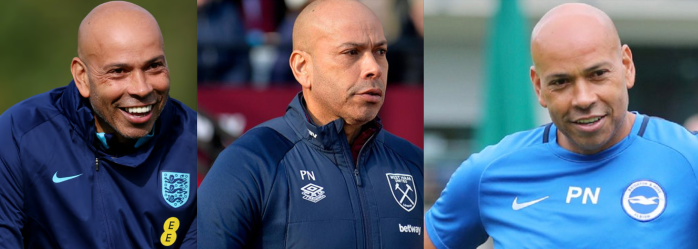
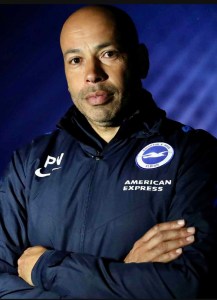
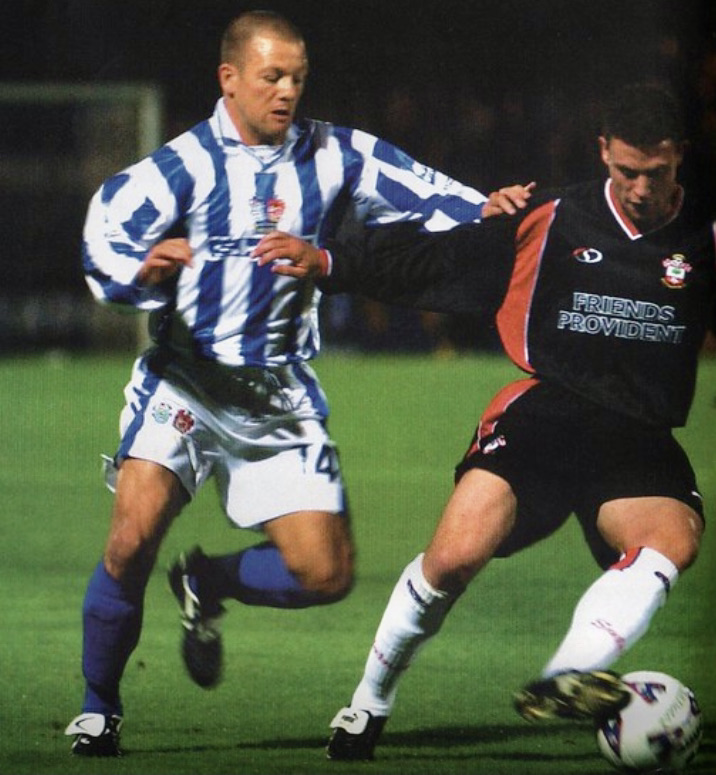
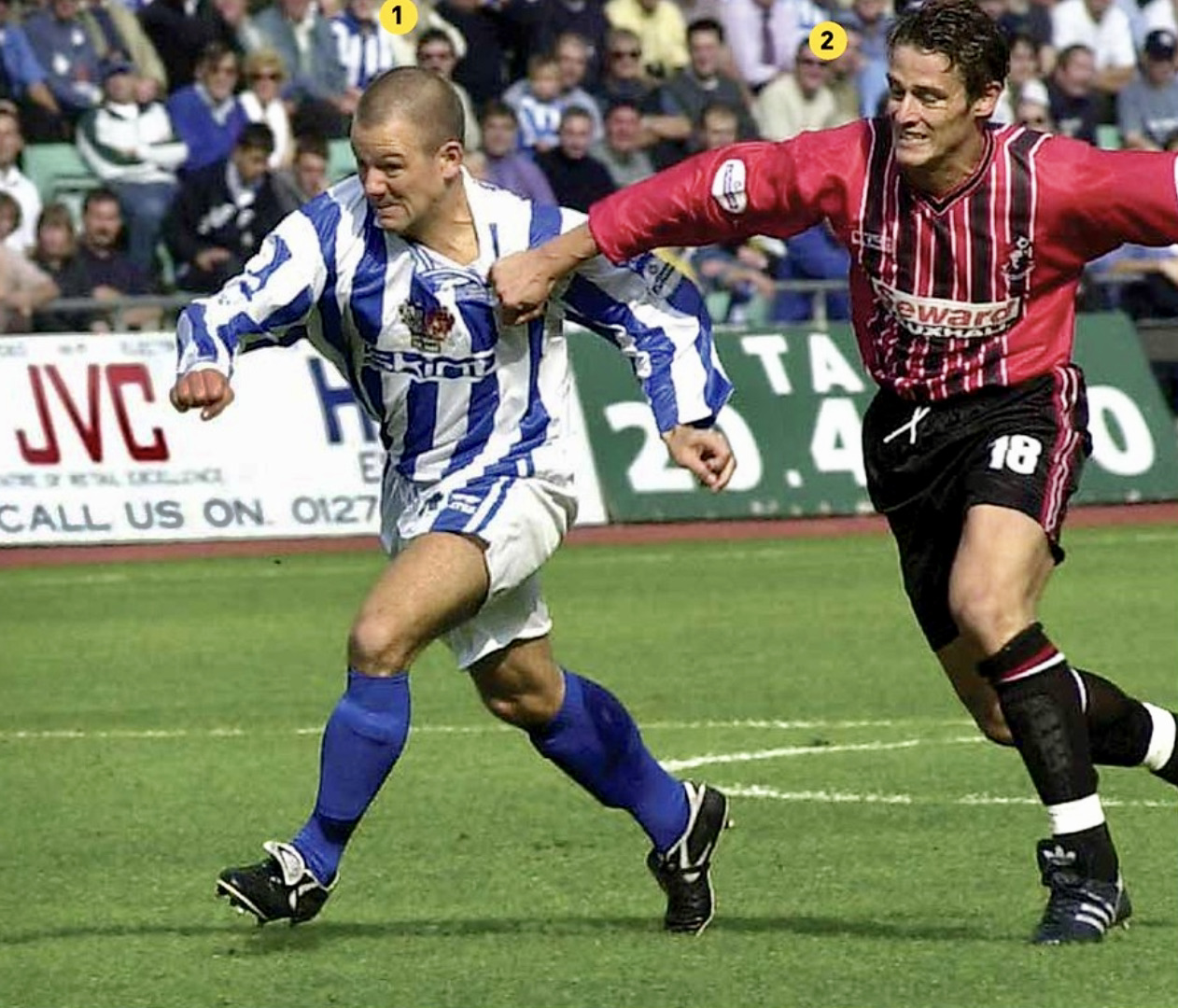
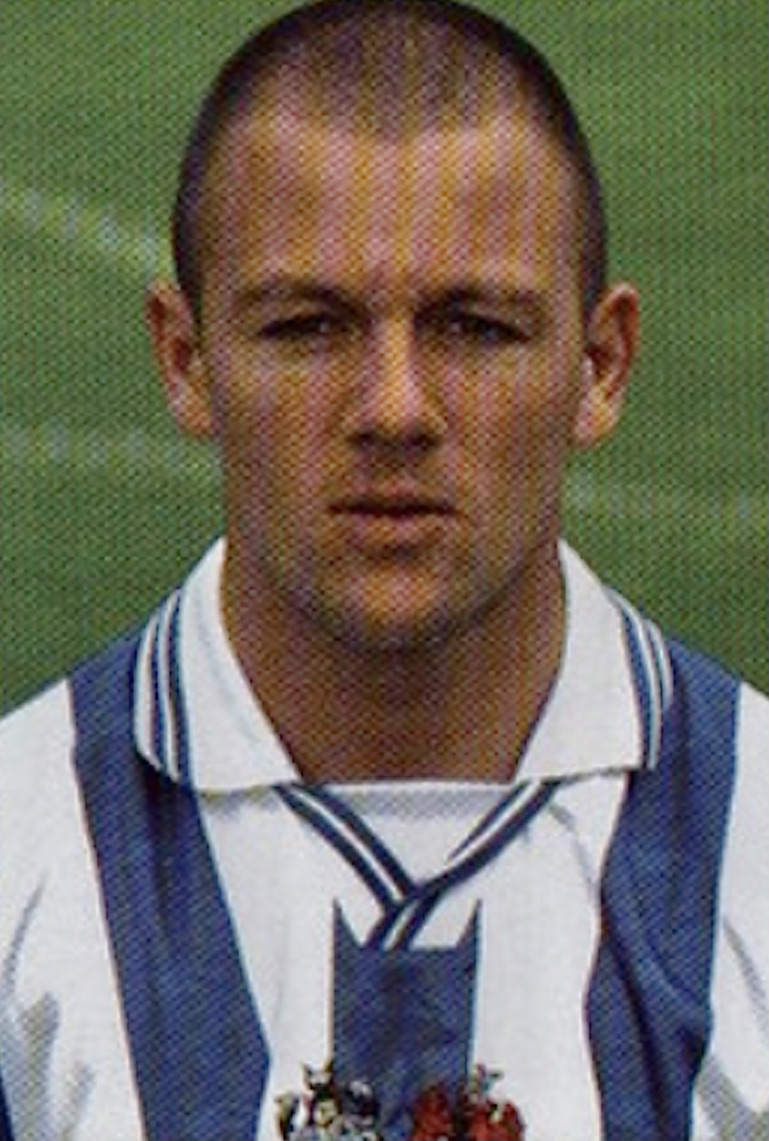
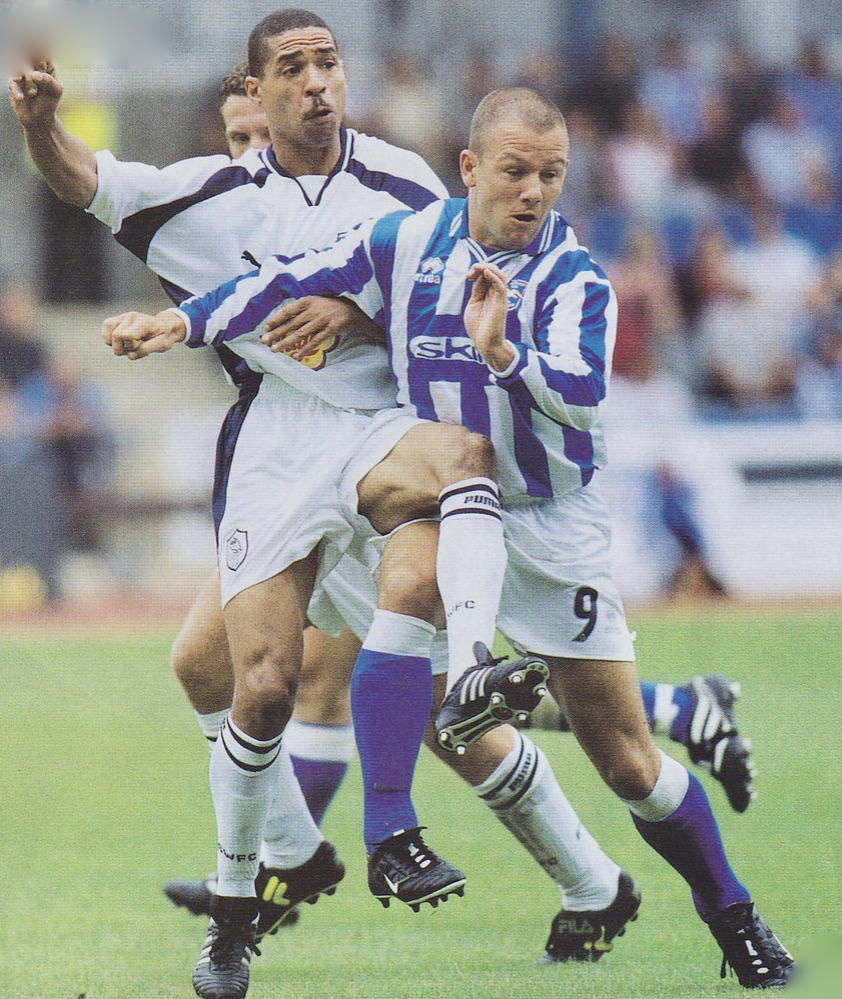
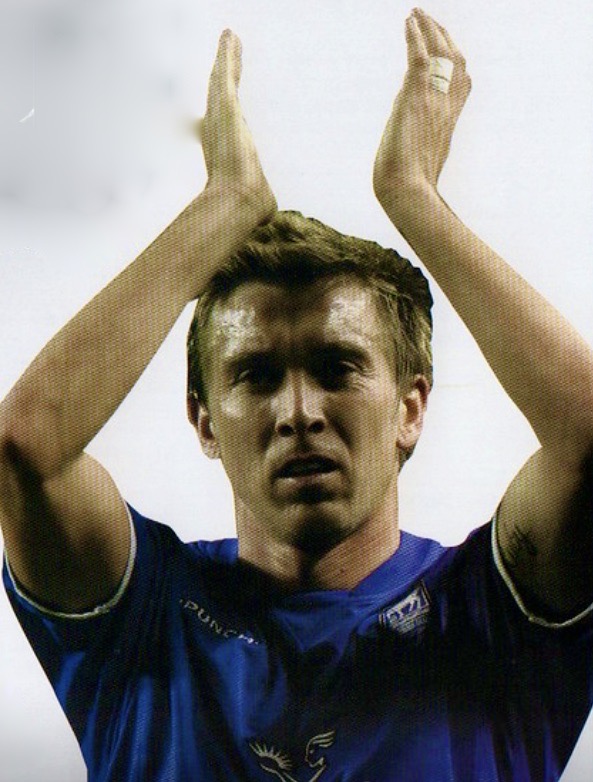
Tigana ‘disciple’ Paul Nevin the respected analytical coach

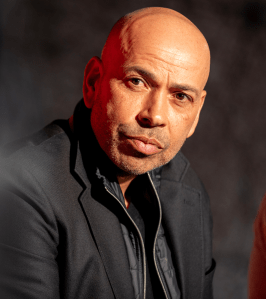
PAUL NEVIN didn’t rise to great heights as a player but he became “one of the most respected and most widely experienced coaches in the country”.

He was a Premier League coach at Brighton and West Ham, not to mention being part of Gareth Southgate’s coaching team for England.

They were just three of a broad variety of coaching jobs he has filled in different corners of the world – and, interestingly, Jean Tigana, one of the top French footballers of his generation, influenced Nevin the most (more of which, later).

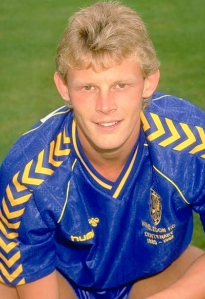
All a far cry for a lad born in Lewisham, south east London, on 23 June 1969 who had a humble playing career that began at Division Two Shrewsbury Town and later involved short spells at Carlisle United and Yeovil Town.

Nevin the player

He was a former teammate of Albion’s head of football David Weir for three years when both played for the University of Evansville’s Purple Aces team in Missouri, America.

Having taken his A-levels while playing for Shrewsbury reserves, Nevin wanted a back-up career in case football didn’t work out and he took a scholarship to gain a bachelor’s degree in communications while playing for the American college team.

After gaining his degree, he returned to the UK and spent the 1991-92 season with Fourth Division Carlisle before moving south to join then Conference side Yeovil. He was there for two years but suffered a bad back injury that forced him to retire from playing when still only 24.

Nevin picked up the story in an interview with the Albion matchday programme. “While I was playing at Yeovil, I also volunteered at a children’s home and as a result I was soon offered a job as a social worker in Wandsworth, south London.”

He later explained: “That gave me the opportunity to develop a lot of skills that transcend into coaching – counselling skills, working with young people, trying to build self-esteem and motivation – which I can take into a sporting arena.”
He kept in touch with football, though, by working part-time for Fulham’s Centre of Excellence.

It was during the period when since-disgraced Mohamed Al Fayed took over Fulham, sacked Micky Adams and appointed Ray Wilkins and Kevin Keegan.

In the shake-up, Nevin worked his way up the academy system, eventually becoming youth team coach and then reserve team manager working alongside Chris Coleman. Within a year he had become full-time and by 2000 was working under Fulham boss Tigana.

“He had a major influence on my coaching career and my philosophy towards football,” said Nevin.

“The methodology of training, his highly technical approach, working with sports scientist and nutritionists, it was all new in this country and made a big impression on me.”

Together with Christian Damiano, the pair’s methods had been nurtured at the French national academy in Clairefontaine and had a profound effect on Nevin.

“We had a core of good young players coming through the club, the likes of Liam Rosenior, Zat Knight, Sean Davies, Zesh Rehman and Mark Hudson, who all went on the have successful careers in the game.”

In 2006, by which time he already held the Uefa Pro Licence as a coach, he moved with his wife and two children to Auckland to become manager of the New Zealand Knights, who played in the Australian A League.

That lasted a year before he moved to the Middle East and spent five years as football performance manager at the Aspire Academy in Qatar working with young players and coaches.

Chris Hughton brought him back to the UK to become first team coach at Norwich City when they were in the Premier League in the 2013-14 season.

Nevin was reunited with Chris Hughton at Brighton having worked with him at Norwich.

From Carrow Road, he then worked as head of coaching for the Premier League, a role that saw him run a diploma course to develop coaches with great potential as well as acting as a sounding board for coaches working in Premier League academies.

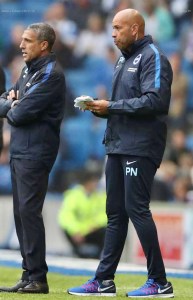
Nevin was reunited with Hughton at Brighton just ahead of the club’s debut season in the Premier League, replacing Simon Rusk who had stepped up temporarily from being under 21 coach when Nathan Jones left to become manager of Luton Town.

Hughton said: “Paul is an excellent coach and a good appointment for the club. I’m delighted he is on board and looking forward to working with him again.”

Asked whether his lack of high level playing experience was a hindrance to working as a Premier League coach, Nevin replied: “Coaching and playing are very different things. While I might not have played Premier League football, I am a real student of the game and have worked alongside some great coaches and managers. I have developed a healthy understanding of top-level football from a coaching perspective.”

On England duty with Gareth Southgate

When Lewis Dunk made his England debut in a 3-0 friendly win over USA at Wembley in October, 2018, Nevin was part of the coaching team supporting Gareth Southgate as part of an initiative to place black, Asian and minority ethnic coaches in all England squads. Formally known as the Elite Coach Placement programme, it was a key strand of the FA’s Pursuit of Progress strategy, designed to increase diversity in coaching roles.

However, Nevin and Southgate were already known to each other. At Fulham, he was assistant academy manager to former Crystal Palace boss Alan Smith, who had managed Southgate at Selhurst. Nevin got to know Southgate through Smith.

“I was a little unsure as to what the setup would be like, but to get the opportunity to work with Gareth Southgate, Steve Holland (the assistant manager) and the rest of the senior men’s setup was something I couldn’t turn down,” Nevin told the FA’s in-house media.

“The biggest challenge I found was that, if working inside a club, you get to work with the players and other coaches on ideas each day. You start preparing for a match at the weekend at the beginning of the week, with days to get the clarity of message through.

“But on the international stage, there’s a finite amount of time to get critical information across and to develop strong harmony across the squad. It’s a challenge that makes you acutely aware that every moment during an international camp counts.”

It wasn’t the first time that Nevin had worked for the FA, though. When he was head of coaching at the Premier League, between August 2014 and April 2016, he coached England’s under-16s who at the time included Phil Foden and Jadon Sancho.

Nevin, by then 49, said: “When I got the call, I was absolutely delighted and feel it’s a very privileged position. First and foremost, I’m very thankful to Gareth and The FA for the opportunity.”

Albion happy to see Nevin develop with England

He appreciated Brighton giving him the time to do something which was a development opportunity and added: “This is a chance to work with the best players in the country. Obviously, I see them week-to-week in the Premier League but working with them en-masse in a squad setting is going to be immense.

“Having had a brief experience of working at international youth development levels, it’s a chance to see the final product that’s coming through the system while working alongside the top coaches in the country.

“Being a part of that environment at the highest level of international football and looking at how they work and function will have the biggest impact on me. I previously had a spell working in coach development at the Premier League so I’m aware of the need to give opportunities to the quality BAME coaches out there.”

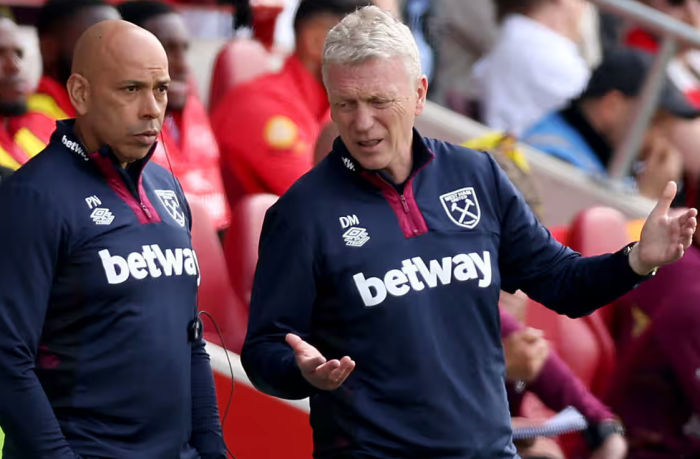
Nevin parted company with the Seagulls when Hughton was relieved of his duties at the end of the 2018-19 season but he wasn’t away from football’s top table for long because in February 2020 he joined West Ham along with former Hammers captain Kevin Nolan to work with David Moyes and his assistant Alan Irvine.

In October 2022, Malik Ouzia in The Standard wrote: “Nevin is one of the most respected and most widely experienced coaches in the country, a key lieutenant under David Moyes, as well as Gareth Southgate at England.”

According to Roshane Thomas, writing for The Athletic in December 2022, Nevin’s role at West Ham was to focus on creation and delivery in attacking set-plays and analysing opponents’ set-plays.

“I’m fluent in analysis tools so I can do my own analysis, I have done that for 20-odd years,” Nevin explained in an interview with premierleague.com.

Hammering home a point

The Hammers achieved European qualification in each of Nevin’s three seasons with them and he left shortly after they won the UEFA Europa Conference League trophy. Manager Moyes said: “Paul has played an important role for us during his time here and I would like to thank him for all his support and hard work during his time at West Ham United.
“He is highly ambitious as a coach and is keen to test himself in a new environment and we wish him well in doing so.”

Nevin said: “I’ll always look back on my time and the opportunity I had to work at West Ham with great fondness.

“In the three and a half years, we enjoyed a period of great success in West Ham’s history, culminating in the Europa Conference League win last season, which gives the club a fantastic opportunity and platform to go on to even greater levels in the future.”

From West Ham, he moved to French Ligue 1 side Strasbourg, where he worked as first-team coach under Patrick Vieira, who was appointed head coach by the club’s new owners, BlueCo, who also own Chelsea. Nevin didn’t stay on when Vieira left after one season to be replaced by former Albion player Liam Rosenior.

Last minute instructions for Cole Palmer at the 2024 Euros

Nevin had rejoined the senior England men’s team coaching staff in August 2021 and was part of Southgate’s support team through to the 2024 Euros in Germany. In August 2024, he took charge of England’s Elite League Squad on an interim basis when Ben Futcher stepped up to Under-21s manager following Lee Carsley’s temporary rise to take the full England team.

When asked whether he held ambitions to become a manager in his own right, Nevin told The Standard: “I owe it to myself and the people I’ve worked with.

“If the right opportunity came at the right time, then I need to give it a go because maybe with that nudge at the door, if I’m successful, it can allow me to bring others in and give others opportunities.”

Expanding on his experience in that premierleague.com interview, he said:“I’ve worked with young people outside of football, within social work, trying to study languages as well. When I’ve worked with French players and Spanish players – and I’m not saying I’m fluent by any means – but just a little bit of connection there, those little things help.

“I’ve worked in this game around the globe as well, so it’s not like I’ve just been at domestic level. I was a manager in the Australian League, I’ve worked in Qatar with the junior national teams. It’s just getting that variety and taking opportunities when they come.

“It may not necessarily be the thing you want at that particular moment, but if it opens an opportunity to show what you can do and to learn, then I think it’s always worth grasping that.”

And on a philosophical note about the art of coaching, he said: “A coach, first and foremost, has to have the knowledge and credibility to deliver, but you’re dealing with human beings.

“A lot of people can have the knowledge, but it’s about transmitting that, making the players feel valued and being able to develop relationships which help them reach their fullest potential.

“It’s probably that aspect, really getting into the human being that drives the performance, which is my strongest.”

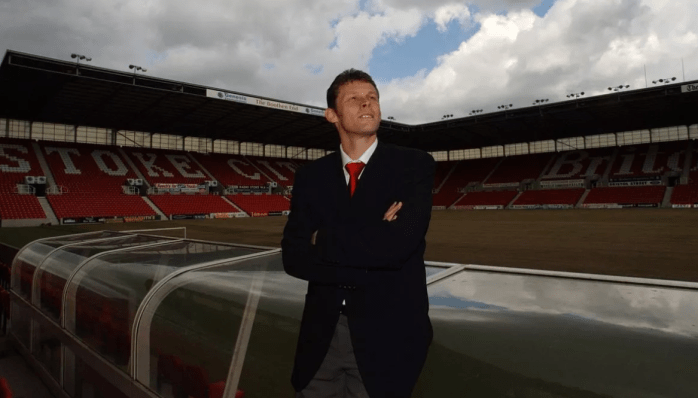
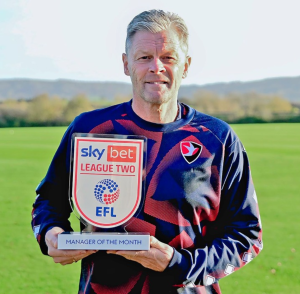
Nevin returned to club football in January 2025 when he was appointed as one of two assistant managers to Mark Robins at Stoke City. He stood down from his role as interim England under-20s manager, where he was undefeated in six matches, to take the job.

Button rarely pressed into action with the Albion

JOURNEYMAN goalkeeper David Button has travelled the length and breadth of the country in pursuit of playing time, his three years at Brentford being a rare settled spell in which he played 141 games.

Normally only a loanee or a back-up ‘keeper at a multitude of clubs, he had a season and a half as Fulham’s first choice but at Brighton between 2018 and 2020 he only made 10 first team starts.

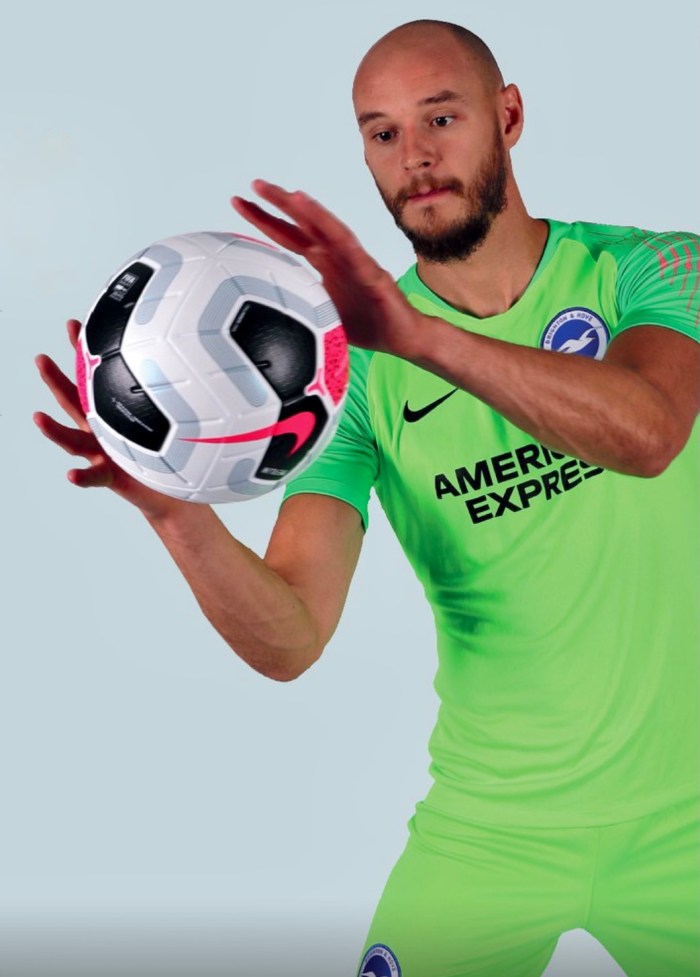
Button was 29 when he signed for the Albion and he stepped into the boots vacated by Tim Krul, the previous back-up ‘keeper, who had moved on to Norwich City. With both upcoming goalkeepers Christian Walton and Robert Sanchez out on loan, boss Chris Hughton wanted a third senior ‘keeper.

Largely a watching brief

“He has a wealth of experience, having made over 300 appearances during his career so far, and I’m sure he will work well with Maty Ryan and Jason Steele,” said Hughton.

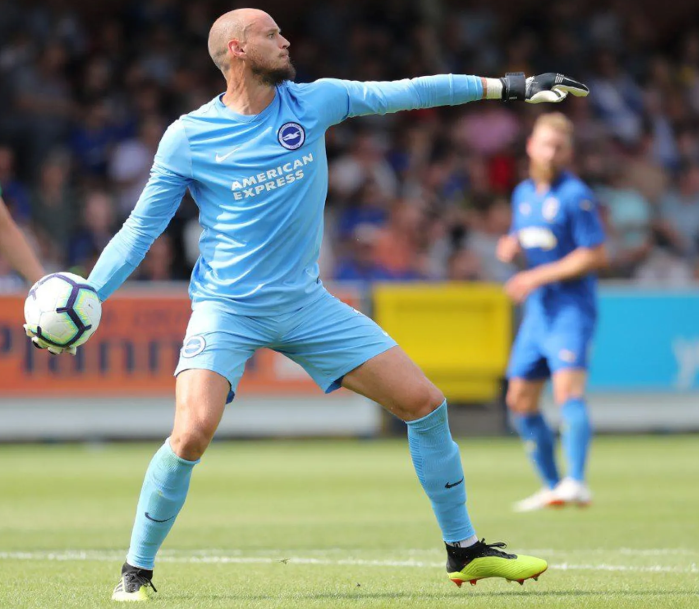
Button made his debut in a pre-season 2-1 friendly defeat against AFC Wimbledon, and realised from the outset that Ryan was going to be ahead of him.

“I’m not coming in blind to the situation, but I want to impress and be ready for the chance in the side – there has to be healthy competition wherever you are as a player and hopefully I can provide that for him,” he said. 

“There could be a chance for me and Jason in January if Maty goes away to the Asia Cup with Australia, so we’ll both be working hard to ensure we’re ready for that if the opportunity arises. 

“I know he’s very well thought of but at the same time you have to back yourself and work hard every day and do as well as you can.”

Indicating what might be expected of him, he said: “I’m confident with the ball at my feet – it’s a slightly different style to Fulham and we are allowed to go a bit more direct here and it’s something I feel I’m good at. 

“I think it’s a bit less risky – we play when we can and keep it when we can – the risk factor involved in playing it out of defence is less for me here though.”

Button certainly found a familiar face at training: goalkeeper coach Ben Roberts had previously worked with him at Charlton Athletic, and he said of him: “He has got a great reputation within the game and everyone he’s worked with speaks highly of him. I genuinely believe he’s one of the best at what he does.”

Button’s first competitive action for the Seagulls came in the fourth game of the season, a 1-0 home League Cup defeat to Southampton. He had to wait until December, when Ryan was away playing for Australia, to play in the Premier League.

In Premier League action v Everton

He kept a clean sheet in the first of them, a 1-0 home win over Everton, when he made a handful of saves, including turning a Richarlison effort onto a post.

“Although he’s a very experienced goalkeeper, it’s never easy when you’re coming in at this stage of the season and following Maty Ryan, who’s done so well for us,” Hughton said. “It wasn’t an easy decision because I’ve got two goalkeepers who are really pushing. But probably his experience managed to get him the nod (over Steele).

“It’s great for him to come into this first game and, not only be on a winning team, but also a clean sheet and that will do him the world of good.”

But that was as good as it got; Albion drew 2-2 at West Ham on New Year’s Day and lost to Liverpool (1-0) at the Amex and Man Utd (2-1) at Old Trafford. A 3-1 third round FA Cup win at Bournemouth saw then no.3 Jason Steele given a chance between the sticks.

On Ryan’s return, Button was back to the bench although he kept goal twice in Albion’s run to the semi-finals of the FA Cup: Button in the fourth round win over West Brom and in the fifth round win over Derby County. Hughton went with Ryan for the quarter final at Millwall and the semi v Man City.

When Graham Potter succeeded Hughton, Button spoke about the changes the goalkeepers then had to embrace. “We are now doing more work with our feet,” he told the matchday programme. “There is more onus on us to be better with the ball and to be comfortable with it.”

The opportunity to put it into practice was even less than previously for Button, though: he played just two League Cup matches in 2019-20 (Bristol Rovers and Aston Villa and one FA Cup tie (v Sheffield Wednesday).

At the start of the 2020-21 season, the ‘keeper swapped one Albion for another and signed for newly-promoted West Brom.

“I have ambitions of playing and helping the team as much as possible but I obviously understand that Sam (Johnstone) has got them promoted last season so he will start the season,” said Button.

“It’s up to me to push him and show the manager what I can do and take my chances when I get them. Hopefully there’ll be things I can bring to the squad certainly. I’m quite calm and comfortable with my feet too and commanding in my box so I’d say they’re my main strengths.”

However, Button played just one Premier League game in that first season plus three cup matches.

There was slightly more involvement in 2021-22 when the experienced stopper made 11 appearances in all competitions, including playing the final five Championship games and keeping consecutive clean sheets in the last three matches, against Coventry City, Reading and Barnsley.

When Button swapped West Brom for League One Reading in August 2023, one Baggies supporter wasn’t sorry to see the back of him. “’It is definitely the right move to offload David Button, he has been the worst goalkeeper I have ever seen at Albion,” said fan Matt Smith on footballleagueworld.co.uk.

“We’ve had some pretty decent goalies since I’ve been going, however Button was absolutely atrocious over a significant period of time too. How on earth did we spend £1m on him?

“How Steve Bruce gave him a two-year contract at the end of the 2021-22 season is beyond me. He’s so bad honestly. He can’t catch a bloody cold. He’s awful.”

Born in Stevenage on 27 February 1989, Button was with local club Stevenage Borough in their centre of excellence and acknowledged the input of the Coaching FX goalkeeping school in his early development.

“Keith Fenwick was my first coach: his first-class and very enjoyable sessions definitely helped to develop my love of being a keeper,” he said.

Button moved from youth academy to professional at Spurs

An England schoolboy and youth international, Button moved on to Tottenham’s youth academy in 2003, signed a scholarship deal two years later and then earned a four-year professional contract in December 2007. However, he only had eight minutes of first team action for Spurs – as a substitute for Carlo Cudicini in a League Cup match – and was loaned out 13 times.

Over his four years as a Spurs pro, he had two spells each at Crewe Alexandra and non-League Grays Athletic, plus stints at Rochdale, Bournemouth, Luton, Dagenham & Redbridge, Shrewsbury Town, Plymouth Argyle, Leyton Orient, Doncaster and Barnsley.

In the 2009-10 season, he notched up a total of 36 League Two appearances (10 for Crewe and 26 for Shrewsbury) and 30 in League One the following season, when with Peter Reid’s Plymouth, where he kept Romain Larrieu out of the team for much of the campaign.

When he eventually left Spurs permanently, he didn’t travel too far, joining Chris Powell’s Charlton in the Championship for £500,000. Powell preferred Ben Hamer in goal, though, and Button was restricted to a handful of appearances before moving on to Brentford.

In an interview with getwestlondon, Button said: “It was a little bit of a frustrating time for me at Charlton. I would like to think I would have been given a chance a bit sooner there. It was a difficult year but it helped build my character.”

When Brentford sold Simon Moore to Cardiff, manager Uwe Rösler took Button to Griffin Park declaring: “We decided David was the perfect choice for us. He is at the right age and he is very hungry to make the number one spot his own.

“As soon as Simon left, David was our first choice. David will face strong competition for the goalkeeper spot from Jack Bonham and Richard Lee, when Richard is fit again.

“We have been strong there (in the goalkeeping positions) over the past two seasons and are even stronger this year.

“Goalkeeper is a crucial position and David is a very good player.”

For once, fortune fell favourably for Button and he ended up first choice as the Bees won promotion from League One at the end of his first season and reached the play-off semi-finals at the end of his second season.

The Brentford fans website bcfctalk was full of praise for the stopper, saying: “He was very much our first point of attack as well as our last line of defence and his quick and accurate distribution played a massive part on our overall style of play and freedom of expression.”

The website added: “He sometimes failed to deal effectively with crosses and he could also use his physique better as he is an enormous man, but he was utterly reliable and often quite brilliant and he won us numerous points with some incredible saves.”

Ahead of the 2015-16 season, at a pre-season training camp in Portugal, Button spoke about all of the club’s ‘keepers being put through their paces by goalkeeping coach Simon Royce, a one-time Albion loanee ‘keeper, and how he wanted to maintain his run of form.

“I need to find that level of consistency now for me,” he said. “I feel like I had quite a few good games last season but there were a few where I wanted to do better. I am aiming to keep my standards high in every minute of every game this season.”

He remained first choice in 2015-16, making 47 appearances, but talks on a new contract broke down. He came in for a bit of a backlash on social media when he decided to move on to west London rivals Fulham instead but he told getwestlondon: “It’s football. Probably in their eyes it’d have been nicer for me to move on to a different club. It is what it is.

“Hopefully they remember the good times and what I did for the club. I’ve got a great respect for the fans and for the way they treated me while I was there.

Fulham custodian

“I had a great three years at Brentford but felt it was time for a change and the opportunity to come here arose and it was something that interested me.”

Button had the support of manager Slavisa Jokanovic at Fulham but gradually lost the backing of the supporters to the extent he was jeered at Craven Cottage.

Supporter Dan Smith did a detailed analysis of where he thought things went wrong on fulhamfocus.com. “Having narrowly missed out on promotion in the playoffs, Button signed off his Brentford career as a good keeper at this level and someone highly regarded by the Bees faithful,” wrote Smith. “His shot stopping one of the best in the league with a very strong ‘long’ kick.”

Button kept a clean sheet on the opening day of the 2016-17 season and Smith said: “He looked decisive, confident and capable. But something happened gradually as the season developed.”

He maintained the ‘keeper’s form slowly deteriorated and blamed the way he was being managed rather than the player himself. “He looks very uncomfortable with the ball at his feet and isn’t helped by the lack of movement from the deeper players making it very difficult for him to pick someone out,” wrote Smith. “Mistake after mistake giving the ball away clearly damaged his confidence because mistakes in possession led to poor keeping errors, letting in shots he should be saving and would have saved at Brentford.”

Interestingly, with echoes of what Roberto De Zerbi has said of Steele and Bart Verbruggen, Jokanovic did blame himself rather than Button, saying he trusted the ‘keeper and had full confidence in him.

“It’s my responsibility sometimes. I put my keepers in some sort of trouble. We play a bit different and I want to start playing from the keeper.

“It’s more simple to kick the ball to the strikers as it’d give him more opportunity to be comfortable in the goal.

“He has all my confidence. Sometimes, when he makes a mistake it’s partly my responsibility as well.”

Nevertheless, eventually Button lost his starting spot to Marcus Bettinelli.

Nathan Elder needed to knock on boss Wilkins’ door

WHEN I watched Nathan Elder go on as substitute at Boundary Park, Oldham, on 12 January 2008 and score an injury-time equaliser, I remember wondering whether his Brighton career might finally be getting off the ground.

Previous cameo appearances off the bench had indicated Albion might have unearthed a useful rough diamond after picking him up from non-league Billericay, and he’d scored his first goal in the final game of the 2006-07 season: a 1-1 draw at Cheltenham.

But manager Dean Wilkins was somewhat spoilt for choice, especially when experienced Nicky Forster arrived that summer. Alex Revell and Bas Savage tended to be ahead of Elder in the pecking order too.

By the end of January, Albion splashed £300,000 on Glenn Murray and, Elder, still only 20, was deemed surplus to requirements. After only 13 months at Brighton, he was sold to Brentford for £35,000 (Revell left as well, when Southend parted with £150,000).

The Elder deal represented good business for the Seagulls – a £25,000 profit on a player who only made three first team starts during his time with the club. Disappointed with his brief spell at Brighton, Elder reflected some while later that he should have done more to persuade Wilkins to give him more playing time.

“It was my fault,” he told brentfordfc.com. “I trained really well and in the reserve games I was scoring every time, but I never knocked on the manager’s door and asked him why I wasn’t starting. I always thought to myself that I was lucky to be in this position and coming from where I’d come from, I didn’t want to ruffle any feathers.

“As time has gone on, I’ve realised that if you don’t show some hunger and give the manager a reason to start you, he won’t.”

That instinct was almost certainly right, bearing in mind comments Wilkins made in an Argus interview after that Oldham game.

“I know it has not been easy for Nathan,” he said. “He hasn’t had many opportunities but he has gone on and done exactly what we hoped he would do.

“He will probably be banging on my door now for a starting place and of course he has given me a dilemma.”

Elder, though, sat back and waited patiently. “I was sitting there too comfortably and thinking that if I got the call, I’d come in and do my best,” he said. “We went on a losing streak at Brighton of about four or five games where neither of the strikers scored.

“At that point, Dean Wilkins was watching me in training, but I never actually said to him, ‘Gaffer, put me in, give me a chance’.”

As he departed, Elder told the Argus: “I don’t really feel as though I was given enough of a chance to show what I can do, it was more in fits and spurts coming off the bench.

“I just don’t think he (Wilkins) was confident enough in me to start me on a regular basis.

“Even when some other players weren’t performing I don’t think he had that confidence to throw me in. That’s football, it’s not a walk in the park.”

Of the striker’s departure, Wilkins said: “Nathan has found his opportunities limited, he wants to start games but we couldn’t guarantee that and felt it was right to let him move.”

It was an unfortunate ending to his brief time with the Albion, especially after it had begun so well. He scored just 11 minutes into his debut for the reserves, director of football Martin Hinshelwood observing: “Nathan scored with a good finish.”

The striker told the matchday programme: “Going from the level I was at to this level, without playing any games, is a huge jump, but training has been wicked for me. It has really helped me improve: my movement, my touch, my movement without the ball.

“I felt I showed that in the game and that’s how I got my goal, with my movement. I could have had another two or three as well, but I know that I’ll become sharper as I get fitter.”

Born in Hornchurch, Essex, on 5 April 1985, Elder’s first involvement in football was at the town’s Langtons Infant School. He later played for a local Sunday league team, Barns Sports, before stepping up to play for Hornchurch in the lower reaches of the Isthmian League.

He progressed up that league via moves to Barking & East Ham United, Aveley and then Billericay Town. He came to Brighton’s attention when he was playing for Billericay against Worthing.

If nothing else, Elder’s disappointment at Brighton prepared him to seize the chance to shine with the Bees. It was thought he had scored an own goal on his debut for Brentford against Mansfield Town after just 15 minutes (it was later credited to Stags forward Michael Boulding), but he made amends by scoring the winner five minutes from time as Brentford eventually won 3–2, and he went on to be part of their 2009-10 promotion squad under Andy Scott.

Nathan Elder scores on his Brentford debut

Sadly, a shocking facial injury which threatened the sight in one eye put paid to his involvement in the promotion run-in.

It came when he was involved in an aerial collision with Rotherham’s Pablo Mills; the United player’s elbow inflicting a double cheekbone fracture, a fractured eye socket, severe trauma to the eyeball and extensive bleeding in and around the eye.

He described the incident in detail in an interview with Dan Long in 2019. “When the physio came over, I couldn’t see out of my eye, I thought my eyebrow and cheekbone had swollen up. I knew it was serious. The physio held up two fingers with a hand over one eye and asked how many fingers he was holding up. He switched eyes and I couldn’t tell him because it was just black. He could see that my eye was open and he didn’t panic, but his reaction showed that I needed to go to hospital immediately.

“I questioned it but stood up and went into the dressing room. As we got there, I looked in the mirror. Everyone was telling me to sit down but I told them to get off me for five minutes so that I could find out what was going on.

“I could see that both of my eyes were open, but I could only see out of one of them. That was scary and that’s when I started to panic because I immediately thought I’d lost sight in that eye and it was done for.”

Up to that point, Elder had enjoyed a successful partnership with Charlie MacDonald, who he said he learned a lot from. “He was just such a potent goalscorer,” he said. “As a young lad it was brilliant to watch what he was doing and try and emulate it.”

Sadly MacDonald also missed the triumphant end of the season after dislocating a shoulder and the pair didn’t get to feature for the Bees again.

Meanwhile, the incapacitated Elder said: “When they brought in Jordan Rhodes, it was really good to see the success he was bringing, but when you are sitting indoors and you can do literally nothing, that was pretty horrible.”

After Elder’s recovery from the injury, life was never the same at Griffin Park and on 3 August 2009 he signed a three-year contract for League Two Shrewsbury Town.

But only three months later he was transfer listed by manager Paul Simpson who was unhappy with a performance in a 1-0 FA Cup loss at home to non-league Staines Town.

Two months on, he joined Blue Square Premier club AFC Wimbledon on loan until the end of the 2009-10 season. Elder scored on his debut in a 2-0 home win over Mansfield Town and picked up the man of the match award.

He went on to make 18 appearances, and scored three goals, before injury struck again. He suffered a tear of his anterior cruciate ligament in a game against Tamworth. Eventually, on 24 June 2011, he was released by the Shrews.

Next stop was Conference Premier side Hayes and Yeading but he was only there a month before joining League Two Hereford United, initially on loan and then permanently. But he left at the end of the season and joined National League outfit Ebbsfleet United where he scored 16 times in 44 matches.

He spent the 2013-14 season at Conference South Dover Athletic and on 10 May 2014 scored the only goal of the game to win the play-off final against Ebbsfleet securing Dover’s return to the Conference Premier League.

His most prolific scoring came at Isthmian League Premier Division side Tonbridge Angels, who he initially played for on loan before spending three years (2015-18) on a permanent basis. He netted 58 goals in 148 matches for Tonbridge.

Elder moved on to Sittingbourne for the 2018-19 season where he balanced a player-coach role at the Isthmian South East Division side with a career in recruitment in London’s Leadenhall Market. He later became assistant manager at Hythe Town for two years.

Mixed fortunes at Brighton for Liverpudlian Lee Steele

ONE-TIME Liverpool triallist Lee Steele was part of the Albion squad which won back-to-back promotions from the fourth and third tiers.

Unfortunately for him, a certain Bobby Zamora was almost always ahead of him in the pecking order, along with Gary Hart, so the diminutive striker often had to be content with involvement off the subs bench.

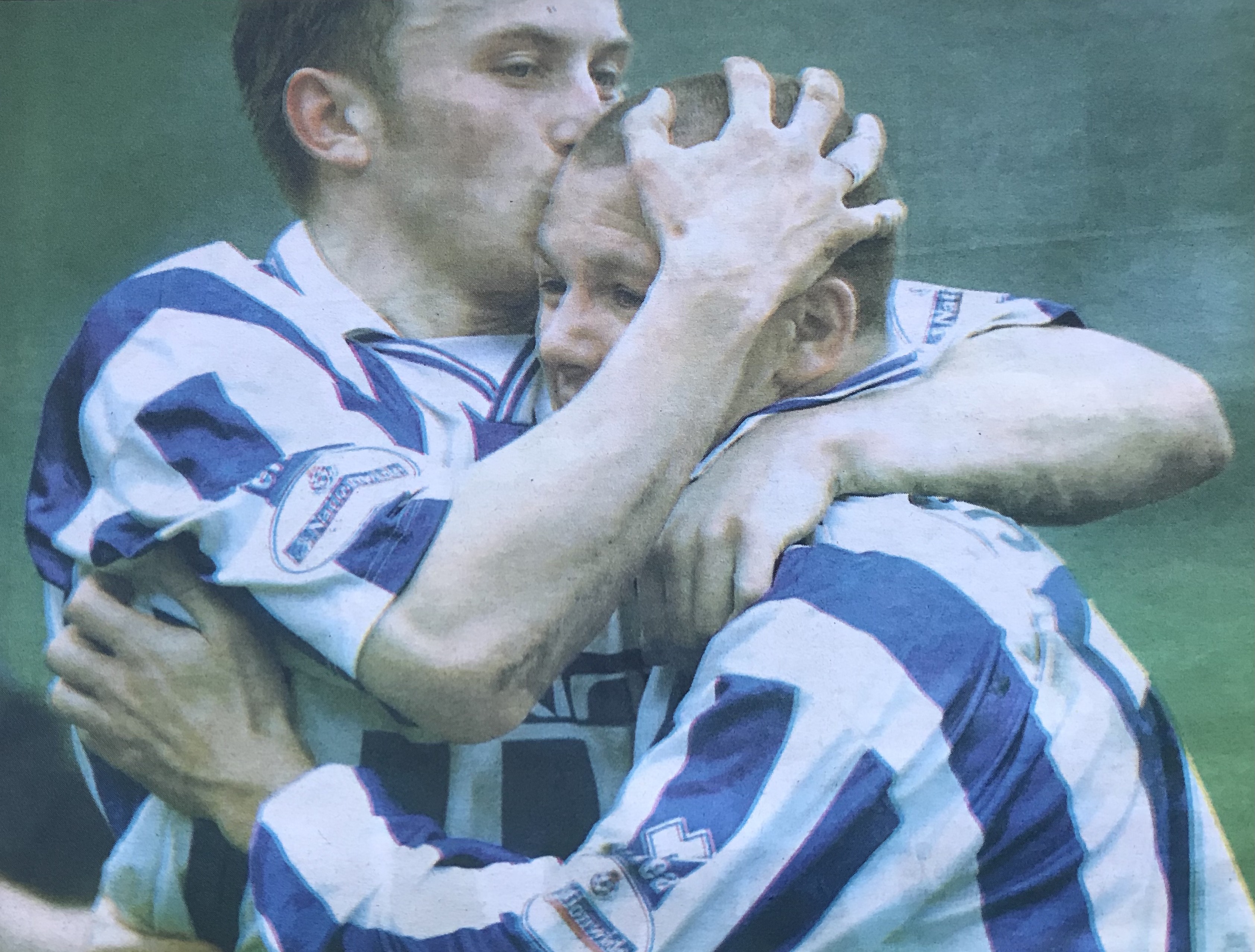
Nonetheless, he contributed important goals as the Seagulls under Micky Adams went up from League Two in 2001 and from League One in 2002 under Peter Taylor.

His first season at Brighton was marred by a drink-driving incident which, in hindsight, he believed tainted the rest of his time at the club. Indeed, as the season drew to a close, he was put on the transfer list and was at loggerheads with Adams.

“I told him I’d prove him wrong, and he said that only one player had said that to him before and gone ahead and done it,” Steele told Spencer Vignes in a matchday programme article. After shedding a few pounds and improving his fitness, he said: “I scored loads of goals in pre-season and worked my way into the side.

“I got a few more as the season began, and then he left and I was back to square one with Peter Taylor.” Steele said Taylor was easier to get on with than the “totally demanding and driven Adams” although he reckoned: “The intensity went from our game a fair bit.”

Nevertheless, in the 2001-02 season, he made 25 starts plus 19 appearances off the bench and the most important of his 10 goals was the 91st-minute winner in an Easter Monday 2-1 win over Bristol City at the Withdean after he’d gone on as a 30th-minute sub for Paul Brooker, who’d turned an ankle.

Argus reporter Andy Naylor pointed out how Steele had gone from villain to hero after getting himself sent off in a reserve game just as Zamora was ruled out for three games with a shoulder injury. As it turned out, that goal against City was his last in an Albion shirt.

In its end of season play-by-player analysis, the Argus said of Steele: “An enigma. More to offer than he has showed, although he would argue a regular run in the side would help. Still managed to finish with ten goals and has the pace and power to trouble defenders.”

However, there was no more to offer Brighton because Taylor’s departure that summer coincided with Steele’s Albion exit too.

Reflecting on his time at the Albion in another Vignes interview for the matchday programme, Steele said: “I wasn’t used to playing substitute all the time, which I found hard to adjust to. Then when I did come on, I used to put myself under so much pressure that I wouldn’t deliver the goods. It still haunts me actually. OK I was in Bobby’s shadow, but I was at a massive club and should have done better.”

He moved to Oxford United on a two-year deal, but didn’t enjoy a happy time under Ian Atkins, and then joined Leyton Orient where some vital goals – including one that earned the Os promotion while simultaneously relegating his old club out of the league – helped earn him a ‘fans favourite’ tag.

After the Os, he had a season with Chester City, then dropped out of the league to return to Northwich Victoria.

He moved on to semi-pro side Oxford City but was sacked for a homophobic tweet about Gareth Thomas, which he said was tongue-in-cheek. Northern Premier League side Nantwich took him on, although he only played one game for them.

Born in the Garston district of Liverpool on 2 December 1973, Steele was a ‘Red’ from an early age, first being taken to watch them aged six and idolising Ian Rush. He was educated at St Austin’s Catholic Primary School, Liverpool, Holmwood School and then St Mary’s College.

The young Steele harboured ambitions of becoming a professional golfer rather than a footballer but, when that didn’t work out, he started playing football with non-league Bootle while working for his uncle as a bricklayer.

“I managed to get a trial for Liverpool,” he told Andy Heryet in the Albion matchday programme. “I hoped they would ask me back, but I didn’t hear anything from them, which was disappointing as they promised me that I’d hear either way, but they never got back to me.”

It was Northwich Victoria who propelled him towards a career as a professional, signing him as cover ahead of a FA Trophy final against Macclesfield.

Steele scored five goals in three end of season games, earned a place on the bench at Wembley and got on for the last 20 minutes, although Victoria lost.

In his second season at Northwich, his reputation was growing as a prolific striker and Third Division Shrewsbury Town snapped him up for £40,000 – a decent-sized fee for a non-league player.

“I wanted to go. I’d always wanted to be a professional footballer, ever since it became clear I wasn’t going to make it as a golfer,” Steele told Heryet.

He spent the next three seasons with the Shrews although the club’s struggles at the wrong end of the league prompted him to look for a move.

While he was keen to go to Tranmere Rovers, who’d shown an interest, no deal was forthcoming, but Brighton went in for him and, having played against them the season before, he liked what he saw.

Steele has had several strings to his bow since finishing his playing career: he’s a qualified licensed UEFA B coach, a personal trainer and a nutrition advisor. Clients have included pro footballers, elite junior tennis players, 16-times PDC World Darts Champion Phil ‘The Power’ Taylor and Team GB age group triathletes.

He also spent a year as a fitness coach with Oldham Athletic during Lee Johnson’s reign as manager and two years as a scout for his old club, Leyton Orient.

Since 2008 he has been operations manager for Kickback Tax (a tax advisor agency for footballers) and, since December 2021, has been senior scout for Northampton Town.

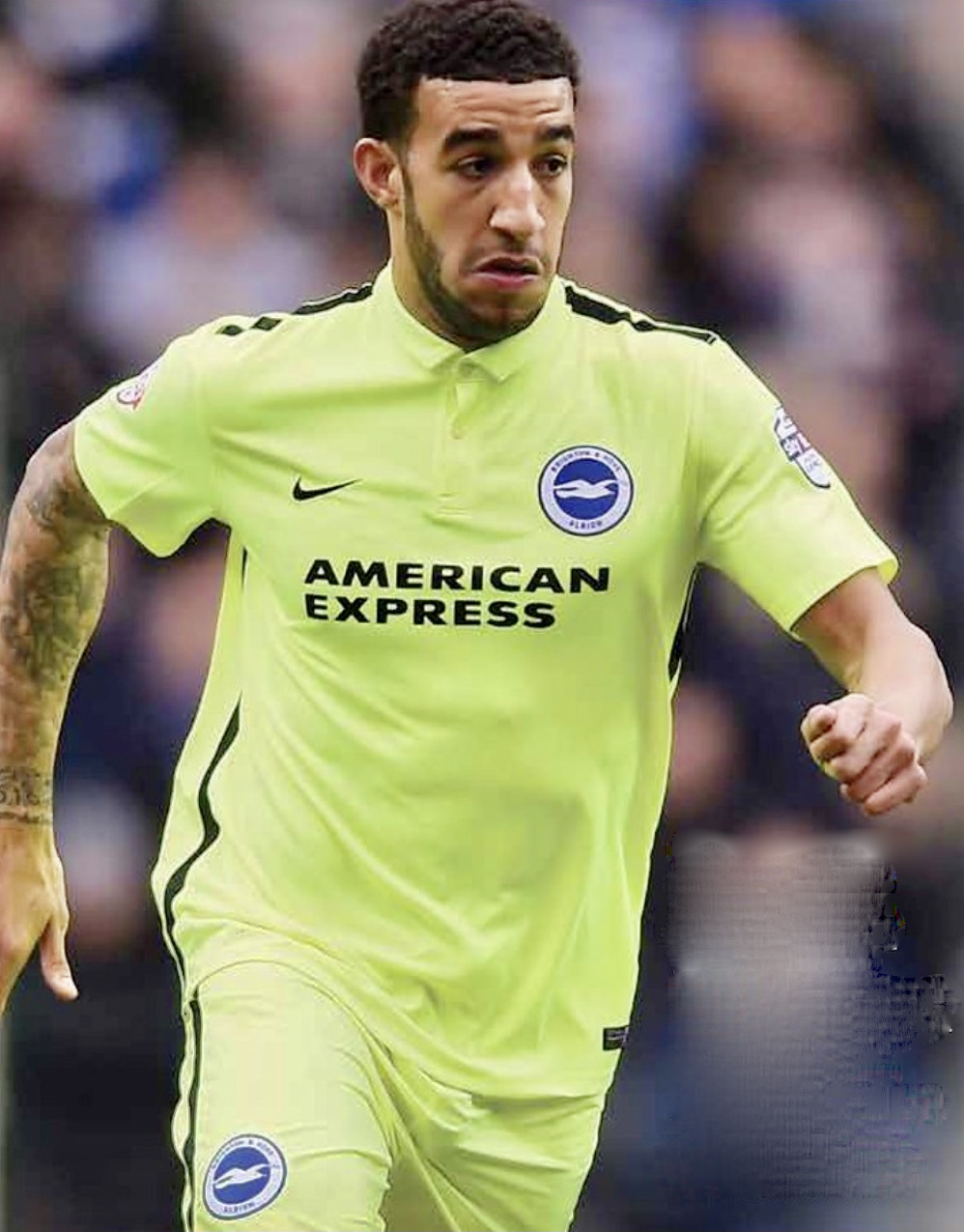
Fans warmed to ‘indestructible’ Goldson after own goal start

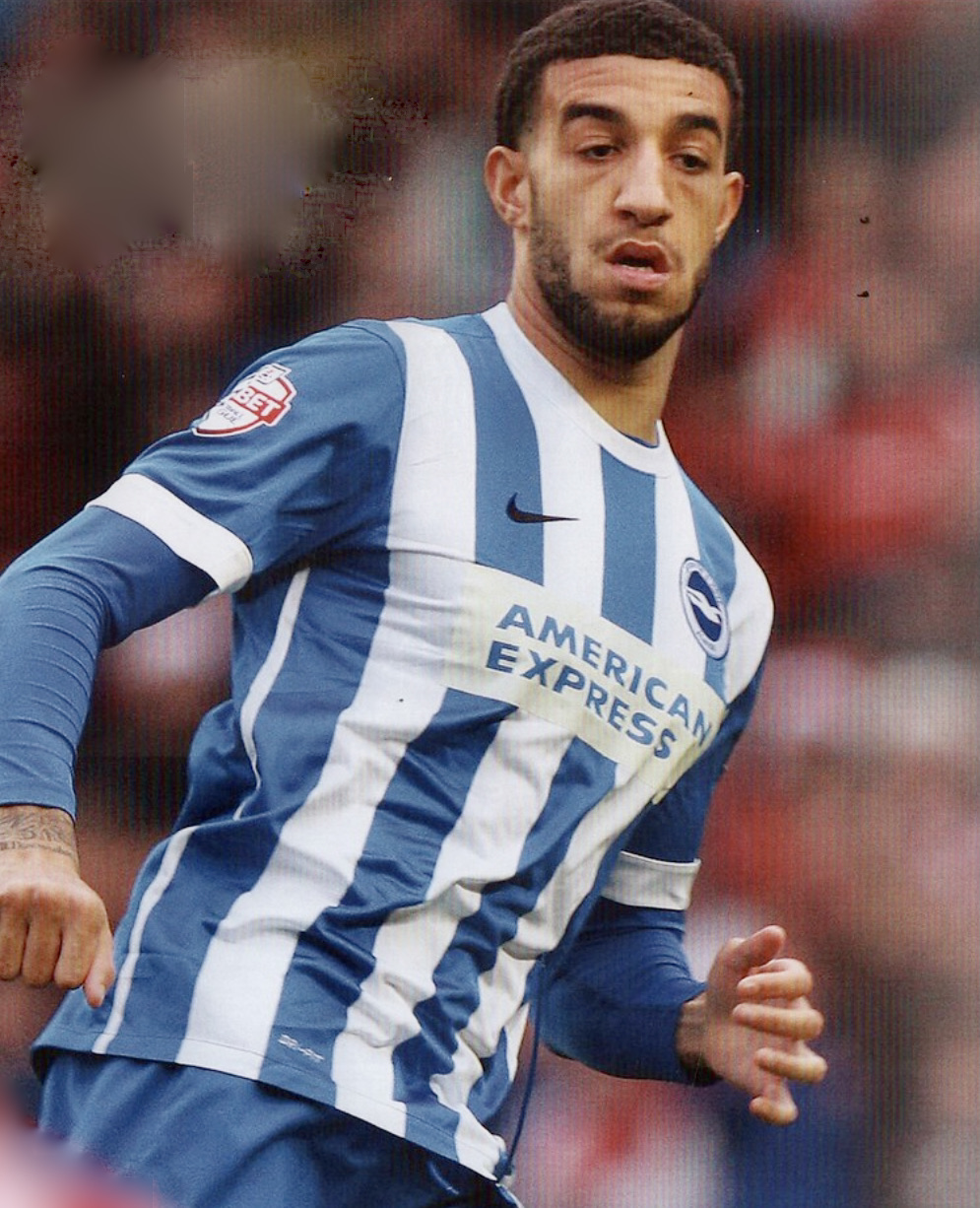
CONNOR GOLDSON’S dad Winston must have had mixed emotions when his son scored the only goal of the game at the Amex on New Year’s Day 2016.

The avid Wolverhampton Wanderers fan in him would have been delighted to see his side leave the south coast with three valuable Championship points.

Unfortunately, Wolverhampton-born Connor was playing for Brighton that day – just his second game in the blue and white stripes.

What made it worse was that the defender had been on Wanderers’ books for five years as a young boy but was released when he was only 13.

Goldson must have been mortified when, in the 32nd-minute of that first game of 2016, he inadvertently diverted Jordan Graham’s cross past David Stockdale in the home goal.

Sure, injury-hit Albion had chances to restore parity or even win, but 11th-placed Wolves hung on to the lead and Chris Hughton’s luckless Seagulls saw a winless run extend to six games.

Albion also lost the next two matches but got back on track with a 1-0 win at Blackburn on 16 January and then pushed hard for an automatic promotion slot.

For Goldson, that fixture marked the start of a run of games alongside Lewis Dunk, and his first goal for the club came in a 2-1 away win at Birmingham City on 5 April, when he glanced in a Jiri Skalak set-piece delivery.

Goldson celebrates his goal at Birmingham with Beram Kayal and Lewis Dunk

He found the net again a fortnight later with a towering header from a corner as the Seagulls crushed QPR 4-0 at the Amex to edge closer to the top two (Burnley and Middlesbrough) with three games to go.

The centre-back partnership was only broken up when Dunk was shown a red card in the penultimate game, a 1-1 draw at Derby, and suspended for the final game of the ordinary league season.

Goldson was alongside returning skipper Gordon Greer for the crucial away game at Middlesbrough on 7 May when the 1-1 draw meant Boro, equal on 89 points, pipped the Albion to automatic promotion by virtue of having scored two more goals.

With Albion forced to endure the play-offs, Goldson’s involvement in the Seagulls’ bid to overcome Sheffield Wednesday cruelly came to a premature end when the centre-back was forced off injured before half-time in the first leg at Hillsborough, and Albion eventually succumbed 2-0.

The injury prevented Goldson being involved in the second leg when Dunk scored but Wednesday somehow managed a 1-1 draw to thwart Albion’s progress.

If that was a blow, it was the least of the troubles the defender would have to overcome the following season.

Frustrating though it was that Brighton brought in Shane Duffy to partner Dunk in the centre of defence, Goldson’s brief spell back in the side in early 2017 came to a juddering halt when a routine scan discovered a heart defect that required surgery.

Then it wasn’t just his football career that was under threat, but his life was in danger if urgent action wasn’t taken to operate on the swollen aorta the tests uncovered.

It has since emerged that Winston suffered a heart attack aged only 35 and Goldson’s grandfather had died of a heart problem.

The required “preventative surgery” took place at the Royal Brompton Hospital, Chelsea, leaving him with a scar down the middle of his chest. His best friend in football and former Shrewsbury teammate, Jon Taylor, told The Athletic: “He thought the worst about not playing again. He was struggling. When I saw him in the hospital it was horrible.”

Taylor was among several former Shrews people Scottish football writer Jordan Campbell spoke to for an extended article about Goldson published by The Athletic in March 2021.

“I made a T-shirt for him before a game which said ‘Stay Strong Con’. That gave him a little bit of a boost but he’s got a great family around him,” said Taylor, who is now at Doncaster. “When he had the op, and he knew he could play again, his mentality was, ‘How quickly can I get back?’. Even as young lads at Wolves we knew his mindset was second to none.”

Campbell reported how once Goldson had come to terms with the situation, he was determined to get back playing regularly, and just 15 weeks after the operation he took part in a pre-season friendly match in Austria. In a changed second half team, he lined up alongside Uwe Hünemeier against Fortuna Dusseldorf.

Physio Chris Skitt, who’d nurtured Goldson through physical issues when he was developing at Shrewsbury, said: “If I talk to kids and they say, ‘What does it take to be a professional footballer?’, I use Connor as the example.”

With a surname that lent itself so readily to the Spandau Ballet classic Gold, the “indestructible” line in the lyrics was a natural for Albion’s singing fans to pick up on.

But at the end of August 2017, on transfer deadline day, it looked certain Goldson would continue his rehabilitation into league football with a season-long loan move to Ipswich Town.

He was manager Mick McCarthy’s main target, but Albion pulled the plug on the deal at the last minute because of the collapse of a separate deal for centre-back cover they’d hoped to complete.

Goldson played in League Cup matches against Barnet and AFC Bournemouth but it wasn’t until December that he finally got his chance to feature in Albion’s debut Premier League season – and he turned in a Man of the Match performance as the Seagulls beat Watford 1-0 at the Amex.

He played in three games in January: FA Cup matches against Crystal Palace and Middlesbrough (2-1 and 1-0 wins), and the 4-0 home defeat to a rampant Chelsea.

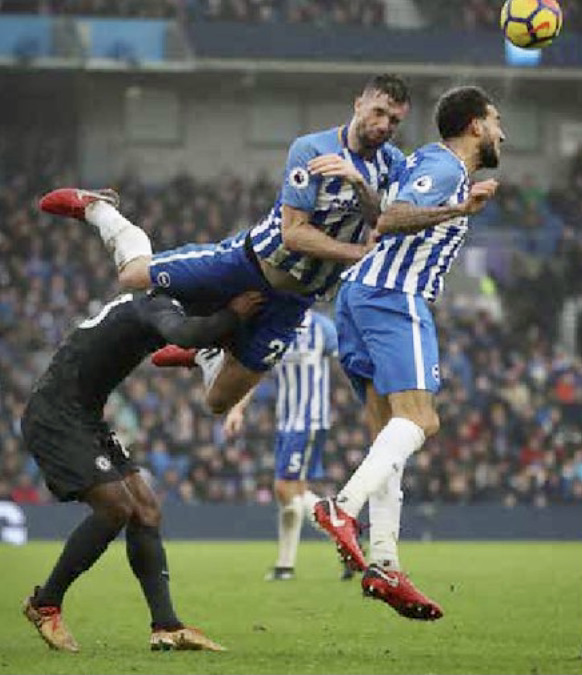
Goldson and Duffy in action v Chelsea

As Albion progressed to the fifth round of the FA Cup, Goldson once again got a start, alongside Hünemeier, as Albion beat Coventry City 3-1 at the Amex.

His last league game in an Albion shirt was as a 71st-minute substitute for Duffy in a 4-0 reverse away to Liverpool on the final day of the season.

During the close season, Goldson seized on the chance to play for his boyhood hero Steven Gerrard, who had just been appointed manager of Glasgow Rangers. Gerrard drove all the way to Brighton for face-to-face talks with Goldson and explained how he saw him as a cornerstone of the rebuilding job at Rangers.

The often magnanimous Hughton was not going to stand in his way and said on the club website: “Connor has done extremely well for the club in the three years he has been here, but he wants to play regular senior football, and at this stage we cannot give him that guarantee.

“He has been a great professional and a pleasure to work with – and he has shown a great mental strength to come through a very tough time after he underwent crucial heart surgery just over a year ago.”

Determined to seize the opportunity presented to him in Glasgow, Goldson remarkably played in 151 of 159 games Rangers took part in over the next three years; when he made his 150th appearance, it was the quickest any player had reached that landmark in the club’s history.

After Gerrard departed Rangers to take on the manager’s job at Aston Villa, Goldson indicated he wanted to make a move himself, although, at the time of writing, he remains in Glasgow.

Born on 18 December 1992, Goldson grew up on the same Wolverhampton estate as future Wanderers players Leon Clarke and Carl Ikeme.

As the son of a Wolves-mad dad, it was probably not surprising that his early footballing promise was nurtured with Wanderers. The family lived only a 10-minute car ride from Molineux.

“I was with Wolves from the age of eight until I was 13,” Goldson recalled in an Albion matchday programme article, explaining that he was in the same group as Jack Price and Ethan Ebanks-Landell, who both made it through to the first team.

“I was a striker until I was about 10 or 11, simply because I was the biggest and the quickest, but I was then converted into a centre-half,” he said. “When I got to under 14 level, the manager stopped playing me and so my dad and I made the decision to leave for Shrewsbury – and it was the best thing that could have happened to me.”

Shrewsbury fast-tracked Goldson through the groups and he was training with the first team by the time he was 16. He signed professional forms at 17 and made his first team debut the following year.

“I owe Shrewsbury a lot, both the first-team management and the coaches who brought me through,” he said.

In The Athletic feature, Skitt described in detail how Goldson went through a difficult physical development phase which in effect involved “putting him back together”.

The physio was responsible for resetting his body and created a specific programme comprised of core work, gym sessions and remedial work to counter the loss of power growth spurts were causing.

“We even tried to get him boxing to improve his footwork because of his canal boat shoes. He is a size 14 and they are absolutely honking,” said Skitt.

After successfully rebuilding his body, Goldson played 18 games at the start of the 2013-14 season under Graham Turner but only 11 were as a starter, so he went on a two-month loan to Cheltenham.

His loan was extended but he was recalled after first team coach and reserve team manager Mike Jackson (the chap who has taken over as caretaker Burnley manager following Sean Dyche’s sacking) was put in charge at Shrewsbury until the end of the season following Turner’s resignation. Goldson played every minute of the last 21 league games.

Shrews were relegated but the following season, under Micky Mellon, with Jackson as coach, Goldson was a key player as they bounced straight back: he won the club’s Player of the Year and Players’ Player of the Year awards and was named in the PFA Team of the Year.

Such recognition led to Brighton signing him, doubtless with half an eye on his replacing Greer, who was edging towards the end of his playing days with the Seagulls.

It was a while before Goldson got his chance and Greer admitted in The Athletic feature that the new boy’s frustration spilled over into a set-to with the skipper in training.

“Training finished and we went into the dressing room to find that the lads had laid out two sets of boxing gloves for a laugh with the Rocky music playing,” said Greer. “As soon it was over, though, it was done, as I liked Connor.”

And to show the hatchet had been well and truly buried, Goldson revealed that after he’d taken the captain’s place in the side, behind the scenes Greer had offered him encouragement and advice. “He’s been very helpful and supportive at the same time,” he said. “There are plenty of people who wouldn’t be like that, so I can’t speak highly enough of him.”

Goldson had to wait until 15 December 2015 to make his Albion debut, when he went on as a substitute for the injured Hünemeier against Middlesbrough. Unfortunately, the visitors emphatically ended Albion’s 21-game unbeaten run, winning 3-0.

That game was watched from the stands by Jose Mourinho, who’d just been deposed as Chelsea boss, catching up on the progress of his former Real Madrid colleague and Boro manager Aitor Karanka.

For the new young centre-back, the rise to playing in the Championship was all a learning experience, and he said: “I’ve been working with Colin Calderwood a lot, even after training, and as a former centre-back himself, he has put on a lot of good drills.”

Little did he know at the time there would be far greater challenges ahead.

Set-piece expert Darren Currie earned Uncle Tony’s approval

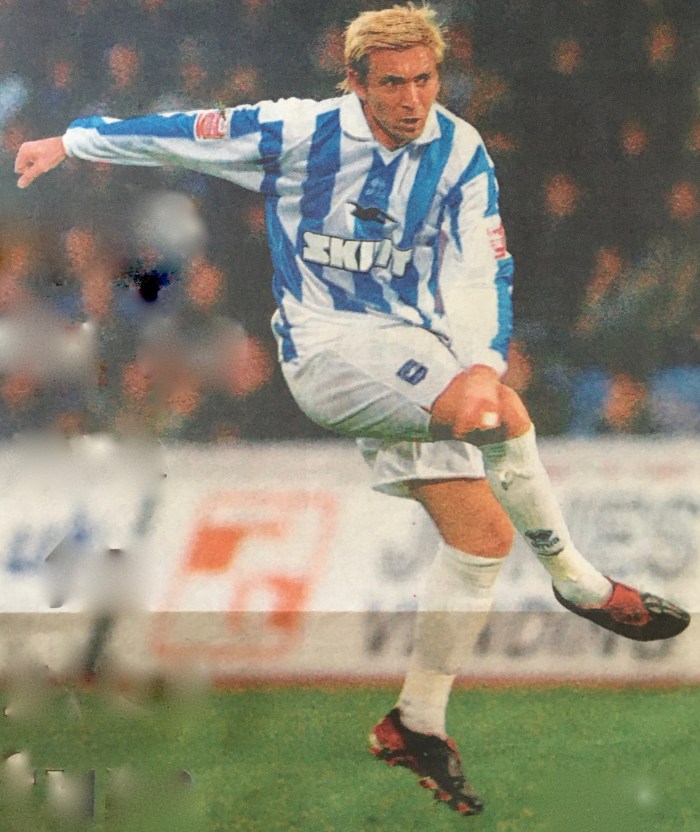
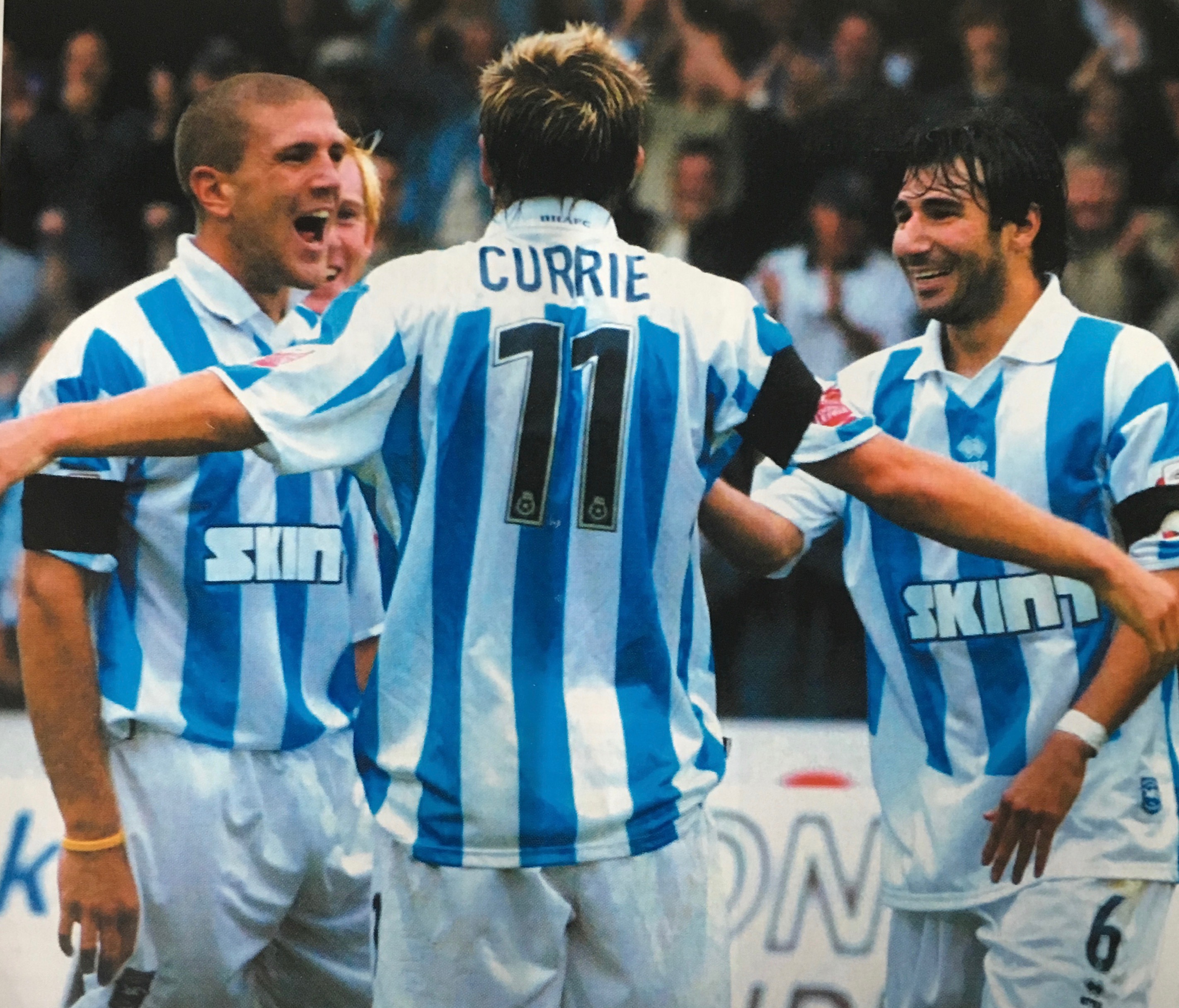
THE PINPOINT accuracy of Darren Currie’s passing and shooting was a joy to watch, even though a lack of pace stopped him being as good a player as his famous uncle.

Currie was a decent player in his own right, making nearly 700 appearances for 15 different clubs, but wherever he went he was always known as the nephew of the former Sheffield United, Leeds, QPR and England creative midfielder Tony Currie.

Perhaps with a hint of family bias, Uncle Tony said in an interview for ITV Digital: “Darren is, without doubt, the best crosser of the ball, after Beckham, in the country. He’ll produce nine times out of ten, right foot or left foot.”

The young Currie attributed his crowd-pleasing skills to the start he was given in the game by West Ham. After 10 years stuck in the lower leagues, Currie was given a platform to perform in the Championship by Brighton, and he very nearly made it to the top when transferred for £250,000 to high-flying Ipswich Town.

As if by a cruel twist of fate, Ipswich lost to the Hammers in the 2004-05 Championship play-off semi-finals having just missed out on automatic promotion.

“Playing for West Ham at youth and reserve levels was a terrific way to start a career,” Currie told the Ipswich Star. “They gave me everything but my debut.”

He certainly came close though, featuring alongside recognised first-teamers like Lee Chapman and Frank Lampard in friendlies and testimonials, but he had to move elsewhere to gain competitive first-team action.

Initially he had loan spells with Shrewsbury Town and Leyton Orient, and when the Shrews bid £70,000 for him in 1996, he chose to drop down a couple of divisions to get regular football.

“The difference in money was only about £50. The then West Ham manager Harry Redknapp called me in and said that I was an adult and had to think about continuing to play regular first team football,” Currie explained. “I was given the opportunity to have a new contract at West Ham or moving permanently to Shrewsbury.

“I was a young pro at West Ham and I had been out on loan a couple of times and I got the buzz for playing at three o’clock on a Saturday afternoon. There was no other feeling like it.

“I thought to myself I’ll go to Shrewsbury and I’ll play really well for a year and I’ll get a move back up to the top.

“My naivety kicked in then because it didn’t quite happen. I thought I’d done OK and I was linked with a couple of moves but the route back to the top wasn’t as simple as I thought it would be in my head.”

Indeed, it was a decade in which, after three seasons with the Shrews, he moved on briefly to Plymouth Argyle, then to Barnet (three seasons) and Wycombe Wanderers (three seasons).

Currie said it got to a point where Wycombe couldn’t afford to keep him, and boss Tony Adams made it clear he was free to look elsewhere.

Mark McGhee invited him to Brighton for a trial and was impressed with the way he knuckled down in training to get himself fit following a programme devised by McGhee’s deputy, Bob Booker.

Currie was offered a 12-month contract but it was more about the opportunity to play at a higher level that prompted him to sign.

“It wasn’t a fantastic offer – put it this way, Peterborough offered me three years – but it wasn’t about the money,” Currie told Spencer Vignes in an Albion matchday programme article.

“It was about the football and playing in the Championship. I was determined to do well and to prove myself, which I did. That’s when people began to sit up and take notice.”

Currie’s ability on the ball carved him out to be a crowd-pleaser and the first of two goals for the Albion typically came from a free kick in a 3-2 home defeat to QPR that left Argus reporter Andy Naylor purring over its execution.

“Currie, having shaved a post and hit the bar with two earlier free-kicks, made it third time lucky from 20 yards just before the break. It was a sumptuous effort from the set-piece expert which rendered Rangers’ keeper Chris Day motionless.”

His other goal came in a 1-1 draw at home to Sheffield United, more noted for Albion wearing the limited-edition Palookaville strip to help publicise backer Fatboy Slim’s latest album.

Injury-hit Albion considered it a point gained rather than two dropped and Naylor complimented Leon Knight for “superbly crafting” Currie’s goal by evading his marker and threading a square pass through the legs of Leigh Bromby.

“Currie, with time as well as room, picked his spot to score, which meant even more to him because of the opposition,” wrote Naylor, informing readers that the Yorkshire side had rejected him as a 16-year-old following a fortnight’s trial.

Unfortunately for Currie, he was only on the bench when the Albion travelled to Upton Park on 13 November 2004. After three successive defeats, McGhee confessed he set the side up not to lose rather than go for a win.

Somewhat ironically, the Seagulls blagged a 1-0 win courtesy of a Guy Butters goal, in a real backs-to-the-wall match, with veteran striker Steve Claridge ploughing a lone furrow up front.

It was only in the 90th minute of the match that McGhee introduced Currie in place of Claridge to play out the final few minutes of the game.

Currie only played 22 games for Brighton over four months but the fee they received for him from Ipswich gave a vital boost to club funds when they were struggling to compete in the division because of the restricted crowd numbers at Withdean. Having signed him on a free transfer, the deal was a no-brainer for the Albion hierarchy, even if it weakened a squad who subsequently only avoided relegation back to the third tier by a single point.

McGhee wasn’t that surprised to see Currie go, telling the Argus: “He was obviously happy here, but I thought he was doing so well that he would keep his options open.

“I cannot see Darren being a regular for Ipswich in the Premiership if they are promoted, but his skills and touch are good enough to justify him making a contribution to a squad in the Premiership.”

It didn’t pan out like that, but Currie was nonetheless grateful to the Albion, and told Vignes: “I am so pleased I had the chance to be a part of it all down there, to see what the support is like and to play with a group of lads who stick together through thick and thin.

“I played at the Goldstone when I was a kid, playing youth team football with West Ham, so I know how important the stadium issue is for everyone. I always will be extremely grateful to the Brighton fans and Mark McGhee because without a doubt without their help this opportunity wouldn’t have come along.”

Currie explained in a matchday programme article how McGhee had helped to develop his game and to add other dimensions which improved him. “I owe a helluva lot to Mark and Bob Booker,” he said.

Currie became an instant hit with the Tractor Boys fans earning the man of the match accolade in two of his first four games.

“I tend to build up a rapport with supporters wherever I go,” he told the Ipswich Star. “I am my own biggest critic and I know when I have done well, and I am very satisfied with my contribution so far.”

After his brief cameo for the Seagulls at West Ham, he got the chance to play against his boyhood club three times that season with Ipswich.

He was in the Town side that lost 2-0 at home to the Hammers on New Year’s Day 2005. Then, in the first leg of the play-off semi-final, Currie and Matt Richards (later a loanee with the Albion) were half-time substitutes who helped Ipswich to recover a deficit to draw 2-2.

Currie started the second leg and had Ipswich’s best opportunities with a shot straight at James Walker, then a long-range drive 10 minutes before the interval which the goalkeeper hopelessly misjudged but fumbled to safety. But they failed to make the final when Bobby Zamora scored two second half goals for West Ham to earn them a 2-0 second leg win. West Ham beat Preston in the play-off final.

Born in Hampstead on 29 November 1974, Currie’s early footballing talent drew interest from Watford and Chelsea, but he decided to join West Ham’s academy.

“The facilities were great, the training for us there as kids was first class and I really enjoyed my time there,” Currie said.

“A lot of the player I became was what I was taught as a kid at West Ham,” he told twtd.co.uk. “It was all about the ball and all about the technical skill and how to manipulate the ball. It was a way I enjoyed playing anyway so it was a really good fit for me.”

After signing professional in 1993, he was a regular in the West Ham reserve side and a trawl through the excellent archive website whu-programmes.co.uk records show he played in a Football Combination game away to Brighton on 1 April 1994, and later the same month was up against Guy Butters in Portsmouth’s reserve side at the Boleyn Ground. Mark Flatts and Paul Dickov were in opposition when the Hammers stiffs entertained their Arsenal counterparts at home on 11 May.

In an Avon Insurance Combination match at the Goldstone Ground on 30 November 1994, Currie scored the only goal of the game from the penalty spot in a West Ham side also featuring Lee Chapman and Frank Lampard.

The following summer, Currie played in four matches when he was part of West Ham’s squad on a centenary tour of Australia.

Shrewsbury boss Fred Davies, a former playing colleague of Redknapp’s at Bournemouth, took Currie on full time after his two loan spells at Gay Meadow.

He moved on to Plymouth Argyle in 1998 but only played five matches in three months, then switched to Barnet where he made 136 appearances, plus seven as a sub, in three years.

Wycombe Wanderers paid £200,000 to sign him in the summer of 2001 and manager Lawrie Sanchez told BBC Three Counties Radio: “He’s obviously a quality player. He gets crosses in and that’s an area where we weren’t very good last year. He’s come to add that to our game and his free kicks will trouble the ‘keeper as well.

“It was quite a lot of money for our club to spend but I’ve got to back my judgement. I’d looked at him for a while and quite liked him. He gives us something we haven’t got, he’s a great technician. He hasn’t got particularly great pace but what he does with the ball is tremendous. We’re hoping he does all the things he was doing at Barnet and a little bit more for us.”

Sanchez added: “A lot of people looked at him for a long time. He’s always been considered one of the best players in the Third Division and hopefully we’ll give him the stage where he can prove he’s one of the best players in the Second Division.”

After Currie’s flirtation with promotion to the Premier League ended in disappointment, Joe Royle left Portman Road and his replacement Jim Magilton axed Currie from the side in the 2006-07 season. He was sent on loan to fellow Championship sides Coventry City and Derby County, for whom he made a play-offs appearance as a substitute, although he wasn’t involved in the final when County beat West Brom 1-0.

That summer, on the expiry of his Ipswich contract, Currie moved on a free transfer to League One Luton Town. He made 38 appearances for the Hatters but when they went into administration, were deducted 10 points and relegated, he was among several players given a free transfer.

Micky Adams, back in the hotseat at the Albion, was hopeful of getting Currie back to Brighton for a second spell, telling BBC Southern Counties Radio on 11 July: “He’s a player I’ve admired for a long, long time. We want him, and he wants to come back. He’d offer competition for places and fantastic delivery from set pieces.”

But at the end of the month the player rejected the terms on offer and took up a three-year contract at Chesterfield instead.

While the first year at Saltergate went OK, in the second season, the manager who signed him, Lee Richardson, had been replaced by John Sheridan, and Currie was out of the picture. He went on loan to fellow League Two side Dagenham & Redbridge and the deal was made permanent in January 2010. Currie played in 16 matches as the Daggers won promotion to League One.

They went straight back down the following season, and Currie departed for Conference South outfit Borehamwood as player assistant manager. He was there less than three months before moving to Isthmian League Hendon for a year as a player.

In October 2012, Currie returned to Dagenham & Redbridge, initially as a development coach and later as assistant manager under John Still.

In June 2018, Currie was appointed assistant manager at National League side Barnet, working under Still. He succeeded Still in December 2018, initially as caretaker, before landing the role permanently in January 2019.

Currie, assisted by former Albion loanee midfielder Junior Lewis, came close to getting Barnet promoted to League Two but, having missed out, and the club struggling financially because of the Covid-related lack of fan revenue, both left the club in August 2020.

Goalkeeper John Phillips – the ‘unenviable understudy’

JOHN PHILLIPS was a Welsh international goalkeeper who played for Chelsea and Aston Villa before becoming a back-up at Brighton under Alan Mullery.

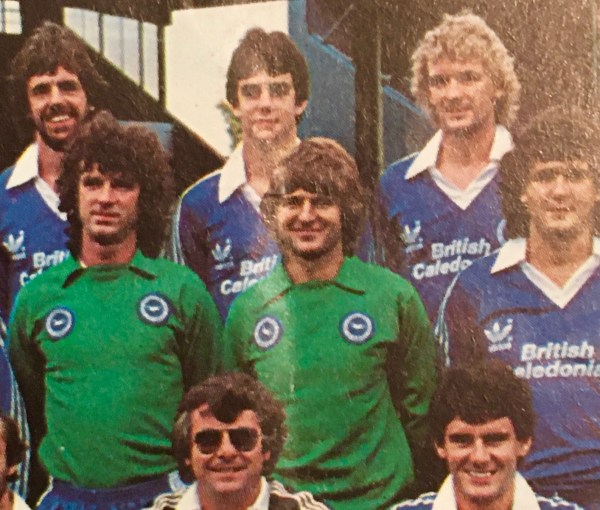
A £15,000 fee took him to the Goldstone Ground as no.2 to Graham Moseley in 1980 and, possibly the most interesting thing about his time at Brighton was his appearance in the centre of the pre-season team photo (see below) alongside Moseley in which both ‘keepers rather oddly wore green jerseys sporting two Seagulls badges!

JP 2 badge colourPreviously an understudy to the legendary Chelsea goalkeeper Peter Bonetti, Phillips did have occasional first team spells at Stamford Bridge, including playing in earlier rounds of the successful European Cup Winners’ Cup campaign of 1970-71.

When he died aged 65 on 31 March 2017, the Chelsea website paid a warm tribute to his contribution.

JP prog notes

At Brighton he featured 19 times for the reserves but only played one first team game. That came in front of a bumper festive season Goldstone crowd of 27,387 on 27 December 1980 (as seen above on my amended programme teamsheet) as the Seagulls beat traditional rivals Crystal Palace 3-2; a brace from Michael Robinson and Peter O’Sullivan with the Albion goals.

IMG_6433The following month, it looked like he might get a second game after Mullery publicly blamed first-choice Moseley for the side losing six points, and told the Argus Phillips would come in for the next match unless he could sign another ‘keeper.
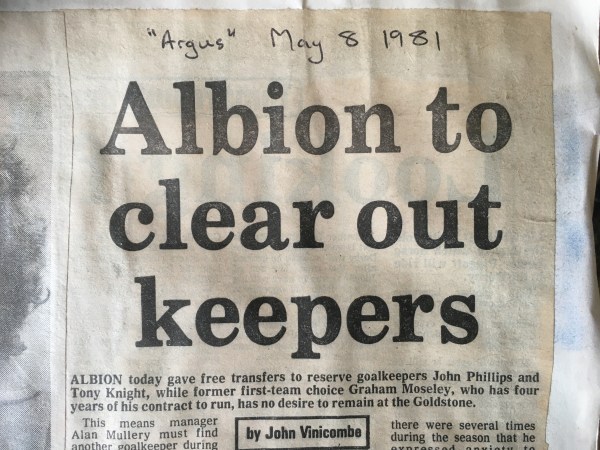
Mullery promptly went back to his old club, Fulham, and splashed out £150,000 on unknown youngster Perry Digweed – pushing Phillips further down the pecking order.

IMG_6431At the end of the season, Phillips and Tony Knight, a young ‘keeper who didn’t progress to the first team, were released on free transfers. It was also reported that Moseley was on his way, but Mullery’s shock departure that summer gave him a stay of execution.
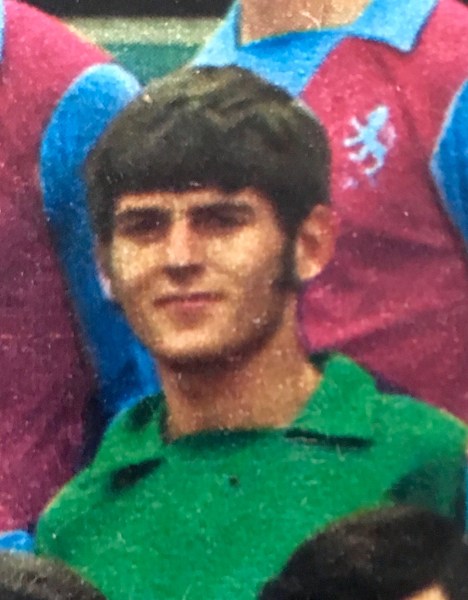
Disgruntled Mullery swapped managerial seats with Mike Bailey, who’d just led Charlton Athletic to promotion from the old Third Division,

Phillips was one of his first signings. However, he only played two games for Charlton, so he was to endure another frustrating spell of being the understudy.

Contributor Richard J on charltonlife.com remembered how Phillips replaced first choice Nicky Johns in the first away game of the 1981-82 season – a 3-0 defeat at Luton Town.

“Nicky returned for the next game and Phillips’s only other game was away at Leicester. Unfortunately, we lost that game as well, 3-1.”

But Richard continued: “I work with Tony Lange who took over from the Welsh international as Charlton’s number two keeper. He felt that John was a big influence on his career.

“Apparently, Phillips was exceptionally good at distribution and this was one of the reasons he had played so much for Chelsea and Tony credits him as a big influence on that part of his game.”

He moved from Charlton to Crystal Palace but he didn’t feature for their first team at all. He then tried his luck in Hong Kong, with See Bee.

Born in Shrewsbury on 7 July 1951, Phillips went to the Grange School in Shrewsbury and, because both his father and grandfather played league football for Shrewsbury Town, it was no surprise when he also signed for Town. He made his debut in 1968 at the age of 17.

A big influence on him was the former Manchester United and Northern Ireland goalkeeper, Harry Gregg, who was manager at Gay Meadow between 1968 and 1972.

In an early edition of Goal magazine, Gregg said: “He’s the finest goalkeeping prospect I have seen. He seems to have every asset in the book and his temperament really stands out.”

J Phil VillaPhillips played 51 times for the Shrews before being bought in 1969 by Tommy Docherty, the former Chelsea boss who’d taken over as Aston Villa manager.

After only 15 games for Villa, in August 1970, Chelsea paid a fee of £25,000 to take Phillips to Stamford Bridge.

The regular back-up ‘keeper, Tommy Hughes, who went on to have a loan spell at Brighton in the 1972-73 season, was out injured with a broken leg at the time and Chelsea needed someone to deputise for Bonetti, who only two months earlier had been criticised when having to take over in goal from ill Gordon Banks as England lost 3-2 to West Germany in the 1970 World Cup quarter final in Mexico.

Phillips stayed with Chelsea for 10 years and played a total of 149 games for the club. He managed 23 league and cup games during the 1972-73 season owing to Bonetti’s absence through injury and illness.

In October 1973, Goal ran a series called The Understudies and featured the rivalry between Phillips and Bonetti. Bonetti said of him: “John is a first-class ‘keeper and has pushed me more than anyone. It’s nice to know you have to play well to keep your place.”

Phillips told the magazine’s David Wright: “We are rivals, yes, but friends as well.”

It was only in the 1974-75 season that Phillips had an extended run of games as the no.1.

Although kind things were said of him when he died, not all recollections were favourable. The footballnetwork.net, for instance, said: “Phillips always conceded a lot of goals. Is this because he was awful or his defence and midfield were woeful? I suspect that it was a bit of both. Phillips did assist Chelsea in reaching the 1971 European Cup Winners Cup final, but he conceded seven at mediocre Wolverhampton as Chelsea sloped off into a long decline.

“Funnily enough, he shared goalkeeping duties for Wales with one Gary Sprake, a notoriously erratic Leeds goalie, as the late Peter Houseman could have testified!

“Obviously in the early seventies, while the Welsh rugby team had an embarrassment of riches, there was no such luxury in the goalkeeping department.”

Although English by birth, Phillips played for Wales at a time when qualification to play for countries beyond the one in which a player was born was extended to include the homeland of their parents or grandparents. He won four caps in 1973-74, making his debut in a 3-0 defeat to England in front of 38,000 at Wembley on 15 May 1973.

A none-too-flattering recollection can be found in a book charting the history of Welsh international football. Red Dragons – The Story of Welsh Football says: “Sadly a nervy performance by Chelsea goalkeeper John Phillips was responsible for a grim 0-2 defeat at home to England in May 1974.”

Bonetti saw off many pretenders to his throne, but Phillips went closer than anyone to taking his place, according to gameofthepeople.com, which described him as “the unenviable understudy” in an article charting his Blues career.

In the summer of 1975, Chelsea had been relegated and Bonetti given a free transfer, so Phillips was expected to start the new season as first choice ‘keeper.

But he fractured his right leg in training and badly damaged knee ligaments, opening the door for Steve Sherwood to take over between the sticks.

In the 1979-80 season, Phillips was loaned to Crewe Alexandra. Even there, he only played six times for the league side, having to be content with 23 games for their reserves.


  • Pictures mainly sourced from Goal magazine or Shoot! Also the Argus and matchday programme.

Brighton’s heroic captain Cullip clashed with Warnock

AFTER three promotions and one relegation in five years, Danny Cullip left Brighton for Sheffield United in December 2004.

Hard-up Albion needed the cash at the time and Cullip was keen to join a side who were pushing for promotion to the Premier League.

“They were a massive side and I felt that it was too good an opportunity to miss,” Cullip said in Match of My Life (knowthescorebooks.com), edited by Paul Camillin. “I felt if I didn’t take the opportunity, I would end up regretting it, and although things didn’t work out, I don’t regret it, as I would have lived the rest of my life wondering what might have happened.”

Cullip was virtually ever-present during his three months with the Blades but a clash of personalities with fiery manager Neil Warnock saw him offloaded on loan to Watford before the end of the season.

DC focusThe player who had been an inspirational captain for the Seagulls has chosen not to go into detail about what happened although Warnock had plenty to say in his autobiography, ghostwritten by journalist Oliver Holt.

“At Sheffield United I bought a centre-half, Danny Cullip, with a view to him being my leader on the pitch, my captain,” he said. “I thought he was a good talker. I realised within a week he talked a better game than he played. The only answer was to get shot of him quickly.”

Cullip swerved the controversy in an Albion matchday programme interview in 2019-20, saying instead: “We won my first three games in succession and ended up taking maximum points from five of the first six games.

“It was a great start and I was really enjoying my football but then, out of the blue, Neil said he wanted to bring in another striker, Danny Webber from Watford.

“Ray Lewington, who was coach at Watford at the time and knew me from out time together at Brentford, said they would only sanction it if they could get me in return. It was going to be a permanent move but ended up being a loan as Ray was sacked the following week, which wasn’t ideal.

“My Sheffield United career was over though before it had even begun, which was so disappointing because I’d been playing well and we’d been getting results.”

butts + DC Sheffield United’s Cullip gets to grips with ex- Albion teammate Guy Butters
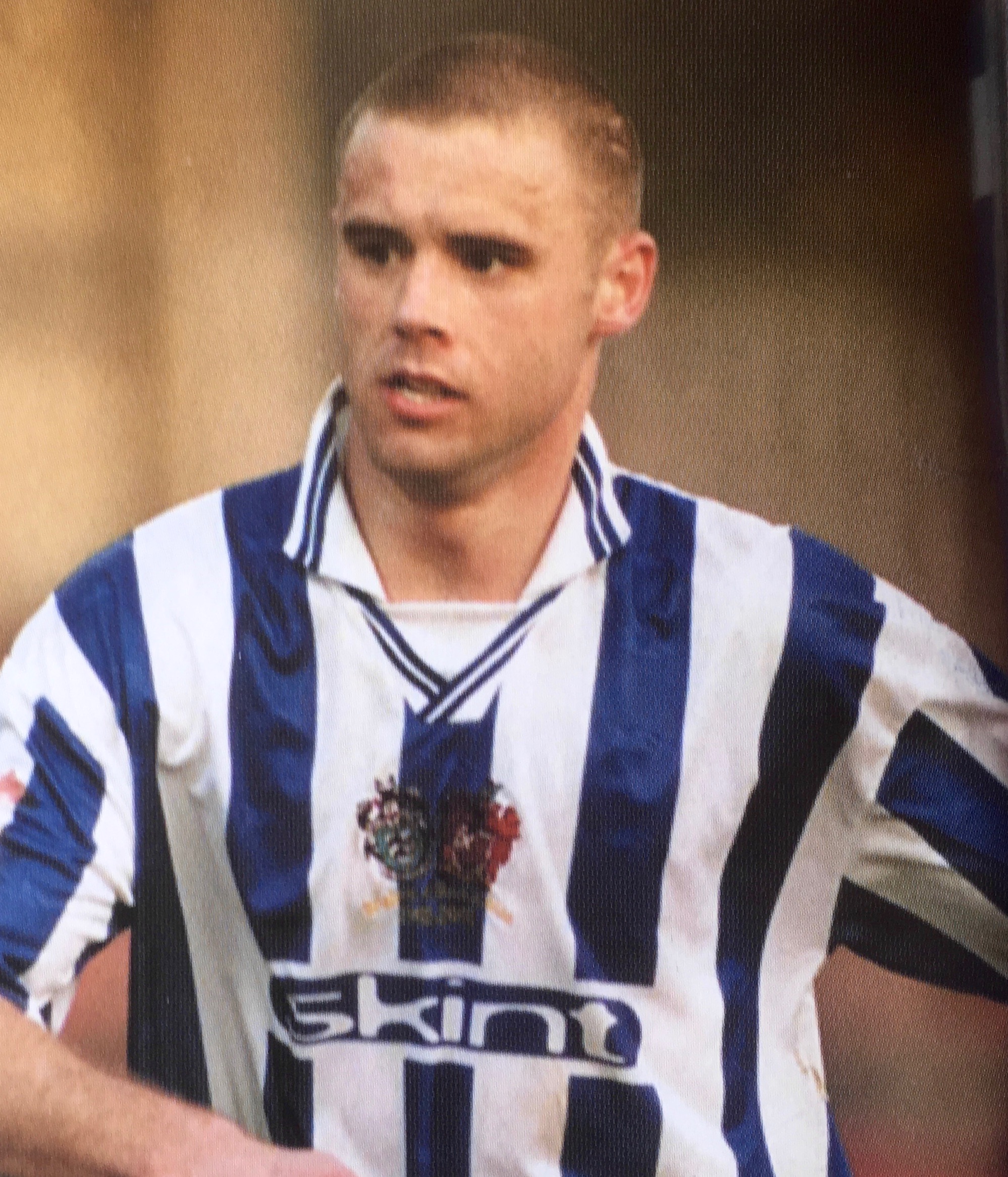
Lee Connor on footballleagueworld.co.uk reckoned Cullip was one of the top 5 most pointless signings in Sheffield United’s history which seems a harsh assessment of a player who made 216 appearances for Brighton.

The £250,000 fee Brighton received for their captain was certainly much needed at the time and was a good return on the £50,000 they invested in signing him from Brentford for £50,000 on 13 October 1999.

Born on 17 September 1976 in Bracknell, Berkshire, Cullip was scouted by Oxford United while playing Sunday football and shone during a set of trial games. After getting into their under-16s, he then earned a two-year YTS apprenticeship where he was coached by future England manager Steve McLaren.

Oxford were managed by that redoubtable former centre half Denis Smith at the time and Cullip was given a one-year professional contract but faced stiff competition to make the breakthrough to the first team, where future Leicester City stalwart Matt Elliott was excelling.

“I went out on loan to Kettering Town in the Conference,” Cullip told fulhamfocus.com. “Gary Johnson was their manager and I learned a lot from him and played well there.”

Cullip had a trial at Shrewsbury and could have joined them or Kettering. But he chose to join then Fourth Division Fulham because his dad was a Fulham fan, he told fulhamfc.com in an April 2016 interview. Micky Adams had been newly appointed in his first managerial job and handed Cullip his league debut in the first game of the 1996-97 season.

It was a season fondly remembered by Fulham fans because they won promotion but the regime change the following year, when Mohammed Al Fayed took over, saw Adams dumped in favour of Kevin Keegan and Ray Wilkins and eventually Cullip rejoined Adams at Brentford in exchange for a £75,000 fee in February 1998.

Cullip found himself back in the basement division when the Bees were relegated and then on the treatment table for much of the season after suffering a cruciate knee ligament injury.

Having not played a first team game for 13 months because of the injury, Cullip was thrown a lifeline when Adams, by now in charge at Brighton, took him on a month’s loan in September 1999.

CullipHe impressed sufficiently for Adams to persuade chairman Dick Knight to make the transfer permanent, beginning an association with the club which continues to this day.

Cullip became a mainstay of the defence during the back-to-back promotions of 2001-02 and 2002-03 and famously scored the headed winner in a 1-0 win over Chesterfield at Withdean that clinched the third-tier championship.

Cullip took over the captaincy from Paul Rogers and recalls the “unbelievable day” he lifted the play-off final trophy at the Millennium Stadium, Cardiff, in 2004.

After his Blades spell was cut short, and his brief Watford loan came to an end, Cullip joined Nottingham Forest where his manager was Gary Megson. “I really liked him,” said Cullip. “He was an honest guy; what you see is what you get with him.

“Unfortunately, I missed my first pre-season with Forest due to what was ongoing at United, so I was playing catch-up with the rest of the lads and ended up suffering a hamstring injury. It was a problem that would dog me for the rest of my career.”

He was restricted to a handful of appearances in his first season with Forest but he eventually became a regular in a three-man defence alongside Wes Morgan and Ian Breckin.

DC Forest Cullip in action for Forest, marking Albion’s Alex Revell

In January 2007, he was on the move again, to Queens Park Rangers, where former Albion player John Gregory was in charge. But his 18-month deal was terminated early after one of their many managerial changes saw him surplus to requirements.

With his family based in Sussex, Cullip looked for an opening in the south and spent six weeks training with Millwall before linking up with Gillingham, where he played from February 2008 to the end of the 2007-08 season.

He then played non-league with Lewes but, after a season, the hamstring injury forced him to retire.

Alongside his former Albion centre half partner Guy Butters, Cullip is now a coach with the Albion in the Community scheme.

One-goal striker Craig Davies a Seagulls flop

THE PHRASE ‘journeyman striker’ sits perfectly with Welsh international Craig Davies who, despite success later in his career, fired blanks for Wolverhampton Wanderers and Brighton.

To use that rather amusing, though well-worn phrase, he couldn’t hit a cow’s arse with a banjo during his time with the Seagulls.

He arrived on the south coast in January 2009 during Micky Adams’ second, unsuccessful, spell in Albion’s managerial chair.

Oldham Athletic received a reported £150,000 for his signature and, in 23 games for Brighton, he managed just the one goal – on his debut!

That strike came at Withdean – the opening goal in what ended up a 4-2 defeat to Peterborough United (for whom a certain Craig Mackail-Smith equalised).

When a 4-0 home thrashing by Crewe Alexandra meant it had been six games on the trot without a win, Adams was fired by Dick Knight at a Little Chef on the A23. He’d managed just seven wins in 34 matches, and ‘fireman’ Russell Slade arrived just in time to rescue the Seagulls from the League One relegation trapdoor.

Many different striker permutations were tried that season, with main men Nicky Forster and Glenn Murray sidelined by injury, and Albion’s survival was largely due to the goals of loan arrival Lloyd Owusu. Davies huffed and puffed but simply couldn’t make a meaningful connection when the goal beckoned.

Typical of the fans’ eye view was this observation by wearebrighton.com: “That Adams actually paid money for Craig Davies remains one of the more startling moments of his reign of terror.

“Rarely has a Brighton player enraged the Seagulls support like Davies, a man who mixed incompetence – such as the ability to put the ball over the bar when faced with an open goal three yards away – with a complete lack of effort.”

There had been such promise on his arrival, with chairman Dick Knight telling the matchday programme: “Craig is an exciting player with loads of potential, he is lightning-quick and his direct approach can be a nightmare for defenders. This is a major career move for him and he has every chance to be a crucial part of our future.”

Davies himself clearly thought he’d finally found a place to further his career, saying: “I’ve had a few ups and downs through my career but hopefully now I can get settled at Brighton and start knocking in the goals here.

“The gaffer seems to have a bit of faith in me so hopefully I can repay that by putting in some performances and getting a few goals.”

Albion cut their losses on Davies and loaned him to Yeovil Town (he didn’t score in four games for them, either) and then Adams re-signed him, this time for League Two Port Vale, where he finally managed to find the back of the net again.

In the summer of 2010, Davies came to a mutual agreement to end his Brighton nightmare and he joined League Two Chesterfield, from where his career began an amazing upward trajectory.

Born in Burton-upon-Trent on 9 January 1986, Davies began his career as a schoolboy at Shrewsbury Town, but did his apprenticeship at Manchester City. In August 2004, he moved on to League Two Oxford United, where he made his league debut the same month in a 1-0 win at Notts County.

In two seasons with Oxford, managed by former Ipswich and Arsenal midfielder Brian Talbot, he scored eight times in 55 appearances. In the summer of 2005, he made his debut for Wales (qualifying because he had a Welsh grandfather) as a substitute in a 0-0 draw v Slovenia. Reports linked him with a move to Premier League Charlton Athletic, but nothing came of it and instead, in January 2006, he moved to Italy to join Hellas Verona for a £85,000 fee.

It proved to be too big a step for someone who was then only 20, and he referred to feelings of homesickness in an interview with the BBC.

Remarkably, Davies hit the headlines in May 2006, when in the sixth of seven games he played for the Wales under-21 side (which featured Gareth Bale, Andrew Crofts and Arron Davies) he scored a hat-trick in a 5-1 win over Estonia, and it earned him a recall to the full international side.

Wales under-21 manager Brian Flynn told the BBC: “Craig has sometimes been frustrating to watch, but he has skill and we will help him, and them all, to flourish.”

Davies hoped the international goals would attract a club to rescue him from Italy. “I have found it very hard to settle in Italy,” he told the BBC. “Verona want me to come back and have a year on loan somewhere and then they will look at the situation again when I have a bit more experience.”

It was Wolves, then in the Championship, who offered him a lifeline back in the UK and he moved to Molineux on loan, playing 23 games, mainly in the first half of the 2006-07 season.

The only goals he scored for Wolves both came in a FA Cup tie against Oldham Athletic who, ironically, turned out to be his next club. He joined them for an undisclosed fee from Hellas in June 2007.

Davies netted 13 times for a League One Latics side in 2007-08 but, after a 10-game barren spell the following season, he was sent on loan to Stockport County where he scored six times in 13 games, including bagging a hat-trick against Bristol Rovers, and scoring a penalty against Albion as County won 2-0.

When Adams rescued Davies from his Seagulls horror spell, he was rewarded with seven goals in 24 matches for League Two Port Vale between January 2010 and the end of the season.

Chesterfield stepped in to sign him on a one-year deal for the 2010-11 season – and he was promptly sent off in his first competitive game for the Spireites!

Things did get much better, though, and he ended the season with 25 goals to his name, Chesterfield were promoted, and Davies was chosen in the divisional PFA select team for the season.

Such success drew attention from other clubs and he opted to join Championship side Barnsley under Keith Hill. He struggled to find the net in the opening nine matches but eventually finished the season with 11 goals in 42 appearances.

In September 2012, Davies scored FOUR goals in the space of 19 minutes in a 5-0 demolition of Birmingham City at St Andrews and, with nine goals in 22 appearances to his name in the first half of the 2012-13 season, Bolton Wanderers came forward with a £300,000 bid to take him to the Reebok Stadium.

He scored four goals in 18 Championship games for Wanderers but another of his barren spells struck in the opening half of the following season. Wanderers loaned him to League One Preston and he got a goal on his debut as well as a hat-trick in a 6-1 thrashing of Carlisle United. North End reached the play-offs, and Davies made his way back to Bolton having scored five in 15 games.

Hamstring injury issues plagued him in 2014-15 and manager Neil Lennon released him at the end of the season.

He didn’t have far to travel for his next port of call when newly-relegated Wigan Athletic offered him a two-year contract. He only scored twice in 30 appearances, but Wigan won promotion as League One champions.

With just one goal in 14 Championship games in the first part of the 2016-17 season, Davies was on the move again, this time linking up with League One Scunthorpe United until the end of the season. Cue another barren spell: no goals in 21 games.

The 2017-18 season saw Davies return to his old club, Oldham Athletic, and despite scoring 14 goals in 44 appearances, could not prevent the club being relegated to League Two. Davies had strong views about the ownership of the club as he departed for Mansfield Town.

He signed a two-year deal with the Stags, but injury curtailed his involvement in 2018-19.

C Davies Wales

Sweet left foot but McLeod wasn’t to Albion fans’ taste

McLeod stripesWHEN MICKY Adams returned to the Albion for a second spell as manager, he brought in a number of players who, for whatever reason, struggled to deliver what was expected of them on the pitch.

One was Kevin McLeod, a Liverpudlian who, earlier in his career, had come through the Everton academy and briefly made it through to the Everton first team.

During Adams’ previous reign at Brighton, he’d made a habit of recruiting players he had worked with before – with plenty of success. Second time around, it was not the same outcome. McLeod was a player who had played under Adams at Colchester United, joining Albion on a Bosman free transfer on 1 July 2008.

“He is a left winger with good pace. He can deliver crosses and he offers a goal threat,” Adams told the media at the time. “At this level, he’s going to be a terrific signing for us.”

McLeod scored in only the second minute of a pre-season friendly against Worthing at Woodside Road and followed up three days later with two goals against Bognor.

When the proper League One action got under way at Gresty Road, Crewe, McLeod was on fire in the opening 45 minutes and Albion went on to win 2-1.

Three days later, Adam Virgo scored twice from McLeod corner kicks as Barnet were swept aside 4-0 in the League Cup. But McLeod picked up a knee injury in that game which forced him off just before half time. Some critics maintain he never properly recovered from it for the rest of his time with the Albion. In the middle of September, he had to undergo an operation on the troublesome knee.

He returned to the line-up after a month, in a 0-0 home draw v Peterborough, and in his Argus match report, Andy Naylor observed: “McLeod once again demonstrated his ability to deliver quality crosses, which is why he has been so badly missed.”

However, by his own admission, McLeod rushed back rather too soon, and playing when not properly fit didn’t do him any favours.

650057It didn’t seem to stop him being the joker in the pack during training, though, on one occasion taking the key to loan signing Robbie Savage’s Lamborghini and hiding it. Former teammate Jim McNulty remembered him as being “hilarious for so many different reasons”, adding: “He was funny when he meant to be, he was funny when he didn’t mean to be and he was funny when he told a story because we never knew whether it was true or false. We could have so much humour with him from so many different angles and he probably wasn’t even aware of 95 per cent of them.”

McNulty detailed one stupid stunt in an interview with express.co.uk: “Macca took the car keys from the pants of one of the young lads in the changing room and decided to drive his brand new 4×4 straight onto the training pitches, over the grass and locked it between two goals.

“The goals would get chained up so he pushed two goals over the top of this lad’s BMW and locked them together. It was hilarious watching the lad trying to unlock them from his car.”

Poster ‘Basil Fawlty’ opined on North Stand Chat: “He never recovered after that knee injury against Barnet. His wages could have been used on somebody decent who can actually play left wing!”

‘Finchley Seagull’ added: “Most of the time he was here he was being paid for being injured or useless” and ‘EssBee’ declared: “Never have I seen such an unlikely professional footballer than that bloke. He looked like a poor pub team footballer…barrel chested, ill-physiqued, he was like a tub of f***ing lard with no control, no nothing.”

McLeodWell-known Albion watcher Harty observed: “I cannot think of any player, in recent years, who had a better first 45 mins for the club, vs Crewe in August 2008… then had an Albion career peter out in the manner it did.”

‘Twinkle Toes’ agreed: “I remember marvelling in his performance that day at Gresty Rd. He was absolutely terrorising the Crewe right-back with his pace and ability: he looked absolutely awesome.

“How the hell could somebody with that kind of ability turn into the no-hoper we all know and loathe?”

wearebrighton.com summed him up thus: “Another player to be filed under the umbrella of players signed by Adams who just wanted money. You could see that McLeod had talent, he just couldn’t be bothered to use it.”

While he made 28 appearances in the 2008-09 season, he only appeared eight times in 2009-10 and by the time Gus Poyet was in the manager’s chair, he let McLeod join Wycombe Wanderers on loan.

After the move he further riled Brighton supporters by claiming the humble Buckinghamshire club had “a better squad than Brighton, better ground, better fans”.

McLeod played just 11 more times as a professional for the Chairboys before going on to join a Sunday League side in Colchester.

Born in Liverpool on 12 September 1980, McLeod joined Everton as a schoolboy in 1991 and did well enough to become part of a decent youth side before establishing himself in their reserves. In the 2000-01 season, he was player of the season as they topped the reserve league.

His form was recognised by manager Walter Smith who called him up to the first team and gave him five substitute appearances in the Premier League. He made his debut v Ipswich on 30 September 2000; called off the bench for the last 15 minutes when the Toffees were already 3-0 down.

His next two appearances, two months later, were happier, though: he featured in a winning team against Arsenal and Chelsea.

Fellow youth team product Danny Cadamarteri had already given Everton a second-half lead over the Gunners when, within a minute of McLeod’s introduction, Kevin Campbell sealed the points against his old club.

The following week, the same two goalscorers gave Everton a 2-1 victory against a Chelsea line-up including the likes of Marcel Desailly, Eidur Gudjohnsen and Gianfranco Zola.

McLeod reflected some years later: “That’s not bad to have on your CV is it? Being an Evertonian it was great.

“When you are on the same pitch as Dennis Bergkamp, Ashley Cole, Ray Parlour, Lee Dixon, Martin Keown and the rest of them you don’t know whether to laugh or cry.

“It was a good experience and I thoroughly enjoyed it. In my age group there was Cadamarteri, Leon Osman, Francis Jeffers, Tony Hibbert, George Pilkington and Peter Clarke.”

The Arsenal-Chelsea double was as good as it got for McLeod. He made two more substitute appearances that season, in defeats at Ipswich and Chelsea.

The following season he made his only start for Everton as a team-mate of Paul Gascoigne in a League Cup defeat on penalties at home to Crystal Palace on 13 September 2001.

The excellent toffeeweb.com probably hit the nail on the head in describing the rising star.

“He may fall into the Everton black hole for promising youngsters who are good… but just not quite good enough,” it said. “He only has one weakness, and that is within himself when he will sometimes hide in a game if things don’t go to well in the first 10 to 15 mins.”

McLeod only got one chance under Smith’s successor David Moyes, coming on as a last-minute sub in a FA Cup defeat v Shrewsbury Town on 4 January 2003.

Ten years later he admitted to the Liverpool Echo that things might have turned out different if he had been more responsive towards Moyes.

Instead, he joined QPR on loan between March and May 2003, helping them reach the second division play-offs before joining them permanently for £250,000 on 18 August 2003.

McLeod said: “I didn’t like it at first when I moved to London. I didn’t want to go but I sat down and talked about it with my family and they said you can stay here and work hard or go and play League football.

“I went away and enjoyed it and got promotions (in his first season with both QPR and Swansea).

1068376

“You look at Leon Osman and Tony Hibbert. They stayed there for the extra year and now they are playing week in and week out but I am not one of those people who looks too much at the past.

“I’d rather go forward. I made my decision and I live with it to this day.”

McLeod initially joined Swansea on loan in February 2005 and made 11 appearances as the Swans won promotion to League One. The move was made pemanent for a fee of £60,000 at the start of the 2005-06 season and he went on to make 52 appearances (14 as a sub), before the move to Colchester.

In November 2015, McLeod was in trouble with the law, appearing before magistrates in Colchester accused of assault.