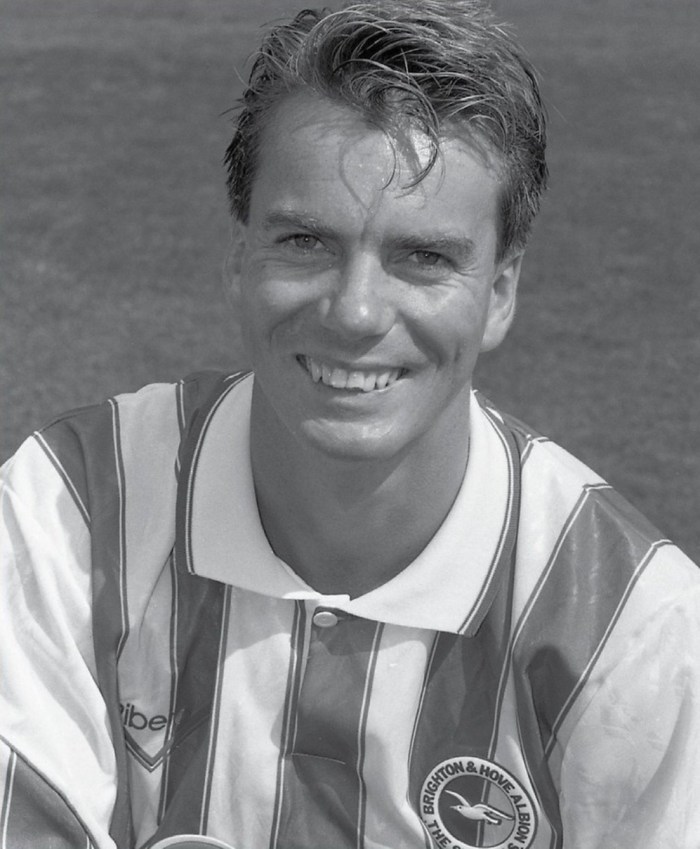
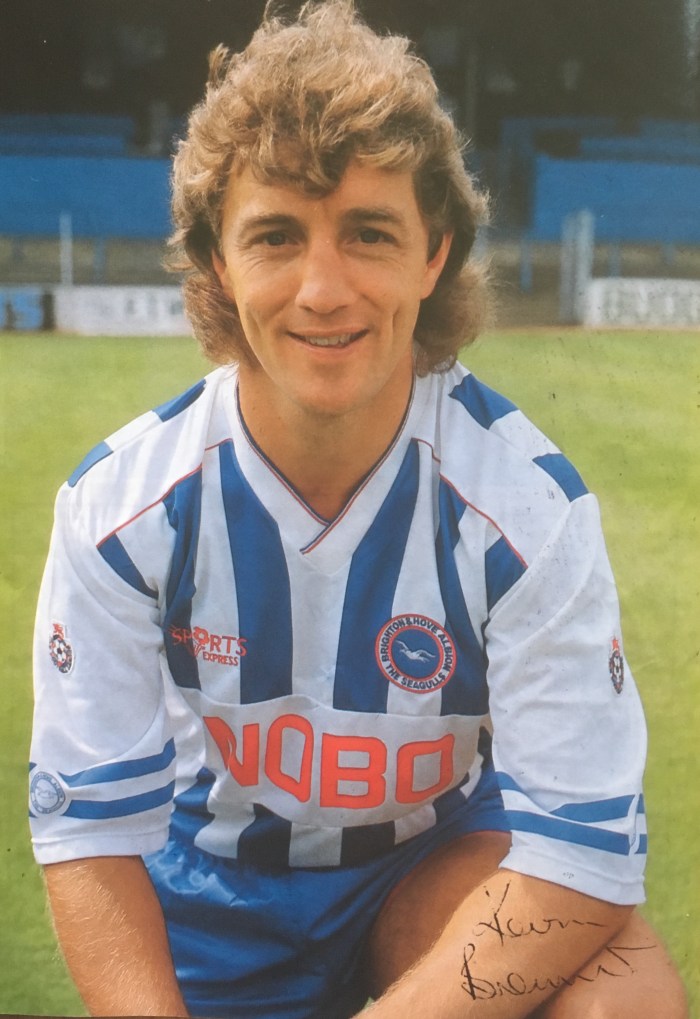
Sweet left foot but McLeod wasn’t to Albion fans’ taste

McLeod stripesWHEN MICKY Adams returned to the Albion for a second spell as manager, he brought in a number of players who, for whatever reason, struggled to deliver what was expected of them on the pitch.

One was Kevin McLeod, a Liverpudlian who, earlier in his career, had come through the Everton academy and briefly made it through to the Everton first team.

During Adams’ previous reign at Brighton, he’d made a habit of recruiting players he had worked with before – with plenty of success. Second time around, it was not the same outcome. McLeod was a player who had played under Adams at Colchester United, joining Albion on a Bosman free transfer on 1 July 2008.

“He is a left winger with good pace. He can deliver crosses and he offers a goal threat,” Adams told the media at the time. “At this level, he’s going to be a terrific signing for us.”

McLeod scored in only the second minute of a pre-season friendly against Worthing at Woodside Road and followed up three days later with two goals against Bognor.

When the proper League One action got under way at Gresty Road, Crewe, McLeod was on fire in the opening 45 minutes and Albion went on to win 2-1.

Three days later, Adam Virgo scored twice from McLeod corner kicks as Barnet were swept aside 4-0 in the League Cup. But McLeod picked up a knee injury in that game which forced him off just before half time. Some critics maintain he never properly recovered from it for the rest of his time with the Albion. In the middle of September, he had to undergo an operation on the troublesome knee.

He returned to the line-up after a month, in a 0-0 home draw v Peterborough, and in his Argus match report, Andy Naylor observed: “McLeod once again demonstrated his ability to deliver quality crosses, which is why he has been so badly missed.”

However, by his own admission, McLeod rushed back rather too soon, and playing when not properly fit didn’t do him any favours.
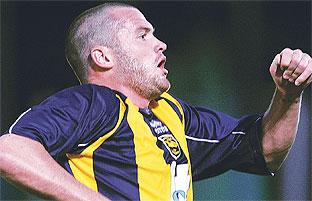
650057It didn’t seem to stop him being the joker in the pack during training, though, on one occasion taking the key to loan signing Robbie Savage’s Lamborghini and hiding it. Former teammate Jim McNulty remembered him as being “hilarious for so many different reasons”, adding: “He was funny when he meant to be, he was funny when he didn’t mean to be and he was funny when he told a story because we never knew whether it was true or false. We could have so much humour with him from so many different angles and he probably wasn’t even aware of 95 per cent of them.”

McNulty detailed one stupid stunt in an interview with express.co.uk: “Macca took the car keys from the pants of one of the young lads in the changing room and decided to drive his brand new 4×4 straight onto the training pitches, over the grass and locked it between two goals.

“The goals would get chained up so he pushed two goals over the top of this lad’s BMW and locked them together. It was hilarious watching the lad trying to unlock them from his car.”

Poster ‘Basil Fawlty’ opined on North Stand Chat: “He never recovered after that knee injury against Barnet. His wages could have been used on somebody decent who can actually play left wing!”

‘Finchley Seagull’ added: “Most of the time he was here he was being paid for being injured or useless” and ‘EssBee’ declared: “Never have I seen such an unlikely professional footballer than that bloke. He looked like a poor pub team footballer…barrel chested, ill-physiqued, he was like a tub of f***ing lard with no control, no nothing.”

McLeodWell-known Albion watcher Harty observed: “I cannot think of any player, in recent years, who had a better first 45 mins for the club, vs Crewe in August 2008… then had an Albion career peter out in the manner it did.”

‘Twinkle Toes’ agreed: “I remember marvelling in his performance that day at Gresty Rd. He was absolutely terrorising the Crewe right-back with his pace and ability: he looked absolutely awesome.

“How the hell could somebody with that kind of ability turn into the no-hoper we all know and loathe?”

wearebrighton.com summed him up thus: “Another player to be filed under the umbrella of players signed by Adams who just wanted money. You could see that McLeod had talent, he just couldn’t be bothered to use it.”

While he made 28 appearances in the 2008-09 season, he only appeared eight times in 2009-10 and by the time Gus Poyet was in the manager’s chair, he let McLeod join Wycombe Wanderers on loan.

After the move he further riled Brighton supporters by claiming the humble Buckinghamshire club had “a better squad than Brighton, better ground, better fans”.

McLeod played just 11 more times as a professional for the Chairboys before going on to join a Sunday League side in Colchester.

Born in Liverpool on 12 September 1980, McLeod joined Everton as a schoolboy in 1991 and did well enough to become part of a decent youth side before establishing himself in their reserves. In the 2000-01 season, he was player of the season as they topped the reserve league.

His form was recognised by manager Walter Smith who called him up to the first team and gave him five substitute appearances in the Premier League. He made his debut v Ipswich on 30 September 2000; called off the bench for the last 15 minutes when the Toffees were already 3-0 down.

His next two appearances, two months later, were happier, though: he featured in a winning team against Arsenal and Chelsea.

Fellow youth team product Danny Cadamarteri had already given Everton a second-half lead over the Gunners when, within a minute of McLeod’s introduction, Kevin Campbell sealed the points against his old club.

The following week, the same two goalscorers gave Everton a 2-1 victory against a Chelsea line-up including the likes of Marcel Desailly, Eidur Gudjohnsen and Gianfranco Zola.

McLeod reflected some years later: “That’s not bad to have on your CV is it? Being an Evertonian it was great.

“When you are on the same pitch as Dennis Bergkamp, Ashley Cole, Ray Parlour, Lee Dixon, Martin Keown and the rest of them you don’t know whether to laugh or cry.

“It was a good experience and I thoroughly enjoyed it. In my age group there was Cadamarteri, Leon Osman, Francis Jeffers, Tony Hibbert, George Pilkington and Peter Clarke.”

The Arsenal-Chelsea double was as good as it got for McLeod. He made two more substitute appearances that season, in defeats at Ipswich and Chelsea.

The following season he made his only start for Everton as a team-mate of Paul Gascoigne in a League Cup defeat on penalties at home to Crystal Palace on 13 September 2001.

The excellent toffeeweb.com probably hit the nail on the head in describing the rising star.

“He may fall into the Everton black hole for promising youngsters who are good… but just not quite good enough,” it said. “He only has one weakness, and that is within himself when he will sometimes hide in a game if things don’t go to well in the first 10 to 15 mins.”

McLeod only got one chance under Smith’s successor David Moyes, coming on as a last-minute sub in a FA Cup defeat v Shrewsbury Town on 4 January 2003.

Ten years later he admitted to the Liverpool Echo that things might have turned out different if he had been more responsive towards Moyes.

Instead, he joined QPR on loan between March and May 2003, helping them reach the second division play-offs before joining them permanently for £250,000 on 18 August 2003.

McLeod said: “I didn’t like it at first when I moved to London. I didn’t want to go but I sat down and talked about it with my family and they said you can stay here and work hard or go and play League football.

“I went away and enjoyed it and got promotions (in his first season with both QPR and Swansea).

1068376

“You look at Leon Osman and Tony Hibbert. They stayed there for the extra year and now they are playing week in and week out but I am not one of those people who looks too much at the past.

“I’d rather go forward. I made my decision and I live with it to this day.”

McLeod initially joined Swansea on loan in February 2005 and made 11 appearances as the Swans won promotion to League One. The move was made pemanent for a fee of £60,000 at the start of the 2005-06 season and he went on to make 52 appearances (14 as a sub), before the move to Colchester.

In November 2015, McLeod was in trouble with the law, appearing before magistrates in Colchester accused of assault.

Boylers’ service appreciated both sides of the Atlantic

MIDFIELD enforcer John Boyle was born on Christmas Day 1946 and went on to play more than 250 games for Chelsea.

Towards the end of his career, he spent two months on loan at Brighton trying to bolster the Albion’s ailing midfield in the dying days of Pat Saward’s spell as manager.

Indeed, Boyle was in that unenviable position of being at the club when the manager who brought him in was turfed out, and the man who replaced him (in this case none other than Brian Clough) swiftly dispensed with his services and sent him back to Chelsea.

By then, Boyle’s time at Chelsea was at an end and, after his 10-game Goldstone spell was also over, he went the shorter distance across London to play for Orient, before ending his playing days in America with Tampa Bay Rowdies.

Born in Motherwell, Boyle went to the same Our Lady’s High Secondary school that spawned Celtic greats Billy McNeill and Bobby Murdoch and, just around the time he turned 15, his stepbrother, who lived in Battersea, organised through a contact they had with then boss Tommy Docherty for him to go down to London for a trial.

He did enough to impress and 10 days later Chelsea sent him a letter inviting him to join their youth team, together with the train ticket from Motherwell to London.

“When I got off the train, Tommy Doc was waiting for me to take me to my digs,” Boyle told chelseafc.com in a recent interview. “I stayed in the digs that Bobby Tambling and Barry Bridges had stayed in before.”

Boyle – known to all as ‘Boylers’ – made his debut in the 1965 League Cup semi-final against Aston Villa and, at 18, it couldn’t have been much more memorable.

“I played on Monday in a Scottish youth trial and Wednesday I was playing against Aston Villa in the semi-final of the League Cup,” Boyle recounted. “After 20 odd minutes, I tackled this guy and he got injured and carried off. The crowd then booed me, he limped back on and then the crowd booed me more!

“It went to 2-0, to 2-2 and then with about 10 minutes to go I got the ball 30 yards out, rolled it forward and went crack and it went into the top corner of the net. I remember Terry Venables ran up to me and said ‘John, I am so pleased for you,’ and that was my first game. To score the winning goal in your first game was Roy of the Rovers stuff.”

He went on to become Chelsea’s youngest ever cup finalist when he was in the team that won the trophy. In those days, it was played over two legs, and, after beating Leicester City 3-2 in the home game, they drew the away leg 0-0. His teammates in the second leg were Bert Murray and the aforementioned Bridges, who he would go on to play alongside at Brighton in 1973.

The Goldstone Ground was familiar territory to him. On 18 February 1967, he was famously sent off for the visitors in a FA Cup 4th round tie when Albion held their more illustrious opponents to a 1-1 draw in front of a packed house. Chelsea went on to win the replay 4-0 and that year went all the way to the final where Boyle was part of the side who lost 2-1 to Spurs. In another fiery FA Cup tie between Brighton and Chelsea, in January 1972, Boyle was Chelsea’s substitute as they won 2-0 in a game which ended 10 a side, George Ley and Ron Harris being sent off.

john boyle chels blueWhen Docherty moved on from Stamford Bridge, and Dave Sexton took over as manager, Boyle’s involvement in the side was more sporadic, as he told fan Ian Morris on his Rowdies blog.

“Dave appreciated my energy and willingness, but I don’t think he really fancied me as a player. Basically, I became an odd-job man, filling in here and there, and in football it doesn’t help to get that reputation,” he said.

Although he wasn’t in the squad that beat Leeds in the 1970 FA Cup Final, he was back in the side when Chelsea beat Real Madrid over two legs in May 1971 to win the European Cup Winners’ Cup.

After Brighton’s disastrous 1972-73 season in the second tier – the general consensus is that they’d not properly been prepared for promotion and didn’t invest sufficiently in the team to have a fighting chance of staying up – the side continued to be in the doldrums as they adjusted to life back in the old Third Division.

Manager Saward was struggling to come up with the right formula and, having transferred former captain Brian Bromley to Reading, sought to boost his midfield with the experienced Boyle, who was surplus to requirements at Stamford Bridge.

With the paperwork signed on 20 September, Boyle was handed the no.8 shirt and made his debut alongside Ronnie Howell in a 0-0 draw away to Grimsby Town.

He made his home debut the following Saturday, but the Albion went down 1-0. Three days later, this time partnering Eddie Spearritt in the middle, Boyle helped Albion to a 1-0 win at Oldham Athletic.

After a 3-1 defeat away to Blackburn Rovers, at home to Halifax Town Boyle had a new midfield partner in John Templeman. But again they lost by a single goal.

With Howell back alongside him for the home game v Shrewsbury Town, Albion prevailed 2-0 in what turned out to be Saward’s last game in charge. Perhaps by way of another interesting historical note, Boyle was subbed off to be replaced by Dave Busby, who became the first black player to play for the Albion.

Caretaker boss Glen Wilson retained Boyle in midfield for the midweek 4-0 hammering of Southport and he was also in the line-up for Clough’s first game in charge, a 0-0 home draw against York City on 3 November. But the 2-2 draw away to Huddersfield Town on 10 November was his last game for the Albion.

As someone who’d gained something of a reputation as enjoying the social side of things at Chelsea, particularly with the likes of Peter Osgood, Charlie Cooke and Alan Birchenall, it maybe doesn’t come as too big a surprise to learn that Clough advised him “always buy two halves instead of a pint, or people will think you’re a drinker”.

Boyle was still only 28 when he tried his hand in Florida in February 1975, being appointed Tampa Bay Rowdies captain, and leading them to victory in the Super Bowl against Portland Timbers in August that year.

His former Chelsea teammate Derek Smethurst scored 18 goals in that inaugural season, playing up front alongside ex-West Ham striker Clyde Best, while former Crystal Palace ‘keeper Paul Hammond was in goal.

A newspaper article about Boyle’s contribution resides on tampapix.com, a hugely entertaining site featuring loads of players of yesteryear who turned out for the Rowdies.

It somewhat flamboyantly says: “‘Captain Rowdie’ John Boyle was a barrel-chested midfielder with legs as white as snow and hair as thin as a wheat crop during a summer drought.  He became the role model for the club, as much because of his leadership as well as the fact that he knocked opponents ‘grass-over-tea kettle’ when they came his way.”

He retired from playing in November the same year but, two years later, he stepped in as Rowdies coach when Eddie Firmani quit. However, he had also gone into the pub business in the UK and ultimately the need to be behind the bar at Simon the Tanner in Bermondsey, with his wife Madeline, meant he had to turn his back on the sunshine state and return to London.

Unable to resist the lure of the States once more, Boyle played five matches for indoor league side Phoenix Inferno in the 1980-81 season.

In that wide-ranging interview Boyle gave to chelseafc.com earlier this year, he said: “I wouldn’t change a thing in my life, I am just grateful for what I have done. I have been blessed and one of the great things about it is 50 years later you can still talk about it! I was a lucky young man to have played when I did and meet the people I did.”


Elite career eluded Darren Hughes after cup-winning start

HughesDARREN Hughes won the FA Youth Cup with Everton but it was lower down the league where he built a long career which included a season with second tier Brighton & Hove Albion.
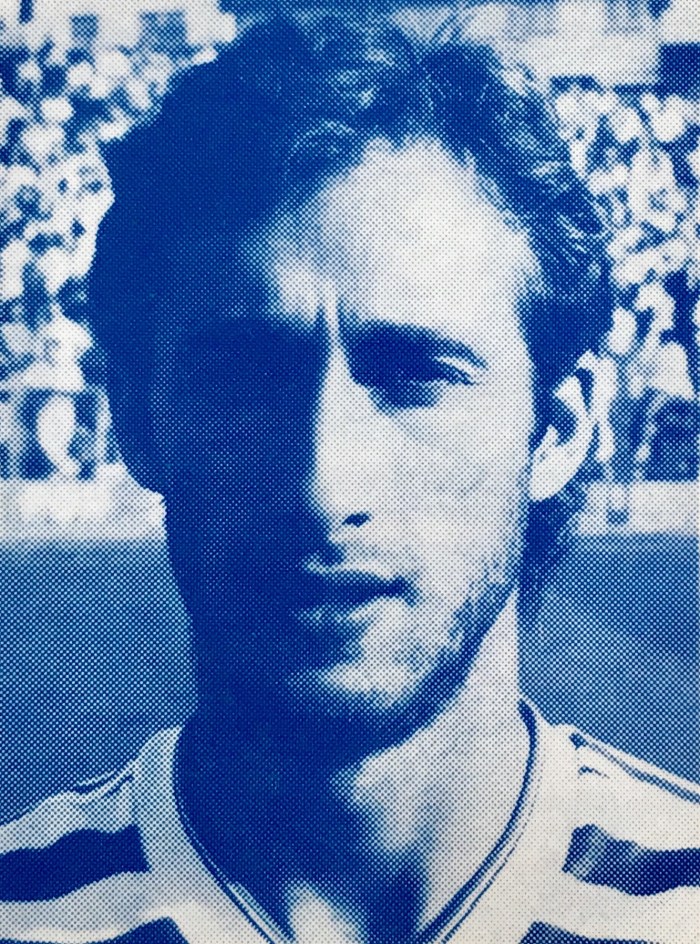
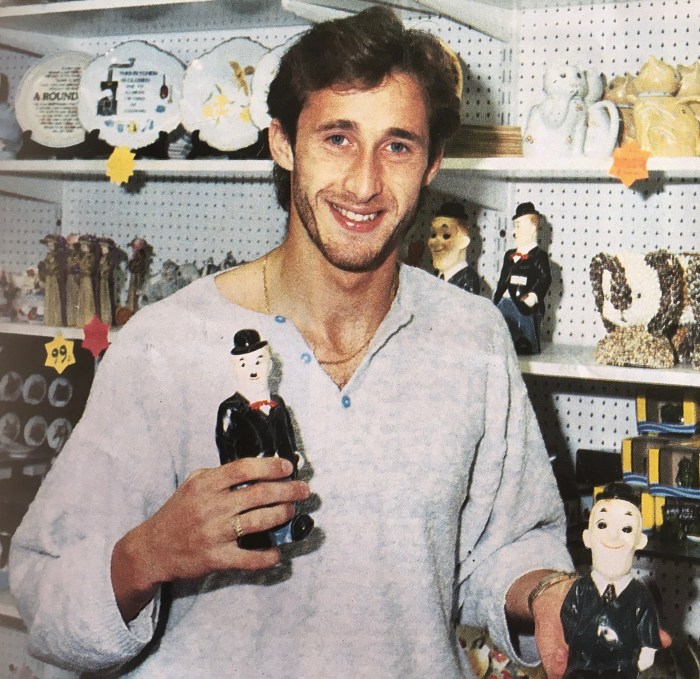
Born in Prescot on Merseyside on 6 October 1965, left-back Hughes played for Everton in two successive FA Youth Cup finals.

He was on the losing side against Norwich City in 1983 (when among his Everton teammates was centre forward Mark Farrington, who later proved to be a disastrous signing for Barry Lloyd’s Brighton).

The tie went to a third game after it was 5-5 on aggregate over the first two legs. The Canaries won the decider 1-0 at Goodison Park. The following year, Hughes was a scorer, and collected a winners’ medal, as Everton beat Stoke City 4-2 on aggregate.

Meanwhile, the young Hughes had broken into Everton’s first team as an understudy to stalwart John Bailey, making his Everton debut two days after Christmas in 1983.

Unfortunately, the game ended in a 3-0 defeat away to Wolverhampton Wanderers, for whom former Albion winger Tony Towner was playing.

It wasn’t until May 1985 that Hughes next got a first team opportunity, featuring in a 4-1 defeat to Coventry City at Highfield Road and a 2-0 defeat to Luton Town – manager Howard Kendall resting some of the first-choice players after the League title had already been won and ahead of the European Cup Winners’ Cup Final against Rapid Vienna.

With the experienced Bailey and Pat Van Den Hauwe in front of Hughes in the pecking order, Kendall gave the youngster a free transfer at the end of the season, and he joined Second Division Shrewsbury Town, where he made 46 appearances.

Hughes played against Albion for Shrewsbury at Gay Meadow on 16 September 1986, and, two weeks’ later, Alan Mullery, back in charge of the Seagulls for a second spell, signed the 21-year-old for a £30,000 fee.

D Hughes blue

Not for the first time, hard-up Albion had devised a scheme to raise transfer funds from supporters, and the money for the purchase of Hughes came from the Lifeline fund which also helped Mullery to buy goalkeeper John Keeley for £1,500 from non-league Chelmsford and striker Gary Rowell, from Middlesbrough.

Hughes made his Albion debut in a 3-0 defeat at home to Birmingham in the Full Members Cup on 1 October 1986 and his first league match came in a 1—0 home win over Stoke City three days later.

“I was quite happy at Shrewsbury,” Hughes told matchday programme interviewer, Tony Norman. “But when the manager told me Brighton were interested in signing me I thought it would be another step up the ladder. It’s a bigger club with better prospects and it’s a nice town as well.”

The single lad, whose parents were living in Widnes, moved into digs in Hove run by Val and Dave Tillson. He was later joined there by Kevan Brown, another new signing, from Southampton.

Hughes said away from football he enjoyed golf and had played rounds with Steve Penney, Dean Saunders and Steve Gatting.

Brown, in a similar programme feature, said Hughes had been a big help in him settling into his new surroundings. “He has been showing me around the area and we’ve become good friends,” he said. “I’m glad I wasn’t put in a hotel on my own.”

Unfortunately for Hughes, life on the pitch didn’t go quite according to plan.

Mullery was somewhat controversially sacked on 5 January 1987 and, although Hughes played 16 games under successor Lloyd, those games yielded only two wins and the Albion finished the season rock bottom of the division.

The only consolation for Hughes was scoring in a 2-0 home win over Crystal Palace on 20 April. His final appearance in a Seagulls shirt came in a 1-0 home defeat to Leeds when he was subbed off in favour of youngster David Gipp.

Having played only 29 games, mostly in midfield, for Brighton, Hughes joined Third Division Port Vale in September 1987, initially on loan, before a £5,000 fee made the deal permanent.

It must have given him some satisfaction to score for his new employer in a 2-0 win against Brighton that very same month.

Hughes spent seven years with the Valiants, helping them to win promotion from the Third Division in 1989, making a total of 222 appearances, mainly as a left back.

His time with Vale was punctuated by two bad injuries – a hernia and a ruptured thigh muscle – and they released him in February 1994.

However, he gradually managed to restore his fitness and in 1995, between January and November, he played 22 games for Third Division Northampton Town.

He then moved to Exeter City, at the time managed by former goalkeeper Peter Fox, where he made a total of 67 appearances before leaving the West Country club at the end of the 1996-97 season.

He ended his career in non-league football with Morecambe and Newcastle Town but could look back on a total of 388 league and cup appearances for six clubs over a 14-year career.

After his playing days were over, according to Where Are They Now? he set up a construction business.

D hughes by tony gordon

Pictures: matchday programme.

Winger Mark Barham was no stranger to Wembley

1 Barham progBRIGHTON’S wingers in the 1991 Division Two play-off final had previously been on opposing sides in a Wembley final.
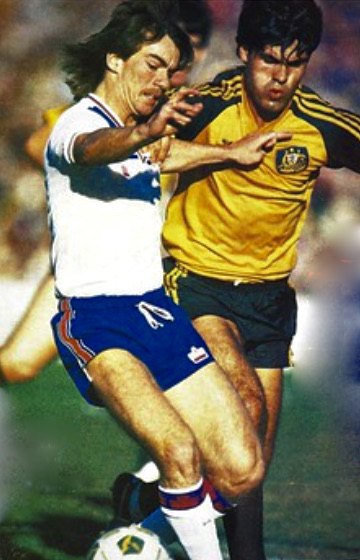
Mark Barham was a winner with Norwich City as they beat Sunderland 1-0 in the 1985 League Cup Final and Clive Walker missed a penalty for the Wearsiders.

Six years on, Barham had levelled for Albion in the first leg of the semi-final at home to Millwall (more of which later) and Walker got the third when the Seagulls upturned the form book and beat Bruce Rioch’s side 4-1.

The 6-2 aggregate victory pitched the Albion against Neil Warnock’s Notts County under the shadow of the famous Twin Towers of Wembley.

Walker saw a Wembley post prevent him from scoring as Brighton’s dream of promotion was ended in a 3-1 defeat.

Folkestone-born Barham joined the Seagulls on a two-year contract after an initial trial and made his debut as a substitute for Kevin Bremner in a 1-0 home defeat to Oxford United on 30 December 1989.

He got his first start two days later in a 3-0 defeat at West Brom, who he’d played for briefly under ex-Ipswich and Arsenal midfielder Brian Talbot earlier that season.

On the second Saturday of the new decade he scored his first Albion goal in a 1-1 draw at home to Barnsley and had played 18 games by the end of the season.

Young John Robinson was beginning to get first team opportunities but Barham managed 42 appearances in 1990-91, culminating in that Wembley appearance against Notts County, although he was subbed off on 10 occasions.

That play-off first leg game against Millwall was Lloyd’s selection in Paul Camillin’s 2009 Match of My Life book (www.knowthescorebooks.com). He said: “Perry Digweed put in one of his incredibly long punts and the ball was about to bounce on the edge of the Millwall box when the centre half (David) Thompson ducked under it, I think intending to allow it to bounce through to Brian Horne in the visitors’ goal.

“But as he took his eye off the ball he also turned his back and the ball actually landed on the back of his head and squirted off right into Mark’s path. The little winger raced in and cracked the ball into the bottom corner. It really was a vital goal so close to the interval and the fans knew it.”

The goal also gave Barham much personal pleasure because he’d not seen eye-to-eye with Millwall boss Rioch when he’d been his manager at Middlesbrough.

With Robinson winning the shirt more frequently in the disastrous relegation season of 1991-92, Barham managed 25 appearances plus two as a sub but he was released at the end of the season and moved on to Shrewsbury Town.

Born on 12 July 1962, Barham’s football career began when he joined Norwich as an apprentice in 1978.

He was part of the City youth team that won the South East Counties League in 1979-80 and in the same season, at the tender age of just 17, manager John Bond gave him his first team debut. No fairytale start, though, as City lost 5-0 to Manchester United at Old Trafford.

However, he went on to make himself a regular in the City first team, making 213 appearances and scoring 25 goals for the Canaries.

Screenshot
Barham in action for England v Australia

He also won two full England caps on the 1983 tour of Australia in a side captained by Peter Shilton and also featuring Trevor Francis and Terry Butcher. Barham spoke warmly of Bond when he died in 2012 telling the local pinkun:

“When I first came up from Folkestone I had what you might call long hair. The first time he played me in a five-a-side in training he told me ‘I’m letting you play this one but if you don’t go out and get your hair cut you won’t be playing another one’.”

Barham continued: “He was my first manager, he gave me my debut at 17 and I went on to play for England so he must have done something right.

“He loved wingers but you had to adhere to certain rules. You had to play wide with your foot on the line, it was your responsibility to score goals, get crosses in and defend at the same time.”

A knee injury suffered in a match against Spurs was a major blow to Barham’s career. He ruptured cruciate ligaments in his left knee and he ended up in plaster for 14 months.

Although he remained at Carrow Road for four more seasons, Dale Gordon and Ruel Fox emerged as challengers for his place and eventually, in July 1987, Barham moved on to Huddersfield Town.

It was there that he teamed up with former Albion full back Chris Hutchings who spoke favourably about his time on the south coast with the Seagulls. Barham only played 27 games for the Terriers and, with former England striker Malcolm MacDonald replacing Steve Smith as manager, found himself released on a free transfer in 1988.

He joined Middlesbrough on an 18-month contract but as Rioch’s Middlesbrough were relegated he only played four games in eight months and was on the move again, ending up at non-league Hythe Town.

Determined he still had what it took to hold down a league career, Barham wrote to all 92 clubs. He joined Division Two West Brom and played four times for them but they didn’t keep him on.

Barham tight crop“I knew I hadn’t suddenly become a bad player and that I could succeed again,” Barham told the Albion matchday programme in March 1990. “So I wrote to all the clubs again and that’s when Barry (Lloyd) contacted me. His was only one of six replies.
“Since being here I’ve found that all Hutch said about the club and the area was right and now I want to prove myself, show that managers were wrong to ignore me and enjoy my time in Brighton in the hope that my two-year contract will be extended.”

After the disappointments elsewhere, Barham certainly got his career going again at Brighton.

He scored once in eight matches for the Shrews but his career was on the wane in 1992-93 and he had short spells in Hong Kong and played non-league with the likes of Sittingbourne, Southwick and Fakenham Town, who he managed for 20 months from April 1996.

According to Mike Davage’s excellent article Canaries Flown From The Nest in the 1998-99 club handbook, Barham joined Mulbarton in February 1998.

At a Norwich centenary dinner in 2002, Barham told Davage he’d had more than 20 operations on his knee. By the time he was interviewed by Spencer Vignes for Albion’s matchday programme in 2015, he’d had 38 operations on it!

After retiring from the game he ran a toolhire business in Norwich and according to his LinkedIn profile he’s now a business development manager with facilities management company, Mitie.

2 Barham stripesBarham 1

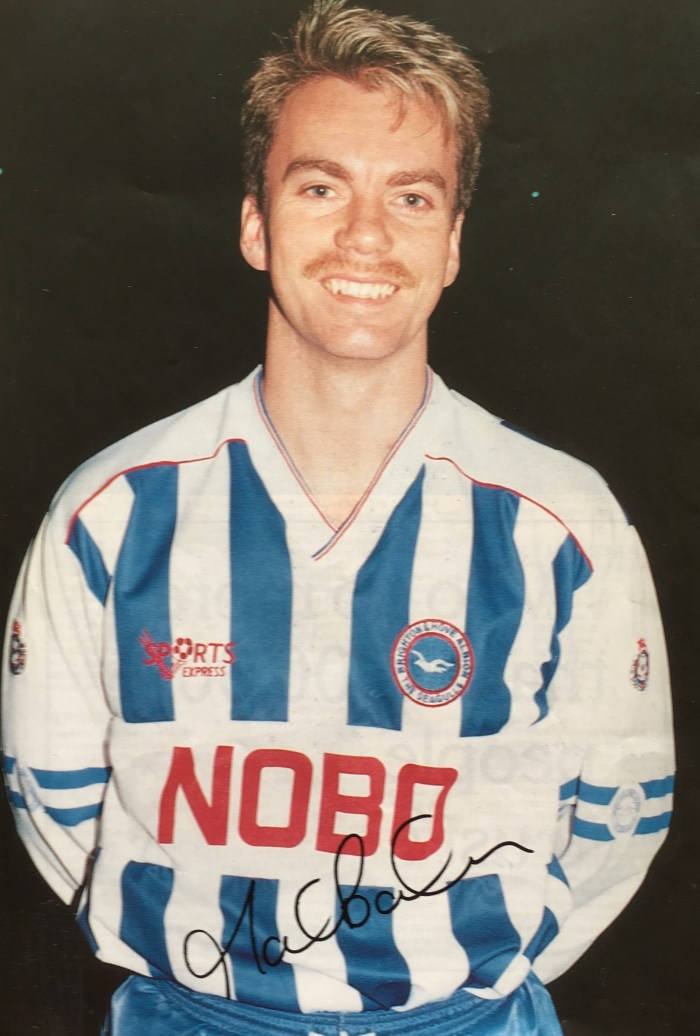
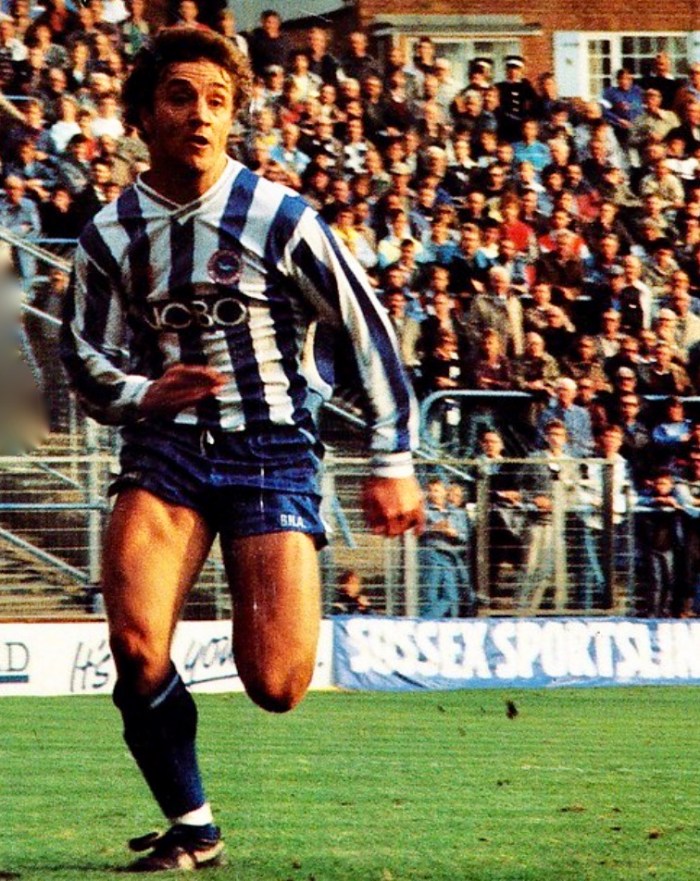
  • Pictures show Barham in Albion’s NOBO kit, from the Wembley play-offs programme, a portrait from a matchday programme and in a team line-up wearing the dreadful pyjama kit.

Cattle auctioneer Kevin Bremner gave clubs a promotion prod

bremner-portraitAS GOALSCORING partnerships go, the pairing of Kevin Bremner and Garry Nelson was something of a masterstroke by Albion manager Barry Lloyd.

Having to readjust to life back in Division 3 after relegation in 1987 meant cashing in on some of the better players – the sale of Terry Connor, Danny Wilson and Eric Young raised over £400,000 – and replacing them with bargain buys.

At £65,000 for Bremner and £72,500 for Nelson, Lloyd showed how shrewd an operator he could be in the transfer market. When Nelson was injured and sidelined for a while, £80,000 was paid to bring in Paul Wood to play alongside Bremner.

Bremner was born on 7 October 1957 in Banff in the Scottish Highlands and worked as an auctioneer in the cattle market in his home town as well as playing Highland League football.

He didn’t make his start in the English league until the relatively late age of 23. That was with Colchester United and he made his debut in a 2-2 home draw with Barnsley in Division 3 on 11 October 1980.

He went on to make 93 consecutive appearances for Colchester in the third and fourth divisions and scored 35 goals while Bobby Roberts was in charge. All was going well until Bremner got in a dispute with the club and found himself out of the side.

Division 1 Birmingham took him on a month’s loan and, after he’d scored a goal in his four games there, Roberts’ repplacement at Colchester, former Ipswich and Northern Ireland centre half Allan Hunter, recalled him to Layer Road. However, former boss Roberts had moved on to Division 3 Wrexham, and he took Bremner on loan at the Racecourse, where he also got on the scoresheet.

“He wanted to take me on permanently but they couldn’t afford it so my next stop was Home Park, and a spell at Plymouth Argyle,” he told the Albion matchday programme. “It was touch and go whether or not I’d stay there in the long term, but once Lincoln and Millwall showed an interest I knew that I’d soon be on my way.”

He chose Millwall – “it was closer” – and joined the Lions in December 1982 for a £25,000 fee. He was one of eight new signings made by manager George Graham as Millwall were floundering at the bottom of Division 3 at the time. In a remarkable turn-round, they picked up 27 points in 12 games to escape relegation.

He was then part of the Millwall side who won promotion from Division 3 in 1984-85. In total, Bremner scored 33 goals in 87 games for the Lions. “It was a fabulous couple of years even though the side was struggling when I joined,” he said. “Playing at The Den is great – it’s wicked for away teams because the atmosphere is so strong.”

Next stop was Reading for a £35,000 fee. He spent two seasons with the Royals and enjoyed a successful partnership with lofty Trevor Senior which helped the Royals to promotion as champions from Division 3 in 1986.

I can remember going to watch Albion play Reading in November 1986 and Bremner scored twice in a 2-1 win for the Royals at Elm Park. He finished the season with 15. Albion signed him from Reading for £65,000 in July 1987.

Brem flowAfter a flying start with Brighton, in which he scored 11 goals, the league goals dried up for Bremner but strike partner Nelson couldn’t stop scoring as Albion powered their way to automatic promotion.
Second spot behind Sunderland was clinched via a 2-1 Goldstone win over Bristol Rovers on 7 May, Bremner finally ending his goal drought with a diving header, and Nelson, inevitably, getting the winner – his 32nd goal of the season.

What was all the more remarkable about the pairing was that it was the first season Nelson had played as an out-and-out striker.

Back in the second tier in 1988-89, Albion struggled to make an impression against better quality opponents although Bremner did score 15 goals, including a hattrick in a New Year’s Eve 4-0 mauling of Birmingham City. In September 1988, he took over the goalkeeper gloves (below) at home against West Brom when Perry Digweed was forced off with a serious groin injury.

In a matchday programme interview, Bremner said: ”I’m probably enjoying the game more than at any time before. I regret not coming into the professional game earlier but I’m delighted at the way things have turned out.

“We always thought we could do well at the Goldstone and after two years of hard work I’d like to think that we can put the club back on the map and, besides, I’d like another try in the First Division.”

The programme notes declared: “It’s his consistent scoring record that has opposing defenders on tenterhooks. His total commitment invariably creates an opportunist goal and he is a popular player with the fans.”

Brem runBremner scored 12 in the 1989-90 season, five of them coming in the space of a week at the start of the season! He was virtually ever-present but Albion struggled in the lower half of the table for most of the season. His goal in a 1-1 draw away to Blackburn in the final game of that campaign was his last for the club. In 134 games (plus three as sub), he’d scored 36 goals.

He moved on to Peterborough United in the close season as manager Lloyd had a new strike partnership up his sleeve in the shape of John Byrne and Mike Small.

After a year at Peterborough, Bremner moved back to Scotland to play for Dundee but in the spring of 1992 had a month’s loan spell at Shrewsbury Town.

Back in the far north of Scotland he had spells as player-manager with Brora Rangers and his old club Deveronvale then in 1995 he became youth team manager at Gillingham and stayed for eight years, and was then academy coach at Millwall for three years. He subsequently coached youngsters in Kent, at an academy and at an independent school.

  • Pictures show the front page of the Evening Argus following Albion’s promotion from Division 3 in 1988 with Bremner diving to score; a shot of Bremner in action against West Ham that appeared on the front of a matchday programme, a portrait from a matchday programme at the beginning of the 1989-90 season, and other action pictures from matchday programmes.