URUGUAYAN international Diego Arismendi shook his Staffordshire neighbourhood but left football followers somewhat unmoved.
Noisy late-night parties hosted by the defensive midfielder at his Newcastle-under-Lyme home hit the headlines for the wrong reasons but on the pitch he made little impact, in spite of high expectations. He ended his first season in England on loan at Brighton – and got sent off in his last game for the Seagulls.
Stoke City, then in the Premier League, paid £2.6m for the 20-year-old after he had already won medals at one of his home country’s top teams – Nacional – and two caps for his country.
He made his first appearance for Stoke on his first day at the club, setting up the only goal of the game in a reserve team win over Wolves.
Peter Reid, assistant manager at the time, said: “Diego was excellent. He broke up the play and the beauty with him is, for a defensive midfielder, he can pass, which he did extremely well.
“It will take him a little bit of time to get used to the pace but first impressions on him, I’m very pleased. He has had a smile on his face since being with us and he really enjoys his football. He has the attributes to be a very good player for us.”
Arismendi made his first team debut in a League Cup match against Blackpool but was forced off with an injury on 47 minutes of the 4-3 win.
Having struggled with the language barrier and not being able to force his way into Tony Pulis’s starting line-up, he was loaned to third tier Albion…where there was a Uruguayan in charge.
Gus Poyet was excited by signing his fellow countryman and saw it as quite a sign of the Albion’s intentions under Tony Bloom. He told The Argus: “We are showing where we want to go as a club, starting from the chairman and going through the whole of the staff.
“We are trying to achieve things that are not very easy but, because of the knowledge of the game and the contacts we’ve got, sometimes they work.
“When you know people and people know you personally and they are happy to let you have a player like Diego, you have to take advantage of that.
“I know him and his agent very well from before he came to England. He was a player growing up in one of the two biggest teams in Uruguay (Nacional) and playing for them regularly.
“I was surprised when he came because, I don’t know why, but Uruguayans have got a little bit of fear about England. I suppose it’s because of the language and the weather. They prefer Italy or Spain.
“I was very pleased by his decision to come and join Stoke. Of course, I have been following him a bit to see if he was making the first team.
“Unfortunately, Stoke are doing very well and there is no place for him right now there. He wants to play football, so he is very welcome.”
One place he wasn’t so welcome was Newcastle-under-Lyme. The month before he joined Brighton he had upset his neighbours by holding a number of noisy, late night parties, playing loud music and apparently having indoor kickabouts with his friends.
One neighbour at the prestigious No 1 London Road apartment complex, plastic surgeon Dr Muhammad Khan, told the Daily Mail: “I can’t sleep and I can’t concentrate doing my work. I am at my wits’ end. My flat vibrates from the volume of the music and it is like elephants stomping across the floor.
“Sometimes it sounds like he is playing football in the flat. It makes my lights flicker. It is every single night and then gets worse at weekends. I have spoken to Mr Arismendi twice, but all he said was that it was his friend’s birthday.”
In Sussex, Poyet hoped Arismendi would find the surroundings more to his liking. “I think he will love the city, a young boy with his girlfriend. He is going to adapt to Brighton very nicely. He wants to enjoy playing football so, slowly, I think he is going to get into the team.”
Poyet thought Arismendi would adjust to life in League One and the English game in general, but things didn’t work out that way and he only made three starts and three appearances off the bench for the Seagulls.
To make matters worse, in his final game he saw red (above) after scuffling with MK Dons’ Alex Rae. It was the same match that saw Lewis Dunk make his debut.
Poyet considered bringing Arismendi back to the Albion the following season on a season-long loan but they couldn’t afford to buy him and instead he ended up joining Barnsley, newly promoted to the Championship, on a similar arrangement.
He scored once (against Yorkshire rivals Leeds United in a 5-2 win) and featured in 32 games for Mark Robins’ Tykes, together with fellow loanees Kieran Trippier (from Man City), Chris Wood (from West Brom) and Paul McShane (from Hull) before returning to Stoke at the end of the season.
Because previous season’s FA Cup winners Man City had qualified for the Champions League in third place, cup runners up Stoke got to play in the Europa League (their first venture into Europe since 1975) and Arismendi started two matches and was sub in another two.
As an aside, in August 2011 I was on holiday in Split, Croatia, when City and their fans arrived to play local side Hadjuk (the visitors won 1-0). Our swimming pool sunbeds were taken over by red and white striped towels!!
Back in England, Arismendi remained firmly rooted to the bench as an unused sub for league matches and in March 2012 he was sent out on loan again, this time to Huddersfield Town until the end of the season.
Newly appointed manager Simon Grayson gave him seven starts and two appearances off the bench but he was not involved as the fourth-placed Terriers won promotion via an 8-7 penalty shoot-out win over Sheffield United at Wembley.
When Stoke excluded him from their 25-man squad at the start of the 2012-13 season, the writing was on the wall and his unhappy three-year spell in England came to an end when his contract was terminated in November 2012. He rejoined Nacional back in Uruguay.
Born in Montevideo on 25 January 1988, Arismendi said: “I had a tough upbringing. Everybody in Uruguay has a hard life, that is just the way it is there. But I come from a working class family and my childhood was not really any harder than anyone else.
“The aim, though, for me was always to play football and I have managed to realise that dream.”
He was only 20 when he won his first international cap in a friendly match against Norway in May 2008 and his second came in a World Cup qualifier against Bolivia. Both games finished 2–2.
After he returned to Montevideo and helped Nacional continue their domestic dominance by winning the Torneo Apertura (round robin South American tournament) and Uruguayan championship, he won two more caps in 2014.
He spent the 2015-16 season in Saudi Arabia playing for Al-Shabab but returned to Nacional for a third spell between 2016 and 2018. He then moved to Argentina, and at Rosario Central he once again didn’t leave a lasting impression.
A Copa Argentina win for Rosario in 2018 – but Arismendi was a non-playing sub
In a rather scathing assessment elciudadano.com reported: “Arismendi had the confidence of the coach when he signed earlier this year but did not meet expectations at all.
“(Coach) Paton Bauza thought he would fit in quickly but that was very far from reality. He never adapted to the team. When he had chances to show himself, he wasted them; he suffered injuries and he always showed more errors than virtues when he got on the pitch.”
Arismendi once again returned to the Uruguayan capital, this time to play for Racing Montevideo, where he spent one season, before switching to one of the city’s other clubs, Montevideo City Torque.
Bradley Johnson scores on his debut v Leicester (photo Simon Dack)
THE COCA-COLA Kid’s cousin was an instant hit when he joined seventh-from-bottom Brighton on loan from second-placed League One rivals Leeds United in October 2008.
Bradley Johnson, who’d heard about the Seagulls from his relative Colin Kazim-Richards, scored twice on his debut as the Seagulls turned round a 2-0 half-time deficit to beat Leicester City 3-2.
“I hadn’t played for two months and Micky (Adams) asked if I was fit and I admitted I wasn’t match fit, but he said he would throw me in anyway,” Johnson recounted.
“The two goals I scored gave me great confidence as a player, but the win helped everyone,” he said. “On the night, the fans were immense and the result gave us all a good boost.”
In an Argus interview in March 2021, Johnson recalled: “I was a young boy from Leeds coming into a struggling team against a team who were flying so it was a bit daunting for me.
“I didn’t know what to expect but, as debuts go, I don’t think it could have gone any better.
“Anyone who knows me knows I like a shot and I’ve always had that since a young age. Some don’t go where planned but thankfully on that night they did.”
Albion had failed to score in their three previous games, against Hereford, Peterborough and Hartlepool, and soon found themselves 2-0 down to City courtesy of two Matty Fryatt goals.
Adams hauled off a somewhat better known loanee – the ineffective Robbie Savage – at half-time, along with wideman Kevin McLeod, and the changes galvanised the Albion in the second half.
Right-back Andrew Whing reckoned the withdrawal of Savage might have helped Johnson to shine. “Maybe he’d felt a bit in Robbie’s shadow up until that point,” he told Spencer Vignes. “But he really stepped up in the second half and scored twice, one of them an unbelievable strike. We needed a spark and that was it.
“Bradley deserved a lot of credit that night. He’d come to us from Leeds and he just took responsibility, scored twice and got us back into it. He really made an impression.”
After Johnson’s pair of long range strikes past David Martin in the Leicester goal, City defender Jack Hobbs sealed a memorable comeback for the Seagulls when he diverted Joe Anyinsah’s cross past his own ‘keeper.
It was a tad ironic that Johnson should have scored against Leicester too because at the start of that year he came very close to signing for them but couldn’t agree terms and ended up at Leeds instead.
Five days after his impressive Albion debut, Johnson was on the scoresheet again as Adams’ side beat Millwall 4-1 at the Withdean Stadium (Glenn Murray, two, and Dean Cox, the other scorers).
Kazim-Richards, whose £250,000 transfer from Bury to Brighton had been paid for via fan Aaron Berry winning a competition organised by the soft drink giant, had already moved on to Fenerbahçe in Turkey via Sheffield United by the time Johnson arrived in Sussex.
But he said: “My cousin Colin had played there so I knew Brighton and I knew a few lads, and that it was a good place to be. But it was Micky that really sold the place to me and I just wanted to play. That is all I wanted to do; I didn’t look at the side’s league position. I just wanted to be a part of what Micky spoke about and help the club beat relegation.”
Unfortunately, the mini revival in the autumn of 2008 didn’t continue although Johnson was on the winning side again when, in his 10th and last game for the Albion, two Nicky Forster goals earned a 2-0 win at Swindon Town, spoiling Danny Wilson’s first game in charge of the Robins (Peter Brezovan was in goal for Town).
By then, Johnson, who’d lost his place at Leeds following an injury, had scored four times for the Albion (some records show he scored twice in a 4-2 home defeat to MK Dons, others that the second Brighton goal was netted by Stuart Fleetwood).
Somewhat gallingly, Johnson was next seen at Withdean less than three weeks into the new year – back in the fold with Leeds as they took all three points in a 2-0 win on 17 January 2009.
“When I was out on loan, Leeds were struggling and when I went back Gary McAllister got the sack. Simon Grayson came in and I didn’t know where my future lay, but Grayson told me I had a part to play and it was down to me to train hard and prove myself,” he said.
“He was true to his word, and I kept my head down, then I ended up coming back to Brighton and played against them for Leeds. It was a bit surreal to be in the away dressing room, but that is football.”
Johnson became a regular at Elland Road for the next two years and was part of the Leeds side who won promotion to the Championship in 2010, as well as earning headlines in memorable FA Cup ties against Premier League opposition.
In particular, in a third round replay against Arsenal at Elland Road in January 2011, Johnson scored a spectacular goal for the home side although they lost the tie 3-1.
Having spent five years on Arsenal’s books as a promising youngster, it was a bittersweet moment for Johnson who said afterwards: “It was a goal I’m not going to forget. I’m an Arsenal fan myself and so are all my family.”
On the transfer list at the time because he couldn’t agree a new deal with Leeds, he eventually got the chance he craved to play in the Premier League that summer when he moved to newly promoted Norwich City, where his teammates included Elliott Bennett and Andrew Crofts.
It was Canaries boss Paul Lambert who sold the club to him at the time but he also sang the praises of his successor, Chris Hughton.
Johnson joined the Canaries
“Hughton did come in with a different style of play,” he told pinkun.com. “He was very tactical. He was mindful that we were playing in the Premier League against good players whereas Paul Lambert wouldn’t care, if we were playing Manchester United, he’d say ‘if they score two, we’ll score three’.
“Different approaches, different ideas and different philosophies. People weren’t happy with the way he played but we finished 11th. I can only speak for myself, but I really enjoyed my time there and Chris is a great manager.”
He added: “Credit to him when he got the sack because he stuck by his morals and got Brighton promoted.”
After three seasons in the Premier League, the 2014–15 Championship season was one of Johnson’s most successful seasons with the Canaries: he became vice-captain to Russell Martin, appeared in 44 of the 46 league matches (including one appearance as a sub) and scored 15 goals.
He was voted fans’ Player of the Year and was part of the side that won the play-off final 2-0 against Middlesbrough to ensure City won back their Premier League place.
However, unable to get a place in Alex Neil’s side back among the elite, he switched to Derby County for £6m in September 2015.
That was the start of seven more seasons in the Championship: after 140 appearances over four years with the Rams, he moved on a free transfer to Blackburn Rovers, where he made 86 appearances over three seasons.
He eventually left Ewood Park at the end of the 2021-22 season and in the summer of 2022 joined MK Dons on a free transfer.
Johnson scored both goals as MK Dons turned round a disappointing start to the season by beating Port Vale 2-1 in their fourth match.
Johnson interviewed after scoring twice for MK Dons
Born in Hackney on 28 April 1987, Johnson was on Arsenal’s books from 1997 to 2002 but was released aged 15.
“Like any kid, being released from a club was horrible and I didn’t really feel like going back on a round of trials with other professional clubs, so instead I just played locally in Leyton.
He went to Ryman Premier side Waltham Forest but when he was 17 was invited for a trial at Cambridge United. He signed on a non-contract basis for eight months and was then offered a professional contract.
Johnson attracted suitors when playing for Northampton Town
But Northampton Town had been tracking him. “They made me a counter-offer which I accepted and that is where my career began,” he said.
That was in May 2005, and after he had been out on loan to gain experience at Gravesend & Northfleet and Stevenage Borough, he became a regular starter under Stuart Gray and his performances attracted scouts from clubs further up the league.
When that aforementioned move to Leicester fell through in January 2008, a few days later Leeds stepped in and paid a £250,000 fee for him.
He played in the same Leeds side as Casper Ankergren that lost the 2008 League One play-off final 1-0 to Doncaster, but picked up a back injury in pre season that led to him being sidelined. Although he returned to fitness, the side was doing well in his absence which meant he was unable to force his way back in. And then the chance to play competitive football was presented by the Albion.
THE YOUNGEST goalkeeper to appear in a FA Cup final spent 20 months picking out future players for Brighton.
It was one of several different post-playing roles Mervyn Day filled for various clubs.
Day, who at 19 won a winners’ medal with West Ham in 1975, was Albion’s head of scouting and recruitment between November 2012 and the end of the 2013-2014 season under head of football operations David Burke.
At the time, his appointment was another indicator of the gear change taking place at the club as it built on the move to the Amex Stadium and sought to gain promotion from the Championship.
Day said in a matchday programme interview: “This club has come such a long way in such a short space of time.
“When you think of the debacle of the Goldstone, the wilderness of Gillingham, then Withdean, you only have to get a player through the front door at this wonderful stadium to have a chance of signing them.
“Hopefully, within the next year or so, the new training ground will be up and running and, when you’ve got that as well, you’ve got the perfect opportunity not only to encourage kids to sign but top quality players as well.
“If we are fortunate enough to get ourselves into the Premier League at some point, we’ll be able to attract top, top players.”
It was a case of ‘the goalkeepers union’ that led to him joining the Albion. Day explained he’d been chatting to Andy Beasley, Albion’s goalkeeping coach at the time, who had been a colleague when Day was chief scout at Elland Road. Beasley wondered if he’d like to help coach Albion’s academy goalkeepers but Burke, who he also knew, stepped in and offered something more substantial: the job of scouting and talent identification manager.
He certainly brought a wealth of experience to the task. He had previously been assistant manager to former Albion midfielder Alan Curbishley at Charlton and West Ham; manager and assistant manager at Carlisle United, a scout for Fulham and the FA (when Steve McClaren was England manager) and chief scout at Leeds until Neil Warnock took charge.
In addition to that background, in the days before full-time goalkeeper coaches, Day had worked at Southampton under David Jones, Chris Kamara at Bradford City and John Aldridge at Tranmere Rovers. Then in 1997 Everton came along and he joined Howard Kendall’s backroom team alongside Adrian Heath and Viv Busby. “I was living in Leeds at that time, so distance wasn’t an issue, but it was an interesting trip across the M62 in the winter months,” Day recalled in an October 2021 interview with efcheritagesociety.com.
Brighton made Day redundant at the end of the 2013-14 season following a reshuffle of the recruitment department amid criticism of the quality of signings brought in.
That assessment might have been rather harsh because during his time at the club there was a change in manager (Oscar Garcia taking over from Gus Poyet) and, although the season ended in play-off disappointment, the likes of former Hammer Matthew Upson (who’d played under Day when he was at West Ham) had signed permanently on a free transfer (having been on loan from Stoke City for half the previous season).
The experienced Keith Andrews and Stephen Ward also joined on season-long loan deals and played prominent roles in Garcia’s play-off reaching side.
It was under Day’s watch that the promising young goalkeeper Christian Walton was signed after a tip-off from Warren Aspinall. Aspinall told the Argus in 2015: “I went to Plymouth to do a match report. I set off early and took in a youth team game off my own back. He was outstanding, commanding his box. I reported straight back to Gus (Poyet). He told Mervyn Day. He went to see him, Mervyn liked him.”
It wasn’t the first time Day had played a role in securing a goalkeeper for the Albion. As far back as 2003 he had an influence on Ben Roberts’ arrival at the Albion. Manager Steve Coppell revealed: “He is one of three goalkeepers at Charlton and at the moment nearly all the Premiership clubs are very protective about their goalkeepers.
“I have seen him play a number of times, although I certainly haven’t seen him play recently. I spoke with Mervyn Day (Charlton coach) and he says Ben is in good form. It’s a little bit of a chance and it will certainly be a testing start for him, but he is looking forward to the challenge.”
Day was also sniffing around another future Albion ‘keeper when he was chief scout for Bristol City (between 2017 and 2019). According to Sky Sports commentator Martin Tyler, Mat Ryan was on their radar in the summer of 2017 when he swapped Belgium for England. In an interview with Socceroos.com, Tyler reveals he was asked by City’s ‘head of recruitment’ (thought to be Day) to glean the opinions of Gary and Phil Neville (manager and coach of Valencia at the time) on Ryan and whether he’d be suitable for the English game.
“I got a text saying, ‘Can you find out from the Nevilles whether they rate Mat Ryan’,” Tyler said. “It wasn’t my opinion they were looking for – quite rightly – it was Gary and Phil’s. I was able to do that and both Gary and Phil gave Mat the thumbs up.”
After leaving Brighton, Day moved straight into a similar role with West Brom, where he worked under technical director Terry Burton and first team manager Alan Irvine, but he was only there a year before linking up with the Robins. He has since been first team domestic scout for Glasgow Rangers, although based in his home town of Chelmsford.
Day was born in Chelmsford on 26 June 1955 and educated at Kings Road Primary School, the same school that England and West Ham World Cup hero Geoff Hurst attended. He moved on to the town’s King Edward VI Grammar School and represented Essex Schools at all levels. He joined the Hammers under Ron Greenwood on a youth contract in 1971.
“On my first day as an associate schoolboy I got taken by goalkeeping coach Ernie Gregory into the little gym behind the Upton Park dressing room and he had Martin Peters, an England World Cup winner, firing shots at me,” Day later recounted. “As a 15-year-old that was incredible.
“The bond got even closer when my father died when I was 17. I was an apprentice but Ron signed me as a full pro within a very short space of time to enable me to earn a little more money to help out at home. A short while later he gave me another increase. He was almost a surrogate father to me.”
In the early part of 1971, Day played in the same England Youth side as Alan Boorn, a Coventry City apprentice Pat Saward took from his old club to the Albion in August 1971.
The goalkeeper was just 18 when he made his West Ham United debut, on 27 August 1973, in a 3-3 home draw with Ipswich Town.
He went on to play 33 matches in his first season and only missed one game in the following three.
Tony Hanna, for West Ham Till I Die, wrote: “In only his eleventh game for the Hammers he received a standing ovation from the Liverpool Kop in a 0-1 defeat that could have been a cricket score but for his fine display and, in his next visit to Anfield, he saved a penalty in a 2-2 draw.”
Day recalled: “As a kid, I had no fear, I took to playing in the first team really, really well. At West Ham, the ‘keeper always had lots to do as we were an entertaining team. We had forward-thinking centre-backs in Bobby Moore and Tommy Taylor, and then after Bobby came Kevin Lock.”
Mervyn Day in action for West Ham against Brighton at the Goldstone Ground, Hove.
In 1974, Day progressed to England’s Under-23 side. He won four caps that year and a fifth in 1975 but it was a golden era for England goalkeepers at the time and he didn’t progress to the full international side, despite being touted for a call-up.
By the time Day won that last cap, he had been voted PFA Young Player of the Year and, at 19, had become the youngest goalkeeper to appear in a FA Cup Final, keeping a clean sheet as West Ham beat Fulham 2-0 at Wembley.
Hanna continued: “At times he was performing heroics in the West Ham goal and he was fast becoming a fans favourite. Tall and agile, he was a brilliant shot stopper and he was playing like a ‘keeper well beyond his years.”
However, by the 1977-78 season Day’s form had tapered off as the Hammers were relegated. “His confidence was so bad he was eventually dropped and he only played 23 games that season,” said Hanna. “There are several theories to what triggered the loss of form, but one thing that did not help the lad was the stick he was getting from the Hammers supporters.
“In hindsight Mervyn said that he was ill prepared for such a tough run of form. The early seasons had gone so well that he had only known the good times and when the bad ones came he struggled to come to terms with the pressure.”
In 1979, West Ham smashed the world record transfer fee for a goalkeeper to bring in Phil Parkes from QPR and Day was sold to Leyton Orient, where he replaced long-standing stopper John Jackson, who later became a goalkeeper coach and youth team coach at Brighton.
Day spent four years at Brisbane Road before moving to Aston Villa as back-up ‘keeper to Nigel Spink. After a falling-out with Villa boss Graham Turner, he switched to Leeds under Eddie Gray and then Billy Bremner. During Bremner’s reign, he had the humiliation of conceding six at Stoke City at the start of the 1985-86 season and, in spite of vowing it wouldn’t happen again, let in seven in the repeat fixture the following season. Amongst his Leeds teammates that day were Andy Ritchie and Ian Baird.
Nevertheless, he ended up playing more games (268) for Leeds than any of his other clubs. He rarely missed a game up to the end of 1989-90, the season when was he was named Player of the Year and collected a Second Division championship medal.
Howard Wilkinson offered him a post as goalkeeping coach for United’s first season back in the elite, having lined up a £1m move for John Lukic from Arsenal. Day had a couple of loans spells – at Luton Town and Sheffield United in 1992 – but was otherwise back-up for Lukic, alongside his coaching duties, until Wilkinson saved Brighton’s future by signing Mark Beeney from the Seagulls.
After eight years at Elland Road, Day moved to the Cumbrian outpost of Carlisle in 1993. When he moved into the manager’s chair at Brunton Park, he not only led them to promotion from the Second Division in 1997, but they also won the (Auto Windscreens Shield) Football League Trophy. United beat Colchester 4-3 on penalties at Wembley after a goalless draw; one of the scorers being the aforementioned Warren Aspinall, later of Brighton and Radio Sussex.
Day worked under Curbishley at Charlton for eight years between 1998 and 2006, helping the club stabilise in the Premier League.
And, in December 2006, he followed Curbishley as his No.2 to West Ham, where the duo spent almost two years.
It was in 2010 that he returned to Leeds as chief scout, working under technical director Gwyn Williams. United manager Simon Grayson said at the time: “We’re restructuring the scouting department under Gwyn and Mervyn will be both producing match reports and watching our opposition and working on the recruitment of players.
“Merv’s knowledge and experience will prove important to the football club as we look to progress and develop what we are doing.”
DANISH goalkeeper Casper Ankergren earned the League One player of the month award four times – twice with Leeds United and twice with Brighton.
When the Yorkshire club dumped him after he’d played 143 games for them, Gus Poyet, his former assistant manager at Elland Road, gave him the chance to revive his English football career. He spent seven years as a player at Brighton and between 2017 and 2021 assisted Ben Roberts with coaching Albion’s goalkeepers.
The Dane was only truly Albion no.1 for a season and a half, and fans were often divided about his capabilities. But his ability with the ball at his feet suited the way Poyet wanted the Albion to play, and as a coach chimes perfectly with the expectations placed on today’s Albion goalkeepers.
“He really is key to the way we pass it out from the back,” observed ‘Murraymint’ on North Stand Chat, noting his ball playing and vision for a pass as “excellent”.
Ankergren himself explained in a podcast on the club website in 2020: “I was always quite comfortable with the ball at my feet, probably because I played outfield as a kid.
“At Leeds I wasn’t supposed to play it to the centre backs but under Gus you had to play it short; he would go mental if you didn’t. That was his philosophy. I’ve always been a big fan of possession-based football.”
On the eve of the 2010-11 season, Poyet’s goalkeeping options were narrowed when first-choice Peter Brezovan was nursing a wrist injury and he wasn’t happy to start the campaign with either of the inexperienced understudies, Michael Poke or Mitch Walker.
Poyet told the club’s official website: “Goalkeeper is a key position in the team, and with Brezovan injured, we wanted to bring some experience to that position.
“Casper brings that experience and has played at this level and higher. I have worked with him at Leeds United, and know exactly what he is capable of, he also knows what it takes to get promoted from League One.”
Ankergren hadn’t even had time to get to know his new teammates when he made his Albion debut in a 2-1 win in the season-opener away to Swindon Town the day after signing.
Unfortunately, he didn’t cover himself in glory on his home debut when a mistimed punch helped Rochdale to get a last-gasp equaliser in a 2-2 draw at Withdean.
The ’keeper admitted he later hid himself away in his Jury’s Inn hotel feeling dreadful about the mistake. “I was devastated, but that’s football. As a keeper you can do well for 90 minutes but if you cock up in the 91st minute that’s all people remember you for,” he said in a matchday programme article. “It’s part of the game as a goalkeeper and you have to accept it.”
He certainly made up for it to the extent that he won the first of two nPower League One Player of the Month awards that season for his displays the following month, when he only conceded once in five matches as Albion secured 13 out of 15 points.
Ankergren won the award again in March 2011 when the Seagulls won eight matches out of eight – with six clean sheets for Ankergren – to consolidate their gallop towards the League One title.
In April 2011, Ankergren, speaking at the PFA awards in London, said: “He [Gus] was asking us to be perfect and although there’s no such thing in football, we were close, the way we did it, the way we played – he’s very, very pleased. He couldn’t ask for much more, I think.
“At the beginning of the season I had a chat with him and he said he thought a top six finish would be possible. But no, we finished first – an amazing season.”
The promotion with Brighton was more personally satisfying for Ankergren because he was involved from the beginning to the end of the season.
“I played a lot of games for Leeds last season when we went up but I didn’t play the last eight or nine games and that was a big blow for me,” he said. “I’ve played every game in the league this season and obviously it’s great, that’s what you want to do as a footballer; you want to play every game and win and achieve something.”
He was in goal for the memorable first Amex league fixture against Doncaster and kept the shirt for the first 15 games of the 2011-12 Championship season. But after a seven-game winless run, Steve Harper came in on loan from Newcastle United.
When Harper returned to the North East, he got back in the side for seven more matches, but after four successive defeats in December, Poyet rang the changes for the New Year’s Day match at home to Southampton. Brezovan started in Albion’s surprise 3-0 win and stayed in goal through to the end of the season.
Fan Bradley Stratton later observed: “Brighton’s return to the Championship at the Amex highlighted the need for another change in goal. Ankergren and Brezovan, whilst competent in League One, were regularly found out at the higher level.
“They inspired little confidence in fans, and there was no doubt Poyet would use the summer window in 2012 to bring in a new man who could galvanise the Albion back line and restore confidence to a defence that had conceded six goals at both West Ham and Liverpool that year.”
After Tomasz Kuszczak arrived to become the senior goalkeeper, Ankergren’s first team action in 2012-13 was limited to four starts plus one as a sub.
Two of those were in the FA Cup against Premier League opposition. The third round FA Cup win over Newcastle United was his first appearance in the first team for 13 months and he said: “Although I have not been playing for the first team, I’ve always trained as hard as ever because you never know what’s round the corner and you want to push the other keepers hard, so I was ready. It’s still hard to be thrown straight back into action because you need to play regularly to get into the rhythm of things, but I was pretty happy with my performance against Newcastle.”
And there was nothing he could do to prevent Theo Walcott’s late deflected winner as Arsenal won the fourth round tie 3-2 at the Amex, when Leo Ulloa scored on his debut.
As if to emphasise his point about memorable howlers, one of his two league games that season was at Nottingham Forest, when he fumbled a last-minute equaliser at the City Ground, allowing Henri Lansbury’s long-range effort to earn the home side a point in a 2-2 draw.
Poyet was quick to sympathise with the goalkeeper and said: “To begin with I thought the shot must have taken a deflection but when I’ve seen it again I nearly killed myself!
“When you are a keeper you pay the price and Casper has done that today. He was having a very, very good game, making two or three good saves, coming for crosses and kicking very well. And in training he will save 1,000 shots like that, but we wanted him to save it today.
“Goalkeeper is a terrible position to play but we lose together and we win together – at least we got a point.”
In Oscar Garcia’s only season in charge, Ankergren played only two first team matches but he was kept on under Sami Hyypia and, with the arrival of David Stockdale and the emergence of youngster Christian Walton limiting his likely involvement even further, he made just the one appearance in the 2014-15 season, in Albion’s 4-2 League Cup win away to Swindon Town.
He confessed on the podcast that he struggled to get his head round the situation and contemplated quitting the game but was talked out of it by goalkeeping coach Andy Beasley.
With the arrival of Niki Maenpaa as back-up to Stockdale, Ankergren could have been forgiven for thinking his chances of ever playing first team football again had gone, but in a bizarre set of circumstances during a FA Cup tie at Lincoln City on 28 January 2017, Ankergren had to come off the bench in the 56th minute when Maenpaa went off injured.
The Finn had injured his shoulder in the melee that resulted after Glenn Murray had committed a foul in the penalty area and the first thing Ankergren had to do was to face the resultant penalty, which was scored.
Five minutes later he was picking the ball out of the back of the net again after inexperienced Chelsea loanee Fikayo Tomori had skewed a shot past the beleaguered ‘keeper. To rub salt in the wound, Albion lost 3-1, enabling City to reach the last 16 of the competition for the first time in their 115-year history. The consolation for Albion, of course, was that they were able to concentrate on the league, and they went on finally to win promotion to the elite level they’d left in 1983.
That promotion signalled the end of Ankergren’s playing days but the start of a career as a goalkeeping coach which he admitted in the podcast he’s enjoying immensely.
Born in the Danish coastal seaport of Køge on 9 November 1979, Ankergren played football with his mates from an early age on a pitch close to his home. He also played handball in the winter – it’s a big sport in Denmark – and it got to the point where he had to decide which one to pursue seriously because his parents said he couldn’t do both. He chose football because he enjoyed it a bit more, although he reckoned the hand-eye coordination involved in handball was an asset as he pursued his career as a goalkeeper.
When he started out playing organised football with Solrød FC, he switched from centre half to midfielder to striker and only went in goal when their keeper got injured.
He was only 12 when he was signed by his hometown’s local professional club, HB Køge. Before he became a full professional, he worked for a pizzeria delivering pizzas and at an after-school club. After leaving school, he continued his education at college for a further two years because he wanted to be a policeman if football didn’t work out.
But having broken into the Køge first team, he caught the attention of Brondby, who were probably the biggest club in Denmark at the time.
He joined them in May 2000 and started full-time the following January. “It was a big, big step for me,” he told the podcast. “I didn’t really enjoy it at first. It was a bigger step than I expected it to be.”
Their first-choice keeper, Morgens Krogh, had won Euro ‘92 with the national team so it was tough to compete with him. But the youngster made his debut when Krogh was injured and eventually took the no.1 spot. As well as winning one championship, he topped it by winning the league and cup double in 2005-06.
Ankergren also gained experience playing in the Europa League against teams like Locomotiv Moscow, Espanol and Palermo.
Shortly after he signed a new three-year contract with Brondby, unbeknown to him they signed Stephan Andersen from Charlton Athletic, and Ankergren wasn’t assured he’d still be first choice. “I’d had enough and wanted to try something different so while I was away with the national team (the B side) in Asia, I got a call from my agent saying Leeds were interested.”
Ankergren just missed out on a full international cap, although he was on the bench for games against Luxembourg and the Czech Repubic. He did win a handful of under 21 caps, and he said: “I’ve represented my country at various junior levels and remember making my under 16 debut against England. On the other side that days was Wes Brown and Michael Owen – you could tell both would have successful careers. Owen looked something special and he scored against me in a 4-1 defeat. I didn’t have my best game.”
Ankergren joined Leeds on loan initially, making his debut aged 27 in a 2-1 home win over Crystal Palace on 19 February 2007. Although it panned out to be one of the most turbulent times in the club’s history, Ankergren found life at Leeds more relaxed under Dennis Wise and Poyet than he had in Denmark.
His 14 games at the bottom of the Championship couldn’t halt the slide towards relegation which was confirmed emphatically with a points deduction when the club went into administration.
“I saved a couple of penalties early on, which won over the fans, including an important one against fellow strugglers Luton,” he said. He denied Dean Morgan from 12 yards with only four minutes left of a tense afternoon, and he told a supporter’s blog: “There were a few minutes, plus stoppage time to go against Luton so I had to stay focused as they were down there with us, so the win was vital.
“I had also saved a penalty away at Cardiff City but unfortunately we still lost the game.”
After signing on permanently, Ankergren was first choice as Leeds acclimatised to third tier football in 2007-08. He made 54 appearances in all competitions and, having conceded only one goal in five league games in September 2007, won his first League One Player of the Month award.
It wasn’t always plain sailing at Elland Road, though, and he was sad to see Poyet depart to become assistant manager to Juande Ramos at Spurs in November 2007, followed early in the new year by Wise, who became director of football at Newcastle.
“Gus was really, really respected up in Leeds. It was a big loss when he went to Tottenham – we really missed him, but I kept in touch after he left,” said Ankergren.
“I liked his style. If you do well, he’ll let you know – but if you don’t do well, he’ll also let you know. There’s none of this going behind your back; he’ll say it to your face, which is what I like.”
He also felt a sense of loss with Wise’s departure. “It was a massive disappointment for me personally,” he said. “Wisey is a good man, he had given me the chance to play in England and I will always be grateful to him.”
In March 2008, the goalkeeper faced an “improper conduct” charge brought by the FA for allegedly throwing a missile into the crowd at the County Ground, Swindon. He was fined £750 but not banned.
Gary McAllister was installed as manager and steered the club to the end of season play-offs against Doncaster Rovers and, despite some important saves by Ankergren, they lost. “I don’t know why but we never turned up at Wembley,” said Ankergren. “It was a strange feeling which let me flat, and it took a long time to get over that. We came so near, yet so far.”
Ankergren admitted to sheridan-dictates.com that he did not particularly enjoy the 2008-09 season. “It appeared that McAllister didn’t know his best team. I was in the side one week then the next he would pick Dave Lucas. Goalkeepers need games to stay sharp and focused and the thought of being dropped played on me and I did not perform to the standards I expected from myself.
“McAllister had been an outstanding midfielder but he was a League One manager with a League One squad. I think he expected too much from a group who didn’t have the ability that he had been blessed with as a player.
“The atmosphere was not great around the club and I thought that McAllister made some very strange decisions.
“Although I did not have any real issues with the manager, I have to be honest and say that I was not too disappointed when he was sacked and Simon Grayson was brought in.”
Grayson’s reign started on Boxing Day 2008 and he put Ankergren back into his team to play Leicester City. Leeds had fallen into mid-table but turned things around to earn a place in the play offs against Millwall who won the two-legged semi-final.
“Looking back, could we handle the favourites tag?” Ankergren asked. “It was another horrible feeling, but we were all determined to come back for pre-season training and go one better.”
However, although Lucas had left the club, Ankergren faced new competition in Shane Higgs and Grayson went with him at the start of the 2009-10 season.
But when Higgs was injured at MK Dons on 26 September 2009, Ankergren appeared as a substitute and eventually won his place back, even though United brought in Frank Fielding and David Martin as loan goalkeepers, and he had the feeling Grayson didn’t really rate him.
Ankergren re-established himself with a string of impressive performances and clean sheets andwas the last line of defence in a memorable 1-0 FA Cup third round win for Leeds at Old Trafford in January 2010, including pulling off a terrific save to deny Danny Welbeck.
He was also in goal against Spurs in the next round when it took a replay at Elland Road before the north London club finally won through.
However, the beginning of the end of his time at Elland Road came when he made a mistake in a 2-0 home defeat against Millwall on 22 March 2010, and he didn’t return to the side for the remaining nine games as they went on to win promotion to the Championship as runners up behind Norwich City.
“I remember sitting with Paul Dickov in the dressing room having a beer and reflecting on what we had achieved,” Ankergren told sheridan-dictates.com. “We went over to the Centenary Pavilion for the end of season dinner and on to a nightclub, It was a great night but deep down I knew that I had played my last game for the club as my contract was up.”
Ironically, his replacement at Leeds was fellow Dane, Kasper Schmeichel, son of Ankergren’s goalkeeping idol, Peter, who also played for Brondby before going on to achieve fame at Manchester United.
Ankergren’s 11-year association with the Seagulls came to an end in September 2021 when he returned to his home country as head goalkeeping coach at Brondby.
Pictures from various online sources, matchday programmes and the Argus
A JOURNEYMAN striker who fired blanks for Brighton and Sheffield United only found very occasional purple patches of goalscoring in a 12-club, 17-year career.
Billy Paynter didn’t manage a single goal in 10 games on loan for Gus Poyet’s Seagulls and carried with him from parent club Leeds United the somewhat unkind epithet ‘Barn door Billy’ for his proverbial inability to hit one with a banjo.
A subsequent half-season loan spell at Sheffield United under Nigel Clough yielded a similar zero in the goals scored column.
A journey around the message boards on supporter websites uncovers some brutal and unflattering comments about Paynter’s contribution for their team and yet it was a career that yielded 131 goals in 529 games – one in four.
And it all began promisingly under the guidance of former Albion captain and manager, Brian Horton.
Born in the Norris Green area of Liverpool on 13 July 1984, Paynter joined Port Vale’s academy at the tender age of 10 and turned professional soon after his 16th birthday.
Horton gave Paynter his first team debut when he was only 16 years and 294 days old on 3 May 2001 as a 61st-minute substitute at home to Walsall.
It was 10 months before he made a start, although he got a few more sub appearances, and Vale supporters had to wait until the start of the 2002-03 season for his first goal, after he’d replaced injured crowd favourite Steve McPhee in a home game against Wrexham.
Eventually, Paynter got into his stride and his popularity with the fans saw him voted Player of the Year in 2004-05.
His 34 goals in 158 games for Vale caught the eye of another former Albion manager, Peter Taylor, at then-Championship side Hull City.
Signed initially on loan, a fee of £150,000 took him on a permanent two-and-a-half-year contract to the KC Stadium in January 2006.
The following month Paynter turned out as a right-sided midfield player for a Football League Under-21 team (selected and managed by Taylor) in a game against an Italian Serie B side at the KC Stadium.
Taylor also experimented with him in the same position for Hull but, having scored only three times in 23 matches, Paynter was on the move again after only eight months.
He switched to Southend United, also in the Championship, for £200,000 in August 2006 and somewhat ironically, his only goal for the Shrimpers was scored against Brighton in a 3-2 League Cup win at Roots Hall in September 2006.
A lack of goals and a hamstring injury meant his stay in Essex was cut short and for the second half of the 2006-07 season he went on loan to League One Bradford City, where he managed four goals in 15 matches, including one on his debut.
On August deadline day in 2007, Paynter’s next move saw Paul Sturrock sign him for Swindon Town. Within a month he had netted a hat-trick against Bournemouth and added two more in a 5-0 win over Gillingham the following month.
It wasn’t all plain sailing for him, though, and after a two-month goal drought which had seen him lose his place, he told BBC Radio Swindon: “You can try and do too much and get caught up with it, but if you relax and get on with your game, I think it will come naturally.”
Paired with Simon Cox initially, Paynter got amongst the goals in support of the main man. But he stepped up a gear after Cox was sold to West Brom in the summer of 2009. His new strike partner was a young Charlie Austin and the pair enjoyed a rich seam of goalscoring form in the 2009-10 season under former Albion captain Danny Wilson.
Paynter had a spell where he scored 15 goals in 17 games and ended the season with 29 goals in 52 matches, his best goals-to-games ratio in a season. Swindon’s captain that season was none other than Gordon Greer, who remains a close friend of Paynter.
Four of Paynter’s goals had been scored against Leeds and, in the summer of 2010, he moved to Elland Road on a Bosman free transfer, with Wilson admitting to BBC Radio Wiltshire: “Anybody who scores nearly 30 goals in a season will be wanted by bigger clubs than us.”
Leeds boss Simon Grayson said: “He has matured as a player over the last couple of years and he had a fantastic season last season. He works ever so hard, holds the ball up well and he has proved he knows where the back of the net is.
“When we knew he was available we were desperate to get him. We feel he will be a good acquisition for the club, and I am delighted to have got him.”
Unfortunately, his time at Leeds didn’t start well when he picked up a shin stress fracture in a pre-season match in Slovakia, leading to him missing the start of the season.
It wasn’t until the second week of October that he was able to make his Leeds debut and starts were rare as Luciano Becchio and Davide Somma were Grayson’s preferred selection up front. Paynter didn’t register his first goal for Leeds until the following March, in a 2-1 win at Preston. It was his only goal in 23 matches that season.
As the 2011-12 season got under way, Grayson had added Mikael Forssell to his striking options and the manager encouraged Paynter to talk to other clubs, with Sheffield United and Brighton discussed as possible destinations.
Paynter preferred to stay and try to stake a claim for a place but, having only played once as a sub in the opening game of the season, he decided to make a three-month loan switch to Brighton at the end of October 2011.
On 29th October 2011, he made his Brighton debut as a 67th-minute substitute for Matt Sparrow in a 0-0 draw away to Birmingham City.
The first of his six starts came on 1 November in a 0-1 defeat at Watford. He came off the bench a further three times and, without troubling the scorers, returned to Elland Road in January.
Back at Leeds he had to wait until April before he was selected by new manager Neil Warnock for a home game against Peterborough United. Paynter scored twice in a 4-1 win and, when replaced by substitute Becchio in the final minute, left the field to a standing ovation. But he picked up an Achilles injury in the following game away to Blackpool and was made available for transfer at the end of the season.
Paynter earned a place in a planetfootball.com poll listing 13 of Leeds’ “worst and weirdest signings under Ken Bates” although he was good-humoured enough to acknowledge it in a 2018 Under the Cosh podcast.
“I’ve always said there’s some players that will be remembered for being good, there’s some players that will be remembered for being sh*te,” he said. “No one remembers the OK players. Take the positives out of a bad situation, in that way I will be remembered!”
It was former Brighton striker Dean Saunders who was responsible for Paynter’s next move, picking him up on a free transfer for League One Doncaster Rovers on 13 August 2012.
While Saunders left the Keep Moat Stadium in January 2013 to join Wolves, Paynter played his part in Rovers winning promotion back to the Championship under Brian Flynn, top-scoring with 15 goals as Rovers returned to the second tier as champions.
An anonymous Donny fan recalled: “He had some good games for us and made the pass from the missed penalty at Brentford that enabled (James) Coppinger to score and win us promotion. He is best played in the box. He causes all sorts of problems. He is a tough guy and takes no prisoners. I liked him but I would say League One is his limit.”
A familiar face in the shape of Brian Horton arrived as assistant manager to new Donny manager Paul Dickov (Flynn had been promoted to director of football) in the summer of 2013.
It must have given Paynter some satisfaction on 27 August 2013 when he scored in a League Cup tie at home to Leeds, although the visitors ran out 3-1 winners. However, that was his only goal and, after managing only one start and 11 appearances off the bench, up to Christmas, he was sent on loan to League One Sheffield United for the second half of the 2013-14 season.
An exiled Blades fan living in Leeds, ‘Blader’ said: “I am uninspired and don’t see this is a great signing. I’ve seen him play many a time and never seen him perform notably and he is a laughing stock in Leeds for how badly he performed.”
A blunt Blade
He made his debut as a sub against Notts County on 11 January 2014 but spent much of the time on the sub’s bench as manager Nigel Clough preferred to play with ‘a false 9’. Paynter made just six starts and came off the bench seven times but no goals were forthcoming. United finished seventh, one place off the play-off places, seven points adrift of sixth-placed Peterborough United.
Paynter was only a spectator as United remarkably reached the semi-final of the FA Cup, losing 5-3 at Wembley to Hull City, Jamie Murphy, later to play for Brighton, among the Blades scorers. A young Harry Maguire at the back for the Blades was named the League One player of the year.
The last three seasons of his playing career saw Paynter drop into League Two and he joined Carlisle United on the same day as former Albion midfielder Gary Dicker.
However, the season wasn’t even a month old when Graham Kavanagh lost his job as manager. His successor Keith Curle steered them to a fifth from bottom finish.
Paynter’s involvement was limited to 12 starts plus eight appearances off the bench and he and Dicker clashed with Curle when they sought PFA guidance after they were fined for allegedly failing to attend training sessions.
In the close season, Paynter headed 90 miles east to Hartlepool United, who’d just avoided dropping out of the league after finishing four points above Cheltenham Town.
The goal touch returned as Paynter top scored with 15 goals in 35 appearances as Hartlepool finished in 16th place courtesy of a decent run of wins in the spring under new boss Craig Hignett.
The managerial door revolved once more at Victoria Park the following season but Hignett’s successor Dave Jones (the former Southampton and Sheffield Wednesday boss) couldn’t prevent Hartlepool from heading out of the league, controversially parting company with the club with two games to go following an on-screen rant by United’s best known fan, Jeff Stelling.
Club captain Paynter, who had openly questioned Jones’ tactics in the local press, joined forces with fitness coach Stuart Parnaby to assist caretaker Matthew Bates for the final two fixtures.
It was one of those footballing fates moments that they needed a miracle against Paynter’s old club Doncaster in the final match and it was given a big build-up in the Mirror.
“Although we lost at Cheltenham last weekend, the lads had a lot more fight in them. I can understand it when players lose confidence or belief, but you can’t drop out of the Football League after 100 years without a fight,” he said.
“It’s one of those strange coincidences that we need to beat my old club to stand a chance of survival. I really enjoyed my time at Doncaster, and I’ll never forget that day we were promoted to the Championship, but I hope the supporters understand my loyalty is with Hartlepool now.”
Hartlepool hitman
Although Hartlepool won 2-1, they had been relying on other results going their way and Newport’s 2-1 win over Notts County 2-1 meant they stayed up and the North East side lost their league status. Having contributed just four goals in 26 matches, Paynter left the club.
While he attempted a brief extension to his playing career, training at non-league AFC Fylde, Southport and Warrington Town, he retired from playing in November 2017 and turned to coaching. He joined Everton’s academy in February 2018 before returning to his first club, Port Vale as professional development phase lead coach in October 2020.
On rejoining, he said: “It’s a joy to be back where it all started. Coming through PVFC’s Centre of Excellence from the age of 10, I know what the DNA of Port Vale is and what sort of players we should be producing.”
Pictures from various online sources and the Albion matchday programme.
IT LOOKED LIKE the so-near-and-yet-so-far story of Oliver Norwood’s flirtation with the Premier League would end in disappointment.
Twice the former Manchester United reserve helped teams to win promotion from the second tier, only then to remain in that division when the sides he played for didn’t see him as a Premiership player.
It happened first of all with Brighton in their 2016-17 promotion under Chris Hughton.
The following campaign Norwood went on a season-long loan to Fulham and was at the heart of their midfield as they won promotion.
Fulham didn’t look to retain him, though, and for 2018-19 he was once again loaned out by Brighton; this time to Sheffield United.
Halfway through the season, they turned the loan into a permanent transfer and, after helping the Blades to win promotion, Norwood finally got his chance to show his skills in what amounted to an impressive return to the top-flight of English football.
How BBC’s Match of the Day Tweeted Norwood’s record
Born in Burnley on 12 April 1991, Norwood was only six when he first came to the attention of Manchester United, spotted playing for Fulledge Colts in his home town.
“My earliest football memory is being on trial at the Manchester United academy aged six and being totally overawed by it,” he told the Albion matchday programme. “I remember standing there at The Cliff, biting my fingernails, and the coach, Paul McGuinness, saying ‘Are you going to join in?’ After that, I was fine and it was really exciting to be part of the club’s academy.” He joined the Red Devils on schoolboy terms at seven and spent 15 years on their books, playing in the same youth teams as Paul Pogba and Jesse Lingard.
During the 2005-06 and 2006-07 seasons, Norwood made appearances for United’s under-18 team and, ultimately, he signed on as a trainee in July 2007.
He became an under-18 regular in 2007-08 and also made his debut for the United reserve side. After netting nine goals in 28 appearances for the under-18s in 2008-09, Norwood was signed as a professional.
He was a reserve team regular in 2009-10 and said he owed a lot to Ole Gunnar Solskjaer, who was in charge of United reserves at that time.
“I owe a lot to Manchester United for the experiences and education I had there,” Norwood told the matchday programme, United Review. “The club taught me not just about football but life. I was taught how to be a good person.
“Ole played a huge role in terms of my development as a footballer and a person. The lessons he taught me in the reserves have stayed with me throughout my career.
“I’ll always be grateful to Manchester United, to Ole, to (former reserves manager) Warren Joyce, for the upbringing they gave me in the game.”
Norwood got a sniff of the first team when Sir Alex Ferguson called him up to the first team squad for a Champions League match away to Wolfsburg. He travelled with the squad to Germany but didn’t get selected in the final matchday 18.
In search of a first team breakthrough, Norwood decided to gain experience on loan with lower league clubs and his first port of call was Carlisle United in September 2010. Ironically, his first match was against Brighton – a 0-0 draw at Brunton Park. Unfortunately, after just five starts and two sub appearances, he tore a thigh muscle and had to cut short his loan and return to Old Trafford for treatment.
The following season, he went out on loan again, this time to League One Scunthorpe United where Alan Knill, Chris Wilder’s no.2 at Sheffield United, was the manager.
In an interview with the aforementioned Joyce, the former reserves manager explained how it was only a change in Norwood’s diet that started to bring about the required improvements to his game.
“I got him to write down everything he ate. And I meant everything. I said, ‘We have to look at your diet and get you absolutely super fit’. I told him we couldn’t allow the ability he had to be wasted.”
Joyce told The Athletic’s Richard Sutcliffe in a 23 June 2020 article: “Once we’d sat him down (after returning from Scunthorpe) and analysed everything, he got himself really ripped. He started eating the right things and worked so hard to get into shape. He is getting the rewards from that now.”
Norwood spent the second half of the 2011-12 season in Coventry City’s unsuccessful effort to beat the drop from the Championship but, having acquired a taste for football at that level, declined the offer of a contract extension on his return to Old Trafford.
He told Talksport at the time: “I want to play every week like I was this season in the Championship. It’s been the hardest decision in my life for me to make but there comes a time when you have to be realistic.”
He opted to join newly promoted Huddersfield Town in the Championship on a three-year contract, and Sutcliffe’s article reveals Norwood was so determined to make the move that he drove down to Heathrow Airport to apprehend holiday-bound Town manager Simon Grayson to persuade him to sign him.
Nevertheless, United boss Sir Alex Ferguson had some encouraging parting words that the midfielder never forgot. “You’re not going to make it at Manchester United, but I believe one day you will play in the Premier League.”
Norwood was a permanent fixture in the Terriers’ midfield for two seasons before switching to fellow Championship outfit Reading at the beginning of the 2014-15 season.
Signed by Nigel Adkins on 21 August, 11 days later he was joined at the Madejski by Glenn Murray, on loan from Crystal Palace.
When the Royals were hammered 6-1 by Birmingham City in mid-December, Adkins was sacked and replaced by Steve Clarke. His second game in charge, on Boxing Day, saw Reading visit the Amex, with Brighton under caretaker manager Nathan Jones. Murray scored twice for the visitors, but Albion rescued a point with a 90th minute equaliser from Inigo Calderon.
Norwood completed the season having made 35 appearances plus seven as a sub and although he made the second highest number of appearances – 50 – the following season, when the Royals visited the Amex on 15 March 2016, under Brian McDermott, their third manager of that campaign, Norwood was a non-playing sub as the Royals lost 1-0 to a James Wilson goal.
The next time the two sides met (a 2-2 draw at the Madejski on 20 August), Norwood was part of Chris Hughton’s squad, having signed for the Seagulls at the start of the 2016-17 season, along with Murray and Steve Sidwell. Norwood was a 68th-minute sub for Sam Baldock.
Manager Hughton said of Norwood: “Oliver is another excellent addition to our squad.
“He has a good grounding coming from Manchester United, and has a wealth of experience playing in the Championship and at international level.
“He’s a box-to-box midfielder and an excellent passer of the ball, so he gives us extra options in midfield and adds further depth to our squad.”
Although he played for England at youth level, he also qualified for Northern Ireland, and chose that country to enable him to experience more opportunities at international level.
Norwood made his full international debut during Nigel Worthington’s time as manager, coming on as a substitute in a 2-0 friendly defeat by Montenegro in Podgorica in August 2010.
He was a regular in Worthington’s successor Michael O’Neill’s midfield when the side qualified for Euro 2016 and played in all four of the team’s matches in the finals in France.
However, having made 57 appearances for his country, he decided in August 2019 to retire from international football when only 28.
Although Norwood made 20 starts for the Albion, he was almost as often used as a substitute, making 17 appearances off the bench, as the Seagulls soared to promotion.
Norwood had a starting berth when Beram Kayal was injured and he told the matchday programme: “This has been a big opportunity for me. The gaffer brought me to the football club and obviously I’ve been desperate to get into the team and play games.
Norwood had plenty to say
“Obviously I understand how football works. When the team’s winning and doing really well you have to bide your time, but an opportunity has come my way and it’s been important for me to grab it with both hands and do all I can to stay in the team.”
It has since transpired that the midfielder was most likely distracted by off-field issues during his season with the Seagulls, as thestar.co.uk reported.
“I went to Brighton after the 2016 Euros, and it was a difficult period in my life,” said Norwood. “My wife, Abigail, was pregnant and really ill, so we were living apart. My head wasn’t fully there.”
He told The Star he only fell in love with football again when he went on loan to Fulham, and subsequently was at loggerheads with Brighton when they didn’t accede to his request for a permanent move. “They said I could leave, but then turned down bids when they came in and started asking for silly things. I don’t think clubs realise sometimes that they’re messing with people’s lives. I had plenty of arguments, saying: ‘You don’t want me here, so let me go’.”
With Dale Stephens and Kayal the preferred central midfield pairing, plus the arrival of Davy Propper for Albion’s first season back amongst the elite, Hughton had been happy to let Norwood join Fulham on a season-long loan.
Norwood made 47 appearances for Fulham in 2017-18, particularly when filling in for the injured Tom Cairney until the Scot’s return from injury towards the end of the season.
His passing accuracy and all-round contribution were favourable, as this footballwhispers.com article assessed, and he proved a vital cog in their promotion via the play-offs when they beat Aston Villa 1-0 in the play-off final.
The website football.london was surprised Fulham didn’t opt to sign him permanently. “Norwood was a key figure under Slavisa Jokanovic, seamlessly plugging the gap left by Tom Cairney as a result of his injury and can be credited with a huge role in getting the club promoted in the first place, with his tackle on Conor Hourihane in the play-off final one that will forever be remembered by Fulham fans,” wrote Phil Spencer. “His vision and incisive passing was key to Fulham’s free-flowing style of play – meaning it was a little surprising that his loan switch to west London was never made permanent.”
Fans have contrasting views about his contribution, as this collection of quotes demonstrates. Some appreciated his ‘Hollywood’ long passes, others are perhaps summed up by this Fulham fan who said: “100% effort every time he played. Honest player. Not stellar but above average.”
Fulham’s loss was Sheffield United’s gain and in wishing Norwood well in his pursuit of more playing time with the Blades, Hughton told Albion’s website: “Ollie was one of our promotion-winning team in 2016-17 and will rightly be remembered as part of that historic team which took the club to the Premier League.”
Critics of Fulham’s strategy of splashing the cash on so-called name players for what proved to be an unsuccessful bid to retain their newly-won status in the Premier League couldn’t help pointing out the irony of Norwood’s situation.
“Fulham could only wave to Norwood on their way back down after ditching him for Jean Michel Seri,” said footyanalyst.com.
The Blades were promoted as runners up behind Norwich City in a season in which Norwood played 43 league games. He told The Observer’s Paul Doyle: “Last season was a big season for me. It was the most I’ve played. I’m definitely a better player now. At everything really. My understanding of the game. Tactically, technically, what needs to be done.”
He told Doyle: “It’s taken a bit longer than I would have liked but it was a dream come true to finally make the level that everybody across the world wants to play at.”
Norwood certainly seized the opportunity to shine at the top level, playing 40 games plus one as sub in all competitions as the Blades confounded the critics by finishing in ninth place, and taking on the captain’s armband in Billy Sharp’s absence.
Pictures from various online sourcesand the Albion matchday programme.
JOURNEYMAN goalkeeper Paul Crichton played 540 games in a 22-year career and, even at the age of 39, found himself on the Brighton subs bench ready to be called on in an emergency.
As things turned out, the former Burnley custodian’s time with the Seagulls remained in a coaching capacity, helping to develop youngster John Sullivan and improve no.1 Michel Kuipers.
However, he was registered as a player and when either Kuipers or Sullivan were unavailable, Crichton answered the call as stand-by ‘keeper, as well as making an appearance as a sub in a pre-season friendly.
Much of Crichton’s career was as a back-up no.1 but he stepped up as a coach, working with the likes of Rob Green and Fraser Forster, and obtained a UEFA A licence in outfield and goalkeeper coaching.
Crichton arrived at Withdean in July 2007 after previous goalkeeping coach John Keeley moved along the coast to take up a similar role with Portsmouth.
Manager Dean Wilkins told the club website: “Paul has impressive coaching qualifications and we have already seen him in action on the training ground.
“He also has a huge amount of experience from over 20 years playing professional football.”
No. 1 Kuipers certainly appreciated the influence the coach had on his game. He told an Albion matchday programme: “Paul approaches things from a different angle. He has given me extra information and a different opinion on how I can get the best out of myself.
“His input has improved me as a goalkeeper and my performances on the pitch have improved. We’ve worked on me playing more as a kind of sweeper, letting the defence sit a little higher up the pitch. It helps the defenders out as they don’t have to worry as much about the space behind them and allows them to go tighter on the strikers and gives them a better opportunity to win the ball or defend against strikers.”
Kuipers said he also felt more confident leaving his goal to claim crosses, and with his kicking. “It’s an aspect I feel has improved,” he said. “Paul and I have practised it on an almost daily basis in training, and the more I am doing it, the better I am getting at it.”
Sullivan was also grateful for Crichton’s input, telling the matchday programme: “Paul’s brought some great new ideas into the club – he’sa very, very good coach. Paul is not long retired so he’s well aware of how the modern game has changed so much for ‘keepers.”
Crichton remained in post until February 2009 when the lure of returning to Norwich City, one of his former clubs, four and a half years after leaving the club as a player, was too great and he went back to East Anglia, even though he had started to put down roots in Sussex.
“We’d just started to get settled in Eastbourne,” he told pinkun.com. “The manager, Micky Adams, and the backroom staff have been fantastic and I’m sad to leave. But I had three great years here, ending in the Championship winning season.
“I didn’t play many games, but I just wanted to return – it’s a great place.”
Adams told the Argus: “I am very disappointed to lose Paul. He was a hard-working and highly-valued member of the backroom staff and he has done a fantastic job with all the goalkeepers at the club.
“I have no doubt he is going to be one of the top goalkeeping coaches in years to come but, after he expressed a desire to go back to Norwich for both footballing and family reasons, it was not right for us to stand in his way.”
Crichton had been understudy to the aforementioned Green during his time as a player at Carrow Road, and boss Bryan Gunn (a former City goalkeeper himself) told the pinkun.com: “We want someone to continue to develop not only the first team goalkeepers but those in the academy and I know he’s looking forward to putting a development programme in place, which is important as we’ve had a good record in this position in recent years.”
Crichton had first moved to City on a two-year contract in June 2001, signed for £150,000 by former Burnley coach Nigel Worthington, who’d taken charge of the Canaries.
At Turf Moor, Crichton had been one of Stan Ternent’s first signings after he took over as manager from Chris Waddle in 1998. He made his debut on 8 August 1998 in a 2-1 win at home to Bristol Rovers and was a regular in their third-tier side, helping them to promotion in 2000.
Clarets fans have mixed opinions of his attributes, if a 2019 discussion on uptheclarets.com is anything to go by. For example, ‘jdrobbo’ said: “Used to be a big fan of his. Thought his kicking was excellent for a keeper at that level. Occasionally left stranded off his line. A key player in our 2000 promotion side, but not good enough for the next level up.”
‘ClaretTony’ reckoned: “A master of a goalkeeper at not being where he should be. Never known a goalkeeper out of position so much.”
Although ‘Lord Beamish’ said: “A key part of the last Burnley team to play in the third tier. He’ll always be fondly remembered by this Claret fan.”
Born in Pontefract, Yorkshire, on 3 October 1968, Crichton began his career with Nottingham Forest, turning professional in 1986. But with Hans Segers and Steve Sutton ahead of him, he didn’t break into the first team at the City Ground and went out on loan to six different league clubs to get games, making his debut across the Trent at Notts County.
Eventually he moved on permanently, in 1988, initially spending two years with Peterborough United, then three years with Doncaster Rovers.
Alan Buckley signed him on a free transfer for Grimsby Town, where he played the most games (133) for any of the clubs he represented. Mariners Memories on Facebook, noted: “Crichton was a good shot stopper…..he was made the Supporters Player of the Season in 1994”.
In September 1996, he followed Buckley to West Bromwich Albion for £250,000.
It was during his time at West Brom that he had two loan spells with Burnley in 1998 before joining them permanently for £100,000 in November that year.
His playing career following his departure from Carrow Road took him to eight different clubs, Gillingham and Cambridge United among them, together with some non-league outfits. During a brief and controversial spell at York City, when he was alleged to have clashed with supporters, he coached a young David Stockdale. He moved to the Albion from King’s Lynn.
His subsequent return to Carrow Road was briefer than expected when Paul Lambert took over from Gunn and brought in his own goalkeeping coach.
In March 2010, Crichton became goalkeeping coach at Northampton Town but, in the summer of 2010, he linked up with Danny Wilson at Sheffield United, where he was also registered as a player to provide emergency cover. He spent two seasons at Bramall Lane before becoming part of Simon Grayson’s management team at Huddersfield Town.
After two years with the Terriers, he switched to Blackpool and spent just over a year working as goalkeeper coach and interim assistant manager alongside Jose Riga.
After leaving the Hoops in early 2016, his next port of call was Swindon Town, to work under Luke Williams, Brighton’s former under-21s manager, but he left after only a couple of months to move to America.
He had several short spells coaching with different clubs in Florida before becoming assistant head coach at The Miami FC in January 2020, when head coach was Kenny Dalglish’s son, Paul.
He became goalkeeper and interim assistant coach for North American professional women’s team the Washington Spirit during the 2021 and 2022 seasons, helping lead goalkeeper Aubrey Kingsbury to the 2021 NWSL Goalkeeper of the Year award and guiding the club to the 2021 NWSL Championship.
Then in April 2023 he switched in a similar role to Florida based women’s team Orlando Pride.
ZESH REHMAN became the first British Asian of Pakistani origin to play for Brighton.
He played in two separate spells three years apart and his 20 Albion appearances spanned four different managers: Steve Coppell, Bob Booker, Mark McGhee and Dean Wilkins.
His first action in Seagulls colours came in September 2003 and the experience he gained during a three-month loan provided him with the experience to return to parent club Fulham and make his Premier League debut.
Before his temporary move to Brighton he had played one first team game in the League Cup for FuIham, and, only a matter of days later, Coppell signed him for the Seagulls.
“It’s an opportunity to get some first team football,” said Rehman. “This season I’ve been in central midfield, but it doesn’t matter what position I play, I just hope I can do a job for Brighton.
“(Fulham boss) Chris Coleman told me it would be good to come and learn here,” he added.
I can remember being at the Nene Park home of Rushden & Diamonds (above left) to see 19-year-old Rehman mark his debut in the centre of midfield with a goal to seal a 3-1 win for the Seagulls. He scored with an exquisite lob over ‘keeper Billy Turley to add to goals from Guy Butters and Leon Knight. Incidentally, Paul Kitson, released by Brighton that summer after an injury-wrecked 2002-03 season, came on as a sub for Rushden.
Rehman had only played twice before Coppell vacated the manager’s chair at Withdean to take over at Reading, but in Booker’s first game in charge, Rehman was once again on the scoresheet as the Seagulls beat Grimsby Town 3-0.
The utility player stayed with the Seagulls after McGhee’s appointment as manager but after 13 matches he returned to Craven Cottage in January 2004.
Born in Birmingham on 14 October 1983, Rehman was brought up a stone’s throw from Villa Park in the Aston area of the city. The promise he showed in schools, district and county football was soon spotted and at the tender age of 12 he signed up to Fulham’s academy, with the family moving to London.
He progressed through the junior, youth and reserve sides, mainly as a centre back but also able to play full-back or as a holding midfielder.
The spell at Brighton gave him his first extended run in a first team environment and, three months after his return to Fulham, he made his Premier League debut as a late substitute at Anfield. He went on to make a total of 30 appearances for Fulham (26 starts, plus four as a sub), but with first team opportunities limited he had another loan spell away, joining Norwich City in January 2006.
He was at Carrow Road until the end of the season, making just five appearances as defensive cover, and on his return to London opted to leave Fulham in search of regular football.
Gary Waddock gave him a three-year contract at Queens Park Rangers and he made 27 appearances for the Rs but one of the club’s many managerial changes saw the arrival of former Albion defender John Gregory, and he was happy to send Rehman out on loan.
Lo and behold, Albion, by then with Wilkins at the helm, seized on the opportunity because Adam El-Abd was on the brink of a suspension, and Dean Hammond and loan full-back Joe O’Ceaurill were struggling with injuries.
“Zesh gives us a degree of versatility, as well as the experience he has picked up playing at Premiership level for Fulham, so he is a good addition for us,” Wilkins told the Argus.
For his part, Rehman said: “As soon as I found out Brighton wanted me, I thought I owe the club because they were the first to give me regular first team football.
“I’ve got great memories of my time here before. The club and the fans have had a special place in my heart ever since, so I couldn’t really turn it down.”
His second Albion debut saw him playing right-back in a disappointing 0-0 draw at home to Huddersfield Town, but Rehman was just grateful to be playing competitively again.
He told Andy Naylor: “Being out there on a Saturday is a buzz, whether it is at Brighton, Fulham or QPR. I had that at QPR for the first six months of the season but then a new manager came in and I didn’t play for a little while so, rather than just getting stale, I’ve come to Brighton and hopefully I can kick on again when I get back there.”
Rehman played eight games during his second spell at the club, his last marked by picking out striker Nathan Elder who slotted Albion’s goal in a 1-1 draw at Cheltenham on 5 May 2007.
The following season, a six-month loan at Blackpool didn’t work out as he’d hoped for, featuring in only three games under Simon Grayson, and he went back to QPR. However, by the end of January he was on the move again, this time to link up with bottom-tier side Bradford City, initially on loan, and then making the move permanent.
Rehman details his various career moves on his own website, and at Bradford his involvement took on a lot more importance than just playing games. He said:
“Hopefully I can inspire some local Asian people to start coming to games and really feel a part of the club. I want Asian kids to feel they have someone to look up to. Bradford is a big city with a big Asian population and if I can inspire one or two local kids to go on and make it as professionals, I’ll know I’ve made a positive difference to someone’s life and that’s good enough for me.”
Born in the UK, Rehman represented England at under 18, 19 and 20 levels, but opted to play for his parents’ home country of Pakistan, and he captained them at the 2013 Peace Cup in the Philippines.
Between 2011 and the start of 2017, Rehman spent six years playing in Asia, initially for Muangthong United in Thailand, then Kitchee SC in Hong Kong and lastly Pahang in Malaysia.
But the lure of the English game saw him spend four months at Gillingham between February and May 2017, helping the relegation-threatened Gills to retain their League One status.
The following month he headed back out to Hong Kong to play for Southern District FC where, in May 2020, he became player-manager.
In March 2023, Rehman was promoted to first team development coach by Portsmouth having moved to Fratton Park in the summer of 2022 as the academy’s lead professional development phase coach.
He stepped up to help the first team temporarily when Danny and Nicky Cowley left the club in January 2023 and remained in post when John Mousinho took over as head coach.
Rehman set up training on Mousinho’s first day and the head coach said: “Since that day he’s been absolutely brilliant. He’s incredibly diligent and the lads and staff at the club all really like him.
“He adds something different to me and Jon (Harley), providing a different angle, and is an influential presence on the bench.
“Development is a key part of what we’re trying to do here and when we talk about the complementary skillsets of the coaching staff, that’s something he can bring to the fore.”
Rehman said: “I believe continual development is needed by players of all ages and at all stages of their careers. Every player is a work in progress and never the finished article.
“There is no better feeling than assisting an individual, partnership or a unit to improve and then see that work transferred to a matchday, helping the team win.”
SUSSEX lad Joel Lynch made Brighton & Hove Albion history when he was made first team captain aged just 19 and 186 days.
The ‘youngest-ever Albion captain’ honour was a measure of the maturity the defender had displayed in Dean Wilkins’ young line-up in April 2007, even if it was a temporary appointment in the absence of the rested Guy Butters and the injured Dean Hammond.
“I wasn’t even captain of my school team,” Lynch told Argus reporter Andy Naylor. “I am 19 years old and it is a great honour. I am grateful to the gaffer for having so much faith in me and it will be good for my confidence.”
Unfortunately, the experience against Doncaster Rovers at Withdean was marred when Lynch missed a clearance, the player he was supposed to be marking, Graeme Lee, scored and Rovers went on to win 2-0.
It was a minor blip at the beginning of a career which saw Lynch become a consistent Championship defender for more than a decade after emerging from Brighton’s youth ranks in the ‘noughties’.
Born on 3 October 1987 in Eastbourne, Lynch made his way through the age group sides with the Albion, often alongside another local youngster who went on to have a good career, Tommy Elphick.
“We played all the way through the youth teams together since the age of about ten,” Lynch told Naylor of the Argus. “Both of our games really changed and we really grew up when we went to Bognor on loan. We did really well there for Bognor and ourselves.”
Lynch pictured in the Argus alongside Tommy Elphick when they were together as under 14s in 2001, and still together a couple of years later.
As well as being part of the Brighton team which reached the quarter finals of the FA Youth Cup in 2006, the year couldn’t have begun better for Lynch when Wilkins’ predecessor, Mark McGhee, handed him his first team debut in a narrow 2-1 defeat away to Southampton on 2 January 2006.
He went on to play 16 times that season, and also registered his first goal for the club, which is a fond memory for me and my son, Rhys. It came on Easter Saturday 2006, and we made a last-minute decision on the day to travel up to Ipswich to watch the game.
Although Albion were destined to relinquish their Championship status, they had a new-found confidence in their play thanks to the belated arrival of much-needed hold-up centre forward, Gifton Noel-Williams (on loan from Burnley).
He’d scored on his debut in a home draw against Luton and got an assist by laying on a goal for Paul Reid in a 2-0 win at Millwall two weeks before.
At Portman Road, always a favourite away ground, Albion, wearing the stylish all-burgundy away strip, opened the scoring when Noel-Williams buried a cross from Colin Kazim-Richards.
To add to the unexpected delight, teenage defender Lynch made sure our trip was a memorable one. Ipswich failed to clear a corner properly and when Reid returned the ball to the penalty area, Kazim-Richards jumped simultaneously with ‘keeper Shane Supple and the ball broke for Lynch (above left) to prod it in.
Albion, never wanting to make life too easy for themselves or their fans, allowed Ipswich to pull a goal back when Alan Lee flicked on from former Seagull Darren Currie’s cross for substitute Nicky Forster – a future £75,000 signing for Albion – to score. But thankfully it was too late for Ipswich to salvage anything from the game.
It was all to turn pear-shaped on the Easter Monday at home to Sheffield Wednesday, but for a couple of days at least the Great Escape still seemed a possibility.
In December 2006, the matchday programme devoted a two-page article to Lynch’s progress in the first team, pointing out how he had begun at left-back, stepped in as a left-sided centre-back – his more natural position – and even played right-back in the 8-0 thrashing of Northwich Victoria in the FA Cup.
Lynch spoke of the experience he had gained playing alongside the veteran defender Guy Butters, telling the programme: “I learned a lot from him, Guy’s had a great career and he is still playing great football. Hopefully I will just slot in there when the time comes and, in the meantime, I will play wherever the manager wants me to play and hopefully stay in the team. I’ve still got a lot of years ahead of me to make the centre-half slot my own.”
Lynch confessed being handed the no.5 shirt at the start of the season had given him a massive boost. “So far, I have really enjoyed this season. I have had my ups and downs and missed a few games due to my performances,” he said. “There have been things that I have had to sort out within my game, but I think I have resolved them now and I am slowly regaining my confidence and my performances have been improving week by week since I regained my place in the team.
“I feel more confident and my self-belief has improved a lot. I want to keep improving and I think that I can help the team in a big way.”
Lynch said a lot of the younger players had been inspired by Bobby Zamora’s elevation to Premiership football and added: “Hopefully a few years down the line we all will be playing at a higher level with Brighton in a new stadium.”
Interviewed by the Argus on the eve of the 2006-07 season, Lynch said: “Last season was a season to just keep on progressing and doing well.
“This season is one where I really want to push on. I want to play a major part in getting the club promoted and express myself more so maybe more clubs are interested in me or I get called up for England.”
Pretty bold stuff from a 19-year-old player still aiming to establish himself, but, having been awarded a three-year contract, he certainly wasn’t short of confidence. “I’ve got to do something really big or something big should happen,” he continued.
“We’ll take it one game at a time but you’ve got to aim for promotion. You can’t aim for anything else.”
Lynch certainly made his mark across the League One season, playing in a total of 44 league and cup games.
The following season was only a matter of a few weeks old when Lynch was sidelined by a hairline fracture in his left leg and ligament damage when twisting to clear in a game against Millwall. Then when he returned sooner than expected, he suffered a hamstring problem.
Perhaps if Albion’s move to the Amex had come sooner, Lynch might have stuck around, but he clearly felt he needed to be playing at a higher level than the Seagulls could attain at the time and, in September 2008, having made 88 first-team appearances, forced through a loan move to Nottingham Forest, with various extensions taking the loan through to the end of the season.
In July 2009, the deal eventually became permanent, with Forest paying a £200,000 fee and offering Lynch a three-year contract. Albion obtained midfielder Matt Thornhill on a six-month loan from Forest as part of the arrangement.
The young defender initially found it difficult to break through as a regular at Forest, with most of his appearances coming as a stand-in left-back.
It was in the 2011-12 season that he began to get games in his preferred position, at first playing alongside Wes Morgan and then, after Morgan’s transfer to Leicester, pairing with Luke Chambers.
In November 2011, writer Peter Blackburn waxed lyrical about Lynch’s form at Forest via the seatpitch.co.uk platform, describing him as “a tough-tackling, committed, classy and agile defender”.
Blackburn added: “Capable of reading the game, nipping in front of the attacker to steal the ball and hold his own in the air, Lynch also seems to possess the sort of driven cross-field ball out of defence not seen on the fair shores of the Trent since prodigal son, Michael Dawson so entertained the crowd.”
Four months later, he rejected a new deal at Forest to become a fifth new signing made by Simon Grayson at Huddersfield Town, and in August the same year he got onto the international stage – not for England, though, but Wales. He qualified for Wales because his father came from Barry in South Wales, and he made his debut as a substitute in a friendly against Bosnia and Herzogovina.
Lynch made 22 appearances in his first season with the Terriers; nine more the following season, and 35 in 2014-15. In January 2015, Lynch was winner of the Examiner Huddersfield Town Player of the Month award, with writer Doug Thomson saying: “He scored a stunning goal to help clinch a welcome 3-1 win over Watford. But Lynch, who stung the Hornets with an overhead kick, also excelled in the centre of defence.
“And the former Brighton and Hove Albion and Nottingham Forest man played a key role when Town finally ended their long wait for an away win, and kept a clean sheet to boot, at Wigan Athletic.
“Calm and composed both on the ground and in the air, the 27-year-old brings plenty of experience to the backline. Lynch also works well alongside skipper Mark Hudson.”
After making 40 appearances for Town in 2015-16, he departed Yorkshire for London and signed a three-year deal with Championship side Queens Park Rangers.
The fee was undisclosed but was believed to be something of the order of £1.2 million and the QPR manager at the time, Jimmy Floyd Hasselbaink told bbc.co.uk: “He offers us something a little bit different. He’s left-sided, which will give us better balance, and has that ability to bring the ball out from the back.”
Hamstring and foot injuries hampered opportunities to show his worth to the Loftus Road faithful, a frustrating situation he talked about in January 2018, but he has since become a regular at the heart of the Rs’ defence.
Perhaps with an eye to the future, Lynch has a profile on the professional networking site LinkedIn.
Pictures sourced from The Argus (Simon Dack / Liz Finlayson), matchday programmes, Huddersfield Examiner and QPR websites.

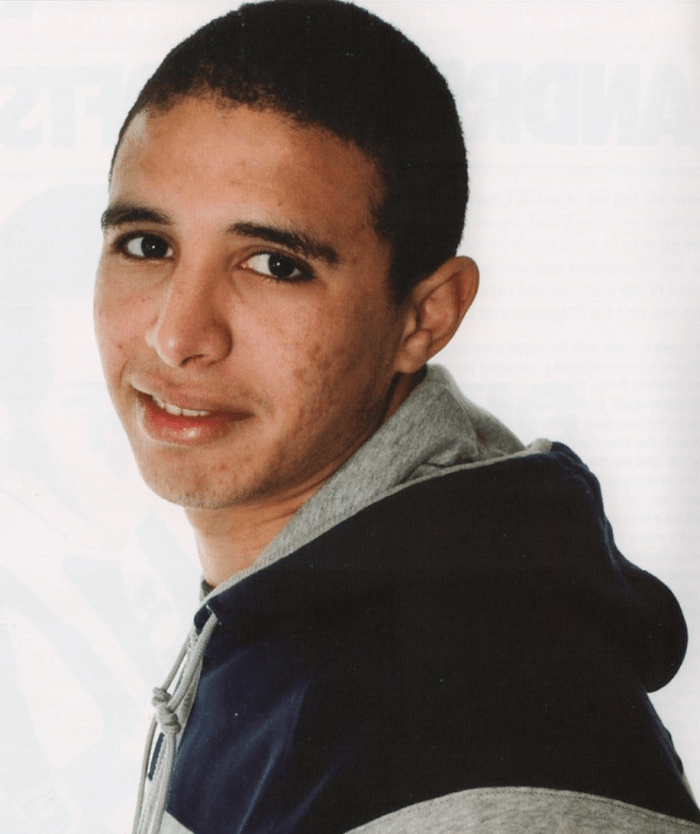



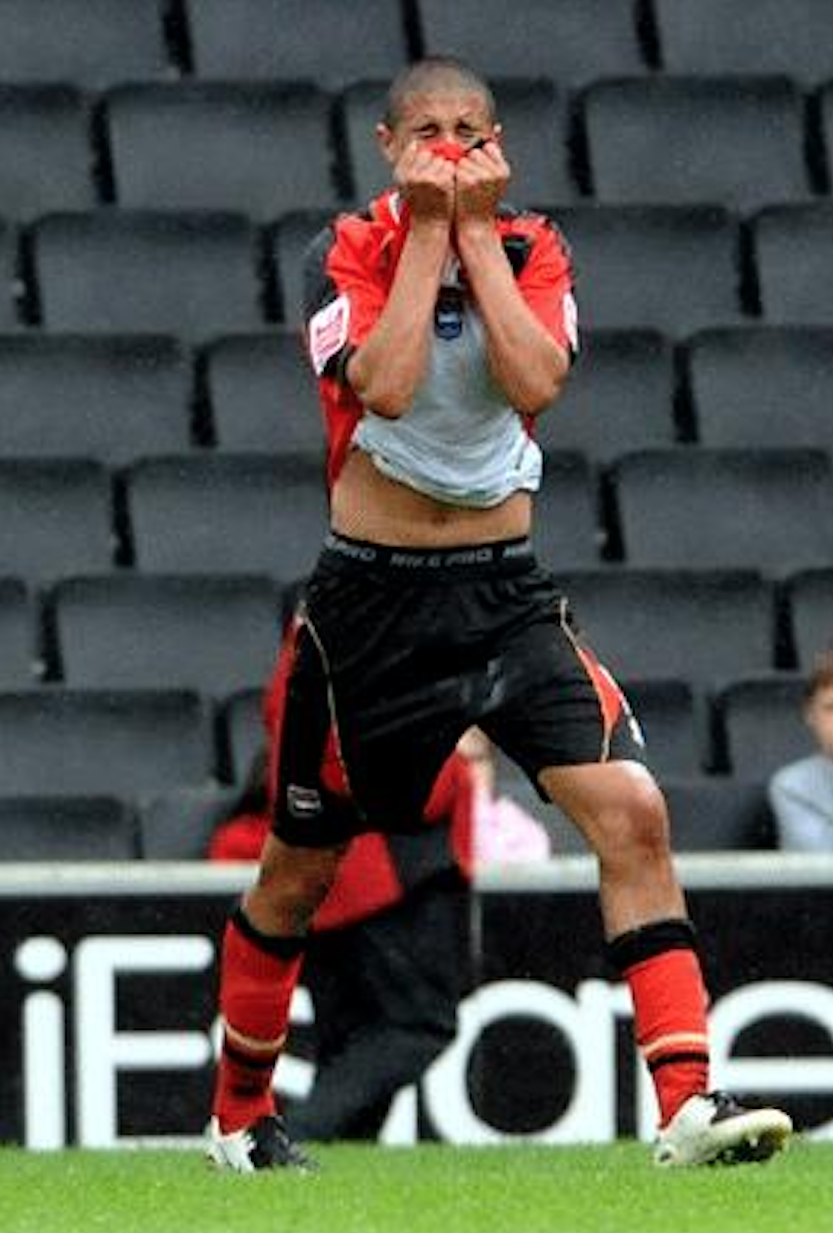


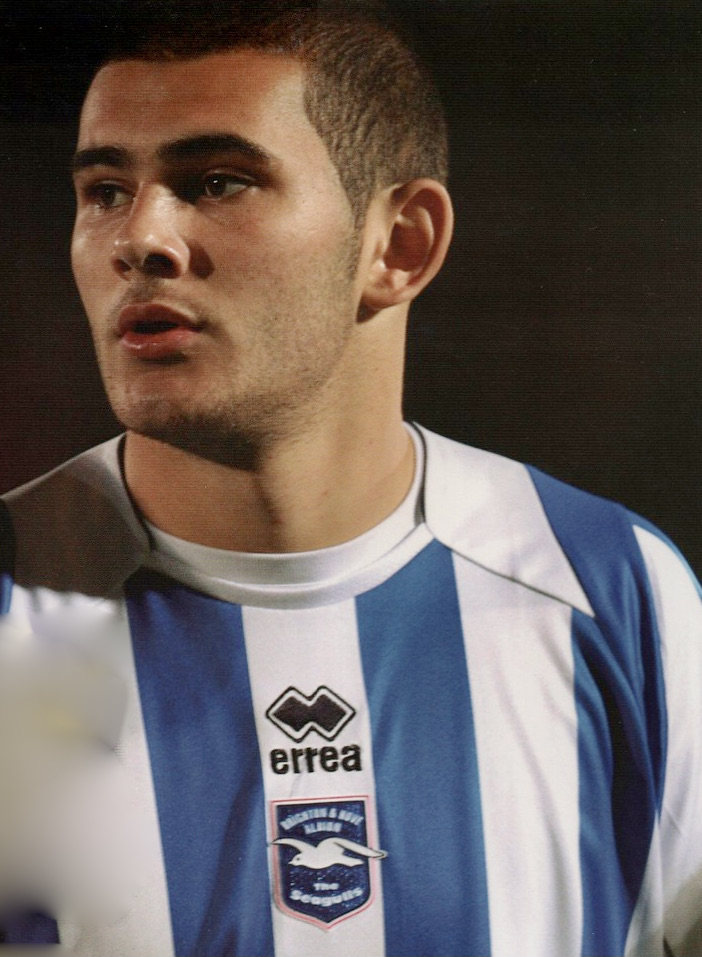

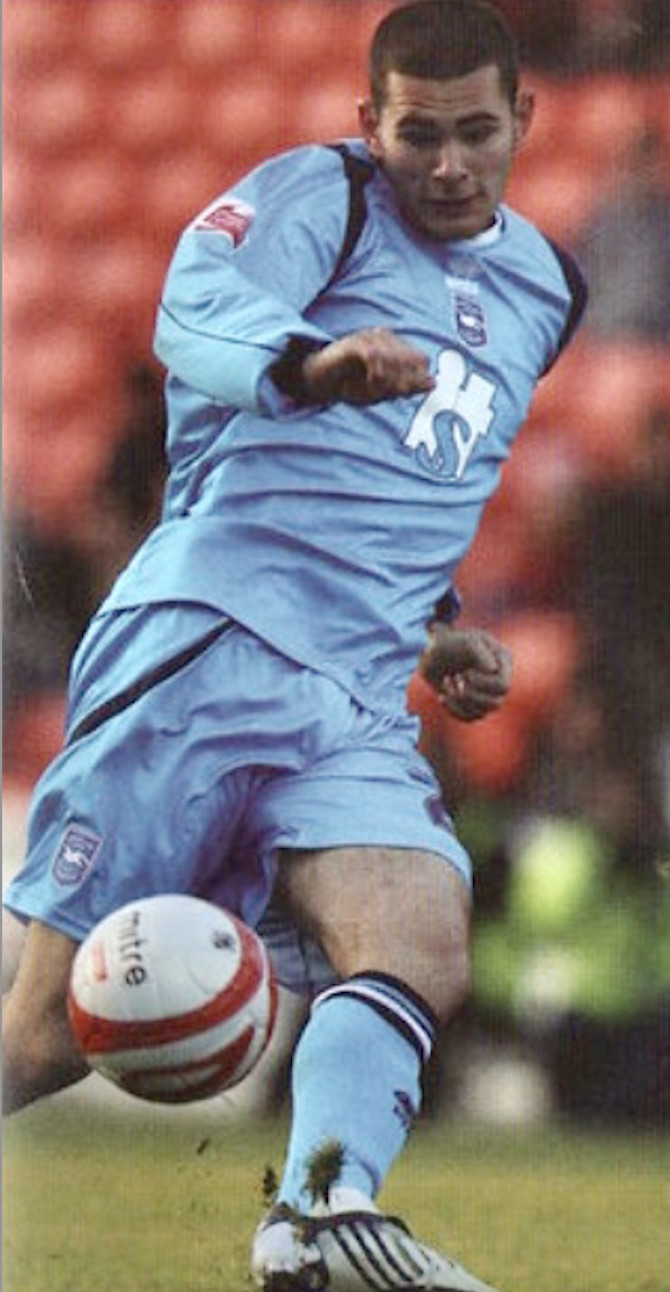
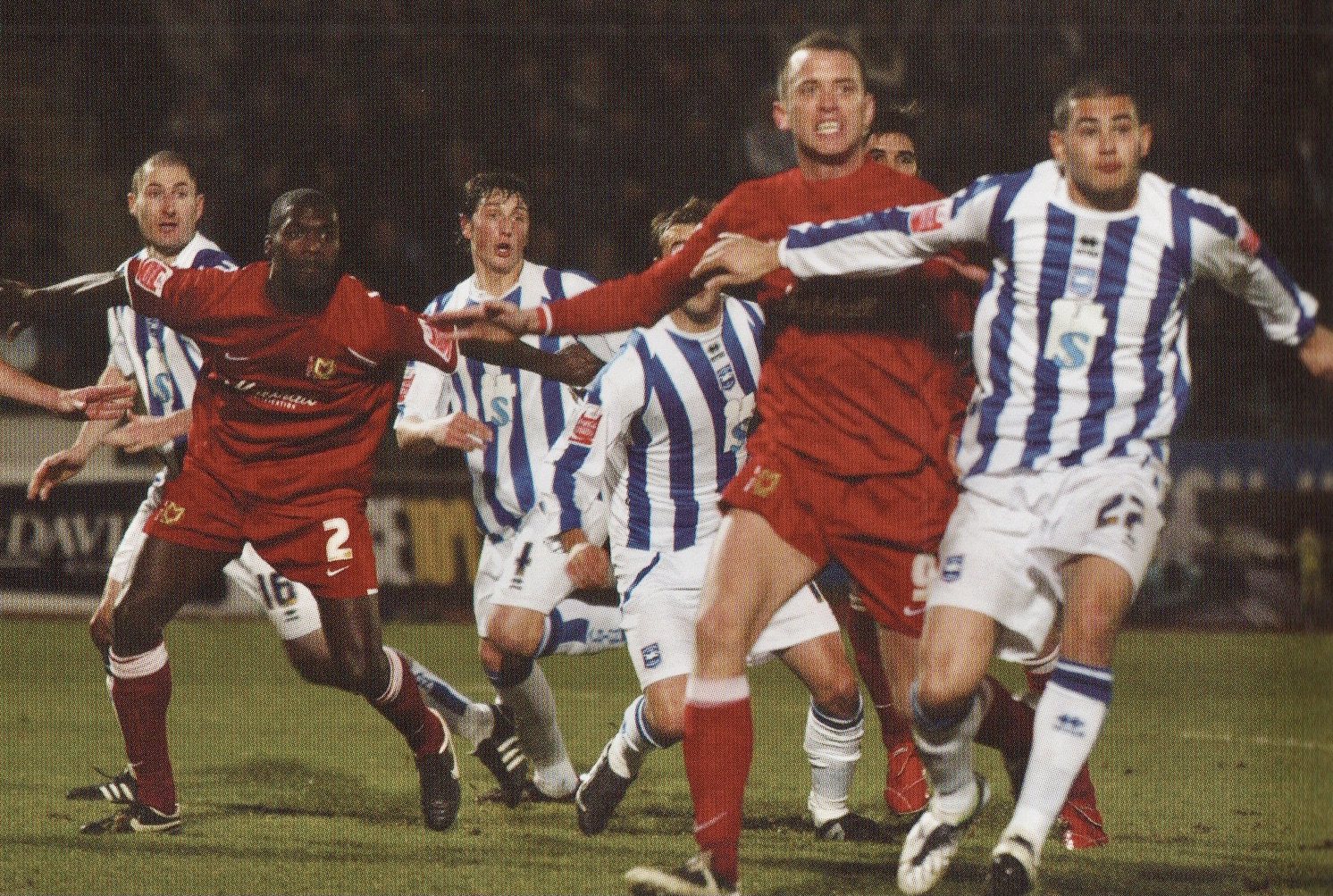
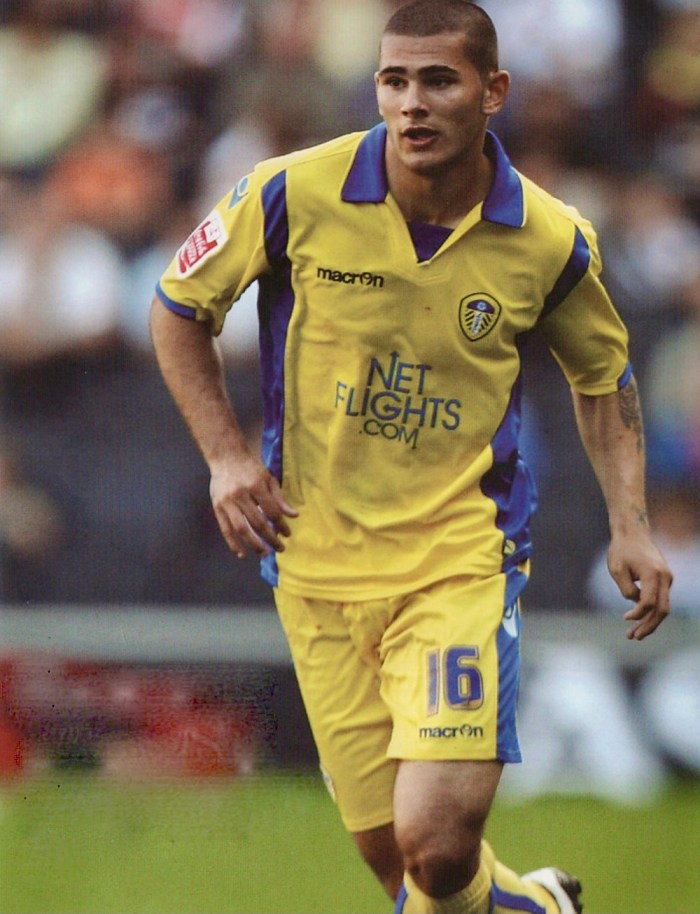

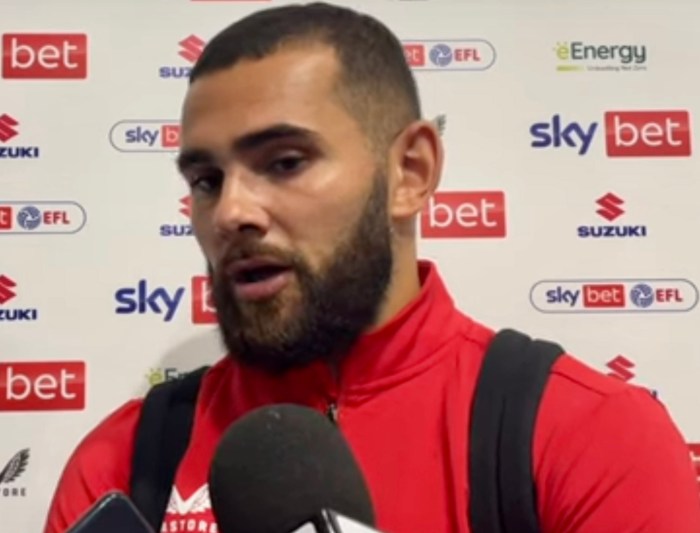
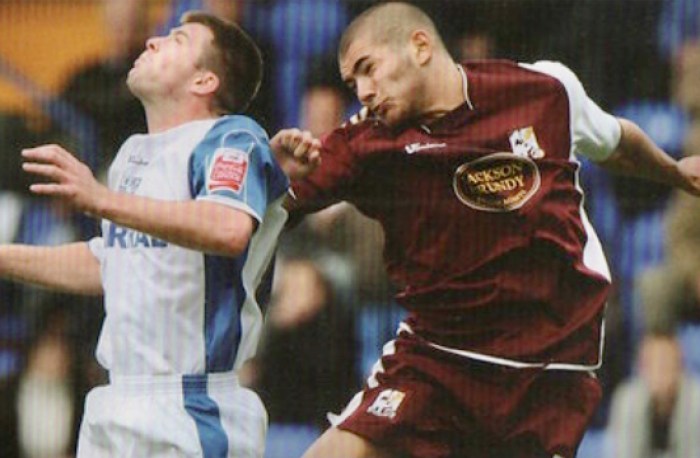
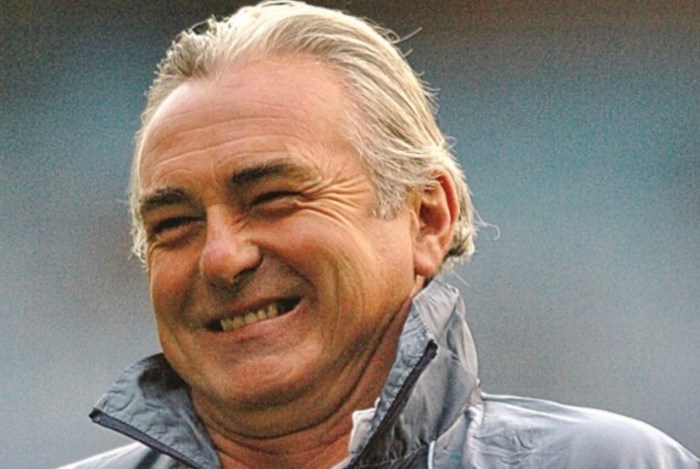



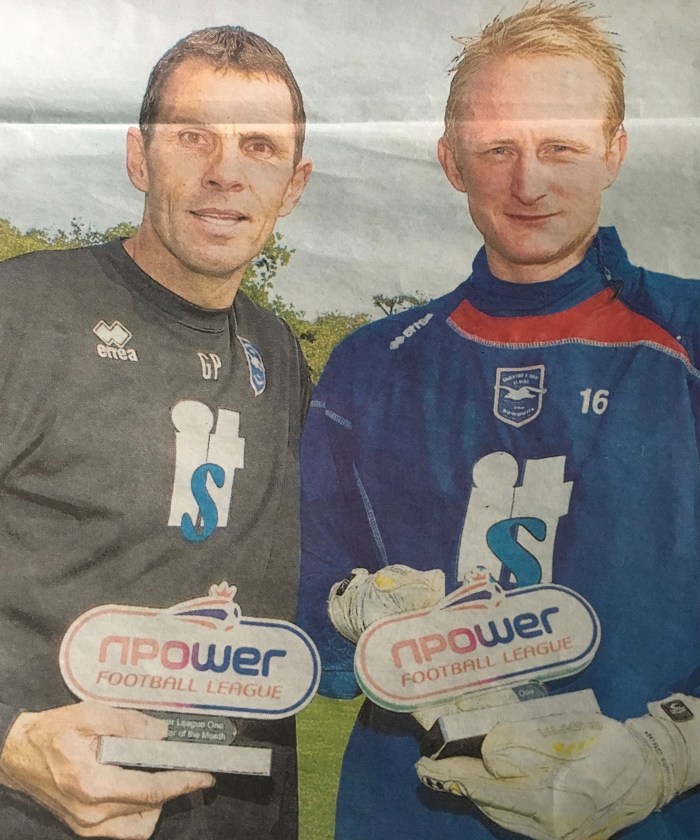

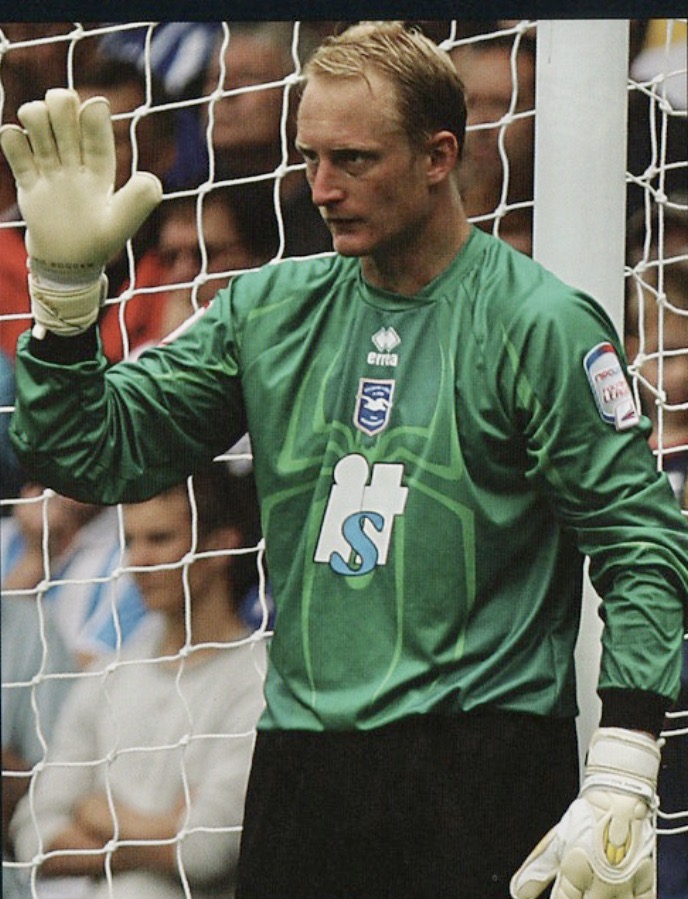
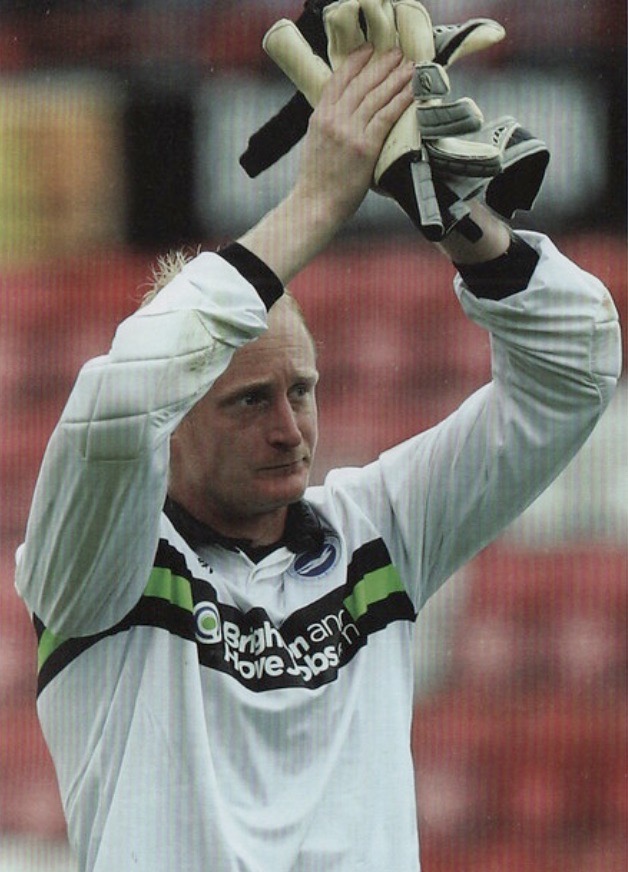
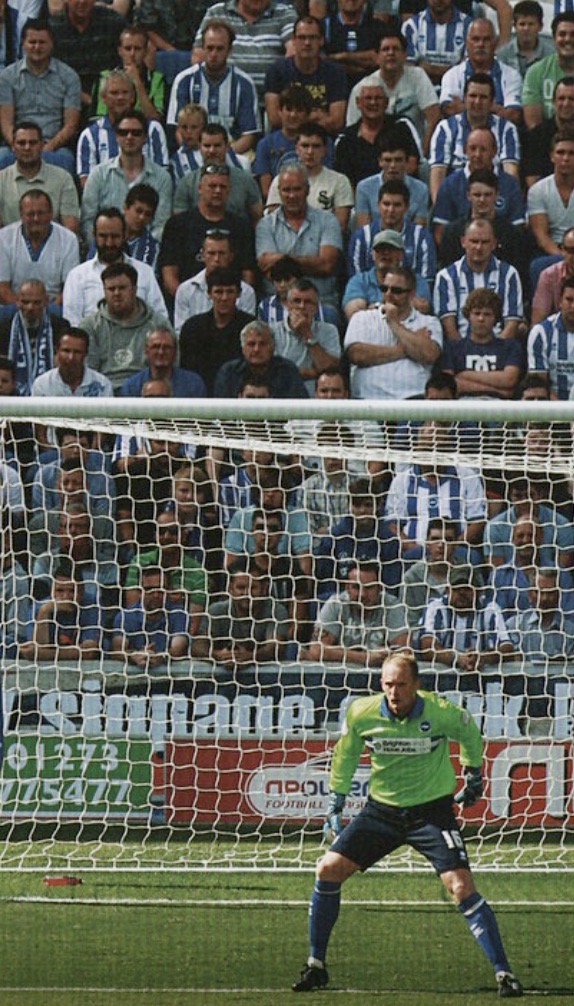
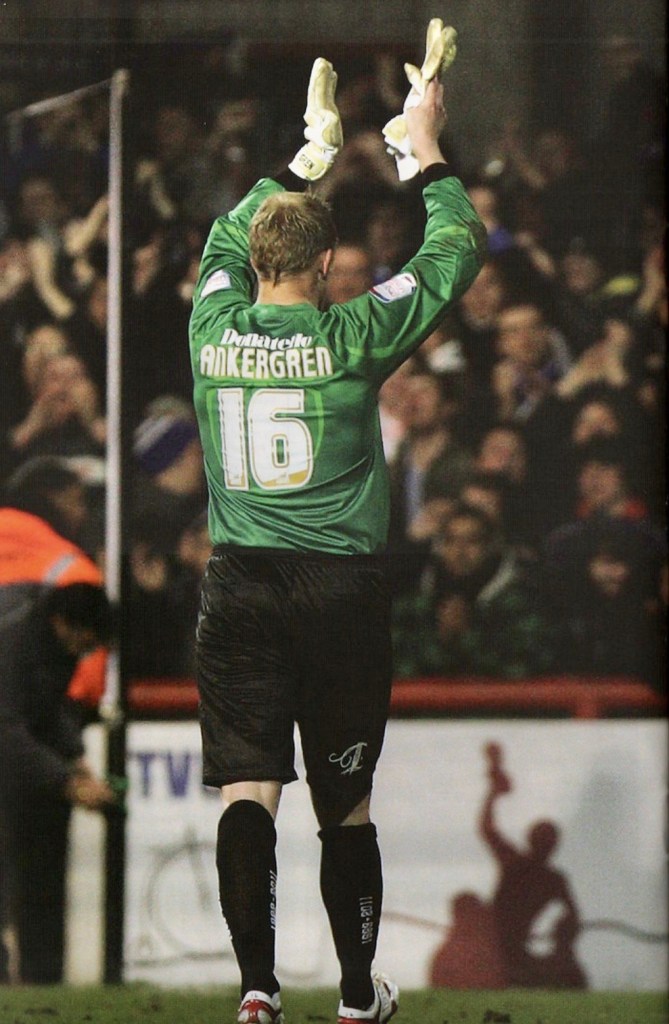


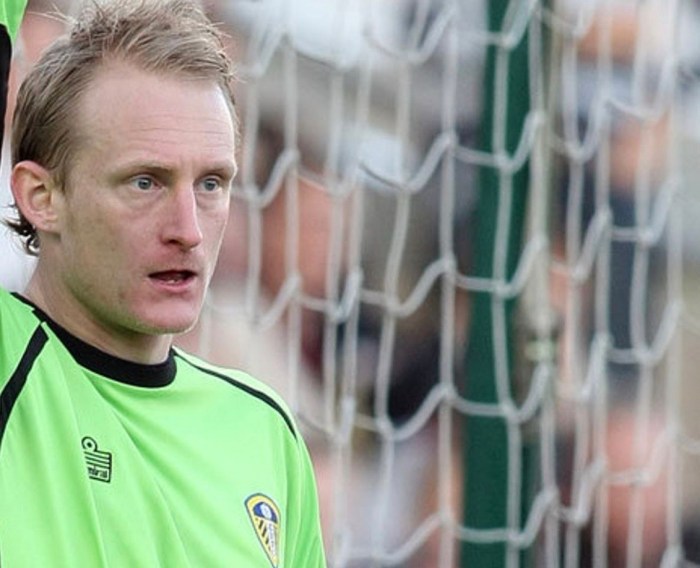


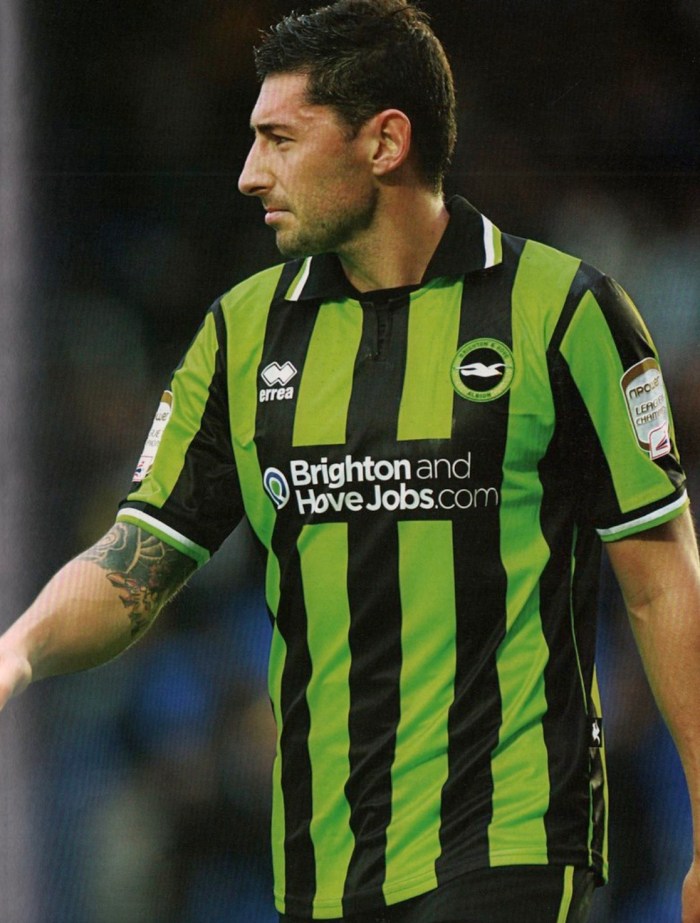
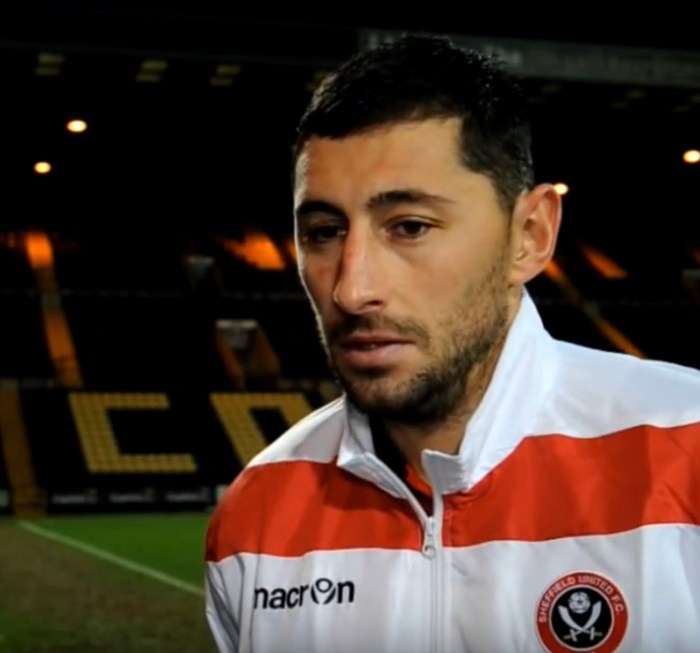


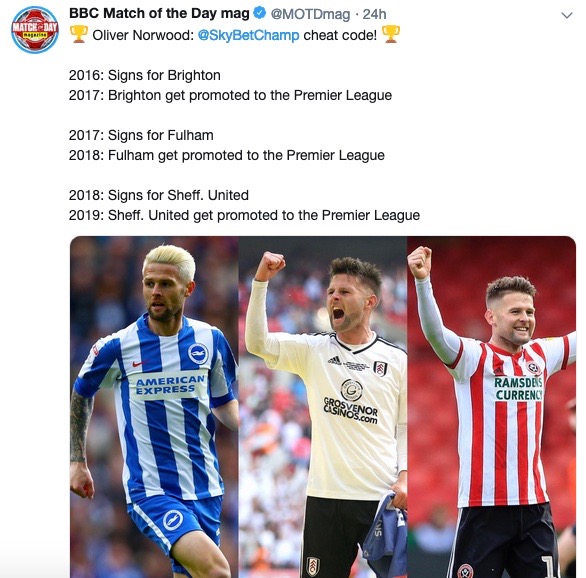

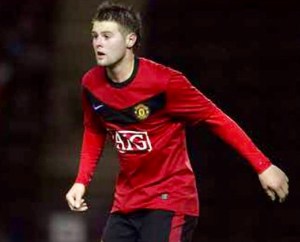


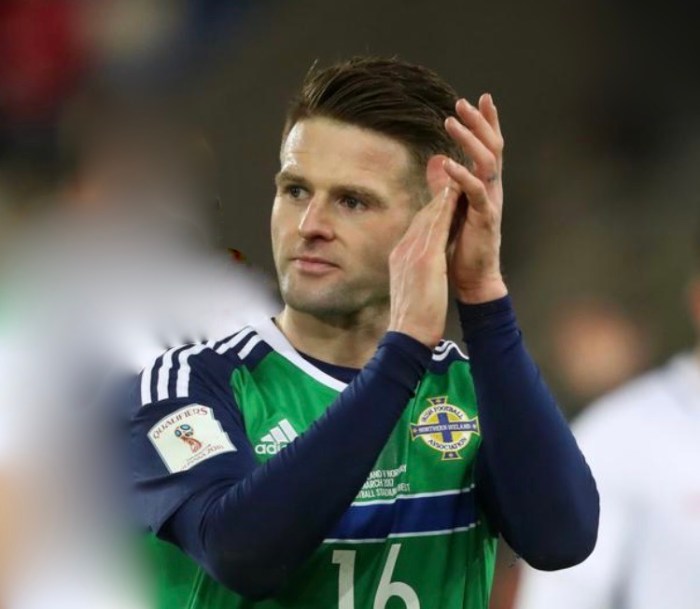

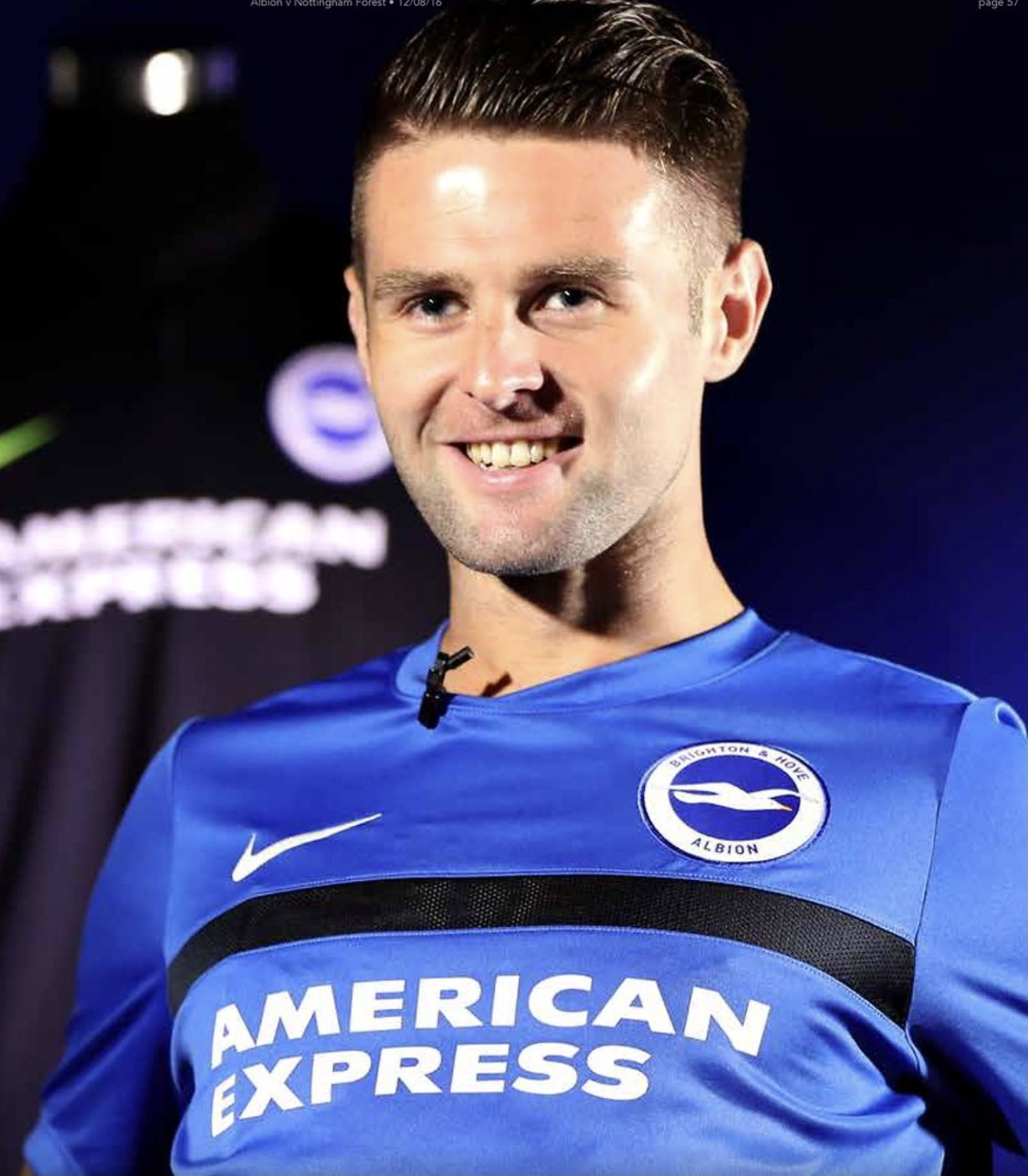



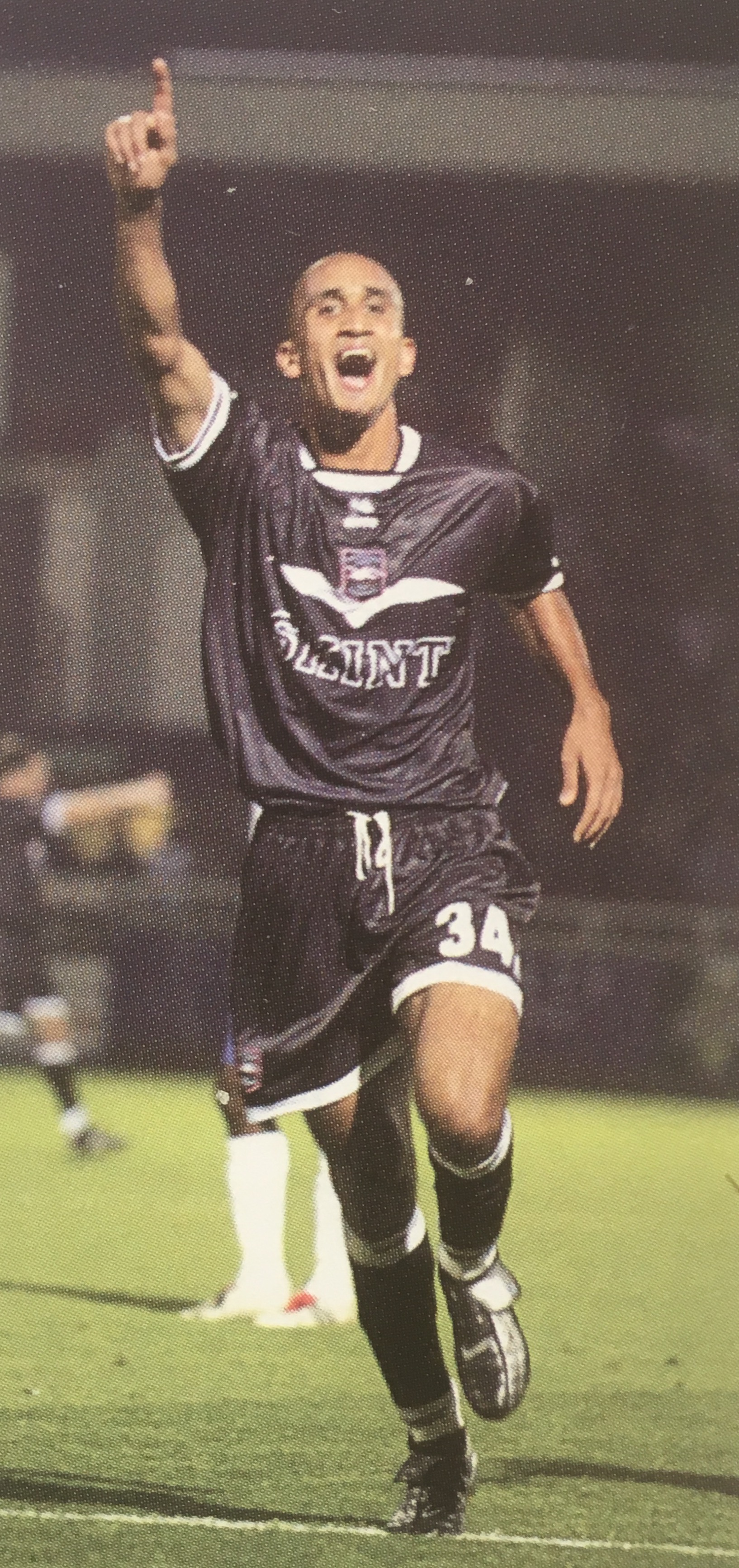


 Lynch made 22 appearances in his first season with the Terriers; nine more the following season, and 35 in 2014-15. In January 2015, Lynch was winner of the Examiner Huddersfield Town Player of the Month award, with writer Doug Thomson saying: “He scored a stunning goal to help clinch a welcome 3-1 win over Watford. But Lynch, who stung the Hornets with an overhead kick, also excelled in the centre of defence.
 After making 40 appearances for Town in 2015-16, he departed Yorkshire for London and signed a three-year deal with Championship side
  In parallel lines