Button rarely pressed into action with the Albion

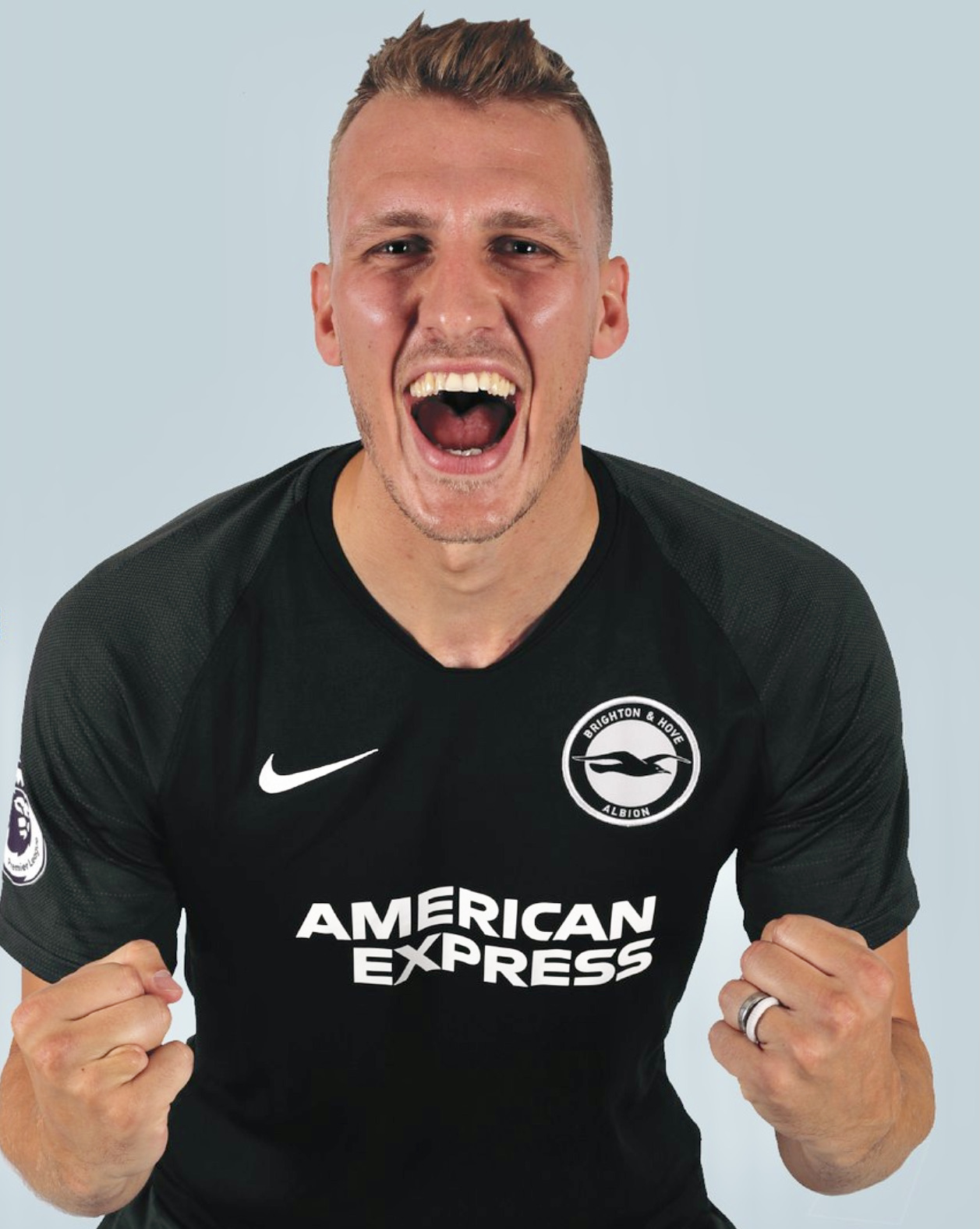
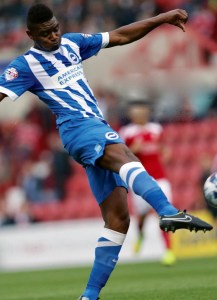
JOURNEYMAN goalkeeper David Button has travelled the length and breadth of the country in pursuit of playing time, his three years at Brentford being a rare settled spell in which he played 141 games.

Normally only a loanee or a back-up ‘keeper at a multitude of clubs, he had a season and a half as Fulham’s first choice but at Brighton between 2018 and 2020 he only made 10 first team starts.
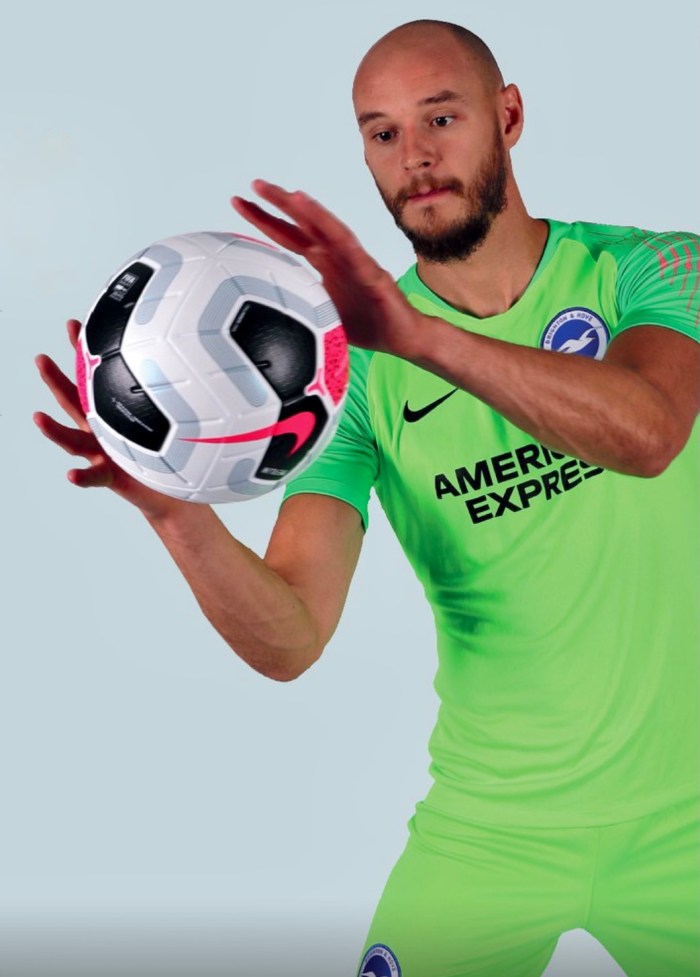
Button was 29 when he signed for the Albion and he stepped into the boots vacated by Tim Krul, the previous back-up ‘keeper, who had moved on to Norwich City. With both upcoming goalkeepers Christian Walton and Robert Sanchez out on loan, boss Chris Hughton wanted a third senior ‘keeper.
Largely a watching brief

“He has a wealth of experience, having made over 300 appearances during his career so far, and I’m sure he will work well with Maty Ryan and Jason Steele,” said Hughton.

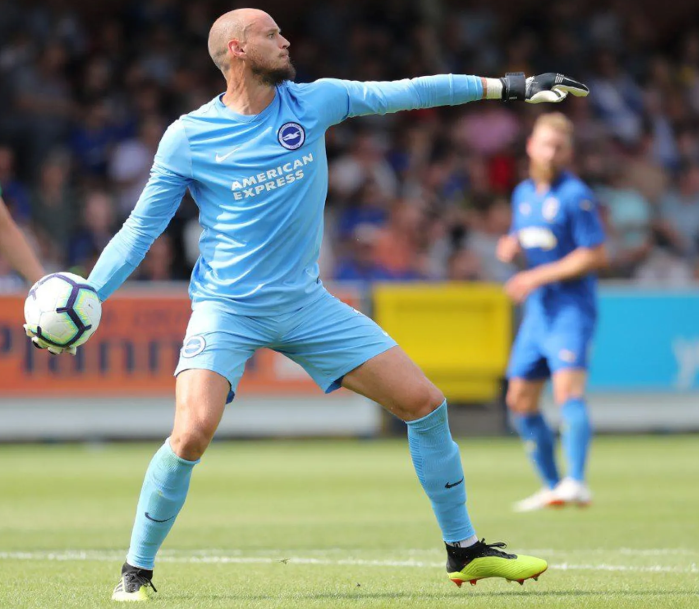
Button made his debut in a pre-season 2-1 friendly defeat against AFC Wimbledon, and realised from the outset that Ryan was going to be ahead of him.

“I’m not coming in blind to the situation, but I want to impress and be ready for the chance in the side – there has to be healthy competition wherever you are as a player and hopefully I can provide that for him,” he said. 

“There could be a chance for me and Jason in January if Maty goes away to the Asia Cup with Australia, so we’ll both be working hard to ensure we’re ready for that if the opportunity arises. 

“I know he’s very well thought of but at the same time you have to back yourself and work hard every day and do as well as you can.”

Indicating what might be expected of him, he said: “I’m confident with the ball at my feet – it’s a slightly different style to Fulham and we are allowed to go a bit more direct here and it’s something I feel I’m good at. 

“I think it’s a bit less risky – we play when we can and keep it when we can – the risk factor involved in playing it out of defence is less for me here though.”

Button certainly found a familiar face at training: goalkeeper coach Ben Roberts had previously worked with him at Charlton Athletic, and he said of him: “He has got a great reputation within the game and everyone he’s worked with speaks highly of him. I genuinely believe he’s one of the best at what he does.”

Button’s first competitive action for the Seagulls came in the fourth game of the season, a 1-0 home League Cup defeat to Southampton. He had to wait until December, when Ryan was away playing for Australia, to play in the Premier League.

In Premier League action v Everton

He kept a clean sheet in the first of them, a 1-0 home win over Everton, when he made a handful of saves, including turning a Richarlison effort onto a post.

“Although he’s a very experienced goalkeeper, it’s never easy when you’re coming in at this stage of the season and following Maty Ryan, who’s done so well for us,” Hughton said. “It wasn’t an easy decision because I’ve got two goalkeepers who are really pushing. But probably his experience managed to get him the nod (over Steele).

“It’s great for him to come into this first game and, not only be on a winning team, but also a clean sheet and that will do him the world of good.”

But that was as good as it got; Albion drew 2-2 at West Ham on New Year’s Day and lost to Liverpool (1-0) at the Amex and Man Utd (2-1) at Old Trafford. A 3-1 third round FA Cup win at Bournemouth saw then no.3 Jason Steele given a chance between the sticks.

On Ryan’s return, Button was back to the bench although he kept goal twice in Albion’s run to the semi-finals of the FA Cup: Button in the fourth round win over West Brom and in the fifth round win over Derby County. Hughton went with Ryan for the quarter final at Millwall and the semi v Man City.

When Graham Potter succeeded Hughton, Button spoke about the changes the goalkeepers then had to embrace. “We are now doing more work with our feet,” he told the matchday programme. “There is more onus on us to be better with the ball and to be comfortable with it.”

The opportunity to put it into practice was even less than previously for Button, though: he played just two League Cup matches in 2019-20 (Bristol Rovers and Aston Villa and one FA Cup tie (v Sheffield Wednesday).

At the start of the 2020-21 season, the ‘keeper swapped one Albion for another and signed for newly-promoted West Brom.

“I have ambitions of playing and helping the team as much as possible but I obviously understand that Sam (Johnstone) has got them promoted last season so he will start the season,” said Button.

“It’s up to me to push him and show the manager what I can do and take my chances when I get them. Hopefully there’ll be things I can bring to the squad certainly. I’m quite calm and comfortable with my feet too and commanding in my box so I’d say they’re my main strengths.”

However, Button played just one Premier League game in that first season plus three cup matches.

There was slightly more involvement in 2021-22 when the experienced stopper made 11 appearances in all competitions, including playing the final five Championship games and keeping consecutive clean sheets in the last three matches, against Coventry City, Reading and Barnsley.

When Button swapped West Brom for League One Reading in August 2023, one Baggies supporter wasn’t sorry to see the back of him. “’It is definitely the right move to offload David Button, he has been the worst goalkeeper I have ever seen at Albion,” said fan Matt Smith on footballleagueworld.co.uk.

“We’ve had some pretty decent goalies since I’ve been going, however Button was absolutely atrocious over a significant period of time too. How on earth did we spend £1m on him?

“How Steve Bruce gave him a two-year contract at the end of the 2021-22 season is beyond me. He’s so bad honestly. He can’t catch a bloody cold. He’s awful.”

Born in Stevenage on 27 February 1989, Button was with local club Stevenage Borough in their centre of excellence and acknowledged the input of the Coaching FX goalkeeping school in his early development.

“Keith Fenwick was my first coach: his first-class and very enjoyable sessions definitely helped to develop my love of being a keeper,” he said.

Button moved from youth academy to professional at Spurs

An England schoolboy and youth international, Button moved on to Tottenham’s youth academy in 2003, signed a scholarship deal two years later and then earned a four-year professional contract in December 2007. However, he only had eight minutes of first team action for Spurs – as a substitute for Carlo Cudicini in a League Cup match – and was loaned out 13 times.

Over his four years as a Spurs pro, he had two spells each at Crewe Alexandra and non-League Grays Athletic, plus stints at Rochdale, Bournemouth, Luton, Dagenham & Redbridge, Shrewsbury Town, Plymouth Argyle, Leyton Orient, Doncaster and Barnsley.

In the 2009-10 season, he notched up a total of 36 League Two appearances (10 for Crewe and 26 for Shrewsbury) and 30 in League One the following season, when with Peter Reid’s Plymouth, where he kept Romain Larrieu out of the team for much of the campaign.

When he eventually left Spurs permanently, he didn’t travel too far, joining Chris Powell’s Charlton in the Championship for £500,000. Powell preferred Ben Hamer in goal, though, and Button was restricted to a handful of appearances before moving on to Brentford.

In an interview with getwestlondon, Button said: “It was a little bit of a frustrating time for me at Charlton. I would like to think I would have been given a chance a bit sooner there. It was a difficult year but it helped build my character.”

When Brentford sold Simon Moore to Cardiff, manager Uwe Rösler took Button to Griffin Park declaring: “We decided David was the perfect choice for us. He is at the right age and he is very hungry to make the number one spot his own.

“As soon as Simon left, David was our first choice. David will face strong competition for the goalkeeper spot from Jack Bonham and Richard Lee, when Richard is fit again.

“We have been strong there (in the goalkeeping positions) over the past two seasons and are even stronger this year.

“Goalkeeper is a crucial position and David is a very good player.”

For once, fortune fell favourably for Button and he ended up first choice as the Bees won promotion from League One at the end of his first season and reached the play-off semi-finals at the end of his second season.

The Brentford fans website bcfctalk was full of praise for the stopper, saying: “He was very much our first point of attack as well as our last line of defence and his quick and accurate distribution played a massive part on our overall style of play and freedom of expression.”

The website added: “He sometimes failed to deal effectively with crosses and he could also use his physique better as he is an enormous man, but he was utterly reliable and often quite brilliant and he won us numerous points with some incredible saves.”

Ahead of the 2015-16 season, at a pre-season training camp in Portugal, Button spoke about all of the club’s ‘keepers being put through their paces by goalkeeping coach Simon Royce, a one-time Albion loanee ‘keeper, and how he wanted to maintain his run of form.

“I need to find that level of consistency now for me,” he said. “I feel like I had quite a few good games last season but there were a few where I wanted to do better. I am aiming to keep my standards high in every minute of every game this season.”

He remained first choice in 2015-16, making 47 appearances, but talks on a new contract broke down. He came in for a bit of a backlash on social media when he decided to move on to west London rivals Fulham instead but he told getwestlondon: “It’s football. Probably in their eyes it’d have been nicer for me to move on to a different club. It is what it is.

“Hopefully they remember the good times and what I did for the club. I’ve got a great respect for the fans and for the way they treated me while I was there.

Fulham custodian

“I had a great three years at Brentford but felt it was time for a change and the opportunity to come here arose and it was something that interested me.”

Button had the support of manager Slavisa Jokanovic at Fulham but gradually lost the backing of the supporters to the extent he was jeered at Craven Cottage.

Supporter Dan Smith did a detailed analysis of where he thought things went wrong on fulhamfocus.com. “Having narrowly missed out on promotion in the playoffs, Button signed off his Brentford career as a good keeper at this level and someone highly regarded by the Bees faithful,” wrote Smith. “His shot stopping one of the best in the league with a very strong ‘long’ kick.”

Button kept a clean sheet on the opening day of the 2016-17 season and Smith said: “He looked decisive, confident and capable. But something happened gradually as the season developed.”

He maintained the ‘keeper’s form slowly deteriorated and blamed the way he was being managed rather than the player himself. “He looks very uncomfortable with the ball at his feet and isn’t helped by the lack of movement from the deeper players making it very difficult for him to pick someone out,” wrote Smith. “Mistake after mistake giving the ball away clearly damaged his confidence because mistakes in possession led to poor keeping errors, letting in shots he should be saving and would have saved at Brentford.”

Interestingly, with echoes of what Roberto De Zerbi has said of Steele and Bart Verbruggen, Jokanovic did blame himself rather than Button, saying he trusted the ‘keeper and had full confidence in him.

“It’s my responsibility sometimes. I put my keepers in some sort of trouble. We play a bit different and I want to start playing from the keeper.

“It’s more simple to kick the ball to the strikers as it’d give him more opportunity to be comfortable in the goal.

“He has all my confidence. Sometimes, when he makes a mistake it’s partly my responsibility as well.”

Nevertheless, eventually Button lost his starting spot to Marcus Bettinelli.

The Liddle and large story of Dan Burn’s football rescue

WHEN Albion beat Wigan Athletic 2-1 to win promotion to the Premier League in April 2017, few Brighton supporters were paying much attention to the tall defender lining up for the opposition.
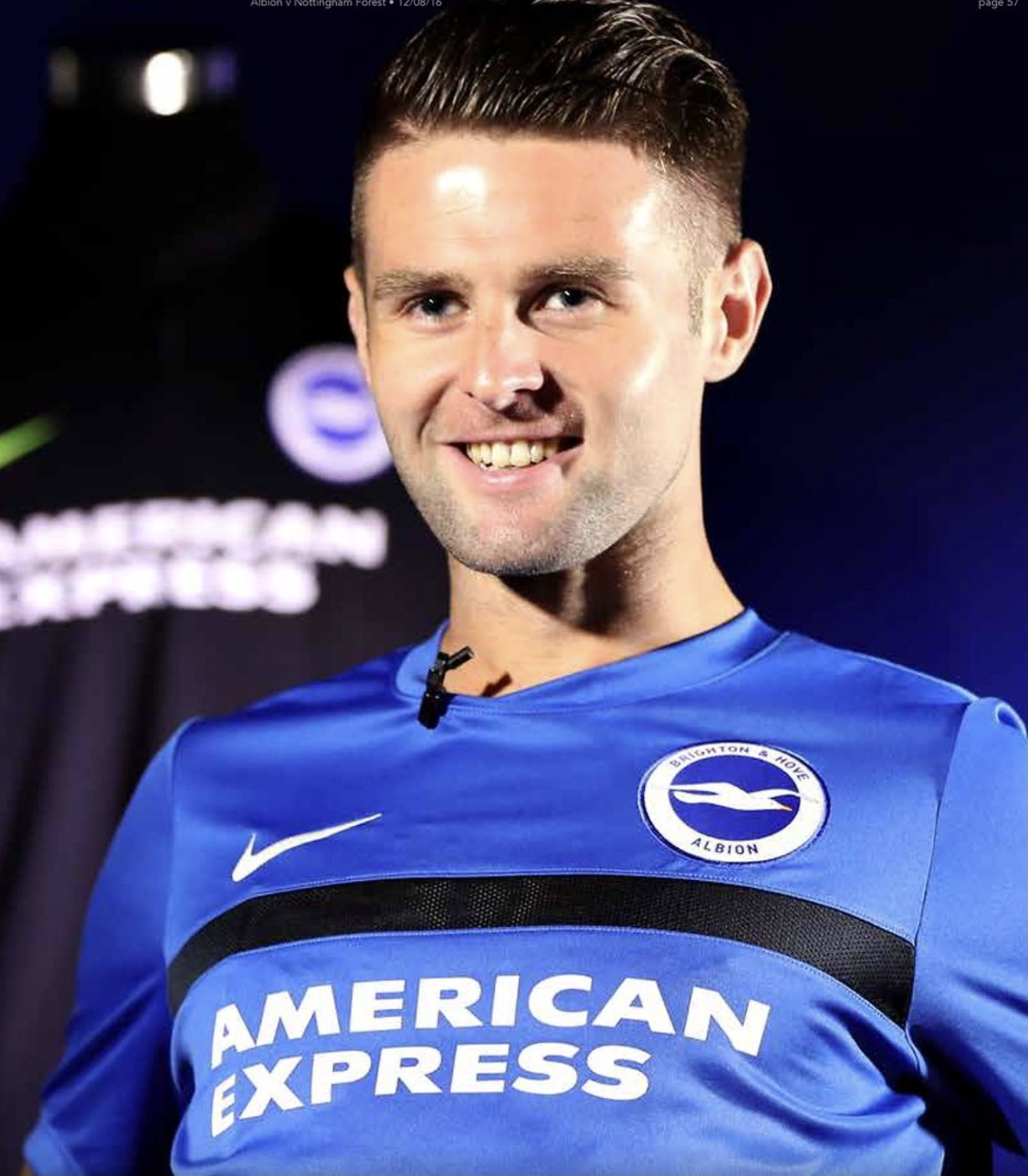
“There was a party atmosphere around the place, with the players and everyone on the pitch – so it was a great time for Brighton, but not such a great time for us as Wigan players,” recalled 6’6” Dan Burn. “We were all but relegated to League One, which was a low point in my career.”

By the time he next stepped out at the Amex, in January 2019, he was wearing Albion’s colours, and making his debut in a 0-0 stalemate v West Brom in the fourth round of the FA Cup.

Signed on a four-year contract towards the end of the Chris Hughton era, to say Burn’s Albion career had a slow start would be an understatement. He joined the Seagulls on August deadline day in 2018, but was immediately loaned back to the Latics while also nursing a foot injury.

He told the Albion matchday programme: “I’m buzzing to get another crack at the Premier League but I know it won’t be easy. The competition within the squad is very good in my position.

“I’m under no illusions that it’s going to be a very tough ask but, when I do get a chance, I’ve got to show what I can do.”

Hughton, a former Newcastle United boss when Burn was a season ticket holder at St James’s Park, said: “Dan has a wealth of experience from his time with Fulham, Birmingham City and Wigan, amongst others.

“He’s an imposing figure and had an excellent season helping Wigan to the League One championship. He also impressed in an excellent FA Cup run to last season’s quarter-finals.” 

Once recovered from his foot injury, Burn played 13 games, plus once as a sub, for Paul Cook’s Latics before arriving at Falmer in January.

He managed just three FA Cup games under Hughton, but his fortunes changed dramatically with the arrival of Graham Potter, initially slotting in on the left of Shane Duffy and Lewis Dunk in a back three, and later showing versatility and no little ability on the ball as a left-back or left wing back.

“Graham had a meeting with the lads, sat us down and told us the past was past and we just had to go out and prove we could play.

“I’m a good trainer; I train as I play and so always felt I had a chance. I also learn best when I’m out of my comfort zone. Playing left of three or left-back or left wing back, I’ve proved a lot of people wrong, which is what I like to do.”

Burn’s Albion Premier League debut came in the impressive 3-0 away win at Watford that opened the 2019-20 season, and, after Albion supporters had voiced their approval, Burn told the matchday programme: “It’s nice to be appreciated by our fans who are tremendous both home and away and for me to prove to people that I can play at this level.”

It was certainly a special occasion for Burn when Albion travelled to St James’s Park on 14 September 2019. He admitted: “Even coming out the tunnel and listening to Local Hero being belted out of the speakers was emotional for me. As a season-ticket holder for years, I could see my old seat.

“All my family were there, dotted around the stadium, people I used to go to school with, parents of friends. On the day I just had to focus solely on the game and then afterwards I could relax a little bit and go up to see my family.”

Burn was born in Blyth, the seaside town 13 miles north of Newcastle, on 9 May 1992. Because his dad was an ardent Newcastle fan, his son was quickly enrolled as a supporter and, having begun playing football with some pals when he was six or seven, he admitted: “Once I started going with him and watching games I never looked back. I was always out on the back field playing football or playing at school.

“Around 99 per cent of people in Blyth supported Newcastle. Everyone dreamed of playing for Newcastle.”

The dream looked like it might become a reality when he was just nine. While playing for the junior side of Blyth Spartans, he was scouted by Newcastle and invited to join their development centre.

“You have the Academy, where the best players went, and the development centre would run alongside that, where you would train Fridays, and they kept an eye on the players’ progress,” Burn recalled in a matchday programme interview.

“It wasn’t that great to be honest. While I was a good footballer when I joined them, as the two or three years went on, I declined quite rapidly. My body shot up, and I didn’t really catch up with myself football-wise until I was 15 or 16.”

He left the Toon at 11 and reflected: “It wasn’t a particularly good experience being let go by the club you support, with the realisation setting in that you’re probably not good enough to play at that level. I got released around Christmas time too, and it knocked my confidence.”

His chance of making it in the game wasn’t lost, though. He played for Blyth Town and Blyth Spartans, as well as New Hartley Juniors, and was spotted by a scout working for an organisation which selected players who weren’t associated with professional clubs.

Still a sixth former at school, he played for an England representative side against the other home nations and did enough to persuade Darlington’s youth team manager Craig Liddle to invite him for a trial. Burn credits Liddle with giving him the belief he could play at a higher level.

He was given a two-year YTS deal in July 2009 and it certainly beat pushing shopping trolleys for ASDA, which he’d been doing to make a bit of money.

In December 2009, with the League Two club in some trouble, Burn suddenly found himself given a first team chance. At just 17, he made his debut as a first half substitute away to Torquay.

“Although we got beat 5-0, I came off the pitch buzzing,” he recalled. “Here I was, a 17-year-old, and I was playing in League Two. We’d been pumped away from home, facing this horrendous journey home, but I was over the moon when I got back to my car – ridiculous really.”

Burn the Quaker

Unfortunately, Darlo were relegated to the Conference at the end of that season. In January the following season, Burn managed to get a foothold in the side.

His performances caught the eye of Premier League Fulham and a £350,000 fee – a lifeline towards keeping the Quakers going for a little while – took him to London. Somewhat ironically, Burn revealed that Newcastle (at the time managed by Alan Pardew) matched Fulham’s offer “but I’d already been down to Fulham, had a tour of the ground and done my medical, so was happy to sign for them”.

Being 18 at the time, he realised staying in the north-east could have made it difficult to avoid the temptations of nights out with his mates, quite apart from the scrutiny that locals give their local football heroes.

Winning a header in Fulham’s colours

“I would have loved to play for Newcastle but, at that age, at that time in my career, it was the best decision for me to get away from that goldfish bowl where everyone’s analysing what you’re doing,” he reflected. “I just wanted to get away and concentrate solely on my football which was the correct decision.”

Burn spent five years as a Fulham player but with decidedly mixed fortunes, as managers came and went.

He spent most of 2012-13 on loan at Gary Johnson’s Yeovil Town and scored the winner in the 2013 League One play-off final at Wembley when the Glovers beat Brentford 2-1.

“I remember my header going in and losing all control,” he said. “I was running round like a madman!” He added: “For a club like that to be in the Championship was ridiculous but I’ll forever be thankful for Yeovil taking a punt on me.

Wembley winner with Yeovil Town

“I really grew up as a player and learnt what it really meant to be a footballer.”

Loan spell at Bimingham under Toon legends Lee Clark and Steve Watson

Although he signed a new two-year contract with Fulham, he then went to Birmingham on loan (playing under Toon ‘legends’ Lee Clark and Steve Watson) for six months before returning to the Cottage in January 2014.

With Rene Meulensteen having succeeded Martin Jol as manager, Burn made his Premier League debut in a 2-0 defeat to Arsenal at the Emirates, and retained his place against the likes of Chelsea, Man Utd and Liverpool.

By then he was 21 and was just enjoying playing but, when relegation saw Meulensteen sacked, in the Championship Burn sometimes found himself not even getting into matchday squads under Slavisa Jokanovic.

“It was such an anti-climax; I’d been on top of the world playing and now it was the complete opposite.” He admitted speaking to a psychologist about the situation to help him through.

He played 35 matches in 2015-16 as Fulham narrowly avoided dropping into League One but was not retained at the end of the season. He made the switch to newly-promoted Wigan Athletic whose manager Gary Caldwell said: “He is a powerful defender, but he likes to play as well.”

The 2016-17 season proved to be bittersweet: the Latics were relegated back to League One, but, according to Paul Kendrick of Wigan Today: “After a shaky start, Burn barely put a foot wrong on a personal level, with a series of highly consistent displays that ensured he was the landslide winner of the Player of the Year award.”

Under new manager Paul Cook, Burn was an ever-present for Wigan throughout the 2017-18 season when they bounced straight back, collecting the League One title with 98 points, two ahead of Blackburn Rovers.

Burn’s performances earned him a place in the PFA’s League One team of the year, and the new season was less than a month old when Albion made their move for him.

Of course, a significant part of Burn’s three years with the club covered the period when Covid prevented fans from attending matches but Burn scored a truly memorable first goal for the club when there was a partial return of supporters.

In front of 8,000 noisy fans at the Amex on 18 May 2021, Burn, in his 60th match for the club, sealed a remarkable comeback from 2-0 down to secure a 3-2 win for the Seagulls. His 76th-minute winner came after Leandro Trossard (50th minute) and Adam Webster (72nd) had made it 2-2. It was the Seagulls’ first top-flight win over City since 1981.

“That was a real high point for the team and for me personally,” he said.

Burn’s second goal was pretty special too, coming at Goodison Park on 2 January 2022, sandwiched between Alexis Mac Allister’s brace, as Albion beat Everton on their own turf for the first time ever.

It was towards the end of that month’s transfer window that Albion initially rebuffed newly-Saudi-enriched Newcastle’s attempts to sign Burn, but the lure of a return ‘home’ was too great and on deadline day he eventually departed for a fee said to have been £13million.

In an emotional farewell on the club website, he said: “The transfer came as a surprise. I had no desire to leave, but the opportunity to join my hometown club Newcastle United was the only way I would have wanted to leave. While I am excited to begin this new chapter, I am also sad to be ending another.

“Brighton has been a hugely successful period of my career and it’s been a memorable time for me off the pitch. We had my son down here, and I have loved seeing my family grow up as part of the community and living in Brighton & Hove. 

“Newcastle were the only club who could have tempted me away. Second to Newcastle United, Brighton & Hove Albion, the city and those associated with the club will always have a special place in my heart.”

When Burn scored his first goal for Newcastle in a 2-0 Carabao Cup quarter final at home to Leicester on 10 January 2023, manager Eddie Howe described it as an “incredible moment”, telling the media: “I am so pleased for him. This is his club and he has come back here and he is savouring every moment.”

The goal came when Burn ran on to Joelinton’s pass, beat two defenders and slotted a shot into the bottom corner.

“I used to sit in the east stand,” he said. “You always want to score in front of the Gallowgate end. To do that in front of my family was amazing.

“I like to get forward and it’s entertaining watching a guy my size running into the box.”

Youth Cup winner Rohan Ince faded after a bright start

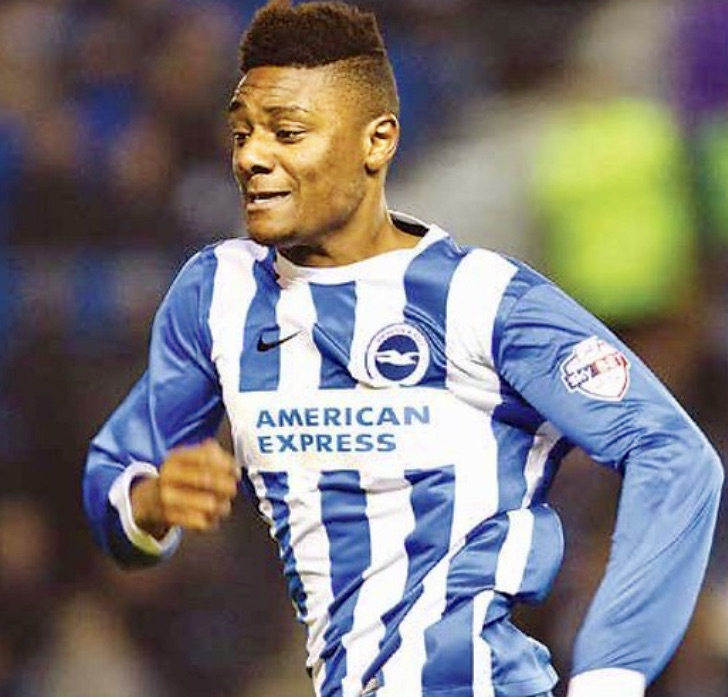
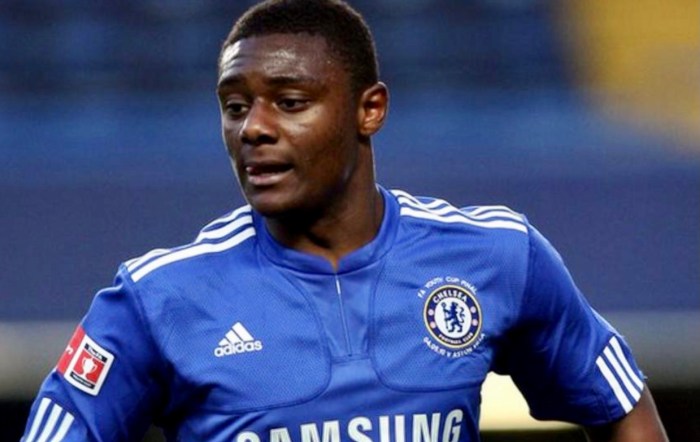
THERE WAS a time it looked like Brighton had rescued a gem of a player in Rohan Ince.

After 13 years on Chelsea’s books, he was picked up at 20 by the Seagulls and quickly earned a place in the first team.

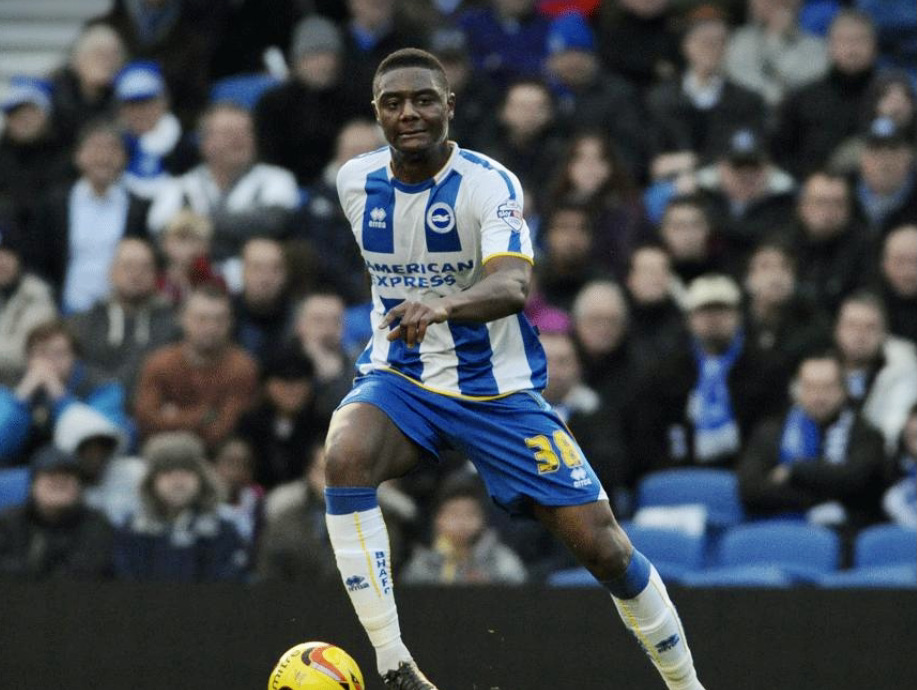
He progressed from a development squad triallist to first-team midfielder in little over six months, getting his chance because of an injury to Liam Bridcutt, another former Chelsea youngster who had been an inspiration for his move to the Albion.

“Liam is older than me but I knew he was a good lad who was always having a laugh,” Ince told the matchday programme. “It was only later when we were training with the reserves that I played with him.

“He is doing well at Brighton and I have great respect for him because it is not easy to find that success after leaving a club like Chelsea.

“He is a great example for young Chelsea boys that have been released, and to all young footballers who don’t get offered contracts.

“Liam has shown it is not the end of the world and if you keep fighting you can get there.”

Ince knew about Brighton from his uncle, Eric Young, a centre-half who played for Brighton in the 1980s.

“When I told him I was signing for the club, he was really happy for me,” he said. “He told me it was a good club and good area to live in. He’s an accountant these days, doing really well for himself.”

Ince arrived at the club towards the end of Gus Poyet’s reign but it was under successor Oscar Garcia’s direction that he thrived. Garcia switched him from a central defender into a defensive midfield player.

“For me he is a player who will have a better professional career as a midfielder than as a defender,” said the head coach. “He positions himself well, he is very alert to second balls, he doesn’t lose possession, he can move the ball quickly.

“I think these are all physical and technical characteristics that are better suited to the midfield role.”

And Garcia demonstrated that it wasn’t always a case of either/or between Bridcutt and Ince when the pair combined successfully in a 3-1 home win over Leicester City at the Amex in early December 2013.

He told The Argus: “All good players can play together. It’s up to the manager to try to find the best position for them.

“Rohan is young but when we are watching him he seems an experienced player. He has to improve a lot of things but he wants to do it and this for me is the most important thing.”

Such was Ince’s progress that in January 2014, a year after he joined the club, he was offered a new two-and-a-half-year contract and was being touted as the natural successor to Bridcutt, who, at the end of that month, made a much-predicted move to follow Poyet to Sunderland.

“He has earned this contract with the way he has trained and played ever since I came to the club,” said Garcia. “He has an excellent attitude every day, he looks after himself and works hard in training; and we are all seeing the benefit of that with his performances on the pitch.

“It is nice for the club to reward that hard work and professionalism with this new contract and I am very pleased for him.”

Ince topped off the first of his two seasons playing in the Championship by being crowned Brighton’s Young Player of the Year. He was probably sadder than most to see Garcia depart immediately after the play-off semi-final defeat to Derby County.

He told The Argus: “I started off as a midfielder at Chelsea up until I was 16, then I was changed to a centre-back because of my height and physical attributes.

“I went back and forwards between midfield and defence in my Chelsea career but I came here as a centre-back because that’s where I thought my career would be best.

“Oscar didn’t believe that and I am happy he didn’t believe it either, because midfield is my preferred position.

“He has given me the opportunity to play first team football, in my preferred role as well, so I couldn’t be more grateful.”

After winning the Young Player of the Year award, Ince said: “The gaffer is a really calm character who doesn’t go about shouting, so is my type of person. The senior pros have also been a massive help, talking to me on the pitch and in training. I couldn’t have won this award without them all.”

Sadly, Ince’s progress seemed to peter away after Garcia left. He made only 11 starts in 26 games for Sami Hyypia, and the player told The Argus: “It was quite hard for me, quite a setback, coming off the back of a good season I had previously.

“I had to keep my head up, keep training well, not get too down or depressed about it. I felt I did that and when the opportunity came I felt I did well.”

It looked like his fortunes had changed after Chris Hughton had taken charge. He was a frequent starter under Hughton initially and the player himself felt bold enough to tell The Argus: “I feel I’ve been playing quite well recently, bringing good competition for the gaffer in the midfield area. I’m giving him quite a tough decision to drop me, in my opinion.”

Hughton clearly felt differently, though. He had already signed Beram Kayal and, in the summer of 2015, added Dale Stephens. They became Hughton’s go-to central midfield pairing.

Another promising young midfielder, Jake Forster-Caskey, found himself sent on loan to MK Dons and, on the last day of the transfer window in early 2016, after Hughton acquired the services of the experienced Steve Sidwell, Ince joined Fulham on loan until the end of the season.

At least it was still Championship level, although Ince didn’t get into Slavisa Jokanovic’s struggling side straight away. It wasn’t until 19 March he was handed a start away to Birmingham City when he obliged with a goal in a 1-1 draw.

“It was a frustrating and a confusing period,” admitted Ince in Fulham’s official matchday programme. “I could have easily given up, but I continued to train hard and kept knocking on the gaffer’s door to make sure he didn’t forget about me. It’s starting to pay off.

“He just said it was tactical why I wasn’t playing but then he decided he wanted to try something different at Birmingham. I think he wanted a more solid midfield with me and Scott Parker in there and I’ve been back in ever since. Long may it continue.”

Ince made eight starts and two sub appearances as Fulham narrowly avoided the drop.

Back at the Albion, Ince only got three first-team starts in the League Cup and was an unused sub for a handful of league games. It was no surprise, therefore, that in January 2017 he was once again sent out on loan, this time to Swindon Town, whose head coach was Luke Williams, who had been in charge of Albion’s development squad when Ince first joined the Seagulls.

Robins fans would have remembered Ince for a wonder strike for Brighton at the County Ground during a Capital One Cup tie in August 2014. It opened the scoring in a 4-2 Albion win, that went to extra-time.

Ince scored twice in 14 games in a squad with some familiar faces: Bradley Barry, Yaser Kasim, Anton Rodgers and Jonathan Obika.

As Albion began life in the Premier League, Ince once again found his only outlet for first-team football was in the League Cup and his display in a 1-0 win over Barnet proved to be a shop window.

Within days, League One Bury signed him on a season-long loan, their manager Lee Clark, saying: “Rohan is a player that has been on the radar for a while. The chairman, Alan Thompson and I went down to Brighton on Tuesday to watch him play for Brighton and he was very impressive for them.

“He will bring a presence to the team and is a very good footballer. He plays it simple and plays it effectively and I believe he will be a big player for us in every sense of the word, both in his physicality and in his play.

“He is an established Championship player and unfortunately for him, Brighton have gone to the next level. Once we found out he was available, we went for him. I am more than delighted to get him in.”

Ince made 22 appearances for Bury in what turned out to be a disastrous season for them because they finished bottom of the table and were relegated. Clark only lasted as manager until the end of October, Chris Lucketti was in charge for two months and caretaker Ryan Lowe was in the hotseat for the remainder of the season.

The loanee played his last match for Bury in April 2018 and was released by the Albion in June that year.

Let’s rewind for a moment, though. Born in Whitechapel, London, on 8 November 1992, Ince was picked up by Chelsea as a promising young player when he was only eight years old.

Football was clearly in the Ince family genes; as well as Uncle Eric, a less close relation is former England international Paul Ince, his dad’s second cousin.

Rohan progressed through Chelsea’s academy and joined the club after completing his formal education at Thamesmead School in Shepperton.

In a detailed pen picture on cfcnet.co.uk in July 2009, Philip Rolfe said: “Look at Rohan from a distance and you could mistake him for a younger John Obi Mikel. His tall, gangly stature and his head of spiky black hair brings about the comparison, and although he’s a centre-back by trade, his laid-back and composed style is very much in the mould of the Nigerian international.

“Ince has most often played in the heart of the under 16s defence alongside Danny Mills, especially in 2007-08. Previously he could also have been found in defensive midfield when Jack Saville was a regular in the under 16s team, and it’s in that position where he might be at his best.

“Much taller and stronger than most opponents his age, he can bring the ball out in the style of the much sought after footballing centre-back. At centre back his somewhat lethargic style can result in a loss of possession, and he is often found to hit a long pass rather than pick out a shorter option.

“In midfield he has more options and more freedom, but as a regular in the under-18s already, he’s honing his craft.”

In 2010, Ince was a member of Dermot Drummy’s FA Youth Cup-winning side that beat Aston Villa 3-2 on aggregate (Ben Sampayo and Anton Rodgers, who also later joined Brighton, were Chelsea subs). Ince signed professional for Chelsea in July 2010 and went on to play regularly for the reserves but didn’t make it to the first-team.

In July 2012, he signed a six-month deal to go on loan to Yeovil. But he made only one start and three substitute appearances for Gary Johnson’s side before returning to Stamford Bridge with a recurring ankle injury.

After finally leaving Chelsea in January 2013, he said: “Chelsea said they couldn’t see me breaking into the first team, which is probably true.

“It is very difficult to get into their first team because they can go out and buy the best players in the world.

“When I was told I wouldn’t get a new deal, I decided to go on a series of trials and Brighton was the club I identified as the best place to go to.

“I travelled to Bournemouth for a friendly on the second day of my trial and felt I had performed well, but then the weather had a dramatic impact on my hopes. There was loads of snow so I was limited to what I could show as we were training indoors, but from what I did show, Luke Williams liked it and extended my trial.”

On being released by Brighton, Ince played a couple of pre-season friendly matches for Charlton Athletic but he didn’t get taken on because of a knee injury. Caretaker boss Lee Bowyer told londonnewsonline: “He’s got something wrong with his knee. He came with it. How he’s been training and playing in the games I don’t know, because he’s injured.”

It led to Ince spending the whole of 2018-19 without a club trying to heal and recover his fitness. Eventually, he was taken on by League Two Cheltenham Town in July 2019, with manager Michael Duff telling the club website: “He’s had a good schooling where he’s come from at Chelsea and had 80 or 90 games for Brighton in the Championship. “When I played against him, he was the next big thing coming through. He’s been a bit unfortunate with his injury last year. We’ve done all the due diligence with regards to testing, seeing specialists, scanning — we think we’ve found a very good player.

Michael Duff greets Rohan Ince

“He’s 6’4”, powerful, but he can play as well. We’re hoping he can add physicality and quality into our midfield.”

Unfortunately, it wasn’t a great start for Ince, when the Robins travelled to east London to take on Leyton Orient on the opening day of the season. In a mad five minutes midway through the second half, Josh Wright scored past Scott Flinders to put Orient ahead, Town striker Luke Varney saw a second yellow for alleged simulation in what the visitors contended was a clear penalty shout.

Frustrated by the decision, Ince, who’d taken a drink of water during the halt in proceedings, threw the empty plastic bottle to the sidelines, but it hit the fourth official. Referee Michael Salisbury deemed it to be violent conduct and showed him a straight red card.

“He seems to think he did it intentionally,” manager Duff explained to gloucestershirelive.co.uk afterwards. “I am not sure Rohan’s aim is that good that he can hit someone five or six yards away, walking the other way. There is not a lot I can do about that one, but I think it’s very soft, particularly after what’s gone on in the 60 minutes before that.”

To make matters worse, the FA charged Ince with breaching an FA rule and, instead of the statutory three-match ban, he was banned for five matches.

Then, just when it looked like he would return to the side in a game at Crawley, he injured his hamstring in a pre-match warm-up and had to pull-out of Cheltenham’s starting line-up.

He ended up making only nine League Two appearances and was released at the end of his one-year deal.

It was only when he linked up with fifth-tier Maidenhead United for the 2020-21 season that he finally got a decent run of games, featuring 31 times for the National League side, and helping the club finish 13th, the second-best finish in the club’s history.

In 2021 he was called up for the first time to play for the national football team of Montserrat, which is coached by Willie Donachie, the former Manchester City, Oldham and Scotland defender, who had been Joe Royle’s managerial no.2 at various clubs.

The tiny Caribbean nation, a British overseas territory of less than 5,000 inhabitants, is trying to rebuild after half the island was destroyed by a volcanic eruption in 1995, forcing thousands to flee to Britain. Most of the British-born semi-professionals who play for Montserrat are related to those island residents who came to the UK.

Ince featured in qualifying matches for the 2022 FIFA World Cup and scored his first goal in a 4-0 win over the U.S. Virgin Islands.

Although they did not advance from their World Cup qualifying preliminary group, the ‘Emerald Boys’ finished unbeaten with eight points and earned draws against El Salvador and Antigua and Barbuda.

On his return, for the 2021-22 season, Ince switched to another National League side, Woking, and is described on the club website as “an integral player at the base of the Woking midfield”.

Adding that he had “quickly became a firm fan favourite”, it says of him: “A tough-tackling defensive midfielder also capable of pushing further forward, he made 37 appearances during his debut season with the Cards, whilst chipping in with two goals and four assists.”

United ‘product’ Oliver Norwood eventually fulfilled expectations

IT LOOKED LIKE the so-near-and-yet-so-far story of Oliver Norwood’s flirtation with the Premier League would end in disappointment.

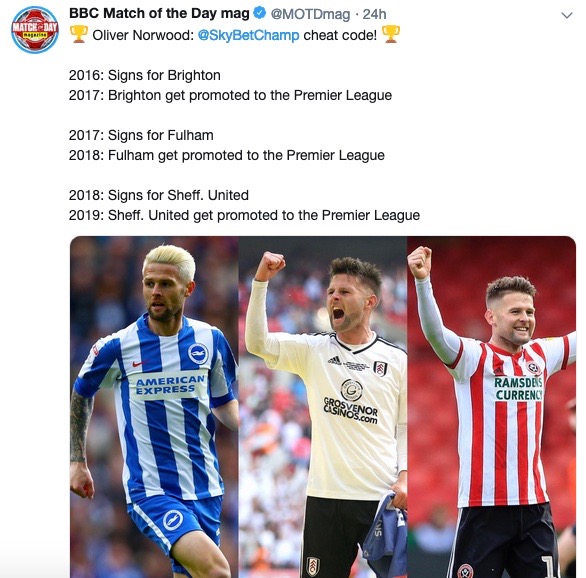
Twice the former Manchester United reserve helped teams to win promotion from the second tier, only then to remain in that division when the sides he played for didn’t see him as a Premiership player.

It happened first of all with Brighton in their 2016-17 promotion under Chris Hughton.

The following campaign Norwood went on a season-long loan to Fulham and was at the heart of their midfield as they won promotion.

Fulham didn’t look to retain him, though, and for 2018-19 he was once again loaned out by Brighton; this time to Sheffield United.

Halfway through the season, they turned the loan into a permanent transfer and, after helping the Blades to win promotion, Norwood finally got his chance to show his skills in what amounted to an impressive return to the top-flight of English football.

How BBC’s Match of the Day Tweeted Norwood’s record

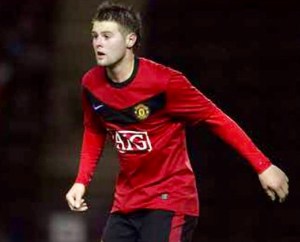
Born in Burnley on 12 April 1991, Norwood was only six when he first came to the attention of Manchester United, spotted playing for Fulledge Colts in his home town.

“My earliest football memory is being on trial at the Manchester United academy aged six and being totally overawed by it,” he told the Albion matchday programme. “I remember standing there at The Cliff, biting my fingernails, and the coach, Paul McGuinness, saying ‘Are you going to join in?’ After that, I was fine and it was really exciting to be part of the club’s academy.” He joined the Red Devils on schoolboy terms at seven and spent 15 years on their books, playing in the same youth teams as Paul Pogba and Jesse Lingard.

During the 2005-06 and 2006-07 seasons, Norwood made appearances for United’s under-18 team and, ultimately, he signed on as a trainee in July 2007.

He became an under-18 regular in 2007-08 and also made his debut for the United reserve side. After netting nine goals in 28 appearances for the under-18s in 2008-09, Norwood was signed as a professional.

He was a reserve team regular in 2009-10 and said he owed a lot to Ole Gunnar Solskjaer, who was in charge of United reserves at that time.

“I owe a lot to Manchester United for the experiences and education I had there,” Norwood told the matchday programme, United Review. “The club taught me not just about football but life. I was taught how to be a good person.

“Ole played a huge role in terms of my development as a footballer and a person. The lessons he taught me in the reserves have stayed with me throughout my career.

“I’ll always be grateful to Manchester United, to Ole, to (former reserves manager) Warren Joyce, for the upbringing they gave me in the game.”

Norwood got a sniff of the first team when Sir Alex Ferguson called him up to the first team squad for a Champions League match away to Wolfsburg. He travelled with the squad to Germany but didn’t get selected in the final matchday 18.

In search of a first team breakthrough, Norwood decided to gain experience on loan with lower league clubs and his first port of call was Carlisle United in September 2010. Ironically, his first match was against Brighton – a 0-0 draw at Brunton Park. Unfortunately, after just five starts and two sub appearances, he tore a thigh muscle and had to cut short his loan and return to Old Trafford for treatment.

The following season, he went out on loan again, this time to League One Scunthorpe United where Alan Knill, Chris Wilder’s no.2 at Sheffield United, was the manager.

In an interview with the aforementioned Joyce, the former reserves manager explained how it was only a change in Norwood’s diet that started to bring about the required improvements to his game.

“I got him to write down everything he ate. And I meant everything. I said, ‘We have to look at your diet and get you absolutely super fit’. I told him we couldn’t allow the ability he had to be wasted.”

Joyce told The Athletic’s Richard Sutcliffe in a 23 June 2020 article: “Once we’d sat him down (after returning from Scunthorpe) and analysed everything, he got himself really ripped. He started eating the right things and worked so hard to get into shape. He is getting the rewards from that now.”

Norwood spent the second half of the 2011-12 season in Coventry City’s unsuccessful effort to beat the drop from the Championship but, having acquired a taste for football at that level, declined the offer of a contract extension on his return to Old Trafford.

He told Talksport at the time: “I want to play every week like I was this season in the Championship. It’s been the hardest decision in my life for me to make but there comes a time when you have to be realistic.”

He opted to join newly promoted Huddersfield Town in the Championship on a three-year contract, and Sutcliffe’s article reveals Norwood was so determined to make the move that he drove down to Heathrow Airport to apprehend holiday-bound Town manager Simon Grayson to persuade him to sign him.

Nevertheless, United boss Sir Alex Ferguson had some encouraging parting words that the midfielder never forgot. “You’re not going to make it at Manchester United, but I believe one day you will play in the Premier League.”

Norwood was a permanent fixture in the Terriers’ midfield for two seasons before switching to fellow Championship outfit Reading at the beginning of the 2014-15 season.

Signed by Nigel Adkins on 21 August, 11 days later he was joined at the Madejski by Glenn Murray, on loan from Crystal Palace.

When the Royals were hammered 6-1 by Birmingham City in mid-December, Adkins was sacked and replaced by Steve Clarke. His second game in charge, on Boxing Day, saw Reading visit the Amex, with Brighton under caretaker manager Nathan Jones. Murray scored twice for the visitors, but Albion rescued a point with a 90th minute equaliser from Inigo Calderon.

Norwood completed the season having made 35 appearances plus seven as a sub and although he made the second highest number of appearances – 50 – the following season, when the Royals visited the Amex on 15 March 2016, under Brian McDermott, their third manager of that campaign, Norwood was a non-playing sub as the Royals lost 1-0 to a James Wilson goal.

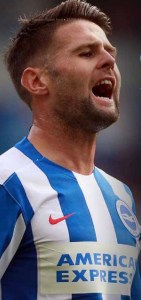
The next time the two sides met (a 2-2 draw at the Madejski on 20 August), Norwood was part of Chris Hughton’s squad, having signed for the Seagulls at the start of the 2016-17 season, along with Murray and Steve Sidwell. Norwood was a 68th-minute sub for Sam Baldock.

Manager Hughton said of Norwood: “Oliver is another excellent addition to our squad.

“He has a good grounding coming from Manchester United, and has a wealth of experience playing in the Championship and at international level.

“He’s a box-to-box midfielder and an excellent passer of the ball, so he gives us extra options in midfield and adds further depth to our squad.”

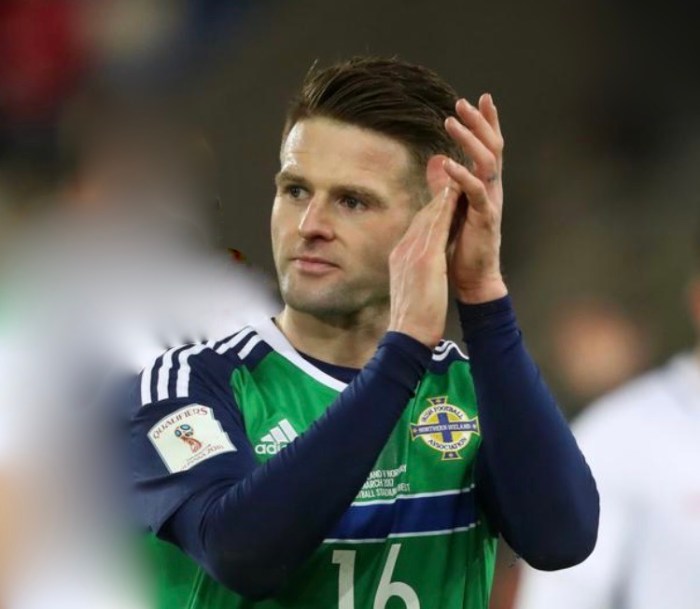
Although he played for England at youth level, he also qualified for Northern Ireland, and chose that country to enable him to experience more opportunities at international level.

Norwood made his full international debut during Nigel Worthington’s time as manager, coming on as a substitute in a 2-0 friendly defeat by Montenegro in Podgorica in August 2010.

He was a regular in Worthington’s successor Michael O’Neill’s midfield when the side qualified for Euro 2016 and played in all four of the team’s matches in the finals in France.

However, having made 57 appearances for his country, he decided in August 2019 to retire from international football when only 28.

Although Norwood made 20 starts for the Albion, he was almost as often used as a substitute, making 17 appearances off the bench, as the Seagulls soared to promotion.

Norwood had a starting berth when Beram Kayal was injured and he told the matchday programme: “This has been a big opportunity for me. The gaffer brought me to the football club and obviously I’ve been desperate to get into the team and play games.

Norwood had plenty to say

“Obviously I understand how football works. When the team’s winning and doing really well you have to bide your time, but an opportunity has come my way and it’s been important for me to grab it with both hands and do all I can to stay in the team.”

It has since transpired that the midfielder was most likely distracted by off-field issues during his season with the Seagulls, as thestar.co.uk reported.

“I went to Brighton after the 2016 Euros, and it was a difficult period in my life,” said Norwood. “My wife, Abigail, was pregnant and really ill, so we were living apart. My head wasn’t fully there.”

He told The Star he only fell in love with football again when he went on loan to Fulham, and subsequently was at loggerheads with Brighton when they didn’t accede to his request for a permanent move. “They said I could leave, but then turned down bids when they came in and started asking for silly things. I don’t think clubs realise sometimes that they’re messing with people’s lives. I had plenty of arguments, saying: ‘You don’t want me here, so let me go’.”

With Dale Stephens and Kayal the preferred central midfield pairing, plus the arrival of Davy Propper for Albion’s first season back amongst the elite, Hughton had been happy to let Norwood join Fulham on a season-long loan.

Norwood made 47 appearances for Fulham in 2017-18, particularly when filling in for the injured Tom Cairney until the Scot’s return from injury towards the end of the season.

His passing accuracy and all-round contribution were favourable, as this footballwhispers.com article assessed, and he proved a vital cog in their promotion via the play-offs when they beat Aston Villa 1-0 in the play-off final.

The website football.london was surprised Fulham didn’t opt to sign him permanently. “Norwood was a key figure under Slavisa Jokanovic, seamlessly plugging the gap left by Tom Cairney as a result of his injury and can be credited with a huge role in getting the club promoted in the first place, with his tackle on Conor Hourihane in the play-off final one that will forever be remembered by Fulham fans,” wrote Phil Spencer. “His vision and incisive passing was key to Fulham’s free-flowing style of play – meaning it was a little surprising that his loan switch to west London was never made permanent.”

Fans have contrasting views about his contribution, as this collection of quotes demonstrates. Some appreciated his ‘Hollywood’ long passes, others are perhaps summed up by this Fulham fan who said: “100% effort every time he played. Honest player. Not stellar but above average.”

Fulham’s loss was Sheffield United’s gain and in wishing Norwood well in his pursuit of more playing time with the Blades, Hughton told Albion’s website: “Ollie was one of our promotion-winning team in 2016-17 and will rightly be remembered as part of that historic team which took the club to the Premier League.”

Critics of Fulham’s strategy of splashing the cash on so-called name players for what proved to be an unsuccessful bid to retain their newly-won status in the Premier League couldn’t help pointing out the irony of Norwood’s situation.

“Fulham could only wave to Norwood on their way back down after ditching him for Jean Michel Seri,” said footyanalyst.com.

The Blades were promoted as runners up behind Norwich City in a season in which Norwood played 43 league games. He told The Observer’s Paul Doyle: “Last season was a big season for me. It was the most I’ve played. I’m definitely a better player now. At everything really. My understanding of the game. Tactically, technically, what needs to be done.”

He told Doyle: “It’s taken a bit longer than I would have liked but it was a dream come true to finally make the level that everybody across the world wants to play at.”

Norwood certainly seized the opportunity to shine at the top level, playing 40 games plus one as sub in all competitions as the Blades confounded the critics by finishing in ninth place, and taking on the captain’s armband in Billy Sharp’s absence.

Pictures from various online sources and the Albion matchday programme.

Midfielder Alan Curbishley helped Seagulls to promotion

Screenshot

ALAN Curbishley completed a hat-trick of promotions with new clubs when he was part of Brighton’s successful third tier side in 1988.

He’d previously been promoted after switching from West Ham to Birmingham City and also when moving from Aston Villa to Charlton Athletic.

Curbishley was what you might call West Ham through and through.

Born at Forest Gate on 8 November 1957, within a mile of West Ham station, he was one of five children (elder brother Bill famously promoted and managed The Who and Led Zeppelin and was producer of the films Tommy and Quadrophenia).

Curbishley first played in Brighton at under 11 level, in a Newham Boys side against Brighton Boys at Longhill School, in May 1967. He was later capped for England Boys aged 15 and after joining the Hammers straight from school played for England Youth.

Curbishley won nine England Youth caps under Ken Burton, scoring on his debut in a 1-1 draw against Poland in Las Palmas on 21 January 1975 when England went on to win the Atlantic Cup. Among his teammates were future England captain Bryan Robson, Peter Barnes and Keith Bertschin.

He vied for a starting berth with Mark Nightingale (Palace, Bournemouth, Norwich, Peterborough), making six starts and three appearances off the bench. His last appearance was in a 1-0 win over Wales in Cardiff on 11 February 1976, playing alongside Glenn Hoddle and Gary Owen.

Almost a year earlier, on 29 March 1975, he had made his first team Hammers debut at the tender age of 17, lining up in midfield alongside Trevor Brooking and Graham Paddon in a 1-0 home defeat against Chelsea. Mervyn Day was in goal for West Ham and guarding the opposition net was John Phillips.

At the time, Curbishley was the youngest to play in the senior team although that record was subsequently eclipsed by Paul Allen.

A contemporary of Geoff Pike, Paul Brush and Alvin Martin, they were all in the West Ham youth team defeated 5-1 on aggregate by Ipswich in the 1975 FA Youth Cup Final.

In a midfield dominated by Brooking, Paddon and Pat Holland, and later Alan Devonshire and Pike, Curbishley found first team chances limited, although in 1977-78 he made 36 appearances.

After 85 matches for the Hammers, in 1979 he moved to Birmingham for £275,000. Manager Jim Smith used the proceeds of the £1m transfer of Trevor Francis to Nottingham Forest to buy Curbishley, Frank Worthington, Colin Todd and Archie Gemmill. Curbishley was still only 21 when he made his debut for the Blues on 18 August 1979 in a 4-3 defeat at home to Fulham and he went on to be ever present for Birmingham in that 1979-80 season.

Curbishley earned his one and only England Under 21 cap in a 5-0 thrashing of Switzerland at Portman Road when Justin Fashanu was among the scorers. He had hopes of going to the 1982 World Cup with England, having broken into the England B squad but fractured a kneecap sliding into a tackle with Albion’s Brian Horton. “I missed the rest of the season and the start of the next, and the World Cup squad which I might have broken into otherwise,” he said. “It was the worst disappointment I’ve ever faced.”

He was on the front cover of the matchday programme for a game I went to watch at St Andrew’s on 27 March 1982 when he played for Ron Saunders’ Blues in a 1-0 win over Brighton. But financial issues meant the side was broken up and, the following year, after a total of 155 games, he committed what today seems to be viewed as a cardinal sin by signing for Villa for £100,000, ironically making his debut against Birmingham in a 1-0 win on 4 April 1983.

“I had high hopes of success there with them just having won the European Cup,” he told Dave Beckett in an Albion matchday programme article. “It was soon obvious though that Tony Barton was under pressure from the moment he took over and all the players thought it was just a matter of time before he was sacked.

“He got a raw deal. That season we finished ninth in the league, got to the semis of the League Cup and were knocked out of the UEFA Cup in the last minute on the away goals rule. Villa have never been near that form since, but Tony Barton’s face didn’t fit and he was soon on his way along with all the men he signed.”

After only 36 appearances, scoring once, Curbishley returned to London, dropping back down to the 2nd division, to begin what would be a long association with Charlton Athletic, punctuated only by his spell at Brighton.

Amazingly, although homeless at the time and playing at Selhurst Park, Charlton won promotion back to the 1st Division. Unfortunately Curbishley sustained an achilles tendon injury and only played 10 games in the 1986-87 season.

“I knew I had an achilles injury but the operation was delayed until a week before the start of the new season and consequently I wasn’t fit again until December,” he said. “The manager bought two new midfield players, which I understood, but when I was fit again I couldn’t get back into the side.

“It became apparent that I wouldn’t get much of a chance unless something drastic happened so I’m pleased to have a fresh start.”

After 13 seasons playing in the top two divisions, he left Charlton having scored six times in 63 games and dropped down to the Third to join the Albion for £32,500.

He made his debut in a goalless draw at Chesterfield on 22 August 1987 in front of a crowd of just 2,286.

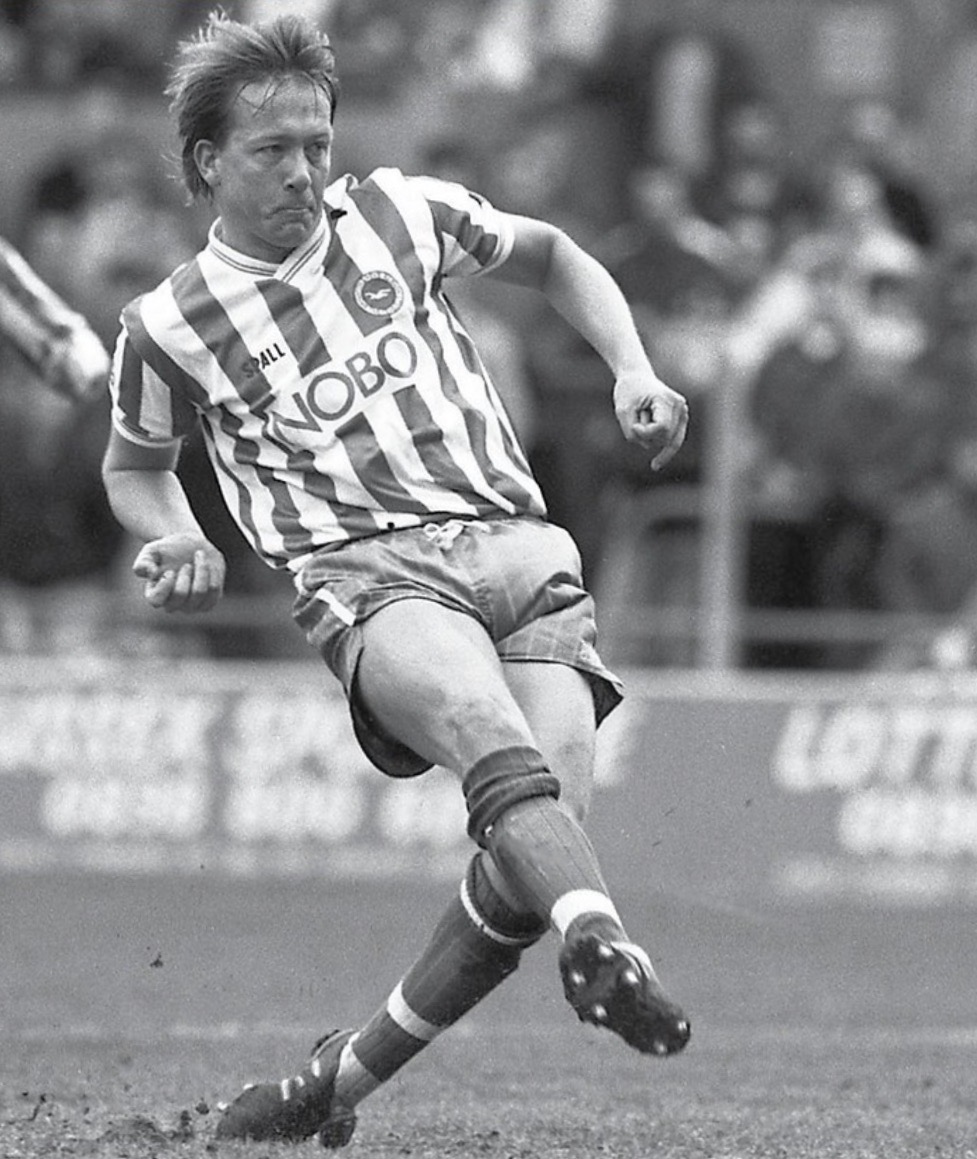
After the departure of Jimmy Case in 1985, the centre of Albion’s midfield had been crying out for someone who could put their foot on the ball and pass it, and Curbishley stepped neatly into that role, scoring six goals – mostly penalties – in 34 appearances as Brighton won promotion.

“Alan was a very level-headed guy, an excellent passer and really disciplined,” Albion boss Barry Lloyd told Spencer Vignes in a matchday programme article.

In total, over three years on the south coast, Curbishley played 127 games (plus five as sub)  – making his 400th league appearance during the 1988-89 season – and scored 15 goals.

curbs penThe Albion matchday programme featured Curbishley when the Seagulls hosted the Hammers for a Barclays League Division 2 game on 16 September 1989. Describing his time with the East London club, he said: “It was a brilliant set up although I was definitely a bit headstrong in my early days.

“I didn’t really grow up until I moved to St Andrew’s and that’s where I had my best playing days.”

Lou Macari’s side in 1989 included Curbishley’s old pal Alvin Martin and future Albion manager Liam Brady but the Seagulls ran out 3-0 winners (goals from Kevin Bremner, Robert Codner and Garry Nelson).

In 1990, Curbishley began his coaching career, returning to Charlton initially as player-coach under Lennie Lawrence. When Lawrence left in 1991, Charlton made the somewhat unusual decision to appoint joint managers: Curbishley and Steve Gritt (who would later be at the helm when Albion narrowly escaped dropping out of the league).

Curbishley’s first signings for Charlton were former Albion teammates Nelson and Steve Gatting and he later plundered young winger John Robinson from the Seagulls. After four years, Curbishley took sole charge at The Valley and led Charlton to some of the most successful times in their history.

Considering their resources, Curbishley turned Charlton into a steady top flight club and model of stability, consistently securing a mid-table finish.

Sean Cole in The Bleacher Report described him as “one of the most promising managerial talents of the new millennium” and in 2006, in the wake of Sven-Goran Eriksson’s departure as England manager, Curbs had ‘tea and biscuits’ with then chief executive Brian Barwick – but Steve McLaren got the job instead.

In December 2006, Curbishley landed what surely would have been considered his dream job – manager of West Ham.

It was quite a reunion of old pals when Brighton visited Upton Park for one of his first games in charge, in the third round of the FA Cup in January 2007. Albion boss Dean Wilkins and coach Ian Chapman had both been teammates while physiotherapist Malcolm Stuart was still wielding the magic spray.

In front of 32,874, Hammers ran out fairly comfortable 3-0 winners with Mark Noble scoring his first senior West Ham goal and Carlos Tevez a real handful up front. These were the respective line-ups:

West Ham: Carroll, Dailly, Ferdinand (Spector 45), Gabbidon, McCartney, Benayoun, Mullins, Noble, Boa Morte (Newton 73), Cole (Bobby Zamora 68), Tevez.
Subs not used: Green, Sheringham. Goals: Noble 49, Cole 58, Mullins 90.

Brighton: Wayne Henderson, Joe O’Cearuill, Joel Lynch, Guy Butters, Kerry Mayo, Tommy Fraser (Gary Hart 51), Adam El-Abd, Dean Hammond, Alexandre Frutos (Sam Rents 67), Alex Revell (Joe Gatting 84), Jake Robinson. Subs not used: Michel Kuipers, Richard Carpenter.

Fans’ website westhamtillidie recalled: “Perhaps Curbs’ greatest legacy at the club was the £7m signing of his former Charlton protégé Scott Parker, who went on to win the Hammer of the Year prize three times and pick up a Football Writers’ Player of the Year Award during his time at the club.”

Sadly, though it was to all end in tears and Curbishley quit in protest at the then Icelandic owners’ failure to consult him over the sale of defenders Anton Ferdinand and George McCartney.

In what must have been a tough heart-v-head decision, he resorted to a legal resolution of the situation and eventually won a case for constructive dismissal, eventually receiving £2.2m in compensation. But it was the last manager’s job he had.

“It took me a year to sort out my problem at West Ham,” he told The Independent. “And then, after that, I was perhaps a little too picky. I was told by other senior managers ‘don’t be out too long’ but I was waiting for a job that I thought was the job for me.”

Job vacancies came and went, Curbishley’s name was generally on all the shortlists, but he never again made it through to the manager’s chair. There was a brief moment at Fulham when he was technical director assisting Rene Meulensteen but when Meulensteen was swiftly axed, new manager Felix Magath brought in his own people.

He rejoined the Fulham coaching staff in March 2015 and took charge of training in November 2015 when Kit Symons was relieved of his managerial duties but Stuart Gray took charge of the team before Slavisa Jokanovic was appointed.

In 2016, Curbishley brought out a book, Game Changers: Inside English Football: From the Boardroom to the Bootroom (published by HarperSport) and was a regular pundit on the Football on 5 programme covering Football League games.

Further reading

https://www.westhamtillidie.com/posts/2014/11/07/preview-aston-villa

http://bleacherreport.com/articles/1415997-the-curious-case-of-alan-curbishley-footballs-forgotten-man

https://www.whufc.com/club/history/managers/alan-curbishley#C1vPoA9yPR1kYluJ.99

  • Pictures show westhamtillidie’s image of Curbishley in West Ham colours; the midfielder on the front of a Birmingham matchday programme 1982; in Villa’s colours from a Match Weekly annual, an Argus shot of Curbs scoring a penalty for Brighton against Man City, and other images from the Albion match programme.