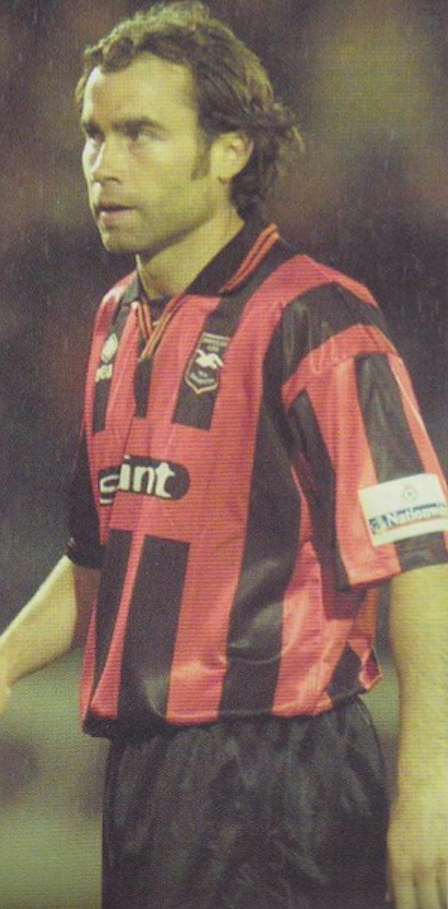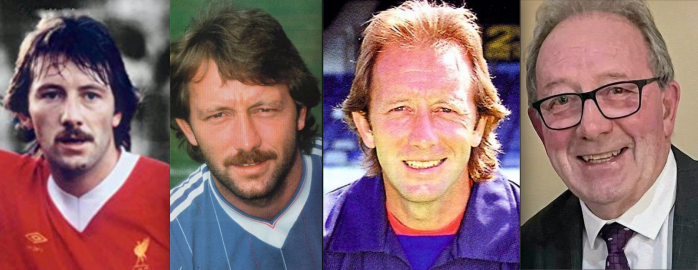
Toon scourge Ian Baird no stranger to red cards

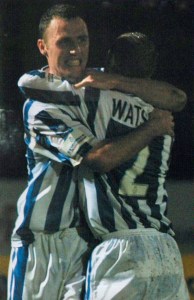
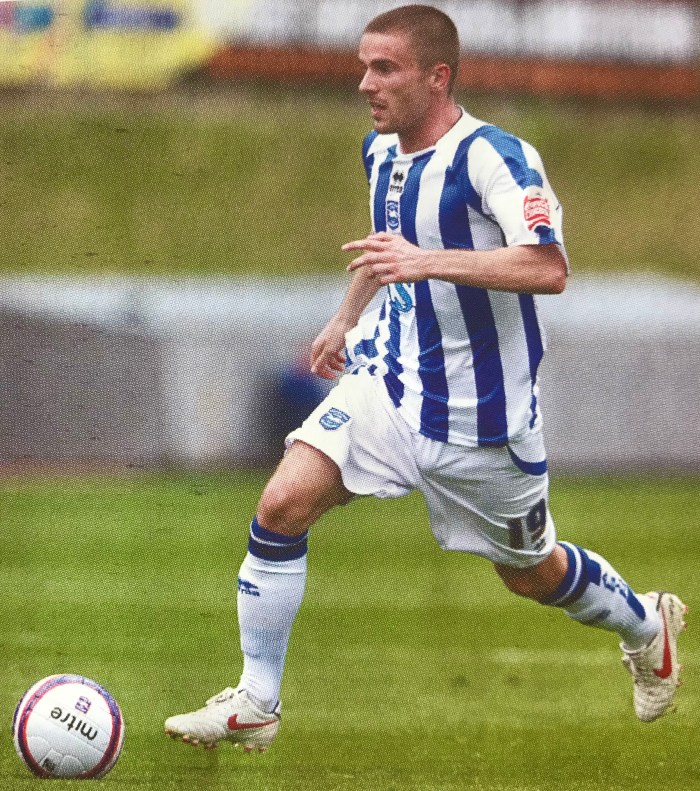
A GOALSCORING scourge of Newcastle United once pulled on the famous black and white stripes – and was booked in three of the five games he played for them!

Baird, who notoriously got himself sent off in the crucial last ever game Brighton played at the Goldstone Ground, led the line in an infamously fiery New Year’s Day derby between Newcastle and Sunderland when the Toon won 3-1 courtesy of a hat-trick by Peter Beardsley.

Jeff Clarke, who’d previously spent seven years at Sunderland and had five games on loan at Brighton at the start of that season, was at the back for Newcastle and future Albion veteran Clive Walker was in attack for the visitors.

A crowd of 36,529 watched the First Division fixture on 1 January 1985 when Sunderland were reduced to nine men through the sendings off of Howard Gayle and Gary Bennett. Baird was one of five bookings made by ref David Scott.

It was Baird’s fourth match for Newcastle after England World Cup winner Jack Charlton signed him on loan from Southampton. He made his debut three days before Christmas 1984 in a 4-0 defeat away to Aston Villa when his former England Schoolboys strike partner Paul Rideout scored a hat-trick. Baird’s only goal for United came in a Boxing Day 2-1 defeat at West Brom.

Three days later, as United lost 3-1 at home to Arsenal, Baird’s involvement was from the bench as a sub for David McCreery. His last game, on 12 January, was another tonking, 4-0 away to champions-in-waiting Everton.

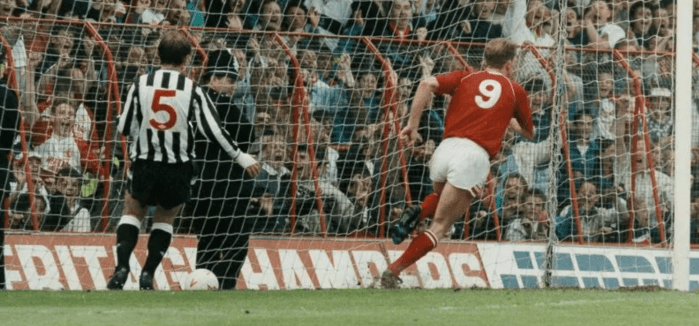
Five years after his Toon cameo, Baird twice stymied Newcastle’s hopes of promotion from the second tier, scoring against them for Leeds in a 1-0 win in December 1989 (it turned out to be his last goal for them) and, after he’d fallen out with manager Howard Wilkinson and been transferred to Middlesbrough in January 1990, netted twice for Boro as they beat Newcastle 4-1 in the last game of the season.

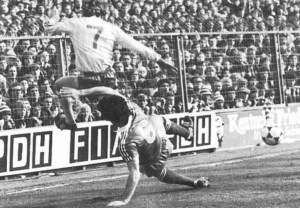
Baird nets for Boro against the Toon

Leeds finished that campaign as second tier champions (Newcastle, who by then had Mark McGhee up front, were five points behind in third place) and Baird’s goals in Boro’s win put paid to the Magpies’ hopes of automatic promotion. To add salt to the wound, Newcastle lost to Sunderland in the semi-final of the play-offs.

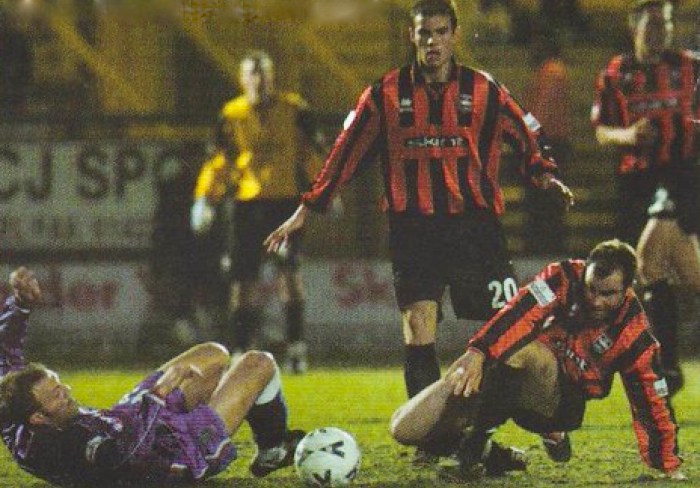
Six years later Baird was Brighton’s captain in the penultimate must-win game of the season, when Doncaster Rovers were the visitors.

Albion needed all three points to give themselves a chance of avoiding relegation out of the league when they travelled to Hereford the following week for the final fixture of that tumultuous season.

What they really didn’t need was for the captain to get himself sent off after just 18 minutes of the match!

Talking to The Athletic about it in a 2022 interview, Baird recalled: “I was fired up for it. Darren (Moore) had come right through me, literally in the first minute. The referee didn’t give anything.

“Then he came through me again, and the referee gave a foul. The third time, I lost it. I just turned around and tried to wallop him. There was a big melee. Everyone knew what was at stake.”

Both players were dismissed (it was one of 11 sendings off in Baird’s career) and thankfully Stuart Storer’s memorably-scrambled goal in the 67th minute settled the game in Albion’s favour, although Baird admitted: “It was nerve-racking. I felt guilty that I’d let my team-mates down, let everybody down by getting sent off. It was a massive relief when we won.”

Thankfully, disciplinary rules were different back then (bans were only applied 14 days after the offence) and Baird was able to play his part in the match at Hereford when a 1-1 draw ensured Albion stayed up and The Bulls went down.

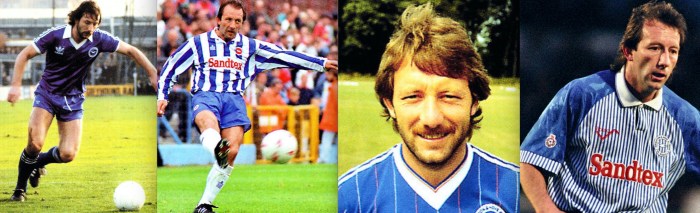
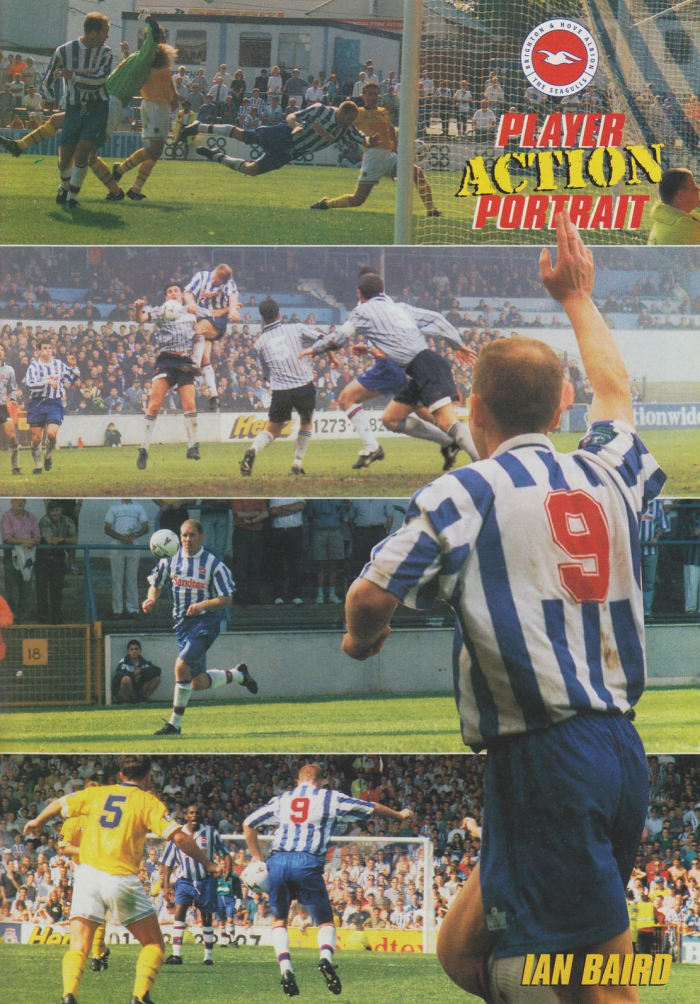
Baird’s exploits for the Albion highlighted in the matchday programme

Brighton were the tenth and last league club Baird had played for and he had only ended up with the Seagulls because of a pre-season falling out with Plymouth Argyle manager Neil Warnock.

Living near Southampton, only a 15-minute drive from Brighton manager Jimmy Case, a move east along the coast made good geographical sense, and a £35,000 fee took him to the Goldstone at the start of the 1996-97 season.

“Whenever I’d played against Brighton, I seemed to score,” Baird told The Athletic. “I loved the Goldstone Ground and there was the lure of playing for Jimmy.”

Although born in Rotherham on 1 April 1964, Baird had moved to Southampton with his family, via Glasgow, when he was a young lad, his father having sailed from the port when he worked on the Queen Mary.

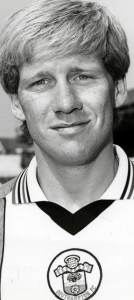
After surviving meningitis as a six-year-old, Baird’s footballing ability saw him turn out for Bitterne Saints, St. Mary’s College, Southampton, Southampton and Hampshire Schools. He joined Southampton on schoolboy terms after he’d been spotted in the same boys’ team, Sarisbury Sparks, as Lawrie McMenemy’s son, Sean.

Baird won two England schoolboy caps: he was in England’s Victory Shield team that beat Wales 2-1 at Wrexham’s Racecourse Ground on 27 April 1979, playing alongside Rideout and winger Mark Walters, who went on to star for Aston Villa, Rangers and Liverpool.

In the same competition, he also played at St James’ Park – two days after Brighton had won 3-1 on the same pitch to win promotion to the top division for the first time in the club’s history.

On 7 May 1979, young England drew 1-1 with Scotland and 14-year-old Rideout’s goal was enough to enable England to retain the Victory Shield. The following month, Baird was an unused sub when England drew 2-2 with West Germany at Wembley.

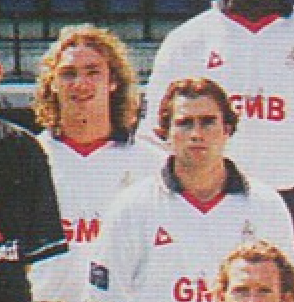
A Saint with hair!

Baird was offered pro terms by Swindon, but he chose instead to sign for his adopted home town club. However, with McMenemy preferring the more experienced Frank Worthington and Joe Jordan, Baird was restricted to 21 starts and three sub appearances for Saints, and, after that loan spell at Newcastle, he moved to Leeds.

His two spells at Leeds (sandwiched either side of an unhappy time at Portsmouth) produced 50 goals in more than 160 appearances and he was in the Leeds side alongside Mervyn Day and Micky Adams that lost the 1986-87 Division Two play-off final to a Charlton Athletic team that included his future Brighton boss Steve Gritt and teammate John Humphrey.

Baird scored 19 goals that season for Billy Bremner’s side, four of them in the FA Cup as United reached the semi-final where they were beaten 3-2 by eventual cup winners Coventry City.

He had taken Saints’ teammate Jordan’s advice to move to Leeds and his next move was to Scotland where Jordan was in charge of Hearts. He later played under the Scottish international striker at Bristol City too.

The Pilgrim who fell out with Neil Warnock

Baird scored six in 29 appearances for Plymouth before that move to Brighton. Discipline might have been a problem but Baird scored eight goals in 10 games from January 1997 as nine wins and a draw at the Goldstone went a huge way to enabling Albion to escape the drop.

As Albion began the 1997-98 season in exile at Gillingham, Baird began the campaign with a three-match ban for that red card against Doncaster — and it wasn’t long before he was seeing red again!

It came in the 13th game of the season and it was certainly unlucky for Baird, well, unlucky in that a linesman spotted his off-the-ball headbutt on a Chester defender. Gritt publicly condemned Baird’s “out of order” behaviour and stripped him of the captaincy.

The following month, with another knee operation required, a surgeon advised him to pack in the game and he left Brighton in December that year having scored 14 goals in 41 appearances in 16 months.

“At least we kept Brighton up,” he told The Athletic. “There were a multitude of problems, it was a weird period, but it was a big thing.”

Post-Brighton, Baird ended up coaching in Hong Kong and was put in charge of the national side for three Asian Cup qualifiers, playing in Jakarta in front of 75,000 people, and then in Cambodia in front of 1,200 people. “It was certainly an experience, that is for sure,” he said.

Baird eventually returned to Hampshire, developed business interests in the vehicle sales and leasing and sports gear industries, while keeping his football links going in non-league circles: at Eastleigh, Sutton United and Havant & Waterlooville.

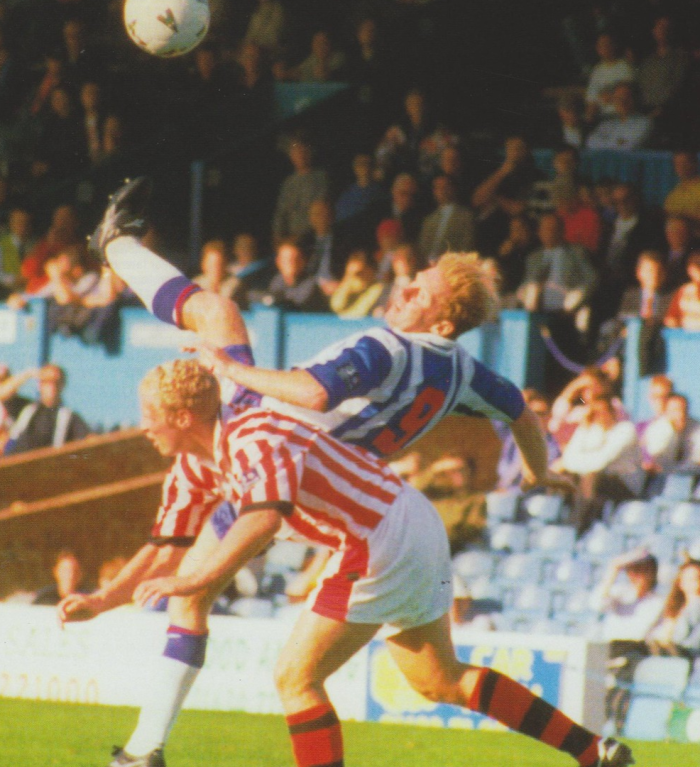
Baird certainly never ducked a challenge

Andy Crosby enjoyed the taste of success with Brighton

ROCK-solid centre-half Andy Crosby won a Division 3 Championship medal with the Albion in 2001 before experiencing two frustrating near-miss seasons as captain of Oxford United.

Brighton’s achievement provided him with his first-ever promotion, but it didn’t turn out to be his last: he climbed out of the same division with Scunthorpe United and then, against all the odds, reached the Championship with the Iron – twice.

Micky Adams, who was a player at Leeds when Crosby was in their youth ranks, had been unsuccessful in trying to sign the defender when he was in charge of Brentford.

But as Adams set about building his first squad at the Albion, he managed to secure Crosby’s services for a £10,000 fee in the summer of 1999.

“I didn’t need any convincing at all to sign,” said Crosby. “It was good timing for me and it worked out fantastically well,” he told Richard Walker. “Sometimes it’s hard to see where you’re going when you’re just keeping your head down and working hard at a struggling club so the Albion did wonders for my career.”

In a matchday programme interview with Spencer Vignes, he added: “I couldn’t wait to sign. Even at that level, I still thought of them as a big club.

“My only reservations were that I’d never lived down south and that we’d just bought a house. We also had a one-year-old daughter. But in the end the pros outweighed the cons.”

The family moved into a house at Stone Cross, near Eastbourne, and Crosby made his debut (albeit with a broken toe!) in the 6-0 Withdean win over Mansfield (as featured in my recent blog post about Darren Freeman).

He developed an effective central defensive partnership with Danny Cullip, and he said: “Although we were very different characters away from the 90 minutes, something really clicked between us and everyone knows how vital it is to have a good centre-half pairing, just as much as a good front two working for each other.

“Our paths have crossed since, and the talk’s always of great memories from Brighton days.”

Hired as a stopper rather than a scorer, Crosby helpfully weighed in with five goals as Albion found their feet back in Sussex.

Then in the following season, Crosby was at the heart of the defence when Albion won the league. “That win down at Plymouth and the home game against Chesterfield where we sealed the Championship will stay with me forever,” he said. “It was just an amazing ride.”

Crosby continued: “We had this great spirit, a team desperate to do really well.

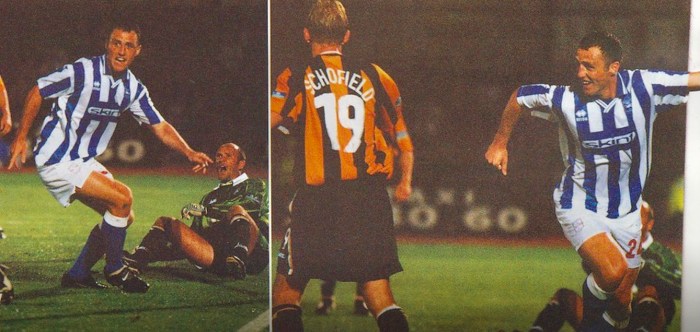
Pouncing to score and celebrate against future employer Hull City

“I’ve got nothing but good memories of the place. It was the first time I’d ever been involved in a promotion campaign as a player. For the first time in my life, I was seeing on a day-to-day basis what it takes to be successful.

“We played some great football and the fans were fantastic. I’ve said it before but if you can’t play for them you can’t play for anyone.”

He added: “Withdean was a funny place but somehow we were able to use it to our advantage. Other clubs didn’t like playing there.”

Getting to grips with Paul Watson

Once elevated to the higher level, Crosby lost his starting place to Simon Morgan and Adams’ successor Peter Taylor continued with Cullip and Morgan as his preferred centre-back pairing.

By then 28, Crosby didn’t fancy a watching brief and in December 2001 he moved on a free transfer to Oxford, the first United signing made by Ian Atkins. He said: “I didn’t want to go, and Peter said he wanted me to stay, but I wanted to play. Going to Oxford meant first team football.”

Although Crosby’s first half season with Oxford saw them struggle near the foot of the division, the 2002-03 campaign ended with them only a point off the play-off places and the central defender scored winning goals in four of the 53 matches he played.

It got better for him on a personal level the next season when his fellow pros named him in the 2003-04 PFA team of the year, but United missed out on the play-offs by three points.

Another string to Crosby’s bow at Oxford was being an accomplished penalty taker. He never missed a spot kick in normal play and, in 2003-04, one of the five he buried was at Scunthorpe’s Glanford Park.

In the summer of 2004, he declined a new contract believed to have been on worse terms than the previous one and chose to move back to the north to join Scunny.

Nonetheless, the Oxford Mail said of him: “The 31-year-old centre back has been a model of consistency in his time at the Kassam Stadium.

“Ideally suited to the Third Division with his uncompromising, no-nonsense style, the hard-tackling defender, who is also good in the air, was also greatly respected by his teammates for his cool professionalism.”

He may have started out in the basement division with Scunthorpe, but what followed was the stuff of dreams. Crosby himself later admitted: “When I joined, if someone had told me I’d be playing for Scunthorpe in the Championship, I would have called them a doctor.

“But it reaffirms your belief in football a little bit, especially when you’re involved first-hand, to see a club of Scunthorpe’s size still being able to pull off what was nothing short of a minor miracle.”

In an interview with the Scunny website, Crosby pointed out: “I was 31 when I arrived at Scunthorpe and I had to use my knowledge and experience in whatever capacity I could, and set standards on and off the pitch. It was something I enjoyed doing and I think it’s something that’s either in you or it’s not.

“My whole time at Scunthorpe was great and I never thought when I signed that we’d get to the Championship twice. It was fantastic and the highlight of my career without a shadow of a doubt.

“I was captain of a promotion-winning team from League One to the Championship, playing at some massive stadiums.”

Although knee injury issues limited him to nine appearances in the 2008-09 season, he was restored to the side for the play-offs and led Scunny to a 3-2 League One play-off final win over Millwall at Wembley in May 2009 (Matt Sparrow scored twice for Scunny).

“It was a great way to end playing,” he admitted. “I have some fantastic memories and look back at my time at the club with nothing but fondness.”

By then he had already been working as assistant manager to Nigel Adkins, the former Iron physio and after playing a total of 715 games for six league clubs he was also Adkins’ assistant manager at Southampton, Reading, Sheffield United, Hull City and Tranmere Rovers.

Crosby, who took over from Adkins as manager of League Two Tranmere in February 2025, said “I’ve got a fantastic relationship with Nigel. He’s been fantastic for me, changed me as a person and polished off a few of the rough edges. I’ve got nothing but great words to say about him.”

Into the manager’s chair

In an interview with tribalfootball.com, he said: “My coaching journey has been full of learning experiences, and I’m a much better coach now than when I started. I was fortunate to work with some fantastic players.

“My best experience was at Southampton, where we achieved back-to-back promotions from League One to the Premier League, working with incredible players like Lallana, Lambert, and Schneiderlin. Even the difficult moments teach you a lot, though. Results didn’t always go our way, but even then, those experiences helped me grow as a coach.”

Crosby also saw the development of the likes of Alex Oxlade-Chamberlain, James Ward-Prowse and Luke Shaw during nearly two and a half years at Southampton. While at Bramall Lane, he also worked with future England internationals Aaron Ramsdale and Dominic Calvert-Lewin.

Even at Hull, he had the fortune to work with Fikayo Tomori, on loan from Chelsea, and Jarrod Bowen.

Born in Rotherham on 3 March 1973, miner’s son Crosby was raised in the village of Maltby. He supported the Millers as a youngster but was rejected by them as a player when he was 11. At 14, though, he was taken on at Leeds.

When he didn’t progress beyond the youth team at Elland Road, former Leeds captain and manager Billy Bremner took him on at Doncaster Rovers and gave him his league debut aged 18.

He played 60 times for Donny over a couple of seasons (and spent a month on loan at Conference side Halifax) before moving to the north east and spending five years at Darlington, notching up a total of 211 appearances.

He was captain of the losing side in the 1996 Third Division play-off final at Wembley when Jim Platt’s Darlo lost by a single goal to Neil Warnock’s Plymouth Argyle.

Off-field financial issues marred his time at Chester City in the 1998-99 season, so his move to Brighton was a welcome change.

Reflecting on that time with the Seagulls, he said: “In any walk of life, if you get a really good group together, recruit well and get good characters in who complement each other well, then you should succeed. A lot of that was down to Micky.

“It was the fittest I’ve ever been – that was down to him – but that work and organisation brought its reward which is something I’ve taken with me into my own coaching career.”

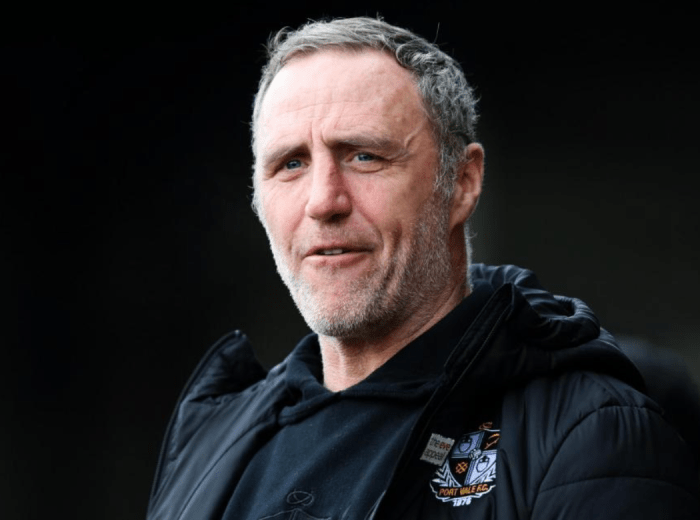
Before his current (August 2025) position at Prenton Park, he also coached the Northern Ireland under 21 international side and spent three years coaching and managing at Port Vale.

Last eight in the FA Cup becoming familiar territory

REACHING the FA Cup quarter-finals for the fourth time in seven years is music to the ears of Brighton fans of a certain vintage.

Time was when an exit far earlier in the competition was the more likely expectation and falling victim to non-league giant killers (remember Walton & Hersham, Leatherhead, Kingstonian, Canvey Island, Sudbury Town) was nothing short of humiliating.

But as each season in the exalted company of the Premier League has gone by, the last eight stage of the FA Cup has been well within reach.

As one who goes back a good many years, it was a delightful surprise to reach the quarters twice in the mid-1980s (going all the way to the final in 1983, of course, if you hadn’t heard!).

Gary Stevens tackles Mark Barham

It still pains me to say that I was one of the many locked out of the 28,800 Goldstone Crowd on 12 March 1983 when Albion played in their first ever FA Cup quarter-final.

Norwich City, under former West Ham FA Cup winner Ken Brown, were the opposition with future England goalkeeper Chris Woods in goal and Mark Barham, who joined Albion towards the end of his career, on the wing.

Jimmy Melia’s Seagulls had already beaten the Canaries 3-0 a few months earlier but the cup match proved a much tighter affair described as “bruising” by several football reporters who noted the physios were called on seven times to treat injuries – Albion’s Norwich-born Mike Yaxley twice attending to Steve Foster.

Andy Ritchie in what turned out to be his last home game for the Albion

Nonetheless, it was “marvellous entertainment for all its imperfections” reckoned the Sunday Telegraph’s Lionel Masters, who said: “Brighton full-back Chris Ramsey did more than most to inject a steely resolve. He conducted a feud with (Dave) Bennett, whom he flattened more times than a target a fairground rifle range.”

Alan Hoby of the Sunday Express wrote: “It was a tough, turbulent, physical affair with an orgy of high balls,” while the only goal of the game, from Albion’s Jimmy Case was “one of the few moments of quality in a frantic game,” according to Brian Scovell of the Daily Mail.

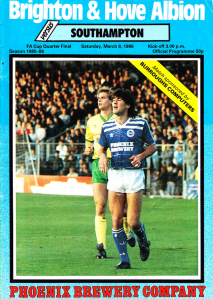
The less well-known quarter-final appearance of that decade came on 8 March 1986 when a Goldstone Ground crowd of 25,069 (at a time when the average often dipped below 10,000) saw Chris Cattlin’s Second Division Albion entertain First Division south coast rivals Southampton.

Albion were pleased finally to have got a home game in the competition having had to overcome away ties at Newcastle, Hull and Peterborough (who were eventually beaten 1-0 in a home replay five days before the Saints match).

Saints were managed by Chris Nicholl, Cattlin’s fellow former Burnley youth team colleague, and in the opposition line-up was Case, the talisman of Albion’s run to the final three years previously when he rifled in the winner at Anfield in the fifth round, scored that only goal v Norwich and buried a long-range rocket in the semi against Sheffield Wednesday at Highbury.

England’s Peter Shilton was in goal for Southampton and, most curiously, after a five-week absence from first team action, misfiring Mick Ferguson was selected by Cattlin to lead Albion’s attack. Not one of the 1983 Albion side started for the Seagulls.

Sadly, Brighton, in the upper reaches of the second tier at the time, didn’t do themselves justice. Saints won it 2-0 with first half goals from Steve Moran and Glenn Cockerill – and it turned out to be Ferguson’s last game for the Seagulls. Three weeks later he moved to Colchester United.

Fast forward to 2018 and another strange striker selection by a Brighton manager – this time Chris Hughton leaving top scorer Glenn Murray on the subs bench – proved costly in a quarter-final against Manchester United at Old Trafford.

New £14m signing Jurgen Locadia missed four good chances among 12 second-half Brighton efforts on goal to United’s one and Pascal Gross went close on three occasions. But BBC Sport’s Mike Whalley suggested: “He (Hughton) might have been left wondering if resting Murray caused Brighton to miss their chance of a first FA Cup semi-final since 1983.”

United topped and tailed the tie with Romelu Lukaku opening the scoring early on and Nemanja Matic sealing victory late on when he nodded in Ashley Young’s free-kick.

A year later, it looked like Albion wouldn’t be going beyond the last eight once again when Championship side Millwall led the Seagulls 2-0 at The New Den with only two minutes to go. Cue Locadia, on as a sub, to make amends for the previous season’s misses by making space for himself in the box and firing home an unstoppable shot to pull a goal back for the visitors.

Then, with 95 minutes on the clock, Solly March from way outside the box floated in a free-kick that Lions’ ‘keeper David Martin inexplicably let slip through his grasp to bring the Albion level.

Goalkeeper Mat Ryan a penalty shoot-out hero at Millwall in 2019

The momentum was in Brighton’s favour in extra time but it took a penalty shoot-out to decide the tie and when Murray missed Millwall might have thought it had turned back their way. But after three successes each, Mat Ryan kept out Mahlon Romeo’s effort, and Lions centre back Jake Cooper needed to bury his spot kick to keep the tie alive for the home side. He blazed his shot over the bar and Albion were through.

There was to be no such drama in 2023 when 18-year-old Evan Ferguson did a whole lot better than his 1986 namesake and stole the headlines by scoring twice against League Two Grimsby, who were playing in their first FA Cup quarter-final for 84 years.

The Mariners had knocked out five teams from divisions above them to reach that stage but they were well and truly put to the sword by Roberto De Zerbi’s impressive Seagulls who ran out 5-0 winners at the Amex.

As well as Ferguson’s brace, Deniz Undav, March and Karou Mitoma were also on the scoresheet and it could have been more; Mitoma missing a sitter and Adam Webster’s effort hitting the bar.

Perhaps by way of highlighting how quickly fortunes can change for young players, it’s interesting to recall that of Ferguson BBC pundit Danny Murphy said at the time: “This kid is a superstar. Honestly.

“He’s got great feet, technical ability. He’s calm, powerful and plays the role really well. You don’t see him out wide, he stays central and is always a target.

“I can’t see a weakness in his game at the moment. For 18 years old, the maturity he shows in his game is phenomenal.”

Murray, having moved into the punditry game himself by then, added: “It was the manner in which he scored those goals, he was so composed. As a young lad just coming into the first team, you can snatch at those chances but he just relaxes in that moment – and that is something that you can’t teach.

“He’s got a good stature and I think there’s big things in the future for him.”

‘One of the world’s best’ coached Albion’s goalkeepers

‘I’VE STARTED so I’ll Finnish’ could have summed up Antti Niemi’s season coaching Brighton’s goalkeepers.

Even though the fellow countryman who appointed the former Southampton and Fulham ‘keeper left in ignominy less than halfway through the 2014-15 season, Niemi stuck it out to the end before returning to his native Finland.

Niemi joined Albion in the summer of 2014 as part of the new backroom team put together by former Liverpool and Finland international Sami Hyypia.

“This wasn’t planned and, when Sami called me, I was working in Finland for a few years with two different clubs on a part-time basis,” he told the matchday programme. “It was a surprise.”

Seeing it as a “great opportunity” he added: “I thought about it for a couple of days, but it was not a difficult decision to make in the end. I’m obviously already familiar with the south coast.

Niemi enjoyed Albion coaching environment

“If you look at the surroundings at the training ground and the stadium, it’s a fantastic place to work each day. I seriously love the job.”

At Brighton, Niemi was responsible for the form of newly-arrived David Stockdale, emerging youngster Christian Walton and back-up ‘keeper Casper Ankergren.

Stockdale admitted it was the presence of Niemi — a former team-mate at Craven Cottage — as goalkeeping coach that was a big reason in his making the move to Sussex (as well as a chat with Bobby Zamora).

“Antti looked after me at Fulham when I first went in as a young keeper,” he said. “I know what he is about, what his training is like and what kind of person he is.”

Niemi was also the reason fellow countryman and Finland international Niki Mäenpää joined the Seagulls, although their paths ultimately didn’t cross on the training ground in Sussex because Niemi decided to return home for family reasons.

Mäenpää had been coached by Niemi back in Finland and he was first linked with the Albion when Hyypia was appointed. Although a move from Dutch second division club VVV-Venlo didn’t go through then, it eventually happened in the summer of 2015.

“Seeing as his contract is ending, he is looking forward to a new adventure and Antti has explained to him about Brighton and everything,” the player’s agent, Richinel Bryson, told The Argus.

Born on 31 May 1972 in Oulu, the northern Finnish city where there is no darkness during summer nights, Niemi remembered going to school when the temperature was 42°C one winter.

He completed compulsory military service in his homeland, explaining in a 2003 interview with The Guardian that he found life tough for much of his 11 months at a sports military school.

“I didn’t realise this at the time but, if I wasn’t in football, I would probably be in the army,” he told reporter Joe Brodkin. “I’m very patriotic. It was fun and it’s something I would have considered, although I’m too old now.

“In some ways it’s similar to what we have in the dressing room: being together and having fun, giving stick and taking stick. In the army it was a similar situation. We had something like 20 footballers in there and it was fun. Not at the time but looking back.”

Niemi began his football journey with local side Oulun Luistinseura before moving on to Rauman Pallo and then to the country’s biggest club, HJK Helsinki, where he eventually became first choice ‘keeper and made 101 appearances over four years.

He then swapped from Finland’s capital to Denmark’s fortuitously because the Finland FA president at the time had played in Denmark as a goalkeeper and FC Copenhagen asked him for a name.

“He mentioned me and everything happened in two days,” Niemi recalled in an interview with fulhamfc.com. “I was inconsistent in my first six months in Denmark but did well in my first full season.

“I learned that Rangers had sent a scout to watch someone on the pitch when we played in a league cup semi-final; it was one of those games where I just saved everything and we won. That 90 minutes made them choose to sign me, so it was all about luck really.”

That was luck he would come to rue, subsequently, though, because he had actually agreed to sign for Gordon Strachan at then Premier League Coventry City. Rangers stepped in at the last minute to clinch his signature in 1997 but it was a period of his career that would prove to be frustrating.

Andy Goram was first choice ‘keeper and Theo Snelders was also ahead of him.

He did win the Scottish League Cup (beating St Johnstone 2-1 in 1998) but he only played in one Old Firm game and that ended in a 5-1 defeat, so he didn’t have happy memories of his time at Ibrox where Walter Smith’s successor, Dick Advocaat, was unconvinced of the Finn’s ability under pressure and suggested he needed to move on to prove himself.

Highly regarded at Heart of Midlothian

He switched from Glasgow to Edinburgh to join Hearts for £350,000 in December 1999, manager Jim Jefferies telling The Herald: “Niemi is a fine keeper and is very highly regarded by everyone.”

Niemi reflected: “They were the third best team in the country behind Celtic and Rangers, but I said to myself that sometimes you have to take a step backwards to go forward.

“That was maybe the best decision that I ever made; it felt a bit of a downgrade at the time, but I wasn’t playing and I knew it would be good for me in the long run.”

In two-and-a-half years at Hearts, he became first choice and made a name for himself as a penalty stopper.

The keeper said of himself in a 2021 interview with the Edinburgh Evening News: “The biggest strength I had in my game was quick hands and quick reactions.”

Looking back on his 106 appearances for the Jam Tarts, he revealed: “Hearts have always been THE club for me.”

In an interview with CoffeeFriend.co.uk, he said: “Don’t get me wrong. I was very lucky to play in the English Premier League with Southampton and Fulham but there was something romantic about the place.

“I went there from Rangers where I was second or third keeper and suddenly got the chance to be No.1 and be a big part of the team.

“We finished third, had some European football, memorable derbies. I hope it doesn’t sound cocky but I really can’t remember too many games I let the team down.

“I loved my time there and it’s definitely one of those places I miss now and then.”

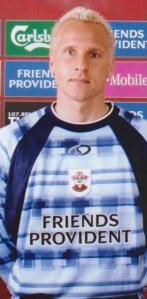
Saint Antti

It was Strachan who persuaded Niemi, by then 30, to try his luck in the Premier League at Southampton.

“My decision to move was purely on a football basis,” he said. “I hardly get any more money than I did in Scotland. I was there for five years and for two and half years I was playing regularly. Sometimes I felt I was playing against the same teams and the same players the whole time.”

Saints paid a fee of £2m to secure his services and he made his debut against Charlton Athletic, where he had spent a month on loan before his move to Hearts.

Strachan quickly installed Niemi as his preferred ‘keeper over Paul Jones and at the end of his first season with the Saints he appeared in the FA Cup final against Arsenal at the Millennium Stadium, Cardiff – a game which I watched with my friend Andrew Setten, sitting in front of Geoff Hurst in the best seats in the house!

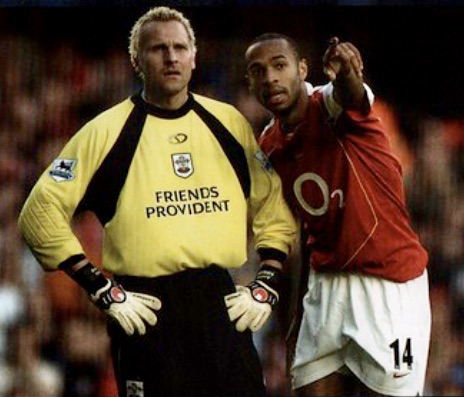
Arsenal’s Thierry Henry points things out to Niemi

With Arsenal retaining a 1-0 first half lead, Niemi unfortunately tore a calf muscle midway through the second half and, when replaced by Jones, became the first goalkeeper to be substituted in a FA Cup final.

In spite of losing to that solitary goal, Niemi didn’t want to miss the lap of appreciation and took a ride on a team-mate’s shoulders as they trooped around the stadium.

A series of injuries and a couple of operations limited him to 28 Premier League games in each of the next two seasons but in the opinion of goalkeeping coach David Coles (who once played on loan for Brighton), he was among the world’s top five ’keepers and he was the Saints player of the year in 2003-04.

“The Premiership has been every bit as good as I expected and even more,” Niemi said in that Guardian interview. “Everywhere you go it’s a full stadium and the pitches are perfect. It’s a fantastic league.

“I was making some good saves in Scottish football but the spotlight in the Premiership is so much bigger. There are so many cameras and every single game and situation is highlighted, so it’s easier to shine.”

Niemi’s reputation was certainly enhanced after he kept 17 clean sheets in his first two top flight seasons under Strachan at St Mary’s.

But he was also part of the Southampton side that was relegated in 2005, bringing to an end 27 years in English football’s top tier.

“The longer the season went on, the worse the results got and the more it started to affect the dressing room,” he told hampshirelive. “But overall, I can only look into the mirror and blame myself.

“My first two seasons at Saints were great, but during the third one, I just couldn’t get up to that standard any more. It was average at best.”

Niemi saw influential team-mates leave without being properly replaced and he said: “I remember looking around myself at the beginning of the campaign and thinking ‘things here aren’t as well as they should be’. The team had weakened and the contrast was huge.”

After the relegation, Niemi said: “I felt ashamed, simple as. It just felt embarrassing as hell.”

He stayed half a season after Saints playing in the Championship but returned to the Premier League in January 2006 when he moved to Fulham under Chris Coleman.

“Living in London was a big attraction.,” he told fulhamfc.com. “My wife was delighted to get a chance to move to West London and, as I’d played against them many times, I knew that it was a nice club too.”

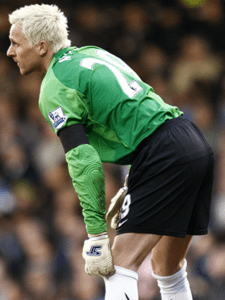
Niemi switched to Craven Cottage in January 2006

A hamstring injury limited him to nine appearances in those first few months at Craven Cottage but he established himself as first choice the following season and went on to make 63 appearances before a wrist injury led to him calling it a day at the start of the 2008-09 season.

However, at the age of 37, he was persuaded to come out of retirement and followed his former Saints coach Coles to south coast rivals Portsmouth as back-up to first choice David James.

He left Pompey in March 2010 having earned around £450,000 over the course of eight months without having made an appearance, the Daily Mirror reported.

The newspaper said the Finn earned £14,000 a week during his time at Fratton Park and played just twice for the reserves and spent one Premier League match on the subs’ bench.

Having won 67 caps playing in goal for Finland, Niemi became his country’s goalkeeping coach from 2010 as well as working with the Finnish FA in developing the quality of goalkeeper coaching in the country. Alongside those responsibilities, he slotted in club goalkeeper coaching in various locations – including back at his old club HJK Helsinki, at another Finnish side, FC Honka, and the season at Brighton.

Joaquin Gómez, a coach he first met during that season with the Albion, subsequently called on his services at Finnish side HIFK in 2021.

Gómez, originally an academy coach with the Seagulls, stayed on as part of the first team management set-up having worked under Hyypia’s successor, Oscar Garcia., but then left to become head of tactical analysis at Derby County before teaming up with Nathan Jones at Luton Town, and then Stoke City.

In May 2019, on Niemi’s recommendation, he also started coaching Finland’s under 21 team. After leaving Stoke, he was assistant manager at Spanish Second Division side FC Cartagena, assistant coach at Finland’s SJK Seinäjoki and spent a season at Al-Qadsiah in Saudi Arabia.

On persuading Niemi to join him at HIFK, Gómez said: “He’s an outstanding goalkeeping coach and will now also assist me in other areas.

“Antti is the best Finnish goalkeeper of all time, and he has done great work in coaching after his retirement from playing. At HIFK he’ll have a more versatile role than previously, as he’ll be working more with outfield players as well.”

In the summer of 2024, Gómez persuaded Niemi to join him at Greek Super League club Volos and the Finn spoke to Tribalfootball.com about those days spent in Lancing.

“I have seen a lot of passionate people in my lifetime in football but this guy is something else; he has dedicated his life to football. 

“He moved from Spain (to England) without knowing any English, he just wanted to work in English football. He was working as a waiter, he was cleaning the toilets at Brighton, he was coaching kids and eventually somebody saw that this guy is really passionate and he can coach so he got in the first team.”

Niemi continued: “He called me in the summer, he said I had a few days to decide. He is very temperamental; he is very passionate and I am the boring, steady guy who always tells him to calm down! You need that sort of personality; you don’t need a similar sort of personality as you need to balance each other out 

“He offered me the job to be the assistant manager which is different as I have always been a goalkeeping coach and I still am with the Finnish national team but I took it as a challenge, as an adventure. It is going to be a learning curve for me and I am really enjoying it so far.” 

Unfortunately, Gómez was sacked after only five league matches and his next appointment, in January 2025, was as the new coach of Indonesian Liga 1 club Borneo Samarinda.

Class act Lallana helped lift Albion to a new level

IT WAS SOMETHING of a coup when multiple trophy winner and England international Adam Lallana joined Brighton from Liverpool in 2020.

His best years might have been behind him, but Lallana’s football intelligence and astute movement were a joy to watch and were, perhaps, a sign that once-humble Albion were getting serious about challenging for the top spots in the Premier League. The club twice achieved top 10 finishes during his four years at the Amex.

As much as anything, Lallana observed in an early interview that his new side would improve with a bit more belief. “That comes with time, with the development of players and with confidence,” he explained. “The more times we play well, the more we’ll get that belief and with that we’ll score more goals and get more wins, but we need to be a little bit patient. Empires aren’t built in a day.”

One of Lallana’s trademarks, as observed in an early profile on Liverpool’s website, was “turning markers inside-out with impulsive twists or burrowing through swathes of players with fine close-control”.

The player said: “Pace isn’t a huge part of my game, but playing the percentages, mathematically, if you can add an extra yard of pace or a couple of percentage points to your game, then that’s massive nowadays.

“I still do a lot of work in the gym to improve my pace, power and strength to try to get that little bit more explosive power to my game. I’m always working to improve.”

Players used to performing at the highest level week in week out don’t suffer fools gladly and it was no surprise to learn that Lallana had a few fallings out in his early days at Brighton, for example with Neal Maupay.

Younger players certainly enjoyed the experience of learning from someone who had played at the very top, for example, Columbian international Steven Alzate, who said: “On and off the pitch he is a leader and when he’s got the ball at his feet he can really show people what he can do. Training with him is an honour; he’s a great guy.”

Those leadership qualities were drawn on by both Graham Potter and Roberto De Zerbi, even though the ageing player’s minutes on the pitch had to be managed carefully.

Lallana even stepped up to support coach Andrew Crofts with first team training in between the reigns of the two managers.

Towards the end of his time at Brighton, Lallana went off in international breaks to work with Lee Carsley preparing the England under 21s ahead of matches.

Born in St Albans on 10 May 1988, Lallana’s family moved to the Ilford area of Bournemouth when he was five and he went to the local Corpus Christi School and St Peter’s Catholic School.

If the surname doesn’t sound Anglo Saxon, that’s because he has Spanish roots: his grandad was from Madrid.

From kicking a ball around with his young pals, Lallana began to harness his footballing talent at the AFC Bournemouth centre of excellence. Southampton paid a £3,000 fee to take him into their own junior ranks when he was just 12 years old. They made subsequent payments totalling £15,000 as he progressed to scholarship and full professional levels.

Lallana was grateful for the quality of the Southampton academy set-up and in particular referenced George Prost, his under-17 coach, as someone who instilled a lot of the attributes that helped to develop his career.

Lallana was in the same Saints youth team as Theo Walcott and Leon Best (Gareth Bale was only on the bench!) that lost the 2005 FA Youth Cup final to Ipswich Town. He was also in the side that lost in the semi-final to Liverpool the following year.

The same year, he made his first team debut in a 5-2 League Cup win over Yeovil Town. Saints loaned him back to Bournemouth in 2007, when he played three games, but he returned to Southampton, then in League One, and was part of their back-to-back promotion-winning side that went from League One to the Premier League.

Having helped Southampton under captain Dean Hammond to the League One runners up spot – behind Brighton – in the 2010-11 season, he was a key member of the side that gained promotion from the Championship in second spot behind Reading (Brighton finished 10th). Over the course of eight years with Southampton, he made 235 appearances, scoring 48 goals.

In the Premier League, Lallana was made Saints captain and he admitted he struggled at first. But the arrival of Mauricio Pochettini had a positive influence on him, as he explained in a matchday programme interview. “He had a big part in moulding me into the player I am today – he took me to that next level.

“When he came to the club he could see that I had pressure on my shoulders, that I wasn’t playing freely – and we just spoke about it and he talked it out of me. By the end of the season and the next season, I was playing the best football of my life I think and a big credit goes to him for that.

“He could see I was a talented player and probably wasn’t playing to my best, but he knew it was because I wasn’t playing freely. We had lots of conversations and him knowing that and speaking to me about it was amazing because instantly it was like a balloon that just popped – immediately it took the pressures off. That was one of many things he did for me at Southampton.”

Lallana said Pochettino also helped him to become fitter and introduced him to the art of pressing. “My love of winning the ball back – that came under Mauricio.”

It was Brendan Rodgers who signed Lallana for Liverpool for £25m after the 2014 World Cup in Brazil where he had been a member of the England squad that finished bottom of its group. Lallana had made his England debut the previous November in a 2-0 friendly defeat v Chile.

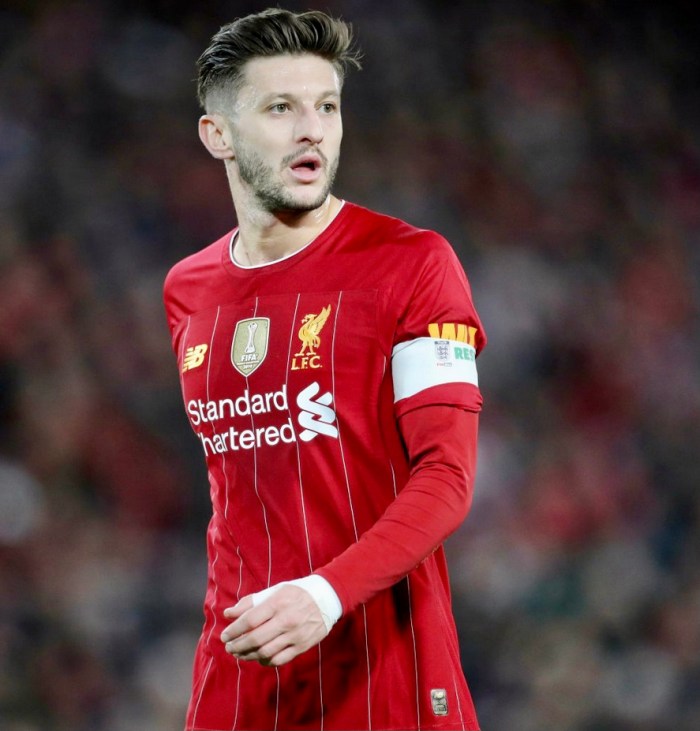
In the red of Liverpool

Ten of his 34 caps for England were won in 2016 when he was voted by supporters as the country’s player of the year.  By then 28, he scored his first international goal in a last-gasp win over Slovakia in September and two months later netted again against Scotland and Spain at Wembley.

Taking instructions from England boss Gareth Southgate

“This award is a huge honour,” Lallana told The FA.com. “The last three winners were Rooney (2015), Rooney (2014) and Steven Gerrard (2012) so that just goes to show what a great achievement this is.”

By then, Rodgers had been replaced by Jurgen Klopp under whom Lallana blossomed and developed (they were also close neighbours in Formby) as together they went on to win the Premier League title and the Champions League.

In a 2022 documentary about Klopp, made by The Anfield Wrap, Lallana said: “He has the X factor doesn’t he? It’s as simple as that. The amazing ability he has to motivate players. If he’s left you out for 10, 11, 12 games you’re a bit down but somehow with him, you’ve still got so much respect for him even though you aren’t happy.

“I don’t know how he does it but he just has the ability to get you motivated because of who he is, so you’re fighting for the team and for him and that’s the art. It just shows how good he is at being a manager.”

According to thisisanfield.com: “2015-16 was arguably Lallana’s best, as he started 38 games and helped push Liverpool on to the League Cup and Europa League finals.

“One of his finest performances in red came in the Europa League semi-final against Villarreal. With Liverpool trailing 1-0 from the first leg in Spain, an emotionally charged Anfield were put at ease when an early own goal drew them level.

“From then on, Lallana was brilliant for Liverpool in an attacking line-up also featuring Roberto Firmino, Philippe Coutinho and Daniel Sturridge. The latter got the second goal after 63 minutes, but it was Lallana who sealed the game and sent the Reds through to the final, with a composed flick into the net.”

Summing up the Liverpool mindset, Lallana said in a matchday programme interview: “At Liverpool, where the expectations are so high, it was all about just dealing with those pressures.

“We had to forget about what the supporters want, the trophies that are expected, and just believe in what we as a team believed in – and that was playing high-intensity football and being motivated in every game to fight for each other.”

In another interview, this time with the Liverpool Echo, he said: “Playing six years with the intensity of that club takes over your life.”

Nonetheless, when he finally left Anfield for the Albion, he said: “I’m desperate for a new challenge and I’m desperate to play a bit more.

“I still feel like I’ve got plenty more football ahead of me and I’m thoroughly excited by this next challenge and what that will bring.”

A sign of the respect Liverpool fans still had for Lallana was demonstrated at the end of Albion’s 2-2 draw at Anfield in October 2022. As fans sang his name, Lallana tapped his chest and clapped every stand before walking down the tunnel.

Lallana helped lift Brighton to a new level

Reds supporter Aaron Cutler wrote on social media: “Pleased Lallana got a deserved (and delayed) ovation. Easy to forget how integral he was at the start of Klopp’s reign. While injuries limited his game time towards the end he clearly remained an influential presence within the squad. Could have done with him today!”

Of course, during his time with Brighton, Lallana was able to see at close quarters the emergence of Alexis Mac Allister, and he was full of praise in an interview with Graham Hunter:

“What a special player and special person,” he said. “He’s a player that is so pure with how he plays. The way he lends the football, uses others, there’s no selfishness in the way he plays.

“It was so special watching him during the World Cup, not playing to begin with then getting used and proving himself. Then playing so well that there’s no way he doesn’t play, by the end Messi is looking for him.”

Speaking of Mac Allister’s “footballing intelligence” Lallana said: “OK he’s not the quickest or strongest, but so smart. Knows that the football is faster than anyone, Alexis is of that ilk.

“He had to battle tough moments here at the beginning. He’s a very introverted, shy guy.”

With an eye to a likely future in the game as a coach, Lallana enjoyed a great relationship with De Zerbi and told BBC Radio Sussex: “I feel like we’ve helped each other an awful lot in the two years and I’m extremely grateful for how he’s managed me.

“At times I can’t train every day and my body probably lets me down, but he’s been so supportive of me and he’s managed me differently to most other players, probably because of the history I’ve had with injuries and the age I’m at. I know as a footballer that doesn’t often happen.

“Our relationship goes beyond player and coach, he’s like an older brother to me.”

When Lallana decided to leave Brighton at the end of the 2023-24 season and return to Southampton, he had made 64 starts for the Seagulls plus 40 appearances off the bench.

Albion had finished 16th and ninth under Potter then sixth and eleventh under De Zerbi.

In an extended interview with The Athletic, Lallana said: “What has happened is everything I thought was possible. I wouldn’t have said in my first interview we are going to be in Europe in three years, but that is the genius of Tony Bloom (owner-chairman) and Dan Ashworth (former technical director).”

Arron Davies and pal Gareth Bale’s careers diverged!

ARRON DAVIES moved to Nottingham Forest two months after scoring twice against them to shatter their chances of promotion via the League One play-offs.

Davies was in the Yeovil side, managed by Russell Slade, that beat Forest 5-2 in the first leg of their play-off semi-final in 2007 and edged the tie 5-4 on aggregate before losing to Blackpool in the final.

Liking what he saw in the opponents’ line-up, Forest boss Colin Calderwood, later Albion assistant manager to Chris Hughton, promptly signed Davies and his Glovers teammate Chris Cohen for £1.2m.

But a freak leg-break in a pre-season game in Scotland dealt Davies a massive blow and he was mainly on the fringes as Forest made up for the previous season’s disappointment by winning promotion in second place.

While he made ten starts, plus 12 appearances off the bench, Cohen, was a regular in the Forest midfield and became a fans’ favourite.

When Davies only featured in two Carling Cup games for Forest at the start of the 2009-10 season, his old boss, Slade, took him on a half-season loan to League One Brighton.

It wasn’t a completely strange dressing room for him to join; Forest teammate Matt Thornhill was already on loan, having joined as part of the deal that saw Albion defender Joel Lynch move to the City Ground.

He also knew Craig Davies and Andrew Crofts from involvement in the Wales under 21 team for who he won 14 caps and was made captain by Brian Flynn. In 2006, manager John Toshack gave him his solitary full cap for his country, aged just 17, going on as a sub (as did Davies and Crofts) in a 2-1 friendly win over Trinidad and Tobago. It was the match that marked his close friend (and fellow Southampton teenager) Gareth Bale’s debut as Wales’ youngest ever full international at the age of 16 years and 315 days.

On clinching his former player’s signing for the Albion, Slade told the Albion website: “Arron can play on either wing or as an attacking midfielder. He is a player I know very well from my time at Yeovil and I expect him to be a very good acquisition for the club.”

Davies was effectively a straight replacement for winger Mark Wright, who’d joined as a free agent that summer but failed to settle and was sold to Bristol Rovers after only two games.

He told the matchday programme: “Russell is a very good manager. I played under him for one season at Yeovil and we had a very good year that year as he led us to the play-off final.

“That was my most enjoyable year in football. It was a great season for me, getting to Wembley, and eventually getting a move to Nottingham Forest. He did a lot for me and hopefully I can repay him this time round.

“I have played the majority of my career at this level, in this league, and I know what it is all about. I have won promotion with Nottingham Forest and came very close with Yeovil, so I know what it takes.”

In the absence of Dean Cox through injury, Davies made eight starts for the Seagulls, but he was subbed off in seven of the games (Albion only won three of them).

When the 3-3 draw at home to Hartlepool signalled the end of Slade’s reign, it also marked the last game Davies played in the stripes. Unfortunately for him, new boss Gus Poyet preferred alternative options.

Born in Cardiff on 22 June 1984, Davies was brought up in the delightfully named Llantwit Major. He spent four years in Cardiff City’s youth set up but moved to Southampton in 1997 and eventually broke through to become a regular in their reserves during the 2002-03 season.

He had a sniff of involvement in the 2003 FA Cup final when Saints played Arsenal in Cardiff but manager Gordon Strachan didn’t select him in the matchday squad. He subsequently travelled to Bucharest where Saints played in a UEFA Cup tie but again didn’t play.

“I was fairly close to Gordon,” Davies told walesonline.co.uk in December 2018. “He made me travel with the first team and got me involved with training daily. He put me on the bench and spoke to me quite a bit.

“He liked the way I played football and he believed in me.”

He had a brief loan spell with Barnsley in February 2004, where he played four matches, but, on the day Harry Redknapp replaced Strachan as Saints manager, the youngster was released.

“They were a Premier League club at the time and I got close,” he said. “Obviously, though, it wasn’t close enough. I just decided to leave and then that year they got relegated.

“If I’d stayed, perhaps with hindsight I would have played a bit more in the Championship the year after.

“But it was the best decision I made as I had to go out and get first team football. From there, at Yeovil, that’s where my career really started.”

Davies joined Yeovil on a free transfer and went on to score 27 goals in 115 matches over the next three years.

If the move to Forest looked promising, a freak injury during a pre-season game at Motherwell changed everything.

A nudge knocked him off balance and he stumbled on his leg, causing a spiral fracture and a chip on the bone – rather than a clean break – which made it more difficult to fix.

“That was a massive setback,” he told BBC Radio Nottingham. Although he recovered to make his debut in October 2007, his three years in the East Midlands were blighted by injury. He played just 40 games for the Reds. “I couldn’t really get fit,” he said. “I couldn’t get a run of games, I couldn’t get a run of form going. I still have ongoing issues, it is mainly in my calf.

“Obviously if I could turn back time, I would have to miss the game away at Motherwell and not get injured. It’s pretty sad that it didn’t work out. I was pretty gutted about that. If I hadn’t have got injured it would have been a different story.”

When managerial change meant things didn’t work out for him at Brighton, he returned to Yeovil on loan, making a further 10 appearances.

In the summer of 2010, another former Yeovil boss, Gary Johnson, signed him for Peterborough United but after playing 28 games for Posh, Johnson’s successor, Darren Ferguson dispensed with his services.

Next stop was Northampton Town, signed for a third time by Johnson, who had become manager of the Cobblers. He played 19 times and scored four goals for Town, his best return for five years. But, in what was becoming a familiar pattern, when Johnson left, Davies found opportunities limited under successor Aidy Boothroyd.

He joined League Two Exeter City in the summer of 2012, with their manager Paul Tisdale telling BBC Sport: “It’s a good opportunity for him and I think he’s the right type of player to fit in with us. He’s an attack-minded player and I had to find some attack-minded players to fit into the squad.”

Tisdale saw it as a chance for Davies to resurrect his career, and over the course of four seasons he played more matches (148) than he’d played for any of his previous clubs, adding a further 10 goals to his career tally.

By 2016, Exeter couldn’t afford to give him a new contract and, ironically, he scored against them for new club Accrington Stanley in a 2-1 defeat at home to the Grecians in August 2016. However, it was his only goal in 10 appearances for Accrington before he retired.

After his playing days were over, he became an agent. “Throughout my time as a player people sort of gauged my advice on things and came to me, so I leaned towards that and did my badges as well,” he told walesonline.

“Even when I was playing League Two football I had friends in the Premier League that were ringing me and asking for advice.

“It was something I always liked doing, so I’m doing it full-time. It’s enjoyable, it’s demanding and it keeps me in football and I can’t ever picture not being involved in football.”

Davies told devonlive.com: “I did look into coaching, I’ve done a few of my badges, but the agent side of it really hooked me in.

“There’s no limits on it, you can be as good as you want, so I’m out, trying to work as hard as I possibly can.”

The midfield pivot in Albion’s rise to the Premier League

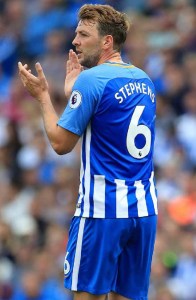
DALE STEPHENS spent nearly seven years at the Albion and was a pivotal cog in the club’s rise from the Championship to the Premier League.

He got his first taste of life at a big club playing alongside Adam Lallana and Dean Hammond….for Southampton!

That was back in 2011 when Saints won promotion from League One as runners up behind the Albion although he was an unused sub when Saints left Withdean on St George’s Day with all three points from a last gasp 2-1 win.

Stephens had gone on loan at St Mary’s from Oldham Athletic to cover an injury to Morgan Sneiderlin. “It was a strange one actually, there were only six or seven weeks left of the season,” he told the Albion matchday programme.

“Oldham weren’t really in any fear of going down or making the play-offs, so when Southampton came in for me, I was allowed to leave.”

The loanee played in six of the final 10 games of the season, making his debut against future employer Charlton Athletic alongside Lallana and Hammond.

“I looked at it almost as a trial period for being at a big club,” he said. “It was a chance for me to showcase myself. Playing for a club like Southampton at that level, with the players they had, was good for my experience and I really enjoyed being in a big-club environment.

“It was a good experience but just a shame that it was cut short by the season coming to an end.”

Explaining that everything was a level above what he’d previously been used to, Stephens added: “I didn’t feel out of place, though. I felt comfortable in that environment and it gave me the belief and the confidence that I could reach the next level.”

That didn’t turn out to be with Southampton, because his next club turned out to be the Addicks, where Chris Powell was building a side to try to get back into the Championship. Stephens found them to be similar to Saints, and like in his stint in Hampshire, he once again became a League One promotion-winner.
“I had a great first season there, helping the club win the League One title,” he recalled.

He then established himself as a Championship player before switching to the Albion in January 2014 when Andrew Crofts was ruled out by injury.

It was Nathan Jones, the former Albion player who had returned to assist Oscar Garcia, who recommended the move for Stephens, having seen him close-up when working as a coach at Charlton.

“Dale was one I recommended very strongly to the club and staked my reputation on, really,” he told the Argus. “When I was at Charlton, I saw Dale in probably three or four training sessions and a friendly at Welling and I knew then he could play at the highest level.”

Garcia needed little convincing and told the newspaper: “He’s a midfielder who can do everything and he does it all well. He’s got great physical capacity, a very good strike, he gets into the opposition box, and he is aggressive without the ball.”

It would be fair to say he was something of a Marmite player for many fans, often accused of being too slow and favouring a sideways pass. I’d say I wasn’t a fan at first but grew to appreciate his importance to the way the side played.

By his own admission, Stephens said: “With the sort of player I am, I’m not going to get fans on the edge of their seat. I’m not going to be a crowd pleaser, but I know my job and the levels I need to hit.”

Credit to him that his time at the club actually spanned the reigns of four different managers: Garcia; Sami Hyypia – although injuries prevented him appearing under him; Chris Hughton, who successfully paired him with Beram Kayal, and the early part of the Graham Potter era which saw him partner Dutchman Davy Pröpper.

Stephens’ arrival pretty much put the tin hat on the progress Rohan Ince had been making as a defensive midfielder with the Albion and, together with Kayal, he formed the key midfield duo as Albion sought to climb from the Championship under Chris Hughton.

A rare goal from Dale Stephens, this one away to West Ham

Once the promised land had been reached, Pröpper took over from Kayal but Stephens retained his place, proving a few doubters wrong about his ability to play at the higher level.

It was only with the emergence of Yves Bissouma as the consummate holding midfielder that Stephens found himself gradually edged out.

Born in Bolton on 12 June 1989, Stephens was football daft from an early age and although he had a try-out at Manchester City when he was 12, nothing further came of it.

After his final year at Ladybridge High School, he went onto a building site to do plastering and joinery.

But the coach of North Walkden, the local side for whom he was playing weekend football, wrote to Bury asking if they would take him on trial. After impressing in a work-out involving 28 triallists in front of youth team coach Chris Casper, he was invited back on a six-week trial basis.

Young Dale at Bury

“After two weeks, I played for the reserves and was offered a two-year scholarship,” Stephens explained. “I then became a first-year pro, making my debut as a sub against Peterborough, and never looked back. I was actually a striker when I joined but was quickly converted to a midfielder and I went on to play 12 first team games.”

Out of contract in 2008, he had the opportunity to step up a league and join Oldham Athletic. When game time was limited in his first season with them, he had loan spells with Droylsden, Hyde United and Rochdale, where he played alongside Will Buckley.

Back at Boundary Park, he became a regular for 18 months, in a side managed by former Brighton loanee striker Paul Dickov, and when Oldham visited Withdean in the 2010-11 season, a matchday programme article drew attention to him. “He is a big player for us in midfield,” wrote contributor Gavin Browne, sports editor of the Oldham Advertiser. “He has a great range of passing and has the ability to play at a higher level.”

A serious ankle ligament injury sustained when Albion beat bottom-of-the-table Yeovil 2-0 on 25 April 2014 sidelined him for 10 months but he returned to play a part in helping Hughton’s relegation-threatened side maintain their Championship status in 2015.

The promotion-deciding match at Middlesbrough in May 2016 will live long in the memory of those who saw it and witnessed referee Mike Dean’s controversial dismissal of Stephens four minutes after he’d brought the Albion back level with a narrow-angled header.

Once Brighton finally got to show what they could do amongst the elite, Stephens declared: “I was always confident of competing at this level but the more you play the more confident you become and the more belief you get.”

He ended up playing 99 Premier League games for the Seagulls out of a total of 223 appearances and perhaps as a mark of respect when he finally left the club for Burnley in September 2020, chairman Tony Bloom said: “He was key in both our promotion from the Championship and in establishing the club in the Premier League. 

“Albion fans will have great memories of Dale as a regular in the midfield in that promotion-winning campaign, and also for the way he comfortably adapted to life in the Premier League – where he has been a model of consistency.”

His last game for Brighton saw him wear the captain’s armband in a 4-0 Carabao Cup win over Portsmouth.

Things didn’t pan out as expected when he moved to Burnley. Due to injury, he was limited to 14 appearances in two seasons, and he told talkSPORTs Sunday Session programme: “It was disappointing on both sides. When I initially went there I was excited for the challenge, but for whatever reason it didn’t work for me or the football club.

“It probably sums my time up there, but I found out on Twitter, of all places, that I wouldn’t be getting a new contract.”

Stephens expected to find a new club, probably at Championship level, who would be interested in using his experience, and although he came close to joining Middlesbrough, and there was some interest from Watford and West Brom, nothing materialised.

“I’d played in the Premier League for the last five years, but I understood I hadn’t played much for two,” he told Andy Naylor of The Athletic. “I thought people would see the reasons behind it and that I’d get the opportunity to play at a club that wants to try to get promoted.”

Apart from being allowed to join in pre-season training at Brighton and spending six weeks with his former Bury captain Dave Challinor at Bury, he trained alone to keep up his fitness level, but, when he was unable to get fixed up with a club, in March 2023 he announced his retirement from playing.

Ongoing problems with the ankle injury suffered during his time at Brighton also contributed to his decision to retire.

In his interview with Naylor, he said he aimed to take the UEFA B licence course to try to become a coach, having spent time out following ankle surgery watching Sean Dyche’s managerial methods, as well as opposing bosses.

Fiery Ian Baird saw red in crucial last Goldstone game

FIERY Ian Baird was no stranger to yellow and red cards – in five games for Newcastle United he was booked three times!

And in Brighton’s last ever game at the Goldstone Ground, against Doncaster Rovers, Baird was sent off long before the game had even reached half time.

Something of a disciple of Joe Jordan, the tenacious centre forward who starred for Leeds United and Manchester United, Baird was his teammate at Southampton and played under the Scot at Hearts in Scotland and at Bristol City.

Baird didn’t fear incurring the wrath of supporters, happily playing for arch-rival clubs in his pursuit of goals. Indeed, on Teesside he earned a place in fans’ folklore by scoring two goals in an end-of-season clash that not only kept Middlesbrough up but prevented their noisy north-east neighbours Newcastle from getting automatic promotion to the elite (to make matters worse, they then lost a play-off semi-final to Sunderland).

Baird scored twice in that 4-1 win over United on the final day of the 1989-90 season at Ayresome Park, and earlier the same season he’d scored a winner for Leeds United against Newcastle at Elland Road.

Baird played on the south coast for both Southampton and Portsmouth before making the Albion his 10th and last English league club. He joined for £35,000 from Plymouth Argyle when the club was in turmoil off the field and floundering at the bottom of the basement division. But he went on to net 14 goals in 41 games.

He spoke about the move to Tim Ashton of the Sutton and Croydon Guardian in July 2016. “I was at Plymouth, and Jimmy Case took me on and explained all the problems to me about the likes of (David) Bellotti,” he said.

“To be honest, as a player, all you are bothered about is making sure you get your wage, and you’re not really taking any notice of what he is saying.

“I played at Brighton on many occasions, I have been there with Leeds and Middlesbrough, and it was always a favourite place of mine to go – and as soon as I got there as a player, I knew the importance of survival.”

Baird continued: “Brighton are a big club, and I could not believe what was happening. It took a strain on Jimmy, that’s for sure, and he was not the man he was normally with all the pressure.

“Then he was sacked and we were 12 points adrift at Christmas – they brought in Steve Gritt, and he brought a different kind of management.

“It got to February and March time, then all of a sudden Doncaster Rovers and Hereford were sucked into it – we had to beat Doncaster in the final (home) game.”

Sent off 11 times in his career, it was his dismissal just 18 minutes into that game in 1997 that threatened the very existence of the club – and he was captain that day!

Baird later told portsmouth.co.uk: “It was just a natural thing really. Sometimes my enthusiasm got the better of me. There were plenty of times I chinned someone or got into trouble.

“The most stupid one was when me and Darren Moore had a fight. He was playing for Doncaster and I was playing for Brighton in the last game at their old Goldstone Ground.

“He came through the back of me, there was a bit of afters and I ended up trying to give him a right hook, and there was a bit of a ruck.

“We had a bit of rough and tumble and I was just lucky he didn’t chase me up the tunnel because he’s huge!”

Thankfully, Albion famously still won that match courtesy of Stuart Storer’s memorable winner. Because red card bans were delayed for 14 days back then, Baird was able to play in what has since been recognised as the most important game in the club’s history: away to Hereford United.

As the history books record, it was Robbie Reinelt, on as a sub, who stepped into the breach to rescue a point for the Albion, enough to preserve their league status and to send the Bulls down.

In November of the following season, Baird still had six months left on his Brighton contract, but a surgeon told him he should not play pro football any more because of a troublesome knee, so he decided to retire.

But, when he had turned 35, he said: “I had a phone call from Mick Leonard (former Notts County and Chesterfield player) who played in Hong Kong, and he said they were desperate for a striker.

“I went for a month’s trial and ended up signing an 18-month deal. My knee flared up again and they offered me a coaching role, and it ended up with me managing the side.”

He added: “Then I was put in charge of the national side for the Asian Cup qualifiers and we played in Jakarta in front of 75,000 people, and then in Cambodia in front of 1,200 people – it was certainly an experience that is for sure.”

Over the 17 years of his league career, Baird commanded a total of £1.7m in transfer fees; £500,000 Boro paid Leeds being the highest.

Although born in Rotherham on 1 April 1964, the family moved first to Glasgow and then Southampton when Baird was small, his father having sailed from the south coast port when working on the Queen Mary.

The always comprehensive saintsplayers.co.uk notes the young Baird survived meningitis as a six-year-old and later came to the attention of Southampton when appearing in the same boys team, Sarisbury Sparks, as their manager Lawrie McMenemy’s son, Sean.

The excellent ozwhitelufc.net.au details how Baird’s footballing ability saw him play for Bitterne Saints, St. Mary’s College, Southampton, Southampton and Hampshire Schools, before earning England Schoolboy caps in 1978-79 alongside the likes of Trevor Steven and Mark Walters.

He was offered terms by Swindon Town but he chose to stay closer to home and Southampton took him on as an apprentice in July 1980. He turned professional in April 1982 but McMenemy’s preference for old stagers Frank Worthington and the aforementioned Jordan limited his opportunities and he made just 21 appearances for Saints, plus three as a sub, scoring five times.

He was sent out on loan a couple of times: to Cardiff City in November 1983, where he scored six goals in twelve League games, and that spell at Jack Charlton’s Newcastle in December 1984 where aside from a booking in each of his four starts and one appearance from the bench, he scored once – in a 2-1 defeat at West Brom on Boxing Day.

Taking the advice of former teammate Jordan, Baird signed for Eddie Gray at Second Division Leeds in March 1985 and undoubtedly his most successful playing years were there, in two separate spells.

He played more than 160 matches and scored 50 goals. In the 1986-87 season, Gray’s successor, Billy Bremner, made him captain. The Yorkshire Evening Post spoke of “the powerhouse striker’s fearless commitment, no-holds-barred approach and goalscoring ability”.

In the blurb introducing his autobiography Bairdy’s Gonna Get Ya! (written by Leeds fan Marc Bracha) it says “he’s best remembered for his spells at Leeds, where goals, endless running, will to win and fearless approach ensured he was adored by the fans”.

In the 1987-88 season, though, he was wooed by the prospect of playing at the higher level he had just missed out on with Leeds (they’d lost in end-of-season play-offs) and signed for Alan Ball at Portsmouth for £250,000; he later described it as “the worse move I ever made”.

The season was disrupted by injury and disciplinary problems, and he returned to Leeds the following season, being named their Player of the Year in 1989.

But when ex-Albion winger Howard Wilkinson, then manager of Leeds, signed Lee Chapman, Baird sought the move to Boro. He told Stuart Whittingham in 2013 for borobrickroad.co.uk:

“I felt a little aggrieved and basically I spat the dummy out and asked for a move.

“He (Wilkinson) said that he didn’t want me to go but I insisted and within 24 hours I was speaking to Bruce Rioch and Colin Todd and I was on my way to Middlesbrough.”

Curiously, though, when Leeds won promotion at the end of the season, Baird picked up a medal because he had played his part in the achievement.

At the end of the 1990-91 season, Baird spent two years playing for Hearts under Jordan, although a torn thigh muscle restricted the number of appearances he’d hoped to make and at the end of his deal he moved back to England and signed for Bristol City, initially under Russell Osman and then Jordan once again.

After his experience in Hong Kong, Baird returned to Hampshire to put down roots back in Southampton, and pursued business interests in vehicle sales/leasing and the sports gear industry. He also spent five years managing Eastleigh before becoming Paul Doswell’s assistant at Sutton United. He then followed him to Havant & Waterlooville in May 2019.

‘Goal machine’ Bully’s place in Premier League history

GARY BULL had good family connections to offer hope to Liam Brady’s Brighton at the start of the 1995-96 season.

Unfortunately, the Nottingham Forest loanee was often in the shadow of his cousin Steve, a Wolves goalscoring legend who went on to play for England.

Gary arrived at the Goldstone in August 1995 against the backdrop of off-the-pitch disquiet caused by the underhand machinations of the despised directors of the club at that time.

Bull scored three times in 11 appearances for the Seagulls but the cash-strapped club couldn’t afford to keep him on.

Although Bull had made a name for himself as a goalscorer lower down the football pyramid, he had made only four starts plus eight appearances as a sub for Forest over the previous two seasons, scoring just the once.

However, that goal did put him amongst an elite group of players: he was the second of only four players to score on their single Premier League appearance.

Perhaps it was all the sweeter because it secured Forest a 1-0 home win over Crystal Palace that took them up to fourth place in the table.

Interviewed by premierleague.com, Bull said: “It was fate, I would imagine. I was in the right place at the right time.

“It was an inswinging corner. A couple of people missed it and I was about three yards out. It was unmissable really, although I tell my kids it was a screamer.”

Bull had his brief moment in the limelight because first choice striker Stan Collymore pulled out of the match on 2 January 1995 due to illness.

The striker had spent three months on loan at Birmingham City the previous autumn, scoring an impressive six goals in 10 matches (he was in the City side who won 1-0 at the Goldstone in October 1994).

Bull only had one more sniff of first team action for Forest that season, once again against Palace, when he went on as a substitute for Scot Gemmill in a 2-1 fourth round FA Cup defeat on 28 January.

With Collymore in fine scoring form (24 in 43 matches that season), and Dutchman Bryan Roy also a regular up front, manager Frank Clark didn’t turn to Bull again, and Forest finished in an impressive third place in the Premier League.

Bull had to be content with a cameo role in an end-of-season fixture, netting Forest’s third goal in a 3-1 win over Singapore’s national team in an exhibition match in Singapore in May 1995.

Even though Collymore was sold to Liverpool for £8.5m that summer, Bull had to look elsewhere for first team chances and Brady was happy to bring him in to boost Albion’s attacking options.

He got off the mark in his third game, although Albion lost 2-1 at home to Wycombe Wanderers in front of just 5,360 fans.

Bull later scored twice away at Cambridge United in a 4-1 win in the Auto-Windscreens Shield trophy (it was the game in which former Ipswich and England centre back Russell Osman made his debut for the Albion).

But a 1-0 defeat at Rotherham on 7 October was his last game in the stripes and, not long after his return to the City Ground, he was given a free transfer and joined Birmingham on a permanent basis.

Born in West Bromwich on 12 June 1966, his first club was Paget Rangers in the Midlands League but in 1986 he joined Southampton as a trainee under youth team boss Dave Merrington. Jimmy Case and Craig Maskell were in the Saints first team at the time; Kevan Brown in the reserves.

It wasn’t until Bull moved on to Chris Turner’s Cambridge United in March 1988 that he made his professional breakthrough, scoring four in 19 games.

His prowess in front of goal really began to flourish when he dropped out of the league to help Barnet FC win the Conference. Tony Hammond – a Barnet FC devotee known as ‘Reckless’ – reckoned the £2,200 fee manager Barry Fry paid for him was “one of the bargains of the century”.

In four seasons at Barnet, Bull netted an impressive 121 goals in 219 appearances, becoming an Underhill icon. In his blog, Hammond quoted Fry as saying: “He was bloody good that Bully, I never had to worry about him being in the right place at the right time in front of goal it was always just pure instinct.”

Bull was buzzing for Bees

When Bees finally won promotion to the Football League in 1990-91, Bull scored 35 goals – including two four-goal hauls and a hat-trick – and was voted Player of the Year.

Bull’s scoring form continued during Barnet’s first season in the Fourth Division. He bagged 33 as the Bees reached the play-offs where they only narrowly lost a two-legged tie against Blackpool.

In 1992-93, Bull and strike partner Mark Carter were prominent again, as Barnet finished third in the table, clinching promotion to what was then a reorganised Division Two.

Sadly, Barnet were in deep financial trouble and were forced to shed players. Bull was signed by Premier League Forest’s newly appointed manager Frank Clark in July 1993.

“I would have stayed at Barnet but I had a family to look after and had no choice but to move on,” Bull told Hammond. “It was a memorable four years and certainly a period that I look back on with pride,” he added.

The subsequent move to Birmingham reunited Bull with his old boss Barry Fry, although a somewhat cynical view of the move was espoused by writer John Tandy in When Saturday Comes.

“It took Fry 18 months of sustained and public pressure to talk the board into signing Gary Bull. Eventually, in November 1995, we landed the Tipton Tyke. Six games and some time on the bench later he was on his way to York,” he wrote.

Bull spent two seasons at York. The highlight of his stay came in a second round League Cup tie at home to Everton. Bull put the Minstermen 2-1 ahead in the 57th minute, tapping in a rebound off the post and York went on to win it 3-2.

It was one of 11 goals Bull scored in 84 games for City before spending time in Lincolnshire. While he only scored once in 31 games for Scunthorpe, his scoring boots were well and truly back on at Grantham Town: 68 goals in 125 games.

He then moved on to Lincoln United for two years before finishing his career with a flourish at United Counties League Boston Town. During the 2006–07 season, he scored a club record 57 goals! He later went on to become their all-time top scorer with over 200 goals,

Bull only retired from playing aged 45 in 2012.

He then became a postman and told premierleague.com: “I’m one of those people who gets up and actually enjoys going to work and getting the physical aspect of it.

“We probably do between 10 and 12 miles a day. Some would say I do more now than I did on the pitch.”

John Ruggiero scored on his Brighton league debut

JOHN RUGGIERO was one of four signings Alan Mullery made for newly promoted Albion in the summer of 1977.

That one of the quartet was Mark Lawrenson from Preston North End for £115,000 rather eclipsed Ruggiero’s arrival from recently relegated Stoke City for £30,000.

Nonetheless, Ruggiero made an immediate impact, scoring on his league debut as a substitute for Peter O’Sullivan to earn the Seagulls a 1-1 draw at Southampton.

Ruggiero had begun the season in the starting line-up in Albion’s home and away goalless draws against Ron Atkinson’s Cambridge United in the League Cup before relinquishing a starting berth for the opening Division Two fixture at The Dell.

His 77th minute equaliser, after Alan Ball had put the home side ahead just before half time, was added to a fortnight later and, for a brief moment, he was joint top scorer with Steve Piper – on two goals.

The pair were both on the scoresheet to help the Seagulls to a 2-1 win at Mansfield Town on 3 September; the home side’s first defeat at Field Mill in 38 matches.

Shoot! magazine previewed Ruggiero’s eager anticipation at returning to the Victoria Ground for a league game on 15 October but he was only a sub that day and, although he went on for fellow summer signing Eric Potts, Albion lost 1-0.

A young Garth Crooks taking on Chris Cattlin the day Ruggiero returned to Stoke

After only seven league and cup starts (and three appearances off the bench), Ruggiero then had to wait six months for another sub appearance.

He went on as a second half substitute for injured Paul Clark in a 1-0 win at Blackburn, combining with Potts who went on to score the only goal of a game described by Argus writer John Vinicombe as “the most exhilarating match I have seen for years”.

Ruggiero didn’t make another start until the very last game of the season; but what a match to play in. A crowd of 33,431 packed in to the Goldstone to see the Seagulls take on Blackpool, with another possible promotion finely poised.

Albion dutifully won the game 2-1 (sending Blackpool down) with goals from Brian Horton and Peter Ward but their hopes of going up were cruelly dashed when Southampton and Spurs, who each only needed a draw to go up, lo and behold ground out a 0-0 draw playing each other.

As the Argus reported: “When news came of the goalless draw at The Dell there were cries of ‘fix’ and Albion had to suffer the bitter disappointment of missing promotion by the difference of nine goals.”

Before his recall for that clash, Ruggiero had continued to find the back of the net for the reserves – indeed he was the side’s top scorer for two seasons.

The Albion matchday programme reported his scoring exploits in some detail. For instance, in a 4-1 win away to Portsmouth. “John Ruggiero was the star of our win at Fratton Park with two fine goals and might have scored a hat-trick,” it said.

And in a 5-2 Goldstone win over Charlton Athletic, Ruggiero opened the scoring with a header from a Gary Williams cross, Steve Gritt pulled one back for the Addicks and Ruggiero volleyed in a fourth goal from the edge of the box.

Ruggiero, who lived in Shoreham with his wife Mary, discovered competition for a first team spot intensified after his summer signing: Clark from Southend adding steel to the midfield and Fulham’s Teddy Maybank taking over from Ian Mellor as Ward’s striking partner. O’Sullivan, meanwhile, comfortably stepped up to the higher level and kept his place.

When Albion were on course for promotion to the elite the following season, Ruggiero’s first team involvement was almost non-existent (a non-playing sub on one occasion).

He was sent out on loan to Portsmouth, then in the old Division 3, where he was a teammate of Steve Foster. Ruggiero scored once in six appearances, netting in a home 2-2 draw with Cambridge United on 27 December 1977.

He was released before Albion took their place amongst the elite and moved on to Chester City, signed by player-manager Alan Oakes, the former Manchester City stalwart.

Ruggiero joined just as ex-Albion teammate Mellor was moving on from Sealand Road, but, in a Chester team photo (above right), Ruggiero is standing alongside Jim Walker, who’d played at the Albion under Peter Taylor, and in the front row is a young Ian Rush.

Ruggiero scored within three minutes of his first league game for Chester, setting them on their way to a 3-2 win over Chesterfield. But he only made 15 appearances for them before dropping into the non-league scene.

The legendary England World Cup winner Gordon Banks, formerly of Stoke, signed Ruggiero for Telford United in the 1979-80 season when he was briefly manager of the Alliance Premier League side.

Born in Blurton on 26 November 1954 to Italian parents, the young Ruggiero went to Bentilee Junior School then Willfield High School. His prowess on the football field saw him represent Stoke Boys and the county Staffordshire Boys side and he was one of 24 young players who had a trial at Middlesbrough for the England Schoolboys side but missed the final cut.

He had the chance to join Stoke City at 15 but stayed on at school and passed five O levels: English Language, English Literature, Technical Drawing, History and Art.

“I had a lot of interest from many clubs: Blackpool, Leicester City, Derby County, Blackburn Rovers, Bolton Wanderers, Coventry City, West Brom and I even had a letter from Arsenal inviting me to go training with them,” Ruggiero told Nicholas Lloyd-Pugh for the svenskafans.com website in an April 2011 interview.

“I nearly signed for Coventry but the very last club to ask me was Stoke City and, once this happened, I knew where I would go. I joined as an apprentice when I was 16 in 1970.”  

Ruggiero explained how he started in the A youth team, progressed to the reserve side and finally made his first team debut under Tony Waddington on 5 February 1977, in a home 2-0 defeat against league leaders Manchester City.

He had made his league debut the previous season during a short loan period with Workington Town, playing three games in Division Four, which gives him the relatively rare distinction of having played in all four divisions of English football.

Even as a reserve team regular at Stoke he got to play at big stadiums like Old Trafford, Anfield, Elland Road, Hillsborough and Goodison Park. “It was great for the young players but you always hoped to make the first team at some point,” he said.

“It was a real dream for me to have players like Gordon Banks, Geoff Hurst, Alan Hudson, Peter Shilton and many more being part of your life.

“Tony Waddington loved his team and he always went for experience, so the younger players found it really hard to make the first team. However, a few younger players did well such as Alan Dodd, Sean Haslegrave, Stewart Jump, Ian Moores and Garth Crooks.”

He continued: “Players like Terry Conroy and John Mahoney were really friendly and always had a word of advice for you. I really liked Alan Dodd; he was a much underrated player and would have played for England at a bigger club.”

Ruggiero also spoke warmly of Alan A’Court, Stoke’s first team coach who had played for Liverpool, who took him on a football holiday to Zambia in 1973 where he played for Ndola United. A’Court was Zambia’s national coach at the time.

Two years later, Ruggiero earned a ‘Player of the Tournament’ accolade while playing for Stoke in a youth tournament in Holland.

Waddington’s successor as manager, former player George Eastham, also played a part in Ruggiero’s development by arranging for him to play in South Africa for eight months in 1975 where he was a league and cup winner with Cape Town City.

“I knew that George liked me as a player so I felt that this could be good for me when he took over the team,” Ruggiero told Lloyd-Pugh. “He had already played me in a friendly match against Stockport which was a showcase for the return of George Best from America.

“Whilst Best, Hudson and Greenhoff were doing their party tricks, I was quietly having a good game and it was clear that I was ready for another chance.”

That came in a home game against Liverpool, Ruggiero playing in midfield. “The next 90 minutes was my best of all time,” he said. “We drew the game 0–0. I would like to think I was the man of the match and George spoke very highly of me to the press after the game. The Liverpool team included Kevin Keegan, Ray Kennedy, Ray Clemence and many other big names.”

Stoke had turned to youngsters like Ruggiero because big name players had been sold off to pay for a replacement Butler Street stand roof at the Victoria Ground.

And while the youngster kept his place after that impressive display v Liverpool, they only won one of their remaining nine games and were relegated. It was little consolation that he scored twice away to Coventry because they lost 5-2.

“After the Liverpool game I was on a high, I really thought I’d made the big time and would be a first team player at Stoke for years to come,” he said. “I played nearly all the games left that season and was pretty consistent in all of the games.

“I was just enjoying my time and never really thought about relegation.”

But the 1-0 last day defeat at Aston Villa would prove to be his last game for Stoke because Brighton, who had gained promotion from the third tier, were bolstering their squad to compete at the higher level.

Ruggiero signed for the Seagulls along with Lawrenson and Williams, who moved from Preston (swapping places with Graham Cross and Harry Wilson), and Sheffield Wednesday winger Potts.

While Lawrenson was on the path to greatness, and Williams established himself in Albion’s left-back spot, Potts found his involvement was mainly from the bench and Ruggiero’s early promise faded.

After his short football career was over, Ruggiero joined the police, serving in the Cheshire force, rising to the rank of detective sergeant and mainly working in the Crewe area.

When the Goldstone Wrap blog checked on him in 2014, they unearthed a Facebook message in which he said: “Loved my short time in Brighton. Would have liked to have played a few more games but still love the place and the team were buzzing at that time.”

And in 2020, a former police colleague, Steve Beddows, informed the Where Are They Now website that Ruggiero had retired and was continuing to live in the Stoke area.

“He remains a very fit man with a keen eye for precise action posed wildlife photography and undertakes huge amounts of charitable work,” said Beddows. “A great sense of humour but very dogged, smart and highly professional. He does masses for charity with Stoke City Old Boys Association still and had the nickname ‘Italian Stallion’ because of his good looks.

“I never heard a bad word about him from anyone and he can still run marathons and plays lots of golf.”