Managerial turnover played havoc with goalscorer Bent’s career

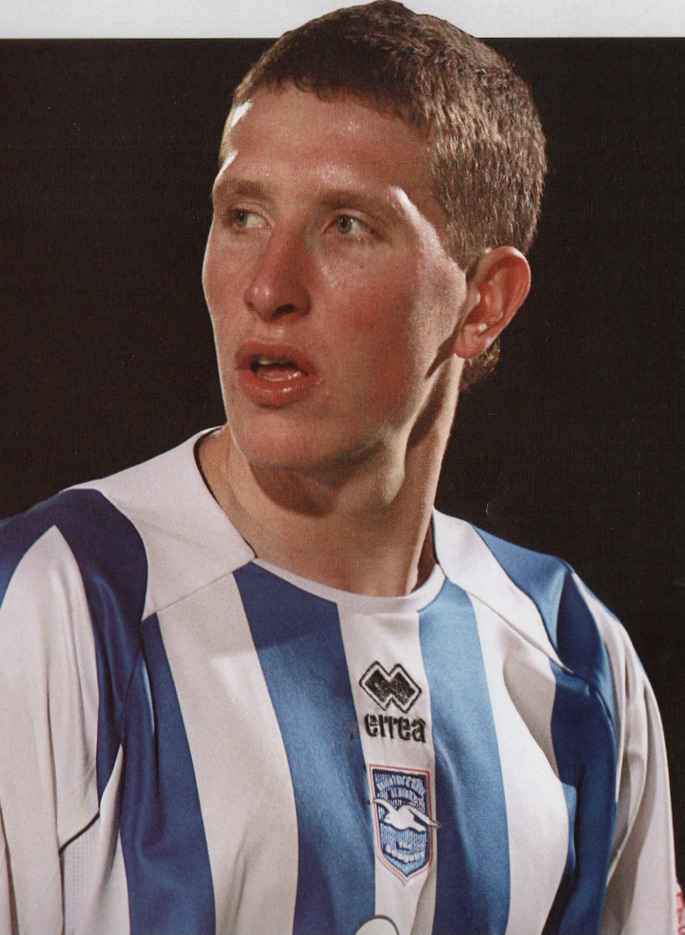
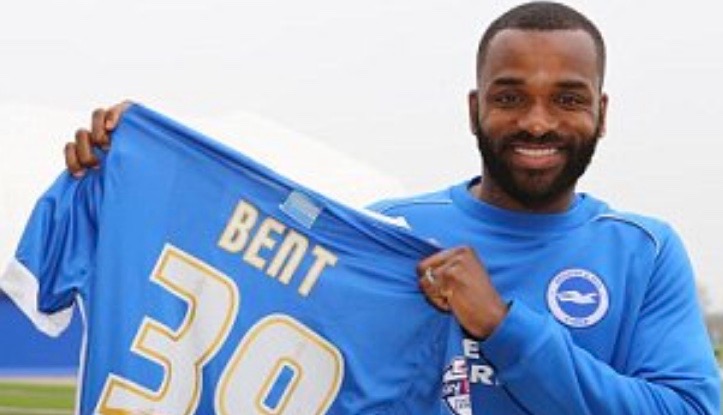
FORMER England striker Darren Bent, who now shares his opinion of the game with listeners to talkSPORT, was still only 30 when he pulled on the stripes of Brighton, one of nine clubs he represented in the Premier League and Championship.

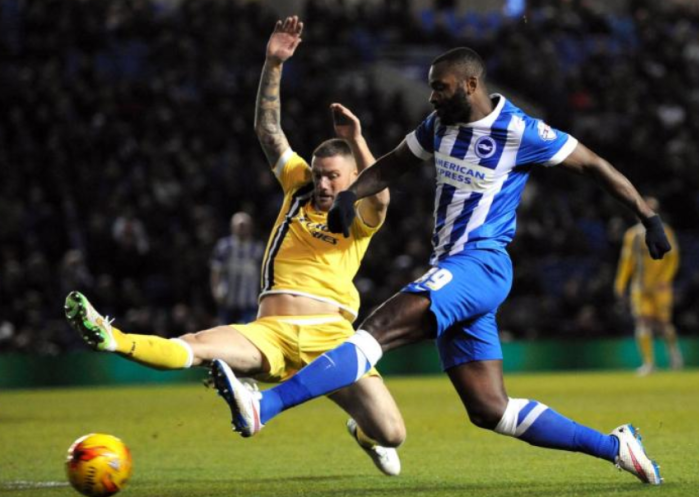
He couldn’t have got off to a better start when he scored on his debut at the Amex, netting against one of his former clubs, Fulham. Unfortunately, the visitors turned the game on its head and won 2-1.

Timing is everything in football and perhaps if Bent had joined the Albion in happier circumstances, there may have been a better story to tell. The Seagulls were about the ditch the manager who brought him to the club – an all-too-familiar scenario Bent encountered on many occasions throughout an 18-year playing career.

At Spurs he played under three different managers – he later described it as “the worst two years of my career” – and his temporary move from Aston Villa to Brighton came about because he’d been frozen out by Paul Lambert even though Gerard Houllier had smashed Villa’s transfer fee record to sign Bent from Sunderland for £18m in January 2011.

Bent arrived at the Amex in November 2014 with 184 goals in 464 career appearances behind him, and only three years earlier had won the last of 13 caps for England, for whom he scored four goals.

“His record speaks for itself,” said Albion boss Sami Hyypia. “He is a top-class striker with more than 100 Premier League goals with Charlton, Spurs, Sunderland and Aston Villa. I hope he will score plenty of goals for us during his time with us.

“There is no doubting his ability to score goals. He also wants to play regular games and that is evident in his willingness to step down from the Premier League to the Championship.”

The player himself told the matchday programme: “Anyone who knows me knows that all I care about is football.

“It has never been about money or anything like that. It has always been about playing football. I’m always at my happiest when I’m playing.”

Bent added: “Brighton felt like the perfect place to come and play football, especially for someone like Sami Hyypia, who I’ve played against many times over the years.

“As a manager, I think he is the right man. He is the kind of guy I want to play for.”

It was a generous assessment in the circumstances because Brighton had managed only two wins in 16 matches before Bent’s arrival.

The experienced striker’s second goal for the Albion looked like it might have earned the beleaguered coach a reprieve from the inevitable. He scored in the 10th minute away at Wolves, stooping to head Inigo Calderon’s first-time cross past goalkeeper Carl Ikeme. It was a lead that lasted until the 88th-minute but was cancelled out by a Danny Batth equaliser after Albion had played 30 second half minutes with 10 men following a red card shown to Bruno. Brighton parted company with the big Finn shortly afterwards.

Bent played one more game, under caretaker Nathan Jones, when Albion fought back from 2-0 down (both scored by on-loan Glenn Murray against his old club) to earn a home draw against Reading, but he was forced off injured after less than half an hour and the knock kept him out of the next game at Fulham, when Brighton won 2-0.

Hyypia’s replacement, Chris Hughton, spoke at his first press conference of trying to keep the player, but Bent had the chance to join a side at the opposite end of the Championship and he moved to promotion-seeking Derby County instead, scoring 12 times in 13 starts as the Rams missed out on a play-off spot by one point.

Released by Villa at the end of the season, he subsequently joined the Rams on a permanent basis in the summer of 2015. He saw even more managerial churn at Pride Park – Paul Clement and Darren Wassall in 2015-16 and three – Nigel Pearson, Steve McLaren and Gary Rowett – in 2016-17. Across the two seasons in the Championship, Bent scored 14 in 67 matches, but a hamstring injury sidelined him for the start of the 2017-18 season.

In January 2018 he went on loan to Championship strugglers Burton Albion under Nigel Clough where he scored twice in 14 appearances (nine starts + five off the bench) including netting the equaliser against his old club Sunderland when Burton’s 2-1 win relegated the Black Cats to the third tier of English football for only the second time in the club’s history. Burton also went down.

Released by Derby in the summer of 2018, he announced his retirement at 35 in July 2019.

Funny that he should end his career at Derby County because it was against them that he scored his first competitive goal for Tottenham in a 4–0 home victory in August 2007.

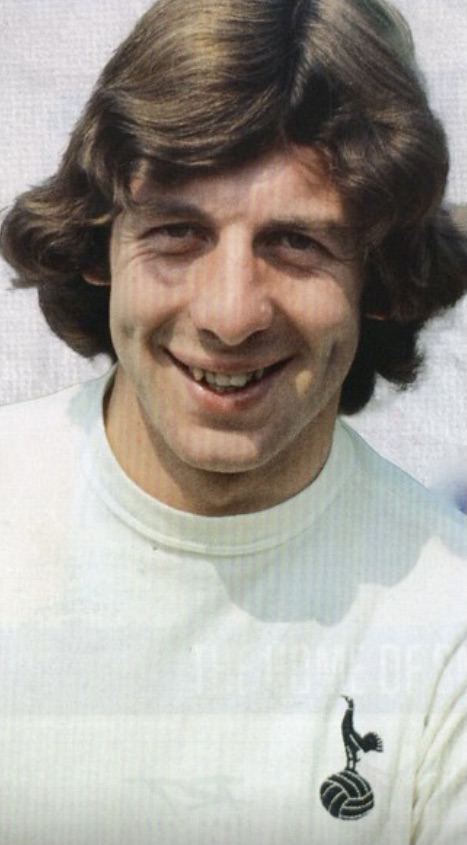
Bent had previously scored 37 goals in 79 matches over two seasons at Premier League Charlton Athletic before making what at the time was a record £16.5m move to White Hart Lane, where Dutch boss Martin Jol greeted him enthusiastically.

On target for Spurs

Although he already had Robbie Keane, Dimitar Berbatov, Jermain Defoe and Mido as forward options, Jol said of the new signing: “Darren’s strength is his stamina. Normally players will make runs three or four times in 45 minutes, he will do it all the time and if you manage to play balls behind the defence, he will be there.

“He has pace, he links play well and can see a pass – he can exploit the space and play as well.”

What happened subsequently is covered superbly in a 2019 article by Jack Beresford on Planet Football, but, to fast forward a little, Jol was shown the White Hart Lane exit and his replacement, Spaniard Juande Ramos (assisted by Gus Poyet) was a lot less enamoured by the big money signing.

Indeed, Beresford writes: “Bent later recalled how Tottenham became ‘a horrible place to be’ under Ramos, who regularly lambasted players over a lack of professionalism in regards to training and nutrition, demoting several senior figures to the reserves.”

Although Bent struggled to cement a regular starting spot in his first season at White Hart Lane, he was Spurs’ top scorer at the end of the 2008-09 campaign with 17 goals.

While things initially looked good under Bent’s third Spurs boss, Harry Redknapp, the manager’s decision to publicly humiliate the striker eventually brought an unhappy spell to an end.

Bent missed a golden chance to score in a match against Portsmouth and Redknapp told reporters after the game: “You will never get a better chance to win a match than that. My missus could have scored that one.

“Bent did not only have part of the goal to aim for, but he had the entire net – and he put it wide. Unbelievable. I was just so frustrated.”

Bent put in a transfer request and said: “No one goes out to deliberately miss. When you miss a chance and your manager comes out and supports you rather than criticises you, it’s a big help.”

Ironically, circumstances meant Bent went on to make 12 more appearances for Tottenham, scoring five times and his 12 league goals made him the club’s top scorer.

Although Redknapp said Bent had a future at the club, he signed Peter Crouch and Beresford reported Bent later said: “I didn’t feel Redknapp wanted me there. It’s massive to have the support of your manager and that’s not been the case for the last two years.

“My career stood still at Tottenham. There’s a lot of politics going on there. I scored a lot of goals, but it was the hardest two years of my life.”

In those two years, he scored 25 goals in 79 games for Tottenham, but 36 of those appearances had been as a substitute.

Born in Tooting, south London, on 6 February 1984, Bent seemed always destined to be a footballer because his dad Mervyn had been on the books of Wimbledon and Brentford as a youngster.

The family moved to Cambridgeshire when the young Bent was only 10 and his early football career was nurtured at Godmanchester Rovers.

Ipswich Town picked him up as a 14-year-old and nurtured him through their youth ranks until he signed his first professional deal on 2 July 2001. George Burley gave him his debut five months later as a sub in a 3-1 UEFA Cup win away to Helsingborgs IF.

He scored twice in seven league and cup appearances that first season but the Tractor Boys were relegated from the top flight. Burley was soon replaced, temporarily by Tony Mowbray, then Joe Royle, under whom he cemented a regular starting berth in the second tier over the next three seasons.

By the time he left Ipswich in 2005, he’d scored 56 goals in 141 appearances. Former Brighton midfielder Alan Curbishley was at the helm of the Addicks when they paid a fee of £2.5m to take him to The Valley.

He scored five goals in Charlton’s first four league games (including two in the opening day 3-1 win over future employer Sunderland), finished his first season with 22 league and cup goals and was named Charlton’s Player of the Year.

Bent top scored again the following season, with 15, but under three different managers – Iain Dowie, Les Reed and Alan Pardew – they were relegated to the Championship along with Watford and Sheffield United.

As described earlier, Spurs presented the opportunity for him to continue playing in the Premier League, and he continued playing at that level when Sunderland bought him for £16.5million in the summer of 2009. Demonstrating the knack he had at several clubs, he scored on his debut, giving the Black Cats a 1-0 win at Bolton.

Bent went on to score 24 league goals for the Black Cats in his debut season at the club – and you can only imagine how delighted he was (pictured below) to net two in a 3-1 win over Spurs at the Stadium of Light!

The first came after just 34 seconds of the game on 3 April 2010, and a 29th-minute penalty gave him his 23rd goal of the season, although incredibly Bent also saw two other penalties saved by Spurs ‘keeper Heurelho Gomes. He had also missed a penalty in the reverse fixture at White Hart Lane the previous November, when Spurs won 2-0.

He obviously wasn’t the most reliable from 12 yards: I witnessed a Bent penalty miss myself back in 2003 when he’d gone on as a sub for Ipswich against Brighton at Portman Road. With the score at 1-1, Richard Carpenter’s foul on Chris Makin gave Bent the chance to restore the home side’s advantage from the spot. But he blasted the ball over without goalkeeper Dave Beasant needing to make a save. Tony Rougier then put Albion ahead but a Martin Reuser thunderbolt evened it up.

Bent’s 18-month stay with Steve Bruce’s Sunderland proved to be his most prolific goalscoring spell in football, netting 38 goals in just 52 appearances.

In the first half of the 2010-11 season, his partner up front was young Manchester United loanee Danny Welbeck, but in the January 2011 transfer window Bent was on the move again, this time to Villa.
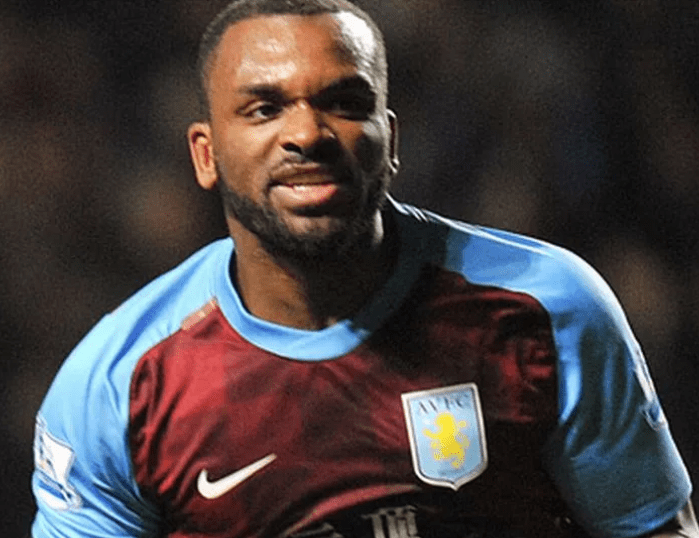
Once again, he got off to a great start for a new club, marking his debut with the only goal of the game in a win over Manchester City. It was the first of nine goals in 16 league appearances which put him joint top scorer with Ashley Young, even though he’d only arrived at the club in January.

After health issues forced Houllier to step down as Villa boss, Alex McLeish took over for what was a tumultuous and under-performing season when relegation was only avoided by two points, although Bent was top scorer with 10.

McLeish’s successor Lambert not only took the captaincy off Bent, he also froze him out, only selecting him for 13 Premier League appearances. If he thought it was difficult enough to have three different managers in three seasons at Villa, when he spent the whole of the 2013-14 season on loan to Fulham, they had three different managers in one season!

Bent’s old Spurs boss Jol was in charge as the campaign got under way but, with only two wins in 14, he was replaced by former Man Utd no.2 René Meulensteen in December before Felix Magath took over in February. All the upheaval saw Fulham relegated with a team that included David Stockdale, Steve Sidwell, Aaron Hughes and Dan Burn. Bent scored six in 14 starts + 15 sub appearances.

If Bent was used to managerial change at club level, it wasn’t much better with the England national team: he played under three different managers in five years!

He had previously earned selection for his country at under 15, 16, 19 and 21 levels – he scored nine in 14 matches for the under-21s – and he was first called up to the full squad by Sven-Goran Eriksson shortly after he’d made the move from Ipswich to Charlton, although he didn’t play in a 4-1 defeat to Denmark.

“Making my Premiership debut for a new club, scoring my first brace in the Premiership and then to get the England call-up on the back of that was just a dream come true,” he told the FA website.

It was another six months before he made his full England debut, in a 2-1 win over Uruguay but he didn’t do enough to stake a claim for a place in the World Cup squad.

His next cap came as an 80th minute substitute for Joe Cole in the 3-2 defeat to Croatia in November 2007 that cost Steve McLaren his job when England failed to qualify for the Euro 2008 tournament.

By the time he made his second start for England, on 14 November 2009, Fabio Capello was in charge. England lost 1-0 in a friendly to Brazil in Qatar when Bent’s teammates included Matthew Upson, Wayne Bridge and James Milner.

“Bent was struggling to make an impact as he attempted to convince Capello of his worth, not helped by a lack of service that rendered his task almost impossible,” reported the BBC’s Phil McNulty. “He had one opportunity, but could not direct a header on target from Milner’s cross.”

He didn’t make the cut for the 2010 World Cup squad but in September was back in the fold and scored his first England goal after going on as a 70th minute sub for Jermain Defoe as England beat Switzerland 3-1 in Basle.

By now at Villa, it was the first of three goals in three games (he also netted against Denmark and Wales) after which he told the Birmingham Mail: “I’d love to be No 9 for as long as possible, there are a lot of top strikers about but Fabio keeps picking me and hopefully I can keep producing the goods.

“Even when the goals weren’t going in, I always believed I was good enough to score at this level and hopefully it’s showing now. I’m finally getting my chance and getting a good run in the side. I’m delighted with it.

“It has been years since my first chance and it’s certainly been a long, long wait but it’s finally come.”

He started the 2-2 Euro 2012 qualifier with Montenegro in October 2011 and the following month was in the side that beat World Cup holders Spain 1-0 at Wembley; it was his header from Milner’s cross that rebounded off a post for Frank Lampard to nod in.

Three days later, he played what turned out to be his – and Capello’s – last game for England as a 70th minute sub for Bobby Zamora when England beat Sweden 1-0 at Wembley.

Yet another man was at the helm when it came to selection for the Euro 2012 tournament and Roy Hodgson didn’t reckon Bent had recovered sufficiently from an injury to merit inclusion.

For all the highs and lows of a lengthy playing career, nothing came close to what he suffered in front of a nation of TV quiz viewers: he scored only three points over two rounds of Celebrity Mastermind and admitted to talkSPORT listeners: “Honestly? It was probably the worst experience of my life!”

He explained: “As a footballer you get nervous before games, when you take a penalty in front of thousands of people, when you join a new club, but when you’re sitting in that chair opposite John Humphrys, it’s pitch black in there and all you can see is him, his eyes looking at you and he’s asking you questions and you just go blank.”

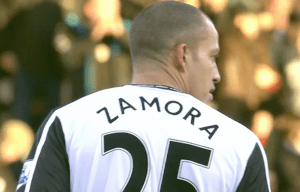
Zamora found the F in Fulham for barracking boo boys

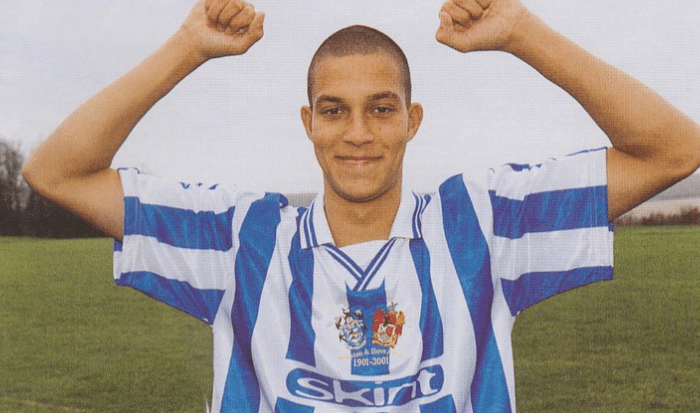
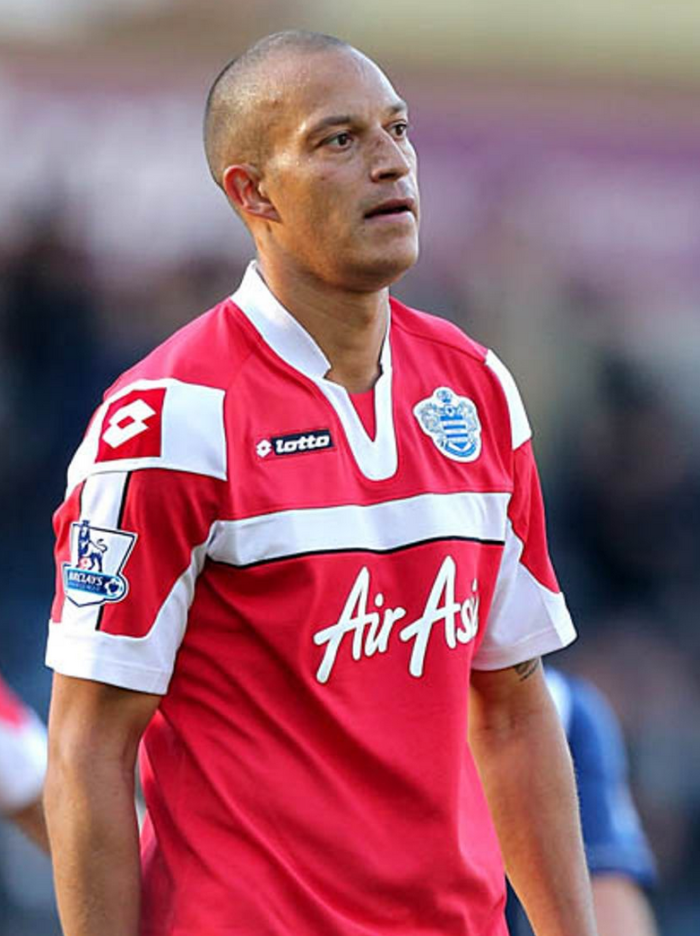
Albion favourite Bobby Zamora

BOBBY ZAMORA was arguably at the top of his game when he played for Fulham, even though some supporters begged to differ.

Although he had played Premier League football for Spurs and West Ham, the form he showed in Roy Hodgson’s side finally propelled him into the England reckoning.

And he might even have gone on to greater heights after the rich goalscoring vein he hit in the 2009-10 season: Hodgson wanted to sign him for Liverpool, but he preferred to stay in the south.

Zamora had been surprised to discover West Ham had sold him to Fulham without any consultation at the start of the 2008-09 season, but he knuckled down to play a supporting role as Fulham finished seventh in the Premier League.

Certain sections of the Fulham faithful were expecting more than the four goals he scored, even though the player was fulfilling the manager’s brief, and let their feelings be known.

The player eventually had enough of the barracking and, after he had scored the only goal of the game to beat Sunderland in December 2009, he confronted them and invited them to “shut your fucking mouths”.

Hodgson defended him saying: “He has been a key player for us. Just a very good player.”

Finding the net for Fulham

In no mood to apologise for his outburst, Zamora told Amy Lawrence of The Guardian he found some of the stick unacceptable.

“I just can’t get my head round some people,” he said. “If you are a supporter, support your team. You expect it at away grounds, fair enough, but from your own supporters it is a bit strange.

“It wouldn’t make me want to leave but it’s not nice. I wish at times football could be a happier environment.

Young Zamora scored goals for fun at Brighton

While Brighton fans had witnessed Zamora leading from the front and scoring goals for fun, at Fulham he was asked to play a different role, and it disappointed him that people were only judging him on goals alone.

“If you ask Joe Bloggs down the street how many assists I have had this season they wouldn’t be able to tell you. Or how many team-mates I have set up for a shot at goal. Or pass completion. They just know goals, full stop,” he said.

“I was asked to play more as a defensive centre forward,” he said in an interview with the Fulham website. “It’s a job I did and I enjoyed putting AJ (Andrew Johnson) through.

“The team appreciated it; the fans possibly not. We didn’t finish seventh because I didn’t do a job. Ultimately it helped the team. Roy had faith in me and I’d like to think I repaid him.”

Zamora added: “The gaffer has been behind me from day one. There was a lot of pressure on me to score goals. Because I wasn’t, the press and the fans didn’t think I should be playing. But the gaffer and the players appreciated what I was doing for the team. That’s all that matters.”

‘Gentleman Jim’ on friendsoffulham.com recalled: “He had it in for some fans who kept booing him or saying he was not the best player and not supporting him.

“He was quite harshly criticised at the time by the fan base because he wasn’t scoring, but his general play and hold up play was very good for most of his time here.

“Whilst he could’ve managed the situation differently to endear himself more to the fans, he was combative and ended up doing very well for us.”

On the same forum, Graham Leggat said: “His best was as good as Mitro (Aleksandar Mitrovic) at his best for us and Saha (before we sold him to Man Utd). I would say even higher. He was absolutely unplayable, even if he didn’t bang in as many as the other two. A true Fulham great.”

Zamora might have escaped the Fulham boo boys if he’d accepted an approach from Hull City but he chose to stay, much to Hodgson’s delight, and went on to produce his best form.

He scored 19 goals in the season when Fulham finished 12th in the Premier League and made it through to the final of the Europa League (the first season of the revamped competition previously known as the UEFA Cup).

Zamora had been a fitness doubt before the game against Athletico Madrid in the People’s Park Stadium in Hamburg and he had to give way to Clint Dempsey 10 minutes into the second half.

The game went into extra time with the score 1-1 after 90 minutes and agonisingly Fulham succumbed to an extra time winner scored by ex-Man Utd striker Diego Forlan. Sergio Aguero, later of Man City fame, beat defender Aaron Hughes and crossed for Forlan to flick the ball home four minutes from the end.

The achilles injury Zamora had picked up prevented him from joining Fabio Capello’s England squad for the 2010 World Cup and he underwent surgery instead of heading out to South Africa.

As described in a previous blog post, Capello nevertheless kept Zamora in mind and the striker did eventually get his chance with the national side.

It was that same summer that Hodgson left Fulham to take over at Anfield and as the August transfer deadline loomed the manager hoped to persuade Zamora to join him at Liverpool.

But the player’s wife had just had twin daughters and he didn’t want to uproot the family. He was also getting on well with Hodgson’s successor Mark Hughes.

“I enjoyed my time with Mark, he came at the start of the season, I had a good pre-season with him,” he told the Say It and Spray It podcast. “Roy came in for me at Liverpool and Harry Redknapp came in for me at Spurs, but Mark said he wanted me to stay, and I’d just had my twins in August.

In the event, Zamora signed a new four-year contract – and the very next day suffered a broken leg in a tackle by Wolves’ Karl Henry.

He was sidelined for five months but managed to return before the end of the season, scored seven goals in 16 appearances and finally got to play for England that summer.

When Hughes decided to leave Fulham after just one season in charge, Zamora expressed his shock in newspaper interviews. “There was no hint of it,” he told the Mirror. “It was going well. Everyone had bought into his ideas and were just starting to play the way he wanted.

“He has decided not to stay and we go on and try and find another manager and hope we do well.

“But Mark has got his reasons. I don’t blame him at all. It’s one of those things. Managers and players come and go.”

Seven months later, Zamora left Fulham himself to rejoin Hughes, who had taken over at QPR.

Zamora didn’t see eye to eye with Hughes’ successor at Craven Cottage, Martin Jol, who he said had not got the best out of him, although he had scored seven goals in 29 appearances at the time of his departure.

Jol tried to deny there had been a rift with the player saying any talk of a disagreement between them had been inflated by the press.

“If you look at the media, they started this Bobby thing in August,” said Jol. “They said we had a bust up at the start of the season, but you always have a little bit of a disagreement.

“I don’t think there is any problem,” said Jol. “I said to him a few weeks ago ‘Do you love this club?’ and he said ‘Yes, I love this club, I love this team’.”

Nevertheless, Zamora joined QPR on deadline day in January 2012 for £4.5m and was given a two-and-a-half-year contract.

“We needed a player of his ilk at the football club and I couldn’t be more delighted, he’s a great foil for any team,” said Hughes, who’d only replaced Neil Warnock a few weeks earlier. “Bobby is a guy that makes things happen on the pitch, be it scoring goals or creating chances for others.

“He’s got great power and pace and his technical ability is top class. He’s got an excellent left foot.”

For his part, Zamora, by then 31, said: “I got on really well with the manager at Fulham. We all grew to like Mark. I think that will be the case here. He’s looking to take the club forward.

“This was the right time for me to have a fresh challenge. I had some great experiences at Fulham. Going to a European final is special. But this is a new challenge and I’m thoroughly looking forward to it.”

If Zamora hadn’t always seen eye to eye with Fulham’s followers, it didn’t get much better at Loftus Road – although he ended up the hero when he once again scored the winner in a Championship Play-Off Final.

A Wembley winner with QPR

Replicating the feat he achieved at West Ham, in May 2014 he went on as a substitute in the Championship play-off showdown at Wembley and his 91st-minute goal was enough to beat Derby County (who’d beaten Oscar Garcia’s Brighton in the semi-finals) to restore the Rs to the Premiership.

They’d only narrowly avoided relegation, by a point, at the end of the 2011-12 season and after Hughes had been sacked in November 2012, new boss Harry Redknapp couldn’t save them from the drop in 2013. Rangers went down in last place and Zamora made only 17 starts plus seven off the bench, scoring five goals.

Nevertheless, he was hailed as an example to others for putting himself through the pain barrier for the Hoops’ cause.

A troublesome hip injury hindered his involvement and some questioned why the former manager had paid big money for ‘veterans and cast-offs’. Paul Doyle in The Guardian reported that fans didn’t like an interview Zamora gave in which he said that he did not regularly watch football on television, which some took to mean he did not care about sport and was only interested in the money.

“Fans wondered aloud whether he was even bothered about getting fit enough to play again,” wrote Doyle. But he went on: “All that has changed. Now he is considered the embodiment of the warrior spirit that QPR need if they are to pull off the great escape from relegation. Zamora did not score against Sunderland but he led the line strongly, combined well with his new strike partner Loïc Rémy and, most of all, lifted his team-mates by battling manfully through pain.”

Redknapp reckoned that Zamora was only 60 per cent fit, and the persistent hip trouble was further aggravated by ankle ligament damage.

“That’s the sort of character we need,” said Redknapp. “He’s waiting for a hip operation and he has torn ankle ligaments but he’s played through that.

“At half-time we have to keep him on the move because if he sits down he’ll seize up. So, he puts a water bottle on his hip and stands at the wall doing stretches. He can’t get in his car after the game. But he’s a proper bloke. He’s not an idiot, he’s a sensible guy. He’s good for the team. He talks to people and is a big influence in the dressing room.”

QPR chairman, Tony Fernandes, also chipped in to acclaim Zamora, tweeting: “There are many young professionals who could learn a thing from Bobby Zamora. He’s an ultimate club man.”

Sadly, Rangers couldn’t avoid the drop but they bounced straight back via the aforementioned play-offs after finishing fourth in the Championship, 13 points behind second-placed Burnley, and 17 points adrift of champions Leicester City.

QPR had five fewer points than third-placed Derby and in the final at Wembley Redknapp admitted they were hanging on for their lives against the Rams having had Gary O’Neil sent off on the hour mark.

The lottery of extra time and penalties was looming when substitute Zamora struck in the dying embers of the match. “It was a fantastic goal to win the game and I couldn’t be more pleased,” Redknapp told The Standard.

“I would be a liar if I said I thought I would see us scoring. They had 11 men, were probing us and we were hanging on.

“That was a one off where you stand on the touchline, hanging on for grim death and get a goal like that.”

Once again Rangers found the Premier League too hot to handle and Zamora’s ongoing hip problem limited his involvement to 19 starts and 14 appearances off the bench. He scored just three goals as QPR went down in last place.

Redknapp, who was replaced by former Albion full-back Chris Ramsey in February 2015, described how managing Zamora’s game time had been similar to the way he had to manage Ledley King at Tottenham.

“Ledley didn’t train at all to be fair,” said Redknapp. “To think he didn’t train one day and then play 90 minutes was unbelievable.

“It does take Bobby a few days to recover after a game, so it’s always on how he feels. He’s as good as anybody at doing what he does, holding the ball up and bringing people into play.”

Redknapp continued: “Bobby has been very important for us. After about 60 to 65 minutes he has to come off, but when he’s on the pitch he has been outstanding.

“We were bringing him off the bench to start with, but we’ve reversed it and started him recently. He’s been captain and great in the dressing room, I couldn’t be more pleased with Bobby.

“He’s got his hip but he manages it and when he plays he’s been great and his attitude has been first class.”

The return of Zamora to the Seagulls

Released in the summer of 2015, Zamora’s long-held desire to end his career back at Brighton was fulfilled when Chris Hughton invited him to join the bid for promotion from the Championship.

Back amongst the goals

Hughton had previously worked with Zamora at Spurs and said: “He is a great professional. I know he will bring plenty of experience to the team, having played Premier League, European and international football.

“He will also bring a lot in terms of character to the club and to the dressing room – but most importantly, having played more than 30 times for QPR last season, he brings top quality to our offensive options.”

There was frustration all round that in spite of a handful of vital goals he registered in that 2015-16 season, the injury issues prevented him from being able to help the Albion to promotion from the Championship.

In retirement, Zamora has tried his hand at various ventures and indulges one of his great loves away from football, carp fishing, in the Grand Fishing Adventure series with Ali Hamidi on ITV 4.

Catching carp with Ali Hamidi

Unsurprisingly, he’s also often seen as a pundit commenting on televised games involving his former clubs and is a popular guest on all sorts of podcasts, looking back at his playing days.

For example, he told the Albion podcast in November 2023: “When I came to retirement it was painful, I couldn’t carry on playing with the aches and the pains day-to-day. It was a nice relief, not having to take painkillers, anti-inflammatories that aren’t good for your stomach and liver.

“Christmas and New Year, being able to go skiing for the first time, it’s really nice. I am seven years into retirement now, but after three or four years you start to miss it; the boys and the banter in the dressing room.”

Zamora has also been involved in property development and is one of a multitude of top former players who are ambassadors with Football Escapes, football-based holiday experiences at exclusive hotels and resorts around the world.

Zamora also works in an ambassadorial role for the Albion, such as being an interviewee at the 2023 event when the club showcased the value its success has brought to the city of Brighton and Hove.

‘Glove-wearing gazelle’ played only 16 Albion games

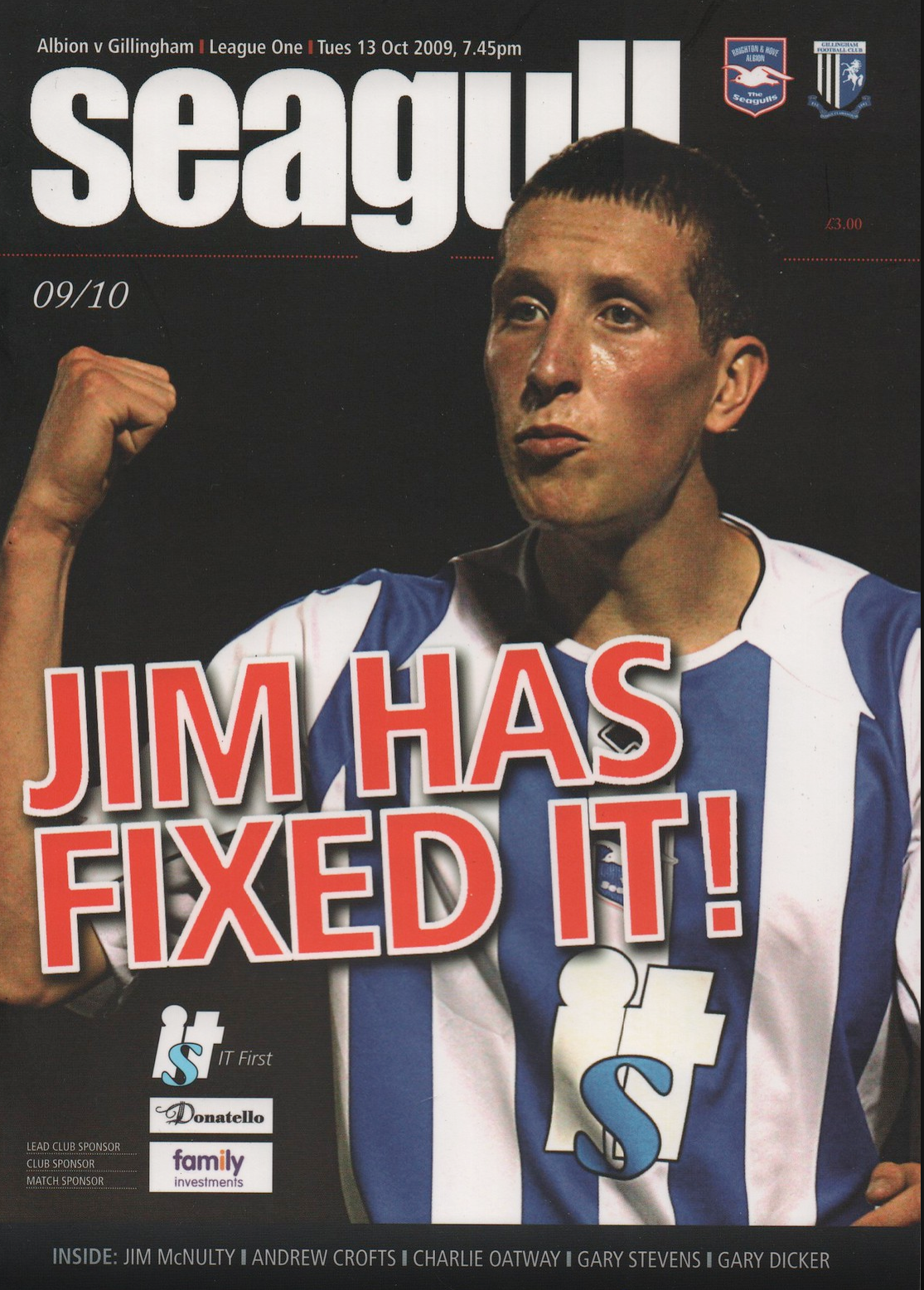
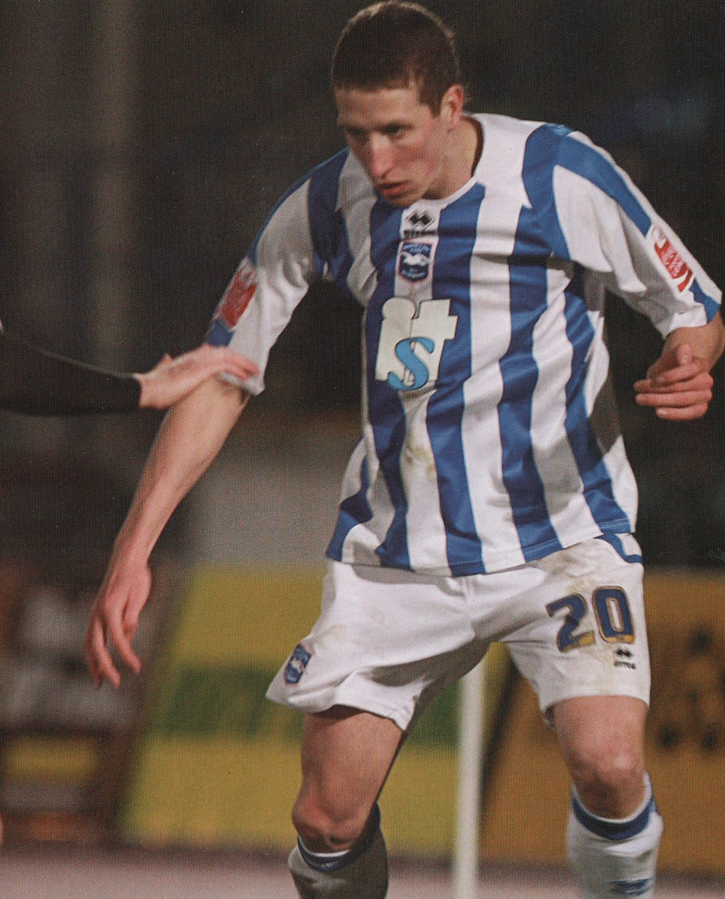
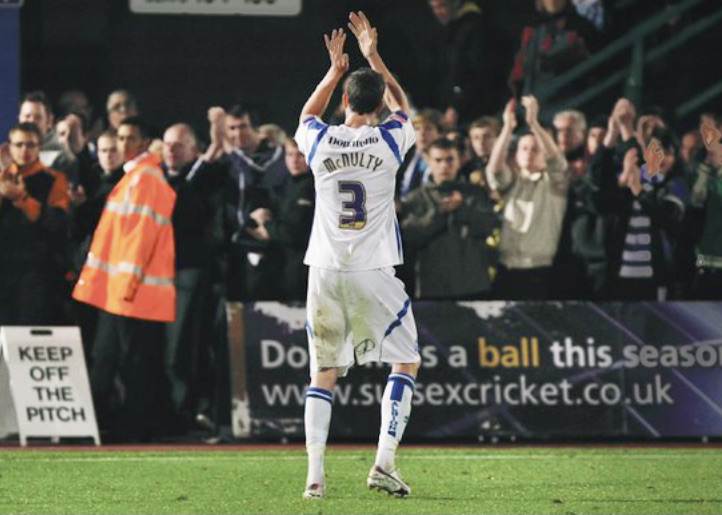
SCOUSE defender Jim McNulty, who played alongside Wayne Rooney at Everton as a schoolboy, will probably always be remembered by Brighton fans for a horror injury he suffered in a match at Withdean.

After an on-off transfer saga in which McNulty initially rejected Albion’s desire to sign him, the £150,000 signing from Stockport County scored on his debut and less than three weeks later was involved in an accidental collision that threatened to end his career at 23.

In only his fifth game after under-pressure boss Micky Adams finally landed the left back, a seemingly innocuous challenge as a Crewe defender caught him with his knee in his side quickly became much more serious when he started passing blood.

“Having walked back to the changing room I remember having the sensation of needing to go to the toilet and it was then that blood started spurting out,” he recounted. “I was also throwing up and the real scary part was the look of concern on the medical team’s faces.

“I was rushed to the Royal Sussex County Hospital for an MRI scan and had a catheter inserted as my belly was swelling up. It was then that I discovered one of my kidneys had capitulated.

“I was on the bed in the hospital after the scan when the surgeon said 90 per cent of the kidney is mush and I don’t believe you can play again,” McNulty told the club’s official website.

Nine years later, ahead of facing Harry Kane for Rochdale against Spurs in the FA Cup, McNulty told Ivan Speck of the Express: “It was instant tears. I was there with my father and fiancée, at the time. I remember crying into my dad’s chest.

“It was probably a bit of everyday information for him but, for me, football was my life and he should have stayed quiet until he was better informed. It still winds me up now.

“The FA actually got wind of the news and their doctor spoke with our club doctor. They had spoken to some rugby guys in the southern hemisphere because it’s a more common injury in rugby than it is in football.

“It was nonsense to suggest it would end my career.”

Initially, because he was a professional sportsman, the medics tried two operations to save the kidney but, when he was still passing blood three weeks later, the decision was taken to remove it.

McNulty described incredible pain he had to endure but realised once he had gone through with the operation that he would be able to play football again.

Amazingly, he was able to return to training within three months although he had a lot of work to do to rebuild his fitness. Within four weeks he was even able to play in a couple of pre-season friendlies.

However, McNulty went on to suffer a number of knock-on injuries because his posture was affected by having an empty space on the right side of his body.

“I had multiple ankle injuries because my pelvic alignment was a nightmare from that point on,” he said.

The first came just when it looked like he would make a return to league action in September 2009. He damaged his ankle ligaments on a local park pitch while training ahead of the 7-1 defeat at Huddersfield and was ruled out for a further four weeks.

His long-awaited return to first team action came in a Johnstone’s Paint Trophy tie away to Leyton Orient on 6 October, which Albion lost 1-0.

“Just to get out on the pitch and on the ball was fantastic,” he said. “I cramped up after about 70 minutes but the reaction from our fans was tremendous.”

McNulty told the matchday programme: “I have no intention of just sitting around, hoping to break into the side. I want to be playing every week now. I’m fit, raring to go and I want to help us get up the table.”

The unlucky McNulty then missed the following Saturday’s match at MK Dons, enduring yet more pain when he had to have two wisdom teeth extracted.

Nevertheless, McNulty’s eventual return to league action followed on 13 October in a 2-0 Withdean win over a Gillingham side which featured former Albion loanee Simon Royce in goal.

Astonishingly, the following Saturday, he lasted only 27 minutes before injury struck again in a 2-1 defeat away to Tranmere. He limped off with an ankle injury and Jake Wright was sent on to replace him. Glenn Murray scored a penalty consolation for the Albion and was then sent off for a second yellow card.

By the time McNulty was fit enough to return, the second manager of his brief time at the Albion, Russell Slade, had been replaced by Gus Poyet. His first involvement under the new boss saw him go on as a sub against: Charlton at home on 1 December.

He then went on as an 87th minute substitute for his good friend Gary Dicker at Exeter and provided the all-important cross from which Andrew Crofts headed the only goal of the game in the 92nd minute.

He had what one observer described as a man of the match involvement as a sub in the next match, a 2-1 home defeat v Colchester United. Saying the left back was “the epitome of Poyet’s ‘bravery on the ball’ mantra”, Richie Morris wrote: “Jimmy McNulty, like a rampaging glove-wearing gazelle, mercilessly attacked the left flank. Time and again he delivered teasing crosses, and time and again the ball simply would not nestle in the net.”

McNulty celebrates with goalscorer Tommy Elphick

That performance was rewarded with four starts on the trot – but then Poyet brought in the cultured Marcos Painter as his preferred left-back. McNulty was in the Albion side that put on a decent show in a 3-2 fourth round FA Cup defeat at Aston Villa, because Painter was ineligible, but he didn’t make another start that season. And, as it turned out, he didn’t play for the club again. He’d actually only played 16 times for the Albion.

Before the end of the season, to get some games, McNulty actually stepped up a level, going on loan to Scunthorpe United in the Championship, where he made two starts and a sub appearance under Nigel Adkins.

He rejoined The Iron in July 2010 on a six-month loan arrangement and played six games. But he suffered a recurrence of his ankle issues, so returned to Brighton in December.

When Albion kicked off a new era playing Championship football at the Amex, McNulty had stayed at the same level but with Barnsley, where he was voted players’ player of the year in his first season, and was made captain in his second season at Oakwell.

McNulty certainly wasn’t bitter about the way things turned out for him in Sussex. He said: “I couldn’t speak more highly of my time with Brighton. It is an unbelievable club, an unbelievable fan base, and it was an incredible place to live.

“My daughter was born there and we had a brilliant time, despite the fact that I was horrendously injured for pretty much all of that time.

“I’ve always been a 40-game-a-season man wherever I’ve been, but at Brighton I hardly played at all. Saying that, it was the club I had the best time at.”

Born in Runcorn on 13 February 1985, Liverpool and Everton were both interested in him when he was young, but it was Everton who put a contract offer in front of him.

“At the time I actually played for Everton against Liverpool in a game at Melwood,” he explained. “This would have been in the under-9s and we absolutely destroyed them.

“Ourselves and Arsenal dominated in that particular age group, right up to the under-16s – every week, every game, every season. Everton were a very dominant team and it gave me a great grounding, so I chose the right team.”

Initially a central midfield player, McNulty was switched to left-back during his time at Everton. Although Rooney was in the year below him, from under-10s, he was put up an age level. “I played with him for about four years until he jumped up again,” said McNulty. “He was playing two or three years up during the teenage years. I was just always playing at my own age.

“He was incredible, incredible. It was like watching a man play with boys in terms of his strength and aggression. He was pinging balls 70 yards as a 10- or 11-year-old boy.

“We couldn’t really lift it off the floor yet. His technique and the power that he had as a young boy, he was devastating at that age. He’d score eight goals every week. He’s one of the reasons we were so rampant as a team. Probably the main reason.”

McNulty moved on to Wrexham to make his breakthrough at senior level, ironically going on as a sub against Stockport in a Northern Section Football League Trophy game which the Welsh side lost 5-4 after extra time.

Because he had a Scottish mother, Englishman McNulty was selected for Scotland at under-17 and under-19 level, although one of his worst footballing memories came while playing for Scotland against France when they were beaten 5-0 in the European Under-19s Championship.

“I always remember being particularly mentally scarred by one player,” he said. “He was a winger and I was at left-back – and he scored four, so obviously that was mentally scarring. His name was Jimmy Briand.”

Briand went on to have a 20-year playing career in France and Germany and played five times for the senior French national team, but McNulty didn’t make it to the Scots full international side.

“There was a time when I had some genuine belief that it might happen,” he told The Sunday Post. “I had a good season in my first year at Barnsley in the Championship, in 2011, and ended up being named player of the year and made captain of the club.

“At the time, Scotland were having a bit of a defender crisis, and there was an opportunity there. I actually thought, ‘My name might come out of the hat here.’ But they ended up choosing a couple of guys who were playing in League One at the time ahead of me. That was a bit of a disappointment.”

But back to those early days, and when he didn’t make further progress at Wrexham he dropped down to League of Wales level to play for Bangor City and Caernarfon Town, but in June 2006, former Albion skipper and manager Brian Horton signed him for Macclesfield Town.

“I appreciate what Brian did for me, bringing me back into league football,” he said. “I was playing non-league football in Wales and he gave me a chance to come back and prove myself.”

He spent 18 months at Macclesfield, where he also played under Paul Ince, before moving to Stockport on a free transfer in January 2007. He became part of the County side that won promotion via the League Two play-off final at Wembley, when they beat another of his future employers, Rochdale, 3-2 in front of a crowd of 35,000.

McNulty was reluctant to give up a League One promotion tilt at County to join struggling Albion but chairman Dick Knight and manager Adams spoke of the club’s ambition and he was finally persuaded.

Albion needed a left back after loan signing Matt Richards had returned to Ipswich and

Adams said: “He fits the profile of what we are looking for. He likes getting forward and, without being disrespectful to anyone who has played there before, he is a natural defender, and he is six-foot two. At one stage it looked like we had lost out, so I am delighted to get him.”

Knight and Adams finally persuade their man to sign for the Albion

McNulty was not alone as Knight sanctioned quite a spending spree on new signings – Craig Davies, Calvin Andrew, Seb Carole, Jason Jarrett and Chris Birchall also arrived in that window, all financed by Tony Bloom, a low-profile investor at that time.

“I am very satisfied,” said Adams. “Finding a left back was a major priority. We haven’t been scoring the amount of goals we should, so we needed to look at avenues to open up teams. We have got Carole and Birchall for that.

“We also needed two strikers (Davies and Andrew) to increase the striking options and we needed a bit more physical strength in midfield, which is why Jason (Jarrett) is there, so I can’t complain.

“I had to be patient to make sure the right type of player was available and at the right price. Two of them were money buys and I am delighted that the board have backed me.”

Both Davies and McNulty were on the scoresheet when Peterborough visited the Withdean on 10 February but Barry Fry’s side took away the three points courtesy of a 4-2 win; Craig Mackail-Smith scoring for Posh along with strike partner Aaron McLean (two) and Dean Keates.

With only one League One win in six and a hoped-for tilt at silverware – the Johnstone’s Paint Trophy – gone in a penalty shoot-out defeat to Luton Town, the second coming of Adams was over. That horrendous injury to McNulty came while Dean White was caretaker manager and, when new boss Russell Slade arrived, one of his first tasks was to bring in Gary Borrowdale on loan from QPR to cover McNulty’s absence.

A change in manager often spells bad news for certain players and, after those successful first two seasons at Barnsley, McNulty found his face didn’t fit when David Flitcroft succeeded Keith Hill as manager. He’d only had one first team outing in a Capital One Cup tie against Southampton.

He grabbed the chance to join Tranmere Rovers on loan in November 2013, although he told the Liverpool Echo: “I have not even had a chance there.  I think I should still be playing for Barnsley.

“They are struggling defensively this season and had been conceding a lot of goals. But now I’m thinking about helping Tranmere.”

Rovers boss Ronnie Moore said: “Jim is a knowledgeable player and a good talker. He settled in quickly here. He is a footballing centre-back, rather than the Terry Butcher type. I don’t think you will see too many cuts and bandages around Jim’s head. He is clever. He drops off and picks the ball up.”

In January 2014, McNulty reached a mutual agreement with Barnsley to terminate his contract and he switched to Bury under old boss Flitcroft. He played 51 times for the League Two Shakers before beginning a long association with Rochdale in 2015.

McNulty in control with the Shakers

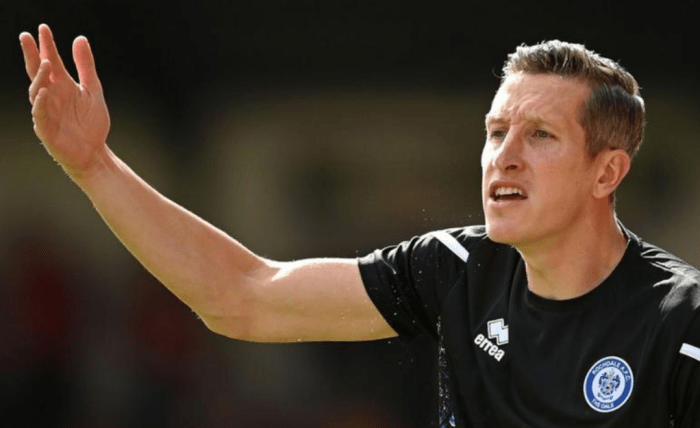
Over eight seasons, McNulty played a total of 237 matches for Dale, eventually combining coaching with playing. In August 2022, he found himself in interim charge for three matches after the club sacked Robbie Stockdale.

Former Morecambe boss Jim Bentley was appointed manager but when his services were dispensed with in March 2023, with Rochdale at the foot of League Two, 2023, McNulty once again stepped in as boss.

He was unable to prevent the club’s 102-year reign as a league club coming to an end but, in May 2023, he was appointed manager on a two-year deal.

“The opportunity to lead our team and represent our club, which the fans cherish, has always been a dream of mine,” he said.

“To be given the opportunity at a club so close to mine and my family’s hearts, is really special to me.

“As a boy, first and foremost, I dreamt of becoming a footballer, then when I did, I very quickly knew I wanted to become a manager thereafter.

“Within a couple of years of being a Dale player, I knew that this would be the club where I hoped to fulfil that ambition.”

‘Radio’ Poyet talked himself out of Brighton and Athens jobs

GUS POYET’S penchant for speaking out cost him his job at Brighton and AEK Athens.

“There is a reason they nicknamed Poyet ‘Radio’: always on, always talking, especially when it comes to football,” wrote Sid Lowe, in The Guardian.

While the exact reasons for his departure from the Albion in 2013 were never made public, there was speculation that it revolved around him talking openly about his desire to move on moments after the Seagulls had lost a Championship play-off match against arch rivals Crystal Palace.

“I’ve not been in this situation before but I don’t like it,” Poyet said after the game. “It’s changed my view completely about everything I was prepared for, so we’ll see now. I have always said that all the time we keep improving I am going to be at this club and the day we hit the roof, I’m not. Is there something more?

“Right now I don’t know, so I need to make sure I know there is, because if not I am not going to stay forever.”

Poyet was suspended by the club three days later, along with the assistant manager Mauricio Taricco and first-team coach Charlie Oatway, with them only saying they were launching an internal inquiry.

Andy Naylor in the Argus of 17 May 2013 reckoned the suspensions related to “numerous alleged breaches of contracts” pointing out: “Poyet refused to deal with the retained list, announced by the club earlier in the day.

“He told the squad at a meeting at The Amex on Tuesday he would not be involving himself with players’ contracts, because they were not his decisions and he might not be the manager next season.

“Players leaving and staying at the end of their contracts were dealt with instead by chairman Tony Bloom and head of football David Burke.”

At the time, Poyet’s name was being mentioned as a potential successor to David Moyes at Everton, and Martin Jol’s position at Fulham was not thought to be secure.

In the Argus, Naylor wrote: “During his post-match press conference he demanded assurances from Bloom he would have enough money to continue improving the team after their promotion near-miss.

“Those remarks are not, however, thought to be instrumental in the action taken by the club. Poyet’s relationship with Bloom and other senior figures has deteriorated in recent weeks.

“The Uruguayan almost joined Reading in March and his decision to stay only papered over the cracks.”

Naylor observed that Poyet’s previously “wide-ranging powers” had been reined in since the appointment the previous year of chief executive Paul Barber, who was on the board at Spurs when Poyet lost his job as assistant to Juande Ramos.

“It became an open secret within the Amex that Poyet would leave at the end of the season, irrespective of how Albion fared in the play-offs,” he said.

The following month Poyet claimed he was sacked while live on air doing punditry for the BBC although the club maintained he knew full well that he wouldn’t be returning to the job he had been doing for three and a half years.

Announcing his sacking on the club website, a statement read: “This followed his suspension, an investigation, and a subsequent formal disciplinary process. In line with the club’s own procedures, and UK employment law.”

Wind on the clock three years to April 2016 and, after only five months in charge of AEK Athens, Poyet was labelled “immoral” by the Greek club’s owner, Dimitris Melissanidis for telling the Greek media he would be leaving the club at the end of the season. Sounds familiar?

A Reuters report of 20 April 2016 maintained: “Speaking to the media on Tuesday, a day ahead of AEK’s Greek Cup semi-final second leg match against Atromitos, Poyet further angered the club by revealing details of a private meeting he had held with Melissanidis.

“What he did was unacceptable, it was not the appropriate time to unsettle the team just hours before the semi-final,” Melissanidis told reporters.

“AEK has never leaked any information from any of our meetings with him and for him to talk to the press about the contents of our meeting is immoral.”

Local media reported Poyet had been fired and would not be in the dugout for the match against Atromitos.

“AEK was informed of Gus Poyet’s decision that he will not stay with the club after the summer on Tuesday evening,” the club said.

“The important thing for AEK at the moment is the crucial semi-final with Atromitos, all of the other issues will be seen to after the match.”

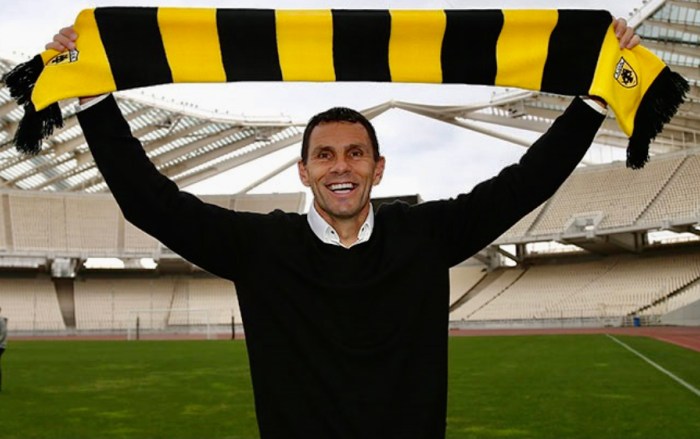
After losing his job at Sunderland seven months previously, Poyet took over from Traianos Dellas in Athens in October 2015 on a deal until the end of the season, with the option to renew for another two years. Taricco and Oatway joined with him.

All smiles as Poyet arrives at AEK as manager

At the time of his appointment Poyet said: “I know that I have come to a huge club and I’ve been astonished by the reception that I have received.

“Our goal is to play to win every game, starting with the derby against Panathinaikos on Sunday (it finished 0-0), and maintain contact with the top positions.”

The ‘Yellows’ picked up a string of impressive results under Poyet but speculation about his future was never far away. In December 2015 he was linked to the managerial vacancy at Swansea City (following the departure of Garry Monk), prompting AEK to make a public declaration.

“We have not been approached by Swansea, there is no need for us to be approached and no propositions have been made from Swansea,” said a club spokesman. “Mr Poyet is happy at the club and will be our manager at least until the end of the season.”

AEK ended the regular season in second behind champions Olympiakos, although points were deducted for crowd trouble and they eventually finished third.

On his personal website, Poyet records that he led AEK Athens to the semi-finals of the Greek Cup and they won the three biggest derbies in the country against Panathinaikos, PAOK and Olympiakos over a month and a half. After he left, they went on to win the Greek Cup.

A month after his departure from Athens, Poyet was installed as head coach at Spanish La Liga side Real Betis, from Seville, on a two-year contract.

He subsequently managed in China, France and Chile but returned to Greece in February 2022 as the head coach of the country’s national team.

At one point it looked like he might return to Greece before then. It seemed all had been forgiven when, in September 2019, word had it that Poyet was lined up to return to AEK as the successor to the departed Miguel Cardoso.

However, agonasport.com said: “All of the signs seemed to be pointing towards Poyet returning to AEK as manager, but reports have now revealed that negotiations have reached a dead end. AEK are not willing to match the Uruguayan’s financial demands.”

Lanky Lurgan lad lined up alongside George Best

JOHN NAPIER is still coaching youngsters in America at the age of 75. NICK TURRELL’s In Parallel Lines blog caught up with him for a trip down memory lane.  Here, in the third of five articles, we look at how it all began.

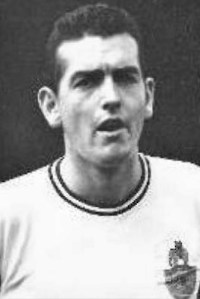
This cracking Bolton News picture shows Napier leading out Bolton’s under 18 side at Bromwich Street in January 1963, during the big freeze of that winter.

JOHN NAPIER was born in Lurgan, 18 miles south west of Belfast, on 23 September 1946.

Napier was football daft from a young age and he said: “Looking back at my childhood, I always wanted it from a young age. It was my dream. I had two uncles that played at pro level in Northern Ireland and they worked with me at a young age.

“I would say they toughened me up. I was never afraid to try new things. I left home at 15 to pursue my dreams, and it worked out. It was not easy – it never is – but you must keep at it. Failure was not an option in those times.”

In another interview, Napier said he adopted Spurs as his favourite side when he was 10 or 12. He had three uncles living in north London who were all avid Tottenham supporters and they would send him programmes, pictures and pennants that the youngster put up on his bedroom wall.

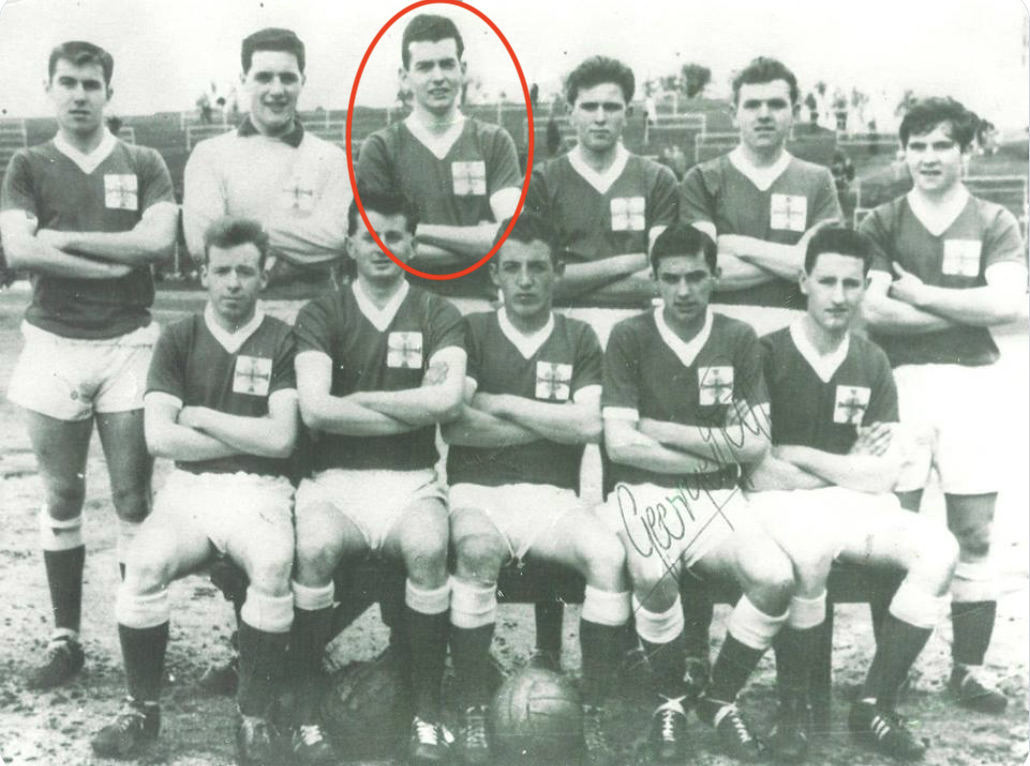
𝗟𝘂𝗿𝗴𝗮𝗻 𝗜𝗻𝘁𝗲𝗿𝗺𝗲𝗱𝗶𝗮𝘁𝗲 – 𝗜𝗿𝗶𝘀𝗵 𝗦𝗰𝗵𝗼𝗼𝗹𝘀 𝗦𝗲𝗻𝗶𝗼𝗿 𝗖𝘂𝗽, 𝗠𝗶𝗱-𝗨𝗹𝘀𝘁𝗲𝗿 𝗟𝗲𝗮𝗴𝘂𝗲 𝗮𝗻𝗱 𝗖𝗮𝗳𝗼𝗹𝗹𝗮 𝗖𝘂𝗽 𝘄𝗶𝗻𝗻𝗲𝗿𝘀 𝟭𝟵𝟲𝟭

Napier was good enough to represent his country at every level. He played for the schoolboy side at under 15 and under 16 level, and was the youngest Irish player, at 17, in the youth side that reached the final of the UEFA European Under-18 Championship tournament in April 1963.

In front of a crowd of 34,582 at Wembley, he had the misfortune to score an own goal with his head after only five minutes and England went on to beat the Irish 4-0 (Ray Whittaker, Jon Sammels and John Sissons scoring the other goals).

Remarkably, Northern Ireland’s greatest ever player, George Best, only played in two youth internationals for his country.

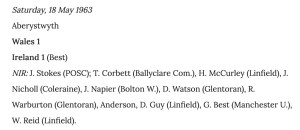
Napier was in the same side as Best when the Irish drew 1-1 with England at Boundary Park, Oldham, on 11 May 1963.

A week later they were selected together again and Best scored his country’s goal as they drew 1-1 with Wales in Aberystwyth.

After winning his only full cap against West Germany in 1966 (see previous article), Napier won two Under-23 caps, also both against Wales. He was in the side that beat Wales 2-1 at Windsor Park, Belfast on 22 February 1967, although the game was abandoned on 72 minutes because of a waterlogged pitch and Welsh and Irish sources differ as to whether the result stood.

Napier had moved to the Albion by the time he made his second appearance; this time the game took place at Ninian Park, Cardiff, on 20 March 1968 and the Irish included the likes of Pat Rice, Tommy Jackson, Dave Clements, Bryan Hamilton and Sammy Todd, who all became established full internationals. But the game was the last of Napier’s international career, at the age of 21.

As Napier said above, he was only 15 when he joined Bolton, choosing them over Everton and Sunderland, who had also shown an interest.

“I really enjoyed my early experience at Bolton,” he told thefootballnetwork.net. “George Taylor and George Hunt, my first coaches at Bolton, and also Nat Lofthouse had a lot to do with my early development. I used to talk to Nat a lot about my game.”

Napier training with Francis Lee and Brian Bromley

Napier rose through the youth ranks alongside the likes of Brian Bromley, Dave Hatton and future England and Manchester City star Francis Lee.

The boots of longstanding centre half Bryan Edwards were big ones to fill but Bolton boss Bill Ridding gave Napier the opportunity to stake his claim. He made his first appearances in the senior side in the final two games of the 1964-1965 season.

Napier helped the side keep clean sheets against Leyton Orient and Cardiff City as the Trotters just missed out on promotion, finishing third, as Newcastle went up as champions along with runners up Northampton Town.

As well as Lee and Bromley, Bolton at that time had a side that included Welsh international striker Wyn Davies (often Napier’s roommate for away matches), England international goalkeeper Eddie Hopkinson and Gordon Taylor, who went on to become chairman of the PFA.

For the following 18 months, Napier was a regular at the heart of the Bolton defence, missing just three games in his first full season and playing a part in the game against Charlton Athletic which saw the Addicks’ Keith Peacock become the first substitute used in English football when replacing goalkeeper Mike Rose in a game at Burnden Park on 21st August 1965.

The Ulsterman himself was involved in the first ever Bolton substitution when, following injury, he was replaced in the 3-2 defeat at home to Southampton by Gordon Taylor.

• In the next instalment of this five-part series of articles, Napier describes the camaraderie that existed amongst the Brighton players during his time at the club, and his approach to the opponents he faced.

The multi-million pound striker who scored on his Albion debut

STRIKER Darren Bent spent the last month of 2014 with Championship-struggling Brighton as the hapless Sami Hyypia tried to bring a halt to a dismal run of form.

Unable to command a regular starting spot at Aston Villa, Bent made an encouraging enough start, scoring on his debut against Fulham.

But the game ended in a 2-1 defeat and his only other goal came at Molineux two days before the axe fell on Hyypia’s time in the hotseat as Albion drew 1-1 with Wolves.

Bent told BBC Radio Sussex he’d reached “boiling point” in his frustration at the lack of starts under Paul Lambert at Villa. Previous boss Gerard Houllier had smashed Villa’s transfer fee record to take Bent from Sunderland for an initial £18m in January 2011, but, after Lambert became manager in 2012, he made just 13 Premier League appearances.

albion D BentAt the time he headed to the Amex, Bent had scored 184 goals in 464 career appearances, not to mention scoring four while winning 13 caps for England.

“I hope he will score plenty of goals for us during his time with us,” Hyypia had told the club website. “His record speaks for itself. He is a top-class striker with more than 100 Premier League goals with Charlton, Spurs, Sunderland and Aston Villa.

“Three years ago, he was a regular in the England squad under Fabio Capello; there is no doubting his ability to score goals.

“He also wants to play regular games and that is evident in his willingness to step down from the Premier League to the Championship.”

Bent told the matchday programme: “It doesn’t bother me that I’ve had to drop down a division to play football. Anyone who knows me knows that all I care about is football.

“It has never been about money or anything like that. It has always been about playing football. I’m always at my happiest when I’m playing.”

At least Bent found some familiar faces in the Albion dressing room in fellow Villa loanees Joe Bennett and Gary Gardner and former Fulham teammates David Stockdale and Aaron Hughes.

“Brighton felt like the perfect place to come and play football, especially for someone like Sami Hyypia, who I’ve played against many times over the years,” Bent added. “As a manager, I think he is the right man. He is the kind of guy I want to play for.”

Bent goalBent returned to Villa after playing in five games and although new boss Chris Hughton indicated a willingness to bring him back, the striker was soon on his way to Derby County for the remainder of the season.

He scored 12 in 17 games for Steve McLaren’s Rams and subsequently joined them on a permanent basis in the summer of 2015. After two seasons in the Championship with Derby, scoring 14 in 67 matches, a hamstring injury sidelined him for the start of the 2017-18 season and in January 2018 he went on loan to Championship strugglers Burton Albion.

Having been without a club since released by Derby in the summer of 2018, he announced his retirement at 35 in July 2019.

Since then, he has joined the football pundit circuit, although not everyone is convinced he’s making that good a job of it!

pundit D BentNevertheless, Talksport and Sky Sports are happy to give him a platform and, in an interview with Metro, he suggested what might be the most difficult aspect of it. “I played with some of these guys and regard them as friends so, when they have had a bad game, will I be able to dig them out? It’s finding the line between being objective and respectfully constructive.”

Only in January 2020, Bent could be found arguing the case for Lewis Dunk to be recalled by England. The former striker is also active on Twitter with @DarrenBent attracting just short of 492,000 followers.

Born in Tooting, south London, on 6 February 1984, Bent was probably destined to be a footballer because his dad Mervyn had been on the books of Wimbledon and Brentford as a youngster.

The family moved to Cambridgeshire when the young Bent was only 10 and his early football career was nurtured at Godmanchester Rovers.

Ipswich Town picked him up as a 14-year-old and nurtured him through their youth ranks until he eventually made it to the first team in November 2001.

In four seasons with Ipswich, he scored 56 goals in 141 appearances before then Premier League Charlton Athletic paid a fee of £2.5m to take him to The Valley.

After two successful seasons in which he bagged 37 goals in 79 games for the Valiants, he made another big money move, this time to North London to join Spurs.

It was in June 2007 they paid a club record £16.5m and he scored 25 in 79 games for them before a similar fee saw him move to Sunderland, then in the Premier League, in the summer of 2009.

After 18 months in the North East, Bent put in for a transfer and Aston Villa paid £24m to sign him on a four-and-a-half year contract. He marked his debut with the only goal of the game in a win over Manchester City.

In his second season with Villa, Bent took on the captaincy for a while but managerial changes meant his face didn’t always fit and he spent the whole of the 2013-14 season on loan to Fulham, where he scored six in 30 matches.

To what extent might the summer of 2019 mirror the summer of 1981?


BECAUSE this blog is all about Albion parallels, it has set me wondering how closely the summer of 2019 might mirror the events of the summer of 1981?

Brighton’s 2019 survival at the end of their second season amongst the elite came about somewhat less convincingly than in 1981 when four wins in the last four games had kept the Albion in the top flight.

As in 2019, relegation had loomed large 38 years ago but the status was retained with that late upturn in performances. Nevertheless, behind the scenes, big changes were about to happen with the departure of a former Spurs stalwart who’d done an excellent job as manager.

That boss (Alan Mullery), who’d led the side so successfully for the previous five years, left under a cloud, albeit of his own volition after a disagreement with the chairman (Mike Bamber) over the sale of star player Mark Lawrenson and a request to cut costs by dispensing with some of his backroom staff.

In a mirror moment to Bruno’s farewell versus Manchester City, Mullery’s captain, Brian Horton, played his last game for the club in the final match at home to Leeds – the difference being Horton had no inkling it would be his last game for the Seagulls.

That fixture also saw the last appearances of Lawrenson, long-serving Peter O’Sullivan and, in John Gregory, a player who would subsequently go on to play for England.

As we await developments regarding the appointment of Chris Hughton’s successor as manager, may we once again see potentially seismic changes on the playing side?

Bruno’s retirement certainly means there is a need to sign a replacement right-back, even though Martin Montoya might consider he can fill the gap.

It’s largely considered Albion’s star players are international defenders Lewis Dunk and Shane Duffy: will one or other of them be sold for big money to enable investment elsewhere in the team?

Lawrenson’s departure in 1981 was mourned by many but it paved the way for the arrival of European Cup winner Jimmy Case, and generated funds new boss Mike Bailey was able to invest in bringing in new players.

While Bailey had a similar top-level background to Mullery as a player, captaining Wolverhampton Wanderers to some of their best achievements, his managerial CV was less impressive, although he had just got Charlton Athletic promoted from the old Third Division.

However, with Case bringing a new top level dimension to the re-shaped side, and Horton’s younger replacement, Eire international Tony Grealish adding bite to the midfield, Bailey, and his relatively unknown coach John Collins, guided the Albion to the club’s highest ever finish of 13th place in his first season in charge.

O’Sullivan had been a fixture under several managers for a decade (apart from a brief stint in the USA) and one wonders whether the not-quite-so-long-serving Dale Stephens might have played his last game for the Albion.

In 1981, Bailey had a busy summer in the transfer market (courtesy of the cash from the sale of Lawrenson to Liverpool) and, in Steve Gatting from Arsenal, signed a quality player who went on to serve the club for a decade. The experienced Northern Ireland international left-back, Sammy Nelson, also arrived from the Gunners.

Might we see again the signing of a squad player (or two) from a top six side who will add much-needed quality to the Albion?

Don’t bet against it!


Sweet passer ‘Chippy’ became Brighton crowd favourite after Cardiff move

RICHARD Carpenter was a popular mainstay of Albion’s promotion-winnning side of the Noughties, scoring some notable goals along the way.

Billed as Brighton’s ‘star player’ in Port Vale’s 20 April 2002 programme for the last game of Albion’s promotion-winning season, Carpenter was described as “a highly effective midfielder, being strong in the tackle, a precise and sweet passer of the ball, while possessing a strong right-foot shot” – an excellent summary.

The goal he scored from a free kick against Spurs in the FA Cup at White Hart Lane on 8 January 2005 is right up there as one of my all-time Albion favourites.

Brighton, battling at the bottom of the Championship, hadn’t played Spurs since falling out of the top division in 1983 so it was a great chance for a giant-killing.

Albion ultimately succumbed 2-1, but not before Carpenter rifled home a free-kick past England ‘keeper Paul Robinson three minutes into the second half to level the score.

Carpenter told the Albion matchday programme in January 2018: “We were going to have a good time, win, lose or draw, but we also didn’t change the way we played – we made ourselves hard to beat, like we always did.

“Before my goal, I had already hit the crossbar with a half-volley from outside the box when Gary Hart teed me up. It went like slow motion and I thought it was going in.

“Obviously, I did score with a free-kick in the second half. I looked at the wall and my mind was made up to hit it. I knew it was going in by the flight of the ball and it was obviously a great feeling to score at White Hart Lane.”

Born in the village of Teynham, near Sittingbourne in Kent, on 30 September 1972, most of Carpenter’s career was centred on London and the south east, apart from one brief foray to south Wales, and Cardiff City.

Chippy began his professional career with Gillingham in May 1991 and he had clocked up 142 senior appearances for the Gills in five years before Gillingham old boy Micky Adams paid a £15,000 fee to take him to Craven Cottage, Fulham.

In two seasons at the Cottage he played a further 66 times, scoring nine goals along the way.

It was in July 1998 that he left the English capital to sample life in the Welsh capital. Cardiff paid £35,000 for his services and he helped them to promotion from the fourth tier in 1999.

Unfortunately, Carpenter’s time in Wales was also marred by a tackle he made in a Boxing Day game against Reading in 1999. His challenge on Chris Casper resulted in a double leg break for the defender which ultimately ended his career. Five years later, Casper was awarded undisclosed damages in an out-of-court settlement for past and future loss of earnings.

Nevertheless, when interviewed about his time in south Wales, Carpenter told Graham Otway, of the Daily Mail: “I had two and a half fantastic years at Cardiff. I helped them win promotion and I lived in a lovely part of the Forest of Dean, near Chepstow.

“I never wanted to leave the club but my girlfriend was expecting a baby and we wanted to move back home to Kent.”

So, after 89 league and cup appearances for the Bluebirds, he joined the Adams-managed Brighton on a free transfer in July 2000.

Away from football, it also presented him with the perfect opportunity to browse Brighton’s famous Laines searching out various antiques for his collection.

“I do like collecting nice pieces,” he told Otway. “I am mainly into collectables – watches, jewellery and old walking canes. But when it comes to furniture I am into modern stuff as well. I just have lots of interests outside of football.”

On the pitch, Carpenter was an Albion fixture under various managers and was part of promotion and relegation sides.

In the first leg of the play-off semi-finals in 2004, on a boiling hot day at the County Ground, Swindon, it was Carpenter’s deflected goal that gave Albion the advantage going into the second leg, which was played in exactly opposite conditions of torrential rain, as Albion edged it via a penalty shoot-out.

Carpenter said the 2004 play-off final at Cardiff was the pinnacle of his career, as Albion secured a 1-0 win over Bristol City to return to the second tier.

“I have played all my career in the Second and Third Divisions – apart from one in the First – and I haven’t had the opportunity to play in luxury stadiums in front of massive crowds,” he said. “The final is going to be something special for me to remember for the rest of my life.”

After Mark McGhee was replaced as manager by Dean Wilkins in September 2006, Carpenter’s Albion days were numbered.

In fact, he was red-carded in Wilkins’ first game in charge, away to Millwall, although the Seagulls won 1-0. Former Albion youth coach Wilkins was keen to introduce to the first team some of the younger players he’d helped to develop. So, at the age of 34, and after more than 278 appearances and 24 goals, Carpenter’s Seagulls playing career finally came to a close, in February 2007, when he left by mutual consent.

Albion chairman Dick Knight devoted space in the matchday programme to honour his achievements with the Seagulls.

“He has been a fantastic player and model professional for this football club ever since he arrived from Cardiff in 2000,” said Knight. “I remember Micky Adams telling fans that Richard would be a player that fans would enjoy, and he was right.”

As well as highlighting his key moments on the pitch, Knight added: “He has also been a real credit to his profession off the pitch, a tremendous role model for the youngsters coming through in terms of his dedication, honesty as a player and character.”

Manager Wilkins added: “He is the ultimate professional – on and off the pitch. His attitude and application from Monday through to Saturday was superb. I don’t think I’ve seen anybody with better work ethic, discipline and determination.”

For his part, Carpenter said: “I have got no hard feelings, although I’m disappointed with the way it’s ended this season. I haven’t played as many games as I would have liked, due to suspension and injury.

“It’s hard at my age not to be involved; this last year or so has been a struggle and it is time to move on.”

He joined non-league Welling United, where he was appointed captain and briefly caretaker manager. In 2011, he emerged from retirement for a short spell to play for Whitehawk.

After his playing days came to an end, Chippy spent four years coaching for the Albion In the Community programme. He then “worked on the railways” for five years and at the turn of 2018 said he was planning to indulge his passion for antiques.

In February 2018, prior to Albion’s FA Cup tie with Coventry, he appeared on the BBC Radio Sussex show, Albion Unlimited, and talked about how he missed the game, especially the close bond he enjoyed with teammates at all the clubs he played for.

Presenter Adrian Harms asked him about the characters he played with and he said: “We trained the way we played; we was all up for it. Individually we were strong; collectively we were even stronger.”

B Dean Chippy + Cullip

Pictures from various matchday programmes, by Bennett Dean, and the Argus.

World Cup legend Armstrong too often warmed Albion bench

IMG_3807

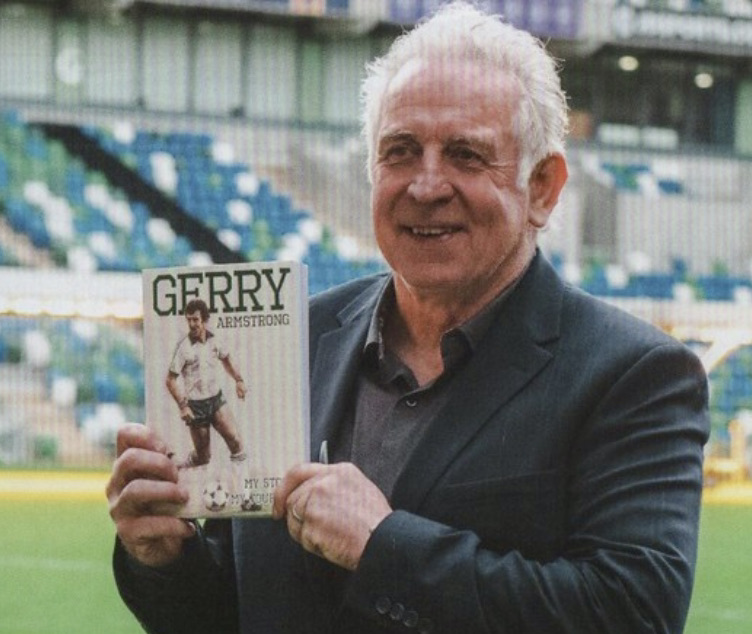
IN THE SPACE of 10 weeks, Gerry Armstrong went from 71st minute substitute for Northern Ireland against Brazil at the 1986 World Cup in front of 51,000 in the Estadio Jalisco, Guadalajara, Mexico, to centre forward for Brighton & Hove Albion in front of 13,723 at the Goldstone Ground in a season-opening 0-0 draw against Portsmouth.

That 3-0 defeat to the mighty Brazilians signalled the end of an international career in which Armstrong had written his name in Northern Irish football history at the 1982 World Cup in Spain four years earlier. He had scored 12 goals in 63 appearances for his country but none as important as the one which beat hosts Spain to send the Irish through to the quarter-finals, which I shall come on to.

Screenshot

Four years later, while away with Ireland in Mexico, former Spurs striker Armstrong took a call at the team’s hotel from someone else who had made his name with the North London club – Alan Mullery – who had recently been restored to the managerial chair at Brighton.

“Alan knew I was a free agent and I promised to talk things over with him when I got back from Mexico,” Armstrong said in a matchday programme article. “I was impressed by the manager’s ideas for the future and Brighton appealed to me because I have always liked the club,” he said.

“I always got the impression that there is a good, family atmosphere here and I liked that.

“In many ways, Brighton reminds me of Watford. I had three very happy years there and I’m looking forward to enjoying myself just as much here at Brighton.”

Born in Belfast on 23 May 1954, Armstrong grew up in the Falls Road area and initially played Gaelic football and could have made that his chosen sport. But while he was banned from playing, he took up soccer with junior Irish clubs St Paul’s Swifts and Cromac Albion before beginning a three-year spell playing semi-professionally with Bangor between 1972 and 1975.

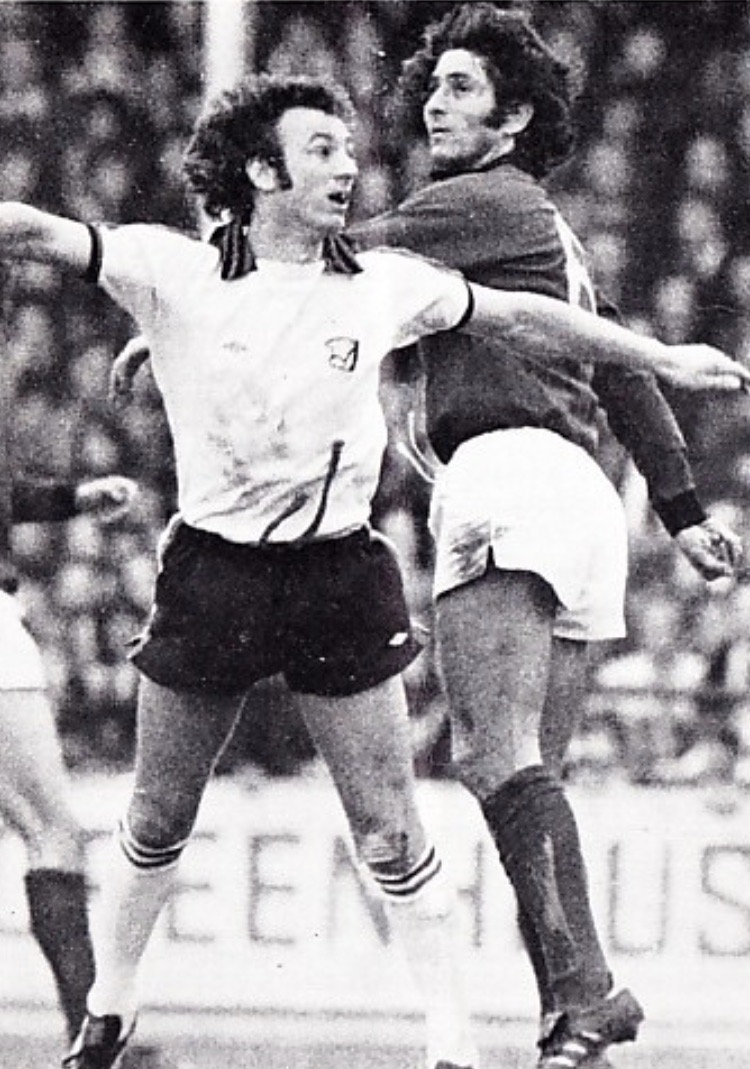
Spurs manager Terry Neill had family in Bangor and Tottenham paid a £25,000 fee for Armstrong’s services in November 1975. He made his Spurs debut in a 3-1 defeat at Ipswich Town on 21 August 1976. The season ended in relegation for the North Londoners but the young Armstrong was trying to make his way.GA Spurs

He said: “I was basically big, strong and courageous but that wasn’t enough alone so Spurs made me skilful as well.

“I set myself the task of gradually playing more first team games each season and managed to achieve it.”

After scoring 16 goals in 98 league and cup games for Spurs, Armstrong was sold to Watford for £250,000 in November 1980.

When the Hornets made it to the top division for the first time in their history, Armstrong scored their first goal at that level, against Everton, and they finished the season as runners up.

“Graham Taylor influenced me more than anybody,” he said. “My time at Spurs was going stale because they were using me in all sorts of different positions but, at Vicarage Road, Graham taught me about forward play and then gave me the chance to repay him.”

Nevertheless, it was breaking through at Spurs that helped Armstrong onto the international stage. He made his debut for Northern Ireland playing up front with George Best in a 5-0 defeat to West Germany in Cologne in April 1977. And in November the same year he scored his first goals for his country, netting twice in a 3-0 win against Iceland in Belfast.

His stand-out moment in football which fans still talk about came when Northern Ireland were minnows at the 1982 World Cup in Spain. In front of a crowd of 49,562 – mostly Spanish – packed into Valencia’s Estadio Luis Casanova, on 25 June 1982, Ireland beat the hosts 1-0 and Armstrong fired home the only goal of the game in the 47th minute.

“I cracked it in between a couple of defenders, but couldn’t really believe it because there was this deathly hush. Fifty-five thousand people (a bit of Irish overstatement) all there to see Spain, and we ruined the party!”

He added: “It was a very satisfying one to get for the team, because it was a great win for us. “The odds were against us because there was a huge crowd in the stadium and virtually all of them were backing Spain. Nobody really gave us a chance, but it was a great team performance.

Armstrong Spain

“All the players worked hard for each other and that game summed up the excellent team spirit I have enjoyed with the national side over the years.”

Armstrong also scored Ireland’s only goal in their 4-1 quarter-final defeat to France.

The Spanish climate obviously agreed with Armstrong because in the summer of 1983, having scored 12 goals in 76 league games for Watford, Real Mallorca signed him for £200,000. Although he got stick from certain sections of Spanish supporters who remembered the goal he scored against them, he spent two years with Real Mallorca scoring 13 times in 55 league games.

On his return to the UK in August 1985, he initially signed for West Brom on a free transfer but struggled with travelling to and from London to train and play, didn’t see eye to eye with manager Ron Saunders, and picked up some injuries. He spent the second half of the season at Chesterfield, where former Spurs teammate John Duncan was boss, so he could get some game time to put him in contention to be selected by Northern Ireland for the upcoming World Cup.

irish news gerry arm

A free agent on his return, he joined Mullery’s Brighton having heard good things about the former Spurs captain from his Irish international colleague Pat Jennings, who’d played in the same Tottenham team as Mullery. However, it was 17 games before Armstrong managed to get on the scoresheet – in a 3-1 defeat at Leeds – although he did score again in the very next game, as Shrewsbury were beaten 3-0 at the Goldstone.

When Mullery’s second spell as manager ended rather abruptly, in January 1987, Armstrong was loaned to Millwall. New manager Barry Lloyd did restore him to the Albion line-up for the final eight games of the season, but the side finished in bottom place.

Back in Division 3, Armstrong was transfer listed along with Steve Gatting and Chris Hutchings as Lloyd was forced to shuffle the pack. He stayed with the club, but only got one full game, in a league cup tie, all season: he came off the bench 11 times and was a non-playing sub on 14 other occasions.

He was suitably philosophical about his involvement from the bench, however, and said in another matchday programme interview: “Over the years I’ve gained a bit of a reputation for grabbing goals when it matters most, and I figure that if I only get on for the last 20 minutes then there’s even more reason to take the game by the throat and get stuck in.”

In the 1988-89 season, Armstrong managed four starts but was once more on the bench more often than not and eventually was appointed reserve team player-coach.

But his time with the club ended ignominiously. In a Sussex Senior Cup tie at Southwick in January 1989, following the first ever red card of his career, as he walked off, he took exception to a comment from a supporter, jumped into the crowd and headbutted the person concerned.

The incident is referred to amongst the annals of assaults by players on fans. Armstrong left the club a fortnight after the altercation but the matter ended up in court and the footballer received a conditional discharge.

His final games as a player were at Glenavon back in Ireland after he had spent some time as a player-coach at Crawley Town, who were in the Beazer Homes League at the time.

In November 1991, he became manager of Worthing and led them to a promotion before being appointed assistant manager of Northern Ireland by his former teammate Bryan Hamilton.

He continued to live in Hove, though, and worked as a cable advisor for Nynex Communications. He even carried on playing football for Sussex Sunday League side James Lytle.

Although he left the national assistant role in 1996, he reprised it under Lawrie Sanchez between 2004 and 2006. Then, in 2011, the Irish FA recruited him as an elite player mentor – in essence to try to persuade young Catholic Northern Irishmen considering playing for the Republic of Ireland (a choice made by Shane Duffy, for example) to stick with the country of their birth.

Throughout all of this time, Armstrong has also forged a successful media career and is probably best known for his work with Sky Sports coverage of La Liga.

In 2015, the Belfast Telegraph did an interview with Armstrong and his wife Debbie in which they spoke about running a restaurant in Majorca, and his involvement as part-owner of a football club in Portugal.

The player’s autobiography, Gerry Armstrong: My Story, My Journey, written in conjunction with Dave Bowler, was published in November 2021 by Curtis Sport.Armstrong autobiog

Pictures from the Albion matchday programme and in the international shirt from the Irish News.

Dennis Burnett – England World Cup trio’s teammate – added finesse to Brighton’s defence

1newhamrecorder.co.uk

WITH all due respect to his predecessors in the number 6 shirt, Dennis Burnett was a classy addition to Brighton’s defence when he signed from Hull City in 1975.

At the end of his first season with Brighton, when they toyed with promotion from Division 3 but just missed out, Burnett was selected in the PFA Third Division Team of the Year, which said everything about his stature amongst his fellow professionals. Albion’s Peter O’Sullivan was also selected while the goalkeeper was Eric Steele, then with Peterborough, and Crystal Palace winger, and, future Brighton manager, Peter Taylor, was also in the XI.

Before 1975, Brighton fans had been used to seeing their centre halves hoof it, but Burnett play more in the style of another famous former West Ham number 6. OK, he might never have reached Bobby Moore’s level but he played alongside the great man for a while and came through the ranks at West Ham when they had a reputation for playing cultured football.

He started off in the West Ham youth team and was in the 1963 FA Youth Cup winning side alongside the likes of Harry Redknapp, Clive Charles, Bobby Howe and John Sissons.

Burnett made his first team debut for the Hammers as a 21-year-old in October 1965, along with Jimmy Bloomfield (the future Orient and Leicester manager), in a 3-0 defeat to Fulham at Craven Cottage. He made 24 league appearances in 1965-66, the most he managed in any one season for the Hammers.

In March 1966, he collected a League Cup runners-up medal playing right back in a side that lost 5-3 over two legs to West Brom. The team was captained by Bobby Moore, and included Martin Peters and Geoff Hurst, just four months before all three played in England’s one and only World Cup win.

Burnett went on to complete 66 league and cup appearances for West Ham.

Born in Southwark on 27 September 1944, perhaps it was no surprise his next stop was Millwall. West Ham sold him to The Lions in 1967 for £15,000, and the vast majority of his football career was spent at The Den, playing in the second tier.

Playing alongside Barry Kitchener at centre half and Harry Cripps at left back, he was part of a team that nearly made it to the First Division, particularly in 1971-72.

In a scene you would never get now in the mobile phone age, Millwall were leading Preston at home and the word went round The Den that rivals for promotion Birmingham were losing at Sheffield Wednesday. It looked like Millwall would be promoted to the elite for the first time in their history and the news spread to the players on the pitch.

Unfortunately, the rumour was completely wrong. Birmingham were leading, not losing. Club skipper Cripps had even gone round the Preston players telling them Millwall were going up but level-headed Burnett didn’t get carried away.

millwall-history.org records: On-the-field skipper Dennis Burnett was less convinced. “I wasn’t going to believe it until I knew for sure,” he said. “Those last few minutes were agonising. We played on in a dream. It was the longest 20 minutes ever for me.”

As the end of the game approached, the crowd jammed the touchline, waiting to cheer off the Millwall players. The pressure behind Millwall’s goal was so great that the woodwork began to buckle.
Centre-forward Barry Bridges
(who would join Brighton five months later) ran back to appeal to the fans to be patient. When the referee blew for the last time – suspiciously early – half the 20,000 crowd stormed on to the pitch. Cripps was carried aloft and some of the other players lost their shirts.

Finally the correct score from Hillsborough was announced and the crowd fell silent and faded away.

The following season, Millwall struggled near the bottom of the table and manager Benny Fenton moved Burnett into midfield.

“As a sweeper I was a bit restricted,” he told Goal’s Ray Bradley, who described him as “one of the most accomplished and stylish players outside the First Division”.

“I had to stay back and wasn’t so involved,” said Burnett. “ Now I find I can express myself more and go up in support of the attack.”
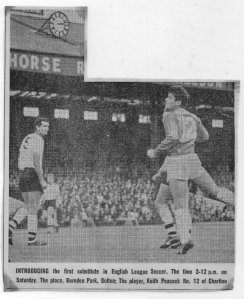
Unlike his illustrious former Hammers teammates, full international recognition eluded him but in April 1973 Burnett was part of an English FA squad managed by Sir Alf Ramsey that thrashed Gibraltar 9-0 in a ‘friendly’. Frank Worthington (of Leicester at the time) scored a hat-trick.

Hankering for another shot at top division football, Burnett went on to the transfer list at The Den. He got his move, but only to a club in the same division.

After clocking up 257 appearances for Millwall, in 1974, Terry Neill paid £80,000 to take Burnett to Hull City, where a young Stuart Pearson, future West Ham, Man Utd and England international was making a name for himself.

However, when Neill left to become manager of Spurs, his replacement John Kaye brought in his own man while Burnett was out of the side suspended. After losing his place, Burnett had a brief loan spell back at Millwall.

During the summer of 1975, he played 21 games in the States with St Louis Stars (for whom former Chelsea and England goalkeeper Peter Bonetti was playing) before Brighton manager Peter Taylor secured his services for the Seagulls.

In an article in Shoot incorporating Goal, Burnett explained how, although he’d been sidelined for two months with an ankle ligament injury, he’d got back in the side only to be sent off in a game away to Bristol City.

“It was a most unjust decision. Even the opposition seemed flabbergasted,” he said. “Anyway, I never played for Hull again. The signing of Dave Roberts from Oxford United put paid to my chances of a first team recall, following my suspension.

“Eventually, manager John Kaye called me into his office and asked if I wanted a move. A price of £30,000 was put on my head, later reduced to £15,000. No one came for me so in April I went to the United States and played for St Louis Stars in Missouri, a North American Soccer League club.

“While there I received another contract from Hull City, which I refused to sign. I lodged an appeal against it to the Football League Management Committee. Surprisingly they upheld it, and, during July, I received a letter to say I’d been given a free transfer.

“I arrived back in England on August 24th, made and received a number of ‘phone calls which resulted in my being offered a three-year contract by Brighton, plus excellent wages, which at the age of 31 was fantastic for me,

“Added to all this is the potential of Brighton in terms of location, players and attendances. It was a move not to be resisted.”

Burnett told the magazine he felt Brighton were much better prepared for promotion than Millwall had been. “Had we gone up, we would have needed a miracle to survive in the First,” he said. “At Brighton, we are winning matches without being fully stretched. The right blend is there and we can only get better.

“If I look after myself, I can get through another four or five seasons, by which time Brighton could be up amongst the big boys.”

Burnett was obviously a good judge because Brighton certainly got themselves up amongst the ‘big boys’ four years later – although by then he was no longer a part of it.

After a successful first season in which he developed a formidable central defensive partnership with Andy Rollings, and earned that placed in the PFA team of the year, perhaps there were signs that age was catching up with him.

In his end of season review in the Evening Argus, Albion reporter John Vinicombe observed: “Over the course of the season, the most improved player was Andy Rollings who profited by the experience of Dennis Burnett at his elbow.

“There were times when Burnett looked unflappable in the centre of the defence. As time wore on, and situations became more frenetic, that casual style, no doubt a legacy of his West Ham upbringing, now and again landed him in trouble.”

Maybe manager Taylor thought the same because one of the last things he did before quitting and rejoining Brian Clough was to sign veteran defender Graham Cross, which spelled trouble for Burnett.

Under new manager Alan Mullery, in the league at least, Cross was preferred alongside Rollings. Burnett deputised for Rollings when he was injured – for example, he played alongside Cross in the memorable 7-2 demolition of York City – and was given some games in midfield, but mainly in the League Cup he got the chance to shine.

He played in memorable games against First Division opponents Ipswich, West Brom and Derby, and was assured alongside Cross in the memorable narrow 2-1 defeat at the Baseball Ground in November 1976.

Vinicombe reported: “Cross and Burnett played coolly and neither looked out of place among the high-priced cream.”

He kept his place for a league game away to Port Vale five days later, but that 2-2 draw was his last in an Albion shirt.

In early February 1977, together with ex-Spur Phil Beal, he agreed a pay-off with the club and played non league with Ilford for the remainder of the season before returning to the States and another 19 games for St Louis Stars, where he was joined by former Albion teammate Fred Binney.

Mullery explained several years later in his autobiography that he had inherited a squad of 36 professionals and needed to prune the numbers. The older players were the obvious ones to go and, although Beal and Burnett went quietly, he had more truck dispensing with Joe Kinnear’s services – but that’s a story for another day.

On his return to these shores, Burnett headed for Ireland to play for Shamrock Rovers, at that time managed by the legendary Johnny Giles.

The defender subsequently played for three years in Norway, for SK Haugar, and popped up back in Sussex in 1994 as assistant manager of Sussex County League side Lancing, and played in a 2-1 defeat against Horsham YMCA in the FA Cup a month before his 50th birthday!

According to Wikipedia, Burnett ran a painting and decorating business in Sussex after he left football and was working in the hospitality suites at Upton Park before West Ham moved to the Olympic Stadium.

Pictured above are a Newham Recorder shot of Burnett in West Ham colours; in action for Millwall (from Goal), and in Albion’s stripes (from Shoot!). Below, an archive shot of the St Louis Stars side of 1975 with Burnett in the back row wearing the 18 shirt and Peter Bonetti in the centre of the front row.

back row burnett