‘Mad Dog’ Kennedy’s eyes weren’t always on the ball!

A Ken shot

IN A ‘10 worst Albion strikers you’ve seen’ list, Andy Kennedy would be a leading contender.

On the rare occasions he scored, he would celebrate with an exaggerated swagger befitting scoring the winning goal in a cup final – all rather out of place in a humdrum third tier league match!

The disdain in which the supporters of Watford hold him is hilariously summed up by Darren Rowe in an article on Blind, Stupid and Desperate.

“If an opposing team wanted to keep him under control, they did not need to mark him, merely make sure that he was offside, which, for long spells of the game, he would be,” opined Rowe. “Andy always seemed to have forgotten to put any studs in his boots. If ever he felt he could get away with it, his legs would give way at the edge of the box.”

In the same online title, author Chris Stride is a little more appreciative, before putting the knife in!

“He had good control, strength, ball skills and packed a powerful shot. In his early days at Blackburn, I saw him score a magnificent 25-yard curler and have an all-round blinding game against Aston Villa in the FA Cup.

andy kennedy - wat“When he signed for Watford I was hoping for more of the same. All we ever got was one long range effort away to Southend in the First Round of the Coca-Cola, and a couple of seasons of strolling around the pitch preserving his hairstyle and energy for (page three model girlfriend) Maria Whitaker.”

A Blackburn Rovers fan, posting in February 2018 under the name Drog on roversfans.com, also shared an amusing recollection of Kennedy’s time at his club.

“My main memories of Walsall though are from an occasion at homely former ground Fellows Park where Andy Kennedy netted a brace in a 2-1 win.

“My travelling companions and I managed to gain admission to the less than Babylonian splendour of something exotically named the Terry Ramsden Suite, after a colourful but ill-fated owner, where I was hoping to perhaps pass my congratulations on to Andy and his then-paramour, a lass named Maria Whittaker whom I greatly admired but sadly she had not made the trip to the Midlands.

“I can’t remember exactly what she looked like but the captions which accompanied her frequent newspaper appearances always made me think she’d make a sparkling conversationalist.”

It seems the shapely Ms Whitaker must have occupied Kennedy’s mind quite a lot. Non-League Paper contributor Liam Watson, once a player with Witton Albion, recalled in a 2013 article: “We also signed the striker Andy Kennedy – long dark hair, good looking fella – and he was knocking off the page three girl, Maria Whittaker, at the time. That was all he talked about.”

Born in Stirling on 8 October 1964 the son of an engineer father and beautician mother, Kennedy went to Wallace High School in the town and first gained football representative honours at under 13 level. It was his performances for Stirling Boys Club that caught the eye of Glasgow Rangers scout Davie Provan.

In those days he was a winger but after going through the ranks at Ibrox and signing professional at 17, he was converted into a central striker. He eventually broke through into the first team in 1982.

He mustered 20 games for the Scottish giants, scoring three times, but also spent some time on loan at Seiko in Hong Kong. Clearly it was time to move on from Glasgow!

In March 1985, Birmingham City were faltering as promotion candidates in the chasing pack at the top of the old Second Division when manager Ron Saunders took on the 20-year-old Kennedy at St Andrews.
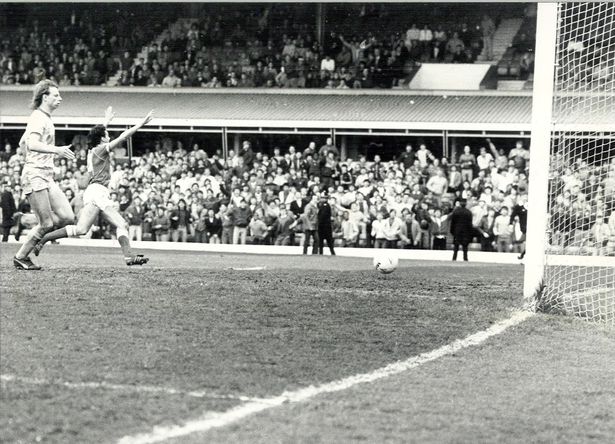
Andy-Kennedy           Kennedy displays a more conventional goalscoring celebration for Birmingham

On 8 April, with regular striker David Geddis suspended and Blues trying to end a run that had seen just one win in the previous six games, Kennedy was called up for his debut at home to Sheffield United.

And what a start he made! Not only did he score with a header past former Villa ‘keeper John Burridge, he also set up Wayne Clarke to make it 3-0 and Blues went on to win 4-1.

Kennedy’s good form continued as he scored four in seven appearances and the stuttering Blues went from fourth to second and won automatic promotion back to the elite.

Kennedy was leading goalscorer the following season….but with just nine goals that didn’t say much, as the Blues went straight back down!

Throughout the course of his three-year contract with Birmingham he made 76 league appearances but scored just 18 goals and, in March 1987, was loaned to Sheffield United, where he scored once in nine games.

In the summer of 1988, he was on the move again, this time to Blackburn Rovers for a £50,000 fee. To be fair, the Ewood Park faithful probably saw the best of him as he netted 25 goals in 59 appearances during his two years at the club.

Watford were his next club and he joined for a fee of £60,000 in August 1990. But he failed to make an impact and was loaned out to Third Division Bolton Wanderers. Unfortunately, a back injury curtailed his time with the Trotters and he only managed one game before returning to Vicarage Road.

In his unhappy time with the Hornets, he made just 25 league appearances and scored only four goals.

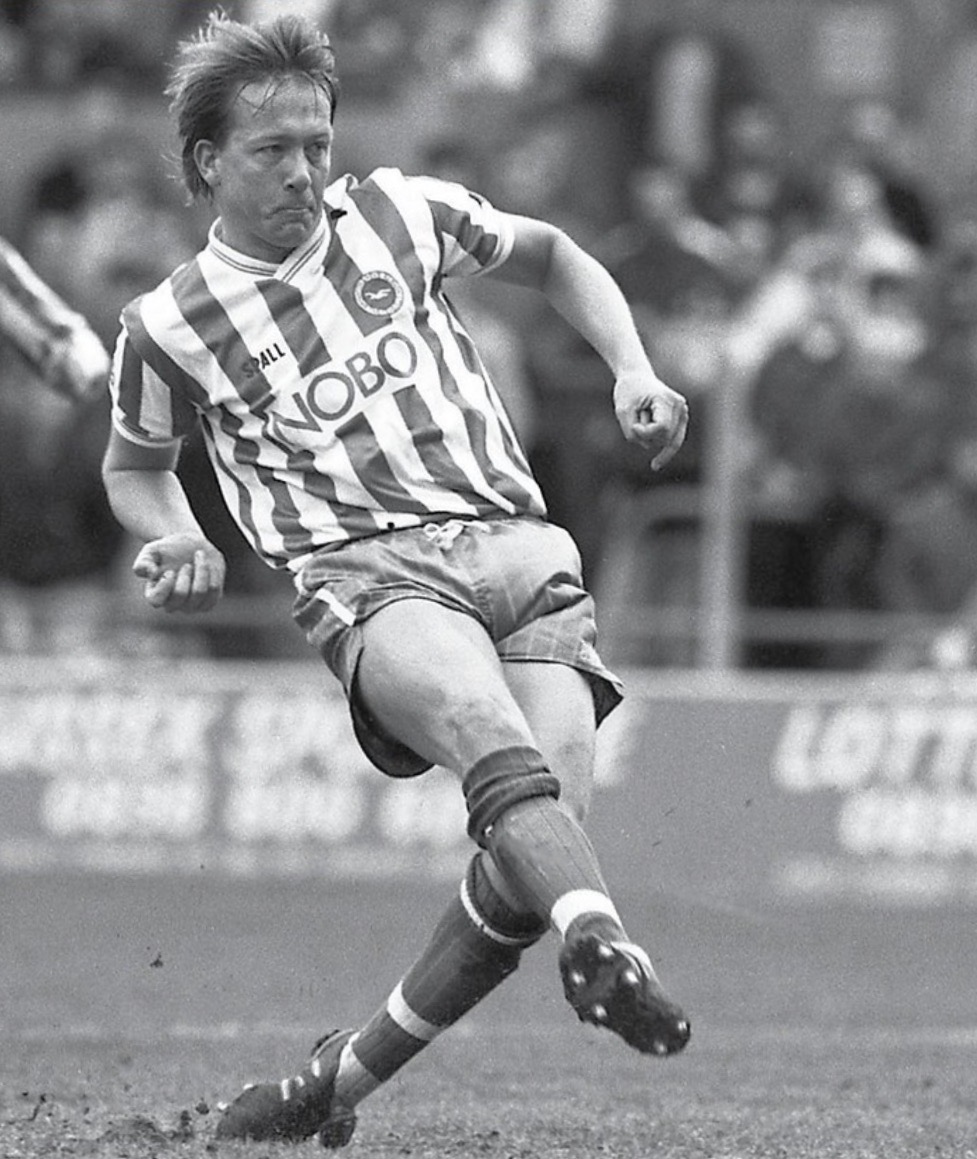
A KenIt was a ‘phone call from Barry Lloyd‘s no.2 Martin Hinshelwood that heralded his arrival at the Goldstone. He joined Brighton for a nominal fee in September 1992, making his debut as a substitute for Steve Cotterill in a 1-0 home defeat to Reading on 26 September 1992.

“I am delighted to be here with a great bunch of lads and now I am determined to play my part in scoring goals and getting the club promotion,” he told the matchday programme.

A skip through recollections of Kennedy on North Stand Chat hardly stand as a ringing endorsement to his contribution in the stripes, the most complimentary coming from Austrian Gull, who maintained: “He wasn’t always that bad – we’d been spoilt by the beast that was Mike Small and Kennedy could never come close to reaching that level. Wasn’t the most hardworking but him and (Kurt) Nogan were okay. We certainly had a lot worse than Kennedy to come.”

Meanwhile backson reckoned: “Frustrating player. When we played United in the cup at Old Trafford, I seem to remember he was genuinely fouled in the box but went down so damn theatrically, like he’d been shot, it wasn’t given.”

Others recall him through that nickname ‘Mad Dog’ (first coined in a News of the World article about his affair with Ms Whittaker). Gwylan said: “Mad Dog wasn’t that bad – he was just lazy and looked unfit. If he had the attitude of Gary Hart, say, he’d have been an excellent player for us as he had a fair degree of ability.”

Pinkie Brown also observed: “Certainly had ability when he felt inclined. Sadly, as he had a bad attitude and was lazy, supporters saw little of that ability. One of those players who could have gone further had he been more focused.”

Several fans remember how he didn’t react well to observations from the terraces pointing out his shortcomings. Bladders was amused to recall: “One time, when he lazily chased a ball that went out of play, my old man told him to ‘put some bloody effort in Kennedy’. Kennedy then threatened to jump into the South Stand and smash his face in if he gave him any more lip.”

I must say on checking with the record books, I am staggered to discover he scored 10 times in 42 games for Brighton – although I do remember those over the top celebrations.

It’s said he left the club in 1994 after Liam Brady told him he wasn’t good enough to play for the reserves in the Sussex Senior Cup Final.

He ended his English league career with a cameo at Gillingham and at the age of 30 tried his luck in Hong Kong again, this time with Tsing Tao, before returning to the British Isles to play in Northern Ireland with Portadown and Shelbourne in Dublin.

As he was not the sort of player likely to be invited back to the club to reminisce over old times, he appears to have slipped below the radar in recent times.

However, Kennedy has linked up as a coach with the Rangers Soccer Schools programme at home and in North America. In 2005, Kennedy was part of a team of Rangers coaches who ran soccer schools in Canada. According to a Birmingham Mail report in 2015, Kennedy stayed in Canada at Ajax FC.

‘Have boots, will travel’ striker Steve Claridge mixed it with Lions, Wolves, Foxes – and Seagulls

VETERAN striker Steve Claridge, who saw service with 22 professional and semi-professional clubs, helped Brighton to one of the most amazing smash-and-grab raid wins I’ve ever seen as an Albion fan.

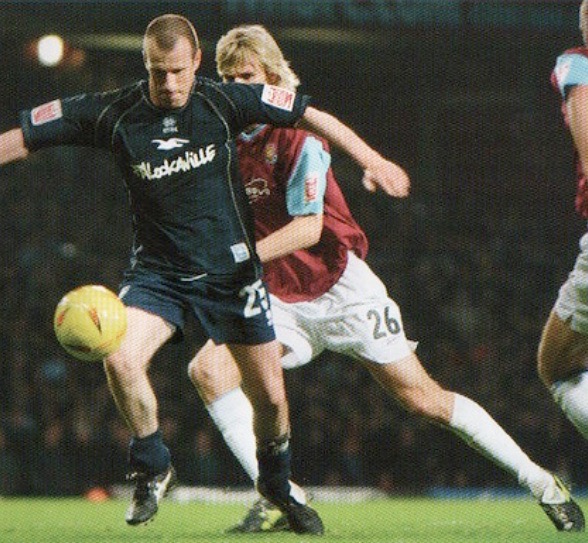
The former Millwall forward answered a plea from his old Lions boss Mark McGhee in November 2004 which paid off big time when the Seagulls snatched a 1-0 win away to West Ham United.

It was the first of only five games Claridge played for second-tier Brighton after McGhee turned to a player who had delivered for him during his spell in charge of Millwall.

Albion went into the game at the Boleyn Ground on 13 November 2004 on the back of three defeats and McGhee was desperate to stem a tide which had seen eight goals conceded and no points on the board.

A trip to West Ham (who ended up being promoted via the play-offs that season) was a daunting prospect if the bad run was to be halted.

However, as McGhee pointed out: “We approached the game differently. Whereas before we thought we could win, today we did not, and played to make sure we didn’t get beaten.

“We kept the ball up front more which is important. Steve Claridge was key to that.

“He is one of the fittest players I’ve worked with and I had no doubt that after 18 months away from this level he would be able to perform.”

Claridge in action at Upton Park

Centre back Guy Butters headed the only goal of the game on 68 minutes from Richard Carpenter’s pinpoint pass and the Seagulls held out for an unlikely three points. Hammers boss Alan Pardew had to admit: “Technically they were perfect and obviously came here to play deep and try and nick it on a set piece, which is what they did.”

Claridge’s professional career looked to have run its course after he left Millwall in 2003 and became player-manager of Southern League side Weymouth.

But the disappointment of missing out on promotion had seen him and chairman Ian Ridley leave the club and Claridge, at the age of 38, was keen to give league football another go.

McGhee knew the qualities Claridge could bring to his ailing side having been a popular figure as Millwall came close to promotion from the second tier.

The West Ham success didn’t spark a great revival in Albion’s fortunes, however, and there was only one more win (1-0 at home to Rotherham) during Claridge’s month with the club.

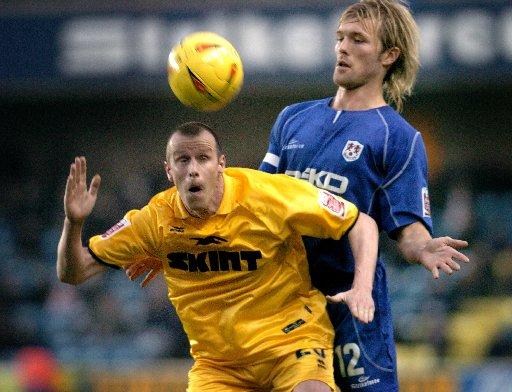
In one of those strange footballing quirks of fate, his fifth and final game for the Seagulls came away to Millwall (see Argus picture at top of article) on 11 December 2004, when Albion lost 2-0.

Claridge said all the right things in a programme feature about him that day, included likening the circumstances of both clubs. “The club has no money and it is tough just to survive, but everyone is in it together,” he said. “At Millwall we had a great team spirit and togetherness, and that is very much the case here.”

Unfortunately, it seemed money was the obstacle that precluded Claridge’s stay at Albion being extended and, after his deal was over, rather than it being one last hurrah, he went on to continue his league playing days at Brentford, Wycombe Wanderers, Gillingham, Bradford City and Walsall.

Then, at the age of 40, and with him needing just one more game to fulfil the landmark of 1,000 professional games, his old club Bournemouth gave him a match against Port Vale on 9 December 2006. No fairy tale, though, as they lost 4-0.

Born in Portsmouth on 10 April 1966, there aren’t many clubs in Hampshire and Dorset that Claridge has not had some kind of association with! Having been brought up in Titchfield, he started out with nearby Fareham Town in 1983. AFC Bournemouth took him on and gave him his debut in 1984 but he only played seven games before moving to Weymouth for three years.

Crystal Palace offered him a route back to the full professional game in 1988 but he didn’t make their league side, instead moving on to fourth tier Aldershot Town.

In two spells with Cambridge United, he scored 46 goals in 132 games. A falling out with manager John Beck saw him sold to Luton Town, and then bought back after Beck’s departure!

Nearly two years later, Birmingham City paid £350,000 to take Claridge to St Andrews and he became one of the club’s most prolific goalscorers, netting 35 in 88 games.

Such form eventually saw him switch to Leicester City and Claridge wrote himself into Foxes’ folklore, scoring winning goals in a play-off final to earn promotion to the elite level, and in the 1997 League Cup Final over Middlesbrough, the last time the competition staged a final replay. That, though, came after an ignominious beginning with Leicester.

McGhee’s successor as manager, Martin O’Neill, signed him for £1.2m in March 1996 and his early form was dreadful. Astonishingly, it seemed his poor start might well have been related to the wrong medication he had been taking for a heart defect for EIGHTEEN years, according to this official Leicester City website report.

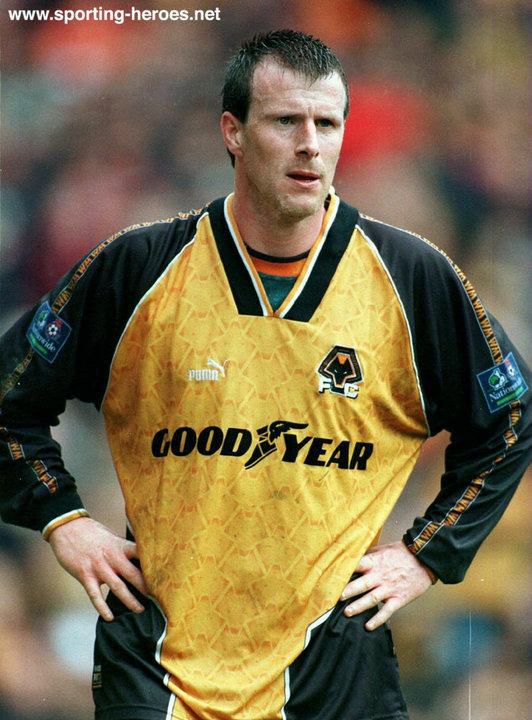
In 1998, Leicester sent Claridge on loan to his hometown club, Portsmouth, but, in March 1998, McGhee, then boss at Wolves and seemingly at odds with more established strikers at the club, took Claridge to Molineux for a £350,000 fee. Only five months later he was sold to Portsmouth for £250,000.

Writer Dan Levelle said on an amusing Wolves’ fan website: “He was that amazing food blender you saw at your mate’s house, but you can’t get it to work at all for love nor money.”

claridge Wolves1

Claridge’s time at Molineux was clearly not appreciated by the Molineux faithful, as Levelle revealed in this 2012 piece.

Even more galling for Wolves followers was that no sooner had Claridge made the switch to Portsmouth, he was scoring a hat-trick against them in a 3-1 win at Fratton Park!

The goals and games came thick and fast for Claridge back on home turf – 34 in 104 – but his reign as player-manager at Fratton Park in 2000 was curtailed after just 25 games.

Remembering the player he’d seen only briefly a couple of years earlier, McGhee, by now in charge at Millwall, offered the striker a lifeline with the Lions, initially on loan and then as a permanent signing.

He joined on a temporary basis to cover a period when current boss Neil Harris was banned following a sending off, but, after he hit the ground running, was then tied to a permanent deal, as this Millwall blog post described in 2016.

Writer Mark Litchfield summed him up brilliantly when he said: “His style was unconventional, to say the least: shirt untucked, one sock down and no shin pads, any naïve defender probably thought they could eat him for breakfast. But hard work was a pre-requisite for Claridge – he wouldn’t give any opposition player a moment’s rest and would more often than not always get the better of them, too.”

Few could doubt Claridge’s enthusiasm for the game, as he told the Bradford Telegraph & Argus during his time in Yorkshire.

Even after achieving the 1,000-game landmark courtesy of Bournemouth, Claridge couldn’t resist the lure of another game, turning out for Worthing, Harrow Borough, Weymouth, Gosport Borough and Salisbury.

Many younger readers will know Claridge as a pundit who worked extensively for the BBC on TV and radio and he now coaches youngsters in Salisbury and Warsash through his own scheme, the Steve Claridge Football Foundation.

Claridge

Mis-firing Mick Ferguson couldn’t repeat goalscoring prowess for Everton or Brighton

MICK FERGUSON was a prolific goalscorer for Coventry City but the goals dried up in spells with Everton and Brighton & Hove Albion.

Ferguson’s arrival at the Goldstone in the early autumn of 1984 was certainly not amid a great fanfare. The Albion, under new chairman Bryan Bedson, were wrestling with debt and, to bring in some much-needed funds, sold striker Alan Young to Notts County for £50,000 and full-back Mark Jones to Birmingham for £30,000.

Needing a cut-price replacement for Young, and with Ferguson unwanted at Birmingham having been responsible for getting them relegated (see below), he came to the Goldstone as part of the deal that took Jones to St Andrews.

In modern-day football, loan players don’t generally play against their parent clubs but, amazingly, at the end of the previous season, Ferguson was allowed to play against Birmingham while on loan at his old club Coventry, and ended up scoring a goal that kept the Sky Blues in the top division but sent Birmingham down.

It was such an unusual saga that as recently as May 2017, the Guardian revisited the tale, catching up with Ferguson to explain the circumstances.

As the article explains, shortly before the player’s 30th birthday, manager Ron Saunders offloaded him to Brighton, where the manager was Ferguson’s former Coventry teammate, Chris Cattlin. Just to prolong Saunders’ agony, Ferguson made his Seagulls debut in a 2-0 home win… over Birmingham! This time he didn’t score. And, for Brighton, that state of affairs existed for several months.

I remember his second game quite vividly. It was a midweek league cup tie away to Fourth Division Aldershot and I went to the game with my pal Colin Snowball, who at that time was living in nearby Bagshot. There wasn’t anything subtle about Albion’s tactics that night. Goalkeeper Graham Moseley would kick the ball long for Ferguson to get on the end of it.

But, as the striker tried to lay it off, all he succeeded in doing was heading it into touch – repeatedly. The new signing did not impress! Despite their superior status in the league, Albion succumbed 3-0 in what was a pretty humiliating exit. Ferguson was remarkably selected for the following Saturday’s game, an away defeat to Oxford, after which he was omitted for four games. Cattlin gave him another chance with a four-game spell but still the dismal form continued and he didn’t get another look-in for four months.

Freelance journalist Spencer Vignes did a retrospective article about Ferguson for the Albion matchday programme and discovered the striker didn’t have a high opinion of his former playing colleague. “Several of the players just didn’t get along with him, and I was one of them,” he said. “His man-management skills  left a lot to be desired. As a manager you need to have the players on-side. Chris certainly didn’t have us on-side.”

Ferguson admitted to being frustrated by Cattlin chopping and changing the side and said there were times he turned out when only 80 per cent fit, which didn’t do justice to himself, the team or the supporters. “My ankles weren’t great and towards the end I did struggle with my back, but I felt when I was fit I could certainly do a good job.”

The striker felt with the ability in the squad at the time they should have achieved more but pointed the finger at Cattlin for it not happening. “Some people aren’t cut out for management and I don’t think Chris was. It doesn’t surprise me that he never worked as a manager again.”

The history books (many thanks to Tim Carder and Roger Harris) recall him as the goalscorer in a 1-1 draw away to Portsmouth on 6 April 1986 but, having been to that game too, I seem to recall it was a rather desperate claim for what looked more like an own goal by Noel Blake.

The start of the following season saw the arrival of former £1m striker Justin Fashanu from Notts County and Dean Saunders, a free transfer from Swansea City, so Ferguson’s prospects of a starting place looked bleak.

However, the 1985-86 season was not very old before Cattlin had a striker crisis on his hands. Gerry Ryan was out long-term with the horrific leg break from which he never recovered, Terry Connor and summer signing Fashanu were also sidelined with injury and a big man was needed to play alongside Alan Biley.

Cattlin had little choice but to bring back the previously mis-firing Ferguson, and to everyone’s surprise and delight his goal touch returned, albeit briefly.

“I was virtually forced into the team through injury,” Ferguson admitted in a matchday programme interview. “But, fortunately, things turned out quite well. It was nice to get a goal against Blackburn in my first match back. That seemed to pave the way.”

The programme article had tried to give some perspective to the dismal form when he had first arrived. It said: “Mick’s confidence was affected by his loss of form, but he never lost an inner belief that he would pull himself out of the bad patch. And what a difference the goals make. He has shown great character this season and did a marvellous job for the team while Justin Fashanu was out with injury.”

Ferguson himself said: “It took us quite a while to settle down. We were in a flat at first and I was having a lot of problems, one way and the other, so it wasn’t an easy time.”

Eventually Ferguson, his wife and two daughters settled into a house in Hove, and the striker admitted: “When you’re having a bad time there is a tendency to bring your problems home. It’s unfair on your family. I didn’t notice at the time, but, looking back, I think I probably was a little snappy with my wife and children.

“I think you can reach the stage where you really start to wonder, but I always knew I could score goals for Brighton. I’ve scored goals everywhere else I’ve played. It was just a question of time and waiting for the right break.”

Indeed, Ferguson scored in three successive matches in September 1985, prompting Cattlin to give him a special mention in his programme notes for the league cup game at home to Bradford City. “The form of Mick Ferguson is bound to improve even more with the confidence he is gaining through his three goals in three games,” wrote the manager. “His header against Wimbledon was a true indication of his ability; it was of the highest class.”

The renewed confidence saw him add another consecutive pair the following month – before on-loan Martin Keown took over the no.9 shirt and demonstrated he could score goals as well as defend!

Sadly, the revival in Ferguson’s fortunes were not to last. When Fashanu was fit again, Ferguson was dropped and only stepped in a couple more times. His goal in a 4-3 home win over Huddersfield on 16 November was the last he scored for the club.

Apart from a lone outing in January, in a 3-0 defeat at Sheffield United, Ferguson was on the outside looking in until, to everyone’s astonishment, after a five-week absence from first team action, he was selected by Cattlin to lead the line in a FA Cup Sixth Round tie against First Division Southampton on 8 March 1986.

Ferg action Shilts Bond CaseFerguson, sandwiched between Kevin Bond and Jimmy Case, is foiled by Southampton goalkeeper Peter Shilton in what turned out to be the striker’s final Brighton game.

A crowd of 25,069 packed into the Goldstone – when the average attendance at the time often dipped below 10,000 – but it ended in a disappointing 2-0 defeat and the manager admitted he had made a mistake with his selection. It turned out to be Ferguson’s last game for the club.

Just over three weeks later, he moved to fourth-tier Colchester United – whose manager Cyril Lea was promptly sacked!

United’s reserve team manager, Mike Walker (who would later manage Everton) took over the first team as caretaker and, as the team went on an unbeaten run of eight games, Ferguson scored seven times, the first of which came in a 4-0 win over Leyton Orient on 8 April.

The following season he played 19 games and scored four times before leaving on 7 November 1986 to join non-league Wealdstone.

It was quite a fall from the heady days of the early Seventies.

Born in Newcastle on 3 October 1954, Ferguson was picked up by Coventry City’s youth scheme in 1970 and, although he made his debut in 1975, shortly after the sale of Scotland international Colin Stein, it wasn’t until the start of the 1976-77 season that he became a Highfield Road regular.

In tandem with Ian Wallace (who was later a strike partner of Peter Ward’s at Nottingham Forest), he really started to attract attention, as the Coventry Telegraph recounted when describing him as a “truly great goalscorer”.

The article reckoned he was strongly tipped for international honours at one point but injury and loss of form affected him over the next two seasons. Forest, Villa and Ipswich were all supposedly keen to sign him, with Brian Clough agreeing a £500,000 deal, then pulling out.

However, in the summer of 1981, he finally left City having scored 57 goals in 141 games (plus eight sub appearances) all in the top flight when Everton paid £280,000 for him. Ferguson scored six times in his first eight games – but the goals dried up after that and he was gone within less than a year having made only made 10 appearances (plus two as a sub).

In 2007, David Prentice, in the Liverpool Echo, sought out Ferguson for an explanation of his less than happy time on Merseyside.

Manager Howard Kendall initially loaned him to Birmingham City, before making the deal permanent, but injury disrupted his chances at St Andrews, hence the loan move back to Coventry.

After retiring from playing in 1987, Ferguson stayed in the game working in community development roles for Sunderland – for 10 years, until he fell out with manager Peter Reid – Newcastle United and Leeds United, where he was head of Football in the Community.

Pictures from Albion matchday programes and, via YouTube, from Coventry City’s Sky Blues TV.

Desk job at Leeds in later life

The cheek of Parris in the autumn briefly lightened Brighton gloom

LIGHTER moments were few and far between as an Albion follower in 1995. A despised regime seemingly intent on taking the club into oblivion had spread such disillusionment among fans that gates were badly hit.

It meant only 5,659 were at the Goldstone Ground on 28 October 1995 to see an amusing incident that can still be seen on YouTube.

Step forward George Parris, a star at West Ham United a decade previously, who had joined the Seagulls to help out his old Hammers teammate Liam Brady, by then trying to manage a club in turmoil.

Bristol Rovers humiliated Brighton & Hove Albion 8-2 at the Goldstone Ground in 1973, shortly after ‘Old Big ‘ead’ Clough had taken charge, but, 22 years later, it was the Rovers goalkeeper who was left with the red face.

That was all down to quick-thinking Parris. The experienced defender-midfielder found himself on the blind side of the Rovers goalkeeper and, as the ‘keeper rolled the ball forward to clear it, Parris nipped in, got a toe in to win the ball, swivelled and buried it into the empty net.

These days he would almost certainly have been penalised for a foul as he appeared to use his shoulder to nudge the no.1 off balance, but, back in 1995, the goal stood.

He talked about the incident, and his career, in an interview with the Argus in November 2001.

George Michael Ronald Parris was born in Ilford on 11 September 1964. His talent for football saw him chosen to play for England Schoolboys and he joined West Ham United from school.

He signed professional for the Hammers in 1982 and made his league debut at Upton Park in a 3-0 defeat to Liverpool in May 1985.

Also making their debut that day, for what would be their one and only first team appearance for the Hammers, was central defender Keith McPherson, who played 35 games for the Albion between 1999 and 2000.

Parris meanwhile became the regular left-back in the 1985-86 season when West Ham finished third in the top flight. He was comfortable in either full-back position, but could also fill in as a defensive midfielder.

He was part of the West Ham side who were Littlewoods Cup semi-finalists in consecutive seasons and FA Cup semi-finalists in 1990-91.

In 12 years at Upton Park, ‘Smokey’, as he was known, made 290 league and cup appearances, chipping in with 17 goals too.

But it was an era when he had to endure some dreadful racism, which he talked about in a 2014 interview with Sam Wallace in the Independent.

Former Hammers skipper, Alvin Martin, said of Parris: “What we remember most about George was his friendly disposition and true honesty which was reflected best when he was on the field. George is one of the most reliable professionals anyone could wish to play alongside.”

Sadly, when West Ham decided to honour Parris’ 11 years’ service at the Boleyn Ground with a testimonial match at the end of the 1994-95 season, there was a dismally low turn-out as reported on website theyflysohigh.co.uk.

Parris had left the Hammers in March 1993, a £100,000 fee taking him to Birmingham City, and his infectious enthusiasm soon made him a fans’ favourite at St Andrews. Unfortunately, when Barry Fry took over as manager, he made it plain Parris didn’t fit into his plans.

Brady brought him to the Seagulls on a three-month loan and he also had loan spells with Brentford and Bristol City before spending a summer in Sweden with IFK Norrköping.

Brady invited him back to the Goldstone in September 1995 to play on a month-by-month contract basis, and he stayed until 1997, taking on the captaincy when Paul McCarthy was injured.

“Being captain of Brighton was a great honour for me, and I’d like to think that my characteristics rubbed off on the other players,” he told the matchday programme in 2019. “At that stage in my career I was able to deal with the responsibilities that the captaincy brings.

“You have to know that what works for some players will not work for others and you have to be the manager’s voice on the pitch. There was no added pressure that I felt and I’d like to think I shouldered it all quite well.”

Matchday programme portrait of the former West Ham player

Parris scored five times in 88 games for the Seagulls before briefly joining Southend United in August 1997.

Sadly, there was a hidden side to Parris’s life: he was a compulsive gambler and he later told the whole harrowing story in a four-hour long DVD.

He also spoke to the dailymail.co.uk about how he considered suicide after his addiction and mounting debts spiralled out of control in the late 90s.

It came after another large bet on the horses lost, he walked out of a bookies and seriously considered ending it all. He revealed: “I drove up to Newhaven. I can remember looking out over the bridge there and thinking ‘What do I do?’

“I couldn’t see how I was going to get myself out of the big hole I was in. I’d begged and borrowed from everyone I knew and, yes, I did give serious thought to killing myself.

“I owed money to my closest friends and family and had nowhere else to go. But, thankfully, I pulled myself together and went home and confessed to my then wife that I’d lost every penny I had gambling.”

Gradually Parris pieced his life back together and obtained coaching qualifications, such as the UEFA A licence, and became a Football Association-approved level-two coach educator.

Parris stayed on the south coast, living in Rottingdean, and had spells as player-manager of non-league Shoreham and St Leonards, but also ran youth football and cricket schools.

In 2016, Parris took interim charge of Albion’s women’s team and guided them to promotion to Women’s Super League Two. When Hope Powell took over the women’s team in August 2017, Parris reverted to the role of regional talent club technical director, a post he left in September 2019.

In November 2017, Parris was honoured alongside Albion manager Chris Hughton (another former playing colleague) at the Football Black List Awards in London for their contributions to coaching and management.

Midfielder Alan Curbishley helped Seagulls to promotion

Screenshot

ALAN Curbishley completed a hat-trick of promotions with new clubs when he was part of Brighton’s successful third tier side in 1988.

He’d previously been promoted after switching from West Ham to Birmingham City and also when moving from Aston Villa to Charlton Athletic.

Curbishley was what you might call West Ham through and through.

Born at Forest Gate on 8 November 1957, within a mile of West Ham station, he was one of five children (elder brother Bill famously promoted and managed The Who and Led Zeppelin and was producer of the films Tommy and Quadrophenia).

Curbishley first played in Brighton at under 11 level, in a Newham Boys side against Brighton Boys at Longhill School, in May 1967. He was later capped for England Boys aged 15 and after joining the Hammers straight from school played for England Youth.

Curbishley won nine England Youth caps under Ken Burton, scoring on his debut in a 1-1 draw against Poland in Las Palmas on 21 January 1975 when England went on to win the Atlantic Cup. Among his teammates were future England captain Bryan Robson, Peter Barnes and Keith Bertschin.

He vied for a starting berth with Mark Nightingale (Palace, Bournemouth, Norwich, Peterborough), making six starts and three appearances off the bench. His last appearance was in a 1-0 win over Wales in Cardiff on 11 February 1976, playing alongside Glenn Hoddle and Gary Owen.

Almost a year earlier, on 29 March 1975, he had made his first team Hammers debut at the tender age of 17, lining up in midfield alongside Trevor Brooking and Graham Paddon in a 1-0 home defeat against Chelsea. Mervyn Day was in goal for West Ham and guarding the opposition net was John Phillips.

At the time, Curbishley was the youngest to play in the senior team although that record was subsequently eclipsed by Paul Allen.

A contemporary of Geoff Pike, Paul Brush and Alvin Martin, they were all in the West Ham youth team defeated 5-1 on aggregate by Ipswich in the 1975 FA Youth Cup Final.

In a midfield dominated by Brooking, Paddon and Pat Holland, and later Alan Devonshire and Pike, Curbishley found first team chances limited, although in 1977-78 he made 36 appearances.

After 85 matches for the Hammers, in 1979 he moved to Birmingham for £275,000. Manager Jim Smith used the proceeds of the £1m transfer of Trevor Francis to Nottingham Forest to buy Curbishley, Frank Worthington, Colin Todd and Archie Gemmill. Curbishley was still only 21 when he made his debut for the Blues on 18 August 1979 in a 4-3 defeat at home to Fulham and he went on to be ever present for Birmingham in that 1979-80 season.

Curbishley earned his one and only England Under 21 cap in a 5-0 thrashing of Switzerland at Portman Road when Justin Fashanu was among the scorers. He had hopes of going to the 1982 World Cup with England, having broken into the England B squad but fractured a kneecap sliding into a tackle with Albion’s Brian Horton. “I missed the rest of the season and the start of the next, and the World Cup squad which I might have broken into otherwise,” he said. “It was the worst disappointment I’ve ever faced.”

He was on the front cover of the matchday programme for a game I went to watch at St Andrew’s on 27 March 1982 when he played for Ron Saunders’ Blues in a 1-0 win over Brighton. But financial issues meant the side was broken up and, the following year, after a total of 155 games, he committed what today seems to be viewed as a cardinal sin by signing for Villa for £100,000, ironically making his debut against Birmingham in a 1-0 win on 4 April 1983.

“I had high hopes of success there with them just having won the European Cup,” he told Dave Beckett in an Albion matchday programme article. “It was soon obvious though that Tony Barton was under pressure from the moment he took over and all the players thought it was just a matter of time before he was sacked.

“He got a raw deal. That season we finished ninth in the league, got to the semis of the League Cup and were knocked out of the UEFA Cup in the last minute on the away goals rule. Villa have never been near that form since, but Tony Barton’s face didn’t fit and he was soon on his way along with all the men he signed.”

After only 36 appearances, scoring once, Curbishley returned to London, dropping back down to the 2nd division, to begin what would be a long association with Charlton Athletic, punctuated only by his spell at Brighton.

Amazingly, although homeless at the time and playing at Selhurst Park, Charlton won promotion back to the 1st Division. Unfortunately Curbishley sustained an achilles tendon injury and only played 10 games in the 1986-87 season.

“I knew I had an achilles injury but the operation was delayed until a week before the start of the new season and consequently I wasn’t fit again until December,” he said. “The manager bought two new midfield players, which I understood, but when I was fit again I couldn’t get back into the side.

“It became apparent that I wouldn’t get much of a chance unless something drastic happened so I’m pleased to have a fresh start.”

After 13 seasons playing in the top two divisions, he left Charlton having scored six times in 63 games and dropped down to the Third to join the Albion for £32,500.

He made his debut in a goalless draw at Chesterfield on 22 August 1987 in front of a crowd of just 2,286.

After the departure of Jimmy Case in 1985, the centre of Albion’s midfield had been crying out for someone who could put their foot on the ball and pass it, and Curbishley stepped neatly into that role, scoring six goals – mostly penalties – in 34 appearances as Brighton won promotion.

“Alan was a very level-headed guy, an excellent passer and really disciplined,” Albion boss Barry Lloyd told Spencer Vignes in a matchday programme article.

In total, over three years on the south coast, Curbishley played 127 games (plus five as sub)  – making his 400th league appearance during the 1988-89 season – and scored 15 goals.

curbs penThe Albion matchday programme featured Curbishley when the Seagulls hosted the Hammers for a Barclays League Division 2 game on 16 September 1989. Describing his time with the East London club, he said: “It was a brilliant set up although I was definitely a bit headstrong in my early days.

“I didn’t really grow up until I moved to St Andrew’s and that’s where I had my best playing days.”

Lou Macari’s side in 1989 included Curbishley’s old pal Alvin Martin and future Albion manager Liam Brady but the Seagulls ran out 3-0 winners (goals from Kevin Bremner, Robert Codner and Garry Nelson).

In 1990, Curbishley began his coaching career, returning to Charlton initially as player-coach under Lennie Lawrence. When Lawrence left in 1991, Charlton made the somewhat unusual decision to appoint joint managers: Curbishley and Steve Gritt (who would later be at the helm when Albion narrowly escaped dropping out of the league).

Curbishley’s first signings for Charlton were former Albion teammates Nelson and Steve Gatting and he later plundered young winger John Robinson from the Seagulls. After four years, Curbishley took sole charge at The Valley and led Charlton to some of the most successful times in their history.

Considering their resources, Curbishley turned Charlton into a steady top flight club and model of stability, consistently securing a mid-table finish.

Sean Cole in The Bleacher Report described him as “one of the most promising managerial talents of the new millennium” and in 2006, in the wake of Sven-Goran Eriksson’s departure as England manager, Curbs had ‘tea and biscuits’ with then chief executive Brian Barwick – but Steve McLaren got the job instead.

In December 2006, Curbishley landed what surely would have been considered his dream job – manager of West Ham.

It was quite a reunion of old pals when Brighton visited Upton Park for one of his first games in charge, in the third round of the FA Cup in January 2007. Albion boss Dean Wilkins and coach Ian Chapman had both been teammates while physiotherapist Malcolm Stuart was still wielding the magic spray.

In front of 32,874, Hammers ran out fairly comfortable 3-0 winners with Mark Noble scoring his first senior West Ham goal and Carlos Tevez a real handful up front. These were the respective line-ups:

West Ham: Carroll, Dailly, Ferdinand (Spector 45), Gabbidon, McCartney, Benayoun, Mullins, Noble, Boa Morte (Newton 73), Cole (Bobby Zamora 68), Tevez.
Subs not used: Green, Sheringham. Goals: Noble 49, Cole 58, Mullins 90.

Brighton: Wayne Henderson, Joe O’Cearuill, Joel Lynch, Guy Butters, Kerry Mayo, Tommy Fraser (Gary Hart 51), Adam El-Abd, Dean Hammond, Alexandre Frutos (Sam Rents 67), Alex Revell (Joe Gatting 84), Jake Robinson. Subs not used: Michel Kuipers, Richard Carpenter.

Fans’ website westhamtillidie recalled: “Perhaps Curbs’ greatest legacy at the club was the £7m signing of his former Charlton protégé Scott Parker, who went on to win the Hammer of the Year prize three times and pick up a Football Writers’ Player of the Year Award during his time at the club.”

Sadly, though it was to all end in tears and Curbishley quit in protest at the then Icelandic owners’ failure to consult him over the sale of defenders Anton Ferdinand and George McCartney.

In what must have been a tough heart-v-head decision, he resorted to a legal resolution of the situation and eventually won a case for constructive dismissal, eventually receiving £2.2m in compensation. But it was the last manager’s job he had.

“It took me a year to sort out my problem at West Ham,” he told The Independent. “And then, after that, I was perhaps a little too picky. I was told by other senior managers ‘don’t be out too long’ but I was waiting for a job that I thought was the job for me.”

Job vacancies came and went, Curbishley’s name was generally on all the shortlists, but he never again made it through to the manager’s chair. There was a brief moment at Fulham when he was technical director assisting Rene Meulensteen but when Meulensteen was swiftly axed, new manager Felix Magath brought in his own people.

He rejoined the Fulham coaching staff in March 2015 and took charge of training in November 2015 when Kit Symons was relieved of his managerial duties but Stuart Gray took charge of the team before Slavisa Jokanovic was appointed.

In 2016, Curbishley brought out a book, Game Changers: Inside English Football: From the Boardroom to the Bootroom (published by HarperSport) and was a regular pundit on the Football on 5 programme covering Football League games.

Further reading

https://www.westhamtillidie.com/posts/2014/11/07/preview-aston-villa

http://bleacherreport.com/articles/1415997-the-curious-case-of-alan-curbishley-footballs-forgotten-man

https://www.whufc.com/club/history/managers/alan-curbishley#C1vPoA9yPR1kYluJ.99

  • Pictures show westhamtillidie’s image of Curbishley in West Ham colours; the midfielder on the front of a Birmingham matchday programme 1982; in Villa’s colours from a Match Weekly annual, an Argus shot of Curbs scoring a penalty for Brighton against Man City, and other images from the Albion match programme.