The Harry Hotspur youngster who went west

MULTIPLE loans away from parent club Tottenham Hotspur didn’t succeed in laying a path to a top level football career for striker Jonathan Obika.

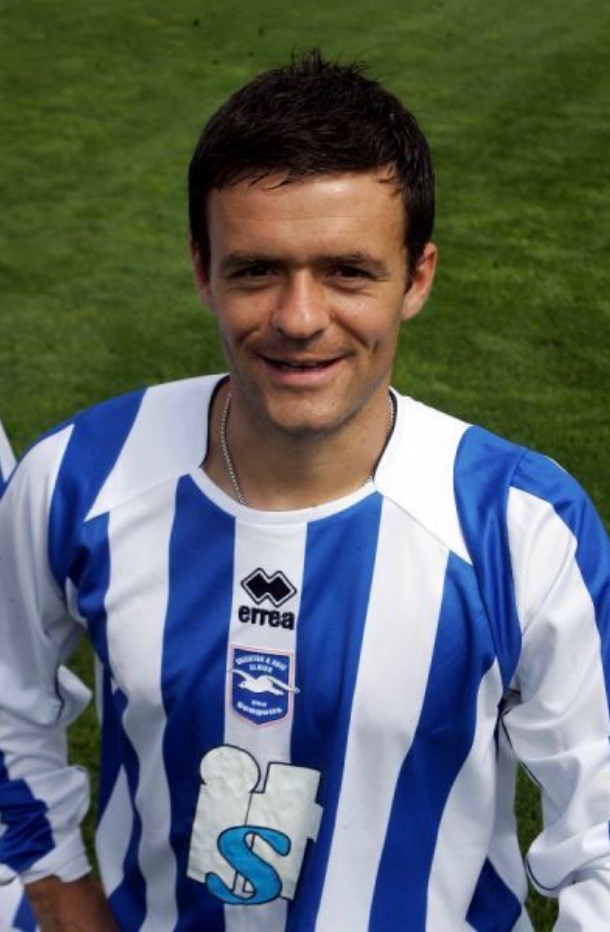
One of the last such arrangements saw the young forward spend three months with the Seagulls in the 2013-14 season.

Nathan Jones, no.2 to Brighton head coach Oscar Garcia, had seen what Obika could do when the young striker had been under him as a coach on loan at Yeovil and Charlton Athletic.

Unfortunately, his impact with the Seagulls was underwhelming even though he scored on his first (and, ultimately, only) full start in a 3-1 win away to Port Vale in the fourth round of the FA Cup.

Obika salutes his one and only goal for Brighton

Albion’s other goals that day, from Rohan Ince and Solly March, were also their first for the club – generating the statistic that it was the first Albion game in 110 years in which three players had scored their first goal in the same league or cup match.

It had been an amazing goalscoring performance for Spurs reserves that prompted Albion to make a move for Obika as cover for first choice Leonardo Ulloa, especially with Craig Mackail-Smith and Will Hoskins sidelined by injury and Ashley Barnes on the brink of a move to Burnley.

The Argus reported that Obika had previously been a target but a move had been put on ice because he’d been injured. His return to fitness saw him net a double hat-trick in a friendly for Tottenham against Charlton’s under-21s, watched by Jones.

“The report coming back on him after the game was one word – lethal!” former Seagulls goalkeeper Ben Roberts, then on the coaching staff at Charlton, told the Argus.

“Like Nathan, I worked with Jon at Yeovil and then at Charlton and he’s a really good pro,” said Roberts. “He is guaranteed to score goals. He is a real predator around the box.

Obika in action for Yeovil

“I’ve been waiting for his career to really kick off. When he came to us at Charlton it took him a couple of weeks to get up to speed. But he was brilliant for us. The end of the season came too soon for us.

“He is a great signing for Brighton and he will suit the way they play.”

However, Garcia also brought in Spaniard David Rodriguez at the same time and Obika found himself down the pecking order, especially when Manchester United loanee Jesse Lingard was added to the forward options.

The Vale cup game aside, Obika made just seven appearances as a substitute but didn’t add to the lone goal and was eventually recalled by Spurs and sent out on loan to Charlton again until the end of the season.

Nevertheless, Garcia said: “He came in to give us forward cover and, while he may not have played as much as he would have liked, he has been a great professional and a pleasure to work with.”

Obika’s long association with Tottenham finally came to an end in September that year when he headed west to League One Swindon Town, where he played for three years, scoring 28 times in 108 games for the Robins.

In 2017, he switched to Town’s rivals Oxford United on a two-year deal before then trying his luck in Scotland, playing in the Scottish Premier League for St Mirren.

On the expiry of that contract, Obika moved to League One Morecambe and, in January 2022, found himself back in the news ahead of this year’s FA Cup third round when Morecambe travelled to North London to take on the club who nurtured his early career for 13 years.

Although Morecambe took a shock first half lead against Spurs through defender Antony O’Connor, it wasn’t a fairytale ending as the Premier League side eventually won the tie 3-1 with three goals in the last 16 minutes of the game.

Obika had to watch from the bench until the 58th minute when he replaced Jonah Ayunga – a Brighton reserve player between 2016 and 2018 – with Morecambe still clinging on to their slim lead.

Born in Enfield on 12 September 1990, of Nigerian parents, Obika grew up in Edmonton and it was while playing football for his primary school, St Paul’s & All Hallows, that he was scouted by Tottenham.

“I lived five minutes from the stadium, so I used to walk to training as a 10, 11-year-old,” he said. “That was my only focus back then.” He later attended Bishop Stopford School in Enfield and left with seven GCSEs.

Originally a left winger, Spurs’ under 18s coach Alex Inglethorpe was responsible for moving him to play as a central striker and in the 2007-08 season he was top scorer for the Spurs academy side.

Those goals caught the attention of first team boss Harry Redknapp and he signed his first professional contract at 18, while a second-year trainee in the academy, and earned a call-up to the first team squad.

Wearing the number 80, he made his debut off the bench in a UEFA Cup game in Holland against NEC Nijmegen on 28 November 2008. A few weeks later, he made his first senior start in front of the White Hart Lane faithful, playing against Shakhtar Donetsk in the same competition.

“I didn’t know I was starting at the beginning of the game, there were a few injuries so a lot of the youth team players trained that week and we were in the squad,” Obika remembered.

When announcing the team, Redknapp actually read out his name as John Utaka, his former player at Portsmouth, amid much hilarity. “That broke the ice,” said Obika. “I was less nervous after that. I was more relaxed and actually ended up having a good game. To play at the Lane, having grown up down the road, was a great feeling and I had all my family and friends there that night.”

Along with Inglethorpe, the coaches who most influenced his development at Spurs were John McDermott and, when he progressed to the reserves, Tim Sherwood, Les Ferdinand and former Albion full-back Chris Ramsey.

Obika and fellow Spurs youngster Andros Townsend were sent out on loan to Yeovil – it was the first of four loan spells there for Obika – as recalled by Jones in an interview with coachesvoice.com: “A host of other clubs wanted them, but I think Harry saw two young kids who wanted to play, and he saw something in us as a coaching team.

“Townsend clearly had huge drive and ambition, and Obika scored the goals that kept us in League One that season – so we will always be thankful to Harry for that.”

Obika recalled: “While I was at Yeovil, Nathan Jones was my coach and I built up a good relationship with him. He would stay behind with me while I did extra shooting: he didn’t need to, I could have done it with other teammates, but he wanted to be there and help me progress and I really appreciated that. He is a good man. He also took me to Charlton for a loan spell and, of course, to Brighton.”

Obika also had loan stints at Millwall, Crystal Palace, Peterborough and Swindon although in the 2012-13 season he did manage to get two more games for the Spurs first team, featuring in the League Cup and the FA Cup.

He went on as a 75th minute substitute for Clint Dempsey when André Villas-Boas’ Spurs side beat Carlisle United 3-0 in the League Cup in September 2012, and was a 59th-minute substitute for Gylfi Sigurdsson when Leeds dumped Spurs out of the FA Cup 2-1 in a fourth round tie at Elland Road in January 2013.
One of Guardiola’s first City signings never played for the club

AARON MOOY spent a year as a Manchester City player without playing a game for the club and left Brighton only seven months into a three-and-a-half-year contract.

Such is the at-times puzzling nature of moves in the modern game where multiple club ownership is a factor and players have release clauses inserted into contracts before they’ve set foot onto the field for their new club.

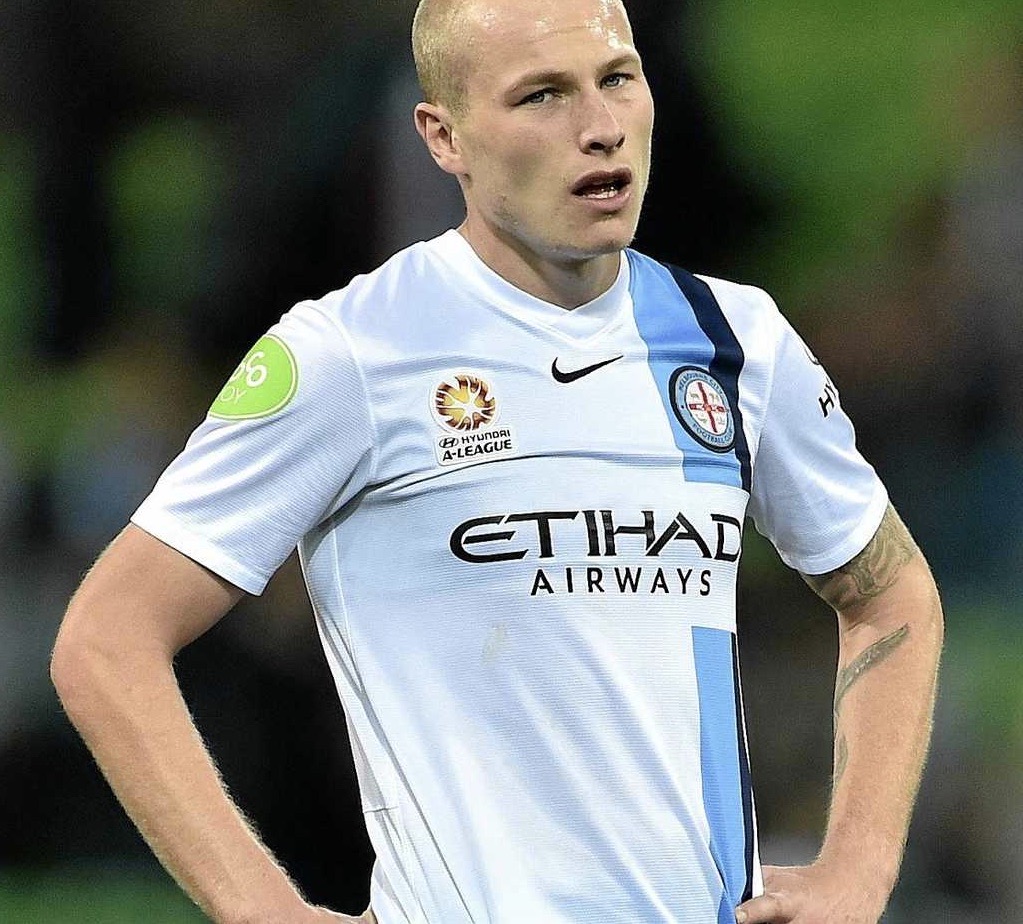
Having starred for City’s sister club Melbourne City in his native Australia, Mooy switched to the rather better-known City Football Group operation – Manchester City FC – in June 2016, signing a three-year deal with the English Premier League side.

His arrival coincided with Pep Guardiola taking over the reins at the Etihad and was one of the first moves between the various clubs bought by the Abu Dhabi-owned City Football Group.

Brian Marwood, managing director of City Football Services, said at the time: “Aaron is an extremely talented player who possesses the attributes we hope to foster and encourage within the City Football Group.

“With the unique model CFG provides, Aaron’s move to Manchester allows us to further expose him to a high standard of opportunities to ensure his professional growth.” 

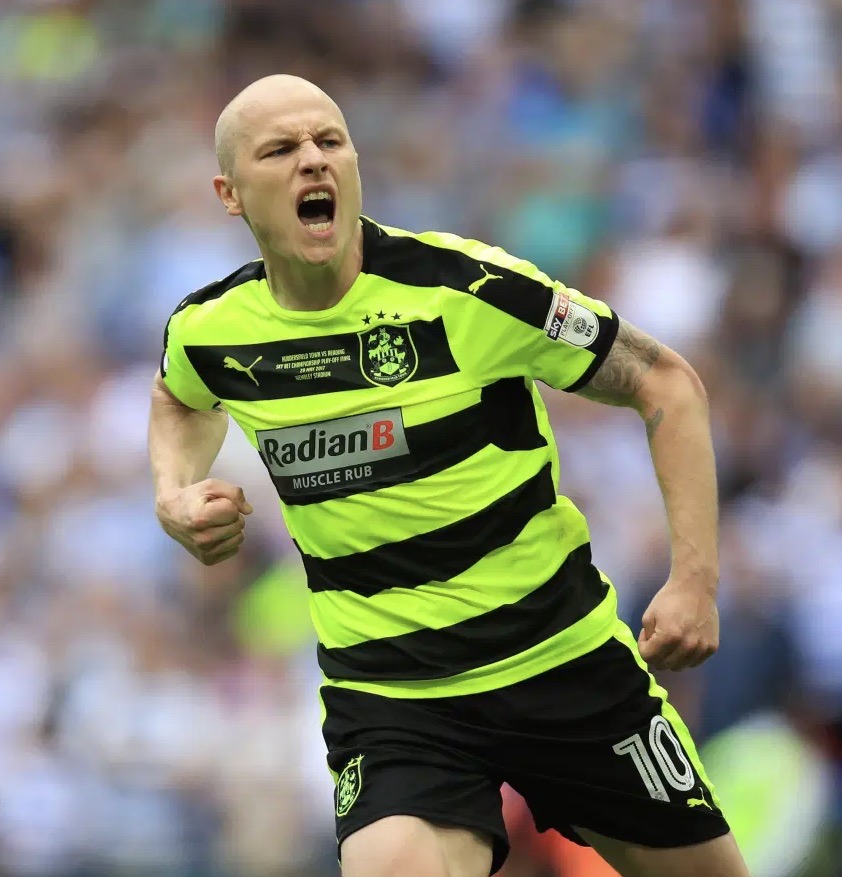
However, just six days later, Mooy was sent on loan to Championship side Huddersfield Town, where he ended up spending three seasons.

He was their player of the year as he helped them to win promotion from the Championship via the play-offs in 2017, he signed permanently for Town and then featured in their two seasons back in the Premier League.

But when they were relegated from the elite in 2019, he didn’t fancy dropping back down and seized the opportunity provided by Brighton to remain in the top division. Town neatly got him to pen a new three-year deal before allowing him to join the Seagulls on loan.

Huddersfield head coach Jan Siewert said: “Aaron was adamant that he wanted to test himself again in the Premier League when Brighton’s interest came in, and we didn’t want an issue where we had a disillusioned player on the pitch in the final year of his contract.”

However, after he’d made 15 appearances (plus three off the bench) in the first half of Graham Potter’s first season in charge, the 29-year-old was signed on a permanent basis on 24 January 2020 on “undisclosed terms”.

“He’s been an important player for us and will have a key part to play going forward,” said Potter. “We knew what Aaron would bring, and he’s proved to be an excellent addition to our squad and a great professional both on and off the pitch.”

Mooy’s deal with Brighton was not due to expire until June 2023 but, sensing one day he might have the opportunity to make big money in China, his contract at both Huddersfield and Brighton contained a clause allowing him to be released if a Chinese club offered to pay £4m – which, in the summer of 2020, Shanghai Port FC were willing to do.

Maybe the player also sensed the arrival at Brighton of Adam Lallana, together with the emergence of Alexis Mac Allister, might mean reduced playing time in the Premiership. However, perhaps the lure of being paid £60,000 a week to play the game he’s loved since a boy back home watching David Beckham on the TV might just have swayed it.

The shaven-headed Mooy had often stood out when playing for Huddersfield against Brighton and their fans were full of admiration for him. David Wood on Twitter said: “It was an absolute privilege to watch Aaron Mooy wear the blue and white of Huddersfield Town. A true class act.” Graeme Rayner added: “Without doubt the best player I’ve seen in a Town shirt. He was immense for us. He gave us some great memories, and was a model pro.”

Seagulls supporters took to him quickly too. ‘Farehamseagull’ on North Stand Chat declared: “Mooy is a wonderful player for us. We’ve been crying out for a player like him for years. His ability on the ball and appreciation of space is second to none. You can just always rely on him to make the right decision with the ball; that is a talent only truly gifted players who can see the game two, three moves ahead have.”

Mooy certainly shone in games against Spurs and Arsenal but possibly his best performance in a Brighton shirt came in the 28 December 2019 home game against Bournemouth when his 79th minute goal completed a 2-0 win for the Seagulls.

Mooy produced a headlinegrabbing performance against Bournemouth

Newspaper headlines hailed the Australian’s contribution to the win and Sky Sports commentator Alan Smith capped the lot in analysing Mooy’s goal. “What a way to settle it,” he said. “Shades of Dennis Bergkamp here, the way he took it on his chest and chipped it in.

“A quite brilliant goal from a really talented player. Great awareness and look at that finish. Bergkamp would’ve been proud.”

Mooy was born in Sydney on 15 September 1990. His German father walked out when he was a toddler and his Dutch mother, Sam, brought him up using her maiden surname. Mooy has said his earliest football memories were of playing for Carlingford Redbacks who were coached by his stepdad, Alan Todd.

His early life, as chronicled by Hale Hendrix on lifeblogger.com, was pretty much football obsessed and he went to the same high school, Westfield Sports High, as Albion goalkeeper Mat Ryan (who was in the year below). Former Leeds and Liverpool player Harry Kewell also went to Westfield.

Mooy played for Sydney-based Hajduk Wanderers and the former National Soccer League team Northern Spirit FC, as well as enhancing his potential at the New South Wales Institute of Sport, based at Sydney Olympic Park, an organisation which nurtures the country’s high performing sports people.

But he was spotted playing for his school as a 14-year-old by Bolton Wanderers’ former head of youth Chris Sulley and he was invited to the UK with his family for an assessment.

“It was a big decision to move to England but I knew it was a great opportunity,” Mooy told the Bolton News.

A serious knee injury threatened to halt his progress but Wanderers’ youth team coaches were convinced they had an outstanding prospect who was eager to earn a professional contract.

In his third season as a scholar, he managed to get some minutes in Alan Cork’s reserve team, and he said: “It’s a big year for me and I have got to show the coaches what I have got, so when I got injured, I knew I had to get back as quickly as possible.

“My rehabilitation involved lots of weight sessions and time on the bike, but I am feeling much sharper now.”

Unfortunately for Mooy, the club’s then-manager, Gary Megson, thought it unlikely he would develop into first-team material – a decision which baffled former Wanderers youth team coach, Peter Farrell.

“I couldn’t believe they released him,” Farrell told Bolton News reporter Marc Iles. “I always thought he was going to make it as a footballer but, as with anything, it’s all about opportunity.

“If Big Sam would have been in charge, or Phil Brown would have taken over I think he would still be there now. They valued that type of player and built their team around him.

“For me, Aaron had it all – he could go with his left foot, his right foot, he was physically strong on the ball and I don’t think he has changed at all from what I saw of him playing for Huddersfield.”

He added: “People thought he was maybe a bit lazy. You’ll never see him tackle. You need players around him to do that. But he reminds me a bit of Zidane – he’s even got the bald head.

“He isn’t as good a player, of course, but he has that grace about the way he plays. He’s a lovely balanced player but he wasn’t Gary Megson’s type of player, and that was the end of it.”

Six months after he left Bolton, Mooy surprisingly turned up in the unlikely surroundings of Paisley, Scotland, for a two-year stint at Scottish Premier League St Mirren (where former Albion midfielder Steven Thomson was at the other end of his career).

“It was a big decision to leave Bolton,” he told The Daily Record at the time. “But I wanted to try to get some first-team action and I’m doing that so I’m happy.

“Some people were a little surprised, but it didn’t bother me. I just thought I wasn’t really going to get much of a chance at Bolton. At St Mirren, I knew I was going to get some decent game time.”

Mooy later told The Scottish Sun: “St Mirren was the start for me. It was the first time I had really experienced proper football. I always remember how much I learned there. I was in the reserves at Bolton, but St Mirren was the first club I was at where winning and collecting points mattered hugely and I had to buy into that mentality.”

Mooy featured in 18 matches for Danny Lennon’s side in the 2010-11 season but he suffered a stress fracture in his back during pre-season and he managed only 12 appearances in 2011-12 and was released on a free transfer at the end of it.

At that point he decided to return to Australia and he joined Western Sydney Wanderers on a two-year deal. Mooy’s story was told excellently by Paul Doyle in The Guardian in a November 2017 article. He wrote:“Although he did well at Western Sydney, even there he was not a guaranteed starter, having to compete with two other players for a deep midfield spot as the team’s playmaking rights were entrusted to Shinji Ono, the former Japan international and 2002 Asian player of the year who would end his career in Australia.”

At the end of his contract, Mooy moved on to Melbourne City where he had an impressive 2015-16 campaign in which he was named Australian Players’ Player of the Year after scoring 17 goals from midfield and setting an A-League assist record.

Although Man City sent him to Huddersfield on loan, news of his strong performances hadn’t escaped Guardiola’s attention, as he noted in media interviews before Town took on City in the FA Cup in January 2017. “Aaron Mooy is playing amazing this season and we are glad at that,” Guardiola said. “It is not easy coming from Australia and going to the Championship and play as good as he is.

“We are going to consider what will happen at the end of the season but it’s good.”

Mooy responded to Guardiola’s praise, telling Huddersfield’s official website: “It’s obviously excellent and I’m very humbled and all that sort of stuff.

“It’s great to know he’s watching me and has his eye on how I’m doing, that’s great.

“They come to watch the games and stay in contact and hopefully they like what they see,” he said.

The Manchester Evening News even ran a story about Mooy headlined ‘The midfielder who could save Pep Guardiola and Man City a fortune this summer’.

However, at the end of June 2017, with Huddersfield preparing for their return to the Premier League, Mooy made the switch from City permanent for a club record fee of £8m.

Boss David Wagner told BBC Radio Leeds: “He was one of our key targets because he was the heart of our team last season.

“When we had the chance to get him permanently, we all agreed that we needed to get it done as quickly as we could.”

Chairman Dean Hoyle added: “Aaron made it very clear to us last season that he wanted to play in the Premier League this season and, if we were there, he would want to do that with us.

“I think we had a duty to try to make that happen for him because he made a huge contribution last season. He was a true terrier for us.”

Mooy drew praise for his role in Wagner’s gegenpressing style of play – bringing an energy and creative use of the ball in a slightly deep-lying midfield role – and Doyle observed in his Guardian article: “Strong on the ball, genuinely two-footed and blessed with vision and precision, he is the conduit of most Terriers attacks and never shirks defensive duties in a team that made more tackles than any other Premier League side during the first 12 matches of the season.”

Through his parents, Mooy could have played internationally for Germany or the Netherlands but he opted to play for the country where he was born and has played at several age group levels for the Australian national side. He made his full debut in 2012, scoring in a 9-0 win over Guam, and has since won more than 40 caps.

After Mooy played well for Australia at the 2018 World Cup, there was speculation City might activate a £20m buy-back clause but this was an unfounded rumour and reporter Stuart Brennan said in the Manchester Evening News: “Mooy has been playing well but has not done enough to suggest he could handle the rarefied atmosphere of Pep Guardiola’s midfield.”

City’s loss was Huddersfield and Brighton’s gain, but amongst the reasons suggested for his sudden departure after only a season with the Seagulls was Shanghai taking advantage of an overseas players loophole which allows Australian players to be counted as Asian.

Mooy certainly hit the ground running in China, scoring within 25 minutes of making his debut on his 30th birthday. He came off the bench in Shanghai’s 2-1 win against Wuhan Zall, scoring the winner after fellow Premier League export Marko Arnautovic had scored Shanghai’s first.

Mooy scored with a delightful one-two down the flank and easy chip over the onrushing keeper.

“I have only just arrived so my physical condition is not what it could be,” Mooy told Chinese television after the game.

“The coach asked me before kick-off if I could play some part in the game and of course I was happy to do so.”

Mooy’s career has certainly been of interest to a number of football observers around the world and Marco Jackson chipped in on onsideview.com, discussing the rationale behind his move to China.

Mooy’s recent playing time has been non-existent because the Chinese Super League is having a three-and-a-half month break to enable the national side to prepare for World Cup qualifiers. The West Australian reported on 4 October 2021 how Mooy had returned to Scotland to be with his family while keeping fit working on a programme devised by Socceroos strength and conditioning coach Andrew Clark.

Pass ‘master’ Steven Thomson’s unhappy year with Brighton

STEVEN THOMSON didn’t enjoy his year playing for Brighton in League One and the former Crystal Palace midfielder seized an escape route to return to Scotland to see out the remainder of his long professional career.

It had been considered quite a coup when Dean Wilkins secured the signing of the Falkirk captain in January 2008. In effect a replacement for the departing Dean Hammond, Thomson was soon a victim of Wilkins’ tinkering with the formation, and over his 41 matches for the Seagulls had a conveyor belt of midfield partners, not to mention a change in manager, as Wilkins’ replacement, Micky Adams, introduced a different style – in vain – to try to galvanise the side during his second spell as boss.

Although Thomson had signed a two-and-a-half-year contract with the Seagulls, in January 2009 the disillusioned Scot headed back north of the border.

“I didn’t enjoy it there at all and was keen to try and get myself back up the road,” he admitted in an interview with the Daily Record in 2018.

Having wound down his full-time career at St Mirren, after 18 seasons as a professional, and having moved to London to begin a business career, Thomson linked up with his former Albion teammate Nicky Forster to spend a season as a part-time player with Dover Athletic, where the former Seagulls striker was manager at the time.

In an in-depth interview for the Dover Athletic website, Thomson gave a great insight into his career, revealing the lengths he went to to get a break into the professional game.

Born in Glasgow on 23 January 1978, he explained: “After playing for a local boys club I was invited to go and train with a few clubs, so, at the age of 10, I found myself training with Rangers on a Monday, Celtic on a Tuesday, Hearts on a Wednesday and Hibs on a Thursday.”

When he reached 14, he was advised to choose one club over the others and opted for Rangers. Daunted by the high numbers of youngsters all trying for the same opportunity, aged just 16 he took the bold move to head to Croydon and signed on as an apprentice with Palace.

He progressed from the youth team to be offered a pro contract at 17, worked his way through the reserves and then got some calls up to the first team subs bench when they were still in the Premier League. He also played for Scotland’s under-18 side between 1995 and 1997.

During his brief return as manager, Terry Venables gave Thomson his debut aged 19 in the 1998-99 season. Thomson wasn’t renowned for goalscoring, but Palace fans do remember a particularly sweet strike he succeeded with in a 3-0 Worthington Cup win at Leicester City in November 2000.

Leicester’s back-up goalkeeper Simon Royce, who would later join Albion on loan, was beaten from 35 yards by Thomson’s spectacular shot.

The midfielder’s 121 games spanned the spells of five managers – Venables, Steve Bruce, Trevor Francis, Steve Coppell and Dave Bassett – before he left the club at the end of the 2002-03 season. It would be fair to say he divided opinion among Eagles supporters.

On fans forum cpfc.org, ‘Hairybear’ said: “Thomson was a warrior. Very little ability but did a good job when called upon under Bruce and co. He would never let you down.”

But ‘Baron Greenback’ said: “As well as THAT goal against Leicester, he also scored great goals at home to Sunderland in the FA Cup and Wolves.”

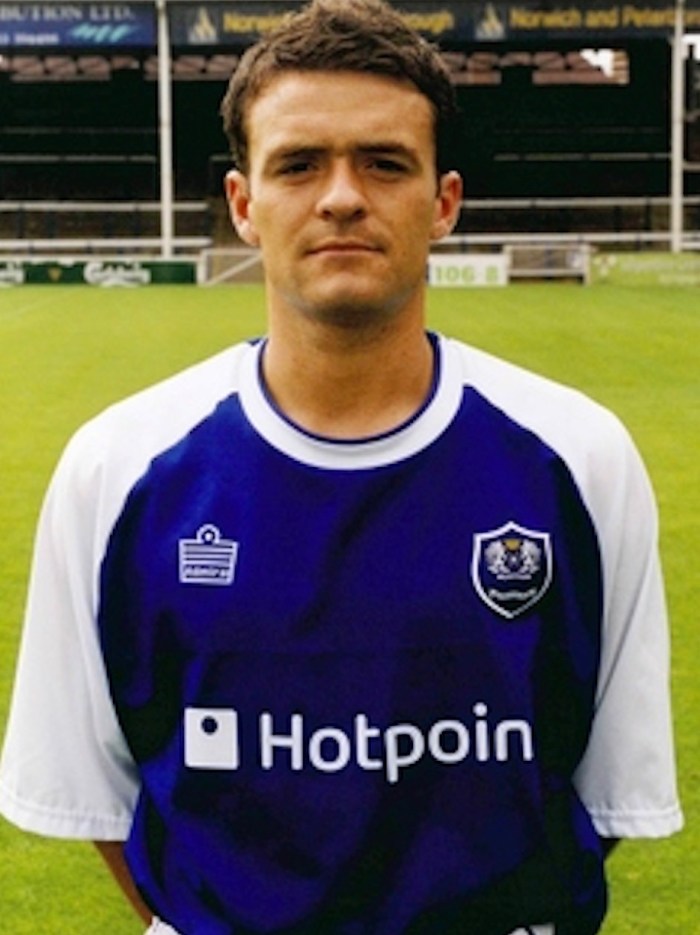
It was the ebullient Barry Fry who took Thomson to Peterborough United, (above) where he played 75 games in two seasons before moving back to Scotland to play for Falkirk in the Scottish Premier League.

When Brighton signed him, his former Falkirk teammate and one-time Albion loanee, Graham Barrett, told the Argus what Seagulls supporters could expect.

“They are getting a fantastic professional and a really good player,” said Barrett. “We have been going really well and he has been a massive part of that.

“He is a box-to-box player, he is comfortable on the ball and he has got a bit of everything.

“He is not particularly big (5ft 8in) but he is also very good in the air for his height.”

Barrett reckoned he would be “a massive influence” if he could continue the form he’d shown in Scotland. “He is great in the dressing room as well, a real leader,” said Barrett.

Thomson made his Albion debut in a 1-1 draw at home to Huddersfield on 19 January, starting at the base of a midfield diamond with Paul Reid and David Martot out wide and Dean Cox at the top of it.

Brian Owen, of the Argus, described him as “a neat and tidy passer who only gave the ball away when trying something ambitious”.

Within a couple of months, the Argus was reporting: “It has not been easy for Thomson since his January move back to England from Falkirk.

“He has had to adjust to playing with a number of different partners and now Adam El-Abd is a long-term casualty with the medial knee ligament injury he suffered at Huddersfield.”

Although mostly recognised as a centre back, El-Abd had been one of the options tried in midfield. Thomson admitted to the newspaper: “I know I can perform better. There is more to come. I am adjusting to playing so many games. In Scotland you just play Saturday to Saturday.

“It has been a big move for my family as well. My wife (originally from London) is a lot closer to her parents now and she has got a lot of family around, which helps with our young son.”

In rather a similar vein to the Palace faithful, Brighton fans were also divided as to Thomson’s merits. ‘The Complete Badger’ declared on North Stand Chat: “The only midfielder of any class we’ve got. A real touch of quality about everything he does in my opinion. Much better than Hammond, and much better than anyone else we’ve got.”

But ‘Napper’ reckoned: “Thomson just seems to have nothing about him, not quick, no killer passes. Just seems to either waste possession or go backwards. I’ve really given him more than enough time, but facts are he just isn’t very good. I’ve been watching him closely for many games now.”

In his end-of-season summary, Andy Naylor, Albion reporter for the Argus in 2008, reckoned Hammond had been a hard act to follow, and commented: “Thomson looks a tidy player who will benefit from playing as a central midfielder in a 4-4-2, not the dreaded diamond.”

After Wilkins was shown the door, new boss Adams recognised Thomson’s leadership qualities, making him vice-captain to skipper Nicky Forster, as well as saying he was going to play him in a role further forward than he had been previously.

“I enjoyed the responsibility at Falkirk and I will be willing to help Nicky as much as I can,” Thomson told the Argus. “The manager has stressed that he wants me to try and push forward a lot more, rather than just sitting in front of the back four, and I am quite happy with that.

“I look after myself off the park, so I’m quite fit. Maybe he thinks I have got the engine to get up and down!”

However, problems mounted for Adams when Forster was ruled out by injury and, as in the previous season, Thomson found himself alongside different midfield partners, including, at one time, the flamboyant Robbie Savage, trying to recover some fitness on loan from Derby.

As the year drew to a close, it became public knowledge that Thomson was unsettled and itching to go back to Scotland, so a deal was lined up for him to join St Mirren as soon as the January transfer window opened.

He joined them on the day they played their final game at Love Street ahead of their move to Greenhill Road, and he went on to make more than 100 appearances for the Buddies.

Their fans’ abiding memory of his time there centre on a surprise 4-0 win over Celtic on 24 March 2010, when Thomson scored twice. The result so shocked the Parkhead bosses that they sacked Hoops boss Tony Mowbray.

On joining Dover in May 2012, Thomson told the club’s website: “I made the decision last year that this would be my final season as a full-time player. I have been studying for four or five years and I’m now fully qualified and have secured a job in London.

“My wife Bryony is from London anyway and she wanted to move closer to her family. I’ve been a footballer for 18 years and now it’s time to enter the real world.”

Thomson now works as a financial advisor, with a stylish looking profile on LinkedIn.