
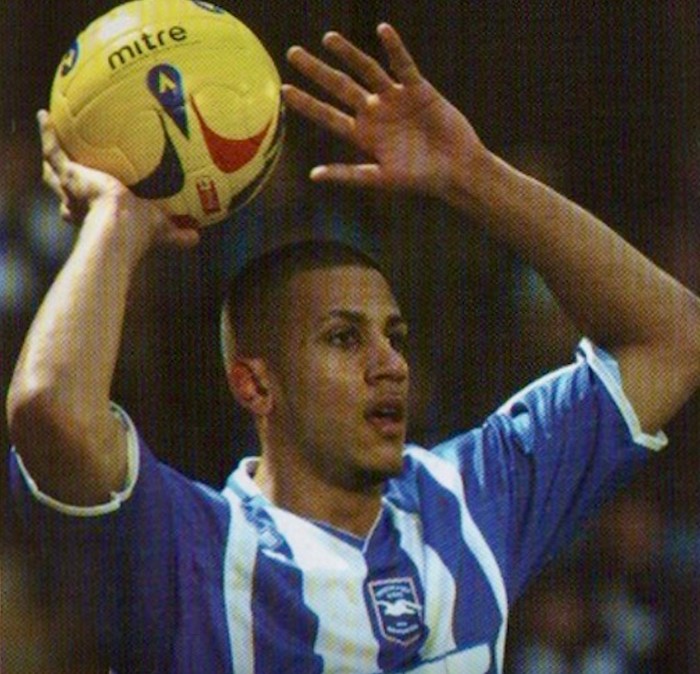
TEENAGE Arsenal defender Joe O’Cearuill certainly had a baptism of fire when he moved to the Albion on loan in early 2007.
The youngster was played out of position at right-back in a third round FA Cup tie away to West Ham.
The match at the old Boleyn Ground on 6 January 2007 pitched the Premier League Hammers under Alan Curbishley up against his old Seagulls teammate Dean Wilkins, who had taken over the reigns at League One Brighton just four months previously.
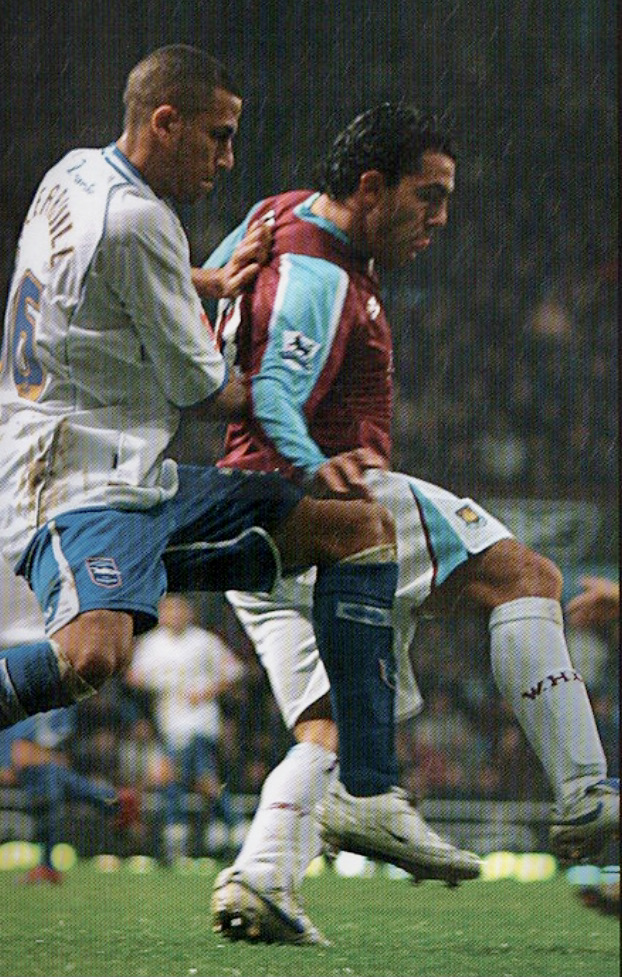

West Ham, FA Cup finalists the previous season, were just too good for the mainly young lower league side on the day and, with big-money Argentine striker Carlos Tevez up front, comfortably won the tie 3-0 (Mark Noble, Carlton Cole and Haydn Mullins the scorers).
Albion put up a reasonable fight in a goalless first half although O’Cearuill was fortunate not to concede a penalty when he put in a clumsy challenge on debutant Luis Boa Morte which referee Mark Halsey chose not to penalise.
The second half was only four minutes old when Noble scored his first ever West Ham goal, Cole added a second nine minutes later before being replaced by former Albion favourite Bobby Zamora, and Mullins struck in injury time to round off the win.
Wilkins had turned to the Arsenal youngster when Jack Hinshelwood’s dad Adam suffered a cruciate ligament injury in a Boxing Day match against Yeovil that ruled him out for nine months.
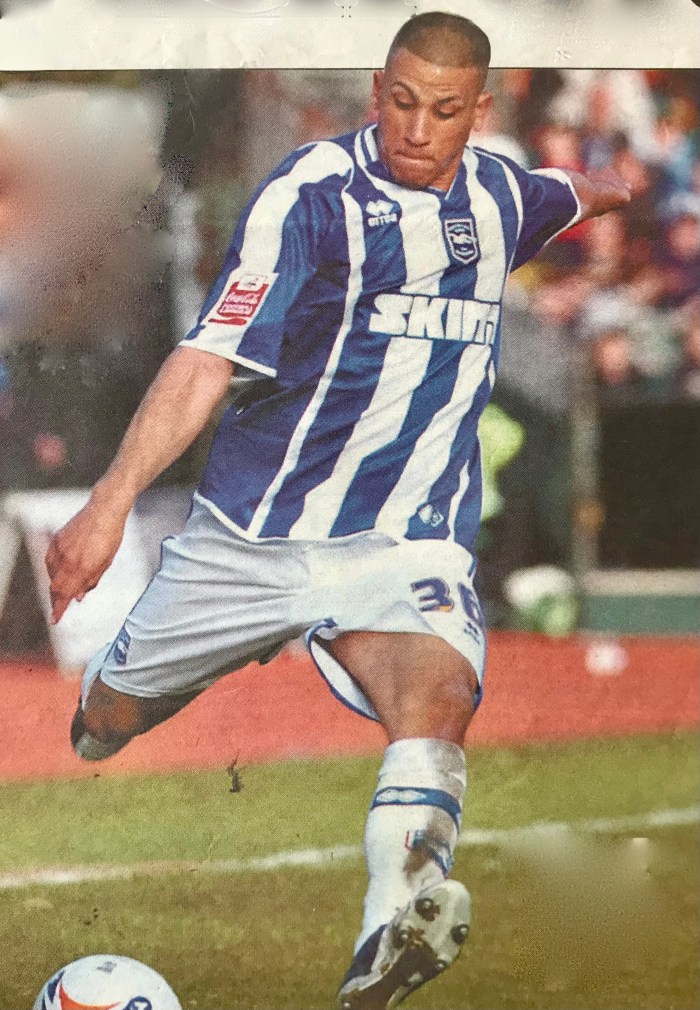
O’Cearuill’s stay on the south coast lasted three months during which he made seven starts and three sub appearances. His final Seagulls match came in a 1-1 home draw against Scunthorpe United.
The Argus reckoned his form was “patchy” and at one point he was dropped to the bench “after a below-par performance” in defeat at Brentford.
Only on a couple of occasions did he get the chance to play in his favoured centre back position; those positions were occupied most of the time by Joel Lynch and Guy Butters.
But after he’d gone on for the injured Lynch in the centre away to Gillingham, he helped the visitors to a 1-0 win and Wilkins said: “I thought he fitted in well. He went into the game at a difficult period. There were a lot of high balls to deal with, which he coped with well.”
That first half of 2007 was pretty much the highlight of his career because on an end of season tour of America he won two full caps for the Republic of Ireland.
Although born in Edmonton on 9 February 1987, he elected to represent the Republic of Ireland and having played for them at under-17, under-19 and under-21 level,

His first senior cap came when he was one of six substitutes made by manager Steve Staunton in a 1-1 draw against Ecuador at the Giants Stadium, New Jersey, on 23 May 2007.
He replaced Stephen O’Halloran in the 73rd minute and managed to pick up a yellow card in his short time on the pitch. Kevin Doyle headed the Irish equaliser a minute before half time.
O’Cearuill then started at right-back three days later in the Republic’s 1-1 draw with Bolivia in Boston. Shane Long scored his first goal for his country and in the second half former Albion goalkeeper Wayne Henderson took over in goal from Barnsley’s Nick Colgan. The side was captained by Kevin Kilbane.
Curiously, O’Cearuill had been let go by both Leyton Orient and Watford before he was given a chance by Arsenal. He played 27 youth team games for the Os in 2004-05 but was released in August 2005.
Watford picked him up and he played for their youth and reserve teams for a season, but again found himself released. Then, in the summer of 2006, after impressing Arsenal’s reserve team coach Neil Banfield in a trial game against Watford, he joined the Gunners.
He made his debut in a goalless pre-season friendly at Barnet on 15 July and a week later played in half of Dennis Bergkamp’s testimonial against Ajax of Amsterdam.
On a tour of Austria, he played another half as Arsenal beat Mattersburg 2-1 and got 30 minutes as a sub when the Gunners trounced Schwadorf 8-1.
The closest he came to competitive first team action was when he was on the bench for Arsenal’s Carling Cup match away to West Bromwich Albion on October 24, 2006, although he did not get on in the 2-0 win in which Jeremie Aliadiere scored both the goals.

Released by Arsenal, O’Cearuill’s career then drifted from one non-league club to another: Barnet, St Patrick’s Athletic (Dublin), Harlow Town, Borehamwood, Forest Green Rovers (pictured left), Bishop’s Stortford, Tooting & Mitcham United, Haringey Borough, Enfield and Heybridge Swifts.
When he sought to resurrect his career with Conference Premier side Dover Athletic in 2015, he was suitably phlegmatic in an interview with Kent Online.

“It’s certainly been a journey,” he said. “From getting everything on a plate at Arsenal and then for Ireland, to then be washing your own kit and boots.
“I took being a professional for granted and I wasn’t really ready for it – I was too young to take it all in.
“When Arsenal released me, I discovered there was a lot more to life than playing football and I lost the motivation to play at a decent level. I even gave the game up for a while.
“I was then happy to play wherever and go with the flow. I had a couple of great years playing with my mates at Haringey Borough. But that’s all in the past now. The days for playing for fun are behind me.
“I am ready for the next chapter in my life because I’ve got the hunger and desire back to play the game at a level I know I am capable of.”
Released by Dover at the end of the season, former Albion striker Nicky Forster, by then manager of Staines Town, took him on for the Isthmian League Premier Division team.
“We are delighted to have secured the services of Joe this season, he has a great attitude for success and will sit well alongside Darren Purse at the back,” he told the club website.
His last port of call was back at Haringey in the summer of 2016 and he retired from playing in October that year.
In his LinkedIn profile, O’Cearuill describes himself as a senior manager for The Elms Sport in Schools programme.
 SCOTTISH international Neil Martin remains a legend at one of his homeland clubs but his brief time at Brighton was more like a bad dream after a goalscoring start.
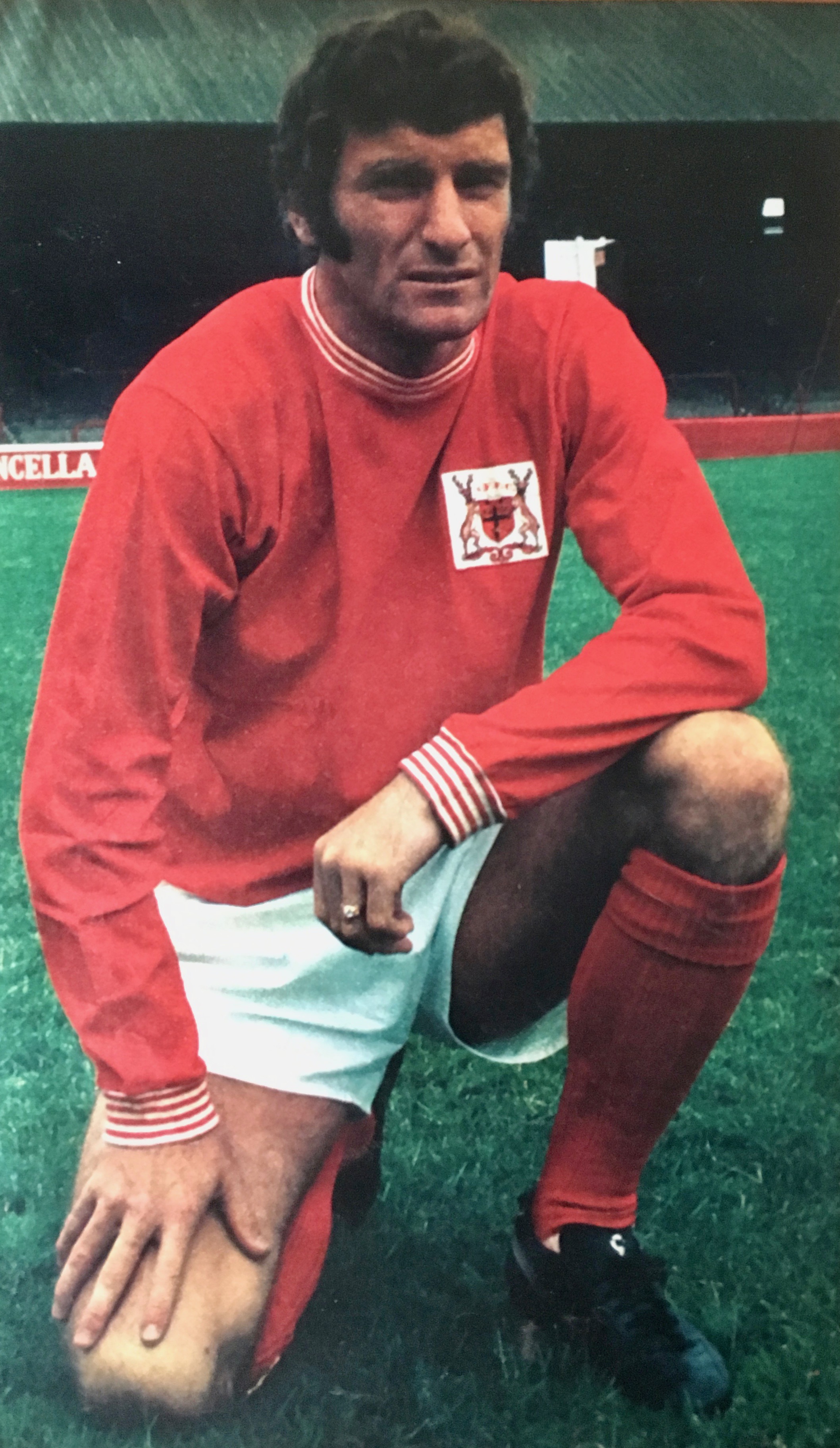 Martin scored 28 goals in 119 games for Nottingham Forest having moved down from Scotland in the 1960s and begun his English league career with Sunderland.
 One of his most prolific spells was at Coventry City (above) where, in three years, between 1968 and 1971, he scored 40 goals in 106 appearances.


 In parallel lines