Forest hopes felled for injury-stricken Matt Thornhill

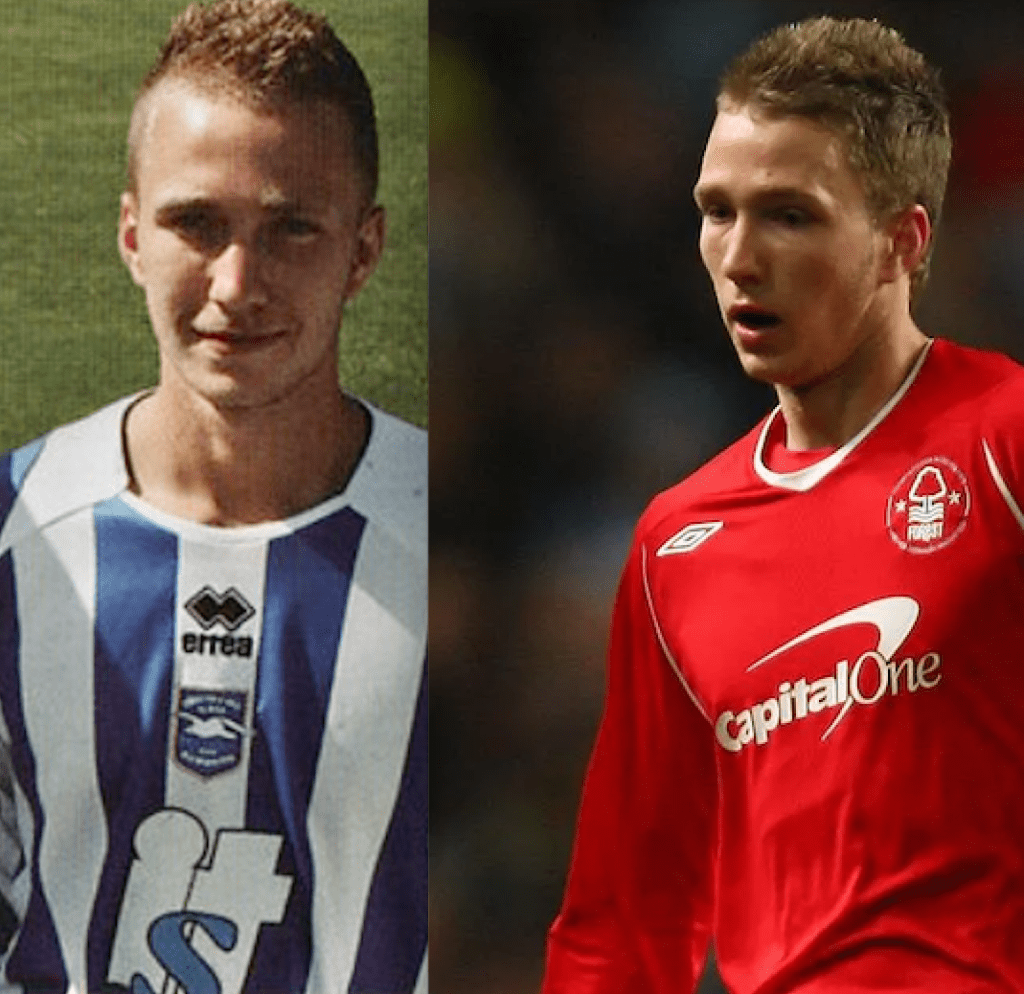
TRANSFER makeweight Matt Thornhill fell foul of managerial changes and debilitating injury which together brought a promising professional playing career to an early end.

Brighton’s former assistant manager Colin Calderwood believed in the midfielder but his successor as Nottingham Forest manager, Billy Davies, didn’t.

Surplus to requirements at the City Ground, Thornhill was Russell Slade’s seventh signing of the summer in 2009, heading to Sussex as part of the deal that saw Albion academy graduate Joel Lynch move to Forest for £200,000 (having spent the previous season on loan there).

Thornhill initially joined on a six-month loan and he was full of optimism, telling the Argus: “They (Brighton) are looking to go for it this season and hopefully I can be a part of that team and help them strive for the top five of the table and the play-offs.
“My target is to play as many games as I can for Brighton and see what happens. If everything goes well then I could extend it to a year, but we’ll just see.”

Although he started the first game of the season at home to Walsall, he was subbed off at half-time as the Seagulls lost 1-0. Three days later, he was in the side beaten 3-0 by Swansea City in the League Cup (Andrea Orlandi was playing for the Swans and Stephen Dobbie scored his first two goals for City in the Liberty Stadium clash).

But it was another two months before he started another game. Other new arrivals at Withdean (like big money signing Elliott Bennett) at the start of that 2009-10 season and niggling injuries limited Thornhill’s involvement, and, at the end of October, Slade was sacked and replaced by Gus Poyet.

Thornhill, who turned 21 during his time with the Seagulls, only started five games, made four appearances off the bench, and was an unused sub for eight matches.

Poyet had his own ideas about the squad he wanted and swiftly Thornhill and fellow Forest loanee midfielder Arron Davies, who’d played under Slade at Yeovil, were sent back to the City Ground.

Born in Nottingham on 11 October 1988, Thornhill was only eight when he was first offered the chance to sign for Forest, but his father said he was too young.

They went back in for him when he was 14, and, despite other interest from Derby County and Notts County, as a Forest fan it was an easy decision to make.

He was initially coached by former Forest defender Chris Fairclough. When he left school at 16, he became a scholar under John Pemberton, and signed a pro contract a year later.

Calderwood gave him his first team debut at Chester City in the Carling Cup in August 2007, a game Forest won on penalties.
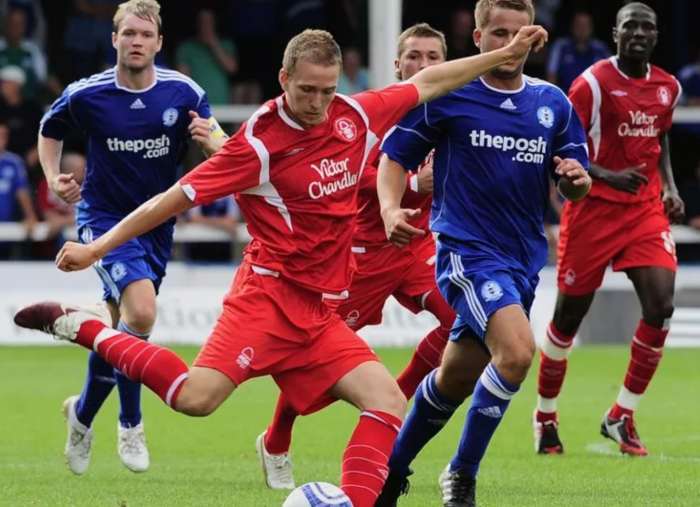
Thornhill made five starts and 11 sub appearances across that 2007-08 season as Forest went up from League One and he scored his first goal for the club in a 4-0 win over Leyton Orient. He featured in 28 league and cup games (16 starts, 12 from the bench) on their return to the Championship.

“Calderwood was really good,” said Thornhill in an extended interview with the Nottingham Evening Post in 2018. “He came and watched the young lads and gave us confidence,” he told reporter Matt Davies.

“He said that if you were good enough, he’d give you a chance with the first team. Some managers don’t go with the academy players.

“They bring players they know in. I saw Lewis McGugan get his chance though and that spurred me on.

“When I got in the team I never thought far ahead. I took every week as it came. I knew the manager believed in me.

“I tried to make the most of it. Playing for Forest meant a lot to me and my family.

“It was massive. I knew growing up how big the club was.”

Thornhill was still only 19 when he played in the biggest game of his career, a 3-0 FA Cup third round win at Manchester City in January 2009.

Forest were floundering at the wrong end of the Championship and had just sacked Calderwood. Pemberton took caretaker charge and it was the biggest cup upset of the round when Forest beat the newly-enriched City so convincingly.

“City were spending loads of money,” said Thornhill. “We had nothing to lose, but wanted to impress the new manager (Billy Davies was watching from the stands).

“I should have scored. I shanked it to Robert Earnshaw and he scored in the end.”

Two days later, Davies took over as manager and Thornhill said he made it quite clear he was going to send out on loan all the young lads who did well under Calderwood.

After his foreshortened Albion loan spell came to an end, he then joined League Two Cheltenham Town on a similar basis, helping them to narrowly avoid dropping out of the league.

Back at Forest for the new season, Thornhill thought he had changed Davies’ opinion, telling the Nottingham Evening Post: “I had a really good pre-season. He told me I’d done well and that I’d be in his plans for the season.

“I was buzzing. The first league game he named me on the bench.”

In the second game of the season, he was a starter in a 2-1 Carling Cup defeat at Bradford City

“I scored and felt I did really well,” said Thornhill. It turned out to be his last game for the club.

“I’d have loved to have got the opportunities Billy said he would give me but there was nothing I could do about it,” he said.

“It annoyed me that he told me I was in his plans and never got the chance when I was at my fittest.”

By Christmas 2010, he was told he had no future at Forest. And he never played in the Football League again.

Former boss Calderwood took him to Scottish Premier League Hibernian in January 2011, but after only nine matches for the Edinburgh side he damaged medial knee ligaments and missed the rest of the season.

Thornhill told Davies of the Post: “I believed in myself still when Forest let me go and Colin Calderwood gave me another chance at Hibs.”

As well as the knee issue, Thornhill contracted a stomach condition which kept him out for eight months. By the time he was fit again, Calderwood had been sacked.

New boss Pat Fenlon did not see a role for him; he was sent to train with the youth team, and was eventually released after making only 15 appearances for Hibs.
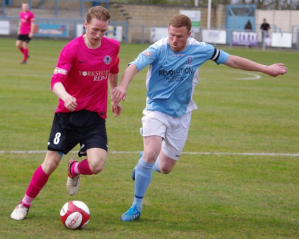
Still only 23, he joined Northern Premier League side Buxton (‘The Bucks’) while hoping he would get the chance to resurrect his league career. It never came and instead, after two years at Buxton, he moved on (left) to Barnsley-based Shaw Lane Aquaforce ‘The Ducks’), whose head coach Craig Elliott said: “It is a massive coup for the club.”

Elliott told Non League Yorkshire: “He’s one I didn’t think we would get as a couple of other clubs were after him, but I convinced him to be part of our project.
“He has a fantastic CV and he did well at Buxton last season. Everyone at the club is pleased to have him.”

He helped the club to win promotion to the Northern Premier League Division One South in 2014-15 and was club captain the following season when they reached the divisional play-off final, only to lose 3-1 to Coalville Town.

He then moved up two levels in the football pyramid and spent a season with National League North side Gainsborough Trinity, where he was appointed captain.

The player told Non League Yorkshire: “I am really pleased to be a part of what (Gainsborough manager) Dominic (Roma) is building at Trinity this season and am glad to be signed early, so I can get a good pre-season under my belt. I really feel I can help the team and channel my experience in a positive way.”

In 2017, Thornhill switched to his local club Basford United and he is still playing for the Northern Premier League Premier Division outfit.

A key figure for Basford United

When he signed a new two-year deal with Basford in 2021, then manager Steve Chettle (himself a former Forest player) told the Hucknall Dispatch: “It is vitally important that we set out to continue where we have been for the last two [incomplete] seasons and Matt has been a massive part of that, and he has a been a key figure in the success of this club in the last five years.

“His attitude to all parts of the games and training is an example to all and his contribution in assists and goals over the years has been fantastic. He is a fans favourite and for the captain to re-sign really shows our intentions.”

Chairman Chris Munroe added: “Matt has shown the club, Steve and myself a great deal of loyalty over the years and my dream is that he finishes his playing career with us at Basford, which is now a real possibility.

“There is nothing better for our fans than to see Matt scoring goals or contributing numerous assists and we hope that continues in good supply moving forward as we enter an exciting phase for the football club.”

In that 2018 interview with the Nottingham Evening Post, Thornhill said: “I never really got back where I wanted. I started so well and since Billy let me go I’ve been hampered by injuries.

“I do think I’d have kicked on but for injuries. I might still have been a pro now. It’s football though. It’s what can happen.”

The article said Thornhill was working for a company supplying paint to the car repairs industry and he said philosophically: “My job now is different to football obviously. You’ve got to do what you’ve got to do to get by in life.

“Anyone that knows me knows I get on with things. I see it that I was lucky to play for Forest.

“I was lucky to play for a club that big. There’s no point having regrets and always looking back.”

Things didn’t click for wanderer Stephen Dobbie

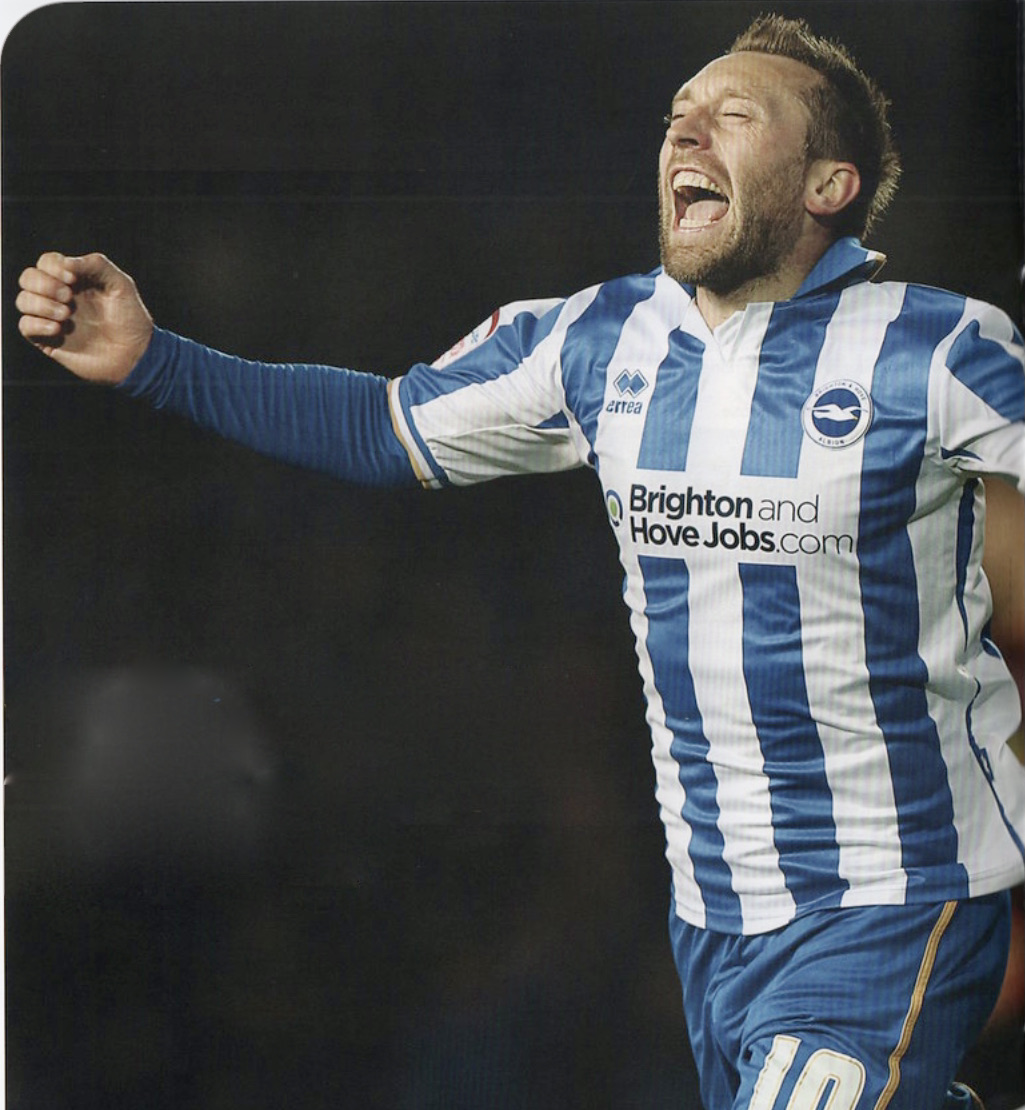
A 93RD-MINUTE winning goal in a Championship match against Peterborough United was as good as it got in Stephen Dobbie’s brief stay with Brighton.

Dobbie left the Albion for Crystal Palace just five months into a three-year contract after failing to live up to the hope that he would be the answer to Albion’s shortage of a genuine goalscorer.

“He has great quality which will unlock defences and I have no doubt he will also score plenty of goals,” Poyet said on capturing a player who had a goalscoring pedigree at Championship level with Swansea City and Blackpool, as well as in Scotland.

“He has played and proven himself at this level and in the Premier League. His goals helped Blackpool win promotion in 2010 and he returned on loan to help them reach the play-off final last season,” he said.

Dobbie was one of four players who joined Brighton on 31 August 2012; fellow Swansea player Andrea Orlandi also arrived, along with Dean Hammond, on loan from Southampton, and Athletic Bilbao’s David Lopez.

Seldom a starter, Dobbie’s first Albion goal came after he’d gone on as a 64th minute substitute for Andrew Crofts at home to Peterborough. Despite relentless Albion pressure, the game looked to be heading for a goalless draw when Dobbie produced a composed finish from an Ashley Barnes pass in the third minute of added on time.

A delighted Poyet said: “We needed quality and Dobbie showed us what he is capable of and that won us the game. It was real quality and that’s what we needed to score tonight.

“On another day, another player would have smashed that and it would not have gone in. The touch was magnificent and we are all delighted.”

Dobbie added: “Before I came on the gaffer told me to keep doing what I have been doing in training. I was confident that my time would come. Hopefully I can kick on and show the sort of form I have showed before in the Championship.”

As it happened, Dobbie did score in the next match too although an astonishing game at Molineux possibly summed up his time with the Albion. He had a great chance when through on goal that Carl Ikeme saved; he then put Albion 3-2 up with an 89th minute penalty – but 10-man Wolves hit back with a 90th-minute equaliser.

“We are all a bit gutted because the three points were there to be taken and on another day we probably would have scored four or five,” said Dobbie afterwards.

Dobbie didn’t score again and after just five starts plus 10 appearances off the bench Poyet decided to cut his losses and ship the player out on loan to Palace.

He couldn’t put his finger on exactly why it hadn’t worked out and was open in his assessment when talking to the Argus about it.

“I don’t think there is one reason, one person responsible,” said Poyet. “I think it didn’t click, that’s all. I am more than happy to take the blame but it’s a mix of things, the way we play, the player, the results, the team.

“The moment it was a possibility to get him I was convinced he was the perfect player for us, to play between the lines, arrive late, get goals, play in different positions in a front three or even behind the striker.”

Earlier in the season, Dobbie said matters off the pitch had made it difficult for him to settle. He had been living in a hotel with his wife and young son for a month during which time his wife gave birth to their second child.

“It was quite hard living in the hotel with my wife and little boy but thankfully we’re now settled in a house and another little boy has since come along, so I can concentrate fully on my football,” he told the matchday programme. “It’s not easy when you’ve got so much going on, it takes a period of adjustment, but now I’m able to just focus on what I’m doing on the training ground.”

At least the move to Palace reunited Dobbie with a familiar face: he had played under Palace boss Ian Holloway during two loan spells at Blackpool. Dobbie scored three times in 15 matches for Palace as they won promotion via the play-offs (thankfully he didn’t play in the semi-finals v Brighton).

Albion and Palace had to make the transfer a loan initially to comply with FIFA regulations regarding the number of clubs a player can play for on a permanent basis in one season, but the loan became permanent in the summer.

Although he signed a two-year deal at Selhurst Park, he only played in one Premier League game and one League Cup tie before returning to Bloomfield Road on loan to Blackpool for a third time.

It was perhaps inevitable that Dobbie should score an equaliser for relegation-threatened Blackpool when they salvaged a point in a disappointing 1-1 draw at the Amex on 21 April 2014.

Blackpool player-manager Barry Ferguson said: “It was a great strike. [Dobbie] has quality and it’s up to him to produce it more often.

“I let him play where he wants to. I’ve known him a long time and, apart from what he does on the ball, his work-rate off the ball is excellent.”

Although still under contract with Palace, Dobbie spent the 2014-15 season on loan at newly promoted League One side Fleetwood Town.

Released by Palace at the end of that season, he spent pre-season on a trial basis at Championship side Bolton Wanderers and when boss Neil Lennon liked what he saw he was given a one-year contract with the Trotters.

In 2016, Dobbie returned to the club where he’d previously been most prolific as a goalscorer:  Queen of the South. In his first spell (2006-09), he scored 55 goals in 105 games for the Scottish First Division outfit.

That level of goalscoring prowess returned second time around, as he netted 111 goals in 178 games over five seasons in the Scottish Championship. He topped the Championship scoring charts in 2017 and 2018 and his 43 goals in 2018-19 was the best ever total for a Queens player in a single season.

Born in Glasgow on 5 December 1982, Dobbie grew up in the tough Barlanark district of the city, and in an interview with the Daily Record he described his experience playing street football in the area.

He was a Rangers fan and, although it was Hearts who first showed interest in him, he spent two years as a youth player at Ibrox Park.

“I signed for the club when I was about 10 or 11,” he recalled. “I was quite lively as a kid but I was soon brought back down to earth whenever I got to meet my heroes. It was intimidating walking into a room and there’s Gazza, Brian Laudrup and Ally McCoist sitting there.”

He added: “They were world class and although I never got to follow them into the first team, it was a brilliant club and I loved my time there.”

While he scored goals for Rangers reserves, he didn’t break through to the first team with his boyhood heroes. The first of many loan moves in his career saw him go to Sydney in Australia and score three times in three games for Northern Spirit.

In the summer of 2003, he was transferred to Hibernian and made a total of 33 Scottish Premier League and cup games during his first season at Easter Road. But a regular starting berth eluded him and he went on loan to Scottish First Division St Johnstone.

That move was turned into a permanent switch but in 2006-07, when once again he couldn’t nail down a regular starting spot, he was loaned to Third Division Dumbarton, where he hit a purple patch, scoring 11 goals in 18 matches.

Such form attracted Queen of the South; he joined them on 5 January 2007 and enjoyed a successful two-and-a-half-year spell.

After he’d finished the 2008-09 season as the Scottish First Division’s top goalscorer with 24 goals, Swansea City, then in the Championship, made him an offer he couldn’t refuse.

“Dobbie has reinvented himself in the last two seasons and is at the best stage of his career,” said Swansea manager Roberto Martinez.

Aged 26 at the time, Dobbie was reunited with Swans top scorer Jason Scotland who he’d played with at St Johnstone in 2005-06.

“He has been through many different moments since his Rangers days, but I firmly believe he is now ready for a new challenge,” said Martinez. “He is a typical Swansea player – very gifted and strong technically.

“He’s also a natural goalscorer, has high standards and is hungry to show off his talent in the Championship.”

Dobbie’s first goals for Swansea somewhat ironically came against Brighton when the Welsh side dumped Russell Slade’s side out of the Carling Cup with a 3-0 victory at the Liberty Stadium.

He scored again in the next round but injury then kept him out of the side and by the following February he was on his way to Blackpool on loan for the first time.

Ironically, Dobbie went on to play for Blackpool in their 3-2 Championship play-off win over the Swans bitter rivals Cardiff City, which saw him branded “Secret Agent Dobbie” by a certain section of the Swansea faithful.

Back at Swansea, Dobbie finally got his place back after Brendan Rodgers had taken over from Paulo Sousa in the manager’s chair.

Dobbie score four times for the Swans but he eventually found himself back on the bench playing second fiddle to loan signing Marvin Emnes and Craig Beattie.

Nevertheless, he chipped in with some important goals from the bench and once again found himself playing in the Championship play-off final, this time getting on the scoresheet as Reading were beaten 4-2.

Remarkably, he featured in a third successive Championship play-off final, again with Blackpool, having failed to hold down a place in Swansea’s Premier League side. He made eight appearances at the elite level but didn’t get on the scoresheet.

Dobbie joined Holloway’s Blackpool in March 2012 but they missed out on another promotion when West Ham beat them 2-1 at Wembley.

In April 2021, Dobbie announced his departure from Queen of the South, with the Daily Record declaring: “The 36-year-old has scored 166 times in 282 games over two spells with the club and is regarded as one of their best players of all time.”

Having put down roots in the North West (even when he was playing for Queen of the South he would commute from his home on the Fylde coast), it was little surprise to see him start the 2021-22 season with AFC Fylde of the Vanarama National League North.

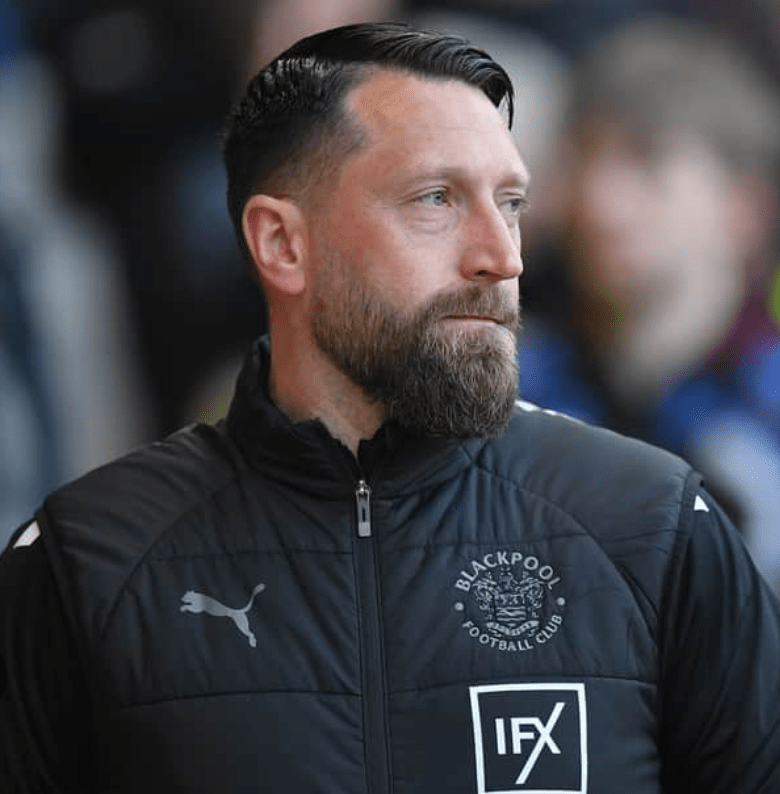
Dobbie became part of Steve Bruce’s coaching team at Blackpool