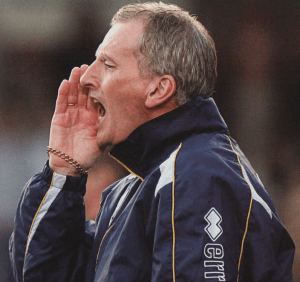
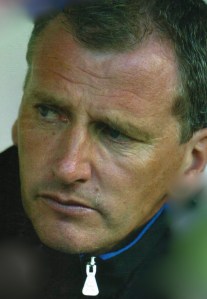
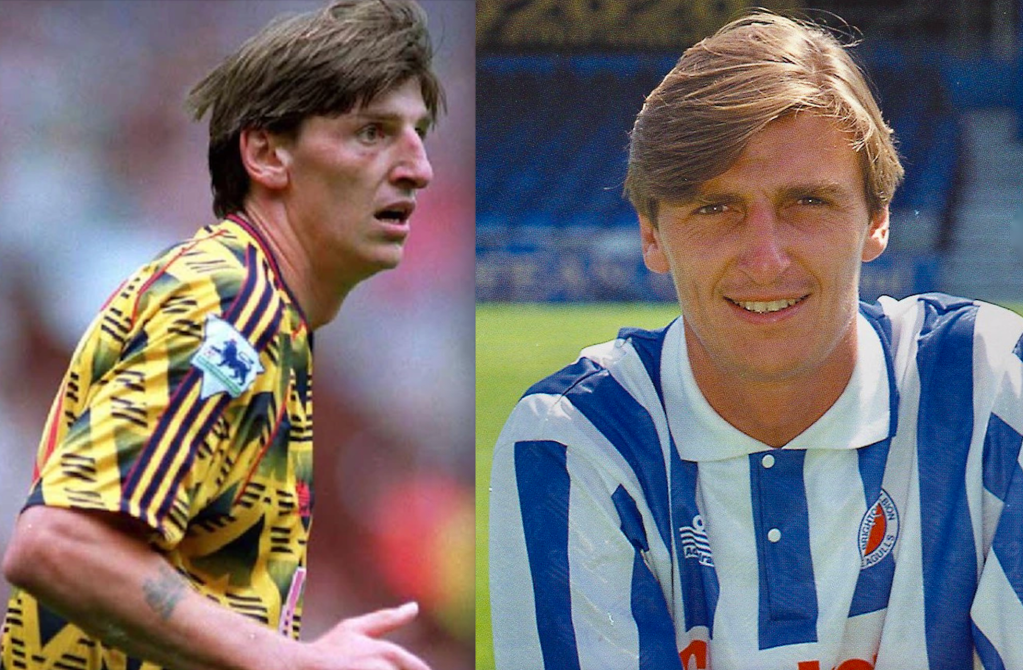
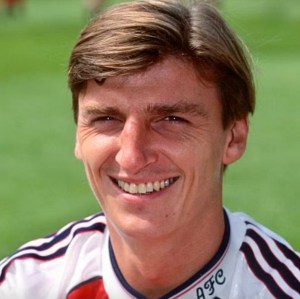
Coppell’s Palace signing Humphrey knew all about ups and downs

FULL-BACK John Humphrey signed for Crystal Palace in lieu of rent his previous club, newly-relegated Charlton Athletic, owed for playing home matches at Selhurst Park!

Humphrey was 29 and with more than 350 senior appearances behind him when Steve Coppell added him to an experienced defence to play alongside Eric Young and Andy Thorn in the old First Division.

It was a level Humphrey was well used to having started out there with Wolves (where he played in the same side as Tony Towner) and at Charlton in a defence that included  Colin Pates.

All that came before Humphrey came to Albion’s rescue in the dark days of the 1996-97 season, as I recounted in my 2020 blog post about him.

This time I’m highlighting his time at Selhurst Park, which he spoke about at length in a January 2023 interview with cpfc.co.uk.

“I saw myself as one of the senior players,” Humphrey remembered. “We had the likes of Richard Shaw coming through and Gareth [Southgate] coming through and we signed people like Chris Coleman and Chris Armstrong. Alongside that we had some experience with Eric Young and [Andy] Thorny, so I hoped I fitted in to part of the jigsaw.

“[The challenge] for me was getting used to the style of play, because at that time I know Stevie was not so much direct but he wanted to get the ball forward as early as possible because of the threat of [Ian] Wright and [Mark] Bright. So, it took me a while to get used to that.

“I do remember after a few games Stevie dropped me for a game to say: ‘This is what I want you to do.’ Then he put me back in… I was part of his restructuring and in that first year it worked out very well.”

So much so that at the end of his first year at the club Palace reached third – their highest league finish in history – and won the Zenith Data Systems trophy (otherwise known as the Full Members’ Cup) at Wembley, beating Everton 4-1.

Humphrey was still playing in the Premier League at the age of 34 and clocked up 203 appearances for the Eagles before briefly returning to Charlton for the 1995-96 season, moving on to Gillingham and then helping out his old Charlton teammate Steve Gritt in Brighton’s hour of need.

Revered at Charlton, chicagoaddick.com wrote of him: “In the five seasons he patrolled our right side of defence he missed only one league game and faced the best wingers and strikers playing in the country at that time: Barnes, Waddle, Le Tissier, Lineker, Rush, Aldridge, Beardsley, Fashanu.

“Maybe it was because we stood in the decrepit Arthur Wait Stand but Humphrey was fantastic to watch up close. Graceful, but strong in the tackle. He was a quick-thinker and a quick mover. He would glide down the right wing and put in some peaches of a cross.”

Humphrey won three consecutive player of the year awards (1988, 1989, 1990) – an honour no other Charlton player has received.

Humphrey in action for the Albion at Gillingham

By the time he arrived at Brighton, he was 36 and had played close on 650 professional matches.

“Steve wanted me because I was experienced, could get the players organised and was able to talk them through matches,” Humphrey told the Argus in a January 2002 interview. “He knew I was steady, reliable and dependable, that nine games out of ten I’d play pretty well and that I would give 100 per cent.

“It was a lot of pressure but I’d been through a few promotions (three) and relegations (six) with Wolves, Charlton and Crystal Palace.” He continued: “The stressful situations I had gone through with those other clubs had given me experience of how to try and keep a season alive.

“I could do a job for Brighton and I felt I did that and the team turned out to be good enough to hang on. It was one of the biggest achievements of my career.”

He added: “It might have been going out of the frying pan of Gillingham into the fire at Albion but I’m glad I made the jump.”

Humphrey looked back fondly on those difficult times and told the newspaper: “They have great fans and the Goldstone was always packed for the home games.

“You couldn’t help but be lifted by the crowd. The team couldn’t win away, but managed to win at home. So, one win every two games was decent and led to that eventful day at Hereford.”
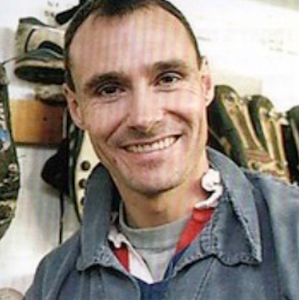
When he left the Albion as part of a cost-saving measure the following season, he turned semi-pro and played initially for Chesham in the Ryman League premier division, then Carshalton, Dulwich Hamlet and Walton and Hersham.

“Having come from the professional ranks to semi-pro it was difficult to adjust to the different standards like some of the attitudes of players to training for instance,” Humphrey said. “Also, I found the training itself wasn’t that enjoyable.

“I remember at Walton and Hersham turning up for a session, but we weren’t allowed on the pitch and had to do a road run. That was frustrating and I begun to think that maybe there were other things in life than just playing football.”

Former teammate Pates was his conduit to a new career as a teacher at Whitgift School in Croydon, where ex-Palace and Chelsea midfielder Steve Kember also joined them.

“I knew Colin from Charlton when we roomed together,” he explained. “I was aware he was at the school and he said he needed help for after-school sessions and asked me to come along.

“So I did and the football took off at the school and I got involved in other sports like rugby and basketball and got a full-time job there.”

He also retained his links with Charlton, coaching their under-15 team, and told the Argus in that 2002 piece: “I deal with privileged kids at Whitgift who may go on to be doctors, lawyers or solicitors while at Charlton the kids usually aren’t so privileged.

“To a lot of them, football is a way of making something of themselves. It gives me a great buzz when one of the Charlton youngsters makes positive progress.”

Humphrey later moved on to become head of football at Highgate School in north London.
Sparks flew in Brighton v Chelsea FA Cup clashes

BRIGHTON v Chelsea in the FA Cup sparks memories for supporters of my generation stretching back several decades.

Many began as Albion followers the day the then First Division side from Stamford Bridge visited the Goldstone Ground in February 1967 when a dubious refereeing decision denied Third Division Brighton a shock win.

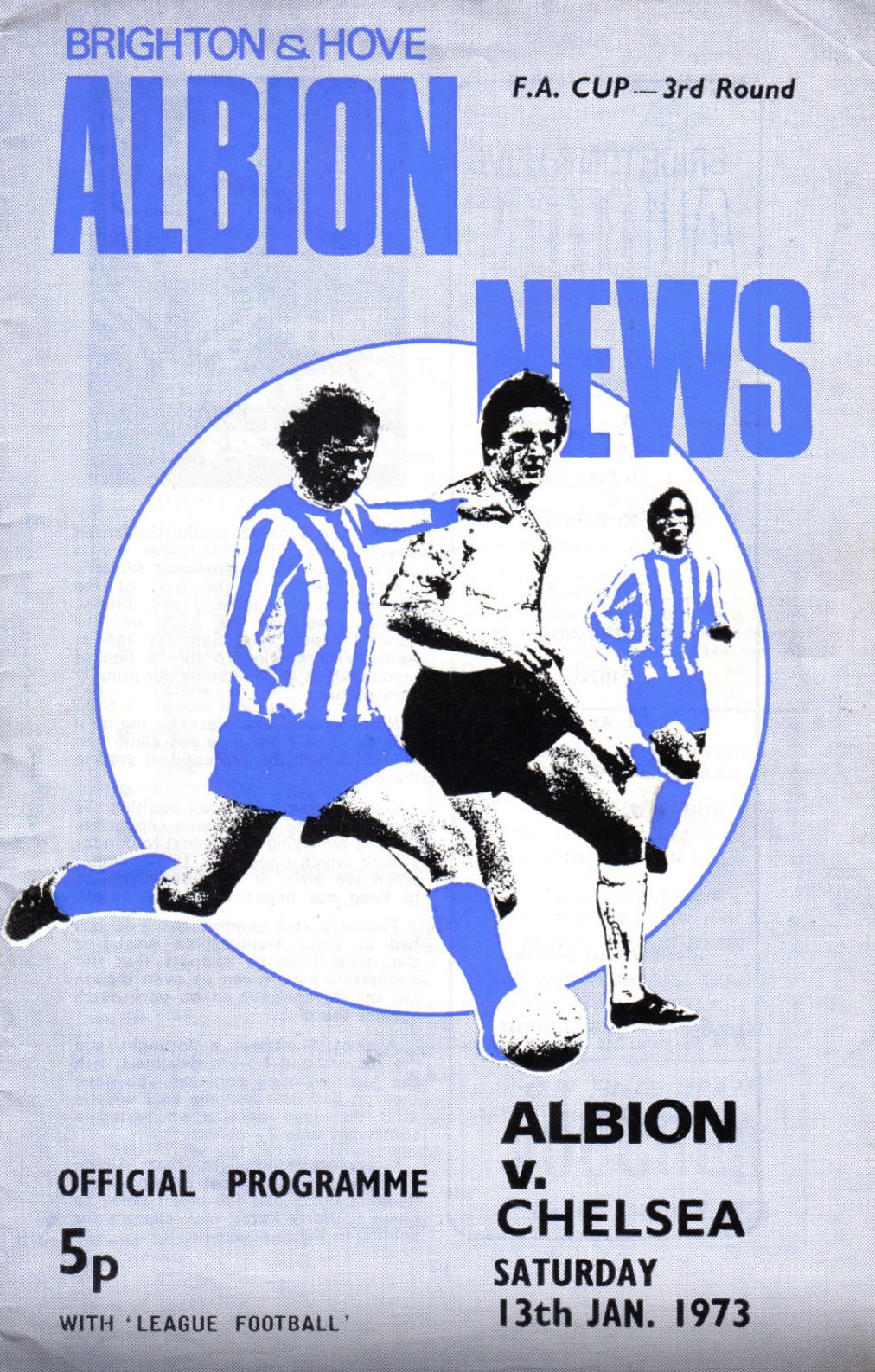
Others, me included, recall a fiery encounter in Hove six years later when Second Division strugglers Brighton were beaten 2-0 courtesy of two Peter Osgood goals in a game marred by violence on and off the pitch.

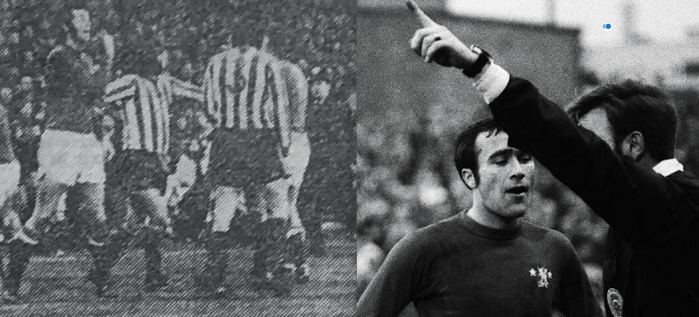
That third-round tie in January 1973 was dubbed “a day of shame” in the newspapers after two players were sent off, five were booked and crowd trouble erupted.

The chance for lower ranked teams to pitch their lesser talents against the big boys has always been at the heart of the FA Cup’s appeal.

That was certainly the case when Archie Macaulay’s mid-table Albion hosted Tommy Docherty’s top 10 Chelsea on 18 February 1967. To give it musical context, Georgy Girl by The Seekers had just taken over from The Monkees’ I’m A Believer at no.1 in the pop charts!

At a time when home crowds were normally 12,000 – 13,000, a sell-out gate of 35,000 packed into the Goldstone.

Cup fever had certainly captured the imagination of the Sussex public. In the previous round, 29,208 watched Albion beat Aldershot 3-1 in a third-round replay for the chance to take on the top division Pensioners (as Chelsea were called back then).

The two clubs hadn’t met in any other competition for 34 years – back in January 1933 Brighton beat the London side 2-1 in a third round FA Cup tie.

After such a long gap, maybe it was understandable that Albion’s young captain, Dave Turner, at 22, fell off the settee at home in excitement when he saw the cup draw made on the television.

Canny Brighton decided to sell tickets for the game at a reserve home fixture against Notts County, meaning a stunning 22,229 paid to watch the second string win 1-0 in order to secure their entry to the big game.

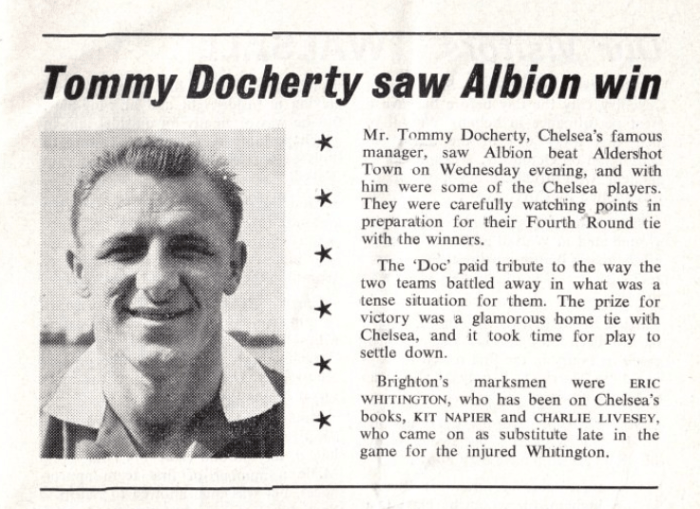
The matchday programme revealed how Docherty and several of his players had watched the Aldershot match to check out what would be in store for them.

Docherty meanwhile was very complimentary in his programme notes, declaring: “Chelsea know that we have a hard and difficult task today, and are not facing it in a complacent manner.”

He added: “We know that there is great potential for the Albion club. They have a First Division set-up at the Goldstone Ground, and First Division ideas, as well as a first-class pitch.

“The day cannot be very far away when they become one of our top clubs, and I am just one of many people in the game who will welcome their promotion to a higher class.”

However, the game was only five minutes old when Bobby Tambling gave Chelsea the lead. But before half-time, Chelsea’s John Boyle (who would several years later joined Albion on loan) was sent off for kicking Wally Gould. And just four minutes into the second half, Turner gave Albion parity.

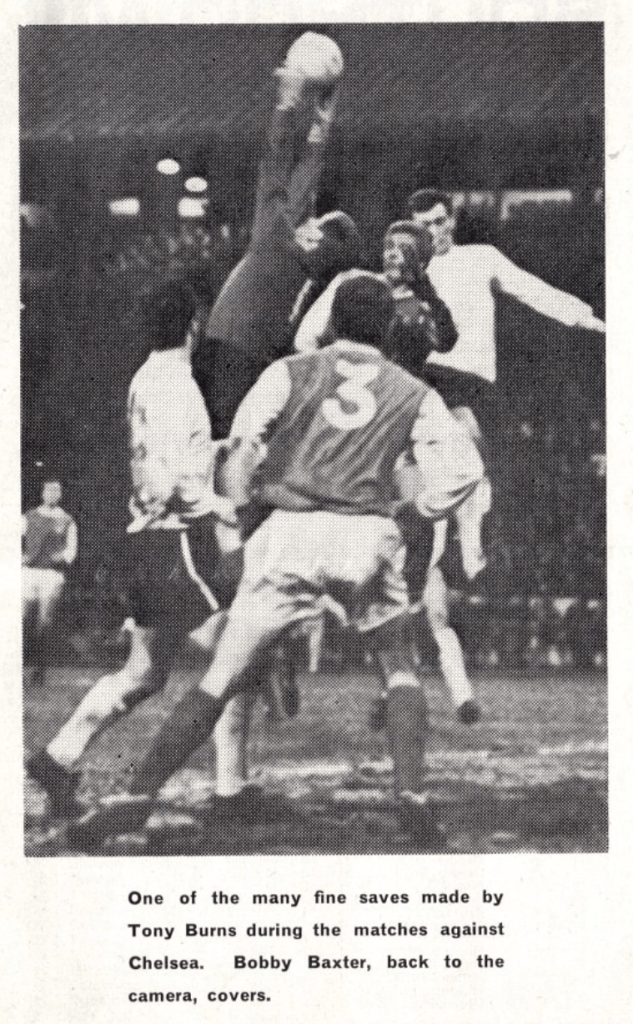
Goalkeeper Tony Burns, who had top flight experience with Arsenal, made several decent saves in the game and, with the clock ticking down, a cracking strike by winger Brian Tawse in the closing minutes of the game looked to have won it for the Third Division side.

“I smashed a volley past Peter Bonetti from 20 yards out with the score at 1-1 and thought I’d got the winner,” Tawse told Brian Fowlie of the Sunday Post in 2015. “It was a goal that could have made my career – but the referee chalked it off.”

Unfortunately, the official had spotted an infringement by Kit Napier and the ‘goal’ was disallowed.

As Brighton would discover again only too painfully in the 1983 final, these winning chances rarely happen twice, and, sure enough, in the replay at Stamford Bridge Chelsea ran out 4-0 winners in front of a massive crowd of 54,852.

Chelsea went on to reach that season’s final at Wembley only to lose 2-1 to a Spurs side that had Joe Kinnear at right-back and Alan Mullery in midfield.

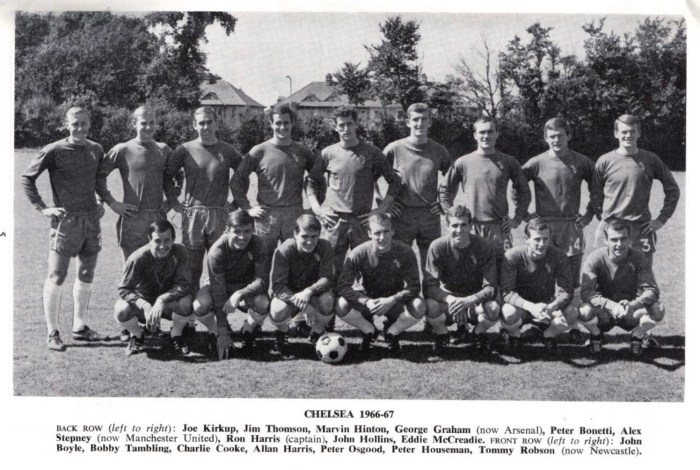
Hardman Ron ‘Chopper’ Harris, their captain in 1967, was still leading the side by the time of the 13 January 1973 game and John Hollins and Tommy Baldwin also played in both. The dismissed Boyle was on the Chelsea bench in 1973. Only John Templeman (right) played in both games for Brighton.

The UK had just joined the European Economic Community (as it was then called) and You’re So Vain by Carly Simon was no.1 in the charts. Albion had moved up a division under Pat Saward having won promotion the previous May, but the side was struggling at the foot of the Second Division, unable to cope at the higher level.

Nevertheless, there were two players looking forward to the cup tie: Bert Murray and £28,000 signing Barry Bridges had both won silverware at Chelsea in the 1960s.

Barry Bridges slots home for Chelsea in a FA Cup tie v Peterborough and, pictured by the Daily Mirror’s Monte Fresco, ahead of the 1973 match against his old club.

“It’s a tremendous draw for the club and a dream draw for Bert Murray and myself who both started our careers at Chelsea,” Bridges told Goal magazine. “Personally, it will be nice to see most of the Chelsea lads again. I grew up with Peter Bonetti, Ron Harris and Ossie (Peter Osgood).”

Unfortunately the Albion game was one of several former Worthing schoolboy Bonetti missed through injury and illness in the 1972-73 season, John Phillips deputising in goal at the Goldstone.

How this young supporter recorded the team info in his scrapbook

Dave Sexton, a promotion winner with Brighton in 1958, saw his Chelsea side put the ball in Albion’s net within the first 10 seconds of the game but Bill Garner’s effort was ruled out for offside, to the bemusement of the football writers watching. As the game unfolded, not only did it end in defeat for the Albion but it attracted ugly headlines for all the wrong reasons as Harris and Brighton left back George Ley were sent off.

Ley was dismissed in the 85th minute for bringing down Baldwin from behind and then getting involved in a punch-up with England international Osgood, the scorer of Chelsea’s goals in the 17th and 60th minutes, who himself was booked for his part in the altercation.

Albion’s Eddie Spearritt had been the first to go in the book on 23 minutes (for a foul on Alan Hudson) and on 73 minutes was involved in the incident which led to Harris being sent off for the first time in his career.

Esteemed football writer Norman Giller recorded it like this: “Harris got involved in a tussle with Spearritt, and, as he pushed him, Spearritt went down holding his face as if he had been punched. The referee directed Ron to an early bath. All the bones he had kicked, and here was Harris being sent off for a playground push.”

1970 Cup winner Dave Webb went in the book for wiping out Spearritt, joining colleague Steve Kember who was cautioned for fouling Steve Piper. Albion’s Graham Howell also went into referee Peter Reeves’ notebook for taking down Baldwin.

The kicking and aggression on the pitch led to fighting on the terraces with 25 people arrested. And Leicester referee Reeves had to be given a police escort off the pitch.

Former Spurs captain-turned-journalist Danny Blanchflower, writing in the Sunday Express: declared: “This FA Cup third-round tie was as disgraceful as any match I’ve ever seen.”

In the opinion of Albion scribe John Vinicombe in the Evening Argus: “Football anarchy gripped the Goldstone during the last 20 minutes of Albion’s FA Cup tie with Chelsea.

“In the frenzy, players fought one another, hacked and kicked, and the violence tiggered an all-too-predictable chain reaction on the terraces where rival factions became one mass of writhing, mindless hooligans.”

Interestingly, Harris’ dismissal was subsequently overturned, Giller recording: “A Brighton-supporting vicar, with a pitchside view, wrote to the Football Association telling them what he had witnessed, and ‘Chopper’ was vindicated.”

Chelsea made it through to the quarter-finals of that season’s tournament before losing 2-1 to Arsenal in a replay. Arsenal lost in the semis to Sunderland, the Second Division side who stunned the football world at the time by beating Leeds United in the final.

Martin Hinshelwood went down with Palace and up with Albion

REGARDLESS of the often overblown ‘bitter rivalry’ between Brighton and Crystal Palace, many people have served both clubs with equal distinction, none more so than Martin Hinshelwood.

A player at Palace until injury curtailed his career when only 27, he went on to have a long career in the game, much of it with Brighton; more often in youth development as a coach and briefly as the no.1.

In the summer of 2002, his appointment as Albion boss 11 weeks after his former Palace teammate Peter Taylor had quit came as something of a surprise considering chairman Dick Knight declared he had interviewed seven candidates for the post.

In more recent times, Albion have had a Uruguayan, a Spaniard, a Finn and an Italian as head coach, back in 2002 it looked a strong possibility Knight might appoint wild-haired German coach Winfried Schafer, who had just managed Cameroon at the World Cup, but the chairman suspected his lack of command of English might be too big a hurdle to get over.

A terrific start

A clear favourite had been Steve Coppell but when the ex-Palace manager fell asleep during his conversation with Knight, apparently fatigued after a long-haul flight, the chairman was suitably unimpressed and, with time running out before the 2002-03 season got under way, Hinshelwood was appointed instead.

A 3-1 win away to Burnley looked like a terrific start but after a 0-0 home draw with Coventry, the side went on a disastrous 10-game losing spell (a 2-1 League Cup win over Exeter City the only bright spot amid the gloom).

Knight had already publicly signalled he would take decisive action after the sixth defeat in a row – a 4-2 home reverse to nine-man Gillingham!

He told the Argus: “If the team went ten matches losing every one, then you have got to do something about it.

“It’s very easy to criticise him (Hinshelwood). Obviously, he is a manager under pressure because we have just lost six games.

Getting his message across

“To suggest we should instantly sack him puts out the wrong message. Most people right now will think it was the wrong decision to appoint him, but I am not going to panic. I am going to monitor the situation.”

Of course, that monitoring didn’t take long to reach an inevitable conclusion – four more defeats and Hinshelwood was relieved of first team duties. He was made ‘director of football’ and Knight went back to Coppell to try to keep the Albion in the division. He very nearly managed it, too, but such a bad run of defeats had taken their toll on the points total.

As it happened, it wasn’t the first time Hinshelwood had found himself in the Albion hotseat: he was caretaker manager on three occasions: in 1993 (before Liam Brady’s appointment), in 2001 (after Micky Adams left for Leicester) and again in 2009, when he was in charge for a 4-4 FA Cup first round tie at Wycombe Wanderers after Russell Slade had been sacked and before Gus Poyet’s arrival.

When researching backgrounds of any number of players for this blog, Hinshelwood’s name is often cited as the one who either made the approach to bring them to Brighton or who was a major influence in their development.

For example, when Hinshelwood first joined the Albion in 1987, from Chelsea, he was instrumental in bringing from Stamford Bridge to the Goldstone Doug Rougvie and Keith Dublin, who both played their part in getting Albion promoted straight back to the second tier in 1988.

Hinshelwood had been reserve team manager at Chelsea for two years during the managerial reign of John Hollins, after first team coach Ernie Walley, his former Palace youth team coach, put in a good word for him.

His long association with Brighton began with a ‘phone call to Barry Lloyd to congratulate him on landing the Albion manager’s job. The former Fulham captain asked Hinshelwood to join him at the Goldstone – and he stayed for the next six and a half years.

He returned to the club in the summer of 1998, when Brian Horton had taken over, and was appointed Director of Youth, with Dean Wilkins as youth team coach.

Pensive Hinsh

An interview with the matchday programme pointed out that across the following 14 years, he oversaw a youth system that produced 31 players who made it through to the first team, although he said such success had very much been a team effort, name-checking Wilkins, centre of excellence managers Vic Bragg and John Lambert, scouting chief Mark Hendon and physio Kim Eaton.

Dean Hammond, Adam Hinshelwood, Adam Virgo, Adam El-Abd, Dean Cox, Jake Robinson, Dan Harding and later Lewis Dunk, Jake Forster-Caskey and Solly March all graduated from that period. “To have been a part of their journeys makes me immensely proud,” he said.

Hinshelwood left the Albion for a second time in 2012 and worked variously for Crawley, Portsmouth, Stoke City and Lewes. He returned to the Seagulls once again when the former head of academy recruitment at Stoke, Dave Wright, who had joined Brighton in 2019, invited him to take on a role of scouting 13 to 16-year-olds.

When Hinshelwood himself was that age, he had visions of following in his dad Wally’s footsteps. He had been a professional for Fulham, Chelsea, Reading, Bristol City and Newport County, and, although born in Reading (on 16 June 1953), young Martin had become accustomed to an unsettled childhood, moving around the country to wherever dad’s next club took him.

The family finally settled in New Addington, near Croydon, with Wally playing non-league football in Kent and Martin played representative football for Dover Under 15s, Croydon Boys and Surrey Under 16s.

He was on schoolboy terms at Fulham when Bobby Robson was manager but they didn’t think he would make it. It was while he was playing for Surrey Schools that former Spurs and Palace manager Arthur Rowe scouted him for Palace and he was taken on as an apprentice in 1969.

Hinshelwood playing for Palace, up against Stoke’s George Eastham

Hinshelwood was given his first team debut by Bert Head in 1972. He played in midfield in the old First Division for a dozen matches but the side were relegated in his first season. The flamboyant fedora-wearing Malcolm Allison took over as manager and he was later replaced by Terry Venables.

Martin’s younger brother Paul (Jack Hinshelwood’s granddad) played in the same side at full-back and the brothers were alongside the likes of Kenny Samson and Peter Taylor. In 1975-76, when still a Third Division side, they shook the football world by making it to the semi-finals of the FA Cup, where they lost to eventual winners Southampton, although Martin missed the game through a right knee injury. It eventually forced him to quit playing in 1978, after he’d made 85 appearances for Palace in five years.

Venables appointed him as youth team coach at Selhurst Park and although he spent 18 months as player-manager of non-league Leatherhead, he then resumed his Palace role under Steve Kember.

Alan Mullery dispensed with Hinshelwood’s services during his brief managerial reign at Palace but he kept his hand in at coaching with non-league clubs Kingstonian, Barking and Dorking.

Selsey-based Hinshelwood then had a spell as manager of Littlehampton before the Chelsea job came up.

Why Colin Pates is forever grateful to Liam Brady

ONE-TIME Arsenal back-up defender Colin Pates had a Gunners legend to thank for persuading him to quit the game before he did any life-altering damage.

Thankfully, Pates took Liam Brady’s advice to bring his professional playing days to an end at Brighton in January 1995 and he went on to have a long and successful career coaching at an independent school in Croydon where he introduced football to what was previously a rugby-only establishment.

“Liam told me that I should think of my health before my playing career and that I would be a fool to myself if I carried on playing,” Pates told the Argus in a 2001 interview.

“My knee had fallen apart and it was the right advice. If I’d ignored it, I could well have ended up not being able to walk.

“Footballers need to be told when it is the end. I’ll always be grateful to Liam for that.”

Pates had played the last of 61 games in the stripes (a 0-0 home draw against Bournemouth) only six weeks after he was presented with a silver salver by former England manager Ron Greenwood to mark his 400th league appearance (on 24 September 1994, a 2-0 home win over Cambridge United).

In the matchday programme of 17 December, Brady confirmed that Pates and fellow defender Nicky Bissett, (who’d twice broken a leg and then sustained a knee injury) would be ruled out for the rest of the season. Neither played another game for the Seagulls.

It brought to an end Pates’ second spell with the Seagulls, having originally spent a most productive three months on loan in 1991 helping to propel the club to a Wembley play-off final. If Albion had beaten Notts County that May, Pates may well have made a permanent move to the south coast. As it was, he said: “Unfortunately, the club couldn’t meet Arsenal’s asking price for me that summer so I returned to Highbury.

“But when my contract expired in 1993, there was only one club I wanted to be at… Brighton.”

Pates had plenty of competition for the centre back berth at Arsenal

As if Tony Adams, Andy Linighan, David O’Leary and Steve Bould weren’t enough centre back competition at Arsenal, manager George Graham had also taken Martin Keown back to the club from Everton for £2m – six and a half years after selling him to Aston Villa for a tenth of that amount.

So, it was no surprise that Pates found himself surplus to requirements at Highbury and given a free transfer. Graham’s old Chelsea teammate, Barry Lloyd, eagerly snapped up the defender for a second time, this time on a permanent basis.

Goalkeeper Nicky Rust, still a month short of his 19th birthday, who’d also been given a free transfer by Arsenal, made his Albion league debut in the season-opener at Bradford City behind the returning Pates, who had just celebrated his 32nd birthday four days before the game.

After starting the first 10 matches alongside the aforementioned Bissett, Pates suffered an abductor muscle injury early on in a 5-0 drubbing away to Middlesbrough in the League Cup which necessitated a spell on the sidelines. He missed nine matches – only one of which was won.

These were the dying days of the seven-year Lloyd era and, even with Pates back in the side, one win, two draws and four defeats brought the sack for the manager.

Any doubts new manager Brady had about Steve Foster and Pates were swiftly dispelled, as he wrote about in his autobiography (Liam Brady: Born To Be A Footballer).

“Fossie was 36. I feared he might be going through the motions at this stage in his career and it would have been hard to blame him,” said Brady. “Colin Pates was a few years younger, but he’d been at Chelsea and Arsenal and could have been winding down.

“I appealed to them to give me a dig out, to lead this rescue mission. And they responded just as I hoped.”

Together with the even older Jimmy Case, who was brought back to the club from non-league Sittingbourne, they “brought on” the younger players in the new man’s first few weeks and months.

Under Brady, young Irish centre-back Paul McCarthy played alongside Foster in the middle, with Pates at left-back. And Pates saw the arrival of some familiar faces in the shape of young Arsenal loanees, first Mark Flatts and then Paul Dickov, whose successful spells helped Brady to steer the Seagulls to safety by the end of the season.

“I really enjoyed it, playing mainly at left-back,” said Pates. “It was a great family club and I made a lot of friends there along the way.”

At the time Pates had to call it a day, Albion were a third-tier side but the bulk of his career had been played at the top of the English game for two of its leading lights in Chelsea and Arsenal, and briefly Charlton Athletic.

Albion’s ex-Arsenal trio Liam Brady, Raphael Meade and Colin Pates

The player’s move to Arsenal from Charlton for £500,000 in January 1990 raised more than a few eyebrows because he was 28 at the time and none of Arsenal’s back four – Lee Dixon, Bould, Adams and Nigel Winterburn – looked like giving way.

“People asked me why I went there,” said Pates. “But when a club is paying that money and that club is Arsenal who wouldn’t go and take the chance?

“I knew this was going to be the last opportunity to have a move like this in my career and although I knew I was only being signed as cover, I couldn’t turn it down.”

He continued: “I’d joined a team that had just won the league, that would do so again in 1990-91 and they had the fabled back four – the best defensive unit in world football at the time.”

The website upthearsenal.com acknowledged: “Pates had built a solid reputation at Chelsea as a dependable defender who was strong in the air and no slouch on the deck.”

Pates added: “When I first met George (Graham) in his office at Highbury, he was honest and straight talking. He told me I’d have to work hard to get into the side.”

However, within a month he made his Gunners debut at left back in place of the injured Nigel Winterburn in a 1-0 defeat to Sheffield Wednesday. It turned out to be his only first team appearance that season.

Although he found it difficult to motivate himself for reserve team football, he pointed out: “I still enjoyed the training sessions with the first team and I did learn a lot about defending from George, even at that late stage in my career.”

However, after his return from the loan spell at Brighton, he saw action as a sub in three pre-season friendlies ahead of the 1991-92 season and that autumn had his best run of games in the first team.

He featured in eight games on the trot between October and November 1991 and memorably scored his one and only goal for Arsenal in a European Cup match at Highbury against a Benfica side managed by Sven-Göran Eriksson. He also played in the February 1992 1-1 North London derby against Spurs and made two appearances off the bench that season.

It was a similar story in the 1992-93 campaign when he went off the bench on five occasions although he had two starts: in a 2-0 win at Anfield (Anders Limpar and Ian Wright the scorers) and a 3-2 defeat away to Wimbledon.

“I was a bit-part player but it was a good time to be at the club with the cup finals and being part of the squads,” said Pates.

On his release from Brighton, Pates had a spell as player-manager of Crawley, played a handful of games for non-league Romford, and coached youngsters in various places including Mumbai in India and the Arsenal School of Excellence.

Pates told The Guardian in a 2002 interview how a sense of history and continuity was the first thing he had noticed when he signed for Arsenal.

Brady, Paul Davis, Bould and other former Arsenal players were all invited to the Arsenal academy, and Pates told the newspaper. “Young players need people like Stevie Bould to tell them how proud they should be to pull the shirt on and to show them what’s expected of them. “When I joined Arsenal, everyone was kind and considerate. You were left in no doubt about how you were supposed to conduct yourself. For the way it’s run, it’s the best club in the country.”

By then though, Pates had begun a new career as a coach getting football off the ground at the independent Whitgift School in Croydon. He was to stay 24 years at the school having been invited to introduce football by its headmaster, Dr Christopher Barnett.

The story has been told in depth in several places, notably in London blog greatwen.com by Peter Watts, among others. Watts wrote: “A posh school in the suburbs is not where you’d expect to find a hard-bitten former pro, and Pates admits: ‘Whitgift is quite alien to some of us, because we had state school educations. It was intimidating, and not just for the boys.’ But he jumped at the opportunity.

At first, he took a sixth-form team on Wednesday afternoons, but there were no goalposts, pitches, teams or even footballs! “We didn’t have anything. So, we had to start from scratch, pretty much teach them the rules,” he said.

“They were rugby boys playing football, so these were quite aggressive games. But after three years we introduced fixtures and we’ve never looked back,” said Pates.

In an interview with the Argus in October 2001, Pates added: “We went over the local common for our first training session with some under-18s after finding a ball that looked like the dog had chewed it up.

“I had to go right back to basics. All they had known was rugby, so it was a case of going through the rules of football to start with, like the ball we use is round!

“I was told that in 300 years football had never been considered. But a lot of the boys and their parents expressed an interest.

“It might be an independent school but you can forget the black and white filmed images of public school kids. Most are from working class backgrounds and they love their football.

“It grew a lot quicker than the head thought and he told me I should take over as master in charge of football.”

As the sport grew, he recruited his former Charlton teammate (and ex-Brighton, Wolves and Palace full-back) John Humphrey and Steve Kember, the former Chelsea and Palace midfielder to help with the coaching.

Asked about it on the chelseafancast.com podcast Pates delighted in recounting how from time to time he would show Humphrey a video clip of a rare goal he scored for Chelsea against Wolves when he flicked the ball over Humphrey’s head in the build-up to it – however Chelsea lost that 1983 match 2-1!

More seriously, Pates spoke at length to Watts about the benefits of a good education in case things didn’t pan out.

“You have to be an exceptional footballer to make it these days. So, we want to give them the best opportunity to be a footballer, but also give them a magnificent education so if they don’t sign scholarship forms they have something to fall back on. It works for us, it works for the academies and it works for the families.”