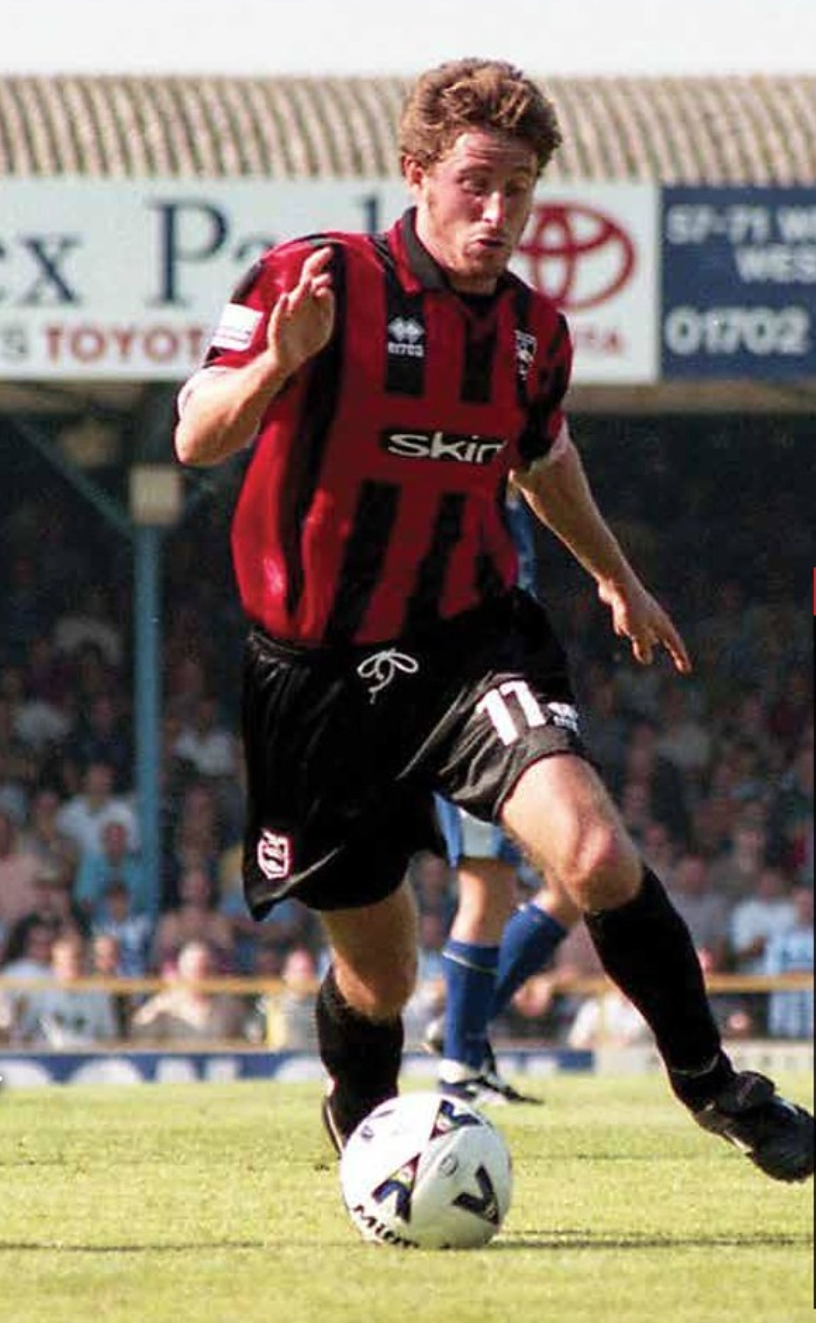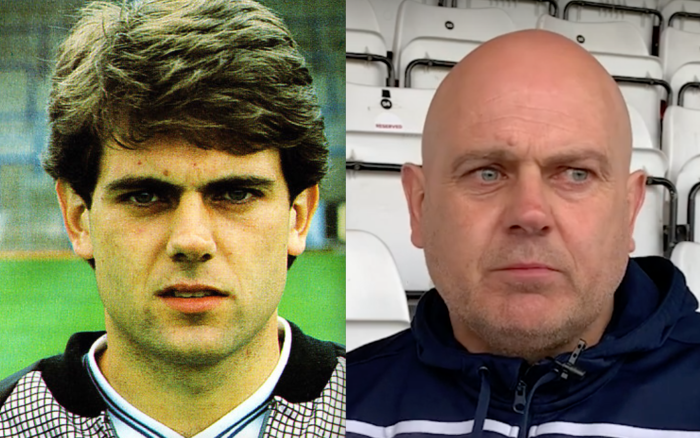
Coach Dean Wilkins fumed after falling out with Knight 

DEAN WILKINS might have lived in the shadow of his more famous elder England international brother Ray but he certainly carved out his own footballing history, much of it with Brighton.

Albion fans of a certain vintage will never forget the sumptuous left-footed free-kick bouffant-haired captain Wilkins scored past Phil Parkes at the Goldstone Ground which edged the Seagulls into the second-tier play-offs in 1991.

Supporters from the mid-noughties era would only recall the balding boss of a mid-table League One outfit at Withdean comprising mainly home-grown players who Wilkins had brought through from his days coaching the youth team.

After Dick Knight somewhat unceremoniously brought back Micky Adams over Wilkins’ head in 2008, he quit the club rather than stay on playing second fiddle and subsequently went west to Southampton where he worked under Alan Pardew and his successor Nigel Adkins as well as taking caretaker charge of the Saints in between the two reigns.

Wilkins’ initial association with the Seagulls went back to 1983, when Jimmy Melia brought him to the south coast from Queens Park Rangers shortly after Albion’s FA Cup final appearances at Wembley.

Melia’s successor Chris Cattlin only gave him two starts back then and although he pondered a move to Leyton Orient, where he’d had 10 matches on loan, he opted to accept to try his luck in Holland when his Dutch Albion teammate Hans Kraay set him up with a move to PEC Zwolle. Playing against the likes of Johann Cruyff, Marco Van Basten and Ruud Gullit proved to be quite the footballing education for Wilkins.
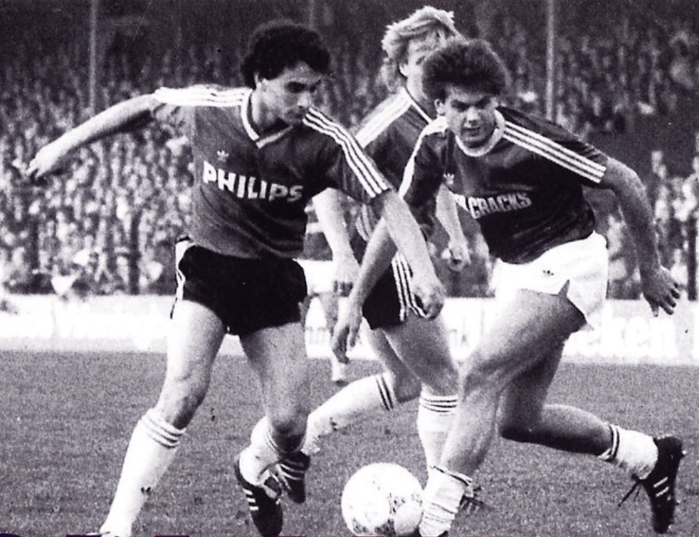
Wilkins in the thick of it in Dutch football for PEC Zwolle

After two years in the Netherlands, 25-year-old Wilkins rejoined the relegated Seagulls in the summer of 1987 as the club prepared for life back in the old Third Division under Barry Lloyd.

Relegation had led to the sale for more than £400,000 of star assets Danny Wilson, Terry Connor and Eric Young but more modest funds were allocated to manager Lloyd for replacements: £10,000 for Wilkins, £50,000 for Doug Rougvie, who signed from Chelsea and was appointed captain, Garry Nelson, a £72,500 buy from Plymouth and Kevin Bremner, who cost £65,000 from Reading. Midfield enforcer Mike Trusson was a free transfer.
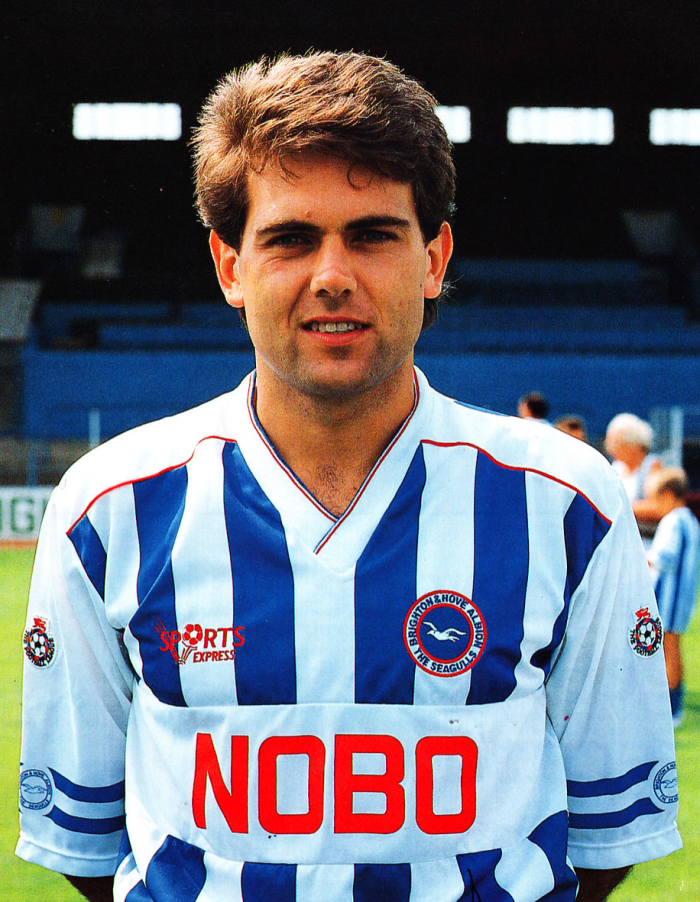
The refreshed squad ended up earning a swift return to the second tier courtesy of a memorable last day 2-1 win over Bristol Rovers at the Goldstone.

At the higher level, Wilkins had the third highest appearances (40 + two as sub) as Albion finished just below halfway in the table. The following season Wilkins was appointed captain and was ever-present as Albion made it to the divisional play-off final against Notts County at Wembley, having made it to the semi-final v Millwall courtesy of the aforementioned spectacular free kick v Ipswich.

Wilkins scored again at Wembley but it turned out only to be a consolation as the Seagulls succumbed 3-1 to Neil Warnock’s side.

As the 1992-93 season got underway, Wilkins, having just turned 30, was the first matchday programme profile candidate for the opening home game against Bolton Wanderers (a 2-1 win) when he revealed the play-off final defeat had been “the biggest disappointment of my career”.

The 1993-94 season was a write-off from October onwards when he damaged the medial ligaments in both his knees after catching both sets of studs in the soft ground at home against Exeter City.

Although injury plagued much of the time during Liam Brady’s reign as manager, the Irishman acknowledged his ability saying: “He is a very fine footballer and a tremendous passer of the ball and he possesses a great shot.”

Ahead of the start of the 1995-96 season, Wilkins was granted a testimonial game against his former club QPR, managed at the time by big brother Ray. But at the end of the season, when the Seagulls were relegated to the basement division, he was one of six players given a free transfer.

Born in Hillingdon on 12 July 1962, Wilkins couldn’t have wished for a more football-oriented family. Dad George had played for Brentford, Leeds, Nottingham Forest and Hearts and appeared at Wembley in the first wartime FA Cup final. While Ray was the brother who stole the limelight, Graham and Steve also started out at Chelsea.

In spite of those older brothers who also made it as professionals, Wilkins attributed his development at QPR, who he joined straight from school as an apprentice in 1978, to youth coach John Collins (who older fans will remember was Brighton’s first team coach under Mike Bailey).

He made seven first team appearances for Rangers, his debut being as a substitute for Glenn Roeder in a 0-0 draw with Grimsby Town on 1 November 1980. After joining the Albion in August 1983, he had to wait until 10 December that year to make his debut, in a 0-0 draw at Middlesbrough, in place of the absent Tony Grealish. He started at home to Newcastle a week later (a 1-0 defeat), this time taking the midfield spot of injured Jimmy Case.

Perhaps the writing was on the wall when Cattlin secured the services of Wilson from Nottingham Forest, initially on loan, and although Wilkins had a third first team outing in a 2-0 FA Cup third round win at home to Swansea City, boss Cattlin didn’t pick him again. Instead, he joined Orient on loan in March 1984.

A long career in coaching began when Wilkins was brought back to the Albion in 1998 by another ex-skipper, Brian Horton, who had taken over as manager. With Martin Hinshelwood as director of a new youth set-up, Wilkins was appointed the youth coach – a position he held for the following eight years.

Return to the Albion as youth coach

His charges won 4-1 against Cambridge United in his first match, with goals from Duncan McArthur, Danny Marney and Scott Ramsay (two).

That backroom role continued as managers came and went over the following years during which a growing number of youth team products made it through to the first team: people like Dan Harding and Adam Virgo and later Adam Hinshelwood, Joel Lynch, Dean Hammond and Adam El-Abd.

At the start of the 2006-07 season, with Albion back in the third tier after punching above their weight in the Championship for two seasons, Wilkins was rewarded for his achievements with the youth team with promotion to first team coach under Mark McGhee.

By then, more of the youngsters he’d helped to develop were in or getting close to the first team, for example Dean Cox, Jake Robinson, Joe Gatting and Chris McPhee.

After an indifferent start to the season – three wins, three defeats and a draw – Knight decided to axe McGhee and loyal lieutenant Bob Booker and to hand the reins to Wilkins with Dean White as his deputy. Wilkins later brought in his old teammate Ian Chapman as first team coach.
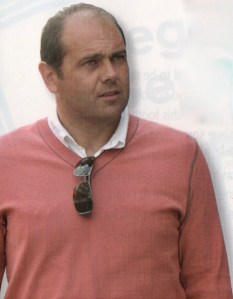
Into the manager’s chair

Tommy Elphick, Tommy Fraser and Sam Rents were other former youth team players who stepped up to the first team. But, over time, it became apparent Knight and Wilkins were not on the same page: the young manager didn’t agree with the chairman that more experienced players were needed rather than relying too much on the youth graduates.

Indeed, in his autobiography Mad Man: From the Gutter to the Stars (Vision Sports Publishing, 2013), Knight said Wilkins hadn’t bothered to travel with him to watch Glenn Murray or Steve Thomson, who were added to the squad, and he was taking the side of certain players in contract negotiations with the chairman.
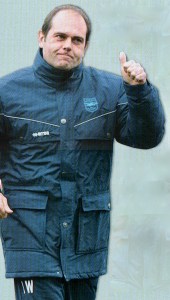
“In my opinion, his man-management skills were lacking, which was why I made the decision to remove him from the manager’s job,” he said. It didn’t help Wilkins’ cause when midfielder Paul Reid went public to criticise his man-management too.

Knight felt although Wilkins hadn’t sufficiently nailed the no.1 job, he could still be effective as a coach, working under Micky Adams. The pair had previously got on well, with Adams saying in his autobiography, My Life in Football (Biteback Publishing, 2017) how Wilkins had been “one of my best mates”.

But Adams said: “He thought I had stitched him up. I told him that I wanted him to stay. We talked it through and, at the end of the meeting, we seemed to have agreed on the way forward.

“I thought I’d reassured him enough for him to believe he should stay on. But he declined the invitation. He obviously wasn’t happy and attacked me verbally.

“I did have to remind him about the hypocrisy of a member of the Wilkins family having a dig at me, particularly when his older brother had taken my first job at Fulham.

“We don’t speak now which is a regret because he was a good mate and one of the few people I felt I could talk to and confide in.”

Youth coach

Knight knew his decision to sack the manager would not be popular with fans who only remembered the good times, but he pointed out they weren’t aware of the poor relationship he had with some first team players.

Knight described in his book how a torrent of “colourful language” poured out from Wilkins when he was called in and informed of the decision in a meeting with the chairman and director Martin Perry.

“He didn’t take it at all well, although I suppose he felt he was fully justified,” wrote Knight. “He was fuming after what was obviously a big blow to his pride.”

Reporter Andy Naylor perhaps summed up the situation best in The Argus. “The sadness of Wilkins’ departure was that Albion lost not a manager, but a gifted coach,” he said. “Wilkins was not cut out for management.”

Saints coach

One year on, shortly after Alan Pardew took over as manager at League One Southampton, he appointed Wilkins as his assistant. They were joined by Wally Downes (Steve Coppell’s former assistant at Reading) as first team coach and Stuart Murdoch as goalkeeping coach.

Saints were rebuilding having been relegated from the Championship the previous season and began the campaign with a 10-point penalty, having gone into administration. The club had been on the brink of going out of business until Swiss businessman Markus Liebherr took them over.

A seventh place finish (seven points off the play-offs because of the deduction) meant another season in League One and the following campaign had only just got under way when Pardew, Downes and Murdoch were sacked. Wilkins was put in caretaker charge for two matches and then retained when Nigel Adkins, assisted by ex-Seagull Andy Crosby, was appointed manager.

It was the beginning of an association that also saw the trio work together at Reading (2013-14) and Sheffield United (2015-16).

Adkins, Crosby and Wilkins were in tandem as the Saints gained back-to-back promotions, going from League One runners up to Gus Poyet’s Brighton in 2011, straight through the Championship to the Premier League. But they only had half a season at the elite level before the axe fell and Mauricio Pochettino took over.

When the trio were reunited at Reading, Wilkins, by then 50, gave an exclusive interview to the local Reading Chronicle, in which he said: “This pre-season has given me time to learn about the characters of the players we’ve got at Reading and find out what makes them tick.

At Reading with Crosby and Adkins

“It’s my job then to make sure every player maximises his potential. That’s what I see my role as, to bring out the very best of them from now on and make them strive to attain new levels of performance.

“I will always keep working toward that goal. If we can do that with every individual and get maximum performances out of them, I believe we will be in for a great season.

“We’re back together now and it’s going fantastically well. I have loved every minute of it. I’m used to working with Nigel and Andy and we are carrying out similar work to what we’ve done in the past.”

The Royals finished seventh, a point behind Brighton, who qualified for the play-offs, and the trio were dismissed five months into the following season immediately following a 6-1 thrashing away to Birmingham City.

Six months later the trio were back in work, this time at League One Sheffield United, but come the end of the 2015-16 season, after the Blades had finished in their lowest league position since 1983, they were shown the door.

Between January 2018 and July 2019, Wilkins worked for the Premier League assessing and reporting on the accuracy, consistency, management and decision-making of match officials.

In the summer 0f 2019, he was appointed Head of Coaching at Crystal Palace’s academy, a job he held for 15 months.

A return to involvement with first team football was presented by his former Albion player Alex Revell, who’d been appointed manager of League Two Stevenage Borough. Glad to support and mentor Revell in his first managerial post, Wilkins spent a year as assistant manager at the Lamex Stadium.
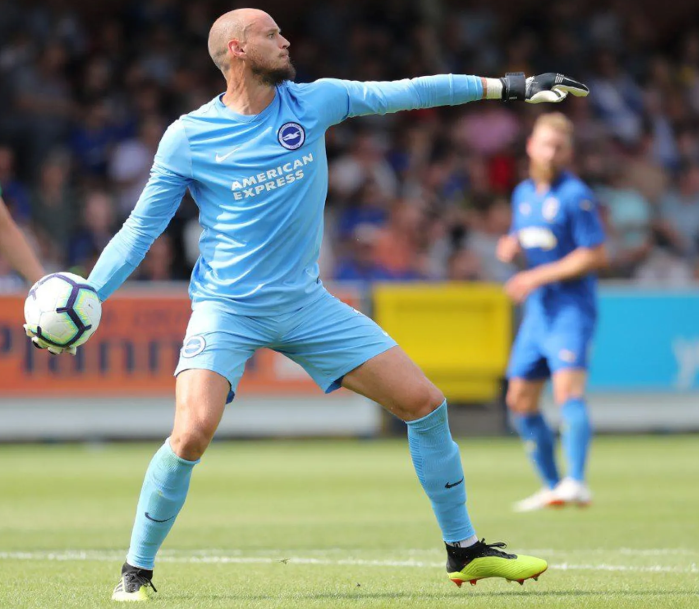
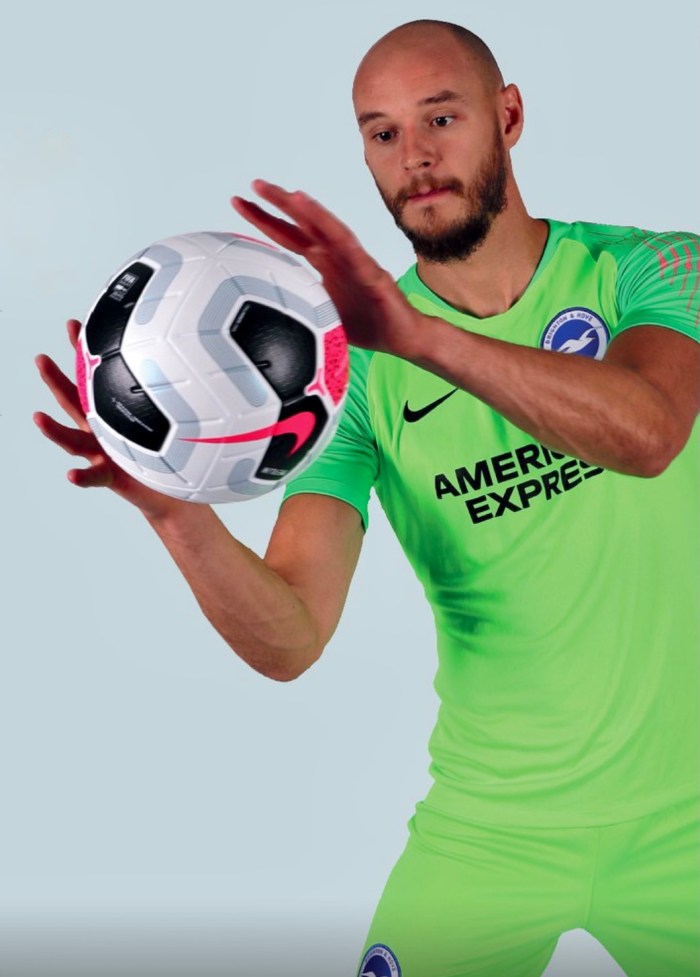
Button rarely pressed into action with the Albion

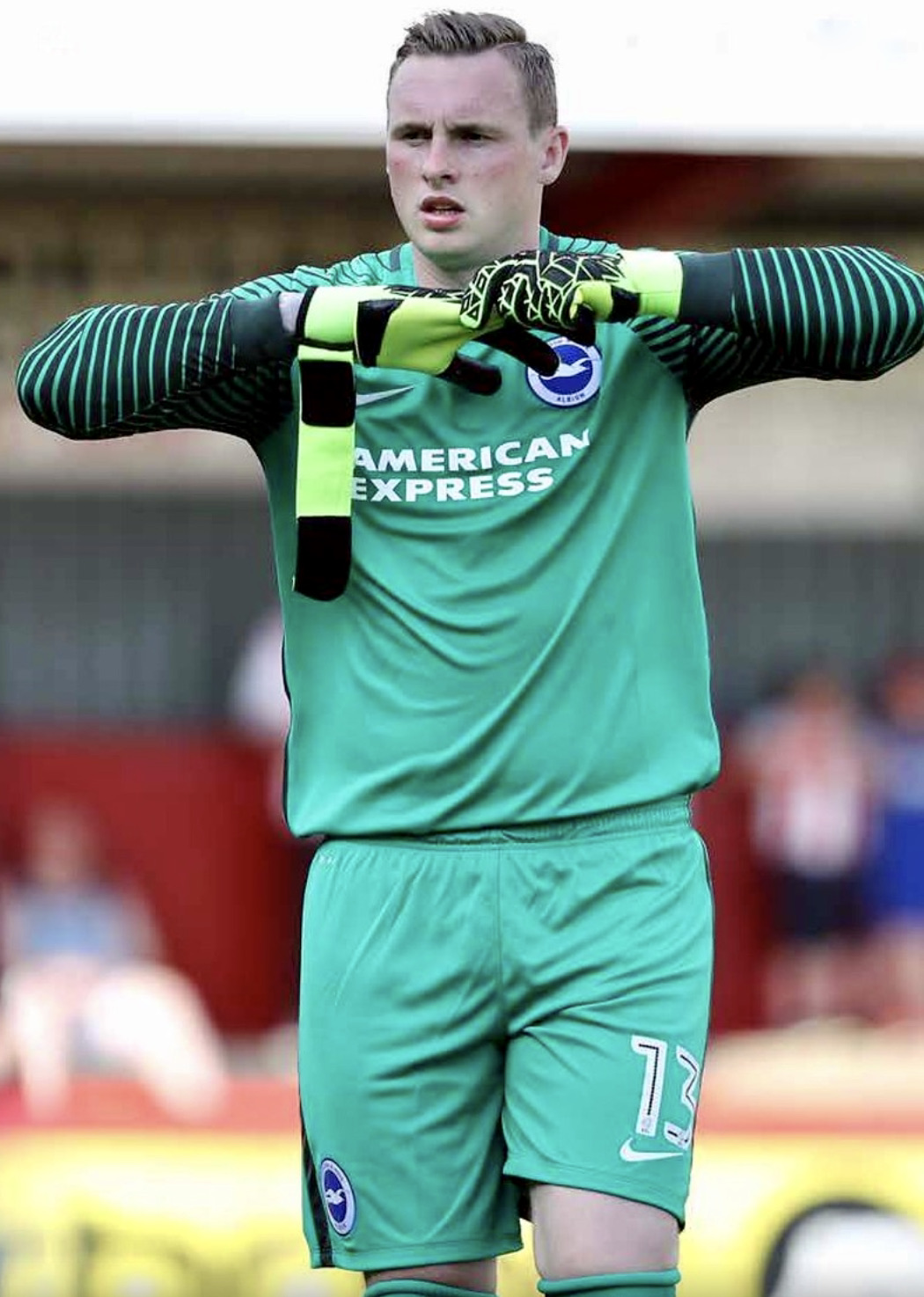
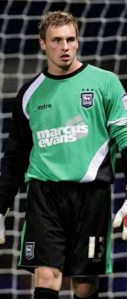
JOURNEYMAN goalkeeper David Button has travelled the length and breadth of the country in pursuit of playing time, his three years at Brentford being a rare settled spell in which he played 141 games.

Normally only a loanee or a back-up ‘keeper at a multitude of clubs, he had a season and a half as Fulham’s first choice but at Brighton between 2018 and 2020 he only made 10 first team starts.

Button was 29 when he signed for the Albion and he stepped into the boots vacated by Tim Krul, the previous back-up ‘keeper, who had moved on to Norwich City. With both upcoming goalkeepers Christian Walton and Robert Sanchez out on loan, boss Chris Hughton wanted a third senior ‘keeper.

Largely a watching brief

“He has a wealth of experience, having made over 300 appearances during his career so far, and I’m sure he will work well with Maty Ryan and Jason Steele,” said Hughton.

Button made his debut in a pre-season 2-1 friendly defeat against AFC Wimbledon, and realised from the outset that Ryan was going to be ahead of him.

“I’m not coming in blind to the situation, but I want to impress and be ready for the chance in the side – there has to be healthy competition wherever you are as a player and hopefully I can provide that for him,” he said. 

“There could be a chance for me and Jason in January if Maty goes away to the Asia Cup with Australia, so we’ll both be working hard to ensure we’re ready for that if the opportunity arises. 

“I know he’s very well thought of but at the same time you have to back yourself and work hard every day and do as well as you can.”

Indicating what might be expected of him, he said: “I’m confident with the ball at my feet – it’s a slightly different style to Fulham and we are allowed to go a bit more direct here and it’s something I feel I’m good at. 

“I think it’s a bit less risky – we play when we can and keep it when we can – the risk factor involved in playing it out of defence is less for me here though.”

Button certainly found a familiar face at training: goalkeeper coach Ben Roberts had previously worked with him at Charlton Athletic, and he said of him: “He has got a great reputation within the game and everyone he’s worked with speaks highly of him. I genuinely believe he’s one of the best at what he does.”

Button’s first competitive action for the Seagulls came in the fourth game of the season, a 1-0 home League Cup defeat to Southampton. He had to wait until December, when Ryan was away playing for Australia, to play in the Premier League.

In Premier League action v Everton

He kept a clean sheet in the first of them, a 1-0 home win over Everton, when he made a handful of saves, including turning a Richarlison effort onto a post.

“Although he’s a very experienced goalkeeper, it’s never easy when you’re coming in at this stage of the season and following Maty Ryan, who’s done so well for us,” Hughton said. “It wasn’t an easy decision because I’ve got two goalkeepers who are really pushing. But probably his experience managed to get him the nod (over Steele).

“It’s great for him to come into this first game and, not only be on a winning team, but also a clean sheet and that will do him the world of good.”

But that was as good as it got; Albion drew 2-2 at West Ham on New Year’s Day and lost to Liverpool (1-0) at the Amex and Man Utd (2-1) at Old Trafford. A 3-1 third round FA Cup win at Bournemouth saw then no.3 Jason Steele given a chance between the sticks.

On Ryan’s return, Button was back to the bench although he kept goal twice in Albion’s run to the semi-finals of the FA Cup: Button in the fourth round win over West Brom and in the fifth round win over Derby County. Hughton went with Ryan for the quarter final at Millwall and the semi v Man City.

When Graham Potter succeeded Hughton, Button spoke about the changes the goalkeepers then had to embrace. “We are now doing more work with our feet,” he told the matchday programme. “There is more onus on us to be better with the ball and to be comfortable with it.”

The opportunity to put it into practice was even less than previously for Button, though: he played just two League Cup matches in 2019-20 (Bristol Rovers and Aston Villa and one FA Cup tie (v Sheffield Wednesday).

At the start of the 2020-21 season, the ‘keeper swapped one Albion for another and signed for newly-promoted West Brom.

“I have ambitions of playing and helping the team as much as possible but I obviously understand that Sam (Johnstone) has got them promoted last season so he will start the season,” said Button.

“It’s up to me to push him and show the manager what I can do and take my chances when I get them. Hopefully there’ll be things I can bring to the squad certainly. I’m quite calm and comfortable with my feet too and commanding in my box so I’d say they’re my main strengths.”

However, Button played just one Premier League game in that first season plus three cup matches.

There was slightly more involvement in 2021-22 when the experienced stopper made 11 appearances in all competitions, including playing the final five Championship games and keeping consecutive clean sheets in the last three matches, against Coventry City, Reading and Barnsley.

When Button swapped West Brom for League One Reading in August 2023, one Baggies supporter wasn’t sorry to see the back of him. “’It is definitely the right move to offload David Button, he has been the worst goalkeeper I have ever seen at Albion,” said fan Matt Smith on footballleagueworld.co.uk.

“We’ve had some pretty decent goalies since I’ve been going, however Button was absolutely atrocious over a significant period of time too. How on earth did we spend £1m on him?

“How Steve Bruce gave him a two-year contract at the end of the 2021-22 season is beyond me. He’s so bad honestly. He can’t catch a bloody cold. He’s awful.”

Born in Stevenage on 27 February 1989, Button was with local club Stevenage Borough in their centre of excellence and acknowledged the input of the Coaching FX goalkeeping school in his early development.

“Keith Fenwick was my first coach: his first-class and very enjoyable sessions definitely helped to develop my love of being a keeper,” he said.

Button moved from youth academy to professional at Spurs

An England schoolboy and youth international, Button moved on to Tottenham’s youth academy in 2003, signed a scholarship deal two years later and then earned a four-year professional contract in December 2007. However, he only had eight minutes of first team action for Spurs – as a substitute for Carlo Cudicini in a League Cup match – and was loaned out 13 times.

Over his four years as a Spurs pro, he had two spells each at Crewe Alexandra and non-League Grays Athletic, plus stints at Rochdale, Bournemouth, Luton, Dagenham & Redbridge, Shrewsbury Town, Plymouth Argyle, Leyton Orient, Doncaster and Barnsley.

In the 2009-10 season, he notched up a total of 36 League Two appearances (10 for Crewe and 26 for Shrewsbury) and 30 in League One the following season, when with Peter Reid’s Plymouth, where he kept Romain Larrieu out of the team for much of the campaign.

When he eventually left Spurs permanently, he didn’t travel too far, joining Chris Powell’s Charlton in the Championship for £500,000. Powell preferred Ben Hamer in goal, though, and Button was restricted to a handful of appearances before moving on to Brentford.

In an interview with getwestlondon, Button said: “It was a little bit of a frustrating time for me at Charlton. I would like to think I would have been given a chance a bit sooner there. It was a difficult year but it helped build my character.”

When Brentford sold Simon Moore to Cardiff, manager Uwe Rösler took Button to Griffin Park declaring: “We decided David was the perfect choice for us. He is at the right age and he is very hungry to make the number one spot his own.

“As soon as Simon left, David was our first choice. David will face strong competition for the goalkeeper spot from Jack Bonham and Richard Lee, when Richard is fit again.

“We have been strong there (in the goalkeeping positions) over the past two seasons and are even stronger this year.

“Goalkeeper is a crucial position and David is a very good player.”

For once, fortune fell favourably for Button and he ended up first choice as the Bees won promotion from League One at the end of his first season and reached the play-off semi-finals at the end of his second season.

The Brentford fans website bcfctalk was full of praise for the stopper, saying: “He was very much our first point of attack as well as our last line of defence and his quick and accurate distribution played a massive part on our overall style of play and freedom of expression.”

The website added: “He sometimes failed to deal effectively with crosses and he could also use his physique better as he is an enormous man, but he was utterly reliable and often quite brilliant and he won us numerous points with some incredible saves.”

Ahead of the 2015-16 season, at a pre-season training camp in Portugal, Button spoke about all of the club’s ‘keepers being put through their paces by goalkeeping coach Simon Royce, a one-time Albion loanee ‘keeper, and how he wanted to maintain his run of form.

“I need to find that level of consistency now for me,” he said. “I feel like I had quite a few good games last season but there were a few where I wanted to do better. I am aiming to keep my standards high in every minute of every game this season.”

He remained first choice in 2015-16, making 47 appearances, but talks on a new contract broke down. He came in for a bit of a backlash on social media when he decided to move on to west London rivals Fulham instead but he told getwestlondon: “It’s football. Probably in their eyes it’d have been nicer for me to move on to a different club. It is what it is.

“Hopefully they remember the good times and what I did for the club. I’ve got a great respect for the fans and for the way they treated me while I was there.

Fulham custodian

“I had a great three years at Brentford but felt it was time for a change and the opportunity to come here arose and it was something that interested me.”

Button had the support of manager Slavisa Jokanovic at Fulham but gradually lost the backing of the supporters to the extent he was jeered at Craven Cottage.

Supporter Dan Smith did a detailed analysis of where he thought things went wrong on fulhamfocus.com. “Having narrowly missed out on promotion in the playoffs, Button signed off his Brentford career as a good keeper at this level and someone highly regarded by the Bees faithful,” wrote Smith. “His shot stopping one of the best in the league with a very strong ‘long’ kick.”

Button kept a clean sheet on the opening day of the 2016-17 season and Smith said: “He looked decisive, confident and capable. But something happened gradually as the season developed.”

He maintained the ‘keeper’s form slowly deteriorated and blamed the way he was being managed rather than the player himself. “He looks very uncomfortable with the ball at his feet and isn’t helped by the lack of movement from the deeper players making it very difficult for him to pick someone out,” wrote Smith. “Mistake after mistake giving the ball away clearly damaged his confidence because mistakes in possession led to poor keeping errors, letting in shots he should be saving and would have saved at Brentford.”

Interestingly, with echoes of what Roberto De Zerbi has said of Steele and Bart Verbruggen, Jokanovic did blame himself rather than Button, saying he trusted the ‘keeper and had full confidence in him.

“It’s my responsibility sometimes. I put my keepers in some sort of trouble. We play a bit different and I want to start playing from the keeper.

“It’s more simple to kick the ball to the strikers as it’d give him more opportunity to be comfortable in the goal.

“He has all my confidence. Sometimes, when he makes a mistake it’s partly my responsibility as well.”

Nevertheless, eventually Button lost his starting spot to Marcus Bettinelli.

Stockdale’s key role in Albion’s rise to the Premier League

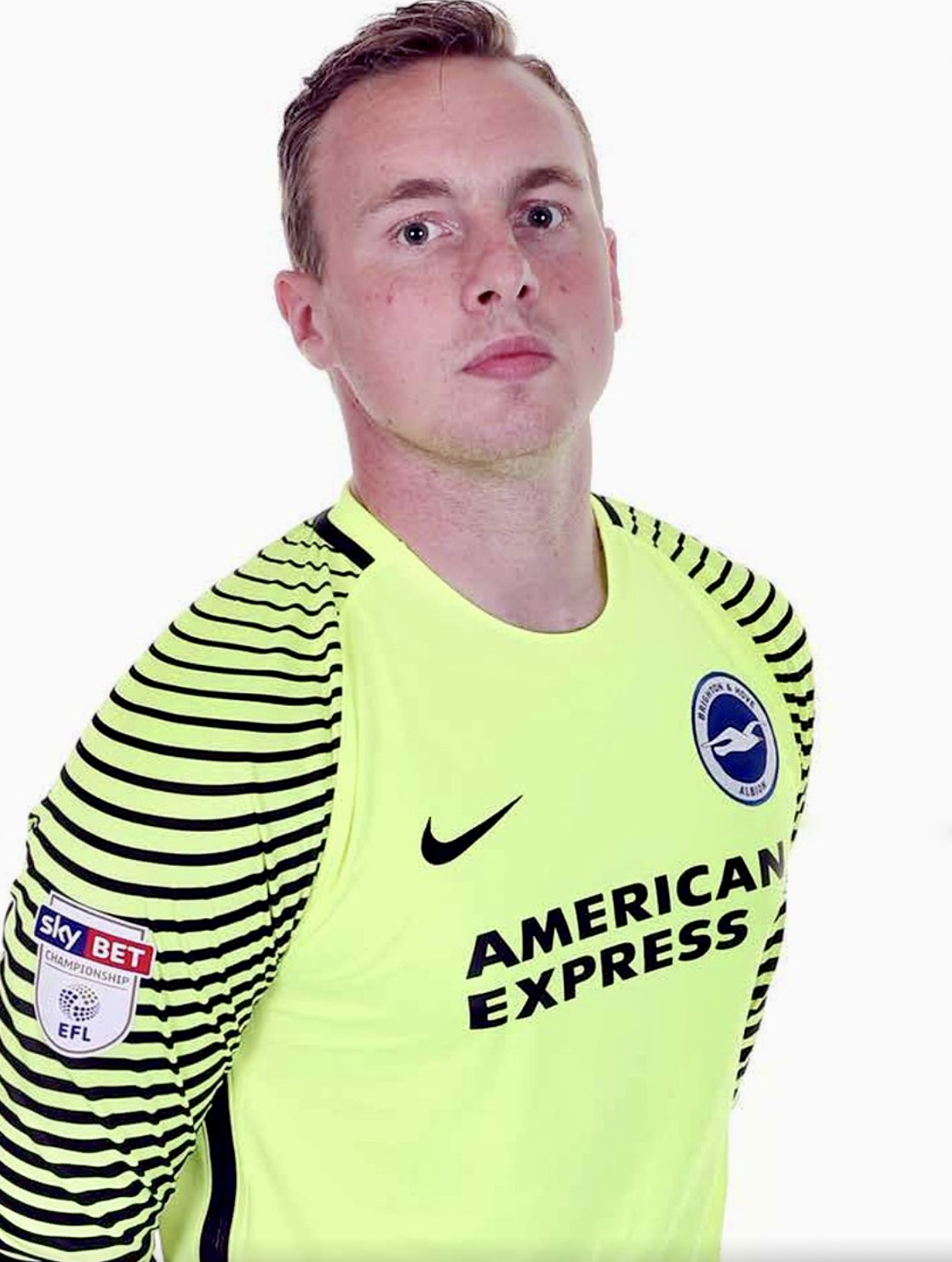
DAVID STOCKDALE kept 20 clean sheets as Brighton were promoted from the Championship to the Premier League.

He was chosen by his peers in the PFA Championship team of the year and was runner up to Anthony Knockaert as player of the season.

What seemed like a mystery at the time, though, was that he then remained in the Championship by signing a three-year contract with Birmingham City (at the time managed by Harry Redknapp).

“I’m not ashamed to say I put my family first and football second for a change,” Stockdale explained, referring to his desire to sign a longer term deal than the Seagulls offered because he didn’t want the upheaval of a move that might have unsettled his daughter’s education at a time she was about to take exams.

Stockdale had joined the Seagulls from Fulham in the summer of 2014 and was first choice ‘keeper for three seasons, playing a total of 139 matches for the club.

Remembered for some notable performances between the sticks, Stockdale impressed off it too. In the wake of the Shoreham air crash, he showed great compassion for the victims.

Before the next game, away to Ipswich Town, he wore personalised gloves and a training top bearing the names of two of them, Albion groundsman Matt Grimstone, who was Worthing United’s goalkeeper, and his teammate Jacob Schilt.

He also spent time talking to Matt’s family, visiting with Albion ambassador Alan Mullery. “We are all guilty of complaining about the little things in life but there are far more important things to worry about and I wish more people realised that,” he told the matchday programme.

At the end of the season, Stockdale’s support was recognised by the award of the PFA Community Champion trophy. “A lot of tears were shed,” he told Albion reporter Andy Naylor, when he got the inside track on Stockdale’s story in an interview for The Athletic on 17 November 2019.

“I’d spoken to Matt a few times, with him being a goalkeeper. We used to shout across at each other. I’d joke, ‘You come and train with us and I’ll do that (groundskeeping)’.”

The way the club rallied round didn’t surprise the goalkeeper because he’d heard good things from Fulham teammate and all time Albion legend Bobby Zamora when he was mulling over the move.

“I knew it was a good club, a very progressive club, but when Bobby told me it was the best club, that was good enough for me,” he said.

There was a familiar face waiting for him at training too because the goalkeeping coach when he arrived was Antti Niemi, who had taken him under his wing in his early days at Fulham.

“I was only 21 at the time, at a big Premier League club, and he spoke to me a lot in those early days,” he said. “Although he’s the goalkeeping coach here now, it sometimes feels the same as it did back then.

“He’s the one putting on the sessions now, and I’ve enjoyed them like I did when I trained with him before,” he said.

Even so, Stockdale was even more impressed by Niemi’s successor, Ben Roberts. “There’s no better goalkeeping coach than him,” he said. “Ben and I had tried to work together at previous clubs and it hadn’t come off. So, when we finally did at Brighton, he said ‘this is what I want you to work on, stay with me and trust me and the process’.

“It wasn’t always easy, I was 30 at the time trying to adapt my style, sometimes it’s hard. But I trusted him and it worked. He’s shown with numerous keepers that he can help anyone improve. That’s why people hold him in such high regard.”

A personal highlight for Stockdale came in January 2017 at the Amex when he made a double save from a Fernando Forestieri penalty against Sheffield Wednesday that helped put Brighton top of the division.

Less memorable were two own goals in a 2-0 defeat at Norwich City when Alex Pritchard shots rebounded off the woodwork, hit him and went in.

And when Albion had a chance to clinch the Championship title at Villa Park, Stockdale fumbled a long-range Jack Grealish shot to concede a late equaliser which meant Newcastle finished top instead.

“I left with great memories, on a high, apart from the Villa game,” Stockdale told Naylor. “It was one of those when everyone knows it was a mistake. It just wasn’t meant to be, but as a player you feel the responsibility.

“We got what we wanted, got promoted, but I think it left a bit of a bad feeling.”

Born in Leeds on 20 September 1985, Stockdale stayed in Yorkshire in the early part of his career, initially in the youth sides of Huddersfield Town and York City.

It was York who took him on as a trainee, in 2000, and in the last game of the 2002-03 season, aged just 17, Terry Dolan gave him his first team debut as a half-time substitute for Michael Ingham, who was suffering a shoulder injury, although City lost 2-0 to Oxford United.

By then in the Conference, Stockdale made 19 consecutive appearances for the Minstermen between August and December 2004 before being dropped by caretaker manager Viv Busby.

It was during that run of games that Stockdale first gained international recognition, being selected for the England C (non-league) squad for a friendly v Italy (he went on as a sub for Nikki Bull).

After his club disappointment, he told the York Evening Press: “I was gutted when I was taken out of the team but I’ve just gone back to the training ground and worked as hard as I can.

“I have got my best years to come. I am only 19 and I hope I can get a contract for next year and stay at the club.”

When former Albion midfielder Billy McEwan took charge, he offered Stockdale his first professional contract, although the youngster prevaricated over signing it, much to the manager’s dismay.

McEwan told the York Evening Press: “If the players don’t want to sign, then it’s up to them. They can go because I want players who want to play for York City Football Club.

“But David Stockdale is the biggest disappointment to me and I have told him that. He’s a young apprentice getting his first professional contract and the last thing in his mind should be money. That should be of secondary importance and he should be grateful York City are offering him a contract.

“On the evidence of his last performance of the season, he has to do better if he wants to get into the team.

“At the moment, he has potential but so have a lot of players. Maybe he feels he can get an automatic number one spot but that’s up for grabs this summer.”

Shortly after signing the contract, Stockdale went on loan to Northern Premier League club Wakefield-Emley and the following March joined Worksop Town on a temporary basis.

Stockdale was released by York at the end of the 2005-06 season with some more harsh words from McEwan about his weight ringing in his ears. After signing for League Two Darlington, Stockdale told the York Evening Press being released had been the incentive he needed to save his career.

“I have done well in pre-season and got back into shape after letting myself go at York, which was well-documented,” he said. “I accept now that was the case and agree with the manager but I would have preferred not to have been criticised in public.

“It has probably given me a kick up the backside though to get me going again and I feel a better person now. I would have loved to have stayed at York because I was there for a long time and have a great affection for the club.

“I would like to thank everybody there for all the help they have given me. The fans were always great and I learnt everything there so it was a bit of a shock to go.”

Clearly benefiting from full-time goalkeeping coaching from former Darlington, Bristol Rovers and Middlesbrough no.1 Andy Collett, Stockdale became manager Dave Penney’s preferred first choice ‘keeper, ousting former Derby and Bolton stopper Andy Oakes.

Scouts from Birmingham and Newcastle were said to be monitoring his development but it was Fulham who stepped in and signed him in April 2008 for an undisclosed sum (thought to be £350,000 rising to a possible £600,000). He was loaned back to Darlo to finish the season when they lost out in the League Two play-off semi-finals.

Although he was at Fulham for six years, much of Stockdale’s time on their books was spent out on loan: in League Two with Rotherham United, League One at Leicester City, and in the Championship with Plymouth Argyle, Ipswich Town and Hull City.

Temporary Tractor Boy

Nevertheless, his parent club did give him a reasonable sprinkling of first team outings: he played a total of 52 games, 39 in the Premier League.

Indeed in 2011, when he was covering for the injured Mark Schwarzer, Fabio Capello, the England boss at the time, called him up for international duty, although he didn’t get to play.

His best run of games for Fulham in the Premier League came in the 2013-14 season when he made 21 appearances (he also played five cup games).

After he left Brighton, Stockdale was Birmingham’s first choice ‘keeper throughout the 2017-18 season (apart from two months out with an injured wrist). He played 39 games, having replaced the previous season’s no.1, Tomasz Kuszczak, who had also moved to City from Brighton.

Blues only narrowly avoided relegation from the Championship with Redknapp only lasting until mid-September as manager; Lee Carsley briefly in temporary charge, Steve Cotterill for five months and then Garry Monk.

Monk brought in Lee Camp as his first-choice ‘keeper and Stockdale was sent out on loan to three different League One clubs: Southend United (on an emergency seven-day arrangement), Wycombe Wanderers and Coventry City.

After making a single appearance for Birmingham under Monk’s successor Pep Clotet at the start of the 2019-20 season, Stockdale rejoined Wycombe in January 2020 on a half-season loan.

He then moved to Wycombe on a permanent contract in September 2020 but only played twice, with Ryan Allsop the preferred no.1. In February 2021, he linked up with League Two Stevenage on loan and played five matches before having to return to Wycombe when Allsop was injured.

He kept the shirt until the end of the season, when Wanderers were relegated to League One, and, with Allsop having been released, Stockdale stepped up and was ever-present throughout the 2021-22 season. His 18 clean sheets earned him the League One Golden Glove award, jointly with Michael Cooper of Plymouth.

Nevertheless, with his contract up, he then returned to Yorkshire, signing for Darren Moore’s Sheffield Wednesday, where he played 27 games in the 2022-23 season.

They say what goes around comes around, and at the start of the 2023-24 season Stockdale went back to York City, although he sustained an injury early on in the season that caused him to be sidelined from the National League team.

As well as his familiar playing role, Stockdale began to look towards a time when he hangs up the gloves by also being appointed York’s head of recruitment. However, he was let go from the role in April 2024.

Away from his direct involvement in club football, he began a postgraduate diploma in Global Football Sport Directorship with the PFA Business School.

Andy Arnott’s United dream dashed by injury

A PLAYER who was on the brink of signing for Man Utd for £100,000 ended up playing for the Albion in exile.

But for an untimely hernia injury, Andy Arnott would have been an Alex Ferguson signing at Old Trafford.

As it turned out, the moment passed and the opportunity didn’t arise again. He later made 28 appearances for the Seagulls during the 1998-99 season when home games were played at Gillingham’s Priestfield Stadium.

It was a ground Arnott was familiar with. Born in nearby Chatham on 18 October 1973, he joined Gillingham as a trainee and had only served one year of his apprenticeship when he was taken on as a professional.

Manager Damien Richardson gave him his debut for the Fourth Division club only four games into the 1991-92 season when he was just 17.

It couldn’t have gone better because he scored the Gills’ opening goal in a 2-0 home win over Scarborough.

This was a Gillingham side that included summer signing Paul Clark, who had been part of Alan Mullery’s successful Brighton side in the late 1970s, and Mike Trusson, who’d won promotion from the Third Division with the Seagulls under Barry Lloyd. A young Richard Carpenter was also breaking through.

Arnott scored three goals in 23 appearances by the season’s end although one goal and two appearances against Aldershot were later expunged from the records because the Shots were expelled from the league.

Nonetheless, the youngster’s emergence hadn’t gone unnoticed higher up the football pyramid and the offer of the chance to join United came along, ostensibly so that he could feature in their youth team’s involvement in the end-of-season Blue Star youth tournament in Zurich.

This was the era of the famous ‘Class of 92’ and Arnott found himself playing alongside David Beckham, Paul Scholes and Nicky Butt.

“After impressing during his spell with United, Ferguson made a £100,000 offer to Gillingham which was turned down by the then manager Damien Richardson,” Albion’s matchday programme noted.

In action for Gillingham against Albion’s Nicky Bissett

The player then suffered a hernia injury that put him out of the game for a year, putting paid to any further interest from United.

“I was gutted at the time, but it was a case of just getting on with returning to fitness and playing football,” Arnott said.

Back at Gillingham, he played 50 matches and scored 12 goals but then, in January 1996, got a £15,000 move to Leyton Orient. He spent a season and a half with the Os under manager Pat Holland and played in every position to help out the team, including goalkeeper in one emergency.

Arnott played under Micky Adams at Fulham

In the summer of 1997, after Fulham’s promotion from Division Three under Micky Adams, Arnott moved to Craven Cottage for an undisclosed fee (thought to be £25,000).

Within a few months, Mohammed Al Fayed took over the club and sacked Adams.

“All of a sudden Fulham went from being an ordinary Second Division outfit to a multi-million pound club,” he said. “I felt sorry for Micky as he had done a fantastic job, but he did foresee what was coming and sorted out long term contracts for most of the players.”

The new management duo of Ray Wilkins and Kevin Keegan brought in their own players and Arnott found himself confined to the reserves with the likes of Mark Walton, winger Paul Brooker, and forward Darren Freeman.

He scored twice for Fulham Reserves in a 3-0 win over Albion’s reserve side on 21 October 1998, and that persuaded Brian Horton to take him on.

“A few clubs had shown an interest around that time, but Brighton were the first that I spoke to and I liked what I was hearing so I signed straight away,” he said.

Horton signed him by the end of the same month for £10,000, plus another appearance-related £10,000, and said in the matchday programme he was “absolutely tremendous” on his debut. It came in a 1-0 win in pouring rain at Barnet when Charlton loanee defender Emeka Ifejagwa scored the only goal of the game on his debut. “He (Arnott) and Jeff Minton forged a good partnership and I am looking for that to flourish,” said Horton.

In his player-by-player commentary of performances, programme columnist Paul Camillin said: “Brilliant debut. He showed a good array of passing skills and he might have the bite we’ve been lacking.”

It was the wrong kind of bite he displayed in only his fourth game, though, when he was shown a red card in the 55th minute of Albion’s 2-0 win at Horton’s old club Hull City.

Defender Ross Johnson also went for an early bath for a second bookable offence but Albion’s nine men hung on for 35 minutes to complete their fourth successive away League win: the best such run for 62 years!

There’s little doubt Arnott’s arrival coincided with an upturn in the side’s form and in the matchday programme he took time to praise Albion’s loyal followers. “It is a fantastic advantage to have the number of away supporters we do,” he said. “It makes you want to play that little bit more to give them something back. They are absolutely magnificent.”

Arnott and Jamie Moralee

In the absence of Gary Hobson and Ian Culverhouse, Arnott was given the captain’s armband although that discipline was a bit questionable at times. He saw red for a second time, after Jeff Wood had taken over from Horton, for a second bookable offence at home to his old club Orient – Os captain Dean Smith (manager of relegation-threatened Leicester) also went for a second yellow – although Wood and Orient boss Tommy Taylor both slammed referee Rob Styles for his officiating.

Man of the Match

Wood declared: “Too many officials want to stamp their authority on the game early and flash cards like they are going out of fashion.”

Although Arnott saw out the season in the starting line-up, when his old boss Adams took over from Wood, by the time the new season got under way back in Brighton, Adams had signed Paul Rogers and Charlie Oatway as his preferred midfield pair.

By the end of September, Arnott had been snapped up by Second Division Colchester United; initially on loan and then permanently when their new boss Steve Whitton completed a direct swap that saw Warren Aspinall join the Seagulls.

However, Arnott made only four starts plus eight appearances off the bench in that first season and his time with United was blighted by a long-standing groin injury.

“The whole thing has been an absolute nightmare. I have been struggling with the injury for 14 months and despite loads of rest, two operations and four cortisone injections, the problem is as bad as ever,” he told Colchester’s Daily Gazette in January 2001.

“I was really struggling just before Christmas and I visited the specialist who told me I’m pretty near to exhausting my options.

“When it’s at its worst the injury is unbearable, especially when I turn or attempt to hit a long ball.

“I’m still only 27 with what should be many years left in the game.”

Unfortunately, though, he was forced to call time on his professional playing career and dropped into non-league initially with then-Conference side Stevenage, then Dover Athletic, where he was captain, Welling United and Ashford Town.

After his playing days were over, he settled in Rochester and became a project manager for Dryspace Structures while retaining his football links as a coach for Ebbsfleet United’s under 16 team.

Pacy Paul Brooker an in-and-out talent on the wing

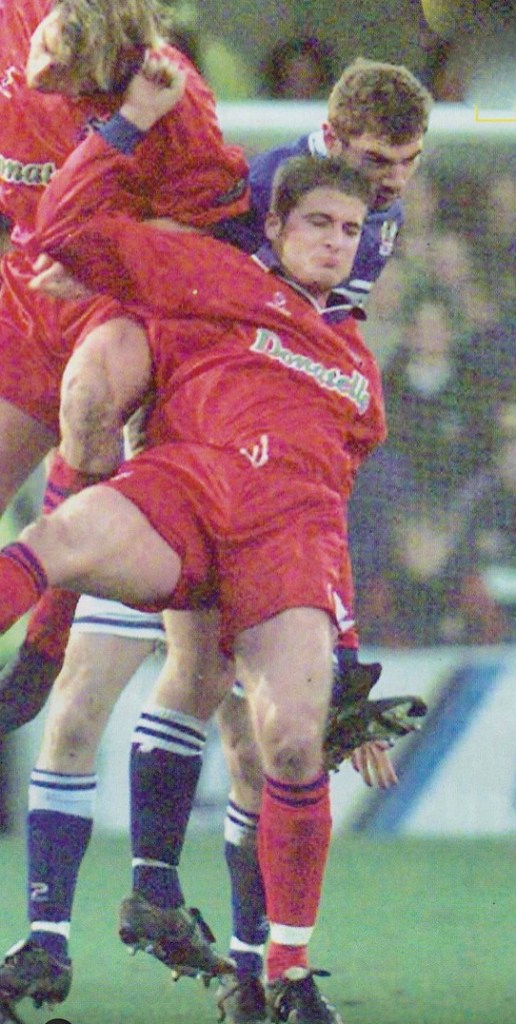
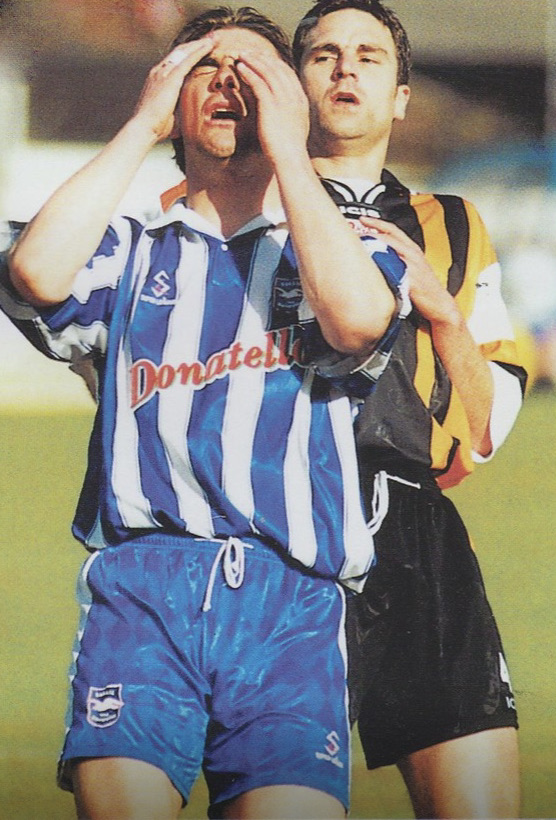
PAUL BROOKER, a winger at one time mentioned in the same breath as Ryan Giggs, played more games for Brighton – 147 – than any of his other clubs but only managed a Premier League cameo with Leicester City.

Brooker certainly had the capacity to excite fans but there could be frustration in equal measure and, although he won back-to-back promotions with the Albion, his career didn’t come close to the achievements of the great Manchester United winger.

The national football fanzine, When Saturday Comes, ran a superb piece about Brooker in April 2002, in which Adam Powley talked about his “conspicuous talent” and maintained: “Brook­er was in­deed very good, blessed with real pace and an ability to keep con­trol while run­ning at full pelt.”

Born in Hammersmith on 25 November 1976, Brooker was with Chelsea as a schoolboy but it was Fulham who picked him up and gave him his professional opening.

Ian Branfoot handed him his first team debut –  in a 0-0 draw away to Bury on 14 October 1995 – and he was part of Micky Adams’ promotion-winning Fulham side of 1997.

Amazingly, he made just 18 starts for Fulham, but came off the bench 54 times. Across those 72 appearances, he scored six goals. He was eventually frozen out in the Kevin Keegan era, playing his last first team game in September 1998, and then spent time on loan at Stevenage, where he played eight games.

In February 2000, he joined his former Fulham boss, Adams, on loan at Brighton and, after a 15-game spell, he joined Albion permanently for a £25,000 fee.

Screen Shot 2021-05-20 at 20.29.32Brooker scored after only three minutes in a 2-0 win away to Plymouth Argyle on 14 April 2001 (celebrating above) which secured promotion for the Seagulls, and he was a regular on the wing that season, making a total of 41 appearances. He remained a key member of Albion’s third tier promotion-winning squad in 2001-02, Argus reporter Andy Naylor summing up his contribution thus: “Most wingers have an inconsistent streak and ‘Bozzy’ is no exception, but he is a matchwinner on his day.

“Quick and an elusive runner with the ball, he hit scoring form as well towards the end of the campaign with three goals in eight games. The First Division should suit his style.”

Brooker also featured in Steve Coppell’s 2002-03 side – I remember seeing him score in a 2-1 away win at the Madjeski Stadium – but as Brighton exited the second tier at the wrong end in 2003, so Brooker ended his association with the club.

Coppell had hoped he would stay, telling The Argus: “We obviously want to keep him at the club. I think he is a terrific asset. He has still got a lot to add to his game and improve but he makes us that little bit different.

“He is hard to tie down. Teams cannot afford to leave him and yet they don’t really want to assign somebody to him.”

For his part, Brooker told Howard Griggs of The Argus in an April 2011 interview: “I absolutely loved my time at Brighton; it was the best three years of my career.

“By nature I am a Chelsea fan but I always look out for Brighton and so do a lot of my family and friends.”

A free transfer move to Leicester City, once again working under Adams, finally gave Brooker a Premier League platform to display his talent but his chances were limited and he ended up starting just two League Cup games as well as getting on as a substitute in three League games and a FA Cup match.

With his top tier opportunities limited, he elected to play under Coppell again and joined Championship side Reading on loan. He made 11 appearances in 2004 before joining the Royals permanently in July 2004.

After just one season at Reading, when he played 34 games, Martin Allen signed him on a free transfer for Brentford.

He had two seasons with the Bees but his time at Griffin Park came to an end shortly after the start of the 2007-08 season.

“When Terry Butcher came in, I think he’d made his mind up about me before he’d even seen me play,” Brooker told fulhamfc.com. “We just didn’t see eye to eye about things, and that was the end of it for me there.”

A Brentford blog, the entertaining BFC Talk, spoke about Brooker in a July 2015 piece. “Paul Brooker was another who flattered to deceive and throughout his career never did justice to his vast ability,” it said.

“He scored a goal of sheer brilliance after running the length of the pitch at Swindon, but on other days he appeared to be lethargic, disinterested and peripheral to the action.

“He did not take criticism well, either from fans, or indeed, his manager, Terry Butcher, and reacted badly before having his contract cancelled.” Although Brooker started taking his coaching badges, he admitted to the Fulham website: “I’ve not really kicked a football since I left Brentford; I lost a lot of my passion and love for the game.

“I’ve set up a carpet cleaning business with a friend just for something to do and that’s going quite well. I’m enjoying doing something different from football.”

Brooker played non-league for Chertsey Town in 2008-09 although he did have a short spell back training at the Albion, during Adams’ brief return as manager.

He also turned out for Havant & Waterlooville and Dorking Wanderers. After his playing days ended, he took up after school sports coaching in the Kingston, Twickenham and Hounslow areas.red Brooker

Pictures from the matchday programme; Simon Dack in the Argus, and the Reading website.