‘Glove-wearing gazelle’ played only 16 Albion games

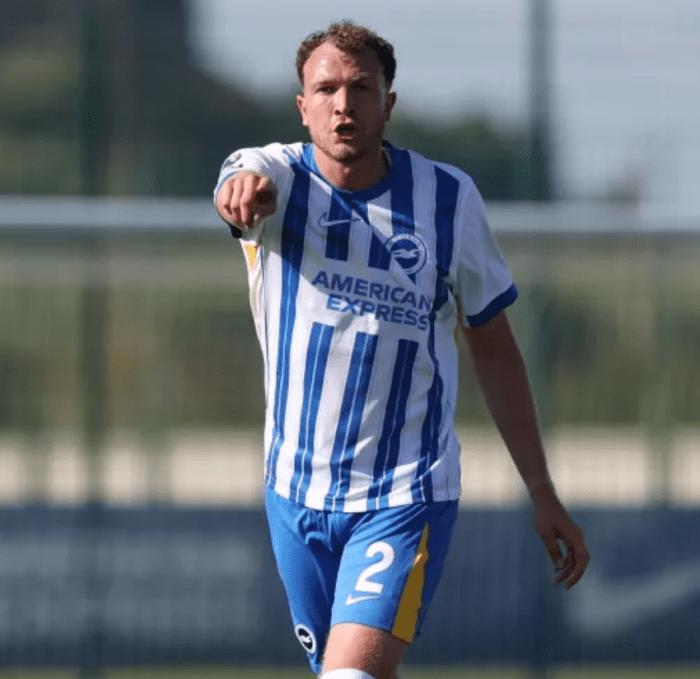
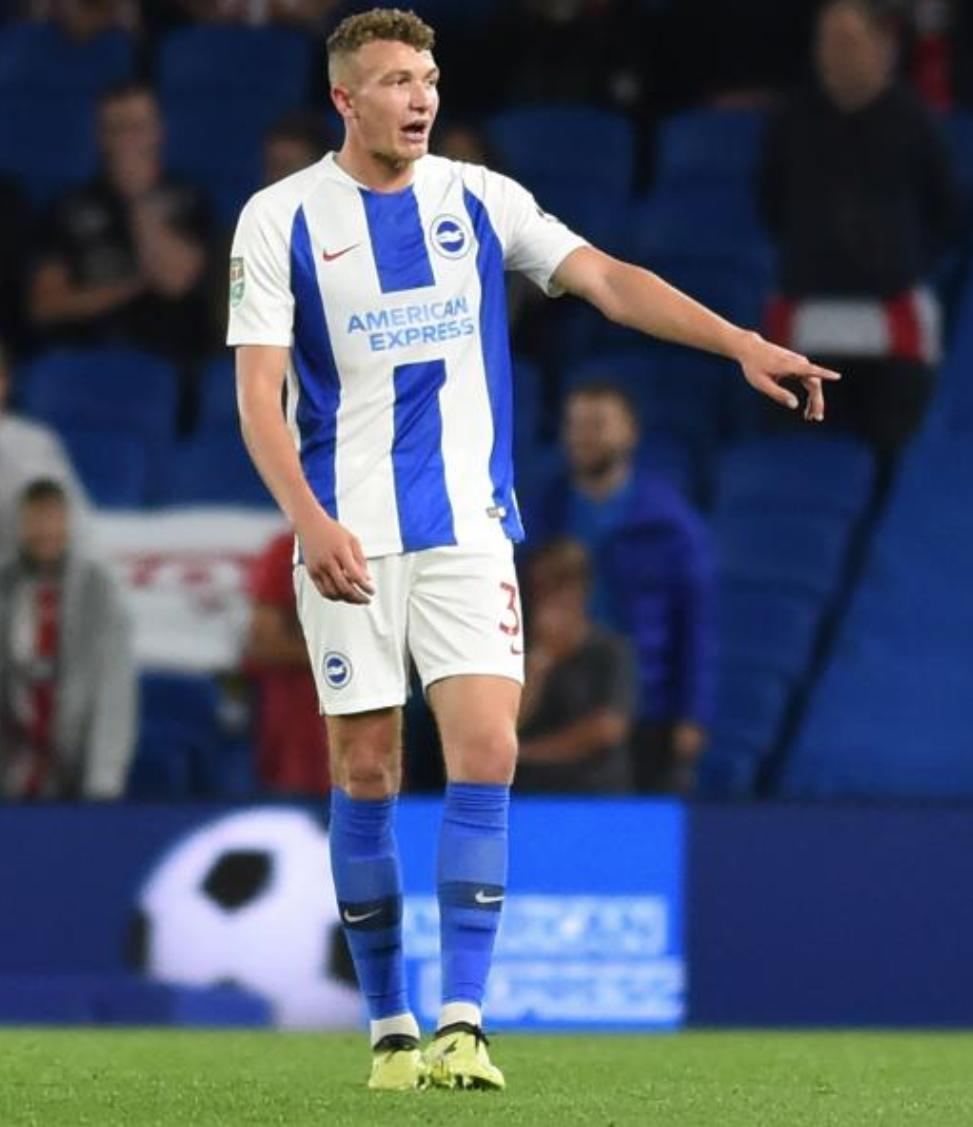
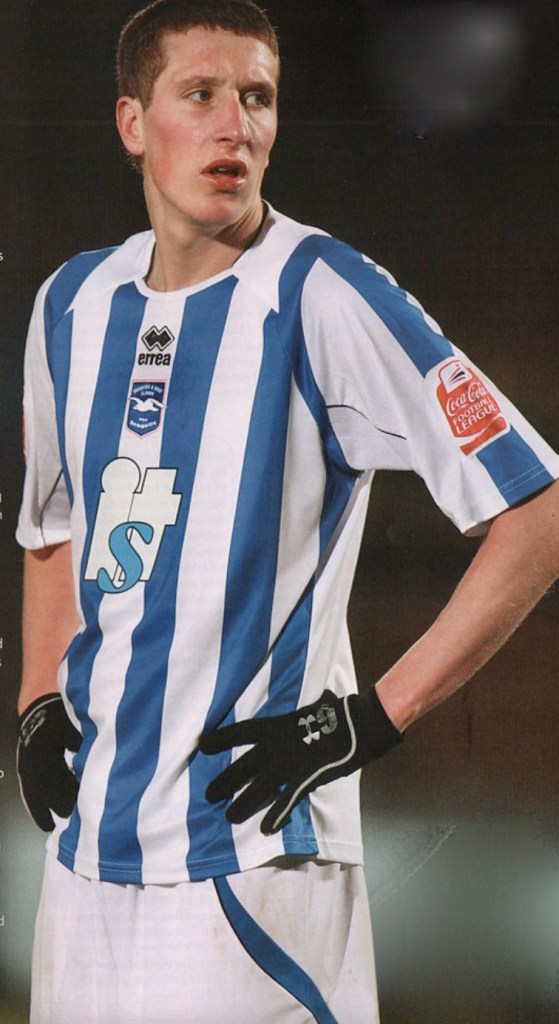
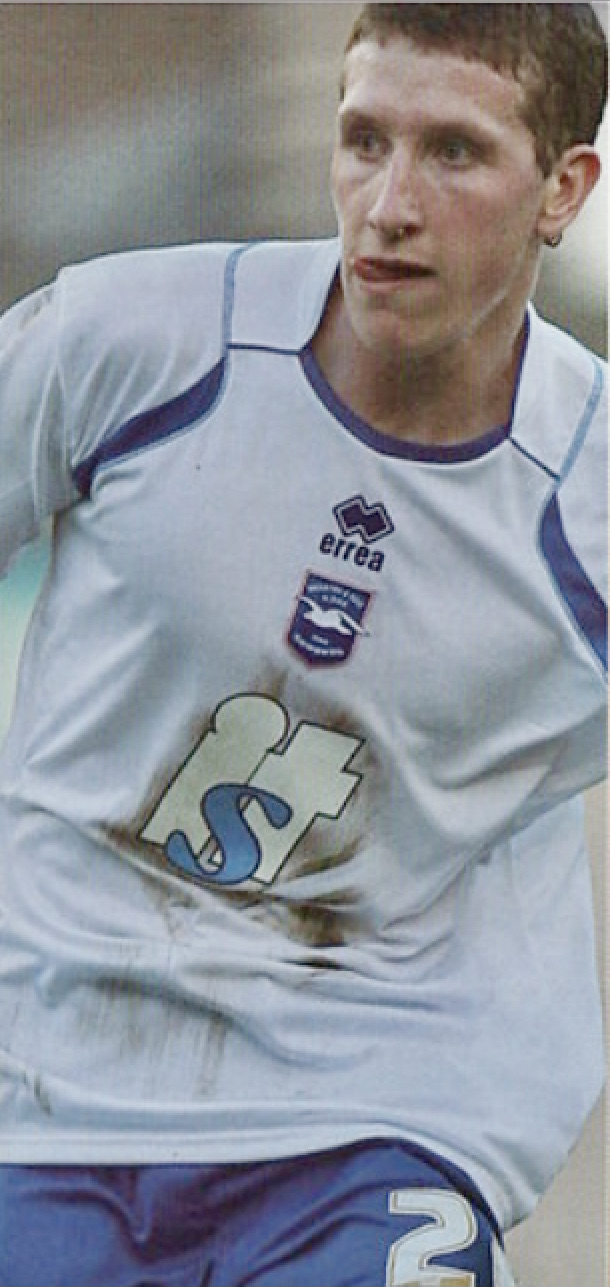
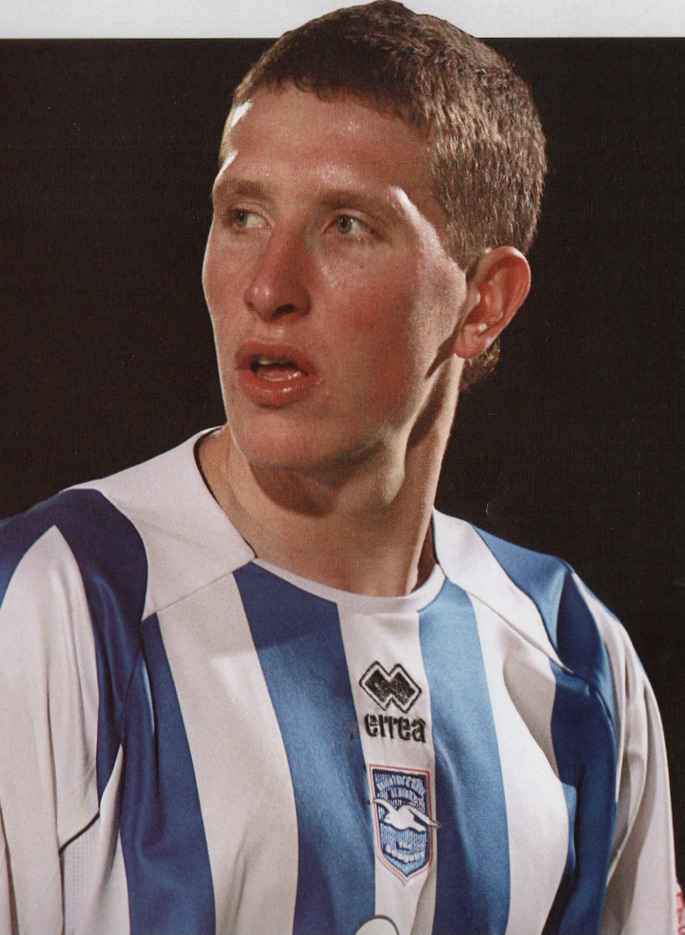
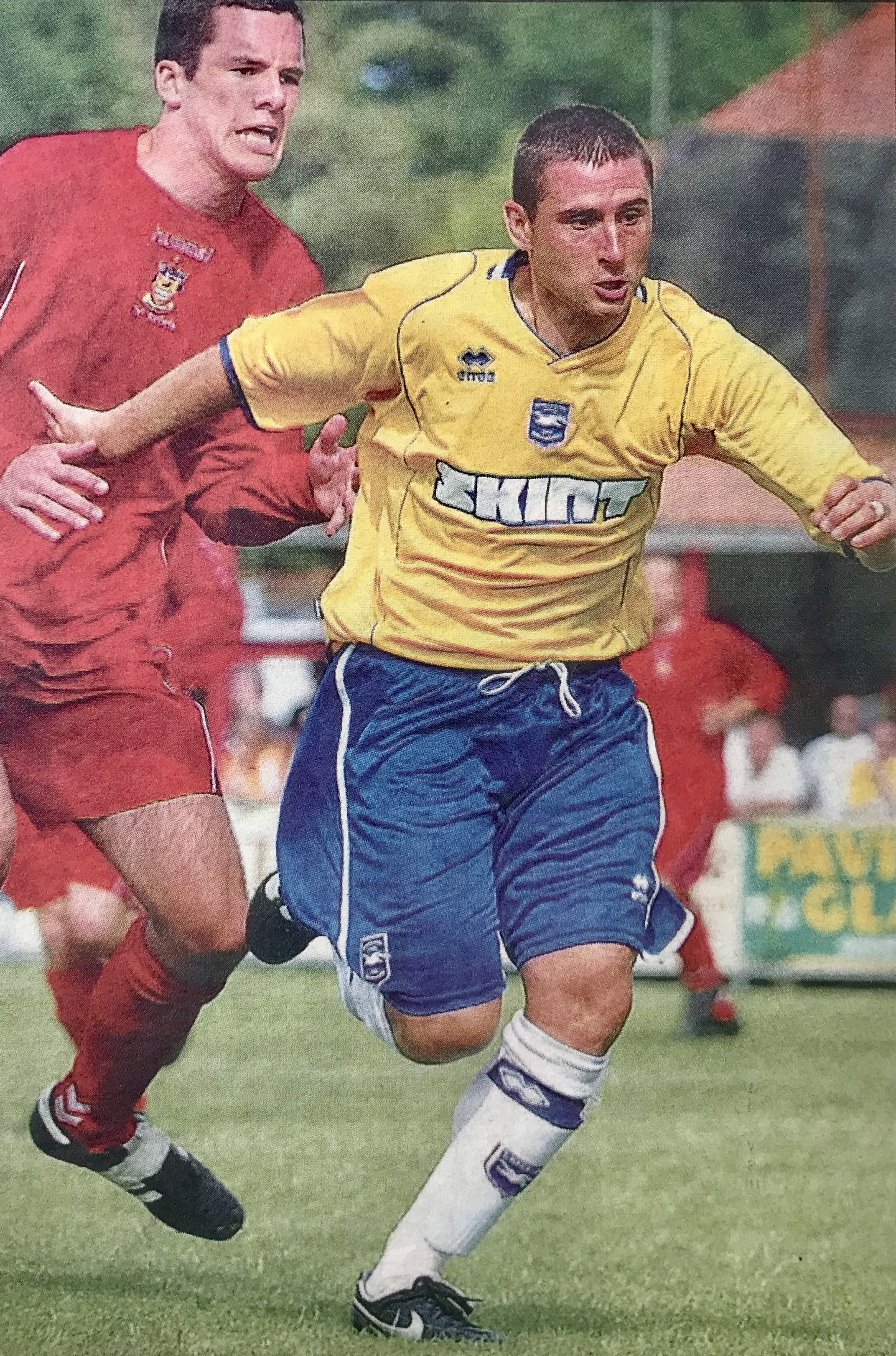
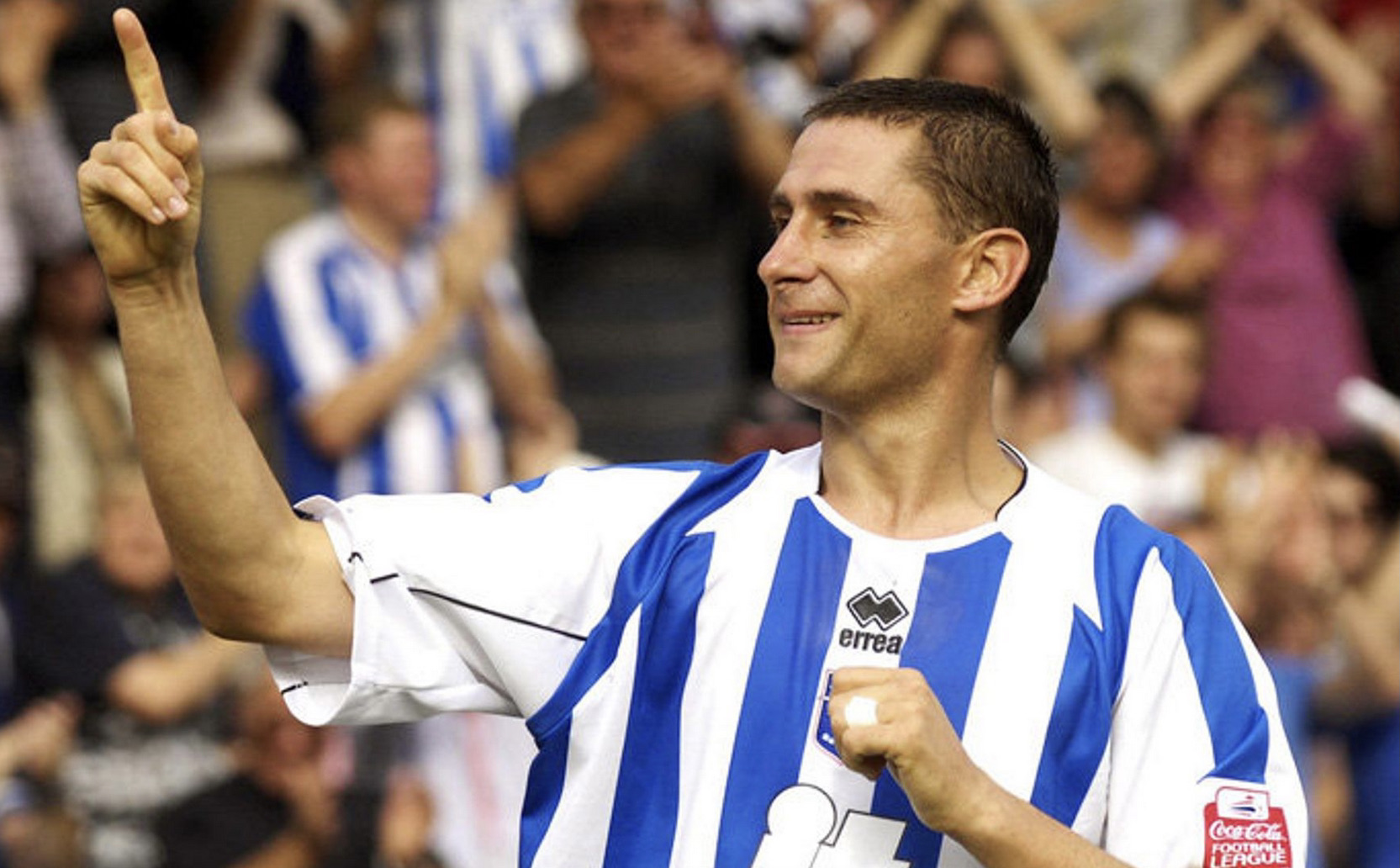
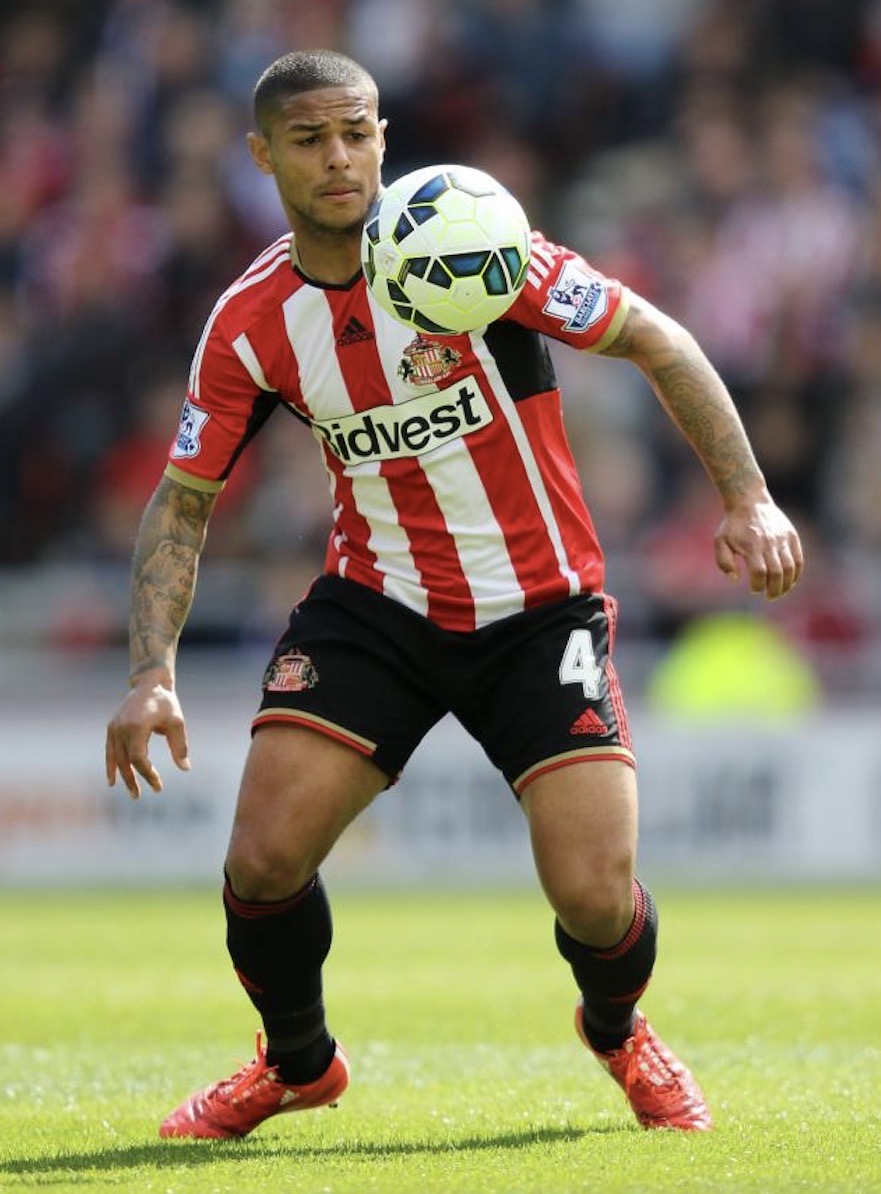
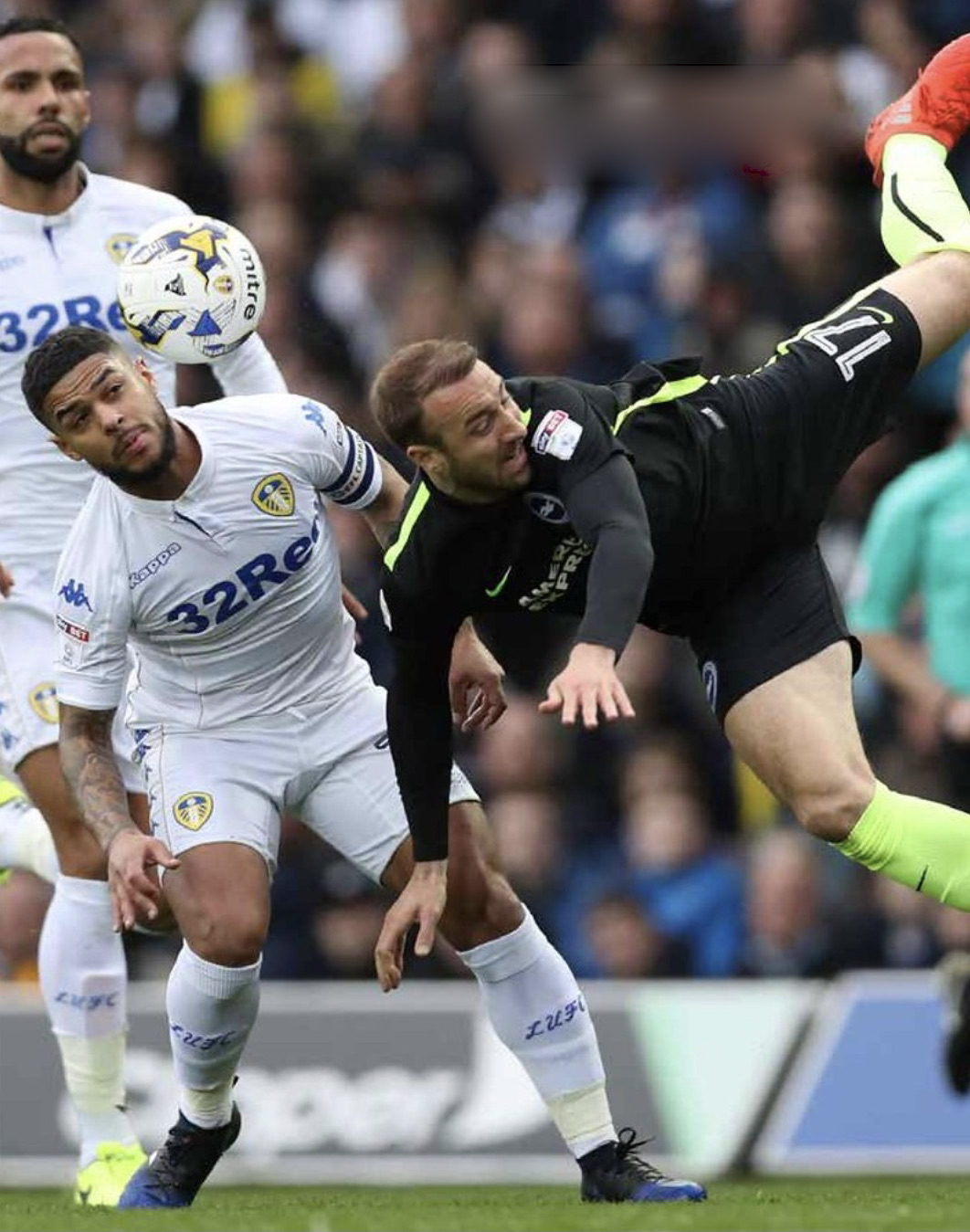
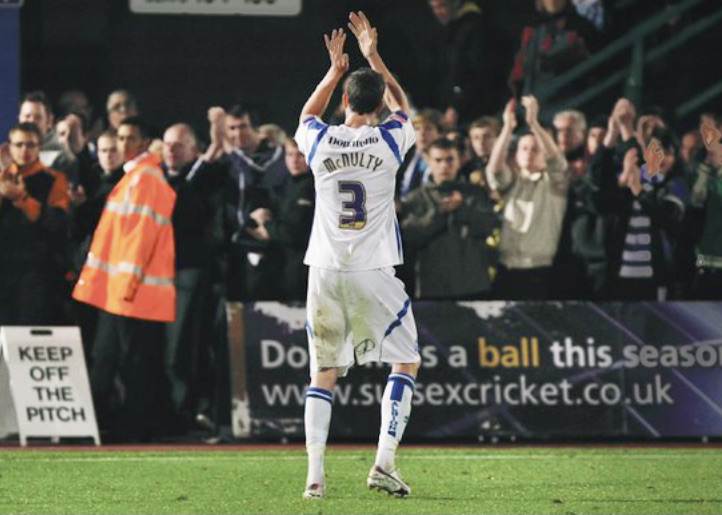
SCOUSE defender Jim McNulty, who played alongside Wayne Rooney at Everton as a schoolboy, will probably always be remembered by Brighton fans for a horror injury he suffered in a match at Withdean.

After an on-off transfer saga in which McNulty initially rejected Albion’s desire to sign him, the £150,000 signing from Stockport County scored on his debut and less than three weeks later was involved in an accidental collision that threatened to end his career at 23.

In only his fifth game after under-pressure boss Micky Adams finally landed the left back, a seemingly innocuous challenge as a Crewe defender caught him with his knee in his side quickly became much more serious when he started passing blood.

“Having walked back to the changing room I remember having the sensation of needing to go to the toilet and it was then that blood started spurting out,” he recounted. “I was also throwing up and the real scary part was the look of concern on the medical team’s faces.

“I was rushed to the Royal Sussex County Hospital for an MRI scan and had a catheter inserted as my belly was swelling up. It was then that I discovered one of my kidneys had capitulated.

“I was on the bed in the hospital after the scan when the surgeon said 90 per cent of the kidney is mush and I don’t believe you can play again,” McNulty told the club’s official website.

Nine years later, ahead of facing Harry Kane for Rochdale against Spurs in the FA Cup, McNulty told Ivan Speck of the Express: “It was instant tears. I was there with my father and fiancée, at the time. I remember crying into my dad’s chest.

“It was probably a bit of everyday information for him but, for me, football was my life and he should have stayed quiet until he was better informed. It still winds me up now.

“The FA actually got wind of the news and their doctor spoke with our club doctor. They had spoken to some rugby guys in the southern hemisphere because it’s a more common injury in rugby than it is in football.

“It was nonsense to suggest it would end my career.”

Initially, because he was a professional sportsman, the medics tried two operations to save the kidney but, when he was still passing blood three weeks later, the decision was taken to remove it.

McNulty described incredible pain he had to endure but realised once he had gone through with the operation that he would be able to play football again.

Amazingly, he was able to return to training within three months although he had a lot of work to do to rebuild his fitness. Within four weeks he was even able to play in a couple of pre-season friendlies.

However, McNulty went on to suffer a number of knock-on injuries because his posture was affected by having an empty space on the right side of his body.

“I had multiple ankle injuries because my pelvic alignment was a nightmare from that point on,” he said.

The first came just when it looked like he would make a return to league action in September 2009. He damaged his ankle ligaments on a local park pitch while training ahead of the 7-1 defeat at Huddersfield and was ruled out for a further four weeks.

His long-awaited return to first team action came in a Johnstone’s Paint Trophy tie away to Leyton Orient on 6 October, which Albion lost 1-0.

“Just to get out on the pitch and on the ball was fantastic,” he said. “I cramped up after about 70 minutes but the reaction from our fans was tremendous.”

McNulty told the matchday programme: “I have no intention of just sitting around, hoping to break into the side. I want to be playing every week now. I’m fit, raring to go and I want to help us get up the table.”

The unlucky McNulty then missed the following Saturday’s match at MK Dons, enduring yet more pain when he had to have two wisdom teeth extracted.

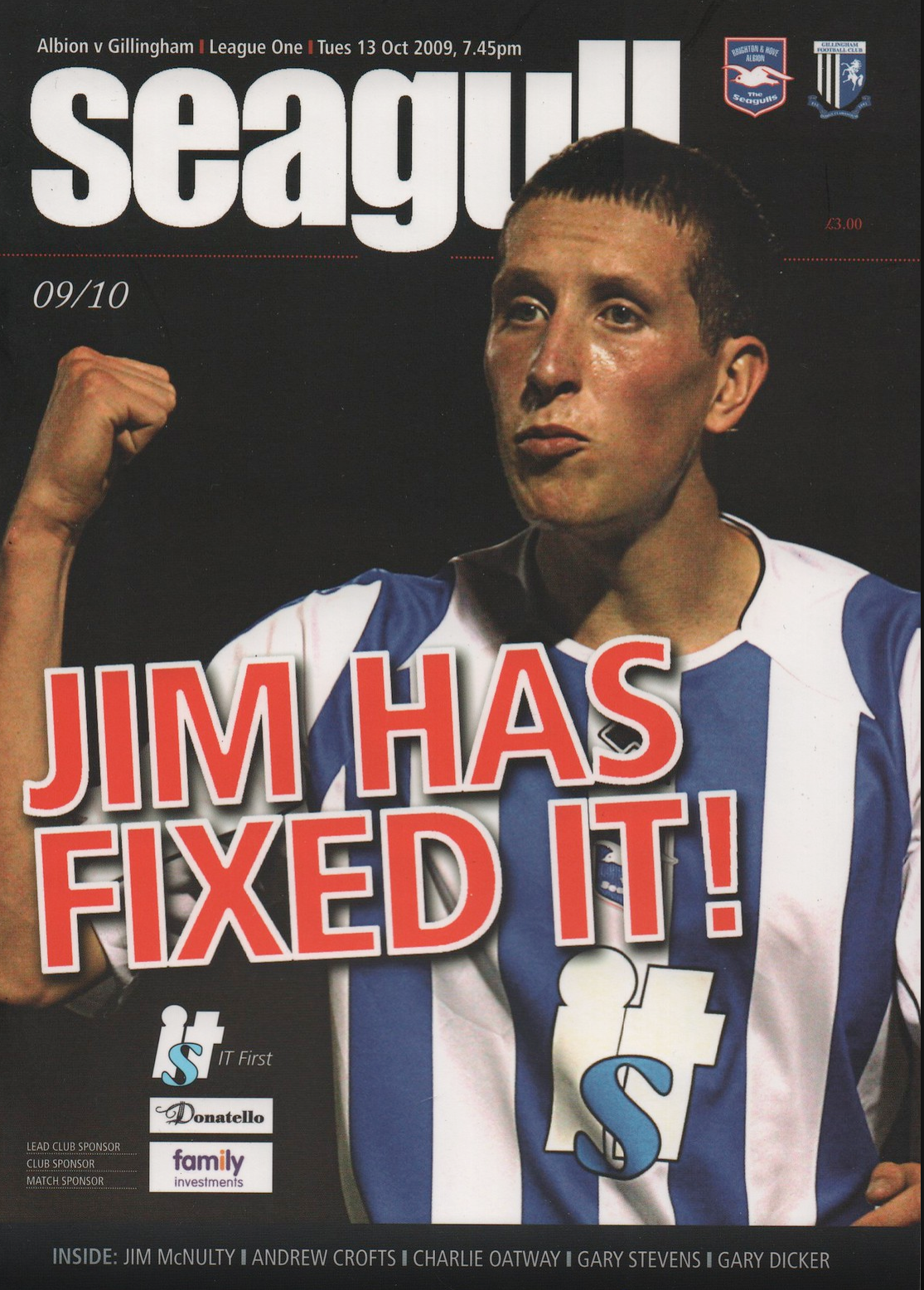
Nevertheless, McNulty’s eventual return to league action followed on 13 October in a 2-0 Withdean win over a Gillingham side which featured former Albion loanee Simon Royce in goal.

Astonishingly, the following Saturday, he lasted only 27 minutes before injury struck again in a 2-1 defeat away to Tranmere. He limped off with an ankle injury and Jake Wright was sent on to replace him. Glenn Murray scored a penalty consolation for the Albion and was then sent off for a second yellow card.

By the time McNulty was fit enough to return, the second manager of his brief time at the Albion, Russell Slade, had been replaced by Gus Poyet. His first involvement under the new boss saw him go on as a sub against: Charlton at home on 1 December.

He then went on as an 87th minute substitute for his good friend Gary Dicker at Exeter and provided the all-important cross from which Andrew Crofts headed the only goal of the game in the 92nd minute.

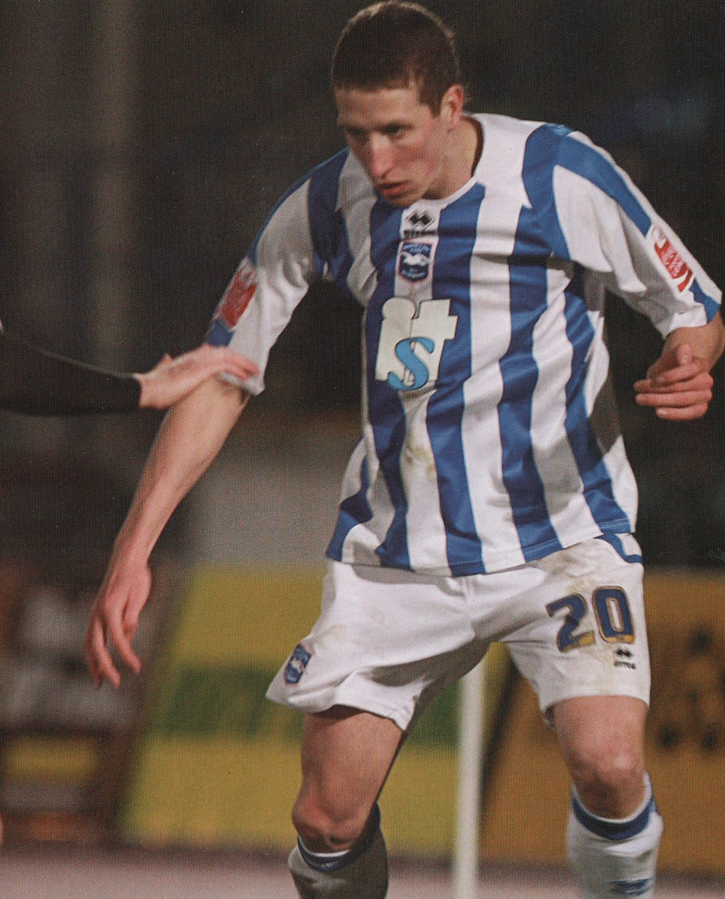
He had what one observer described as a man of the match involvement as a sub in the next match, a 2-1 home defeat v Colchester United. Saying the left back was “the epitome of Poyet’s ‘bravery on the ball’ mantra”, Richie Morris wrote: “Jimmy McNulty, like a rampaging glove-wearing gazelle, mercilessly attacked the left flank. Time and again he delivered teasing crosses, and time and again the ball simply would not nestle in the net.”

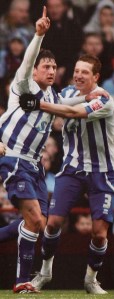
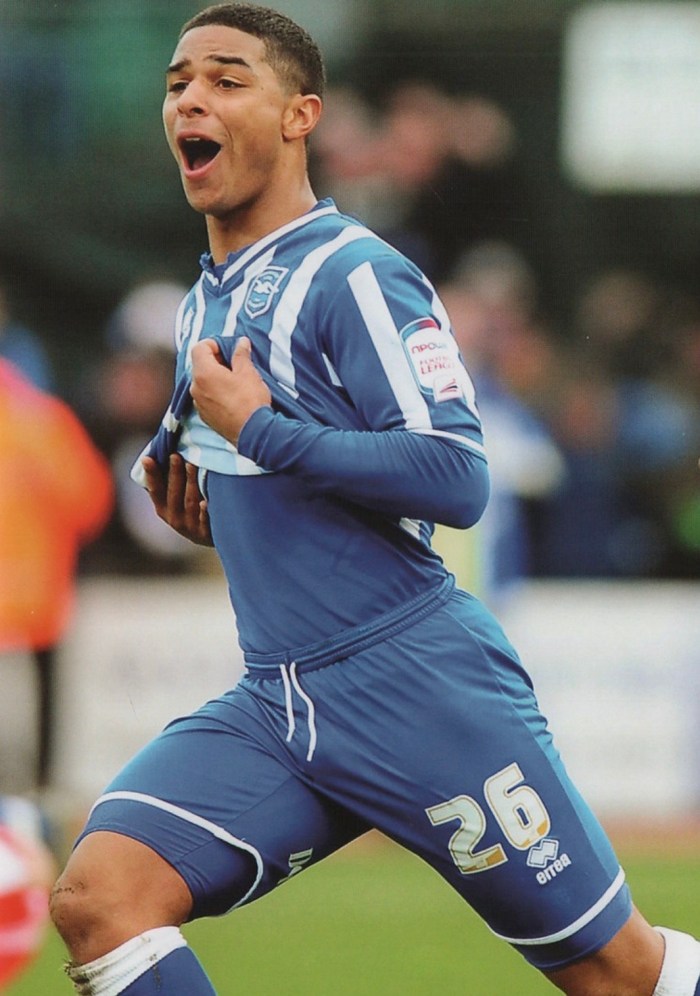
McNulty celebrates with goalscorer Tommy Elphick

That performance was rewarded with four starts on the trot – but then Poyet brought in the cultured Marcos Painter as his preferred left-back. McNulty was in the Albion side that put on a decent show in a 3-2 fourth round FA Cup defeat at Aston Villa, because Painter was ineligible, but he didn’t make another start that season. And, as it turned out, he didn’t play for the club again. He’d actually only played 16 times for the Albion.

Before the end of the season, to get some games, McNulty actually stepped up a level, going on loan to Scunthorpe United in the Championship, where he made two starts and a sub appearance under Nigel Adkins.

He rejoined The Iron in July 2010 on a six-month loan arrangement and played six games. But he suffered a recurrence of his ankle issues, so returned to Brighton in December.

When Albion kicked off a new era playing Championship football at the Amex, McNulty had stayed at the same level but with Barnsley, where he was voted players’ player of the year in his first season, and was made captain in his second season at Oakwell.

McNulty certainly wasn’t bitter about the way things turned out for him in Sussex. He said: “I couldn’t speak more highly of my time with Brighton. It is an unbelievable club, an unbelievable fan base, and it was an incredible place to live.

“My daughter was born there and we had a brilliant time, despite the fact that I was horrendously injured for pretty much all of that time.

“I’ve always been a 40-game-a-season man wherever I’ve been, but at Brighton I hardly played at all. Saying that, it was the club I had the best time at.”

Born in Runcorn on 13 February 1985, Liverpool and Everton were both interested in him when he was young, but it was Everton who put a contract offer in front of him.

“At the time I actually played for Everton against Liverpool in a game at Melwood,” he explained. “This would have been in the under-9s and we absolutely destroyed them.

“Ourselves and Arsenal dominated in that particular age group, right up to the under-16s – every week, every game, every season. Everton were a very dominant team and it gave me a great grounding, so I chose the right team.”

Initially a central midfield player, McNulty was switched to left-back during his time at Everton. Although Rooney was in the year below him, from under-10s, he was put up an age level. “I played with him for about four years until he jumped up again,” said McNulty. “He was playing two or three years up during the teenage years. I was just always playing at my own age.

“He was incredible, incredible. It was like watching a man play with boys in terms of his strength and aggression. He was pinging balls 70 yards as a 10- or 11-year-old boy.

“We couldn’t really lift it off the floor yet. His technique and the power that he had as a young boy, he was devastating at that age. He’d score eight goals every week. He’s one of the reasons we were so rampant as a team. Probably the main reason.”

McNulty moved on to Wrexham to make his breakthrough at senior level, ironically going on as a sub against Stockport in a Northern Section Football League Trophy game which the Welsh side lost 5-4 after extra time.

Because he had a Scottish mother, Englishman McNulty was selected for Scotland at under-17 and under-19 level, although one of his worst footballing memories came while playing for Scotland against France when they were beaten 5-0 in the European Under-19s Championship.

“I always remember being particularly mentally scarred by one player,” he said. “He was a winger and I was at left-back – and he scored four, so obviously that was mentally scarring. His name was Jimmy Briand.”

Briand went on to have a 20-year playing career in France and Germany and played five times for the senior French national team, but McNulty didn’t make it to the Scots full international side.

“There was a time when I had some genuine belief that it might happen,” he told The Sunday Post. “I had a good season in my first year at Barnsley in the Championship, in 2011, and ended up being named player of the year and made captain of the club.

“At the time, Scotland were having a bit of a defender crisis, and there was an opportunity there. I actually thought, ‘My name might come out of the hat here.’ But they ended up choosing a couple of guys who were playing in League One at the time ahead of me. That was a bit of a disappointment.”

But back to those early days, and when he didn’t make further progress at Wrexham he dropped down to League of Wales level to play for Bangor City and Caernarfon Town, but in June 2006, former Albion skipper and manager Brian Horton signed him for Macclesfield Town.

“I appreciate what Brian did for me, bringing me back into league football,” he said. “I was playing non-league football in Wales and he gave me a chance to come back and prove myself.”

He spent 18 months at Macclesfield, where he also played under Paul Ince, before moving to Stockport on a free transfer in January 2007. He became part of the County side that won promotion via the League Two play-off final at Wembley, when they beat another of his future employers, Rochdale, 3-2 in front of a crowd of 35,000.

McNulty was reluctant to give up a League One promotion tilt at County to join struggling Albion but chairman Dick Knight and manager Adams spoke of the club’s ambition and he was finally persuaded.

Albion needed a left back after loan signing Matt Richards had returned to Ipswich and

Adams said: “He fits the profile of what we are looking for. He likes getting forward and, without being disrespectful to anyone who has played there before, he is a natural defender, and he is six-foot two. At one stage it looked like we had lost out, so I am delighted to get him.”

Knight and Adams finally persuade their man to sign for the Albion

McNulty was not alone as Knight sanctioned quite a spending spree on new signings – Craig Davies, Calvin Andrew, Seb Carole, Jason Jarrett and Chris Birchall also arrived in that window, all financed by Tony Bloom, a low-profile investor at that time.

“I am very satisfied,” said Adams. “Finding a left back was a major priority. We haven’t been scoring the amount of goals we should, so we needed to look at avenues to open up teams. We have got Carole and Birchall for that.

“We also needed two strikers (Davies and Andrew) to increase the striking options and we needed a bit more physical strength in midfield, which is why Jason (Jarrett) is there, so I can’t complain.

“I had to be patient to make sure the right type of player was available and at the right price. Two of them were money buys and I am delighted that the board have backed me.”

Both Davies and McNulty were on the scoresheet when Peterborough visited the Withdean on 10 February but Barry Fry’s side took away the three points courtesy of a 4-2 win; Craig Mackail-Smith scoring for Posh along with strike partner Aaron McLean (two) and Dean Keates.

With only one League One win in six and a hoped-for tilt at silverware – the Johnstone’s Paint Trophy – gone in a penalty shoot-out defeat to Luton Town, the second coming of Adams was over. That horrendous injury to McNulty came while Dean White was caretaker manager and, when new boss Russell Slade arrived, one of his first tasks was to bring in Gary Borrowdale on loan from QPR to cover McNulty’s absence.

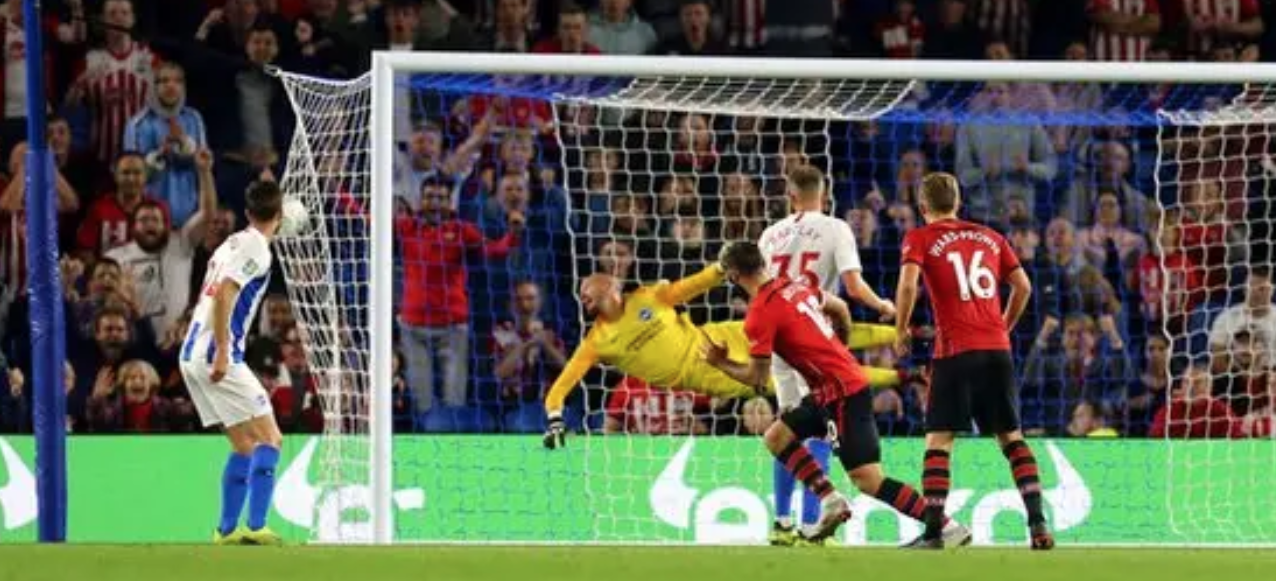
A change in manager often spells bad news for certain players and, after those successful first two seasons at Barnsley, McNulty found his face didn’t fit when David Flitcroft succeeded Keith Hill as manager. He’d only had one first team outing in a Capital One Cup tie against Southampton.

He grabbed the chance to join Tranmere Rovers on loan in November 2013, although he told the Liverpool Echo: “I have not even had a chance there.  I think I should still be playing for Barnsley.

“They are struggling defensively this season and had been conceding a lot of goals. But now I’m thinking about helping Tranmere.”

Rovers boss Ronnie Moore said: “Jim is a knowledgeable player and a good talker. He settled in quickly here. He is a footballing centre-back, rather than the Terry Butcher type. I don’t think you will see too many cuts and bandages around Jim’s head. He is clever. He drops off and picks the ball up.”

In January 2014, McNulty reached a mutual agreement with Barnsley to terminate his contract and he switched to Bury under old boss Flitcroft. He played 51 times for the League Two Shakers before beginning a long association with Rochdale in 2015.

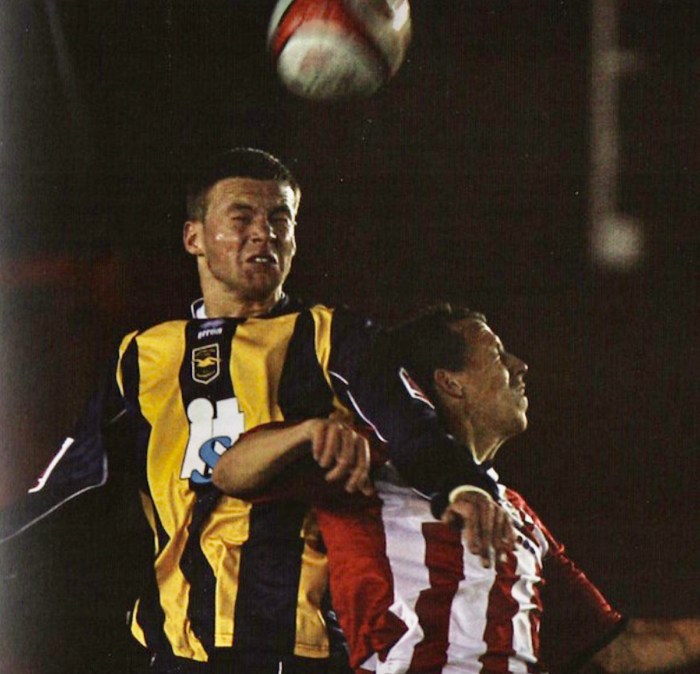
McNulty in control with the Shakers

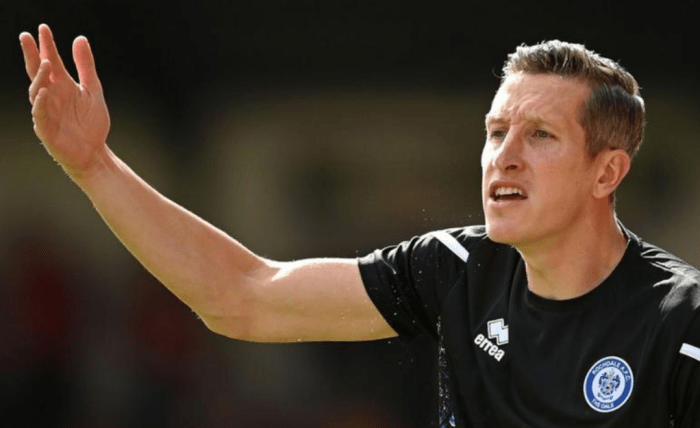
Over eight seasons, McNulty played a total of 237 matches for Dale, eventually combining coaching with playing. In August 2022, he found himself in interim charge for three matches after the club sacked Robbie Stockdale.

Former Morecambe boss Jim Bentley was appointed manager but when his services were dispensed with in March 2023, with Rochdale at the foot of League Two, 2023, McNulty once again stepped in as boss.

He was unable to prevent the club’s 102-year reign as a league club coming to an end but, in May 2023, he was appointed manager on a two-year deal.

“The opportunity to lead our team and represent our club, which the fans cherish, has always been a dream of mine,” he said.

“To be given the opportunity at a club so close to mine and my family’s hearts, is really special to me.

“As a boy, first and foremost, I dreamt of becoming a footballer, then when I did, I very quickly knew I wanted to become a manager thereafter.

“Within a couple of years of being a Dale player, I knew that this would be the club where I hoped to fulfil that ambition.”

Tall Tunnicliffe’s tilt at the top fell short and he quit at 24

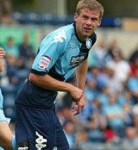
ONE-TIME Liverpool triallist James Tunnicliffe quit playing football at 24.

When he was only 16, a £750,000 move from Stockport County to the ‘mighty’ Reds was on the cards.

But Liverpool’s then boss, Rafa Benitez, gave the young hopeful the thumbs down and his subsequent short playing career petered out in the lower leagues.

Tunnicliffe – a Russell Slade signing for Brighton in June 2009 – was at the heart of League One Albion’s defence for Gus Poyet’s first game as Seagulls manager.

But there was plenty of competition in that area of the team and, before long, the 6ft 4in centre half struggled to hold down a place. Initially Adam Virgo, Tommy Elphick, Jake Wright and Adam El-Abd were all competing in that position and, although Wright moved on, Gordon Greer – instantly appointed captain – and homegrown Lewis Dunk steamed ahead of him in the pecking order.

Slade had signed him on a three-year deal, declaring at the time: “He’s 20 and one or two other clubs were looking at the situation higher up, Championship clubs.

“We’ve kept everything quiet and gone about the business in the right manner and we’ve got our man.”

Slade told the Argus: “He has got huge potential. He’s a decent athlete for his size, handles the ball very well and hopefully will be a threat for us in the box. There’s lots more to come from him. He’s a really good, positive signing.”

Midfielder Gary Dicker, a former Stockport teammate who made the same move, added: “He’s a good tall, strong athlete and a good player.”

The player himself admitted it was a good word put in by another former Stockport teammate, Jim McNulty, that influenced his move.

“We’re good friends and used to live a couple of doors apart in Manchester and travelled into training together at Stockport,” he told the matchday programme. “He absolutely loves it here and that helped sway my decision to come.”

Albion watcher Andy Naylor had a mainly favourable first impression although he was less sure about the tactic of using the central defender to launch long throws. In an Argus comment piece, Naylor wrote: “He looks composed, comfortable in possession and has good pace for one so tall. The jury is out, though, on just how much Albion should try to exploit Tunnicliffe’s long throw.

“It has more of a loop than Rory Delap’s torpedo-like delivery and has caused opposing defences few problems so far. Albion would arguably be better served exploiting Tunnicliffe’s 6ft 4ins frame in the goalmouth for set pieces.

“His throw remains a potentially useful weapon, for example during the closing stages of the game if the Seagulls are chasing an equaliser, but it should perhaps be used more sparingly.”

Somewhat ironically, while not starting the first four games of the season, he made his first league start at home to his old club Stockport – when Albion were on the wrong end of a 4-2 scoreline.

Tunnicliffe scored the first goal of his career in a 1-1 draw at Bristol Rovers in September 2009 after captain Adam Virgo had been sent off. He said: “I am doing everything I can to keep my shirt. I don’t want to lose that and hopefully I can contribute a few more goals this season as well.”

His performance alongside Elphick drew the admiration of Richie Morris, who wrote in the matchday programme: “Tunnicliffe not only bulleted his first goal for the club with a well taken header, but diverted a Carl Rogan shot over and cleared what looked like a late winner off the line.”

Tunnicliffe scored again – this time just a consolation goal – in a 4-1 defeat at Norwich that was Poyet’s fourth game in charge. But he was cast aside after playing in the FA Cup against Torquay at the turn of the new year and, before long, was sent out on loan to MK Dons.

Any hoped-for restoration to the first team on his return was dashed when at the start of the following season he was shipped out on a season-long loan to Bristol Rovers. Eventually, with a year still left on his contract, he agreed an early end to his Seagulls deal and joined Wycombe Wanderers in the summer of 2011.

Despite it all, he told seagulls.co.uk: “It’s been frustrating for me over the last 18 months but I loved being here and I haven’t got a bad word to say about the club. I made a lot of good friends and I’m sure the team will have a very good season in the Championship.

“I’m a bit disappointed with how it worked out but I’m now focusing on working hard over the summer to try and secure first-team football with Wycombe.

“I’ve watched Wycombe a lot and I know plenty about the manager, Gary Waddock, who looks to play good football, so it’s an attractive club for me to move to.

“I’ve done a lot of thinking about what is going to be best for me and Wycombe is a good club, recently promoted to League One and on the up, so it’s hopefully going to be a good move for me.

“I’m now excited about a new challenge and I feel like I’ve got a lot of things to prove to myself and the other clubs. I want to show that I am a good player.”

Waddock pointed out: “James is a talented young centre-back with experience of playing at this level.

“He’s a footballing defender who can play out from the back. A lot of clubs were interested in him.”

And Tunnicliffe told the Bucks Free Press: “I’m more than just a defender who kicks it, I like to pass it at the right time. I’m looking forward to being in the team next year and doing well in League One.”

Born in Denton, Manchester, on 17 January 1989, Tunnicliffe went to a particularly sporty school, Audenshaw High in Manchester, and, as well as playing a lot of football, he was also good at golf and cricket as well as being a decent 100-metres hurdler.

It was at Stockport’s school of excellence that he honed his football skills: his grandad, John Bishop, was the club’s kitman at the time, and later a masseuse.

In October 2005 the young Tunnicliffe was sent on a two-week trial to European Champions Liverpool and the pound signs were already beginning to form in the eyes of his parent club: a £750,000 deal was said to have been agreed for the youngster.

Unfortunately, Benitez was unable to watch the 16-year-old because he was away with the first team for a Champions League match with Anderlecht.

Tunnicliffe was handed an extra week with the Reds to give Benitez the chance to cast his eye over the youngster, but he but did not do enough to convince the Spaniard and the proposed deal collapsed.

He returned to the League Two Hatters where manager Chris Turner reckoned the youngster’s time at Anfield had helped to develop their promising player.

“It has been a fantastic experience for him and I’m sure it’ll benefit both the player and Stockport County,” he said. “He trains with our first team at the moment and doesn’t look out of place at the age of 16 so you can imagine how highly we regard him.”

As predicted by Turner, Tunnicliffe made his first team debut as a substitute in a 2-0 defeat at Notts County and he went on to make 50 appearances for them. He also had a brief loan spell with Northwich Victoria in 2007 and, perhaps bitten by his Liverpool experience, turned down the offer of a move to Southampton because he felt he would be better served staying put.

If the move from Brighton to Wycombe was an opportunity for a fresh start, he couldn’t have wished for a better start, scoring on his debut in a 1-1 draw against Scunthorpe.

But after beginning as a regular, he was dropped after a 3-1 Johnstone’s Paint Trophy defeat at home to Cheltenham Town in October and only made a handful of appearances after that.

His final Wanderers game was in a 6-0 tonking by Huddersfield at Adams Park in January 2012, after which he was dropped in favour of youngster Anthony Stewart.

The following month he joined League Two side Crewe Alexandra on a 30-day loan, citing homesickness as a reason for wanting away from Wycombe.

Injury curtailed his spell at Gresty Road and in the summer of 2012 he rejoined Stockport, who by then were playing in the Conference National. The following year he made eleven appearances on loan for Stalybridge Celtic before returning to County.

He took the decision to retire from football aged just 24 and, on his LinkedIn profile, says: “The experiences I endured in my eight-year professional career, filled with some highs and many lows, were a catalyst that inspired me to step into the football intermediary world.”

Indeed, he cropped up as a ‘representative’ for former teammate Glenn Murray when he was involved in negotiations with Brighton over a new contract.

Tunnicliffe says of himself: “I am a people’s person and my current role enables me to advise, support, empower and challenge clients, whilst providing opportunities where they can excel and get the best out of their abilities.

“In addition, the role has provided a platform to grow a worldwide network and converse with people from various organisations and backgrounds.”

He says that in September 2022 he enrolled onto the Masters In Sports Directorship programme at Manchester Metropolitan University.

“This course has presented me with an opportunity to enhance my self-awareness and existing knowledge, whilst developing areas of deficiency.

“I am embracing this academic challenge and look forward to learning more about the commercial and business functions of a sporting organisation over the remaining duration of the course.”

The geography was all wrong for O’Grady’s Seagulls excursion

SHEFFIELD UNITED and Brighton once went head to head for the services of journeyman striker Chris O’Grady.

It might be said many Albion followers were somewhat disappointed that the Seagulls pipped the Blades to signing the player from Barnsley in the summer of 2014!

It wasn’t long, however, before United, then in League One, landed their man when he failed to score in 11 appearances and struggled to settle in Sussex.

On taking O’Grady on loan, United manager Nigel Clough said: “There aren’t too many strikers of Chris’s calibre around at the moment.

“We liked him last season at Barnsley and he has got good Championship experience. Chris was a target for us in the summer but Brighton came in with a deal we simply couldn’t match in terms of wages and what they could have been potentially offering him as a playing challenge.”

The 28-year-old impressed in four Blades starts, scoring once in a draw with Walsall at Bramall Lane, and Clough remained hopeful of eventually doing a permanent deal for the player.

But Albion head coach Sami Hyypia left the club shortly before Christmas and O’Grady was recalled to cover a mini injury crisis amongst the available forwards.

Under caretaker manager Nathan Jones, O’Grady was introduced off the bench at Fulham and set up a goal for Solly March in a 2-0 win.

Then, in Chris Hughton’s first match in charge, a third round FA Cup tie at Brentford, O’Grady bagged his first Seagulls goal in another 2-0 win. On as a 67th minute substitute for Mackail-Smith, O’Grady hit a post, saw an effort trickle wide and then scored a decisive stoppage time second goal against the Bees to secure Albion’s passage through to the fourth round.

It was in the third minute of added on time when, put clear through by Adam Chicksen, he doubled the lead gained when Lewis Dunk headed in an 88th-minute opener at Griffin Park, thus helping Hughton’s reign get off to a winning start against Mark Warburton’s side.

After the match, O’Grady opened up about his struggles in an interview with BBC Sussex. “It’s been extremely tough,” he said. “It has tested a lot of relationships in my life. Thankfully the strongest one, my family, is still together which is the most important thing.”

O’Grady had spent all of his career playing in the Midlands, Yorkshire or the North West and said settling on the south coast with his partner and three children had proved difficult.

“We’ve been trying to settle in the area and it’s not quite happened on the pitch,” he said.

“We’ve got a home we’ve had for quite a few years back up north and we’ve been half in that and half down here as we don’t know what’s going on.

“I’ve been doing my best but it was not working out. I got a chance to go back up north and find myself and get some fitness.

“My whole career I have performed for people who believe in me. I felt I wasn’t sure why I was here.”

O’Grady was fighting an uphill battle at the Albion from the moment he was signed by head of football, David Burke. The Seagulls had banked £8m from the sale of Leonardo Ulloa to Leicester and obtaining O’Grady’s services from relegated Barnsley (he’d scored 15 goals as they went down) was seen by fans as inadequate recompense, even though the club tried to insist it wasn’t a like-for-like transaction.

Hyypia said at the time: “This is an area we want to strengthen, and Chris is a good start. He is a strong, physical presence and gives us something different to the other strikers we already have here at the club.

“You need that option in the squad of a forward with power and strength, and Chris can give us that – as well as scoring goals.

“We still want some extra attacking additions, and in other areas of the team, but I’m pleased we have another one of our targets.”

Those “extra attacking additions” turned out to be Adrian Colunga and Sam Baldock the following month and both largely put paid to O’Grady’s hopes of gaining a regular starting spot.

Not that O’Grady felt overawed by the challenge. “For the past two seasons I’ve hit double figures and that has been a reflection of the desire and hunger that I have to succeed at this level,” he said.

“Having played for Leicester City and Sheffield Wednesday in the past, I know what it’s like to play for a big club – and Brighton certainly fall into that category.

“Earlier in my career playing for those clubs might have been a bit daunting for me, but at my age I know how to deal with the expectation and to win the fans over. It’s fantastic to be joining a club with such big ambitions and to be joining in the peak years of my career.”

O’Grady started the first three games of the season, but the presence of incumbent Craig Mackail-Smith plus the late August signings of Colunga and Baldock soon indicated competition for forward places was going to get a lot tougher.

Injuries to Baldock and Mackail-Smith gave him some limited game time but Hyypia told the Argus he expected more from the bustling big man.

“He is training well, he’s doing his work and he can be a tricky player for the centre-backs because he is so strong.

“I know that he can be dangerous. Sometimes I wish he would go forward a little bit more.

“He’s not slow so he could give the centre-backs more problems if he didn’t always come to the ball.”

Nigel Clough’s Sheffield United were keen to sign O’Grady permanently

It seemed the FA Cup suited O’Grady because he also pulled a goal back for the Seagulls in the 50th minute of the glamour fourth round tie against holders Arsenal, in front of a 30,278 crowd, although they eventually lost 3-2.

Although Clough was keen to take O’Grady back to south Yorkshire, Hughton made it plain he wanted him to stay and fight for his place

“This is a player that came here and had a difficult time, went away on loan and has been excellent for us since he came back,” Hughton told the Argus. “I must admit I’m still getting to know him. I knew him from his time at Barnsley, I don’t know him as much from his time here.

“He certainly couldn’t have done any more than he has in the last two games. He is no different to any other player, you want to be playing and involved, and if you are you are generally happier. At the moment, I think he’s in a nice place.”

O’Grady admitted: “I’m just getting a chance to play. I’m taking it and doing my very best for however long I am wanted here.

“I am being professional and doing my very best. Since I’ve been back, there is a freshness and a chance to get involved and contribute. That’s all I’ve ever really wanted.”

Buoyed by the change in management, and with his family settled, O’Grady told the Argus in early February: “I’ve succeeded at all the clubs I’ve been at in the past five years, which has led me to be here.

“I started in League Two and if you do fail at any club at any time then you are only going to go down. Failure is not really an option. You have to work as hard as possible to succeed.

“Even though the first half of the season didn’t go well, it would have been too easy to give up and just write it off as ‘this one didn’t really work out’.

“That’s a lesson that if you persevere with a situation it will eventually come good if you deserve it.”

Unfortunately, Hughton thought Leon Best on loan from Blackburn Rovers might be a better option, and Baldock or Mackail-Smith invariably were ahead of him as the manager shuffled his pack in a battle to stay in the division.

It wasn’t until 10 March 2015 when O’Grady, making a rare start away to Reading, scored his first – and only – league goal for the Seagulls, netting from the penalty spot as the Albion went down 2-1.

Come the start of the 2015-16 season, Tomer Hemed and the returning Bobby Zamora made O’Grady’s future involvement a lot less likely.

His only action came in two League Cup matches, away to Southend and Walsall, and he missed a penalty as the Saddlers dumped out the Albion 2-1.

So, it was no surprise he was sent out on a season-long loan to Nottingham Forest, the club who’d let him go as a young boy. During that temporary return to Forest in 2015-16, he scored twice in 21 games.

In the last year of his Albion contract, 2016-17, he was reunited with Nigel Clough, this time at Burton Albion, (pictured in action below) where he scored once in 26 games. While he was a regular in the first half of the season, he made only five appearances after the turn of the year following the arrivals of Cauley Woodrow, Luke Varney and Marvin Sordell.

Born in Nottingham on 25 January 1986, O’Grady was at Forest from the age of 10 to 13. “I dropped out of football for a while but then got back into it at 15,” he told Albion’s matchday programme. “I wrote to the clubs local to me: Leicester and Derby. Leicester were doing open trials at the time, and I progressed through that, then on to proper trials at the training ground, and I eventually got signed up.”

A young Chris O’Grady in his Leicester days

It was during his time at Leicester that he took up yoga, inspired by the knowledge Ryan Giggs was an advocate of it. “It definitely helps,” said O’Grady. “I was a young lad in the youth team at Leicester and quite big physically but not very flexible with it.

“I was also picking up injuries at the time so I just knew I needed to do something. Once I started with the yoga all the injuries kind of went away and I’ve never really had a muscle injury since.”

After he’d got on the scoresheet regularly at under 18 and reserve level, former Albion boss Micky Adams gave him his first team chance with the Foxes.

He also won an England Youth cap in a 3-0 defeat away to France in Limoges on 13 November 2002. When he couldn’t pin down a regular place at City, he had loan stints with Notts County and Rushden and Diamonds and, although he returned to Leicester and played a handful of games in the Championship, in January 2007 he was sold to Rotherham United, where he spent 18 months.

Next up was Oldham but, in two years on their books, he had loan spells at Bury, Bradford City, Stockport County and Rochdale.

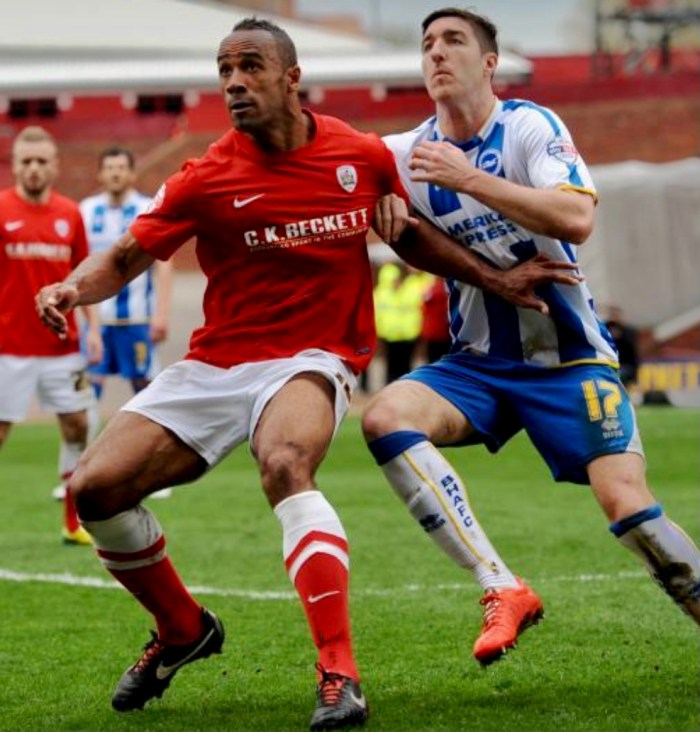
O’Grady in action for Barnsley against Albion’s Stephen Ward

His 31 goals in 95 matches for Dale earned him a move to Sheffield Wednesday on a three-year deal in the summer of 2011 but on transfer deadline day in January 2013 he made the short journey to Barnsley and then made the move permanent that summer.

At the end of his three-year Brighton deal, O’Grady moved to League Two Chesterfield for a season, but when they lost their league status he moved on in 2018-19 to his former club, Oldham Athletic, by then in League Two, where he scored eight goals in 47 matches.

The following season he moved up a division and played for League One Bolton Wanderers but their relegation to League Two brought down the curtain on O’Grady’s league playing days.

After he was released, he spent a year out of football. But in May 2022 he signed for Southern League Premier Division Central side Ilkeston Town, where he scored seven goals in 19 games. The side’s manager Martin Carruthers declared on signing him: “Chris is an excellent addition to our squad and brings with him a wealth of experience.

“He is a big, powerful unit and super fit, he will certainly be of huge benefit to our current strikers who will all be able to learn and develop from Chris this season.

“He will give us different attacking options and I’m sure will bring plenty of goals to the team.This is a real coup for the club.”

In February 2023, at the age of 37, O’Grady joined ‘The Gingerbreads’ – Northern Premier League Division One East side Grantham Town – where he played alongside former Nottingham Forest and Derby County forward Nathan Tyson. He scored just the once in eight matches, in a 3-0 win over Brighouse Town (Tyson scored the other two).

Nicky Forster was the definition of a goalscoring thoroughbred

NICKY FORSTER played for and managed Brentford as well as captaining Brighton and scoring a vital relegation-saving goal into the bargain.

The Surrey-born striker, who played alongside David Beckham for England under-21s, scored more than 200 goals in 700 games and it always seemed a shame that his time with the Seagulls didn’t come sooner in his career.

He built a reputation for finding the back of the net at first club Gillingham and was prolific in his first spell with the Bees but he viewed his six years leading the line for Reading as his most successful time in the game.

Forster plundered 67 goals in 179 games (plus 35 as a sub) in six years with the Royals, mostly playing under Alan Pardew and Steve Coppell, but he left for pastures new before they reached the Premier League.

A free transfer took him to Ipswich Town, where Joe Royle’s side were competing in the Championship, and, although Forster top-scored for the Tractor Boys, his total of seven typified a rather lacklustre campaign. One of those goals came against Brighton on Easter Saturday when the relegation-bound Seagulls pulled off a shock 2-1 win courtesy of goals from on-loan Gifton Noel-Williams and young Joel Lynch.

Forster scored in each of the three remaining games that season but they were his last for Town because he moved to link up with his former Reading teammate, Phil Parkinson, at Hull City, who paid £250,000 for the striker’s services. Forster scored six times for City as the side battled to retain their tier two status. Albion tried to sign Forster in January, but Parkinson’s successor Phil Brown wanted to keep him, and they rejected Albion’s £100,000 bid.

Albion finally got their man for £25,000 less in the summer that year, and, in a side largely made up of promising youngsters, in Forster they gained more than just an experienced striker.

Brighton fans were given an idea of what to expect from the new signing when his former Reading teammate Bas Savage told the Argus: “I played a few games with him in the first team and he will definitely bring goals. He is proven wherever he has been.

“He is also a very intelligent player. He makes good runs, works hard, has got very good pace and he can finish, so he will be an asset to Brighton, especially in League One. I think he will really shine.

“He will fit in easily to the dressing room as well. He was a joker at Reading, very funny and a good, bubbly character to have around.”

Savage added: “He was one of the top strikers at Reading and I learnt off all of them.

“I was a young boy at the time and, whoever it is that plays, Alex Revell, Nathan (Elder), Gatts (Joe Gatting), I can see them working well with Fozzy.

“It will be good to link up with him again and hopefully show our stuff together. I know Fozzy’s strengths and I will be looking to help him along in the same way that he can help me along. He brings experience to the team.”

Emerging defender Tommy Elphick was certainly appreciative of the new arrival. “Apart from in games, he brings a competitive edge to training,” he said. “In my eyes he is a bit of a legend really, the model pro on and off the pitch.”

When interviewed by Mike Ward for the matchday programme later that season, Forster declared: “I really am enjoying it here at Brighton. I like being on the training ground and I enjoy playing.

“I am now getting old in football terms, but I have got as much enthusiasm and energy for the game now as I had when I started. I feel that I am a better player now and I am enjoying my football as much as ever.”

Sure enough, with 19 goals in 48 appearances in the 2007-08 season, there was no question Forster proved a great addition to Dean Wilkins’ squad, and he took over as captain when Dean Hammond left the club under a cloud.

In the second half of the season, after Glenn Murray was signed from Rochdale for £300,000, manager Wilkins declared to the Argus: “I think we have got one of the best strike pairs in the division, one of the most threatening.

“When we have got possession and play with a bit of quality they are a really potent pair. If you have got a pair that score 20 goals a season you would expect to be quite successful.”

Unfortunately, seventh place in League One (seven points off the play-off places) was not quite successful enough for chairman Dick Knight, who turned to former boss Micky Adams to steer Albion’s fortunes in the 2008-09 season (a furious Wilkins declining the offer of continuing as first team coach).

While Forster got off to a great start under Adams, scoring a last-minute goal to seal a 2-1 win for the Seagulls in the season-opener at Crewe Alexandra, the Albion’s fortunes gradually unravelled as Adams chopped and changed the side with what, on reflection, were too many loan signings.

For a while, things didn’t look too clever after Russell Slade had been parachuted in to try to stave off the threat of relegation.

At a time when the new boss could really have done with Forster and Murray firing on all cylinders, both were sidelined with injuries. Forster missed eight matches with what was thought might be an anterior cruciate ligament injury in his knee.

Thankfully another former Brentford striker, Lloyd Owusu, stepped into the breach to score some vital goals, together with loan signing Calvin Andrew and the rejuvenated Gary Hart.

Nevertheless, going into the last game of the season, at home to Stockport County at Withdean, Albion still needed to win to avoid the relegation trapdoor.

When Hart left the action early and his replacement Andrew had to be withdrawn at half-time with what turned out to be a bad ACL injury, Slade had no option but to turn to the by-no-means-fit Forster to enter the fray from the bench for a crucial second half.

Fortunately, after County ‘keeper Conrad Logan could only parry a shot from Gary Dicker, Forster was on hand to stab in the only goal of the game from six yards, sparking massive celebrations.

Forster later conceded in an Argus interview: “It wasn’t quite right but I got through the game and the goal was a gift. I didn’t have to be particularly mobile to score it.

“I dosed up on tablets and rehabbed and was really determined to be involved in that game. Thankfully it worked out for me and for Brighton. But I wasn’t 100 per cent. I still had that niggling feeling.”

In a subsequent exploratory operation, it turned out that torn cartilage had been Forster’s problem and he underwent surgery during the close season, somewhat ironically the procedure being delayed a little while because the surgeon involved was operating on Andrew!

“When they took me down to the anaesthetist’s room, there was a guy in there before me,” said Forster. “I had to wait ten or 15 minutes and they said it was an ACL reconstruction going on. I didn’t realise it was Calvin.”

Tony Bloom took over from Dick Knight as Albion chairman that summer and, when the new season got under way, Slade had decided to give the captain’s armband to defender Adam Virgo (Forster remained club captain).

The opening part of the season went horribly wrong and, with only three wins in their first 15 matches, Slade was replaced by effervescent Uruguayan Gus Poyet.

By the end of January, Forster had scored 15 times in 27 matches (plus three as sub), but the beginning of the end of his time with the Albion was nigh when a contractual dispute went public.

The player, by then 36, wanted to know whether he was going to be offered a contract the following season, but that commitment wasn’t forthcoming. Forster aired his dissatisfaction in the media and Poyet left him out of the side.

Forster subsequently clarified his position in a statement on the club website, saying: “I have thoroughly enjoyed my playing years with Brighton and genuinely hoped – and still do – that I would remain at Brighton until the end of my playing days, hopefully with the opportunity to take up a training role.

“The decision to delay the offering of contracts makes life very difficult, particularly for players of my age. I have always been totally committed to Brighton and will continue to be so.”

While the air was cleared, and he was restored to the line-up for a 1-1 draw away to Leeds, that turned out to be his last start for the Albion. Only a matter of weeks later he was sent out on loan to Charlton Athletic until the end of the season, once again linking up with former teammate Parkinson.

Nevertheless, his 51 goals across two and a half seasons at the club were the best measure of his contribution and he was later a more than interested onlooker of Brighton’s fortunes when his stepson, Jake Forster-Caskey forced his way into Poyet’s Championship side.

Born in Caterham, Surrey, on 8 September 1973, Forster was comparatively late into the game, staying on at school to take A-levels.

But he had a lucky break when he played for non-league Horley Town against Gillingham in a friendly. “It was a real right-place-at-the-right-time scenario,” he told Ward in another Albion matchday programme interview.

Gillingham offered him the chance to become a professional and after impressive displays for their youth and reserve sides, he duly signed professional terms in May 1992 when Damien Richardson was in the manager’s chair.

The Gills sent him out on loan to Southern League Margate and Hythe Town. Forster’s career stats are comprehensively recorded by the Margate history website, even though he only played one game for them, when he scored with a clever lob after three minutes of his debut.

Back with the Gills, Forster made his first team debut in September 1992, going on as sub in a 4-1 home win over Wrexham. He went on to establish himself in the side under former Charlton striker Mike Flanagan in the 1993-94 season, top scoring with 18 goals. It was an achievement which prompted Brentford to pay a fee of £320,000 to take him to Griffin Park in June 1994.

The 1994-95 season is firmly etched in the annals of Brentford’s history because David Webb’s side were denied promotion to the elite when a one-off organisational blip meant the fledgling Premier League only took one promoted side from the division below – and the Bees finished second!  

Forster had proved a major hit at his new club alongside strike partner Robert Taylor, with the pair netting 47 goals between them (Forster got 26 of them). But automatic promotion was denied when Brentford “choked” in the last month of the season and their agony was compounded when they lost on penalties to Neil Warnock’s Huddersfield in the play-off semi-finals.

For Forster personally, however, his goalscoring prowess brought him to the attention of the international selectors and in June 1995 he earned four England under 21 caps at the Toulon tournament in France, making his debut in a 2-0 defeat against Brazil in a team featuring future full internationals Beckham and Phil Neville.

Forster scored England’s only goal in his third match for Ray Harford’s side, as they beat Angola. He also played in the 2-0 win over Malaysia and in the semi-final against France, when they lost 2-0.

The Bees failed to follow up their near miss the following season, finishing 15th and, although at one point there was talk of Crystal Palace preparing a £2m bid for Forster’s services, it came to nothing. The striker damaged knee ligaments in October 1995 and managed to find the net just the eight times by the season’s end.

It promised to be a different story in 1996-97, though. With Carl Asaba and Marcus Bent supplementing the Forster and Taylor strikeforce, Brentford got off to a flyer and topped what is now the Championship courtesy of an 11-match unbeaten run at the start of the season.

However, the bcfctalk blog was incredulous at what happened next. “We were coasting at the top of the league when the quite staggering decision was taken in January to sell Nicky Forster to arch-nemesis Birmingham City for a mere £700,000.

“He was never replaced, the prolific Carl Asaba was mysteriously shifted out wide to the left wing and the remaining 17 league matches produced a mere 18 points. We failed to score in ten of our last fourteen games and won only once at home after Christmas.”

Forster’s desire to progress his career didn’t play out well with the supporters of Brentford or Gillingham.

“I get booed every time I go there,” he told Brighton’s matchday programme. “It’s sad because I feel I did well for both clubs. And what they paid for me wasn’t a huge amount, so value-for-money wise I feel I did very well for them. It’s not something I worry greatly about, but I do think it’s time they learnt to forgive and forget.

“I don’t think they can really begrudge a player wanting to move on and better himself, better his career. Sometime fans can be a bit fickle!”

While Forster hoped to establish himself at Birmingham, he struggled to get a starting berth in a side managed by former Blues playing legend Trevor Francis. Paul Furlong and Peter Ndlovu were preferred up front, and later Dele Adebola. Forster invariably had to be content with involvement of the bench. Indeed, 46 of his 75 Blues appearances were as a substitute and, when he left for Reading in June 1999, he’d got just 12 goals to his name.

That all changed once he’d made the switch to the Madejski Stadium. The goals flowed (in 2002-03 there were two hat-tricks included in his season’s tally of 17) and in his six seasons with the Royals he notched 67 goals in 214 appearances (35 of which were as a sub).

His form tailed off in his final season with Reading and he began to look elsewhere because he wanted a longer contract than the club were prepared to offer.

Nevertheless, he respected manager Coppell and, when later in his career he took over as boss at Brentford, he said: “I was with Steve Coppell at Reading and I like his manner and demeanour. He is not a ranter and raver. I just like the way he goes about his business.

“He is quite a subdued guy when he speaks, but he speaks a lot of sense. When he talked to me, whether I liked it or not, I couldn’t really argue because it made a lot of sense.”

When Forster returned to Griffin Park as a player at the start of the 2010-11 season, he reflected: “The club holds many happy memories for me. Both the club and I have moved on over the years but I still have the hunger and the mobility to give a good account of myself.”

Manager Andy Scott added: “His goalscoring is a major attraction as that is an area where we have struggled to compete with other teams.

“His ambitions match those of the management team. He is a very dedicated footballer who will add experience, competition and, more importantly, goals to the team.”

Sadly, it didn’t pan out well with Forster only making 12 starts and scoring once. After a topsy turvy six months, Scott and his assistant Terry Bullivant were dismissed and Forster took over as caretaker boss, assisted by Mark Warburton.

When the Bees collected 14 points from six games, the temporary stint was extended until the end of the season.

Remarkably during his brief tenure, Forster took charge of Brentford at Wembley for the final of the Johnstone’s Paint Trophy, which they lost 1-0 to Carlisle United.

Brentford centre back Leon Legge said later: “Growing up, Wembley was always a sacred ground that not many people get to play at. I wanted to win so bad but it was just a shame we came second-best, especially against Carlisle, who we’d played just over a week earlier and beaten 2-1. Everything went for them that day.

“I know the gaffer at the time [Nicky Forster] made a few changes and I don’t think many agreed with it – for example, Marcus Bean didn’t play when he’d been such a good player leading up to that game. I think that made a difference.

“I still remember looking at the crowd of 40,000 and to play in such a sacred ground in front of that many fans, whether we won or lost, it was a good experience.”

Despite leading Brentford to a mid-table finish, Forster was told he was not in the running for the job on a permanent basis, and Uwe Rösler was appointed instead.

Nonetheless, Forster decided management was his next step and announced an end to his playing days.

“I have had a fantastic career, but the time has come to cross over into management,” he said.

“I’ve scored 200 goals in 700 games and haven’t got anything left to achieve as a player, so I want to concentrate on management.”

The eloquent Forster popped up on Sky Sports, covering Football League matches, and also brought his boots back out to play for Sussex County League side Lingfield.

Then, in September 2011, Forster was appointed player-manager of Blue Square Bet South club Dover Athletic, whose chairman Jim Parmenter said: “Nicky has had an impressive playing career at some big clubs and did very well during his time as manager at Brentford.

“As well as having both UEFA ‘A’ and ‘B’ licences, he is also a great man manager and motivator. Nicky is totally enthused by the prospect of managing the club and we look forward to a very successful future.”

Among his signings were former Brighton teammates Steven Thomson and young goalkeeper Mitch Walker.

Forster said: “I am delighted get Thommo down here at Crabble, especially as his signature was being chased by a number of other clubs both in our league and above. He is an experienced professional who is still hungry for success.”

Sadly, after a run of five successive defeats, his time in charge at Dover was brought to an end in January 2013 when he was replaced by the club’s former manager Chris Kinnear.

Two years later, Forster gave management another go taking charge of Conference South side Staines Town. But he quit after a year, telling getsurrey.co.uk: “I enjoyed every moment even though we had some low times, but it’s a learning experience and I left on good terms with the chairman and the fans who were great to me.”

In September 2016, Forster set up his own gym – The Spot Wellness Centre – in Godstone. As well as running that, he is now self employed and, on LinkedIn, describes himself as a goal setting coach and keynote speaker.

• Pictures from the Argus, Albion’s matchday programme and online sources.

Liam Bridcutt was the Real deal for Poyet’s Brighton

LIAM BRIDCUTT won back-to-back Player of the Season awards at Brighton and later went on to captain Leeds United.

The diminutive midfielder was a stand-out defensive midfielder who Seagulls supporters took to their hearts.

He was pivotal to the new style of play Gus Poyet introduced, sitting in front of the back four, and comfortably acting as the conduit for the side’s highly effective passing game.

Having been brought through as a youngster at Stamford Bridge, he had witnessed close up the role Claude Makelele executed so efficiently for Chelsea, and, when his former Stamford Bridge colleague Poyet gave him an initial five-month contract at Brighton, he seized the chance.

“Chelsea made me the player I am today and they gave me the best of everything in terms of facilities and training with some of the biggest names in football,” he said shortly after signing for the Albion.

“My favourite player was Dennis Wise. I always wanted to be like him in that central midfield role. Then, as I got older, the team changed and it was Makele who I watched. Chelsea wanted more of a Makele player out of me.”

With so many star names ahead of him, it was inevitable Bridcutt would have to look elsewhere to progress. Initially he went on loan to Watford, managed by Brendan Rodgers, who he’d played under for Chelsea’s youth side and reserves.

“I played in some really big games, jumping from reserve football – full of kids and not that physical – into games where players are literally fighting for their careers,” he said.

“My first game was against Doncaster, where I was named Man of the Match, and then it was Spurs in the quarter-finals of the Carling Cup. I was up against Jermaine Jenas and Jamie O’Hara. I loved the adrenalin and pushing myself against all these players.”

It meant he didn’t fancy returning to reserve football and went out on loan again, playing more than 20 games for Stockport County in League One – including being sent off playing against the Seagulls! “It was another good learning curve for me,” he said.

When released by Chelsea, he had trials at Crystal Palace, Wycombe Wanderers and Dagenham and Redbridge – without success – but Chelsea let him return to train with them for three weeks and, during that time, Ray Wilkins suggested him to Poyet, who gave him an initial five-month contract to show what he could do.

After his debut against Orient, he told the matchday programme: “The manager has been saying to me that he needs a player in there who can control the game, break things up and play. I aim to prove I am that player.”

Mission accomplished, Bridcutt earned a two-year deal and he told the Argus: “It was one of my goals when I first signed here, to get a longer deal, and I’ve done that.

“I have been rewarded for my hard work. All I’ve got to do now is settle down and think about my future and look forward to next season.

“There was no hesitation from me really. I want to be here as long as I can. I can see what Gus has done here is brilliant. It’s a big club on the way up, so I was more than happy to sign.”

Bridcutt helped Albion win League One and is particularly remembered for a stunning long-range volley at Withdean on 5 March 2011 that proved to be the winner in a 4-3 win over Carlisle United. He was also on the scoresheet when Albion twice came from behind against Dagenham and Redbridge and eventually won another 4-3 thriller to clinch promotion back to the second tier.

Comfortably taking the step up in class in his stride, Bridcutt was pivotal to Albion reaching the Championship play-offs, but, after Poyet’s departure, rumours began to swirl that the young midfielder would follow him to the north east.

It didn’t happen immediately but, after handing in a transfer request, he finally made the move in January 2014 after featuring in 151 games for the Seagulls.

Given the opportunity to reflect on that time, Bridcutt admitted to the excellent podcast Football, the Albion and Me that he should never have left but, at the time, he didn’t feel the Albion did enough to persuade him to stay when Premier League and Championship clubs were sniffing around.

“Because they had so many good offers, they didn’t try to keep me,” he said. “I didn’t want to leave the club. I was very much happy there. But at the time I had other offers. The club knew about this and were back and forth with other clubs and turned down lots of offers.

“All I wanted was to be rewarded for the time I had given to the club,” he said, maintaining that, regardless of Poyet going, he wanted to part of the club’s long term goal of getting to the Premier League.

Scotland cap

In March 2013, Bridcutt’s consistent Albion form earned him a call-up to the Scotland international squad. Newly appointed manager Gordon Strachan gave him his first cap against Serbia, although the 2-0 defeat ended the Scots’ hopes of qualifying for the 2014 World Cup, and Bridcutt collected a booking in the 77th minute.

It wasn’t until three years later, during his spell at Leeds, that Bridcutt earned his second and only other cap. It came when he was a second half substitute in a 1-0 win over Denmark and some observers considered Bridcutt lucky not to see red for a robust tackle in the game at Hampden Park.

Although born in Reading, on 8 May 1989, he qualified to play for Scotland through his Edinburgh-born grandfather.

In July 2021, Bridcutt gave an illuminating and excoriating insight into his move and time on Wearside to a Sunderland podcast.

He recalled how on the day he signed for the club Poyet called him at midnight informing him he’d be playing the next day in the Tyne-Wear derby game and, before putting the phone down, said: “You better not be shit because I’ve pushed hard to get you here!”

Thankfully, Bridcutt had an outstanding debut in place of the injured Lee Cattermole in a 3-0 win for the Black Cats over their arch rivals.

Poyet purred: “Liam Bridcutt knows the defensive midfielder role I want us to play perfectly. So I was not worried.

If there’s one person that knows the role better than anyone else in the world, it is Liam and the best thing for him is that we won, we kept a clean sheet and he got through 90 minutes having not played all month.”

Poyet was rarely shy in singing Bridcutt’s praises, once telling the Mail: “If I was coach of Real (Madrid) I would take him because he deserves to go to the highest level.

“As a holding midfielder, there is no better player in the division. The best thing about Liam is that he understands me to an incredible level. The way he understands what I want from him is spectacular.”

However, Bridcutt reckoned a lot of players Poyet inherited at Sunderland were scared to play the sort of football Albion’s players had readily embraced and he also questioned their professionalism, saying: “It was almost like he (Poyet) was fighting a losing battle because there was literally lads out every other night and you could see that in our performances. We were terrible.”

Supporters piled on the pressure too and, although Bridcutt reckoned he could cope with the barbs, someone like Marcos Alonso responded badly to the stick but proved he was a decent player after he moved to Chelsea.

After keeping Sunderland in the Premier League against the odds, Poyet signed a new two-year contract in May 2014 but was sacked the following March. His successor, Dick Advocaat, froze Bridcutt out and, eventually, in November 2015, Steve Evans took him on loan at Leeds United.

In the early part of 2016, ahead of playing against Brighton at the Amex, Bridcutt confessed he’d be open to a return to the south coast. He told the Argus: “It was probably my best period in football. That was my opportunity to properly showcase what I could do and I had brilliant times there.

“I know the place well and I’d call it home. My first child was born there and it’s where my family started. It’s where my career really started and it’s a club where, if there was the right opportunity to go back at some stage, I definitely would.

“Even when I first joined, the club always had direction. There was always a plan. Nothing happened by accident. They hit a bit of a rocky patch after losing Gus (Poyet) but, like most clubs, it happens. They seem to have got their stability back. I’m happy to see that.”

As it was, Bridcutt stayed at Elland Road until the end of the season and, after Garry Monk’s appointment as manager, he was signed on a permanent basis in August 2016. A month later he was appointed Leeds captain, taking over the role from Sol Bamba.

A delighted Bridcutt said: “It’s a real honour, the manager has shown great faith in me by giving me the captaincy.

“It puts a little bit more pressure on me but that’s something I like. I’ve always been a player that’s thrived under pressure, and I think that’s the way to get the best out of me.”

Unfortunately a broken foot saw Bridcutt miss a large part of the season and the managerial revolving door at Leeds saw Monk replaced in the summer of 2017 by Thomas Christiansen.

After 53 games for United, Bridcutt also found himself heading for the exit, joining Mark Warburton’s Nottingham Forest on a three-year deal for a fee thought to be around £1m.

Former Forest favourite Garry Birtles was suitably impressed by the new signing, telling the Nottingham Post: “He’s 28 so you’d think he will hit his peak for Forest, having signed a three-year deal.

“He was Leeds United’s captain last season as they finished in seventh place in the Championship. I saw him play for Leeds and, I have to say, he was very impressive. He’s got that creative ability, and his all-round game was good.”

While Bridcutt played plenty of games under Warburton, when another managerial change saw the arrival of Aitor Karanka, his game time dried up.

Bridcutt spent the first part of the 2019-20 season on loan at League One Bolton Wanderers, where he was made captain by boss Keith Hill, and was reunited with former Albion and Sunderland teammate Will Buckley.

But after his recall to Forest in January 2020 he was then dispatched on loan to Lincoln City for the remainder of the season.

It wasn’t long before Bridcutt was captaining the Imps and in August 2020 he joined them on a permanent basis after his Forest contract expired.

Injury sidelined Bridcutt from Colin Appleton’s side as Lincoln beat Sunderland over a two-legged League One play-off semi-final in May 2021 but Bridcutt skippered the Imps as they narrowly lost 2-1 to Blackpool in the final at Wembley.

Ahead of the Sunderland clash, Lincoln fan Gary Hutchinson, of The Stacey West Lincoln fan website, told SB Nation Roker Report: “I love Bridcutt. He is the pivot around which our entire side function. Playing in the four role he picks the ball deep, protects the back four and is always willing to add to an attack. There are options in the middle of the park – Jorge Grant usually deputises there and Max Sanders who recently signed from Brighton is the long-term heir-apparent for Bridcutt.”

Released by Lincoln at the end of the 2021-22 season, Bridcutt, aged 33, was eventually reunited with Appleton at Blackpool; his signing on a one-year contract for the Championship side announced on 30 September 2022.

“I’m excited to be here and working with the manager again,” Bridcutt told the Blackpool website. “He was brilliant for me over the last two years – he put a lot of trust and faith in me.

“We’ve got a good understanding in terms of what he wants from his teams and his players day-to-day. I get that and it’s how I work and how I’ve always worked. He knows what I’m like and what he can get out of me.”

Appleton added: “We know the quality and the experience he’s got – at Premier League and Championship level – and he’s a fantastic character who will also bring a lot of things off the pitch as well. His addition will be a real plus.”

Malcolm in the middle was moustachioed marksman Poskett

MALCOLM POSKETT’s goals helped Brighton to win promotion from the second tier after he’d made a terrific start to his Albion career.

Only two days after putting pen to paper in Hove, Poskett netted the equaliser in a 1-1 draw away to Hull City on 4 February 1978 and a week later he marked his home debut with a goal in Albion’s 2-1 win over Burnley.

The game at Boothferry Park was only six minutes old when the home side went ahead but Poskett levelled it up just before half-time after a Tony Towner corner was headed goalwards by Andy Rollings and the new arrival diverted it into the net.

A £60,000 signing from fourth tier Hartlepool United, Poskett had taken over the no.9 shirt from Ian Mellor, who had only been in the side for one game in the injury absence of Teddy Maybank.

Maybank’s big money signing from Fulham four months earlier had broken up the highly successful Mellor-Peter Ward partnership that earned Albion promotion from the old Third Division, and Poskett’s arrival only served to illuminate the Goldstone exit door even brighter for Mellor, who swiftly departed for Chester.

A crowd of 22,694 saw the new man’s Division Two debut on an icy Goldstone Ground pitch. Poskett once again profited from a Towner pass to score. Skipper Brian Horton scored Albion’s other goal.

It all must have felt very showbiz to the lad from Teesside, used to playing in front of 5,000 crowds in the Fourth Division, especially when prior to kick off against the Clarets, Slade, a famous chart-topping pop group of the time, recorded a single on the pitch in front of the North Stand.

While Maybank reclaimed his starting berth from Poskett for six matches, he was troubled by a knee injury and Poskett got the nod for the remaining seven games of the season as Albion chased automatic promotion, which at that time was earned by the top three sides in the division. There were no play-offs.

Poskett repaid Mullery’s faith in him with a hat-trick in a 4-0 win away to Bristol Rovers and by netting the only goal of the game in the penultimate fixture at home to Charlton Athletic in front of 31,203 fans.

What happened next has been well documented: Albion missed out on promotion when Southampton (in second) and Spurs (third) conveniently drew 0-0 in the final match of the season; Spurs edging out the Seagulls on goal difference.

Maybank had a successful cartilage operation during the summer break and was initially the preferred partner for Ward as the new season got under way.

Poskett banged in a transfer request as a mark of his frustration but, after Mullery persuaded him to withdraw it, he got his chance back in the side and made the most of opportunities that came his way.

Mullery admitted in Matthew Horner’s biography of Ward (He Shot, He Scored, Sea View Media) that he wasn’t always fair on Poskett when reverting to the Ward-Maybank partnership.

He pointed out: “Malcolm Poskett did a terrific job when we signed him. He was one of the most under-rated goalscorers – absolutely brilliant.

“He was really similar to Wardy, very sharp and very quick but a bit taller and a bit stronger.”

By the end of the season that ended in promotion to the top tier of English football for the first time, Poskett had contributed 10 goals in 24 games (plus eight sub appearances). He was the substitute in the famous 3-1 win back in his native north-east when Newcastle were beaten by the Seagulls on 5 May 1979.

Brighton struggled to find their feet in more exalted company and Poskett barely got a look-in, coming on as a sub twice and only starting three matches, the last of which was in the resounding 4-0 defeat to Arsenal in the League Cup on 13 November 1979.

He scored twice, though: netting the only goal in an away League Cup win over Northampton Town, and four days later scoring along with Peter O’Sullivan as Albion pulled back a 2-0 deficit to draw 2-2 at West Brom.

Poskett wheels away to celebrate his only top flight goal, away to West Brom

However, with the arrival of Ray Clarke from Ajax, it was clear Poskett’s chances at the Albion were going to remain limited, so he dropped back down a level to join promotion-seeking Watford under Graham Taylor. Albion goalkeeper Eric Steele had already made a similar switch in the autumn of that season shortly after a famous spat with Gary Williams at Old Trafford. Mullery also secured a £120,000 fee for Poskett, so Albion did very nicely out of the deal.

“I would have loved to stay at Brighton for the rest of my career, but it wasn’t to be,” Poskett told Spencer Vignes in a retrospective matchday programme article. “One week I was partnering Peter Ward, the next it would be Teddy with Peter. I never got a run in the team, even though I scored a couple of goals when I did play.

“At least with Watford I got the chance to start games. People called us kick and run, a long ball side, but we had a lot of talented players like Ross Jenkins, John Barnes and Nigel Callaghan.”

Poskett struck up a friendship with fellow new boy Martin Patching and both were on the scoresheet (Poskett scored twice) in a memorable 7-1 League Cup thrashing of Southampton on 2 September 1980.

Although being Watford’s top scorer with 21 goals in the 1980-81season, when the Hornets finished ninth, the following season he found himself in the reserves after a three-game barren spell.

In a Watford matchday programme article, he mused: “It’s a strange profession – one minute you’re up and the next down.

“I played in the first three league games of the season without scoring and was dropped. But I’m scoring fairly regularly in the reserve side and my chance will come if I keep on hitting the net. I’m a battler and not the type of player to give less than 100 per cent, no matter what grade of football I’m playing in.”

Watford won promotion as runners up behind close rivals Luton Town but Poskett couldn’t shift Luther Blissett or Jenkins, who were the preferred strike pairing, and Gerry Armstrong, later to join Brighton, was invariably the back-up option.

Born in Middlesbrough on 19 July 1953, Poskett went to Beechwood Junior School and then on to Brackenhoe Secondary Technical. His footballing ability in school sides eventually led to him being selected for North Riding Schools.

He was a decent all-round sportsman – a useful cricketer who played for Middlesbrough Schools, he also featured in local leagues at table tennis, and enjoyed tennis and badminton too.

But at 16 the budding sportsman started out as an apprenticeship plater at Cargofleet Steelworks, only playing football for the local Beechwood Youth Club and then South Bank in the Northern League.

His performances for South Bank caught the eye of Middlesbrough and he was taken on as a professional. But after 18 months in their reserves, manager Jack Charlton gave him a free transfer and he opted to become a plater on North Sea oil rigs to earn a wage.

He didn’t turn his back on football altogether, turning out part-time for Whitby Town in the Northern League. Scoring an incredible 98 goals over two seasons was bound to attract attention.

George Aitken, later a Watford coach and then a coach under Mullery at Brighton, was Workington manager at the time and tried to sign Poskett, but, disillusioned by his Boro experience he chose to stick with Whitby until Hartlepool manager Billy Horner convinced him he could still make it in the professional game.

For a £25 transfer fee, Horner took him on and devoted hours of extra time working on the youngster’s skills and sharpness. It paid off.

“My work rate was non-existent, but Billy Horner really worked on me and got me going,” Poskett told Shoot! magazine. “If it wasn’t for him, I don’t think I would have got anywhere – I’d still be in non-League soccer. It was so hard at first, I felt like packing it in, but he kept me at it and I’m very grateful now.”

His goalscoring at Hartlepool caught the eye of Ken Craggs when he was a coach at Fulham and when Craggs switched to become Mullery’s no.2 at the Goldstone, Poskett followed soon after, the £60,000 fee representing a tidy profit for the struggling North East minnows.

In an interview with The Argus in 2017, Poskett recalled: “Brighton was one of the best times of my life.

“I came in during the season when we just missed out on promotion and the lads were fantastic. It was a fabulous place to live as well.

“I had to come from one end of the country to the other but, once I got there, there were lads from up north, the Midlands, so it was a good mixed bunch and I felt right at home.”

After helping Watford to promotion in 1982, Poskett headed back north and played for Carlisle United for three seasons, thriving under the managership of Bob Stokoe, who’d led Sunderland to FA Cup glory in 1973.

In the penultimate game of the 1983-84 season, Poskett scored his 100th career goal – and his 101st – as Carlisle  drew 2-2 at home to Crystal Palace in front of a paltry crowd at Brunton Park of just 3,038.

Poskett subsequently had six months at Darlington, before switching to Stockport County in January 1986.

Appearances were few and far between and he went on loan to his old club Hartlepool in March the same year before moving back to Carlisle in August 1986. He finally hung up his boots at the end of the 1987-88 season.

He remained in the town and in 2017 was working as an examiner at Pirelli, the tyre manufacturer.

Pictures from Albion matchday programmes and online sources.
Steve Harper’s part in the Seagulls-Magpies goalkeeping ‘trade’

BRIGHTON and Newcastle United clearly have a similar eye for goalkeepers with a string of custodians having played for both clubs.

A few years before I started watching, Dave Hollins, older brother of ex-Chelsea midfielder John, moved to Tyneside in 1960 after three years with the Albion, and played twice as many games for Newcastle in the early part of that decade than he had for Brighton.

Back in the first Alan Mullery era, Eric Steele, who went through the Newcastle ranks without making the first team, arrived at Brighton to replace the injured Peter Grummitt in 1977 and was in the side that won promotion to the elite via a 3-1 win at St James’ Park in 1979.

Dave Beasant, who Newcastle bought from Wimbledon for £850,000 in 1988 – although he only played 20 games for the Magpies – was between the sticks for the Albion for 16 games in 2003.

More recently, Dutchman Tim Krul – who’d been at Newcastle a decade – spent a couple of seasons as back-up to Mat Ryan and would probably be disappointed he didn’t get more game time.

My post on this occasion, though, is about Steve Harper, United’s longest-ever serving player having been there 20 years. He later went back as one of the coaches working with Steve Bruce, as well as being goalkeeping coach to the Northern Ireland international side.

Harper is a qualified UEFA A coach and UEFA A goalkeeping coach, and holds a Masters degree in Sport Directorship.

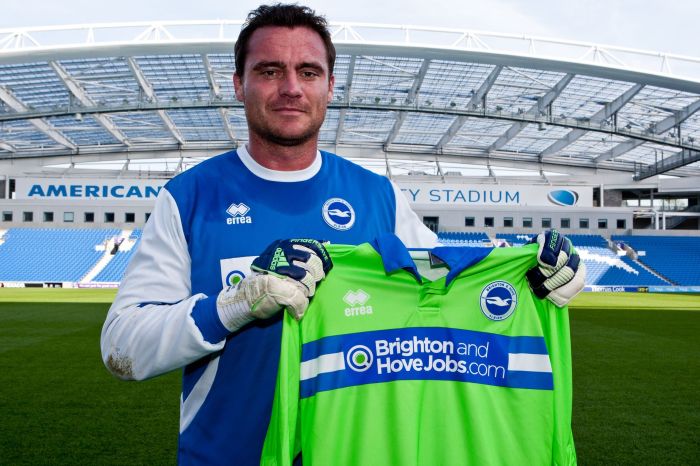
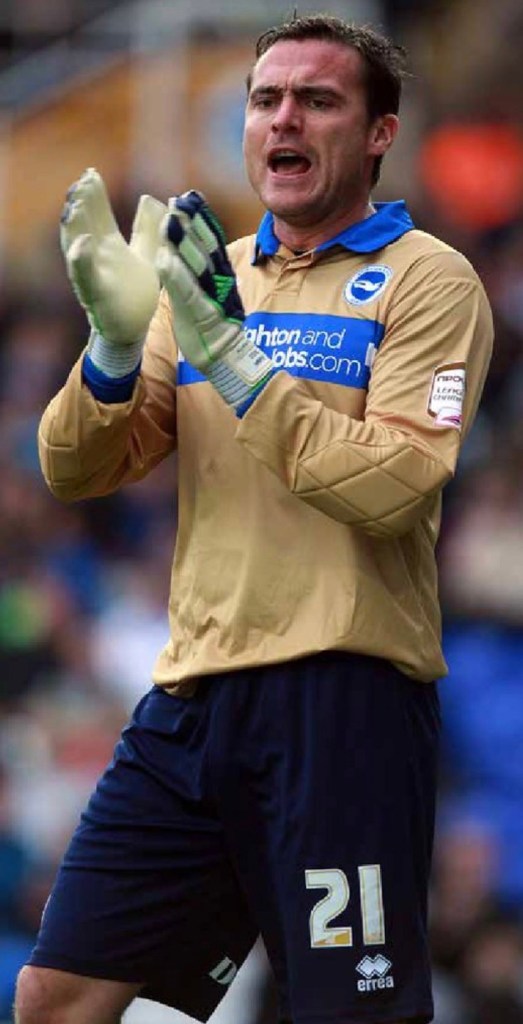
Back in 2011, Harper was happy to lend his experience to the second tier Seagulls during Gus Poyet’s tenure as manager, a decision applauded by Alan Pardew, Toon boss at the time.

“He just wanted to play,” Pardew told the Chronicle. “Not all the top players in the country would have gone on loan – you’re vulnerable.

“You’re going down a division, but he was prepared to do that, and fair play to him.”

For his part, Harper told BBC Sport: “Everybody knows I haven’t played enough football until the last two-and-a-half years.

“I hadn’t played a competitive game for about six months so it was nice to blow the cobwebs out.”

In his first Seagulls match, unfortunately Albion lost against West Ham to a single goal from Harper’s former teammate Kevin Nolan, and he said: “It was disappointing to lose against West Ham with the possession we had.

“Now I’m here, it’s time to get stuck in. We want Brighton to consolidate and finish as high as we can. People tell me it’s a lovely city. I’m looking forward to seeing more of it.”

Harper recalled the time fondly in an interview for the Albion website in 2019.

He featured in five games for the Seagulls, keeping two clean sheets. While he conceded five goals, three came away to Southampton when the Seagulls were unjustly punished by referee Peter Walton.

Harper told journalist Nick Szczepanik: “I would have stayed longer given the opportunity. They made me feel very welcome.”

He even managed to give two of his new teammates a surprise when he started speaking to them in Spanish. Playing behind Spanish speakers Inigo Calderon and Gonzalo Jara Reyes, he explained to Andy Naylor, then of The Argus: “After five years of Bobby Robson and his multi-lingual team talks my Spanish is okay.

“Calde got quite a shock with how much Spanish I know, but I had Colocinni and Enrique in the team with me at Newcastle.”

After his brief spell with the Albion, Harper returned to Newcastle and played nine more games for them the following season before moving on to Hull City (at the time managed by current Toon boss Bruce), where he played alongside Liam Rosenior.

Born in Seaham on 14 March 1975, Harper grew up in the County Durham mining village of Easington and went to its local comprehensive school. Originally a striker at local Sunday league level, he only started playing in goal from the age of 17 and he turned out for Newcastle’s youth team while he was still at college doing A levels.

In fact he was offered a place at John Moores University in Liverpool to study for a Sports Science degree but he deferred it when Newcastle offered him a one-year contract. He signed in 1993 as a back-up for first choice Pavel Srnicek, later Shaka Hislop and subsequently Shay Given.

Much of his time at Newcastle was as a more than capable deputy to whoever was first choice although in United’s 2009-10 season in the Championship, under Chris Hughton, he was the main man and played 45 matches.

Harper had nothing but praise for Hughton, telling chroniclelive.co.uk: “He came in at an incredibly difficult, turbulent time after relegation.

“Chris was the man at the centre of a perfect storm who steered us through some very choppy waters.

“He did a wonderful job and I don’t think he got enough credit. It was no surprise to me to see him go on to do an excellent job at Birmingham City and then at Brighton.”

In total, Harper played 199 games for Newcastle, featuring under nine different managers – Kevin Keegan and Bobby Robson being his favourites.

Periodically over the years, he went out on loan to gain first-team action, appearing between the sticks for Bradford City, Gateshead, Stockport County, Hartlepool and Huddersfield. The Brighton move was his sixth spell out on loan.

Harper’s long service for Newcastle was rewarded with a testimonial against AC Milan in 2013 before he left the club to join Hull, where he spent two seasons.

Six months after his departure from Hull, he was taken on by then Premier League Sunderland as cover for Jordan Pickford and Vito Mannone, but he didn’t make a first-team appearance and was released at the end of the season.

One-goal striker Craig Davies a Seagulls flop

THE PHRASE ‘journeyman striker’ sits perfectly with Welsh international Craig Davies who, despite success later in his career, fired blanks for Wolverhampton Wanderers and Brighton.

To use that rather amusing, though well-worn phrase, he couldn’t hit a cow’s arse with a banjo during his time with the Seagulls.

He arrived on the south coast in January 2009 during Micky Adams’ second, unsuccessful, spell in Albion’s managerial chair.

Oldham Athletic received a reported £150,000 for his signature and, in 23 games for Brighton, he managed just the one goal – on his debut!

That strike came at Withdean – the opening goal in what ended up a 4-2 defeat to Peterborough United (for whom a certain Craig Mackail-Smith equalised).

When a 4-0 home thrashing by Crewe Alexandra meant it had been six games on the trot without a win, Adams was fired by Dick Knight at a Little Chef on the A23. He’d managed just seven wins in 34 matches, and ‘fireman’ Russell Slade arrived just in time to rescue the Seagulls from the League One relegation trapdoor.

Many different striker permutations were tried that season, with main men Nicky Forster and Glenn Murray sidelined by injury, and Albion’s survival was largely due to the goals of loan arrival Lloyd Owusu. Davies huffed and puffed but simply couldn’t make a meaningful connection when the goal beckoned.

Typical of the fans’ eye view was this observation by wearebrighton.com: “That Adams actually paid money for Craig Davies remains one of the more startling moments of his reign of terror.

“Rarely has a Brighton player enraged the Seagulls support like Davies, a man who mixed incompetence – such as the ability to put the ball over the bar when faced with an open goal three yards away – with a complete lack of effort.”

There had been such promise on his arrival, with chairman Dick Knight telling the matchday programme: “Craig is an exciting player with loads of potential, he is lightning-quick and his direct approach can be a nightmare for defenders. This is a major career move for him and he has every chance to be a crucial part of our future.”

Davies himself clearly thought he’d finally found a place to further his career, saying: “I’ve had a few ups and downs through my career but hopefully now I can get settled at Brighton and start knocking in the goals here.

“The gaffer seems to have a bit of faith in me so hopefully I can repay that by putting in some performances and getting a few goals.”

Albion cut their losses on Davies and loaned him to Yeovil Town (he didn’t score in four games for them, either) and then Adams re-signed him, this time for League Two Port Vale, where he finally managed to find the back of the net again.

In the summer of 2010, Davies came to a mutual agreement to end his Brighton nightmare and he joined League Two Chesterfield, from where his career began an amazing upward trajectory.

Born in Burton-upon-Trent on 9 January 1986, Davies began his career as a schoolboy at Shrewsbury Town, but did his apprenticeship at Manchester City. In August 2004, he moved on to League Two Oxford United, where he made his league debut the same month in a 1-0 win at Notts County.

In two seasons with Oxford, managed by former Ipswich and Arsenal midfielder Brian Talbot, he scored eight times in 55 appearances. In the summer of 2005, he made his debut for Wales (qualifying because he had a Welsh grandfather) as a substitute in a 0-0 draw v Slovenia. Reports linked him with a move to Premier League Charlton Athletic, but nothing came of it and instead, in January 2006, he moved to Italy to join Hellas Verona for a £85,000 fee.

It proved to be too big a step for someone who was then only 20, and he referred to feelings of homesickness in an interview with the BBC.

Remarkably, Davies hit the headlines in May 2006, when in the sixth of seven games he played for the Wales under-21 side (which featured Gareth Bale, Andrew Crofts and Arron Davies) he scored a hat-trick in a 5-1 win over Estonia, and it earned him a recall to the full international side.

Wales under-21 manager Brian Flynn told the BBC: “Craig has sometimes been frustrating to watch, but he has skill and we will help him, and them all, to flourish.”

Davies hoped the international goals would attract a club to rescue him from Italy. “I have found it very hard to settle in Italy,” he told the BBC. “Verona want me to come back and have a year on loan somewhere and then they will look at the situation again when I have a bit more experience.”

It was Wolves, then in the Championship, who offered him a lifeline back in the UK and he moved to Molineux on loan, playing 23 games, mainly in the first half of the 2006-07 season.

The only goals he scored for Wolves both came in a FA Cup tie against Oldham Athletic who, ironically, turned out to be his next club. He joined them for an undisclosed fee from Hellas in June 2007.

Davies netted 13 times for a League One Latics side in 2007-08 but, after a 10-game barren spell the following season, he was sent on loan to Stockport County where he scored six times in 13 games, including bagging a hat-trick against Bristol Rovers, and scoring a penalty against Albion as County won 2-0.

When Adams rescued Davies from his Seagulls horror spell, he was rewarded with seven goals in 24 matches for League Two Port Vale between January 2010 and the end of the season.

Chesterfield stepped in to sign him on a one-year deal for the 2010-11 season – and he was promptly sent off in his first competitive game for the Spireites!

Things did get much better, though, and he ended the season with 25 goals to his name, Chesterfield were promoted, and Davies was chosen in the divisional PFA select team for the season.

Such success drew attention from other clubs and he opted to join Championship side Barnsley under Keith Hill. He struggled to find the net in the opening nine matches but eventually finished the season with 11 goals in 42 appearances.
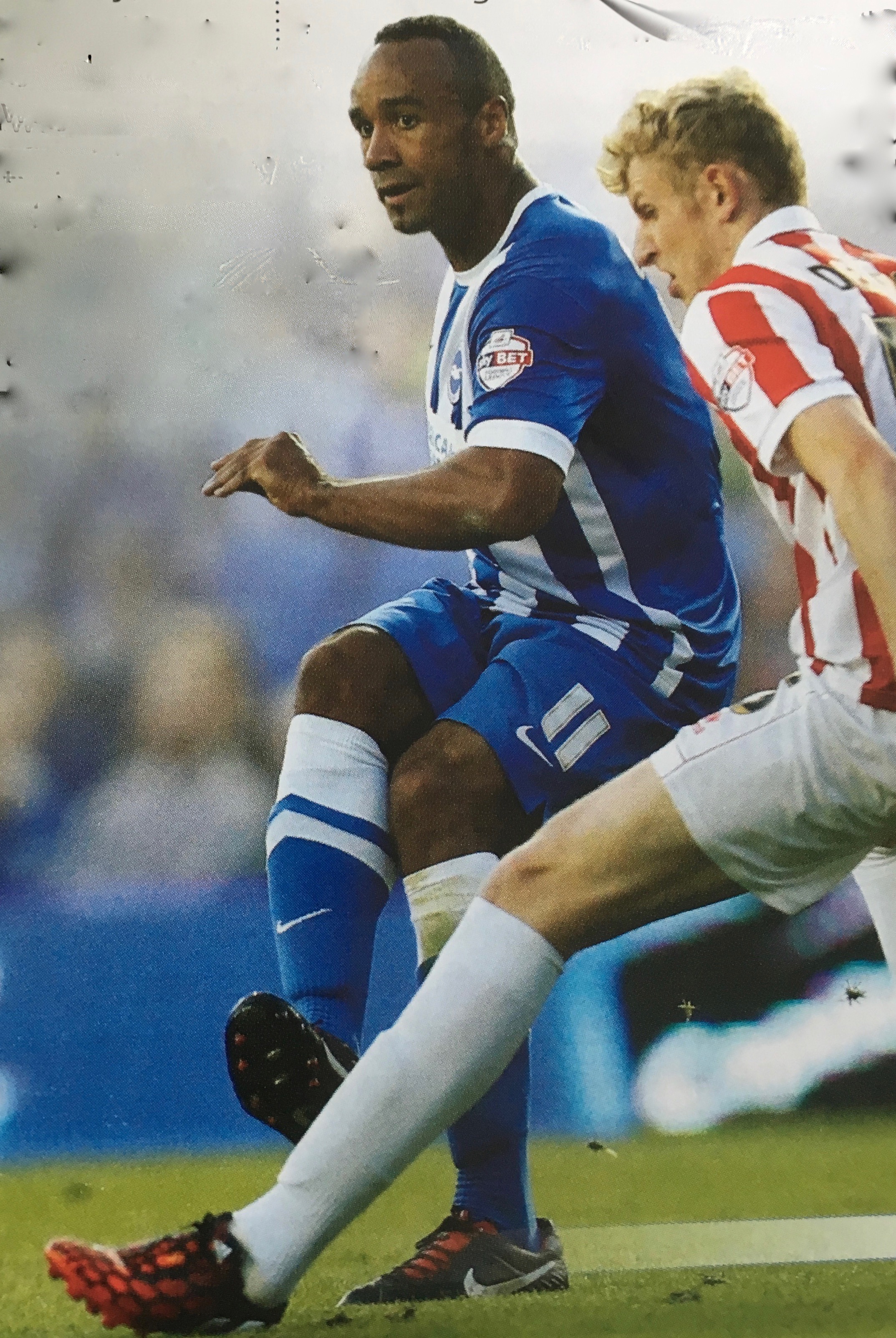
In September 2012, Davies scored FOUR goals in the space of 19 minutes in a 5-0 demolition of Birmingham City at St Andrews and, with nine goals in 22 appearances to his name in the first half of the 2012-13 season, Bolton Wanderers came forward with a £300,000 bid to take him to the Reebok Stadium.

He scored four goals in 18 Championship games for Wanderers but another of his barren spells struck in the opening half of the following season. Wanderers loaned him to League One Preston and he got a goal on his debut as well as a hat-trick in a 6-1 thrashing of Carlisle United. North End reached the play-offs, and Davies made his way back to Bolton having scored five in 15 games.

Hamstring injury issues plagued him in 2014-15 and manager Neil Lennon released him at the end of the season.
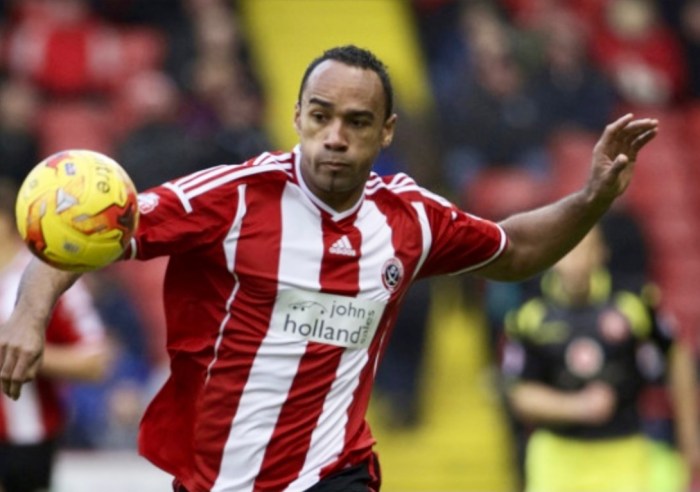
He didn’t have far to travel for his next port of call when newly-relegated Wigan Athletic offered him a two-year contract. He only scored twice in 30 appearances, but Wigan won promotion as League One champions.

With just one goal in 14 Championship games in the first part of the 2016-17 season, Davies was on the move again, this time linking up with League One Scunthorpe United until the end of the season. Cue another barren spell: no goals in 21 games.

The 2017-18 season saw Davies return to his old club, Oldham Athletic, and despite scoring 14 goals in 44 appearances, could not prevent the club being relegated to League Two. Davies had strong views about the ownership of the club as he departed for Mansfield Town.

He signed a two-year deal with the Stags, but injury curtailed his involvement in 2018-19.

C Davies Wales

‘Save of the season’ one of few bouquets for goalkeeping florist Alan Blayney

blayney intenseGOALKEEPER Alan Blayney only played 15 games on loan to Brighton from Southampton but if finances had been better at the time he could have signed permanently and his career may have taken a different turn.
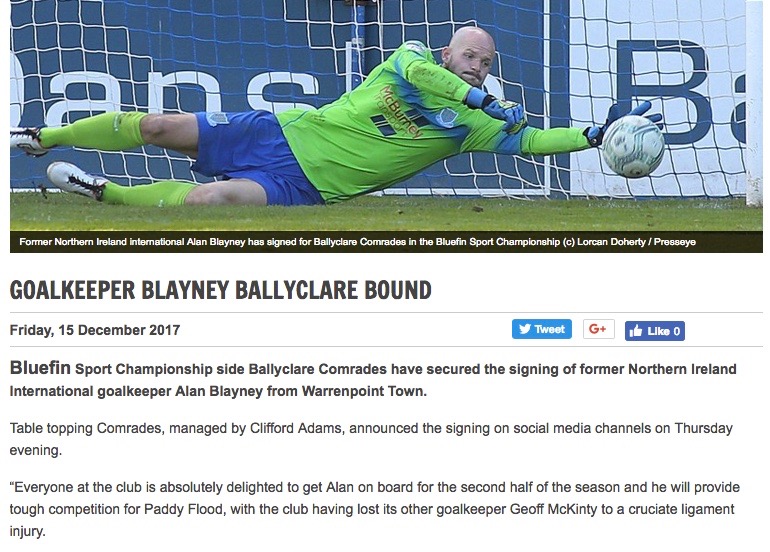
Blayney is still playing, nifootballleague.com reporting only in December 2017 a move to Ballyclare Comrades from Warrenpoint Town. He also runs a florist business with his wife Laura in Newtownabbey.

Only a month earlier he opened his heart to the belfasttelegraph.co.uk and talked about the demons he’s had to face during a career that rarely hit the heights in England but has seen him represent his country and enjoy success in his native Northern Ireland.

Born in Belfast on 9 October 1981, Blayney was picked up by the city’s Irish league side Glentoran at 16 before moving to the UK aged 19 to join Premier League Southampton.

Blayney was initially loaned out to Stockport County, but his time there was cut short by a broken finger.

He also had a couple of games along the coast at Bournemouth when he suffered one of his most embarrassing goalkeeping moments. In a Q and A for the Albion programme, Blayney told interviewer Dan Tester: “I’d rolled the ball outside the 18-yard box in readiness to kick it up field. The Rochdale striker, my former Northern Ireland under 21 teammate Lee McEvilly, was running away and it hit him on the head and flew over mine into the back of the net.”

Back at Southampton, the young ‘keeper finally got a first team chance in May 2004, a couple of months after Paul Sturrock had replaced Gordon Strachan as manager.

It was some debut because the game against Newcastle United finished 3-3 and a save Blayney made from an Alan Shearer header won him the accolade of Sky Sports save of the season.

The young Irishman kept his place for the following game, a 2-1 defeat at Charlton and he played twice more the following season, in a 2-2 league draw against West Bromwich Albion and a 5-2 League Cup defeat to Watford.

With future Albion goalkeeping coach Antti Niemi and Paul Smith ahead of him in the pecking order, Blayney went on loan to Rushden & Diamonds, where he played four games, before securing the first loan to Brighton in early 2005.

Albion’s regular ‘keeper Michel Kuipers had sustained a horrific shoulder injury in a home game against Nottingham Forest and the no.2 at the time, Chris May, had no experience so manager Mark McGhee needed emergency reinforcements.

Initially he obtained David Yeldell from Blackburn Rovers and also brought in Rami Shabaan from Arsenal, but Blayney, no doubt recommended by McGhee’s old pal Strachan, became the preferred option and played seven games at the end of the season.

Amongst several impressive displays was a game I went to with my son, Rhys, at Burnley, on 16 April 2005.

Against the odds, it finished 1-1 but the media was keener to focus on the post-match news that striker Mark McCammon had been ordered off the team bus by McGhee for his reaction to being substituted at half time.

Reporter Peter Gardner, on telegraph.co.uk, said: “The incident overshadowed a rousing second-half comeback to a game Brighton might ultimately have won, not least through the contribution of Jake Robinson, McCammon’s half-time replacement.

“However, McGhee’s men were equally fortunate not to have been overwhelmed by the home side in the opening 45 minutes when only splendid saves by Alan Blayney from Graham Branch (twice) and Mo Camara, plus Burnley’s own profligacy, prevented an avalanche of goals.”

Blayney was also between the sticks for the nail-biting final game of the season when a 1-1 draw with Ipswich Town kept the Seagulls in the Championship by the skin of their teeth.

Such had been Blayney’s contribution that McGhee was keen to sign him permanently, the manager telling skysports.com: “Alan did absolutely brilliantly here for us. We have to see how realistic an option that is, and whether they’re even prepared to consider letting him go, and what the conditions would be.”

The answer was that Brighton couldn’t afford the fee Southampton wanted so at the start of the following season Wayne Henderson was brought in instead on a three-month loan from Aston Villa.

When Henderson returned to Villa, McGhee was keen to buy him outright but in the meantime brought Blayney back for an eight-game stint.

Blayney told BBC Southern Counties Radio: “If I don’t perform they’ll end up going for Wayne instead of me. I have to come in and show I’m as good as Wayne, if not better. This first game at Stoke is really important.”

Unfortunately, the game at Stoke ended in a 3-0 defeat and a 3-2 reverse at home to Crystal Palace followed.

After a point was gained away at Cardiff City, Blayney saved a penalty from Inigo Idiakez in a 0-0 draw with Derby at Withdean on 26 November 2005, and the following week he helped earn another point, repeating the feat against Watford’s Marlon King.

The Watford Observer reported: “King passed up a glorious chance to fire Watford ahead on 58 minutes when he saw his penalty saved. King’s tame penalty was parried by Blayney, who dived low to his left, and the keeper then gathered the rebound.”

After a 5-1 hammering away to Reading, Blayney returned to Southampton in mid-December and within a matter of weeks Southampton’s technical support director, Sir Clive Woodward, informed him he had been sold to Doncaster Rovers for £50,000.

Blayney told the Belfast Telegraph in November 2017: “My response was, ‘Do I not have any say in this?’ He said the deal was done but I didn’t want to live in Doncaster. I loved it in Southampton. I didn’t settle in Doncaster, they gave me an apartment, but it was a tip. If I was getting those wages now I would bite your arm off but then it felt I wasn’t getting much and it was a terrible time.”

Although he started out as no.1, and made 24 appearances for Rovers, following an ankle injury he slipped to third choice behind Ben Smith and Jan Budtz, and came to an agreement to terminate his two and a half year contract early.

Blayney admitted in his Belfast Telegraph interview: “I do regret going out and drinking in my later career in England when I was at Doncaster. I was getting injuries and was a bit disillusioned with the game. I regret it because people had opinions of me at that club which is not the real me. They only saw me behave like that for a few months.”

He wasn’t quite done with England, though, and in February 2007 joined League One Oldham Athletic until the end of the season, after impressing in a reserve team match. However, he only played one first team game, in a 1-2 home defeat against Bournemouth.

There had been the possibility of a return to Brighton to replace Henderson, who had been sold to Preston, but the Argus reported on 2 February 2007: “Albion are not re-signing goalkeeper Alan Blayney after all. They have not been able to agree a length of contract with the former loan signing.”

On his return to Northern Ireland, he initially managed just three games as an understudy at Bohemians, but then he played 32 times for Ballymena United in 2008-09 as a prelude to what would turn out to be the most successful period of his career.

In five seasons with NIFL premiership side Linfield, he played 164 games and, in 2010-11, when Linfield won the league and cup double, he was named Ulster Footballer of the Year.

His form for Linfield also earned him a recall to the Northern Ireland squad. He had initially made his debut in 2006 under Lawrie Sanchez on a summer tour of the United States.

An appearance from the bench in a drawn friendly against Morocco in November 2010 saw Blayney concede an embarrassing goal as his clearance rebounded off Marouane Chamakh, then of Arsenal, to give the Africans the lead.

Manager Nigel Worthington put the incident into context after the game, telling the media Blayney had travelled to the ground just hours after his partner had given birth to a son.

“I was disappointed for Alan but it has been a terrific day for him and we have come out of the game unbeaten,” said Worthington. “He’s fine and I have given him every encouragement. It is one of those you learn from. You cannot take a split second to delay.”

Blayney said it was the worst moment of his career. He told the Belfast Telegraph: “I came on at half-time for Jonny Tuffey but took a terrible touch and Chamakh came in to challenge me. I kicked the ball off him and it went into the net.

“Everybody had welcomed me onto the pitch and you don’t forget moments like that. You aren’t used to playing against players who are as quick as that. I looked up and he was there. I wanted the ground to swallow me up but earlier that same day Phoenix was born. It was a bittersweet day.”

In May 2011 Blayney shared goalkeeping duties with Tuffey as an inexperienced Northern Ireland team endured an embarrassing Carling Nations Cup defeat to the Republic of Ireland. Although left exposed by a threadbare defence, Blayney was culpable in at least two of the goals in a 5-0 hammering, one of which was scored by debut-making Stephen Ward, a future left back loanee for the Seagulls. bbc.co.uk reported: “Blayney was badly at fault six minutes later as he spilled a tame Treacy cross which allowed Ward to poke home from close range.”

With Linfield, Blayney continued to rack up honours until they signed Tuffey in 2013, and he was no longer first choice. In January 2014, he joined Ards on loan but couldn’t help them avoid relegation.

After spending 2014-15 with Glenavon, he returned to Ballymena where he had two successful seasons, before losing his place. In January 2017, he dropped down to the Premier Intermediate League with Dundela. At the start of this season, he returned to the higher division with Warrenpoint Town but, in December, moved to be closer to home, with semi-professional Ballyclare.

Blayney savedec 17 blay cutBlayney cover

Further reading

https://www.not606.com/threads/whatever-happened-to-alan-blayney-part-5-of-many.126334/

https://www.belfasttelegraph.co.uk/sport/football/irish-league/footballers-lives-with-alan-blayney-why-ive-been-gripped-by-selfdoubt-and-how-i-almost-died-after-training-36284956.html

http://news.bbc.co.uk/sport1/hi/football/teams/b/brighton/4102810.stm

http://nifootball.blogspot.co.uk/2006/08/alan-blayney.html

Flamboyant Frank Worthington’s career included a brief Brighton stopover

3-fw-albionFRANK Worthington was one of football’s genuine entertainers and it was a privilege to witness his season at The Goldstone between 1984 and 1985.

An all-too-brief England career which saw him win eight caps in 1974 was a long way behind him by the time his former Huddersfield Town teammate Chris Cattlin secured his signature for Brighton, but what the legs could no longer do, the brain more than made up for.

He was on the scoresheet in only his second game, a bruising encounter when Notts County were beaten 2-1, even though Albion played the second half with only 10 men – centre backs Eric Young and Jeff Clarke having been hospitalised by clashes with Justin Fashanu.

Worthington went on to make 30 appearances (plus five as sub) scoring eight times in total. Two of the goals came in his penultimate match against Wolverhampton Wanderers, one being a penalty struck so hard that it broke the hand of their ‘keeper Tim Flowers.

In June 2013, in the Huddersfield Examiner, Cattlin told interviewer Doug Thomson: “He did a good job for me. Frank wasn’t only a great player, but a great bloke as well, a dedicated trainer and a great bloke to have around a club.”

Worthington reflected on his time at the club in a matchday programme interview with Spencer Vignes in 2003. “I’d known Chris since my early days at Huddersfield,” he said. “I’d liked him so when he asked whether or not I’d be prepared to come to Brighton, I didn’t really have to think too long about it. They were a good side that hadn’t long been out of the First Division, so it sounded attractive.”

He continued: “We had some good players and certainly had no problems finding the net. I felt as though I was playing OK and the fans seemed to like me. But Chris did have this thing where he would chop and change the team around quite a bit, even if we were winning. He never really seemed sure what his best side was, and I think our form began to suffer because of it.”

Worthington reckoned it led to disharmony in the dressing room, and, for his own part, while he was good friends with Jimmy Case and Hans Kraay, he couldn’t say the same for Chris Hutchings or Kieran O’Regan. Albion finished sixth in the table, three points off automatic promotion and, although he was offered a new one-year contract, he decided to move on to try his hand at management.

So Brighton was only a brief stop-off in a 20-year career which saw Worthington score 236 goals in 757 league games. Add in games he also played in the United States with Philadelphia Fury and Tampa Bay Rowdies, in South Africa, Sweden and in English non-league, and the games total amounts to an amazing 828.

Halifax-born Worthington’s father was a pre-war professional and his two brothers, David and Bob, were also professionals. Unlike his brothers, the hometown club dithered over signing Frank and Huddersfield jumped in and secured his signature.

After manager Ian Greaves selected him for the opening fixture of the 1969-70 season, he clocked up 100 consecutive appearances for the Terriers.

The flamboyant Worthington famously almost joined Liverpool in 1972 but the deal was called off when he failed a medical due to a reported high blood pressure reading.

Liverpool signed John Toshack instead while Worthington went to Leicester City for £85,000.

Having made nearly a quarter of a million pounds from the sale of David Nish to Derby County, Leicester boss Jimmy Bloomfield had a useful kitty which he splashed on Worthington, Dennis Rofe, Keith Weller, Jon Sammels and Alan Birchenall.

Worthington scored on his Leicester debut at Old Trafford and in an article with Goal magazine on 21 October 1972, he said: “It’s different playing for Leicester City compared with Huddersfield. At Huddersfield the emphasis was on hard running and effort – here it is on skill, and there is a hell of a lot of skill in this side.”

In the same publication two years later, he had finished the 1973-74 season with 25 goals to his name and he was full of compliments for Bloomfield.

“Basically I am a player who relies on skill and that fits perfectly into Jim’s plans,” he said. “I always think that teams reflect the style and outlook of their managers. That’s why Leicester’s philosophy is that there is no substitute for skill.”

His time at Leicester lasted five years and spanned more than 200 appearances before he switched to Bolton Wanderers – where one audacious goal he scored against Ipswich remains a YouTube favourite – and then Birmingham City, helping both sides to promotions.

In 1982 he played for Leeds, the following season Sunderland and the next, Southampton, before pitching up at The Goldstone.

Worthington’s first go at management, while continuing to play, came with two years at Tranmere – and his first signing was Albion’s Ian Muir. He told Vignes: “Ian Muir was a fantastic forward with great touch. He did things in training you just wouldn’t believe, yet he wasn’t even making the side at Brighton under Chris.”

Muir became a hero on Wirral, scoring 141 goals as Rovers won promotion twice and won the Associate Members Cup at Wembley in 1991. By then, Worthington was long gone, having moved on to Preston, then Stockport County, and, after a succession of brief stays with various non-league clubs, ended up with hometown club Halifax Town, where he was briefly joined by Case.

Albion’s shirt sponsor during his season with the club was Phoenix Brewery. Quite apt for a player who was famously quoted as saying: “I’ve squandered fortunes on booze, birds and gambling – it’s better than wasting it!”

Tellingly, his autobiography, published in 1995, entitled One Hump or Two, was a classic tell-all romp of a colourful career on and off the pitch.

Worthington died aged 72 on 22 March 2021 and, in a statement, his wife Carol said: “Frank brought joy to so many people throughout his career and in his private life. He will be greatly missed by everyone who loved him so much.”

The great man’s lifestyle spawned many eye-catching headlines over the years and there is no shortage of stories about him to be found on the internet.

Follow the links for just three examples.

https://www.theguardian.com/football/2016/may/06/frank-worthington-denies-being-diagnosed-with-alzheimers-disease

http://www.90min.com/posts/26691-england-s-wasted-talent-1-frank-worthington

http://www-users.york.ac.uk/~sph2/lufc/mag/worthing.htm

1-fw-hudd2-fw-leic4-fw-headline

Pictures from my scrapbook show Worthington in Goal magazine in Huddersfield and Leicester’s colours, in Albion’s Phoenix Brewery-sponsored shirt and a classic headline. Pictures also from the Albion matchday programme.