
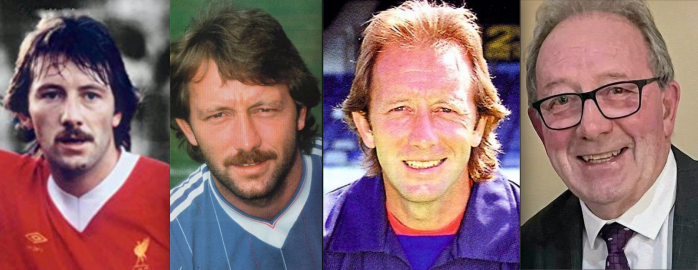
IT’S HARDLY surprising that there are numerous tales to tell from Jimmy Case’s illustrious football career, many of which he told in his autobiography, Hard Case.
Following on from my recent blog post about the all-important blockbuster winner he scored at Anfield for Brighton in the fifth round of the 1983 FA Cup, let’s look in more detail at the impact of his arrival in Sussex in the summer of 1981. It was momentous in many respects.
And, if you’ll indulge me in the parallel that gives this blog its very name, Case’s move from Liverpool to Brighton bore a remarkable similarity to Adam Lallana’s 2020 move in the same direction in terms of the Seagulls capturing an influential trophy-winner whose experience took them to a new level.
Case scored 46 goals in 269 appearances across six years at Liverpool and left with four League title winners’ medals, three European Cup winners’ medals plus one each for winning the UEFA Cup, European Super Cup and the League Cup.
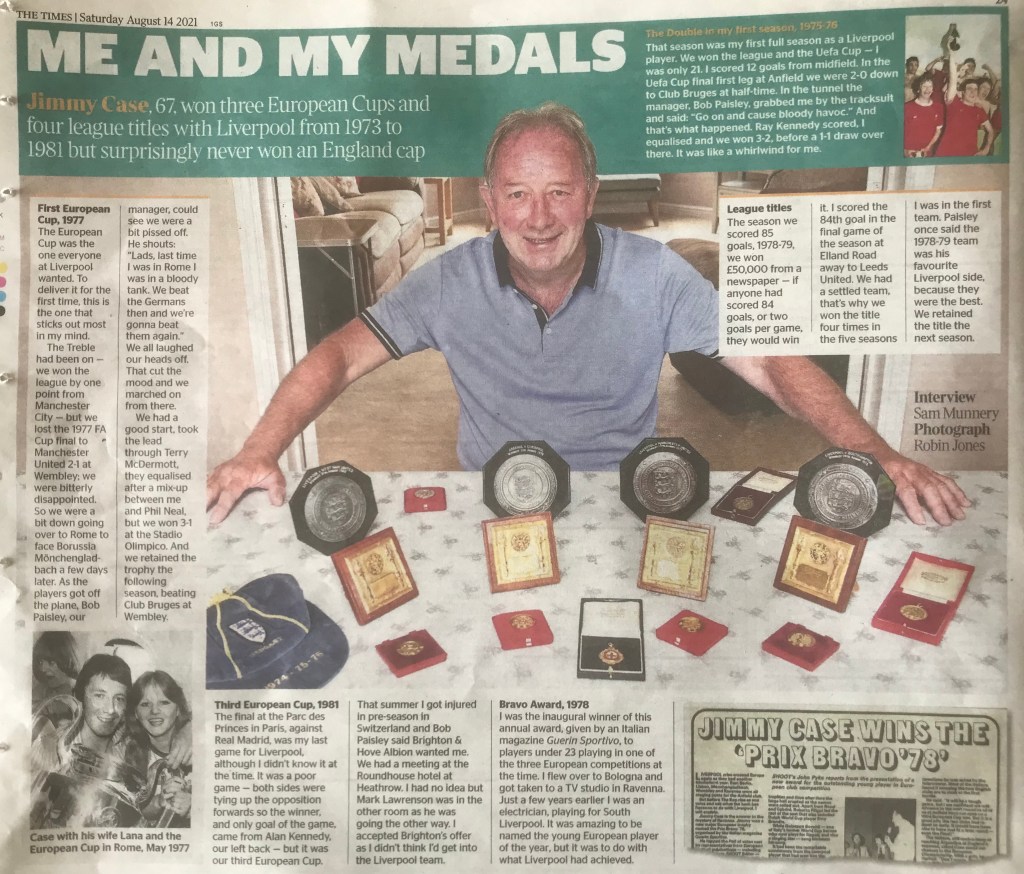
Lallana scored 22 in 178 matches and collected one League title medal, and others for winning the Champions League, European Super Cup and FIFA Club World Cup. Unlike Case, Lallana also won 34 England caps.
In the season following Case’s signing, Brighton finished in a highest-ever 13th place in the top division under Mike Bailey in 1982, a feat only bettered by the ninth-place finish under Graham Potter 40 years later and even better sixth spot under Roberto De Zerbi in 2023.
I first wrote about Case’s time with Brighton in a 2017 blog post but his story is well worthy of re-telling, particularly with updates from more recent interviews he’s given.
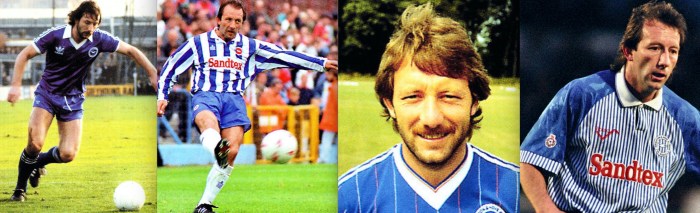
Back in 1981, as Spencer Vignes said in a matchday programme article, perhaps with a little journalistic licence: “When 27-year-old Jimmy swapped Anfield for the Goldstone, the effect on Sussex was seismic. For here was a Liverpool legend, famous for his ferocious shot and no-nonsense approach to the game.”
Listing those medals he’d won, Vignes continued: “The fact that this man wanted to play for the Albion blew the fans away.”
The truth was that Case didn’t really want to leave Liverpool but some of his off-field antics involving drink had not gone down well with the Anfield management and Sammy Lee was emerging as his replacement.
“There was something of a drinking culture at Liverpool in those days,” Case admitted in an interview with lfchistory.net. “Ray Kennedy and me were usually at the heart of it, along with Terry McDermott, Phil Thompson, Emlyn (Hughes) and Smithy (Tommy Smith) – everyone, really.
“The coaches knew all about the drinking – it went on at all the clubs – and my thinking was that because we trained all week, played a hard game on a Saturday, to go out and have a few drinks afterwards was something we had earned. In my view, we were just letting our hair down a bit, but the club in those days didn’t like that type of thing. I wasn’t looking to leave at all but suppose they must have thought I was a bit of a bad lad.”
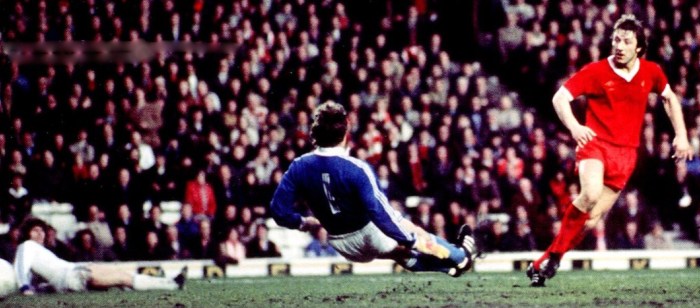
Lee was in the starting line-up for the 1981 European Cup Final win over Real Madrid in Paris and Case had only been involved as a late substitute for Kenny Dalglish.
He could tell he was being edged out when firstly it was suggested he might like to talk to ex-Red John Toshack, who was in charge of Swansea, and then he became aware that Liverpool wanted to sign Albion’s Mark Lawrenson.
“That’s where I got asked to make weight, but I didn’t know it was a makeweight at the time,” he told lfchistory.net. “I didn’t want to go anyway, to be honest, but when you’re asked twice, ‘Do you want to speak to another team?’, it’s another thing. Even though Sammy Lee is a really good friend of mine, I reckon I would have given a good go for the position, put it that way.”
Albion in the meantime had been struggling amongst the elite for two seasons and crowds at the Goldstone had begun to shrink; chairman Mike Bamber was looking for ways to make up the shortfall in income.
Manager Alan Mullery, who’d steered Brighton from the Third Division to the First, had two dilemmas to resolve. He’d made his own arrangement for Lawrenson to move to Man Utd not knowing of Bamber’s plan to sell Lawrenson to Liverpool. Bamber also wanted Mullery to sack his backroom staff as a cost-cutting measure.
It was all too much for Mullery and he quit the club in protest. Ironically, he swapped places with Mike Bailey, who’d just steered Charlton Athletic to promotion from the Third Division to the Second.
So, one of Bailey’s first missions was to welcome Case to the Goldstone and the Scouser admitted to Vignes he “didn’t really want to go to a big club again” and “fancied something different”.
If he felt he had a point prove to Liverpool, he certainly went about it in the right way, scoring in his first appearance against his old club the following October in a 3-3 draw at the Goldstone Ground and then helping the Albion to a 1-0 victory in the Anfield return six months later.
Teammate Gerry Ryan told Vignes: “When he came to Brighton, everyone was amazed. He was an enforcer in the old type of way. He would protect us. If anyone got hit bad then he would seek retribution. But he was also a great footballer.
“Every game Jimmy played, he played to a high standard. He also gave the team an aura. When you saw his name on the team sheet it stood out. It meant something.”
There was a significant ‘changing of the guard’ on his arrival: quite apart from the new manager and loss of the influential Lawrenson, skipper Brian Horton left too along with long-serving Peter O’Sullivan and utility man John Gregory.
But the arrival of tenacious Eire international midfielder Tony Grealish from Luton, experienced Don Shanks, who’d been part of a decent top division QPR squad, and Steve Gatting, who’d played 76 games for Arsenal meant there was no shortage of experience in their place.
Northern Irish international Sammy Nelson moved from Arsenal to take over the left-back spot from Gary Williams and Bailey declared: “The signing of Sammy Nelson has now given me the sort of squad I feel we need to compete with the best in the division.”
Commanding centre half Steve Foster took over as captain from Horton and the emerging Gary Stevens was a young talent who could fill any position in defence. Up front, Mullery signing Michael Robinson was a willing workhorse of a centre-forward who, on Brighton’s relegation in 1983, was sold to Liverpool.
Anyone who had the privilege to watch Case in his prime could testify that thunderbolt strikes from distance were his trademark and one of the best I ever saw was in the 1983 FA Cup semi-final at Highbury when Case smashed it in from 30 yards to give Brighton the lead against Sheffield Wednesday.
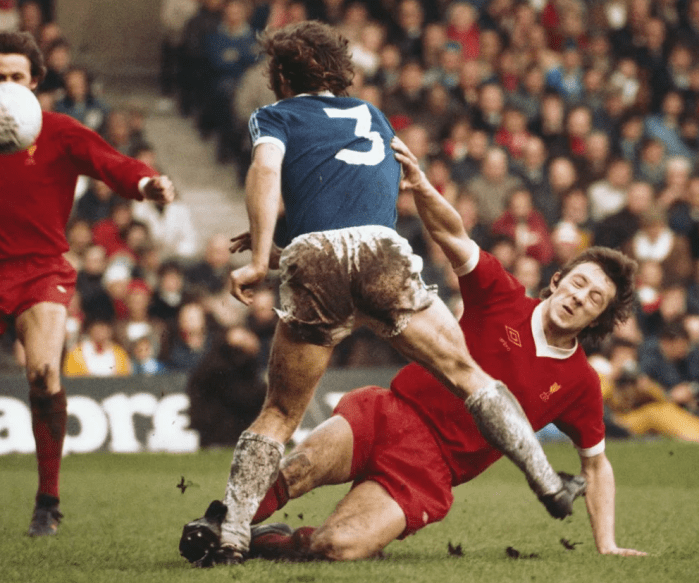
He’d previously scored memorable goals in that trophy-laden career at Liverpool, notably in 1977 scoring one of the great FA Cup final goals, chesting down Joey Jones’s pass on the edge of the box before swivelling to rifle home an equaliser into the top corner against Manchester United, and a left-footed lash in a 1978 European Cup semi-final fightback against Borussia Moenchengladbach at Anfield.
Fascinating, then, to learn that Case had that hard shot from distance at an early age. “Even when I was eight-years-old I was asked to take the goal-kicks because nobody could kick it that far,” he told lfchistory.net.
After the disappointment of relegation from the top flight in 1983, Case remained while others were sold straight away, and some of the new arrivals were grateful for his steadying influence.
Centre-back Eric Young, for example, told the matchday programme: “All the lads were great but Jimmy Case really helped me to settle down. Jimmy is very subtle. He’ll just say a few words to you and it makes all the difference. I appreciated that in those early days.”
With much the same sentiment as Gerry Ryan, Young’s fellow central defender Gary O’Reilly was also a huge Case fan. But Chris Cattlin was obviously under instruction to balance the books and after Foster was sold to Aston Villa, Case was next out the door, along the coast to Southampton. O’Reilly couldn’t believe it.
“We sold Jimmy Case in the March and I nearly took the door off the hinges in Cattlin’s office,” he recalled in a matchday programme article. “I asked him what the hell he was doing selling Jimmy! Were we serious about getting promoted? Were we serious about getting into the play-offs?
“Jimmy went to Southampton and they had success with him in their team in the First Division. It was no surprise. How many European Cup medals does Jimmy have that say ‘winner’? That’s what Jimmy brought to the team here and he was a massive loss when he went.”
Indeed, if it was suspected Case wasn’t the force he once was, because he was 31 when he joined Saints, he ended up hardly missing a game for them, and captained the side, for six seasons.
Cattlin was certainly playing his cards close to his chest as to why Case was sold, and in his matchday programme notes he only obliquely referred to the reason, saying: “Salaries and bonuses of individual players are confidential and obviously I cannot disclose details, but the moves I have made I am certain are right.” And he added: “I can’t explain all the matters that have been considered.”
It wasn’t the last Albion fans would see of Case in their colours, of course, because he returned to the Goldstone Ground aged 39 in December 1993 in the twilight of his playing days, appointed a player-coach under Liam Brady when off-field issues hung gloomily over the club.
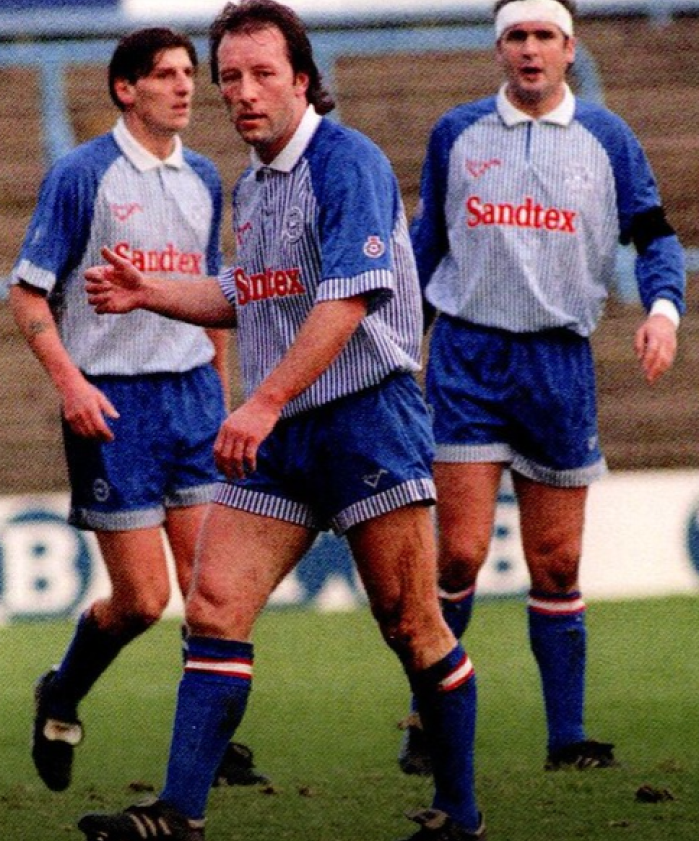
Nevertheless, as a mark of the esteem in which Case was held, a testimonial game for him took place at the Goldstone on 17 October 1994 and it had to be delayed 10 minutes because so many people wanted to get in to pay tribute. The capacity of the grand old ground was much reduced by then but still 15,645 packed in to see Case’s old club Liverpool do him the honour of providing the opposition.
Albion featured Matt Le Tissier in their line-up and even Ryan and Brady made substitute appearances as Liverpool edged it 2-1. An emotional Case said afterwards: “I can’t thank the supporters enough. This was the only game I’ve ever been nervous about. I’ve never really asked for anything from the game, I just wanted everyone to enjoy it.
“It’s all been quite embarrassing really. I like to go to parties, I just don’t like them being my own.”
His last competitive start as an Albion player was in a 2-0 home win over Stockport County on 2 January 1995, and manager Brady said in his programme notes that the player “has an Achilles injury which he will never completely overcome”.
The following season, he twice went on as a sub, and was a non-playing sub on another occasion, but when he went on for Stuart Tuck in a 2-0 Hallowe’en home defeat to Swansea City, that was his last as a player.
Sadly, his last days at the club, having reluctantly taken over the managerial reins from Brady, were tarnished by relegation to the basement division and when Albion’s very existence in the league was under threat, he was replaced by Steve Gritt, who, only by the skin of his teeth, managed to keep Albion up.
 In parallel lines