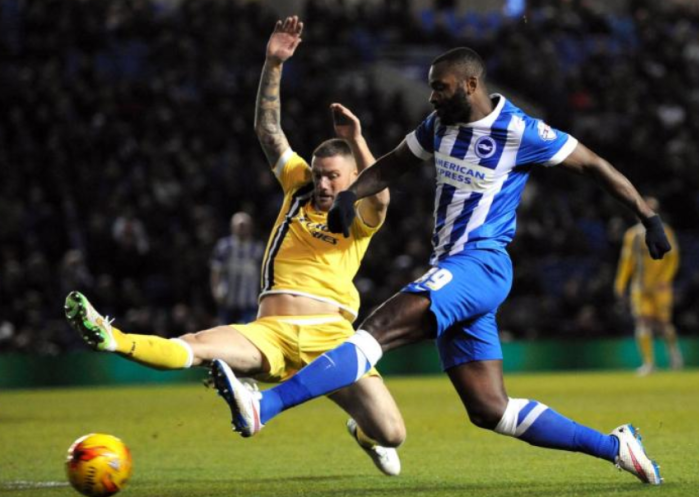
Managerial turnover played havoc with goalscorer Bent’s career

FORMER England striker Darren Bent, who now shares his opinion of the game with listeners to talkSPORT, was still only 30 when he pulled on the stripes of Brighton, one of nine clubs he represented in the Premier League and Championship.

He couldn’t have got off to a better start when he scored on his debut at the Amex, netting against one of his former clubs, Fulham. Unfortunately, the visitors turned the game on its head and won 2-1.

Timing is everything in football and perhaps if Bent had joined the Albion in happier circumstances, there may have been a better story to tell. The Seagulls were about the ditch the manager who brought him to the club – an all-too-familiar scenario Bent encountered on many occasions throughout an 18-year playing career.

At Spurs he played under three different managers – he later described it as “the worst two years of my career” – and his temporary move from Aston Villa to Brighton came about because he’d been frozen out by Paul Lambert even though Gerard Houllier had smashed Villa’s transfer fee record to sign Bent from Sunderland for £18m in January 2011.

Bent arrived at the Amex in November 2014 with 184 goals in 464 career appearances behind him, and only three years earlier had won the last of 13 caps for England, for whom he scored four goals.

“His record speaks for itself,” said Albion boss Sami Hyypia. “He is a top-class striker with more than 100 Premier League goals with Charlton, Spurs, Sunderland and Aston Villa. I hope he will score plenty of goals for us during his time with us.

“There is no doubting his ability to score goals. He also wants to play regular games and that is evident in his willingness to step down from the Premier League to the Championship.”

The player himself told the matchday programme: “Anyone who knows me knows that all I care about is football.

“It has never been about money or anything like that. It has always been about playing football. I’m always at my happiest when I’m playing.”

Bent added: “Brighton felt like the perfect place to come and play football, especially for someone like Sami Hyypia, who I’ve played against many times over the years.

“As a manager, I think he is the right man. He is the kind of guy I want to play for.”

It was a generous assessment in the circumstances because Brighton had managed only two wins in 16 matches before Bent’s arrival.

The experienced striker’s second goal for the Albion looked like it might have earned the beleaguered coach a reprieve from the inevitable. He scored in the 10th minute away at Wolves, stooping to head Inigo Calderon’s first-time cross past goalkeeper Carl Ikeme. It was a lead that lasted until the 88th-minute but was cancelled out by a Danny Batth equaliser after Albion had played 30 second half minutes with 10 men following a red card shown to Bruno. Brighton parted company with the big Finn shortly afterwards.

Bent played one more game, under caretaker Nathan Jones, when Albion fought back from 2-0 down (both scored by on-loan Glenn Murray against his old club) to earn a home draw against Reading, but he was forced off injured after less than half an hour and the knock kept him out of the next game at Fulham, when Brighton won 2-0.

Hyypia’s replacement, Chris Hughton, spoke at his first press conference of trying to keep the player, but Bent had the chance to join a side at the opposite end of the Championship and he moved to promotion-seeking Derby County instead, scoring 12 times in 13 starts as the Rams missed out on a play-off spot by one point.

Released by Villa at the end of the season, he subsequently joined the Rams on a permanent basis in the summer of 2015. He saw even more managerial churn at Pride Park – Paul Clement and Darren Wassall in 2015-16 and three – Nigel Pearson, Steve McLaren and Gary Rowett – in 2016-17. Across the two seasons in the Championship, Bent scored 14 in 67 matches, but a hamstring injury sidelined him for the start of the 2017-18 season.

In January 2018 he went on loan to Championship strugglers Burton Albion under Nigel Clough where he scored twice in 14 appearances (nine starts + five off the bench) including netting the equaliser against his old club Sunderland when Burton’s 2-1 win relegated the Black Cats to the third tier of English football for only the second time in the club’s history. Burton also went down.

Released by Derby in the summer of 2018, he announced his retirement at 35 in July 2019.

Funny that he should end his career at Derby County because it was against them that he scored his first competitive goal for Tottenham in a 4–0 home victory in August 2007.

Bent had previously scored 37 goals in 79 matches over two seasons at Premier League Charlton Athletic before making what at the time was a record £16.5m move to White Hart Lane, where Dutch boss Martin Jol greeted him enthusiastically.

On target for Spurs

Although he already had Robbie Keane, Dimitar Berbatov, Jermain Defoe and Mido as forward options, Jol said of the new signing: “Darren’s strength is his stamina. Normally players will make runs three or four times in 45 minutes, he will do it all the time and if you manage to play balls behind the defence, he will be there.

“He has pace, he links play well and can see a pass – he can exploit the space and play as well.”

What happened subsequently is covered superbly in a 2019 article by Jack Beresford on Planet Football, but, to fast forward a little, Jol was shown the White Hart Lane exit and his replacement, Spaniard Juande Ramos (assisted by Gus Poyet) was a lot less enamoured by the big money signing.

Indeed, Beresford writes: “Bent later recalled how Tottenham became ‘a horrible place to be’ under Ramos, who regularly lambasted players over a lack of professionalism in regards to training and nutrition, demoting several senior figures to the reserves.”

Although Bent struggled to cement a regular starting spot in his first season at White Hart Lane, he was Spurs’ top scorer at the end of the 2008-09 campaign with 17 goals.

While things initially looked good under Bent’s third Spurs boss, Harry Redknapp, the manager’s decision to publicly humiliate the striker eventually brought an unhappy spell to an end.

Bent missed a golden chance to score in a match against Portsmouth and Redknapp told reporters after the game: “You will never get a better chance to win a match than that. My missus could have scored that one.

“Bent did not only have part of the goal to aim for, but he had the entire net – and he put it wide. Unbelievable. I was just so frustrated.”

Bent put in a transfer request and said: “No one goes out to deliberately miss. When you miss a chance and your manager comes out and supports you rather than criticises you, it’s a big help.”

Ironically, circumstances meant Bent went on to make 12 more appearances for Tottenham, scoring five times and his 12 league goals made him the club’s top scorer.

Although Redknapp said Bent had a future at the club, he signed Peter Crouch and Beresford reported Bent later said: “I didn’t feel Redknapp wanted me there. It’s massive to have the support of your manager and that’s not been the case for the last two years.

“My career stood still at Tottenham. There’s a lot of politics going on there. I scored a lot of goals, but it was the hardest two years of my life.”

In those two years, he scored 25 goals in 79 games for Tottenham, but 36 of those appearances had been as a substitute.

Born in Tooting, south London, on 6 February 1984, Bent seemed always destined to be a footballer because his dad Mervyn had been on the books of Wimbledon and Brentford as a youngster.

The family moved to Cambridgeshire when the young Bent was only 10 and his early football career was nurtured at Godmanchester Rovers.

Ipswich Town picked him up as a 14-year-old and nurtured him through their youth ranks until he signed his first professional deal on 2 July 2001. George Burley gave him his debut five months later as a sub in a 3-1 UEFA Cup win away to Helsingborgs IF.

He scored twice in seven league and cup appearances that first season but the Tractor Boys were relegated from the top flight. Burley was soon replaced, temporarily by Tony Mowbray, then Joe Royle, under whom he cemented a regular starting berth in the second tier over the next three seasons.

By the time he left Ipswich in 2005, he’d scored 56 goals in 141 appearances. Former Brighton midfielder Alan Curbishley was at the helm of the Addicks when they paid a fee of £2.5m to take him to The Valley.

He scored five goals in Charlton’s first four league games (including two in the opening day 3-1 win over future employer Sunderland), finished his first season with 22 league and cup goals and was named Charlton’s Player of the Year.

Bent top scored again the following season, with 15, but under three different managers – Iain Dowie, Les Reed and Alan Pardew – they were relegated to the Championship along with Watford and Sheffield United.

As described earlier, Spurs presented the opportunity for him to continue playing in the Premier League, and he continued playing at that level when Sunderland bought him for £16.5million in the summer of 2009. Demonstrating the knack he had at several clubs, he scored on his debut, giving the Black Cats a 1-0 win at Bolton.

Bent went on to score 24 league goals for the Black Cats in his debut season at the club – and you can only imagine how delighted he was (pictured below) to net two in a 3-1 win over Spurs at the Stadium of Light!

The first came after just 34 seconds of the game on 3 April 2010, and a 29th-minute penalty gave him his 23rd goal of the season, although incredibly Bent also saw two other penalties saved by Spurs ‘keeper Heurelho Gomes. He had also missed a penalty in the reverse fixture at White Hart Lane the previous November, when Spurs won 2-0.

He obviously wasn’t the most reliable from 12 yards: I witnessed a Bent penalty miss myself back in 2003 when he’d gone on as a sub for Ipswich against Brighton at Portman Road. With the score at 1-1, Richard Carpenter’s foul on Chris Makin gave Bent the chance to restore the home side’s advantage from the spot. But he blasted the ball over without goalkeeper Dave Beasant needing to make a save. Tony Rougier then put Albion ahead but a Martin Reuser thunderbolt evened it up.

Bent’s 18-month stay with Steve Bruce’s Sunderland proved to be his most prolific goalscoring spell in football, netting 38 goals in just 52 appearances.

In the first half of the 2010-11 season, his partner up front was young Manchester United loanee Danny Welbeck, but in the January 2011 transfer window Bent was on the move again, this time to Villa.

Once again, he got off to a great start for a new club, marking his debut with the only goal of the game in a win over Manchester City. It was the first of nine goals in 16 league appearances which put him joint top scorer with Ashley Young, even though he’d only arrived at the club in January.

After health issues forced Houllier to step down as Villa boss, Alex McLeish took over for what was a tumultuous and under-performing season when relegation was only avoided by two points, although Bent was top scorer with 10.

McLeish’s successor Lambert not only took the captaincy off Bent, he also froze him out, only selecting him for 13 Premier League appearances. If he thought it was difficult enough to have three different managers in three seasons at Villa, when he spent the whole of the 2013-14 season on loan to Fulham, they had three different managers in one season!

Bent’s old Spurs boss Jol was in charge as the campaign got under way but, with only two wins in 14, he was replaced by former Man Utd no.2 René Meulensteen in December before Felix Magath took over in February. All the upheaval saw Fulham relegated with a team that included David Stockdale, Steve Sidwell, Aaron Hughes and Dan Burn. Bent scored six in 14 starts + 15 sub appearances.

If Bent was used to managerial change at club level, it wasn’t much better with the England national team: he played under three different managers in five years!

He had previously earned selection for his country at under 15, 16, 19 and 21 levels – he scored nine in 14 matches for the under-21s – and he was first called up to the full squad by Sven-Goran Eriksson shortly after he’d made the move from Ipswich to Charlton, although he didn’t play in a 4-1 defeat to Denmark.

“Making my Premiership debut for a new club, scoring my first brace in the Premiership and then to get the England call-up on the back of that was just a dream come true,” he told the FA website.

It was another six months before he made his full England debut, in a 2-1 win over Uruguay but he didn’t do enough to stake a claim for a place in the World Cup squad.

His next cap came as an 80th minute substitute for Joe Cole in the 3-2 defeat to Croatia in November 2007 that cost Steve McLaren his job when England failed to qualify for the Euro 2008 tournament.

By the time he made his second start for England, on 14 November 2009, Fabio Capello was in charge. England lost 1-0 in a friendly to Brazil in Qatar when Bent’s teammates included Matthew Upson, Wayne Bridge and James Milner.

“Bent was struggling to make an impact as he attempted to convince Capello of his worth, not helped by a lack of service that rendered his task almost impossible,” reported the BBC’s Phil McNulty. “He had one opportunity, but could not direct a header on target from Milner’s cross.”

He didn’t make the cut for the 2010 World Cup squad but in September was back in the fold and scored his first England goal after going on as a 70th minute sub for Jermain Defoe as England beat Switzerland 3-1 in Basle.

By now at Villa, it was the first of three goals in three games (he also netted against Denmark and Wales) after which he told the Birmingham Mail: “I’d love to be No 9 for as long as possible, there are a lot of top strikers about but Fabio keeps picking me and hopefully I can keep producing the goods.

“Even when the goals weren’t going in, I always believed I was good enough to score at this level and hopefully it’s showing now. I’m finally getting my chance and getting a good run in the side. I’m delighted with it.

“It has been years since my first chance and it’s certainly been a long, long wait but it’s finally come.”

He started the 2-2 Euro 2012 qualifier with Montenegro in October 2011 and the following month was in the side that beat World Cup holders Spain 1-0 at Wembley; it was his header from Milner’s cross that rebounded off a post for Frank Lampard to nod in.

Three days later, he played what turned out to be his – and Capello’s – last game for England as a 70th minute sub for Bobby Zamora when England beat Sweden 1-0 at Wembley.

Yet another man was at the helm when it came to selection for the Euro 2012 tournament and Roy Hodgson didn’t reckon Bent had recovered sufficiently from an injury to merit inclusion.

For all the highs and lows of a lengthy playing career, nothing came close to what he suffered in front of a nation of TV quiz viewers: he scored only three points over two rounds of Celebrity Mastermind and admitted to talkSPORT listeners: “Honestly? It was probably the worst experience of my life!”

He explained: “As a footballer you get nervous before games, when you take a penalty in front of thousands of people, when you join a new club, but when you’re sitting in that chair opposite John Humphrys, it’s pitch black in there and all you can see is him, his eyes looking at you and he’s asking you questions and you just go blank.”

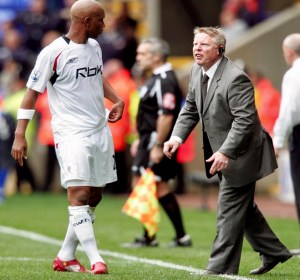
Sammy Lee’s ugly u-turn left Hyypia in the lurch

FORMER Liverpool player and assistant manager Sammy Lee took an unpalatable u-turn after agreeing to become no.2 to Sami Hyypia at Brighton.

When in 2014 a second successive bid to reach the Premier League via the Championship play-offs had faltered at the semi-final stage, Oscar Garcia quit the Seagulls and Albion installed the inexperienced Hyypia as his successor.

The Finnish international former Liverpool centre back had earmarked Lee to bring valuable nous to his backroom team having already been turned down for the job by his first choice, Jan Moritze Lichte, from Bayer Leverkusen, where Hyypia had made his managerial bow.

Lee agreed to take on the role on 25 June 2014 and a formal announcement was made the following day. But by the morning of Monday 29 June, the bombshell news dropped that Lee was moving elsewhere on the south coast instead.

Rather than help to guide the fledgling managerial career of a player he had coached at Liverpool, Lee opted to join Dutchman Ronald Koeman at Southampton.

“I’m let down because I thought that I knew him,” Hyypia told Sky Sports, when interviewed at Lancing. “Everything was sorted and everything was agreed and he should have been here today. The way it happened was very disappointing and I couldn’t actually believe it.”

An apologetic Lee said: “I was thrilled to be offered the job at Brighton and I was excited at the prospect of working with Sami Hyypia again – but, totally unexpectedly, I have been given an opportunity to work in the Premier League.

“I fully appreciate that this is not an ideal set of circumstances and I am very sorry for the inconvenience, and any embarrassment, my change of mind, after the announcement was made, has caused.

“However, at this stage of my coaching career the opportunity to work again at the very top level of English football was not something I felt I could turn down.”

Some might argue Lee’s decision ultimately brought about the swift demise of Hyypia’s reign in the Albion hotseat: the efforts he made to implement a specific style of play have since been lauded, but a dismal set of results told a different story, and there was a parting of the ways with more than half the season still to be played.

If Albion fans hadn’t been overly impressed by Lee’s decision to leave Hyypia in the lurch that summer, they weren’t the only supporters not to be enamoured by the little man’s involvement in their club.

In a retrospective look at Lee’s brief tenure as manager of Bolton Wanderers, Marc Iles, chief football writer for the Bolton Evening News, wrote: “Lee’s frenetic 170 days in charge contained 14 games, three victories, 12 signings and the complete disintegration of the structure which had helped Wanderers secure four top-eight finishes in four years.

“The stormy period was characterised by dressing room upheaval, boardroom bitterness and the sad fall from grace of an honourable man who had the club at heart.”

Lee, previously Sam Allardyce’s assistant at the Reebok Stadium, had been handed the reins just 24 hours after Allardyce quit on 29 April 29 2007 to take over at Newcastle.

Lee was always better suited to a supporting role and, as well as at Bolton, he’s worked under Allardyce at Crystal Palace, Everton and West Brom (and during Allardyce’s brief England spell).

He rose through the coaching ranks at Liverpool after Graeme Souness took him back to Anfield at the end of his playing days.

He became a first team coach under Gerard Houllier and between 2008 and 2011 was assistant manager to Rafa Benitez.

Born in Liverpool on 7 February 1959, Lee made his way through the Reds’ youth ranks and made his first team debut in April 1978.

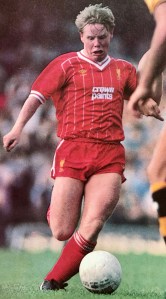
Sammy Lee in action for Liverpool up against Albion’s Steve Foster

As chronicled on lfchistory.net, he earned a regular spot in the 1980-81 season, pretty much taking over the midfield berth previously occupied by Jimmy Case, who, at the end of that season, Bob Paisley sold to Brighton.

Albion fans of a certain generation will surely not fail to be moved by the story of Lee’s close friendship with Michael Robinson, the former Albion striker who was the midfielder’s former team-mate at Liverpool and Osasuna.

Robinson and Lee were together in a Liverpool side that in 1983-84 did the treble of the league, the League Cup and the European Cup.

Ahead of an August 2021 friendly match between the two sides to honour Robinson after his untimely death from cancer aged 61 in April 2020, Lee told The Athletic: “It is a fitting tribute and a fitting venue to have the game at, in front of the Kop.

“Michael did fantastic for Liverpool while he was there. It will be a very emotional night for everybody, particularly for Michael’s wife Chris and their children.

“He was not only a fantastic guy, a great colleague, but I consider him a brother, to be honest, I can’t put it any higher than that.”

Lee told reporter Dermot Corrigan: “Michael was very important for my professional life after Liverpool.

“You tend to think you will stay at Liverpool forever, you know, but it doesn’t happen. Michael had gone to Queens Park Rangers and he helped me to go there, and I had a nice time there. Subsequently he moved on to Osasuna, and he got me to go there. So he had a massive influence on my professional career.”

Injury eventually brought Lee’s Spanish playing days to an end and although he managed three games for Southampton and four for Third Division Bolton, it was coaching where his future lay.

In 2001, Lee became a part-time coach to the England national side under Sven-Goran Eriksson and three years later left Liverpool to join the national set up full time.

Liverpool chief executive Rick Parry said at the time: “We are very sorry that Sammy has decided to leave, but he goes with all our very best wishes for the future.

“Sammy’s been a wonderful servant to Liverpool as both player and coach. He should be proud of his contribution to the successes achieved at the club in recent years.”

‘Rolls’ Royce was surprise Christmas presence at QPR

IN THE DAYS before wall-to-wall media coverage of all things football, I can remember turning up at Loftus Road to watch a Boxing Day match between QPR and Brighton and wondering who on earth was in goal for the Albion.

It was in the Second Division days when Michel Kuipers was an almost permanent fixture between the sticks for the Seagulls (he’d played 46 consecutive games). But, on 26 December 2001, there was a stranger behind Danny Cullip and Simon Morgan.

He was certainly a stranger to the players, who’d only met him a few hours before kick-off, but, thankfully, he was well known to manager Peter Taylor.

It turned out, Kuipers had pulled a thigh muscle in the previous Saturday’s 2-2 draw at home to Chesterfield and, rather than chance rookie Will Packham, Taylor opted for an experienced ‘keeper who he’d signed twice before.

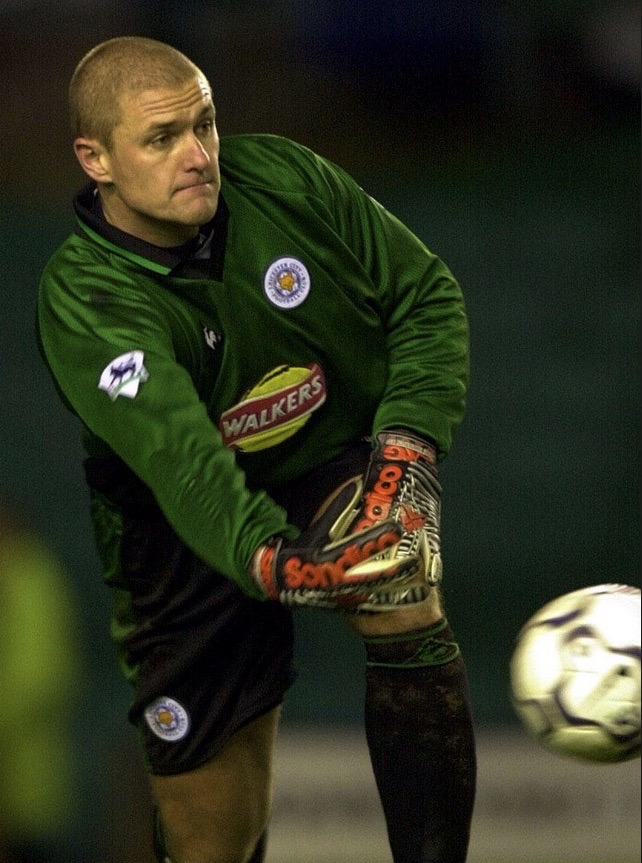
Taylor had hastily gone back to his previous employer, Leicester City, on Christmas Eve, to sign Simon Royce on loan to cover the period Kuipers was indisposed.

Royce did well to keep a clean sheet in what finished a 0-0 draw, having not had a chance to train with his new teammates.

It transpired Royce had only met them a few hours earlier, at Reigate, en route to Shepherd’s Bush, as the Argus reported, having spent Christmas Day with his family at his Essex home.

Royce managed to pull off decent saves in each half of the encounter at Loftus Road, stopping a goalbound Danny Shittu header in the first half and dealing with a 20-yard shot from crowd favourite Doudou in the second.

Albion’s Paul Watson hit the bar with one of his trademark free-kicks early in the second half while Cullip went close to breaking the deadlock from a Watson corner, only for his header to be cleared off the line by Karl Connolly.

Taylor knew what he was getting with Royce having signed him for both Southend United and the Foxes, where, under Taylor’s successor, Dave Bassett, the ‘keeper had slipped down the pecking order following a bout of laryngitis.

“I had been second choice all season at Leicester, but the way Dave Bassett works, if you are ill or injured he changes it and you have to work your way back,” Royce told the Argus. “I did so well last year, but, when you don’t play, you get forgotten just as quickly.”

He added: “I had been ill a couple of weeks before, so I had lost my place on the bench at Leicester.

“I’d not really played much reserve team football for three or four weeks, so when Peter asked me if I fancied playing a few games I jumped at the chance. It’s nice to keep yourself match fit.”

Royce admitted knowing the manager certainly helped him to drop down two divisions for the chance to play, but the main reason was to get some games under his belt.

“Dropping down a couple of divisions doesn’t bother me at all,” he said. “It’s still a decent standard and Brighton are flying high.

“There are some very good teams in the Second Division, like QPR and Blackpool, so it’s not a problem. I’ve played in the Second Division before with Southend and I quite enjoyed it.

“This is a perfect opportunity for me to get some games in and let people know I am still around.”

Royce was delighted to start his spell with a clean sheet – but that was as good as it got because he conceded 13 goals in the other five matches he played.

Three days after his debut, he let in two but saved a penalty in a 2-2 draw at Blackpool. Albion’s 10-game unbeaten away league record shuddered to a halt in a 3-0 defeat at Wigan, during which Royce needed treatment after being clattered by a Latics striker.

Physio Malcolm Stuart tends to the clattered Royce at Wigan

When Royce finally got to make his Withdean debut, against Cambridge United, he spoiled the occasion with a gaffe, pushing a long-range shot from Paul Wanless into the path of Luke Guttridge for an easy tap-in. Thankfully a Bobby Zamora hat-trick meant the Seagulls prevailed 4-3.

Royce’s penultimate game was a 2-1 win away to Chesterfield but three days later he bowed out in ignominy as Albion were thumped 4-0 by Steve Coppell’s Brentford in a live ITV Digital match, Ivar Ingimarsson and Steve Sidwell scoring two of the Bees goals.

Born in Forest Gate, London, on 9 September 1971, Royce began his football career with non-League Heybridge Swifts while working as a painter and decorator. At the age of 20, a £35,000 fee took him to Southend, signed by former Chelsea defender David Webb, who was managing the Shrimpers back then.

He made his debut for Southend in a 3-1 home win over Grimsby Town in March 1992.

In seven seasons at Roots Hall, Royce made 169 appearances in Divisions One and Two, a couple of them under Taylor, before getting a move to Premier League Charlton Athletic on a Bosman free transfer.

Addicks boss Alan Curbishley briefly promoted him from third to first choice when Andy Petterson was loaned out to Portsmouth and Sasa Ilic lost form. He kept four clean sheets in a row in eight Premier League matches in the 1998-99 season, but injury issues then sidelined him. He didn’t feature at all in the 1999-00 season and, with the arrival of Dean Kiely at The Valley, decided to link up again with Taylor at Leicester, again moving on a Bosman ‘free’.

“I couldn’t have asked for a better move,” Royce told the Daily Gazette. “I played under Peter at Southend and I can’t wait to work with him again because he’s a great coach.

“He had a hard time at Roots Hall, but Peter has matured into an excellent manager in recent years, picking up valuable experience with both the England under-21 side and Gillingham.

“I owe Peter a lot. He knew I was out of contract at Charlton this summer, but he promised me that he would take me to whatever club he was at this year.

“At the time we spoke, Peter was still with Gillingham and I’d have been happy to play for him there in the First Division. But Peter got the Leicester job and he has remained true to his word and brought me on board.”

Initially an understudy to Tim Flowers, Royce had a run of 19 Premier League matches in the second half of the 2000-01 season, keeping clean sheets on seven occasions.

David Lacey, the renowned football writer for The Guardian, even hinted at international recognition for him, after newly installed England manager Sven-Goran Eriksson had been to watch Ipswich Town beat Leicester 2-0 at Portman Road.

“Eriksson was here primarily to run an eye over Richard Wright, Ipswich’s once capped goalkeeper, although, since Wright had so little to do, he must have gone away more impressed by Simon Royce, whose saves kept alive Leicester’s hopes of a point,” wrote Lacey. “Royce, back in the Leicester side because of another injury to Tim Flowers, showed excellent agility and anticipation in keeping out headers from Alun Armstrong and Matt Holland as Ipswich increasingly dominated the match.”

Taylor told the journalist: “Simon Royce’s goalkeeping was the only positive thing to come out of our own performance.”

Any hopes Royce had of taking over the no.1 shirt permanently at Leicester were dashed when Taylor paid £2.5m to install Ian Walker as his first choice ‘keeper.

After his loan spell at Brighton, he went on a similar arrangement to Manchester City later that same season, although he didn’t play any first team games.

The following season he went on loan to QPR, where he featured 17 times.

On his release from Leicester, he moved back to Charlton on a two-year contract, but made only one Premier League appearance in 2003-04.

He was quite literally a loan Ranger in 2004-05, initially playing a couple of games for Luton Town and then returning to QPR, making 13 appearances in their Championship side.

He made a permanent move to Loftus Road in 2005 and, in an away game at Stoke City, was in the news when caught up in a crowd invasion, although manager Ian Holloway said his ‘keeper was fine: “Simon Royce is a big lad and he can look after himself.”

Royce recounted the incident in an interview for brentfordfc.com. “We’d won the game 2-1. I always kept a towel and a water bottle by my left-hand post, so I bent down to pick them up and felt someone jump on my back.

“At first, I assumed it was a team-mate because we’d won the game, but then I looked down and saw a pair of trainers and felt a blow to the back of my head. It was a Stoke supporter who’d run on to the pitch, shouting ‘I’m going to do you, Roycey!’

“I had my hand on the post so managed to pick him up and throw him in the net. After that the stewards rushed on and we had more supporters on the pitch – it was complete mayhem. The fan in question was sentenced to four months in prison for assault.”

Royce managed to hold down a regular starting berth for the first time in several years during his time in west London, playing 32 games in 2005-06 and 22 in 2006-07.

However, he was back on the loan circuit, briefly, when in April 2007 he moved to League One Gillingham to play in their last three games of the season.

During the summer break, he signed for the Kent club on a permanent basis. He featured in 36 matches in the 2007-08 season, and was named Supporters’ Player of the Year, although the Gills were relegated.

When Royce penned a new one-year deal in the summer of 2008, manager Mark Stimson told the club website: “I’m delighted with Simon’s decision.  He’s going to be a vital player for us next season and one that we will need to help get this club back to where we want to be.”

He was first-choice ‘keeper throughout the 2008-09 season, making 49 appearances as Gills were promoted back to League One via the League Two play-off final at Wembley. Royce, by then 38, said keeping a clean sheet as Gillingham beat Shrewsbury Town 1-0 was one of his career highlights. Former Seagulls Albert Jarrett and Mark McCammon were on the Gillingham subs bench that day.

Unfortunately, in December 2009, Royce sustained several injuries in a car accident.

Stimson told BBC Radio Kent: “His knee is in a bad way and he has a bad neck. He’s going to be out for a couple of weeks. He’s had a scan on his knee, we should get the results of that this week.

“He’s also had X-rays on his neck. I’m praying it’s just a couple of weeks because he’s a big player for us. Until we get the scan results we have to wait and see. He’s been a big part of it. He’ll be missed.”

As it turned out, Royce never regained the no.1 spot from Alan Julian, who’d stepped in to replace him, and he left Gillingham at the end of the season to take up a goalkeeper coaching job at Brentford, during which time former Albion no.2 David Button was among the goalkeepers he helped to develop.

Royce eventually left Griffin Park in the summer of 2018 after eight seasons with the Bees.In thanking him for his contribution, Phil Giles, Brentford’s co-director of football, told the club website: “He leaves behind a fantastic legacy, having developed some top goalkeepers during his time here, including Simon Moore, David Button, Dan Bentley, Jack Bonham and Luke Daniels.”

He returned to Gillingham as goalkeeper coach for the 2019-20 season, working with Bonham once again, and on 28 September 2019, at the age of 48, suddenly found himself on the substitute’s bench for Gills’ away game against Oxford United when reserve goalkeeper Joe Walsh suffered an injury just before kick-off. His previous involvement in a competitive match had been more than eight years earlier, for Brentford, in a 4-1 defeat to Dagenham & Redbridge.

Royce remained on the bench as Oxford won 3-0 and, at the season’s end, he left Priestfield as part of a Covid-related cost-cutting measure.

Pictures from various online sources.

Albion rookie Richard Martin became Sven goalie at City

RICHARD MARTIN could justifiably be dubbed ‘The Nearly Man’ of goalkeeping.

Once thought to have the potential to play 200 games for the Albion, he left the Seagulls having only ever warmed the first team bench.

In an unlikely turn of events, he went from back-up League One Seagulls ‘keeper to no.3 behind Kasper Schmeichel and Joe Hart at Premier League Manchester City, thanks to former England boss Sven-Goran Eriksson.

After two years at City, he went on loan to Burton Albion, then worked under Ben Roberts and Nathan Jones as back-up ‘keeper at Yeovil Town before enjoying fleeting fame on the Caribbean island of Puerto Rico.

Doubtless it wasn’t the career he expected when his teenage promise between the sticks led to him earning trials with Liverpool and Everton.

Born in Chelmsford on 1 September 1987, Martin spent part of his childhood in Liverpool but the family were living in Burgess Hill when the young goalkeeper was picked up by the Albion.

Martin was only 16 when Liverpool took him on a week-long trial and Albion manager Mark McGhee went public in the Argus on 4 February 2004, explaining why he thought the youngster should stick with the Seagulls.

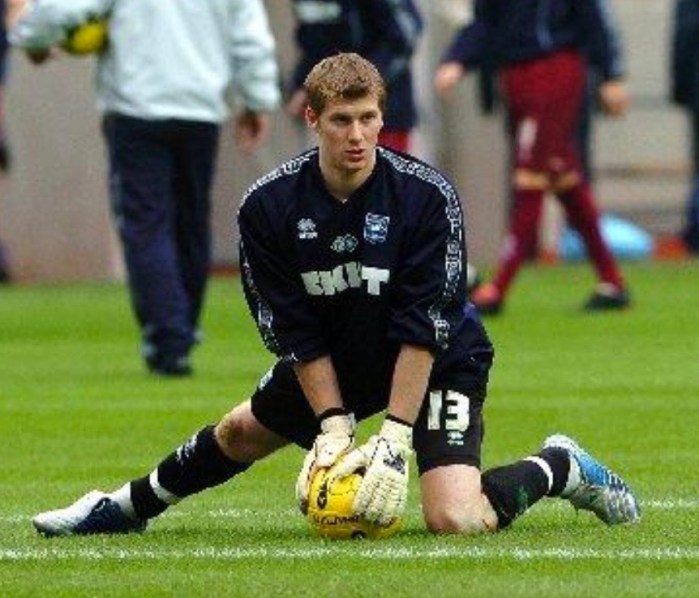
Warming up for the Albion (pictured by the Argus)

“We have put forward a reasonable argument to the boy and to his parents as to why we think he should stay here,” said McGhee. “The thing we can promise him at a club like ours, like any other young player in any other position, is that if he is good enough he will be fast-tracked into the first team or certainly onto the bench.

“If he goes to Liverpool there is no chance of that happening. At the very best he is going to spend two or three years at youth level, then at reserve level and in five years’ time he might start to make an impression in the first team squad.

“By that time, he would have played 200 games for us and be worth a lot of money and move to Liverpool under different circumstances.”

The Argus reckoned Albion could have got compensation of at least £200,000 if Martin, a Liverpool supporter, had ended up at Anfield. But Liverpool didn’t take him on, he remained an Albion scholar, progressed through the youth ranks and was awarded a two-year professional contract in the summer of 2005, before his scholarship was due to expire.

With Michel Kuipers sidelined by injury, Martin and fellow young ‘keeper John Sullivan shared opportunities to play for the first team in pre-season friendlies ahead of the 2005-06 season. Martin appeared against Le Havre, Oxford United and Bournemouth, as well as coming on as a sub in two other matches.

A sizeable Albion following went over to France to watch Albion’s 2-0 defeat to Le Havre when Martin began in goal in the absence of Michel Kuipers. The Argus reported: “Martin flew high to his right to brilliantly tip away a 12th-minute thunderbolt from Jean-Michel Lesage which was dipping and swerving towards the top corner from 25 yards.”

Goalkeeping coach John Keeley went further and told the matchday programme: “That was an absolute world-class save. I’m sure if Michel had made it people would still have been talking about it – it was that good..

“He can take big positives out of that and the other bits he had to do in the first half.”

When the season proper got under way, Martin found himself on the bench for 14 matches as Irish international Wayne Henderson, on loan from Aston Villa, was the established first choice. But then Frenchman Florent Chaigneau arrived on a year-long loan from Rennes.

In December 2005, Everton took Martin on trial and for a while there was speculation that a nice fat transfer fee from selling the youngster could be reinvested in signing a much-needed striker for the first team. But the move didn’t materialise because Everton boss David Moyes didn’t think Martin was big enough.

The Argus reported: “Martin impressed during a recent trial with the Merseyside giants but Goodison boss Moyes has decided not to sign the slimly-built 18-year-old from Burgess Hill due to his size.”

Instead of heading to Goodison, Martin went on loan to non-league Kingstonian, competition for the no.1 spot at Albion having increased with the permanent signing of Henderson from Villa.

Martin was part of the successful Albion youth side of 2006 from which six players went on to play first team football. But even at youth level he was competing with Sullivan, who eventually edged ahead of him and did manage to break through into the first team.

Competitive football game-time was considered the best option for Martin and the following season he went on a season-long loan deal to Conference South Dorchester Town. But his stay was cut short by injury. Once recovered, in the second half of the season, he joined Folkestone Invicta where he played 12 matches.

However, on his return to the Albion his contract wasn’t renewed, and he was without a club until the surprise opportunity arose at Manchester City, where the goalkeeping coach at the time was ex-Albion No. 1 Eric Steele.

Martin told the Argus: “This is completely unexpected. I’d like to think Brighton were wrong to let me go but these things happen.

“I went up to City initially just for a week to do a bit of training, because my agent knows Eric.

“(First choice Andreas) Isaksson and Joe Hart picked up injuries, they had a reserve game which I played in and then I carried on training.

“I don’t think I am in contention for the first team, I will just be in the reserves and go from there. Hopefully the month will be extended if I can keep on doing well.”

Sure enough, it was and boss Eriksson was happy to give Martin a season-long contract.

His only first-team action came on 22 May 2008 when replacing Schmeichel for the second half in an end-of-season charity match in Hong Kong against a South China Invitational XI.

Even after Steele switched allegiance to Manchester United and Eriksson had moved on, Martin had done enough to establish himself as third in line behind Hart and Schmeichel.

Mark Hughes took over as manager and Martin remained at the club working with ex-Chelsea ‘keeper Kevin Hitchcock, who Hughes had taken with him from Blackburn.

Martin was given the no.13 squad number for the 2008-09 Premier League and UEFA Cup campaign and it was an irresistible opportunity for the Argus to catch up with him ahead of Brighton’s home Carling Cup tie against City at Withdean in September 2008 when Albion sprung a big shock by winning the penalty shoot-out.

Reporter Andy Naylor discovered Martin had been philosophical, rather than disappointed, about the way things turned out with Albion. “When I look back at the situation at that time it was all about getting results and Michel (Kuipers) and Wayne (Henderson) were the two generally ahead of me,” he said. “I got a lot of good experience at Brighton and that set me in good stead for coming up to Manchester.”

Unfortunately, a knee injury Martin sustained shortly after sidelined him until the following March. Then in April, City allowed him to move temporarily to Burton Albion as cover because their first choice ‘keeper Kevin Poole was injured.

When released by City in the summer of 2009, more Albion connections provided him with his next opportunity, and finally the opportunity to play league football, at Yeovil Town.

Martin at Yeovil (picture by YTFC Digital)

In the Seagulls’ 2004 play-off winning season, Martin was a youth-teamer when Glovers assistant boss Jones was Albion’s left-back and goalkeeping coach Roberts was between the sticks.

Ahead of Brighton’s 2-2 draw at Huish Park on 10 October 2009, Martin told Brian Owen of the Argus: “I was fortunate I got the call from Yeovil in the summer and went down there for a trial. They liked what they saw. Of course, I know Nathan and Ben well and the fact they knew about me must have helped them make a decision.”

Martin was on the bench for the Albion fixture but had made his league debut shortly before as a substitute when first-choice Alex McCarthy (at the time on loan from Reading) was sent-off 20 minutes into a 2-2 draw with Stockport County. With McCarthy banned, Martin got his first start in a defeat at Southampton.

However, in total he made just three league and two cup appearances in that first half of the season and in January 2010 was loaned to Conference National bottom-placed side Grays Athletic – and within the space of a fortnight had conceded 11 goals in three matches!

Although he returned to Yeovil after a month, McCarthy’s fine form denied him any further first team action at Huish Park and he was released in July 2010. After brief spells with Havant & Waterlooville and Crawley Town, Yeovil re-signed him on 31 December 2010.

Plenty to say in goal for Puerto Rico Islanders

However, in March 2011 he had the opportunity to head to the Caribbean and play for Puerto Rico Islanders, who at the time were in the second tier of the North American Soccer League. He made his debut in May 2011 having initially been back-up ‘keeper and then signed for a second season, during which he established himself as first choice and played a total of 33 matches.

Talking on camera after the NASL player of the month award

In August 2012 he was named NASL player of the month, and he was interviewed about the experience of playing for the Islanders. There is an excellent montage feature in which the commentator purrs in this YouTube footage: “Richard Martin has the reflexes of a jungle cat.”  

Back in the UK in 2013, Martin played briefly for Whitehawk and Burgess Hill before retiring.