City reject Graham Howell a victim of the ‘Clough clear-out’

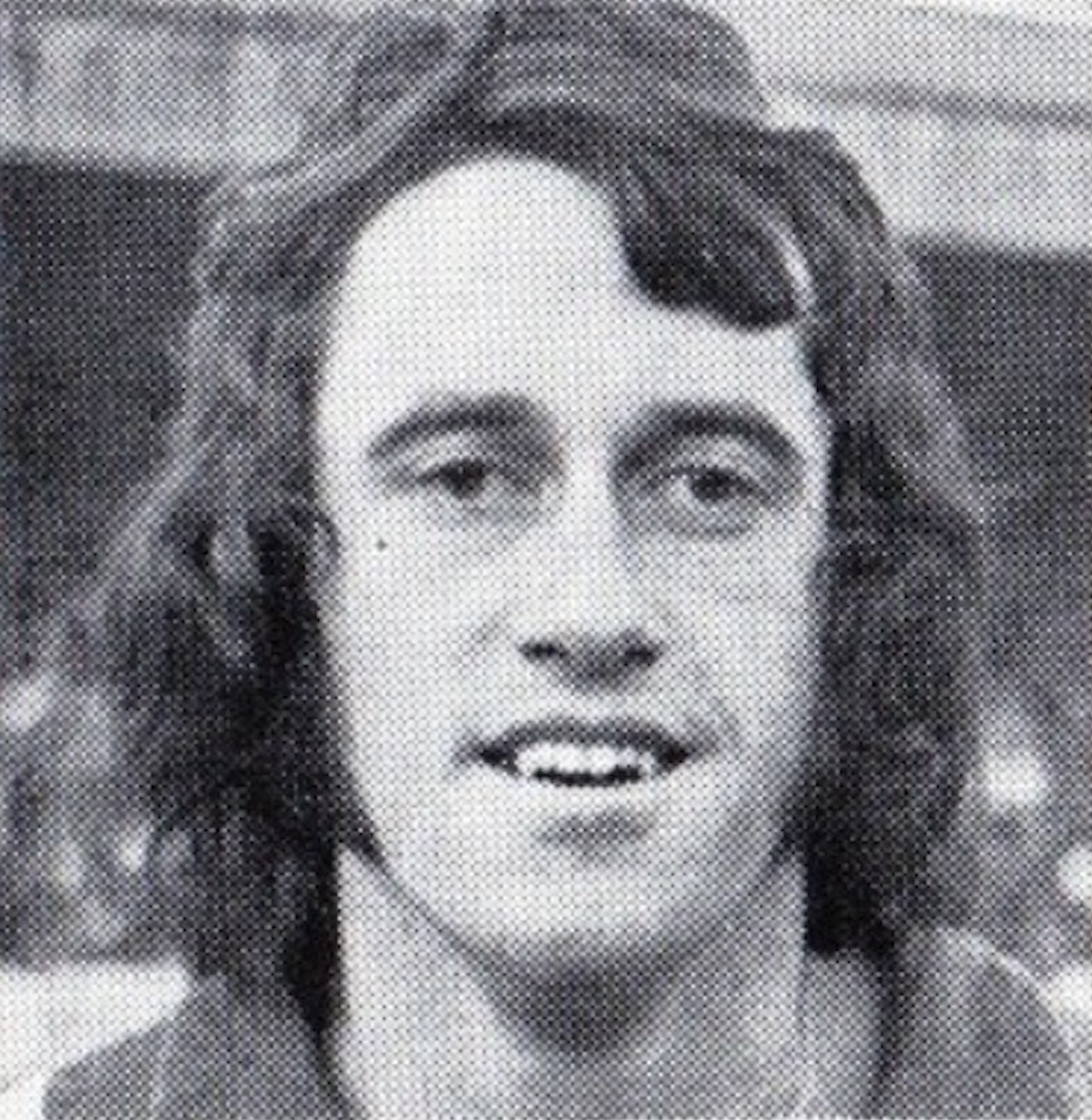
FULL-BACK Graham Howell spent two and a half years as a professional at Manchester City but was released without making the first team.

Eighteen months after leaving Maine Road, he was one of several new signings made by manager Pat Saward in an effort to strengthen his newly-promoted Brighton side.

Recent players-of-the-season Stewart Henderson (1969-70) and Bert Murray (1971-72) had previously occupied the right-back berth but Saward believed a change was needed at the higher level.

At only 21, Howell was certainly a younger model who’d been trying to make his way at City when they won the league in 1968 and the FA Cup in 1969. After his release, he had played 43 games for Bradford City in the Third Division, which Albion had triumphantly left in runners-up spot in the spring of 1972.

Howell unveiled to the press by Pat Saward

A fee of £18,000 – the equivalent of just over £200,000 in today’s money – prised him from Valley Parade.

“Only 18 months ago, I was released by Manchester City. I thought the bottom had fallen out of my world,” Howell told the matchday programme shortly after signing that August. “I had no hesitation in deciding to join Brighton. It meant Second Division football and was just the chance I wanted.”

He said he’d thought Brighton were “a very useful outfit” in the two games he’d played against them for Bradford (he made his debut for the Bantams in the opening day fixture at the Goldstone when Albion won 3-1 and played in the Valley Parade match on 18 March 1972 when Bradford won 2-1) and said he was determined to prove City had been wrong to let him go.

“I am looking forward to helping Brighton move forward to the First Division. It has always been my ambition to play First Division football.

“I had hoped to achieve this with Manchester City, but it was not to be.”

He pointed out: “I could see that my way forward was limited because of Tony Book, Arthur Mann and several other youngsters like Willie Donachie.

“It was a tremendous blow when I had to leave Manchester City. But I can look back on that all now believing that it was all a blessing in disguise.

“I know that it made me try much harder at Bradford City. And I intend to go on playing it hard for Brighton.

“I am very ambitious, and I want to do really well in football.”

Unfortunately for Howell, Saward struggled to find the right formula for success in the higher division, chopping and changing the line-up and bringing in too many players on short-term loans.

Howell made his debut in a 2-2 home draw against Sunderland on 26 August but, after 15 games at right-back, Saward moved him into midfield and, according to my scrapbook of the time, he became “a destroyer in the Peter Storey mould”.

John Templeman, who’d started the season in the no.2 shirt, reverted to that position as Saward shuffled his pack trying to end a losing streak that eventually extended to 13 matches.

Howell was dropped to the subs bench for the home game against Luton Town on 10 February – and Albion promptly won 2-0, their first win since 14 October the previous year!

He continued as no.12 in the following two matches (both defeats) and was restored to the side at home to Huddersfield, a game which ended in a 2-1 win for the Albion.

In the final game of the season, by which time relegation was confirmed, Howell was once again selected at right-back as Brighton drew 2-2 with Nottingham Forest.

Stern-faced Howell in the pre-season line-up photo

He retained the shirt at the start of the following season back in the third tier but as Saward’s tenure of the hotseat moved into its final days, so did Howell’s game time.

He was out of the side when Brian Clough and Peter Taylor arrived at the Goldstone at the start of November although he has a somewhat unwitting claim to fame by appearing in an oft-used photo of Clough sitting on a park bench at the Stompond Lane ground of non-league Walton & Hersham.

Howell looks rather awkward next to the centre of attention!

Albion had been drawn away to them in the FA Cup first round and the park bench was the somewhat primitive and squashed pitchside seating arrangement for the visiting manager, trainer and substitute – who that day was Howell.

In the picture, he looks rather awkward to be sharing the perch next to the man who only a few months earlier had led Derby County to the top division title. The park bench image was ideal ‘fodder’ for the newspapers, depicting as it did how far from previous glory Clough had descended.

Howell didn’t get on in that game (Albion drew it 0-0 and ignominiously lost the replay at the Goldstone 4-0) and his first action under the dynamic duo came in the infamous 8-2 defeat to Bristol Rovers.

He was sent on as a substitute for left-back George Ley and got his first start under the pair when he took over from John Templeman at right-back in the following game, a 4-1 defeat at Tranmere Rovers.

That match proved to be Ley’s last game in an Albion shirt – and when Howell replaced the former Portsmouth player away to Watford (a 1-0 defeat), it would be his own last outing for Brighton.

By Boxing Day, Clough and Taylor had brought in young midfielder Ronnie Welch and left-back Harry Wilson from Burnley, and they both made their debuts against Aldershot. Howell was an unused sub that day and he didn’t feature for the first team again.

More new faces arrived at the Goldstone as Clough and Taylor brandished chairman Mike Bamber’s chequebook with abandon: the likes of Paul Fuschillo and Billy McEwan increasing the competition for places.

Come the end of the season, Clough made no apologies for clearing out a number of players signed by his predecessor along with long-servers like Brian Powney and Norman Gall. Howell was one of twelve players released.

Howell had made 40 appearances (plus four as sub) for Brighton and he moved on to Cambridge United where he played 71 matches between 1974 and 1976.

Born in Salford on 18 February 1951, Howell grew up a fan of Manchester United and hoped to play for them. “But when City showed interest in me while I was playing for Altrincham and Sale Boys I was happy enough to go on the Maine Road apprentice staff,” he said.

After signing as a professional, Howell spent two and a half seasons playing in City’s Central League side

There were certainly plenty of positive signs for Howell to think he might make it at City.
In January 1969, their matchday programme reported how he’d been for trials for the England Youth side with Tony Towers and Ian Bowyer but was unluckily left out when the squad was selected.

Elsewhere in the programme, a mid-season report on the progress of Dave Ewing’s reserve side declared: “Players like Graham Howell, Tony Towers and Derek Jeffries made great strides.”

It explained that because of injuries to more experienced reserves, several youth team players had been promoted to turn out for the Central League side.

Although they lost eight of their opening 11 matches, they’d turned things round and the report said: “By the end of September, the policy of putting faith and responsibility on the younger players began to pay off.”

While they were bolstered by the return of experienced goalkeeper Ken Mulhearn and George Heslop, youngsters like Bowyer and Stan Bowles were contributing to a turnround in fortunes.

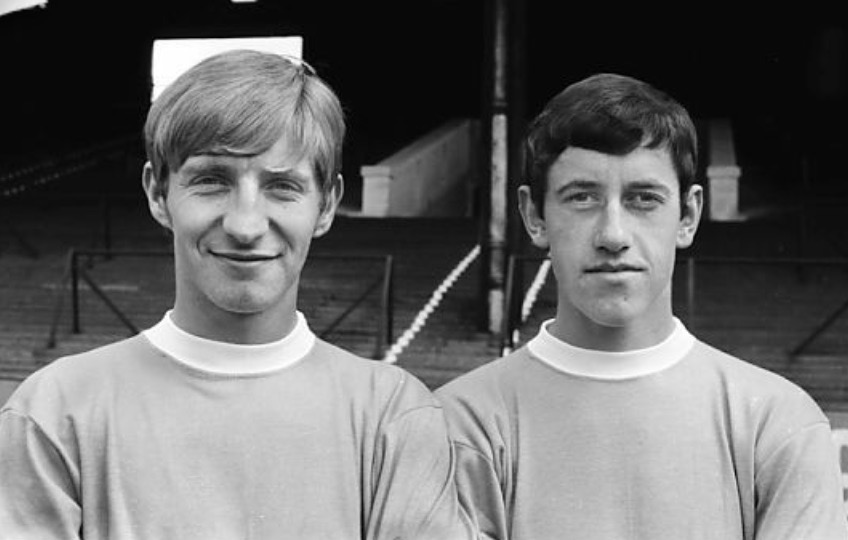
There’s a photo to be found on the internet (above, left) of a young Howell with Paul Hince who played a handful of games for City in 1967-68 and later reported on the side for the Manchester Evening News.

After leaving Cambridge, Howell quit the UK and continued his career in Sweden. He spent six seasons with Swedish club Västerås SK and also played for Irsta IF. He remained in Sweden after his playing career finished.

Pictures from my scrapbook and online sources.

Rami’s route from Rome’s Olympic arena to Albion’s ‘Theatre of Trees’ – and then the World Cup!

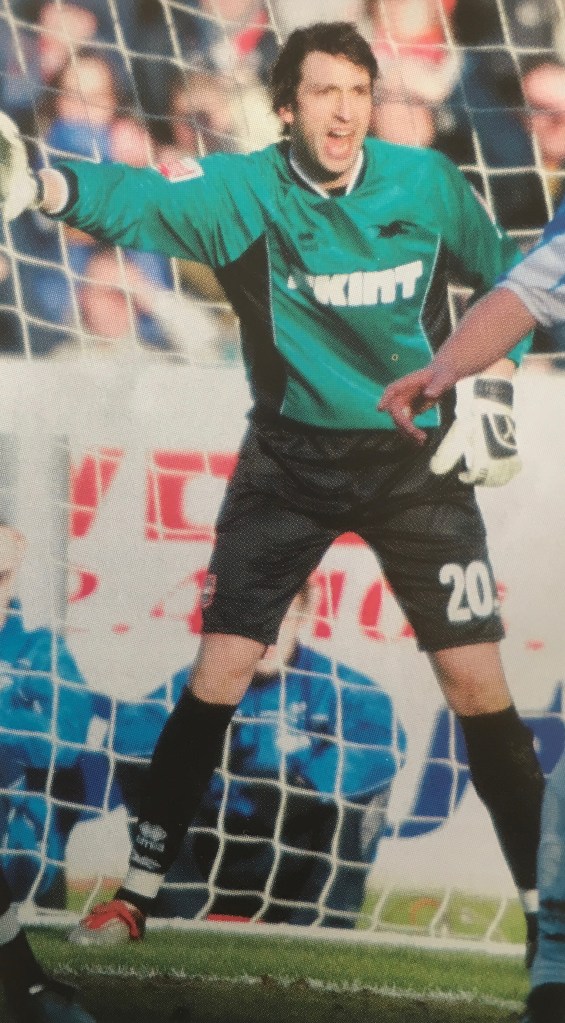
IN ALBION’S 2004-05 Championship season, both regular goalkeepers, Michel Kuipers and Ben Roberts, were injured.

A rookie American ‘keeper, David Yeldell, was signed on loan from Blackburn Rovers but didn’t inspire confidence and was discarded after just three games.

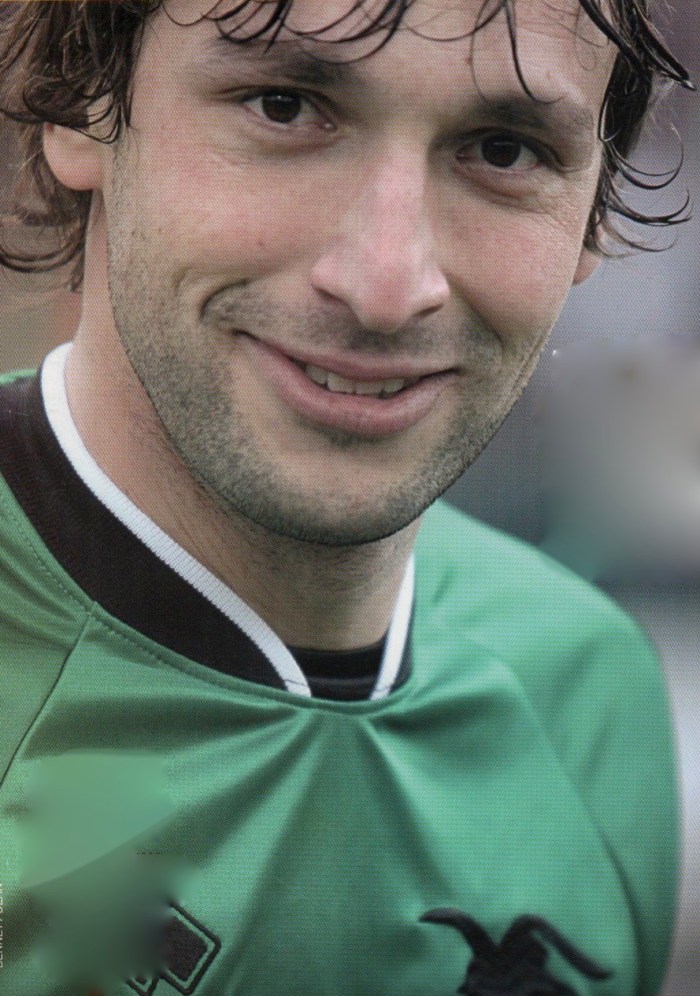
Instead, Albion manager Mark McGhee turned to Rami Shaaban, a Swedish-born goalkeeper with a Finnish mother and Egyptian father who hadn’t played a competitive match for two years!

However, that game had been for Arsenal in the Champions League in the 70,000-capacity Olympic Stadium in Rome!

Now, here he was on 19 February 2005 lining up for Albion in front of 6,647 at Withdean – The Theatre of Trees – against eventual champions Sunderland.

It proved to be an eventful debut, which I watched with my 10-year-old daughter, Holly (during her brief flirtation with wondering why her Dad was obsessed with this football lark). Albion played more than an hour of the game with only 10 men, Adam Virgo being sent off by referee Dermot Gallagher for two yellow cards.

Shaaban, Albion’s fourth different goalkeeper in the space of five games, did not have that much to do but he made an instinctive stop to keep out a cross from Dean Whitehead, fisted away a Sean Thornton effort and did well to hold Julio Arca’s shot from 15 yards.

He told The Argus afterwards: “It’s a great start. I’ve always been lucky with my first games at new clubs.

“At Arsenal, I had a clean sheet. That was in the Champions League, so it was a bit different, but you have to start somewhere and I’m very pleased to get 90 minutes of competitive football.

“I was more nervous playing here than for Arsenal, because before I went to Arsenal I was match fit. Here I had not played competitive football for two years, so this was a big milestone for me.”

albion action

Against all the odds, Albion won the game 2-1 with Albion’s goals coming from a deflected Richard Carpenter shot and a rare Mark McCammon header from a corner.

Born on 30 June 1975 in Solna, Stockholm, Shaaban’s professional football career began with the local Saltsjöbadens IF who he played for 39 times in 1994-95. Then, while studying at university in Cairo, he played for Zamalek and Ittihad Osman.

After university, he spent four years in Chile, between 1997 and 2001, playing initially for Coquimbo Unido and then Deportes Temuco.

Good performances there alerted his hometown club Djurgårdens, of Sweden’s first division, and it was while he was playing there that Arsenal snapped him up.

But his good fortune was to run out quite quickly. Originally drafted in by Arsenal as a possible successor to David Seaman, he suffered a freak training ground accident on Christmas Eve 2002 that left him with a broken leg.

It took him a year to recover and during that time the Gunners signed Jens Lehmann who went on to establish himself as Arsenal’s no.1.

Shaaban did play five games for Arsenal – three Premier League games and two in the Champions League – but he never did make it back to play for Arsenal competitively again after his injury.

However, he did warm the bench in the latter part of the famous Arsenal ‘Invincibles’ season (2003-04), because regular back-up ‘keeper Stuart Taylor had picked up an injury.

In January 2004, Shabaan was loaned to West Ham for a month, but didn’t play for the first team, and then at the season’s end he was released.

Immediately before joining Brighton, he had been training back in Sweden with Djurgårdens, but he was recommended to McGhee by former Wolves goalkeeper coach Hans Segers who had moved to Spurs where Shaaban had recently had a trial.

After spending two weeks training with the Albion, the ‘keeper impressed McGhee, who told the matchday programme: “He’s done well. There’s no doubt about it, he’s a good goalkeeper. We have to now consider what we do with him. We’re going to need two goalkeepers that can play in the team between now and the end of the season.”

Shaaban kept goal for the Albion for six games one of which, on 12 March 2005, saw him harshly penalised in a 5-1 defeat away to Plymouth Argyle, which I attended with my son, Rhys.

Of course, as fans, we would say it, wouldn’t we, but it was never a 5-1 game, and that was largely down to an unbelievable performance by referee Phil Crossley.

Albion, wearing yellow, started brightly enough and soon had the ball in the net. Admittedly the action was at the far end from us, but we couldn’t see anything wrong with the goal (I think the ref ruled out Guy Butters’ header because he claimed the ball from Carpenter’s free kick curled out over the line before the cross came into him).

It was the first of several injustices meted out to the Albion that afternoon by Crossley. Plymouth took a lead as early as the ninth minute when Nick Chadwick finished off a neat one-two with Dexter Blackstock, who, ironically, manager McGhee had tried to sign on loan from Southampton earlier that season.

Our hopes were raised, though, when Charlie Oatway, on his 200th League appearance for the Seagulls, scored with a deflected header from another Carpenter free-kick.

Unfortunately, it wasn’t long before Plymouth were back in front when Crossley failed to spot Adam Hinshelwood being pushed as he went to head the ball. Instead he saw the ball hit the young centre half’s hand and awarded a penalty which Paul Wotton converted.

Then, though, came an almost unbelievable bit of nitpicking by a linesman which led to Plymouth scoring again!

Goalkeepers often go right to the edge of their penalty area before drop-kicking a clearance up field and, just as Shaaban did so, the lino flagged to claim he had taken it out of the area.

Crossley was obliged to award a free kick right on the edge of the penalty area and Wotton duly dispatched a thunderbolt into the net. It was as good as a penalty.

close-up shout

Although 3-1 down, it still looked like Albion were in with a chance, but Plymouth got a fourth on 36 minutes when David Norris evaded several despairing tackles before slotting past Shaaban.

To make matters worse, shortly into the restart Carpenter was consumed by red mist when Chadwick stopped him taking a quick free kick and, having pushed the guy in the chest, was sent off for the first time in his career.

So, 4-1 down and with only ten men, a difficult task just got harder: Plymouth continued to plug away and with just seconds remaining, substitute Scott Taylor rounded the hapless Shaaban to notch a fifth.

In the post-match interviews, McGhee described Chippy’s dismissal as “an absolute joke” and the refereeing as “shambolic”. And of the decision which led to Plymouth’s third, he said: “We see goalkeepers kicking at the edge of the box week in and week out and never in my career have I seen a linesman so sharp to put his flag up.”

Unfortunately for Shaaban, in his short time with the Albion he had conceded 13 goals, so McGhee turned to another loanee ‘keeper, Alan Blayney, from Southampton, who took over between the sticks for the remaining seven games of the season, when four draws and a win saw Albion do just enough to avoid the drop.

Shaaban remained on the bench and, at the end of the season, Albion decided not to take him on long-term. A year later he was called up to the Sweden squad for the 2006 World Cup!!

After his release from Brighton he had a trial with Dundee United but played only once, and also went on trial at Bristol City, but wasn’t taken on. Instead he went to Frederikstad in Norway, where he spent two years, and then joined Stockholm-based Hammarby, where he managed 26 appearances.

Those games led to him being selected for Sweden’s 2006 World Cup squad, although he had never previously been involved with the national side. In fact, in 2006 (and 2007) he was named Swedish goalkeeper of the year.

He made his debut as a half-time substitute in a warm up game with Finland and he played in his country’s 2006 World Cup opener, a 0-0 draw against Trinidad and Tobago, in place of injured first choice Andreas Isaksson.

He also played four Euro 2008 qualifying games for the Swedes, in which he kept a vital clean sheet in a 2-0 win over a Spain side which included the likes of Fernando Torres, Cesc Fabregas and David Villa and was also a member of their final stage squad.

Earlier in his career Shaaban could have chosen to play for Finland but decided to represent Sweden because, at that time Finland had two strong national team goalkeepers in Antii Niemi (later Albion’s goalkeeping coach) and Jussi Jääskeläinen, a Premier League ‘keeper for Bolton for many years.

After retiring from the game, Shabaan set up his own Swedish-based company, Rami Fresh, supplying Egypt-grown fruit and vegetables. The Sun did an article about him on 5 July 2023.


Photos from Albion matchday programme.