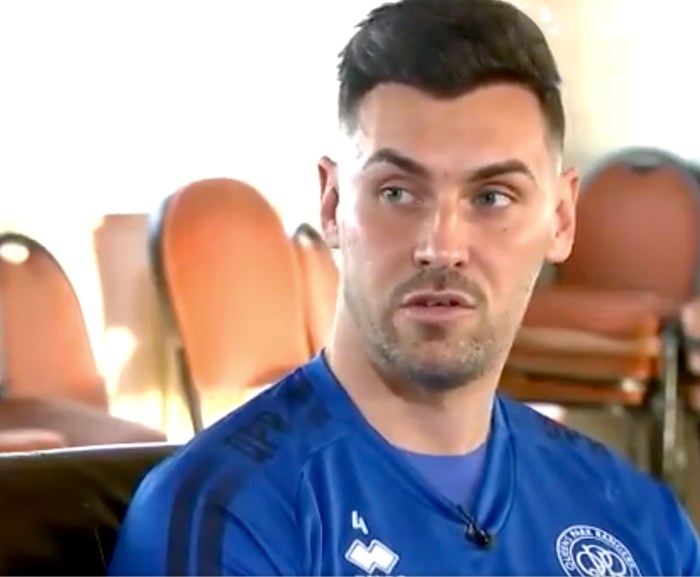
Albion’s lifeline for the boy from Baghdad who turned down Spurs

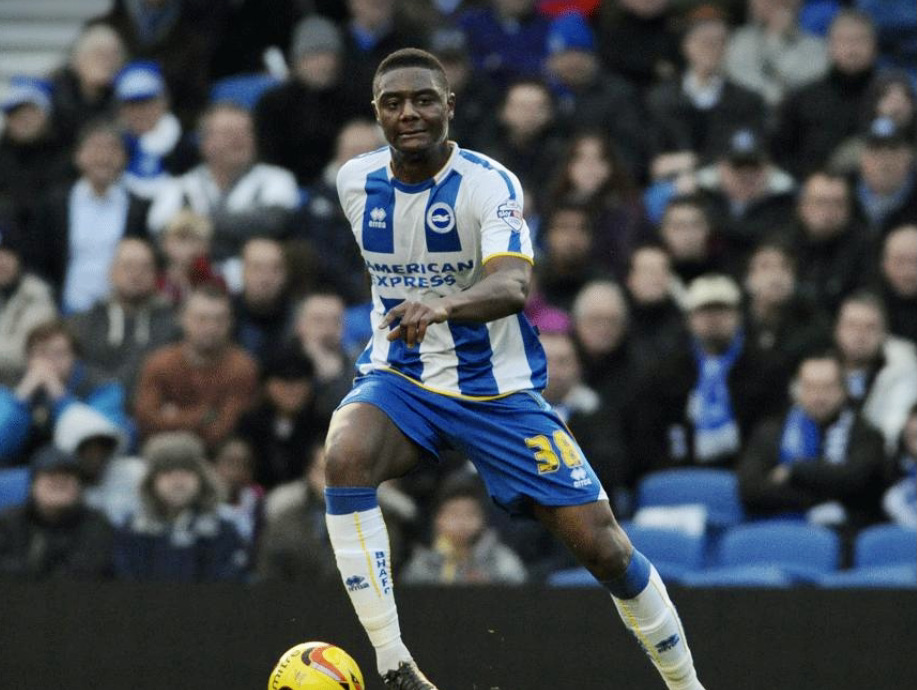
BAGHDAD-BORN Yaser Kasim went through the youth ranks at Tottenham Hotspur but rejected a professional contract at White Hart Lane and tried to build a career at Brighton instead.

Although it didn’t work out at the Albion, he subsequently thrived at Swindon Town where his former Seagulls’ development squad coach Luke Williams had become assistant manager.

“He is one of the best coaches I have worked with. This guy is at another level,” he said.

Kasim joined the Spurs academy at the age of 11 in June 2003 and progressed to become a full-time scholar at 16. He was in the club’s youth team in the 2009 FA Youth Cup (they lost 3-1 to north London neighbours Arsenal in the quarter-finals) alongside Andros Townsend, Steven Caulker and Jonathan Obika.

“When the time came to sign pro forms at Tottenham, I decided to go on my own and turned it down,” Kasim told Tom Hopkinson of the Sunday People.

“From that decision it was ­difficult to get another club ­because everyone knows how ­powerful Spurs are and I couldn’t sort the compensation out for all those years I’d trained with them.”

Kasim in action for Albion Reserves v Eastbourne Borough. Pic: Simon Dack

A contractual impasse left Kasim in limbo and he was forced to train on his own until former Spurs teammates Gus Poyet and Mauricio Taricco, having taken over as manager and no.2 at Brighton, stepped in.

The pair managed to resolve the dispute between player and club and in October 2010 offered him a short-term deal with the Seagulls. Kasim later told the Argus: “They sorted something out for me and I love the football here, because they play good football, and the players are great, so everything is good except for playing more games…I’ll work hard for that.”

He was talking after he had been handed his Albion debut in the final game of the 2010-11 season, a 1-1 draw away to Notts County, with the Seagulls already having been crowned League One champions.

Kasim played for 70 minutes in midfield alongside Liam Bridcutt, Matt Sparrow and Elliott Bennett before being substituted, with Poyet saying: “The pitch didn’t help him. He is a technical player. We are trying to work on the other side of his game, the toughness and his defensive work. I think he has got a great future.

“He was very good on the ball, confident and strong. As soon as the game became more 50-50 it wasn’t good for him or us but opponents are going to try to make it a war against us.”

The Uruguayan added: “We are offering him the chance to stay with us. He is thinking about it and we’ll probably have a few more words.

“He knows where he stands. We’ve been honest with him, it’s up to him.

“It’s complicated because I don’t know if it will be easy for him to step up and start playing for the first team in the Championship, but we are offering him the chance to be there or thereabouts.”

As it turned out, he was a regular in Luke Williams’ development squad but only made the first team bench on three occasions, getting on (pictured above) just the once, as a sub for Alan Navarro, in the 66th minute of an inexperienced Albion’s 1-1 FA Cup draw at home to then non-league Wrexham on 7 January 2012.

Kasim managed to collect a booking during his brief time on the pitch in a game that saw young Ben Sampayo given his debut and Grant Hall his first start (he’d previously been a sub five days earlier against Southampton). Anton Rodgers, son of Brendan, was sent on at the same time as Kasim entered the fray. Kasim was an unused sub in the replay when Albion only advanced courtesy of a penalty shoot-out, edging it 5-4 after the game ended 1-1.

Come the summer of 2012 and Kasim went on a six-month loan to then Conference Premier League Luton Town, with Hatters boss Paul Buckle telling the club’s website: “Yaser can do a variety of jobs. He can be a box-to-box man and also play in a defensive midfield role.

“It’s great we have been able to capture someone of his calibre for six months. I have no doubt that he will prosper with us.”

The player made five starts plus six appearances off the bench and scored once, in a 2-1 win at Tamworth (the other scorer was Stuart Fleetwood, who’d been on loan at the Albion in the 2008-09 season).

In the second half of the season, Kasim played five games for Conference National League Macclesfield Town.
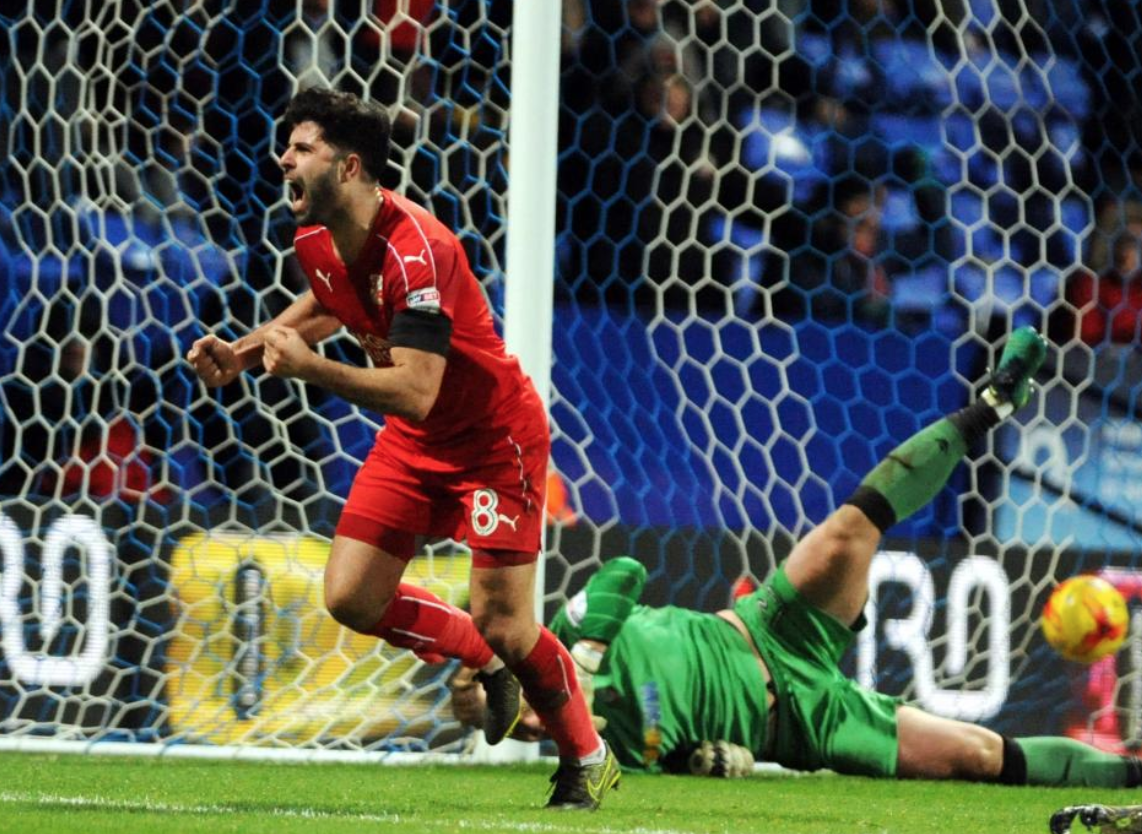
Released by Brighton in May 2013, Kasim went on trial to League One Swindon and signed a three-year deal after spending a week at the Robins’ pre-season training camp in Portugal. Manager Mark Cooper paired him in midfield with Massimo Luongo and he played 45 times in his first season.

Reliable Robin

Perhaps it was inevitable that Kasim managed to get on the scoresheet against Brighton in August 2014 when Swindon lost 4-2 (after extra time) at home to Sami Hyypia’s Albion in the second round of the League Cup (future Town midfielder Rohan Ince scored a belter for the Seagulls, Adrian Colunga edged Albion ahead in the 95th minute. Kasim equalised before two late penalties scored by Jake Forster-Caskey put Albion through).

Kasim ended up having four seasons at the County Ground, was part of the side that made it to the League One play-off final in 2015, when they lost 4-0 to Preston, and it was reported at one point that Premier League Swansea City and West Ham were interested in signing him.

Nothing came of that, though, and his final campaign with the Robins saw him dogged by groin and hip injuries as Town were relegated to the bottom tier.

Mentor Williams was Town’s head coach by then and, after being forced to drop Kasim in February 2017 and replace him with the aforementioned Ince, opened up to the Swindon Advertiser.

Reckoning Kasim was not showing enough of a physical side to his game, Williams said: “I have known Yaser a long time and he is an incredibly talented player but, for one reason or another, I don’t think he is performing to anywhere near his best and at the moment, he needs to come out of the team.

“Players fall out of form because of a combination of things, sometimes off the pitch as well.

I wish I could find the reason and try to make everything okay for Yaser because he is a very important player and has given a fantastic service to us.

“He is somebody that I think a lot of personally so I would love for him to be in top form.

“I think Yaser in top form is as good a player as you’ll see at this level for sure, unfortunately he doesn’t seem to be able to quite find it.”

The coach added: “He came here and I think, certainly for the first two seasons, he was absolutely fantastic and last season, there was far more good from Yaser than bad. This year, he hasn’t been able to recapture that.”

Born in the Karrada district of Baghdad on 10 May 1991, three months after the end of the Gulf War, Kasim’s passion for football began at a young age on the streets of Baghdad.

“I lived in Iraq until I was six years old,” he told the-afc.com. “I don’t know how young I was when I started to play, but before I left we used to play a lot of football on the streets.

“It is a very sunny and hot climate so we used to play on the streets and there were a lot of people playing 20 a-side sometimes on the tarmac and there were a few rolled ankles and a few chipped toe nails, but I loved it and we used to be outside all day.”

The family left Iraq because Kasim’s father saw a decline in his business as a used car parts salesman. They spent a year in Jordan before moving to England, and eventually settling in north west London.

“I started playing after school every day and then I started to go to football clubs and a coach at one of my sports centres took me to Fulham,” he said. He had only been at Fulham a few months before switching to Spurs.

Explaining why he turned down the offer of a professional contract at Tottenham, Kasim had concerns about the way players were being cared for. He said: “There was a lot of competition; I don’t mind competition as the more the competition, when growing up especially, the better it is, but they were bringing in players without plans on how to look after them and I felt they weren’t doing things right by the players so I saw that my opportunities would be limited and I thought this was not for me.”

It was during his time at Brighton that he was approached to join up with the Iraq national side, at the time coached by Wolfgang Sidka. He won 21 caps over a number of years, although he had a somewhat chequered relationship with the representative side.
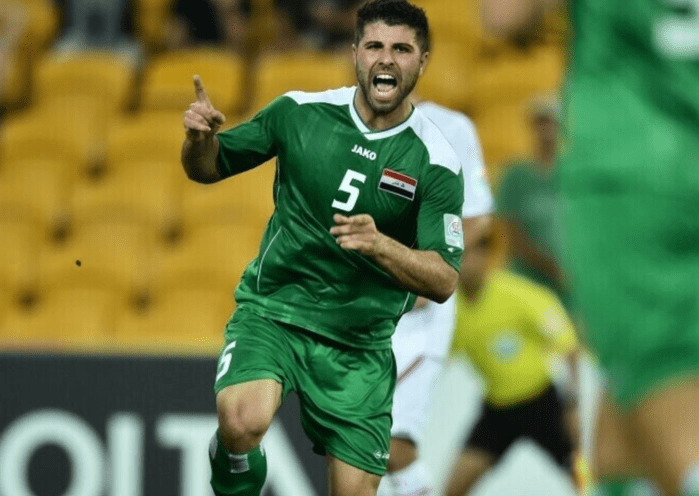
In international action for Iraq

He made his debut in March 2014 featuring in a 3-1 win over China, was hero-worshipped after a series of influential performances in the 2015 Asian Cup (scoring a key winning goal in their opener against Jordan and netting a penalty in the quarter-final shootout against Iran), but went AWOL during the country’s preparations for the 2016 Rio Olympics (he was called up as one of three coverage players for the tournament but he left the training camp in Spain and never returned).

He also turned down national team call ups under coaches Radhi Shanaishel and Basim Qasim then, after saying he’d retired from the national set-up, returned and went on as a sub in a 4-1 win over Saudi Arabia in 2018 – the most high-profile match to be staged in Iraq for years and Kasim’s first international match on Iraqi soil (previously ‘home’ matches were played at empty grounds across the world).

“Just having that real home feeling is very special,” Kasim told Mark Lomas in a post-match interview for Arab News.

“When you compare it to playing in Dubai, or playing in Malaysia, the difference is just ridiculous. Even when it’s an important game, it is just not the same as it being in Iraq. It elevates you to another level – really, it’s amazing being out there on the pitch. I really do hope we get to play our home games here going forward.
“I truly hope that FIFA sees this game and realises that these fans deserve to watch their team play in Iraq.”

Kasim added: “I have always said that the Iraqi fans are the best in the world — they are crazy for football and for the players.

“I appreciate them so much and I’m humbled when they shout my name. When I come back to Iraq, I get to meet a lot of people every day and you just get such a good vibe.”

By the time of that interview, Kasim had moved on to League One Northampton Town but he told Thomas: “It is just really good that someone like me, who left Iraq at a young age, is able to come back and reconnect with my heritage. It brings out something within you as a man, a bit of maturity and cultural understanding. It goes some way to helping you feel more complete as a person.

“This occasion, obviously, will always give me happy memories of Basra. It kind of trumps everything else I’ve experienced in Iraq. Being around the people and these sorts of occasions, it really helps the country move forward. You realise that officials are stepping up and doing things right. I’m hoping this is just the beginning.”

After Kasim left the Cobblers in January 2019, he had brief spells with Örebro SK in Sweden, and Erbil and Zakho in Iraq (when Dick Advocaat was briefly Iraq manager, Kasim was recalled for the 2021 FIFA Arab Cup after he’d impressed playing for Zakho).

Ahead of the 2022-23 season, Kasim was a trialist for Notts County in a pre-season 1-1 draw with   Boston United (National League County were managed by the aforementioned Luke Williams) but his next club was National League South Welling United, where he played 11 matches.

On signing him, manager Warren Feeney said: “He’s a fantastic player. We’re very lucky to get him and we’re absolutely delighted. He’s a player who can open teams up, he’s a great player who’s played at a great level and is an international so he has great pedigree. He’s hungry and we’re delighted to have him.”

After only three months, he moved on to National League North Gloucester City but after only one game headed back to the south east and linked up with Football’s Next Star winner (and one-time Brighton teammate) Ben Greenhalgh, who was assistant manager at Margate, of the Isthmian Premier League. Kasim played 13 matches for Margate and the following season linked up with another former Brighton colleague, coach Mark Beard, who was in charge of National League South Eastbourne Borough.

He played 17 matches for Boro before returning to Margate where after 12 more games he decided to retire from playing at the age of 33.

In May 2024, Kasim wrote a lengthy piece on the medium.com platform entitled The Illusion of Time and Space: A Footballer’s Perspective in which he explained: “The most beautiful part of playing the game has been the ability to create the illusion of time and space on the pitch. This involves making complex decisions and movements appear effortless, allowing a player to control the game seamlessly.”

As to what he’s doing now, his LinkedIn profile says he’s aiming to develop a career in investment management. Also, as the holder of a UEFA B licence, he’s a part-time coach for Crystal Palace’s academy, working with different age groups.

High-flying Canary Culverhouse flew with lowly Seagulls too

ONE-TIME Norwich City hero Ian Culverhouse flew high in the Premier League and Europe with the Canaries and ended his playing days at basement Brighton where he began a lengthy coaching and managing career.

It was only at the end of November 2024 that Culverhouse began a new managerial post, taking charge of sixth tier (National League South) side St Albans City.

A few weeks previously he had parted company from Boston United because they were struggling to come to terms with life in the tier above.

Culverhouse was brought to Brighton by Brian Horton in 1998, shortly after he’d been picked up by non-league Kingstonian having been given a free transfer earlier in the year by Swindon Town. He’d spent three and a half years at the County Ground, including being a key player in their Second Division Championship-winning squad of 1995-96, but left the Robins after falling-out with manager Steve McMahon.

He’d only played twice for Kingstonian before he joined Brighton, who were playing in exile at Gillingham at the time.

Signed on a monthly contract initially, his presence as a sweeper helped plug holes at the back and saw Torquay United, Scarborough and Swansea City all beaten. But after two months, Horton decided to dispense with a sweeper and play a flat back four, so Culverhouse was let go.

But when Albion promptly lost 3-1 to Mansfield Town without him, Horton had a change of heart. He re-signed Culverhouse before a week was up, gave him a contract until the end of the season and even made him captain (in the absence of injured Gary Hobson). Quite some turnaround.

“He was one of the best readers of the game the Albion have had,” reckoned wearebrighton.com. “Culverhouse would always be in the right place at the right time, on the scene to stop danger before anybody realised that there was danger coming.”

The musically-minded wags amongst the Albion die-hards also found the perfect terrace song for him – sung to the tune of Our House by Madness, ‘Culverhouse, in the middle of defence’ became a popular ditty.

He completed 38 appearances for the Seagulls that season and took his first steps towards a coaching and managing career under Horton’s successor, Jeff Wood, when he began coaching the reserve side. Wood said: “Ian has shown on the field that he is a player of immense ability. In his new coaching role, he will now have the opportunity to pass his knowledge on to the younger players at the club.”

A grateful Culverhouse added: “This is a good opportunity for me and I am looking forward to it.

“It’s the first chance I’ve had to coach and it’s something I wanted to do anyway when my career finished. It has just come at a nice time.”

Albion’s then chairman, Dick Knight, told the Argus: “Ian has impressed me greatly with not only his experience but his attitude.

“He has been a real leader in the dressing room as well as on the field and we are giving him a chance to bring that know-how to bear on the coaching side.”

Culverhouse was retained as reserve team coach after Micky Adams took over from Wood towards the end of the season, and the new boss told the Argus: “Ian reminds me a bit of myself. You have got to get on the ladder somewhere. He is enthusiastic, has had a good career and sets himself high standards.

“He has a lot to learn in terms of coaching, but I hope he will become fully qualified along with the rest of my staff.

“He will still be registered as a player as well in case we need him in emergencies, but I don’t envisage him playing too many games.”

In fact, there was just the one final first team appearance for him, when Adams tried to bring a halt to a six-game winless run at the start of 2000. But it didn’t go well and he was subbed off in a 2-0 defeat at Hull.

“It is fair to say we have possibly seen the last of Culvs in a first team shirt,” Adams admitted later. “He is still registered as a player, but his career is probably over. It was me that persuaded him to play at Hull. He wasn’t sure he would be up to it in terms of fitness.”

Born in Bishops Stortford, Hertfordshire, on 22 September 1964, Culverhouse was in the England Youth squad for an international junior tournament in Norway in the summer of 1982, starting in a 4-1 defeat to the home nation and gaining a second cap as a sub in a 3-2 win over Poland.

In the same year, he began as an apprentice at Tottenham. He impressed in Spurs’ youth and reserve sides and spent three years at the Lane. “I was playing alongside players like Ricky Villa, Ossie Ardiles and Glenn Hoddle, which was tremendous experience,” he said.

He even collected a UEFA Cup winners’ medal in 1984 as an unused substitute in the first leg of Spurs’ win (on penalties) over Anderlecht; future Albion boss Chris Hughton was left-back and recent signing from Albion, Gary Stevens, was in midfield, and scored one of the decisive penalties.

But Culverhouse only made one full appearance for the first team, plus one as a substitute, and in October 1985 moved to Norwich under Ken Brown for a £50,000 fee. He was part of the Norfolk club’s Second Division title-winning side of 1985-86 in his first season and became an established defender, usually as a right-back but also as a sweeper.

Culverhouse for the Canaries

He was part of the successful Canaries side that finished third in the inaugural Premier League season of 1992-93 after enjoying three top five finishes in the old First Division, reaching two FA Cup semi-finals (1989 and 1992) and playing in Europe (1993-94). He won the club’s player-of the-year award in 1990-91.

The excellent Norwich fans website Flown From The Nest blamed the Robert Chase regime for Culverhouse’s eventual departure from Carrow Road after nine years.

“From being an integral part of the City team that finished third in the Premiership and enjoyed UEFA Cup success, Ian Culverhouse found himself at the start of the 1994-95 season out of contract and out of favour with Robert Chase and manager John Deehan,” it said. “Similar problems had occurred the previous season with Dave Phillips.”

Culverhouse with the Robins

Together with the contract issues, Culverhouse went public to criticise Deehan’s decision to drop him, which ended any chance he had of regaining his place. Eventually, he was transferred to Swindon for the bargain sum of £150,000 in December 1994, the fee being fixed by a tribunal.

After he left Brighton in 2000, Culverhouse became youth coach at Barnet and two years later joined Leyton Orient in a similar role before being elevated to assistant manager. He left the Os in August 2005 – replaced by future Villa boss Dean Smith – but was then appointed coach at Wycombe Wanderers by former Swindon boss John Gorman.

When Paul Lambert succeeded Gorman, he and Culverhouse developed a strong bond. He followed Lambert to Colchester United to become assistant manager, then returned to Norwich in the same role, where he didn’t forget Wood’s role in setting him on the coaching ladder, being instrumental in the former Albion manager’s appointment as Norwich’s goalkeeping coach.

At the end of their first season, Lambert and Culverhouse steered Norwich to the League One title. The following season, they won promotion to the Premier League and finished 12th in their inaugural season back at the elite level. When Lambert quit Norwich to take charge at Aston Villa in July 2012, Culverhouse and fellow ‘lieutenant’ Gary Karsa followed him.

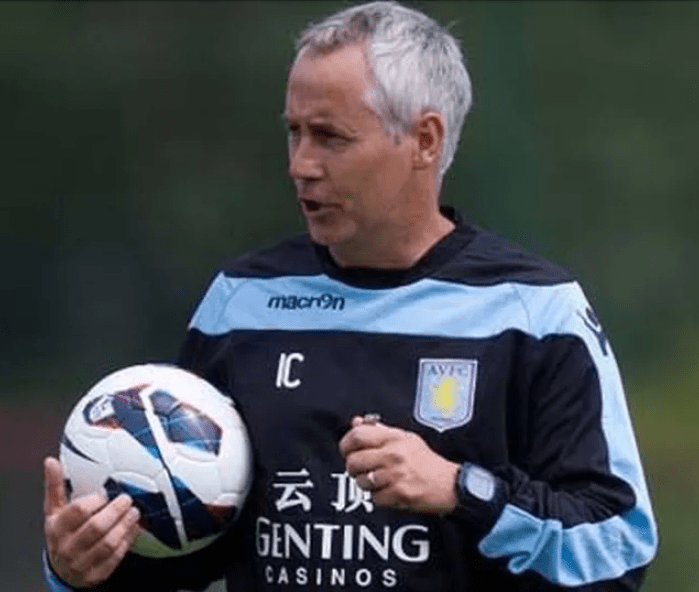
Coach at Villa under Paul Lambert

In June 2013, Lambert told the Birmingham Mail how much trust he placed in his right-hand man. “My assistant boss Ian Culverhouse has a real eye for a player,” he said. “If he reckons we should go for someone I will back his judgement 100 per cent.”

But in April 2014 Culverhouse and Karsa were suspended by the club after being accused of bullying and aggressiveness by players and other staff members, and they were sacked the following month.

Between January 2016 and February 2017, Culverhouse was assistant manager to veteran boss John Still at Dagenham & Redbridge. He left the Daggers to become manager of Southern League Premier Division side King’s Lynn Town. In May 2018, he moved on to Grantham Town but left after only five months and returned to King’s Lynn.

He led them to a second place finish in the Southern League, and. in the subsequent play-offs against Northern Premier League Warrington, saw the Linnets win 3-2 in extra time to earn a place in the National League (North) for 2019-20.

This was the Covid-affected season in which the fixtures weren’t completed. Lynn finished the games played two points behind York City with two games in hand. The National League board ultimately decided, using an “unweighted points per game” formula that Lynn would have won the title and they therefore gained promotion to the National League.

However, on 29 November 2021 he was sacked by Lynn on the back of a run of eight league defeats in a row which left the club second from bottom of the National League and struggling for survival. 

Two months later, he was back in management at National League North Kettering Town, together with assistant Paul Bastock, although that tenure only lasted four months.

Next stop was Boston United in September of the same year, a club all too familiar to Bastock, who played 679 games for the Pilgrims (and broke Peter Shilton’s record in competitive club football when he made his 1,250th appearance in the game in 2017).

The pair helped to preserve Boston’s league status in their first season and then guided them to promotion via the play-offs in May 2024. United’s struggle in higher company – only two wins in 16 matches – led to Culverhouse and Bastock leaving the Jakemans Community Stadium in October 2024.

The Withdean visitors’ teenage winger went on to great things

MY FIRST memory of watching James Milner play was at Withdean Stadium when he was on loan to Swindon Town from Leeds United.

Even then, as a seventeen-year-old, he had something about him – but I certainly didn’t imagine I would be watching him playing in the Premier League and Europe for Brighton 20 years later!

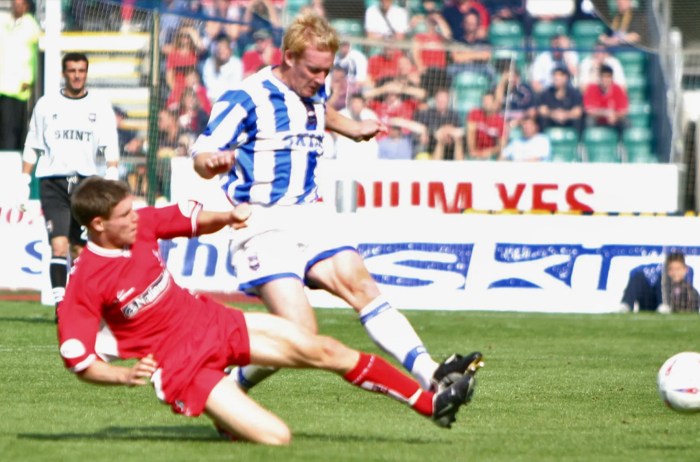
Young Milner tackles Brighton’s Kerry Mayo

That League One game on 6 September 2003 finished 2-2. Sam Parkin scored twice for Town and Albion’s goals came from Gary Hart and a penalty from on-loan Darius Henderson.

The Albion matchday programme subsequently recorded: “Kerry Mayo had a fine match, mainly subduing the impressive teenager James Milner.” (although, as the picture suggests, he wasn’t afraid to launch himself into a tackle).

Swindon’s manager Andy King had persuaded his old Everton teammate, Peter Reid (in charge of Leeds at the time) to loan Milner to the Robins for a month. In just six matches, the young winger scored twice.

“The boy is a terrific talent and everyone has been able to see the skills he has and I have no doubt he will go on to perform in the Premiership,” King told Sky Sports.

Milner already had two goals to his name for his parent club having scored twice in the Premier League in 2002-03 while still only 16.

On Boxing Day 2002, ten days short of his 17th birthday, he became the youngest player to score in the elite division, with a goal in a 2–1 win at Sunderland (the record had been set a couple of months earlier by Wayne Rooney for Everton and was subsequently taken by James Vaughan, also for the Toffees).

Milner had gone on as a 36th-minute sub for Alan Smith, a player he had admired when a boy growing up in Leeds. Terry Venables, Leeds manager at the time, said: “It’s not just a case of him simply coming through and helping out because every day he is getting better and better.”

Milner scored again three days later after going on as a 31st minute sub for Harry Kewell as Leeds beat Chelsea 2-0 at Elland Road.

“Picking up Mark Viduka’s pass in first-half injury time, Milner beat his man before thumping a right-foot shot low into the net with Blues keeper Ed de Goey powerless to stop him,” said the BBC report of the match.

“I am very pleased with him,” said Venables. “He is growing in this group and he has taken advantage of every day’s training to show what he can do.

“He has two good feet, he is courageous and everyone likes him a lot. He also is not only a nice, solid, good, well-mannered boy, he is a very talented player.

“It’s early days for the boy. At the moment he has not achieved anything and he is the first to admit that.

“But I think a lot of people are confident about his development. We have just got to take it easy.”

Wind on the clock more than two decades and Albion are now enjoying the benefit of Milner’s vast experience gained winning trophies galore for two of the country’s top clubs and playing for his country.

Born in Wortley, Leeds, on 4 January 1986, Milner broke through with Leeds United before joining Newcastle United at 18 and having loan and permanent spells at Aston Villa.

Milner went on to make more than 200 league and cup appearances for Manchester City and more than 300 for Liverpool as well as earning 61 full England caps and a record 46 at under 21 level.

Against Wolves on 22 January 2024, 38-year-old Milner overtook Ryan Giggs to go second outright on the Premier League’s all-time appearance list when he played in his 633rd top-flight match, 20 short of record holder Gareth Barry.

“I’ve had some luck,” Milner told TNT Sports. “I’ve worked hard and you have to enjoy it to put the work in every day. I’ve hopefully got a few more games in me.”

Milner’s free transfer move to Liverpool from Manchester City in the summer of 2015 proved an inspiration that brought him even more medals than he had won with the Sky Blues.

Over eight seasons, he made 332 appearances, scored 26 goals and lifted seven trophies along the way.  

“He’s a role model,” said manager Jürgen Klopp. “Nothing we have achieved in the last few years would have happened without James Milner, it’s as easy as that.

“Whether he was on the pitch or not, he’s set standards in a way not a lot of people can set standards, and it educated all of us.”

In a heartfelt tribute to the player, Klopp added: “From the first moment for me, he was a super-important player reference point.

“When you have a meeting and you look at Millie’s eyes and he’s not shaking his head, you know you’re on the right way. Nothing would have happened here without Millie because he kept it always going.

“From the player who was super-angry when he didn’t play, to the player when he did play, the way he pushed the whole dressing room before a game is absolutely second to none.”

For his part, Milner enjoyed a good relationship with Klopp, apart from once during a half-time flashpoint when the manager lost it, as Milner revealed to The High Performance Podcast.

“We had one moment where he was sharing his thoughts and I was sharing mine and I remember him smashing his hands on down the table and shouting, ‘Will you shut the f**k up!’ But Jurgen was brilliant, we had a great relationship and we were great off the pitch.”

It was Klopp’s predecessor, Brendan Rodgers, who persuaded Milner to make the journey along the M62, and he said at the time he signed him: “He had won the Premier League, he had won cups. His whole ambition was to win the Champions League and he felt that he would have a better opportunity to win it at Liverpool.”

Rodgers revealed that when Liverpool were trying to persuade him to sign, his wife Charlotte spent time chatting to Mrs Milner while he spent time with her husband!

“His actual football talent has probably gone under the radar because he’s played around some outstanding talents, but this is a guy who works tirelessly at his game,” said Rodgers.

“He’s in here at 7.45am making sure he’s prepared for his training, getting all of his food supplements and getting everything correct before training – he’s in two-and-a-half hours before he trains and then does his work, gives his maximum.

“He prepares himself like an elite player should. He’s also got big character and a big mentality.”

Rodgers was effusive in his praise of the new signing even before a ball had been kicked in anger after he scored the winner in a 2-1 pre-season victory over Brisbane Roar. Playing in the central role he preferred, he also provided a pass for Adam Lallana’s 27th-minute equaliser.

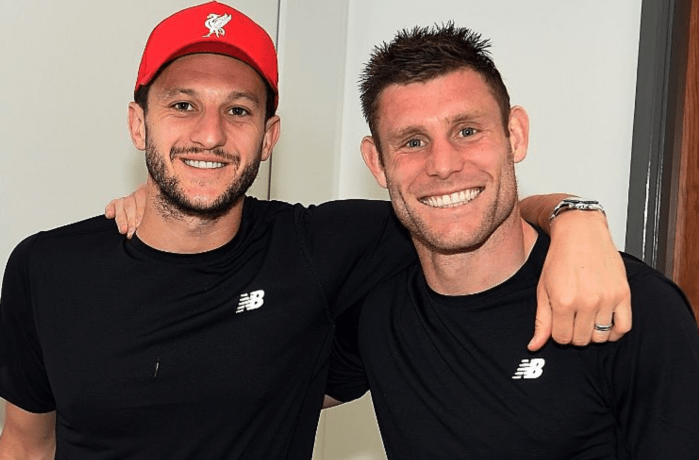
Former Liverpool teammates Adam Lallana and James Milner reunited at Brighton

“James Milner is a class act,” he told reporters. “We had to work very hard to get him in but I think we’ll see over the course of the season how important he is for us.

“He’s a wonderful personality and a top class footballer. When you see him play in his favourite position, you see all these qualities come out.”

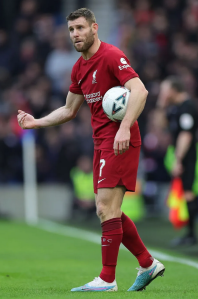
Milner in action for Liverpool against Brighton during a lockdown match

Rodgers departed Anfield not long after Milner’s arrival but the player grew in stature under Klopp and, although it wasn’t his favourite position, he spent much of 2016-17, filling in at left-back.

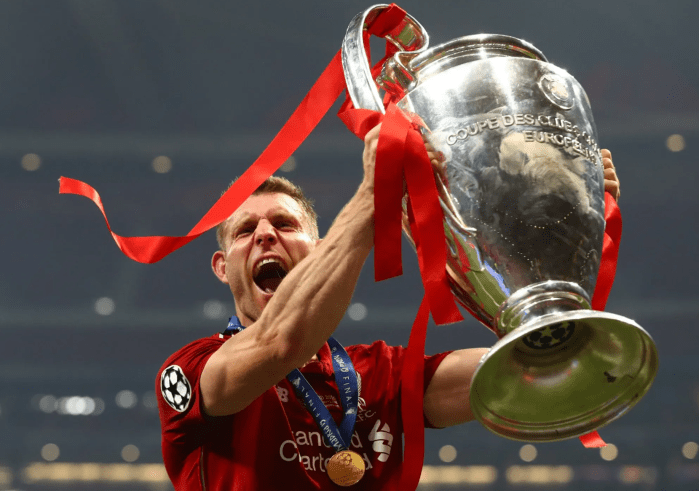
That season he made 40 appearances – 36 in the Premier League – as Liverpool qualified for the Champions League. They made it all the way to the final, only to lose to Real Madrid in Kyiv. But they made amends the following season and returned from Madrid with Liverpool’s sixth European Cup.

Milner went on as a second-half substitute in the Estadio Metropolitano in the 2-0 win over Tottenham Hotspur. “It will be nice going to Melwood seeing No.6 there,” he said. “Liverpool has a great history and when I signed for the club, I was desperate to add trophies as this club expects to win trophies and it has an amazing history – but we want to create our own history.”

Not only did they add the UEFA Super Cup and FIFA Club World Cup, Milner made 22 appearances as Liverpool clinched the Premier League title in 2019-20 with 99 points.

In 2021-22, Milner scored the first in Liverpool’s 11-10 penalty shoot-out win in Liverpool’s Carabao Cup defeat of Chelsea at Wembley, having gone on as an 80th minute sub, and he repeated the feat (as a 74th-minute sub) when the teams were also goalless at the end of the Emirates FA Cup final three months later. Liverpool won that 6-5 on penalties.

In his final season at Anfield, Milner featured 43 times and moved up to third spot on the Premier League’s all-time appearances list.

“I’m Leeds through and through and always have been and always will be – but I never probably thought that another club would get into me as much as Liverpool has,” said Milner.

The player he followed from Anfield to the Amex, Lallana, told the BBC exactly what Milner brings to a squad, especially in setting an example to younger players.

“He helps the management team in so many ways with the experience he’s built up,” said Lallana. “He knows what it takes to win. He knows what sacrifices need to be made.

“I’m not sure how he got the boring James Milner label, but he couldn’t be further away from that. He’s one of the loudest in the dressing room for sure. Full of life. Full of banter. But he’s definitely old school.”

Lallana added: “Those basics are always there and they’ll never change. I think that’s what’s made him who he is and given him his success. Those values that he’ll always live by. He taught me how to be a better professional and a better role model.”

It all began at Westbrook Lane Primary School in Horsforth and the secondary Horsforth School. He played local amateur football with Rawdon whose coach Graeme Coulson had first noticed Milner as a nine-year-old.

“I first came across him when I was refereeing a junior match involving Westbrook under nines at Horsforth,” Coulson told the Craven Herald and Pioneer. “He was so outstanding then that I asked some of the Horsforth parents who he was.

“I noted his name and it was one not to be forgotten. He was an outstanding talent scoring lots of goals but he was also very strong.”

Horsforth School spokeswoman Fran Morris said: “He was a first class student and he did really well at his GCSEs (he got eleven).

“He was very sporty at school and he won the PE prize which was handed out just before we broke up.

“He was the most wonderful young man and he was very popular, so we wish him all the best in his career. I am very sure he will do well and we are all proud of him at the school.”

Let alone his football ability, the young Milner also played cricket for Yorkshire Schools and excelled as an athlete: he was Leeds Schools’ cross-country champion for three successive years and district 100 metres champion for successive years.

Milner was a season ticket holder at Elland Road along with his parents Peter and Lesley before becoming a ball boy. He joined the Leeds United Academy after being spotted playing for Westbrook in Horsforth.

The sporty youngster was forced to decide between cricket and football, explaining in one interview: “I played for Yorkshire at the ages of 10 and 11 as a wicketkeeper-batsman. It was something I enjoyed but you get to a stage where you have to make a choice.

“I stopped playing cricket at 16 when I moved full time to the Leeds United Academy. They couldn’t take the risk of me getting injured, having my foot broken by a yorker or something like that.

“A couple of months later I made my Leeds debut. I still can’t take the risk for the same reason, but as soon as I retire from football, I’ll look forward to taking up cricket again.”

He completed his formal education at sports college Boston Spa School, which works in partnership with Leeds United, and, as soon as he left school, he was taken on as a trainee.

As he worked his way through United’s youth ranks, he also played for England at under-15 and under-17 levels.

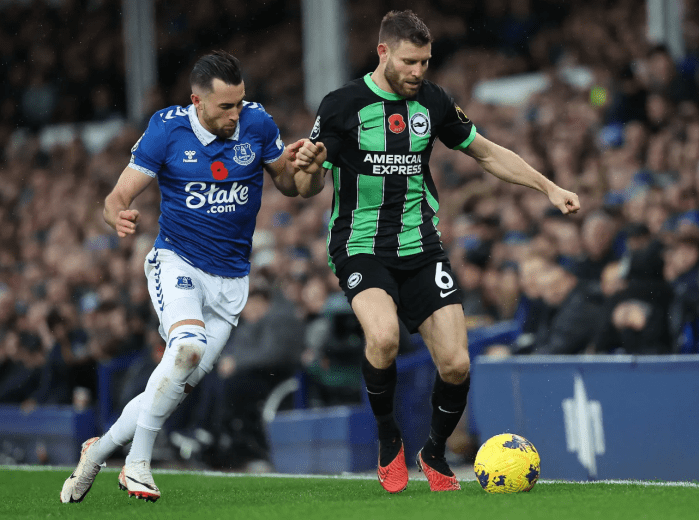
Milner in action for the Albion against Everton at Goodison Park

Calderwood’s switch to promotion rivals backfired

Hughton’s not so loyal assistant

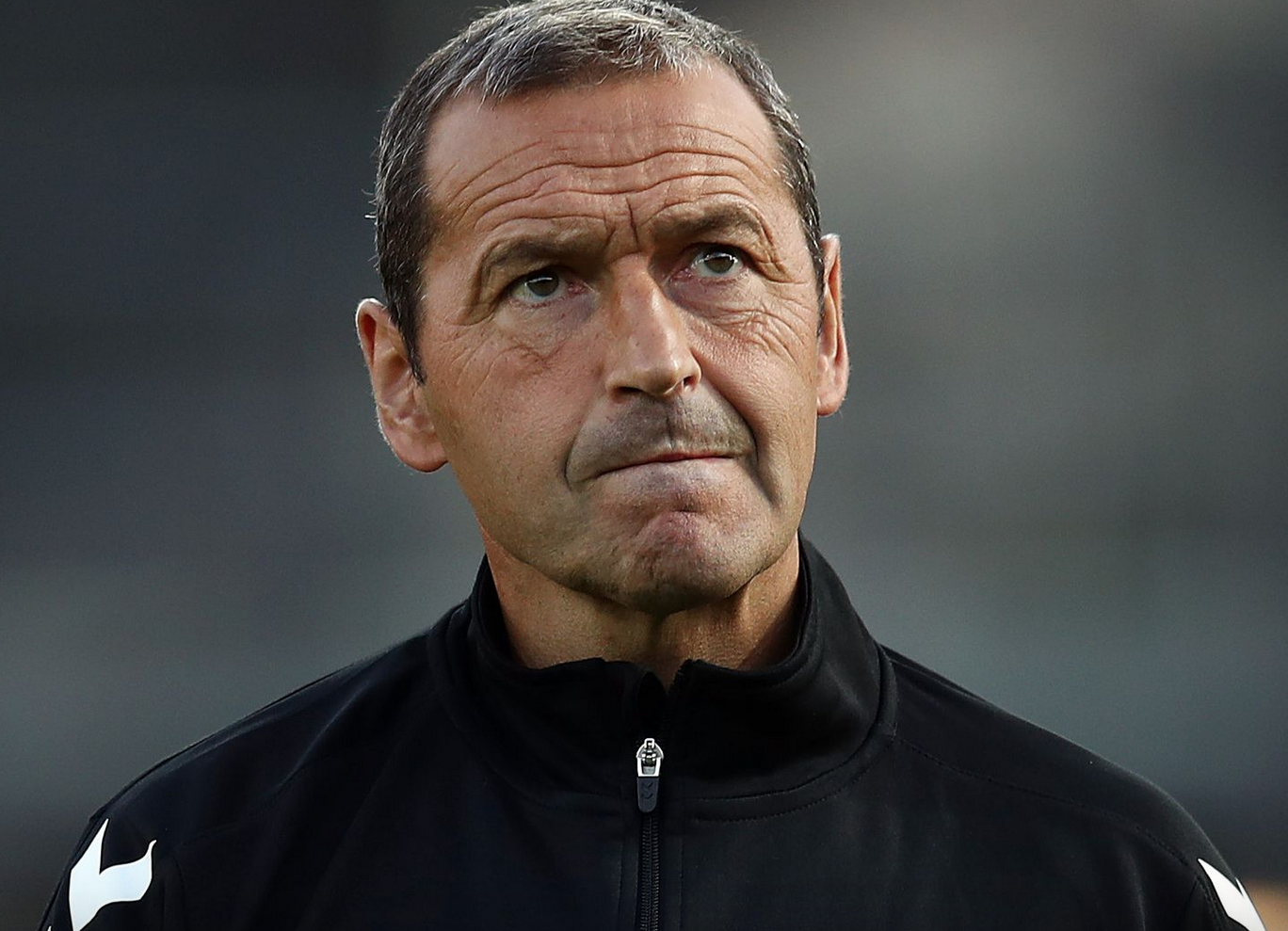
SCOTTISH international Colin Calderwood played for and managed Nottingham Forest in a lengthy playing and managerial career that has spanned a host of clubs across the country.

His 21 months as assistant manager to Chris Hughton at Brighton came to an abrupt end that drew harsh criticism at the time but thankfully didn’t hinder Albion’s upward trajectory.

Calderwood worked under Hughton at three other clubs: Newcastle United, Birmingham City and Norwich City.

The pair first met on the same A licence coaching badge course and Hughton was later a coach at Tottenham when Calderwood was a player. He then played a part in Calderwood becoming reserve team coach at White Hart Lane after his playing days were over.

Calderwood went on to become a manager in his own right at League Two Northampton Town, where he got them promotion at the end of his second season (in 2006).

Two and a half years as boss at Forest followed, during which he got them promoted from League One to the Championship. In 2007-08, his Foest side took four points off the Albion, winning 2-0 at Withdean but being held to a goalless draw at home.

Forest were promoted in second place behind champions Swansea City (Albion finished seventh) but Calderwood was sacked just before Christmas in 2008 with the side struggling in the Championship relegation zone.

When Hughton succeeded Sami Hyypiä at the start of 2015, it wasn’t long before he turned to trusted ‘lieutenant’ Calderwood to help Albion’s cause.

The no.2 had first worked with him at Newcastle in 2009 when, after relegation from the Premier League, the pair led the Magpies back to the elite as Championship champions in 2010.

Hibernian in Edinburgh lured him to try a third spell as a no.1 but, after just 13 months in charge, and only securing 12 wins from 49 matches, he was sacked. He was not out of work for long, moving later the same month to Birmingham to become Hughton’s assistant at the Championship side, where another of Hughton’s backroom team, Paul Trollope, was first team coach.

When Hughton left for Premier League Norwich in June 2012, Calderwood, Trollope and chief scout Ewan Chester (who also later joined him at Brighton) all decamped to Carrow Road. City dispensed with their services in April 2014.

Having helped steer Albion to the Championship promotion near-miss of 2015-16 (when they suffered the agonising play-off semi-finals defeat to Sheffield Wednesday), the Seagulls were well geared up to go one better the following season.

So it came as something of a shock when Calderwood quit in November 2016 to become assistant manager to Steve Bruce at promotion rivals Aston Villa.

Hughton was said to be “very disappointed” and “very surprised” by his assistant’s departure, “particularly at this stage of the season”. Albion watcher Andy Naylor reckoned that amounted to a “withering condemnation” from the normally placid manager.

In an excoriating article for the Argus, Naylor wrote: “He clearly feels let down – and he is entitled to feel that way. Is there any justification for treating Hughton the way he has?”

It emerged that the move gave Calderwood a much shorter daily commuting distance from his home in Northampton, but, even so, Naylor reckoned Hughton deserved better.

Thankfully, there was a ready-made replacement in the wings because Trollope had just lost his job at Cardiff City.

Naylor wrote: “Trollope is in the right place at the right moment to bring his promotion-winning mentality as both a player and manager into the camp. Let’s hope he demonstrates more loyalty than Calderwood.”

Perhaps it was the supreme irony that as Albion marched to promotion from the Championship the following spring, the side Calderwood had moved to only finished in 13th place – although the last-game draw at Villa stymied Albion’s chances of going up as champions.

Nevertheless, there were no bitter recriminations on Calderwood’s part. “Chris did a terrific job turning around the shape and the balance of the team,” he recalled in an interview with the Argus in January 2021.

Ahead of his subsequent club Blackpool’s visit to the Amex for a fourth round FA Cup tie (Albion won 2-1), the former assistant boss said: “We found, as I’ve found at most clubs I’ve been at, there’s a core group of players that have an appetite and an ability level that can give you a chance of success.

“When it falls into place, it is really nice to watch and it is very heart-warming and you feel justified in what you preach and practice.

“A lot of the time you are determined by the quality of the person and the player within the club. We found some really good people down there.”

Born on 20 January 1965 in Stranraer, Calderwood didn’t play professionally in Scotland, instead joining Mansfield Town as a 17-year-old in 1982.

He realised in hindsight that he learned a lot from Town’s manager at the time, the experienced Ian Greaves, and he went on to play over 100 matches for the Stags before Swindon Town boss Lou Macari signed him for £27,500 in 1985.

“Ian and Lou were the ones that built the foundations of my career,” he told the Albion matchday programme.

The centre back spent eight seasons at the County Ground and is recognised as a Swindon legend having featured in 412 matches (plus two as a sub).

At only 21, he was made club captain and, despite a difficult start, led Town to back-to-back promotions as they won the Division Four title in 1986 and overcame Gillingham in a Division Three play-off final replay in 1987.

Promotion winner with Swindon Town

Calderwood was said to be “a rock at the heart of the defence” and eventually led Town to their first promotion to the top-flight, after beating Sunderland in the play-off final at Wembley in 1990. But Swindon were demoted due an irregular payments scandal in which Calderwood was implicated: he was arrested just four weeks before the Wembley match but released the same day without charge.
Calderwood missed five months of the 1990-91 season following a horror tackle by Wolves legend Steve Bull but he returned stronger than ever and was ever present when, under Glenn Hoddle, Swindon were promoted at the end of the 1992-1993 season, beating Leicester 4-3 in the play-off final.

But instead of featuring for Swindon in the Premiership, Town’s former manager Ossie Ardiles took him to Tottenham for a fee of £1.25 million.

Playing in the top division for Spurs earned him international recognition. He made his Scotland debut aged 30 in a Euro 1996 qualifier against Russia and was a regular under Craig Brown, winning 36 caps in four years, including playing at the 1998 World Cup.

According to Spurs fan website mehstg.com (My Eyes Have Seen The Glory), Calderwood was “a solid defender, who could tackle and was good in the air, but lacked the pace and distribution skills to be a top class centre half.

“Calderwood gave Spurs a tough presence in the middle of the back four they had been missing for some time and showed that Ardiles’ judgement had been sound.”

After 198 appearances for Spurs (more than 150 in the Premier League), he left White Hart Lane in March 1999 when a £230,000 move saw him join Aston Villa under John Gregory. A year later, he switched to David Platt’s second tier Forest for £70,000.

He had only been at Forest a month when, ironically at Birmingham’s St Andrews ground, Calderwood, by then 35, suffered an injury that would ultimately force him to retire.

Forest goalkeeper Dave Beasant had already been injured in a clash with City’s Jon McCarthy earlier in the game but recovered. Calderwood wasn’t so fortunate. He ended up being stretchered off after a collision with the same player. He had fractured his leg and dislocated his ankle, causing ligament damage.

The injury overshadowed Forest’s 1-0 win and it meant he played only a handful of games at the City Ground. He later had a brief spell on loan at neighbours Notts County before calling it a day.

Calderwood initially returned to Spurs as reserve team manager before leaving for Northampton in October 2003. Spurs director of football and caretaker manager, David Pleat, said: “Colin leaves us with our very best wishes. He’s had two-and-a-half years here as a coach which I’m sure has been valuable experience.

“Colin is young, he has energy, ideas and, most importantly, ambition. This could be a terrific apprenticeship for him and everyone at the club wishes him well in his new role.”

Fast forward 15 years, and after he left Villa along with Steve Bruce in October 2018, two months later he was back in the game at League Two strugglers Cambridge United. He was given an initial 18-month contract and a year later he was given a two-year extension on his deal.

However, after a 4-0 home defeat to Salford City in January 2020 which meant Cambridge had taken only one point from their previous six games, he was sacked.

In October that year he was taken on at Blackpool as part of Neil Critchley’s managerial team and was part of the set-up that saw the Tangerines win a place in the Championship in 2021.

In June 2021 Calderwood returned to his old club Northampton as assistant manager to Jon Brady, and he told the League Two club’s website: “I have learned a lot in the years since I was last at the club and hopefully I can put all of that experience to good use.

“The situation here is similar to the situation I arrived in at Blackpool in working with a talented young manager.
“I have spoken with Jon Brady a number of times, that relationship will build quickly and I am really looking forward to working with him and the rest of the coaching staff.”

The Cobblers finished fourth in League Two and made it through to the division’s play-off semi-finals where they lost 3-1 on aggregate to Calderwood’s first club, Mansfield.

They made up for it in 2022-23 when they earned automatic promotion in third place behind Leyton Orient and Stevenage.

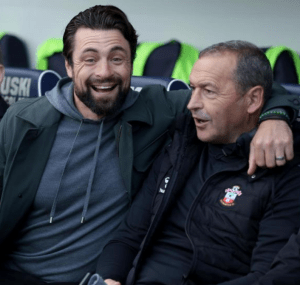
Nevertheless, in October 2023, Calderwood returned to Championship level as part of Russell Martin’s backroom team at Southampton.

Teaming up with Russell Martin

“First and foremost, he’s a brilliant human being. I really trust him and know him very well,” Martin told the Daily Echo

“We worked together at Norwich many moons ago when he was the assistant manager. I used to moan all the time to him and he had a brilliant way of being able to deal with that.

“He just has a great relationship with the players, and he’s a coach throughout my career who I’ve stayed in real constant contact with and discussed football.

“We’ve spoken a lot even when he’s not worked with me. I tried to get him at my two previous clubs and it couldn’t quite happen for various reasons.

“He’s been a manager, an assistant manager, he’s helped some young managers recently get promoted in Neil Critchley and Jon Brady, and added huge experience and value to them.”

Big-time beckoned for Bratislava-born Brezovan

LANKY Slovakian stopper Peter Brezovan, who saved penalties on his Albion and Swindon Town debuts, once came close to a dream move to Everton.

The Merseyside outfit had him on a five-day trial with a view to signing him on a permanent basis from Swindon.

“It was very rewarding just to train alongside Tim Howard and face all these international players,” he said. “It was an experience I’ll never forget.”

Former Man Utd ‘keeper Howard was Everton’s no.1 in 2007 and, having released Richard Wright that summer, manager David Moyes had only new signing Stefan Wessels and the little-used Iain Turner as back-up ‘keepers. Everton’s goalkeeper coach was the former England international Chris Woods.

While Everton didn’t follow up their interest in Brezovan with an offer (three years later they did sign a Slovakian goalkeeper, Jan Mucha), it sounded like Swindon rather over-egged their expectations of a big payday.

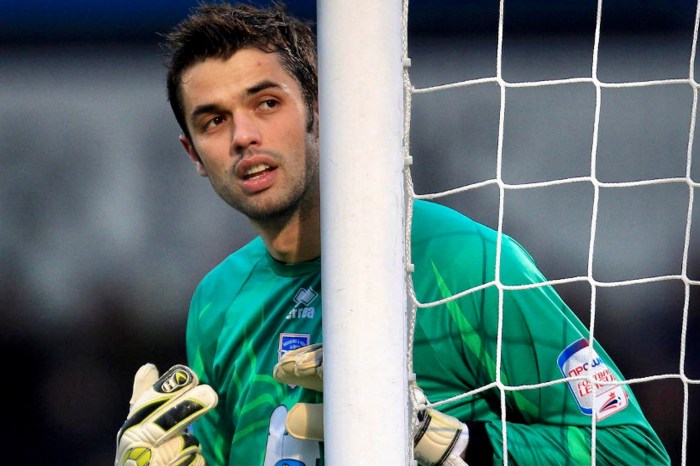
Robins stopper

The Wiltshire Gazette and Herald reckoned a £300,000 eve of deadline day offer from Wolverhampton Wanderers had been rejected, saying: “Town will be asking for a substantial amount more.”

The newspaper added: “If the price is right, Town are ready to cash in on their number two keeper.” And manager at the time, Paul Sturrock reportedly told the Mirror: “If I was offered something like £2m, Brez would be an Everton player.”

The Toffees had originally taken an interest in Brezovan and invited him for a trial when he made an eye-catching start in English football in 2006. Not only did he save two penalties in his first game for Swindon, he conceded only five goals as Town won six of their opening seven matches and won the PFA Player of the Month award for September. Unluckily, a badly broken arm put him out of the game for nine months but Everton revived their invitation when Brezovan was fit again.

It probably didn’t help the ‘keeper’s progress at Swindon that successive managers came and went during his time at the club. It was Dennis Wise who signed him on a year’s loan from Czech side 1.FC Brno shortly after he’d taken over as Swindon manager, assisted by his former Chelsea teammate Gus Poyet, but by October the pair (along with goalkeeper coach Andy Beasley, who later spent a year at Brighton) left Wiltshire to take over at Leeds United.

County Ground caretaker managers David Tuttle and Ady Williams were followed by Sturrock for a year; David Byrne twice held the fort temporarily and Maurice Malpas was in charge for 11 months in 2008. When he left in November that year, Danny Wilson arrived the following month.

Born on 9 December 1979 in Bratislava, Brezovan’s first football memories were playing at right-back. In a matchday programme article, he explained: “In the first game of the season our ‘keeper got injured, so the biggest kid had to go in goal – and I’ve been there ever since. I’ve always been tall so looked upon to go in goal but, unlike a lot of kids, I enjoyed it.”

Brezovan spent his youth career at the city’s MŠK Iskra Petržalka and also played for Devin in the city before spending two years in the Czech Republic with FC Slovan Břeclav and HFK Olomouc. He then spent four years at FC Brno in South Moravia, although it was while he was on loan back in Bratislava, playing for FK Inter Bratislava, that he was spotted by Swindon and subsequently made the move to England.

In spite of his spectacular start for the Robins, when he couldn’t speak a word of English, it would be fair to say Swindon have mixed memories of his time at the County Ground, chronicled in detail on swindon-town-fc.co.uk. After former Albion captain Wilson released him at the end of the 2008-09 season, he was without a club for six months.

He had an unsuccessful trial at Crewe Alexandra in October 2009 but Poyet, not long after succeeding Russell Slade as Albion boss, signed him for a month at the beginning of December to cover a mini goalkeeper crisis he inherited.

Regular no.1 Michel Kuipers was injured and Slade’s misfit summer signing Graeme Smith had conceded 11 goals in three defeats and one win.

Handed his debut on a drizzly, grey December afternoon at Exeter (I know, because I was there, getting wet on the uncovered terrace behind the goal!), Brezovan went from zero to hero, according to writer Richie Morris, after upending  former Albion loanee Stuart Fleetwood in the penalty area and then impressively saving Marcus Stewart’s spot kick.

“The former Slovakian under 21 international pulled off a string of comfortable, but reassuring saves,” wrote Morris. “True, he did nearly gift the home side a goal with a wayward clearance, but, considering how long he has been out of first team football, he can be happy with a solid performance.”

A somewhat modest Brezovan attributed his penalty save to goalkeeper coach Tony Godden’s homework. “He told me where Marcus Stewart puts his penalties and I dived the right way but it was a great feeling to help the team to victory,” he said.

Penalty-saver!

On another occasion, Brezovan expanded on his technique with penalties, telling the matchday programme: “It’s mainly instinct on the day. You get the stats guys who help you with your preparation – they will tell you where certain players tend to put the ball but sometimes you just have to go with how you feel in that moment and go for it.

“I don’t get the lads to take penalties at me after training either – I hate doing that. It’s all about how you are on the day.”

Brezovan’s arrival signalled the departure of the hapless Smith who ended his six-month nightmare in English football by returning to Scotland, moving on a free transfer to Hibernian. And the Slovakian’s short-term arrangement ultimately extended into a four-and-a-half-year spell as a Brighton player.

There were occasions when he was tempted to move on for more regular game time, but he confessed to loving the area and stayed put even though first team opportunities were few and far between.

In that first season, fans’ favourite Kuipers, not for the first time, found his place under threat because of the 6’6” Brezovan’s form. But a blunder by the new man in a game at home to Wycombe prompted Poyet to bring back the former Dutch marine (chef) at the start of the new year.

Kuipers had an eight-game run in the starting line-up but then broke a finger. Brezovan, having had his contract extended, seized his chance and kept his place through to the end of the season.

Brezovan told the matchday programme: “We are good friends, we train well together, and so I really feel for him. We don’t feel like rivals at all in that respect but I know that while I am in the team I will be giving my all to make sure I maintain my place.”

It paid off because Poyet offered him a two-year contract at the end of the season, saying: “Peter has earned his new contract. Initially he came to play and help us out but I expected he would prove he was worth a longer deal and he has done that.

“He has been a very important part of our turnaround since Christmas and now his challenge is to make the position his own for next season and beyond.”

And the ‘keeper told the Argus: “Together with my girlfriend, I’ve really settled here. I think that Brighton is the nicest city in England and we’re really happy here.

“I owe a lot to the manager because he brought me to the club and I’m glad he wants me to stay. That’s why it was so easy to sign the deal. The manager will no doubt bring in more good players in the summer so it’s going to be an exciting season.”

He was right about the excitement because Albion went on to win the League One championship title; what he might not have anticipated was that because he was nursing a wrist injury on the eve of the season opener against his old club Swindon, Poyet moved quickly to sign another ‘keeper who he’d worked with at a previous club: Casper Ankergren.

The Dane, released by Leeds, instantly became first choice ‘keeper and Brezovan spent most of the season watching from the bench, making just seven starts in the FA Cup (the first and second round matches both went to replays). Close to the end of the season he went on as a sub for the injured Ankergren in the 18th minute of the 25 April league game at Colchester United, making important saves from Ian Henderson and David Mooney as the Albion salvaged a point in a 1-1 draw.

Brezovan was also in goal for the penultimate game of the season, and the last ever played at the Withdean, when Huddersfield won 3-2. A defensive gaffe by Inigo Calderon, who left Brezovan stranded by chesting the ball down inside the area, let in Benik Afobe to put Town 2-1 ahead; sub Matt Sparrow equalised for the Seagulls and, although Brezovan twice made excellent saves to deny defender Jamie McCombe, sub Danny Ward scored a last-minute winner.

Brezovan resumed his place on the bench as 2011-12 got under way with Ankergren once again Poyet’s first choice no.1, although, after he’d shipped 13 goals in eight games in the autumn, the manager brought experienced Newcastle custodian Steve Harper on loan for five games.

Brezovan preferred to see the positive side of it, though, telling the matchday programme: “That was a good experience for all the goalkeepers. He is a vastly experienced ‘keeper and we have learned from his time here.”

After Albion went through a four-game losing streak in December, Brezovan got the call to take over from Ankergren in the new year match at home to Southampton when an injury-hit Albion sprung a surprise, winning 3-0 with a memorable brace from midfielder Sparrow.

It was only after the game that Poyet revealed how his plan to change ‘keepers nearly didn’t come to fruition. “For the last week Peter has been waiting for his wife to have a baby, every day,” Poyet told the Argus. “I needed to wait until 1.30 to tell him he was playing. The baby was due three or four days ago, so we were all thinking ‘come on girl, go on’!”

Later the same month, Brezovan was hailed a hero when he saved a crucial spot-kick in a penalty shoot-out in a third round FA Cup replay at Wrexham and he told Brian Owen of the Argus: “I enjoyed it. The pressure is all on the strikers at penalties because they can just mess it up. You have nothing to lose, you are practically without pressure.

“I knew one player and where he goes and I saved his penalty so we could have a laugh in the end.”

Nevertheless, Poyet was obviously still unsure about the goalkeeping situation. He let third choice Michael Poke go on loan to Bristol Rovers but brought in Columbian David Gonzalez, who’d been with Man City for two years, to put pressure on Brezovan and Ankergren.

“The gaffer wanted to bring in another keeper. You have to face it, with Casper, and keep working to keep our positions,” said Brezovan.“I’ve got another year. If you want to stay at a club for a long time, you have to play. You can’t be just like a useless second or third choice. This is my opportunity and I am going to do everything to stay in goal.”

He did indeed stay in goal but on two occasions let in six! The first drubbing was handed out by Liverpool in the fifth round of the FA Cup at Anfield (with Albion famously conceding three own goals in a 6-1 defeat).

After Brezovan shipped another six against West Ham at the Boleyn Ground, Poyet had seen enough. The patient Gonzalez replaced Brezovan in goal for the following game, one of six changes to the side that capitulated to the Hammers.

Come the new season, Brezovan and Ankergren had even more of a challenge on their hands when experienced Polish international and former Manchester United ‘keeper Tomasz Kuszczak arrived at the Amex.

It pushed Brezovan down the pecking order to third choice ‘keeper and he played only once all season, in a 2-1 win at Huddersfield when Kuszczak had a finger infection that ruled him out and Ankergren picked up an injury in training two days before the game.

Brezovan stayed at the club as no.3 ‘keeper for the 2013-14 season and once again injuries to the first and second choices in Oscar Garcia’s side presented him with a rare opportunity. He ended up playing eight games, four in the league and four in the FA Cup.

He made his first appearance for 13 months in the 7 December 3-1 win at home to Leicester after Kuszczak pulled out in the warm-up with a stomach muscle strain, with Ankergren already sidelined with a wrist injury. In an interview with the Argus, on his 34th birthday, Brezovan spoke openly about possibly moving on to get more games.

“It’s hard because Brighton is a beautiful place and I love the people around here. It’s not easy to go.

“If there was an offer from the same level, I would probably try it. Going to a lower division, getting injured and then to be there on the bench is risky.”

And of his sudden chance back in the Albion goal, he reflected: “That’s football. Things can happen quickly and it’s beautiful. It shows how everyone is important. When you don’t play for a long time, even in training, you start to think it’s hard to motivate yourself.

“That’s why you need good lads around you. I love the guys here. They always help you to be motivated. When you play and your contract is running out you need to find that motivation.”

His appearance in the fifth round FA Cup replay defeat (1-2) at Hull City on 24 February turned out to be his last first team game and he was released at the end of his contract that summer having featured 62 times for the Seagulls.

He trained with Oxford United during pre-season and at the start of the next season joined Portsmouth for a month as cover for Paul Jones. On transfer deadline day, he signed a one-year contract with Tranmere Rovers.

Although he played seven games for Rovers, he lost his place to regular ‘keeper Owain Fon Williams. He had a loan stint at Southport in early 2015 but at the end of the season, following Rovers’ relegation from League Two, he was released.

Interviewed by the Argus in December 2015, Brezovan had returned to Brno in the Czech Republic, quit football and turned to publishing music online.

“I lost a little bit of motivation,” he said. “The football wasn’t going anywhere and I’d had enough. I’m focusing on this now.”

‘Super’ Mark – ‘The Fridge’– didn’t always stay cool

MUCH-MALIGNED Mark McCammon was not afraid to stand his ground, answer his critics directly and to challenge injustice when he felt aggrieved.

Fans of Brentford, Brighton and Millwall voiced some strident – nay, downright offensive – opinions of his ability as a footballer.

Remarkably, the Barnet-born striker played in a FA Cup final and Europe for the Lions before Mark McGhee signed him a second time – for Brighton – having previously taken him to Millwall from the Bees on transfer deadline day in 2003.

McCammon and Neil Harris at the 2004 FA Cup Final in Cardiff

When his suitability to contribute to the Seagulls’ flagging cause in the Championship was called into question in a post-match radio phone-in, McCammon took umbrage and called the show himself to argue the toss with presenter Ian Hart.

Also, in what was something of a landmark case, McCammon took a subsequent employer, Gillingham FC, to courtand won a claim that he had been racially victimised.

It certainly wasn’t uncommon for McCammon to be at odds with the people running whichever club he was playing for.

He first joined the Seagulls on loan when he was out of favour and on the transfer list at Millwall.

He made his debut in a 1-0 home defeat to Stoke City in December 2004 and said: “I just want to get back playing and enjoying my football again.

“I have been in and out at Millwall and my fitness has dipped a little bit because I haven’t played. I’m happy to be playing under Mark again and I want to show what I can do.”

Although he didn’t get on the scoresheet in five matches, when McGhee made it a permanent move in February 2005 he told BBC Southern Counties Radio: “Not everyone understands the contribution Mark makes. We have become a much more effective team with him in the squad.”

McGhee was a great believer in the ‘one big one, one little one’ striking line-up, and was sure McCammon’s presence would help pint-sized Leon Knight to score goals.

Because of what followed, it is easy to forget McCammon scored three goals in his first two home games after signing on a permanent basis.

He scored a brace and won the man of the match award in a 3-2 defeat to Derby County and he got 10-man Albion’s second in a surprise 2-1 win over promotion-chasing Sunderland (Richard Carpenter scored the other, and Rami Shabaan made his debut in goal).

The Argus enjoyed building up the visit of McCammon’s old side Millwall to the Withdean, interviewing the player and the manager, who we learned called his new signing ‘The Fridge’.

McGhee urged McCammon to stay cool if he managed to score against his old club, but it was fellow striker Gary Hart who got the only goal of the game, in the 89th minute.

Ahead of the game, McCammon told the newspaper: “It would mean a lot to me to score the winning goal against them. I wasn’t given a chance there, but I’ve got a fresh start here. I’ve got a lot to prove.”

In the following game, he was subbed off at half-time in a 2-0 defeat at Stoke when he gave away a penalty. He underwent blood tests and McGhee said: “Mark is seeing a specialist to find out why he was feeling lethargic. It wasn’t the back injury he suffered against Millwall, he was just feeling ill and weak.”

That game was the first of a run of six defeats and Albion only won once in 11 matches – form which saw them avoid relegation by a single point.

One of several infamous McCammon incidents occurred following the Seagulls’ 1-1 draw at Turf Moor on 16 April.

After a lucklustre first half display when Albion went in 1-0 down, McGhee ripped into the team at half-time and McCammon and fellow striker Chris McPhee were told they weren’t holding the ball up well enough.

According to an account in the Daily Telegraph, McCammon argued back in a fiery exchange with the boss, claiming a lack of service from midfield was the issue. He didn’t reappear for the second half, being replaced by fired-up teenager Jake Robinson and Albion managed to salvage a point courtesy of an equaliser from Dean Hammond.

A delighted McGhee said of Robinson: “We say when people get their chance they have to take it and I thought he took it absolutely brilliantly. He was different class.”

But McGhee’s ire with McCammon hadn’t cooled at the final whistle – he ordered him off the team bus and told him to return south in the kit-carrying vehicle instead.

Not fancying a tight squeeze alongside sweaty shirts, shorts and socks, McCammon chose to return by train.

“After the match I told him I didn’t want him travelling back on the team bus with the rest of us and that he was to return home with two other members of staff in another club vehicle,” McGhee told Sky Sports News.

McCammon apologised to McGhee afterwards but any subsequent first team opportunities were few and far between after that.

At the start of the 2005-06 season, he managed a recall for a Carling Cup match away to Shrewsbury Town and pleased his manager by scoring a goal and laying one on for Robinson, even though the Albion went down 3-2.

“I thought Mark was much better. That type of performance is what we expect of him and it’s what he can do,” said McGhee. “Now he’s got to reproduce that in the Championship.

“He set his standard tonight in terms of his effort and the simple way he played the game. He didn’t complicate things; he laid it off, held it up, laid it off, then got in the box; he won a lot of headers; took a lot of stick and kept going. He got a goal, made a goal and I thought he was terrific.”

But McGhee, with other forward options in the shape of Colin Kazim-Richards, Robinson, Knight and Gary Hart only called on McCammon for three starts and five sub appearances.

“He (McGhee) asked me to go out on loan to a lower league team and I think I’m better than that,” said McCammon when, incensed by criticism of him on the BBC Southern Counties Radio post-match phone-in after a game in February, called in and took issue with show host Hart.

“I went on trial at Watford and I got called back to train for no apparent reason. I think I was hard done by there, a bit unlucky. I’m back but I’m not in the squad but I don’t think I’ve been given a long enough chance.”

Once again suggesting the team’s issue was service through to the front players, he responded to Hart’s personal criticism of him saying: “When you kick a ball in professional football you can tell me whether I’m good enough for this standard.

“You don’t know anything about me. What you said is very disrespectful.

“I’ve been out since the beginning of the season with ankle and knee injuries. I had surgery on both. I came back and made three first-team starts but it takes about seven or eight games to get your rhythm back. I think it’s a bad comment you have made.”

The striker also took aim at the Withdean faithful, claiming: “All we hear is supporters whingeing.

“If they get behind the team it will give the players an extra boost. All the first team players at Brighton listen to the radio and they hear the supporters being 100 per cent negative.

“It’s a team game, it’s not about individuals. The supporters need to get behind the team a bit more.”

If the player didn’t think much of the fans, it would be an understatement to say they were none too impressed by the player.

Amongst a veritable litany of abuse from Albion supporters, this from ‘The Full Harris’ on North Stand Chat encapsulated the opinions of many.

“Mark McCammon is the worst player to have played for us in this division … he just simply doesn’t have a clue. He is unfit, he doesn’t know where he is meant to be running, he can’t shoot. For a man of his size, he is pathetic in the air.

“He is clumsy, he has the touch and control of a Sunday league centre half, he is about as prolific as an impotent monk, he is an embarrassment, he is a disgrace, he is lazy and, personally, I object in the extreme to my paying his wages when I believe many of the crowd around me could do a better job and they would do it for free.”

Long before Dominic Cummings referred to his erstwhile boss, Boris Johnson as “a shopping trolley smashing from one side of the aisle to the other”, supporters voiced something similar of McCammon. The song went like this:

Super, super Mark
Super, super Mark
Super, super Mark
Supermarket Trolley.

Perhaps it was no surprise that McCammon was allowed to leave Albion on loan, linking up with League One Bristol City, where he scored four goals in 11 appearances.

He didn’t play another game for the Albion and, in the summer of 2006, joined Doncaster Rovers after impressing boss Dave Penney on trial.

Although born in Barnet on 7 August 1978, McCammon qualified to play for Barbados through his mother and he won five caps for the Caribbean country. He scored on his debut against Antigua and Barbuda in a 3-1 win in September 2006 and two days later hit a hat-trick when Barbados beat Anguilla 7-1.

Two years later he returned to international action for two World Cup qualifiers against the United States. Barbados lost 8-0 in California and 1-0 in Bridgetown.

McCammon was with QPR as a teenager but it was Cambridge United who took him on as a YTS and he joined Cambridge City on loan at 19 to gain experience.

He played just six games for United between 1997 and March 1999 but was signed by Premier League Charlton, managed by Alan Curbishley.

After relegation to the old First Division, McCammon played five times for the Addicks as they won the title with a squad that included John Robinson, Steve Brown and Paul Kitson on loan from West Ham. McCammon also spent time on loan at Swindon Town in January 2000.

That summer, McCammon left The Valley to sign for Second Division Brentford for a fee said to be £100,000. He scored six times in 33 appearances in his first season at Griffin Park. He scored 10 in a total of 75 appearances for the Bees but it seems their supporters were also unconvinced about his merits.

Stan Webb, on the excellent BFCTalk website, said: “Mark McCammon was yet another misfit who cost a significant fee. Despite looking every inch a footballer, he signally failed to deliver.

“He is best remembered for his cataclysmic miss from a free header at Loftus Road which might have changed our recent history had he scored, as he surely should have done.

“And yet for all the criticism he faced, he eventually became a sort of anti-hero as fans recognised that he was always giving everything he had and appreciated his efforts even though he was just not up to scratch.”

By contrast, McCammon’s time in south Yorkshire was relatively successful, although if he felt he was dogged by bad luck, in November 2006 he had a headed goal away to Brentford chalked off after the ref didn’t notice the ball went through a hole in the back of the net. Thankfully Donny still won 1‑0.

Across two seasons, he scored 13 goals in 70 matches for the south Yorkshire side and went on as a 71st minute sub for Richie Wellens in the 2008 League One play-off final at Wembley when Donny beat Leeds United 1-0. Leeds had Casper Ankergren in goal and Bradley Johnson in their line-up.

However, McCammon chose to head south that summer and signed a three-year contract with recently relegated League Two Gillingham.

He scored five goals in 35 matches in his first season at Priestfield but 2009-10, when the Gills were back in League One, was a different story.

By February 2010, a lack of starts saw him seek a loan to get some match fitness. Gills boss Mark Stimson told BBC Radio Kent: “Going out on loan will be good for him and the club. He needs games and if he comes back fit in four weeks that would be great.”

He added: “We want him sharp and scoring goals then he could come back because we might need someone like him. Last season he stepped in and put in a good shift.

“At the moment he’s frustrated, like all the other boys who are not playing. He didn’t want to drop down to League Two. Now he’s seriously thinking about it because it might get his career back on track.”

McCammon joined Bradford City for a month, playing four games, before returning to the Gills. But the following season, when Andy Hessenthaler had returned as manager, saw the final dismantling of McCammon’s league playing career.

The club dismissed him in 2011 for alleged misconduct but he didn’t go quietly and took them to an employment tribunal claiming he had been unfairly sacked and ‘racially victimised’. He won £68,000 in compensation and Gillingham and chairman Paul Scally were subsequently each fined £75,000 by the FA “for failing to act in the best interests of the game and bringing the game into disrepute”.

Furious Scally appealed the fines, which were set by an independent regulatory commission, saying they were “manifestly excessive, totally disproportionate and completely unjust” and, although the board reduced the club’s fine to £50,000, the sanction against Scally was upheld.

McCammon told the original hearing in Ashford, Kent, that he and other black players at the club were treated differently from white players. For example, he said, he was ordered to attend the ground amid ‘treacherous’ snowy driving conditions or be fined, while some white players were told they were not required.

The club tried to “frustrate him out” by refusing to pay private medical bills for injury treatment, while a white teammate had been flown to Dubai for treatment at the club’s expense, he claimed.

McCammon, who, on £2,500 a week, was the club’s highest-paid player, was also told not to blog while others were permitted to, he said. During an injury spell, he had to stay behind at the club for four hours longer than other injured and non-injured players, he claimed.

The tribunal heard he was dismissed after a disciplinary hearing following a confrontation in which he accused club officials of being “racially intolerant” regarding the decision to order him in during the heavy snow.

The tribunal found in McCammon’s favour and his solicitor, Sim Owalabi, said it was believed to be the first time a footballer had successfully brought before an employment tribunal a case of race victimisation against a professional football club.

After all the legal to-ing and fro-ing, the player himself, by then aged 35, said: “It was traumatising and it sort of sabotaged my career in the football world, my progress.

“I had football clubs after me and that just deteriorated. It’s very, very unfortunate.”

He dropped down to Conference level with Braintree Town in October 2011 and later played for Lincoln City, on loan and then on a permanent basis, when they were in the same division.

Petterson the fall guy during disastrous winless run

ANDY PETTERSON conceded two goals in the first seven minutes of his Albion debut but still picked up the man of the match award when managing to deny visitors Walsall any further goals in a 2-0 defeat.

He pulled off a brilliant point-blank save on the stroke of half-time to deny goalscorer Jorge Leitao a second goal and later blocked the same player’s angled drive. Steve Corica had opened the scoring for the Saddlers.

The game on August Bank Holiday Monday in 2002 was part of a disastrous run under new manager Martin Hinshelwood. In only eight games as a stand-in for injured Michel Kuipers, Petterson conceded eighteen goals, including four against his old club, Portsmouth, in only his second game.

He shipped another four in a game at home to Gillingham, one of which the matchday programme described as “the most embarrassing moment of Petterson’s long career”.

With the score 3-2, and Albion committing everyone forward, including the goalkeeper, in search of an equaliser, when 10-man Gillingham broke on a counter attack, backpedalling Petterson fell over giving Gills striker Kevin James an open goal to notch a fourth for the visitors.

Petterson only appeared once under Hinshelwood’s successor, Steve Coppell, when Kuipers had been sent off in the 89th minute of a home game against Bradford City. Paul Brooker was withdrawn and the sub goalie went between the sticks, although his first involvement was to pick the ball out of the net, Andy Gray having scored from the penalty kick awarded for the infringement that saw Kuipers dismissed.

In pouring rain, Albion – and Petterson – clung on throughout five added minutes for a 3-2 win, bringing to an end a 14-game winless league run. Bobby Zamora scored two penalties for the Seagulls and new arrival Simon Rodger, a loyal Coppell lieutenant, curled in a beauty from outside the area.

Although he was a non-playing sub on two further occasions, Petterson was let go. In a recent interview, he said he had been nursing a recurring calf injury during his time with the Albion.

Albion were the 12th of a remarkable 21 clubs the Aussie ‘keeper joined on loan or permanently.

Wolverhampton Wanderers were another stopping off point for the perennial back-up ‘keeper from Fremantle and it was one of his regrets that he only had a four-month loan spell at Molineux, having previously spurned a two-year deal with the Black Country side to make what turned out to be a career-damaging move to Pompey.

Instead of building on a career that had shown signs of promise at Charlton Athletic, Petterson flitted from club to club without ever putting down roots.

Born in Fremantle, Western Australia, on 26 September 1969, he was still only a teenager when he arrived in the UK and signed for Luton Town, where he spent four seasons.

The Hatters Heritage website recalls: “Andy was so desperate to make a name for himself in the English professional game that he paid his own passage to take up a trial at Luton. Fortunately, his gamble paid off as he was offered a contract at Kenilworth Road in 1988 although he had to wait until the start of the 1992-93 season before making his League debut.

“Impressing in pre-season with his shot stopping ability and quick reflexes, Andy was ever present for the first 14 games but a calamitous performance during a 3-3 draw at Cambridge effectively put paid to his Luton career.”

Petterson joined Alan Curbishley’s Addicks for £85,000 in July 1994, was their player of the season in 1996-97 in the First Division and played for them in the Premier League.

But he was generally no. 2 to Sasa Ilic, and subsequently dropped down to third choice behind Simon Royce, another goalkeeper who spent time with the Seagulls. The situation prompted Petterson to join struggling Portsmouth on loan in November 1998.

“Portsmouth were in financial trouble and down at the bottom of the table,” he recalled in an interview with the Argus. “I went there for three months and everything went very well. Then in the summer I was out of contract at Charlton.

“Portsmouth were one of three clubs in for me and they offered me quite a good deal, so I decided to sign for them. Everything went well under Alan Ball for the first six months, but he got the sack and it was downhill for me from there.

“We had another four managers (Tony Pulis, Steve Claridge, Graham Rix and Harry Redknapp) in the three years I was there and my face never fitted really. It was just unfortunate I went there. I was happy with the way it started, and it was a good club to be at, but it just wasn’t meant to be for me.”

In an extended interview with Neil Allen of The News, Portsmouth, in June 2020, Petterson reflected on his missed opportunity to join Wolves instead of Pompey, when he had been released by Charlton.

“Wolves’ boss Colin Lee was interested,” he said. “I was in Australia and flew back to England ahead of signing at Molineux on a two-year deal on the Monday afternoon.

“Then, late Sunday, my agent called. Milan Mandaric had taken over Pompey and they wanted to talk on Monday morning.

“That was the club I wanted to join, I had familiarity there. I signed a three-year deal. If the club had been taken over 24 hours later, the move would never have happened and I would have ended up at Wolves.”

Petterson told The News: “It was the beginning of the end when I went back to Pompey. My career never really recovered. I was kind of a journeyman before that, but at least was signed to a parent club and sent on loan to places.

“After moving to Pompey permanently it was six months here, three months there. It was the beginning of the end for my career. I guess everything happens for a reason – and for some reason it happened to me.”

Ipswich (three times), Swindon, Bradford, Plymouth, Colchester, Wolves, Torquay and West Brom were all temporary moves for the Australian stopper. After his short stint in Sussex, he also went to Bournemouth, Rushden and Diamonds, Southend, Walsall and Notts County.

“I always had belief in my ability and always wanted to play,” he said. “I think I was a good goalkeeper, although maybe mentally didn’t have the belief in myself enough.

“I’m a bit of a laid-back, casual sort of guy. Sometimes you have to be that pushy arrogant sort of person for the coach to take notice of you a bit more. I tried to do it, as a footballer you have to be a bit of an actor, but it just wasn’t in my nature.”

Referring to the fact he had 16 years as a professional footballer in the UK, he added: “That’s what gives me the belief that I was a decent goalkeeper. But something wasn’t quite there for me to go to the next level, I guess.”

He eventually only got a run of regular games when he returned to Australia and played for Newcastle Jets and then ECU Joondalup.

After his playing days were over, he became a goalkeeper coach for several clubs, including Bali United in Indonesia for a while. In August 2022, he was appointed goalkeeper coach at East Bengal FC.

“I have experienced the highs, the lows, all that kind of stuff, so can relate to goalkeepers,” he told Allen. “I’ve been through plenty.”

Zeke Rowe’s three goals and a red card as Albion went down

CHELSEA loanee Zeke Rowe scored three goals in nine matches for doomed Brighton and ended his spell with the ignominy of being sent off.

Rowe, a 22-year-old striker who had scored plenty at youth level for Chelsea,  was one of five new faces to join Jimmy Case’s relegation-bound Seagulls in the spring of 1996.

Winger Paul McDonald and striker Craig Maskell joined permanently from Case’s old club, Southampton, together with Saints defender Derek Allan, on loan initially and then permanently. Future captain Gary Hobson signed from Hull City.

All found themselves plunged into what turned out to be a fruitless battle to avoid relegation against a toxic backdrop created by the people running the club at that time – the hated Archer / Stanley / Bellotti regime – who tried to sell the club’s home without having a new ground to move to.

In the same matchday programme that announced the arrival of the five new players, the publication also detailed the impending departures of the likes of former first team regulars Steve Foster, Ian Chapman, Dean Wilkins, John Byrne, Stuart Myall and Stuart Munday; not to mention directors Bernard Clarke, Peter Kent, Dudley Sizen and Denis Sullivan. To misquote Shakespeare: Something was definitely rotten in the state of Hove!

Rowe made his debut in a 1-1 draw at home to Rotherham United, on 30 March, and then got off the mark with a goal away to Swindon Town four days later, although the Albion went down 3-2 (Jeff Minton scored the other).

Rowe’s picture adorned the front cover of the matchday programme for the 9 April home match v Burnley when his goal earned the Seagulls a win.

And his solitary goal also proved to be the decider in another 1-0 home win, over fellow strugglers Carlisle United, managed at the time by Mervyn Day.

Rowe’s dismissal for fighting with York City’s John Sharples came in a Thursday morning game, played five days after the official end of the season, in front of a post-War record low gate of 2,106 fans at the Goldstone.

The fixture had been rearranged because the original game 12 days previously had been abandoned after disgruntled Albion supporters had stormed the pitch in protest at the proposed sale of the ground and broken both crossbars.

It drew hysterical reaction in some quarters (probably because it was only a few weeks before England played host to Euro 96) but had the desired effect of bringing the rogue direction of the club to the attention of the football authorities who somewhat late in the day intervened to stop the Albion going out of business.

The original York game had looked like being the last ever at the Goldstone but a stay of execution saw the club stay for one more season before the site was redeveloped and the Seagulls were forced to groundshare at Gillingham.

The only happy supporters at the Goldstone on 9 May 1996 were around 400 followers of the Minstermen because their side overcame going a goal down to a Maskell opener to win 3-1, a result which prevented them joining Albion in the drop. Gary Bull, who had enjoyed a successful time on loan with Brighton at the start of that season, had equalised for York.

One City fan, Simon Worden, wrote an amusing blog about the whole occasion, and explained: “Whilst I should have been in a lecture at university at Preston, as I was only 19 at the time, I decided that the match was too important to miss and travelled down the day before to watch the match and stayed in a very cheap B&B.”

After witnessing the win, he said: “All the York fans were jumping around on a Thursday morning singing ‘We are staying up’ and enjoying the sunshine.

“One of the best days even and, whilst I was very tired, it was an enjoyable (but expensive) trip back to Preston where I had to catch up with my studies!”

Also watching on was Michael Knighton, chairman of Carlisle United, who, as a consequence of the result, were relegated with the Albion. Greg Wood, covering the game for The Independent, spiced up his report with a couple of choice quotes from him.

“Once York had gone 2-1 ahead, Brighton just weren’t interested,” said Knighton. “We’ve been relegated and we’ll never know if we should have been. This competition should be based on fairness, and towards us it hasn’t been.”

Wood also observed: “After York’s third goal, a member of their board turned to Knighton and made some distinctly unsporting gestures. Ordinary supporters have probably been expelled for less.”

Born in Hackney on 30 October 1973, Rowe was a frequent goalscorer in Chelsea junior teams playing alongside the likes of Neil Shipperley, Muzzy Izzet, Michael Duberry and Craig Burley.

But a first team breakthrough eluded him and before his time at Brighton he had scored twice in 10 games on loan at Barnet and had a trial with Swindon Town that didn’t work out.

When Chelsea let him go in the summer of 1996, he moved to Second Division Peterborough United under Barry Fry and was quickly off the mark netting the Posh opener in a 3-3 home draw with Millwall on 10 September 1996.

He was on target again, four days later, ironically against York City, in a 2-2 draw. But the season didn’t end well for Posh, because they were relegated. Rowe only scored once more in his 15 starts and 14 appearances off the bench that season.

Over the next two seasons, he only made four more starts for United and 13 appearances as a sub, while also going out on loan to Kettering Town and Doncaster Rovers.

Rowe later moved to Welling United where, according to the fanzine Winning Isn’t Everything, he was a disappointment after a bright start. It said: “Ezekiel Bartholomew Rowe, to give him his full name. Another in the long line of loanees from Uncle Barry Fry, he was brought in late in the 1998-99 season as the club attempted another Houdini act. Joined permanently in the summer, was on fire pre-season and then… he was shit. Had an impressive tattoo, erm, apparently.”

At King’s Lynn, Rowe played under his former Peterborough teammate Tony Spearing, who won the FA Youth Cup with Norwich City. (That 1983 success saw the Canaries draw 5-5 with Everton over two legs – Mark Farrington scoring four of Everton’s goals – before edging a replay 1-0).

Rowe ended his playing days with Conference North side Hinckley United where he was a teammate of Stuart Storer, who famously scored the last ever goal at the Goldstone – against Doncaster Rovers – a year after Rowe’s dismissal at that much-loved old stadium.

Youth Cup winner Rohan Ince faded after a bright start

THERE WAS a time it looked like Brighton had rescued a gem of a player in Rohan Ince.

After 13 years on Chelsea’s books, he was picked up at 20 by the Seagulls and quickly earned a place in the first team.

He progressed from a development squad triallist to first-team midfielder in little over six months, getting his chance because of an injury to Liam Bridcutt, another former Chelsea youngster who had been an inspiration for his move to the Albion.

“Liam is older than me but I knew he was a good lad who was always having a laugh,” Ince told the matchday programme. “It was only later when we were training with the reserves that I played with him.

“He is doing well at Brighton and I have great respect for him because it is not easy to find that success after leaving a club like Chelsea.

“He is a great example for young Chelsea boys that have been released, and to all young footballers who don’t get offered contracts.

“Liam has shown it is not the end of the world and if you keep fighting you can get there.”

Ince knew about Brighton from his uncle, Eric Young, a centre-half who played for Brighton in the 1980s.

“When I told him I was signing for the club, he was really happy for me,” he said. “He told me it was a good club and good area to live in. He’s an accountant these days, doing really well for himself.”

Ince arrived at the club towards the end of Gus Poyet’s reign but it was under successor Oscar Garcia’s direction that he thrived. Garcia switched him from a central defender into a defensive midfield player.

“For me he is a player who will have a better professional career as a midfielder than as a defender,” said the head coach. “He positions himself well, he is very alert to second balls, he doesn’t lose possession, he can move the ball quickly.

“I think these are all physical and technical characteristics that are better suited to the midfield role.”

And Garcia demonstrated that it wasn’t always a case of either/or between Bridcutt and Ince when the pair combined successfully in a 3-1 home win over Leicester City at the Amex in early December 2013.

He told The Argus: “All good players can play together. It’s up to the manager to try to find the best position for them.

“Rohan is young but when we are watching him he seems an experienced player. He has to improve a lot of things but he wants to do it and this for me is the most important thing.”

Such was Ince’s progress that in January 2014, a year after he joined the club, he was offered a new two-and-a-half-year contract and was being touted as the natural successor to Bridcutt, who, at the end of that month, made a much-predicted move to follow Poyet to Sunderland.

“He has earned this contract with the way he has trained and played ever since I came to the club,” said Garcia. “He has an excellent attitude every day, he looks after himself and works hard in training; and we are all seeing the benefit of that with his performances on the pitch.

“It is nice for the club to reward that hard work and professionalism with this new contract and I am very pleased for him.”

Ince topped off the first of his two seasons playing in the Championship by being crowned Brighton’s Young Player of the Year. He was probably sadder than most to see Garcia depart immediately after the play-off semi-final defeat to Derby County.

He told The Argus: “I started off as a midfielder at Chelsea up until I was 16, then I was changed to a centre-back because of my height and physical attributes.

“I went back and forwards between midfield and defence in my Chelsea career but I came here as a centre-back because that’s where I thought my career would be best.

“Oscar didn’t believe that and I am happy he didn’t believe it either, because midfield is my preferred position.

“He has given me the opportunity to play first team football, in my preferred role as well, so I couldn’t be more grateful.”

After winning the Young Player of the Year award, Ince said: “The gaffer is a really calm character who doesn’t go about shouting, so is my type of person. The senior pros have also been a massive help, talking to me on the pitch and in training. I couldn’t have won this award without them all.”

Sadly, Ince’s progress seemed to peter away after Garcia left. He made only 11 starts in 26 games for Sami Hyypia, and the player told The Argus: “It was quite hard for me, quite a setback, coming off the back of a good season I had previously.

“I had to keep my head up, keep training well, not get too down or depressed about it. I felt I did that and when the opportunity came I felt I did well.”

It looked like his fortunes had changed after Chris Hughton had taken charge. He was a frequent starter under Hughton initially and the player himself felt bold enough to tell The Argus: “I feel I’ve been playing quite well recently, bringing good competition for the gaffer in the midfield area. I’m giving him quite a tough decision to drop me, in my opinion.”

Hughton clearly felt differently, though. He had already signed Beram Kayal and, in the summer of 2015, added Dale Stephens. They became Hughton’s go-to central midfield pairing.

Another promising young midfielder, Jake Forster-Caskey, found himself sent on loan to MK Dons and, on the last day of the transfer window in early 2016, after Hughton acquired the services of the experienced Steve Sidwell, Ince joined Fulham on loan until the end of the season.

At least it was still Championship level, although Ince didn’t get into Slavisa Jokanovic’s struggling side straight away. It wasn’t until 19 March he was handed a start away to Birmingham City when he obliged with a goal in a 1-1 draw.

“It was a frustrating and a confusing period,” admitted Ince in Fulham’s official matchday programme. “I could have easily given up, but I continued to train hard and kept knocking on the gaffer’s door to make sure he didn’t forget about me. It’s starting to pay off.

“He just said it was tactical why I wasn’t playing but then he decided he wanted to try something different at Birmingham. I think he wanted a more solid midfield with me and Scott Parker in there and I’ve been back in ever since. Long may it continue.”

Ince made eight starts and two sub appearances as Fulham narrowly avoided the drop.

Back at the Albion, Ince only got three first-team starts in the League Cup and was an unused sub for a handful of league games. It was no surprise, therefore, that in January 2017 he was once again sent out on loan, this time to Swindon Town, whose head coach was Luke Williams, who had been in charge of Albion’s development squad when Ince first joined the Seagulls.

Robins fans would have remembered Ince for a wonder strike for Brighton at the County Ground during a Capital One Cup tie in August 2014. It opened the scoring in a 4-2 Albion win, that went to extra-time.

Ince scored twice in 14 games in a squad with some familiar faces: Bradley Barry, Yaser Kasim, Anton Rodgers and Jonathan Obika.

As Albion began life in the Premier League, Ince once again found his only outlet for first-team football was in the League Cup and his display in a 1-0 win over Barnet proved to be a shop window.

Within days, League One Bury signed him on a season-long loan, their manager Lee Clark, saying: “Rohan is a player that has been on the radar for a while. The chairman, Alan Thompson and I went down to Brighton on Tuesday to watch him play for Brighton and he was very impressive for them.

“He will bring a presence to the team and is a very good footballer. He plays it simple and plays it effectively and I believe he will be a big player for us in every sense of the word, both in his physicality and in his play.

“He is an established Championship player and unfortunately for him, Brighton have gone to the next level. Once we found out he was available, we went for him. I am more than delighted to get him in.”

Ince made 22 appearances for Bury in what turned out to be a disastrous season for them because they finished bottom of the table and were relegated. Clark only lasted as manager until the end of October, Chris Lucketti was in charge for two months and caretaker Ryan Lowe was in the hotseat for the remainder of the season.

The loanee played his last match for Bury in April 2018 and was released by the Albion in June that year.

Let’s rewind for a moment, though. Born in Whitechapel, London, on 8 November 1992, Ince was picked up by Chelsea as a promising young player when he was only eight years old.

Football was clearly in the Ince family genes; as well as Uncle Eric, a less close relation is former England international Paul Ince, his dad’s second cousin.

Rohan progressed through Chelsea’s academy and joined the club after completing his formal education at Thamesmead School in Shepperton.

In a detailed pen picture on cfcnet.co.uk in July 2009, Philip Rolfe said: “Look at Rohan from a distance and you could mistake him for a younger John Obi Mikel. His tall, gangly stature and his head of spiky black hair brings about the comparison, and although he’s a centre-back by trade, his laid-back and composed style is very much in the mould of the Nigerian international.

“Ince has most often played in the heart of the under 16s defence alongside Danny Mills, especially in 2007-08. Previously he could also have been found in defensive midfield when Jack Saville was a regular in the under 16s team, and it’s in that position where he might be at his best.

“Much taller and stronger than most opponents his age, he can bring the ball out in the style of the much sought after footballing centre-back. At centre back his somewhat lethargic style can result in a loss of possession, and he is often found to hit a long pass rather than pick out a shorter option.

“In midfield he has more options and more freedom, but as a regular in the under-18s already, he’s honing his craft.”

In 2010, Ince was a member of Dermot Drummy’s FA Youth Cup-winning side that beat Aston Villa 3-2 on aggregate (Ben Sampayo and Anton Rodgers, who also later joined Brighton, were Chelsea subs). Ince signed professional for Chelsea in July 2010 and went on to play regularly for the reserves but didn’t make it to the first-team.

In July 2012, he signed a six-month deal to go on loan to Yeovil. But he made only one start and three substitute appearances for Gary Johnson’s side before returning to Stamford Bridge with a recurring ankle injury.

After finally leaving Chelsea in January 2013, he said: “Chelsea said they couldn’t see me breaking into the first team, which is probably true.

“It is very difficult to get into their first team because they can go out and buy the best players in the world.

“When I was told I wouldn’t get a new deal, I decided to go on a series of trials and Brighton was the club I identified as the best place to go to.

“I travelled to Bournemouth for a friendly on the second day of my trial and felt I had performed well, but then the weather had a dramatic impact on my hopes. There was loads of snow so I was limited to what I could show as we were training indoors, but from what I did show, Luke Williams liked it and extended my trial.”

On being released by Brighton, Ince played a couple of pre-season friendly matches for Charlton Athletic but he didn’t get taken on because of a knee injury. Caretaker boss Lee Bowyer told londonnewsonline: “He’s got something wrong with his knee. He came with it. How he’s been training and playing in the games I don’t know, because he’s injured.”

It led to Ince spending the whole of 2018-19 without a club trying to heal and recover his fitness. Eventually, he was taken on by League Two Cheltenham Town in July 2019, with manager Michael Duff telling the club website: “He’s had a good schooling where he’s come from at Chelsea and had 80 or 90 games for Brighton in the Championship. “When I played against him, he was the next big thing coming through. He’s been a bit unfortunate with his injury last year. We’ve done all the due diligence with regards to testing, seeing specialists, scanning — we think we’ve found a very good player.

Michael Duff greets Rohan Ince

“He’s 6’4”, powerful, but he can play as well. We’re hoping he can add physicality and quality into our midfield.”

Unfortunately, it wasn’t a great start for Ince, when the Robins travelled to east London to take on Leyton Orient on the opening day of the season. In a mad five minutes midway through the second half, Josh Wright scored past Scott Flinders to put Orient ahead, Town striker Luke Varney saw a second yellow for alleged simulation in what the visitors contended was a clear penalty shout.

Frustrated by the decision, Ince, who’d taken a drink of water during the halt in proceedings, threw the empty plastic bottle to the sidelines, but it hit the fourth official. Referee Michael Salisbury deemed it to be violent conduct and showed him a straight red card.

“He seems to think he did it intentionally,” manager Duff explained to gloucestershirelive.co.uk afterwards. “I am not sure Rohan’s aim is that good that he can hit someone five or six yards away, walking the other way. There is not a lot I can do about that one, but I think it’s very soft, particularly after what’s gone on in the 60 minutes before that.”

To make matters worse, the FA charged Ince with breaching an FA rule and, instead of the statutory three-match ban, he was banned for five matches.

Then, just when it looked like he would return to the side in a game at Crawley, he injured his hamstring in a pre-match warm-up and had to pull-out of Cheltenham’s starting line-up.

He ended up making only nine League Two appearances and was released at the end of his one-year deal.

It was only when he linked up with fifth-tier Maidenhead United for the 2020-21 season that he finally got a decent run of games, featuring 31 times for the National League side, and helping the club finish 13th, the second-best finish in the club’s history.

In 2021 he was called up for the first time to play for the national football team of Montserrat, which is coached by Willie Donachie, the former Manchester City, Oldham and Scotland defender, who had been Joe Royle’s managerial no.2 at various clubs.

The tiny Caribbean nation, a British overseas territory of less than 5,000 inhabitants, is trying to rebuild after half the island was destroyed by a volcanic eruption in 1995, forcing thousands to flee to Britain. Most of the British-born semi-professionals who play for Montserrat are related to those island residents who came to the UK.

Ince featured in qualifying matches for the 2022 FIFA World Cup and scored his first goal in a 4-0 win over the U.S. Virgin Islands.

Although they did not advance from their World Cup qualifying preliminary group, the ‘Emerald Boys’ finished unbeaten with eight points and earned draws against El Salvador and Antigua and Barbuda.

On his return, for the 2021-22 season, Ince switched to another National League side, Woking, and is described on the club website as “an integral player at the base of the Woking midfield”.

Adding that he had “quickly became a firm fan favourite”, it says of him: “A tough-tackling defensive midfielder also capable of pushing further forward, he made 37 appearances during his debut season with the Cards, whilst chipping in with two goals and four assists.”

Grant Hall owed second chance to mentor Danny Cullip

TALENTED defender Grant Hall has suffered plenty of slings and arrows in a career that might not have got off the ground but for the influence and encouragement of former Albion captain Danny Cullip.

When he got a second chance at Brighton, he seized it, made it to the first team, was signed by Tottenham Hotspur and is still playing tier two football more than 10 years later.

In one of those strange quirks of football, Neil Warnock, the manager who signed Cullip for Sheffield United, made Hall his first signing when he took charge at Middlesbrough.

Warnock infamously dumped Cullip within three months of signing him for the Blades but he was a lot more complimentary about Hall, who had faced his demons at one of Cullip’s old clubs, QPR.

“Grant is a smashing lad and I’m sure the fans will really take to him,” Warnock told Boro fans after signing him in July 2020.

Born in Brighton on 29 October 1991, Hall was with the Albion as a schoolboy but was released when he was 16. That’s when he went to play for non-league Lewes where Albion’s former captain was seeing out the remaining days of his career.

“He (Cullip) was a massive influence on me,” the young defender told Albion’s matchday programme. “Danny talked to me every time I played. He gave me advice on what to do and he never had a go at me, which might not have helped me as a youngster. He was always positive and encouraging me.

“He was a great pro when he was playing so was a great person to be mentored by.”

Together with input from another former pro, Anthony Barness, and manager Kevin Keehan, Hall said: “I felt their belief and that gave me confidence and I became a better player. They helped me so much; I owe a massive thanks to them.”

The changed Hall brought Albion’s director of football Martin Hinshelwood back to his door with an invitation to return to the club two years after he’d left.

Hall was part of a hugely successful development squad under youth team coach Luke Williams, and eventually made it to the first team, joining Gus Poyet’s squad for training over Christmas 2011.

Although a centre back by preference, his debut was at left-back as a second-half substitute for assistant manager Mauricio Taricco in a memorable New Year’s 3-0 win over 10-man Southampton at the Amex. Saints’ Rickie Lambert was shown a red card and Matt Sparrow scored two belting goals for the Albion.

“I’ve waited a long time but it’s a great feeling to have finally made my debut,” said Hall. “Obviously there were a few nerves as I was getting my shirt on but once you step onto the pitch you just block everything out.

“You are just so focused on your game that you can’t even hear the crowd but I really enjoyed the experience.”

Hall did well enough to be given his full debut the following Saturday in the FA Cup against Wrexham, although Poyet couched his words of praise carefully after the youngster put in a composed display, suggesting certain representations on Hall’s behalf were not welcome.

“I would stay calm if I was anyone connected to Grant,” he said. “He played for half-an-hour against Southampton when we were eleven v ten, and then 90 minutes against Wrexham, with all respect to Wrexham, so we’ll see.”

Albion fans liked what they saw though, with correspondent ‘4everaseagull’ saying on the Argus discussion forum: “Hall’s performance was very assured against Wrexham and he looked very comfortable. For me he was MoM. He didn’t miss a header all game, and his positional play and passing were excellent. It really showed how important it is for all the respective teams at the club to play the same way. Feet on the ground for Hall but what a great prospect.”

Hall played alongside versatile Frenchman Romain Vincelot against the Welsh Conference side but there was plenty of competition at centre back with captain Gordon Greer usually featuring alongside Adam El-Abd, and a rookie Lewis Dunk beginning to emerge. Steve Cook, also 20, had returned from a loan spell at Bournemouth to help out during an injury crisis but he soon departed to Dean Court on a permanent basis, joining Tommy Elphick whose own Albion progress had been blighted by a serious injury.

Whatever had narked Poyet in January resurfaced when Hall rejected a three-year deal offered by Albion before his contract expired at the end of June. Hall chose to join Spurs instead, although Poyet was baffled and, in a convoluted but contorted way, went public with his criticism of the youngster’s move.

“The only disappointing side with Grant Hall is that what he told us was the reason for not signing a contract was not true,” Poyet told the Argus. “He didn’t accept our contract for a reason but that reason is not happening.

“There was a clear reason he gave us as to why he did not want to stay here. I know what he said and it’s not happening, so it’s disappointing, no doubt.”

Albion clearly felt Hall had a future, and with the seven substitutes rule coming in it was felt his chances of being involved in the first team squad were pretty good.

Nevertheless, Poyet added: “Sometimes we try to advise players knowing the game, but my point of view is probably not the same as the player’s point of view. I just wish him well. I hope he can make it and can be playing at the highest level.

“I am not against him. He made a decision, nothing else, but I think it’s important to know the reason.”

While Hall went straight into Tottenham’s academy team and made his debut in a 2-1 friendly victory over Kingstonian, Albion began a drawn out wrangle over compensation, which was due because Hall was still under 24.

It wasn’t until the following January that Albion finally reached an undisclosed settlement with Spurs to prevent it going to a tribunal.

Hall featured in Spurs’ under 21 side from the start of the 2012-13 season but in three years on their books, he didn’t make a first team appearance. He had three loan spells away from White Hart Lane – at League One Swindon Town under the aforementioned Luke Williams – and at Birmingham City and Blackpool, both in the Championship.

In 2015 he made a permanent move to Queens Park Rangers, signed by former Albion full-back Chris Ramsey who had coached him at Tottenham.

“He’s an old-fashioned defender who can head the ball, tackle and he doesn’t mind putting his foot in when he needs to,” said Ramsey. “But he can play as well from the back, and that’s what we’ll be looking to do when the opportunities present themselves this season.

“He’s still a young boy and centre-half is a very responsible position, but he’s got experience in the Championship and that’s vitally important for us.”

Hall won the supporters’ Player of the Year award in his first season but suffered a serious knee injury towards the end of the 2016-17 season.

He started drinking heavily because he couldn’t cope with the pain of tendonitis in his knee, and two years later spoke out about the mental health issues he went through.

Hall encouraged others to talk about such problems in the way he did after he broke down in a meeting with QPR director of football Les Ferdinand and then manager Steve McLaren.

Ferdinand put him in touch with the Professional Footballers’ Association and he was able to understand that it was OK to speak about his issues.

“I had a really good conversation with them and they helped me understand that it’s okay to speak about your mental health. No-one is going to judge you for it and opening up about your mental well-being is a strength and not a weakness,” he told qpr.co.uk. “It was exactly what I needed. It felt like a huge release, a weight off of my shoulders and it allowed me to re-focus and start to look after myself again.”

Explaining how things unravelled, Hall said: “I went from a place where life was perfect, I had a great relationship with the QPR supporters and everything was going right on and off the pitch. Then all of a sudden everything seemed to come crashing down. It was a huge reality check for me and I now realise that you can never anticipate what is around the corner in life.”

Hall managed to turn that corner and worked hard to restore his fitness to the extent that he featured in 30 matches during the 2019-20 season. “Deep down it’s just a relief for me to be playing football again,” he said.

But after 128 appearances across five years at Loftus Road, where he had become club captain, he was unable to agree a new contract with QPR in the summer of 2020 and upped sticks at the age of 28 to become Warnock’s first signing at Middlesbrough.

“I’ve known Grant for a few years now,” said Warnock. “Everyone knows I’m looking at the spine of the team, and he’s the right fit for what we need.”

Unfortunately, not for the first time in his career, injury sidelined him for several of those early months on Teesside but on his return he proved a bright spot in a disappointing second half of the season.

“It’s been a massive plus because I didn’t personally think he’d be able to come back like he has, if I’m totally honest,” Warnock told Craig Johns, of gazettelive.co.uk. “I was worried he’d put a bit of weight on and I couldn’t see enough mobility.

“And yet he’s proven me entirely wrong. He’s come back fitness-wise better than I’ve ever seen him and he’s using his experience at the back for us to the point where he’s been a breath of fresh air for us.”

Warnock also told the reporter: “The thing I’ve been most impressed with, more than his heading or his contribution in that respect, has been his reading of the game against quick players. You would probably question how he would get on against a quick player, but he’s just revelled in it really.

“His quickness of thought has put him a long way ahead of some of these quick strikers that he’s been playing against. That’s what I’ve been pleased with more than anything.

“I always know he’ll chip in with an odd goal here and there, but his reading of the game has been outstanding.”

After Warnock’s departure, Hall was on the outside looking in under Chris Wilder although the new manager sought to give him public encouragement by saying he could still have a role to play. “He’s had a couple of little issues but he is back involved now and back part of the group,” he told gazettelive.co.uk. “Grant has an important role to play between now and the end of the season,” he said. “I think they all know they have to be ready when called upon.”

In July 2022, it was announced Hall was joining newly-promoted Championship side Rotherham United on a season-long loan.