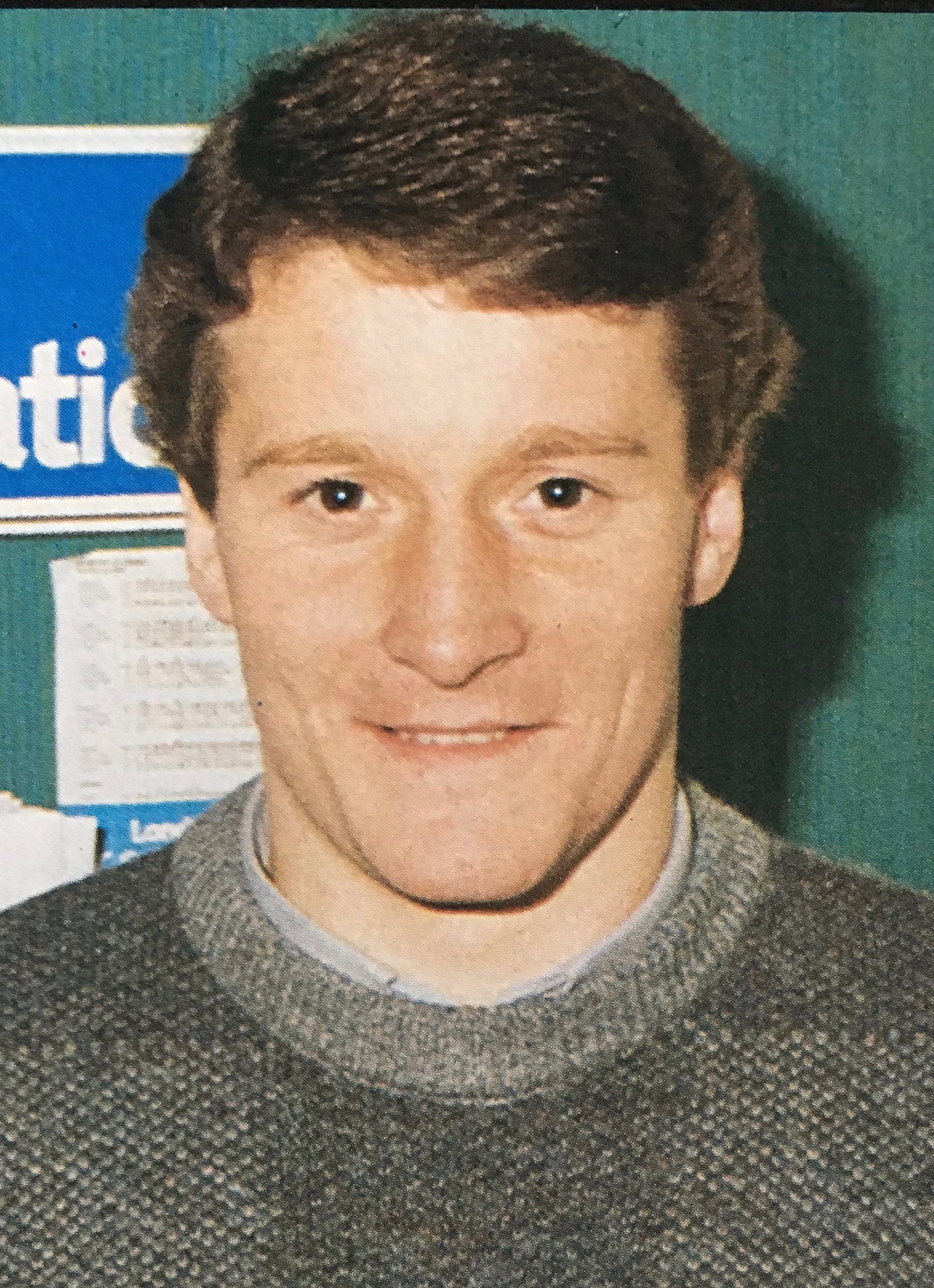
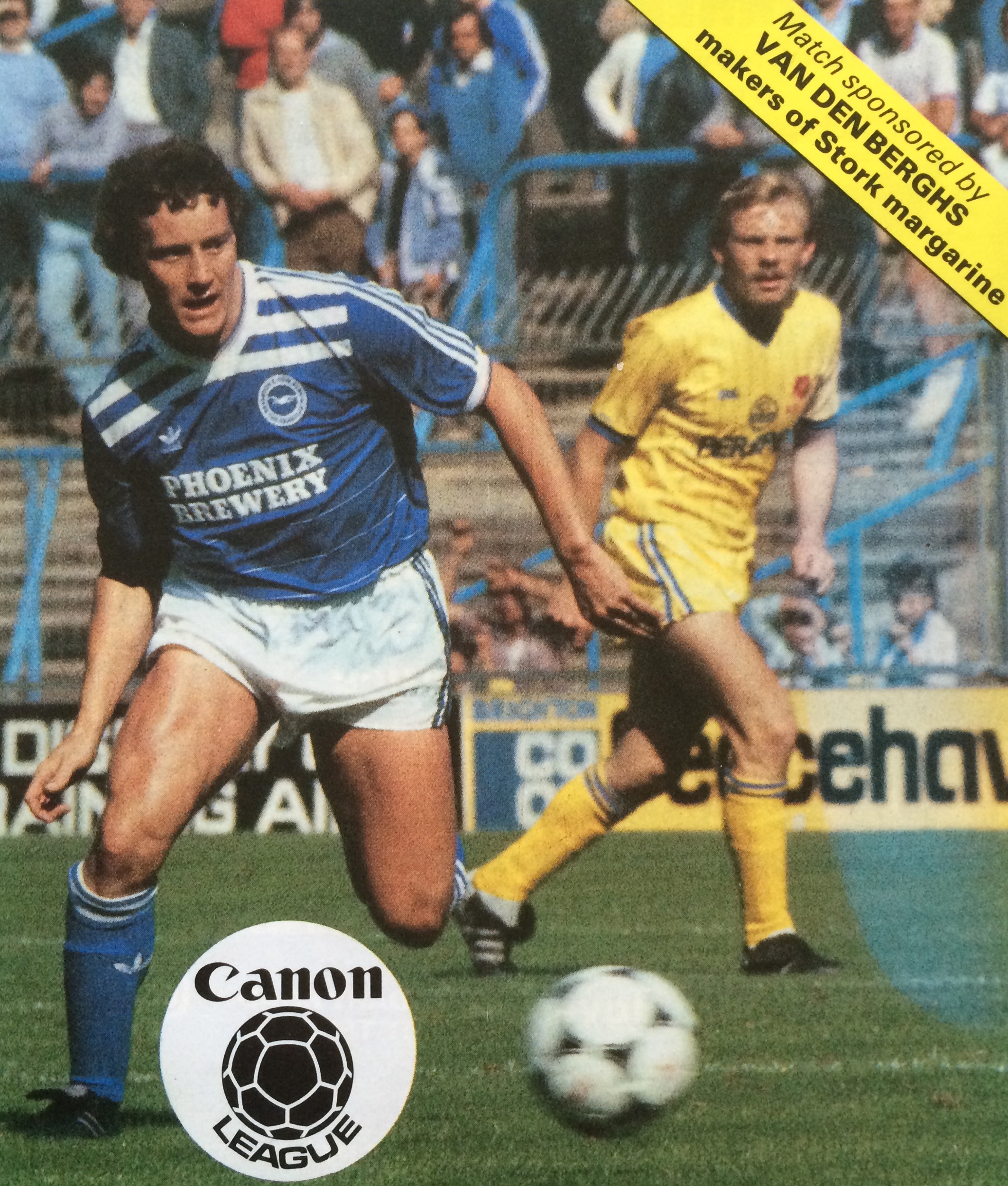
Peter Taylor disciple Junior Lewis helped Seagulls to promotion

JunLewJUNIOR LEWIS was a loyal disciple of Peter Taylor, linking up with him as a player or a coach at EIGHT different clubs.

Although he didn’t win the support of too many Leicester City fans during his time with the Foxes, his arrival for the final third of Brighton’s 2001-02 season helped them to claim the third tier crown.

One particular game stands out in the memory, and it came on a rain-soaked night against league leaders Reading at the Withdean Stadium.

I recollect watching the action from the front row of the covered east side of the ground – the roof affording no protection whatsoever as the rain swept in.

Reading hadn’t lost in 12 games but with Bobby Zamora in sparkling form, Albion beat the Royals 3-1.

Lewis marked his debut with a simple tap-in after Zamora had set him up. The striker with the golden touch had scored his 26th goal of the season to give Albion the lead on 59 minutes and then provided the assist for an unstoppable strike by Steve Melton.

Five days later, Lewis scored the only goal of the game at home to Huddersfield  and, as promotion came properly into view, boss Taylor talked to the Argus about the difference he had made to the side.

Brighton went on to overtake Reading to claim the title, rounding off the season with a 1-0 win away to Port Vale. Lewis finished with three goals in 15 appearances as the side Taylor inherited from Adams lifted the championship trophy.

lewis applaudsBorn in Wembley on 9 October 1973, Lewis was on Fulham’s books as a youngster and made it through to the first team, his debut coming as a substitute in a league game against Burnley in October 1992.

But he played only six games at first team level before dropping into non-league and playing for three years with Dover Athletic – where he was first managed by Taylor.

He went on to play for Hayes and Hendon before getting back into league football under Taylor at Gillingham.

In a season and a half with the Gills, he played 59 games before Taylor, by now manager of Premiership Leicester City, took him there initially on loan and then as a permanent signing in 2001.

Although he was a Leicester player for three years, he managed only 30 appearances for the Foxes because Taylor’s successors as manager sent him out on loan.

After the temporary move to Brighton, Lewis had two spells on loan at Swindon Town the following year, then, in 2004, he was reunited with Taylor at Hull City, initially on loan and then on a permanent basis.

After 52 appearances for Hull, he had fleeting spells with Brentford, Milton Keynes Dons, Edgware Town and Stevenage Borough.

He joined Taylor’s backroom staff as a coach at Wycombe Wanderers and then moved in a similar capacity when Taylor was appointed as boss at Bradford City, the eighth club where they’d worked together.

“I’ve worked with him at every level from the Conference right up to the Premier League and been lucky enough to get promotion at a lot of those clubs,” Lewis told the Bradford Telegraph and Argus. “I know how the manager works and how he likes things done from playing for him and working under him as a coach.”

In a FourFourTwo magazine article by Nick Moore on 19 February 2016, Lewis reckoned Taylor always sought him out because he reminded him of his younger self.

“We were both two-footed, but mainly left-footed, and we relied on a similar trick – feinting to cross but chopping back onto your right foot,” Lewis explained. “I watched a video of him play once and I thought: ‘I do that’.

“He trusted me to keep things ticking over. I fitted his philosophy, and he brought the best out in me. But I didn’t assume that when he moved, I’d automatically follow. When he took over Leicester in the Premier League I did really hope I’d join, but I didn’t hear from him for ages.”

Lewis also reckoned operating in a difficult position was a way to become a favourite. “I was always a two-footed holding midfielder. There aren’t a lot of us around, compared to more attacking players, probably because you don’t get as much glory.

“So, having me in that role meant Peter always knew he had one position sorted.”

Before joining Taylor at Bradford, Lewis had continued playing at Welwyn Garden City and after leaving Bradford pulled on the boots once more as player-coach back at Hendon in 2014.

To the astonishment of many, Lewis was named first team coach of Leeds United in June 2014, when the relatively unknown Dave Hockaday was appointed their manager, but the role lasted only a couple of months as the pair were sacked by controversial owner Massimo Cellino after a poor start which included a 2-0 defeat at home to Brighton on 19 August.

In 2015-16 Lewis was coaching Canvey Island before moving on to become first team coach at Barnet, when former Seagull Darren Currie took over as boss from the veteran John Still.  Lewis and Currie were relieved of their duties at Barnet in August 2020 when the club had to restructure after missing out on promotion back to the League.

‘Dynamic and energetic’ international Keith Andrews wanted longer Brighton stay

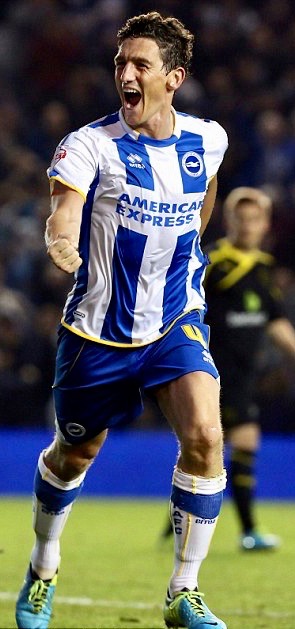
15486REPUBLIC of Ireland international midfielder Keith Andrews was something of a revelation during a season-long loan at Brighton & Hove Albion.

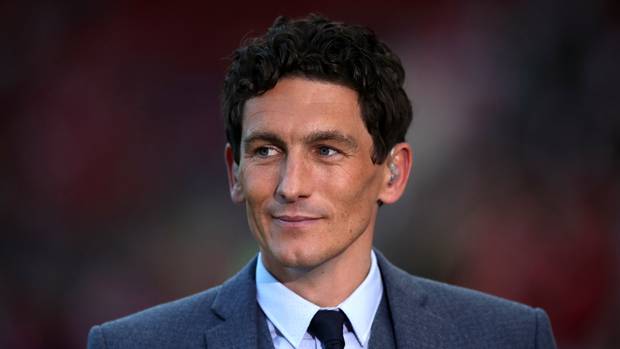
Now plying his trade as a pundit for Sky Sports, Andrews had previously played for the other Albion as well – West Bromwich – although his stay there was even briefer than his time with the Seagulls.

With the looming expectation that back-to-back Player of the Season Liam Bridcutt would shortly follow old boss Gus Poyet to Sunderland (which eventually happened in January 2014), Brighton turned to Andrews to cover the defensive midfield slot in 2013-14.

Arriving at the Amex in August 2013 just short of his 33rd birthday on a season-long loan from Bolton Wanderers, Andrews was not at all happy with the way the Trotters ‘disposed’ of him, telling bbc.co.uk: “Nobody really had the decency to even phone me as I was leaving.

“I think I deserve a little bit more respect than that, I suppose. I always felt I’d done things well at that club, been very professional and treated people like I like to be treated.

“To end on that note was a bit sour but you can’t be surprised by anything in football.”

Even if Seagulls supporters viewed his signing as somewhat underwhelming, Andrews himself was delighted and excited, saying: “If it wasn’t the right move, I certainly wouldn’t have gone and I didn’t feel any pressure to leave.

“It was a move that genuinely excited me. To come to a club that plays in the fashion and style that Brighton do was something that really appealed to me.

“I have still got a huge appetite for the game and I feel I can have a big impact here. I have come into a squad that has a wealth of experience and ability that will make me be the player I know I can be.”

And boss Oscar Garcia sought to dispel any doubts, telling bbc.co.uk: “He is a player with experience at the top level of the English game and international football – including World Cups and European Championships.

“Keith is a player who I know will enjoy the way we like to play. He is a dynamic and energetic player.”

It wasn’t long before supporters began to be pleasantly surprised by Andrews’ contribution on the pitch, and off it the new signing also began to show his aptitude for handling the media.

As early as September 2013, Andrews was speaking eloquently about his teammates, for example telling BBC Radio Sussex his views about striker Leonardo Ulloa.

“He is a handful and has got a bit of everything,” he said. “He is a big player for us at the moment as he is really leading the line on his own. He allows us to bring other players, such as Bucko [Will Buckley] and Ashley Barnes, into play.

“He is very effective and I’ve seen first hand in training how strong he is and what a handful he is to deal with. I have only been here a few weeks but I have been very impressed by the mix we have got in the dressing room. We’ve got experience, youth, foreign, English and Irish.

“It is a good atmosphere and if we hold onto what we have got I am more than confident we can have a very successful season.”

As the months progressed, Andrews became an established part of the side which Garcia ultimately led to the play-offs. In December 2013, Andrews made use of the platform offered by the Daily Mail’s Footballers’ Football Column to expand on his enjoyment of his time at the Amex.

“The club made a big impression on me when I played against them for Bolton last season, in terms of their style of football and their new stadium, and when they came in for me it was a very easy decision in footballing terms,” he said. “It’s not an easy decision, moving 250 miles away from your home in the north-west, but Brighton made it very clear they wanted me and Bolton made it clear they didn’t.

“It came out of the blue, but I felt it was a chance to be a part of something really exciting.”

Garcia’s decision to quit after the failure to get past Derby County in the play-off semi-finals was the catalyst for a number of changes in the playing personnel, although Andrews hankered to make his move to Sussex permanent having been involved in 37 appearances since his temporary move.

keith ands v sheff wedHe registered one goal during that time, an 89th minute equaliser at home to Sheffield Wednesday in October.

In a May 2014 interview with the Bolton News, he said: “It would be something I’d be interested in. When the people are so good to you and make you feel so welcome, the fans have been fantastic, it’s a one-club town.

“No-one supports anyone else and the attendances are something that I haven’t experienced in football for a long, long time. We’ve got the best attendances in the whole league although other clubs in the league are supposedly bigger.

“It’s a club I would like to stay involved in but contract-wise I’m contracted to a different club next season, I’m only here on loan. These things are not always in your hands and you can’t always dictate where you go and how your career pans out.

“But I would certainly like to stay on at Brighton into the future because I have thoroughly enjoyed it this year.”

The midfielder also reflected positively on his time at the Amex in a blog post for Sky Sports, pointing out: “Although I was only at the Amex for one season I have a lot of affection for the club as I think they try to do things in the right manner for the club to evolve with real sustainability for years to come.

“There are good people involved behind the scenes there, none more so than in the academy. Last season I worked closely with the academy manager John Morling and the development coach Ian Buckman as I was in the middle of my UEFA ‘A’ licence and they couldn’t have done any more to help me.

“It was a great experience to work with them as they prepared weekly and monthly schedules with the rest of the coaches and sports scientists to ensure the young lads had the best chance of developing their games, both technically and physically.

“I was amazed at the schedule a 14-year-old at the club had and a little envious to be honest as it certainly wasn’t like that in my day!”

Born in Dublin on 13 September 1980, Andrews came through the ranks of Drumcondra side Stella Maris before being picked up as a junior by Wolverhampton Wanderers, where he stayed for six years.

He made his first team debut on 18 March 2000 in a 2-1 win at Swindon and at 21 was Wolves’ youngest ever captain in a game against QPR, but he was sent out on loan on three separate occasions, playing briefly for Oxford United, Stoke City and Walsall.

After 72 appearances for the Molineux side, in 2005 he moved on to Hull City, where injury blighted his only season with them He then had a two-year spell with Milton Keynes Dons, where he had a productive midfield partnership with Alan Navarro, and he assumed the captaincy of Paul Ince’s side.

His second season was a huge success as the Dons won promotion to League One; Andrews scoring the goal which secured the success. He also scored in the club’s 2-0 win over Grimsby Town in the Football League Trophy at Wembley.

Andrews was chosen in the PFA Team of the Year, won the League Two player of the Year Award and was listed 38th of FourFourTwo magazine’s top 50 Football League players.

The Irishman followed his old Dons boss Ince to Premier League Blackburn Rovers in September 2008 and, two months later, at the comparatively late age of 28, made it onto the international scene with Ireland, making his debut as a substitute in a 3-2 friendly defeat against Poland.

It was the first of 35 international caps. He was involved in Ireland’s 2010 World Cup qualifying campaign and although the country was winless at the 2012 European Championship in Poland and Ukraine, Andrews was named FAI Player of the Year for 2012.

Meanwhile, Andrews’ third season at Blackburn (2010-11) had been curtailed by injury, restricting him to just five Premier League appearances, and in August 2011 he went on a half-season loan to Ipswich Town.

A permanent switch looked on the cards but on deadline day of the January 2012 transfer window he ended up joining West Brom on a six-month deal. After 14 Premier League appearances for the Baggies, his contract came to an end and his next port of call was newly-relegated Bolton Wanderers, who he joined on a three-year contract in the summer of 2012.

Owen Coyle was the manager at that time but his tenure came to an abrupt end in October that year. Although Andrews played 25 times under his successor, Dougie Freedman, the following season he was edged out by the signing from Liverpool of Jay Spearing.

After his loan season with Brighton, Andrews had a similar arrangement at Watford but he didn’t enjoy the same success there and ended up curtailing the deal and going back to MK Dons on loan for the latter part of the season.

When the curtain came down on his playing career at the end of the 2014-15 season, he’d completed 413 career appearances and scored 49 goals.

He became first team coach at MK Dons and harboured ambitions of becoming manager when Karl Robinson departed, but he was overlooked and began working as a coach with the junior Irish international teams, and turned to punditry with Sky Sports.

ipanews_045350c2-6dc7-4ca9-82e8-cb2036cb6b94_1

Goalscorer Craig Maskell among Town’s top 100 crowd favourites

Screenshot

CRAIG MASKELL had a decent near 1 in 3 goalscoring record for Brighton & Hove Albion but he’s possibly best remembered for a shot that didn’t go in.

When Maskell’s curling effort in the relegation decider at Hereford United on 3 May 1997 struck the post rather than going in, fortunately Robbie Reinelt was on hand to slot home the rebound to earn Albion the draw that ensured they stayed in the league.

Born Craig Dell Maskell on 10 April 1968 in Aldershot, perhaps it was his destiny to play for Southampton! (for younger readers, The Dell used to be Southampton’s home ground).

Indeed, Maskell started his professional career at Southampton, signing pro forms just after his 18th birthday. But he appeared in only six league games for the Saints before joining Huddersfield Town in May 1988 for a £20,000 fee.

His new teammates included former Seagulls Chris Hutchings and Kieran O’Regan and the goals really flowed for him in the 1988-89 season when he scored 28 times in 46 games.

Arguably his most memorable match came in the 1989-90 season when he scored four in a 5-1 win at Cardiff City, thus becoming only the third player in Huddersfield’s history to score four in an away match.

By the end of that season, he’d scored an impressive 43 goals in 87 games for Town and, at the time of Huddersfield’s centennial in 2006, Maskell’s prolific goalscoring for them led to his inclusion in The Fans’ Favourites, a book listing their top 100 Town players.

That prolific scoring record earned him a £250,000 move to Third Division Reading. He scored in a season-opening 3-1 win at Exeter City and had 10 goals by the season’s end as the Royals completed a mid-table finish under player-manager Mark McGhee, who later became Brighton boss.

With John Madejski settling in as the new owner, and McGhee finding his feet in the managerial chair, the 1991-92 season saw Reading finish 12th. Maskell ended up top scorer with 16 goals in 35 appearances (plus five as sub), three of them coming in a 4-2 win away to Darlington.

In the summer of 1992, player-manager Glenn Hoddle paid £250,000 to take Maskell to second tier Swindon Town (where he had previously spent a month on loan in 1987).

It was to prove a memorable season for the Robins as they won promotion to the top tier for the first time in their history, via a 4-3 play-off victory over Leicester City. Maskell was leading scorer with 23 goals in a side captained by central defender Colin Calderwood, later Chris Hughton’s assistant manager at Brighton.

Maskell made his Robins debut on the opening day of the 1992-93 season, in a 1-0 win over Sunderland, and scored his first goal in a 2-2 draw at Wolves in late August. He went on to net eight times in the opening ten games of the season before suffering a mini goal drought between December and April.

Nevertheless, Maskell bagged two in a 6-4 win at Birmingham before scoring in both legs of the play-off semi-final against Tranmere Rovers. He then scored Town’s second at Wembley, thumping a left-footed drive off the post and into the net.

Although he started the first two matches amongst the elite, he then struggled to get game time in the Premier League, often warming the bench as Jan Age Fjortoft,  Andy Mutch and Keith Scott started ahead of him.

He scored twice in a 3-3 draw at Sheffield Wednesday on 29 December 1993, but he left the club in February 1994, returning to former club Southampton for a £250,000 fee.

However, Saints already had a fair bit of striking talent in their ranks and once again he found his opportunities limited, this time by the likes of Matt Le Tissier, Neil Shipperley and Gordon Watson. As a result, he only managed 17 Premier League starts.

He had a five-game loan spell at Bristol City but then joined Brighton on 1 March 1996, making his debut the following day against Brentford. He didn’t have to wait long for his first Albion goal, scoring against Oxford United on 12 March and then hit two four days later at home to Hull City.

The off-field shenanigans at Brighton were a big distraction at the time but on the pitch Maskell managed to score a total of 20 goals in 69 games, crucially netting 14 of them in 37 games during that make-or-break 1996-97 season.

After 17 games the following season, he was one of five senior players whose contracts were terminated early, in December 1997, as the cash-strapped Seagulls in exile at Gillingham were forced to make drastic cuts to survive. Maskell had a brief spell playing for Happy Valley in Hong Kong before linking up with Leyton Orient for 18 months.

It is recorded in a number of places that Maskell decided to quit the professional game while walking off the turf at Wembley having played as a substitute in the Orient team beaten by Scunthorpe United in the Nationwide League third division play-off final.

“I turned to one of my team-mates and said: ‘That’s enough’,” Maskell said. “I’d spent too much time away from my family and too little time on the pitch at Orient.”

He had scored just twice in 23 games for the O’s, however, he continued playing at non-league level for several years, turning out for Hampton & Richmond Borough, Aylesbury United and Staines Town, as well as being coach and assistant manager to Steve Cordery.

In an article in The Times on 16 November 2000, just prior to a FA Cup first round tie between Hampton & Richmond Borough and Barnet, Maskell talked about what he had learned from the various managers he’d played under.

“I look to Glenn Hoddle for his ability to create flair in attack and Lawrie McMenemy because he was so good at man-management.

“Most of my ideas on defensive organisation I learnt from Dave Merrington, who was youth-team coach at Southampton. He was fantastic. You just have to look at the players he found for the club, not just myself but Matt Le Tissier, Alan Shearer, the Wallaces and another dozen or so less well-known players who had good careers.”

Ken Beamish dumped by Clough without a word

1-k-beamish-btn-goalSWASHBUCKLING Ken Beamish was a good old fashioned centre forward who crowds appreciated for his never-say-die attitude in pursuit of goals.

He mostly played in the third tier but had three seasons at the next level up (one was Brighton’s disastrous 1972-73 season and he had two with Blackburn).

He twice won promotion from the old Third Division – with Brighton in 1972 and Blackburn in 1975 – and scored 198 goals in 642 league and cup games between 1965 and 1982.

Born in Bebington on 25 August 1947, Beamish started his career with nearby Fourth Division Tranmere Rovers in the 1965-66 season and was top scorer in two of his six seasons with the club, helping them to promotion to the Third Division in 1966-67.KB Tran

He joined Brighton on transfer deadline day on 9 March 1972; manager Pat Saward having set off for the north west from Sussex at 5am to ensure he captured his man before the 5pm deadline that existed at the time.

When Beamish signed for £23,000 (plus the surplus-to-requirements Alan Duffy), Albion had just scored 13 goals in three games so supporters were baffled as to why he was needed.

After two substitute appearances, Beamish made his full debut in the oft-talked about televised game v Aston Villa and then got off the mark in the 3-1 Good Friday win over Torquay United (see picture).

He contributed six goals in 14 games, including last minute winners in two games in the same week, against Rotherham and Rochdale.

In an interview in Goal magazine after promotion was clinched,  Saward explained why he had signed him when the team was already riding high and looking a good bet for promotion.

Aiming a bit of a sideswipe at the incumbents Willie Irvine and Kit Napier, Saward said: “We had plenty of skilful players up front but none had the devil in him. We wanted more thrust. Beamish gave us it.”

Reporter David Wright wrote: “He added the final spark to an ever-improving Brighton side that, after promising a great deal for two-thirds of the season, finally showed their true force in the last two months of the season when they enjoyed a marvellous run of 12 games without defeat.”

Saward was delighted with his signing and said: “Ken shows great courage and has an insatiable appetite for scoring goals. He would die in the box for you. He goes in where angels fear to tread. The whole side never know when they’re beaten – something they proved over and over again – and Beamish epitomises this. He battles away from the first whistle to the last.”

There was clearly mutual admiration because Beamish reflected in an Albion matchday programme how Saward had helped him to become a better player. “He really put in the work with me on the training pitch,” he said. “My ball control was never the best but he worked hard with me to make sure it improved. He was a good man.”

In Brighton & Hove Albion Supporters’ Club’s official souvenir handbook, produced to celebrate the promotion, coach Ray Crawford, the former England international striker who was part of Saward’s backroom team, said: “I don’t like to single out players because football is a team game, but I must on this occasion. Ken Beamish added the final bite up front, and those vital goals that he scored helped us into Division II. What a player this boy is – he never gives up!”

Unfortunately for Beamish, the goals were harder to come by in the division above, particularly in a struggling side and with a new strike partner in the shape of experienced Barry Bridges. Beamish’s scoring ratio dropped to one in four during 1972-73 and, back in the third tier the following season, it didn’t get much better.

He kept his place in the side after Brian Clough’s arrival in October 1973 but 12 goals in 45 games didn’t impress a manager used to better things and he found himself part of the former Derby manager’s huge clear-out of players – and he was none too happy at the manner of it.

A contributor to Jonathan Wilson’s biography about Clough, Nobody Ever Says Thank You, Beamish spoke about how most of the players failed to get any rapport going with the manager because he was seldom around. “I played most of the games but we never saw much of Clough,” he said. “We saw him on matchday and Friday.”

Clough didn’t help matters when he missed a game altogether so he could go to America to watch a Muhammad Ali-Joe Frazier fight. That left him open to criticism but Clough was not remotely bothered. Instead he went on the front foot and openly criticised the players for lacking moral courage and declared: “There is a gale blowing through this club and the players concerned are about to feel the draught.”

That one of them was Beamish appeared harsh at the time and the manner of his departure clearly left a nasty taste in the mouth.

Beamish told Simon Levenson in his interview for Match of My Life (Know The Score Books Ltd): “I knew my time was up when I wasn’t included in the end of season tour to Torremolinos. We’re all grown men and there are ways of telling people that you’re not part of their future plans. He could have told me face to face, but instead I discovered I’d been transfer listed when my neighbour told me he’d heard it on the radio.”

A subsequent Albion matchday programme interview revealed his dismay at the circumstances, which understandably made it easy for him to leave.

“I never spoke to anyone at Brighton between the end of the season and signing for Blackburn,” he said. “That was the disappointing thing because I’d enjoyed my time at Brighton and made some good friends there.

“It was a sad ending to a happy period in my life.”

Clough’s loss was Gordon Lee’s gain. Lee, who would go on to manage Everton, paid £26,000 to take Beamish to Blackburn Rovers – the start of an association which continues to this day.

After scoring 19 goals for Blackburn in 86 appearances between 1974 and 1976, including promotion in 1975, he then had two years at Port Vale – where he was the player of the year in 1977-78 – a year at Bury and a second spell at Tranmere. He ended his playing days at Swindon Town, where he originally went to become assistant manager to long-serving John Trollope – father of former Albion assistant manager, Paul.

When Trollope senior left Swindon, Beamish ended up taking over as boss for 15 months (as pictured below), from March 1983 to June 1984, but 1983-84 proved to be a nightmare season in Swindon’s history with them finishing 17th in the old Fourth Division, the lowest finishing position in their history.Beam Swin mgr

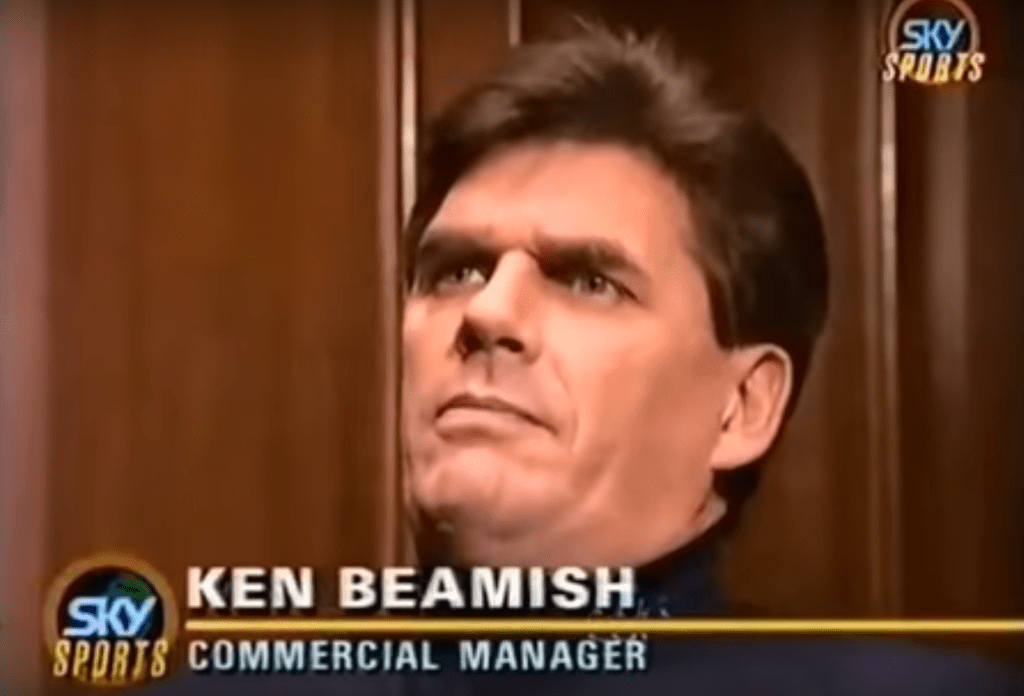
Beamish subsequently became commercial manager at Blackburn from 1986 until his retirement in 2012. He then became vice chairman of the Blackburn Rovers Former Players Association.

  • Pictures from my scrapbook show a great action shot of Beamish scoring against Torquay, as featured in a Brighton & Hove Gazette end of season publication, a portrait of him in Goal magazine. Dig the hairstyle, pear drop collar shirt and tank top in this Goal picture of him with his son. The Argus captured Ken’s elation as he celebrated Willie Irvine’s goal against Aston Villa. And the man himself signed the photo of him being interviewed. Below, interviewed in 1992 by Sky Sports.

Terry Connor had an eye for goal for Leeds and Brighton

Connor action 1TERRY CONNOR is a familiar face to today’s football fans as a loyal assistant manager to Mick McCarthy.

But Leeds United and Brighton fans of a certain vintage remember him as a pacy striker with an eye for goal.

His time with the Albion saw him at his most prolific with a record of almost a goal every three games (51 in 156 appearances) – form which earned him a solitary England under 21 cap as an over-age player.

Relegation-bound Brighton took the Leeds-born forward south in exchange for Andy Ritchie shortly after they had made it through to the semi-final of the 1983 FA Cup, but the new signing could take no part because he’d already played in the competition for Leeds.

If Brian Clough had allowed Peter Ward to have remained on loan to the Seagulls that spring, who knows whether Connor would have joined, but, when the former golden boy sought an extension of his loan from Nottingham Forest, which would have enabled him to continue to be part of the progress to Wembley, according to Ward in He Shot, He Scored, the eccentric Forest boss told him: ‘Son, I’ve never been to a Cup Final and neither will you’.

So the Connor-Ritchie swap went ahead and, with the rest of the team’s focus on the glory of the cup, the new arrival scored just the once in five appearances, plus two as sub, as the Seagulls forfeited the elite status they’d held for four seasons.

lpool goalConnor would have his moment of cup glory (celebration above) in the following season, though, as the TV watching nation saw him and Gerry Ryan score in a 2-0 win over Liverpool at the Goldstone; the second successive season Albion had dumped the mighty Reds out of the FA Cup.

Connor was best man when teammate Hans Kraay got married. Frank Worthington (right) was there too.

Born in Leeds on 9 November 1962, Connor went to Foxwood School on the Seacroft estate in Leeds. He burst onto the football scene at just 17, scoring the only goal of the game after going on as a sub for Paul Madeley to make his hometown club debut in November 1979 against West Brom.

connor leeds

“I got such an early break at Leeds because the club were rebuilding their side after those days when they were riding high,” Connor told Shoot! magazine. “Eddie Gray was still in the team when I came in. He was the model professional. It was terrific to have someone with his experience alongside you.”

Connor went on to make a total of 108 appearances for Leeds over four seasons, scoring 22 goals, before the by-then manager Gray did the swap deal with Ritchie.

In February 2016, voice-online.co.uk carried an interview in which Connor recalled racial abuse he received as a player.

“It was difficult for black players to thrive. I can remember going to many away games and there were bananas thrown on the pitch and `monkey’ chants from the stands,” he said.

“I remember receiving mail from Leeds fans telling me not to wear the white shirt, even though I was born and bred in Leeds. I had bullets sent to me and the police were called on a couple of occasions.”

Even so, the move to Brighton still came as a bit of a shock to him.

“‘I’d never imagined myself playing for anyone else but Leeds,” he told Shoot! at the time. “I was born and bred in the city. My parents and friends live there, and really Elland Road was a second home to me.”

Unfortunately for Connor, manager Jimmy Melia gave him the impression he was going to be forming a double spearhead with Michael Robinson. But after relegation, Robinson and several others from the halcyon days were sold, in Robinson’s case to Liverpool.

TC phoenixThe man who bought him didn’t last long either; Melia making way for Chris Cattlin in the autumn of 1983. It didn’t stop Connor making his mark in the second tier and despite having several different striking partners of varying quality, his goalscoring record was good at a time when the side itself was struggling to return to the top with the Cup Final squad being dismantled and under investment in replacements.

In his first full season, he missed only two first team games all season and was top scorer with 17 goals as Albion finished ninth in the league. His main strike partner Alan Young scored 12.

Connor got only one fewer in the 1984-85 season when the side finished sixth; the veteran Frank Worthington chipping in with eight goals in his only season with the Seagulls.

TC v Sunderland

In 1985-86 Connor had two different strike partners in Justin Fashanu and the misfiring Mick Ferguson but still managed another 16 goals, including four braces.

The disastrous relegation season of 1986-87 contained a personal high for Connor when, in November 1986, he was selected as an over-age player (at 24) for England under 21s and scored in a 1-1 draw with Yugoslavia.

He had formed a useful partnership with Dean Saunders but, as money issues loomed, Saunders was sold to Oxford and soon, after being voted player of the season, Connor also left as the Albion were relegated; Barry Lloyd being unable to halt the slide back to the third tier.

Reflecting on his time at Brighton in a matchday programme interview, Connor said: “I really enjoyed my football, playing on the south coast. We also loved the lifestyle and my eldest daughter was born there, I loved playing in the atmosphere created at the Goldstone. There was a bond with the players and their partners, with Jimmy Melia and Mike Bamber, and it was like one big happy family.”

As Lloyd was forced to sell players, Connor returned to the top flight via a £200,000 move along the coast to newly-promoted Portsmouth. A terrible run of injuries plagued his Pompey career meaning he only managed 58 appearances and scored 14 goals over the course of three seasons.

A £150,000 transfer fee saw him join then Third Division Swansea City for the 1990-91 season and although he managed 39 appearances, he scored only six times.

Next stop was Bristol City in September 1991 for £190,000 but he scored only once in 16 games for the Robins. By the summer of 1993 he dropped out of the league to play for Conference side Yeovil Town and when he retired from playing he became a coach at Swindon Town.

John Ward took Connor as a coach to three clubs he managed, Bristol Rovers and City and then Wolverhampton Wanderers, where, across the reigns of several managers, he remained for the next 13 years. He worked at youth, reserve and first team level before becoming McCarthy’s assistant in 2008. He briefly took the reigns himself after McCarthy was sacked in early 2012 but, unable to halt the team’s relegation from the Premiership, reverted to assistant under the newly-appointed Ståle Solbakken for just four games of the new season before leaving Molineux.

Within three months, he resumed his role as McCarthy’s assistant when the pair were appointed at Portman Road. When McCarthy took over as the Republic of Ireland boss in November 2018, Connor once again was his assistant and in 2020 the pair found themselves at the top Cypriot side APOEL. In early 2021, McCarthy and Connor were back in tandem at Championship side Cardiff City.

In the 2018-19 season, Connor had the chance to work with the England under 21s when the FA decided to provide placements for BAME coaches

Did Chris Ramsey’s injury alter outcome of 1983 FA Cup Final?

2-near-post-guardBRIGHTON & HOVE Albion’s May 1983 FA Cup Final clash with Manchester United was historic for the club and for their 21-year-old right back it was even more eventful.

Who would have known that former Bristol City apprentice Chris Ramsey’s ignominious departure from the field in a firemen’s lift on Glen Wilson’s shoulder would more or less be the end of an all-too-brief playing spell in the top echelons of the English game?

Might the match – and Ramsey’s career – have panned out differently if it hadn’t been for that diabolical tackle by Norman Whiteside?

Trouble had been brewing in the weeks leading up to the final and the national media, looking for every possible angle to pick at, had singled out Ramsey for criticism. Did that stoke the fire?

Let’s rewind a little and explore what happened.

Born in Birmingham on 28 April 1962 , Ramsey, whose father came to the UK from St Lucia, was one of two boys and five girls. Rejected by Charlton Athletic as a schoolboy, he became an apprentice at Ashton Gate but was then released and, after a successful trial, Brighton took him on.

The 1980-81 season was Albion’s second in the top division and, as it drew towards its close, it was looking increasingly likely they were heading for relegation.

Manager Alan Mullery was openly criticising his players for their efforts and his big ally off the field, vice-chairman Harry Bloom (current chairman Tony Bloom’s granddad) had died of a heart attack on the team coach on an away trip to Stoke.

Something had to change and, at the tender age of 19, Ramsey was called up from the reserves and plunged in at the deep end.

In three of the last four games, he took over the no.2 shirt after Mullery switched John Gregory from right back into midfield. Ramsey’s debut came in a crucial Easter Saturday clash away to rivals Crystal Palace when, released from the shackles of defending, Gregory scored twice in a 3-0 win. Ramsey also played in the wins over Sunderland away and Leeds at home.

The Seagulls stayed up by the skin of their teeth and Evening Argus reporter John Vinicombe said in his end of season analysis that Ramsey had been “a revelation” in those three games.

Within a matter of weeks, Mullery quit as manager in the furore over chairman Mike Bamber selling Mark Lawrenson to Liverpool (after Mullery had already agreed a deal to sell him to Manchester United).

Gregory was sold to QPR for £300,000 but, far from that move opening up an opportunity for Ramsey, Mullery’s replacement Mike Bailey brought in on a free transfer from Loftus Road the experienced Don Shanks, who was immediately installed as the first choice right back.

Indeed Bailey froze out Ramsey for the following 19 months! At one point he was transfer listed but it was Bailey who departed the Goldstone first – his sacking working to the advantage of the young defender.

When George Aitken and Jimmy Melia took over in December 1982, Ramsey was instantly promoted from the reserves and seized his opportunity.

In a profile in an Albion matchday programme in February 1983, Ramsey told Tony Norman: “Like any other young apprentice, my dream was to play in the First Division. I must admit that even after coming to Brighton, I had times when I wondered if I’d make it. But now I’ve got my chance and I’m keen to make the most of it.”

In one of the most comprehensive profiles on Ramsey, former Brighton teammate, Andy Ritchie, told Adam Ellis of The Football League Paper: “He was quite a shy lad back then but he had everything you want in a full back. Aggression, pace, agility – and he could tackle like a demon.”

These were the attributes that Melia appreciated too. In a Daily Mail preview of the Norwich quarter final, Melia told reporter Brian Scovell: “The other players love playing with him. He’s a great competitor, tackles well and uses the ball with a bit of style.

“I’m pleased he’s taken his chance. He deserves to play at Wembley if we manage to get there.”ramsey + mel

As it turned out, Ramsey’s place was in jeopardy because of two sendings off in the league in April which led to him being banned for the semi-final against Sheffield Wednesday at Highbury.

After being sent off in a 2-1 home win over Spurs, Terry McNeill reported in the News of the World: “Ramsey was lucky to stay on earlier after bringing down Mark Falco in a probable scoring position. When he took the striker again from behind, there was no escape.”

The 20-year-old Ramsey was fairly phlegmatic about the situation and told Alex Montgomery of The Sun: “Whatever I did, I did for the club. You can’t think about Cup games when you are struggling for points at the bottom of the First Division.”

His second dismissal, along with Coventry’s Steve Jacobs (who later played for the Albion under Chris Cattlin) after a scuffle in a 1-0 win at the Goldstone, was lambasted by one of the pre-eminent football writers of the day, Frank McGhee of the Daily Mirror.

“Can Brighton afford to field at Wembley a man who by then won’t have been able to play for 19 days?” he intoned. “And can they trust Ramsey not to sully soccer’s great state occasion by a moment of blind madness?”

Nevertheless, after Wednesday were beaten, Melia was happy to restore his first-choice right back to the starting line-up but one wonders now whether Ramsey had a sense of foreboding about how the big occasion would unfold.

Reflecting on those dismissals in the build-up to the final, he told The Sun’s Montgomery: “I just hope people aren’t looking for me. I’ll certainly be careful. I honestly don’t think I deserve the reputation which I’ve been saddled with in the last few weeks.

“The dismissals were just coincidences – nothing more than that. I know I am an aggressive type of player but that is my game. I always want to give 100 per cent for the club. The last thing I want is trouble at Wembley.”

After Albion had taken a shock lead through Gordon Smith’s header, United piled on the pressure and Ramsey headed a goalbound Gordon McQueen effort off the line.

But then came a pivotal moment early in the second half. Tim Carder and Roger Harris record it thus in their excellent Seagulls! The Story of Brighton & Hove Albion FC: “Whiteside went in high on Ramsey’s shin as the Albion full back cleared, and then trod on his ankle. The referee had a strong word with the United forward but did not signal a foul.”

The tackle had rendered Ramsey lame and while he tried in vain to carry on, two minutes later he wasn’t able to challenge for a ball to the far post which Frank Stapleton duly dispatched to equalise.

Those of us watching in the stadium, together with millions glued to TV screens around the world, saw Ramsey carried from the Wembley turf and, in those days of only one substitute, wondered how Albion would cope with a makeshift defender in the shape of Gerry Ryan.

After United took the lead through Ray Wilkins, Ramsey’s friend – and fellow England under-20 teammate – Gary Stevens’ equalised to send the game into extra time and ultimately a replay. Stevens was adamant about the impact Whiteside’s challenge had on the game.

In Match of My Life, edited by Paul Camillin, he said: “It was a bad tackle and perhaps cost us the game. In those days we only had one substitute and Gerry Ryan came on and did a great job at right back, even though he was a midfield player, but we did miss Chris because he had been having a great game.”

Whiteside was unapologetic about the challenge but Ramsey fumed to The Sun’s Montgomery: “It could have broken my leg. If I’d done it, I’d have been off. I just can’t understand how Whiteside got away with it.”

The injury deprived Ramsey of the chance to play in the replay five days later and, after that sad exit, his playing career never reached similar heights again.

Indeed he actually only played 37 games for the Albion, most of those coming in that 1982-83 season. He played only a handful of games in the following season and in August 1984 went on loan to Swindon Town before joining them permanently four months later.

There, he played alongside the likes of Sky Sports reporter Chris Kamara and one-time Albion assistant manager Colin Calderwood and clocked up over 120 appearances, including being part of Lou Macari’s Fourth Division champions in 1986 and Third Division play-off winners in 1987.

In August 1987, he joined Southend United but played just 13 games for them before persistent back injuries forced his early retirement at the age of just 26.

Some business ventures he embarked on didn’t work out and former Albion right back rival Shanks set him up with a trial for a team in Malta, Naxxar Lions, where he made a playing comeback.

Eventually the ongoing injury problems made him look to other ways of making a living. He coached in the United States but also started studying like crazy.

Amongst lots of qualifications, he got a Master’s degree at the University of North London in Health, Physical Education and Recreation (a qualification which enabled him to become a primary school teacher) and simultaneously obtained his UEFA coaching badges.

That Football League Paper piece records: “With an MSc, ten diplomas and myriad other qualifications, Ramsey is so highly educated that he actually sets the test for pro licence candidates.”
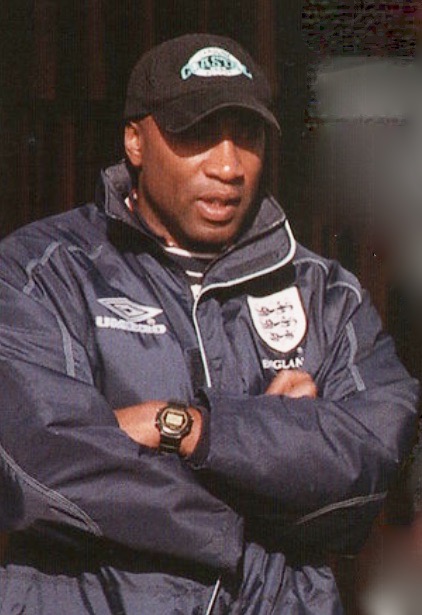
ramsey EngA stint in charge of youth development at Leyton Orient and coaching Newham Ladies was followed by an FA appointment as coach to the England under-20 side in the 1999 FIFA World Youth Championship when among the players under his direction were Ashley Cole, Peter Crouch, Matthew Etherington and John Piercy, who later played for the Albion. At the FA he learned from the likes of Les Reed and one-time Albion winger Howard Wilkinson.

He had a short and unsuccessful three-month spell as assistant to Ricky Hill at Luton Town, and he said: “Ricky Hill was a massive inspiration to me.”

Just when it appeared new offers had dried up, Ramsey got the chance to manage Charleston Battery in the USA, where he stayed for three years.

Winning the USL A-League (second division) with Battery in 2003 brought him to the attention of Spurs, and, as head of player development, many of the young players he coached in tandem with Les Ferdinand and Tim Sherwood were Harry Kane, Ryan Mason, Danny Rose, Nabil Bentaleb, Andros Townsend, Steven Caulker and Jake Livermore.

“He was massive for all of us,” French midfielder Bentaleb told The Football League Paper. “He believed in us, he encouraged us. He told the manager we were ready when everyone else believed we were not. He was not shy or scared of anybody and he knew exactly what he wanted.”

chris ramsey (spurs)In the Evening Standard in 2012, Spurs and England centre back, Ledley King, said: “He is one of the best coaches in the country. The youngsters love the way he works and they have really bought into his methods.”

Ramsey left Spurs in 2014 to take up a coaching role at QPR, and when Harry Redknapp left the floundering Hoops in February 2015, Ramsey stepped up to become a fully-fledged Premier League manager.

He was not able to halt Rangers’ relegation from the elite, though, and lasted only until November in charge of the side as they struggled to come to terms with life back in the Championship.

However, in January 2016, he was appointed technical director at QPR to oversee the club’s academy coaching and player development.

The club’s director of football, Ferdinand, told The Guardian: “While we were disappointed things didn’t work out with Chris at first team level, we were determined to retain his services. As such, we actually put a clause in his contract which allowed us to retain Chris’s services in a player-development role should things not work out for him as head coach.”

Ramsey finally left QPR in January 2024. By then 61, the head of coaching and technical director told the club website: “I have had a fantastic nine years at QPR and the club will always have a special place in my heart.”

The club’s chairman Lee Hoos said: “Chris has been a great servant to the club. I cannot thank him enough for his incredible hard work, dedication and guidance.

“However, as we thoroughly rationalise everything we do, and following very amicable discussions with Chris, it is felt this move is in the best interests of all parties. He will always remain a friend of the club.”

  • Shootthedefence.com did a face-to-face interview with Ramsey on 23 September 2016 which is well worth a listen as he talks in detail about his whole career.
  • In pictures from my scrapbook, Ramsey graces the cover of an Albion matchday programme; (top) he defends the near post during the 1983 FA Cup Final with Gordon McQueen in attendance; he is photographed by Tony Norman outside the Goldstone and criticised in the Daily Mirror by Frank McGhee.

Well-travelled Wilson’s highs and lows as player and manager

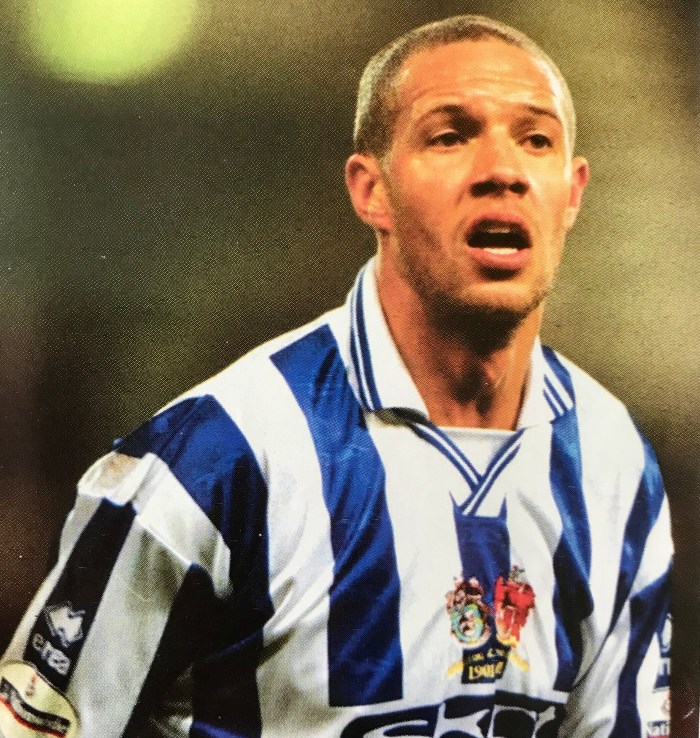
IMG_5140DANNY WILSON, a Brian Clough signing for Nottingham Forest who struggled for games at the City Ground, hit the ground running when he joined the Albion, initially on loan, in November 1983.

He scored twice on his debut – one a cheeky back-heel (below) – when Cardiff City were beaten 3-1 at the Goldstone, and manager Chris Cattlin was swift to praise the newcomer, writing in his matchday programme notes: “I think that this lad, in the right setting, will be a great asset to this club.” Prophetic words. By the end of the season, he’d scored 10 times, four of them penalties, in 26 appearances.

backheel“It was a fantastic move for me,” Wilson said in a retrospective matchday programme article. “I’d gone from being a regular at Chesterfield to being a bit part at the City Ground, surrounded by all these players who had won European Cups, people like Garry Birtles and Viv Anderson. But with the likes of Ian Bowyer ahead of me, I was never going to get first team football.

“That all changed at Brighton. There was a great feeling about the place, and with players like Jimmy Case and Joe Corrigan, no shortage of talent. Fortunately, I got off to a good start, and things went from there.”

Not long after Wilson made the temporary move permanent, in exchange for a fee of £45,000, he played in a memorable 2-0 FA Cup fourth round victory over Joe Fagan’s Liverpool at the Goldstone.

Liverpool went on to win the league, the League Cup and the European Cup that season but goals from Gerry Ryan and Terry Connor denied the Reds achieving the quadruple.

“That has to be my favourite memory from all my time at the Goldstone,” he said. “Back then, Liverpool were just awesome, and to beat them like we did was virtually unheard of. It was the first-ever FA Cup tie to be screened live on television which made it even more special.”

Born in Wigan on New Year’s Day 1960, Wilson hoped to begin his career with Sunderland, but he was released as a boy and instead started out with his hometown club, who were then non-league. He stepped into league football with Bury before moving on to Chesterfield (right).Wils -Chest

His performances for the Spireites earned him a step up to Brian Clough’s Nottingham Forest but he struggled to make it as a regular.

It was after a brief spell on loan to Scunthorpe that he joined the Albion.

Towards the end of his spell with Brighton, Wilson earned his first cap for Northern Ireland (courtesy of his mother having been born in Londonderry) and over the next five years he collected 24 caps for them .

Wilson scored 39 times in 155 games for the Albion before the cash-strapped Seagulls, relegated to Division Three in 1987, cashed in on someone who had become a valuable asset and captain of the side.


The midfielder was sold to Luton Town for £150,000 where, alongside former Albion teammate Steve Foster in 1988, he won the League Cup, scoring a late equaliser (below left) as the Hatters beat Arsenal 3-2 at Wembley.

It was from Luton that he moved on to then recently-relegated Sheffield Wednesday – a £200,000 signing by Ron Atkinson –  in the summer of 1990. He continued to contribute his fair share of goals, netting 11 in 98 appearances for the Owls, as well as being a League Cup winner again in 1991.

Wednesday were the penultimate and eighth club of his playing career, before he embarked on what would become a multiple-club managerial career of varying success. Over the course of 25 years, Wilson’s teams won trophies, promotions, and narrowly escaped relegation, and he managed more than a thousand games.

His first post in the hotseat was as a player-manager at Barnsley, who he steered into the Premiership and earned the Managers’ Manager of the Year award. Unfortunately he could not deliver the same degree of success when he returned to Oakwell between 2013 and 2015, although that spell did mark his 1,000th game as a manager.

His second managerial job had also involved a return to scenes of past glory when he returned to Hillsborough in the top tier between 1998 and 2000. The spell ended ignominiously in the sack, though, after pressure was applied by local MPs for his removal, shortly before Wednesday’s relegation from the Premier League.

After what he felt was an unjust sacking by Wednesday, he was given a four-year contract to take charge of Bristol City. That spell came to an end after Mark McGhee’s Brighton beat the Robins to win the Third Division play-off final in Cardiff.

Six months later, he was back in the game for MK Dons’ inaugural campaign in League One, but he couldn’t save them from relegation to League Two at the end of the 2005-06 season and was once again looking for a new employer.

Within a month, he took over the reins of Hartlepool United, who’d been relegated with MK Dons, and in 2007 led them to promotion back to League One.

After leaving Hartlepool in December 2008, he began a three-year spell as manager of Swindon Town. Amongst his many signings were Gordon Greer, who went on to become Albion captain, and prolific striker Charlie Austin, who had a knack of scoring for Southampton against Brighton.

In May 2011, Wilson controversially crossed the great Sheffield city divide to take charge of United – which didn’t go down too well with Blades followers. During his reign, he helped to turn a young Harry Maguire from a midfielder into a defender. Wilson led United to the League One play-off final in 2012 where they agonisingly lost on penalties to Huddersfield Town.

His era at Bramall Lane came to an end in April 2013 after a string of poor results but by the end of that year he was back in the game for that second spell at Barnsley.

When Wilson left Oakwell in February 2015, he was out of work for 10 months but had an early Christmas present that year, once again returning to one of his old clubs in a managerial capacity. It was on Christmas Eve that he was appointed manager of Chesterfield, then in League One, where he took over from his old Brighton teammate Dean Saunders.

He managed to keep the Spireites in the division but a final parting of the ways came in January 2017, and that was his last managerial post.

Wilson tells his footballing life story in I Get Knocked Down (Morgan Lawrence Publishing Services, 2022).

IMG_6054

Wilson close

IMG_6052

Wilson cover

Wilson prowled many a touchline as a manager

Pictures from Albion matchday programmes.