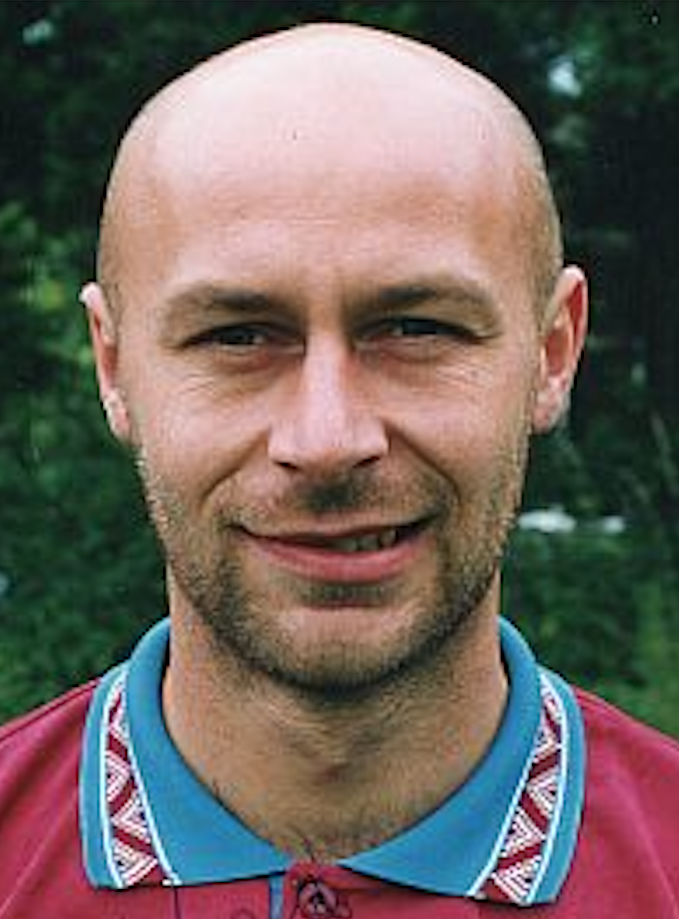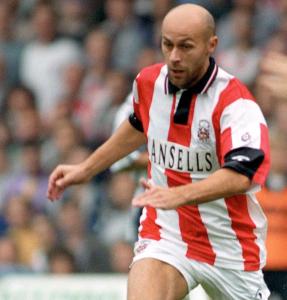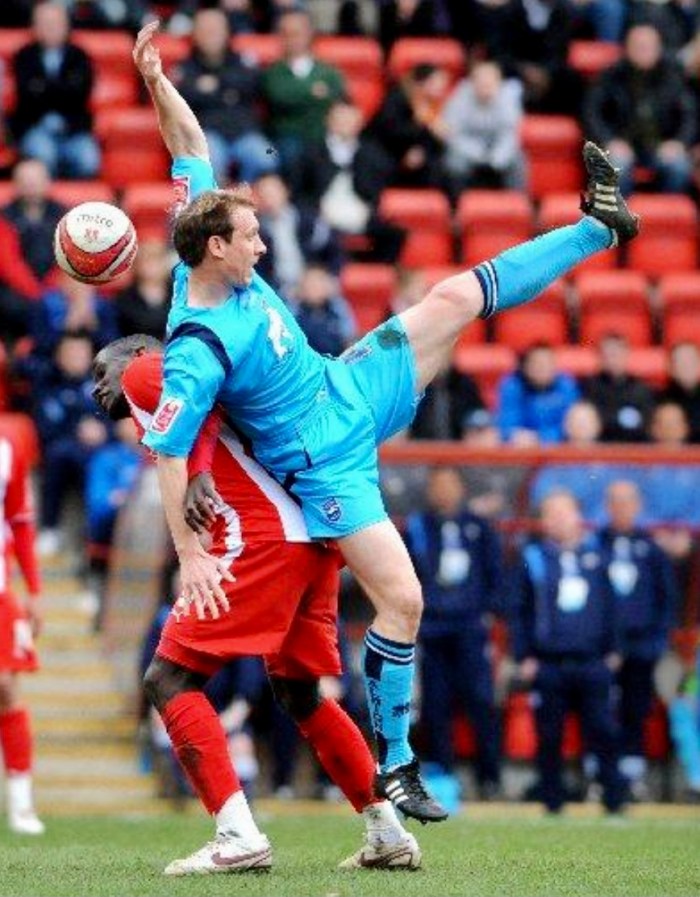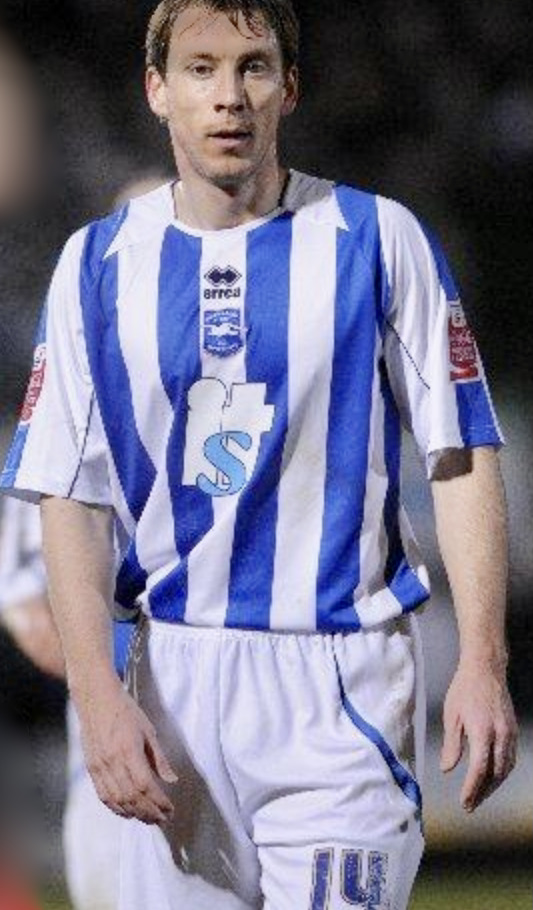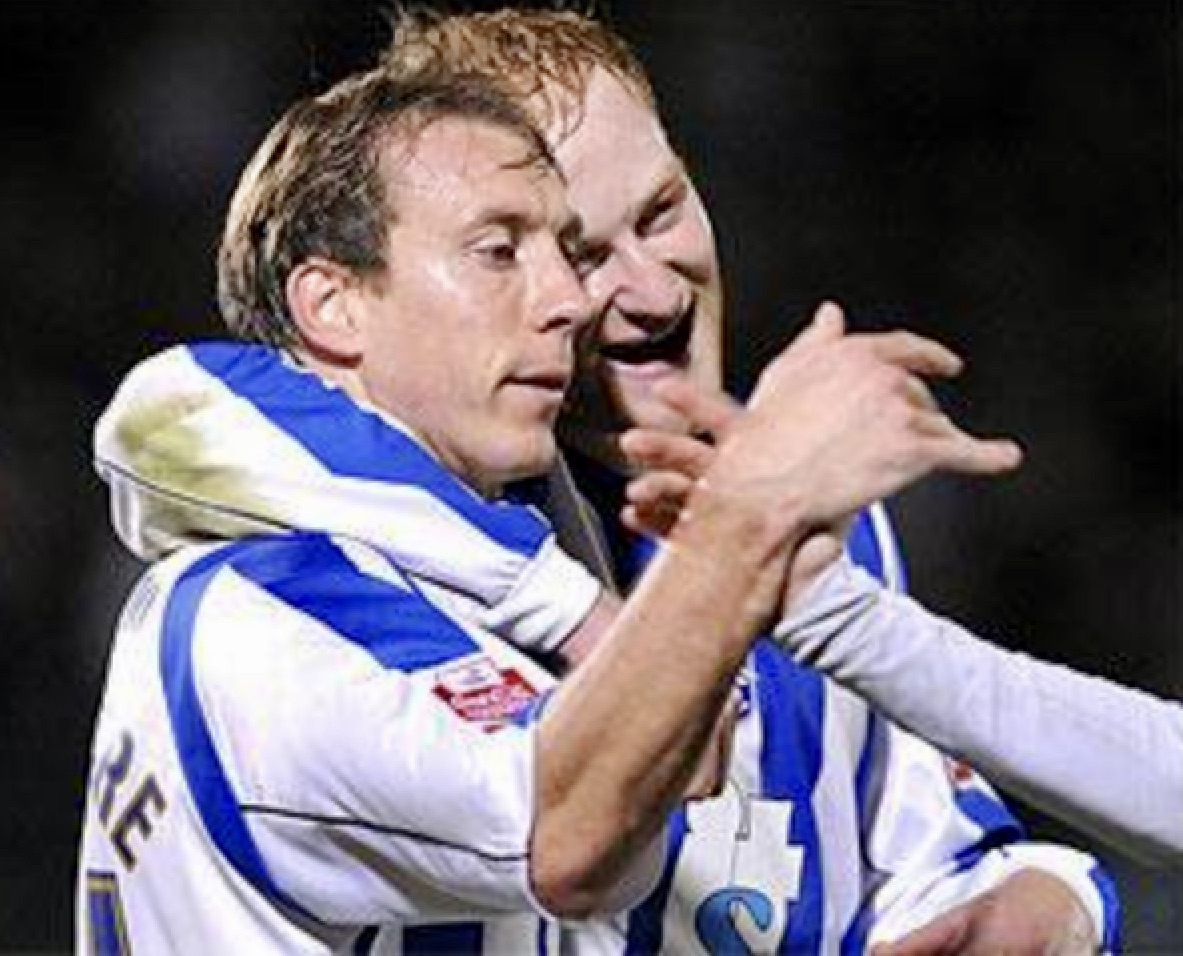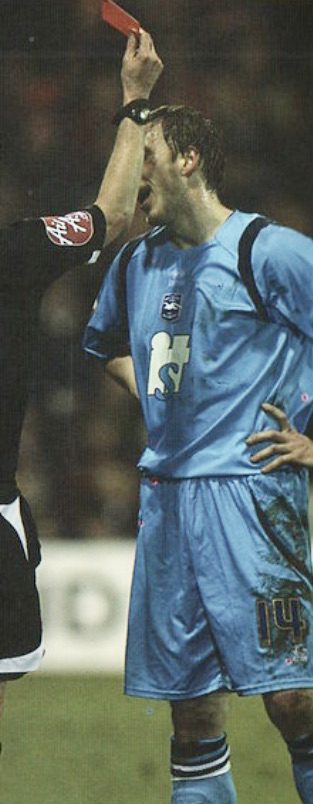
The goals that stood out for O’Reilly before a career in broadcasting

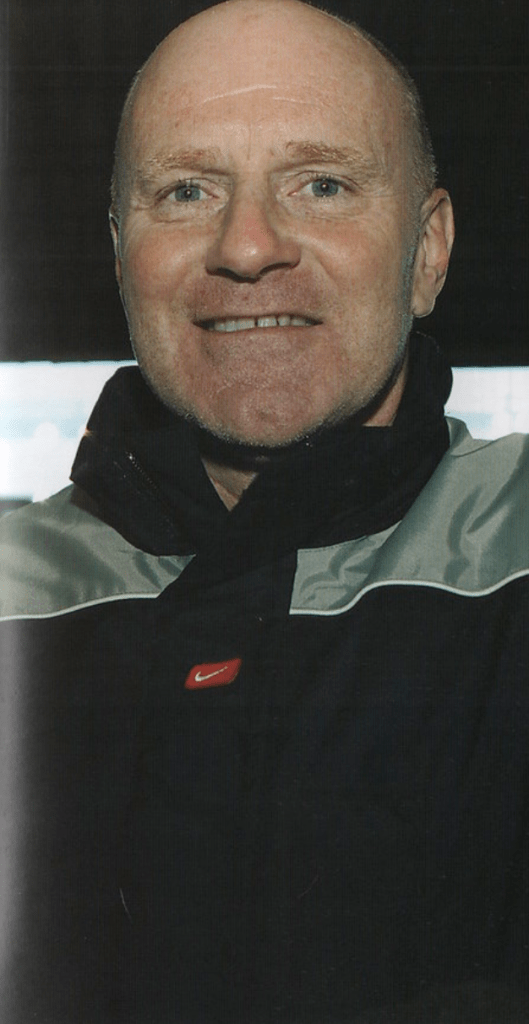
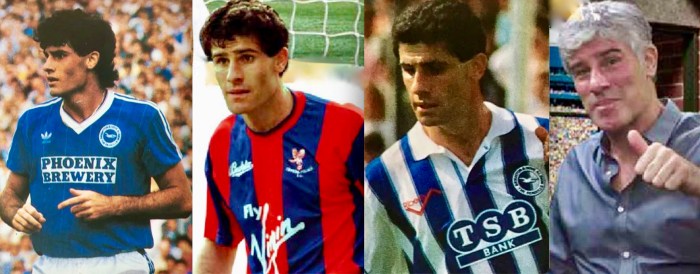
DEFENDER-turned-broadcaster Gary O’Reilly’s first ever league goal was scored for Brighton against Crystal Palace, a club he later scored for in a FA Cup final before rejoining the Seagulls.

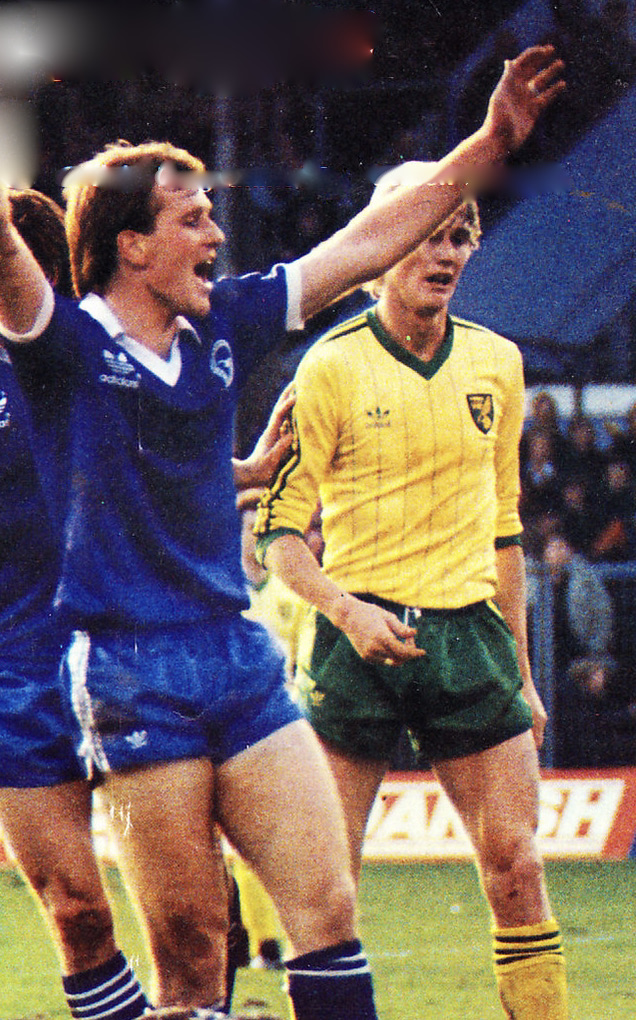
That goal came in only his fourth Albion game, on 15 September 1984, after a £45,000 move from Spurs and was enough to ensure a 1-0 win in front of a 15,044 Goldstone Ground crowd against an Eagles side who had just installed Steve Coppell as manager.
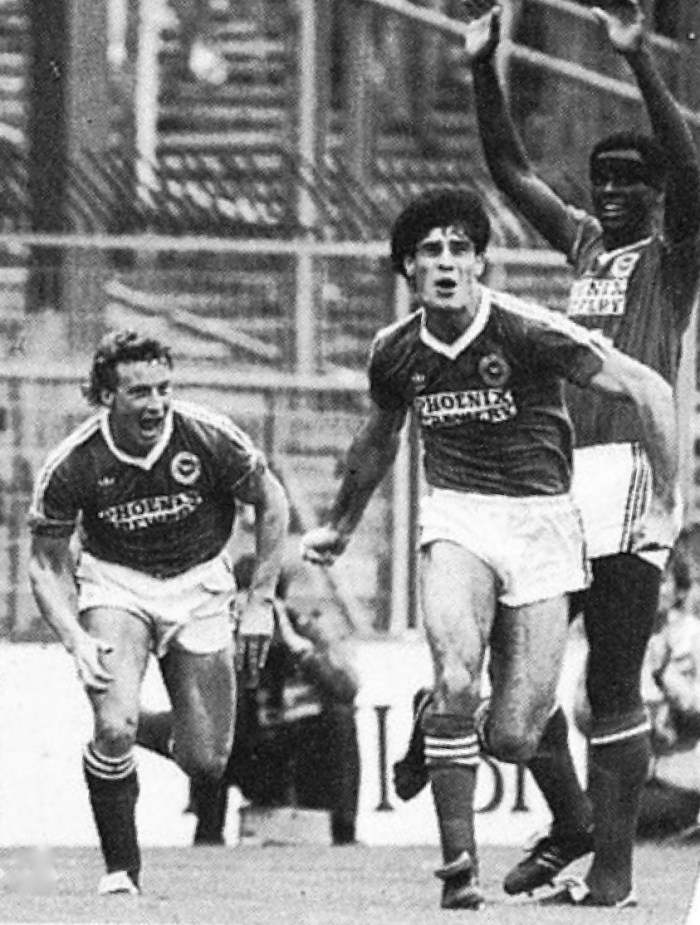
Danny Wilson and Eric Young celebrate O’Reilly’s first Albion goal, against Crystal Palace

Although O’Reilly had collected a UEFA Cup-winners’ medal that May as a non-playing squad member of the Tottenham side that beat Anderlecht 4-3 on penalties (after the two-legged final ended 2-2), opportunities were few and far between at White Hart Lane.

He still had two years of his contract remaining, but O’Reilly requested a transfer and Chris Cattlin snapped him up. Cattlin later admitted: “I watched him eight times before signing him, and six times with Tottenham Reserves he had stinkers. But I thought then he had great potential.”

In a 2001 interview with the Argus, O’Reilly said: “It was a gamble and I took a cut in pay. Spurs had an embarrassment of riches as far as talent was concerned. Spurs were only giving me about 15 games a season and at Brighton I played regularly in a strong side.

“Brighton included the likes of Chris Hutchings, Jimmy Case, Eric Young, Neil Smillie, Danny Wilson, Joe Corrigan, Steve Penney, Terry Connor, Steve Gatting and Frank Worthington and apologies to anyone I’ve forgotten.
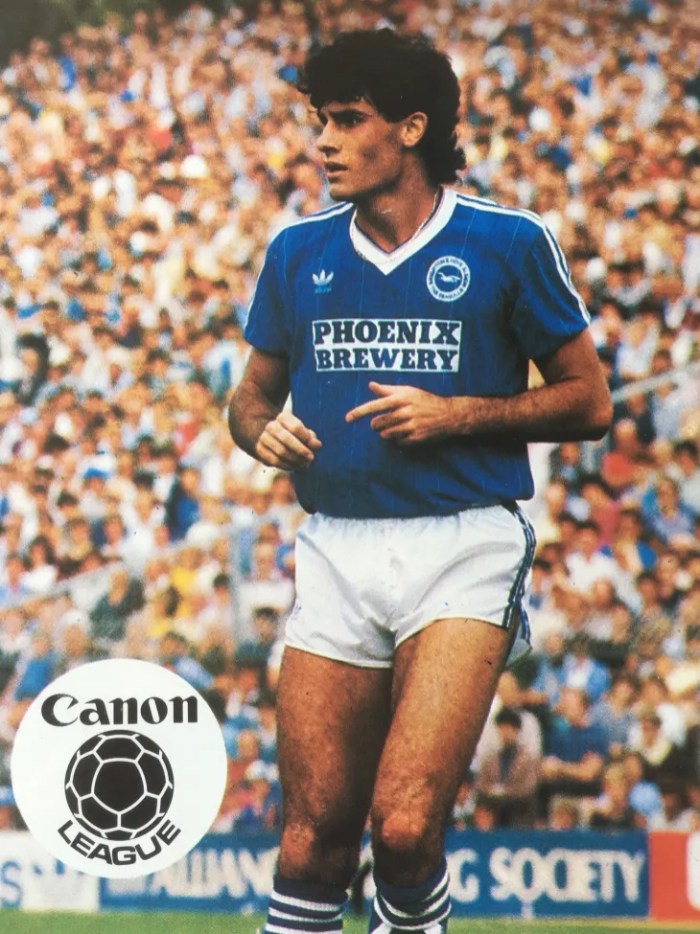
“Jimmy had so much experience and Danny was such a driving force who led by example. Frank Worthington? I had this cliched image of him regarding his socialising but I had that vision shattered.

“He was 36 but was so professional, with a desire to win. He was open with his encouragement, free with his advice and a great rock ‘n’ roll fan! I used to make sure he gave me a lift home from training because we both liked loud rock music.”

If O’Reilly was confident the blend between old-stagers and talented youngsters would be enough to win promotion back to the elite, his hopes were shattered when Case was sold to Southampton in March 1985.

“We sold Jimmy Case in the March and I nearly took the door off the hinges in Cattlin’s office,” he recalled in a matchday programme article. “I asked him what the hell he was doing selling Jimmy! Were we serious about getting promoted? Were we serious about getting into the play-offs?

“Jimmy went to Southampton and they had success with him in their team in the First Division. It was no surprise. How many European Cup medals does Jimmy have that say ‘wiinner’? That’s what Jimmy brought to the team here and he was a massive loss when he went.”

Indeed, Albion ended up just a couple of points shy of the promotion places.

O’Reilly and Young (who also later played for Palace) became an almost permanent centre-back pairing in that 1984-85 season, although, in its fledgling stages, Cattlin admitted he played Graham Pearce in between them “to allow the central defensive pair to learn their trade and settle down into a partnership”.

O’Reilly recalled: “We had a good defence (which equalled the fewest-goals-conceded record of 34) and when we clicked up front we would win 4-0, 5-0. We played good football, through midfield, with pace, power and discipline. I learned so much. It was a brilliant time.”

The following season saw Albion finish in mid-table and Cattlin was relieved of his duties before the final game. There had been a consolation of sorts that they reached the quarter-finals of the FA Cup when a Jimmy Case-led Southampton (with Peter Shilton in goal) saw off the Seagulls 2-0 in front of a bumper 25,069 crowd (most attendances that season struggled to reach 10,000).

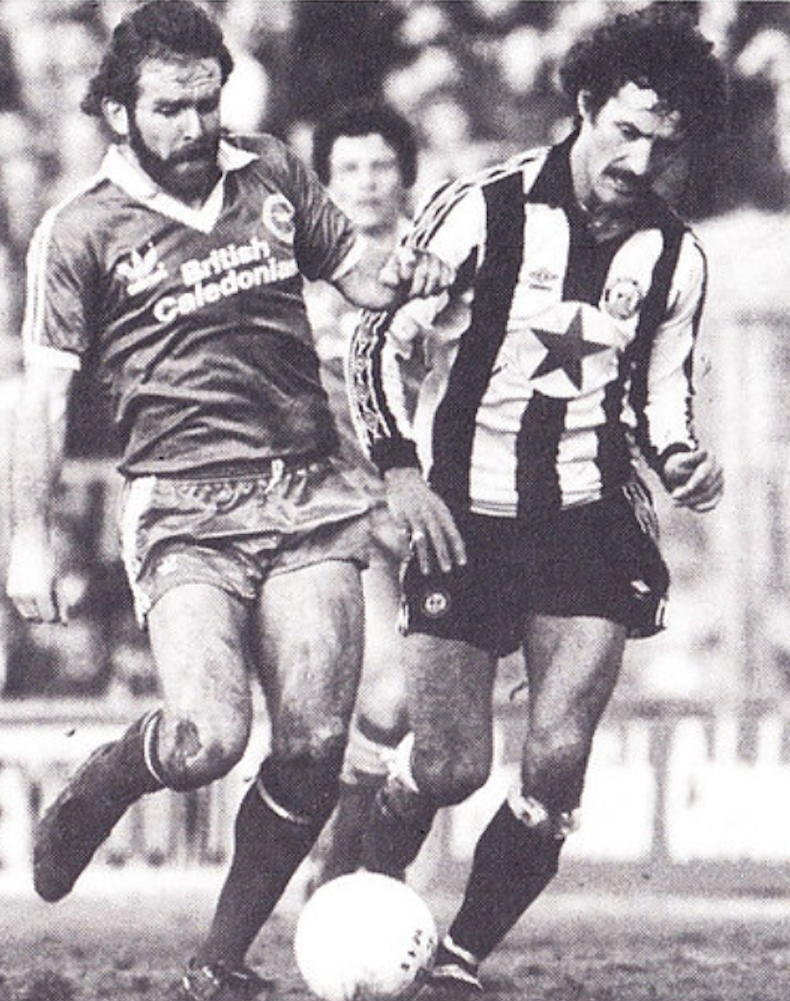
Before that March match, O’Reilly thought he’d scored two more against Palace but his efforts in the New Year’s Day encounter at the Goldstone were ruled out. Nonetheless Dean Saunders and a Danny Wilson penalty secured a 2-0 win for the Seagulls.readcrystalpalace.com says that game is “mainly remembered by Palace fans for a scandalous dive by Terry Connor which earned Brighton a penalty”.
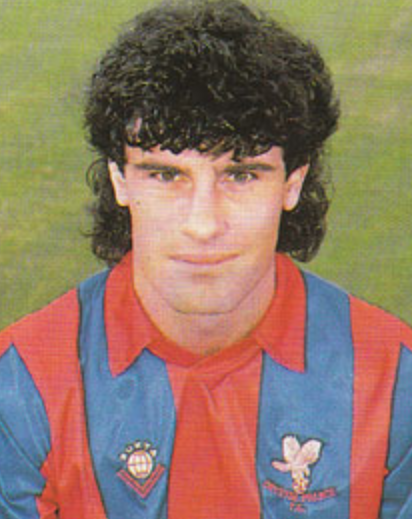
Nonetheless, maybe O’Reilly had caught Coppell’s eye because, in January 1987, Cattlin’s successor Alan Mullery said Palace were in for him and Albion needed the money – £40,000 – to pay the whole club’s wage bill for the next month.

Mullery had ridden on the crest of a wave during his previous five years with the club but on his return found it much-changed. Attendances at the Goldstone were often below 10,000 and, from the word go, Mullery had been instructed to offload high-earners to stem the outflow of cash.

“The playing squad was cut back to the minimum and I had no room to manoeuvre,” he wrote in his autobiography.

Although he’d played 92 games for the Seagulls, O’Reilly had missed several matches in the first half of the season with a troublesome hamstring strain and by Christmas the side were struggling near the bottom of the table.

He said: “Mullery, who was always very honest, said there was no pressure to leave but that if I didn’t go there wouldn’t be enough money to pay the wages.”

Within days of his move to Selhurst Park, O’Reilly was followed out of the exit by a shell-shocked Mullery, who said: “Of course the cuts had left the team struggling but I could have pulled things round if the board had trusted and believed in me. Instead, I’d been stitched up.”

For his part, O’Reilly said: “I went, not so the wages could be paid, but as a career move and it proved the right one.

“Palace got promotion (in 1989) and made it to the FA Cup final (1990) and I scored in the semis against Liverpool and the final against Manchester United.”

None of the much-hyped enmity between Brighton and Palace affected O’Reilly’s switch to Croydon. “I didn’t have any issues with anybody and neither did they with me,” he said in a matchday programme interview. “I didn’t feel any animosity. I was welcomed and we got on really well. The fans realised I didn’t go to Palace to hate, I went to Palace to win.

“I’d played against them a number of times and Steve (Coppell) wanted to develop the squad and make me part of it.”

O’Reilly told Spencer Vignes: “There were the beginnings of a seriously decent side there. Ian Wright and Mark Bright were just coming through, Andy Gray was already there and John Salako, Gareth Southgate in the youth team – a lot of good talent.”

And of Coppell, he said: “Steve had the hunger and drive that made you want to win. That attitude was reflected in the players he acquired.”
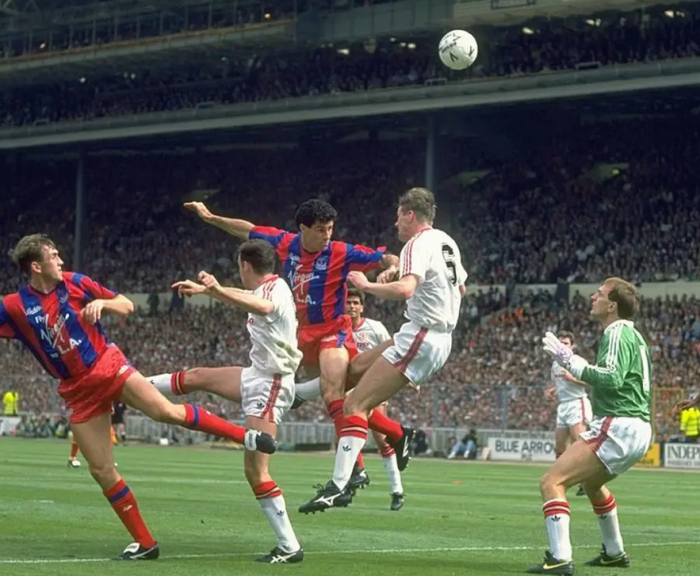
O’Reilly rises to head home for Palace against Manchester United in the FA Cup final

Scoring that goal against United in the 1990 FA Cup Final helped O’Reilly fulfil a childhood dream although ultimately there was the disappointment of United equalising (making it 3-3) through Mark Hughes in extra time and going on to win the replay.

“The FA Cup goal was a set play which was no surprise because we worked hard at set plays,” he recalled. It was from Phil Barber’s free-kick on the right that O’Reilly put Palace ahead after 18 minutes, his header looping over goalkeeper Jim Leighton.

United recovered to lead 2-1 before sub Ian Wright, only six weeks after breaking his leg, went on to score twice, in the 72nd minute and again at the start of extra-time before Hughes’ equaliser seven minutes from the end.
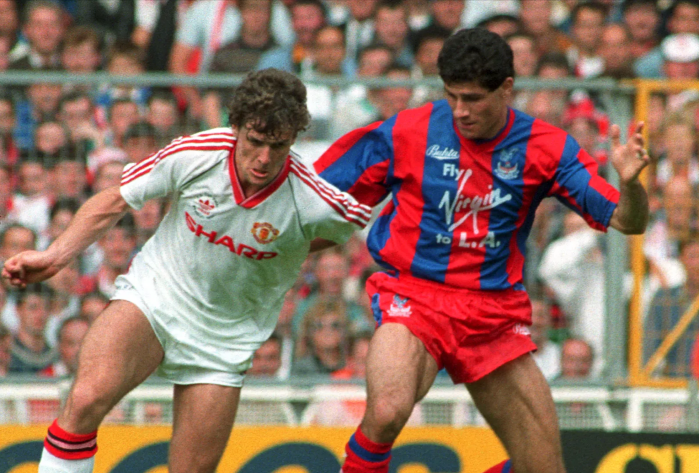
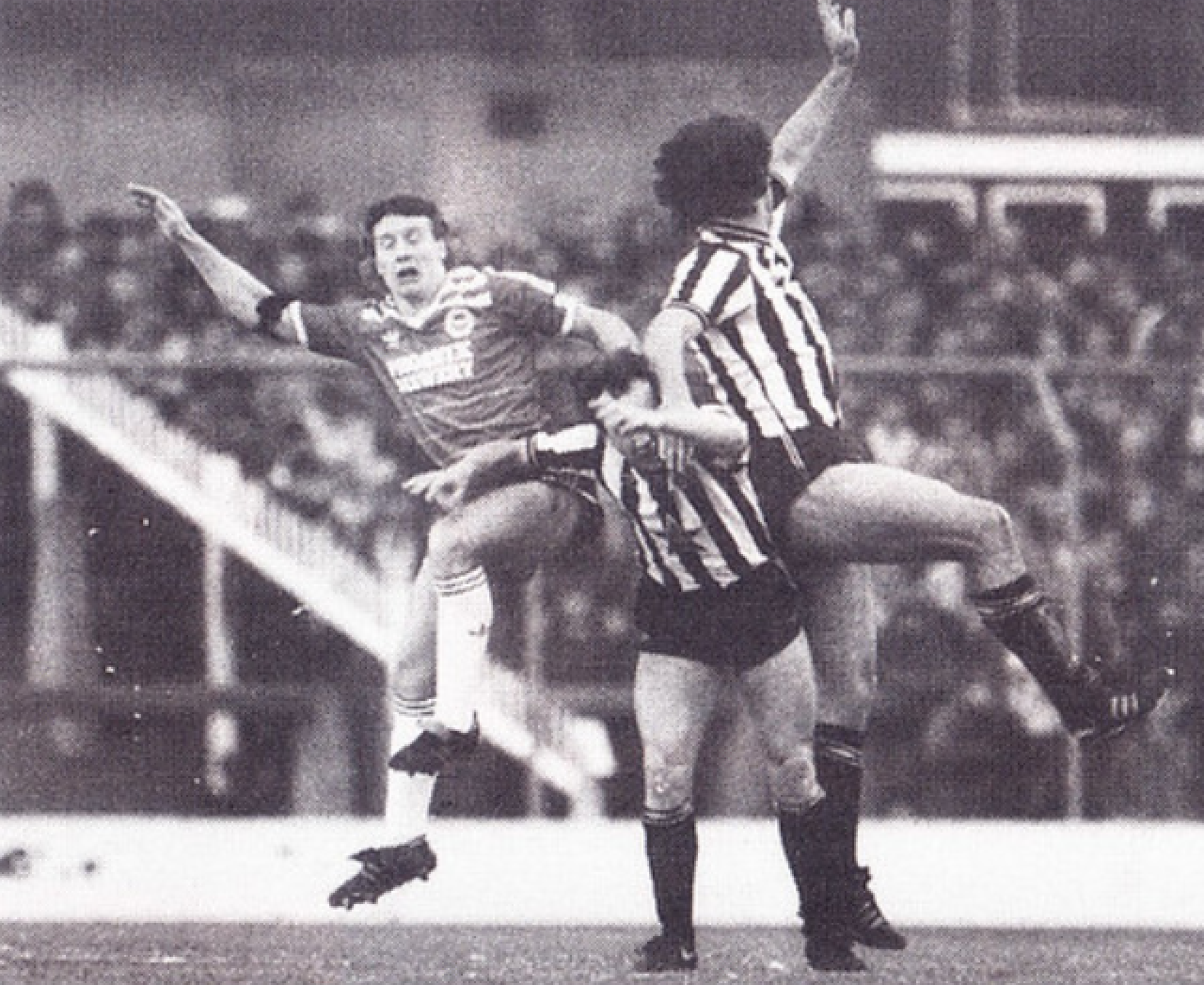
O’Reilly challenges Man United’s late-goal Wembley saviour Mark Hughes

O’Reilly played 79 times over three and a half seasons at Selhurst Park but the aforementioned Young and Andy Thorn were the regular centre-back pairing in 1990-91 when Palace finished third in the top division and also won the Full Members’ Cup. O’Reilly went out on loan to Birmingham City, although he only played once.

In the summer of 1991, aged 30, he returned to a Brighton side under Barry Lloyd who’d lost the second-tier play-off final to Notts County and once again had to sell players to balance the books. And in that Argus interview he recalled: “Again I took a pay cut, but I had no worries about coming back. I wasn’t concerned about any element of forgiveness although there were a few who would voice their opinion of my former club, which wasn’t very intelligent.”
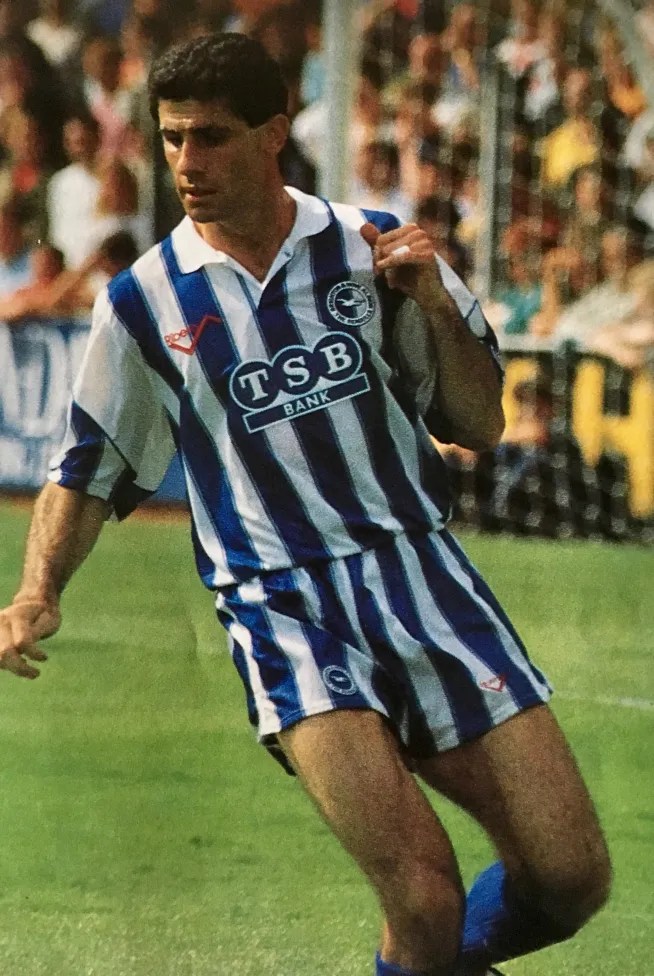
He made 31 appearances in the 1991-92 season but played his last game on 29 February 1992 sustaining an injury to his right knee against Southend at the Goldstone which ended his career. Albion were subsequently relegated back to the third tier and after a series of unsuccessful knee operations, O’Reilly was forced to retire from the game in April 1993.

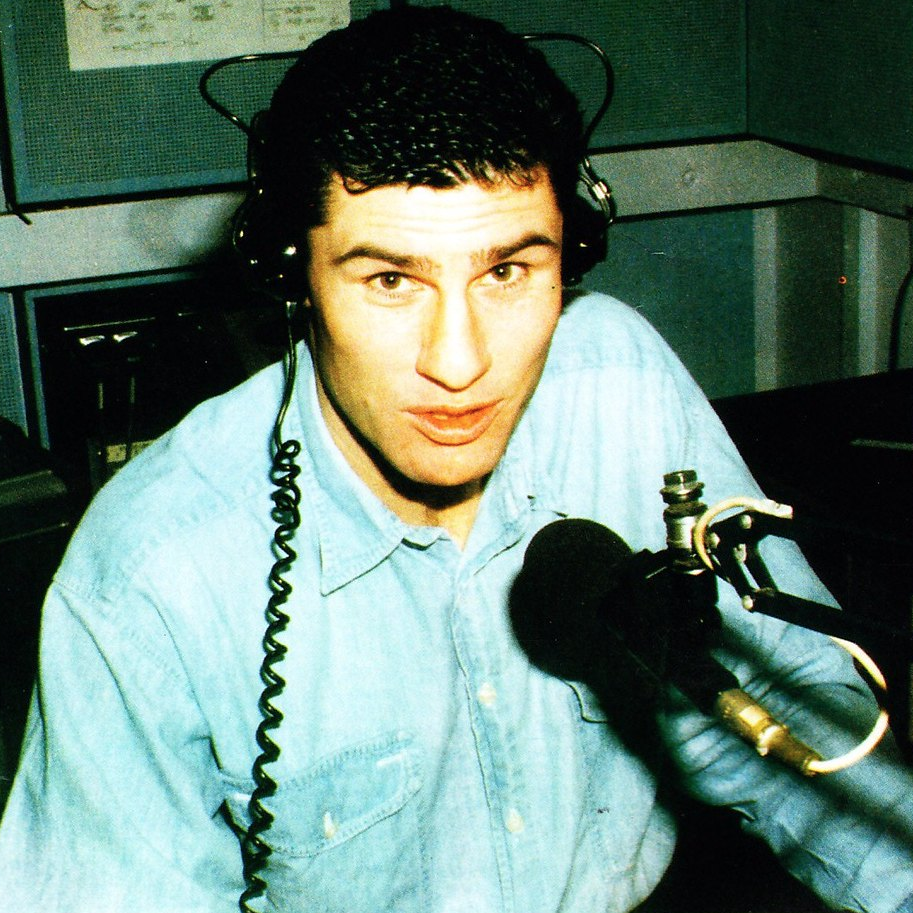
He didn’t let the grass grow under his feet, though. While he was still hopeful of regaining his fitness, he joined BBC Radio Sussex to do analysis on Albion games. It wasn’t his first experience at the mic either. When he was not playing at Palace, he sat alongside Jonathan Pearce and did summarising for Capital Radio.

“Doing this work has kept me involved with the game,” he said. “It is much better to concentrate when watching as a reporter. I find that when I just go along as a spectator my mind wanders and that really is frustrating. Broadcasting really must be the next best thing to playing.”

Born in Isleworth on 21 March 1961, O’Reilly grew up in Essex: his parents, Gerry and Mary, having moved to Harlow. His education began at Latton Green Primary School in Harlow and he moved on to Latton Bush Comprehensive, where he stayed on to take his A levels.

Throughout those schooldays he was a promising central defender and he started to make a name for himself with the Essex Boys team. As a schoolboy, he played for both England and the Republic of Ireland because his father was from Dublin and his mother English. He played for the England under-19 schoolboys’ side for two years.

Earlier in his teens, Arsenal wanted him on associate schoolboy forms, but it was Spurs who snapped him up at the age of 13 and during his last two years at school he played as an amateur at Tottenham. His youth team-mates at White Hart Lane included Kerry Dixon and Micky Hazard.

O’Reilly had the offer of a sports scholarship at Columbia University but he decided to sign for Spurs as a professional in the summer of 1979.

His debut aged 19 was on Boxing Day 1980 as a half-time substitute for Chris Hughton in a remarkable 4-4 draw with high-flying Southampton at White Hart Lane. Among a total of 45 first-team appearances in five seasons at Tottenham were games in the Charity Shield at Wembley in 1982 against Liverpool (Spurs lost 1-0) and a quarter-final victory in the UEFA Cup over German giants Bayern Munich.

It was the arrival of Gary Stevens from Albion shortly after the 1983 FA Cup Final that began to signal the end of his time at White Hart Lane, together with the emergence of Danny Thomas.

After hanging up his boots, O’Reilly scouted for Bruce Rioch when he was boss at Bolton Wanderers and spent nine years identifying talent for kit supplier Adidas.

Alongside that, he began a successful broadcasting career which saw him on screen for Meridian, Sky Sports, BBC, Premier League Productions, NBC, Fox Sports and ESPN.

His broadcasting work also extended to India, ART Prime in Dubai and Trans World International’s Premier League international feed.

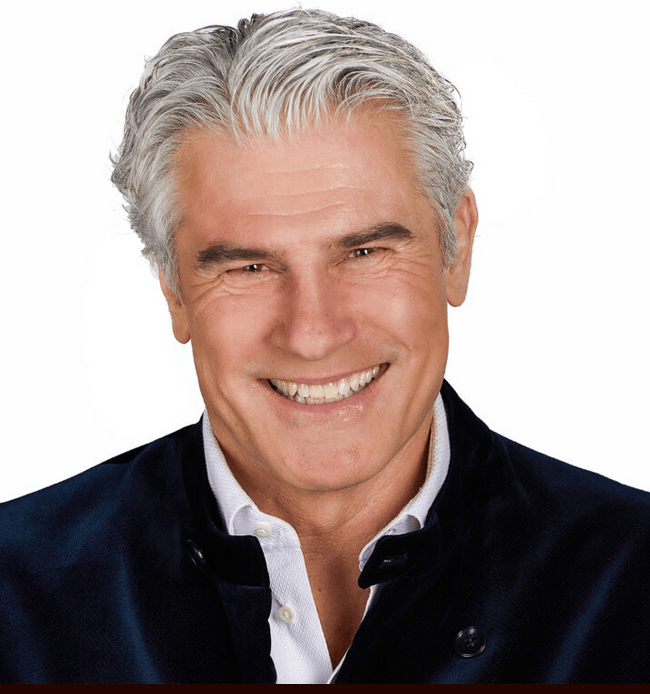
After marrying in Arundel Cathedral, O’Reilly first lived in Crawley, from where he commuted to Croydon during the Palace years, and later moved to Hove. He subsequently moved to New York where, since 2017, he co-hosts a weekly podcast Playing With Science with Neil deGrasse Tyson for media company StarTalk, exploring fascinating topics linking sport and science.

Anyone unsure in which camp O’Reilly’s heart belongs, he answered diplomatically in a matchday programme interview: “Spurs. It’s always been them, ever since I was six. And I learned so much about the game just by being involved there, especially through (former Spurs captain) Steve Perryman.

“He was always such a believer in doing things the right way. He gave time to any young players. There was none of that “Do you know who I am son?’ None of it at all.”
The spectre of Trelford haunted them for ages at St James’

BRIGHTON travel to Newcastle in the fifth round of the FA Cup with the backdrop of having won there twice in the competition in the 1980s – not to mention a 1-0 win in the Premier League this season.

The 1-0 third round win at St. James’ Park in January 1983 set Albion en route to that season’s FA Cup final – but Toon supporters of that era blamed the game’s unusually-named referee, Trelford Mills, from Barnsley, for their exit.

Think I’m exaggerating? Newcastle fans’ website themag.co.uk had this to say ahead of another FA Cup game between the two sides in 2013: “It is doubtful that anything could match the anger and frustration that many of us felt nearly thirty years ago.

“Wednesday 12 January 1983 will always be synonymous with the name Trelford Mills, etched into the consciousness of an entire generation of Newcastle fans, convinced he cheated us out of the FA Cup. Well, a chance of the fourth round anyway!”

Neil Smillie, goalscorer Peter Ward, Steve Gatting, Chris Ramsey and Andy Ritchie celebrate after the 1983 win.

Mills disallowed two Newcastle ‘goals’ while Albion nicked it courtesy of a penalty area pounce by Peter Ward, back at the club on loan from Nottingham Forest, on 62 minutes. They did it without captain Steve Foster who was suspended (as, of course, he would be for the final too).

The game was a third round replay four days after the sides drew 1-1 at the Goldstone Ground when Andy Ritchie’s mis-hit shot in the 56th minute put Albion ahead and Terry McDermott (below right, with Tony Grealish) equalised on 77 minutes.

Even though the Magpies were in the old Division Two at the time, they had Kevin Keegan and Chris Waddle in their line-up, and they fully expected to win because Brighton hadn’t previously won away that season.

Albion, competing in the top division for the fourth season in a row, with joint caretaker managers Jimmy Melia and George Aitken in charge, had goalkeeper Graham Moseley to thank for some heroic stops to keep them in the first game.

The replay at St. James’s Park was in front of a typically noisy crowd of 32,687 and Newcastle did everything but score: they had shots cleared off the line and hit the woodwork and, when they thought they’d scored, Mr Mills disallowed them – twice!

In the meantime, Ward made the most of a counter attack to put the Seagulls ahead. It turned out to be the last goal he scored for the Albion, although he was in the side that pulled off a shock 2-1 win at Anfield to knock out Liverpool in the fifth round.

Enterprising reporter Tim Hodges searched out Mr Mills all those years later to hear his version of the events.

“I remember Brighton went one up, then Imre Varadi went through on goal, but quite clearly controlled the ball with his wrist,” said Mills.

“I think the Brighton keeper realised this, just as most of the players did, and let the ball go into the goal just to waste a bit of time. I just restarted with a free kick. I have spoken to Imre since. I think he accepts my version now.”

Mills continued: “Jeff Clarke managed to win a ball in the penalty area, but only because he had his arm around the defender’s neck. Keegan bundled the ball into the goal, but I had blown up a few seconds before it went in.

“Keegan did his Mick Channon cartwheel arm in front of the Gallowgate end, but I just jogged across to where I wanted the free kick taken from and indicated as to why I had disallowed the goal.”

Mills also recalled how he and his fellow officials needed a police escort away from the ground after the match. “When we sat in the dressing room after the match, I remember chatting to one of my linesmen, John Morley, when this police officer turns up,” he said. The copper said to him: “You’d better hang on here a while, Trelford. There are 2,000 Geordies outside and they all want your autograph!”

Three years later, the status of the teams had been reversed with Newcastle promoted back to the top division in 1984 and Albion back in the second tier, relegated the same year as the cup final appearance.

While Keegan had retired, Willie McFaul’s side had a young Paul Gascoigne in midfield and Peter Beardsley in the forward line. Clarke, who’d played four games on loan at Brighton two years earlier, was still in the centre of United’s defence and it was his foul on Terry Connor in the first minute of the game that saw Albion take a shock early lead.

Danny Wilson floated in a free kick from 30 yards out on the right which found centre back Eric Young on the far edge of the penalty box. He hooked the ball into the Newcastle net with only 50 seconds on the clock!

Albion, wearing their change strip of red, had to endure a relentless series of attacks (Toon had 23 corners to Albion’s one!) and Perry Digweed in Brighton’s goal put in a man of the match performance between the sticks, notable saves keeping out shots from John Bailey, Beardsley and Billy Whitehurst.

With five minutes left of the game, against the run of play, a quick throw-in by Graham Pearce found Dean Saunders and he rifled home an unstoppable shot past Martin Thomas for his 10th goal of the season.

Manager Chris Cattlin summed up afterwards: “It was really tough and we had a little luck on our side, but to go away to a club who have won the cup no fewer than six times and come away winners was quite an achievement.

“With the Geordie fervour up there the noise their supporters created was something special, but our efforts speak volumes for everyone connected with our club.”

There would be no fairytale ending that season, though, with Albion being dumped out of the cup 2-0 by Southampton in a quarter-final tie at the Goldstone Ground.

John Barnes and Steve Harper were on pundit duty for ESPN for the 2012 match

Younger fans will doubtless recall two more recent FA Cup meetings between Brighton and Newcastle, in consecutive seasons during Gus Poyet’s reign, at the Amex in 2012 and 2013.

The Championship Seagulls beat the Premier League Magpies on both occasions – 1-0 in the fourth round in 2012 and 2-0 in the third round the following year.

Getting to grips with Will Buckley

A Mike Williamson own goal was enough to give Albion the edge over Alan Pardew’s side in the first of those games; Will Buckley’s 76th minute shot deflecting off the defender and looping over Tim Krul for the only goal of the game. Leon Best, who would later have a torrid time at Brighton, missed two good chances for the visitors.

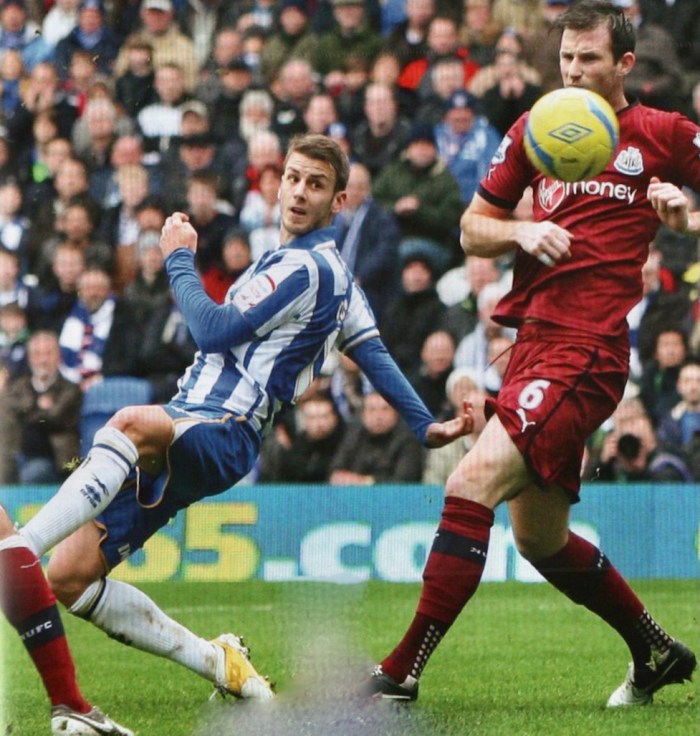
The 2013 fixture was a more convincing win for Brighton against a weakened Newcastle side who had Shola Ameobi sent off. Andrea Orlandi gave Albion the lead on the half-hour mark and substitute Will Hoskins added a second late on.

Andrea Orlandi hooks in Albion’s first goal
Praise for Liam Bridcutt

“This was an impressive victory for Brighton, a result that will add to the optimism that surrounds this upwardly mobile club and strengthen their resolve to host Newcastle in next season’s Premier League,” wrote Ben Smith, for BBC Sport. “The cool passing game of Liam Bridcutt at the heart of their midfield was tremendous.”

The reporter added: “Sharper to the ball, and swifter to make use of it, the Seagulls toyed with their more celebrated opponents for much of the opening 45 minutes, producing some stylish attacking moves while tackling, battling and dominating territory in their uncomplicated and effective way.”

Will Hoskins buries Albion’s second goal in 2013

Coach Dean Wilkins fumed after falling out with Knight 

DEAN WILKINS might have lived in the shadow of his more famous elder England international brother Ray but he certainly carved out his own footballing history, much of it with Brighton.

Albion fans of a certain vintage will never forget the sumptuous left-footed free-kick bouffant-haired captain Wilkins scored past Phil Parkes at the Goldstone Ground which edged the Seagulls into the second-tier play-offs in 1991.

Supporters from the mid-noughties era would only recall the balding boss of a mid-table League One outfit at Withdean comprising mainly home-grown players who Wilkins had brought through from his days coaching the youth team.

After Dick Knight somewhat unceremoniously brought back Micky Adams over Wilkins’ head in 2008, he quit the club rather than stay on playing second fiddle and subsequently went west to Southampton where he worked under Alan Pardew and his successor Nigel Adkins as well as taking caretaker charge of the Saints in between the two reigns.

Wilkins’ initial association with the Seagulls went back to 1983, when Jimmy Melia brought him to the south coast from Queens Park Rangers shortly after Albion’s FA Cup final appearances at Wembley.

Melia’s successor Chris Cattlin only gave him two starts back then and although he pondered a move to Leyton Orient, where he’d had 10 matches on loan, he opted to accept to try his luck in Holland when his Dutch Albion teammate Hans Kraay set him up with a move to PEC Zwolle. Playing against the likes of Johann Cruyff, Marco Van Basten and Ruud Gullit proved to be quite the footballing education for Wilkins.

Wilkins in the thick of it in Dutch football for PEC Zwolle

After two years in the Netherlands, 25-year-old Wilkins rejoined the relegated Seagulls in the summer of 1987 as the club prepared for life back in the old Third Division under Barry Lloyd.

Relegation had led to the sale for more than £400,000 of star assets Danny Wilson, Terry Connor and Eric Young but more modest funds were allocated to manager Lloyd for replacements: £10,000 for Wilkins, £50,000 for Doug Rougvie, who signed from Chelsea and was appointed captain, Garry Nelson, a £72,500 buy from Plymouth and Kevin Bremner, who cost £65,000 from Reading. Midfield enforcer Mike Trusson was a free transfer.

The refreshed squad ended up earning a swift return to the second tier courtesy of a memorable last day 2-1 win over Bristol Rovers at the Goldstone.

At the higher level, Wilkins had the third highest appearances (40 + two as sub) as Albion finished just below halfway in the table. The following season Wilkins was appointed captain and was ever-present as Albion made it to the divisional play-off final against Notts County at Wembley, having made it to the semi-final v Millwall courtesy of the aforementioned spectacular free kick v Ipswich.

Wilkins scored again at Wembley but it turned out only to be a consolation as the Seagulls succumbed 3-1 to Neil Warnock’s side.

As the 1992-93 season got underway, Wilkins, having just turned 30, was the first matchday programme profile candidate for the opening home game against Bolton Wanderers (a 2-1 win) when he revealed the play-off final defeat had been “the biggest disappointment of my career”.

The 1993-94 season was a write-off from October onwards when he damaged the medial ligaments in both his knees after catching both sets of studs in the soft ground at home against Exeter City.

Although injury plagued much of the time during Liam Brady’s reign as manager, the Irishman acknowledged his ability saying: “He is a very fine footballer and a tremendous passer of the ball and he possesses a great shot.”

Ahead of the start of the 1995-96 season, Wilkins was granted a testimonial game against his former club QPR, managed at the time by big brother Ray. But at the end of the season, when the Seagulls were relegated to the basement division, he was one of six players given a free transfer.

Born in Hillingdon on 12 July 1962, Wilkins couldn’t have wished for a more football-oriented family. Dad George had played for Brentford, Leeds, Nottingham Forest and Hearts and appeared at Wembley in the first wartime FA Cup final. While Ray was the brother who stole the limelight, Graham and Steve also started out at Chelsea.

In spite of those older brothers who also made it as professionals, Wilkins attributed his development at QPR, who he joined straight from school as an apprentice in 1978, to youth coach John Collins (who older fans will remember was Brighton’s first team coach under Mike Bailey).

He made seven first team appearances for Rangers, his debut being as a substitute for Glenn Roeder in a 0-0 draw with Grimsby Town on 1 November 1980. After joining the Albion in August 1983, he had to wait until 10 December that year to make his debut, in a 0-0 draw at Middlesbrough, in place of the absent Tony Grealish. He started at home to Newcastle a week later (a 1-0 defeat), this time taking the midfield spot of injured Jimmy Case.

Perhaps the writing was on the wall when Cattlin secured the services of Wilson from Nottingham Forest, initially on loan, and although Wilkins had a third first team outing in a 2-0 FA Cup third round win at home to Swansea City, boss Cattlin didn’t pick him again. Instead, he joined Orient on loan in March 1984.

A long career in coaching began when Wilkins was brought back to the Albion in 1998 by another ex-skipper, Brian Horton, who had taken over as manager. With Martin Hinshelwood as director of a new youth set-up, Wilkins was appointed the youth coach – a position he held for the following eight years.

Return to the Albion as youth coach

His charges won 4-1 against Cambridge United in his first match, with goals from Duncan McArthur, Danny Marney and Scott Ramsay (two).

That backroom role continued as managers came and went over the following years during which a growing number of youth team products made it through to the first team: people like Dan Harding and Adam Virgo and later Adam Hinshelwood, Joel Lynch, Dean Hammond and Adam El-Abd.

At the start of the 2006-07 season, with Albion back in the third tier after punching above their weight in the Championship for two seasons, Wilkins was rewarded for his achievements with the youth team with promotion to first team coach under Mark McGhee.

By then, more of the youngsters he’d helped to develop were in or getting close to the first team, for example Dean Cox, Jake Robinson, Joe Gatting and Chris McPhee.

After an indifferent start to the season – three wins, three defeats and a draw – Knight decided to axe McGhee and loyal lieutenant Bob Booker and to hand the reins to Wilkins with Dean White as his deputy. Wilkins later brought in his old teammate Ian Chapman as first team coach.

Into the manager’s chair

Tommy Elphick, Tommy Fraser and Sam Rents were other former youth team players who stepped up to the first team. But, over time, it became apparent Knight and Wilkins were not on the same page: the young manager didn’t agree with the chairman that more experienced players were needed rather than relying too much on the youth graduates.

Indeed, in his autobiography Mad Man: From the Gutter to the Stars (Vision Sports Publishing, 2013), Knight said Wilkins hadn’t bothered to travel with him to watch Glenn Murray or Steve Thomson, who were added to the squad, and he was taking the side of certain players in contract negotiations with the chairman.

“In my opinion, his man-management skills were lacking, which was why I made the decision to remove him from the manager’s job,” he said. It didn’t help Wilkins’ cause when midfielder Paul Reid went public to criticise his man-management too.

Knight felt although Wilkins hadn’t sufficiently nailed the no.1 job, he could still be effective as a coach, working under Micky Adams. The pair had previously got on well, with Adams saying in his autobiography, My Life in Football (Biteback Publishing, 2017) how Wilkins had been “one of my best mates”.

But Adams said: “He thought I had stitched him up. I told him that I wanted him to stay. We talked it through and, at the end of the meeting, we seemed to have agreed on the way forward.

“I thought I’d reassured him enough for him to believe he should stay on. But he declined the invitation. He obviously wasn’t happy and attacked me verbally.

“I did have to remind him about the hypocrisy of a member of the Wilkins family having a dig at me, particularly when his older brother had taken my first job at Fulham.

“We don’t speak now which is a regret because he was a good mate and one of the few people I felt I could talk to and confide in.”

Youth coach

Knight knew his decision to sack the manager would not be popular with fans who only remembered the good times, but he pointed out they weren’t aware of the poor relationship he had with some first team players.

Knight described in his book how a torrent of “colourful language” poured out from Wilkins when he was called in and informed of the decision in a meeting with the chairman and director Martin Perry.

“He didn’t take it at all well, although I suppose he felt he was fully justified,” wrote Knight. “He was fuming after what was obviously a big blow to his pride.”

Reporter Andy Naylor perhaps summed up the situation best in The Argus. “The sadness of Wilkins’ departure was that Albion lost not a manager, but a gifted coach,” he said. “Wilkins was not cut out for management.”

Saints coach

One year on, shortly after Alan Pardew took over as manager at League One Southampton, he appointed Wilkins as his assistant. They were joined by Wally Downes (Steve Coppell’s former assistant at Reading) as first team coach and Stuart Murdoch as goalkeeping coach.

Saints were rebuilding having been relegated from the Championship the previous season and began the campaign with a 10-point penalty, having gone into administration. The club had been on the brink of going out of business until Swiss businessman Markus Liebherr took them over.

A seventh place finish (seven points off the play-offs because of the deduction) meant another season in League One and the following campaign had only just got under way when Pardew, Downes and Murdoch were sacked. Wilkins was put in caretaker charge for two matches and then retained when Nigel Adkins, assisted by ex-Seagull Andy Crosby, was appointed manager.

It was the beginning of an association that also saw the trio work together at Reading (2013-14) and Sheffield United (2015-16).

Adkins, Crosby and Wilkins were in tandem as the Saints gained back-to-back promotions, going from League One runners up to Gus Poyet’s Brighton in 2011, straight through the Championship to the Premier League. But they only had half a season at the elite level before the axe fell and Mauricio Pochettino took over.

When the trio were reunited at Reading, Wilkins, by then 50, gave an exclusive interview to the local Reading Chronicle, in which he said: “This pre-season has given me time to learn about the characters of the players we’ve got at Reading and find out what makes them tick.

At Reading with Crosby and Adkins

“It’s my job then to make sure every player maximises his potential. That’s what I see my role as, to bring out the very best of them from now on and make them strive to attain new levels of performance.

“I will always keep working toward that goal. If we can do that with every individual and get maximum performances out of them, I believe we will be in for a great season.

“We’re back together now and it’s going fantastically well. I have loved every minute of it. I’m used to working with Nigel and Andy and we are carrying out similar work to what we’ve done in the past.”

The Royals finished seventh, a point behind Brighton, who qualified for the play-offs, and the trio were dismissed five months into the following season immediately following a 6-1 thrashing away to Birmingham City.

Six months later the trio were back in work, this time at League One Sheffield United, but come the end of the 2015-16 season, after the Blades had finished in their lowest league position since 1983, they were shown the door.

Between January 2018 and July 2019, Wilkins worked for the Premier League assessing and reporting on the accuracy, consistency, management and decision-making of match officials.

In the summer 0f 2019, he was appointed Head of Coaching at Crystal Palace’s academy, a job he held for 15 months.

A return to involvement with first team football was presented by his former Albion player Alex Revell, who’d been appointed manager of League Two Stevenage Borough. Glad to support and mentor Revell in his first managerial post, Wilkins spent a year as assistant manager at the Lamex Stadium.

200th Andy Ritchie goal at crumbling Goldstone Ground

WHEN ANDY RITCHIE scored at the Goldstone Ground on 7 September 1996, it was a very different place to the stadium he’d graced as Player of the Year 14 years previously.

Ritchie was in his 20th season as a professional when he scored his 200th career goal for Scarborough against his former Albion teammate Jimmy Case’s Seagulls in a Nationwide Division 3 match.

Just 4,008 hardy souls dotted around the crumbling old stadium supported the Albion that afternoon compared to the sell-out 28,800 crowd who packed in to see Ritchie’s last home match in Albion’s attack when they beat Norwich City 1-0, courtesy of a Case goal, in a quarter-final of the 1983 FA Cup.

Ritchie’s last endeavours in Albion’s colours came a week later and, ironically, were in front of 36,700 at Old Trafford on 19 March 1983 when he had a goal disallowed against the club who sold him to the Seagulls for what at the time was a record £500,000.

The curiosity of that deal was covered in my 2017 blog post about Ritchie and I’ve since discovered how a number of observers were dumbfounded by Dave Sexton’s decision to let him leave United.

That Sexton more often preferred the strike pairing of Joe Jordan and Jimmy Greenhoff baffled football writer Mike Anderson who, after Ritchie’s switch to the Albion, detailed how the departed forward’s numbers were more favourable.

“Since making his debut for United against Everton three seasons ago he has proved himself to be a more consistent marksman than the Scottish international,” wrote Anderson.

“By the end of the 1978-9 season Ritchie had scored 10 goals in only 20 full League appearances, compared with Jordan’s nine goals in 44 games. And when last season finished he had hit 13 goals in 23 full games (plus six substitute appearances), whereas Jordan had taken his tally to only 22 goals in 76 games.”

Anderson’s opinion was shared by Tony Kinsella, writing in When Saturday Comes in November 1997, he described Ritchie as “a muscular whippet of a striker with two scorching feet, a delicious first touch, and a bonce of solid granite”.

Kinsella wrote: “In four frustrating campaigns, Ritchie notched an admirable average of a goal every two games, a somewhat superior rate to his cohorts. In retrospect, I guess Ritchie was in the right place at the wrong time. He possessed more skill than Jordan and cut a more daunting physical presence than Greenhoff, but fell short of both when it came to vice versa.

“Sexton, notorious for fielding sides greyer than a Mancunian sky, had the courage to blood a teenage goalkeeper, Gary Bailey, but got cold feet when dealing with the loose cannon that was Andy Ritchie.”

A young Ritchie at Manchester United

In a lengthy chat for the Fore Four 2 podcast, Ritchie revealed how it was Steve Coppell who took him under his wing as a newcomer to the United first team and ensured he got fixed up with a pension; something Ritchie hadn’t even considered.

And his roommate at United was wandering winger Mickey Thomas, who ended up following him to Brighton and also to Leeds!

While Sexton may have had reservations about Ritchie, plenty of other managers were keen to take him from United. Tommy Docherty, who had first signed Ritchie for the Red Devils, had wanted to take him to Queen’s Park Rangers but he was sacked as Rangers’ manager before a bid was in the offing. Chelsea and Newcastle made inquiries too.

Aston Villa offered United £350,000 for him but, after attending with his dad a face-to-face meeting with the glum-faced manager Ron Saunders, they turned down the move feeling he hadn’t conveyed that he really wanted him.

Ritchie also declared: “United were my home town team and I loved it at Old Trafford.

“It had been my aim since joining the United staff to be a success in their first team. I would have got a large amount of money had I gone to Villa, but I put self-satisfaction before money. I had received a lot of encouragement from the training staff at Old Trafford and I wanted to justify their faith in me by doing well at United.

“I knew that a transfer would mean adjusting to a side playing a different style of football. I felt that I might just as well spend that time proving I was worthy of a place at United where I was part of possibly the best club in the country. Unfortunately, I found myself playing reserve team football again until Brighton came in for me.”

In a 2019 interview with the Albion website, Ritchie remembered: “We always had a good team spirit and we all used to go out together. Everyone played golf and we’d be out in the nightclubs, Bonsoir and others where you had to wipe your feet on the way out.

“Great times, absolutely fantastic. And the spirit transferred itself onto the pitch. I used to joke at Q&As that we had so many great individuals but put us together and we were crap because the social life got in the way of our football. But no, it was a fantastic club to be involved in.”

Ritchie attended a rugby-playing grammar school and played cricket and hockey for Cheshire, only turning to football at 13 or 14. He played for Manchester and Stockport Boys and scored six goals in nine games for England schoolboys under skipper Brendan Ormsby, who went on to play for Aston Villa.

In the 1983 Shoot! album, Ritchie explained: “It was while I was playing for Stockport Boys that I first realised I had a chance of a career as a professional footballer.

“I was selected for the England Under-15 side and played at Wembley Stadium. The first was against Wales. We won 4-2 and I scored a couple of goals. I then scored another when England beat France 6-1. They were great moments for me and my family.

“Appearing for England was definitely the highlight of my young career but I also enjoyed playing for Stockport and in local Sunday football.

“I played for a team called Whitehill, who were sponsored by Manchester City. It was then that I realised I could play for the Maine Road club.

“I had trials with Leeds United, Burnley and Aston Villa, but I only wanted to play for City.”

It was while playing for Stockport Boys v Manchester Boys that former United captain Johnny Carey, scouting for his old club, spotted Ritchie and made an approach.

“I went down to The Cliff (United’s training ground) and never looked back,” he said. “It didn’t take me very long to soak in the atmosphere and appreciate the tradition and name of Manchester United and, in the end, I was quite happy to sign for the Old Trafford club.”

Ritchie was 15 when he put pen to paper, and he turned professional on 5th December 1977.

Handed his first start in United’s first team shortly after his 17th birthday, he played four matches without scoring but had caught the eye of the England Youth selectors. He made four appearances under joint managers Brian Clough and Ken Burton, making his debut in a 3-1 win over France on 8 February 1978. England drew the return leg of that UEFA Youth tournament preliminary match 0-0.

He went with the England squad to Poland for the 31st UEFA Youth tournament in May 1978, played in a 1-1 draw v Turkey and a 1-0 defeat v Spain but a trapped nerve in his hip meant he sat out the 2-0 defeat to Poland that meant England didn’t qualify from their group. That squad included Terry Fenwick and Vince Hilaire, Tony Gale and Ray Ranson.

“The following year I was selected for England Youth again for the Mini World Cup in Austria. Unfortunately, I went over on my ankle in training and could not make the trip,” Ritchie recalled.

Ritchie hoped his move to Brighton might boost his chances of gaining a full England cap, but he ended up winning a solitary England under-21 cap when he was called up by the same Dave Sexton who’d sold him from United! “That really was a bit bizarre,” Ritchie later recalled.

He featured in a 2-2 draw with Poland at West Ham’s Boleyn Ground on 7 April 1982. Fellow striker Mark Hateley scored both England’s goals.

Ritchie in action for Leeds against Brighton

Ritchie’s time with Leeds was something of a mixed bag. The record books show he scored 44 times in 159 matches after he was signed by player-manager Eddie Gray. Playing in the second tier at the time, Leeds still had Gray, Peter Lorimer and David Harvey from the Revie era but Ritchie joined a mainly young side where the likes of John Sheridan, Tommy Wright and Scott Sellars were developing.

As Tony Hill observed on motforum.com: “Much of his time at Leeds was spent in dispute over his contract and for over a year he was on a weekly contract before moving to Oldham Athletic for £50,000 in August 1987.”

It was at Oldham where Ritchie really made his mark, scoring 82 goals in 217 league games (including 30 as a substitute) and helping them reach the League Cup Final and the FA Cup semi-final in 1990 and to win the old Second Division in 1991.

In 2020 the club’s official website declared: “Andy Ritchie is regarded as a club legend at Oldham Athletic and one of the greatest players to play for the club, having served Latics as a player as well as having a spell as manager.”

That goalscoring return to the Goldstone with Scarborough in early September 1996 came a year after he had joined the Seadogs as player coach on a free transfer. It was one of 17 he netted in the league from 59 starts and nine appearances from the bench.

By then a couple of months short of his 36th birthday, thankfully the Seagulls prevailed 3-2 courtesy of goals from Stuart Storer and two from Craig Maskell (the 99th and 100th of his career).

It certainly wasn’t the first time Ritchie had netted against the Seagulls. Twenty months after departing the Goldstone he scored the only goal of the game, tapping in from eight yards out, when Leeds beat the Seagulls at Elland Road.

He also scored for Oldham to knock Albion out of the FA Cup when the Latics won 2-1 in the fourth round on 27 January 1990. In a 1-1 draw at the Goldstone two months later, Ritchie missed a penalty but he made amends the following season scoring home and away against the Albion, netting twice in their 1 December 1990 6-1 thumping of the Seagulls on Oldham’s plastic pitch and scoring both when the Latics left the Goldstone 2-1 winners on 2 March.

He returned to Oldham on 21 February 1997 after Neil Warnock took him to Boundary Park as his player-assistant manager. He scored three times in 32 appearances, many of which were as a sub.

But when Warnock left to join Bury at the end of the following season, Ritchie was appointed as his successor. He managed 179 games, winning 59, drawing 45 and losing 75 with a win percentage of 32.96%.

After being sacked in 2001, he was out of work for three months before being appointed academy director at Leeds at a time when fellow ex-Man Utd player and coach Brian Kidd was head coach under Terry Venables and David O’Leary.

He found himself out of work again in 2003 when Peter Reid took charge but six months later he joined Barnsley, initially as academy manager before becoming first team coach under Paul Hart.

When Hart left Barnsley in March 2005, Ritchie was appointed caretaker manager and then landed the position permanently in two months later.

At the end of the following season, he led the club to a penalty shoot-out win over Swansea City in the League One play-off final at the Millennium Stadium, Cardiff.

But the Championship season was only four months old when Ritchie was relieved of his duties with the Tykes struggling in the relegation zone.

Four months later, he was appointed manager of League One Huddersfield Town and told the club’s website: “There’s such massive potential here.

“There is no doubt that the club is geared up for promotion to the Championship and that has to be the aim now. It’s now a case of getting the players re-motivated and once we get into the Championship, we can reassess the situation.

“I tasted promotion last season and it was a great feeling – now I want to do it again as soon as possible.”

Unfortunately, he wasn’t able to steer the Terriers to that goal and, after a 4-1 defeat against his former employers Oldham, he parted company in April 2008.

They won only 22 of his 51 games in charge although they did enjoy their best FA Cup run for 10 years which only came to an end in the fifth round when they were beaten 3-1 by a Chelsea side under Avram Grant that included Wayne Bridge and Steve Sidwell.

After all that, Ritchie returned in a watching brief to where it all began: at Old Trafford.

On matchdays, he worked as an ambassador in a hospitality lounge, and contributed to MUTV and Radio Manchester.

Goalkeeper Simon Steele swapped gloves for collars

STEELE is a familiar name in an Albion goalkeeper’s shirt. In the current set-up, there’s Jason. Back in the 1970s there was Eric. And very briefly, in the early 1980s, there was Simon.

After three years as an Everton youth player, Simon Steele joined the Albion a few weeks after they’d lost to Manchester United in the 1983 FA Cup Final.

When the Albion went on a pre-season tour in Majorca, the new arrival suddenly found himself keeping goal for the Seagulls in a match against the mighty Real Madrid.

“It may well only have been the City of Palma Tournament, a four-team pre-season competition, but Steele will never forget that evening on August 18, 1983,” The Argus reported in a 2004 article.

By then 40 and with 14 years behind him as a detective with Sussex Police, Steele recalled: “I had joined Brighton just after the FA Cup final. I had done a bit of pre-season training and then we went out to Majorca for this tournament.

Graham Moseley wasn’t on the tour, I can’t remember why, so it was between me and Perry Digweed.

“I was really surprised to be selected for the game. I think Perry thought we would get a good hiding and threw an injury.”

 A crowd of more than 20,000 watched the game and Steele told the newspaper: “They had a good side with plenty of internationals. We had quite a bit of support so the atmosphere was really good, especially considering it was a pre-season game with not a lot resting on it. There were a lot of Brits out there who came to support us and we were playing for personal pride.

“I just remember them scoring in injury time. Santillana turned on a sixpence and put the ball in the bottom corner from eight or ten yards out.

“Other than that we held them at bay. Although I had quite a bit to do, I dealt with it comfortably. I never felt under any great pressure and it was gutting when the goal went in.”

Indeed, The Argus said the match report of the time raved about Steele’s performance, in particular picking out “one breathtaking stop” from Camacho, who had played for Spain at the 1982 World Cup.

Steele retained his place when Albion beat Hungarian side Vasas Diosgyori 3-2 in the tournament’s third place play-off, with goals from Steve Gatting, Tony Grealish and a Terry Connor penalty.

However, although Steele reckoned he had done enough to earn a place when the action proper began, he was to be disappointed.

“I did play well and it catapulted me on to the fringes of the first team,” he told The Argus. “I really thought I would start the season, then I got a call the day before the season started and Jimmy Melia said he would start with Moseley in the first game at Oldham.

“It was a bolt out of the blue because I thought I had played well in pre-season.”

Thankfully, he didn’t have long to wait for his chance, though. Two days later, with Moseley injured and Digweed suspended, the youngster made his League debut in a 3-2 defeat against Leeds at Elland Road.

Simon Steele keeping goal for the Albion at Elland Road

Grealish gave the Seagulls the lead before, as the matchday programme highlighted, Steele came out well to make saves at the feet of Andy Ritchie and John Sheridan.

He also “saved brilliantly” from George McCluskey but was beaten by an equaliser from Andy Watson and a Frank Gray penalty.

Connor levelled the match, rising high to head home against his old club, but, agonisingly, a last-minute 25-yard right-footed shot from Sheridan left Steele helpless and gave Leeds the win.

Melia turned to the more experienced Digweed for the next match, at home to Chelsea, and within a matter of days, former England international Joe Corrigan arrived to dominate the goalkeeper pecking order – and Steele’s brief Albion career was over.

He went on loan to fourth tier Blackpool and Melia explained in his matchday programme notes: “With the surfeit of goalkeepers at present at the Goldstone, his opportunities are limited and I felt that he could get some valuable experience in the league with Blackpool which will stand him in good stead.

“He is only nineteen and I think he has a great future; we feel that a loan spell will sharpen up his game, but it certainly doesn’t mean he has left the Goldstone permanently.”

Steele played three games for the Tangerines and the following spring went on loan to third tier strugglers Scunthorpe United, where he featured five times.

The Iron, managed by ex-Leeds and England striker Allan Clarke, actually wanted to keep him but Steele said he was not happy with the terms being offered and reckoned he would be better off getting a job and playing part-time football instead.

Born in Southport on 29 February 1964, Steele went to Ainsdale High School in the seaside town between 1975 and 1979. He joined Everton at the same time as Shaun Teale (according to the website efcstatto.com), who later won the League Cup with Aston Villa.

Despite his best efforts in goal for Everton’s youth side in the 1982 FA Youth Cup, they lost 2-0 to Villa in the third round. The Liverpool Echo report of the game noted: “Paul Kerr picked up a free kick rebound and seemed certain to score until Steele denied him with a spectacular save. But the Midlanders went ahead after 41 minutes when winger Obi beat Steele with a powerful swerving shot from 25 yards.”

It added: “After Mark Walters had struck the face of the Everton bar, Kerr chipped the advancing Simon Steele with devastating accuracy to notch Villa’s second in the 83rd minute.”

After turning his back on the chance to play lower league football with Scunthorpe, Steele turned out for a variety of Sussex non-league sides – Worthing, Bognor, Pagham, Peacehaven, Whitehawk and Withdean – and became a detective constable with Sussex Police in October 1990.

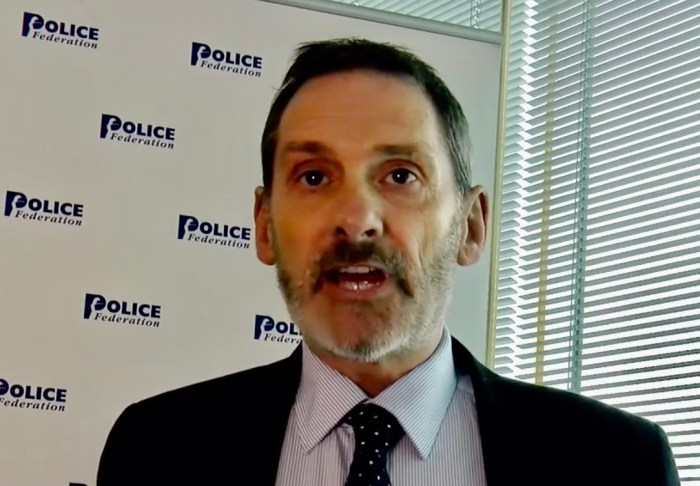
He was in the news in 2019 when, in his role as secretary of the Sussex Police Federation, he spoke out about the lack of investment in detectives in the county.

Speaking up on behalf of police colleagues

He said victims of crime weren’t getting the service they should have done because of a lack of sufficient detectives in the force.

“It used to be easy to fill the detective roles,” he said. “Now officers don’t want to go into the department for whatever reason, down to the workloads that they’re carrying, the pressures, the hours that they’re working, and a lot of them are pretty close to breaking point.”

‘One of the most influential and progressive coaches of his generation’

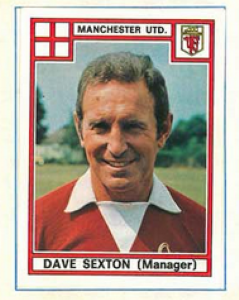
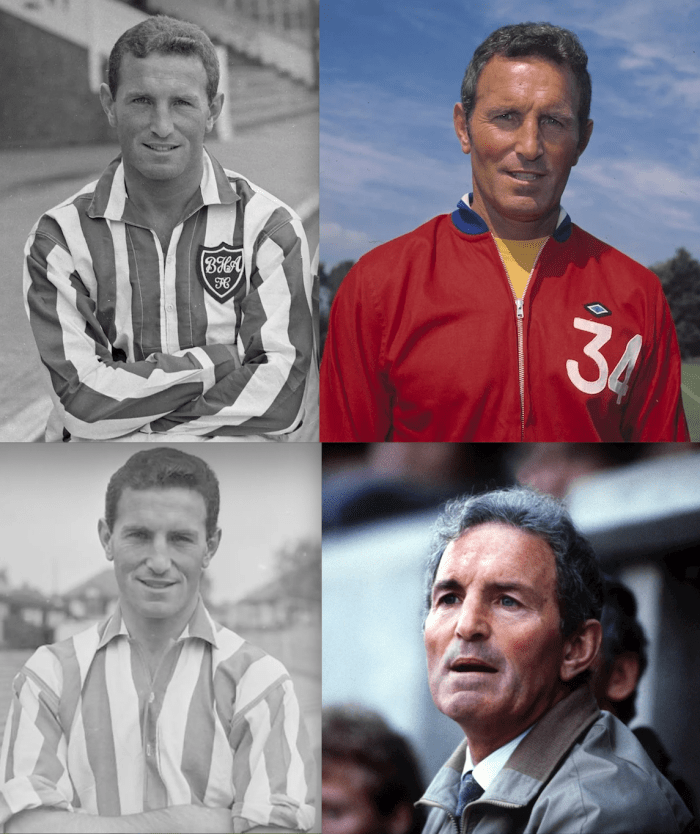
ALTHOUGH I wasn’t even born when Dave Sexton was winning promotion with Brighton, I remember him well as a respected coach and manager.

The record books and plenty of articles have revealed Sexton scored 28 goals in 53 appearances for Brighton before injury curtailed his playing career.

As a manager, he took both Manchester United and Queens Park Rangers to runners-up spot in the equivalent of today’s Premier League and won the FA Cup and European Cup Winners’ Cup with Chelsea.

On top of those achievements, he was the manager of England’s under 21 international side when they won the European Championship in 1982 and 1984, and worked with the full international squad under Ron Greenwood, Bobby Robson, Terry Venables, Glenn Hoddle, Kevin Keegan and Sven-Göran Eriksson.

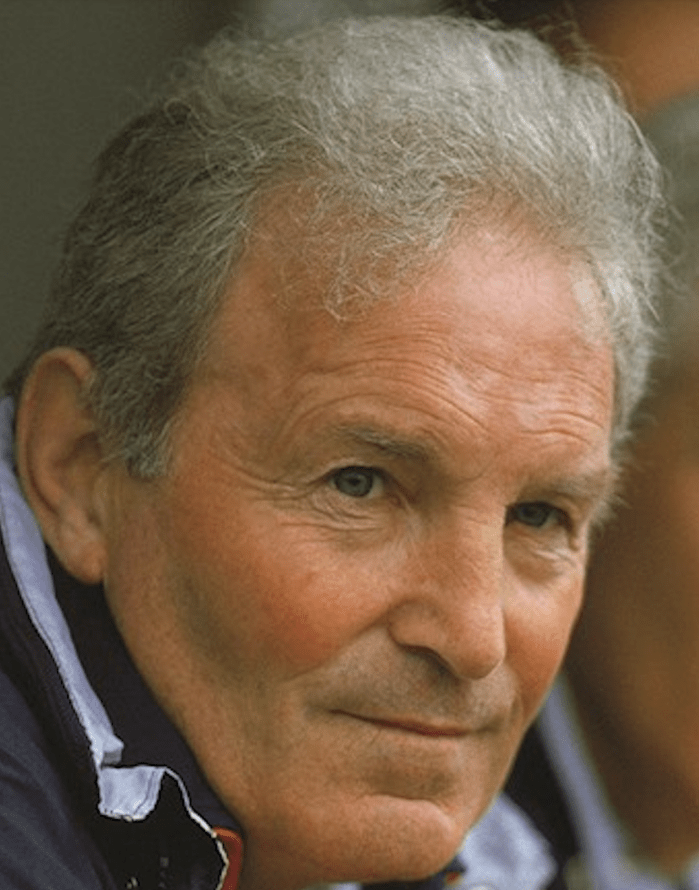
Sexton coached under several England managers

On his death aged 82 on 25 November 2012, Albion chief executive Paul Barber said: “I know Dave was an extremely popular player during his days at the Goldstone Ground and, as a friend and colleague during my time working at the FA, I can tell you that he was held in equally high esteem.

“He was a football man through and through. I enjoyed listening to many of Dave’s football stories and tales during our numerous hotel stays with the England teams and what always came through was his great love and passion for the game.

“Dave was a true gentleman and a thoroughly nice man.”

Former West Ham and England international, Sir Trevor Brooking, who worked as the FA’s director of football development, said: “Anyone who was ever coached by Dave would be able to tell you what a good man he was, but not only that, what a great coach in particular he was.

“In the last 30-40 years Dave’s name was up there with any of the top coaches we have produced in England – the likes of Terry Venables, Don Howe and Ron Greenwood. His coaching was revered.”

Keith Weller, a £100,000 signing by Sexton for Chelsea in 1970, said: “I had heard all about Dave’s coaching ability before I joined Chelsea and now I know that everything said about his knowledge of the game is true. He has certainly made a tremendous difference to me.”

And the late Peter Bonetti, a goalkeeper under Sexton at Chelsea, said: “He was fantastic, I’ve got nothing but praise for him.”

One-time England captain Gerry Francis, who played for Sexton at QPR and Coventry City, said: “Dave was quite a quiet man. You wouldn’t want to rub him up the wrong way given his boxing family ties, but you wanted to play for him.

“Dave was very much ahead of his time as a manager. He went to Europe on so many occasions to watch the Dutch and the Germans at the time, who were into rotation, and he brought that into our team at QPR, where a full-back would push on and someone would fill in.

“He was always very forward-thinking – a very adaptable manager.”

Guardian writer Gavin McOwan described Sexton as “the antithesis of the outspoken, larger-than-life football manager. A modest and cerebral man, he was one of the most influential and progressive coaches of his generation and brought tremendous success to the two London clubs he managed.”

Born in Islington on 6 April 1930, the son of middleweight boxing champion Archie Sexton, his secondary school days were spent at St Ignatius College in Enfield and he had a trial with West Ham at 15. But, like his dad, he was a boxer of some distinction himself, earning a regional champion title while on National Service.

Sexton played 77 games for West Ham

However, it was football to which he was drawn and, after starting out in non-league with Newmarket Town and Chelmsford City, he joined Luton Town in 1952 and a year later he returned to West Ham, where he stayed for three seasons.

In 77 league and FA Cup games for the Hammers, he scored 29 goals, including hat-tricks against Rotherham and Plymouth.

It was during his time at West Ham that he began his interest in coaching alongside a remarkable group of players who all went on to become successful coaches and managers.

He, Malcolm Allison, Noel Cantwell, John Bond, Frank O’Farrell, Jimmy Andrews and Malcolm Musgrove used to spend hours discussing tactics in Cassettari’s Cafe near the Boleyn ground. A picture of a 1971 reunion of their get-togethers featured on the back page of the Winter 2024 edition of Back Pass, the superb retro football magazine.

One of the game’s most respected managers, Alec Stock, signed Sexton for Orient but he had only been there for 15 months (scoring four goals in 24 league appearances) before moving to Brighton (after Stock had left the Os to take over at Roma).

Albion manager Billy Lane bought him for £2,000 in October 1957, taking over Denis Foreman’s inside-left position. Sexton repaid Lane’s faith by scoring 20 goals in 26 league and cup appearances in 1957-58 as Brighton won the old Third Division (South) title. But a knee injury sustained at Port Vale four games from the end of the season meant he missed the promotion run-in. Adrian Thorne took over and famously scored five in the Goldstone game against Watford that clinched promotion.

Nevertheless, as he told Andy Heryet in a matchday programme article: “The Championship medal was the only one that I won in my playing career, so it was definitely the high point.

Sexton in Albion’s stripes

“All the players got on well, but a lot of what we achieved stemmed from the manager’s approach. It was a real eye-opener for me. We were a free-scoring, very attacking side and I just seemed to fit in right away and got quite a few goals. It was a joy to play with the guys that were there and I thoroughly enjoyed those two years.”

Because of the ongoing problems with his knee, he left Brighton and dropped two divisions to play for Crystal Palace, but he was only able to play a dozen games before his knee finally gave out.

“I suffered with my knee throughout my playing career,” said Sexton. “In only my second league game for Luton I went into a tackle and tore the ligaments in my right knee.

Knee trouble curtailed his Palace playing days

“I also had to have a cartilage removed. The same knee went again when I was at Palace. We were playing away at Northampton, and I went up with the goalkeeper for a cross and landed awkwardly, my leg buckling underneath me, and that sort of finished it off.”

In anticipation of having to retire from playing, he had begun taking coaching courses at Lilleshall during the summer months. Fellow students there included Tommy Docherty and Bertie Mee, both of whom gave him coaching roles after he’d been forced to quit playing.

Docherty stepped forward first having just taken over as Chelsea manager in 1961, appointing Sexton an assistant coach in February 1962. “I didn’t have anything else in mind – I couldn’t play football any more – so I jumped at the chance,” said Sexton. “It was a wonderful bit of luck for me as it meant that my first job was coaching some brilliant players like Terry Venables.”

The Blues won promotion back to the top flight in Sexton’s first full season and he stayed at Stamford Bridge until January 1965, when he was presented with his first chance to be a manager in his own right by his former club Orient.

Frustrated by being unable to shift them from bottom spot of the old Second Division, Sexton quit after 11 months at Brisbane Road and moved on to Fulham to coach under Vic Buckingham, who later gave Johan Cruyff his debut at Ajax and also managed Barcelona.

Perhaps surprisingly, Sexton declared in 1993 that the thing he was most proud of in his career was the six months he spent at Fulham in 1965. “Fulham were bottom of the First Division. Vic Buckingham was the manager. He had George Cohen, Johnny Haynes . . . Bobby Robson was the captain. Allan Clarke came. Good players, but they were bottom of the table, with 13 games to go.

“I did exactly the same things I’d been doing at Orient. And we won nine of those games, drew two and lost two – and stayed up. It proved to me that you can recover any situation, if the spirit is there.”

When Arsenal physiotherapist Mee succeeded Billy Wright as Gunners manager in 1966, he turned to Sexton to join him as first-team coach. In his one full season there, Arsenal finished seventh in the league and top scorer was George Graham, a player the Gunners had brought in from Chelsea as part of a swap deal with Tommy Baldwin.

When the ebullient Docherty parted company with Chelsea in October 1967, Sexton returned to Stamford Bridge in the manager’s chair and enjoyed a seven-year stay which included those two cup wins.

In a detailed appreciation of him on chelseafc.com, they remembered: “Uniquely, for the time, Sexton brought science and philosophy to football: he read French poetry, watched foreign football endlessly and introduced film footage to coaching sessions.”

In those days Chelsea’s side had a blend of maverick talent in the likes of centre forward Peter Osgood and, later, skilful midfielder Alan Hudson. No-nonsense, tough tackling Ron “Chopper” Harris and Scottish full-back Eddie McCreadie were in defence.

As Guardian writer McOwan said: “Sexton was embraced by players and supporters for advocating a mixture of neat passing and attacking flair backed up with steely ball-winners.”

I was taken as a young lad to watch the 1970 FA Cup Final at Wembley when Sexton’s Chelsea drew 2-2 with Leeds United on a dreadful pitch where the Horse of the Year Show had taken place only a few days earlier.

Chelsea had finished third in the league – two points behind Leeds – and while I was disappointed not to see the trophy raised at Wembley (no penalty deciders in those days), the Londoners went on to lift it after an ill-tempered replay at Old Trafford watched by 28 million people on television.

Sexton added to the Stamford Bridge trophy cabinet the following season when Chelsea won the European Cup Winners’ Cup final against Real Madrid, again after a replay.

But when they reached the League Cup final the following season, they lost to Stoke City and it was said Sexton began to lose patience with the playboy lifestyle of people like Osgood and Hudson, who he eventually sold.

The financial drain of stadium redevelopment, and the fact that the replacements for the stars he sold failed to shine, eventually brought about his departure from the club in October 1974 after a bad start to the 1974-75 season.

Sexton wasn’t out of work for long after parting company with Chelsea

He was not out of work for long, though, because 13 days after he left Chelsea he succeeded Gordon Jago at Loftus Road and took charge of a QPR side that had some exciting talent of its own in the shape of Gerry Francis and Stan Bowles.

Although the aforementioned Venables had just left QPR to work under Sexton’s old Hammers teammate Allison at Crystal Palace, Sexton brought in 29-year-old Don Masson from Notts County and he quickly impressed with his range of passing, and would go on to be selected for Scotland. Arsenal’s former Double-winning captain Frank McLintock was already in defence and Sexton added two of his former Chelsea players in John Hollins and David Webb.

Sexton said of them: “The easiest team I ever had to manage because they were already mature . . . very responsible, very receptive, full of good characters and good skills. They were coming to the end of their careers, but they were still keen.”

Sexton was a student of Rinus Michels and so-called Dutch ‘total football’ – a fluid, technical system in which all outfield players could switch positions quickly to maximise space on the field.

Loft For Words columnist ‘Roller’ said: “Dave Sexton was decades ahead of his time as a coach. At every possible opportunity he would go and watch matches in Europe returning with new ideas to put into practice with his ever willing players at QPR giving rise to a team that would have graced the Dutch league that he so admired.

“He managed to infuse the skill and technique that is a hallmark of the Dutch game into the work ethic and determination that typified the best English teams of those times.

“QPR’s passing and movement was unparalleled in the English league and wouldn’t been seen again until foreign coaches started to permeate into English football.”

His second season at QPR (1975-76) was the most successful in that club’s history and they were only pipped to the league title by Liverpool (by one point) on the last day of the season (Man Utd were third).

Agonisingly Rangers were a point ahead of the Merseysiders after the Hoops completed their 42-game programme but had to wait 10 days for Liverpool to play their remaining fixture against Wolves who were in the lead with 15 minutes left but then conceded three, enabling Liverpool to clinch the title.

Married to Thea, the couple had four children – Ann, David, Michael and Chris ­– and throughout his time working in London the family home remained in Hove, to where he’d moved in 1958. They only upped sticks and moved to the north when Sexton landed the Man Utd job in October 1977.

He once again found himself replacing Docherty, who had been sacked after his affair with the wife of the club’s physiotherapist had been made public.

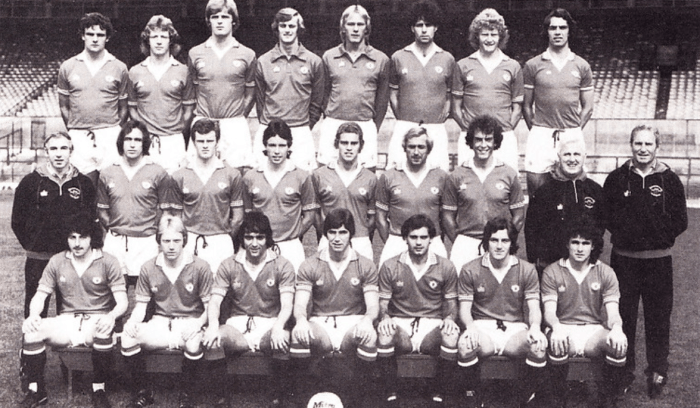
Sexton (far right) and the Manchester United squad

It was said by comparison to the outspoken Docherty, Sexton’s measured, quiet approach didn’t fit well with such a high profile club which then, as now, was constantly under the media spotlight.

The press dubbed him ‘Whispering Dave’ and although some signings, like Ray Wilkins, Gordon McQueen and Joe Jordan, were successful, he was ridiculed for buying striker Garry Birtles for £1.25m from Nottingham Forest: it took Birtles 11 months to score his first league goal for United.

Sexton took charge of 201 games across four years (with a 40 per cent win ratio) and he steered United to runners-up spot in the equivalent of the Premier League, two points behind champions Liverpool, in the 1979-80 season. United were also runners-up in the 1979 FA Cup final, losing 3-2 to a Liam Brady-inspired Arsenal.

As he said in a subsequent interview: “I really enjoyed my time at United. You are treated like a god up there and the support is fantastic. I had mixed success but it’s something that I wouldn’t have missed for the world.

“It’s tough at the top however and while other clubs would have been quite happy in finishing runners-up, it wasn’t enough for Man Utd. That’s the name of the game and I bear no grudges over it at all.”
As it happens, Sexton’s successor Ron Atkinson only managed to take United to third in the league (although they won the FA Cup twice) and it was another seven seasons before they were runners-up again under Alex Ferguson’s stewardship.

But back in 1981, United’s loss was Coventry’s gain and their delight at his appointment was conveyed in an excellent detailed profile by Rob Mason in 2019.

The new Coventry boss saw City beat United 2-1 in his first game in charge

“By the time the name of Dave Sexton was being put on the door of the manager’s office at Highfield Road the gaffer was in his fifties and a highly regarded figure within the game,” wrote Mason. “That sprang from the style of pass and move football he liked to play. His was a cultured approach to the game and Coventry supporters could look forward to seeing some attractive football.”
One of the happy quirks of football saw his old employer take on his new one on the opening day of the 1981-82 season – and the Sky Blues won 2-1! They won by a single goal at Old Trafford that season too, but overall away form was disappointing and in spite of a strong finish (seven wins, four draws and one defeat) they finished 14th – a modest two-place improvement on the previous season.

On a limited budget, Sexton struggled to get a largely young squad to make too much progress but he did recruit former England captain Gerry Francis, who’d been his captain during heady days at QPR, and he was a good influence on the youngsters.

Sexton’s second season in charge began well but ended nearly disastrously with a run of defeats leaving them flirting with relegation, together with Brighton. One of his last league games as City manager was in the visitors’ dugout at the Goldstone. Albion beat the Sky Blues 1-0 courtesy of a Terry Connor goal on St George’s Day 1983 – but it was Sexton’s side who escaped the drop by a point. Albion didn’t.

Coventry’s narrow escape from relegation cost Sexton his job (although he remained living in Kenilworth, Warwickshire) and it proved to be his last as a club manager, although he was involved as a coach when Ron Atkinson’s Aston Villa finished runners up in the first season (1992-93) of the Premier League – behind Ferguson’s United, who won their first title since 1967.

Villa beat United at home and nicked a point at Old Trafford and ahead of the drawn game Richard Williams of The Independent dropped in on a Villa training session to interview Sexton.

Sexton was happy to be working with the youth team, the young pros and the first team. “Mostly I’ve been concerned with movement, up front and in midfield. Instead of the traditional long ball up to the front men, approaching the goal in not such straight lines,” he explained.

The quiet Sexton had a valid retort to the reporter’s surprise that he should be working in the same set-up as the flamboyant Atkinson. “It’s like most stereotypes,” he said. “They’re never quite as they seem to be. Ron’s got a flamboyant image, but actually he’s an idealist, from a football point of view.

“He’s got a vision, which might not come across from the stereotype he’s got. I suppose it’s the same with me. I’m meant to be serious, which I am, but I like a bit of fun, too. And, obviously, the thing we’ve got in common is a love of football.”
Relieved to be more in the background than having to be the front man, Sexton told Williams: “The reason I’m in the game in the first place is that I love football and working with footballers, trying to improve them individually and as a team.

“So, to shed the responsibility of speaking to the press and the directors and talking about contracts, it’s a weight off your shoulders. Now I’m having all the fun without any of the hassle.”

Atkinson had invited his United predecessor to join him at Villa after he had retired from his job as the FA’s technical director of the School of Excellence at Lilleshall, and coach of the England under 21 team.

It had been 10 years since Bobby Robson had appointed him as assistant manager to the England team (Sexton had coached Robson at Fulham). He had previously been involved coaching England under 21s alongside his club commitments since 1977 leading the side to back-to-back European titles in 1982 and 1984. The 1982 side, who beat West Germany 5-4 on aggregate over two legs, included Justin Fashanu and Sammy Lee, and in a quarter final v Poland he had selected Albion’s Andy Ritchie, somewhat ironically considering he had sold him to the Seagulls when manager at United.

In April 1983, Albion’s Gary Stevens played for Sexton’s under 21s in a European Championship qualifier at Newcastle’s St James’ Park, which was won 1-0. The following year, Stevens, by then with Spurs, was in the side that met Spain in the final, featuring in the first of the two legs, a 1-0 away win in Seville. Somewhat confusingly, his Everton namesake featured in the second leg, a 2-0 win at Bramall Lane. England won 3-0 on aggregate. Winger Mark Chamberlain, later an Albion player, also played in the first leg.

After the Robson era, Sexton worked with successive England managers: Venables, Hoddle and Keegan. When Eriksson became England manager in 2001, he invited Sexton to run a team of scouts who would compile a database and video library of opposition players – a strategy Sexton had pioneered three decades previously.

Viewed as one of English football’s great thinkers, Sexton had a book, Tackle Soccer, published in 1977 but away from football he had a love of art and poetry and completed an Open University degree in philosophy, literature, art and architecture. He was awarded an OBE for services to football in 2005.

Sexton was always a welcome guest at Brighton and here receives a reminder of past glories from Dick Knight

Ball-playing defender Colin Pates a captain at just 22

ENGLAND World Cup winning hat-trick hero Geoff Hurst gave Colin Pates his Chelsea debut as an 18-year-old – and what an extraordinary footballing baptism it was.

Replacing the injured Micky Droy for a visit across London in a second tier match against Orient, young Pates was involved in a madcap 10-goal match that saw Chelsea win 7-3.

“It was an amazing feeling to go out there but it was chaos, “ he told chelseafancast.com in a 2021 podcast.

And in another interview, he recalled: “It certainly wasn’t a good advertisement for defenders but as long as you come away with the win the fans are happy. It’s one of those days where you’re so fired up it just goes so quickly.

“You come off the pitch at the end and have no recollection of what happened really. I was up against some good, experienced pros and it was quite daunting, but I really enjoyed it.”

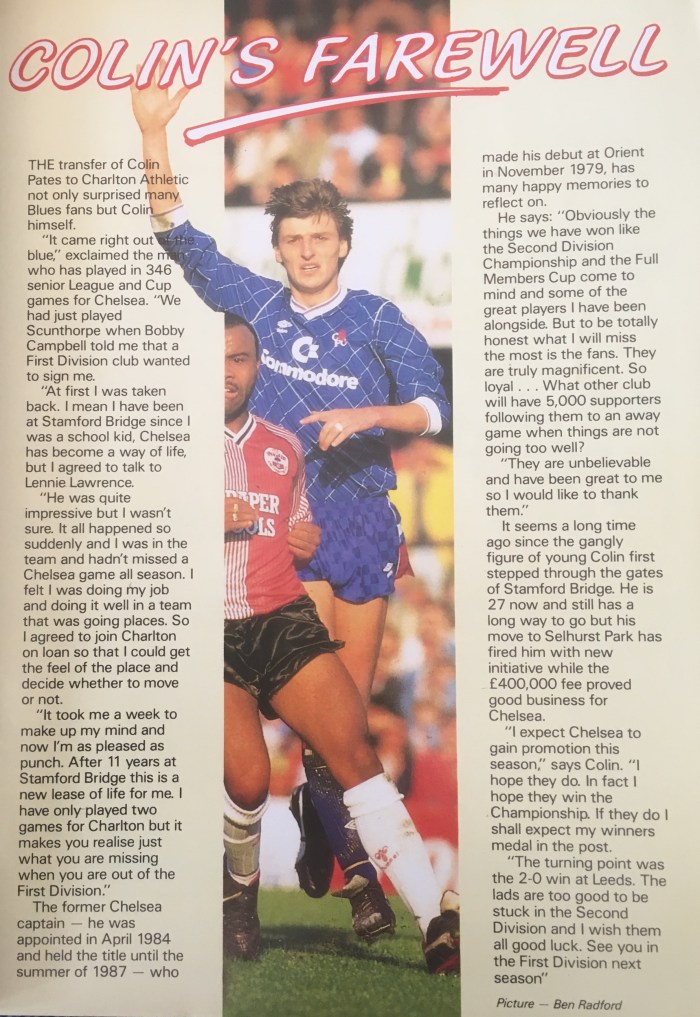
That game at Brisbane Road marked the start of a Chelsea first team career that spanned 346 matches, 137 of them as captain, in a turbulent period for the club.

Pates’ future Brighton teammates Gary Chivers and Clive Walker were also in that side at Orient and Walker scored two of Chelsea’s hatful (Lee Frost (3), Micky Fillery and Ian Britton the others).

Pates and Robert Codner celebrate reaching the Wembley final

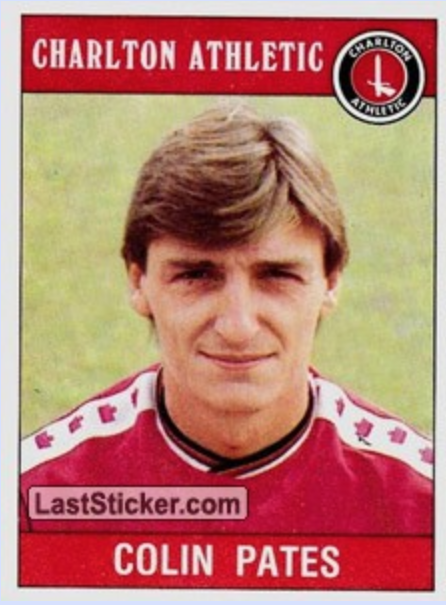
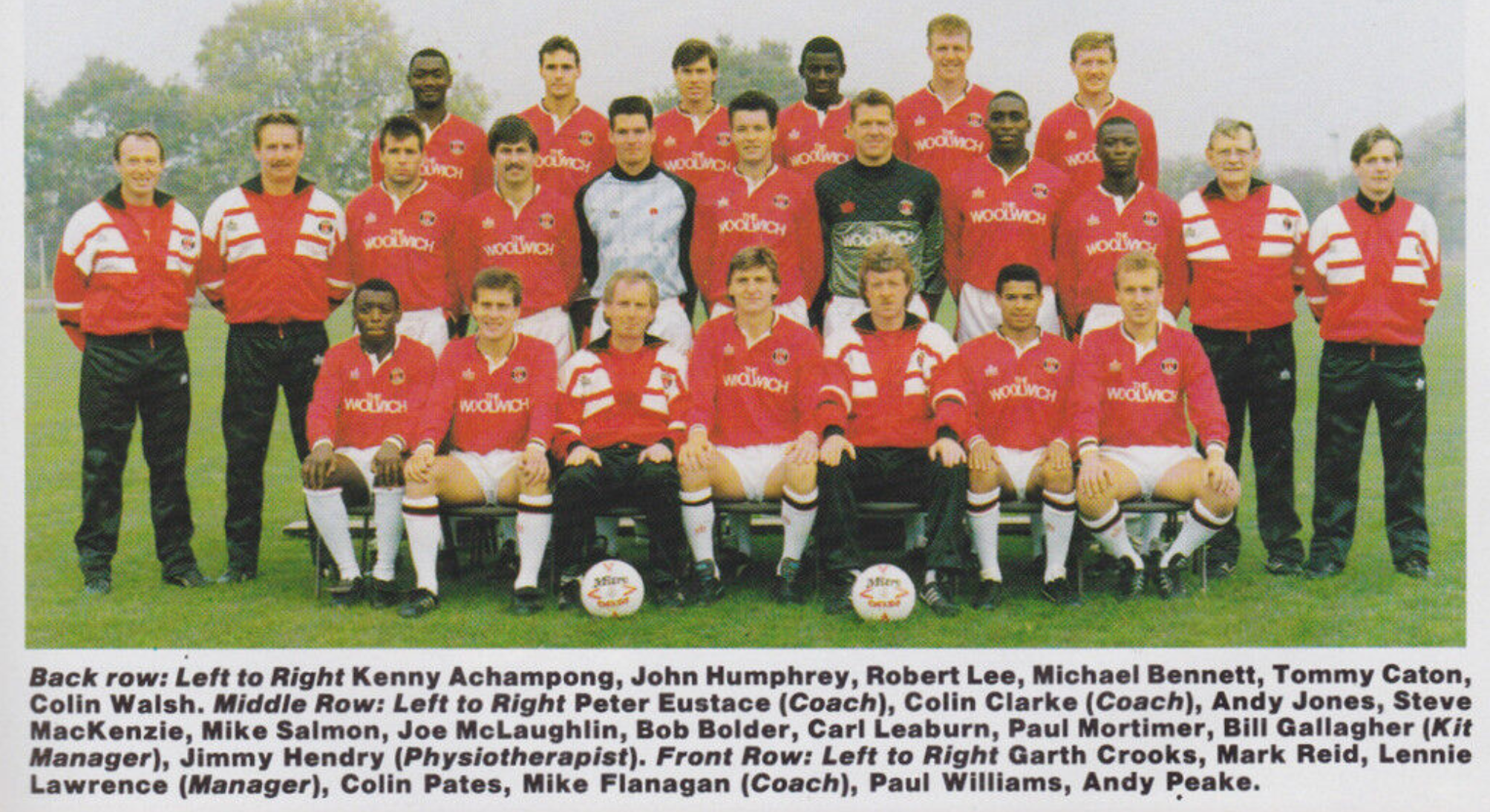
Fast forward 12 years and Pates was reunited with Chivers and Walker when he joined Brighton on loan from Arsenal in February 1991 to help out after young Irish centre-back Paul McCarthy was sidelined by injury.

Manager Barry Lloyd pulled off something of a coup to persuade his old Chelsea teammate, George Graham, then manager of Arsenal, to loan Pates to the Seagulls for three months.

The Argus Albion reporter John Vinicombe described it as a “masterstroke” and doubted that Albion would have made it to the divisional play-off final at Wembley without him.

Match magazine pic of Pates at Wembley

Lloyd’s faithful no. 2, Martin Hinshelwood, said Pates got better and better over the three months, pointing out: “He has steadied us a little bit. He talks to players, he is a great trainer and he has brought a lot to our back four.”

The player himself told Luke Nicoli of the Albion website in a 2021 interview: “Although I was dropping down a division, it didn’t matter to me – I was just happy to be playing football.

“I immediately struck up a partnership at the back with Gary, and it was like the good old days at Chelsea again.

“I spent three months at the club and I loved every minute; I loved the area, the Goldstone, the club, the fans and, of course, we went all the way to Wembley that season in the play-offs – where the turnout from our fans in the final was incredible.

“We lost (3-1) to Notts County, which was one of those games where it just wasn’t meant to be.”

It has since emerged that Lloyd’s insistence on changing a successful formula by playing Romanian international Stefan Iovan as a sweeper in that match upset the players.

But Pates said: “I know we changed formation that day, and maybe that contributed to our defeat, but I didn’t look at it like that – it was just one of those games where it wasn’t meant to be.”

“We came with a fantastic late run in the league, but it proved to be a game too far for us,” he recalled in a matchday programme article. “We made a slow start to the game and that defeat still hurts, knowing what it meant to everyone connected with the club.”

In another interview, Pates said: “The result in the play-off final didn’t go our way but it was a fantastic experience for the team to play at Wembley, the side was so close to the Premiership, or First Division as it was called then.

“I’d been lucky to have played there before but to others it was the pinnacle of their careers.”

Indeed, the last time Pates had played there was five years previously when he made history by becoming the first-ever Chelsea player to lift a trophy – the Full Members Cup – at the iconic stadium (when Ron Harris lifted the FA Cup in 1970 it was at Old Trafford, where the replay had taken place after a 2-2 draw at Wembley). That was arguably the pinnacle of his career.

The Full Members Cup was a short-lived competition between North and South clubs from the top two divisions of the league, with the regional winners meeting in a national final. It was introduced after English clubs were banned from competing in Europe following the Heysel disaster. In truth, it struggled to be taken seriously and it was a surprise it lasted as long as seven seasons.

The most remarkable element of Chelsea’s win was that the game took place the day after they’d played a league game at Southampton – when Pates scored the only goal of the game with a deflected free kick past Peter Shilton in Southampton’s goal.

Chelsea beat Manchester City 5-4 but extraordinarily were cruising at 5-1 before City scored three in the last six minutes (one an 89th minute own goal by Doug Rougvie!).

“When the referee blew his whistle, was I relieved!” said Pates. “It’s great to play at Wembley with thousands of fans screaming their heads off, and once you’re on the pitch you don’t care what cup it is, you just want to win it.”

Born on 10 August 1961 in Wimbledon, Pates went to school only five miles from Stamford Bridge and was a Chelsea fan as a boy. He signed for the club aged 10, starting training with them in 1971, the year they won the European Cup Winners’ Cup having won the FA Cup the previous year. Pates worked his way through the different age levels and as an apprentice cleaned the boots of hardman defender Ron Harris.

He made that first team debut on 10 November 1979, by which time he had already played five times for England Youth that autumn. A further six appearances followed in 1980, alongside the likes of Micky Adams, Gary Mabbutt, Paul Walsh and Terry Gibson. Mark Barham, Steve Mackenzie and Terry Connor featured in the early 1980 games.   

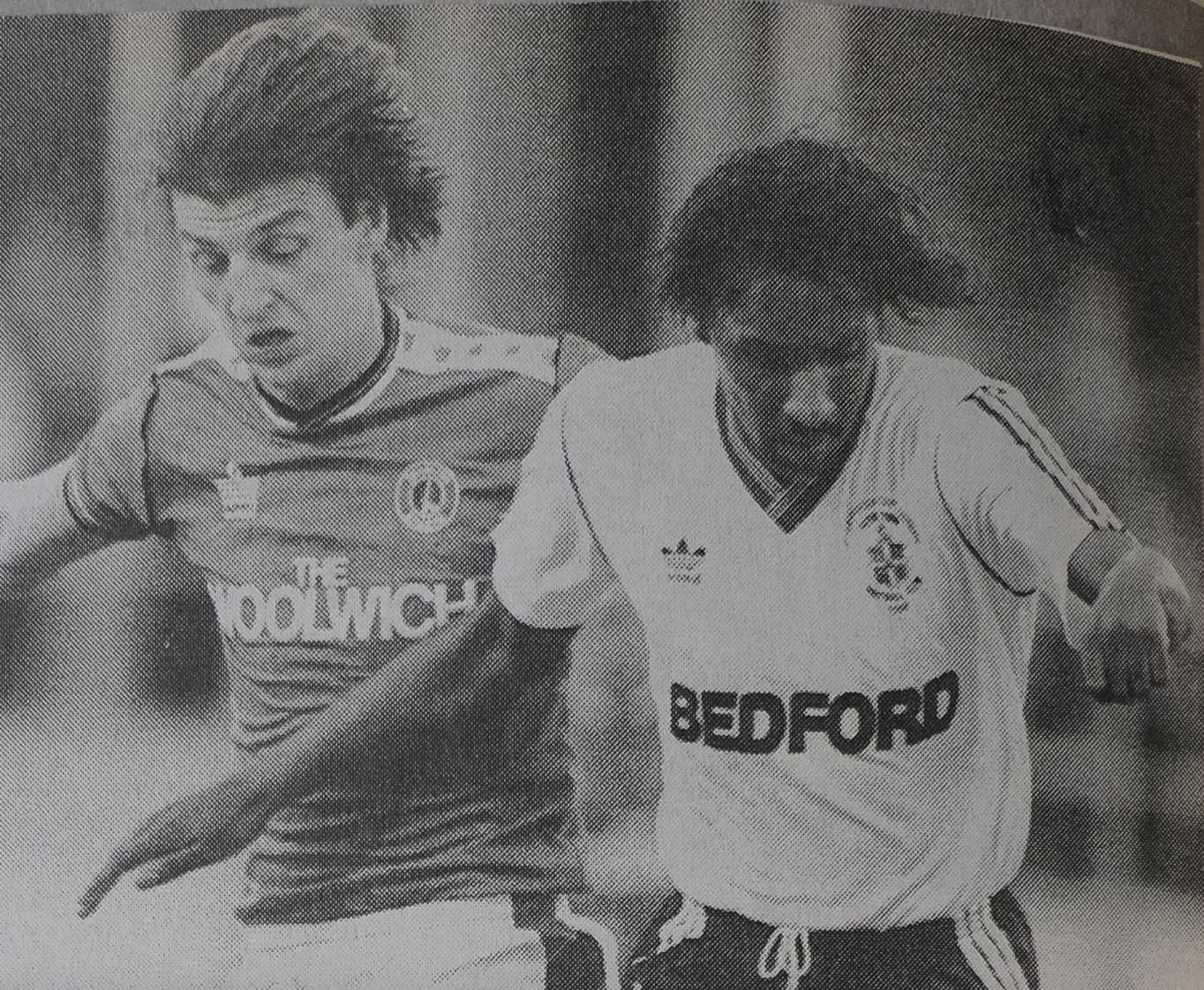
Pates in action for Chelsea against Albion’s Terry Connor, a former England Youth teammate

Simultaneously, Droy’s lack of fitness meant young Pates got an extended run in the side. However, because he was comfortable on the ball and could play in a number of positions, manager Hurst often used him as something of a utility player.

For example, in 1980-81, his 15 appearances were spread across all back four positions. But when John Neal took over for the 1981-82 season, Pates was ever present in the centre alongside Droy.

While the side’s league fortunes didn’t improve under the new man (they finished 12th), they had the consolation of reaching the quarter finals of the FA Cup after beating reigning European champions Liverpool 2-0 in the fifth round (Pates had the job of man-marking Graeme Souness).

Remarkably, Chelsea only narrowly avoided relegation to the old Third Division in 1983, and, as a result, manager Neal had a clear-out of the ‘old guard’ and Pates’ performances and attitude earned him the captain’s armband just before his 22nd birthday.

“I think he wanted someone who had come through the ranks and knew the club,” Pates said. “I was fortunate enough to be one of the few players – along with the likes of John Bumstead – who he kept on from before.”

Pates has nothing but praise for Neal and his assistant Ian McNeill (who played more than 100 games for Brighton between 1959 and 1962) and their eye for good players, like Pat Nevin, Joe McLaughlin, Nigel Spackman, David Speedie and Kerry Dixon, who were brought in to rebuild the club.

“I loved John Neal, he was a man of few words but when he said something you listened because it was going to be something poignant or important,” said Pates. “He was a good man-manager and would always take care of you if you had problems and be there for a chat. You wanted to play for him.”

Combined with the new arrivals, Pates and his pal Bumstead were part of a core of local lads Neal relied on (it included Dale Jasper, Chivers and Fillery): they all came from the same estate in Mitcham.

In his first season wearing the armband, “Pates stepped into the role with ease and led the team to the Second Division title” wrote Kelvin Barker.

“Colin’s classy displays in the top division catapulted him into the limelight, his impressive captaincy of a club on the up particularly catching the eye.

“A string of niggly injuries after Christmas led to him missing a handful of matches and his importance to the defence was highlighted when, in his absence, Chelsea slipped to consecutive defeats at Coventry and Ipswich.

“Pates made a total of 48 appearances during the 1984-85 campaign and scored once, the goal coming in a stunning 4-3 win at Goodison Park against the season’s champions, Everton.”

It had been a proud moment when Pates led Chelsea out at Highbury for the 1984-85 season-opener against Arsenal. The game finished 1-1, Paul Mariner opening the scoring for the Gunners on 35 minutes, Dixon equalising for the visitors four minutes later.

Chelsea made a decent fist of their return to the big time, finishing sixth. They also reached the semi-finals of the League Cup only to be knocked out over two legs by a Clive Walker-inspired Sunderland.

Chelsea did make it to Wembley the following year but it would be fair to say winning

that Full Members Cup final ultimately damaged their progress in the league. Chelsea were riding high in the top flight at the time and being spoken of as title contenders but immediately after that trophy win they were beaten 4-0 at home by West Ham on Easter Saturday and 6-0 by QPR at Loftus Road on Easter Monday.

Pates’ future Brighton teammate John Byrne scored twice for the Rs playing alongside Michael Robinson and Gary Bannister, who got a hat-trick. Substitute Leroy Rosenior (father of Liam) scored the other.

Byrne later remembered: “There were some big name players in the Chelsea line-up, including centre-back Doug Rougvie who seemed like he wanted to kill somebody when the score was 5-0! He was certainly looking for blood!

“We had the Milk Cup Final coming up and I remember saying to Banna with about 15 minutes to go ‘I ain’t going anywhere near Rougvie’. And Gary replied: ‘Neither am I!’ So we both ended up playing on the wings with no one in the middle!”

Pates and Doug Rougvie both played for Chelsea and Brighton

There was talk that Pates might force his way into the England squad for the Mexico World Cup that summer but Terry Butcher, Alvin Martin and Terry Fenwick were ahead of him.

Competition at club level emerged at the start of the following season when centre-half Steve Wicks was recruited and Pates was moved to left-back. However, injuries to Wicks meant Pates was soon back in the middle.

In his sporting-heroes.net piece, Barker continued: “As Chelsea’s farcical season went from bad to worse, he found himself being played in midfield again. With the Blues looking down the barrel of a drop into Division Two, Colin was returned to the centre of defence and relegation was averted.”

An injury-disrupted 1987-88 season also saw Pates have the captaincy taken off him and given to fellow defender Joe McLaughlin. Pates actually missed the start of the season having had a cartilage operation and when he returned in October the team were on something of a downward spiral. Injured again at the end of March, by the time he was fit to return, Chelsea were heading close to the relegation trapdoor.

At the time, as part of a restructuring plan to reduce the top division’s number of teams from 22 to 20, the team finishing fourth bottom of Division One had to play-off against the third, fourth and fifth-placed teams in Division Two. The top two in Division Two were promoted automatically and the bottom three in Division One went down.

Chelsea ended up fourth from bottom and had to play Middlesbrough (who’d finished third in Division Two) over two legs.

Boro won the first leg at Ayresome Park 2-0 but Chelsea only won their home leg 1-0, so they were relegated. However, history has since remembered the match more for the riotous behaviour of Chelsea supporters.

gazettelive.co.uk recalled: “There was trouble before, during and after the high-stakes game. Chelsea fans invaded the pitch on the whistle and stormed the away end sparking hand to hand fighting with barely a steward in sight.

“And it was only the intervention of mounted police that eventually cleared the pitch. The trouble didn’t stop there with more attacks outside the ground as Boro fans returned to their cars, coaches and the tube.”

Boro striker Bernie Slaven remembered: “We were locked in the dressing room celebrating promotion for maybe an hour while the police dealt with the trouble and cleared the pitch then we went out and celebrated again with the Boro fans who had been kept back in the stadium.

“The trouble and the ugly atmosphere was a real shame because it took all the headlines away from what we had achieved.”

John Hollins resigned as manager and was replaced by Bobby Campbell. One of his first moves was to sign the powerful central defender Graham Roberts who he made captain.

Pates was given a testimonial as part of the pre-season friendly fixtures (a 0-0 draw with Spurs) but the season was only three months old when he suddenly found himself unwanted at the Bridge.

As Pates returned to the dressing room at the end of a 2-2 Littlewoods Cup home draw with Scunthorpe United, Campbell informed him Charlton Athletic manager Lennie Lawrence was upstairs waiting to sign him, the club having already agreed terms over the transfer (a £400,000 fee).

“It came right out of the blue,” said Pates. “At first, I was taken aback. I have been at Stamford Bridge since I was a schoolkid. Chelsea has become a way of life.”

When the Albion visited Chelsea for a Division 2 league game on 29 October 1988, the matchday programme carried an article headlined ‘Colin’s farewell’, detailing the circumstances.

“The transfer of Colin Pates to Charlton Athletic not only surprised many Blues fans but Colin himself,” it began.

And reflecting on what happened many years later, Pates told Luke Nicoli: “I was allowed to leave and did so with a heavy heart as I wanted to stay.”

Nevertheless, the move at least presented the defender with the chance to return to playing in the top division, and he admitted: “After 11 years at Stamford Bridge, this is a new lease of life for me.”

Charlton, who had to play home matches at Crystal Palace’s Selhurst Park at the time, finished 14th by the end of that 1988-89 season, but Pates had left for Arsenal by the time the Addicks were relegated in 19th place at the end of the following season.

Despite those moves across London, and to the south coast, Chelsea hadn’t seen the last of Pates, though. He subsequently became head of football at the independent Whitgift School in South Croydon, where he coached most sports and was the first football coach in what had previously been a rugby-dominated school and pupils Victor Moses and Callum Hudson-Odoi both went on to play for the Blues.

Pates was also seen back at the Bridge on matchdays working in the hospitality lounges.

Cattlin bust-up didn’t stop goalscoring ‘Rooster’ Russell

BEING LET GO by the Albion as an apprentice didn’t stop Kevin Russell from going on to enjoy a multi-club league career as a player and a coach involved in no fewer than eight play-off finals and promotions.

A talented teenager good enough to earn selection for the England Youth team, Russell didn’t progress beyond Brighton’s youth and reserve sides between 1982 and 1984.

Although he was a regular goalscorer in the junior sides, a falling out with manager Chris Cattlin saw him depart the club without earning a competitive first team call-up.

Hailing from Paulsgrove in north Portsmouth, Russell returned home and linked up with his hometown club to complete his scholarship under World Cup winner Alan Ball.

Ball also gave him his first team debut but he only had eight first team outings for Pompey. It wasn’t until he joined Fourth Division Wrexham for £10,000 that his career began to take off and he was in the Wrexham side that reached the 1989 play-off final where they lost 2-1 to Frank Clark’s Leyton Orient. In the first of two spells in north Wales, playing at centre forward, Russell scored an impressive 47 goals in 102 games.

Prolific goalscorer for Wrexham

An ever-present in the 1988-89 season, his 25 goals in a total of 60 league and cup matches was recognised by his peers when he was selected in the PFA divisional team of the year.

That caught the eye of David Pleat at Leicester City, then playing in the ‘old’ Second Division, and a fee of £175,000 took him to Filbert Street.

At Leicester he played wide right rather than in the centre but he still had a knack for scoring goals and he eventually became something of a cult hero with Foxes supporters for the goals he scored in City’s escape from second tier relegation in 1991 and in their run up to the 1992 play-off final.

However, only a month after joining Leicester he had to undergo a hernia operation that put him out of action for eight weeks. When fit, he was sent out on a month’s loan to Peterborough …and suffered a broken leg!

When ready to play again, his effort to resume match fitness saw him go on another month’s loan, to Fourth Division Cardiff City. In the meantime, Pleat was sacked and Gordon Lee took over. Russell returned as the Foxes fought to avoid relegation to the third tier.

Perhaps inevitably one of the vital goals he scored (on 6 April 1991) was against promotion-seeking Albion in a 3-0 win that helped the Foxes in the hunt to stave off the dreaded drop.

Two years later, after he had moved on to Burnley via Stoke City, Russell’s first goals for the Clarets (above) were also scored in a 3-0 win over the Seagulls.

Born in Portsmouth on 6 December 1966, the nickname Rooster was coined at an early age because his hair formed something of a quiff when he was a boy – ironically, he went prematurely bald but the name stuck.

Russell’s first appearances in Albion’s colours came in the early autumn of 1982 playing in the junior division of the South East Counties League. He was still a 15-year-old schoolboy at the time.

By the spring of 1983, while the Albion first team were edging towards the FA Cup final at Wembley, Russell had stepped up to the reserves, as the matchday programme reported after he’d been involved in a close game against an experienced West Ham second string.

“Kevin Russell is just sixteen and he doesn’t leave school until he has taken his examinations next month,” it said. “But at Upton Park he found himself playing against such experienced men as Trevor Brooking and Jimmy Neighbour.

“Many schoolboys would have given their right arm to play on the same field as Brooking and there was Kevin playing on equal terms.

“Although we lost 2-1, it should be remembered that in Kieran O’Regan, Mark Fleet, Matthew Wiltshire, Gerry McTeague, Gary Howlett, Chris Rodon and Kevin Russell we had seven players under 20, while the Hammers had Paul Allen, Paul Brush and Pat Holland, all of whom have played in European competition, as well as Neighbour and Brooking in their line-up.”

John Shepherd was in charge of the side, aided by John Jackson, who had been signed as goalkeeping cover and was helping out with coaching too.

Russell’s official arrival as an apprentice at Brighton earned a mention in the matchday programme for the home game with Chelsea on 3 September 1983 and he was one of five apprentices on the staff that autumn, together with Dave Ellis, Darron Gearing, Gary Mitchell and Mark Wakefield. Martin Lambert had stepped up to sign as a full professional that summer.

In those days, the youth team played home matches at Lancing College and were looked after by Shepherd and Mick Fogden before experienced George Petchey was brought in to oversee youth development and run the reserves.

It was while a Brighton player that Russell won the first of six England under-18 caps (five starts plus one as sub), and he scored in the first of them – a 2-2 draw with Austria on 6 September 1984 – and in his fourth game, six days later, which England lost 4-1 to Yugoslavia. His strike partner in that side was Manchester City’s Paul Moulden, later an Albion loanee.

With the likes of Terry Connor, Alan Young and Frank Worthington in the first team, and promising youngsters in the reserves, such as Lambert, Rodon and Michael Ring, it is perhaps not surprising that Russell couldn’t break through.

He did have one outing in first team company, though, in a testimonial match for Gary Williams: he scored (along with Young and Connor) in a 3-3 draw against an ex-Albion XI.

The same game saw defender Jim Heggarty appear: like Russell he also went on to play for Burnley without playing a competitive first team game for the Albion.

While on that theme, a frequent partner of Russell’s in the reserves was Ian Muir, another striker who slipped through Albion’s net and ended up scoring goals for Burnley.

After his departure from the Albion in October 1984, Russell made the most of the opportunity Portsmouth presented him to learn from the former Everton, Arsenal and Southampton midfield dynamo Ball.

“I had three years there under him which was fantastic,” Russell told Leicester City club historian John Hutchinson in March 2018. “He was brilliant as a coach and it was very educational. I got the rest of my (under-18) caps at Portsmouth.

“Alan Ball treated us well. I was playing men’s football at 18. I played a few games in the first team and we managed to get promoted into what is now the Premier League.”

Although disappointed to be advised to move on to get more games, Russell’s switch to north Wales was the launchpad for his career, and the beginning of an association with Wrexham that lasted many years.

“It was a gamble worth taking because it meant first team football,” said Russell. “Dixie McNeill was the manager. He used to be a famous striker for them. He was fantastic for me and was an old school kind of manager; a proper man’s manager. It was a good time.”

Mixed fortunes at Leicester City

After Russell’s part in keeping Leicester in the second tier in 1991, he found himself on the outside looking in when Brian Little replaced Gordon Lee as manager and to get some playing time went on a month’s loan to Hereford United and then spent a month at Lou Macari’s Stoke City.

But Little recalled him in February and in his first game back he once again found the net against a former club, scoring in a 2-2 draw with Portsmouth. He kept his place through to the play-off final at Wembley, where they faced Kenny Dalglish’s Blackburn Rovers, and lost to a “dodgy penalty” scored by ex-Leicester player Mike Newell.

“It was a very scrappy game. Both teams were under a lot of pressure and never really got into their rhythm,” said Russell. “We had worked so hard that season to get to where we did get to. The result was a big disappointment, but it was an occasion that I’ll never forget.”

A promotion winner with Stoke City

It also turned out to be his last game for Leicester because that summer he returned to third tier Stoke on a permanent basis. He is fondly remembered for his part in Stoke winning promotion in 1992-93, scoring six goals in 39 league and cup matches (plus 11 as a sub), but he moved on again, this time to Burnley.

Third-tier Burnley signed him from Stoke for £150,000 (or was it £95,000 – I’ve seen both prices quoted) in June 1993 and, although he only stayed for eight months at Turf Moor, he scored eight goals in 35 games (plus two as sub) in Jimmy Mullen’s Clarets side.

Two of those goals – his first for Burnley – were scored against the Albion. I was at Turf Moor for a midweek game on 14 September 1993 when Russell scored with only a minute on the clock and he got a tap-in on 47 minutes in a 3-0 stroll for the home side. Steve Davis got Burnley’s third.

Brighton were a very different club to the one Russell had left in 1984, though. With a win in a League Cup match their only victory in the opening eight matches, it was the beginning of the end of Barry Lloyd’s tumultuous reign in charge, against a backdrop of financial hardship and boardroom mismanagement off the pitch.

Russell’s habit of scoring against his former clubs manifested itself again two days after Christmas, when he netted in a 2-1 home win over Wrexham. He scored again five days later in a New Year’s Day 3-1 home win over Lancashire rivals Blackpool.

But he was not around to be part of the side promoted via the play-offs, having moved back south, to Bournemouth, for £125,000 in March 1994.

• Another move, a return to north Wales and a career in coaching as Russell’s story continues.

Ince ‘disciple’ Keith Andrews helped Albion to play-offs

ONE OF BRIGHTON’S more successful season-long loan signings spent six years at Wolverhampton Wanderers having arrived as a 15-year-old from Dublin.

Keith Andrews signed on at Molineux on the same day as another Irish youngster, Robbie Keane, although he didn’t hit quite the same heights as the prolific goalscorer.

Nonetheless, Andrews eventually represented his country on no fewer than 35 occasions – not a bad achievement considering he had to wait until he was 28 before winning his first cap.

The self-styled ‘Guvnor’ Paul Ince, who Andrews had first encountered at Wolves, ultimately took the Irishman’s career onto a different level, initially when manager at MK Dons and then with Blackburn Rovers in the Premier League.

“I picked up so much from him, although probably a whole lot more when he managed me later on and I wasn’t in direct competition for a place in the team,” he said.

“I needn’t have been concerned when he came to MK, because he made me feel like a million dollars from the first conversation we had on the phone.

“He pretty much based the team around me, let me lead the dressing room like he had at Wolves, and I think that working relationship was mutually beneficial for both of us.

“He coached me and nurtured me and gave me some of his pearls of wisdom, and ultimately gave me the confidence to go and show I could become the player he felt I could become.

“Offers started coming in for me, but Incey asked me to stay, and said that if he got a job in the Premier League, he would take me with him.

“That happened with Blackburn, and I know he had to fight to get me there as the club weren’t keen on bringing in a player from League One.

“But he wanted me there, he knew what I was like and how he could trust me, and I would like to think that even though unfortunately Incey wasn’t there anywhere near as long as he would have liked, I vindicated his decision and desire to get me there.”

However, it was from Bolton Wanderers that Andrews joined the Seagulls for the 2013-14 season and he played a pivotal role – literally – taking over from the initially-injured, then transfer-seeking Liam Bridcutt as Albion’s defensive midfielder.

I covered head coach Oscar Garcia’s view of his signing in a previous blog post about the player in January 2019. Andrews featured in 35 matches for the Seagulls and scored once as Garcia steered Albion to a second successive tilt at the Championship play-offs, only for the team to lose out to Derby County in the two-legged semi-final.

Burnden Aces, a Wanderers fans website, interviewed Albion fan Chris Field to ask his opinion of Andrews and his summary was “good” but inconsistent.

Field couldn’t understand why neither Bolton nor Blackburn fans had rated the Irishman, saying:

“He’s come into our midfield and held it together fantastically well. We needed a bit more Premier League/Championship experience in our midfield and he’s fitted that bill superbly.

“Possibly he wasn’t used in the right way with Dougie Freedman’s style of football. In our free-flowing passing game, he’s fantastic in the holding role. A change of scenery has done him good.”

When Garcia quit the club after the play-offs defeat, it also marked the end of Andrews’ time with the Seagulls, although he later expressed his gratitude for the time he spent at the club.

“Although I was only at the Amex for one season, I have a lot of affection for the club as I think they try to do things in the right manner for the club to evolve with real sustainability for years to come,” he wrote in a Sky Sports blog.

“There are good people involved behind the scenes there, none more so than in the academy. Last season I worked closely with the academy manager John Morling and the development coach Ian Buckman as I was in the middle of my UEFA ‘A’ Licence, and they couldn’t have done any more to help me.

“It was a great experience to work with them as they prepared weekly and monthly schedules with the rest of the coaches and sports scientists to ensure the young lads had the best chance of developing their games, both technically and physically.”

He added: “I was amazed at the schedule a 14-year-old at the club had and a little envious to be honest as it certainly wasn’t like that in my day!”

Born in Dublin on 13 September 1980, Andrews went to Ardscoil Ris secondary school in Dublin and his football reputation grew in the schoolboys sides of Stella Maris and Elm Mount.

“Most young players are playing at quite a high level in Ireland,” Andrews told the Wolves website. “I played in the DDSL – the Dublin District Schoolboy League – and trials at English clubs became quite frequent for a lot of us.

“I must have gone on trial to about 10 or 12 clubs and then you just have to start narrowing it down to who you like, who likes you. I then started to visit Wolves more frequently and just got a good feeling about it.

“I felt very at home in Wolverhampton, I was very well looked after from the moment that I went over as an under-14 at the time. I had a few contract offers from different clubs, but Wolves just felt right and I felt the club would offer me the best chance of playing first-team football at a high level.”

Andrews reflected that he probably started out too young although he said: “I relished playing football full-time and I enjoyed the environment that I went into. I enjoyed living in Wolverhampton, I enjoyed the family I was living with; they looked after me.

“There were some tough times, some teary phone calls home, and you go through some really difficult moments, but that was all part of the journey of building your character and trying to forge a career in the professional game, which isn’t easy.”

He went through the Wolves academy alongside the likes of Keane, Matt Murray, Joleon Lescott and Lee Naylor and said it was a “proper apprenticeship” adding: “The structure must have been in a good place. It was a well-run football club with the Hayward family in charge of it.”
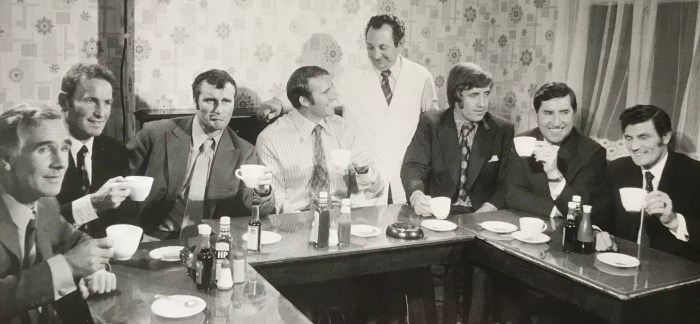
Appreciating the values that were drilled into him from an early age, he said the academy was where he learned how to approach the game and how to do things the right way. He then progressed under youth team coach Terry Connor before turning professional in September 1997.

He made his first team debut under Colin Lee as a substitute on 18 March 2000 in a 2-1 win at Swindon. He also went on in a 2-0 home win over Crewe but, when further openings didn’t follow, he went on loan to Oxford and scored the winner on his full league debut away at Swansea.

Under Lee’s successor, Dave Jones, in the last game of the 2000-01 season, he was Wolves’ youngest ever captain aged 21 in a 1-1 draw at home to QPR.

“I looked around the dressing room and saw some really experienced players, players whose boots I had cleaned as an apprentice, and so to be chosen as captain was a huge day in my career,” says Andrews. “The game was fairly forgetful but certainly not for me!”

Managers came and went, some giving Andrews a chance, others sending him out on loan. In 2005, after just 24 starts for Wolves, plus no fewer than 47 appearances as a sub, he moved on to Hull City, where injury blighted his only season with them.

Promotion winner at MK Dons

He then had a two-year spell with Milton Keynes Dons, where he had a productive midfield partnership with Alan Navarro, and he assumed the captaincy of Ince’s side.

In his second season, the Dons won promotion to League One; Andrews scoring the goal which secured the success. He also scored in the club’s 2-0 win over Grimsby Town in the Football League Trophy at Wembley.

Andrews was chosen in the PFA Team of the Year, won the League Two player of the Year Award and was listed 38th of FourFourTwo magazine’s top 50 Football League players.

It was in September 2008 that he followed old boss Ince to Blackburn Rovers. He stayed for three years although during his time at Ewood Park he was subjected to barracking from a small section of supporters.

Some fans didn’t believe he merited a starting berth but injuries meant he got a chance and made 37 appearances in his first season at the club, scoring four goals in Rovers’ battle for survival.

Under Sam Allardyce, an approach from Fulham to sign him in 2009 was rebuffed and he was rewarded with a new four-year deal instead. In March 2011, an Andy Cryer exclusive in the Lancashire Telegraph said Allardyce’s successor Steve Kean backed the player and still saw him as a key member of his first team squad even though the player had been sidelined by a groin injury for five months.

The player’s agent, Will Salthouse, told Cryer: “Keith loves the club. He has a contract for two more years at the club and he wants to stay. Keith is not looking to go anywhere.

“There has been interest from other clubs but Keith has not even spoken to them. The club have said they want him to stay and I can dismiss the rumours that he will be leaving.”

Nonetheless, at the start of the following season, Andrews joined Championship side Ipswich Town on a half-season loan.

Instead of moving to Suffolk permanently, on deadline day in January 2012 he joined Wolves’ Black Country rivals West Brom, under Roy Hodgson, on a six-month deal.

Into the bargain, Andrews, making his debut for West Brom, scored the fourth goal in a 5-1 rout of their neighbours that sealed the fate of Mick McCarthy’s reign in charge at Molineux.

“I joined Wolves at the age of 15 and, having then lived in the Midlands for a few years, I knew all about this derby,” Andrews told the Express & Star.

“I was a fan who had been to games and to different derbies like Celtic against Rangers, and I was well aware of games which had more significance growing up even playing schoolboy football and Gaelic football as well.

“Once I had been in Wolverhampton for a while it was made pretty clear to me that Wolves against Albion was a big deal.

“Sometimes people try to throw derbies and rivalries at you at certain clubs when they don’t really exist but Wolves and Albion is proper, it’s fierce.

“At Wolves everyone would be telling you much they hated the Baggies and how important those two games of the season were – so yes, I was well aware of it!”

Although personally delighted to score, Andrews said: “I also had a lot of friends on the Wolves team that day – Ireland team-mates – and my overriding emotion as I walked off the pitch as I looked at Mick and Terry Connor was sadness.

“I knew where Wolves were in the league, the pressure they were under, and what might happen after such a result.

“I knew Terry from the help he had given me when I was at Wolves, and while I didn’t know Mick personally, he is someone I have always looked up to and have the utmost respect for with what he has achieved in the game.

“Wolves at the time were struggling, and that was something that carried on after the decision was made for Mick to leave.”

On the expiry of his Baggies contract, Andrews joined newly relegated Bolton on a free transfer, and, although he made 26 Championship appearances, he struggled with an achilles problem and then a thigh injury which eventually required surgery.

It was Bolton’s signing of Jay Spearing from Liverpool at the start of the 2013-14 season that made him surplus to requirements for the Trotters and opened the door to him joining the Seagulls.

A year later, Andrews joined Watford on loan while Brighton struggled under Sami Hyypia but after half a season returned to MK Dons where he eventually began coaching.

He later appeared frequently on Sky Sports as a pundit and became a coach to the Republic of Ireland side under Stephen Kenny. In December 2023, he was appointed a first team coach at Sheffield United following the return of Chris Wilder to Bramall Lane.

David Livermore was no stranger to yellow and red cards

DAVID LIVERMORE was one of those signings Brighton fans had a good feeling about, only to be disappointed with the outcome.

Here was a player who had learned his craft over 10 years as a youngster at Arsenal and, at 28, had played most of his career at second tier level.

So, when Micky Adams got him on a free transfer from Hull City for League One Albion in the summer of 2008, the signs were encouraging.

“David is an experienced midfield player who has played most of his football in the Championship,” Adams said. “He’s a versatile player who can play in midfield, left wing and left back, and he’s another quality signing.”

Maybe it was that versatility that counted against him, but by the turn of the year he’d only made 13 starts and had picked up so many bookings that he had to serve a suspension.

Perhaps the writing was already on the wall. “Suspension and the midfielder more often than not went hand in hand – his passion, commitment and tough-tackling nature meant that the former Arsenal trainee picked up a huge 86 yellow cards and 3 reds in his Lions career,” Millwall fan Mark Litchfield wrote in a profile on newsatden.co.uk.

The player’s frustration was revealed in an Argus interview with Andy Naylor, who said: “Livermore is an ‘old school’ player, more comfortable with an era when crunching challenges were greeted matter-of-factly by opponents and with no more than a quiet word from officialdom, rather than the modern malaise of writhing opponents and card-happy refereeing.”

Livermore told the reporter: “It’s the way things are now, suspensions are part and parcel of the game. I am someone that likes a tackle and, unfortunately, I’ve got six bookings now.

“The game has changed a lot. The referee was threatening to send me off at the weekend and I only gave away two fouls in the whole game. I think the tackle is slowly being erased.”

After the suspension, Livermore struggled to regain a place in the squad and he wrecked the opportunity of a rare start in the Johnstone’s Paint Trophy when he was sent off for a bad foul in the semi-final at Luton Town. Albion clung on to a 1-1 draw but losing on penalties meant they were denied a trip to Wembley for the final against Scunthorpe.

That disappointment proved to be the final straw for the Adams reign, although being four places off the bottom of the table didn’t look pretty either.

Livermore went on as a sub in Adams’ successor Russell Slade’s first game in charge, a 2-1 defeat at Leyton Orient, and got a start in a home 5-0 win over the manager’s previous club, Yeovil.

He then started at left-back in a 3-0 defeat away to Walsall three days later, but was subbed off at half-time, and his replacement, loanee Gary Borrowdale, was Slade’s preference in that position for the rest of the season. Livermore was sent on loan, ironically to Luton.

But he had penned a two-year deal when signing the previous summer so he was back at Brighton for the 2009-10 season. He warmed the bench nine times in the first half of 2009-10 but only saw action once, going on as a sub for Andrew Whing in a 1-0 defeat at Orient in the JPT.

The arrival of Gus Poyet as manager didn’t help his cause either and eventually there was a mutual parting of the ways in February 2010. It felt very much like a case of what might have been, and the player himself gave a very honest assessment of his time with the Albion in an interview with the Argus.

“I am disappointed I have not fulfilled the expectations of supporters and probably myself,” he said. “I’ve played the majority of my career in the Championship. I started off at Arsenal and went to Millwall in League One, adapted to that and got promoted and had six or seven seasons in the Championship.

“I’m not saying I thought it would be easy coming to Brighton but I thought I would be able to do as well as at my other clubs.”

He said Albion was “a fantastic club” and he enjoyed the team spirit and friendliness of the squad, admitting: “It hasn’t worked out how I expected but I’ve enjoyed my time there.”

Livermore reckoned it was the money he was on at Brighton that put off other sides from taking him on loan. The ending of his contract gave him free agent status, which meant he was able to organise a short-term deal at Barnet.

It obviously hit the player hard to realise his playing days were coming to an end after Barnet released him at the end of the season.

He told the Cambridge Evening News: “I’d dropped through the leagues, from Championship to bottom of League Two in a couple of seasons.

“I knew I had to make a decision. I even qualified as a personal trainer – I don’t know what I was thinking.

“From a playing point of view, I fell out of love with the game. Part of me said just stop and get a job – deliver the post or something, just get a normal job, provide for your family and enjoy your life.”

He was rescued by the offer to manage non-league Histon, and he told the newspaper. “The Histon job came up and I took it and fell back in love with the game from a coaching point of view. I was very lucky that opportunity came up at the time.”

Born on 20 May 1980, in Edmonton, north London, Livermore grew up as a Spurs supporter and was taken on by them at the tender age of seven! But frustrated at just being asked to train, rather than play games, he switched to Arsenal and was on their books for a decade.

He was on a two-year YTS scheme before turning professional but had to move to Millwall, aged 19, to get a breakthrough in the game.

Livermore had been in the same Arsenal youth side as Ashley Cole, and played five games for the Gunners reserve team in the 1997-98 season, when Matthew Wicks and Matt Upson were regulars, scoring once in a 1-1 draw against Tottenham on 17 March 1998. In a pre-season friendly at Enfield on 18 July 1998, he went on an as substitute for 23 minutes but that was the extent of his first team involvement. He made 11 appearances plus two as a sub for the reserves in the 1998-99 season, before leaving the club.

He joined on loan initially making his Millwall debut on the opening day of the 1999-00 season at Cardiff City in a 1-1 draw that hit the headlines for fan clashes rather than the football. It took joint bosses Keith Stevens and Alan McLeary only four matches to convert the loan into a permanent transfer, and Livermore was signed for £30,000.

Football history books reveal Livermore as the scorer of the final football league goal of the 20th century: an injury-time winner against Brentford on December 28, 1999. It happened to be the first of his goals for Millwall and he made 34 appearances that season.

After the disappointment of losing a play-off semi-final to Wigan Athletic in 2000, Livermore was able to savour promotion from League Two as champions under Mark McGhee in 2001; he played 39 games and was part of an eye-catching partnership with Australian international Tim Cahill.

There was more play-off semi-final heartache the following season when Millwall were edged out of the League One end-of-season final two places by Birmingham City; another season in which Livermore only missed three games – through suspension.

2004 is to Millwall fans what 1983 is to Brighton supporters: it was the year that against all odds they made it to the FA Cup Final. Millwall’s achievement was arguably more remarkable in that they were in the division below opponents Man Utd. The Lions were beaten 3-0 at the Millennium Stadium in Cardiff and Livermore gave away a penalty (bringing down Ryan Giggs) which Ruud van Nistelrooy scored from.

“We didn’t play a Premier League side all the way through until the final so it just shows you what can happen,” Livermore recalled in an interview with the Argus. “I played every minute of every game. That was the highlight of my career.”

The one consolation from the Cup Final defeat was that Millwall got to play in Europe – the UEFA Cup – the following season because United were in the Champions League. It was Livermore’s penultimate season with the Lions and, with a year left on his contract, close season speculation had him linked with a £500,000 move to either Southampton or Sunderland.

Millwall director, Theo Paphitis, said: “Livers asked to go on the transfer list and that hasn’t changed. We’ve had enquiries from two clubs, but neither have matched our valuation. We would dearly love Dave to stay at Millwall, but his contract is up at the end of the season when he would be in a position to leave us for nothing.” It emerged Arsenal were entitled to 30 per cent of any profit the Lions made if the player was sold.

Millwall managed to persuade him to stay and to sign a new contract in January 2006, with director of football Colin Lee declaring: “I have said, from the moment I arrived, David is an absolutely vital player. I’m hopeful others we are in the process of trying to re-sign will see this as evidence we have now turned the corner and are moving forward again.”

While his loyalty was rewarded with the Player of the Year trophy come the end of the 2005-06 season, Millwall were relegated to League One and Livermore, wanting to stay in the Championship, was soon on his way.

In a most curious turn of events, Livermore joined Leeds United for a £400,000 fee, telling the Leeds website: “This is a huge club, this is where you want to be playing – at the right end of the division. I just want to be part of things here. Every player wants to play in the Premier League. That’s the aim.”

But before he could kick a ball in anger for United; in fact, just 10 days’ later, he was sold to Hull City. Leeds boss Kevin Blackwell explained that he had subsequently been able to sign Kevin Nicholls from Luton Town and (future Albion loan signing) Ian Westlake from Ipswich Town, and both would be ahead of Livermore in the pecking order.

Hull began the season under Phil Parkinson, who had signed former Reading teammate Nicky Forster for £250,000, but Phil Brown took over halfway through and they only just managed to avoid relegation. However, the midfielder must have had a wry smile on his face to discover the club propping up the division were none other than Leeds!

The following season saw a big turnround in Hull’s fortunes and they won promotion via the play-offs although Livermore was on the periphery and on transfer deadline day in January 2008 he moved to Boundary Park, Oldham, pairing up with Preston midfielder Jason Jarrett, another loanee who he would subsequently meet again at Brighton.

That introduction to management at Histon, when they were relegated from the Conference in his first season and were 16th in Conference North the following year, proved a steep learning curve for Livermore, as he told the Cambridge Evening News.

“In the first season I was player-manager I didn’t take a wage. My wife and family couldn’t quite understand why I was going through all of that for no money. Fortunately, I had some money set aside anyway, and going to Histon was the best decision I made.”

As well as having the lowest playing budget in the league, Livermore had to deal with off-field issues such as players not being paid and points deductions. “It was a baptism of fire,” he told the newspaper. “I learned a lot about dealing with contracts, managing individuals, trying to make things more professional, and getting players in to help the team.

“All you can do in any job is be honest. I didn’t have all the answers and I told the players that. I think honesty is key, and having that integrity.”

It was while he was at Histon that he began talking about his future coaching career with his friend and former Millwall teammate, Neil Harris, who was also coming to the end of his playing career (at Southend United). When Harris was injured, he went to watch a few Histon games and Livermore told cardiffcityfc.co.uk. “It was always good to have his eyes on the games and bounce ideas off each other.

I’ve known Neil since I was 19. We played together at Millwall for about six seasons and always stayed in touch after that despite our careers going in different directions.”

In 2012, Livermore had the opportunity to return to Millwall, as youth team coach, and Harris followed him back to take charge of the under 21s. “I’d assist him on his games with the 21s during that time and then when the opportunity came for him to take over as first team manager (in 2015), he asked me to join him, which was an easy decision for me to make,” said Livermore.

The pair took Millwall to the League One play-off final at Wembley in 2016, when they were beaten 3-1 by Barnsley, and the following season they returned after finishing sixth in the table and won their place back in the Championship courtesy of a 1-0 win over Bradford City. They also twice took Millwall to the quarter finals of the FA Cup.

Although Millwall won two of their first three matches of the 2019-20 season, a subsequent seven-game winless run saw the pair leave Millwall in October 2019. Club chairman John Berylson said: “Both Neil and David leave with their heads held high, forever friends of the club, and I wish them both every success in their future careers. They will always be welcome at The Den.”

The following month the pair were installed as successors to the Neil Warnock regime at Championship Cardiff and the Welsh side finished fifth in the league by the end of the first season but lost out to Fulham in the play-off semi-finals.

Unfortunately, the churn of managers in the Welsh capital didn’t spare Harris and Livermore and, in January 2021, after 14 months, their services were dispensed with after a six-game losing streak. Mick McCarthy and Terry Connor took over: they were only there for nine months.

After a year out of the game, Harris and Livermore were back in the managerial saddle in January 2022 at League One Gillingham, but they couldn’t prevent the Gills being relegated at the end of the season.